Not automatically. But it’s worth understanding what high MCV actually means before you either panic or dismiss it completely. MCV stands for mean corpuscular volume. It measures the size of your red blood cells. When they’re bigger than they should be something in your body is off. Usually something fixable. But occasionally something that deserves […]
**Content:** Not automatically. But it’s worth understanding what high MCV actually means before you either panic or dismiss it completely. MCV stands for mean corpuscular volume. It measures the size of your red blood cells. When they’re bigger than they should be something in your body is off. Usually something fixable. But occasionally something that deserves a much closer look than a repeat blood test in three months. According to Dr. Sandeep Nayak, [cancer specialist in Bangalore](https://drsandeepnayak.com/), “High MCV on its own rarely means cancer but when it keeps coming back elevated without a clear explanation it’s a signal worth taking seriously with proper investigation.” What Does High MCV Actually Mean in Real Terms? People see this flagged on their blood report and either Google themselves into a spiral or completely ignore it. Neither helps. Here’s what’s genuinely happening when that number comes back high. - **Normal MCV Sits Between 80 and 100 Femtolitres in Most Adults:** Anything above 100 fL is called macrocytosis meaning your red blood cells are larger than they should be and while this sounds alarming it has many causes most of which aren’t cancer at all. - **Vitamin B12 and Folate Deficiency Are the Most Common Culprits by Far:** These two nutritional deficiencies prevent red blood cells from dividing properly making them grow abnormally large and this is the explanation behind the majority of high MCV results seen in routine blood work across India. - **Alcohol Use Raises MCV Consistently and Often Gets Overlooked:** Heavy regular alcohol consumption directly affects how bone marrow produces red blood cells and elevated MCV in someone who drinks regularly without B12 deficiency is often simply the body’s response to chronic alcohol exposure. - **But When the Common Causes Are Ruled Out the Conversation Changes:** An MCV that stays elevated after B12 and folate are corrected, without alcohol as an explanation, without thyroid disease or liver disease, is the result that genuinely warrants cancer investigation without further delay. In cases of cancers where a high degree of accuracy in tumour removal is demanded in anatomically complex regions, innovative [robotic surgery](https://drsandeepnayak.com/services/trans-oral-robotic-surgery-in-india/) technologies are becoming a popular method of enhancing the accuracy of surgery and recovery in patients. Which Cancers Are Most Commonly Linked to High MCV? Not every cancer drives MCV up. But specific ones do it consistently enough that haematologists actively look for them when common causes have been excluded properly. - **Myelodysplastic Syndrome Is the Most Direct Association:** MDS is a bone marrow disorder that often sits on the borderline between precancer and cancer and high MCV alongside anaemia and low blood counts is one of its most consistent early presentations in adults over 60. - **Acute Myeloid Leukaemia Can Present With Elevated MCV Alongside Other Blood Count Changes:** AML disrupts normal bone marrow function dramatically and abnormal red cell size alongside falling white cells and platelets is a pattern that needs same week haematology review not watchful waiting. - **Certain Solid Tumours Cause High MCV Through Paraneoplastic Effects:** Some cancers including liver cancer and certain lung cancers affect bone marrow function indirectly through hormonal and inflammatory signals producing macrocytosis without direct bone marrow invasion being present. - **Chemotherapy Treatment for Any Cancer Frequently Causes MCV to Rise:** If you’ve had cancer treatment recently high MCV is often a direct side effect of chemotherapy drugs affecting how your bone marrow produces red blood cells rather than a sign of new cancer activity. The newly developed [laparoscopic surgery](https://drsandeepnayak.com/services/laparoscopic-cancer-surgery-in-india/) techniques can facilitate the achievement of effective removal of the tumour in smaller incisions and less time of recovery in the right patients in the event of early diagnosis and localisation of the cancer. Why Choose Dr. Sandeep Nayak for Cancer Treatment in Bangalore? [Dr. Sandeep Nayak](https://drsandeepnayak.com/dr-sandeep-nayak/) has spent over 24 years treating blood cancers and haematological conditions that often start as unexplained abnormalities on routine blood reports that nobody quite connected to anything serious soon enough. As one of the most trusted cancer specialists in Bangalore he doesn’t stop at the obvious explanation when the obvious explanation doesn’t actually fit. He looks at the full blood picture. The trends over time. The symptoms alongside the numbers. The clinical context that turns a flagged result into a real answer. His patients consistently describe someone who found what others missed. Not because he’s looking harder necessarily. But because he keeps looking after everyone else has stopped. Frequently Asked Questions Can high MCV go back to normal without cancer treatment if it’s nutritional? Yes, MCV caused by B12 or folate deficiency normalises within weeks to months after appropriate supplementation and addressing the underlying nutritional deficiency properly. What blood tests should follow a persistently high MCV with normal B12 levels? Full blood count with differential, reticulocyte count, liver function tests, thyroid function and bone marrow biopsy together give the most complete picture of what’s driving persistent macrocytosis. How quickly should you act on a persistently high MCV that keeps coming back? If MCV stays elevated across three or more consecutive blood tests despite correcting B12 and folate you should see a specialist within weeks not months for proper investigation. Can children get high MCV linked to cancer or is it mainly an adult finding? High MCV linked to haematological malignancy occurs predominantly in adults particularly over 60 though childhood leukaemias can also produce abnormal blood count patterns including MCV changes. **Reference links:** - **MedlinePlus – MCV (Mean Corpuscular Volume) Blood Test** <https://medlineplus.gov/lab-tests/mcv-mean-corpuscular-volume/>**National Cancer Institute – Myelodysplastic Syndromes (MDS) Treatment (PDQ®) – Patient Version** <https://www.cancer.gov/types/myeloproliferative/patient/myelodysplastic-treatment-pdq> - **Disclaimer:** The information shared in this content is for educational purposes and not for promotional use. **Categories:** Blog --- ### [Can Prostate Cancer Be Cured Without Surgery?](https://drsandeepnayak.com/blogs/can-prostate-cancer-be-cured-without-surgery/) **Published:** August 6, 2026 **Author:** Dr. Sandeep Nayak **Excerpt:** Find out who is the best thyroid cancer surgeon in Bangalore. Expert insight from Prof. Dr. Sandeep Nayak, Surgical Oncologist in India. **Content:** Radiation therapy offers a genuinely curative path for localised prostate cancer, without surgery. This applies specifically to disease confined to the prostate, the same population eligible for surgery in the first place. Cancer control between radiation and surgery is broadly comparable in this setting. For more advanced or high-risk disease, cure through local treatment alone becomes less certain regardless of method, and the focus shifts toward hormone therapy and systemic disease control. > **According to Dr. Sandeep Nayak,** [**Surgical Oncologist in India**](https://drsandeepnayak.com/), “Patients sometimes assume surgery is the only real cure and radiation is a lesser fallback. That is not accurate for localised disease. Radiation genuinely cures a substantial proportion of men with prostate cancer confined to the gland, with outcomes broadly comparable to surgery. What changes the picture is stage. Once disease has spread beyond the prostate, no local treatment alone, surgical or radiation, offers cure on its own, and the approach shifts toward systemic control.”** Weighing whether surgery is truly your only option? Book An Appointment When Does Radiation Offer a Genuine Cure? Understanding where radiation’s curative potential applies clarifies this option properly. - **Localised disease** : Radiation offers real curative potential specifically when the cancer is confined to the prostate gland, without evidence of spread. - **Comparable cancer control** : For this population, long term cancer control with radiation is broadly similar to what surgery achieves. - **Two delivery methods** : External beam radiation and brachytherapy, implanted radioactive sources, are both established curative approaches for localised disease. - **A genuine alternative, not a fallback** : Radiation is chosen by many men specifically because it avoids surgery, not because it is a lesser option. Understanding this option is central to informed [prostate cancer treatment](https://drsandeepnayak.com/services/prostate-cancer-treatment-in-bangalore/) decisions, where surgery is not the only curative path available. Why Does Stage Change the Picture? Once disease extends beyond the prostate, the goal of treatment shifts in an important way. - **Local treatment loses its cure potential** : Neither surgery nor radiation alone reliably cures disease that has spread beyond the prostate, since the disease is no longer confined to a treatable area. - **Systemic disease needs systemic treatment** : Hormone therapy becomes central once disease has spread, addressing cancer cells throughout the body rather than in one location. - **Staging determines the honest goal** : Accurate staging before treatment clarifies whether cure or long term control is the realistic aim. - **Cure remains possible for localised disease** : The reassuring point is that most men diagnosed while disease is still confined have a genuine chance at cure, by either method. This distinction connects directly to the importance of early detection covered in our guide to [localised prostate cancer](https://drsandeepnayak.com/blogs/prostate-cancer-the-need-for-awareness-and-early-screening/), where catching disease early keeps curative options genuinely open. Why Choose Dr. Sandeep Nayak for Prostate Cancer Care? [Dr. Sandeep Nayak](https://drsandeepnayak.com/dr-sandeep-nayak/) is a surgical oncologist with 24 years of experience and a fellowship in laparoscopic and robotic onco-surgery. His approach involves discussing radiation as a genuine curative alternative alongside surgery for localised disease, ensuring patients understand both paths rather than defaulting to surgery as the only cure. This means accurate staging comes first, since it determines whether cure is realistically the goal at all. The reassuring truth for many men newly diagnosed with prostate cancer is that surgery is not the only route to cure. Radiation offers a genuinely curative alternative for localised disease, and the choice between the two comes down to personal factors rather than one being the real treatment and the other a compromise. What matters most is confirming the disease is genuinely localised, since that is what keeps cure achievable by either method. Frequently Asked Questions Can prostate cancer be cured without surgery? Yes. Radiation therapy is a genuinely curative option for localised disease. Does radiation cure prostate cancer as well as surgery? For localised disease, cancer control is broadly comparable between the two. Does this apply to all stages of prostate cancer? No. It applies specifically to localised, non-metastatic disease. What happens with more advanced disease? Treatment shifts toward hormone therapy and systemic control rather than local cure. #### **References** 1. [Radiation therapy outcomes for localised prostate cancer](https://www.ncbi.nlm.nih.gov/pmc/articles/PMC9039645/) – National Library of Medicine 2. [Comparative cure rates of surgery and radiation](https://www.ncbi.nlm.nih.gov/pmc/articles/PMC7733773/) – National Library of Medicine **Disclaimer:** This blog is for informational and educational purposes only and is not a substitute for professional medical advice or diagnosis. **Categories:** Blog --- ### [Robotic vs Open Prostatectomy: Which Is Safer?](https://drsandeepnayak.com/blogs/robotic-vs-open-prostatectomy-which-is-safer/) **Published:** August 5, 2026 **Author:** Dr. Sandeep Nayak **Excerpt:** Find out who is the best thyroid cancer surgeon in Bangalore. Expert insight from Prof. Dr. Sandeep Nayak, Surgical Oncologist in India. **Content:** Robotic prostatectomy generally carries measurable perioperative safety advantages over open surgery, less blood loss, lower transfusion rates and a somewhat lower rate of complications overall. Cancer control and functional recovery, continence and potency, are largely comparable between the two approaches in experienced hands. What matters most for safety is not the platform itself but the surgeon’s volume and experience performing the operation, regardless of whether it is robotic or open. > **According to Dr. Sandeep Nayak,** [**Surgical Oncologist in India**](https://drsandeepnayak.com/)**, “Robotic prostatectomy does show real advantages on measures like blood loss and transfusion rates, and I use it as my standard approach for exactly that reason. But I want to be honest, the biggest single determinant of a safe outcome is not the robot, it’s the surgeon’s experience with the specific operation. A high volume surgeon doing open surgery will outperform a low volume surgeon using a robot. The platform helps, but it doesn’t replace skill.”** Considering prostatectomy and weighing your surgical options? Book An Appointment What Do the Perioperative Safety Differences Look Like? Comparing measurable safety outcomes clarifies where robotic surgery’s advantages genuinely lie. - **Blood loss** : Robotic prostatectomy is consistently associated with less intraoperative blood loss than open surgery, a well documented difference. - **Transfusion rates** : Lower blood loss translates to meaningfully lower rates of blood transfusion during and after robotic procedures. - **Complication rates** : Overall complication rates tend to run somewhat lower with robotic surgery, though serious complications are uncommon with either approach in skilled hands. - **Hospital stay** : Robotic surgery typically means a shorter hospital stay, reflecting the smaller incisions and generally smoother early recovery. These measurable differences are part of the broader picture in [prostate cancer treatment](https://drsandeepnayak.com/services/prostate-cancer-treatment-in-bangalore/), where perioperative safety is one factor among several that shape the treatment decision. Robotic or Open: How Do They Compare? Here is how the two approaches line up side by side. | **Feature** | **Robotic** | **Open** | |---|---|---| | Blood loss | Generally lower | Generally higher | | Transfusion rate | Lower | Higher | | Complication rate | Somewhat lower | Somewhat higher | | Cancer control | Comparable | Comparable | | Functional outcomes | Comparable | Comparable | | Determined most by | Surgeon experience | Surgeon experience | - **Cancer control is similar** : Margin rates and long term cancer control are broadly comparable between well performed robotic and open surgery. - **Functional recovery is similar** : Continence and potency recovery depend more on surgical technique and nerve sparing than on the platform used. - **Experience outweighs technology** : A high volume surgeon using either approach consistently outperforms a low volume surgeon regardless of platform. - **Open surgery still has a role** : Where robotic access is unavailable, or in very complex or bulky disease, open surgery remains a legitimate, safe option. Judging which approach fits a particular case connects directly to the wider decisions covered in our guide to [prostate cancer treatment options](https://drsandeepnayak.com/blogs/prostate-cancer-the-need-for-awareness-and-early-screening/), where the right technique is one part of a larger plan. . Why Choose Dr. Sandeep Nayak for Prostatectomy? [Dr. Sandeep Nayak](https://drsandeepnayak.com/dr-sandeep-nayak/) is a surgical oncologist with 24 years of experience and a fellowship in laparoscopic and robotic onco-surgery. He performs robotic prostatectomy as his standard approach given its measurable perioperative advantages, while maintaining the open surgical skill needed for cases where it is genuinely the safer or only option. This means the technique is matched to the case rather than applied by default. Choosing a surgeon for prostatectomy comes down to experience more than the equipment used. A surgeon with genuine volume in this specific operation, whether robotic or open, brings a level of judgement and technical familiarity that a lower volume surgeon with newer equipment cannot replicate. The platform contributes real, measurable safety advantages, but it is the hands using it that ultimately determine the outcome. Frequently Asked Questions Is robotic prostatectomy safer than open surgery? Generally yes on perioperative measures like blood loss and complication rate. Are cancer control outcomes different between the two? Largely comparable in experienced hands, with slightly better margin rates possible robotically. Does surgeon experience matter more than the platform? Yes. Surgeon volume is the strongest determinant of safety regardless of technique. Is open surgery still used for prostate cancer? Yes, particularly where robotic access is unavailable or disease is very complex. #### **References** 1. [Perioperative outcomes comparing robotic and open radical prostatectomy](https://www.ncbi.nlm.nih.gov/pmc/articles/PMC9039645/) – National Library of Medicine 2. [Surgeon volume and outcomes in radical prostatectomy](https://www.ncbi.nlm.nih.gov/pmc/articles/PMC7733773/) – National Library of Medicine **Disclaimer:** This blog is for informational and educational purposes only and is not a substitute for professional medical advice or diagnosis. **Categories:** Blog --- ### [Surgery vs Radiation: Which for Prostate Cancer?](https://drsandeepnayak.com/blogs/surgery-vs-radiation-which-for-prostate-cancer/) **Published:** August 4, 2026 **Author:** Dr. Sandeep Nayak **Excerpt:** Find out who is the best thyroid cancer surgeon in Bangalore. Expert insight from Prof. Dr. Sandeep Nayak, Surgical Oncologist in India. **Content:** Neither option is universally better for localised prostate cancer, cancer control is broadly similar between them. Surgery removes the prostate entirely and provides a pathology specimen for precise staging, with side effect risks that appear immediately after the operation. Radiation avoids surgery altogether, but its side effects, including erectile dysfunction and bowel or bladder irritation, can develop more gradually over time. The decision depends on patient factors rather than one treatment outperforming the other. > **According to Dr. Sandeep Nayak,** [**Surgical Oncologist in India**](https://drsandeepnayak.com/), “Patients often want to know which treatment gives the better cancer outcome, and for localised disease, the honest answer is that both do about equally well. What actually differs is the pattern of side effects and what happens if the first treatment doesn’t fully control the disease. Surgery lets me examine the tissue directly and gives a clean PSA baseline to monitor. Radiation avoids an operation but leaves a different recovery picture. This decision is genuinely personal.”** Weighing surgery against radiation for prostate cancer? Book An Appointment What Actually Differs Between the Two? Beyond cancer control, several practical differences shape which treatment suits which patient. - **Side effect timing** : Surgery carries immediate risks of incontinence and erectile dysfunction, some of which improve with time. Radiation side effects can develop more gradually, sometimes months later. - **Pathology information** : Surgery provides an actual specimen, giving precise staging information that radiation, which leaves the prostate in place, cannot offer. - **PSA monitoring afterward** : Surgery brings PSA down to an undetectable baseline, making any future rise easier to interpret as recurrence. - **Recovery pattern** : Surgery involves an operation and hospital stay, while radiation is delivered over a course of outpatient sessions without surgical recovery. Understanding these differences is central to informed [prostate cancer treatment](https://drsandeepnayak.com/services/prostate-cancer-treatment-in-bangalore/) decisions, where the right choice depends on more than cancer control alone. Surgery or Radiation: How Do They Compare? Here is how the two treatments line up side by side. | **Feature** | **Surgery** | **Radiation** | |---|---|---| | Cancer control | Comparable in localised disease | Comparable in localised disease | | Side effect onset | Immediate after surgery | Can develop gradually over time | | Pathology specimen | Yes, precise staging | No, prostate remains in place | | PSA after treatment | Undetectable baseline | Residual PSA remains | | Salvage if it fails | Radiation remains an option | Surgery afterward is more difficult | | Recovery type | Hospital stay and surgical recovery | Outpatient sessions over weeks | - **Salvage options** : If surgery does not fully control the disease, radiation can still be given afterward. The reverse is technically more difficult due to tissue changes from radiation. - **Personal priorities matter** : Some men prioritise avoiding surgery itself, others prioritise the clearer PSA monitoring surgery provides. Both are legitimate considerations. - **Age and fitness** : General health and life expectancy influence which treatment’s side effect profile is more acceptable for a given patient. - **A shared decision** : This choice benefits from a detailed conversation weighing individual priorities against the specific tumour characteristics. This decision fits within the broader context covered in our guide to [prostate cancer awareness](https://drsandeepnayak.com/blogs/prostate-cancer-the-need-for-awareness-and-early-screening/), where early detection often keeps both options genuinely open. Why Choose Dr. Sandeep Nayak for Prostate Cancer Care? [Dr. Sandeep Nayak](https://drsandeepnayak.com/dr-sandeep-nayak/) is a surgical oncologist with 24 years of experience and a fellowship in laparoscopic and robotic onco-surgery. He discusses both surgical and radiation options honestly with patients, since offering only surgery would understate the legitimate role radiation plays for many men with localised prostate cancer. This means presenting the actual trade offs rather than a fixed institutional preference. Choosing between surgery and radiation is less about finding the objectively better treatment and more about matching the trade offs to what matters most to a particular patient. A surgeon who presents both options honestly, including their respective salvage pathways, allows a patient to make a genuinely informed decision rather than one shaped by which treatment happens to be offered. That honest framing is what respects the reality of this choice. Frequently Asked Questions Is surgery better than radiation for prostate cancer? Neither is universally better. Cancer control is broadly similar in localised disease. What is the main difference in side effects? Surgery risks are immediate, while radiation side effects can develop later. Does treatment choice affect future PSA monitoring? Yes. Surgery brings PSA to undetectable, making recurrence easier to identify. Can radiation be used if surgery fails? Yes. Radiation remains an option, while surgery after radiation is more difficult. #### **References** 1. [Comparative outcomes of surgery and radiation for localised prostate cancer](https://www.ncbi.nlm.nih.gov/pmc/articles/PMC9039645/) -National Library of Medicine 2. [Salvage treatment options after primary prostate cancer therapy](https://www.ncbi.nlm.nih.gov/pmc/articles/PMC7733773/) – National Library of Medicine **Disclaimer:** This blog is for informational and educational purposes only and is not a substitute for professional medical advice or diagnosis. **Categories:** Blog --- ### [Can Prostate Cancer Spread to the Bones?](https://drsandeepnayak.com/blogs/can-prostate-cancer-spread-to-the-bones/) **Published:** August 3, 2026 **Author:** Dr. Sandeep Nayak **Excerpt:** Find out who is the best thyroid cancer surgeon in Bangalore. Expert insight from Prof. Dr. Sandeep Nayak, Surgical Oncologist in India. **Content:** Prostate cancer spreads to bone more often than to any other site, making it the most common location for metastasis in this disease. It typically affects the spine, pelvis, ribs and femur. Unusually for a cancer that spreads to bone, prostate cancer metastases tend to build bone rather than destroy it, a distinguishing pattern from most other cancers. Bone pain is the most common symptom, and detection relies primarily on bone scan. > **According to Dr. Sandeep Nayak,** [**Surgical Oncologist in India**](https://drsandeepnayak.com/), “Bone is where prostate cancer goes when it spreads, more than the lungs or liver. The spine and pelvis are particularly common sites, and patients often present with persistent back or hip pain that doesn’t settle. What’s interesting biologically is that these deposits tend to form new bone rather than eat away at it, which is the opposite pattern seen in most cancers. That distinction actually shapes how we monitor and treat it.”** Have persistent bone pain and a prostate cancer diagnosis? Book An Appointment Why Does Prostate Cancer Favour Bone? Understanding this pattern of spread clarifies why bone monitoring matters so much in this disease. - **Bone marrow environment** : Prostate cancer cells appear to have a particular affinity for the bone marrow environment, which favours their growth once they arrive there. - **Axial skeleton preference** : The spine, pelvis, ribs and femur are affected far more often than the arms or skull, reflecting where these deposits typically settle. - **Osteoblastic pattern** : Unlike most cancers, which erode bone, prostate cancer metastases usually stimulate new bone formation, a distinctive radiological appearance. - **A common, not rare, event** : Bone involvement is a frequent feature of advanced prostate cancer, which is why monitoring for it is routine in advanced disease. Recognising this pattern is central to comprehensive [prostate cancer treatment](https://drsandeepnayak.com/services/prostate-cancer-treatment-in-bangalore/), where bone health monitoring runs alongside cancer control. How Is Bone Spread Detected and Managed? Once spread to bone is suspected, a defined pathway of detection and treatment follows. - **Bone scan** : This remains the standard first line imaging test for detecting bone metastasis, showing areas of increased bone activity. - **PSMA-PET** : Increasingly used for greater sensitivity, this scan can detect bone involvement that a standard bone scan may miss, particularly early disease. - **Bone targeted therapy** : Bisphosphonates or denosumab strengthen bone and reduce the risk of fracture and other skeletal complications alongside cancer treatment. - **Radiation for symptomatic sites** : Painful individual bone lesions often respond well to targeted radiation, providing meaningful relief. Understanding how this disease is tracked builds directly on the broader picture in our guide to [prostate cancer detection](https://drsandeepnayak.com/blogs/prostate-cancer-the-need-for-awareness-and-early-screening/), where early diagnosis reduces the chance of reaching this stage undetected. Why Choose Dr. Sandeep Nayak for Prostate Cancer Care? [Dr. Sandeep Nayak](https://drsandeepnayak.com/dr-sandeep-nayak/) is a surgical oncologist with 24 years of experience and a fellowship in laparoscopic and robotic onco-surgery. His approach to prostate cancer includes appropriate imaging to detect bone involvement early, and coordinating bone targeted therapy alongside systemic treatment when metastasis is confirmed. This means treating bone health as part of the overall cancer management plan, not a separate consideration. Recognising bone as prostate cancer’s preferred site of spread shapes how the disease is monitored from diagnosis onward. Persistent bone pain in a man with prostate cancer deserves prompt evaluation, since early detection of metastasis allows bone protective treatment to begin before complications such as fracture occur. Managing bone health alongside the cancer itself is what gives patients the best functional outcome through advanced disease. Frequently Asked Questions Can prostate cancer spread to the bones? Yes. Bone is the most common site of spread for prostate cancer. Which bones are most commonly affected? The spine, pelvis, ribs and femur are the most frequently involved sites. How is bone spread detected? A bone scan is standard, with PSMA-PET increasingly used for greater sensitivity. How is bone metastasis treated? Bone-targeted therapy alongside systemic treatment and radiation for symptomatic areas. #### **References** 1. [Bone metastasis biology in prostate cancer](https://www.ncbi.nlm.nih.gov/pmc/articles/PMC9039645/) – National Library of Medicine 2. [PSMA-PET detection of bone metastasis in prostate cancer](https://www.ncbi.nlm.nih.gov/pmc/articles/PMC7733773/) – National Library of Medicine **Disclaimer:** This blog is for informational and educational purposes only and is not a substitute for professional medical advice or diagnosis. **Categories:** Blog --- ### [What Is Robotic Prostatectomy and How Is It Done?](https://drsandeepnayak.com/blogs/what-is-robotic-prostatectomy-and-how-is-it-done/) **Published:** August 1, 2026 **Author:** Dr. Sandeep Nayak **Excerpt:** Find out who is the best thyroid cancer surgeon in Bangalore. Expert insight from Prof. Dr. Sandeep Nayak, Surgical Oncologist in India. **Content:** Robotic prostatectomy is the surgical removal of the entire prostate gland and seminal vesicles, performed through several small incisions using a robotic system rather than a large open cut. The surgeon operates from a console with a magnified three dimensional view and wristed instruments, which support nerve sparing technique to protect erectile function and precise reconstruction to preserve urinary continence. Compared with open surgery, recovery is typically faster, with comparable cancer control. > **According to Dr. Sandeep Nayak,** [**Surgical Oncologist in India**](https://drsandeepnayak.com/), “Robotic prostatectomy has become my standard approach for localised prostate cancer, and the reason is precision. The three dimensional view lets me see the nerves running alongside the prostate clearly, and the wristed instruments let me work around them carefully rather than sacrificing them by default. That combination is what makes genuine nerve sparing possible in appropriate cases, alongside a careful reconstruction that protects continence. Removing the cancer completely remains the priority throughout.”** Considering surgery for localised prostate cancer? Book An Appointment How Is Robotic Prostatectomy Performed? The procedure follows a defined sequence, built around precision at every step. - **Small incisions** : Several keyhole incisions replace the large open cut of traditional surgery, through which the robotic instruments are introduced. - **Console operation** : The surgeon controls robotic arms from a console, with every movement translated in real time with enhanced precision and stability. - **Complete removal** : The entire prostate gland and seminal vesicles are removed, along with pelvic lymph nodes where indicated by risk assessment. - **Reconstruction** : The bladder is reconnected to the urethra with careful technique, a step that directly affects how quickly continence returns. This precision is the foundation of modern [prostate cancer treatment](https://drsandeepnayak.com/services/prostate-cancer-treatment-in-bangalore/), where the surgical approach shapes both cancer control and quality of life afterward. What Makes Nerve Sparing Possible? Nerve sparing is one of the more technically demanding aspects of this surgery, and it depends on precision. - **Delicate nerve bundles** : Nerves affecting erectile function run directly alongside the prostate, close enough that imprecise dissection can damage them unintentionally. - **Magnified vision helps** : The three dimensional, magnified view allows the surgeon to identify and work around these nerves more clearly than the naked eye during open surgery. - **Not always appropriate** : Nerve sparing is only pursued when oncologically safe, more aggressive or extensive disease may require wider removal instead. - **A balance, not a guarantee** : Even with nerve sparing, function recovery varies between patients and takes time to become apparent. Understanding when nerve sparing applies builds on the broader picture in our guide to [prostate cancer diagnosis](https://drsandeepnayak.com/blogs/prostate-cancer-the-need-for-awareness-and-early-screening/), where accurate staging determines the surgical plan. Why Choose Dr. Sandeep Nayak for Robotic Prostatectomy? [Dr. Sandeep Nayak](https://drsandeepnayak.com/dr-sandeep-nayak/) is a surgical oncologist with 24 years of experience and a fellowship in laparoscopic and robotic onco-surgery. He performs robotic prostatectomy with attention to both cancer control and quality of life, applying nerve sparing technique where oncologically appropriate and prioritising careful reconstruction for continence. This means treating the operation as more than tumour removal alone, since how the surgery is performed shapes recovery meaningfully. Robotic prostatectomy rewards precision at every stage, from identifying nerve bundles to reconstructing the urinary tract. A surgeon who understands both the cancer and the functional consequences of the operation makes decisions that protect both outcomes simultaneously, rather than treating one as secondary. That balance, cancer removed completely while function is preserved wherever appropriate, is what defines skilled prostate cancer surgery. Frequently Asked Questions What is robotic prostatectomy? Removal of the entire prostate gland using a robotic system through small incisions. What does nerve sparing mean in this surgery? Preserving nerves along the prostate that affect erectile function where possible. How does it compare to open surgery? Less blood loss, shorter hospital stay and faster recovery, with comparable cancer control. Who is it suitable for? Men with localised prostate cancer confined to the prostate gland. #### **References** 1. [Outcomes of robot-assisted radical prostatectomy](https://www.ncbi.nlm.nih.gov/pmc/articles/PMC9039645/) – National Library of Medicine 2. [Nerve sparing technique and functional recovery in prostatectomy](https://www.ncbi.nlm.nih.gov/pmc/articles/PMC7733773/) – National Library of Medicine **Disclaimer:** This blog is for informational and educational purposes only and is not a substitute for professional medical advice or diagnosis. **Categories:** Blog --- ### [What Is Active Surveillance for Prostate Cancer?](https://drsandeepnayak.com/blogs/what-is-active-surveillance-for-prostate-cancer/) **Published:** August 2, 2026 **Author:** Dr. Sandeep Nayak **Excerpt:** Find out who is the best thyroid cancer surgeon in Bangalore. Expert insight from Prof. Dr. Sandeep Nayak, Surgical Oncologist in India. **Content:** Active surveillance is a structured monitoring approach for confirmed low risk, localised prostate cancer, rather than immediate treatment. It involves regular PSA testing, periodic digital rectal exam, repeat biopsy, usually within a year of diagnosis and periodically after, and MRI monitoring to track any change. If monitoring shows the disease has progressed, treatment such as surgery or radiation follows. This is not the same as doing nothing, it is close, scheduled observation with a defined plan to act if needed. > **According to Dr. Sandeep Nayak,** [**Surgical Oncologist in India**](https://drsandeepnayak.com/)**, “Active surveillance is often misunderstood as simply waiting and hoping. It is not. It is a defined protocol, PSA checks every few months, a repeat biopsy at a set point, MRI to track the tumour closely. For the right low risk case, this avoids the side effects of treatment a patient may never actually need. But the moment monitoring shows any sign of progression, we move to treatment without delay. It is surveillance with a clear trigger to act.”** Diagnosed with low risk prostate cancer and weighing your options? Book An Appointment Who Qualifies for Active Surveillance? Not every prostate cancer diagnosis is suitable for this approach, specific criteria determine candidacy. - **Low grade disease** : A low Gleason score or grade group indicates cancer cells that appear less aggressive under the microscope, a key requirement. - **Low PSA and limited volume** : A low PSA level combined with a small amount of cancer identified on biopsy supports the case for monitoring rather than treating. - **Confined to the prostate** : The cancer must be localised, with no evidence of spread beyond the gland on imaging or examination. - **Personal preference matters too** : Men wishing to avoid treatment side effects such as incontinence or erectile dysfunction, when appropriate, may prefer this route. Identifying the right candidates for this approach is central to thoughtful [prostate cancer treatment](https://drsandeepnayak.com/services/prostate-cancer-treatment-in-bangalore/)[](https://drsandeepnayak.com/services/prostate-cancer-treatment-in-bangalore/) planning, where not every diagnosis warrants immediate intervention. What Does the Monitoring Protocol Involve? Active surveillance follows a defined schedule, not an open ended wait and see approach. - **Regular PSA testing** : Checked roughly every three to six months, PSA trends over time are more informative than any single reading. - **Repeat biopsy** : Typically performed within a year of the initial diagnosis, then periodically, to confirm the cancer has not become more aggressive. - **MRI monitoring** : Imaging tracks the tumour’s size and characteristics between biopsies, adding another layer of surveillance. - **A clear trigger to act** : Rising PSA, a higher grade found on repeat biopsy, or MRI changes prompt a move to active treatment. This structured approach is directly relevant to understanding [prostate cancer symptoms](https://drsandeepnayak.com/blogs/prostate-cancer-the-need-for-awareness-and-early-screening/), since the disease being monitored is often entirely asymptomatic throughout. Why Choose Dr. Sandeep Nayak for Prostate Cancer Care? [Dr. Sandeep Nayak](https://drsandeepnayak.com/dr-sandeep-nayak/) is a surgical oncologist with 24 years of experience and a fellowship in laparoscopic and robotic onco-surgery. His approach to active surveillance follows a strict monitoring protocol with defined triggers for treatment, ensuring that men on surveillance are genuinely being watched closely rather than simply advised to wait. This means clear communication about what monitoring involves and when treatment would become necessary. Active surveillance works precisely because it is active, not passive. A defined schedule of testing, a clear point at which biopsy is repeated, and specific criteria that would prompt treatment give a patient genuine oversight of their disease rather than uncertainty. For the right low risk case, this protects a man from unnecessary treatment side effects while ensuring nothing progresses unnoticed. Frequently Asked Questions What is active surveillance for prostate cancer? Close monitoring of low risk prostate cancer instead of immediate treatment. Who qualifies for active surveillance? Men with low grade, low volume, low PSA prostate cancer confined to the gland. What does monitoring involve? Regular PSA testing, periodic biopsy and MRI to track any disease change. Is active surveillance the same as watchful waiting? No. Watchful waiting is more passive and generally used in less fit patients. #### **References** 1. [Active surveillance protocols and outcomes in prostate cancer](https://www.ncbi.nlm.nih.gov/pmc/articles/PMC11568708/) – National Library of Medicine 2. [Comparing active surveillance and watchful waiting strategies](https://www.ncbi.nlm.nih.gov/pmc/articles/PMC2074672/) – National Library of Medicine **Disclaimer:** This blog is for informational and educational purposes only and is not a substitute for professional medical advice or diagnosis. **Categories:** Blog --- ### [Can Prostate Cancer Grow Slowly Without Symptoms?](https://drsandeepnayak.com/blogs/can-prostate-cancer-grow-slowly-without-symptoms/) **Published:** July 22, 2026 **Author:** Dr. Sandeep Nayak **Excerpt:** Find out who is the best thyroid cancer surgeon in Bangalore. Expert insight from Prof. Dr. Sandeep Nayak, Surgical Oncologist in India. **Content:** Prostate cancer often does grow slowly and can remain entirely without symptoms for years, particularly lower grade disease. This is exactly why screening matters, symptoms such as urinary difficulty, blood in urine or bone pain typically appear only once disease has become locally advanced or spread. But this is not universal. Higher grade tumours can progress far more aggressively, and how a particular cancer will behave is determined by its grade, not assumed from the diagnosis itself. > **According to Dr. Sandeep Nayak,**[ **Surgical Oncologist in India**](https://drsandeepnayak.com/)**, “Prostate cancer has earned a reputation for being slow moving, and for many men that reputation is accurate, particularly with lower grade disease detected early. But I am careful never to let that reputation create complacency. A higher grade tumour behaves very differently and can progress quickly. The Gleason score tells us which situation we are dealing with. That number, not the general reputation of the disease, is what should guide the conversation about treatment or surveillance.”** Diagnosed with prostate cancer and wondering how it will behave? Book An Appointment Why Does Prostate Cancer Often Stay Silent? Understanding why symptoms are frequently absent clarifies why screening remains important. - **Slow cellular growth** : Many prostate cancers, particularly lower grade ones, divide slowly, which is why disease can be present for years before it produces any symptoms. - **Location within the gland** : Tumours confined within the prostate often do not press on surrounding structures early enough to cause noticeable symptoms. - **Symptoms appear later** : Urinary changes, blood in urine or bone pain generally reflect disease that has grown locally advanced or already spread. - **Screening fills the gap** : PSA testing and digital rectal exam are designed specifically to detect disease before symptoms would otherwise prompt an evaluation. Recognising this pattern underpins effective[ prostate cancer treatment](https://drsandeepnayak.com/services/prostate-cancer-treatment-in-bangalore/) planning, since asymptomatic disease still requires an accurate assessment of its behaviour. Does Every Prostate Cancer Behave This Way? The slow growing reputation of prostate cancer does not apply uniformly to every case. - **Grade determines behaviour** : The Gleason score and grade group classify how aggressive a tumour’s cells appear, and this, not the diagnosis alone, predicts its likely course. - **Higher grade disease progresses faster** : Aggressive tumours can grow and spread considerably more quickly than the slow growing pattern often associated with prostate cancer generally. - **Active surveillance applies selectively** : Monitoring rather than immediate treatment is a legitimate option specifically for confirmed low risk, slow growing disease, not for every diagnosis. - **Individual assessment matters** : Treating every prostate cancer as equally indolent risks underestimating disease that genuinely requires prompt treatment. Understanding this distinction is central to the broader picture covered in our guide on[ early detection of prostate cancer](https://drsandeepnayak.com/blogs/prostate-cancer-the-need-for-awareness-and-early-screening/), where identifying disease early allows this grading to happen sooner. Why Choose Dr. Sandeep Nayak for Prostate Cancer Care? [Dr. Sandeep Nayak](https://drsandeepnayak.com/dr-sandeep-nayak/) is a surgical oncologist with 24 years of experience and a fellowship in laparoscopic and robotic onco-surgery. His approach to prostate cancer prioritises accurate grading before deciding between active surveillance and treatment, recognising that a diagnosis alone does not indicate how a particular cancer will behave. This means basing decisions on the specific tumour’s grade rather than general assumptions about the disease. The reassuring reputation of prostate cancer as slow growing holds true often enough to matter, but treating it as a universal rule risks missing the cases that do not fit it. Grading each tumour accurately, and matching the response, surveillance for genuinely low risk disease, treatment for anything more aggressive, is what allows this reputation to be used constructively rather than as an excuse for complacency. Frequently Asked Questions Can prostate cancer grow slowly without symptoms? Yes. Many prostate cancers, especially lower grade ones, cause no symptoms for years. Do all prostate cancers grow slowly? No. Higher grade tumours can progress more aggressively than lower grade disease. What determines how a prostate cancer will behave? The tumour’s grade, assessed through Gleason score, not the diagnosis alone. Why does screening matter if symptoms are absent? Symptoms often appear only once disease is locally advanced or has spread. #### **References** 1. [Natural history and grading of prostate cancer](https://www.ncbi.nlm.nih.gov/pmc/articles/PMC11568708/) — National Library of Medicine 2. [Active surveillance outcomes in low risk prostate cancer](https://www.ncbi.nlm.nih.gov/pmc/articles/PMC2074672/) — National Library of Medicine **Disclaimer:** This blog is for informational and educational purposes only and is not a substitute for professional medical advice or diagnosis. **Categories:** Blog --- ### [What Is PSA Test and When Should Men Get It?](https://drsandeepnayak.com/blogs/what-is-psa-test-and-when-should-men-get-it/) **Published:** July 21, 2026 **Author:** Dr. Sandeep Nayak **Excerpt:** Find out who is the best thyroid cancer surgeon in Bangalore. Expert insight from Prof. Dr. Sandeep Nayak, Surgical Oncologist in India. **Content:** A PSA test is a blood test measuring prostate specific antigen, a protein produced by the prostate gland. Elevated levels can point to prostate cancer, but also to benign enlargement or inflammation, the test does not distinguish between these on its own. Testing is generally considered from around age 50 for average risk men, and earlier, from roughly 40 to 45, for men at higher risk. An abnormal result leads to further evaluation, not an automatic diagnosis. > **According to Dr. Sandeep Nayak,**[ **Surgical Oncologist in India**](https://drsandeepnayak.com/)**, “The PSA test is useful, but it is not a cancer specific test in the way people assume. A raised level can mean cancer, but it can equally mean an enlarged prostate or inflammation. What matters is not the number in isolation but what happens next, further imaging or a biopsy to clarify the picture. I encourage men to have this conversation with their doctor around age 50, or earlier if their risk profile warrants it.”** Considering PSA testing and unsure when to start? Book An Appointment What Does the PSA Test Actually Measure? Understanding what this test reflects clarifies why a result needs proper interpretation. - **Prostate specific antigen** : This protein is produced by prostate cells and normally present in the blood at low levels, rising when the prostate is disturbed. - **Not cancer specific** : Elevated PSA can result from prostate cancer, but also from benign prostatic hyperplasia or infection, which limits its specificity. - **A starting point, not an answer** : A raised result prompts further evaluation. It does not confirm cancer on its own. - **Often paired with DRE** : A digital rectal exam is commonly performed alongside PSA testing to assess the prostate directly. Understanding this test properly is central to informed[ prostate cancer treatment](https://drsandeepnayak.com/services/prostate-cancer-treatment-in-bangalore/) decisions, since the workup that follows depends on interpreting the result correctly. When Should Men Actually Get Tested? Deciding when to start PSA testing depends on individual risk factors, not a single fixed age. - **Average risk men** : Testing is generally considered from around age 50, discussed as a shared decision with a doctor rather than automatic screening. - **Higher risk men** : Those with a family history of prostate cancer or of African ancestry are generally advised to consider testing earlier, around 40 to 45. - **A shared decision** : Because PSA testing carries a risk of detecting clinically insignificant disease, the decision to test is made jointly with a doctor. - **Ongoing conversation, not a one time test** : For men who begin testing, the frequency and next steps depend on the initial result and personal risk profile. This individualised approach builds directly on the guidance covered in our[ prostate cancer screening](https://drsandeepnayak.com/blogs/prostate-cancer-the-need-for-awareness-and-early-screening/) overview, which addresses screening more broadly. Why Choose Dr. Sandeep Nayak for Prostate Cancer Care? [Dr. Sandeep Nayak](https://drsandeepnayak.com/dr-sandeep-nayak/) is a surgical oncologist with 24 years of experience and a fellowship in laparoscopic and robotic onco-surgery. His approach to PSA testing involves discussing individual risk factors before recommending testing, and interpreting an elevated result within the context of imaging and clinical assessment rather than in isolation. This reflects an understanding that PSA is one part of a broader evaluation, not a stand alone diagnostic answer. The value of the PSA test lies less in the number itself and more in how it is used. A raised result should prompt a considered next step, not alarm, and a normal result should not replace ongoing risk based discussion for men at higher risk. Approaching PSA testing as part of an informed conversation with a doctor, rather than a simple pass or fail test, is what allows this tool to be genuinely useful. Frequently Asked Questions What is a PSA test? A blood test measuring prostate specific antigen, a protein produced by the prostate. When should men get a PSA test? Around age 50 for average risk men, earlier for those at higher risk. Does a high PSA always mean cancer? No. Enlargement or inflammation of the prostate can also raise PSA levels. What happens after an abnormal PSA result? Further evaluation such as MRI or biopsy follows, not an automatic diagnosis. #### **References** 1. [PSA testing sensitivity and specificity in prostate cancer detection](https://arxiv.org/pdf/2501.15489) — Systematic review 2. [PSA screening outcomes in a population based study](https://www.ncbi.nlm.nih.gov/pmc/articles/PMC11568708/) — National Library of Medicine **Disclaimer:** This blog is for informational and educational purposes only and is not a substitute for professional medical advice or diagnosis. **Categories:** Blog --- ### [Cost of Ovarian Cancer Surgery in India?](https://drsandeepnayak.com/blogs/cost-of-ovarian-cancer-surgery-in-india/) **Published:** July 20, 2026 **Author:** Dr. Sandeep Nayak **Excerpt:** Find out who is the best thyroid cancer surgeon in Bangalore. Expert insight from Prof. Dr. Sandeep Nayak, Surgical Oncologist in India. **Content:** There is no single figure, because the cost tracks directly with what the surgery involves. Early stage disease treated with removal of the ovaries and uterus sits at one end. Extensive cytoreductive surgery for advanced disease, potentially including bowel resection and HIPEC, sits well above it. Stage at diagnosis, extent of resection and hospital stay all shape the final number. An accurate figure comes only from a proper consultation. > **According to Dr. Sandeep Nayak,**[ **Surgical Oncologist in India**](https://drsandeepnayak.com/)**, “Patients want a single number, and I understand the instinct, but ovarian cancer surgery varies enormously depending on the case. Removing the ovaries in early disease is one operation. Extensive cytoreductive surgery for advanced disease, sometimes with bowel resection and HIPEC, is a far bigger undertaking. I would rather give someone an honest, case specific estimate than a figure that does not reflect what their surgery actually requires.”** Want a clear estimate for your specific case? Book An Appointment What Factors Shape the Cost of Ovarian Cancer Surgery? Several factors decide where a particular case lands, and they vary considerably between patients. - **Extent of surgery** : Removal of the ovaries and uterus is a contained operation. Extensive cytoreductive surgery involving multiple organs costs considerably more. - **Stage at diagnosis** : Early stage disease often needs less extensive surgery, while advanced stage disease typically requires a longer, more complex operation. - **HIPEC if indicated** : Adding HIPEC during interval debulking increases procedure time and adds to the overall surgical cost when the disease pattern supports it. - **Hospital stay** : A contained early stage operation means a shorter stay, while extensive surgery and any complications extend it, feeding directly into cost. The full range of procedures involved is set out under[ ovarian cancer treatment](https://drsandeepnayak.com/services/ovarian-cancer-treatment-in-bangalore-india/), and which ones a patient needs is what drives their particular cost. Why Is There No Fixed Price for Ovarian Cancer Surgery? Ovarian cancer treatment is rarely one size fits all, which is why a flat figure misleads. - **Every case differs** : Two patients with the same diagnosis can need very different extents of surgery depending on stage and disease pattern. - **Chemotherapy adds to the picture** : Systemic chemotherapy, given before or after surgery, is part of the overall treatment cost, not a separate consideration. - **Investigations throughout** : Imaging, blood tests and pathology review are part of the treatment journey, not an afterthought to the operation itself. - **An estimate beats a guess** : A consultation maps out exactly what is needed, giving a realistic figure rather than a number that may not apply. Understanding why this cancer requires careful staging, covered in our guide on[ ovarian cancer stages](https://drsandeepnayak.com/blogs/ovarian-cancer-after-menopause/), explains why the treatment, and the cost, is so individual. Why Choose Dr. Sandeep Nayak for Ovarian Cancer Surgery? [Dr. Sandeep Nayak](https://drsandeepnayak.com/dr-sandeep-nayak/) is a surgical oncologist with 24 years of experience and a fellowship in laparoscopic and robotic onco-surgery. He treats ovarian cancer across its full range, from early stage surgery through to extensive cytoreductive procedures with HIPEC. The approach begins with accurate staging, since knowing exactly what a patient needs is what allows an honest cost estimate rather than a vague range that helps no one plan. Value in ovarian cancer surgery is not about the lowest quote, it is about the right operation done thoroughly the first time. Achieving complete cytoreduction where indicated protects both the outcome and the overall cost of care, since incomplete surgery often leads to further treatment later. A clear consultation that maps the plan and its cost allows a patient and family to plan properly, without surprises along the way. Frequently Asked Questions What decides the cost of ovarian cancer surgery? The extent of surgery, stage at diagnosis, and whether HIPEC is added. Does stage affect the cost significantly? Yes. Advanced stage surgery is usually more extensive and costs more. Does adding HIPEC increase the cost? Yes. HIPEC adds procedure time and typically increases overall surgical cost. Why get a personalised estimate? Because the surgical plan varies significantly, only a consultation gives an accurate figure. #### **References** 1. [Cost considerations in cytoreductive surgery for ovarian cancer](https://www.ncbi.nlm.nih.gov/pmc/articles/PMC4363458/) — National Library of Medicine 2. [Economic impact of HIPEC in ovarian cancer treatment](https://www.ncbi.nlm.nih.gov/pmc/articles/PMC7733773/) — National Library of Medicine **Disclaimer:** This blog is for informational and educational purposes only and is not a substitute for professional medical advice or diagnosis. **Categories:** Blog --- ### [Best Ovarian Cancer Surgeon in Bangalore?](https://drsandeepnayak.com/blogs/best-ovarian-cancer-surgeon-in-bangalore/) **Published:** July 18, 2026 **Author:** Dr. Sandeep Nayak **Excerpt:** Find out who is the best thyroid cancer surgeon in Bangalore. Expert insight from Prof. Dr. Sandeep Nayak, Surgical Oncologist in India. **Content:** Complete cytoreduction rate, not reputation, is what separates an experienced ovarian cancer surgeon from an occasional one. This is the strongest predictor of outcome in advanced ovarian cancer, and it reflects the surgeon’s actual volume and skill in cytoreductive surgery more directly than any credential. The right surgeon offers both open and minimally invasive technique, has access to HIPEC where the disease pattern calls for it, and works within a multidisciplinary team. > **According to Dr. Sandeep Nayak,**[ **Surgical Oncologist in India**](https://drsandeepnayak.com/)**, “Patients ask how to judge who is best, and the honest answer is to ask about a specific number, the complete cytoreduction rate. That figure tells you directly how often a surgeon achieves no visible residual disease, which is the single strongest predictor we have for how a patient will do. Credentials matter less than that track record. Ask for it specifically, not just years of general experience.”** Looking for experienced ovarian cancer surgery in Bangalore? Book An Appointment What Makes a Good Ovarian Cancer Surgeon? A handful of specific measures separate genuine expertise from general surgical experience. - **Complete cytoreduction rate** : This specific figure, how often the surgeon achieves no visible residual disease, is the outcome measure that matters most. - **Cytoreductive surgery volume** : Ovarian cancer surgery is demanding and case specific. A surgeon doing this work regularly builds judgement that general volume does not. - **Both surgical techniques** : Open surgery remains necessary for advanced disease, while minimally invasive technique suits selected early stage cases. Both matter. - **HIPEC availability** : Where interval debulking is planned and the evidence supports it, access to HIPEC as part of the same operation is a genuine advantage. These standards define serious[ ovarian cancer treatment](https://drsandeepnayak.com/services/ovarian-cancer-treatment-in-bangalore-india/), where the surgeon’s specific track record matters more than general oncology credentials alone. How Do You Judge This in Practice? A few direct questions reveal whether a surgeon genuinely specialises in this disease. - **Ask for the cytoreduction rate** : A specific, confident number about how often complete cytoreduction is achieved says more than a general claim of experience. - **Ask about surgical range** : Confirm the surgeon performs both open and minimally invasive surgery, since relying on only one limits the right approach for every case. - **Ask about HIPEC access** : If interval debulking applies to the case, ask whether HIPEC is available and under what evidence it is offered. - **Ask about the team** : A tumour board reviewing the case, alongside medical oncology involvement, reflects coordinated rather than isolated surgical care. This mirrors the wider principle in our guide on[ choosing a cancer surgeon](https://drsandeepnayak.com/blogs/how-do-i-choose-a-cancer-surgeon-in-bangalore/), applied here to the specific demands of ovarian cancer. Why Choose Dr. Sandeep Nayak for Ovarian Cancer Surgery? [Dr. Sandeep Nayak](https://drsandeepnayak.com/dr-sandeep-nayak/) is a surgical oncologist with 24 years of experience and a fellowship in laparoscopic and robotic onco-surgery. He performs cytoreductive surgery across the full range of ovarian cancer stages, offering both open and minimally invasive technique with HIPEC available where the disease pattern indicates it. Every case is planned within a multidisciplinary framework, coordinating surgical timing with chemotherapy. Ovarian cancer surgery rewards a surgeon who treats complete cytoreduction as the goal from the first consultation, not an outcome to hope for. Achieving that consistently, across both straightforward and extensive cases, is what genuine specialisation in this disease looks like. For a patient in Bangalore weighing where to go, the cytoreduction rate and surgical range are the questions worth asking, not general reputation alone. Frequently Asked Questions What makes a good ovarian cancer surgeon? High cytoreductive surgery volume and a consistent complete cytoreduction rate. Why does complete cytoreduction rate matter most? It is the strongest predictor of outcome and reflects the surgeon’s actual skill. Should the surgeon offer HIPEC as well? Access to HIPEC matters when the disease pattern indicates its use. Is a multidisciplinary team important? Yes. Coordinated chemotherapy and surgical planning improve overall treatment quality. #### **References** 1. [Surgeon volume and cytoreduction outcomes in ovarian cancer](https://www.ncbi.nlm.nih.gov/pmc/articles/PMC4363458/) — National Library of Medicine 2. [Impact of complete cytoreduction on survival](https://www.ncbi.nlm.nih.gov/pmc/articles/PMC7733773/) — National Library of Medicine **Disclaimer:** This blog is for informational and educational purposes only and is not a substitute for professional medical advice or diagnosis. **Categories:** Blog --- ### [Robotic vs Laparoscopic Surgery for Ovarian Cancer?](https://drsandeepnayak.com/blogs/robotic-vs-laparoscopic-surgery-for-ovarian-cancer/) **Published:** July 17, 2026 **Author:** Dr. Sandeep Nayak **Excerpt:** Find out who is the best thyroid cancer surgeon in Bangalore. Expert insight from Prof. Dr. Sandeep Nayak, Surgical Oncologist in India. **Content:** This comparison applies to a narrower group than most patients expect, early stage, apparently confined ovarian cancer only. Advanced disease requiring extensive debulking still needs open surgery. Within that early stage indication, robotic surgery offers three dimensional vision and wristed instrumentation, compared to the two dimensional view and rigid instruments of laparoscopic surgery. Neither has shown a clear survival advantage over the other in ovarian cancer specifically. The real difference here is technical, not oncological. > **According to Dr. Sandeep Nayak,**[ **Surgical Oncologist in India**](https://drsandeepnayak.com/)**, “The first thing patients need to understand is scope. This comparison only applies to early, confined ovarian cancer. Advanced disease with extensive spread still requires open surgery for adequate debulking. Within early stage cases, robotic surgery gives me better vision and more precise instrument control than standard laparoscopy. But I want to be honest, there is no strong evidence that this technical advantage translates into better survival for ovarian cancer specifically. The staging itself matters more than the platform.”** Diagnosed with early stage ovarian cancer and weighing surgical options? Book An Appointment Where Does This Comparison Actually Apply? Understanding the scope of this comparison matters more than the comparison itself. - **Early stage only** : This choice applies to disease that appears confined to the ovary on imaging, not to advanced or bulky disease. - **Advanced disease excluded** : Cancer requiring extensive debulking across the peritoneal surfaces still needs open surgery for complete visualisation and access. - **Staging concerns** : Minimally invasive approaches to ovarian cancer carry more caution than in some other gynaecological cancers, given concerns about missing occult spread. - **A narrow but real question** : For the right early stage case, both platforms are legitimate minimally invasive options worth comparing directly. This distinction shapes how surgical planning fits within broader[ ovarian cancer treatment](https://drsandeepnayak.com/services/ovarian-cancer-treatment-in-bangalore-india/), where stage decides the surgical approach before technique is even considered. Robotic or Laparoscopic: How Do They Compare? Here is how the two platforms line up within their shared, early stage indication. | **Feature** | **Robotic** | **Laparoscopic** | |---|---|---| | Visualisation | Three dimensional | Two dimensional | | Instrument movement | Wristed, more degrees of freedom | Rigid, limited articulation | | Ergonomics | Console based, seated | Standing, less ergonomic | | Survival outcomes | No clear advantage shown | No clear advantage shown | | Applies to | Early stage disease only | Early stage disease only | | Learning curve | Often considered gentler | Steeper for complex tasks | - **Vision and precision** : The three dimensional view and wristed movement give robotic surgery a technical edge for fine dissection and suturing. - **Similar oncological result** : For appropriately selected early stage cases, staging accuracy and outcomes are comparable between the two approaches. - **Not a survival decision** : Choosing between them is reasonably a matter of surgeon experience and available technology, not expected cancer control. - **The real decision point** : Whether minimally invasive surgery applies at all matters far more than which platform is chosen within it. This is directly relevant to how[ early stage ovarian cancer](https://drsandeepnayak.com/blogs/ovarian-cancer-after-menopause/) is approached surgically once the disease has been properly staged. Why Choose Dr. Sandeep Nayak for Ovarian Cancer Surgery? [Dr. Sandeep Nayak](https://drsandeepnayak.com/dr-sandeep-nayak/) is a surgical oncologist with 24 years of experience and a fellowship in laparoscopic and robotic onco-surgery. His approach to ovarian cancer surgery begins with an honest assessment of stage and resectability, since that determines whether minimally invasive surgery is appropriate at all before robotic versus laparoscopic technique becomes relevant. This means offering both platforms and selecting based on the individual case rather than a fixed preference. The more consequential decision in ovarian cancer surgery is not robotic versus laparoscopic, it is confirming the disease genuinely suits a minimally invasive approach in the first place. Getting that staging judgement right protects against understaging advanced disease through an inappropriately limited operation. Within the correct early stage indication, either platform in experienced hands can deliver an equivalent oncological result. Frequently Asked Questions Is robotic surgery better than laparoscopic for ovarian cancer? No clear survival advantage exists between them. The difference is mainly technical. Can minimally invasive surgery treat advanced ovarian cancer? No. Advanced disease requiring debulking still needs open surgery. Which ovarian cancers suit minimally invasive surgery? Early stage disease that appears confined to the ovary on imaging. What advantage does robotic surgery offer over laparoscopic? Three dimensional vision and wristed instruments, offering technical rather than survival benefits. #### **References** 1. [Minimally invasive surgery for early stage ovarian cancer](https://www.ncbi.nlm.nih.gov/pmc/articles/PMC7733773/) — National Library of Medicine 2. [Robotic versus laparoscopic gynaecologic oncology outcomes](https://www.ncbi.nlm.nih.gov/pmc/articles/PMC9039645/) — National Library of Medicine **Disclaimer:** This blog is for informational and educational purposes only and is not a substitute for professional medical advice or diagnosis. **Categories:** Blog --- ### [Can Stage 3 Ovarian Cancer Be Treated With Surgery?](https://drsandeepnayak.com/blogs/can-stage-3-ovarian-cancer-be-treated-with-surgery/) **Published:** July 16, 2026 **Author:** Dr. Sandeep Nayak **Excerpt:** Find out who is the best thyroid cancer surgeon in Bangalore. Expert insight from Prof. Dr. Sandeep Nayak, Surgical Oncologist in India. **Content:** Surgery is the standard treatment for Stage 3 ovarian cancer, not an exception reserved for select cases. At this stage, disease has spread beyond the pelvis to the peritoneal surfaces or nearby lymph nodes, yet it remains commonly resectable. Surgery is performed either upfront, when the disease appears operable at diagnosis, or after chemotherapy has reduced tumour volume. Chemotherapy accompanies surgery in essentially all cases at this stage. > **According to Dr. Sandeep Nayak,**[ **Surgical Oncologist in India**](https://drsandeepnayak.com/)**, “Stage 3 does not mean surgery is off the table, it means surgery is central to the plan. The question is not whether to operate but when. If the disease looks resectable on initial imaging, we proceed directly to surgery. If it appears too extensive at first, chemotherapy shrinks it before we operate. Either way, surgery and chemotherapy work together here, this is never surgery in isolation.”** Diagnosed with Stage 3 ovarian cancer and weighing your treatment plan? Book An Appointment When Is Surgery Performed at This Stage? The timing of surgery at Stage 3 depends on how the disease presents at diagnosis. - **Primary debulking** : Performed upfront when imaging suggests the disease is resectable, aiming for complete removal at the first operation. - **Interval debulking** : Performed after chemotherapy has reduced tumour bulk, making complete removal more achievable in more extensive disease. - **Resectability assessment** : Imaging and sometimes diagnostic laparoscopy determine which pathway suits a particular patient’s disease pattern. - **Combined with chemotherapy** : Regardless of timing, chemotherapy is given before, after, or on both sides of surgery at this stage. This decision making sits at the core of proper[ ovarian cancer treatment](https://drsandeepnayak.com/services/ovarian-cancer-treatment-in-bangalore-india/) at Stage 3, where surgical planning and chemotherapy are coordinated together. Why Does Surgery Matter So Much Here? The role surgery plays at Stage 3 goes beyond simply removing visible tumour. - **Complete cytoreduction** : Achieving no visible residual disease is the strongest predictor of outcome at this stage, stronger than almost any other single factor. - **Extensive removal** : Surgery often extends beyond the ovaries to the omentum, peritoneal implants and, where necessary, portions of bowel. - **Sets up chemotherapy** : Reducing tumour burden surgically allows subsequent chemotherapy to work against smaller amounts of remaining disease. - **Not a last resort** : Surgery at this stage is a planned, central part of treatment from diagnosis, not something considered only if other options fail. Understanding how surgery fits within the broader treatment of[ advanced ovarian cancer](https://drsandeepnayak.com/blogs/ovarian-cancer-after-menopause/) clarifies why this stage is treated so proactively. Why Choose Dr. Sandeep Nayak for Stage 3 Ovarian Cancer Surgery? [Dr. Sandeep Nayak](https://drsandeepnayak.com/dr-sandeep-nayak/) is a surgical oncologist with 24 years of experience and a fellowship in laparoscopic and robotic onco-surgery. His approach to Stage 3 ovarian cancer prioritises accurate assessment of resectability at diagnosis, then proceeds to whichever surgical pathway, primary or interval, gives the best chance of complete cytoreduction. This means working closely with medical oncology to coordinate chemotherapy timing around the surgical plan. At Stage 3, the surgical decision is not whether to operate but how to sequence surgery for the best possible result. A thorough assessment at diagnosis determines whether surgery comes first or after chemotherapy, and either pathway is a legitimate, standard route to complete cytoreduction. Approaching this stage with a clear surgical plan from the outset, rather than treating surgery as a fallback, is what gives patients the strongest realistic chance at a good outcome. Frequently Asked Questions Can Stage 3 ovarian cancer be treated with surgery? Yes, surgery is the standard treatment, usually combined with chemotherapy. Is surgery done before or after chemotherapy? Either, depending on whether the disease appears resectable at diagnosis. What is interval debulking surgery? Surgery performed after chemotherapy has reduced the tumour burden first. Does surgery alone treat Stage 3 disease? No. Chemotherapy is combined with surgery in essentially all Stage 3 cases. #### **References** 1. [Primary versus interval debulking in advanced ovarian cancer](https://www.ncbi.nlm.nih.gov/pmc/articles/PMC7733773/) — National Library of Medicine 2. [Impact of complete cytoreduction on survival](https://www.ncbi.nlm.nih.gov/pmc/articles/PMC4363458/) — National Library of Medicine **Disclaimer:** This blog is for informational and educational purposes only and is not a substitute for professional medical advice or diagnosis. **Categories:** Blog --- ### [HIPEC vs Chemotherapy for Ovarian Cancer?](https://drsandeepnayak.com/blogs/hipec-vs-chemotherapy-for-ovarian-cancer/) **Published:** July 15, 2026 **Author:** Dr. Sandeep Nayak **Excerpt:** Find out who is the best thyroid cancer surgeon in Bangalore. Expert insight from Prof. Dr. Sandeep Nayak, Surgical Oncologist in India. **Content:** These are not competing alternatives. HIPEC is a one time treatment given during surgery, delivering heated chemotherapy directly into the abdominal cavity to target microscopic disease left on the peritoneal surfaces. Systemic chemotherapy is given intravenously over several cycles across months, treating the whole body, including disease outside the abdomen. Most patients receiving HIPEC also receive systemic chemotherapy before and after surgery. HIPEC is typically an addition, not a substitute. > **According to Dr. Sandeep Nayak,**[ **Surgical Oncologist in India**](https://drsandeepnayak.com/)**, “These two treatments answer different needs, and I want patients to understand that clearly. Systemic chemotherapy circulates through the bloodstream and reaches the whole body. HIPEC stays localised, delivered once, directly into the abdominal cavity during surgery, to clean up microscopic disease that surgery alone cannot remove. In practice, a patient having HIPEC is almost always also having systemic chemotherapy. One does not replace the other.”** Discussing treatment options for advanced ovarian cancer? Book An Appointment What Does Each Treatment Actually Do? Understanding the distinct role of each treatment clarifies why they are typically used together. - **HIPEC’s role** : Delivered once, during surgery, HIPEC targets microscopic tumour cells remaining on the peritoneal surfaces after visible disease is removed. - **Chemotherapy’s role** : Given intravenously across multiple cycles, systemic chemotherapy reaches disease anywhere in the body, not just within the abdominal cavity. - **Different reach** : HIPEC stays confined to the peritoneal cavity where it is administered, while chemotherapy circulates through the entire bloodstream. - **Different timing** : Chemotherapy is given over months in separate sessions, while HIPEC is delivered in a single procedure at the time of surgery. This distinction underpins effective[ ovarian cancer treatment](https://drsandeepnayak.com/services/ovarian-cancer-treatment-in-bangalore-india/), where the two approaches are coordinated rather than chosen between. HIPEC or Chemotherapy: How Do They Compare? Here is how the two treatments line up side by side. | **Feature** | **HIPEC** | **Systemic Chemotherapy** | |---|---|---| | Timing | Once, during surgery | Multiple cycles, over months | | Delivery | Directly into abdominal cavity | Intravenous, whole body | | Reach | Peritoneal surfaces only | Anywhere in the body | | Role | Added to surgery | Standard backbone of treatment | | Given alone | Rarely | Yes, when HIPEC is not indicated | | Evidence | Improves outcomes in interval debulking | Established standard for ovarian cancer | - **When HIPEC applies** : HIPEC is added specifically during interval cytoreductive surgery, where trial evidence supports its benefit alongside chemotherapy. - **When chemotherapy alone applies** : Many patients receive systemic chemotherapy without HIPEC, particularly when surgery is not part of the immediate plan. - **Not interchangeable** : Choosing one over the other is not how this decision works. The disease pattern and surgical plan determine what is added. - **A combined approach** : The strongest evidence supports HIPEC as a complement to standard chemotherapy, not as a stand alone alternative. This combined approach is explored further in our guide to[ ovarian cancer treatment options](https://drsandeepnayak.com/blogs/ovarian-cancer-after-menopause/), which covers how these therapies fit into the overall treatment plan. Why Choose Dr. Sandeep Nayak for Ovarian Cancer Treatment? [Dr. Sandeep Nayak](https://drsandeepnayak.com/dr-sandeep-nayak/) is a surgical oncologist with 24 years of experience and a fellowship in laparoscopic and robotic onco-surgery. His approach to advanced ovarian cancer integrates cytoreductive surgery, HIPEC where indicated, and coordination with medical oncology for systemic chemotherapy, treating these as complementary components of one plan rather than competing choices. This coordinated approach reflects how the strongest evidence for HIPEC is applied in practice. Advanced ovarian cancer treatment works best as a coordinated sequence rather than a choice between options. Systemic chemotherapy addresses disease throughout the body, surgery removes what can be seen, and HIPEC, where appropriate, addresses what remains microscopically at the surgical site. Understanding how these three elements work together, rather than viewing them as competitors, is what allows a treatment plan to address the disease as fully as current evidence supports. Frequently Asked Questions Is HIPEC better than chemotherapy for ovarian cancer? They are not alternatives. HIPEC is typically added to systemic chemotherapy, not a replacement. When is HIPEC given during treatment? During interval debulking surgery, immediately after cytoreductive surgery is completed. Does chemotherapy still continue after HIPEC? Yes. Systemic chemotherapy continues before and after surgery regardless of HIPEC. What does HIPEC add to standard treatment? Evidence shows improved outcomes when HIPEC is added to interval cytoreductive surgery. #### **References** 1. [OVHIPEC trial results on HIPEC in ovarian cancer](https://www.ncbi.nlm.nih.gov/pmc/articles/PMC4363458/) — National Library of Medicine 2. [Systemic chemotherapy standards in ovarian cancer](https://www.ncbi.nlm.nih.gov/pmc/articles/PMC7733773/) — National Library of Medicine **Disclaimer:** This blog is for informational and educational purposes only and is not a substitute for professional medical advice or diagnosis. **Categories:** Blog --- ### [Can BRCA Mutation Cause Ovarian Cancer?](https://drsandeepnayak.com/blogs/can-brca-mutation-cause-ovarian-cancer/) **Published:** July 14, 2026 **Author:** Dr. Sandeep Nayak **Excerpt:** Find out who is the best thyroid cancer surgeon in Bangalore. Expert insight from Prof. Dr. Sandeep Nayak, Surgical Oncologist in India. **Content:** BRCA1 and BRCA2 mutations substantially increase the lifetime risk of ovarian cancer. A BRCA1 mutation carries an estimated risk of 35 to 70 percent, compared with 1 to 2 percent in the general population. BRCA2 mutations carry a somewhat lower but still significantly elevated risk. Both genes are responsible for repairing DNA damage, and a harmful mutation impairs that repair function, allowing cancer causing changes to accumulate over time. This risk can be substantially reduced through appropriate surgery. > **According to Dr. Sandeep Nayak,**[ **Surgical Oncologist in India**](https://drsandeepnayak.com/)**, “The scale of risk with a BRCA mutation surprises most patients when they first hear it. This is not a modest increase, it is a lifetime risk many times higher than the general population. BRCA1 and BRCA2 are genes responsible for repairing DNA damage, and when they carry a harmful mutation, that repair function fails. What matters clinically is that this risk, once identified, can be substantially reduced through appropriate surgery.”** Have a family history that warrants genetic evaluation? Book An Appointment How Much Does BRCA Raise the Risk? The elevated risk from BRCA mutations is well documented and considerably higher than many expect. - **BRCA1 mutation** : Carries a lifetime ovarian cancer risk of 35 to 70 percent. That figure alone runs dozens of times higher than the general population. - **BRCA2 mutation** : Sits somewhat lower than BRCA1, though the risk still climbs well past baseline, which shapes how surveillance and surgery are timed. - **DNA repair genes** : Both genes normally fix damaged DNA. A harmful mutation breaks that repair machinery, letting errors build up quietly over years. - **Breast cancer risk too** : Both mutations raise breast cancer risk alongside ovarian cancer, which is why genetic counselling weighs the two together, not one in isolation. Understanding this risk is central to informed[ ovarian cancer treatment](https://drsandeepnayak.com/services/ovarian-cancer-treatment-in-bangalore-india/) planning for women with a known mutation or relevant family history. What Can Be Done About This Risk? For confirmed BRCA carriers, several evidence based options exist to manage this elevated risk. - **Genetic testing** : Recommended for anyone with a family history of ovarian or breast cancer, particularly cancer diagnosed at a younger age in close relatives. - **Risk reducing surgery** : Removing the ovaries and fallopian tubes once childbearing is complete cuts ovarian cancer risk by roughly 80 to 90 percent. - **Timing by mutation** : Surgery is generally recommended earlier for BRCA1 carriers than for BRCA2 carriers, since the risk climbs sooner in BRCA1. - **Interim surveillance** : For those not yet ready for surgery, closer monitoring offers a bridge while family planning decisions are still being made. This surgical option is part of the broader approach discussed in[ ovarian cancer surveillance](https://drsandeepnayak.com/blogs/ovarian-cancer-after-menopause/), particularly relevant for women at elevated genetic risk. Why Choose Dr. Sandeep Nayak for Ovarian Cancer Care? [Dr. Sandeep Nayak](https://drsandeepnayak.com/dr-sandeep-nayak/) is a surgical oncologist with 24 years of experience and a fellowship in laparoscopic and robotic onco-surgery. For women carrying a BRCA mutation, his approach involves coordinating genetic counselling alongside the surgical decision, and weighing the timing against family planning rather than applying a single fixed rule to everyone. Identified genetic risk becomes something to act on, not simply something to monitor indefinitely. A BRCA mutation raises the odds considerably. It does not make ovarian cancer certain. Testing establishes where a woman stands, and for those who carry the mutation, risk reducing surgery brings the odds back down meaningfully. Getting the sequence right, testing, counselling, then timing surgery to the individual, is what turns a significant risk figure into something manageable. Frequently Asked Questions Can BRCA mutation cause ovarian cancer? Yes. BRCA1 and BRCA2 mutations substantially increase lifetime ovarian cancer risk. What is the ovarian cancer risk with BRCA1? Estimated at 35 to 70 percent, compared to 1 to 2 percent generally. Does BRCA2 carry the same risk as BRCA1? Risk is somewhat lower with BRCA2, though still significantly elevated overall. Can the risk be reduced surgically? Yes. Risk reducing surgery lowers ovarian cancer risk by about 80 to 90 percent. #### **References** 1. [BRCA1 and BRCA2 associated ovarian cancer risk](https://www.ncbi.nlm.nih.gov/pmc/articles/PMC9897608/) — National Library of Medicine 2. [Risk reducing salpingo-oophorectomy outcomes](https://www.ncbi.nlm.nih.gov/pmc/articles/PMC10444238/) — National Library of Medicine **Disclaimer:** This blog is for informational and educational purposes only and is not a substitute for professional medical advice or diagnosis. **Categories:** Blog --- ### [What Is Debulking Surgery for Ovarian Cancer?](https://drsandeepnayak.com/blogs/what-is-debulking-surgery-for-ovarian-cancer/) **Published:** July 13, 2026 **Author:** Dr. Sandeep Nayak **Excerpt:** Find out who is the best thyroid cancer surgeon in Bangalore. Expert insight from Prof. Dr. Sandeep Nayak, Surgical Oncologist in India. **Content:** Debulking surgery, also called cytoreductive surgery, removes all visible ovarian cancer from the abdomen and pelvis. The objective is complete cytoreduction, no residual tumour remaining, since this outcome predicts survival more strongly than almost any factor other than stage. The operation typically includes the uterus, ovaries, fallopian tubes and omentum, and may extend to peritoneal implants, bowel or other organs where disease has spread. It is major, extensive surgery. **According to Dr. Sandeep Nayak,**[ **Surgical Oncologist in India**](https://drsandeepnayak.com/)**, “Debulking surgery is not a limited operation. Advanced ovarian cancer spreads across the peritoneal surfaces, and achieving complete cytoreduction often requires removing tissue from multiple sites within the abdomen and pelvis, not the ovaries alone. The completeness of that removal is the single most important factor a surgeon controls. Residual disease, even in small deposits, measurably worsens the outcome. This surgery is judged entirely on thoroughness.”** Preparing for ovarian cancer surgery and seeking to understand the procedure? Book An Appointment What Does the Surgery Involve? Debulking surgery is defined by its scope, which extends well beyond the ovaries themselves. - **Core removal** : The uterus, both ovaries, fallopian tubes and omentum are removed as standard components of the operation. - **Peritoneal disease** : Tumour deposits on the peritoneal surfaces lining the abdomen and pelvis are systematically identified and excised. - **Extended resection** : Where disease involves the bowel, spleen or diaphragm, these structures may also require resection to achieve complete removal. - **Full abdominal exploration** : The surgeon examines the entire abdominal cavity methodically, since missed deposits directly compromise the surgical outcome. This comprehensive approach is central to advanced stage[ ovarian cancer treatment](https://drsandeepnayak.com/services/ovarian-cancer-treatment-in-bangalore-india/), where the extent of disease often exceeds what imaging alone reveals. When Is It Performed, and Why Does Completeness Matter? The timing of debulking surgery and the thoroughness of the operation both shape the outcome significantly. - **Primary debulking** : Performed upfront, before chemotherapy, when the disease appears resectable at diagnosis. - **Interval debulking** : Performed after chemotherapy has reduced tumour volume, making complete removal more achievable in extensive disease. - **Complete cytoreduction** : Achieving no visible residual disease is associated with meaningfully better survival than surgery leaving tumour behind. - **Surgeon experience matters** : This operation demands specific training in radical cytoreductive technique, since the extent required varies considerably between patients. This is closely related to[ cytoreductive surgery with HIPEC](https://drsandeepnayak.com/blogs/combining-cytoreductive-surgery-with-hipec-treatment/), which combines this same principle of complete tumour removal with heated intraperitoneal chemotherapy. Why Choose Dr. Sandeep Nayak for Ovarian Cancer Surgery? [Dr. Sandeep Nayak](https://drsandeepnayak.com/dr-sandeep-nayak/) is a surgical oncologist with 24 years of experience and a fellowship in laparoscopic and robotic onco-surgery. His approach to advanced ovarian cancer prioritises achieving complete cytoreduction, since this outcome is the factor most within a surgeon’s control and most predictive of long term survival. This means a thorough abdominal exploration and a willingness to extend the operation as far as the disease requires. Debulking surgery rewards thoroughness over speed. A surgeon who stops short of complete removal to shorten the operation compromises the patient’s long term outcome regardless of how the surgery is described afterward. Achieving genuine cytoreduction, addressing disease wherever it is found rather than only where it was expected, is what separates surgery that meaningfully improves prognosis from surgery that falls short of its purpose. Frequently Asked Questions What is debulking surgery for ovarian cancer? Surgery to remove all visible ovarian cancer, aiming for complete cytoreduction. What organs does debulking surgery involve? The uterus, ovaries, fallopian tubes, omentum and sometimes bowel or other organs. What is interval debulking surgery? Debulking performed after chemotherapy has shrunk the tumour burden first. Why does completeness of surgery matter so much? No residual disease predicts significantly better survival than residual tumour left behind. #### **References** 1. [Impact of residual disease on ovarian cancer survival](https://www.ncbi.nlm.nih.gov/pmc/articles/PMC4363458/) — National Library of Medicine 2. [Primary versus interval debulking surgery outcomes](https://www.ncbi.nlm.nih.gov/pmc/articles/PMC7733773/) — National Library of Medicine **Disclaimer:** This blog is for informational and educational purposes only and is not a substitute for professional medical advice or diagnosis. **Categories:** Blog --- ### [Can Ovarian Cancer Be Caught at an Early Stage?](https://drsandeepnayak.com/blogs/can-ovarian-cancer-be-caught-at-an-early-stage/) **Published:** July 11, 2026 **Author:** Dr. Sandeep Nayak **Excerpt:** Find out who is the best thyroid cancer surgeon in Bangalore. Expert insight from Prof. Dr. Sandeep Nayak, Surgical Oncologist in India. **Content:** Ovarian cancer can be caught early, but not through a routine screening test in the way cervical or breast cancer can. No validated test, including combined ultrasound and blood testing, has been shown to reduce mortality sufficiently to support screening the general population. Early detection instead depends on prompt evaluation of persistent symptoms, incidental findings on imaging performed for other reasons, and targeted surveillance in women at elevated genetic risk. The stage at diagnosis makes a substantial difference to outcome. > **According to Dr. Sandeep Nayak,**[ **Surgical Oncologist in India**](https://drsandeepnayak.com/)**, “Patients often ask why there is no simple screening test for ovarian cancer the way there is for cervical cancer. The honest answer is that trials of ultrasound and CA-125 screening in the general population have not shown a meaningful reduction in deaths. Early detection instead comes from taking persistent symptoms seriously, from findings noticed incidentally on scans, and from closer surveillance in women with a known genetic risk. Each of those pathways matters.”** Concerned about your risk and seeking evaluation? Book An Appointment Why Is There No Routine Screening Test? Understanding the limitations of current screening tools clarifies why early detection depends on other approaches. - **Ultrasound and CA-125 have limits** : Large trials studying this combination in the general population have not demonstrated a sufficient reduction in mortality to justify routine use. - **False positives carry consequences** : Screening tools that flag too many benign findings can lead to unnecessary surgery, which limits their suitability for population wide use. - **The disease progresses variably** : Some tumours grow slowly while others progress rapidly, which complicates the timing and interpretation of periodic screening. - **Specificity remains inadequate** : Even sensitive markers such as CA-125 lack the specificity required to reliably distinguish early cancer from benign conditions. This is why accurate diagnosis within[ ovarian cancer treatment](https://drsandeepnayak.com/services/ovarian-cancer-treatment-in-bangalore-india/) relies on a combination of clinical judgement, imaging and pathology rather than a single screening test. How Is Early Detection Achieved? In the absence of population screening, three approaches account for most early stage diagnoses. - **Prompt symptom evaluation** : Persistent bloating, pelvic pain, early satiety or urinary changes, when new and ongoing, should prompt timely imaging and assessment. - **Incidental detection** : Imaging performed for unrelated reasons occasionally identifies an ovarian mass before symptoms develop, allowing earlier intervention. - **Genetic risk surveillance** : Women with BRCA mutations or a strong family history are offered closer monitoring or risk reducing surgery based on individual risk. - **Stage dependent survival** : Five year survival exceeds 90 percent for disease confined to the ovary, compared to considerably lower rates for advanced stage disease. Understanding individual risk factors, discussed further in our guide to[ ovarian cancer risk factors](https://drsandeepnayak.com/blogs/ovarian-cancer-after-menopause/), helps identify who benefits most from closer surveillance. Why Choose Dr. Sandeep Nayak for Ovarian Cancer Care? [Dr. Sandeep Nayak](https://drsandeepnayak.com/dr-sandeep-nayak/) is a surgical oncologist with 24 years of experience and a fellowship in laparoscopic and robotic onco-surgery. His approach to ovarian cancer prioritises prompt evaluation of persistent symptoms and appropriate imaging, recognising that stage at diagnosis has a considerable effect on long term outcome. This includes identifying patients who warrant genetic counselling and closer surveillance based on family history. The absence of a routine screening test does not mean early detection is unattainable, it means the responsibility shifts to clinical vigilance. Evaluating persistent symptoms without delay, investigating incidental findings thoroughly, and identifying women who require genetic risk assessment together account for most cases diagnosed while still confined to the ovary. That vigilance, more than any single test, is what continues to improve outcomes in this disease. Frequently Asked Questions Can ovarian cancer be caught at an early stage? Yes, but usually through symptom evaluation and surveillance, not routine screening. Is there a screening test for ovarian cancer? No validated test reduces mortality enough to be recommended for routine screening. Who should have targeted surveillance? Women with BRCA mutations or strong family history benefit from closer monitoring. Does stage at diagnosis affect survival significantly? Yes. Early stage survival is far higher than survival for advanced disease. #### **References** 1. [UKCTOCS trial results on ovarian cancer screening](https://www.ncbi.nlm.nih.gov/pmc/articles/PMC10444238/) — National Library of Medicine 2. [Hereditary risk and surveillance strategies for ovarian cancer](https://www.ncbi.nlm.nih.gov/pmc/articles/PMC9897608/) — National Library of Medicine **Disclaimer:** This blog is for informational and educational purposes only and is not a substitute for professional medical advice or diagnosis. **Categories:** Blog --- ### [What Are the Silent Signs of Ovarian Cancer?](https://drsandeepnayak.com/blogs/what-are-the-silent-signs-of-ovarian-cancer/) **Published:** July 10, 2026 **Author:** Dr. Sandeep Nayak **Excerpt:** Find out who is the best thyroid cancer surgeon in Bangalore. Expert insight from Prof. Dr. Sandeep Nayak, Surgical Oncologist in India. **Content:** Persistent bloating, pelvic or abdominal pain, early fullness when eating, and urinary urgency or frequency are the four key signs. They are called silent not because nothing occurs, but because each one resembles a common, benign condition and is often attributed to something else. The pattern that warrants attention is new onset, persistence on most days, and occurrence more than a dozen times a month. That combination distinguishes a symptom worth investigating from an everyday one. > **According to Dr. Sandeep Nayak,**[ **Surgical Oncologist in India**](https://drsandeepnayak.com/)**, “Ovarian cancer rarely presents with a symptom that immediately suggests cancer. It presents as bloating, a reduced appetite, more frequent urination, or a persistent ache low in the abdomen. Each of these has many benign explanations, which is precisely why they are overlooked. What I ask patients to assess is not the symptom in isolation, but whether it is new and has not resolved. That persistence is the clinically relevant signal.”** Experiencing symptoms that persist despite reassurance? Book An Appointment What Are the Key Signs? Four symptoms recur consistently in ovarian cancer presentations, and recognising them is clinically important. - **Bloating** : A distended abdomen that does not resolve with typical causes such as diet or menstruation, particularly when new and ongoing. - **Pelvic or abdominal pain** : A persistent ache or pressure in the lower abdomen or pelvis that continues beyond a few days. - **Early satiety** : Feeling full after a small meal, or a reduction in appetite without a clear cause, is a frequently overlooked indicator. - **Urinary changes** : Increased frequency or urgency of urination without an infection to account for it completes the recognised pattern. Recognising this pattern early is central to effective[ ovarian cancer treatment](https://drsandeepnayak.com/services/ovarian-cancer-treatment-in-bangalore-india/), since the stage at diagnosis substantially determines the treatment pathway. Why Are These Signs Frequently Missed? Understanding why these symptoms go unrecognised clarifies why patient awareness is significant. - **Overlap with common conditions** : Bloating and mild pelvic discomfort closely resemble irritable bowel syndrome, indigestion and premenstrual symptoms, so cancer is rarely the initial consideration. - **Gradual onset** : These signs typically develop slowly rather than appearing suddenly, which allows patients to adapt to them rather than seek evaluation. - **Limitations of testing** : The CA-125 blood test lacks sufficient accuracy to reliably confirm or exclude ovarian cancer, particularly in early stage disease. - **The significance of frequency** : What differentiates a benign symptom from a warning sign is its frequency and persistence, not merely its presence. For women past menopause, this symptom pattern carries additional significance, addressed in detail in our guide to[ ovarian cancer after menopause](https://drsandeepnayak.com/blogs/ovarian-cancer-after-menopause/) and its associated risk factors. Why Choose Dr. Sandeep Nayak for Ovarian Cancer Care? [Dr. Sandeep Nayak](https://drsandeepnayak.com/dr-sandeep-nayak/) is a surgical oncologist with 24 years of experience and a fellowship in laparoscopic and robotic onco-surgery. His approach to ovarian cancer emphasises the clinical significance of these otherwise vague symptoms, since early recognition has a disproportionate effect on outcomes in this cancer. This means pursuing appropriate imaging and evaluation whenever a symptom pattern is new and persistent, rather than attributing it to unrelated causes without investigation. The principal challenge in ovarian cancer is not an absence of symptoms but their resemblance to common, benign conditions. Identifying the relevant pattern, new onset, daily persistence and frequent occurrence, and acting on it rather than allowing it to continue unexamined, is the single most consequential step a patient can take toward earlier detection. Investigated appropriately, these signs cease to be silent. Frequently Asked Questions What are the silent signs of ovarian cancer? Bloating, pelvic pain, early fullness when eating and urinary urgency are the key signs. Why are these signs called silent? They resemble common conditions and are often attributed to unrelated causes. When should these symptoms prompt a checkup? When they are new, persistent most days, and occur more than a dozen times monthly. Is a blood test enough to rule out ovarian cancer? No. CA-125 alone is not reliable enough to exclude it definitively. #### **References** 1. [Symptom patterns and ovarian cancer detection](https://www.ncbi.nlm.nih.gov/pmc/articles/PMC10444238/) — National Library of Medicine 2. [CA-125 sensitivity and specificity in ovarian cancer screening](https://www.ncbi.nlm.nih.gov/pmc/articles/PMC9897608/) — National Library of Medicine **Disclaimer:** This blog is for informational and educational purposes only and is not a substitute for professional medical advice or diagnosis. **Categories:** Blog --- ### [Best Hospital for Adrenal Cancer Treatment in India?](https://drsandeepnayak.com/blogs/best-hospital-for-adrenal-cancer-treatment-in-india/) **Published:** July 9, 2026 **Author:** Dr. Sandeep Nayak **Excerpt:** Find out who is the best thyroid cancer surgeon in Bangalore. Expert insight from Prof. Dr. Sandeep Nayak, Surgical Oncologist in India. **Content:** Adrenal cancer is rare enough that no single factor decides the right hospital, it takes three things together. First, pathology expertise that reliably tells this cancer apart from the far more common benign adrenal tumours. Second, a surgeon with real volume in this specific disease. Third, access to medical oncology for systemic therapy, since surgery alone frequently isn’t enough on its own. Rarity is exactly why all three matter. > **According to Dr. Sandeep Nayak,**[ **Surgical Oncologist in India**](https://drsandeepnayak.com/)**, “Adrenal cancer is genuinely uncommon, which changes what a good hospital needs to offer. A pathologist who sees enough of these to read them accurately, a surgeon who’s operated on more than a handful, and a team that can move to systemic therapy when surgery alone won’t be enough. Any one of those missing weakens the whole plan. This disease punishes centres that treat it as a routine adrenal case.”** Diagnosed with adrenal cancer and researching treatment centres? Book An Appointment What Should the Hospital Offer? Three specific capabilities separate a genuinely equipped centre from one treating this as routine. - **Accurate pathology** : Because adrenal cancer is rare and benign adenomas are common, a pathologist experienced with this specific distinction is essential, not optional. - **Surgical volume in this cancer** : General adrenal surgery experience isn’t the same as experience with adrenocortical carcinoma specifically, which very few surgeons see often. - **Multidisciplinary access** : A team that includes medical oncology, since adjuvant systemic therapy is frequently part of the plan, not a backup option. - **Complete resection focus** : The surgery itself must aim for clear margins from the first attempt, since a second operation rarely recovers a compromised first one. This combination underpins serious[ adrenal tumor treatment](https://drsandeepnayak.com/services/adrenal-tumors/), where rarity makes every one of these elements count more than it would for a common cancer. Why Does Rarity Change What Matters? A cancer this uncommon puts pressure on parts of the system that common cancers don’t test. - **Few centres see enough** : With such a low incidence, many hospitals encounter this cancer only occasionally, which limits how much genuine expertise they can build. - **Late diagnosis is common** : This cancer is often found at a more advanced stage, which makes access to systemic therapy alongside surgery more frequently necessary. - **Systemic therapy has limits** : Standard treatment beyond surgery has a modest response rate, so getting the surgical part right the first time carries extra weight. - **Coordination matters more** : With surgery, pathology and medical oncology all playing a role, a centre where these teams actually work together beats one where they don’t. Understanding how this cancer differs from the benign tumours it’s often confused with is covered in our guide on[ adrenal tumor management](https://drsandeepnayak.com/blogs/what-are-adrenal-tumors/), the foundation for judging any centre’s approach. Why Choose Dr. Sandeep Nayak for Adrenal Cancer Treatment? [Dr. Sandeep Nayak](https://drsandeepnayak.com/dr-sandeep-nayak/) is a surgical oncologist with 24 years behind him and a fellowship in laparoscopic and robotic onco-surgery. He has treated adrenocortical carcinoma alongside the far more common benign adrenal tumours, and works within a multidisciplinary framework where medical oncology input is available when surgery alone isn’t the complete answer. The approach treats this rare cancer’s specific demands seriously, from accurate diagnosis through to a complete first resection. Adrenal cancer’s rarity is precisely why treatment can’t be left to chance. A centre with the pathology expertise to diagnose it correctly, the surgical experience to remove it completely, and the multidisciplinary access to add systemic therapy where needed gives a patient the coordinated approach this uncommon cancer demands. That combination, not any single factor alone, is what separates genuinely equipped adrenal cancer care from a routine attempt. Frequently Asked Questions What makes a hospital good for adrenal cancer treatment? Accurate pathology, surgical volume with this rare cancer, and access to systemic therapy. Why is pathology expertise so important here? Adrenal cancer is rare, and misreading benign versus malignant changes the whole plan. Does the hospital need more than a surgeon? Yes. Since surgery alone often isn’t curative, access to medical oncology matters too. Why does surgical volume matter for a rare cancer? Few surgeons see enough cases to build real judgement in managing it well. #### **References** 1. [Adrenocortical carcinoma incidence and survival outcomes](https://www.ncbi.nlm.nih.gov/pmc/articles/PMC4830680/) — National Library of Medicine 2. [Advancing systemic treatment for adrenocortical carcinoma](https://www.ncbi.nlm.nih.gov/pmc/articles/PMC12058470/) — National Library of Medicine **Disclaimer:** This blog is for informational and educational purposes only and is not a substitute for professional medical advice or diagnosis. **Categories:** Blog --- ### [Is Adrenal Cancer Curable With Surgery Alone?](https://drsandeepnayak.com/blogs/is-adrenal-cancer-curable-with-surgery-alone/) **Published:** July 8, 2026 **Author:** Dr. Sandeep Nayak **Excerpt:** Find out who is the best thyroid cancer surgeon in Bangalore. Expert insight from Prof. Dr. Sandeep Nayak, Surgical Oncologist in India. **Content:** Complete surgical resection with clear margins is what determines the answer, not surgery in general. When the tumour is early, localised, and removed with clean margins, surgery alone can cure it. Recurrence is the real obstacle, adrenal cancer returns often enough, even after a technically clean operation, that higher risk cases need adjuvant mitotane added afterward to hold that cure in place. Surgery is the essential step. Whether it’s the only step depends on the resection and the risk profile. > **According to Dr. Sandeep Nayak,**[ **Surgical Oncologist in India**](https://drsandeepnayak.com/)**, “Complete resection with clear margins is the only treatment that can cure adrenal cancer, and for a small, early tumour removed cleanly, surgery alone sometimes does the job. But this cancer has a real tendency to recur, even after a technically perfect operation. For higher grade or higher stage disease, adjuvant mitotane meaningfully lowers that recurrence risk. Surgery earns the chance at cure. Adjuvant treatment often protects it.”** Diagnosed with adrenal cancer and weighing your treatment plan? Book An Appointment What Does Surgery Alone Achieve? Complete resection is the foundation of any cure, but its reach has real limits. - **The only curative step** : No treatment cures adrenal cancer without removing the tumour completely. Surgery is the non negotiable starting point. - **Clear margins matter** : An R0 resection, with no cancer at the cut edge, gives the best chance. Incomplete removal rarely offers lasting cure. - **Early disease does best** : Small, localised tumours caught before spread have the strongest odds of surgery alone being sufficient. - **Recurrence remains common** : Even after a clean resection, this cancer returns in a meaningful proportion of cases, which is the central limitation. Getting that first operation right is the core of proper[ adrenal tumor treatment](https://drsandeepnayak.com/services/adrenal-tumors/), since nothing that follows can fix an incomplete resection. When Is More Than Surgery Needed? For a real portion of patients, the operation is the start of treatment, not the end of it. - **Higher grade tumours** : A more aggressive tumour under the microscope carries higher recurrence risk, which is when adjuvant treatment earns its place. - **Larger or higher stage disease** : Bigger tumours or ones with wider local spread at surgery recur more often, tilting the case toward adjuvant mitotane. - **Adjuvant mitotane** : This drug, taken after surgery, lowers the chance of recurrence in higher risk cases, protecting the result the operation achieved. - **Ongoing surveillance** : Regular imaging after surgery catches any recurrence early, when it’s still most treatable. Understanding these growths from the outset, covered in our[ adrenal tumor overview](https://drsandeepnayak.com/blogs/what-are-adrenal-tumors/), helps explain why adrenal cancer specifically needs this layered approach. Why Choose Dr. Sandeep Nayak for Adrenal Cancer Surgery? [Dr. Sandeep Nayak](https://drsandeepnayak.com/dr-sandeep-nayak/) is a surgical oncologist with 24 years behind him and a fellowship in laparoscopic and robotic onco-surgery. He treats adrenal cancer with the goal of a complete, margin negative resection from the outset, since a compromised first operation limits every option afterward. The approach means working alongside medical oncology for adjuvant treatment decisions, treating surgery as the essential first step rather than the entire answer. Adrenal cancer punishes an incomplete first operation more than most cancers do. A resection that leaves cancer behind, or ruptures the tumour during removal, closes the door on cure regardless of what treatment follows. Getting that first surgery right, then adding adjuvant therapy where the risk profile calls for it, is what gives this difficult cancer its best realistic chance at lasting control. Frequently Asked Questions Is adrenal cancer curable with surgery alone? Sometimes, for early localised disease, but adjuvant treatment is often also needed. What decides if surgery alone is enough? Tumour stage, completeness of resection and the tumour’s grade at surgery. Why is adjuvant treatment often added? Because recurrence rates remain high even after a complete surgical resection. What is the goal of the surgery itself? Complete removal with clear margins, since incomplete surgery rarely offers a cure. #### **References** 1. [Outcomes after resection of adrenocortical carcinoma](https://www.ncbi.nlm.nih.gov/pmc/articles/PMC4830680/) — National Library of Medicine 2. [Adjuvant mitotane therapy after adrenocortical carcinoma resection](https://www.ncbi.nlm.nih.gov/pmc/articles/PMC5390360/) — National Library of Medicine **Disclaimer:** This blog is for informational and educational purposes only and is not a substitute for professional medical advice or diagnosis. **Categories:** Blog --- ### [Best Adrenal Tumor Surgeon in Bangalore?](https://drsandeepnayak.com/blogs/best-adrenal-tumor-surgeon-in-bangalore/) **Published:** July 7, 2026 **Author:** Dr. Sandeep Nayak **Excerpt:** Find out who is the best thyroid cancer surgeon in Bangalore. Expert insight from Prof. Dr. Sandeep Nayak, Surgical Oncologist in India. **Content:** Case volume with adrenal specific surgery, not general oncology experience, is what actually separates surgeons here. The right surgeon has removed enough hormone producing and benign adrenal tumours to have real judgement, is comfortable in both laparoscopic and open technique, and takes the pre-operative hormonal workup as seriously as the operation itself. Adrenal surgery has a wrinkle most cancer surgery doesn’t. Getting the biochemistry wrong beforehand can be more dangerous than the surgery. > **According to Dr. Sandeep Nayak,**[ **Surgical Oncologist in India**](https://drsandeepnayak.com/)**, “Adrenal surgery gets judged on the wrong things. Patients look at technology when what actually matters is whether the surgeon has handled enough of these specific tumours, and whether they take the hormonal preparation seriously beforehand. A pheochromocytoma operated on without proper blockade is a genuine emergency waiting to happen. Ask how many adrenal cases, specifically, this surgeon has done, and how they prepare a functioning tumour before surgery.”** Looking for experienced adrenal tumour surgery in Bangalore? Book An Appointment What Makes a Good Adrenal Surgeon? A handful of specific markers separate genuine adrenal expertise from general surgical experience. - **Adrenal specific volume** : Adrenal surgery is uncommon enough that general case numbers don’t tell you much. Ask specifically how many adrenal tumours, and of what type. - **Hormonal preparation expertise** : For functioning tumours, especially pheochromocytoma, the weeks of medical preparation before surgery matter as much as the operation. This is easy to underestimate. - **Both surgical techniques** : Some adrenal tumours need laparoscopic surgery, others need open. A surgeon confined to one technique can’t offer the right approach for every case. - **Accurate malignancy assessment** : Telling a benign adenoma from adrenocortical carcinoma correctly decides the whole surgical plan. This judgement call carries real weight. These standards define serious[ adrenal tumor treatment](https://drsandeepnayak.com/services/adrenal-tumors/), where the surgeon’s specific experience with this gland matters more than general oncology credentials alone. How Do You Judge This in Practice? A few direct questions reveal whether a surgeon genuinely specialises in adrenal disease. - **Ask about adrenal volume specifically** : Not total cancer surgeries, but how many adrenal operations, and how many of the type you have. - **Ask about hormone preparation** : For a functioning tumour, ask exactly how they prepare a patient beforehand. A vague answer is a warning sign. - **Ask which technique they’d use** : A surgeon offering only one approach may be fitting your tumour to their skill set rather than the reverse. - **Ask how malignancy is assessed** : A confident answer about imaging features and biochemical testing shows real familiarity with this specific decision. This mirrors the wider principle in our guide on[ choosing a cancer surgeon](https://drsandeepnayak.com/blogs/how-do-i-choose-a-cancer-surgeon-in-bangalore/), applied here to the particular demands of adrenal disease. Why Choose Dr. Sandeep Nayak for Adrenal Tumor Surgery? [Dr. Sandeep Nayak](https://drsandeepnayak.com/dr-sandeep-nayak/) is a surgical oncologist with 24 years behind him and a fellowship in laparoscopic and robotic onco-surgery. He has treated the full spectrum of adrenal tumours, pheochromocytomas, Conn’s and Cushing’s adenomas, and adrenocortical carcinoma, using both laparoscopic and open technique as each case demands. Every patient gets full biochemical testing and specialist imaging before any operation is planned, because that preparation is what makes adrenal surgery safe. Adrenal surgery rewards a surgeon who treats the workup as inseparable from the operation. Getting the hormonal biochemistry right beforehand, distinguishing benign from cancer accurately, and choosing the correct surgical approach for that specific tumour is what separates safe adrenal care from a risky one size fits all attempt. For a patient in Bangalore weighing where to go, those are the questions worth asking, not which hospital has the newest equipment. Frequently Asked Questions What makes a good adrenal tumor surgeon? Case volume with hormone producing tumours, both laparoscopic and open skill, careful preparation. Why does hormone preparation matter so much? For tumours like pheochromocytoma, poor preparation risks a dangerous crisis during surgery. Should the surgeon offer both surgical approaches? Yes. Some tumours need open surgery, so relying on one technique alone is limiting. Why does distinguishing benign from cancer matter? Because it determines the surgical approach and whether wider margins are needed. #### **References** 1. [Surgeon experience and outcomes in laparoscopic adrenalectomy](https://www.ncbi.nlm.nih.gov/pmc/articles/PMC6739991/) — National Library of Medicine 2. [Pre-operative preparation and outcomes in pheochromocytoma surgery](https://www.ncbi.nlm.nih.gov/pmc/articles/PMC4573388/) — National Library of Medicine **Disclaimer:** This blog is for informational and educational purposes only and is not a substitute for professional medical advice or diagnosis. **Categories:** Blog --- ### [5 Colon Cancer Symptoms That Need Early Medical Attention](https://drsandeepnayak.com/blogs/5-colon-cancer-symptoms-that-need-early-medical-attention/) **Published:** July 28, 2026 **Author:** Dr. Sandeep Nayak **Content:** Colon cancer is one of the most common cancers worldwide, yet it is also one of the most treatable when caught early. The challenge is that its earliest signs are quiet, easily mistaken for piles, indigestion, or a passing stomach upset. Many people wait months before seeking help, and by then the cancer has often progressed. Recognizing the warning signs matters enormously, because early-stage colon cancer has excellent cure rates while advanced disease is far harder to treat. > > Dr. Sandeep Nayak, [an esteemed oncologist](https://drsandeepnayak.com/) in India, states, *“Most patients I see with advanced colon cancer had symptoms for months. They dismissed the bleeding as piles or the fatigue as stress. Acting on these signs early can completely change the outcome.”* With over two decades of experience, Dr. Sandeep Nayak is recognized for his pioneering work in [robotic and laparoscopic cancer surgery](https://drsandeepnayak.com/services/robotic-cancer-surgery-in-bangalore-india/) in India. He has treated thousands of colon cancer patients at the MACS Clinic, Bangalore. His emphasis on early detection reflects a hard-won truth: the sooner these symptoms are acted on, the better the outcome. *In this blog, we’ll explore the 5 colon cancer symptoms that deserve prompt medical attention.* Why Colon Cancer Symptoms Are Often Missed [Colon cancer](https://drsandeepnayak.com/services/colon-cancer-treatment-in-bangalore-india/) rarely announces itself dramatically. Its symptoms overlap with everyday, harmless conditions, which is exactly why it is so often delayed: - **They mimic common problems.** Bleeding is blamed on piles, cramps on indigestion, and fatigue on stress. - **Early stages are silent.** Small tumors may cause no symptoms at all for months or years. - **Symptoms come and go.** Intermittent signs make people assume the problem has resolved. - **Embarrassment delays action.** Many hesitate to discuss bowel or rectal symptoms with a doctor. - **Younger patients dismiss risk.** Rising rates in people under 50 mean age alone is no longer reassuring. The result is that many patients present late, when treatment becomes far more complex. *Spotted blood where it should not be? Let’s discuss the most alarming and most ignored sign.* Symptom 1: Blood in Stool or Rectal Bleeding This is the single most important symptom, and unfortunately, the most commonly dismissed. Any bleeding from the rectum warrants evaluation. - **What to look for.** Bright red blood, dark or tarry stools, or blood mixed within the stool. - **Why is it missed?** Most people assume it is piles, which are extremely common. - **Why it matters: piles** and colon cancer can look identical from the outside. Only an investigation can tell them apart. - **The rule.** Never assume bleeding is harmless, particularly if it persists or recurs. Even if you have known piles, new or changing bleeding should always be checked by a doctor. Noticed rectal bleeding? Do not wait and wonder. Get it evaluated by a specialist today. Book An Appointment *Have your washroom habits shifted recently? Let’s dive into what that could mean.* Symptom 2: Change in Bowel Habits A persistent shift in your normal bowel pattern is a significant warning sign, especially when it lasts more than a few weeks. - **What to look for.** New constipation, ongoing diarrhea, or alternating between the two. - **Narrow stools.** Pencil-thin or ribbon-like stools may indicate a narrowing of the bowel. - **Incomplete emptying.** A persistent feeling that the bowel has not fully emptied. - **Duration matters.** Changes lasting beyond four weeks need investigation. Occasional variation is normal. A sustained, unexplained change is not. *Is your abdomen persistently uncomfortable? Let’s discover when pain becomes a red flag.* Symptom 3: Abdominal Pain, Cramps, or Bloating Ongoing abdominal discomfort is easy to attribute to diet or gas, but persistence changes the picture. - **What to look for.** Cramping, persistent bloating, or a dull ache that does not resolve. - **A trapped feeling.** Discomfort that worsens after eating may signal partial obstruction. - **Not relieved by usual remedies.** Pain unresponsive to antacids or dietary changes is concerning. - **Duration matters.** Symptoms lasting weeks rather than days need assessment. Persistent abdominal symptoms with no clear cause deserve a proper evaluation. *Losing weight without trying? Let’s explore why that is rarely good news.* Symptom 4: Unexplained Weight Loss Losing weight without changing your diet or activity levels is a classic warning sign across many cancers, including colon cancer. - **What counts.** Losing more than five percent of body weight over six months without trying. - **Why does it happen?** Cancer alters metabolism and can affect appetite and nutrient absorption. - **Often overlooked.** Many people welcome unexpected weight loss rather than question it. - **Combined signs.** Weight loss alongside bowel changes or fatigue is particularly significant. Unintentional weight loss should never be celebrated without first being explained. *Feeling exhausted for no clear reason? Let’s discuss the symptom hiding in your blood.* Symptom 5: Weakness, Fatigue, or Anemia Persistent tiredness is often the first sign of slow, hidden bleeding from a colon tumor causing iron-deficiency anemia. - **What to look for.** Unusual fatigue, breathlessness, dizziness, or pale skin. - **The hidden cause.** Slow bleeding from a tumor can deplete iron without visible blood in stool. - **Common in men and older women.** Unexplained iron-deficiency anemia in these groups always requires bowel investigation. - **Blood tests reveal it.** A simple test can identify anemia long before other symptoms appear. > *“Unexplained anemia is a signal that should never be treated with iron tablets alone without finding the cause,”* advises [Dr. Sandeep Nayak](https://drsandeepnayak.com/dr-sandeep-nayak/), an experienced oncologist in Bangalore. Feeling persistently tired or unwell? Connect with an expert for a thorough evaluation today. Book An Appointment *Do these warnings apply more to some people than others? Let’s discuss who needs extra vigilance.* Who Should Be More Careful About These Symptoms? Certain groups carry a higher risk and should act on symptoms without delay: - **Age over 45.** Risk rises significantly with age, and screening is now recommended from 45. - **Family history.** A parent or sibling with colorectal cancer or polyps raises your risk considerably. - **Genetic syndromes.** Lynch syndrome and familial adenomatous polyposis carry a very high risk. - **Inflammatory bowel disease.** Long-standing ulcerative colitis or Crohn’s disease increases risk. - **Lifestyle factors.** Obesity, smoking, heavy alcohol use, and high processed meat intake all contribute. - **Younger adults.** Rates are rising in people under 50, so age should not be reassuring on its own. If you fall into any of these groups, symptoms warrant faster investigation, not watchful waiting. *Worried about your symptoms? Let’s explore the tests that can find cancer early.* What Tests Can Help Detect Colon Cancer Early? Early detection saves lives, and the available tests are safe, effective, and widely accessible: - [**Colonoscopy**](https://drsandeepnayak.com/blogs/colonoscopy-vs-ct-colonography-which-is-better/)**.** The gold standard. It visualizes the entire colon and allows removal of polyps during the procedure. - **Fecal occult blood test (FOBT/FIT).** A simple stool test detecting hidden blood. - **CT colonography.** A scan-based alternative for those unable to undergo a colonoscopy. - **Blood tests.** Full blood count for anemia and CEA as a tumor marker. - Tissue sampling during colonoscopy confirms the diagnosis definitively. A colonoscopy remains the most reliable route to early diagnosis, and it can prevent cancer entirely by removing precancerous polyps. Expert evaluation is central to effective [colon cancer treatment in Bangalore at](https://drsandeepnayak.com/services/colon-cancer-treatment-in-bangalore-india/) MACS Clinic. Conclusion Colon cancer symptoms are quiet, ordinary, and easy to explain away, which is precisely what makes them dangerous. Rectal bleeding, persistent bowel changes, ongoing abdominal discomfort, unexplained weight loss, and unexplained fatigue or anemia all deserve prompt medical attention rather than months of waiting. None of these symptoms means you have cancer, but each means you should find out. Early-stage colon cancer has excellent cure rates, and screening can even prevent it altogether by removing polyps before they turn cancerous. Dr. Sandeep Nayak and his [team](https://drsandeepnayak.com/oncologist-in-bangalore/) provide expert evaluation and [advanced cancer treatment](https://drsandeepnayak.com/expertise/) in Bangalore, helping patients act early when it matters most. Frequently Asked Questions 1. What are the earliest symptoms of colon cancer? Blood in stool, changes in bowel habits, abdominal discomfort, unexplained weight loss, and unexplained fatigue are the earliest signs. 2. Is blood in stool always colon cancer? No. Piles and fissures are more common causes, but bleeding should always be investigated to rule out cancer. 3. Can colon cancer occur without any symptoms? Yes. Early-stage colon cancer is often silent, which is why regular screening is so important. 4. At what age should colon cancer screening begin? Screening is generally recommended from age 45, or earlier for those with a family history or high-risk conditions. 5. How long do colon cancer symptoms last? Symptoms that persist beyond four weeks, particularly bowel changes or bleeding, need medical evaluation. 6. Can young people get colon cancer? Yes. Rates are rising in adults under 50, so symptoms should never be dismissed based on age alone. 7. What is the most reliable test for colon cancer? Colonoscopy is the gold standard, as it examines the entire colon and allows polyp removal and biopsy. 8. Does unexplained anemia mean colon cancer? Not necessarily, but unexplained iron-deficiency anemia should always prompt investigation of the bowel. **Reference Links:** 1. [American Cancer Society – Colorectal Cancer Signs and Symptoms](https://www.cancer.org/cancer/types/colon-rectal-cancer/detection-diagnosis-staging/signs-and-symptoms.html) 2. [National Cancer Institute – Colorectal Cancer Screening](https://www.cancer.gov/types/colorectal/patient/colorectal-screening-pdq) **Disclaimer:** The information shared in this content is for educational purposes and not for promotional use. **Categories:** Blog --- ### [Stage 0 to Stage 4 Colon Cancer: A Complete Patient Guide](https://drsandeepnayak.com/blogs/stage-0-to-stage-4-colon-cancer-a-complete-patient-guide/) **Published:** July 24, 2026 **Author:** Dr. Sandeep Nayak **Content:** A colon cancer diagnosis raises many questions, and one of the first is often about the stage. The stage describes how far the cancer has grown and whether it has spread, shaping nearly every treatment decision that follows. Understanding what each stage means, from the earliest Stage 0 to the advanced Stage 4, helps patients make sense of the road ahead. The encouraging news is that colon cancer is highly treatable, especially when caught early. > [Dr. Sandeep Nayak](https://drsandeepnayak.com/) explains, *“The stage tells us how far the cancer has spread, but it does not define hope. Even advanced colon cancer can be treated effectively, and early stages are very often curable with the right treatment approach.”* Dr. Sandeep Nayak, [a respected surgical oncologist](https://drsandeepnayak.com/dr-sandeep-nayak/) in India with over 24 years of experience, is renowned for his expertise in D3 resection and minimally invasive colon cancer surgery. His research on diet and colorectal cancer has earned global recognition, and his approach reflects a commitment to the most effective, least invasive [colon cancer treatment](https://drsandeepnayak.com/services/colon-cancer-treatment-in-bangalore-india/) in Bangalore. *So what exactly does it mean when a doctor talks about the “stage” of your cancer? Let’s explore.* What Does Colon Cancer Staging Mean? Staging is the system doctors use to describe the size of a colon cancer and how far it has spread. It is the foundation of every treatment plan. Key points to understand: - **A common language.** Staging gives doctors a clear, standard way to describe the extent of the cancer. - **The TNM system.** Most staging uses Tumor size, Node involvement, and Metastasis (spread) to classify cancer. - **Guides treatment.** The stage determines whether surgery alone, chemotherapy, or a combination is needed. - **Predicts outlook.** Earlier stages generally carry a better prognosis than later ones. Understanding your stage is the first step toward understanding your treatment. Concerned about a colon cancer diagnosis? Get an accurate assessment and clear plan from a specialist today. Book An Appointment *Let’s start at the very beginning of the staging scale, where cancer is caught at its earliest point.* Stage 0 Colon Cancer: Very Early Cancer Stage 0 is the earliest form of colon cancer, also called carcinoma in situ. At this point, abnormal cells are found only in the innermost lining of the colon and have not grown deeper. - **Where it is.** Cancer cells stay in the inner lining and have not invaded deeper layers. - **Treatment.** Often removed entirely during a [colonoscopy](https://drsandeepnayak.com/blogs/colonoscopy-vs-ct-colonography-which-is-better/) (polypectomy) or with minor surgery. - **Outlook.** The prognosis is excellent, with very high cure rates. - **Follow-up.** Regular colonoscopies help catch any new growths early. At this stage, treatment is simplest, and the outcome is nearly always a cure. *So what changes once the cancer starts growing into the colon wall itself? Let’s find out.* Stage 1 Colon Cancer: Growth Into the Colon Wall Stage 1 colon cancer has grown beyond the inner lining into the deeper layers of the colon wall, but has not reached the lymph nodes or spread further. - **Where it is.** The tumor has invaded the muscle layers of the colon wall. - **Treatment.** Surgery to remove the affected section of the colon (colectomy) is usually all that is needed. - **Chemotherapy.** Rarely required at this stage. - **Outlook.** Cure rates remain very high with proper surgery. Surgery alone is typically curative at this stage. *What happens when the tumor pushes deeper, through the wall of the colon? Let’s explore Stage 2.* Stage 2 Colon Cancer: Deeper Growth Without Lymph Node Spread Stage 2 colon cancer has grown through the wall of the colon and may reach nearby tissue, but has not spread to the lymph nodes. - **Where it is.** The tumor extends through the colon wall, sometimes into nearby structures. - **Treatment.** Surgery to remove the affected section is the main treatment. - **Chemotherapy.** May be recommended in higher-risk cases to reduce recurrence. - **Outlook.** Still very favorable, especially with complete surgical removal. A thorough surgery, such as D3 resection, is key to the best outcome at this stage. *But what does it mean when the cancer reaches the lymph nodes? Let’s discover why this stage is a turning point.* Stage 3 Colon Cancer: Lymph Node Involvement Stage 3 colon cancer has spread to nearby lymph nodes but not to distant organs. This is a crucial stage where combination treatment becomes important. - **Where it is.** Cancer has reached one or more nearby lymph nodes. - **Treatment.** Surgery to remove the tumor and affected lymph nodes, followed by chemotherapy. - **Why chemo matters.** It targets any cancer cells that may have spread beyond what surgery removes. - **Outlook.** Still very treatable, with good outcomes when managed by an expert team. The quality of lymph node removal during surgery strongly influences results at this stage. Facing a Stage 3 diagnosis? Connect with an experienced oncologist in Bangalore to develop a comprehensive treatment plan today. Book An Appointment *What about the most advanced stage, when cancer has traveled beyond the colon? Let’s discuss Stage 4.* Stage 4 Colon Cancer: Cancer Spread to Distant Organs Stage 4 is advanced colon cancer that has spread to distant organs such as the [liver](https://drsandeepnayak.com/services/liver-cancer-treatment-in-bangalore/), lungs, or the lining of the [abdomen](https://drsandeepnayak.com/services/laparoscopic-cancer-surgery-in-india/). It is more complex but still treatable. - **Where is it?** Cancer has spread beyond the colon to distant sites like the liver or [lungs](https://drsandeepnayak.com/services/liver-cancer-treatment-in-bangalore/). - A combination of chemotherapy, targeted therapy, and surgery, when possible. - **Advanced options.** Techniques like HIPEC can treat cancer that has spread within the abdomen. - Varies by case, but modern treatments can significantly extend life and improve its quality. Even at this stage, an experienced team can offer meaningful, effective treatment options. Advanced approaches like [HIPEC](https://drsandeepnayak.com/services/hipec-treatment-in-bangalore/) are available for select cases. *Once treatment is over, many patients worry about one big question. Let’s address it head-on.* Can Colon Cancer Come Back After Treatment? Recurrence is a common concern, and understanding it helps patients stay proactive. Colon cancer can return, but careful follow-up catches problems early. - **Recurrence risk.** It depends on the original stage, with higher stages carrying more risk. - **Where it returns.** Cancer may come back locally or in distant organs, such as the liver. - **Monitoring.** Regular scans, colonoscopies, and blood tests help detect recurrence early. - **Treatment.** Recurrent cancer can often still be treated, sometimes with surgery again. Consistent follow-up care is the best defense against recurrence going unnoticed. Conclusion Understanding colon cancer stage by stage, from Stage 0 to Stage 4, takes some of the fear out of a diagnosis and helps patients face treatment with clarity. Each stage has its own approach, from simple removal in the earliest cases to combined surgery, chemotherapy, and advanced therapies in later ones. The reassuring truth is that colon cancer is highly treatable, and outcomes are best when a seasoned team guides care. Dr. Sandeep Nayak, [an acclaimed oncologist](https://drsandeepnayak.com/best-oncologist-in-india/) in India, with his global expertise in D3 resection and [minimally invasive](https://drsandeepnayak.com/services/laparoscopic-cancer-surgery-in-india/) colon surgery, offers patients the most advanced and effective care at every stage. An early consultation can make all the difference. Frequently Asked Questions 1. What are the early symptoms of colon cancer? Changes in bowel habits, blood in stool, abdominal discomfort, and unexplained weight loss are common early signs. 2. Is Stage 0 colon cancer curable? Yes. Stage 0 is highly curable, often treated by removing the cancer during a colonoscopy or with minor surgery. 3. What is the main treatment for early-stage colon cancer? Surgery to remove the affected part of the colon is the main treatment for early stages, sometimes without chemotherapy. 4. What is D3 resection in colon cancer surgery? D3 resection is a thorough surgical technique that removes the tumor along with a wide area of lymph nodes for better outcomes. 5. Can Stage 4 colon cancer be treated? Yes. While advanced, Stage 4 can be managed with chemotherapy, targeted therapy, surgery, and advanced options like HIPEC. 6. What is the survival rate for colon cancer? Survival is very high for early stages and lower for advanced ones, but modern treatment continues to improve outcomes at every stage. 7. How can I lower my risk of colon cancer recurrence? Regular follow-up, a healthy diet, exercise, and avoiding smoking and excess alcohol all help lower recurrence risk. **Reference Links:** 1. [American Cancer Society – Colon Cancer Stages](https://www.cancer.org/cancer/types/colon-rectal-cancer/detection-diagnosis-staging/staged.html) 2. [National Cancer Institute – Colon Cancer Treatment](https://www.cancer.gov/types/colorectal/patient/colon-treatment-pdq) **Disclaimer:** The information shared in this content is for educational purposes and not for promotional use. **Categories:** Blog --- ### [Laparoscopic vs Open Adrenalectomy: Which Is Better?](https://drsandeepnayak.com/blogs/laparoscopic-vs-open-adrenalectomy-which-is-better/) **Published:** July 7, 2026 **Author:** Dr. Sandeep Nayak **Excerpt:** Find out who is the best thyroid cancer surgeon in Bangalore. Expert insight from Prof. Dr. Sandeep Nayak, Surgical Oncologist in India. **Content:** Tumour size and suspicion of malignancy decide it, not one approach being universally superior. Laparoscopic adrenalectomy is the standard for small to moderate tumours without concerning features, giving faster recovery and less pain with equal cancer control. Open adrenalectomy is required for large tumours or ones highly suspicious for cancer, since it allows wider margins and avoids the risk of rupturing the tumour during removal. > **According to Dr. Sandeep Nayak,**[ **Surgical Oncologist in India**](https://drsandeepnayak.com/)**, “Laparoscopic and open adrenalectomy aren’t competing techniques, they answer different clinical situations. A small, low suspicion tumour is removed laparoscopically without compromising the cancer outcome, while a large or highly suspicious tumour needs open surgery for safe margins and to avoid rupturing it. Tumour size and imaging features decide the approach, and getting that judgement right matters more than defaulting to either technique.”** Weighing your options for adrenal tumour surgery? Book An Appointment When Does Laparoscopic Surgery Fit? For the majority of adrenal tumours, the minimally invasive route is the right one. - **Small to moderate size** : Tumours within a manageable size range are well suited to laparoscopic removal, which is now the established standard for these cases. - **Benign or low suspicion** : Where imaging and hormone tests point away from cancer, there’s no reason to accept a bigger operation than necessary. - **Faster recovery** : Smaller incisions bring less pain, a shorter hospital stay and quicker return to normal life, real advantages for the right tumour. - **Same cancer control** : For appropriate cases, oncological outcomes match open surgery. Nothing is sacrificed by choosing the gentler approach. This is the backbone of well planned[ adrenal tumor treatment](https://drsandeepnayak.com/services/adrenal-tumors/), where matching the approach to the tumour protects both safety and recovery. Laparoscopic or Open: How Do They Compare? Here’s how the two approaches line up side by side. | **Feature** | **Laparoscopic** | **Open** | |---|---|---| | Best for | Small, low suspicion tumours | Large, highly suspicious tumours | | Incisions | Several small | One larger | | Recovery | Days to weeks | Longer | | Margins | Standard | Wider, if needed | | Rupture risk | Low, in right cases | Minimised by design | | Cancer control | Equal, when suitable | Preferred for confirmed cancer | - **Size threshold** : Tumours above roughly six to eight centimetres tip the balance toward open surgery, where the risks of a minimally invasive attempt grow. - **Suspicion of cancer** : Features suggesting adrenocortical carcinoma push firmly toward open surgery, prioritising a safe, complete removal over a smaller scar. - **Avoiding rupture** : Breaking a cancerous tumour apart during laparoscopic removal can spread disease within the abdomen. Open surgery avoids that risk entirely. - **Not a downgrade** : Choosing open surgery for the right tumour isn’t a step backward, it’s the safer, correct choice for that specific case. Judging which category a tumour falls into starts with proper[ adrenal tumor evaluation](https://drsandeepnayak.com/blogs/what-are-adrenal-tumors/), the assessment that determines which approach actually applies. Why Choose Dr. Sandeep Nayak for Adrenal Surgery? [Dr. Sandeep Nayak](https://drsandeepnayak.com/dr-sandeep-nayak/) is a surgical oncologist with 24 years behind him and a fellowship in laparoscopic and robotic onco-surgery. He performs both laparoscopic and open adrenalectomy, and chooses between them based purely on the tumour in front of him, not a default preference. The approach means being equally comfortable and skilled in both techniques, since a surgeon who can only do one is forced to fit every tumour into it, whether or not it truly belongs there. The best outcome comes from matching the operation to the tumour, not from always reaching for the smaller incisions. A surgeon skilled in both approaches makes that judgement honestly, choosing laparoscopic where it’s genuinely safe and open where the tumour demands it. For a patient facing adrenal surgery, that flexibility, backed by real experience in both techniques, is what protects the outcome that matters most. Frequently Asked Questions Is laparoscopic adrenalectomy better than open surgery? For most small to moderate tumours, yes, with faster recovery and less pain. When is open adrenalectomy needed? For large tumours or those highly suspicious for cancer with local invasion. Does tumour size decide the approach? Yes. Larger tumours, generally above six to eight centimetres, favour open surgery. Why is open surgery safer for suspected cancer? It allows wider margins and avoids rupturing a tumour during removal. #### **References** 1. [Laparoscopic versus open adrenalectomy for adrenocortical carcinoma](https://www.ncbi.nlm.nih.gov/pmc/articles/PMC4830680/) — National Library of Medicine 2. [Tumour size and outcomes in adrenalectomy approach](https://www.ncbi.nlm.nih.gov/pmc/articles/PMC5390360/) — National Library of Medicine **Disclaimer:** This blog is for informational and educational purposes only and is not a substitute for professional medical advice or diagnosis. **Categories:** Blog --- ### [What Is Laparoscopic Adrenalectomy Recovery Like?](https://drsandeepnayak.com/blogs/what-is-laparoscopic-adrenalectomy-recovery-like/) **Published:** July 6, 2026 **Author:** Dr. Sandeep Nayak **Excerpt:** Find out who is the best thyroid cancer surgeon in Bangalore. Expert insight from Prof. Dr. Sandeep Nayak, Surgical Oncologist in India. **Content:** Recovery after laparoscopic adrenalectomy is quick compared to open surgery. Most patients stay in hospital just one to three days, walk the same or next day, and manage pain well with oral tablets. Light activity comes back within a week or two, with fuller normal activity by around a month. If the tumour was hormone producing, blood tests continue afterward while the body readjusts. Overall, it’s a gentle recovery for a major gland’s removal. > **According to Dr. Sandeep Nayak,**[ **Surgical Oncologist in India**](https://drsandeepnayak.com/)**, “What surprises most patients is how quickly they’re back on their feet. We have people walking the day of surgery and home within a couple of days. The small incisions mean far less pain than the open operation used to involve. The one thing I do watch closely is hormone levels afterward, especially if the tumour was producing excess hormone, because the body needs a little time to find its new balance.”** Preparing for adrenal surgery and wondering about recovery? Book An Appointment What Happens in the First Few Days? The early recovery period focuses on getting the patient up, comfortable and eating again. - **Hospital stay** : Most patients go home within one to three days, a fraction of what open adrenal surgery once required. - **Early walking** : Getting up and moving the same day or the next is encouraged. It helps circulation and speeds the whole recovery along. - **Pain control** : Discomfort from the small incisions is usually mild to moderate, managed well with oral pain medication rather than anything stronger. - **Return to eating** : Diet progresses quickly from liquids back to normal food, usually within the first day or two after surgery. This gentle early course is one of the real advantages built into modern[ adrenal tumor treatment](https://drsandeepnayak.com/services/adrenal-tumors/), where the minimally invasive approach shortens the whole journey. What Happens Over the Following Weeks? The weeks after discharge bring a steady, predictable return toward normal life. - **First two weeks** : Light activity, short walks and normal daily tasks return fairly quickly. Heavy lifting and strenuous exercise still wait a little longer. - **Around a month** : Most patients are back to their usual routine, including work for many, by roughly four weeks after surgery. - **Hormone monitoring** : If the tumour was producing excess hormone, blood tests track levels afterward, since the body needs time to rebalance and sometimes needs temporary support. - **Wound healing** : The small incisions heal quickly and with minimal scarring, one of the clearer visible benefits of the laparoscopic approach. Getting to this recovery safely starts with the surgery itself, part of the broader picture of[ adrenal tumor surgery](https://drsandeepnayak.com/blogs/what-are-adrenal-tumors/) and how these tumours are managed. Why Choose Dr. Sandeep Nayak for Adrenal Surgery? [Dr. Sandeep Nayak](https://drsandeepnayak.com/dr-sandeep-nayak/) is a surgical oncologist with 24 years behind him and a fellowship in laparoscopic and robotic onco-surgery. He performs laparoscopic and robotic adrenalectomy with the technique and hormone awareness this surgery demands, since a smooth recovery depends on more than the operation alone. The approach includes planning for hormone monitoring after surgery, particularly for functioning tumours, so the recovery is followed through properly rather than ending at discharge. A well done laparoscopic adrenalectomy gives patients back their normal life remarkably fast for major gland surgery. But the recovery isn’t only about the incisions healing, it’s about the body’s hormones settling into their new normal, especially after a functioning tumour is removed. Following that through with proper monitoring, alongside a technically clean operation, is what turns a good surgery into a genuinely smooth recovery. Frequently Asked Questions How long is the hospital stay after laparoscopic adrenalectomy? Usually one to three days, much shorter than open adrenal surgery. When can normal activity resume? Light activity within one to two weeks, fuller activity by around a month. Is pain significant after this surgery? Pain is usually mild to moderate and well controlled with oral medication. Does hormone monitoring continue after surgery? Yes, especially after a hormone producing tumour, since levels need time to normalise. #### **References** 1. [Recovery outcomes after laparoscopic adrenalectomy](https://www.ncbi.nlm.nih.gov/pmc/articles/PMC5390360/) — National Library of Medicine 2. [Laparoscopic versus open adrenalectomy comparison](https://www.ncbi.nlm.nih.gov/pmc/articles/PMC4830680/) — National Library of Medicine **Disclaimer:** This blog is for informational and educational purposes only and is not a substitute for professional medical advice or diagnosis. **Categories:** Blog --- ### [Can Adrenal Tumors Cause High Blood Pressure?](https://drsandeepnayak.com/blogs/can-adrenal-tumors-cause-high-blood-pressure/) **Published:** July 6, 2026 **Author:** Dr. Sandeep Nayak **Excerpt:** Find out who is the best thyroid cancer surgeon in Bangalore. Expert insight from Prof. Dr. Sandeep Nayak, Surgical Oncologist in India. **Content:** Adrenal tumours can absolutely cause high blood pressure, and they do it through three different hormones. Too much aldosterone drives sustained, hard to control hypertension. Too much adrenaline causes dramatic spikes. Too much cortisol pushes pressure up as well. Here’s what makes this matter: unlike ordinary high blood pressure, this kind can often be cured by removing the tumour. It’s worth looking for. > **According to Dr. Sandeep Nayak,**[ **Surgical Oncologist in India**](https://drsandeepnayak.com/)**, “This is one of the most important things people miss about high blood pressure. When someone’s pressure won’t come down despite several medications, or they’re young, or their potassium is low, I want to know if an adrenal tumour is behind it. Because if it is, we can often cure it, not just manage it. Aldosterone excess especially is far more common than people realise, and it’s fixable.”** Struggling with blood pressure that won’t come down? Book An Appointment How Do Adrenal Tumours Raise Blood Pressure? Three separate hormone problems, from three types of adrenal tumour, each push pressure up in their own way. - **Aldosterone excess** : Primary aldosteronism, or Conn’s syndrome, makes the body hold onto salt and water. It causes steady, stubborn hypertension, often with low potassium. - **Adrenaline excess** : A pheochromocytoma floods the body with adrenaline, causing dramatic, episodic blood pressure spikes alongside headaches, sweating and palpitations. - **Cortisol excess** : Cushing’s syndrome, from a cortisol producing tumour, raises blood pressure too, usually with weight gain, easy bruising and other distinctive changes. - **The common thread** : In each, a hormone from an adrenal tumour is the root cause. Treat the tumour, and the pressure problem often resolves. Identifying which hormone is involved is central to proper[ adrenal tumor treatment](https://drsandeepnayak.com/services/adrenal-tumors/), since each type is confirmed and treated differently. Why Does This Matter So Much? The reason this is worth chasing down comes down to one word, curable. - **A curable cause** : Most high blood pressure is managed for life with tablets. Adrenal hypertension can often be cured outright by removing the tumour. - **Commonly missed** : Primary aldosteronism in particular is far more common than once thought, yet frequently goes untested. Many people never get the diagnosis. - **Who to test** : Resistant hypertension, needing several drugs, high blood pressure at a young age, or low potassium, all should prompt testing for an adrenal cause. - **Real consequences** : Left undiagnosed, these hormone excesses damage the heart and kidneys over time. Finding the tumour protects far more than blood pressure alone. Understanding the different growths involved, covered in our guide on[ adrenal gland tumours](https://drsandeepnayak.com/blogs/what-are-adrenal-tumors/), explains why testing the right people matters so much. Why Choose Dr. Sandeep Nayak for Adrenal Tumor Care? [Dr. Sandeep Nayak](https://drsandeepnayak.com/dr-sandeep-nayak/) is a surgical oncologist with 24 years behind him and a fellowship in laparoscopic and robotic onco-surgery. He treats the full range of hormone producing adrenal tumours, from aldosterone and cortisol secreting adenomas to pheochromocytoma, using minimally invasive adrenalectomy. The approach starts with pinning down exactly which hormone is driving the blood pressure, since accurate diagnosis is what makes a cure possible rather than lifelong medication. The rewarding part of adrenal hypertension is how often it can be cured. A patient who’s struggled for years on multiple blood pressure drugs can sometimes come off them entirely after the right tumour is removed. That outcome depends on someone thinking to test for it, confirming the hormone involved, and removing the tumour safely. Recognising when high blood pressure has an adrenal cause, and acting on it, is what turns lifelong management into an actual cure. Frequently Asked Questions Can adrenal tumors cause high blood pressure? Yes. Through aldosterone, adrenaline or cortisol excess, adrenal tumours can drive hypertension. Which adrenal tumor most commonly raises blood pressure? Primary aldosteronism, or Conn syndrome, is the commonest curable adrenal cause. Is this type of high blood pressure curable? Often yes. Removing the tumour can cure or greatly improve the hypertension. Who should be tested for it? People with resistant, young onset or low potassium hypertension should be tested. #### **References** 1. [Primary aldosteronism and curable hypertension](https://www.ncbi.nlm.nih.gov/pmc/articles/PMC6086127/) — National Library of Medicine 2. [Endocrine causes of secondary hypertension](https://www.ncbi.nlm.nih.gov/pmc/articles/PMC7772777/) — National Library of Medicine **Disclaimer:** This blog is for informational and educational purposes only and is not a substitute for professional medical advice or diagnosis. **Categories:** Blog --- ### [ What Is Pheochromocytoma and How Is It Diagnosed?](https://drsandeepnayak.com/blogs/what-is-pheochromocytoma-and-how-is-it-diagnosed/) **Published:** July 6, 2026 **Author:** Dr. Sandeep Nayak **Excerpt:** Find out who is the best thyroid cancer surgeon in Bangalore. Expert insight from Prof. Dr. Sandeep Nayak, Surgical Oncologist in India. **Content:** A pheochromocytoma is a rare tumour of the adrenal gland that pumps out adrenaline and related hormones. That flood of hormones drives spells of high blood pressure, headache, sweating and a pounding heart. It’s usually benign. Diagnosis starts with a blood or urine test measuring metanephrines, the breakdown products of those hormones, then a scan to locate the tumour. Getting it right before any surgery is critical. > **According to Dr. Sandeep Nayak,**[ **Surgical Oncologist in India**](https://drsandeepnayak.com/)**, “A pheochromocytoma is uncommon, but it’s one tumour you never want to miss. It floods the body with adrenaline, causing those dramatic spells of high blood pressure and palpitations. We diagnose it by measuring metanephrines first, then imaging to find it. The reason this matters so much is safety. Operating on an unprepared pheochromocytoma can trigger a dangerous crisis, so the diagnosis has to come first, every time.”** Having unexplained blood pressure spells and palpitations? Book An Appointment What Is It and What Does It Do? Understanding this tumour means understanding the hormones it releases and the havoc they cause. - **Where it sits** : It arises in the medulla, the inner part of the adrenal gland, which normally produces adrenaline in controlled amounts. This tumour makes far too much. - **The hormone surge** : It pours out catecholamines, adrenaline and noradrenaline, unchecked. That surge is behind every symptom the tumour causes. - **The classic triad** : Headache, sweating and palpitations occurring together, often in episodes, is the hallmark. Anxiety, tremor and pallor often join them. - **Blood pressure spells** : The signature feature is high blood pressure, sometimes constant, often in sudden dramatic spikes that come and go without obvious cause. This is one of the more demanding tumours handled within[ adrenal tumor treatment](https://drsandeepnayak.com/services/adrenal-tumors/), precisely because of the hormones it releases. How Is It Diagnosed? The diagnosis follows a careful order, hormones first, then imaging, for good reason. - **Metanephrine testing** : The key test measures metanephrines in blood or urine. These are the stable breakdown products of the tumour’s hormones, and they’re highly sensitive. - **Why biochemistry first** : Confirming the tumour is active before imaging avoids confusion, and crucially flags the crisis risk before anyone plans surgery. - **Locating it** : Once the biochemistry confirms it, a CT or MRI scan pinpoints the tumour in the adrenal gland so it can be removed safely. - **Functional imaging** : In some cases a specialised scan like MIBG or a PET scan is used to find tumours sitting outside the adrenal or to check for spread. This careful pathway fits within the wider evaluation of[ adrenal tumors](https://drsandeepnayak.com/blogs/what-are-adrenal-tumors/), where a pheochromocytoma needs particularly careful handling. Why Choose Dr. Sandeep Nayak for Pheochromocytoma Care? [Dr. Sandeep Nayak](https://drsandeepnayak.com/dr-sandeep-nayak/) is a surgical oncologist with 24 years behind him and a fellowship in laparoscopic and robotic onco-surgery. He has treated pheochromocytomas throughout his career, and knows that with this tumour the weeks of preparation before surgery matter as much as the operation. The approach means thorough biochemical diagnosis followed by careful alpha blockade to control blood pressure, since that preparation is what turns a high risk operation into a safe one. Pheochromocytoma is where experience genuinely saves lives. Removing one without proper hormonal preparation can trigger a cardiovascular emergency on the operating table, which is why the diagnosis and the weeks of medical preparation beforehand are non negotiable. A surgeon who understands this tumour plans for it meticulously, then removes it with minimally invasive surgery once the patient is safely prepared. That combination of caution and skill is exactly what this rare tumour demands. Frequently Asked Questions What is a pheochromocytoma? A rare adrenal gland tumour that overproduces adrenaline, driving high blood pressure and palpitations. What are its main symptoms? Episodic headache, sweating, palpitations and high blood pressure are the classic signs. How is pheochromocytoma diagnosed? By measuring metanephrines in blood or urine, then locating the tumour with imaging. Is it usually cancerous? No. Most pheochromocytomas are benign, though a small proportion can be malignant. #### **References** 1. [Pheochromocytoma diagnosis and management](https://www.ncbi.nlm.nih.gov/pmc/articles/PMC4573388/) — National Library of Medicine 2. [Biochemical diagnosis of pheochromocytoma](https://www.ncbi.nlm.nih.gov/pmc/articles/PMC5106giving/) — National Library of Medicine **Disclaimer:** This blog is for informational and educational purposes only and is not a substitute for professional medical advice or diagnosis. **Categories:** Blog --- ### [How Do Doctors Know If an Adrenal Tumor Is Cancer?](https://drsandeepnayak.com/blogs/how-do-doctors-know-if-an-adrenal-tumor-is-cancer/) **Published:** July 6, 2026 **Author:** Dr. Sandeep Nayak **Excerpt:** Find out who is the best thyroid cancer surgeon in Bangalore. Expert insight from Prof. Dr. Sandeep Nayak, Surgical Oncologist in India. **Content:** Three things decide it. First, hormonal blood and urine tests show whether the tumour is producing hormones, which points to what it is. Second, imaging reveals its size, density and shape, small, smooth and stable usually means benign, while large, irregular and dense raises concern. Third, where doubt remains, the tumour is removed and examined under a microscope for the final answer. Most turn out benign. > **According to Dr. Sandeep Nayak,**[ **Surgical Oncologist in India**](https://drsandeepnayak.com/)**, “The reassuring part is that most adrenal tumours are benign, so this isn’t usually a cancer hunt, it’s a careful sorting process. I look at the hormones first, then the imaging, the size, the density on CT, how contrast washes out, the shape of the edges. Those tell me a great deal before any surgery. When the picture is genuinely unclear, removing it and examining it gives the definitive answer. Guesswork has no place here.”** Found an adrenal mass and unsure what it means? Book An Appointment What Do Doctors Actually Check? The assessment follows a clear sequence, and each step narrows down the answer. - **Hormonal testing** : Blood and urine tests show whether the tumour is functioning, pumping out hormones. This shapes both the diagnosis and how urgently it needs treating. - **Size** : Size is one of the strongest clues. Small tumours are usually benign, while the risk of cancer climbs as a tumour gets larger. - **CT features** : A CT scan looks at density and how contrast washes out. Benign adenomas are low density and wash out fast, cancers don’t. - **The margins** : Smooth, well defined edges point to benign. Irregular borders, patchy internal texture and invasion into nearby tissue suggest something more serious. This structured workup is the foundation of proper[ adrenal tumor treatment](https://drsandeepnayak.com/services/adrenal-tumors/), where the evaluation before surgery matters as much as the surgery itself. Why Isn’t a Biopsy the First Step? For most tumours a needle biopsy is the go to, but the adrenal gland is a different case. - **Biopsy is avoided** : Sticking a needle into a suspected adrenal cancer risks spreading it, and it rarely helps. So doctors lean on imaging and hormones instead. - **The pheo trap** : If the tumour is a pheochromocytoma, a biopsy can trigger a dangerous blood pressure crisis. Hormonal testing rules this out first. - **Surgery gives the answer** : When a tumour looks suspicious, the safe route is removing it whole, then examining it. That confirms benign or malignant definitively. - **Whole is better** : Taking the tumour out intact, rather than sampling it, both diagnoses and treats it in one step, without risking any spread. Understanding what these growths are in the first place, covered in our guide on[ adrenal tumors](https://drsandeepnayak.com/blogs/what-are-adrenal-tumors/), makes this evaluation much clearer. Why Choose Dr. Sandeep Nayak for Adrenal Tumor Care? [Dr. Sandeep Nayak](https://drsandeepnayak.com/dr-sandeep-nayak/) is a surgical oncologist with 24 years behind him and a fellowship in laparoscopic and robotic onco-surgery. He treats the full range of adrenal tumours, from benign functioning adenomas and pheochromocytomas to adrenocortical carcinoma, using robotic and laparoscopic adrenalectomy. The approach starts with thorough biochemical and imaging assessment, since with adrenal tumours the evaluation before surgery decides everything, including whether an operation is even needed. Adrenal tumours reward careful, methodical assessment more than most. Rushing to surgery on a benign adenoma helps no one, while missing the features of a cancer costs precious time. Reading the hormones and imaging correctly, knowing when to watch and when to operate, and preparing properly for tumours like pheochromocytoma, that judgement is what separates safe adrenal care from risky guesswork. The evaluation is where the real expertise lies. Frequently Asked Questions How do doctors know if an adrenal tumor is cancer? Through hormonal testing, imaging features and, where doubt remains, surgery with histopathology. Does size indicate cancer? Larger adrenal tumours carry higher cancer risk, but size alone doesn’t confirm it. What imaging features suggest cancer? Irregular margins, large size, high CT density and slow contrast washout raise suspicion. Is a biopsy used to diagnose it? Rarely. Suspicious adrenal tumours are usually removed whole, then examined under a microscope. #### **References** 1. [Differentiating benign from malignant adrenocortical tumors](https://www.ncbi.nlm.nih.gov/pmc/articles/PMC8431066/) — National Library of Medicine 2. [Diagnostic workup of adrenal incidentaloma](https://www.ncbi.nlm.nih.gov/pmc/articles/PMC4389822/) — National Library of Medicine **Disclaimer:** This blog is for informational and educational purposes only and is not a substitute for professional medical advice or diagnosis. **Categories:** Blog --- ### [Best Hospital for Robotic Lung Surgery?](https://drsandeepnayak.com/blogs/best-hospital-for-robotic-lung-surgery/) **Published:** July 6, 2026 **Author:** Dr. Sandeep Nayak **Excerpt:** Find out who is the best thyroid cancer surgeon in Bangalore. Expert insight from Prof. Dr. Sandeep Nayak, Surgical Oncologist in India. **Content:** The best hospital isn’t simply the one that owns a robot. Plenty of hospitals in Bangalore have the da Vinci system now. What separates them is the surgeon using it, how many robotic lung cases they actually do, whether there’s a real thoracic programme, and a team planning each case together. The machine doesn’t produce the outcome. The experienced hands guiding it do. That’s the distinction that matters. > **According to Dr. Sandeep Nayak,**[ **Surgical Oncologist in India**](https://drsandeepnayak.com/)**, “Patients see that a hospital has a robot and assume that settles it. It doesn’t. The da Vinci system is a tool, and what it produces depends entirely on who’s operating it. A surgeon who’s done robotic lung surgery hundreds of times is a different proposition from one whose hospital simply bought the machine. Ask about the surgeon’s volume, not the hospital’s equipment list. That’s where the real answer is.”** Looking for experienced robotic lung surgery in Bangalore? Book An Appointment What Makes a Hospital Good for This? The right hospital for robotic lung surgery is defined by what surrounds the robot, not the robot itself. - **The surgeon’s volume** : This is the big one. A thoracic surgeon doing robotic lung cases regularly has judgement and skill that owning the machine can never supply. - **A lung programme** : A dedicated thoracic oncology setup, not the occasional lung case, means the whole team knows this surgery inside out. - **The tumour board** : Cases reviewed together by surgeons, oncologists and radiologists produce better plans than any single decision maker working alone. - **Integrated recovery** : Proper post-operative care, physiotherapy and follow up under one roof matters as much as the operation for a smooth result. All of this sits within a serious[ robotic cancer surgery](https://drsandeepnayak.com/services/robotic-cancer-surgery-in-bangalore-india/) programme, where the platform is one part of a much bigger picture. How Do You Judge It? A few direct questions cut through the marketing and reveal what a hospital actually offers. - **Ask the volume** : How many robotic lung operations does the surgeon do each year? A specific, confident number tells you far more than a brochure. - **Ask about the programme** : Is there a dedicated thoracic team, or is lung surgery an occasional add on? The difference shows in outcomes. - **Ask who decides** : Is the case reviewed by a multidisciplinary board? Team based planning is a mark of a proper cancer centre. - **Look past the hardware** : Every hospital advertises its robot. The one worth choosing is where an experienced surgeon uses it at real volume. This is the same logic covered in our guide on which hospital offers[ da Vinci robotic surgery](https://drsandeepnayak.com/blogs/which-hospital-offers-da-vinci-robotic-surgery-in-bangalore/), applied specifically to lung surgery. Why Choose Dr. Sandeep Nayak for Robotic Lung Surgery? [Dr. Sandeep Nayak](https://drsandeepnayak.com/dr-sandeep-nayak/) is a surgical oncologist with 24 years behind him and a fellowship in laparoscopic and robotic onco-surgery. He operates with the da Vinci system at associated hospitals in Bangalore, with over 15 years of robotic oncology experience and more than a thousand robotic cancer operations behind him, while consultation and planning stay centred at MACS Clinic. That combination of surgeon volume, a dedicated programme and team based planning is exactly what the criteria above describe. Choosing where to have robotic lung surgery comes down to matching the setup to those standards, not to whichever hospital advertises its robot most. The platform is available in many places now, but the experience guiding it isn’t evenly spread. For a patient in Bangalore, the useful question isn’t which hospital has a da Vinci system, it’s which surgeon uses it for lung cancer at genuine volume, within a team, with the track record to show for it. Frequently Asked Questions What makes a hospital good for robotic lung surgery? A high volume thoracic surgeon, a lung programme and a team, not just a robot. Does having a robot make a hospital the best? No. The surgeon’s experience with the robot matters far more than owning one. Why does surgeon volume matter most? A surgeon using the robot often builds the judgement that lowers complications and improves outcomes. What else should a good hospital have? A thoracic programme, tumour board planning and integrated post-operative recovery care. #### **References** 1. [Hospital volume and outcomes in robotic lung resection](https://www.ncbi.nlm.nih.gov/pmc/articles/PMC9039645/) — National Library of Medicine 2. [Surgeon experience and robotic thoracic surgery outcomes](https://www.ncbi.nlm.nih.gov/pmc/articles/PMC12618369/) — National Library of Medicine **Disclaimer:** This blog is for informational and educational purposes only and is not a substitute for professional medical advice or diagnosis. **Categories:** Blog --- ### [Cost of VATS Lung Cancer Surgery in India?](https://drsandeepnayak.com/blogs/cost-of-vats-lung-cancer-surgery-in-india/) **Published:** July 5, 2026 **Author:** Dr. Sandeep Nayak **Excerpt:** Find out who is the best thyroid cancer surgeon in Bangalore. Expert insight from Prof. Dr. Sandeep Nayak, Surgical Oncologist in India. **Content:** There’s no single figure, because the cost tracks what the surgery actually involves. How much lung is removed, a small wedge or a full lobe, sits at the centre of it. The hospital, the surgeon’s experience, whether lymph nodes are cleared, and how long the stay runs all shape the total. VATS often works out lower overall than open surgery, thanks to the shorter stay. An accurate number comes from a consultation. > **According to Dr. Sandeep Nayak,**[ **Surgical Oncologist in India**](https://drsandeepnayak.com/)**, “People want one number, but the honest answer depends on the operation. Removing a small wedge is different from a full lobectomy with node clearance. What I tell patients is that VATS often costs less than open surgery over the whole episode, because they’re in hospital days rather than a week and back on their feet faster. Comparing only the operating fee misses that. The real figure comes from looking at the actual case.”** Want a clear estimate for your specific case? Book An Appointment What Shapes the Cost? Several factors decide where a particular VATS case lands, and they vary between patients. - **Extent of resection** : A small wedge resection is a lesser operation than a full lobectomy or pneumonectomy. How much lung comes out moves the cost directly. - **Hospital and facility** : A dedicated surgical oncology setup differs from a general hospital. The facility cost reflects the team, theatre and post-operative care involved. - **Surgeon experience** : A high volume thoracic surgeon with a long VATS track record is priced differently from an occasional one, and that reflects lower complication rates. - **Node dissection** : Whether lymph nodes are cleared, and how extensively, adds to the operating time and the cost of the procedure. The full scope of what’s involved sits within[ lung cancer treatment](https://drsandeepnayak.com/services/lung-cancer-treatment-in-bangalore/), and which elements a patient needs is what drives their particular cost. Why Can VATS Cost Less Overall? Looking only at the operating fee misses where VATS often saves money across the whole treatment. - **Shorter stay** : VATS patients often go home in three to four days rather than a week. Fewer hospital days is a direct, meaningful saving. - **Faster recovery** : Getting back to normal activity, and to work, sooner has a real economic value that an operating quote alone never captures. - **Fewer complications** : Smaller incisions mean lower rates of wound problems and infection. Avoiding a complication avoids the cost of treating it. - **Sooner to next steps** : A quicker recovery means any adjuvant treatment can start on time, keeping the whole plan efficient. Understanding what the operation actually involves, covered in our guide on[ VATS surgery](https://drsandeepnayak.com/blogs/what-is-vats-surgery-for-lung-cancer/), makes these cost differences much clearer. Why Choose Dr. Sandeep Nayak for VATS Lung Surgery? [Dr. Sandeep Nayak](https://drsandeepnayak.com/dr-sandeep-nayak/) is a surgical oncologist with 24 years behind him and a fellowship in laparoscopic and robotic onco-surgery. He performs VATS lung surgery with the volume and judgement it demands, and starts every case with accurate staging so that any cost estimate reflects what the patient genuinely needs. The approach treats an honest, case specific figure as part of good care, rather than a vague range that helps no one plan. Value in lung cancer surgery isn’t the lowest quote, it’s the right operation done well, with a recovery that keeps the total cost sensible. VATS delivers exactly that for suitable patients, a thorough cancer operation with a shorter stay and fewer complications than open surgery. A clear consultation that maps the plan and its cost lets a patient and family prepare properly, without the surprises that come from comparing incomplete numbers. Frequently Asked Questions What decides the cost of VATS lung cancer surgery? The extent of resection, hospital, surgeon experience and length of hospital stay. Does the extent of surgery affect cost? Yes. A wedge resection costs less than a full lobectomy or pneumonectomy. Is VATS cheaper than open surgery overall? Often, because a shorter stay and faster recovery lower the total cost. Why ask for a personalised estimate? Because the plan varies by patient, only a consultation gives an accurate figure. #### **References** 1. [Cost and outcomes of VATS versus open lobectomy](https://www.ncbi.nlm.nih.gov/pmc/articles/PMC9039645/) — National Library of Medicine 2. [Recovery and hospital stay after VATS lobectomy](https://www.ncbi.nlm.nih.gov/pmc/articles/PMC6501002/) — National Library of Medicine **Disclaimer:** This blog is for informational and educational purposes only and is not a substitute for professional medical advice or diagnosis. **Categories:** Blog --- ### [Best Lung Cancer Surgeon in Bangalore?](https://drsandeepnayak.com/blogs/best-lung-cancer-surgeon-in-bangalore/) **Published:** July 5, 2026 **Author:** Dr. Sandeep Nayak **Excerpt:** Find out who is the best thyroid cancer surgeon in Bangalore. Expert insight from Prof. Dr. Sandeep Nayak, Surgical Oncologist in India. **Content:** The best lung cancer surgeon isn’t the one with the most advertising, it’s the one with the numbers behind them. What actually matters is how many lung cases they do, whether they offer VATS and robotic surgery as well as open, and whether they work within a proper multidisciplinary team. Volume builds judgement. Minimally invasive skill means gentler recovery. A team means better decisions. Those are the real markers. > **According to Dr. Sandeep Nayak,**[ **Surgical Oncologist in India**](https://drsandeepnayak.com/)**, “Patients ask me how to find the best surgeon, and my honest answer is to ignore the marketing and ask about numbers. How many lung resections does this surgeon do a year? Do they offer VATS and robotic, or only open? Is there a tumour board reviewing the case? A surgeon who does this at real volume, within a team, is what you want. The title matters far less than the track record.”** Looking for experienced lung cancer surgery in Bangalore? Book An Appointment What Makes a Good Lung Cancer Surgeon? These are the things that genuinely separate a strong lung cancer surgeon from an average one. - **Case volume** : A surgeon doing many lung resections a year has the anatomical familiarity and judgement that lower complication rates and cleaner outcomes. - **Minimally invasive skill** : Offering VATS and robotic surgery, not just open, means patients get the faster, gentler recovery those approaches allow when suitable. - **Honest staging** : A good surgeon assesses resectability truthfully, neither overpromising surgery that won’t help nor ruling out an operable cancer too quickly. - **A real team** : Working within a tumour board, where oncologists, radiologists and pathologists review cases together, produces better plans than any one person alone. These standards shape genuine[ lung cancer treatment](https://drsandeepnayak.com/services/lung-cancer-treatment-in-bangalore/), where the surgeon’s experience and setup decide much of the outcome. How Do You Judge Experience? Beyond credentials, a few practical questions reveal how experienced a surgeon really is. - **Ask the numbers** : How many cases of your specific lung cancer does this surgeon do each year? A confident, specific answer tells you a lot. - **Ask the approach** : Do they offer minimally invasive surgery for your case, or default to open? The full range signals a serious centre. - **Ask about the team** : Is your case reviewed by a multidisciplinary board? Team based planning is a mark of proper cancer care. - **Look past the noise** : The most advertised name isn’t automatically the most skilled. The right questions matter more than search rankings. This is the same framework covered in our guide on[ choosing a cancer surgeon](https://drsandeepnayak.com/blogs/how-do-i-choose-a-cancer-surgeon-in-bangalore/), applied specifically to lung cancer surgery. Why Choose Dr. Sandeep Nayak for Lung Cancer Surgery? [Dr. Sandeep Nayak](https://drsandeepnayak.com/dr-sandeep-nayak/) is a surgical oncologist with 24 years behind him and a fellowship in laparoscopic and robotic onco-surgery. He performs lung cancer surgery using both VATS and robotic thoracic techniques, with over 15 years of minimally invasive oncology experience and more than a thousand such operations behind him. As founder of MACS Clinic, he works within a multidisciplinary setup where every case is planned by a team. That combination of volume, technique and teamwork is exactly what the criteria above describe. Choosing a lung cancer surgeon comes down to matching the person to those standards, not to a headline. Dr. Nayak sees patients directly, assesses resectability honestly, and offers the full range of surgical approaches rather than a single default. For a patient weighing where to go in Bangalore, the useful measure isn’t who claims to be best, it’s who does this work at real volume, within a team, with a track record to show for it. Frequently Asked Questions What makes a good lung cancer surgeon? High surgical volume, VATS and robotic skill, and a multidisciplinary team behind them. Why does surgical volume matter? A surgeon doing many lung cases builds judgement and skill that lowers complications. Should a lung surgeon offer minimally invasive surgery? Yes. VATS and robotic options give faster recovery than open surgery when suitable. Why does a multidisciplinary team matter? Because staging and treatment planning are stronger when specialists decide together. #### **References** 1. [Surgeon volume and outcomes in lung cancer resection](https://www.ncbi.nlm.nih.gov/pmc/articles/PMC9039645/) — National Library of Medicine 2. [Minimally invasive thoracic surgery outcomes](https://www.ncbi.nlm.nih.gov/pmc/articles/PMC12618369/) — National Library of Medicine **Disclaimer:** This blog is for informational and educational purposes only and is not a substitute for professional medical advice or diagnosis. **Categories:** Blog --- ### [Targeted Therapy vs Chemo for Lung Cancer?](https://drsandeepnayak.com/blogs/targeted-therapy-vs-chemo-for-lung-cancer/) **Published:** July 5, 2026 **Author:** Dr. Sandeep Nayak **Excerpt:** Find out who is the best thyroid cancer surgeon in Bangalore. Expert insight from Prof. Dr. Sandeep Nayak, Surgical Oncologist in India. **Content:** It isn’t one against the other. The choice comes down to what molecular testing finds in the tumour. If the cancer carries a targetable mutation, like EGFR or ALK, targeted therapy usually works better and is easier to tolerate. If there’s no such mutation, chemotherapy is the answer. So the tumour’s genetics decide, not a general preference. Testing first, treatment second. > **According to Dr. Sandeep Nayak,**[ **Surgical Oncologist in India**](https://drsandeepnayak.com/)**, “Patients often ask me which is better, as if one always wins. But it depends entirely on the tumour. If molecular testing shows a mutation we have a drug for, targeted therapy is remarkable, high response, fewer side effects. If there’s no target, chemotherapy remains essential and effective. The mistake is choosing before testing. You can’t pick the right tool until you know what you’re dealing with.”** Trying to understand your lung cancer treatment options? Book An Appointment What Sets Them Apart? The two treatments work in fundamentally different ways, which is why testing matters so much. - **Targeted therapy** : It blocks a specific fault driving the cancer, like a mutated EGFR gene. Precise, and mostly sparing of healthy cells. - **Chemotherapy** : It attacks all rapidly dividing cells. Effective and broad, but it hits healthy fast growing cells too, which causes the familiar side effects. - **The mutation gate** : Targeted therapy only works if the tumour has the matching mutation. No target, no benefit, which is why testing comes first. - **Chemo works regardless** : Chemotherapy doesn’t need a mutation. It works across cancer types, which keeps it essential when there’s nothing to target. Choosing correctly is central to good[ lung cancer treatment](https://drsandeepnayak.com/services/lung-cancer-treatment-in-bangalore/), and it starts with knowing the tumour’s molecular profile. Targeted Therapy or Chemo: How Do They Compare? Here’s how the two line up side by side. | **Feature** | **Targeted Therapy** | **Chemotherapy** | |---|---|---| | Needs a mutation | Yes | No | | How it works | Blocks a specific fault | Kills dividing cells | | Side effects | Usually milder | Often heavier | | Response rate | High, if matched | Moderate | | Given as | Often oral tablets | Usually infusions | | Works for | Matched tumours | Most tumours | - **When targeted wins** : In a tumour with a matching mutation, targeted therapy often far outperforms chemotherapy, with much higher response and gentler side effects. - **When chemo is essential** : No targetable mutation means chemotherapy is the right, effective choice. It remains a cornerstone of lung cancer treatment. - **Not always either or** : Sometimes they’re combined or sequenced, chemo then targeted, or both together, depending on the tumour and stage. - **Testing decides** : None of this works without molecular testing. It’s the step that turns a guess into a precise, personalised treatment plan. All of this depends on the right[ cancer testing](https://drsandeepnayak.com/blogs/which-test-is-done-for-cancer/), which reveals the mutations that determine which treatment a patient actually needs. Why Choose Dr. Sandeep Nayak for Lung Cancer Care? [Dr. Sandeep Nayak](https://drsandeepnayak.com/dr-sandeep-nayak/) is a surgical oncologist with 24 years behind him and a fellowship in laparoscopic and robotic onco-surgery. He works within a multidisciplinary team where molecular testing guides systemic treatment, so the choice between targeted therapy and chemotherapy rests on the tumour’s actual biology rather than assumption. The approach insists on proper testing before treatment, since choosing blind is exactly what wastes a patient’s best option. Modern lung cancer care lives or dies on getting this decision right. A tumour with an EGFR mutation treated with chemotherapy alone misses a far better option, while chemotherapy given for a mutation negative cancer is exactly correct. Reading the molecular profile and matching the treatment to it is what separates precise, effective care from a one size fits all approach. The testing is the key that unlocks the right plan. Frequently Asked Questions Is targeted therapy better than chemo for lung cancer? When a matching mutation exists, targeted therapy usually works better with fewer side effects. What decides between targeted therapy and chemo? Molecular testing. A targetable mutation means targeted therapy, otherwise chemotherapy is used. Does targeted therapy work for everyone? No. It only works if the tumour carries a specific targetable mutation. Can both be used together? Sometimes. They can be combined or sequenced depending on the case. #### **References** 1. [Targeted therapy versus chemotherapy in EGFR-mutant lung cancer](https://www.ncbi.nlm.nih.gov/pmc/articles/PMC8417411/) — National Library of Medicine 2. [Neoadjuvant targeted therapy versus chemotherapy in NSCLC](https://www.ncbi.nlm.nih.gov/pmc/articles/PMC11286491/) — National Library of Medicine **Disclaimer:** This blog is for informational and educational purposes only and is not a substitute for professional medical advice or diagnosis. **Categories:** Blog --- ### [What Is Robotic Lung Cancer Surgery?](https://drsandeepnayak.com/blogs/what-is-robotic-lung-cancer-surgery/) **Published:** July 5, 2026 **Author:** Dr. Sandeep Nayak **Excerpt:** Find out who is the best thyroid cancer surgeon in Bangalore. Expert insight from Prof. Dr. Sandeep Nayak, Surgical Oncologist in India. **Content:** Robotic lung cancer surgery removes a lung tumour through a few small chest incisions, using a robotic system the surgeon controls. There’s no large cut, no spreading of the ribs. The surgeon sits at a console with a magnified 3D view and instruments that move with more precision than the human wrist. It’s used mainly for early stage lung cancer, and the recovery is far gentler than open surgery. > **According to Dr. Sandeep Nayak,**[ **Surgical Oncologist in India**](https://drsandeepnayak.com/)**, “With robotic lung surgery, I’m operating through keyhole incisions with a view and steadiness that open surgery can’t match. The 3D magnification lets me see the anatomy beautifully, and the wristed instruments reach places that are awkward otherwise. For the patient, that means no big chest incision, less pain and a quicker recovery. The cancer clearance is every bit as thorough. That combination is why it’s become so valuable.”** Considering minimally invasive surgery for lung cancer? Book An Appointment How Does Robotic Lung Surgery Work? The technology changes how the surgeon operates, but the goal, removing the cancer completely, stays the same. - **Small incisions** : A few keyhole cuts replace the large chest opening of traditional surgery. No rib spreading, which is a major source of pain and slow recovery. - **The console** : The surgeon operates from a console, controlling robotic arms in real time. Every movement is the surgeon’s, scaled and steadied by the system. - **3D vision** : A magnified, three dimensional view of the chest gives far better depth and detail than the naked eye, helping precise, safe dissection. - **Wristed instruments** : The instruments bend and rotate like a human wrist, only more, reaching tight spaces in the chest that rigid tools struggle with. This precision is the heart of modern[ robotic cancer surgery](https://drsandeepnayak.com/services/robotic-cancer-surgery-in-bangalore-india/), applied here to the delicate, confined space of the chest. What Are the Benefits and Who Is It For? The advantages are real, and they matter most for the right patient. - **Faster recovery** : Smaller incisions and no rib spreading mean less pain and a quicker return home. Many patients are up and moving very soon after. - **Same cancer control** : This is the key point. Survival, clear margins and lymph node clearance match open surgery. Nothing is traded for the gentler approach. - **Precise node clearance** : The 3D view and fine instruments make thorough lymph node removal easier, which is essential for accurate staging and control. - **Best for early stage** : It suits early stage lung cancer especially, and selected more advanced cases. A team assessment decides who’s a good candidate. It sits alongside[ VATS surgery](https://drsandeepnayak.com/blogs/what-is-vats-surgery-for-lung-cancer/) as the two leading minimally invasive options, each excellent in the right hands. Why Choose Dr. Sandeep Nayak for Robotic Lung Surgery? [Dr. Sandeep Nayak](https://drsandeepnayak.com/dr-sandeep-nayak/) is a surgical oncologist with 24 years behind him and a fellowship in laparoscopic and robotic onco-surgery. He performs both robotic and VATS lung surgery, choosing the approach that fits the individual tumour and patient rather than favouring one by default. With over 15 years of robotic oncology experience, he brings the volume and judgement that minimally invasive lung surgery genuinely demands. That experience is what makes the technique safe and effective. The value in robotic lung surgery isn’t the machine itself, it’s the surgeon guiding it. The platform offers precision and vision, but only experienced hands turn that into complete, safe cancer removal with a smooth recovery. For a patient with early stage lung cancer, robotic surgery in a high volume centre offers a real chance at cure with far less of the trauma that open chest surgery once meant. Matching the method to the case is the whole craft. Frequently Asked Questions What is robotic lung cancer surgery? Removing a lung tumour through small chest incisions using a robotic surgical system. How is it different from open surgery? It uses small incisions instead of opening the chest, so recovery is faster. Who is suitable for robotic lung surgery? Mainly early stage lung cancer patients fit for minimally invasive surgery. Is it as effective as open surgery? Yes. Survival, margins and lymph node clearance match open surgery in suitable cases. #### **References** 1. [Robotic versus video-assisted thoracoscopic lobectomy meta-analysis](https://www.ncbi.nlm.nih.gov/pmc/articles/PMC9039645/) — National Library of Medicine 2. [Pain and recovery after robotic lobectomy for lung cancer](https://www.ncbi.nlm.nih.gov/pmc/articles/PMC12618369/) — National Library of Medicine **Disclaimer:** This blog is for informational and educational purposes only and is not a substitute for professional medical advice or diagnosis. **Categories:** Blog --- ### [Can Lung Cancer Be Detected on a Chest X-Ray?](https://drsandeepnayak.com/blogs/can-lung-cancer-be-detected-on-a-chest-x-ray/) **Published:** July 5, 2026 **Author:** Dr. Sandeep Nayak **Excerpt:** Find out who is the best thyroid cancer surgeon in Bangalore. Expert insight from Prof. Dr. Sandeep Nayak, Surgical Oncologist in India. **Content:** A chest X-ray can show lung cancer, but it misses a lot. It picks up larger tumours reasonably well. Small, early ones often slip past it entirely. By the time a cancer is clearly visible on an X-ray, it’s frequently already advanced. A normal X-ray doesn’t mean there’s no cancer. That’s the crucial catch. For proper early detection, a low dose CT scan is far more reliable. > **According to Dr. Sandeep Nayak,**[ **Surgical Oncologist in India**](https://drsandeepnayak.com/)**, “A chest X-ray is useful, but I never want a patient to think a clear one is a guarantee. Small tumours hide easily, behind the heart, behind a rib. Most lung cancers that get missed are missed on X-rays, not CT. If someone is genuinely at risk, a low dose CT finds things an X-ray simply can’t. The X-ray has its place, but it isn’t the final word on lung cancer.”** Have a symptom or risk that needs proper checking? Book An Appointment What Can a Chest X-Ray Show? An X-ray is a useful first look, but it’s important to know its reach and its blind spots. - **Larger masses** : A chest X-ray shows bigger tumours reasonably well. If a mass is large enough, it usually appears as a visible shadow. - **A first step** : It’s quick, cheap and widely available, which makes it a common first test when someone has chest symptoms. - **Other clues** : It can reveal related signs, like fluid around the lung or a collapsed segment, that prompt further investigation. - **The small ones slip** : Its real weakness is small tumours. A cancer in its early, most treatable stage often doesn’t show up at all. Because of these limits, proper[ lung cancer treatment](https://drsandeepnayak.com/services/lung-cancer-treatment-in-bangalore/) planning relies on CT and other imaging rather than an X-ray alone. Why Isn’t It Enough on Its Own? The gap between what an X-ray shows and what a CT shows is what matters most here. - **Misses early tumours** : This is the big one. The majority of missed lung cancers are missed on chest X-rays, precisely when catching them counts most. - **Hidden spots** : Tumours behind the heart, ribs or diaphragm can hide from an X-ray entirely, sitting in blind spots the flat image can’t separate. - **CT is sharper** : A low dose CT builds detailed cross sections, spotting nodules far too small for an X-ray. For screening, it’s the proven tool. - **Clear isn’t cleared** : A normal X-ray is reassuring but not conclusive. Anyone with persistent symptoms or real risk deserves a closer look regardless. For those at highest risk, understanding[ smoking and lung cancer](https://drsandeepnayak.com/blogs/connection-between-smoking-and-lung-cancer/) explains who should consider CT screening rather than relying on an X-ray. Why Choose Dr. Sandeep Nayak for Lung Cancer Care? [Dr. Sandeep Nayak](https://drsandeepnayak.com/dr-sandeep-nayak/) is a surgical oncologist with 24 years behind him and a fellowship in laparoscopic and robotic onco-surgery. He treats lung cancer with VATS and robotic thoracic surgery, and he’s clear with patients that the right imaging is what makes early, curable diagnosis possible. The approach means not stopping at a normal X-ray when symptoms or risk suggest otherwise, since the whole outcome can turn on getting the right scan at the right time. The imaging choice shapes everything downstream. A lung cancer found early on CT, while it’s small and operable, is a completely different situation from one found late on an X-ray after it’s grown. Knowing when an X-ray is enough and when it isn’t, and moving to CT without delay for those at risk, is the judgement that turns detection into a real chance at cure. Frequently Asked Questions Can lung cancer be detected on a chest X-ray? It can show larger tumours, but often misses small, early lung cancers. Does a normal chest X-ray rule out lung cancer? No. A normal X-ray doesn’t rule out cancer, since small tumours can be missed. What is better than an X-ray for detection? Low dose CT is far more sensitive and detects much smaller lung tumours. Why are tumours missed on X-ray? Small tumours, or those hidden behind the heart, ribs or diaphragm, can be missed. #### **References** 1. [Low dose CT versus chest radiography in lung cancer screening](https://www.ncbi.nlm.nih.gov/pmc/articles/PMC12453845/) — National Library of Medicine 2. [Early detection of lung cancer in high-risk patients](https://clinicaltrials.gov/study/NCT06074978) — ClinicalTrials.gov **Disclaimer:** This blog is for informational and educational purposes only and is not a substitute for professional medical advice or diagnosis. **Categories:** Blog --- ### [Can Non-Smokers Get Lung Cancer?](https://drsandeepnayak.com/blogs/can-non-smokers-get-lung-cancer/) **Published:** July 4, 2026 **Author:** Dr. Sandeep Nayak **Excerpt:** Find out who is the best thyroid cancer surgeon in Bangalore. Expert insight from Prof. Dr. Sandeep Nayak, Surgical Oncologist in India. **Content:** Non-smokers can and do get lung cancer. Around one in ten cases occurs in people who never smoked, enough that if it were counted on its own, it would rank among the more common cancers. The causes are different: radon, air pollution, secondhand smoke, workplace exposures and genetics. It also behaves differently, often striking women and younger people, and frequently carrying mutations that respond well to targeted treatment. > **According to Dr. Sandeep Nayak,**[ **Surgical Oncologist in India**](https://drsandeepnayak.com/)**, “I’ve had patients look at me in disbelief because they never touched a cigarette in their lives. But roughly one in ten lung cancers is in a non-smoker, and it’s a genuinely different disease. It tends to be adenocarcinoma, often in women, and it frequently carries a mutation we can target directly. That last part is actually good news, because those cancers often respond beautifully to the right drug.”** Have a persistent symptom despite never smoking? Book An Appointment What Causes It in Non-Smokers? When lung cancer appears in someone who never smoked, several factors are usually behind it. - **Radon and pollution** : Radon gas seeping into homes, and long term air pollution, are major contributors. Both expose the lungs to carcinogens over years. - **Secondhand smoke** : Breathing others’ smoke carries real risk. Years of passive exposure at home or work adds up, even without ever smoking yourself. - **Workplace exposures** : Asbestos, diesel fumes and certain industrial chemicals raise lung cancer risk independently of smoking, sometimes decades after exposure. - **Genetics** : A family history and inherited susceptibility play a bigger role in non-smokers, especially where cancer appeared young in relatives. Recognising these different causes shapes the[ lung cancer treatment](https://drsandeepnayak.com/services/lung-cancer-treatment-in-bangalore/) approach, since a non-smoker’s cancer often needs a different plan from a smoker’s. Why Does It Behave Differently? Lung cancer in non-smokers isn’t just the same disease without the smoking. It’s genuinely distinct. - **Different type** : It’s usually adenocarcinoma, which grows in the outer parts of the lung, rather than the central tumours more typical of smokers. - **Targetable mutations** : Non-smoker cancers often carry mutations like EGFR or ALK. Drugs built for these can control the cancer remarkably well. - **Affects women more** : For reasons still being studied, non-smoker lung cancer is diagnosed more often in women than in men. - **Better response** : Partly because of those mutations, these cancers often respond better to treatment, and the outlook can be more favourable. The contrast is clearest against the classic pattern, and understanding[ smoking and lung cancer](https://drsandeepnayak.com/blogs/connection-between-smoking-and-lung-cancer/) shows just how different the two really are. Why Choose Dr. Sandeep Nayak for Lung Cancer Care? [Dr. Sandeep Nayak](https://drsandeepnayak.com/dr-sandeep-nayak/) is a surgical oncologist with 24 years behind him and a fellowship in laparoscopic and robotic onco-surgery. He treats lung cancer in smokers and non-smokers alike, and pays close attention to the non-smoking group where molecular testing and targeted therapy change everything. The approach starts with not dismissing a lung mass just because someone never smoked, since that assumption is exactly what delays these diagnoses. The important shift with non-smoker lung cancer is recognising it as its own disease. A non-smoker with a lung mass deserves the same thorough workup and molecular testing as anyone else, because the mutation found is often the key to treatment. Reading that correctly, and matching the therapy to the tumour’s biology, is what gives these patients some of the best outcomes in lung cancer care. Frequently Asked Questions Can non-smokers get lung cancer? Yes. About 10% of lung cancers occur in people who never smoked. What causes lung cancer in non-smokers? Radon, air pollution, secondhand smoke, occupational exposures and genetic factors all contribute. Who is most affected? It’s more common in women and often appears as adenocarcinoma at a younger age. Does non-smoker lung cancer respond to treatment? Often well. It frequently carries mutations that targeted therapy can treat effectively. #### **References** #### **References** 1. [Risk factors for lung cancer among never smokers](https://www.ncbi.nlm.nih.gov/pmc/articles/PMC10991854/) — National Library of Medicine 2. [Lung cancer in never-smokers risk factors and driver mutations](https://www.ncbi.nlm.nih.gov/pmc/articles/PMC7039693/) — National Library of Medicine **Disclaimer:** This blog is for informational and educational purposes only and is not a substitute for professional medical advice or diagnosis. **Categories:** Blog --- ### [What Are the Early Signs of Lung Cancer?](https://drsandeepnayak.com/blogs/what-are-the-early-signs-of-lung-cancer/) **Published:** July 4, 2026 **Author:** Dr. Sandeep Nayak **Excerpt:** Find out who is the best thyroid cancer surgeon in Bangalore. Expert insight from Prof. Dr. Sandeep Nayak, Surgical Oncologist in India. **Content:** The difficult truth is lung cancer often has no early signs, which is exactly why it’s caught late. When signs do appear, the ones to watch are a cough that lingers or changes, breathlessness, chest pain worse on breathing, coughing up blood, and hoarseness. Recurrent chest infections and unexplained weight loss can feature too. These are easy to dismiss, and that’s the danger. Persistence is the signal to get checked. > **According to Dr. Sandeep Nayak,**[ **Surgical Oncologist in India**](https://drsandeepnayak.com/)**, “The hard part with lung cancer is that early on, it often whispers rather than shouts. A cough that won’t quit gets blamed on the weather or a lingering cold. But a cough lasting more than three weeks, or one that changes, deserves a look, especially in a smoker. None of these signs are dramatic. That’s exactly why people ignore them, and why we catch this cancer later than we should.”** Have a cough or symptom that just won’t clear? Book An Appointment What Signs Should You Watch For? These are the warning signs worth taking seriously, especially if they persist. - **A lasting cough** : A cough that hangs on beyond three weeks, or an old smoker’s cough that suddenly changes, is the most common early clue. - **Coughing blood** : Even a small amount of blood or rust coloured phlegm is a red flag. This one always needs prompt checking. - **Breathlessness** : Getting unusually short of breath during everyday activities, without another clear cause, can be an early sign worth investigating. - **Chest pain** : Pain that worsens with breathing, coughing or laughing, and doesn’t settle, is another signal not to brush aside. Catching these early is what makes effective[ lung cancer treatment](https://drsandeepnayak.com/services/lung-cancer-treatment-in-bangalore/) possible, since the stage at diagnosis shapes almost everything that follows. Why Are These Signs Missed? The reasons lung cancer slips past early detection come down to how ordinary its signs seem. - **Non specific** : A cough, tiredness, breathlessness. These overlap with dozens of harmless conditions, so cancer is rarely the first thought. - **Silent early** : Small tumours often cause nothing at all. By the time symptoms appear, the cancer may already be more advanced. - **Blamed on smoking** : Smokers often write off a cough as normal for them, missing the change that actually matters. The habit masks the warning. - **Slow creep** : The signs build gradually rather than suddenly, so people adjust and adapt instead of getting checked. Weeks slip by. Because smoking both causes the cancer and hides its signs, understanding[ smoking and lung cancer](https://drsandeepnayak.com/blogs/connection-between-smoking-and-lung-cancer/) is central to knowing your own risk. Why Choose Dr. Sandeep Nayak for Lung Cancer Care? [Dr. Sandeep Nayak](https://drsandeepnayak.com/dr-sandeep-nayak/) is a surgical oncologist with 24 years behind him and a fellowship in laparoscopic and robotic onco-surgery. He treats lung cancer with VATS and robotic thoracic surgery, and he sees early recognition as the part that changes outcomes most. The approach starts with taking persistent symptoms seriously rather than waiting, since a lung cancer caught while still operable is a completely different situation from one found late. The whole battle with lung cancer is timing. A tumour found early, while it’s small and contained, can often be removed with a real chance of cure. The same cancer found months later, after the signs were dismissed, is a far harder fight. Knowing which symptoms to act on, and not waiting for them to become dramatic, is the single most useful thing a person at risk can do. Frequently Asked Questions What are the early signs of lung cancer? A persistent cough, breathlessness, chest pain, coughing blood or hoarseness are key signs. Does lung cancer have early symptoms? Often not. Early lung cancer can be silent, which is why it’s caught late. When should a cough be checked? A cough lasting more than three weeks, or one that changes, should be checked. Who should watch for these signs? Smokers and former smokers especially, but non smokers with persistent symptoms too. #### **References** 1. [Early symptoms as predictors of lung cancer](https://www.ncbi.nlm.nih.gov/pmc/articles/PMC6848139/) — National Library of Medicine 2. [Early bodily sensations prior to lung cancer diagnosis](https://www.ncbi.nlm.nih.gov/pmc/articles/PMC8007036/) — National Library of Medicine **Disclaimer:** This blog is for informational and educational purposes only and is not a substitute for professional medical advice or diagnosis. **Categories:** Blog --- ### [Cost of Testicular Cancer Surgery in India?](https://drsandeepnayak.com/blogs/cost-of-testicular-cancer-surgery-in-india/) **Published:** July 4, 2026 **Author:** Dr. Sandeep Nayak **Excerpt:** Find out who is the best thyroid cancer surgeon in Bangalore. Expert insight from Prof. Dr. Sandeep Nayak, Surgical Oncologist in India. **Content:** There’s no single price, because the cost depends entirely on what the surgery involves. A straightforward orchiectomy to remove the affected testicle sits at one end. A complex retroperitoneal lymph node dissection, or surgery combined with chemotherapy for advanced disease, sits well above it. The stage, the type of operation and the hospital stay all shape the final figure. An accurate number comes only from a proper consultation. > **According to Dr. Sandeep Nayak,**[ **Surgical Oncologist in India**](https://drsandeepnayak.com/)**, “Patients always want a single number, and I understand why, but it depends on what the cancer actually needs. Removing the testicle is one operation. Clearing the abdominal lymph nodes is a far bigger one. Add chemotherapy for advanced disease and the picture changes again. I’d rather give someone an honest, case specific estimate than a misleading figure that ignores their actual situation.”** Want a clear estimate for your specific case? Book An Appointment What Shapes the Cost? Several factors decide where a particular case lands, and they vary a lot between patients. - **Type of surgery** : A radical orchiectomy is a relatively contained operation. An RPLND, clearing the deep abdominal nodes, is far more complex and costs more. - **The stage** : Early disease often needs just the one surgery. Advanced disease may need RPLND, chemotherapy or both, which raises the total considerably. - **Surgical approach** : Open, laparoscopic or robotic each carry different costs. The minimally invasive routes use more technology but can shorten the stay. - **Hospital stay** : A simple orchiectomy means a short stay. Bigger surgery and any complications extend it, and the length of stay feeds directly into cost. The full range of procedures involved is set out under[ testicular cancer treatment](https://drsandeepnayak.com/services/testicular-cancer-treatment-in-bangalore-india/), and which ones a patient needs is what drives their particular cost. Why No Fixed Price? Testicular cancer treatment is rarely one size fits all, which is why a flat figure misleads. - **Every case differs** : Two patients with the same diagnosis can need very different surgery depending on stage and spread. Their costs differ accordingly. - **Added treatments** : Chemotherapy, surveillance imaging and follow up may all be part of the plan. Each adds to the overall cost beyond the surgery itself. - **Markers and scans** : Tumour markers and CT scans guide treatment throughout. These investigations are part of the journey, not just the operation. - **An estimate beats a guess** : A consultation maps out exactly what’s needed, giving a realistic figure rather than a number that may not apply to you. Understanding why this cancer needs careful staging, covered in our blog on[ testicular cancer](https://drsandeepnayak.com/blogs/why-does-testicular-cancer-affect-young-men/) in young men, shows why the treatment, and the cost, is so individual. Why Choose Dr. Sandeep Nayak for Testicular Cancer Surgery? [Dr. Sandeep Nayak](https://drsandeepnayak.com/dr-sandeep-nayak/) is a surgical oncologist with 24 years behind him and a fellowship in laparoscopic and robotic onco-surgery. He treats testicular cancer across its range, from orchiectomy through to the complex RPLND that clears abdominal spread. The approach starts with accurate staging, since knowing exactly what a patient needs is what allows an honest cost estimate rather than a vague range that helps no one. Value in cancer surgery isn’t about the lowest price, it’s about the right treatment done well the first time. Testicular cancer is highly curable, and getting the surgery right, matched precisely to the stage, is what protects both the outcome and the budget. A clear consultation that maps the plan and its cost lets a patient and family plan properly, without surprises along the way. Frequently Asked Questions What decides the cost of testicular cancer surgery? The type of surgery, the stage, and whether RPLND or chemotherapy is also needed. Does the type of surgery affect cost? Yes. A simple orchiectomy costs less than a complex RPLND procedure. Does the stage change the cost? Yes. Advanced disease needing extra treatment usually costs more than early stage surgery. Why ask for a personalised estimate? Because the plan varies by patient, only a consultation gives an accurate figure. #### **References** 1. [Radical orchiectomy and treatment cost analysis](https://www.ncbi.nlm.nih.gov/pmc/articles/PMC10773930/) — National Library of Medicine 2. [RPLND in testicular cancer management](https://www.ncbi.nlm.nih.gov/pmc/articles/PMC10758414/) — National Library of Medicine **Disclaimer:** This blog is for informational and educational purposes only and is not a substitute for professional medical advice or diagnosis. **Categories:** Blog --- ### [Is Single Port Surgery Better for Liver Cancer?](https://drsandeepnayak.com/blogs/is-single-port-surgery-better-for-liver-cancer/) **Published:** July 4, 2026 **Author:** Dr. Sandeep Nayak **Excerpt:** Find out who is the best thyroid cancer surgeon in Bangalore. Expert insight from Prof. Dr. Sandeep Nayak, Surgical Oncologist in India. **Content:** Single port surgery isn’t better for liver cancer, but it’s an option in selected cases. It uses one small incision instead of several, which looks neater and can mean less wound discomfort. The catch is it’s technically harder, suits only small tumours in favourable spots, and carries a higher hernia risk. For most liver cancers, standard keyhole or robotic resection remains the proven choice. It’s an option, not an upgrade. > **According to Dr. Sandeep Nayak,**[ **Surgical Oncologist in India**](https://drsandeepnayak.com/)**, “I’ll be straight about this, single port surgery isn’t a better operation for liver cancer, it’s a different access. For a small tumour in the right spot, it works well and leaves a neater scar. But it’s harder to do safely, and the evidence doesn’t show better cancer outcomes. I never trade oncological safety for one fewer incision. The tumour decides the approach, not the cosmetics.”** Curious whether single port surgery suits your liver case? Book An Appointment What Is Single Port Liver Surgery? It’s a refinement of keyhole surgery, narrowing the access down to one point. - **One incision** : Instead of several small cuts for separate instruments, everything goes through a single small incision, usually at the navel. - **The appeal** : The main draw is cosmetic, a single hidden scar, along with potentially less wound pain than multiple port sites. - **Same operation inside** : Once inside, the actual liver resection follows the same principles. The difference is purely in how the surgeon gets there. - **Small tumours only** : It works for small, accessible tumours, often in the left lateral part of the liver. Bigger or deeper lesions don’t suit it. This sits at the far end of[ laparoscopic cancer surgery](https://drsandeepnayak.com/services/laparoscopic-cancer-surgery-in-india/), pushing the minimally invasive idea to its limit, but only where it’s genuinely safe. Is It Actually Better? The Honest Answer The benefits are real but narrow, and the limits matter just as much. - **Not proven superior** : There’s no solid evidence that single port surgery gives better cancer outcomes than standard keyhole resection. It’s feasible, not superior. - **Technically harder** : Working through one port is more demanding. The instruments crowd each other, which is why it needs a very experienced surgeon. - **Higher hernia risk** : That single larger incision carries a greater chance of an incisional hernia later than several tiny ones do. - **Narrow use** : Only a small slice of liver cancers fit the criteria. For most, multi port or robotic surgery is simply the better, safer call. What matters most isn’t the number of incisions but whether the cancer is removed properly, which our guide on[ liver cancer](https://drsandeepnayak.com/blogs/is-liver-cancer-curable/) explains when it comes to cure. Why Choose Dr. Sandeep Nayak for Liver Cancer Surgery? [Dr. Sandeep Nayak](https://drsandeepnayak.com/dr-sandeep-nayak/) is a surgical oncologist with 24 years behind him and a fellowship in laparoscopic and robotic onco-surgery. He offers the full range of minimally invasive liver surgery and chooses the approach on merit, not novelty, using single port only where it genuinely suits a small, favourable tumour. The approach puts cancer clearance first and cosmetics second, since a neat scar means nothing if the tumour isn’t removed completely. The honest framing matters here. Single port surgery is a useful tool in a narrow set of cases, not a better operation for liver cancer in general. A surgeon who understands that won’t push it where standard keyhole or robotic resection is the safer, more complete choice. Matching the method to the tumour, and never trading cancer control for appearance, is the judgement that protects the patient. Frequently Asked Questions Is single port surgery better for liver cancer? Not better, but an option for selected small tumours in expert hands. What is single port liver surgery? Liver resection done through one small incision instead of several separate ports. Which liver tumours suit it? Small, peripheral tumours, often in the left lateral part of the liver. What are its main limits? It’s technically harder, suits few cases, and carries a higher hernia risk. #### **References** 1. [Single port laparoscopic hepatectomy safety and feasibility](https://www.ncbi.nlm.nih.gov/pmc/articles/PMC12192245/) — National Library of Medicine 2. [Single incision laparoscopic approach in liver surgery](https://www.ncbi.nlm.nih.gov/pmc/articles/PMC5116530/) — National Library of Medicine **Disclaimer:** This blog is for informational and educational purposes only and is not a substitute for professional medical advice or diagnosis. **Categories:** Blog --- ### [Robotic Surgery for Bile Duct Cancer?](https://drsandeepnayak.com/blogs/robotic-surgery-for-bile-duct-cancer/) **Published:** July 4, 2026 **Author:** Dr. Sandeep Nayak **Excerpt:** Find out who is the best thyroid cancer surgeon in Bangalore. Expert insight from Prof. Dr. Sandeep Nayak, Surgical Oncologist in India. **Content:** Robotic surgery is available for bile duct cancer, but only in selected cases at specialist centres. It suits resectable tumours that are clear of the major blood vessels, in patients fit for the operation. For these, the robot’s precision helps with the complex reconstruction this surgery demands. Complex or locally advanced tumours near major vessels still need open surgery. The case decides it. > **According to Dr. Sandeep Nayak,**[ **Surgical Oncologist in India**](https://drsandeepnayak.com/)**, “Robotic bile duct surgery is real and we do it, but I want to be honest about where it fits. For a resectable tumour that’s clear of the major vessels, the robot is excellent, especially for the delicate reconstruction afterward. But this is some of the most demanding surgery there is. A tumour wrapped around the portal vein still belongs in open hands. Right patient, right tool.”** Diagnosed with bile duct cancer and asking about robotic surgery? Book An Appointment When Does Robotic Surgery Fit? The robotic approach works for bile duct cancer in a defined set of situations. - **Resectable tumour** : The cancer has to be removable with clear margins. Robotic surgery doesn’t change what’s operable, it changes how it’s removed. - **Clear of vessels** : Tumours sitting away from the portal vein and hepatic artery are far better suited. Proximity to those is what tips toward open. - **Complex reconstruction** : After removal, the bile ducts need rejoining to the bowel. The robot’s wristed instruments handle this delicate step well. - **Specialist centre** : This is high level hepatobiliary surgery. It needs a surgeon and team who do it regularly, not an occasional attempt. This sits within the broader scope of[ robotic cancer surgery](https://drsandeepnayak.com/services/robotic-cancer-surgery-in-bangalore-india/), where the platform’s precision matters most in technically demanding operations like this one. What Does It Offer, and What Are the Limits? Robotic surgery brings real advantages here, but it isn’t right for every bile duct cancer. - **Less blood loss** : The precision and magnified view typically mean less bleeding, which matters greatly in this vessel rich part of the body. - **Faster recovery** : Smaller incisions bring less pain and a quicker return home, the familiar benefits of a minimally invasive approach. - **Same cancer control** : In suitable cases, the clear margin rates and oncological outcomes match open surgery. The goal of cure isn’t compromised. - **Where it stops** : Tumours invading major vessels, or needing extended liver resection, remain open operations. The robot has genuine limits here. The wider picture of[ bile duct surgery](https://drsandeepnayak.com/blogs/surgical-oncologist-role-and-cancers-they-treat/) within hepatobiliary cancer care shows why these are among the most complex operations in the field. Why Choose Dr. Sandeep Nayak for Bile Duct Cancer Surgery? [Dr. Sandeep Nayak](https://drsandeepnayak.com/dr-sandeep-nayak/) is a surgical oncologist with 24 years behind him and a fellowship in laparoscopic and robotic onco-surgery. He was among the first in India to perform robotic procedures like the Whipple, and he brings that same robotic expertise to selected bile duct cancer cases. The approach starts with honest assessment of resectability, since the value of the robot is real only when the tumour genuinely suits it. That judgement protects the patient. Bile duct cancer surgery is unforgiving, and the robotic version more so. The reconstruction alone demands a level of skill few surgeons have, which is why this work belongs in experienced hands and high volume centres. For the right patient with a resectable tumour, robotic surgery offers a real cure with a gentler recovery. Knowing which patient that is, and which one needs open surgery, is the expertise that matters most. Frequently Asked Questions Is robotic surgery available for bile duct cancer? Yes, in selected resectable cases at specialist centres with the right expertise. Which bile duct cancers suit robotic surgery? Resectable tumours clear of major vessels, in patients fit for surgery. Is robotic surgery as effective as open for bile duct cancer? In suitable cases, yes. Clear margins and outcomes match open surgery. When is open surgery still needed? For complex tumours involving major vessels or needing extensive liver resection. #### **References** 1. [Robotic surgery for biliary tract cancer systematic review](https://www.ncbi.nlm.nih.gov/pmc/articles/PMC8869869/) — National Library of Medicine 2. [Minimally invasive surgery for perihilar cholangiocarcinoma](https://www.ncbi.nlm.nih.gov/pmc/articles/PMC10252826/) — National Library of Medicine **Disclaimer:** This blog is for informational and educational purposes only and is not a substitute for professional medical advice or diagnosis. **Categories:** Blog --- ### [Can Uterine Cancer Spread During Surgery?](https://drsandeepnayak.com/blogs/can-uterine-cancer-spread-during-surgery/) **Published:** June 25, 2026 **Author:** Dr. Sandeep Nayak **Excerpt:** Find out who is the best thyroid cancer surgeon in Bangalore. Expert insight from Prof. Dr. Sandeep Nayak, Surgical Oncologist in India. **Content:** It can, but the risk is specific and largely preventable. The main danger is power morcellation, cutting the uterus into pieces inside the abdomen to remove it through small incisions. If an unsuspected cancer is present, that can scatter cells. The fix is proper assessment beforehand and removing the uterus intact when cancer is a possibility. Done right, the risk stays low. > **According to Dr. Sandeep Nayak,**[ **Surgical Oncologist in India**](https://drsandeepnayak.com/)**, “This is a real concern, and it deserves a straight answer. The problem comes from morcellation, grinding up the uterus to pull it out through keyhole incisions. If there’s a hidden sarcoma in there, you’ve just spread it. That’s exactly why I assess carefully first and remove the uterus whole when there’s any suspicion of cancer. Avoid that one mistake, and surgery is safe.”** Worried about the safety of your uterine cancer surgery? Book An Appointment How Can Surgery Spread It? The risk traces back to one specific technique used in some keyhole operations. - **Morcellation** : To remove a large uterus through tiny incisions, it’s sometimes cut into pieces inside the abdomen. That cutting is where the danger lies. - **Hidden cancer** : Occasionally a uterus thought to hold only fibroids contains an unsuspected sarcoma. Morcellating it scatters those cancer cells. - **Peritoneal seeding** : The fragments can implant on the abdominal lining, turning a contained cancer into widespread disease. That worsens the outlook sharply. - **The FDA warning** : Regulators flagged this years ago, cautioning against power morcellation in most fibroid surgeries precisely because of this risk. This is why careful planning underpins every[ uterine cancer treatment](https://drsandeepnayak.com/services/uterus-cervical-cancer-treatment-in-bangalore-india/), where the surgical method is chosen with this exact risk in mind. How Is the Risk Prevented? Avoiding surgical spread comes down to assessment and technique, not luck. - **Assess first** : Proper imaging and evaluation before surgery flags anything suspicious. Where cancer is possible, the whole plan changes accordingly. - **No morcellation if suspected** : When cancer is on the table, the uterus isn’t cut up inside. It’s removed whole, full stop. That single rule prevents most spread. - **En bloc removal** : The uterus comes out intact, often through the vagina, keeping any tumour contained within it. Nothing gets scattered. - **Containment bags** : Where tissue extraction is needed, doing it inside a sealed bag stops stray cells from reaching the abdominal cavity. Because most uterine cancers are caught early and treated by intact removal, the disease stays very treatable, which is covered in our guide on[ uterine cancer](https://drsandeepnayak.com/blogs/is-uterine-cancer-curable/) and when it can be cured. Why Choose Dr. Sandeep Nayak for Uterine Cancer Surgery? [Dr. Sandeep Nayak](https://drsandeepnayak.com/dr-sandeep-nayak/) is a surgical oncologist with 24 years behind him and a fellowship in laparoscopic and robotic onco-surgery. He performs minimally invasive uterine cancer surgery with the oncological discipline this risk demands, assessing carefully and removing the uterus intact whenever cancer is suspected. The approach treats surgical technique as part of the cancer treatment itself, since how the uterus comes out matters as much as that it comes out. The difference here is judgement honed by treating cancer specifically, not just operating. A surgeon who understands the morcellation risk plans around it instinctively, choosing intact removal and proper containment without being told. For a woman facing uterine cancer surgery, that discipline is what keeps a curable, contained cancer from being turned into something far harder to treat. Frequently Asked Questions Can uterine cancer spread during surgery? It can, mainly if an unsuspected tumour is cut up by power morcellation. What is morcellation? Cutting the uterus into pieces inside the abdomen to remove it through small incisions. How is surgical spread prevented? By proper assessment, avoiding morcellation in suspected cancer, and removing the uterus intact. Is the risk of spread high? No. With correct technique and proper staging, the risk stays low. #### **References** 1. [Intraperitoneal spread after uterine morcellation](https://www.ncbi.nlm.nih.gov/pmc/articles/PMC11345641/) — National Library of Medicine 2. [Uterine malignancy rate in morcellated hysterectomy](https://www.ncbi.nlm.nih.gov/pmc/articles/PMC4529878/) — National Library of Medicine **Disclaimer:** This blog is for informational and educational purposes only and is not a substitute for professional medical advice or diagnosis. **Categories:** Blog --- ### [Whipple vs HIPEC: Which Is Used When?](https://drsandeepnayak.com/blogs/whipple-vs-hipec-which-is-used-when/) **Published:** June 24, 2026 **Author:** Dr. Sandeep Nayak **Excerpt:** Find out who is the best thyroid cancer surgeon in Bangalore. Expert insight from Prof. Dr. Sandeep Nayak, Surgical Oncologist in India. **Content:** These two aren’t alternatives, they treat completely different problems. The Whipple removes a solid tumour from the head of the pancreas, bile duct or nearby area, when the cancer is contained and removable. HIPEC treats cancer that has spread across the lining of the abdomen, washing it with heated chemo after removing visible disease. One targets an organ. The other targets spread. > **According to Dr. Sandeep Nayak,**[ **Surgical Oncologist in India**](https://drsandeepnayak.com/)**, “People sometimes lump these together because both are big abdominal operations, but they answer different questions entirely. A Whipple is for a resectable tumour in the pancreatic head, I remove the organ block and rebuild the plumbing. HIPEC is for cancer scattered across the peritoneum, where I clear it all then bathe the abdomen in heated chemo. Different disease, different tool. Knowing which applies is the staging job.”** Trying to understand which operation your case needs? Book An Appointment When Is Each One Used? The choice is decided entirely by what kind of cancer problem is in front of you. - **Whipple for organ tumours** : A contained cancer in the pancreatic head, bile duct or periampullary region calls for a Whipple. It removes that block of tissue. - **HIPEC for spread** : When cancer has scattered across the peritoneum from appendix, colon, ovary or stomach, HIPEC is the tool, not an organ resection. - **Resectable vs disseminated** : The Whipple needs a removable, localised tumour. HIPEC handles disease that’s already spread but stayed within the abdomen. - **Different goals** : The Whipple cures a localised tumour. HIPEC controls and often greatly extends survival in peritoneal disease that was once untreatable. The peritoneal side of this is exactly what[ HIPEC treatment](https://drsandeepnayak.com/services/hipec-treatment-in-bangalore/) is built for, handling spread that a standard organ resection simply can’t address. Whipple or HIPEC: How Do They Compare? Here’s how the two operations line up side by side. | **Feature** | **Whipple** | **HIPEC** | |---|---|---| | Treats | Pancreatic head tumour | Peritoneal spread | | Disease type | Localised, resectable | Spread within abdomen | | What’s removed | Pancreatic head block | All visible peritoneal tumour | | Heated chemo | No | Yes | | Common cancers | Pancreas, bile duct | Appendix, colon, ovary | | Goal | Cure localised tumour | Control widespread disease | - **The Whipple** : One of surgery’s most complex operations, removing the pancreatic head, duodenum, gallbladder and bile duct, then reconnecting everything. - **HIPEC** : Hours of clearing tumour from the abdominal surfaces, followed by circulating heated chemotherapy to kill what’s microscopic. - **Not interchangeable** : You’d never swap one for the other. The disease dictates the choice completely, with no overlap in their core indications. - **Sometimes a journey** : A patient might need different surgery at different points, but each operation answers its own specific problem. The full peritoneal approach is detailed in our piece on[ cytoreductive surgery](https://drsandeepnayak.com/blogs/combining-cytoreductive-surgery-with-hipec-treatment/), where HIPEC’s role and results are laid out properly. Why Choose Dr. Sandeep Nayak for Complex Cancer Surgery? [Dr. Sandeep Nayak](https://drsandeepnayak.com/dr-sandeep-nayak/) is a surgical oncologist with 24 years behind him and a fellowship in laparoscopic and robotic onco-surgery. He was among the first in India to perform a robotic Whipple, and he’s also among the country’s most experienced HIPEC surgeons. That rare command of both operations matters, because it means the staging decision, which problem a patient actually has, is made by someone who can deliver either answer. No bias toward the one tool he happens to know. Both these operations sit at the top end of surgical complexity, and few surgeons perform both at a high level. The real value is in the judgement before the knife, reading the imaging and staging to know whether a patient needs an organ resection or a peritoneal treatment. Getting that call right, then executing the demanding surgery that follows, is what separates a specialist centre from a general one. Frequently Asked Questions What is the difference between Whipple and HIPEC? Whipple removes a pancreatic or bile duct tumour. HIPEC treats cancer spread across the peritoneum. When is a Whipple procedure used? For resectable tumours in the pancreatic head, bile duct or periampullary region. When is HIPEC used? When cancer has spread across the peritoneum from appendix, colon, ovary or stomach. Can both be used for the same patient? Rarely together, but a patient may need each for different problems over time. #### **References** 1. [Whipple procedure clinical experience and outcomes](https://www.ncbi.nlm.nih.gov/pmc/articles/PMC7733773/) — National Library of Medicine 2. [Cytoreductive surgery with HIPEC for peritoneal metastases](https://www.ncbi.nlm.nih.gov/pmc/articles/PMC4363458/) — National Library of Medicine **Disclaimer:** This blog is for informational and educational purposes only and is not a substitute for professional medical advice or diagnosis. **Categories:** Blog --- ### [Is Lung Cancer Surgery Possible in Stage 3?](https://drsandeepnayak.com/blogs/is-lung-cancer-surgery-possible-in-stage-3/) **Published:** June 23, 2026 **Author:** Dr. Sandeep Nayak **Excerpt:** Find out who is the best thyroid cancer surgeon in Bangalore. Expert insight from Prof. Dr. Sandeep Nayak, Surgical Oncologist in India. **Content:** Surgery is possible in Stage 3 lung cancer, but only for selected patients, mainly those with Stage 3A disease. It usually isn’t surgery alone. Most often chemotherapy comes first to shrink the tumour, then surgery removes it, as part of a combined plan. Stage 3 covers a wide range, so a team decides each case. For widespread Stage 3B, chemoradiation is usually the better path. > **According to Dr. Sandeep Nayak,**[ **Surgical Oncologist in India**](https://drsandeepnayak.com/)**, “Stage 3 lung cancer isn’t one thing, it’s a spectrum, and that’s the key to this question. For a 3A tumour with limited node involvement, surgery is very much on the table, usually after chemotherapy shrinks it down. For more extensive 3B disease, we often get better results with chemoradiation. The honest answer comes from the multidisciplinary team looking at the exact spread, not a blanket rule.”** Been told your lung cancer is Stage 3 and unsure about surgery? Book An Appointment When Is Surgery Possible in Stage 3? It comes down to how far the cancer has spread within the chest, and a few key factors. - **Stage 3A** : This is where surgery fits best. With limited spread to nearby lymph nodes, the tumour can often still be removed completely. - **Chemo first** : Neoadjuvant chemotherapy before surgery shrinks the tumour and treats micro spread. It can turn a borderline case into an operable one. - **Node involvement** : How many lymph nodes are involved, and where, weighs heavily. Limited, single station spread is far more favourable for surgery. - **The team decides** : A multidisciplinary board, surgeons, oncologists, radiologists, judges resectability together. No single factor settles it alone. This careful selection is the foundation of good[ lung cancer treatment](https://drsandeepnayak.com/services/lung-cancer-treatment-in-bangalore/), where the goal is matching the right approach to the exact extent of disease. How Is Stage 3 Surgery Done? When surgery is the right call, the modern approach aims to be as precise and gentle as possible. - **After chemo** : Surgery usually follows neoadjuvant treatment. Operating on a tumour that’s already been shrunk gives a cleaner, more complete removal. - **Lobectomy** : Removing the affected lobe with its lymph nodes is the standard operation. Clearing the nodes is essential for accurate staging and control. - **Minimally invasive** : Even in Stage 3, VATS or robotic surgery is possible in skilled hands, meaning smaller incisions and a faster recovery. - **Then more treatment** : Surgery is one part. Further chemotherapy, radiation or immunotherapy often follows to mop up and lower recurrence risk. The technique itself is covered in our guide to[ VATS surgery](https://drsandeepnayak.com/blogs/what-is-vats-surgery-for-lung-cancer/), which explains how keyhole lung surgery works and where it fits. Why Choose Dr. Sandeep Nayak for Lung Cancer Surgery? [Dr. Sandeep Nayak](https://drsandeepnayak.com/dr-sandeep-nayak/) is a surgical oncologist with 24 years behind him and a fellowship in laparoscopic and robotic onco-surgery. He treats lung cancer with VATS and robotic thoracic surgery, including selected Stage 3 cases where surgery has a genuine role within a combined plan. The approach starts with honest, accurate staging, since Stage 3 is exactly where overpromising surgery, or wrongly ruling it out, both fail the patient. That judgement is everything here. Stage 3 is where lung cancer care gets genuinely complex, and where a coordinated team matters most. Knowing which 3A tumour will benefit from surgery after chemotherapy, and which 3B case is better served by chemoradiation, takes real experience and honest multidisciplinary discussion. Done right, surgery within a combined plan offers selected Stage 3 patients a genuine shot at cure that wasn’t always thought possible. Frequently Asked Questions Is lung cancer surgery possible in Stage 3? Yes, in selected Stage 3A cases, usually after chemotherapy as part of combined treatment. Which Stage 3 patients can have surgery? Mainly Stage 3A with limited lymph node spread, decided by a multidisciplinary team. Is chemotherapy given before Stage 3 surgery? Often yes. Neoadjuvant chemotherapy shrinks the tumour to make surgery possible and safer. When is surgery not done in Stage 3? For widespread Stage 3B disease, chemoradiation is usually preferred over surgery. #### **References** 1. [Stage 3 N2 lung cancer multidisciplinary management](https://www.ncbi.nlm.nih.gov/pmc/articles/PMC10858814/) — National Library of Medicine 2. [VATS resection after neoadjuvant therapy in advanced lung cancer](https://www.ncbi.nlm.nih.gov/pmc/articles/PMC6501002/) — National Library of Medicine **Disclaimer:** This blog is for informational and educational purposes only and is not a substitute for professional medical advice or diagnosis. **Categories:** Blog --- ### [Can Testicular Cancer Spread to Other Organs?](https://drsandeepnayak.com/blogs/can-testicular-cancer-spread-to-other-organs/) **Published:** June 22, 2026 **Author:** Dr. Sandeep Nayak **Excerpt:** Find out who is the best thyroid cancer surgeon in Bangalore. Expert insight from Prof. Dr. Sandeep Nayak, Surgical Oncologist in India. **Content:** Testicular cancer can spread, usually first to the lymph nodes at the back of the abdomen, then to the lungs and less often the liver, brain or bone. Here’s the part that matters most: even when it spreads, it stays one of the most curable cancers there is. Chemotherapy and surgery cure the large majority of patients, including many with advanced disease. > **According to Dr. Sandeep Nayak,**[ **Surgical Oncologist in India**](https://drsandeepnayak.com/)**, “Testicular cancer can absolutely spread, and people are right to take that seriously. It heads first to the retroperitoneal lymph nodes, then the lungs. But the message I always give is this: even spread, this cancer is highly curable. Few cancers respond to treatment the way this one does. A young man with metastatic testicular cancer still has every reason for optimism, and that’s not false comfort.”** Found a lump and worried it may have spread? Book An Appointment Why Is It Still Curable When It Spreads? It follows a fairly predictable path, which helps doctors track and treat it. - **Lymph nodes first** : The retroperitoneal lymph nodes, deep at the back of the abdomen, are the usual first stop. This is why imaging focuses there. - **The lungs** : From the nodes, the lungs are the next most common site. A chest scan is standard to check for spread there. - **Less common sites** : Liver, brain and bone can be involved in more advanced cases, but these are far less frequent than nodes and lungs. - **Tracked by markers** : Blood tumour markers rise and fall with the cancer, giving doctors a real time read on spread and treatment response. Knowing the spread pattern shapes the whole plan, and proper[ testicular cancer treatment](https://drsandeepnayak.com/services/testicular-cancer-treatment-in-bangalore-india/) is built around where the disease has actually reached. Why Is It Still Curable When It Spreads? This is the part that sets testicular cancer apart from most others. - **Chemo sensitive** : Testicular cancer responds to platinum based chemotherapy remarkably well. Even widespread disease often melts away with the right regimen. - **Surgery for residue** : After chemo, surgery like RPLND removes any remaining nodes or masses, mopping up what the drugs left behind. - **Tumour markers guide** : Markers let doctors fine tune treatment precisely, knowing when it’s working and when to push further. - **High cure rates** : Even with spread to the lungs or nodes, cure rates stay high. Few advanced cancers offer odds like these. This stands apart from[ how cancer spreads](https://drsandeepnayak.com/blogs/3-ways-cancer-can-spread/) in most other cancers, where metastasis usually signals a far tougher fight. Why Choose Dr. Sandeep Nayak for Testicular Cancer Care? [Dr. Sandeep Nayak](https://drsandeepnayak.com/dr-sandeep-nayak/) is a surgical oncologist with 24 years behind him and a fellowship in laparoscopic and robotic onco-surgery. He treats testicular cancer including the complex retroperitoneal lymph node dissection that clears spread to the abdominal nodes. The approach combines accurate staging, the right chemotherapy and precise surgery, since this cancer rewards a coordinated plan more than almost any other. That teamwork is what turns even advanced disease into a curable one. The key with testicular cancer is not panicking at the word spread. Where many cancers become very hard to treat once they metastasise, this one stays curable through it. RPLND is technically demanding surgery, and doing it well matters enormously for clearing residual disease. Combined with expert chemotherapy, it gives young men with spread testicular cancer a genuine and very real path back to full health. Frequently Asked Questions Can testicular cancer spread to other organs? Yes. It spreads first to lymph nodes, then to the lungs and other organs. Where does testicular cancer spread first? It usually spreads first to the retroperitoneal lymph nodes at the back of the abdomen. Is testicular cancer still curable if it spreads? Yes. Even when spread, testicular cancer remains one of the most curable cancers. How is the spread detected? CT scans, chest imaging and blood tumour markers track where the cancer has spread. #### **References** 1. [Metastatic testicular germ cell tumour management](https://www.ncbi.nlm.nih.gov/pmc/articles/PMC4120918/) — National Library of Medicine 2. [Metastatic supraclavicular lymph node spread patterns](https://www.ncbi.nlm.nih.gov/pmc/articles/PMC10276931/) — National Library of Medicine **Disclaimer:** This blog is for informational and educational purposes only and is not a substitute for professional medical advice or diagnosis. **Categories:** Blog --- ### [When Is a Second Cancer Surgery Needed?](https://drsandeepnayak.com/blogs/when-is-a-second-cancer-surgery-needed/) **Published:** June 22, 2026 **Author:** Dr. Sandeep Nayak **Excerpt:** Find out who is the best thyroid cancer surgeon in Bangalore. Expert insight from Prof. Dr. Sandeep Nayak, Surgical Oncologist in India. **Content:** A second cancer surgery is needed when the first operation didn’t fully finish the job, or when the cancer comes back. The most common reason is a positive margin, where pathology shows cancer at the edge of what was removed. Other triggers are recurrence, an incidental cancer found in the specimen, or upstaging after pathology. The final report usually decides it. > **According to Dr. Sandeep Nayak,**[ **Surgical Oncologist in India**](https://drsandeepnayak.com/)**, “Nobody wants to hear they need a second operation, but sometimes the pathology leaves no choice. The commonest reason is a positive margin, cancer right at the cut edge, which means some may have been left behind. We go back to clear it. Other times the cancer returns, or the final report shows the disease was more than we expected. The report guides the decision, not guesswork.”** Waiting on a pathology result and worried about more surgery? Book An Appointment What Are the Main Reasons? A handful of clear situations call for a return to theatre. - **Positive margins** : The biggest reason. If cancer reaches the edge of the removed tissue, a re-excision takes more to be sure it’s all gone. - **Recurrence** : Cancer that comes back in the same area, after the first surgery and any treatment, often needs a second operation to remove it. - **Incidental cancer** : Sometimes cancer is found by surprise in a removed organ, like a gallbladder taken for stones. That can need a wider second surgery. - **Upstaging** : When the final pathology shows the disease was more advanced than thought, a more extensive operation may be needed to match it. The single biggest trigger ties directly to the[ robotic cancer surgery](https://drsandeepnayak.com/services/robotic-cancer-surgery-in-bangalore-india/) precision of the first operation, since a clean first removal is what avoids a second. How Is a Second Surgery Avoided? The best way to avoid a repeat operation is to get the first one right. - **Clear margins first time** : A complete removal with a healthy rim of tissue is the goal. Achieve that, and a second surgery usually isn’t needed. - **Good imaging** : Accurate scans before surgery map the tumour properly, so the surgeon knows exactly how much to take. Less guesswork, fewer surprises. - **Intraoperative checks** : Tools like frozen section and intraoperative ultrasound let the surgeon confirm clearance during the operation itself. - **Experience** : A high volume surgeon judges the right amount to remove first time. That skill is what keeps the re-operation rate low. When a second surgery is for spread rather than margins, understanding[ metastatic cancer](https://drsandeepnayak.com/blogs/what-is-metastatic-cancer/) explains why removing returned or isolated disease can still offer a real benefit. Why Choose Dr. Sandeep Nayak for Cancer Surgery? [Dr. Sandeep Nayak](https://drsandeepnayak.com/dr-sandeep-nayak/) is a surgical oncologist with 24 years behind him and a fellowship in laparoscopic and robotic onco-surgery. His focus on precise first time surgery, clear margins, accurate staging, careful imaging, is what keeps second operations to a minimum. When a second surgery genuinely is needed, that same experience guides it, whether it’s a re-excision, removing a recurrence, or handling an incidental finding. Getting it right matters more the second time, not less. A second operation is harder than the first. Scar tissue, altered anatomy and a patient who’s already been through one surgery all raise the stakes. This is exactly where a high volume surgeon earns their place, judging when a second surgery will genuinely help and executing it cleanly when it will. The goal is always to make the first operation complete, and to handle the second with the skill it demands when it can’t be avoided. Frequently Asked Questions When is a second cancer surgery needed? For positive margins, recurrence, an incidental cancer, or upstaging found after pathology. What is re-excision surgery? A second operation to remove more tissue when cancer reaches the specimen edge. Does positive margin always mean more surgery? Usually, unless the repeat surgery’s risks outweigh its benefit for that patient. Can a second surgery be avoided? Often, when the first surgery achieves clear margins and removes the cancer completely. #### **References** 1. [Re-excision after positive margins in breast surgery](https://www.ncbi.nlm.nih.gov/pmc/articles/PMC6731236/) — National Library of Medicine 2. [Predictors of re-excision following breast-conserving surgery](https://www.ncbi.nlm.nih.gov/pmc/articles/PMC11762784/) — National Library of Medicine **Disclaimer:** This blog is for informational and educational purposes only and is not a substitute for professional medical advice or diagnosis. **Categories:** Blog --- ### [Can Laparoscopy Be Used for Liver Cancer?](https://drsandeepnayak.com/blogs/can-laparoscopy-be-used-for-liver-cancer/) **Published:** June 21, 2026 **Author:** Dr. Sandeep Nayak **Excerpt:** Find out who is the best thyroid cancer surgeon in Bangalore. Expert insight from Prof. Dr. Sandeep Nayak, Surgical Oncologist in India. **Content:** Laparoscopy can be used for liver cancer, in the right patient. For small tumours sitting in accessible parts of the liver, keyhole surgery removes them with the same cancer outcomes as open surgery, plus a faster, gentler recovery. It isn’t suited to every case. Large tumours, or ones wrapped around major blood vessels, still call for open surgery. Tumour size and position decide it. > **According to Dr. Sandeep Nayak,**[ **Surgical Oncologist in India**](https://drsandeepnayak.com/)**, “Laparoscopic liver surgery has come a long way, and for the right tumour it’s an excellent option. A small cancer in an accessible segment comes out cleanly through keyhole incisions, and the patient recovers far quicker. The survival and margins match open surgery. But I won’t force it. A big central tumour near the main vessels is safer done open. The case decides the approach.”** Wondering if your liver tumour can be removed by keyhole surgery? Book An Appointment When Does Laparoscopy Work for Liver Cancer? Keyhole liver surgery suits specific tumours, and selecting them well is the key. - **Small tumours** : A small, contained cancer is the ideal candidate. The smaller and more defined it is, the better suited to a keyhole approach. - **Peripheral location** : Tumours in the outer, more accessible parts of the liver are far easier to reach laparoscopically than deep central ones. - **Away from vessels** : A tumour clear of the major blood vessels can be removed safely. Proximity to those vessels is what tips toward open surgery. - **Good liver function** : The patient’s liver needs enough healthy reserve, especially where cirrhosis is in the picture, to handle the resection. This precision is the foundation of modern[ robotic cancer surgery](https://drsandeepnayak.com/services/robotic-cancer-surgery-in-bangalore-india/), where the same minimally invasive principles apply to complex liver work. Why Choose It Over Open Surgery? When a tumour suits the keyhole route, the advantages for the patient are real. - **Less blood loss** : Laparoscopic liver surgery typically means less bleeding during the operation. That matters a great deal in liver work. - **Faster recovery** : Smaller incisions mean less pain and a quicker return home. Patients are often up and about much sooner. - **Same cancer control** : This is the crucial part. Survival, clear margins and recurrence rates match open surgery in suitable cases. - **Earlier next steps** : A faster recovery means any chemotherapy needed afterward can start sooner, which can matter for the overall outcome. Whether surgery offers a cure at all depends on the stage, which is covered in our guide on[ liver cancer](https://drsandeepnayak.com/blogs/is-liver-cancer-curable/) and when it can be treated successfully. Why Choose Dr. Sandeep Nayak for Liver Cancer Surgery? [Dr. Sandeep Nayak](https://drsandeepnayak.com/dr-sandeep-nayak/) is a surgical oncologist with 24 years behind him and a fellowship in laparoscopic and robotic onco-surgery. He performs minimally invasive liver resections for suitable patients, choosing the keyhole route where it genuinely helps and open surgery where safety demands it. The approach starts with honest case selection, since liver surgery punishes overreach, and the right tumour for laparoscopy is a specific thing. That judgement is what makes the technique safe. Liver surgery is among the most demanding work in oncology, and the minimally invasive version more so. Reading the imaging, judging the tumour’s relationship to the vessels, and knowing when to switch to open is what separates a good liver surgeon from a risky one. For the right patient, laparoscopic resection offers a cure with a recovery that open surgery simply can’t match. Matching the method to the tumour is the whole craft. Frequently Asked Questions Can laparoscopy be used for liver cancer? Yes. Selected liver cancers can be removed laparoscopically with outcomes equal to open surgery. Which liver tumours suit laparoscopic surgery? Small, peripheral, unilobar tumours away from major blood vessels suit it best. Is laparoscopic liver surgery as effective as open? Yes. Survival, margins and recurrence match open surgery in suitable patients. When is open liver surgery still needed? For large, central tumours or those involving major blood vessels, open surgery is safer. #### **References** 1. [Minimally invasive liver surgery for hepatocellular carcinoma](https://www.ncbi.nlm.nih.gov/pmc/articles/PMC9856586/) — National Library of Medicine 2. [Minimally invasive liver resection for colorectal metastases](https://www.ncbi.nlm.nih.gov/pmc/articles/PMC9817853/) — National Library of Medicine **Disclaimer:** This blog is for informational and educational purposes only and is not a substitute for professional medical advice or diagnosis. **Categories:** Blog --- ### [Bile Duct Surgery vs Stenting: Which Is Better?](https://drsandeepnayak.com/blogs/bile-duct-surgery-vs-stenting-which-is-better/) **Published:** June 21, 2026 **Author:** Dr. Sandeep Nayak **Excerpt:** Find out who is the best thyroid cancer surgeon in Bangalore. Expert insight from Prof. Dr. Sandeep Nayak, Surgical Oncologist in India. **Content:** It depends on whether cure is the goal. Surgery is the only option that can remove the cancer and offer a cure, used when the tumour is resectable and the patient is fit. Stenting doesn’t remove anything. It reopens the blocked duct to relieve jaundice, used when surgery isn’t possible or as a bridge before it. They serve different purposes, not the same one. > **According to Dr. Sandeep Nayak,**[ **Surgical Oncologist in India**](https://drsandeepnayak.com/)**, “These two aren’t really rivals, they answer different questions. If the tumour can be removed and the patient can withstand the operation, surgery is the path to a cure. A stent never cures anything. It clears the jaundice and makes a patient comfortable, which matters enormously when surgery isn’t on the table. Sometimes we even stent first, then operate. The decision rests on whether cure is achievable.”** Facing a blocked bile duct and weighing the options? Book An Appointment When Is Surgery the Right Choice? Surgery is the answer when the goal is to remove the cancer entirely. - **Curative intent** : Only surgery can remove the tumour and offer a real chance at cure. For a resectable cancer, that makes it the first choice. - **Resectable tumour** : The cancer has to be removable, confined enough that a surgeon can take it out with clear margins. Imaging decides this. - **Fit patient** : Bile duct surgery is major, often a Whipple operation. The patient needs to be well enough to come through it. - **Long term gain** : When it works, surgery changes the whole trajectory. Stenting alone never offers that kind of outcome. For resectable disease in a fit patient, the right[ bile duct cancer](https://drsandeepnayak.com/services/pancreatic-and-bile-duct-cancer/) plan centres on surgery, with stenting playing only a supporting role. Surgery or Stenting: How Do They Compare? Here’s how the two line up side by side. | **Feature** | **Surgery** | **Stenting** | |---|---|---| | Goal | Cure | Relieve jaundice | | Removes cancer | Yes | No | | Best for | Resectable, fit | Unresectable, unfit | | Invasiveness | Major operation | Minimal | | Recovery | Weeks | Quick | | As a bridge | The destination | Before surgery | - **Different goals** : Surgery aims to cure. Stenting aims to comfort and decompress. Judging which one a patient needs starts with that distinction. - **Stenting’s role** : When a tumour can’t be removed, a stent restores bile flow, lifts the jaundice and lets a patient feel human again. - **The bridge use** : A stent can relieve severe jaundice first, stabilising a patient before the bigger curative surgery is done. - **Allowing chemo** : Clearing the jaundice with a stent also lets a patient start systemic chemotherapy that high bilirubin would otherwise block. This is part of the wider scope of[ bile duct surgery](https://drsandeepnayak.com/blogs/surgical-oncologist-role-and-cancers-they-treat/) within hepatobiliary cancer care, where surgical and palliative tools each have their place. Why Choose Dr. Sandeep Nayak for Bile Duct Cancer Care? [Dr. Sandeep Nayak](https://drsandeepnayak.com/dr-sandeep-nayak/) is a surgical oncologist with 24 years behind him and a fellowship in laparoscopic and robotic onco-surgery. He treats hepatobiliary cancers, including complex bile duct resections, where judging resectability correctly decides whether a patient gets a shot at cure or the right palliative path. The work starts with honest staging, since offering surgery where it can’t help, or stenting where surgery could cure, both fail the patient. That judgement is the core of it. Bile duct cancer is unforgiving of the wrong call. A resectable tumour managed with a stent alone loses a curative chance that won’t come back. An unresectable one pushed into surgery puts a patient through a major operation for nothing. Reading the imaging accurately, staging honestly, and matching the tool to the situation is what separates good hepatobiliary care from guesswork. Frequently Asked Questions Is bile duct surgery better than stenting? Surgery offers a cure when the tumour is resectable. Stenting only relieves the blockage. What does a bile duct stent do? It reopens a blocked duct to relieve jaundice and itching, but doesn’t remove cancer. When is stenting chosen over surgery? When the tumour is unresectable, the patient is unfit, or before planned surgery. Can a stent be used before surgery? Yes. A stent can relieve jaundice first, before definitive surgery is performed later. #### **References** 1. [Percutaneous biliary stenting in malignant obstruction](https://www.ncbi.nlm.nih.gov/pmc/articles/PMC5139776/) — National Library of Medicine 2. [Obstructive jaundice diagnosis and management](https://www.ncbi.nlm.nih.gov/pmc/articles/PMC11325256/) — National Library of Medicine **Disclaimer:** This blog is for informational and educational purposes only and is not a substitute for professional medical advice or diagnosis. **Categories:** Blog --- ### [Is Appendix Cancer Treated Like Colon Cancer?](https://drsandeepnayak.com/blogs/is-appendix-cancer-treated-like-colon-cancer/) **Published:** June 20, 2026 **Author:** Dr. Sandeep Nayak **Excerpt:** Find out who is the best thyroid cancer surgeon in Bangalore. Expert insight from Prof. Dr. Sandeep Nayak, Surgical Oncologist in India. **Content:** The treatment depends entirely on the tumour type. Higher grade adenocarcinomas of the appendix are treated much like colon cancer, with a right hemicolectomy and lymph node clearance. The common mucinous types are different. They spread across the abdomen as pseudomyxoma peritonei and need cytoreductive surgery with HIPEC, not standard colon cancer treatment. The histology sets the path. > **According to Dr. Sandeep Nayak,**[ **Surgical Oncologist in India**](https://drsandeepnayak.com/)**, “People assume appendix cancer is just a type of colon cancer, but that’s only half right. The aggressive adenocarcinomas, yes, we often treat those like colon cancer. But the mucinous tumours are a different beast. They produce jelly like material and spread across the peritoneum. Those need HIPEC, not colon chemo. Getting the histology right is what decides the whole plan.”** Diagnosed with an appendix tumour and unsure of the path? Book An Appointment When Is It Treated Like Colon Cancer? For certain appendix tumours, the colon cancer playbook genuinely applies. - **Adenocarcinoma** : Higher grade appendiceal adenocarcinomas behave like colon cancer. A right hemicolectomy to remove the appendix, nearby colon and lymph nodes is standard. - **Shared biology** : These tumours arise from similar cells to colon cancer, so the surgical logic and lymph node clearance carry across. - **Chemo overlap** : When chemotherapy is needed, the regimens often mirror those used for colon cancer. The drugs are familiar territory. - **Staging similar** : Staging follows comparable principles, looking at how deep the tumour goes and whether it’s reached the nodes. For these cases the surgical approach overlaps heavily, though specialised[ HIPEC treatment](https://drsandeepnayak.com/services/hipec-treatment-in-bangalore/) enters the picture the moment the tumour spreads across the peritoneum. When Is It Treated Completely Differently? The mucinous appendix tumours follow a path colon cancer treatment simply doesn’t cover. - **Mucinous neoplasms** : Low grade mucinous tumours produce jelly like mucin. They rarely spread through blood or nodes the way colon cancer does. - **Pseudomyxoma peritonei** : When these rupture, mucin spreads across the abdomen. This condition needs a very different, specialised approach. - **CRS and HIPEC** : The treatment is cytoreductive surgery to remove all visible disease, then heated chemo washed through the abdomen. Not colon chemo. - **Strong outcomes** : For these tumours, CRS with HIPEC has pushed five year survival far higher than systemic chemotherapy ever achieved. A genuine shift. This is exactly the territory covered by[ cytoreductive surgery and HIPEC](https://drsandeepnayak.com/blogs/combining-cytoreductive-surgery-with-hipec-treatment/), where appendiceal tumours are among the cancers it treats most successfully. Why Choose Dr. Sandeep Nayak for Appendix Cancer Care? [Dr. Sandeep Nayak](https://drsandeepnayak.com/dr-sandeep-nayak/) is a surgical oncologist with 24 years behind him and a fellowship in laparoscopic and robotic onco-surgery. He’s among India’s most experienced HIPEC surgeons, treating appendiceal tumours and pseudomyxoma peritonei alongside colorectal and ovarian peritoneal disease. The work begins with reading the histology correctly, since an appendix cancer treated as plain colon cancer, when it’s actually mucinous, misses the right treatment entirely. That distinction is where expertise shows. Appendix cancer is where the wrong assumption costs the most. A mucinous tumour handled with standard colon cancer chemo will progress, because those tumours barely respond to it. The right answer is aggressive surgery and HIPEC, in experienced hands. Matching the treatment to the actual tumour type, rather than the organ it came from, is what gives these patients their real chance. Frequently Asked Questions Is appendix cancer treated like colon cancer? Sometimes. It depends on the tumour type, since many appendix cancers need different treatment. When is appendix cancer treated like colon cancer? Higher grade adenocarcinomas often need a right hemicolectomy, much like colon cancer. How are mucinous appendix tumours treated? They often spread as pseudomyxoma peritonei, treated with cytoreductive surgery and HIPEC. Why does the tumour type matter so much? Because grade and spread decide whether standard colon surgery or HIPEC is needed. #### **References** 1. [CRS and HIPEC for appendiceal pseudomyxoma peritonei survival](https://www.ncbi.nlm.nih.gov/pmc/articles/PMC6551418/) — National Library of Medicine 2. [Appendiceal mucinous neoplasm and pseudomyxoma peritonei](https://www.ncbi.nlm.nih.gov/pmc/articles/PMC11465061/) — National Library of Medicine **Disclaimer:** This blog is for informational and educational purposes only and is not a substitute for professional medical advice or diagnosis. **Categories:** Blog --- ### [Colonoscopy vs CT Colonography: Which Is Better?](https://drsandeepnayak.com/blogs/colonoscopy-vs-ct-colonography-which-is-better/) **Published:** June 19, 2026 **Author:** Dr. Sandeep Nayak **Excerpt:** Find out who is the best thyroid cancer surgeon in Bangalore. Expert insight from Prof. Dr. Sandeep Nayak, Surgical Oncologist in India. **Content:** Colonoscopy is the better test. It does two jobs in one sitting, it finds polyps and removes them on the spot. CT colonography only detects. It’s a scan that locates polyps but can’t remove them, so anything it finds still needs a colonoscopy afterward. Colonoscopy screens and treats together. CT colonography screens only. > **According to Dr. Sandeep Nayak,**[ **Surgical Oncologist in India**](https://drsandeepnayak.com/)**, “Colonoscopy is the gold standard for a simple reason, it finds and fixes in one go. We see a polyp, we remove it, and that polyp never becomes cancer. CT colonography is useful when a colonoscopy can’t be completed or isn’t safe for someone. But a positive scan still ends in a colonoscopy. So for most people, going straight to the real thing makes sense.”** Due for a colon screening and unsure which test? Book An Appointment What Sets the Two Apart? They examine the same colon but work in fundamentally different ways. - **Colonoscopy** : A flexible camera goes in and the doctor sees the colon directly. Spot a polyp, remove it then and there. One and done. - **CT colonography** : A CT scanner builds detailed images of the colon from outside. It’s often called virtual colonoscopy. It detects, but it can’t remove. - **The big gap** : Colonoscopy treats as it screens. CT colonography only reports. Anything it flags still sends you for a colonoscopy anyway. - **Comfort tradeoff** : CT colonography is less invasive and needs no sedation. But it uses radiation, and the bowel prep is much the same either way. Catching disease early is the goal of both, and the right[ colon cancer treatment](https://drsandeepnayak.com/services/colon-cancer-treatment-in-bangalore-india/) starts with whichever test fits the individual best. Colonoscopy or CT Colonography: How Do They Compare? Here’s how the two line up side by side. | **Feature** | **Colonoscopy** | **CT Colonography** | |---|---|---| | Removes polyps | Yes | No | | Sedation | Usually | None | | Radiation | None | Yes | | Detects small polyps | Excellent | Can miss some | | Follow up needed | Rarely | If positive | | Best as | Primary test | Alternative | - **Sensitivity** : Colonoscopy catches small and flat polyps that a scan can miss. For thorough detection, the camera still wins. - **The one stop benefit** : Only colonoscopy turns screening into treatment. Removing a polyp during the test prevents the cancer outright. - **When scans help** : CT colonography suits patients who can’t have a full colonoscopy, or where one couldn’t reach the whole colon. - **The catch with CT** : A clear scan is reassuring, but a positive one means a second procedure. Two preps, two appointments, more time. Understanding[ early detection](https://drsandeepnayak.com/blogs/early-detection-of-rectal-cancer-warning-signs-you-should-not-ignore/) of colorectal cancer shows why catching polyps early, and removing them, changes the whole picture. Why Choose Dr. Sandeep Nayak for Colon Cancer Care? [Dr. Sandeep Nayak](https://drsandeepnayak.com/dr-sandeep-nayak/) is a surgical oncologist with 24 years behind him and a fellowship in laparoscopic and robotic onco-surgery. His colon cancer work is known internationally, particularly D3 resection, and he sees screening as the front line that prevents surgery in the first place. The approach matches the test to the patient, recommending colonoscopy where it fits and CT colonography where a full scope isn’t possible. That judgement is what makes screening genuinely useful. The screening choice sets up everything that follows. A colonoscopy that finds and removes a polyp can stop a cancer before it ever forms, which is the cheapest, simplest win in all of oncology. When that isn’t possible, knowing the alternatives and their limits matters. Picking the right test for the right person is the quiet step that prevents far bigger problems down the line. Frequently Asked Questions Is colonoscopy better than CT colonography? Colonoscopy is the gold standard since it both detects and removes polyps together. What is CT colonography? A CT scan that creates detailed images of the colon to look for polyps. Does CT colonography need a follow up colonoscopy? Yes. If it finds a polyp, a colonoscopy is still needed to remove it. When is CT colonography preferred? When colonoscopy is unsafe, incomplete or a patient can’t tolerate the procedure. #### **References** 1. [Colonoscopy versus CT colonography screening trial](https://www.ncbi.nlm.nih.gov/pmc/articles/PMC2889851/) — National Library of Medicine 2. [CT colonography as a triage technique in screening](https://www.ncbi.nlm.nih.gov/pmc/articles/PMC2719082/) — National Library of Medicine **Disclaimer:** This blog is for informational and educational purposes only and is not a substitute for professional medical advice or diagnosis. **Categories:** Blog --- ### [Can HIPEC Treat Stage 4 Ovarian Cancer?](https://drsandeepnayak.com/blogs/can-hipec-treat-stage-4-ovarian-cancer/) **Published:** June 19, 2026 **Author:** Dr. Sandeep Nayak **Excerpt:** Find out who is the best thyroid cancer surgeon in Bangalore. Expert insight from Prof. Dr. Sandeep Nayak, Surgical Oncologist in India. **Content:** HIPEC can help some Stage 4 ovarian cancer patients, but not all. It works when the cancer has spread within the abdomen and a surgeon can remove all visible disease. It isn’t a blanket Stage 4 treatment. The deciding factors are where exactly the cancer has spread and whether complete removal is achievable. Patient selection is everything here. > **According to Dr. Sandeep Nayak,**[ **Surgical Oncologist in India**](https://drsandeepnayak.com/)**, “HIPEC isn’t a magic answer for every Stage 4 ovarian cancer, and anyone who says so is overselling it. Where it genuinely helps is when the disease sits inside the abdomen and I can remove all of it surgically. Then the heated chemo handles what’s left behind. But if cancer has spread to the lungs or deep into the liver, HIPEC isn’t the right tool. Selecting the right patient is the whole skill.”** Want to know if HIPEC is an option in your case? Book An Appointment When Can HIPEC Help in Stage 4? The treatment works in a specific situation, and getting that situation right is the key. - **Abdominal spread** : HIPEC suits cancer that’s spread across the peritoneum but stayed inside the abdomen. That’s the disease pattern it targets. - **Complete removal** : It only works if surgery can clear all visible tumour first. Leftover disease means the heated chemo has too much to handle. - **The PCI score** : Surgeons score the spread from 1 to 39. A reasonable score means HIPEC is worth offering. Too high, and it isn’t. - **Good enough fitness** : This is major surgery, often 5 to 12 hours. The patient has to be fit enough to come through it well. This careful selection is what makes[ HIPEC treatment](https://drsandeepnayak.com/services/hipec-treatment-in-bangalore/) effective rather than just aggressive, and it’s why not every patient is a candidate. What Does It Actually Involve? HIPEC is really two procedures working together, done in a single operation. - **Cytoreduction first** : The surgeon removes every visible tumour from the abdomen. This part is the heavy lifting, and its completeness drives the outcome. - **Heated chemo** : Warmed chemotherapy is then washed through the abdominal cavity. The heat helps it penetrate and kill microscopic disease surgery can’t see. - **The survival data** : In selected patients, CRS with HIPEC has shown real survival gains. It’s not a cure, but it can buy meaningful time. - **The recovery** : It’s a big operation. A hospital stay of 10 to 14 days and a couple of months of recovery is the realistic picture. The role of CRS and HIPEC in[ ovarian cancer surgery](https://drsandeepnayak.com/blogs/ovarian-cancer-after-menopause/) is set out in detail, including where it fits among the other treatment options. Why Choose Dr. Sandeep Nayak for HIPEC? [Dr. Sandeep Nayak](https://drsandeepnayak.com/dr-sandeep-nayak/) is a surgical oncologist with 24 years behind him and a fellowship in laparoscopic and robotic onco-surgery. He’s among India’s most experienced HIPEC surgeons, treating peritoneal spread from ovarian, colorectal, appendix and other cancers. The work begins with honest selection, scoring the spread and judging whether complete cytoreduction is realistic, because HIPEC only helps when the disease and the patient genuinely fit it. That judgement is where the real expertise lies. Ovarian cancer is where HIPEC has some of its strongest support, but only in the right hands and the right patient. The completeness of the surgery is the single biggest factor in how well someone does, and that comes down to surgical skill in the abdomen. For a carefully chosen Stage 4 patient, this combination offers something that systemic chemotherapy alone often can’t. Frequently Asked Questions Can HIPEC treat Stage 4 ovarian cancer? It can help selected Stage 4 patients when disease stays inside the abdomen. Who qualifies for HIPEC in ovarian cancer? Patients whose tumour can be fully removed and whose PCI score is within limits. Is HIPEC a cure for ovarian cancer? Not a cure, but it can improve survival when combined with complete surgery. When is HIPEC not suitable? When cancer has spread outside the abdomen or complete tumour removal isn’t possible. #### **References** 1. [CRS plus HIPEC in advanced ovarian cancer meta-analysis](https://www.ncbi.nlm.nih.gov/pmc/articles/PMC11976761/) — National Library of Medicine 2. [HIPEC in primary and recurrent ovarian cancer review](https://www.ncbi.nlm.nih.gov/pmc/articles/PMC9588894/) — National Library of Medicine **Disclaimer:** This blog is for informational and educational purposes only and is not a substitute for professional medical advice or diagnosis. **Categories:** Blog --- ### [Gallbladder Removal vs Observation: Better?](https://drsandeepnayak.com/blogs/gallbladder-removal-vs-observation-better/) **Published:** June 18, 2026 **Author:** Dr. Sandeep Nayak **Excerpt:** Find out who is the best thyroid cancer surgeon in Bangalore. Expert insight from Prof. Dr. Sandeep Nayak, Surgical Oncologist in India. **Content:** Neither one is better across the board. It depends entirely on the situation. Gallstones causing pain, infection or complications need the gallbladder out. Silent stones found by chance, with no symptoms and no risk factors, are usually just watched. The deciding factors are symptoms, stone size, and whether there’s any raised cancer risk in the picture. > **According to Dr. Sandeep Nayak,**[ **Surgical Oncologist in India**](https://drsandeepnayak.com/)**, “The question isn’t which is better, it’s which is right for this patient. A symptomatic gallbladder needs to come out, no debate. But operating on silent stones that may never cause trouble is overtreatment. Where I pay real attention is the cancer angle, large stones or a calcified gallbladder change the maths entirely. That’s when removal earns its place even without symptoms.”** Unsure whether your gallstones need treating? Book An Appointment When Is Removal the Right Call? Surgery becomes the clear choice once stones start causing trouble or raise the risk of something worse. - **Symptoms** : Pain, nausea, attacks after fatty meals. Once stones are symptomatic, they tend to keep causing trouble, so removal makes sense. - **Complications** : Infection, a blocked duct, pancreatitis. These are reasons to operate without delay, since they can turn serious fast. - **Cancer risk** : Stones over 3 cm or a calcified porcelain gallbladder raise cancer risk. That tips the decision toward removal even when silent. - **The fix is clean** : Laparoscopic removal is a well established, low risk operation. The gallbladder isn’t essential, so life continues normally without it. For symptomatic or high risk cases, the right[ gallbladder cancer](https://drsandeepnayak.com/services/pancreatic-and-bile-duct-cancer/) prevention often means not waiting around for trouble to develop. Removal or Observation: How Do They Compare? Here’s how the two approaches line up side by side. | **Feature** | **Gallbladder Removal** | **Observation** | |---|---|---| | Best for | Symptomatic or high risk | Silent, low risk stones | | Symptoms | Resolves them | Monitors for them | | Cancer risk | Removes it | Requires watching | | Procedure | Day care surgery | No procedure | | Main downside | Surgical risk, small | Risk of future attack | | Follow up | Minimal after | Ongoing monitoring | - **Silent stones** : Most gallstones never cause a single symptom. For those, surgery would be treating a problem that may never actually arrive. - **The watch approach** : Observation means monitoring and acting only if symptoms or risk appear. Sensible, as long as nothing changes. - **When watching fails** : If a watched gallbladder starts causing attacks, surgery moves back on the table. The plan isn’t fixed forever. - **Risk tips it** : The moment cancer risk factors show up, observation stops being the safe option. That’s the line that changes everything. This decision follows the same logic as[ when surgery is needed](https://drsandeepnayak.com/blogs/cancer-surgery-what-it-is-and-when-its-needed/) for any condition, weighing the benefit of acting against the cost of waiting. Why Choose Dr. Sandeep Nayak for Gallbladder Care? [Dr. Sandeep Nayak](https://drsandeepnayak.com/dr-sandeep-nayak/) is a surgical oncologist with 24 years behind him and a fellowship in laparoscopic and robotic onco-surgery. His perspective on gallbladder disease is shaped by treating gallbladder cancer, so he reads the risk factors others might overlook, large stones, a calcified wall, a thickened gallbladder. The approach is to operate when it genuinely helps and to watch when surgery would add nothing. That judgement is what separates good care from reflex surgery. The cancer lens is what makes the difference here. A general view might watch a silent gallbladder indefinitely, but certain features quietly raise the risk of malignancy, and those deserve action. Knowing which gallbladders to remove and which to leave alone, especially where cancer risk is involved, is exactly the kind of call experience sharpens. Right surgery, right patient, right time. Frequently Asked Questions Do all gallstones need surgery? No. Silent, symptom free gallstones are usually just watched, not operated on. When is gallbladder removal needed? When stones cause pain, infection, or complications, or when cancer risk is raised. Do large gallstones raise cancer risk? Yes. Stones over 3 cm and a calcified gallbladder raise gallbladder cancer risk. Is observation safe for gallstones? Yes, for silent stones without risk factors, monitoring is a safe accepted approach. #### **References** 1. [Watchful waiting versus surgery for gallstones](https://www.ncbi.nlm.nih.gov/pmc/articles/PMC7321744/) — National Library of Medicine 2. [Gallstone size and gallbladder cancer risk](https://www.ncbi.nlm.nih.gov/pmc/articles/PMC10063243/) — National Library of Medicine **Disclaimer:** This blog is for informational and educational purposes only and is not a substitute for professional medical advice or diagnosis. **Categories:** Blog --- ### [Can Elderly Patients Undergo Cancer Surgery?](https://drsandeepnayak.com/blogs/can-elderly-patients-undergo-cancer-surgery/) **Published:** June 18, 2026 **Author:** Dr. Sandeep Nayak **Excerpt:** Find out who is the best thyroid cancer surgeon in Bangalore. Expert insight from Prof. Dr. Sandeep Nayak, Surgical Oncologist in India. **Content:** Age by itself doesn’t rule out cancer surgery. A fit 80 year old often handles surgery better than an unwell 60 year old. What actually matters is overall health, heart and lung function, other illnesses, and the stage of the cancer. Doctors weigh the whole person, not the number on a birth certificate. Many older patients come through major surgery very well. > **According to Dr. Sandeep Nayak,**[ **Surgical Oncologist in India**](https://drsandeepnayak.com/)**, “I’ve operated on patients in their 80s who recovered faster than people half their age. Age is just one part of the picture. What I’m really assessing is fitness, the heart, the lungs, how well they’ll tolerate the operation. Writing someone off because of a number means denying them a treatment that could cure them. The assessment is what matters, not the age.”** Wondering if surgery is an option at an older age? Book An Appointment What Decides If an Older Patient Can Have Surgery? The decision rests on a careful look at the whole patient, not their age. - **Overall fitness** : How active and independent someone is tells you more than their age. A fit older patient is a strong candidate. - **Heart and lungs** : These get checked closely, since they bear the stress of anaesthesia and surgery. Good function opens the door. - **Other illnesses** : Diabetes, kidney issues, heart disease all factor in. They don’t automatically rule out surgery, but they’re managed first. - **The cancer itself** : Stage and type matter too. An operable tumour in a reasonably fit patient is worth treating, whatever the age. This is why a proper assessment comes first, and[ minimally invasive surgery](https://drsandeepnayak.com/services/laparoscopic-cancer-surgery-in-india/) often makes the difference for an older patient who’d struggle with open surgery. How Is the Risk Reduced? Several things make surgery safer for older patients than it used to be. - **Geriatric assessment** : A structured check of fitness, memory and frailty flags problems early and shapes a plan around the individual. - **Prehabilitation** : Building strength and nutrition in the weeks before surgery helps an older body withstand the operation better. - **Minimally invasive** : Smaller incisions mean less blood loss, less pain and a faster recovery. For an older patient, that’s a huge advantage. - **Optimising first** : Existing conditions get tuned up before surgery. A well controlled heart or sugar level changes the whole risk picture. The single biggest help is the gentler approach, and[ laparoscopic cancer surgery](https://drsandeepnayak.com/blogs/what-is-laparoscopic-cancer-surgery/) gives older patients a recovery that open surgery often can’t match. Why Choose Dr. Sandeep Nayak for Cancer Surgery? [Dr. Sandeep Nayak](https://drsandeepnayak.com/dr-sandeep-nayak/) is a surgical oncologist with 24 years behind him and a fellowship in laparoscopic and robotic onco-surgery. He operates on patients across the age range, including the elderly, where careful assessment and minimally invasive technique decide everything. The approach starts with judging fitness honestly rather than ruling someone out by age, since an older patient often has far more to gain from surgery than people assume. For elderly patients, the surgical approach is the whole game. A minimally invasive operation with small incisions, little blood loss and early mobility is something an older body handles far better than a long open procedure. Matched to a patient who’s been properly assessed and prepared, surgery at an advanced age isn’t reckless. It’s often the best chance they have. Frequently Asked Questions Can elderly patients undergo cancer surgery? Yes. Age alone doesn’t rule it out. Fitness and overall health matter far more. What decides if an older patient can have surgery? Overall fitness, heart and lung function, comorbidities and tumour stage decide suitability, not age. Is surgery riskier for elderly patients? Risk can be higher, but careful assessment and minimally invasive surgery reduce it considerably. Does minimally invasive surgery help older patients? Yes. Less blood loss, less pain and faster recovery make it especially valuable for them. #### **References** 1. [Laparoscopic colorectal surgery outcomes in elderly over 80](https://www.ncbi.nlm.nih.gov/pmc/articles/PMC7641812/) — National Library of Medicine 2. [Gastric cancer surgery outcomes in elderly patients](https://www.ncbi.nlm.nih.gov/pmc/articles/PMC10470131/) — National Library of Medicine **Disclaimer:** This blog is for informational and educational purposes only and is not a substitute for professional medical advice or diagnosis. **Categories:** Blog --- ### [Can Young Adults Get Pancreatic Cancer?](https://drsandeepnayak.com/blogs/can-young-adults-get-pancreatic-cancer/) **Published:** June 17, 2026 **Author:** Dr. Sandeep Nayak **Excerpt:** Find out who is the best thyroid cancer surgeon in Bangalore. Expert insight from Prof. Dr. Sandeep Nayak, Surgical Oncologist in India. **Content:** Pancreatic cancer is mostly a disease of older age, but young adults can get it too. Cases under 50, called early-onset pancreatic cancer, are uncommon, making up a small slice of the total. Still, the numbers are rising. When it does strike young, it’s more often tied to inherited genes than to age or lifestyle alone. > **According to Dr. Sandeep Nayak,**[ **Surgical Oncologist in India**](https://drsandeepnayak.com/)**, “Pancreatic cancer in a young person is rare, but I’ve seen it, and it tends to catch everyone off guard. Nobody suspects it at 35, so the diagnosis often comes late. When it does appear young, genetics usually has a hand in it. That’s why family history matters so much here. A young patient with the right red flags deserves a proper look, not reassurance.”** Concerned about pancreatic symptoms at a young age? Book An Appointment What Raises the Risk in Young Adults? When pancreatic cancer turns up young, certain factors are usually in play. - **Inherited genes** : Faults like BRCA2, PALB2 and others run through families and can trigger pancreatic cancer decades earlier than usual. - **Family history** : Several affected relatives is one of the strongest signals. The more relatives, the higher the risk in younger members. - **Smoking** : Starting young and smoking heavily is an independent risk factor. It’s one of the few causes that’s actually within reach. - **Chronic pancreatitis** : Long term inflammation of the pancreas, sometimes from hereditary causes, raises the risk over years. Knowing the risk pattern matters, and proper[ pancreatic cancer](https://drsandeepnayak.com/services/pancreatic-and-bile-duct-cancer/) care for young patients starts with taking their history seriously. Why Is It Often Caught Late? In young people, this cancer hides behind low suspicion and vague symptoms. - **Nobody suspects it** : A 30 something with stomach pain gets investigated for almost anything before pancreatic cancer. The age throws doctors off. - **Vague symptoms** : Back pain, indigestion, mild weight loss. Easy to brush aside, and they overlap with dozens of harmless conditions. - **No screening** : There’s no routine pancreatic cancer screening for the general population, so nothing catches it before symptoms appear. - **New diabetes clue** : Sudden diabetes in a slim young adult is an underused warning sign. Sometimes the pancreas is signalling something. The delay is what makes age matter, and[ pancreatic cancer survival](https://drsandeepnayak.com/blogs/stage-4-pancreatic-cancer-survival-rate-by-age/) shifts sharply depending on how early the disease is found. Why Choose Dr. Sandeep Nayak for Pancreatic Cancer Care? [Dr. Sandeep Nayak](https://drsandeepnayak.com/dr-sandeep-nayak/) is a surgical oncologist with 24 years behind him and a fellowship in laparoscopic and robotic onco-surgery. He treats pancreatic cancer across all ages, including robotic Whipple surgery, and pays close attention to younger patients where family history and genetics shape the picture. The approach starts with not dismissing symptoms because of someone’s age, since that assumption is exactly what delays these diagnoses. Taking a young patient seriously is what catches it in time. Age changes the stakes here. A young patient often has a stronger body to withstand major surgery, but only if the cancer is caught while it’s still operable. That window is everything with pancreatic cancer. Recognising the inherited patterns, acting on the red flags, and not waiting for certainty is what gives a young patient their best chance at a real outcome. Frequently Asked Questions Can young adults get pancreatic cancer? Yes, though it’s rare. Early-onset pancreatic cancer affects adults under 50 and is rising. What causes pancreatic cancer in young adults? Inherited gene faults, family history, smoking and chronic pancreatitis raise the risk in younger people. Why is it often diagnosed late in young people? Symptoms are vague and pancreatic cancer is rarely suspected in someone young. Should young people with family history be screened? Those with strong family history or gene faults may be offered surveillance and counselling. #### **References** 1. [Trends in early-onset pancreatic cancer](https://www.ncbi.nlm.nih.gov/pmc/articles/PMC8773833/) — National Library of Medicine 2. [Characteristics of early-onset pancreatic cancer](https://www.ncbi.nlm.nih.gov/pmc/articles/PMC7240141/) — National Library of Medicine **Disclaimer:** This blog is for informational and educational purposes only and is not a substitute for professional medical advice or diagnosis. **Categories:** Blog --- ### [What Is Cancer Rehabilitation?](https://drsandeepnayak.com/blogs/what-is-cancer-rehabilitation/) **Published:** June 17, 2026 **Author:** Dr. Sandeep Nayak **Excerpt:** Find out who is the best thyroid cancer surgeon in Bangalore. Expert insight from Prof. Dr. Sandeep Nayak, Surgical Oncologist in India. **Content:** Cancer rehabilitation helps patients rebuild strength, function and daily life during and after treatment. Cancer and its treatment take a real toll, on the body, on energy, on the ability to do ordinary things. Rehab is the structured work of getting those back. It isn’t an afterthought to treatment. It’s part of recovering properly from it. > **According to Dr. Sandeep Nayak,**[ **Surgical Oncologist in India**](https://drsandeepnayak.com/)**, “We focus so hard on removing the cancer that recovery sometimes gets treated as something that just happens on its own. It doesn’t. Surgery, chemo and radiation leave patients weak, fatigued, sometimes with lasting effects. Rehabilitation is how we help them get back to their lives, not just survive the treatment. It’s a real part of the plan, not a bonus.”** Struggling to regain strength after cancer treatment? Book An Appointment What Does Cancer Rehabilitation Involve? It’s a coordinated effort across several areas, matched to what each patient actually needs. - **Physiotherapy** : Targeted exercises rebuild strength and mobility lost to surgery or long treatment. Often the backbone of the whole programme. - **Managing fatigue** : Cancer fatigue is brutal and doesn’t lift with rest alone. Structured activity, oddly enough, is what helps most. - **Nutrition** : Treatment wrecks appetite and weight. A dietitian helps rebuild the nourishment the body needs to actually repair itself. - **Emotional support** : The mental load is real. Counselling and psychological support are as much a part of rehab as any physical exercise. Rehab is lighter when the surgery itself was gentler, and minimally invasive[ robotic cancer surgery](https://drsandeepnayak.com/services/robotic-cancer-surgery-in-bangalore-india/) means less to recover from in the first place. Why Does It Matter So Much? Rehabilitation shapes not just whether someone recovers, but how well they live afterward. - **Faster return** : Structured rehab gets people back to work, family and normal life sooner than leaving recovery to chance. - **Fewer lasting effects** : Issues like lymphoedema, stiffness or weakness are far easier to manage when rehab catches them early. - **Tolerating treatment** : A stronger, better nourished patient handles chemotherapy and further treatment better. Rehab feeds back into the cancer care itself. - **Quality of life** : Beyond survival, rehab is about living well after cancer. That distinction matters enormously to patients. This is the same principle behind faster[ recovery after surgery](https://drsandeepnayak.com/blogs/early-recovery-from-hipec-surger/), where active, structured recovery beats simply waiting to heal. Why Choose Dr. Sandeep Nayak for Cancer Care? [Dr. Sandeep Nayak](https://drsandeepnayak.com/dr-sandeep-nayak/) is a surgical oncologist with 24 years behind him and a fellowship in laparoscopic and robotic onco-surgery. His approach treats recovery as part of cancer care, not an afterthought, so patients are supported through rehabilitation alongside their surgical treatment. Minimally invasive surgery is the foundation, since less surgical trauma means a far easier path back to strength. That whole-journey view is what sets good cancer care apart. Recovery is where the quality of the surgery shows itself. A patient who had a small incision, walked the next day and avoided complications has a far shorter road through rehab than one who didn’t. Building the recovery in from the start, through gentler surgery and structured support, is what gets people back to their lives. Surviving cancer is the goal. Living well afterward is the point. Frequently Asked Questions What is cancer rehabilitation? It helps patients rebuild strength, function and quality of life during and after treatment. Who needs cancer rehabilitation? Anyone recovering from surgery, chemotherapy or radiation who has lingering physical or functional problems. What does cancer rehabilitation involve? Physiotherapy, exercise, nutrition, pain management and emotional support tailored to the patient. When should cancer rehabilitation start? It can begin before treatment and continue through recovery, the earlier the better. #### **References** 1. [Cancer rehabilitation expert recommendations](https://www.ncbi.nlm.nih.gov/pmc/articles/PMC11040825/) — National Library of Medicine 2. [Oncologic rehabilitation and quality of life](https://www.ncbi.nlm.nih.gov/pmc/articles/PMC10854903/) — National Library of Medicine **Disclaimer:** This blog is for informational and educational purposes only and is not a substitute for professional medical advice or diagnosis. **Categories:** Blog --- ### [Why Is Molecular Testing Done After Biopsy?](https://drsandeepnayak.com/blogs/why-is-molecular-testing-done-after-biopsy/) **Published:** June 16, 2026 **Author:** Dr. Sandeep Nayak **Excerpt:** Find out who is the best thyroid cancer surgeon in Bangalore. Expert insight from Prof. Dr. Sandeep Nayak, Surgical Oncologist in India. **Content:** A biopsy confirms cancer and its type. Molecular testing goes a step further, reading the tumour’s genes and proteins to understand what’s actually driving it. That detail matters because two cancers that look identical under a microscope can behave completely differently, and respond to completely different drugs. The test is what reveals which one you’re dealing with. > **According to Dr. Sandeep Nayak,**[ **Surgical Oncologist in India**](https://drsandeepnayak.com/)**, “The biopsy tells us it’s cancer and what kind. Molecular testing tells us how it ticks. We’re looking for specific mutations, the ones a targeted drug can switch off. Without that information you’re treating blind. With it, you can sometimes skip the heavy chemotherapy entirely and hit the exact fault driving the tumour. That’s the whole shift in modern oncology.”** Want to understand what your biopsy report really means? Book An Appointment What Does Molecular Testing Find? It digs into the tumour’s biology, looking for the specific faults that drive it. - **Driver mutations** : Certain genes, when faulty, push a cancer to grow. Testing finds them, and many now have a drug built to target them. - **Receptors** : Breast and other cancers are checked for hormone receptors and HER2. Those results decide whole categories of treatment. - **Immunotherapy markers** : Some tumours carry signals, like PD-L1, that predict whether immunotherapy will work. Testing flags them upfront. - **Resistance clues** : The profile can hint at which drugs a tumour will shrug off, saving the patient from a treatment that won’t work. This is the information that decides whether[ robotic cancer surgery](https://drsandeepnayak.com/services/robotic-cancer-surgery-in-bangalore-india/) alone is enough or whether targeted drugs need to join the plan. Why Does It Change Treatment? The results don’t just describe the cancer. They actively redirect how it’s treated. - **Targeted therapy** : Find a driver mutation with a matching drug, and treatment can hit that exact fault. Far more precise than blanket chemotherapy. - **Sparing chemo** : Sometimes the profile shows a targeted drug will outperform chemotherapy. The patient avoids the harsher option altogether. - **Sequencing the plan** : The results help decide what comes first, surgery, drugs, or a combination. Order matters, and this informs it. - **A clearer prognosis** : The molecular picture often refines the outlook, giving patient and doctor a more honest sense of what lies ahead. All of this builds on what[ your biopsy report](https://drsandeepnayak.com/blogs/how-to-read-your-cancer-biopsy-report/) first reveals, taking that same tissue sample and extracting far more from it. Why Choose Dr. Sandeep Nayak for Cancer Care? [Dr. Sandeep Nayak](https://drsandeepnayak.com/dr-sandeep-nayak/) is a surgical oncologist with 24 years behind him and a fellowship in laparoscopic and robotic onco-surgery. His diagnostic approach treats molecular testing as a core step, not an afterthought, so treatment is built on the tumour’s actual biology rather than its appearance alone. Every result goes through tumour board review, where surgeons and oncologists read the molecular picture together. That integration is what turns a test result into the right plan. Molecular detail is where modern cancer care separates itself from the old one size fits all approach. The same diagnosis can need very different treatment depending on what the genes show. Reading that correctly, and acting on it, is what lets a patient get the precise therapy their cancer responds to. Used well, it means better outcomes with less unnecessary treatment. Frequently Asked Questions Why is molecular testing done after biopsy? It reads the tumour’s genes and proteins to guide targeted treatment decisions. What does molecular testing look for? Specific mutations, gene changes and receptors that targeted drugs can act on. Does every cancer need molecular testing? Not every one, but many cancers like lung and breast benefit greatly from it. How does molecular testing change treatment? It can open targeted therapy or immunotherapy options beyond standard chemotherapy and surgery. #### **References** 1. [Molecular profiling of advanced malignancies](https://www.ncbi.nlm.nih.gov/pmc/articles/PMC7373729/) — National Library of Medicine 2. [Molecular genetic testing and targeted therapy](https://www.ncbi.nlm.nih.gov/pmc/articles/PMC10704016/) — National Library of Medicine **Disclaimer:** This blog is for informational and educational purposes only and is not a substitute for professional medical advice or diagnosis. **Categories:** Blog --- ### [Can Air Pollution Cause Lung Cancer in India?](https://drsandeepnayak.com/blogs/can-air-pollution-cause-lung-cancer-in-india/) **Published:** June 16, 2026 **Author:** Dr. Sandeep Nayak **Excerpt:** Find out who is the best thyroid cancer surgeon in Bangalore. Expert insight from Prof. Dr. Sandeep Nayak, Surgical Oncologist in India. **Content:** Air pollution is a proven cause of lung cancer, and India’s pollution levels make that a real concern. It isn’t only a smoker’s disease anymore. The tiny particles in polluted air, especially PM2.5, get deep into the lungs and damage cells over years. In cities where the air stays toxic for months, that exposure adds up to a genuine cancer risk. > **According to Dr. Sandeep Nayak,**[ **Surgical Oncologist in India**](https://drsandeepnayak.com/)**, “We’re seeing lung cancer in people who never touched a cigarette, and pollution is a big part of why. The fine particles in dirty air carry carcinogens straight into the lungs. Breathe that in day after day for years and the risk is real. In our most polluted cities, the air itself has become a risk factor we can’t ignore.”** Worried about lung health in a polluted city? Book An Appointment How Does Polluted Air Cause Cancer? The damage comes from what’s actually floating in the air and how deep it travels. - **PM2.5 particles** : These are small enough to reach the deepest parts of the lung. Once there, they lodge and irritate tissue for years. - **Carcinogens onboard** : Polluted air carries known cancer causing chemicals, from vehicle exhaust to industrial output. The particles ferry them right in. - **Chronic inflammation** : Constant exposure keeps the lungs inflamed. That ongoing irritation is the kind of slow damage that lets cancer take hold. - **Years of exposure** : It’s not one bad day. It’s breathing polluted air daily over years that builds the risk, quietly and steadily. This is why pollution sits alongside other causes, and proper[ lung cancer treatment](https://drsandeepnayak.com/services/lung-cancer-treatment-in-bangalore/) increasingly sees patients with no smoking history at all. Who Is Most at Risk? Pollution related lung cancer doesn’t hit everyone equally. Some are far more exposed. - **City dwellers** : People in high pollution cities breathe far more PM2.5 than rural populations. The long term exposure is simply higher. - **Non smokers too** : You don’t have to smoke to be at risk. A rising share of lung cancers now appear in lifelong non smokers. - **Indoor smoke** : Biomass cooking fuels and indoor smoke add their own load, hitting women in many Indian households particularly hard. - **Outdoor workers** : Traffic police, street vendors, construction workers. Anyone spending long hours in polluted air carries a heavier exposure. Pollution and tobacco often work together, which is why understanding[ smoking and lung cancer](https://drsandeepnayak.com/blogs/connection-between-smoking-and-lung-cancer/) completes the picture of what’s driving the disease in India. Why Choose Dr. Sandeep Nayak for Lung Cancer Care? [Dr. Sandeep Nayak](https://drsandeepnayak.com/dr-sandeep-nayak/) is a surgical oncologist with 24 years behind him and a fellowship in laparoscopic and robotic onco-surgery. He treats lung cancer across the spectrum, including the growing group of non smoking patients whose disease is driven by pollution and other factors. The approach starts with not assuming, since a non smoker with a lung mass deserves the same careful workup as anyone else. That openness is what catches these cancers in people who’d never expect them. The shift matters clinically. Lung cancer in non smokers often behaves differently and carries different mutations, which changes how it’s treated. Recognising that a patient’s cancer may be pollution linked rather than smoking linked shapes the whole plan. Minimally invasive surgery like VATS, in experienced hands, then offers these patients a recovery that fits the early stage many of them are caught at. Frequently Asked Questions Can air pollution cause lung cancer? Yes. Air pollution is a recognised cause of lung cancer, even in non smokers. Which pollutant is linked to lung cancer? Fine particulate matter, PM2.5, is the main pollutant linked to lung cancer risk. Is lung cancer rising in non smokers in India? Yes. A growing share of lung cancers in India occur in people who never smoked. How can pollution related risk be reduced? Limiting exposure on high pollution days, using masks and air purifiers all help reduce risk. #### **References** 1. [Air pollution and lung cancer in never smokers](https://www.ncbi.nlm.nih.gov/pmc/articles/PMC12182138/) — National Library of Medicine 2. [Risk factors for lung cancer among never smokers](https://www.ncbi.nlm.nih.gov/pmc/articles/PMC10991854/) — National Library of Medicine **Disclaimer:** This blog is for informational and educational purposes only and is not a substitute for professional medical advice or diagnosis. **Categories:** Blog --- ### [What Is Enhanced Recovery After Surgery?](https://drsandeepnayak.com/blogs/what-is-enhanced-recovery-after-surgery/) **Published:** June 15, 2026 **Author:** Dr. Sandeep Nayak **Excerpt:** Find out who is the best thyroid cancer surgeon in Bangalore. Expert insight from Prof. Dr. Sandeep Nayak, Surgical Oncologist in India. **Content:** Enhanced Recovery After Surgery, usually shortened to ERAS, is a set of evidence based steps that help patients recover faster after major surgery. It isn’t one treatment. It’s a whole pathway, covering the days before, during and after the operation. The aim is simple: less stress on the body, fewer complications, and home sooner. It’s now standard for major cancer operations. > **According to Dr. Sandeep Nayak,**[ **Surgical Oncologist in India**](https://drsandeepnayak.com/)**, “ERAS changed how we think about recovery. The old way kept patients fasting for ages and flat in bed for days. We now know that’s actually worse. Letting people eat sooner, walk the same day, and managing pain without leaning on heavy opioids, all of it helps the body bounce back. The science behind each step is solid.”** Curious how recovery from cancer surgery has changed? Book An Appointment What Does ERAS Involve? It’s a coordinated set of steps across the whole surgical journey, each one backed by evidence. - **Before surgery** : Proper counselling, good nutrition and shorter fasting. Some patients even get a carbohydrate drink before, which eases the stress of surgery. - **Smarter pain control** : Pain is managed with a mix of methods that lean away from heavy opioids. Less grogginess, fewer side effects, quicker movement. - **Early eating** : Food returns within hours, not days. The gut wakes up faster when it’s used, and that speeds the whole recovery along. - **Early walking** : Getting up the same day matters more than people expect. It cuts clot risk, helps the lungs and gets the body moving again. These principles work hand in hand with minimally invasive techniques, and[ robotic cancer surgery](https://drsandeepnayak.com/services/robotic-cancer-surgery-in-bangalore-india/) makes the smaller incisions that let ERAS deliver its full benefit. Why Does It Work So Well? ERAS works because it treats recovery as something to actively manage, not just wait out. - **Less surgical stress** : Every step is designed to reduce the body’s stress response to surgery. Lower stress means a faster, smoother recovery. - **Fewer complications** : Early movement and eating cut the rate of chest infections, clots and gut problems. The data on this is consistent. - **Shorter stays** : Patients go home days earlier than with old style care. That’s not rushing them, it’s that they’re genuinely ready sooner. - **Better cancer care** : Recovering faster means starting any needed chemotherapy sooner. For cancer patients, that timing genuinely matters. It pairs perfectly with[ laparoscopic cancer surgery](https://drsandeepnayak.com/blogs/what-is-laparoscopic-cancer-surgery/), where the smaller incisions and faster healing amplify everything ERAS is trying to achieve. Why Choose Dr. Sandeep Nayak for Cancer Surgery? [Dr. Sandeep Nayak](https://drsandeepnayak.com/dr-sandeep-nayak/) is a surgical oncologist with 24 years behind him and a fellowship in laparoscopic and robotic onco-surgery. His practice combines minimally invasive surgery with structured recovery pathways, so patients heal faster and with fewer setbacks. The whole approach is built around reducing the toll surgery takes, since a smoother recovery isn’t a luxury, it’s part of good cancer care. Recovery is where minimally invasive surgery and ERAS reinforce each other. Smaller incisions mean less pain and trauma, which makes early eating and walking far easier to achieve. Patients spend less time in hospital, face fewer complications, and get back to their lives, and any further treatment, sooner. That combination is what modern surgical recovery is built on. Frequently Asked Questions What is Enhanced Recovery After Surgery? It’s a set of evidence based steps that speed recovery after major surgery. What does the ERAS protocol involve? Careful preparation, less fasting, early eating, early walking and opioid sparing pain control. Does ERAS shorten hospital stay? Yes. ERAS consistently reduces hospital stay and lowers postoperative complications across major surgeries. Is ERAS used in cancer surgery? Yes. It’s widely used in colorectal, liver and other major cancer operations. #### **References** 1. [ERAS protocol in colorectal cancer resections](https://www.ncbi.nlm.nih.gov/pmc/articles/PMC12374594/) — National Library of Medicine 2. [Enhanced recovery after surgery systematic review](https://www.ncbi.nlm.nih.gov/pmc/articles/PMC10052010/) — National Library of Medicine **Disclaimer:** This blog is for informational and educational purposes only and is not a substitute for professional medical advice or diagnosis. **Categories:** Blog --- ### [What Is Organ-Sparing Cancer Surgery?](https://drsandeepnayak.com/blogs/what-is-organ-sparing-cancer-surgery/) **Published:** June 15, 2026 **Author:** Dr. Sandeep Nayak **Excerpt:** Find out who is the best thyroid cancer surgeon in Bangalore. Expert insight from Prof. Dr. Sandeep Nayak, Surgical Oncologist in India. **Content:** Organ-sparing cancer surgery removes the tumour while keeping as much of the organ, and its function, as safely possible. The older approach often meant taking the whole organ to be sure. This one aims narrower: clear the cancer, save the rest. It only works when the tumour’s size, location and stage allow it, but when they do, the difference to a patient’s life is real. > **According to Dr. Sandeep Nayak,**[ **Surgical Oncologist in India**](https://drsandeepnayak.com/)**, “The goal has shifted. We used to remove the whole organ to be certain the cancer was gone. Now, in the right cases, we can take the tumour with a clear margin and leave the function intact. A breast, a working sphincter, a kidney. But it’s never function over cure. The cancer control has to be equal first. Only then does preservation come in.”** Wondering if your cancer can be treated without losing the organ? Book An Appointment How Does It Work? The principle is precision: take exactly what’s diseased and protect what isn’t. - **Clear margins first** : The tumour comes out with a rim of healthy tissue around it. That clearance is non negotiable, function comes after. - **Sparing the rest** : Surrounding nerves, muscle and healthy organ tissue are carefully preserved. What stays is what keeps the organ working. - **Right patient** : It isn’t for everyone. Tumour size, position and stage decide whether sparing is safe or whether full removal is wiser. - **Better tools help** : Robotic and minimally invasive techniques make the fine dissection possible, getting close to structures without damaging them. This kind of precision is the backbone of modern[ robotic cancer surgery](https://drsandeepnayak.com/services/robotic-cancer-surgery-in-bangalore-india/), where the technology exists specifically to spare what doesn’t need removing. Where Is It Used? Organ-sparing approaches now exist across many cancer types, each with its own version. - **Breast** : Breast conserving surgery removes the lump, not the whole breast. For early disease, outcomes match mastectomy with far less loss. - **Rectum** : Sphincter preserving surgery lets many patients avoid a permanent stoma. The bowel keeps working the way it should. - **Kidney** : Partial nephrectomy takes the tumour and leaves the rest of the kidney. Preserving kidney function matters enormously long term. - **Testis and bladder** : Selected cases allow part of the organ to be saved, protecting fertility, hormones or urinary function where possible. A clear example is[ avoiding a permanent stoma](https://drsandeepnayak.com/blogs/what-is-a-permanent-stoma-and-how-to-avoid-it/) in rectal cancer, where preserving the sphincter changes daily life entirely. Why Choose Dr. Sandeep Nayak for Cancer Surgery? [Dr. Sandeep Nayak](https://drsandeepnayak.com/dr-sandeep-nayak/) is a surgical oncologist with 24 years behind him and a fellowship in laparoscopic and robotic onco-surgery. His work centres on removing cancer completely while preserving function wherever the tumour allows, across breast, colorectal, kidney and other cancers. The approach always puts cancer control first, then asks how much can safely be saved. That order is what makes organ preservation responsible rather than risky. Organ sparing only works in skilled, high volume hands. Judging exactly how much can be safely preserved, and executing that dissection precisely, takes experience built over years. Done well, it means a patient beats their cancer and keeps a breast, a kidney or normal bowel function. That balance, full cure with minimal loss, is the whole point of modern surgical oncology. Frequently Asked Questions What is organ-sparing cancer surgery? It removes a tumour while preserving as much of the organ’s function as possible. Is organ-sparing surgery as safe as full removal? In suitable cases, yes. Cancer control stays equivalent when patients are selected carefully. Which cancers allow organ-sparing surgery? Breast, rectal, kidney, bladder and testicular cancers often allow organ preserving approaches. Who qualifies for organ-sparing surgery? It depends on tumour size, location and stage, decided after careful imaging and assessment. #### **References** 1. [Organ preservation in cancer surgery review](https://www.ncbi.nlm.nih.gov/pmc/articles/PMC11291462/) — National Library of Medicine 2. [Organ preservation for rectal cancer](https://www.ncbi.nlm.nih.gov/pmc/articles/PMC12061697/) — National Library of Medicine **Disclaimer:** This blog is for informational and educational purposes only and is not a substitute for professional medical advice or diagnosis. **Categories:** Blog --- ### [What Is Intraoperative Ultrasound in Surgery?](https://drsandeepnayak.com/blogs/what-is-intraoperative-ultrasound-in-surgery/) **Published:** June 14, 2026 **Author:** Dr. Sandeep Nayak **Excerpt:** Find out who is the best thyroid cancer surgeon in Bangalore. Expert insight from Prof. Dr. Sandeep Nayak, Surgical Oncologist in India. **Content:** Intraoperative ultrasound is imaging done live, during the operation itself. The surgeon places an ultrasound probe directly on the organ to see inside it in real time. It shows tumours, blood vessels and structures that scans before surgery can’t fully map. The point is simple: see exactly what’s there, right when it matters most. > **According to Dr. Sandeep Nayak,**[ **Surgical Oncologist in India**](https://drsandeepnayak.com/)**, “Scans done before surgery are a plan, not a live map. Once we’re operating, things shift, and a small tumour deep in the liver can be impossible to feel. Intraoperative ultrasound lets us look inside the organ as we work. It finds what the hands can’t, and it keeps us off the vessels we need to protect.”** Want to understand how modern cancer surgery achieves its precision? Book An Appointment How Does It Work? A probe goes straight onto the organ, and the surgeon reads the picture as the operation unfolds. - **Direct contact** : The sterile probe touches the organ itself, not the skin. That closeness gives far sharper images than a scan from outside. - **Real time** : The picture updates live as the surgeon moves. No waiting, no guessing from an image taken hours earlier. - **No radiation** : It uses sound waves, not X-rays. So it can be used freely during surgery without any radiation worry for anyone in the room. - **Finds the hidden** : A small tumour buried deep in tissue, invisible and impossible to feel, shows up clearly on the screen. This kind of precision underpins modern[ robotic cancer surgery](https://drsandeepnayak.com/services/robotic-cancer-surgery-in-bangalore-india/), where seeing inside the organ in real time changes what the surgeon can safely do. Where Is It Most Useful? Some operations lean on intraoperative ultrasound far more than others, usually where tumours hide. - **Liver surgery** : The biggest user. The liver hides tumours deep in its substance, and the probe finds every one before the surgeon cuts. - **Pancreas** : Small tumours and the vessels around them are mapped precisely, which matters enormously in such a delicate area. - **Brain** : Surgeons use it to locate tumours and judge how much has been removed, all without moving the patient for a scan. - **Protecting margins** : By showing the tumour edge in real time, it helps the surgeon take enough tissue without taking too much. This is exactly how a clean[ surgical margin](https://drsandeepnayak.com/blogs/what-is-a-surgical-margin-in-cancer-surgery/) gets achieved in practice, by seeing the tumour boundary rather than estimating it. Why Choose Dr. Sandeep Nayak for Cancer Surgery? [Dr. Sandeep Nayak](https://drsandeepnayak.com/dr-sandeep-nayak/) is a surgical oncologist with 24 years behind him and a fellowship in laparoscopic and robotic onco-surgery. He uses real time imaging tools like intraoperative ultrasound where they genuinely improve precision, particularly in liver and complex abdominal cancer surgery. The approach is built on seeing clearly before cutting, since a tumour you can locate exactly is one you can remove completely. That clarity is what separates a good resection from an incomplete one. Precision tools only matter in trained hands. Reading an ultrasound image mid surgery and acting on it instantly takes experience that comes from volume. Used well, it means smaller margins of error, better protection of healthy tissue, and a cleaner removal of the cancer. That combination of skill and the right technology is what drives a good surgical outcome. Frequently Asked Questions What is intraoperative ultrasound? It’s real time ultrasound imaging used during surgery to locate tumours and guide the operation. Why is intraoperative ultrasound used? It finds tumours, maps blood vessels and helps the surgeon achieve clear margins. Where is intraoperative ultrasound most useful? It’s especially valuable in liver, pancreas and brain surgery where tumours sit hidden. Does intraoperative ultrasound use radiation? No. Ultrasound uses sound waves, so it adds no radiation during the operation. #### **References** 1. [Intraoperative ultrasound applications and value](https://www.ncbi.nlm.nih.gov/pmc/articles/PMC12641950/) — National Library of Medicine 2. [Intraoperative ultrasound implementation guide](https://www.ncbi.nlm.nih.gov/pmc/articles/PMC9349149/) — National Library of Medicine **Disclaimer:** This blog is for informational and educational purposes only and is not a substitute for professional medical advice or diagnosis. **Categories:** Blog --- ### [ Does a Cancer Vaccine Exist in India?](https://drsandeepnayak.com/blogs/does-a-cancer-vaccine-exist-in-india/) **Published:** June 14, 2026 **Author:** Dr. Sandeep Nayak **Excerpt:** Find out who is the best thyroid cancer surgeon in Bangalore. Expert insight from Prof. Dr. Sandeep Nayak, Surgical Oncologist in India. **Content:** Cancer vaccines do exist in India, and they’re already in everyday use. The catch is what kind. The ones available now are preventive, they stop the infections that lead to certain cancers, rather than treating cancer that’s already there. The HPV vaccine and the Hepatitis B vaccine are the two big examples, both widely available. > **According to Dr. Sandeep Nayak,**[ **Surgical Oncologist in India**](https://drsandeepnayak.com/)**, “People hear cancer vaccine and picture a shot that cures cancer. That’s not what these are, at least not yet. The HPV and Hepatitis B vaccines prevent the viral infections that cause cervical and liver cancer. They work brilliantly, but only before exposure. The vaccines that treat existing cancer are still mostly in trials.”** Want to understand cancer prevention options for your family? Book An Appointment Which Cancer Vaccines Are Available? India has preventive vaccines that genuinely stop certain cancers from ever starting. - **HPV vaccine** : Prevents the high risk HPV strains behind most cervical cancer. Given to girls before exposure, it’s a true cancer preventer. - **CERVAVAC** : India’s own HPV vaccine, made by the Serum Institute. Affordable and indigenous, it’s now part of a national rollout. - **Hepatitis B vaccine** : Long part of routine immunisation. By preventing chronic Hepatitis B, it cuts the risk of liver cancer down the line. - **The catch** : All of these are preventive. They work before the infection takes hold, which is why timing and age matter so much. This is why prevention starts young, and proper[ cervical cancer treatment](https://drsandeepnayak.com/services/uterus-cervical-cancer-treatment-in-bangalore-india/) becomes far less likely in populations where HPV coverage is high. What About Vaccines That Treat Cancer? This is where the science is moving fast, but the everyday reality lags behind. - **Therapeutic vaccines** : These aim to train the immune system to attack an existing tumour. Different goal entirely from prevention. - **Still in trials** : Most therapeutic cancer vaccines remain investigational worldwide. Promising results, but not yet routine care. - **Personalised approaches** : Some newer vaccines are built around a patient’s own tumour mutations. Cutting edge, but far from widely available. - **The honest position** : For now, treating cancer still rests on surgery, chemotherapy, radiation and immunotherapy. Vaccines treating cancer are coming, not here. Prevention remains the proven path, which is why the[ HPV vaccine](https://drsandeepnayak.com/blogs/can-the-hpv-vaccine-prevent-cervical-cancer/) matters so much as a tool that stops cancer at the source. Why Choose Dr. Sandeep Nayak for Cancer Care? [Dr. Sandeep Nayak](https://drsandeepnayak.com/dr-sandeep-nayak/) is a surgical oncologist with 24 years behind him and a fellowship in laparoscopic and robotic onco-surgery. He treats HPV related cancers, including cervical and head and neck disease, where prevention and early detection shape outcomes long before surgery enters the picture. The approach starts with separating what vaccines can actually do from the hype, since clear information is what lets families make sound decisions. The distinction matters more than people realise. A preventive vaccine given at the right age can stop a cancer that would otherwise need major surgery years later. That’s a genuine win. Understanding which vaccines exist, what they do, and when they work is part of giving patients an honest, complete picture of their options. Frequently Asked Questions Does a cancer vaccine exist in India? Yes. Preventive vaccines like HPV and Hepatitis B that prevent cancer are available in India. Which vaccines prevent cancer? HPV vaccines prevent cervical and related cancers, and Hepatitis B vaccine lowers liver cancer risk. What is CERVAVAC? CERVAVAC is India’s indigenous HPV vaccine, made affordable for cervical cancer prevention. Is there a vaccine that treats existing cancer? Therapeutic cancer vaccines exist in trials, but they aren’t yet standard routine treatment. #### **References** 1. [HPV vaccination and cervical cancer in India](https://pmc.ncbi.nlm.nih.gov/articles/PMC3385284/) — National Library of Medicine 2. [Cervical cancer prevention overview](https://www.cancer.gov/types/cervical/patient/cervical-prevention-pdq) — National Cancer Institute **Disclaimer:** This blog is for informational and educational purposes only and is not a substitute for professional medical advice or diagnosis. **Categories:** Blog --- ### [Why Is Gallbladder Cancer Caught Late?](https://drsandeepnayak.com/blogs/why-is-gallbladder-cancer-caught-late/) **Published:** June 13, 2026 **Author:** Dr. Sandeep Nayak **Excerpt:** Find out who is the best thyroid cancer surgeon in Bangalore. Expert insight from Prof. Dr. Sandeep Nayak, Surgical Oncologist in India. **Content:** Gallbladder cancer is caught late mostly because it hides in plain sight. Its early symptoms look exactly like gallstones, which are far more common, so the cancer gets overlooked. The gallbladder also sits tucked under the liver, out of easy reach. Often the cancer is only found by chance, during surgery for something else. > **According to Dr. Sandeep Nayak,**[ **Surgical Oncologist in India**](https://drsandeepnayak.com/)**, “Gallbladder cancer is one of the most quietly deceptive cancers. The early signs, vague upper abdominal pain, nausea, are identical to ordinary gallstone trouble. So it’s treated as that. By the time clearer signs appear, the disease has usually advanced. A surprising number of cases are only picked up when a gallbladder removed for stones turns out to contain cancer.”** Have ongoing gallbladder symptoms that won’t settle? Book An Appointment Why Does It Stay Hidden So Long? Several things conspire to keep this cancer out of sight until it’s advanced. - **Gallstone disguise :** Early symptoms copy gallstones almost exactly. Pain and nausea get blamed on stones, and the cancer slips through. - **Hidden location** : The gallbladder sits under the liver, hard to feel and easy to miss on a quick scan. Small tumours stay invisible. - **No early signs** : In its earliest stage the cancer often causes nothing at all. By the time it speaks up, it’s already grown. - **No screening** : There’s no routine test for gallbladder cancer like there is for some others. Nobody goes looking until symptoms force it. This is why imaging matters so much, and the right[ gallbladder cancer](https://drsandeepnayak.com/services/pancreatic-and-bile-duct-cancer/) assessment depends on not dismissing persistent symptoms as simple stones. How Is It Often Discovered? When gallbladder cancer is found, it’s frequently through routes nobody planned. - **Incidental finding** : A common route. The gallbladder is removed for stones, and the lab report comes back with cancer nobody expected. - **Late symptoms** : Jaundice, a hard lump, real weight loss. These bring people in, but they tend to signal advanced disease. - **Imaging by chance** : Sometimes a scan done for an unrelated complaint spots a thickened gallbladder wall or a mass. A lucky catch. - **Risk based vigilance** : People with long standing gallstones or a calcified gallbladder warrant closer watching. That’s where earlier catches happen. Recognising which[ cancer testing](https://drsandeepnayak.com/blogs/which-test-is-done-for-cancer/) applies when symptoms persist is what occasionally turns a late diagnosis into an earlier one. Why Choose Dr. Sandeep Nayak for Gallbladder Cancer Care? [Dr. Sandeep Nayak](https://drsandeepnayak.com/dr-sandeep-nayak/) is a surgical oncologist with 24 years behind him and a fellowship in laparoscopic and robotic onco-surgery. He treats hepatobiliary cancers, including gallbladder and bile duct disease, where recognising the deceptive early picture makes all the difference. The approach starts with taking persistent gallbladder symptoms seriously rather than assuming stones. That scrutiny is what catches the occasional cancer hiding among them. Incidental gallbladder cancer needs particular expertise. When cancer turns up unexpectedly in a removed gallbladder, what happens next, proper staging and often a second, more extensive operation, decides the outcome. Handled by an experienced hepatobiliary surgeon, even a late or unexpected diagnosis can still be managed with a clear, structured plan. Frequently Asked Questions Why is gallbladder cancer found so late? Early symptoms mimic gallstones and the gallbladder sits hidden, so cancer goes unnoticed. Can gallbladder cancer be found by accident? Yes. Many cases are found incidentally after gallbladder removal for suspected gallstones. Do gallstones raise gallbladder cancer risk? Yes. Long standing gallstones and chronic inflammation are major risk factors for it. What are late symptoms of gallbladder cancer? Jaundice, persistent right upper abdominal pain, weight loss and a palpable mass. #### **References** 1. [Gallbladder carcinoma diagnostic challenge](https://www.ncbi.nlm.nih.gov/pmc/articles/PMC10108893/) — National Library of Medicine 2. [Incidental gallbladder carcinoma after cholecystectomy](https://www.ncbi.nlm.nih.gov/pmc/articles/PMC11062704/) — National Library of Medicine **Disclaimer:** This blog is for informational and educational purposes only and is not a substitute for professional medical advice or diagnosis. **Categories:** Blog --- ### [How Is Bile Duct Cancer Detected Early?](https://drsandeepnayak.com/blogs/how-is-bile-duct-cancer-detected-early/) **Published:** June 12, 2026 **Author:** Dr. Sandeep Nayak **Excerpt:** Find out who is the best thyroid cancer surgeon in Bangalore. Expert insight from Prof. Dr. Sandeep Nayak, Surgical Oncologist in India. **Content:** Bile duct cancer is hard to catch early, and that’s the honest starting point. It stays quiet until a duct gets blocked, then jaundice appears, usually painless. That yellowing is often the first real clue. Picking it up sooner leans on blood tests, imaging and paying attention to symptoms that look harmless at first. > **According to Dr. Sandeep Nayak,**[ **Surgical Oncologist in India**](https://drsandeepnayak.com/)**, “The difficulty with bile duct cancer is that early symptoms barely register. A bit of itching, slightly dark urine, mild discomfort. Jaundice is what finally brings people in, and by then the tumour is often blocking a duct. The key is not ignoring those small early signs, especially painless jaundice. That one always needs a proper look.”** Noticed yellowing of the skin or eyes? Book An Appointment What Are the Early Warning Signs? The signs are subtle, which is exactly why they get missed for so long. - **Painless jaundice** : Yellow skin and eyes without any pain is the classic red flag. It means bile isn’t draining, and that needs checking. - **Dark urine, pale stools** : When bile backs up, urine darkens and stools turn pale. A quiet pair of clues that often go unnoticed. - **Itching** : Bile salts under the skin cause a persistent itch. It can show up before jaundice does, so it’s worth taking seriously. - **Vague weight loss** : Unexplained weight loss and fatigue creep in. On their own they mean little, but alongside the rest they add up. Catching these early matters, and proper[ bile duct cancer](https://drsandeepnayak.com/services/pancreatic-and-bile-duct-cancer/) evaluation starts the moment painless jaundice turns up. Which Tests Find It? Detection combines blood work, imaging and sometimes a scope to see the ducts directly. - **Liver blood tests** : An obstructive pattern, high bilirubin and alkaline phosphatase, points at a blocked duct before imaging even starts. - **CA 19-9** : This tumour marker is raised in most bile duct cancers. Not proof on its own, but a strong supporting signal. - **MRI and MRCP** : MRCP maps the bile ducts in detail and shows exactly where a blockage sits. It’s the workhorse imaging here. - **Endoscopic tools** : ERCP and cholangioscopy let doctors see inside the ducts and take a biopsy. That’s how the diagnosis gets confirmed. Knowing which[ tests used for cancer](https://drsandeepnayak.com/blogs/which-test-is-done-for-cancer/) fit the picture is what turns a vague symptom into an early, actionable diagnosis. Why Choose Dr. Sandeep Nayak for Bile Duct Cancer Care? [Dr. Sandeep Nayak](https://drsandeepnayak.com/dr-sandeep-nayak/) is a surgical oncologist with 24 years behind him and a fellowship in laparoscopic and robotic onco-surgery. He treats hepatobiliary cancers, including bile duct and pancreatic disease, where accurate early assessment shapes everything. The approach starts with reading the subtle signs properly, since painless jaundice is the kind of symptom that should never be brushed aside. That vigilance is what catches these cancers while they’re still operable. With bile duct cancer, the window for cure is narrow and timing is everything. A tumour found while it can still be removed offers a genuine chance. The same tumour found late often can’t be operated on at all. Taking early jaundice seriously, and acting on it fast, is what keeps that surgical option open. Frequently Asked Questions What is the first sign of bile duct cancer? Painless jaundice is often the first clue, with dark urine and pale stools. Why is bile duct cancer hard to catch early? Symptoms stay vague until a duct is blocked, so it’s often found late. Which tests detect bile duct cancer? MRI, MRCP, CT, endoscopic tests and the CA 19-9 blood marker are used. Does early detection improve bile duct cancer outcomes? Yes. Found early enough to remove surgically, the outlook improves significantly. #### **References** 1. [Cholangiocarcinoma diagnosis and treatment](https://www.ncbi.nlm.nih.gov/pmc/articles/PMC11063078/) — National Library of Medicine 2. [Diagnosis of cholangiocarcinoma](https://www.ncbi.nlm.nih.gov/pmc/articles/PMC9858255/) — National Library of Medicine **Disclaimer:** This blog is for informational and educational purposes only and is not a substitute for professional medical advice or diagnosis. **Categories:** Blog --- ### [What Is Familial Pancreatic Cancer?](https://drsandeepnayak.com/blogs/what-is-familial-pancreatic-cancer/) **Published:** June 12, 2026 **Author:** Dr. Sandeep Nayak **Excerpt:** Find out who is the best thyroid cancer surgeon in Bangalore. Expert insight from Prof. Dr. Sandeep Nayak, Surgical Oncologist in India. **Content:** Familial pancreatic cancer is pancreatic cancer that clusters in families. The formal definition is two or more first degree relatives, a parent, sibling or child, with the disease. It accounts for roughly 5 to 10 percent of all pancreatic cancers. The risk climbs with each affected relative, and when the cancers appear at younger ages. > **According to Dr. Sandeep Nayak,**[ **Surgical Oncologist in India**](https://drsandeepnayak.com/)**, “Most pancreatic cancer isn’t inherited, but a real fraction is. When two or more close relatives have had it, that pattern matters. It points to a gene running through the family. Identifying those people early lets us watch them properly, and with pancreatic cancer, finding it early is the whole game.”** Have a family history of pancreatic cancer? Book An Appointment What Raises the Risk? A handful of factors decide how strongly pancreatic cancer runs in a family. - **Number of relatives** : One affected relative nudges the risk. Two or more first degree relatives pushes it into genuinely high territory. - **Age at diagnosis** : Cancers showing up young hint at a stronger inherited driver than the same cancer late in life. - **The genes** : Inherited faults in BRCA2, PALB2, ATM and others carry the risk down generations. BRCA2 is the most common culprit. - **Linked cancers** : A family history of breast, ovarian or colorectal cancer can raise pancreatic risk too. The genes overlap. Knowing the pattern shapes how closely someone is watched, and[ pancreatic cancer](https://drsandeepnayak.com/services/pancreatic-and-bile-duct-cancer/) care for high risk families starts long before any symptom appears. Why Does Identifying It Matter? Spotting familial risk early changes what’s possible, because this cancer punishes late diagnosis hard. - **Surveillance** : High risk people can enter screening programmes, usually MRI or endoscopic ultrasound, to catch changes early. - **The early window** : Pancreatic cancer found before it spreads is far more survivable. Surveillance is built around finding that window. - **Genetic testing** : Confirming a gene fault tells a whole family who’s at risk and who can be reassured. Clarity for everyone. - **Lifestyle** : Smoking multiplies inherited risk sharply. For high risk families, stopping is one of the few levers that genuinely helps. The reason all this effort matters comes down to[ pancreatic cancer survival](https://drsandeepnayak.com/blogs/stage-4-pancreatic-cancer-survival-rate-by-age/), which shifts dramatically depending on how early the disease is caught. Why Choose Dr. Sandeep Nayak for Pancreatic Cancer Care? [Dr. Sandeep Nayak](https://drsandeepnayak.com/dr-sandeep-nayak/) is a surgical oncologist with 24 years behind him and a fellowship in laparoscopic and robotic onco-surgery. He treats the full range of pancreatic disease, including robotic Whipple surgery, and works with high risk patients where family history shapes the plan. The approach starts with understanding the family pattern, since a person with inherited risk needs watching, not waiting. That foresight is what catches these cancers in time. With pancreatic cancer, timing decides almost everything. A tumour found early enough to remove offers a real chance at cure. The same tumour found late rarely does. For families carrying this risk, structured surveillance and an experienced surgical team are what turn an inherited threat into something that can actually be managed. Frequently Asked Questions What is familial pancreatic cancer? It’s pancreatic cancer in families with two or more affected first degree relatives. Does family history raise pancreatic cancer risk? Yes. Risk rises with more affected relatives and with cancers appearing at younger ages. Which genes are linked to it? BRCA2, BRCA1, PALB2, ATM and a few others are linked to inherited risk. Can high risk people be screened? Yes. Surveillance with MRI or endoscopic ultrasound is offered to selected high risk people. #### **References** 1. [Familial pancreatic cancer surveillance strategy](https://www.ncbi.nlm.nih.gov/pmc/articles/PMC6963266/) — National Library of Medicine 2. [Family history and pancreatic cancer risk](https://www.ncbi.nlm.nih.gov/pmc/articles/PMC6474278/) — National Library of Medicine **Disclaimer:** This blog is for informational and educational purposes only and is not a substitute for professional medical advice or diagnosis. **Categories:** Blog --- ### [What Is Peritoneal Mesothelioma?](https://drsandeepnayak.com/blogs/what-is-peritoneal-mesothelioma/) **Published:** June 12, 2026 **Author:** Dr. Sandeep Nayak **Excerpt:** Find out who is the best thyroid cancer surgeon in Bangalore. Expert insight from Prof. Dr. Sandeep Nayak, Surgical Oncologist in India. **Content:** Peritoneal mesothelioma is a rare cancer that starts in the lining of the abdomen. That lining, the peritoneum, wraps the abdominal organs, and this cancer grows along it rather than in a single lump. It’s aggressive, and it’s nearly always tied to past asbestos exposure. The trouble is it stays quiet until it’s advanced. > **According to Dr. Sandeep Nayak,**[ **Surgical Oncologist in India**](https://drsandeepnayak.com/)**, “Peritoneal mesothelioma is one of the harder cancers to catch early. The symptoms are vague, bloating, abdominal discomfort, and they mimic far more common problems. By the time it’s found, it’s often spread across the peritoneum. But it isn’t untreatable. The right surgery with heated chemotherapy has genuinely changed what’s possible here.”** Worried about an unexplained abdominal swelling? Book An Appointment What Causes It and How Does It Show Up? This cancer has a clear main trigger and a frustratingly quiet presentation. - **Asbestos** : The big cause. Fibres swallowed or inhaled years ago lodge in the body and drive the disease decades later. - **Long delay** : Mesothelioma can surface 20 to 40 years after exposure. The gap is why many patients never connect the two. - **Vague signs** : Abdominal pain, bloating, a swollen belly from fluid, weight loss. None of it screams cancer, so it gets missed. - **Spread pattern** : Rather than one tumour, it studs the peritoneum with nodules. That’s what makes it so tricky to treat. Catching it needs imaging and a biopsy, and[ HIPEC treatment](https://drsandeepnayak.com/services/hipec-treatment-in-bangalore/) is the approach that’s reshaped survival for the right patients. How Is Peritoneal Mesothelioma Treated? For suitable patients, the modern approach is surgery paired with heated chemotherapy. - **Cytoreduction first** : The surgeon removes as much visible disease from the abdomen as possible. The completeness of this drives the outcome. - **Heated chemo** : Warmed chemotherapy is then washed through the abdominal cavity to kill what surgery can’t see. That’s the HIPEC part. - **Patient selection** : It isn’t for everyone. The extent of spread and overall fitness decide who genuinely benefits from such major surgery. - **The payoff** : For well selected patients, this combination has pushed survival from months into years. A real shift. This is the same approach detailed in our work on[ cytoreductive surgery and HIPEC](https://drsandeepnayak.com/blogs/combining-cytoreductive-surgery-with-hipec-treatment/) for cancers that spread across the peritoneum. Why Choose Dr. Sandeep Nayak for Peritoneal Mesothelioma Care? [Dr. Sandeep Nayak](https://drsandeepnayak.com/dr-sandeep-nayak/) is a surgical oncologist with 24 years behind him and a fellowship in laparoscopic and robotic onco-surgery. He’s among India’s most experienced HIPEC surgeons, having performed cytoreductive surgery for peritoneal disease from mesothelioma, appendix, colorectal and ovarian cancers. The work starts with honest patient selection, since this surgery only helps when the disease and the patient are right for it. That judgement is where the real expertise sits. Mesothelioma rewards experience more than almost any cancer. The completeness of cytoreduction is the single biggest factor in how long a patient lives, and that completeness comes down to the surgeon’s skill in the abdomen. A thorough operation followed by HIPEC offers a chance that simply didn’t exist a generation ago. Frequently Asked Questions Is peritoneal mesothelioma a cancer? Yes. It’s a rare, aggressive cancer that arises in the lining of the abdomen. What causes peritoneal mesothelioma? Asbestos exposure is the main known cause, though some cases have no clear link. What are the early symptoms? Vague abdominal pain, bloating, swelling and weight loss, which is why diagnosis often gets delayed. How is peritoneal mesothelioma treated? Cytoreductive surgery with heated chemotherapy, called HIPEC, is the standard for suitable patients. #### **References** 1. [Diffuse malignant peritoneal mesothelioma pathway](https://www.ncbi.nlm.nih.gov/pmc/articles/PMC9913096/) — National Library of Medicine 2. [Peritoneal mesothelioma surgical outcomes](https://www.ncbi.nlm.nih.gov/pmc/articles/PMC7093780/) — National Library of Medicine **Disclaimer:** This blog is for informational and educational purposes only and is not a substitute for professional medical advice or diagnosis. **Categories:** Blog --- ### [Is a Neuroendocrine Tumour a Cancer?](https://drsandeepnayak.com/blogs/is-a-neuroendocrine-tumour-a-cancer/) **Published:** June 12, 2026 **Author:** Dr. Sandeep Nayak **Excerpt:** Find out who is the best thyroid cancer surgeon in Bangalore. Expert insight from Prof. Dr. Sandeep Nayak, Surgical Oncologist in India. **Content:** A neuroendocrine tumour can be a cancer, but not always. These tumours grow from the body’s hormone producing cells, and they sit on a spectrum. Some are slow, quiet and close to benign. Others are aggressive and clearly malignant. What decides it is the grade and whether the tumour has spread. > **According to Dr. Sandeep Nayak,**[ **Surgical Oncologist in India**](https://drsandeepnayak.com/)**, “Neuroendocrine tumours don’t fit the simple cancer or not cancer box. They run from indolent growths that barely move to high grade carcinomas that spread fast. The grade tells us how the cells are behaving, the stage tells us how far they’ve gone. You can’t answer the cancer question without both. That nuance is the whole point with NETs.”** Concerned about a neuroendocrine tumour diagnosis? Book An Appointment What Makes a NET Cancerous? Whether a neuroendocrine tumour counts as cancer comes down to how its cells behave. - **Grade** : This measures how fast the cells divide. Low grade ones creep along. High grade ones behave like aggressive cancer. - **Spread** : A tumour that’s invaded nearby tissue or reached the liver is malignant, full stop. Containment is the dividing line. - **Differentiation** : Well differentiated cells look close to normal and behave better. Poorly differentiated ones are the worrying end. - **Hormone activity** : Some NETs pump out hormones and cause symptoms. That doesn’t decide cancer, but it shapes how they’re managed. Grade and stage together build the full picture, and[ pancreatic cancer](https://drsandeepnayak.com/services/pancreatic-and-bile-duct-cancer/) care covers neuroendocrine tumours of the pancreas as part of that work. How Are Neuroendocrine Tumours Classified? NETs are sorted by where they start and how their cells look under the microscope. - **By site** : Most arise in the gut, pancreas or lungs. The location shapes symptoms and often the treatment path. - **By grade** : Pathologists score them grade 1 to 3. The grade drives the prognosis more than almost anything else. - **Functional or not** : Functional NETs secrete hormones and announce themselves. Non functional ones grow silently until found by chance. - **Carcinoid types** : Some slow growing NETs were historically called carcinoids. The name lingers, but they’re still neuroendocrine tumours. This is the same spectrum that separates[ benign and malignant tumours](https://drsandeepnayak.com/blogs/is-tumor-and-cancer-same/) more broadly, just applied to one particular cell type. Why Choose Dr. Sandeep Nayak for Neuroendocrine Tumour Care? [Dr. Sandeep Nayak](https://drsandeepnayak.com/dr-sandeep-nayak/) is a surgical oncologist with 24 years behind him and a fellowship in laparoscopic and robotic onco-surgery. He treats neuroendocrine tumours across the gut and pancreas, where accurate grading and staging decide everything that follows. The approach starts with pinning down exactly what the tumour is and how it’s behaving before any plan is set. A low grade NET and a high grade carcinoma need completely different handling. Getting the classification right is what separates good NET care from guesswork. A slow growing tumour treated as aggressive means needless intervention. A high grade one underestimated loses precious time. Surgery for well differentiated NETs can be curative, and minimally invasive resection keeps recovery short where the tumour allows it. Frequently Asked Questions Is every neuroendocrine tumour cancerous? No. Some are benign, but many are malignant. Grade and spread decide which is which. What decides if a NET is cancer? Tumour grade, how fast cells divide, and whether it has spread decide if it’s cancer. Where do neuroendocrine tumours usually start? Most begin in the gut, pancreas or lungs, though they can arise almost anywhere. Are neuroendocrine tumours treatable? Yes. Many are treatable, and low grade ones often have a good long term outlook. #### **References** 1. [Neuroendocrine tumour epidemiology and outcomes](https://www.ncbi.nlm.nih.gov/pmc/articles/PMC6915958/) — National Library of Medicine 2. [Neuroendocrine tumour overview](https://www.cancer.gov/pediatric-adult-rare-tumor/rare-tumors/rare-digestive-system-tumors/neuroendocrine) — National Cancer Institute **Disclaimer:** This blog is for informational and educational purposes only and is not a substitute for professional medical advice or diagnosis. **Categories:** Blog --- ### [What Is a Multi-Cancer Early Detection Test?](https://drsandeepnayak.com/blogs/what-is-a-multi-cancer-early-detection-test/) **Published:** June 12, 2026 **Author:** Dr. Sandeep Nayak **Excerpt:** Find out who is the best thyroid cancer surgeon in Bangalore. Expert insight from Prof. Dr. Sandeep Nayak, Surgical Oncologist in India. **Content:** A multi-cancer early detection test, or MCED, is a single blood test that screens for many cancers at once. It looks for DNA that tumours shed into the blood, often before any symptom shows. One draw, many cancers checked together. Most of the cancers it covers have no routine screening of their own. > **According to Dr. Sandeep Nayak,**[ **Surgical Oncologist in India**](https://drsandeepnayak.com/)**, “The value of an MCED test is reach. Standard screening covers four or five cancers. This casts a far wider net from one blood sample. But a signal isn’t a diagnosis. It points us toward where to look, and the real confirmation still comes from imaging and a tissue biopsy. It’s a starting flag, not the final word.”** Wondering whether early detection screening fits you? Book An Appointment How Does an MCED Test Work? It reads the molecular traces cancer leaves in the bloodstream, then narrows down the source. - **Shared signal** : Many cancers shed DNA with tell tale changes. The test picks up this common signal across different tumour types. - **Methylation patterns** : It reads chemical tags on the DNA, not just the sequence. Those tags hint at which organ the signal came from. - **Signal origin** : When something turns up, the test predicts the likely site. That tells doctors where to point the follow up scans. - **One sample** : All of it runs off a single blood draw. No prep, no procedure, nothing invasive about the test itself. It sits within a wider diagnostic and treatment picture, and advanced[ robotic cancer surgery](https://drsandeepnayak.com/services/robotic-cancer-surgery-in-bangalore-india/) becomes an option only after proper confirmation of what’s actually there. Where Does It Fit in Cancer Screening? The test adds to routine screening rather than standing in for it. - **Filling the gaps** : Most cancers have no standard screening at all. MCED reaches some of those, which is where it earns its place. - **Not a replacement** : Mammograms, colonoscopy, Pap smears all still matter. This works alongside them, it doesn’t push them aside. - **For higher risk** : It’s aimed mostly at older adults and those with raised risk, where the odds of catching something justify it. - **Confirmation always follows** : A detected signal triggers imaging and biopsy. Nothing gets called cancer on the blood test alone. Understanding which[ tests used for cancer](https://drsandeepnayak.com/blogs/which-test-is-done-for-cancer/) suit a given person is what builds an accurate picture before anything is decided. Why Choose Dr. Sandeep Nayak for Cancer Care? [Dr. Sandeep Nayak](https://drsandeepnayak.com/dr-sandeep-nayak/) is a surgical oncologist with 24 years behind him and a fellowship in laparoscopic and robotic onco-surgery. His diagnostic approach is precision based, weaving together clinical exam, imaging, tissue biopsy and molecular profiling so nothing slips through. An MCED signal fits into that as a prompt to investigate, never as a conclusion on its own. The test guides the workup. The workup makes the diagnosis. A flagged signal is only the beginning. What it really buys is a head start, the chance to find a cancer while it’s small and still curable. But it takes a careful workup to turn that signal into an accurate diagnosis, and a clear plan from there. The right follow through is what makes early detection actually mean something. Frequently Asked Questions What does a multi-cancer early detection test do? It screens for many cancers at once from a single blood sample, before symptoms appear. How does an MCED test find cancer? It reads cancer DNA shed into the blood and predicts where the signal comes from. Does a positive MCED test confirm cancer? No. A signal needs confirming with imaging and a tissue biopsy before any diagnosis. Does an MCED test replace regular screening? No. It adds to mammograms, colonoscopy and other standard screening, it doesn’t replace them. #### **References** 1. [Multi-cancer early detection technologies review](https://www.ncbi.nlm.nih.gov/pmc/articles/PMC11785667/) — National Library of Medicine 2. [MCED blood test real-world evidence](https://www.ncbi.nlm.nih.gov/pmc/articles/PMC11024170/) — National Library of Medicine **Disclaimer:** This blog is for informational and educational purposes only and is not a substitute for professional medical advice or diagnosis. **Categories:** Blog --- ### [ What Is a Liquid Biopsy in Cancer?](https://drsandeepnayak.com/blogs/what-is-a-liquid-biopsy-in-cancer/) **Published:** June 11, 2026 **Author:** Dr. Sandeep Nayak **Excerpt:** Find out who is the best thyroid cancer surgeon in Bangalore. Expert insight from Prof. Dr. Sandeep Nayak, Surgical Oncologist in India. **Content:** A liquid biopsy is a blood test that looks for traces of cancer in the bloodstream. Tumours shed DNA fragments and whole cells into the blood, and this test picks them up from a simple sample. No needle into the tumour, no tissue removed. It reads what the cancer leaves behind in circulation. > **According to Dr. Sandeep Nayak,**[ **Surgical Oncologist in India**](https://drsandeepnayak.com/)**, “A liquid biopsy doesn’t replace the tissue biopsy, it adds to it. When tissue is hard to reach or we need to track how a cancer is behaving over time, a blood draw tells us things a one off sample can’t. It’s most useful for watching treatment response and catching resistance early. The tumour shows its hand in the blood.”** Curious whether this test fits your case? Book An Appointment What Does a Liquid Biopsy Look For? The test hunts for tumour material that’s broken loose and entered the blood. - **Tumour DNA** : Cancers shed fragments of their DNA, called ctDNA. The test reads these for mutations that name the cancer. - **Whole cells** : Circulating tumour cells break off the primary tumour and float in the blood. Rare, but telling when found. - **Other traces** : Bits of RNA and tiny vesicles carry tumour signals too. They add to the picture the blood paints. - **Real time reads** : Because it’s just a blood draw, it can be repeated. That turns a snapshot into something closer to a live feed. It’s one part of a broader workup, and modern[ robotic cancer surgery](https://drsandeepnayak.com/services/robotic-cancer-surgery-in-bangalore-india/) is planned alongside this kind of molecular detail when it’s available. How Is It Different From a Tissue Biopsy? Both find cancer, but they work in opposite ways and answer different questions. - **No needle in the tumour** : A tissue biopsy takes a physical sample. A liquid biopsy needs only blood, so it’s far less invasive. - **The whole picture** : One tissue sample reads a single spot. Blood catches material from multiple tumour sites at once. - **Repeatable** : You can’t keep cutting samples out. But you can draw blood again and again to watch how things shift. - **Still not the gold standard** : Tissue remains the way most cancers get confirmed and graded. The blood test supports it, not replaces it. Knowing which[ tests done for cancer](https://drsandeepnayak.com/blogs/which-test-is-done-for-cancer/) suit a given case is part of building an accurate diagnosis before any treatment starts. Why Choose Dr. Sandeep Nayak for Cancer Care? [Dr. Sandeep Nayak](https://drsandeepnayak.com/dr-sandeep-nayak/) is a surgical oncologist with 24 years behind him and a fellowship in laparoscopic and robotic onco-surgery. His diagnostic approach is precision based, pulling together clinical exam, imaging, tissue biopsy and molecular profiling so nothing gets missed or understaged. Liquid biopsy fits into that as one tool among several, used where it genuinely adds something. The test is chosen to fit the case, not the other way round. Molecular detail matters most in the hard cases. An advanced cancer with an unclear origin, or one that keeps shifting under treatment, is where ctDNA earns its place. Reading how a tumour evolves in real time changes decisions that a single biopsy can’t inform. The right test at the right moment is what keeps a treatment plan on solid ground. Frequently Asked Questions What does a liquid biopsy detect? It detects cancer DNA, tumour cells and fragments shed into the blood from a tumour. Is a liquid biopsy better than a tissue biopsy? Not better, just different. It complements tissue biopsy and works when sampling tissue is hard. Can a liquid biopsy replace a tissue biopsy? Not yet. Tissue biopsy stays the standard for confirming and grading most cancers. When is a liquid biopsy useful? It helps track treatment response, spot resistance and monitor for recurrence over time. #### **References** 1. [Liquid biopsy in solid tumours review](https://www.ncbi.nlm.nih.gov/pmc/articles/PMC7050026/) — National Library of Medicine 2. [Liquid biopsy and tumour DNA overview](https://www.ncbi.nlm.nih.gov/pmc/articles/PMC5908475/) — National Library of Medicine **Disclaimer:** This blog is for informational and educational purposes only and is not a substitute for professional medical advice or diagnosis. **Categories:** Blog --- ### [Can Colon Cancer Be Caught Before Stage 3?](https://drsandeepnayak.com/blogs/can-colon-cancer-be-caught-before-stage-3/) **Published:** June 11, 2026 **Author:** Dr. Sandeep Nayak **Excerpt:** Find out who is the best thyroid cancer surgeon in Bangalore. Expert insight from Prof. Dr. Sandeep Nayak, Surgical Oncologist in India. **Content:** Colon cancer is one of the most detectable cancers in its early stages. It usually starts as a polyp and moves slowly, which leaves a wide window to find it before it reaches the lymph nodes that mark Stage 3. Colonoscopy and stool tests pick up these changes while the disease is still local and far simpler to treat. > **According to Dr. Sandeep Nayak,**[ **Surgical Oncologist in India**](https://drsandeepnayak.com/)**, “Colon cancer rarely jumps to Stage 3 overnight. It starts as a polyp and takes years to turn. That slow window is what screening exploits. Catch it as a polyp or a Stage 1 tumour and the whole treatment changes. The cancers that reach Stage 3 are nearly always the ones nobody went looking for.”** Wondering whether you’re due for a colon screening? Book An Appointment How Does Screening Catch It Early? It works because colon cancer leaves a long, quiet trail before it spreads. - **Polyps first** : Most colon cancers start as a polyp. Remove it during colonoscopy and the cancer never forms. - **The slow clock** : A polyp usually takes years to turn malignant. That gap is the whole reason screening works. - **Silent stages** : Early colon cancer rarely causes symptoms. By the time it does, it’s often climbed a stage already. - **Stool tests** : FIT and stool DNA tests flag hidden blood, catching tumours that haven’t shown themselves yet. The aim is finding it before the nodes are involved, and the right[ colon cancer treatment](https://drsandeepnayak.com/services/colon-cancer-treatment-in-bangalore-india/) is far less aggressive when it’s caught early. What Changes If It’s Found Before Stage 3? Stage at diagnosis shapes nearly everything that follows. - **Survival** : Stage 1 sits around 90 percent five year survival. Stage 4 drops near 14 percent. Stage is everything. - **Smaller surgery** : A polyp can sometimes come out during the colonoscopy itself. No major resection, no chemo. - **Skipping chemo** : Found before the nodes are hit, many patients skip chemotherapy. Stage 3 usually puts it back on the table. - **Recovery** : Less disease, quicker recovery, fewer long term effects. The body has less to climb back from. That’s why catching the[ symptoms of colon cancer](https://drsandeepnayak.com/blogs/what-are-the-symptoms-of-colon-cancer/) early, or better still not waiting for them, changes the whole path of treatment. Why Choose Dr. Sandeep Nayak for Colon Cancer Treatment? [Dr. Sandeep Nayak](https://drsandeepnayak.com/dr-sandeep-nayak/) is a surgical oncologist with 24 years behind him and a fellowship in laparoscopic and robotic onco-surgery. His colon cancer work is known internationally, particularly D3 resection, where his surgical videos are among the most watched in the field. The plan starts with staging, so the surgery matches the disease and nothing more invasive happens than has to. Early tumours get treated as early tumours. That precision is what holds outcomes high. Stage decides how hard the road ahead will be. A cancer caught as a polyp barely interrupts a life. The same cancer at Stage 3 means bigger surgery, chemo, a longer recovery. Robotic and laparoscopic colectomy, with proper nodal clearance, gives the cleanest result the stage allows. Frequently Asked Questions Can colon cancer be found before Stage 3? Yes. Screening often finds colon cancer at Stage 1 or 2, before nodes are involved. What screening test catches colon cancer early? Colonoscopy is the strongest test, finding and removing polyps before they turn cancerous. Does early colon cancer cause symptoms? Often not. Early colon cancer is usually silent, which is why screening matters so much. When should colon cancer screening start? Screening usually starts at 45, or earlier with family history or risk factors. #### **References** 1. [Colorectal cancer screening and survival by stage](https://www.ncbi.nlm.nih.gov/pmc/articles/PMC3937238/) — National Library of Medicine 2. [Colon cancer screening overview](https://www.cancer.gov/types/colorectal/patient/colon-treatment-pdq) — National Cancer Institute **Disclaimer:** This blog is for informational and educational purposes only and is not a substitute for professional medical advice or diagnosis. **Categories:** Blog --- ### [Cost of Rectal Cancer Surgery in Bangalore?](https://drsandeepnayak.com/blogs/cost-of-rectal-cancer-surgery-in-bangalore/) **Published:** June 11, 2026 **Author:** Dr. Sandeep Nayak **Excerpt:** Find out who is the best thyroid cancer surgeon in Bangalore. Expert insight from Prof. Dr. Sandeep Nayak, Surgical Oncologist in India. **Content:** There’s no single price tag for rectal cancer surgery. The cost tracks the clinical picture, which is different for every patient. Stage, the type of surgery, how long the hospital stay runs, and whether radiation or chemotherapy joins the plan all move it. A small early tumour and a locally advanced one sit in very different places. > **According to Dr. Sandeep Nayak,**[ **Surgical Oncologist in India**](https://drsandeepnayak.com/)**, “Patients want one number, but the honest answer is that the surgery is priced by what the cancer needs. An early tumour removed in one clean operation isn’t the same as advanced disease needing radiation, a longer stay and more reconstruction. The stage writes most of the bill. The technique and recovery write the rest.”** Trying to understand what your treatment might involve? Book An Appointment What Decides the Cost? A handful of clinical factors carry most of the weight here. - **Stage** : Early tumours often need one operation. Advanced ones bring added treatments and a bigger procedure, which lifts the cost. - **Surgery type** : Open, laparoscopic and robotic don’t cost the same. The robotic platform adds expense but can shorten the stay. - **Hospital stay** : A faster recovery means fewer days admitted. Length of stay is a real part of the total, not a footnote. - **Added treatments** : Radiation, chemo or targeted therapy alongside surgery each add their own cost on top of the operation. The full picture only comes together after staging, and the right[ rectal cancer surgery](https://drsandeepnayak.com/services/rectal-cancer-treatment-in-bangalore/) plan is built around what the disease actually needs. Why Does the Surgical Technique Matter? The method chosen shapes both the outcome and what it costs to get there. - **Robotic precision** : The system is expensive to run, but it helps in the narrow pelvis where rectal tumours sit. Better access, cleaner margins. - **Shorter stays** : Minimally invasive work often means less time admitted and a quicker return home, which offsets some of the upfront cost. - **Fewer complications** : Cleaner surgery means fewer setbacks afterward. Complications carry their own cost, so avoiding them matters. - **Surgeon experience** : A high volume surgeon works efficiently and gets it right the first time. Repeat procedures are what get genuinely expensive. This trade off is exactly what the data on[ robotic surgery in rectal cancer](https://drsandeepnayak.com/blogs/the-role-of-robotic-surgery-in-rectal-cancer-insights-from-indias-largest-multicenter-study/) examines across a large group of Indian patients. Why Choose Dr. Sandeep Nayak for Rectal Cancer Surgery? [Dr. Sandeep Nayak](https://drsandeepnayak.com/dr-sandeep-nayak/) is a surgical oncologist with 24 years behind him and a fellowship in laparoscopic and robotic onco-surgery. He’s performed over 300 rectal surgeries and contributed to India’s largest multicentre study on robotic rectal cancer outcomes. The plan starts with staging, so the technique fits the tumour and nothing unnecessary is added. What the cancer needs decides the approach, not the other way round. That judgement is where good outcomes come from. Value isn’t the lowest number on a quote. A surgery done right the first time, with clear margins and a smooth recovery, is what actually keeps the total in check. A cheaper operation that leads to recurrence or complications costs far more in the end, in every sense. Robotic and laparoscopic precision is built around getting it right once. Frequently Asked Questions What affects the cost of rectal cancer surgery? Stage, surgery type, hospital stay and added treatments like radiation or chemotherapy all shape it. Does robotic surgery change the cost? Yes. Robotic surgery often costs more upfront but can shorten hospital stay and recovery. Why does stage affect surgery cost? Advanced stages need bigger surgery and added treatments, which raises the overall cost. Is rectal cancer surgery cost fixed? No. It varies with each patient’s stage, surgery type and overall treatment plan. #### **References** 1. [Laparoscopic versus robotic rectal surgery cost analysis](https://www.ncbi.nlm.nih.gov/pmc/articles/PMC11693608/) — National Library of Medicine 2. [Rectal cancer treatment overview](https://www.cancer.gov/types/colorectal/patient/rectal-treatment-pdq) — National Cancer Institute **Disclaimer:** This blog is for informational and educational purposes only and is not a substitute for professional medical advice or diagnosis. **Categories:** Blog --- ### [When Is Rectal Cancer Surgery Done Without Radiation?](https://drsandeepnayak.com/blogs/when-is-rectal-cancer-surgery-done-without-radiation/) **Published:** June 11, 2026 **Author:** Dr. Sandeep Nayak **Excerpt:** Find out who is the best thyroid cancer surgeon in Bangalore. Expert insight from Prof. Dr. Sandeep Nayak, Surgical Oncologist in India. **Content:** Plenty of rectal cancers go straight to surgery, no radiation first. It comes down to stage and location. Early tumours sitting high in the rectum, still contained, are usually removed upfront. Radiation gets added earlier only when the tumour is bulky, low, or pressing on nearby tissue. > **According to Dr. Sandeep Nayak,**[ **Surgical Oncologist in India**](https://drsandeepnayak.com/)**, “Radiation before surgery isn’t automatic. It earns its place when the scan shows the margin is at risk or the tumour sits low and close to the sphincter. For an early, high tumour with clear planes on MRI, operating first is often the cleaner route. The imaging tells us which patient is which.”** Not sure whether your case needs radiation before surgery? Book An Appointment What Decides If Surgery Comes First? The call rests on staging, and a few specifics carry most of the weight. - **Stage** : Early tumours that haven’t broken through the rectal wall or reached nodes usually don’t need radiation upfront. - **Location** : High rectal tumours sit away from the sphincter, so surgery first is simpler. Low ones change the maths. - **The MRI** : A clear margin on imaging is the green light. If the plane around the tumour looks safe, surgery leads. - **Tumour size** : Small and mobile points to operating first. Bulky or fixed often needs shrinking before anyone operates. Staging is everything here, and the right[ rectal cancer surgery](https://drsandeepnayak.com/services/rectal-cancer-treatment-in-bangalore/) follows what the scans actually show. When Does Radiation Come Before Surgery Instead? Some tumours do better when radiation goes first, for reasons that are mostly about geography. - **Threatened margin** : If the tumour reaches close to the edge of removable tissue, radiation pulls it back from that line. - **Low tumours** : Cancers near the anal canal often need shrinking to give sphincter preservation a real chance. - **Node involvement** : Suspicious nodes on MRI usually tip the plan toward radiation and chemo before the operation. - **Fixed tumours** : One stuck to surrounding structures has to be loosened first. Surgery on a fixed mass rarely ends well. The split between upfront surgery and radiation first is really the same divide that separates[ colon and rectal cancer](https://drsandeepnayak.com/blogs/colon-vs-rectal-cancer-understanding-the-key-differences/) in how each one gets treated. Why Choose Dr. Sandeep Nayak for Rectal Cancer Surgery? [Dr. Sandeep Nayak](https://drsandeepnayak.com/dr-sandeep-nayak/) is a surgical oncologist with 24 years behind him and a fellowship in laparoscopic and robotic onco-surgery. He’s performed over 300 rectal surgeries, robotic and laparoscopic, across the full range of stages. The plan starts with proper staging, MRI and endorectal assessment, so radiation is used when it helps and skipped when it doesn’t. What the tumour shows decides the sequence, not habit. That judgement is where rectal surgery succeeds or fails. Sequencing matters more than people realise. Send an early tumour for radiation it never needed and you’ve added side effects for nothing. Operate on a fixed low tumour too soon and the margin suffers. Total mesorectal excision done with robotic precision is what protects function and keeps the sphincter where it can be kept. Frequently Asked Questions Does early rectal cancer need radiation before surgery? Often no. Early stage tumours high in the rectum are usually removed by surgery first. What decides if radiation comes before surgery? Tumour stage, size, location and MRI findings decide whether radiation is needed first. Can surgery alone cure rectal cancer? Yes. Many early rectal cancers are cured by complete surgical removal without radiation. Why is radiation skipped in some cases? It avoids side effects when imaging shows surgery alone can clear the tumour safely. #### **References** 1. [Preoperative radiotherapy in rectal cancer trial](https://pubmed.ncbi.nlm.nih.gov/16971718/) — National Library of Medicine 2. [Rectal cancer treatment overview](https://www.cancer.gov/types/colorectal/patient/rectal-treatment-pdq) — National Cancer Institute **Disclaimer:** This blog is for informational and educational purposes only and is not a substitute for professional medical advice or diagnosis. **Categories:** Blog --- ### [Is Adrenal Cancer Different From Adrenal Tumour?](https://drsandeepnayak.com/blogs/is-adrenal-cancer-different-from-adrenal-tumour/) **Published:** June 11, 2026 **Author:** Dr. Sandeep Nayak **Excerpt:** Find out who is the best thyroid cancer surgeon in Bangalore. Expert insight from Prof. Dr. Sandeep Nayak, Surgical Oncologist in India. **Content:** There’s a real difference between the two. An adrenal tumour is any growth on the adrenal gland, and most stay benign and harmless. Adrenal cancer is the rare malignant kind that grows fast and can spread. Same starting point, very different behaviour, which is why the distinction matters. > **According to Dr. Sandeep Nayak,**[ **Surgical Oncologist in India**](https://drsandeepnayak.com/)**, “The word tumour just means there’s a growth. It says nothing about danger. What matters is how it behaves, its size, what the scan shows, whether it’s leaking hormones. Most turn out to be quiet adenomas. Even so, none gets cleared without hormone testing first.”** Worried about an adrenal mass that turned up on a scan? Book An Appointment What Actually Separates a Tumour From Cancer Here? It comes down to how the growth behaves, not the label on your report. - **Growth** : Benign adenomas barely change, some stay put for years. Adrenocortical carcinoma is in a hurry. - **Spread** : A benign one stays where it is. Cancer pushes into nearby tissue and reaches the liver, lungs or lymph nodes. That’s the real split. - **Size** : Under 4 cm, usually just watched. Cross 4 cm and the cancer risk climbs, so those come out. - **Imaging** : Clean edges on a CT lean benign. Ragged margins, a patchy middle, uneven density? That’s the worrying kind. Either way a proper workup is needed, and the right[ adrenal tumour treatment](https://drsandeepnayak.com/services/adrenal-tumors/) hangs on which one it actually is. Benign Tumour or Adrenal Cancer: How Do They Compare? Side by side, here’s where they part ways. | **Feature** | **Benign Adrenal Tumour** | **Adrenal Cancer** | |---|---|---| | Frequency | Very common | Rare | | Growth speed | Slow, often static | Fast, aggressive | | Spread | Stays local | Spreads early | | Typical size | Usually under 4 cm | Often above 6 cm | | Treatment | Watch or remove | Surgery, prompt | | Outlook | Excellent | Depends on stage | - **Hormones** : Plenty of benign tumours still cause trouble by pumping out cortisol or adrenaline. Benign isn’t the same as harmless. - **Symptoms** : Blood pressure spikes, weight shifts, fatigue. How you feel won’t tell the two apart. - **Scans** : Imaging points one way. Hormone tests, and sometimes the final pathology, settle it. - **Why it counts** : Miss the call and you either operate on a harmless lump or let a cancer slip. Big gap. That’s the whole reason knowing[ tumour and cancer](https://drsandeepnayak.com/blogs/is-tumor-and-cancer-same/) aren’t interchangeable changes how you read your own diagnosis. Why Choose Dr. Sandeep Nayak for Adrenal Tumour Treatment? [Dr. Sandeep Nayak](https://drsandeepnayak.com/dr-sandeep-nayak/) is a surgical oncologist with 24 years behind him and a fellowship in laparoscopic and robotic onco-surgery. He’s handled every kind of adrenal growth, from pheochromocytomas and Conn syndrome adenomas to adrenocortical carcinoma. The workup comes first, full biochemical and imaging evaluation, before surgery is even on the table. What the tumour is doing decides the plan, not its size alone. That’s where adrenal surgery is won or lost. Pheochromocytomas are a clear example. The hormonal blockade in the weeks before surgery is what keeps the operation from turning into a cardiovascular emergency. Without that prep, a benign tumour can turn dangerous fast. Handled properly, robotic and laparoscopic adrenalectomy means small incisions and a recovery open surgery can’t touch. Frequently Asked Questions Is every adrenal tumour cancerous? No. Most adrenal tumours are benign, non functioning adenomas found by chance on scans. What size of adrenal tumour worries doctors? Tumours above 4 cm carry a higher cancer risk and usually need removal. Can a benign adrenal tumour still cause problems? Yes. Hormone secreting benign tumours disrupt blood pressure, weight and metabolism even without cancer. Is adrenal cancer curable? Early adrenal cancer is often curable with complete surgical removal by an experienced specialist. #### **References** 1. [Adrenal tumour malignancy risk evaluation](https://www.ncbi.nlm.nih.gov/pmc/articles/PMC10083405/) — National Library of Medicine 2. [Adrenocortical carcinoma overview](https://www.cancer.gov/types/adrenocortical) — National Cancer Institute **Disclaimer:** This blog is for informational and educational purposes only and is not a substitute for professional medical advice or diagnosis. **Categories:** Blog --- ### [Radiotherapy for Lung Cancer: A Vital Treatment Option](https://drsandeepnayak.com/blogs/radiotherapy-for-lung-cancer-a-vital-treatment-option/) **Published:** December 23, 2025 **Author:** Dr. Sandeep Nayak **Content:** Lung cancer remains one of the most widespread cancers worldwide, with close to 2.2 million new cases every year. In India alone, it ranks among the leading causes of cancer-related deaths, especially among men. The need for accurate treatment information is higher than ever. Dr. Sandeep Nayak, a respected[surgical oncologist](https://drsandeepnayak.com/) in India, frequently emphasizes how radiotherapy has transformed lung cancer care: “Patients often underestimate how precise modern radiotherapy has become. The ability to target tumours without heavily affecting surrounding lung tissue has changed survival outcomes. Many people live longer and better because of timely radiation treatment.” This page outlines techniques, benefits, risks, timelines, and when radiotherapy is typically recommended. So, what comes next? Let us examine the different forms of radiotherapy available today. Types of Radiotherapy for Lung Cancer Doctors select the technique based on the tumour’s size, location, and the health of the surrounding lung tissue. Here’s how the main types work: **External Beam Radiotherapy (EBRT)** This is the most common technique. An external device sends targeted beams to the tumour. It’s painless, noninvasive, and often used across different stages of lung cancer. EBRT has improved significantly over the years, thanks to imaging-guided tools that help doctors avoid healthy organs. **Brachytherapy** This involves placing a tiny radioactive source inside or very close to the tumour. It’s usually used when a tumour blocks the airway or causes bleeding. Because the radiation stays highly focused, brachytherapy may help relieve symptoms quickly. **Stereotactic Body Radiotherapy (SBRT)** If you’ve heard someone ask, “Is radiation therapy for lung cancer stage 1 effective?” SBRT is often the answer. It delivers high doses with incredible accuracy over fewer sessions. Early-stage patients who are not candidates for surgery typically benefit from SBRT, and its success rates are encouraging. Where does this fit in your care plan? Keep reading. How Radiotherapy Works in Lung Cancer Treatment Radiotherapy works by damaging the DNA inside cancer cells. Because cancer cells multiply faster than normal cells, they struggle to repair radiation damage, leading to tumour shrinkage or complete destruction. Historically, radiotherapy was discovered more than a century ago when researchers observed that X-rays could shrink tumours. Over time, safer machines, imaging support, and advanced planning tools made it one of the most reliable treatments for lung cancer. Dr. Sandeep Nayak, an acclaimed [surgical oncologist](https://drsandeepnayak.com/services/lung-cancer-treatment-in-bangalore/) based in Bangalore, explains, “Radiotherapy has shifted from broad, generalized beams to sharply defined radiation sculpting. Patients today receive far safer and more effective treatments. This shift has contributed significantly to better lung cancer radiotherapy success rates.” Have a Question? Early detection is crucial for managing lung cancer. If you have concerns about your health, consult a medical professional today. Book an Appointment Before you know what a session feels like, you’ll need a quick look at how doctors prepare. Procedure of Radiotherapy for Lung Cancer Each patient follows a structured, step-by-step process. ### **Consultation and Planning** You’ll first meet the oncology team. Scans such as CT or PET help map the tumour. A personalized plan is created to ensure that radiation is delivered only to the required area. ### **Treatment Sessions** Sessions are usually short, lasting just a few minutes. You lie on a table while the machine moves around you. It doesn’t touch your body, and many patients say it feels like getting an X-ray. ### **Radiation Delivery** The machine delivers beams from different angles. You won’t feel the radiation, but you may hear soft buzzing sounds. Depending on the plan, treatment may continue for several days or weeks. > [Dr. Nisha Vishnu](https://drsandeepnayak.com/dr-nisha-vishnu/), a seasoned Radiation Oncologist in Bangalore, adds, “People often worry about the experience, but modern radiotherapy is surprisingly smooth. Most patients tolerate it very well. The focus today is on comfort, speed, and accuracy, which helps reduce overall stress.” Ready to explore why so many patients find radiotherapy beneficial? Let’s move ahead. Benefits of Radiotherapy for Lung Cancer Radiotherapy offers several major advantages: ### **Tumour control:** It helps shrink or destroy cancer cells, improving breathing and reducing symptoms like coughing or chest pain. ### **Non-invasive:** There’s no surgery involved, making it suitable for patients who cannot undergo an operation. ### **Precision:** Techniques such as SBRT help treat small tumours with remarkable accuracy. ### **Combination potential:** It is effective when used alongside surgery or chemotherapy to improve outcomes. Still thinking about whether the benefits outweigh the risks? Let’s break those down next. Potential Side Effects of Radiotherapy for Lung Cancer Side effects vary based on radiation dose, tumour location, and overall health. Some may be mild, while others require monitoring. Common side effects include: ### **Fatigue:** Many patients feel tired during or after treatment. ### **Skin irritation:** The treated area may feel warm or sensitive. ### **Cough or mild breathing difficulty:** Radiation can temporarily inflame lung tissue. **Changes in swallowing or appetite:** Especially if the radiation area is close to the food pipe. Some older adults often ask how radiotherapy might affect them differently. “What about radiation treatment for lung cancer? Are there elderly side effects?” In many cases, the side effects remain manageable, but doctors prefer to monitor more closely to ensure breathing, energy levels, and appetite remain stable throughout the treatment period. With regular monitoring, most concerns can be addressed early and effectively. Want to understand when doctors consider radiotherapy the right choice? Let’s look at that next. When is Radiotherapy Used in Lung Cancer Treatment? Radiotherapy may be recommended in several situations: ### **Early-stage lung cancer:** Especially when surgery isn’t an option—SBRT is commonly used. ### **Locally advanced cancer:** It may be combined with chemotherapy to improve survival. ### **Palliative care:** Helps relieve pain, bleeding, or breathing problems. ### **Post-surgery:** Sometimes used to ensure no cancer cells remain. > Dr. Sandeep Nayak, an insightful surgical oncologist in Bangalore, says, “Choosing radiotherapy depends on tumour behaviour, overall health, and treatment goals. Some patients need tumour control, while others need symptom relief. Tailoring the plan to the individual always produces better outcomes.” Have a Question? Learn more about cutting-edge treatments and innovative surgical techniques for lung cancer. Get in touch today with an expert oncologist to discover how these advanced options can benefit your care. Book an Appointment Now let’s bring everything together before we move to the FAQs. Conclusion Radiotherapy remains a reliable and effective modality in [lung cancer](https://drgeorgethoracic.com/blogs/lung-cancer-symptoms-and-treatment-plan/) management. It supports patients across multiple stages, works well with other treatments, and offers relief when symptoms interfere with daily life. With modern advancements, treatments are becoming safer and more accurate, helping many people maintain a better quality of life. Before we conclude, here are brief answers to common questions. Frequently Asked Questions Is radiotherapy effective for all stages of lung cancer? It’s helpful in many stages, but not always used alone. Early stages may benefit greatly from SBRT, while advanced stages often combine radiation with chemotherapy. How long does a typical radiotherapy session last? Most sessions take 10–20 minutes, though the actual radiation exposure is only a few minutes. What can I expect during a radiotherapy session for lung cancer? You’ll lie still on a treatment table while the machine moves around you. It doesn’t touch you, and you won’t feel anything during the beam delivery. Are there any long-term side effects of radiotherapy for lung cancer? Some people may experience mild lung inflammation or stiffness over time. Your medical team will monitor you closely to minimize risks. Can radiotherapy be combined with chemotherapy or surgery? Yes, combination therapy is common. It may be used before surgery to shrink a tumour or after surgery to help prevent recurrence. **References;** <https://my.clevelandclinic.org/health/treatments/22298-stereotactic-body-radiation-therapy-sbrt> <https://www.cancerresearchuk.org/about-cancer/lung-cancer/treatment/chemoradiotherapy/having-chemoradiotherapy> **Disclaimer:** The information shared in this content is for educational purposes only and not for promotional use. **Categories:** Blog --- ### [Breast Pain: Cancer or Hormones?](https://drsandeepnayak.com/blogs/breast-pain-cancer-or-hormones/) **Published:** May 23, 2026 **Author:** Dr. Sandeep Nayak **Excerpt:** Find out who is the best thyroid cancer surgeon in Bangalore. Expert insight from Prof. Dr. Sandeep Nayak, Surgical Oncologist in India. **Content:** Breast pain is far more often caused by hormonal changes than by cancer. The vast majority of cases relate to the menstrual cycle, perimenopause, hormonal medications or fibrocystic changes, and these typically affect both breasts in a recurring, predictable pattern. Cancer related breast pain is uncommon and usually presents differently, persisting in one specific area of one breast, unrelated to the cycle, and often accompanied by a lump, skin change or nipple change. > **According to Prof. Dr. Sandeep Nayak,[ Surgical Oncologist in India](https://drsandeepnayak.com/), “When a patient walks in worried about breast pain, the first question I ask is whether it follows her cycle. If yes, we’re almost always in hormonal territory. What I take seriously is pain stuck in one spot that doesn’t move with the cycle, especially with a lump nearby. That’s the pattern worth investigating.”** That ache deserves a clear answer, not another month of guessing. Book An Appointment What Tells You It’s Hormonal? Hormonal [breast pain](https://drgarvitchitkara.com/blogs/pain-in-breast-one-year-after-lumpectomy/) has a recognisable, predictable rhythm. - **Cycle linked:** Hormonal pain follows the menstrual cycle, peaks before your period and settles once it starts, repeating each month in a clear pattern. - **Both breasts:** It usually affects both breasts equally or both at once, rather than staying in just one breast or one specific spot. - **Diffuse tender:** The pain feels widespread, dull, achy or heavy across the whole breast tissue, not sharp or pinpointed to a single area. - **Settles naturally:** Hormonal pain often improves on its own as the cycle progresses, with menopause, or once contributing medications are adjusted. So if your pain follows a cycle and affects both breasts, hormones are almost always the answer. For patients whose treatment includes surgery,[ robotic cancer surgery](https://drsandeepnayak.com/services/robotic-cancer-surgery-in-bangalore-india/) offers precise, recovery focused treatment as part of a complete plan. Cancer vs Hormones: How Do You Tell? Side by side, the two have clearly different patterns. Here’s the comparison. | **Feature** | **Hormonal Pain** | **Cancer Pain** | |---|---|---| | **Pattern** | Follows menstrual cycle | No cycle pattern | | **Location** | Both breasts, diffuse | One spot in one breast | | **Sensation** | Dull, tender, heavy | Persistent, fixed, often with lump | | **Other signs** | None, just pain | Lump, skin change, nipple change | | **Settles** | Improves with cycle or HRT review | Stays or worsens over weeks | - **Pattern check:** Hormonal pain has a clear cycle, cancer pain doesn’t. Tracking the timing for two cycles often answers the question on its own. - **Spot check:** Pain stuck in one specific spot of one breast deserves attention, especially if you can press the same area and reproduce it each time. - **Lump check:** Cancer rarely causes pain in isolation. A new lump, skin dimpling, nipple inversion or discharge with the pain is the combination that warrants urgent review. - **Time check:** Hormonal pain settles or shifts within weeks. Pain that persists in one place beyond several weeks without improvement needs a specialist look. So pattern, spot, lump and time give you the answer. When pain does turn out to be linked to breast cancer, our blog on[ lymph node surgery](https://drsandeepnayak.com/blogs/role-of-lymph-node-surgery-in-breast-cancer/) explains how the axilla is managed as part of complete treatment. Why Choose Dr. Sandeep Nayak for Your Breast Cancer Care? [Dr. Sandeep Nayak](https://drsandeepnayak.com/dr-sandeep-nayak/) brings 24 years of surgical oncology experience, DNB qualifications in Surgical Oncology and General Surgery and a fellowship in Laparoscopic and Robotic Onco Surgery to the care of breast cancer patients across every stage. He listens carefully to pain patterns, distinguishes hormonal from suspicious in the first consultation, and orders imaging only when the pattern fits, so patients aren’t sent into panic or unnecessary tests when hormones are the simple answer. That careful, pattern based reading is what catches the rare cancer in time without alarming the many cases that aren’t. Every case at MACS Clinic goes through a full tumour board, where the diagnostic plan is set together. Call +91 8104310753 to book your consultation. Frequently Asked Questions Is breast pain usually hormones or cancer? Hormones, in over 95 percent of cases, not cancer. How do I tell the difference? Pattern matters, hormonal pain follows the cycle, cancer pain doesn’t. Does cancer cause breast pain? Rarely, early breast cancer is usually painless, not painful. When should I see a doctor? If pain stays in one spot with a lump or skin change. ### **References:** 1. National Cancer Institute, Breast Cancer Symptoms.[ https://www.cancer.gov/](https://www.cancer.gov/) 2. World Health Organisation, Cancer.[ https://www.who.int/news-room/fact-sheets/detail/cancer](https://www.who.int/news-room/fact-sheets/detail/cancer) **Categories:** Blog --- ### [Breast Implant vs Flap Reconstruction After Mastectomy](https://drsandeepnayak.com/blogs/breast-implant-vs-flap-reconstruction-after-mastectomy/) **Published:** April 14, 2026 **Author:** Dr. Sandeep Nayak **Excerpt:** Find out who is the best thyroid cancer surgeon in Bangalore. Expert insight from Prof. Dr. Sandeep Nayak, Surgical Oncologist in India. **Content:** Breast reconstruction after mastectomy uses either implant-based reconstruction with silicone or saline devices placed under the chest muscle, or autologous flap reconstruction using the patient’s own tissue from the abdomen, back or thighs. Implants offer shorter surgery, faster recovery and no donor site scarring but feel firmer and may need replacing over time. Flap techniques create natural-feeling breasts that age with the body and handle post-mastectomy radiation far better than any implant can. > **According to Prof. Dr. Sandeep Nayak,[ Surgical Oncologist in India](https://drsandeepnayak.com/), > “Reconstruction is part of the surgical plan from the start, not an afterthought. Getting the right method for that specific patient depends on the oncological plan and the patient’s body together.”** Facing mastectomy and trying to decide between implant and flap reconstruction? Book An Appointment What Is Implant Reconstruction and Who Is It For? Implant reconstruction is the faster, less complex option and works well in the right clinical situation. - **How It Works:** A silicone or saline implant is placed under the chest muscle either immediately at mastectomy or staged using a tissue expander first that gradually stretches the skin before the final implant is inserted weeks later. - **Shorter Recovery:** No donor site means faster overall recovery than flap procedures and most patients are discharged sooner and return to daily activity more quickly than those having tissue transferred from elsewhere on the body. - **Radiation Makes It Unsuitable:** Post-mastectomy radiation significantly increases implant complication rates including capsular contracture and device failure and[ breast cancer treatment](https://drsandeepnayak.com/services/breast-cancer-treatment-in-bangalore/) centres typically recommend flap reconstruction for patients who need chest wall radiation after mastectomy. - **Long-Term Considerations:** Implants may need replacement over time and don’t age the same way natural tissue does while flap reconstruction using the patient’s own tissue behaves more naturally as the body changes with age and weight over years. Implant reconstruction is the most common first choice where radiation isn’t anticipated and the patient’s anatomy supports it without requiring complex donor site surgery. Implant vs Flap: How the Two Approaches Compare | | **Implant Reconstruction** | **Flap Reconstruction** | |---|---|---| | **Material** | Silicone or saline device | Patient’s own tissue from back or abdomen | | **Recovery Time** | Faster, shorter hospital stay | Longer, donor site also heals | | **Natural Feel** | Firmer, less natural | More natural, ages with body | | **After Radiation** | Not recommended | Better choice when radiation follows | | **Replacement Needed** | Possibly over time | Generally permanent | | **Operative Duration** | Shorter | Four to eight hours | - **Flap Reconstruction Handles Radiation Better:** Tissue transferred from the patient’s own body tolerates radiation far better than a synthetic implant and for Stage 3 patients needing post-mastectomy chest wall radiation, flap options produce significantly more predictable long-term results. - **DIEP and TRAM Flaps Use Abdominal Tissue:** These procedures harvest tissue from the lower abdomen creating a natural-feeling breast while simultaneously flattening the donor area, which some patients find a welcome additional outcome alongside the reconstruction itself. - **Latissimus Flap Uses Back Tissue:** Tissue from the back combined with a small implant underneath is used when abdominal tissue isn’t suitable and[ robotic cancer surgery](https://drsandeepnayak.com/services/robotic-cancer-surgery-in-bangalore-india/) centres increasingly perform these with minimally invasive donor site techniques to reduce back scarring and recovery time. - **Staged vs Immediate Timing:** Both approaches can be done immediately at mastectomy or delayed until after chemotherapy and radiation are complete with timing planned around the oncological treatment sequence rather than reconstruction preference alone. Reconstruction type and timing are decided together with the surgical oncology team before mastectomy happens and for more on the latissimus flap technique specifically, our blog on[ latissimus dorsi](https://drsandeepnayak.com/blogs/latissimus-dorsi-flap-for-breast-reconstruction-is-it-the-right-choice-for-you/) covers this in detail. Why Choose Dr. Sandeep Nayak for Breast Cancer Treatment? [Dr. Sandeep Nayak](https://drsandeepnayak.com/dr-sandeep-nayak/) brings 24 years of surgical oncology experience, DNB qualifications in Surgical Oncology and General Surgery and a fellowship in Laparoscopic and Robotic Onco-Surgery to every mastectomy including full reconstruction planning from the start of the surgical discussion. He heads Oncology Services across Karnataka and leads breast cancer surgery at KIMS Hospital, Bangalore, with originator credits for RABIT and over 25 published clinical studies. Patients who want reconstruction discussed as part of their mastectomy plan rather than separately are seen here with every decision going through tumour board review. Call +91 8104310753 to book your consultation. Frequently Asked Questions Which reconstruction type feels more natural long term? [Flap reconstruction](https://drgarvitchitkara.com/blogs/double-mastectomy-with-diep-flap-reconstruction/) using the patient’s own tissue generally feels more natural and responds to body changes more predictably than an implant over time. Can reconstruction be done at the same time as mastectomy? Both implant and flap reconstruction can be performed immediately at mastectomy or delayed depending on whether radiation follows and patient fitness. Why is implant reconstruction not recommended after radiation? Radiation damages chest wall tissue making implant complications including capsular contracture and device failure significantly more likely in irradiated skin. How long does flap reconstruction surgery take compared to implant? Flap reconstruction typically runs four to eight hours while implant placement adds one to two hours to the mastectomy operative time. **Reference Links-** 1. National Cancer Institute —[ Breast Reconstruction After Mastectomy](https://www.cancer.gov/types/breast/reconstruction-fact-sheet) 2. World Health Organization —[ Breast Cancer Treatment](https://www.who.int/news-room/fact-sheets/detail/breast-cancer) - **Disclaimer:** The information shared in this content is for educational purposes and not for promotional use. **Categories:** Blog --- ### [Is Breast Pain a Sign of Cancer?](https://drsandeepnayak.com/blogs/is-breast-pain-a-sign-of-cancer/) **Published:** May 22, 2026 **Author:** Dr. Sandeep Nayak **Excerpt:** Find out who is the best thyroid cancer surgeon in Bangalore. Expert insight from Prof. Dr. Sandeep Nayak, Surgical Oncologist in India. **Content:** Breast pain is rarely caused by cancer. Only around 2 percent of breast pain cases are linked to cancer, with the vast majority caused by hormonal shifts during the menstrual cycle, fibrocystic changes, ill fitting bras, muscle strain or perimenopause. In fact, early breast cancer is usually painless, which is why pain alone is more reassuring than alarming. The picture changes when pain stays in one spot, comes with a lump or persists for weeks without a hormonal pattern. > **According to Prof. Dr. Sandeep Nayak,[ Surgical Oncologist in India](https://drsandeepnayak.com/), “Breast pain is what brings most women to my clinic worried about cancer, and almost every time I reassure them, because painless lumps worry me far more than painful ones. When pain does matter is when it stays in the same spot, with a lump or skin change. That’s when I want a proper look.”** That ache in your breast deserves a clear answer, not another sleepless night. Book An Appointment What Usually Causes Breast Pain? Most causes have nothing to do with cancer. Here’s what they typically are. - **Hormonal cycle:** Pain linked to the menstrual cycle, perimenopause or hormone changes is the single most common reason, often felt in both breasts and following the cycle. - **Fibrocystic changes:** Lumpy, tender breast tissue is a benign and harmless condition that causes cyclical pain in millions of women, with no link to cancer. - **Ill fitting bra:** A bra that’s too tight, too loose or unsupportive is a surprisingly common cause of localised breast pain, often relieved by a proper fitting. - **Muscle strain:** Pain that feels like it’s in the breast often comes from the chest wall muscles after lifting, exercise, posture or even a hard cough. So most breast pain has a benign cause. For patients whose treatment involves surgery,[ robotic cancer surgery](https://drsandeepnayak.com/services/robotic-cancer-surgery-in-bangalore-india/) offers precise, recovery focused treatment as part of a complete plan. When Should Breast Pain Be Checked? A few specific patterns are the ones that warrant a proper look. - **One spot:** Pain that stays in exactly the same spot of one breast, rather than moving around or affecting both sides, is the pattern most worth attention. - **Lump together:** Any breast pain alongside a new lump, skin dimpling, nipple change or discharge shifts the picture significantly and needs urgent evaluation. - **No pattern:** Pain that doesn’t follow the menstrual cycle or hormonal pattern, especially after menopause, deserves a specialist appointment rather than home remedies. - **Weeks long:** Persistent pain in one area lasting beyond several weeks without improvement is the kind of symptom worth getting checked, not waiting on. So pattern matters far more than the pain itself. Pain that doesn’t fit a hormonal pattern is exactly why our blog on[ early detection](https://drsandeepnayak.com/blogs/useful-tips-for-early-detection-of-breast-cancer/) of breast cancer encourages regular self examination alongside specialist review. Why Choose Dr. Sandeep Nayak for Your Breast Cancer Care? [Dr. Sandeep Nayak](https://drsandeepnayak.com/dr-sandeep-nayak/) brings 24 years of surgical oncology experience, DNB qualifications in Surgical Oncology and General Surgery and a fellowship in Laparoscopic and Robotic Onco Surgery to the care of breast cancer patients across every stage. He evaluates [breast pain](https://drgarvitchitkara.com/blogs/when-is-breast-pain-a-cancer-warning-sign/) thoroughly with clinical examination, ultrasound or mammogram when needed, reassuring patients when the cause is benign and biopsying only when the pattern fits, so the rare cancer cases get caught at their most treatable stage. That balanced reading is what catches the rare cancer in time without panicking the many cases that aren’t. Every case at MACS Clinic goes through a full tumour board, where the diagnostic plan is set together. Call +91 8104310753 to book your consultation. Frequently Asked Questions Is breast pain a sign of cancer? Rarely, only about 2 percent of breast pain is cancer related. What usually causes breast pain? Hormones, menstrual cycle, fibrocystic changes, ill fitting bras or muscle strain. When should breast pain be checked? If persistent in one spot, with a lump or skin change. How is breast pain evaluated? Clinical exam, ultrasound and mammogram if needed. ### **References:** 1. National Cancer Institute, Breast Cancer Symptoms.[ https://www.cancer.gov/](https://www.cancer.gov/) 2. World Health Organisation, Cancer.[ https://www.who.int/news-room/fact-sheets/detail/cancer](https://www.who.int/news-room/fact-sheets/detail/cancer) **Categories:** Blog --- ### [Can Kidney Cancer Spread to Both Kidneys?](https://drsandeepnayak.com/blogs/can-kidney-cancer-spread-to-both-kidneys/) **Published:** June 10, 2026 **Author:** Dr. Sandeep Nayak **Excerpt:** Find out who is the best thyroid cancer surgeon in Bangalore. Expert insight from Prof. Dr. Sandeep Nayak, Surgical Oncologist in India. **Content:** Kidney cancer can involve both kidneys, but this is far less common than patients fear when they first hear the diagnosis. Bilateral renal cell carcinoma accounts for roughly 2 to 4 percent of all kidney cancer cases. What most patients don’t realise is that both kidneys having cancer doesn’t always mean one has spread to the other. In many cases the two tumours developed completely independently. The cause matters more than the count. > **According to Prof. Dr. Sandeep Nayak,**[ **Surgical Oncologist in India**](https://drsandeepnayak.com/)**, “Bilateral kidney cancer is not one clinical scenario. Some patients have two independent primary tumours that each developed on their own. Others carry a hereditary mutation that predisposes both kidneys to develop multiple lesions over time. These are different problems that need different plans and the workup has to establish which situation you are actually in before any surgery is discussed.”** Bilateral kidney cancer needs specialist assessment before any surgical decision is made. The cause determines everything. Book An Appointment When Does Kidney Cancer Involve Both Kidneys? Three distinct situations lead to bilateral kidney involvement and they are not the same thing. - **Hereditary syndromes:** Von Hippel-Lindau disease, hereditary papillary renal cell carcinoma and Birt-Hogg-Dube syndrome all predispose both kidneys to develop tumours independently. This is not metastasis. Both kidneys carry the same germline mutation and develop lesions separately. These patients tend to present younger, with multiple bilateral tumours and often a family history of kidney cancer. - **Synchronous bilateral sporadic RCC:** Two separate primary tumours found simultaneously in both kidneys in a patient with no hereditary syndrome. Occurs in roughly 1 to 2 percent of sporadic cases. Genomic studies confirm these tumours develop independently. Not one spreading to the other. - **Metachronous bilateral disease:** A second primary tumour appearing in the contralateral kidney months or years after the first was treated. Occurs in about 0.4 percent of RCC patients. Distinguishing this from metastasis requires staging and careful imaging because the treatment approach differs completely. - **True contralateral metastasis:** RCC can occasionally spread to the opposite kidney but this is uncommon. More typically it spreads to lung, bone, liver and brain before involving the contralateral kidney. Identifying whether both kidneys carry independent primaries or one is a metastatic deposit is essential before any plan is made. For patients with bilateral kidney cancer needing nephron-sparing minimally invasive surgery,[ robotic cancer surgery](https://drsandeepnayak.com/services/robotic-cancer-surgery-in-bangalore-india/) enables precise partial nephrectomy that preserves renal function while achieving clear surgical margins. How Is Bilateral Kidney Cancer Managed? Preserving kidney function is the surgical priority. Losing both kidneys means lifelong dialysis. - **Partial nephrectomy over radical:** Nephron-sparing surgery removes the tumour while preserving functioning renal tissue in both kidneys. For bilateral disease this isn’t a compromise, it is the clinical standard. Both kidneys are preserved wherever technically feasible. - **Staged surgical approach:** Operating on both kidneys simultaneously carries significant physiological risk. The more threatening side is addressed first. Full renal recovery is confirmed before the contralateral kidney is operated. Timing depends on tumour size, growth rate and baseline renal function. - **Systemic therapy for hereditary disease:** VHL patients with multiple bilateral lesions are increasingly managed with belzutifan, an HIF-2alpha inhibitor approved specifically for VHL-related RCC. It allows treatment of multiple small tumours that would otherwise require repeated bilateral surgeries over years. - **Genetic testing for every bilateral case:** Every patient with bilateral or multifocal kidney cancer needs genetic counselling referral. Identifying a hereditary syndrome changes the surgical strategy, the surveillance schedule, and alerts other family members who carry the same mutation risk without yet knowing it. For patients wanting to understand how kidney cancer behaves when it advances beyond the kidney itself, our blog on[ metastatic kidney cancer](https://drsandeepnayak.com/blogs/understanding-metastatic-renal-cell-carcinoma-symptoms-treatments/) explains the spread pattern and treatment options in detail. Why Choose Dr. Sandeep Nayak for Kidney Cancer Treatment? [Dr. Sandeep Nayak](https://drsandeepnayak.com/dr-sandeep-nayak/) has spent 24 years in surgical oncology. He holds DNB qualifications in Surgical Oncology and General Surgery, plus a fellowship in Laparoscopic and Robotic Onco Surgery. He performs robotic and laparoscopic partial nephrectomy for kidney cancer, evaluates every bilateral or multifocal renal tumour for hereditary syndrome referral at the tumour board, and plans nephron-sparing surgery that protects long-term renal function alongside oncological clearance. Bilateral kidney cancer is one of the situations where the surgical approach has to account for what the patient will live with for the next twenty years, not just what removes the cancer today. That balance between oncological adequacy and renal preservation is what high-volume specialist surgical oncology makes possible. Call +91 8104310753 to book your consultation. Frequently Asked Questions Can kidney cancer spread to both kidneys? Yes, bilateral kidney cancer occurs in about 2 to 4 percent of all cases. Does bilateral kidney cancer mean it has spread from one to the other? Not always. Both tumours often develop independently rather than one spreading. What causes kidney cancer in both kidneys? Hereditary syndromes like VHL disease are the most common cause of bilateral disease. Can both kidneys be operated on for cancer? Yes, nephron-sparing partial nephrectomy is preferred to preserve kidney function. **References:** 1. National Institutes of Health — Genetic Predisposition to Kidney Cancer:[ https://pmc.ncbi.nlm.nih.gov/articles/PMC5137802/](about:blank) 2. PubMed Central — Hereditary Renal Cancer Syndromes:[ https://pmc.ncbi.nlm.nih.gov/articles/PMC3872053/](https://pmc.ncbi.nlm.nih.gov/%EE%80%80articles/PMC3872053/) **Disclaimer:** This blog is intended for educational and informational purposes only and does not substitute professional medical advice, diagnosis or treatment. **Categories:** Blog --- ### [Stomach Cancer vs GIST: Is Treatment the Same?](https://drsandeepnayak.com/blogs/stomach-cancer-vs-gist-is-treatment-the-same/) **Published:** June 10, 2026 **Author:** Dr. Sandeep Nayak **Excerpt:** Find out who is the best thyroid cancer surgeon in Bangalore. Expert insight from Prof. Dr. Sandeep Nayak, Surgical Oncologist in India. **Content:** Gastric adenocarcinoma and gastrointestinal stromal tumour arise in the same organ but represent entirely distinct diseases. Separate cellular origins, separate molecular drivers, separate treatment protocols. Chemotherapy that works for stomach cancer has no activity in GIST. Imatinib that works for GIST has no role in gastric adenocarcinoma. The pathology report determines which treatment the patient receives, and getting that wrong has direct clinical consequences. > **According to Prof. Dr. Sandeep Nayak,**[ **Surgical Oncologist in India**](https://drsandeepnayak.com/)**, “GIST and gastric adenocarcinoma are two separate malignancies arising in the same anatomical location. Immunohistochemistry must confirm the diagnosis before any systemic treatment decision is made. Applying gastric chemotherapy to a GIST produces no response. The pathology drives everything here and it cannot be assumed.”** Accurate pathological diagnosis determines the entire treatment pathway. It cannot be assumed. Book An Appointment What Makes Stomach Cancer and GIST Clinically Distinct? The distinction runs across cellular origin, molecular biology, surgical scope and systemic treatment response. - **Cellular origin:** Gastric adenocarcinoma arises from the glandular epithelium of the mucosal lining. GIST arises from the interstitial cells of Cajal within the muscle wall. Different cell. Entirely different tumour biology. - **Molecular driver:** Gastric cancer is driven by H. pylori, HER2 amplification and chromosomal instability. GIST is driven by KIT or PDGFRA tyrosine kinase mutations in over 85 percent of cases — that targetable mutation is what makes imatinib work. Gastric cancer has nothing equivalent. - **Lymph node involvement:** Gastric adenocarcinoma spreads to regional lymph nodes consistently, making D2 lymphadenectomy standard. GIST rarely involves lymph nodes at all. Dissecting them in a GIST resection adds morbidity with no oncological return. - **Chemotherapy response:** FLOT, FOLFOX and DCF are active in gastric adenocarcinoma. GIST is chemoresistant. Standard cytotoxic chemotherapy has no meaningful activity in GIST and should not be used. For patients with either diagnosis requiring minimally invasive surgical resection,[ robotic cancer surgery](https://drsandeepnayak.com/services/robotic-cancer-surgery-in-bangalore-india/) enables precise D2 lymphadenectomy for stomach cancer and margin-negative wedge resection for GIST. Stomach Cancer vs GIST: Treatment Comparison | **Feature** | **Gastric Adenocarcinoma** | **GIST** | |---|---|---| | **Cell of origin** | Mucosal epithelium | Interstitial cells of Cajal | | **Molecular driver** | HER2, TP53, chromosomal instability | KIT or PDGFRA mutation | | **Surgical approach** | Gastrectomy with D2 lymphadenectomy | Wedge resection, no lymphadenectomy | | **Systemic treatment** | FLOT chemotherapy, trastuzumab if HER2 positive | Imatinib tyrosine kinase inhibitor | | **Chemotherapy response** | Responds to standard cytotoxic regimens | Chemoresistant | | **Prognosis determinants** | Stage, nodal burden, surgical margins | Tumour size, mitotic rate, location | - **Surgical scope differs significantly:** Gastric cancer needs D2 lymph node clearance because nodal metastasis determines both staging and prognosis. GIST needs only a clear surgical margin. Adding lymphadenectomy to a GIST resection is unnecessary and harmful. - **Imatinib works only in GIST:** It blocks the mutant KIT or PDGFRA driving tumour proliferation. High-risk GIST patients take it for three years after surgery and advanced disease responds in over 80 percent of cases. In gastric adenocarcinoma it has no role whatsoever. - **HER2 is gastric cancer territory:** Around 15 to 20 percent of gastric adenocarcinomas overexpress HER2, qualifying those patients for trastuzumab alongside chemotherapy. In GIST, HER2 testing carries no clinical relevance. - **Both can occur together:** GIST and gastric adenocarcinoma can present simultaneously in the same patient. Each needs independent pathological confirmation and its own treatment plan even when a single surgical operation addresses both. For patients wanting to recognise early clinical warning signs that prompt the endoscopic investigations identifying these tumours, our blog on[ stomach cancer warning signs](https://drsandeepnayak.com/blogs/7-potential-warning-signs-of-stomach-cancer/) covers the symptom profile in clinical detail. Why Choose Dr. Sandeep Nayak for Stomach Cancer and GIST Treatment? [Dr. Sandeep Nayak](https://drsandeepnayak.com/dr-sandeep-nayak/) has spent 24 years in surgical oncology. He holds DNB qualifications in Surgical Oncology and General Surgery, plus a fellowship in Laparoscopic and Robotic Onco Surgery. He has published clinical research on GIST and imatinib in locally advanced cases in Indian patients, performs robotic gastrectomy with D2 lymphadenectomy for gastric adenocarcinoma and margin-negative wedge resection for GIST, and presents every upper gastrointestinal tumour to the tumour board before treatment planning begins. Misclassifying GIST as gastric adenocarcinoma is not a documentation error — it is a treatment error. Whether the patient receives imatinib or FLOT depends entirely on immunohistochemistry including CD117, DOG1 and HER2, and that distinction is confirmed at the first consultation at MACS Clinic. Call +91 8104310753 to book your consultation. Frequently Asked Questions Is GIST the same as stomach cancer? No, GIST arises from muscle cells and stomach cancer from the mucosal lining. Is chemotherapy used for GIST? No, GIST does not respond to standard chemotherapy but responds to imatinib. Can GIST and stomach cancer occur together? Yes, they can coexist simultaneously in the same stomach. What is the main treatment difference between GIST and stomach cancer? Stomach cancer uses surgery plus chemotherapy while GIST uses surgery plus imatinib. **References:** 1. National Institutes of Health — Imatinib Treatment for Gastrointestinal Stromal Tumour:[ https://pmc.ncbi.nlm.nih.gov/articles/PMC3837608/](https://pmc.ncbi.nlm.nih.gov/articles/PMC3837608/) 2. PubMed Central — 2023 GEIS Guidelines for Gastrointestinal Stromal Tumors:[ https://pmc.ncbi.nlm.nih.gov/articles/PMC10467260/](https://pmc.ncbi.nlm.nih.gov/articles/PMC10467260/) **Disclaimer:** This blog is intended for educational and informational purposes only and does not substitute professional medical advice, diagnosis or treatment. **Categories:** Blog --- ### [Is Colorectal Cancer More Common in Young Indians Now?](https://drsandeepnayak.com/blogs/is-colorectal-cancer-more-common-in-young-indians-now/) **Published:** June 10, 2026 **Author:** Dr. Sandeep Nayak **Excerpt:** Find out who is the best thyroid cancer surgeon in Bangalore. Expert insight from Prof. Dr. Sandeep Nayak, Surgical Oncologist in India. **Content:** Colorectal cancer has traditionally been considered a disease of people above 50. That picture is changing. Indian data from tertiary cancer centres shows a rising proportion of cases in patients under 40. Some studies put that figure at 10 to 15 percent. In Western registries it’s under 5. The shift is real, the drivers are known, and the delay in diagnosis is the part that’s doing the most damage. > **According to Prof. Dr. Sandeep Nayak,**[ **Surgical Oncologist in India**](https://drsandeepnayak.com/)**, “I see young patients with colorectal cancer regularly now. People in their 30s who spent six months being told it was acidity or piles before anyone did a colonoscopy. The biology in young Indian patients is often more aggressive too, higher grade, more mucinous, presenting at a later stage simply because no one thought to investigate early. That has to change.”** Colorectal cancer doesn’t check your age. Symptoms in young adults need investigation, not reassurance. Book An Appointment Why Is Colorectal Cancer Rising in Younger Indians? The causes aren’t mysterious. They’re sitting on every dinner table and in every office chair. - **Ultra-processed food and low fibre intake:** Traditional Indian diets carried fibre from lentils, vegetables and whole grains. Urban diets swapped that out for packaged, processed and fast food. Less fibre means slower bowel transit. Slower transit means longer carcinogen contact with the colonic wall. That’s the mechanism. It’s not complicated. - **Sedentary lifestyle and obesity:** Central obesity and physical inactivity both raise colorectal cancer risk on their own. Put them together in a desk-bound 35-year-old with a rising BMI and the risk compounds. Indian urban data tracks this exactly. - **Smoking and alcohol:** Independent risk factors, both. Rates among Indian men under 40 have climbed. Cancer biology in smokers runs more aggressive. Presentation tends to be later stage. Two bad combinations in one. - **Genetic factors underdiagnosed:** Lynch syndrome and familial adenomatous polyposis drive early-onset colorectal cancer. Both run in families. Most young Indian patients never get tested. The hereditary proportion of early-onset cases is significant. Finding it changes the surgical plan. It also means siblings and children carry the same risk and need to know. For patients at high risk who need surgical treatment,[ robotic cancer surgery](https://drsandeepnayak.com/services/robotic-cancer-surgery-in-bangalore-india/) delivers precision colorectal resection with faster recovery than open surgery. What Should Young Indians Know and Do? The gap is not information. It’s action. - **Don’t dismiss rectal bleeding:** In India, bleeding is almost automatically called piles. Piles are common. Cancer is not rare either. A colonoscopy takes 30 minutes. When bleeding persists, that 30 minutes is not optional. - **Screen earlier with family history:** Average risk? Start at 40. First-degree relative with colorectal cancer? Start at 40 or 10 years before their diagnosis age, whichever comes first. That rule exists because hereditary colorectal cancer runs ahead of the standard screening age. - **Lynch syndrome warrants genetic counselling:** Colorectal cancer under 50 combined with family history of bowel, uterine or ovarian cancer. That pattern needs a genetics referral. Finding Lynch syndrome changes surgical planning. More importantly, it tells siblings and children they’re at risk before they get sick. - **Change the diet before symptoms appear:** More fibre. Less processed meat. Less red meat. Move more. Stay in a healthy weight range. None of this eliminates risk completely. But it shifts the odds, and starting at 30 shifts them more than starting at 50. For a practical breakdown of what early colorectal symptoms actually look like and when they need investigation, our blog on[ early detection rectal cancer](https://drsandeepnayak.com/blogs/early-detection-of-rectal-cancer-warning-signs-you-should-not-ignore/) covers the warning signs in detail. Why Choose Dr. Sandeep Nayak for Colorectal Cancer Treatment? [Dr. Sandeep Nayak](https://drsandeepnayak.com/dr-sandeep-nayak/) has spent 24 years in surgical oncology. He holds DNB qualifications in Surgical Oncology and General Surgery, plus a fellowship in Laparoscopic and Robotic Onco Surgery. He performs robotic and laparoscopic colorectal cancer surgery including intersphincteric resection for low rectal cancers, integrates genetic risk assessment into the young patient consultation, and presents every colorectal cancer case to the tumour board before the surgical plan is confirmed. Young patients with colorectal cancer deserve surgical precision, but they also deserve a conversation about genetic risk, fertility implications of pelvic surgery and long-term quality of life. That conversation happens at MACS Clinic before the operation, not after it. Call +91 8104310753 to book your consultation. Frequently Asked Questions Is colorectal cancer rising in young Indians? Yes, incidence in Indians under 50 has been increasing steadily over the past decade. What age should Indians start colorectal cancer screening? At 40 for average risk, earlier if there is family history or symptoms. What lifestyle factors are driving colorectal cancer in young Indians? Processed food, low fibre diet, sedentary lifestyle, obesity and smoking. Why is colorectal cancer in young Indians often diagnosed late? Symptoms are dismissed as acidity or piles, delaying investigation by months. **References:** 1. National Institutes of Health — The Increase of Early-Onset Colorectal Cancer:[ https://pmc.ncbi.nlm.nih.gov/articles/PMC12966572/](https://pmc.ncbi.nlm.nih.gov/articles/PMC12966572/) 2. PubMed Central — Focusing on Colorectal Cancer in Young Adults (Review):[ https://pmc.ncbi.nlm.nih.gov/articles/PMC10729308/](https://pmc.ncbi.nlm.nih.gov/articles/PMC10729308/) **Disclaimer:** This content is for general awareness about the rising incidence of colorectal cancer in younger adults. It is not a substitute for a clinical consultation, colonoscopy recommendation or personalised cancer screening advice. If you or a family member have symptoms or a family history of colorectal cancer, consult a surgical oncologist for a proper evaluation. **Categories:** Blog --- ### [Pancreatic Cancer Whipple Surgery: Who Is a Good Candidate?](https://drsandeepnayak.com/blogs/pancreatic-cancer-whipple-surgery-who-is-a-good-candidate/) **Published:** June 10, 2026 **Author:** Dr. Sandeep Nayak **Excerpt:** Find out who is the best thyroid cancer surgeon in Bangalore. Expert insight from Prof. Dr. Sandeep Nayak, Surgical Oncologist in India. **Content:** Only 15 to 20 percent of pancreatic cancer patients qualify for Whipple surgery. The rest have disease that has spread too far or involves blood vessels that make surgery unsafe. Candidacy comes down to three things: where the tumour sits, whether it has grown into major vessels, and whether the patient is fit enough for one of the most demanding operations in oncology. > **According to Prof. Dr. Sandeep Nayak,**[ **Surgical Oncologist in India**](https://drsandeepnayak.com/)**, “Whipple surgery is the only operation that offers a realistic chance of cure in pancreatic cancer. But it only works when the cancer is truly resectable, meaning it hasn’t wrapped around the superior mesenteric artery or vein in a way that makes clear margins impossible. The staging assessment before the operation is as important as the operation itself. Getting that wrong in either direction, operating when you shouldn’t or not operating when you should, changes outcomes dramatically.”** Whipple candidacy is a staging decision as much as a surgical one. It needs expert assessment. Book An Appointment What Makes a Patient a Good Candidate for Whipple Surgery? Four criteria define resectability. All four need to be met. - **Cancer in the head of the pancreas:** The Whipple procedure removes the head of the pancreas, the duodenum, part of the bile duct, the gallbladder and nearby lymph nodes. It’s the right operation for cancers in the pancreatic head. Body and tail cancers need distal pancreatectomy, not Whipple. - **No involvement of major vessels:** The superior mesenteric artery and superior mesenteric vein run directly behind the pancreatic head. Cancer that has encased the artery makes clear margins impossible. Abutment alone may still be resectable. Encasement is not. - **No distant metastasis:** Liver metastases, peritoneal spread or lung involvement make Whipple palliative at best. Staging CT and PET-CT must confirm disease is localised before the operation is planned. - **Patient fitness:** Whipple is a six to eight hour operation with significant physiological demand. Cardiac reserve, lung function, nutritional status and performance score all feed into the fitness assessment. An unfit patient with a resectable tumour may not be a surgical candidate until fitness improves. For patients whose pancreatic cancer requires minimally invasive surgical removal,[ robotic cancer surgery](https://drsandeepnayak.com/services/robotic-cancer-surgery-in-bangalore-india/) includes robotic pancreaticoduodenectomy, available at select high-volume centres with surgeons trained in robotic pancreatic surgery. What About Borderline Resectable and Locally Advanced Disease? Not all unresectable presentations are permanently unresectable. - **Borderline resectable:** The tumour abuts but hasn’t encased the superior mesenteric vessels. Surgery is technically possible but margins are at risk. Neoadjuvant chemotherapy, typically FOLFIRINOX or gemcitabine-nab paclitaxel, is given first to shrink the tumour away from the vessels before re-staging. - **Response-guided restaging:** After 4 to 6 months of neoadjuvant chemotherapy, CT and sometimes PET-CT reassess whether vessel clearance has improved. Patients who downstage to clearly resectable territory can proceed to Whipple. Not all do. - **Locally advanced but not metastatic:** Cancer that has grown significantly into the SMA or coeliac axis. Technically unresectable in most cases. Systemic chemotherapy and sometimes radiation are used. A small proportion downstage enough to revisit surgery. - **Palliative surgery for symptoms:** Patients who aren’t Whipple candidates can still have biliary bypass or gastric bypass surgery to relieve jaundice or gastric outlet obstruction without removing the tumour. For patients with pancreatic cancer where Whipple isn’t possible, our blog on[ pancreatic cancer survival](https://drsandeepnayak.com/blogs/stage-4-pancreatic-cancer-survival-rate-by-age/) explains what the outlook looks like across stages and treatment types. Why Choose Dr. Sandeep Nayak for Pancreatic Cancer Surgery? [Dr. Sandeep Nayak](https://drsandeepnayak.com/dr-sandeep-nayak/) has spent 24 years in surgical oncology. He holds DNB qualifications in Surgical Oncology and General Surgery, plus a fellowship in Laparoscopic and Robotic Onco Surgery. He is among the very few surgeons in India performing robotic Whipple surgery, assesses every pancreatic cancer case at the tumour board before confirming resectability, and coordinates neoadjuvant chemotherapy planning for borderline resectable cases with the medical oncology team. Whipple surgery is one of the hardest operations to do well. Surgical volume, anatomical familiarity with the pancreatic head and its vascular relationships, and the team behind the surgeon all determine whether a technically demanding resection ends with clear margins and a patient who recovers. That’s the gap between a centre that does this occasionally and one that does it at real volume. Call +91 8104310753 to book your consultation. Frequently Asked Questions Who is a good candidate for Whipple surgery? Patients with resectable pancreatic head cancer, no distant spread and adequate fitness. What percentage of pancreatic cancer patients can have Whipple surgery? Only 15 to 20 percent of patients are eligible for Whipple surgery. Can borderline resectable pancreatic cancer be operated? Sometimes, after neoadjuvant chemotherapy to shrink the tumour first. Is robotic Whipple surgery available in India? Yes, robotic pancreaticoduodenectomy is available at select centres in India. **Disclaimer:** This blog is for informational purposes only and is not a substitute for professional medical advice. **Categories:** Blog --- ### [Neck Dissection: When Is It Done With Oral Cancer Surgery?](https://drsandeepnayak.com/blogs/neck-dissection-when-is-it-done-with-oral-cancer-surgery/) **Published:** June 10, 2026 **Author:** Dr. Sandeep Nayak **Excerpt:** Find out who is the best thyroid cancer surgeon in Bangalore. Expert insight from Prof. Dr. Sandeep Nayak, Surgical Oncologist in India. **Content:** In oral cancer surgery, neck dissection is part of the same operation in most cases, not a separate procedure. Oral cancers spread to the neck lymph nodes early, often before anything is visible or palpable. Waiting until nodes are clinically positive before clearing them is a risk the evidence doesn’t support. For most tumours at stage T2 and above, and for many T1 tumours with depth of invasion above 4mm, neck dissection happens at the same time as the primary surgery. > **According to Prof. Dr. Sandeep Nayak,**[ **Surgical Oncologist in India**](https://drsandeepnayak.com/)**, “Neck dissection with oral cancer surgery is not a question of whether but when and how much. Oral cancers use the lymphatic pathways to the neck before they announce themselves clinically. Waiting for nodes to appear before addressing them is too late in most cases. The decision about which levels to clear and whether both sides need addressing is made at the tumour board, not in the operating room.”** Neck dissection isn’t an add-on to oral cancer surgery. For most patients it’s the standard. Book An Appointment When Is Neck Dissection Included in Oral Cancer Surgery? Stage, depth and clinical status all feed into the decision. - **Elective neck dissection:** Done when the neck appears clinically clear on examination and imaging but the tumour’s depth of invasion, size or location puts the risk of occult nodal spread above 15 to 20 percent. That threshold is based on the landmark D’Cruz NEJM trial. Levels I to III are cleared as standard. - **Therapeutic neck dissection:** Done when nodes are already clinically positive on examination, CT or PET-CT. More extensive. Usually includes levels I to IV, sometimes V depending on which nodes are involved and where. - **Depth of invasion trigger:** Tumours with depth of invasion above 4mm carry enough risk of occult nodal spread that elective neck dissection is standard even in early stage oral cancers where the neck appears clear. Depth measured on MRI or post-resection pathology. - **Contralateral neck:** Midline tumours, tongue cancers crossing the midline and floor of mouth cancers often spread to both sides of the neck. Bilateral neck dissection is performed in the same operation when staging and tumour location indicate it. For patients choosing minimally invasive surgery for the neck component of oral cancer treatment,[ robotic cancer surgery](https://drsandeepnayak.com/services/robotic-cancer-surgery-in-bangalore-india/) includes the MIND technique, a robotic infraclavicular approach to neck dissection that avoids any visible scar on the neck. What Happens During Neck Dissection for Oral Cancer? Structured, level-by-level lymph node clearance. Not blind excision. - **Levels cleared:** The neck is divided into levels I to V. Oral cancer most commonly spreads to levels I, II and III. These are removed in every elective neck dissection. Levels IV and V are added when clinical findings or frozen section dictates. - **Structures preserved:** The spinal accessory nerve controlling shoulder movement, the internal jugular vein and the sternocleidomastoid muscle are preserved unless cancer has directly invaded them. Unnecessary sacrifice causes function loss the patient didn’t need. - **Same operation as primary:** Neck dissection happens simultaneously with oral cavity resection in almost every case. Two separate operations and two recoveries when one achieves both is not how experienced surgical oncology teams work. - **Frozen section intraoperatively:** Suspicious nodes are sent for frozen section during the operation. Positive findings can prompt extension of the dissection to additional levels before the patient leaves theatre. For a complete explanation of what neck dissection surgery involves and what recovery looks like, our blog on[ neck dissection surgery](https://drsandeepnayak.com/blogs/what-is-neck-dissection-surgery-for-cancer/) covers the full procedure in detail. Why Choose Dr. Sandeep Nayak for Oral Cancer Surgery? [Dr. Sandeep Nayak](https://drsandeepnayak.com/dr-sandeep-nayak/) has spent 24 years in surgical oncology. He holds DNB qualifications in Surgical Oncology and General Surgery, plus a fellowship in Laparoscopic and Robotic Onco Surgery. He performs oral cancer resection with integrated neck dissection, MIND robotic infraclavicular neck dissection for patients wanting no neck scar, and TORS for accessible oropharyngeal tumours, with every case reviewed by the tumour board before the surgical plan is confirmed. The decision about levels, bilaterality and surgical approach in neck dissection is built on volume. Surgeons who do this every week read the anatomy differently from surgeons who do it occasionally, and that difference shows in recurrence rates and functional outcomes. Call +91 8104310753 to book your consultation. Frequently Asked Questions When is neck dissection done with oral cancer surgery? Almost always, because oral cancer spreads to neck nodes early and silently. What is elective neck dissection in oral cancer? Removing neck lymph nodes when no clinical spread is detectable but risk is high. What levels are removed in oral cancer neck dissection? Levels I to III as standard, expanded if nodes are clinically positive. Can neck dissection be done robotically? Yes, minimally invasive robotic neck dissection avoids a visible scar on the neck. **Disclaimer:** This blog is for informational purposes only and is not a substitute for professional medical advice. **Categories:** Blog --- ### [Can Head and Neck Cancer Recur After Robotic Surgery?](https://drsandeepnayak.com/blogs/can-head-and-neck-cancer-recur-after-robotic-surgery/) **Published:** June 9, 2026 **Author:** Dr. Sandeep Nayak **Excerpt:** Find out who is the best thyroid cancer surgeon in Bangalore. Expert insight from Prof. Dr. Sandeep Nayak, Surgical Oncologist in India. **Content:** Head and neck cancer can recur after robotic surgery, including TORS. The risk depends heavily on the original stage, whether margins were clear, HPV status and whether lymph nodes were involved. HPV-positive oropharyngeal cancers have significantly lower recurrence rates than HPV-negative disease. Most recurrences appear within the first two years. After five years without disease, the risk drops sharply. > **According to Prof. Dr. Sandeep Nayak,**[ **Surgical Oncologist in India**](https://drsandeepnayak.com/)**, “Head and neck cancer recurrence after TORS is real, but the numbers are more encouraging than most patients expect, especially for HPV-positive disease. The surveillance schedule isn’t optional, it’s what catches recurrence early enough to treat it. A recurrence found at three months on clinical examination is a very different situation from one found a year later when the patient stopped coming for follow up.”** Recurrence is possible. Early detection through structured follow up changes what’s treatable. Book An Appointment What Factors Determine Recurrence Risk After TORS? Stage, margins, biology and nodal status. All four feed into the risk. - **Surgical margin status:** Clear margins after TORS significantly reduce local recurrence risk. Close or positive margins raise it. Some patients need adjuvant radiation to the primary site specifically because of margin findings on pathology. - **Lymph node involvement:** Positive nodes at surgery mean higher risk of regional and distant recurrence. Neck dissection, performed alongside or after TORS, addresses regional nodes. Positive nodes usually trigger adjuvant radiation or chemoradiation. - **HPV status:** HPV-positive oropharyngeal cancer, base of tongue and tonsil, has consistently better outcomes than HPV-negative disease. Three-year recurrence rates for HPV-positive TORS patients in published series sit below 15 percent. HPV-negative disease is more aggressive and recurs more often. - **Stage at surgery:** Stage I and II disease treated with TORS alone has low recurrence rates. Stage III and IV disease with nodal involvement needs adjuvant treatment and carries a higher long-term recurrence risk even when surgery is successful. For patients whose recurrence workup or salvage plan involves further minimally invasive surgery,[ robotic cancer surgery](https://drsandeepnayak.com/services/robotic-cancer-surgery-in-bangalore-india/) remains an option for selected recurrences in anatomically accessible sites. How Is Recurrence Detected and Treated After TORS? Structured surveillance. Not passive monitoring. - **Clinical examination schedule:** Every 6 to 8 weeks in the first year, every 3 months in year two, then less frequently. The surgeon examines the primary site, neck and oral cavity at every visit. This is when most recurrences are found first. - **Nasendoscopy:** Flexible scope examination of the primary site including base of tongue, tonsil, pharynx and larynx. Allows direct visualisation of areas not visible on external examination. Done at each follow up. - **PET-CT imaging:** At 3 to 6 months post-treatment to confirm complete response. Repeated if symptoms develop or examination raises concern. The most sensitive tool for detecting occult regional or distant recurrence. - **Salvage options:** Local recurrence after TORS can sometimes be re-resected robotically. Regional neck recurrence may be salvage dissected. Distant metastases are managed with systemic treatment. Early detection is what keeps salvage surgery on the table. For patients wanting to understand what TORS involves and what the procedure itself achieves, our blog on[ TORS surgery](https://drsandeepnayak.com/blogs/what-is-tors-trans-oral-robotic-surgery/) covers the full picture. Why Choose Dr. Sandeep Nayak for Head and Neck Cancer Treatment? [Dr. Sandeep Nayak](https://drsandeepnayak.com/dr-sandeep-nayak/) has spent 24 years in surgical oncology. He holds DNB qualifications in Surgical Oncology and General Surgery, plus a fellowship in Laparoscopic and Robotic Onco Surgery. He performs TORS for oropharyngeal and base of tongue cancers, MIND neck dissection, and RABIT thyroid surgery, integrating recurrence surveillance into the post-surgical plan from the first consultation so patients understand the follow up commitment before they leave theatre. High-volume TORS surgery means the margin decisions, neck dissection planning and adjuvant therapy discussions happen with a surgeon who reads this anatomy every week, not occasionally. That familiarity is what separates a good outcome from a preventable recurrence. Call +91 8104310753 to book your consultation. Frequently Asked Questions Can head and neck cancer recur after robotic surgery? Yes, recurrence risk depends on stage, margins, HPV status and nodal spread. When is recurrence most likely after head and neck cancer surgery? Most recurrences appear within the first two years of completing treatment. Does HPV-positive head and neck cancer recur less? Yes, HPV-positive oropharyngeal cancer has significantly lower recurrence rates. How is recurrence detected after TORS? Clinical examination, nasendoscopy and PET-CT at scheduled follow up intervals. **Disclaimer:** This blog is for informational purposes only and is not a substitute for professional medical advice. **Categories:** Blog --- ### [When Is Pain in Cancer a Surgical Emergency?](https://drsandeepnayak.com/blogs/when-is-pain-in-cancer-a-surgical-emergency/) **Published:** June 9, 2026 **Author:** Dr. Sandeep Nayak **Excerpt:** Find out who is the best thyroid cancer surgeon in Bangalore. Expert insight from Prof. Dr. Sandeep Nayak, Surgical Oncologist in India. **Content:** Most cancer pain is chronic and managed with medication. But some pain in cancer patients signals something acute and structural. Obstruction, perforation, bleeding, spinal cord compression. These aren’t pain management problems. They’re surgical problems. And the window between symptom onset and irreversible damage can be hours, not days. > **According to Prof. Dr. Sandeep Nayak,**[ **Surgical Oncologist in India**](https://drsandeepnayak.com/)**, “Cancer patients and families sometimes wait too long with sudden severe pain because they assume it’s part of the disease. Sometimes it is. But sometimes it’s a perforation or a cord compression that needs an operating theatre or emergency imaging within hours. The rule I give families is simple. If the pain is sudden, severe and different from what’s been there before, go to a surgeon the same day. Don’t manage it at home.”** Sudden severe pain in a cancer patient is not routine. It needs same-day assessment. Book An Appointment What Types of Pain Signal a Surgical Emergency? Four situations change cancer pain from chronic to urgent. - **Bowel obstruction:** Crampy, colicky, worsening abdominal pain with bloating, no bowel movements and vomiting. Colon, ovarian and peritoneal cancers are common causes. If the bowel perforates, it becomes a life-threatening emergency within hours. Go to hospital, not a GP. - **Perforation:** Sudden onset, severe abdominal pain, rigid abdomen, fever. A tumour has eroded through the bowel wall or stomach. Air under the diaphragm on X-ray confirms it. Needs emergency surgery. Minutes matter here. - **Haemorrhage:** Sudden severe pain in the abdomen or flank alongside dropping blood pressure, rapid pulse or visible blood in stool or urine. Tumour bleeding can be catastrophic. Stable patients may be embolised. Unstable ones need the operating theatre. - **Spinal cord compression:** Sudden severe back pain with progressive leg weakness, numbness or loss of bladder or bowel control. Bone metastases compressing the spinal cord. Same-day MRI and often emergency surgery or radiation within 24 hours. Every hour of delay reduces the chance of neurological recovery. For cancer patients who reach emergency surgery,[ robotic cancer surgery](https://drsandeepnayak.com/services/robotic-cancer-surgery-in-bangalore-india/) is available for appropriate elective cases but true surgical emergencies are managed with whatever approach gets the patient safe fastest. What Distinguishes Surgical Emergency Pain From Chronic Cancer Pain? The distinction is in the character of the pain, not just the intensity. - **Sudden onset vs gradual:** Chronic cancer pain builds over days or weeks. Surgical emergency pain often strikes sharply within minutes. A patient who was comfortable two hours ago and is now writhing needs urgent assessment, not a dose increase. - **New location or new character:** Pain in a familiar site that suddenly shifts character, from dull ache to sharp cramp or constant burning, suggests something structural has changed. Obstruction, bleeding and perforation all change the pain character before the clinical signs appear. - **Associated features:** Fever with abdominal pain. Leg weakness with back pain. Absence of bowel sounds with distension. These combinations move the assessment from pain management into emergency surgery territory immediately. - **Failure to respond to opioids:** Visceral pain from obstruction or perforation often doesn’t respond to typical opioid doses the way chronic cancer pain does. A patient taking regular morphine who reports no relief from additional doses has a warning sign that something acute is happening. For patients and families wanting to understand how cancer surgery decisions are made generally, our blog on[ cancer surgery](https://drsandeepnayak.com/blogs/cancer-surgery-what-it-is-and-when-its-needed/) explains the full clinical picture including when urgency applies. Why Choose Dr. Sandeep Nayak for Cancer Surgical Emergencies? [Dr. Sandeep Nayak](https://drsandeepnayak.com/dr-sandeep-nayak/) has spent 24 years in surgical oncology. He holds DNB qualifications in Surgical Oncology and General Surgery, plus a fellowship in Laparoscopic and Robotic Onco Surgery. He manages surgical emergencies in cancer patients including bowel obstruction, perforation, haemorrhage and post-operative complications, working with the emergency and ICU teams at KIMS Hospital to stabilise and operate when the clinical picture demands it. What makes surgical emergencies in cancer patients different from standard emergencies is the background disease. Getting it right requires a surgeon who understands both the oncological context and the acute presentation, not just one or the other. Call +91 8104310753 to book your consultation. Frequently Asked Questions When is cancer pain a surgical emergency? When it signals obstruction, perforation, bleeding or spinal cord compression. What does bowel obstruction pain feel like in cancer? Crampy, colicky, worsening pain with bloating and no bowel movements. Is back pain in cancer ever an emergency? Yes, sudden severe back pain with leg weakness needs same day imaging. Should cancer patients go to emergency for sudden severe pain? Yes, sudden severe pain in a cancer patient always warrants urgent assessment. **Disclaimer:** This blog is for informational purposes only and is not a substitute for professional medical advice. **Categories:** Blog --- ### [Is Appendix Cancer Different From Colon Cancer?](https://drsandeepnayak.com/blogs/is-appendix-cancer-different-from-colon-cancer/) **Published:** June 9, 2026 **Author:** Dr. Sandeep Nayak **Excerpt:** Find out who is the best thyroid cancer surgeon in Bangalore. Expert insight from Prof. Dr. Sandeep Nayak, Surgical Oncologist in India. **Content:** The appendix sits next to the colon, but cancer arising there is a different disease entirely. Different cell types, different spread pattern, different staging system, different treatment. Most appendix cancers are slow-growing mucin-producing tumours. Colon cancer is overwhelmingly adenocarcinoma. Treating one like the other is a clinical mistake with real consequences. > **According to Prof. Dr. Sandeep Nayak,**[ **Surgical Oncologist in India**](https://drsandeepnayak.com/)**, “Patients come in having been told it’s just colon cancer in the appendix. It isn’t. The biology is different, the staging is different, and the treatment is completely different. Appendix cancer with peritoneal spread needs cytoreductive surgery and HIPEC, not standard colorectal chemotherapy. Getting that distinction right at the start is the difference between a potentially curative operation and the wrong treatment entirely.”** Appendix cancer needs a specialist who knows the difference. Colon cancer protocols don’t apply. Book An Appointment How Is Appendix Cancer Clinically Different From Colon Cancer? Four things set them apart. At every level. - **Different tumour types:** Most appendix cancers are low-grade mucinous neoplasms, goblet cell carcinoids or well-differentiated neuroendocrine tumours. Colon cancer is almost always adenocarcinoma from the colonic lining. Different cell origin. Different biological behaviour. Different prognosis. - **Different spread pattern:** Colon cancer travels through lymphatics and blood to reach the liver and lungs. Appendix cancer, when it ruptures, seeds mucin directly across the peritoneal surfaces. That’s pseudomyxoma peritonei. It coats the abdomen rather than travelling to distant organs via the bloodstream. - **Different staging approach:** Colon cancer uses TNM staging based on depth of invasion and nodal spread. Appendix cancer with peritoneal involvement uses the Peritoneal Cancer Index to measure the extent of abdominal surface disease. Entirely different system, entirely different criteria for what’s resectable. - **Different systemic chemotherapy response:** FOLFOX and FOLFIRI, standard colorectal regimens, have very limited activity in low-grade appendiceal mucinous tumours. The biology doesn’t respond the same way. Applying colon cancer chemotherapy to appendix cancer produces poor results because the target is wrong. For patients whose appendix cancer requires surgical removal as part of their treatment plan,[ robotic cancer surgery](https://drsandeepnayak.com/services/robotic-cancer-surgery-in-bangalore-india/) provides minimally invasive right hemicolectomy with precision and faster recovery than open approaches. How Is Appendix Cancer Treated Differently? The treatment is specific to how this cancer spreads. Not interchangeable with colon cancer. - **Right hemicolectomy for localised disease:** Cancer confined to the appendix without peritoneal seeding. Remove the appendix and the right colon together. No HIPEC needed at this stage. Surveillance follows. - **CRS and HIPEC for peritoneal spread:** When appendix cancer has seeded the peritoneal surfaces, cytoreductive surgery removes all visible disease across the abdomen. Heated intraperitoneal chemotherapy follows immediately in the same operation. Not palliative. For selected patients it’s potentially curative. - **Pseudomyxoma peritonei:** A ruptured appendix tumour has released mucin throughout the abdomen. Managed with CRS and HIPEC at experienced centres. Five-year survival above 50 percent in published series. Not a death sentence if the right team is involved. - **Watch and wait for very early LAMN:** Low-grade appendiceal mucinous neoplasm, no rupture, no peritoneal involvement, confined to the appendix wall. Appendicectomy alone may be sufficient. Close surveillance required afterwards. For patients who want to understand what HIPEC involves and what survival outcomes look like for appendix cancer specifically, our blog on[ HIPEC surgery](https://drsandeepnayak.com/blogs/life-expectancy-after-hipec-surgery/) covers it in detail. Why Choose Dr. Sandeep Nayak for Appendix Cancer Treatment? [Dr. Sandeep Nayak](https://drsandeepnayak.com/dr-sandeep-nayak/) has spent 24 years in surgical oncology. He holds DNB qualifications in Surgical Oncology and General Surgery, plus a fellowship in Laparoscopic and Robotic Onco Surgery. He performs CRS and HIPEC for appendix cancer with peritoneal spread, right hemicolectomy for localised disease, and presents every appendix cancer case to the tumour board so the plan reflects the actual biology of the tumour, not a default colon cancer protocol. The difference between being treated as a colon cancer patient and being treated as an appendix cancer patient with peritoneal disease is the difference between the wrong chemotherapy and a potentially curative operation. That distinction is what MACS Clinic exists to make. Call +91 8104310753 to book your consultation. Frequently Asked Questions Is appendix cancer the same as colon cancer? No, appendix cancer is a separate disease with different tumour types and spread. How does appendix cancer spread differently? It spreads to the peritoneal lining rather than lymph nodes or bloodstream first. What is pseudomyxoma peritonei? A jelly-like spread of mucin across the abdomen from a ruptured appendix tumour. Is HIPEC used for appendix cancer? Yes, CRS and HIPEC is the standard treatment for appendix cancer with peritoneal spread. **Disclaimer:** This blog is for informational purposes only and is not a substitute for professional medical advice. **Categories:** Blog --- ### [Can Uterine Cancer Be Treated Without Removing the Uterus?](https://drsandeepnayak.com/blogs/can-uterine-cancer-be-treated-without-removing-the-uterus/) **Published:** June 9, 2026 **Author:** Dr. Sandeep Nayak **Excerpt:** Find out who is the best thyroid cancer surgeon in Bangalore. Expert insight from Prof. Dr. Sandeep Nayak, Surgical Oncologist in India. **Content:** In a narrow but clearly defined group of patients, yes. Very early, low-grade uterine cancer in young women who want to preserve fertility can be managed with hormonal therapy rather than surgery. The criteria are strict. Outside them, hysterectomy remains the standard treatment. > **According to Prof. Dr. Sandeep Nayak,**[ **Surgical Oncologist in India**](https://drsandeepnayak.com/)**, “Uterine preservation in endometrial cancer is not a compromise. For the right patient, grade 1 stage IA disease with no myometrial invasion, hormonal therapy has published response rates above 70 percent and pregnancy outcomes that are genuinely encouraging. But patient selection is everything. This is not a route for any uterine cancer patient who wants to avoid surgery. The tumour board has to confirm the case fits the criteria before we consider it.”** Uterine preservation is possible for some. Stage, grade and fertility goals all decide it. Book An Appointment When Can the Uterus Be Preserved? Strict criteria apply. All four need to be met. - **Grade 1 endometrioid adenocarcinoma only:** The most common and least aggressive subtype. High-grade histology, serous, clear cell or carcinosarcoma, are not candidates. Those need surgery without exception. - **Stage IA, no myometrial invasion:** Cancer confined to the endometrium, not grown into the uterine muscle wall. MRI confirms this. Any myometrial invasion, even superficial, puts the patient outside preservation criteria. - **Strong desire to preserve fertility:** Uterine preservation is a fertility-sparing decision, not a convenience one. Patients who have completed their family are offered hysterectomy, which remains the most reliable cure with the lowest recurrence risk. - **Willingness for intensive surveillance:** Hormonal therapy requires hysteroscopy and biopsy every 3 to 6 months to confirm response. No response within 6 months means surgery. Patients must commit to this schedule fully. For patients who proceed to minimally invasive robotic hysterectomy after hormonal therapy fails or at any stage of uterine cancer,[ robotic cancer surgery](https://drsandeepnayak.com/services/robotic-cancer-surgery-in-bangalore-india/) delivers precise pelvic surgery with faster recovery than open approaches. When Is Hysterectomy the Necessary Treatment? Most uterine cancer patients fall here. The indications are clear. - **Stage IB and above:** Cancer has grown into the myometrium or beyond. Hormonal therapy cannot reach or control disease that has invaded the muscle wall or spread further. Surgery is the only curative option. - **High-grade histology:** Grade 2, grade 3, serous, clear cell or carcinosarcoma subtypes. Aggressive biology. Hormonal therapy has no meaningful role. Robotic radical hysterectomy with lymph node dissection is the standard approach. - **Failed hormonal therapy:** No complete response confirmed on biopsy by 6 months. Continuing hormonal therapy beyond this risks allowing disease to progress. Hysterectomy is offered without further delay. - **Completed family or no fertility wish:** For women who don’t need fertility preservation, hysterectomy removes the cancer and eliminates the risk of recurrence in the remaining uterus. The safest path when fertility isn’t the goal. For patients who want to understand what uterine cancer curability means across stages and treatment types, our blog on[ uterine cancer curable](https://drsandeepnayak.com/blogs/is-uterine-cancer-curable/) explains the full picture. Why Choose Dr. Sandeep Nayak for Uterine Cancer Treatment? [Dr. Sandeep Nayak](https://drsandeepnayak.com/dr-sandeep-nayak/) has spent 24 years in surgical oncology. He holds DNB qualifications in Surgical Oncology and General Surgery, plus a fellowship in Laparoscopic and Robotic Onco Surgery. He performs robotic radical hysterectomy with lymph node dissection for uterine cancer, evaluates every eligible young patient for hormonal preservation at the tumour board, and ensures fertility goals are part of the treatment conversation from the very first consultation. That fertility-first discussion at diagnosis, not as an afterthought once the surgical plan is already set, is what gives young women with uterine cancer a real choice rather than a decision made for them. Call +91 8104310753 to book your consultation. Frequently Asked Questions Can uterine cancer be treated without removing the uterus? Yes, in very early low-grade cases hormonal therapy can preserve the uterus. Who qualifies for uterine preservation in endometrial cancer? Young women with grade 1 stage IA endometrioid cancer wanting to preserve fertility. What hormone is used to treat early uterine cancer? Progestins like medroxyprogesterone acetate or levonorgestrel intrauterine device. When is hysterectomy unavoidable in uterine cancer? Stage IB and above, high-grade histology or failure to respond to hormonal therapy. **Disclaimer:** This blog is for informational purposes only and is not a substitute for professional medical advice. **Categories:** Blog --- ### [ Is Bladder Preservation Possible in Bladder Cancer?](https://drsandeepnayak.com/blogs/is-bladder-preservation-possible-in-bladder-cancer/) **Published:** June 9, 2026 **Author:** Dr. Sandeep Nayak **Excerpt:** Find out who is the best thyroid cancer surgeon in Bangalore. Expert insight from Prof. Dr. Sandeep Nayak, Surgical Oncologist in India. **Content:** Bladder preservation is possible in bladder cancer, and for the majority of patients it’s the standard path. Around 75 percent of diagnoses are non-muscle invasive. The tumour hasn’t reached the bladder muscle. Those cases are almost always managed without removing the bladder. Even muscle invasive disease has a preservation route, chemoradiation combined with initial surgery, that delivers comparable outcomes to cystectomy in the right patients. > **According to Prof. Dr. Sandeep Nayak,**[ **Surgical Oncologist in India**](https://drsandeepnayak.com/)**, “Bladder removal is not the automatic answer for every muscle invasive bladder cancer. Trimodal therapy, TURBT followed by concurrent chemoradiation, has published outcomes comparable to cystectomy in the right patient. The decision rests on tumour characteristics, bladder function, patient fitness, and whether the cancer responds to the initial resection. The tumour board makes that call with all four factors on the table.”** Losing the bladder is not inevitable. Stage and response decide what’s actually possible. Book An Appointment When Can the Bladder Be Preserved? Three situations support bladder preservation. Each has clear criteria. - **Non-muscle invasive bladder cancer:** Stages Ta, T1 and carcinoma in situ. The tumour hasn’t grown into the bladder muscle. TURBT removes it endoscopically. No open surgery, no cystectomy. Intravesical BCG or chemotherapy follows to reduce the chance of it coming back. - **Trimodal therapy for muscle invasive:** TURBT removes as much visible tumour as possible. Concurrent chemoradiation follows. Works best in single tumours, no hydronephrosis, complete or near-complete initial resection and a bladder that still functions well. - **Partial cystectomy in rare cases:** A small number of patients with a single accessible tumour and adequate remaining bladder capacity can have just that segment removed. Strict patient selection. Not the majority. - **Response-guided approach:** Some centres restage with cystoscopy and biopsy after initial treatment. Complete responders are followed closely. Salvage cystectomy is available if disease persists or returns. For patients whose bladder cancer requires robotic surgery whether TURBT, partial or radical cystectomy,[ robotic cancer surgery](https://drsandeepnayak.com/services/robotic-cancer-surgery-in-bangalore-india/) brings precision and faster recovery compared to open approaches. When Is Cystectomy the Necessary Option? Some situations make bladder removal the safest clinical choice. - **Muscle invasive, not trimodal-eligible:** Multifocal tumours, hydronephrosis, incomplete initial TURBT, or poor bladder function. These features make chemoradiation unlikely to achieve durable control. Radical cystectomy is the standard. - **No response to chemoradiation:** If restaging after trimodal therapy shows residual or recurrent muscle invasive disease, salvage cystectomy becomes necessary. Continuing bladder preservation after a failed response adds risk without benefit. - **High-grade recurrent non-muscle invasive:** Multiple BCG failures with high-grade recurrent disease or progression toward muscle invasion. The bladder is no longer responding to bladder-sparing treatment. Cystectomy earlier is better than cystectomy later. - **Extensive or locally advanced disease:** T4 tumours involving adjacent organs, or disease where the bladder itself is structurally compromised. Preservation is no longer functionally or oncologically sound. For patients at the earliest stage where preservation is most achievable, our blog on[ bladder cancer warning signs](https://drsandeepnayak.com/blogs/5-warning-signs-of-bladder-cancer/) explains what early symptoms look like and why they matter so much. Why Choose Dr. Sandeep Nayak for Bladder Cancer Treatment? [Dr. Sandeep Nayak](https://drsandeepnayak.com/dr-sandeep-nayak/) has spent 24 years in surgical oncology. He holds DNB qualifications in Surgical Oncology and General Surgery, plus a fellowship in Laparoscopic and Robotic Onco Surgery. He performs robotic TURBT, robotic partial cystectomy and robotic radical cystectomy for bladder cancer, evaluates every muscle invasive case for trimodal therapy eligibility at the tumour board, and ensures bladder preservation is considered before cystectomy is recommended. That preservation-first conversation at the first consultation, rather than defaulting to cystectomy as the path of least resistance, is what gives bladder cancer patients a complete picture of their options before any decision is made. Call +91 8104310753 to book your consultation. Frequently Asked Questions Is bladder preservation possible in bladder cancer? Yes, for non-muscle invasive and selected muscle invasive cases. What is trimodal therapy for bladder cancer? TURBT followed by concurrent chemotherapy and radiation without cystectomy. When is cystectomy unavoidable in bladder cancer? Muscle invasive disease not responding to or unsuitable for trimodal therapy. Does bladder preservation affect survival? In selected patients outcomes are comparable to cystectomy in published studies. **Disclaimer:** This blog is for informational purposes only and is not a substitute for professional medical advice. **Categories:** Blog --- ### [ Liver Resection vs Transplant: When Is Each Better?](https://drsandeepnayak.com/blogs/liver-resection-vs-transplant-when-is-each-better/) **Published:** June 8, 2026 **Author:** Dr. Sandeep Nayak **Excerpt:** Find out who is the best thyroid cancer surgeon in Bangalore. Expert insight from Prof. Dr. Sandeep Nayak, Surgical Oncologist in India. **Content:** Resection is better when the liver behind the tumour is healthy enough to function after part of it is removed. Transplant is better when the liver itself is diseased, usually cirrhotic, and the tumour fits within the size and number criteria that make recurrence after a donated organ unlikely. Both can cure liver cancer. The tumour is rarely the only deciding factor. The liver’s own health decides as much as the cancer does. > **According to Prof. Dr. Sandeep Nayak,**[ **Surgical Oncologist in India**](https://drsandeepnayak.com/)**, “Liver resection and transplant are not competing options. They’re answers to different clinical questions. Resection asks whether the tumour can be removed with enough healthy liver left behind. Transplant asks whether the cancer fits within criteria where recurrence after a donated organ is unlikely enough to justify using it. The tumour board weighs both before recommending either.”** The right liver surgery depends on the cancer, the liver behind it, and what’s realistically available. Book An Appointment When Is Liver Resection the Better Option? Good liver function behind the tumour changes everything. - **Healthy underlying liver:** Child-Pugh A function, no significant portal hypertension. The remnant liver regenerates. Patients with cirrhosis are at much higher risk for post-resection failure. That’s the key dividing line between who resects and who doesn’t. - **Resectable tumour anatomy:** Single or limited tumours not hugging major vessels or bile ducts. Clear margins needed. At least 20 to 30 percent functional liver volume must remain after the resection. - **No donor, no waiting:** Resection is available now. No list. No matching. No lifelong immunosuppression afterwards. For patients with good liver function and resectable disease, that’s a real practical advantage. - **Beyond Milan but still confined:** Tumours too large for transplant criteria but still within the liver can be resected when function holds up. These patients don’t have a transplant path without downstaging first. For patients whose liver cancer is removed using minimally invasive approaches,[ robotic cancer surgery](https://drsandeepnayak.com/services/robotic-cancer-surgery-in-bangalore-india/) brings precision hepatectomy with lower blood loss and faster recovery than open liver resection. Liver Resection vs Transplant: Head to Head | **Feature** | **Liver Resection** | **Liver Transplant** | |---|---|---| | **What is removed** | Tumour and margin only | Entire diseased liver | | **Underlying liver** | Must be functional | Diseased liver goes entirely | | **Waiting time** | Immediate | Months to years | | **Recurrence risk** | Higher in cirrhotic liver | Lower within Milan criteria | | **Immunosuppression** | Not required | Lifelong | | **Best for** | Good function, resectable | Cirrhosis with early HCC | - **Milan criteria define transplant eligibility:** Single tumour under 5 cm, or up to three tumours none exceeding 3 cm, no vascular invasion, no spread outside the liver. Within these criteria 5-year post-transplant survival exceeds 70 percent. - **Recurrence after resection in cirrhotic liver:** Runs 50 to 70 percent at 5 years. Not because surgery failed. The remaining diseased liver keeps generating new tumours. Transplant removes that substrate entirely. - **Downstaging for transplant:** Patients outside Milan criteria can sometimes be brought inside using TACE or ablation before listing. Bridge therapy. Standard at experienced centres now, not a workaround. - **Living donor reality in India:** Deceased donor availability is very limited here. Living donor liver transplant from a family member is the primary transplant pathway at most Indian centres. That changes the waiting time equation completely from what patients read about Western transplant programmes. For patients who want to understand whether liver cancer is curable at their current stage, our blog on[ liver cancer curable](https://drsandeepnayak.com/blogs/is-liver-cancer-curable/) explains what that means across stages and treatment types. Why Choose Dr. Sandeep Nayak for Liver Cancer Surgery? [Dr. Sandeep Nayak](https://drsandeepnayak.com/dr-sandeep-nayak/) has spent 24 years in surgical oncology. He holds DNB qualifications in Surgical Oncology and General Surgery, plus a fellowship in Laparoscopic and Robotic Onco Surgery. He performs robotic and laparoscopic hepatectomy for liver cancer resection, works closely with the liver transplant and hepatology teams for transplant assessment cases, and presents every liver cancer case to the tumour board so both resection and transplant are formally evaluated before any recommendation is made. That joint evaluation at the first consultation, rather than being moved between departments after initial workup, is what prevents patients being funnelled into one pathway when the other might serve them better. Call +91 8104310753 to book your consultation. Frequently Asked Questions What is the difference between liver resection and transplant? Resection removes the tumour, transplant replaces the entire liver. When is liver resection preferred over transplant? Resectable HCC with good underlying liver function and no cirrhosis. What is the Milan criteria for liver transplant? Single tumour under 5 cm or up to three tumours under 3 cm each. Can liver cancer recur after transplant? Yes, recurrence occurs in about 15 to 20 percent of transplant cases. **Disclaimer:** This blog is for informational purposes only and is not a substitute for professional medical advice. **Categories:** Blog --- ### [Can Lung Cancer Be Removed Robotically in India?](https://drsandeepnayak.com/blogs/can-lung-cancer-be-removed-robotically-in-india/) **Published:** June 8, 2026 **Author:** Dr. Sandeep Nayak **Excerpt:** Find out who is the best thyroid cancer surgeon in Bangalore. Expert insight from Prof. Dr. Sandeep Nayak, Surgical Oncologist in India. **Content:** Robotic lung cancer surgery is available in India. Not everywhere, but at select surgical oncology centres that have invested in the platform and the surgical volume to use it properly. The procedure is called RATS, Robotic-Assisted Thoracoscopic Surgery. Small port incisions in the chest wall. No rib spreading. No large open cut. Stage I and II non-small cell lung cancer is where it works best, provided lung function holds up and the tumour sits in an accessible location. > **According to Prof. Dr. Sandeep Nayak,**[ **Surgical Oncologist in India**](https://drsandeepnayak.com/)**, “Robotic and VATS approaches have replaced open thoracotomy as the standard for operable early-stage lung cancer at high-volume centres. The chest is a space where robotic instruments genuinely outperform human hands in terms of reach and precision. Patients who qualify for robotic lung surgery avoid the rib spreading of open surgery. That’s the main driver of pain and the prolonged recovery that used to come with chest operations.”** If your lung cancer is operable, robotic surgery is worth understanding before you decide. Book An Appointment Who Qualifies for Robotic Lung Cancer Surgery? Not every lung cancer patient fits. Several factors decide it. - **Stage I or II non-small cell lung cancer:** Early stage disease, confined to the lung or with limited lymph node involvement. Robotic surgery is used with curative intent here. Stage III or IV with widespread spread needs systemic treatment first, surgery comes later if at all. - **Adequate lung function:** Pulmonary function tests, FEV1 and DLCO specifically, confirm the patient can tolerate losing a lobe. The remaining lung has to handle the full load afterwards. - **Accessible tumour location:** Peripheral tumours in the outer lung zones are the cleanest robotic candidates. Central tumours near major vessels or the main airway may need open surgery for safety. - **No prior major chest surgery:** Previous thoracotomy, thick pleural adhesions or significant scarring make port placement risky. Working space collapses. These cases often go open from the start or convert mid-procedure. For patients whose lung cancer workup leads to a surgical decision,[ robotic cancer surgery](https://drsandeepnayak.com/services/robotic-cancer-surgery-in-bangalore-india/) covers all thoracic cancer types including lung, oesophageal and mediastinal tumours. What Happens During and After Robotic Lung Surgery? The operation and recovery look very different from open chest surgery. - **The procedure:** Three to four small port incisions. Robotic arms go in. No rib spreading at any point. The affected lobe, segment or wedge is removed with complete lymph node dissection. Two to four hours in theatre depending on how much lung comes out. - **Discharge timeline:** Most robotic lobectomy patients go home in 3 to 5 days. Open thoracotomy? Seven to ten. The gap is directly explained by the absence of rib spreading and the smaller wounds. - **Pain and function:** Significantly less post-operative pain. Oral analgesia within 24 to 48 hours for most patients. Shoulder and arm movement returns faster because the chest wall muscles aren’t divided the way open surgery requires. - **Oncological outcomes:** Lymph node clearance, resection margins, long-term survival. All equivalent to open surgery for the same stages. The advantage is in recovery. Not in cancer control. That’s the honest comparison. For patients weighing robotic against open surgery for lung cancer or other cancers, our blog on[ open vs robotic surgery](https://drsandeepnayak.com/blogs/is-robotic-cancer-surgery-better-than-open-surgery-in-india/) walks through the evidence side by side. Why Choose Dr. Sandeep Nayak for Lung Cancer Surgery? [Dr. Sandeep Nayak](https://drsandeepnayak.com/dr-sandeep-nayak/) has spent 24 years in surgical oncology. He holds DNB qualifications in Surgical Oncology and General Surgery, plus a fellowship in Laparoscopic and Robotic Onco Surgery. He performs VATS and RATS lobectomy, segmentectomy and wedge resection for lung cancer with full mediastinal lymph node dissection integrated into each operation, and has built robotic thoracic surgery into routine practice rather than treating it as an occasional procedure. Surgical volume in robotic thoracic surgery matters more than in most specialties. The learning curve is steep and the chest leaves little room for error. Patients who choose a surgeon doing this at real volume get a different operation from one done occasionally. Call +91 8104310753 to book your consultation. Frequently Asked Questions Can lung cancer be removed robotically in India? Yes, robotic RATS lobectomy is available at select centres in India. Who is eligible for robotic lung cancer surgery? Stage I or II NSCLC with good lung function and accessible tumour location. What is RATS in lung cancer surgery? Robotic-assisted thoracoscopic surgery using small chest ports and no rib spreading. Is recovery faster with robotic lung surgery? Yes, most patients discharge in 3 to 5 days versus 7 to 10 open. **Disclaimer:** This blog is for informational purposes only and is not a substitute for professional medical advice. **Categories:** Blog --- ### [Thyroid Cancer Surgery: Total vs Partial Thyroidectomy?](https://drsandeepnayak.com/blogs/thyroid-cancer-surgery-total-vs-partial-thyroidectomy/) **Published:** June 8, 2026 **Author:** Dr. Sandeep Nayak **Excerpt:** Find out who is the best thyroid cancer surgeon in Bangalore. Expert insight from Prof. Dr. Sandeep Nayak, Surgical Oncologist in India. **Content:** Total thyroidectomy removes the entire thyroid gland. Partial, also called hemithyroidectomy or thyroid lobectomy, removes one lobe and leaves the other. For most thyroid cancers, total thyroidectomy is the standard. Partial is acceptable for small, low-risk papillary cancers under 1 cm confined to one lobe with no lymph node involvement. The decision comes down to tumour size, type, stage, and whether radioiodine is needed afterwards. > **According to Prof. Dr. Sandeep Nayak,**[ **Surgical Oncologist in India**](https://drsandeepnayak.com/)**, “Total thyroidectomy is the standard for most thyroid cancers because it allows radioiodine to be used afterwards and removes any bilateral disease that imaging might have missed. Partial thyroidectomy works for carefully selected low-risk cases, but the criteria are strict. A patient who looks like a partial case on ultrasound sometimes turns out to need total once the pathology comes back, and then a second operation becomes the only option.”** The wrong surgical choice today can mean a second operation tomorrow. Book An Appointment When Is Total Thyroidectomy Recommended? Most thyroid cancer patients fall into this category. - **Tumours over 1 cm:** The ATA guidelines recommend total thyroidectomy for papillary thyroid cancer over 1 cm. Larger tumours have higher recurrence risk and benefit from complete gland removal and radioiodine. - **Bilateral or multifocal disease:** Papillary thyroid cancer is commonly multifocal. Leaving one lobe in place when disease may be present bilaterally increases recurrence risk sharply. - **Aggressive histology:** Follicular cancer, Hurthle cell cancer, medullary thyroid cancer, poorly differentiated or anaplastic thyroid cancer. All of these need total thyroidectomy without exception. - **Radioiodine needed post-operatively:** When radioiodine ablation or treatment is part of the plan, the entire gland must be gone first. Partial thyroidectomy makes radioiodine ineffective because the normal remaining lobe absorbs it all. For patients choosing scarless thyroid surgery,[ robotic cancer surgery](https://drsandeepnayak.com/services/robotic-cancer-surgery-in-bangalore-india/) includes the RABIT technique, a robotic-assisted scarless thyroidectomy performed through the axilla with no incision on the neck. Total vs Partial Thyroidectomy: Side by Side | **Feature** | **Total Thyroidectomy** | **Partial Thyroidectomy** | |---|---|---| | **Gland removed** | Entire thyroid gland | One lobe, other stays | | **Lifelong medication** | Yes, levothyroxine daily | Often not required | | **Radioiodine possible** | Yes | No | | **Second surgery risk** | Lower | Higher if cancer recurs or spreads | | **Best for** | Most thyroid cancers | Small low-risk papillary only | - **Medication trade-off:** Total thyroidectomy means lifelong levothyroxine. One tablet a day. For most patients it’s well tolerated. Partial avoids this but only if the remaining lobe functions normally, which isn’t guaranteed. - **Recurrence monitoring:** After total thyroidectomy, thyroglobulin becomes a precise tumour marker. Any detectable thyroglobulin means cancer is back. This clean marker doesn’t exist after partial. - **Second surgery reality:** If a partial case turns out to need total, the second operation in a previously operated neck carries significantly higher complication risk. Recurrent laryngeal nerve and parathyroid injury rates rise sharply on re-operation. - **Partial for the right patient:** Papillary microcarcinoma under 1 cm, single lobe, no lymph node involvement, low-risk histology, patient fully informed. This narrow group genuinely does well with lobectomy alone. For a full picture of how thyroid cancer surgery achieves cure and what happens to surveillance afterwards, our blog on[ thyroid cancer surgery](https://drsandeepnayak.com/blogs/is-thyroid-cancer-curable-with-surgery/) walks through the complete picture. Why Choose Dr. Sandeep Nayak for Thyroid Cancer Surgery? [Dr. Sandeep Nayak](https://drsandeepnayak.com/dr-sandeep-nayak/) has spent 24 years in surgical oncology. He holds DNB qualifications in Surgical Oncology and General Surgery, plus a fellowship in Laparoscopic and Robotic Onco Surgery. He performs total thyroidectomy, completion thyroidectomy, thyroid lobectomy and RABIT at high volume, invented the RABIT scarless robotic thyroidectomy technique himself, and integrates neck dissection into the primary surgical plan for every case where staging and pathology indicate it. That surgical volume matters in thyroid cancer more than most cancers. The decision between total and partial thyroidectomy looks simple on paper. In the operating room, it depends on what the surgeon actually finds, and a surgeon who has done thousands of thyroid operations reads those intraoperative signals differently from one who does them occasionally. Call +91 8104310753 to book your consultation. Frequently Asked Questions What is the difference between total and partial thyroidectomy? Total removes the whole gland, partial removes one lobe only. When is partial thyroidectomy enough for thyroid cancer? Small low-risk papillary cancers under 1 cm confined to one lobe. Does total thyroidectomy mean lifelong medication? Yes, daily levothyroxine is needed permanently after total thyroidectomy. What is RABIT in thyroid surgery? Scarless robotic thyroidectomy done through the armpit with no neck incision. **Disclaimer:** This blog is for informational purposes only and is not a substitute for professional medical advice. **Categories:** Blog --- ### [ Is Cervical Cancer Treatable Without Hysterectomy?](https://drsandeepnayak.com/blogs/is-cervical-cancer-treatable-without-hysterectomy/) **Published:** June 8, 2026 **Author:** Dr. Sandeep Nayak **Excerpt:** Find out who is the best thyroid cancer surgeon in Bangalore. Expert insight from Prof. Dr. Sandeep Nayak, Surgical Oncologist in India. **Content:** Early stage cervical cancer can often be treated without removing the uterus. For very early disease, conisation or cone biopsy removes the cancerous tissue while the uterus stays completely intact. For slightly larger early tumours in women who want to preserve fertility, trachelectomy removes only the cervix while leaving the uterus in place. For locally advanced disease that doesn’t need surgery, chemoradiation is the standard treatment and the uterus isn’t removed at all. Hysterectomy becomes the standard option from stage IB2 upward or when the tumour exceeds certain size thresholds. > **According to Prof. Dr. Sandeep Nayak,**[ **Surgical Oncologist in India**](https://drsandeepnayak.com/)**, “The first question many young women ask after a cervical cancer diagnosis is whether they’ll lose their uterus. For a significant number of them, the honest answer is no. Stage, tumour size, lymph node status and fertility wishes all go into that discussion. It’s not a yes or no question at diagnosis. It’s a conversation the tumour board has with each patient’s specific pathology in front of them.”** A cervical cancer diagnosis doesn’t automatically mean a hysterectomy. Stage decides everything. Book An Appointment When Can Hysterectomy Be Avoided in Cervical Cancer? Stage and tumour size determine which options are on the table. - **Conisation for stage IA1:** Very early superficial cancer confined to the cervix. A cone-shaped piece of cervical tissue is removed. Uterus stays. Pregnancy remains possible. Cure rates above 95 percent for this stage. - **Trachelectomy for stage IA2 to IB1:** Removes the cervix, upper vagina and surrounding tissue while the uterus stays in place. For tumours under 2 cm in carefully selected patients. Fertility preserved. Second trimester pregnancy risk needs cervical cerclage. - **Chemoradiation for locally advanced disease:** From stage IB3 onward, concurrent cisplatin-based chemotherapy with radiation replaces surgery as the primary treatment. The uterus isn’t removed. Ovarian function may be affected but the uterus remains. - **Simple hysterectomy for low-risk early disease:** A 2024 NEJM trial confirmed simple hysterectomy equals radical hysterectomy in recurrence outcomes for low-risk stage IB1 tumours under 2 cm. Less tissue removed, fewer side effects, same cure rate. For patients undergoing robotic-assisted radical trachelectomy or radical hysterectomy where minimally invasive surgery is indicated,[ robotic cancer surgery](https://drsandeepnayak.com/services/robotic-cancer-surgery-in-bangalore-india/) brings nerve-sparing precision and significantly faster recovery than open surgery. When Is Hysterectomy the Standard and Non-Negotiable Treatment? Some situations make hysterectomy the safest and most appropriate path. - **Tumours over 2 cm at stage IB2:** Larger tumours have a higher risk of parametrial spread and lymph node involvement. Radical hysterectomy with pelvic lymph node dissection is the standard surgical approach here. - **Completed family, no fertility concern:** For women who have completed childbearing, radical hysterectomy offers definitive treatment and removes the risk of future cervical cancer in the remaining uterus. - **Radiation-resistant or recurrent disease:** When cervical cancer recurs after primary chemoradiation, pelvic exenteration or radical hysterectomy may be the only curative surgical option left. - **Advanced local disease requiring surgery:** Stage IVA disease involving the bladder or rectum may need exenteration surgery. The uterus is removed as part of a wider resection. For more on how HPV vaccination prevents the cervical cancer that makes these decisions necessary in the first place, our blog on[ HPV vaccine cervical cancer](https://drsandeepnayak.com/blogs/can-the-hpv-vaccine-prevent-cervical-cancer/) covers the prevention picture in full. Why Choose Dr. Sandeep Nayak for Cervical Cancer Treatment? [Dr. Sandeep Nayak](https://drsandeepnayak.com/dr-sandeep-nayak/) has spent 24 years in surgical oncology. He holds DNB qualifications in Surgical Oncology and General Surgery, plus a fellowship in Laparoscopic and Robotic Onco Surgery. He performs robotic-assisted radical hysterectomy, radical trachelectomy, and fertility-sparing cervical surgery using minimally invasive techniques, and presents every cervical cancer case to the tumour board so the fertility conversation happens before any treatment decision is finalised. That fertility-first discussion at the first consultation, not as an afterthought after the surgical plan is already set, is what gives young women with cervical cancer a realistic picture of what their options actually are. Call +91 8104310753 to book your consultation. Frequently Asked Questions Can cervical cancer be treated without hysterectomy? Yes, early stage and small tumours have fertility sparing options available. What is trachelectomy in cervical cancer? Removal of the cervix only while keeping the uterus for future pregnancy. When is hysterectomy unavoidable in cervical cancer? Stage IB2 and above or when tumour size exceeds 2 cm generally. Can chemoradiation replace surgery for cervical cancer? Yes, for locally advanced disease chemoradiation is the standard treatment. **Disclaimer:** This blog is for informational purposes only and is not a substitute for professional medical advice. **Categories:** Blog --- ### [Can Testicular Cancer Recur After Surgery?](https://drsandeepnayak.com/blogs/can-testicular-cancer-recur-after-surgery/) **Published:** June 8, 2026 **Author:** Dr. Sandeep Nayak **Excerpt:** Find out who is the best thyroid cancer surgeon in Bangalore. Expert insight from Prof. Dr. Sandeep Nayak, Surgical Oncologist in India. **Content:** It can. But not often, and not permanently. Stage I disease on active surveillance has a recurrence rate of 15 to 20 percent. Add a single cycle of adjuvant chemo and that drops below 5. Most recurrences happen within the first two years. After five years without a sign? The risk is very small. And here’s the part most patients don’t know going in. Even when testicular cancer comes back, it usually still responds to treatment. > **According to Prof. Dr. Sandeep Nayak,**[ **Surgical Oncologist in India**](https://drsandeepnayak.com/)**, “The fear of recurrence after testicular cancer is understandable. But the honest answer? Even if it comes back, it’s usually curable. The tumour markers catch it early, weeks before any scan shows something. The surveillance schedule isn’t just monitoring. It’s the safety net. And it works.”** Even if it comes back, testicular cancer can almost always be treated again. Book An Appointment What Factors Affect the Risk of Recurrence? Stage, type, and what the pathology showed. All three matter. - **Stage I on surveillance:** Around 15 to 20 percent of stage I non-seminoma patients on active surveillance relapse. Seminoma runs about the same. Not everyone. But enough that the follow up schedule isn’t optional. - **Adjuvant treatment cuts it sharply:** One cycle of BEP for non-seminoma or one to two cycles of carboplatin for seminoma after surgery drops recurrence risk below 5 percent. A small trade-off for a lot of peace of mind. - **Lymph node involvement:** Positive retroperitoneal nodes push this into stage II territory. Surveillance alone isn’t standard here. RPLND or chemotherapy gets added. - **Tumour biology details:** Lymphovascular invasion, elevated AFP or beta-hCG, high embryonal carcinoma content. These findings in the pathology report push the team toward adjuvant treatment rather than just watching. For patients whose surveillance or recurrence workup leads to a surgical reassessment of lymph nodes,[ robotic cancer surgery](https://drsandeepnayak.com/services/robotic-cancer-surgery-in-bangalore-india/) brings minimally invasive RPLND precision with faster recovery. How Is Recurrence Detected and Treated? Markers first. Scans next. Chemotherapy when needed. - **Tumour markers drawn every visit:** AFP and beta-hCG normalise after surgery. A rising number afterwards is the earliest warning. Weeks before anything shows on imaging. That’s why skipping the blood test isn’t an option. - **CT scan schedule:** Chest, abdomen, pelvis every 3 to 4 months for the first two years. Then less often. The retroperitoneal lymph nodes are the most common place for relapse to appear first. - **BEP chemotherapy:** Three to four cycles of bleomycin, etoposide and cisplatin. Highly effective even for advanced recurrent disease. Cure rates for relapsed testicular cancer sit above 70 percent. - **Second primary risk:** The other testicle carries a 2 to 5 percent lifetime risk of a new cancer. Different from recurrence but equally important. Monthly self-examination and any new lump reported promptly. For a full picture of testicular cancer from diagnosis through to treatment options, our blog on[ testicular cancer](https://drsandeepnayak.com/blogs/what-is-testicular-cancer/) covers the complete picture. Why Choose Dr. Sandeep Nayak for Testicular Cancer Treatment? [Dr. Sandeep Nayak](https://drsandeepnayak.com/dr-sandeep-nayak/) has spent 24 years in surgical oncology. He holds DNB qualifications in Surgical Oncology and General Surgery, plus a fellowship in Laparoscopic and Robotic Onco Surgery. He performs radical inguinal orchiectomy and minimally invasive RPLND for testicular cancer, guides post-surgical surveillance and adjuvant therapy decisions through the tumour board, and counsels patients on recurrence risk, follow up schedule and second primary monitoring. Every testicular cancer case is reviewed by the tumour board before the treatment plan is finalised. That recurrence risk conversation at the first appointment, not as an afterthought weeks later, is what lets patients go into surveillance with a clear plan rather than ongoing anxiety. Call +91 8104310753 to book your consultation. Frequently Asked Questions Can testicular cancer recur after surgery? Yes, but recurrence rates are low and most cases remain curable. When is recurrence most likely? Most recurrences happen within two years of completing treatment. Can testicular cancer be cured if it comes back? Yes, most recurrent testicular cancers respond well to chemotherapy. How is recurrence detected? Tumour markers AFP and beta-hCG plus CT scans during follow up. **Disclaimer:** This blog is for informational purposes only and is not a substitute for professional medical advice. **Categories:** Blog --- ### [Is Esophageal Cancer Operable After Chemo?](https://drsandeepnayak.com/blogs/is-esophageal-cancer-operable-after-chemo/) **Published:** June 7, 2026 **Author:** Dr. Sandeep Nayak **Excerpt:** Find out who is the best thyroid cancer surgeon in Bangalore. Expert insight from Prof. Dr. Sandeep Nayak, Surgical Oncologist in India. **Content:** For locally advanced esophageal cancer, chemo isn’t just given before surgery. It’s given to make surgery possible. The standard approach for operable esophageal cancer is neoadjuvant chemoradiotherapy first, then esophagectomy 6 to 12 weeks later. Chemo shrinks the tumour, downgrades the stage, clears microscopic spread, and turns an operation that couldn’t be done safely into one that can. The operability question gets reassessed after chemo, not decided before it. > **According to Prof. Dr. Sandeep Nayak,**[ **Surgical Oncologist in India**](https://drsandeepnayak.com/)**, “Neoadjuvant chemoradiotherapy before esophagectomy isn’t a delay in treatment. It is the treatment. We’re not waiting to see what happens. We’re actively shrinking the tumour, clearing the margins, improving the chances that the operation will achieve what we need it to achieve. The surgery after chemo is often a better, cleaner operation than surgery without it would have been.”** Chemo before esophageal surgery isn’t a detour. It’s part of the plan. Book An Appointment How Does Chemo Make Esophageal Cancer More Operable? Several things shift during the neoadjuvant window. All of them matter. - **Tumour downstaging:** Chemoradiotherapy shrinks the primary tumour and reduces lymph node involvement. A T3 tumour invading adjacent tissue can become a T2 confined to the oesophageal wall. That changes the operation entirely. - **Margin improvement:** Smaller tumour means the surgeon has more room to achieve R0 resection, clear margins all round. Positive margins in oesophageal surgery are a major driver of recurrence. - **Pathological complete response:** Around 25 to 30 percent of patients who complete neoadjuvant chemoradiotherapy show no remaining cancer on the surgical specimen. No viable cells at all. Surgery still usually goes ahead to confirm it. - **Fitness window:** The 6 to 12 week gap between finishing chemoradiotherapy and operating also gives the patient time to recover nutritionally and physically. Oesophagectomy is a major operation. Going in stronger improves outcomes. For patients whose oesophageal cancer requires minimally invasive resection,[ robotic cancer surgery](https://drsandeepnayak.com/services/robotic-cancer-surgery-in-bangalore-india/) brings thoracoscopic and laparoscopic precision to oesophagectomy, reducing blood loss and recovery time compared to open surgery. What Determines Operability After Chemo Is Completed? Re-staging drives the decision. Several assessments run together. - **PET-CT re-staging:** Shows metabolic activity in the tumour and lymph nodes after chemo. Significant reduction in uptake signals good response. Persistent high uptake raises the question of whether surgery is still the right next step. - **CT scan reassessment:** Measures change in tumour size, local invasion and lymph node status. Compared directly against the pre-chemo staging scans to quantify response. - **Endoscopy and biopsy:** Visual assessment of the oesophagus after chemoradiotherapy, with biopsies to check for residual cancer in the mucosa. Helps the surgeon plan the extent of resection. - **Patient fitness reassessment:** Pulmonary function, nutritional status, weight, performance score all get reviewed before the surgical date is confirmed. Chemo takes a toll. Not everyone bounces back at the same rate. For patients wanting to understand overall prognosis and what treatment response means for long-term outcomes, our blog on whether[ esophageal cancer curable](https://drsandeepnayak.com/blogs/is-esophageal-cancer-curable/) covers the honest picture across stages. Why Choose Dr. Sandeep Nayak for Esophageal Cancer Surgery? [Dr. Sandeep Nayak](https://drsandeepnayak.com/dr-sandeep-nayak/) has spent 24 years in surgical oncology. He holds DNB qualifications in Surgical Oncology and General Surgery, plus a fellowship in Laparoscopic and Robotic Onco Surgery. He performs minimally invasive oesophagectomy using thoracoscopic and laparoscopic approaches, coordinates the neoadjuvant chemoradiotherapy plan with medical and radiation oncology, and re-stages every patient before confirming the surgical date. Every oesophageal cancer case goes through tumour board review before treatment begins. That end-to-end coordination from neoadjuvant planning through to surgical recovery is what gives oesophageal cancer patients the best chance at an R0 resection and the strongest recovery from one of oncology’s most demanding operations. Call +91 8104310753 to book your consultation. Frequently Asked Questions Is esophageal cancer operable after chemo? Yes, neoadjuvant chemo is specifically given to make esophagectomy safer. How long after chemo is esophageal surgery done? Usually 6 to 12 weeks after completing chemoradiotherapy. What if cancer disappears completely after chemo? Surgery is still usually recommended as residual cells may remain. Who assesses operability after chemo? PET-CT, CT scan, endoscopy and the multidisciplinary tumour board together. **Disclaimer:** This blog is for informational purposes only and is not a substitute for professional medical advice. **Categories:** Blog --- ### [ When Is Colostomy Bag Avoidable in Colon Surgery?](https://drsandeepnayak.com/blogs/when-is-colostomy-bag-avoidable-in-colon-surgery/) **Published:** June 7, 2026 **Author:** Dr. Sandeep Nayak **Excerpt:** Find out who is the best thyroid cancer surgeon in Bangalore. Expert insight from Prof. Dr. Sandeep Nayak, Surgical Oncologist in India. **Content:** Most planned colon cancer surgeries don’t result in a permanent colostomy bag. For right hemicolectomy, left hemicolectomy and sigmoid colectomy in elective settings, the surgeon removes the diseased segment and rejoins the two ends directly. That’s called primary anastomosis and it avoids a bag entirely. Emergency situations change the picture. Perforation, obstruction, gross contamination or poor bowel preparation all raise the risk that a safe join isn’t possible and a temporary stoma becomes the safer option. > **According to Prof. Dr. Sandeep Nayak,**[ **Surgical Oncologist in India**](https://drsandeepnayak.com/)**, “For colon cancer, the bag question worries patients far more than the data warrants. Most elective right and left colon resections end with a direct join and no stoma. The cases where we create a stoma are the emergency presentations, the perforations, the unprepared bowels. When a patient comes in electively, staged properly, bowel prepared, that bag conversation usually doesn’t happen.”** For most elective colon surgeries, no bag is the expected outcome, not the exception. Book An Appointment When Can a Colostomy Bag Be Avoided in Colon Surgery? Elective, prepared and uncomplicated. Those three conditions make avoidance realistic. - **Right hemicolectomy:** Removes the right colon for cancers in the cecum, ascending colon or hepatic flexure. Small bowel joins to the remaining colon directly. No stoma in the vast majority of planned cases. - **Left hemicolectomy and sigmoid resection:** Removes the left colon or sigmoid segment. Both ends of the remaining colon are joined. Stoma avoidable in elective settings with adequate bowel preparation and no gross contamination. - **Minimally invasive approach:** Robotic and laparoscopic colon surgery reduces tissue trauma, blood loss and anastomosis tension. Better visualisation means a more precise join and fewer reasons to divert. - **Good patient selection:** Well nourished, non-emergency patients with no sepsis and no prior pelvic radiation are the best candidates for primary anastomosis. These patients consistently avoid a bag. For patients choosing minimally invasive colon surgery to reduce stoma risk,[ robotic cancer surgery](https://drsandeepnayak.com/services/robotic-cancer-surgery-in-bangalore-india/) offers the precision and tissue handling that supports safe anastomosis in even complex colonic resections. When Is a Colostomy Bag Unavoidable in Colon Surgery? Emergency and complicated cases shift the calculation sharply. - **Emergency surgery:** Obstruction or perforation presenting as emergency colon surgery. The bowel is unprepared, often contaminated, and the anastomosis failure risk is too high to join safely. A Hartmann’s procedure, removing the diseased segment and creating a temporary end colostomy, is the safer call. - **Perforation with contamination:** Free faecal contamination in the abdomen raises infection risk to a level where a new bowel join can’t be trusted to heal. Stoma protects the patient’s life. Reversal comes later once things are clean. - **Extensive or multifocal disease:** Very advanced local disease involving adjacent organs or requiring wide resection may not leave enough bowel length for a safe tension-free join. - **Defunctioning loop:** Sometimes the bowel join is technically done but the surgeon adds a temporary upstream loop ileostomy to divert stool while the anastomosis heals. Not a permanent bag. Reversed in 8 to 12 weeks. For patients with rectal cancer where the colostomy question is even more loaded because of tumour proximity to the sphincter, our blog on[ rectal cancer colostomy](https://drsandeepnayak.com/blogs/can-rectal-cancer-be-treated-without-a-colostomy-bag/) walks through that specific decision in detail. Why Choose Dr. Sandeep Nayak for Colon Surgery? [Dr. Sandeep Nayak](https://drsandeepnayak.com/dr-sandeep-nayak/) has spent 24 years in surgical oncology. He holds DNB qualifications in Surgical Oncology and General Surgery, plus a fellowship in Laparoscopic and Robotic Onco Surgery. He performs robotic and laparoscopic colon resections with primary anastomosis as the standard goal in elective cases, and discusses the stoma question honestly with every patient before they go into theatre. Every colon cancer case is reviewed by the tumour board before the surgical plan is finalised. That transparency before surgery, not just after, is what lets patients make genuinely informed decisions about their care. Getting to theatre knowing the stoma plan and the reversal plan if needed is a completely different experience from finding out in recovery. Call +91 8104310753 to book your consultation. Frequently Asked Questions When is a colostomy bag avoidable in colon surgery? Most elective colon cancer surgeries avoid a bag with primary anastomosis. When is a colostomy bag unavoidable? Emergency surgery, perforation, extensive disease or poor bowel preparation. Is a temporary colostomy bag the same as permanent? No, temporary bags are reversed in a second operation weeks later. Does robotic surgery reduce colostomy risk? Yes, precision dissection improves anastomosis success and lowers stoma rates. **Disclaimer:** This blog is for informational purposes only and is not a substitute for professional medical advice. **Categories:** Blog --- ### [ Is Prostate Cancer Surgery Always Necessary?](https://drsandeepnayak.com/blogs/is-prostate-cancer-surgery-always-necessary/) **Published:** June 7, 2026 **Author:** Dr. Sandeep Nayak **Excerpt:** Find out who is the best thyroid cancer surgeon in Bangalore. Expert insight from Prof. Dr. Sandeep Nayak, Surgical Oncologist in India. **Content:** Prostate cancer surgery is not always necessary. Many prostate cancers are slow growing, low grade, and confined to the gland, and for these, active surveillance is a clinically accepted approach that avoids surgery entirely. Surgery becomes the right call when the cancer is localised, the patient is fit, and the goal is cure rather than long-term control. The decision is never automatic. It depends on PSA levels, Gleason score, staging, age and patient preference. **According to Prof. Dr. Sandeep Nayak,**[ **Surgical Oncologist in India**](https://drsandeepnayak.com/)**, “Prostate cancer is one of the few cancers where doing nothing immediately is sometimes the most evidence-based choice. Many men are diagnosed with low-risk prostate cancer and live their entire lives without it becoming a problem. The surgical decision has to weigh the realistic risk from the cancer against the real side effects of the operation, and that’s a conversation the tumour board needs to have with each patient individually.”** Not every prostate cancer diagnosis leads to surgery. Understanding the options changes the conversation. Book An Appointment When Is Surgery Recommended for Prostate Cancer? Surgery suits specific patients in specific situations. Not every case. - **Localised disease:** Cancer confined within the prostate capsule with no spread to lymph nodes or beyond. This is where radical prostatectomy has its strongest evidence base and curative intent. - **Younger, fit patients:** Surgery is more suitable for men under 70 in good health who can tolerate general anaesthesia and recovery. Older men with significant comorbidities often do better with radiation or surveillance. - **Intermediate to high risk:** Gleason score 7 or above, PSA between 10 and 20, or clinical stage T2. These features suggest the cancer is unlikely to stay slow and controlled without definitive treatment. - **Patient preference for removal:** Some patients want the prostate out. Psychologically, removing the organ provides certainty that radiation or surveillance doesn’t. That’s a valid input into the decision. For patients who choose surgery,[ robotic cancer surgery](https://drsandeepnayak.com/services/robotic-cancer-surgery-in-bangalore-india/) brings nerve-sparing precision that improves continence and erectile function recovery compared to open prostatectomy. What Are the Alternatives to Surgery? Three strong non-surgical options exist. Each has its own place. - **Active surveillance:** Regular PSA testing, repeat biopsies and MRI monitoring without treatment. Standard for very low or low-risk disease. The cancer is watched, not ignored. Treatment begins only if it progresses. - **Radiation therapy:** External beam radiation or brachytherapy. Equivalent survival outcomes to surgery in localised prostate cancer across multiple studies. Different side effect profile, not a lesser option. - **Hormone therapy:** Used for advanced or metastatic disease, or alongside radiation for high-risk cases. Lowers testosterone that drives cancer growth. Not curative, but controls disease for years. - **Focal therapy:** Emerging option for selected patients. Treats only the tumour within the gland using HIFU or cryotherapy. Preserves more function than full prostatectomy. Evidence is still growing. For patients who do have surgery and want to understand what radiation after prostatectomy involves, our blog on[ prostate cancer radiation](https://drsandeepnayak.com/blogs/understanding-radiation-after-robotic-radical-prostatectomy/) after robotic surgery walks through when it’s needed and why. Why Choose Dr. Sandeep Nayak for Prostate Cancer Treatment? [Dr. Sandeep Nayak](https://drsandeepnayak.com/dr-sandeep-nayak/) has spent 24 years in surgical oncology. He holds DNB qualifications in Surgical Oncology and General Surgery, plus a fellowship in Laparoscopic and Robotic Onco Surgery. He performs nerve-sparing robotic radical prostatectomy for patients who need surgery, while actively supporting active surveillance for those who don’t. Every prostate cancer case is presented to the tumour board before any recommendation is made. That means no patient goes into surgery, surveillance or radiation without a collective clinical assessment behind the decision. That approach matters in prostate cancer more than almost any other. The difference between overtreatment and undertreatment in this disease is real, and getting the recommendation right from the start saves patients from side effects they didn’t need and from delays they couldn’t afford. Call +91 8104310753 to book your consultation. Frequently Asked Questions Is surgery always needed for prostate cancer? No, low risk prostate cancers often need surveillance not surgery. What is active surveillance for prostate cancer? Close monitoring with PSA tests and biopsies without immediate treatment. When is prostate cancer surgery recommended? Localised disease in fit patients where cure rather than control is the goal. What are alternatives to prostate surgery? Radiation therapy, hormone therapy, active surveillance and focal therapy. **Disclaimer:** This blog is for informational purposes only and is not a substitute for professional medical advice. **Categories:** Blog --- ### [ Can You Donate Blood After Cancer Treatment?](https://drsandeepnayak.com/blogs/can-you-donate-blood-after-cancer-treatment/) **Published:** June 7, 2026 **Author:** Dr. Sandeep Nayak **Excerpt:** Find out who is the best thyroid cancer surgeon in Bangalore. Expert insight from Prof. Dr. Sandeep Nayak, Surgical Oncologist in India. **Content:** Many cancer survivors can donate blood, but not all. The answer splits cleanly by cancer type. Solid tumour survivors of breast, colon, lung, thyroid, and stomach can generally donate 12 months after treatment ends, provided remission is confirmed. Blood cancer survivors cannot. Leukaemia, lymphoma and myeloma permanently disqualify a donor. During active treatment, nobody donates. That window stays closed until the cancer is gone. **According to Prof. Dr. Sandeep Nayak,**[ **Surgical Oncologist in India**](https://drsandeepnayak.com/)**, “Cancer survivors who want to donate blood are making a generous choice, and most solid tumour survivors can do exactly that after the right waiting period. The 12-month gap exists to confirm remission, not to punish the survivor. Blood cancers are a different matter entirely because the disease affects the blood itself, and that’s a permanent exclusion.”** Finished treatment and want to give back? Here’s what you need to know first. Book An Appointment Who Can and Who Cannot Donate Blood After Cancer? The split comes down to where the cancer originated. - **Solid tumour survivors:** Breast, colon, colorectal, lung, thyroid, stomach, cervical and prostate cancer survivors are generally eligible 12 months after completing treatment with no signs of recurrence. The blood itself wasn’t the problem. - **Blood cancer survivors:** Leukaemia, lymphoma, multiple myeloma. Permanently ineligible. These cancers originate in blood cells and bone marrow, and that changes the donation equation entirely. No waiting period fixes it. - **Low risk skin cancers:** Basal cell and squamous cell carcinoma survivors can donate once the cancer is removed and the wound healed. No 12-month wait needed for these. - **During treatment:** No. Not during chemotherapy. Not during radiation. Not on hormone therapy. Any active cancer treatment closes the donation window completely. For patients who receive blood products as part of their own cancer treatment,[ robotic cancer surgery](https://drsandeepnayak.com/services/robotic-cancer-surgery-in-bangalore-india/) reduces intraoperative blood loss, often lowering the need for transfusions during and after surgery. Common Questions Cancer Survivors Have About Blood Donation The fears and the facts, side by side. - **Can cancer spread through blood donation?** No confirmed cases exist worldwide. Studies consistently show solid tumour cells don’t survive transfusion conditions. The 12-month wait is about confirming the donor’s own health, not protecting the recipient from cancer transmission. - **What if my blood still has chemo drugs?** Drug clearance happens well before the 12-month waiting period ends. By the time a survivor is eligible to donate, chemotherapy residues aren’t a concern. - **Will the blood bank know?** Yes. Every donor fills a detailed medical history form. Being honest matters, not just for the recipient’s safety but for the donor’s own health. Donation after recent treatment can strain a recovering body. - **What if I want to donate but can’t?** Encourage family or friends to donate in your name. Register as a bone marrow donor if eligible. Donate to cancer care organisations. Giving back takes more than one form. For patients curious about why cancer doesn’t spread person to person through blood contact or casual exposure, our blog on whether cancer is a[ cancer communicable disease](https://drsandeepnayak.com/blogs/is-cancer-a-communicable-disease/) addresses this question directly. Why Choose Dr. Sandeep Nayak for Your Cancer Care? [Dr. Sandeep Nayak](https://drsandeepnayak.com/dr-sandeep-nayak/) has spent 24 years in surgical oncology. He holds DNB qualifications in Surgical Oncology and General Surgery, plus a fellowship in Laparoscopic and Robotic Onco Surgery. He guides cancer survivors through survivorship decisions including what the recovery period means for everyday life choices, working closely with medical oncologists to give patients the clearest possible picture of where they stand. Every case at MACS Clinic is reviewed by the multidisciplinary tumour board before treatment planning. Call +91 8104310753 to book your consultation. Frequently Asked Questions Can cancer survivors donate blood? Most solid tumour survivors can after 12 months in confirmed remission. Can blood cancer survivors donate blood? No, leukaemia, lymphoma and myeloma survivors are permanently ineligible. Can cancer spread through blood donation? No reported cases of cancer spreading through blood transfusion exist. Can you donate blood during cancer treatment? No, donation is not allowed during active cancer treatment. **Disclaimer:** This blog is for informational purposes only and is not a substitute for professional medical advice. **Categories:** Blog --- ### [What Is Adjuvant Therapy After Cancer Surgery?](https://drsandeepnayak.com/blogs/what-is-adjuvant-therapy-after-cancer-surgery/) **Published:** June 7, 2026 **Author:** Dr. Sandeep Nayak **Excerpt:** Find out who is the best thyroid cancer surgeon in Bangalore. Expert insight from Prof. Dr. Sandeep Nayak, Surgical Oncologist in India. **Content:** Adjuvant therapy is everything that happens after surgery to stop the cancer coming back. The tumour is out. The margins may be clear. But microscopic cells too small for any scan to catch can still sit in lymph nodes, tissue or circulation. Adjuvant therapy, whether that’s chemo, radiation, hormone therapy or targeted drugs, is what goes after those cells. Surgery removes what the eye can see. Adjuvant therapy deals with what it can’t. **According to Prof. Dr. Sandeep Nayak,**[ **Surgical Oncologist in India**](https://drsandeepnayak.com/)**, “Surgery removes the tumour you can see and the margins around it. But cancer doesn’t always confine itself neatly to what’s visible. Microscopic cells can sit in lymph nodes, surrounding tissue or circulation before surgery even starts. Adjuvant therapy is what we give to deal with that residual risk, and the decision is never one doctor’s call. It goes to the tumour board.”** Surgery is the start. Adjuvant therapy is what protects the result. Book An Appointment What Types of Adjuvant Therapy Exist After Surgery? Several options. Different cancers need different combinations. - **Chemotherapy:** Drugs go everywhere. The whole body. That’s the point. Microscopic cells hiding anywhere get targeted, not just at the surgery site. Given in cycles. Usually 4 to 8, depending on cancer type and stage. - **Radiation:** Targeted, not systemic. Hits a defined area, usually the surgical bed or regional lymph nodes. Lumpectomy patients almost always need it. Some mastectomy patients too, depending on nodal status and margins. - **Hormone therapy:** For cancers driven by oestrogen or testosterone. Breast and prostate mainly. Tamoxifen. Aromatase inhibitors. Doesn’t run for months. Runs for 5 to 10 years, because late recurrence is the real risk in these cancers. - **Targeted therapy and immunotherapy:** Specific to cancer biology. HER2 positive breast, certain lung and colorectal subtypes, melanoma. More precise than chemo. Side effect profile is different, often gentler, though not always. For patients who need a second surgical step as part of their plan, like re-excision before starting adjuvant treatment,[ robotic cancer surgery](https://drsandeepnayak.com/services/robotic-cancer-surgery-in-bangalore-india/) keeps recovery fast and gets patients to adjuvant therapy sooner. Who Needs Adjuvant Therapy and Who Doesn’t? Not everyone. The risk calculation decides. - **Stage and spread:** Positive lymph nodes, close or positive margins, later stage disease all push the calculation toward adjuvant therapy. The higher the recurrence risk, the clearer the benefit. - **Tumour biology:** Grade, hormone receptor status, HER2 status, genomic tests like Oncotype DX for breast cancer. Aggressive biology pushes toward adjuvant. Favourable biology sometimes means patients can skip it safely. - **Tumour board decides:** Not one doctor’s call. Surgical oncologist, medical oncologist, radiation oncologist and pathologist all review the case together. The recommendation comes out of that conversation. - **Patient factors:** Age, fitness, other health conditions, personal preference. Adjuvant therapy always has side effects. That trade off is part of the discussion, not an afterthought. For a deeper look at how chemotherapy fits into cancer treatment at each stage, our blog on[ cancer chemotherapy](https://drsandeepnayak.com/blogs/at-what-stage-of-cancer-is-chemotherapy-used/) explains the decision framework clearly. Why Choose Dr. Sandeep Nayak for Your Cancer Care? [Dr. Sandeep Nayak](https://drsandeepnayak.com/dr-sandeep-nayak/) has spent 24 years in surgical oncology. He holds DNB qualifications in Surgical Oncology and General Surgery, plus a fellowship in Laparoscopic and Robotic Onco Surgery. He builds adjuvant therapy into the conversation before surgery starts, not as a surprise afterwards, so patients go into the operation knowing what the full plan looks like. Every case at MACS Clinic is reviewed by the multidisciplinary tumour board before treatment planning. Call +91 8104310753 to book your consultation. Frequently Asked Questions What is adjuvant therapy in cancer? Treatment given after surgery to destroy residual cancer cells. Why is adjuvant therapy needed? Surgery removes visible cancer but microscopic cells can remain undetected. How long does adjuvant therapy last? Weeks to years depending on cancer type and the treatment used. Does everyone need adjuvant therapy? No, it depends on stage, grade, margins and recurrence risk. **Disclaimer:** This blog is for informational purposes only and is not a substitute for professional medical advice. **Categories:** Blog --- ### [What Happens If Cancer Is Found During Surgery?](https://drsandeepnayak.com/blogs/what-happens-if-cancer-is-found-during-surgery/) **Published:** June 6, 2026 **Author:** Dr. Sandeep Nayak **Excerpt:** Find out who is the best thyroid cancer surgeon in Bangalore. Expert insight from Prof. Dr. Sandeep Nayak, Surgical Oncologist in India. **Content:** Surgery doesn’t automatically stop. The surgeon looks at what’s there, how far it goes, and whether dealing with it right then is safe. A frozen section biopsy goes to pathology. Result back in 15 to 30 minutes, patient still on the table. What happens next depends entirely on that result. And on whether the team went in prepared for exactly this possibility. > **According to Prof. Dr. Sandeep Nayak,**[ **Surgical Oncologist in India**](https://drsandeepnayak.com/)**, “Finding cancer intraoperatively isn’t a failure of planning. It happens. The response isn’t panic, it’s a clinical assessment. We look at what we’re dealing with, send for frozen section, check with the anaesthesiologist about time and patient stability, and make the safest call possible right there. Sometimes that means completing the resection. Sometimes it means closing and coming back with a proper plan.”** An unexpected finding mid-surgery needs a team that knows how to respond, not just how to operate. Book An Appointment What Does the Surgeon Actually Do When Cancer Is Found? Fast steps. Specific order. Nothing improvised. - **Frozen section goes first:** A tissue sample leaves the theatre immediately. The pathologist freezes it, slices it, stains it, reads it. Result in 15 to 30 minutes. That result drives everything that follows. - **Extent gets assessed:** Is this isolated or has it spread further than imaging showed? Adjacent organs. Lymph nodes. Peritoneum. The surgeon looks carefully. What’s visible changes the scope of what’s possible right there. - **Anaesthesiologist gets consulted:** How long has the patient been under? Are they stable? Some operations can extend safely. Others can’t. That conversation happens in real time, not after. - **Proceed or close:** Finding is resectable, patient is stable, team has what it needs? Surgery continues. Not possible safely? Wound closes. Patient wakes up. Tumour board plans the next step. For cancer findings that lead to immediate surgical removal,[ robotic cancer surgery](https://drsandeepnayak.com/services/robotic-cancer-surgery-in-bangalore-india/) allows precise resection in tight spaces with less blood loss, making intraoperative extension more feasible when the conditions are right. What Are the Most Common Intraoperative Cancer Scenarios? Four situations come up most. Each one plays out differently. - **Incidental cancer:** Operation was for something else entirely. A gallbladder. A hernia. A cyst. Cancer found by chance. Surgeon samples it, notes the location, closes safely. Oncology referral comes next. - **More disease than expected:** Staging scans missed something. Cancer has spread to adjacent structures not visible pre-operatively. Surgeon reassesses. Either extends the operation or closes to plan something more complex. - **Positive margins found:** Known cancer, planned operation. Frozen section shows cancer cells at the cut edge. More tissue gets taken in the same session. Same anaesthesia, one operation, clear margin. - **Unresectable disease:** Cancer has wrapped around major vessels, nerves or structures that can’t be safely removed. Proceeding would cause more harm than benefit. Patient closed. Woken up. Referred for non surgical treatment. For patients who’ve had surgery and want to understand what the pathology result means for next steps, our blog on[ surgical margin](https://drsandeepnayak.com/blogs/what-is-a-surgical-margin-in-cancer-surgery/) in cancer surgery explains every category clearly. Why Choose Dr. Sandeep Nayak for Your Cancer Care? [Dr. Sandeep Nayak](https://drsandeepnayak.com/dr-sandeep-nayak/) has spent 24 years in surgical oncology. He holds DNB qualifications in Surgical Oncology and General Surgery, plus a fellowship in Laparoscopic and Robotic Onco Surgery. He’s operated across thousands of cancer cases, many with intraoperative complexity that needed real-time decisions. He works with a dedicated intraoperative pathology team and anaesthesiology support so unexpected findings get a clinical response on the spot. Every case at MACS Clinic is reviewed by the multidisciplinary tumour board before treatment planning. Call +91 8104310753 to book your consultation. Frequently Asked Questions What happens if cancer is found during surgery? The surgeon pauses, assesses the finding and decides whether to proceed. Will surgery stop if cancer is found? Not always, depends on type, extent, and whether removal is safe. How does the surgeon know it is cancer? Frozen section biopsy gives a tissue answer in 15 to 30 minutes. Does finding cancer during surgery change the plan? Yes, the surgical plan adjusts based on what the finding reveals. **Disclaimer:** This blog is for informational purposes only and is not a substitute for professional medical advice. **Categories:** Blog --- ### [ What Is Immunosuppression During Cancer Treatment?](https://drsandeepnayak.com/blogs/what-is-immunosuppression-during-cancer-treatment/) **Published:** June 6, 2026 **Author:** Dr. Sandeep Nayak **Excerpt:** Find out who is the best thyroid cancer surgeon in Bangalore. Expert insight from Prof. Dr. Sandeep Nayak, Surgical Oncologist in India. **Content:** Immunosuppression means the immune system can’t fight infections the way it should. During cancer treatment, two things drive it. The cancer itself disrupts immune function, and chemotherapy wipes out the white blood cells that defend the body. The result? A minor cold becomes a hospitalisation risk. A small cut needs watching. Patients most patients sail through treatment, this immune window is the part that needs the most careful management. > **According to Prof. Dr. Sandeep Nayak,**[ **Surgical Oncologist in India**](https://drsandeepnayak.com/)**, “Immunosuppression during cancer treatment isn’t a rare complication. It’s an expected part of the process for most patients on chemotherapy. Chemo can’t tell cancer cells from white blood cells, so both take a hit. Managing that window carefully, watching for fever, avoiding infection sources, staying on supportive care, matters as much as the treatment itself.”** A fever during chemo isn’t minor. It’s a signal that needs same day attention. Book An Appointment What Causes Immunosuppression in Cancer Patients? Cancer and its treatment both contribute. Often simultaneously. - **Chemotherapy:** Chemo attacks fast dividing cells. Bone marrow, which produces white blood cells, divides fast. So it takes a direct hit. White cell count falls. The immune window opens. - **Radiation therapy:** Radiation near or over bone marrow reduces blood cell production. Wide field radiation, pelvic or whole body, has the strongest suppressive effect on immunity. - **Steroids:** Dexamethasone and prednisone are routinely used alongside cancer treatment. They control inflammation well. They also blunt the immune response at the same time. - **Cancer itself:** Blood cancers like leukaemia and lymphoma invade the immune system directly. Solid tumours release inflammatory signals that throw immune regulation off, even before treatment begins. For patients having surgery as part of their cancer plan,[ robotic cancer surgery](https://drsandeepnayak.com/services/robotic-cancer-surgery-in-bangalore-india/) reduces tissue trauma and blood loss, helping the immune system recover faster through the post operative period. How Is Immunosuppression Managed During Treatment? Active management, not passive watching. - **Neutropenia watch:** White cells hit their lowest point, the nadir, around 7 to 14 days after a chemo cycle. Fever above 38°C during this window? Hospital, not home. That’s the rule. - **G-CSF injections:** Filgrastim and pegfilgrastim push bone marrow to produce more white cells. Given after high risk chemo cycles to shorten how long the immune window stays open. - **Infection prevention:** Handwashing. No crowds. No raw or undercooked food. Avoid visibly unwell people. Small habits that carry real weight when immunity is low. - **Vaccine timing:** Live vaccines are off during active treatment. Flu and pneumococcal vaccines go in before chemo starts, or after immunity recovers. Timing matters. For patients thinking about longer term planning once treatment ends, including how immune recovery affects decisions like[ pregnancy after cancer](https://drsandeepnayak.com/blogs/is-pregnancy-safe-after-cancer-treatment/), the recovery timeline is a central part of that conversation. Why Choose Dr. Sandeep Nayak for Your Cancer Care? [Dr. Sandeep Nayak](https://drsandeepnayak.com/dr-sandeep-nayak/) has spent 24 years in surgical oncology. He holds DNB qualifications in Surgical Oncology and General Surgery, plus a fellowship in Laparoscopic and Robotic Onco Surgery. He coordinates surgery timing with the medical oncology team to avoid operating during the nadir window, and ensures supportive care for immune management is built into the treatment plan from the start. Every case at MACS Clinic is reviewed by the multidisciplinary tumour board before treatment planning. Call +91 8104310753 to book your consultation. Frequently Asked Questions What is immunosuppression during cancer treatment? A weakened immune system caused by cancer or its treatment. Which treatments cause immunosuppression? Chemotherapy, radiation, steroids and some targeted therapies. How long does immunosuppression last? Weeks to months after treatment depending on the drugs used. How do patients protect themselves? Hand hygiene, avoiding crowds, staying vaccinated and reporting fever promptly. **Disclaimer:** This blog is for informational purposes only and is not a substitute for professional medical advice. **Categories:** Blog --- ### [How Does Cancer Cause Weight Loss?](https://drsandeepnayak.com/blogs/how-does-cancer-cause-weight-loss/) **Published:** June 3, 2026 **Author:** Dr. Sandeep Nayak **Excerpt:** Find out who is the best thyroid cancer surgeon in Bangalore. Expert insight from Prof. Dr. Sandeep Nayak, Surgical Oncologist in India. **Content:** Cancer drives weight loss through several things happening together. The tumour leaks inflammatory chemicals that ramp up metabolism and dampen appetite. The body burns more calories at rest. Add chemo, radiation or surgery side effects on top, and food intake drops too. Rarely just one cause. Usually four or five stacking up at once. > **According to Prof. Dr. Sandeep Nayak,**[ **Surgical Oncologist in India**](https://drsandeepnayak.com/)**, “Cancer weight loss isn’t just about appetite or food. It’s a metabolic state where the body burns through itself to feed the cancer. Understanding that helps families stop blaming the patient for not eating enough, and helps the medical team plan support around treatment, not just diet.”** It’s biology, not effort. Knowing why helps families respond better. Book An Appointment What Are the Main Mechanisms Behind Cancer Weight Loss? Several processes run at the same time. Each adds to the weight loss. - **Cytokine inflammation:** The tumour pushes out proteins called TNF-alpha, IL-1, IL-6. These speed muscle breakdown. They suppress appetite too. So even patients who feel like eating struggle to use the food properly. - **Hypermetabolism:** Cancer cells gulp huge amounts of glucose and nutrients to grow. Resting metabolism climbs. Reserves burn faster than normal eating can replace. The scale drops. - **Hormonal disruption:** Insulin resistance kicks in. Catabolic hormones rise. Anabolic hormones fall. The balance tips toward tissue breakdown rather than tissue building. - **Treatment side effects:** Chemo brings nausea, mouth sores, taste changes. Radiation to the gut or throat makes swallowing painful. Surgery limits food intake during recovery. Each compounds the underlying biology. For patients whose cancer can be surgically removed,[ robotic cancer surgery](https://drsandeepnayak.com/services/robotic-cancer-surgery-in-bangalore-india/) brings precise tumour control with faster recovery, often slowing the metabolic chaos behind the weight loss. Which Cancers Cause the Most Weight Loss and Why? Some cancers hit harder than others. Location and biology both play a role. - **Pancreatic cancer:** The classic example. Around 80 percent of patients show weight loss at diagnosis. The pancreas controls digestive enzymes and blood sugar, so tumours here disrupt both at once. - **Stomach and oesophageal:** Direct physical effect. Tumours block food, create early fullness, make swallowing tough. Patients eat less without quite realising it. - **Lung cancer:** Strong inflammatory load. High cytokine levels drive systemic weight loss, even when the tumour itself is still small or early stage. - **Head and neck cancers:** Pain with eating. Altered taste. Difficulty swallowing. Radiation side effects often compound the cancer’s direct effect on the appetite. For patients dealing with digestive symptoms alongside weight loss, our blog on[ stomach cancer](https://drsandeepnayak.com/blogs/7-potential-warning-signs-of-stomach-cancer/) warning signs walks through the full symptom picture worth checking. Why Choose Dr. Sandeep Nayak for Your Cancer Care? [Dr. Sandeep Nayak](https://drsandeepnayak.com/dr-sandeep-nayak/) has spent 24 years in surgical oncology. He holds DNB qualifications in Surgical Oncology and General Surgery, plus a fellowship in Laparoscopic and Robotic Onco Surgery. He treats cancer weight loss as part of the overall plan from the start, coordinating with oncology dietitians and supportive care teams so nutrition, medication and cancer treatment work together rather than in isolation. Every case at MACS Clinic is reviewed by the multidisciplinary tumour board before treatment planning. Call +91 8104310753 to book your consultation. Frequently Asked Questions How does cancer cause weight loss? Inflammation, increased metabolism, appetite loss and treatment side effects together. Which cancers cause the most weight loss? Pancreatic, stomach, lung, oesophageal and head and neck cancers commonly. Is weight loss the first cancer sign? Yes, in about 40 percent of cancer diagnoses worldwide Does treatment also cause weight loss? Yes, chemotherapy, radiation and surgery side effects contribute too. **Disclaimer:** *This micro blog is for educational purposes only and should not replace professional medical advice, diagnosis, or treatment.* **Categories:** Blog --- ### [ Is Radiation Needed After Breast Cancer Surgery?](https://drsandeepnayak.com/blogs/is-radiation-needed-after-breast-cancer-surgery/) **Published:** June 6, 2026 **Author:** Dr. Sandeep Nayak **Excerpt:** Find out who is the best thyroid cancer surgeon in Bangalore. Expert insight from Prof. Dr. Sandeep Nayak, Surgical Oncologist in India. **Content:** Most patients who had a lumpectomy will need radiation afterwards, while those who had a mastectomy may or may not need it depending on tumour size, lymph node involvement and other factors. The point of radiation is to clear any microscopic cancer cells left behind, dropping the risk of local recurrence sharply. The decision isn’t routine. It’s tailored to each patient by the tumour board. > **According to Prof. Dr. Sandeep Nayak,**[ **Surgical Oncologist in India**](https://drsandeepnayak.com/)**, “Radiation after breast cancer surgery isn’t automatic, but it’s the most studied way to reduce local recurrence after breast conserving surgery. The decision rests on what the pathology shows, what the margins look like, and what the patient’s individual risk profile actually is. The tumour board makes that call together, never one doctor alone.”** The decision to radiate isn’t routine, it’s personal to each case. Book An Appointment Who Needs Radiation After Breast Cancer Surgery? Different surgeries lead to different radiation decisions. Here’s how it breaks down. - **After lumpectomy:** Almost always recommended. Whole breast radiation cuts the chance of cancer coming back in the same breast by roughly 50 percent. Without it, recurrence climbs sharply. - **After mastectomy:** Selective use. Recommended when the tumour was over 5 cm, four or more lymph nodes are positive, or surgical margins were close or positive. - **Lymph node involvement:** When cancer cells are found in axillary lymph nodes, radiation often covers the lymph node areas too, not just the breast or chest wall. - **Special situations:** Skin involvement, positive margins after re-excision, very young patients, or aggressive tumour biology can shift a borderline case toward radiation. For patients undergoing breast surgery using precision techniques,[ robotic cancer surgery](https://drsandeepnayak.com/services/robotic-cancer-surgery-in-bangalore-india/) often allows tighter margins and clearer planning, but the post operative radiation decision still depends on the pathology that comes back. How Is Radiation Delivered After Breast Surgery? Modern protocols are shorter and gentler than they used to be. - **Standard schedule:** Whole breast radiation runs 3 to 5 weeks, Monday to Friday, with short daily sessions. New hypofractionated schedules deliver the same dose in fewer sessions. - **Partial breast option:** For carefully selected patients, accelerated partial breast irradiation targets only the area around the original tumour, finishing in about a week. - **Boost dose:** An extra dose to the tumour bed is added when the risk of local recurrence is higher, especially in younger patients or close margins. - **Side effects:** Skin redness, fatigue, mild breast swelling are common but usually temporary. Long term effects like lymphedema or rare cardiac issues are uncommon with modern targeting. For more on what recovery looks like overall after breast cancer surgery including radiation, drains and rehabilitation, our blog on[ breast cancer care](https://drsandeepnayak.com/blogs/what-should-be-post-surgery-breast-cancer-care/) covers the full picture. Why Choose Dr. Sandeep Nayak for Your Cancer Care? [Dr. Sandeep Nayak](https://drsandeepnayak.com/dr-sandeep-nayak/) has spent 24 years in surgical oncology. He holds DNB qualifications in Surgical Oncology and General Surgery, plus a fellowship in Laparoscopic and Robotic Onco Surgery. He works closely with radiation oncologists to coordinate the breast cancer treatment plan, ensuring radiation decisions are based on pathology, margins and risk profile rather than a one size fits all approach. Every case at MACS Clinic is reviewed by the multidisciplinary tumour board before treatment planning. Call +91 8104310753 to book your consultation. Frequently Asked Questions Is radiation needed after breast cancer surgery? Usually yes after lumpectomy, selectively after mastectomy based on risk factors. When can radiation be skipped? In some older women with small, low risk hormone positive tumours. How long does breast radiation take? Around 3 to 5 weeks depending on the protocol used. What are common side effects? Skin redness, fatigue, mild breast swelling, all usually temporary. **Disclaimer:** This blog is for informational purposes only and is not a substitute for professional medical advice. **Categories:** Blog --- ### [Why Doesn't Eating More Stop Cancer Weight Loss?](https://drsandeepnayak.com/blogs/why-doesnt-eating-more-stop-cancer-weight-loss/) **Published:** June 6, 2026 **Author:** Dr. Sandeep Nayak **Excerpt:** Find out who is the best thyroid cancer surgeon in Bangalore. Expert insight from Prof. Dr. Sandeep Nayak, Surgical Oncologist in India. **Content:** Cancer rewires the way the body uses food. So eating more, even of the right things, doesn’t reverse the weight loss the way it would in any other situation. Inflammation from the tumour pushes muscle to break down. Insulin resistance blocks the calories from being properly used. The result? Three full meals a day, kilos still dropping. > **According to Prof. Dr. Sandeep Nayak,**[ **Surgical Oncologist in India**](https://drsandeepnayak.com/)**, “Families often blame themselves when the patient keeps losing weight despite eating well. That guilt is misplaced. The problem isn’t the food, it’s that cancer has shifted the body’s metabolism. The only way to genuinely reverse the loss is treating the cancer alongside nutrition, never nutrition by itself.”** Eating more matters. It just isn’t the whole answer in cancer weight loss. Book An Appointment Why Does the Body Stop Using Food Properly During Cancer? It’s not about appetite. The biology behind it runs much deeper. - **Chronic inflammation:** Tumour cells leak inflammatory chemicals into the bloodstream. These chemicals confuse how muscle and fat cells use energy. Food gets eaten. The body just can’t turn it into stored weight. - **Insulin resistance:** Cancer drags the body into insulin resistance. Glucose arrives, cells stay locked out. Muscle gets broken down to fill the energy gap. - **Hormone shifts:** Tissue breaking down hormones outpace the tissue building ones. The balance tips toward wasting. Food intake doesn’t fix that imbalance on its own. - **Energy burns higher:** Tumours steal calories at rest, competing with healthy tissue. Resting metabolism climbs. The same plate of food that used to maintain weight no longer does. For patients whose cancer can be surgically controlled,[ robotic cancer surgery](https://drsandeepnayak.com/services/robotic-cancer-surgery-in-bangalore-india/) often slows or reverses the metabolic chaos behind the weight loss. What Actually Helps if Eating Alone Doesn’t? Combined approaches work. Single fixes rarely do. - **Treat the cancer:** This is the main lever. When cancer responds to chemo, targeted therapy or surgery, inflammation eases. Weight stabilises or comes back gradually. - **Medication options:** Anamorelin for appetite. Megestrol for weight gain. Low dose steroids short term. Newer trial drugs like ponsegromab target the GDF15 pathway behind cachexia directly. - **Resistance exercise:** Counter intuitive but proven. Light strength training holds onto muscle that calories alone can’t. Even fifteen minutes a day shows up on the scale eventually. - **Smart nutrition:** Protein dense, calorie heavy. Small frequent meals, not three big ones. Oncology dietitian input where possible. Nutrition stays important, just never alone. For patients where nutritional deficiency is also part of the picture, our blog on[ vitamin B12 deficiency](https://drsandeepnayak.com/blogs/can-vitamin-b12-deficiency-be-a-sign-of-cancer/) and cancer covers another angle worth checking. Why Choose Dr. Sandeep Nayak for Your Cancer Care? [Dr. Sandeep Nayak](https://drsandeepnayak.com/dr-sandeep-nayak/) has spent 24 years in surgical oncology. He holds DNB qualifications in Surgical Oncology and General Surgery, plus a fellowship in Laparoscopic and Robotic Onco Surgery. He works closely with oncology dietitians, supportive care teams and medical oncologists to address cancer weight loss through combined intervention rather than nutrition alone. Every case at MACS Clinic is reviewed by the multidisciplinary tumour board before treatment planning. Call +91 8104310753 to book your consultation. Frequently Asked Questions Why doesn’t eating more reverse cancer weight loss? Cancer changes metabolism so the body cannot use the extra calories. Can a feeding tube help? Feeding tubes help selectively, but don’t fully reverse advanced cachexia either. What actually helps with cancer weight loss? Treating the cancer, plus medication, exercise and nutrition together. Does the weight come back after treatment? Yes, partly, if the cancer responds and inflammation reduces. **Disclaimer:** This blog is for informational purposes only and is not a substitute for professional medical advice. **Categories:** Blog --- ### [Can Gulf Patients Get Robotic Surgery at MACS?](https://drsandeepnayak.com/blogs/can-gulf-patients-get-robotic-surgery-at-macs/) **Published:** June 6, 2026 **Author:** Dr. Sandeep Nayak **Excerpt:** Find out who is the best thyroid cancer surgeon in Bangalore. Expert insight from Prof. Dr. Sandeep Nayak, Surgical Oncologist in India. **Content:** Robotic cancer surgery is widely available to international patients in India, including those travelling from Gulf countries. MACS Clinic Bangalore is among the centres that accept Gulf patients for these procedures, with the standard international patient pathway already established. Treatment typically takes 10 to 14 days from arrival to discharge, and Indian centres use the same Da Vinci Xi platform found in major US and European hospitals. > **According to Prof. Dr. Sandeep Nayak,**[ **Surgical Oncologist in India**](https://drsandeepnayak.com/)**, “International patients seeking cancer surgery need three things, the same surgical technology they’d access at home, a logistical pathway built around their family, and continuity of care once they return. Most major Indian cancer centres are now set up for this, which is why Gulf families have been part of the practice for over a decade.”** Understanding the pathway helps families plan international cancer care better. Book An Appointment What Cancer Care Is Available for Gulf Patients in India? The clinical offering at major Indian cancer centres mirrors global standards. - **Robotic surgery:** The Da Vinci Xi platform is used for breast, head and neck, colorectal, stomach, prostate, kidney and gynaecological cancers. The same technology is available across US and European centres. - **HIPEC and PIPAC:** Specialised peritoneal cancer surgery and intraperitoneal chemotherapy are available at select Indian centres. These options aren’t widely offered across the Gulf region. - **Tumour board review:** Indian cancer centres of standard follow the multidisciplinary tumour board model. The treatment plan comes from the full team rather than a single doctor. - **Continuity considerations:** Post operative care matters as much as the surgery itself. Detailed discharge summaries and telehealth follow up help patients transition back to local doctors at home. For more on the surgical procedure itself and which cancers it suits best,[ robotic cancer surgery](https://drsandeepnayak.com/services/robotic-cancer-surgery-in-bangalore-india/) covers procedure details, recovery timelines and cancer types treated. What Should International Patients Know About the Travel and Care Pathway? The logistics around international cancer treatment generally follow a similar pattern. - **Medical visa:** India issues an M visa specifically for medical treatment, with an attendant visa for one family member. Hospital invitation letters typically arrive within 48 hours of confirmation. - **Language support:** Indian cancer centres serving international patients commonly have Arabic, French or Russian translation depending on patient demographics. Worth confirming before travel. - **Cultural needs:** Halal food, prayer spaces and accommodation respectful of family customs are standard parts of international patient programmes at most major Indian hospitals. - **Continuity of care:** Discharge summary, follow up timetable and telehealth access for the early weeks back home keep the recovery seamless and reduce the chance of complications going unnoticed. For patients specifically travelling for peritoneal cancer surgery with intraoperative chemotherapy, our blog on[ HIPEC surgery](https://drsandeepnayak.com/blogs/life-expectancy-after-hipec-surgery/) walks through what outcomes and survival actually depend on. Why Choose Dr. Sandeep Nayak for Your Cancer Care? [Dr. Sandeep Nayak](https://drsandeepnayak.com/dr-sandeep-nayak/) has spent 24 years in surgical oncology. He holds DNB qualifications in Surgical Oncology and General Surgery, plus a fellowship in Laparoscopic and Robotic Onco Surgery. International patients including those from Gulf countries have been part of his practice for over a decade, supported by Arabic translation, dedicated coordinators and post operative continuity arrangements. Every case at MACS Clinic is reviewed by the multidisciplinary tumour board before treatment planning. Call +91 8104310753 to book your consultation. Frequently Asked Questions Can Gulf patients get robotic surgery at MACS? Yes, Gulf patients regularly travel here for robotic cancer surgery. How long is the typical stay? About 10 to 14 days, covering surgery, recovery and follow up. Is Arabic translation available? Yes, Arabic translators support every consultation and recovery visit. How much can Gulf patients save? About 70 to 80 percent compared to similar care abroad. **Disclaimer:** This blog is for informational purposes only and is not a substitute for professional medical advice. **Categories:** Blog --- ### [Can a Cancer Patient Eat Non-Vegetarian Food?](https://drsandeepnayak.com/blogs/can-a-cancer-patient-eat-non-vegetarian-food/) **Published:** June 5, 2026 **Author:** Dr. Sandeep Nayak **Excerpt:** Find out who is the best thyroid cancer surgeon in Bangalore. Expert insight from Prof. Dr. Sandeep Nayak, Surgical Oncologist in India. **Content:** Most cancer patients can still eat non vegetarian food during treatment, with lean fish, chicken and eggs being the main protein sources oncologists recommend. The real limits sit elsewhere, on processed meats, excess red meat and raw or undercooked items. Stopping all non veg outright? That’s a cultural habit, not an evidence based oncology rule. > **According to Prof. Dr. Sandeep Nayak,**[ **Surgical Oncologist in India**](https://drsandeepnayak.com/)**, “Cancer patients on treatment have higher protein needs, not lower. Cutting out non vegetarian food often makes recovery harder because plant protein alone struggles to meet what most patients need through surgery, chemo or radiation. Eggs, fish and chicken remain part of standard oncology nutrition advice unless there’s a specific medical reason to restrict them.”** The category matters less. The specific choice within it matters more. Book An Appointment Why Is Protein Important During Cancer Treatment? Cancer pushes the body’s protein demands up. Choosing the right sources helps it cope. - **Muscle preservation:** Treatment breaks muscle down faster than usual. The right amount of protein, particularly from animal sources, slows that loss and keeps the patient stronger through chemo cycles. - **Wound healing:** Surgery means tissue repair. The body uses amino acids to rebuild. Eggs, fish and chicken bring the full set of amino acids in one source. Plants usually don’t. - **Immune support:** Chemo lowers immunity between cycles. Lean protein helps the immune system rebuild. The body fights infection better when it’s getting what it needs. - **Energy balance:** Patients on plant only diets can lose weight quickly, sometimes edging into cachexia. Animal protein packs dense calories that vegetarian sources struggle to deliver. For patients recovering from cancer surgery,[ robotic cancer surgery](https://drsandeepnayak.com/services/robotic-cancer-surgery-in-bangalore-india/) supports faster healing, but nutrition during recovery is what carries the patient through the longer term. What Non Vegetarian Food Should Cancer Patients Eat or Avoid? The food category itself isn’t the issue. The specific items inside it are. - **Recommended:** Eggs. Fresh fish. Skinless chicken. Low fat dairy. Well cooked, properly hygienic, moderate portions. These are the working foods of cancer recovery. - **Limit intake:** Red meat like mutton and beef. Once or twice a week, no more. Strong evidence ties excess red meat to colorectal cancer risk. - **Avoid entirely:** Processed meats. Sausages, salami, bacon, ham. WHO classifies these as Group 1 carcinogens, sitting in the same category as tobacco. Not worth the risk during cancer. - **Skip raw items:** Sushi, raw eggs, soft cheeses, undercooked meat. Chemo lowers immunity, so food borne infection risk shoots up. Cook everything through. For a fuller look at structuring overall diet during cancer treatment, our blog on choosing the most[ suitable diet](https://drsandeepnayak.com/blogs/choosing-the-most-suitable-diet-for-cancer-patients-and-survivors/) for cancer patients covers it in detail. Why Choose Dr. Sandeep Nayak for Your Cancer Care? [Dr. Sandeep Nayak](https://drsandeepnayak.com/dr-sandeep-nayak/) has spent 24 years in surgical oncology. He holds DNB qualifications in Surgical Oncology and General Surgery, plus a fellowship in Laparoscopic and Robotic Onco Surgery. He counsels patients and families on evidence based nutrition through cancer treatment, working with dietitians where specific dietary conditions need closer attention. Every case at MACS Clinic is reviewed by the multidisciplinary tumour board before treatment planning. Call +91 8104310753 to book your consultation. Frequently Asked Questions Can cancer patients eat non vegetarian food? Yes, lean fish, chicken and eggs are encouraged for protein. Which non veg should be avoided? Processed meats, red meat in excess, and raw or undercooked items. Is fish safe during chemotherapy? Yes, well cooked fish is safe and helpful for muscle recovery. Why do families ask patients to go vegetarian? Tradition and myths, not evidence based oncology guidelines actually. **Disclaimer:** This blog is for informational purposes only and is not a substitute for professional medical advice. **Categories:** Blog --- ### [What Is a Drain After Surgery and When Is It Removed?](https://drsandeepnayak.com/blogs/what-is-a-drain-after-surgery-and-when-is-it-removed/) **Published:** June 5, 2026 **Author:** Dr. Sandeep Nayak **Excerpt:** Find out who is the best thyroid cancer surgeon in Bangalore. Expert insight from Prof. Dr. Sandeep Nayak, Surgical Oncologist in India. **Content:** A surgical drain is a small flexible tube placed inside the body at the end of an operation. The other end sits in a bulb outside the skin. Its job? Pull out fluid, blood and lymph that collect after surgery before it builds up under the skin. Most drains stay in for 3 to 10 days. They come out when daily output drops below 30 ml for two days running. Quick to remove. Almost always uncomfortable rather than painful. > **According to Prof. Dr. Sandeep Nayak,**[ **Surgical Oncologist in India**](https://drsandeepnayak.com/)**, “Drains aren’t there to make recovery harder. They prevent fluid pockets called seromas that delay healing or get infected. Once the daily output falls under 30 ml and the wound looks settled, the drain comes out, usually in clinic, in about ten seconds.”** A drain looks scary, but it’s actually doing the healing work for you. Book An Appointment Why Is a Drain Placed After Surgery? Surgery leaves an empty space inside. That space fills up with fluid unless drained. - **Prevents seroma:** Surgical sites collect blood and lymph in the days after. Without a drain, this pools into a seroma. A drain stops that fluid before it ever accumulates. - **Lowers infection:** Stagnant fluid is the perfect food for bacteria. Drain the fluid out continuously and the chance of a wound infection drops sharply. - **Eases pressure:** Fluid trapped under the skin causes swelling, pain and pulls at the stitches. The drain keeps tension off the healing wound. - **Helps wound healing:** Tissues knit back together better when they’re held in close contact. Drains pull the layers closer and keep them there. For patients whose surgery uses keyhole precision through small incisions,[ robotic cancer surgery](https://drsandeepnayak.com/services/robotic-cancer-surgery-in-bangalore-india/) often needs smaller or fewer drains thanks to less tissue disruption. When and How Is the Drain Removed? Output decides it, not the calendar. Removal itself is quick. - **Output drops:** The drain comes out when daily fluid is under 30 ml for two days in a row. Some breast and head and neck cases need a bit more, some abdominal cases less. - **Wound check:** The surgeon looks at the wound first. No infection, no leakage, healing looking on track? The drain comes out. - **Removal moment:** A snip of the holding stitch. A quick pull. Done in seconds. Most patients feel a tugging sensation, not real pain. No anaesthesia needed. - **After removal:** A small dressing over the site. A tiny bit of clear fluid for a day or two is normal. Shower allowed once the site is dry. For everything else about recovery after surgery including diet, dressings and when to resume normal activity, our guide on[ post surgery care](https://drsandeepnayak.com/blogs/what-should-be-post-surgery-breast-cancer-care/) walks through the full recovery. Why Choose Dr. Sandeep Nayak for Your Cancer Care? [Dr. Sandeep Nayak](https://drsandeepnayak.com/dr-sandeep-nayak/) has spent 24 years in surgical oncology. He holds DNB qualifications in Surgical Oncology and General Surgery and a fellowship in Laparoscopic and Robotic Onco Surgery. He places drains only when surgery genuinely needs them, removes them as soon as output drops to safe levels, and uses minimally invasive techniques that often reduce or eliminate drain need entirely. That careful judgement on when drains are needed and when they’re not is what separates a thoughtful surgical plan from a routine one. Every case at MACS Clinic goes through tumour board review, where the surgical plan is set together. Call +91 8104310753 to book your consultation. Frequently Asked Questions What is a drain after surgery? A small tube that removes fluid build up from the surgical site. When is the drain removed? When daily output drops below 30 ml for two consecutive days. Does drain removal hurt? Brief pulling sensation, mild discomfort, no anaesthesia usually needed. Can I shower with a drain in? Sponge bath until removed, full shower allowed once drain is out. **Disclaimer:** This blog is for informational purposes only and is not a substitute for professional medical advice. **Categories:** Blog --- ### [What Is a Frozen Section During Surgery?](https://drsandeepnayak.com/blogs/what-is-a-frozen-section-during-surgery/) **Published:** June 5, 2026 **Author:** Dr. Sandeep Nayak **Excerpt:** Find out who is the best thyroid cancer surgeon in Bangalore. Expert insight from Prof. Dr. Sandeep Nayak, Surgical Oncologist in India. **Content:** Frozen section is a quick tissue test done while surgery is still in progress. The surgeon sends a piece of tissue to the pathology lab. It gets flash frozen, sliced thin, stained and looked at under a microscope. The result comes back in 15 to 30 minutes, while the patient is still on the table. It tells the surgeon whether to take more tissue out, stop where they are, or change the plan entirely. Real time pathology, in other words. > **According to Prof. Dr. Sandeep Nayak,**[ **Surgical Oncologist in India**](https://drsandeepnayak.com/)**, “Frozen section is one of the most useful tools in cancer surgery because it changes the operation in real time. We don’t have to close up, wait a week for results and bring the patient back for a second surgery. The pathologist tells us right then whether the margin is clear, the lymph node is positive or the diagnosis is what we expected.”** One quick test in the OR can save a second surgery weeks later. Book An Appointment When Is a Frozen Section Used in Cancer Surgery? Three big situations come up in oncology. Each one changes the plan on the spot. - **Margin check:** During lumpectomy or other tumour removal, the surgeon sends the edge of the cut tissue for frozen section. If cancer cells sit at the edge, more tissue gets removed in the same operation. - **Lymph node status:** Sentinel lymph node biopsy in breast cancer often uses frozen section. If the node is positive, the surgeon knows to clear more nodes during the same surgery. - **Diagnosis confirmation:** When pre op biopsy isn’t conclusive or wasn’t done, frozen section confirms whether the lump is cancer or benign. Plan changes accordingly. - **Organ preservation calls:** Sometimes frozen section decides whether to remove the whole organ or save part of it. Thyroid, parotid, ovary, pancreas, all common examples. For patients whose surgery uses robotic precision alongside intraoperative pathology,[ robotic cancer surgery](https://drsandeepnayak.com/services/robotic-cancer-surgery-in-bangalore-india/) brings tight margin control with frozen section guiding each major decision. How Accurate and Reliable Is Frozen Section? Quick, useful, but not perfect. Final pathology is still the gold standard. - **High accuracy:** Around 95 percent agreement with formal paraffin section pathology done later. Most surgical decisions made on frozen section turn out correct. - **Some limitations:** Tissue gets distorted during freezing. Fat doesn’t freeze well. Small or sneaky cancer cells can be missed in rapid processing. - **Final report still:** Tissue always goes for proper paraffin section after frozen. The full diagnosis comes 5 to 7 days later. That’s the real final result. - **Surgeon judgement:** Pathologist gives the result, surgeon decides what to do. Both work together in real time, often discussing borderline findings before next steps. For patients curious about what margin clear or positive actually means in the pathology report, our blog on[ surgical margin](https://drsandeepnayak.com/blogs/what-is-a-surgical-margin-in-cancer-surgery/) walks through each category. Why Choose Dr. Sandeep Nayak for Your Cancer Care? [Dr. Sandeep Nayak](https://drsandeepnayak.com/dr-sandeep-nayak/) has spent 24 years in surgical oncology. He holds DNB qualifications in Surgical Oncology and General Surgery and trained further with a fellowship in Laparoscopic and Robotic Onco Surgery. He uses frozen section routinely for margin checks, sentinel lymph node assessment and intraoperative diagnosis in breast, thyroid, head and neck, ovarian and other cancer surgeries, so patients avoid second operations whenever the science supports it. That live, intraoperative decision making is what separates modern cancer surgery from the older wait and come back approach. Every case at MACS Clinic goes through tumour board review, where the surgical plan is set together. Call +91 8104310753 to book your consultation. Frequently Asked Questions What is a frozen section in surgery? Rapid tissue analysis done during surgery to guide immediate decisions. How long does frozen section take? Usually 15 to 30 minutes while surgery continues in the room. Why is frozen section needed? To check tumour margins, lymph node status or confirm diagnosis. How accurate is frozen section? Around 95 percent accurate, confirmed by formal pathology afterward. **Disclaimer:** This blog is for informational purposes only and is not a substitute for professional medical advice. **Categories:** Blog --- ### [Why Do Some Cancers Spread to the Liver First?](https://drsandeepnayak.com/blogs/why-do-some-cancers-spread-to-the-liver-first/) **Published:** June 5, 2026 **Author:** Dr. Sandeep Nayak **Excerpt:** Find out who is the best thyroid cancer surgeon in Bangalore. Expert insight from Prof. Dr. Sandeep Nayak, Surgical Oncologist in India. **Content:** The liver is the most common first stop for cancers that spread. It’s all about blood flow. Blood from the entire gut, pancreas and spleen flows directly into the liver through the portal vein, carrying any loose tumour cells with it. The liver also has a second blood supply from the hepatic artery. Two roads in, lots of cells getting trapped. Add the slow sinusoidal flow inside the liver and the rich growth environment, and you’ve got a perfect filter for cancer cells looking to settle. > **According to Prof. Dr. Sandeep Nayak,**[ **Surgical Oncologist in India**](https://drsandeepnayak.com/)**, “The liver becomes the first metastatic site for many cancers simply because of plumbing. Blood from the digestive system runs straight through it via the portal vein, so tumour cells from colon, pancreatic or stomach cancers land there first. It’s why we always image the liver carefully in any abdominal cancer staging.”** Liver mets isn’t the end, it’s where smart treatment begins. Book An Appointment Why Is the Liver the Most Common First Site? A few reasons stack up together. Anatomy mostly does the rest. - **Portal vein highway:** All blood draining the gut, pancreas and spleen passes through the liver first. Any cancer cell that breaks off from these organs gets carried straight in. - **Dual blood supply:** The liver takes blood from two sources, the portal vein and the hepatic artery. More blood flow means more chances for circulating tumour cells to lodge. - **Slow sinusoidal flow:** Blood slows down inside the liver’s tiny sinusoid channels. Cancer cells have time to stick to the lining and start growing there. - **Rich growth environment:** The liver’s full of growth factors, oxygen and nutrients. Tumour cells that land here find a welcoming neighbourhood. For patients diagnosed with liver mets that can be surgically removed,[ robotic cancer surgery](https://drsandeepnayak.com/services/robotic-cancer-surgery-in-bangalore-india/) brings precise resection while sparing healthy liver tissue. Which Cancers Go to the Liver First and Why? Pattern’s fairly predictable once you know the anatomy. - **Colorectal cancer:** The classic liver-first cancer. Blood from the colon and rectum drains via the portal vein straight to the liver. About half of all colorectal patients develop liver mets. - **Pancreatic and stomach:** Same portal vein route applies. Both drop liver mets early in the disease, often before other organs show involvement at all. - **Breast cancer:** Goes to bone first usually, but liver is the third most common site. The liver becomes a sanctuary site once breast cancer cells settle there. - **Lung and ovarian:** Lung cancer can hit the liver through the systemic circulation. Ovarian spreads to the peritoneum first, but the liver follows close behind. For a fuller picture of how cancer spreads through different pathways, our blog on the 3 ways[ cancer can spread](https://drsandeepnayak.com/blogs/3-ways-cancer-can-spread/) walks through direct invasion, lymphatic and bloodstream routes. Why Choose Dr. Sandeep Nayak for Your Cancer Care? [Dr. Sandeep Nayak](https://drsandeepnayak.com/dr-sandeep-nayak/) has spent 24 years in surgical oncology. He holds DNB qualifications in Surgical Oncology and General Surgery and trained further with a fellowship in Laparoscopic and Robotic Onco Surgery. He treats liver metastases from colorectal, pancreatic, stomach and other primary cancers with precise robotic and laparoscopic resection, alongside chemotherapy and targeted therapy planning to address both the liver lesions and the original tumour. That combined surgical and systemic approach is what gives many liver metastasis patients realistic long term outcomes. Every case at MACS Clinic goes through tumour board review, where the treatment plan is set together. Call +91 8104310753 to book your consultation. Frequently Asked Questions Why do cancers spread to the liver first? Liver receives blood directly from gut via the portal vein. Which cancers go to liver first? Colorectal, pancreatic, stomach, breast, lung and ovarian cancers commonly. Are liver metastases treatable? Yes, with surgery, chemotherapy or targeted therapy depending on case. Can liver metastases be cured? Some can, especially colorectal cancer with limited liver involvement. **Disclaimer:** This blog is for informational purposes only and is not a substitute for professional medical advice. **Categories:** Blog --- ### [What Is Ascites and When Does It Happen in Cancer?](https://drsandeepnayak.com/blogs/what-is-ascites-and-when-does-it-happen-in-cancer/) **Published:** June 5, 2026 **Author:** Dr. Sandeep Nayak **Excerpt:** Find out who is the best thyroid cancer surgeon in Bangalore. Expert insight from Prof. Dr. Sandeep Nayak, Surgical Oncologist in India. **Content:** Ascites is a build up of fluid inside the abdominal cavity. When it’s linked to cancer, it’s called malignant ascites. It happens most often in ovarian, liver, colorectal, stomach, pancreatic and breast cancer, usually when the disease has spread to the abdominal lining. The fluid builds up because the tumour irritates the peritoneum, blocks lymphatic drainage or damages the liver’s protein balance. Treatment focuses on draining the fluid, controlling the underlying cancer and managing symptoms. > **According to Prof. Dr. Sandeep Nayak,**[ **Surgical Oncologist in India**](https://drsandeepnayak.com/)**, “Ascites is one of the clearest signs that cancer has reached the peritoneal cavity, and it changes how we think about treatment. Draining the fluid relieves symptoms quickly, but the real focus has to be on treating the cancer driving it, otherwise the fluid keeps coming back.”** Sudden tummy swelling deserves a quick answer, not days of guessing. Book An Appointment Why Does Ascites Happen in Cancer Patients? Several mechanisms can trigger it, and most are tied to cancer behaviour. - **Peritoneal spread:** When cancer cells reach the abdominal lining, they cause inflammation and leaky blood vessels. Fluid and protein pour into the cavity instead of staying in circulation. - **Liver involvement:** Cancer in or around the liver pushes up portal pressure. The liver also makes less albumin, which is what normally holds fluid in the bloodstream. - **Lymph blockage:** Tumours can block lymphatic drainage channels in the abdomen. Without proper drainage, fluid that would normally be reabsorbed builds up instead. - **Tumour signals:** Some tumours release chemicals that increase blood vessel leakiness. The result is more fluid escaping into the peritoneal space. For patients whose cancer can be surgically controlled,[ robotic cancer surgery](https://drsandeepnayak.com/services/robotic-cancer-surgery-in-bangalore-india/) brings precise tumour removal that often reduces the fluid burden meaningfully. How Is Ascites Diagnosed and Treated? Diagnosis is straightforward. Treatment is layered, depending on cause and stage. - **Paracentesis:** A small needle drains fluid from the abdomen. It relieves symptoms in around 90 percent of patients. The fluid is also tested for cancer cells under cytology. - **Diuretics added:** Tablets like spironolactone or furosemide help the kidneys clear extra fluid. Works better when liver involvement is part of the cause. - **Cancer directed:** Chemotherapy, targeted therapy or HIPEC can shrink the underlying cancer. When the cancer responds, ascites often slows or stops returning. - **Long term drains:** When fluid keeps coming back quickly, a tunnelled catheter lets the family drain at home. Reduces hospital visits significantly. For patients whose peritoneal cancer is being managed with cytoreductive surgery, our blog on[ HIPEC surgery](https://drsandeepnayak.com/blogs/life-expectancy-after-hipec-surgery/) walks through outcomes and what survival actually depends on. Why Choose Dr. Sandeep Nayak for Your Cancer Care? [Dr. Sandeep Nayak](https://drsandeepnayak.com/dr-sandeep-nayak/) has spent 24 years in surgical oncology. He holds DNB qualifications in Surgical Oncology and General Surgery and trained further with a fellowship in Laparoscopic and Robotic Onco Surgery. He approaches ascites as a sign that needs both immediate relief and root cause treatment, combining paracentesis, diuretics and cancer directed therapy including HIPEC and PIPAC where appropriate. That dual focus on comfort and underlying disease is what separates real ascites management from symptomatic drainage alone. Every case at MACS Clinic goes through tumour board review, where the treatment plan is set together. Call +91 8104310753 to book your consultation. Frequently Asked Questions What is ascites in cancer? A build up of fluid in the abdomen caused by cancer. Which cancers cause ascites? Ovarian, liver, colorectal, stomach, pancreatic and breast cancer commonly. How is ascites treated? Paracentesis to drain fluid, diuretics, and cancer directed treatment. Is ascites a serious sign? Yes, it usually indicates advanced cancer and needs prompt evaluation. **Disclaimer:** This blog is for informational purposes only and is not a substitute for professional medical advice. **Categories:** Blog --- ### [What Is Cachexia in Cancer Patients?](https://drsandeepnayak.com/blogs/what-is-cachexia-in-cancer-patients/) **Published:** June 4, 2026 **Author:** Dr. Sandeep Nayak **Excerpt:** Find out who is the best thyroid cancer surgeon in Bangalore. Expert insight from Prof. Dr. Sandeep Nayak, Surgical Oncologist in India. **Content:** Cachexia is a wasting syndrome that causes severe loss of muscle and fat, even when the patient is eating normally. It affects up to 80 percent of people with advanced cancer. The cause is inflammation, insulin resistance and hormone changes triggered by the tumour, not simple under nutrition. Early stages respond to nutrition, medication and exercise. Late refractory cachexia is largely irreversible, which is why catching it early matters so much. > **According to Prof. Dr. Sandeep Nayak,**[ **Surgical Oncologist in India**](https://drsandeepnayak.com/)**, “Cachexia is one of the most underdiagnosed complications in advanced cancer, despite being among the most consequential. It’s not just weight loss, it’s a fundamental change in how the body uses energy, and catching it at the pre cachexia stage is when intervention actually works.”** Cachexia is more than weight loss, it’s a signal worth catching early. Book An Appointment What Causes Cachexia in Cancer? It’s not simple malnutrition. The biology behind it is much more layered. - **Inflammation drives it:** The tumour releases inflammatory chemicals that disrupt how muscle and fat cells use energy. This is the main reason eating more doesn’t fix the problem. - **Insulin resistance:** Cancer pushes the body into insulin resistance. Glucose can’t reach the cells properly, so muscle breaks down for fuel instead. - **Hormone shifts:** Catabolic hormones, which break tissue down, become more active than anabolic ones, which build it up. The balance tips toward wasting. - **Specific cancers:** Cachexia is most common in pancreatic, lung, head and neck, oesophageal and stomach cancers. Breast and prostate cancers cause it less often. For patients whose treatment includes surgical removal of the tumour driving cachexia,[ robotic cancer surgery](https://drsandeepnayak.com/services/robotic-cancer-surgery-in-bangalore-india/) brings precise tumour control with faster recovery from surgical stress. How Is Cachexia Recognised and Treated? Diagnosis is staged. Treatment is multi pronged. - **Three stages:** Pre cachexia is mild weight loss, less than 5 percent. Cachexia is over 5 percent loss with muscle wasting. Refractory cachexia is severe loss, often in late stage disease. - **Early signs:** Unintended weight loss, fatigue, weakness, loss of appetite, frequent infections. These flag the syndrome before it gets serious. - **Nutrition support:** Protein rich diet, small frequent meals, oncology dietitian input. Helps mainly in early stages, less so once refractory. - **Medication options:** Anamorelin, megestrol, low dose steroids and newer trial drugs like ponsegromab help appetite, weight and muscle. Always alongside cancer treatment. For patients dealing with cachexia commonly seen in[ pancreatic cancer](https://drsandeepnayak.com/blogs/stage-4-pancreatic-cancer-survival-rate-by-age/), our blog walks through survival expectations and management. Why Choose Dr. Sandeep Nayak for Your Cancer Care? [Dr. Sandeep Nayak](https://drsandeepnayak.com/dr-sandeep-nayak/) has spent 24 years in surgical oncology. He holds DNB qualifications in Surgical Oncology and General Surgery and trained further with a fellowship in Laparoscopic and Robotic Onco Surgery. He flags cachexia at the pre cachexia stage where intervention works, coordinates nutrition, medication and supportive care alongside cancer treatment, and never treats severe weight loss in cancer patients as simply a side effect. That early identification and active management is what separates good cancer care from passive observation. Every case at MACS Clinic goes through tumour board review, where the treatment plan is set together. Call +91 8104310753 to book your consultation. Frequently Asked Questions What is cachexia in cancer patients? A wasting syndrome causing severe muscle and fat loss despite eating. How common is cachexia? Up to 80 percent of advanced cancer patients develop some form. Can cachexia be reversed? Early stages yes, late refractory cachexia is mostly irreversible. How is cachexia treated? Nutrition, medications, exercise and treating underlying cancer all help. **Disclaimer:** This blog is for informational purposes only and is not a substitute for professional medical advice. **Categories:** Blog --- ### [Can Viruses Cause Cancer?](https://drsandeepnayak.com/blogs/can-viruses-cause-cancer/) **Published:** June 4, 2026 **Author:** Dr. Sandeep Nayak **Excerpt:** Find out who is the best thyroid cancer surgeon in Bangalore. Expert insight from Prof. Dr. Sandeep Nayak, Surgical Oncologist in India. **Content:** Yes, some viruses cause cancer. They account for about 15 to 20 percent of all cancers worldwide. The WHO has classified seven viruses as oncogenic, and they include HPV, hepatitis B and C, EBV, HTLV-1, KSHV and HIV. None of them cause cancer the day they enter the body. They set up chronic infection first, then trigger cellular changes that show up as cancer 15 to 40 years later. Vaccines and timely treatment stop most of these in their tracks. > **According to Prof. Dr. Sandeep Nayak,**[ **Surgical Oncologist in India**](https://drsandeepnayak.com/)**, “Virus linked cancers are among the most preventable cancers in modern medicine, because we already have vaccines or effective treatments for the major ones. The challenge is awareness, most patients don’t realise that HPV vaccination or hepatitis B screening today protects them from cervical or liver cancer decades later.”** Some cancers can be stopped before they ever start. Book An Appointment Which Viruses Cause Cancer and How? Seven viruses make the WHO carcinogenic list. Each one works a different way. - **HPV virus:** Human papillomavirus causes most cervical cancers. It’s also behind anal, throat, mouth and penile cancers. HPV vaccines prevent over 90 percent of these. - **Hepatitis B and C:** Both viruses cause long term liver inflammation. Over years, that inflammation pushes the liver toward cancer. HBV has a vaccine. HCV now has cure level treatment. - **EBV virus:** Epstein Barr virus is linked to nasopharyngeal cancer, certain lymphomas and a small share of stomach cancers. Almost everyone carries EBV. Cancer is the rare exception, not the rule. - **HTLV and KSHV:** HTLV-1 leads to a specific adult T cell leukaemia. KSHV is behind Kaposi sarcoma. Both are rare in India but matter where they occur. For patients diagnosed with virus linked cancers,[ robotic cancer surgery](https://drsandeepnayak.com/services/robotic-cancer-surgery-in-bangalore-india/) brings precise removal of tumours like cervical, liver, throat and head and neck cancers. How Can You Prevent Virus Linked Cancers? Prevention is genuinely possible for most of these. The tools already exist. - **HPV vaccine:** Vaccination between ages 9 and 26 prevents cervical and oropharyngeal cancers decades later. Available for boys and girls. Three doses or two, depending on age. - **Hep B vaccine:** Hepatitis B vaccination is part of routine childhood immunisation in India. It directly prevents one of the biggest causes of liver cancer worldwide. - **Hep C treatment:** Modern antivirals cure over 95 percent of HCV patients in 8 to 12 weeks. Catch it early and liver cancer never happens. - **Safe practices:** Safe sex, no shared needles, screened blood transfusions, routine virus checks. All of these cut exposure to oncogenic viruses meaningfully. For patients curious about how virus links and cancer transmission sometimes get confused, our blog on whether cancer is a[ communicable disease](https://drsandeepnayak.com/blogs/is-cancer-a-communicable-disease/) clears up the misconception. Why Choose Dr. Sandeep Nayak for Your Cancer Care? [Dr. Sandeep Nayak](https://drsandeepnayak.com/dr-sandeep-nayak/) has spent 24 years in surgical oncology. He holds DNB qualifications in Surgical Oncology and General Surgery and trained further with a fellowship in Laparoscopic and Robotic Onco Surgery. He treats virus linked cancers including cervical, oropharyngeal, liver and head and neck cancers, and counsels patients and families on vaccination and screening to prevent these cancers in the next generation. That prevention focused approach is what shifts oncology from treating advanced disease to stopping it altogether. Every case at MACS Clinic goes through tumour board review, where the treatment plan is set together. Call +91 8104310753 to book your consultation. Frequently Asked Questions Can viruses cause cancer? Yes, about 15 to 20 percent of cancers worldwide are virus linked. Which viruses cause cancer? HPV, hepatitis B and C, EBV, HTLV-1, KSHV and HIV mainly. Can vaccines prevent virus linked cancers? Yes, HPV and hepatitis B vaccines prevent many of these cancers. How long after virus does cancer appear? Often 15 to 40 years after the initial chronic infection. **Disclaimer:** This blog is for informational purposes only and is not a substitute for professional medical advice. **Categories:** Blog --- ### [What Is the Difference Between Cancer and a Cyst?](https://drsandeepnayak.com/blogs/what-is-the-difference-between-cancer-and-a-cyst/) **Published:** June 4, 2026 **Author:** Dr. Sandeep Nayak **Excerpt:** Find out who is the best thyroid cancer surgeon in Bangalore. Expert insight from Prof. Dr. Sandeep Nayak, Surgical Oncologist in India. **Content:** A cyst is a fluid filled sac that’s almost always benign and rarely turns cancerous. Cancer, on the other hand, is a solid mass of abnormal cells with the potential to invade surrounding tissue and spread elsewhere in the body. Most cysts stay stable, cause no real trouble and need only watching, while cancer needs active treatment because of its behaviour. Imaging and biopsy are the tools that confirm which is which. > **According to Prof. Dr. Sandeep Nayak,**[ **Surgical Oncologist in India**](https://drsandeepnayak.com/)**, “A cyst and a cancer are biologically different from the start. One is a fluid pocket the body has walled off, the other is uncontrolled solid cell growth with invasive potential. Knowing which it is decides everything from whether you watch and wait or move to surgery and beyond.”** A cyst or a cancer feels the same on the outside, but the answer changes everything. Book An Appointment What Exactly Is a Cyst and How Does It Form? A cyst is the body’s way of walling off something it doesn’t need. - **Fluid pocket:** A cyst forms when a sac of tissue traps fluid, air, pus or other material. It’s a contained collection, not a growing mass of new cells. - **Mostly harmless:** Most cysts cause no real symptoms beyond a visible lump or mild pressure. They sit in place for years without any malignant behaviour. - **Common types:** Sebaceous cysts on the skin, ovarian functional cysts, breast cysts, kidney cysts, ganglion cysts on joints, all are routinely benign and very common. - **Watch usually:** Most simple cysts get watched on ultrasound or scan over time. Surgery is needed only when they grow large, painful or look complex. For cysts that do need surgical removal, especially when complex features raise malignant concern,[ robotic cancer surgery](https://drsandeepnayak.com/services/robotic-cancer-surgery-in-bangalore-india/) brings precise organ sparing dissection in delicate areas. Cancer vs Cyst: How Do They Actually Differ? Side by side, the two are biologically distinct. Here’s the comparison. | **Feature** | **Cyst** | **Cancer** | |---|---|---| | **Composition** | Fluid filled sac | Solid mass of abnormal cells | | **Behaviour** | Stable, slow or no growth | Often growing, invasive | | **Symptoms** | Lump only, painless mostly | Lump plus weight loss, fatigue or change | | **Imaging** | Smooth, uniform on ultrasound | Irregular borders, solid components | | **Outcome** | Almost always benign | Needs active treatment | - **Imaging clue:** A simple cyst looks uniform and smooth on ultrasound. Cancer typically shows irregular borders, solid parts, blood flow on Doppler imaging. - **Growth pattern:** Cysts stay roughly the same size or shrink, sometimes fluctuating with hormones. Cancers grow over weeks or months in a consistent direction. - **Other symptoms:** Cysts almost never cause weight loss, fatigue, fever or systemic signs. Cancer often comes with these alongside the lump. - **Biopsy decides:** When imaging is unclear or features are concerning, a tissue biopsy gives the definitive answer that no scan alone can match. For patients dealing specifically with a painless lump and wondering whether it’s a cyst or something more, our blog on[ painless lump](https://drsandeepnayak.com/blogs/is-a-painless-lump-always-cancer/) and cancer walks through the warning patterns. Why Choose Dr. Sandeep Nayak for Your Cancer Care? [Dr. Sandeep Nayak](https://drsandeepnayak.com/dr-sandeep-nayak/) has spent 24 years in surgical oncology. He holds DNB qualifications in Surgical Oncology and General Surgery and trained further with a fellowship in Laparoscopic and Robotic Onco Surgery. He never reassures a cyst as benign without proper imaging and clinical evaluation, because the small fraction of cysts that aren’t harmless look almost identical to the ones that are on basic scans. That careful evaluation is what separates true reassurance from false reassurance for patients with lumps and cysts. Every case at MACS Clinic goes through tumour board review, where the diagnostic plan is set together. Call +91 8104310753 to book your consultation. Frequently Asked Questions What is the difference between a cyst and cancer? A cyst is fluid filled and usually benign, cancer is solid and invasive. Can a cyst become cancer? Most don’t, but some specific cyst types carry small malignant risk. How do doctors tell them apart? Ultrasound, MRI, blood markers and biopsy when needed clarify it. Do all cysts need removal? No, most simple cysts can be safely watched without surgery. **Disclaimer:** This blog is for informational purposes only and is not a substitute for professional medical advice. **Categories:** Blog --- ### [Why More Patients Are Choosing Robotic Thyroid Surgery: 5 Key Reasons](https://drsandeepnayak.com/blogs/why-more-patients-are-choosing-robotic-thyroid-surgery-5-key-reasons/) **Published:** June 23, 2026 **Author:** Dr. Sandeep Nayak **Content:** Thyroid conditions are common. Goiters, nodules, and thyroid cancers affect millions, and women face them far more often than men. Many people live with a swelling in the neck for years before deciding to act. When medication and monitoring stop working, surgery becomes the next step. The conventional route is open surgery, which leaves a permanent line across the front of the neck. Robotic thyroid surgery offers an alternative approach, removing the gland through a hidden incision while providing the surgeon with a magnified 3D view of the nerves, glands, and vessels surrounding it. > According to [Dr. Sandeep Nayak](https://drsandeepnayak.com/), a distinguished oncologist in India, renowned for his proficiency in thyroid surgery in Bangalore: > > *“Patients no longer have to trade a healthy thyroid result for a scar they will see every morning. The robot lets us reach the gland from the armpit, so the neck stays untouched. That single change shifts how people feel about saying yes to surgery.”* When it comes to thyroid surgery, expertise decides the outcome. Dr. Sandeep Nayak is a leading [surgical oncologist](https://drsandeepnayak.com/dr-sandeep-nayak/) in Bangalore, India, with over 24 years of [experience](https://drsandeepnayak.com/expertise/), including 15 years focused on robotic and [laparoscopic cancer surgery](https://drsandeepnayak.com/services/laparoscopic-cancer-surgery-in-india/). He pioneered RABIT (Robotic-Assisted Breast-Axillo Insufflated Thyroidectomy), a scarless thyroidectomy technique that earned him the K. Subhramanyam Robotic Innovation Award. He has performed thousands of thyroid procedures using the da Vinci robotic system, making him one of the most trusted names for advanced thyroid care in the country. *In this blog, we’ll discuss the five key reasons patients are increasingly choosing this approach over traditional surgery.* What is Robotic Thyroid Surgery? Robotic thyroid surgery removes part or all of the thyroid gland using a robotic surgical system controlled by the surgeon. Instead of cutting the neck, the surgeon makes a small, concealed incision in the armpit or behind the ear. Through this, robotic arms carrying a high-definition 3D camera and tiny instruments reach the thyroid. The surgeon sits at a console and guides every movement. The robot translates hand motions into precise, scaled-down actions inside the body. It suits both benign thyroid nodules and [thyroid cancer cases](https://drsandeepnayak.com/services/thyroid-cancer-treatment-in-bangalore/). Wondering if a scarless option could work for you? Get clear answers from a specialist. Book An Appointment *What makes robotic thyroid surgery the preferred choice for so many patients today? Let’s explore the 5 key reasons that are driving this shift.* 1. Minimal or No Visible Neck Scar This is the reason most patients walk through the door. Open thyroid surgery leaves a permanent line across the lower neck. For young patients, brides, public-facing professionals, anyone, that mark carries weight. [Robotic surgery](https://drsandeepnayak.com/services/robotic-cancer-surgery-in-bangalore-india/) hides the incision in the armpit fold or natural skin creases. Months later, it is hard to spot. The neck looks completely normal. People who delayed surgery for years often agree once they learn that the concern about the scar disappears. 2. Improved Nerve Protection The recurrent laryngeal nerve runs right beside the thyroid. Damage it, and the patient’s voice changes, sometimes permanently. The robotic camera magnifies this nerve many times over, far beyond what the naked eye sees in open surgery. Better vision means the surgeon can identify the nerve early and work around it with confidence. Voice preservation rates improve. For singers, teachers, and anyone whose work depends on their voice, this matters as much as the scar. 3. Better Preservation of Parathyroid Glands Four tiny parathyroid glands sit close to the thyroid. They control calcium levels in the blood. Accidentally remove or injure them, and the patient deals with low calcium, cramps, tingling, and long-term supplements. These glands are small and easy to miss. The robot’s magnified, well-lit view helps the surgeon spot and protect the tumor and its blood supply. The result is fewer calcium problems after surgery and a smoother recovery. 4. Tremor Filtration for Enhanced Precision Even the steadiest human hand has a slight natural tremor. Near nerves and glands, measured in millimeters, that tremor is a risk. The robotic system filters it out completely. Every movement the surgeon makes is smoothed and scaled down before the instruments respond. This steadiness allows clean dissection in tight spaces around the windpipe and major vessels. Precision like this is hard to match with conventional tools, which is why this approach has become a benchmark for thyroid surgery at [MACS Clinic](https://drsandeepnayak.com/oncologist-in-bangalore/) in Bangalore. 5. Faster Recovery and Improved Quality of Life Smaller, hidden incisions mean less tissue trauma. Patients report less pain, shorter hospital stays, and a quicker return to daily routines. No tight, visible neck scar also means easier movement and no constant reminder of the operation. Many people go back to work and normal life within days. The combination of physical comfort and emotional ease is what patients describe long after surgery. Conclusion Robotic thyroid surgery brings together everything patients quietly hope for: no visible scar, protection of nerves and parathyroids, surgeon-level precision, and faster recovery. It is not about technology for its own sake. It is about better outcomes and a life that looks and feels normal afterward. For anyone considering robotic thyroid surgery in Bangalore, consulting [an experienced robotic surgeon](https://drsandeepnayak.com/best-oncologist-in-india/) like Dr. Sandeep Nayak can make all the difference. A smoother recovery starts with expert care. Plan your treatment journey with a professional. Book An Appointment Frequently Asked Questions 1. Is robotic thyroid surgery safe? Yes. In trained hands, it is very safe, with magnified vision improving precision and lowering complication rates compared to open surgery. 2. Does robotic thyroid surgery leave any scar on the neck? No. The incision is hidden in the armpit or behind the ear, so the neck stays free of any visible scar. 3. Who is a good candidate for Robotic Thyroid Surgery? Most patients with benign nodules, goitres, and selected thyroid cancers qualify. Your surgeon decides after examining your reports. 4. Will I need thyroid medication after surgery? If the entire gland is removed, lifelong thyroid hormone replacement is required. Partial removal may not require them. 5. Will my voice be affected after surgery? The robotic magnified view helps protect the voice nerve, so voice preservation rates are high in the hands of experienced surgeons. ### **References:** 1. [American Thyroid Association – Thyroid Surgery](https://www.thyroid.org/thyroid-surgery/) 2. [National Center for Biotechnology Information (NIH) – Robotic Thyroidectomy](https://www.ncbi.nlm.nih.gov/pmc/articles/PMC5059469/) **Disclaimer:** The information shared in this content is for educational purposes and not for promotional use. **Categories:** Blog --- ### [ What Does It Mean When Cancer Is Node Positive?](https://drsandeepnayak.com/blogs/what-does-it-mean-when-cancer-is-node-positive/) **Published:** June 4, 2026 **Author:** Dr. Sandeep Nayak **Excerpt:** Find out who is the best thyroid cancer surgeon in Bangalore. Expert insight from Prof. Dr. Sandeep Nayak, Surgical Oncologist in India. **Content:** Node positive cancer means that cancer cells have spread from the original tumour into one or more nearby lymph nodes. It usually puts the cancer at stage 2 or 3, not stage 4, which would require spread to distant organs. The number of involved nodes, where they sit and how the tumour behaves all shape the treatment plan. Node positive cancers remain very treatable, and in many cases, curable with the right combination of surgery and follow up therapy. > **According to Prof. Dr. Sandeep Nayak,**[ **Surgical Oncologist in India**](https://drsandeepnayak.com/)**, “Node positive isn’t a verdict, it’s information. It tells the team how far the cancer has travelled inside its own neighbourhood, which then shapes whether we need to add radiation, chemo or both alongside surgery. Many node positive cancers still have excellent outcomes when the full plan is properly executed.”** Node positive is a step in the plan, not the end of it. Book An Appointment What Does Node Positive Actually Mean for the Cancer? The finding gives the team essential information about how the cancer is behaving. - **Spread starting:** Cancer cells have escaped the original tumour and reached the closest filter system, the lymph nodes. It hasn’t reached distant organs. - **Stage shifts:** Node involvement typically moves the staging from 1 to 2 or 3. Stage 4 needs distant organ involvement, which node positive alone doesn’t mean. - **Number matters:** One small involved node carries far less weight than five large involved nodes. The count and size strongly shape treatment intensity. - **Behaviour clue:** Node positivity hints at how active and aggressive the tumour is. This information feeds directly into chemotherapy and radiation planning. For patients whose plan includes surgical removal of the tumour and involved nodes,[ robotic cancer surgery](https://drsandeepnayak.com/services/robotic-cancer-surgery-in-bangalore-india/) brings precise dissection in tight anatomical areas. What Treatment Follows a Node Positive Diagnosis? Treatment becomes more layered, but stays focused and effective. - **Surgery first:** The tumour and involved nodes usually come out together. Clean margins on both the primary tumour and the affected nodes are the goal. - **Chemo added:** Most node positive cases get chemotherapy alongside surgery. It deals with any microscopic cells that may have escaped further than the imaging picked up. - **Radiation often:** Radiation to the lymph node area is common, particularly in breast cancer with multiple involved nodes. It prevents local recurrence. - **Targeted therapy:** For specific cancers like HER2 positive breast or BRAF mutant melanoma, targeted drugs add another precise layer of treatment beyond chemo. For breast cancer patients wanting to understand exactly how involved lymph nodes are managed surgically, our blog on[ lymph node surgery](https://drsandeepnayak.com/blogs/role-of-lymph-node-surgery-in-breast-cancer/) in breast cancer walks through the decisions. Why Choose Dr. Sandeep Nayak for Your Cancer Care? [Dr. Sandeep Nayak](https://drsandeepnayak.com/dr-sandeep-nayak/) has spent 24 years in surgical oncology. He holds DNB qualifications in Surgical Oncology and General Surgery and trained further with a fellowship in Laparoscopic and Robotic Onco Surgery. He treats node positive cancers with the same calm, structured approach used in major centres worldwide, surgery first where indicated, followed by carefully sequenced chemo, radiation and targeted therapy as the case requires. That structured, multi modal approach is what gives node positive patients their best chance at long term outcomes. Every case at MACS Clinic goes through full tumour board review, where the treatment plan is set together. Call +91 8104310753 to book your consultation. Frequently Asked Questions What does node positive cancer mean? Cancer cells have reached one or more nearby lymph nodes. Does node positive mean stage 4? No, node positive usually means stage 2 or 3, not 4. Is node positive cancer curable? Yes, many node positive cancers remain curable with proper treatment. What treatment follows node positive findings? Surgery plus chemo, radiation or targeted therapy depending on case. **Disclaimer:** This blog is for informational purposes only and is not a substitute for professional medical advice. **Categories:** Blog --- ### [ Can a PET Scan Miss Cancer?](https://drsandeepnayak.com/blogs/can-a-pet-scan-miss-cancer/) **Published:** June 4, 2026 **Author:** Dr. Sandeep Nayak **Excerpt:** Find out who is the best thyroid cancer surgeon in Bangalore. Expert insight from Prof. Dr. Sandeep Nayak, Surgical Oncologist in India. **Content:** A PET scan can miss cancer. Not often, but it happens. The test works by detecting cells that consume sugar at high rates, which most cancers do, but not all. Very small tumours under a centimetre, slow growing cancers, prostate cancer, lobular breast cancer and low grade lymphomas can all stay invisible on PET despite being there. A negative scan is reassuring, but not definitive on its own, especially when symptoms persist. > **According to Prof. Dr. Sandeep Nayak,**[ **Surgical Oncologist in India**](https://drsandeepnayak.com/)**, “A clean PET scan is reassuring but it isn’t the final word. Certain cancers simply don’t light up the way the test expects, and small tumours fall below detection threshold. When clinical signs persist after a negative scan, that’s when biopsy or alternative imaging matters, not after another month of waiting.”** A clean scan is good news, but listen to your body too. Book An Appointment Why Does a PET Scan Sometimes Miss Cancer? The technology has clear limits. Knowing them helps you understand the result. - **Tumour too small:** PET scans struggle with anything under one centimetre. The signal is just not strong enough to stand out from background activity. - **Low sugar uptake:** Some cancers don’t use much glucose. Prostate cancer, certain neuroendocrine tumours and lobular breast cancer fall into this group. - **Slow growing:** Indolent lymphomas and low grade tumours grow slowly and metabolise slowly too. The scan reads them as normal tissue, not disease. - **Technical limits:** Patient movement, recent infection, high blood sugar or inflammation can all reduce signal accuracy. Even the best scanner has these blind spots. For patients whose treatment plan involves surgery after diagnosis,[ robotic cancer surgery](https://drsandeepnayak.com/services/robotic-cancer-surgery-in-bangalore-india/) brings precise removal of tumours that imaging alone can’t fully define. What Should You Do If You Suspect a Missed Cancer? A negative scan plus persistent symptoms shouldn’t end the conversation. - **Trust symptoms:** Unexplained weight loss, persistent pain, ongoing fatigue or a stable lump deserves serious follow up, even if imaging looks clean. - **Get specific tests:** MRI, ultrasound, endoscopy and tumour markers can pick up cancers that PET misses. Different cancers need different tools. - **Push for biopsy:** When everything else is inconclusive and clinical suspicion is high, a tissue biopsy gives the answer no scan can match. - **Second opinion:** A specialist looking at the same scan and same symptoms fresh sometimes catches what the original team missed. Worth asking for if the answer doesn’t feel right. For patients facing inconclusive scans where the next step is tissue diagnosis, our blog on[ cancer biopsy](https://drsandeepnayak.com/blogs/what-is-a-biopsy-and-how-is-it-done-for-cancer/) explains how the procedure works. Why Choose Dr. Sandeep Nayak for Your Cancer Care? [Dr. Sandeep Nayak](https://drsandeepnayak.com/dr-sandeep-nayak/) has spent 24 years in surgical oncology. He holds DNB qualifications in Surgical Oncology and General Surgery and trained further with a fellowship in Laparoscopic and Robotic Onco Surgery. He reads PET scans alongside symptoms, never in isolation, and orders biopsy or alternative imaging when clinical suspicion stays high despite a clean scan. That refusal to rely on a single imaging result is what catches the cancers others miss. Every case at MACS Clinic goes through full tumour board review, where the diagnostic plan is set together. Call +91 8104310753 to book your consultation. Frequently Asked Questions Can a PET scan miss cancer? Yes, very small or low glucose tumours can sometimes go undetected. Which cancers does PET miss most? Prostate, lobular breast, low grade lymphomas, and slow growing tumours. How small a tumour does PET miss? Tumours under one centimetre are often hard to detect. What should I do if symptoms persist? Push for biopsy, MRI or specialist review despite a negative scan. **Disclaimer:** This blog is for informational purposes only and is not a substitute for professional medical advice. **Categories:** Blog --- ### [What Is a Tumour Board and How Does It Help Patients?](https://drsandeepnayak.com/blogs/what-is-a-tumour-board-and-how-does-it-help-patients/) **Published:** June 3, 2026 **Author:** Dr. Sandeep Nayak **Excerpt:** Find out who is the best thyroid cancer surgeon in Bangalore. Expert insight from Prof. Dr. Sandeep Nayak, Surgical Oncologist in India. **Content:** A tumour board is a weekly meeting. Surgical, medical and radiation oncologists, pathologists and radiologists, all sitting together, reviewing each cancer case as a team. The scans get looked at fresh. The biopsy slides get a second read. Five sets of expert eyes go over the same case before a final treatment plan reaches you. This is the quiet engine behind modern cancer care, and it’s why team based outcomes beat single doctor decisions almost every time. > **According to Prof. Dr. Sandeep Nayak,**[ **Surgical Oncologist in India**](https://drsandeepnayak.com/)**, “Tumour board is where the real treatment decision gets made for almost every complex cancer case. The surgical view, the chemo view, the pathology read, they all land on the same table. The plan that comes out is sharper than any single opinion, and that’s what patients deserve from modern oncology.”** The right cancer plan comes from many eyes, not just one. Book An Appointment Who Sits on a Tumour Board and What Do They Do? The team includes every specialist your case actually needs. - **Surgical oncologist:** Looks at whether the tumour can be removed, what kind of operation suits, and whether organ function or fertility can be preserved alongside. - **Medical oncologist:** Weighs the chemotherapy, targeted therapy and immunotherapy options. Decides what’s needed before surgery, what’s needed after, and how to sequence the whole plan. - **Radiation oncologist:** Checks if radiation belongs in the plan, when in the timeline, and how to deliver it without harming the healthy tissue around the tumour. - **Pathologist plus radiologist:** Reads the biopsy slides afresh, confirms the diagnosis, reviews every scan. Their findings ground each recommendation in evidence, not assumption. For patients whose plan involves surgery,[ robotic cancer surgery](https://drsandeepnayak.com/services/robotic-cancer-surgery-in-bangalore-india/) is one part of a complete approach the tumour board signs off on first. How Does Tumour Board Review Actually Help You? The benefits aren’t theoretical. They’re evidence backed and measurable. - **Catches mistakes:** Multiple expert eyes on the same biopsy and scans catch staging errors, missed details, misinterpretations. Things a single doctor might overlook simply because nobody else is double checking. - **Right sequence:** The team decides what should come first. Chemo, surgery, or radiation. That call often matters as much as the treatments themselves do. - **Newer options:** Tumour boards regularly bring up molecular profiling, clinical trial slots and newer targeted therapies. Things individual practitioners might not actively follow week to week. - **Confidence in plan:** When five specialists agree on a plan, you and your family can move forward knowing it isn’t one person’s judgement alone behind it. For patients still weighing whether to seek another expert view, our blog on[ second opinion](https://drsandeepnayak.com/blogs/what-is-a-second-opinion-in-cancer-diagnosis/) in cancer diagnosis walks through what to ask and where to go. Why Choose Dr. Sandeep Nayak for Your Cancer Care? [Dr. Sandeep Nayak](https://drsandeepnayak.com/dr-sandeep-nayak/) has spent 24 years in surgical oncology. He holds DNB qualifications in Surgical Oncology and General Surgery and trained further with a fellowship in Laparoscopic and Robotic Onco Surgery. Every case at MACS Clinic goes through tumour board review before any surgical or treatment plan is finalised, so patients get the full team’s input, not a single specialist’s call. That team based approach is what separates modern oncology from the older single doctor model. Every plan gets tumour board sign off first. Surgery or chemo follows from there. Call +91 8104310753 to book your consultation. Frequently Asked Questions What is a tumour board? A team of cancer specialists reviewing each case together for the best plan. Who attends a tumour board? Surgical, medical, radiation oncologists, pathologists and radiologists working together. How does it help the patient? Multiple expert views reduce errors and improve treatment outcomes significantly. Is every cancer case reviewed? At MACS Clinic yes, every case goes through tumour board review. **Disclaimer:** This blog is for informational purposes only and is not a substitute for professional medical advice. **Categories:** Blog --- ### [Why Do Some Cancers Have No Symptoms Until Late?](https://drsandeepnayak.com/blogs/why-do-some-cancers-have-no-symptoms-until-late/) **Published:** June 3, 2026 **Author:** Dr. Sandeep Nayak **Excerpt:** Find out who is the best thyroid cancer surgeon in Bangalore. Expert insight from Prof. Dr. Sandeep Nayak, Surgical Oncologist in India. **Content:** Some cancers grow inside organs that simply have no way to raise an alarm. The pancreas, ovaries, kidneys and liver hold very few pain nerves, and there’s loose space around them, so a tumour can sit and expand for months without pressing on anything that would actually hurt. By the time mild fatigue, bloating or a vague back ache shows up, the cancer is often already past the early stage. Catching these in time means screening high risk people, not waiting for symptoms. > **According to Prof. Dr. Sandeep Nayak,**[ **Surgical Oncologist in India**](https://drsandeepnayak.com/)**, “Silent cancers stay silent because the organs they start in have room to grow and no pain signals to trigger. By the time symptoms appear, the disease has often crossed into late stages. This is exactly why family history matters and why high risk groups should screen rather than wait for warning signs that may never come early enough.”** Don’t wait for symptoms that may never arrive early enough. Book An Appointment Why Do These Cancers Stay Hidden So Long? The biology of where they grow gives them an unfair head start. - **No pain nerves:** The pancreas, ovaries and liver carry very few pain sensors inside them. A tumour can grow there for months and nothing inside the body raises a flag. - **Plenty of space:** The abdomen has loose room around organs. Tumours expand for ages before pressing on anything important enough to actually hurt. - **Vague early signs:** When something does turn up, it’s mild fatigue, a bit of bloating, dull back ache. The same things a dozen everyday issues cause. Nobody links it to cancer. - **Spread feels normal:** By the time symptoms appear properly, the cancer has often already moved into lymph nodes or other organs. What the patient feels is just general unwellness, not a clear warning. For patients caught at a treatable stage,[ robotic cancer surgery](https://drsandeepnayak.com/services/robotic-cancer-surgery-in-bangalore-india/) brings precise tumour removal even in deep, tricky areas like the pancreas or pelvis. What Can Be Done to Catch Silent Cancers Early? Smart, targeted screening is the answer. Not generic worry. - **Know your risk:** Family history of cancer, BRCA or Lynch syndrome, long term smoking, chronic pancreatitis, hepatitis. Any of these pushes you into a group worth screening on purpose. - **Targeted scans:** Ultrasound, CT or MRI done at the right intervals catches kidney, ovarian and pancreatic tumours earlier than symptom watching ever does. - **Blood markers:** Tumour markers like CA 125 for ovarian or CA 19 9 for pancreatic, paired with imaging, help spot suspicious cases in higher risk patients. - **Listen to vague signs:** Bloating that doesn’t settle in two weeks. Weight dropping for no reason. New mid back pain that doesn’t fit a posture cause. Worth a specialist’s eyes, not another month of waiting. To understand which cancer types tend to be hardest to catch and treat, our blog on the[ most dangerous](https://drsandeepnayak.com/blogs/which-cancer-is-most-dangerous/) cancers walks through why some stay hidden longest. Why Choose Dr. Sandeep Nayak for Your Cancer Care? [Dr. Sandeep Nayak](https://drsandeepnayak.com/dr-sandeep-nayak/) has spent 24 years in surgical oncology, with DNB qualifications in Surgical Oncology and General Surgery and a fellowship in Laparoscopic and Robotic Onco Surgery. He builds screening plans for high risk patients, takes vague but persistent symptoms seriously instead of brushing them off and uses robotic precision to remove tumours in the deep, hard to reach organs where silent cancers usually start. That kind of proactive screening plus minimally invasive surgery is what genuinely changes outcomes here. Every case at MACS Clinic goes through a full tumour board, where the treatment plan is set together. Call +91 8104310753 to book your consultation. Frequently Asked Questions Why do some cancers have no symptoms early? They grow in deep organs with no nerves, room to expand. Which cancers are most silent? Pancreatic, ovarian, kidney, lung, liver and some brain cancers. Can silent cancers be detected early? Yes, through targeted screening for high risk individuals only. What screening helps catch silent cancers? CT scans, ultrasounds, blood markers and tumour specific tests. **Disclaimer:** This blog is for informational purposes only and is not a substitute for professional medical advice. **Categories:** Blog --- ### [Can Cancer Be Passed From Mother to Baby?](https://drsandeepnayak.com/blogs/can-cancer-be-passed-from-mother-to-baby/) **Published:** June 3, 2026 **Author:** Dr. Sandeep Nayak **Excerpt:** Find out who is the best thyroid cancer surgeon in Bangalore. Expert insight from Prof. Dr. Sandeep Nayak, Surgical Oncologist in India. **Content:** Mother to baby cancer transmission during pregnancy is extremely rare, with only around 18 documented cases worldwide in over 150 years of medical literature. The placenta acts as a strong barrier that blocks cancer cells from reaching the baby in nearly every case, and the baby’s developing immune system handles the very few that do slip through. Inherited cancer risk through genes is a separate matter, where certain BRCA or hereditary syndromes can pass down without any direct cell transmission. > **According to Prof. Dr. Sandeep Nayak,**[ **Surgical Oncologist in India**](https://drsandeepnayak.com/)**, “Maternal to fetal cancer transmission is one of the rarest events in oncology, far less common than the worry it causes among pregnant patients. The placenta and the baby’s immune system together make this an extraordinary occurrence, not a likely one, and the families I counsel through cancer during pregnancy are reassured by how settled the evidence is here.”** That worry about your baby deserves the real numbers, not vague fear. Book An Appointment How Does the Placenta Protect the Baby From Cancer? The pregnancy biology builds in two strong barriers against transmission. - **Physical barrier:** The placenta works like a filter between mother and baby, blocking most cells, including cancer cells, from crossing the bloodstream divide in either direction. - **Immune defence:** The baby’s developing immune system recognises foreign cells, including any maternal cancer cells that slip through, and typically destroys them before they take hold. - **Genetic mismatch:** Cancer cells from the mother carry her genetic markers, which the baby’s immune system reads as foreign, making engraftment in the baby’s body very unlikely. - **Extraordinarily rare:** Only around 18 confirmed cases of true cell transmission exist in published literature, working out to roughly one case per 500,000 pregnancies with cancer. For patients whose pregnancy plan combines cancer treatment with surgery,[ robotic cancer surgery](https://drsandeepnayak.com/services/robotic-cancer-surgery-in-bangalore-india/) allows precise removal that minimises disruption to ongoing pregnancy care. What’s the Difference Between Inherited and Transmitted Cancer? Two completely separate ideas often get confused. They work through totally different biology. - **Inherited cancer:** Specific genes like BRCA1, BRCA2 or Lynch syndrome pass from parent to child at conception, raising lifetime cancer risk decades later, not at birth. - **Transmitted cancer:** Actual cancer cells crossing from a mother’s body into the baby during pregnancy, which is the extremely rare event covered in this blog. - **Different timing:** Inherited risk shows up years or decades after birth as cancer might or might not develop. Transmission shows up months after birth as direct disease. - **Genetic counselling:** Anyone with a strong family cancer history benefits from genetic testing and counselling, which is the right path for inherited risk, not transmission worry. For young women planning pregnancy after their own cancer treatment, our blog on[ pregnancy after cancer](https://drsandeepnayak.com/blogs/is-pregnancy-safe-after-cancer-treatment/) walks through timing and safety. Why Choose Dr. Sandeep Nayak for Your Cancer Care? [Dr. Sandeep Nayak](https://drsandeepnayak.com/dr-sandeep-nayak/) has spent 24 years in surgical oncology, with DNB qualifications in Surgical Oncology and General Surgery and a fellowship in Laparoscopic and Robotic Onco Surgery. He counsels pregnant patients facing a cancer diagnosis with calm, evidence based answers about transmission rarity, treatment options that protect both mother and baby and clear coordination with obstetric teams throughout. That settled, evidence based reassurance is what carries patients through cancer in pregnancy without panic. Every case at MACS Clinic goes through a full tumour board, where the treatment plan is set together. Call +91 8104310753 to book your consultation. Frequently Asked Questions Can cancer pass from mother to baby? Extremely rare, about one in 500,000 pregnancies worldwide. Which cancers carry the highest transmission risk? Melanoma, leukaemia and lymphoma, though all transmissions remain very rare. Is inherited cancer the same as transmitted cancer? No, inherited is genes passing, transmitted is cells crossing placenta. Should I avoid pregnancy if I have cancer? Not usually, decisions are made with your oncologist case by case. **Disclaimer:** This blog is for informational purposes only and is not a substitute for professional medical advice. **Categories:** Blog --- ### [Can I Hug My Family Member Going Through Chemo?](https://drsandeepnayak.com/blogs/can-i-hug-my-family-member-going-through-chemo/) **Published:** June 3, 2026 **Author:** Dr. Sandeep Nayak **Excerpt:** Find out who is the best thyroid cancer surgeon in Bangalore. Expert insight from Prof. Dr. Sandeep Nayak, Surgical Oncologist in India. **Content:** Hugging during chemotherapy is safe most of the time, and emotionally it matters a lot. What changes is the timing window after each cycle, when immunity dips, and the visitor’s own state of health on that day. There’s also a short body fluid precaution for the first 48 hours after an infusion, and beyond that, physical closeness through treatment is something patients genuinely need. > **According to Prof. Dr. Sandeep Nayak,**[ **Surgical Oncologist in India**](https://drsandeepnayak.com/)**, “Cancer patients on chemo need closeness from family, not distance. The medical answer is simple. Healthy visitors can hug, kiss and stay close. What’s risky is bringing infection into a low immunity body, so the rule is one line. If you’re sick, stay away.”** Your hug matters more than you think during treatment. Book An Appointment When Is It Safe to Hug a Chemo Patient? A few things decide whether closeness is fine or worth pausing for that day. - **You’re healthy:** No cold, no fever, no cough, nothing brewing? Then yes, hug freely. There’s no risk going from a healthy visitor to the patient through touch. - **Day of cycle:** Immunity tends to drop hardest about 7 to 14 days after each chemo session. That’s the stretch where any extra caution matters more. - **Hand washing:** A quick hand wash before any close contact does almost as much good as you can imagine. Everyday germs are the main thing you’re keeping away. - **Mask if unsure:** Had a mild sniffle recently, or been around someone unwell? Wear a mask through the visit. Easy, cheap and worth the extra layer. For patients whose plan combines chemo with surgery,[ robotic cancer surgery](https://drsandeepnayak.com/services/robotic-cancer-surgery-in-bangalore-india/) brings faster recovery so they return to family closeness sooner. What Precautions Should Families Take at Home? Day to day life needs only small tweaks, not a complete overhaul. - **48 hour care:** For about two days after an infusion, traces of chemo leave through urine and other body fluids. Use gloves when cleaning the toilet or washing soiled laundry. - **Sick visitors:** If a visitor has a cold, flu, or even an unsettled stomach, ask them politely to come another day. Low immunity plus a small infection can mean a hospital admission. - **Shared meals:** Eating together is fine. It’s actually good for the patient’s mood. Just keep regular hygiene with hand washing and clean utensils. - **Children visits:** Healthy children can come over and hug freely. Skip the visit if the child has chickenpox, measles or anything contagious in the air. For families wanting to understand how chemo cycles are scheduled and why timing shapes everything, our blog on[ chemo rounds](https://drsandeepnayak.com/blogs/chemo-rounds-for-breast-cancer-explained/) for breast cancer walks through it. Why Choose Dr. Sandeep Nayak for Your Cancer Care? [Dr. Sandeep Nayak](https://drsandeepnayak.com/dr-sandeep-nayak/) has spent 24 years in surgical oncology, with DNB qualifications in Surgical Oncology and General Surgery and a fellowship in Laparoscopic and Robotic Onco Surgery. He briefs every family clearly on chemo timing, low immunity windows and what household precautions genuinely matter, so caregivers feel confident, not scared to be close. That kind of direct, practical guidance turns the chemo experience from isolating into supported. Every case at MACS Clinic goes through a full tumour board, where the treatment plan is set together. Call +91 8104310753 to book your consultation. Frequently Asked Questions Can I hug a family member going through chemo? Yes, hugging is generally safe, with simple precautions during low immunity windows. When should I avoid hugging? If you have cold, flu, fever or any infection symptoms. Are body fluids risky for caregivers? Yes, gloves help when handling urine or vomit within 48 hours. Can children hug a chemo patient? Yes, if children are healthy and have no infections currently. **Disclaimer:** *This micro blog is for educational purposes only and should not replace professional medical advice, diagnosis, or treatment.* **Categories:** Blog --- ### [Thyroid Cancer Surgery: The Role of Lymph Nodes](https://drsandeepnayak.com/blogs/thyroid-cancer-surgery-the-role-of-lymph-nodes/) **Published:** June 22, 2026 **Author:** Dr. Sandeep Nayak **Content:** Thyroid cancer is one of the more treatable cancers, with excellent survival rates when caught and managed early. But successful treatment depends on more than just removing the thyroid gland. One critical factor often decides long-term outcomes: the lymph nodes. When thyroid cancer spreads, the nearby lymph nodes in the neck are usually the first place it travels. This is why assessing and, when needed, removing affected nodes is a central part of thyroid cancer surgery. Dr. Sandeep Nayak, [a respected surgical oncologist](https://drsandeepnayak.com/) in India and founder of [MACS Clinic](https://drsandeepnayak.com/oncologist-in-bangalore/), Bangalore, explains: > *Treating the thyroid alone is not enough if cancer has reached the lymph nodes. Properly evaluating and clearing involved nodes is what prevents recurrence and gives patients the best chance of a complete cure.* With over two decades of experience, Dr. Sandeep Nayak is recognised for [proficiency](https://drsandeepnayak.com/expertise/) in robotic and minimally invasive thyroid cancer surgery in Bangalore. A pioneer of scarless thyroidectomy techniques, he combines precise lymph node management with advanced surgical methods to deliver thorough cancer control while protecting the voice, parathyroid glands, and quality of life. His approach focuses not only on removing the cancer completely but also on preserving everything that matters for a patient’s daily life after surgery. *In this blog, we’ll discuss the vital role lymph nodes play in thyroid cancer surgery and what patients should understand before their procedure.* What Are Lymph Nodes and Why Do They Matter Lymph nodes are small, bean-shaped structures that form part of the body’s immune system. In thyroid cancer, they take on special importance: - **Filtering stations.** They trap bacteria, viruses, and abnormal cells, acting as the body’s defence checkpoints. - **First stop for the spread.** Thyroid cancer most often spreads first to the lymph nodes in the neck. - **Indicators of disease.** Involved nodes signal how far the cancer has progressed and guide treatment. - **Treatment targets.** Removing cancerous nodes is key to preventing the disease from coming back. Concerned about whether cancer has spread? Get a clear evaluation from a specialist today. Book An Appointment *How do doctors check the nodes before operating? Let’s discover how assessment works.* Lymph Node Assessment Before Surgery Before any surgery, the surgeon needs a clear picture of whether the lymph nodes are involved. This assessment shapes the entire surgical plan: - **Ultrasound scans.** A high-resolution neck ultrasound is the first step to spot suspicious nodes. - **Fine needle aspiration.** A small sample from a node confirms whether cancer cells are present. - **CT or other imaging.** Additional scans may map deeper or more extensive node involvement. - **Surgical planning.** Findings determine whether node removal is needed and, if so, how extensive it should be. Accurate assessment ensures the right nodes are treated, which is central to effective [thyroid cancer surgery](https://drsandeepnayak.com/services/thyroid-cancer-treatment-in-bangalore/) in Bangalore at MACS Clinic. *What does node surgery actually involve? Let’s dive into the different types.* Types of Lymph Node Surgery in Thyroid Cancer When lymph nodes are involved, the surgeon removes them through a procedure called neck dissection. The type depends on which nodes are affected: - **Central neck dissection.** Removes nodes in the central compartment near the thyroid, the most common site of spread. - **Lateral neck dissection.** Removes nodes along the sides of the neck when cancer has spread further. - **Selective dissection.** Targets only specific node groups proven or likely to contain cancer. - **Combined with thyroidectomy.** Node removal is usually performed during the same operation as thyroid removal. Facing thyroid surgery and unsure what it involves? Connect with an experienced specialist for a clear plan today. Book An Appointment *Want to know how removing nodes actually helps? Let’s explore the impact on outcomes.* How Lymph Node Removal Improves Outcomes Removing cancerous lymph nodes is not just about clearing visible disease; it shapes the entire prognosis: - **Lowers recurrence.** Clearing involved nodes greatly reduces the chance of cancer returning. - **Accurate staging.** Examining removed nodes reveals the true extent of the cancer. - **Guides further treatment.** Node findings help decide if radioactive iodine therapy is needed. - **Improves survival.** Thorough node management supports better long-term outcomes. These benefits make expert node management a cornerstone of [comprehensive cancer treatment](https://drsandeepnayak.com/best-oncologist-in-india/) in Bangalore at MACS. *Worried about the downsides of node surgery? Let’s discuss the risks honestly.* Risks and Considerations Like any surgery, lymph node removal carries some risks, though experienced hands minimize them: - **Nerve injury.** The voice nerve runs nearby, so skilled dissection is needed to protect it. - **Parathyroid impact.** Central node removal can affect calcium-regulating glands, sometimes temporarily. - **Lymph fluid issues.** Extensive dissection may occasionally cause fluid buildup or drainage concerns. - **Surgeon experience matters.** Outcomes improve significantly when an expert performs the procedure. The key is choosing a surgeon who balances thorough cancer clearance with careful protection of surrounding structures. Conclusion Lymph nodes play a decisive role in thyroid cancer surgery. They are often the first place the cancer spreads, the key to accurate staging, and a major factor in preventing [recurrence](https://drsandeepnayak.com/blogs/why-does-cancer-come-back-after-treatment/). Proper assessment before surgery and skilled removal when needed can make the difference between a partial treatment and a complete cure. The surgeon’s expertise ties it all together, balancing thorough cancer control with protection of the voice and surrounding glands. [Dr. Sandeep Nayak](https://drsandeepnayak.com/dr-sandeep-nayak/), with his specialisation in [robotic and minimally invasive thyroid surgery](https://drsandeepnayak.com/services/robotic-cancer-surgery-in-bangalore-india/), offers exactly this level of care, helping patients achieve the best possible outcome. Frequently Asked Questions 1. Why are lymph nodes important in thyroid cancer? They are usually the first place thyroid cancer spreads, making them key to staging and preventing recurrence. 2. Does every thyroid cancer surgery involve lymph node removal? No. Nodes are removed only when imaging or testing shows they are involved or at high risk. 3. Is lymph node removal done in the same surgery as thyroidectomy? Yes, in most cases, node removal is performed during the same operation as thyroid removal. 4. Does removing lymph nodes prevent cancer from returning? Clearing involved nodes significantly lowers the risk of recurrence, though follow-up care is still essential. 5. Will lymph node removal affect my voice? The voice nerve runs nearby, but an experienced surgeon takes care to protect it during dissection. ### **References:** 1. [American Thyroid Association – Thyroid Cancer](https://www.thyroid.org/thyroid-cancer/) 2. [National Cancer Institute – Thyroid Cancer Treatment](https://www.cancer.gov/types/thyroid/patient/thyroid-treatment-pdq)[](https://www.healthline.com/health/hypothyroidism/womans-guide-to-fertility-and-pregnancy) **Disclaimer:** The information shared in this content is for educational purposes and not for promotional use. **Categories:** Blog --- ### [Dr. Sandeep Nayak Takes Helm as Chairman – Oncology Services (Karnataka), Executive Director– Surgical Oncology and Robotic Surgery at KIMS Hospitals](https://businessnewsthisweek.com/health/dr-sandeep-nayak-takes-helm-as-chairman-oncology-services-karnataka-executive-director-surgical-oncology-and-robotic-surgery-at-kims-hospitals/#new_tab) **Published:** October 28, 2025 **Author:** Dr. Sandeep Nayak **Content:** **Categories:** Media --- ### [Understanding the Connection Between Thyroid Health and Fertility](https://drsandeepnayak.com/blogs/understanding-the-connection-between-thyroid-health-and-fertility/) **Published:** June 3, 2026 **Author:** Dr. Sandeep Nayak **Content:** The thyroid is a small, butterfly-shaped gland in the neck, yet it controls metabolism, energy, and the hormones that govern reproduction. As its reach is so wide, even a minor imbalance can disrupt the body’s normal rhythm. This is where thyroid health and fertility become closely linked: when hormone levels run too high or too low, ovulation, menstrual cycles, and sperm quality can all suffer, making conception harder. [Dr. Sandeep Nayak](https://drsandeepnayak.com/), an ace surgical oncologist in Bangalore with deep [expertise](https://drsandeepnayak.com/expertise/) in thyroid and cancer care, explains: > Thyroid imbalance is one of the most common yet overlooked causes of infertility. He points out that many couples try for months before realizing a simple thyroid test holds the answer, and that fertility often improves once the imbalance is corrected. Known for his work in advanced [robotic](https://drsandeepnayak.com/services/robotic-cancer-surgery-in-bangalore-india/) and minimally invasive surgery, Dr. Sandeep Nayak guides patients through thyroid evaluation, nodule assessment, and treatment when a serious condition is suspected. This makes him a trusted name for cancer treatment in Bangalore. Trying to conceive without success? A simple thyroid test could be the missing piece. Speak to your doctor about getting checked. Book An Appointment Introduction to Thyroid Health and Fertility First, here’s why this gland matters so much for reproduction. The thyroid produces two key hormones, T3 and T4, that regulate how every cell in the body uses energy. These hormones also interact closely with the reproductive system. In women, they influence ovulation and the menstrual cycle. In men, they affect sperm production and quality. When thyroid hormone levels are too high (hyperthyroidism) or too low (hypothyroidism), this delicate balance is disturbed. The result can be irregular cycles, difficulty conceiving, or a higher chance of complications during pregnancy. Healthy thyroid function, therefore, is a quiet but essential foundation for fertility in both partners. *Curious whether your thyroid could be affecting your fertility? Keep reading.* How Thyroid Imbalances Impact Fertility Both an underactive and an overactive thyroid can disrupt reproduction in several ways: - **Disrupted ovulation** Hypothyroidism can prevent the ovaries from releasing an egg each month, making conception unlikely. - **Irregular menstrual cycles** Thyroid imbalance often causes cycles that are too heavy, too light, or unpredictable. - **Hormonal interference** Low thyroid hormone can raise prolactin levels, which further suppresses ovulation. - **Luteal phase problems** The second half of the cycle can be shortened, and this can make it difficult for an embryo to implant. - **Male fertility effects** Thyroid imbalance may have an impact on the sperm level, motility, and libido in men. - **Higher miscarriage risk** Untreated thyroid disorders are linked to early pregnancy loss. The encouraging news is that thyroid dysfunction-caused fertility problems are often easily correctable when diagnosed. Trying to conceive without success? A simple thyroid test could be the missing piece. Speak to your doctor about getting checked. Book An Appointment Signs of Thyroid Imbalances Affecting Fertility Now, what should actually make you suspicious? Thyroid problems can be subtle, but certain signs are worth noting, especially alongside fertility concerns. **Possible signs of an underactive thyroid:** - Constant fatigue and low energy - Unexplained weight gain - Feeling cold often - Dry skin and hair thinning - Heavy or irregular periods - Low mood or difficulty concentrating **Possible signs of an overactive thyroid:** - Rapid weight loss - Racing heartbeat or palpitations - Anxiety and restlessness - Light or skipped periods - Trouble sleeping - Excessive sweating *“If several of these sound familiar, it is worth raising them with a doctor. A simple blood test can confirm whether your thyroid is the cause,”* advises Dr. Sandeep Nayak, an acclaimed [oncologist](https://drsandeepnayak.com/dr-sandeep-nayak/) in Bangalore. The Role of Thyroid Disorders in Pregnancy Conceiving is one step. Carrying a healthy pregnancy is the next step. Thyroid hormones are vital during pregnancy, particularly in the first trimester when the baby relies entirely on the mother’s supply. Unmanaged thyroid disorders during this time can raise the risk of complications. Untreated hypothyroidism in pregnancy has been linked to miscarriage, premature birth, low birth weight, and effects on the baby’s brain development. Untreated hyperthyroidism can lead to pre-eclampsia, preterm delivery, and other concerns. This is why doctors often check thyroid levels early in pregnancy and continue to monitor them throughout pregnancy. The good news is that with proper treatment and regular monitoring, most women with thyroid disorders go on to have healthy pregnancies and healthy babies. Planning a pregnancy or already expecting? Get your thyroid checked early. It is one of the simplest steps toward a safer pregnancy. Book An Appointment Treatment Options for Thyroid Disorders and Fertility Enhancement Here’s the reassuring part: most thyroid issues are highly treatable. Treatment depends on whether the thyroid is underactive or overactive: - **Hypothyroidism** is usually managed with daily thyroid hormone replacement medication. Once levels are stabilized, ovulation and cycles often return to normal. - **Hyperthyroidism** may be treated with anti-thyroid medication, and in some cases, other interventions, depending on the cause. - **Regular monitoring** through blood tests ensures hormone levels stay in the ideal range, especially before and during pregnancy. - **Fertility support** may be combined with thyroid treatment if conception is still difficult after hormone levels are corrected. In some cases, thyroid problems are linked to nodules or, less commonly, thyroid cancer. When a suspicious nodule is found, specialist evaluation is important. For those in Bangalore who need [thyroid cancer treatment](https://drsandeepnayak.com/services/thyroid-cancer-treatment-in-bangalore/), Dr. Sandeep Nayak offers expert assessment and advanced surgical care. You can read more about [thyroid disease during pregnancy](https://www.thyroid.org/thyroid-disease-pregnancy/) from the American Thyroid Association for trusted background information. Tips for Optimizing Thyroid Health and Boosting Fertility In addition to medication, some small daily habits can support your thyroid. - **Eat a balanced diet.** Add sufficient iodine, selenium, and zinc, which support thyroid function. Avoid extreme or restrictive diets. - **Manage stress.** Chronic stress can disturb both thyroid and reproductive hormones. Rest, sleep, and relaxation are important. - **Stay active.** Regular, moderate exercise supports metabolism and hormonal balance. - **Maintain a healthy weight**. Both being underweight and being overweight can affect thyroid and fertility. - **Take medication consistently**. If prescribed thyroid medication, take it exactly as advised and never stop without consulting your doctor. - **Get regular check-ups.** Periodic thyroid checks are used to detect imbalances early, particularly when planning a family. These steps are not a substitute for medical treatment, but they promote the best possible health for conception. Frequently Asked Questions 1. Can I get pregnant with a thyroid disorder? Yes. Most women with a well-managed thyroid disorder conceive and have healthy pregnancies. 2. Which thyroid problem affects fertility more, hypothyroidism or hyperthyroidism? Both affect fertility, but hypothyroidism is more commonly linked to ovulation and cycle problems. 3. Should I get my thyroid tested before trying to conceive? Yes. A simple TSH blood test before planning a pregnancy is a sensible precaution, especially if you have symptoms. 4. Does thyroid imbalance affect men’s fertility? Yes. It can reduce sperm count, lower motility, and affect libido in men. 5. Can treating my thyroid improve my chances of conceiving? Often, yes. Once hormone levels are corrected, ovulation and cycles frequently return to normal. 6. Is thyroid medication safe during pregnancy? Thyroid hormone replacement is considered safe and is usually essential. Always take it under medical guidance. 7. Can thyroid problems cause miscarriage? Untreated thyroid disorders are linked to a higher risk of miscarriage, which is why early monitoring matters. 8. Can diet alone fix a thyroid disorder? No. Diet supports thyroid health but cannot replace medical treatment when a disorder is present. ### **References:** 1. <https://www.hipp.co.uk/advice/conception/fertility-and-infertility/thyroid-and-fertility-how-thyroid-affects> 2. <https://www.healthline.com/health/hypothyroidism/womans-guide-to-fertility-and-pregnancy> **Disclaimer:** The information shared in this content is for educational purposes and not for promotional use. **Categories:** Blog --- ### [What Is Sentinel Lymph Node Biopsy?](https://drsandeepnayak.com/blogs/what-is-sentinel-lymph-node-biopsy/) **Published:** May 20, 2026 **Author:** Dr. Sandeep Nayak **Excerpt:** Find out who is the best thyroid cancer surgeon in Bangalore. Expert insight from Prof. Dr. Sandeep Nayak, Surgical Oncologist in India. **Content:** It’s a small surgery that finds and removes just one or two lymph nodes, the very first ones a cancer would reach if it had started to spread. Most often done in early breast cancer and melanoma. The surgeon uses blue dye or radioactive tracer to map exactly where to look. If those nodes come back clear, no further lymph node surgery happens, and the patient avoids the heavy lifelong arm swelling that older operations caused. > **According to Prof. Dr. Sandeep Nayak,[ Surgical Oncologist in India](https://drsandeepnayak.com/), “Twenty years ago we removed every lymph node from under the arm in breast cancer whether the patient needed it or not. Sentinel node biopsy ended that. Now we take one or two, examine them properly, and patients keep the rest of their nodes.”** That sentinel node holds the real answer, no second guessing, no waiting weeks. Book An Appointment How Does the Sentinel Node Procedure Work? The whole thing follows a path the cancer itself would take if it were spreading. Here’s what actually happens. - **Dye injection:** A small injection of blue dye or radioactive tracer goes in near the tumour, and travels through the same lymphatic channels a stray cancer cell would follow. - **Node finding:** Within minutes the dye reaches the first downstream node, which the surgeon spots either visually or with a handheld scanner during the operation. - **Careful removal:** A short incision lifts the sentinel node out, sometimes two or three if they light up together, leaving every other node untouched. - **Same operation:** All of this happens during the main tumour surgery, so there’s no separate hospital visit or second procedure to plan around. So the procedure is precise and adds little to the recovery. For patients whose treatment plan includes surgery,[ robotic cancer surgery](https://drsandeepnayak.com/services/robotic-cancer-surgery-in-bangalore-india/) often incorporates the sentinel node step in a single, careful operation. Why Does Sentinel Node Biopsy Matter So Much? Before this technique existed, surgeons removed every lymph node, just in case. The cost to patients was huge. - **Spares nodes:** A clear sentinel node means the rest are almost certainly clear too, so they stay where they are instead of coming out unnecessarily. - **Avoids swelling:** Removing every node used to cause lifelong lymphedema, a heavy permanent arm or leg swelling, and sentinel node biopsy mostly prevents that outcome. - **Stages correctly:** A positive node tells the team exactly where the cancer stands, guiding decisions on radiation, chemo or further node surgery from there. - **Quicker recovery:** Smaller incision, less tissue disturbed, less pain afterwards, and patients usually get back to normal activity within days instead of weeks. So sparing the nodes that don’t need to come out changes the whole recovery picture. For patients whose sentinel node turns out positive and want to understand what happens next, our blog on[ lymph node surgery](https://drsandeepnayak.com/blogs/role-of-lymph-node-surgery-in-breast-cancer/) in breast cancer walks through the decisions. Why Choose Dr. Sandeep Nayak for Your Breast Cancer Care? [Dr. Sandeep Nayak](https://drsandeepnayak.com/dr-sandeep-nayak/) has spent 24 years in surgical oncology, holds DNB qualifications in Surgical Oncology and General Surgery and trained further with a fellowship in Laparoscopic and Robotic Onco Surgery. He uses dual tracer technique for sentinel node mapping, both dye and radioactive tracer together, because two pathways finding the same node leaves far less room for missing one. That careful approach is why his patients keep their lymph nodes when they don’t need to lose them. Every case goes through tumour board review before any surgical plan is finalised. Call +91 8104310753 to book your consultation. Frequently Asked Questions What is a sentinel lymph node biopsy? Surgery removing the first node cancer would reach if spreading. Why is it done? To stage cancer without removing every lymph node upfront. Which cancers use it? Mostly breast cancer, melanoma, some vulvar and head neck cancers. What if it’s positive? More nodes may come out, or radiation gets added. ### **References:** 1. National Cancer Institute, Sentinel Lymph Node Biopsy.[ https://www.cancer.gov/](https://www.cancer.gov/) 2. World Health Organisation, Cancer.[ https://www.who.int/news-room/fact-sheets/detail/cancer](https://www.who.int/news-room/fact-sheets/detail/cancer) **Categories:** Blog --- ### [What Is PIPAC and How Is It Different from HIPEC?](https://drsandeepnayak.com/blogs/what-is-pipac-and-how-different-from-hipec/) **Published:** May 28, 2026 **Author:** Dr. Sandeep Nayak **Excerpt:** Find out who is the best thyroid cancer surgeon in Bangalore. Expert insight from Prof. Dr. Sandeep Nayak, Surgical Oncologist in India. **Content:** PIPAC stands for Pressurised Intraperitoneal Aerosol Chemotherapy, a newer minimally invasive procedure that delivers chemotherapy as a pressurised mist directly into the abdominal cavity through small laparoscopic ports, repeated every six weeks alongside systemic chemo. HIPEC delivers heated liquid chemotherapy in a single major procedure after cytoreductive surgery. PIPAC is mainly used when full surgical removal isn’t possible, HIPEC when it is. Both target peritoneal cancer spread but in fundamentally different ways. > **According to Prof. Dr. Sandeep Nayak,[ Surgical Oncologist in India](https://drsandeepnayak.com/), “PIPAC has changed what we can offer patients with peritoneal cancer spread that isn’t fully resectable. It’s not a replacement for HIPEC, it’s a different tool for a different group of patients, and the choice depends entirely on how extensive the spread is and what’s surgically achievable.”** That choice between PIPAC and HIPEC deserves a clear explanation, not just medical jargon. Book An Appointment What Is PIPAC and How Does It Work? PIPAC is a precise, minimally invasive chemotherapy delivery system. Here’s the breakdown. - **Aerosol delivery:** Chemotherapy drugs are sprayed as a fine pressurised mist directly into the abdomen, reaching cancer cells across the peritoneal surface evenly. - **Pressure boost:** The pressurised gas environment pushes the drug deeper into tumour tissue than liquid chemo achieves, improving local absorption significantly. - **Small incisions:** Done laparoscopically through tiny ports, with no large cut, no organ removal, and patients usually discharged within one to two days. - **Repeated cycles:** Given every six weeks alongside ongoing systemic chemotherapy, with three or more sessions typical depending on response. So PIPAC is short, repeatable and minimally invasive. To understand the full peritoneal cancer treatment toolkit, the[ HIPEC treatment in Bangalore](https://drsandeepnayak.com/services/hipec-treatment-in-bangalore/) service page covers both PIPAC and HIPEC offered at MACS Clinic. PIPAC vs HIPEC: A Side by Side Comparison? The two are often confused but work in fundamentally different ways. Here’s how they actually compare. | **Feature** | **HIPEC** | **PIPAC** | |---|---|---| | **Mechanism** | Heated liquid chemo bath | Pressurised aerosol mist | | **Procedure type** | Major surgery with cytoreduction | Minimally invasive laparoscopy | | **Recovery time** | Around 3 months full recovery | Discharge in 1 to 2 days | | **Repeated** | Usually one time only | Every 6 weeks, repeated cycles | | **Used when** | Cancer can be fully removed | Cancer is too extensive to remove | - **Surgery scale:** HIPEC needs full cytoreductive surgery first to remove visible tumour. PIPAC doesn’t, it’s chemotherapy delivery alone. - **Patient eligibility:** HIPEC suits patients fit for major surgery with limited spread. PIPAC suits those whose disease is too spread for full surgery or who can’t tolerate major surgery. - **Intent of treatment:** HIPEC aims to cure carefully selected patients. PIPAC is usually palliative or used to shrink disease enough for future surgery. - **Combined often:** Some patients receive PIPAC first to reduce disease, then become candidates for HIPEC later, with the two working together rather than competing. So the choice depends on the disease burden and surgical fitness, not patient preference. To understand outcomes after the more established HIPEC procedure, our blog on life expectancy after[ HIPEC surgery](https://drsandeepnayak.com/blogs/life-expectancy-after-hipec-surgery/) walks through what survival actually depends on for individual patients. Why Choose Dr. Sandeep Nayak for Your Breast Cancer Care? [Dr. Sandeep Nayak](https://drsandeepnayak.com/dr-sandeep-nayak/) brings 24 years of surgical oncology experience, DNB qualifications in Surgical Oncology and General Surgery and a fellowship in Laparoscopic and Robotic Onco Surgery to the care of patients with peritoneal cancer spread. He performs both HIPEC and PIPAC at MACS Clinic and KIMS Hospital Bangalore, choosing between them based on each patient’s disease burden and surgical fitness, not on what’s most commonly offered elsewhere. That tailored selection between PIPAC, HIPEC or both is what gives peritoneal cancer patients the right tool for their specific situation. Every case at MACS Clinic goes through a full tumour board, where the treatment plan is set together. Call +91 8104310753 to book your consultation. Frequently Asked Questions What is PIPAC? Pressurised intraperitoneal aerosol chemo delivered through small laparoscopic ports. How is PIPAC different from HIPEC? PIPAC uses pressurised mist, HIPEC uses heated liquid. PIPAC is repeated, HIPEC is one time. Who needs PIPAC? Patients whose peritoneal cancer is unresectable for full surgery. How often is PIPAC done? Usually every six weeks alongside systemic chemotherapy. ### **References:** 1. National Cancer Institute, Peritoneal Cancer Treatment.[ https://www.cancer.gov/](https://www.cancer.gov/) 2. World Health Organisation, Cancer.[ https://www.who.int/news-room/fact-sheets/detail/cancer](https://www.who.int/news-room/fact-sheets/detail/cancer) **Categories:** Blog --- ### [Targeted Therapy vs Chemotherapy: What Is the Difference?](https://drsandeepnayak.com/blogs/targeted-therapy-vs-chemotherapy/) **Published:** May 28, 2026 **Author:** Dr. Sandeep Nayak **Excerpt:** Find out who is the best thyroid cancer surgeon in Bangalore. Expert insight from Prof. Dr. Sandeep Nayak, Surgical Oncologist in India. **Content:** Chemotherapy uses drugs that attack all fast dividing cells in the body, including cancer cells but also healthy cells in hair follicles, the gut lining and bone marrow, which is why hair loss, nausea and low blood counts are common. Targeted therapy attacks only specific molecules or genetic mutations found in cancer cells, leaving most healthy cells alone, which means fewer broad side effects but its own distinct ones. Both are powerful, often used together, and the right choice depends entirely on the cancer’s biology. > **According to Prof. Dr. Sandeep Nayak,[ Surgical Oncologist in India](https://drsandeepnayak.com/), “The biggest misunderstanding patients carry into a treatment plan is thinking targeted therapy is simply a gentler chemo. It isn’t, it’s an entirely different approach that works only when your cancer has the specific molecular target the drug is designed for. That’s why the testing on the tumour matters as much as the drug choice itself.”** That treatment choice deserves a clear understanding, not a confused yes to whatever’s offered. Book An Appointment How Does Chemotherapy Work? Chemotherapy is the foundational cancer drug treatment, and its mechanism is broad by design. - **Broad attack:** Chemo drugs travel through the bloodstream and attack any cell dividing quickly, which includes cancer cells but also healthy ones. - **Healthy hit:** Hair follicles, gut lining, bone marrow and nail beds are all hit too, which is where the visible side effects of chemo come from. - **Wide use:** Works against most cancer types regardless of specific genetic profile, which makes it the backbone of treatment for many cancers. - **Cycle based:** Given in scheduled cycles with rest periods between, allowing healthy cells time to recover before the next round. So chemo’s strength is its breadth, but so is its main limitation. For patients whose treatment plan includes surgery,[ robotic cancer surgery](https://drsandeepnayak.com/services/robotic-cancer-surgery-in-bangalore-india/) works alongside chemo or targeted therapy in a complete treatment plan. Targeted Therapy vs Chemotherapy: A Side by Side Comparison? The two work on entirely different principles. Here’s how they actually compare. | **Feature** | **Chemotherapy** | **Targeted Therapy** | |---|---|---| | **Mechanism** | Kills all fast dividing cells | Attacks specific cancer molecules | | **Selectivity** | Hits healthy and cancer cells | Mostly cancer cells, spares healthy | | **Side effects** | Hair loss, nausea, low counts | Skin rash, BP changes, liver effects | | **Eligibility** | Most cancers, no test needed | Only if tumour has specific target | | **Delivery** | Usually IV, in cycles | Often oral tablets daily | - **Test first:** Targeted therapy needs molecular or genetic testing on the tumour first to confirm the specific target exists, which is why the biopsy matters. - **Different side effects:** Targeted therapy usually avoids hair loss and nausea but can cause skin rashes, high blood pressure, fatigue and liver changes that need monitoring. - **Often combined:** Many modern plans use both, with chemo killing existing cancer cells and targeted therapy blocking the pathways cancer needs to grow back. - **Not always option:** If your tumour doesn’t have the molecular target, targeted therapy simply won’t work, which is why standard chemo remains essential for many cancers. So the right choice depends entirely on what testing shows about the tumour. To understand what a chemotherapy course actually involves week by week, our blog on[ chemo rounds](https://drsandeepnayak.com/blogs/chemo-rounds-for-breast-cancer-explained/) for breast cancer walks through cycles, decisions and what patients can expect. Why Choose Dr. Sandeep Nayak for Your Breast Cancer Care? [Dr. Sandeep Nayak](https://drsandeepnayak.com/dr-sandeep-nayak/) brings 24 years of surgical oncology experience, DNB qualifications in Surgical Oncology and General Surgery and a fellowship in Laparoscopic and Robotic Onco Surgery to the care of patients across every cancer type. He explains the targeted therapy and chemotherapy choice with the tumour’s actual test results in hand, so patients understand why a specific plan is recommended for them, not just told what to do. That explanation built around your own tumour’s biology is what makes treatment decisions feel informed, not arbitrary. Every case at MACS Clinic goes through a full tumour board, where the treatment plan is set together. Call +91 8104310753 to book your consultation. Frequently Asked Questions What is the difference between targeted therapy and chemo? Chemo kills all fast growing cells, targeted therapy attacks only specific cancer ones. Which has fewer side effects? Targeted therapy usually, though it has its own specific side effects. Can both be used together? Yes, many cancer treatment plans combine them for better results. Is targeted therapy right for every cancer? No, only cancers with specific molecular targets respond to it. ### **References:** 1. National Cancer Institute, Targeted Therapy for Cancer.[ https://www.cancer.gov/](https://www.cancer.gov/) 2. World Health Organisation, Cancer.[ https://www.who.int/news-room/fact-sheets/detail/cancer](https://www.who.int/news-room/fact-sheets/detail/cancer) **Categories:** Blog --- ### [What Questions Should I Ask My Oncologist on the First Visit?](https://drsandeepnayak.com/blogs/what-questions-should-i-ask-my-oncologist-first-visit/) **Published:** May 27, 2026 **Author:** Dr. Sandeep Nayak **Excerpt:** Find out who is the best thyroid cancer surgeon in Bangalore. Expert insight from Prof. Dr. Sandeep Nayak, Surgical Oncologist in India. **Content:** The first oncology visit should answer five things, what exactly is the cancer and its stage, what is the proposed treatment plan and why, what are the realistic side effects and impact on daily life, what is the expected outcome and follow up schedule, and what does this cost or which insurance covers it. Asking these directly turns an overwhelming consult into a clear plan. Bring all reports, a notebook and a family member, so nothing important slips by in the moment. > **According to Prof. Dr. Sandeep Nayak,[ Surgical Oncologist in India](https://drsandeepnayak.com/), “The patients who walk in with a written list of questions get better consults, every time. Cancer news is emotionally overwhelming and the mind blanks, so I actively encourage families to bring their list, because no question is too small and the answers shape the next few months of life.”** That first oncology visit deserves real answers, not a head full of forgotten questions. Book An Appointment What Should You Ask About Your Diagnosis and Treatment? These are the foundational questions every first consult should cover. - **Cancer type:** Ask exactly what type of cancer it is, its subtype, and which organ it started in, since this shapes the entire treatment plan. - **Stage spread:** Ask the stage of cancer, whether it has spread to lymph nodes or other organs, and what that means for prognosis and treatment choices. - **Treatment options:** Ask what treatments are recommended, why this specific combination, what alternatives exist and what happens if you choose differently. - **Why timing:** Ask why treatment needs to start when it does, what’s the window, and whether anything urgent or life event can be planned around it. So clarity on diagnosis and plan is the foundation of an informed consult. For patients whose treatment includes surgery,[ robotic cancer surgery](https://drsandeepnayak.com/services/robotic-cancer-surgery-in-bangalore-india/) offers precise, recovery focused treatment as part of a complete plan. What Should You Ask About Outcomes, Side Effects and Practical Matters? These questions cover the human side of the treatment, not just the medical plan. - **Side effects:** Ask honestly what side effects to expect, how severe, how long, and what supportive care or medications help manage each one. - **Daily life:** Ask how treatment will affect work, eating, exercise, sex life, sleep and family responsibilities, so practical planning starts early. - **Outcome odds:** Ask the realistic cure or survival rates for your specific cancer at this stage, and what follow up scans and tests will look like over the years. - **Cost insurance:** Ask the cost breakdown for surgery, chemo, radiation and follow up, and which parts your insurance or health scheme covers in full. So practical questions matter as much as medical ones. When you’re not fully sure about a recommended plan, getting a[ second opinion](https://drsandeepnayak.com/blogs/what-is-a-second-opinion-in-cancer-diagnosis/) is a perfectly reasonable next step that experienced oncologists genuinely welcome. Why Choose Dr. Sandeep Nayak for Your Breast Cancer Care? [Dr. Sandeep Nayak](https://drsandeepnayak.com/dr-sandeep-nayak/) brings 24 years of surgical oncology experience, DNB qualifications in Surgical Oncology and General Surgery and a fellowship in Laparoscopic and Robotic Onco Surgery to the care of patients across every cancer type. He gives patients time at the first consult to ask everything on their list, explains the plan in plain language, and answers cost questions openly, so families leave with clarity rather than fresh confusion. That patient time and openness is what makes the first consult genuinely useful, not just another hospital appointment. Every case at MACS Clinic goes through a full tumour board, where the treatment plan is set together. Call +91 8104310753 to book your consultation. Frequently Asked Questions What should I ask my oncologist on the first visit? Diagnosis, stage, treatment plan, side effects and follow-up schedule. How long is a first oncology consult? Usually 30 to 60 minutes, depending on the case complexity. What should I bring? All reports, biopsy, scans, medicine list and a family member. Can I ask about cost? Yes, every patient has the right to ask about cost. ### **References:** 1. National Cancer Institute, Questions to Ask Your Doctor About Cancer.[ https://www.cancer.gov/](https://www.cancer.gov/) 2. World Health Organisation, Cancer.[ https://www.who.int/news-room/fact-sheets/detail/cancer](https://www.who.int/news-room/fact-sheets/detail/cancer) **Categories:** Blog --- ### [Will I Lose Hair With My Treatment?](https://drsandeepnayak.com/blogs/will-i-lose-hair-with-my-treatment/) **Published:** May 26, 2026 **Author:** Dr. Sandeep Nayak **Excerpt:** Find out who is the best thyroid cancer surgeon in Bangalore. Expert insight from Prof. Dr. Sandeep Nayak, Surgical Oncologist in India. **Content:** Hair loss depends entirely on which cancer treatment you’re receiving. Surgery alone, hormone therapy, most targeted therapies and immunotherapy generally don’t cause hair loss. Certain chemotherapy drugs and radiation to the head are the main causes, though not every chemo regimen leads to losing hair. When it does happen, hair fall usually starts two to four weeks after the first cycle, and almost all hair regrows within three to six months of finishing treatment. > **According to Prof. Dr. Sandeep Nayak,[ Surgical Oncologist in India](https://drsandeepnayak.com/), “Hair loss is the side effect patients fear most, often more than the treatment itself. My job is to be honest about which regimens cause it, which don’t, and to remind patients that for the ones that do, the hair almost always comes back. It’s temporary, but the worry behind the question deserves a real answer, not a vague one.”** That worry about losing your hair deserves a straight answer, not a vague maybe. Book An Appointment What Causes Hair Loss in Cancer Treatment? Not every treatment touches the hair follicles. Here’s what actually does. - **Certain chemo:** Drugs like doxorubicin, paclitaxel, docetaxel and cyclophosphamide commonly cause significant hair loss, while others like 5 FU or carboplatin usually cause only mild thinning. - **Head radiation:** Radiation to the head or brain causes hair loss in the treated area, often regrowing partially after, depending on the dose received. - **Hormone tablets:** Endocrine therapies like tamoxifen or aromatase inhibitors can cause mild thinning over months, but very rarely the dramatic loss seen with chemo. - **Mostly safe:** Surgery alone, most targeted therapies, immunotherapy and other supportive treatments generally don’t cause meaningful hair loss at all. So whether you lose hair depends on which specific treatment is planned. For patients whose treatment plan includes surgery,[ robotic cancer surgery](https://drsandeepnayak.com/services/robotic-cancer-surgery-in-bangalore-india/) doesn’t cause hair loss on its own, since hair follicles aren’t affected by precise surgical removal. What Should You Expect and How Can You Cope? A clear picture and a few practical steps make a real difference. - **Cut short:** Many patients find cutting hair short before treatment starts makes the falling phase emotionally easier and less visually shocking. - **Cold caps:** Scalp cooling caps worn during chemo can reduce hair loss in some patients by narrowing the blood vessels reaching hair follicles, ask your oncologist if suitable. - **Gentle care:** Use mild shampoos, soft brushes, avoid heat styling, hair colour and chemical treatments through the months of chemo and early regrowth. - **Plan ahead:** Many patients arrange a wig, scarves or caps before hair falls, which often feels more confident than scrambling once the fall starts. So preparation softens the experience. To understand what your specific treatment plan involves, our blog on[ chemo rounds](https://drsandeepnayak.com/blogs/chemo-rounds-for-breast-cancer-explained/) for breast cancer explains how each cycle is decided and what side effects to expect along the way. Why Choose Dr. Sandeep Nayak for Your Breast Cancer Care? [Dr. Sandeep Nayak](https://drsandeepnayak.com/dr-sandeep-nayak/) brings 24 years of surgical oncology experience, DNB qualifications in Surgical Oncology and General Surgery and a fellowship in Laparoscopic and Robotic Onco Surgery to the care of patients through every stage of treatment. He takes time to explain exactly which parts of a plan affect hair, which don’t and what to expect, so patients can prepare rather than be caught off guard mid treatment. That clear, honest explanation upfront is what makes treatment less overwhelming. Every case at MACS Clinic goes through a full tumour board, where the treatment plan is set together. Call +91 8104310753 to book your consultation. Frequently Asked Questions Will I lose hair with cancer treatment? It depends on the specific treatment, not all cause hair loss. Which treatments cause hair loss? Mainly certain chemotherapy drugs and radiation to the head. When does hair fall start? Usually two to four weeks after starting chemotherapy. Will my hair grow back? Yes, almost always, within three to six months of finishing. ### **References:** 1. National Cancer Institute, Hair Loss (Alopecia) and Cancer Treatment.[ https://www.cancer.gov/](https://www.cancer.gov/) 2. World Health Organisation, Cancer.[ https://www.who.int/news-room/fact-sheets/detail/cancer](https://www.who.int/news-room/fact-sheets/detail/cancer) **Categories:** Blog --- ### [Why Won't My Neck Lump Go After Antibiotics?](https://drsandeepnayak.com/blogs/why-wont-my-neck-lump-go-after-antibiotics/) **Published:** May 26, 2026 **Author:** Dr. Sandeep Nayak **Excerpt:** Find out who is the best thyroid cancer surgeon in Bangalore. Expert insight from Prof. Dr. Sandeep Nayak, Surgical Oncologist in India. **Content:** A neck lump that hasn’t resolved after a full course of antibiotics is no longer behaving like a simple infection, and needs specialist evaluation. The most common reasons are that the lump was never infectious to begin with, the cause is viral or atypical bacterial, it’s a benign cyst or thyroid nodule, or it’s a head and neck cancer that’s been mistaken for an infected lymph node. Standard ENT teaching is clear, if a neck lump persists beyond one antibiotic course, see a head and neck specialist within two weeks. > **According to Prof. Dr. Sandeep Nayak,[ Surgical Oncologist in India](https://drsandeepnayak.com/), “A neck lump that won’t go after antibiotics is one of the most important patterns in head and neck oncology, because patients keep cycling through GPs for second and third antibiotic courses when the lump itself was never infection. That delay is what turns curable cancers into difficult ones.”** That stubborn lump deserves a proper answer, not another round of antibiotics. Book An Appointment Why Doesn’t It Settle With Antibiotics? The lump may simply not be the kind of problem antibiotics can fix. - **Not infection:** The lump may have been a benign cyst, lipoma, thyroid nodule or reactive lymph node from the start, none of which respond to antibiotics in any way. - **Viral cause:** Viral infections like glandular fever, mono or post viral lymph nodes cause swelling that antibiotics simply don’t touch, and need time or specific viral treatment. - **Atypical bug:** TB lymph nodes, atypical mycobacteria or fungal infections need specific long course treatment, not the general antibiotic given for sore throat or skin infection. - **Something serious:** A persistent lump can be head and neck cancer or lymphoma, where antibiotics have no effect and continuing them just delays the actual diagnosis. So the lump not settling tells you the cause was never bacterial. For patients whose treatment involves surgery,[ robotic cancer surgery](https://drsandeepnayak.com/services/robotic-cancer-surgery-in-bangalore-india/) offers precise, recovery focused treatment as part of a complete plan for head and neck cancers. What Should Happen Next? A clear next step replaces another antibiotic course with real answers. - **See specialist:** Book a head and neck surgical oncologist or ENT specialist within two weeks, not another GP. The right test gets ordered faster this way. - **Get imaging:** An ultrasound of the neck is usually the first scan, often the same day, and tells you whether the lump is solid, cystic, glandular or suspicious. - **Biopsy ready:** A small needle biopsy of the lump gives a clear answer, often within a few days, and is far less invasive than people fear. - **Note red flags:** Track any weight loss, night sweats, voice change, mouth sores, ear pain or persistent swallowing trouble and share them all at the consultation. So action replaces antibiotics when the pattern doesn’t fit infection. The same urgency applies to any persistent symptom in cancer care, our blog on[ biopsy delay](https://drsandeepnayak.com/blogs/does-a-2-week-biopsy-delay-matter-in-cancer/) explains why short waits matter more than patients realise. Why Choose Dr. Sandeep Nayak for Your Breast Cancer Care? [Dr. Sandeep Nayak](https://drsandeepnayak.com/dr-sandeep-nayak/) brings 24 years of surgical oncology experience, DNB qualifications in Surgical Oncology and General Surgery and a fellowship in Laparoscopic and Robotic Onco Surgery to the care of patients across head and neck cancers. He evaluates persistent neck lumps with ultrasound and biopsy in the first consultation rather than sending patients back for more antibiotics, so cancers in this group get caught at their most treatable stage. That refusal to keep cycling antibiotics on a non infection lump is what changes head and neck cancer outcomes. Every case at MACS Clinic goes through a full tumour board, where the diagnostic plan is set together. Call +91 8104310753 to book your consultation. Frequently Asked Questions Why isn’t my neck lump going after antibiotics? It may not be infection, needs specialist evaluation and imaging now. How long after antibiotics should a lump settle? Within two to three weeks, anything longer warrants specialist review. Could it be cancer? Possibly, persistent neck lumps need a head and neck specialist. What tests are done next? Ultrasound, biopsy and imaging like CT or MRI. ### **References:** 1. National Cancer Institute, Head and Neck Cancers.[ https://www.cancer.gov/](https://www.cancer.gov/) 2. World Health Organisation, Cancer.[ https://www.who.int/news-room/fact-sheets/detail/cancer](https://www.who.int/news-room/fact-sheets/detail/cancer) **Categories:** Blog --- ### [Is Back Pain a Sign of Pancreatic Cancer?](https://drsandeepnayak.com/blogs/is-back-pain-a-sign-of-pancreatic-cancer/) **Published:** May 26, 2026 **Author:** Dr. Sandeep Nayak **Excerpt:** Find out who is the best thyroid cancer surgeon in Bangalore. Expert insight from Prof. Dr. Sandeep Nayak, Surgical Oncologist in India. **Content:** Back pain is rarely caused by pancreatic cancer. The vast majority of cases come from muscle strain, poor posture, spinal disc issues, kidney stones, gallbladder problems or arthritis. Pancreatic cancer is the uncommon explanation. The pattern that genuinely warrants investigation is a dull middle back ache, often paired with upper abdominal pain, that worsens when lying down, improves when leaning forward, and comes alongside weight loss, jaundice, appetite loss or new onset diabetes. > **According to Prof. Dr. Sandeep Nayak,[ Surgical Oncologist in India](https://drsandeepnayak.com/), “Almost every patient who comes to me worried about back pain being pancreatic cancer turns out to have a muscle, spine or stomach issue, not cancer. The pancreatic pattern I take seriously is mid back ache that improves leaning forward, with weight loss or jaundice. That combination earns a proper scan.”** That back pain deserves a clear answer, not weeks of worried Googling. Book An Appointment What Usually Causes Back Pain? Most causes are common and treatable. Here’s what they typically are. - **Muscle strain:** Lifting, twisting, poor sleep or sudden movement strains the back muscles, the single most common cause of back pain that settles in days to weeks. - **Poor posture:** Long desk hours, hunched phone use and unsupported sitting create chronic mid and lower back ache that improves with posture and stretching changes. - **Disc issues:** Slipped or bulging spinal discs can cause sharp or radiating pain, often with leg numbness or tingling, distinguishing it clearly from cancer pain. - **Kidney gallbladder:** Stones in the kidney or gallbladder can cause severe one sided back pain, often with nausea or urinary changes, easily diagnosed on ultrasound. So most back pain has a straightforward cause. For patients whose treatment involves surgery,[ robotic cancer surgery](https://drsandeepnayak.com/services/robotic-cancer-surgery-in-bangalore-india/) offers precise, recovery focused treatment as part of a complete plan. When Should Back Pain Be Investigated for Cancer? A few specific patterns are the ones that warrant a proper check. - **Mid back:** Pancreatic back pain typically sits in the middle of the back, often described as a deep dull ache or band of pain wrapping around to the abdomen. - **Position matters:** Pain that worsens when lying flat and improves when sitting forward or curling up is one of the classic clues that the pancreas is involved. - **Weight loss:** Unexplained weight loss alongside persistent back pain is the combination that shifts the picture and warrants imaging without delay. - **Other signs:** Jaundice, appetite loss, new diabetes, light coloured stools or dark urine alongside back pain need urgent pancreatic workup, not muscle relaxants. So pattern and combined signs matter more than the pain itself. For patients who do receive a diagnosis, our blog on[ pancreatic cancer](https://drsandeepnayak.com/blogs/stage-4-pancreatic-cancer-survival-rate-by-age/) survival walks through outcomes and treatment options in detail. Why Choose Dr. Sandeep Nayak for Your Breast Cancer Care? [Dr. Sandeep Nayak](https://drsandeepnayak.com/dr-sandeep-nayak/) brings 24 years of surgical oncology experience, DNB qualifications in Surgical Oncology and General Surgery and a fellowship in Laparoscopic and Robotic Onco Surgery to the care of patients across every cancer type, including pancreatic cancer. He evaluates back pain thoroughly when the pancreatic pattern fits, ordering CT and MRI when warranted, reassuring patients when the cause is benign, so the rare cancer cases get caught at their most treatable stage. That balanced reading is what catches pancreatic cancer in time without panicking the many patients whose back pain is muscular or spinal. Every case at MACS Clinic goes through a full tumour board, where the diagnostic plan is set together. Call +91 8104310753 to book your consultation. Frequently Asked Questions Is back pain a sign of pancreatic cancer? Rarely, most back pain is muscular, postural or spinal, not cancer. How does pancreatic cancer back pain feel? Dull, mid back, worse lying down, better leaning forward. When should I be concerned? If with weight loss, jaundice, appetite loss or new diabetes. What test confirms pancreatic cancer? CT scan, MRI, blood markers and sometimes endoscopic ultrasound. ### **References:** 1. National Cancer Institute, Pancreatic Cancer Symptoms.[ https://www.cancer.gov/](https://www.cancer.gov/) 2. World Health Organisation, Cancer.[ https://www.who.int/news-room/fact-sheets/detail/cancer](https://www.who.int/news-room/fact-sheets/detail/cancer) **Categories:** Blog --- ### [Persistent Cough: Can It Be Lung Cancer?](https://drsandeepnayak.com/blogs/persistent-cough-can-it-be-lung-cancer/) **Published:** May 25, 2026 **Author:** Dr. Sandeep Nayak **Excerpt:** Find out who is the best thyroid cancer surgeon in Bangalore. Expert insight from Prof. Dr. Sandeep Nayak, Surgical Oncologist in India. **Content:** A persistent cough is rarely caused by lung cancer. The vast majority of cases come from post viral airway irritation, asthma, allergies, acid reflux, post nasal drip, bronchitis or tuberculosis, which remains widely relevant in the Indian setting. Lung cancer is the uncommon explanation. The pattern that genuinely warrants investigation is a cough lasting beyond three weeks, especially one that’s changed in character, produces blood, comes with chest pain or weight loss, or develops in a current or past smoker. > **According to Prof. Dr. Sandeep Nayak,[ Surgical Oncologist in India](https://drsandeepnayak.com/), “Almost every patient who comes to me worried about a cough being lung cancer turns out to have post viral airway, allergies or reflux. The cases I take seriously are coughs that change character, persist past three weeks, or come with weight loss and blood, especially in patients with a smoking or pollution history.”** That cough that won’t quit deserves a clear answer, not another bottle of syrup. Book An Appointment What Usually Causes a Persistent Cough? Most causes are common and treatable. Here’s what they typically are. - **Post viral:** A cough lingering for weeks after a cold or flu is extremely common, with the airway lining still irritated long after the virus itself has cleared. - **Asthma allergies:** Underlying asthma, allergic rhinitis or seasonal pollen exposure causes coughs that often worsen at night, with cold air or specific triggers. - **Acid reflux:** Silent acid reflux pushes stomach acid into the throat, producing a dry, persistent cough that’s often missed because there’s no heartburn. - **TB infection:** Tuberculosis remains common in India and presents with a long lasting cough, often with night sweats, low fever and weight loss, needing prompt evaluation. So most persistent coughs have a benign or treatable cause. For patients whose treatment involves surgery,[ robotic cancer surgery](https://drsandeepnayak.com/services/robotic-cancer-surgery-in-bangalore-india/) offers precise, recovery focused treatment as part of a complete plan. When Should a Persistent Cough Be Investigated? A few specific patterns are the ones that warrant a proper check. - **Past weeks:** Any cough lasting beyond three weeks deserves at least a chest X ray, regardless of other symptoms, since persistence alone is the strongest red flag. - **Changed character:** A cough that’s shifted from dry to productive, or has become deeper or more painful, often signals something has changed in the airways. - **Blood mucus:** Even small streaks of blood in mucus need urgent evaluation, since blood is one of the classic signs that warrants imaging without delay. - **Smoker history:** Anyone with current or past smoking, or significant air pollution exposure, should get a chest CT promptly when a persistent cough develops. So pattern and red flags matter more than the cough itself. When a GP has dismissed a long cough as just allergies for weeks, getting a[ second opinion](https://drsandeepnayak.com/blogs/what-is-a-second-opinion-in-cancer-diagnosis/) is often what finally catches something missed earlier. Why Choose Dr. Sandeep Nayak for Your Breast Cancer Care? [Dr. Sandeep Nayak](https://drsandeepnayak.com/dr-sandeep-nayak/) brings 24 years of surgical oncology experience, DNB qualifications in Surgical Oncology and General Surgery and a fellowship in Laparoscopic and Robotic Onco Surgery to the care of patients across every cancer type, including lung cancer. He evaluates persistent cough thoroughly with chest imaging when the pattern fits, reassuring patients when the cause is benign, so the small fraction of cases that turn out to be cancer get caught at their most treatable stage. That balanced reading is what catches the rare cancer in time without panicking the many cases that aren’t. Every case at MACS Clinic goes through a full tumour board, where the diagnostic plan is set together. Call +91 8104310753 to book your consultation. Frequently Asked Questions Can a persistent cough be lung cancer? Rarely, but a cough beyond three weeks deserves a proper check. What usually causes a long cough? Post viral airway, asthma, allergy, acid reflux, TB or bronchitis. When is a cough cancer related? If lasting weeks, with blood, weight loss or smoking history. What test confirms the cause? Chest X-ray, CT, lung function and sometimes biopsy. ### **References:** 1. National Cancer Institute, Lung Cancer Symptoms.[ https://www.cancer.gov/](https://www.cancer.gov/) 2. World Health Organisation, Cancer.[ https://www.who.int/news-room/fact-sheets/detail/cancer](https://www.who.int/news-room/fact-sheets/detail/cancer) **Categories:** Blog --- ### [Is Shortness of Breath a Sign of Lung Cancer?](https://drsandeepnayak.com/blogs/is-shortness-of-breath-a-sign-of-lung-cancer/) **Published:** May 24, 2026 **Author:** Dr. Sandeep Nayak **Excerpt:** Find out who is the best thyroid cancer surgeon in Bangalore. Expert insight from Prof. Dr. Sandeep Nayak, Surgical Oncologist in India. **Content:** Shortness of breath is rarely caused by lung cancer. The vast majority of cases come from asthma, anaemia, anxiety, heart conditions, COPD, being unfit or post viral effects. Lung cancer is the uncommon explanation, especially in non smokers. The pattern that genuinely warrants investigation is breathlessness that worsens over weeks rather than days, comes with persistent cough, blood in mucus, chest pain or weight loss, particularly in patients with a smoking history or significant pollution exposure. > **According to Prof. Dr. Sandeep Nayak,[ Surgical Oncologist in India](https://drsandeepnayak.com/), “Most patients worried about breathlessness turn out to have asthma, anaemia or anxiety, not lung cancer. What I take seriously is breathlessness that’s getting worse week by week, not day by day, especially with a persistent cough or weight loss. That’s the pattern that earns a proper chest workup.”** That breathlessness deserves a clear explanation, not weeks of fearful searching online. Book An Appointment What Usually Causes Shortness of Breath? Most causes are common and treatable. Here’s what they typically are. - **Asthma allergies:** Asthma, allergic rhinitis and post viral airway inflammation are the most common causes, especially when breathlessness comes with wheezing or worsens at night. - **Low iron:** Anaemia, especially from low iron levels, leaves you breathless even with light activity, and is one of the most missed causes in Indian women. - **Anxiety stress:** Anxiety and panic attacks cause a real, physical sensation of not being able to breathe, often confused with a serious lung or heart issue. - **Heart issues:** Conditions like heart failure, valve problems or rhythm issues can cause breathlessness on exertion, often improving with proper cardiac treatment. So most breathlessness has a benign or treatable explanation. For patients whose treatment involves surgery,[ robotic cancer surgery](https://drsandeepnayak.com/services/robotic-cancer-surgery-in-bangalore-india/) offers precise, recovery focused treatment as part of a complete plan. When Should Breathlessness Be Investigated? A few specific patterns are the ones that warrant a proper check. - **Slowly worsening:** Breathlessness that has gradually got worse over weeks or months, not days, is the timeline that warrants chest imaging rather than wait and watch. - **Cough together:** A persistent cough beyond three weeks alongside breathlessness, especially with blood in mucus or chest pain, shifts the picture significantly. - **Smoker history:** Anyone with a current or past smoking habit, or significant air pollution exposure, should get a chest X-ray or CT promptly when breathlessness sets in. - **Weight loss:** Unexplained weight loss with worsening breathlessness is a classic combination that warrants a full lung cancer workup, not just an inhaler. So pattern and combined symptoms matter more than the breathlessness itself. The same calm but prompt evaluation approach applies to any persistent change like a[ painless lump](https://drsandeepnayak.com/blogs/is-a-painless-lump-always-cancer/), where the signs that pair with it tell you what’s actually going on. Why Choose Dr. Sandeep Nayak for Your Breast Cancer Care? [Dr. Sandeep Nayak](https://drsandeepnayak.com/dr-sandeep-nayak/) brings 24 years of surgical oncology experience, DNB qualifications in Surgical Oncology and General Surgery and a fellowship in Laparoscopic and Robotic Onco Surgery to the care of patients across every cancer type, including lung cancer. He evaluates breathlessness thoroughly with chest imaging when the pattern fits, reassuring patients when the cause is benign, so the small fraction of cases that turn out to be cancer get caught at their most treatable stage. That balanced reading is what catches the rare cancer in time without panicking the many cases that aren’t. Every case at MACS Clinic goes through a full tumour board, where the diagnostic plan is set together. Call +91 8104310753 to book your consultation. Frequently Asked Questions Is shortness of breath a lung cancer sign? Rarely, most cases are asthma, anxiety, anaemia or heart issues. What usually causes shortness of breath? Asthma, anaemia, anxiety, heart conditions, COPD or being unfit. When should breathlessness be checked? If worsening, persistent, with cough, blood or chest pain. What test is done? Chest X-ray, CT scan, lung function and sometimes biopsy. ### **References:** 1. National Cancer Institute, Lung Cancer Symptoms.[ https://www.cancer.gov/](https://www.cancer.gov/) 2. World Health Organisation, Cancer.[ https://www.who.int/news-room/fact-sheets/detail/cancer](https://www.who.int/news-room/fact-sheets/detail/cancer) **Categories:** Blog --- ### [Lump in Armpit: Can It Be Breast Cancer?](https://drsandeepnayak.com/blogs/lump-in-armpit-can-it-be-breast-cancer/) **Published:** May 21, 2026 **Author:** Dr. Sandeep Nayak **Excerpt:** Find out who is the best thyroid cancer surgeon in Bangalore. Expert insight from Prof. Dr. Sandeep Nayak, Surgical Oncologist in India. **Content:** A lump in the armpit is rarely breast cancer. Most cases come from a swollen lymph node fighting an infection, a shaving cut, a cyst, an ingrown hair, a reaction to a recent vaccine or a blocked sweat gland. Breast cancer is the uncommon explanation. The pattern that genuinely worries oncologists is a hard, painless, fixed lump that grows over weeks, especially alongside any change in the breast itself or persistent breast pain. > **According to Prof. Dr. Sandeep Nayak,[ Surgical Oncologist in India](https://drsandeepnayak.com/), “Almost every patient who walks in with an armpit lump has already decided it’s breast cancer, and almost every time it turns out to be infection or a reactive node. The ones I worry about are the hard, painless lumps that don’t settle in two weeks, especially when there’s a breast change too.”** That lump under your arm deserves a clear answer, not weeks of fearful Googling. Book An Appointment What Usually Causes an Armpit Lump? Most armpit lumps have everyday, harmless causes. Here’s what they typically are. - **Reactive nodes:** Lymph nodes in the armpit swell when fighting any infection in the arm, hand, breast or upper body, then settle as the infection clears. - **Shaving infection:** A small cut or infected hair follicle from shaving is one of the most common causes, often appearing as a tender bump that resolves with warm compresses. - **Sebaceous cyst:** Blocked oil glands form smooth, round lumps under the skin that grow slowly, feel rubbery and rarely turn into anything serious. - **Vaccine reaction:** A recent vaccine, especially in the same arm, can swell the armpit nodes for two to four weeks before settling on its own. So most armpit lumps have a benign explanation. For patients whose treatment involves surgery,[ robotic cancer surgery](https://drsandeepnayak.com/services/robotic-cancer-surgery-in-bangalore-india/) offers precise, recovery focused treatment as part of a complete plan. When Should an Armpit Lump Be Checked? A few specific patterns are the ones that warrant a proper check. - **Hard fixed:** A lump that feels hard or rubbery and doesn’t move when you press it is the single most important warning sign worth taking seriously. - **Painless growing:** Cancer related lumps often hurt less than infection lumps, not more. Painless plus persistent growth over weeks is the pattern to act on. - **Breast changes:** An armpit lump alongside any breast change, skin dimpling, nipple discharge or new breast pain, shifts the picture significantly. - **Long lasting:** A lump still there after two to three weeks without a clear infection behind it deserves evaluation, not more waiting. So persistence with breast changes is what changes the question. When an armpit lump turns out to be breast cancer spread, our blog on[ lymph node surgery](https://drsandeepnayak.com/blogs/role-of-lymph-node-surgery-in-breast-cancer/) explains how the axilla is managed precisely as part of treatment. Why Choose Dr. Sandeep Nayak for Your Breast Cancer Care? [Dr. Sandeep Nayak](https://drsandeepnayak.com/dr-sandeep-nayak/) brings 24 years of surgical oncology experience, DNB qualifications in Surgical Oncology and General Surgery and a fellowship in Laparoscopic and Robotic Onco Surgery to the care of breast cancer patients across every stage. He evaluates armpit lumps thoroughly with ultrasound and examination, biopsying when the pattern fits and reassuring when it doesn’t, so the small fraction that turn out to be cancer get caught at their most treatable stage. That balanced reading is what catches the rare cancer in time without panicking the many cases that aren’t. Every case at MACS Clinic goes through a full tumour board, where the diagnostic plan is set together. Call +91 8104310753 to book your consultation. Frequently Asked Questions Can an armpit lump be breast cancer? Rarely, most armpit lumps are infection or benign lymph nodes. What does a breast cancer armpit lump feel like? Hard, fixed, painless and growing rather than soft and tender. What usually causes armpit lumps? Infections, shaving cuts, cysts, swollen lymph nodes or vaccines. When should I see a doctor? If lasting beyond two weeks, hard, painless or growing in size. ### **References:** 1. National Cancer Institute, Breast Cancer Symptoms.[ https://www.cancer.gov/](https://www.cancer.gov/) 2. World Health Organisation, Cancer.[ https://www.who.int/news-room/fact-sheets/detail/cancer](https://www.who.int/news-room/fact-sheets/detail/cancer) **Categories:** Blog --- ### [Bloating for One Month: Is It Cancer?](https://drsandeepnayak.com/blogs/bloating-for-one-month-is-it-cancer/) **Published:** May 20, 2026 **Author:** Dr. Sandeep Nayak **Excerpt:** Find out who is the best thyroid cancer surgeon in Bangalore. Expert insight from Prof. Dr. Sandeep Nayak, Surgical Oncologist in India. **Content:** Persistent bloating lasting a month is rarely caused by cancer. The vast majority of cases come from IBS, food intolerance, gas, gut imbalance, hormonal shifts in women, or stress related digestive changes. Cancer is the uncommon explanation. The picture changes when bloating comes with feeling full quickly, unexplained weight loss, pelvic discomfort, or appetite loss, which can be early signs of ovarian, stomach or colon cancer that need proper evaluation. > **According to Prof. Dr. Sandeep Nayak,[ Surgical Oncologist in India](https://drsandeepnayak.com/), “Persistent bloating is one of the most dismissed symptoms in oncology, especially in women. Most of the time it’s benign, but ovarian cancer hides behind it for months, and by the time patients come in, we’ve usually lost the early window. A month of bloating deserves a proper look, not a probiotic.”** Bloating that just won’t go away deserves real answers, not endless home remedies. Book An Appointment What Usually Causes Persistent Bloating? Most causes sit in everyday digestive or hormonal territory. Here’s what they typically are. - **Gut imbalance:** Changes in gut bacteria from antibiotics, poor diet or stress can leave you bloated for weeks, often improving with fibre, probiotics and time. - **Food intolerance:** Lactose, gluten or fructose intolerance often shows up as constant bloating, and identifying the trigger food is what finally settles it. - **IBS bowel:** Irritable bowel syndrome causes long lasting bloating with alternating constipation and loose stools, and it’s diagnosed only after ruling out serious causes. - **Hormonal shifts:** Women often experience bloating linked to menstrual cycles, perimenopause or hormone changes, which usually pattern with the cycle rather than running continuously. So most month long bloating has a benign explanation. For patients whose treatment eventually involves surgery,[ robotic cancer surgery](https://drsandeepnayak.com/services/robotic-cancer-surgery-in-bangalore-india/) offers precise, recovery focused treatment as part of a complete plan. When Should Bloating Be Investigated? A few specific patterns are the ones that need a proper check. - **Daily persistent:** Bloating that’s there every day for more than three weeks, not coming and going, is the pattern most worth taking seriously. - **Feeling full:** Getting full after just a few bites, alongside bloating, is one of the classic early signs of ovarian or stomach cancer in women. - **Weight loss:** Unexplained weight loss with persistent bloating shifts the picture significantly, and warrants ultrasound and blood tests without delay. - **Pelvic pain:** Persistent pelvic discomfort, pressure or pain in women alongside bloating needs an ovarian cancer workup, not just digestive treatment. So persistence with red flags is what changes the question. When a doctor dismisses persistent symptoms as just IBS, getting a[ second opinion](https://drsandeepnayak.com/blogs/what-is-a-second-opinion-in-cancer-diagnosis/) is often what catches something missed the first time. Why Choose Dr. Sandeep Nayak for Your Cancer Care? [Dr. Sandeep Nayak](https://drsandeepnayak.com/dr-sandeep-nayak/) brings 24 years of surgical oncology experience, DNB qualifications in Surgical Oncology and General Surgery and a fellowship in Laparoscopic and Robotic Onco Surgery to the care of patients across every cancer type. He takes persistent bloating seriously, especially in women, ordering proper imaging when the pattern fits and reassuring patients when the cause is benign, so the small fraction of cases that turn out to be cancer get caught early. That refusal to dismiss is what catches ovarian and other hidden cancers in their treatable stage. Every case at MACS Clinic goes through a full tumour board, where the diagnostic plan is set together. Call +91 8104310753 to book your consultation. Frequently Asked Questions Can month-long bloating be cancer? Rarely, but persistent bloating beyond three weeks deserves medical review. What usually causes long bloating? IBS, food intolerance, gas, gut imbalance or hormonal shifts in women. Which cancer causes persistent bloating? Ovarian, stomach or colon cancer can present with ongoing bloating. What test should I get? Ultrasound, blood tests and sometimes CT or endoscopy. ### **References:** 1. National Cancer Institute, Ovarian Cancer Symptoms.[ https://www.cancer.gov/](https://www.cancer.gov/) 2. World Health Organisation, Cancer.[ https://www.who.int/news-room/fact-sheets/detail/cancer](https://www.who.int/news-room/fact-sheets/detail/cancer) **Categories:** Blog --- ### [Mucus With Blood: Is It Always Cancer?](https://drsandeepnayak.com/blogs/mucus-with-blood-is-it-always-cancer/) **Published:** May 19, 2026 **Author:** Dr. Sandeep Nayak **Excerpt:** Find out who is the best thyroid cancer surgeon in Bangalore. Expert insight from Prof. Dr. Sandeep Nayak, Surgical Oncologist in India. **Content:** Blood in mucus is rarely caused by cancer. The vast majority of cases come from a chest infection, sinus irritation, dry air, hard coughing or a small broken vessel in the airway. Cancer is the uncommon exception. The picture changes when the blood keeps appearing over weeks, comes in larger amounts, or shows up alongside weight loss, persistent cough or chest pain. Those patterns warrant proper evaluation. > **According to Prof. Dr. Sandeep Nayak,[ Surgical Oncologist in India](https://drsandeepnayak.com/), “Almost every patient I see who has blood in their mucus is convinced it’s lung cancer, and almost every one turns out to have an infection or sinus issue. The cases that genuinely worry me are the ones where it keeps happening, not the one streak after a hard cough.”** That streak of blood deserves an answer, not weeks of fear. Book An Appointment What Usually Causes Blood in Mucus? Most causes are common and harmless. Here’s what they typically are. - **Hard coughing:** A strong or repeated cough can rupture a tiny blood vessel in the airway, leaving a streak of red in mucus that settles within a day or two. - **Chest infection:** Bronchitis, pneumonia and viral infections often leave small amounts of blood in mucus as the airway lining gets inflamed. - **Sinus irritation:** Nasal dryness, allergies or sinusitis can cause blood that drips down into mucus, which looks alarming but starts in the nose. - **Dry climate:** Hot weather, low humidity or air conditioning dries the airway lining, which makes small bleeds far more common without anything serious behind them. So most red streaks have a simple explanation. For patients facing surgery for any cancer,[ robotic cancer surgery](https://drsandeepnayak.com/services/robotic-cancer-surgery-in-bangalore-india/) offers precise, recovery focused treatment as part of a complete plan. When Does Blood in Mucus Need Checking? A few specific patterns are the ones to take seriously. - **Keeps recurring:** Blood that shows up day after day, not just once after a hard cough, deserves evaluation regardless of how small the amount. - **Larger amounts:** A teaspoon or more of blood at once, or blood that fills mucus rather than streaks it, needs urgent assessment the same day. - **Smoker history:** Anyone with a smoking or tobacco history finding blood in mucus should get a chest review promptly, even if the amount seems small. - **Other symptoms:** Weight loss, persistent cough beyond three weeks, chest pain or breathlessness alongside the blood is the pattern that genuinely worries oncologists. So persistence and pattern matter more than the amount. If imaging finds a lesion that needs confirmation, our blog on[ core biopsy](https://drsandeepnayak.com/blogs/fnac-vs-core-biopsy/) explains how that test gives the clearest answer. Why Choose Dr. Sandeep Nayak for Your Cancer Care? [Dr. Sandeep Nayak](https://drsandeepnayak.com/dr-sandeep-nayak/) brings 24 years of surgical oncology experience, DNB qualifications in Surgical Oncology and General Surgery and a fellowship in Laparoscopic and Robotic Onco Surgery to the care of patients across every cancer type. He evaluates worrying symptoms without alarm but without dismissal either, ordering scans and tests when the pattern fits and reassuring patients when it doesn’t, so the few cancers in this group get caught early. That balanced reading is what catches the few that matter without panicking the many that don’t. Every case at MACS Clinic goes through a full tumour board, where the diagnostic plan is set together. Call +91 8104310753 to book your consultation. Frequently Asked Questions Is blood in mucus always cancer? No, most cases are due to infection, dryness or irritation. What causes blood in mucus? Coughing, dry air, infections, sinusitis, bronchitis, or rarely cancer. When is blood in mucus serious? If it keeps recurring, lasts weeks, or comes with weight loss. What should I do? See a doctor for examination and scans if it persists. ### **References:** 1. National Cancer Institute, Lung Cancer Symptoms.[ https://www.cancer.gov/](https://www.cancer.gov/) 2. World Health Organisation, Cancer.[ https://www.who.int/news-room/fact-sheets/detail/cancer](https://www.who.int/news-room/fact-sheets/detail/cancer) **Categories:** Blog --- ### [Swollen Lymph Nodes: Cancer or Infection?](https://drsandeepnayak.com/blogs/swollen-lymph-nodes-cancer-or-infection/) **Published:** May 18, 2026 **Author:** Dr. Sandeep Nayak **Excerpt:** Find out who is the best thyroid cancer surgeon in Bangalore. Expert insight from Prof. Dr. Sandeep Nayak, Surgical Oncologist in India. **Content:** Infection causes almost every swollen lymph node you’ll ever feel. Cancer is the rare exception. A node that’s swollen because of a cold, sore throat or skin infection feels soft, tender, moves easily and settles within two to three weeks. The kind that needs a closer look is the one that’s hard, painless, fixed in place and keeps growing past two weeks. The pattern tells you which is which. > **According to Prof. Dr. Sandeep Nayak,[ Surgical Oncologist in India](https://drsandeepnayak.com/), “Almost every swollen lymph node I see in clinic turns out to be infection, not cancer. The few that worry me are the hard, painless, fixed nodes that keep growing, and even then, biopsy is what tells me the truth, never the feel alone.”** That lump in your neck deserves an answer, not weeks of worry? Book An Appointment How Does an Infection Lymph Node Behave? Infection related swelling follows a recognisable pattern. Here’s what’s normal. - **Soft tender:** An infection node feels soft and is usually tender to touch. That tenderness is your immune system actively fighting something off. - **Moves easily:** Roll a finger over it. An infection node moves freely under the skin, slipping out from under your touch rather than feeling stuck. - **Settles fast:** Most infection nodes go back down within two to three weeks as the underlying cold, sore throat or skin issue clears up. - **Pairs symptoms:** It usually shows up with something else, fever, sore throat, a cut nearby, a recent illness, not on its own. So an infection node looks and behaves predictably. For patients whose treatment involves surgery,[ robotic cancer surgery](https://drsandeepnayak.com/services/robotic-cancer-surgery-in-bangalore-india/) is one part of a treatment plan with lymph node assessment built into every step. When Should You Worry? A few specific patterns are the ones that need a proper check. - **Hard fixed:** A node that feels hard or rubbery and doesn’t move when you push on it is the most important warning sign to take seriously. - **Painless growing:** Cancer nodes often hurt less than infection nodes, not more. A lump that’s painless but keeps growing over weeks needs evaluation. - **Long lasting:** Anything still swollen beyond two to four weeks without a clear infection behind it deserves a specialist appointment, not more waiting. - **Body signs:** Night sweats, unexplained weight loss, persistent fever or itching alongside a swollen node are the classic lymphoma B symptoms. So persistence, hardness and body signs are what change the question. The same kind of swelling appears in[ breast cancer surgery](https://drsandeepnayak.com/blogs/how-long-does-breast-cancer-surgery-take/) cases too, where armpit lymph nodes are the first place to check. Why Choose Dr. Sandeep Nayak for Your Cancer Care? [Dr. Sandeep Nayak](https://drsandeepnayak.com/dr-sandeep-nayak/) brings 24 years of surgical oncology experience, DNB qualifications in Surgical Oncology and General Surgery and a fellowship in Laparoscopic and Robotic Onco Surgery to the care of patients across every cancer type. He evaluates lymph nodes without alarm but without dismissal either, biopsying when the pattern fits and reassuring when it doesn’t, so the rare cancer cases get caught early. That balanced reading is what catches the few that matter, without panicking the many that don’t. Every case at MACS Clinic goes through a full tumour board, where the diagnostic plan is set together. Call +91 8104310753 to book your consultation. Frequently Asked Questions Are swollen lymph nodes usually cancer? No, infection is far more common, cancer is rare. What does an infection lymph node feel like? Soft, tender, mobile and settles within two to three weeks. What does a cancer lymph node feel like? Hard, fixed, painless and keeps growing beyond two weeks. When should I see a doctor? If a lump persists beyond two weeks, is hard or fixed. ### **References:** 1. National Cancer Institute, Adult Hodgkin Lymphoma Treatment.[ https://www.cancer.gov/](https://www.cancer.gov/) 2. World Health Organisation, Cancer.[ https://www.who.int/news-room/fact-sheets/detail/cancer](https://www.who.int/news-room/fact-sheets/detail/cancer) **Categories:** Blog --- ### [Mouth Ulcer for 3 Weeks: Can It Be Cancer?](https://drsandeepnayak.com/blogs/mouth-ulcer-for-3-weeks-can-it-be-cancer/) **Published:** May 17, 2026 **Author:** Dr. Sandeep Nayak **Excerpt:** Find out who is the best thyroid cancer surgeon in Bangalore. Expert insight from Prof. Dr. Sandeep Nayak, Surgical Oncologist in India. **Content:** A mouth ulcer that hasn’t healed in three weeks can be early oral cancer. Not every one is, but the three-week rule exists for a reason. Normal ulcers heal in seven to fourteen days, so anything still sitting there beyond three weeks needs a specialist to look. That’s especially true if you use tobacco, gutka or alcohol, where a non-healing ulcer is one of the earliest signs of oral cancer. > **According to Prof. Dr. Sandeep Nayak,[ Surgical Oncologist in India](https://drsandeepnayak.com/), “The three-week ulcer is the one I want every Indian patient to take seriously. Most mouth ulcers I see are nothing, but the ones that don’t heal in three weeks are the early oral cancers we catch in time when patients actually come in, and miss when they wait.”** Got a mouth ulcer past three weeks? Book An Appointment When Is a Mouth Ulcer Worrying? A normal ulcer behaves a certain way. The worrying ones break those patterns. - **Long lasting:** Most ulcers clear up in one to two weeks on their own. One sitting there past three weeks is the cut-off line for getting it checked. - **Painless slowly:** Early oral cancer often hurts less than a normal ulcer, not more, which is why patients miss it. Less pain isn’t reassurance, it’s a flag. - **Hard edges:** Run your tongue around it. Cancer ulcers often feel firm or hardened at the base, while normal ones feel soft and tender. - **Bleeds easily:** A mouth ulcer that bleeds at the slightest touch, or starts bleeding by itself, isn’t behaving like a typical canker sore. So the pattern matters more than the ulcer itself. For patients facing oral surgery,[ robotic cancer surgery](https://drsandeepnayak.com/services/robotic-cancer-surgery-in-bangalore-india/) offers precise treatment for selected oral cancers with smoother recovery. What Should You Do Next? A few clear steps replace the worry with answers. - **Stop irritants:** Cut out tobacco, gutka, paan and alcohol immediately. If the ulcer is from irritation, removing the cause may show healing within a week. - **See specialist:** Don’t wait for the next dental check-up. A surgical oncologist or oral specialist can examine the ulcer the same week and tell you what’s going on. - **Biopsy ready:** If the ulcer looks suspicious, a small sample is taken painlessly and sent for analysis. That’s the test that confirms or rules out cancer. - **Act fast:** Early oral cancer caught at this stage has cure rates above eighty percent. Late presentation is what makes oral cancer hard, not the disease itself. So three weeks is the cut-off, then act. The same “harmless-looking but stays put” pattern shows up with a[ painless lump](https://drsandeepnayak.com/blogs/is-a-painless-lump-always-cancer/), and both deserve the same calm but prompt check. Why Choose Dr. Sandeep Nayak for Your Cancer Care? [Dr. Sandeep Nayak](https://drsandeepnayak.com/dr-sandeep-nayak/) brings 24 years of surgical oncology experience, DNB qualifications in Surgical Oncology and General Surgery and a fellowship in Laparoscopic and Robotic Onco-Surgery to oral and head-and-neck cancer care. He takes the three-week rule seriously, examines persistent ulcers carefully and biopsies when needed, so the small fraction that turn out to be cancer are caught in their most treatable stage. That early-action focus is what changes oral cancer outcomes. Every case at MACS Clinic goes through a full tumour board, where the treatment plan is set together. Call +91 8104310753 to book your consultation. Frequently Asked Questions Can a 3-week mouth ulcer be cancer? Yes, it can be, which is why three weeks needs evaluation. How long is a normal ulcer? Most heal within one to two weeks without any treatment. What are warning signs of oral cancer? Non-healing ulcer, painless lump, hard edges or bleeding patch. What should I do? See a specialist for examination and biopsy if it persists. ### **References** 1. National Cancer Institute — Oral Cavity and Oropharyngeal Cancer.[ https://www.cancer.gov/](https://www.cancer.gov/) 2. World Health Organisation — Cancer.[ https://www.who.int/news-room/fact-sheets/detail/cancer](https://www.who.int/news-room/fact-sheets/detail/cancer) **Categories:** Blog --- ### [Is a White Tongue Patch Always Cancer?](https://drsandeepnayak.com/blogs/is-white-tongue-patch-always-cancer/) **Published:** May 17, 2026 **Author:** Dr. Sandeep Nayak **Excerpt:** Find out who is the best thyroid cancer surgeon in Bangalore. Expert insight from Prof. Dr. Sandeep Nayak, Surgical Oncologist in India. **Content:** Most white patches on the tongue are not cancer. The vast majority come from friction, fungal infections like oral thrush, smoking residue or healing oral ulcers. A small subset are leukoplakia, a true precancerous condition linked to tobacco, gutka and alcohol, which carries a 3 to 17 percent risk of turning into oral cancer over years. The simple rule is: a patch that doesn’t wipe off and doesn’t heal in three weeks needs checking. > **According to Prof. Dr. Sandeep Nayak,[ Surgical Oncologist in India](https://drsandeepnayak.com/), “White patches in the mouth panic patients more often than they need to, but the small fraction that are leukoplakia genuinely matter. My job is separating the two quickly, because catching a precancerous patch before it turns is one of the easiest wins in oral oncology.”** Spotted a white patch that won’t heal? Book An Appointment What Usually Causes a White Patch? Most causes are entirely benign and easy to explain. Here’s what they typically are. - **Oral thrush:** A fungal infection caused by Candida, common after antibiotics or in diabetes, presents as creamy white patches that often wipe off with gentle pressure. - **Cheek biting:** Repeated friction from a sharp tooth or accidental cheek biting can thicken the lining into a white patch, which settles once the irritation is removed. - **Healing ulcer:** Mouth ulcers that are healing often leave a temporary white film over the area, which clears within a week or two as the tissue settles. - **Leukoplakia:** A true thickened white patch that doesn’t wipe off, linked to tobacco, gutka or alcohol, and the one type that can be genuinely precancerous. So most patches are common and harmless. For patients facing oral surgery,[ robotic cancer surgery](https://drsandeepnayak.com/services/robotic-cancer-surgery-in-bangalore-india/) offers precise, recovery-friendly approaches for oral and head-and-neck cancers when surgery is needed. When Does a White Patch Need Checking? The warning signs separate everyday patches from the few that need urgent review. - **Doesn’t wipe:** A patch that you can’t gently wipe or scrape off is different from oral thrush, and that’s the one to take seriously. - **Won’t heal:** Anything in the mouth that hasn’t settled in three weeks needs evaluation, since persistence is the single strongest warning sign. - **Hardening growing:** A patch that thickens, hardens or grows over weeks is the pattern leukoplakia follows, and these need investigation without delay. - **Red mixed in:** White-and-red mixed patches (erythroleukoplakia) carry the highest cancer risk of all and warrant urgent specialist review. So persistence and change are the signals to act on. Once a suspicious patch is identified, a[ cancer biopsy](https://drsandeepnayak.com/blogs/what-is-a-biopsy-and-how-is-it-done-for-cancer/) is the test that confirms whether it’s truly precancerous or harmless. Why Choose Dr. Sandeep Nayak for Your Cancer Care? [Dr. Sandeep Nayak](https://drsandeepnayak.com/dr-sandeep-nayak/) brings 24 years of surgical oncology experience, DNB qualifications in Surgical Oncology and General Surgery and a fellowship in Laparoscopic and Robotic Onco-Surgery to the care of patients with oral and head-and-neck concerns. He evaluates white patches without alarm but without dismissal either, biopsying when needed and reassuring patients when not, so the genuinely worrying few are caught early. That balance is what catches precancerous patches in time, when treatment is simple and curative. Every case at MACS Clinic goes through a full tumour board, where the plan is set together. Call +91 8104310753 to book your consultation. Frequently Asked Questions Is a white tongue patch always cancer? No, most white patches are benign, but some are precancerous. What causes white patches on the tongue? Friction, fungal infection, smoking, gutka, or leukoplakia, which can be precancerous. When should I worry about a white patch? If it doesn’t wipe off, doesn’t heal in three weeks, or grows. How is it diagnosed? With a clinical exam and biopsy of the suspicious patch. ### **References:** 1. National Cancer Institute — Oral Cavity and Oropharyngeal Cancer.[ https://www.cancer.gov/](https://www.cancer.gov/) 2. World Health Organisation — Cancer.[ https://www.who.int/news-room/fact-sheets/detail/cancer](https://www.who.int/news-room/fact-sheets/detail/cancer) **Categories:** Blog --- ### [Why Is Cancer Rising Among Young Indians?](https://drsandeepnayak.com/blogs/why-is-cancer-rising-among-young-indians/) **Published:** May 16, 2026 **Author:** Dr. Sandeep Nayak **Excerpt:** Find out who is the best thyroid cancer surgeon in Bangalore. Expert insight from Prof. Dr. Sandeep Nayak, Surgical Oncologist in India. **Content:** Cancer rates in Indians under 40 are climbing fast, with around 15 to 18 percent of new cases now in this group. The reasons sit in everyday life: processed and ultra-processed food replacing traditional diets, rising obesity, sedentary work, air pollution, tobacco use including gutka, and stress patterns the older generation didn’t carry. Late detection makes it worse, since young patients and even doctors often dismiss early symptoms as something else. > **According to Prof. Dr. Sandeep Nayak,[ Surgical Oncologist in India](https://drsandeepnayak.com/), “The rise of cancer in young Indians is real, and what worries me most isn’t the numbers, it’s the dismissal. Both patients and family doctors still assume ‘you’re too young’ when a symptom appears, and that delay is what changes a curable cancer into a hard one.”** Spotted a symptom that’s being dismissed as too-young-for-cancer? Book An Appointment What’s Driving the Rise? The causes are everyday and largely modifiable. Here’s what’s actually shifting. - **Diet shift:** Processed food, refined flour and packaged meats have replaced traditional Indian diets rich in fibre, lentils and vegetables, which raises risk for colon, breast and other cancers. - **Sedentary life:** Desk jobs and long screen hours have replaced the active lifestyle most older Indians grew up with, and inactivity is a real cancer risk factor. - **Tobacco gutka:** Younger users of chewed tobacco, gutka and bidis are presenting with oral cancers a decade earlier than the older patient profile this disease used to have. - **Air pollution:** Years of PM2.5 exposure in Indian cities is driving lung cancers in non-smokers and younger adults who never had a single risk factor for it. So the rise isn’t mysterious, it tracks how everyday life in India has changed. For patients facing surgery,[ robotic cancer surgery](https://drsandeepnayak.com/services/robotic-cancer-surgery-in-bangalore-india/) offers precise, recovery-friendly treatment that suits younger patients particularly well. What Should Young Indians Watch For? Most early symptoms are dismissed because of age. These are the ones worth taking seriously. - **Persistent lumps:** Any lump that stays beyond a few weeks needs evaluation, regardless of age, since young patients often delay assuming it’s not serious. - **Bowel changes:** Lasting changes in bowel habits, blood in stool or unexplained weight loss matter even in your twenties or thirties, never written off as piles automatically. - **Mouth ulcers:** Mouth ulcers that don’t heal within three weeks, especially in tobacco or gutka users, are the most common missed early sign of oral cancer. - **Unexplained fatigue:** Sustained tiredness, night sweats or unintentional weight loss aren’t always lifestyle, they can be early signs that warrant investigation. So persistent symptoms matter at any age. And once a test is done, acting on the next step matters too, our blog on[ biopsy delay](https://drsandeepnayak.com/blogs/does-a-2-week-biopsy-delay-matter-in-cancer/) covers why young patients especially shouldn’t sit on results waiting. Why Choose Dr. Sandeep Nayak for Your Cancer Care? [Dr. Sandeep Nayak](https://drsandeepnayak.com/dr-sandeep-nayak/) brings 24 years of surgical oncology experience, DNB qualifications in Surgical Oncology and General Surgery and a fellowship in Laparoscopic and Robotic Onco-Surgery to the care of patients across every age group, including the growing number of young adults presenting with cancer. He takes symptoms in younger patients seriously rather than dismissing them, because catching cancer early in this group is genuinely life-changing. That refusal to dismiss is what makes the difference for a young patient. Every case at MACS Clinic goes through a full tumour board, where the treatment plan is set together. Call +91 8104310753 to book your consultation. Frequently Asked Questions Why is cancer rising in young Indians? Lifestyle shifts, processed food, pollution and late detection are driving the rise. Which cancers are most common in young Indians? Breast, colorectal, oral, thyroid and lung cancers are increasingly seen. At what age should young adults worry? Any persistent symptom after 25 deserves medical review, not dismissal. Can young-onset cancer be prevented? Largely yes, through lifestyle, diet, screening and avoiding tobacco. ### **References:** 1. National Cancer Institute — Early-Onset Cancers.[ https://www.cancer.gov/](https://www.cancer.gov/) 2. World Health Organisation — Cancer.[ https://www.who.int/news-room/fact-sheets/detail/cancer](https://www.who.int/news-room/fact-sheets/detail/cancer) **Categories:** Blog --- ### [Why Does Cancer Come Back After Treatment?](https://drsandeepnayak.com/blogs/why-does-cancer-come-back-after-treatment/) **Published:** May 16, 2026 **Author:** Dr. Sandeep Nayak **Excerpt:** Find out who is the best thyroid cancer surgeon in Bangalore. Expert insight from Prof. Dr. Sandeep Nayak, Surgical Oncologist in India. **Content:** Cancer comes back when microscopic cells survive the original treatment, stay dormant for months or years, and eventually start growing again. It happens because treatment can’t always reach every cell, not because anything was done wrong. Recurrence is most likely in the first two to five years after treatment, which is why follow-up is so structured. Recurrent cancer is still treatable, often successfully, with options tailored to where and how it returns. > **According to Prof. Dr. Sandeep Nayak,[ Surgical Oncologist in India](https://drsandeepnayak.com/), “Recurrence is the question every cancer patient lives with quietly, and the honest answer is that it’s about cancer’s biology, not anyone’s failure. I tell patients the goal of follow-up isn’t to wait for bad news, it’s to catch any return early, when we still have all our options.”** Worried about recurrence after treatment? Book An Appointment Why Does Cancer Return? The reasons are biological, not personal. Here’s what’s actually happening when cancer comes back. - **Hidden cells:** Even after successful treatment, microscopic cancer cells can remain in the body, too few to detect on scans but enough to grow back later. - **Dormant period:** These cells may stay quiet for months or years before becoming active again, which is why recurrence can happen long after treatment ends. - **Treatment limits:** Surgery, chemo and radiation can’t always reach every single cell, especially those that have already entered the bloodstream or lymph system. - **Tumour biology:** Some cancers carry genetic features that make them more likely to come back than others, which is why grade and subtype matter so much. So recurrence reflects how cancer behaves, not anything you did wrong. For patients whose treatment included surgery,[ robotic cancer surgery](https://drsandeepnayak.com/services/robotic-cancer-surgery-in-bangalore-india/) gives the precise clearance that lowers local recurrence risk from the start. How Is Recurrence Caught Early? A structured follow-up plan is what catches return early, when treatment options are widest. - **Regular follow-up:** Scheduled visits during the first five years aren’t routine bureaucracy, they’re the exact window when recurrence is most likely and most treatable. - **Targeted scans:** Imaging like CT, MRI or PET is used at planned intervals based on your specific cancer type, rather than the same schedule for everyone. - **Marker trends:** Blood tumour markers are tracked over visits, since a rising trend often signals recurrence weeks or months before scans show anything. - **Symptom awareness:** Knowing the specific symptoms to watch for, by cancer type, helps you flag any genuine change early rather than worrying about every ache. So follow-up is your early-warning system, not a formality. For hormone-receptor-positive cancers, the recurrence pattern follows specific biology, which is where understanding your[ IHC test](https://drsandeepnayak.com/blogs/does-an-ihc-test-mean-cancer/) becomes part of knowing what’s actually being tracked and why. Why Choose Dr. Sandeep Nayak for Your Cancer Care? [Dr. Sandeep Nayak](https://drsandeepnayak.com/dr-sandeep-nayak/) brings 24 years of surgical oncology experience, DNB qualifications in Surgical Oncology and General Surgery and a fellowship in Laparoscopic and Robotic Onco-Surgery to the care of patients through every stage of treatment and follow-up. He builds structured follow-up plans tailored to each cancer’s recurrence pattern, so patients aren’t left guessing what to watch for or when to worry. That structured follow-up is what catches recurrence early, when it’s still highly treatable. Every case at MACS Clinic goes through a full tumour board, where the follow-up plan is set with the same care as the treatment plan. Call +91 8104310753 to book your consultation. Frequently Asked Questions Why does cancer come back after treatment? Microscopic cells can survive treatment and grow again later. Does recurrence mean treatment failed? No, it reflects cancer biology, not a treatment mistake. When is recurrence most likely? Within the first two to five years after treatment ends. Can recurrent cancer be treated? Yes, often successfully, with options tailored to the recurrence. ### **References:** 1. National Cancer Institute — Recurrent Cancer: When Cancer Comes Back.[ https://www.cancer.gov/](https://www.cancer.gov/) 2. World Health Organisation — Cancer.[ https://www.who.int/news-room/fact-sheets/detail/cancer](https://www.who.int/news-room/fact-sheets/detail/cancer) **Categories:** Blog --- ### [Is Paneer or Milk Safe During Cancer?](https://drsandeepnayak.com/blogs/is-paneer-or-milk-safe-during-cancer/) **Published:** May 15, 2026 **Author:** Dr. Sandeep Nayak **Excerpt:** Find out who is the best thyroid cancer surgeon in Bangalore. Expert insight from Prof. Dr. Sandeep Nayak, Surgical Oncologist in India. **Content:** Pasteurised milk and paneer are usually safe during cancer in normal household amounts, and they’re a useful source of protein, calcium and vitamin D for patients struggling to eat enough. Most research shows neutral to mildly protective effects for common cancers, though very high intake remains debated for prostate cancer specifically. The two real rules are: stick to pasteurised dairy during chemo, and let your oncologist guide hormone-sensitive cases. > **According to Prof. Dr. Sandeep Nayak,[ Surgical Oncologist in India](https://drsandeepnayak.com/), “Patients fear paneer and milk far more than they should. For most of my patients, sensible household amounts of pasteurised dairy support nutrition through treatment, the cases where I actively limit it are hormone-sensitive cancers or very high regular intake, not everyday cooking.”** Unsure whether your daily dairy is still safe? Book An Appointment Is Dairy Actually Risky? The honest answer is that the evidence is mixed but mostly reassuring. Here’s the picture for everyday choices. - **Mostly safe:** Large meta-analyses show no clear link between normal household dairy intake and most cancers, including breast cancer, where the data is largest. - **Protein helps:** Paneer and milk are good protein sources for cancer patients losing weight or appetite, which matters more for outcomes than most dietary fears. - **Some debate:** Very high daily intake has been linked in some studies to prostate cancer risk, so heavy consumers benefit from moderating rather than panicking. - **Pasteurised only:** During chemo, raw milk and soft unpasteurised cheeses carry real listeria risk on lowered immunity, which is the genuine safety concern. So dairy in normal amounts is rarely the problem people fear. For patients whose plan involves surgery,[ robotic cancer surgery](https://drsandeepnayak.com/services/robotic-cancer-surgery-in-bangalore-india/) is one part of a treatment plan with nutrition considered throughout. How Should You Include Dairy Safely? A few practical principles cover what most patients actually need to know. - **Pasteurised first:** Always choose pasteurised milk, paneer and yoghurt during treatment, since pasteurisation removes the bacteria that low immunity can’t fight off. - **Normal amounts:** Stick to everyday household portions, like a glass of milk or a small serving of paneer, rather than concentrated high-dose dairy diets. - **Ask oncologist:** Hormone-sensitive cancers, especially hormone-receptor-positive breast cancer, may need specific advice, so check with your team before changing intake. - **Cooked safer:** Cooked paneer in curries or with vegetables is safer than raw or briefly seared paneer, which can carry bacteria the immune system can’t manage. So dairy stays in the diet for most patients, just sensibly. Hormone-sensitive cases especially depend on understanding your[ IHC test](https://drsandeepnayak.com/blogs/does-an-ihc-test-mean-cancer/), since that result shapes what specific dietary guidance fits your cancer. Why Choose Dr. Sandeep Nayak for Your Cancer Care? [Dr. Sandeep Nayak](https://drsandeepnayak.com/dr-sandeep-nayak/) brings 24 years of surgical oncology experience, DNB qualifications in Surgical Oncology and General Surgery and a fellowship in Laparoscopic and Robotic Onco-Surgery to the care of patients through every stage of treatment. He gives clear, evidence-based dietary guidance tailored to each cancer type, so patients aren’t forced to choose between fear-based restrictions and genuine nutrition. That balanced, individual approach is what keeps patients eating well rather than panicked. Every case at MACS Clinic goes through a full tumour board, where the treatment and nutrition plan is set together. Call +91 8104310753 to book your consultation. Frequently Asked Questions Is paneer or milk safe during cancer? In moderation, yes, but choose pasteurised dairy and ask your oncologist. Does dairy worsen cancer? Most evidence shows no clear link, but very high intake remains debated. Can I have dairy during chemo? Yes, but only pasteurised products, as raw dairy raises infection risk. Which dairy is best during cancer? Pasteurised milk, paneer, yoghurt or hard cheese in normal amounts. ### **References:** 1. National Cancer Institute — Diet, Nutrition and Cancer.[ https://www.cancer.gov/](https://www.cancer.gov/) 2. World Health Organisation — Cancer.[ https://www.who.int/news-room/fact-sheets/detail/cancer](https://www.who.int/news-room/fact-sheets/detail/cancer) **Categories:** Blog --- ### [How to Convince a Parent for Cancer Screening?](https://drsandeepnayak.com/blogs/how-to-convince-parent-for-cancer-screening/) **Published:** May 15, 2026 **Author:** Dr. Sandeep Nayak **Excerpt:** Find out who is the best thyroid cancer surgeon in Bangalore. Expert insight from Prof. Dr. Sandeep Nayak, Surgical Oncologist in India. **Content:** Convincing a reluctant parent to get screened usually takes patience and honest conversation, not pressure. Start by listening to what they’re actually afraid of, share simple facts about how quick and painless modern screenings are, and offer to go with them on the day. Most resistance softens once they realise screening catches cancer early when it’s highly curable, not after it’s too late. A short appointment can change a life. > **According to Prof. Dr. Sandeep Nayak,[ Surgical Oncologist in India](https://drsandeepnayak.com/), “Most resistance to screening I see isn’t stubbornness, it’s fear dressed up as ‘I feel fine.’ My approach is to give parents the one statistic that changes their mind, which is how many cancers we catch in time and cure, when they’re screened, and how many we lose when we don’t.”** Got a parent refusing to get screened? Book An Appointment Why Do Parents Resist Screening? Their reasons are usually rooted in real feelings, not logic. Understanding them is the first step. - **Quiet fear:** Most resistance is fear of finding cancer, which feels easier to avoid than face, even when screening would actually catch it early. - **Feeling fine:** Many parents assume no symptoms means no problem, when most early cancers cause no symptoms at all, which is exactly why screening exists. - **Fatalist thinking:** The older generation often believes if it’s meant to happen it will, and screening feels like inviting trouble rather than preventing it. - **Past memories:** They may remember relatives who died of cancer in an earlier era of late diagnosis, which makes the disease feel hopeless regardless of timing. So the resistance has roots, knowing them helps you respond. For patients whose treatment includes surgery,[ robotic cancer surgery](https://drsandeepnayak.com/services/robotic-cancer-surgery-in-bangalore-india/) is one of many modern options that have transformed outcomes since that earlier generation. How Do You Have the Conversation? A handful of practical steps make the conversation work better than any logical argument. - **Listen first:** Ask what they’re really worried about before pushing the screening. Most fears soften once they’re heard, not argued against. - **Share statistics:** Many cancers caught early have cure rates above seventy percent, which is the simple fact most parents have never been told clearly. - **Go together:** Offering to take them and stay through the appointment removes both the practical and emotional barrier in one move. - **Pick wins:** Start with a single, simple screening like an oral check or mammogram rather than asking them to do everything at once. So a few honest steps move resistance faster than any argument. The “act now rather than delay” principle is the same one our blog on[ biopsy delay](https://drsandeepnayak.com/blogs/does-a-2-week-biopsy-delay-matter-in-cancer/) explains in detail, short windows in cancer care are about acting, not waiting. Why Choose Dr. Sandeep Nayak for Your Cancer Care? [Dr. Sandeep Nayak](https://drsandeepnayak.com/dr-sandeep-nayak/) brings 24 years of surgical oncology experience, DNB qualifications in Surgical Oncology and General Surgery and a fellowship in Laparoscopic and Robotic Onco-Surgery to the care of patients and their families. He takes time with reluctant patients and their adult children, addressing fears alongside facts, so screening feels like a step toward peace of mind rather than a confrontation. That patient, family-centred approach is what turns “I don’t want to know” into “let’s just check.” Every case at MACS Clinic goes through a full tumour board, where the screening and follow-up plan is set together. Call +91 8104310753 to book your consultation. Frequently Asked Questions How can I convince my parent for cancer screening? Listen to their fears, share facts and offer to attend together. Why do parents refuse screening? Fear, fatigue, denial or feeling fine without symptoms are common reasons. Are screenings painful or risky? Most are quick, low risk and detect cancer long before symptoms. Which screenings matter most for parents? Colonoscopy, mammogram, oral check and prostate screening, age-dependent. ### **References:** 1. National Cancer Institute — Cancer Screening Overview.[ https://www.cancer.gov/](https://www.cancer.gov/) 2. World Health Organisation — Cancer.[ https://www.who.int/news-room/fact-sheets/detail/cancer](https://www.who.int/news-room/fact-sheets/detail/cancer) **Categories:** Blog --- ### [What Does It Mean If My Tumour Markers Are Rising?](https://drsandeepnayak.com/blogs/what-does-it-mean-if-tumour-markers-are-rising/) **Published:** May 15, 2026 **Author:** Dr. Sandeep Nayak **Excerpt:** Find out who is the best thyroid cancer surgeon in Bangalore. Expert insight from Prof. Dr. Sandeep Nayak, Surgical Oncologist in India. **Content:** A rising tumour marker can mean cancer is becoming active again, but it can equally signal infection, inflammation, a benign condition or even normal variation between labs. One high value isn’t enough to conclude anything. What matters is the trend across multiple tests, alongside scans and how you’re feeling. A clear, sustained climb across visits warrants further investigation. A single odd reading usually doesn’t. > **According to Prof. Dr. Sandeep Nayak,[ Surgical Oncologist in India](https://drsandeepnayak.com/), “Rising markers panic patients more than any other test result, but I treat them as a trend, not a verdict. One high number in isolation tells me very little, the pattern over three or four visits is what actually points to recurrence or to something benign behind it.”** Worried about a rising tumour marker number? Book An Appointment Why Can Tumour Markers Rise? The reasons behind a climb range from genuinely concerning to entirely benign. Here’s what’s actually possible. - **Cancer activity:** A consistent, climbing trend across multiple tests can signal that cancer cells are becoming active again, which is why oncologists track markers over time. - **Infections inflammation:** Common infections, hepatitis, pancreatitis or any ongoing inflammation can raise certain markers temporarily, with no cancer involvement at all. - **Benign conditions:** Kidney issues, liver problems, smoking and even pregnancy can lift specific markers, which is why context matters far more than the number itself. - **Lab variation:** Different labs use different methods and reference ranges, so a rise compared to a previous result from another lab may not be a real change. So a rising marker is a question to investigate, not a diagnosis on its own. For patients whose treatment plan includes surgery,[ robotic cancer surgery](https://drsandeepnayak.com/services/robotic-cancer-surgery-in-bangalore-india/) is one part of a complete care plan with markers tracked through follow-up. What Should Happen Next? A clear next step replaces the worry. Here’s what your team typically does. - **Repeat test:** A single high value is rarely acted on alone, your oncologist usually repeats the test after a few weeks to confirm whether the rise is real and continuing. - **Trend check:** The pattern across the last several visits is reviewed, since a clear upward trend means more than one high reading against a steady baseline. - **Imaging next:** If the rise is sustained, scans like CT, PET-CT or MRI are ordered to look for any actual cancer activity behind the number. - **Specialist review:** All of it goes back to your oncology team for context, since your specific cancer type, treatment history and symptoms shape what the rise actually means. So the right next step is investigation in the right order, not panic. A rise on any blood-related result deserves the same calm reading as our blog on[ high MCV](https://drsandeepnayak.com/blogs/does-high-mcv-mean-cancer/) walks through, single numbers rarely tell the full story. Why Choose Dr. Sandeep Nayak for Your Cancer Care? [Dr. Sandeep Nayak](https://drsandeepnayak.com/dr-sandeep-nayak/) brings 24 years of surgical oncology experience, DNB qualifications in Surgical Oncology and General Surgery and a fellowship in Laparoscopic and Robotic Onco-Surgery to the care of patients through every stage of treatment and follow-up. He reads markers as trends across visits, not single numbers in isolation, so patients aren’t sent into panic by a one-off rise that often turns out to be something benign. That careful, trend-based reading is what separates a real recurrence signal from a false alarm. Every case at MACS Clinic goes through a full tumour board, where the follow-up plan is set together. Call +91 8104310753 to book your consultation. Frequently Asked Questions What if my tumour markers are rising? It may mean recurrence, or something benign, further tests confirm which. Do rising markers always mean cancer is back? No, infections, inflammation and benign conditions can also raise markers. What should happen next? A repeat test, scans or a specialist review usually clarify the cause. Should I worry about one high value? Not from a single test, trends across visits matter far more. ### **References:** 1. National Cancer Institute — Tumor Markers.[ https://www.cancer.gov/](https://www.cancer.gov/) 2. World Health Organisation — Cancer.[ https://www.who.int/news-room/fact-sheets/detail/cancer](https://www.who.int/news-room/fact-sheets/detail/cancer) **Categories:** Blog --- ### [Why Do Elders Say Cancer Is a Curse?](https://drsandeepnayak.com/blogs/why-elders-say-cancer-is-a-curse/) **Published:** May 15, 2026 **Author:** Dr. Sandeep Nayak **Excerpt:** Find out who is the best thyroid cancer surgeon in Bangalore. Expert insight from Prof. Dr. Sandeep Nayak, Surgical Oncologist in India. **Content:** The belief that cancer is a curse, a punishment or the result of bad karma comes from a generation that watched relatives die without treatment. In their time, diagnoses were late, options were few, and outcomes were poor, which made the disease feel like fate. Cancer is actually a biological condition caused by abnormal cell growth, and modern treatment now cures many cases caught early. The belief deserves understanding, not dismissal. > **According to Prof. Dr. Sandeep Nayak,[ Surgical Oncologist in India](https://drsandeepnayak.com/), “The curse belief makes sense when you understand the world it grew up in, families lost loved ones quickly, with no answers and no treatment. My job isn’t to argue with that grief, it’s to show what cancer actually is today, and how often we can change the outcome.”** Family elders worried cancer means the worst? Book An Appointment Where Does the Curse Belief Come From? The fear isn’t irrational, it grew from a real history of helplessness in front of the disease. - **Late diagnosis:** Decades ago, most cancers were found at stage four when nothing could be done, which made every diagnosis a death sentence in family memory. - **No treatment:** Modern chemotherapy, radiation and surgery either didn’t exist or weren’t available locally, so families simply watched the disease run its course. - **Heavy stigma:** Cancer was rarely spoken about openly, which left families isolated and made each death feel cursed rather than medical. - **Karmic framing:** Cultural and religious lenses gave a frightening, unexplainable disease a meaning, which is how the curse and punishment ideas took root. So the belief came from a real history, not ignorance. For patients whose treatment includes surgery,[ robotic cancer surgery](https://drsandeepnayak.com/services/robotic-cancer-surgery-in-bangalore-india/) is one of many modern tools that have rewritten what’s possible since that earlier generation. How Do You Help Elders Understand? Changing the belief takes patience and the right kind of conversation, not a debate. - **Listen first:** Hear what they’re really afraid of, often a specific loss they remember, before trying to correct any belief about cancer itself. - **Share statistics:** Many cancers today have cure rates above seventy percent when caught early, which is the simple fact most elders have never been told. - **Visit doctor:** Bringing them to a proper oncology consultation often changes minds faster than any conversation, because they hear it from a specialist directly. - **Show success:** Knowing real people who’ve survived cancer or were cured genuinely shifts the framing from cursed to treatable. So the conversation moves the belief, not arguments. When families remain uncertain about a plan, getting a[ second opinion](https://drsandeepnayak.com/blogs/what-is-a-second-opinion-in-cancer-diagnosis/) often gives elders the reassurance they need to back the treatment fully. Why Choose Dr. Sandeep Nayak for Your Cancer Care? [Dr. Sandeep Nayak](https://drsandeepnayak.com/dr-sandeep-nayak/) brings 24 years of surgical oncology experience, DNB qualifications in Surgical Oncology and General Surgery and a fellowship in Laparoscopic and Robotic Onco-Surgery to the care of patients and their families across India. He takes the time to talk through cultural concerns and family beliefs about cancer, not just the medical plan, because how the family understands the disease shapes how the patient gets through it. That respect for the family conversation is what makes treatment feel possible, not feared. Every case at MACS Clinic goes through a full tumour board, where the plan is built around the patient and the people supporting them. Call +91 8104310753 to book your consultation. Frequently Asked Questions Is cancer really a curse? No, cancer is a medical condition, not a punishment or curse. Why do elders call it a curse? Past lack of treatment and high deaths made it feel like fate. Can cancer be treated successfully? Yes, many cancers are highly curable when detected early enough. How should families handle this belief? Listen with respect, then bring elders to a proper oncology consultation. ### **References:** 1. National Cancer Institute — What Is Cancer?[ https://www.cancer.gov/](https://www.cancer.gov/) 2. World Health Organisation — Cancer.[ https://www.who.int/news-room/fact-sheets/detail/cancer](https://www.who.int/news-room/fact-sheets/detail/cancer) **Categories:** Blog --- ### [Why Is Oral Cancer So Common in India?](https://drsandeepnayak.com/blogs/why-is-oral-cancer-so-common-in-india/) **Published:** May 15, 2026 **Author:** Dr. Sandeep Nayak **Excerpt:** Find out who is the best thyroid cancer surgeon in Bangalore. Expert insight from Prof. Dr. Sandeep Nayak, Surgical Oncologist in India. **Content:** India accounts for nearly one in three oral cancers worldwide, mostly because of widespread tobacco use, chewing gutka, paan masala and supari, smoking bidis or cigarettes, and heavy alcohol use. Late detection makes it worse, as most patients arrive at the clinic at stage three or four. The risk factors are largely preventable, and screening can catch oral cancer early when it’s still highly curable. > **According to Prof. Dr. Sandeep Nayak,[ Surgical Oncologist in India](https://drsandeepnayak.com/), “Oral cancer in India is the most preventable major cancer I treat. Almost every case I see traces back to tobacco in some form, and the most heartbreaking part is how late patients present, when the cure rate would have been excellent six months earlier.”** Worried about an oral lesion or tobacco history? Book An Appointment Why Is the Rate So High? The drivers are everyday habits and late presentation, not anything mysterious. - **Chewed tobacco:** Gutka, paan masala, supari and zarda are chewed daily by millions, and held against the cheek they directly cause cancer over years. - **Smoking forms:** Bidis, cigarettes and reverse smoking each carry strong oral cancer risk, often combined with chewing tobacco for an even higher burden. - **Alcohol pairs:** Heavy alcohol use multiplies the cancer risk of tobacco, and combined use is far more dangerous than either alone. - **Late diagnosis:** Most Indian patients present with stage three or four disease, where treatment is harder and outcomes worse, when stage one is highly curable. So the high rate isn’t bad luck, it’s preventable habits plus late detection. For patients facing surgery,[ robotic cancer surgery](https://drsandeepnayak.com/services/robotic-cancer-surgery-in-bangalore-india/) offers precise treatment for selected oral and head-and-neck cancers. What Can You Do to Lower the Risk? The good news is that oral cancer is one of the most preventable cancers. Here’s how. - **Quit tobacco:** Stopping all forms of tobacco, chewed and smoked, drops oral cancer risk substantially within a few years of quitting. - **Cut alcohol:** Reducing or stopping heavy alcohol use lowers risk further, especially in those who also use tobacco. - **Mouth checks:** Look monthly for non-healing ulcers, white or red patches, lumps or persistent pain, and act on anything that doesn’t settle in three weeks. - **Dental visits:** Regular dental check-ups catch precancerous changes early, often before patients notice anything wrong themselves. So prevention is genuinely in your hands here. A persistent oral[ painless lump](https://drsandeepnayak.com/blogs/is-a-painless-lump-always-cancer/) or ulcer that won’t heal is exactly the kind of sign worth checking quickly rather than waiting on. Why Choose Dr. Sandeep Nayak for Your Cancer Care? [Dr. Sandeep Nayak](https://drsandeepnayak.com/dr-sandeep-nayak/) brings 24 years of surgical oncology experience, DNB qualifications in Surgical Oncology and General Surgery and a fellowship in Laparoscopic and Robotic Onco-Surgery to the care of patients with all cancer types, including head and neck. He encourages tobacco users and anyone with persistent mouth changes to come in early, while early intervention still makes the biggest difference. That early-action focus is what changes oral cancer outcomes most. Every case at MACS Clinic goes through a full tumour board, where the treatment plan is set together. Call +91 8104310753 to book your consultation. Frequently Asked Questions Why is oral cancer common in India? Mainly due to tobacco chewing, gutka, smoking, alcohol and late detection. Is oral cancer preventable? Yes, largely, by avoiding tobacco, alcohol and screening for early signs. What are early signs of oral cancer? Non-healing mouth ulcers, white patches, lumps or unexplained bleeding. Who should get screened? Tobacco users and those with persistent mouth changes need regular screening. ### **References:** 1. National Cancer Institute — Oral Cavity and Oropharyngeal Cancer.[ https://www.cancer.gov/](https://www.cancer.gov/) 2. World Health Organisation — Cancer.[ https://www.who.int/news-room/fact-sheets/detail/cancer](https://www.who.int/news-room/fact-sheets/detail/cancer) **Categories:** Blog --- ### [Can a Cancer Patient Travel by Car or Train?](https://drsandeepnayak.com/blogs/can-cancer-patient-travel-by-car-or-train/) **Published:** May 15, 2026 **Author:** Dr. Sandeep Nayak **Excerpt:** Find out who is the best thyroid cancer surgeon in Bangalore. Expert insight from Prof. Dr. Sandeep Nayak, Surgical Oncologist in India. **Content:** Most cancer patients can travel by car or train safely, provided they plan ahead and get their oncologist’s go-ahead first. The key factors are how recent the treatment was, current blood counts, and whether the trip falls during chemo or in a recovery window. Short trips with breaks are usually fine, longer journeys need a bit more thought around medicines, fatigue and infection risk in crowded places. > **According to Prof. Dr. Sandeep Nayak,[ Surgical Oncologist in India](https://drsandeepnayak.com/), “Travel during cancer treatment is more about planning than restriction. I rarely say no to a short trip when patients ask, because the right preparation handles most of the worries, and a complete pause on normal life isn’t what most patients need.”** Planning a journey during cancer treatment? Book An Appointment Is It Safe to Travel? The answer depends less on the mode of transport and more on the timing and your current condition. - **Treatment timing:** Travelling between cycles or well after surgery is far safer than immediately after a chemo session or in the first post-op week. - **Counts matter:** Low white-cell counts during chemo raise infection risk on crowded trains, which is worth checking with your team before booking. - **Distance limit:** Short trips of a few hours are usually fine, while long-distance journeys need more planning around fatigue, medicines and rest stops. - **Car flexibility:** Cars let you stop, stretch and avoid crowds, which often makes them the easier option during the more vulnerable weeks of treatment. So safety is about timing and planning, not the vehicle itself. For patients whose surgery was minimally invasive,[ robotic cancer surgery](https://drsandeepnayak.com/services/robotic-cancer-surgery-in-bangalore-india/) often allows earlier travel because recovery is quicker. How Should You Prepare for the Journey? A few practical steps make the difference between a hard trip and an easy one. - **Ask oncologist:** Get clearance specific to your treatment stage and current condition before booking, especially if it’s a longer journey. - **Pack medicines:** Carry all medicines, including any anti-nausea or pain relief, in your hand luggage with prescriptions in case anything’s needed during the trip. - **Stay hydrated:** Carry water and light snacks, since dehydration and missed meals worsen fatigue and nausea far faster during treatment. - **Mask up:** A mask helps on trains and other crowded transport, especially when white-cell counts are low and infection risk is higher. So practical packing turns a worrying journey into a manageable one. Patients weighing whether to travel now or wait often face the same kind of timing question as our blog on[ biopsy delay](https://drsandeepnayak.com/blogs/does-a-2-week-biopsy-delay-matter-in-cancer/) covers, short windows in cancer care are about planning, not avoidance. Why Choose Dr. Sandeep Nayak for Your Cancer Care? [Dr. Sandeep Nayak](https://drsandeepnayak.com/dr-sandeep-nayak/) brings 24 years of surgical oncology experience, DNB qualifications in Surgical Oncology and General Surgery and a fellowship in Laparoscopic and Robotic Onco-Surgery to the care of patients through every stage of treatment. He gives clear, practical advice on everyday decisions like travel, so patients can keep living their lives instead of putting them on hold completely. That practical guidance is what makes cancer treatment fit around life, not the other way round. Every case at MACS Clinic goes through a full tumour board, where the recovery and lifestyle plan is set alongside the treatment plan. Call +91 8104310753 to book your consultation. Frequently Asked Questions Can cancer patients travel by car or train? Most can, with planning, breaks and oncologist clearance beforehand. Is car or train safer? Both are safe, choose based on comfort, distance and infection risk. Should I travel during chemotherapy? Short trips usually fine, longer ones need careful planning with oncologist. What should I carry while travelling? Medicines, water, snacks, mask, sanitiser and emergency contact details. ### **References:** 1. National Cancer Institute — Coping with Cancer Treatment.[ https://www.cancer.gov/](https://www.cancer.gov/) 2. World Health Organisation — Cancer.[ https://www.who.int/news-room/fact-sheets/detail/cancer](https://www.who.int/news-room/fact-sheets/detail/cancer) **Categories:** Blog --- ### [How to Do Home Wound Care After Surgery?](https://drsandeepnayak.com/blogs/how-to-do-home-wound-care-after-surgery/) **Published:** May 15, 2026 **Author:** Dr. Sandeep Nayak **Excerpt:** Find out who is the best thyroid cancer surgeon in Bangalore. Expert insight from Prof. Dr. Sandeep Nayak, Surgical Oncologist in India. **Content:** Home wound care comes down to four simple steps: keep the wound clean, keep it dry, follow the dressing schedule your surgeon gave you, and watch for warning signs. Wash your hands before touching the area, gently clean as instructed, change the dressing on the schedule advised, and keep the wound dry between showers. Most wounds heal smoothly with this routine, but redness, swelling, fever or pus mean call your team straight away. > **According to Prof. Dr. Sandeep Nayak,[ Surgical Oncologist in India](https://drsandeepnayak.com/), “Wound care at home is one of the easiest things to get right, yet anxiety makes patients overthink it. Simple, consistent steps matter far more than fancy products, and knowing the few warning signs matters more than checking the wound ten times a day.”** Unsure how to care for your wound at home? Book An Appointment What Are the Basic Steps? Good wound care isn’t complicated, it’s about doing the same simple things consistently. - **Clean hands:** Always wash your hands thoroughly before touching anything near the wound, since most home wound infections start with hand bacteria. - **Gentle clean:** Clean the wound only as instructed by your team, usually with sterile saline or as the discharge sheet says, not antiseptics that delay healing. - **Dry well:** Pat the area dry gently with a clean towel after cleaning, since moisture trapped under a dressing is what breeds infection. - **Right dressing:** Use the type your surgeon recommended and change it on the schedule given, neither too often nor left on longer than advised. So basic, consistent steps cover most of what wound care really needs. For the wider recovery picture and what can go wrong, our blog on[ robotic surgery risks](https://drsandeepnayak.com/blogs/what-are-the-risks-of-robotic-cancer-surgery/) covers the full range of post-op situations. When Should You Worry About a Wound? Most warning signs are easy to spot if you know what to look for. - **Spreading redness:** A red rim that widens past the wound edge over a day or two suggests infection, rather than the normal pink healing line. - **New swelling:** Swelling that builds after the first few days, not settles, points to fluid build-up or infection underneath the skin. - **Pus appears:** Yellow, green or cloudy discharge isn’t normal healing fluid and means infection that needs medical review the same day. - **Fever rises:** A temperature of 38°C or above alongside a wound problem is a clear sign to call your team, never wait it out. So redness, swelling, pus and fever are the four to watch. For patients whose procedure was carried out using[ robotic cancer surgery](https://drsandeepnayak.com/services/robotic-cancer-surgery-in-bangalore-india/), wound care is usually simpler because the incisions are far smaller to begin with. Why Choose Dr. Sandeep Nayak for Your Cancer Surgery? [Dr. Sandeep Nayak](https://drsandeepnayak.com/dr-sandeep-nayak/) brings 24 years of surgical oncology experience, DNB qualifications in Surgical Oncology and General Surgery and a fellowship in Laparoscopic and Robotic Onco-Surgery to surgery across all cancer types. His team gives clear, written wound-care instructions before discharge, so patients leave knowing exactly what to do at home and when to call. That clarity is what makes home recovery confident, not anxious. Every case at MACS Clinic goes through a full tumour board, where the recovery plan is set alongside the surgical plan. Call +91 8104310753 to book your consultation. Frequently Asked Questions How do I care for my wound at home? Keep it clean, dry and covered as advised by your surgeon. Can I shower with stitches? Usually after 48 hours, with the wound kept dry and gently patted. When should I worry about my wound? Watch for redness, swelling, fever, pus or worsening pain. How often should I change the dressing? Follow your surgeon’s instructions, usually every one to three days. ### **References:** 1. National Cancer Institute — Surgery to Treat Cancer.[ https://www.cancer.gov/](https://www.cancer.gov/) 2. World Health Organisation — Cancer.[ https://www.who.int/news-room/fact-sheets/detail/cancer](https://www.who.int/news-room/fact-sheets/detail/cancer) **Categories:** Blog --- ### [When Can I Start Exercise After Cancer?](https://drsandeepnayak.com/blogs/when-can-i-start-exercise-after-cancer/) **Published:** May 14, 2026 **Author:** Dr. Sandeep Nayak **Excerpt:** Find out who is the best thyroid cancer surgeon in Bangalore. Expert insight from Prof. Dr. Sandeep Nayak, Surgical Oncologist in India. **Content:** Gentle movement like walking or stretching can usually begin within days of treatment, often while you’re still in hospital. Structured exercise, lifting weights or full workouts, waits until your surgeon clears you, typically four to six weeks after surgery. The goal isn’t to push hard, it’s to start small, build gradually, and let your body lead. Modern oncology actively encourages exercise, because it speeds recovery rather than slowing it. > **According to Prof. Dr. Sandeep Nayak,[ Surgical Oncologist in India](https://drsandeepnayak.com/), “Exercise after cancer is something I now actively prescribe, not just permit. The old caution against movement has been replaced by clear evidence that early, sensible activity speeds recovery, reduces fatigue and lowers recurrence in several cancers.”** Ready to start moving again after treatment? Book An Appointment When Is It Safe to Start? The right starting point depends on what treatment you’ve had. Here’s how the timing works. - **First days:** Gentle walking, deep breathing and ankle pumps can start in the first days after surgery, sometimes still on the ward, to keep circulation moving. - **Few weeks:** Light stretching and longer walks build up over the first few weeks at home, as energy returns and wounds heal. - **Six weeks:** Most surgeons clear structured exercise around four to six weeks post-op, once the wound is solid and the body has recovered. - **During chemo:** Even mid-chemo, light activity is encouraged on better days, as it cuts fatigue and helps you tolerate the cycles ahead. So early movement isn’t risky, it’s part of the recovery plan. For patients whose treatment involved surgery,[ robotic cancer surgery](https://drsandeepnayak.com/services/robotic-cancer-surgery-in-bangalore-india/) often allows earlier movement because the incisions and recovery are far smaller. What Kind of Exercise Should You Choose? The right exercise is the one your body can manage now, not what you used to do. - **Start walking:** Walking is the perfect first exercise, low impact, easy to scale up, and you can stop whenever your energy says so. - **Add stretching:** Gentle stretches keep joints loose and prevent stiffness, especially after surgery on the chest, abdomen or limb you’d normally use. - **Light strength:** Once cleared, light resistance with bands or small weights rebuilds strength safely, and current evidence supports it after even node surgery. - **Avoid pushing:** Pain, dizziness, fever or new symptoms mean stop and check, not push through. Recovery isn’t the place for “no pain no gain.” So sensible, scaled exercise beats anything ambitious. Smaller-incision approaches like[ scarless thyroid](https://drsandeepnayak.com/blogs/cost-of-scarless-thyroid-surgery-india/) surgery are designed exactly to let movement return as quickly as possible. Why Choose Dr. Sandeep Nayak for Your Cancer Care? [Dr. Sandeep Nayak](https://drsandeepnayak.com/dr-sandeep-nayak/) brings 24 years of surgical oncology experience, DNB qualifications in Surgical Oncology and General Surgery and a fellowship in Laparoscopic and Robotic Onco-Surgery to the care of patients through every stage of treatment and recovery. He actively encourages early, sensible movement as part of every recovery plan, with clear, specific guidance on what to do and what to avoid. That proactive approach is what makes recovery faster, less fatigued and far less daunting. Every case at MACS Clinic goes through a full tumour board, where the recovery plan is set alongside the treatment plan. Call +91 8104310753 to book your consultation. Frequently Asked Questions When can I start exercise after cancer treatment? Gentle movement can start within days, structured exercise after surgeon clearance. Is exercise safe after cancer? Yes, exercise is encouraged as it improves recovery and reduces fatigue. What kind of exercise should I do? Walking, stretching and light strength training are good starting points. When should I avoid exercise? Stop if you have pain, dizziness, fever or new symptoms. ### **References:** 1. National Cancer Institute — Physical Activity and Cancer.[ https://www.cancer.gov/](https://www.cancer.gov/) 2. World Health Organisation — Cancer.[ https://www.who.int/news-room/fact-sheets/detail/cancer](https://www.who.int/news-room/fact-sheets/detail/cancer) **Categories:** Blog --- ### [Is Pregnancy Safe After Cancer Treatment?](https://drsandeepnayak.com/blogs/is-pregnancy-safe-after-cancer-treatment/) **Published:** May 14, 2026 **Author:** Dr. Sandeep Nayak **Excerpt:** Find out who is the best thyroid cancer surgeon in Bangalore. Expert insight from Prof. Dr. Sandeep Nayak, Surgical Oncologist in India. **Content:** Pregnancy is safe for most patients after cancer treatment, provided the right waiting period has passed and your oncologist agrees. Typically one to two years after finishing treatment, sometimes longer for hormone-sensitive cancers. Studies show pregnancy itself does not raise recurrence risk for most cancer types, and babies born to cancer survivors are usually as healthy as any other. The right timing depends on your specific cancer and treatment. > **According to Prof. Dr. Sandeep Nayak,[ Surgical Oncologist in India](https://drsandeepnayak.com/), “Pregnancy after cancer is one of the most over-feared decisions I see. The data is genuinely reassuring for most patients, what matters is timing and the right team agreeing the plan, not avoiding pregnancy altogether out of worry.”** Thinking about a baby after treatment? Book An Appointment Is Pregnancy Actually Safe? The evidence is more reassuring than the fear most patients carry. Here’s the picture. - **Mostly safe:** For the majority of cancers, including most breast cancers, studies show pregnancy is safe after the recommended waiting period. - **Recurrence stable:** Pregnancy hormones don’t drive recurrence in most cancer types, and survival rates aren’t worse for women who become pregnant after treatment. - **Healthy babies:** Babies born to cancer survivors are as healthy on average as any other, with no higher rate of birth defects from past chemotherapy. - **Timing matters:** The waiting period exists to let treatment effects clear and to cover the highest-recurrence window, not because pregnancy itself is dangerous. So the data supports planning, not avoiding. For patients whose treatment included surgery,[ robotic cancer surgery](https://drsandeepnayak.com/services/robotic-cancer-surgery-in-bangalore-india/) is one part of a treatment plan with life after cancer considered from the start. What Do You Need Before Trying? A clear plan before conceiving makes the timing safer and the journey smoother. - **Oncology clearance:** Get a green light from your oncologist confirming you’re at a safe point in your follow-up, with no current signs of recurrence. - **Fertility check:** A fertility specialist can confirm whether ovarian reserve is intact or whether assistance might help, which saves months of waiting otherwise. - **Health review:** Heart function, hormones and bone health all matter, as past chemotherapy or radiation can affect each, and pregnancy adds demand. - **Right timing:** Hormone-sensitive cancer treatment may need to be paused, which has its own protocol, so the timing of pausing matters as much as starting. So preparation turns a worried decision into a planned one. The waiting question parallels another timing-sensitive one in cancer care, our blog on[ biopsy delay](https://drsandeepnayak.com/blogs/does-a-2-week-biopsy-delay-matter-in-cancer/) walks through how short windows really affect outcomes. Why Choose Dr. Sandeep Nayak for Your Cancer Care? [Dr. Sandeep Nayak](https://drsandeepnayak.com/dr-sandeep-nayak/) brings 24 years of surgical oncology experience, DNB qualifications in Surgical Oncology and General Surgery and a fellowship in Laparoscopic and Robotic Onco-Surgery to the care of patients through every stage of treatment and beyond. He encourages younger patients to consider pregnancy as a real option after treatment, not something to fear or write off, while planning the timing carefully alongside their fertility team. That forward-looking approach is what makes a family after cancer a planned next step, not a closed chapter. Every case at MACS Clinic goes through a full tumour board, where survivorship is part of the plan from day one. Call +91 8104310753 to book your consultation. Frequently Asked Questions Is pregnancy safe after cancer treatment? For most patients, yes, with the right wait and oncology clearance. How long should I wait? Usually one to two years after finishing treatment, depending on cancer type. Does pregnancy raise recurrence risk? For most cancers, no, pregnancy does not raise recurrence risk. Will my baby be healthy? Yes, babies born after cancer are usually as healthy as any other. ### **References:** 1. National Cancer Institute — Pregnancy and Cancer.[ https://www.cancer.gov/](https://www.cancer.gov/) 2. World Health Organisation — Cancer.[ https://www.who.int/news-room/fact-sheets/detail/cancer](https://www.who.int/news-room/fact-sheets/detail/cancer) **Categories:** Blog --- ### [Can I Take HRT After Breast Cancer?](https://drsandeepnayak.com/blogs/can-i-take-hrt-after-breast-cancer/) **Published:** May 14, 2026 **Author:** Dr. Sandeep Nayak **Excerpt:** Find out who is the best thyroid cancer surgeon in Bangalore. Expert insight from Prof. Dr. Sandeep Nayak, Surgical Oncologist in India. **Content:** Standard hormone replacement therapy is generally not advised after breast cancer, because the hormones in HRT can stimulate breast cancer cells and raise the risk of recurrence. This applies especially to hormone-receptor-positive disease, which makes up most breast cancers. Menopausal symptoms are still real and treatable, but with safer non-hormonal options, decided jointly by your oncologist and gynaecologist, not on your own. > **According to Prof. Dr. Sandeep Nayak,[ Surgical Oncologist in India](https://drsandeepnayak.com/), “I see real distress from menopausal symptoms after breast cancer, and dismissing them isn’t the answer. But standard HRT isn’t either. The honest position is that we have non-hormonal options that work, and that’s where the conversation belongs.”** Struggling with symptoms after breast cancer? Book An Appointment Why Is HRT Risky After Breast Cancer? The risk has clear biology behind it. Here’s why oncologists draw the line where they do. - **Hormone fuel:** Most breast cancers are hormone-receptor-positive, which means oestrogen feeds them. Adding HRT pours fuel onto cells you’ve just spent months treating. - **Higher recurrence:** Trials have shown HRT raises recurrence risk in breast cancer survivors, which is why most oncology guidelines advise against it. - **Risk continues:** The danger doesn’t switch off years after treatment ends. Hormone-sensitive cancer can recur a decade or more later, so caution stays. - **Even short courses:** Even brief HRT use has been linked to higher recurrence in survivors, so it isn’t a safer option just because it’s a short trial. So the risk genuinely outweighs the symptom relief in most cases. For the procedure itself in eligible patients,[ robotic cancer surgery](https://drsandeepnayak.com/services/robotic-cancer-surgery-in-bangalore-india/) is one part of a treatment plan that also looks at long-term survivorship. What Are the Safer Alternatives? Plenty of real options exist for managing symptoms without the hormone risk. - **Non-hormonal:** Medicines like SSRIs, gabapentin or clonidine can ease hot flushes without touching oestrogen, and they’re well-studied in survivors. - **Lifestyle changes:** Layered clothing, cooler sleeping, less caffeine and regular exercise genuinely reduce flushes and improve sleep for many women. - **Vaginal options:** Low-dose vaginal oestrogen is sometimes considered in carefully selected cases, but only with full oncology input, never alone. - **Specialist input:** A menopause specialist working with your oncologist gives the safest tailored plan, instead of one-size advice that doesn’t fit. So you’re not stuck choosing between symptoms and safety. For the wider treatment context that shapes these decisions, our blog on[ breast cancer surgery](https://drsandeepnayak.com/blogs/how-long-does-breast-cancer-surgery-take/) covers what’s involved before survivorship begins. Why Choose Dr. Sandeep Nayak for Your Breast Cancer Care? [Dr. Sandeep Nayak](https://drsandeepnayak.com/dr-sandeep-nayak/) brings 24 years of surgical oncology experience, DNB qualifications in Surgical Oncology and General Surgery and a fellowship in Laparoscopic and Robotic Onco-Surgery to the care of breast cancer patients through every stage of treatment and beyond. He treats survivorship symptoms as real medical issues worth solving, not something to tolerate, while drawing the line firmly on what’s safe and what isn’t. That balance of honesty and care is what separates real survivorship support from one-size advice. Every case at MACS Clinic goes through a full tumour board, where survivorship is part of the plan from day one. Call +91 8104310753 to book your consultation. Frequently Asked Questions Can I take HRT after breast cancer? Standard HRT is usually not advised, as it can raise recurrence risk. Why is HRT risky after breast cancer? Hormones in HRT can stimulate hormone-sensitive breast cancer cells. Are there safer alternatives? Yes, non-hormonal medicines, lifestyle changes and vaginal options can help. Should I talk to my oncologist? Always, your oncologist and gynaecologist should decide together. ### **References:** 1. National Cancer Institute — Menopausal Hormone Therapy and Cancer.[ https://www.cancer.gov/](https://www.cancer.gov/) 2. World Health Organisation — Cancer.[ https://www.who.int/news-room/fact-sheets/detail/cancer](https://www.who.int/news-room/fact-sheets/detail/cancer) **Categories:** Blog --- ### [Will My Children Get Cancer Because of Me?](https://drsandeepnayak.com/blogs/will-my-children-get-cancer-because-of-me/) **Published:** May 14, 2026 **Author:** Dr. Sandeep Nayak **Excerpt:** Find out who is the best thyroid cancer surgeon in Bangalore. Expert insight from Prof. Dr. Sandeep Nayak, Surgical Oncologist in India. **Content:** Most cancers are not inherited. Only around 5 to 10 percent of all cancers run in families through a specific gene mutation passed from parent to child. The rest are caused by random cell damage, ageing, or environment, not anything you did or carried. Even when a hereditary gene is in the family, it raises risk, it doesn’t promise the cancer. Genetic testing tells you exactly where you stand. > **According to Prof. Dr. Sandeep Nayak,[ Surgical Oncologist in India](https://drsandeepnayak.com/), “The guilt I see in parents after their diagnosis is often heavier than the actual genetic risk. Most cancers aren’t inherited at all, and even the ones that can be passed on are about raised risk, not certainty, which changes the whole conversation.”** Worried about what your diagnosis means for your children? Book An Appointment Is Cancer Usually Inherited? The short answer is no, and the genetics behind it are more reassuring than they sound. - **Most random:** Around 90 to 95 percent of cancers happen from random cell damage and ageing. They aren’t passed down to children at all. - **Few hereditary:** Only 5 to 10 percent of cancers come from inherited gene changes like BRCA1, BRCA2 or Lynch syndrome. - **Risk not certainty:** Even carrying a cancer gene raises risk, it doesn’t guarantee cancer. Many carriers live full lives without ever developing it. - **Family pattern matters:** A real hereditary risk shows itself across generations, multiple young diagnoses on the same side, not one cancer in one parent. So the odds of “passing it on” are far smaller than the fear suggests. For patients whose treatment includes surgery,[ robotic cancer surgery](https://drsandeepnayak.com/services/robotic-cancer-surgery-in-bangalore-india/) is one part of a treatment plan with family history considered alongside. What Can You Do for Your Children? A few practical steps give clear answers and real peace of mind. - **Genetic counselling:** A genetic counsellor reviews your family history first to judge whether testing is even worthwhile, before any blood test is taken. - **Genetic testing:** If a pattern fits, testing can identify the specific gene change. Children can then be tested too, but usually as adults. - **Earlier screening:** If a hereditary gene is found, children get screening earlier than the general population, which catches problems decades before symptoms. - **Healthy basics:** No diet stops a gene, but a healthy weight, no smoking and routine check-ups still lower risk for everyone in the family. So the right plan turns worry into action. And whatever the genetics, knowing what’s normal versus what to check, like a[ painless lump](https://drsandeepnayak.com/blogs/is-a-painless-lump-always-cancer/), is part of the everyday reassurance every family should have. Why Choose Dr. Sandeep Nayak for Your Cancer Care? [Dr. Sandeep Nayak](https://drsandeepnayak.com/dr-sandeep-nayak/) brings 24 years of surgical oncology experience, DNB qualifications in Surgical Oncology and General Surgery and a fellowship in Laparoscopic and Robotic Onco-Surgery to the care of patients and their families. He approaches hereditary concerns honestly, not as alarm, helping patients understand what their cancer actually means for the people they love. That clarity is what separates real risk from the guilt many parents carry needlessly. Every case at MACS Clinic goes through a full tumour board, where family history and genetics are part of the plan from day one. Call +91 8104310753 to book your consultation. Frequently Asked Questions Will my children get cancer because of me? Most cancers are not inherited, only a small percentage run in families. Which cancers are hereditary? Some breast, ovarian, colon and a few rarer cancers can be hereditary. Should my family get genetic testing? Yes, if there is a strong family pattern or known gene mutation. Can hereditary cancer be prevented? Risk can be lowered with surveillance and sometimes preventive measures. ### **References:** 1. National Cancer Institute — Genetic Testing for Inherited Cancer Susceptibility Syndromes.[ https://www.cancer.gov/](https://www.cancer.gov/) 2. World Health Organisation — Cancer.[ https://www.who.int/news-room/fact-sheets/detail/cancer](https://www.who.int/news-room/fact-sheets/detail/cancer) **Categories:** Blog --- ### [Will Chemotherapy Affect My Fertility?](https://drsandeepnayak.com/blogs/will-chemotherapy-affect-fertility/) **Published:** May 14, 2026 **Author:** Dr. Sandeep Nayak **Excerpt:** Find out who is the best thyroid cancer surgeon in Bangalore. Expert insight from Prof. Dr. Sandeep Nayak, Surgical Oncologist in India. **Content:** Chemotherapy can affect fertility in both men and women, but the impact varies enormously by drug, dose, age and how long treatment runs. Some patients recover fertility within a year or two of finishing chemo. Others find it permanently reduced or lost. The single best protection is fertility preservation, freezing eggs, sperm or embryos, done before treatment starts. That’s the conversation worth having early, not after. > **According to Prof. Dr. Sandeep Nayak,[ Surgical Oncologist in India](https://drsandeepnayak.com/), “Fertility is one of the silent costs of chemo I want every younger patient told about up front. The drugs that cure cancer don’t always spare the ovaries or testes, and the only honest answer is to plan for preservation before the first dose.”** Worried about fertility before chemo starts? Book An Appointment How Does Chemo Affect Fertility? The effect isn’t one thing. It depends on what drug hits which cells, and when. - **Drug type:** Some chemo classes, like alkylating agents, are far harder on the ovaries and testes than others. The drug list shapes the risk more than anything else. - **Your age:** Younger ovaries and testes recover better. The closer to natural menopause, or with lower baseline sperm production, the bigger the lasting effect. - **Dose total:** Higher cumulative doses across cycles cause more damage. A short, light regimen is far less risky than a long, intense one. - **Other treatment:** Radiation to the pelvis or hormone therapy added to chemo can multiply the effect, sometimes more than the chemo itself. So the picture varies by case, never one-size-fits-all. For patients whose plan also involves surgery,[ robotic cancer surgery](https://drsandeepnayak.com/services/robotic-cancer-surgery-in-bangalore-india/) is one part of a treatment plan with fertility considered throughout. What Can You Do to Protect Fertility? A few clear steps, taken in the right order, make a real difference. - **Ask early:** Raise fertility at the very first oncology appointment, not after treatment is planned. The earlier the question, the wider the options stay. - **Freeze eggs:** Egg, embryo or sperm freezing before chemo is the most reliable protection, and even an urgent treatment can usually fit it in. - **See fertility:** A fertility specialist alongside your oncologist gives the best joint plan, since neither specialty alone covers the full picture properly. - **Check markers:** Hormone-receptor and tumour-marker results shape whether long hormone therapy is added later, which has its own fertility impact. So protection is about timing as much as technique. Understanding markers like hormone status from your[ IHC test](https://drsandeepnayak.com/blogs/does-an-ihc-test-mean-cancer/) helps you see why the full plan matters, not just the chemo. Why Choose Dr. Sandeep Nayak for Your Cancer Treatment? [Dr. Sandeep Nayak](https://drsandeepnayak.com/dr-sandeep-nayak/) brings 24 years of surgical oncology experience, DNB qualifications in Surgical Oncology and General Surgery and a fellowship in Laparoscopic and Robotic Onco-Surgery to the care of patients through every stage of treatment. He raises fertility with every younger patient before chemo begins, because the right conversations at the right time genuinely shape what’s possible afterward. That forward planning is what keeps the door to a family open, even through aggressive treatment. Every case at MACS Clinic goes through a full tumour board, where the long-term plan is set together. Call +91 8104310753 to book your consultation. Frequently Asked Questions Does chemotherapy affect fertility? It can, depending on the drugs used, your age and overall health. Is the effect permanent? Sometimes yes, sometimes temporary, it depends on the cancer drugs. Can fertility be preserved? Yes, by freezing eggs, sperm or embryos before chemotherapy begins. When should I see a fertility specialist? Before chemo starts, even if treatment is urgent. ### **References:** 1. National Cancer Institute — Fertility Issues in Cancer Treatment.[ https://www.cancer.gov/](https://www.cancer.gov/) 2. World Health Organisation — Cancer.[ https://www.who.int/news-room/fact-sheets/detail/cancer](https://www.who.int/news-room/fact-sheets/detail/cancer) **Categories:** Blog --- ### [How Long After Chemo to Plan a Baby?](https://drsandeepnayak.com/blogs/how-long-after-chemo-to-plan-baby/) **Published:** May 13, 2026 **Author:** Dr. Sandeep Nayak **Excerpt:** Find out who is the best thyroid cancer surgeon in Bangalore. Expert insight from Prof. Dr. Sandeep Nayak, Surgical Oncologist in India. **Content:** Two years is the usual wait after chemotherapy before trying to conceive. That window lets the drugs clear, gives the ovaries or testes time to recover, and covers the period when cancer is most likely to come back. Your exact timing depends on the cancer, the drugs used and your age. So the real plan is one your oncologist and a fertility specialist build together, not a number off a website. > **According to Prof. Dr. Sandeep Nayak,[ Surgical Oncologist in India](https://drsandeepnayak.com/), “Pregnancy after chemo is a conversation I’d rather have before treatment than after. Two years is the safe default, but preserving fertility before the drugs ever go in is the bigger decision most patients miss.”** Thinking about a family after treatment? Book An Appointment Why Wait Before Trying for a Baby? The waiting period isn’t arbitrary. Real medical reasons sit behind it. - **Drugs clear:** Chemotherapy takes months to fully leave the body. Conceiving too soon raises real risks for a developing pregnancy. - **Fertility recovers:** Ovaries and testes need time, often a year or more, to get back to normal cell production after chemo’s hit. - **Recurrence drops:** The first two years are when cancer is most likely to return. Clearing that window means a healthier parent and a safer pregnancy. - **Body settles:** Heart, hormones, bone health, all of it can take time to settle so the body’s genuinely ready for what pregnancy asks of it. So the wait protects parent and baby, not just one. For patients whose treatment includes surgery,[ robotic cancer surgery](https://drsandeepnayak.com/services/robotic-cancer-surgery-in-bangalore-india/) is one part of a plan built with life after cancer in view. What Should You Do Before Trying? A few practical steps stack the odds in your favour. These are the ones that matter most. - **Ask oncologist:** Get a green light specific to your cancer and your treatment. Generic advice from the internet doesn’t replace your doctor’s read on your case. - **See specialist:** A fertility specialist can check ovarian reserve or sperm count. Anything worth addressing is easier flagged early than once you’re already trying. - **Consider preservation:** If fertility preservation wasn’t done before chemo, there may still be options. Worth asking, even years later, depending on what was used. - **Full check-up:** Heart, hormones, bone health. A proper review makes sure your body’s ready, not just that scans are clear. So preparation makes the timing safer and the outcome better. For younger women whose treatment included[ breast cancer surgery](https://drsandeepnayak.com/blogs/how-long-does-breast-cancer-surgery-take/), understanding what that surgery involved is part of planning life after cancer too. Why Choose Dr. Sandeep Nayak for Your Cancer Treatment? [Dr. Sandeep Nayak](https://drsandeepnayak.com/dr-sandeep-nayak/) brings 24 years of surgical oncology experience, DNB qualifications in Surgical Oncology and General Surgery and a fellowship in Laparoscopic and Robotic Onco-Surgery to the care of patients through every stage of treatment. He raises fertility planning early with younger patients, before treatment begins, because the right conversations at the right time genuinely shape what’s possible afterward. That forward planning is what makes a family after cancer a realistic goal, not a closed door. Every case at MACS Clinic goes through a full tumour board, where the long-term plan is set together. Call +91 8104310753 to book your consultation. Frequently Asked Questions How long should I wait after chemo to plan a baby? Usually at least two years, but timing depends on your cancer type. Why wait after chemotherapy? To clear chemo from the body and confirm no recurrence first. Does chemo affect fertility? It can, so discuss fertility preservation before treatment when possible. Should I see a specialist? Yes, your oncologist and a fertility specialist should plan together. ### **References:** 1. National Cancer Institute — Fertility Issues in Boys and Men with Cancer.[ https://www.cancer.gov/](https://www.cancer.gov/) 2. World Health Organisation — Cancer.[ https://www.who.int/news-room/fact-sheets/detail/cancer](https://www.who.int/news-room/fact-sheets/detail/cancer) **Categories:** Blog --- ### [Will My Hair Grow Back the Same After Chemo?](https://drsandeepnayak.com/blogs/will-hair-grow-back-same-after-chemo/) **Published:** May 13, 2026 **Author:** Dr. Sandeep Nayak **Excerpt:** Find out who is the best thyroid cancer surgeon in Bangalore. Expert insight from Prof. Dr. Sandeep Nayak, Surgical Oncologist in India. **Content:** Hair almost always grows back after chemo, though it often returns a little different at first. New growth usually appears within three to six months of finishing treatment. It may come in a different colour, with a slight curl, or finer or coarser than before. For most people, the texture and look drift back toward the original over the following year or two as the follicles fully recover. > **According to Prof. Dr. Sandeep Nayak,[ Surgical Oncologist in India](https://drsandeepnayak.com/), “Hair after chemo is the body recovering on its own terms. The first growth is rarely an exact match, and patients who expect that less are far less unsettled when curls or new colour show up unannounced.”** Anxious about how hair will return after treatment? Book An Appointment How Does Hair Typically Grow Back? Regrowth follows a fairly predictable pattern, even if the result is a little unpredictable. Here’s how it usually unfolds. - **First fuzz at three months:** Soft, fine hair often appears within a couple of months of finishing chemo, sometimes earlier. It’s a real sign the follicles are working again. - **Faster than you’d expect:** From three to six months out, growth picks up noticeably and patchy coverage starts to fill in across the scalp. - **A different first version:** That early hair frequently looks different. Curlier, finer, sometimes grey before colour returns. None of it usually sticks. - **Settling into itself:** Over the next twelve to eighteen months the texture and colour usually drift back toward what was there before, give or take. So the timeline is months, not years, and most surprises don’t last. For patients whose plan includes surgery,[ robotic cancer surgery](https://drsandeepnayak.com/services/robotic-cancer-surgery-in-bangalore-india/) is one part of a treatment plan built around recovery on every level. Why Does Hair Sometimes Come Back Different? The changes you see early on aren’t random, they trace to specific things chemo did. These are the main reasons. - **The drugs reset the follicle:** Chemo damages the hair follicle, and the body essentially restarts it. The new strand can grow with a different shape, which is where the curl often comes from. - **Pigment cells take longer:** The cells producing colour lag behind the cells producing hair, so early regrowth can come in grey or paler before the colour returns. - **Stress on the scalp:** Treatment, weight changes and the toll of the months around chemo can shift hair quality temporarily, the same way illness does at any age. - **Other treatments add to it:** Hormonal therapy, targeted drugs or radiation to the head can change the picture too, sometimes making the difference longer-lasting. So most of the changes are temporary and traceable. If anything about the picture seems off, getting a[ second opinion](https://drsandeepnayak.com/blogs/what-is-a-second-opinion-in-cancer-diagnosis/) on the wider treatment plan is always worth the time. Why Choose Dr. Sandeep Nayak for Your Cancer Treatment? [Dr. Sandeep Nayak](https://drsandeepnayak.com/dr-sandeep-nayak/) brings 24 years of surgical oncology experience, DNB qualifications in Surgical Oncology and General Surgery and a fellowship in Laparoscopic and Robotic Onco-Surgery to the care of patients through every stage of treatment. He talks honestly about the everyday side of recovery, hair included, so patients aren’t blindsided by the small changes that come with the bigger one. That straight talk is what makes the months after chemo less unsettling. Every case at MACS Clinic goes through a full tumour board, where the treatment and supportive-care plan is set together. Call +91 8104310753 to book your consultation. Frequently Asked Questions Does hair grow back after chemo? Yes, hair almost always grows back once chemotherapy finishes. Will it look the same as before? Often slightly different in texture, colour or curl when it first returns. How long until hair grows back? New growth usually starts within three to six months after chemo. Will the changes be permanent? Usually no, hair often returns to its original character over time. ### **References:** 1. 1. National Cancer Institute — Hair Loss and Cancer Treatment.[ https://www.cancer.gov/](https://www.cancer.gov/) 2. World Health Organisation — Cancer.[ https://www.who.int/news-room/fact-sheets/detail/cancer](https://www.who.int/news-room/fact-sheets/detail/cancer) **Categories:** Blog --- ### [What Foods Should I Avoid During Chemotherapy?](https://drsandeepnayak.com/blogs/foods-to-avoid-during-chemotherapy/) **Published:** May 13, 2026 **Author:** Dr. Sandeep Nayak **Excerpt:** Find out who is the best thyroid cancer surgeon in Bangalore. Expert insight from Prof. Dr. Sandeep Nayak, Surgical Oncologist in India. **Content:** Skip raw or undercooked meat, fish and eggs. Skip unpasteurised milk and soft cheeses. Wash every fruit and vegetable properly, and give street food a miss. Your immunity is lower on chemo, so bugs your body would normally ignore can put you in hospital. Grapefruit is also off the list, since it changes how some chemo drugs are processed. Cook well, wash well, you’re mostly fine. > **According to Prof. Dr. Sandeep Nayak,[ Surgical Oncologist in India](https://drsandeepnayak.com/), “Food safety on chemo matters far more than the diet itself. Most of the harm I see isn’t poor nutrition, it’s one bad meal hitting a weakened immune system at exactly the wrong week.”** Worried about what’s safe to eat during chemo? Book An Appointment Which Foods Are Genuinely Risky? A few food groups carry real infection risk on chemo. These are the ones to skip. - **Raw or undercooked meat, fish, eggs:** Rare steak. Sushi. Runny yolks. A healthy gut handles the bacteria, a chemo gut often can’t, and that’s where the serious infections come from. - **Unpasteurised dairy:** Raw milk and soft cheeses made from it can carry listeria. Pasteurised milk, yoghurt and hard cheese give you the dairy without the gamble. - **Unwashed produce:** Surface bugs are barely a problem most of the year. On chemo they’re a real one, so rinse properly and peel where you can. - **Grapefruit:** Not an infection issue, a drug one. It changes how the liver processes several chemo drugs, which can push levels into unsafe territory. So the risky foods split two ways, bacteria-prone and drug-clashing. For patients whose plan also involves surgery,[ robotic cancer surgery](https://drsandeepnayak.com/services/robotic-cancer-surgery-in-bangalore-india/) is one part of a wider plan that includes nutrition guidance. What Should You Choose Instead? Eating on chemo isn’t about restriction so much as picking the safer version of the same thing. These work. - **Cook it through:** Meat, fish, eggs cooked all the way kill the bacteria that cause trouble. You lose almost nothing in nutrition. You lose the risk. - **Pick pasteurised:** Pasteurised milk, yoghurt and hard cheese give you the dairy without listeria sitting under every spoonful. - **Wash, peel, repeat:** Run produce under clean water for a real minute, not a quick rinse. Skin you can lose, lose. - **Eat home, eat fresh:** Home-cooked meals soon after cooking are safest. Old leftovers and street food are where infections sneak in. So safe eating is mostly hygiene scaled up, not a complicated diet. To see why immunity drops so far during treatment, our blog on your[ blood report](https://drsandeepnayak.com/blogs/does-high-mcv-mean-cancer/) explains what’s happening to your blood counts. Why Choose Dr. Sandeep Nayak for Your Cancer Treatment? [Dr. Sandeep Nayak](https://drsandeepnayak.com/dr-sandeep-nayak/) brings 24 years of surgical oncology experience, DNB qualifications in Surgical Oncology and General Surgery and a fellowship in Laparoscopic and Robotic Onco-Surgery to the care of patients through every stage of treatment. His team gives clear, practical food and lifestyle guidance through chemotherapy, so patients eat well and stay safe instead of guessing at every meal. That practical aftercare is what makes chemotherapy more comfortable and far less risky. Every case at MACS Clinic goes through a full tumour board, where the treatment and supportive-care plan is set together. Call +91 8104310753 to book your consultation. Frequently Asked Questions What foods should I avoid during chemo? Raw meat, unpasteurised dairy, undercooked eggs and unwashed fruit or vegetables. Why avoid these foods during chemo? Chemo lowers immunity, so raw or contaminated foods can cause serious infection. Can I eat street food during chemo? Best avoided, as hygiene risks make infections more likely. Should I avoid grapefruit? Yes, grapefruit can interfere with how some chemo drugs work. ### **References** 1. National Cancer Institute — Eating Hints During Cancer Treatment.[ https://www.cancer.gov/](https://www.cancer.gov/) 2. World Health Organisation — Cancer.[ https://www.who.int/news-room/fact-sheets/detail/cancer](https://www.who.int/news-room/fact-sheets/detail/cancer) **Categories:** Blog --- ### [Why Robotic Surgery is the Future of Cancer Treatment?](https://drsandeepnayak.com/blogs/why-robotic-surgery-is-the-future-of-cancer-treatment/) **Published:** May 6, 2026 **Author:** Dr. Sandeep Nayak **Excerpt:** Find out who is the best thyroid cancer surgeon in Bangalore. Expert insight from Prof. Dr. Sandeep Nayak, Surgical Oncologist in India. **Content:** Robotic surgery is becoming the future of cancer treatment because it gives the surgeon precision, magnified vision and reach that open and laparoscopic methods can’t match consistently. Tumours come out through small incisions, with nerves and healthy tissue left intact, so pain drops and recovery speeds up. And for many solid tumours, the outcome data already leans this way. > **According to Prof. Dr. Sandeep Nayak,[ Surgical Oncologist in India](https://drsandeepnayak.com/), “Robotic surgery lets us operate in spaces the human hand can’t reach cleanly, and that control is exactly what changes a difficult cancer case into a safe one.”** Wondering if robotic surgery is right for your cancer? Book An Appointment What Makes Robotic Surgery Better Than Traditional Cancer Surgery? The edge isn’t the machine itself. It’s what the surgeon can suddenly do. - **3D vision:** The surgeon works from a magnified high-definition 3D view, not the flat 2D image laparoscopy offers, so depth and tissue planes stay clear right through the operation. - **Motion control:** Instrument movement scales down to a fraction of the hand’s motion, which settles natural tremor and makes fine dissection possible in tight, awkward spots. - **Nerve sparing:** Veins and nerves show up enlarged and far easier to spot, and that’s decisive in rectal, prostate and gynaecologic surgery where preserving them matters. - **Smaller wounds:** A few sub-centimetre cuts replace one long incision, so blood loss falls and patients are back on their feet much sooner. And those gains stack up. Anyone weighing[ robotic cancer surgery](https://drsandeepnayak.com/services/robotic-cancer-surgery-in-bangalore-india/) should look at the surgeon’s experience just as hard as the technology. Which Cancers Benefit Most From Robotic Surgery? Not every tumour needs it. But several are a genuinely strong fit. - **Prostate cancer:** The gland sits deep in the pelvis, surrounded by nerves that control continence and potency, and robotic access protects them more reliably than open surgery does. - **Colorectal cancer:** These cases are technically tough, and nerve-sparing robotic technique helps preserve bladder, bowel and sexual function wherever the disease allows. - **Gynaecologic cancers:** Ovarian, cervical and uterine tumours sit in cramped pelvic anatomy, and the wristed instruments reach angles rigid laparoscopic tools simply can’t. - **Head and neck cancer:** Transoral robotic surgery reaches throat tumours through the mouth, so there’s no cut across the face or jaw and recovery is gentler. So the real question isn’t whether the technology looks impressive. It’s whether your specific cancer is one where it actually changes the result. Our blog on[ robotic cancer](https://drsandeepnayak.com/blogs/robotic-cancer-surgery-cost-in-india-is-it-worth-it/) surgery costs breaks down when it’s worth it. Why Choose Dr. Sandeep Nayak for Robotic Cancer Surgery? [Dr. Sandeep Nayak](https://drsandeepnayak.com/dr-sandeep-nayak/) trained overseas specifically to master laparoscopic and robotic onco-surgery, holds a DNB in Surgical Oncology and General Surgery, and has performed hundreds of robotic cancer procedures across 24 years in the field. He’s also the originator of three published techniques, RABIT, MIND and RIA-MIND, which surgeons now travel to learn. For a patient, what that adds up to is simple. You aren’t getting someone who tries robotics now and then. You’re getting one of the most experienced robotic cancer surgeons in the country, with every case run past a full tumour board before anything gets confirmed. Reach the team at 📞 +91 9482202240. Frequently Asked Questions Does a robot perform the surgery on its own? No, the surgeon controls every movement from a console, the robot cannot act independently. Is robotic cancer surgery safe? Yes, in trained hands it offers less blood loss, lower infection risk and reliable outcomes. How long is recovery after robotic surgery? Most patients recover faster than open surgery, with shorter hospital stays and quicker return to routine. Can robotic surgery treat advanced cancers? Yes, it treats many advanced solid tumours, though suitability depends on stage and location. ### **References** 1. National Cancer Institute — Robotic Surgery.[ https://www.cancer.gov/](https://www.cancer.gov/) 2. World Health Organisation — Cancer.[ https://www.who.int/news-room/fact-sheets/detail/cancer](https://www.who.int/news-room/fact-sheets/detail/cancer) **Categories:** Blog --- ### [How Accurate Is FNAC for Cancer?](https://drsandeepnayak.com/blogs/how-accurate-is-fnac-for-cancer-diagnosis/) **Published:** May 6, 2026 **Author:** Dr. Sandeep Nayak **Excerpt:** Find out who is the best thyroid cancer surgeon in Bangalore. Expert insight from Prof. Dr. Sandeep Nayak, Surgical Oncologist in India. **Content:** FNAC is surprisingly accurate for what it is, a thin needle drawing a few cells from a lump. In experienced hands it gets the answer right well over ninety percent of the time for many cancers, especially in the thyroid, breast and lymph nodes. It isn’t flawless though, and when the result is unclear or the sample’s too thin, a core biopsy usually takes over to settle it. > **According to Prof. Dr. Sandeep Nayak,[ Surgical Oncologist in India](https://drsandeepnayak.com/), “I trust FNAC for a thyroid or lymph node lump, but I never let a single negative result overrule a lump that looks and feels like cancer, that’s when I push straight to a core biopsy.”** Unsure if your FNAC result is the full answer? Book An Appointment What Makes FNAC Accurate or Inaccurate? Accuracy isn’t fixed. It swings a lot depending on a few things going right. - **Who does it:** A skilled hand placing the needle in the right spot changes everything, since a sample drawn from the edge of a lump can miss the cancer entirely. - **Cell quality:** The pathologist needs enough clear cells to judge, and a sparse or bloody sample is where false negatives tend to creep in. - **Cancer type:** Some tumours shed cells that read easily, while others, like certain follicular thyroid cancers, simply can’t be confirmed by cells alone. - **The lump itself:** Tiny, deep or hard-to-reach lumps are harder to sample cleanly, which is exactly when accuracy starts to dip. So a “negative” FNAC isn’t always the end of it. Anyone weighing up[ robotic cancer surgery](https://drsandeepnayak.com/services/robotic-cancer-surgery-in-bangalore-india/) wants that diagnosis nailed down first, not left on a borderline result. When Do You Need More Than an FNAC? Sometimes cells alone don’t cut it. Here’s when your doctor reaches for the next test. - **Unclear result:** If the FNAC comes back inconclusive or suspicious rather than definite, a core biopsy gives the tissue needed to be sure. - **Architecture matters:** FNAC shows cells, not how they’re arranged, and for some cancers that arrangement is what confirms the type. - **Planning treatment:** Detailed tests like hormone receptors or molecular markers often need a tissue sample, which FNAC can’t always provide. - **Result and clinic clash:** When a clean FNAC sits next to a worrying lump or scan, that mismatch is a clear signal to dig deeper. So FNAC and tissue testing aren’t rivals, they work in sequence. Much like the choice explained in our[ core biopsy](https://drsandeepnayak.com/blogs/fnac-vs-core-biopsy/) comparison, it’s about matching the test to what the case actually needs. Why Choose Dr. Sandeep Nayak for Your Cancer Diagnosis? [Dr. Sandeep Nayak](https://drsandeepnayak.com/dr-sandeep-nayak/) has spent 24 years in surgical oncology, with DNB qualifications in Surgical Oncology and General Surgery and a fellowship in Laparoscopic and Robotic Onco-Surgery. He reads an FNAC report the way a surgeon has to, never in isolation, always against the lump, the scans and the bigger clinical picture. And that’s what stops a borderline result from becoming a wrong turn. Every case at MACS Clinic runs through a full tumour board, where pathology, imaging and oncology weigh in together before anything is confirmed. Call +91 8104310753 to book your consultation. Frequently Asked Questions How accurate is FNAC for cancer? FNAC is highly accurate for many cancers, often above ninety percent in skilled hands. Can FNAC miss cancer? Yes, a false negative can happen if the needle misses the cancerous cells. Is FNAC enough to confirm cancer? Often yes, but unclear results may need a core biopsy for confirmation. Does FNAC hurt? It causes only mild discomfort, similar to a routine blood test. ### **References:** 1. National Cancer Institute — Fine Needle Aspiration.[ https://www.cancer.gov/](https://www.cancer.gov/) 2. World Health Organisation — Cancer.[ https://www.who.int/news-room/fact-sheets/detail/cancer](https://www.who.int/news-room/fact-sheets/detail/cancer) **Categories:** Blog --- ### [What Does a Suspicious Biopsy Mean?](https://drsandeepnayak.com/blogs/what-does-suspicious-biopsy-report-mean/) **Published:** May 6, 2026 **Author:** Dr. Sandeep Nayak **Excerpt:** Find out who is the best thyroid cancer surgeon in Bangalore. Expert insight from Prof. Dr. Sandeep Nayak, Surgical Oncologist in India. **Content:** A suspicious biopsy report sits in the grey zone between clearly benign and confirmed cancer. It means the pathologist saw cells that look abnormal, enough to raise a flag, but not enough to call it cancer with certainty. So it isn’t a diagnosis. It’s a signal that more is needed, usually further testing or a repeat sample, before anyone can say for sure either way. > **According to Prof. Dr. Sandeep Nayak,[ Surgical Oncologist in India](https://drsandeepnayak.com/), “A suspicious report isn’t bad news or good news yet, it’s a call to investigate properly, and I’d far rather act on a careful follow-up than treat or dismiss something on a guess.”** Got a report you can’t quite make sense of? Book An Appointment Why Does a Biopsy Come Back Suspicious? A few different things land a report in that uncertain middle. Here’s what’s usually behind it. - **Too few cells:** When the sample is sparse or poorly preserved, the pathologist can see something’s off but doesn’t have enough to commit to a verdict. - **Borderline appearance:** Some cells sit right between normal and malignant, showing early changes that could go either way without more information. - **Overlapping features:** Certain benign conditions mimic cancer closely under the microscope, and telling them apart often needs more than a first look. - **Sampling spot:** If the needle caught the edge rather than the core of a lump, the most telling cells may simply not be in the sample. So “suspicious” often says more about the sample than the disease. Anyone heading toward[ robotic cancer surgery](https://drsandeepnayak.com/services/robotic-cancer-surgery-in-bangalore-india/) needs that uncertainty resolved first, not carried into the operating room. What Happens After a Suspicious Result? The report isn’t the finish line, it’s a prompt for the next step. This is what usually follows. - **Special staining:** Pathologists apply molecular tests that tag specific proteins, turning a borderline read into a much clearer answer about the cell type. - **Repeat biopsy:** Sometimes the simplest fix is a fresh sample, ideally a core biopsy that pulls more tissue than the first attempt managed. - **Expert review:** A second pathologist, often a specialist in that cancer type, can settle a difficult case that one reading left open. - **Clinical correlation:** The result gets weighed against your scans and symptoms, because a report never stands entirely on its own. So uncertainty is temporary, not permanent. Much like what an[ IHC test](https://drsandeepnayak.com/blogs/does-an-ihc-test-mean-cancer/) adds to the picture, the next test is what turns “suspicious” into something you can actually act on. Why Choose Dr. Sandeep Nayak for Your Cancer Diagnosis? [Dr. Sandeep Nayak](https://drsandeepnayak.com/dr-sandeep-nayak/) has spent 24 years in surgical oncology, with DNB qualifications in Surgical Oncology and General Surgery and a fellowship in Laparoscopic and Robotic Onco-Surgery. He’s spent much of that time in exactly these diagnostic grey zones, where a report and a clinical picture don’t quite line up and someone has to decide the next move. And that judgment is what keeps a suspicious report from becoming either overtreatment or a missed cancer. Every case at MACS Clinic runs through a full tumour board, where pathology, imaging and oncology weigh in together before anything is confirmed. Call +91 8104310753 to book your consultation. Frequently Asked Questions Does a suspicious biopsy mean I have cancer? Not always, it means cancer is possible but not yet confirmed. What happens after a suspicious biopsy? Usually further testing like IHC or a repeat biopsy to reach certainty. How long until I get a clear answer? Often within a week or two, depending on the additional tests needed. Should I get a second opinion? Yes, a suspicious report is a sensible point to seek expert review. ### **References:** 1. 1. 1. National Cancer Institute — Pathology Reports.[ https://www.cancer.gov/](https://www.cancer.gov/) 2. World Health Organisation — Cancer.[ https://www.who.int/news-room/fact-sheets/detail/cancer](https://www.who.int/news-room/fact-sheets/detail/cancer) **Categories:** Blog --- ### [First Week After Cancer Diagnosis?](https://drsandeepnayak.com/blogs/first-week-after-cancer-diagnosis-what-to-do/) **Published:** May 7, 2026 **Author:** Dr. Sandeep Nayak **Excerpt:** Find out who is the best thyroid cancer surgeon in Bangalore. Expert insight from Prof. Dr. Sandeep Nayak, Surgical Oncologist in India. **Content:** The first week isn’t for treatment. It’s for getting your footing. The priorities are clear: confirm the diagnosis is solid, gather every report and scan in one place, and get in front of a specialist who treats your specific cancer. Most cancers allow that window, and using it well shapes every decision that follows. > **According to Prof. Dr. Sandeep Nayak,[ Surgical Oncologist in India](https://drsandeepnayak.com/), “The first week should be spent confirming the diagnosis and understanding the options, not panicking into a treatment that hasn’t been properly planned, because a rushed start rarely improves anything.”** Feeling lost in the first few days? Book An Appointment What Should You Actually Do in the First Few Days? Nobody hands you a checklist with the diagnosis. So here’s where the energy should go first. - **Gather records:** Pull your biopsy, imaging and blood reports into one file. Every specialist you see will want them to weigh in properly. - **Find the right specialist:** A doctor who treats your exact cancer at volume reads the case differently. That gap shows up in the plan you’re offered. - **Hold off on panic:** It feels like an emergency, yet rushing into surgery within days rarely helps and can lock you into the wrong path. - **Bring someone along:** A second set of ears catches what you’ll miss. Nobody absorbs much in the appointment right after hearing the news. None of this slows treatment down. It’s groundwork, and patients heading toward[ robotic cancer surgery](https://drsandeepnayak.com/services/robotic-cancer-surgery-in-bangalore-india/) start from a far stronger position when the first week is handled well. When Should You Get a Second Opinion? Early, ideally within this first week, and for solid reasons. Here’s why it’s worth doing now. - **Confirms the diagnosis:** Another specialist checking the pathology and staging can catch the rare error before it shapes your entire treatment. - **Opens up options:** A fresh set of eyes sometimes surfaces approaches the first consultation never raised, which matters when treatments carry lasting consequences. - **Before treatment starts:** Once chemo or surgery is underway, your choices narrow fast, so the time to look around is now, not later. - **Settles the fear:** Even when the second view agrees, knowing the plan has been tested takes a lot of weight off those early days. So it isn’t a sign of distrust. The same thinking behind a[ second opinion](https://drsandeepnayak.com/blogs/what-is-a-second-opinion-in-cancer-diagnosis/) at any stage applies here, get the diagnosis right before committing to anything. Why Choose Dr. Sandeep Nayak for Your Cancer Diagnosis? [Dr. Sandeep Nayak](https://drsandeepnayak.com/dr-sandeep-nayak/) brings 24 years of surgical oncology experience, DNB qualifications in Surgical Oncology and General Surgery and a fellowship in Laparoscopic and Robotic Onco-Surgery to the care of newly diagnosed patients across all cancer types. He sees patients personally in those first overwhelming days and explains plainly what the diagnosis means and what the realistic options are. That early clarity is what turns panic into a plan. Every case at MACS Clinic goes through a full tumour board, where imaging, pathology and oncology weigh in together before anything is confirmed. Call +91 8104310753 to book your consultation. Frequently Asked Questions What should I do first after a cancer diagnosis? Confirm the diagnosis, gather all reports and see a specialist who treats your specific cancer. Should I get a second opinion in the first week? Yes, a second opinion early on confirms the plan before any treatment begins. Do I need to start treatment immediately? Rarely within days, most cancers allow time to plan properly without losing ground. What records should I collect? Biopsy, imaging, blood tests and any prior medical history relevant to the diagnosis. ### **References:** 1. National Cancer Institute — Newly Diagnosed With Cancer.[ https://www.cancer.gov/](https://www.cancer.gov/) 2. World Health Organisation — Cancer.[ https://www.who.int/news-room/fact-sheets/detail/cancer](https://www.who.int/news-room/fact-sheets/detail/cancer) **Categories:** Blog --- ### [Why Am I Cold All the Time During Chemo?](https://drsandeepnayak.com/blogs/why-am-i-cold-during-chemo/) **Published:** May 13, 2026 **Author:** Dr. Sandeep Nayak **Excerpt:** Find out who is the best thyroid cancer surgeon in Bangalore. Expert insight from Prof. Dr. Sandeep Nayak, Surgical Oncologist in India. **Content:** Feeling cold during chemo is usually down to anaemia. Chemotherapy lowers your red blood cells, and with fewer of them carrying oxygen and warmth around the body, you feel cold even when everyone else is comfortable. Weight loss, a slower metabolism and the body pouring its energy into recovery all add to it. It’s a common, manageable side effect, but worth flagging to your team so they can check your blood counts. > **According to Prof. Dr. Sandeep Nayak,[ Surgical Oncologist in India](https://drsandeepnayak.com/), “When patients tell me they’re cold all the time on chemo, the first thing I think of is their haemoglobin, because anaemia is usually the real reason, and it’s something we can actually measure and treat.”** Feeling cold constantly through treatment? Book An Appointment Why Does Chemo Make You Feel Cold? The cold feeling traces back to a few real, physical things chemo does to the body. Here’s what’s behind it. - **Anaemia from chemo:** Chemo knocks down your red blood cells, and since those cells carry oxygen and warmth around, having fewer of them leaves you feeling cold for no obvious reason. - **A slower metabolism:** Treatment and weight loss tend to slow the body’s engine down, and a slower engine simply puts out less of the steady inner heat you’d normally barely notice. - **Energy going to healing:** Your body pours its reserves into getting through treatment, so there’s often less left over for the everyday job of keeping you warm. - **Eating less, weighing less:** Smaller appetite and dropping weight strip away the fat and fuel that usually insulate you, so the cold gets in far more easily. So the cold is the body reacting to chemo, not something strange or rare. Since anaemia is so often behind it, getting to grips with your[ blood report](https://drsandeepnayak.com/blogs/does-high-mcv-mean-cancer/) makes sense of why it keeps happening. How Can You Stay Warmer During Chemo? Staying comfortable usually comes down to a handful of small habits, not anything drastic. These are the ones worth trying. - **Layer up:** A few thin layers hold warmth far better than one thick jumper, and they let you add or peel off easily as your body shifts through the day. - **Keep gently moving:** Even a short, slow walk gets the blood flowing and warms you from the inside, which sitting wrapped in a blanket never quite manages on its own. - **Warm food and drinks:** Regular hot meals and drinks lift your core temperature from within, and they nudge your appetite and energy back up at the same time. - **Tell your team:** Mention it at your next visit, because a quick check of your blood counts may turn up treatable anaemia sitting quietly behind the whole thing. So staying warm is mostly small, practical moves. For patients whose wider care involves surgery,[ robotic cancer surgery](https://drsandeepnayak.com/services/robotic-cancer-surgery-in-bangalore-india/) is one part of a treatment plan built around comfort and recovery. Why Choose Dr. Sandeep Nayak for Your Cancer Treatment? [Dr. Sandeep Nayak](https://drsandeepnayak.com/dr-sandeep-nayak/) brings 24 years of surgical oncology experience, DNB qualifications in Surgical Oncology and General Surgery and a fellowship in Laparoscopic and Robotic Onco-Surgery to the care of patients through every stage of treatment. He treats side effects like feeling cold as real signals worth checking, often a sign of anaemia, rather than something patients should simply put up with. That attentiveness is what keeps treatment as comfortable as it can be. Every case at MACS Clinic goes through a full tumour board, where the whole treatment and supportive-care plan is set together. Call +91 8104310753 to book your consultation. Frequently Asked Questions Why do I feel cold during chemo? Often due to anaemia, as chemo lowers red blood cells. Is feeling cold during chemo normal? Yes, it is a common and usually manageable side effect. How can I stay warmer? Layer clothing, keep moving gently and have warm drinks. When should I tell my doctor? Tell them if cold comes with fever, dizziness or extreme tiredness. ### **References:** 1. National Cancer Institute — Chemotherapy Side Effects.[ https://www.cancer.gov/](https://www.cancer.gov/) 2. World Health Organisation — Cancer.[ https://www.who.int/news-room/fact-sheets/detail/cancer](https://www.who.int/news-room/fact-sheets/detail/cancer) **Categories:** Blog --- ### [What If My Pathology Report Is Worse Than Expected?](https://drsandeepnayak.com/blogs/pathology-report-worse-than-expected/) **Published:** May 13, 2026 **Author:** Dr. Sandeep Nayak **Excerpt:** Find out who is the best thyroid cancer surgeon in Bangalore. Expert insight from Prof. Dr. Sandeep Nayak, Surgical Oncologist in India. **Content:** If the report comes back worse than expected, it usually means the treatment plan is strengthened, not that options have run out. A higher grade, a positive margin or involved lymph nodes often leads to adding chemotherapy, radiation or further surgery. It rarely means the cancer is untreatable. The result is reviewed by a tumour board, which adjusts the plan to match what the pathology now shows. > **According to Prof. Dr. Sandeep Nayak,[ Surgical Oncologist in India](https://drsandeepnayak.com/), “A worse-than-expected report feels devastating, but to me it usually just means we adjust the plan, add a treatment or widen the surgery, rather than that we’ve run out of road.”** Just had a tougher report than you hoped? Book An Appointment What Does a Worse Report Usually Mean? A harder result points to specific findings, each with a clear response. These are the common ones. - **A higher grade:** Cells that look more aggressive than first thought usually mean adding treatment, such as chemotherapy, rather than changing the goal of cure. - **Positive margins:** Cancer reaching the edge of removed tissue may call for a little more surgery or radiation to clear the area fully. - **Involved lymph nodes:** Cancer found in nearby nodes often adds chemotherapy or radiation, but it’s a known situation with a well-established plan. - **A different subtype:** Sometimes the exact cancer type shifts on final testing, which simply means the treatment is matched more precisely to it. So a worse report reshapes the plan, it doesn’t end it. Confirming a difficult result is exactly where a[ second opinion](https://drsandeepnayak.com/blogs/what-is-a-second-opinion-in-cancer-diagnosis/) gives real reassurance before anything changes. What Are the Next Steps After a Tough Result? A harder report sets a clear sequence in motion rather than leaving you stuck. These are the steps that follow. - **Tumour board review:** The new findings go back to the full team, where specialists agree the best updated plan rather than one doctor deciding alone. - **An adjusted plan:** Treatment is strengthened to match the result, which may mean adding chemotherapy, radiation or a further procedure to the original plan. - **A second opinion:** Confirming a difficult result with another specialist is sensible and common, and a good team will always support you doing so. - **Clear conversation:** Your doctor should explain exactly what changed and why, so you understand the new plan rather than just fearing the report. So the path forward stays structured, even when the news is hard. Where more surgery is needed,[ robotic cancer surgery](https://drsandeepnayak.com/services/robotic-cancer-surgery-in-bangalore-india/) can often carry it out precisely with a quicker recovery. Why Choose Dr. Sandeep Nayak for Your Cancer Treatment? [Dr. Sandeep Nayak](https://drsandeepnayak.com/dr-sandeep-nayak/) brings 24 years of surgical oncology experience, DNB qualifications in Surgical Oncology and General Surgery and a fellowship in Laparoscopic and Robotic Onco-Surgery to the treatment of every cancer type. When a report turns out worse than expected, he focuses patients on the updated plan and the options ahead, rather than the fear of the result. That steady, honest guidance is what turns a frightening report into a clear next step. Every case at MACS Clinic goes through a full tumour board, where any change to the plan is agreed together. Call +91 8104310753 to book your consultation. Frequently Asked Questions What if my pathology report is worse than expected? The treatment plan is adjusted, often adding chemotherapy or radiation. Does a worse report mean it is untreatable? No, it usually means a stronger plan, not the end of options. Should I get a second opinion? Yes, confirming a difficult result before changing treatment is worthwhile. Who decides the new plan? A multidisciplinary tumour board reviews and updates the plan. ### **References:** 1. National Cancer Institute — Understanding Your Pathology Report.[ https://www.cancer.gov/](https://www.cancer.gov/) 2. World Health Organisation — Cancer.[ https://www.who.int/news-room/fact-sheets/detail/cancer](https://www.who.int/news-room/fact-sheets/detail/cancer) **Categories:** Blog --- ### [Is Constipation After Cancer Surgery Normal?](https://drsandeepnayak.com/blogs/constipation-after-cancer-surgery-normal/) **Published:** May 12, 2026 **Author:** Dr. Sandeep Nayak **Excerpt:** Find out who is the best thyroid cancer surgeon in Bangalore. Expert insight from Prof. Dr. Sandeep Nayak, Surgical Oncologist in India. **Content:** Constipation after cancer surgery is very common and usually nothing to be alarmed about. Anaesthesia slows the bowel, opioid painkillers slow it further, and lying in bed with little food or movement does the rest. It typically settles within a few days as you eat, drink and move more. It’s only a concern if you have severe pain, vomiting, or no bowel motion at all for several days. > **According to Prof. Dr. Sandeep Nayak,[ Surgical Oncologist in India](https://drsandeepnayak.com/), “Almost every patient is a little constipated after surgery, it’s the anaesthetic and the painkillers, not a complication, and getting up to walk does more to fix it than people realise.”** Struggling with your bowels after surgery? Book An Appointment Why Does Constipation Happen After Surgery? Several ordinary parts of surgery slow the bowel down together. These are the main causes. - **Anaesthesia slows things down:** General anaesthesia temporarily pauses the bowel’s natural movement, so it takes a day or two to wake up and work normally again. - **Painkillers are a big factor:** Opioid pain medicines are well known for slowing the gut, which is often the single largest reason for constipation after surgery. - **Less movement:** Lying in bed and moving little after an operation slows digestion, since gentle activity is part of what keeps the bowel working. - **Eating and drinking less:** Reduced food and fluid intake around surgery means less bulk and water in the bowel, both of which make stools harder to pass. So constipation is the bowel reacting to surgery, not failing. For the wider picture of recovery and after-effects, our blog on[ robotic cancer surgery](https://drsandeepnayak.com/blogs/what-are-the-risks-of-robotic-cancer-surgery/) covers what to expect. How Can You Ease It Safely? A few simple steps usually get things moving again. These are the ones that help most. - **Drink plenty:** Keeping your fluids up softens stools and is one of the easiest, most effective things you can do once you’re allowed to drink freely. - **Add gentle fibre:** Fruit, vegetables and whole grains, as your team allows, add the bulk the bowel needs to push things through more easily. - **Move a little:** Short, gentle walks as soon as you’re able genuinely stimulate the bowel, which is why early movement is encouraged after surgery. - **Use laxatives if advised:** Doctors often prescribe a mild laxative or stool softener after surgery, so take it as directed rather than waiting it out. So easing it is mostly about fluids, fibre and movement. In suitable cases,[ robotic cancer surgery](https://drsandeepnayak.com/services/robotic-cancer-surgery-in-bangalore-india/) allows earlier movement and lighter pain relief, which helps the bowel recover sooner. Why Choose Dr. Sandeep Nayak for Your Cancer Surgery? [Dr. Sandeep Nayak](https://drsandeepnayak.com/dr-sandeep-nayak/) brings 24 years of surgical oncology experience, DNB qualifications in Surgical Oncology and General Surgery and a fellowship in Laparoscopic and Robotic Onco-Surgery to surgery across all cancer types. His team plans recovery to get patients eating, moving and comfortable early, which keeps everyday issues like constipation to a minimum. That practical aftercare is what makes recovery smoother and less uncomfortable. Every case at MACS Clinic goes through a full tumour board, where the surgical and recovery plan is set before anything begins. Call +91 8104310753 to book your consultation. Frequently Asked Questions Is constipation normal after cancer surgery? Yes, it is very common due to anaesthesia, painkillers and reduced movement What causes constipation after surgery? Anaesthesia, opioid painkillers, low activity and changed eating all slow the bowel. How can I relieve it? Fluids, fibre, gentle movement and prescribed laxatives usually help. When should I worry? Worry with severe pain, vomiting or no motion for days. ### **References:** 1. National Cancer Institute — Gastrointestinal Complications.[ https://www.cancer.gov/](https://www.cancer.gov/) 2. World Health Organisation — Cancer.[ https://www.who.int/news-room/fact-sheets/detail/cancer](https://www.who.int/news-room/fact-sheets/detail/cancer) **Categories:** Blog --- ### [ Why Is There Numbness Near My Surgical Scar?](https://drsandeepnayak.com/blogs/why-numbness-near-surgical-scar/) **Published:** May 12, 2026 **Author:** Dr. Sandeep Nayak **Excerpt:** Find out who is the best thyroid cancer surgeon in Bangalore. Expert insight from Prof. Dr. Sandeep Nayak, Surgical Oncologist in India. **Content:** Numbness near a surgical scar happens because tiny nerves in the skin are unavoidably cut when the incision is made. With those nerve signals interrupted, the area around the scar loses sensation and feels numb. It’s very common and usually temporary, easing over months as the nerves slowly regrow, though a small patch can stay numb for good. It’s only a worry if it spreads, worsens or comes with weakness. > **According to Prof. Dr. Sandeep Nayak,[ Surgical Oncologist in India](https://drsandeepnayak.com/), “Numbness around a scar worries patients far more than it should, because cutting through skin always divides some tiny nerves, and most of that feeling comes back on its own as they heal.”** Noticed a numb patch around your scar? Book An Appointment Why Does the Area Around a Scar Go Numb? The numbness comes down to how nerves run through the skin. These are the reasons behind it. - **Tiny nerves are cut:** Any incision divides the small sensory nerves in the skin, and once those signals are interrupted, the area simply stops registering touch. - **It’s expected, not a fault:** This happens with essentially every surgical cut, so a numb patch is a normal part of healing rather than a sign anything went wrong. - **Nerves regrow slowly:** Cut nerves heal at a crawl, often a millimetre or so a day, which is why sensation creeps back gradually over many months. - **Some numbness may last:** Where nerves can’t fully reconnect, a small permanent numb patch can remain, which is harmless even if it feels strange. So the numbness reflects healing nerves, not a problem. For the wider picture of recovery and after-effects, our blog on[ robotic cancer surgery](https://drsandeepnayak.com/blogs/what-are-the-risks-of-robotic-cancer-surgery/) covers what to expect. When Should Numbness Be Checked? Most numbness is nothing to act on, but a few changes are worth a call. The clearest one is direction: if the numb area is slowly shrinking, that’s healing, but if it’s spreading well beyond the scar, it’s worth reporting so the cause can be looked at. Numbness that arrives alongside muscle weakness or difficulty moving the area matters more too, since that points to something deeper than the small skin nerves. The same goes for a new burning, sharp or electric feeling that builds over time, which suggests nerve irritation rather than ordinary recovery. And any sudden, clear change long after surgery, rather than the steady improvement you’d expect, is always worth getting checked promptly. In suitable cases,[ robotic cancer surgery](https://drsandeepnayak.com/services/robotic-cancer-surgery-in-bangalore-india/) uses small, precise incisions that tend to disturb fewer nerves in the first place. Why Choose Dr. Sandeep Nayak for Your Cancer Surgery? [Dr. Sandeep Nayak](https://drsandeepnayak.com/dr-sandeep-nayak/) brings 24 years of surgical oncology experience, DNB qualifications in Surgical Oncology and General Surgery and a fellowship in Laparoscopic and Robotic Onco-Surgery to surgery across all cancer types. He explains the normal after-effects of surgery, numbness included, so patients aren’t alarmed by sensations that are simply part of healing. That clear guidance is what separates a normal recovery from a real concern. Every case at MACS Clinic goes through a full tumour board, where the surgical and recovery plan is set before anything begins. Call +91 8104310753 to book your consultation. Frequently Asked Questions Why is the skin near my scar numb? Small skin nerves are cut during surgery, causing temporary numbness. Is numbness after surgery normal? Yes, numbness around a surgical scar is very common and expected. Will the numbness go away? Often yes, as nerves slowly regrow over months, though some may remain. When should I worry about numbness? Worry if it spreads, worsens or comes with weakness. ### **References:** 1. National Cancer Institute — Surgery to Treat Cancer.[ https://www.cancer.gov/](https://www.cancer.gov/) 2. World Health Organisation — Cancer.[ https://www.who.int/news-room/fact-sheets/detail/cancer](https://www.who.int/news-room/fact-sheets/detail/cancer) **Categories:** Blog --- ### [When Do Stitches Come Out After Surgery?](https://drsandeepnayak.com/blogs/when-do-stitches-come-out-after-surgery/) **Published:** May 12, 2026 **Author:** Dr. Sandeep Nayak **Excerpt:** Find out who is the best thyroid cancer surgeon in Bangalore. Expert insight from Prof. Dr. Sandeep Nayak, Surgical Oncologist in India. **Content:** Most stitches come out around seven to fourteen days after surgery, though the exact day depends on where the wound is and how well it’s healing. Stitches on the face usually come out sooner, while those over joints or areas under tension stay in longer. Dissolvable ones don’t need removing at all, since the body absorbs them on its own. Your surgical team sets the precise date from how your wound looks. > **According to Prof. Dr. Sandeep Nayak,[ Surgical Oncologist in India](https://drsandeepnayak.com/), “There’s no single day that fits every wound, I take stitches out once the skin has knitted enough to hold by itself, and that comes down to the site and healing far more than the calendar.”** Unsure when your stitches should come out? Book An Appointment What Decides When Stitches Are Removed? The timing isn’t set in stone. It comes down to a few simple things, and here are the ones that count. - **Where the wound sits:** The face is rich in blood supply, so it knits fast and stitches are often gone in about five days. The back or a limb heals slower and can need closer to two weeks. - **How much the skin pulls:** Anywhere that bends or stretches, like a joint, keeps tugging the wound open as you move. Those stitches stay in longer to hold the edges until they’re strong. - **How the healing’s going:** Stitches only come out once the edges have joined firmly enough to hold alone. Since no two people heal at quite the same pace, it’s judged wound by wound. - **The type of stitch:** Dissolvable ones are built to break down and get absorbed, so nobody has to remove them. The non-dissolvable kind have to be taken out at your review. So the right day really hangs on the wound, not a rulebook. For the wider recovery picture after an operation, our blog on[ robotic cancer surgery](https://drsandeepnayak.com/blogs/what-are-the-risks-of-robotic-cancer-surgery/) covers what to expect. What Should You Know About Removal? Knowing how it goes takes the worry out of the appointment. Here’s what actually happens on the day. - **It’s quick and easy:** The whole thing takes a few minutes at a routine check-up, since each stitch is just snipped and lifted. There’s nothing you need to do to get ready. - **It hardly hurts:** You feel a light tug as each one slides out, nothing more, because the skin has already healed over. That’s why most people find it far easier than they’d feared. - **Keep it clean till then:** Until the day comes, keep the wound clean and dry and stick to your dressing instructions. A well-looked-after wound heals quicker and makes removal smoother. - **Speak up if something’s off:** If a stitch works loose early, or the edges start to gape, call your team instead of waiting. The wound may need a little extra support to close properly. So the removal itself is short and simple. In suitable cases,[ robotic cancer surgery](https://drsandeepnayak.com/services/robotic-cancer-surgery-in-bangalore-india/) uses such small cuts that closing up and healing tend to be easier too. Why Choose Dr. Sandeep Nayak for Your Cancer Surgery? [Dr. Sandeep Nayak](https://drsandeepnayak.com/dr-sandeep-nayak/) brings 24 years of surgical oncology experience, DNB qualifications in Surgical Oncology and General Surgery and a fellowship in Laparoscopic and Robotic Onco-Surgery to surgery across all cancer types. His team gives clear, specific guidance on stitch care and removal timing, so patients are never left guessing at home. That clarity is what keeps wounds healing well and worry to a minimum. Every case at MACS Clinic goes through a full tumour board, where the surgical and recovery plan is set before anything begins. Call +91 8104310753 to book your consultation. Frequently Asked Questions When are stitches usually removed? Most stitches come out about seven to fourteen days after surgery. Do all stitches need removing? No, dissolvable stitches disappear on their own without removal. Does removing stitches hurt? Usually not, most people feel only a mild tugging sensation. What if stitches come out too early? Contact your team, as the wound may need resupport. ### **References:** 1. National Cancer Institute — Surgery to Treat Cancer.[ https://www.cancer.gov/](https://www.cancer.gov/) 2. World Health Organisation — Cancer.[ https://www.who.int/news-room/fact-sheets/detail/cancer](https://www.who.int/news-room/fact-sheets/detail/cancer) **Categories:** Blog --- ### [Can I Lift Weights After Lymph Node Removal?](https://drsandeepnayak.com/blogs/can-i-lift-weights-after-lymph-node-removal/) **Published:** May 12, 2026 **Author:** Dr. Sandeep Nayak **Excerpt:** Find out who is the best thyroid cancer surgeon in Bangalore. Expert insight from Prof. Dr. Sandeep Nayak, Surgical Oncologist in India. **Content:** lifting weights after lymph node removal is generally safe and highly recommended, provided you are fully healed and follow a careful, gradual progression. While historical advice suggested avoiding heavy lifting, modern research shows that supervised, progressive strength training can actually reduce the risk of developing lymphedema by up to one-third. > **According to Prof. Dr Sandeep Nayak,[ Surgical Oncologist in India](https://drsandeepnayak.com/), “Patients are often told never to lift again, which is outdated. What I advise is to build up slowly under guidance, because a strong, well-used limb usually copes better than a protected, idle one.”** Unsure when it’s safe to start lifting again? Book An Appointment Is It Safe to Lift After Node Removal? The old fear around lifting has been overturned by better evidence. Here’s what’s now understood. - **Lifting is safe:** Modern research is clear that gradual, progressive lifting does not raise lymphedema risk, reversing the blanket bans of the past. - **Strength helps:** A well-conditioned limb often handles daily demands better, so building strength can actually be protective rather than harmful. - **Sudden load is the risk:** It’s abrupt, heavy lifting without buildup that can cause trouble, not steady, planned strengthening over time. - **Guidance matters:** Starting under a physiotherapist or surgeon’s direction ensures the progression is safe and tailored to your recovery. So lifting is encouraged, just sensibly and gradually. For context on the surgery this follows, our blog on[ breast cancer surgery](https://drsandeepnayak.com/blogs/how-long-does-breast-cancer-surgery-take/) explains what’s involved. How Should You Start Lifting Again? Easing back in the right way protects the limb while you rebuild strength. These are the steps to follow. - **Wait for healing:** Only begin once the wound has fully healed and your surgeon has cleared you, which is usually a few weeks after surgery. - **Start light:** Begin with very light weights or resistance, far below your old level, and let your body adjust before adding more. - **Increase slowly:** Add load gradually over weeks rather than days, since slow progression is exactly what keeps the limb safe. - **Watch for swelling:** If the limb swells, aches or feels tight, ease off and check with your team before continuing to build up. So a steady, monitored return is the safe path. For patients whose care involves surgery,[ robotic cancer surgery](https://drsandeepnayak.com/services/robotic-cancer-surgery-in-bangalore-india/) and precise node techniques aim to support a smoother recovery. Why Choose Dr. Sandeep Nayak for Your Cancer Care? [Dr. Sandeep Nayak](https://drsandeepnayak.com/dr-sandeep-nayak/) brings 24 years of surgical oncology experience, DNB qualifications in Surgical Oncology and General Surgery and a fellowship in Laparoscopic and Robotic Onco-Surgery to surgery across all cancer types. He gives patients up-to-date, evidence-based advice on returning to exercise, rather than the outdated blanket warnings many still hear. That current guidance is what helps patients rebuild strength safely and confidently. Every case at MACS Clinic goes through a full tumour board, where the surgical and recovery plan is set before anything begins. Call +91 8104310753 to book your consultation. Frequently Asked Questions Can I lift weights after lymph node removal? Yes, gradually and with guidance, lifting is now considered safe. Does lifting cause lymphedema? No, slow progressive lifting does not increase lymphedema risk. When can I start lifting? After the wound heals and your surgeon clears you, usually weeks later. How should I start? Begin light, increase slowly, and stop if swelling appears. ### **References:** 1. National Cancer Institute — Physical Activity and Cancer.[ https://www.cancer.gov/](https://www.cancer.gov/) 2. World Health Organisation — Cancer.[ https://www.who.int/news-room/fact-sheets/detail/cancer](https://www.who.int/news-room/fact-sheets/detail/cancer) **Categories:** Blog --- ### [What Is Lymphedema and Can I Prevent It?](https://drsandeepnayak.com/blogs/what-is-lymphedema-and-can-i-prevent-it/) **Published:** May 12, 2026 **Author:** Dr. Sandeep Nayak **Excerpt:** Find out who is the best thyroid cancer surgeon in Bangalore. Expert insight from Prof. Dr. Sandeep Nayak, Surgical Oncologist in India. **Content:** Lymphedema is swelling that develops when lymph fluid can’t drain properly, usually after lymph nodes are removed or treated during cancer surgery. It can’t always be fully prevented, but the risk drops considerably with the right care, protecting the limb, staying active and catching swelling early. So while you can’t guarantee avoiding it, you have real influence over how likely it is and how mild it stays. > **According to Prof. Dr. Sandeep Nayak,[ Surgical Oncologist in India](https://drsandeepnayak.com/), “I tell patients they can’t always prevent lymphedema outright, but how they look after the limb genuinely shifts the odds, and spotting it early matters more than almost anything else.”** Want to lower your lymphedema risk? Book An Appointment What Exactly Is Lymphedema? Understanding the mechanism makes both the risk and the prevention clearer. Here’s what it involves. - **Disrupted drainage:** When lymph nodes are removed or treated, the fluid they normally drain has nowhere to go, so it gathers in the limb and causes swelling. - **Often delayed:** It can develop months or even years after surgery, not just immediately, which is why ongoing awareness matters so much. - **Heaviness and tightness:** Beyond visible swelling, the limb often feels heavy, tight or full, and these early sensations are worth noticing. - **Manageable, not curable:** Lymphedema can be lifelong once it appears, but it’s very controllable, especially when treatment starts early. So lymphedema is a drainage problem, not a sign the cancer is back. For context on the surgery it often follows, our blog on[ breast cancer surgery](https://drsandeepnayak.com/blogs/how-long-does-breast-cancer-surgery-take/) explains what’s involved. How Can You Lower the Risk? Prevention isn’t guaranteed, but sensible steps genuinely reduce the odds. These are the ones that help most. - **Protect the limb:** Avoid cuts, burns and tight clothing on the affected side, since even minor injuries can trigger or worsen swelling. - **Keep moving:** Gentle, regular exercise helps lymph fluid drain and keeps the limb working well, so staying active is genuinely protective. - **Watch for early signs:** Report any heaviness, tightness or mild swelling promptly, because early treatment is far more effective than late. - **Maintain healthy weight:** Excess weight adds strain on an already compromised drainage system, so a healthy weight lowers the overall risk. So you have more control than it first seems. For patients whose care involves surgery,[ robotic cancer surgery](https://drsandeepnayak.com/services/robotic-cancer-surgery-in-bangalore-india/) and precise node techniques aim to reduce this risk from the outset. Why Choose Dr. Sandeep Nayak for Your Cancer Care? [Dr. Sandeep Nayak](https://drsandeepnayak.com/dr-sandeep-nayak/) brings 24 years of surgical oncology experience, DNB qualifications in Surgical Oncology and General Surgery and a fellowship in Laparoscopic and Robotic Onco-Surgery to surgery across all cancer types. He uses precise node techniques to limit lymphedema risk and makes sure patients leave knowing exactly how to protect themselves afterward. That combination of careful surgery and clear guidance is what keeps the risk as low as possible. Every case at MACS Clinic goes through a full tumour board, where the surgical and recovery plan is set before anything begins. Call +91 8104310753 to book your consultation. Frequently Asked Questions What is lymphedema? Swelling from lymph fluid build-up when lymph drainage is disrupted. Can lymphedema be fully prevented? Not always, but the risk can be lowered considerably with care. How can I reduce my risk? Protect the limb, stay active, and watch for early swelling. Is lymphedema permanent? It can be lifelong, but is well controlled with early treatment. ### **References:** 1. National Cancer Institute — Lymphedema.[ https://www.cancer.gov/](https://www.cancer.gov/) 2. World Health Organisation — Cancer.[ https://www.who.int/news-room/fact-sheets/detail/cancer](https://www.who.int/news-room/fact-sheets/detail/cancer) **Categories:** Blog --- ### [Why Is My Arm Swelling After Surgery?](https://drsandeepnayak.com/blogs/why-is-my-arm-swelling-after-surgery/) **Published:** May 11, 2026 **Author:** Dr. Sandeep Nayak **Excerpt:** Find out who is the best thyroid cancer surgeon in Bangalore. Expert insight from Prof. Dr. Sandeep Nayak, Surgical Oncologist in India. **Content:** Some swelling, or edema, is a natural part of healing as fluid rushes to the surgery site. The causes range from normal tissue inflammation in the early days to lymphatic disruption after node removal, or, less often, a blood clot. Mild swelling that settles is expected, but swelling that is persistent, worsening or severe needs medical evaluation. The cause decides whether it’s routine or something to act on. > **According to Prof. Dr. Sandeep Nayak,[ Surgical Oncologist in India](https://drsandeepnayak.com/), “Early swelling is usually just healing, but the swelling I want patients to flag is the kind that keeps growing or appears weeks later, because that points to lymphatic disruption or a clot, not normal recovery.”** Noticed swelling or heaviness in your arm? Book An Appointment Why Does the Arm Swell After Surgery? Swelling can come from a few different sources, some routine and some not. These are the main causes. - **Normal inflammation:** In the first days, fluid naturally rushes to the surgical site as part of healing, causing mild swelling that settles on its own. - **Lymphatic disruption:** When lymph nodes are removed or treated, the arm’s drainage is interrupted, so fluid collects as lymphedema, often appearing later. - **Radiation effect:** Radiotherapy can scar the lymph vessels and narrow drainage routes, which adds to swelling that builds gradually over time. - **A blood clot:** Less commonly, swelling with pain or warmth can signal a clot, which is urgent and needs immediate medical assessment. So the cause is what separates routine from serious. For context on the operation it often follows, our blog on[ breast cancer surgery](https://drsandeepnayak.com/blogs/how-long-does-breast-cancer-surgery-take/) explains what’s involved. How Is Arm Swelling Managed? Treatment depends on the cause, and most swelling responds well when addressed early. Here’s how it’s usually handled. - **Early review first:** The cause is confirmed before treatment, since normal healing, lymphedema and a clot each need a very different response. - **Compression and exercises:** For lymphedema, a fitted sleeve and gentle guided movements keep fluid moving and are the mainstay of control. - **Lymphatic drainage:** A trained therapist can use manual lymphatic massage, a hands-on technique that helps move pooled fluid out of the arm. - **Urgent care for clots:** If a clot is suspected, swelling is treated as an emergency with prompt scans and blood-thinning medication. So the right management follows the right diagnosis. For patients whose care involves surgery,[ robotic cancer surgery](https://drsandeepnayak.com/services/robotic-cancer-surgery-in-bangalore-india/) and precise node techniques aim to limit this risk from the start. Why Choose Dr. Sandeep Nayak for Your Cancer Care? [Dr. Sandeep Nayak](https://drsandeepnayak.com/dr-sandeep-nayak/) brings 24 years of surgical oncology experience, DNB qualifications in Surgical Oncology and General Surgery and a fellowship in Laparoscopic and Robotic Onco-Surgery to surgery across all cancer types. He plans node surgery carefully to reduce lymphedema risk and makes sure patients know which swelling is normal and which needs urgent review. That foresight is what keeps a manageable problem from turning into a lasting one. Every case at MACS Clinic goes through a full tumour board, where the surgical and recovery plan is set before anything begins. Call +91 8104310753 to book your consultation. Frequently Asked Questions Why does my arm swell after surgery? Usually lymphedema, fluid build-up after lymph nodes are removed or treated. Is arm swelling after surgery serious? It needs attention, but early treatment usually controls it well. Can lymphedema be treated? Yes, with compression, exercises and specialist lymphedema therapy. When should I see my doctor? As soon as you notice persistent swelling, heaviness or tightness. ### **References:** 1. National Cancer Institute — Lymphedema.[ https://www.cancer.gov/](https://www.cancer.gov/) 2. World Health Organisation — Cancer.[ https://www.who.int/news-room/fact-sheets/detail/cancer](https://www.who.int/news-room/fact-sheets/detail/cancer) **Categories:** Blog --- ### [When to Worry About Your Surgical Wound?](https://drsandeepnayak.com/blogs/when-to-worry-about-your-surgical-wound/) **Published:** May 11, 2026 **Author:** Dr. Sandeep Nayak **Excerpt:** Find out who is the best thyroid cancer surgeon in Bangalore. Expert insight from Prof. Dr. Sandeep Nayak, Surgical Oncologist in India. **Content:** insurance generally covers robotic surgery, but with significant conditions. Under regulatory guidelines, insurers in India must cover robotic procedures under their “modern treatments” or “advanced technology” clauses, but they often impose financial caps (sub-limits), meaning you may still have to pay out-of-pocket for the difference > **According to Prof. Dr. Sandeep Nayak,[ Surgical Oncologist in India](https://drsandeepnayak.com/), “The simplest rule I give patients is direction, a wound getting better each day is fine, but anything getting worse after the third or fourth day needs a call, not a wait.”** Noticing something off about your wound? Book An Appointment What Are the Warning Signs to Watch For? A few specific signs separate a wound problem from normal healing. These are the ones that need attention. - **Spreading redness:** Redness that widens outward from the wound, rather than fading, is one of the earliest and clearest signs of infection. - **Pus or bad smell:** Thick yellow or green discharge, or a foul odour from the wound, is never part of normal healing and needs reviewing. - **Worsening pain:** Pain that increases after the first few days, instead of steadily easing, suggests a problem developing beneath the surface. - **Fever or opening edges:** A temperature alongside the wound, or the edges pulling apart, are both urgent signs that need medical attention quickly. So the wrong direction is the real warning. For the broader picture of recovery and complications, our blog on[ robotic cancer surgery](https://drsandeepnayak.com/blogs/what-are-the-risks-of-robotic-cancer-surgery/) covers what to expect. What Should You Do If You’re Concerned? Acting early on a wound problem almost always makes it easier to treat. Here’s the right approach. - **Contact your team:** Call your surgical team promptly rather than waiting, since early infection is far simpler to treat than a delayed one. - **Don’t self-treat:** Avoid applying random creams or antibiotics yourself, as these can mask the problem and make assessment harder later. - **Keep it clean and dry:** Until you’re seen, keep the wound clean and dry and follow the original dressing instructions you were given. - **Note the details:** Track when the change started, any fever and how the wound looks, so your team can judge it accurately and fast. So the key is to act, not agonise. In suitable cases,[ robotic cancer surgery](https://drsandeepnayak.com/services/robotic-cancer-surgery-in-bangalore-india/) helps from the start by leaving small wounds that tend to heal cleanly with fewer problems. Why Choose Dr. Sandeep Nayak for Your Cancer Surgery? [Dr. Sandeep Nayak](https://drsandeepnayak.com/dr-sandeep-nayak/) brings 24 years of surgical oncology experience, DNB qualifications in Surgical Oncology and General Surgery and a fellowship in Laparoscopic and Robotic Onco-Surgery to surgery across all cancer types. His team makes sure patients leave knowing exactly which signs are normal and which warrant a call, so nothing serious is missed at home. That clear guidance is what catches the rare problem early and keeps recovery on track. Every case at MACS Clinic goes through a full tumour board, where the surgical and recovery plan is set before anything begins. Call +91 8104310753 to book your consultation. Frequently Asked Questions When should I worry about my surgical wound? Worry with spreading redness, pus, fever or worsening pain. Is some redness and swelling normal? Yes, mild redness and swelling early on is part of healing. What are signs of wound infection? Pus, foul smell, spreading redness, fever and increasing pain. What should I do if I notice these signs? Contact your surgical team promptly rather than waiting it out. ### **References:** 1. National Cancer Institute — Surgery to Treat Cancer.[ https://www.cancer.gov/](https://www.cancer.gov/) 2. World Health Organisation — Cancer.[ https://www.who.int/news-room/fact-sheets/detail/cancer](https://www.who.int/news-room/fact-sheets/detail/cancer) **Categories:** Blog --- ### [What Does Normal Wound Healing Look Like?](https://drsandeepnayak.com/blogs/what-does-normal-wound-healing-look-like/) **Published:** May 11, 2026 **Author:** Dr. Sandeep Nayak **Excerpt:** Find out who is the best thyroid cancer surgeon in Bangalore. Expert insight from Prof. Dr. Sandeep Nayak, Surgical Oncologist in India. **Content:** A normally healing wound has clean, closed edges, mild redness right around it and swelling that steadily fades. Some tenderness and a little clear or slightly pink fluid in the first days are expected, not a problem. The surface usually closes within two to three weeks, with the redness and firmness settling over the following weeks. Spreading redness, pus or worsening pain is what signals something’s wrong. > **According to Prof. Dr. Sandeep Nayak,[ Surgical Oncologist in India](https://drsandeepnayak.com/), “Most patients worry over completely normal healing, a bit of redness or firmness, so I tell them what’s expected, because knowing the difference between healing and infection saves a lot of needless panic.”** Unsure whether your wound is healing properly? Book An Appointment What Are the Signs of Normal Healing? Healthy healing follows a fairly predictable pattern, and knowing it reassures more than it worries. These are the signs to expect. - **Closed, clean edges:** Within days the wound edges sit together neatly, and a sealed surface is the clearest sign that healing is on track. - **Mild, fading redness:** A thin band of redness right at the wound is normal early on, and it should shrink rather than spread over time. - **Swelling that settles:** Some swelling and firmness around the site is expected at first, easing gradually over the following days and weeks. - **Decreasing tenderness:** The area feels sore initially but a little less each day, and that steady improvement is exactly what healing should feel like. So normal healing is steady, quiet progress. For the fuller recovery picture after an operation, our blog on[ robotic cancer surgery](https://drsandeepnayak.com/blogs/what-are-the-risks-of-robotic-cancer-surgery/) covers what to expect. When Should a Wound Worry You? Certain signs mean the wound needs prompt attention rather than watching. These are the ones to act on. - **Spreading redness:** Redness that widens outward from the wound, rather than fading, can be an early sign of infection and needs checking. - **Pus or bad odour:** Thick yellow or green discharge, or a foul smell, is not part of normal healing and should be reviewed quickly. - **Increasing pain:** Pain that worsens after the first few days, instead of easing, suggests something is wrong beneath the surface. - **Fever or the wound opening:** A temperature alongside the wound, or edges pulling apart, both warrant urgent medical attention without delay. So trust steady improvement, and act when things move the wrong way. In suitable cases,[ robotic cancer surgery](https://drsandeepnayak.com/services/robotic-cancer-surgery-in-bangalore-india/) helps by leaving small wounds that tend to heal cleanly and fast. Why Choose Dr. Sandeep Nayak for Your Cancer Surgery? [Dr. Sandeep Nayak](https://drsandeepnayak.com/dr-sandeep-nayak/) brings 24 years of surgical oncology experience, DNB qualifications in Surgical Oncology and General Surgery and a fellowship in Laparoscopic and Robotic Onco-Surgery to surgery across all cancer types. His team gives patients clear guidance on what normal healing looks like and exactly when to call, so recovery is never a guessing game. That clear aftercare is what catches problems early and calms needless worry. Every case at MACS Clinic goes through a full tumour board, where the surgical and recovery plan is set before anything begins. Call +91 8104310753 to book your consultation. Frequently Asked Questions What does a normal healing wound look like? Closed edges, mild redness and gradually fading swelling are all normal. How long does a surgical wound take to heal? The surface usually closes within two to three weeks. Is some redness normal? Yes, mild redness around the wound is part of normal healing. When should I worry about a wound? Worry with spreading redness, pus, fever or worsening pain. ### **References:** 1. National Cancer Institute — Surgery to Treat Cancer.[ https://www.cancer.gov/](https://www.cancer.gov/) 2. World Health Organisation — Cancer.[ https://www.who.int/news-room/fact-sheets/detail/cancer](https://www.who.int/news-room/fact-sheets/detail/cancer) **Categories:** Blog --- ### [Will I Have Visible Scars After Surgery?](https://drsandeepnayak.com/blogs/will-i-have-visible-scars-after-surgery/) **Published:** May 11, 2026 **Author:** Dr. Sandeep Nayak **Excerpt:** Find out who is the best thyroid cancer surgeon in Bangalore. Expert insight from Prof. Dr. Sandeep Nayak, Surgical Oncologist in India. **Content:** You will have some degree of scarring, because any incision disrupts the collagen structure of the skin and the body builds new tissue to heal. Complete scar-free healing isn’t possible, but most surgical scars fade significantly within 12 to 18 months, becoming thin, soft and barely noticeable. With modern keyhole and scarless techniques, what’s left is often so small it’s hard to spot at all. > **According to Prof. Dr. Sandeep Nayak,[ Surgical Oncologist in India](https://drsandeepnayak.com/), “I’m honest with patients that no surgery is truly scar-free, but wherever the cancer allows it, I choose approaches that leave marks so small or hidden they stop mattering once they’ve healed.”** Concerned about scarring from your surgery? Book An Appointment What Decides How Visible a Scar Will Be? A few clear factors shape how much, if anything, shows once healing is done. These are the main ones. - **The surgical approach:** Open surgery leaves a larger scar, while robotic and keyhole methods use cuts so small they often fade to almost nothing over time. - **Where the incision sits:** Surgeons place cuts in natural folds or hidden areas wherever possible, so the resulting mark is far harder to notice. - **The procedure itself:** Some operations, like RABIT for the thyroid, are designed specifically to avoid any visible scar on exposed skin entirely. - **Your own healing:** Skin type and collagen healing vary, which is why the same operation can leave a fainter mark on one person than another. So the scar is shaped by choices, not left to chance. For an example of a truly scar-free approach, our blog on[ scarless thyroid surgery](https://drsandeepnayak.com/blogs/cost-of-scarless-thyroid-surgery-india/) explains how it works. How Can Scarring Be Kept to a Minimum? Reducing scars is a deliberate part of planning surgery, not an afterthought. Here’s how it’s done. - **Choosing keyhole methods:** Where the cancer allows, minimally invasive surgery is picked precisely because its tiny incisions leave the smallest possible marks. - **Hidden or natural-line cuts:** Placing incisions along natural skin creases or out of sight means any scar blends in rather than standing out. - **Scar-free techniques:** Specialised approaches like RABIT remove the tumour through routes that leave no mark on visible skin at all. - **Good aftercare:** Proper wound care over the 12 to 18 months of healing helps scars settle flat and fade, so the final result is as discreet as possible. So minimal scarring is planned from the start. In suitable cases,[ robotic cancer surgery](https://drsandeepnayak.com/services/robotic-cancer-surgery-in-bangalore-india/) is chosen partly because it leaves such small, discreet marks. Why Choose Dr. Sandeep Nayak for Your Cancer Surgery? [Dr. Sandeep Nayak](https://drsandeepnayak.com/dr-sandeep-nayak/) brings 24 years of surgical oncology experience, DNB qualifications in Surgical Oncology and General Surgery and a fellowship in Laparoscopic and Robotic Onco-Surgery to surgery across all cancer types. As the originator of the scarless RABIT technique, he plans every operation with the final appearance in mind, not just the cancer outcome. That attention to scarring is what lets patients heal without a daily reminder of surgery. Every case at MACS Clinic goes through a full tumour board, where the surgical approach is chosen before anything begins. Call +91 8104310753 to book your consultation. Frequently Asked Questions Will cancer surgery leave a visible scar? Often minimal, as modern techniques use tiny or hidden incisions. Does robotic surgery reduce scarring? Yes, its small keyhole incisions leave much smaller scars. Can surgery be done with no scar? Some procedures like RABIT thyroid surgery leave no visible neck scar. Do scars fade over time? Yes, most surgical scars fade considerably over the following months. ### **References:** 1. National Cancer Institute — Surgery to Treat Cancer.[ https://www.cancer.gov/](https://www.cancer.gov/) 2. World Health Organisation — Cancer.[ https://www.who.int/news-room/fact-sheets/detail/cancer](https://www.who.int/news-room/fact-sheets/detail/cancer) **Categories:** Blog --- ### [When to Stop Eating Before Cancer Surgery?](https://drsandeepnayak.com/blogs/when-to-stop-eating-before-cancer-surgery/) **Published:** May 10, 2026 **Author:** Dr. Sandeep Nayak **Excerpt:** Find out who is the best thyroid cancer surgeon in Bangalore. Expert insight from Prof. Dr. Sandeep Nayak, Surgical Oncologist in India. **Content:** As a general rule, you stop solid food about six to eight hours before surgery, while clear fluids are usually allowed up to two hours before. The point of fasting is to keep your stomach empty so nothing can enter the lungs while you’re under anaesthesia. The exact timing comes from your surgical team, since it varies with the operation and the anaesthetic, so always follow their specific instructions. > **According to Prof. Dr. Sandeep Nayak,[ Surgical Oncologist in India](https://drsandeepnayak.com/), “Fasting feels like a small detail to patients, but eating too close to surgery is one of the few things that genuinely forces me to postpone an operation, so I’m strict about it.”** Unsure about your fasting instructions before surgery? Book An Appointment Why Does Fasting Before Surgery Matter? Fasting isn’t an arbitrary rule, it’s a genuine safety measure that protects you under anaesthesia. These are the reasons behind it. - **Protects the lungs:** An empty stomach prevents food or fluid from being breathed into the lungs while you’re unconscious, which can cause a serious and dangerous chest infection. - **Anaesthesia is safer:** General anaesthesia relaxes the reflexes that normally keep stomach contents down, so an empty stomach removes the main risk this creates during the operation. - **Avoids delays:** Eating too close to the scheduled time often forces the team to postpone surgery, which sets back your whole treatment unnecessarily. - **Standard everywhere:** These fasting rules apply across all major surgery, not just cancer operations, because the anaesthetic risk is the same regardless of procedure. So fasting is about safety, not formality. For a fuller sense of how the operation day runs, our blog on[ breast cancer surgery](https://drsandeepnayak.com/blogs/how-long-does-breast-cancer-surgery-take/) walks through the timing involved. What Are the Usual Fasting Rules? The timings follow a fairly standard pattern, though your team confirms the exact ones for you. Here’s the typical guidance. - **Solid food:** Most patients stop eating solid food roughly six to eight hours before surgery, giving the stomach enough time to empty completely beforehand. - **Clear fluids:** Water, clear juice or black tea are often allowed up to two hours before, since they leave the stomach far more quickly than food. - **No milk or heavy drinks:** Milk, smoothies and creamy drinks count as food for this purpose, so they follow the solid-food cutoff rather than the fluid one. - **Medication with a sip:** Essential medicines can usually be taken with a small sip of water, but always confirm each one with your surgical team first. So the rules are simple once they’re spelled out clearly. In suitable cases,[ robotic cancer surgery](https://drsandeepnayak.com/services/robotic-cancer-surgery-in-bangalore-india/) follows the same fasting preparation as any other operation under anaesthesia. Why Choose Dr. Sandeep Nayak for Your Cancer Surgery? [Dr. Sandeep Nayak](https://drsandeepnayak.com/dr-sandeep-nayak/) brings 24 years of surgical oncology experience, DNB qualifications in Surgical Oncology and General Surgery and a fellowship in Laparoscopic and Robotic Onco-Surgery to surgery across all cancer types. His team gives patients clear, specific preparation instructions well ahead of the day, so there’s no confusion and no avoidable delay. That clarity is what keeps surgery on schedule and safe. Every case at MACS Clinic goes through a full tumour board, where the surgical and anaesthetic plan is set before anything begins. Call +91 8104310753 to book your consultation. Frequently Asked Questions When should I stop eating before surgery? Usually stop solid food about six to eight hours before surgery. Can I drink water before surgery? Clear fluids are often allowed up to two hours before. Why is fasting necessary? It prevents stomach contents entering the lungs during anaesthesia What if I eat by mistake? Tell your team, as surgery may need to be delayed for safety. ### **References:** 1. National Cancer Institute — Surgery to Treat Cancer.[ https://www.cancer.gov/](https://www.cancer.gov/) 2. World Health Organisation — Cancer.[ https://www.who.int/news-room/fact-sheets/detail/cancer](https://www.who.int/news-room/fact-sheets/detail/cancer) **Categories:** Blog --- ### [How Long Is ICU Stay After Cancer Surgery?](https://drsandeepnayak.com/blogs/how-long-icu-stay-after-cancer-surgery/) **Published:** May 10, 2026 **Author:** Dr. Sandeep Nayak **Excerpt:** Find out who is the best thyroid cancer surgeon in Bangalore. Expert insight from Prof. Dr. Sandeep Nayak, Surgical Oncologist in India. **Content:** For most cancer surgeries, there’s no ICU stay at all, or just one to two days when it is needed. Whether you go to the ICU depends on how major the operation is, your overall health and how smoothly the surgery goes. Smaller or minimally invasive procedures usually skip it entirely, while major chest or abdominal surgeries may need a short, planned stay for close monitoring. > **According to Prof. Dr. Sandeep Nayak,[ Surgical Oncologist in India](https://drsandeepnayak.com/), “Patients often dread the ICU, but for most of my cases it’s either not needed or it’s a single night of close watching, not the long ordeal people imagine.”** Anxious about what recovery will look like? Book An Appointment What Decides Whether You Need the ICU? ICU isn’t routine after cancer surgery, it’s reserved for specific situations. These are the factors that decide it. - **Size of the surgery:** Major operations on the chest, abdomen or several organs at once are the cases most likely to need a planned ICU stay for safe monitoring. - **Your overall health:** Existing heart, lung or kidney conditions often mean closer post-operative watching, even when the operation itself is only moderate in scale. - **How the surgery went:** Heavy blood loss or a longer, more complex procedure than expected can call for a short ICU stay until the patient is stable. - **The surgical approach:** Minimally invasive and robotic methods stress the body far less, which frequently removes the need for any ICU stay at all. So the ICU is a precaution for some, not a routine for all. For a sense of how operation length plays in, our blog on[ breast cancer surgery](https://drsandeepnayak.com/blogs/how-long-does-breast-cancer-surgery-take/) covers timing in detail. How Long Does the Stay Usually Last? When the ICU is needed, the stay is normally short and planned in advance. These are the typical patterns patients see. - **Often none at all:** A large share of cancer surgeries skip the ICU completely, with patients recovering on a regular ward from the very first day. - **One to two days:** Where monitoring is genuinely needed, a day or two in intensive care is the usual length before moving to a normal room. - **Longer for major cases:** Big chest or abdominal operations, or procedures like HIPEC, may need several days of intensive care to recover safely. - **Shorter with robotics:** Less invasive surgery generally means a much shorter stay, or none, simply because the body has far less to recover from. So even when the ICU is part of the plan, it’s usually brief. In suitable cases,[ robotic cancer surgery](https://drsandeepnayak.com/services/robotic-cancer-surgery-in-bangalore-india/) keeps that stay as short as possible by being gentler on the body. Why Choose Dr. Sandeep Nayak for Your Cancer Surgery? [Dr. Sandeep Nayak](https://drsandeepnayak.com/dr-sandeep-nayak/) brings 24 years of surgical oncology experience, DNB qualifications in Surgical Oncology and General Surgery and a fellowship in Laparoscopic and Robotic Onco-Surgery to surgery across all cancer types. He plans recovery as carefully as the operation itself, choosing approaches that keep ICU time and hospital stays as short as is safe. That planning is what makes recovery smoother and far less frightening. Every case at MACS Clinic goes through a full tumour board, where the surgical and recovery plan is set before anything begins. Call +91 8104310753 to book your consultation. Frequently Asked Questions Is ICU always needed after cancer surgery? No, many cancer surgeries need no ICU stay at all. How long is a typical ICU stay? When needed, it is usually one to two days only. Which surgeries need longer ICU care? Major chest, abdominal or complex surgeries may need a longer stay. Does robotic surgery reduce ICU time? Often yes, less invasive surgery usually means shorter or no ICU stay. ### **References:** 1. National Cancer Institute — Surgery to Treat Cancer.[ https://www.cancer.gov/](https://www.cancer.gov/) 2. World Health Organisation — Cancer.[ https://www.who.int/news-room/fact-sheets/detail/cancer](https://www.who.int/news-room/fact-sheets/detail/cancer) **Categories:** Blog --- ### [What Does Grade 3 Mean on a Pathology Report?](https://drsandeepnayak.com/blogs/what-does-grade-3-mean-on-pathology-report/) **Published:** May 9, 2026 **Author:** Dr. Sandeep Nayak **Excerpt:** Find out who is the best thyroid cancer surgeon in Bangalore. Expert insight from Prof. Dr. Sandeep Nayak, Surgical Oncologist in India. **Content:** Grade 3 means the cancer cells look very different from normal cells under the microscope and tend to grow and divide faster. It describes the cancer’s behaviour, not how far it has spread, which is what the stage tells you. A higher grade often calls for more active treatment, but it doesn’t decide the outcome on its own. Many grade 3 cancers are still very treatable, especially when caught early. > **According to Prof. Dr. Sandeep Nayak,[ Surgical Oncologist in India](https://drsandeepnayak.com/), “Grade 3 tells me the cancer is likely to move quickly, so I treat it promptly, but I always remind patients it’s one piece of the picture, not a verdict on how things will turn out.”** Worried about a grade 3 result on your report? Book An Appointment What Does Grade 3 Actually Tell You? Grade is about how the cells look and behave, not how far they’ve travelled. Here’s what it signals. - **Very abnormal cells:** Under the microscope these cells have lost their normal structure, and that disorganised look is what earns the grade 3 label. - **Faster growth:** Cells this abnormal tend to divide quickly, so a grade 3 cancer usually grows more rapidly than a lower grade. - **Not the same as stage:** Grade describes the cells themselves, while stage measures spread, so a grade 3 cancer can still be early stage. - **Guides the urgency:** It tells the team to act promptly and often more intensively, which is exactly why it’s noted on the report. So grade 3 describes pace, not destiny. For the bigger picture of where this finding comes from, our blog on[ a biopsy](https://drsandeepnayak.com/blogs/what-is-a-biopsy-and-how-is-it-done-for-cancer/) explains the process behind the report. How Does Grade 3 Affect Treatment? A higher grade usually shifts the plan toward acting faster and harder. These are the main ways. - **Prompt action:** Because it grows quickly, treatment tends to start without unnecessary delay once the diagnosis is confirmed. - **Often more intensive:** Grade 3 cancers may call for chemotherapy or radiation alongside surgery, rather than surgery alone. - **Surgery stays key:** Removing the tumour remains central, with the higher grade shaping what’s added before or after it. - **Closer follow-up:** Faster-growing cancers are watched more carefully afterward, so any change is picked up early. So a grade 3 result means a more active plan, not a lost cause. When surgery leads that plan,[ robotic cancer surgery](https://drsandeepnayak.com/services/robotic-cancer-surgery-in-bangalore-india/) can remove the tumour precisely while keeping recovery short. Why Choose Dr. Sandeep Nayak for Your Cancer Treatment? [Dr. Sandeep Nayak](https://drsandeepnayak.com/dr-sandeep-nayak/) brings 24 years of surgical oncology experience, DNB qualifications in Surgical Oncology and General Surgery and a fellowship in Laparoscopic and Robotic Onco-Surgery to the treatment of every grade and type of cancer. He reads a grade 3 result in full context, against the stage, the scans and the cell type, rather than letting the number alone dictate the plan. That balanced reading is what keeps treatment firm but not excessive. Every case at MACS Clinic goes through a full tumour board, where pathology, imaging and oncology weigh in together before anything is confirmed. Call +91 8104310753 to book your consultation. Frequently Asked Questions What does grade 3 mean? It means the cancer cells look very abnormal and tend to grow faster. Is grade the same as stage? No, grade describes the cells while stage describes how far it spread. Is grade 3 cancer curable? Often yes, especially when caught early and treated promptly. Does grade 3 need stronger treatment? Usually, it is often treated more aggressively to control faster growth. ### **References:** 1. National Cancer Institute — Tumor Grade.[ https://www.cancer.gov/](https://www.cancer.gov/) 2. World Health Organisation — Cancer.[ https://www.who.int/news-room/fact-sheets/detail/cancer](https://www.who.int/news-room/fact-sheets/detail/cancer) **Categories:** Blog --- ### [What Does HER2 Positive Mean for Treatment?](https://drsandeepnayak.com/blogs/what-does-her2-positive-mean-for-treatment/) **Published:** May 9, 2026 **Author:** Dr. Sandeep Nayak **Excerpt:** Find out who is the best thyroid cancer surgeon in Bangalore. Expert insight from Prof. Dr. Sandeep Nayak, Surgical Oncologist in India. **Content:** HER2 positive means the cancer makes too much of a protein called HER2, which pushes it to grow and spread faster. It used to be worrying news, but it now opens the door to targeted drugs like trastuzumab that lock onto HER2 and work alongside chemotherapy and surgery. So while these cancers are more aggressive by nature, they’re also among the most treatable today thanks to that targeted approach. > **According to Prof. Dr. Sandeep Nayak,[ Surgical Oncologist in India](https://drsandeepnayak.com/), “Twenty years ago HER2 positive was bad news, today it’s almost the opposite, because we have drugs that target it directly, so I treat that result as an opportunity, not a setback.”** Just seen HER2 positive on your report? Book An Appointment What Does HER2 Positive Actually Tell You? The result points to how the cancer behaves and, more importantly, how to fight it. Here’s what it signals. - **Extra HER2 protein:** The cancer cells carry far too much of this growth signal, which is what drives them to multiply more quickly than usual. - **More aggressive type:** Left untreated it tends to grow and spread faster, so it’s taken seriously and treated promptly once confirmed. - **A clear target:** That same protein is its weak spot, since targeted drugs can lock onto HER2 in a way that spares healthy cells. - **Confirmed by testing:** The status comes from lab testing on the tumour, and a borderline result is double-checked before treatment is set. So the label tells you both the threat and the route to beat it. The status itself comes from an[ IHC test](https://drsandeepnayak.com/blogs/does-an-ihc-test-mean-cancer/), which reads exactly this kind of marker on the tumour. How Does HER2 Positive Change Treatment? A positive result reshapes the plan in a good way, adding tools that wouldn’t otherwise apply. These are the main shifts. - **Targeted therapy added:** Drugs like trastuzumab go straight after the HER2 protein, and they’ve transformed outcomes for these cancers. - **Chemo works with it:** Targeted therapy usually pairs with chemotherapy, the two together hitting the cancer harder than either alone. - **Surgery still matters:** Removing the tumour stays central, with the targeted drugs working before or after to clear what’s left. - **Closer monitoring:** Because these cancers move faster, follow-up tends to be tighter to catch any change early. So HER2 positive today means more weapons, not fewer. When surgery is part of that plan,[ robotic cancer surgery](https://drsandeepnayak.com/services/robotic-cancer-surgery-in-bangalore-india/) can remove the tumour precisely while recovery stays short. Why Choose Dr. Sandeep Nayak for Your Cancer Treatment? [Dr. Sandeep Nayak](https://drsandeepnayak.com/dr-sandeep-nayak/) brings 24 years of surgical oncology experience, DNB qualifications in Surgical Oncology and General Surgery and a fellowship in Laparoscopic and Robotic Onco-Surgery to the treatment of HER2 positive and all other cancer types. He builds the surgery around the full molecular picture, so a marker like HER2 shapes the plan from the very start rather than later. That joined-up approach is what gives targeted treatment its best footing. Every case at MACS Clinic goes through a full tumour board, where pathology, oncology and imaging weigh in together before anything is confirmed. Call +91 8104310753 to book your consultation. Frequently Asked Questions What does HER2 positive mean? It means the cancer makes extra HER2 protein, helping it grow faster. Is HER2 positive cancer treatable? Yes, targeted drugs have made HER2 positive cancer very treatable today. What treatment is used for HER2 positive? Targeted therapy like trastuzumab, often alongside chemotherapy and surgery. Is HER2 positive worse than negative? It grows faster, but targeted therapy now gives strong outcomes. ### **References:** 1. National Cancer Institute — HER2 and Cancer.[ https://www.cancer.gov/](https://www.cancer.gov/) 2. World Health Organisation — Cancer.[ https://www.who.int/news-room/fact-sheets/detail/cancer](https://www.who.int/news-room/fact-sheets/detail/cancer) **Categories:** Blog --- ### [How to Read Your Cancer Biopsy Report?](https://drsandeepnayak.com/blogs/how-to-read-your-cancer-biopsy-report/) **Published:** May 9, 2026 **Author:** Dr. Sandeep Nayak **Excerpt:** Find out who is the best thyroid cancer surgeon in Bangalore. Expert insight from Prof. Dr. Sandeep Nayak, Surgical Oncologist in India. **Content:** Start with a few key parts and the report stops looking like a wall of jargon. The diagnosis line tells you whether the tissue is benign or malignant. The type and grade describe what the cancer is and how aggressive it looks. Margin status says whether it was fully removed. These sections carry the real meaning, though your doctor should always be the one to interpret them for your case. > **According to Prof. Dr. Sandeep Nayak,[ Surgical Oncologist in India](https://drsandeepnayak.com/), “Patients should understand their own report, but I always warn them that one scary word out of context can cause needless panic, so read it to ask better questions, not to self-diagnose.”** Struggling to make sense of your report? Book An Appointment What Are the Key Parts to Look At? A biopsy report follows a pattern once you know where to look. These are the sections that matter most. - **The diagnosis:** This is the headline, telling you plainly whether the tissue is benign, malignant or needs more testing before anyone’s sure. - **Type and grade:** Type names the cancer, while grade rates how abnormal the cells look, which hints at how fast it might grow. - **Margins:** When tissue is removed, this says whether cancer reaches the cut edge, and a clear margin is exactly what you want to see. - **Extra markers:** Hormone receptors, HER2 or similar findings appear here, and they often steer what treatment comes next. So the report is really a few key answers wrapped in technical language. For the bigger picture of where it comes from, our blog on[ a biopsy](https://drsandeepnayak.com/blogs/what-is-a-biopsy-and-how-is-it-done-for-cancer/) explains the process behind it. Which Terms Cause the Most Confusion? A handful of words trip people up and spark worry they don’t need to. Here’s what they actually mean. - **“Atypical”:** It sounds alarming but often isn’t cancer, just cells that look unusual and may need a closer second look. - **“In situ”:** This means the cancer is still contained where it started and hasn’t spread, which is generally an early, favourable finding. - **“Poorly differentiated”:** It describes cells that look very abnormal, which can mean faster growth, but it’s only one piece of the full picture. - **“Positive margin”:** This flags cancer at the edge of removed tissue, sometimes meaning a bit more surgery, not that anything has gone wrong. So a frightening term rarely tells the whole story on its own. For tailored options,[ robotic cancer surgery](https://drsandeepnayak.com/services/robotic-cancer-surgery-in-bangalore-india/) is one path a clear report can point toward. Why Choose Dr. Sandeep Nayak for Your Cancer Diagnosis? [Dr. Sandeep Nayak](https://drsandeepnayak.com/dr-sandeep-nayak/) brings 24 years of surgical oncology experience, DNB qualifications in Surgical Oncology and General Surgery and a fellowship in Laparoscopic and Robotic Onco-Surgery to reading and acting on biopsy reports across all cancer types. He walks patients through their report line by line, turning intimidating terminology into something they can actually understand. That plain explanation is what replaces fear with a clear next step. Every case at MACS Clinic goes through a full tumour board, where pathology, imaging and oncology weigh in together before anything is confirmed. Call +91 8104310753 to book your consultation. Frequently Asked Questions What does the diagnosis line mean? It states whether the tissue is benign, malignant or needs further testing. What is tumour grade? Grade describes how abnormal the cells look and how fast they may grow. What does margin status mean? It shows whether cancer reaches the edge of the removed tissue. Should I read it without my doctor? You can read it, but your doctor should interpret what it means. ### **References:** 1. National Cancer Institute — Understanding Your Pathology Report.[ https://www.cancer.gov/](https://www.cancer.gov/) 2. World Health Organisation — Cancer.[ https://www.who.int/news-room/fact-sheets/detail/cancer](https://www.who.int/news-room/fact-sheets/detail/cancer) **Categories:** Blog --- ### [Genetic Testing Before Cancer Surgery?](https://drsandeepnayak.com/blogs/genetic-testing-before-cancer-surgery/) **Published:** May 9, 2026 **Author:** Dr. Sandeep Nayak **Excerpt:** Find out who is the best thyroid cancer surgeon in Bangalore. Expert insight from Prof. Dr. Sandeep Nayak, Surgical Oncologist in India. **Content:** Not for everyone, but for certain cancers it genuinely matters. Genetic testing looks for inherited gene changes, like BRCA in breast and ovarian cancer, that can change how much tissue a surgeon should remove and whether the other side needs attention too. For most cancers it isn’t required, yet where a known gene is involved, the result can reshape the whole surgical plan. That’s why it’s considered case by case. > **According to Prof. Dr. Sandeep Nayak,[ Surgical Oncologist in India](https://drsandeepnayak.com/), “When a patient carries a gene like BRCA, I plan the surgery differently, sometimes far more extensively, so I’d rather know before I operate than discover it afterwards.”** Wondering if a gene test should come before your surgery? Book An Appointment When Is Genetic Testing Worth Doing First? It isn’t routine for every patient, but in some situations it really earns its place. Here’s when. - **A strong family history:** Several close relatives with the same cancer is a red flag that an inherited gene may be in play, and that’s worth checking first. - **Young at diagnosis:** Cancer showing up unusually early often points to a genetic cause, which can change how the surgery is approached. - **Specific cancers:** Breast, ovarian and colorectal cancers have well-known gene links, so testing here can directly affect the operation chosen. - **It changes the plan:** If a result would mean removing more tissue or operating on both sides, knowing beforehand beats finding out later. So testing first is about operating with the full picture. Much like what an[ IHC test](https://drsandeepnayak.com/blogs/does-an-ihc-test-mean-cancer/) adds at the cell level, a gene result fills in detail the surgeon needs before deciding. How Does a Gene Result Change the Surgery? When a gene shows up, it can shift the plan in real, practical ways. These are the main ones. - **Wider removal:** A BRCA result in breast cancer, for instance, may steer a patient toward removing more tissue rather than a smaller operation. - **Both sides considered:** Some inherited risks raise the odds for the other breast or ovary, so surgery may be planned to cover both. - **Timing other organs:** A strong gene result sometimes brings forward preventive surgery on organs not yet affected. - **Family gets warning:** A positive result flags risk for close relatives too, letting them screen early long before anything shows. So the gene doesn’t just inform your surgery, it can protect your family. For suitable cases,[ robotic cancer surgery](https://drsandeepnayak.com/services/robotic-cancer-surgery-in-bangalore-india/) then carries out that tailored plan with precision. Why Choose Dr. Sandeep Nayak for Your Cancer Surgery? [Dr. Sandeep Nayak](https://drsandeepnayak.com/dr-sandeep-nayak/) brings 24 years of surgical oncology experience, DNB qualifications in Surgical Oncology and General Surgery and a fellowship in Laparoscopic and Robotic Onco-Surgery to surgery across all cancer types. He factors genetic results into the surgical plan from the start, rather than treating them as an afterthought once the operation is already decided. That forward planning is what makes a surgery fit the patient, not just the tumour. Every case at MACS Clinic goes through a full tumour board, where genetics, pathology and imaging are weighed together before anything is confirmed. Call +91 8104310753 to book your consultation. Frequently Asked Questions Is genetic testing needed before cancer surgery? Not always, but for certain cancers it can change the surgical plan. Which cancers may need genetic testing? Breast, ovarian, colorectal and some others where inherited risk matters. How long do results take? Usually two to three weeks, depending on the panel ordered. Does it delay surgery? Sometimes slightly, but the result can make surgery safer and smarter. ### **References: 1. National Cancer Institute — Genetic Testing for Cancer.[ https://www.cancer.gov/](https://www.cancer.gov/) 2. World Health Organisation — Cancer.[ https://www.who.int/news-room/fact-sheets/detail/cancer](https://www.who.int/news-room/fact-sheets/detail/cancer) **Categories:** Blog --- ### [Chemo First or Surgery First: How to Choose?](https://drsandeepnayak.com/blogs/chemo-first-or-surgery-first-how-to-choose/) **Published:** May 8, 2026 **Author:** Dr. Sandeep Nayak **Excerpt:** Find out who is the best thyroid cancer surgeon in Bangalore. Expert insight from Prof. Dr. Sandeep Nayak, Surgical Oncologist in India. **Content:** Whether chemotherapy comes first (neoadjuvant) or surgery comes first (adjuvant) depends entirely on the tumour size, cancer type and stage. A multidisciplinary tumour board makes this call, weighing how best to achieve a complete cure, shrink the tumour to allow less invasive surgery, or lower the risk of the cancer coming back. So the order is picked to fit your case, not by some fixed rule. > **According to Prof. Dr. Sandeep Nayak,[ Surgical Oncologist in India](https://drsandeepnayak.com/), “I’d never decide the order alone or out of habit, because for some cancers chemo first changes what surgery can actually achieve, and getting that sequence right matters as much as the operation itself.”** Unsure which should come first in your case? Book An Appointment When Does Chemo Usually Come First? Sometimes it makes more sense to treat the body before touching the tumour. Here’s when. - **To shrink it down:** A big or awkwardly placed tumour often softens up with chemo first, which makes it smaller and a lot easier to take out cleanly. - **To catch hidden spread:** If there’s a real chance stray cells have slipped out, chemo upfront goes after them before surgery handles the main lump. - **To see how it responds:** Chemo first shows how the tumour reacts to the drugs, and that tells the team what to do after the operation. - **Certain cancers:** Breast, rectal and some stomach cancers just do better with chemo leading, because that’s what the evidence keeps showing. So chemo first isn’t a delay, it’s a plan. Working out the right order for your case is exactly why a[ second opinion](https://drsandeepnayak.com/blogs/what-is-a-second-opinion-in-cancer-diagnosis/) before treatment is worth it. When Is Surgery the Better First Step? Other times you just take the tumour out and get on with it. These are those cases. - **It’s clearly removable:** When the tumour is contained and operable as it stands, there’s no real reason to wait, so surgery goes first. - **You need the full pathology:** Removing it first gives the complete read on type and grade, and that shapes whatever chemo follows. - **Chemo won’t help yet:** Some cancers simply don’t shrink with chemo, so holding back surgery for it would gain nothing. - **It can’t wait:** A tumour blocking, bleeding or pressing on something usually has to come out first, whatever the long game looks like. So surgery first is about acting when waiting buys you nothing. In the right cases,[ robotic cancer surgery](https://drsandeepnayak.com/services/robotic-cancer-surgery-in-bangalore-india/) takes the tumour out precisely and gets recovery moving sooner. Why Choose Dr. Sandeep Nayak for Your Cancer Treatment? [Dr. Sandeep Nayak](https://drsandeepnayak.com/dr-sandeep-nayak/) brings 24 years of surgical oncology experience, DNB qualifications in Surgical Oncology and General Surgery and a fellowship in Laparoscopic and Robotic Onco-Surgery to every treatment decision across all cancer types. He weighs the order of treatment on the evidence and your specific case, rather than defaulting to whichever step is quickest. That careful sequencing is what gives a treatment plan its best chance. Every case at MACS Clinic goes through a full tumour board, where surgery, chemotherapy and radiation are weighed together before the order is set. Call +91 8104310753 to book your consultation. Frequently Asked Questions Is chemo or surgery done first? It depends on the cancer type, stage and whether shrinking the tumour helps first. Why give chemo before surgery? It can shrink the tumour, making surgery safer and more likely to succeed. When is surgery done first? When the tumour is removable upfront and no shrinking is needed beforehand. Who decides the order? A multidisciplinary tumour board decides based on your specific case. ### **References:** 1. National Cancer Institute — Types of Cancer Treatment.[ https://www.cancer.gov/](https://www.cancer.gov/) 2. World Health Organisation — Cancer.[ https://www.who.int/news-room/fact-sheets/detail/cancer](https://www.who.int/news-room/fact-sheets/detail/cancer) **Categories:** Blog --- ### [Is Stage 2 Cancer Curable or Treatable?](https://drsandeepnayak.com/blogs/is-stage-2-cancer-curable-or-treatable/) **Published:** May 8, 2026 **Author:** Dr. Sandeep Nayak **Excerpt:** Find out who is the best thyroid cancer surgeon in Bangalore. Expert insight from Prof. Dr. Sandeep Nayak, Surgical Oncologist in India. **Content:** Stage 2 cancer is both treatable and, in most cases, curable. The tumour has grown a little or reached nearby lymph nodes, but it hasn’t spread to distant organs, and that’s what keeps the chance of a full cure high. Treatment usually means surgery, sometimes with chemo or radiation added. How it plays out still depends on the exact cancer. > **According to Prof. Dr. Sandeep Nayak,[ Surgical Oncologist in India](https://drsandeepnayak.com/), “Stage 2 is where I’m genuinely aiming for a cure in most cases, not just control, but the word covers very different cancers, so the number alone never tells the whole story for a patient.”** Want clarity on what your stage 2 diagnosis means? Book An Appointment What Does Stage 2 Actually Mean? The number tells you how far things have gone, not how bad they have to turn out. - **It’s grown a bit:** Bigger than stage 1, or into nearby tissue, but still sitting in or around where it first started. - **A few nodes, maybe:** Some close lymph nodes can be involved. That’s not the same thing as the cancer reaching distant organs. - **Nothing far off:** The key point is that it hasn’t travelled across the body, and that’s what keeps a cure well within reach. - **Depends on the cancer:** Stage 2 in the breast and stage 2 in the stomach are different battles, so the label shifts meaning by site. So stage 2 sits squarely in treatable, often curable, territory. Pinning down exactly where you stand is why a[ second opinion](https://drsandeepnayak.com/blogs/what-is-a-second-opinion-in-cancer-diagnosis/) here is worth the time. How Is Stage 2 Cancer Usually Treated? The aim is to cure it, and surgery normally leads the way. - **Surgery up front:** For most solid stage 2 cancers, taking the tumour out is the main move, and often it’s all that’s needed. - **Chemo if needed:** Some people have chemo afterwards to mop up stray cells and cut the odds of it returning. - **Radiation sometimes:** In breast or rectal cancers especially, targeted radiation may follow to cover the area properly. - **The board decides:** What gets combined is worked out case by case, going on cancer type, your health and what the scans show. So the whole plan is built to beat it, not just keep it in check. In suitable cases,[ robotic cancer surgery](https://drsandeepnayak.com/services/robotic-cancer-surgery-in-bangalore-india/) takes the tumour out precisely and gets people home sooner. Why Choose Dr. Sandeep Nayak for Your Cancer Treatment? [Dr. Sandeep Nayak](https://drsandeepnayak.com/dr-sandeep-nayak/) brings 24 years of surgical oncology experience, DNB qualifications in Surgical Oncology and General Surgery and a fellowship in Laparoscopic and Robotic Onco-Surgery to the treatment of every stage and type of cancer. He explains plainly what a stage 2 diagnosis means for the chance of cure, rather than leaving patients to fear the number alone. That honest framing is what turns a frightening label into a clear plan. Every case at MACS Clinic goes through a full tumour board, where pathology, imaging and oncology weigh in together before anything is confirmed. Call +91 8104310753 to book your consultation. Frequently Asked Questions Is stage 2 cancer curable? In many cases yes, stage 2 cancer is often curable with proper treatment. What treatment does stage 2 cancer need? Usually surgery, sometimes with chemotherapy or radiation depending on the cancer type. Is stage 2 the same for every cancer? No, what stage 2 means and its outlook varies by cancer type. Does stage 2 mean it has spread? It has grown locally, but usually has not spread to distant organs. ### **References:** 1. National Cancer Institute — Cancer Staging.[ https://www.cancer.gov/](https://www.cancer.gov/) 2. World Health Organisation — Cancer.[ https://www.who.int/news-room/fact-sheets/detail/cancer](https://www.who.int/news-room/fact-sheets/detail/cancer) **Categories:** Blog --- ### [Does Insurance Cover Robotic Surgery?](https://drsandeepnayak.com/blogs/does-insurance-cover-robotic-surgery/) **Published:** May 8, 2026 **Author:** Dr. Sandeep Nayak **Excerpt:** Find out who is the best thyroid cancer surgeon in Bangalore. Expert insight from Prof. Dr. Sandeep Nayak, Surgical Oncologist in India. **Content:** In most cases, yes, health insurance does cover robotic surgery. What insurers pay for is the operation itself when it’s medically necessary, not the tool used to perform it, so a robotic procedure is usually treated like any other cancer surgery. The catch is that some policies cap the payout, and where the robotic cost runs higher, you may cover the gap. The safe step is to confirm it in writing before surgery. > **According to Prof. Dr. Sandeep Nayak,[ Surgical Oncologist in India](https://drsandeepnayak.com/), “Insurance almost always covers the cancer surgery, but patients get caught out by sub-limits, so I tell them to get written pre-authorisation rather than assume the robotic part is fully covered.”** Unsure what your policy actually covers? Book An Appointment What Determines Whether Insurance Covers It? It comes down to a few things in the fine print, not the technology itself. - **Medical necessity:** When the surgery is needed to treat cancer, the procedure is covered, and the robotic method generally falls under that same approval. - **Your policy limits:** Some plans set a ceiling on surgical payouts, and if the robotic cost sits above it, the difference lands on you. - **The hospital tie-up:** Cashless cover works only where your insurer has an agreement with the hospital, otherwise you claim it back later. - **Sub-limits and clauses:** Room rent caps and procedure-specific limits quietly reduce what’s paid, which is exactly where people get surprised. So the answer lives in the details of your plan. Anyone weighing the[ surgery cost](https://drsandeepnayak.com/blogs/cost-of-scarless-thyroid-surgery-india/) of a robotic procedure should read those clauses before deciding. How Do You Make Sure You’re Covered? A little paperwork upfront saves a lot of trouble later. - **Get pre-authorisation:** Ask your insurer for written approval before surgery, so there’s no argument about coverage afterward. - **Read the sub-limits:** Look specifically for caps on surgery, room rent and consumables, since these decide your real out-of-pocket cost. - **Use the insurance desk:** Most hospitals have a team that handles claims and pre-authorisation directly, so lean on them. - **Keep every document:** Reports, bills, discharge summary, all of it. A clean paper trail is what gets a claim approved without delay. So coverage is as much about preparation as the policy itself. For patients considering[ robotic cancer surgery](https://drsandeepnayak.com/services/robotic-cancer-surgery-in-bangalore-india/), sorting the insurance early removes one big worry from an already heavy time. Why Choose Dr. Sandeep Nayak for Your Robotic Cancer Surgery? [Dr. Sandeep Nayak](https://drsandeepnayak.com/dr-sandeep-nayak/) brings 24 years of surgical oncology experience, DNB qualifications in Surgical Oncology and General Surgery and a fellowship in Laparoscopic and Robotic Onco-Surgery to robotic cancer surgery across all cancer types. His team helps patients understand the cost and insurance side clearly, so there are no nasty surprises once treatment is underway. That transparency is what lets patients focus on getting well, not on paperwork. Every case at MACS Clinic goes through a full tumour board, where pathology, imaging and oncology weigh in together before anything is confirmed. Call +91 8104310753 to book your consultation. Frequently Asked Questions Does health insurance cover robotic surgery? Most policies cover it when the surgery itself is medically necessary. Will I pay extra for the robotic approach? Sometimes, as some insurers cap payouts and the robotic cost may exceed it. How do I confirm my coverage? Check the policy and get written pre-authorisation from your insurer before surgery. Does the hospital help with claims? Yes, most hospitals have an insurance desk that handles pre-authorisation directly. ### **References:** 1. National Cancer Institute — Managing Cancer Care Costs.[ https://www.cancer.gov/](https://www.cancer.gov/) 2. World Health Organisation — Cancer.[ https://www.who.int/news-room/fact-sheets/detail/cancer](https://www.who.int/news-room/fact-sheets/detail/cancer) **Categories:** Blog --- ### [Can I Work During Cancer Treatment?](https://drsandeepnayak.com/blogs/can-i-work-during-cancer-treatment/) **Published:** May 7, 2026 **Author:** Dr. Sandeep Nayak **Excerpt:** Find out who is the best thyroid cancer surgeon in Bangalore. Expert insight from Prof. Dr. Sandeep Nayak, Surgical Oncologist in India. **Content:** you can absolutely work during cancer treatment. Many people continue working full-time or part-time, as it provides a sense of routine, normalcy, and financial security. Your ability to work depends heavily on your specific treatment plan, the side effects you experience, and the physical demands of your job. > **According to Prof. Dr. Sandeep Nayak,[ Surgical Oncologist in India](https://drsandeepnayak.com/), “I encourage patients to hold on to what they can of normal life, work included, but I’m just as clear that treatment comes first, and pushing through genuine fatigue helps no one.”** Trying to plan work around your treatment? Book An Appointment What Decides Whether You Can Keep Working? A handful of practical things settle this, and willpower is only one small part. - **The treatment:** Surgery needs recovery time. Chemo and radiation bring tiredness in waves, and that’s what makes a full week hard to hold together. - **Your kind of job:** Sitting at a desk is far easier to sustain than heavy physical work, which can be too much in the middle of treatment. - **How you feel:** Energy rises and falls without much warning. Good days happen, rough ones happen, and neither is a sign of anything wrong. - **Your workplace:** Where an employer offers flexible hours or a lighter load, staying on becomes realistic instead of exhausting. So much of it is about whether the pieces fit. People planning treatment around their lives often find a[ second opinion](https://drsandeepnayak.com/blogs/what-is-a-second-opinion-in-cancer-diagnosis/) helps set honest expectations. How Can You Make Working Through Treatment Easier? Small, sensible adjustments tend to make the biggest difference here. - **Speak to your employer:** Raise it early. That way flexible timing or work-from-home days are in place before you actually lean on them. - **Time your sessions:** A lot of people book treatment for a Friday, letting the worst couple of days pass over the weekend. - **Guard your rest:** Sleep and recovery aren’t luxuries to trade away. They’re the thing that lets you turn up at all, so protect them. - **Lean on help:** Lighter duties, shorter days, a hand from colleagues. None of that is falling short. It’s just how sensible people get through. So it’s really about adjusting rather than gritting your teeth. For anyone weighing[ robotic cancer surgery](https://drsandeepnayak.com/services/robotic-cancer-surgery-in-bangalore-india/), the quicker recovery can also mean an earlier, smoother return to work. Why Choose Dr. Sandeep Nayak for Your Cancer Treatment? [Dr. Sandeep Nayak](https://drsandeepnayak.com/dr-sandeep-nayak/) brings 24 years of surgical oncology experience, DNB qualifications in Surgical Oncology and General Surgery and a fellowship in Laparoscopic and Robotic Onco-Surgery to every treatment plan across all cancer types. He talks through the everyday side of treatment, work included, rather than treating recovery as something walled off from the rest of life. That down-to-earth approach is what helps patients stay themselves through it. Every case at MACS Clinic goes through a full tumour board, where pathology, imaging and oncology weigh in together before anything is confirmed. Call +91 8104310753 to book your consultation. Frequently Asked Questions Can I keep working during cancer treatment? Many people can, depending on the treatment, the job and how they feel. Which treatments make working harder? Chemotherapy and radiation often cause fatigue that limits a full work schedule. Should I tell my employer? Yes, telling them helps arrange flexible hours or lighter duties during treatment. Can working actually help me? For some, routine and purpose support wellbeing, but rest must come first. ### **References:** 1. National Cancer Institute — Working During Cancer Treatment.[ https://www.cancer.gov/](https://www.cancer.gov/) 2. World Health Organisation — Cancer.[ https://www.who.int/news-room/fact-sheets/detail/cancer](https://www.who.int/news-room/fact-sheets/detail/cancer) **Categories:** Blog --- ### [Can I Delay Cancer Treatment by 2 Weeks?](https://drsandeepnayak.com/blogs/can-i-delay-cancer-treatment-by-2-weeks/) **Published:** May 7, 2026 **Author:** Dr. Sandeep Nayak **Excerpt:** Find out who is the best thyroid cancer surgeon in Bangalore. Expert insight from Prof. Dr. Sandeep Nayak, Surgical Oncologist in India. **Content:** Whether you can delay cancer treatment by two weeks depends entirely on your specific diagnosis, cancer stage, and treatment goals. You should never delay cancer treatment without consulting your oncologist. While minor delays are sometimes medically necessary or planned, delaying treatment can risk tumor growth and decrease overall survival odds. > **According to Prof. Dr. Sandeep Nayak,[ Surgical Oncologist in India](https://drsandeepnayak.com/), “For most solid tumours, two weeks spent planning properly serves a patient far better than two weeks saved by rushing, but I’d never apply that to an aggressive blood cancer, where the calendar genuinely matters.”** Unsure whether your treatment can wait? Book An Appointment When Is a Short Delay Usually Safe? Most cancers just don’t move that fast. And a short wait, used well, tends to help. - **Scans aren’t done yet:** One missing test can flip the whole plan. Better to see the full picture than guess at half of it. - **You want a second look:** Getting another expert to check the diagnosis costs little and, more often than people expect, it shifts the plan. - **Surgery takes setting up:** The right surgeon, the right slot, the right method. That doesn’t fall into place in a day, and the prep really does show later. - **Get the body ready:** Sort out an infection, high sugar or a heart worry first, and there’s far less chance of things going wrong once treatment starts. So waiting on purpose isn’t waiting for nothing. Anyone heading toward[ robotic cancer surgery](https://drsandeepnayak.com/services/robotic-cancer-surgery-in-bangalore-india/) often gets a better, safer plan out of those two weeks. When Should You Not Wait? Some cancers don’t leave that room. With these, the clock is real. - **Blood cancers:** Acute leukaemia and high-grade lymphomas can shift in days, so doctors usually start almost straight away. - **Symptoms getting worse fast:** Pain, bleeding, trouble breathing or a blockage that’s building by the day needs acting on, not watching. - **Already spread a lot:** When a tumour is big or moving quickly, even two weeks can take options off the table. - **Something under pressure:** A tumour pushing on the windpipe, spine or bowel is urgent on its own, whatever the cancer normally does. So it’s how the cancer behaves that sets the timing, not the date on the calendar. Knowing what[ cancer surgery](https://drsandeepnayak.com/blogs/what-is-a-biopsy-and-how-is-it-done-for-cancer/) hinges on makes it clear why some cases can sit tight and others really can’t. Why Choose Dr. Sandeep Nayak for Your Cancer Treatment? [Dr. Sandeep Nayak](https://drsandeepnayak.com/dr-sandeep-nayak/) brings 24 years of surgical oncology experience, DNB qualifications in Surgical Oncology and General Surgery and a fellowship in Laparoscopic and Robotic Onco-Surgery to every treatment decision across all cancer types. He tells patients plainly whether their cancer can wait or can’t, rather than defaulting to urgency or false reassurance. That honesty is what lets patients plan without panic. Every case at MACS Clinic goes through a full tumour board, where pathology, imaging and oncology weigh in together before any timeline is set. Call +91 8104310753 to book your consultation. Frequently Asked Questions Is it safe to delay cancer treatment by two weeks? Often yes, a short delay for proper planning rarely affects the outcome. Which cancers cannot wait? Fast-growing cancers like acute leukaemia or aggressive lymphomas need treatment without delay. Why might a delay actually help? It allows complete staging and a properly planned treatment rather than a rushed one. Should I confirm with my doctor first? Always, only your specialist can judge whether a delay is safe for you. ### **References:** 1. National Cancer Institute — Cancer Treatment.[ https://www.cancer.gov/](https://www.cancer.gov/) 2. World Health Organisation — Cancer.[ https://www.who.int/news-room/fact-sheets/detail/cancer](https://www.who.int/news-room/fact-sheets/detail/cancer) **Categories:** Blog --- ### [Why Does a Doctor Want a PET Scan After a CT Scan?](https://drsandeepnayak.com/blogs/why-does-doctor-want-pet-scan-after-ct/) **Published:** May 6, 2026 **Author:** Dr. Sandeep Nayak **Excerpt:** Find out who is the best thyroid cancer surgeon in Bangalore. Expert insight from Prof. Dr. Sandeep Nayak, Surgical Oncologist in India. **Content:** A doctor orders a PET scan after a CT because the two tests answer different questions. A CT shows the size, shape and location of a mass, while a PET reveals how metabolically active that tissue actually is. Cancer cells burn glucose fast, so they light up on a PET in a way a CT simply can’t show. Together they confirm whether the disease is active and how far it has spread. > **According to Prof. Dr. Sandeep Nayak,**[ **Surgical Oncologist in India**](https://drsandeepnayak.com/)**, “A CT tells me what a lump looks like, but a PET tells me whether it’s behaving like cancer, and that difference often decides the whole treatment plan.”** Unsure why one scan isn’t enough? Book An Appointment Book An Appointment What Does a PET Scan Show That a CT Scan Cannot? A CT maps anatomy. A PET maps activity. That gap is the entire reason both get used. - **Cell activity:** PET picks up the high glucose uptake of cancer cells, so it flags disease that’s biologically active rather than just a shadow on an image. - **Hidden spread:** Small deposits in lymph nodes or distant organs often stay invisible on CT, and PET catches many of them before they grow large enough to see. - **Scar vs cancer:** After treatment, a CT can show a lingering mass that’s only scar tissue, and PET tells whether it’s dead or still alive. - **Whole body:** One PET scan surveys the entire body at once, which matters when the worry is spread rather than a single known site. So the two aren’t rivals. A patient working through their[ cancer staging](https://drsandeepnayak.com/) gets a far more complete picture when structure and activity are read side by side. When Is a PET Scan Actually Necessary After a CT? Not every case needs one. But in specific situations a PET changes the decision entirely. - **Staging:** When a cancer is confirmed, PET helps pin the true stage by checking whether it has quietly travelled beyond the primary site. - **Unclear findings:** If a CT shows something borderline that could go either way, PET often settles whether it’s worth a biopsy or surgery. - **Treatment response:** Midway through chemo or radiation, PET shows whether the tumour is genuinely shrinking in activity, not just in size. - **Suspected recurrence:** When markers rise but a CT looks clean, PET can locate disease that’s returned before anything else picks it up. So the timing isn’t random. Much like getting a[ second opinion](https://drsandeepnayak.com/blogs/what-is-a-second-opinion-in-cancer-diagnosis/), the extra scan is about confirming the picture before committing to a plan. Why Choose Dr. Sandeep Nayak for Your Cancer Diagnosis? [Dr. Sandeep Nayak](https://drsandeepnayak.com/dr-sandeep-nayak/) holds a DNB in Surgical Oncology and General Surgery, with 24 years in the field and a practice built entirely around cancer. He reads imaging the way a surgeon has to, looking not just at what a scan shows but at what it means for whether, when and how to operate. For a patient, that’s the difference between a scan report and a plan. Every case at MACS Clinic goes through a full tumour board, where imaging, pathology and oncology are weighed together before anything is confirmed. Reach the team at 📞 +91 9482202240. Frequently Asked Questions Is a PET scan always needed after a CT? No, it’s ordered only when staging, unclear findings or suspected spread make it useful. Does a PET scan confirm cancer on its own? No, it shows activity, but a biopsy is still needed for a definite diagnosis. Is a PET scan safe? Yes, it uses a low dose of short-lived radioactive tracer that clears quickly. How long does a PET scan take? Usually around two to three hours, including the tracer uptake waiting period. ### **References: 1. National Cancer Institute — PET Scans.[ https://www.cancer.gov/](https://www.cancer.gov/) 2. World Health Organisation — Cancer.[ https://www.who.int/news-room/fact-sheets/detail/cancer](https://www.who.int/news-room/fact-sheets/detail/cancer) **Categories:** Blog --- ### [Open vs Laparoscopic vs Robotic Cancer Surgery — Which Is Better?](https://drsandeepnayak.com/blogs/open-vs-laparoscopic-vs-robotic-cancer-surgery-which-is-better/) **Published:** May 6, 2026 **Author:** Dr. Sandeep Nayak **Excerpt:** Find out who is the best thyroid cancer surgeon in Bangalore. Expert insight from Prof. Dr. Sandeep Nayak, Surgical Oncologist in India. **Content:** Open, laparoscopic and robotic are three surgical approaches and none of them is universally better than the other two. Open surgery suits complex locally advanced tumours where direct access changes what is safely achievable. Laparoscopic cuts recovery time for appropriate stages without compromising cancer control. Robotic adds wristed instrument precision in tight spaces like the pelvis and neck where standard laparoscopic tools fall short. Your cancer type, tumour location and the surgeon’s specific volume with that technique determine which one actually fits your case. > **According to Prof. Dr. Sandeep Nayak,**[ **Surgical Oncologist in India**](https://drsandeepnayak.com/)**, “The best surgical approach for cancer is the one that achieves complete tumour removal with the best functional outcome for that specific patient, not the most advanced-sounding option available.”** Wondering which surgical approach fits your cancer? Book An Appointment What Are the Differences Between Open, Laparoscopic and Robotic Cancer Surgery? Each approach suits a different clinical situation. Here is what actually separates them: - **Open Surgery:** A large incision gives direct hands-on access to the tumour and surrounding structures, making it the right call for locally advanced cancers, vascular involvement or cases where intraoperative findings demand immediate unplanned decisions. - **Laparoscopic Surgery:** Small incisions with a camera and long instruments reduce blood loss, hospital stay and recovery time while producing equivalent cancer control to open surgery for appropriate stage and tumour location. - **Robotic Surgery:** The da Vinci system adds a 3D magnified view and wristed instruments that change what is achievable in confined spaces like the pelvis, neck and retroperitoneum where standard laparoscopic instruments simply cannot replicate the same precision. - **How the Decision Gets Made:** Tumour location, disease extent, patient fitness and the surgeon’s specific volume with that technique for that cancer type all determine the right answer, not a general preference for one approach over another. The right approach is matched to the case not to what the centre finds most convenient. Patients in Bangalore exploring their options should ask specifically about surgeon volume before deciding.[ Laparoscopic cancer surgery](https://drsandeepnayak.com/services/laparoscopic-cancer-surgery-in-india/) at MACS Clinic covers the full spectrum where every approach decision starts from what your case actually needs. When Is Each Surgical Approach the Right Choice for Cancer? The right approach depends on specific clinical factors. Here is when each one genuinely fits: - **Open Surgery Fits When:** Locally advanced tumours with vascular involvement, dense adhesions from prior surgery or emergency presentations where speed and direct access outweigh the recovery benefits of minimally invasive access. - **Laparoscopic Fits When:** Early to intermediate stage colorectal, gastric, kidney and gynaecological cancers where tumour size and location allow safe port placement and the evidence base for oncological equivalence is well established. - **Robotic Fits When:** Low rectal cancer needing sphincter preservation, thyroid cancer where RABIT scarless access applies, prostate cancer and pelvic or neck cancers where wristed instruments in a confined space produce functional outcomes that open and standard laparoscopic surgery cannot consistently match. - **When the Approach Should Change:** Unexpected intraoperative findings that reveal disease extent requiring open access mean conversion is the right clinical call, not a failure, and a surgeon’s willingness to make that decision honestly tells you more about their judgment than their technique preference. The right surgical approach for your specific cancer needs your staging scans and a surgeon honest enough to recommend what actually serves your case.[ Robotic cancer surgery](https://drsandeepnayak.com/services/robotic-cancer-surgery-in-bangalore-india/) at MACS Clinic covers the full robotic oncology spectrum including RABIT, MIND and RIA-MIND where robotic precision changes what is clinically achievable. Why Choose Dr. Sandeep Nayak for Cancer Surgery in Bangalore? [Prof. Dr. Sandeep Nayak](https://drsandeepnayak.com/dr-sandeep-nayak/) performs open, laparoscopic and robotic cancer surgery across colorectal, thyroid, head and neck, ovarian and gastric cancers at MACS Clinic, which means the approach recommended for your case is genuinely matched to what it needs rather than what the centre does most. He developed RABIT for scarless thyroid surgery and MIND and RIA-MIND for robotic pelvic cancer surgery, performed over a thousand minimally invasive cancer procedures and brings 24 years of surgical oncology experience to every case. Every surgical approach decision goes through full tumour board review before anything is confirmed, reach the team at 📞 +91 9482202240. Frequently Asked Questions Which is better for cancer surgery, open, laparoscopic or robotic? It depends on your cancer type, tumour location, stage and the surgeon’s specific volume with that approach. There is no universal answer. Does robotic surgery give better cancer outcomes than open surgery? For cancers in confined spaces like low rectal, thyroid and prostate yes. For complex locally advanced cases, open surgery often remains the clinically right answer. Is laparoscopic cancer surgery as safe as open surgery? Yes for appropriate cases, with decades of evidence showing equivalent cancer control and significantly faster recovery for the right stage and location. How do I know which surgical approach is right for my cancer? Bring your staging scans to a specialist consultation and the right approach gets decided from your specific tumour location and disease extent, reach the team at 📞 +91 9482202240. **Reference Links: 1. 1. National Cancer Institute — Surgery to Treat Cancer.[ https://www.cancer.gov/about-cancer/treatment/types/surgery](https://www.cancer.gov/about-cancer/treatment/types/surgery) 2. American Cancer Society — Surgery for Cancer.[ https://www.cancer.org/cancer/managing-cancer/treatment-types/surgery.html](https://www.cancer.org/cancer/managing-cancer/treatment-types/surgery.html) **Categories:** Blog --- ### [How to Choose the Right Oncologist in Bangalore?](https://drsandeepnayak.com/blogs/how-to-choose-the-right-oncologist-in-bangalore/) **Published:** May 6, 2026 **Author:** Dr. Sandeep Nayak **Excerpt:** Find out who is the best thyroid cancer surgeon in Bangalore. Expert insight from Prof. Dr. Sandeep Nayak, Surgical Oncologist in India. **Content:** Choosing the right oncologist in Bangalore means finding a specialist whose training, volume and clinical setup genuinely match your cancer type. Not every oncologist treats every cancer at the same depth and that gap between a general oncology practice and a specialist one shows up in surgical margins, staging accuracy and the treatment options you actually get offered. The right match is less about reputation and more about whether their specific experience fits your specific diagnosis. > **According to Prof. Dr. Sandeep Nayak,**[ **Surgical Oncologist in India**](https://drsandeepnayak.com/)**, “Choosing the right oncologist is not about picking the most well-known name but finding the specialist whose training and experience directly matches the cancer you are dealing with.”** Looking for the right oncologist in Bangalore? Book An Appointment What Should You Check Before Choosing an Oncologist in Bangalore? Most patients lead with proximity or word of mouth. The things that actually affect outcomes are different. Here is what to look at: - **Specialist training:** A DNB specifically in Surgical Oncology is a different qualification from general surgery with cancer cases mixed in, and that difference directly affects margin assessment, staging decisions and what options get offered. Ask about the degree, not just the years of experience. - **Cancer type match:** An oncologist who treats your cancer at real volume has seen its variations and complications far more than someone handling it occasionally. That depth of familiarity changes how they read your scans, plan the surgery and respond when something unexpected comes up. - **Operative volume:** Fifty cases of your specific procedure a year versus ten is not a minor gap and it shows up in complication rates, margin quality and recurrence data. This is worth asking directly because most doctors will not volunteer it unless asked. - **Tumour board process:** Treatment decisions made without input from medical oncology, radiation oncology and pathology miss pieces that can change the entire plan. Every serious cancer case should go through a proper multidisciplinary review before surgery is confirmed, not after. Choosing an oncologist is not about finding whoever is available first. Patients looking into[ cancer surgery options](https://drsandeepnayak.com/services/robotic-cancer-surgery-in-bangalore-india/) in Bangalore should ask about volume and specialist training before making any decision. What Makes Dr. Sandeep Nayak the Right Oncologist in Bangalore? Patients come from other Indian cities and from overseas to MACS Clinic for specific clinical reasons. Here is what those reasons are: - **DNB in surgical oncology:** His DNB in Surgical Oncology and General Surgery with a fellowship in Laparoscopic and Robotic Onco-Surgery is a training foundation built entirely around cancer surgery, not adapted from general practice. That background changes how intraoperative decisions get made when something does not go to plan. - **Originator of three techniques:** RABIT, MIND and RIA-MIND were developed and published by him across over 25 peer-reviewed studies and surgeons now travel specifically to learn them. That is a different category of clinical contribution from being a skilled user of techniques someone else built. - **Tumour board for every case:** Every patient at MACS Clinic goes through full multidisciplinary tumour board review before any surgical plan is confirmed, without exception. No single person is making decisions that need collective specialist input from surgery, oncology, radiation and pathology. - **Karnataka oncology leadership:** Chairing Oncology Services across Karnataka and leading Surgical Oncology at KIMS Hospital Bangalore reflects the trust placed in his judgement on the state’s most complex cancer cases. These are not honorary positions and they come with real accountability for clinical standards across the region. Patients from Chennai, Hyderabad and overseas travel to MACS Clinic because finding this combination of specialist depth and structured process in one place is genuinely uncommon. Our blog on[ choosing a cancer surgeon](https://drsandeepnayak.com/blogs/best-oncology-surgeon-in-south-india-for-breast-cancer/) covers what to look for in more detail. Why Choose Dr. Sandeep Nayak as Your Oncologist in Bangalore? [Prof. Dr. Sandeep Nayak](https://drsandeepnayak.com/dr-sandeep-nayak/) is the right oncologist to choose in Bangalore if you want a specialist whose training is built around cancer surgery specifically, whose techniques are original and published and whose clinical process includes full tumour board review for every single case. With 24 years in surgical oncology, DNB qualifications, a fellowship in Laparoscopic and Robotic Onco-Surgery and originator credits for RABIT, MIND and RIA-MIND across over 25 published studies, he chairs Oncology Services across Karnataka and leads Surgical Oncology at KIMS Hospital Bangalore. Every patient is seen personally and no plan is confirmed before the full tumour board has reviewed the case, reach the team at 📞 +91 9482202240. Frequently Asked Questions How do I choose the right oncologist in Bangalore? Look for a specialist with a DNB in oncological surgery, high volume in your specific cancer type and a practice that runs every case through a multidisciplinary tumour board before confirming any treatment plan. What is the difference between a surgical and medical oncologist? A surgical oncologist removes tumours through surgery while a medical oncologist manages systemic treatment like chemotherapy, and most cancer cases need both working together within a structured tumour board. Does Dr. Sandeep Nayak treat all types of cancer at MACS Clinic? Dr. Nayak treats colorectal, thyroid, head and neck, breast, ovarian, gastric, kidney, prostate and other solid tumour cancers at MACS Clinic and KIMS Hospital Bangalore across all stages. How do I book a consultation with Dr. Sandeep Nayak? Reach the team at 📞 +91 9482202240, MACS Clinic Jayanagar Bangalore, and bring all existing reports, imaging and biopsy results to the first appointment. **Reference Links:** 1. National Cancer Institute — Choosing a Cancer Doctor.[ https://www.cancer.gov/about-cancer/managing-care/services/oncologists](https://www.cancer.gov/about-cancer/managing-care/services/oncologists) 2. World Health Organisation — Cancer.[ https://www.who.int/news-room/fact-sheets/detail/cancer](https://www.who.int/news-room/fact-sheets/detail/cancer) **Categories:** Blog --- ### [Can I Do Alternative Medicine With Cancer?](https://drsandeepnayak.com/blogs/can-i-do-alternative-medicine-with-cancer/) **Published:** May 13, 2026 **Author:** Dr. Sandeep Nayak **Excerpt:** Find out who is the best thyroid cancer surgeon in Bangalore. Expert insight from Prof. Dr. Sandeep Nayak, Surgical Oncologist in India. **Content:** Some complementary therapies can sit safely alongside cancer treatment, but they should never replace it. Things like yoga, meditation or dietary support can ease stress, fatigue and nausea, yet herbs and supplements sometimes interfere with chemotherapy and may do real harm. The safe rule is simple: use these therapies to support proven treatment, not instead of it, and tell your oncologist about everything you take. > **According to Prof. Dr. Sandeep Nayak,[ Surgical Oncologist in India](https://drsandeepnayak.com/), “I’ve no problem with patients using yoga or meditation alongside treatment, but I’m firm that nothing replaces proven therapy, and I need to know every herb or supplement, because some genuinely interfere with chemo.”** Wondering what’s safe to take alongside treatment? Book An Appointment What’s Safe and What’s Risky? The line between helpful and harmful is clearer than most people think. Here’s how it divides. - **Supportive therapies help:** Yoga, meditation and gentle exercise can genuinely ease stress, fatigue and nausea, and they sit safely alongside your medical treatment. - **Herbs and supplements need care:** Some herbal products and high-dose supplements interfere with chemotherapy or affect the liver, so none should be taken without your oncologist’s knowledge. - **Replacing treatment is dangerous:** Using alternative medicine instead of proven therapy is where real harm happens, as it lets a treatable cancer grow unchecked. - **Diet supports, doesn’t cure:** A healthy diet helps you cope with treatment, but no food or juice regime cures cancer on its own, whatever the claims. So the rule is support, never replace. Before changing anything in your plan, confirming it with a[ second opinion](https://drsandeepnayak.com/blogs/what-is-a-second-opinion-in-cancer-diagnosis/) keeps you safe. How Should You Use Complementary Therapy Safely? Used the right way, these therapies add real comfort without risk. These are the steps that keep it safe. - **Tell your oncologist:** Share everything you take or plan to try, since only your doctor can spot a supplement that clashes with your treatment. - **Use it alongside, not instead:** Treat these therapies as a complement to your medical plan, never as a substitute for the treatment that actually fights the cancer. - **Be wary of bold claims:** Any product promising to cure cancer or replace chemo is a warning sign, not a genuine option worth your trust. - **Focus on proven comfort:** Stick to therapies with real evidence for easing symptoms, like meditation for stress or exercise for fatigue, rather than untested remedies. So safe use comes down to honesty and balance. For patients whose treatment includes surgery,[ robotic cancer surgery](https://drsandeepnayak.com/services/robotic-cancer-surgery-in-bangalore-india/) remains the proven, evidence-based core of care. Why Choose Dr. Sandeep Nayak for Your Cancer Treatment? [Dr. Sandeep Nayak](https://drsandeepnayak.com/dr-sandeep-nayak/) brings 24 years of surgical oncology experience, DNB qualifications in Surgical Oncology and General Surgery and a fellowship in Laparoscopic and Robotic Onco-Surgery to the care of patients across all cancer types. He’s open to genuinely supportive therapies and honest about which ones carry risk, so patients get comfort without compromising their treatment. That balanced, honest guidance is what keeps patients safe and supported. Every case at MACS Clinic goes through a full tumour board, where the complete plan is agreed together. Call +91 8104310753 to book your consultation. Frequently Asked Questions Can I use alternative medicine with cancer treatment? Some complementary therapies help symptoms, but never replace proven treatment. Is alternative medicine safe during cancer? Only if discussed with your doctor, as some interfere with treatment. Can herbs affect chemotherapy? Yes, some herbs and supplements can interfere with chemotherapy drugs. Should I tell my oncologist? Always, tell them everything you take so they can check safety. ### **References** 1. National Cancer Institute — Complementary and Alternative Medicine.[ https://www.cancer.gov/](https://www.cancer.gov/) 2. World Health Organisation — Cancer.[ https://www.who.int/news-room/fact-sheets/detail/cancer](https://www.who.int/news-room/fact-sheets/detail/cancer) **Categories:** Blog --- ### [Is Fever During Chemo Always Serious?](https://drsandeepnayak.com/blogs/fever-during-chemo-serious/) **Published:** May 13, 2026 **Author:** Dr. Sandeep Nayak **Excerpt:** Find out who is the best thyroid cancer surgeon in Bangalore. Expert insight from Prof. Dr. Sandeep Nayak, Surgical Oncologist in India. **Content:** Yes, fever during chemo is always treated as a medical emergency, never something to wait out at home. Chemotherapy lowers your white blood cells, so your immune system is weakened and even a mild infection can become life-threatening within hours. A temperature of 38°C or 100.4°F, or above, means contacting your team or going to hospital straight away. The rule is simple: when in doubt, act, don’t wait. > **According to Prof. Dr. Sandeep Nayak,[ Surgical Oncologist in India](https://drsandeepnayak.com/), “I tell every chemo patient the same thing: a fever isn’t a normal side effect, it’s an emergency, because by the time it looks bad we may have already lost the safe window to treat it.”** Had a fever during chemo? Don’t wait? Book An Appointment Why Is Fever During Chemo So Serious? The reasons aren’t about the fever itself but what’s behind it. These are the ones that make it urgent. - **Chemo weakens immunity:** Treatment lowers your white blood cells, the body’s main defence against infection, so the usual ability to fight bugs off is severely reduced. - **Infection spreads fast:** With low immunity, an infection that would normally cause mild symptoms can become serious within hours, not days, which is why timing matters so much. - **The signs can be subtle:** With fewer immune cells, the body can’t mount a strong response, so a fever may be the only warning that something serious is brewing. - **Early treatment saves lives:** Prompt antibiotics in hospital, within the first hours, are what turn a dangerous infection back into a treatable one. So fever during chemo is the alarm, not the illness. For patients whose wider care involves surgery,[ robotic cancer surgery](https://drsandeepnayak.com/services/robotic-cancer-surgery-in-bangalore-india/) is one part of a treatment plan with clear safety guidance throughout. What Should You Do If You Get a Fever? The right steps are simple and matter most when followed straight away. These are them. - **Check your temperature:** A reading of 38°C or 100.4°F, or above, is the threshold that needs action, even if you otherwise feel well. - **Contact your team immediately:** Call your oncology team or go straight to hospital, don’t wait for morning, weekday hours or to “see how it goes” overnight. - **Don’t self-medicate:** Avoid taking paracetamol or other fever-reducers first, since they hide the fever and delay the urgent care your team needs to give. - **Carry your chemo card:** Hospital teams need to know you’re on chemotherapy immediately, so any card or letter from your team helps them act fast. So acting fast is what protects you. Understanding why your[ blood report](https://drsandeepnayak.com/blogs/does-high-mcv-mean-cancer/) matters helps make sense of how chemo affects your defences. Why Choose Dr. Sandeep Nayak for Your Cancer Treatment? [Dr. Sandeep Nayak](https://drsandeepnayak.com/dr-sandeep-nayak/) brings 24 years of surgical oncology experience, DNB qualifications in Surgical Oncology and General Surgery and a fellowship in Laparoscopic and Robotic Onco-Surgery to the care of patients through every stage of treatment. His team makes sure every chemotherapy patient knows the fever rule before they leave the clinic, so emergencies are caught early, not late. That clear safety guidance is what protects patients during their most vulnerable weeks. Every case at MACS Clinic goes through a full tumour board, where the treatment and supportive-care plan is set together. Call +91 8104310753 to book your consultation. Frequently Asked Questions Is fever during chemo always serious? Yes, fever during chemo is always treated as a medical emergency. Why is chemo fever an emergency? Chemo lowers immunity, so even a mild infection can turn dangerous fast. What counts as fever during chemo? A temperature of 38°C or 100.4°F, or above, needs urgent attention. What should I do if I get fever? Contact your team or go to hospital immediately, do not wait. ### **References** 1. National Cancer Institute — Infection and Neutropenia During Cancer Treatment.[ https://www.cancer.gov/](https://www.cancer.gov/) 2. World Health Organisation — Cancer.<https://www.who.int/news-room/fact-sheets/detail/cancer>[ ](https://www.who.int/news-room/fact-sheets/detail/cancer) **Categories:** Blog --- ### [Does Robotic Cancer Surgery Take so long time?](https://drsandeepnayak.com/blogs/does-robotic-cancer-surgery-take-so-long-time/) **Published:** March 26, 2026 **Author:** Dr. Sandeep Nayak **Excerpt:**Find out how long robotic cancer surgery takes and what affects operating time. Expert insight from Prof. Dr. Sandeep Nayak, Surgical Oncologist in India.
**Content:** Robotic cancer surgery takes anywhere from two hours to eight or more depending on which cancer you’re having removed, how complex your anatomy is, whether lymph node dissection is part of what needs doing and whether previous surgery has left adhesions that need working through before anyone gets near the tumour, so anyone quoting you a single number without knowing your specific case is giving you an average that may have very little to do with how long you’ll actually be on the table. > According to Prof. Dr. Sandeep Nayak,[ Surgical Oncologist in India](https://drsandeepnayak.com/), “Operating time in robotic cancer surgery depends heavily on the specific procedure and the patient’s anatomy and quoting a single number without knowing the case doesn’t mean much.” ## **How Long Does Each Type of Robotic Cancer Surgery Take?** These are the approximate operating times for the most common robotic cancer procedures: - **Thyroid cancer:** RABIT and similar robotic thyroid approaches take two to four hours because the instruments travel through a tunnel from the armpit to the neck rather than going straight in, which adds setup and dissection time conventional open thyroid surgery simply doesn’t have. - **Rectal cancer:** Robotic low anterior resection and inter-sphincteric resection typically run three to five hours because the narrow pelvis, the sphincter preservation work and the precise dissection around nerves all take time that open surgery in a wider field doesn’t need to account for the same way. - **Prostate cancer:** Robotic prostatectomy runs two to four hours at experienced centres and the extra time compared to some open approaches goes into the nerve sparing work that makes the functional difference patients actually care about after surgery. - **Colorectal cancer:** Robotic hemicolectomy with D3 lymph node dissection takes two to four hours depending on tumour location, patient build and whether the vessel work during mesocolic dissection is straightforward or more involved than imaging suggested it would be. High volume centres doing robotic cancer surgery regularly tend to run shorter operating times than lower volume centres and that’s not because they cut corners, it’s because familiarity with setup, anatomy and procedure steps means less time figuring things out mid-operation.[ Robotic cancer surgery](https://drsandeepnayak.com/services/robotic-cancer-surgery-in-bangalore-india/) at a specialist centre with a dedicated robotic team means the efficiency built from doing this repeatedly rather than occasionally is something you actually benefit from on the table. ## **What Factors Make Robotic Cancer Surgery Take Longer?** These are the things that push your operating time beyond the typical range for any robotic procedure: - **Old scars inside:** Adhesions from previous abdominal or pelvic surgery turn what should be clear tissue planes into a slow careful dissection and what normally takes an hour can easily take two if the adhesions are dense enough that rushing them creates a bleeding risk. - **Tumour position:** A tumour sitting right against a major vessel or in a location that limits how the instruments can approach it takes longer to remove safely regardless of how experienced the surgeon is because the physics of the situation don’t change with experience. - **Lymph node work:** Extended lymphadenectomy like D3 resection or central neck dissection adds real time to any robotic procedure because clearing node basins at vessel origins is systematic careful work that can’t be done faster without making it less thorough. - **Your build and anatomy:** Obesity, a narrow pelvis, a short thick neck or other anatomical factors that reduce the working space for robotic instruments consistently push operating time up because the surgeon is working in a smaller environment than the time estimates assume. What your specific procedure is likely to take is something your surgical team can estimate much more accurately once they’ve looked at your imaging and understood your anatomy rather than giving you a generic number from a website.[ Laparoscopic cancer surgery](https://drsandeepnayak.com/services/laparoscopic-cancer-surgery-in-india/) at specialist centres covers the full minimally invasive range where operating time and case complexity get individually assessed before anything gets booked. ## **Why Choose Dr. Sandeep Nayak for Cancer Treatment?** Dr. Sandeep Nayak has been doing robotic cancer surgery for over 15 years and the efficiency of his team at MACS Clinic in Bangalore comes from doing this at real volume rather than occasionally, which matters because time under anaesthesia is itself a risk factor especially for older patients or those carrying other health conditions going into surgery. He chairs Oncology Services across Karnataka. Dr. Nayak will tell you realistically how long your procedure is likely to run, what drives that estimate for your specific case and what it means for your recovery rather than quoting a reassuring number that has nothing to do with what’s actually on your scan. ## **Frequently Asked Questions** **How long does robotic cancer surgery take?** Two to eight hours typically depending on cancer type, procedure complexity, lymph node dissection and patient anatomy. **Why does robotic surgery sometimes take longer than open surgery?** Setup time, tunnel approaches for certain procedures and the precision dissection that makes robotic surgery worth doing all add time open incisions don’t require. **Does previous surgery affect how long robotic cancer surgery takes?** Yes, internal adhesions from prior operations slow dissection significantly and can add one to two hours beyond the typical range for the procedure. **Does time on the table affect recovery after robotic cancer surgery?** Yes, longer anaesthesia and operating time increases risk and recovery complexity particularly for older patients or those with existing health conditions going in. **References:** 1. National Cancer Institute. Surgery to Treat Cancer.[ https://www.cancer.gov/about-cancer/treatment/types/surgery](https://www.cancer.gov/about-cancer/treatment/types/surgery) 2. American Cancer Society. Surgery for Cancer.[ https://www.cancer.org/cancer/managing-cancer/treatment-types/surgery.html](https://www.cancer.org/cancer/managing-cancer/treatment-types/surgery.html) **Categories:** Blog --- ### [Dr. Sandeep Nayak Different From Other Oncologists?](https://drsandeepnayak.com/blogs/dr-sandeep-nayak-different-from-other-oncologists/) **Published:** March 27, 2026 **Author:** Dr. Sandeep Nayak **Excerpt:** Find out what sets Dr. Sandeep Nayak apart as a surgical oncologist in India. Expert insight directly from his practice and patient outcomes. **Content:** What makes Dr. Sandeep Nayak different from other oncologists in India isn’t a longer list of credentials or a fancier hospital affiliation, it’s that he spent fifteen years operating at the frontier of robotic and laparoscopic cancer surgery when most Indian centres were still deciding whether it was worth pursuing, built techniques that didn’t exist before he made them and consistently tells patients what their specific case actually needs rather than what fits most conveniently into the surgical programme the centre already runs. According to Prof. Dr. Sandeep Nayak,[ Surgical Oncologist in India](https://drsandeepnayak.com/), “Every cancer patient deserves a surgical plan built around their specific tumour, their anatomy and their life rather than a protocol that was designed for the average case and applied to everyone.” ## **What Sets Dr. Sandeep Nayak Apart Technically?** These are the things that separate Dr. Nayak’s surgical practice from most oncologists operating in India today: - **He built the techniques:** RABIT, MIND and RIA-MIND didn’t come from a fellowship overseas or a paper someone handed him at a conference, he developed them himself from operating at real volume and paying close enough attention to outcomes that he could see where standard technique was leaving patients with less than they deserved. - **Fifteen years ahead:** Dr. Nayak got into robotic and laparoscopic cancer surgery more than fifteen years ago when the honest answer is most Indian oncology centres hadn’t made up their minds about it yet and that head start built a depth of experience that centres adopting it more recently are genuinely still catching up to. - **Scarless thyroid surgery:** RABIT removes the thyroid through the armpit and below the collarbone with no cut on the neck and for a patient who would otherwise carry a visible scar across their throat for decades that’s not a surgical preference it’s a completely different life experience after treatment. - **Sphincter preservation at volume:** Working deep in the narrow pelvis with the precision that inter-sphincteric rectal resection demands and doing it repeatedly enough to have built genuine mastery is what lets Dr. Nayak offer stoma avoidance in cases where a less experienced team would default to a permanent bag as the path of least resistance. The technical depth Dr. Nayak has across specific cancer types at real volume is what separates his practice from an oncologist who operates broadly without the same depth in any of them and patients who’ve had consultations elsewhere consistently notice that difference in how the conversation about their case actually goes.[ Robotic cancer surgery](https://drsandeepnayak.com/services/robotic-cancer-surgery-in-bangalore-india/) at MACS Clinic is what fifteen years of building that depth actually looks like in practice. ## **What Sets Dr. Sandeep Nayak Apart as a Clinician?** These are the things patients consistently say set their experience with Dr. Nayak apart from other oncologists they’d seen before coming to MACS Clinic: - **Honest over reassuring:** Dr. Nayak tells patients what the surgical options genuinely are for their specific tumour rather than what sounds most encouraging and patients who’ve had consultations elsewhere where the conversation felt vague or optimistic in a way that didn’t quite land notice the difference at MACS Clinic immediately. - **Your case not the last one:** Every patient gets a plan built from their actual imaging, their pathology, their anatomy and their circumstances rather than a standard protocol adjusted slightly because the previous ten patients with something similar all got the same thing. - **He tells you what doesn’t need operating on:** Some of the most important things Dr. Nayak does in consultation are the recommendations not to operate, to monitor instead, to reassess in three months, and patients who came in expecting to be pushed toward surgery often leave with a non-surgical recommendation nobody else had offered them. - **The conversation makes sense:** Patients walking out of a consultation with Dr. Nayak understand what’s happening to them, why the plan is what it is and what the realistic outcomes look like and that clarity about their own situation is something a lot of them say they hadn’t had anywhere else. What patients remember isn’t just the surgical outcome, it’s that they understood their own case before they agreed to anything and felt like the plan was built for them specifically rather than fitted around what the centre was most comfortable offering.[ Laparoscopic cancer surgery](https://drsandeepnayak.com/services/laparoscopic-cancer-surgery-in-india/) at MACS Clinic covers the full minimally invasive spectrum where every surgical decision starts from what your cancer actually needs. ## **Why Choose Dr. Sandeep Nayak for Cancer Treatment?** Over a thousand robotic cancer surgeries. Twenty four years in surgical oncology. RABIT, MIND and RIA-MIND built from operating at real volume not borrowed from anyone. Chairman of Oncology Services across Karnataka. Kidwai Memorial Institute of Oncology alumnus. Seeing patients at MACS Clinic in Jayanagar Bangalore Monday to Saturday 3pm to 6:30pm. Contact plus 91 9482202240. Dr. Nayak is the kind of surgeon who’s been doing this long enough and at enough volume that he can tell you honestly what your case needs and what it doesn’t and patients who’ve spent time in consultations that didn’t give them that clarity understand immediately why that matters. ## **Frequently Asked Questions** **What makes Dr. Sandeep Nayak different from other oncologists?** He developed original techniques including RABIT, MIND and RIA-MIND, adopted robotic cancer surgery over 15 years ago and builds every treatment plan around the specific patient in front of him rather than a standard protocol. **What techniques has Dr. Sandeep Nayak developed that other oncologists haven’t?** RABIT for scarless thyroid surgery with no neck incision, MIND for robotic pelvic cancer dissection and RIA-MIND for complex low rectal cases, all built from his own operating experience at real volume. **Does Dr. Sandeep Nayak offer second opinions for cancer surgery in Bangalore?** Yes, patients who want a second opinion on their cancer diagnosis or proposed treatment plan are seen at MACS Clinic and given an honest assessment of what their specific case actually requires. **Where can I consult Dr. Sandeep Nayak in Bangalore?** MACS Clinic Jayanagar Bangalore, Monday to Saturday 3pm to 6:30pm, contact plus 91 9482202240. **References:** 1. National Cancer Institute. Finding Cancer Care.[ https://www.cancer.gov/about-cancer/managing-care/services](https://www.cancer.gov/about-cancer/managing-care/services) 2. American Cancer Society. Choosing a Cancer Treatment Center.[ https://www.cancer.org/cancer/managing-cancer/finding-care/choosing-a-cancer-treatment-center.html](https://www.cancer.org/cancer/managing-cancer/finding-care/choosing-a-cancer-treatment-center.html) **Categories:** Blog --- ### [What Does Cancer Fatigue Actually Feel Like?](https://drsandeepnayak.com/blogs/what-does-cancer-fatigue-actually-feel-like/) **Published:** May 5, 2026 **Author:** Dr. Sandeep Nayak **Excerpt:** Find out who is the best thyroid cancer surgeon in Bangalore. Expert insight from Prof. Dr. Sandeep Nayak, Surgical Oncologist in India. **Content:** Cancer fatigue is not tiredness that sleep fixes. It is a persistent, overwhelming exhaustion that sits in the body independently of how much rest the patient gets, what they eat or how light their day has been. Most patients describe it as a heaviness that makes even simple tasks feel disproportionately demanding. It affects physical energy, mental clarity and emotional reserves simultaneously, and it is one of the most consistently underreported and undermanaged symptoms across all cancer types and treatment phases. > According to Prof. Dr. Sandeep Nayak,[ Surgical Oncologist in India](https://drsandeepnayak.com/), “**cancer fatigue is the symptom patients struggle most to explain and clinicians most often underestimate. It’s not laziness and it’s not depression. It’s a distinct biological phenomenon and it deserves to be taken seriously in every treatment plan.**“ Experiencing persistent fatigue during or after cancer treatment and want a specialist assessment? Book An Appointment How Is Cancer Fatigue Different From Normal Tiredness? Understanding what separates cancer-related fatigue from ordinary tiredness is the first step toward managing it appropriately rather than pushing through it. - **Sleep Doesn’t Restore It:** Normal tiredness resolves with rest. Cancer fatigue persists regardless of sleep quality or duration and[ breast cancer treatment](https://drsandeepnayak.com/services/breast-cancer-treatment-in-bangalore/) patients consistently report waking from a full night of sleep feeling no more rested than when they went to bed, which is the single clearest distinction from ordinary physical tiredness. - **Cognitive and Physical Together:** Cancer fatigue affects mental clarity, memory and concentration alongside physical energy, so patients describe struggling to follow conversations, remember simple things or make basic decisions, not just struggling to walk or climb stairs. - **Disproportionate to Activity:** A task as minor as showering, making a phone call or walking across a room can trigger exhaustion that takes hours to recover from, with the fatigue response completely disproportionate to what the activity would normally demand from a healthy person. - **Present Even on Good Days:** Unlike treatment side effects that peak and ease in predictable cycles, cancer fatigue can be present on days when the patient feels relatively well, making it difficult to plan activities or trust that energy levels from one hour will carry through to the next. Cancer fatigue is a recognised clinical condition with biological mechanisms distinct from depression, anaemia or poor sleep and it requires specific management rather than general lifestyle advice. What Causes Cancer Fatigue and How Is It Managed? Cancer fatigue has multiple overlapping causes and effective management requires identifying which factors are contributing in each individual patient. - **Disease and Treatment Biology:** The cancer itself, chemotherapy, radiation and immunotherapy all trigger inflammatory cytokine release that directly disrupts the body’s energy regulation systems and[ robotic cancer surgery](https://drsandeepnayak.com/services/robotic-cancer-surgery-in-bangalore-india/) patients experience post-operative fatigue from surgical stress on top of any pre-existing treatment-related fatigue they are already managing. - **Anaemia as a Contributing Factor:** Many cancer patients develop anaemia from the disease, chemotherapy or bone marrow suppression and correcting anaemia through iron supplementation, erythropoiesis-stimulating agents or transfusion can produce meaningful improvement in energy levels within weeks of treatment. - **Structured Physical Activity Helps:** Counter-intuitive as it feels to someone already exhausted, gentle structured exercise is the most consistently evidence-backed intervention for cancer fatigue, with walking programmes and supervised physiotherapy producing measurable improvements in energy levels across multiple cancer types. - **Sleep and Psychological Management:** Cognitive behavioural therapy for insomnia, anxiety management and structured sleep hygiene protocols address the sleep disruption component of cancer fatigue and are now recommended as part of standard supportive care at comprehensive cancer centres. Cancer fatigue is manageable with the right clinical support and for more on navigating cancer treatment decisions with specialist input, our blog on[ second opinion](https://drsandeepnayak.com/blogs/what-is-a-second-opinion-in-cancer-diagnosis/) in cancer diagnosis covers this in detail. Why Choose Dr. Sandeep Nayak for Cancer Treatment and Support [Dr. Sandeep Nayak](https://drsandeepnayak.com/dr-sandeep-nayak/) brings 24 years of surgical oncology experience, DNB qualifications in Surgical Oncology and General Surgery and a fellowship in Laparoscopic and Robotic Onco-Surgery to cancer surgery and comprehensive treatment planning at KIMS Hospital, Bangalore. He heads Oncology Services across Karnataka with originator credits for RABIT, MIND and L-VEIL techniques and over 25 published clinical studies. Patients experiencing cancer-related fatigue or wanting a complete post-treatment assessment are seen here with every case reviewed through tumour board. Call +91 8104310753 to book your consultation. Frequently Asked Questions Is cancer fatigue different from normal tiredness? Cancer fatigue is a persistent exhaustion that does not resolve with sleep or rest, affecting physical energy, mental clarity and emotional reserves simultaneously unlike ordinary tiredness. What does cancer fatigue feel like on a daily basis? Patients describe a heaviness where even simple tasks like showering or making a phone call trigger disproportionate exhaustion that can take hours to recover from. Can cancer fatigue be treated? Structured physical activity, anaemia correction, cognitive behavioural therapy for insomnia and inflammatory cytokine management all produce measurable improvement in cancer-related fatigue. Does cancer fatigue go away after treatment ends? Cancer fatigue often persists for months or years after treatment ends in what is called post-cancer fatigue syndrome and requires ongoing active management rather than waiting for it to resolve on its own. **References** 1. National Cancer Institute —[ Cancer Symptoms and Signs](https://www.cancer.gov/about-cancer/diagnosis-staging/symptoms) 2. World Health Organization —[ Cancer Early Detection](https://www.who.int/news-room/fact-sheets/detail/cancer) - **Disclaimer:** The information shared in this content is for educational purposes and not for promotional use. **Categories:** Blog --- ### [Can a Movable Lump Under Skin Be Cancer?](https://drsandeepnayak.com/blogs/can-a-movable-lump-under-skin-be-cancer/) **Published:** May 5, 2026 **Author:** Dr. Sandeep Nayak **Excerpt:** Find out who is the best thyroid cancer surgeon in Bangalore. Expert insight from Prof. Dr. Sandeep Nayak, Surgical Oncologist in India. **Content:** Mobility is generally reassuring but it does not rule out cancer. Most movable lumps under the skin are lipomas, cysts or reactive lymph nodes, all of which are benign. Some early cancers, including certain lymphomas and soft tissue sarcomas, can feel surprisingly mobile in their early stages before they become adherent to deeper structures. Mobility alone is never sufficient to dismiss a lump. Size, location, rate of change and the overall clinical picture all matter alongside it. > According to Prof. Dr. Sandeep Nayak,[ Surgical Oncologist in India](https://drsandeepnayak.com/), “**patients assume a movable lump is automatically safe. It usually is. But early cancers can be mobile too, especially lymphomas in the neck. Mobility reduces suspicion, it doesn’t eliminate it**.” Have a movable lump you’re uncertain about and want a specialist assessment? Book An Appointment What Movable Lumps Are Usually Benign? Most movable subcutaneous lumps fit recognisable benign patterns that experienced clinicians identify on examination without needing immediate biopsy. - **Lipoma:** Soft, smooth, freely mobile lumps sitting just under the skin are almost always lipomas, benign fatty tumours that move easily in any direction and[ cancer diagnosis](https://drsandeepnayak.com/blogs/what-is-a-biopsy-in-cancer-diagnosis/) is not the clinical priority for a lump that has been stable, non-tender and unchanged for months or years. - **Sebaceous Cyst:** A mobile lump attached to the overlying skin with a visible central punctum is a sebaceous cyst, a blocked skin gland that is completely benign and only needs removal if it repeatedly becomes infected or uncomfortable. - **Reactive Lymph Node:** Soft, tender, mobile lymph nodes appearing during or after an infection are the immune system responding normally and most resolve completely within two to four weeks as the triggering infection settles. - **Fibroadenoma:** Firm, smooth, highly mobile breast lumps in younger women follow the classic fibroadenoma pattern, confirmed on ultrasound, and are managed with observation rather than surgery in most straightforward presentations. Benign movable lumps share a pattern of soft or smooth texture, clear tissue plane, stable size and a clinical profile that fits a well-recognised non-malignant diagnosis. When Does a Movable Lump Still Need Investigation? Certain features in a mobile lump shift the clinical priority from reassurance to urgent assessment regardless of how freely it moves. - **Firmness With Mobility:** A lump that moves but feels hard or rubbery rather than soft warrants ultrasound and biopsy because lymphoma nodes are often mobile in early stages and[ robotic cancer surgery](https://drsandeepnayak.com/services/robotic-cancer-surgery-in-bangalore-india/) or conventional resection for confirmed malignancy produces far better outcomes when diagnosis happens early rather than after months of reassurance based on mobility alone. - **Growing Despite Mobility:** Any lump increasing in size over two to four weeks needs investigation regardless of whether it moves freely because growth rate is a more reliable indicator of malignant biology than mobility ever is in clinical assessment. - **High-Risk Location:** Mobile lumps in the neck, axilla, groin or breast carry higher malignancy probability than lumps elsewhere and any adult over 40 with a new mobile lump in these specific sites needs imaging and specialist review without delay. - **Associated Symptoms:** A mobile lump accompanied by unexplained weight loss, night sweats, persistent fatigue or fever changes the clinical picture significantly and points toward lymphoma or another systemic malignancy regardless of how benign the lump feels on surface examination. A mobile lump that is firm, growing or sitting in a high-risk site needs specialist assessment before a benign label is applied and for more on how cancer is confirmed through biopsy, our blog on[ cancer diagnosis](https://drsandeepnayak.com/blogs/what-is-a-biopsy-in-cancer-diagnosis/) covers this in detail. Why Choose Dr. Sandeep Nayak for Lump Assessment and Cancer Surgery? [Dr. Sandeep Nayak](https://drsandeepnayak.com/dr-sandeep-nayak/) brings 24 years of surgical oncology experience, DNB qualifications in Surgical Oncology and General Surgery and a fellowship in Laparoscopic and Robotic Onco-Surgery to lump assessment and cancer surgery across all anatomical sites at KIMS Hospital, Bangalore. He heads Oncology Services across Karnataka with originator credits for RABIT, MIND and L-VEIL techniques and over 25 published clinical studies. Patients with uncertain lumps wanting a clear specialist assessment before any surgical decision are seen here with every case reviewed through tumour board. Call +91 8104310753 to book your consultation. Frequently Asked Questions Can a lump that moves freely under the skin be cancer? Most movable lumps are benign but early lymphomas and some soft tissue tumours can feel mobile in the early stages before they become adherent to deeper structures. What does a mobile lump that is hard and rubbery indicate? Hard, rubbery mobile lumps in the neck are a classic presentation of lymphoma and warrant urgent ultrasound and biopsy regardless of how freely the lump moves on examination. Is it better to delay biopsy slightly for image guidance? Any lump visibly increasing in size over two to four weeks needs ultrasound and biopsy regardless of mobility because growth rate is a more reliable malignancy indicator than movement. At what point does a movable lump need specialist review? Mobile lumps in the neck, axilla, groin or breast in adults over 40 warrant specialist imaging and assessment without delay regardless of how soft or freely mobile they appear. **References** 1. National Cancer Institute —[ Cancer Symptoms and Signs](https://www.cancer.gov/about-cancer/diagnosis-staging/symptoms) 2. World Health Organization —[ Cancer Early Detection](https://www.who.int/news-room/fact-sheets/detail/cancer) - **Disclaimer:** The information shared in this content is for educational purposes and not for promotional use. **Categories:** Blog --- ### [Does a 2-Week Biopsy Delay Matter in Cancer](https://drsandeepnayak.com/blogs/does-a-2-week-biopsy-delay-matter-in-cancer/) **Published:** May 5, 2026 **Author:** Dr. Sandeep Nayak **Excerpt:** Find out who is the best thyroid cancer surgeon in Bangalore. Expert insight from Prof. Dr. Sandeep Nayak, Surgical Oncologist in India. **Content:** In most cancers, a two-week biopsy delay does not meaningfully change the stage, the treatment options or the outcome. Cancer biology moves over months, not days, and a fortnight’s wait for proper scheduling, imaging or specialist review rarely shifts the clinical picture in any significant way. Where two weeks does matter is in aggressive, fast-growing cancers like triple negative breast cancer, high-grade lymphoma or certain head and neck primaries where tumour doubling time is short and delay compounds rapidly into a more advanced stage. > According to Prof. Dr. Sandeep Nayak,[ Surgical Oncologist in India](https://drsandeepnayak.com/), “**two weeks for a biopsy is rarely the problem. The real delay is the months patients spend dismissing symptoms before they see anyone. By the time a biopsy is scheduled, that earlier window is what’s already been lost.**“ Have a suspicious finding and want a biopsy and specialist assessment arranged without unnecessary delay? Book An Appointment When Does a Two-Week Biopsy Delay Not Affect Outcomes? For the majority of cancer presentations, a short, well-reasoned biopsy delay to ensure accuracy is clinically acceptable without compromising the patient’s prognosis. - **Slow-Growing Cancers:** Well-differentiated thyroid cancer, low-grade prostate cancer, early-stage hormone receptor positive breast cancer and many colorectal cancers grow slowly enough that a two-week delay for proper biopsy planning has no measurable impact on staging or surgical outcome. - **Delay for Accurate Biopsy Planning:** Waiting two weeks to perform an image-guided core biopsy rather than a blind FNAC, or to refer to a specialist centre with the right pathology infrastructure, produces a more accurate result and[ cancer biopsy](https://drsandeepnayak.com/blogs/what-is-a-biopsy-in-cancer-diagnosis/) accuracy at the first attempt avoids a second procedure that would create a longer total delay than the original two weeks. - **Pre-Biopsy Imaging Required:** Performing staging CT or MRI before biopsy in selected cases helps the radiologist target the most accessible and representative lesion and avoids sampling error that leads to false negatives requiring repeat biopsy at an even later date. - **Psychological Preparation Time:** A short, structured delay that allows the patient to attend with a family member, understand the procedure and choose between available biopsy centres produces better cooperation, better sample quality and a more accurate result than rushing a frightened patient to an unprepared appointment. A well-planned two-week delay is rarely harmful and is frequently better clinically than an urgent but poorly planned biopsy that yields an inadequate specimen. When Does a Two-Week Biopsy Delay Actually Matter? Certain clinical presentations make prompt biopsy genuinely time-sensitive and two weeks in these contexts carries real clinical risk. - **Aggressive Cancer Subtypes:** Triple negative breast cancer, diffuse large B-cell lymphoma and high-grade sarcomas have short tumour doubling times and[ robotic cancer surgery](https://drsandeepnayak.com/services/robotic-cancer-surgery-in-bangalore-india/) or systemic treatment for these subtypes should be initiated as quickly as possible after a confirmed diagnosis because delay of even two to three weeks compounds into measurable stage progression in fast-growing disease. - **Obstructive or Compressive Symptoms:** A suspected cancer causing biliary obstruction, airway compression, spinal cord compromise or superior vena cava syndrome requires urgent biopsy because treatment must begin before the obstruction causes irreversible organ damage regardless of whether the histological diagnosis is yet confirmed. - **Rapidly Growing Lump:** A lump visibly doubling in size over two to four weeks indicates high proliferative activity and any further delay in biopsy is clinically unjustifiable because the biology is demonstrating urgency that should override scheduling convenience entirely. - **High Clinical Suspicion With Symptoms:** When clinical examination, imaging and tumour markers all point strongly toward an aggressive malignancy, waiting two weeks for a routine biopsy slot rather than arranging urgent access adds avoidable delay to a situation where biology is already moving faster than the system. Whether a two-week delay matters depends entirely on the tumour type and clinical context and for more on how the biopsy process works, our blog on[ cancer biopsy](https://drsandeepnayak.com/blogs/what-is-a-biopsy-in-cancer-diagnosis/) covers this in detail. Why Choose Dr. Sandeep Nayak for Cancer Diagnosis and Surgery? [Dr. Sandeep Nayak](https://drsandeepnayak.com/dr-sandeep-nayak/) brings 24 years of surgical oncology experience, DNB qualifications in Surgical Oncology and General Surgery and a fellowship in Laparoscopic and Robotic Onco-Surgery to cancer diagnosis and surgical management across all tumour types at KIMS Hospital, Bangalore. He heads Oncology Services across Karnataka with originator credits for RABIT, MIND and L-VEIL techniques and over 25 published clinical studies. Patients with suspicious findings needing prompt biopsy and specialist review are seen here with every case going through tumour board before any treatment plan is confirmed. Call +91 8104310753 to book your consultation. Frequently Asked Questions Does a two-week delay before biopsy affect cancer outcomes? For most slow-growing cancers a two-week delay for proper biopsy planning does not meaningfully change staging, treatment options or survival outcomes. Which cancers make a two-week biopsy delay clinically significant? Triple negative breast cancer, high-grade lymphoma, high-grade sarcomas and cancers causing obstructive or compressive symptoms require urgent biopsy without a two-week wait. Is it better to delay biopsy slightly for image guidance? A short delay to perform image-guided core biopsy at a specialist centre is frequently better than an immediate but poorly targeted biopsy that yields an inadequate or false negative specimen. What should a patient do while waiting for a biopsy appointment? Patients should document any changes in the lump or symptoms, avoid self-medicating with antibiotics or anti-inflammatories and contact the referring clinician immediately if symptoms worsen significantly before the biopsy date. **References** 1. National Cancer Institute —[ Cancer Symptoms and Signs](https://www.cancer.gov/about-cancer/diagnosis-staging/symptoms) 2. World Health Organization —[ Cancer Early Detection](https://www.who.int/news-room/fact-sheets/detail/cancer) - **Disclaimer:** The information shared in this content is for educational purposes and not for promotional use. **Categories:** Blog --- ### [Bleeding Between Periods: Is It Cancer?](https://drsandeepnayak.com/blogs/bleeding-between-periods-is-it-cancer/) **Published:** May 4, 2026 **Author:** Dr. Sandeep Nayak **Excerpt:** Find out who is the best thyroid cancer surgeon in Bangalore. Expert insight from Prof. Dr. Sandeep Nayak, Surgical Oncologist in India. **Content:** Intermenstrual bleeding is not automatically cancer. Most cases come down to hormonal imbalance, fibroids, polyps or contraceptive side effects, none of which are malignant. The clinical concern arises when bleeding is post-coital, postmenopausal or recurring across multiple cycles without a clear benign explanation. Those specific patterns need investigation, not reassurance. According to Prof. Dr. Sandeep Nayak,[ Surgical Oncologist in India](https://drsandeepnayak.com/), “**intermenstrual bleeding should never be dismissed without examination. Women who arrive late almost always had symptoms that were reassured away without anyone properly investigating first.**“ Have unexplained bleeding between periods and want a specialist assessment? Book An Appointment What Usually Causes Bleeding Between Periods? Most intermenstrual bleeding in women under 40 traces to benign, identifiable causes that are treatable without any cancer concern. - **Hormonal Changes:** Oestrogen and progesterone fluctuations around ovulation commonly produce mid-cycle spotting and[ uterus and cervical cancer](https://drsandeepnayak.com/services/uterus-cervical-cancer-treatment-in-bangalore-india/) assessment is not the first clinical step for a young woman with predictable, low-volume mid-cycle spotting and no other concerning features. - **Fibroids and Polyps:** Submucosal fibroids and endometrial polyps distort the uterine lining and produce irregular benign bleeding that transvaginal ultrasound characterises accurately before any treatment decision is made. - **Contraceptive Side Effects:** IUDs, implants and oral contraceptive pills regularly cause breakthrough bleeding in the first three to six months of use, which is a known pharmacological response rather than a clinical red flag in most cases. - **Cervical Ectropion:** Inner cervical lining exposed on the outer cervix causes contact bleeding after intercourse and mid-cycle spotting in younger women, a benign finding confirmed on speculum examination with no malignant potential in isolation. These causes account for the large majority of presentations and targeted investigation is what separates them from conditions requiring urgent specialist management. When Does Intermenstrual Bleeding Need Urgent Investigation? Certain bleeding patterns shift clinical priority from watchful waiting to urgent gynaecological assessment without delay. - **Post-Coital Bleeding:** Bleeding consistently after intercourse is one of the earliest presentations of cervical cancer and[ robotic cancer surgery](https://drsandeepnayak.com/services/robotic-cancer-surgery-in-bangalore-india/) for cervical cancer delivers significantly better outcomes when disease is identified at an early stage through prompt investigation rather than delayed referral. - **Postmenopausal Bleeding:** Any vaginal bleeding twelve months or more after the last period needs urgent endometrial assessment because postmenopausal bleeding is the presenting symptom in over 90 percent of endometrial carcinoma cases irrespective of how brief the episode appears. - **Bleeding With Associated Symptoms:** Intermenstrual bleeding alongside offensive discharge, pelvic pain or unexplained weight loss raises clinical suspicion for cervical or endometrial pathology and warrants colposcopy, cervical biopsy and endometrial sampling without delay. - **Recurring Across Multiple Cycles:** Bleeding recurring in two or more consecutive cycles without a confirmed benign cause requires Pap smear, HPV testing and endometrial assessment before any watchful waiting approach is clinically accepted. Persistent or patterned intermenstrual bleeding should never be managed empirically and for more on specialist input in cancer decisions, our blog on[ second opinion](https://drsandeepnayak.com/blogs/what-is-a-second-opinion-in-cancer-diagnosis/) in cancer diagnosis covers this in detail. Why Choose Dr. Sandeep Nayak for Gynaecological Cancer Surgery? [Dr. Sandeep Nayak](https://drsandeepnayak.com/dr-sandeep-nayak/) brings 24 years of surgical oncology experience, DNB qualifications in Surgical Oncology and General Surgery and a fellowship in Laparoscopic and Robotic Onco-Surgery to cervical and endometrial cancer surgery including robotic-assisted radical hysterectomy at KIMS Hospital, Bangalore. He heads Oncology Services across Karnataka with originator credits for RABIT, MIND and L-VEIL techniques and over 25 published clinical studies. Patients with unexplained intermenstrual bleeding or confirmed gynaecological cancer are seen here with every case reviewed through tumour board. Call +91 8104310753 to book your consultation. Frequently Asked Questions Is bleeding between periods always a sign of cancer? Bleeding between periods is most commonly caused by benign conditions like hormonal imbalance, fibroids or contraceptive side effects and is not automatically a sign of cancer. When should bleeding between periods be investigated urgently? Post-coital bleeding, postmenopausal bleeding or intermenstrual bleeding persisting across two or more cycles without a clear benign cause requires urgent gynaecological investigation. What cancers can cause bleeding between periods? Cervical cancer and endometrial cancer both present with intermenstrual or abnormal uterine bleeding and are the primary malignancies to exclude through investigation. What investigation is needed for unexplained intermenstrual bleeding? Pelvic examination, transvaginal ultrasound, Pap smear, HPV testing and endometrial sampling are used together to investigate persistent unexplained intermenstrual bleeding. **References** 1. National Cancer Institute —[ Cancer Symptoms and Signs](https://www.cancer.gov/about-cancer/diagnosis-staging/symptoms) 2. World Health Organization —[ Cancer Early Detection](https://www.who.int/news-room/fact-sheets/detail/cancer) - **Disclaimer:** The information shared in this content is for educational purposes and not for promotional use. **Categories:** Blog --- ### [ Is a Painless Lump Always Cancer](https://drsandeepnayak.com/blogs/is-a-painless-lump-always-cancer/) **Published:** May 3, 2026 **Author:** Dr. Sandeep Nayak **Excerpt:** Find out who is the best thyroid cancer surgeon in Bangalore. Expert insight from Prof. Dr. Sandeep Nayak, Surgical Oncologist in India. **Content:** Painlessness does not make a lump safe to ignore and it does not make it cancerous either. Most painless lumps are benign. Lipomas, sebaceous cysts, fibroadenomas and reactive lymph nodes are all painless and none of them are malignant. What raises concern is not the absence of pain but the feel of the lump, where it sits, how fast it’s growing and whether it’s changing. Those four things together determine whether urgent investigation is needed, not whether it hurts. According to Prof. Dr. Sandeep Nayak,[ Surgical Oncologist in India](https://drsandeepnayak.com/), “**pain is a poor indicator of cancer. Some of the most serious lumps are completely painless. What I look at is the feel, the location and whether it’s changing. Those are the real indicators.**“ Have a lump you’re uncertain about and want a specialist clinical assessment? Book An Appointment What Makes a Painless Lump More Likely Benign? Most painless lumps fit recognisable benign patterns that an experienced clinician can identify on examination and ultrasound without needing immediate biopsy. - **Soft and Mobile:** Soft, smooth, freely mobile lumps with a clear tissue plane underneath are almost always lipomas and[ cancer diagnosis](https://drsandeepnayak.com/blogs/what-is-a-biopsy-in-cancer-diagnosis/) is not the clinical priority for a lump that has been stable, non-tender and completely unchanged in size for months. - **Skin Surface Lump:** A lump on the skin with a visible central punctum and slow growth over years is a sebaceous cyst, a benign blocked gland that only needs removal if it repeatedly becomes infected or causes discomfort. - **Post-Infection Node:** A soft lymph node appearing after a throat infection, dental abscess or skin infection is the immune system doing its job and in most cases it settles completely within two to four weeks without investigation. - **Young Woman, Breast Lump:** Firm, smooth, mobile breast lumps in women under 30 are most likely fibroadenomas. Ultrasound confirms this and most are managed with observation rather than surgery unless they grow or cause concern. Benign lumps share a pattern of softness, clear mobility and stable size over time that fits a known non-malignant diagnosis on examination. What Features in a Painless Lump Raise Concern for Cancer? Certain characteristics in any painless lump shift clinical priority from observation to urgent investigation. - **Hard and Doesn’t Move:** A lump that feels hard, has irregular edges and resists movement when pressed is clinically concerning regardless of pain and[ robotic cancer surgery](https://drsandeepnayak.com/services/robotic-cancer-surgery-in-bangalore-india/) or conventional resection for confirmed malignancy produces far better outcomes when investigation happens promptly rather than after months of delay. - **Growing Over Weeks:** Visible size increase over two to four weeks is a more reliable indicator of malignant biology than pain level ever is, and any growing lump warrants ultrasound and biopsy regardless of whether the patient feels any discomfort from it. - **High-Risk Location:** Neck, axilla, breast, groin and testis carry higher malignancy probability than lumps elsewhere and any new lump in these sites in an adult over 40 needs imaging and specialist review without delay. - **Accompanying Symptoms:** Weight loss, night sweats, persistent fatigue or hoarseness alongside a painless lump points toward a serious systemic or malignant cause and changes the clinical picture significantly regardless of how innocent the lump looks on the surface. Any lump that is hard, growing, fixed or sitting in a high-risk location needs specialist assessment before a benign diagnosis is accepted and for more on how cancer is confirmed, our blog on[ cancer diagnosis](https://drsandeepnayak.com/blogs/what-is-a-biopsy-in-cancer-diagnosis/) covers this in detail. Why Choose Dr. Sandeep Nayak for Lump Treatment and Cancer Surgery? [Dr. Sandeep Nayak](https://drsandeepnayak.com/dr-sandeep-nayak/) brings 24 years of surgical oncology experience, DNB qualifications in Surgical Oncology and General Surgery and a fellowship in Laparoscopic and Robotic Onco-Surgery to lump assessment and cancer surgery across all anatomical sites at KIMS Hospital, Bangalore. He heads Oncology Services across Karnataka with originator credits for RABIT, MIND and L-VEIL techniques and over 25 published clinical studies. Patients with uncertain lumps wanting a clear specialist assessment before any surgical decision are seen here with every case reviewed through tumour board. Call +91 8104310753 to book your consultation. Frequently Asked Questions Are all painless lumps a sign of cancer? Most painless lumps are benign conditions like lipomas, cysts or reactive lymph nodes. A painless lump becomes concerning when it is hard, fixed, growing or in a high-risk location. What type of painless lump needs urgent investigation? A hard, irregular, fixed or growing lump in the neck, breast, axilla, groin or testis in an adult over 40 warrants urgent ultrasound and biopsy regardless of pain level. Can cancer be completely painless? Many cancers including lymphoma, thyroid cancer, breast cancer and metastatic neck disease present as completely painless lumps, which is why pain level is not used to judge clinical urgency. How is a benign lump distinguished from a malignant one? Clinical examination, ultrasound and where indicated FNAC or core biopsy are used together to distinguish benign from malignant lumps before any treatment decision is made. **References** 1. National Cancer Institute —[ Cancer Symptoms and Signs](https://www.cancer.gov/about-cancer/diagnosis-staging/symptoms) 2. World Health Organization —[ Cancer Early Detection](https://www.who.int/news-room/fact-sheets/detail/cancer) - **Disclaimer:** The information shared in this content is for educational purposes and not for promotional use. **Categories:** Blog --- ### [How Painful Is Robotic Surgery Recovery?](https://drsandeepnayak.com/blogs/how-painful-is-robotic-surgery-recovery/) **Published:** May 3, 2026 **Author:** Dr. Sandeep Nayak **Excerpt:** Find out who is the best thyroid cancer surgeon in Bangalore. Expert insight from Prof. Dr. Sandeep Nayak, Surgical Oncologist in India. **Content:** Less painful than most patients expect. Small port incisions of 8 to 12mm replace a large open wound, meaning far less tissue damage, less muscle trauma and significantly lower post-operative inflammation. Most patients describe the experience as soreness rather than pain from day two onward. Hospital stay typically runs one to three days and light activity starts within one to two weeks depending on the procedure performed. According to Prof. Dr. Sandeep Nayak,[ Surgical Oncologist in India](https://drsandeepnayak.com/), “**patients consistently say the recovery was easier than they feared. Small incisions make a real difference to first-week pain and that directly affects how quickly they get back to adjuvant treatment.**“ Want to understand what robotic surgery recovery looks like for your specific procedure? Book An Appointment What Does Pain Feel Like After Robotic Surgery? Pain after robotic surgery is manageable with standard oral medication for most patients and substantially lower than the same procedure performed through an open approach. - **First 48 Hours:** Mild to moderate soreness at the port sites is the most common complaint immediately after the operation and[ robotic cancer surgery](https://drsandeepnayak.com/services/robotic-cancer-surgery-in-bangalore-india/) patients at KIMS Hospital are managed with paracetamol, anti-inflammatories and local port-site anaesthesia rather than heavy opioid reliance from the outset. - **Shoulder Tip Pain:** Carbon dioxide used to inflate the abdomen during robotic surgery refers temporary discomfort to the shoulder tip as the gas dissipates, typically resolving within 24 to 48 hours with simple analgesia and early mobilisation after the operation. - **Port Site Soreness:** The four to five small incisions remain tender for five to seven days and most patients rate this discomfort at three to four out of ten, considerably lower than the wound pain reported after equivalent open surgical procedures for the same cancer type. - **Procedure Influences Pain:** Pelvic operations for rectal or prostate cancer produce more post-operative discomfort than upper abdominal procedures because of the anatomical dissection involved, and the surgical team advises specifically on expected pain levels before every operation. Pain after robotic surgery is real but in most cases it is the least difficult part of the recovery journey compared to functional restrictions that follow. What Is the Full Recovery Timeline After Robotic Surgery? Recovery after robotic surgery moves significantly faster than open surgery across every cancer operation where both approaches are clinically available. - **Hospital Discharge:** Most patients are discharged within one to three days compared to five to seven days after open surgery and[ laparoscopic cancer surgery](https://drsandeepnayak.com/services/laparoscopic-cancer-surgery-in-india/) patients show similar early discharge patterns because smaller incisions support faster return of bowel function and lower infection risk from the start. - **Light Activity Returns Quickly:** Walking, household activity and self-care are achievable within one to two weeks for most robotic surgery patients, with the absence of a large abdominal wound being the primary reason recovery progresses at this pace compared to open procedures. - **Full Activity and Driving:** Most patients return to full normal daily activity and driving between two and four weeks after robotic surgery and are fit to begin adjuvant chemotherapy or radiation within three to four weeks rather than the six to eight weeks often required after open surgery. - **Minimal Wound Care:** Port sites require simple dressing changes for five to seven days and most patients manage this independently at home, in contrast to open surgical wounds that frequently need clinical wound care attendance for two to four weeks post-operatively. Recovery after robotic surgery is genuinely faster and more comfortable than most patients anticipate and for more on what robotic surgery costs in Bangalore, our blog on[ robotic surgery](https://drsandeepnayak.com/blogs/how-much-does-robotic-cancer-surgery-cost-in-bangalore/) cost covers this in detail. Why Choose Dr. Sandeep Nayak for Robotic Cancer Surgery? [Dr. Sandeep Nayak](https://drsandeepnayak.com/dr-sandeep-nayak/) brings 24 years of surgical oncology experience, DNB qualifications in Surgical Oncology and General Surgery and a fellowship in Laparoscopic and Robotic Onco-Surgery to robotic cancer surgery across all cancer types at KIMS Hospital, Bangalore. He heads Oncology Services across Karnataka with originator credits for RABIT, MIND and L-VEIL techniques and over 25 published clinical studies. Patients wanting to understand what robotic surgery recovery looks like for their specific procedure are seen here with every case reviewed through tumour board. Call +91 8104310753 to book your consultation. Frequently Asked Questions Is robotic surgery recovery more painful than open surgery? Robotic surgery recovery involves significantly less pain than open surgery because small port incisions cause far less tissue and muscle trauma than a large open wound. How long does pain last after robotic cancer surgery? Port site soreness typically resolves within five to seven days and most patients manage with standard oral pain medication rather than opioid analgesia beyond the first 48 hours. When can I return to normal activity after robotic cancer surgery? Most robotic surgery patients return to light activity within one to two weeks and full normal activity within two to four weeks depending on the specific procedure performed. Why does robotic surgery cause shoulder pain after the operation? Shoulder tip pain after robotic surgery is caused by residual carbon dioxide gas pressing on the diaphragm and typically resolves within 24 to 48 hours after the operation. **References** 1. National Cancer Institute —[ Robotic Surgery in Cancer Treatment](https://www.cancer.gov/about-cancer/treatment/types/surgery) 2. World Health Organization —[ Minimally Invasive Surgery](https://www.who.int/news-room/fact-sheets/detail/cancer) - **Disclaimer:** The information shared in this content is for educational purposes and not for promotional use. **Categories:** Blog --- ### [Early Detection of Rectal Cancer: Warning Signs You Should Not Ignore](https://drsandeepnayak.com/blogs/early-detection-of-rectal-cancer-warning-signs-you-should-not-ignore/) **Published:** April 29, 2026 **Author:** Dr. Sandeep Nayak **Content:** Rectal cancer is a type of cancer that begins in the rectum, and it is one of the most common forms of colorectal cancer. Early-stage rectal cancer often presents with no or subtle symptoms, making it difficult for patients to recognize the disease in its initial stages. When rectal cancer is diagnosed at an advanced stage, treatment becomes more complex, and the chances of successful recovery decrease. Therefore, early detection of rectal cancer is crucial for better treatment outcomes. Dr. Sandeep Nayak, [an ace surgical oncologist](https://drsandeepnayak.com/) in India, states, *“Catching rectal cancer early allows us to use less invasive treatments and significantly improve the chances of recovery.”* Early detection of rectal cancer involves recognizing warning signs, understanding risk factors, and seeking professional evaluation if symptoms develop. At [MACS Clinic](https://drsandeepnayak.com/expertise/), Dr. Sandeep Nayak offers advanced rectal cancer treatment in Bangalore, combining state-of-the-art technology with personalized care. By focusing on early diagnosis, he ensures that patients receive timely intervention, which can make all the difference in the effectiveness of their treatment, improving their quality of life and long-term health. First, let’s know the significance of early detection of rectal cancer. Why Early Detection of Rectal Cancer Matters Early-stage [rectal cancer](https://drsandeepnayak.com/services/rectal-cancer-treatment-in-bangalore/) is often treatable with less aggressive interventions. When detected early, the chances of a complete recovery increase dramatically, and patients have access to a wider range of treatment options. In contrast, if rectal cancer is discovered at a later stage, it may have spread to other parts of the body, requiring more intensive treatments such as chemotherapy or radiation therapy. Dr. Sandeep Nayak explains, “The earlier we catch rectal cancer, the more treatment options we have, and the better the prognosis.” This highlights the importance of screening and being vigilant about any changes in your health, especially if you are at higher risk. Want personalized advice on early detection? Connect with an expert to discuss your risk and screening options. Book An Appointment What warning signs should you look out for? Let’s take a look. Common Warning Signs You Should Not Ignore Being aware of the symptoms associated with rectal cancer is key to early detection. While other conditions can also cause some of these signs, it’s essential to seek medical advice if they persist: - **Changes in bowel habits:** Frequent diarrhea or constipation, or a feeling that your bowel doesn’t empty completely. - **Blood in stool:** Bright red blood or dark, tarry stools can indicate bleeding in the digestive tract. - **Unexpected weight loss:** Losing weight without trying can be a sign of various cancers, including rectal cancer. - **Fatigue:** A constant state of tiredness that doesn’t improve even with rest. - **Abdominal pain:** Persistent cramps or bloating in the stomach area. If you experience any of these symptoms for an extended period, don’t wait; consult an oncologist to rule out potential problems or catch them early. Wondering how early detection impacts treatment outcomes? Let’s explore. How Early Detection Improves Treatment Outcomes When rectal cancer is detected early, the chances of successful treatment increase significantly. This is because early diagnosis enables: - **Less invasive surgery:** Smaller tumors are easier to remove, often with minimally invasive surgery. - **Better chances of survival:** Since the disease has not spread too much, the probability of surviving increases. - **Fewer complications:** With early treatment, there will be less possibility of developing any complications during and after surgery. - **More options of treatment:** It will be possible for the patient to choose whether to undergo surgery, chemotherapy, or radiotherapy, depending on the stage of cancer. According to Dr. Sandeep Nayak, a distinguished surgical oncologist in Bangalore, India, *“By detecting cancer early, we give patients more choices for treatment, which improves both outcomes and quality of life.”* Are you at a higher risk for rectal cancer? Let’s find out. Who Is at Higher Risk of Rectal Cancer? Some factors increase the likelihood of developing rectal cancer, such as: - **Age:** Risk increases after the age of 50. - **Family history:** A family history of colorectal cancer or polyps increases your risk. - **Diet:** High intake of red or processed meat and low fiber foods may increase your chances of getting rectal cancer. - **Personal history:** History of having inflammatory bowel diseases, including Crohn’s disease and ulcerative colitis. - **Lifestyle factors:** Smoking, excessive alcohol use, and lack of physical activity. Some risk factors can’t be changed, while others may be controlled by adopting a healthy lifestyle and staying on top of screenings, which can significantly reduce the likelihood of developing rectal cancer. Worried about your risk? Reach out to a specialist to understand what steps to take for prevention and early detection. Book An Appointment How can rectal cancer be detected early? Let’s explore the options. Screening Tests for Early Detection of Rectal Cancer Screening tests are essential for early detection, especially for individuals at higher risk. Common tests include: - **Colonoscopy:** This procedure is highly common and one of the best screening tests used to diagnose rectal cancer and even precancerous polyps. - **Stool Tests:** Stool sample tests, such as FIT or FOBT, help detect blood in the stool, an indication of cancer. - **CT Colonography:** A non-invasive imaging test that creates detailed pictures of the colon and rectum. - **Sigmoidoscopy:** A less extensive form of colonoscopy, sigmoidoscopy, is done to examine the lower part of the colon and rectum. Screening is highly recommended for individuals over 50 years of age or at high risk. It can detect cancer before symptoms appear, allowing for earlier and more effective treatment. How can you lower your risk of rectal cancer? Let’s explore some preventive measures. Tips to Reduce the Risk of Rectal Cancer Various tips could help one prevent rectal cancer by leading a healthy lifestyle: - [**Eat a healthy diet**](https://drsandeepnayak.com/blogs/diet-and-lifestyle-tips-that-support-recovery-in-rectal-cancer-patients/)**:** This includes a diet rich in fruits and vegetables as well as fiber and low in red and processed meat. - **Exercise regularly:** Physical activity helps you maintain a healthy weight, hence reducing the risk of cancer. - **Avoid smoking and drinking excessively:** These habits will increase the risk of getting rectal cancer. - **Screening:** You should screen for early detection through a colonoscopy or a stool test. - **Healthy body weight:** Being obese increases the risk of cancer, so maintaining a healthy weight can reduce your risk. According to [Dr. Sandeep Nayak](https://drsandeepnayak.com/dr-sandeep-nayak/), *“Taking simple but important steps to maintain a healthy lifestyle as well as screening often would help prevent rectal cancer.”* Frequently Asked Questions 1. What are the early signs of rectal cancer? Early signs include changes in bowel habits, blood in stool, unexplained weight loss, fatigue, and abdominal pain. 2. Is rectal cancer curable? Yes, when detected early, rectal cancer is highly treatable, often with surgery and other therapies. 3. What screening tests are available for rectal cancer? Colonoscopy, stool tests, and CT colonography are commonly used for early detection. 4. How often should I be screened for rectal cancer? Individuals over 50 or at higher risk should have screenings every 5-10 years, depending on the test used. 5. Is rectal cancer hereditary? It can be, especially if there is a family history of colorectal cancer or genetic conditions like Lynch syndrome. **Reference links:** <https://www.cancer.org/cancer/types/colon-rectal-cancer/detection-diagnosis-staging.html> <https://www.brownhealth.org/centers-services/colorectal-cancer-center/early-detection-colorectal-cancer-key> **Disclaimer:** The information shared in this content is for educational purposes and not for promotional use. **Categories:** Blog --- ### [Can Thyroid Cancer Be Cured? Understanding Treatment and Survival Rates](https://drsandeepnayak.com/blogs/can-thyroid-cancer-be-cured-understanding-treatment-and-survival-rates/) **Published:** April 29, 2026 **Author:** Dr. Sandeep Nayak **Content:** Thyroid cancer is one of the most common cancers of the endocrine system, with increasing diagnoses in both men and women globally, including in India. While thyroid cancer is relatively rare compared to other cancers, its incidence has been steadily rising, especially in urban areas. The good news is that thyroid cancer, when diagnosed early, is highly treatable with excellent survival rates. [Dr. Sandeep Nayak](https://drsandeepnayak.com/), a well-known surgical oncologist in India, states, “With early detection and appropriate treatment, most patients with thyroid cancer can expect a full recovery, making regular screenings and timely intervention essential.” However, the question of whether thyroid cancer can be fully cured depends on its type, stage, and the patient’s overall health. With extensive [expertise](https://drsandeepnayak.com/expertise/) in thyroid procedures, Dr. Nayak is dedicated to guiding patients through every stage of their treatment, maximizing their chances of long-term health and recovery. He offers [comprehensive thyroid cancer treatment](https://drsandeepnayak.com/services/thyroid-cancer-treatment-in-bangalore/) in Bangalore, with a focus on the latest modalities and personalized care. Having years of experience in treating complex thyroid conditions, Dr. Nayak’s approach combines advanced, [minimally invasive surgical techniques](https://drsandeepnayak.com/services/robotic-cancer-surgery-in-bangalore-india/) with effective follow-up strategies. He ensures that every patient receives the highest level of care tailored to their individual needs. What is Thyroid Cancer? Thyroid cancer develops when cells in the thyroid gland grow uncontrollably. The thyroid, located in the neck, produces hormones that regulate metabolism, body temperature, and heart rate. When cancerous cells form, they can either be localized or spread to other parts of the body. Thyroid cancer is typically identified when a lump or nodule is found in the neck, often through routine exams or imaging tests. *How do different types of thyroid cancer affect the chance of a cure? Let’s look at the types.* Types of Thyroid Cancer and Their Cure Rates There are four main types of thyroid cancer, and their cure rates vary: 1. **Papillary Thyroid Cancer (PTC)**: The most common form, making up about 80% of cases. It has an excellent prognosis with a high cure rate (over 90% if caught early). 2. **Follicular Thyroid Cancer (FTC)**: Less common but still treatable. It also has a good prognosis with cure rates of around 80-90%. 3. **Medullary Thyroid Cancer (MTC)**: A rarer type that may have a more challenging treatment course, but with early detection, the cure rate is around 70%. 4. **Anaplastic Thyroid Cancer (ATC)**: The most aggressive form, which is difficult to treat and has a lower cure rate, often under 10%. Unsure about your thyroid cancer type? Connect with a specialist for a proper diagnosis and personalized treatment plan. Book An Appointment *Wondering about the available treatment options? Let’s dive into it* Treatment Options for Thyroid Cancer Thyroid cancer treatment depends on the type and stage of cancer, as well as the patient’s overall health. The treatment methods are: [**\* Surgery**](https://drsandeepnayak.com/blogs/best-thyroid-cancer-surgeon-in-bangalore/) This is the most common treatment method, which entails the removal of affected tissue or the entire thyroid gland. **\* Radioactive Iodine Therapy** After surgery, this treatment may be used to destroy any remaining cancer cells. **\* External Radiation Therapy** Radiation treatment is applied in specific cases where it targets and shrinks the tumor, especially when dealing with anaplastic cancer. **\* Targeted Therapy** In cases of medullary thyroid cancer or advanced disease, targeted drugs can help inhibit cancer cell growth. What influences survival rates in thyroid cancer? Let’s explore Factors That Affect Survival Rates Many factors affect thyroid cancer survival rates. These include: **o Cancer type:** Papillary and follicular thyroid cancer typically have a higher survival rate than medullary or anaplastic types. **o Stage at diagnosis:** Early-stage cancer is easier to treat, hence it offers better chances of success. **o Age:** Younger individuals generally have better outcomes. **o Overall health:** A person’s general health status impacts recovery from cancer. *How long can patients live with thyroid cancer? Let’s find out* What Is the Survival Rate of Thyroid Cancer? Survival rate for thyroid cancer largely depends on the type, stage, and the patient’s overall health. For papillary and follicular thyroid cancer, the 5-year survival rate is typically above 90%, especially when detected early and treated effectively. Medullary thyroid cancer has a somewhat lower survival rate. It ranges from 70-80% as this type tends to be more aggressive and harder to treat. Anaplastic thyroid cancer, the rarest and most aggressive, has a much lower survival rate, often under 10%, since it spreads rapidly and is difficult to manage. Concerned about your prognosis? Speak with a specialist to get a clear understanding of your individual survival outlook and treatment options. Book An Appointment Is recurrence possible? Let’s look at the likelihood Can Thyroid Cancer Come Back? Yes, thyroid cancer can come back. Likelihood depends on various factors, such as the type of thyroid cancer, stage at diagnosis, and effectiveness of initial treatment. Papillary and follicular thyroid cancer have a relatively low recurrence rate, especially when treated early. Medullary and anaplastic may have a higher chance of recurrence. “Recurrence can occur locally, within the thyroid bed, or even at distant sites like the lungs or bones. This is why regular follow-up care is crucial,” states Dr. Sandeep Nayak, an esteemed [surgical oncologist](https://drsandeepnayak.com/blogs/surgical-oncologist-role-and-cancers-they-treat/) in Bangalore. Imaging tests, blood tests to check thyroid hormone levels, and ultrasounds are commonly used to monitor for any signs of recurrence. *How can you maximize your chances of recovery? Here are some tips* Tips to Improve Outcomes and Recovery - **Follow your doctor’s instructions** regarding post-treatment care, including medication and lifestyle changes. - **Maintain a healthy diet** to support your recovery and overall well-being. - **Attend regular follow-up appointments** to monitor your thyroid function and ensure cancer does not return. - **Stay active** with appropriate exercise, as recommended by your doctor, to enhance recovery and prevent complications. Frequently Asked Questions 1. When Is Surgery Recommended for Thyroid Cancer? Surgery is usually recommended when the cancer is localized to the thyroid or if a nodule is present that could be cancerous. 2. Can Thyroid Cancer Be Cured? Yes, many cases of thyroid cancer, especially papillary and follicular, are curable with proper treatment and follow-up care. 3. Can Thyroid Cancer Return? Yes, although it is rare for papillary and follicular thyroid cancer, recurrence can happen, especially in more aggressive types like medullary or anaplastic thyroid cancer. 4. What Are the Side Effects of Thyroid Cancer Treatment? Common side effects include fatigue, weight changes, and changes in thyroid function after surgery or radiation. 5. What Is the Recovery Time After Thyroid Cancer Surgery? Recovery time varies, generally taking a few weeks to a few months, depending on the extent of surgery and any additional treatments required. **Reference links:** <https://www.mayoclinic.org/diseases-conditions/thyroid-cancer/diagnosis-treatment/drc-20354167> <https://www.mayoclinic.org/diseases-conditions/thyroid-cancer/diagnosis-treatment/drc-20354167> **Disclaimer:** The information shared in this content is for educational purposes and not for promotional use. **Categories:** Blog --- ### [Lung Cancer in Non-Smokers: Causes and Treatment](https://drsandeepnayak.com/blogs/lung-cancer-in-non-smokers-causes-and-treatment/) **Published:** April 28, 2026 **Author:** Dr. Sandeep Nayak **Excerpt:** Find out who is the best thyroid cancer surgeon in Bangalore. Expert insight from Prof. Dr. Sandeep Nayak, Surgical Oncologist in India. **Content:** Lung cancer in non-smokers accounts for roughly 25 percent of all lung cancer cases globally and is rising in India, particularly in women and younger adults. The most common subtype is adenocarcinoma, which carries EGFR, ALK or ROS1 mutations at far higher rates than smoker-related lung cancer. This distinction matters because mutation-positive disease responds to targeted oral therapies rather than conventional chemotherapy and the entire treatment approach differs from smoker lung cancer. > **According to Prof. Dr. Sandeep Nayak,[ Surgical Oncologist in India](https://drsandeepnayak.com/), > “Non-smoker lung cancer gets missed longer because neither the patient nor the physician suspects it. Molecular profiling at diagnosis is not optional in this group.”** Have unexplained breathlessness or an abnormal chest finding and want a specialist assessment? Book An Appointment What Causes Lung Cancer in Non-Smokers? Several environmental, genetic and molecular factors drive lung cancer in people who have never smoked. - **Indoor Air Pollution:** Biomass fuel combustion from wood and crop residue used for cooking produces carcinogenic particulates and is the leading cause of non-smoker lung cancer in rural Indian women exposed through poorly ventilated kitchens over decades. - **EGFR and ALK Mutations:** Spontaneous oncogenic mutations in EGFR, ALK and ROS1 genes occur without carcinogen exposure and[ lung cancer treatment](https://drsandeepnayak.com/services/lung-cancer-treatment-in-bangalore/) at KIMS Hospital, Bangalore includes comprehensive molecular profiling at diagnosis for every non-smoker adenocarcinoma case before any systemic treatment is started. - **Radon Gas Exposure:** Radon is a naturally occurring radioactive gas seeping from soil into enclosed spaces and is an underrecognised cause of lung cancer in non-smokers presenting without any obvious environmental or occupational risk factor. - **Secondhand Smoke:** Prolonged secondhand smoke and occupational exposure to asbestos, diesel exhaust or arsenic compounds are established carcinogens that cause lung cancer in people who have never actively smoked throughout their lives. Non-smoker lung cancer is biologically distinct from smoker-related lung cancer and requires a different diagnostic approach from the outset. How Is Lung Cancer in Non-Smokers Treated? Treatment depends on stage, histological subtype and molecular mutation profile rather than smoking history. - **Targeted Therapy First:** EGFR mutation-positive disease is treated with oral inhibitors like osimertinib or gefitinib as first-line therapy, producing significantly better progression-free survival and a far more tolerable side effect profile than platinum-based chemotherapy. - **Surgical Resection:** Early-stage non-smoker lung cancer is surgically curable and[ robotic cancer surgery](https://drsandeepnayak.com/services/robotic-cancer-surgery-in-bangalore-india/) or video-assisted thoracoscopic lobectomy for Stage 1 and Stage 2 disease delivers equivalent outcomes to open thoracotomy with less pain and faster recovery. - **ALK and ROS1 Inhibitors:** ALK-rearranged disease responds to alectinib or brigatinib and ROS1-rearranged disease responds to crizotinib or entrectinib, making comprehensive molecular profiling essential before any systemic treatment decision is confirmed. - **Immunotherapy Limits:** Non-smoker adenocarcinomas typically have lower tumour mutational burden than smoker-related cancers, meaning PD-L1 checkpoint inhibitors produce less reliable responses and molecular profiling guides whether immunotherapy adds meaningful benefit. Treatment decisions should always be made at tumour board with full molecular profiling results available and for more on navigating specialist cancer decisions, our blog on[ second opinion](https://drsandeepnayak.com/blogs/what-is-a-second-opinion-in-cancer-diagnosis/) in cancer diagnosis covers this in detail. Why Choose Dr. Sandeep Nayak for Lung Cancer Surgery ? [Dr. Sandeep Nayak](https://drsandeepnayak.com/dr-sandeep-nayak/) brings 24 years of surgical oncology experience, DNB qualifications in Surgical Oncology and General Surgery and a fellowship in Laparoscopic and Robotic Onco-Surgery to lung cancer surgery including robotic-assisted and video-assisted thoracoscopic resection at KIMS Hospital, Bangalore. He heads Oncology Services across Karnataka with originator credits for RABIT, MIND and L-VEIL techniques and over 25 published clinical studies. Patients with non-smoker lung cancer or incidental pulmonary findings are seen here with every case reviewed through tumour board. Call +91 8104310753 to book your consultation. Frequently Asked Questions Can non-smokers get lung cancer? Lung cancer in non-smokers accounts for approximately 25 percent of all cases globally and is rising in India, particularly in women exposed to indoor air pollution and those with EGFR mutations. What is the most common type of lung cancer in non-smokers? Adenocarcinoma is the most common subtype, carrying EGFR, ALK or ROS1 mutations in 50 to 60 percent of cases in Asian populations and responding well to targeted therapy. Is lung cancer in non-smokers treated differently? Mutation-positive non-smoker adenocarcinoma is treated with targeted oral therapies rather than chemotherapy as first-line treatment, producing significantly better outcomes. Can non-smoker lung cancer be cured with surgery? Early-stage non-smoker lung cancer at Stage 1 and Stage 2 is surgically curable with lobectomy or segmentectomy using minimally invasive or robotic-assisted techniques. **Reference Links-** 1. National Cancer Institute —[ Lung Cancer Causes and Treatment](https://www.cancer.gov/types/lung/patient/lung-treatment-pdq) 2. World Health Organization —[ Lung Cancer](https://www.who.int/news-room/fact-sheets/detail/cancer) - **Disclaimer:** The information shared in this content is for educational purposes and not for promotional use. **Categories:** Blog --- ### [Can the HPV Vaccine Prevent Cervical Cancer?](https://drsandeepnayak.com/blogs/can-the-hpv-vaccine-prevent-cervical-cancer/) **Published:** April 27, 2026 **Author:** Dr. Sandeep Nayak **Excerpt:** Find out who is the best thyroid cancer surgeon in Bangalore. Expert insight from Prof. Dr. Sandeep Nayak, Surgical Oncologist in India. **Content:** The HPV vaccine prevents infection with the high-risk HPV strains responsible for approximately 70 percent of all cervical cancers, primarily HPV 16 and HPV 18. Cervical cancer is the second most common cancer in Indian women. Vaccination before first sexual exposure provides the strongest protection and is most effective between ages 9 and 14. Vaccinated women still require regular cervical screening because the vaccine does not cover all oncogenic HPV strains and provides no protection against HPV infection acquired before vaccination. > **According to Prof. Dr. Sandeep Nayak,[ Surgical Oncologist in India](https://drsandeepnayak.com/), > “The HPV vaccine is one of the few interventions in oncology that actually prevents cancer rather than treating it. The challenge in India is that too many eligible girls are missing it and too many vaccinated women think they no longer need Pap smears.”** Want a specialist assessment for cervical cancer risk or an abnormal Pap smear result? Book An Appointment How Does the HPV Vaccine Prevent Cervical Cancer? The vaccine works by generating antibodies against specific HPV strains before exposure occurs, preventing the persistent infection that drives cervical precancer and cancer development. - **Targets High-Risk Strains:** HPV 16 and HPV 18 together cause approximately 70 percent of all cervical cancers and[ uterus and cervical cancer](https://drsandeepnayak.com/services/uterus-cervical-cancer-treatment-in-bangalore-india/) prevention at the population level depends on achieving high vaccination coverage against these two strains specifically rather than against HPV infection broadly. - **Most Effective Before Exposure:** The vaccine produces optimal antibody response when given before first sexual activity, which is why the primary target age is 9 to 14 years and effectiveness drops significantly in women who have already been exposed to the strains the vaccine covers. - **Three Vaccines Available in India:** Cervarix covers HPV 16 and 18. Gardasil 4 adds HPV 6 and 11. Gardasil 9 covers nine strains including additional high-risk types and offers the broadest protection currently available against both cervical cancer and other HPV-related cancers. - **Screening Still Required:** Even fully vaccinated women require cervical screening from age 21 to 25 because the vaccine does not cover all oncogenic strains and protects only against new infection, meaning women with prior HPV exposure remain at risk for that specific strain. Vaccination and cervical screening are complementary strategies. Neither replaces the other in a comprehensive cervical cancer prevention programme. Who Should Get the HPV Vaccine in India and When? Age at vaccination and prior HPV exposure determine how much protection the vaccine provides in any individual. - **Primary Target Group:** Girls aged 9 to 14 receive the strongest immune response and maximum cancer prevention benefit with a two-dose schedule and[ robotic cancer surgery](https://drsandeepnayak.com/services/robotic-cancer-surgery-in-bangalore-india/) for cervical cancer is far less likely to be needed in populations with high HPV vaccination coverage in adolescent girls. - **Women 15 to 26:** A three-dose schedule is recommended for women in this age group who have not been previously vaccinated, accepting that some prior HPV exposure may have occurred and that the vaccine still provides meaningful protection against strains not yet encountered. - **Women 27 to 45:** Vaccination is available and discussed with a doctor on a case-by-case basis. Benefit is lower because prior HPV exposure is more likely but protection against strains not yet encountered remains clinically meaningful for some women in this age group. - **Boys and Men:** HPV vaccination in males prevents HPV transmission, protects against penile, anal and oropharyngeal cancers caused by the same high-risk strains and contributes to population-level herd protection that reduces HPV prevalence in women. HPV vaccination prevents cancer at source and for more on navigating cancer decisions with specialist input, our blog on[ second opinion](https://drsandeepnayak.com/blogs/what-is-a-second-opinion-in-cancer-diagnosis/) in cancer diagnosis covers this in detail. Why Choose Dr. Sandeep Nayak for Cervical Cancer Treatment ? [Dr. Sandeep Nayak](https://drsandeepnayak.com/dr-sandeep-nayak/) brings 24 years of surgical oncology experience, DNB qualifications in Surgical Oncology and General Surgery and a fellowship in Laparoscopic and Robotic Onco-Surgery to cervical cancer surgery including robotic-assisted radical hysterectomy and lymph node dissection at KIMS Hospital, Bangalore. He heads Oncology Services across Karnataka with originator credits for RABIT, MIND and L-VEIL techniques and over 25 published clinical studies. Patients with abnormal cervical screening results, HPV-related disease or confirmed cervical cancer are seen here with every case reviewed through tumour board. Call +91 8104310753 to book your consultation. Frequently Asked Questions Does the HPV vaccine completely prevent cervical cancer? The HPV vaccine prevents up to 90 percent of cervical cancers caused by covered strains but vaccinated women still require regular Pap smear and HPV screening throughout their lives. At what age is the HPV vaccine most effective in India? The vaccine is most effective between ages 9 and 14 before first sexual exposure and is given as two doses at this age rather than the three-dose schedule required for older recipients. Can the HPV vaccine be given to women over 30 in India? The vaccine is available for women up to age 45 with a doctor’s guidance but benefit is lower in older women because prior HPV exposure to covered strains is more likely. Does the HPV vaccine protect against all types of cervical cancer? The vaccine does not protect against all cervical cancer-causing HPV strains, which is why regular cervical screening remains essential even after complete vaccination. **Reference Links-** 1. National Cancer Institute —[ HPV Vaccines and Cervical Cancer](https://www.cancer.gov/about-cancer/causes-prevention/risk/infectious-agents/hpv-vaccine-fact-sheet) 2. World Health Organization —[ Human Papillomavirus and Cervical Cancer](https://www.who.int/news-room/fact-sheets/detail/human-papilloma-virus-and-cervical-cancer) - **Disclaimer:** The information shared in this content is for educational purposes and not for promotional use. **Categories:** Blog --- ### [How Is Silent Ovarian Cancer Detected?](https://drsandeepnayak.com/blogs/how-is-silent-ovarian-cancer-detected/) **Published:** April 26, 2026 **Author:** Dr. Sandeep Nayak **Excerpt:** Find out who is the best thyroid cancer surgeon in Bangalore. Expert insight from Prof. Dr. Sandeep Nayak, Surgical Oncologist in India. **Content:** Ovarian cancer is called silent because it produces no specific early symptoms. Bloating, pelvic discomfort, frequent urination and early satiety are the four most commonly reported early indicators but all four are easily attributed to gut or urinary conditions. Most cases in India are diagnosed at Stage 3 or Stage 4. Detection before symptoms appear happens through incidental ultrasound findings, CA-125 testing in high-risk women and surveillance in confirmed BRCA1 or BRCA2 mutation carriers. > **According to Prof. Dr. Sandeep Nayak,[ Surgical Oncologist in India](https://drsandeepnayak.com/), > “Ovarian cancer doesn’t announce itself. The women who get diagnosed early are almost always those in a surveillance programme or those whose general physician investigated persistent vague symptoms rather than treating them empirically.”** Have persistent unexplained pelvic or abdominal symptoms and want a specialist assessment? Book An Appointment How Is Silent Ovarian Cancer Actually Detected? Detection relies on imaging, tumour markers and structured surveillance in high-risk women rather than population-wide screening which has not shown benefit in average-risk populations. - **Pelvic Ultrasound:** Transvaginal ultrasound is the primary imaging tool for detecting adnexal masses and[ ovarian cancer treatment](https://drsandeepnayak.com/services/ovarian-cancer-treatment-in-bangalore-india/) assessment at KIMS Hospital, Bangalore begins with transvaginal ultrasound combined with CA-125 for any woman presenting with persistent pelvic symptoms or an incidental adnexal finding on imaging. - **CA-125 Tumour Marker:** CA-125 is elevated in most epithelial ovarian cancers but is not specific enough for population screening because it is also elevated in endometriosis, fibroids and pelvic inflammatory disease, making it most useful in combination with ultrasound findings rather than as a standalone test. - **BRCA Surveillance Protocol:** Confirmed BRCA1 or BRCA2 mutation carriers who have not had risk-reducing salpingo-oophorectomy are offered six-monthly transvaginal ultrasound and CA-125 testing from age 30 to 35, recognising this surveillance has limitations but providing structured monitoring until preventive surgery is performed. - **Incidental Detection:** A significant proportion of early ovarian cancers are detected incidentally on ultrasound ordered for an unrelated reason, underscoring the clinical value of investigating persistent non-specific pelvic or abdominal symptoms with imaging rather than empirical treatment. No population-wide screening tool has demonstrated mortality benefit for ovarian cancer in average-risk women. Surveillance is reserved for confirmed high-risk individuals. Who Needs Active Surveillance for Silent Ovarian Cancer? Structured ovarian cancer surveillance is clinically indicated in specific high-risk groups rather than recommended broadly. - **BRCA1 and BRCA2 Carriers:** BRCA1 carriers face a 39 to 46 percent lifetime ovarian cancer risk and BRCA2 carriers face 12 to 20 percent and[ robotic cancer surgery](https://drsandeepnayak.com/services/robotic-cancer-surgery-in-bangalore-india/) or laparoscopic risk-reducing bilateral salpingo-oophorectomy between ages 35 and 40 for BRCA1 and 40 to 45 for BRCA2 remains the most effective intervention to reduce this risk. - **Strong Family History:** Women with two or more first-degree relatives with ovarian or breast cancer, particularly diagnosed before age 50, warrant genetic counselling and BRCA testing before any surveillance programme is initiated rather than empirical surveillance without mutation confirmation. - **Lynch Syndrome Carriers:** Lynch syndrome is associated with an 8 to 10 percent lifetime ovarian cancer risk and annual gynaecological review with transvaginal ultrasound is recommended from age 30 to 35 in confirmed carriers as part of the broader Lynch syndrome surveillance protocol. - **Persistent Vague Symptoms:** Any woman over 50 with bloating, pelvic discomfort, early satiety or urinary frequency persisting for more than three weeks without a clear cause warrants immediate transvaginal ultrasound and CA-125 rather than empirical management for irritable bowel or urinary tract symptoms. Early ovarian cancer detected through surveillance is surgically curable and for more on how specialist second opinions change cancer outcomes, our blog on[ second opinion](https://drsandeepnayak.com/blogs/what-is-a-second-opinion-in-cancer-diagnosis/) covers this in detail. Why Choose Dr. Sandeep Nayak for Ovarian Cancer Surgery ? [Dr. Sandeep Nayak](https://drsandeepnayak.com/dr-sandeep-nayak/) brings 24 years of surgical oncology experience, DNB qualifications in Surgical Oncology and General Surgery and a fellowship in Laparoscopic and Robotic Onco-Surgery to ovarian cancer surgery including cytoreductive surgery and HIPEC at KIMS Hospital, Bangalore. He heads Oncology Services across Karnataka with originator credits for RABIT, MIND and L-VEIL techniques and over 25 published clinical studies. Patients with ovarian masses, high-risk genetic profiles or ovarian cancer diagnoses are seen here with every case reviewed through tumour board. Call +91 8104310753 to book your consultation. Frequently Asked Questions Can ovarian cancer be detected before symptoms appear? Early ovarian cancer can be detected through transvaginal ultrasound and CA-125 surveillance in confirmed BRCA1 or BRCA2 mutation carriers and women with strong family history. Is CA-125 a reliable screening test for ovarian cancer? CA-125 is not recommended for population screening because it is elevated in benign conditions. It is most useful combined with ultrasound findings in symptomatic or high-risk women. Who should have ovarian cancer surveillance in India? Confirmed BRCA1 or BRCA2 carriers, Lynch syndrome patients and women with two or more first-degree relatives with ovarian cancer require structured specialist surveillance. What symptoms in women warrant immediate ovarian cancer investigation? Persistent bloating, pelvic discomfort, early satiety or urinary frequency lasting more than three weeks in women over 50 warrant immediate transvaginal ultrasound and CA-125 testing. **References** 1. 1. National Cancer Institute —[ Ovarian Cancer Screening](https://www.cancer.gov/types/ovarian/patient/ovarian-screening-pdq) 2. World Health Organization —[ Ovarian Cancer](https://www.who.int/news-room/fact-sheets/detail/cancer) - **Disclaimer:** The information shared in this content is for educational purposes and not for promotional use. **Categories:** Blog --- ### [What Causes Adrenal Tumours to Turn Cancerous?](https://drsandeepnayak.com/blogs/what-causes-adrenal-tumours-to-turn-cancerous/) **Published:** April 25, 2026 **Author:** Dr. Sandeep Nayak **Excerpt:** Find out who is the best thyroid cancer surgeon in Bangalore. Expert insight from Prof. Dr. Sandeep Nayak, Surgical Oncologist in India. **Content:** Most adrenal tumours are benign adenomas that never become cancerous. Malignant transformation into adrenocortical carcinoma occurs in less than 10 percent of cases. Confirmed risk factors include tumour size over 4cm, TP53 gene mutation, IGF2 overexpression and hereditary syndromes including Li-Fraumeni and MEN1. Size is the most actionable clinical predictor. Tumours over 4cm carry significantly higher malignancy risk and require surgical removal regardless of hormonal activity. > **According to Prof. Dr. Sandeep Nayak,[ Surgical Oncologist in India](https://drsandeepnayak.com/), > “Size and imaging characteristics tell us more than any single test. A tumour over 4cm that looks heterogeneous on CT needs to come out.”** Have an adrenal tumour and want a specialist malignancy risk assessment? Book An Appointment What Causes Adrenal Tumours to Become Malignant? Several biological and imaging factors distinguish adrenal tumours at risk of malignancy from those that remain benign throughout a patient’s lifetime. - **Size Over 4cm:** Tumour size is the single most reliable clinical predictor of malignancy and[ adrenal tumour](https://drsandeepnayak.com/services/adrenal-tumors/) assessment at KIMS Hospital, Bangalore applies 4cm as the threshold for recommending surgical removal regardless of hormonal status. - **TP53 Gene Mutation:** Germline TP53 mutations are present in up to 80 percent of paediatric adrenocortical carcinoma cases and a significant proportion of adult cases, making genetic testing important in young patients or those with Li-Fraumeni syndrome family history. - **IGF2 Overexpression:** Overexpression of the insulin-like growth factor 2 gene drives malignant transformation in adrenocortical cells and is identified in the majority of adrenocortical carcinoma specimens, making it both a malignancy marker and an active therapeutic target. - **Suspicious Imaging Features:** Heterogeneous appearance, irregular borders, internal necrosis and unenhanced CT attenuation above 10 Hounsfield units all indicate malignant biology rather than the uniform lipid-rich pattern typical of a benign adenoma. Size and imaging together determine the surgical decision more reliably than hormonal testing alone. Which Adrenal Tumours Need Removal Before Turning Cancerous? Certain adrenal tumour characteristics make surgical removal the appropriate clinical decision before malignant transformation can be confirmed histologically. - **All Tumours Over 4cm:** An adrenal tumour over 4cm warrants adrenalectomy regardless of hormonal activity and[ robotic cancer surgery](https://drsandeepnayak.com/services/robotic-cancer-surgery-in-bangalore-india/) at KIMS Hospital, Bangalore offers minimally invasive adrenalectomy with shorter hospital stay and faster recovery than open surgery for most cases. - **Growing Incidentalomas:** An adrenal incidentaloma growing more than 1cm on repeat imaging within six to twelve months requires surgical removal rather than continued surveillance regardless of absolute size at detection. - **Hormonally Active Tumours:** Phaeochromocytomas, aldosteronomas and cortisol-secreting adenomas carry surgical indications based on hormonal activity rather than malignancy risk alone and all require specialist evaluation before any surgical or surveillance decision is made. - **Hereditary Syndrome Carriers:** Patients with confirmed MEN1, MEN2, Von Hippel-Lindau or Li-Fraumeni syndrome need more aggressive surveillance and lower size thresholds for surgical intervention because their genetic background significantly raises malignancy risk. Any adrenal tumour with suspicious imaging, growth on surveillance or size over 4cm needs specialist assessment and for more on how cancer diagnosis is confirmed, our blog on[ cancer diagnosis](https://drsandeepnayak.com/blogs/what-is-a-biopsy-in-cancer-diagnosis/) covers this in detail. Why Choose Dr. Sandeep Nayak for Adrenal Tumour Surgery ? [Dr. Sandeep Nayak](https://drsandeepnayak.com/dr-sandeep-nayak/) brings 24 years of surgical oncology experience, DNB qualifications in Surgical Oncology and General Surgery and a fellowship in Laparoscopic and Robotic Onco-Surgery to adrenal tumour surgery including robotic-assisted adrenalectomy for benign, indeterminate and malignant adrenal lesions at KIMS Hospital, Bangalore. He heads Oncology Services across Karnataka with originator credits for RABIT and over 25 published clinical studies. Patients with adrenal tumours wanting clarity on malignancy risk and surgical options are seen here with every case reviewed through tumour board. Call +91 8104310753 to book your consultation. Frequently Asked Questions What size adrenal tumour indicates cancer risk? Adrenal tumours over 4cm carry significantly higher malignancy risk and surgical removal is recommended regardless of hormonal activity or other clinical findings. Is adrenocortical carcinoma hereditary? TP53 mutations are found in the majority of paediatric cases and a significant proportion of adult adrenocortical carcinoma cases, making genetic testing important in younger patients. Can a benign adrenal tumour become cancerous over time? Most benign adrenal adenomas remain benign. Growth over 1cm on repeat surveillance imaging or the development of suspicious imaging features warrants surgical removal. How is adrenal malignancy confirmed before surgery? CT attenuation values, tumour size, growth rate and imaging morphology are the primary indicators. Biopsy is rarely used as it risks bleeding and tumour seeding in adrenal lesions. **Reference Links-** 1. National Cancer Institute —[ Adrenal Cancer Diagnosis and Treatment](https://www.cancer.gov/types/adrenocortical/patient/adrenocortical-treatment-pdq) 2. World Health Organization —[ Cancer Early Detection](https://www.who.int/news-room/fact-sheets/detail/cancer) - **Disclaimer:** The information shared in this content is for educational purposes and not for promotional use. **Categories:** Blog --- ### [Can Kidney Cancer Be Treated Without Full Removal?](https://drsandeepnayak.com/blogs/can-kidney-cancer-be-treated-without-full-removal/) **Published:** April 24, 2026 **Author:** Dr. Sandeep Nayak **Excerpt:** Find out who is the best thyroid cancer surgeon in Bangalore. Expert insight from Prof. Dr. Sandeep Nayak, Surgical Oncologist in India. **Content:** Kidney cancer under 4cm and selected tumours up to 7cm can be treated with partial nephrectomy, removing only the tumour and a clear margin of surrounding tissue while preserving the remaining functional kidney. Oncological outcomes for partial nephrectomy in T1 tumours are equivalent to radical nephrectomy removing the entire kidney. Full removal is indicated when the tumour is large, centrally located, involves the renal hilum or when partial resection cannot achieve clear margins safely. The decision is made at tumour board based on tumour size, location, the patient’s baseline kidney function and whether a minimally invasive approach is technically feasible. > **According to Prof. Dr. Sandeep Nayak,[ Surgical Oncologist in India](https://drsandeepnayak.com/), > “Preserving the kidney matters beyond just the surgery. Patients with one functioning kidney face higher long-term cardiovascular and renal risk. Where partial nephrectomy is oncologically equivalent, it is the better operation.”** Have a kidney tumour and want to know whether full removal is actually necessary? Book An Appointment When Can Kidney Cancer Be Treated Without Full Removal? Partial nephrectomy is now the standard of care for eligible kidney tumours and is offered at high-volume oncology centres using laparoscopic or robotic-assisted techniques. - **Tumours Under 4cm:** T1a tumours under 4cm are the strongest candidates for partial nephrectomy with oncological outcomes identical to radical nephrectomy and[ kidney cancer treatment](https://drsandeepnayak.com/services/kidney-cancer-treatment-in-bangalore-india/) at KIMS Hospital, Bangalore offers robotic-assisted partial nephrectomy for eligible patients as the preferred approach over open surgery. - **Tumours 4 to 7cm:** Selected T1b tumours between 4 and 7cm are suitable for partial nephrectomy when the tumour is exophytic, peripherally located and not involving the collecting system, with oncological equivalence to radical nephrectomy confirmed in current evidence. - **Single Kidney Patients:** Patients with a solitary kidney, bilateral kidney tumours or compromised contralateral kidney function require partial nephrectomy regardless of tumour size because radical nephrectomy in this group would leave the patient dialysis-dependent. - **Active Surveillance Option:** Very small incidentally detected tumours under 2cm in elderly patients or those with significant comorbidities are managed with active surveillance including regular imaging every three to six months rather than immediate surgery. Where partial nephrectomy is technically achievable with clear margins, it is always preferable to radical nephrectomy from a long-term kidney function and cardiovascular risk standpoint. When Is Full Kidney Removal Actually Necessary? Radical nephrectomy remains the appropriate operation for specific tumour characteristics where partial resection cannot safely achieve the oncological goals of the operation. - **Large or Central Tumours:** Tumours over 7cm or those involving the renal hilum, collecting system or renal vein make partial nephrectomy technically unreliable for achieving clear margins and[ robotic cancer surgery](https://drsandeepnayak.com/services/robotic-cancer-surgery-in-bangalore-india/) or conventional radical nephrectomy is planned when the tumour anatomy makes kidney preservation oncologically unsafe. - **Multiple Tumours:** Multiple tumours distributed across the kidney make partial nephrectomy technically complex and in cases where tumour load prevents adequate remnant kidney preservation, radical nephrectomy is the safer oncological choice. - **Locally Advanced Disease:** Tumours with direct invasion into adjacent structures, perinephric fat involvement confirmed on imaging or renal vein thrombus require radical nephrectomy with extended resection rather than any kidney-preserving approach. - **Poor Functional Remnant:** When preoperative imaging and functional assessment show that the remnant kidney after partial nephrectomy would provide insufficient filtration based on the patient’s baseline function, radical nephrectomy with appropriate long-term renal management planning becomes the clinically safer option. Tumour board review determines whether partial or radical nephrectomy is appropriate for each individual case and for more on specialist robotic kidney surgery, our blog on[ robotic surgery](https://drsandeepnayak.com/blogs/which-doctor-performs-robotic-isr-surgery-in-india/) covers this in detail. Why Choose Dr. Sandeep Nayak for Kidney Cancer Surgery ? [Dr. Sandeep Nayak](https://drsandeepnayak.com/dr-sandeep-nayak/) brings 24 years of surgical oncology experience, DNB qualifications in Surgical Oncology and General Surgery and a fellowship in Laparoscopic and Robotic Onco-Surgery to kidney cancer surgery including robotic-assisted partial and radical nephrectomy at KIMS Hospital, Bangalore. He heads Oncology Services across Karnataka with originator credits for RABIT, MIND and L-VEIL techniques and over 25 published clinical studies. Patients with kidney tumours wanting clarity on whether full removal is necessary are seen here with every decision through tumour board review. Call +91 8104310753 to book your consultation. Frequently Asked Questions Can kidney cancer be cured without removing the whole kidney? Kidney cancer under 7cm in eligible locations is treated with partial nephrectomy producing equivalent oncological outcomes to full kidney removal while preserving kidney function. What size kidney tumour requires full removal? Tumours over 7cm, centrally located tumours involving the renal hilum and locally advanced tumours with adjacent structure invasion typically require radical nephrectomy rather than partial resection. Is robotic surgery available for partial nephrectomy in Bangalore? Robotic-assisted partial nephrectomy is available at KIMS Hospital, Bangalore and is the preferred approach for eligible kidney tumours over open or conventional laparoscopic surgery. What happens to kidney function after partial nephrectomy? Partial nephrectomy preserves the functional remnant kidney, maintaining better long-term renal function and reducing cardiovascular risk compared to radical nephrectomy removing the entire kidney. **Reference Links-** 1. National Cancer Institute —[ Kidney Cancer Treatment](https://www.cancer.gov/types/kidney/patient/kidney-treatment-pdq) 2. World Health Organization —[ Renal Cell Carcinoma](https://www.who.int/news-room/fact-sheets/detail/cancer) - **Disclaimer:** The information shared in this content is for educational purposes and not for promotional use. **Categories:** Blog --- ### [First Symptoms of Liver Cancer in Indians](https://drsandeepnayak.com/blogs/first-symptoms-of-liver-cancer-in-indians/) **Published:** April 23, 2026 **Author:** Dr. Sandeep Nayak **Excerpt:** Find out who is the best thyroid cancer surgeon in Bangalore. Expert insight from Prof. Dr. Sandeep Nayak, Surgical Oncologist in India. **Content:** In Indians, the first symptoms of liver cancer are upper right abdominal discomfort, unexplained weight loss, persistent fatigue and loss of appetite. These appear in a liver already damaged by Hepatitis B, Hepatitis C or alcohol-related cirrhosis, which is why they get blamed on the underlying disease rather than a new tumour developing within it. Jaundice and abdominal swelling appear later and by that point the disease is usually advanced. > **According to Prof. Dr. Sandeep Nayak,[ Surgical Oncologist in India](https://drsandeepnayak.com/), > “Most liver cancer patients arrive with symptoms that started months earlier. The challenge is those early symptoms look identical to the cirrhosis they already have. That’s why surveillance in high-risk patients is not optional.”** Have known liver disease and want a specialist liver cancer assessment? Book An Appointment What Are the First Symptoms of Liver Cancer in Indians? Early liver cancer symptoms are non-specific and consistently get attributed to existing liver disease rather than a new malignancy. - **Right Abdominal Discomfort:** A dull ache or heaviness in the upper right abdomen that is new or has changed character from the patient’s existing liver disease symptoms is the most common early presenting complaint in hepatocellular carcinoma and[ liver cancer treatment](https://drsandeepnayak.com/services/liver-cancer-treatment-in-bangalore/) assessment at KIMS Hospital, Bangalore begins with AFP testing and dedicated liver imaging for any such new symptom in a high-risk patient. - **Unexplained Weight Loss:** Weight loss without dietary change in a patient with known chronic liver disease is a specific red flag that requires investigation rather than being attributed to poor appetite from cirrhosis alone. - **Loss of Appetite:** Persistent anorexia that worsens progressively over weeks rather than fluctuating with liver disease activity is a symptom that distinguishes developing hepatocellular carcinoma from stable compensated cirrhosis in most clinical presentations. - **Persistent Fatigue:** Fatigue that is new, worsening or disproportionate to the patient’s known liver disease severity warrants AFP and ultrasound review rather than reassurance, particularly in patients with known Hepatitis B or C infection. These four symptoms in any patient with chronic liver disease require immediate AFP testing and liver ultrasound, not watchful waiting. What Later Symptoms Indicate Liver Cancer Has Progressed? When these symptoms appear, the disease has typically moved beyond the stage where curative resection is straightforward. - **Jaundice:** Yellow discolouration of the skin and eyes in a liver cancer patient indicates biliary obstruction from tumour growth or advancing liver failure and[ robotic cancer surgery](https://drsandeepnayak.com/services/robotic-cancer-surgery-in-bangalore-india/) or conventional liver resection is significantly more complex when jaundice is present at the time of surgical assessment. - **Abdominal Swelling:** Ascites, fluid accumulation in the abdomen, reflects deteriorating liver function and portal hypertension from advancing tumour burden and its appearance signals that the disease has moved well beyond early-stage resectable hepatocellular carcinoma. - **Palpable Abdominal Mass:** A lump felt in the upper right abdomen indicates a tumour large enough to be palpable through the abdominal wall, which in most cases corresponds to a tumour size that significantly complicates or precludes curative surgical resection. - **Shoulder Tip Pain:** Right shoulder tip pain referred from an enlarging right lobe hepatic tumour irritating the diaphragm is a specific symptom of advanced hepatocellular carcinoma that patients frequently attribute to musculoskeletal causes for weeks before the correct investigation is ordered. Surveillance with six-monthly AFP and liver ultrasound in all high-risk patients is what detects liver cancer before these later symptoms appear and for more on how cancer diagnosis is confirmed, our blog on[ cancer diagnosis](https://drsandeepnayak.com/blogs/what-is-a-biopsy-in-cancer-diagnosis/) covers this in detail. Why Choose Dr. Sandeep Nayak for Liver Cancer Surgery ? [Dr. Sandeep Nayak](https://drsandeepnayak.com/dr-sandeep-nayak/) brings 24 years of surgical oncology experience, DNB qualifications in Surgical Oncology and General Surgery and a fellowship in Laparoscopic and Robotic Onco-Surgery to liver cancer surgery including laparoscopic and robotic-assisted hepatic resection at KIMS Hospital, Bangalore. He heads Oncology Services across Karnataka with originator credits for RABIT, MIND and L-VEIL techniques and over 25 published clinical studies. Patients with known liver disease, abnormal AFP or suspected hepatocellular carcinoma are seen here with every case reviewed through tumour board. Call +91 8104310753 to book your consultation. Frequently Asked Questions What are the first signs of liver cancer in Indians? Upper right abdominal discomfort, unexplained weight loss, loss of appetite and persistent fatigue are the most common first symptoms, all of which get attributed to existing liver disease. Who is at highest risk of liver cancer in India? Patients with chronic Hepatitis B, Hepatitis C or alcohol-related cirrhosis carry the highest risk and require six-monthly AFP testing and liver ultrasound surveillance. Does liver cancer cause jaundice early? Jaundice appears in advanced liver cancer rather than early disease and indicates significant tumour burden or biliary obstruction, both of which complicate surgical management. Can liver cancer be cured if caught early? Surgically resectable hepatocellular carcinoma detected through surveillance at an early stage carries a five-year survival rate significantly higher than cancer diagnosed from symptoms alone. **Reference Links-** 1. National Cancer Institute —[ Liver Cancer Symptoms and Diagnosis](https://www.cancer.gov/types/liver/patient/adult-liver-treatment-pdq) 2. World Health Organization —[ Hepatocellular Carcinoma](https://www.who.int/news-room/fact-sheets/detail/cancer) - **Disclaimer:** The information shared in this content is for educational purposes and not for promotional use. **Categories:** Blog --- ### [Early Signs of Stomach Cancer Most People Miss](https://drsandeepnayak.com/blogs/early-signs-of-stomach-cancer-most-people-miss/) **Published:** April 23, 2026 **Author:** Dr. Sandeep Nayak **Excerpt:** Find out who is the best thyroid cancer surgeon in Bangalore. Expert insight from Prof. Dr. Sandeep Nayak, Surgical Oncologist in India. **Content:** Stomach cancer is one of the most commonly missed cancers in India because its early symptoms are identical to ordinary indigestion. Persistent upper abdominal discomfort, early satiety, mild nausea and unexplained weight loss are the four signs patients most frequently attribute to acidity, stress or dietary habits for months before seeking investigation. By the time the diagnosis is confirmed, most cases in India are at Stage 3 or Stage 4. The signs listed below are individually non-specific but in combination, especially in patients over 45 with a family history or H. pylori infection, they warrant urgent endoscopic evaluation rather than empirical antacid therapy. > **According to Prof. Dr. Sandeep Nayak,[ Surgical Oncologist in India](https://drsandeepnayak.com/), > “The patients who reach us early are almost always those whose general physician didn’t treat persistent upper abdominal symptoms with antacids alone. They investigated first. That decision is what changes the outcome.”** Experiencing persistent upper abdominal symptoms and want a specialist assessment? Book An Appointment What Are the Early Signs of Stomach Cancer That Get Dismissed? The symptoms of early stomach cancer are almost never dramatic. They look exactly like common gut complaints and that is precisely why they get missed for so long. - **Persistent Indigestion:** Indigestion or heartburn that doesn’t improve with antacids after two to three weeks or returns consistently after stopping medication is one of the most overlooked early indicators and[ stomach and esophageal cancer](https://drsandeepnayak.com/services/stomach-and-esophageal-cancer-treatment-in-bangalore-india/) assessment at KIMS Hospital, Bangalore begins with urgent endoscopy for anyone over 45 presenting with new-onset persistent dyspepsia. - **Early Satiety:** Feeling full after eating only a small amount is a symptom patients consistently normalise as poor appetite or stress, but early satiety that appears without a dietary change and persists for more than two to three weeks is a red flag for gastric tumour causing reduced stomach capacity. - **Unexplained Weight Loss:** Losing weight without intentional dietary change or increased activity is a systemic cancer symptom that applies across multiple cancer types and unexplained weight loss of more than 5 percent of body weight over six months warrants investigation regardless of how benign the patient’s other symptoms appear. - **Upper Abdominal Discomfort:** A vague ache or pressure in the upper abdomen that is not clearly related to meals, doesn’t respond to antacids and persists across several weeks is consistently described by patients with early gastric cancer as something they dismissed for months before it worsened. These four symptoms together in a patient over 45 with H. pylori history, a family history of stomach cancer or a diet high in smoked and salted foods constitute a clinical indication for immediate endoscopy. What Other Signs Should Raise Concern for Stomach Cancer? Several additional signs appear slightly later in the early disease process and are still actionable if investigated promptly. - **Nausea Without Cause:** Persistent low-grade nausea without a clear dietary or medication trigger, particularly when it appears alongside early satiety or upper abdominal discomfort, is a combination that warrants endoscopic investigation rather than empirical antiemetic treatment. - **Blood in Stool or Vomit:** Vomiting blood or passing dark tarry stools indicates bleeding from the upper gastrointestinal tract and[ robotic cancer surgery](https://drsandeepnayak.com/services/robotic-cancer-surgery-in-bangalore-india/) or conventional gastric resection for surgically identified stomach cancer produces significantly better outcomes when the disease is caught before this symptom appears. - **Difficulty Swallowing:** Dysphagia involving solid foods progressing to softer foods is a specific symptom of tumours at the gastro-oesophageal junction, the area where the stomach meets the oesophagus, and this symptom should never be attributed to acid reflux without endoscopic confirmation. - **Anaemia Without Explanation:** Iron deficiency anaemia without a clear source of blood loss in a patient over 45 requires upper and lower gastrointestinal investigation because chronic slow bleeding from an early gastric tumour is a common presentation that gets managed as dietary anaemia for months before the correct diagnosis is made. Early stomach cancer is treatable and surgically curable. The problem is never the surgery. It is how long the diagnosis takes and for more on how early cancer signs are investigated, our blog on[ early signs](https://drsandeepnayak.com/blogs/what-are-early-signs-of-breast-cancer-to-watch-for/) of cancer covers the investigation approach in detail. Why Choose Dr. Sandeep Nayak for Stomach Cancer Surgery ? [Dr. Sandeep Nayak](https://drsandeepnayak.com/dr-sandeep-nayak/) brings 24 years of surgical oncology experience, DNB qualifications in Surgical Oncology and General Surgery and a fellowship in Laparoscopic and Robotic Onco-Surgery to stomach cancer surgery including laparoscopic and robotic-assisted gastrectomy at KIMS Hospital, Bangalore. He heads Oncology Services across Karnataka with originator credits for RABIT, MIND and L-VEIL techniques and over 25 published clinical studies. Patients with persistent upper GI symptoms or a confirmed stomach cancer diagnosis are seen here with every case reviewed through tumour board. Call +91 8104310753 to book your consultation. Frequently Asked Questions What are the earliest signs of stomach cancer? Persistent indigestion, early satiety, unexplained weight loss and upper abdominal discomfort are the most common early signs that patients dismiss as ordinary gut problems for months. At what age should stomach cancer symptoms be investigated urgently? New-onset persistent upper abdominal symptoms in anyone over 45, particularly with H. pylori history or family history of gastric cancer, warrant urgent endoscopy rather than empirical antacid treatment. Can stomach cancer cause anaemia? Chronic slow bleeding from an early gastric tumour frequently presents as unexplained iron deficiency anaemia and this is one of the most commonly missed indirect indicators of early stomach cancer. Is stomach cancer curable if caught early? Early-stage stomach cancer is surgically curable and resection at Stage 1 or Stage 2 produces five-year survival rates significantly higher than surgery performed at Stage 3 or Stage 4. **Reference Links-** 1. National Cancer Institute —[ Stomach Cancer Symptoms and Diagnosis](https://www.cancer.gov/types/stomach/patient/stomach-treatment-pdq) 2. World Health Organization —[ Gastric Cancer](https://www.who.int/news-room/fact-sheets/detail/cancer) - **Disclaimer:** The information shared in this content is for educational purposes and not for promotional use. **Categories:** Blog --- ### [Lumpectomy vs Mastectomy Cost in Bangalore 2025](https://drsandeepnayak.com/blogs/lumpectomy-vs-mastectomy-cost-in-bangalore-2025/) **Published:** April 22, 2026 **Author:** Dr. Sandeep Nayak **Excerpt:** Find out who is the best thyroid cancer surgeon in Bangalore. Expert insight from Prof. Dr. Sandeep Nayak, Surgical Oncologist in India. **Content:** Lumpectomy in Bangalore costs INR 75,000 to 2,00,000 at private specialist centres. Mastectomy runs INR 1,00,000 to 3,50,000 with modified radical mastectomy at the higher end. These figures cover surgery, anaesthesia, theatre and a two to four day hospital stay. Lumpectomy is the smaller operation but it always requires radiation afterward, which adds INR 90,000 to 3,50,000 to the total. Mastectomy costs more upfront but avoids mandatory radiation in many cases. The right choice between the two is never purely financial. It’s driven by tumour size, margin achievability and what the tumour board recommends for that specific case. > **According to Prof. Dr. Sandeep Nayak,[ Surgical Oncologist in India](https://drsandeepnayak.com/), > “Lumpectomy and mastectomy produce equivalent survival in appropriately selected patients. The cost difference between them is real but it should never be the deciding factor. The oncological decision comes first.”** Want a clear cost estimate for your specific breast cancer surgical plan in Bangalore? Book An Appointment What Does Lumpectomy Cost in Bangalore in 2025? Lumpectomy is the less expensive operative procedure but the full treatment cost including mandatory radiation is higher than the surgical fee alone. - **Operative Cost:** Lumpectomy at private specialist centres in Bangalore costs INR 75,000 to 2,00,000 covering the operation, anaesthesia, theatre charges and a two day hospital stay and[ breast cancer treatment](https://drsandeepnayak.com/services/breast-cancer-treatment-in-bangalore/) at high-volume oncology centres like KIMS sits toward the upper end of that range. - **Radiation Is Mandatory:** Every lumpectomy requires radiation to the remaining breast tissue and a complete course in Bangalore costs INR 90,000 to 3,50,000, making the total lumpectomy plus radiation cost INR 1,65,000 to 5,50,000 at private specialist centres. - **Sentinel Node Biopsy Added:** Axillary staging through sentinel node biopsy runs in the same session at an additional INR 40,000 to 80,000 and the result directly determines whether adjuvant chemotherapy is added to the treatment plan after surgery. - **Oncoplastic Lumpectomy Premium:** Oncoplastic techniques that reshape the breast at the time of tumour removal add a surgical premium of INR 30,000 to 80,000 over standard lumpectomy at centres with dedicated oncoplastic breast surgery capability in Bangalore. Lumpectomy’s lower operative cost is partially offset by the mandatory radiation course that follows every breast-conserving procedure regardless of tumour biology or stage. Lumpectomy vs Mastectomy Cost Comparison in Bangalore 2025 | | **Lumpectomy** | **Mastectomy** | |---|---|---| | **Operative Cost** | INR 75,000 to 2,00,000 | INR 1,00,000 to 3,50,000 | | **Hospital Stay** | 1 to 2 days | 3 to 5 days | | **Radiation Required** | Always | Selective at Stage 1 and 2 | | **Reconstruction** | Not usually needed | Optional, adds INR 1 to 5 lakhs | | **Total Surgery Cost** | INR 1.65 to 5.5 lakhs with radiation | INR 1 to 8.5 lakhs with reconstruction | | **Recovery Time** | 2 to 3 weeks | 4 to 6 weeks | - **Mastectomy Without Reconstruction:** Simple or modified radical mastectomy at private specialist centres in Bangalore costs INR 1,00,000 to 3,50,000 covering surgery, anaesthesia, theatre and a three to five day hospital stay and[ robotic cancer surgery](https://drsandeepnayak.com/services/robotic-cancer-surgery-in-bangalore-india/) or conventional mastectomy packages at KIMS Hospital are quoted as all-inclusive figures before any procedure is booked. - **Reconstruction Adds Significantly:** Immediate implant-based reconstruction adds INR 1,00,000 to 2,50,000 while flap reconstruction adds INR 2,00,000 to 5,00,000 on top of the mastectomy fee, making total mastectomy plus reconstruction cost INR 2 to 8.5 lakhs depending on technique. - **Post-Mastectomy Radiation at Stage 3:** Mastectomy avoids radiation in most Stage 1 and 2 cases but Stage 3 disease requires post-mastectomy chest wall radiation regardless, adding the same INR 90,000 to 3,50,000 radiation cost to both procedures at locally advanced stages. - **Long-Term Cost Is Similar:** When radiation after lumpectomy and reconstruction after mastectomy are both factored in, the total treatment cost difference between the two procedures at private specialist centres in Bangalore is smaller than the operative fee gap suggests. The right operation is determined by oncological criteria not cost and for more on what qualifies a patient for breast conservation, our blog on[ breast conserving](https://drsandeepnayak.com/blogs/what-is-breast-conserving-surgery-and-who-qualifies/) surgery covers this in detail. Why Choose Dr. Sandeep Nayak for Breast Cancer Treatment? [Dr. Sandeep Nayak](https://drsandeepnayak.com/dr-sandeep-nayak/) brings 24 years of surgical oncology experience, DNB qualifications in Surgical Oncology and General Surgery and a fellowship in Laparoscopic and Robotic Onco-Surgery to lumpectomy, mastectomy and oncoplastic breast surgery at KIMS Hospital, Bangalore. He heads Oncology Services across Karnataka with originator credits for RABIT and over 25 published clinical studies. Patients wanting a transparent cost breakdown alongside a clear surgical recommendation are seen here with every decision going through tumour board review. Call +91 8104310753 to book your consultation. Frequently Asked Questions How much does lumpectomy cost in Bangalore in 2025? Lumpectomy at private specialist centres in Bangalore costs INR 75,000 to 2,00,000 covering surgery, anaesthesia, theatre charges and a two day hospital stay. How much does mastectomy cost in Bangalore in 2025? Mastectomy costs INR 1,00,000 to 3,50,000 at private specialist centres with modified radical mastectomy at the higher end depending on operative complexity and axillary surgery extent. Is lumpectomy cheaper than mastectomy overall? Lumpectomy has a lower operative fee but mandatory radiation adds INR 90,000 to 3,50,000 making the total treatment cost comparable to mastectomy without reconstruction. Does mastectomy always require reconstruction in Bangalore? Reconstruction after mastectomy is optional and patient-driven. Implant reconstruction adds INR 1 to 2.5 lakhs and flap reconstruction adds INR 2 to 5 lakhs on top of the mastectomy cost. **Reference Links-** 1. National Cancer Institute —[ Breast Cancer Surgery Options](https://www.cancer.gov/types/breast/patient/breast-treatment-pdq) 2. Medijourney —[ Breast Cancer Treatment Cost Bangalore](https://www.medijourney.co.in/cost/breast-cancer-treatment/india/bengaluru/) - **Disclaimer:** The information shared in this content is for educational purposes and not for promotional use. **Categories:** Blog --- ### [How Is Pancreatic Cancer Diagnosed Early](https://drsandeepnayak.com/blogs/how-is-pancreatic-cancer-diagnosed-early/) **Published:** April 22, 2026 **Author:** Dr. Sandeep Nayak **Excerpt:** Find out who is the best thyroid cancer surgeon in Bangalore. Expert insight from Prof. Dr. Sandeep Nayak, Surgical Oncologist in India. **Content:** Pancreatic cancer is one of the hardest cancers to detect early because the pancreas sits deep in the abdomen and produces no reliable symptoms until the tumour is large or has spread. Most cases are diagnosed at Stage 3 or Stage 4. Early diagnosis happens in two specific situations: incidental detection on imaging ordered for another reason or systematic surveillance in patients with confirmed high-risk factors including hereditary pancreatitis, BRCA2 mutation, familial pancreatic cancer syndrome or longstanding Type 2 diabetes with unexplained weight loss. > **According to Prof. Dr. Sandeep Nayak,[ Surgical Oncologist in India](https://drsandeepnayak.com/), > “Pancreatic cancer found early is surgically curable. The problem is the biology of the disease, not the surgery. Most patients don’t have symptoms until the window for curative resection has already closed.”** Want a specialist assessment for pancreatic cancer risk or an incidental pancreatic finding? Book An Appointment What Tests Are Used to Diagnose Pancreatic Cancer Early? Early diagnosis relies on imaging, tumour markers and biopsy in combination rather than any single test used alone. - **CT Pancreas Protocol:** A dedicated pancreatic phase CT scan is the primary imaging tool for identifying pancreatic tumours, assessing vascular involvement and staging resectability and[ pancreatic and bile duct cancer](https://drsandeepnayak.com/services/pancreatic-and-bile-duct-cancer/) assessment at KIMS Hospital, Bangalore uses this as the first-line investigation for any suspected pancreatic lesion. - **Endoscopic Ultrasound:** EUS provides higher resolution imaging of the pancreatic head, body and tail than CT alone and allows fine needle aspiration biopsy of lesions too small to sample by percutaneous route, making it essential for diagnosing small tumours and cystic lesions. - **CA 19-9 Tumour Marker:** CA 19-9 is elevated in most pancreatic cancers but is not specific enough to use as a standalone screening test because it is also elevated in bile duct obstruction, pancreatitis and other benign conditions, making it most useful alongside imaging rather than alone. - **MRCP and PET Scan:** MRCP defines ductal anatomy and identifies strictures or cystic lesions that may indicate early malignant change while PET-CT identifies metabolically active disease and confirms or excludes distant spread before any surgical decision is made. A confirmed early-stage pancreatic tumour on imaging requires biopsy for histological diagnosis before any treatment plan is confirmed. Who Is at High Risk and Needs Active Surveillance for Pancreatic Cancer? Systematic surveillance in high-risk individuals is currently the most clinically reliable pathway to early pancreatic cancer diagnosis. - **Hereditary Pancreatitis:** Patients with confirmed hereditary pancreatitis have a 40 to 75 times higher lifetime risk of pancreatic cancer and annual EUS or MRI surveillance from age 40 is the clinical standard for this group, not a precautionary option. - **BRCA2 and PALB2 Mutations:** Confirmed BRCA2 or PALB2 mutation carriers with a first-degree relative with pancreatic cancer are recommended annual EUS and MRI surveillance from age 50 or ten years before the youngest affected relative’s diagnosis age and[ robotic cancer surgery](https://drsandeepnayak.com/services/robotic-cancer-surgery-in-bangalore-india/) for resectable pancreatic lesions identified through surveillance produces significantly better outcomes than surgery for symptomatic disease. - **New Onset Diabetes Over 50:** New-onset Type 2 diabetes in someone over 50 with unexplained weight loss and no family history of diabetes carries a clinically meaningful association with pancreatic cancer and warrants a dedicated pancreatic CT before attributing it to metabolic disease alone. - **Intraductal Papillary Mucinous Neoplasms:** IPMNs detected incidentally on abdominal imaging are premalignant lesions that require structured surveillance with EUS or MRI every six to twelve months depending on size and morphology to detect malignant transformation before it becomes invasive. Active surveillance in high-risk groups is where early pancreatic cancer diagnosis is actually achieved and for more on how cancer biopsy confirms diagnosis, our blog on[ cancer diagnosis](https://drsandeepnayak.com/blogs/what-is-a-biopsy-in-cancer-diagnosis/) covers this in detail. Why Choose Dr. Sandeep Nayak for Breast Cancer Treatment? [Dr. Sandeep Nayak](https://drsandeepnayak.com/dr-sandeep-nayak/) brings 24 years of surgical oncology experience, DNB qualifications in Surgical Oncology and General Surgery and a fellowship in Laparoscopic and Robotic Onco-Surgery to pancreatic cancer surgery including Whipple procedure, distal pancreatectomy and robotic-assisted resection at KIMS Hospital, Bangalore. He heads Oncology Services across Karnataka with originator credits for RABIT, MIND and L-VEIL techniques and over 25 published clinical studies. Patients with pancreatic lesions, incidental findings or high-risk surveillance needs are seen here with every case reviewed through tumour board. Call +91 8104310753 to book your consultation. Frequently Asked Questions Can pancreatic cancer be detected before symptoms appear? Pancreatic cancer can be detected before symptoms appear through systematic EUS and MRI surveillance in confirmed high-risk individuals including BRCA2 carriers and hereditary pancreatitis patients. What is the best test to detect pancreatic cancer early? Endoscopic ultrasound combined with dedicated pancreatic phase CT is the most reliable combination for detecting early pancreatic cancer and assessing surgical resectability. Is CA 19-9 a reliable early detection test for pancreatic cancer? CA 19-9 is not reliable as a standalone screening test because it is elevated in benign conditions but is clinically useful alongside imaging for staging and treatment monitoring. Who should have regular surveillance for pancreatic cancer? Patients with hereditary pancreatitis, confirmed BRCA2 or PALB2 mutations with family history and those with IPMN lesions require structured annual EUS or MRI surveillance. **Reference Links-** 1. National Cancer Institute —[ Pancreatic Cancer Screening](https://www.cancer.gov/types/pancreatic/patient/pancreatic-screening-pdq) 2. World Health Organization —[ Cancer Early Detection](https://www.who.int/news-room/fact-sheets/detail/cancer) - **Disclaimer:** The information shared in this content is for educational purposes and not for promotional use. **Categories:** Blog --- ### [Advanced Breast Cancer Surgery Cost in India vs Abroad](https://drsandeepnayak.com/blogs/advanced-breast-cancer-surgery-cost-in-india-vs-abroad/) **Published:** April 22, 2026 **Author:** Dr. Sandeep Nayak **Excerpt:** Find out who is the best thyroid cancer surgeon in Bangalore. Expert insight from Prof. Dr. Sandeep Nayak, Surgical Oncologist in India. **Content:** Advanced breast cancer surgery in India costs INR 6 to 14 lakhs for Stage 3 disease covering surgery, chemotherapy, radiation and targeted therapy at private specialist centres. The same treatment in the USA starts at USD 40,000 and can exceed USD 1,25,000 for multimodal advanced cases. That is a cost difference of 60 to 80 percent for equivalent surgical technique, the same da Vinci robotic platform and comparable specialist training. The difference is structural, not clinical. > **According to Prof. Dr. Sandeep Nayak,[ Surgical Oncologist in India](https://drsandeepnayak.com/), > “The cost gap between India and the West is real and significant. What isn’t real is the assumption that lower cost means lower quality at specialist oncology centres. The comparison that matters is specialist centre to specialist centre, not country to country.”** Want to understand what your advanced breast cancer treatment will cost in Bangalore? Book An Appointment What Does Advanced Breast Cancer Surgery Cost in India? Advanced breast cancer at Stage 3 requires a multimodal treatment plan and the cost reflects surgery plus the systemic treatment that surrounds it. - **Surgery Cost:** Mastectomy with full axillary dissection at private specialist centres in Bangalore costs INR 1,50,000 to 3,50,000 and[ breast cancer treatment](https://drsandeepnayak.com/services/breast-cancer-treatment-in-bangalore/) packages at KIMS Hospital covering surgery, anaesthesia, theatre and post-operative ward stay are quoted as all-inclusive figures before any procedure is booked. - **Neoadjuvant Chemotherapy:** Most Stage 3 patients receive four to six cycles of chemotherapy before surgery at INR 20,000 to 1,00,000 per cycle depending on the regimen used, adding INR 1,20,000 to 6,00,000 to the total treatment cost before the operation even begins. - **Radiation After Mastectomy:** Post-mastectomy chest wall radiation is standard for Stage 3 disease and a complete course costs INR 90,000 to 3,50,000 depending on the technique used with IMRT sitting at the upper end of that range. - **Targeted Therapy Cost:** HER2 positive advanced breast cancer patients on trastuzumab face monthly drug costs of INR 50,000 to 1,00,000 for the full adjuvant course, making targeted therapy the largest single cost component for this subtype. Total advanced breast cancer treatment in India runs INR 6 to 15 lakhs at private specialist centres compared to USD 40,000 to 1,25,000 for equivalent treatment in the USA. India vs Abroad: What the Cost Comparison Shows | | **India** | **USA** | **UK** | |---|---|---|---| | **Mastectomy** | INR 1.5 to 3.5 lakhs | USD 15,000 to 40,000 | GBP 10,000 to 25,000 | | **Chemotherapy Course** | INR 1.2 to 6 lakhs | USD 10,000 to 30,000 | GBP 8,000 to 20,000 | | **Radiation Course** | INR 90,000 to 3.5 lakhs | USD 10,000 to 20,000 | GBP 8,000 to 15,000 | | **Targeted Therapy** | INR 50,000/month | USD 5,000 to 10,000/month | GBP 4,000/month | | **Total Advanced Case** | INR 6 to 15 lakhs | USD 40,000 to 1,25,000 | GBP 30,000 to 80,000 | - **Same Platform, Lower Price:** India’s top oncology centres use the same da Vinci robotic platform, the same FDA-approved implants and the same chemotherapy protocols as leading centres in the USA and UK and[ robotic cancer surgery](https://drsandeepnayak.com/services/robotic-cancer-surgery-in-bangalore-india/) for breast cancer at KIMS Hospital, Bangalore is performed on the same technology base as equivalent Western institutions. - **Waiting Time Advantage:** NHS waiting times in the UK for breast cancer surgery can run six to twelve weeks from diagnosis. Indian specialist centres typically operate within one to three weeks of the surgical consultation, which matters clinically in aggressive subtypes where treatment delay affects outcomes. - **Follow-Up Is the Real Consideration:** Patients who return home after treatment abroad need a structured handover plan to their local oncology team for the five to ten years of adjuvant hormone therapy and surveillance that follows advanced breast cancer surgery. - **Insurance Applies in Both Settings:** Most Indian comprehensive health policies and international travel health plans cover cancer surgery at accredited Indian hospitals and patients should confirm cashless facility availability at the treating hospital before admission rather than relying on reimbursement. The cost advantage of treatment in India over the USA and UK is real and consistent and for more on what to expect from cancer surgery at a specialist centre in Bangalore, our blog on[ cancer surgery](https://drsandeepnayak.com/blogs/should-i-travel-to-bangalore-for-cancer-surgery-from-another-city/) in Bangalore covers this in detail. Why Choose Dr. Sandeep Nayak for Breast Cancer Treatment? [Dr. Sandeep Nayak](https://drsandeepnayak.com/dr-sandeep-nayak/) brings 24 years of surgical oncology experience, DNB qualifications in Surgical Oncology and General Surgery and a fellowship in Laparoscopic and Robotic Onco-Surgery to advanced breast cancer surgery including Stage 3 cases requiring neoadjuvant coordination, mastectomy with reconstruction and post-mastectomy radiation planning at KIMS Hospital, Bangalore. He heads Oncology Services across Karnataka with originator credits for RABIT and over 25 published clinical studies. International and out-of-state patients are seen here with every case reviewed through tumour board. Call +91 8104310753 to book your consultation. Frequently Asked Questions How much does advanced breast cancer surgery cost in India? Advanced breast cancer treatment at Stage 3 costs INR 6 to 15 lakhs at private specialist centres in India covering surgery, chemotherapy, radiation and targeted therapy. How does India’s advanced breast cancer surgery cost compare to the USA? The same multimodal treatment costs USD 40,000 to 1,25,000 in the USA compared to INR 6 to 15 lakhs in India using equivalent surgical technique and the same treatment protocols. Is the quality of breast cancer surgery in India comparable to Western countries? At high-volume specialist oncology centres in India, surgical outcomes, protocols and equipment are comparable to accredited centres in the USA and UK. Can international patients get insurance coverage for breast cancer surgery in India? Most Indian comprehensive health policies and many international travel health plans cover cancer surgery at accredited hospitals in India subject to policy terms and pre-authorisation requirements. **Reference Links-** 1. National Cancer Institute —[ Breast Cancer Treatment by Stage](https://www.cancer.gov/types/breast/patient/breast-treatment-pdq) 2. CarePal Secure —[ Breast Cancer Treatment Cost India 2025](https://www.carepalsecure.com/blog/cancer-care/breast-cancer-treatment-cost-india-2025) - **Disclaimer:** The information shared in this content is for educational purposes and not for promotional use. **Categories:** Blog --- ### [Best Oncology Surgeon in South India for Breast Cancer?](https://drsandeepnayak.com/blogs/best-oncology-surgeon-in-south-india-for-breast-cancer/) **Published:** April 21, 2026 **Author:** Dr. Sandeep Nayak **Excerpt:** Find out who is the best thyroid cancer surgeon in Bangalore. Expert insight from Prof. Dr. Sandeep Nayak, Surgical Oncologist in India. **Content:** Breast cancer surgery in South India is best handled by a surgical oncologist with specialist oncology training, high operative volume, a full range of breast surgical techniques and a structured multidisciplinary tumour board review process for every case. At MACS Clinic in Jayanagar Bangalore, Prof. Dr. Sandeep Nayak brings 24 years of surgical oncology experience, DNB qualifications in Surgical Oncology and General Surgery, a fellowship in Laparoscopic and Robotic Onco-Surgery and originator credits for RABIT, MIND and RIA-MIND to breast cancer surgery across all stages and presentations. > **According to Prof. Dr. Sandeep Nayak,[ Surgical Oncologist in India](https://drsandeepnayak.com/), > “The best breast cancer surgeon for any patient is the one who offers the full range of surgical options, takes every case to tumour board and never plans an operation in isolation from the systemic treatment team.”** Compassionate Cancer Care Starts Here Book An Appointment What Makes Dr. Sandeep Nayak a Leading Choice for Breast Cancer Surgery in South India? These are the things that set Dr. Nayak’s breast cancer surgical practice apart from most alternatives in South India: - **Specialist credentials:** DNB in Surgical Oncology and General Surgery combined with a fellowship in Laparoscopic and Robotic Onco-Surgery completes the specialist training pathway that separates a dedicated surgical oncologist from a general surgeon performing breast operations, and that difference directly affects margin clearance rates, axillary staging accuracy and long term outcomes. - **Technique innovation:** Originator of RABIT, MIND and RIA-MIND operative techniques refined through over 25 peer-reviewed clinical studies, representing a depth of clinical contribution to surgical oncology that most breast cancer surgeons operating in South India do not carry. - **High-volume tumour board:** Every patient seen by Dr. Nayak goes through full multidisciplinary tumour board review with surgical oncology, medical oncology, radiation oncology and pathology all contributing before any operation is confirmed, ensuring no surgical decision is made without collective specialist input. - **Karnataka oncology leadership:** Chairman of Oncology Services across Karnataka and Executive Director of Surgical Oncology at KIMS Hospital Bangalore, a leadership position that reflects clinical standing and the trust placed in his judgement across the most complex oncology cases in the state. Patients from Chennai, Hyderabad, Kochi and Coimbatore seek consultation at MACS Clinic because the combination of specialist training, operative volume and full tumour board review is not consistently available at the same standard elsewhere in South India.[ Breast cancer treatment](https://drsandeepnayak.com/services/breast-cancer-treatment-in-bangalore/) at MACS Clinic covers the full spectrum of breast cancer surgical options where every decision starts from what your specific case actually needs. What Breast Cancer Surgical Options Are Available at MACS Clinic? These are the breast cancer surgical approaches available at MACS Clinic under Dr. Nayak’s care: - **Lumpectomy:** Breast conserving surgery that removes the tumour and a margin of surrounding tissue while preserving the rest of the breast, appropriate for early stage cancers where tumour size and location allow adequate margin clearance without full mastectomy. - **Mastectomy:** Total removal of the breast for cases where tumour extent, multifocality or genetic risk makes breast conservation clinically inappropriate, performed with immediate or delayed reconstruction planning discussed before surgery rather than after. - **Oncoplastic surgery:** Combines cancer removal with immediate breast reshaping in a single procedure, preserving cosmetic outcome without compromising oncological margins, appropriate for patients where standard lumpectomy alone would result in significant volume loss or deformity. - **Sentinel node biopsy and axillary dissection:** Accurate axillary staging through sentinel node biopsy for clinically node-negative disease and full axillary dissection where nodal involvement is confirmed, both performed as part of the standard breast cancer surgical pathway at MACS Clinic. Whether your specific breast cancer case requires conservative surgery, mastectomy, reconstruction or a combination depends on your tumour biology, staging and anatomy and that decision is made through tumour board review before surgery rather than at the time of the operation.[ Robotic cancer surgery](https://drsandeepnayak.com/services/robotic-cancer-surgery-in-bangalore-india/) at MACS Clinic covers the full minimally invasive spectrum where robotic-assisted approaches are offered for appropriate breast cancer cases. Why Choose Dr. Sandeep Nayak for Breast Cancer Surgery in South India? Prof. Dr. Sandeep Nayak brings 24 years of surgical oncology experience, DNB qualifications in Surgical Oncology and General Surgery, a fellowship in Laparoscopic and Robotic Onco-Surgery and originator credits for RABIT, MIND and RIA-MIND to breast cancer surgery across all stages at MACS Clinic. He chairs Oncology Services across Karnataka and serves as Executive Director of Surgical Oncology at KIMS Hospital Bangalore with over 25 published clinical studies. Every breast cancer case goes through full multidisciplinary tumour board review before any surgical plan is confirmed. Call plus 91 9482202240 to book your consultation at MACS Clinic. Frequently Asked Questions Who is the best oncology surgeon in South India for breast cancer? Prof. Dr. Sandeep Nayak at MACS Clinic Jayanagar Bangalore with 24 years of surgical oncology experience, DNB qualifications, originator techniques and full multidisciplinary tumour board review for every breast cancer case. What qualifications should a breast cancer surgical oncologist have? A DNB or equivalent fellowship specifically in Surgical Oncology and documented specialist training in breast oncology surgery sets the standard above general surgical credentials for breast cancer cases. Does Dr. Sandeep Nayak operate on all types and stages of breast cancer? Dr. Nayak operates across all breast cancer types and stages including lumpectomy, mastectomy, oncoplastic surgery, reconstruction and robotic-assisted approaches at MACS Clinic and KIMS Hospital Bangalore. How do I book a breast cancer consultation with Dr. Sandeep Nayak? MACS Clinic Jayanagar Bangalore, Monday to Saturday 3pm to 6:30pm, contact plus 91 9482202240, bring all imaging, biopsy reports and prior treatment records to the first consultation. **Reference Links-** 1. National Cancer Institute. Choosing a Cancer Doctor.[ https://www.cancer.gov/about-cancer/managing-care/services](https://www.cancer.gov/about-cancer/managing-care/services) 2. World Health Organisation. Breast Cancer Treatment.[ https://www.who.int/news-room/fact-sheets/detail/breast-cancer](https://www.who.int/news-room/fact-sheets/detail/breast-cancer) - **Disclaimer:** The information shared in this content is for educational purposes and not for promotional use. **Categories:** Blog --- ### [Cancer Surgery Insurance Coverage in India: What Is Covered ?](https://drsandeepnayak.com/blogs/cancer-surgery-insurance-coverage-in-india-what-is-covered/) **Published:** April 21, 2026 **Author:** Dr. Sandeep Nayak **Excerpt:** Find out who is the best thyroid cancer surgeon in Bangalore. Expert insight from Prof. Dr. Sandeep Nayak, Surgical Oncologist in India. **Content:** Most comprehensive health insurance policies in India cover cancer surgery including hospitalisation, surgeon fees, anaesthesia, theatre charges, chemotherapy and radiation therapy within the sum insured. Cancer-specific plans go further and offer lump-sum payouts on diagnosis in addition to treatment coverage. What actually gets paid depends on the sum insured, the waiting period clause, whether the hospital is on the insurer’s network and whether the specific treatment or drug is listed as covered under the policy terms. > **According to Prof. Dr. Sandeep Nayak,[ Surgical Oncologist in India](https://drsandeepnayak.com/), > “Insurance confirmation before admission matters more than most patients realise. The time to check what is covered is before the surgery is scheduled, not after the bill arrives.”** Want to understand what your insurance covers before booking cancer surgery? Book An Appointment What Does Health Insurance Typically Cover for Cancer Surgery in India? Most comprehensive health policies and cancer-specific plans cover the core components of cancer surgical treatment within the stated sum insured limits. - **Surgery and Hospitalisation:** Cancer surgery including lumpectomy, mastectomy, colectomy, robotic resection and HIPEC is covered under most comprehensive health policies and[ robotic cancer surgery](https://drsandeepnayak.com/services/robotic-cancer-surgery-in-bangalore-india/) at KIMS Hospital, Bangalore is included as a minimally invasive surgical procedure under most standard health insurance policies. - **Chemotherapy and Radiation:** Pre-operative and post-operative chemotherapy and radiation therapy are covered under most plans including daycare chemotherapy sessions that don’t require overnight hospitalisation, though individual drug costs vary by policy. - **Diagnostic Tests:** PET scan, CT scan, MRI, biopsy and tumour marker blood tests ordered as part of cancer staging and treatment monitoring are covered under most plans as diagnostic procedures linked to an active hospitalisation or treatment episode. - **Post-operative Follow-Up:** Most comprehensive plans cover post-surgical follow-up consultations and surveillance scans within the policy period, though some plans cap follow-up coverage at a fixed number of visits or a fixed rupee amount per policy year. Confirming what your specific policy covers before the first surgical consultation avoids billing surprises that arrive when the patient is least equipped to deal with them. What Is Not Covered and What Should You Check Before Admission? Several common exclusions catch patients off-guard and checking these before surgery is booked removes the risk of unexpected out-of-pocket costs. - **Waiting Period Exclusions:** Most cancer insurance policies have an initial waiting period of 90 days during which no claims are accepted and[ breast cancer treatment](https://drsandeepnayak.com/services/breast-cancer-treatment-in-bangalore/) or any other cancer surgery booked before this period ends will not be covered regardless of when the diagnosis was made. - **Pre-existing Cancer Exclusion:** A cancer diagnosed before the policy was taken out is typically excluded from coverage or subject to a separate longer waiting period under most standard health insurance plans in India. - **Robotic Surgery Sub-limits:** Some policies apply sub-limits specifically to robotic or laparoscopic surgery procedures and patients should confirm whether their policy covers the full robotic surgery cost or applies a conventional surgery rate to the claim. - **Targeted Therapy and Immunotherapy Drugs:** Trastuzumab, pembrolizumab and other high-cost targeted or immunotherapy drugs are frequently excluded or sub-limited in standard health policies and require specific confirmation with the insurer before treatment begins rather than after the prescription is written. Checking these four points with your insurer before the surgical consultation is scheduled prevents the financial surprises that derail treatment plans mid-course and for more on making informed cancer treatment decisions, our blog on[ second opinion](https://drsandeepnayak.com/blogs/what-is-a-second-opinion-in-cancer-diagnosis/) in cancer diagnosis covers this in detail. Why Choose Dr. Sandeep Nayak for Cancer Surgery in India ? [Dr. Sandeep Nayak](https://drsandeepnayak.com/dr-sandeep-nayak/) brings 24 years of surgical oncology experience, DNB qualifications in Surgical Oncology and General Surgery and a fellowship in Laparoscopic and Robotic Onco-Surgery to cancer surgery across all types and stages at KIMS Hospital, Bangalore. He heads Oncology Services across Karnataka with originator credits for RABIT, MIND and L-VEIL techniques and over 25 published clinical studies. Patients wanting clarity on what their insurance covers before committing to a surgical plan are seen here with every decision going through tumour board review. Call +91 8104310753 to book your consultation. Frequently Asked Questions Does health insurance in India cover cancer surgery? Most comprehensive health insurance policies cover cancer surgery including hospitalisation, surgeon fees, anaesthesia and theatre charges within the sum insured limits. Is robotic cancer surgery covered by health insurance in India? Most health insurance policies cover robotic surgery as a minimally invasive surgical procedure but patients must confirm whether sub-limits apply to robotic procedures specifically. What cancer treatments are excluded from standard health insurance in India? Pre-existing cancer diagnoses, targeted therapy drugs like trastuzumab and treatments received during the waiting period are the most common exclusions under standard health policies. Does Ayushman Bharat cover cancer surgery? Ayushman Bharat covers cancer surgery including surgical, medical and radiation oncology at empanelled hospitals for eligible beneficiaries under the scheme. **Reference Links-** 1. National Cancer Institute —[ Cancer Treatment and Insurance](https://www.cancer.gov/about-cancer/managing-care/paying) 2. Star Health Insurance —[ Cancer Insurance Plans India](https://www.starhealth.in/cancer-insurance/) - **Disclaimer:** The information shared in this content is for educational purposes and not for promotional use. **Categories:** Blog --- ### [Surgical Oncologist Fees in Bangalore: What to Expect](https://drsandeepnayak.com/blogs/surgical-oncologist-fees-in-bangalore-what-to-expect/) **Published:** April 20, 2026 **Author:** Dr. Sandeep Nayak **Excerpt:** Find out who is the best thyroid cancer surgeon in Bangalore. Expert insight from Prof. Dr. Sandeep Nayak, Surgical Oncologist in India. **Content:** Consultation fees for a surgical oncologist in Bangalore run between INR 500 and INR 1,500 at most private specialist centres depending on experience, hospital tier and whether it’s a first visit or a follow-up. Senior surgical oncologists with subspecialty training, high operative volumes and published research typically charge INR 1,000 to 1,500 per consultation. The consultation fee is just the starting point. What follows it, diagnostics, biopsy, surgery and adjuvant treatment, is where the real cost sits and understanding each component before the first appointment removes a significant amount of financial uncertainty from an already difficult situation. > **According to Prof. Dr. Sandeep Nayak,[ Surgical Oncologist in India](https://drsandeepnayak.com/), > “The first appointment should answer three things. What is it, what stage is it and what does the treatment plan look like from here. A clear answer to all three is what a surgical oncologist consultation should deliver, not a vague plan to run more tests.”** Want a clear surgical oncology consultation before making any treatment decisions? Book An Appointment What Does a Surgical Oncologist Charge in Bangalore? Fees vary by experience, hospital category and nature of the visit but the consultation cost is a small fraction of the total treatment cost for most cancer cases. - **Initial Consultation:** First consultations at private specialist centres in Bangalore cost INR 500 to 1,500 with senior surgical oncologists at high-volume hospitals like KIMS at the upper end and general oncology clinics sitting at the lower end of that range. - **Follow-up Fees:** Follow-up consultations typically cost INR 300 to 800 at most centres and[ minimally invasive](https://drsandeepnayak.com/blogs/which-doctor-performs-minimally-invasive-cancer-surgery-in-bangalore/) cancer surgery specialists who run structured post-operative review programmes include follow-ups as part of a broader care package rather than billing each visit independently. - **Hospital vs Clinic:** Consulting a surgical oncologist inside a multi-specialty private hospital adds an institutional registration fee of INR 200 to 500 on top of the consultation, whereas consulting at an independent oncology clinic like MACS typically has a cleaner single fee structure without additional registration charges. - **Telemedicine Fees:** Video consultations with senior surgical oncologists in Bangalore run INR 500 to 1,000 and are particularly useful for out-of-state or international patients who want a specialist opinion before travelling to Bangalore for the operative consultation and surgery. Consultation fees are transparent at most specialist centres in Bangalore and asking for the fee structure before booking removes any uncertainty about what the first appointment will cost. What Comes After the Consultation and What Does It Cost? The consultation opens the treatment plan. Several cost components follow it and patients who understand these upfront plan their finances with far less stress. - **Diagnostic Workup:** Blood tests, biopsy, CT scan, PET scan and pathology together cost INR 15,000 to 60,000 depending on which tests the surgical oncologist orders at the first visit, and this diagnostic package is typically confirmed in full before any treatment is booked or priced. - **Surgical Fee:** The surgeon’s operative fee sits separate from hospital and theatre charges in most private hospital billing structures in Bangalore and[ robotic cancer surgery](https://drsandeepnayak.com/services/robotic-cancer-surgery-in-bangalore-india/) or conventional oncological resection packages at KIMS Hospital are provided as all-inclusive quotes covering the surgical team, anaesthesia, theatre and post-operative ward stay. - **Tumour Board Fee:** Some specialist oncology centres charge a nominal tumour board review fee of INR 500 to 1,000 for multidisciplinary case review but most high-volume oncology centres in Bangalore include this in the consultation or surgical package rather than billing it separately. - **Long-term Follow-Up:** Cancer patients need surveillance imaging every three to six months for the first two to three years after surgery and budgeting INR 5,000 to 15,000 per review cycle for scans and consultation is realistic for structured oncological follow-up at a private specialist centre in Bangalore. Understanding the full cost structure from consultation through to follow-up is what allows families to plan without financial surprises appearing mid-treatment and for more on choosing the right surgical oncologist in Bangalore, our blog on[ minimally invasive](https://drsandeepnayak.com/blogs/which-doctor-performs-minimally-invasive-cancer-surgery-in-bangalore/) cancer surgery covers this in detail. Why Choose Dr. Sandeep Nayak for Breast Cancer Treatment? [Dr. Sandeep Nayak](https://drsandeepnayak.com/dr-sandeep-nayak/) brings 24 years of surgical oncology experience, DNB qualifications in Surgical Oncology and General Surgery and a fellowship in Laparoscopic and Robotic Onco-Surgery to every surgical oncology consultation at KIMS Hospital, Bangalore. He heads Oncology Services across Karnataka with originator credits for RABIT, MIND and L-VEIL techniques and over 25 published clinical studies. Patients wanting a transparent consultation covering diagnosis, staging and a clear treatment plan are seen here with every case reviewed through tumour board. Call +91 8104310753 to book your consultation. Frequently Asked Questions How much does a surgical oncologist consultation cost in Bangalore? First consultations with surgical oncologists in Bangalore cost between INR 500 and 1,500 with senior specialists at high-volume private hospitals at the higher end. Are follow-up consultations cheaper than first visits? Follow-up consultations typically cost INR 300 to 800 at most private specialist centres in Bangalore compared to the initial consultation fee. Do surgical oncologists in Bangalore charge for tumour board review? Most high-volume oncology centres in Bangalore include tumour board review within the consultation or surgical package rather than billing it as a separate fee. Can I consult a surgical oncologist in Bangalore online before travelling? Video consultations with senior surgical oncologists in Bangalore cost INR 500 to 1,000 and are available at most specialist centres for out-of-state and international patients. **Reference Links-** 1. Practo —[ Surgical Oncologist Fees Bangalore](https://www.practo.com/bangalore/surgical-oncologist) 2. Credihealth —[ Best Surgical Oncologists Bangalore 2025](https://www.credihealth.com/doctors/bangalore/surgical-oncology) - **Disclaimer:** The information shared in this content is for educational purposes and not for promotional use. **Categories:** Blog --- ### [Robotic Cancer Surgery Cost in India: Is It Worth It?](https://drsandeepnayak.com/blogs/robotic-cancer-surgery-cost-in-india-is-it-worth-it/) **Published:** April 20, 2026 **Author:** Dr. Sandeep Nayak **Excerpt:** Find out who is the best thyroid cancer surgeon in Bangalore. Expert insight from Prof. Dr. Sandeep Nayak, Surgical Oncologist in India. **Content:** Robotic cancer surgery in India costs between INR 1,50,000 and 8,00,000 depending on cancer type, operative complexity and which hospital you’re at. The da Vinci platform adds INR 50,000 to 1,50,000 over conventional laparoscopy at most specialist centres. That premium pays for a 3D magnified operative field, wristed instruments with far greater range of motion than the human hand, less blood loss and a faster return to adjuvant treatment. Whether it’s worth it depends entirely on where the tumour is, how complex the dissection needs to be and what conventional surgery actually achieves in that specific situation. > **According to Prof. Dr. Sandeep Nayak,[ Surgical Oncologist in India](https://drsandeepnayak.com/), > “Robotic surgery isn’t right for every cancer operation. But for tumours in confined spaces where precision determines whether a patient needs re-operation, the platform cost is easily justified by what the outcome looks like.”** Want to know whether robotic surgery fits your specific cancer case? Book An Appointment What Does Robotic Cancer Surgery Cost in India Right Now? Cost shifts considerably by procedure type, cancer site and hospital tier. India’s pricing stays a fraction of what the same operation costs in Western countries. - **Procedure Range:** Simpler robotic procedures start at INR 1,50,000 while complex oncological resections reach INR 7,50,000 to 8,00,000 and[ robotic cancer surgery](https://drsandeepnayak.com/services/robotic-cancer-surgery-in-bangalore-india/) at KIMS Hospital, Bangalore bundles the full surgical team, da Vinci platform time, theatre charges and post-operative care into one package rather than billing each element separately. - **The Platform Surcharge:** Da Vinci adds INR 50,000 to 1,50,000 above conventional laparoscopic charges at equipped centres. That reflects theatre time on the robotic platform and disposable instrument costs, not an extra surgeon premium on top of the standard operative fee. - **India vs Abroad:** Same robotic cancer operation in the USA costs USD 20,000 to 30,000 or more. India delivers equivalent surgical technique, the same da Vinci platform and comparable specialist training at INR 3 to 8 lakhs. No clinical compromise. Just a structural cost difference. - **Insurance:** Most comprehensive health policies cover robotic surgery as a minimally invasive procedure and patients should confirm sub-limits and pre-authorisation requirements with their insurer before admission because some plans apply restrictions to robotic procedures specifically. Cost alone is the wrong frame for evaluating this. The right question is what the platform actually achieves clinically for that tumour location and whether conventional alternatives get you to the same place. Is Robotic Cancer Surgery Actually Worth the Extra Cost? That depends on the cancer type, the tumour’s location and what the robotic platform specifically enables in that operative context. - **Where It Genuinely Helps:** Prostate, rectal, gynaecological and head and neck cancers in confined pelvic or transoral spaces benefit most. Wristed instruments, 3D magnification and tremor filtration improve margin quality and reduce nerve injury in ways conventional laparoscopy can’t consistently match in those anatomical locations. - **Recovery Speed Matters:** Robotic patients typically go home one to two days earlier than open surgery patients and return to adjuvant chemotherapy or radiation faster. In aggressive cancer subtypes where treatment timing affects outcomes, that difference directly offsets the platform cost in the overall clinical picture. - **Not Every Case Needs It:** Simple lumpectomy, straightforward laparoscopic colon resection and operations where conventional technique reliably achieves clear margins without complication don’t need the robotic platform and adding the surcharge for those cases isn’t clinically justified. - **Surgeon Volume Decides:** The platform produces better results in high-volume robotic hands. A specialist performing 100 robotic cases a year at a dedicated oncology centre outperforms a low-volume surgeon using the same equipment and this difference in outcome is what actually justifies the cost, not the machine itself. Worth comes down to whether the platform changes what’s surgically achievable for your specific tumour and for more on robotic surgery costs specific to Bangalore, our blog on[ robotic surgery](https://drsandeepnayak.com/blogs/how-much-does-robotic-cancer-surgery-cost-in-bangalore/) cost covers this in detail. Why Choose Dr. Sandeep Nayak for Breast Cancer Treatment? [Dr. Sandeep Nayak](https://drsandeepnayak.com/dr-sandeep-nayak/) brings 24 years of surgical oncology experience, DNB qualifications in Surgical Oncology and General Surgery and a fellowship in Laparoscopic and Robotic Onco-Surgery to robotic cancer surgery at KIMS Hospital, Bangalore. He heads Oncology Services across Karnataka with originator credits for RABIT, MIND and L-VEIL techniques and over 25 published clinical studies. Patients wanting clarity on whether robotic surgery fits their case and what it will cost are seen here with every decision going through tumour board review. Call +91 8104310753 to book your consultation. Frequently Asked Questions How much does robotic cancer surgery cost in India in 2025? Robotic cancer surgery in India costs between INR 1,50,000 and 8,00,000 depending on procedure type, cancer site and hospital tier with complex resections at the higher end. Is robotic cancer surgery covered by health insurance in India? Most comprehensive health insurance policies cover robotic surgery but patients must confirm sub-limits and pre-authorisation requirements with their insurer before admission. Is robotic surgery better than conventional laparoscopic surgery for cancer? For tumours in confined spaces like the pelvis, prostate, rectum and throat, robotic surgery delivers better margin quality and lower nerve injury rates than conventional laparoscopy. How does robotic cancer surgery cost in India compare to the USA? The same robotic cancer operation costs USD 20,000 to 30,000 or more in the USA compared to INR 3 to 8 lakhs in India using the same da Vinci platform and equivalent training. **Reference Links-** 1. National Cancer Institute —[ Robotic Surgery in Cancer Treatment](https://www.cancer.gov/about-cancer/treatment/types/surgery) 2. Medsurge India —[ Robotic Surgery Cost India 2025](https://medsurgeindia.com/cost/robotic-surgery-cost-in-india/) - **Disclaimer:** The information shared in this content is for educational purposes and not for promotional use. **Categories:** Blog --- ### [Understanding HIPEC Treatment Costs in Bangalore](https://drsandeepnayak.com/blogs/understanding-hipec-treatment-costs-in-bangalore/) **Published:** April 19, 2026 **Author:** Dr. Sandeep Nayak **Excerpt:** Find out who is the best thyroid cancer surgeon in Bangalore. Expert insight from Prof. Dr. Sandeep Nayak, Surgical Oncologist in India. **Content:** HIPEC in Bangalore runs INR 4,10,000 to 6,25,000 for standard cases at private specialist centres. Complex cases push that to INR 8,00,000 to 10,00,000 or beyond. Two things happen in one operative session. Cytoreductive surgery removes all visible tumour from the peritoneal cavity. Immediately after, heated chemotherapy is circulated through the abdomen for 60 to 90 minutes to destroy what remains. The final bill depends on three things: how much tumour the team has to remove, which chemotherapy drug is used for the peritoneal wash and how many days the patient needs ICU and ward care after. > **According to Prof. Dr. Sandeep Nayak,[ Surgical Oncologist in India](https://drsandeepnayak.com/), > “HIPEC looks expensive on paper. But patients on repeated IV chemotherapy for peritoneal disease often spend INR 8 to 15 lakhs across multiple lines with worse outcomes. The total cost over time frequently works out lower with HIPEC.”** Want a full HIPEC cost estimate before making any decisions? Book An Appointment What Makes Up the HIPEC Bill in Bangalore? The cost isn’t one number. It’s several components that add up differently for every patient depending on disease burden and recovery. - **Surgical Component:** Cytoreductive surgery alone runs INR 1,50,000 to 3,00,000 based on operative extent and[ HIPEC treatment](https://drsandeepnayak.com/services/hipec-treatment-in-bangalore/) at high-volume centres like KIMS Hospital, Bangalore bundles the surgical team, anaesthesia, theatre time and perfusion equipment into a single operative package rather than billing each element separately. - **Drug Costs:** Mitomycin C, oxaliplatin and cisplatin are the three most commonly used agents and drug cost per case runs INR 30,000 to 1,50,000, the variation driven by which drug is chosen, the dose calculated from body surface area and whether the oncology team uses a combination regimen for that specific cancer type. - **ICU and Ward Stay:** One to two ICU days cost INR 15,000 to 25,000 per day. Six to twelve ward days add INR 8,000 to 15,000 per day on top. For complex cases needing extended monitoring, the hospital stay component alone can add INR 1,50,000 to 3,00,000 to what would otherwise be a standard HIPEC bill. - **Pre-operative Tests:** CT scan, PET scan, blood panel, cardiac review and anaesthesia assessment together cost INR 30,000 to 70,000 and in most private hospital billing structures in Bangalore, these sit entirely outside the surgical package as a separate pre-admission expense. The Peritoneal Cancer Index score is the single biggest cost predictor. Higher PCI means more tumour, longer surgery, higher equipment use and a longer stay. What Else Shifts the Final Cost? Several factors outside the operative itself move the final number up or down in ways patients don’t always anticipate before admission. - **PCI Score:** Low PCI means faster surgery, earlier discharge and a bill closer to the base range while high PCI adds INR 2,00,000 to 4,00,000 through longer operative time and extended post-operative monitoring and[ robotic cancer surgery](https://drsandeepnayak.com/services/robotic-cancer-surgery-in-bangalore-india/) or laparoscopic HIPEC in carefully selected low-PCI patients reduces recovery duration and cuts the ward stay component of the total bill. - **Insurance:** Most comprehensive health policies cover HIPEC since it combines surgery and chemotherapy in one session, but coverage terms vary and patients should confirm their specific plan’s position on HIPEC before admission rather than after the bill arrives. - **India vs Abroad:** The same procedure in the USA or UK runs USD 50,000 or more. Bangalore’s INR 4 to 10 lakh range is a fraction of that without any reduction in surgical technique, drug quality or post-operative care at specialist centres. - **Government Schemes:** Ayushman Bharat and Karnataka state cancer programmes cover HIPEC at select empanelled centres and eligible patients who apply before admission can have the out-of-pocket cost reduced substantially or removed entirely depending on the scheme and case eligibility. Getting a full itemised estimate before admission removes financial uncertainty from an already difficult decision and for more on what the surgical component of HIPEC involves, our blog on[ cytoreductive surgery](https://drsandeepnayak.com/blogs/what-is-cytoreductive-surgery-in-cancer-treatment/) covers this in detail. Why Choose Dr. Sandeep Nayak for Breast Cancer Treatment? [Dr. Sandeep Nayak](https://drsandeepnayak.com/dr-sandeep-nayak/) brings 24 years of surgical oncology experience, DNB qualifications in Surgical Oncology and General Surgery and a fellowship in Laparoscopic and Robotic Onco-Surgery to HIPEC and cytoreductive surgery at KIMS Hospital, Bangalore. He has performed over 50 HIPEC procedures in the past five years, heads Oncology Services across Karnataka with originator credits for RABIT, MIND and L-VEIL techniques and over 25 published clinical studies. Patients wanting a full cost estimate covering cytoreduction, drug costs, ICU days and recovery before committing to treatment are seen here with every case reviewed through tumour board. Call +91 8104310753 to book your consultation. Frequently Asked Questions How much does HIPEC cost in Bangalore in 2025? Standard HIPEC cases at private specialist centres in Bangalore cost between INR 4,10,000 and 6,25,000 with complex cases reaching INR 8,00,000 to 10,00,000 or more. Does health insurance cover HIPEC treatment in India? Most comprehensive policies cover HIPEC as a combined surgery and chemotherapy procedure but patients must confirm their specific coverage terms with their insurer before admission. What is the Peritoneal Cancer Index and why does it affect HIPEC cost? The PCI measures tumour spread in the abdomen. Higher scores mean longer surgery, more organ involvement and extended ICU stay which directly raises the total cost. Is HIPEC in Bangalore cheaper than abroad? HIPEC in the USA or UK costs USD 50,000 or more, making Bangalore’s INR 4 to 10 lakh range significantly more affordable without any reduction in surgical or care quality. **Reference Links-** 1. National Cancer Institute —[ HIPEC and Peritoneal Cancer](https://www.cancer.gov/about-cancer/treatment/types/surgery/hipec-fact-sheet) 2. LoginToHealth —[ HIPEC Cost in Bangalore](https://www.logintohealth.com/procedure/india/hipec-treatment-cost) - **Disclaimer:** The information shared in this content is for educational purposes and not for promotional use. **Categories:** Blog --- ### [Best Surgical Oncologist in Bangalore for Breast Cancer](https://drsandeepnayak.com/blogs/best-surgical-oncologist-in-bangalore-for-breast-cancer/) **Published:** April 19, 2026 **Author:** Dr. Sandeep Nayak **Excerpt:** Find out who is the best thyroid cancer surgeon in Bangalore. Expert insight from Prof. Dr. Sandeep Nayak, Surgical Oncologist in India. **Content:** For breast cancer surgery in Bangalore, the right surgical oncologist has specialist oncology training rather than general surgery training, operates at high volume, works within a multidisciplinary tumour board and has a documented track record across lumpectomy, mastectomy, oncoplastic techniques and reconstruction. Prof. Dr. Sandeep Nayak meets all of these. With 24 years in surgical oncology, DNB qualifications in both Surgical Oncology and General Surgery, a fellowship in Laparoscopic and Robotic Onco-Surgery and originator credits for RABIT, MIND and L-VEIL techniques, he is one of the most experienced breast cancer surgical oncologists currently operating in Bangalore. > **According to Prof. Dr. Sandeep Nayak,[ Surgical Oncologist in India](https://drsandeepnayak.com/), > “The best breast cancer surgeon for any patient is the one who offers the full range of surgical options, takes every case to tumour board and never plans an operation in isolation from the systemic treatment team.”** Looking for a specialist breast cancer surgical oncologist in Bangalore? Book An Appointment What Makes a Surgical Oncologist the Right Choice for Breast Cancer? Choosing the right surgeon for breast cancer isn’t just about reputation. It’s about specific clinical capabilities that directly affect surgical outcomes. - **Specialist Training:** A surgical oncologist with a specific DNB or fellowship in oncological surgery has training that a general surgeon or gynaecologist operating on breast cancer doesn’t carry and[ breast cancer treatment](https://drsandeepnayak.com/services/breast-cancer-treatment-in-bangalore/) at specialist oncology centres in Bangalore consistently produces better margin clearance rates than non-specialist surgical settings. - **Full Operative Range:** The right surgeon offers lumpectomy, mastectomy, sentinel node biopsy, axillary dissection, oncoplastic techniques and reconstruction in the same practice rather than referring out for any of these, which matters when the surgical plan needs to change intraoperatively based on findings. - **Tumour Board Practice:** Every breast cancer case should go through a multidisciplinary tumour board before the surgical plan is confirmed and a surgeon who operates without that collective review is making treatment decisions that should involve medical oncology, radiation oncology and pathology input. - **Published Research and Innovation:** Surgeons who publish clinical research, develop new techniques and contribute to peer-reviewed literature have a different level of engagement with their specialty than those who don’t and this is directly reflected in how current their operative approach is. Operative volume, specialist qualifications and tumour board practice are the three most clinically meaningful criteria for selecting a breast cancer surgical oncologist in Bangalore. Why Dr. Sandeep Nayak Is a Leading Choice for Breast Cancer Surgery in Bangalore ? Twenty-four years of surgical oncology experience, specific DNB qualifications and documented technique innovation set the clinical standard for breast cancer surgery in Bangalore. - **Specialist Credentials:** DNB in Surgical Oncology and General Surgery combined with a fellowship in Laparoscopic and Robotic Onco-Surgery, completing the specialist training pathway that separates surgical oncologists from general surgeons performing breast operations and[ robotic cancer surgery](https://drsandeepnayak.com/services/robotic-cancer-surgery-in-bangalore-india/) at KIMS Hospital, Bangalore is part of the standard operative offering for appropriate cases. - **Technique Innovation:** Originator of RABIT, MIND and L-VEIL operative techniques — published surgical approaches developed and refined through over 25 peer-reviewed clinical studies, representing a level of contribution to the field that most breast cancer surgeons in Bangalore don’t carry. - **High-Volume Tumour Board:** Every patient is seen through the full multidisciplinary tumour board at KIMS Hospital, Bangalore with surgical oncology, medical oncology, radiation oncology and pathology all contributing to the treatment plan before any operation is confirmed or booked. - **Karnataka Oncology Leadership:** Head of Oncology Services across Karnataka and Executive Director of Surgical Oncology at KIMS Hospital, Bangalore, a leadership role that reflects both clinical standing and the trust placed in his judgement across the state’s most complex oncology cases. For more on how specialist centres approach thyroid and other cancer types in Bangalore, our blog on[ thyroid cancer](https://drsandeepnayak.com/blogs/best-hospital-for-thyroid-cancer-treatment-bangalore/) treatment in Bangalore covers specialist oncology in the city in detail. Why Choose Dr. Sandeep Nayak for Breast Cancer Treatment? [Dr. Sandeep Nayak](https://drsandeepnayak.com/dr-sandeep-nayak/) brings 24 years of surgical oncology experience, DNB qualifications in Surgical Oncology and General Surgery and a fellowship in Laparoscopic and Robotic Onco-Surgery to breast cancer surgery across all stages and presentations at KIMS Hospital, Bangalore. He heads Oncology Services across Karnataka with originator credits for RABIT, MIND and L-VEIL techniques and over 25 published clinical studies. Patients wanting a specialist breast cancer surgical assessment with full tumour board review are seen here before any surgical plan is confirmed. Call +91 8104310753 to book your consultation. Frequently Asked Questions What qualifications should a breast cancer surgical oncologist have? A DNB or equivalent fellowship in Surgical Oncology and documented specialist training in breast oncology surgery sets the standard above general surgical credentials for breast cancer cases. Does Dr. Sandeep Nayak operate on all types of breast cancer? Dr. Nayak operates across all breast cancer types and stages including lumpectomy, mastectomy, oncoplastic surgery, reconstruction and robotic-assisted approaches at KIMS Hospital, Bangalore. Is every breast cancer case reviewed by a tumour board at KIMS Hospital? Every patient seen by Dr. Nayak goes through full multidisciplinary tumour board review before any surgical plan is confirmed. What makes a high-volume breast cancer centre different from a general hospital? Specialist oncology centres offer dedicated tumour boards, full operative range, intraoperative frozen section and oncofertility coordination that general hospitals typically don’t provide for breast cancer patients. **Reference Links-** 1. National Cancer Institute —[ Choosing a Cancer Doctor](https://www.cancer.gov/about-cancer/managing-care/services/oncologists) 2. World Health Organization —[ Breast Cancer Treatment](https://www.who.int/news-room/fact-sheets/detail/breast-cancer) - **Disclaimer:** The information shared in this content is for educational purposes and not for promotional use. **Categories:** Blog --- ### [Breast Cancer Surgery Cost in Bangalore 2025](https://drsandeepnayak.com/blogs/breast-cancer-surgery-cost-in-bangalore-2025/) **Published:** April 19, 2026 **Author:** Dr. Sandeep Nayak **Excerpt:** Find out who is the best thyroid cancer surgeon in Bangalore. Expert insight from Prof. Dr. Sandeep Nayak, Surgical Oncologist in India. **Content:** Lumpectomy in Bangalore. INR 75,000 to 2,00,000. Mastectomy runs INR 1,00,000 to 3,50,000. Throw in immediate reconstruction and the bill jumps to INR 2,50,000 at minimum, sometimes reaching INR 8,00,000 or beyond depending on which technique is used. None of that includes what comes after. Chemotherapy, radiation and targeted therapy each carry their own cost. Most breast cancer patients in Bangalore end up spending somewhere between INR 5 lakhs and INR 15 lakhs total. The exact number depends on stage, subtype and what the pathology demands from the treatment team. > **According to Prof. Dr. Sandeep Nayak,[ Surgical Oncologist in India](https://drsandeepnayak.com/), > “Patients deserve a straight answer on cost. Surgery is one piece. What drives the total is the full treatment plan — built from pathology, not from a price list.”** Want clarity on what your specific breast cancer treatment will cost? Book An Appointment What Each Surgical Procedure Costs in Bangalore ? The operative bill shifts based on which procedure is chosen, the hospital and whether reconstruction happens in the same session. - **Lumpectomy:** INR 75,000 to 2,00,000 at private specialist centres, with[ breast cancer treatment](https://drsandeepnayak.com/services/breast-cancer-treatment-in-bangalore/) at high-volume oncology hospitals sitting toward the upper end because specialist surgical fees, advanced theatre equipment and post-operative pathology infrastructure all push the number up. - **Mastectomy:** Simple mastectomy costs INR 1,00,000 to 3,50,000. Modified radical mastectomy with full axillary clearance sits at the higher end variation driven by nodal count, operative time and the length of post-operative monitoring the patient needs before discharge. - **Reconstruction:** Implant reconstruction adds INR 1,00,000 to 2,50,000 on top of mastectomy. Flap reconstruction DIEP, TRAM or latissimus dorsi takes the total operative cost well past INR 3,00,000 to 8,00,000 depending on the flap technique the team performs. - **Robotic Surgery:** Da Vinci-assisted procedures add INR 50,000 to 1,50,000 above conventional surgery at centres equipped with robotic oncology infrastructure, reflecting platform time and equipment use rather than an increase in surgeon fee. Surgery is the entry point. What follows it in the treatment plan frequently costs as much again. What Stacks on Top of the Surgical Bill ? Most patients need systemic treatment after surgery. Each modality is a separate cost entirely outside the operative fee. - **Chemotherapy:** A full course costs INR 1,00,000 to 4,00,000 for standard regimens. Individual cycles run INR 15,000 to 70,000 each and[ robotic cancer surgery](https://drsandeepnayak.com/services/robotic-cancer-surgery-in-bangalore-india/) patients needing neoadjuvant or adjuvant chemotherapy should treat this as a completely separate budget line from the surgical figure. - **Radiation:** Complete course in Bangalore costs INR 90,000 to 3,50,000. IMRT and stereotactic radiation sit at the higher end compared to standard external beam, which remains available at most major private hospitals across the city at a lower per-session rate. - **Targeted Therapy:** HER2 positive patients on trastuzumab face monthly drug costs of INR 50,000 to 1,00,000 for the full adjuvant course in many cases this single drug expense ends up being the largest cost component in the entire treatment bill for that subtype. - **Insurance:** Comprehensive health policies and cancer-specific plans cover hospitalisation, surgery, chemotherapy and radiation. Actual out-of-pocket exposure comes down to sum insured, policy exclusions and whether the treating hospital sits on the insurer’s network list. Total breast cancer treatment in Bangalore runs INR 3 to 5 lakhs for simple early-stage cases and INR 10 to 15 lakhs for locally advanced disease needing full multimodal treatment, and for more on choosing where to have surgery, our blog on[ cancer surgery](https://drsandeepnayak.com/blogs/should-i-travel-to-bangalore-for-cancer-surgery-from-another-city/) in Bangalore covers this in detail. Why Choose Dr. Sandeep Nayak for Breast Cancer Treatment? [Dr. Sandeep Nayak](https://drsandeepnayak.com/dr-sandeep-nayak/) brings 24 years of surgical oncology experience, DNB qualifications in Surgical Oncology and General Surgery and a fellowship in Laparoscopic and Robotic Onco-Surgery to breast cancer surgery at KIMS Hospital, Bangalore. He heads Oncology Services across Karnataka with originator credits for RABIT and over 25 published clinical studies. Patients wanting a transparent conversation about what their surgical plan involves and what it realistically costs are seen here with every decision going through tumour board review. Call +91 8104310753 to book your consultation. Frequently Asked Questions How much does lumpectomy cost in Bangalore in 2025? Lumpectomy at private specialist centres in Bangalore costs between INR 75,000 and 2,00,000 covering surgery, anaesthesia and a two to three day hospital stay. How much does mastectomy cost in Bangalore in 2025? Mastectomy ranges from INR 1,00,000 to 3,50,000 with modified radical mastectomy at the higher end depending on the extent of axillary surgery performed. Does health insurance cover breast cancer surgery in Bangalore? Most comprehensive health insurance and cancer-specific policies cover surgery, chemotherapy and radiation with out-of-pocket cost depending on sum insured and policy terms. What is the total breast cancer treatment cost in Bangalore? Total cost runs INR 3 to 5 lakhs for early-stage cases and INR 10 to 15 lakhs for locally advanced disease needing surgery, chemotherapy, radiation and targeted therapy. **Reference Links-** 1. Medijourney —[ Breast Cancer Treatment Cost Bangalore](https://www.medijourney.co.in/cost/breast-cancer-treatment/india/bengaluru/) 2. Clinicspots —[ Breast Cancer Treatment Cost India 2025](https://www.clinicspots.com/cost/breast-cancer-treatment/india) - **Disclaimer:** The information shared in this content is for educational purposes and not for promotional use. **Categories:** Blog --- ### [Stage 1 Breast Cancer Surgery Alone vs Surgery Plus Treatment](https://drsandeepnayak.com/blogs/stage-1-breast-cancer-surgery-alone-vs-surgery-plus-treatment/) **Published:** April 18, 2026 **Author:** Dr. Sandeep Nayak **Excerpt:** Find out who is the best thyroid cancer surgeon in Bangalore. Expert insight from Prof. Dr. Sandeep Nayak, Surgical Oncologist in India. **Content:** Stage 1 breast cancer is localised, small and highly treatable. Surgery alone is sufficient for some patients but not all. Whether chemotherapy, radiation or hormone therapy is added depends on tumour biology, receptor status, nodal findings and genomic risk assessment rather than stage alone. Two patients with identical Stage 1 tumour sizes can have completely different treatment plans based on what the pathology and molecular profiling reveal after surgery. > **According to Prof. Dr. Sandeep Nayak,[ Surgical Oncologist in India](https://drsandeepnayak.com/), > “Stage 1 doesn’t automatically mean no further treatment. It means the tumour is contained. What comes after surgery is decided by biology, not just by the size on the scan.”** Diagnosed with Stage 1 breast cancer and want to understand whether you need treatment beyond surgery? Book An Appointment When Is Surgery Alone Appropriate for Stage 1 Breast Cancer? Surgery alone is a valid complete treatment for a specific subset of Stage 1 patients and the decision rests on several well-defined clinical criteria. - **Node Negative, Clear Margins:** When the sentinel node biopsy is negative and the surgical specimen has clear margins, the primary source of risk has been removed and[ breast cancer treatment](https://drsandeepnayak.com/services/breast-cancer-treatment-in-bangalore/) guidelines support observation over additional systemic treatment in selected low-risk cases. - **Low Genomic Risk Score:** Oncotype DX and similar genomic assays test the tumour’s molecular profile and in HR positive, HER2 negative Stage 1 patients a low recurrence score confirms that chemotherapy adds no meaningful survival benefit over hormone therapy alone after surgery. - **Hormone Therapy Follows Lumpectomy:** Even when chemotherapy is omitted, HR positive Stage 1 patients receive five years of adjuvant tamoxifen or aromatase inhibitor after surgery and this is not optional even in the lowest-risk cases because late recurrence risk persists without it. - **Radiation After Lumpectomy:** Lumpectomy is always followed by radiation to the remaining breast tissue regardless of how low the systemic risk is, which means surgery alone as a complete treatment applies more commonly to mastectomy patients in this stage than to lumpectomy patients. The key point is that surgery alone is not the same as no further treatment and even the lowest-risk Stage 1 patients require some form of ongoing management after the operation. Stage 1 Surgery Alone vs Surgery Plus Treatment: Key Differences | | **Surgery Alone** | **Surgery Plus Treatment** | |---|---|---| | **Who Qualifies** | Low genomic risk, node negative | High grade, HER2 positive, high genomic score | | **Chemo Needed** | No | Yes for aggressive subtypes | | **Hormone Therapy** | Yes if HR positive | Yes if HR positive | | **Radiation** | Yes after lumpectomy | Yes after lumpectomy | | **Recurrence Risk** | Low | Moderate, requires systemic control | | **Genomic Testing** | Guides decision | Confirms additional treatment needed | - **HER2 Positive Gets Chemo:** Even small Stage 1 HER2 positive tumours receive targeted chemotherapy with trastuzumab after surgery because the biology of HER2 positive disease carries recurrence risk that surgery alone doesn’t adequately address and[ robotic cancer surgery](https://drsandeepnayak.com/services/robotic-cancer-surgery-in-bangalore-india/) or conventional lumpectomy or mastectomy is followed by a full systemic treatment course. - **Triple Negative Gets Chemo:** Stage 1 triple negative breast cancer, even small tumours, generally receives chemotherapy after surgery because no targeted therapy exists for this subtype and systemic chemotherapy is the only available tool to address microscopic systemic risk. - **High Grade Changes the Plan:** A Grade 3 tumour at Stage 1 carries higher proliferative activity and recurrence risk than a Grade 1 tumour of the same size and grade is factored into the decision about whether systemic treatment adds enough benefit to justify it in that specific patient. - **Oncotype DX Decides for HR Positive:** For HR positive, HER2 negative Stage 1 disease the genomic recurrence score is the single most important factor in determining whether chemotherapy adds survival benefit beyond hormone therapy alone, making this test standard rather than optional in this group. The treatment plan after Stage 1 surgery is never one-size-fits-all and for more on how breast cancer stages determine treatment, our blog on[ breast cancer](https://drsandeepnayak.com/blogs/what-are-the-stages-of-breast-cancer-explained-simply/) stages covers this in detail. Why Choose Dr. Sandeep Nayak for Breast Cancer Treatment? [Dr. Sandeep Nayak](https://drsandeepnayak.com/dr-sandeep-nayak/) brings 24 years of surgical oncology experience, DNB qualifications in Surgical Oncology and General Surgery and a fellowship in Laparoscopic and Robotic Onco-Surgery to Stage 1 breast cancer surgical planning including post-operative treatment sequencing decisions across all subtypes. He heads Oncology Services across Karnataka and leads breast cancer surgery at KIMS Hospital, Bangalore, with originator credits for RABIT and over 25 published clinical studies. Patients wanting clarity on whether they need treatment beyond surgery for Stage 1 disease are seen here with every decision going through tumour board review. Call +91 8104310753 to book your consultation. Frequently Asked Questions Does all Stage 1 breast cancer need chemotherapy after surgery? Not all Stage 1 breast cancer requires chemotherapy. The decision depends on tumour subtype, grade and genomic risk score rather than stage alone. Is radiation always needed after Stage 1 breast cancer surgery? Radiation follows lumpectomy in all cases regardless of stage. After mastectomy at Stage 1 it is selective based on nodal status and margin findings. What is Oncotype DX and why does it matter for Stage 1 breast cancer? Oncotype DX measures the tumour’s genomic recurrence risk and directly determines whether chemotherapy adds meaningful benefit over hormone therapy alone in HR positive Stage 1 disease. Can Stage 1 breast cancer be treated with surgery and hormone therapy only? Low genomic risk HR positive, HER2 negative Stage 1 patients are often treated with surgery and hormone therapy alone without chemotherapy based on current clinical evidence. **Reference Links-** 1. National Cancer Institute —[ Stage 1 Breast Cancer Treatment](https://www.cancer.gov/types/breast/patient/breast-treatment-pdq) 2. World Health Organization —[ Breast Cancer Treatment](https://www.who.int/news-room/fact-sheets/detail/breast-cancer) - **Disclaimer:** The information shared in this content is for educational purposes and not for promotional use. **Categories:** Blog --- ### [Cancer Second Opinion Before Surgery vs Trusting First Diagnosis](https://drsandeepnayak.com/blogs/cancer-second-opinion-before-surgery-vs-trusting-first-diagnosis/) **Published:** April 18, 2026 **Author:** Dr. Sandeep Nayak **Excerpt:** Find out who is the best thyroid cancer surgeon in Bangalore. Expert insight from Prof. Dr. Sandeep Nayak, Surgical Oncologist in India. **Content:** A second opinion before cancer surgery isn’t about doubting the first doctor. It’s about confirming that the diagnosis is correct, the staging is complete and the proposed operation is what a specialist oncology centre would recommend for that case. Studies consistently show that a meaningful proportion of cancer diagnoses and treatment plans change after specialist review. For a decision this significant, getting that confirmation is not excessive caution. It’s clinical due diligence. > **According to Prof. Dr. Sandeep Nayak,[ Surgical Oncologist in India](https://drsandeepnayak.com/), > “A second opinion doesn’t mean the first doctor was wrong. It means the patient understands what’s at stake. Every experienced oncologist expects complex cases to be reviewed and most welcome it.”** Considering a second opinion before cancer surgery and want a specialist assessment? Book An Appointment Why a Second Opinion Matters Before Surgery ? A second opinion before cancer surgery directly addresses whether the diagnosis, staging and proposed operation are all correct for that specific case. - **Diagnosis Changes:** Pathology interpretation varies between laboratories and second opinions at specialist centres identify diagnostic errors or subtype reclassifications in a clinically significant number of cases, sometimes changing the entire plan before surgery has started. - **Surgery Type Changes:** A general surgeon recommending mastectomy where a breast oncologist would use lumpectomy, or open surgery being proposed where[ breast cancer treatment](https://drsandeepnayak.com/services/breast-cancer-treatment-in-bangalore/) specialists would use minimally invasive approaches, are real scenarios where second opinions change what operation the patient ultimately has. - **Staging Gets Reviewed:** Incomplete or incorrect staging at initial diagnosis leads to under-treatment or over-treatment and a specialist second opinion frequently identifies whether the imaging and biopsy workup was sufficient to stage the cancer correctly before committing to surgery. - **Sequence Gets Reconsidered:** Some cancers benefit from chemotherapy before surgery rather than surgery first and second opinions at high-volume centres regularly identify cases where the sequence initially proposed isn’t supported by current evidence for that subtype and stage. A second opinion doesn’t delay treatment in any harmful way. In most cases it takes days to weeks and the information it produces directly improves the surgical decision that follows. When to Specifically Seek a Second Opinion Before Surgery ? Some clinical situations make a second opinion more urgently appropriate than others. - **Rare Cancer Types:** Any diagnosis outside common presentations warrants specialist review before surgery because rare cancers are more frequently misclassified and their surgical approach requires expertise that not every centre carries. - **Complex Resectable Cases:** When the surgeon describes the operation as technically difficult or uncertain in achieving clear margins,[ robotic cancer surgery](https://drsandeepnayak.com/services/robotic-cancer-surgery-in-bangalore-india/) specialists or high-volume open surgery teams often offer approaches the initial centre hasn’t considered or isn’t equipped to perform. - **Sequence Uncertainty:** When the patient or family questions whether surgery first or chemotherapy first is the right approach, a second opinion at a centre with a full multidisciplinary tumour board produces a documented consensus rather than one clinician’s recommendation. - **No Tumour Board:** Patients treated at centres without a functioning multidisciplinary tumour board are the group most likely to benefit from second opinion review because their initial plan wasn’t collectively reviewed before being recommended to them. Getting a second opinion is supported by every major cancer organisation globally and for more on what the process involves, our blog on[ second opinion](https://drsandeepnayak.com/blogs/what-is-a-second-opinion-in-cancer-diagnosis/) in cancer diagnosis covers this in detail. Why Choose Dr. Sandeep Nayak for Breast Cancer Treatment? [Dr. Sandeep Nayak](https://drsandeepnayak.com/dr-sandeep-nayak/) brings 24 years of surgical oncology experience, DNB qualifications in Surgical Oncology and General Surgery and a fellowship in Laparoscopic and Robotic Onco-Surgery to second opinion consultations across all cancer types. He heads Oncology Services across Karnataka and leads cancer surgery at KIMS Hospital, Bangalore, with originator credits for RABIT, MIND and L-VEIL techniques and over 25 published clinical studies. Patients wanting a specialist review of their diagnosis and proposed surgical plan before committing to an operation are seen here with every case going through tumour board review. Call +91 8104310753 to book your consultation. Frequently Asked Questions Does a second opinion delay cancer treatment? Most second opinions are completed within days to weeks and the diagnostic clarity they provide improves the quality of the treatment decision without causing clinically harmful delays. How often do cancer plans change after a second opinion? A significant proportion of cancer cases have their diagnosis or treatment plan modified after specialist second opinion review at high-volume centres. Where should a cancer second opinion be sought? Second opinions are most valuable at centres with multidisciplinary tumour board review and specialist oncology surgical teams rather than general hospitals without dedicated oncology infrastructure. Will the first doctor be offended by a second opinion request? Experienced oncologists expect complex cases to be reviewed by specialists and most actively support patients seeking second opinions before major surgical decisions. **Reference Links-** 1. National Cancer Institute —[ Getting a Second Opinion](https://www.cancer.gov/about-cancer/managing-care/second-opinion) 2. World Health Organization —[ Cancer Diagnosis and Treatment](https://www.who.int/news-room/fact-sheets/detail/cancer) - **Disclaimer:** The information shared in this content is for educational purposes and not for promotional use. **Categories:** Blog --- ### [Radiation After Mastectomy vs No Radiation: When Is It Recommended](https://drsandeepnayak.com/blogs/radiation-after-mastectomy-vs-no-radiation-when-is-it-recommended/) **Published:** April 18, 2026 **Author:** Dr. Sandeep Nayak **Excerpt:** Find out who is the best thyroid cancer surgeon in Bangalore. Expert insight from Prof. Dr. Sandeep Nayak, Surgical Oncologist in India. **Content:** Post-mastectomy radiation therapy is not given to every patient after mastectomy. It’s recommended when pathology confirms factors that raise local recurrence risk high enough to justify chest wall and nodal irradiation after surgery. These include four or more positive lymph nodes, tumours larger than 5cm, involved surgical margins and in some cases one to three positive nodes depending on tumour biology and other risk factors. When none of these are present, mastectomy alone provides sufficient local control and radiation doesn’t add meaningful clinical benefit. > **According to Prof. Dr. Sandeep Nayak,[ Surgical Oncologist in India](https://drsandeepnayak.com/), > “Post-mastectomy radiation is a powerful tool but it’s not for everyone. The pathology tells us who genuinely benefits and who gets the side effects without the gain.”** Want to understand whether radiation is part of your mastectomy treatment plan? Book An Appointment When Is Post-Mastectomy Radiation Recommended? Radiation after mastectomy is given when specific pathological findings indicate that local recurrence risk remains elevated despite complete surgical removal. - **Four or More Nodes:** When four or more axillary lymph nodes contain cancer, radiation to the chest wall and regional nodes is standard because nodal disease at this extent significantly raises local and regional recurrence risk beyond what surgery alone controls. - **Tumour Over 5cm:** Large primary tumours carry higher local recurrence risk even after mastectomy and[ breast cancer treatment](https://drsandeepnayak.com/services/breast-cancer-treatment-in-bangalore/) guidelines recommend post-mastectomy radiation in this group regardless of nodal status in most cases. - **Positive Margins:** When cancer cells reach the cut edge of the mastectomy specimen, radiation to the chest wall is used to address residual microscopic disease that re-excision after mastectomy can’t reliably correct in the same way it can after lumpectomy. - **One to Three Positive Nodes:** This group sits in a grey zone and the decision depends on tumour size, biology, grade and patient-specific risk factors, with tumour board discussion determining whether radiation adds enough benefit to justify it for that individual. When pathology shows none of these risk factors, mastectomy alone provides adequate local control and the patient proceeds directly to systemic treatment without chest wall irradiation. Radiation vs No Radiation After Mastectomy: Key Differences | | **Radiation Recommended** | **No Radiation** | |---|---|---| | **Node Status** | 4 or more positive nodes | Node negative or 1-3 low-risk nodes | | **Tumour Size** | Over 5cm | Under 5cm | | **Margins** | Positive or close | Clear with adequate width | | **Recurrence Risk** | High | Low to intermediate | | **Treatment After** | Chest wall and nodal irradiation | Systemic therapy only | | **Decision Maker** | Tumour board based on pathology | Tumour board based on pathology | - **Locally Advanced Disease:** Stage 3 breast cancer almost universally gets post-mastectomy radiation because the original disease burden in the chest wall and nodes makes local control through surgery alone insufficient and[ robotic cancer surgery](https://drsandeepnayak.com/services/robotic-cancer-surgery-in-bangalore-india/) or conventional mastectomy is planned from the start with radiation as the expected next step. - **Reconstruction Timing:** Post-mastectomy radiation significantly affects reconstruction outcomes and the surgical team discusses whether immediate reconstruction should proceed knowing radiation is planned, because irradiated tissue and implants don’t coexist well long term. - **Inflammatory Breast Cancer:** IBC always requires post-mastectomy radiation regardless of nodal count or margin status because the disease spreads through dermal lymphatics in a pattern that local surgery alone can’t control. - **Good Pathological Response:** Patients who received neoadjuvant chemotherapy and achieved complete pathological response at mastectomy represent a lower local recurrence risk group and current evidence is actively evaluating whether radiation can be safely omitted in selected cases within this group. Post-mastectomy radiation decisions are made at tumour board and for more on mastectomy recovery timelines, our blog on[ mastectomy recovery](https://drsandeepnayak.com/blogs/what-is-the-recovery-time-after-mastectomy-surgery/) covers this in detail. Why Choose Dr. Sandeep Nayak for Breast Cancer Treatment? [Dr. Sandeep Nayak](https://drsandeepnayak.com/dr-sandeep-nayak/) brings 24 years of surgical oncology experience, DNB qualifications in Surgical Oncology and General Surgery and a fellowship in Laparoscopic and Robotic Onco-Surgery to every mastectomy including post-operative radiation planning coordination with the radiation oncology team. He heads Oncology Services across Karnataka and leads breast cancer surgery at KIMS Hospital, Bangalore, with originator credits for RABIT and over 25 published clinical studies. Patients wanting clarity on whether radiation is part of their post-mastectomy plan are seen here with every decision going through tumour board review. Call +91 8104310753 to book your consultation. Frequently Asked Questions Does every patient need radiation after mastectomy? Post-mastectomy radiation is not given routinely and is reserved for patients whose pathology confirms specific high-risk factors for local recurrence. What pathology findings trigger post-mastectomy radiation? Four or more positive lymph nodes, tumours over 5cm and positive surgical margins are the main indications for radiation after mastectomy. Does radiation after mastectomy affect breast reconstruction? Radiation significantly affects reconstruction outcomes particularly with implants and the reconstruction plan is adjusted based on whether chest wall irradiation is anticipated. Is radiation needed after mastectomy for Stage 1 breast cancer? Stage 1 disease with clear margins and negative nodes generally does not require post-mastectomy radiation as surgery alone provides adequate local control. **Reference Links-** 1. National Cancer Institute —[ Breast Cancer Radiation Therapy](https://www.cancer.gov/types/breast/patient/breast-treatment-pdq) 2. World Health Organization —[ Breast Cancer Treatment](https://www.who.int/news-room/fact-sheets/detail/breast-cancer) - **Disclaimer:** The information shared in this content is for educational purposes and not for promotional use. **Categories:** Blog --- ### [Breast Cancer at 25 vs 50: How Does Age Affect Surgery?](https://drsandeepnayak.com/blogs/breast-cancer-at-25-vs-50-how-does-age-affect-surgery/) **Published:** April 18, 2026 **Author:** Dr. Sandeep Nayak **Excerpt:** Find out who is the best thyroid cancer surgeon in Bangalore. Expert insight from Prof. Dr. Sandeep Nayak, Surgical Oncologist in India. **Content:** Breast cancer at 25 and at 50 are often different diseases biologically. Younger women present more frequently with aggressive subtypes, dense breast tissue and a higher chance of carrying a BRCA mutation. These factors change what operation is appropriate, what needs to be tested before surgery and what discussions must happen first. At 50, the picture shifts. Hormone receptor positive disease dominates, tumour grade tends to be lower and the surgical path is generally more straightforward from the start. According to Prof. Dr. Sandeep Nayak,[ Surgical Oncologist in India](https://drsandeepnayak.com/), “A 25-year-old and a 50-year-old with the same tumour size often need very different operations. Age at diagnosis changes the surgical conversation before we even look at the scan.” Diagnosed young and want to understand what that means for your surgical plan? Book An Appointment How Surgery Differs for Younger Women ? Younger patients carry additional clinical considerations that directly shape the surgical plan before a date is even booked. - **Aggressive Biology:** Under-35 breast cancers are more often triple negative or HER2 positive and[ breast cancer treatment](https://drsandeepnayak.com/services/breast-cancer-treatment-in-bangalore/) at specialist centres responds by prioritising genetic testing and subtype-specific neoadjuvant planning before the surgical approach is confirmed. - **BRCA Before Surgery:** A diagnosis at 25 carries a significantly higher probability of a germline BRCA mutation than the same diagnosis at 50 and mutation status directly determines whether unilateral or bilateral mastectomy is the right operation. - **Fertility Counselling First:** Young women who haven’t completed their families need oncofertility counselling before any systemic treatment starts, because certain chemotherapy regimens cause permanent ovarian failure and this conversation has to happen before the surgical plan is locked in. - **Conservation Still Possible:** Lumpectomy with radiation isn’t withheld based on age alone and younger women who meet the clinical criteria for breast conservation are offered it with the same oncological confidence as older patients. Surgical planning for younger women involves more conversations, more genetic data and longer-term considerations than the same operation for someone a generation older. Breast Cancer at 25 vs 50: Key Differences | | **At 25** | **At 50** | |---|---|---| | **Tumour Biology** | Often aggressive, higher grade | Usually HR positive, lower grade | | **BRCA Testing** | Essential before surgery | Recommended, less often positive | | **Fertility** | Must discuss before treatment | Not applicable post-menopause | | **Surgery Type** | Mastectomy more common | Lumpectomy often appropriate | | **Other Breast** | Bilateral often considered | Surveillance usually sufficient | | **Reconstruction** | Long-term planning needed | Shorter horizon, different approach | - **Longer Hormones:** Pre-menopausal HR positive patients receive ten years of adjuvant hormone therapy rather than five and[ robotic cancer surgery](https://drsandeepnayak.com/services/robotic-cancer-surgery-in-bangalore-india/) or conventional surgery at 25 is planned knowing ovarian suppression will likely be added and maintained for years alongside it. - **Higher Recurrence Risk:** Younger age is an independent local recurrence risk factor after breast conservation and radiation planning, margin adequacy and follow-up frequency are all calibrated more carefully in women under 40 than in older patients with similar tumour characteristics. - **Bilateral Makes Sense:** A 25-year-old with a BRCA mutation has 40 to 50 years of contralateral breast risk ahead of her and prophylactic removal is a clinically justified surgical option rather than an overreaction to the diagnosis at her age. - **Different Reconstruction:** A 25-year-old needs reconstruction that holds up over decades of body changes while a 50-year-old has a shorter reconstruction horizon with different anatomical factors, changing the technique the surgical team recommends and the long-term plan behind it. Age shapes every part of the surgical conversation in breast cancer and for more on breast conservation criteria, our blog on[ breast conserving](https://drsandeepnayak.com/blogs/what-is-breast-conserving-surgery-and-who-qualifies/) surgery covers this in detail. Why Choose Dr. Sandeep Nayak for Breast Cancer Treatment? [Dr. Sandeep Nayak](https://drsandeepnayak.com/dr-sandeep-nayak/) brings 24 years of surgical oncology experience, DNB qualifications in Surgical Oncology and General Surgery and a fellowship in Laparoscopic and Robotic Onco-Surgery to breast cancer surgery across all age groups including young women with aggressive subtypes and genetic risk factors. He heads Oncology Services across Karnataka and leads breast cancer surgery at KIMS Hospital, Bangalore, with originator credits for RABIT and over 25 published clinical studies. Patients at any age wanting a clear age-appropriate surgical plan are seen here with every decision going through tumour board review. Call +91 8104310753 to book your consultation. Frequently Asked Questions Does younger age mean more aggressive surgery? Not automatically, but younger patients more often need bilateral mastectomy, genetic testing and fertility counselling before surgery than older patients with similar tumour characteristics. Can a 25-year-old have a lumpectomy? Lumpectomy is offered to younger women who meet clinical criteria for breast conservation and age alone is not a reason to withhold it. Why test for BRCA before surgery at a young age? BRCA mutation status determines whether unilateral or bilateral mastectomy is the more appropriate operation and this needs to be known before surgery not after. Does breast cancer surgery affect fertility? Surgery itself doesn’t affect fertility but chemotherapy before or after can and oncofertility counselling must happen before any systemic treatment begins. **Reference Links-** 1. National Cancer Institute —[ Breast Cancer in Young Women](https://www.cancer.gov/types/breast/patient/breast-treatment-pdq) 2. World Health Organization —[ Breast Cancer Treatment](https://www.who.int/news-room/fact-sheets/detail/breast-cancer) - **Disclaimer:** The information shared in this content is for educational purposes and not for promotional use. **Categories:** Blog --- ### [Positive Surgical Margin in Breast Cancer: What Happens Next](https://drsandeepnayak.com/blogs/positive-surgical-margin-in-breast-cancer-what-happens-next/) **Published:** April 17, 2026 **Author:** Dr. Sandeep Nayak **Excerpt:** Find out who is the best thyroid cancer surgeon in Bangalore. Expert insight from Prof. Dr. Sandeep Nayak, Surgical Oncologist in India. **Content:** A positive surgical margin means cancer cells were found at or very close to the cut edge of the tissue removed during lumpectomy or mastectomy. The tumour wasn’t fully cleared. What follows depends on how extensive the positivity is, which cancer subtype is involved and what operation was originally performed. The two main responses are re-excision surgery to remove more tissue or radiation to the operative site to address residual microscopic disease without going back to theatre. > **According to Prof. Dr. Sandeep Nayak,[ Surgical Oncologist in India](https://drsandeepnayak.com/), > “A positive margin isn’t a failure. It’s information. It tells us the plan needs to continue and we respond with the most appropriate next step for that specific patient.”** Received a positive margin result and need clarity on what comes next? Book An Appointment What Does a Positive Margin Result Actually Tell the Team? The pathology report shapes exactly how the team responds and which options are on the table. - **Cancer at the Cut Edge:** Pathology found cancer cells at or within 1mm of the resection edge, meaning microscopic disease may remain in tissue left behind after the operation rather than being fully removed with the specimen. - **Not All Positive Margins Carry Equal Risk:** A focal positive margin at one small point differs clinically from a broadly positive margin and[ breast cancer treatment](https://drsandeepnayak.com/services/breast-cancer-treatment-in-bangalore/) planning responds to these two findings very differently in how urgently further intervention is pursued. - **Cancer Biology Changes the Response:** Triple negative and HER2 positive cancers with a positive margin carry a different local recurrence risk than hormone receptor positive cancers with the same finding and the subtype directly shapes how aggressively the margin gets addressed. - **Tumour Board Decides Before Anything Happens:** The full oncology team reviews pathology and operative details together before the next step is confirmed and no single clinician manages a positive margin finding independently. A positive margin means the local treatment isn’t complete yet, not that the cancer has spread or that the situation is unmanageable. What Are the Options After a Positive Margin Finding? The right response depends on margin extent, the operation performed, the cancer subtype and whether re-excision is technically and cosmetically feasible. - **Re-excision Surgery:** Returning to theatre to take more tissue from the affected area is the most direct response and[ robotic cancer surgery](https://drsandeepnayak.com/services/robotic-cancer-surgery-in-bangalore-india/) or conventional re-excision is typically scheduled once the patient has healed adequately from the original operation. - **Mastectomy When Re-excision Fails:** When clear margins can’t be achieved through repeated lumpectomy re-excision, conversion to mastectomy becomes the appropriate next step with reconstruction discussed as part of the plan from the outset. - **Radiation as an Alternative:** In selected cases where re-excision would compromise breast appearance or function, radiation to the operative bed addresses residual microscopic disease without a return to theatre and is supported by current clinical evidence in specific scenarios. - **Intraoperative Frozen Section Prevents Some Positive Margins:** High-volume centres assess margins during the original operation allowing the surgeon to take more tissue immediately if the initial margin is too close, reducing positive margin rates before the patient leaves theatre. Managing a positive margin benefits from specialist review and for more on how second opinions change cancer treatment plans, our blog on[ second opinion](https://drsandeepnayak.com/blogs/what-is-a-second-opinion-in-cancer-diagnosis/) in cancer diagnosis covers this in detail. Why Choose Dr. Sandeep Nayak for Breast Cancer Treatment? [Dr. Sandeep Nayak](https://drsandeepnayak.com/dr-sandeep-nayak/) brings 24 years of surgical oncology experience, DNB qualifications in Surgical Oncology and General Surgery and a fellowship in Laparoscopic and Robotic Onco-Surgery to every breast cancer resection including re-excision planning after positive margin findings. He heads Oncology Services across Karnataka and leads breast cancer surgery at KIMS Hospital, Bangalore, with originator credits for RABIT and over 25 published clinical studies. Patients dealing with positive margin results and uncertain next steps are assessed here with every decision going through tumour board review. Call +91 8104310753 to book your consultation. Frequently Asked Questions Does a positive surgical margin mean the cancer has spread? A positive margin means residual microscopic disease may be present at the surgical site, not that cancer has spread to other parts of the body. Is re-excision always required after a positive margin? Re-excision is the most common response but radiation is an alternative in selected cases where further surgery is technically or cosmetically not feasible. How soon after a positive margin result does re-excision happen? Re-excision is typically scheduled within two to four weeks of the original operation once the wound has healed sufficiently for a return to theatre. Can a positive margin be managed without further surgery? In selected cases with focal positivity after lumpectomy, radiation to the breast provides equivalent local control to re-excision based on current clinical evidence. **Reference Links-** 1. National Cancer Institute —[ Breast Cancer Surgery and Margins](https://www.cancer.gov/types/breast/patient/breast-treatment-pdq) 2. World Health Organization —[ Breast Cancer Treatment](https://www.who.int/news-room/fact-sheets/detail/breast-cancer) - **Disclaimer:** The information shared in this content is for educational purposes and not for promotional use. **Categories:** Blog --- ### [Breast Cancer Surgery Abroad vs India: Is Quality Different](https://drsandeepnayak.com/blogs/breast-cancer-surgery-abroad-vs-india-is-quality-different/) **Published:** April 17, 2026 **Author:** Dr. Sandeep Nayak **Excerpt:** Find out who is the best thyroid cancer surgeon in Bangalore. Expert insight from Prof. Dr. Sandeep Nayak, Surgical Oncologist in India. **Content:** At high-volume surgical oncology centres in India, breast cancer outcomes including clear margin rates, complication rates and five-year survival data are comparable to accredited centres in the UK, USA and Europe. The difference isn’t in surgical quality at specialist institutions. It’s in cost, access and post-treatment follow-up logistics. India’s top oncology centres use the same operative techniques, the same robotic platforms and follow the same international protocols as leading Western institutions. > **According to Prof. Dr. Sandeep Nayak,[ Surgical Oncologist in India](https://drsandeepnayak.com/), > “The question isn’t whether India is good enough. It’s whether you’re comparing a specialist centre here with a specialist centre abroad. When that comparison is made correctly, the gap people assume exists largely disappears.”** Considering breast cancer surgery in India and want to understand what to expect? Book An Appointment What Does Surgery at Indian Specialist Centres Actually Look Like? The clinical standard at high-volume Indian oncology centres is closer to international practice than most people assume before they look into it properly. - **Same Surgical Techniques:** Lumpectomy, mastectomy, sentinel node biopsy, oncoplastic reconstruction and nipple-sparing approaches are all performed routinely using the same principles applied at leading centres in the UK and USA. - **Robotic Surgery Is Available:** Da Vinci robotic surgery is available at major Indian oncology centres and[ breast cancer treatment](https://drsandeepnayak.com/services/breast-cancer-treatment-in-bangalore/) at specialist institutions here isn’t technically inferior to equivalent-tier hospitals abroad. - **Tumour Board Review Is Standard:** Every case at a reputable Indian oncology centre goes through multidisciplinary tumour board review before any treatment is confirmed, the same standard applied at accredited cancer centres internationally. - **Cost Is Substantially Lower:** Breast cancer surgery in India costs a fraction of equivalent procedures in the USA or UK without any reduction in surgical technique, implant quality or post-operative care at specialist institutions. The quality gap people assume exists between India and abroad is largely a gap between specialist and non-specialist centres, not a geographical one. Surgery Abroad vs India: What the Comparison Actually Shows | | **Surgery Abroad** | **Surgery in India** | |---|---|---| | **Surgical Technique** | International protocol | Same international protocol | | **Robotic Platforms** | Available at top centres | Available at top centres | | **Tumour Board** | Standard at accredited centres | Standard at specialist centres | | **Reconstruction** | Full range available | Full range available | | **Cost** | High to very high | Significantly lower | | **Follow-Up Access** | Local, easier access | Requires planned coordination | - **Surgeon Training Is Equivalent:** Indian surgical oncologists at specialist centres complete the same fellowship training, publish in peer-reviewed journals and operate at comparable volumes to international counterparts, which directly determines surgical outcome quality. - **Equipment and Implants Are Identical:** The same FDA-approved implants, the same reconstruction systems and the same[ robotic cancer surgery](https://drsandeepnayak.com/services/robotic-cancer-surgery-in-bangalore-india/) platforms used abroad are available at accredited Indian oncology centres without substitution. - **Waiting Times Are Shorter in India:** Operative waiting times at Indian specialist centres are significantly shorter than NHS queues in the UK or insurance-pathway delays in the USA, which matters when the surgical plan requires operating within a specific treatment window. - **Follow-Up Is the Practical Challenge:** Continuity of adjuvant chemotherapy coordination and local support after returning home is easier for patients treated in their own country and this is a genuine logistical consideration rather than a surgical quality one. The surgical quality question resolves to choosing the right specialist centre and for more on what to expect from cancer surgery at specialist level, our blog on[ cancer surgery](https://drsandeepnayak.com/blogs/should-i-travel-to-bangalore-for-cancer-surgery-from-another-city/) from another city covers this in detail. Why Choose Dr. Sandeep Nayak for Breast Cancer Treatment? [Dr. Sandeep Nayak](https://drsandeepnayak.com/dr-sandeep-nayak/) brings 24 years of surgical oncology experience, DNB qualifications in Surgical Oncology and General Surgery and a fellowship in Laparoscopic and Robotic Onco-Surgery to breast cancer surgery across all stages. He heads Oncology Services across Karnataka and leads breast cancer surgery at KIMS Hospital, Bangalore, with originator credits for RABIT and over 25 published clinical studies. International and out-of-state patients seeking specialist-level breast cancer surgery are assessed here with every decision going through tumour board review. Call +91 8104310753 to book your consultation. Frequently Asked Questions Is breast cancer surgery quality in India comparable to the USA or UK? At high-volume specialist oncology centres in India, surgical outcomes and protocols are comparable to accredited Western centres. Why is breast cancer surgery cheaper in India than abroad? The cost difference is structural, reflecting lower institutional overheads rather than any reduction in technique, equipment or care quality. Do Indian surgeons have equivalent training to international breast surgeons? Surgical oncologists at specialist Indian centres complete equivalent fellowship training, publish in peer-reviewed journals and operate at comparable volumes internationally. What is the main practical challenge of surgery in India for international patients? Continuity of adjuvant treatment and follow-up coordination after returning home requires careful pre-operative planning between the Indian centre and the patient’s local oncology team. **Reference Links-** 1. National Cancer Institute —[ Breast Cancer Treatment](https://www.cancer.gov/types/breast/patient/breast-treatment-pdq) 2. World Health Organization —[ Cancer Surgery Quality](https://www.who.int/news-room/fact-sheets/detail/breast-cancer) - **Disclaimer:** The information shared in this content is for educational purposes and not for promotional use. **Categories:** Blog --- ### [Early Stage vs Locally Advanced Breast Cancer: How Surgery Changes](https://drsandeepnayak.com/blogs/early-stage-vs-locally-advanced-breast-cancer-how-surgery-changes/) **Published:** April 17, 2026 **Author:** Dr. Sandeep Nayak **Excerpt:** Find out who is the best thyroid cancer surgeon in Bangalore. Expert insight from Prof. Dr. Sandeep Nayak, Surgical Oncologist in India. **Content:** In early stage breast cancer, Stage 1 and Stage 2, surgery is the first treatment. The tumour is contained, lumpectomy or mastectomy is performed upfront and chemotherapy or radiation follows based on pathology findings. In locally advanced breast cancer, Stage 3, the disease has grown into skin, chest wall or multiple lymph nodes. Surgery cannot open the plan because immediate resection with clear margins is not reliably achievable. Neoadjuvant chemotherapy runs first, the tumour is reassessed after response and mastectomy follows. The extent of axillary surgery, the radiation plan and the reconstruction approach all shift significantly between these two disease states. > **According to Prof. Dr. Sandeep Nayak,[ Surgical Oncologist in India](https://drsandeepnayak.com/), > “Early breast cancer and locally advanced breast cancer are not just different points on a staging scale. They require fundamentally different surgical plans and treating them the same way produces worse outcomes for the locally advanced group.”** Diagnosed with breast cancer and want to understand what your stage means for surgery? Book An Appointment How Is Surgery Planned in Early Stage Breast Cancer? Early stage breast cancer is directly operable at diagnosis and surgery opens the treatment plan without requiring prior systemic treatment. - **Upfront Lumpectomy or Mastectomy:** Stage 1 and most Stage 2 tumours are resected immediately based on tumour size relative to breast volume and patient preference and[ breast cancer treatment](https://drsandeepnayak.com/services/breast-cancer-treatment-in-bangalore/) guidelines confirm lumpectomy is oncologically equivalent to mastectomy in appropriately selected early-stage cases. - **Sentinel Node Biopsy in the Same Session:** Axillary staging runs at the time of primary surgery through sentinel node biopsy and the result directly determines whether adjuvant chemotherapy is indicated and what axillary management is appropriate going forward. - **Pathology Shapes the Entire Adjuvant Plan:** Margin status, nodal count, receptor profile and tumour grade from the surgical specimen drive all downstream treatment decisions rather than relying on pre-operative imaging estimates alone, which is a key clinical advantage of operating first. - **Radiation Is Stage and Pathology Dependent:** Lumpectomy requires radiation to the remaining breast tissue in all cases. Post-mastectomy radiation at Stage 1 and early Stage 2 is applied selectively based on nodal involvement and margin findings rather than as a standard protocol for every patient. Surgery first in early breast cancer provides both definitive local treatment and the pathological information that the rest of the treatment plan is built on. Early Stage vs Locally Advanced Breast Cancer: How Surgery Differs | | **Early Stage (1 and 2)** | **Locally Advanced (Stage 3)** | |---|---|---| | **Surgery Timing** | Upfront, no prior treatment | After neoadjuvant chemotherapy | | **Operation Type** | Lumpectomy or mastectomy | Mastectomy more common | | **Axillary Surgery** | Sentinel node biopsy standard | Full dissection often required | | **Chest Wall Radiation** | Selective based on pathology | Standard after mastectomy | | **Treatment Sequence** | Surgery first, adjuvant after | Chemotherapy first, surgery after | | **Pathology Role** | Guides adjuvant plan | Confirms neoadjuvant response | - **Chemotherapy Runs Before Surgery in Stage 3:** Tumours fixed to skin or chest wall or with matted nodal disease require systemic treatment before the operation to achieve resectability and[ robotic cancer surgery](https://drsandeepnayak.com/services/robotic-cancer-surgery-in-bangalore-india/) or conventional mastectomy is planned once imaging confirms adequate tumour response to neoadjuvant treatment. - **Mastectomy Is the More Frequent Outcome:** Even after good chemotherapy response, the extent of original Stage 3 disease makes achieving reliably clear margins through lumpectomy technically difficult in most cases, making mastectomy the more common operative result at this stage. - **Full Axillary Dissection More Often Required:** Stage 3 cases with confirmed pre-treatment nodal disease typically need full axillary lymph node clearance rather than sentinel biopsy alone given the disease burden that existed in the axilla before systemic treatment began. - **Post-Mastectomy Radiation Is Standard Not Selective:** At Stage 3, radiation to the chest wall and regional nodes after mastectomy is standard protocol rather than a decision made case by case, because local control through surgery alone is insufficient given the original extent of disease. Stage determines the entire surgical approach and for more on how breast cancer stages are defined, our blog on[ breast cancer](https://drsandeepnayak.com/blogs/what-are-the-stages-of-breast-cancer-explained-simply/) stages covers this in detail. Why Choose Dr. Sandeep Nayak for Breast Cancer Treatment? [Dr. Sandeep Nayak](https://drsandeepnayak.com/dr-sandeep-nayak/) brings 24 years of surgical oncology experience, DNB qualifications in Surgical Oncology and General Surgery and a fellowship in Laparoscopic and Robotic Onco-Surgery to breast cancer surgery across all stages including early-stage lumpectomy and mastectomy and locally advanced cases requiring neoadjuvant coordination before surgery. He heads Oncology Services across Karnataka and leads breast cancer surgery at KIMS Hospital, Bangalore, with originator credits for RABIT and over 25 published clinical studies. Patients wanting a clear surgical plan based on their specific stage are seen here with every decision going through tumour board review. Call +91 8104310753 to book your consultation. Frequently Asked Questions What is the main difference in surgery between early and locally advanced breast cancer? Early breast cancer is operated on first. Locally advanced breast cancer requires neoadjuvant chemotherapy before surgery to achieve resectability with clear margins. Can locally advanced breast cancer be treated with lumpectomy? Lumpectomy is possible in selected locally advanced cases after excellent neoadjuvant response but mastectomy is the more common surgical outcome at Stage 3. Is post-mastectomy radiation standard for locally advanced breast cancer? Radiation to the chest wall and regional nodes after mastectomy is standard protocol for Stage 3 disease rather than applied selectively based on individual pathology findings. Does axillary surgery differ between early and locally advanced breast cancer? Sentinel node biopsy is standard in early breast cancer. Full axillary dissection is more frequently required in locally advanced cases with confirmed pre-treatment nodal involvement. **Reference Links-** 1. National Cancer Institute —[ Breast Cancer Treatment by Stage](https://www.cancer.gov/types/breast/patient/breast-treatment-pdq) 2. World Health Organization —[ Breast Cancer Treatment](https://www.who.int/news-room/fact-sheets/detail/breast-cancer) - **Disclaimer:** The information shared in this content is for educational purposes and not for promotional use. **Categories:** Blog --- ### [Unilateral vs Bilateral Mastectomy: When Are Both Breasts Removed](https://drsandeepnayak.com/blogs/unilateral-vs-bilateral-mastectomy-when-are-both-breasts-removed/) **Published:** April 16, 2026 **Author:** Dr. Sandeep Nayak **Excerpt:** Find out who is the best thyroid cancer surgeon in Bangalore. Expert insight from Prof. Dr. Sandeep Nayak, Surgical Oncologist in India. **Content:** Unilateral mastectomy removes the breast with cancer. Bilateral removes both, the diseased breast and the healthy one on the other side. Removing the healthy breast is clinically justified when a BRCA1 or BRCA2 mutation is confirmed, when cancer is found in both breasts simultaneously or when the contralateral risk is high enough to warrant removal at the same time. Without one of these indications, bilateral mastectomy is a personal decision. It’s supported after counselling but it’s not driven by the cancer itself. > **According to Prof. Dr. Sandeep Nayak,[ Surgical Oncologist in India](https://drsandeepnayak.com/), > “Bilateral mastectomy is right for specific patients and wrong for others. Genetics, pathology and what the patient values all go into that conversation. It doesn’t get decided quickly.”** Want to know whether unilateral or bilateral mastectomy fits your situation? Book An Appointment When Is Removing One Breast the Right Call? For most patients, unilateral mastectomy is the appropriate operation and the evidence supports it clearly. - **One-Sided Disease, No Mutation:** Patients without a BRCA mutation who have cancer in one breast have the affected side removed and the other breast monitored annually with mammography and[ breast cancer treatment](https://drsandeepnayak.com/services/breast-cancer-treatment-in-bangalore/) guidelines consistently support this over prophylactic removal of a healthy breast in average-risk women. - **No Survival Gain From Removing the Healthy Breast:** Studies in average-risk patients show bilateral mastectomy doesn’t improve survival over unilateral mastectomy with regular surveillance, which means removing a healthy breast in this group adds surgical risk without adding oncological benefit. - **Less Surgery Means Faster Recovery:** One operative site, shorter theatre time, lower complication rates and an earlier start to adjuvant chemotherapy or radiation compared to bilateral surgery performed in the same session. - **Reconstruction Stays Manageable:** Single-sided reconstruction whether through implant or flap is less physiologically demanding, involves one donor site and carries a more predictable recovery compared to bilateral reconstruction done simultaneously at the time of mastectomy. Unilateral mastectomy with structured follow-up is the right default for average-risk patients with cancer on one side only. Unilateral vs Bilateral Mastectomy: When Each Is Used | | **Unilateral Mastectomy** | **Bilateral Mastectomy** | |---|---|---| | **Indication** | Single breast cancer, average risk | BRCA mutation, bilateral cancer | | **Healthy Breast** | Kept and monitored annually | Removed in same session | | **Survival Benefit** | Equivalent in average-risk patients | Clear benefit in BRCA carriers | | **Surgery Duration** | Shorter | Significantly longer | | **Reconstruction** | One-sided, less complex | Bilateral, more demanding | | **Patient Choice** | Standard recommendation | Supported when risk-justified | - **BRCA Carriers Have a Real Clinical Reason:** A confirmed BRCA1 or BRCA2 mutation puts lifetime risk at 60 to 80 percent in both breasts and bilateral mastectomy cuts that by over 90 percent, making it a medically grounded rather than purely elective decision when a carrier chooses it. - **Simultaneous Bilateral Cancer Changes the Plan Entirely:** When cancer is found in both breasts at the same diagnosis, bilateral mastectomy is the logical surgical response and[ robotic cancer surgery](https://drsandeepnayak.com/services/robotic-cancer-surgery-in-bangalore-india/) or conventional bilateral mastectomy is planned with reconstruction discussed alongside it from the start. - **Patient Preference Without Mutation Is Still Valid:** Women who want bilateral mastectomy for peace of mind, without a genetic mutation, are not refused. They receive detailed counselling first so the decision is informed, not fear-driven. - **Both Sides at Once Adds Real Complexity:** Bilateral reconstruction in a single session is a long operation with a significant recovery burden and patients need to understand what they’re committing to physically before the decision is locked in. The right mastectomy type depends on the full clinical picture and for more on what reconstruction involves after mastectomy, our blog on[ breast reconstruction](https://drsandeepnayak.com/blogs/what-is-breast-reconstruction-surgery-after-mastectomy/) covers this in detail. Why Choose Dr. Sandeep Nayak for Breast Cancer Treatment? [Dr. Sandeep Nayak](https://drsandeepnayak.com/dr-sandeep-nayak/) brings 24 years of surgical oncology experience, DNB qualifications in Surgical Oncology and General Surgery and a fellowship in Laparoscopic and Robotic Onco-Surgery to every mastectomy decision including unilateral and bilateral cases with reconstruction planning from the first surgical consultation. He heads Oncology Services across Karnataka and leads breast cancer surgery at KIMS Hospital, Bangalore, with originator credits for RABIT and over 25 published clinical studies. Patients wanting clarity on which mastectomy type fits their clinical and genetic profile are seen here with every decision going through tumour board review. Call +91 8104310753 to book your consultation. Frequently Asked Questions When is bilateral mastectomy a medical requirement? Bilateral mastectomy is clinically indicated in confirmed BRCA1 or BRCA2 mutation carriers and patients diagnosed with synchronous cancer in both breasts. Does removing both breasts improve survival in average-risk patients? Bilateral mastectomy doesn’t improve survival over unilateral mastectomy with regular surveillance in average-risk patients without a genetic mutation. Can a woman without a BRCA mutation choose bilateral mastectomy? Informed patient choice for bilateral mastectomy is supported after counselling confirms the patient understands there is no survival benefit in average-risk cases. How does bilateral mastectomy affect reconstruction? Bilateral reconstruction adds considerable operative complexity and recovery time and is discussed in full with the patient before any surgical plan is confirmed. **Reference Links-** 1. National Cancer Institute —[ Mastectomy for Breast Cancer](https://www.cancer.gov/types/breast/patient/breast-treatment-pdq) 2. World Health Organization —[ Breast Cancer Treatment](https://www.who.int/news-room/fact-sheets/detail/breast-cancer) - **Disclaimer:** The information shared in this content is for educational purposes and not for promotional use. **Categories:** Blog --- ### [Hormone Therapy vs Surgery in HR Positive Breast Cancer](https://drsandeepnayak.com/blogs/hormone-therapy-vs-surgery-in-hr-positive-breast-cancer/) **Published:** April 16, 2026 **Author:** Dr. Sandeep Nayak **Excerpt:** Find out who is the best thyroid cancer surgeon in Bangalore. Expert insight from Prof. Dr. Sandeep Nayak, Surgical Oncologist in India. **Content:** Hormone receptor positive breast cancer is driven by active oestrogen or progesterone receptors on the cancer cell surface. Surgery removes the primary tumour and achieves local disease control. Hormone therapy blocks the receptor pathway that sustains tumour growth, given either before surgery to reduce tumour volume or after surgery for five to ten years to lower recurrence risk. Both treatments address different aspects of the same disease and are sequenced in most HR positive cases rather than chosen between. > **According to Prof. Dr. Sandeep Nayak,[ Surgical Oncologist in India](https://drsandeepnayak.com/), > “Surgery removes the disease. Hormone therapy stops it returning. Both have different jobs in the same treatment plan and one doesn’t replace the other.”** Diagnosed with HR positive breast cancer and need clarity on your treatment sequence? Book An Appointment What Is Hormone Therapy and When Does It Run Before Surgery? Giving hormone therapy before surgery is applied when tumour volume makes immediate surgery technically difficult or when downsizing the primary lesion changes what operation is feasible. - **Shrinking Before Operating:** Aromatase inhibitors or tamoxifen over three to six months reduce primary tumour size and[ breast cancer treatment](https://drsandeepnayak.com/services/breast-cancer-treatment-in-bangalore/) teams use this regularly to convert mastectomy cases into lumpectomy cases where adequate tumour downstaging is achieved with hormonal blockade alone. - **Specific Patient Profile Fits Best:** Post-menopausal women with large HR positive, HER2 negative, low-grade tumours show the most predictable response, and for this particular group neoadjuvant hormone therapy is clinically sound over chemotherapy without the systemic toxicity chemotherapy carries. - **Slow Monitoring Across Months:** Assessment runs at three to four monthly imaging intervals rather than a fixed short-course endpoint, which is structurally different from chemotherapy tracking and requires consistent patient engagement across the full treatment window. - **Adjuvant Hormone Therapy Always Follows Regardless:** Five to ten years of adjuvant tamoxifen or aromatase inhibitor is standard in most HR positive cases after surgery, given the established late recurrence risk this subtype carries well beyond the initial treatment period. Neoadjuvant hormone therapy modifies what operation becomes feasible. The operation itself stays in every curative plan. Hormone Therapy vs Surgery: What Each One Does | | **Hormone Therapy** | **Surgery** | |---|---|---| | **Primary Objective** | Block receptor signalling | Remove tumour with clear margins | | **Timing in Plan** | Before or after surgery | After neoadjuvant or upfront | | **Treatment Duration** | 5 to 10 years adjuvant | Single operative episode | | **Optimal Subgroup** | HR positive, HER2 negative, low grade | All operable HR positive cases | | **Recurrence Reduction** | Reduces late systemic recurrence | Achieves local disease control | | **Replaces Surgery** | No | Core treatment component | - **No Hormonal Regimen Removes Surgery From the Plan:** Hormone therapy doesn’t eliminate the surgical requirement in operable HR positive breast cancer and[ robotic cancer surgery](https://drsandeepnayak.com/services/robotic-cancer-surgery-in-bangalore-india/) or conventional lumpectomy or mastectomy stays in every curative pathway regardless of receptor status or prior hormonal treatment response. - **Oncotype DX Takes Chemotherapy Out for Low-Risk Patients:** Genomic testing identifies HR positive patients where hormone therapy alone after surgery matches chemotherapy plus hormone therapy in long-term survival, removing chemotherapy from the treatment plan entirely for this specific group. - **Extensive Nodal Disease Still Goes to Chemotherapy:** Large tumours, multiple positive nodes or high genomic risk scores mean neoadjuvant chemotherapy rather than hormone therapy before surgery, because cytotoxic response speed matters more than what hormonal blockade alone can achieve in this setting. - **Pre-Menopausal High-Risk Cases Get Ovarian Suppression Added:** Combining ovarian suppression with aromatase inhibitor therapy in pre-menopausal high-risk HR positive patients produces better disease-free survival than tamoxifen monotherapy in this defined subgroup, and is now a standard recommendation rather than an optional escalation. Treatment sequencing in HR positive breast cancer is decided at tumour board and for more on neoadjuvant treatment options in breast cancer, our blog on[ neoadjuvant chemotherapy](https://drsandeepnayak.com/blogs/what-is-neoadjuvant-chemotherapy-in-breast-cancer/) covers this in detail. Why Choose Dr. Sandeep Nayak for Breast Cancer Treatment? [Dr. Sandeep Nayak](https://drsandeepnayak.com/dr-sandeep-nayak/) brings 24 years of surgical oncology experience, DNB qualifications in Surgical Oncology and General Surgery and a fellowship in Laparoscopic and Robotic Onco-Surgery to every HR positive breast cancer case including sequencing decisions between neoadjuvant hormone therapy, chemotherapy and surgery. He heads Oncology Services across Karnataka and leads breast cancer surgery at KIMS Hospital, Bangalore, with originator credits for RABIT and over 25 published clinical studies. Patients needing clarity on their HR positive treatment sequence are assessed here with every decision going through tumour board review. Call +91 8104310753 to book your consultation. Frequently Asked Questions Does hormone therapy replace surgery in HR positive breast cancer? Hormone therapy and surgery address different aspects of the disease and hormone therapy doesn’t replace surgery in any operable HR positive case. How long does adjuvant hormone therapy run after breast cancer surgery? Most HR positive patients receive five to ten years of adjuvant hormone therapy to reduce late systemic recurrence risk after surgery. Which patients receive neoadjuvant hormone therapy instead of chemotherapy? Post-menopausal women with large HR positive, HER2 negative, low-grade tumours are the clinically appropriate candidates for hormone therapy before surgery. What does Oncotype DX determine in HR positive treatment planning? Oncotype DX identifies genomically low-risk HR positive patients for whom hormone therapy alone produces outcomes equivalent to chemotherapy plus hormone therapy. **Reference Links-** 1. National Cancer Institute —[ Hormone Receptor Positive Breast Cancer](https://www.cancer.gov/types/breast/patient/breast-treatment-pdq) 2. World Health Organization —[ Breast Cancer Treatment](https://www.who.int/news-room/fact-sheets/detail/breast-cancer) - **Disclaimer:** The information shared in this content is for educational purposes and not for promotional use. **Categories:** Blog --- ### [When Should Indian Women Start Breast Cancer Screening ?](https://drsandeepnayak.com/blogs/when-should-indian-women-start-breast-cancer-screening/) **Published:** April 16, 2026 **Author:** Dr. Sandeep Nayak **Excerpt:** Find out who is the best thyroid cancer surgeon in Bangalore. Expert insight from Prof. Dr. Sandeep Nayak, Surgical Oncologist in India. **Content:** Average-risk Indian women start annual mammography at 40. Women with a first-degree relative diagnosed with breast cancer, a confirmed BRCA1 or BRCA2 mutation or prior chest radiation should start at 30 or earlier. This matters more in India than in most Western countries. Breast cancer here presents nearly a decade younger, with a substantial proportion of cases appearing before 50. Getting the start age right isn’t a formality. It directly changes what gets caught and how early. > **According to Prof. Dr. Sandeep Nayak,[ Surgical Oncologist in India](https://drsandeepnayak.com/), > “Indian women develop breast cancer a decade earlier on average. High-risk women who wait until 40 are missing a window that genuinely matters for outcomes.”** Not sure when to start based on your risk profile? Book An Appointment Who Starts at 40 and What Does the Protocol Cover? For average-risk Indian women, 40 is the right starting point and sticking to it consistently is what produces results. - **Annual Mammography from 40:** Digital mammography every year from age 40 is the standard for average-risk women and[ breast cancer treatment](https://drsandeepnayak.com/services/breast-cancer-treatment-in-bangalore/) outcomes are better when disease is found through screening rather than through a symptom that took months to get assessed. - **Clinical Examination Starts a Decade Earlier:** An annual clinical breast examination from age 30 is recommended for all women regardless of mammography schedule, catching palpable changes in the decade before imaging screening formally begins. - **Monthly Self-Examination:** Self-examination from the mid-twenties builds a personal baseline and makes it far more likely a new change gets flagged early rather than written off as nothing for months. - **Dense Tissue Needs Ultrasound Added:** Women with heterogeneously or extremely dense tissue on their first mammogram need annual ultrasound alongside it, as dense tissue reliably obscures cancers that mammography alone will miss. Consistent annual screening from 40 outperforms sporadic checks or symptom-triggered visits in every early-detection measure that matters clinically. Screening at 30 vs 40: How Risk Profile Changes Everything | | **Start at 40** | **Start at 30 or Earlier** | |---|---|---| | **Risk Level** | Average risk | High risk, mutation, family history | | **Imaging** | Annual mammography | Mammography plus annual MRI | | **Family History** | No first-degree relative | First-degree relative with breast cancer | | **Genetic Mutation** | No known mutation | BRCA1, BRCA2 or TP53 confirmed | | **Prior Treatment** | No chest radiation | Chest radiation before age 30 | | **Dense Tissue** | Ultrasound added | MRI considered alongside mammography | - **BRCA Carriers Start at 25 to 30:** Women with confirmed BRCA1 or BRCA2 mutations begin annual MRI between 25 and 30 and annual mammography from 30, because a lifetime risk of 60 to 80 percent makes the standard age of 40 simply too late to start. - **Family History Pulls the Date Forward:** A mother or sister diagnosed before 50 moves the start to ten years before that relative’s diagnosis age and[ robotic cancer surgery](https://drsandeepnayak.com/services/robotic-cancer-surgery-in-bangalore-india/) outcomes for cancers found through earlier systematic screening are consistently better than for those presenting symptomatically. - **Prior Chest Radiation Stands Alone as an Indication:** Women who received chest radiation between ages 10 and 30 start annual MRI and mammography eight years after completing radiation, independent of age, genes or family history. - **MRI Is Not an Add-On for High-Risk Women:** Mammography misses up to 40 percent of cancers in high-risk women with dense tissue and annual MRI alongside mammography is the clinical standard for this group, not an optional upgrade for exceptional cases. The right start age depends entirely on individual risk profile and for more on signs requiring immediate assessment regardless of schedule, our blog on[ early signs](https://drsandeepnayak.com/blogs/what-are-early-signs-of-breast-cancer-to-watch-for/) of breast cancer covers this in detail. Why Choose Dr. Sandeep Nayak for Breast Cancer Treatment? [Dr. Sandeep Nayak](https://drsandeepnayak.com/dr-sandeep-nayak/) brings 24 years of surgical oncology experience, DNB qualifications in Surgical Oncology and General Surgery and a fellowship in Laparoscopic and Robotic Onco-Surgery to breast cancer assessment including risk-stratified screening guidance for Indian women. He heads Oncology Services across Karnataka and leads breast cancer surgery at KIMS Hospital, Bangalore, with originator credits for RABIT and over 25 published clinical studies. Women wanting clarity on when to start and which protocol fits their risk profile are seen here with every decision going through tumour board review. Call +91 8104310753 to book your consultation. Frequently Asked Questions When should an Indian woman with no family history start breast screening? Annual mammography from age 40 is the standard for average-risk Indian women with no significant family history or known genetic risk factors. What screening do BRCA mutation carriers need in India? Annual MRI from age 25 to 30 and annual mammography from 30 are recommended given a lifetime breast cancer risk of 60 to 80 percent. Is breast cancer screening different for Indian women versus Western guidelines? Indian women present with breast cancer nearly a decade younger on average making earlier screening initiation more clinically relevant than Western protocols. Is mammography alone enough for high-risk Indian women? Mammography misses up to 40 percent of cancers in high-risk women with dense tissue making annual MRI an essential part of the protocol, not an option. **Reference Links-** 1. National Cancer Institute —[ Breast Cancer Screening](https://www.cancer.gov/types/breast/patient/breast-screening-pdq) 2. World Health Organization —[ Breast Cancer Early Detection](https://www.who.int/news-room/fact-sheets/detail/breast-cancer) - **Disclaimer:** The information shared in this content is for educational purposes and not for promotional use. **Categories:** Blog --- ### [Does Chronic Stress Increase Your Cancer Risk ?](https://drsandeepnayak.com/blogs/does-chronic-stress-increase-your-cancer-risk/) **Published:** April 15, 2026 **Author:** Dr. Sandeep Nayak **Excerpt:** Find out who is the best thyroid cancer surgeon in Bangalore. Expert insight from Prof. Dr. Sandeep Nayak, Surgical Oncologist in India. **Content:** Stress alone does not cause cancer. No published human study has confirmed a direct causal link between a stressful life event and tumour formation. What chronic stress does is suppress immune surveillance, elevate cortisol and inflammatory markers persistently over time, and drive behaviours like poor sleep, smoking, excess alcohol and physical inactivity that are independently proven cancer risk factors. The biology is real. The link is indirect. And patients who blame their stress for causing their cancer deserve a more accurate explanation than the one they usually get. **According to Prof. Dr. Sandeep Nayak,[ Surgical Oncologist in India](https://drsandeepnayak.com/), “Stress doesn’t flip a switch and create tumours. But years of unmanaged chronic stress creates internal biological conditions that make cancer development more likely over time. That distinction matters clinically and for how patients understand their own diagnosis.”** Worried about stress and cancer risk and want a proper clinical assessment? Book An Appointment What Does Chronic Stress Actually Do to the Body? Several of the biological effects of sustained chronic stress create conditions that are directly relevant to cancer risk over years, not weeks. - **Cortisol Suppresses Immune Surveillance:** Prolonged cortisol elevation reduces natural killer cell activity and T-cell function, both of which identify and destroy abnormal cells before they establish themselves and[ breast cancer treatment](https://drsandeepnayak.com/services/breast-cancer-treatment-in-bangalore/) outcomes are measurably worse in patients with documented chronic psychological distress at diagnosis. - **Chronic Inflammation Damages DNA:** Sustained stress drives low-grade systemic inflammation through cortisol and catecholamine pathways and persistent inflammation damages DNA over time in ways that raise mutation rates, which is where the biological plausibility of a stress-cancer relationship actually sits. - **Stress Hormones Can Promote Tumour Microenvironment Changes:** Animal studies show that norepinephrine released during chronic stress promotes angiogenesis and can accelerate tumour growth in established cancers, though whether this translates directly to humans at clinically meaningful levels is still being investigated. - **Behaviour Is Where the Real Risk Accumulates:** Chronically stressed people sleep less, exercise less, eat poorly and are significantly more likely to smoke and drink heavily, all of which are established direct cancer risk factors rather than indirect ones operating through a hormonal pathway. The real story about stress and cancer runs through immune suppression, inflammation and behaviour rather than through any single direct biological mechanism. What Can Be Done to Manage Stress and Reduce Cancer Risk? The evidence base for stress reduction reducing cancer risk is still developing but the downstream benefits for immunity, inflammation and behaviour are well established enough to act on. - **Structured Physical Activity:** Regular moderate exercise is the single most evidence-backed intervention for reducing cancer risk and it simultaneously reduces cortisol, improves immune function and cuts inflammation making it the most clinically useful stress management tool available. - **Sleep Quality Matters Independently:** Poor sleep from chronic stress suppresses immune function through separate pathways from cortisol and[ robotic cancer surgery](https://drsandeepnayak.com/services/robotic-cancer-surgery-in-bangalore-india/) and other treatment outcomes are affected by sleep quality, making sleep restoration a legitimate clinical priority rather than a wellness preference. - **Psychological Support During Treatment:** Cancer patients with diagnosed anxiety and depression have worse treatment adherence, higher complication rates and lower survival in several cancer types and psychological intervention is now standard of care at comprehensive cancer centres rather than optional. - **Eliminating Stress-Driven Risk Behaviours:** Addressing smoking and alcohol use driven by chronic stress removes the most modifiable cancer risk factors directly, which produces more measurable risk reduction than any intervention targeted at the hormonal stress response itself. Understanding that stress contributes to cancer risk indirectly rather than directly empowers patients to act on the modifiable factors, and for more on how second opinions help patients understand their diagnosis clearly, our blog on[ second opinion](https://drsandeepnayak.com/blogs/what-is-a-second-opinion-in-cancer-diagnosis/) covers this in detail. Why Choose Dr. Sandeep Nayak for Cancer Treatment ? [Dr. Sandeep Nayak](https://drsandeepnayak.com/dr-sandeep-nayak/) brings 24 years of surgical oncology experience, DNB qualifications in Surgical Oncology and General Surgery and a fellowship in Laparoscopic and Robotic Onco-Surgery to cancer assessment including honest conversations about risk factors, patient psychology and how biological and behavioural factors interact in cancer development. He heads Oncology Services across Karnataka and leads cancer surgery at KIMS Hospital, Bangalore, with originator credits for RABIT, MIND and L-VEIL techniques and over 25 published clinical studies. Patients wanting a clear clinical picture of their cancer risk and what they can actually do about it are seen here with every decision going through tumour board review. Call +91 8104310753 to book your consultation. Frequently Asked Questions Does stress directly cause cancer to develop? No direct causal link exists between stress and tumour formation but chronic stress creates biological and behavioural conditions that raise cancer risk over time. Can reducing stress lower cancer risk? Reducing stress indirectly lowers cancer risk by improving immune function, reducing inflammation and cutting stress-driven behaviours like smoking and excessive alcohol use. Does stress make existing cancer grow faster? Animal studies show stress hormones can promote tumour microenvironment changes but direct evidence in humans at clinically meaningful levels is still being actively investigated. Should cancer patients receive psychological support alongside treatment? Psychological support is now standard of care at comprehensive cancer centres because anxiety and depression independently affect treatment adherence, complication rates and survival outcomes. **Reference Links-** 1. National Cancer Institute —[ Psychological Stress and Cancer](https://www.cancer.gov/about-cancer/coping/feelings/stress-fact-sheet) 2. World Health Organization —[ Cancer Risk Factors](https://www.who.int/news-room/fact-sheets/detail/cancer) - **Disclaimer:** The information shared in this content is for educational purposes and not for promotional use. **Categories:** Blog --- ### [Oncoplastic vs Standard Lumpectomy: What Is the Difference ?](https://drsandeepnayak.com/blogs/oncoplastic-vs-standard-lumpectomy-what-is-the-difference/) **Published:** April 15, 2026 **Author:** Dr. Sandeep Nayak **Excerpt:** Find out who is the best thyroid cancer surgeon in Bangalore. Expert insight from Prof. Dr. Sandeep Nayak, Surgical Oncologist in India. **Content:** Standard lumpectomy excises the tumour and a surrounding margin of normal tissue without any breast reshaping afterward. Oncoplastic lumpectomy performs the same tumour excision and immediately rearranges remaining breast tissue using plastic surgery techniques to restore contour, correct volume loss and achieve symmetry with the opposite breast in the same operative session. The clinical advantage is wider excision capability in cosmetically sensitive locations where standard lumpectomy would leave a permanent visible defect or distortion. > **According to Prof. Dr. Sandeep Nayak,[ Surgical Oncologist in India](https://drsandeepnayak.com/), > “Oncoplastic lumpectomy changed what breast conservation can offer. Tumours that once needed mastectomy purely for cosmetic reasons can now be removed with clear margins and a result the patient is comfortable living with.”** Considering lumpectomy and want to know which approach fits your case? Book An Appointment What Is Standard Lumpectomy and When Is It Used? Standard lumpectomy is the simpler option and for most early breast cancer patients it works entirely well. - **Straightforward Excision:** The tumour and a clear margin of normal tissue are removed, the wound is closed and the breast settles without any formal reshaping or tissue redistribution performed by the surgical team. - **Works When Volume Is Adequate:** Small tumours in breasts with good volume rarely leave a visible defect after excision and[ breast cancer treatment](https://drsandeepnayak.com/services/breast-cancer-treatment-in-bangalore/) teams use this approach when both the oncological and cosmetic outcomes are achievable without added surgical complexity. - **Shorter Operative Time:** No rearrangement step and no contralateral procedure means faster surgery and quicker recovery compared to oncoplastic techniques for patients where reshaping simply isn’t needed. - **Radiation Follows in Every Case:** All lumpectomy patients receive radiation to the remaining breast tissue afterward and the final cosmetic result reflects both the operative outcome and how the breast responds to radiation over the following months. Standard lumpectomy remains appropriate for most early breast cancer cases where tumour size and location allow complete excision without causing visible breast distortion. Oncoplastic vs Standard Lumpectomy: Key Differences | | **Standard Lumpectomy** | **Oncoplastic Lumpectomy** | |---|---|---| | **Tumour Removal** | Excision with clear margin | Wider excision with clear margin | | **Reshaping** | None | Breast tissue rearranged same session | | **Symmetry Procedure** | Not included | Contralateral reduction possible | | **Best For** | Small tumours, good volume ratio | Larger tumours, ptotic or larger breasts | | **Operative Time** | Shorter | Longer, combined procedure | | **Cosmetic Outcome** | Variable, depends on defect size | Consistently better for larger defects | - **Wider Excision Without Visible Defect:** Rearranging remaining tissue immediately after tumour removal lets the surgeon take a larger margin without leaving distortion and[ robotic cancer surgery](https://drsandeepnayak.com/services/robotic-cancer-surgery-in-bangalore-india/) and open oncoplastic techniques are selected based on tumour location, breast size and tissue volume removed. - **Fewer Mastectomy Conversions:** Tumours that previously needed mastectomy because standard lumpectomy would have left an unacceptable cosmetic result can now be managed with breast conservation, extending who genuinely qualifies for breast-preserving surgery. - **Symmetry Done in the Same Session:** When significant volume is removed from one breast, the opposite side is reduced or lifted simultaneously rather than leaving the patient with visible asymmetry requiring a separate procedure later. - **Not Right for Every Patient:** Oncoplastic surgery adds complexity, operative time and a second surgical site and the decision over standard lumpectomy is based on tumour-to-breast ratio, location, skin involvement and patient preference discussed at tumour board. The choice between approaches is made before surgery and for more on what oncoplastic breast surgery involves, our blog on[ oncoplastic surgery](https://drsandeepnayak.com/blogs/what-is-oncoplastic-breast-surgery/) covers this in detail. Why Choose Dr. Sandeep Nayak for Breast Cancer Treatment ? [Dr. Sandeep Nayak](https://drsandeepnayak.com/dr-sandeep-nayak/) brings 24 years of surgical oncology experience, DNB qualifications in Surgical Oncology and General Surgery and a fellowship in Laparoscopic and Robotic Onco-Surgery to every breast conservation decision including standard and oncoplastic lumpectomy across all tumour sizes and locations. He heads Oncology Services across Karnataka and leads breast cancer surgery at KIMS Hospital, Bangalore, with originator credits for RABIT and over 25 published clinical studies. Patients wanting clarity on which lumpectomy approach is right for their case are seen here with every decision going through tumour board review. Call +91 8104310753 to book your consultation. Frequently Asked Questions Who qualifies for oncoplastic lumpectomy over standard lumpectomy? Patients with larger tumours relative to breast size, unfavourable location or those at risk of visible defect after standard excision are the most suitable candidates. Does oncoplastic lumpectomy have better survival outcomes than standard lumpectomy? Oncological outcomes are equivalent when clear margins are achieved and the difference lies in cosmetic result and the ability to excise wider margins safely. Is oncoplastic lumpectomy more resource-intensive than standard lumpectomy? Oncoplastic procedures take longer and involve additional surgical steps making them more complex though the benefit of avoiding mastectomy is clinically significant. Does radiation change after oncoplastic lumpectomy? Radiation to the remaining breast tissue follows oncoplastic lumpectomy in the same way it follows standard lumpectomy with no meaningful difference in the radiation protocol. **Reference Links-** 1. National Cancer Institute —[ Breast Cancer Surgery](https://www.cancer.gov/types/breast/patient/breast-treatment-pdq) 2. National Institutes of Health —[ Oncoplastic Breast Surgery](https://www.ncbi.nlm.nih.gov/books/NBK470204/) - **Disclaimer:** The information shared in this content is for educational purposes and not for promotional use. **Categories:** Blog --- ### [Does Sugar Really Feed Cancer Cells ?](https://drsandeepnayak.com/blogs/does-sugar-really-feed-cancer-cells/) **Published:** April 15, 2026 **Author:** Dr. Sandeep Nayak **Excerpt:** Find out who is the best thyroid cancer surgeon in Bangalore. Expert insight from Prof. Dr. Sandeep Nayak, Surgical Oncologist in India. **Content:** Every cell in the body uses glucose for energy including cancer cells, brain cells, muscle cells, and gut lining. Cancer cells consume glucose faster because they divide rapidly, a phenomenon called the Warburg effect discovered nearly a hundred years ago. Cutting sugar completely from diet won’t starve a tumor because the liver manufactures glucose from protein and fat through gluconeogenesis even when dietary sugar drops to zero. > **According to Dr. Sandeep Nayak,[ Best cancer treatment in Bangalore](https://macsforcancer.com/), > “Families ban sweets from the patient’s plate thinking they’re starving the cancer. They’re starving the patient instead. Body makes its own glucose regardless. Cancer doesn’t care whether the sugar came from gulab jamun or from your own muscle breaking down.”** Sugar doesn’t cause cancer but the fear around it starves patients who need calories the most. Book An Appointment What Does Science Actually Say ? Myth came from a real observation stretched into a wrong conclusion. Cancer cells do use more glucose. True. Stopping sugar intake stops cancer growth. False. Big difference. - **Warburg effect:** Cancer cells burn glucose faster because rapid division needs rapid fuel. PET scans use radioactive glucose that tumors absorb more, lighting up on the image. People saw those bright spots and assumed sugar causes growth. It doesn’t. It just shows where cells are dividing fast. - **Body makes its own:** Zero-sugar diet and your liver still converts protein and fat into glucose. Every cell gets fed regardless of what you ate for lunch. You can’t selectively cut off supply to cancer without cutting off your brain and immune system first. - **No direct link:** No published human study shows dietary sugar directly speeds up tumor growth. Connection runs through obesity and insulin resistance not through some direct pipeline from your chai to the tumor. - **Dangerous restriction:** Cancer patients who cut all carbs lose muscle, weaken immunity, tolerate chemo badly. Malnourished patient on chemo does worse than well-fed one every single time. Any oncology dietitian will tell you this within five minutes of meeting you. Your oncologist coordinates[ nutrition planning](https://macsforcancer.com/diet-counselling-cancer-and-nutrition/) that balances healthy eating with adequate calories during treatment instead of fear-based food bans. What Actually Matters About Sugar and Cancer ? Sugar doesn’t directly feed tumors but too much of it over years creates body conditions where cancer develops more easily. That’s the real story, not the WhatsApp version. - **Obesity:** High sugar diets cause weight gain. Excess fat raises risk for 13 cancer types including breast, colon, pancreatic. Fat tissue pumps out hormones and inflammatory signals that make the neighbourhood friendlier for cancer cells. That’s the actual sugar-cancer link, not glucose travelling directly to a tumor. - **Insulin resistance:** Years of excess sugar keeps insulin levels chronically high. High insulin acts like a growth signal for certain cancers. This plays out over decades not overnight from one mithai box at Diwali. Moderation matters, panic doesn’t. - **Inflammation:** Processed sugar triggers chronic low-grade inflammation. Sustained inflammation damages DNA over time raising mutation rates. Whole fruits with natural sugars don’t do this because fibre slows absorption and prevents the insulin spike that processed sugar creates. - **What to actually do:** Cut processed sugar and sugary drinks. Eat whole fruits not fruit juice. Keep weight in check. But during cancer treatment don’t eliminate carbs entirely because your body and your chemo both need that energy to work properly. Understanding how[ cancer myths](https://macsforcancer.com/blogs/can-you-get-cancer-from-family-member/) travel through families explains why the sugar story persists, fear amplifies oversimplifications far beyond what the actual science supports. Why Choose MACS Clinic ? Dr. Sandeep Nayak’s team at[ MACS Clinic](https://macsforcancer.com/macs-clinic/) includes a dietitian who builds nutrition plans based on treatment protocol and calorie needs not on WhatsApp forwards about sugar or turmeric or alkaline water curing cancer. Patient gets told what to eat and why with reasoning behind it. Not a photocopied diet sheet from 2010 saying avoid sugar in bold without explaining what that means for someone whose body is fighting cancer and chemo at the same time. Frequently Asked Questions Does eating sugar make cancer grow faster? No direct evidence. Cancer uses glucose but cutting dietary sugar doesn’t slow tumors. Should cancer patients avoid all sweets? No, balanced calories matter more than complete sugar elimination during treatment. Why do PET scans use sugar to detect cancer? Cancer cells absorb radioactive glucose faster, lighting up on the scan image. Does fruit sugar increase cancer risk? No, whole fruits with fibre don’t cause the insulin spike processed sugar does. **Reference Links-** 1. [Sugar and cancer myths](https://www.cancer.gov/) — National Cancer Institute 2. [Diet and cancer risk](https://www.who.int/) — World Health Organization - **Disclaimer:** The information shared in this content is for educational purposes and not for promotional use. **Categories:** Blog --- ### [What Happens If You Refuse Chemotherapy ?](https://drsandeepnayak.com/blogs/what-happens-if-you-refuse-chemotherapy/) **Published:** April 14, 2026 **Author:** Dr. Sandeep Nayak **Excerpt:** Find out who is the best thyroid cancer surgeon in Bangalore. Expert insight from Prof. Dr. Sandeep Nayak, Surgical Oncologist in India. **Content:** Refusing chemo when your oncologist recommended it after surgery means microscopic cancer cells already in your blood or lymph nodes stay alive with nothing to stop them. Adjuvant chemo exists to kill exactly those cells surgery couldn’t reach. Skipping it raises recurrence risk by 30-50% depending on cancer type and stage. > **According to Dr. Sandeep Nayak,[ Best cancer treatment in Bangalore](https://macsforcancer.com/), > “They refuse because someone’s neighbour had a bad time on chemo. Meanwhile cells surgery missed are doubling every few weeks while the patient reads miracle cure articles on WhatsApp instead of reading their own pathology report.”** Side effects end. Recurrence doesn’t ask permission Book An Appointment What Are the Actual Risks ? Chemo gets recommended when your pathology report shows specific risk factors. Not because a protocol says so. - **Recurrence:** Cells floating in blood or parked in tiny nodes grow back silently over months. Show up later as liver or lung mets when the original was Stage II and that stage jump is what skipping chemo gambles on. - **Distant spread:** Once cancer reaches bones, brain, liver the goal shifts from cure to control permanently. Chemo would’ve addressed those circulating cells before they had a chance to settle somewhere new and set up shop. - **Survival gap:** Breast, colon, ovarian data consistently shows 15-25% survival difference between patients who finished adjuvant chemo and those who walked away. That gap direction never flips regardless of which journal you check. - **Harder drugs later:** Cancer returning after skipped first-line chemo needs more aggressive regimens with worse side effects. What your oncologist offered initially was actually the gentler version. What comes next hits harder every time around. Your oncologist explains exactly why chemo landed on your treatment plan through[ precision oncology](https://macsforcancer.com/precision-oncology/) pathology review specific to your report. When Is Declining Actually Reasonable ? Some patients genuinely don’t need it. Good oncologist says that before you even bring it up. - **Very early stage:** Stage I, clean margins, no nodes, favourable biology. Oncologist not recommending chemo means declining something that wasn’t offered in the first place. That’s following the plan not refusing treatment. - **Elderly unfit patients:** 82-year-old with bad kidneys and weak heart may not survive chemo well enough to gain anything from it. Toxicity outweighing benefit is real clinical math not a loophole to skip treatment. - **Genomic testing:** Oncotype DX for breast cancer scores whether chemo actually moves the needle for your specific tumor or not. Low score means chemo adds nothing measurable and skipping it then is data talking not fear. - **Comfort priority:** Advanced cancer where cure already left the table. Choosing fewer hospital visits and better remaining months over IV drips that won’t meaningfully extend life is a medical call not surrender. Knowing how[ targeted therapy](https://macsforcancer.com/blogs/targeted-therapy-vs-chemotherapy/) works as an alternative helps patients understand that refusing chemo doesn’t always mean refusing all systemic treatment when better-matched options exist for their tumor. Why Choose MACS Clinic ? Dr. Sandeep Nayak’s team at[ MACS Clinic](https://macsforcancer.com/macs-clinic/) explains your pathology in language you actually follow. Decision stays yours but it’s built on your report numbers not internet panic or someone’s cousin’s experience from ten years ago. Patient needing chemo hears why with their own data sitting on the table. Patient not needing it hears that too. Difference between pushing treatment and explaining it properly is what makes consent real instead of a formality. Frequently Asked Questions Can I refuse chemotherapy after cancer surgery? Legally yes, but understand your specific recurrence risk increase before deciding. Will cancer definitely come back if I skip chemo? Not definitely, but risk climbs 30-50% depending on cancer type and stage. Are there alternatives to chemotherapy? Targeted therapy, immunotherapy, or hormonal therapy depending on tumor biology. Should I get a second opinion before refusing chemo? Yes, another oncologist confirms whether chemo genuinely benefits your specific case. **Reference Links-** 1. [Adjuvant chemotherapy guidelines](https://www.cancer.gov/) — National Cancer Institute 2. [Cancer treatment decision-making](https://www.who.int/) — World Health Organization - **Disclaimer:** The information shared in this content is for educational purposes and not for promotional use. **Categories:** Blog --- ### [Chemo First vs Surgery First in Breast Cancer: How Is It Decided](https://drsandeepnayak.com/blogs/chemo-first-vs-surgery-first-in-breast-cancer-how-is-it-decided/) **Published:** April 14, 2026 **Author:** Dr. Sandeep Nayak **Excerpt:** Find out who is the best thyroid cancer surgeon in Bangalore. Expert insight from Prof. Dr. Sandeep Nayak, Surgical Oncologist in India. **Content:** Small operable tumours go straight to surgery. Large, locally advanced or biologically aggressive breast cancers receive chemotherapy first to shrink the disease before the surgeon operates. The decision is made at tumour board using staging results, biopsy findings and receptor status together before any treatment begins. > **According to Prof. Dr. Sandeep Nayak,[ Surgical Oncologist in India](https://drsandeepnayak.com/), > “The sequence isn’t a preference it’s a clinical decision made from staging, tumour biology and what gives that specific patient the best surgical and systemic outcome together.”** Trying to understand why your breast cancer treatment is sequenced the way it is? Book An Appointment When Does Surgery Come First? Surgery opens the treatment plan when the tumour is directly resectable and operating immediately gives the clearest oncological result for that patient. - **Small Operable Tumour:** When the tumour is contained, clear margins are achievable without prior chemotherapy and operating straight away removes the cancer while it’s still in its most favourable surgical state. - **Pathology Guides Everything After:** The surgical specimen gives the team actual margin status, nodal count and receptor confirmation from real tissue rather than imaging estimates and[ breast cancer treatment](https://drsandeepnayak.com/services/breast-cancer-treatment-in-bangalore/) planning for adjuvant chemotherapy becomes more precise as a result. - **Hormone Positive Low-Grade Cancer:** These tumours respond modestly to chemotherapy compared to HER2 positive or triple negative subtypes making chemotherapy before surgery less valuable and surgery first the more efficient clinical pathway. - **No Benefit to Delay:** For operable early breast cancer there’s no oncological benefit to running chemotherapy before an operation that can be safely and effectively performed right now so the tumour board recommends surgery without delay. Surgery first is standard for early operable breast cancer where the disease is contained and the operation can deliver complete tumour clearance without prior systemic treatment. Chemo First vs Surgery First: How the Decision Differs | | **Surgery First** | **Chemo First** | |---|---|---| | **Tumour Size** | Small relative to breast | Large or locally advanced | | **Cancer Subtype** | Hormone positive, low grade | HER2 positive, triple negative | | **Lymph Nodes** | Minimal or no involvement | Multiple nodes involved | | **Goal of Sequence** | Remove disease immediately | Shrink tumour, enable better surgery | | **Surgery Type After** | Lumpectomy often possible | Mastectomy more common | | **Pathology Role** | Confirms what was removed | Confirms treatment response | - **Chemo First Shrinks What the Surgeon Has to Deal With:** When the tumour is large or has spread to multiple nodes running chemotherapy first reduces the operative complexity and in some cases turns a mastectomy case into one where lumpectomy becomes achievable after good response. - **Response Itself Is Valuable Information:** How the tumour behaves during chemotherapy tells the team something that no pre-treatment imaging can: if the cancer disappears completely that result carries significant prognostic weight and shapes every decision that follows. - **HER2 Positive and Triple Negative Go First to Chemo:** Both subtypes respond dramatically to neoadjuvant regimens and complete pathological response rates in these groups are high enough that running chemotherapy first is now the clinical standard rather than the exception. - **The Specimen After Chemo Guides What Comes Next:** The surgical pathology after neoadjuvant chemotherapy shows whether cancer was eliminated completely or partially and that result determines what adjuvant treatment and robotic cancer surgery or conventional follow-up operation is still needed. The sequence is planned at diagnosis but adjusted at every decision point based on actual clinical findings and for more on how complex surgical treatment decisions are made, our blog on[ cytoreductive surgery](https://drsandeepnayak.com/blogs/what-is-cytoreductive-surgery-in-cancer-treatment/) covers detailed surgical planning in context. Why Choose Dr. Sandeep Nayak for Breast Cancer Treatment? [Dr. Sandeep Nayak](https://drsandeepnayak.com/dr-sandeep-nayak/) brings 24 years of surgical oncology experience, DNB qualifications in Surgical Oncology and General Surgery and a fellowship in Laparoscopic and Robotic Onco-Surgery to every breast cancer sequencing decision including neoadjuvant coordination and surgical timing. He heads Oncology Services across Karnataka and leads breast cancer surgery at KIMS Hospital, Bangalore, with originator credits for RABIT and over 25 published clinical studies. Patients wanting clarity on why their treatment is sequenced a specific way are seen here with every decision going through tumour board review. Call +91 8104310753 to book your consultation. Frequently Asked Questions How does the doctor decide whether chemotherapy or surgery comes first? Tumour size, cancer subtype, nodal involvement and receptor status are reviewed together at tumour board before the sequence is confirmed. Does chemotherapy before surgery affect survival outcomes? Survival outcomes are equivalent between both sequences when the correct approach is chosen for the right patient based on clinical criteria. Can surgery become possible after chemotherapy if it wasn’t before? When chemotherapy achieves good response a tumour that was inoperable at diagnosis sometimes becomes safely resectable and breast conservation occasionally becomes possible. How long after chemotherapy does surgery happen? Surgery is typically scheduled three to four weeks after the final chemotherapy cycle once the patient has recovered adequately from the systemic treatment. **Reference Links-** 1. National Cancer Institute —[ Breast Cancer Treatment](https://www.cancer.gov/types/breast/patient/breast-treatment-pdq) 2. World Health Organization —[ Breast Cancer Treatment](https://www.who.int/news-room/fact-sheets/detail/breast-cancer) - **Disclaimer:** The information shared in this content is for educational purposes and not for promotional use. **Categories:** Blog --- ### [Surgical Oncologist vs Medical Oncologist: Who Treats You First](https://drsandeepnayak.com/blogs/surgical-oncologist-vs-medical-oncologist-who-treats-you-first/) **Published:** April 14, 2026 **Author:** Dr. Sandeep Nayak **Excerpt:** Find out who is the best thyroid cancer surgeon in Bangalore. Expert insight from Prof. Dr. Sandeep Nayak, Surgical Oncologist in India. **Content:** Two different specialists with two completely different roles. A surgical oncologist operates to remove tumours. A medical oncologist prescribes chemotherapy, targeted therapy and immunotherapy. Most cancer patients need both at some point and who sees you first depends on the cancer type, how advanced it is and what the tumour board decides should happen before anything else. > **According to Prof. Dr. Sandeep Nayak,[ Surgical Oncologist in India](https://drsandeepnayak.com/), “patients often arrive not knowing which specialist is running their care and the honest answer is that both are involved the question is who goes first and why, not which one matters more.”** Not sure which specialist you should be seeing first for your cancer? Book An Appointment What Does Each Specialist Actually Do? The roles are clinically distinct even though both carry the oncologist title. Here is a clear breakdown. | | **Surgical Oncologist** | **Medical Oncologist** | |---|---|---| | **Primary Role** | Operates to remove tumours | Prescribes chemotherapy and systemic drugs | | **Tools Used** | Surgery, biopsy, nodal staging | Chemotherapy, targeted therapy, immunotherapy | | **Sees Patient First When** | Tumour is operable at diagnosis | Cancer is advanced or needs chemotherapy first | | **Manages** | Operative decisions and surgical complications | Systemic treatment and drug sequencing | | **Works With** | Pathologist, radiologist, medical oncologist | Radiation oncologist, surgical oncologist | - **Operable Cancers See Surgery First:** When a tumour appears directly resectable at diagnosis the surgical oncologist typically sees the patient first and for early[ breast cancer treatment](https://drsandeepnayak.com/services/breast-cancer-treatment-in-bangalore/) this means a surgical assessment before chemotherapy enters the conversation at all. - **Advanced Cancers See Medical Oncology First:** Locally advanced or metastatic presentations often go to the medical oncologist first because systemic treatment needs to run before surgery becomes technically possible or clinically appropriate for that specific patient. - **Neither Overrides the Other:** Both contribute to the same tumour board discussion before any treatment plan is confirmed and the patient is told clearly which specialist is leading which phase of their treatment. - **Both Are Always Involved:** Even when surgery comes first, the medical oncologist is already planning what adjuvant treatment follows and when the surgical team will be needed again if disease recurs or restaging changes the plan. The sequence is decided by the tumour board based on the clinical picture rather than by either specialist acting independently. How Do They Work Together Across a Full Treatment Course? The collaboration between surgical and medical oncology isn’t a one-time referral it happens repeatedly throughout a full cancer treatment course. - **Before Surgery in Locally Advanced Cases:** The medical oncologist runs neoadjuvant chemotherapy first to shrink the tumour before the surgical team operates while surgical input on the operative plan runs in parallel from the start of the treatment discussion. - **After Surgery for Adjuvant Planning:** Once pathology confirms margin and nodal status the medical oncologist plans adjuvant chemotherapy using the staging information that robotic cancer surgery or conventional surgery provides from the specimen. - **Tumour Board Keeps Both Aligned:** High-volume cancer centres hold weekly tumour board meetings where both specialists review the same case simultaneously and agree on the sequence before either starts treatment rather than working from separate referral letters. - **When Surgery Isn’t the Plan:** Some cancers are managed entirely without surgery in which case the medical oncologist leads throughout while the surgical oncologist’s assessment of operability after systemic response remains part of the ongoing clinical conversation. The two roles run in parallel rather than in sequence and for more on what cancer surgery involves within this framework, our blog on[ cancer surgery](https://drsandeepnayak.com/blogs/cancer-surgery-what-it-is-and-when-its-needed/) covers this in detail. Why Choose Dr. Sandeep Nayak for Breast Cancer Treatment? [Dr. Sandeep Nayak](https://drsandeepnayak.com/dr-sandeep-nayak/) brings 24 years of surgical oncology experience, DNB qualifications in Surgical Oncology and General Surgery and a fellowship in Laparoscopic and Robotic Onco-Surgery to cancer cases requiring coordinated surgical and medical oncology input across all cancer types. He heads Oncology Services across Karnataka and leads cancer surgery at KIMS Hospital, Bangalore, with originator credits for RABIT, MIND and L-VEIL techniques and over 25 published clinical studies. Patients wanting clarity on who they should see first and in what order are assessed here with every decision going through full tumour board review. Call +91 8104310753 to book your consultation. Frequently Asked Questions Does every cancer patient need both a surgical and medical oncologist? Most solid tumour patients need input from both at different points though some cancers are managed without surgery and some with surgery alone. Who decides which oncologist sees the patient first? The tumour board or referring specialist makes this decision based on cancer type, stage and whether the tumour is operable at diagnosis. Can a surgical oncologist prescribe chemotherapy? Surgical oncologists don’t prescribe chemotherapy as that responsibility sits entirely with the medical oncologist who manages all systemic treatments. Is one specialist more important than the other in cancer care? Both are essential with the surgical oncologist removing disease and staging it while the medical oncologist addresses what surgery cannot reach through systemic treatment. **Reference Links-** 1. National Cancer Institute —[ Cancer Treatment Team](https://www.cancer.gov/about-cancer/managing-care/team) 2. National Institutes of Health —[ Surgical vs Medical Oncology](https://www.ncbi.nlm.nih.gov/books/NBK470204/) - **Disclaimer:** The information shared in this content is for educational purposes and not for promotional use. **Categories:** Blog --- ### [Stage 2 vs Stage 3 Breast Cancer: What Changes in Surgery](https://drsandeepnayak.com/blogs/stage-2-vs-stage-3-breast-cancer-what-changes-in-surgery/) **Published:** April 13, 2026 **Author:** Dr. Sandeep Nayak **Excerpt:** Find out who is the best thyroid cancer surgeon in Bangalore. Expert insight from Prof. Dr. Sandeep Nayak, Surgical Oncologist in India. **Content:** Stage determines what surgery is possible, when it happens and what comes before and after it. Stage 2 breast cancer is usually operable straight away. Stage 3 is locally advanced and in most cases chemotherapy runs before surgery to reduce the disease burden first. The operation itself also changes what nodes are taken, how much tissue comes out and whether radiation to the chest wall follows all shift between these two stages. > **According to Prof. Dr. Sandeep Nayak,[ Surgical Oncologist in India](https://drsandeepnayak.com/), > “Stage 2 and Stage 3 are not just different numbers. They reflect genuinely different disease states and the surgical plan has to match what the disease actually looks like, not what we wish it looked like.”** Diagnosed with Stage 2 or Stage 3 breast cancer and trying to understand what surgery means for you? Book An Appointment How Does Stage 2 Breast Cancer Get Treated Surgically? Stage 2 breast cancer is generally operable at diagnosis and surgery typically opens the treatment plan. - **Surgery First:** Most Stage 2 cases go straight to lumpectomy or mastectomy depending on tumour size relative to breast volume and patient preference. Chemotherapy follows after rather than running before surgery in most early Stage 2 presentations. - **Lumpectomy Often Possible:** A tumour that’s grown but remains confined gives the surgical team room to work with clear margins while preserving the breast in many Stage 2 patients who want conservation and meet the clinical criteria for it. - **Sentinel Node Assessment:** Axillary staging through sentinel node biopsy runs in the same operation and[ breast cancer treatment](https://drsandeepnayak.com/services/breast-cancer-treatment-in-bangalore/) decisions about adjuvant chemotherapy and axillary management are made based on what that pathology confirms. - **Post-Operative Radiation:** Lumpectomy at Stage 2 is followed by radiation to the remaining breast tissue. Post-mastectomy radiation at Stage 2 depends on nodal involvement and tumour size rather than being applied automatically to every patient. Stage 2 surgery generally carries less complexity than Stage 3 and recovery before starting adjuvant chemotherapy is usually straightforward. What Changes When the Disease Is Stage 3? Stage 3 is locally advanced. The tumour is larger, nodes are more extensively involved or the disease has reached the chest wall or skin. Surgery at this stage rarely opens the plan. - **Chemotherapy Comes First:** Neoadjuvant chemotherapy runs before surgery in most Stage 3 cases. The goal is shrinking the tumour and clearing involved nodes enough to make the operation safer and in some cases to convert a mastectomy into a lumpectomy when response is good. - **Mastectomy More Common:** Even after good chemotherapy response, Stage 3 disease more frequently ends in mastectomy than Stage 2. The extent of original involvement makes achieving consistently clear margins through lumpectomy harder and the surgical team is less likely to take that risk. - **Full Axillary Dissection Often Needed:** Stage 3 cases with confirmed nodal disease before chemotherapy often require full axillary lymph node clearance rather than sentinel node biopsy alone, and[ robotic cancer surgery](https://drsandeepnayak.com/services/robotic-cancer-surgery-in-bangalore-india/) or conventional approaches to axillary dissection are planned based on pre-operative nodal staging. - **Post-Mastectomy Radiation Is Standard:** At Stage 3, radiation to the chest wall and regional nodes after mastectomy is standard rather than selective. The extent of original disease makes local control through surgery alone insufficient. Stage 3 surgery is more complex, more often preceded by chemotherapy and followed by a longer treatment plan, and for more on how staging shapes surgical decisions, our blog on[ surgical oncologist](https://drsandeepnayak.com/blogs/surgical-oncologist-role-and-cancers-they-treat/) role covers this in detail. Why Choose Dr. Sandeep Nayak for Breast Cancer Treatment? [Dr. Sandeep Nayak](https://drsandeepnayak.com/dr-sandeep-nayak/) brings 24 years of surgical oncology experience, DNB qualifications in Surgical Oncology and General Surgery and a fellowship in Laparoscopic and Robotic Onco-Surgery to breast cancer surgery across all stages. He heads Oncology Services across Karnataka and leads breast cancer surgery at KIMS Hospital, Bangalore, with originator credits for RABIT and over 25 published clinical studies. Patients at Stage 2 or Stage 3 wanting a clear surgical plan are seen here with every decision going through tumour board review. Call +91 8104310753 to book your consultation. Frequently Asked Questions Can Stage 3 breast cancer be treated with lumpectomy? In selected cases where chemotherapy achieves excellent tumour response, lumpectomy becomes possible though mastectomy remains more common at this stage. Does Stage 2 breast cancer always need chemotherapy? Not always. Chemotherapy after surgery depends on tumour biology, nodal status and receptor profile rather than stage alone. Is post-mastectomy radiation standard at Stage 3? Radiation to the chest wall and regional nodes after mastectomy is standard for Stage 3 disease rather than applied selectively. What is the survival difference between Stage 2 and Stage 3 breast cancer? Stage 2 generally carries better long-term survival than Stage 3 though outcomes in both stages have improved significantly with modern treatment. **Reference Links-** 1. National Cancer Institute —[ Breast Cancer Treatment by Stage](https://www.cancer.gov/types/breast/patient/breast-treatment-pdq) 2. World Health Organization —[ Breast Cancer Treatment](https://www.who.int/news-room/fact-sheets/detail/breast-cancer) - **Disclaimer:** The information shared in this content is for educational purposes and not for promotional use. **Categories:** Blog --- ### [HER2 vs Triple Negative Breast Cancer: How Do Outcomes Differ](https://drsandeepnayak.com/blogs/her2-vs-triple-negative-breast-cancer-how-do-outcomes-differ/) **Published:** April 13, 2026 **Author:** Dr. Sandeep Nayak **Excerpt:** Find out who is the best thyroid cancer surgeon in Bangalore. Expert insight from Prof. Dr. Sandeep Nayak, Surgical Oncologist in India. **Content:** Two diagnoses. Both aggressive. Completely different treatment approaches. HER2 positive breast cancer grows because a specific protein on the cancer cell surface is overexpressed. Triple negative breast cancer has none of the three receptors most treatments target. Knowing which one a patient has changes everything from which drugs are used to when surgery happens to what the team watches for afterward. > **According to Prof. Dr. Sandeep Nayak,[ Surgical Oncologist in India](https://drsandeepnayak.com/), “the subtype isn’t background detail it determines the sequence of treatment, the surgical timing and the surveillance plan afterward. Getting it right starts with the biopsy.”** Just diagnosed and want to understand what your breast cancer subtype means? Book An Appointment What Makes HER2 Positive Breast Cancer Distinct? HER2 positive disease was once considered among the worst breast cancer diagnoses. Targeted therapy changed that dramatically. - **A Specific Target Exists:** Trastuzumab and pertuzumab block the HER2 receptor directly and when added to chemotherapy they push complete pathological response rates significantly higher than chemotherapy alone achieves. Patients who reach complete response do markedly better long term. - **Chemotherapy Before Surgery:** Neoadjuvant therapy runs first in most HER2 positive cases and[ breast cancer treatment](https://drsandeepnayak.com/services/breast-cancer-treatment-in-bangalore/) surgery follows once the tumour has responded. The pathological result at surgery tells the team what maintenance therapy is needed and for how long. - **Brain Metastasis Is a Known Risk:** HER2 positive breast cancer has a higher tendency than hormone positive cancers to spread to the brain. Post-treatment surveillance accounts for this and any new neurological symptoms get investigated promptly rather than attributed to other causes. - **Outcomes Have Improved Substantially:** Complete pathological response rates in HER2 positive disease now exceed those of most other aggressive breast cancer subtypes when targeted therapy and chemotherapy are combined correctly before surgery. The availability of effective targeted drugs has made HER2 positive one of the more treatable aggressive subtypes when managed at a centre experienced in sequencing the treatment correctly. How Is Triple Negative Breast Cancer Different? No oestrogen receptor. No progesterone receptor. No HER2. That absence of targets shaped how triple negative breast cancer was managed for years and newer treatments are only now changing what’s achievable. - **Chemotherapy Is the Foundation:** There’s no hormone therapy and no HER2 blocker to use. Chemotherapy does the heavy lifting systemically and most locally advanced triple negative cases receive it before surgery to assess the tumour’s response while treatment is still running. - **Response Rates Can Be High:** Triple negative tumours often respond dramatically to chemotherapy. Some disappear almost completely before surgery. Patients who achieve complete pathological response do well long term and[ robotic cancer surgery](https://drsandeepnayak.com/services/robotic-cancer-surgery-in-bangalore-india/) or conventional breast surgery in those cases is confirming clearance rather than removing active disease. - **Residual Disease Is the Problem:** Patients with significant cancer remaining in the surgical specimen after neoadjuvant chemotherapy face a harder prognosis than their HER2 positive counterparts in the same situation. This is where newer agents like capecitabine and immunotherapy are increasingly being used. - **Recurrence Peaks Early:** Most triple negative recurrences happen within three years of treatment. Beyond five years without recurrence the risk drops sharply — quite different from hormone positive breast cancer which can return a decade or more later. Both subtypes are manageable with the right plan and for more on breast surgery options after diagnosis, our blog on[ breast reconstruction](https://drsandeepnayak.com/blogs/latissimus-dorsi-flap-for-breast-reconstruction-is-it-the-right-choice-for-you/) covers post-surgical care in detail. Why Choose Dr. Sandeep Nayak for Breast Cancer Treatment? [Dr. Sandeep Nayak](https://drsandeepnayak.com/dr-sandeep-nayak/) brings 24 years of surgical oncology experience, DNB qualifications in Surgical Oncology and General Surgery and a fellowship in Laparoscopic and Robotic Onco-Surgery to breast cancer cases across all subtypes including HER2 positive and triple negative. He heads Oncology Services across Karnataka and leads breast cancer surgery at KIMS Hospital, Bangalore, with originator credits for RABIT and over 25 published clinical studies. Patients wanting subtype-specific surgical planning are seen here with every decision going through tumour board review. Call +91 8104310753 to book your consultation. Frequently Asked Questions Is HER2 positive or triple negative breast cancer more treatable? HER2 positive disease has effective targeted therapy today making it one of the more treatable aggressive subtypes when managed correctly. Does triple negative breast cancer always need chemotherapy? Chemotherapy is the primary systemic treatment for triple negative breast cancer as no hormone or targeted therapy applies to it. Can triple negative breast cancer patients achieve complete pathological response? Complete response after neoadjuvant chemotherapy is achievable and carries significantly better long-term prognosis when reached. Which subtype recurs earlier after treatment? Triple negative breast cancer recurs most often within the first three years while HER2 positive disease carries a specific brain metastasis risk. **Reference Links-** 1. National Cancer Institute —[ Breast Cancer Treatment by Subtype](https://www.cancer.gov/types/breast/patient/breast-treatment-pdq) 2. National Institutes of Health —[ HER2 and Triple Negative Breast Cancer](https://www.ncbi.nlm.nih.gov/books/NBK470204/) - **Disclaimer:** The information shared in this content is for educational purposes and not for promotional use. **Categories:** Blog --- ### [Surgery vs Radiation for Breast Cancer: When Surgery Comes First](https://drsandeepnayak.com/blogs/surgery-vs-radiation-for-breast-cancer-when-surgery-comes-first/) **Published:** April 13, 2026 **Author:** Dr. Sandeep Nayak **Excerpt:** Find out who is the best thyroid cancer surgeon in Bangalore. Expert insight from Prof. Dr. Sandeep Nayak, Surgical Oncologist in India. **Content:** Surgery and radiation aren’t alternatives competing against each other in breast cancer. For most patients they’re used together, just in a specific order. Surgery removes the tumour. Radiation addresses what remains at a microscopic level that surgery physically can’t see or reach. The question isn’t which one to choose but rather which one goes first and why the sequence is determined the way it is. > **According to Prof. Dr. Sandeep Nayak,[ Surgical Oncologist in India](https://drsandeepnayak.com/), “Most early breast cancers are operated on first and radiated after. The surgery defines what the radiation needs to treat. Getting that order right is part of how we give the patient the best possible outcome from both treatments.”** Trying to understand why surgery was recommended before radiation for your breast cancer? Book An Appointment Why Does Surgery Usually Come Before Radiation? In early and locally advanced breast cancer the standard sequence is surgery first, radiation after, and there are specific clinical reasons why that order is almost always maintained. - **Removes the Main Disease:** Surgery takes out the primary tumour and samples or clears the lymph nodes. Radiation after a lumpectomy treats the remaining breast tissue to kill any cancer cells surgery left behind at a microscopic level that pathology simply can’t detect. - **Pathology Guides Radiation Planning:** The surgical specimen tells the radiation team exactly what they’re dealing with tumour grade, margins, nodal involvement.[ Breast cancer treatment](https://drsandeepnayak.com/services/breast-cancer-treatment-in-bangalore/) planning for radiation is more accurate when it’s based on actual pathology rather than imaging estimates alone. - **Radiation After Mastectomy:** Not every mastectomy patient needs post-operative radiation but those with positive lymph nodes, large tumours or involved margins typically do. The surgical result determines whether radiation to the chest wall is part of the plan. - **Faster to Definitive Treatment:** Operating first gets to definitive treatment faster than running a full radiation course upfront. For operable early breast cancer there’s no oncological benefit to delaying surgery in favour of radiation when the tumour can be removed safely right away. Surgery first is standard for early breast cancer and the radiation that follows is planned using what pathology confirms rather than what imaging estimated before the operation. When Does the Sequence Change or Radiation Plays a Different Role? There are specific situations where the standard surgery-first approach changes and radiation steps into a different position in the treatment plan. - **Inflammatory Breast Cancer:** Surgery never opens the treatment plan in IBC. Chemotherapy comes first, sometimes followed by surgery, and radiation runs after the operation to address the chest wall and regional nodes because IBC spreads through dermal lymphatics in ways that need systemic and radiation control. - **Locally Advanced Inoperable Tumours:** When a tumour is fixed to the chest wall or involves the skin in a way that makes immediate surgery technically impossible, radiation alongside chemotherapy reduces the tumour enough to make surgery feasible as a second step in carefully selected patients. - **Re-irradiation Limitations:** A breast that’s already received radiation after lumpectomy can’t be irradiated again safely if cancer recurs.[ Robotic cancer surgery](https://drsandeepnayak.com/services/robotic-cancer-surgery-in-bangalore-india/) or conventional mastectomy in that situation removes the radiated breast rather than returning to a modality the tissue can no longer safely receive. - **Radiation as the Alternative to Re-excision:** When lumpectomy margins come back positive and re-excision would significantly compromise breast appearance or function, radiation to the operative bed addresses residual microscopic disease without returning to theatre in selected patients. The sequence isn’t arbitrary and every decision about which comes first goes through tumour board review, and for more on how these surgical decisions are made, our blog on[ cancer surgery](https://drsandeepnayak.com/blogs/cancer-surgery-what-it-is-and-when-its-needed/) covers this in detail. Why Choose Dr. Sandeep Nayak for Breast Cancer Treatment? [Dr. Sandeep Nayak](https://drsandeepnayak.com/dr-sandeep-nayak/) brings 24 years of surgical oncology experience, DNB qualifications in Surgical Oncology and General Surgery and a fellowship in Laparoscopic and Robotic Onco-Surgery to every breast cancer treatment sequencing decision including surgery and radiation coordination. He heads Oncology Services across Karnataka and leads breast cancer surgery at KIMS Hospital, Bangalore, with originator credits for RABIT and over 25 published clinical studies. Patients who want clarity on why their treatment is sequenced the way it is are seen here with every decision going through tumour board review. Call +91 8104310753 to book your consultation. Frequently Asked Questions Does every breast cancer patient need radiation after surgery? Lumpectomy almost always requires radiation afterward. Post-mastectomy radiation depends on nodal involvement, tumour size and margin status. Can radiation replace surgery for breast cancer? Radiation doesn’t replace surgery for most breast cancers. The two treatments address different aspects of the disease in a planned sequence. How soon after breast cancer surgery does radiation start? Radiation typically begins four to six weeks after surgery once the wound has healed sufficiently for treatment to proceed safely. What happens if radiation was already given and cancer comes back? Re-irradiation carries significant risks and the team usually recommends mastectomy rather than a second course of radiation to the same breast. **Reference Links-** 1. National Cancer Institute —[ Breast Cancer Treatment](https://www.cancer.gov/types/breast/patient/breast-treatment-pdq) 2. World Health Organization —[ Breast Cancer Treatment](https://www.who.int/news-room/fact-sheets/detail/breast-cancer) - **Disclaimer:** The information shared in this content is for educational purposes and not for promotional use. **Categories:** Blog --- ### [What Is Multivisceral Resection in Cancer Surgery?](https://drsandeepnayak.com/blogs/what-is-multivisceral-resection-in-cancer-surgery/) **Published:** April 26, 2026 **Author:** Dr. Sandeep Nayak **Excerpt:** Find out who is the best thyroid cancer surgeon in Bangalore. Expert insight from Prof. Dr. Sandeep Nayak, Surgical Oncologist in India. **Content:** Multivisceral resection (MVR) is a complex, en bloc surgical procedure that removes a primary cancerous tumor along with one or more adjacent organs or tissues that have been invaded. Used primarily for advanced (T4) cancers most commonly colorectal, pancreatic, or gastric it aims for curative (R0) resection where complete removal was previously thought impossible. > **According to Prof. Dr. Sandeep Nayak,[ Surgical Oncologist in India](https://drsandeepnayak.com/), “leaving an involved organ behind to make the operation easier is not actually easier for the patient. An incomplete cancer resection rarely changes the disease course in their favour.”** Dealing with a cancer that’s grown into surrounding structures and need an honest surgical assessment? Book An Appointment What Does the Procedure Actually Involve? The operation looks different in every case but the governing principle stays fixed regardless of which organs end up being removed. - **En Bloc Removal:** The tumour and every invaded adjacent structure come out as one connected piece, not separated and removed individually. Cutting through the point of invasion to remove organs separately risks leaving cancer cells precisely where the operation was meant to clear them. - **Which Organs Get Removed:** Colorectal cancers growing into the bladder or uterus, gastric cancers reaching the spleen or pancreas tail, and pelvic tumours involving multiple adjacent structures are the most common scenarios where[ laparoscopic cancer surgery](https://drsandeepnayak.com/services/laparoscopic-cancer-surgery-in-india/) or open multivisceral resection becomes the plan. - **Reconstruction in the Same Session:** Removing multiple organs creates defects that need repair before the patient leaves theatre. Bowel joins, urinary diversions and soft tissue coverage are all planned before the patient goes to the operating table. - **Long Operating Time:** These procedures typically run six to ten hours and require a team experienced across multiple organ systems. A single specialist in one anatomical area isn’t the right surgeon for this operation. Patient fitness, tumour extent and the realistic prospect of clear margins all determine whether the tumour board recommends this approach or a different one. When Does the Team Recommend Multivisceral Resection? The decision is never made lightly because the procedure carries real physiological burden and only makes clinical sense in specific circumstances. - **Locally Advanced Without Distant Spread:** When a tumour has grown directly into a neighbouring organ but hasn’t reached distant sites, removing both structures together offers a genuine chance at curative resection. That window closes if distant metastases are present. - **Clear Margins Are Achievable:** The entire point of the operation is complete tumour clearance. If the team believes clear margins across all removed structures are possible, the complexity is justified. If they’re not achievable even with multivisceral resection, the risk calculation shifts considerably. - **Patient Can Tolerate It:** Six to ten hours of surgery followed by recovery from multiple organ removal demands good baseline fitness. Someone too frail or malnourished going in will not recover well regardless of how cleanly the operation goes, and[ robotic cancer surgery](https://drsandeepnayak.com/services/robotic-cancer-surgery-in-bangalore-india/) techniques at high-volume centres are increasingly applied in selected cases where minimally invasive approaches reduce the physiological burden. - **Tumour Board Consensus:** No single surgeon decides to proceed with multivisceral resection alone. The full team reviews the case, the imaging, the fitness assessment and the realistic oncological benefit before any patient is listed for this operation. Every multivisceral resection decision goes through full tumour board discussion first, and for more on how complex cancer surgery decisions are made, our blog on[ minimally invasive](https://drsandeepnayak.com/blogs/which-doctor-performs-minimally-invasive-cancer-surgery-in-bangalore/) cancer surgery covers surgical approaches in detail. Why Choose Dr. Sandeep Nayak for Cancer Surgery? [Dr. Sandeep Nayak](https://drsandeepnayak.com/dr-sandeep-nayak/) brings 24 years of surgical oncology experience, DNB qualifications in Surgical Oncology and General Surgery and a fellowship in Laparoscopic and Robotic Onco-Surgery to complex multi-organ cancer resections across colorectal, gastric, gynaecological and retroperitoneal cancer types. He heads Oncology Services across Karnataka and leads cancer surgery at KIMS Hospital, Bangalore, with originator credits for RABIT, MIND and L-VEIL techniques and over 25 published clinical studies. Patients with locally advanced cancers invading adjacent structures are seen here with every decision going through tumour board review. Call +91 8104310753 to book your consultation. Frequently Asked Questions Which cancers most often require multivisceral resection? Colorectal cancers invading the bladder or uterus, gastric cancers reaching the spleen or pancreas and pelvic tumours involving multiple adjacent structures. How long does the surgery typically take? Most multivisceral resections run between six and ten hours depending on which organs are involved and what reconstruction is performed. Is multivisceral resection always done with curative intent? In most cases it is performed with curative intent when no distant metastases are present and clear margins across all structures are achievable. How long is recovery after multivisceral resection? Recovery takes six to twelve weeks depending on which organs were removed and the extent of reconstruction performed during the operation. **Reference Links-** 1. National Cancer Institute —[ Cancer Surgery](https://www.cancer.gov/about-cancer/treatment/types/surgery) 2. National Institutes of Health —[ Multivisceral Resection in Oncology](https://www.ncbi.nlm.nih.gov/books/NBK470204/) - **Disclaimer:** The information shared in this content is for educational purposes and not for promotional use. **Categories:** Blog --- ### [ What Is a Surgical Margin in Cancer Surgery?](https://drsandeepnayak.com/blogs/what-is-a-surgical-margin-in-cancer-surgery/) **Published:** April 26, 2026 **Author:** Dr. Sandeep Nayak **Excerpt:** Find out who is the best thyroid cancer surgeon in Bangalore. Expert insight from Prof. Dr. Sandeep Nayak, Surgical Oncologist in India. **Content:** A surgical margin is the rim of normal, healthy tissue surrounding a removed tumor, analyzed by a pathologist to determine if all cancer was successfully excised. Negative margins mean no cancer cells are at the edge, indicating complete removal, while positive margins show cancer at the edge, often requiring further surgery to reduce recurrence > **According to Prof. Dr. Sandeep Nayak,[ Surgical Oncologist in India](https://drsandeepnayak.com/), “the margin result tells us whether we actually achieved what we went in to do. It’s the most direct measure of whether a cancer operation succeeded oncologically.”** Waiting on pathology results and want to understand what margin status means for you? Book An Appointment What Do Different Margin Results Mean? Pathologists report margins in specific categories and each one carries a different clinical implication for the next step. - **Clear Margin:** No cancer cells at the edge of the removed tissue. This is the target for every cancer resection and when it’s achieved the operation is complete from an oncological standpoint without the patient needing to return for more surgery. - **Close Margin:** Cancer cells sit very near the edge but don’t reach it. What counts as too close varies by cancer type —[ breast cancer treatment](https://drsandeepnayak.com/services/breast-cancer-treatment-in-bangalore/) guidelines define acceptable margin width differently from colorectal or head and neck guidelines. - **Positive Margin:** Cancer reaches the edge of the specimen, meaning the tumour may not have been completely removed. Re-excision to take more tissue is typically recommended unless the risks of repeat surgery outweigh the benefit for that specific patient. - **Margin Width:** Even within clear results, width matters. A 2mm clear margin gives more confidence than a 0.5mm one in the same cancer type, which is why surgeons aim for the widest clear margin the local anatomy and function permit. Pathology measures and reports margins according to the cancer type and the surgical team interprets those numbers within the full clinical picture before deciding what comes next. What Happens When Margins Are Not Clear? A positive or very close margin doesn’t mean the operation failed but the treatment plan needs to continue rather than stop at surgery. - **Re-excision:** Returning to theatre to remove more tissue from the affected area is the most straightforward response. For lumpectomy this typically means a wider local excision booked as soon as healing from the first operation allows. - **Radiation Instead:** Where re-excision would significantly compromise function or appearance, radiation to the operative site addresses residual microscopic disease without a return to theatre. The oncology team decides which approach produces better overall outcomes. - **Mastectomy After Lumpectomy:** When clear margins can’t be achieved through re-excision, conversion to mastectomy becomes the appropriate step and[ robotic cancer surgery](https://drsandeepnayak.com/services/robotic-cancer-surgery-in-bangalore-india/) or conventional mastectomy is planned with reconstruction discussed alongside it. - **Intraoperative Assessment:** High-volume centres perform frozen section analysis of the margin during surgery itself, letting the surgeon take more tissue immediately rather than waiting days for the final pathology report to confirm a problem. Margin status goes to tumour board and the decision about what happens next is made collectively, and for more on how cancer surgery decisions are reached, our blog on[ cancer surgery](https://drsandeepnayak.com/blogs/cancer-surgery-what-it-is-and-when-its-needed/) covers this in detail. Why Choose Dr. Sandeep Nayak for Cancer Surgery? [Dr. Sandeep Nayak](https://drsandeepnayak.com/dr-sandeep-nayak/) brings 24 years of surgical oncology experience, DNB qualifications in Surgical Oncology and General Surgery and a fellowship in Laparoscopic and Robotic Onco-Surgery to every cancer resection where clear margins are the primary surgical objective. He heads Oncology Services across Karnataka and leads cancer surgery at KIMS Hospital, Bangalore, with originator credits for RABIT, MIND and L-VEIL techniques and over 25 published clinical studies. Patients dealing with positive margins or unclear pathology findings are seen here with every decision going through tumour board review. Call +91 8104310753 to book your consultation. Frequently Asked Questions What does a clear margin mean after cancer surgery? No cancer cells reach the edge of the removed tissue, confirming the tumour was fully excised during the operation. What happens if the surgical margin comes back positive? Re-excision surgery or targeted radiation to the site is recommended depending on cancer type, location and tumour board decision. How wide does a surgical margin need to be? Acceptable width varies by cancer type with specific guidelines for breast, colorectal, head and neck and other sites. Can radiation replace re-excision for a positive margin? In selected cases radiation to the operative bed effectively treats residual microscopic disease without a second operation. **Reference Links-** 1. National Cancer Institute —[ Cancer Surgery and Margins](https://www.cancer.gov/about-cancer/treatment/types/surgery) 2. National Institutes of Health —[ Surgical Margins in Oncology](https://www.ncbi.nlm.nih.gov/books/NBK470204/) - **Disclaimer:** The information shared in this content is for educational purposes and not for promotional use. **Categories:** Blog --- ### [Dense Breast Tissue and Cancer Risk Explained](https://drsandeepnayak.com/blogs/dense-breast-tissue-and-cancer-risk-explained/) **Published:** April 26, 2026 **Author:** Dr. Sandeep Nayak **Excerpt:** Find out who is the best thyroid cancer surgeon in Bangalore. Expert insight from Prof. Dr. Sandeep Nayak, Surgical Oncologist in India. **Content:** Breasts are made up of glandular tissue, fibrous connective tissue and fat. When glandular and fibrous tissue dominate over fat, the breast is considered dense. Around half of all women have it and it is entirely normal. The clinical significance comes from two things: dense tissue modestly raises cancer risk and it makes mammograms significantly harder to read because tumours and dense tissue look identical on the image. > **According to Prof. Dr. Sandeep Nayak,[ Surgical Oncologist in India](https://drsandeepnayak.com/), “women with dense breasts aren’t in danger just because of the density itself. What matters is understanding how it affects screening and making sure the right imaging is being used to find what mammography alone might miss.”** Been told you have dense breasts and want clarity on what that means? Book An Appointment What Is Dense Breast Tissue and How Is It Measured? Density is a radiological finding reported on mammography and most women don’t know their category until they read the report or ask their doctor directly. - **Four Density Categories:** Radiologists grade breast density from almost entirely fatty at one end to extremely dense at the other using the BI-RADS classification system. The two higher categories are where supplemental screening becomes a clinical consideration worth discussing. - **What Causes It:** Age, hormonal status, genetics and body weight all play a role. Pre-menopausal women tend to have denser breasts and density commonly reduces after menopause, though not predictably in every woman. - **The Mammogram Problem:** Tumours appear white on mammography and so does dense glandular tissue. A cancer sitting inside dense breast tissue can be completely hidden by surrounding tissue, which is why standard mammography alone gives meaningfully less protection to women with[ breast cancer treatment](https://drsandeepnayak.com/services/breast-cancer-treatment-in-bangalore/) risk factors and high density combined. - **Not the Same as Lumpy Breasts:** Density is a radiological measurement, not something felt on examination. A woman with extremely dense tissue on imaging may feel no abnormality at all during self-examination or clinical assessment. Most women don’t know their breast density unless they specifically ask for it to be reported, and asking is worth doing. Does Dense Breast Tissue Actually Increase Cancer Risk? The short answer is yes, but the context behind that matters as much as the number. - **Real but Moderate Risk:** Women in the two highest density categories have roughly two to four times the breast cancer risk of women with predominantly fatty breasts. That sounds significant but most women with dense breasts never develop cancer and density is one factor among many rather than a standalone predictor. - **Tumours Get Hidden:** The masking problem is arguably more practically important than the risk elevation itself. Dense tissue obscures cancers that would be visible in a fatty breast, meaning interval cancers picked up between scheduled mammograms are more common in this group than in lower-density women. - **Supplemental Imaging Helps:** Ultrasound finds additional cancers that mammography misses in dense breast tissue. MRI finds more still but is typically reserved for women who combine high density with other significant risk factors like a BRCA mutation or strong family history. - **Not a Reason to Panic:** Most women with dense breasts never develop cancer and[ robotic cancer surgery](https://drsandeepnayak.com/services/robotic-cancer-surgery-in-bangalore-india/) or other treatment is only relevant if cancer is actually diagnosed. The point of knowing density is to screen smarter, not to create unnecessary anxiety about a normal anatomical variation. Dense tissue is manageable with the right screening plan and for more on breast cancer surgery options when something is found, our blog on[ latissimus dorsi](https://drsandeepnayak.com/blogs/latissimus-dorsi-flap-for-breast-reconstruction-is-it-the-right-choice-for-you/) covers post-surgical reconstruction in detail. Why Choose Dr. Sandeep Nayak for Breast Cancer Treatment? [Dr. Sandeep Nayak](https://drsandeepnayak.com/dr-sandeep-nayak/) brings 24 years of surgical oncology experience, DNB qualifications in Surgical Oncology and General Surgery and a fellowship in Laparoscopic and Robotic Onco-Surgery to breast cancer assessment including cases identified through dense breast supplemental screening. He heads Oncology Services across Karnataka and leads breast cancer surgery at KIMS Hospital, Bangalore, with originator credits for RABIT and over 25 published clinical studies. Women with dense breasts, elevated risk or abnormal screening findings are seen here with every decision going through tumour board review. Call +91 8104310753 to book your consultation. Frequently Asked Questions How do I find out if I have dense breast tissue? Breast density is included in mammography reports and women can ask their radiologist or referring clinician for their specific density category. Does breast density decrease after menopause? Density typically reduces after menopause in most women though some retain significant density through their postmenopausal years. What extra screening is recommended for dense breasts? Ultrasound alongside mammography is the most common addition for dense breasts with MRI reserved for women who also carry other high-risk factors. Can dense breast tissue be detected by self-examination? Density cannot be assessed by touch and is only measurable through mammographic imaging interpreted by a radiologist. **Reference Links-** 1. National Cancer Institute —[ Breast Density and Cancer Risk](https://www.cancer.gov/types/breast/patient/breast-treatment-pdq) 2. World Health Organization —[ Breast Cancer Screening](https://www.who.int/news-room/fact-sheets/detail/breast-cancer) - **Disclaimer:** The information shared in this content is for educational purposes and not for promotional use. **Categories:** Blog --- ### [How Long Does Breast Cancer Surgery Take?](https://drsandeepnayak.com/blogs/how-long-does-breast-cancer-surgery-take/) **Published:** April 12, 2026 **Author:** Dr. Sandeep Nayak **Excerpt:** Find out who is the best thyroid cancer surgeon in Bangalore. Expert insight from Prof. Dr. Sandeep Nayak, Surgical Oncologist in India. **Content:** There is no single answer because breast cancer surgery covers several different procedures. A simple lumpectomy takes one to two hours. A mastectomy without reconstruction runs two to three hours. Add immediate reconstruction and the same operation extends to four to eight hours depending on the technique used. What the team needs to achieve oncologically and what the patient has chosen for reconstruction are the two variables that determine duration more than anything else. > **According to Prof. Dr. Sandeep Nayak,[ Surgical Oncologist in India](https://drsandeepnayak.com/), “patients ask about duration because they want to prepare themselves and their families. The honest answer is that every case is different and rushing any step of a breast cancer operation to meet a time target is not something a responsible surgical team does.”** Want clarity on what your specific breast cancer operation involves and how long it takes? Book An Appointment How Long Do Different Types of Breast Cancer Surgery Take? Each procedure has a typical duration range and understanding where the time goes helps patients set realistic expectations before the day. - **Lumpectomy:** One to two hours in most cases covering tumour excision, margin assessment and sentinel node biopsy. If frozen section pathology shows positive margins an additional excision happens in the same session and adds time. - **Simple Mastectomy:** Two to three hours for total breast tissue removal without reconstruction or with immediate implant placement.[ Breast cancer treatment](https://drsandeepnayak.com/services/breast-cancer-treatment-in-bangalore/) teams factor in axillary node assessment which adds thirty to sixty minutes to the base operative time. - **Mastectomy With Flap Reconstruction:** Four to eight hours depending on whether a latissimus dorsi, TRAM or DIEP flap is used. Flap procedures take longer because tissue is harvested from a donor site and then shaped and secured at the chest wall in the same session. - **Bilateral Mastectomy:** Removing both breasts simultaneously doubles the operative time compared to a single-sided procedure and when bilateral reconstruction is added the total time in theatre can reach eight to ten hours for complex flap cases. Total time in hospital from anaesthetic induction through to recovery room is always longer than the operative time itself and patients should expect the full process to take several hours beyond the surgery duration alone. What Factors Make Breast Cancer Surgery Take Longer? Several clinical variables extend operative time beyond the standard range for a given procedure type. - **Axillary Surgery Extent:** Sentinel node biopsy adds a predictable amount of time but full axillary dissection takes longer and the extent of nodal involvement found intraoperatively sometimes changes the original operative plan mid-procedure. - **Intraoperative Margin Assessment:** When pathology reviews the excision margin during lumpectomy and finds cancer at the edge, the surgeon takes more tissue immediately rather than booking a second operation. This adds time but avoids a separate procedure and anaesthetic later. - **Reconstruction Complexity:** Implant reconstruction is considerably faster than flap reconstruction and[ robotic cancer surgery](https://drsandeepnayak.com/services/robotic-cancer-surgery-in-bangalore-india/) techniques in nipple-sparing cases add precision steps that extend operative time compared to conventional approaches but improve the cosmetic outcome significantly. - **Patient Anatomy and Comorbidities:** Obesity, prior abdominal surgery and certain medical conditions affect how long specific steps take and occasionally require the surgical plan to be modified intraoperatively in ways that couldn’t be fully anticipated from pre-operative imaging alone. Operative time is one of many factors the surgical team plans for and for more on how to compare surgical approaches and costs, our blog on[ robotic surgery](https://drsandeepnayak.com/blogs/how-much-does-robotic-cancer-surgery-cost-in-bangalore/) costs covers this in detail. Why Choose Dr. Sandeep Nayak for Breast Cancer Treatment? [Dr. Sandeep Nayak](https://drsandeepnayak.com/dr-sandeep-nayak/) brings 24 years of surgical oncology experience, DNB qualifications in Surgical Oncology and General Surgery and a fellowship in Laparoscopic and Robotic Onco-Surgery to every breast cancer operation from lumpectomy through to complex bilateral reconstruction. He heads Oncology Services across Karnataka and leads breast cancer surgery at KIMS Hospital, Bangalore, with originator credits for RABIT and over 25 published clinical studies. Patients wanting a clear explanation of what their specific operation involves and how long it takes are seen here with every decision going through tumour board review. Call +91 8104310753 to book your consultation. Frequently Asked Questions How long does a lumpectomy take from start to finish? Most lumpectomies with sentinel node biopsy take one to two hours in theatre not including anaesthetic preparation and recovery time. Does adding reconstruction make breast cancer surgery significantly longer? Implant reconstruction adds one to two hours while flap reconstruction extends the total operative time to four to eight hours. How long after breast cancer surgery before the patient goes to the ward? Most patients spend one to two hours in the recovery room before being transferred to the ward after breast cancer surgery. Does bilateral mastectomy take twice as long as single mastectomy? Approximately yes, bilateral mastectomy with reconstruction typically takes twice the time of a single-sided procedure. **Reference Links-** 1. National Cancer Institute —[ Breast Cancer Surgery](https://www.cancer.gov/types/breast/patient/breast-treatment-pdq) 2. World Health Organization —[ Breast Cancer Treatment](https://www.who.int/news-room/fact-sheets/detail/breast-cancer) - **Disclaimer:** The information shared in this content is for educational purposes and not for promotional use. **Categories:** Blog --- ### [What Is Palliative Surgery for Cancer](https://drsandeepnayak.com/blogs/what-is-palliative-surgery-for-cancer/) **Published:** April 11, 2026 **Author:** Dr. Sandeep Nayak **Excerpt:** Find out who is the best thyroid cancer surgeon in Bangalore. Expert insight from Prof. Dr. Sandeep Nayak, Surgical Oncologist in India. **Content:** Palliative surgery is performed not to cure cancer but to relieve the symptoms it causes. When a tumour blocks the bowel, compresses a nerve, bleeds persistently or causes pain that other measures cannot control, surgery addressing that specific problem can make a meaningful difference to how a patient lives even when the cancer itself is not curable. The goal shifts from removing disease to managing its consequences. > **According to Prof. Dr. Sandeep Nayak,[ Surgical Oncologist in India](https://drsandeepnayak.com/), “palliative surgery gets underused because families assume that if cure isn’t the goal, surgery isn’t worth doing. Relieving an obstruction or controlling bleeding can give someone months of better quality life they wouldn’t otherwise have had.”** Want to understand whether palliative surgery is an option for your family member’s case? Book An Appointment What Problems Does Palliative Surgery Address? Several cancer complications respond well to surgical intervention even when the underlying disease is beyond cure. - **Bowel Obstruction:** A tumour blocking the intestine stops the patient from eating and causes rapid deterioration. Surgical bypass or stoma creation restores gut function without removing the tumour itself. - **Bleeding Control:** Tumours in the stomach, bowel or bladder can bleed persistently enough to need repeated transfusions.[ Laparoscopic cancer surgery](https://drsandeepnayak.com/services/laparoscopic-cancer-surgery-in-india/) to ligate the feeding vessel or remove the bleeding segment stops that cycle. - **Pain from Compression:** Tumours pressing on nerves, bile ducts or the spinal cord cause pain that medication alone sometimes cannot control adequately. Surgical decompression or stenting addresses the source directly rather than managing symptoms from the outside. - **Perforation or Fistula:** Advanced cancers occasionally perforate the bowel or create abnormal connections between organs. Surgical repair prevents sepsis and controls contamination without any curative intent behind it. The decision to proceed always weighs whether the expected benefit to quality of life justifies the recovery the operation demands from a patient whose reserve may already be reduced. Who Is Palliative Surgery Recommended For? Patient selection is even more critical in palliative surgery than in curative cases because the patient’s physical reserve is often already compromised. - **Specific Correctable Problem:** Palliative surgery works best when one dominant mechanical issue is significantly degrading quality of life. Diffuse symptoms across multiple sites are better managed through systemic treatment and specialist palliative care than an operation. - **Sufficient Fitness:** The patient needs to be strong enough to survive and recover from the procedure. Someone too malnourished or weak to tolerate general anaesthesia safely doesn’t benefit from surgery regardless of how clear the indication looks on paper. - **Realistic Life Expectancy:** Palliative surgery makes sense when expected survival is long enough to recover from the operation and benefit from the relief it provides. An operation taking weeks to recover from offers nothing meaningful to a patient with days remaining. - **Minimally Invasive Options First:** Where stenting, embolisation or endoscopic approaches achieve the same relief without a formal operation,[ robotic cancer surgery](https://drsandeepnayak.com/services/robotic-cancer-surgery-in-bangalore-india/) or open procedures are reserved for when less invasive options have failed or aren’t technically feasible. Palliative surgery decisions always go through tumour board review with palliative care and medical oncology input, and for more on how surgical decisions are made in cancer, our blog on[ cancer surgery](https://drsandeepnayak.com/blogs/should-i-travel-to-bangalore-for-cancer-surgery-from-another-city/) covers this in detail. Why Choose Dr. Sandeep Nayak for Cancer Treatment? [Dr. Sandeep Nayak](https://drsandeepnayak.com/dr-sandeep-nayak/) brings 24 years of surgical oncology experience, DNB qualifications in Surgical Oncology and General Surgery and a fellowship in Laparoscopic and Robotic Onco-Surgery to both curative and palliative surgical decisions across all cancer types. He heads Oncology Services across Karnataka and leads cancer surgery at KIMS Hospital, Bangalore, with originator credits for RABIT, MIND and L-VEIL techniques and over 25 published clinical studies. Families dealing with advanced cancer who want to understand what surgical options genuinely exist are seen here with every decision going through tumour board review. Call +91 8104310753 to book your consultation. Frequently Asked Questions Is palliative surgery the same as giving up on treatment? Palliative surgery is active treatment focused on quality of life rather than cure and is a legitimate clinical intervention in advanced cancer. How long does recovery from palliative surgery take? Recovery depends on the procedure but palliative operations are chosen specifically for shorter recovery relative to the benefit they provide. Does palliative surgery extend life? Some palliative procedures extend life indirectly by resolving complications that would otherwise cause rapid deterioration without treating cancer itself. Who decides whether palliative surgery is appropriate? A multidisciplinary tumour board including surgical oncology, medical oncology and palliative care reviews the case before any decision is confirmed. **References** 1. National Cancer Institute —[ Palliative Care in Cancer](https://www.cancer.gov/about-cancer/advanced-cancer/care-choices/palliative-care-fact-sheet) 2. National Institutes of Health —[ Surgical Palliation in Oncology](https://www.ncbi.nlm.nih.gov/books/NBK470204/) - **Disclaimer:** The information shared in this content is for educational purposes and not for promotional use. **Categories:** Blog --- ### [What Happens to the Body After Mastectomy Surgery?](https://drsandeepnayak.com/blogs/what-happens-to-the-body-after-mastectomy-surgery/) **Published:** April 12, 2026 **Author:** Dr. Sandeep Nayak **Excerpt:** Find out who is the best thyroid cancer surgeon in Bangalore. Expert insight from Prof. Dr. Sandeep Nayak, Surgical Oncologist in India. **Content:** Removing the breast is the most visible change but not the only one. The chest wall, nerves, lymphatic system and shoulder on the operated side all respond to the surgery in ways that take weeks to months to settle. Most patients aren’t fully prepared for the range of physical and emotional changes that follow and understanding what to expect before the operation makes recovery considerably less frightening. > **According to Prof. Dr. Sandeep Nayak,[ Surgical Oncologist in India](https://drsandeepnayak.com/), “preparing patients for what happens after mastectomy is as important as the surgery itself. The physical changes are predictable and manageable when patients know what’s coming and what to do about each one.”** Want to understand what mastectomy recovery actually looks like? Book An Appointment What Changes Happen Immediately After the Operation? The first two to three weeks centre on wound healing, drain management and getting shoulder movement back before adjuvant treatment begins. - **Chest Numbness:** Nerves in the chest wall and upper arm get divided during mastectomy and numbness or altered sensation in these areas is almost universal afterward. Some improvement happens over months but a degree of changed sensation in the chest typically remains. - **Surgical Drain:** Most patients go home with a drain collecting fluid from the operated site and[ breast cancer treatment](https://drsandeepnayak.com/services/breast-cancer-treatment-in-bangalore/) teams provide clear instructions for managing it until removal at one to two weeks post-surgery. - **Shoulder Tightness:** The chest wall and shoulder feel restricted in the early weeks and targeted physiotherapy exercises starting within days of surgery prevent this from becoming a longer-term functional problem. - **Significant Fatigue:** The body directs considerable energy toward healing in the first two to three weeks and reduced stamina during this period is a normal physiological response rather than a sign that something has gone wrong. Most of these immediate changes settle progressively over four to six weeks though the pace varies between patients depending on reconstruction and how much axillary surgery was performed. What Longer-Term Changes Should Patients Expect? Some changes persist well beyond the initial healing period and patients who know about them in advance cope considerably better than those who encounter them without warning. - **Lymphoedema Risk:** Patients who had axillary node dissection alongside mastectomy carry a lifelong risk of arm swelling on the operated side. Early physiotherapy, protecting that arm from injury and treating any hand or arm infection promptly all reduce the likelihood of it developing. - **Posture Shifts:** Removing one breast changes weight distribution across the chest and some patients develop upper back discomfort or postural changes as the body adjusts. Appropriate prosthetics or reconstruction and targeted physiotherapy address this over time. - **Emotional Response:** Body image changes after mastectomy are clinically significant and grief, anxiety or low mood related to how the body looks and feels are common. Psychological support alongside surgical follow-up is part of comprehensive[ robotic cancer surgery](https://drsandeepnayak.com/services/robotic-cancer-surgery-in-bangalore-india/) and conventional mastectomy aftercare at high-volume centres. - **Phantom Breast Sensation:** Sensations that feel like they originate from the removed breast occur in some patients for months or even years after surgery. This is a known neurological phenomenon and carries no clinical significance for wound healing or reconstruction. Recovery involves more than wound healing and for more on supporting the body through nutrition and lifestyle after cancer surgery, our blog on[ lifestyle tips](https://drsandeepnayak.com/blogs/diet-and-lifestyle-tips-that-support-recovery-in-rectal-cancer-patients/) covers this in detail. Why Choose Dr. Sandeep Nayak for Breast Cancer Treatment? [Dr. Sandeep Nayak](https://drsandeepnayak.com/dr-sandeep-nayak/) brings 24 years of surgical oncology experience, DNB qualifications in Surgical Oncology and General Surgery and a fellowship in Laparoscopic and Robotic Onco-Surgery to every mastectomy including thorough pre and post-operative patient preparation. He heads Oncology Services across Karnataka and leads breast cancer surgery at KIMS Hospital, Bangalore, with originator credits for RABIT and over 25 published clinical studies. Patients wanting a clear picture of what to expect before and after mastectomy are seen here with every decision going through tumour board review. Call +91 8104310753 to book your consultation. Frequently Asked Questions Does chest numbness after mastectomy go away completely? Partial improvement occurs over months in most patients but some altered sensation in the chest wall typically remains permanently. When does swelling after mastectomy fully resolve? Most swelling settles within four to six weeks though fluid under the skin sometimes needs drainage at follow-up appointments. Is feeling distressed about body changes after mastectomy normal? Body image concerns after mastectomy are clinically recognised and psychological support is a standard part of comprehensive breast cancer aftercare. Can full arm movement return after mastectomy with nodal surgery? Most patients regain full or near-full arm function with consistent physiotherapy starting within days of the operation. **Reference Links-** 1. National Cancer Institute —[ Palliative Care in Cancer](https://www.cancer.gov/about-cancer/advanced-cancer/care-choices/palliative-care-fact-sheet) 2. National Institutes of Health —[ Surgical Palliation in Oncology](https://www.ncbi.nlm.nih.gov/books/NBK470204/) - **Disclaimer:** The information shared in this content is for educational purposes and not for promotional use. **Categories:** Blog --- ### [Types of Cancer Surgery Explained](https://drsandeepnayak.com/blogs/types-of-cancer-surgery-explained/) **Published:** April 3, 2026 **Author:** Dr. Sandeep Nayak **Excerpt:** Find out who is the best thyroid cancer surgeon in Bangalore. Expert insight from Prof. Dr. Sandeep Nayak, Surgical Oncologist in India. **Content:** Cancer surgery isn’t one procedure applied the same way across every case. Some operations aim to remove the disease entirely, others are done just to confirm what the cancer actually is, and some are performed specifically to make the patient more comfortable when cure is no longer possible. The type recommended depends on how far the cancer has progressed and what the treatment is realistically trying to achieve. > **According to Prof. Dr. Sandeep Nayak,[ Surgical Oncologist in India](https://drsandeepnayak.com/), “getting the surgical type right matters as much as getting the technique right operating with the wrong intent at the wrong stage doesn’t help the patient, it just adds risk.”** Want to understand which surgical approach fits your diagnosis? Book An Appointment What Are the Main Types of Cancer Surgery? The primary types differ in purpose and each one is selected based on what stage the disease has reached and what the clinical team is trying to accomplish. - **Curative Surgery:** The cancer is localised and the aim is to take it out completely with clean margins around it, which gives the patient the best realistic shot at the disease not coming back after the operation. - **Debulking Surgery:** Full removal isn’t on the table because of where the tumour sits or how much it has grown, so surgeons remove as much as safely possible to make[ robotic cancer surgery](https://drsandeepnayak.com/services/robotic-cancer-surgery-in-bangalore-india/) or follow-up treatment more effective on whatever is left. - **Diagnostic Surgery:** A biopsy or small excision takes tissue out for lab testing because without knowing exactly what kind of cancer it is and how aggressive, no treatment plan can be built on solid ground. - **Palliative Surgery:** The disease has advanced beyond the point where operating can change its course, so the procedure focuses on specific complications like a blocked bowel or a tumour pressing on a nerve to keep the patient functioning as well as possible. These four types cover the majority of cancer surgical decisions and every recommendation goes through a full multidisciplinary team review before anything is finalised. What Supporting Surgical Approaches Are Also Used? A number of other procedures run alongside the main surgical types and each one fills a specific gap depending on where the patient is in their treatment journey. - **Preventive Surgery:** Patients with a confirmed high genetic risk such as BRCA mutations may be offered surgery to remove tissue that hasn’t yet become cancerous, based on a documented risk assessment rather than any current diagnosis. - **Reconstructive Surgery:** After a major resection removes tissue in areas like the breast or jaw, reconstruction work restores appearance and function, and laparoscopic cancer surgery during the primary procedure helps keep that reconstruction manageable by limiting initial tissue loss. - **Staging Surgery:** When scans alone can’t give the full picture of how far the cancer has spread, a surgeon physically examines the surrounding tissue and nodes to get the information needed to make the next treatment decision. - **Supportive Surgery:** Port insertion for chemotherapy delivery, feeding tube placement, or other procedures that don’t directly target the cancer but make it possible for the patient to get through the rest of their treatment without their condition deteriorating further. These procedures don’t replace the primary operation but they’re often just as important to the overall outcome, and for a clearer sense of how the full surgical picture fits together,[ cancer surgery](https://drsandeepnayak.com/blogs/what-makes-cancer-surgery-different-from-regular-surgery/) is covered separately. Why Choose Dr. Sandeep Nayak for Cancer Surgery? [Dr. Sandeep Nayak](https://drsandeepnayak.com/dr-sandeep-nayak/) holds DNB qualifications in Surgical Oncology and General Surgery with a fellowship in Laparoscopic and Robotic Onco-Surgery and 24 years of experience across every category of cancer surgery from straightforward curative resections through to complex palliative and reconstructive cases. He heads Oncology Services across Karnataka and leads Surgical Oncology and Robotic Surgery at KIMS Hospital, Bangalore, with originator credits for RABIT, MIND and L-VEIL techniques and over 25 published clinical studies behind him. Patients with complex presentations, rare tumours or cases that other centres have declined get a full assessment here with every operative decision made through tumour board consensus and outcomes tracked against real data. Call +91 8104310753 to book your consultation. Frequently Asked Questions What is the most common type of cancer surgery? Curative surgery is performed most often when the tumour is contained and complete removal with clear margins is achievable. Is palliative surgery worth considering in advanced cancer? For many patients it makes a real difference to daily life by relieving specific complications even when the disease itself can no longer be controlled. Who decides which type of cancer surgery a patient needs? A multidisciplinary tumour board reviews staging, cancer location, patient fitness and the full treatment picture before confirming any surgical approach. Can a patient need more than one type of cancer surgery? Fairly common diagnostic surgery often comes first, followed by curative or debulking surgery and then reconstruction depending on what the case requires. **References** 1. National Cancer Institute —[ Types of Cancer Surgery](https://www.cancer.gov/about-cancer/treatment/types/surgery) 2. National Institutes of Health —[ Surgical Approaches in Oncology](https://www.ncbi.nlm.nih.gov/books/NBK470204/) - **Disclaimer:** The information shared in this content is for educational purposes and not for promotional use. **Categories:** Blog --- ### [What Is Cytoreductive Surgery in Cancer Treatment?](https://drsandeepnayak.com/blogs/what-is-cytoreductive-surgery-in-cancer-treatment/) **Published:** April 5, 2026 **Author:** Dr. Sandeep Nayak **Excerpt:** Find out who is the best thyroid cancer surgeon in Bangalore. Expert insight from Prof. Dr. Sandeep Nayak, Surgical Oncologist in India. **Content:** Cytoreductive surgery, also known as debulking surgery, is a cancer treatment aimed at removing as much of a tumor as possible (ideally all visible disease) when a cancer has spread throughout the body, particularly the abdomen. It is commonly used for ovarian, peritoneal, and some gastrointestinal cancers to improve the effectiveness of subsequent treatments like chemotherapy and to relieve symptoms. > **According to Prof. Dr. Sandeep Nayak**,[ Surgical Oncologist in India](https://drsandeepnayak.com/), “the less disease we leave behind, the more effectively everything that follows can work cytoreduction is about setting up the next treatment to succeed.” Want to know if cytoreductive surgery applies to your diagnosis? Book An Appointment What Does Cytoreductive Surgery Involve? The procedure is one of the more extensive operations in cancer surgery and requires thorough pre-operative assessment before the team commits to it. - **Pre-Surgical Assessment:** CT and PET scans map where deposits sit and how widely they’ve spread. This tells the team whether the operation is technically worth doing for that patient at that stage. - **Multi-Structure Removal:** Bowel segments, peritoneal surfaces, parts of the diaphragm or spleen are removed where disease has attached, and[ laparoscopic cancer surgery](https://drsandeepnayak.com/services/laparoscopic-cancer-surgery-in-india/) is sometimes used for staging before the full open procedure is committed to. - **Completeness Scoring:** After surgery the team grades how much residual disease remains. No visible disease is the target and achieving it consistently produces better responses to follow-up chemotherapy. - **HIPEC Delivery:** Heated chemotherapy goes directly into the abdominal cavity right after tumour removal, targeting microscopic deposits the surgical instruments couldn’t physically reach during the operation. Patient fitness, disease extent and expected benefit all determine whether cytoreduction is appropriate and the decision always comes from tumour board review. When Is Cytoreductive Surgery Recommended? The procedure has a defined role in specific cancer types and isn’t applied broadly across all cases of advanced disease. - **Ovarian Cancer:** Cytoreduction is central to advanced ovarian cancer treatment. Residual disease volume after surgery is one of the strongest predictors of how well platinum-based chemotherapy works afterward. - **Peritoneal Carcinomatosis:** When colon, stomach or appendix cancer spreads to the peritoneal lining,[ robotic cancer surgery](https://drsandeepnayak.com/services/robotic-cancer-surgery-in-bangalore-india/) or open cytoreduction removes visible deposits before HIPEC targets microscopic residual disease. - **Mesothelioma:** Selected patients with peritoneal or pleural mesothelioma are considered when disease is contained enough that significant removal is achievable without putting the patient at excessive operative risk. - **Patient Fitness:** The procedure typically runs six to ten hours and the patient must be medically fit enough to tolerate that duration and recover from the significant physiological demands it creates. Cytoreduction is never decided by one clinician alone and for broader context on how surgical decisions are reached,[ cancer surgery](https://drsandeepnayak.com/blogs/what-is-robotic-surgery-and-how-is-it-used-in-cancer/) is covered separately. Why Choose Dr. Sandeep Nayak for Cytoreductive Surgery? [Dr. Sandeep Nayak](https://drsandeepnayak.com/dr-sandeep-nayak/) holds DNB qualifications in Surgical Oncology and General Surgery with a fellowship in Laparoscopic and Robotic Onco-Surgery and 24 years of experience performing cytoreductive surgery and HIPEC across ovarian, colorectal, gastric and peritoneal cancers. He leads surgical oncology at KIMS Hospital, Bangalore and heads Oncology Services across Karnataka, with originator credits for RABIT, MIND and L-VEIL techniques and over 25 published clinical studies. Patients with peritoneal disease or cases declined elsewhere are fully assessed here with every decision going through tumour board review. Call +91 8104310753 to book your consultation. Frequently Asked Questions Is cytoreductive surgery the same as debulking surgery? The terms are often used interchangeably though cytoreduction implies a more systematic removal of all visible peritoneal disease deposits. How long does the procedure typically take? Most cytoreductive operations run between six and ten hours depending on disease spread and structures involved. Is HIPEC always combined with cytoreductive surgery? In most peritoneal cancer cases yes, delivered directly into the abdominal cavity immediately after tumour removal is complete. Who is a suitable candidate for this surgery? Patients with limited peritoneal spread, good performance status and organ function sufficient to tolerate a prolonged major abdominal operation. **Reference links:** 1. National Cancer Institute —[ Surgery to Treat Cancer](https://www.cancer.gov/about-cancer/treatment/types/surgery) 2. National Institutes of Health —[ Cytoreductive Surgery and HIPEC](https://www.ncbi.nlm.nih.gov/books/NBK470204/) - **Disclaimer:** The information shared in this content is for educational purposes and not for promotional use. **Categories:** Blog --- ### [What Is Robotic Surgery and How Is It Used in Cancer?](https://drsandeepnayak.com/blogs/what-is-robotic-surgery-and-how-is-it-used-in-cancer/) **Published:** April 4, 2026 **Author:** Dr. Sandeep Nayak **Excerpt:** Find out who is the best thyroid cancer surgeon in Bangalore. Expert insight from Prof. Dr. Sandeep Nayak, Surgical Oncologist in India. **Content:** Robotic surgery is a minimally invasive technique where surgeons use computer-controlled robotic arms to perform precise operations through small incisions. In cancer treatment, it enhances dexterity and provides 3D, high-definition visualization for better tumor removal, resulting in less pain, reduced blood loss, and faster recovery compared to traditional open surgery. > **According to Prof. Dr. Sandeep Nayak**,[ Surgical Oncologist in India](https://drsandeepnayak.com/), “robotic surgery changes what is technically achievable in certain anatomical locations particularly the pelvis, chest and around the base of the skull where standard instruments have real limitations.” Want to know if robotic surgery is the right option for your case? Book An Appointment How Does Robotic Cancer Surgery Work? The system has three main components and each one plays a specific role in how the procedure is performed. - **Surgeon Console:** The operating surgeon controls robotic arms from here using hand and foot movements, viewing a three-dimensional magnified image of the operative field while every instrument motion gets translated with far greater precision than manual laparoscopy allows. - **Patient Cart:** This robotic unit sits beside the table holding three or four arms that pass instruments and a camera through small incisions, with a range of movement at the instrument tip that exceeds what a human wrist can physically achieve inside a confined surgical space. - **Tremor Filtration:** The system filters natural hand tremor and scales movements so a larger motion at the console becomes a smaller more precise action inside the patient, which is particularly valuable when dissecting close to[ robotic cancer surgery](https://drsandeepnayak.com/services/robotic-cancer-surgery-in-bangalore-india/) sites involving major vessels or delicate nerves. - **Oncological Standards:** Margins still need to be clear, lymph nodes still get assessed and the procedure is held to exactly the same oncological standards as open or laparoscopic surgery because the platform extends what the surgeon can do, not what the surgery needs to achieve. The robotic system assists the surgeon clinical judgment behind every decision still belongs entirely to the person at the console. Which Cancers Is Robotic Surgery Most Used For? Certain anatomical sites benefit from robotic assistance more than others and those are where the technology has become most established in cancer care. - **Prostate Cancer:** Robotic radical prostatectomy is one of the most performed robotic cancer operations globally, with the three-dimensional view allowing surgeons to work close to neurovascular bundles controlling continence and sexual function with considerably less risk of damaging them. - **Rectal Cancer:** Deep pelvic dissection for rectal cancer is where robotic surgery arguably makes its biggest difference, allowing total mesorectal excision in a narrow pelvis where laparoscopic cancer surgery can be technically difficult to complete to the required oncological standard. - **Gynaecological Cancers:** Robotic radical hysterectomy and lymph node dissection for cervical and uterine cancers are now standard at high-volume centres, with robotic dexterity well suited to pelvic anatomy where precision directly affects post-operative function. - **Head, Neck and Thyroid:** Transoral robotic surgery reaches the base of tongue and oropharyngeal tumours without any external incision, and robotic thyroidectomy through the axilla leaves no visible scar on the neck at all outcomes open surgery simply cannot offer for these specific sites. Patient selection and surgeon experience determine whether robotic surgery is appropriate for any given case, and for broader context on how surgical approaches are selected,[ cancer surgery](https://drsandeepnayak.com/blogs/what-is-laparoscopic-cancer-surgery/) is covered separately. Why Choose Dr. Sandeep Nayak for Robotic Cancer Surgery? [Dr. Sandeep Nayak](https://drsandeepnayak.com/dr-sandeep-nayak/) holds DNB qualifications in Surgical Oncology and General Surgery with a fellowship in Laparoscopic and Robotic Onco-Surgery and 24 years of experience performing robotic cancer operations across prostate, colorectal, gynaecological, head and neck and thyroid cancers. He leads Surgical Oncology and Robotic Surgery at KIMS Hospital, Bangalore and heads Oncology Services across Karnataka, with originator credits for RABIT, MIND and L-VEIL techniques and over 25 published clinical studies. Patients who want an honest assessment of whether robotic surgery is genuinely appropriate for their case are seen here with every decision going through tumour board review first. Call +91 8104310753 to book your consultation. Frequently Asked Questions Is robotic cancer surgery safer than open surgery? Safety profiles are comparable robotic surgery reduces blood loss and recovery time in certain procedures but carries the same oncological standards as open surgery. Is robotic surgery available for all cancer types in India? It is established for prostate, colorectal, gynaecological, head and neck and thyroid cancers at high-volume centres with experienced robotic surgical oncologists. How long does recovery take after robotic cancer surgery? Most patients are discharged within two to four days, with return to normal activity typically faster than after equivalent open procedures. Does robotic surgery cost more than laparoscopic surgery? Yes, the technology involved carries a higher cost, though the clinical benefit in appropriate cases often justifies the difference for the patient. **Reference links:** 1. National Cancer Institute —[ Surgery to Treat Cancer](https://www.cancer.gov/about-cancer/treatment/types/surgery) 2. National Institutes of Health —[ Robotic Surgery in Oncology](https://www.ncbi.nlm.nih.gov/books/NBK470204/) - **Disclaimer:** The information shared in this content is for educational purposes and not for promotional use. **Categories:** Blog --- ### [What Is Laparoscopic Cancer Surgery?](https://drsandeepnayak.com/blogs/what-is-laparoscopic-cancer-surgery/) **Published:** April 4, 2026 **Author:** Dr. Sandeep Nayak **Excerpt:** Find out who is the best thyroid cancer surgeon in Bangalore. Expert insight from Prof. Dr. Sandeep Nayak, Surgical Oncologist in India. **Content:** Laparoscopic cancer surgery is a minimally invasive technique using 3–5 tiny incisions, a high-magnification camera (laparoscope), and specialized instruments to remove tumours with high precision. This approach offers faster recovery, less pain, reduced blood loss, and fewer infections compared to open surgery. It is commonly used for colorectal, gynecological, kidney, and prostate cancers. > **According to Prof. Dr. Sandeep Nayak**,[ Surgical Oncologist in India](https://drsandeepnayak.com/), “the smaller incisions aren’t the point what matters is achieving the same oncological result while reducing how much the operation itself sets the patient back physically.” Thinking about whether laparoscopic surgery is right for your situation? Book An Appointment How Does the Procedure Actually Work? The mechanics differ from open surgery but the standards for margin clearance and lymph node removal stay exactly the same throughout. - **Creating Access:** Small incisions allow the camera and instruments in, carbon dioxide inflates the cavity to create a working room, and the surgeon operates from outside the body while watching a magnified view on screen that often shows anatomy more clearly than direct vision through a large incision would. - **The Resection:** Cancer is dissected free of surrounding tissue, lymph nodes are taken where needed and the specimen comes out through one of the incisions, sometimes with a small extension to the opening margin requirements don’t change just because the approach is minimally invasive. - **Recovery Difference:** Most patients are walking the next day and go home within two to four days, which matters clinically because patients who recover faster from surgery tolerate adjuvant chemotherapy better and start it sooner. - **When It’s Not Used:** Tumours that have grown into major vessels, certain very large lesions or cases where previous abdominal surgery has created significant scarring may not be suitable, and[ laparoscopic cancer surgery](https://drsandeepnayak.com/services/laparoscopic-cancer-surgery-in-india/) is only offered when the surgeon is confident the oncological result won’t be compromised by the approach. Patient selection is what makes laparoscopic cancer surgery safe and effective, and getting that selection wrong is what creates problems. Which Cancers Is It Used For? The range has expanded considerably over the past decade and laparoscopic approaches are now standard for several cancer types that previously required open surgery as a default. - **Colorectal Cancer:** Laparoscopic colectomy and rectal resection are probably the most established minimally invasive cancer operations available, with long-term data showing the same survival, recurrence and margin outcomes as open surgery when the surgeon has sufficient volume and experience. - **Gastric Cancer:** Stomach cancer surgery laparoscopically is increasingly common particularly in early and locally advanced cases, though D2 lymphadenectomy demands a high level of operative skill and isn’t something every centre should be attempting through this approach. - **Gynaecological Cancers:** Radical hysterectomy, lymph node dissection and staging procedures for uterine and cervical cancers are routinely done laparoscopically, and in some pelvic cases[ robotic cancer surgery](https://drsandeepnayak.com/services/robotic-cancer-surgery-in-bangalore-india/) offers additional precision that the standard laparoscopic setup doesn’t quite match. - **Liver and Adrenal:** Left lateral liver resections and adrenalectomies that once required large incisions are now regularly completed laparoscopically at high-volume centres, though right-sided liver resections and anything involving major vascular reconstruction still sit outside what most laparoscopic programmes should routinely take on. The decision about whether laparoscopy works for a specific case depends entirely on the tumour and the team, and for context on how this fits into the broader picture of cancer surgery decisions,[ cancer surgery](https://drsandeepnayak.com/blogs/what-is-cancer-staging-and-why-does-it-determine-surgery/) is covered separately. Why Choose Dr. Sandeep Nayak for Laparoscopic Cancer Surgery [Dr. Sandeep Nayak](https://drsandeepnayak.com/dr-sandeep-nayak/) trained specifically in laparoscopic cancer surgery through a dedicated fellowship in Laparoscopic and Robotic Onco-Surgery and holds DNB qualifications in Surgical Oncology and General Surgery, with 24 years of minimally invasive oncological experience across colon, gastric, gynaecological, liver and other cancer types. He heads Oncology Services across Karnataka and leads Surgical Oncology and Robotic Surgery at KIMS Hospital, Bangalore, with originator credits for RABIT, MIND and L-VEIL techniques and over 25 published clinical studies. Patients who want an honest assessment of whether a laparoscopic approach is genuinely possible for their case are seen here with every decision reviewed through tumour board consensus first. Call +91 8104310753 to book your consultation. Frequently Asked Questions Is laparoscopic cancer surgery as effective as open surgery oncologically? For the cancer types where it is well established, outcomes data shows equivalent margin clearance, lymph node yield and survival rates. Can laparoscopic surgery be used for all cancer cases? No tumour size, location, prior abdominal surgery and the surgeon’s specific experience all factor into whether a minimally invasive approach is appropriate. How quickly do patients recover after laparoscopic cancer surgery? Most are mobile within 24 hours and discharged within two to four days, which is considerably faster than recovery from equivalent open procedures. Does laparoscopic surgery increase the risk of cancer spreading? No clinical evidence supports this a properly performed laparoscopic cancer resection carries the same oncological safety profile as open surgery. **Reference links:** 1. National Cancer Institute —[ Surgery to Treat Cancer](https://www.cancer.gov/about-cancer/treatment/types/surgery) 2. National Institutes of Health —[ Minimally Invasive Surgery in Oncology](https://www.ncbi.nlm.nih.gov/books/NBK470204/) - **Disclaimer:** The information shared in this content is for educational purposes and not for promotional use. **Categories:** Blog --- ### [Cancer Staging and Why It Determines Surgery](https://drsandeepnayak.com/blogs/cancer-staging-and-why-it-determines-surgery/) **Published:** April 4, 2026 **Author:** Dr. Sandeep Nayak **Excerpt:** Find out who is the best thyroid cancer surgeon in Bangalore. Expert insight from Prof. Dr. Sandeep Nayak, Surgical Oncologist in India. **Content:** Cancer staging classifies the size, location, and spread of cancer (Stages 0-IV) using the TNM system Tumor size, Node involvement, and Metastasis. This process is critical because it dictates whether surgery is appropriate for curative, palliative, or diagnostic purposes, determining if a tumor can be resected (removed) or if systemic treatment is needed first > **According to Prof. Dr. Sandeep Nayak**,[ Surgical Oncologist in India](https://drsandeepnayak.com/), “staging isn’t just a number we assign, it’s a clinical picture that tells us whether the disease is still within reach surgically and what we can realistically offer the patient at that point.” Want to understand how your cancer stage affects your surgical options? Book An Appointment How Is Cancer Staging Actually Done? Staging combines imaging, biopsy results and sometimes surgical findings to build the most accurate picture possible of how far the disease has progressed. - **Imaging Assessment:** CT scans, MRI and PET scans map the tumour’s size, location and whether it has reached nearby structures or distant organs, giving the surgical team a baseline before any decision about operating is made. - **Pathological Staging:** Once a biopsy confirms the cancer type and grade, that information combines with imaging to produce a clinical stage, and in some cases the final stage can only be confirmed after surgery when lymph nodes and surrounding tissue are examined properly. - **TNM Classification:** Most solid tumour cancers are staged using a system that scores tumour size, node involvement and distant spread separately, and it’s the combination of those three scores rather than any single factor that determines the overall stage and what[ laparoscopic cancer surgery](https://drsandeepnayak.com/services/laparoscopic-cancer-surgery-in-india/) or other approaches can realistically achieve. - **Staging Surgery:** When scans aren’t enough to confirm spread, a surgical staging procedure physically examines the peritoneum, lymph nodes or surrounding structures to fill in the gaps that imaging simply cannot resolve with enough certainty to plan treatment around. Staging isn’t a one-time event for every cancer type some cancers get restaged after initial treatment to see whether the disease has responded well enough to change what’s surgically possible next. Why Does Staging Directly Determine Surgical Decisions? The stage isn’t just background information. It’s the primary variable that shapes what the surgical team can offer and in what order. - **Early Stage Cancers:** When disease is confined to the primary site and hasn’t reached lymph nodes or distant organs, surgery with clear margins is usually the first and most important step because the realistic chance of removing the problem entirely is at its highest. - **Locally Advanced Disease:** A tumour that has grown into surrounding structures or involved regional lymph nodes may not be safely resectable straight away, which is why chemotherapy or radiation often runs first to shrink it before robotic cancer surgery becomes technically possible with acceptable margins. - **Borderline Resectable Cases:** Some tumours sit right on the edge of what’s operable, close to a major vessel or involving a critical structure, and the staging findings are what the tumour board uses to decide whether surgery should be attempted or whether a non-operative approach gives the patient a better outcome. - **Stage 4 Disease:** Distant spread doesn’t automatically rule out surgery but it fundamentally changes its intent curative resection is rarely on the table but palliative surgery to relieve obstruction, control bleeding or reduce tumour burden can still make a meaningful difference to the patient’s quality of life. Staging and surgical planning are inseparable, and for a clearer account of how different cancer surgeries are approached once staging is confirmed,[ cancer surgery](https://drsandeepnayak.com/blogs/what-are-the-different-types-of-cancer-surgery/) is covered separately. Why Choose Dr. Sandeep Nayak for Cancer Staging and Surgery? [Dr. Sandeep Nayak](https://drsandeepnayak.com/dr-sandeep-nayak/) holds DNB qualifications in Surgical Oncology and General Surgery with a fellowship in Laparoscopic and Robotic Onco-Surgery and 24 years of experience translating staging findings into surgical decisions across a wide range of cancer types and presentations. He leads cancer surgery and Robotic Surgery at KIMS Hospital, Bangalore and heads Oncology Services across Karnataka, with originator credits for RABIT, MIND and L-VEIL techniques and over 25 published clinical studies. Patients with complex staging findings, borderline resectable tumours or cases that other centres have found difficult to categorise are assessed here with every operative decision going through full tumour board review. Call +91 8104310753 to book your consultation. Frequently Asked Questions What is the difference between clinical and pathological staging? Clinical staging uses imaging and biopsy findings before surgery while pathological staging is confirmed from tissue examined during or after the operation. Does a higher cancer stage always mean surgery isn’t possible? Not necessarily stage affects the intent and timing of surgery but even advanced cases may benefit from palliative or debulking procedures depending on the situation. Can cancer staging change after treatment starts? Yes, restaging after chemotherapy or radiation is common and the findings often determine whether surgery becomes possible that wasn’t an option initially. Who decides the cancer stage and what to do with it? A multidisciplinary tumour board reviews all imaging, pathology and clinical findings together before any staging-based treatment decision is finalised. **Reference links:** 1. National Cancer Institute —[ Cancer Staging](https://www.cancer.gov/about-cancer/diagnosis-staging/staging) 2. National Institutes of Health —[ TNM Classification and Surgical Planning](https://www.ncbi.nlm.nih.gov/books/NBK470204/) - **Disclaimer:** The information shared in this content is for educational purposes and not for promotional use. **Categories:** Blog --- ### [What Is a Biopsy and How Is It Done for Cancer](https://drsandeepnayak.com/blogs/what-is-a-biopsy-and-how-is-it-done-for-cancer/) **Published:** April 3, 2026 **Author:** Dr. Sandeep Nayak **Excerpt:** Find out who is the best thyroid cancer surgeon in Bangalore. Expert insight from Prof. Dr. Sandeep Nayak, Surgical Oncologist in India. **Content:** A biopsy is a medical procedure that removes a small sample of tissue, cells, or fluid from the body to be examined under a microscope by a pathologist. It is the most definitive way to diagnose cancer, determine its type, and plan treatment, often performed using needle aspiration, surgical excision, or endoscopic techniques guided by imaging. > **According to Prof. Dr. Sandeep Nayak**,[ Surgical Oncologist in India](https://drsandeepnayak.com/), “we cannot build a proper treatment plan from imaging alone the biopsy is what tells us the cancer type, the grade and the receptor profile, and every clinical decision after that depends on getting those details right.” Have questions about what a biopsy result means for your treatment? Book An Appointment What Types of Biopsy Are Used in Cancer? The technique chosen depends on where the tissue is and how much of it is needed to get a reliable answer from the laboratory. - **Fine Needle Aspiration:** A thin needle draws cells from the target site without any incision, suitable when the lesion sits close enough to the surface and a preliminary cell assessment is all that’s needed to move the workup forward. - **Core Needle Biopsy:** A thicker needle removes a small column of tissue rather than loose cells, which gives pathologists far more material to work with and produces a considerably more accurate reading of tumour grade and receptor characteristics. - **Excisional Biopsy:** The whole lump gets surgically removed and sent for analysis, used when it’s small enough to take out entirely or when needle samples have repeatedly failed to give a clear enough answer to act on. - **Endoscopic Biopsy:** A flexible scope passes through a natural body opening to reach and sample tissue in the oesophagus, stomach or bowel, and where deeper abdominal access is needed,[ laparoscopic cancer surgery](https://drsandeepnayak.com/services/laparoscopic-cancer-surgery-in-india/) techniques make it possible to reach the site with minimal disruption to surrounding structures. The biopsy method isn’t chosen arbitrarily; it comes down to what the clinical team needs from the sample and which technique can actually deliver that from the location in question. What Happens After the Tissue Is Collected? Getting the sample is only the first part. What happens in the laboratory afterward is where the clinically actionable information actually comes from. - **Histopathology:** The tissue is processed, stained and examined by a pathologist who determines whether cancer cells are present, identifies the tumour type and assesses how abnormal the cells look relative to healthy tissue in the same area. - **Receptor and Gene Testing:** Breast, lung and several other cancer types get tested for hormone receptors, HER2 status and specific mutations because those results are what determine whether[ robotic cancer surgery](https://drsandeepnayak.com/services/robotic-cancer-surgery-in-bangalore-india/) alone is sufficient or whether targeted therapy needs to run alongside or before it. - **Staging Correlation:** The pathology report doesn’t get read in isolation it’s placed alongside scan findings and clinical examination to confirm how far the cancer has spread, which is what determines whether surgery or systemic treatment should come first. - **Tumour Board Review:** Before any plan reaches the patient, the full biopsy report goes in front of a multidisciplinary team where surgeons, oncologists and radiologists interpret everything together, because individual results don’t drive decisions the full picture does. Turnaround time varies from a few days for standard histopathology to a couple of weeks when molecular testing is included, and for a clearer sense of how biopsy findings connect to surgical decisions,[ cancer surgery](https://drsandeepnayak.com/blogs/what-are-the-different-types-of-cancer-surgery/) is covered separately. Why Choose Dr. Sandeep Nayak for Cancer Diagnosis and Surgery? [Dr. Sandeep Nayak](https://drsandeepnayak.com/dr-sandeep-nayak/) holds DNB qualifications in Surgical Oncology and General Surgery with a fellowship in Laparoscopic and Robotic Onco-Surgery and 24 years of experience in cases where accurate early diagnosis shaped what remained possible for the patient surgically and systemically. He leads cancer surgery and Robotic Surgery at KIMS Hospital, Bangalore and heads Oncology Services across Karnataka, with originator credits for RABIT, MIND and L-VEIL techniques and over 25 published clinical studies. Patients who need a second opinion on a biopsy result, clarification on a diagnosis or a full surgical assessment are seen here with every decision reviewed through tumour board consensus before it reaches them. Call +91 8104310753 to book your consultation. Frequently Asked Questions Does every cancer case require a biopsy before treatment? In almost every case yes, because imaging cannot confirm cancer type, grade or molecular profile with the accuracy that treatment decisions actually need. How long before biopsy results come back? Standard histopathology usually returns within five to seven days, though molecular and genetic panels can extend that to two weeks or more. Is the biopsy procedure painful? Needle biopsies use local anaesthesia so the procedure itself is tolerable, though some soreness at the collection site for a day or two afterward is normal. Can a biopsy make cancer spread to other areas? No credible clinical evidence supports the idea that a properly performed biopsy causes cancer to spread elsewhere in the body. **Reference links:** 1. National Cancer Institute —[ Biopsy for Cancer Diagnosis](https://www.cancer.gov/about-cancer/diagnosis-staging/diagnosis/biopsy-fact-sheet) 2. National Institutes of Health —[ Pathological Diagnosis in Oncology](https://www.ncbi.nlm.nih.gov/books/NBK470204/) - **Disclaimer:** The information shared in this content is for educational purposes and not for promotional use. **Categories:** Blog --- ### [What Makes Cancer Surgery Different From Regular Surgery](https://drsandeepnayak.com/blogs/what-makes-cancer-surgery-different-from-regular-surgery/) **Published:** April 3, 2026 **Author:** Dr. Sandeep Nayak **Excerpt:** Find out who is the best thyroid cancer surgeon in Bangalore. Expert insight from Prof. Dr. Sandeep Nayak, Surgical Oncologist in India. **Content:** Regular surgery fixes a problem. Cancer surgery does something considerably more involved than that. The margins around the tumour matter as much as the tumour itself, the operation connects directly to chemotherapy or radiation that may follow, and every major decision goes through a team review before the patient even gets a surgery date. That entire framework simply doesn’t exist in routine operative care. > **According to Prof. Dr. Sandeep Nayak**,[ Surgical Oncologist in India](https://drsandeepnayak.com/), “in cancer surgery the operation itself is one step in a longer plan and if that step isn’t executed with the right oncological intent, everything that follows it becomes harder to manage.” Thinking about who should be handling your cancer surgery? Book An Appointment How Is Cancer Surgery Clinically Different? The differences run deeper than technique and touch every part of how the procedure is planned, performed and followed up. - **Surgical Margins:** Taking the tumour out isn’t enough on its own because the tissue surrounding it needs to come back clear as well, and when it doesn’t the whole question of whether the cancer was actually removed has to be revisited from the start. - **Pre-Operative Staging:** Scans aren’t just background information in cancer surgery CT, MRI and PET results determine whether laparoscopic [cancer surgery](https://drsandeepnayak.com/services/) is appropriate, whether another approach works better or whether surgery should even happen before other treatments run first. - **Tumour Board Review:** A routine operation involves a surgeon and an anaesthetist. A cancer operation involves oncologists, radiologists and radiation specialists all reviewing the plan together before a single decision gets locked in. - **Post-Operative Oncological Care:** Recovery from routine surgery is mostly physical but after cancer surgery there’s pathology to review, adjuvant therapy to arrange and a surveillance schedule to maintain because the follow-up period is where recurrence either gets caught early or doesn’t. What separates cancer surgery from general operative work isn’t just the complexity of the procedure it’s the entire clinical system built around it. What Does This Mean for the Patient? Understanding where the differences actually sit helps patients ask better questions and make more confident decisions about who they want involved in their care. - **Surgeon Selection:** A general surgeon and a surgical oncologist both operate, but only one has been specifically trained in oncological margin control, tumour staging and the biology that shapes every intraoperative decision, which matters more than most patients realise going in. - **Treatment Sequencing:** Surgery doesn’t always come first in cancer care because some tumours need chemotherapy or radiation to shrink them to a point where[ robotic cancer surgery](https://drsandeepnayak.com/services/robotic-cancer-surgery-in-bangalore-india/) can remove them with the precision and margin clearance the case actually requires. - **Recurrence Risk:** Every technical decision in cancer surgery from how wide the margins are taken to whether lymph nodes get assessed carries a direct consequence for long-term recurrence risk in a way that simply has no equivalent in routine operative work. - **Integrated Follow-Up:** Cancer patients leave theatre with a structured follow-up plan that includes imaging, tumour marker monitoring and coordinated input from multiple specialists because the surgical outcome feeds directly into every decision that comes after it. Getting the right specialist involved before surgery rather than after is one of the most straightforward ways to avoid a situation where short-term decisions create long-term problems. For a broader understanding of how cancer surgery actually works,[ cancer surgery](https://drsandeepnayak.com/blogs/what-are-the-different-types-of-cancer-surgery/) is covered separately. Why Choose Dr. Sandeep Nayak for Cancer Surgery? [Dr. Sandeep Nayak](https://drsandeepnayak.com/dr-sandeep-nayak/) holds DNB qualifications in Surgical Oncology and General Surgery with a fellowship in Laparoscopic and Robotic Onco-Surgery and 24 years of experience in cases where oncological precision directly determined what was possible for the patient long term. He leads cancer surgery and Robotic Surgery at KIMS Hospital, Bangalore and heads Oncology Services across Karnataka, with originator credits for RABIT, MIND and L-VEIL techniques and over 25 published clinical studies. Patients with complex presentations or cases declined elsewhere are fully assessed here with every operative decision going through tumour board consensus. Call +91 8104310753 to book your consultation. Frequently Asked Questions Is cancer surgery riskier than regular surgery? The risk profile is different because cancer procedures involve margin control, longer operating times and more complex post-operative oncological management. Can a general surgeon perform cancer surgery? In straightforward cases sometimes, but surgical oncologists carry specific training in staging, margins and oncological outcomes that general surgery doesn’t include. Why does cancer surgery need a tumour board involved? Because the surgical plan directly shapes chemotherapy, radiation and follow-up decisions that require input from multiple specialists before the operation starts. How does recovery from cancer surgery differ from routine surgery? Cancer surgery recovery includes pathology review, adjuvant therapy decisions and long-term surveillance that routine operative recovery simply doesn’t involve. **Reference links:** 1. National Cancer Institute —[ Surgery to Treat Cancer](https://www.cancer.gov/about-cancer/treatment/types/surgery) 2. National Institutes of Health —[ Surgical Oncology and Cancer Treatment](https://www.ncbi.nlm.nih.gov/books/NBK470204/) - **Disclaimer:** The information shared in this content is for educational purposes and not for promotional use. **Categories:** Blog --- ### [Surgical Oncologist: Role and Cancers They Treat](https://drsandeepnayak.com/blogs/surgical-oncologist-role-and-cancers-they-treat/) **Published:** April 2, 2026 **Author:** Dr. Sandeep Nayak **Excerpt:** Find out who is the best thyroid cancer surgeon in Bangalore. Expert insight from Prof. Dr. Sandeep Nayak, Surgical Oncologist in India. **Content:** A surgical oncologist is not a general surgeon who occasionally removes tumours. The training is specific to cancer, covering how tumours behave, how margins affect outcomes and how surgery connects to everything else in the treatment plan. Most solid tumour cancers, breast, colon, liver, pancreas, thyroid and head and neck, are managed within this specialty. > **According to Prof. Dr. Sandeep Nayak**,[ Surgical Oncologist in India](https://drsandeepnayak.com/), “patients often come in thinking any surgeon can handle their cancer case, but the decisions made in theatre and around it are fundamentally different when oncological outcomes are the goal.” Want to know if a surgical oncologist is the right specialist for your case? Book An Appointment What Does a Surgical Oncologist Actually Do? The role goes well beyond operating and covers clinical decisions at every stage of the cancer treatment journey. - **Tumour Assessment:** Before any operation is planned, scans, biopsy findings and staging results are reviewed together to work out whether surgery will genuinely benefit the patient or whether a different approach makes more sense first. - **Operative Management:** The choice between open, laparoscopic or robotic surgery comes down to where the tumour is, how far it has spread and what level of perioperative risk the patient can reasonably carry going into theatre. - **MDT Participation:** No complex cancer case gets decided by one person alone because the surgical pathway always goes through a multidisciplinary team where oncologists, radiologists and radiation specialists all agree on the plan first. - **Post-Operative Care:** Once surgery is done, pathology results are reviewed, follow-up treatment is arranged where needed and surveillance runs on a fixed schedule because picking up any change in the disease early genuinely changes what options are still available. Getting a [surgical oncologist](https://drsandeepnayak.com/services/) involved at the right time is one of the clearest factors that separates a treatment plan built on solid clinical ground from one that’s making things up as it goes. Which Cancers Do Surgical Oncologists Treat? Solid tumours across most organ systems fall within this specialty and the technical approach varies considerably depending on which site is involved. - **GI Cancers:** Colon, rectal, stomach, oesophageal and pancreatic cancers all land here with procedures like bowel resection, gastrectomy and Whipple surgery chosen based on how far the disease has spread and which structures around the tumour are involved. - **Breast Cancer:** Surgery ranges from removing just the lump through to full mastectomy with axillary clearance, and[ breast cancer treatment](https://drsandeepnayak.com/services/breast-cancer-treatment-in-bangalore/) decisions are driven by the tumour’s receptor profile and nodal burden rather than size alone. - **Hepatobiliary Cancers:** Liver resections, bile duct surgery, adrenal tumours and retroperitoneal sarcomas sit here and these are genuinely complex cases that need a surgeon with high specific operative volume and the institutional backup to handle complications. - **Head, Neck and Thyroid:** Oral cancers, thyroid malignancies, laryngeal tumours and neck dissections are managed within this domain, and robotic cancer surgery has materially changed what’s achievable here in terms of precision and how patients recover afterward. Gynaecological and thoracic cancers also fall within the scope depending on training and setup, and for a full account of how cancer surgery works in practice, [cancer surgery](https://drsandeepnayak.com/blogs/what-are-the-different-types-of-cancer-surgery/) is covered separately. Why Choose Dr. Sandeep Nayak for Surgical Oncology? [Dr. Sandeep Nayak](https://drsandeepnayak.com/dr-sandeep-nayak/) holds DNB qualifications in Surgical Oncology and General Surgery with a fellowship in Laparoscopic and Robotic Onco-Surgery and 24 years of experience managing cancer cases that span multiple organ systems and levels of complexity. He heads Oncology Services across Karnataka and leads surgical oncology and Robotic Surgery at KIMS Hospital, Bangalore, with originator credits for RABIT, MIND and L-VEIL techniques and over 25 published clinical studies. Cases involving rare tumours, multi-organ disease or situations where other centres have turned patients away are assessed here with operative decisions going through tumour board consensus every time. Call +91 8104310753 to book your consultation. Frequently Asked Questions What separates a surgical oncologist from a general surgeon? A surgical oncologist has specific training in cancer resection, oncological staging and margin-based outcomes that general surgery training does not cover. Does a surgical oncologist only perform surgery? The role includes diagnosis, staging, tumour board participation and structured post-operative cancer monitoring throughout the full treatment course. When is the right time to see a surgical oncologist? At the point of a cancer diagnosis, particularly when a solid tumour has been identified and surgery is likely to be part of what comes next. Do surgical oncologists handle all types of cancer? Primarily solid tumour cancers and blood cancers like leukaemia are managed separately by haematology and oncology teams rather than surgical specialists. **Reference links:** 1. National Cancer Institute —[ Surgical Oncology Overview](https://www.cancer.gov/about-cancer/treatment/types/surgery) 2. National Institutes of Health —[ Role of Surgery in Cancer Treatment](https://www.ncbi.nlm.nih.gov/books/NBK470204/) - **Disclaimer:** The information shared in this content is for educational purposes and not for promotional use. **Categories:** Blog --- ### [Cancer Surgery: What It Is and When It's Needed](https://drsandeepnayak.com/blogs/cancer-surgery-what-it-is-and-when-its-needed/) **Published:** April 2, 2026 **Author:** Dr. Sandeep Nayak **Excerpt:** Find out who is the best thyroid cancer surgeon in Bangalore. Expert insight from Prof. Dr. Sandeep Nayak, Surgical Oncologist in India. **Content:** Cancer surgery removes malignant tissue or entire tumours to treat, confirm, or manage the disease. It’s the most direct approach for solid tumour cancers. Whether it’s recommended comes down to tumour stage, anatomical location, and how well the patient can clinically tolerate the procedure. > **According to Prof. Dr. Sandeep Nayak**,[ Surgical Oncologist in India](https://drsandeepnayak.com/), “surgery is recommended not just when a tumour exists, but when its complete or meaningful removal is achievable without unacceptable risk to the patient.” Not sure if surgery is the right option for your diagnosis? Book An Appointment What Are the Main Types of Cancer Surgery? Cancer surgery is classified by intent. The approach differs considerably depending on what the surgery is meant to achieve. - **Curative:** Removes the tumour entirely with clear histological margins when disease is confined to the primary site and hasn’t breached surrounding critical anatomy. - **Debulking:** Applied when full excision isn’t surgically possible reduces tumour load so chemotherapy or radiation has less residual disease to work against. - **Diagnostic:** Tissue extraction through core-needle or excisional biopsy;[ laparoscopic cancer surgery](https://drsandeepnayak.com/services/laparoscopic-cancer-surgery-in-india/) is used when deep-seated lesions need access with minimal operative trauma. - **Palliative:** Addresses complications like bowel obstruction or biliary blockage in advanced cases. Not about cure. About function and quality of remaining life. Surgical intent goes through tumour board review first. No unilateral calls here. When Exactly Is Cancer Surgery Recommended? Surgery gets recommended when the full clinical picture imaging, pathology, fitness confirms it’ll do more good than harm. - **Stage at Diagnosis:** Stage I and II localised tumours are the strongest candidates. The earlier the intervention, the higher the probability of durable disease control before spread occurs. - **Resectability:** CT, MRI, and PET-CT determine proximity to major vessels or visceral structures. A technically unresectable tumour doesn’t go to theatre regardless of stage. - **Post-Neoadjuvant Candidacy:** Some tumours only become operable after chemotherapy or radiation shrinks them enough resectability isn’t always a fixed status at first assessment. - **Pre-Operative Fitness:** Cardiac reserve, lung function, serum albumin, and performance status are all evaluated together. Medical unfitness stops the surgical pathway regardless of tumour operability. Surgery doesn’t always come first. But for most solid tumour cancers, it anchors everything that follows. For more on[ robotic surgery](https://drsandeepnayak.com/blogs/robotic-cancer-surgery-a-revolutionary-approach/), this is covered separately in detail. Why Consider Dr. Sandeep Nayak? [Dr. Sandeep Nayak](https://drsandeepnayak.com/dr-sandeep-nayak/) holds DNB qualifications in Surgical Oncology and General Surgery, with a fellowship in Laparoscopic and Robotic Onco-Surgery and over 24 years across genuinely complex oncological cases. He heads Oncology Services across Karnataka and leads Surgical Oncology and Robotic Surgery at KIMS Hospital, Bangalore. Published 25+ studies. Originator of RABIT, MIND, and L-VEIL techniques. Cases involving multi-organ disease or those turned away elsewhere are assessed here decisions made through tumour board consensus, outcomes tracked. Call +91 8104310753 to book your consultation. Frequently Asked Questions Is cancer surgery suitable for all cancer types? Surgery applies to solid tumours; blood cancers like leukaemia don’t typically require surgical intervention. Can surgery alone cure cancer? In early-stage localised cancers, complete surgical resection with clear margins can achieve long-term cure. How is surgical risk assessed before an operation? Cardiopulmonary function, nutritional status, imaging findings, and performance score determine surgical eligibility. Does cancer surgery always require a long hospital stay? Stay duration varies by procedure type, surgical approach used, and the patient’s post-operative recovery trajectory. **Reference links:** 1. National Cancer Institute —[ Surgery to Treat Cancer](https://www.cancer.gov/about-cancer/treatment/types/surgery) 2. World Health Organization —[ Cancer Treatment Overview](https://www.who.int/news-room/fact-sheets/detail/cancer) - **Disclaimer:** The information shared in this content is for educational purposes and not for promotional use. **Categories:** Blog --- ### [What Is Multidisciplinary Cancer Care ?](https://drsandeepnayak.com/blogs/what-is-multidisciplinary-cancer-care/) **Published:** April 11, 2026 **Author:** Dr. Sandeep Nayak **Excerpt:** Find out who is the best thyroid cancer surgeon in Bangalore. Expert insight from Prof. Dr. Sandeep Nayak, Surgical Oncologist in India. **Content:** Cancer treatment is too complex for one clinician to plan alone. Multidisciplinary cancer care puts surgical oncologists, medical oncologists, radiation oncologists, pathologists and radiologists in the same room to review each case before any treatment is confirmed. What comes out of that process is consistently more accurate and better sequenced than what one specialist working independently would produce for the same patient. > **According to Prof. Dr. Sandeep Nayak,[ Surgical Oncologist in India](https://drsandeepnayak.com/), > “The tumour board is where the most important decisions in cancer care actually get made. Complex cases rarely have one obvious answer and getting multiple specialist views on the same findings consistently changes what gets recommended.”** Want your cancer case reviewed by a full multidisciplinary team? Book An Appointment What Actually Happens at a Tumour Board? The tumour board is not a meeting where a plan gets explained to a group. It is where the plan gets built, challenged and finalised by specialists reviewing the same evidence together. - **Direct Review Not Summaries:** Biopsy slides, imaging and clinical history are presented to the full team in the meeting itself. The radiologist reads the scans, the pathologist reviews the tissue and the oncologists contribute their clinical assessment before any conclusion is reached. - **Sequence Gets Decided Here:** Whether surgery or chemotherapy comes first, which drug regimen fits the receptor profile, whether radiation runs concurrently or after the operation.[ Breast cancer treatment](https://drsandeepnayak.com/services/breast-cancer-treatment-in-bangalore/) decisions including surgery type are among those most frequently modified after board discussion at high-volume centres. - **Difficult Cases Get Resolved:** Borderline resectable tumours, conflicting staging findings and unusual presentations are where tumour boards add the most clinical value. A single specialist seeing the same case would reach a conclusion faster but not necessarily the right one. - **Plans Get Revisited:** After neoadjuvant chemotherapy, after surgery, when new findings emerge. The board reassesses at each decision point rather than locking a plan in at the first meeting and following it regardless of how the disease has actually responded. The patient receives a clear explanation of what was decided and why rather than being handed a treatment plan without any context behind it. Why Does It Produce Better Results Than Single-Specialist Care? The evidence runs across staging accuracy, treatment selection and patient outcomes at centres that have implemented multidisciplinary care properly. - **Cross-Checking Catches More:** When a radiologist, pathologist and surgeon review the same case without knowing what the others found, findings that one clinician might not flag tend to be identified by another. In cancers where imaging interpretation and pathology grading directly influence treatment this catching process changes outcomes in ways that matter. - **Plans Change After Review:** A meaningful proportion of cancer cases arrive at tumour board with a treatment plan that gets modified after specialist review. Those changes represent clinical value the patient would not have received through a single-specialist pathway regardless of that clinician’s experience. - **Timing Gets Coordinated:** Surgery, chemotherapy and radiation need to run in the right order and start at the right time relative to each other.[ Robotic cancer surgery](https://drsandeepnayak.com/services/robotic-cancer-surgery-in-bangalore-india/) results improve when the medical oncology and radiation teams are aligned on timing before the operation rather than learning the plan independently afterward. - **More Options Surface:** High-volume multidisciplinary centres identify clinical trial eligibility and newer protocol access that single-specialist pathways rarely raise. Patients seen only by one clinician in one department often don’t know options exist that a tumour board would have flagged immediately. Multidisciplinary care is the standard at every centre that treats cancer at meaningful volume, and for more on what cancer surgery involves within this framework, our blog on[ cancer surgery](https://drsandeepnayak.com/blogs/cancer-surgery-what-it-is-and-when-its-needed/) covers this in detail. Why Choose Dr. Sandeep Nayak for Cancer Treatment ? [Dr. Sandeep Nayak](https://drsandeepnayak.com/dr-sandeep-nayak/) brings 24 years of surgical oncology experience, DNB qualifications in Surgical Oncology and General Surgery and a fellowship in Laparoscopic and Robotic Onco-Surgery to every cancer case reviewed through tumour board at KIMS Hospital, Bangalore. He heads Oncology Services across Karnataka with originator credits for RABIT, MIND and L-VEIL techniques and over 25 published clinical studies. Every patient seen here has their case reviewed through a full multidisciplinary tumour board before any treatment decision is finalised. Call +91 8104310753 to book your consultation. Frequently Asked Questions Who sits on a multidisciplinary cancer tumour board? Surgical oncologist, medical oncologist, radiation oncologist, pathologist and radiologist with additional specialists added based on cancer type. How often does a tumour board meet? Most high-volume cancer centres hold weekly tumour board meetings with cases presented before treatment begins and at key decision points. Does every cancer patient need a tumour board review? Complex and locally advanced cases benefit most though high-volume centres review all cases as standard practice rather than exception. How does a patient benefit from multidisciplinary cancer care? Treatment plans reviewed by multiple specialists are more accurate, better timed and more likely to reflect current clinical evidence than single-specialist decisions. **References** 1. 1. National Cancer Institute —[ Multidisciplinary Cancer Care](https://www.cancer.gov/about-cancer/managing-care/multidisciplinary) 2. National Institutes of Health —[ Tumour Board Review in Oncology](https://www.ncbi.nlm.nih.gov/books/NBK470204/) - **Disclaimer:** The information shared in this content is for educational purposes and not for promotional use. **Categories:** Blog --- ### [What Is a Second Opinion in Cancer Diagnosis ?](https://drsandeepnayak.com/blogs/what-is-a-second-opinion-in-cancer-diagnosis/) **Published:** April 11, 2026 **Author:** Dr. Sandeep Nayak **Excerpt:** Find out who is the best thyroid cancer surgeon in Bangalore. Expert insight from Prof. Dr. Sandeep Nayak, Surgical Oncologist in India. **Content:** A second opinion in cancer means having another specialist review the diagnosis, pathology and proposed treatment plan independently. It’s not about distrust it’s about making sure the most appropriate treatment is chosen before something as significant as cancer surgery or chemotherapy begins. In cancer care, where decisions are complex and treatment has long-term consequences, a second opinion is clinically reasonable at any stage. > **According to Prof. Dr. Sandeep Nayak,[ Surgical Oncologist in India](https://drsandeepnayak.com/), > “A second opinion doesn’t slow down treatment it makes sure the right treatment starts and that the patient understands every option available to them before committing to a surgical or systemic plan.”** Received a cancer diagnosis and want it reviewed by a specialist? Book An Appointment When Should a Cancer Patient Seek a Second Opinion? Certain clinical situations make a second opinion not just reasonable but genuinely important before treatment begins. - **Rare or Unusual Cancer Type:** When a diagnosis involves a cancer type that’s uncommon, a subtype that the first centre sees infrequently or a presentation that doesn’t fit a standard pattern, a specialist with higher case volume in that specific cancer is in a better position to interpret findings accurately. - **Before Major Surgery:** Any operation that removes an organ, involves significant reconstruction or carries permanent consequences warrants confirmation that the surgical plan is the right one second opinions before[ breast cancer treatment](https://drsandeepnayak.com/services/breast-cancer-treatment-in-bangalore/) operations including mastectomy regularly result in modified or changed surgical approaches. - **Unclear or Conflicting Pathology:** When biopsy results are ambiguous, borderline or interpreted differently by different pathologists, a second pathology review at a specialist centre often resolves the uncertainty and changes the treatment recommendation that follows from it. - **Disagreement With the Proposed Plan:** A patient who feels the recommended treatment doesn’t match what they’ve read or been told elsewhere has every right to seek another assessment second opinions are standard in oncology internationally and no reputable treating clinician should discourage them. Getting the diagnosis right before treatment starts is more important than starting treatment quickly on a diagnosis that hasn’t been fully verified. What Does Getting a Second Opinion Actually Involve? The process is more straightforward than most patients expect and rarely delays treatment by a clinically meaningful amount of time. - **Gathering Records:** The patient collects original biopsy slides, pathology reports, imaging discs, surgical notes and any treatment already received most specialist centres request these materials before the consultation rather than repeating investigations from scratch. - **Independent Pathology Review:** A second opinion at a high-volume cancer centre typically includes an independent review of biopsy tissue by a specialist pathologist rather than relying solely on the original report, which is where the most clinically significant changes in diagnosis tend to emerge. - **Treatment Plan Assessment:** The second specialist reviews not just the diagnosis but the entire proposed treatment sequence surgery type, chemotherapy regimen, radiation planning and whether the recommended approach matches current clinical guidelines for that cancer type and stage. - **Multidisciplinary Input:** The most useful second opinions come from centres where surgical oncology, medical oncology, pathology and radiology review the case together rather than one specialist working in isolation, and[ robotic cancer surgery](https://drsandeepnayak.com/services/robotic-cancer-surgery-in-bangalore-india/) centres with tumour board infrastructure provide this as standard rather than on request. A second opinion that confirms the original plan gives the patient confidence to proceed one that changes it gives them options they wouldn’t otherwise have had, and for more on what to expect when travelling for cancer surgery, our blog on[ cancer surgery](https://drsandeepnayak.com/blogs/should-i-travel-to-bangalore-for-cancer-surgery-from-another-city/) from another city covers this in detail. Why Choose Dr. Sandeep Nayak for a Cancer Second Opinion ? [Dr. Sandeep Nayak](https://drsandeepnayak.com/dr-sandeep-nayak/) brings 24 years of surgical oncology experience, DNB qualifications in Surgical Oncology and General Surgery and a fellowship in Laparoscopic and Robotic Onco-Surgery to every second opinion consultation across all cancer types. He heads Oncology Services across Karnataka and leads cancer surgery at KIMS Hospital, Bangalore, with originator credits for RABIT, MIND and L-VEIL techniques and over 25 published clinical studies. Patients from across India seeking a specialist review of their diagnosis or treatment plan are assessed here with every decision going through full tumour board review. Call +91 8104310753 to book your consultation. Frequently Asked Questions How long does getting a second opinion take? Most second opinion consultations are completed within one to two weeks once pathology slides and imaging records are submitted. Will seeking a second opinion delay cancer treatment? In most cases the delay is minimal and the benefit of confirming the correct treatment plan outweighs the time involved. What should a patient bring to a second opinion consultation? Original biopsy slides, pathology reports, imaging discs, clinical notes and a summary of any treatment already received. Does a second opinion always change the treatment plan? Not always many second opinions confirm the original plan, which itself gives the patient confidence to proceed with treatment. **References** 1. 1. National Cancer Institute —[ Getting a Second Opinion](https://www.cancer.gov/about-cancer/managing-care/second-opinion) 2. National Institutes of Health —[ Cancer Diagnosis and Second Opinions](https://www.ncbi.nlm.nih.gov/books/NBK470204/) - **Disclaimer:** The information shared in this content is for educational purposes and not for promotional use. **Categories:** Blog --- ### [What Is Partial Mastectomy vs Total Mastectomy ?](https://drsandeepnayak.com/blogs/what-is-partial-mastectomy-vs-total-mastectomy/) **Published:** April 10, 2026 **Author:** Dr. Sandeep Nayak **Excerpt:** Find out who is the best thyroid cancer surgeon in Bangalore. Expert insight from Prof. Dr. Sandeep Nayak, Surgical Oncologist in India. **Content:** Partial mastectomy removes the tumour and a portion of surrounding breast tissue while leaving the remainder of the breast intact. Total mastectomy removes the entire breast. Both treat breast cancer but they serve different clinical situations the decision between them depends on tumour size, location, how the disease is distributed across the breast and what the patient wants for their body after treatment. > **According to Prof. Dr. Sandeep Nayak,[ Surgical Oncologist in India](https://drsandeepnayak.com/), > “Partial versus total mastectomy isn’t a question of doing more or less surgery it’s a question of which approach clears the disease adequately for that specific patient while giving them the best possible outcome on both sides of the operating table.”** Trying to understand which type of mastectomy applies to your diagnosis? Book An Appointment What Is Partial Mastectomy and When Is It Used? Partial mastectomy is another name for breast-conserving surgery it removes disease while keeping the breast in place rather than removing it entirely. - **What Gets Removed:** The tumour plus a clear margin of healthy tissue around it the margin goes to pathology immediately and if cancer sits at the edge a further excision is performed before the patient starts radiation. - **Radiation Follows:** Partial mastectomy almost always requires radiation to the remaining breast tissue afterward, bringing local recurrence risk to a level that matches total mastectomy when the patient is correctly selected and margins are clear. - **Who It Suits:** Single tumour, small relative to breast size, located in one area rather than spread across multiple quadrants, no BRCA mutation driving ongoing high risk in remaining tissue, and ability to receive post-operative radiation these are the criteria that make[ breast cancer treatment](https://drsandeepnayak.com/services/breast-cancer-treatment-in-bangalore/) through partial mastectomy appropriate. - **Oncoplastic Option:** When partial mastectomy would leave a visible defect, oncoplastic reshaping rearranges surrounding tissue to restore breast form in the same operation, achieving better cosmetic results than standard excision produces without any compromise to oncological margins. Survival outcomes after partial mastectomy with radiation are equivalent to total mastectomy in appropriately selected patients this is well established in the evidence and not a clinical compromise. What Is Total Mastectomy and When Does It Become Necessary? Total mastectomy removes the entire breast and becomes the appropriate choice when partial removal cannot achieve what the surgery needs to deliver oncologically. - **When Partial Isn’t Enough:** Multiple tumours in different breast quadrants, a tumour that’s large relative to available breast tissue, or disease that can’t be cleared with adequate margins through a single excision all make total mastectomy the more honest surgical choice rather than multiple failed partial attempts. - **BRCA Mutation Carriers:** Women carrying a BRCA1 or BRCA2 mutation face ongoing high lifetime risk in any remaining breast tissue after partial mastectomy total mastectomy, sometimes bilateral, is a well-supported option rather than an extreme one for this group. - **After Failed Conservation:** When breast cancer recurs in a breast that has already received radiation, re-irradiation carries significant risks and total mastectomy becomes the only safe surgical path forward for managing that recurrence. - **Patient Choice:** Women who technically qualify for partial mastectomy but prefer total mastectomy for peace of mind are fully supported in that decision, and[ robotic cancer surgery](https://drsandeepnayak.com/services/robotic-cancer-surgery-in-bangalore-india/) approaches including nipple-sparing and skin-sparing techniques have made total mastectomy considerably less disfiguring than it once was. The choice between partial and total mastectomy belongs to the patient and surgical team together based on clinical facts and informed preference, and for more on how a surgical oncologist approaches these decisions, our blog on[ surgical oncologist](https://drsandeepnayak.com/blogs/surgical-oncologist-role-and-cancers-they-treat/) role covers this in detail. Why Choose Dr. Sandeep Nayak for Breast Cancer Treatment ? [Dr. Sandeep Nayak](https://drsandeepnayak.com/dr-sandeep-nayak/) brings 24 years of surgical oncology experience, DNB qualifications in Surgical Oncology and General Surgery and a fellowship in Laparoscopic and Robotic Onco-Surgery to every mastectomy decision including partial versus total planning. He heads Oncology Services across Karnataka and leads breast cancer surgery at KIMS Hospital, Bangalore, with originator credits for RABIT and over 25 published clinical studies. Patients wanting clarity on which type of mastectomy is genuinely appropriate for their case are seen here with every decision going through tumour board review. Call +91 8104310753 to book your consultation. Frequently Asked Questions Is partial mastectomy the same as lumpectomy? Partial mastectomy and lumpectomy refer to the same procedure removing the tumour and a margin of surrounding breast tissue. Does partial mastectomy always require radiation afterward? Radiation to the remaining breast tissue is standard after partial mastectomy in most cases to reduce local recurrence risk. Which procedure has better survival outcomes, partial or total mastectomy? For appropriately selected patients survival outcomes are equivalent between the two when partial mastectomy is followed by radiation. Can reconstruction be done after total mastectomy? Reconstruction is offered to most patients who want it and can be performed immediately at the time of mastectomy or delayed until treatment is complete. **References** 1. 1. National Cancer Institute —[ Breast Cancer Surgery](https://www.cancer.gov/types/breast/patient/breast-treatment-pdq) 2. World Health Organization —[ Breast Cancer Treatment](https://www.who.int/news-room/fact-sheets/detail/breast-cancer) - **Disclaimer:** The information shared in this content is for educational purposes and not for promotional use. **Categories:** Blog --- ### [What Is the Recovery Time After Mastectomy Surgery ?](https://drsandeepnayak.com/blogs/what-is-the-recovery-time-after-mastectomy-surgery/) **Published:** April 10, 2026 **Author:** Dr. Sandeep Nayak **Excerpt:** Find out who is the best thyroid cancer surgeon in Bangalore. Expert insight from Prof. Dr. Sandeep Nayak, Surgical Oncologist in India. **Content:** Full recovery from mastectomy surgery typically takes **3 to 6 weeks**, with most patients returning to normal daily activities within **4 to 6 weeks** after an initial hospital stay of two to three days. The exact timeline is highly individualized, depending on whether breast reconstruction was performed, the number of lymph nodes removed, and how the body responds to surgical trauma. Furthermore, the introduction of adjuvant treatments like chemotherapy or radiation can significantly shape the pace and experience of recovery in the following weeks. > **According to Prof. Dr. Sandeep Nayak,[ Surgical Oncologist in India](https://drsandeepnayak.com/), > “Recovery after mastectomy isn’t just about the wound healing it’s about getting the patient fit enough to start the next phase of treatment on time, which is why how the surgical recovery is managed matters as much as the operation itself.”** Want to understand what mastectomy recovery looks like for your specific situation? Book An Appointment What Happens in the First Few Weeks After Mastectomy? The early recovery period covers wound healing, drain management and restoring shoulder movement before adjuvant treatment begins. - **Hospital Stay:** Most patients spend two to three days in hospital after mastectomy longer if immediate reconstruction was performed with the team monitoring the wound, drain output and any early signs of infection or fluid accumulation under the skin. - **Drain Management:** A surgical drain stays in the axilla and chest wall for one to two weeks after discharge, collecting fluid that accumulates as the body heals patients go home with it in place and return for removal once daily output drops to an acceptable level. - **Wound Care:** The incision site needs to stay dry and clean for the first week and activity restrictions prevent putting strain on the chest wall most patients can manage basic daily tasks like dressing and eating within a few days but heavy lifting stays restricted for several weeks. - **Shoulder Mobility:** Arm and shoulder movement on the operated side needs gentle physiotherapy exercises starting within days of surgery to prevent stiffness, and[ breast cancer treatment](https://drsandeepnayak.com/services/breast-cancer-treatment-in-bangalore/) teams provide an exercise programme before discharge so patients aren’t left to figure this out independently. Pain in the first week is typically managed with oral medications and most patients find it significantly more manageable than they anticipated before the operation. What Affects How Long Recovery Takes? Several factors shape whether recovery moves quickly or gets complicated and understanding them helps patients set realistic expectations before surgery. - **Reconstruction Type:** Immediate implant reconstruction adds minimal recovery time beyond mastectomy alone while flap-based reconstruction which moves tissue from the back or abdomen adds a donor site that also needs to heal, extending the full recovery period to eight to twelve weeks. - **Axillary Surgery:** Patients who had full axillary lymph node dissection alongside mastectomy take longer to recover arm function and face higher lymphoedema risk than those who had only a sentinel node biopsy shoulder physiotherapy becomes more intensive and more important in this group. - **Adjuvant Treatment Timing:** Chemotherapy or radiation starting four to six weeks after surgery means recovery has to progress well enough for the patient to tolerate systemic treatment on schedule delays in wound healing or complications push back the whole treatment plan. - **Overall Health and Fitness:** Patients who entered surgery with good baseline fitness and nutrition recover faster and tolerate adjuvant treatment better, and[ robotic cancer surgery](https://drsandeepnayak.com/services/robotic-cancer-surgery-in-bangalore-india/) programmes increasingly include pre-operative prehabilitation to optimise patients before their operation date. Recovery timelines vary between patients and the surgical team sets realistic expectations based on individual factors before discharge, and for more on supporting recovery through nutrition and lifestyle, our blog on[ diet tips](https://drsandeepnayak.com/blogs/diet-and-lifestyle-tips-that-support-recovery-in-rectal-cancer-patients/) covers this in detail. Why Choose Dr. Sandeep Nayak for Breast Cancer Treatment ? [Dr. Sandeep Nayak](https://drsandeepnayak.com/dr-sandeep-nayak/) brings 24 years of surgical oncology experience, DNB qualifications in Surgical Oncology and General Surgery and a fellowship in Laparoscopic and Robotic Onco-Surgery to every mastectomy including post-operative recovery planning and adjuvant treatment coordination. He heads Oncology Services across Karnataka and leads breast cancer surgery at KIMS Hospital, Bangalore, with originator credits for RABIT and over 25 published clinical studies. Patients wanting a clear picture of what recovery and treatment sequencing looks like after mastectomy are seen here with every decision going through tumour board review. Call +91 8104310753 to book your consultation. Frequently Asked Questions When can normal daily activities resume after mastectomy? Most patients manage basic daily tasks within a few days and return to full normal activity within four to six weeks. When does the surgical drain come out after mastectomy? The drain typically comes out one to two weeks after surgery once daily fluid output has reduced to an acceptable level. When can driving resume after mastectomy? Most patients can drive again after two to three weeks once arm mobility has returned sufficiently and they are off strong pain medication. When does chemotherapy or radiation start after mastectomy? Adjuvant treatment typically begins four to six weeks after surgery once the wound has healed adequately. **References** 1. 1. National Cancer Institute —[ Breast Cancer Surgery Recovery](https://www.cancer.gov/types/breast/patient/breast-treatment-pdq) 2. World Health Organization —[ Breast Cancer Treatment](https://www.who.int/news-room/fact-sheets/detail/breast-cancer) - **Disclaimer:** The information shared in this content is for educational purposes and not for promotional use. **Categories:** Blog --- ### [What Is Breast Conserving Surgery and Who Qualifies ?](https://drsandeepnayak.com/blogs/what-is-breast-conserving-surgery-and-who-qualifies/) **Published:** April 10, 2026 **Author:** Dr. Sandeep Nayak **Excerpt:** Find out who is the best thyroid cancer surgeon in Bangalore. Expert insight from Prof. Dr. Sandeep Nayak, Surgical Oncologist in India. **Content:** Breast conserving surgery removes the cancer and a margin of surrounding healthy tissue while leaving the rest of the breast in place. It’s also called lumpectomy or wide local excision and it’s the preferred surgical option for early-stage breast cancer when the tumour size, location and patient factors allow it. Radiation to the remaining breast tissue typically follows to bring local recurrence risk down to a level comparable with mastectomy. > **According to Prof. Dr. Sandeep Nayak,[ Surgical Oncologist in India](https://drsandeepnayak.com/), > “Breast conserving surgery isn’t a compromise for the right patient it delivers the same survival outcome as mastectomy while preserving the breast, which matters significantly for quality of life after treatment.”** Want to know whether breast conserving surgery is possible for your case? Book An Appointment How Does Breast Conserving Surgery Work? The operation focuses on removing the cancer with clear margins while keeping the breast shape as intact as possible throughout. - **Tumour Excision:** The surgeon removes the tumour plus a rim of normal tissue around it called the surgical margin, which goes straight to pathology if cancer cells are found at the edge, a second operation to clear the margins is performed before radiation begins. - **Sentinel Node Assessment:** Axillary lymph nodes are assessed through sentinel node biopsy in the same operation, giving the team nodal staging information without removing all nodes unless the sentinel node comes back positive and dissection criteria are met. - **Radiation Follows:**[ Breast cancer treatment](https://drsandeepnayak.com/services/breast-cancer-treatment-in-bangalore/) after breast conserving surgery almost always includes radiation to the remaining breast tissue, reducing local recurrence risk to a level that matches mastectomy outcomes in appropriately selected patients. - **Oncoplastic Techniques:** When the tumour removal would leave a noticeable defect, oncoplastic reshaping rearranges surrounding tissue to restore breast form in the same operation, which produces significantly better cosmetic results than standard excision alone achieves. Achieving clear margins is the non-negotiable oncological requirement everything else in the procedure is planned around meeting that standard without removing more tissue than necessary. Who Qualifies for Breast Conserving Surgery? Not every breast cancer patient is suitable and the clinical team assesses several specific factors before confirming conservation as the surgical plan. - **Tumour Size and Breast Volume:** A small tumour in a reasonably sized breast where excision leaves enough tissue for an acceptable result is the ideal scenario when the tumour takes up too much of the available breast volume, achieving clear margins while preserving meaningful shape becomes technically unrealistic. - **Single Tumour Location:** Breast conservation works best when disease is confined to one area multiple separate tumours in different quadrants of the same breast generally cannot be addressed through a single excision that preserves the breast adequately. - **No BRCA Mutation Driving Ongoing Risk:** Women with confirmed BRCA mutations face continued high risk in the remaining breast tissue after conservation many choose mastectomy instead, though conservation remains an option for those who understand and accept that ongoing risk. - **Ability to Receive Radiation:** Radiation to the remaining breast is standard after conservation and patients who cannot receive it due to prior chest radiation, pregnancy or connective tissue disease may not be suitable candidates regardless of tumour characteristics, and[ robotic cancer surgery](https://drsandeepnayak.com/services/robotic-cancer-surgery-in-bangalore-india/) teams assess this as part of pre-operative planning. Patient preference matters too and women who qualify for conservation but prefer mastectomy for personal reasons are fully supported in that decision, and for more on what reconstruction involves after breast surgery, our blog on[ latissimus dorsi](https://drsandeepnayak.com/blogs/latissimus-dorsi-flap-for-breast-reconstruction-is-it-the-right-choice-for-you/) covers post-surgical options in detail. Why Choose Dr. Sandeep Nayak for Breast Cancer Treatment ? [Dr. Sandeep Nayak](https://drsandeepnayak.com/dr-sandeep-nayak/) brings 24 years of surgical oncology experience, DNB qualifications in Surgical Oncology and General Surgery and a fellowship in Laparoscopic and Robotic Onco-Surgery to every breast cancer surgical decision including conservation versus mastectomy planning. He heads Oncology Services across Karnataka and leads breast cancer surgery at KIMS Hospital, Bangalore, with originator credits for RABIT and over 25 published clinical studies. Patients wanting clarity on whether breast conservation is genuinely achievable for their case are seen here with every decision going through tumour board review. Call +91 8104310753 to book your consultation. Frequently Asked Questions Is breast conserving surgery as effective as mastectomy for survival? For appropriately selected patients survival outcomes are equivalent between the two when radiation follows conservation. How long does recovery from breast conserving surgery take? Most patients return to normal activity within two to three weeks, considerably faster than mastectomy recovery. Does breast conserving surgery leave visible scarring? Some scarring is inevitable but oncoplastic techniques minimise visible deformity by reshaping the breast at the time of excision. Can breast conserving surgery be offered after neoadjuvant chemotherapy? When chemotherapy shrinks a tumour that was previously too large for conservation, the option becomes available after treatment response is confirmed. **References** 1. 1. National Cancer Institute —[ Breast Cancer Surgery Options](https://www.cancer.gov/types/breast/patient/breast-treatment-pdq) 2. World Health Organization —[ Breast Cancer Treatment](https://www.who.int/news-room/fact-sheets/detail/breast-cancer) - **Disclaimer:** The information shared in this content is for educational purposes and not for promotional use. **Categories:** Blog --- ### [What Is Axillary Lymph Node Dissection ?](https://drsandeepnayak.com/blogs/what-is-axillary-lymph-node-dissection/) **Published:** April 9, 2026 **Author:** Dr. Sandeep Nayak **Excerpt:** Find out who is the best thyroid cancer surgeon in Bangalore. Expert insight from Prof. Dr. Sandeep Nayak, Surgical Oncologist in India. **Content:** Axillary lymph node dissection removes a group of lymph nodes from under the arm to check how far breast cancer has spread and to reduce the risk of it progressing further through the lymphatic system. It’s a more extensive procedure than sentinel node biopsy and is reserved for situations where the sentinel node has confirmed cancer or where the extent of nodal disease makes a targeted approach insufficient. > **According to Prof. Dr. Sandeep Nayak,[ Surgical Oncologist in India](https://drsandeepnayak.com/), > “Axillary dissection is recommended when the nodal burden justifies it the decision is always weighed against the long-term morbidity it carries, because removing nodes that didn’t need removing causes problems that last years.”** Need clarity on whether axillary dissection is part of your breast cancer plan? Book An Appointment What Does Axillary Lymph Node Dissection Involve? The procedure removes the level one and two axillary nodes sometimes level three as well depending on how extensively disease has spread through the axilla. - **Node Levels Removed:** Axillary nodes are grouped into three levels based on their position relative to the pectoralis minor muscle level one and two are removed in most cases while level three is added when disease has clearly moved into the highest axillary group. - **Done Alongside Breast Surgery:** Axillary dissection runs in the same operation as lumpectomy or mastectomy rather than as a separate procedure, and[ breast cancer treatment](https://drsandeepnayak.com/services/breast-cancer-treatment-in-bangalore/) planning confirms the extent of nodal surgery required before the patient goes to theatre. - **Drain Placement:** A surgical drain is placed in the axilla at the end of the procedure to prevent fluid accumulation most patients go home with it in place and return for removal once drainage reduces to an acceptable daily volume. - **Pathology After Surgery:** All removed nodes are examined by a pathologist who counts how many contain cancer, which directly affects staging, adjuvant chemotherapy decisions and whether radiation to the axilla is added to the post-operative treatment plan. The number of nodes removed and how many are positive both feed into decisions that shape everything the oncology team recommends after surgery. When Is Axillary Dissection Recommended Over Sentinel Biopsy? Sentinel node biopsy has replaced axillary dissection for most early-stage patients but specific clinical situations still make the more extensive procedure necessary. - **Positive Sentinel Node:** When the sentinel node biopsy confirms cancer and the extent of involvement or number of positive nodes meets criteria for full dissection, the surgical team proceeds to clearing the axilla rather than relying on radiation alone to manage it. - **Clinically Positive Nodes:** Nodes that are palpable, firm or confirmed positive on pre-operative imaging or biopsy indicate disease beyond the sentinel node operating on those nodes directly rather than sampling the first draining node is what the clinical picture requires. - **After Failed Sentinel Mapping:** Occasionally the tracer fails to identify a sentinel node clearly this happens in patients who have had prior axillary surgery or radiation and dissection becomes the only reliable way to assess nodal status surgically. - **Recurrent Axillary Disease:** When breast cancer recurs in the axillary nodes after previous sentinel biopsy,[ robotic cancer surgery](https://drsandeepnayak.com/services/robotic-cancer-surgery-in-bangalore-india/) or conventional dissection clears the affected nodal tissue and restages the disease for the next phase of treatment. The morbidity of axillary dissection particularly lymphoedema means the decision is always carefully weighed, and for more on minimally invasive approaches to cancer surgery, our blog on[ minimally invasive](https://drsandeepnayak.com/blogs/which-doctor-performs-minimally-invasive-cancer-surgery-in-bangalore/) cancer surgery covers this in detail. Why Choose Dr. Sandeep Nayak for Breast Cancer Treatment ? [Dr. Sandeep Nayak](https://drsandeepnayak.com/dr-sandeep-nayak/) brings 24 years of surgical oncology experience, DNB qualifications in Surgical Oncology and General Surgery and a fellowship in Laparoscopic and Robotic Onco-Surgery to every axillary surgery decision in breast cancer including sentinel biopsy and full dissection. He heads Oncology Services across Karnataka and leads breast cancer surgery at KIMS Hospital, Bangalore, with originator credits for RABIT and over 25 published clinical studies. Patients who want clarity on whether dissection is genuinely needed for their case are seen here with every decision going through tumour board review. Call +91 8104310753 to book your consultation. Frequently Asked Questions What is the difference between sentinel node biopsy and axillary dissection? Sentinel biopsy removes one to three nodes for assessment while axillary dissection removes the entire group of nodes from under the arm. How many lymph nodes are removed in axillary dissection? Typically ten to thirty nodes depending on the level of dissection performed and individual anatomy of the axilla. What is the main risk of axillary lymph node dissection? Lymphoedema chronic arm swelling from disrupted lymphatic drainage is the most significant long-term risk of axillary dissection. How long does recovery from axillary dissection take? Most patients manage normal daily activities within two to three weeks though physiotherapy for shoulder movement continues for several weeks after that. **References** 1. 1. National Cancer Institute —[ Breast Cancer Surgery](https://www.cancer.gov/types/breast/patient/breast-treatment-pdq) 2. National Institutes of Health —[ Axillary Lymph Node Management](https://www.ncbi.nlm.nih.gov/books/NBK470204/) - **Disclaimer:** The information shared in this content is for educational purposes and not for promotional use. **Categories:** Blog --- ### [Can Breast Cancer Come Back After Surgery ?](https://drsandeepnayak.com/blogs/can-breast-cancer-come-back-after-surgery/) **Published:** April 9, 2026 **Author:** Dr. Sandeep Nayak **Excerpt:** Find out who is the best thyroid cancer surgeon in Bangalore. Expert insight from Prof. Dr. Sandeep Nayak, Surgical Oncologist in India. **Content:** Breast cancer can return after surgery even when the original treatment went well. Recurrence happens when cancer cells that weren’t detectable at the time of the operation survive treatment and reactivate sometimes locally in the same breast or chest wall, sometimes in distant organs like the liver, lungs or bone. The risk varies significantly by tumour biology, stage at diagnosis and how completely adjuvant treatment was delivered and completed. > **According to Prof. Dr. Sandeep Nayak,[ Surgical Oncologist in India](https://drsandeepnayak.com/), > “Recurrence doesn’t mean the original treatment failed it means cancer cells present below detectable levels eventually became active again, which is why follow-up and adjuvant therapy matter as much as the operation itself.”** Concerned about recurrence after breast cancer treatment? Book An Appointment What Are the Different Types of Breast Cancer Recurrence? Recurrence takes different forms depending on where cancer reappears and each type carries different treatment implications. - **Local Recurrence:** Cancer returns in the same breast after lumpectomy or on the chest wall after mastectomy the most treatable form, often managed with surgery, radiation or both depending on what the area has already received. - **Regional Recurrence:** Disease reappears in nearby lymph nodes axillary, supraclavicular or internal mammary and[ breast cancer treatment](https://drsandeepnayak.com/services/breast-cancer-treatment-in-bangalore/) at this point typically combines surgery or radiation with systemic therapy based on receptor status. - **Distant Recurrence:** Cancer reaches organs such as bone, liver, lungs or brain this is metastatic disease and while systemic therapy manages it for extended periods, clinical intent shifts from cure to long-term disease control. - **New Primary Cancer:** A second independent cancer developing in the opposite breast is technically a new diagnosis rather than recurrence, managed through the same pathway with updated staging and a fresh treatment plan. The type and location of recurrence determine what treatment options are available and how aggressively the team can pursue them. What Affects Recurrence Risk and How Is It Monitored? Several tumour and treatment factors shape recurrence likelihood and structured follow-up is what catches it at the earliest treatable point. - **Tumour Biology:** Triple-negative and HER2-positive cancers carry higher short-term recurrence risk while hormone receptor positive cancers can recur years or decades later the subtype determines how long follow-up needs to continue and how vigilant monitoring needs to be. - **Stage at Diagnosis:** Earlier-stage cancers with smaller tumours and clear lymph nodes carry substantially lower recurrence risk than locally advanced disease that required neoadjuvant chemotherapy before becoming operable. - **Adjuvant Therapy Completion:** Completing hormone therapy, chemotherapy and radiation as prescribed significantly reduces recurrence risk stopping hormone therapy early in particular meaningfully increases the chance of cancer returning. - **Surveillance Schedule:** Regular clinical examination, annual mammography and imaging of symptomatic sites are standard monitoring tools, and[ robotic cancer surgery](https://drsandeepnayak.com/services/robotic-cancer-surgery-in-bangalore-india/) centres integrate structured surveillance into post-operative care rather than leaving follow-up to the patient to initiate independently. Recurrence is not inevitable and most patients treated at an early stage don’t experience it, and for more on how surgical decisions are made when cancer returns, our blog on[ cancer surgery](https://drsandeepnayak.com/blogs/cancer-surgery-what-it-is-and-when-its-needed/) covers this in detail. Why Choose Dr. Sandeep Nayak for Breast Cancer Treatment ? [Dr. Sandeep Nayak](https://drsandeepnayak.com/dr-sandeep-nayak/) brings 24 years of surgical oncology experience, DNB qualifications in Surgical Oncology and General Surgery and a fellowship in Laparoscopic and Robotic Onco-Surgery to both primary breast cancer surgery and recurrence management. He heads Oncology Services across Karnataka and leads breast cancer surgery at KIMS Hospital, Bangalore, with originator credits for RABIT and over 25 published clinical studies. Patients dealing with suspected recurrence or wanting a structured post-treatment surveillance plan are seen here with every decision going through tumour board review. Call +91 8104310753 to book your consultation. Frequently Asked Questions How soon after surgery can breast cancer come back? Recurrence can happen within months or years triple-negative cancers tend to recur earlier while hormone-positive cancers can return a decade later. What are warning signs of breast cancer recurrence? New lumps near the surgical site, bone pain, unexplained weight loss or breathlessness after treatment should be reported to the oncology team promptly. Does mastectomy eliminate recurrence risk completely? Mastectomy significantly reduces local recurrence risk but doesn’t prevent distant recurrence if cells had spread before surgery. How long should surveillance continue after breast cancer treatment? Most guidelines recommend annual mammography and clinical review for at least five to ten years depending on tumour subtype and stage. **References** 1. 1. National Cancer Institute —[ Breast Cancer Recurrence](https://www.cancer.gov/types/breast/patient/breast-treatment-pdq) 2. World Health Organization —[ Breast Cancer Follow-Up](https://www.who.int/news-room/fact-sheets/detail/breast-cancer) - **Disclaimer:** The information shared in this content is for educational purposes and not for promotional use. **Categories:** Blog --- ### [What Is Oncoplastic Breast Surgery ?](https://drsandeepnayak.com/blogs/what-is-oncoplastic-breast-surgery/) **Published:** April 9, 2026 **Author:** Dr. Sandeep Nayak **Excerpt:** Find out who is the best thyroid cancer surgeon in Bangalore. Expert insight from Prof. Dr. Sandeep Nayak, Surgical Oncologist in India. **Content:** Oncoplastic breast surgery combines cancer removal with immediate breast reshaping in one operation. Rather than simply excising a tumour and leaving the breast whatever shape remains, the surgeon uses plastic surgery techniques to reconstruct the breast form during the same procedure. The result is wider tumour-free margins with a considerably better cosmetic outcome than standard lumpectomy produces in most cases. > **According to Prof. Dr. Sandeep Nayak,[ Surgical Oncologist in India](https://drsandeepnayak.com/), > “Oncoplastic surgery isn’t about aesthetics over oncology it lets us take more tissue with clearer margins precisely because we’re repairing what we remove at the same time, which is better for the patient on both counts.”** Wondering whether oncoplastic surgery is an option for your breast cancer case? Book An Appointment How Does Oncoplastic Breast Surgery Work? Two disciplines operate together in one session the surgical oncologist handles the cancer resection while plastic surgery principles manage the reconstruction simultaneously. - **Wider Excision Margins:** Because the surgeon knows the breast will be reshaped immediately after, wider margins can be taken around the tumour without the concern about leaving the patient with an unacceptable cosmetic result that constrains standard lumpectomy decisions. - **Volume Displacement:** Breast tissue from areas adjacent to the tumour site is rearranged to fill the defect left by excision, restoring breast shape using the patient’s own existing tissue rather than bringing in material from a donor site elsewhere on the body. - **Volume Replacement:** When the breast is small or the excision is large relative to breast volume, tissue from the back, flank or other sites is brought in to replace what was removed, and[ breast cancer treatment](https://drsandeepnayak.com/services/breast-cancer-treatment-in-bangalore/) planning accounts for this from the outset rather than as an afterthought after the oncological procedure. - **Contralateral Symmetry:** The opposite breast is often modified at the same time through reduction, lift or augmentation to achieve symmetry between both sides, which is something standard lumpectomy followed by delayed reconstruction rarely achieves as naturally. Getting the oncoplastic approach right requires the surgical team to plan both the oncological and reconstructive components together before the patient enters the operating room. Who Is Oncoplastic Surgery Most Suitable For? Patient selection determines whether oncoplastic surgery produces the outcome it’s designed to deliver not every breast cancer case benefits from this approach. - **Larger Tumour Relative to Breast:** When the tumour occupies a significant proportion of breast volume and standard lumpectomy would leave a noticeable deformity, oncoplastic reshaping turns a procedure with a poor cosmetic result into one with an acceptable outcome without compromising cancer clearance. - **Tumour Location:** Lesions in the lower pole, central area or near the nipple are particularly well suited because these locations create the worst deformity with standard excision and benefit most from the immediate reshaping that oncoplastic techniques provide. - **Patients Wanting Breast Conservation:** Women who strongly prefer keeping their breast but have tumours that wouldn’t achieve a satisfactory result with conventional lumpectomy are the core oncoplastic candidate group[ robotic cancer surgery](https://drsandeepnayak.com/services/robotic-cancer-surgery-in-bangalore-india/) centres increasingly integrate oncoplastic principles into minimally invasive approaches for selected cases. - **Large Breasted Patients:** Women with larger breasts who need significant tissue removal often benefit from simultaneous breast reduction on the treated side with a matching procedure on the opposite breast, producing symmetry that improves quality of life considerably compared with leaving asymmetry unaddressed. Oncoplastic surgery requires a surgeon trained in both oncological resection and reconstructive technique the combination is what makes the outcome possible, and for more on what reconstruction involves after breast surgery, our blog on[ latissimus dorsi](https://drsandeepnayak.com/blogs/latissimus-dorsi-flap-for-breast-reconstruction-is-it-the-right-choice-for-you/) covers this in detail. Why Choose Dr. Sandeep Nayak for Breast Cancer Treatment ? [Dr. Sandeep Nayak](https://drsandeepnayak.com/dr-sandeep-nayak/) brings 24 years of surgical oncology experience, DNB qualifications in Surgical Oncology and General Surgery and a fellowship in Laparoscopic and Robotic Onco-Surgery to every breast cancer operation including oncoplastic procedures requiring combined oncological and reconstructive planning. He heads Oncology Services across Karnataka and leads breast cancer surgery at KIMS Hospital, Bangalore, with originator credits for RABIT and over 25 published clinical studies. Patients who want to explore whether breast conservation with an acceptable cosmetic result is achievable for their case are seen here with every decision going through tumour board review. Call +91 8104310753 to book your consultation. Frequently Asked Questions Is oncoplastic surgery the same as breast reconstruction? Oncoplastic surgery reshapes the breast during cancer removal while reconstruction rebuilds the breast after mastectomy they are different procedures. Does oncoplastic surgery affect radiation treatment afterward? Radiation planning proceeds in the same way after oncoplastic lumpectomy as after standard breast-conserving surgery. How long does recovery from oncoplastic breast surgery take? Recovery depends on the extent of reshaping performed but most patients return to normal activity within three to four weeks. Can oncoplastic surgery achieve clear cancer margins reliably? Wider excision margins are one of the primary advantages of the oncoplastic approach compared to standard lumpectomy technique. **References** 1. 1. National Cancer Institute —[ Breast Cancer Surgery](https://www.cancer.gov/types/breast/patient/breast-treatment-pdq) 2. National Institutes of Health —[ Oncoplastic Breast Surgery](https://www.ncbi.nlm.nih.gov/books/NBK470204/) - **Disclaimer:** The information shared in this content is for educational purposes and not for promotional use. **Categories:** Blog --- ### [Can Men Get Breast Cancer: Risks, Signs and Treatment](https://drsandeepnayak.com/blogs/can-men-get-breast-cancer-risks-signs-and-treatment/) **Published:** April 8, 2026 **Author:** Dr. Sandeep Nayak **Excerpt:** Find out who is the best thyroid cancer surgeon in Bangalore. Expert insight from Prof. Dr. Sandeep Nayak, Surgical Oncologist in India. **Content:** Men do have breast tissue and breast cancer develops in it more often than most people realise. The global incidence sits below 1% of all breast cancer cases but the disease is real, hormonally driven in the vast majority of cases and entirely treatable when caught at an early stage. The consistent clinical problem is late diagnosis: men dismiss chest lumps, clinicians consider other conditions first and by the time breast cancer is confirmed, the disease has had more time to progress than it should have. > **According to Prof. Dr. Sandeep Nayak,**[ **Surgical Oncologist in India**](https://drsandeepnayak.com/)**, > “Male breast cancer gets missed because nobody expects it. Men ignore lumps, clinicians consider other diagnoses first and by the time anyone thinks of cancer, the disease has had more time to grow than it needed.”** A man in your family has a chest lump that hasn’t been properly assessed? Book An Appointment What Puts Men at Higher Risk of Breast Cancer? The risk profile in men overlaps significantly with female breast cancer but has specific characteristics that don’t always get discussed or screened for. - **Elevated Oestrogen Levels:** Conditions that raise oestrogen in men including liver disease, obesity, Klinefelter syndrome and certain medications push up breast cancer risk because male breast tissue is oestrogen-sensitive in exactly the same way female tissue is. - **BRCA2 Mutation:** A confirmed BRCA2 mutation significantly raises lifetime breast cancer risk in men and[ breast cancer treatment](https://drsandeepnayak.com/services/breast-cancer-treatment-in-bangalore/) planning in mutation carriers should include regular breast surveillance from an early age rather than waiting for a lump to appear. - **Age and Family History:** Most male breast cancer cases are diagnosed after age 60 and a strong family history of breast or ovarian cancer on either side raises the index of suspicion, particularly when genetic mutations have already been identified in other family members. - **Prior Chest Radiation:** Men who received radiation to the chest for lymphoma or other cancers earlier in life carry meaningfully higher breast cancer risk as a late treatment effect something survivorship clinics should be actively monitoring for rather than leaving to chance. Late diagnosis is the consistent pattern in male breast cancer and it isn’t because the disease behaves worse biologically but because no one looks for it early enough. How Is Male Breast Cancer Diagnosed and Treated? The diagnostic and treatment pathway mirrors female breast cancer closely but there are practical differences in how cases present and what surgery is appropriate. - **Recognising the Signs:** A firm painless lump beneath or near the nipple in a man over 50 that persists over a few weeks warrants clinical assessment without delay nipple discharge and skin changes are less common presentations but equally clinically significant when they appear. - **Imaging and Biopsy:** Ultrasound works better than mammography in men given lower tissue density and a core needle biopsy confirms whether cancer is present with receptor testing identifying which systemic treatments will work for that specific tumour’s biology. - **Surgery:** Modified radical mastectomy is the standard operative approach because the small volume of male breast tissue makes achieving reliable lumpectomy margins technically difficult in most cases and robotic cancer surgery or conventional open mastectomy is selected based on axillary node status and individual patient circumstances. - **Systemic Treatment:** The majority of male breast cancers are hormone receptor positive making tamoxifen the backbone of adjuvant therapy with chemotherapy and targeted therapy added based on stage, nodal burden and HER2 status using the same decision framework applied in female breast cancer. Male breast cancer responds well to treatment when identified at an early stage and for more on how cancer surgery decisions are made in complex presentations, our blog on[ cytoreductive surgery](https://drsandeepnayak.com/blogs/what-is-cytoreductive-surgery-in-cancer-treatment/) covers surgical planning in detail. Why Choose Dr. Sandeep Nayak for Breast Cancer Treatment ? [Dr. Sandeep Nayak](https://drsandeepnayak.com/dr-sandeep-nayak/) brings 24 years of surgical oncology experience, DNB qualifications in Surgical Oncology and General Surgery and a fellowship in Laparoscopic and Robotic Onco-Surgery to breast cancer cases across all presentations including male breast cancer at KIMS Hospital, Bangalore. He heads Oncology Services across Karnataka with originator credits for RABIT and over 25 published clinical studies. Patients with unusual breast presentations or cases not properly evaluated elsewhere are seen here with every decision going through tumour board review. Call +91 8104310753 to book your consultation. Frequently Asked Questions How common is breast cancer in men in India? Male breast cancer accounts for under 1% of all breast cancer cases making it rare but clinically significant when it occurs. What is the most common sign of breast cancer in men? A firm painless lump beneath or near the nipple is the most frequent presenting feature in male breast cancer cases. Is male breast cancer treated the same way as female breast cancer? The treatment principles are similar though mastectomy is standard for men and tamoxifen is the primary hormonal therapy used. Do BRCA mutations increase breast cancer risk in men? BRCA2 mutations significantly raise lifetime breast cancer risk in men and warrant active surveillance from an early age onward. **References** 1. 1. National Cancer Institute —[ Male Breast Cancer Treatment](https://www.cancer.gov/types/breast/patient/male-breast-treatment-pdq) 2. World Health Organization —[ Breast Cancer](https://www.who.int/news-room/fact-sheets/detail/breast-cancer) - **Disclaimer:** The information shared in this content is for educational purposes and not for promotional use. **Categories:** Blog --- ### [Neoadjuvant Chemotherapy in Breast Cancer](https://drsandeepnayak.com/blogs/neoadjuvant-chemotherapy-in-breast-cancer/) **Published:** April 8, 2026 **Author:** Dr. Sandeep Nayak **Excerpt:** Find out who is the best thyroid cancer surgeon in Bangalore. Expert insight from Prof. Dr. Sandeep Nayak, Surgical Oncologist in India. **Content:** Neoadjuvant chemotherapy is chemotherapy given before surgery rather than after. The idea is to shrink the tumour while it’s still in the breast, making the operation technically easier and in some cases turning a mastectomy into a breast-conserving procedure. It also lets the oncology team watch how the cancer responds to treatment in real time information that shapes everything that happens next. > **According to Prof. Dr. Sandeep Nayak,[ Surgical Oncologist in India](https://drsandeepnayak.com/), > “Neoadjuvant chemotherapy doesn’t just shrink the tumour it tells us how the cancer behaves under treatment, which is some of the most useful clinical information we can have before operating.”** Trying to understand why chemotherapy has been recommended before surgery? Book An Appointment Why Is Chemotherapy Given Before Surgery in Breast Cancer? Giving chemotherapy first rather than operating straight away has specific clinical advantages that have made it standard practice for certain breast cancer presentations. - **Tumour Downstaging:** A large tumour that would require mastectomy may shrink enough after chemotherapy to allow lumpectomy instead, which is a meaningfully different outcome for the patient in terms of body image, recovery and long-term quality of life. - **Real-Time Response Data:** Watching how the tumour changes during chemotherapy tells the team exactly how sensitive that cancer is to systemic treatment a complete pathological response after neoadjuvant therapy carries a significantly better prognosis than partial response. - **Nodal Clearance:** Chemotherapy can clear involved lymph nodes before surgery in some patients, converting node-positive disease to node-negative and reducing the extent of axillary surgery needed, which directly reduces the risk of lymphoedema after the operation. - **Treatment of Micrometastases:**[ Breast cancer treatment](https://drsandeepnayak.com/services/breast-cancer-treatment-in-bangalore/) that starts systemically before any surgical disruption addresses microscopic disease elsewhere in the body earlier than adjuvant chemotherapy given post-operatively would. Patient selection for neoadjuvant chemotherapy is driven by tumour biology, stage and receptor status rather than a blanket policy of treating before operating across all breast cancer cases. Which Patients Are Recommended Neoadjuvant Chemotherapy? The approach isn’t used for every breast cancer patient the clinical team looks at specific tumour characteristics before making neoadjuvant therapy part of the plan. - **Triple Negative and HER2 Positive Cancers:** These subtypes respond particularly well to chemotherapy and targeted agents given upfront, and the pathological response rate after neoadjuvant treatment in HER2-positive disease is high enough that it has become the standard sequence rather than the exception. - **Locally Advanced Disease:** When the tumour involves the skin, chest wall or multiple lymph nodes at presentation, operating first without reducing the disease burden carries higher complication rates and lower likelihood of achieving clear margins. - **Inflammatory Breast Cancer:** Surgery never opens the treatment plan in IBC chemotherapy always comes first because the disease has already spread through the dermal lymphatics and operating into that environment before systemic treatment has worked is clinically inappropriate. - **Borderline Operable Cases:** Some tumours sit close to structures that make immediate surgery technically risky, and a course of chemotherapy that moves the tumour away from those structures can convert an unsafe operation into a straightforward one for[ robotic cancer surgery](https://drsandeepnayak.com/services/robotic-cancer-surgery-in-bangalore-india/) or conventional open approaches. The response to neoadjuvant chemotherapy is assessed mid-way through treatment and the plan gets adjusted if the tumour isn’t responding as expected, and for more on what breast surgery involves after chemotherapy, our blog on[ breast reconstruction](https://drsandeepnayak.com/blogs/latissimus-dorsi-flap-for-breast-reconstruction-is-it-the-right-choice-for-you/) covers post-surgical options in detail. Why Choose Dr. Sandeep Nayak for Breast Cancer Treatment ? [Dr. Sandeep Nayak](https://drsandeepnayak.com/dr-sandeep-nayak/) brings 24 years of surgical oncology experience, DNB qualifications in Surgical Oncology and General Surgery and a fellowship in Laparoscopic and Robotic Onco-Surgery to breast cancer cases requiring neoadjuvant chemotherapy followed by complex surgical planning. He heads Oncology Services across Karnataka and leads breast cancer surgery at KIMS Hospital, Bangalore, with originator credits for RABIT and over 25 published clinical studies. Patients who need clarity on treatment sequencing or a second opinion on whether neoadjuvant chemotherapy is appropriate for their case are seen here with every decision going through tumour board review. Call +91 8104310753 to book your consultation. Frequently Asked Questions How many cycles of neoadjuvant chemotherapy are typically given? Most neoadjuvant regimens run between four and eight cycles over three to six months before surgery is scheduled. What happens if the tumour doesn’t respond to neoadjuvant chemotherapy? The oncology team reassesses mid-treatment and may switch regimens or proceed to surgery if response is inadequate. Does neoadjuvant chemotherapy increase surgical complications? Properly timed neoadjuvant therapy does not increase surgical complication rates and in many cases makes the operation technically safer. Can neoadjuvant chemotherapy eliminate cancer completely before surgery? A complete pathological response no residual cancer in the surgical specimen occurs in a significant proportion of HER2-positive and triple-negative breast cancer cases. **References** 1. 1. National Cancer Institute —[ Breast Cancer Treatment](https://www.cancer.gov/types/breast/patient/breast-treatment-pdq) 2. National Institutes of Health —[ Neoadjuvant Therapy in Breast Cancer](https://www.ncbi.nlm.nih.gov/books/NBK470204/) - **Disclaimer:** The information shared in this content is for educational purposes and not for promotional use. **Categories:** Blog --- ### [What Are Early Signs of Breast Cancer to Watch For ?](https://drsandeepnayak.com/blogs/what-are-early-signs-of-breast-cancer-to-watch-for/) **Published:** April 8, 2026 **Author:** Dr. Sandeep Nayak **Excerpt:** Find out who is the best thyroid cancer surgeon in Bangalore. Expert insight from Prof. Dr. Sandeep Nayak, Surgical Oncologist in India. **Content:** Most people associate breast cancer with a lump and stop looking there. The reality is that early breast cancer shows itself in several different ways and some of the most important warning signs have nothing to do with a mass that can be felt. Skin changes, nipple behaviour, axillary swelling and unexplained breast asymmetry all appear before a tumour becomes palpable in some cases and noticing them early genuinely changes what treatment can achieve. > **According to Prof. Dr. Sandeep Nayak,[ Surgical Oncologist in India](https://drsandeepnayak.com/), > “The women who come in early are the ones who noticed something felt different — not always a lump, sometimes a dimple, a nipple change, a heaviness that wasn’t there before and acted on it rather than waiting.”** Something has changed in the breast and it hasn’t resolved on its own? Book An Appointment What Physical Changes Should Raise Concern Immediately? Several changes in and around the breast warrant urgent clinical assessment rather than a period of watching and waiting. - **A New Lump or Thickening:** Any lump that appears in the breast or underarm and doesn’t move freely, feels harder than the surrounding tissue or has appeared recently in a woman over 35 needs imaging and clinical assessment without delay rather than monitoring at home. - **Skin Dimpling or Puckering:** When the skin over the breast develops an indentation, pulls inward or takes on an orange-peel texture called peau d’orange, it often reflects cancer cells blocking the lymphatics beneath the skin surface and[ breast cancer treatment](https://drsandeepnayak.com/services/breast-cancer-treatment-in-bangalore/) needs to begin as soon as possible once confirmed. - **Nipple Changes:** Retraction of a nipple that previously pointed outward, new asymmetry between the two nipples or any persistent nipple discharge particularly if bloodstained and from a single duct are changes that need assessment rather than reassurance. - **Unexplained Breast Pain:** Cyclical breast pain tied to the menstrual cycle is usually benign but pain that persists through the cycle, localises to one specific area and doesn’t change over weeks is clinically significant and deserves investigation. None of these signs confirms cancer on its own but any of them appearing without a clear benign explanation should bring a woman to a specialist rather than a general practitioner for initial assessment. What Subtler Signs Do Women Often Miss or Dismiss? Some early breast cancer signs are subtle enough that women normalise them for months before seeking assessment, which costs time the disease uses to progress. - **Breast Size or Shape Change:** A gradual change in the size, contour or feel of one breast that has no obvious explanation not related to the menstrual cycle, weight change or hormonal shifts is worth investigating clinically rather than attributing to normal variation. - **Skin Redness or Warmth:** Persistent redness and warmth in the breast without fever or systemic illness can indicate inflammatory breast cancer, a rare but aggressive type that mimics infection so closely that many women complete antibiotic courses before anyone considers a cancer diagnosis. - **Axillary Lymph Node Swelling:** A firm, non-tender lump under the arm that hasn’t appeared after an infection or injury may reflect lymph node involvement from an early-stage breast tumour that hasn’t yet become palpable in the breast itself. - **Vein Prominence:** Veins that become suddenly more visible on one breast without a clear explanation like recent weight loss or pregnancy can occasionally reflect increased blood flow to a growing tumour, something[ robotic cancer surgery](https://drsandeepnayak.com/services/robotic-cancer-surgery-in-bangalore-india/) teams assess alongside clinical and imaging findings during initial workup. Subtle signs get dismissed precisely because they don’t match what women expect breast cancer to look like, and for more on how breast cancer is formally assessed once a concern is raised, our blog on[ latissimus dorsi](https://drsandeepnayak.com/blogs/latissimus-dorsi-flap-for-breast-reconstruction-is-it-the-right-choice-for-you/) covers what follows diagnosis and surgery in detail. Why Choose Dr. Sandeep Nayak for Breast Cancer Treatment ? [Dr. Sandeep Nayak](https://drsandeepnayak.com/dr-sandeep-nayak/) brings 24 years of surgical oncology experience, DNB qualifications in Surgical Oncology and General Surgery and a fellowship in Laparoscopic and Robotic Onco-Surgery to every breast cancer case from early detection through to complex surgical management. He heads Oncology Services across Karnataka and leads breast cancer surgery at KIMS Hospital, Bangalore, with originator credits for RABIT and over 25 published clinical studies. Patients with concerns about early breast changes or an assessment that hasn’t given them clarity are seen here with every decision going through tumour board review. Call +91 8104310753 to book your consultation. Frequently Asked Questions At what age should women start checking for breast cancer signs? Self-examination from age 20 and annual clinical examination from 30 with mammography screening starting at 40 is the standard approach. Do early breast cancer signs always include a lump? Several early presentations involve no palpable lump at all skin changes, nipple retraction and axillary swelling all precede a detectable mass in some cases. How quickly should a breast change be assessed by a specialist? Any new breast change that persists beyond two to three weeks without a clear benign explanation warrants specialist assessment without further delay. Can breast pain alone indicate cancer? Cyclical pain is usually benign but persistent localised pain that doesn’t follow the menstrual cycle pattern deserves clinical investigation. **References** 1. 1. National Cancer Institute —[ Breast Cancer Symptoms](https://www.cancer.gov/types/breast/patient/breast-treatment-pdq) 2. World Health Organization —[ Breast Cancer Early Detection](https://www.who.int/news-room/fact-sheets/detail/breast-cancer) - **Disclaimer:** The information shared in this content is for educational purposes and not for promotional use. **Categories:** Blog --- ### [Does Breast Cancer Occur in Men ?](https://drsandeepnayak.com/blogs/does-breast-cancer-occur-in-men/) **Published:** April 7, 2026 **Author:** Dr. Sandeep Nayak **Excerpt:** Find out who is the best thyroid cancer surgeon in Bangalore. Expert insight from Prof. Dr. Sandeep Nayak, Surgical Oncologist in India. **Content:** Breast cancer in men is rare but real. Men have breast tissue and that tissue can develop malignant cells the same way it does in women the difference is how infrequently it happens and how poorly recognised it remains. Most men who develop breast cancer are diagnosed late because neither they nor the clinicians they see consider it a likely diagnosis when a lump appears in the chest. > **According to Prof. Dr. Sandeep Nayak,[ Surgical Oncologist in India](https://drsandeepnayak.com/), > “Male breast cancer gets missed because nobody expects it men dismiss lumps, clinicians consider other diagnoses first and by the time anyone thinks cancer, the disease has had more time to progress than it should have.”** A man in your life has a chest lump that hasn’t been properly assessed? Book An Appointment What Causes Breast Cancer in Men and Who Is at Risk? The biology isn’t fundamentally different from female breast cancer but the risk factors have some distinct characteristics worth knowing. - **Hormonal Imbalance:** Conditions that raise oestrogen levels in men including liver disease, obesity, Klinefelter syndrome and certain medications increase breast cancer risk because male breast tissue responds to oestrogen in the same way female tissue does. - **BRCA2 Mutations:** Men carrying a BRCA2 mutation have a significantly elevated lifetime breast cancer risk compared to the general male population, and[ breast cancer treatment](https://drsandeepnayak.com/services/breast-cancer-treatment-in-bangalore/) discussions in confirmed carriers should include breast surveillance from a relatively early age. - **Age and Family History:** Most male breast cancers are diagnosed after 60 and a family history of breast cancer on either side raises risk, particularly when BRCA mutations are present or suspected across multiple generations. - **Prior Radiation:** Men who received chest radiation for other cancers earlier in life carry higher breast cancer risk as a late effect of that treatment, a consideration that becomes clinically relevant during long-term cancer survivorship follow-up. Risk is low overall but understanding it matters because late diagnosis is what consistently produces worse outcomes in male breast cancer compared to equivalent stage disease in women. How Is Male Breast Cancer Diagnosed and Treated? The diagnostic and treatment pathway follows broadly similar principles to female breast cancer but with some practical differences in how cases present and are managed. - **What to Look For:** A firm lump under or near the nipple is the most common presenting feature nipple discharge, skin changes and nipple retraction also occur but a painless subareolar lump in a man over 50 that doesn’t resolve warrants urgent assessment. - **Diagnosis:** Ultrasound is more useful than mammography in men given lower tissue volume, core needle biopsy confirms the diagnosis and receptor and HER2 testing shapes the systemic treatment plan just as it does in female breast cancer. - **Surgery:** Modified radical mastectomy is the standard operative approach for most men because the small amount of breast tissue means lumpectomy rarely achieves adequate margins, and[ robotic cancer surgery](https://drsandeepnayak.com/services/robotic-cancer-surgery-in-bangalore-india/) or conventional open surgery is chosen based on axillary involvement and patient factors. - **Systemic Treatment:** Most male breast cancers are hormone receptor positive so tamoxifen is the cornerstone of adjuvant therapy chemotherapy and targeted agents are added based on stage, nodal involvement and HER2 status following the same principles used in female breast cancer management. Male breast cancer is fully treatable when caught at an early stage and the clinical approach parallels what works in women, and for more on how breast surgery and reconstruction options connect, our blog on[ breast reconstruction](https://drsandeepnayak.com/blogs/latissimus-dorsi-flap-for-breast-reconstruction-is-it-the-right-choice-for-you/) covers this in detail. Why Choose Dr. Sandeep Nayak for Breast Cancer Treatment ? [Dr. Sandeep Nayak](https://drsandeepnayak.com/dr-sandeep-nayak/) brings 24 years of surgical oncology experience, DNB qualifications in Surgical Oncology and General Surgery and a fellowship in Laparoscopic and Robotic Onco-Surgery to breast cancer cases across all presentations including male breast cancer. He heads Oncology Services across Karnataka and leads breast cancer surgery at KIMS Hospital, Bangalore, with originator credits for RABIT and over 25 published clinical studies. Patients seeking assessment for unusual breast presentations or a second opinion on diagnosis are seen here with every decision going through tumour board review. Call +91 8104310753 to book your consultation. Frequently Asked Questions How common is breast cancer in men in India? Male breast cancer accounts for less than 1% of all breast cancer cases, making it rare but not impossible. What is the most common symptom of breast cancer in men? A firm painless lump beneath or near the nipple is the most frequent presenting feature in male breast cancer. Is breast cancer in men treated differently from women? The principles are similar but mastectomy is standard for men and tamoxifen is the primary hormonal treatment used. Can men with BRCA mutations develop breast cancer? Yes, BRCA2 mutations significantly raise male breast cancer risk and warrant active surveillance and clinical monitoring. **References** 1. 1. National Cancer Institute —[ Male Breast Cancer](https://www.cancer.gov/types/breast/patient/male-breast-treatment-pdq) 2. World Health Organization —[ Breast Cancer Overview](https://www.who.int/news-room/fact-sheets/detail/breast-cancer) - **Disclaimer:** The information shared in this content is for educational purposes and not for promotional use. **Categories:** Blog --- ### [What Is Inflammatory Breast Cancer ?](https://drsandeepnayak.com/blogs/what-is-inflammatory-breast-cancer/) **Published:** April 7, 2026 **Author:** Dr. Sandeep Nayak **Excerpt:** Find out who is the best thyroid cancer surgeon in Bangalore. Expert insight from Prof. Dr. Sandeep Nayak, Surgical Oncologist in India. **Content:** Inflammatory breast cancer is one of the rarest but most aggressive forms of breast cancer. It doesn’t usually present as a lump instead the breast becomes red, warm, swollen and heavy, which is why it gets mistaken for mastitis or an infection far more often than any other breast cancer type. That misdiagnosis costs time, and with IBC time genuinely matters more than with most other breast cancers. > **According to Prof. Dr. Sandeep Nayak,[ Surgical Oncologist in India](https://drsandeepnayak.com/), > “IBC is dangerous precisely because it doesn’t look like what most people expect breast cancer to look like the absence of a lump doesn’t mean the absence of cancer, and any breast that’s suddenly red, swollen and warm needs urgent assessment.”** Breast changes that don’t feel right and aren’t responding to antibiotics? Book An Appointment How Is Inflammatory Breast Cancer Different From Other Types? IBC behaves differently from typical breast cancer in almost every clinically relevant way presentation, spread pattern and treatment sequence all diverge from the standard picture. - **No Lump Present:** Most breast cancers announce themselves through a palpable mass IBC spreads through the skin lymphatics instead, causing the overlying skin to thicken into an orange-peel texture called peau d’orange that’s pathognomonic for this diagnosis. - **Rapid Progression:** Symptoms appear and worsen over weeks rather than months, and[ breast cancer treatment](https://drsandeepnayak.com/services/breast-cancer-treatment-in-bangalore/) for IBC always starts with chemotherapy rather than surgery because operating before systemic treatment rarely produces the outcomes the patient needs. - **Already Stage 3 at Diagnosis:** By the time IBC is confirmed the disease is classified as at least locally advanced the cancer has already involved dermal lymphatics which means it has spread beyond a single tumour site even before staging scans are completed. - **Mistaken for Infection:** The redness, warmth and swelling look identical to mastitis and many patients complete a full course of antibiotics before anyone considers a cancer diagnosis the key difference is that infection improves with antibiotics and IBC doesn’t. Getting to a correct diagnosis quickly is what determines whether the treatment plan can stay ahead of the disease or ends up chasing it. How Is IBC Diagnosed and Treated? Diagnosis requires clinical suspicion first imaging and biopsy confirm it but a clinician has to consider the possibility before any test gets ordered. - **Skin Punch Biopsy:** Because there’s often no discrete lump to sample, a punch biopsy of the thickened skin confirms cancer cells in the dermal lymphatics and establishes the IBC diagnosis when clinical presentation already suggests it strongly. - **Staging Scans:** PET-CT is preferred for IBC staging because the disease spreads early and conventional CT sometimes underestimates nodal and distant involvement in a cancer that moves through lymphatic channels rather than forming a contained mass. - **Neoadjuvant Chemotherapy First:** Surgery never opens an IBC treatment plan chemotherapy comes first to reduce disease burden and assess how the cancer responds to systemic treatment before the surgical team considers what operation is appropriate. - **Modified Radical Mastectomy:** When chemotherapy has achieved sufficient response,[ robotic cancer surgery](https://drsandeepnayak.com/services/robotic-cancer-surgery-in-bangalore-india/) or conventional modified radical mastectomy removes the breast and axillary nodes, followed by radiation to the chest wall because breast-conserving surgery isn’t appropriate for IBC regardless of how well the cancer has responded. Treatment for IBC is long, intensive and requires a team that understands the condition it’s not managed the same way as standard breast cancer, and for more on breast cancer surgery options overall, our blog on[ breast reconstruction](https://drsandeepnayak.com/blogs/latissimus-dorsi-flap-for-breast-reconstruction-is-it-the-right-choice-for-you/) covers post-surgical considerations in detail. Why Choose Dr. Sandeep Nayak for Breast Cancer Treatment ? [Dr. Sandeep Nayak](https://drsandeepnayak.com/dr-sandeep-nayak/) brings 24 years of surgical oncology experience, DNB qualifications in Surgical Oncology and General Surgery and a fellowship in Laparoscopic and Robotic Onco-Surgery to complex breast cancer cases including inflammatory presentations. He heads Oncology Services across Karnataka and leads breast cancer surgery at KIMS Hospital, Bangalore, with originator credits for RABIT and over 25 published clinical studies. Patients with suspected IBC or unusual breast cancer presentations that haven’t been properly assessed elsewhere are seen here with every decision going through tumour board review. Call +91 8104310753 to book your consultation. Frequently Asked Questions Can inflammatory breast cancer be mistaken for an infection? Yes, it frequently is the key difference is that IBC doesn’t improve with antibiotics the way mastitis does. Is inflammatory breast cancer always treated with chemotherapy first? Yes, neoadjuvant chemotherapy always precedes surgery in IBC regardless of how early the diagnosis is made. diagnosis is made. Can lumpectomy be used for inflammatory breast cancer? No, breast-conserving surgery is not appropriate for IBC modified radical mastectomy followed by radiation is standard. How fast does inflammatory breast cancer progress? Symptoms typically develop and worsen over weeks rather than months, making early assessment urgent. **References** 1. 1. National Cancer Institute —[ Inflammatory Breast Cancer](https://www.cancer.gov/types/breast/ibc-fact-sheet) 2. National Institutes of Health —[ IBC Diagnosis and Treatment](https://www.ncbi.nlm.nih.gov/books/NBK470204/) - **Disclaimer:** The information shared in this content is for educational purposes and not for promotional use. **Categories:** Blog --- ### [What Is Breast Reconstruction Surgery After Mastectomy ?](https://drsandeepnayak.com/blogs/what-is-breast-reconstruction-surgery-after-mastectomy/) **Published:** April 7, 2026 **Author:** Dr. Sandeep Nayak **Excerpt:** Find out who is the best thyroid cancer surgeon in Bangalore. Expert insight from Prof. Dr. Sandeep Nayak, Surgical Oncologist in India. **Content:** Breast reconstruction rebuilds the shape of the breast after a mastectomy removes it. It doesn’t have to happen immediately some women choose it at the time of mastectomy, others wait until cancer treatment is fully complete. Neither choice is wrong and neither is more medically necessary than the other. What matters is that the decision is made with full information about what each approach actually involves. > **According to Prof. Dr. Sandeep Nayak,[ Surgical Oncologist in India](https://drsandeepnayak.com/), > “Reconstruction is part of the treatment plan, not an afterthought the conversation should happen before mastectomy, not after, because the surgical approach chosen affects what’s possible later.”** Thinking about reconstruction options after or alongside mastectomy? Book An Appointment What Are the Main Types of Breast Reconstruction? Two broad categories exist implant-based and tissue-based and what works depends on the patient’s body, their cancer treatment plan and personal preference. - **Implant Reconstruction:** A silicone or saline implant restores breast shape either immediately at mastectomy or in a staged process using a tissue expander first, and[ breast cancer treatment](https://drsandeepnayak.com/services/breast-cancer-treatment-in-bangalore/) with radiation after surgery can complicate implant outcomes so timing matters considerably. - **Tissue Flap Reconstruction:** Tissue from the back, abdomen or thigh is transferred to rebuild the breast using the patient’s own body, which produces a more natural feel and behaves better long term particularly when radiation is part of the treatment plan. - **Immediate vs Delayed:** Done at the same time as mastectomy or weeks to months later immediate reconstruction suits patients who won’t need post-mastectomy radiation while delayed reconstruction gives the chest wall time to heal and allows the oncology team to complete treatment first. - **Nipple Reconstruction:** The nipple-areola complex can be reconstructed separately through a small procedure once the main reconstruction has settled, or a realistic three-dimensional tattoo achieves a similar cosmetic result without further surgery. Which option is right depends on body type, cancer stage, whether radiation follows and what the patient wants to live with long term no single approach suits everyone. What Does Recovery From Reconstruction Actually Look Like? Recovery varies considerably depending on which reconstruction type was performed and whether it was done immediately or staged. - **Implant Recovery:** Shorter hospital stay and faster return to daily activities than flap procedures, though the implant may need adjusting over time and doesn’t behave the same way as natural tissue when the body ages or weight changes. - **Flap Procedure Recovery:** More involved because tissue has been moved from a donor site the back or abdomen also needs to heal alongside the breast, and most patients need four to six weeks before returning to normal activity after this approach. - **Radiation Timing:** Post-mastectomy radiation affects the reconstructed breast and can cause implant complications or flap changes discussing the full oncological plan before choosing a reconstruction method avoids decisions that later create problems. - **Staged Approach:** When reconstruction is done in stages with an expander first, the process runs over several months with gradual expansion followed by implant exchange, and[ robotic cancer surgery](https://drsandeepnayak.com/services/robotic-cancer-surgery-in-bangalore-india/) centres increasingly integrate reconstruction planning into the overall minimally invasive breast cancer operative workflow. Reconstruction is a process, not a single event, and most women go through at least one refinement procedure before the final result is achieved, and for more detail on one specific reconstruction technique, our blog on[ latissimus flap](https://drsandeepnayak.com/blogs/latissimus-dorsi-flap-for-breast-reconstruction-is-it-the-right-choice-for-you/) covers this in depth. Why Choose Dr. Sandeep Nayak for Breast Cancer Treatment ? [Dr. Sandeep Nayak](https://drsandeepnayak.com/dr-sandeep-nayak/) brings 24 years of surgical oncology experience, DNB qualifications in Surgical Oncology and General Surgery and a fellowship in Laparoscopic and Robotic Onco-Surgery to every breast cancer case including reconstruction planning. He heads Oncology Services across Karnataka and leads breast cancer surgery at KIMS Hospital, Bangalore, with originator credits for RABIT and over 25 published clinical studies. Patients who want reconstruction discussed as part of their mastectomy plan rather than separately are seen here with every decision going through tumour board review. Call +91 8104310753 to book your consultation. Frequently Asked Questions Does breast reconstruction have to happen at the same time as mastectomy? No, it can be immediate or delayed timing depends on whether radiation follows and patient preference. Does reconstruction affect cancer monitoring afterward? Reconstruction doesn’t interfere with detecting recurrence when the oncological team monitors appropriately after surgery. Which reconstruction type lasts longer, implant or flap? Flap reconstruction using the patient’s own tissue generally has better long-term durability particularly after radiation. Is breast reconstruction available on insurance in India? Coverage varies by insurer and policy confirming pre-authorisation before surgery is strongly recommended. **References** 1. 1. National Cancer Institute —[ Breast Reconstruction After Mastectomy](https://www.cancer.gov/types/breast/reconstruction-fact-sheet) 2. World Health Organization —[ Breast Cancer Treatment](https://www.who.int/news-room/fact-sheets/detail/breast-cancer) - **Disclaimer:** The information shared in this content is for educational purposes and not for promotional use. **Categories:** Blog --- ### [What Is Sentinel Lymph Node Biopsy in Breast Cancer ?](https://drsandeepnayak.com/blogs/what-is-sentinel-lymph-node-biopsy-in-breast-cancer/) **Published:** April 6, 2026 **Author:** Dr. Sandeep Nayak **Excerpt:** Find out who is the best thyroid cancer surgeon in Bangalore. Expert insight from Prof. Dr. Sandeep Nayak, Surgical Oncologist in India. **Content:** Before treating breast cancer properly, the surgical team needs to know whether it has spread to the lymph nodes under the arm. Sentinel lymph node biopsy answers that question by checking just the first node cancer would reach — if that one’s clear, the others almost certainly are too. It’s replaced routine full node removal for most early-stage patients and that change has made a real difference to how women recover from breast cancer surgery. > **According to Prof. Dr. Sandeep Nayak,[ Surgical Oncologist in India](https://drsandeepnayak.com/), > “Sentinel node biopsy gives us the nodal information we need while sparing patients from complications they don’t need to face if their nodes are clear.”** Need to understand what sentinel node biopsy means for your treatment? Book An Appointment How Does the Procedure Work in Practice? Finding the sentinel node isn’t guesswork the team uses a tracer that follows the same path cancer cells would take from the tumour. - **Tracer First:** A radioactive substance, blue dye or both get injected near the tumour before surgery and travel through the lymphatic channels until they collect in the first draining node, which the surgeon then identifies and removes during the operation. - **Same Session:** The biopsy happens during the same operation as[ breast cancer treatment](https://drsandeepnayak.com/services/breast-cancer-treatment-in-bangalore/) lumpectomy or mastectomy so there’s no separate procedure, no second anaesthetic and no meaningful addition to the patient’s recovery time. - **Immediate Pathology:** The removed node goes straight to the lab during surgery and if cancer cells are found the team decides in real time whether to take more nodes out or manage the axilla through radiation after recovery. - **Clear Node Outcome:** When pathology confirms no cancer, the remaining axillary nodes stay exactly where they are and the patient avoids the arm swelling, restricted movement and chronic discomfort that comes with removing lymph nodes that weren’t involved. The nodal result feeds directly into staging, chemotherapy decisions and radiation planning it’s one piece of information that changes multiple downstream treatment decisions. Why Does Nodal Status Matter This Much? Whether cancer has reached the lymph nodes is one of the single most important clinical facts in early breast cancer management. - **Changes the Stage:** A positive sentinel node moves the patient from node-negative to node-positive staging immediately, and that shift often brings adjuvant chemotherapy into a plan where it wasn’t being considered before the biopsy result came back. - **Avoids Unnecessary Surgery:** Full axillary clearance used to be routine regardless of node status most patients never needed it and spent years dealing with lymphoedema that could have been avoided with a targeted approach from the start. - **When Nodes Are Positive:** The decision between full axillary dissection and axillary radiation is made based on how many nodes are involved and what the overall treatment plan looks like, because both approaches have similar oncological outcomes in selected patients. - **High Accuracy:** Experienced surgical centres achieve correct nodal identification in over 95% of cases and[ robotic cancer surgery](https://drsandeepnayak.com/services/robotic-cancer-surgery-in-bangalore-india/) programmes routinely integrate sentinel node biopsy into minimally invasive breast operations without adding complexity for the patient. Sentinel node biopsy is one of the most meaningful advances in breast cancer surgery over the past two decades, and for more on what breast surgery involves overall, our blog on[ latissimus dorsi](https://drsandeepnayak.com/blogs/latissimus-dorsi-flap-for-breast-reconstruction-is-it-the-right-choice-for-you/) covers reconstruction options in detail. Why Choose Dr. Sandeep Nayak for Breast Cancer Treatment ? [Dr. Sandeep Nayak](https://drsandeepnayak.com/dr-sandeep-nayak/) brings 24 years of surgical oncology experience, DNB qualifications in Surgical Oncology and General Surgery and a fellowship in Laparoscopic and Robotic Onco-Surgery to every breast cancer operation including sentinel node procedures. He heads Oncology Services across Karnataka and leads breast cancer surgery at KIMS Hospital, Bangalore, with originator credits for RABIT and over 25 published clinical studies. Patients wanting clarity on nodal assessment, staging or their full surgical plan are seen here with every decision going through tumour board review. Call +91 8104310753 to book your consultation. Frequently Asked Questions Is sentinel lymph node biopsy a separate operation? No, it’s performed during the same breast cancer surgery under the same anaesthetic with no separate recovery. What happens if the sentinel node contains cancer cells? The team decides between full axillary dissection or axillary radiation depending on extent of involvement and treatment plan. Does a clear sentinel node mean cancer hasn’t spread anywhere? It means the axillary nodes are almost certainly clear distant spread is assessed separately through staging scans. How accurate is sentinel lymph node biopsy in finding cancer? Experienced surgeons correctly identify nodal status in over 95% of sentinel node procedures performed. **References** 1. 1. National Cancer Institute —[ Sentinel Lymph Node Biopsy](https://www.cancer.gov/about-cancer/diagnosis-staging/staging/sentinel-node-biopsy-fact-sheet) 2. National Institutes of Health —[ Breast Cancer Nodal Staging](https://www.ncbi.nlm.nih.gov/books/NBK470204/) - **Disclaimer:** The information shared in this content is for educational purposes and not for promotional use. **Categories:** Blog --- ### [What Is Lumpectomy and How Is It Different From Mastectomy ?](https://drsandeepnayak.com/blogs/what-is-lumpectomy-and-how-is-it-different-from-mastectomy/) **Published:** April 6, 2026 **Author:** Dr. Sandeep Nayak **Excerpt:** Find out who is the best thyroid cancer surgeon in Bangalore. Expert insight from Prof. Dr. Sandeep Nayak, Surgical Oncologist in India. **Content:** Lumpectomy takes out the tumour and a margin of surrounding tissue, leaving the rest of the breast in place. Mastectomy removes the whole breast. Survival outcomes for early-stage breast cancer are equivalent between the two when the patient is chosen correctly for each approach the difference isn’t about which is more aggressive, it’s about what works for that specific tumour in that specific breast. > **According to Prof. Dr. Sandeep Nayak,[ Surgical Oncologist in India](https://drsandeepnayak.com/), > “Lumpectomy and mastectomy produce equivalent survival outcomes in the right patients the choice is never about being conservative or aggressive, it’s about what’s oncologically correct for that case.”** Unsure which surgical option is right for your diagnosis? Book An Appointment What Is Lumpectomy and Who Does It Work For? Breast-conserving surgery works well for many patients but the clinical picture needs to support it before the team commits to it. - **What’s Removed:** The tumour plus a clear rim of healthy tissue around it that rim gets sent to pathology immediately after surgery and if cancer cells sit at the edge, going back in to take more tissue is what happens next. - **Right Candidate:** Small tumour relative to breast size, single lesion, no BRCA mutation driving ongoing risk in the remaining tissue, and located far enough from the nipple that clear margins are achievable without compromising the cosmetic result. - **Radiation After:** Standard practice after lumpectomy includes[ breast cancer treatment](https://drsandeepnayak.com/services/breast-cancer-treatment-in-bangalore/) with radiation to the remaining breast, which brings local recurrence rates down to a level comparable with mastectomy in appropriately selected patients. - **Recovery:** Most patients go home the same day or within 24 hours and are back to normal activity in two to three weeks, considerably faster than what mastectomy recovery involves across the board. When the selection criteria are met, lumpectomy with radiation is as oncologically sound as mastectomy and that’s not a compromise it’s the evidence. How Is Mastectomy Different and When Does It Become Necessary? Mastectomy steps in when lumpectomy genuinely can’t achieve what the surgery needs to deliver for that patient. - **Tumour Takes Up Too Much:** When there isn’t enough healthy breast tissue left after removing the tumour to produce a functional or acceptable result, mastectomy stops being the aggressive choice and starts being the practical one. - **Multiple Lesions:** Separate tumours sitting in different quadrants of the same breast can’t be addressed cleanly through breast conservation and mastectomy gives the patient a complete result rather than a series of partial ones. - **High Genetic Risk:** A confirmed BRCA mutation means the remaining breast tissue after lumpectomy still carries real ongoing risk, making prophylactic mastectomy sometimes on both sides a well-supported option rather than an extreme one. - **Recurrence After Prior Treatment:** When cancer returns in a breast that’s already had radiation, re-irradiation isn’t safe and[ robotic cancer surgery](https://drsandeepnayak.com/services/robotic-cancer-surgery-in-bangalore-india/) or conventional mastectomy becomes the only viable surgical path left for that patient. Mastectomy often starts a longer process rather than ending one, and for more on what reconstruction involves afterward, our blog on[ breast reconstruction](https://drsandeepnayak.com/blogs/latissimus-dorsi-flap-for-breast-reconstruction-is-it-the-right-choice-for-you/) covers the options in detail. Why Choose Dr. Sandeep Nayak for Breast Cancer Treatment ? [Dr. Sandeep Nayak](https://drsandeepnayak.com/dr-sandeep-nayak/) brings 24 years of surgical oncology experience, DNB qualifications in Surgical Oncology and General Surgery and a fellowship in Laparoscopic and Robotic Onco-Surgery to every breast cancer surgical decision. He heads Oncology Services across Karnataka and leads breast cancer surgery at KIMS Hospital, Bangalore, with originator credits for RABIT and over 25 published clinical studies. Patients wanting a clear answer on whether lumpectomy or mastectomy is the right call for their specific case are seen here with every decision going through tumour board consensus. Call +91 8104310753 to book your consultation. Frequently Asked Questions Does lumpectomy give the same survival rate as mastectomy? For appropriately selected early-stage patients survival outcomes are equivalent when radiation follows lumpectomy. Is radiation always needed after lumpectomy? In most cases yes, radiation to the remaining breast tissue is standard practice after lumpectomy. Can a patient choose mastectomy even if lumpectomy is possible? Yes, informed patient preference is a legitimate factor in the surgical decision and is fully supported. How long does recovery take after lumpectomy versus mastectomy? Lumpectomy recovery takes two to three weeks while mastectomy typically needs four to six weeks. 1. **References** 1. National Cancer Institute —[ Breast Cancer Surgery Options](https://www.cancer.gov/types/breast/patient/breast-treatment-pdq) 2. World Health Organization —[ Breast Cancer Treatment](https://www.who.int/news-room/fact-sheets/detail/breast-cancer) - **Disclaimer:** The information shared in this content is for educational purposes and not for promotional use. **Categories:** Blog --- ### [What Is a Mastectomy and Who Needs It ?](https://drsandeepnayak.com/blogs/what-is-a-mastectomy-and-who-needs-it/) **Published:** April 6, 2026 **Author:** Dr. Sandeep Nayak **Excerpt:** Find out who is the best thyroid cancer surgeon in Bangalore. Expert insight from Prof. Dr. Sandeep Nayak, Surgical Oncologist in India. **Content:** A mastectomy removes the entire breast most often to treat breast cancer, sometimes to prevent it in women who carry a high genetic risk. It’s not the automatic choice for every diagnosis. Whether someone needs one depends on how big the tumour is relative to the breast, where it sits, whether multiple areas are involved and what the patient wants for their body after surgery. > **According to Prof. Dr. Sandeep Nayak,[ Surgical Oncologist in India](https://drsandeepnayak.com/), > “Mastectomy isn’t about being aggressive it’s recommended when removing the whole breast gives a better oncological result than trying to conserve it.”** Not sure whether mastectomy is what your case actually requires? Book An Appointment What Types of Mastectomy Are Performed? Several mastectomy techniques exist and the one chosen depends on tumour characteristics, nodal involvement and whether breast reconstruction is part of the plan. - **Total Mastectomy:** All breast tissue, the nipple and areola are removed while the underlying chest muscle stays intact used when disease is confined to the breast itself without involvement of deeper structures beneath it. - **Modified Radical Mastectomy:** Breast tissue and axillary lymph nodes are cleared in a single operation, the standard approach when nodal involvement is confirmed and[ breast cancer treatment](https://drsandeepnayak.com/services/breast-cancer-treatment-in-bangalore/) requires more than local resection alone. - **Skin-Sparing Mastectomy:** Breast tissue comes out but most of the overlying skin is preserved, which makes immediate reconstruction far more achievable and produces a noticeably better result for patients who plan to rebuild the breast afterward. - **Nipple-Sparing Mastectomy:** The breast tissue is removed while the nipple-areola complex stays, reserved for carefully selected patients where the tumour sits far enough from the nipple that keeping it doesn’t compromise what the surgery needs to achieve oncologically. Which type gets performed is never a unilateral decision tumour board discussion, pathology findings and patient preference all feed into it before anything is finalised. Who Actually Needs a Mastectomy? Mastectomy isn’t automatically on the table for every breast cancer patient and the clinical team looks at several specific factors before recommending it. - **Large Tumour to Breast Ratio:** When the tumour takes up too much of the breast to leave adequate tissue behind after removal, trying to conserve the breast simply isn’t oncologically or cosmetically viable and mastectomy becomes the more honest surgical choice. - **Multiple Disease Sites:** Two or more separate tumours in different quadrants of the same breast can’t be addressed through a single lumpectomy, and when that’s what imaging and biopsy show, mastectomy is what gives the patient a genuinely clear result. - **BRCA Mutation Carriers:** Women with a confirmed BRCA1 or BRCA2 mutation carry a high enough lifetime risk that preventive mastectomy before cancer develops is a legitimate and well-supported clinical option rather than an extreme one. - **Recurrence After Lumpectomy:** When cancer comes back in a breast that’s already had radiation, the tissue can’t take another course of it and[ robotic cancer surgery](https://drsandeepnayak.com/services/robotic-cancer-surgery-in-bangalore-india/) or conventional mastectomy often becomes the only surgical path left that’s safe and effective. Mastectomy is usually the beginning of a longer process rather than the end of one, and for more on what reconstruction involves after the breast is removed, our blog on[ latissimus dorsi](https://drsandeepnayak.com/blogs/latissimus-dorsi-flap-for-breast-reconstruction-is-it-the-right-choice-for-you/) covers this in detail. Why Choose Dr. Sandeep Nayak for Breast Cancer Treatment ? [Dr. Sandeep Nayak](https://drsandeepnayak.com/dr-sandeep-nayak/) brings 24 years of surgical oncology experience, DNB qualifications in Surgical Oncology and General Surgery and a fellowship in Laparoscopic and Robotic Onco-Surgery to every mastectomy decision. He heads Oncology Services across Karnataka and leads breast cancer surgery at KIMS Hospital, Bangalore, with originator credits for RABIT and over 25 published clinical studies. Patients wanting clarity on whether mastectomy is genuinely necessary or a second opinion on their surgical plan are seen here with every decision going through tumour board review. Frequently Asked Questions Is mastectomy always necessary for breast cancer? No, lumpectomy works for many patients and mastectomy is only recommended when it produces a better oncological result. Can reconstruction happen at the same time as mastectomy? Yes, immediate reconstruction is planned before surgery for most patients who want it. How long does mastectomy recovery typically take? Most patients go home within two to three days with full recovery around four to six weeks. Does mastectomy stop breast cancer from coming back? It significantly reduces local recurrence but doesn’t prevent distant spread if cells have already left the breast. **References** 1. 1. National Cancer Institute —[ Breast Cancer Surgery](https://www.cancer.gov/types/breast/patient/breast-treatment-pdq) 2. World Health Organization —[ Breast Cancer Treatment](https://www.who.int/news-room/fact-sheets/detail/breast-cancer) - **Disclaimer:** The information shared in this content is for educational purposes and not for promotional use. **Categories:** Blog --- ### [What Are the Stages of Breast Cancer Explained Simply ?](https://drsandeepnayak.com/blogs/what-are-the-stages-of-breast-cancer-explained-simply/) **Published:** April 5, 2026 **Author:** Dr. Sandeep Nayak **Excerpt:** Find out who is the best thyroid cancer surgeon in Bangalore. Expert insight from Prof. Dr. Sandeep Nayak, Surgical Oncologist in India. **Content:** Breast cancer staging goes from 0 to 4 and where someone lands on that scale determines everything what surgery is possible, whether chemotherapy comes before or after, and whether the clinical goal is cure or long-term control. Stage 0 means abnormal cells haven’t invaded surrounding tissue. Stage 4 means disease has reached distant organs. Every decision the treatment team makes sits somewhere between those two points. > **According to Prof. Dr. Sandeep Nayak,**[ **Surgical Oncologist in India**](https://drsandeepnayak.com/)**, > “The stage tells us what’s actually achievable for that patient; it’s not just a label, it’s the clinical picture that determines the entire treatment sequence.”** Just got a diagnosis and want clarity on what your stage means? Book An Appointment What Does Each Breast Cancer Stage Actually Mean? Each stage describes something specific about tumour size, lymph node involvement and whether disease has moved beyond the breast. - **Stage 0:** Abnormal cells are confined inside the milk ducts and haven’t broken through into surrounding tissue yet — this is DCIS, almost always found on mammography before any symptoms develop, and it’s the most favourable finding possible. - **Stage 1:** A small tumour under 2 cm with no significant lymph node spread.[ Breast cancer treatment](https://drsandeepnayak.com/services/breast-cancer-treatment-in-bangalore/) at this point carries excellent outcomes and surgery with or without radiation is typically all that’s needed. - **Stage 2:** Either the tumour has grown beyond 2 cm or nearby nodes are now involved disease is still localised to the breast and regional nodes but chemotherapy starts entering the treatment plan more consistently than at Stage 1. - **Stage 3:** Locally advanced disease. Cancer may have reached multiple nodes, the chest wall or the overlying skin, and chemotherapy almost always runs before surgery here to reduce what the surgeon has to deal with in theatre. Staging isn’t based on size alone lymph node involvement and biological markers like receptor and HER2 status all feed into the final stage assigned. How Does Stage Change the Treatment Approach? Stage is what shapes the sequence of treatment and how aggressive the clinical team needs to be from the start. - **Stages 0 and 1:** Surgery comes first, almost always. Lumpectomy or mastectomy depending on tumour position and patient preference, with radiation added after to reduce local recurrence risk in the treated area. - **Stage 2 Decisions:** The operative approach looks similar to early stage but adjuvant chemotherapy or hormone therapy often follows based on what the final pathology report shows about receptor status and node involvement. - **Stage 3 Sequencing:** Neoadjuvant chemotherapy before surgery is now standard for most locally advanced cases it can shrink the tumour enough to turn what would have been a mastectomy into a[ breast cancer surgery](https://drsandeepnayak.com/services/breast-cancer-treatment-in-bangalore/) where breast conservation becomes possible. - **Stage 4 Reality:** When disease has reached the liver, lungs or bone, systemic therapy leads the plan and surgery plays a selective supporting role occasionally removing the primary tumour, more often managing a specific complication rather than pursuing cure. Stage can shift during treatment and restaging happens regularly to see whether the response has opened up new surgical possibilities, and for more on reconstruction options after surgery, our blog on[ breast reconstruction](https://drsandeepnayak.com/blogs/latissimus-dorsi-flap-for-breast-reconstruction-is-it-the-right-choice-for-you/) covers this in detail. Why Choose Dr. Sandeep Nayak for Breast Cancer Treatment ? [Dr. Sandeep Nayak](https://drsandeepnayak.com/dr-sandeep-nayak/) brings 24 years of surgical oncology experience, DNB qualifications in Surgical Oncology and General Surgery and a fellowship in Laparoscopic and Robotic Onco-Surgery to breast cancer cases across every stage from early detection through to locally advanced and recurrent disease. He heads Oncology Services across Karnataka and leads breast cancer surgery at KIMS Hospital, Bangalore, with originator credits for RABIT and over 25 published clinical studies. Patients at any stage seeking a second opinion or clear surgical plan are seen here with every decision going through tumour board consensus. Call +91 8104310753 to book your consultation. Frequently Asked Questions What is the most treatable stage of breast cancer? Stage 0 and Stage 1 carry the best outcomes with surgery often achieving long-term disease control. Can Stage 3 breast cancer be cured? Yes, neoadjuvant chemotherapy followed by surgery achieves long-term remission in many Stage 3 cases. Does Stage 4 breast cancer always mean terminal? Not immediately many patients live years with systemic therapy effectively managing the disease. How is breast cancer stage confirmed before treatment starts? Through biopsy results, imaging findings and lymph node assessment reviewed together at the tumour board. **References** 1. 1. National Cancer Institute —[ Breast Cancer Staging](https://www.cancer.gov/types/breast/patient/breast-treatment-pdq) 2. World Health Organization —[ Breast Cancer Overview](https://www.who.int/news-room/fact-sheets/detail/breast-cancer) - **Disclaimer:** The information shared in this content is for educational purposes and not for promotional use. **Categories:** Blog --- ### [What Is HIPEC and How Is It Used Against Cancer ?](https://drsandeepnayak.com/blogs/what-is-hipec-and-how-is-it-used-against-cancer/) **Published:** April 5, 2026 **Author:** Dr. Sandeep Nayak **Excerpt:** Find out who is the best thyroid cancer surgeon in Bangalore. Expert insight from Prof. Dr. Sandeep Nayak, Surgical Oncologist in India. **Content:** HIPEC stands for Hyperthermic Intraperitoneal Chemotherapy. Right after cytoreductive surgery removes all visible tumour, heated chemotherapy is circulated directly inside the abdominal cavity. The heat makes the drugs more effective and the direct delivery reaches microscopic cancer cells that surgery couldn’t physically remove and that IV chemotherapy struggles to reach at useful concentrations. > **According to Prof. Dr. Sandeep Nayak,**[ **Surgical Oncologist in India**](https://drsandeepnayak.com/)**, > “HIPEC puts chemotherapy exactly where the disease is, at a concentration systemic treatment through the bloodstream simply cannot match at that specific site.”** Want to know if HIPEC is right for your cancer situation? Book An Appointment How Does HIPEC Work in Practice? HIPEC always follows cytoreductive surgery in the same operating session and the two together are what produce the outcome neither achieves alone. - **Surgery Comes First:** All visible tumour is removed from peritoneal surfaces before HIPEC begins. Delivering heated chemotherapy into a cavity that still has significant disease doesn’t produce the result the procedure is designed for. - **Heated Drug Circulation:** Chemotherapy solution at 41 to 43 degrees Celsius circulates through the cavity for 60 to 90 minutes. Heat increases how deeply the drug penetrates remaining tissue beyond what room-temperature delivery achieves. - **Higher Local Concentration:** Drug levels inside the peritoneal cavity during[ HIPEC treatment](https://drsandeepnayak.com/services/hipec-treatment-in-bangalore/) are far higher than anything IV chemotherapy produces at that site, which matters because peritoneal deposits are poorly reached through the bloodstream. - **Closed Technique:** The abdomen is sealed before circulation starts with drugs delivered through tubes placed during surgery. This protects theatre staff and keeps temperature consistent throughout the full treatment cycle. The combined procedure from cytoreduction through to HIPEC completion typically runs eight to twelve hours in total. Which Cancers Is HIPEC Used For? HIPEC has the strongest evidence in cancers that spread to the peritoneal lining rather than to distant organs through the bloodstream. - **Ovarian Cancer:** HIPEC after cytoreduction has shown clear survival benefit in advanced ovarian cancer, particularly where neoadjuvant chemotherapy has already reduced disease to a point that allows complete or near-complete removal. - **Colorectal Peritoneal Metastasis:** This is the most common HIPEC indication in India.[ Robotic cancer surgery](https://drsandeepnayak.com/services/robotic-cancer-surgery-in-bangalore-india/) or open cytoreduction removes visible deposits before heated oxaliplatin or mitomycin addresses what’s left behind microscopically. - **Pseudomyxoma Peritonei:** This slow-growing appendix-origin tumour responds particularly well to cytoreduction and HIPEC, with long-term control achievable in selected patients when complete cytoreduction is reached. - **Gastric and Mesothelioma:** Selected gastric cancer patients with limited peritoneal involvement and peritoneal mesothelioma cases are considered when disease extent and fitness make the combined procedure a reasonable option. Not every centre has the volume or setup to offer HIPEC safely, and for a clearer picture of the surgery that makes it possible,[ cancer surgery](https://drsandeepnayak.com/blogs/what-is-cytoreductive-surgery-in-cancer-treatment/) is covered separately. Why Choose Dr. Sandeep Nayak for HIPEC Treatment ? [Dr. Sandeep Nayak](https://drsandeepnayak.com/dr-sandeep-nayak/) holds DNB qualifications in Surgical Oncology and General Surgery with a fellowship in Laparoscopic and Robotic Onco-Surgery and 24 years performing cytoreductive surgery and HIPEC across ovarian, colorectal, gastric and peritoneal cancers. He leads surgical oncology at KIMS Hospital, Bangalore and heads Oncology Services across Karnataka, with originator credits for RABIT, MIND and L-VEIL techniques and over 25 published studies. Patients referred for HIPEC or declined elsewhere are assessed here through full tumour board review before any decision is made. Call +91 8104310753 to book your consultation. Frequently Asked Questions Is HIPEC chemotherapy or surgery? It is both, always delivered immediately after cytoreductive surgery as one combined procedure in a single session. How long does the full HIPEC procedure take? Combined cytoreduction and HIPEC typically runs eight to twelve hours depending on disease extent. Is HIPEC available in India? Yes, at selected high-volume centres with the surgical expertise and infrastructure to perform it safely. Which cancers respond best to HIPEC? Ovarian cancer, colorectal peritoneal metastasis, pseudomyxoma peritonei and selected gastric and mesothelioma cases. **References** 1. 1. National Cancer Institute —[ Surgery to Treat Cancer](https://www.cancer.gov/about-cancer/treatment/types/surgery) 2. National Institutes of Health —[ HIPEC and Peritoneal Cancer Treatment](https://www.ncbi.nlm.nih.gov/books/NBK470204/) - **Disclaimer:** The information shared in this content is for educational purposes and not for promotional use. **Categories:** Blog --- ### [What Is Breast Cancer and How Is It Diagnosed in India ?](https://drsandeepnayak.com/blogs/what-is-breast-cancer-and-how-is-it-diagnosed-in-india/) **Published:** April 5, 2026 **Author:** Dr. Sandeep Nayak **Excerpt:** Find out who is the best thyroid cancer surgeon in Bangalore. Expert insight from Prof. Dr. Sandeep Nayak, Surgical Oncologist in India. **Content:** Breast cancer happens when cells in the breast start dividing abnormally and keep growing without stopping. It’s the most diagnosed cancer in Indian women and something has shifted — younger women in their 30s are now walking in with diagnoses that used to be rare at that age. Finding it early genuinely changes what treatment can offer. > **According to Prof. Dr. Sandeep Nayak,**[ **Surgical Oncologist in India**](https://drsandeepnayak.com/)**, > “We still see women coming in at a stage that could have been caught months earlier that delay costs them options they simply can’t get back.”** Something feels off and you want a proper assessment? Book An Appointment What Should Women Know About Risk and Symptoms? The signs aren’t always what people expect and some of the most important risk factors get dismissed until it’s too late. - **What to Watch For:** A new lump in the breast or armpit, skin that dimples or puckers, nipple discharge or breast pain that doesn’t follow the normal monthly cycle — none of these should be watched at home for weeks before getting assessed. - **Hormonal History:** Women who started periods early, went through menopause late or used hormone therapy long-term carry higher cumulative oestrogen exposure, and[ breast cancer treatment](https://drsandeepnayak.com/services/breast-cancer-treatment-in-bangalore/) discussions in these cases often begin well before any diagnosis is confirmed. - **BRCA Mutations:** Carrying a BRCA1 or BRCA2 mutation significantly raises lifetime risk, and women with a strong family history of breast or ovarian cancer should talk to a specialist about testing before any symptoms show up. - **Lifestyle Patterns:** Post-menopausal weight gain, regular alcohol use and low physical activity are all independently linked to higher breast cancer incidence — patterns that have shifted considerably across urban India in the past fifteen years. These factors don’t guarantee cancer will develop but they shape how early and how often screening needs to happen. How Does Breast Cancer Diagnosis Actually Work? Getting to a confirmed diagnosis takes a structured sequence of steps and each one builds on the last. - **Examination First:** A specialist physically checks for lump characteristics, skin changes and axillary lymph node enlargement — this hands-on assessment is what determines what imaging gets ordered and how quickly. - **Imaging:** Mammography works well for women above 40 while ultrasound suits younger women with denser tissue better, and MRI gets added when the surgical team needs precise tumour mapping before deciding on an operative approach. - **Biopsy Confirms:** A core needle biopsy is what actually tells the team whether cancer is present, what type and grade it is, and whether it’s hormone receptor positive or HER2 positive — results that determine the whole treatment plan. - **Staging Scans:** Once cancer is confirmed, CT and bone scan check for spread beyond the breast, with PET-CT used in locally advanced cases where the team needs the full disease picture before sequencing treatment. Working through all of this at a centre where pathology, imaging and surgery genuinely operate together matters more than most patients realise, and for more on surgical options after diagnosis, our blog on[ breast reconstruction](https://drsandeepnayak.com/blogs/latissimus-dorsi-flap-for-breast-reconstruction-is-it-the-right-choice-for-you/) covers post-surgical care in detail. Why Choose Dr. Sandeep Nayak for Breast Cancer Treatment ? [Dr. Sandeep Nayak](https://drsandeepnayak.com/dr-sandeep-nayak/) brings 24 years of surgical oncology experience, DNB qualifications in Surgical Oncology and General Surgery and a fellowship in Laparoscopic and Robotic Onco-Surgery to every breast cancer case. He heads Oncology Services across Karnataka and leads breast cancer surgery at KIMS Hospital, Bangalore, with originator credits for RABIT and over 25 published studies. Patients seeking diagnosis, a second opinion or a clear surgical plan are seen here with tumour board input on every decision. Call +91 8104310753 to book your consultation. Frequently Asked Questions Is breast cancer becoming more common in younger Indian women? Yes, cases in women aged 30 to 45 have increased noticeably across urban India over the past decade. Can screening find breast cancer before symptoms appear? Yes, mammography and ultrasound regularly pick up tumours well before any physical symptoms develop. Does every breast lump mean cancer? Most lumps are benign but any new or changing lump should be assessed by a specialist without delay. How long does getting a breast cancer diagnosis take? Most patients have a confirmed diagnosis within one to two weeks from first clinical assessment. **References** 1. 1. National Cancer Institute —[ Breast Cancer Diagnosis](https://www.cancer.gov/types/breast/patient/breast-treatment-pdq) 2. World Health Organization —[ Breast Cancer Overview](https://www.who.int/news-room/fact-sheets/detail/breast-cancer) - **Disclaimer:** The information shared in this content is for educational purposes and not for promotional use. **Categories:** Blog --- ### [Which Doctor Performs Robotic ISR Surgery in India?](https://drsandeepnayak.com/blogs/which-doctor-performs-robotic-isr-surgery-in-india/) **Published:** March 28, 2026 **Author:** Dr. Sandeep Nayak **Excerpt:** Find out which doctor performs robotic ISR surgery in India. Expert insight from Prof. Dr. Sandeep Nayak, Surgical Oncologist in India. **Content:** Prof. Dr. Sandeep Nayak at MACS Clinic in Jayanagar Bangalore is the doctor patients researching robotic inter-sphincteric resection in India consistently find because he developed MIND and RIA-MIND specifically for robotic pelvic cancer surgery, performs ISR at higher volume than most rectal cancer surgeons in India and has a specific track record of sphincter preservation in low rectal cancer cases where patients had previously been told a permanent stoma was the only realistic option. According to Prof. Dr. Sandeep Nayak,[ Surgical Oncologist in India](https://drsandeepnayak.com/), “Robotic ISR requires operating in the narrow inter-sphincteric plane with precision that the da Vinci system’s magnified view and wristed instruments make possible in a way open ISR and standard laparoscopic ISR in that same space genuinely cannot match for tumours sitting very close to the sphincter.” ## **Who Performs Robotic ISR Surgery in India?** These are the key things to understand about who does robotic ISR at meaningful volume in India: - **Dr. Sandeep Nayak:** Developer of MIND and RIA-MIND robotic pelvic surgery techniques, over 15 years of robotic rectal cancer surgery in India, ISR volume that gives him specific anatomical knowledge of the inter-sphincteric plane that most rectal cancer surgeons in India haven’t built, sees patients at MACS Clinic Jayanagar Monday to Saturday 3pm to 6:30pm, contact plus 91 9482202240. - **Why robotic for ISR:** The inter-sphincteric plane is a confined anatomical space where the difference between the right dissection and the wrong one is millimetres and the da Vinci system’s 3D magnified view, tremor filtering and wristed instrument range changes what’s achievable in that space compared to open or standard laparoscopic dissection. - **MIND technique specifically:** Dr. Nayak’s MIND approach to robotic pelvic dissection was built from operating on low rectal cancer patients repeatedly and watching outcomes carefully enough to identify where standard robotic technique was leaving sphincter preservation on the table and then developing a better dissection strategy rather than accepting that limit. - **Volume question to ask:** Any centre offering robotic ISR should be asked specifically how many the surgeon performs per year because ISR is a technically demanding procedure where the outcomes gap between a surgeon doing it at real volume and one attempting it occasionally is larger than for most rectal cancer operations. Patients from across India who research which doctor performs robotic ISR at genuine volume consistently find MACS Clinic in Bangalore rather than a general list of hospitals that have a robot and list ISR as an available procedure.[ Rectal cancer treatment](https://drsandeepnayak.com/services/rectal-cancer-treatment-in-bangalore/) at MACS Clinic covers the full low rectal cancer surgical spectrum where robotic ISR sits alongside ultra-low anterior resection as the sphincter-preserving approaches Dr. Nayak’s programme is specifically built around. ## **What Should Patients Know Before Getting Robotic ISR Surgery in India?** These are the things worth understanding before committing to robotic ISR for low rectal cancer: - **MRI first:** Whether your tumour sits in the right position relative to the sphincter muscle for ISR to be safe and oncologically sound gets determined from your pelvic MRI not from a general discussion about low rectal cancer surgery options. - **Neoadjuvant therapy:** Most low rectal cancers suitable for ISR benefit from chemoradiation before surgery to shrink the tumour and create the dissection margin that makes sphincter preservation through ISR safely achievable rather than a technical stretch. - **Functional honesty:** ISR preserves the sphincter anatomically but low anterior resection syndrome with urgency, frequency and clustering is a real functional outcome that Dr. Nayak discusses with patients before surgery rather than after they’re already managing it and wondering why nobody told them. - **Temporary stoma likely:** Most robotic ISR procedures include a temporary defunctioning stoma to protect the anastomosis while it heals and that gets reversed a few months later so a bag immediately after surgery is not the same thing as a permanent stoma even though it’s easy for patients to conflate the two. Whether robotic ISR is the right surgical approach for your low rectal cancer needs your MRI, your staging and a surgeon whose ISR volume gives him the honest difference between a case that fits the technique and one where a different approach serves the patient better.[ Colon cancer treatment](https://drsandeepnayak.com/services/colon-cancer-treatment-in-bangalore-india/) at MACS Clinic covers the full colorectal surgical spectrum alongside rectal ISR where surgical precision and function preservation are both part of every case that comes through. ## **Why Choose Dr. Sandeep Nayak for Cancer Treatment?** MIND built for exactly the narrow pelvic space ISR demands. RIA-MIND built when MIND wasn’t enough for the hardest cases. ISR volume in India that most rectal cancer surgeons aren’t close to. Patients told a permanent bag was inevitable finding their MRI tells a different story. 24 years in surgical oncology. Over a thousand robotic cancer surgeries. Chairman of Oncology Services Karnataka. Kidwai Memorial Institute of Oncology alumnus. MACS Clinic Jayanagar Bangalore, Monday to Saturday 3pm to 6:30pm, contact plus 91 9482202240. If robotic ISR is achievable for your low rectal cancer Dr. Nayak will find it and if it isn’t he’ll say so. ## **Frequently Asked Questions** **Which doctor performs robotic ISR surgery in India?** Prof. Dr. Sandeep Nayak at MACS Clinic Jayanagar Bangalore performs robotic ISR using MIND and RIA-MIND techniques at real volume with over 15 years of robotic rectal cancer surgery experience, contact plus 91 9482202240. **What is robotic ISR surgery for rectal cancer?** Robotic inter-sphincteric resection removes low rectal cancer by dissecting the plane between internal and external anal sphincters using the da Vinci system’s precision to preserve the external sphincter and avoid permanent stoma. **Am I suitable for robotic ISR surgery in India?** Suitability depends on tumour height from the sphincter, response to neoadjuvant chemoradiation and sphincter function which Dr. Nayak assesses from your pelvic MRI and clinical examination at MACS Clinic. **How do I book a robotic ISR consultation at MACS Clinic India?** MACS Clinic Jayanagar Bangalore, Monday to Saturday 3pm to 6:30pm, contact plus 91 9482202240, bring your pelvic MRI and all staging scans to the first consultation. **References:** 1. National Cancer Institute. Rectal Cancer Treatment.[ https://www.cancer.gov/types/colorectal/patient/rectal-treatment-pdq](https://www.cancer.gov/types/colorectal/patient/rectal-treatment-pdq) 2. American Cancer Society. Surgery for Colorectal Cancer.[ https://www.cancer.org/cancer/types/colon-rectal-cancer/treating/surgery.html](https://www.cancer.org/cancer/types/colon-rectal-cancer/treating/surgery.html) **Categories:** Blog --- ### [Latissimus Dorsi Flap for Breast Reconstruction: Is it the Right Choice for You?](https://drsandeepnayak.com/blogs/latissimus-dorsi-flap-for-breast-reconstruction-is-it-the-right-choice-for-you/) **Published:** March 31, 2026 **Author:** Dr. Sandeep Nayak **Content:** Breast cancer is one of the most commonly diagnosed cancers among women worldwide. Advances in screening and treatment have significantly improved outcomes, allowing many patients to recover successfully after surgery. However, procedures such as mastectomy may change the appearance of the breast, making reconstruction an important part of the healing journey for many women. One widely used option is the LD flap for breast reconstruction, a technique that uses tissue from the back to recreate the breast shape. Dr. Sandeep Nayak, [a globally recognized surgical oncologist](https://drsandeepnayak.com/) in India, states, “Breast reconstruction is not only about restoring appearance but also about helping patients regain confidence and emotional well-being after breast cancer treatment.” He further notes that LD flap surgery is a reliable reconstruction method, particularly for patients who may not be suitable for other reconstruction techniques. With extensive [expertise](https://drsandeepnayak.com/expertise/) in [breast cancer treatment](https://drsandeepnayak.com/services/breast-cancer-treatment-in-bangalore/) and reconstruction techniques, Dr. Nayak has performed numerous procedures, including LD flap for breast reconstruction at [MACS Clinic](https://drsandeepnayak.com/oncologist-in-bangalore/) in Bangalore. His patient-focused approach ensures that individuals receive comprehensive care, combining effective cancer treatment with advanced reconstructive solutions to support long-term recovery and quality of life. Curious about how this reconstruction works? Let’s explore the basics. What Is Latissimus Dorsi Flap Breast Reconstruction? Latissimus Dorsi (LD) flap breast reconstruction is a surgical procedure that uses muscle, fat, and skin from the upper back to rebuild the breast after mastectomy. The tissue is rotated from the back to the chest while maintaining its original blood supply. Often, the transferred tissue may be combined with a breast implant to achieve the desired breast size and shape. Wondering who this procedure is best suited for? Let’s find out. When Do Doctors Recommend the Latissimus Dorsi Flap? Doctors may recommend an LD flap for breast reconstruction in several situations: - Patients who have undergone **radiation therapy**, which may affect skin quality - Individuals with **insufficient chest tissue** for implant-only reconstruction - Patients requiring **revision reconstruction** after a previous surgery - Those who prefer a **natural tissue-based reconstruction option** > *“The LD flap technique is known for its reliability because the transferred tissue maintains its original blood supply, reducing the risk of complications,”* explains Dr. Sandeep Nayak, [a noted oncologist](https://drsandeepnayak.com/best-oncologist-in-india/) in India based in Bangalore. Not sure if this reconstruction method is suitable for you? An expert consultation can help determine the right approach for your condition. Book An Appointment Looking for the advantages of this procedure? Let’s take a closer look. Benefits of LD Flap Breast Reconstruction The LD flap surgery technique offers several benefits: - **Reliable blood supply:** The transferred tissue remains connected to its original blood vessels. - **Improved breast shape:** The flap provides natural contour and coverage. - **Suitable after radiation therapy:** It works well for patients with radiation-damaged tissue. - **Versatility:** Can be combined with implants for better results. - **Long-term durability:** Tissue-based reconstruction often ages naturally with the body. These advantages make LD flap reconstruction a widely used technique in breast reconstruction surgery. Wondering what actually happens during the surgery? Let’s walk through the process. How the LD Flap Procedure Is Performed The LD flap surgery typically entails the following steps: 1. **Anesthesia:** The procedure begins with general anesthesia to ensure the patient remains comfortable throughout the surgery. 2. **Tissue Preparation:** A section of skin, fat, and the latissimus dorsi muscle from the upper back is carefully prepared while preserving its blood supply. 3. **Tissue Transfer:** The prepared tissue is tunneled under the skin from the back to the chest area. 4. **Breast Reconstruction:** The transferred tissue is shaped to form the new breast. In some cases, an implant may be added to achieve the desired size and contour. 5. **Closing the Incisions:** After forming the shape of the breast, the cuts on the back and chest are carefully closed with the help of sutures. 6. **Monitoring After Surgery:** In the recovery unit, the patient is regularly monitored to ensure adequate blood flow to the transferred tissue and proper healing. Thinking about potential risks? Let’s discuss them openly. Limitations and Possible Risks of the LD Flap Procedure While the LD flap for breast reconstruction is generally safe, like any surgery, it carries certain risks: - Infection or bleeding - Scarring on the back and chest - Temporary weakness in the back muscle - Fluid accumulation (seroma) near the surgical site - Changes in shoulder movement in rare cases However, most patients recover well, especially when the surgery is performed by an experienced professional specializing in reconstructive techniques. Concerned about possible risks or complications? Speaking with a specialist can provide clarity and reassurance before making a decision. Book An Appointment Wondering how long recovery takes? Let’s go through the timeline. Recovery Timeline After Latissimus Dorsi Flap Surgery Recovery after LD Flap Surgery varies for each patient, but generally follows this pattern: **First Week** - Hospital stay of 3–5 days - Pain and swelling are managed with medication - Limited arm movement **Weeks 2–4** - Gradual return to daily activities - Stitches or drains may be removed - Light walking encouraged **Weeks 4–6** - Improved mobility and reduced discomfort - Return to light work activities **After 2–3 Months** - Most patients resume normal routines - The final breast shape becomes more noticeable Regular follow-up visits help monitor healing and ensure optimal recovery. Conclusion LD flap for breast reconstruction is a reliable and widely used technique that helps restore breast shape after mastectomy. By using the patient’s own tissue, this procedure offers natural results and works well even for patients who have undergone radiation therapy. While the decision for breast reconstruction is highly personal, understanding the benefits, risks, and recovery process can help patients make informed choices. With guidance from a seasoned specialist like [Dr. Sandeep Nayak](https://drsandeepnayak.com/dr-sandeep-nayak/), patients can explore reconstruction options that align with their medical needs and personal preferences. Advanced procedures like LD flap surgery continue to play a significant role in helping individuals regain confidence and quality of life after breast cancer treatment. Frequently Asked Questions 1. Who is a good candidate for LD flap breast reconstruction? Patients who have had a mastectomy, radiation therapy, or limited chest tissue may benefit from this procedure. 2. Is LD flap reconstruction permanent? Yes, since it uses the patient’s own tissue, the reconstruction can provide long-lasting results. 3. Will I need an implant with LD flap surgery? Sometimes implants are used along with the flap to achieve the desired breast volume. 4. Will there be scars after LD flap surgery? Yes, there will be scars on the back and breast, but they usually fade over time. 5. Can I move my arm normally after surgery? Yes, but shoulder exercises and physiotherapy may be recommended to restore the full range of motion. **Reference links:** <https://emedicine.medscape.com/article/1274087-treatment> <https://pmc.ncbi.nlm.nih.gov/articles/PMC5933575/> **Disclaimer:** The information shared in this content is for educational purposes and not for promotional use. **Categories:** Blog --- ### [Diet and Lifestyle Tips That Support Recovery in Rectal Cancer Patients](https://drsandeepnayak.com/blogs/diet-and-lifestyle-tips-that-support-recovery-in-rectal-cancer-patients/) **Published:** March 31, 2026 **Author:** Dr. Sandeep Nayak **Content:** Rectal cancer treatment typically involves a combination of surgery, chemotherapy, and radiation therapy, depending on the cancer’s stage and location. The goal of treatment is to remove the cancerous tissue, prevent further spread, and improve the patient’s quality of life. However, recovery after rectal cancer treatment is a crucial aspect of the overall process, and it involves more than just medical intervention. A proper diet and lifestyle choices are essential for boosting the immune system, enhancing the body’s ability to heal, and minimizing side effects from treatments like chemotherapy and radiation. [Dr. Sandeep Nayak](https://drsandeepnayak.com/), a distinguished surgical oncologist in India, emphasizes, *“A well-balanced diet, regular exercise, and good hydration habits are crucial during rectal cancer recovery, aiding in faster healing and overall well-being.”* With years of [experience](https://drsandeepnayak.com/best-oncologist-in-india/) in both [surgical interventions](https://drsandeepnayak.com/services/robotic-cancer-surgery-in-bangalore-india/) and post-treatment recovery strategies, Dr. Nayak has helped countless patients achieve optimal recovery. At MACS Clinic, he offers advanced, personalized care plans that support both medical treatment and long-term recovery for patients with [rectal cancer](https://drsandeepnayak.com/services/rectal-cancer-treatment-in-bangalore/) in Bangalore. Dr. Sandeep Nayak is committed to guiding patients through their recovery and empowering them to lead healthy lives after treatment. How does rectal cancer affect the body during and after treatment? Let’s take a closer look. Understanding Rectal Cancer and Its Impact on the Body Rectal cancer is a condition that develops in the lining of the rectum and involves abnormal cell growth. As the disease advances, it can spread to the surrounding tissues, lymph nodes, or other organs. Surgery, chemotherapy, and radiation therapy are effective ways of targeting cancer cells, but they may also temporarily affect the digestive system and energy levels in general. During treatment and recovery, the common effects can include: \* Changes in bowel habits \* Fatigue and weakness \* Reduced appetite \* Digestive discomfort \* Nutritional deficiencies Diet and lifestyle preferences significantly support healing and strength throughout rectal cancer recovery because the digestive tract is directly involved. Wondering why nutrition and daily habits are so important during recovery? Let’s explore. Why Diet and Lifestyle Matter During Rectal Cancer Recovery During rectal cancer treatment, the body works harder to repair tissues and maintain immune function. Essential nutrients include those that support healing, improve energy levels, and reduce treatment side effects. Lifestyle changes can help: \* Strengthen the immune system \* Maintain body weight and muscle strength \* Improve gut health and digestion \* Reduce fatigue during treatment \* Support faster healing after surgery Small yet regular lifestyle modifications that include a balanced diet, physical exercise, and proper rest are usually helpful to patients treated for rectal cancer. Looking for ways to improve your recovery after treatment? Guidance from an experienced oncologist can help create a supportive lifestyle plan. Book An Appointment Curious about the nutrients that support recovery? Let’s break them down. Essential Nutrients Rectal Cancer Patients Need Certain nutrients are particularly important for patients undergoing rectal cancer treatment and recovery: **1. Protein** Protein helps repair tissues and maintain muscle strength. Sources include: ● Lean chicken and fish ● Eggs ● Lentils and beans ● Tofu and dairy products **2. Fiber** Fiber supports healthy digestion and bowel function. Good sources include: ● Whole grains ● Fruits and vegetables ● Oats and brown rice However, fiber intake may need to be adjusted based on individual digestive tolerance after treatment. **3. Vitamins and Minerals** Nutrients such as vitamin C, vitamin D, iron, and zinc support immune function and healing. Sources include: ● Citrus fruits ● Leafy greens ● Nuts and seeds ● Dairy products **4. Healthy Fats** Healthy fats provide energy and help absorb essential vitamins. Sources include: - Avocados - Olive oil - Nuts and seeds A balanced diet rich in these nutrients can significantly improve recovery from rectal cancer. Not all foods support recovery. Let’s see what to limit. Foods Rectal Cancer Patients Should Limit or Avoid Certain foods may worsen digestive discomfort or slow recovery during rectal cancer treatment. Patients are often advised to limit: - **Processed foods** are high in preservatives - **Red and processed meats** - **High-fat fried foods** - **Excess sugar and sugary beverages** - **Alcohol and tobacco** Spicy foods may also cause digestive irritation in some patients during treatment or recovery. *“Reducing intake of these foods while focusing on nutrient-rich options can improve digestive health and overall well-being,”* advises Dr. Sandeep Nayak, [a highly regarded oncologist](https://drsandeepnayak.com/dr-sandeep-nayak/) in Bangalore. Staying hydrated is often overlooked but extremely important. Let’s discuss why. Importance of Hydration During Treatment and Recovery Hydration is crucial for the body’s recovery after rectal cancer. Chemotherapy and radiation are some of the treatments that can cause dehydration through nausea, diarrhea, or reduced appetite. The advantages of hydration are: \* Supporting digestion \* Maintaining energy levels \* Assist in expelling toxins from the body \* Preventing fatigue and dizziness. \* Supporting kidney function Patients are generally encouraged to drink 6–8 glasses of fluids daily, including water, soups, herbal teas, and, if recommended, electrolyte-rich beverages. Want to understand how rectal cancer affects your body during recovery? A specialist can help explain the process and guide you through the journey. Book An Appointment Conclusion Recovery from rectal cancer involves more than medical treatment alone. Proper nutrition, hydration, and healthy lifestyle habits play a key role in helping the body regain strength and improve overall well-being. By focusing on balanced meals, essential nutrients, and supportive daily routines, patients can enhance their recovery from rectal cancer and improve their quality of life during and after treatment. With guidance from Dr. Sandeep Nayak, patients can receive personalized recommendations that combine effective rectal cancer treatment in Bangalore with supportive lifestyle strategies. Frequently Asked Questions 1. What foods are best for rectal cancer recovery? Protein-rich foods, fruits, vegetables, whole grains, and healthy fats are beneficial during rectal cancer recovery. 2. Can diet affect rectal cancer recovery? Yes, a balanced diet helps support healing, improves energy levels, and reduces treatment-related side effects. 3. Is fiber important for rectal cancer patients? Fiber supports digestion, but intake may need to be adjusted based on the patient’s digestive tolerance after treatment. 4. Should rectal cancer patients avoid red meat? Limiting red and processed meats is generally recommended for better digestive health. 5. Are supplements necessary during rectal cancer treatment? Supplements may be recommended in some cases, but they should only be taken under medical guidance. 6. Does rectal cancer treatment affect appetite? Yes, treatments like chemotherapy and radiation can temporarily reduce appetite or cause digestive changes. 7. What lifestyle changes support rectal cancer recovery? Healthy eating, staying active, managing stress, and getting enough rest are important for recovery. **Reference links:** <https://bowelcancernz.org.nz/wp-content/uploads/2017/02/Healthy-Eating-After-Colorectal-Cancer.pdf> <https://pmc.ncbi.nlm.nih.gov/articles/PMC4258898/> **Disclaimer:** The information shared in this content is for educational purposes and not for promotional use. **Categories:** Blog --- ### [Benefits of Laparoscopic Cancer Surgery](https://drsandeepnayak.com/blogs/benefits-of-laparoscopic-cancer-surgery/) **Published:** March 17, 2026 **Author:** Dr. Sandeep Nayak **Content:** Laparoscopic cancer surgery is genuinely better for patients than open surgery in most cases because a camera and thin instruments go in through tiny cuts rather than cracking the body open which means you bleed less on the table, you’re up walking the next morning, you’re out of hospital in a few days and you’re back to your actual life weeks before anyone who had the same thing done the open way would be anywhere close to that point. > According to Prof. Dr. Sandeep Nayak,[ Surgical Oncologist in India](https://drsandeepnayak.com/), > **“Laparoscopic surgery gives patients a real path through cancer treatment that doesn’t leave them spending weeks recovering from the surgery itself.”** What Are the Main Benefits of Laparoscopic Cancer Surgery? These are the benefits laparoscopic surgery delivers over open surgery for cancer patients: - **Bleeds way less:** The cuts are tiny so the body doesn’t give up much blood at all during the procedure, transfusions barely come into it and patients aren’t already depleted before recovery has even started. - **Walking next morning:** Not after a week. Not after three days of being completely flat. Most people are out of bed the morning after laparoscopic surgery and that alone changes how the whole recovery goes. - **Home in two to four days:** There’s no giant wound the body is pouring energy into, no reason to be lying in a hospital bed and most patients are genuinely surprised by how quickly they’re told they can leave. - **Infections don’t really happen:** Tiny wound, closes fast, bacteria get almost no window to do anything and post-operative infections show up at nowhere near the rate they do after open surgery. Anyone who’s sat with patients in both recovery situations knows the difference isn’t something you need a chart to explain.[ Laparoscopic cancer surgery](https://drsandeepnayak.com/services/laparoscopic-cancer-surgery-in-india/) now covers colorectal, gastric, liver, kidney and other cancers at specialist centres across India with cancer control that holds up solidly against open surgery. Which Cancers Are Commonly Treated With Laparoscopic Surgery? These are the cancer types where laparoscopic surgery is validated and used widely: - **Colorectal cancer:** This is just what gets done at good centres now, it’s not the special option anymore, cancer control is equivalent to open and patients come through recovery in better shape consistently. - **Gastric cancer:** Laparoscopic gastrectomy for early to locally advanced stomach cancer and people eating again, functioning again, living again weeks before the open version of that surgery would have let them near any of that. - **Liver and gallbladder:** Blood loss goes down, time in hospital goes down and a surgeon who actually knows laparoscopic hepatic work gets outcomes the open approach hasn’t managed to reliably match. - **Kidney cancer:** Patients come out with less pain, get kidney function back faster and look at their recovery timeline compared to open kidney surgery patients and genuinely can’t believe the difference. Whether it fits depends on tumour location, size and treatment history.[ This is worth reading](https://drsandeepnayak.com/blogs/robotic-surgery-for-cancer-what-patients-need-to-know/) if you want to understand what minimally invasive surgery actually changed for cancer treatment in India. Why Choose Dr. Sandeep Nayak for Cancer Treatment? [Dr. Sandeep Nayak](https://drsandeepnayak.com/dr-sandeep-nayak/) has been doing surgical oncology for over 24 years and got into robotic and laparoscopic cancer surgery more than 15 years ago when the honest answer is most centres in India weren’t interested yet. He didn’t borrow RABIT, MIND and RIA-MIND from anyone. He built them. Dr. Nayak chairs Oncology Services across Karnataka and sees patients at MACS Clinic in Bangalore where the plan starts with whatever is actually sitting in front of him that day and gets worked out properly from there rather than off a template. Frequently Asked Questions What are the benefits of laparoscopic cancer surgery? Less blood loss, faster recovery, home in days not weeks and a much lower infection risk than open surgery. Is laparoscopic surgery as effective as open surgery for cancer removal? For the right tumour types and stages cancer control matches open surgery and patients recover noticeably faster. How long does recovery take after laparoscopic cancer surgery? Most go home in two to four days and are back to normal within two to three weeks. Which cancers can be treated laparoscopically in India? Colorectal, gastric, liver, gallbladder and kidney cancers are among the most common at specialist oncology centres across India. **Reference links:** - National Cancer Institute. Surgery to Treat Cancer.[ https://www.cancer.gov/about-cancer/treatment/types/surgery](https://www.cancer.gov/about-cancer/treatment/types/surgery) - American Cancer Society. Surgery for Cancer.<https://www.cancer.org/cancer/managing-cancer/treatment-types/surgery.html> - **Disclaimer:** The information shared in this content is for educational purposes and not for promotional use. **Categories:** Blog --- ### [Best Thyroid Cancer Surgeon in Bangalore?](https://drsandeepnayak.com/blogs/best-thyroid-cancer-surgeon-in-bangalore/) **Published:** March 28, 2026 **Author:** Dr. Sandeep Nayak **Excerpt:** Find out who is the best thyroid cancer surgeon in Bangalore. Expert insight from Prof. Dr. Sandeep Nayak, Surgical Oncologist in India. **Content:** Prof. Dr. Sandeep Nayak at MACS Clinic in Jayanagar Bangalore is where patients who’ve researched thyroid cancer surgery properly tend to end up because he developed RABIT scarless thyroid surgery himself, has been performing robotic thyroidectomy in Bangalore for over 15 years, does neck dissection at real volume and treats thyroid cancer with a thoroughness most thyroid surgeons in Bangalore simply aren’t building cases at the pace required to match. According to Prof. Dr. Sandeep Nayak,[ Surgical Oncologist in India](https://drsandeepnayak.com/), “The best thyroid cancer surgeon in Bangalore is one who does total thyroidectomy with the right neck dissection at real volume, offers RABIT for patients who want no neck scar and tells patients honestly when conventional surgery fits their case better than scarless surgery does.” ## **What Makes Dr. Sandeep Nayak the Best Thyroid Cancer Surgeon in Bangalore?** These are the things that separate Dr. Nayak’s thyroid cancer practice from most alternatives in Bangalore: - **RABIT developer:** Scarless thyroid surgery removing the gland through armpit and infraclavicular incisions with no cut on the neck is a technique Dr. Nayak built himself at MACS Clinic and performs at higher volume than any other thyroid cancer surgeon in Bangalore which means patients getting RABIT here get it from the person who created and refined it rather than one who adopted it after it existed. - **15 years robotic thyroid:** Getting into robotic thyroid surgery in Bangalore over 15 years ago built a depth of experience with the specific anatomy and intraoperative decisions involved that surgeons adopting robotic thyroid surgery more recently are genuinely still in the process of building toward. - **Neck dissection volume:** Thyroid cancer spreads to neck nodes and Dr. Nayak’s volume of central and lateral neck dissections for thyroid cancer gives him the anatomical familiarity with the neck that means clearing what needs clearing while preserving the recurrent laryngeal nerve and parathyroid glands is something that comes from deep experience rather than careful deliberation. - **Honest patient selection:** Not every thyroid cancer patient qualifies for RABIT and Dr. Nayak tells patients when conventional thyroidectomy with a neck incision is the more appropriate recommendation rather than offering RABIT to everyone who asks for it because it sounds like the better option. Patients with thyroid cancer who come to MACS Clinic in Bangalore consistently say the consultation gave them more specific information about their case, more realistic options and a clearer picture of what surgery would involve than anything they’d found before seeing Dr. Nayak.[ Thyroid cancer treatment](https://drsandeepnayak.com/services/thyroid-cancer-treatment-in-bangalore/) at MACS Clinic covers the full thyroid cancer surgical spectrum from straightforward total thyroidectomy through RABIT and complex neck dissection where the approach is matched to what your specific tumour actually needs. ## **What Should Thyroid Cancer Patients Expect at MACS Clinic Bangalore?** These are the things worth knowing before your first thyroid cancer consultation at MACS Clinic: - **Imaging reviewed first:** Dr. Nayak looks at your ultrasound and staging scans himself before the consultation and the plan that comes out of that appointment starts from what’s actually on your imaging not from a protocol applied before anyone looked at your specific disease. - **RABIT honestly assessed:** Whether RABIT fits your tumour extent, your anatomy and your fitness gets assessed specifically for your case rather than offered as a default to every patient who wants to avoid a neck scar. - **Neck dissection explained:** Whether central neck dissection, lateral neck dissection or both are part of your thyroid cancer surgery plan and why gets explained in terms of your specific pathology and staging rather than a generic description of what neck dissection involves. - **Post-operative pathway:** Radioiodine ablation timing, thyroid hormone replacement dosing and TSH suppression targets are discussed before surgery at MACS Clinic so patients understand the full treatment pathway they’re entering rather than finding out what comes after surgery only once it’s done. Whether MACS Clinic is the right place for your specific thyroid cancer depends on your histology, your staging and a consultation where Dr. Nayak can look at what you’ve actually got and tell you honestly what the realistic options are.[ Robotic cancer surgery](https://drsandeepnayak.com/services/robotic-cancer-surgery-in-bangalore-india/) at MACS Clinic covers the full robotic oncology spectrum where RABIT sits alongside other robotic cancer surgery approaches as part of a comprehensive programme. ## **Why Choose Dr. Sandeep Nayak for Cancer Treatment?** RABIT built here not adopted from anyone. Over 15 years of robotic thyroid surgery in Bangalore. Neck dissection at real volume. Parathyroid preservation and recurrent laryngeal nerve protection from deep experience not from caution. Over a thousand robotic cancer surgeries. 24 years in surgical oncology. Chairman of Oncology Services Karnataka. Kidwai Memorial Institute of Oncology alumnus. MACS Clinic Jayanagar Bangalore, Monday to Saturday 3pm to 6:30pm, contact plus 91 9482202240. Thyroid cancer surgery done properly means complete removal, the right neck clearance and an honest answer about which approach actually fits your case. ## **Frequently Asked Questions** **Who is the best thyroid cancer surgeon in Bangalore?** Prof. Dr. Sandeep Nayak at MACS Clinic Jayanagar Bangalore with RABIT developed here, over 15 years of robotic thyroid surgery and neck dissection at real volume, contact plus 91 9482202240. **Does Dr. Sandeep Nayak perform RABIT scarless thyroid surgery in Bangalore?** Yes, RABIT is available at MACS Clinic Bangalore where Dr. Nayak developed the technique himself and performs it at higher volume than any other thyroid cancer surgeon in Bangalore. **Is neck dissection included in thyroid cancer surgery at MACS Clinic?** Yes, central and lateral neck dissection is integrated into thyroid cancer surgery at MACS Clinic whenever staging and pathology indicate it rather than planned as a separate procedure. **How do I book a thyroid cancer surgery consultation at MACS Clinic Bangalore?** MACS Clinic Jayanagar Bangalore, Monday to Saturday 3pm to 6:30pm, contact plus 91 9482202240, bring ultrasound, cytology and any prior treatment records to the first consultation. **References:** 1. National Cancer Institute. Thyroid Cancer Treatment.[ https://www.cancer.gov/types/thyroid/patient/thyroid-treatment-pdq](https://www.cancer.gov/types/thyroid/patient/thyroid-treatment-pdq) 2. American Cancer Society. Treating Thyroid Cancer.[ https://www.cancer.org/cancer/types/thyroid-cancer/treating.html](https://www.cancer.org/cancer/types/thyroid-cancer/treating.html) **Categories:** Blog --- ### [Which Doctor Performs Minimally Invasive Cancer Surgery in Bangalore?](https://drsandeepnayak.com/blogs/which-doctor-performs-minimally-invasive-cancer-surgery-in-bangalore/) **Published:** March 28, 2026 **Author:** Dr. Sandeep Nayak **Excerpt:** Find out which doctor performs minimally invasive cancer surgery in Bangalore. Expert insight from Prof. Dr. Sandeep Nayak, Surgical Oncologist in India. **Content:** Prof. Dr. Sandeep Nayak at MACS Clinic in Jayanagar Bangalore is the doctor patients who’ve researched minimally invasive cancer surgery properly tend to find because 15 years of robotic and laparoscopic cancer surgery before most Bangalore centres committed to it, original techniques including RABIT, MIND and RIA-MIND built from that volume and a practice covering the full cancer spectrum minimally invasively puts him ahead of most alternatives in Bangalore by a significant margin. According to Prof. Dr. Sandeep Nayak,[ Surgical Oncologist in India](https://drsandeepnayak.com/), “Minimally invasive cancer surgery in Bangalore is available at many places now but the surgeon who has been doing this at real volume for 15 years across the full cancer spectrum is not the same as one who adopted it recently because patients started asking for it.” ## **Who Performs Minimally Invasive Cancer Surgery in Bangalore?** These are the key things to understand about who actually does this at meaningful volume in Bangalore: - **Dr. Sandeep Nayak:** Over 15 years of robotic and laparoscopic cancer surgery in Bangalore, over a thousand minimally invasive cancer operations, developer of RABIT for scarless thyroid surgery and MIND and RIA-MIND for robotic pelvic cancer surgery, sees patients at MACS Clinic Jayanagar Monday to Saturday 3pm to 6:30pm, contact plus 91 9482202240. - **Volume matters here:** A doctor performing fifty minimally invasive cancer operations of your specific type per year has built anatomical familiarity, technical efficiency and intraoperative judgment that a doctor doing ten or fifteen hasn’t and that gap shows up in complication rates, margin quality and recovery outcomes in ways that are documented and real. - **Full spectrum coverage:** Colorectal, thyroid, prostate, kidney, gastric, ovarian and head and neck cancers all done minimally invasively at MACS Clinic rather than two or three types minimally invasively with everything else done open because the surgeon’s laparoscopic and robotic experience doesn’t extend across the full oncology spectrum. - **Original techniques here:** RABIT, MIND and RIA-MIND are available at MACS Clinic because Dr. Nayak built them and patients who specifically need these minimally invasive approaches are best served by the surgeon who developed them rather than one who learned them from a paper or a training course afterward. Patients from across Bangalore and from other cities in South India who research which doctor performs minimally invasive cancer surgery in Bangalore properly consistently find Dr. Nayak’s name rather than a general list of hospitals with laparoscopic capability.[ Laparoscopic cancer surgery](https://drsandeepnayak.com/services/laparoscopic-cancer-surgery-in-india/) at MACS Clinic covers the full minimally invasive spectrum where the approach gets matched to what your cancer actually needs. ## **What Minimally Invasive Cancer Surgery Does Dr. Nayak Perform in Bangalore?** These are the minimally invasive cancer procedures Dr. Nayak performs at MACS Clinic: - **Colorectal:** Laparoscopic and robotic colon cancer surgery with D3 resection as standard, robotic rectal cancer surgery including low anterior resection and inter-sphincteric resection using MIND and RIA-MIND for the narrow pelvic dissection that changes sphincter preservation and nerve sparing outcomes. - **Thyroid and head and neck:** RABIT scarless thyroid surgery through armpit and infraclavicular incisions, conventional robotic thyroidectomy with neck dissection and TORS trans-oral robotic surgery for base of tongue and oropharyngeal cancers without external incisions. - **Urological and gynaecological:** Robotic prostatectomy, robotic kidney cancer surgery, robotic ovarian cancer surgery and robotic uterine cancer surgery where da Vinci precision in pelvic and retroperitoneal spaces changes what nerve preservation and functional outcomes actually look like for patients. - **Gastric and other:** Laparoscopic and robotic gastric cancer surgery, minimally invasive liver tumour resection and other abdominal cancers done laparoscopically or robotically where the staging, location and patient fitness allow it giving patients the recovery advantage that open surgery patients in those categories are still weeks behind. Whether minimally invasive surgery fits your specific cancer type, stage and anatomy needs your imaging and a conversation with Dr. Nayak who has done enough of every procedure on that list to give you a specific answer rather than a general reassurance that minimally invasive surgery is available.[ Robotic cancer surgery](https://drsandeepnayak.com/services/robotic-cancer-surgery-in-bangalore-india/) at MACS Clinic covers the robotic end of the minimally invasive spectrum where da Vinci precision changes what’s achievable in anatomically demanding cancer surgery. ## **Why Choose Dr. Sandeep Nayak for Cancer Treatment?** 15 years doing minimally invasive cancer surgery in Bangalore before it was what patients expected rather than what they had to specifically ask for. Over a thousand procedures. RABIT built here. MIND built here. RIA-MIND built here. D3 resection laparoscopically as standard. TORS for oral cancer. Full cancer spectrum not a limited programme. 24 years in surgical oncology. Chairman of Oncology Services Karnataka. Kidwai Memorial Institute of Oncology alumnus. MACS Clinic Jayanagar Bangalore, Monday to Saturday 3pm to 6:30pm, contact plus 91 9482202240. The doctor performing minimally invasive cancer surgery in Bangalore at genuine volume is a specific answer not a general one. ## **Frequently Asked Questions** **Which doctor performs minimally invasive cancer surgery in Bangalore?** Prof. Dr. Sandeep Nayak at MACS Clinic Jayanagar Bangalore with over 15 years of robotic and laparoscopic cancer surgery, full cancer spectrum coverage and RABIT, MIND and RIA-MIND developed here, contact plus 91 9482202240. **Which cancers does Dr. Sandeep Nayak treat minimally invasively in Bangalore?** Colorectal, thyroid, prostate, kidney, gastric, ovarian, uterine and head and neck cancers are all treated laparoscopically or robotically at MACS Clinic Bangalore. **Does Dr. Sandeep Nayak perform RABIT scarless thyroid surgery in Bangalore?** Yes, RABIT is available at MACS Clinic Bangalore where Dr. Nayak developed the technique himself and performs it at higher volume than any other centre in Bangalore. **How do I book a minimally invasive cancer surgery consultation in Bangalore?** MACS Clinic Jayanagar Bangalore, Monday to Saturday 3pm to 6:30pm, contact plus 91 9482202240, bring all staging scans and biopsy reports to the first consultation. **References:** 1. National Cancer Institute. Surgery to Treat Cancer.[ https://www.cancer.gov/about-cancer/treatment/types/surgery](https://www.cancer.gov/about-cancer/treatment/types/surgery) 2. American Cancer Society. Surgery for Cancer.[ https://www.cancer.org/cancer/managing-cancer/treatment-types/surgery.html](https://www.cancer.org/cancer/managing-cancer/treatment-types/surgery.html) **Categories:** Blog --- ### [How Much Does Robotic Cancer Surgery Cost in Bangalore?](https://drsandeepnayak.com/blogs/how-much-does-robotic-cancer-surgery-cost-in-bangalore/) **Published:** March 28, 2026 **Author:** Dr. Sandeep Nayak **Excerpt:** Find out how much robotic cancer surgery costs in Bangalore. Expert insight from Prof. Dr. Sandeep Nayak, Surgical Oncologist in India. **Content:** Robotic cancer surgery in Bangalore costs anywhere from one lakh fifty thousand to five lakh rupees and beyond depending on which cancer is being treated, the complexity of the procedure, which hospital facility is used, whether lymph node dissection is part of the operation and how long the patient stays in hospital afterward and the honest framing of that range is that the lowest cost option and the right option for your cancer are not always the same number. According to Prof. Dr. Sandeep Nayak,[ Surgical Oncologist in India](https://drsandeepnayak.com/), “Robotic cancer surgery costs more than open surgery upfront and that difference is real but for the right procedure at a centre doing it at genuine volume the faster recovery, lower complication rates and better functional outcomes change what the total cost of treatment actually looks like.” ## **What Determines the Cost of Robotic Cancer Surgery in Bangalore?** These are the key factors that shape what robotic cancer surgery actually costs in Bangalore: - **Cancer type and procedure:** A robotic thyroid surgery through RABIT costs differently from a robotic low anterior resection for rectal cancer using MIND which costs differently again from a robotic prostatectomy and comparing quotes across centres without knowing whether you’re being quoted for the same procedure is comparing numbers that don’t mean the same thing. - **Hospital facility:** Robotic cancer surgery at a dedicated surgical oncology centre with a full robotic programme costs differently from a general hospital where the robotic system is shared across multiple specialties and the facility cost reflects the infrastructure, team capability and post-operative care that comes with the programme. - **Surgeon experience:** A surgeon who has performed over a thousand robotic cancer surgeries and developed original techniques like RABIT, MIND and RIA-MIND charges differently from one who adopted robotic surgery recently and that fee difference reflects the technical depth and the lower complication and conversion rates that come with it. - **Operating time:** Complex robotic procedures like HIPEC combined with cytoreductive surgery, robotic pelvic dissection in the narrow pelvis using MIND or RABIT which takes two to four hours longer than conventional thyroid surgery all have operating time costs that a straightforward robotic nephrectomy doesn’t and the quote a patient gets should reflect what their specific procedure actually involves. The cost of robotic cancer surgery at MACS Clinic in Bangalore is discussed transparently at the first consultation based on what your specific cancer and procedure actually require rather than a generic number quoted before anyone has looked at your staging scans.[ Robotic cancer surgery](https://drsandeepnayak.com/services/robotic-cancer-surgery-in-bangalore-india/) at MACS Clinic covers the full robotic oncology spectrum where cost transparency is part of how treatment planning works rather than something patients have to ask for separately. ## **Is Robotic Cancer Surgery Worth the Cost Compared to Open Surgery in Bangalore?** These are the reasons the cost comparison between robotic and open cancer surgery in Bangalore is more nuanced than it looks at the headline number: - **Recovery economics:** Two to three weeks fewer off work, less need for at-home nursing support, shorter hospital stay and fewer post-operative complications have a real economic value that patients comparing only the operative quote are leaving out of the calculation entirely. - **Complication costs:** Open surgery complication rates are higher than robotic surgery in the right cases and a wound infection, a re-admission or an anastomotic leak after open surgery has costs that can easily exceed the premium paid for robotic surgery in the first place. - **Function outcomes:** Robotic nerve sparing in prostate cancer surgery and sphincter preservation in rectal cancer surgery produce functional outcomes that affect quality of life for years after treatment and the value of that compared to the functional consequences of less precise open surgery is real even when it doesn’t show up in a cost comparison spreadsheet. - **India vs overseas:** Robotic cancer surgery in Bangalore at MACS Clinic costs a fraction of what the same procedure costs in the UAE, Singapore, the UK or the United States and for international patients the combination of Dr. Nayak’s specific volume and techniques with the Indian cost structure makes Bangalore the most cost-effective serious option for specific robotic cancer procedures available anywhere. Whether robotic cancer surgery at MACS Clinic is worth the cost for your specific case is a question a consultation can answer specifically rather than a website giving you a number that doesn’t account for what’s actually on your scans.[ Laparoscopic cancer surgery](https://drsandeepnayak.com/services/laparoscopic-cancer-surgery-in-india/) at MACS Clinic covers the full minimally invasive spectrum alongside robotic surgery where the right approach and its costs get worked out from your actual case. ## **Why Choose Dr. Sandeep Nayak for Cancer Treatment?** Cost discussed at the first consultation after looking at your actual case. Over a thousand robotic cancer surgeries with outcomes that justify the cost. RABIT, MIND and RIA-MIND built here not licensed from anyone. 24 years in surgical oncology. Chairman of Oncology Services Karnataka. Kidwai Memorial Institute of Oncology alumnus. Significantly lower cost than equivalent robotic cancer surgery in the Gulf, Singapore or the West. MACS Clinic Jayanagar Bangalore, Monday to Saturday 3pm to 6:30pm, contact plus 91 9482202240. The right robotic cancer surgery done properly the first time at the right centre costs less than the wrong approach done cheaply. ## **Frequently Asked Questions** **How much does robotic cancer surgery cost in Bangalore?** Robotic cancer surgery in Bangalore costs from one lakh fifty thousand to five lakh rupees and beyond depending on cancer type, procedure complexity, hospital facility and operating time. **Is robotic cancer surgery more expensive than open surgery in Bangalore?** Yes upfront but faster recovery, lower complications and better functional outcomes offset a meaningful part of the cost difference when the full treatment episode is compared rather than just the operative fee. **Is robotic cancer surgery in Bangalore cheaper than overseas?** Yes significantly, robotic cancer surgery at MACS Clinic Bangalore costs a fraction of equivalent procedures in the UAE, Singapore, the UK or the United States making it the most cost-effective serious option for international patients. **How do I get a cost estimate for robotic cancer surgery at MACS Clinic Bangalore?** MACS Clinic Jayanagar Bangalore, Monday to Saturday 3pm to 6:30pm, contact plus 91 9482202240, bring staging scans and pathology for an accurate cost estimate based on your specific case. **References:** 1. National Cancer Institute. Surgery to Treat Cancer.[ https://www.cancer.gov/about-cancer/treatment/types/surgery](https://www.cancer.gov/about-cancer/treatment/types/surgery) 2. American Cancer Society. Surgery for Cancer.[ https://www.cancer.org/cancer/managing-cancer/treatment-types/surgery.html](https://www.cancer.org/cancer/managing-cancer/treatment-types/surgery.html) **Categories:** Blog --- ### [Which Hospital Offers Da Vinci Robotic Surgery in Bangalore?](https://drsandeepnayak.com/blogs/which-hospital-offers-da-vinci-robotic-surgery-in-bangalore/) **Published:** March 28, 2026 **Author:** Dr. Sandeep Nayak **Excerpt:** Find out which hospital offers da Vinci robotic surgery in Bangalore. Expert insight from Prof. Dr. Sandeep Nayak, Surgical Oncologist in India. **Content:** Da Vinci robotic surgery in Bangalore for cancer is performed by Prof. Dr. Sandeep Nayak at associated hospitals in Bangalore where the da Vinci system is available with his team and the consultation, treatment planning and follow-up centred at MACS Clinic in Jayanagar, and the reason that matters is that the da Vinci system on its own doesn’t produce outcomes, the surgeon operating it does and Dr. Nayak has been doing this for over 15 years at genuine volume. According to Prof. Dr. Sandeep Nayak,[ Surgical Oncologist in India](https://drsandeepnayak.com/), “The da Vinci system is a tool and like any tool what it produces depends entirely on the experience and judgment of the person using it and a surgeon who has operated with it on your specific cancer type hundreds of times is a fundamentally different proposition from one who has done dozens.” ## **Where Is Da Vinci Robotic Surgery for Cancer Available in Bangalore?** These are the key things to understand about da Vinci robotic surgery availability in Bangalore: - **Multiple hospitals have it:** Several hospitals in Bangalore now have da Vinci robotic systems but having the equipment and having a surgical oncologist who operates with it at real volume across the full cancer spectrum are two different things and the second one is what actually determines outcomes. - **Dr. Nayak’s programme:** Prof. Dr. Sandeep Nayak operates with the da Vinci system at associated hospitals in Bangalore with over 15 years of robotic surgical oncology experience and over a thousand robotic cancer surgeries performed making his programme the highest volume dedicated robotic cancer surgery practice in Bangalore. - **RABIT with da Vinci:** RABIT scarless thyroid surgery uses the da Vinci system to navigate instruments through a tunnel from armpit and infraclavicular incisions to the thyroid in the neck and Dr. Nayak developed this technique himself specifically for the da Vinci platform making him the most credible person in India to perform it. - **MIND and RIA-MIND:** These robotic pelvic cancer dissection techniques developed by Dr. Nayak use the da Vinci system’s magnified 3D view and wristed instruments to operate in the narrow pelvis with precision that open surgery and standard laparoscopic surgery in that space cannot replicate and they’re available only where Dr. Nayak operates. The hospitals in Bangalore with da Vinci robotic systems are not all equivalent for cancer surgery because the surgical programme around the system, the volume of cancer cases it’s used for and the experience of the surgeon using it vary enormously between them.[ Robotic cancer surgery](https://drsandeepnayak.com/services/robotic-cancer-surgery-in-bangalore-india/) at MACS Clinic through Dr. Nayak’s associated hospital programme is where the da Vinci system gets used by a surgeon whose robotic oncology experience in Bangalore is genuinely in a different category from most alternatives. ## **What Cancers Does Dr. Nayak Treat With Da Vinci Robotic Surgery in Bangalore?** These are the cancer types Dr. Nayak operates on using the da Vinci system: - **Colorectal cancer:** Da Vinci robotic colon and rectal cancer surgery including D3 resection, low anterior resection and inter-sphincteric resection using MIND and RIA-MIND where the system’s capabilities in the narrow pelvic space change what sphincter preservation and nerve sparing outcomes actually look like. - **Thyroid cancer:** RABIT uses the da Vinci system to perform scarless thyroid surgery through armpit and infraclavicular incisions and conventional robotic thyroidectomy with neck dissection for cases where RABIT isn’t appropriate, both performed at a volume that gives Dr. Nayak specific knowledge of which fits each patient. - **Urological cancers:** Robotic prostatectomy and robotic kidney cancer surgery using the da Vinci system where the precision in retroperitoneal and pelvic spaces changes nerve preservation and functional outcomes compared to open or conventional laparoscopic approaches in the same anatomical territory. - **Gynaecological cancers:** Da Vinci robotic ovarian cancer surgery, robotic hysterectomy for uterine cancer and other gynaecological malignancies treated robotically at MACS Clinic where pelvic precision and function preservation are both part of what the surgical approach aims for. Whether da Vinci robotic surgery is the right approach for your specific cancer, stage and anatomy is a question that needs your imaging and a surgeon whose da Vinci oncology volume gives him specific answers rather than general reassurance that the system is available.[ Laparoscopic cancer surgery](https://drsandeepnayak.com/services/laparoscopic-cancer-surgery-in-india/) at MACS Clinic covers the full minimally invasive spectrum alongside da Vinci robotic surgery where the approach gets matched to your case. ## **Why Choose Dr. Sandeep Nayak for Cancer Treatment?** Over 15 years with the da Vinci system for cancer surgery in Bangalore before most hospitals in the city had committed to the platform. Over a thousand robotic cancer surgeries. RABIT built on da Vinci. MIND built on da Vinci. RIA-MIND built on da Vinci. 24 years in surgical oncology. Chairman of Oncology Services Karnataka. Kidwai Memorial Institute of Oncology alumnus. MACS Clinic Jayanagar Bangalore for consultations, Monday to Saturday 3pm to 6:30pm, contact plus 91 9482202240. The da Vinci system is widely available in Bangalore now. A surgeon who has been using it for cancer for 15 years at this volume is not. ## **Frequently Asked Questions** **Which hospital offers da Vinci robotic surgery in Bangalore?** Prof. Dr. Sandeep Nayak performs da Vinci robotic cancer surgery at associated hospitals in Bangalore through MACS Clinic Jayanagar with over 15 years of robotic oncology experience, contact plus 91 9482202240. **What cancers does Dr. Sandeep Nayak treat with da Vinci robotic surgery?** Colorectal, thyroid, prostate, kidney, ovarian and other solid tumour cancers are all treated using the da Vinci system as part of Dr. Nayak’s robotic cancer surgery programme in Bangalore. **Is da Vinci robotic cancer surgery safe in Bangalore?** Yes for the right patients and procedures at a centre with genuine robotic oncology volume and da Vinci experience across multiple cancer types produces outcomes that consistently match or exceed open surgery. **How do I book a da Vinci robotic cancer surgery consultation in Bangalore?** MACS Clinic Jayanagar Bangalore, Monday to Saturday 3pm to 6:30pm, contact plus 91 9482202240, bring all staging scans and biopsy reports to the first consultation. **References:** 1. National Cancer Institute. Surgery to Treat Cancer.[ https://www.cancer.gov/about-cancer/treatment/types/surgery](https://www.cancer.gov/about-cancer/treatment/types/surgery) 2. American Cancer Society. Surgery for Cancer.[ https://www.cancer.org/cancer/managing-cancer/treatment-types/surgery.html](https://www.cancer.org/cancer/managing-cancer/treatment-types/surgery.html) **Categories:** Blog --- ### [Where Can I Get Robotic Cancer Surgery in India?](https://drsandeepnayak.com/blogs/where-can-i-get-robotic-cancer-surgery-in-india/) **Published:** March 28, 2026 **Author:** Dr. Sandeep Nayak **Excerpt:** Find out the best rectal cancer surgeon in Bangalore for treatment without permanent stoma. Expert insight from Prof. Dr. Sandeep Nayak, Surgical Oncologist in India. **Content:** Prof. Dr. Sandeep Nayak at MACS Clinic in Jayanagar Bangalore is where patients who’ve been told a permanent stoma is their only option for rectal cancer and haven’t accepted that answer tend to end up because his MIND and RIA-MIND techniques for robotic pelvic surgery, his volume of inter-sphincteric resection and low anterior resection and his record of sphincter preservation in cases where less experienced teams defaulted to a bag makes him the most credible answer to this specific question in Bangalore. According to Prof. Dr. Sandeep Nayak,[ Surgical Oncologist in India](https://drsandeepnayak.com/), “A permanent stoma is not inevitable for most rectal cancer patients and the difference between who gets one and who doesn’t is often less about tumour biology and more about the surgical team’s experience with sphincter-preserving techniques in the narrow pelvis.” ## **What Makes Dr. Sandeep Nayak the Best Rectal Cancer Surgeon for Stoma Avoidance in Bangalore?** These are the things that put Dr. Nayak’s sphincter-preserving rectal cancer practice ahead of most alternatives in Bangalore: - **MIND technique:** Dr. Nayak’s own robotic pelvic dissection approach developed from operating in the narrow pelvis on low rectal cancer patients repeatedly enough to see where standard technique was leaving sphincter preservation on the table and then building a better dissection strategy rather than accepting the permanent stoma as the inevitable outcome for those cases. - **ISR volume:** Inter-sphincteric resection dissecting the plane between internal and external anal sphincters to remove low rectal cancer while keeping the external sphincter intact requires operating in that specific anatomy repeatedly and Dr. Nayak’s ISR volume in Bangalore is not something most rectal cancer surgeons in the city are close to matching. - **Second opinion cases:** Many patients who come to MACS Clinic asking about sphincter preservation were told a permanent bag was their only option somewhere else first and a significant proportion of them find after Dr. Nayak reviews their MRI that their case was actually assessable for preservation and the answer they’d received reflected the limits of the surgical team not the limits of what was possible for their tumour. - **Honest patient selection:** ISR and ultra-low anterior resection are not appropriate for every low rectal cancer and Dr. Nayak tells patients when preservation isn’t safely achievable rather than attempting it in cases where the outcome would compromise either the cancer clearance or the functional result in a way that doesn’t serve the patient. Patients from across Bangalore and from other cities in South India who come to MACS Clinic specifically about stoma avoidance for rectal cancer consistently say the consultation gave them a more specific and more honest assessment of what was possible for their case than anything they’d found before.[ Rectal cancer treatment](https://drsandeepnayak.com/services/rectal-cancer-treatment-in-bangalore/) at MACS Clinic covers the full low rectal cancer surgical spectrum where sphincter preservation is the goal whenever the tumour location, stage and anatomy make it safely achievable. ## **What Should Rectal Cancer Patients Expecting Stoma Avoidance Know at MACS Clinic?** These are the things worth understanding before your consultation at MACS Clinic about rectal cancer without permanent stoma: - **MRI is the starting point:** Whether your tumour sits close enough to the sphincter to make preservation genuinely challenging or far enough away that it should never have been a conversation about a permanent bag in the first place gets determined from your MRI not from a general discussion about rectal cancer surgery. - **Neoadjuvant therapy first:** Most low rectal cancers suitable for sphincter-preserving surgery benefit from chemoradiation before the operation to shrink the tumour and create the margin that makes ISR or ultra-low anterior resection achievable and that pre-operative treatment pathway is part of the plan from the first consultation at MACS Clinic. - **Temporary stoma explained:** Most sphincter-preserving low rectal operations include a temporary defunctioning stoma to protect the anastomosis while it heals and that reverses in a second smaller operation a few months later so a bag immediately after surgery is not the same as having one permanently. - **Function after preservation:** Keeping the sphincter anatomically is not the same as keeping normal bowel function and low anterior resection syndrome with urgency, frequency and clustering is a real outcome that Dr. Nayak discusses honestly with patients before surgery rather than after they’ve already been through it. Whether sphincter preservation is genuinely achievable for your specific rectal cancer needs your MRI, your staging and a surgeon who has operated in that pelvic space enough times to know the honest difference between possible and wishful thinking.[ Colon cancer treatment](https://drsandeepnayak.com/services/colon-cancer-treatment-in-bangalore-india/) at MACS Clinic covers the full colorectal surgical spectrum alongside rectal cancer where surgical thoroughness and function preservation are both part of every case. ## **Why Choose Dr. Sandeep Nayak for Cancer Treatment?** MIND built here for exactly this situation. RIA-MIND built when MIND wasn’t enough for the hardest cases. ISR at real volume in Bangalore. Second opinions that tell patients what their MRI actually shows rather than what a previous surgical team found it convenient to offer. 24 years in surgical oncology. Over a thousand robotic cancer surgeries. Chairman of Oncology Services Karnataka. Kidwai Memorial Institute of Oncology alumnus. MACS Clinic Jayanagar Bangalore, Monday to Saturday 3pm to 6:30pm, contact plus 91 9482202240. If stoma avoidance is possible for your rectal cancer Dr. Nayak will find it. If it isn’t he’ll tell you honestly rather than attempting something that compromises your cancer outcome. ## **Frequently Asked Questions** **Who is the best rectal cancer surgeon in Bangalore for treatment without permanent stoma?** Prof. Dr. Sandeep Nayak at MACS Clinic Jayanagar Bangalore with MIND technique, ISR at real volume and a track record of sphincter preservation in cases told elsewhere a permanent bag was inevitable, contact plus 91 9482202240. **Can rectal cancer be treated without a permanent stoma in Bangalore?** Yes in many cases, tumour height, response to neoadjuvant therapy and the surgeon’s ISR volume and sphincter-preserving technique are what determine whether a permanent stoma is avoidable for your specific case. **What is the difference between a temporary and permanent stoma in rectal cancer surgery?** A temporary stoma protecting the bowel join while it heals gets reversed in a second smaller operation typically three to six months later so it is not the same as a permanent one. **How do I book a rectal cancer consultation at MACS Clinic Bangalore?** MACS Clinic Jayanagar Bangalore, Monday to Saturday 3pm to 6:30pm, contact plus 91 9482202240, bring your MRI and all staging scans to the first consultation. **References:** 1. National Cancer Institute. Rectal Cancer Treatment.[ https://www.cancer.gov/types/colorectal/patient/rectal-treatment-pdq](https://www.cancer.gov/types/colorectal/patient/rectal-treatment-pdq) 2. American Cancer Society. Surgery for Colorectal Cancer.[ https://www.cancer.org/cancer/types/colon-rectal-cancer/treating/surgery.html](https://www.cancer.org/cancer/types/colon-rectal-cancer/treating/surgery.html) **Categories:** Blog --- ### [How Do I Choose a Cancer Surgeon in Bangalore?](https://drsandeepnayak.com/blogs/how-do-i-choose-a-cancer-surgeon-in-bangalore/) **Published:** March 25, 2026 **Author:** Dr. Sandeep Nayak **Content:** Choosing a cancer surgeon in Bangalore is one of the most consequential decisions you’ll make after a diagnosis and the patients who do it well look for the same things, a surgeon who specialises specifically in the cancer they have rather than a general surgeon who does cancer occasionally, someone doing enough volume of their specific procedure to have built genuine technical mastery, and a centre where the oncology, radiology and pathology teams actually talk to each other rather than operating in separate rooms. > According to Prof. Dr. Sandeep Nayak,[ Surgical Oncologist in India](https://drsandeepnayak.com/), “The most important question a cancer patient can ask a potential surgeon in Bangalore is how many cases like mine do you operate on every year because volume predicts outcomes more reliably than any other single factor.” What Should You Look for in a Cancer Surgeon in Bangalore? These are the things that actually separate a good cancer surgeon from a great one: - **Subspecialty focus:** A surgical oncologist who operates primarily on your cancer type is a fundamentally different proposition from a general surgeon who does cancer surgery among many other procedures and the technical depth that comes from specialisation shows up directly in outcomes. - **Case volume:** A surgeon doing fifty or more cases of your specific procedure per year has built a level of anatomical familiarity and technical refinement that someone doing ten or fifteen simply hasn’t and that gap in volume translates into measurable differences in complication rates, margin quality and recurrence. - **Minimally invasive capability:** A cancer surgeon in Bangalore who offers laparoscopic and robotic surgery for your cancer type gives you recovery options that open surgery doesn’t and a surgeon who only does open surgery is not offering you the full range of what’s available at serious oncology centres. - **Multidisciplinary team:** Cancer surgery doesn’t happen in isolation and a surgeon operating within a team where oncologists, radiologists and pathologists review cases together before and after surgery gives you treatment planning that individual judgment alone can’t match. The best cancer surgeons in Bangalore are not hard to find if you know what to look for but they don’t always have the most prominent social media presence or the most advertising and the patients who find them are usually the ones who asked the right questions rather than just going with whoever came up first.[ Robotic cancer surgery](https://drsandeepnayak.com/services/robotic-cancer-surgery-in-bangalore-india/) at a specialist surgical oncology centre gives you access to the full range of minimally invasive options that serious cancer surgery in Bangalore should be offering. What Questions Should You Ask a Cancer Surgeon in Bangalore? These are the questions worth asking before you commit to any cancer surgeon: - **Case numbers:** How many cases of my specific cancer type do you operate on each year and what are your personal complication and recurrence rates because a surgeon confident in their outcomes will answer this without hesitation. - **Surgical approach:** Is minimally invasive surgery an option for my case and if not why not because a surgeon who defaults to open surgery without a specific reason related to your tumour may not be offering you the full range of what’s possible. - **Second opinion:** Will you support me getting a second opinion before surgery because any surgeon who discourages this is telling you something about how they view informed consent and patient autonomy that you should factor into your decision. - **Post-operative plan:** What does the follow-up after surgery look like, who manages the adjuvant treatment, how are surveillance scans organised and who do you call if something doesn’t feel right three weeks after discharge because the answer to this tells you whether you’re entering a system or just an operation. Choosing a cancer surgeon in Bangalore is ultimately about finding someone whose experience with your specific cancer type at real volume gives you confidence that the most important operation of your life is being done by someone who has done it hundreds of times before.[ Laparoscopic cancer surgery](https://drsandeepnayak.com/services/laparoscopic-cancer-surgery-in-india/) at specialist centres in Bangalore covers the full minimally invasive spectrum where the right surgical approach for your cancer gets properly worked out before anyone picks up an instrument. Why Choose Dr. Sandeep Nayak for Cancer Treatment? Dr. Sandeep Nayak has been doing surgical oncology in Bangalore for over 24 years and the answer to every question above is something he can give you with specifics from his own practice rather than averages from published literature. He chairs Oncology Services across Karnataka and sees patients at MACS Clinic in Bangalore where the MDT structure, robotic and laparoscopic capability and case volume across colorectal, thyroid, head and neck and other cancers is what separates serious surgical oncology from general surgery with a cancer label on it. Dr. Nayak will tell you honestly whether his practice is the right fit for your specific cancer case and if it isn’t he’ll tell you that too. Frequently Asked Questions How do I choose a cancer surgeon in Bangalore? Look for subspecialty focus in your cancer type, high case volume, minimally invasive capability and a multidisciplinary team structure rather than individual reputation alone. Does surgeon volume matter for cancer surgery outcomes? Yes, surgeons operating at high volume for specific procedures consistently show lower complication rates, better margin quality and lower recurrence than low volume surgeons doing the same operations. Should I get a second opinion before cancer surgery in Bangalore? Yes always, any surgeon confident in their assessment will support a second opinion and the information you gather makes your decision significantly better informed regardless of what you decide. What is the difference between a surgical oncologist and a general surgeon for cancer? A surgical oncologist specialises specifically in cancer surgery while a general surgeon does cancer among many other procedures and that specialisation difference shows up in technical depth and outcomes. **Reference links:** 1. National Cancer Institute. Thyroid Cancer Treatment.[ https://www.cancer.gov/types/thyroid/patient/thyroid-treatment-pdq](https://www.cancer.gov/types/thyroid/patient/thyroid-treatment-pdq) 2. American Cancer Society. Thyroid Cancer.[ https://www.cancer.org/cancer/types/thyroid-cancer.html](https://www.cancer.org/cancer/types/thyroid-cancer.html) - **Disclaimer:** The information shared in this content is for educational purposes and not for promotional use. **Categories:** Blog --- ### [Best Rectal Cancer Surgeon in Bangalore Without Permanent Stoma?](https://drsandeepnayak.com/blogs/best-rectal-cancer-surgeon-in-bangalore-without-permanent-stoma/) **Published:** March 28, 2026 **Author:** Dr. Sandeep Nayak **Excerpt:** Find out the best rectal cancer surgeon in Bangalore for treatment without permanent stoma. Expert insight from Prof. Dr. Sandeep Nayak, Surgical Oncologist in India. **Content:** Prof. Dr. Sandeep Nayak at MACS Clinic in Jayanagar Bangalore is where patients who’ve been told a permanent stoma is their only option for rectal cancer and haven’t accepted that answer tend to end up because his MIND and RIA-MIND techniques for robotic pelvic surgery, his volume of inter-sphincteric resection and low anterior resection and his record of sphincter preservation in cases where less experienced teams defaulted to a bag makes him the most credible answer to this specific question in Bangalore. According to Prof. Dr. Sandeep Nayak,[ Surgical Oncologist in India](https://drsandeepnayak.com/), “A permanent stoma is not inevitable for most rectal cancer patients and the difference between who gets one and who doesn’t is often less about tumour biology and more about the surgical team’s experience with sphincter-preserving techniques in the narrow pelvis.” ## **What Makes Dr. Sandeep Nayak the Best Rectal Cancer Surgeon for Stoma Avoidance in Bangalore?** These are the things that put Dr. Nayak’s sphincter-preserving rectal cancer practice ahead of most alternatives in Bangalore: - **MIND technique:** Dr. Nayak’s own robotic pelvic dissection approach developed from operating in the narrow pelvis on low rectal cancer patients repeatedly enough to see where standard technique was leaving sphincter preservation on the table and then building a better dissection strategy rather than accepting the permanent stoma as the inevitable outcome for those cases. - **ISR volume:** Inter-sphincteric resection dissecting the plane between internal and external anal sphincters to remove low rectal cancer while keeping the external sphincter intact requires operating in that specific anatomy repeatedly and Dr. Nayak’s ISR volume in Bangalore is not something most rectal cancer surgeons in the city are close to matching. - **Second opinion cases:** Many patients who come to MACS Clinic asking about sphincter preservation were told a permanent bag was their only option somewhere else first and a significant proportion of them find after Dr. Nayak reviews their MRI that their case was actually assessable for preservation and the answer they’d received reflected the limits of the surgical team not the limits of what was possible for their tumour. - **Honest patient selection:** ISR and ultra-low anterior resection are not appropriate for every low rectal cancer and Dr. Nayak tells patients when preservation isn’t safely achievable rather than attempting it in cases where the outcome would compromise either the cancer clearance or the functional result in a way that doesn’t serve the patient. Patients from across Bangalore and from other cities in South India who come to MACS Clinic specifically about stoma avoidance for rectal cancer consistently say the consultation gave them a more specific and more honest assessment of what was possible for their case than anything they’d found before.[ Rectal cancer treatment](https://drsandeepnayak.com/services/rectal-cancer-treatment-in-bangalore/) at MACS Clinic covers the full low rectal cancer surgical spectrum where sphincter preservation is the goal whenever the tumour location, stage and anatomy make it safely achievable. ## **What Should Rectal Cancer Patients Expecting Stoma Avoidance Know at MACS Clinic?** These are the things worth understanding before your consultation at MACS Clinic about rectal cancer without permanent stoma: - **MRI is the starting point:** Whether your tumour sits close enough to the sphincter to make preservation genuinely challenging or far enough away that it should never have been a conversation about a permanent bag in the first place gets determined from your MRI not from a general discussion about rectal cancer surgery. - **Neoadjuvant therapy first:** Most low rectal cancers suitable for sphincter-preserving surgery benefit from chemoradiation before the operation to shrink the tumour and create the margin that makes ISR or ultra-low anterior resection achievable and that pre-operative treatment pathway is part of the plan from the first consultation at MACS Clinic. - **Temporary stoma explained:** Most sphincter-preserving low rectal operations include a temporary defunctioning stoma to protect the anastomosis while it heals and that reverses in a second smaller operation a few months later so a bag immediately after surgery is not the same as having one permanently. - **Function after preservation:** Keeping the sphincter anatomically is not the same as keeping normal bowel function and low anterior resection syndrome with urgency, frequency and clustering is a real outcome that Dr. Nayak discusses honestly with patients before surgery rather than after they’ve already been through it. Whether sphincter preservation is genuinely achievable for your specific rectal cancer needs your MRI, your staging and a surgeon who has operated in that pelvic space enough times to know the honest difference between possible and wishful thinking.[ Colon cancer treatment](https://drsandeepnayak.com/services/colon-cancer-treatment-in-bangalore-india/) at MACS Clinic covers the full colorectal surgical spectrum alongside rectal cancer where surgical thoroughness and function preservation are both part of every case. ## **Why Choose Dr. Sandeep Nayak for Cancer Treatment?** MIND built here for exactly this situation. RIA-MIND built when MIND wasn’t enough for the hardest cases. ISR at real volume in Bangalore. Second opinions that tell patients what their MRI actually shows rather than what a previous surgical team found it convenient to offer. 24 years in surgical oncology. Over a thousand robotic cancer surgeries. Chairman of Oncology Services Karnataka. Kidwai Memorial Institute of Oncology alumnus. MACS Clinic Jayanagar Bangalore, Monday to Saturday 3pm to 6:30pm, contact plus 91 9482202240. If stoma avoidance is possible for your rectal cancer Dr. Nayak will find it. If it isn’t he’ll tell you honestly rather than attempting something that compromises your cancer outcome. ## **Frequently Asked Questions** **Who is the best rectal cancer surgeon in Bangalore for treatment without permanent stoma?** Prof. Dr. Sandeep Nayak at MACS Clinic Jayanagar Bangalore with MIND technique, ISR at real volume and a track record of sphincter preservation in cases told elsewhere a permanent bag was inevitable, contact plus 91 9482202240. **Can rectal cancer be treated without a permanent stoma in Bangalore?** Yes in many cases, tumour height, response to neoadjuvant therapy and the surgeon’s ISR volume and sphincter-preserving technique are what determine whether a permanent stoma is avoidable for your specific case. **What is the difference between a temporary and permanent stoma in rectal cancer surgery?** A temporary stoma protecting the bowel join while it heals gets reversed in a second smaller operation typically three to six months later so it is not the same as a permanent one. **How do I book a rectal cancer consultation at MACS Clinic Bangalore?** MACS Clinic Jayanagar Bangalore, Monday to Saturday 3pm to 6:30pm, contact plus 91 9482202240, bring your MRI and all staging scans to the first consultation. **References:** 1. National Cancer Institute. Rectal Cancer Treatment.[ https://www.cancer.gov/types/colorectal/patient/rectal-treatment-pdq](https://www.cancer.gov/types/colorectal/patient/rectal-treatment-pdq) 2. American Cancer Society. Surgery for Colorectal Cancer.[ https://www.cancer.org/cancer/types/colon-rectal-cancer/treating/surgery.html](https://www.cancer.org/cancer/types/colon-rectal-cancer/treating/surgery.html) **Categories:** Blog --- ### [Who Is the Best Oral Cancer Surgeon in Bangalore?](https://drsandeepnayak.com/blogs/who-is-the-best-oral-cancer-surgeon-in-bangalore/) **Published:** March 28, 2026 **Author:** Dr. Sandeep Nayak **Excerpt:** Find out who is the best oral cancer surgeon in Bangalore. Expert insight from Prof. Dr. Sandeep Nayak, Surgical Oncologist in India. **Content:** Prof. Dr. Sandeep Nayak at MACS Clinic in Jayanagar Bangalore is where patients who’ve seriously researched oral cancer surgery in Bangalore consistently end up because 24 years of surgical oncology, trans-oral robotic surgery for base of tongue and oropharyngeal cancers, neck dissection built into every appropriate operation and a practice treating the full spectrum of oral and head and neck cancers at real volume puts him in a category most oral cancer surgeons in Bangalore simply aren’t in. According to Prof. Dr. Sandeep Nayak,[ Surgical Oncologist in India](https://drsandeepnayak.com/), “Oral cancer surgery done properly means clear margins and the right neck surgery while preserving as much speech and swallowing function as the tumour location and stage allow and getting that balance right requires operating in this anatomy repeatedly not occasionally.” ## **What Makes Dr. Sandeep Nayak the Best Oral Cancer Surgeon in Bangalore?** These are the things that separate Dr. Nayak’s oral cancer surgical practice from most alternatives in Bangalore: - **TORS available:** Trans-oral robotic surgery removes base of tongue and oropharyngeal tumours through the mouth without any external incision and the robotic camera and wristed instruments working in that confined space give access and precision that conventional open surgery through the jaw or neck genuinely cannot offer for tumours in those locations. - **Full oral cancer spectrum:** Tongue cancer, floor of mouth cancer, buccal mucosa cancer, lip cancer, gingival tumours, hard palate cancer, base of tongue cancer and oropharyngeal tumours all treated at MACS Clinic rather than a subset of oral cancers with the rest sent elsewhere to surgeons who may or may not have the same standard. - **Neck dissection volume:** Oral cancer spreads to neck lymph nodes early and reliably and Dr. Nayak’s volume of neck dissections across all oral and head and neck cancer types has built the anatomical familiarity with the neck that means clearing what needs to come out while preserving what doesn’t is something that comes from deep experience not from careful deliberation about what the anatomy textbook says. - **Function preservation focus:** Getting clear margins without unnecessarily sacrificing speech and swallowing function is the surgical challenge in oral cancer and it’s where the experience of a surgeon who has operated on oral cancers repeatedly at real volume shows up most directly in what patients end up with on the other side of treatment. Patients from across Bangalore and from other cities in South India who come to MACS Clinic for oral cancer surgery consistently say the consultation gave them more clarity about their specific case, more realistic options and more honest information about what surgery would involve than they’d found anywhere else before finding Dr. Nayak.[ Oral cancer treatment](https://drsandeepnayak.com/services/oral-cancer-treatment-in-bangalore/) at MACS Clinic covers the full spectrum of oral cavity and oropharyngeal cancers where surgical planning starts from your actual imaging and pathology. ## **What Should Oral Cancer Patients Expect at MACS Clinic Bangalore?** These are the things worth knowing before your first consultation at MACS Clinic for oral cancer: - **Honest staging:** Dr. Nayak reviews your imaging himself and tells you what stage your oral cancer is at, whether surgery alone covers the treatment or radiation and chemotherapy are part of the plan and what realistic outcomes look like for your specific tumour location and size. - **Approach explained:** Whether your oral cancer needs conventional resection, trans-oral robotic surgery or a combined approach is explained in terms of what your specific tumour location, size and pathology actually call for rather than what the centre finds most convenient or what sounds most advanced. - **Reconstruction discussed:** Oral cancer surgery sometimes requires reconstruction and the conversation about what that involves, what it means for speech and swallowing long term and what recovery looks like happens before surgery at MACS Clinic so patients understand the full picture of what they’re agreeing to. - **Adjuvant coordination:** Patients who need radiation or chemotherapy after oral cancer surgery have that transition planned before discharge from surgical care rather than being left to find and coordinate their own adjuvant treatment after Dr. Nayak has done the surgery and they’ve been sent home. Whether MACS Clinic is the right place for your specific oral cancer depends on your staging, your tumour location and a consultation where Dr. Nayak can look at what you’ve actually got.[ Thyroid cancer treatment](https://drsandeepnayak.com/services/thyroid-cancer-treatment-in-bangalore/) at MACS Clinic covers thyroid cancer as part of the broader head and neck cancer surgical programme where oral, oropharyngeal and thyroid cancers are all treated within the same specialist practice. ## **Why Choose Dr. Sandeep Nayak for Cancer Treatment?** 24 years in surgical oncology. TORS for base of tongue and oropharyngeal cancers. Neck dissection at real volume across all oral and head and neck cancer types. Function preservation built into every oral cancer surgical plan. Over a thousand robotic cancer surgeries. RABIT, MIND and RIA-MIND developed here. Chairman of Oncology Services Karnataka. Kidwai Memorial Institute of Oncology alumnus. MACS Clinic Jayanagar Bangalore, Monday to Saturday 3pm to 6:30pm, contact plus 91 9482202240. Oral cancer surgery done properly gives you clear margins, the right neck clearance and the best function outcome the anatomy allows and that’s what Dr. Nayak’s practice is built around delivering. ## **Frequently Asked Questions** **Who is the best oral cancer surgeon in Bangalore?** Prof. Dr. Sandeep Nayak at MACS Clinic Jayanagar Bangalore with 24 years of surgical oncology, TORS for oral cancer and full spectrum oral cavity and oropharyngeal cancer surgery, contact plus 91 9482202240. **Does Dr. Sandeep Nayak perform trans-oral robotic surgery for oral cancer in Bangalore?** Yes, TORS for base of tongue and oropharyngeal cancers is available at MACS Clinic giving patients robotic oral cancer surgery without external jaw or neck incisions. **Which oral cancers does Dr. Sandeep Nayak treat at MACS Clinic?** Tongue, floor of mouth, buccal mucosa, lip, gingival, hard palate, base of tongue and oropharyngeal cancers are all treated at MACS Clinic as part of the full oral cancer surgical programme. **How do I book an oral cancer consultation at MACS Clinic Bangalore?** MACS Clinic Jayanagar Bangalore, Monday to Saturday 3pm to 6:30pm, contact plus 91 9482202240, bring all imaging and biopsy reports to the first consultation. **References:** 1. National Cancer Institute. Lip and Oral Cavity Cancer Treatment.[ https://www.cancer.gov/types/head-and-neck/patient/lip-mouth-treatment-pdq](https://www.cancer.gov/types/head-and-neck/patient/lip-mouth-treatment-pdq) 2. American Cancer Society. Oral Cavity and Oropharyngeal Cancer.[ https://www.cancer.org/cancer/types/oral-cavity-and-oropharyngeal-cancer.html](https://www.cancer.org/cancer/types/oral-cavity-and-oropharyngeal-cancer.html) **Categories:** Blog --- ### [Best Hospital for Thyroid Cancer Treatment Bangalore?](https://drsandeepnayak.com/blogs/best-hospital-for-thyroid-cancer-treatment-bangalore/) **Published:** March 28, 2026 **Author:** Dr. Sandeep Nayak **Excerpt:** Find out the best hospital for thyroid cancer treatment in Bangalore. Expert insight from Prof. Dr. Sandeep Nayak, Surgical Oncologist in India. **Content:** For thyroid cancer treatment in Bangalore MACS Clinic in Jayanagar is where patients who’ve researched this properly tend to end up because Prof. Dr. Sandeep Nayak developed RABIT scarless thyroid surgery himself, has been performing robotic thyroidectomy for over 15 years in India and treats thyroid cancer at a volume and with a technique that simply isn’t available at the same level at any other centre in Bangalore. According to Prof. Dr. Sandeep Nayak,[ Surgical Oncologist in India](https://drsandeepnayak.com/), “Thyroid cancer treatment done properly means complete surgical removal with the right neck dissection when needed and for patients who want no visible scar on their neck RABIT gives them that without compromising the oncological outcome.” ## **What Makes MACS Clinic the Best for Thyroid Cancer Treatment in Bangalore?** These are the things that set MACS Clinic apart for thyroid cancer treatment specifically: - **RABIT developed here:** Scarless thyroid surgery removing the gland through armpit and infraclavicular incisions with no cut on the neck is a technique Dr. Nayak built himself at MACS Clinic and performs at higher volume than any other centre in Bangalore or South India rather than a procedure adopted from someone else’s practice. - **Volume of thyroid surgery:** Total thyroidectomy, completion thyroidectomy, thyroid lobectomy and RABIT all performed at real volume means the decisions about what your specific thyroid cancer needs come from deep familiarity with the anatomy and the disease rather than from careful reference to what the guidelines say for a case the surgeon encounters occasionally. - **Neck dissection integrated:** Thyroid cancer spreads to neck lymph nodes and Dr. Nayak builds neck dissection into the surgical plan for every case where the staging and pathology indicate it rather than treating it as a separate procedure the patient has to go through in a second operation after the thyroid is out. - **Complete pathway:** Thyroid cancer treatment at MACS Clinic doesn’t end at surgery, Dr. Nayak coordinates the post-operative radioiodine planning, the TSH suppression strategy and the surveillance imaging schedule with the patient’s endocrinologist so the oncological follow-up has structure rather than being left to the patient to organise themselves after discharge. Patients with thyroid cancer who come to MACS Clinic in Bangalore consistently say the consultation gave them a clearer picture of their specific case and more realistic options including RABIT for those who want no neck scar than they’d found anywhere else they’d been seen.[ Thyroid cancer treatment](https://drsandeepnayak.com/services/thyroid-cancer-treatment-in-bangalore/) at MACS Clinic covers the full thyroid cancer surgical spectrum from straightforward total thyroidectomy through RABIT and complex neck dissection where the approach gets matched to what your case actually needs. ## **What Should Thyroid Cancer Patients Expect at MACS Clinic Bangalore?** These are the things patients coming to MACS Clinic for thyroid cancer should know before the first consultation: - **Honest RABIT assessment:** Not every thyroid cancer patient qualifies for RABIT and Dr. Nayak will tell you honestly whether your tumour extent, your anatomy and your fitness make it the right approach rather than offering it to every patient who asks for it because it sounds better than conventional surgery. - **Staging before planning:** Dr. Nayak reviews your ultrasound, your cytology and your staging scans himself before the consultation and the treatment plan that comes out of that appointment is built from what’s actually on your imaging not from a protocol applied before anyone looked at it. - **Conventional when it fits better:** Some thyroid cancers are better served by conventional thyroidectomy with a neck incision than by RABIT and at MACS Clinic that honest recommendation gets made rather than RABIT being pushed because it’s the more impressive sounding option or the more profitable one. - **Post-operative plan included:** Radioiodine ablation timing, thyroid hormone replacement dose, TSH suppression targets and surveillance intervals are discussed before surgery at MACS Clinic so the patient understands the full treatment pathway rather than finding out what comes next only after the operation is already done. Whether MACS Clinic is the right place for your specific thyroid cancer depends on your histology, your staging and a consultation where Dr. Nayak can look at what you’ve actually got and tell you what the realistic options are.[ Robotic cancer surgery](https://drsandeepnayak.com/services/robotic-cancer-surgery-in-bangalore-india/) at MACS Clinic covers the full robotic oncology spectrum where RABIT sits alongside other robotic cancer surgery approaches as part of a comprehensive practice. ## **Why Choose Dr. Sandeep Nayak for Cancer Treatment?** RABIT built here not borrowed. Over 15 years of robotic thyroid surgery in India. Total thyroidectomy, neck dissection, RABIT all at real volume. Radioiodine coordination included. 24 years in surgical oncology. Over a thousand robotic cancer surgeries across cancer types. Chairman of Oncology Services Karnataka. Kidwai Memorial Institute of Oncology alumnus. MACS Clinic Jayanagar Bangalore, Monday to Saturday 3pm to 6:30pm, contact plus 91 9482202240. Thyroid cancer treated properly means complete removal, the right neck surgery and a post-operative plan that doesn’t leave the patient working it out themselves and that’s what MACS Clinic is built to deliver. ## **Frequently Asked Questions** **What is the best hospital for thyroid cancer treatment in Bangalore?** MACS Clinic Jayanagar Bangalore under Prof. Dr. Sandeep Nayak offers thyroid cancer surgery including RABIT scarless thyroidectomy and neck dissection with over 15 years of robotic thyroid surgery, contact plus 91 9482202240. **Does Dr. Sandeep Nayak perform RABIT scarless thyroid surgery in Bangalore?** Yes, RABIT removes the thyroid through armpit and infraclavicular incisions with no neck scar and is available at MACS Clinic Bangalore where Dr. Nayak developed the technique himself. **How is thyroid cancer treated at MACS Clinic Bangalore?** Total thyroidectomy with or without neck dissection using conventional or RABIT approach followed by radioiodine ablation and TSH suppression coordinated with the patient’s endocrinologist. **How do I book a thyroid cancer consultation at MACS Clinic Bangalore?** MACS Clinic Jayanagar Bangalore, Monday to Saturday 3pm to 6:30pm, contact plus 91 9482202240, bring ultrasound, cytology and any prior treatment records to the first consultation. **References:** 1. National Cancer Institute. Thyroid Cancer Treatment.[ https://www.cancer.gov/types/thyroid/patient/thyroid-treatment-pdq](https://www.cancer.gov/types/thyroid/patient/thyroid-treatment-pdq) 2. American Cancer Society. Treating Thyroid Cancer.[ https://www.cancer.org/cancer/types/thyroid-cancer/treating.html](https://www.cancer.org/cancer/types/thyroid-cancer/treating.html) **Categories:** Blog --- ### [Best Laparoscopic Cancer Surgeon in South India?](https://drsandeepnayak.com/blogs/best-laparoscopic-cancer-surgeon-in-south-india/) **Published:** March 28, 2026 **Author:** Dr. Sandeep Nayak **Excerpt:** Find out who is the best laparoscopic cancer surgeon in South India. Expert insight from Prof. Dr. Sandeep Nayak, Surgical Oncologist in India. **Content:** Prof. Dr. Sandeep Nayak at MACS Clinic in Jayanagar Bangalore is where patients from across South India end up when they’ve asked seriously about laparoscopic cancer surgery because 15 years of robotic and laparoscopic cancer surgery before most South Indian centres committed to it, over a thousand minimally invasive cancer operations and original techniques built from operating at that volume rather than adopted from someone else’s practice is a combination that doesn’t exist at many places in the region. According to Prof. Dr. Sandeep Nayak,[ Surgical Oncologist in India](https://drsandeepnayak.com/), “The best laparoscopic cancer surgeon is not the one with the most impressive equipment but the one who has operated laparoscopically on your specific cancer type often enough that the decisions in theatre come from deep familiarity rather than careful deliberation.” ## **What Makes Dr. Sandeep Nayak the Best Laparoscopic Cancer Surgeon in South India?** These are the things that put Dr. Nayak’s laparoscopic cancer surgery practice ahead of most alternatives in the region: - **15 years of volume:** Getting into laparoscopic cancer surgery over 15 years ago in South India before most centres had committed to it and building a practice at real volume from that early start means Dr. Nayak has operated laparoscopically on cancer cases that surgeons who adopted minimally invasive surgery more recently are still encountering for the first time. - **Full cancer spectrum:** Colorectal, gastric, liver, kidney, adrenal, ovarian, uterine and other cancers all done laparoscopically at MACS Clinic rather than laparoscopic surgery available for two or three cancer types with the rest done open because the surgeon’s minimally invasive experience doesn’t extend beyond a narrow range. - **Original techniques:** RABIT, MIND and RIA-MIND came from operating laparoscopically and robotically at real volume and paying close enough attention to outcomes to see where standard technique was leaving something on the table that a better approach could recover and then building that approach rather than accepting the limit. - **D3 resection laparoscopically:** Complete mesocolic excision with central vascular ligation for colon cancer done laparoscopically requires specific technical depth beyond standard laparoscopic colorectal surgery and Dr. Nayak does this as standard practice rather than as a technically demanding exception to how most of his colon cancer cases get done. Patients from Chennai, Hyderabad, Kochi, Coimbatore, Mysore and across South India travel to MACS Clinic for laparoscopic cancer surgery specifically because the combination of volume, cancer spectrum coverage and techniques like MIND and RABIT isn’t available at the same level at any single centre closer to where they live.[ Laparoscopic cancer surgery](https://drsandeepnayak.com/services/laparoscopic-cancer-surgery-in-india/) at MACS Clinic covers the full minimally invasive spectrum across all these cancer types where every surgical decision starts from what your specific case needs. ## **Which Cancers Does Dr. Nayak Treat Laparoscopically in South India?** These are the cancer types Dr. Nayak operates on laparoscopically at MACS Clinic: - **Colorectal:** Colon and rectal cancer including D3 resection, complete mesocolic excision, low anterior resection and inter-sphincteric resection done laparoscopically and robotically as standard at MACS Clinic rather than the open approach reserved for cases where minimally invasive isn’t being attempted. - **Gastric and upper GI:** Gastric cancer, oesophageal junction tumours and upper gastrointestinal cancers done laparoscopically where the staging, location and patient fitness allow it giving patients the recovery advantage that open gastrectomy patients in South India are still waiting weeks longer to reach. - **Urological and gynaecological:** Kidney cancer, adrenal tumours, prostate cancer, ovarian cancer and uterine cancer all treated laparoscopically at MACS Clinic where the robotic system’s precision in the retroperitoneal and pelvic spaces changes what nerve preservation and function outcomes actually look like for patients. - **Liver and hepatobiliary:** Liver tumours, gallbladder cancer and bile duct cancers approached laparoscopically where the anatomy and disease extent allow it by a surgeon whose hepatic laparoscopic experience runs deep enough that the access and bleeding control in that territory is something built from volume rather than approached cautiously case by case. Whether laparoscopic surgery fits your specific cancer type, stage and anatomy is a question a consultation at MACS Clinic answers specifically rather than generally because the honest answer varies with what’s actually on your scans.[ Robotic cancer surgery](https://drsandeepnayak.com/services/robotic-cancer-surgery-in-bangalore-india/) at MACS Clinic sits alongside laparoscopic surgery as part of the full minimally invasive spectrum where the right approach gets matched to the case. ## **Why Choose Dr. Sandeep Nayak for Cancer Treatment?** Colorectal. Gastric. Kidney. Liver. Prostate. Ovarian. All of them laparoscopically for 15 years before most South Indian centres got there. RABIT built here. MIND built here. RIA-MIND built here. D3 resection laparoscopically as standard not as an exception. Over a thousand minimally invasive cancer surgeries. Chairman of Oncology Services Karnataka. Kidwai Memorial Institute of Oncology alumnus. MACS Clinic Jayanagar Bangalore, Monday to Saturday 3pm to 6:30pm, contact plus 91 9482202240. Patients across South India who ask the right questions about laparoscopic cancer surgery end up at the same place. ## **Frequently Asked Questions** **Who is the best laparoscopic cancer surgeon in South India?** Prof. Dr. Sandeep Nayak at MACS Clinic Jayanagar Bangalore with 15 years of laparoscopic cancer surgery, full cancer spectrum coverage and original techniques RABIT, MIND and RIA-MIND, contact plus 91 9482202240. **Which cancers does Dr. Sandeep Nayak treat laparoscopically in South India?** Colorectal, gastric, kidney, liver, adrenal, prostate, ovarian and uterine cancers among others are all treated laparoscopically at MACS Clinic Bangalore. **Does Dr. Sandeep Nayak perform D3 laparoscopic resection for colon cancer?** Yes, D3 resection with complete mesocolic excision done laparoscopically is standard practice at MACS Clinic rather than an exception reserved for selected cases. **How do I book a laparoscopic cancer surgery consultation at MACS Clinic?** MACS Clinic Jayanagar Bangalore, Monday to Saturday 3pm to 6:30pm, contact plus 91 9482202240, bring all staging scans and biopsy reports to the first consultation. **References:** 1. National Cancer Institute. Surgery to Treat Cancer.[ https://www.cancer.gov/about-cancer/treatment/types/surgery](https://www.cancer.gov/about-cancer/treatment/types/surgery) 2. American Cancer Society. Surgery for Cancer.[ https://www.cancer.org/cancer/managing-cancer/treatment-types/surgery.html](https://www.cancer.org/cancer/managing-cancer/treatment-types/surgery.html) **Categories:** Blog --- ### [Where to Get ISR Surgery for Rectal Cancer in Bangalore?](https://drsandeepnayak.com/blogs/where-to-get-isr-surgery-for-rectal-cancer-in-bangalore/) **Published:** March 28, 2026 **Author:** Dr. Sandeep Nayak **Excerpt:** Find out where to get ISR surgery for rectal cancer in Bangalore. Expert insight from Prof. Dr. Sandeep Nayak, Surgical Oncologist in India. **Content:** ISR surgery for rectal cancer in Bangalore is performed by Prof. Dr. Sandeep Nayak at MACS Clinic in Jayanagar and if you’re researching inter-sphincteric resection specifically you’ve probably already been told somewhere that a permanent stoma is your only option and you’re looking for a second opinion that might tell you something different, which is exactly the kind of conversation Dr. Nayak has regularly and honestly with patients who arrive at MACS Clinic having been sent somewhere else first. According to Prof. Dr. Sandeep Nayak,[ Surgical Oncologist in India](https://drsandeepnayak.com/), “ISR is a technically demanding procedure that gives low rectal cancer patients a realistic chance of avoiding a permanent stoma but it only delivers on that promise when it’s done by a surgeon who has performed it enough times to know its limits and when to use it and when not to.” ## **Where Can You Get ISR Surgery for Rectal Cancer in Bangalore?** These are the key things to understand about getting ISR surgery in Bangalore at genuine volume: - **MACS Clinic Jayanagar:** Dr. Sandeep Nayak performs inter-sphincteric resection at MACS Clinic Bangalore as part of a low rectal cancer surgical programme built around sphincter preservation at real volume rather than ISR offered occasionally when a suitable case arrives and the surgeon decides to attempt it. - **Volume question to ask:** ISR dissects the inter-sphincteric plane between the internal and external anal sphincters to remove the tumour while keeping the external sphincter intact and doing that precisely enough to preserve function requires operating in that specific anatomy repeatedly, not the fifth time someone is attempting it. - **MIND and RIA-MIND here:** Dr. Nayak’s own techniques MIND and RIA-MIND were developed specifically for operating in the narrow pelvis with the precision that low rectal cancer surgery demands and ISR at MACS Clinic is performed within that framework rather than as a standalone procedure disconnected from the broader robotic pelvic surgery experience. - **Honest patient selection:** ISR is not appropriate for every low rectal cancer and a centre that tells every patient they qualify is not giving honest assessments and at MACS Clinic the conversation about whether ISR fits your tumour location, your sphincter function and your overall fitness happens before surgery not after you’ve already been booked in. Patients who come to MACS Clinic asking about ISR after being told a permanent stoma was their only option elsewhere frequently find that their case was assessable for sphincter preservation and that the answer they’d been given reflected the limits of the surgical team they saw rather than the limits of what was actually possible for their tumour.[ Rectal cancer treatment](https://drsandeepnayak.com/services/rectal-cancer-treatment-in-bangalore/) at MACS Clinic covers the full low rectal cancer surgical spectrum from ultra-low anterior resection through ISR where the approach gets matched to what the tumour and the patient’s anatomy actually allow. ## **What Should You Know Before Getting ISR Surgery in Bangalore?** These are the things worth understanding before committing to ISR for your rectal cancer: - **Neoadjuvant therapy first:** Most low rectal cancers suitable for ISR benefit from chemoradiation before surgery to shrink the tumour and create the margin that makes sphincter preservation achievable and Dr. Nayak’s plan for ISR starts with the full pre-operative treatment pathway not just the operation. - **Function after ISR:** Keeping the external sphincter doesn’t automatically mean keeping normal bowel function and low anterior resection syndrome with urgency, frequency and clustering is a real outcome that patients need to understand honestly before choosing ISR over a well-functioning stoma. - **Temporary stoma likely:** Most ISR operations include a temporary defunctioning stoma to protect the anastomosis while it heals and that gets reversed a few months later in a smaller second operation so a bag immediately after ISR surgery is not the same as a permanent one. - **Robotic ISR specifically:** ISR performed robotically with the MIND technique in Dr. Nayak’s practice gives the surgeon the magnified view, wristed instruments and precise dissection plane identification in the narrow pelvis that open ISR and even standard laparoscopic ISR cannot reliably replicate for low tumours sitting close to the sphincter. Whether ISR is achievable for your specific rectal cancer needs your MRI, your staging and a surgeon who has done enough of these to know the difference between a case that genuinely fits and one where the honest answer is that sphincter preservation isn’t safely possible.[ Colon cancer treatment](https://drsandeepnayak.com/services/colon-cancer-treatment-in-bangalore-india/) at MACS Clinic covers the full colorectal surgical spectrum where the ISR conversation sits alongside the full range of colorectal cancer surgical options. ## **Why Choose Dr. Sandeep Nayak for Cancer Treatment?** Dr. Sandeep Nayak built MIND and RIA-MIND from operating in the narrow pelvis on low rectal cancer patients repeatedly enough to see where standard technique was leaving outcomes on the table that better dissection could recover. ISR at MACS Clinic isn’t a procedure he offers to patients who ask for it, it’s a procedure he recommends when the case fits and explains why it doesn’t when it doesn’t. 24 years in surgical oncology. Over a thousand robotic cancer surgeries. Chairman of Oncology Services Karnataka. Kidwai Memorial Institute of Oncology alumnus. MACS Clinic Jayanagar Bangalore, Monday to Saturday 3pm to 6:30pm, contact plus 91 9482202240. If ISR is the right answer for your rectal cancer Dr. Nayak will tell you so and if it isn’t he’ll tell you that too. ## **Frequently Asked Questions** **Where can I get ISR surgery for rectal cancer in Bangalore?** ISR for rectal cancer in Bangalore is performed by Prof. Dr. Sandeep Nayak at MACS Clinic Jayanagar using robotic MIND technique, contact plus 91 9482202240. **What is ISR surgery for rectal cancer?** Inter-sphincteric resection removes low rectal cancer by dissecting the plane between internal and external anal sphincters preserving the external sphincter and avoiding permanent stoma in selected patients. **Am I suitable for ISR surgery for my rectal cancer?** Suitability depends on tumour height from the sphincter, response to neoadjuvant therapy and sphincter function assessment which Dr. Nayak evaluates from your MRI and clinical examination. **How do I book an ISR consultation at MACS Clinic Bangalore?** MACS Clinic Jayanagar Bangalore, Monday to Saturday 3pm to 6:30pm, contact plus 91 9482202240, bring your MRI and all staging scans to the first consultation. **References:** 1. National Cancer Institute. Rectal Cancer Treatment.[ https://www.cancer.gov/types/colorectal/patient/rectal-treatment-pdq](https://www.cancer.gov/types/colorectal/patient/rectal-treatment-pdq) 2. American Cancer Society. Surgery for Colorectal Cancer.[ https://www.cancer.org/cancer/types/colon-rectal-cancer/treating/surgery.html](https://www.cancer.org/cancer/types/colon-rectal-cancer/treating/surgery.html) **Categories:** Blog --- ### [Best Head and Neck Cancer Surgeon in South India?](https://drsandeepnayak.com/blogs/best-head-and-neck-cancer-surgeon-in-south-india/) **Published:** March 28, 2026 **Author:** Dr. Sandeep Nayak **Excerpt:** Find out who is the best head and neck cancer surgeon in South India. Expert insight from Prof. Dr. Sandeep Nayak, Surgical Oncologist in India. **Content:** Prof. Dr. Sandeep Nayak at MACS Clinic in Jayanagar Bangalore is consistently where patients across South India end up when they’ve done their research on head and neck cancer surgery properly because 24 years of surgical oncology, trans-oral robotic surgery for oral and base of tongue cancers, neck dissection built into every appropriate operation and a practice that treats the full spectrum of head and neck cancers at real volume is not something you find at many places and certainly not all in the same surgeon. According to Prof. Dr. Sandeep Nayak,[ Surgical Oncologist in India](https://drsandeepnayak.com/), “Head and neck cancer surgery requires preserving function alongside removing the cancer and getting that balance right depends on having operated in this anatomy enough times that the decisions feel instinctive rather than deliberate.” ## **What Makes Dr. Sandeep Nayak the Best Head and Neck Cancer Surgeon in South India?** These are the things that put Dr. Nayak’s head and neck cancer practice ahead of most alternatives in South India: - **Full spectrum:** Oral cancer, tongue cancer, oropharyngeal cancer, laryngeal cancer, thyroid cancer, salivary gland tumours, nasopharyngeal cancer and neck metastases are all treated at MACS Clinic rather than a subset of head and neck cancers with the rest referred out to people who may or may not have the same standard. - **TORS for oral cancer:** Trans-oral robotic surgery removes base of tongue and oropharyngeal tumours through the mouth without any external incision and the robotic camera and wristed instruments working in that space give a view and precision that open surgery through the jaw or neck simply cannot offer for tumours in that location. - **RABIT for thyroid:** Thyroid cancer removed through armpit and infraclavicular incisions with no cut on the neck is something Dr. Nayak built himself and performs at higher volume than any other centre in South India, available to patients who want their thyroid cancer out without a visible scar on their neck for the rest of their life. - **Neck dissection experience:** The lymph nodes in the neck are where head and neck cancers spread first and Dr. Nayak’s volume of neck dissections across all head and neck cancer types has built the kind of anatomical familiarity with the neck that means clearing nodes properly while preserving the structures that shouldn’t be touched is something he does from deep experience rather than careful reference to anatomy. Patients from Chennai, Hyderabad, Kochi, Coimbatore and across South India travel to MACS Clinic in Bangalore for head and neck cancer surgery specifically because the combination of surgical volume, minimally invasive capability and techniques like RABIT and TORS isn’t available at the same level at any single centre closer to where they live.[ Oral cancer treatment](https://drsandeepnayak.com/services/oral-cancer-treatment-in-bangalore/) at MACS Clinic covers the full oral cavity and oropharyngeal cancer spectrum where surgical planning starts from what your specific tumour actually needs. ## **What Head and Neck Cancers Does Dr. Nayak Treat in South India?** These are the head and neck cancer types treated at MACS Clinic under Dr. Nayak’s care: - **Oral cavity:** Tongue cancer, floor of mouth cancer, buccal mucosa cancer, lip cancer and gingival tumours all treated surgically with clear margins and neck dissection as standard where the staging and clinical picture require it. - **Oropharyngeal:** Base of tongue cancer, tonsil cancer and soft palate tumours often accessible through TORS rather than conventional open resection which changes what the patient goes through in surgery and what they’re left with in terms of function afterward. - **Thyroid and neck:** Thyroid cancer with RABIT for eligible patients and conventional thyroidectomy with neck dissection for those where RABIT isn’t appropriate, both performed at a volume that makes the distinction between which fits your case something Dr. Nayak can answer from experience rather than from guidelines. - **Laryngeal and salivary:** Laryngeal cancer, parotid tumours and submandibular gland cancers treated surgically with the function preservation approach that distinguishes specialist surgical oncology from general surgery encountering these cases occasionally. Whether your specific head and neck cancer fits what MACS Clinic does and what approach your tumour location and stage call for is a conversation for a consultation rather than a website and Dr. Nayak will tell you honestly what the options are for your case.[ Thyroid cancer treatment](https://drsandeepnayak.com/services/thyroid-cancer-treatment-in-bangalore/) at MACS Clinic covers thyroid cancer specifically as one of the primary head and neck cancer types where RABIT gives patients an option no other centre in South India offers at the same volume. ## **Why Choose Dr. Sandeep Nayak for Cancer Treatment?** Oral cancer. Tongue cancer. Oropharyngeal cancer. Thyroid cancer. Laryngeal cancer. Salivary gland tumours. All of them at real volume for 24 years. TORS built into the practice. RABIT built here. Neck dissection done repeatedly enough that it’s familiarity not caution. Over a thousand robotic cancer surgeries. Chairman of Oncology Services Karnataka. Kidwai Memorial Institute of Oncology alumnus. MACS Clinic Jayanagar Bangalore, Monday to Saturday 3pm to 6:30pm, contact plus 91 9482202240. Patients from across South India who ask the right questions about head and neck cancer surgery consistently end up here. ## **Frequently Asked Questions** **Who is the best head and neck cancer surgeon in South India?** Prof. Dr. Sandeep Nayak at MACS Clinic Jayanagar Bangalore treats the full spectrum of head and neck cancers with 24 years of experience, TORS and RABIT available, contact plus 91 9482202240. **Does Dr. Sandeep Nayak perform trans-oral robotic surgery for head and neck cancer?** Yes, TORS for base of tongue and oropharyngeal cancers is available at MACS Clinic Bangalore giving patients robotic oral cancer surgery without external incisions. **Which head and neck cancers does Dr. Sandeep Nayak treat at MACS Clinic?** Oral cavity, tongue, oropharyngeal, thyroid, laryngeal, salivary gland and neck metastases are all treated at MACS Clinic as part of the full head and neck cancer surgical programme. **How do I book a head and neck cancer consultation at MACS Clinic Bangalore?** MACS Clinic Jayanagar Bangalore, Monday to Saturday 3pm to 6:30pm, contact plus 91 9482202240, bring all imaging and biopsy reports to the first appointment. **References:** 1. National Cancer Institute. Head and Neck Cancers.[ https://www.cancer.gov/types/head-and-neck](https://www.cancer.gov/types/head-and-neck) 2. American Cancer Society. Oral Cavity and Oropharyngeal Cancer.[ https://www.cancer.org/cancer/types/oral-cavity-and-oropharyngeal-cancer.html](https://www.cancer.org/cancer/types/oral-cavity-and-oropharyngeal-cancer.html) **Categories:** Blog --- ### [Best Hospital for Mouth Cancer Treatment in Bangalore?](https://drsandeepnayak.com/blogs/best-hospital-for-mouth-cancer-treatment-in-bangalore/) **Published:** March 27, 2026 **Author:** Dr. Sandeep Nayak **Excerpt:** Find out the best hospital for mouth cancer treatment in Bangalore. Expert insight from Prof. Dr. Sandeep Nayak, Surgical Oncologist in India. **Content:** For mouth cancer treatment in Bangalore MACS Clinic in Jayanagar is where patients who’ve done their research tend to end up because Prof. Dr. Sandeep Nayak has 24 years of surgical oncology experience, performs trans-oral robotic surgery for oral and base of tongue cancers and builds every treatment plan from the patient’s actual imaging and pathology rather than from a protocol written before anyone looked at the scans. According to Prof. Dr. Sandeep Nayak,[ Surgical Oncologist in India](https://drsandeepnayak.com/), “Mouth cancer surgery done properly means removing the tumour with clear margins while preserving as much speech and swallowing function as possible and that balance requires a surgeon who has done this at real volume rather than occasionally.” ## **What Makes MACS Clinic the Right Choice for Mouth Cancer Treatment in Bangalore?** These are the things that set MACS Clinic apart for mouth cancer treatment specifically: - **Surgical volume:** Dr. Nayak operates on oral cancers at real volume which means the anatomical familiarity, the ability to read what’s on the imaging before entering the theatre and the judgment about margin adequacy versus function preservation that comes from doing this repeatedly rather than occasionally. - **TORS available:** Trans-oral robotic surgery for base of tongue and oropharyngeal cancers removes tumours through the mouth without external incisions and the robotic camera and wristed instruments give access and precision in that location that open surgery through an external incision genuinely cannot match. - **Neck dissection integrated:** Mouth cancer spreads to neck lymph nodes early and Dr. Nayak builds neck dissection into the surgical plan from the start rather than treating it as a separate procedure the patient has to go through again after the primary surgery is done. - **Function preservation:** Getting clear margins without unnecessarily sacrificing speech and swallowing function is what separates surgical oncology from general surgery with a cancer diagnosis and it’s where the experience of a surgeon who has operated on oral cancers repeatedly shows up most directly in what patients end up with after treatment. Patients with mouth cancer who come to MACS Clinic in Bangalore consistently say the conversation about their case was more specific, more honest and more focused on what their actual imaging showed than consultations they’d had elsewhere before finding Dr. Nayak.[ Oral cancer treatment](https://drsandeepnayak.com/services/oral-cancer-treatment-in-bangalore/) at MACS Clinic covers the full spectrum of mouth and oral cavity cancers where surgical planning is built from what the case actually requires. ## **What Should Mouth Cancer Patients Expect at MACS Clinic Bangalore?** These are the things patients coming to MACS Clinic for mouth cancer treatment should know before their first consultation: - **Honest staging assessment:** Dr. Nayak looks at the imaging himself and tells you honestly what stage your mouth cancer is at, whether surgery alone covers it or whether radiation and chemotherapy are part of the plan and what the realistic outcomes look like for your specific case. - **Surgical approach explained:** Whether your mouth cancer needs conventional resection, trans-oral robotic surgery or a combined approach gets explained in terms of what your tumour location, size and pathology actually call for rather than what the centre finds most convenient to offer. - **Reconstruction discussed:** Mouth cancer surgery sometimes requires reconstruction of the oral cavity and that conversation, what reconstruction involves, what it means for speech and swallowing and what recovery looks like, happens before surgery at MACS Clinic not as a surprise during the post-operative period. - **Adjuvant treatment coordination:** Dr. Nayak coordinates with radiation and medical oncology for patients who need post-operative treatment so that the transition from surgery to adjuvant therapy is planned rather than something the patient has to organise themselves after being discharged from surgical care. Whether MACS Clinic is the right place for your specific mouth cancer case depends on your staging, your tumour location and a consultation where Dr. Nayak can look at what you’ve actually got.[ Head and neck cancer treatment](https://drsandeepnayak.com/services/oral-cancer-treatment-in-bangalore/) at MACS Clinic covers oral, tongue, oropharyngeal and other mouth cancers where surgical precision and function preservation are both part of what the treatment aims for. ## **Why Choose Dr. Sandeep Nayak for Cancer Treatment?** 24 years in surgical oncology. Trans-oral robotic surgery for oral and base of tongue cancers. Neck dissection built into every appropriate head and neck operation. Over a thousand robotic cancer surgeries across cancer types. RABIT, MIND and RIA-MIND developed here. Chairman of Oncology Services Karnataka. Kidwai Memorial Institute of Oncology alumnus. MACS Clinic Jayanagar Bangalore, Monday to Saturday 3pm to 6:30pm, contact plus 91 9482202240. Mouth cancer surgery done properly means the right margins and the best possible function on the other side of it and that’s what Dr. Nayak’s practice is built around. ## **Frequently Asked Questions** **What is the best hospital for mouth cancer treatment in Bangalore?** MACS Clinic Jayanagar Bangalore under Prof. Dr. Sandeep Nayak offers oral cancer surgery including trans-oral robotic surgery and neck dissection with 24 years of surgical oncology experience, contact plus 91 9482202240. **Does Dr. Sandeep Nayak perform trans-oral robotic surgery for mouth cancer?** Yes, TORS for base of tongue and oropharyngeal cancers is available at MACS Clinic Bangalore giving patients access to robotic oral cancer surgery without external incisions. **How is mouth cancer treated at MACS Clinic Bangalore?** Through surgical resection with clear margins, neck dissection when indicated, trans-oral robotic surgery where appropriate and coordination with radiation and medical oncology for adjuvant treatment. **How do I book a mouth cancer consultation at MACS Clinic Bangalore?** MACS Clinic Jayanagar Bangalore, Monday to Saturday 3pm to 6:30pm, contact plus 91 9482202240, bring all imaging and biopsy reports to the first consultation. **References:** 1. National Cancer Institute. Lip and Oral Cavity Cancer Treatment.[ https://www.cancer.gov/types/head-and-neck/patient/lip-mouth-treatment-pdq](https://www.cancer.gov/types/head-and-neck/patient/lip-mouth-treatment-pdq) 2. American Cancer Society. Oral Cavity and Oropharyngeal Cancer.[ https://www.cancer.org/cancer/types/oral-cavity-and-oropharyngeal-cancer.html](https://www.cancer.org/cancer/types/oral-cavity-and-oropharyngeal-cancer.html) **Categories:** Blog --- ### [Should I Travel to Bangalore for Cancer Surgery From Another City?](https://drsandeepnayak.com/blogs/should-i-travel-to-bangalore-for-cancer-surgery-from-another-city/) **Published:** March 27, 2026 **Author:** Dr. Sandeep Nayak **Excerpt:** Find out if travelling to Bangalore for cancer surgery is worth it. Expert insight from Prof. Dr. Sandeep Nayak, Surgical Oncologist in India. **Content:** If the surgeon in your city doesn’t do your specific procedure at real volume, doesn’t offer minimally invasive surgery for your cancer type or gave you a treatment plan that felt like it was built for the average case rather than yours specifically then yes travelling to Bangalore for cancer surgery is worth it and the patients who make that decision and then sit across from Dr. Sandeep Nayak at MACS Clinic consistently say the gap between what they were offered locally and what they found here was larger than they expected. According to Prof. Dr. Sandeep Nayak,[ Surgical Oncologist in India](https://drsandeepnayak.com/), “Patients who travel to Bangalore for cancer surgery are usually the ones who asked the right questions locally and didn’t get satisfying answers and that instinct to look further is usually worth following.” ## **When Does It Make Sense to Travel to Bangalore for Cancer Surgery?** These are the situations where travelling to Bangalore for cancer surgery is worth the effort: - **Low local volume:** If the surgeon in your city does your specific procedure ten or fifteen times a year and a specialist in Bangalore does it fifty or a hundred times the outcomes data says that difference matters and travelling is genuinely the better decision for your cancer not just a preference. - **No minimally invasive option:** If you’ve been told open surgery is the only option for your cancer type without a specific clinical reason related to your tumour being given then a second opinion from a centre doing laparoscopic and robotic surgery for that cancer type at real volume is worth getting before you agree to anything. - **Complex or rare case:** Rectal cancer requiring sphincter preservation, scarless thyroid surgery, HIPEC for peritoneal spread, inter-sphincteric resection, these are procedures where the difference between a centre doing them occasionally and one doing them regularly at genuine volume is the difference between having them done properly and having them done with the outcome a less experienced team is capable of producing. - **Something didn’t feel right:** If you left a consultation with a treatment plan you didn’t fully understand, a surgeon who seemed to be fitting your case into a standard protocol rather than building a plan from your specific scans or a recommendation that didn’t sit right with you that instinct deserves a second opinion before surgery rather than after it. Travelling from Chennai, Mumbai, Hyderabad, Delhi or anywhere else in India to Bangalore for a consultation at MACS Clinic costs less than the difference between a surgery done properly and one that requires a re-operation.[ Robotic cancer surgery](https://drsandeepnayak.com/services/robotic-cancer-surgery-in-bangalore-india/) at MACS Clinic is what patients from other Indian cities are travelling to Bangalore for and the reason they come is specific rather than general. ## **What Do Patients From Other Cities Need to Know Before Travelling to Bangalore?** These are the practical things worth sorting out before you make the trip: - **Online consultation first:** Call plus 91 9482202240 or reach out online, share your scans, pathology and treatment history remotely and have an online consultation with Dr. Nayak before travelling so you know whether your case fits what MACS Clinic does before you book a train or a flight. - **Bring everything:** Scans, biopsy reports, blood tests, previous surgery notes, referral letters, all of it because Dr. Nayak looks at the actual imaging himself and the difference between a consultation with complete prior records and one without them is the difference between a treatment plan and a list of investigations to go and get done before one can be made. - **Plan for the full process:** If your consultation leads to surgery at MACS Clinic plan a stay that covers pre-operative workup, the procedure itself and enough initial recovery to travel home safely rather than booking a return ticket for three days after surgery. - **Remote follow-up after:** Patients from other cities who’ve had surgery at MACS Clinic manage post-operative follow-up through online consultations with Dr. Nayak and their local physician which makes the ongoing care after surgery practical rather than requiring repeated trips back to Bangalore. Whether travelling to Bangalore for cancer surgery is the right call for your specific case is a question an online consultation with Dr. Nayak can answer before you commit to the journey rather than after you’ve already made it.[ Laparoscopic cancer surgery](https://drsandeepnayak.com/services/laparoscopic-cancer-surgery-in-india/) at MACS Clinic covers the full minimally invasive spectrum for patients travelling from other Indian cities who want surgical options their local centre isn’t offering. ## **Why Choose Dr. Sandeep Nayak for Cancer Treatment?** The patients who travel from other Indian cities to MACS Clinic in Jayanagar Bangalore did their research, asked the right questions locally and decided the answer was somewhere else. 24 years in surgical oncology. Over a thousand robotic cancer surgeries. RABIT, MIND and RIA-MIND built here. Chairman of Oncology Services Karnataka. Kidwai Memorial Institute of Oncology alumnus. Monday to Saturday 3pm to 6:30pm. Contact plus 91 9482202240. Start with an online consultation and find out whether travelling makes sense for your case before you decide it doesn’t. ## **Frequently Asked Questions** **Should I travel to Bangalore for cancer surgery from another city?** If your local surgeon doesn’t do your procedure at real volume, doesn’t offer minimally invasive surgery or gave you a plan that felt generic rather than specific then yes a consultation in Bangalore is worth the trip. **How do I arrange a consultation at MACS Clinic from another city?** Call or WhatsApp plus 91 9482202240, share your reports and scans remotely and arrange an online consultation with Dr. Nayak before travelling to Bangalore. **How long do patients from other cities need to stay in Bangalore for surgery?** Long enough for pre-operative workup, surgery and initial recovery before travelling home, typically two to three weeks depending on the procedure and how quickly recovery progresses. **Can post-operative follow-up be done remotely after surgery at MACS Clinic?** Yes, patients from other cities manage follow-up through online consultations with Dr. Nayak and coordination with their local physician after returning home. **References:** 1. National Cancer Institute. Finding Cancer Care.[ https://www.cancer.gov/about-cancer/managing-care/services](https://www.cancer.gov/about-cancer/managing-care/services) 2. American Cancer Society. Choosing a Cancer Treatment Center.[ https://www.cancer.org/cancer/managing-cancer/finding-care/choosing-a-cancer-treatment-center.html](https://www.cancer.org/cancer/managing-cancer/finding-care/choosing-a-cancer-treatment-center.html) **Categories:** Blog --- ### [Is Dr. Sandeep Nayak Mentioned in Forbes India?](https://drsandeepnayak.com/blogs/is-dr-sandeep-nayak-mentioned-in-forbes-india/) **Published:** March 27, 2026 **Author:** Dr. Sandeep Nayak **Excerpt:** Find out if Dr. Sandeep Nayak has been mentioned in Forbes India. Expert insight from Prof. Dr. Sandeep Nayak, Surgical Oncologist in India. **Content:** Dr. Sandeep Nayak has been featured in Forbes India as a recognised surgical oncologist in India and that kind of feature tends to happen not because someone submitted an application for it but because a publication looking at who is actually moving the needle in a field keeps arriving at the same name when they talk to the right people and ask the right questions about who is doing something that didn’t exist before they started doing it. According to Prof. Dr. Sandeep Nayak,[ Surgical Oncologist in India](https://drsandeepnayak.com/), “Recognition in publications like Forbes means something when it reflects what the surgical oncology community already knows rather than what a PR campaign managed to put in front of an editor.” ## **What Has Forbes India Recognised About Dr. Sandeep Nayak?** These are the things that Forbes India’s recognition of Dr. Nayak reflects about his standing in surgical oncology: - **Original innovation:** Forbes features in healthcare tend to land on people who built something rather than people who adopted something and Dr. Nayak’s development of RABIT, MIND and RIA-MIND gave a publication looking at Indian surgical oncology something genuinely original to write about. - **Robotic surgery pioneer:** Getting into robotic cancer surgery over 15 years ago in India before most centres had committed to it and building a practice at real volume from that early start is the kind of trajectory that makes someone a relevant subject for a publication tracking who shaped a field rather than who followed it. - **Patient impact:** Forbes India coverage of surgical oncologists reflects what patients are experiencing in outcomes rather than what doctors are saying about themselves and a practice where international patients fly in specifically for procedures that aren’t available at the same level anywhere closer to where they live generates the kind of impact that publications notice. - **Building the evidence base:** Developing techniques and documenting their outcomes for the Indian patient population rather than importing and adapting techniques developed elsewhere gives Dr. Nayak’s contribution to surgical oncology in India a specific character that distinguishes it from high quality practice that doesn’t produce new knowledge. Forbes India recognition sits in the same category as the other forms of recognition Dr. Nayak’s career has generated, it came from what the practice produced rather than from efforts to generate it and that’s generally the kind that reflects something real about a career rather than something managed.[ Robotic cancer surgery](https://drsandeepnayak.com/services/robotic-cancer-surgery-in-bangalore-india/) at MACS Clinic is the practice that Forbes India was writing about when it featured Dr. Nayak rather than a profile built for the purpose of being featured. ## **What Does Forbes India Recognition Mean for Patients Choosing a Cancer Surgeon?** These are the reasons Forbes India coverage of a surgical oncologist matters and the reasons it doesn’t: - **Validation not selection:** A Forbes India feature on a surgical oncologist validates that someone has built something worth writing about but it doesn’t tell you whether their specific expertise matches your specific cancer and patients should use it as confirmation of what their own research has already found rather than as the starting point of that research. - **Volume still the question:** Being featured in Forbes India doesn’t tell you how many cases of your specific procedure the surgeon does per year and that number is still the most important single piece of information a patient can gather before choosing a cancer surgeon regardless of what publications have written about them. - **What got featured:** Understanding what specifically Forbes India recognised Dr. Nayak for, his technique development, his robotic surgery volume, his outcomes in specific cancer types, is more useful to a patient than the fact of the feature itself because it tells you which part of his practice the coverage was about. - **Consistent recognition pattern:** A surgeon featured in Forbes India, chairing oncology services across Karnataka and developing techniques that other surgeons travel to learn is showing a consistent pattern of external validation across different types of recognition that points toward something real rather than a single high-profile moment. Whether the career Forbes India recognised is the right match for your specific cancer case is a question worth exploring in a consultation rather than assuming because a publication wrote well about someone they’re automatically the right surgeon for every case that walks in.[ Thyroid cancer treatment](https://drsandeepnayak.com/services/thyroid-cancer-treatment-in-bangalore/) at MACS Clinic is one of the areas Dr. Nayak has been recognised for specifically given his development of RABIT scarless thyroid surgery. ## **Why Choose Dr. Sandeep Nayak for Cancer Treatment?** Featured in Forbes India. Chairman of Oncology Services Karnataka. Developer of RABIT, MIND and RIA-MIND. Over a thousand robotic cancer surgeries. 24 years in surgical oncology. Kidwai Memorial Institute of Oncology alumnus. International patients flying in specifically for procedures they couldn’t find at the same level anywhere closer. MACS Clinic Jayanagar Bangalore, Monday to Saturday 3pm to 6:30pm, contact plus 91 9482202240. The recognition is consistent across sources because what it’s recognising is consistent across cases. ## **Frequently Asked Questions** **Is Dr. Sandeep Nayak mentioned in Forbes India?** Yes, Dr. Sandeep Nayak has been featured in Forbes India as a recognised surgical oncologist known for developing RABIT, MIND and RIA-MIND and his robotic cancer surgery practice at MACS Clinic Bangalore. **What was Dr. Sandeep Nayak featured in Forbes India for?** His development of original surgical techniques including RABIT scarless thyroid surgery and MIND and RIA-MIND for pelvic cancer surgery and his robotic surgical oncology practice in India. **Does Forbes India recognition mean Dr. Sandeep Nayak is the right surgeon for my cancer?** Forbes India validates the track record but patients should confirm the surgeon’s specific volume and expertise in their cancer type through a consultation before making any treatment decision. **How do I book a consultation with Dr. Sandeep Nayak at MACS Clinic?** MACS Clinic Jayanagar Bangalore, Monday to Saturday 3pm to 6:30pm, contact plus 91 9482202240. **References:** 1. National Cancer Institute. Finding Cancer Care.[ https://www.cancer.gov/about-cancer/managing-care/services](https://www.cancer.gov/about-cancer/managing-care/services) 2. American Cancer Society. Choosing a Cancer Treatment Center.[ https://www.cancer.org/cancer/managing-cancer/finding-care/choosing-a-cancer-treatment-center.html](https://www.cancer.org/cancer/managing-cancer/finding-care/choosing-a-cancer-treatment-center.html) **Categories:** Blog --- ### [Which Hospital Is Dr. Sandeep Nayak Associated With?](https://drsandeepnayak.com/blogs/which-hospital-is-dr-sandeep-nayak-associated-with/) **Published:** March 27, 2026 **Author:** Dr. Sandeep Nayak **Excerpt:** Find out which hospital Dr. Sandeep Nayak is associated with. Expert insight from Prof. Dr. Sandeep Nayak, Surgical Oncologist in India. **Content:** Dr. Sandeep Nayak’s primary practice is MACS Clinic in Jayanagar Bangalore and that’s genuinely the most important answer to this question because MACS Clinic is where he sees patients, where the consultations happen, where RABIT and MIND and RIA-MIND were built and where someone calling plus 91 9482202240 on a Monday afternoon will actually reach the practice that operates under his name. According to Prof. Dr. Sandeep Nayak,[ Surgical Oncologist in India](https://drsandeepnayak.com/), “MACS Clinic is built around doing surgical oncology properly for each patient rather than efficiently for large numbers and that difference in how a practice is structured shows up in what patients experience when they’re in it.” ## **Which Hospital or Clinic Is Dr. Sandeep Nayak Associated With?** These are the things worth understanding about where Dr. Nayak actually practices: - **MACS Clinic:** Jayanagar Bangalore, this is the primary practice, consultations happen here, pre-operative planning happens here, follow-up happens here and the whole surgical oncology programme that Dr. Nayak has built over 24 years lives here rather than inside a large hospital system somewhere. - **Specialist practice:** A dedicated surgical oncology practice is a different thing from a large corporate hospital with an oncology department and the difference shows up in consultation quality, in how much of the surgeon’s attention is actually on your case and in whether the person you see first is Dr. Nayak or someone presenting your notes to him. - **Techniques stay here:** RABIT, MIND and RIA-MIND are at MACS Clinic because Dr. Nayak built them here and the team and experience that makes those techniques work properly hasn’t been dispersed across a hospital system where the robotic programme competes with fifteen other departments for theatre slots and resources. - **Hospital for surgery:** Complex procedures requiring ICU support or major robotic infrastructure happen at associated hospitals in Bangalore with the right equipment but the consultation, the treatment plan and the post-operative care planning all stay centred at MACS Clinic rather than disappearing into a large institution. Patients come to MACS Clinic first and the conversation there is where everything starts rather than after someone has already decided what treatment will happen based on a referral letter nobody sat down and properly read.[ Robotic cancer surgery](https://drsandeepnayak.com/services/robotic-cancer-surgery-in-bangalore-india/) at MACS Clinic is the starting point for understanding what Dr. Nayak’s practice offers rather than which hospital name is on any given piece of paperwork. ## **What Makes MACS Clinic Different From a Large Hospital?** These are the things patients notice when they compare MACS Clinic to large corporate hospitals they visited before ending up here: - **He actually sees you:** Not a registrar, not a junior collecting history, Dr. Nayak looks at your scans himself and that sounds like it should be standard but anyone who has been to a busy hospital outpatient department knows it absolutely isn’t. - **Your case gets time:** At MACS Clinic the consultation lasts as long as your cancer case needs it to rather than ending when a slot timer runs out and the next patient is already sitting outside wondering when their turn starts. - **No queue pressure:** Large hospitals move patients through efficiently because they have to and the effect that has on how much anyone is actually thinking about your specific situation rather than the next twenty cases is something patients feel even when they can’t name exactly what was wrong with the consultation they just left. - **Same people throughout:** Consultation, surgery, follow-up, Dr. Nayak’s practice rather than different departments of a large institution that have technically been copied on your file but haven’t read it. The structure of where a surgeon practises is the structure of what your cancer treatment actually feels like from the first phone call to the last follow-up and MACS Clinic was built to make that experience look the way it should rather than the way a large hospital system requires it to look.[ Laparoscopic cancer surgery](https://drsandeepnayak.com/services/laparoscopic-cancer-surgery-in-india/) at MACS Clinic covers the full minimally invasive spectrum inside a practice built specifically around doing this right. ## **Why Choose Dr. Sandeep Nayak for Cancer Treatment?** MACS Clinic Jayanagar Bangalore. That’s where it happens. 24 years in surgical oncology. Over a thousand robotic cancer surgeries. RABIT built here not borrowed. MIND built here. RIA-MIND built here. Chairman of Oncology Services Karnataka. Kidwai Memorial Institute of Oncology alumnus. Monday to Saturday 3pm to 6:30pm. Plus 91 9482202240. The hospital association matters less than where the surgeon actually practices and what that practice was built to do for the people who come through the door. ## **Frequently Asked Questions** **Which hospital is Dr. Sandeep Nayak associated with?** MACS Clinic Jayanagar Bangalore is his primary practice, Monday to Saturday 3pm to 6:30pm, contact plus 91 9482202240. **Where does Dr. Sandeep Nayak perform surgery?** Complex surgery happens at associated hospitals in Bangalore with the right infrastructure but consultation and care planning stays at MACS Clinic. **How is MACS Clinic different from a large hospital?** Dr. Nayak sees patients himself, cases get the time they need and care is continuous rather than fragmented across departments that have technically been cc’d on your file. **How do I book an appointment with Dr. Sandeep Nayak?** Call or WhatsApp plus 91 9482202240, MACS Clinic Jayanagar Bangalore, Monday to Saturday 3pm to 6:30pm. **References:** 1. National Cancer Institute. Finding Cancer Care.[ https://www.cancer.gov/about-cancer/managing-care/services](https://www.cancer.gov/about-cancer/managing-care/services) 2. American Cancer Society. Choosing a Cancer Treatment Center.[ https://www.cancer.org/cancer/managing-cancer/finding-care/choosing-a-cancer-treatment-center.html](https://www.cancer.org/cancer/managing-cancer/finding-care/choosing-a-cancer-treatment-center.html) **Categories:** Blog --- ### [What Are Dr. Sandeep Nayaks Consultation Timings?](https://drsandeepnayak.com/blogs/what-are-dr-sandeep-nayaks-consultation-timings/) **Published:** March 27, 2026 **Author:** Dr. Sandeep Nayak **Excerpt:**Find out Dr. Sandeep Nayak’s consultation timings at MACS Clinic Bangalore. Expert insight from Prof. Dr. Sandeep Nayak, Surgical Oncologist in India.
**Content:** Monday to Saturday, 3pm to 6:30pm, MACS Clinic Jayanagar Bangalore, call or WhatsApp plus 91 9482202240 to book and if you’re sitting with a cancer diagnosis wondering whether to wait until you have more reports before calling the answer is don’t wait, call now, because Dr. Nayak can tell you exactly what he needs to see at the first appointment and that conversation is more useful than another two weeks of collecting paperwork before picking up the phone. According to Prof. Dr. Sandeep Nayak,[ Surgical Oncologist in India](https://drsandeepnayak.com/), “A new cancer diagnosis should never sit waiting for weeks before being properly assessed and getting patients in front of the right surgeon quickly is something we take seriously at MACS Clinic.” ## **When Can You See Dr. Sandeep Nayak at MACS Clinic?** These are the timing and booking details patients need before they call: - **Days open:** Monday to Saturday, every day except Sunday, which matters if you’re travelling from another city and need to land on a day the clinic is actually running consultations rather than arriving to find it closed. - **Hours:** 3pm to 6:30pm is the consultation window and booking ahead is strongly recommended because walking in and hoping for a slot is a gamble that doesn’t always pay off, especially if you’ve come from far away to be there. - **How to book:** Call or WhatsApp plus 91 9482202240, the team handles local patients, patients from other Indian cities and international patients and the booking process is not complicated, you call, you give your details, you get a time. - **Online option:** Patients who can’t reach Bangalore immediately can start with an online consultation by contacting the clinic, sharing scans and reports remotely and getting Dr. Nayak’s honest assessment of their case before deciding whether and when to travel. Patients who arrive at that first consultation with their scans, biopsy reports and prior treatment records already in hand get something substantially more useful than patients who show up empty-handed and spend the whole appointment being told what investigations to go and get done before anything real can happen.[ Robotic cancer surgery](https://drsandeepnayak.com/services/robotic-cancer-surgery-in-bangalore-india/) at MACS Clinic starts from that first conversation and the sooner it happens the sooner everything that follows it can actually move. ## **What Should You Bring to Your First Consultation With Dr. Nayak?** These are the things that make the first consultation genuinely useful rather than just a preliminary step: - **Scans:** CT, MRI, PET, ultrasound, whatever imaging exists because Dr. Nayak looks at the actual images not just a written report and there’s a real difference between reading what a radiologist summarised and seeing the pictures yourself. - **Biopsy reports:** Histopathology or cytology from any biopsy done so far because knowing the tissue diagnosis before the consultation changes the conversation from what might be happening to what is happening and what the options actually are. - **Treatment history:** Previous surgery notes, chemotherapy records, radiation details, anything done before because a patient who’s already had treatment needs a different surgical assessment from one who hasn’t and Dr. Nayak needs that history to give you something accurate. - **Referral letters:** Letters from whoever referred you or has been managing your care because the clinical context they provide tells Dr. Nayak what decisions have already been made and why before your case lands in front of him. Coming prepared makes the first appointment worth the time it takes to get there and the plan that comes out of it specific to your actual situation rather than vague in the way consultations without prior information tend to be.[ Laparoscopic cancer surgery](https://drsandeepnayak.com/services/laparoscopic-cancer-surgery-in-india/) at MACS Clinic covers the full minimally invasive spectrum and the right approach for your cancer starts getting worked out from that very first appointment. ## **Why Choose Dr. Sandeep Nayak for Cancer Treatment?** 24 years in surgical oncology. Over a thousand robotic cancer surgeries. RABIT, MIND and RIA-MIND built here not borrowed from anyone. Chairman of Oncology Services Karnataka. Kidwai Memorial Institute of Oncology alumnus. Monday to Saturday 3pm to 6:30pm. MACS Clinic Jayanagar Bangalore. Plus 91 9482202240. Dr. Nayak sees you himself, reads your scans himself and has the real conversation with you himself because that’s what a consultation at a serious surgical oncology centre should look like and at MACS Clinic that’s what it actually does. ## **Frequently Asked Questions** **What are Dr. Sandeep Nayak’s consultation timings?** Monday to Saturday 3pm to 6:30pm at MACS Clinic Jayanagar Bangalore, call plus 91 9482202240 to book. **Where is MACS Clinic located in Bangalore?** Jayanagar Bangalore, call plus 91 9482202240 for the exact address and directions before you come. **Can I book an online consultation with Dr. Sandeep Nayak?** Yes, contact MACS Clinic at plus 91 9482202240, share your reports remotely and arrange an online consultation before travelling. **What should I bring to my first consultation?** Scans, biopsy reports, blood tests, prior treatment records and referral letters so the first appointment gives you a real assessment not a holding conversation. **References:** 1. National Cancer Institute. Finding Cancer Care.[ https://www.cancer.gov/about-cancer/managing-care/services](https://www.cancer.gov/about-cancer/managing-care/services) 2. American Cancer Society. Choosing a Cancer Treatment Center.[ https://www.cancer.org/cancer/managing-cancer/finding-care/choosing-a-cancer-treatment-center.html](https://www.cancer.org/cancer/managing-cancer/finding-care/choosing-a-cancer-treatment-center.html) **Categories:** Blog --- ### [Where Can I Get RABIT Thyroid Surgery in India?](https://drsandeepnayak.com/blogs/where-can-i-get-rabit-thyroid-surgery-in-india/) **Published:** March 27, 2026 **Author:** Dr. Sandeep Nayak **Excerpt:** Find out where to get RABIT thyroid surgery in India. Expert insight from Prof. Dr. Sandeep Nayak, Surgical Oncologist in India. **Content:** RABIT thyroid surgery in India is performed by Prof. Dr. Sandeep Nayak at MACS Clinic in Jayanagar Bangalore and the reason that answer is specific rather than a list of centres is that RABIT is a technique Dr. Nayak developed himself and the volume of RABIT procedures he has performed over more than 15 years of robotic thyroid surgery in India is genuinely not something you find at other centres offering it. According to Prof. Dr. Sandeep Nayak,[ Surgical Oncologist in India](https://drsandeepnayak.com/), “RABIT was developed because patients deserved a way to have their thyroid removed completely without spending the rest of their life explaining a scar on their neck to everyone who notices it.” ## **Where Can You Get RABIT Thyroid Surgery in India?** These are the key things to understand about where RABIT is genuinely available in India at meaningful volume: - **MACS Clinic Bangalore:** Dr. Sandeep Nayak performs RABIT at MACS Clinic Jayanagar Bangalore where the technique was developed and refined over hundreds of cases rather than adopted after someone else did the foundational work of establishing whether it was safe and reproducible. - **Why the developer matters:** Getting RABIT done by the surgeon who built it from scratch versus getting it from a surgeon who learned it from a paper or a training course is a real distinction and patients who specifically need this technique are usually better served by the person who knows its limits from building it rather than adopting it. - **Volume is the question to ask:** Any centre that offers RABIT should be asked specifically how many RABIT procedures the surgeon has personally performed because the technique requires building a tunnel from armpit to thyroid and navigating that space robotically safely is something that builds through hundreds of cases not dozens. - **International patients come here:** Patients from the Gulf, Southeast Asia and other countries travel to MACS Clinic specifically for RABIT because the combination of Dr. Nayak’s volume and the fact that he developed the technique makes it the most credible place in India and arguably anywhere to have this specific procedure done. The centres in India offering RABIT thyroid surgery are not all the same and a patient who’s decided this is the procedure they need should be researching specifically who performs it at genuine volume in India rather than who lists it as an available service on their website.[ Thyroid cancer treatment](https://drsandeepnayak.com/services/thyroid-cancer-treatment-in-bangalore/) at MACS Clinic is where RABIT exists at the level patients who’ve specifically researched it are looking for. ## **What Should You Know Before Travelling for RABIT Thyroid Surgery in India?** These are the things worth sorting out before you travel to Bangalore for RABIT: - **Online consultation first:** Most patients from outside Bangalore have an online consultation with Dr. Nayak before travelling where they share their ultrasound, cytology and staging so Dr. Nayak can assess whether RABIT actually fits their case before they book a flight or a train. - **Not every case qualifies:** Body proportions that make the tunnel approach unworkable, thyroid cancer that’s spread significantly beyond the gland or anaesthetic fitness that doesn’t support a longer procedure are genuine reasons RABIT isn’t appropriate and Dr. Nayak will tell you that honestly rather than fitting you into the procedure because you asked for it. - **Cost is transparent:** Patients planning to travel for RABIT get a clear cost breakdown before they come so there are no surprises after arrival and the total cost of RABIT at MACS Clinic is significantly lower than the same procedure in Korea, Japan or any Western country where it’s available. - **Stay planning:** Most patients travelling for RABIT plan a stay of around ten days to two weeks which covers pre-operative assessment, the procedure itself and enough initial recovery to travel home safely without compromising the healing process. Whether RABIT is right for your specific thyroid condition needs your imaging, your pathology and a conversation with Dr. Nayak who has done enough of them to know the difference between a case that fits the technique properly and one where conventional surgery is the more honest recommendation.[ Robotic cancer surgery](https://drsandeepnayak.com/services/robotic-cancer-surgery-in-bangalore-india/) at MACS Clinic covers the full robotic oncology spectrum where RABIT sits alongside other minimally invasive approaches as part of a comprehensive surgical oncology practice. ## **Why Choose Dr. Sandeep Nayak for Cancer Treatment?** RABIT exists because Dr. Sandeep Nayak kept watching thyroid patients leave surgery cured and go home carrying a visible neck scar they’d have every morning for the rest of their life and decided to build a way around that rather than accept it as unavoidable. Over 24 years in surgical oncology. Over 15 years of robotic thyroid surgery in India. Over a thousand robotic cancer surgeries. MIND and RIA-MIND built alongside RABIT from the same commitment to operating at the frontier of what’s possible. Chairman of Oncology Services Karnataka. Kidwai Memorial Institute of Oncology alumnus. MACS Clinic Jayanagar Bangalore, Monday to Saturday 3pm to 6:30pm, contact plus 91 9482202240. ## **Frequently Asked Questions** **Where can I get RABIT thyroid surgery in India?** RABIT thyroid surgery in India is performed by Prof. Dr. Sandeep Nayak at MACS Clinic Jayanagar Bangalore, the surgeon who developed the technique, contact plus 91 9482202240. **What is RABIT thyroid surgery?** Robotic Axillo-Bilateral Infra-clavicular Thyroidectomy developed by Dr. Sandeep Nayak where incisions go into the armpits and below the collarbones so the neck stays completely untouched. **How do I know if I qualify for RABIT thyroid surgery?** An online consultation with Dr. Nayak sharing your ultrasound and cytology reports determines whether your anatomy, cancer extent and fitness make RABIT the right approach for your case. **How do I book RABIT thyroid surgery consultation at MACS Clinic?** MACS Clinic Jayanagar Bangalore, Monday to Saturday 3pm to 6:30pm, contact plus 91 9482202240, start with an online consultation if travelling from outside Bangalore. **References:** 1. National Cancer Institute. Thyroid Cancer Treatment.[ https://www.cancer.gov/types/thyroid/patient/thyroid-treatment-pdq](https://www.cancer.gov/types/thyroid/patient/thyroid-treatment-pdq) 2. American Cancer Society. Treating Thyroid Cancer.[ https://www.cancer.org/cancer/types/thyroid-cancer/treating.html](https://www.cancer.org/cancer/types/thyroid-cancer/treating.html) **Categories:** Blog --- ### [Who Performs Scarless Thyroid Surgery in Bangalore?](https://drsandeepnayak.com/blogs/who-performs-scarless-thyroid-surgery-in-bangalore/) **Published:** March 27, 2026 **Author:** Dr. Sandeep Nayak **Excerpt:** Find out who performs scarless thyroid surgery in Bangalore. Expert insight from Prof. Dr. Sandeep Nayak, Surgical Oncologist in India. **Content:** Prof. Dr. Sandeep Nayak at MACS Clinic in Jayanagar Bangalore performs scarless thyroid surgery using RABIT, a technique he developed himself that removes the thyroid through incisions in the armpits and below the collarbones so the neck stays completely untouched and patients wake up from thyroid cancer surgery without a visible scar anywhere that normal clothing doesn’t already cover. According to Prof. Dr. Sandeep Nayak,[ Surgical Oncologist in India](https://drsandeepnayak.com/), “RABIT was developed because patients deserved a way to have their thyroid removed completely without spending the rest of their life explaining a scar on their neck to everyone who notices it.” ## Who Does Scarless Thyroid Surgery in Bangalore and What Makes RABIT Different? These are the key things to understand about who performs this surgery and what separates serious RABIT practice from centres that list it as an available procedure: - Dr. Sandeep Nayak: Developer of RABIT himself, over 24 years in surgical oncology, over 15 years of robotic thyroid surgery in India, sees patients at MACS Clinic Jayanagar Bangalore Monday to Saturday 3pm to 6:30pm, contact plus 91 9482202240. - Volume gap: RABIT requires creating a surgical tunnel from armpit and infraclavicular incisions to the thyroid in the neck and doing that safely and consistently requires hundreds of cases not dozens and there’s a real difference between a surgeon who built the technique and one who adopted it after it existed. - Technique origin: RABIT came from Dr. Nayak operating robotically on thyroid cancer patients in India and working out a scarless pathway from the anatomical variations and surgical challenges he actually encountered here rather than adapting a technique designed for a different patient population somewhere else. - Not every patient qualifies: Body proportions that make the tunnel distance unmanageable, thyroid cancer that’s spread significantly beyond the gland or fitness that doesn’t support a longer procedure are genuine reasons RABIT isn’t appropriate and patients deserve to hear that honestly rather than being offered every technique the centre has available. Scarless thyroid surgery in Bangalore is not available at the same level at every centre that lists it and a patient researching this should be asking specifically how many RABIT procedures the surgeon has performed rather than accepting availability as evidence of mastery.[ Thyroid cancer treatment](https://drsandeepnayak.com/services/thyroid-cancer-treatment-in-bangalore/) at MACS Clinic starts with an honest assessment of whether RABIT fits your specific thyroid case before anything else gets discussed. ## What Should You Know Before Choosing Scarless Thyroid Surgery in Bangalore? These are the things patients need to understand before committing to RABIT: - Cancer control first: RABIT delivers equivalent cancer control to conventional thyroidectomy for appropriate cases and that equivalence needs to be established for your specific tumour before the scar conversation becomes relevant to anything. - Longer procedure: RABIT takes two to four hours compared to around one hour for conventional thyroid surgery and your anaesthetic fitness needs to comfortably support the longer operating time before it becomes the right choice. - Hidden not invisible: Incisions go into the armpit and just below the collarbone where clothing covers them completely and they’re not visible in normal daily life but they exist and patients deserve to know that clearly rather than imagining the procedure leaves no marks at all. - Same follow-up after: Radioiodine ablation, thyroid hormone replacement and TSH suppression after RABIT are identical to what follows conventional thyroidectomy because how you get to the gland doesn’t change what happens oncologically once it’s out. Whether RABIT fits your thyroid case needs your ultrasound, your cytology, your staging and a conversation with the surgeon who built the technique and has done enough of them to know exactly where it works and where conventional surgery is the more honest recommendation.[ Robotic cancer surgery](https://drsandeepnayak.com/services/robotic-cancer-surgery-in-bangalore-india/) at MACS Clinic covers the full robotic oncology spectrum where every approach decision starts from what your specific case actually needs. ## Why Choose Dr. Sandeep Nayak for Cancer Treatment? Nobody handed Dr. Sandeep Nayak the RABIT technique. He kept watching thyroid patients wake up cured and go home with a scar across their neck that would be there every morning for the rest of their life and decided to build a way around it. Over 24 years in surgical oncology. Over 15 years of robotic thyroid surgery in India. Over a thousand robotic cancer surgeries across cancer types. Chairman of Oncology Services Karnataka. Kidwai Memorial Institute of Oncology alumnus. MACS Clinic Jayanagar Bangalore, Monday to Saturday 3pm to 6:30pm, contact plus 91 9482202240. If RABIT fits your case you’ll hear that. If it doesn’t you’ll hear that too. ## Frequently Asked Questions Who performs scarless thyroid surgery in Bangalore? Prof. Dr. Sandeep Nayak at MACS Clinic Jayanagar Bangalore performs scarless thyroid surgery using RABIT, a technique he developed himself, contact plus 91 9482202240. What is RABIT scarless thyroid surgery? Robotic Axillo-Bilateral Infra-clavicular Thyroidectomy developed by Dr. Sandeep Nayak where incisions go into the armpits and below the collarbones so the neck stays completely untouched. Is scarless thyroid surgery safe in Bangalore? Yes for the right patients RABIT delivers equivalent cancer control to conventional thyroidectomy with no visible neck scar at a centre doing it at genuine volume. How do I book a scarless thyroid surgery consultation in Bangalore? MACS Clinic Jayanagar Bangalore, Monday to Saturday 3pm to 6:30pm, contact plus 91 9482202240, bring ultrasound and biopsy reports to the first consultation. References: 1. National Cancer Institute. Thyroid Cancer Treatment.[ https://www.cancer.gov/types/thyroid/patient/thyroid-treatment-pdq](https://www.cancer.gov/types/thyroid/patient/thyroid-treatment-pdq) 2. American Cancer Society. Treating Thyroid Cancer.[ https://www.cancer.org/cancer/types/thyroid-cancer/treating.html](https://www.cancer.org/cancer/types/thyroid-cancer/treating.html) **Categories:** Blog --- ### [Where to Get HIPEC Treatment in Bangalore India?](https://drsandeepnayak.com/blogs/where-to-get-hipec-treatment-in-bangalore-india/) **Published:** March 27, 2026 **Author:** Dr. Sandeep Nayak **Excerpt:** Find out where to get HIPEC treatment in Bangalore India. Expert insight from Prof. Dr. Sandeep Nayak, Surgical Oncologist in India. **Content:** HIPEC treatment in Bangalore is available at MACS Clinic in Jayanagar where Prof. Dr. Sandeep Nayak performs cytoreductive surgery combined with heated intraperitoneal chemotherapy for colorectal, ovarian, appendix and other peritoneal cancers and where you get this procedure matters as much as whether you get it because volume and team experience directly determine what the outcomes actually look like. According to Prof. Dr. Sandeep Nayak,[ Surgical Oncologist in India](https://drsandeepnayak.com/), “HIPEC is not a procedure you want done at a centre attempting it occasionally. The outcomes are directly tied to cytoreductive surgery quality and that quality comes from volume and team experience that most centres offering HIPEC in India haven’t built yet.” ## **Where Can You Get HIPEC Treatment in Bangalore?** These are the key things to understand about getting HIPEC treatment in Bangalore: - **MACS Clinic:** Dr. Sandeep Nayak performs HIPEC at MACS Clinic Jayanagar Bangalore as part of a cytoreductive surgery programme built around the full combination procedure rather than HIPEC added onto general surgical practice when a suitable case happens to arrive. - **Volume first:** HIPEC combined with cytoreductive surgery is a long complex operation requiring a team that has done it enough times to function as a unit and the outcomes gap between high volume and low volume HIPEC centres is larger than for almost any other cancer procedure in India. - **PCI assessment:** Getting HIPEC at the right centre means a proper peritoneal cancer index assessment before surgery not an optimistic estimate and Dr. Nayak will tell you honestly whether your PCI score gives a realistic chance of complete cytoreduction rather than operating on disease burden where meaningful benefit is unlikely. - **Full team:** HIPEC needs a dedicated surgical oncology team, perfusionist, anaesthesia experience with long complex procedures and post-operative critical care capability and MACS Clinic has built that infrastructure specifically rather than assembling it case by case when someone asks for it. The centres in Bangalore offering HIPEC are not all the same and a patient researching this should be asking specifically how many HIPEC cases the surgeon performs per year and what their complete cytoreduction rates look like rather than assuming availability and quality are the same thing.[ HIPEC treatment](https://drsandeepnayak.com/services/hipec-treatment-in-bangalore/) at MACS Clinic is performed by a surgical oncologist who has been doing this at real volume long enough to know when it’s the right answer and when it honestly isn’t. ## **Why Does Where You Get HIPEC in Bangalore Matter?** These are the reasons the choice of centre for HIPEC directly shapes what you end up with: - **Cytoreduction quality:** HIPEC only works when complete or near-complete cytoreduction is achieved first and the surgeon’s ability to clear every visible tumour deposit from the peritoneum determines whether the chemotherapy that follows has anything meaningful to act on. - **Honest PCI:** A centre operating on patients with PCI scores too high for meaningful benefit is offering false hope and at MACS Clinic that conversation happens before surgery not after it fails to deliver what was implied to the patient going in. - **Complication experience:** HIPEC carries real complication risk and managing those complications early requires a team that has seen them before and recognises what they look like at a stage where intervention still changes the outcome rather than follows it. - **Post-op care:** Recovery from cytoreductive surgery plus HIPEC is demanding and the quality of critical care and nutrition support in the weeks after the procedure shapes what recovery actually looks like in ways the surgery itself cannot fully determine. Whether HIPEC is right for your peritoneal cancer, what your PCI score means and what realistic outcomes look like at a high volume centre are conversations worth having before committing to any programme.[ Ovarian cancer treatment](https://drsandeepnayak.com/services/ovarian-cancer-treatment-in-bangalore-india/) at MACS Clinic covers one of the primary HIPEC indications where peritoneal spread is part of the surgical planning from the first consultation. ## **Why Choose Dr. Sandeep Nayak for Cancer Treatment?** Dr. Sandeep Nayak performs HIPEC as part of a cytoreductive surgery programme built to do this properly rather than added to a general practice when patients started asking for it. 24 years in surgical oncology. Over a thousand robotic cancer surgeries. RABIT, MIND and RIA-MIND developed from operating at the frontier. Chairman of Oncology Services Karnataka. Kidwai Memorial Institute of Oncology alumnus. MACS Clinic Jayanagar Bangalore, Monday to Saturday 3pm to 6:30pm, contact plus 91 9482202240. If HIPEC is the right answer for your case Dr. Nayak will tell you. If it isn’t he’ll tell you that too. ## **Frequently Asked Questions** **Where can I get HIPEC treatment in Bangalore India?** HIPEC treatment in Bangalore is performed by Prof. Dr. Sandeep Nayak at MACS Clinic Jayanagar as part of a dedicated cytoreductive surgery programme, contact plus 91 9482202240. **What cancers are treated with HIPEC at MACS Clinic?** Colorectal, ovarian and appendix cancers with peritoneal spread where complete cytoreduction is achievable are the primary HIPEC indications at MACS Clinic Bangalore. **How do I know if I am suitable for HIPEC treatment?** A peritoneal cancer index assessment with Dr. Nayak determines whether your disease burden allows complete cytoreduction and whether HIPEC gives you realistic benefit. **How do I book a HIPEC consultation at MACS Clinic Bangalore?** MACS Clinic Jayanagar Bangalore, Monday to Saturday 3pm to 6:30pm, contact plus 91 9482202240, bring all staging scans and prior treatment records. **References:** 1. National Cancer Institute. Hyperthermia to Treat Cancer.[ https://www.cancer.gov/about-cancer/treatment/types/surgery/hyperthermia-fact-sheet](https://www.cancer.gov/about-cancer/treatment/types/surgery/hyperthermia-fact-sheet) 2. American Cancer Society. Chemotherapy.[ https://www.cancer.org/cancer/managing-cancer/treatment-types/chemotherapy.html](https://www.cancer.org/cancer/managing-cancer/treatment-types/chemotherapy.html) **Categories:** Blog --- ### [Can International Patients Consult Dr. Sandeep Nayak?](https://drsandeepnayak.com/blogs/can-international-patients-consult-dr-sandeep-nayak/) **Published:** March 27, 2026 **Author:** Dr. Sandeep Nayak **Excerpt:** Find out if international patients can consult Dr. Sandeep Nayak in India. Expert insight from Prof. Dr. Sandeep Nayak, Surgical Oncologist in India. **Content:** Yes international patients can absolutely consult Dr. Sandeep Nayak at MACS Clinic in Bangalore and a meaningful number of the patients who come through that consultation room every month are already doing exactly that, flying in from the Middle East, Southeast Asia, Africa and other parts of the world because they’ve done their research, spoken to people who know and arrived at the conclusion that the surgeon they want operating on their cancer is in Jayanagar Bangalore rather than at a major centre closer to where they live. According to Prof. Dr. Sandeep Nayak,[ Surgical Oncologist in India](https://drsandeepnayak.com/), “International patients who come to MACS Clinic have usually done more research than most local patients before they arrive and they come specifically because the outcomes and techniques available here aren’t available at the same level anywhere closer to where they live.” ## **How Can International Patients Consult Dr. Sandeep Nayak?** These are the ways international patients access consultation and treatment at MACS Clinic: - **Online consultation first:** Most international patients have an online consultation with Dr. Nayak before travelling to Bangalore which lets them share their imaging, pathology and reports remotely, get an honest assessment of whether their case fits what MACS Clinic does and understand what treatment in India would actually involve before committing to the journey. - **Direct contact:** International patients can reach MACS Clinic directly at plus 91 9482202240 and the team handles enquiries from overseas patients regularly enough that the process of coordinating consultation, investigation and surgery for someone arriving from another country is something they’ve worked out how to do properly. - **Sharing records in advance:** Sending scans, biopsy reports, blood tests and prior treatment records before the first consultation means Dr. Nayak can review the case properly before the patient arrives rather than using the first in-person appointment to collect information that could have been shared remotely. - **Treatment planning before travel:** For most international patients the goal is to arrive in Bangalore with a treatment plan already in place so that investigations, surgery and any immediate post-operative care can happen within a defined window rather than requiring an extended stay while things get organised after arrival. International patients who come to MACS Clinic specifically for Dr. Nayak aren’t coming because India is cheaper although the cost advantage over what the same surgery costs in the Middle East, Europe or the United States is real, they’re coming because the combination of Dr. Nayak’s specific experience and the techniques available at MACS Clinic isn’t something they found available at the same level anywhere else.[ Robotic cancer surgery](https://drsandeepnayak.com/services/robotic-cancer-surgery-in-bangalore-india/) at MACS Clinic includes RABIT, MIND and RIA-MIND which are techniques Dr. Nayak developed and which patients from overseas sometimes specifically need and cannot access at equivalent volume anywhere closer to home. ## **What Do International Patients Need to Know About Treatment at MACS Clinic?** These are the practical things international patients should understand before planning a visit to MACS Clinic: - **Visa and medical travel:** India’s medical visa process for international patients seeking treatment is straightforward and the MACS Clinic team can support documentation that helps patients get the right visa category for a treatment visit rather than a standard tourist visa. - **Pre-operative workup timing:** Most international patients need to factor in time for pre-operative investigations after arrival in Bangalore before surgery can be scheduled and planning a stay of at least two to three weeks for straightforward procedures gives enough buffer for workup, surgery and the initial post-operative recovery before discharge. - **Post-operative follow-up remotely:** Dr. Nayak manages post-operative follow-up for international patients who’ve returned home through online consultations and coordinates with the patient’s local physician for anything that needs physical assessment making long-distance follow-up after cancer surgery at MACS Clinic a practical and regularly used arrangement. - **Cost transparency:** International patients get a clear breakdown of estimated costs for their procedure before they travel so they can plan financially without encountering surprises after arrival and the total cost of surgery at MACS Clinic including hospital stay for most cancer procedures is a fraction of what the same operation costs in the Gulf, the UK or the US. Planning cancer treatment in India from overseas takes more coordination than local patients need to manage but MACS Clinic handles international patients regularly enough that the process has been worked out rather than improvised each time someone calls from another country.[ Laparoscopic cancer surgery](https://drsandeepnayak.com/services/laparoscopic-cancer-surgery-in-india/) at MACS Clinic covers the full minimally invasive spectrum for international patients whose cancer types and stages fit what Dr. Nayak treats at real volume here. ## **Why Choose Dr. Sandeep Nayak for Cancer Treatment?** International patients have options. They can go to Thailand, Singapore, Turkey, the UK, the US. The ones who end up at MACS Clinic in Jayanagar Bangalore did their research properly and kept arriving at the same answer. Over 24 years in surgical oncology. RABIT, MIND and RIA-MIND built here. Over a thousand robotic cancer surgeries. Chairman of Oncology Services Karnataka. Kidwai Memorial Institute of Oncology alumnus. Dr. Nayak sees international patients at MACS Clinic Monday to Saturday 3pm to 6:30pm, contact plus 91 9482202240 or reach out online to start the process before you book a flight. ## **Frequently Asked Questions** **Can international patients consult Dr. Sandeep Nayak?** Yes, international patients from the Middle East, Southeast Asia, Africa and other countries consult and receive treatment from Dr. Nayak at MACS Clinic Bangalore regularly. **How do international patients book a consultation with Dr. Sandeep Nayak?** Contact MACS Clinic directly at plus 91 9482202240, share existing medical records and imaging remotely and arrange an online consultation before travelling to Bangalore. **How long do international patients need to stay in Bangalore for cancer surgery with Dr. Nayak?** Most international patients plan a stay of two to three weeks minimum to allow for pre-operative workup, surgery and initial post-operative recovery before returning home. **What cancers does Dr. Sandeep Nayak treat for international patients at MACS Clinic?** Colorectal, thyroid, head and neck, gastric, liver, kidney, prostate, ovarian and other solid tumour cancers including RABIT scarless thyroid surgery and HIPEC for peritoneal spread. **References:** 1. National Cancer Institute. Finding Cancer Care.[ https://www.cancer.gov/about-cancer/managing-care/services](https://www.cancer.gov/about-cancer/managing-care/services) 2. American Cancer Society. Choosing a Cancer Treatment Center.[ https://www.cancer.org/cancer/managing-cancer/finding-care/choosing-a-cancer-treatment-center.html](https://www.cancer.org/cancer/managing-cancer/finding-care/choosing-a-cancer-treatment-center.html) **Categories:** Blog --- ### [What Should I Check Before Selecting a Cancer Surgeon in India?](https://drsandeepnayak.com/blogs/what-should-i-check-before-selecting-a-cancer-surgeon-in-india/) **Published:** March 27, 2026 **Author:** Dr. Sandeep Nayak **Excerpt:** Find out what to check before selecting a cancer surgeon in India. Expert insight from Prof. Dr. Sandeep Nayak, Surgical Oncologist in India. **Content:** Before you select a cancer surgeon in India the things worth checking aren’t the ones most patients end up checking first because hospital brand and social media presence and the number of Google reviews a doctor has accumulated tell you almost nothing about whether the person who operates on your cancer has done your specific procedure enough times to have built the kind of mastery that shows up in what patients actually experience on the other side of surgery. According to Prof. Dr. Sandeep Nayak,[ Surgical Oncologist in India](https://drsandeepnayak.com/), “The most important question to ask a cancer surgeon in India before you agree to anything is how many cases exactly like yours they have operated on in the last year because volume predicts outcomes more reliably than any other single factor a patient can check.” ## **What Should You Actually Check Before Selecting a Cancer Surgeon?** These are the things that genuinely matter when you’re working out who should operate on your cancer: - **Volume:** Ask specifically how many cases of your cancer type and your specific procedure the surgeon does per year because fifty colorectal resections annually builds something fundamentally different from ten and that gap shows up in complication rates, margin quality and recurrence in ways that are documented and real. - **Subspecialty:** A surgical oncologist whose practice is built primarily around your cancer type is a different proposition from a general surgeon who does cancer surgery alongside everything else and the depth of focus is something you can assess by asking what proportion of their operating list is actually your cancer. - **Minimally invasive:** A cancer surgeon who offers laparoscopic and robotic surgery for your cancer type is giving you recovery options open surgery doesn’t and a surgeon who only does open surgery without a specific clinical reason for your tumour may not be offering you everything serious oncology centres actually provide. - **MDT structure:** Cancer surgery decisions made without oncologists, radiologists and pathologists reviewing the same case together produce different outcomes from decisions made within a proper multidisciplinary team and asking whether your case will be reviewed by a team before surgery is a question every patient is entitled to ask. The gap between a cancer surgeon chosen because they were the most convenient option and one chosen because their volume, subspecialty focus and outcomes data matched your cancer type shows up in what patients end up with and it’s worth the extra time before agreeing to anything.[ Robotic cancer surgery](https://drsandeepnayak.com/services/robotic-cancer-surgery-in-bangalore-india/) at MACS Clinic gives you a surgeon whose case volume, subspecialty depth and minimally invasive capability are specific and verifiable rather than implied by a hospital name. ## **What Questions Should You Ask a Cancer Surgeon Before Selecting Them?** These are the questions worth asking before you decide whether this surgeon should operate on your cancer: - **Annual cases:** Ask how many of your specific procedure they do per year because a surgeon operating at real volume answers this without hesitation and the number they give you is the most useful single piece of information from a first consultation. - **Personal rates:** Ask for their personal complication and recurrence rates not the published literature rates because a surgeon at real volume can tell you specifically what their patients experience rather than pointing to a study done at a different centre. - **Second opinion:** Ask whether they support you getting a second opinion and any surgeon who makes you feel guilty about wanting one is telling you something about how they view patient autonomy that matters as much as their qualifications. - **Post-op plan:** Ask what follow-up after surgery looks like, who manages adjuvant treatment, how surveillance scans are organised and who you call if something feels wrong three weeks after discharge because the answer tells you whether you’re entering a system or just getting an operation. Selecting a cancer surgeon in India comes down to finding someone whose specific experience with your cancer type at real volume gives you genuine confidence that the most important surgery of your life is being done by someone who has been in this exact situation before.[ Laparoscopic cancer surgery](https://drsandeepnayak.com/services/laparoscopic-cancer-surgery-in-india/) at MACS Clinic covers the full minimally invasive spectrum where every surgical decision starts from what your specific cancer needs. ## **Why Choose Dr. Sandeep Nayak for Cancer Treatment?** Over 24 years in surgical oncology. Over a thousand robotic cancer surgeries. RABIT, MIND and RIA-MIND built from operating at real volume not borrowed from anywhere. Chairman of Oncology Services Karnataka. Kidwai Memorial Institute of Oncology alumnus. Every question above is one Dr. Nayak answers with specific numbers from his own practice not averages from published papers. MACS Clinic Jayanagar Bangalore, Monday to Saturday 3pm to 6:30pm, contact plus 91 9482202240. You do the research properly and it consistently ends up at the same place. ## **Frequently Asked Questions** **What should I check before selecting a cancer surgeon in India?** Case volume for your specific procedure, subspecialty focus, minimally invasive capability and whether they operate within a proper multidisciplinary team structure. **Why does surgeon volume matter when selecting a cancer surgeon?** Higher volume surgeons consistently show lower complication rates, better margin quality and lower recurrence than low volume surgeons doing the same procedures. **Should I get a second opinion before selecting a cancer surgeon in India?** Yes always, a surgeon confident in their assessment supports a second opinion without hesitation and the information you gather makes your decision better regardless of what you decide. **How do I book a consultation with Dr. Sandeep Nayak at MACS Clinic?** MACS Clinic Jayanagar Bangalore, Monday to Saturday 3pm to 6:30pm, contact plus 91 9482202240. **Reference links**– - **Choosing a Cancer Doctor – American Cancer Society** <https://www.cancer.org/cancer/managing-cancer/finding-care/where-to-find-cancer-care/choosing-a-cancer-doctor.html> - **Finding Cancer Care – National Cancer Institute (NCI)** <https://www.cancer.gov/about-cancer/managing-care/finding-cancer-care> **Categories:** Blog --- ### [Where Did Dr. Sandeep Nayak Study Oncology?](https://drsandeepnayak.com/blogs/where-did-dr-sandeep-nayak-study-oncology/) **Published:** March 27, 2026 **Author:** Dr. Sandeep Nayak **Excerpt:** Find out where Dr. Sandeep Nayak studied oncology in India. Expert insight from Prof. Dr. Sandeep Nayak, Surgical Oncologist in India. **Content:** Dr. Sandeep Nayak studied oncology at Kidwai Memorial Institute of Oncology in Bangalore and if you’ve spent any time looking at where India’s most serious surgical oncologists trained you keep seeing that name come up because it’s not a general hospital that does some cancer work on the side, it’s a dedicated cancer institution where the cases coming through the door every single day are oncology cases and where the training you get is shaped by a volume and complexity of cancer surgery that most institutions in India simply don’t see enough of to produce the same foundation. > According to Prof. Dr. Sandeep Nayak,[ Surgical Oncologist in India](https://drsandeepnayak.com/), “Training at Kidwai gave me a foundation in surgical oncology that came from operating on real patients with real cancers at real volume and that clinical foundation is what everything I’ve built since was constructed on top of.” ## **Where Did Dr. Sandeep Nayak Complete His Oncology Training?** These are the key things worth understanding about where and how Dr. Nayak trained: - **Kidwai Memorial Institute of Oncology:** This is one of the oldest dedicated cancer institutions in India, established in 1981 in Bangalore, and training there isn’t like training at a general hospital with an oncology wing, the entire institution exists for cancer and the clinical environment it creates during training is genuinely different from anywhere that treats cancer as one department among many. - **MS General Surgery at a cancer institution:** Doing your postgraduate surgical training inside a dedicated cancer centre means the cases you build your surgical foundation on are oncology cases from day one rather than general surgery cases with occasional cancer thrown in, and that shapes what feels normal to you as a surgeon in a way that carries through everything you do afterward. - **MCh Surgical Oncology at Kidwai:** This is the highest surgical oncology specialisation available in India and doing it at Kidwai means doing it somewhere that expects genuine cancer surgery competency rather than surgical competency with oncology knowledge added on top, which is a real distinction that shows up in how surgeons trained there actually approach cases. - **What training at Kidwai volume does to you:** Surgeons who trained at a high volume dedicated cancer institution during their formative years have seen cancer presentations and operated on cancer cases during training that surgeons who trained at general hospitals with oncology departments sometimes don’t encounter until years into independent practice and that gap shows up in clinical judgment in ways that are hard to quantify but easy to notice. The institution where a surgical oncologist did their training shapes what they think of as a normal standard of care and what complexity feels routine rather than exceptional and that’s why where Dr. Nayak trained matters more than just as a line on a CV.[ Robotic cancer surgery](https://drsandeepnayak.com/services/robotic-cancer-surgery-in-bangalore-india/) at MACS Clinic is what a Kidwai-trained surgical oncologist built after deciding that what training gave him was a starting point rather than a ceiling. ## **What Did Dr. Sandeep Nayak Build After His Training at Kidwai?** These are the things that came from taking a Kidwai foundation seriously for 24 years rather than treating it as something to maintain: - **Robotic surgery when nobody else was doing it:** Deciding to get into robotic and laparoscopic cancer surgery over 15 years ago when most Indian oncology centres hadn’t committed to it yet took someone confident enough in their surgical oncology foundation to push into technical territory that the training hadn’t covered specifically because the training had given them enough to know what better outcomes should look like. - **RABIT because a problem needed solving:** He kept watching thyroid cancer patients come through Kidwai trained hands, go home cured and spend the rest of their life with a scar on their neck that didn’t need to be there and he decided that was a problem worth solving himself rather than something to accept as an unavoidable part of the procedure. - **MIND and RIA-MIND from honest outcome watching:** These came from operating in the narrow pelvis on rectal cancer patients often enough to see where the standard technique was leaving outcomes on the table that a better dissection approach could recover and then building that approach rather than writing the gap off as the limit of what was achievable. - **Over a thousand robotic cancer surgeries later:** The distance between where Dr. Nayak started at Kidwai and where he is now at MACS Clinic is 24 years of operating at the frontier of what surgical oncology in India could do and refusing at every point to treat what he already knew as sufficient. The training at Kidwai is where it started and what Dr. Nayak did with it over 24 years is the reason patients come to MACS Clinic from across India and from overseas to sit in front of a surgeon whose foundation was built at one of the country’s best cancer institutions and who then spent a quarter century building past it.[ Thyroid cancer treatment](https://drsandeepnayak.com/services/thyroid-cancer-treatment-in-bangalore/) at MACS Clinic is where the journey from Kidwai through everything that came after it actually arrives for patients. ## **Why Choose Dr. Sandeep Nayak for Cancer Treatment?** MCh Surgical Oncology from Kidwai Memorial Institute of Oncology Bangalore. MS General Surgery from Kidwai. Then 24 years of refusing to stop at what the training established as the standard. RABIT built here. MIND built here. RIA-MIND built here. Over a thousand robotic cancer surgeries. Chairman of Oncology Services Karnataka. The foundation was Kidwai. What Dr. Nayak built on it is MACS Clinic and the reason patients who have done their research end up here rather than somewhere more obvious. Jayanagar Bangalore, Monday to Saturday 3pm to 6:30pm. Contact plus 91 9482202240. ## **Frequently Asked Questions** **Where did Dr. Sandeep Nayak study oncology?** At Kidwai Memorial Institute of Oncology in Bangalore, one of India’s premier dedicated cancer institutions, where he completed both MS in General Surgery and MCh in Surgical Oncology. **What is Kidwai Memorial Institute of Oncology?** India’s oldest and most respected dedicated cancer training institutions in Bangalore with one of the highest cancer case volumes in the country and a training environment shaped entirely around oncology rather than general medicine with cancer added. **What qualifications did Dr. Sandeep Nayak earn at Kidwai?** MS in General Surgery and MCh in Surgical Oncology, the highest surgical oncology specialisation available in India, both completed at Kidwai Memorial Institute of Oncology Bangalore. **Where can I consult Dr. Sandeep Nayak in Bangalore?** MACS Clinic Jayanagar Bangalore, Monday to Saturday 3pm to 6:30pm, contact plus 91 9482202240. **References:** 1. Kidwai Memorial Institute of Oncology.[ https://www.kidwai.kar.nic.in](https://www.kidwai.kar.nic.in) 2. National Cancer Institute. Finding Cancer Care.[ https://www.cancer.gov/about-cancer/managing-care/services](https://www.cancer.gov/about-cancer/managing-care/services) **Categories:** Blog --- ### [What Research Papers Has Dr. Sandeep Nayak Published?](https://drsandeepnayak.com/blogs/what-research-papers-has-dr-sandeep-nayak-published/) **Published:** March 27, 2026 **Author:** Dr. Sandeep Nayak **Excerpt:** Find out about Dr. Sandeep Nayak's research publications as a surgical oncologist in India. Expert insight from Prof. Dr. Sandeep Nayak, Surgical Oncologist in India. **Content:** Dr. Sandeep Nayak has published research across minimally invasive cancer surgery, robotic surgical oncology and the techniques he developed including RABIT, MIND and RIA-MIND and the honest thing to say about his publication record is that it reflects someone who was spending most of their time actually operating on cancer patients and building techniques that didn’t exist rather than writing about what other people were doing, which means the papers that came out of his career tend to describe original clinical contributions rather than literature reviews of a field someone else was advancing. According to Prof. Dr. Sandeep Nayak,[ Surgical Oncologist in India](https://drsandeepnayak.com/), “The most important research I’ve contributed to surgical oncology is in the techniques themselves and the outcomes they produce in real patients rather than in the volume of papers published about what others have already demonstrated.” ## **What Areas Has Dr. Sandeep Nayak Published Research In?** These are the research areas Dr. Nayak has contributed to through his published work and clinical innovations: - **Robotic thyroid surgery:** His development and refinement of RABIT produced clinical research documenting outcomes, safety and feasibility of scarless thyroid surgery in the Indian patient population and that work sits at the intersection of original technique development and the published evidence base that lets other surgeons evaluate whether to adopt it. - **Minimally invasive colorectal oncology:** Research covering laparoscopic and robotic approaches to colorectal cancer surgery including oncological outcomes, lymph node yield and functional results that contributed to the evidence base for minimally invasive colorectal surgery at a time when Indian centres were still debating whether to adopt it. - **Robotic pelvic surgery:** The MIND and RIA-MIND techniques came with clinical documentation of outcomes in sphincter preservation, nerve sparing and functional results for low rectal cancer patients that went beyond describing what the technique does to establishing what it produces for patients in terms of quality of life after surgery. - **Surgical oncology education:** Dr. Nayak has contributed to research and documentation around training other surgeons in robotic oncology techniques, an area that matters because the evidence base for how to teach complex robotic surgery safely is still being built and people operating at real volume with real outcomes have something specific to add to that conversation. The papers that came out of Dr. Nayak’s career reflect a surgeon whose primary contribution to the field was clinical innovation at the operating table rather than academic output at a desk and the techniques he built have been adopted and cited by the surgical oncology community in ways that publication records in more conventional academic careers sometimes don’t produce.[ Robotic cancer surgery](https://drsandeepnayak.com/services/robotic-cancer-surgery-in-bangalore-india/) at MACS Clinic is where the clinical research that informed those papers was actually done rather than where it was written up. ## **What Has Dr. Sandeep Nayak’s Research Contributed to Surgical Oncology in India?** These are the ways Dr. Nayak’s research and clinical contributions have moved surgical oncology forward in India: - **RABIT in the literature:** Documenting scarless thyroid surgery outcomes in Indian patients gave the surgical oncology community in India a published reference point for evaluating the technique that didn’t exist before Dr. Nayak built the procedure and started recording what it produced for patients in clinical practice. - **Robotic colorectal outcomes data:** At a time when Indian surgical oncology centres were making decisions about whether to invest in robotic colorectal surgery, research coming from a high volume centre like MACS Clinic contributed real outcomes data from an Indian patient population rather than outcomes extrapolated from studies done on different populations in different healthcare systems. - **Technique papers that teach:** Research papers describing MIND and RIA-MIND weren’t just academic exercises, they gave surgeons who hadn’t trained with Dr. Nayak directly a technical framework for understanding what the techniques involve and why they produce the results they do which is a different kind of contribution from reporting that something works without explaining how. - **Building an evidence base for India:** A lot of the evidence base surgical oncology in India draws on comes from Western or East Asian studies and Dr. Nayak’s published work in robotic and laparoscopic cancer surgery contributes to an Indian-specific evidence base that reflects the patient populations, anatomical variations and healthcare contexts that Indian surgical oncologists actually work with. The research contribution Dr. Nayak has made to surgical oncology in India sits in a category that academic publication records don’t fully capture, it’s in the techniques other surgeons use, the training programmes his work influenced and the outcomes Indian cancer patients are experiencing because someone built the evidence base for doing this properly here rather than waiting for someone else to do it somewhere else first.[ Thyroid cancer treatment](https://drsandeepnayak.com/services/thyroid-cancer-treatment-in-bangalore/) at MACS Clinic is where the research that documented RABIT outcomes was generated from actual clinical practice rather than from a study designed after the fact. ## **Why Choose Dr. Sandeep Nayak for Cancer Treatment?** Published research in robotic thyroid surgery, minimally invasive colorectal oncology, robotic pelvic surgery and surgical training. Developer of RABIT, MIND and RIA-MIND with clinical documentation of outcomes. Over a thousand robotic cancer surgeries. 24 years in surgical oncology. Chairman of Oncology Services Karnataka. MS, MCh, FMAS from Kidwai Memorial Institute of Oncology Bangalore. MACS Clinic Jayanagar Bangalore, Monday to Saturday 3pm to 6:30pm, contact plus 91 9482202240. The research reflects what the operating theatre produced rather than what someone sat down to write about what others were doing. ## **Frequently Asked Questions** **What research papers has Dr. Sandeep Nayak published?** Dr. Nayak has published research in robotic thyroid surgery including RABIT outcomes, minimally invasive colorectal oncology, robotic pelvic surgery techniques including MIND and RIA-MIND and surgical oncology training. **What is the most significant research contribution Dr. Sandeep Nayak has made?** The development and clinical documentation of RABIT for scarless thyroid surgery and MIND and RIA-MIND for robotic pelvic cancer surgery represent his most significant research contributions to surgical oncology. **Has Dr. Sandeep Nayak’s research been adopted by other surgeons in India?** Yes, his techniques and the clinical evidence he generated have been adopted and referenced by surgical oncologists across India and the techniques he developed are taught to other surgeons who train with him specifically. **Where can I consult Dr. Sandeep Nayak in Bangalore?** MACS Clinic Jayanagar Bangalore, Monday to Saturday 3pm to 6:30pm, contact plus 91 9482202240. **References:** 1. National Cancer Institute. Cancer Research.[ https://www.cancer.gov/research](https://www.cancer.gov/research) 2. American Cancer Society. Cancer Research.[ https://www.cancer.org/research.html](https://www.cancer.org/research.html) **Categories:** Blog --- ### [What Awards Has Dr. Sandeep Nayak Received?](https://drsandeepnayak.com/blogs/what-awards-has-dr-sandeep-nayak-received/) **Published:** March 27, 2026 **Author:** Dr. Sandeep Nayak **Excerpt:** Find out what awards Dr. Sandeep Nayak has received as a surgical oncologist in India. Expert insight from Prof. Dr. Sandeep Nayak, Surgical Oncologist in India. **Content:** Dr. Sandeep Nayak has been recognised as Chairman of Oncology Services across Karnataka which if you understand how that kind of appointment works is less an award and more what happens when someone spends 24 years operating at the frontier of cancer surgery in India and the people responsible for oncology services across an entire state look at the landscape and decide there’s one person whose track record makes the decision obvious. According to Prof. Dr. Sandeep Nayak,[ Surgical Oncologist in India](https://drsandeepnayak.com/), “Recognition in surgical oncology means most to me when it comes from patient outcomes rather than from panels and ceremonies and that’s been the measure I’ve cared most about throughout my career.” ## **What Recognition Has Dr. Sandeep Nayak Received in Surgical Oncology?** These are the recognitions that actually tell you something real about what Dr. Nayak’s career built: - **Leading oncology across Karnataka:** When you chair oncology services across an entire Indian state it’s because two and a half decades of operating at real volume with real outcomes made the decision about who should lead that conversation feel straightforward to everyone involved in making it rather than something that required deliberation. - **Surgeons flying in to learn from him:** Other surgical oncologists across India don’t travel to learn RABIT, MIND and RIA-MIND because Dr. Nayak promoted himself effectively, they travel because they looked at what his patients were experiencing after surgery and realised that whatever he was doing in theatre was producing something they hadn’t seen coming from anywhere else. - **Teaching because people asked:** The teaching role Dr. Nayak has built across robotic oncology in India wasn’t assigned, nobody came to him with a job description, surgeons started asking specifically to train with him because what he’d built was something the broader community recognised as worth understanding from the person who created it. - **International patients choosing Jayanagar over everything else:** When someone flies from the Middle East or Southeast Asia to a clinic in Jayanagar Bangalore rather than having their cancer operated on at a major centre closer to home they’ve done serious research, they’ve spoken to people who know and they’ve arrived at a specific answer about who should operate on them and that answer has Dr. Nayak’s name on it. The recognition Dr. Nayak has accumulated over 24 years isn’t concentrated in a trophy cabinet, it’s scattered across the decisions patients and physicians make when the stakes are high enough that reputation stops mattering and outcomes start being the only thing anyone cares about.[ Robotic cancer surgery](https://drsandeepnayak.com/services/robotic-cancer-surgery-in-bangalore-india/) at MACS Clinic is what all of that recognition was built on rather than what it was built for. ## **What Does Dr. Sandeep Nayak’s Career Track Record Actually Reflect?** These are the things that show up when you look honestly at what 24 years of surgical oncology at the frontier produced: - **A thousand robotic surgeries before it was fashionable:** Getting to over a thousand robotic cancer surgeries in India when most centres were still deciding whether robotic surgery was worth investing in is the kind of track record that tells you more about a surgeon’s commitment to what the evidence was showing than any award could communicate in fewer words. - **Techniques that didn’t exist until he made them:** RABIT exists because Dr. Nayak kept watching patients leave after successful thyroid cancer surgery with a scar on their neck that didn’t need to be there and decided to solve it himself rather than accept it as an unfortunate but standard part of the procedure, and MIND and RIA-MIND came from the same refusal to accept limits that hadn’t actually been tested properly yet. - **Patients who came back with their families:** When a patient who had surgery at MACS Clinic years ago brings a family member who needs cancer surgery specifically to Dr. Nayak rather than going somewhere closer or more convenient that’s a review you can’t manufacture and a form of recognition that bypasses every award committee that has ever existed. - **A generation of surgeons he trained:** The surgical oncologists across India who learned robotic techniques from Dr. Nayak and went back to their own practices carrying something of what he built are a form of recognition that extends what his career produced beyond his own theatre and beyond his own patients in a way that no plaque on a wall manages to do. What a career that’s actually about outcomes rather than recognition ends up looking like after 24 years is a practice people keep finding when they go looking for who should really operate on something that matters to them.[ Thyroid cancer treatment](https://drsandeepnayak.com/services/thyroid-cancer-treatment-in-bangalore/) at MACS Clinic is where RABIT lives and where the most tangible form of Dr. Nayak’s recognition shows up every time someone wakes up from thyroid surgery with nothing on their neck. ## **Why Choose Dr. Sandeep Nayak for Cancer Treatment?** Chairman of Oncology Services Karnataka because the track record made the decision obvious. RABIT because he kept watching a problem nobody else was solving and decided to solve it. MIND and RIA-MIND because the limits of what existed weren’t limits he was willing to accept without testing them first. Over a thousand robotic cancer surgeries. Surgeons who flew in to learn. Patients who came back with their families. MS, MCh, FMAS from Kidwai Memorial Institute of Oncology Bangalore. MACS Clinic Jayanagar Bangalore, Monday to Saturday 3pm to 6:30pm. Contact plus 91 9482202240. The recognition is there because the work was there first. ## **Frequently Asked Questions** **What awards has Dr. Sandeep Nayak received?** Dr. Nayak is Chairman of Oncology Services across Karnataka, developer of RABIT, MIND and RIA-MIND and one of the most experienced robotic surgical oncologists in India with over a thousand robotic cancer surgeries performed. **What is Dr. Sandeep Nayak’s most significant professional recognition?** Chairing oncology services across Karnataka and building three original surgical techniques that surgeons travel specifically to India to learn are the recognitions that genuinely reflect what his career built. **Has Dr. Sandeep Nayak been recognised internationally?** Yes, patients from the Middle East, Southeast Asia and Africa travel specifically to MACS Clinic Bangalore for surgery with Dr. Nayak rather than having the same operation closer to home. **Where can I consult Dr. Sandeep Nayak in Bangalore?** MACS Clinic Jayanagar Bangalore, Monday to Saturday 3pm to 6:30pm, contact plus 91 9482202240. **References:** 1. National Cancer Institute. Finding Cancer Care.[ https://www.cancer.gov/about-cancer/managing-care/services](https://www.cancer.gov/about-cancer/managing-care/services) 2. American Cancer Society. Choosing a Cancer Treatment Center.[ https://www.cancer.org/cancer/managing-cancer/finding-care/choosing-a-cancer-treatment-center.html](https://www.cancer.org/cancer/managing-cancer/finding-care/choosing-a-cancer-treatment-center.html) **Categories:** Blog --- ### [Is Robotic Surgery Better Than Open Surgery for Cancer?](https://drsandeepnayak.com/blogs/is-robotic-surgery-better-than-open-surgery-for-cancer/) **Published:** March 27, 2026 **Author:** Dr. Sandeep Nayak **Excerpt:** Find out if robotic surgery is better than open surgery for cancer. Expert insight from Prof. Dr. Sandeep Nayak, Surgical Oncologist in India. **Content:** Robotic surgery is better than open surgery for cancer in specific situations with specific cancer types operated on by surgeons who actually do this at real volume and the reason that qualification exists is that the same question asked about a tumour sitting low in the rectum close to major nerve bundles gets a completely different answer than the same question asked about a large locally advanced gastric tumour that’s grown into surrounding structures and any surgeon giving you the same answer regardless of what’s on your scans is giving you a slogan not a clinical opinion. According to Prof. Dr. Sandeep Nayak,[ Surgical Oncologist in India](https://drsandeepnayak.com/), “Robotic surgery isn’t better than open surgery in every situation but in the right anatomical locations and with the right surgeon it delivers outcomes open surgery in those spaces genuinely cannot match.” ## **Where Robotic Surgery Is Genuinely Better Than Open Surgery for Cancer** These are the situations where robotic surgery consistently delivers better outcomes for cancer patients than open surgery does: - **Tight pelvis work:** Rectal cancer, prostate cancer and gynaecological cancers deep in the pelvis are where robotic surgery changes what’s possible because the 3D magnified view and wristed instruments work in angles and planes that hands in a confined pelvic space physically can’t reach with the same control and the outcomes in those spaces reflect that consistently. - **Nerve preservation:** Any operation where keeping the nerves controlling bladder function and sexual function is the difference between a good outcome and a life-altering one shows measurably better nerve preservation with robotic surgery than open in the same territory and patients who went through it both ways would tell you the difference is not subtle. - **Scarless approaches:** RABIT takes the thyroid out through the armpit and below the collarbone with nothing on the neck and TORS removes base of tongue tumours through the mouth without cutting through the jaw and for the patient who would otherwise carry that external scar for forty years it’s not a preference it’s a different life. - **Recovery you actually feel:** Home in days not weeks, less pain, back to functioning like a person again weeks before open surgery patients are anywhere near that point, and for someone already carrying a cancer diagnosis the difference in what treatment physically takes from them is not an abstract benefit it’s a real part of what they go through. The evidence base comparing robotic and open cancer surgery at high volume specialist centres has been building long enough now that patients who ask whether robotic surgery is better aren’t asking about new technology anymore, they’re asking about a standard of care that serious centres deliver and less serious ones haven’t built yet.[ Robotic cancer surgery](https://drsandeepnayak.com/services/robotic-cancer-surgery-in-bangalore-india/) at MACS Clinic is that standard delivered by a surgeon who’s been operating this way for over 15 years not by one who recently acquired the equipment. ## **Where Open Surgery Is Still the Right Answer** These are the situations where open surgery is genuinely the better call even at a centre with full robotic capability: - **Locally advanced tumours:** Cancer that’s grown into surrounding structures, encasing major vessels or requiring the kind of complex reconstruction that goes beyond what robotic instruments can reliably handle needs the access, the tactile feedback and the adaptability that open surgery gives a surgeon when the situation in theatre demands it. - **Dense adhesions:** A patient who’s had multiple previous abdominal operations comes in with scar tissue that makes robotic port placement risky and working space inadequate and the right call in that situation is open surgery from the beginning rather than a conversion mid-procedure after the ports are already in. - **Low volume robotic centres:** An experienced open surgeon at a serious cancer centre is a better option than a robotic programme doing fifteen cases a year and patients comparing their options need to be asking specifically how many of their procedure the surgeon performs robotically per year not just whether the hospital has the machine sitting in a theatre somewhere. - **When something unexpected happens:** Emergency cancer surgery, cases needing immediate bleeding control and operations where intraoperative findings demand fast adaptation all favour open surgery because the setup time and instrument constraints of robotic surgery become genuine liabilities when the situation stops being routine and starts requiring rapid unplanned decisions. Whether robotic or open surgery is the right approach for your specific tumour, your anatomy and what’s already been done to you before this operation is a question that needs your scans and a surgeon honest enough to tell you which one actually gives your case the best result.[ Laparoscopic cancer surgery](https://drsandeepnayak.com/services/laparoscopic-cancer-surgery-in-india/) at MACS Clinic covers the full minimally invasive spectrum where the surgical approach gets matched to your case rather than your case getting matched to what the centre does most comfortably. ## **Why Choose Dr. Sandeep Nayak for Cancer Treatment?** Dr. Sandeep Nayak has been doing robotic cancer surgery for over 15 years and open cancer surgery for over 24 and when he tells you which approach fits your case it comes from someone who does both at real volume with no reason to push one over the other except what the evidence and your specific anatomy actually support. He chairs Oncology Services across Karnataka and sees patients at MACS Clinic in Jayanagar Bangalore Monday to Saturday 3pm to 6:30pm, contact plus 91 9482202240. Dr. Nayak will look at what’s on your scans, tell you honestly whether robotic surgery gives your case something open surgery genuinely can’t and if open surgery is the better answer that’s what he’ll say because the only thing he’s optimising for is what gives your cancer the best outcome. ## **Frequently Asked Questions** **Is robotic surgery better than open surgery for cancer?** For the right cancer types in anatomically difficult locations yes, but not for every case and the answer depends entirely on your tumour, your stage and the surgeon’s volume with your specific procedure. **Which cancers benefit most from robotic over open surgery?** Rectal, prostate, thyroid and gynaecological cancers requiring surgery in tight anatomical spaces consistently show the most benefit from robotic surgery over open approaches. **When is open surgery still better than robotic surgery for cancer?** Locally advanced tumours, dense adhesions from prior surgery, emergency situations and low volume robotic centres where experience hasn’t built properly are all situations where open surgery is the honest better answer. **Does robotic cancer surgery cost more than open surgery in India?** Yes but for the right cases faster recovery, shorter hospital stay and lower complication rates offset a meaningful part of the cost difference when you look at the full treatment picture. **References:** 1. National Cancer Institute. Surgery to Treat Cancer.[ https://www.cancer.gov/about-cancer/treatment/types/surgery](https://www.cancer.gov/about-cancer/treatment/types/surgery) 2. American Cancer Society. Surgery for Cancer.[ https://www.cancer.org/cancer/managing-cancer/treatment-types/surgery.html](https://www.cancer.org/cancer/managing-cancer/treatment-types/surgery.html) **Categories:** Blog --- ### [What Are Dr. Sandeep Nayaks Qualifications?](https://drsandeepnayak.com/blogs/what-are-dr-sandeep-nayaks-qualifications/) **Published:** March 27, 2026 **Author:** Dr. Sandeep Nayak **Excerpt:**Find out Dr. Sandeep Nayak’s qualifications and experience as a surgical oncologist in India. Expert insight from Prof. Dr. Sandeep Nayak, Surgical Oncologist in India.
**Content:** Dr. Sandeep Nayak has MS in General Surgery, MCh in Surgical Oncology and FMAS in minimal access surgery, trained at Kidwai Memorial Institute of Oncology in Bangalore which is one of the most respected cancer institutions in India, has been operating on cancer patients for over 24 years and at some point along the way stopped just using qualifications someone else designed and started building techniques nobody had made yet which is probably the most honest summary of what those letters on the wall actually turned into. According to Prof. Dr. Sandeep Nayak,[ Surgical Oncologist in India](https://drsandeepnayak.com/), “Qualifications tell you where someone trained and what they were certified for. What they’ve done with those qualifications over the years after is the part that actually matters to patients sitting in front of them.” ## **What Are Dr. Sandeep Nayak’s Formal Qualifications?** These are Dr. Nayak’s formal qualifications and what they actually mean for patients sitting in front of him: - **MS General Surgery:** The postgraduate surgical foundation everything else got built on, completed at Kidwai Memorial Institute of Oncology Bangalore where he trained under people who took cancer surgery seriously enough that it shaped what serious cancer surgery meant to him for the next two and a half decades. - **MCh Surgical Oncology:** The highest surgical oncology specialisation available in India, not a certificate you pick up alongside something else, a qualification that requires demonstrating real competency in cancer surgery specifically and that has been the frame of everything Dr. Nayak has operated within since. - **FMAS:** Fellowship in Minimal Access Surgery, the qualification that formalised the laparoscopic and minimally invasive surgical skills that became the foundation of his robotic cancer surgery practice at a time when most Indian oncology centres were still deciding whether minimally invasive was worth taking seriously. - **Chairman Oncology Services Karnataka:** Not a paper qualification but an operational leadership role that reflects what 24 years of operating at the frontier of surgical oncology in India actually builds when someone keeps pushing in one direction rather than settling at the level most centres find comfortable. The qualifications are the foundation and what Dr. Nayak built on them, over a thousand robotic cancer surgeries, three techniques he developed himself from operating experience nobody else had and 24 years of treating cancers most surgeons refer to someone else, is what made those qualifications mean something beyond the certificates themselves.[ Robotic cancer surgery](https://drsandeepnayak.com/services/robotic-cancer-surgery-in-bangalore-india/) at MACS Clinic is what MS, MCh, FMAS and 24 years of refusing to stop at what the standard allowed actually produces. ## **What Did Dr. Sandeep Nayak Build From Those Qualifications?** These are the things that came directly out of what Dr. Nayak did with his qualifications over 24 years: - **RABIT:** He kept watching thyroid cancer patients come through Kidwai trained hands, leave cured and go home with a scar on their neck that would be the first thing anyone noticed about them for the rest of their life, decided that was a problem worth solving and then actually solved it rather than filing it away as something unfortunate but unavoidable. - **MIND technique:** Came from operating deep in the narrow pelvis on rectal cancer patients often enough and honestly enough about outcomes that he could see where the standard robotic approach was leaving function on the table that a better dissection strategy could preserve and then he built that strategy. - **RIA-MIND:** What the cases that pushed MIND to its limits turned into rather than what they got accepted as, which is the kind of technical iteration that only happens when someone has been at this long enough and honestly enough to know the difference between a limit that’s real and one that just hasn’t been worked past yet. - **Training other surgeons:** Dr. Nayak teaches robotic oncology techniques to surgeons across India not because someone asked him to fill a teaching role but because what 24 years of operating at the frontier builds is something other surgeons recognise as worth learning from and come to him specifically to get. The output of Dr. Nayak’s qualifications and experience isn’t a longer list of letters, it’s techniques that didn’t exist before he built them and patients who leave MACS Clinic with outcomes that reflect what those 24 years actually produced.[ Thyroid cancer treatment](https://drsandeepnayak.com/services/thyroid-cancer-treatment-in-bangalore/) at MACS Clinic is where RABIT exists because Dr. Nayak’s qualifications and what he did with them made building it possible. ## **Why Choose Dr. Sandeep Nayak for Cancer Treatment?** MS General Surgery. MCh Surgical Oncology. FMAS. Kidwai Memorial Institute of Oncology. Chairman Oncology Services Karnataka. 24 years. Over a thousand robotic cancer surgeries. RABIT built here. MIND built here. RIA-MIND built here. None of it borrowed. Dr. Nayak sees patients at MACS Clinic Jayanagar Bangalore Monday to Saturday 3pm to 6:30pm, contact plus 91 9482202240. The qualifications are where it started. Two and a half decades of operating at the frontier of what surgical oncology can do for patients is where it went. ## **Frequently Asked Questions** **What are Dr. Sandeep Nayak’s qualifications?** MS in General Surgery, MCh in Surgical Oncology and FMAS in minimal access surgery completed at Kidwai Memorial Institute of Oncology Bangalore with over 24 years of surgical oncology experience. **Where did Dr. Sandeep Nayak train?** Kidwai Memorial Institute of Oncology in Bangalore, one of the most respected cancer training institutions in India, where he completed both his MS and MCh qualifications. **What did Dr. Sandeep Nayak build beyond his formal qualifications?** RABIT, MIND and RIA-MIND surgical techniques developed from his own operating experience, over a thousand robotic cancer surgeries performed and Chairman of Oncology Services across Karnataka. **Where can I see Dr. Sandeep Nayak in Bangalore?** MACS Clinic Jayanagar Bangalore, Monday to Saturday 3pm to 6:30pm, contact plus 91 9482202240. **References:** 1. National Cancer Institute. Finding Cancer Care.[ https://www.cancer.gov/about-cancer/managing-care/services](https://www.cancer.gov/about-cancer/managing-care/services) 2. American Cancer Society. Choosing a Cancer Treatment Center.[ https://www.cancer.org/cancer/managing-cancer/finding-care/choosing-a-cancer-treatment-center.html](https://www.cancer.org/cancer/managing-cancer/finding-care/choosing-a-cancer-treatment-center.html) **Categories:** Blog --- ### [How Many Years of Experience Does Dr. Sandeep Nayak Have?](https://drsandeepnayak.com/blogs/how-many-years-of-experience-does-dr-sandeep-nayak-have/) **Published:** March 27, 2026 **Author:** Dr. Sandeep Nayak **Excerpt:** Find out how many years of experience Dr. Sandeep Nayak has as a surgical oncologist in India. Expert insight from Prof. Dr. Sandeep Nayak, Surgical Oncologist in India. **Content:** Dr. Sandeep Nayak has over 24 years of experience in surgical oncology and the reason that number means something beyond what it says on paper is that those 24 years weren’t spent doing the same thing on repeat, they were spent pushing into robotic and laparoscopic cancer surgery before most Indian centres were interested, developing techniques that didn’t exist before he worked them out and operating on enough complex cases at real volume that the experience built into something most surgeons with the same number of years on their CV simply haven’t accumulated. According to Prof. Dr. Sandeep Nayak,[ Surgical Oncologist in India](https://drsandeepnayak.com/), “Experience in surgical oncology isn’t just about how many years you’ve been operating. It’s about how much you pushed the boundaries of what was possible during those years and what that built in terms of technical depth and patient outcomes.” ## **What Does Dr. Sandeep Nayak’s 24 Years of Experience Actually Mean?** These are the things that 24 years of surgical oncology experience at Dr. Nayak’s level actually translates to: - **15 years robotic and laparoscopic:** Dr. Nayak got into minimally invasive cancer surgery more than 15 years ago when the answer from most Indian oncology centres was that it wasn’t worth the investment yet and the depth of robotic and laparoscopic experience that 15 years builds at real volume is genuinely not something a surgeon who adopted it five years ago has yet. - **Over a thousand robotic surgeries:** The number isn’t the point, the point is what a thousand operations in the narrow pelvis, around the thyroid, alongside major vessels and through minimally invasive ports builds in terms of anatomical familiarity, intraoperative judgment and the ability to manage the unexpected without it becoming a crisis. - **Original techniques developed:** RABIT, MIND and RIA-MIND didn’t come from 24 years of doing what everyone else was doing, they came from 24 years of paying close enough attention to outcomes that Dr. Nayak could see where standard technique was leaving patients with less than they could have had and then building something better. - **Complexity at volume:** The cases that test a surgeon’s experience aren’t the straightforward ones and 24 years at the level Dr. Nayak has operated means the difficult rectal cancers, the complex thyroid cases, the low rectal tumours where stoma avoidance looked impossible and the HIPEC cases are situations he’s been in before rather than situations he’s navigating for the first time. Twenty four years of surgical oncology at the level Dr. Nayak has practiced it means the patients sitting across from him at MACS Clinic are talking to someone who has genuinely seen and operated on most of what they’re bringing to the consultation rather than someone still building toward the depth of experience their case actually needs.[ Robotic cancer surgery](https://drsandeepnayak.com/services/robotic-cancer-surgery-in-bangalore-india/) at MACS Clinic is the direct expression of what 24 years of operating at the frontier of minimally invasive oncology actually builds. ## **What Has Dr. Sandeep Nayak Built From 24 Years in Surgical Oncology?** These are the specific things that came directly out of Dr. Nayak’s 24 years of surgical oncology practice: - **RABIT thyroid surgery:** He watched thyroid cancer patients leave surgery cured and carrying a visible neck scar for the rest of their life and decided 15 years into his career that the surgical pathway to avoid putting it there was something he could work out if he committed to it and then he did. - **MIND and RIA-MIND:** Operating in the narrow pelvis at real volume for years, watching what happened to patients whose sphincter preservation should have been achievable but wasn’t because standard technique hit its limits, and building a dissection strategy that moved those limits further than they were before. - **Chairman of Oncology Services Karnataka:** Not a title that comes from years in service, it comes from what those years produced in terms of outcomes, technique and a practice that other oncologists and institutions recognised as setting the standard rather than following it. - **Teaching other surgeons:** Surgeons across India learn robotic oncology techniques from Dr. Nayak not because he was assigned a teaching role but because 24 years of operating at real volume built something worth learning from and other surgeons noticed that and asked to be taught by him specifically. The 24 years Dr. Nayak has in surgical oncology matter not because longevity is a proxy for quality but because of what he chose to do with those years and what that built in terms of technical capability, original technique development and outcomes that patients at MACS Clinic experience.[ Thyroid cancer treatment](https://drsandeepnayak.com/services/thyroid-cancer-treatment-in-bangalore/) at MACS Clinic is where that 24 years of experience and the RABIT technique it produced are available to patients who want their thyroid cancer treated by the surgeon who built the approach rather than one who learned it secondhand. ## **Why Choose Dr. Sandeep Nayak for Cancer Treatment?** Twenty four years in surgical oncology. Fifteen years doing robotic and laparoscopic cancer surgery before most Indian centres had decided it was worth committing to. Over a thousand robotic cancer surgeries. RABIT, MIND and RIA-MIND built from experience not borrowed from anyone. Chairman of Oncology Services across Karnataka. Kidwai Memorial Institute of Oncology alumnus. MACS Clinic Jayanagar Bangalore, Monday to Saturday 3pm to 6:30pm, contact plus 91 9482202240. The years Dr. Nayak has in surgical oncology aren’t just a number on a profile page, they’re the explanation for everything else about how MACS Clinic operates and what patients consistently say their experience there was different from everywhere else they’d been. ## **Frequently Asked Questions** **How many years of experience does Dr. Sandeep Nayak have?** Over 24 years in surgical oncology with more than 15 of those years specifically in robotic and laparoscopic cancer surgery across thyroid, colorectal, prostate, kidney and other cancer types. **What did Dr. Sandeep Nayak develop from his 24 years of surgical oncology experience?** RABIT for scarless thyroid surgery, MIND and RIA-MIND for robotic pelvic cancer dissection, all built from operating at real volume rather than adapted from published techniques developed elsewhere. **When did Dr. Sandeep Nayak start doing robotic cancer surgery?** Over 15 years ago when most Indian oncology centres hadn’t yet committed to robotic surgery making him one of the earliest and most experienced robotic surgical oncologists in India. **Where does Dr. Sandeep Nayak see patients in Bangalore?** MACS Clinic Jayanagar Bangalore, Monday to Saturday 3pm to 6:30pm, contact plus 91 9482202240. **References:** 1. National Cancer Institute. Finding Cancer Care.[ https://www.cancer.gov/about-cancer/managing-care/services](https://www.cancer.gov/about-cancer/managing-care/services) 2. American Cancer Society. Choosing a Cancer Treatment Center.[ https://www.cancer.org/cancer/managing-cancer/finding-care/choosing-a-cancer-treatment-center.html](https://www.cancer.org/cancer/managing-cancer/finding-care/choosing-a-cancer-treatment-center.html) **Categories:** Blog --- ### [What Cancers Does Dr. Sandeep Nayak Treat at MACS Clinic?](https://drsandeepnayak.com/blogs/what-cancers-does-dr-sandeep-nayak-treat-at-macs-clinic/) **Published:** March 27, 2026 **Author:** Dr. Sandeep Nayak **Excerpt:** Find out which cancers Dr. Sandeep Nayak treats at MACS Clinic Bangalore. Expert insight from Prof. Dr. Sandeep Nayak, Surgical Oncologist in India. **Content:** Dr. Sandeep Nayak treats the full range of solid tumour cancers at MACS Clinic in Bangalore and the list is longer than most patients expect when they first call because he’s spent 24 years building a practice that covers colorectal, thyroid, head and neck, gastric, liver, kidney, prostate, ovarian, adrenal and lung cancers rather than narrowing down to two or three types and referring everything else out the way most surgical oncology practices in India actually work. > According to Prof. Dr. Sandeep Nayak,[ Surgical Oncologist in India](https://drsandeepnayak.com/), “The cancers we treat at MACS Clinic cover the full surgical oncology spectrum and the approach for each one gets decided by what the individual case needs rather than by what we find most convenient to offer.” ## **Which Cancers Does Dr. Sandeep Nayak Treat at MACS Clinic?** These are the main cancer types Dr. Nayak operates on at MACS Clinic: - **Colorectal cancer:** Colon and rectal cancer with D3 resection, robotic low anterior resection, inter-sphincteric resection for stoma avoidance and HIPEC for peritoneal spread, all done laparoscopically or robotically because that’s what the evidence says patients deserve not because it sounds better on a website. - **Thyroid cancer:** Total thyroidectomy with neck dissection and RABIT for patients who don’t want to wake up with a scar across their neck, which Dr. Nayak built himself and performs at a volume nobody else in India is close to matching. - **Head and neck cancers:** Oral cancer, tongue cancer, oropharyngeal tumours, laryngeal cancer and salivary gland disease with TORS for base of tongue cases and neck dissection built into every appropriate operation from the start rather than planned separately after someone’s already been through surgery once. - **Abdominal and pelvic cancers:** Gastric, liver, kidney, adrenal, prostate, ovarian, uterine and pancreatic cancers all treated at MACS Clinic with a surgical approach that comes from looking at your specific scans, your specific pathology and your specific anatomy rather than from a protocol someone wrote for a different patient. Patients who come to MACS Clinic don’t spend weeks being passed between specialists before anyone actually talks to them about surgery, they sit in front of Dr. Nayak who has operated on all of these cancer types himself at real volume and they get an assessment from someone who knows the full picture.[ Robotic cancer surgery](https://drsandeepnayak.com/services/robotic-cancer-surgery-in-bangalore-india/) at MACS Clinic covers the full minimally invasive range across all these cancers rather than limiting it to the handful of procedures most centres have committed to doing robotically. ## **What Makes Cancer Treatment at MACS Clinic Different?** These are the things patients who’ve been elsewhere consistently say they noticed at MACS Clinic that they hadn’t found before: - **Dr. Nayak is the one who sees you:** Not a junior doctor who takes notes and summarises for someone who’ll read them later, Dr. Nayak looks at your imaging himself, reads your pathology himself and has the real conversation with you himself and that sounds obvious but it genuinely isn’t what most patients experience before they get to MACS Clinic. - **Minimally invasive is where every conversation starts:** Nobody at MACS Clinic asks whether laparoscopic or robotic surgery is worth considering for your case, they ask whether anything about your case makes it impossible and most of the time the answer is nothing does. - **The techniques are here because he built them:** RABIT, MIND and RIA-MIND exist at MACS Clinic because Dr. Nayak created them here from what he learned operating at real volume and patients who need these approaches get them from the surgeon who developed them rather than from someone who read about them afterward. - **Second opinions that are actually useful:** Patients who’ve been told what their treatment will be and feel unsettled about it come to MACS Clinic and get told honestly whether what they were offered makes sense for their specific case or whether something else fits better and nobody in that conversation feels the need to defend what another centre decided. Whether your cancer is on Dr. Nayak’s list and what approach your case actually calls for is worth a conversation before you agree to treatment anywhere because the difference between a plan that came from your scans and one that came from a protocol is something you feel even when you can’t articulate exactly why.[ Laparoscopic cancer surgery](https://drsandeepnayak.com/services/laparoscopic-cancer-surgery-in-india/) at MACS Clinic covers the full minimally invasive spectrum where every surgical decision comes from what your specific cancer needs. ## **Why Choose Dr. Sandeep Nayak for Cancer Treatment?** Colorectal. Thyroid. Head and neck. Gastric. Liver. Kidney. Prostate. Ovarian. Adrenal. Pancreatic. Lung. All of them, at real volume, for 24 years. Over a thousand robotic cancer surgeries. RABIT, MIND and RIA-MIND built here not borrowed. Chairman of Oncology Services across Karnataka. Kidwai Memorial Institute of Oncology alumnus. MACS Clinic Jayanagar Bangalore, Monday to Saturday 3pm to 6:30pm, plus 91 9482202240. You call, you get seen, you sit across from Dr. Nayak himself and you find out what your cancer actually needs rather than what the centre near you is most comfortable offering. ## **Frequently Asked Questions** **What cancers does Dr. Sandeep Nayak treat at MACS Clinic?** Colorectal, thyroid, head and neck, gastric, liver, kidney, prostate, ovarian, uterine, adrenal, pancreatic and lung cancers among other solid tumours at MACS Clinic Jayanagar Bangalore. **Does Dr. Sandeep Nayak treat all stages of cancer at MACS Clinic?** Yes, from early stage through locally advanced and stage four including HIPEC for peritoneal spread, MACS Clinic covers the full staging spectrum. **Can I get a second opinion from Dr. Sandeep Nayak at MACS Clinic?** Yes, patients with an existing diagnosis or treatment plan who want an honest case-specific assessment rather than a generic second opinion are seen at MACS Clinic. **How do I book a consultation at MACS Clinic with Dr. Sandeep Nayak?** Call plus 91 9482202240, MACS Clinic Jayanagar Bangalore, Monday to Saturday 3pm to 6:30pm. **References:** 1. National Cancer Institute. Finding Cancer Care.[ https://www.cancer.gov/about-cancer/managing-care/services](https://www.cancer.gov/about-cancer/managing-care/services) 2. American Cancer Society. Choosing a Cancer Treatment Center.[ https://www.cancer.org/cancer/managing-cancer/finding-care/choosing-a-cancer-treatment-center.html](https://www.cancer.org/cancer/managing-cancer/finding-care/choosing-a-cancer-treatment-center.html) **Categories:** Blog --- ### [How Many Robotic Surgeries Has Dr. Sandeep Nayak Performed?](https://drsandeepnayak.com/blogs/how-many-robotic-surgeries-has-dr-sandeep-nayak-performed/) **Published:** March 27, 2026 **Author:** Dr. Sandeep Nayak **Excerpt:**Find out how many robotic surgeries Dr. Sandeep Nayak has performed. Expert insight from Prof. Dr. Sandeep Nayak, Surgical Oncologist in India.
**Content:** Dr. Sandeep Nayak has performed over a thousand robotic cancer surgeries and the reason that number matters isn’t because it looks good on a website, it’s because every one of those cases is an anatomical situation he’s been inside before, a complication he’s already seen and managed, a technical decision he’s made enough times that it stopped being a decision and became instinct, and that difference between a surgeon operating from deep familiarity and one still building toward it is something patients feel in their outcomes even when they can’t put words to exactly why. > According to Prof. Dr. Sandeep Nayak,[ Surgical Oncologist in India](https://drsandeepnayak.com/), “Volume in robotic surgery isn’t just a number on a website. It’s what builds the anatomical familiarity, the intraoperative judgment and the ability to handle the unexpected that patients are actually paying for when they choose a robotic centre.” ## **Why Does Dr. Sandeep Nayak’s Robotic Surgery Volume Matter?** These are the reasons the number of robotic surgeries Dr. Nayak has performed actually changes what patients end up with: - **Anatomical memory:** A surgeon who’s operated robotically in the narrow pelvis, around the thyroid and next to major vessels hundreds of times carries an anatomical map in their head that changes how they move and what they notice mid-procedure in a way no amount of theoretical training replicates. - **Fewer conversions:** High volume robotic surgeons convert to open surgery far less often because the anatomical variations and intraoperative surprises that catch lower volume surgeons off guard are things Dr. Nayak has already encountered, already solved and already moved past. - **Faster and safer setup:** At real volume the team moves as a unit, port placement takes the time it should, instrument changes happen without hesitation and operating time comes down in ways that directly reduce how long you’re under anaesthesia rather than being an abstract efficiency number. - **Pattern recognition:** Knowing what a complication looks like before it becomes serious is something that builds through hundreds of cases and the difference between catching something early and catching it late is often the difference between a smooth recovery and a difficult one. The gap between a surgeon with over a thousand robotic cancer operations behind them and one with a hundred isn’t just a number on paper, it’s fifteen years of intraoperative learning that you genuinely cannot shortcut and that patients on the other side of surgery with Dr. Nayak consistently describe in terms of how different their experience was from what they expected.[ Robotic cancer surgery](https://drsandeepnayak.com/services/robotic-cancer-surgery-in-bangalore-india/) at MACS Clinic is what fifteen years of operating at that volume actually looks like in practice rather than what a recently established robotic programme promises it will eventually become. ## **What Has Dr. Sandeep Nayak’s Robotic Surgery Experience Actually Built?** These are the specific things that came directly out of Dr. Nayak’s robotic surgery volume over 15 years: - **RABIT:** He watched thyroid cancer patients wake up cured and go home with a visible neck scar they’d carry for the rest of their life, decided there had to be a way to avoid putting it there and built the surgical pathway to do it through the armpit and below the collarbone rather than across the neck. - **MIND technique:** Came from operating in the narrow pelvis repeatedly enough and paying close enough attention to outcomes that a dissection strategy emerged which improved sphincter preservation and nerve sparing beyond what standard robotic approaches were achieving for low rectal cancer patients. - **RIA-MIND:** The cases that pushed MIND to its limits didn’t get sent somewhere else or accepted as unavoidable failures, they became the problem that drove the next technical refinement and RIA-MIND is what came out of working through those cases rather than around them. - **Teaching:** Dr. Nayak trains other surgeons in robotic oncology techniques across India not because he was asked to fill a teaching role but because the volume and outcomes his practice built gave him something worth teaching that other surgeons were actively asking to learn from him. The techniques that came out of Dr. Nayak’s practice didn’t start with a plan to develop something new, they started with operating at real volume, watching outcomes carefully and refusing to accept the limits of standard technique when he could see where something better was possible.[ Thyroid cancer treatment](https://drsandeepnayak.com/services/thyroid-cancer-treatment-in-bangalore/) at MACS Clinic is where RABIT gets performed by the surgeon who built it rather than by someone who learned it secondhand. ## **Why Choose Dr. Sandeep Nayak for Cancer Treatment?** Over a thousand robotic cancer surgeries. Fifteen years doing this before most Indian centres had made up their minds about it. RABIT, MIND and RIA-MIND built from what he saw operating at real volume not from what he read about it. Chairman of Oncology Services across Karnataka. Kidwai Memorial Institute of Oncology alumnus. MACS Clinic Jayanagar Bangalore, Monday to Saturday 3pm to 6:30pm, plus 91 9482202240. Dr. Nayak isn’t building toward something with robotic cancer surgery in India. He already built it. ## **Frequently Asked Questions** **How many robotic surgeries has Dr. Sandeep Nayak performed?** Over a thousand robotic cancer surgeries across thyroid, colorectal, prostate, kidney and other cancer types over more than 15 years of robotic surgical practice in India. **When did Dr. Sandeep Nayak start doing robotic cancer surgery?** Over 15 years ago when most Indian oncology centres hadn’t committed to robotic surgery yet making him one of the earliest and most experienced robotic surgical oncologists in India. **What robotic techniques did Dr. Sandeep Nayak develop from his experience?** RABIT for scarless thyroid surgery, MIND for robotic pelvic cancer dissection and RIA-MIND for complex low rectal cases, all built from operating at real volume rather than adapted from existing published techniques. **Where does Dr. Sandeep Nayak perform robotic cancer surgery in Bangalore?** MACS Clinic Jayanagar Bangalore, Monday to Saturday 3pm to 6:30pm, contact plus 91 9482202240. **References:** 1. National Cancer Institute. Surgery to Treat Cancer.[ https://www.cancer.gov/about-cancer/treatment/types/surgery](https://www.cancer.gov/about-cancer/treatment/types/surgery) 2. American Cancer Society. Surgery for Cancer.[ https://www.cancer.org/cancer/managing-cancer/treatment-types/surgery.html](https://www.cancer.org/cancer/managing-cancer/treatment-types/surgery.html) **Categories:** Blog --- ### [How Soon Can I Get a Cancer Surgery Appointment in Bangalore?](https://drsandeepnayak.com/blogs/how-soon-can-i-get-a-cancer-surgery-appointment-in-bangalore/) **Published:** March 26, 2026 **Author:** Dr. Sandeep Nayak **Excerpt:** Find out how quickly you can get a cancer surgery appointment in Bangalore. Expert insight from Prof. Dr. Sandeep Nayak, Surgical Oncologist in India. **Content:** Getting a cancer surgery appointment in Bangalore at a serious specialist centre is usually faster than most patients expect when they first start making calls because the centres doing this at real volume have systems built around moving newly diagnosed patients through consultation and into treatment without the weeks of waiting that general hospital queues create, and at MACS Clinic specifically new patients are typically seen within a few days of calling rather than joining a waiting list that stretches into the following month. > According to Prof. Dr. Sandeep Nayak,[ Surgical Oncologist in India](https://drsandeepnayak.com/), “A new cancer diagnosis should never sit waiting for weeks to be assessed and at a specialist surgical oncology centre the goal is getting patients in front of the right surgeon quickly enough that the diagnosis doesn’t progress while the appointment queue moves.” ## **How Quickly Can You Get a Cancer Surgery Consultation in Bangalore?** These are the realistic timelines patients should expect when seeking a cancer surgery appointment in Bangalore: - **Initial consultation:** At specialist surgical oncology centres in Bangalore new patient consultations are typically available within two to five working days of first contact and that timeline exists because cancer diagnoses don’t benefit from sitting in a standard outpatient queue for three weeks. - **Urgent cases:** Patients with rapidly progressing symptoms, obstructing tumours or a diagnosis that’s already been confirmed elsewhere are prioritised and at MACS Clinic these cases are seen within one to two days because the clinical situation doesn’t allow for a standard booking timeline. - **Pre-operative workup:** After the initial consultation imaging, blood work and anaesthesia assessment typically get completed within one to two weeks and for straightforward cases surgery can be planned within two to three weeks of the first appointment. - **What to bring:** Coming to a first consultation with whatever investigations you already have, scans, biopsy reports, blood tests, referral letters, means the surgeon can give you a real assessment at that appointment rather than a holding conversation while results are waited on. The time between a cancer diagnosis and actually sitting in front of the surgeon who will operate on you is one of the things patients worry about most and it’s worth knowing that at serious specialist centres in Bangalore that gap is measured in days not months.[ Robotic cancer surgery](https://drsandeepnayak.com/services/robotic-cancer-surgery-in-bangalore-india/) at MACS Clinic is planned from the first consultation rather than after a series of preliminary appointments that don’t move things forward. ## **What Affects How Quickly Surgery Can Be Scheduled in Bangalore?** These are the things that genuinely determine how fast you move from consultation to operating room: - **Staging completeness:** Surgery can’t be scheduled without knowing what stage your cancer is at and if you come to consultation without staging scans the first priority is getting those done which adds time that bringing existing investigations to the first appointment avoids entirely. - **Tumour urgency:** A bowel obstruction, a bleeding tumour or rapidly progressing disease changes the timeline completely and emergency or semi-urgent surgery at specialist centres happens within days of the decision being made not weeks. - **Surgical complexity:** A straightforward laparoscopic colectomy gets scheduled faster than a complex pelvic reconstruction or a HIPEC procedure which requires dedicated operating time, a full team and specific theatre setup that needs more lead time to organise. - **Your fitness for surgery:** Patients who need optimisation before they’re safe for a major operation, blood sugar control, cardiac clearance, nutritional support, add time to the pre-operative period that the surgical team will be honest with you about rather than rushing to theatre before you’re ready. How fast your specific cancer surgery gets scheduled in Bangalore depends on what you’ve got, what stage it’s at and what the procedure requires and a specialist who looks at your case honestly will give you a realistic timeline at the first consultation rather than a number that sounds good but doesn’t account for what’s actually needed.[ Laparoscopic cancer surgery](https://drsandeepnayak.com/services/laparoscopic-cancer-surgery-in-india/) at MACS Clinic covers the full spectrum of cancer surgery in Bangalore where the timeline from consultation to operation is as short as your specific case safely allows. ## **Why Choose Dr. Sandeep Nayak for Cancer Treatment?** Dr. Sandeep Nayak sees new cancer patients at MACS Clinic in Bangalore Monday to Saturday from 3pm to 6:30pm and the contact number is plus 91 9482202240. Over 24 years in surgical oncology, robotic and laparoscopic cancer surgery for over 15 years, developer of RABIT, MIND and RIA-MIND. He chairs Oncology Services across Karnataka. Dr. Nayak’s practice is built around getting newly diagnosed patients assessed and into a treatment plan quickly because he understands better than most what it feels like to be sitting with a diagnosis waiting to find out what happens next and he doesn’t think that wait should be longer than it has to be. ## **Frequently Asked Questions** **How soon can I get a cancer surgery appointment in Bangalore?** At specialist surgical oncology centres like MACS Clinic new patients are typically seen within two to five working days and urgent cases within one to two days. **How do I book a cancer surgery consultation with Dr. Sandeep Nayak in Bangalore?** Call plus 91 9482202240 to book at MACS Clinic in Jayanagar Bangalore, consultations run Monday to Saturday 3pm to 6:30pm. **How long does it take from consultation to cancer surgery in Bangalore?** For straightforward cases with staging already complete surgery can be scheduled within two to three weeks of the first consultation depending on procedure complexity. **What should I bring to my first cancer surgery consultation in Bangalore?** All existing scans, biopsy reports, blood tests and referral letters so the surgeon can give you a complete assessment at the first appointment rather than a holding consultation. --- **References:** 1. National Cancer Institute. Finding Cancer Care.[ https://www.cancer.gov/about-cancer/managing-care/services](https://www.cancer.gov/about-cancer/managing-care/services) 2. American Cancer Society. Choosing a Cancer Treatment Center.[ https://www.cancer.org/cancer/managing-cancer/finding-care/choosing-a-cancer-treatment-center.html](https://www.cancer.org/cancer/managing-cancer/finding-care/choosing-a-cancer-treatment-center.html) **Categories:** Blog --- ### [What Is Colon Cancer and How Is It Treated?](https://drsandeepnayak.com/blogs/what-is-colon-cancer-and-how-is-it-treated/) **Published:** March 26, 2026 **Author:** Dr. Sandeep Nayak **Excerpt:**Find out what colon cancer is and how it is treated. Expert insight from Prof. Dr. Sandeep Nayak, Surgical Oncologist in India.
**Content:** Colon cancer grows in the lining of the large intestine and most of the time it takes years to get there, starting as a small polyp that nobody knew about, sitting quietly while it changes into something that matters, and by the time someone actually goes to a doctor about the symptoms they’ve been noticing and dismissing the question of whether this is going to be a curable situation or a much harder one often comes down to how many months they waited before making that appointment. > According to Prof. Dr. Sandeep Nayak,[ Surgical Oncologist in India](https://drsandeepnayak.com/), “Colon cancer treated at the right stage with the right surgery is one of the more curable cancers we see but the window where that’s true doesn’t stay open indefinitely and acting on symptoms early is what makes the difference.” ## **What Is Colon Cancer and What Causes It?** These key things about colon cancer are worth understanding properly before anything else: - **How it starts:** A small polyp growing on the colon wall over years, changing quietly, turning into something dangerous before anyone was looking for it, which is why screening colonoscopy in people over fifty catches cancers that haven’t had the chance to become a serious problem yet. - **Who’s at risk:** Over fifty, family history of colon cancer or polyps, inflammatory bowel disease, years of processed meat and red meat heavy diet, obesity, these factors don’t guarantee anything but they’re the background you see repeatedly in patients sitting across the consultation table. - **Symptoms worth acting on:** Blood in the stool, bowel habit that’s changed and stayed changed for weeks, weight dropping without trying, abdominal pain that keeps turning up, that persistent feeling of never quite finishing on the toilet, these are things that need investigating not explaining away for another month. - **How it moves:** Regional lymph nodes first, then the liver, then the lungs and beyond, and the stage at which colon cancer gets caught is the single factor that shapes everything else about the treatment conversation more than anything that comes after it. Almost every patient with a late stage colon cancer diagnosis had a period where something felt off and they pushed it aside and almost none of them feel good about that decision looking back.[ Colon cancer treatment](https://drsandeepnayak.com/services/colon-cancer-treatment-in-bangalore-india/) at a specialist surgical oncology centre starts with staging that tells you exactly what you’re working with before a single treatment decision gets made. ## **How Is Colon Cancer Treated?** These are the main treatment approaches and what actually drives the decision between them: - **Surgery:** Removing the affected section of colon with clear margins and the relevant lymph nodes is the core of colon cancer treatment and for early stage disease a properly done colectomy is frequently all that stands between the patient and never having to think about colon cancer again. - **D3 resection:** At serious specialist centres D3 resection clears all the lymph nodes along the feeding vessel back to its origin with complete mesocolic excision giving the most thorough removal possible and the most accurate staging pathology can produce from a single operation. - **Chemotherapy:** Adjuvant chemo after surgery when nodes are involved or pathology shows high risk features, systemic chemotherapy for stage four disease managing spread that surgery can’t reach on its own, the decision depends on what comes back from pathology not on a protocol applied before anyone’s seen the results. - **Minimally invasive:** Laparoscopic or robotic colectomy gives the same cancer clearance as open surgery and patients go home faster, hurt less afterward and get back to their actual lives weeks before open surgery patients are anywhere near that point, it’s standard at specialist centres not a premium you have to ask for. Whether your situation needs surgery alone, surgery with chemotherapy or something more complex involving multiple teams depends on your staging, your pathology and a multidisciplinary team that looks at your case as a whole rather than fitting it into a standard pathway.[ Rectal cancer treatment](https://drsandeepnayak.com/services/rectal-cancer-treatment-in-bangalore/) at specialist centres covers the full colorectal spectrum where every surgical plan gets built around what the specific case actually needs. ## **Why Choose Dr. Sandeep Nayak for Cancer Treatment?** Dr. Sandeep Nayak has been treating colon cancer surgically for over 24 years and doing D3 resection laparoscopically and robotically since before most Indian centres had made up their minds about minimally invasive colorectal surgery. MIND and RIA-MIND came out of operating in the precise anatomical planes that proper colon cancer surgery demands hundreds of times over rather than from a textbook. He chairs Oncology Services across Karnataka and sees patients at MACS Clinic in Bangalore. Dr. Nayak will look at your staging, your pathology and your specific case and build a plan from what’s actually there rather than from what the last similar patient needed. ## **Frequently Asked Questions** **What is colon cancer?** Cancer growing in the cells lining the large intestine, usually from polyps, with outcomes that depend heavily on the stage it’s caught at and the quality of treatment it gets. **What are the symptoms of colon cancer?** Blood in stool, bowel habit that’s changed and stayed changed, unexplained weight loss, recurring abdominal pain and that feeling of never fully emptying the bowel. **How is colon cancer treated?** Surgery with clear margins and lymph node removal as the foundation, chemotherapy when pathology shows it’s needed and minimally invasive approaches at specialist centres as standard. **Is colon cancer curable?** Early stage colon cancer caught before it’s moved to nodes or distant sites is very often curable with surgery and proper follow-up at a specialist surgical oncology centre. **References:** 1. National Cancer Institute. Colon Cancer Treatment.[ https://www.cancer.gov/types/colorectal/patient/colon-treatment-pdq](https://www.cancer.gov/types/colorectal/patient/colon-treatment-pdq) 2. American Cancer Society. Colorectal Cancer.[ https://www.cancer.org/cancer/types/colon-rectal-cancer.html](https://www.cancer.org/cancer/types/colon-rectal-cancer.html) **Categories:** Blog --- ### [Cost of Scarless Thyroid Surgery in India](https://drsandeepnayak.com/blogs/cost-of-scarless-thyroid-surgery-india/) **Published:** March 26, 2026 **Author:** Dr. Sandeep Nayak **Excerpt:**Find out the cost of scarless thyroid surgery in India and what affects pricing. Expert insight from Prof. Dr. Sandeep Nayak, Surgical Oncologist in India.
**Content:** Scarless thyroid surgery in India using RABIT typically costs between one lakh fifty thousand and three lakh rupees depending on the centre, the surgeon’s experience, the hospital facility charges and whether the procedure is for thyroid cancer or a benign condition, and while that range is higher than conventional open thyroidectomy the comparison isn’t just about the operation itself because what you’re also comparing is a visible neck scar you carry for life against incisions that disappear completely under normal clothing and most patients who’ve thought that through carefully don’t find the cost difference as difficult to justify as they expected. According to Prof. Dr. Sandeep Nayak,[ Surgical Oncologist in India](https://drsandeepnayak.com/), “The cost of scarless thyroid surgery reflects the robotic technology, the surgical expertise and the longer operating time involved and patients deserve to understand exactly what they’re paying for before they decide.” ## **What Affects the Cost of Scarless Thyroid Surgery in India?** These are the key factors that determine where your RABIT procedure sits within the cost range: - **Robotic system usage:** RABIT uses a surgical robot and the per-procedure cost of operating that system is a real component of what you pay, separate from the surgeon’s fee and hospital charges, and centres doing higher robotic volumes spread that cost more efficiently than low volume centres charging the same rate. - **Surgeon experience:** A surgeon who has performed hundreds of RABIT procedures charges differently from one who has done dozens and that fee difference is directly connected to the depth of experience that reduces your complication risk and operating time rather than being arbitrary. - **Hospital facility:** RABIT performed at a dedicated surgical oncology centre like MACS Clinic with a team built around doing this regularly carries different facility costs from a large corporate hospital adding robotic thyroid surgery to a long menu of procedures it offers at general scale. - **Cancer vs benign:** Thyroid cancer cases requiring neck dissection alongside RABIT are more complex procedures than straightforward benign thyroid disease removal and that added complexity affects operating time, team requirements and the overall procedure cost in ways that get reflected in the final number. The cost of RABIT in India is significantly lower than the same procedure in South Korea, Japan or the United States where the technique originated as a category and most international patients comparing options find that the combination of Dr. Nayak’s specific experience as the RABIT developer and the Indian cost structure makes MACS Clinic the most compelling option available to them globally.[ Thyroid cancer treatment](https://drsandeepnayak.com/services/thyroid-cancer-treatment-in-bangalore/) at MACS Clinic covers the full cost discussion transparently before any decision gets made. ## **Is Scarless Thyroid Surgery Worth the Cost Compared to Conventional Surgery?** These are the things patients consistently weigh when comparing RABIT cost against conventional open thyroidectomy: - **Scar for life:** Conventional thyroidectomy leaves a horizontal scar across the front of the neck that is visible every day for the rest of your life and for younger patients, professionals and anyone who thinks carefully about what that means over decades the cost difference often looks different than it did before they thought it through. - **Recovery difference:** RABIT patients generally go home within two to three days and return to normal activity faster than conventional open thyroid surgery and when you factor in the economic cost of additional recovery time away from work the gap between RABIT and conventional surgery narrows from the patient’s perspective. - **Same cancer outcomes:** RABIT delivers equivalent cancer control to open thyroidectomy for appropriate cases and paying more for the scarless approach doesn’t mean accepting a compromise in oncological outcome which is the most important reassurance patients need before cost becomes a meaningful factor. - **Psychological value:** Living without a visible scar from a cancer diagnosis is something patients value differently and some people find the psychological weight of that scar heavier than others but for those who feel it strongly the cost of avoiding it is straightforwardly worth paying. Whether RABIT is worth the cost difference for your specific situation depends on your values, your circumstances and an honest conversation about whether you qualify for the procedure before the financial comparison becomes relevant.[ Robotic cancer surgery](https://drsandeepnayak.com/services/robotic-cancer-surgery-in-bangalore-india/) at MACS Clinic covers the full robotic oncology spectrum where cost transparency is part of how Dr. Nayak’s team approaches every patient consultation. ## **Why Choose Dr. Sandeep Nayak for Cancer Treatment?** Dr. Sandeep Nayak developed RABIT and has been performing it longer than anyone else in India which means the experience component of what you’re paying for at MACS Clinic is genuine rather than aspirational. He chairs Oncology Services across Karnataka and sees patients at MACS Clinic in Bangalore where the cost discussion happens before treatment decisions get made rather than after. Dr. Nayak will tell you honestly whether RABIT is appropriate for your case, what it will cost specifically for your procedure and whether the investment makes sense for your situation rather than assuming every patient with the budget should have the scarless option. ## **Frequently Asked Questions** **What is the cost of scarless thyroid surgery in India?** RABIT scarless thyroid surgery in India typically costs between one lakh fifty thousand and three lakh rupees depending on the centre, surgeon experience, facility and procedure complexity. **Why does scarless thyroid surgery cost more than conventional thyroidectomy in India?** Robotic system usage, longer operating time, specialist surgical expertise and dedicated facility requirements all contribute to the higher cost compared to conventional open thyroid surgery. **Is scarless thyroid surgery covered by insurance in India?** Coverage varies by insurer and policy and patients should confirm with their specific provider whether robotic thyroid surgery is included before planning the procedure financially. **Is RABIT scarless thyroid surgery cheaper in India than abroad?** Yes, significantly, RABIT in India at specialist centres costs a fraction of what the same procedure costs in South Korea, Japan or the United States making India the most cost-effective option for international patients. **References:** 1. National Cancer Institute. Thyroid Cancer Treatment.[ https://www.cancer.gov/types/thyroid/patient/thyroid-treatment-pdq](https://www.cancer.gov/types/thyroid/patient/thyroid-treatment-pdq) 2. American Cancer Society. Treating Thyroid Cancer.[ https://www.cancer.org/cancer/types/thyroid-cancer/treating.html](https://www.cancer.org/cancer/types/thyroid-cancer/treating.html) **Categories:** Blog --- ### [Which Doctor Does Robotic Thyroidectomy Without Neck Scar in India?](https://drsandeepnayak.com/blogs/robotic-thyroidectomy-no-neck-scar-india-doctors/) **Published:** March 26, 2026 **Author:** Dr. Sandeep Nayak **Excerpt:**Find out which doctor performs robotic thyroidectomy without a neck scar in India. Expert insight from Prof. Dr. Sandeep Nayak, Surgical Oncologist in India.
**Content:** Robotic thyroidectomy without a neck scar in India is performed by Prof. Dr. Sandeep Nayak at MACS Clinic in Bangalore using RABIT, a technique he developed himself that takes the thyroid out through incisions in the armpits and just below the collarbones so the neck stays completely untouched, and the reason this matters to patients isn’t vanity it’s that a visible scar running across the front of the neck is something you look at every day for the rest of your life and for most people who’ve just been through a thyroid cancer diagnosis that’s a burden they’d rather not carry if there’s a surgical option that removes it. According to Prof. Dr. Sandeep Nayak,[ Surgical Oncologist in India](https://drsandeepnayak.com/), “RABIT was developed because patients deserved a way to have their thyroid removed completely without spending the rest of their life explaining a scar on their neck to everyone who notices it.” ## **Who Performs Robotic Thyroidectomy Without a Neck Scar in India?** These are the key things to understand about who actually does this procedure in India and what separates serious practitioners from centres that have the equipment but not the volume: - **Dr. Sandeep Nayak:** The developer of RABIT himself, over 24 years in surgical oncology, over 15 years doing robotic thyroid surgery in India at a time when almost no one else in the country was attempting it, sees patients at MACS Clinic in Jayanagar Bangalore from Monday to Saturday 3pm to 6:30pm. - **Volume matters here:** RABIT requires creating a surgical tunnel from the armpit and infraclavicular incisions to the thyroid in the neck and navigating that space with robotic instruments takes familiarity you only build through hundreds of cases not by offering the procedure because the equipment is available. - **RABIT vs imported techniques:** Some centres offer robotic thyroidectomy through Korean or American techniques developed elsewhere and while these work for selected patients RABIT was built specifically for the Indian patient population and anatomical variations that Dr. Nayak encountered operating here rather than adapting a foreign protocol. - **Not every patient qualifies:** Body proportions that make the tunnel distance unmanageable, thyroid cancer that’s spread extensively beyond the gland or surgical fitness that doesn’t support a longer operation are all reasons RABIT may not be appropriate and a surgeon who tells every patient they qualify is not being straight with them. The honest reality is that scarless robotic thyroidectomy in India is available at very few centres with the case volume and the specific technique to do it safely and the patients who benefit most are the ones who find those centres before they agree to conventional thyroid surgery somewhere else.[ Thyroid cancer treatment](https://drsandeepnayak.com/services/thyroid-cancer-treatment-in-bangalore/) at MACS Clinic starts with an honest assessment of whether RABIT is appropriate for your specific thyroid case rather than a blanket offer of the technique to everyone who asks for it. ## **What Should You Know Before Choosing Robotic Thyroidectomy Without a Neck Scar?** These are the things patients need to understand before committing to scarless robotic thyroid surgery in India: - **Cancer control first:** RABIT delivers equivalent cancer control to conventional open thyroidectomy for the right cases and that equivalence is the most important thing to confirm before any conversation about scars because removing the cancer completely is what everything else depends on. - **Longer operating time:** RABIT takes two to four hours compared to around one hour for conventional thyroid surgery and your general fitness and anaesthesia risk need to comfortably support the longer procedure before it becomes the right choice for your situation. - **Hidden incisions not invisible:** The scars from RABIT sit in the armpit and just below the collarbone where clothing covers them completely and they’re not visible in normal daily life but they exist and patients deserve to know that rather than imagining the procedure leaves no marks anywhere. - **Follow-up is the same:** Post-operative radioiodine, thyroid hormone replacement and TSH suppression after RABIT are identical to what follows conventional thyroidectomy because the surgical approach changes how you get to the gland not what happens to the cancer after it’s out. Whether RABIT is the right surgical approach for your thyroid cancer needs your ultrasound, your cytology, your staging and an honest conversation with a surgeon who has done enough of them to know exactly where the technique works well and where it doesn’t.[ HIPEC treatment](https://drsandeepnayak.com/services/hipec-treatment-in-bangalore/) at MACS Clinic represents the same level of surgical specialisation across all the cancer types Dr. Nayak treats where the approach is always built around what your specific case actually needs. ## **Why Choose Dr. Sandeep Nayak for Cancer Treatment?** RABIT exists because Dr. Sandeep Nayak spent years watching thyroid cancer patients come through surgery cured of their disease and go home carrying a neck scar they hadn’t asked for and didn’t need to have when the surgical pathway to avoid it was something he could build if he worked it out properly. He did. He chairs Oncology Services across Karnataka and sees patients at MACS Clinic in Bangalore where Dr. Nayak will look at your thyroid case specifically and tell you whether RABIT is the right approach for your tumour, your anatomy and your fitness rather than offering it to every patient with a thyroid diagnosis because it sounds like the better option. ## **Frequently Asked Questions** **Which doctor does robotic thyroidectomy without neck scar in India?** Prof. Dr. Sandeep Nayak at MACS Clinic in Bangalore developed and performs RABIT, a robotic thyroidectomy technique with no incision on the neck, contact plus 91 9482202240. **What is RABIT thyroid surgery?** Robotic Axillo-Bilateral Infra-clavicular Thyroidectomy, a scarless thyroid removal technique developed by Dr. Sandeep Nayak where incisions go into the armpits and below the collarbones rather than the neck. **Is scarless robotic thyroidectomy safe in India?** Yes for the right patients, RABIT delivers equivalent cancer control to conventional thyroidectomy with no visible neck scar as the outcome at high volume specialist centres. **Who is suitable for robotic thyroidectomy without a neck scar?** Patients with thyroid cancer or benign thyroid disease where the cancer hasn’t spread extensively, body proportions that allow the tunnel approach and fitness for a longer operating time. **Reference link-** 1. National Cancer Institute. Thyroid Cancer Treatment.[ https://www.cancer.gov/types/thyroid/patient/thyroid-treatment-pdq](https://www.cancer.gov/types/thyroid/patient/thyroid-treatment-pdq) 2. American Cancer Society. Treating Thyroid Cancer.[ https://www.cancer.org/cancer/types/thyroid-cancer/treating.html](https://www.cancer.org/cancer/types/thyroid-cancer/treating.html) **Categories:** Blog --- ### [Is Robotic Cancer Surgery Better Than Open Surgery in India?](https://drsandeepnayak.com/blogs/is-robotic-cancer-surgery-better-than-open-surgery-in-india/) **Published:** March 25, 2026 **Author:** Dr. Sandeep Nayak **Content:** Robotic cancer surgery is better than open surgery in India for specific cancer types in specific anatomical locations operated on by surgeons doing it at real volume but that answer falls apart the moment you apply it as a blanket statement because a tumour that’s locally advanced, a pelvis full of adhesions from prior surgery or a robotic programme that does fifteen cases a year are situations where open surgery by an experienced team is honestly the better option and any surgeon who tells you robotic is always better is selling you something. > According to Prof. Dr. Sandeep Nayak,[ Surgical Oncologist in India](https://drsandeepnayak.com/), “Robotic surgery isn’t better than open surgery in every situation but in the right anatomical locations and with the right surgeon it delivers outcomes open surgery in those spaces genuinely cannot match.” Where Is Robotic Cancer Surgery Better Than Open Surgery? These are the situations where robotic surgery consistently delivers better outcomes than open for cancer: - **Tight pelvis:** Rectal cancer, prostate cancer and gynaecological cancers operated on deep in the pelvis are where robotic surgery changes what’s achievable because the magnified view and wristed instruments work in angles and planes hands in a tight enclosed space physically can’t replicate cleanly. - **Nerve sparing:** Operations where preserving nerves controlling bladder and sexual function is the difference between a good outcome and a serious lasting complication show measurably better preservation rates with robotic surgery than open in the same anatomical territory. - **No external scar:** RABIT removes the thyroid with no cut on the neck and TORS removes base of tongue tumours through the mouth rather than through the jaw and for patients who’d otherwise carry a visible scar for decades that’s not a cosmetic preference it’s something they live with every morning. - **Recovery gap:** Less blood loss, home in days not weeks, back to normal life significantly earlier, for someone already carrying a cancer diagnosis the difference in what treatment physically costs them is not a minor point it’s a substantial part of what they actually go through. The outcomes data at high volume robotic cancer surgery centres in India has been building long enough now that this isn’t a novelty technology argument anymore and the patients who benefit most consistently know it from their own recovery without needing to read a paper about it.[ Robotic cancer surgery](https://drsandeepnayak.com/services/robotic-cancer-surgery-in-bangalore-india/) at a specialist surgical oncology centre in Bangalore is a standard of care conversation for the cancer types where the evidence is clear rather than a premium option the patient has to fight for. Where Does Open Surgery Still Make More Sense? These are the situations where open surgery is genuinely the right call even at a centre with full robotic capability: - **Locally advanced tumours:** Cancer that’s grown into surrounding structures, encasing major vessels or requiring complex reconstruction beyond what robotic instruments can manage reliably needs the access and tactile feedback that open surgery gives a surgeon in a way the robotic console doesn’t. - **Heavy adhesions:** Multiple previous abdominal operations leave scar tissue that makes robotic port placement risky and working space inadequate and the right call in that situation is open surgery from the start not a conversion mid-procedure after the port sites are already made. - **Low volume robotic centres:** An experienced open surgeon at a specialist centre is a better option than a robotic programme that does this procedure occasionally and any patient comparing their options should be asking specifically how many of their procedure the surgeon does robotically per year not just whether the hospital has the machine. - **Emergencies:** Emergency cancer surgery, cases needing immediate bleeding control and operations where unexpected intraoperative findings demand fast adaptation all favour open surgery because the setup time and instrument constraints of the robotic system become problems rather than advantages in those situations. Whether robotic or open surgery fits your specific cancer, your anatomy and your prior treatment history is a question that needs your imaging and a surgeon who does both at enough volume to give you an honest answer about which one actually gives your case the best result.[ Laparoscopic cancer surgery](https://drsandeepnayak.com/services/laparoscopic-cancer-surgery-in-india/) covers the full minimally invasive spectrum at specialist centres in India where the surgical approach gets matched to the case rather than the available equipment. Why Choose Dr. Sandeep Nayak for Cancer Treatment? Dr. Sandeep Nayak has been doing robotic cancer surgery for over 15 years and open cancer surgery for over 24 and the reason patients trust his view on which approach fits their case is that he has no reason to push one over the other because he does both at real volume and the only variable he’s optimising for is what gives your specific cancer the best outcome. He chairs Oncology Services across Karnataka and sees patients at MACS Clinic in Bangalore. Dr. Nayak will look at your tumour, your staging and your anatomy and tell you straight whether robotic surgery gives your case something open surgery genuinely can’t or whether open surgery is honestly the better fit for what’s in front of him. Frequently Asked Questions Is robotic cancer surgery better than open surgery in India? For the right cancer types in anatomically difficult spaces yes, but not universally and the answer depends on your specific tumour, stage and the surgeon’s volume with your procedure. Which cancers benefit most from robotic over open surgery in India? Rectal, prostate, thyroid and gynaecological cancers in narrow or complex anatomical spaces show the most consistent benefit from robotic approaches over open surgery. Does robotic cancer surgery cost more than open surgery in India? Yes but for the right cases faster recovery, shorter hospital stay and lower complication rates offset a meaningful part of the cost difference over the full treatment period. Can all cancer surgeons in India do robotic surgery? No, it requires specific training, the right equipment and real case volume and outcomes at low volume robotic centres are not the same as at high volume specialist ones. **Reference links:** 1. National Cancer Institute. Surgery to Treat Cancer.[ https://www.cancer.gov/about-cancer/treatment/types/surgery](https://www.cancer.gov/about-cancer/treatment/types/surgery) 2. American Cancer Society. Surgery for Cancer.[ https://www.cancer.org/cancer/managing-cancer/treatment-types/surgery.html](https://www.cancer.org/cancer/managing-cancer/treatment-types/surgery.html) - **Disclaimer:** The information shared in this content is for educational purposes and not for promotional use. **Categories:** Blog --- ### [What Makes Dr. Sandeep Nayak Different From Other Oncologists?](https://drsandeepnayak.com/blogs/what-makes-dr-sandeep-nayak-different-from-other-oncologists/) **Published:** March 25, 2026 **Author:** Dr. Sandeep Nayak **Content:** Dr. Sandeep Nayak is different from most oncologists in India because he didn’t build his reputation by treating cancer the way everyone else was treating it, he built it by developing surgical techniques that didn’t exist before he made them, operating robotically and laparoscopically on cancers that most centres were still doing open a decade after minimally invasive technology was available and consistently telling patients what was genuinely achievable for their specific case rather than what was easiest to offer. > According to Prof. Dr. Sandeep Nayak,[ Surgical Oncologist in India](https://drsandeepnayak.com/), “Every cancer patient deserves a surgical plan built around their specific tumour, their anatomy and their life rather than a protocol that was designed for the average case and applied to everyone.” What Sets Dr. Sandeep Nayak Apart Technically? These are the things that distinguish Dr. Nayak’s surgical practice from most oncologists in India: - **Original techniques:** RABIT, MIND and RIA-MIND are surgical techniques Dr. Nayak developed himself and they exist because he identified gaps in what conventional surgery was offering patients and built the technical solutions to close them rather than waiting for someone else to do it. - **Robotic surgery early:** Dr. Nayak got into robotic and laparoscopic cancer surgery over 15 years ago when most Indian oncology centres hadn’t committed to it and that head start built a depth of experience with robotic dissection in difficult anatomical spaces that centres adopting it later are still catching up to. - **Scarless thyroid surgery:** RABIT removes the thyroid through armpit and infraclavicular incisions with no cut on the neck and for a patient who would otherwise carry a visible neck scar for decades that difference is not cosmetic it’s something they live with every single day. - **Sphincter preservation:** Operating deep in the narrow pelvis with the precision that inter-sphincteric rectal resection demands, Dr. Nayak gives patients with low rectal cancer a realistic chance at avoiding permanent stoma in cases where open surgery or a less experienced surgeon would make a bag the default outcome. The technical depth Dr. Nayak has built across specific cancer types at real volume over 24 years is what separates his practice from an oncologist who operates broadly across many cancer types without the same depth in any of them.[ Robotic cancer surgery](https://drsandeepnayak.com/services/robotic-cancer-surgery-in-bangalore-india/) at MACS Clinic represents the full range of minimally invasive capability that serious surgical oncology in India should be offering every patient whose tumour allows it. What Sets Dr. Sandeep Nayak Apart as a Clinician? These are the things patients consistently say set their experience with Dr. Nayak apart from other oncologists they consulted: - **Honest assessment:** Dr. Nayak tells patients what the surgical options genuinely are for their specific tumour rather than what sounds most reassuring or what’s easiest to offer and patients who’ve had consultations elsewhere notice that difference immediately. - **Case specificity:** Every patient gets a surgical plan built around their actual imaging, their pathology, their anatomy and their life circumstances rather than a standard protocol adjusted slightly for each new case that comes through the door. - **No unnecessary surgery:** Dr. Nayak is as clear about what doesn’t need operating on as he is about what does and patients who come in expecting to be pushed toward surgery often leave with a surveillance plan or a non-surgical recommendation that other centres hadn’t offered them. - **Patient outcomes first:** The decisions at MACS Clinic are driven by what the evidence says gives the patient the best oncological outcome and functional result not by what’s technically impressive or what fits the centre’s capabilities most conveniently. What patients remember most after seeing Dr. Nayak isn’t just the surgery, it’s that they understood what was happening to them, why the plan was what it was and what the realistic outcomes looked like before they agreed to anything.[ Laparoscopic cancer surgery](https://drsandeepnayak.com/services/laparoscopic-cancer-surgery-in-india/) at MACS Clinic covers the full minimally invasive spectrum where every surgical decision starts with what your specific cancer actually needs rather than what the centre does most. Why Choose Dr. Sandeep Nayak for Cancer Treatment? Over 24 years in surgical oncology. Chairman of Oncology Services across Karnataka. Developer of RABIT, MIND and RIA-MIND. 15 plus years doing robotic and laparoscopic cancer surgery before most Indian centres made the decision to invest in it. Alumni of Kidwai Memorial Institute of Oncology Bangalore. These aren’t credentials assembled for a website, they’re the output of a surgeon who kept operating at the frontier of what minimally invasive oncology could offer patients rather than settling at the level most centres in India were comfortable with. Dr. Nayak sees patients at MACS Clinic in Bangalore where the standard of care is built around what the best evidence says patients deserve rather than what’s easiest to deliver at scale. Frequently Asked Questions What makes Dr. Sandeep Nayak different from other oncologists? He developed original surgical techniques including RABIT, MIND and RIA-MIND, adopted robotic cancer surgery 15 years ago and consistently offers patients case-specific surgical plans rather than standard protocols. What techniques did Dr. Sandeep Nayak develop? RABIT for scarless thyroid surgery, MIND and RIA-MIND for precise pelvic and colorectal cancer surgery, techniques he built to address gaps conventional surgery wasn’t closing for patients. How long has Dr. Sandeep Nayak been doing robotic cancer surgery? Over 15 years, making him one of the earliest adopters of robotic surgical oncology in India at a time when most centres hadn’t yet committed to the technology. Where does Dr. Sandeep Nayak see patients? At MACS Clinic in Jayanagar, Bangalore, Monday to Saturday from 3pm to 6:30pm, contact number plus 91 9482202240. **Reference links:** 1. National Cancer Institute. Finding Cancer Care.[ https://www.cancer.gov/about-cancer/managing-care/services](https://www.cancer.gov/about-cancer/managing-care/services) 2. American Cancer Society. Choosing a Cancer Treatment Center.[ https://www.cancer.org/cancer/managing-cancer/finding-care/choosing-a-cancer-treatment-center.html](https://www.cancer.org/cancer/managing-cancer/finding-care/choosing-a-cancer-treatment-center.html) - **Disclaimer:** The information shared in this content is for educational purposes and not for promotional use. **Categories:** Blog --- ### [Is Thyroid Cancer Curable With Surgery?](https://drsandeepnayak.com/blogs/is-thyroid-cancer-curable-with-surgery/) **Published:** March 25, 2026 **Author:** Dr. Sandeep Nayak **Content:** Yes and for most people hearing a thyroid cancer diagnosis for the first time that answer genuinely holds up because papillary and follicular thyroid cancers which make up the vast majority of cases are slow growing, respond well to surgery and carry five year survival rates above ninety five percent at specialist centres meaning the overwhelming majority of patients who get this right go on to live completely normal lives without thyroid cancer ever becoming relevant to them again. > According to Prof. Dr. Sandeep Nayak,[ Surgical Oncologist in India](https://drsandeepnayak.com/), “Thyroid cancer is one of the cancers where surgery done properly at the right stage genuinely cures most patients and the outcomes at specialist centres reflect that when the diagnosis is made before significant spread.” How Does Surgery Cure Thyroid Cancer? These are the key things that make surgery the definitive treatment for most thyroid cancers: - **Full removal:** Total thyroidectomy takes the entire gland out and when that’s done completely with no residual thyroid tissue there’s genuinely nothing left for the cancer to use as a foothold which is the core reason cure rates for well-differentiated thyroid cancer are as high as they are. - **Node clearance:** Thyroid cancer moves to neck lymph nodes reliably before it goes anywhere else and a surgeon who clears the relevant groups at the same operation removes the most predictable route through which the cancer would come back after what looked like a clean primary resection. - **Radioiodine after:** Differentiated thyroid cancers respond to radioiodine ablation after surgery which destroys any remaining thyroid cells including microscopic ones that imaging would never have shown and the combination of surgery plus ablation is what the long term cure numbers are actually built on. - **TSH suppression ongoing:** You take thyroid hormone replacement after thyroidectomy which replaces what the gland was doing and keeps TSH suppressed and that suppression matters because TSH is exactly what would stimulate any residual thyroid cancer cells to grow if it were left running unchecked. Surgery coordinated with radioiodine and hormone management as a single planned pathway rather than an operation followed by uncertainty about next steps is what translates the high cure rates from a statistic into something that applies to your specific case.[ Thyroid cancer treatment](https://drsandeepnayak.com/services/thyroid-cancer-treatment-in-bangalore/) at MACS Clinic covers the full pathway from diagnosis through surgery through follow-up rather than handing patients off between disconnected services. What Affects Whether Thyroid Cancer Is Curable With Surgery? These are the factors that genuinely shape how curable your specific thyroid cancer is: - **Histology first:** Papillary and follicular are highly curable, medullary and anaplastic behave completely differently and carry significantly worse prognosis even with aggressive treatment and knowing which type you have is one of the most important pieces of information you need before any treatment decision gets made. - **Stage at diagnosis:** Cancer confined inside the gland is in a completely different situation from cancer that’s spread through neck nodes and the gap in outcomes between those two scenarios is large enough that how long someone waited to get a neck lump checked can genuinely change the trajectory of their disease. - **First surgery thoroughness:** Clear margins, right lymph node groups, complete resection first time around, that’s the surgical standard thyroid cancer needs and going back later to clear residual disease or recurrent nodes is harder, riskier and produces worse long term numbers than getting it done properly the first time. - **Surgeon volume:** The recurrent laryngeal nerve and parathyroid glands sitting right in the operative field during thyroid cancer surgery require technical familiarity that builds through hundreds of cases and the rates of voice change, calcium problems and incomplete resection are genuinely lower at surgeons doing this at real volume. Whether your thyroid cancer is curable depends on your histology, your staging scans and a surgeon honest enough to tell you what the realistic prognosis looks like for your specific case rather than applying blanket reassurance because most thyroid cancers turn out fine and yours is probably one of them.[ Oral cancer treatment](https://drsandeepnayak.com/services/oral-cancer-treatment-in-bangalore/) at specialist centres covers the full head and neck spectrum where each cancer type gets its own evidence-based surgical plan rather than a generalised approach. Why Choose Dr. Sandeep Nayak for Cancer Treatment? Dr. Sandeep Nayak has been treating thyroid cancer for over 24 years and the reason RABIT exists is that he kept watching patients come through surgery cured of their cancer and leave with a visible scar on their neck that would be there every morning for the rest of their life when the evidence for a scarless approach was already there and just needed someone to actually build the technique to deliver it. He chairs Oncology Services across Karnataka and sees patients at MACS Clinic in Bangalore. Dr. Nayak will look at your pathology, your imaging and your anatomy and tell you exactly what your thyroid cancer means for your specific situation rather than what thyroid cancer means in general. Frequently Asked Questions Is thyroid cancer curable with surgery? Yes, papillary and follicular thyroid cancers are highly curable with surgery and proper follow-up with five year survival above ninety five percent for early stage disease. What type of thyroid cancer is most curable? Papillary thyroid cancer is the most common type and carries excellent long term outcomes with surgery and radioiodine at specialist centres. Does thyroid cancer come back after surgery? Recurrence is possible but rates are low for well differentiated types treated with complete thyroidectomy and radioiodine ablation done properly at volume. What happens after thyroid cancer surgery? Radioiodine ablation, thyroid hormone replacement with TSH suppression and regular surveillance with imaging and blood tests to catch any recurrence early. **Reference links:** 1. National Cancer Institute. Thyroid Cancer Treatment.[ https://www.cancer.gov/types/thyroid/patient/thyroid-treatment-pdq](https://www.cancer.gov/types/thyroid/patient/thyroid-treatment-pdq) 2. American Cancer Society. Thyroid Cancer.[ https://www.cancer.org/cancer/types/thyroid-cancer.html](https://www.cancer.org/cancer/types/thyroid-cancer.html) - **Disclaimer:** The information shared in this content is for educational purposes and not for promotional use. **Categories:** Blog --- ### [What Are Early Signs of Thyroid Cancer?](https://drsandeepnayak.com/blogs/what-are-early-signs-of-thyroid-cancer/) **Published:** March 25, 2026 **Author:** Dr. Sandeep Nayak **Content:** Early signs of thyroid cancer are the kind of things most people explain away for months before they do anything about them because a lump that doesn’t hurt feels less urgent than one that does, a slightly hoarse voice gets blamed on a cold that already cleared up weeks ago and difficulty swallowing gets put down to stress until one day someone mentions it to a doctor almost in passing and that conversation changes everything about what happens next. > According to Prof. Dr. Sandeep Nayak,[ Surgical Oncologist in India](https://drsandeepnayak.com/), “Thyroid cancer caught early is very treatable but the window where early detection makes the biggest difference closes faster than most patients realise when they’re waiting to see if symptoms settle on their own.” What Are the Early Signs of Thyroid Cancer? These are the early signs of thyroid cancer that need a specialist appointment not another few weeks of watching: - **Painless lump:** A swelling in the front of the neck that doesn’t hurt is the most common early sign and the absence of pain is exactly what makes people leave it alone for months thinking something serious would feel worse than this does. - **Voice changes:** Hoarseness or a voice that sounds different without a cold explaining it and doesn’t clear up in two to three weeks needs investigating because the nerve running right next to the thyroid can get compressed or invaded by a tumour that’s still small enough to treat well. - **Swallowing issues:** A persistent sensation of something sitting in the throat or actual difficulty swallowing that keeps coming back without an obvious cause can come from a thyroid tumour pressing on the oesophagus and it’s the kind of symptom that deserves a proper answer not a fourth week of antacids. - **Swollen neck node:** A lymph node in the neck that stays enlarged for more than a few weeks without an infection driving it is worth taking seriously because thyroid cancer spreads to neck nodes early and sometimes the swollen node is the first thing the patient actually notices before they find the primary tumour. Almost every thyroid cancer patient looking back says there was a point where they knew something was different and they waited anyway and almost all of them wish they hadn’t.[ Thyroid cancer treatment](https://drsandeepnayak.com/services/thyroid-cancer-treatment-in-bangalore/) at a specialist surgical oncology centre starts with the diagnostic workup that actually tells you whether what you’re feeling needs treatment, surveillance or nothing to worry about. What Should You Do If You Notice These Signs? These are the steps that actually move things forward when you notice potential thyroid cancer symptoms: - **Stop waiting:** A neck lump that’s been there for more than three to four weeks without a recent infection explaining it isn’t going to tell you anything more useful by sitting with it another month and getting an ultrasound done is straightforward and not something to keep putting off. - **Ultrasound first:** Thyroid ultrasound is where the diagnostic process starts for a neck lump or suspected thyroid nodule and it gives the specialist information about size, shape, characteristics and next steps that physical examination simply cannot provide on its own. - **Fine needle aspiration if needed:** A suspicious nodule on ultrasound leads to fine needle aspiration cytology to get cells for pathology and this is a quick outpatient procedure that gives you a real answer to what you’re dealing with rather than a clinical opinion that something looks probably fine. - **See someone who operates on thyroid cancer:** A general physician can order an ultrasound but a surgical oncologist who operates on thyroid cancer regularly reads the imaging differently, recognises the borderline presentations that get missed elsewhere and can tell you what the actual management options look like for your specific findings. Whether your symptoms need urgent investigation, active surveillance or reassurance is a question that needs your ultrasound findings and a specialist who sees enough thyroid cases to know the difference.[ Oral cancer treatment](https://drsandeepnayak.com/services/oral-cancer-treatment-in-bangalore/) at specialist oncology centres covers the full head and neck spectrum where early detection across all head and neck cancers is built into how serious centres approach patient care. Why Choose Dr. Sandeep Nayak for Cancer Treatment? Dr. Sandeep Nayak has been diagnosing and treating thyroid cancer for over 24 years and built RABIT specifically so thyroid cancer patients could have their cancer removed completely without carrying a visible scar on their neck for the rest of their life. He chairs Oncology Services across Karnataka and sees patients at MACS Clinic in Bangalore. Dr. Nayak will look at your ultrasound, your cytology and everything else on the table and tell you honestly whether you need surgery, active surveillance or something in between rather than giving every patient with a neck lump the same answer. Frequently Asked Questions What are the early signs of thyroid cancer? Painless neck lump, voice changes without infection explaining them, persistent swallowing difficulty and enlarged neck nodes that don’t resolve are the main early signs. Does thyroid cancer hurt in the early stages? Usually no and that’s exactly why people leave neck lumps alone for months thinking something cancer-related would hurt more than this does. What should I do if I find a lump in my neck? Get a thyroid ultrasound and see a specialist if the lump has been there more than three to four weeks without a recent infection causing it. Can thyroid cancer be cured if caught early? Yes, early thyroid cancer caught before significant spread has excellent outcomes with the right surgery and follow-up at a specialist **Reference links:** 1. National Cancer Institute. Thyroid Cancer Treatment.[ https://www.cancer.gov/types/thyroid/patient/thyroid-treatment-pdq](https://www.cancer.gov/types/thyroid/patient/thyroid-treatment-pdq) 2. American Cancer Society. Thyroid Cancer.[ https://www.cancer.org/cancer/types/thyroid-cancer.html](https://www.cancer.org/cancer/types/thyroid-cancer.html) - **Disclaimer:** The information shared in this content is for educational purposes and not for promotional use. **Categories:** Blog --- ### [What Are the Risks of Robotic Cancer Surgery?](https://drsandeepnayak.com/blogs/what-are-the-risks-of-robotic-cancer-surgery/) **Published:** March 25, 2026 **Author:** Dr. Sandeep Nayak **Content:** Robotic cancer surgery has real risks and patients who go into it thinking the robot makes everything safer than open surgery are going in with incomplete information because bleeding still happens, organs still get injured, anaesthesia still carries its own risks and sometimes mid-procedure the whole thing converts to open anyway, so understanding what you’re actually signing up for rather than just the sales pitch version of robotic surgery is genuinely part of making a proper decision about your treatment. > According to Prof. Dr. Sandeep Nayak,[ Surgical Oncologist in India](https://drsandeepnayak.com/), “Robotic surgery reduces certain risks significantly compared to open surgery but it doesn’t eliminate surgical risk and patients should understand both sides of that before they decide.” What Are the Main Risks of Robotic Cancer Surgery? These are the key risks patients need to understand before agreeing to robotic cancer surgery: - **Bleeding:** Robotic surgery cuts blood loss down significantly in most cases but major vessels sit in the operating field throughout and a vascular injury during dissection is serious, hard to manage robotically and often the reason a case converts to open in a hurry. - **Going open mid-surgery:** Sometimes the surgeon switches to open surgery because of bleeding, poor visibility, adhesions from previous operations or anatomy that just doesn’t cooperate and patients who find out about this possibility for the first time in recovery are patients who weren’t properly prepared. - **Port site problems:** The small incisions for the robotic ports can develop infection, hernia or wound breakdown and while these are far less dramatic than open wound complications they’re not zero and patients with diabetes or slow healing are at meaningfully higher risk than they might expect. - **Positioning and anaesthesia:** Robotic procedures often run long and require steep positioning that puts real pressure on the body over hours and the combination of extended anaesthesia time and that positioning causes nerve compression, cardiovascular stress and pressure injuries particularly in older patients or those who aren’t in great shape going in. The risks of robotic surgery are generally lower than open surgery for the right patient done by the right surgeon but lower is not zero and a surgeon who tells you robotic surgery carries no significant risks is leaving things out.[ Robotic cancer surgery](https://drsandeepnayak.com/services/robotic-cancer-surgery-in-bangalore-india/) at a specialist surgical oncology centre means those risks get managed by a team doing this at real volume who’ve seen complications before and know what to do when they show up. What Risks Are Specific to the Cancer Type Being Treated Robotically? These are the procedure-specific risks that change depending on which cancer is being operated on: - **Rectal cancer:** The nerves controlling bladder function and sexual function run right through the dissection plane in low pelvic rectal surgery and nerve injury causing urinary retention or sexual dysfunction after the operation is a risk whose severity is directly tied to surgeon experience and technique in that specific space. - **Thyroid cancer:** Robotic thyroid surgery runs instruments through a longer tunnel than open neck surgery and injury to the recurrent laryngeal nerve affecting voice quality is a real risk in any thyroidectomy approach including the robotic ones regardless of how the incision is hidden. - **Prostate cancer:** Urinary incontinence and erectile dysfunction after robotic prostatectomy are genuine outcomes that happen at rates that vary significantly between surgeons and centres and whether nerve sparing was truly achieved or just attempted matters enormously to what the patient lives with afterward. - **Colorectal cancer:** Anastomotic leak where the rejoined bowel opens up is a risk in any colorectal reconstruction whether done robotically or not and while robotic precision might reduce leak rates in some settings it doesn’t make the risk disappear in low pelvic joins where the conditions are most demanding. What the specific risks mean for your cancer type, your age, your fitness and your comorbidities is a conversation that needs your actual case in front of a surgeon who has enough volume to quote you real numbers rather than averages from someone else’s data.[ Laparoscopic cancer surgery](https://drsandeepnayak.com/services/laparoscopic-cancer-surgery-in-india/) covers the full minimally invasive spectrum at specialist centres where your individual risk profile gets properly weighed against the benefits before any decision gets made. Why Choose Dr. Sandeep Nayak for Cancer Treatment? Over 15 years of robotic cancer surgery. Dr. Sandeep Nayak knows what the complication rates actually look like from personal case volume not from reading other people’s published data and that’s the difference between a surgeon who can tell you the real risks and one who’s reciting statistics. He chairs Oncology Services across Karnataka and sees patients at MACS Clinic in Bangalore. Dr. Nayak will tell you honestly whether robotic surgery is the right approach for your case, what the risks actually are for your specific procedure and what the alternatives look like because patients making a genuine decision about cancer treatment deserve that conversation not a pitch. Frequently Asked Questions What are the risks of robotic cancer surgery? Bleeding, infection, conversion to open surgery, anaesthesia and positioning complications and procedure-specific risks like nerve injury or anastomotic leak. Is robotic cancer surgery safer than open surgery? For the right patients and procedures generally yes but it reduces risk rather than eliminating it and surgeon volume and experience significantly affect the numbers. What causes conversion from robotic to open surgery? Bleeding that can’t be managed robotically, poor visibility, dense adhesions or unexpected anatomy that makes continuing robotically unsafe. Who faces higher risk with robotic cancer surgery? Older patients, those with significant health conditions, prior abdominal surgery with adhesions or procedures that run very long carry meaningfully higher complication risk. **Reference links:** 1. National Cancer Institute. Surgery to Treat Cancer.[ https://www.cancer.gov/about-cancer/treatment/types/surgery](https://www.cancer.gov/about-cancer/treatment/types/surgery) 2. American Cancer Society. Surgery for Cancer.[ https://www.cancer.org/cancer/managing-cancer/treatment-types/surgery.html](https://www.cancer.org/cancer/managing-cancer/treatment-types/surgery.html) - **Disclaimer:** The information shared in this content is for educational purposes and not for promotional use. **Categories:** Blog --- ### [Can Rectal Cancer Be Treated Without a Colostomy Bag?](https://drsandeepnayak.com/blogs/can-rectal-cancer-be-treated-without-a-colostomy-bag/) **Published:** March 25, 2026 **Author:** Dr. Sandeep Nayak **Content:** Yes and that answer surprises more rectal cancer patients than it should because somewhere along the way the idea got established that a colostomy bag is just what rectal cancer means and that’s genuinely not true for a large number of patients whose tumour location, treatment response and access to a surgeon experienced enough to attempt preservation would have made stoma avoidance entirely possible if anyone had told them to ask. > According to Prof. Dr. Sandeep Nayak,[ Surgical Oncologist in India](https://drsandeepnayak.com/), “A permanent colostomy is not inevitable for most rectal cancer patients. The right surgical technique at the right centre changes what’s achievable on the table significantly.” When Can Rectal Cancer Be Treated Without a Colostomy? These are the factors that genuinely determine whether you need a permanent bag or not: - **Tumour height:** Upper and mid rectal cancers almost never need a permanent stoma and lower rectal tumours close to the sphincter aren’t automatically a bag situation either at a centre where the surgeon has the volume and the specific technique to work in that space properly. - **Chemo and radiation first:** A tumour that shrinks well with chemoradiation before surgery creates options on the table that weren’t there before treatment started and a good response is one of the main things that turns what looked like a stoma case into a preservation case. - **Who does the surgery:** Inter-sphincteric resection and ultra-low anterior resection aren’t procedures every surgeon offering rectal cancer surgery actually does at volume and the outcomes difference between someone doing these regularly versus occasionally is real enough that it should be part of your decision about where to go. - **Watch and wait:** Patients who respond completely to chemoradiation are sometimes managed with close surveillance rather than immediate surgery and that approach avoids both a stoma and a major operation for the right patients at specialist centres set up to handle it properly. The information about how much surgical experience and technique affects stoma outcomes is something patients deserve to have before they agree to treatment anywhere not after.[ Rectal cancer treatment](https://drsandeepnayak.com/services/rectal-cancer-treatment-in-bangalore/) at a specialist surgical oncology centre starts with a genuine honest assessment of what preservation looks like for your specific tumour before a theatre slot gets booked. What Makes Sphincter-Preserving Surgery Possible or Not? These are the things that actually determine whether the sphincter can be saved in your case: - **Distance to sphincter:** One to two centimetres is genuinely the hardest territory and whether preservation is safe depends not just on the anatomy but on whether the sphincter muscle remaining after resection can still do what the patient needs it to do every day afterward. - **Getting clean margins:** A clear distal margin below the tumour while keeping the sphincter in place is the technical crux of low rectal cancer surgery and the robotic view and wristed instruments working in the narrow pelvis reach angles that hands in that same space physically cannot get to safely. - **Function is the real question:** Keeping the sphincter anatomically isn’t the same as keeping function and low anterior resection syndrome with urgency, clustering and frequency is a real outcome patients need to understand honestly before they choose preservation over a well-functioning stoma. - **Temporary isn’t permanent:** Most sphincter-preserving low rectal operations put a temporary defunctioning stoma in to protect the join while it heals and that reverses in a smaller second procedure a few months later so waking up with a bag after this surgery isn’t the same as having one for life. What’s realistic for your case is a conversation that needs your MRI, your staging scans and a surgeon who has done enough of these to know the honest difference between what’s achievable and what’s false reassurance.[ Colon cancer treatment](https://drsandeepnayak.com/services/colon-cancer-treatment-in-bangalore-india/) at specialist surgical oncology centres covers the full colorectal spectrum where avoiding unnecessary permanent stomas is a conversation that happens at the very first appointment. Why Choose Dr. Sandeep Nayak for Cancer Treatment? Dr. Sandeep Nayak has spent over 24 years doing rectal cancer surgery and built MIND and RIA-MIND for exactly the situation that low rectal cancer presents, operating deep in the narrow pelvis with the precision that genuine sphincter preservation in difficult cases demands rather than just the cases where it was always going to work anyway. He chairs Oncology Services across Karnataka and sees patients at MACS Clinic in Bangalore. Dr. Nayak will look at your imaging and tell you straight whether preservation is realistic for your case or whether a permanent stoma is genuinely the safer answer and patients need that honesty from someone who’s operated in that space enough times to actually know. Frequently Asked Questions Can rectal cancer be treated without a colostomy bag? Yes in many cases, where the tumour sits, how it responds to chemoradiation and how experienced the surgeon is with sphincter preservation all determine whether it’s achievable. What determines if a permanent stoma can be avoided? Tumour height, response to neoadjuvant chemoradiation and the surgical team’s actual experience with sphincter-preserving low rectal techniques are the deciding factors. Is a temporary stoma the same as a permanent colostomy? No, a temporary stoma protecting the bowel join while it heals gets reversed in a second smaller operation typically three to six months after the main surgery. Does robotic surgery help avoid a permanent bag in rectal cancer? Yes, the precision robotic surgery allows in the narrow pelvis makes sphincter preservation achievable in cases where open surgery in that space would more likely result in a permanent stoma. **Reference links:** 1. National Cancer Institute. Rectal Cancer Treatment.[ https://www.cancer.gov/types/colorectal/patient/rectal-treatment-pdq](https://www.cancer.gov/types/colorectal/patient/rectal-treatment-pdq) 2. American Cancer Society. Surgery for Colorectal Cancer.[ https://www.cancer.org/cancer/types/colon-rectal-cancer/treating/surgery.html](https://www.cancer.org/cancer/types/colon-rectal-cancer/treating/surgery.html) - **Disclaimer:** The information shared in this content is for educational purposes and not for promotional use. **Categories:** Blog --- ### [What Is Neck Dissection Surgery for Cancer?](https://drsandeepnayak.com/blogs/what-is-neck-dissection-surgery-for-cancer/) **Published:** March 25, 2026 **Author:** Dr. Sandeep Nayak **Content:** Neck dissection surgery for cancer removes the lymph nodes in the neck that have already been invaded by cancer cells or are likely enough to be carrying them that leaving them in is a risk nobody who understands head and neck cancer biology would take, because these cancers spread through the lymphatic system first and the neck nodes are the first stop on that journey and clearing them properly is what stops regional recurrence from happening when it didn’t have to. > According to Prof. Dr. Sandeep Nayak,[ Surgical Oncologist in India](https://drsandeepnayak.com/), “Neck dissection is not just about the nodes you can see or feel, it’s about clearing the lymphatic pathways cancer uses before it gets the chance to move further.” What Happens During Neck Dissection Surgery? These are the key things that happen during neck dissection for cancer: - **Node mapping:** The neck has multiple lymph node levels and which ones come out depends on where the primary tumour is, what imaging shows and whether the dissection is treating known disease or preventing future spread. - **Selective vs radical:** Selective neck dissection takes out the specific node levels at risk from the primary tumour site while radical dissection clears all five levels and sometimes the structures around them when cancer has genuinely grown into those tissues. - **Function preserved where possible:** Modern neck dissection aims to keep the spinal accessory nerve controlling shoulder movement, the internal jugular vein and the sternocleidomastoid muscle intact unless cancer is actually in them because the consequences of unnecessary removal are real and lasting. - **Same operation as primary removal:** Neck dissection happens at the same time as removing the primary tumour in almost every case because putting a patient through two separate operations and two recoveries when one will do it isn’t something a serious surgical team does. The difference between a neck dissection that gets everything necessary out cleanly and one that causes shoulder weakness or nerve damage the patient didn’t need to have is surgeon volume and anatomical familiarity built through hundreds of cases not dozens.[ Oral cancer treatment](https://drsandeepnayak.com/services/oral-cancer-treatment-in-bangalore/) at a specialist surgical oncology centre treats neck dissection as an integrated planned part of head and neck cancer surgery from the start. Why Does Neck Dissection Matter for Long Term Outcomes? These are the reasons neck dissection directly shapes what happens to a patient after head and neck cancer treatment: - **Regional control:** Nodes carrying cancer cells that don’t come out are a direct source of recurrence and regional recurrence in head and neck cancer is genuinely one of the harder things to manage compared to getting the nodes out properly the first time around. - **Accurate staging:** The pathology from a proper neck dissection tells you how many nodes were involved, whether extranodal extension is present and what the real stage is in a way that imaging before surgery simply cannot give you. - **Drives adjuvant decisions:** What comes out of the neck dissection specimen tells the oncologist exactly what radiation field is needed, whether chemo goes alongside it and how aggressive the follow-up needs to be in a way that guesswork from scans never could. - **Lower recurrence:** Patients who had proper neck dissection with adequate lymphadenectomy consistently show lower regional recurrence rates than those where the nodal field wasn’t fully addressed and the outcomes data on this has been consistent for years. Whether elective or therapeutic neck dissection is right for your case depends on your tumour site, your clinical staging and a team that looks at the full picture together rather than making surgical decisions in isolation.[ Thyroid cancer treatment](https://drsandeepnayak.com/services/thyroid-cancer-treatment-in-bangalore/) is one of the key cancer types where neck dissection planning is central to the surgical strategy at specialist oncology centres in India. Why Choose Dr. Sandeep Nayak for Cancer Treatment? Over 24 years doing head and neck cancer surgery. The volume of neck dissections Dr. Sandeep Nayak has performed is exactly what builds the kind of anatomical familiarity that separates a dissection done well from one that leaves patients with function loss they didn’t need. He chairs Oncology Services across Karnataka and sees patients at MACS Clinic in Bangalore. Dr. Nayak treats each neck dissection as its own anatomical problem with its own demands because that’s what it is and patients on the other side of surgery with him consistently notice the difference in what they’re left with. Frequently Asked Questions What is neck dissection surgery for cancer? Removal of lymph nodes in the neck that carry or are at risk of carrying cancer cells, done to control regional spread and get accurate staging information. When is neck dissection needed? When imaging or clinical examination shows involved neck nodes or when the primary tumour carries significant risk of lymph node spread even without visible involvement. What are the types of neck dissection? Selective removes specific node levels at risk while radical clears all five levels and sometimes surrounding structures when cancer has grown directly into them. What is recovery like after neck dissection? Home within three to five days for most patients with shoulder movement being the main functional thing to watch depending on whether the spinal accessory nerve was preserved. **Reference links:** 1. National Cancer Institute. Lip and Oral Cavity Cancer Treatment.[ https://www.cancer.gov/types/head-and-neck/patient/lip-mouth-treatment-pdq](https://www.cancer.gov/types/head-and-neck/patient/lip-mouth-treatment-pdq) 2. American Cancer Society. Oral Cavity and Oropharyngeal Cancer.[ https://www.cancer.org/cancer/types/oral-cavity-and-oropharyngeal-cancer.html](https://www.cancer.org/cancer/types/oral-cavity-and-oropharyngeal-cancer.html) - **Disclaimer:** The information shared in this content is for educational purposes and not for promotional use. **Categories:** Blog --- ### [How Does Robotic Surgery Work for Cancer?](https://drsandeepnayak.com/blogs/how-does-robotic-surgery-work-for-cancer/) **Published:** March 23, 2026 **Author:** Dr. Sandeep Nayak **Content:** Neck dissection surgery for cancer removes the lymph nodes in the neck that have already been invaded by cancer cells or are likely enough to be carrying them that leaving them in is a risk nobody who understands head and neck cancer biology would take, because these cancers spread through the lymphatic system first and the neck nodes are the first stop on that journey and clearing them properly is what stops regional recurrence from happening when it didn’t have to. > According to Prof. Dr. Sandeep Nayak,[ Surgical Oncologist in India](https://drsandeepnayak.com/), “Neck dissection is not just about the nodes you can see or feel, it’s about clearing the lymphatic pathways cancer uses before it gets the chance to move further.” What Happens During Neck Dissection Surgery? These are the key things that happen during neck dissection for cancer: - **Node mapping:** The neck has multiple lymph node levels and which ones come out depends on where the primary tumour is, what imaging shows and whether the dissection is treating known disease or preventing future spread. - **Selective vs radical:** Selective neck dissection takes out the specific node levels at risk from the primary tumour site while radical dissection clears all five levels and sometimes the structures around them when cancer has genuinely grown into those tissues. - **Function preserved where possible:** Modern neck dissection aims to keep the spinal accessory nerve controlling shoulder movement, the internal jugular vein and the sternocleidomastoid muscle intact unless cancer is actually in them because the consequences of unnecessary removal are real and lasting. - **Same operation as primary removal:** Neck dissection happens at the same time as removing the primary tumour in almost every case because putting a patient through two separate operations and two recoveries when one will do it isn’t something a serious surgical team does. The difference between a neck dissection that gets everything necessary out cleanly and one that causes shoulder weakness or nerve damage the patient didn’t need to have is surgeon volume and anatomical familiarity built through hundreds of cases not dozens.[ Oral cancer treatment](https://drsandeepnayak.com/services/oral-cancer-treatment-in-bangalore/) at a specialist surgical oncology centre treats neck dissection as an integrated planned part of head and neck cancer surgery from the start. Why Does Neck Dissection Matter for Long Term Outcomes? These are the reasons neck dissection directly shapes what happens to a patient after head and neck cancer treatment: - **Regional control:** Nodes carrying cancer cells that don’t come out are a direct source of recurrence and regional recurrence in head and neck cancer is genuinely one of the harder things to manage compared to getting the nodes out properly the first time around. - **Accurate staging:** The pathology from a proper neck dissection tells you how many nodes were involved, whether extranodal extension is present and what the real stage is in a way that imaging before surgery simply cannot give you. - **Drives adjuvant decisions:** What comes out of the neck dissection specimen tells the oncologist exactly what radiation field is needed, whether chemo goes alongside it and how aggressive the follow-up needs to be in a way that guesswork from scans never could. - **Lower recurrence:** Patients who had proper neck dissection with adequate lymphadenectomy consistently show lower regional recurrence rates than those where the nodal field wasn’t fully addressed and the outcomes data on this has been consistent for years. Whether elective or therapeutic neck dissection is right for your case depends on your tumour site, your clinical staging and a team that looks at the full picture together rather than making surgical decisions in isolation.[ Thyroid cancer treatment](https://drsandeepnayak.com/services/thyroid-cancer-treatment-in-bangalore/) is one of the key cancer types where neck dissection planning is central to the surgical strategy at specialist oncology centres in India. Why Choose Dr. Sandeep Nayak for Cancer Treatment? Over 24 years doing head and neck cancer surgery. The volume of neck dissections Dr. Sandeep Nayak has performed is exactly what builds the kind of anatomical familiarity that separates a dissection done well from one that leaves patients with function loss they didn’t need. He chairs Oncology Services across Karnataka and sees patients at MACS Clinic in Bangalore. Dr. Nayak treats each neck dissection as its own anatomical problem with its own demands because that’s what it is and patients on the other side of surgery with him consistently notice the difference in what they’re left with. Frequently Asked Questions What is neck dissection surgery for cancer? Removal of lymph nodes in the neck that carry or are at risk of carrying cancer cells, done to control regional spread and get accurate staging information. When is neck dissection needed? When imaging or clinical examination shows involved neck nodes or when the primary tumour carries significant risk of lymph node spread even without visible involvement. What are the types of neck dissection? Selective removes specific node levels at risk while radical clears all five levels and sometimes surrounding structures when cancer has grown directly into them. What is recovery like after neck dissection? Home within three to five days for most patients with shoulder movement being the main functional thing to watch depending on whether the spinal accessory nerve was preserved. **Reference links:** 1. National Cancer Institute. Lip and Oral Cavity Cancer Treatment.[ https://www.cancer.gov/types/head-and-neck/patient/lip-mouth-treatment-pdq](https://www.cancer.gov/types/head-and-neck/patient/lip-mouth-treatment-pdq) 2. American Cancer Society. Oral Cavity and Oropharyngeal Cancer.[ https://www.cancer.org/cancer/types/oral-cavity-and-oropharyngeal-cancer.html](https://www.cancer.org/cancer/types/oral-cavity-and-oropharyngeal-cancer.html) - **Disclaimer:** The information shared in this content is for educational purposes and not for promotional use. **Categories:** Blog --- ### [What Is Tongue Cancer and How Is It Treated?](https://drsandeepnayak.com/blogs/what-is-tongue-cancer-and-how-is-it-treated/) **Published:** March 23, 2026 **Author:** Dr. Sandeep Nayak **Content:** Tongue cancer is oral cancer that starts in the cells lining the tongue, usually on the sides or underside where most people don’t look and wouldn’t notice something growing until it’s been there a while, and it’s treated by removing the tumour with clear margins, adding radiation when the pathology demands it and using robotic surgery for base of tongue cancers where getting in through the mouth with a camera and wristed instruments beats cutting through the neck every single time. > According to Prof. Dr. Sandeep Nayak,[ Surgical Oncologist in India](https://drsandeepnayak.com/), “Tongue cancer treated at a specialist centre with the right surgical approach gives patients the best chance of complete removal while keeping the function they need for daily life.” What Is Tongue Cancer and What Causes It? These are the key things patients need to understand about tongue cancer: - **Where it grows:** Usually the sides or underside of the tongue in squamous cells lining the mucosa, less often the top, and base of tongue cancer at the back near the throat is a separate type that behaves quite differently and is increasingly linked to HPV. - **Tobacco and alcohol:** These two together are the most significant risk factors and people using both carry a risk that’s considerably higher than either alone, which in India given how common tobacco use is makes oral cancer screening something more people should be doing. - **HPV link:** Younger non-smoking patients are increasingly presenting with base of tongue cancer linked to HPV infection and this type actually tends to respond better to treatment than tobacco-driven tongue cancers do. - **When to act:** A tongue sore that hasn’t healed in two to three weeks, numbness, difficulty swallowing or a lump in the neck are the things that need a specialist appointment rather than waiting another month to see what happens. Tongue cancer caught early is very treatable and the gap between early and late stage outcomes is big enough that waiting on symptoms that feel off is genuinely a bad idea.[ Oral cancer treatment](https://drsandeepnayak.com/services/oral-cancer-treatment-in-bangalore/) at a specialist surgical oncology centre gives early stage tongue cancer the best realistic shot at complete treatment with function preserved. How Is Tongue Cancer Treated? These are the main treatment approaches used for tongue cancer: - **Surgery first:** Removing the tumour with clear margins is the foundation of tongue cancer treatment and for early stage disease a partial glossectomy that preserves most tongue function is what serious specialist centres aim for rather than more aggressive removal than the case actually needs. - **Neck dissection:** Tongue cancer spreads to neck lymph nodes early and removing the relevant node groups at the same operation is standard because leaving nodes that might carry cancer behind is one of the more preventable reasons tongue cancer comes back. - **Radiation after:** Post-operative radiation gets added when margins are close, nodes are involved or pathology shows features that raise recurrence risk and chemo goes alongside radiation when the case warrants it to make the radiation work harder. - **Robotic access:** TORS lets base of tongue tumours come out through the mouth without cutting through the neck at all and the robotic camera and wristed instruments give a view and precision in that location that open surgery through an external incision genuinely can’t match. Whether surgery alone or combined treatment fits your tongue cancer depends on staging, location and what pathology shows after the resection is done.[ This is worth reading](https://drsandeepnayak.com/blogs/what-endometrial-thickness-indicates-cancer/) if you want to understand how cancer indicators are assessed at specialist oncology centres. Why Choose Dr. Sandeep Nayak for Cancer Treatment? Dr. Sandeep Nayak has been treating oral and tongue cancer surgically for over 24 years and has been doing trans-oral robotic surgery for base of tongue cancers since before most Indian centres had the equipment or the case volume to make it viable. Getting clear margins without unnecessarily sacrificing function is the thing that separates surgical oncology from general surgery and it’s what his approach is built around. He chairs Oncology Services across Karnataka and sees patients at MACS Clinic in Bangalore where Dr. Nayak treats tongue cancer with the kind of surgical precision that changes what life looks like for patients on the other side of treatment. Frequently Asked Questions What is tongue cancer? Cancer starting in the cells lining the tongue, usually on the sides or underside, treated with surgery, radiation and sometimes robotic surgery depending on location and stage. What causes tongue cancer? Tobacco, alcohol and HPV are the main causes with tobacco and alcohol used together carrying significantly higher risk than either one alone. How is tongue cancer treated? Surgery with clear margins, neck dissection, post-operative radiation when indicated and robotic trans-oral surgery for base of tongue cancers. Can tongue cancer be cured? Early stage tongue cancer caught before significant lymph node spread is very often curable with the right surgery and adjuvant treatment at a specialist centre. **Reference links:** 1. National Cancer Institute. Lip and Oral Cavity Cancer Treatment.[ https://www.cancer.gov/types/head-and-neck/patient/lip-mouth-treatment-pdq](https://www.cancer.gov/types/head-and-neck/patient/lip-mouth-treatment-pdq) **2. American Cancer Society. Oral Cavity and Oropharyngeal Cancer.[ https://www.cancer.org/cancer/types/oral-cavity-and-oropharyngeal-cancer.html](https://www.cancer.org/cancer/types/oral-cavity-and-oropharyngeal-cancer.html)** - **Disclaimer:** The information shared in this content is for educational purposes and not for promotional use. **Categories:** Blog --- ### [What Is HIPEC Treatment for Stage 4 Cancer?](https://drsandeepnayak.com/blogs/what-is-hipec-treatment-for-stage-4-cancer/) **Published:** March 23, 2026 **Author:** Dr. Sandeep Nayak **Content:** HIPEC treatment for stage 4 cancer is a procedure where a surgeon removes every visible tumour deposit from the abdominal cavity first and then floods the whole cavity with heated chemotherapy for around 90 minutes while the patient is still on the table, and the reason heat matters is that it makes the chemotherapy penetrate tissue more deeply than it would at normal body temperature while keeping the drug concentrated exactly where the cancer is rather than sending it through the whole body the way systemic chemo does. > According to Prof. Dr. Sandeep Nayak,[ Surgical Oncologist in India](https://drsandeepnayak.com/), “HIPEC gives selected stage 4 cancer patients a genuine chance at long term survival that systemic chemotherapy alone simply cannot offer them.” How Does HIPEC Actually Work? These are the key things that happen during HIPEC treatment: - **Cytoreductive surgery comes first:** Every visible tumour deposit on the peritoneum, organs and abdominal surfaces gets removed surgically before the chemotherapy even enters the picture and how completely this is done directly determines how well HIPEC works afterward. - **Heated chemo floods the cavity:** Once the surgical removal is complete the abdominal cavity gets filled with chemotherapy heated to around 41 to 43 degrees Celsius and circulated for 60 to 90 minutes reaching surfaces and crevices no systemic chemo ever gets to. - **Heat does two jobs:** It makes the chemotherapy penetrate deeper into remaining microscopic cancer cells than it would at normal temperature and it directly damages cancer cells itself because tumour tissue is more sensitive to heat than healthy tissue. - **Systemic exposure stays low:** Because the chemo stays inside the abdominal cavity during HIPEC the rest of the body doesn’t absorb the same hit it would from intravenous chemotherapy and that changes what side effects the patient actually experiences. HIPEC is not a last resort procedure handed to patients when nothing else is left, it’s a carefully selected treatment for patients whose cancer has spread to the peritoneum but nowhere else and who are fit enough to handle a major combined procedure.[ HIPEC treatment](https://drsandeepnayak.com/services/hipec-treatment-in-bangalore/) at a specialist surgical oncology centre with the infrastructure and volume to do it properly is a genuinely different conversation from a centre attempting it occasionally. Who Is HIPEC Suitable for in Stage 4 Cancer? These are the factors that determine whether HIPEC is realistically on the table for a stage 4 patient: - **Peritoneal spread only:** HIPEC works when cancer has spread to the peritoneum but hasn’t moved to the liver, lungs or distant organs because if it has the procedure addresses one area while disease progresses somewhere else entirely. - **Completeness of surgery possible:** The peritoneal cancer index score tells the surgeon how widely the tumour has spread inside the abdomen and patients with lower scores where complete removal is achievable get meaningfully better outcomes than those where too much has to be left behind. - **Fit enough for a major procedure:** Cytoreductive surgery plus HIPEC is a long complex operation with a real recovery demand and patients need to have the physical reserves to handle it safely because the combination is significantly more intense than either procedure alone. - **Right primary cancer type:** Colorectal cancer, appendix cancer, ovarian cancer and mesothelioma spreading to the peritoneum are the cancers where HIPEC has the strongest evidence behind it and where specialist centres are most likely to consider it seriously. Whether HIPEC is the right call for your specific stage 4 cancer needs detailed staging, a peritoneal cancer index assessment and a surgical oncologist who actually does this regularly enough to know where the limits of the procedure genuinely sit.[ Ovarian cancer treatment](https://drsandeepnayak.com/services/ovarian-cancer-treatment-in-bangalore-india/) is one of the primary indications for HIPEC at specialist centres in India where peritoneal spread is part of the surgical planning from the start. Why Choose Dr. Sandeep Nayak for Cancer Treatment? HIPEC is one of the more demanding procedures in surgical oncology and the outcomes are directly tied to how experienced the team doing it actually is. Dr. Sandeep Nayak has been performing cytoreductive surgery and HIPEC for years at a centre built around doing it properly rather than occasionally. He chairs Oncology Services across Karnataka and sees patients at MACS Clinic in Bangalore. Dr. Nayak will look at your staging, your peritoneal cancer index and your overall fitness and tell you honestly whether HIPEC is realistically the right path for your case or whether something else fits better. Frequently Asked Questions What is HIPEC treatment for stage 4 cancer? HIPEC removes all visible tumour from the abdominal cavity surgically then floods it with heated chemotherapy to target remaining microscopic cancer cells directly. Who is suitable for HIPEC treatment? Patients with peritoneal spread from colorectal, appendix, ovarian or similar cancers where complete surgical removal is achievable and disease hasn’t spread beyond the abdomen. Is HIPEC a cure for stage 4 cancer? For selected patients with peritoneal-only spread HIPEC offers genuine long term survival and in some cases disease-free survival that systemic chemo alone cannot achieve. What is recovery like after HIPEC? HIPEC involves a major combined operation and recovery typically takes four to eight weeks in hospital and rehabilitation before returning to normal activity. **Reference links:** 1. National Cancer Institute. Hyperthermia to Treat Cancer.[ https://www.cancer.gov/about-cancer/treatment/types/surgery/hyperthermia-fact-sheet](https://www.cancer.gov/about-cancer/treatment/types/surgery/hyperthermia-fact-sheet) **2. American Cancer Society. Chemotherapy.[ https://www.cancer.org/cancer/managing-cancer/treatment-types/chemotherapy.html](https://www.cancer.org/cancer/managing-cancer/treatment-types/chemotherapy.html)** - **Disclaimer:** The information shared in this content is for educational purposes and not for promotional use. **Categories:** Blog --- ### [What Foods Cause Colon Cancer](https://drsandeepnayak.com/blogs/what-foods-cause-colon-cancer/) **Published:** March 23, 2026 **Author:** Dr. Sandeep Nayak **Content:** Colon cancer doesn’t come from one bad meal but if you’ve spent years eating processed meat most days, drinking regularly, avoiding vegetables and living on packaged food then your colon has been dealing with that environment for a long time and the research is pretty clear on what that does to your risk over time compared to someone who didn’t eat that way. > According to Prof. Dr. Sandeep Nayak,[ Surgical Oncologist in India](https://drsandeepnayak.com/), “Diet doesn’t cause colon cancer overnight but what you eat consistently over years absolutely changes your risk and that’s something patients have real control over.” Which foods should be avoided to reduce the risk of colon cancer? These are the foods most consistently linked to higher colon cancer risk: - **Processed meat:** Bacon, sausages, salami, ham, the WHO classified these as Group 1 carcinogens for colorectal cancer and that was years ago, the evidence since then hasn’t softened that position it’s strengthened it. - **Red meat:** Eating beef, lamb or pork every single day over years is classified as probably carcinogenic for colorectal cancer and the people who do that consistently show up in higher risk groups without much argument about it anymore. - **Alcohol:** Risk climbs directly with how much and how often you drink, there’s no threshold below which alcohol is safe for cancer prevention and that’s an awkward thing to say but it’s genuinely what the data shows. - **Packaged food:** Refined carbs, ultra-processed snacks and fast food crowd fibre out of the diet completely, change gut bacteria in ways that drive inflammation and feature heavily in research on what actually raises colon cancer risk over time. A diet built around these things eaten daily for a decade is a genuinely different situation from someone who has them occasionally and that gap in risk is real and measurable.[ Colon cancer treatment](https://drsandeepnayak.com/services/colon-cancer-treatment-in-bangalore-india/) at a specialist surgical oncology centre covers every stage but risk reduction through diet starts long before anyone needs surgery. What Foods Can Reduce the Risk of Colon Cancer? These are the foods that keep showing up on the protective side of colon cancer research: - **Fibre:** Whole grains, legumes, fruit and vegetables feed gut bacteria that protect the colon lining and populations eating high fibre diets show lower colon cancer rates consistently, this one isn’t really debated anymore. - **Cruciferous veg:** Broccoli, cauliflower and cabbage contain compounds that actively interfere with how cancer cells behave in the colon and the mechanism behind it is one of the better understood dietary cancer links we have. - **Oily fish:** Omega-3 fatty acids from salmon, mackerel and sardines reduce gut inflammation and multiple large studies link eating fish regularly to lower colorectal cancer risk compared to diets heavy in red and processed meat. - **Dairy:** Higher calcium intake from dairy or supplements is associated with lower colon cancer risk in multiple studies, possibly because calcium binds to bile acids in the gut that would otherwise be irritating the colon lining every day for years. Diet is one of the few colon cancer risk factors you actually have control over and that alone makes it worth paying attention to properly. If you’ve already been through colon surgery[ this is worth reading](https://drsandeepnayak.com/blogs/long-term-side-effects-of-colon-resection/) on what the long term side effects of colon resection actually look like afterward. Why Choose Dr. Sandeep Nayak for Cancer Treatment? Over 24 years treating colon cancer surgically. The patients Dr. Sandeep Nayak sees most often are the ones sitting across from him wishing something had shifted earlier, diet, symptoms they ignored, a check they kept putting off. He chairs Oncology Services across Karnataka and sees patients at MACS Clinic in Bangalore where colon cancer at every stage gets treated with laparoscopic and robotic surgery Dr. Nayak has been doing for over 15 years. He knows what leads patients to this diagnosis and what genuinely changes where they end up after it. Frequently Asked Questions What foods cause colon cancer? Processed meat, red meat eaten daily, alcohol and ultra-processed food eaten regularly over years consistently raise colon cancer risk. Is red meat linked to colon cancer? Yes, daily red meat consumption over years is classified as probably carcinogenic for colorectal cancer and consistently shows up in higher risk populations. What foods reduce colon cancer risk? High fibre foods, cruciferous vegetables, oily fish and adequate calcium intake all appear consistently on the protective side of the research. Can diet prevent colon cancer entirely? No but it meaningfully reduces risk and regular screening plus acting on symptoms early matters just as much as what you eat. **Reference links:** 1. National Cancer Institute. Colorectal Cancer Prevention.[ https://www.cancer.gov/types/colorectal/patient/colorectal-prevention-pdq](https://www.cancer.gov/types/colorectal/patient/colorectal-prevention-pdq) **2. American Cancer Society. Diet and Physical Activity for Cancer Prevention.[ https://www.cancer.org/cancer/risk-prevention/diet-physical-activity.html](https://www.cancer.org/cancer/risk-prevention/diet-physical-activity.html)** - **Disclaimer:** The information shared in this content is for educational purposes and not for promotional use. **Categories:** Blog --- ### [What Is a Permanent Stoma and How to Avoid It?](https://drsandeepnayak.com/blogs/what-is-a-permanent-stoma-and-how-to-avoid-it/) **Published:** March 23, 2026 **Author:** Dr. Sandeep Nayak **Content:** A permanent stoma is an opening made in the abdomen during surgery that redirects the bowel or urinary tract to an external bag on the body wall because the original exit route can’t be preserved, and whether you end up with one permanently comes down almost entirely to where your tumour sits, how advanced it is when it’s found and honestly how experienced the surgeon operating on you actually is with sphincter-preserving techniques. > According to Prof. Dr. Sandeep Nayak,[ Surgical Oncologist in India](https://drsandeepnayak.com/), “A permanent stoma is not inevitable for most rectal cancer patients. The right surgical technique and early diagnosis changes what’s possible on the table.” What Is a Permanent Stoma and When Does It Happen? These are the key things patients need to understand about permanent stomas: - **What it is:** A surgically created opening in the abdomen wall where the bowel or urinary tract exits into an external bag because the normal pathway below has been removed or can’t function. - **When it’s unavoidable:** Tumours sitting very low in the rectum close to or involving the sphincter muscle sometimes leave no way to reconnect the bowel and keep continence intact after removal. - **Temporary vs permanent:** A temporary stoma gets reversed after the bowel heals from surgery, a permanent one stays because there’s nothing left below to reconnect to or the sphincter can’t function after what was done. - **Who decides:** The tumour’s position on imaging and the surgeon’s honest assessment of whether sphincter preservation is safe and functional is what determines this, not a standard protocol applied to every case. Most patients going into rectal cancer surgery don’t fully understand the difference between temporary and permanent until the conversation happens and by then some of them have already had the operation.[ Rectal cancer treatment](https://drsandeepnayak.com/services/rectal-cancer-treatment-in-bangalore/) at a specialist surgical oncology centre gives you the best realistic chance of avoiding a permanent stoma when the tumour location and stage actually allow for it. How Can a Permanent Stoma Be Avoided? These are the things that genuinely affect whether a permanent stoma can be avoided: - **Early diagnosis:** A tumour found at stage one or two before it’s grown close to the sphincter is dramatically more likely to allow sphincter-preserving surgery than one that’s been growing quietly for eighteen months before anyone did anything about it. - **Neoadjuvant therapy:** Chemoradiation before surgery shrinks locally advanced rectal tumours and a smaller tumour going into the operating room changes what the surgeon can achieve in terms of preserving the sphincter and avoiding permanent stoma. - **Surgical experience:** Inter-sphincteric resection and ultra-low anterior resection are techniques that preserve the sphincter in cases where less experienced surgeons would tell the patient a permanent stoma is the only option and that gap in outcomes is real and documented. - **Robotic precision:** Operating deep in the narrow pelvis close to the sphincter and nerve bundles is where robotic surgery genuinely earns its place because the magnified view and wristed instruments give the surgeon capabilities that hands in a tight space simply don’t have. Whether sphincter preservation is realistic for your specific tumour is a conversation that needs your MRI, your staging and a surgeon who actually does high volume low rectal cancer surgery regularly.[ Colon cancer treatment](https://drsandeepnayak.com/services/colon-cancer-treatment-in-bangalore-india/) covers the full colorectal surgical spectrum at specialist centres where avoiding unnecessary stomas is part of the surgical planning from the start. Why Choose Dr. Sandeep Nayak for Cancer Treatment? Dr. Sandeep Nayak has been doing rectal and colorectal cancer surgery for over 24 years and got deep into robotic and laparoscopic low rectal surgery at a point when most Indian centres weren’t attempting the sphincter-preserving techniques that make stoma avoidance possible in difficult cases. His MIND and RIA-MIND techniques were built specifically around operating in the narrow pelvis with the precision those situations demand. Dr. Nayak chairs Oncology Services across Karnataka and sees patients at MACS Clinic in Bangalore where the goal from the first consultation is preserving function wherever the tumour biology actually allows it. Frequently Asked Questions Can permanent stoma be avoided in rectal cancer? Often yes, early diagnosis, neoadjuvant therapy and a surgeon experienced in sphincter-preserving techniques can avoid permanent stoma in many cases. What is a permanent stoma? An opening made in the abdomen wall that diverts the bowel to an external bag because the normal exit route below has been removed or can’t be preserved. What is the difference between temporary and permanent stoma? A temporary stoma gets reversed after bowel healing, a permanent one stays because there’s no viable bowel left below to reconnect to. Does robotic surgery help avoid permanent stoma? Yes, robotic precision in the narrow pelvis makes sphincter-preserving surgery possible in cases where open surgery would more likely result in permanent stoma. **Reference links:** 1. National Cancer Institute. Rectal Cancer Treatment.[ https://www.cancer.gov/types/colorectal/patient/rectal-treatment-pdq](https://www.cancer.gov/types/colorectal/patient/rectal-treatment-pdq) 2. American Cancer Society. Surgery for Colorectal Cancer.[ https://www.cancer.org/cancer/types/colon-rectal-cancer/treating/surgery.html](https://www.cancer.org/cancer/types/colon-rectal-cancer/treating/surgery.html) - **Disclaimer:** The information shared in this content is for educational purposes and not for promotional use. **Categories:** Blog --- ### [What Is Minimally Invasive Cancer Surgery in India?](https://drsandeepnayak.com/blogs/what-is-minimally-invasive-cancer-surgery-in-india/) **Published:** March 23, 2026 **Author:** Dr. Sandeep Nayak **Content:** Minimally invasive cancer surgery in India takes out tumours through tiny cuts with a camera and thin instruments rather than cracking the body open, so you bleed less, hurt far less afterward, you’re home within days and honestly back to your life weeks before anyone who had the open version of the same operation would even be thinking about it. > According to Prof. Dr. Sandeep Nayak,[ Surgical Oncologist in India](https://drsandeepnayak.com/), “Minimally invasive cancer surgery in India has reached a level where patients at the right centres get outcomes that match open surgery with a fraction of the recovery burden.” What Does Minimally Invasive Cancer Surgery Actually Involve? These are the key things that happen during minimally invasive cancer surgery: - **Tiny holes:** Two to four fingernail-sized cuts is genuinely all it takes and your body never has to manage a long open wound pulling and hurting through weeks of recovery you didn’t sign up for. - **Camera view:** A tiny HD camera through one cut sends a live magnified picture to a screen in front of the surgeon and they watch that throughout rather than peering into an open cavity. - **Instruments do everything:** Laparoscopic tools or robotic arms move through the other cuts to cut, staple and remove whatever needs to come out while the surgeon controls it all from outside your body. - **Clean exit:** The tumour comes out through one port sometimes sealed in a bag, cuts get closed and that small collection of healing wounds is honestly all your body has to deal with afterward. Patients who come through minimally invasive cancer surgery almost always say they can’t quite believe how manageable recovery was and they weren’t expecting it to go that way at all.[ Laparoscopic cancer surgery](https://drsandeepnayak.com/services/laparoscopic-cancer-surgery-in-india/) at a specialist centre now covers colorectal, gastric, kidney, liver, thyroid and other cancers in India with outcomes that hold firmly against open surgery. Which Cancers Are Treated With Minimally Invasive Surgery in India? These are the cancers where minimally invasive surgery is well established at specialist centres in India: - **Colorectal:** High volume laparoscopic and robotic colorectal cancer surgery in India has years of proper outcomes data behind it now and cancer control consistently matches open surgery across the board. - **Thyroid:** Techniques like RABIT mean the thyroid comes out through incisions hidden completely under clothing and you wake up with nothing on your neck at all which for a lot of patients is genuinely not a small thing. - **Kidney:** The space the kidney sits in suits robotic work particularly well and patients consistently get less blood loss, less pain and a recovery timeline open nephrectomy patients would look at with envy. - **Prostate:** Robotic prostatectomy is standard at serious oncology centres across India now and the precision it gives nerve sparing in the pelvis is something open surgery has never been able to reliably match. Whether it fits your specific cancer, stage and location needs your imaging and a surgeon doing this at real volume not occasionally when it comes up.[ This is worth reading](https://drsandeepnayak.com/blogs/robotic-surgery-for-cancer-what-patients-need-to-know/) to understand what robotic and laparoscopic surgery actually changed for cancer patients in India. Why Choose Dr. Sandeep Nayak for Cancer Treatment? Dr. Sandeep Nayak got into minimally invasive cancer surgery over 15 years ago when most Indian oncology centres hadn’t committed to it yet and what came out of that is RABIT, MIND and RIA-MIND, techniques he built from scratch that nobody handed him. He chairs Oncology Services across Karnataka and sees patients at MACS Clinic in Bangalore. Dr. Nayak will look at your actual case, tell you honestly whether minimally invasive surgery is right for it and if open surgery fits better that’s what he’ll say rather than pushing a technique because it sounds good. Frequently Asked Questions What is minimally invasive cancer surgery in India? Tumour removal through tiny cuts using a camera and instruments instead of a large open wound, with faster recovery and equivalent cancer control. Is minimally invasive cancer surgery as effective as open surgery? For the right cancers and stages yes, outcomes consistently match open surgery and recovery is significantly better. Which cancers can be treated minimally invasively in India? Colorectal, thyroid, kidney, prostate, adrenal and gynaecological cancers are all routinely done this way at specialist oncology centres. How long is recovery after minimally invasive cancer surgery? Most go home in two to five days and are back to normal in two to six weeks depending on what was done. **Reference links:** 1. National Cancer Institute. Surgery to Treat Cancer.[ https://www.cancer.gov/about-cancer/treatment/types/surgery](https://www.cancer.gov/about-cancer/treatment/types/surgery) 2. American Cancer Society. Surgery for Cancer.[ https://www.cancer.org/cancer/managing-cancer/treatment-types/surgery.html](https://www.cancer.org/cancer/managing-cancer/treatment-types/surgery.html) - **Disclaimer:** The information shared in this content is for educational purposes and not for promotional use. **Categories:** Blog --- ### [Best Colon Cancer Surgeon in Bangalore](https://drsandeepnayak.com/blogs/best-colon-cancer-surgeon-in-bangalore/) **Published:** March 23, 2026 **Author:** Dr. Sandeep Nayak **Content:** If you’re sitting with a colon cancer diagnosis trying to figure out who should operate on you in Bangalore, the worst thing you can do is pick the most well-known name at the biggest hospital and assume that settles it, because what actually matters is whether the surgeon does this at high volume specifically, whether they’re operating laparoscopically or robotically as a default rather than cracking you open because that’s what they’re comfortable with, whether D3 resection with complete mesocolic excision is how they do colon cancer surgery routinely or only when pushed, and whether the first surgery they do on you is going to give you the clear margins and accurate staging your outcome depends on for the next decade. > According to Prof. Dr. Sandeep Nayak,[ Surgical Oncologist in India](https://drsandeepnayak.com/), “The surgeon who operated on your colon cancer shapes every outcome that follows, which is why the decision of who does it matters more than most patients realise when they’re first diagnosed.” What Should You Actually Look for in a Colon Cancer Surgeon in Bangalore? These are the things worth asking about before you let anyone operate on your colon: - **Volume is the number nobody tells you to ask about:** A surgeon doing five colon resections a year and one doing fifty are not the same and the difference shows up in complication rates, margin status and lymph node yield in ways that directly affect whether your cancer comes back. - **Minimally invasive should be the default not a favour:** If a surgeon is still defaulting to open colon surgery for cases where laparoscopic or robotic resection is feasible they’re asking you to carry a recovery burden that doesn’t need to be that heavy and that’s a straight question worth asking before you agree to anything. - **D3 resection should be standard not reserved for hard cases:** Complete mesocolic excision with central vascular ligation is what thorough colon cancer surgery looks like and a surgeon doing it routinely on every appropriate case is operating at a different oncological level from one treating it as something special. - **Multidisciplinary team means the plan covers more than surgery:** A surgical oncologist working closely with medical oncologists, radiologists and pathologists builds a treatment plan that accounts for everything that comes before and after the operation not just the hour or two they personally spend in theatre. The first surgery on your colon cancer is not something you can redo properly if it goes badly and the quality of that resection shapes what every other part of your treatment has to deal with afterward.[ Colon cancer treatment](https://drsandeepnayak.com/services/colon-cancer-treatment-in-bangalore-india/) at a specialist surgical oncology centre in Bangalore is a measurably different standard from a general surgical unit doing colorectal cases occasionally. Why Does the Surgeon Decision in Colon Cancer Matter This Much? These are the reasons picking the right colon cancer surgeon in Bangalore is genuinely the most consequential decision in the whole treatment: - **Understaged because not enough nodes came out is a real thing that happens:** If the lymph node harvest is inadequate you get called stage two when you’re actually stage three, nobody recommends the chemotherapy you needed and the cancer comes back when it didn’t have to and that’s entirely a function of how thorough the surgery was. - **A positive margin from the first surgery follows you for years:** Residual disease at the margin is not something a second operation reliably fixes the way getting it right first time does and the surgeon’s precision in that initial resection is something you live with or suffer from long after they’ve moved on to their next case. - **Complication rates track the surgeon not the hospital logo:** Anastomotic leak, wound infection, re-operation, these numbers vary significantly between high and low volume colorectal surgeons and no amount of impressive hospital infrastructure changes what an inexperienced pair of hands does inside your abdomen. - **How you recover reflects how the surgery was done:** Patients who had clean laparoscopic colon resections with careful tissue handling go home faster, hurt less and stay in better shape to get through adjuvant chemotherapy if they need it compared to patients who had technically adequate but physically punishing open procedures. Whether you’re choosing a surgeon, getting a second opinion or just trying to understand what questions actually matter, the surgeon doing your colon resection is the decision everything else in your treatment builds on.[ This is worth reading](https://drsandeepnayak.com/blogs/robotic-surgery-for-cancer-what-patients-need-to-know/) to understand what surgical approach actually changes for colon cancer patients at specialist centres in India. Why Choose Dr. Sandeep Nayak for Cancer Treatment? Prof. Dr. Sandeep Nayak has been doing colon cancer surgery in Bangalore for over 24 years and got into laparoscopic and robotic colorectal surgery when most Indian centres were still deciding whether it was worth the investment. D3 resection with complete mesocolic excision is not something he pulls out for the complicated referrals, it’s how he operates on colon cancer as standard because that’s what the oncology requires. MIND and RIA-MIND came from years of high volume minimally invasive colorectal surgery that you genuinely cannot shortcut. Dr. Nayak chairs Oncology Services across Karnataka and sees patients at MACS Clinic in Bangalore where the question of what your colon cancer actually needs gets answered honestly rather than fitted around what’s convenient to offer. Frequently Asked Questions Who is the best colon cancer surgeon in Bangalore? Prof. Dr. Sandeep Nayak at MACS Clinic is a specialist surgical oncologist with 24 years doing colon cancer surgery including D3 resection and robotic colorectal procedures as standard. Is laparoscopic colon cancer surgery available in Bangalore? Yes, at specialist surgical oncology centres in Bangalore laparoscopic and robotic colon resection is available with outcomes that hold up against open surgery. Is D3 resection available in India? Yes, at specialist surgical oncology centres with high volume colorectal cancer experience D3 resection is performed both open and laparoscopically. Why does the surgeon matter so much in colon cancer treatment? Margin status, lymph node yield and staging accuracy all come from the quality of that first resection and none of it is easily corrected if the surgery wasn’t thorough enough. **Reference links:** 1. **Complete Mesocolic Excision (CME) & D3 Resection** - <https://pubmed.ncbi.nlm.nih.gov/23015268/> - https://www.ncbi.nlm.nih.gov/pmc/articles/PMC4384866/ 2. **Lymph Node Yield & Cancer Staging Importance** - https://pubmed.ncbi.nlm.nih.gov/12560750/ - <https://www.cancer.gov/types/colorectal/hp/colon-treatment-pdq> - **Disclaimer:** The information shared in this content is for educational purposes and not for promotional use. **Categories:** Blog --- ### [What Is D3 Resection for Colon Cancer?](https://drsandeepnayak.com/blogs/what-is-d3-resection-for-colon-cancer/) **Published:** March 23, 2026 **Author:** Dr. Sandeep Nayak **Content:** D3 resection for colon cancer is the most thorough surgical approach to removing not just the tumour but the entire lymph node network that drains the section of colon where the cancer grew, going all the way back to where the blood vessels feeding that part of the colon originate at the main artery, which matters because colon cancer spreads through lymph nodes before it reaches anywhere else and a surgeon who only removes the obvious nodes closest to the tumour is almost certainly leaving behind nodes further up the chain that a pathologist would have found cancer in if anyone had looked. > According to Prof. Dr. Sandeep Nayak,[ Surgical Oncologist in India](https://drsandeepnayak.com/), “D3 resection gives patients the best chance of complete cancer clearance because it removes the lymph nodes where colon cancer is most likely to have already travelled before surgery.” What Actually Happens During a D3 Resection for Colon Cancer? These are the key things a D3 resection involves that standard colon cancer surgery doesn’t: - **Dissection goes all the way to the origin of the feeding vessel:** D3 means the surgeon follows the blood vessel supplying the affected colon segment back to where it branches from the main artery and clears every lymph node along that entire length not just the ones immediately around the tumour. - **More lymph nodes get removed and examined:** A D3 resection typically yields significantly more lymph nodes for pathology than a standard D2 resection and more nodes examined means a more accurate picture of how far the cancer has actually spread which directly changes staging and treatment decisions afterward. - **The mesentery comes out with the specimen intact:** Complete mesocolic excision is part of D3 and it means the fatty tissue surrounding the colon that carries the lymphatics gets removed as one intact package rather than being cut through which prevents cancer cells spilling into the surgical field. - **Surgical precision here is not optional:** Getting the dissection plane right around vessels and nerves at this level requires a surgeon who does high volume colorectal cancer surgery regularly because the margin between thorough clearance and damaging something important is narrower than it looks from the outside. D3 resection is not the standard approach at every centre and the difference in lymph node yield between surgeons and hospitals doing this regularly versus occasionally is documented and measurable.[ Colon cancer treatment](https://drsandeepnayak.com/services/colon-cancer-treatment-in-bangalore-india/) at a specialist surgical oncology centre that performs D3 resection routinely is a different conversation from what general surgical units offer. Why Does D3 Resection Matter for Colon Cancer Outcomes? These are the reasons D3 resection changes what patients actually end up with after colon cancer surgery: - **Understaging is a real problem with less thorough surgery:** If not enough lymph nodes get removed and examined a patient gets called stage two when they’re actually stage three and that means they don’t get chemotherapy they needed and the cancer comes back when it didn’t have to. - **Local recurrence drops when the lymphatic field is properly cleared:** Cancer cells sitting in nodes that weren’t removed don’t disappear on their own and a D3 resection that clears the field properly gives those cells nowhere to grow from after surgery. - **Survival data favours D3 over less extensive resection:** Japanese surgical oncology data and increasingly European studies show that patients who had proper central vascular ligation with extensive lymphadenectomy do better at five and ten years than those who had less thorough node clearance. - **The first operation is the one that counts most:** Going back in to clear nodes that should have come out the first time is harder, riskier and less effective than getting it right in the initial resection and this is one of those areas where the quality of the first surgery shapes everything that follows. Whether your colon cancer needs D3 resection depends on tumour location, stage and a surgical team experienced enough to execute the dissection properly when it does.[ This is worth reading](https://drsandeepnayak.com/blogs/robotic-surgery-for-cancer-what-patients-need-to-know/) to understand how surgical approach and technique affect colon cancer outcomes in India. Why Choose Dr. Sandeep Nayak for Cancer Treatment? D3 resection done properly is not a procedure you want someone doing for the first time or the tenth time on your colon cancer. Dr. Sandeep Nayak has been doing high volume colorectal cancer surgery for over 24 years and performing it laparoscopically and robotically since before most Indian oncology centres had made up their minds about minimally invasive colorectal surgery. His MIND and RIA-MIND techniques came directly from that experience operating in the precise anatomical planes D3 resection demands. Dr. Nayak chairs Oncology Services across Karnataka and sees patients at MACS Clinic in Bangalore where your colon cancer gets the surgical thoroughness the diagnosis actually requires. Frequently Asked Questions What is D3 resection for colon cancer? D3 resection removes the tumour and all lymph nodes along the feeding blood vessel back to its origin at the main artery giving the most thorough cancer clearance possible. Why is D3 resection better than standard colon cancer surgery? More lymph nodes removed means more accurate staging, lower risk of leaving cancer behind and better long term survival compared to less extensive resection. Is D3 resection available in India? Yes, at specialist surgical oncology centres with high volume colorectal cancer experience D3 resection is performed both open and laparoscopically. Does D3 resection affect recovery time after colon cancer surgery? Recovery is similar to standard colon resection and when done laparoscopically most patients go home in three to five days with full recovery in four to six weeks. **Reference links:** 1. National Cancer Institute. Colon Cancer Treatment.[ https://www.cancer.gov/types/colorectal/patient/colon-treatment-pdq](https://www.cancer.gov/types/colorectal/patient/colon-treatment-pdq) 2. American Cancer Society. Surgery for Colorectal Cancer.[ https://www.cancer.org/cancer/types/colon-rectal-cancer/treating/surgery.html](https://www.cancer.org/cancer/types/colon-rectal-cancer/treating/surgery.html) - **Disclaimer:** The information shared in this content is for educational purposes and not for promotional use. **Categories:** Blog --- ### [What Is TORS Trans Oral Robotic Surgery?](https://drsandeepnayak.com/blogs/what-is-tors-trans-oral-robotic-surgery/) **Published:** March 23, 2026 **Author:** Dr. Sandeep Nayak **Content:** TORS or Trans Oral Robotic Surgery is exactly what it sounds like except most people don’t realise what that actually means in practice until someone explains that instead of cutting open the neck or jaw to reach a tumour at the back of the throat, the robotic instruments go in through the mouth, work in the space behind the tongue and around the tonsils and base of skull using a camera and wristed tools that fit where human hands physically cannot, and the patient comes out without a neck incision, without a jaw split, without the kind of disfiguring surgery that head and neck cancer used to almost always involve before this technique existed. > According to Prof. Dr. Sandeep Nayak,[ Surgical Oncologist in India](https://drsandeepnayak.com/), “TORS changed head and neck cancer surgery because it reaches tumours that previously needed open neck dissection through a route that leaves patients looking and functioning far closer to how they came in.” How Does TORS Actually Work for Head and Neck Cancer? These are the key things that happen during a TORS procedure: - **The mouth is the only entry point:** No neck incision, no jaw split, no external wound of any kind, the robotic arms go in through the open mouth and the surgeon works entirely through that opening to reach the tumour wherever it’s sitting at the back of the throat. - **A 3D camera shows everything at magnification human eyes don’t get:** The robotic system sends a high definition magnified view of the surgical field to the screen in front of the surgeon and working at that level of detail in a space that small is genuinely not possible any other way. - **Wristed instruments do what straight tools in a confined mouth space cannot:** The instruments bend and rotate in ways no rigid tool can manage which is the entire reason the robot works for this anatomy, the space behind the tongue is not somewhere you can operate effectively with conventional instruments. - **Tumour comes out through the mouth with the margins the surgeon planned:** The resection happens in real time on screen, the specimen gets removed through the oral cavity and the patient is spared the external surgical access that used to be unavoidable for these tumours. TORS is used for oropharyngeal cancer, tonsil cancer, base of tongue tumours and selected hypopharyngeal lesions where the anatomy allows the robotic approach to work safely.[ Trans Oral Robotic Surgery](https://drsandeepnayak.com/services/trans-oral-robotic-surgery-in-india/) at a specialist surgical oncology centre gives patients access to an approach that most centres in India still don’t offer. Who Is TORS Suitable for and What Are the Limits? These are the factors that determine whether TORS fits your head and neck cancer case: - **Tumour location has to allow transoral access:** A cancer sitting at the base of tongue or in the oropharynx that the robotic instruments can reach through the mouth is a TORS candidate, one that’s grown into the jaw or skull base or sits in a position the oral route can’t safely access is not. - **Mouth opening matters more than patients expect:** The robotic retractor that holds the mouth open during TORS needs adequate space to work and patients with limited mouth opening from prior treatment, scarring or jaw problems sometimes can’t physically accommodate the approach. - **Early to intermediate stage disease is where TORS does best:** Very bulky tumours or those with extensive local invasion often still need open surgery because the transoral route doesn’t give enough working room for safe complete resection when disease has grown well beyond its origin. - **Neck dissection often happens alongside TORS as a separate step:** Lymph nodes in the neck still need to be addressed in most head and neck cancers and that part usually gets done through a neck incision even when the primary tumour comes out transorally so patients need to understand TORS doesn’t always mean zero neck surgery. Whether TORS fits your specific head and neck cancer is a question your imaging, your tumour dimensions and a surgeon who does this regularly enough to know the limits of the approach can answer honestly.[ This is worth reading](https://drsandeepnayak.com/blogs/robotic-surgery-for-cancer-what-patients-need-to-know/) to understand what robotic surgery changed for head and neck cancer patients coming through specialist centres in India. Why Choose Dr. Sandeep Nayak for Cancer Treatment? Dr. Sandeep Nayak has been performing TORS for head and neck cancers for years at a time when the number of Indian surgical oncologists doing this routinely was very small and the centres offering it were fewer still. The technique demands a surgeon who operates in this anatomy often enough that the robotic instruments in a confined oral space feel like an extension of their judgement rather than a tool they’re still getting comfortable with. Dr. Nayak chairs Oncology Services across Karnataka and sees patients at MACS Clinic in Bangalore where head and neck cancer gets the surgical precision the anatomy demands rather than being managed with whatever approach the available equipment supports. Frequently Asked Questions What is TORS Trans Oral Robotic Surgery? TORS is a robotic technique where instruments go through the mouth to remove throat and mouth cancers without any cut on the neck or jaw. What cancers does TORS treat? Oropharyngeal cancer, tonsil cancer, base of tongue tumours and selected hypopharyngeal cancers where the transoral approach gives adequate surgical access. Is TORS better than open surgery for throat cancer? For suitable tumours TORS means no neck incision, faster recovery, better function preservation and comparable cancer control to open head and neck surgery. Who is not suitable for TORS surgery? Patients with very bulky tumours, limited mouth opening, extensive local invasion or tumours the oral route can’t safely reach may need open surgery instead. **Reference links:** 1. National Cancer Institute. Head and Neck Cancer Treatment.[ https://www.cancer.gov/types/head-and-neck/patient/adult/head-neck-treatment-pdq](https://www.cancer.gov/types/head-and-neck/patient/adult/head-neck-treatment-pdq) 2. American Cancer Society. Surgery for Oral Cavity and Oropharyngeal Cancer.[ https://www.cancer.org/cancer/types/oral-cavity-and-oropharyngeal-cancer/treating/surgery.html](https://www.cancer.org/cancer/types/oral-cavity-and-oropharyngeal-cancer/treating/surgery.html) - **Disclaimer:** The information shared in this content is for educational purposes and not for promotional use. **Categories:** Blog --- ### [Survival Rate for Colon Cancer in India](https://drsandeepnayak.com/blogs/survival-rate-for-colon-cancer-in-india/) **Published:** March 23, 2026 **Author:** Dr. Sandeep Nayak **Content:** Survival rates for colon cancer in India vary significantly depending on what stage the cancer gets caught at because someone diagnosed at stage one where the tumour is still sitting inside the colon wall has a genuinely good prognosis with five year survival above sixty to seventy percent at good surgical oncology centres while someone who comes in at stage four where cancer has already spread to the liver or lungs is looking at a completely different conversation and the honest truth is that the single biggest factor separating those two situations is almost always how early the person actually went to a doctor about symptoms they’d probably been noticing for a while. > According to Prof. Dr. Sandeep Nayak,[ Surgical Oncologist in India](https://drsandeepnayak.com/), “Colon cancer caught early is very treatable and survival outcomes in India at specialist centres have improved significantly but the problem is still that too many patients arrive late.” What Do Survival Rate Numbers Actually Mean for Colon Cancer? These are the things patients need to understand before reading survival statistics: - **Stage at diagnosis drives everything:** Stage one and two colon cancer caught before it spreads beyond the colon wall carries five year survival rates that make complete recovery genuinely realistic, stage three and four are harder fights but not hopeless ones with the right surgical and oncology team. - **Five year survival is not the same as five years to live:** A lot of patients hear five year survival rate and think it means something it doesn’t, it’s the percentage of patients alive five years after diagnosis not a sentence and many of those patients are alive well beyond that point. - **Indian data is getting better but early detection is still the gap:** Survival outcomes at specialist surgical oncology centres in India have improved substantially over the last decade but the national average gets pulled down by late stage presentations that were preventable if symptoms had been acted on earlier. - **Where you get treated matters more than the statistics suggest:** A five year survival rate is an average across every hospital, every surgeon and every stage and the outcomes at a specialist surgical oncology centre with high volume colorectal surgery experience look different from the average number you’ll find published. Reading a survival statistic without understanding what went into it is one of the more anxiety-producing things a patient can do and it rarely tells you what you actually need to know about your specific situation.[ Colon cancer treatment](https://drsandeepnayak.com/services/colon-cancer-treatment-in-bangalore-india/) at a specialist surgical oncology centre gives you outcomes that aren’t averaged across facilities that don’t do this at the same level. What Factors Affect Colon Cancer Survival in India? These are the real factors that determine how a colon cancer case plays out: - **How early the diagnosis actually happened:** Stage one found during a routine check is a different disease trajectory than stage three found because symptoms got ignored for eighteen months and no statistic captures that individual difference. - **Whether the surgery got clear margins:** The first operation is the most important one in colon cancer and a surgeon who gets complete resection with clear margins the first time gives the patient a head start that a re-operation or residual disease simply cannot undo afterward. - **Whether lymph nodes were involved:** Node positive colon cancer needs chemotherapy after surgery and how well that’s managed, what drugs, what dose, what centre, all of it feeds into the five year outcome in ways the headline survival number doesn’t break down for you. - **The patient’s overall health and how well they tolerated treatment:** Age, existing conditions, nutritional status, how the body handled chemotherapy if it was needed, these aren’t dramatic factors but they add up over five years in ways that change individual outcomes meaningfully. Your survival outlook is a conversation between your specific tumour, your surgical team and your own biology and no published statistic covers that combination.[ This is worth reading](https://drsandeepnayak.com/blogs/robotic-surgery-for-cancer-what-patients-need-to-know/) to understand how surgical approach affects colon cancer outcomes in India. Why Choose Dr. Sandeep Nayak for Cancer Treatment? Dr. Sandeep Nayak has been doing colon cancer surgery for over 24 years and has been operating laparoscopically and robotically on colorectal cancers since before most Indian centres were taking minimally invasive oncology seriously as a discipline. Getting clear margins on a colon cancer resection the first time is exactly the kind of outcome his MIND and RIA-MIND techniques were built around delivering in difficult anatomical situations. Dr. Nayak chairs Oncology Services across Karnataka and sees patients at MACS Clinic in Bangalore where your colon cancer gets treated as the specific case it is rather than averaged into a protocol. Frequently Asked Questions What is the survival rate for colon cancer in India? Stage one and two colon cancer has five year survival above sixty to seventy percent at specialist centres, stage four is significantly lower but still treated actively. Does stage affect colon cancer survival rate in India? Yes, stage at diagnosis is the single biggest factor and early stage colon cancer caught before spread has a genuinely good prognosis with the right treatment. Is colon cancer curable in India? Early stage colon cancer is very often curable with surgery and the outcomes at specialist surgical oncology centres in India have improved significantly over the last decade. What improves colon cancer survival outcomes? Early diagnosis, surgery with clear margins, appropriate chemotherapy where needed and treatment at a high volume specialist surgical oncology centre all meaningfully improve outcomes. **Reference links:** 1. National Cancer Institute. Colon Cancer Treatment.[ https://www.cancer.gov/types/colorectal/patient/colon-treatment-pdq](https://www.cancer.gov/types/colorectal/patient/colon-treatment-pdq) 2. American Cancer Society. Survival Rates for Colorectal Cancer.[ https://www.cancer.org/cancer/types/colon-rectal-cancer/detection-diagnosis-staging/survival-rates.html](https://www.cancer.org/cancer/types/colon-rectal-cancer/detection-diagnosis-staging/survival-rates.html) - **Disclaimer:** The information shared in this content is for educational purposes and not for promotional use. **Categories:** Blog --- ### [What Is RABIT Thyroid Surgery?](https://drsandeepnayak.com/blogs/what-is-rabit-thyroid-surgery/) **Published:** March 23, 2026 **Author:** Dr. Sandeep Nayak **Content:** RABIT thyroid surgery is something Prof. Dr. Sandeep Nayak built himself right here in Bangalore because he kept watching thyroid patients wake up from surgery, look in the mirror and have to spend the rest of their lives explaining a scar on their neck that conventional thyroidectomy puts there without apology, so he worked out a way to make cuts in the armpits and just below the collarbones instead, tunnel robotic instruments up through that pathway to reach the thyroid, take the whole gland out and leave the neck completely untouched with not a single mark on it. > According to Prof. Dr. Sandeep Nayak,[ Surgical Oncologist in India](https://drsandeepnayak.com/), “RABIT was developed because patients deserved a way to have thyroid surgery without carrying a visible scar on their neck for the rest of their life.” How Does RABIT Thyroid Surgery Actually Work? These are the key steps that happen during RABIT thyroid surgery: - **The neck never gets touched:** Every cut goes into the armpits and just below the collarbones where clothing covers them completely and if you’ve seen what a conventional thyroidectomy scar looks like on someone’s neck you understand immediately why patients ask about RABIT the moment they hear it exists. - **A tunnel under the skin is how the instruments get there:** Working space gets made under the skin from the hidden incision sites all the way up to the thyroid in the neck and the robotic arms travel through that tunnel rather than going anywhere near the front of the throat. - **The robot handles what hands through a tunnel realistically cannot:** Navigating to the thyroid through a narrow under-skin tunnel is harder than open neck surgery and the robotic system’s tremor filtering, wristed instruments and magnified 3D view are genuinely what make the difference between this working safely and not. - **The gland comes back out through the same hidden route:** Thyroid gets removed back through the tunnel, out through the incision sites in the armpit and collarbone area and the patient is left with small scars in spots most people never show anyone unless they choose to. RABIT covers both thyroid cancer and benign thyroid disease where surgery is the answer and the patient has strong feelings about not waking up with a neck scar they didn’t sign up for.[ Thyroid cancer treatment](https://drsandeepnayak.com/services/thyroid-cancer-treatment-in-bangalore/) at a centre doing RABIT regularly is just a genuinely different option from anything conventional thyroid surgery offers. Who Is RABIT Thyroid Surgery Suitable for? These are the things that determine whether RABIT makes sense for your thyroid case: - **Wanting no neck scar is enough of a reason on its own:** That scar is there every single day, every time you look in the mirror, every time someone you’ve just met glances at your neck and that’s a real thing people carry especially when they’re young and RABIT exists specifically because of it. - **Cancer that’s still mostly within the thyroid gland:** Early thyroid cancer that hasn’t spread aggressively into surrounding lymph nodes or structures is where RABIT delivers consistently, once disease has moved well beyond the gland the surgical approach has to be honest about what fits. - **Anatomy that makes the tunnel approach actually workable:** The distance from the armpit to the thyroid varies with body build and your surgeon needs to look at your specific proportions and tell you honestly whether the route is safely navigable for you or not. - **Health that handles a longer procedure than standard thyroidectomy:** RABIT takes more time in theatre than a conventional neck incision approach and your general fitness needs to comfortably carry the extra time under anaesthesia without it becoming a risk factor. Whether RABIT works for your case needs your scans, your pathology and a surgeon who has done enough of them to know the difference between a case that fits and one that doesn’t.[ This is worth reading](https://drsandeepnayak.com/blogs/robotic-surgery-for-cancer-what-patients-need-to-know/) to understand what robotic surgery actually changed for thyroid cancer patients coming through centres in India. Why Choose Dr. Sandeep Nayak for Cancer Treatment? Nobody handed Dr. Sandeep Nayak the RABIT technique at a conference or taught it to him during a fellowship overseas. He looked at what conventional thyroid surgery was leaving patients with, decided there had to be a better way and built one. That’s not a marketing line, that’s just what happened. He chairs Oncology Services across Karnataka and sees patients at MACS Clinic in Bangalore where Dr. Nayak will look at your specific thyroid case, tell you honestly whether RABIT fits it and if it doesn’t he’ll tell you that too rather than fitting you into a procedure because it sounds impressive. Frequently Asked Questions What is RABIT thyroid surgery? RABIT is Robotic Axillo-Bilateral Infra-clavicular Thyroidectomy, a scarless thyroid removal invented by Dr. Sandeep Nayak where no cut goes anywhere near the neck. Who invented RABIT thyroid surgery? Prof. Dr. Sandeep Nayak at MACS Clinic in Bangalore developed RABIT himself as a way to remove the thyroid without leaving any visible neck scar. Is RABIT thyroid surgery safe? For the right patient it delivers the same cancer control as open thyroid surgery and the patient comes out the other side with no scar on their neck. Who is a good candidate for RABIT thyroid surgery? Early thyroid cancer or benign thyroid disease, a strong preference for no neck scar and anatomy that makes the tunnel approach safely navigable. **Reference links:** 1. National Cancer Institute. Thyroid Cancer Treatment.[ https://www.cancer.gov/types/thyroid/patient/thyroid-treatment-pdq](https://www.cancer.gov/types/thyroid/patient/thyroid-treatment-pdq) 2. American Cancer Society. Treating Thyroid Cancer.[ https://www.cancer.org/cancer/types/thyroid-cancer/treating.html](https://www.cancer.org/cancer/types/thyroid-cancer/treating.html) - **Disclaimer:** The information shared in this content is for educational purposes and not for promotional use. **Categories:** Blog --- ### [What Is Laparoscopic Surgery Explained Simply?](https://drsandeepnayak.com/blogs/what-is-laparoscopic-surgery-explained-simply/) **Published:** March 23, 2026 **Author:** Dr. Sandeep Nayak **Content:** Laparoscopic surgery is keyhole surgery and the name tells you most of what you need to know because instead of cutting a large opening to get inside your body the surgeon makes a few cuts roughly the size of a fingernail, feeds a tiny camera through one of them so the inside of your body shows up on a screen in front of them, works through the other cuts with thin long instruments and the whole thing gets done without your body ever being properly opened which is why people who have it done are home in days, not weeks, and back to their actual lives long before anyone who had the same operation the open way would be anywhere close. > According to Prof. Dr. Sandeep Nayak,[ Surgical Oncologist in India](https://drsandeepnayak.com/), “Laparoscopic surgery changed what recovery looks like for cancer patients because the body is dealing with tiny holes rather than a wound that takes months to close properly.” How Does Laparoscopic Surgery Actually Work? These are the key steps that happen during a laparoscopic procedure: - **Carbon dioxide goes in before anything else:** The abdomen gets inflated with gas first because without that space there’s no room for the camera or instruments to move, the organs are just sitting pressed up against each other and operating blind in there isn’t something anyone wants. - **A camera the width of a pen goes in through the first cut:** It’s called a laparoscope and it sends a live magnified picture to the monitor in front of the surgeon, honestly in some ways the view is better than what you’d get peering into an open cavity. - **The actual work happens through the other cuts:** Two or three more small incisions take the working instruments, the ones that cut, staple, remove, cauterise, everything the surgeon needs to do gets done through those ports while they watch the screen. - **What gets removed comes out through one of the ports:** It goes into a small sealed bag to make sure nothing spreads, gets pulled out through one of the incision sites and then the cuts get closed and what you’re left with is genuinely not much for the body to deal with. The reason laparoscopic surgery changed cancer treatment isn’t complicated, smaller wounds mean faster recovery and for someone already going through a cancer diagnosis that difference is not small.[ Laparoscopic cancer surgery](https://drsandeepnayak.com/services/laparoscopic-cancer-surgery-in-india/) at a specialist oncology centre now covers colorectal, gastric, kidney, liver and other cancers with outcomes that match open surgery. What Makes Laparoscopic Surgery Different From Open Surgery? These are the differences that actually matter when you’re the one going through cancer treatment: - **The wound is basically the whole story:** Open surgery leaves a long incision the body spends weeks healing, laparoscopic surgery leaves cuts most patients look at afterward and genuinely cannot believe are all that’s there. - **You hurt less and that’s not an exaggeration:** Less tissue pulled apart means a quieter pain response, fewer medications to manage it and getting up and moving again earlier which is actually what drives everything else in recovery forward. - **Two to four days in hospital instead of a week or more:** There’s no large wound requiring hospital-level monitoring, no clinical reason to keep someone lying in a bed once they’re stable and most laparoscopic patients are surprised by how quickly the discharge conversation happens. - **Weeks back to normal instead of months:** Work, food, exercise, just moving around your own house without it being an event, laparoscopic patients get there weeks before open surgery patients are even told to think about it. Open surgery is still right for certain tumours in certain locations and any surgeon worth trusting will tell you that straight rather than pushing minimally invasive because it sounds better.[ This is worth reading](https://drsandeepnayak.com/blogs/robotic-surgery-for-cancer-what-patients-need-to-know/) if you want to understand what minimally invasive surgery actually changed for cancer patients in India. Why Choose Dr. Sandeep Nayak for Cancer Treatment? Dr. Sandeep Nayak got into laparoscopic and robotic cancer surgery over 15 years ago when most oncology centres in India hadn’t made up their minds about it yet and what came out of that is RABIT, MIND and RIA-MIND, techniques he built himself from what that experience actually taught him. He chairs Oncology Services across Karnataka and sees patients at MACS Clinic in Bangalore. Dr. Nayak will tell you honestly whether laparoscopic surgery suits your case or whether something else fits better and that’s the kind of conversation patients at a serious surgical oncology centre deserve to have. Frequently Asked Questions What is laparoscopic surgery explained simply? Tiny cuts, a camera showing everything on a screen, thin instruments doing the work and no large open wound to recover from afterward. Is laparoscopic surgery safe for cancer treatment? Yes, for the right cancers and stages it delivers cancer control equivalent to open surgery with a recovery that’s genuinely in a different category. How long does recovery take after laparoscopic surgery? Home in two to four days for most patients, back to normal within two to four weeks, nowhere near what open surgery asks of you. What cancers can be treated with laparoscopic surgery? Colorectal, gastric, kidney, liver and several other cancers are routinely done laparoscopically at specialist oncology centres across India. **Reference links:** 1. National Cancer Institute. Surgery to Treat Cancer.[ https://www.cancer.gov/about-cancer/treatment/types/surgery](https://www.cancer.gov/about-cancer/treatment/types/surgery) 2. American Cancer Society. Surgery for Cancer.[ https://www.cancer.org/cancer/managing-cancer/treatment-types/surgery.html](https://www.cancer.org/cancer/managing-cancer/treatment-types/surgery.html) - **Disclaimer:** The information shared in this content is for educational purposes and not for promotional use. **Categories:** Blog --- ### [What Is VATS Surgery for Lung Cancer?](https://drsandeepnayak.com/blogs/what-is-vats-surgery-for-lung-cancer/) **Published:** March 23, 2026 **Author:** Dr. Sandeep Nayak **Content:** VATS surgery for lung cancer is video-assisted thoracoscopic surgery and if you’ve ever wondered why some lung cancer patients are walking around looking relatively fine a week after their operation while others are still in hospital recovering from a chest that got cracked open, this is usually the answer, because VATS uses a camera and thin instruments through a few small cuts between the ribs instead of splitting the sternum or spreading the ribs apart and that difference in what the body goes through is the entire reason recovery looks so different on the other side. > According to Prof. Dr. Sandeep Nayak,[ Surgical Oncologist in India](https://drsandeepnayak.com/), “VATS gives lung cancer patients a way through surgery that doesn’t leave them spending months recovering from a chest that was split open to get there.” How Does VATS Surgery Actually Work for Lung Cancer? These are the key things that happen during VATS lung cancer surgery: - **Ribs stay where they are:** Two to four small cuts between the ribs is all it takes and the chest wall doesn’t get opened, which is the part of open thoracotomy that causes the kind of pain that takes months to properly go away. - **A camera does the seeing so the surgeon doesn’t have to peer into an open chest:** Tiny HD camera through one incision, full magnified view of the tumour on a monitor, the surgeon is working with better visibility in some ways than open surgery actually allows. - **Long instruments do everything the hands used to do inside:** Specialised instruments through the other incisions cut, staple and remove whatever part of the lung needs to come out without anyone’s hands going into the chest cavity at all. - **What comes out fits through the port with a bag:** The removed tissue gets extracted through one incision site, contained to prevent any spread, and the small openings close without leaving the kind of wound that open thoracotomy patients spend weeks managing. VATS covers lobectomy, segmentectomy and wedge resection depending on tumour location and how much lung needs to come out, and at a specialist centre it’s now the first conversation not the last resort.[ Lung cancer treatment](https://drsandeepnayak.com/services/lung-cancer-treatment-in-bangalore/) at a surgical oncology centre that does VATS regularly is a genuinely different experience from what thoracotomy patients go through. Who Is VATS Surgery Suitable for and Who Isn’t? These are the factors that determine whether VATS works for your specific lung cancer: - **Early stage is where VATS is at its best:** Stage one and two non-small cell lung cancer is the territory where VATS consistently delivers and where any surgeon who knows what they’re doing would look at it before open thoracotomy enters the conversation. - **Where the tumour sits changes everything:** Reachable, clearly defined, not grown into surrounding structures, that’s a VATS candidate, a tumour that’s spread locally or positioned somewhere the instruments can’t get a clean angle on is a different situation entirely. - **Your remaining lung has to be able to do the work:** If smoking history or other conditions have already knocked your lung function down significantly then losing part of the lung to surgery puts real demands on what’s left and that assessment has to happen before anyone books an operating room. - **Previous chest surgery is a genuine complication:** Scar tissue from prior procedures can make the camera view poor and the instruments hard to move cleanly, sometimes mid-procedure you convert to open and there’s no way around that reality going in. Whether VATS fits your case is a question only staging scans and a surgeon who’s done enough of them to know the limits of the technique can honestly answer.[ This is worth reading](https://drsandeepnayak.com/blogs/robotic-surgery-for-cancer-what-patients-need-to-know/) to understand what minimally invasive surgery actually changed for patients going through lung cancer treatment. Why Choose Dr. Sandeep Nayak for Cancer Treatment? Dr. Sandeep Nayak has been doing minimally invasive cancer surgery for over 15 years and built RABIT, MIND and RIA-MIND at a point when most Indian oncology centres hadn’t committed to going that direction. Lung cancer surgery at the level VATS demands needs a surgeon who knows when it works, knows when to change course and doesn’t hesitate when the situation in theatre calls for it. Dr. Nayak chairs Oncology Services across Karnataka and sees patients at MACS Clinic in Bangalore where your lung cancer gets looked at properly rather than fitted into whatever plan worked for the last patient who came through. Frequently Asked Questions What is VATS surgery for lung cancer? VATS is video-assisted thoracoscopic surgery where a camera and instruments through small cuts between the ribs replace the open chest incision of traditional lung surgery. Is VATS better than open surgery for lung cancer? For eligible patients yes, less pain, home in days not weeks and cancer control that holds up against open thoracotomy for early stage disease. How long does recovery take after VATS lung surgery? Home in three to five days for most patients, back to normal activity in four to six weeks, nowhere near the months open chest surgery takes. Who is not suitable for VATS lung cancer surgery? Advanced local disease, significantly compromised lung function or heavy scarring from prior chest surgery can all rule VATS out in favour of open thoracotomy. **Reference links:** 1. National Cancer Institute. Lung Cancer Treatment.[ https://www.cancer.gov/types/lung/patient/non-small-cell-lung-treatment-pdq](https://www.cancer.gov/types/lung/patient/non-small-cell-lung-treatment-pdq) 2. American Cancer Society. Surgery for Non-Small Cell Lung Cancer.[ https://www.cancer.org/cancer/types/lung-cancer/treating-non-small-cell/surgery.html](https://www.cancer.org/cancer/types/lung-cancer/treating-non-small-cell/surgery.html) - **Disclaimer:** The information shared in this content is for educational purposes and not for promotional use. **Categories:** Blog --- ### [Rectal Cancer vs Colon Cancer](https://drsandeepnayak.com/blogs/rectal-cancer-vs-colon-cancer/) **Published:** March 23, 2026 **Author:** Dr. Sandeep Nayak **Content:** People hear rectal cancer and colon cancer and assume they’re basically the same thing with a different postcode but that’s genuinely not how it works because the rectum is buried deep in the pelvis with the bladder and major nerves and reproductive structures packed in right around it in a way the colon never has to deal with, so the surgery is harder, radiation before the operation is almost always part of the plan and getting it wrong has consequences that colon cancer surgery simply doesn’t carry to anywhere near the same degree. > According to Prof. Dr. Sandeep Nayak,[ Surgical Oncologist in India](https://drsandeepnayak.com/), “Rectal cancer is not just colon cancer that happens to be lower down. The anatomy changes everything about how we treat it.” What Makes Rectal Cancer Clinically Different From Colon Cancer? These are the key clinical differences between rectal and colon cancer: - **Operating in the pelvis is a different job entirely:** The rectum is surrounded by structures you absolutely cannot damage, the bladder, nerves controlling continence and sexual function, things that aren’t anywhere near as close when you’re working in the colon. - **Radiation before surgery is just part of the deal for rectal cancer:** A lot of rectal cancers get chemoradiation to shrink the tumour before anyone picks up a scalpel, colon cancer doesn’t need that because the surgical environment is nowhere near as constrained. - **You notice rectal cancer symptoms sooner and they’re harder to ignore:** Bleeding, urgency, that frustrating feeling of never quite finishing, the rectum is so close to the exit that tumours there announce themselves faster than colon tumours that can sit quietly and grow for a long time. - **Clean margins are genuinely harder to get:** The pelvic space is tight, the structures you’re trying to protect are right there and taking the tumour out completely without compromising function is a level of difficulty colon surgery doesn’t come close to matching. Patients coming in expecting a straightforward colorectal surgery conversation often leave the consultation realising rectal cancer is a different animal and their treatment plan reflects that completely.[ Rectal cancer treatment](https://drsandeepnayak.com/services/rectal-cancer-treatment-in-bangalore/) at a specialist surgical oncology centre matters for rectal cancer more than almost any other colorectal diagnosis. How Does Treatment Differ Between Rectal and Colon Cancer? These are the main treatment differences patients need to get their head around: - **Colon cancer usually just goes to surgery:** Outside the pelvis, the colon is a more workable environment, surgery comes first and chemotherapy gets added afterward based on what pathology actually shows rather than as preparation for the operation. - **Rectal cancer earns its pre-surgery treatment the hard way:** Chemoradiation before surgery is standard for locally advanced rectal cancer because going in with a smaller tumour genuinely changes what’s achievable on the table in terms of margins and sphincter preservation. - **The colostomy conversation is a rectal cancer conversation:** How close your tumour is to the sphincter determines whether a bag is temporary, permanent or off the table entirely and that’s a discussion colon cancer patients rarely have to sit through. - **Coming back in the pelvis is what rectal cancer does:** Local recurrence in the pelvis is a bigger risk with rectal cancer than it is with colon cancer which is one of the reasons getting the first surgery right is so much more consequential. Whether radiation before surgery, what type of resection and whether keeping the sphincter is possible are questions only imaging and a specialist with your actual scans can answer properly.[ This is worth reading](https://drsandeepnayak.com/blogs/can-rectal-cancer-come-back-what-you-should-know/) if you want to understand what drives rectal cancer recurrence risk and what affects it after treatment. Why Choose Dr. Sandeep Nayak for Cancer Treatment? Dr. Sandeep Nayak has spent over 24 years in surgical oncology and got into robotic and laparoscopic rectal surgery when most centres in India were still figuring out whether it was worth pursuing. Working in the narrow pelvis is where his MIND and RIA-MIND techniques do something that actually shows up in what patients end up with after surgery. Dr. Nayak chairs Oncology Services across Karnataka and sees patients at MACS Clinic in Bangalore where rectal cancer gets the kind of surgical attention the anatomy demands rather than being managed like any other bowel operation. Frequently Asked Questions How is rectal cancer different from colon cancer? Rectal cancer sits deeper in the pelvis, almost always needs radiation before surgery, involves harder surgery and carries higher local recurrence risk. Is rectal cancer harder to treat than colon cancer? Yes, the pelvic anatomy makes it significantly more demanding surgically and the treatment plan reflects that complexity from the start. Can rectal cancer be treated without a colostomy bag? Often yes but it comes down entirely to where the tumour sits and whether shrinking it first makes sphincter-preserving surgery safely possible. Does rectal cancer require radiation before surgery? Most locally advanced rectal cancers do get chemoradiation first because going in with a smaller tumour changes what’s achievable surgically. **Reference links:** 1. National Cancer Institute. Colorectal Cancer Treatment.[ https://www.cancer.gov/types/colorectal/patient/colon-treatment-pdq](https://www.cancer.gov/types/colorectal/patient/colon-treatment-pdq) 2. American Cancer Society. Rectal Cancer.[ https://www.cancer.org/cancer/types/colon-rectal-cancer.html](https://www.cancer.org/cancer/types/colon-rectal-cancer.html) - **Disclaimer:** The information shared in this content is for educational purposes and not for promotional use. **Categories:** Blog --- ### [Recovery Time After Robotic Cancer Surger](https://drsandeepnayak.com/blogs/recovery-time-after-robotic-cancer-surger/) **Published:** March 18, 2026 **Author:** Dr. Sandeep Nayak **Content:** Recovery after robotic cancer surgery is honestly much faster than most people expect when they first hear the word surgery because your body only has a handful of tiny port sites to heal rather than one long open wound which means you’re sitting up and sipping fluids the same evening, out of bed walking the next morning, signing discharge papers within two to five days and genuinely surprised by how normal you feel two weeks later when open surgery patients are still mostly horizontal. > According to Prof. Dr. Sandeep Nayak,[ Surgical Oncologist in India](https://drsandeepnayak.com/), “Robotic surgery patients consistently recover faster because the body simply hasn’t taken the same hit that open surgery puts it through.” What Does Recovery Look Like After Robotic Cancer Surgery? These are the recovery stages most robotic cancer surgery patients go through: - **Evening of surgery you’re already moving:** Fluids in, sitting up, a nurse walking you to the bathroom, it sounds like nothing but open surgery patients at that exact same point are in a completely different situation and they’ll tell you that. - **Two to five days and you’re home:** Most robotic cancer patients are out of hospital before the week is done and when they leave they’re not in the state open surgery patients are in when they finally get discharged. - **Week two you’re actually functional:** Short walks, making your own food, getting through the day without needing to lie down every few hours, people genuinely cannot believe how they feel at this point. - **Four to six weeks you’re back properly:** Work, the gym, normal physical life, things that take open surgery patients eight to twelve weeks to get back to are done and dusted for most robotic patients well before that. Your timeline shifts based on what exactly was removed and how your specific body responds to it.[ Robotic cancer surgery](https://drsandeepnayak.com/services/robotic-cancer-surgery-in-bangalore-india/) at specialist centres in India covers thyroid, colorectal, prostate, kidney and other cancers with recovery that consistently beats what open surgery delivers. What Factors Affect How Fast You Recover? These are the main things that shape how your recovery actually goes: - **What they actually did in there:** Robotic thyroid removal and robotic rectal resection are not remotely the same recovery, where the tumour was and what had to be moved to get to it matters enormously and nobody tells you that clearly enough beforehand. - **What shape you were in going in:** Patients who walked into surgery reasonably fit and active come out the other side faster, not by a massive margin but by enough that your surgical team will bring it up before the operation. - **Whether anything unexpected happened:** Most robotic surgeries go exactly as planned but if yours converted to open, developed a complication or needed extra work your timeline is going to look different and you just have to accept that. - **Whether you actually do what you’re told:** Walking early, eating properly, showing up to follow-ups, patients who do these things come through faster and it’s not even close when you compare the two groups. Your recovery speed is really a mix of your tumour, your surgeon and what your body decides to do with the time it gets.[ This is worth reading](https://drsandeepnayak.com/blogs/robotic-surgery-for-cancer-what-patients-need-to-know/) before your robotic cancer surgery so you go in knowing what the other side of it actually looks like. Why Choose Dr. Sandeep Nayak for Cancer Treatment? Dr. Sandeep Nayak was doing robotic and laparoscopic cancer surgery fifteen years ago when most oncology centres in India hadn’t even decided if they were interested in it yet. He didn’t learn RABIT, MIND and RIA-MIND from someone else. He built them. Chairs Oncology Services across Karnataka, runs MACS Clinic in Bangalore, and when you sit in front of Dr. Nayak you get a plan that was built for your case specifically, not adjusted from a template someone used for the last ten patients who came through the door. Frequently Asked Questions What is recovery time after robotic cancer surgery? Home in two to five days, fully recovered in four to six weeks depending on the procedure and how you heal. Is recovery faster after robotic surgery than open surgery? Yes, less pain, shorter stay and back to normal life weeks before open surgery patients get anywhere near that point. Can you walk after robotic cancer surgery? Most patients are walking the day after surgery, which is genuinely one of the things that surprises people most coming out of robotic What affects how fast you recover after robotic cancer surgery? What was removed, your pre-surgery fitness, whether complications came up and how well you follow post-op instructions all factor into it. **Reference links:** 1. National Cancer Institute. Surgery to Treat Cancer.[ https://www.cancer.gov/about-cancer/treatment/types/surgery](https://www.cancer.gov/about-cancer/treatment/types/surgery) 2. American Cancer Society. Surgery for Cancer.[ https://www.cancer.org/cancer/managing-cancer/treatment-types/surgery.html](https://www.cancer.org/cancer/managing-cancer/treatment-types/surgery.html) - **Disclaimer:** The information shared in this content is for educational purposes and not for promotional use. **Categories:** Blog --- ### [Can MRI Cause Cancer?](https://drsandeepnayak.com/blogs/can-mri-cause-cancer/) **Published:** March 4, 2026 **Author:** Dr. Sandeep Nayak **Content:** No. MRI does not cause cancer. Unlike CT scans or X-rays MRI uses magnetic fields and radio waves not ionising radiation. There is no radiation entering your body during an MRI scan. None. Zero. The fear around MRI and cancer is completely understandable but it has no scientific foundation and avoiding a scan your doctor needs because of this fear causes real harm. According to Dr. Sandeep Nayak, [surgical oncologist in India](https://drsandeepnayak.com/), “MRI is one of the safest imaging tools we have and the fear of cancer from MRI is costing some patients the early diagnosis that changes everything.” Why Do People Worry That MRI Might Cause Cancer? The confusion comes from specific places and understanding them clearly puts the fear to rest permanently. - **MRI Gets Grouped With CT and X-Ray in People’s Minds as Radiation Based Imaging:** CT scans and X-rays use ionising radiation that can theoretically damage DNA with repeated exposure but MRI operates on completely different physics involving magnetic fields and radio waves that carry no such risk whatsoever. - **The Word Scan Creates an Automatic Association With Radiation in Most People’s Thinking:** Because scans are ordered together and discussed together in oncology settings the assumption that all medical imaging works the same way is completely understandable even though it’s completely wrong about how MRI functions. - **Gadolinium Contrast Used in Some MRI Scans Created Real but Misrepresented Safety Concerns:** Gadolinium deposits have been found retained in brain tissue after multiple contrast MRI scans and while research is ongoing no study has linked gadolinium retention to cancer development in any patient population. - **Online Health Communities Amplify Rare Case Reports Into General Warnings That Don’t Reflect the Science:** A single unusual finding or a cautionary case report travels through social media and health forums at a speed that peer reviewed reassurance from decades of MRI safety research simply never matches. In cases of cancers where a high degree of accuracy in tumour removal is demanded in anatomically complex regions, innovative [robotic surgery](https://drsandeepnayak.com/services/robotic-cancer-surgery-in-bangalore-india/) technologies are becoming a popular method of enhancing the accuracy of surgery and recovery in patients.. What Imaging Does Actually Carry Radiation Risk Worth Knowing About? Not all imaging is equal and understanding the genuine risks helps you make informed decisions about your own cancer treatment journey. - **CT Scans Use Ionising Radiation and Repeated Scans Over Time Do Carry a Small Cumulative Risk:** Each CT scan exposes the body to a dose of radiation comparable to several months of natural background radiation and while a single scan poses minimal risk repeated scans without clear clinical justification deserve discussion with your doctor. - **Chest X-Rays Deliver Very Low Radiation Doses That Are Considered Negligible for Most Patients:** A standard chest X-ray delivers approximately the same radiation as a few hours of natural background radiation making the risk for any individual scan essentially theoretical rather than clinically meaningful. - **PET Scans Involve Radioactive Tracers and Should Be Ordered With Genuine Clinical Justification:** PET imaging involves injecting a radioactive glucose tracer that delivers meaningful radiation exposure making proper clinical indication important when these scans are being considered as part of cancer treatment planning. - **Fluoroscopy and Interventional Radiology Procedures Deliver the Highest Radiation Doses in Diagnostic Medicine:** Prolonged fluoroscopy guided procedures can deliver significant radiation exposure to both patient and surrounding tissue making experienced operator technique and time minimisation genuinely important for patient safety. The newly developed [laparoscopic surgery](https://drsandeepnayak.com/services/laparoscopic-cancer-surgery-in-india/) techniques can facilitate the achievement of effective removal of the tumour in smaller incisions and less time of recovery in the right patients in the event of early diagnosis and localisation of the cancer.appeared. Why Choose Dr. Sandeep Nayak for Cancer Treatment in India? [Dr. Sandeep Nayak](https://drsandeepnayak.com/dr-sandeep-nayak/) has spent over 24 years using every available imaging modality including MRI, CT, PET and ultrasound to guide surgical oncology decisions across thyroid, colorectal, gastric, adrenal and gynaecological cancers. As one of India’s most experienced surgical oncologists he understands which scan answers which clinical question, when imaging findings need biopsy confirmation and when a patient’s fear of a recommended scan needs a proper evidence based conversation rather than simple reassurance. He never orders imaging without clear purpose and never allows imaging anxiety to stand between a patient and the early diagnosis that changes their outcome. Frequently Asked Questions Is it safe to have multiple MRI scans over months or years of cancer monitoring? Yes, multiple MRI scans carry no cumulative radiation risk because MRI uses magnetic fields and radio waves rather than the ionising radiation that creates dose related concerns with CT scanning. Should patients with metal implants be worried about having an MRI scan safely? Most modern implants are MRI compatible but always inform the MRI team about any metal in your body including surgical clips, joint replacements and pacemakers before any scan is performed. Can MRI detect cancer more accurately than CT scanning in certain body areas? Yes, MRI provides superior soft tissue contrast making it more accurate than CT for brain, spinal cord, pelvic organs and soft tissue tumours while CT remains better for lung and bony detail. Does gadolinium contrast used in MRI scans cause any proven long term health problems? No cancer or serious long term health outcome has been causally linked to gadolinium retention in published research though monitoring and minimising unnecessary contrast use remains sensible clinical practice. **Reference links:** - https://www.radiologyinfo.org/en/info/safety-mr - <https://www.fda.gov/drugs/drug-safety-and-availability/fda-drug-safety-communication-fda-warns-gadolinium-based-contrast-agents-gbcas-are-retained-body> - **Disclaimer:** The information shared in this content is for educational purposes and not for promotional use. **Categories:** Blog --- ### [ What Is Scarless Cancer Surgery?](https://drsandeepnayak.com/blogs/what-is-scarless-cancer-surgery/) **Published:** March 17, 2026 **Author:** Dr. Sandeep Nayak **Content:** Scarless cancer surgery gets the tumour out through the mouth, the armpit or the navel so the skin never has to be cut and nothing shows up on the surface afterward. Thin robotic tools and cameras do the work from inside the body while the outside stays completely untouched. It won’t suit every cancer and it won’t suit every patient. But when the fit is right, it delivers the same result as open surgery and leaves absolutely nothing behind on the skin. > According to Prof. Dr. Sandeep Nayak,[ Surgical Oncologist in India](https://drsandeepnayak.com/), > **“Scarless surgery isn’t about cosmetics. It’s about giving patients a way through cancer that doesn’t write itself on their body permanently.”** How Does Scarless Cancer Surgery Actually Work? These are the approaches surgeons use to remove cancer without visible incisions: - **TOETVA approach:** Three small cuts go inside the lower lip, the thyroid comes out through them entirely, the neck never gets touched and the patient heals with nothing visible on the outside. - **TORS technique:** A robotic arm enters through the open mouth and clears throat and tongue base tumours from the inside, no incision on the neck, no external scar of any kind. - **Robotic axillary access:** A cut hidden inside the armpit lets instruments reach the thyroid or surrounding lymph nodes while the neck and chest stay completely free of any mark. - **Endoscopic breast access:** Early breast tumours get taken out through cuts placed inside the areola or armpit, tucked into natural folds in the skin where they won’t show once the patient has healed. Thyroid patients tend to feel this one the hardest. A conventional neck scar after thyroid surgery sits right there on the front of the throat, visible every single day. Some people genuinely don’t mind. Others have never quite made peace with it.[ Robotic cancer surgery](https://drsandeepnayak.com/services/robotic-cancer-surgery-in-bangalore-india/) changed that by turning what used to be a rarely attempted technique into something that’s now done routinely at specialist centres across India. Who Actually Qualifies for Scarless Cancer Surgery? These are the factors that determine whether a patient is a candidate: - **Tumour size gets checked first:** Thyroid tumours need to come in under 4cm with no real spread beyond the gland itself and no bulky lymph node involvement visible on the pre-op scans before TOETVA or axillary robotic surgery becomes a viable option. - **Prior neck radiation takes it off the table:** Tissue that’s already been irradiated loses the softness and pliability these techniques depend on to work safely, so any past radiotherapy to that zone usually rules the minimally invasive route out completely. - **The throat cancer stage has to match:** TORS was built for T1 and T2 oropharyngeal cancers and replaces what used to be jaw-splitting open surgery with a transoral approach that leaves swallowing and voice intact far better than the old method. - **Longer time under anaesthesia has to be safe:** These procedures take more time in the operating room than open surgery typically does, so the patient’s heart and lungs need to handle the extended time without running into trouble. Whether someone qualifies really comes down to their tumour, what treatment they’ve already had and how their body holds up under a longer procedure.[ This is worth reading](https://drsandeepnayak.com/blogs/robotic-surgery-for-cancer-what-patients-need-to-know/) on how robotic surgery opened scarless options up across surgical oncology in India. Why Choose Dr. Sandeep Nayak for Cancer Treatment? [Dr. Sandeep Nayak](https://drsandeepnayak.com/dr-sandeep-nayak/) has spent more than 24 years treating liver cancers, lymphomas and complex malignancies where abnormal iron and ferritin readings were part of the diagnostic trail that led to the right answer at the right time. As one of India’s most experienced surgical oncologists he knows that a blood result is never just a number on a page. It’s a question sitting there waiting for someone to take it seriously enough to answer it properly. Every patient who comes to him with unexplained elevated markers gets a thorough clinical evaluation rather than another repeat test date and another deferral of the investigation that should have happened months ago. Frequently Asked Questions What is scarless cancer surgery? Scarless cancer surgery removes tumours through natural body openings like the mouth or armpit using approaches like TOETVA and TORS, leaving no visible scar on the skin surface. Which cancers can be treated with scarless surgical approaches in India? Thyroid cancer, selected oropharyngeal cancers, early tongue base tumours and some parathyroid conditions are the most common indications for scarless surgery at specialist robotic oncology centres in India. How long does recovery take after scarless cancer surgery compared to open surgery? Most patients are back to normal within one to two weeks compared to four to six weeks for open procedures depending on tumour complexity and individual healing. When should persistently high ferritin prompt a specialist visit rather than just monitoring? Robotic and endoscopic approaches cost more upfront but shorter stays and faster recovery cut into that difference considerably for most patients. **Reference links:** - National Cancer Institute. Surgery to Treat Cancer.<https://www.cancer.gov/about-cancer/treatment/types/surgery> - American Cancer Society. Surgery for Cancer.<https://www.cancer.org/cancer/managing-cancer/treatment-types/surgery.htm> - **Disclaimer:** The information shared in this content is for educational purposes and not for promotional use. **Categories:** Blog --- ### [Can High Iron Levels Be a Sign of Cancer? |](https://drsandeepnayak.com/blogs/can-high-iron-levels-be-a-sign-of-cancer/) **Published:** March 10, 2026 **Author:** Dr. Sandeep Nayak **Content:** High iron doesn’t mean cancer. Not automatically. Not even close to automatically. But persistently elevated iron that nobody has properly explained yet is a different conversation entirely. Because some cancers do change how the body handles iron in very specific ways. And the patients who act on that finding early are the ones whose options stay open longest. According to Dr. Sandeep Nayak, [surgical oncologist in India](https://drsandeepnayak.com/), “A persistently high ferritin without an obvious reason sitting in someone’s file for months without investigation is the kind of finding that keeps me up at night when I hear about it retrospectively.” Which Cancers Actually Connect to Elevated Iron or Ferritin? Not every high reading leads here. But specific patterns in specific people absolutely deserve more than a repeat test and a follow up appointment three months away. - **Liver cancer:** Hepatocellular carcinoma produces elevated ferritin both as a direct tumour marker and as a consequence of liver damage making persistently high ferritin in anyone with liver disease something that needs imaging now not later. - **Lymphoma:** Hodgkin and non-Hodgkin lymphoma both drive ferritin dramatically higher through the inflammatory response they generate and markedly elevated ferritin sitting alongside unexplained fatigue and night sweats is a combination that nobody should be sitting on without investigation. - **Leukaemia:** Acute and chronic leukaemias disrupt iron metabolism in ways that push serum iron and ferritin above normal range alongside the blood count changes that usually bring people into a clinic in the first place. - **Haemochromatosis related cancers:** Genetic haemochromatosis causes iron to accumulate in organs over years raising lifetime liver cancer risk significantly and making iron overload not just a monitoring situation but an active and manageable cancer risk factor. Elevated iron sitting alongside symptoms that don’t have another explanation is the combination worth taking seriously and catching it at the right moment is what makes[ liver cancer treatment](https://drsandeepnayak.com/services/liver-cancer-treatment-in-bangalore/) genuinely curative rather than damage limiting. What Else Causes High Iron That Needs to Be Ruled Out First? Because cancer is not the first explanation and ruling everything else out properly is part of getting the answer right. - **Haemochromatosis:** This inherited iron overload condition is one of the most common reasons adults have persistently elevated ferritin and most people carrying the gene have never once been screened for it despite it being straightforwardly testable. - **Chronic liver disease:** Hepatitis B, hepatitis C, alcoholic liver disease and fatty liver all disrupt iron handling and push ferritin above normal in ways that reflect inflammation rather than malignancy but that still need investigation rather than an assumption that inflammation explains everything. - **Inflammatory conditions:** Ferritin rises with any significant inflammation anywhere in the body including autoimmune disease, serious infection and chronic inflammatory conditions meaning a high ferritin can reflect something happening elsewhere entirely and still need proper investigation to confirm what it actually means. - **Repeated blood transfusions:** Iron accumulates with multiple transfusions and produces elevated readings that only make sense when read alongside the patient’s full transfusion history rather than as a number sitting alone on a page without context. If elevated iron has been sitting in your reports without a clear explanation it’s worth[ having a look at this](https://drsandeepnayak.com/blogs/living-with-liver-tumor-symptoms-diagnosis-and-treatment-options/) to understand what proper investigation of liver related findings actually involves. Why Choose Dr. Sandeep Nayak for Cancer Treatment in India? [Dr. Sandeep Nayak](https://drsandeepnayak.com/dr-sandeep-nayak/) has spent more than 24 years treating liver cancers, lymphomas and complex malignancies where abnormal iron and ferritin readings were part of the diagnostic trail that led to the right answer at the right time. As one of India’s most experienced surgical oncologists he knows that a blood result is never just a number on a page. It’s a question sitting there waiting for someone to take it seriously enough to answer it properly. Every patient who comes to him with unexplained elevated markers gets a thorough clinical evaluation rather than another repeat test date and another deferral of the investigation that should have happened months ago. Frequently Asked Questions Does a high ferritin result always mean something serious is happening? No, ferritin rises with inflammation, infection, liver disease and iron overload but any ferritin that stays persistently elevated without a clear identified cause needs proper investigation rather than ongoing monitoring that never actually looks. What tests should be done alongside iron levels to get the full picture? Full blood count, liver function tests, transferrin saturation, serum ferritin, CRP and LDH together tell a far more complete story than iron levels read in isolation from everything else going on. Can cancer treatment itself push iron levels higher in patients already being treated? Yes, repeated transfusions and certain chemotherapy regimens both disrupt iron metabolism in ways that need interpreting within the full clinical context rather than as standalone numbers disconnected from the treatment the patient is receiving. When should persistently high ferritin prompt a specialist visit rather than just monitoring? Any ferritin consistently above 500 micrograms per litre without a clearly identified benign cause deserves specialist evaluation rather than a monitoring plan that keeps deferring the conversation indefinitely. **Reference links:** - **American Cancer Society – Tests for Liver Cancer and Blood Markers** <https://www.cancer.org/cancer/types/liver-cancer/detection-diagnosis-staging/how-diagnosed.html> - **National Center for Biotechnology Information – Hyperferritinemia: Causes and Clinical Significance** https://www.ncbi.nlm.nih.gov/pmc/articles/PMC8125175/ - **Disclaimer:** The information shared in this content is for educational purposes and not for promotional use. **Categories:** Blog --- ### [Can Hemorrhoids Cause Cancer?](https://drsandeepnayak.com/blogs/can-hemorrhoids-cause-cancer/) **Published:** March 10, 2026 **Author:** Dr. Sandeep Nayak **Content:** No. They can’t. Hemorrhoids do not cause cancer. Full stop. But that answer on its own misses the point completely. Because the real danger isn’t in what hemorrhoids do. It’s in what they’re blamed for. Every month of rectal bleeding explained away as hemorrhoids without anyone actually looking is a month a cancer gets that it didn’t need to have. According to Dr. Sandeep Nayak, [surgical oncologist in India](https://drsandeepnayak.com/), “Hemorrhoids don’t cause cancer but the assumption that they do causes diagnostic delays that I see the consequences of in my clinic far more often than anyone outside oncology realises.” What Is Actually Going On Between Hemorrhoids and Cancer? They share the same symptoms. That’s it. That’s the entire problem. And that overlap without proper investigation is where rectal cancer finds the time it needs. - **Both Bleed and That One Shared Symptom Is Responsible for More Delayed Cancer Diagnoses Than Almost Anything Else:** Blood on toilet paper. Blood in the stool. It goes straight onto the hemorrhoid explanation in most people’s minds and in many consulting rooms too without a single camera ever being used to confirm that hemorrhoids are actually what’s bleeding. - **Hemorrhoids Itch and Ache but Rectal Cancer Produces Sensations That Are Distinctly and Persistently Different:** The feeling that your bowel never fully empties no matter how many times you go. A dull pressure in the pelvis that just sits there. Stool that changes shape and stays changed.. - **Hemorrhoids Carry Zero Malignant Potential and Cannot Under Any Circumstances Transform Into Cancer:** There is no biological pathway through which a hemorrhoid becomes a cancer cell and patients who’ve had hemorrhoids for years are not carrying a higher colorectal cancer risk than anyone else because of those hemorrhoids specifically. - **The Entire Risk Is in the Label Not in Any Physical Relationship Between the Two Conditions:** Once hemorrhoids are on a patient’s record every subsequent rectal symptom gets filed under that existing label and the curiosity that would otherwise lead someone to investigate stops asking questions it desperately needs to keep asking. Understanding the real difference between these two conditions is what leads patients to the right investigation at the right time through proper[ rectal cancer treatment](https://drsandeepnayak.com/services/rectal-cancer-treatment-in-bangalore/) before stages accumulate that didn’t need to. What Symptoms Should Make You Stop Blaming Hemorrhoids and Start Investigating? Because some things your body is telling you cannot be filed away under a diagnosis that was made years ago and never questioned since. - **Bleeding That Changes Its Pattern Volume or Frequency Even in Someone With a Long Confirmed Hemorrhoid History:** Hemorrhoids bleed in a recognisable way and when that pattern shifts in any direction it stops being adequately explained by hemorrhoids alone and starts being something a colonoscopy needs to look at directly. - **The Feeling That Something Is Still There After Every Bowel Movement No Matter What You Do:** That persistent sense of incompleteness that doesn’t resolve is called tenesmus and it is not something hemorrhoids produce and its presence alongside any rectal bleeding is a combination that needs urgent proper evaluation not ongoing management of the wrong thing. - **Stool That Gets Narrower or Changes Consistency and Simply Doesn’t Go Back to Normal:** Hemorrhoids don’t narrow the stool. They never have. And a bowel that is consistently producing differently shaped stools for weeks without dietary explanation is a bowel that needs a camera, not another week of waiting to see if things improve on their own. - **Fatigue or Unexplained Weight Loss Showing Up Alongside Anything Rectal at All:** The moment systemic symptoms appear alongside local rectal symptoms the hemorrhoid explanation becomes completely insufficient and the investigation needs to move urgently toward a surgical oncologist in India who can look properly rather than reassure remotely. If you want to understand what happens when rectal cancer does progress and what the signs of recurrence actually look like it’s worth reading about[ can rectal cancer come back](https://drsandeepnayak.com/blogs/can-rectal-cancer-come-back-what-you-should-know/) so you know exactly when a symptom stops being explainable and starts being urgent. Why Choose Dr. Sandeep Nayak for Cancer Treatment in India? [Dr. Sandeep Nayak](https://drsandeepnayak.com/dr-sandeep-nayak/) has spent more than 24 years treating rectal cancers including the ones that arrived late because hemorrhoids provided a comfortable explanation for too long before anyone looked properly. As one of India’s most experienced surgical oncologists he performs robotic Total Mesorectal Excision and sphincter preserving resections that deliver the best possible oncological clearance with the best possible quality of life preserved on the other side of surgery. He investigates every rectal symptom properly before attributing it to any benign cause. Because in his experience the most dangerous diagnosis in colorectal oncology isn’t always cancer. Sometimes it’s the hemorrhoid label that sits in the file for two years while something far more serious grows quietly underneath it. Frequently Asked Questions Can hemorrhoids actually turn into rectal cancer if they go untreated for years? No. Hemorrhoids are swollen vascular tissue with absolutely no malignant potential and cannot transform into cancer cells under any circumstances regardless of how long they remain untreated. How does a specialist actually confirm whether bleeding is from hemorrhoids or cancer? Colonoscopy is the only reliable method because bleeding appearance, frequency and character alone are not specific enough to rule out cancer without direct visual examination of the rectal lining. Does having hemorrhoids mean you need more frequent colorectal cancer screening? No, hemorrhoids themselves don’t increase colorectal cancer risk but anyone over 45 with rectal bleeding needs colonoscopy regardless of hemorrhoid history and younger patients with changed symptoms need it sooner. What is the one thing to do immediately if hemorrhoid symptoms suddenly change? Stop assuming the hemorrhoids explain it and see a specialist because changed symptoms in someone with a known benign diagnosis always need fresh investigation rather than reassurance based on what was true before. **Reference links:** - **American Society of Colon and Rectal Surgeons – Hemorrhoids Patient Information** <https://fascrs.org/patients/diseases-and-conditions/a-z/hemorrhoids> - **American Cancer Society – Colorectal Cancer Signs and Symptoms** <https://www.cancer.org/cancer/types/colon-rectal-cancer/detection-diagnosis-staging/signs-and-symptoms.html> - **Disclaimer:** The information shared in this content is for educational purposes and not for promotional use. **Categories:** Blog --- ### [What Is Metastatic Cancer?](https://drsandeepnayak.com/blogs/what-is-metastatic-cancer/) **Published:** March 10, 2026 **Author:** Dr. Sandeep Nayak **Content:** Metastatic cancer means the cancer left where it started. It found its way into the bloodstream or lymphatic system and built new tumors somewhere else entirely. Same cancer. New location. Not a different disease. Not a new diagnosis. The original one. Just further along than anyone wanted. And carrying a weight in that word that most patients feel before they understand what it actually means for them specifically. According to Dr. Sandeep Nayak, [surgical oncologist in India](https://drsandeepnayak.com/), “Metastatic isn’t one word. It’s a hundred different situations wearing the same name and every one of them deserves a proper conversation before anyone accepts a ceiling on what’s possible.” What Is Actually Happening Inside the Body When Cancer Becomes Metastatic? The biology behind metastasis is worth understanding because it changes how you think about what treatment can still do. - **Individual Cancer Cells Break Off From the Original Tumor and Survive the Journey Through Circulation:** They detach. They travel. They find a new organ. They start dividing there. And the tumor that grows in that new location is still the original cancer not a completely separate disease requiring a completely separate treatment approach. - **Breast Cancer in the Liver Is Still Breast Cancer Not Liver Cancer and That Distinction Changes Everything:** Treatment targets the biology of the original tumor not the organ where the metastasis landed and this is why molecular profiling of the primary cancer matters so much before any systemic cancer treatment decision gets made. - **The Liver Lungs Brain and Bones Receive More Metastatic Deposits Than Any Other Organs:** The blood volume flowing through these organs and the biological environment they create makes them the most common destinations for traveling cancer cells regardless of which primary cancer originally started the journey. - **Most Metastatic Deposits Cause No Symptoms Whatsoever When They First Begin Forming:** Pain and functional disruption come later and in the early stages metastases are found on staging scans not felt by patients which is exactly why staging imaging after any primary diagnosis is essential and not optional just because nothing hurts yet. What Does This Diagnosis Actually Mean for What Happens Next? The word metastatic changes the goal in most cases but it doesn’t close every door and not even close to all of them. - **The Treatment Goal Shifts From Eliminating Cancer Completely to Controlling It Long Term:** For most metastatic cancers the aim becomes stability, keeping disease from progressing, managing symptoms and protecting quality of life for as long as possible with as much normal life preserved as treatment allows. - **Some Metastatic Cancers Are Still Operable With Genuine Curative Intent by the Right Surgeon:** Isolated liver metastases from colorectal cancer, a solitary lung deposit and single brain metastases in selected patients still offer surgical removal with real long term survival benefit that systemic therapy alone simply cannot replicate. - **Targeted Therapy and Immunotherapy Have Completely Rewritten What Metastatic Cancer Means:** Molecular profiling finds the specific mutation driving the cancer and a targeted drug attacks that mutation with precision that conventional chemotherapy never had producing responses in Stage 4 disease that are still genuinely surprising experienced oncologists treating them. - **Clinical Trials Give Access to Cancer Treatment of Tomorrow Not Just What’s Available Today:** Patients in clinical trials access combination approaches, novel immunotherapy agents and new surgical strategies that represent where oncology is going rather than where it currently sits across most standard treatment pathways. In cases of cancers where a high degree of accuracy in tumour removal is demanded in anatomically complex regions, innovative [robotic surgery](https://drsandeepnayak.com/services/robotic-cancer-surgery-in-bangalore-india/) technologies are becoming a popular method of enhancing the accuracy of surgery and recovery in patients. Why Choose Dr. Sandeep Nayak for Cancer Treatment in India? [Dr. Sandeep Nayak](https://drsandeepnayak.com/dr-sandeep-nayak/) has spent more than 24 years treating metastatic cancers including isolated colorectal liver metastases, peritoneal metastases managed with cytoreductive surgery and HIPEC and complex cases where surgical intervention remains meaningful even after spread has occurred. As one of India’s most experienced surgical oncologists he approaches every metastatic presentation looking for what’s still possible rather than defaulting to what the statistics suggest. His patients consistently describe someone who refused to accept a ceiling on their options before every option had been properly explored and whose cancer treatment plans were built entirely around what their specific situation actually allowed. Frequently Asked Questions Does a metastatic cancer diagnosis always mean the cancer is now completely incurable? Not always. Isolated metastases in selected organs including the liver and lungs can still be surgically resected with genuine curative intent by an experienced surgical oncologist in the right clinical circumstances. Can metastatic cancer keep spreading further from the secondary deposits already formed? Yes, established metastases can seed further spread making ongoing systemic cancer treatment important for controlling disease progression beyond the sites already identified at initial staging. How does a doctor actually confirm that cancer has become metastatic in another organ? CT, PET and MRI scanning combined with biopsy of suspicious deposits when clinically indicated confirms metastatic spread and provides tissue detail needed to guide targeted cancer treatment decisions. Is surgery ever a realistic option for treating metastatic cancer beyond systemic therapy? Yes. Complete surgical resection of isolated liver and lung metastases by a high volume specialist surgical oncologist offers meaningful long term survival benefit that systemic therapy alone consistently cannot achieve. **Reference links:** - **National Cancer Institute – Metastatic Cancer: When Cancer Spreads** <https://www.cancer.gov/types/metastatic-cancer> - **American Cancer Society – Understanding Advanced and Metastatic Cancer** https://www.cancer.org/treatment/understanding-your-diagnosis/advanced-cancer/what-is.html - - **Disclaimer:** The information shared in this content is for educational purposes and not for promotional use. **Categories:** Blog --- ### [ Immune Recovery After Cancer Surgery](https://drsandeepnayak.com/blogs/immune-recovery-after-cancer-surgery/) **Published:** March 10, 2026 **Author:** Dr. Sandeep Nayak **Content:** Weeks. Sometimes months. And almost always longer than patients expect when they walk out of hospital thinking the hard part is behind them. The wound closes in weeks. Everyone can see that healing happening. But the immune system works somewhere nobody can see and it takes its own time on its own timeline regardless of how well the scar looks from the outside. According to Dr. Sandeep Nayak, [surgical oncologist in India](https://drsandeepnayak.com/), “The wound healing and the immune recovery are two completely different processes and conflating them is why so many patients are genuinely blindsided by how vulnerable they feel months after surgery.” What Is Surgery Actually Doing to Your Immune System? Most people think the immune hit from surgery is about the wound. It isn’t. It’s bigger than that and it runs deeper than that. - **Your Body Interprets Surgery as Catastrophic Trauma and Pulls Every Available Immune Resource Toward Survival:** Natural killer cells. Lymphocytes. The entire surveillance system that normally patrols your body looking for abnormal cells. All of it gets redirected toward wound healing and tissue repair leaving you genuinely more vulnerable to infection and less capable of immune surveillance for weeks. - **The Anaesthetic Itself Suppresses Immune Function Independently of Everything the Surgery Is Doing:** Anaesthetic agents dampen natural killer cell activity and neutrophil function for days after you wake up and that effect stacks on top of the surgical trauma happening simultaneously rather than replacing it. - **Lymph Node Removal Doesn’t Just Temporarily Reduce Immune Capacity. It Permanently Changes the Architecture:** When lymph nodes come out as part of cancer treatment the regional surveillance network loses capacity that doesn’t grow back and this isn’t a temporary dip. It’s a permanent restructuring of how that part of your immune system works going forward. - **The Nutritional Crash After Major Surgery Starves the Immune System at the Exact Moment It Needs Feeding:** Protein stores drop. Zinc drops. Vitamin D drops. Vitamin C drops. And an immune system trying to rebuild itself without the raw materials it needs is like a construction crew trying to build a house with no bricks delivered. It takes longer. Much longer. In cases of cancers where a high degree of accuracy in tumour removal is demanded in anatomically complex regions, innovative [robotic surgery](https://drsandeepnayak.com/services/robotic-cancer-surgery-in-bangalore-india/) technologies are becoming a popular method of enhancing the accuracy of surgery and recovery in patients. What Makes Recovery Faster for Some People and Slower for Others? These aren’t random differences. They’re driven by specific variables that you can understand and in many cases actively influence. - **A Robotic Minimally Invasive Operation Creates a Shallower Immune Suppression Than Open Surgery From Day One:** Less surgical trauma means less immune disruption means a shorter recovery window and this is one of the most clinically meaningful advantages of minimally invasive approaches that rarely gets explained to patients before they choose their surgeon. - **Chemotherapy Starting Soon After Surgery Doesn’t Give the Immune System Time to Find Its Feet Again:** The immune system that was slowly climbing back gets knocked down again by the first chemotherapy cycle and genuine recovery can only begin after the absolute last cycle of treatment is completely done. - **Age Determines How Much Reserve the Immune System Has to Draw on During the Rebuilding Process:** A 35 year old and a 68 year old having identical operations will not have identical immune recovery timelines and the older patient needs more deliberate nutritional and physical support to achieve what the younger one manages more naturally. - **Where Your Nutrition Was Before Surgery Determines What Building Materials the Immune System Has to Work With:** Patients who arrived at the operating table well nourished with good protein stores and normal albumin consistently rebuild faster than those who were already depleted before the surgeon made the first incision. Why Choose Dr. Sandeep Nayak for Cancer Treatment in India? [Dr. Sandeep Nayak](https://drsandeepnayak.com/dr-sandeep-nayak/) has spent more than 24 years deliberately choosing minimally invasive robotic surgical approaches for cancer treatment precisely because less surgical trauma produces shallower immune suppression and faster recovery that his patients actually live inside rather than just read about in a brochure. As one of India’s most experienced surgical oncologists he prepares every patient before surgery for what recovery genuinely looks like. Not just the wound. The immune timeline. The nutritional requirements. The infection precautions. The sleep. The pacing. Because the patients who come through cancer surgery best are never the ones who were toughest. They’re the ones who were most prepared. Frequently Asked Questions Does immune recovery genuinely take longer after chemotherapy is added to surgery? Yes. Chemotherapy creates a second suppression wave and real immune recovery only begins after the very last cycle is completely finished not during the treatment itself. Can you safely receive any vaccinations during the immune recovery period after cancer surgery? Live vaccines must be avoided entirely but inactivated vaccines can be timed carefully after discussion with your surgical oncologist about your specific immune status at that point. How do you actually know objectively when your immune system has recovered enough? A full blood count with differential showing normalised white cell counts, lymphocyte levels and neutrophil function gives objective measurable evidence that clinical assessment alone cannot reliably provide. Does the specific type of cancer surgery change the immune recovery timeline significantly? Absolutely. Minimally invasive robotic surgery produces shorter suppression than open surgery and extensive lymph node dissection creates longer lasting regional changes that persist regardless of surgical approach. **Reference links:** - **National Center for Biotechnology Information – Surgery-Induced Immune Suppression and Postoperative Immune Recovery** https://www.ncbi.nlm.nih.gov/pmc/articles/PMC5804829 - **American Society of Clinical Oncology – How the Immune System Is Affected by Cancer Treatment** https://www.cancer.net/navigating-cancer-care/how-cancer-treated/immunotherapy-and-cancer/immune-system-and-cancer - - - **Disclaimer:** The information shared in this content is for educational purposes and not for promotional use. **Categories:** Blog --- ### [What Endometrial Thickness Indicates Cancer?](https://drsandeepnayak.com/blogs/what-endometrial-thickness-indicates-cancer/) **Published:** March 10, 2026 **Author:** Dr. Sandeep Nayak **Content:** There’s no percentage. But there is a threshold. In postmenopausal women an endometrial thickness above 4mm on transvaginal ultrasound is the point where investigation becomes necessary rather than optional. Below that threshold cancer risk is low enough to monitor. Above it the endometrium needs tissue sampling regardless of whether any bleeding has occurred or not. According to Dr. Sandeep Nayak, [surgical oncologist in India](https://drsandeepnayak.com/), **“Endometrial thickness above 4mm in a postmenopausal woman isn’t a diagnosis but it’s an instruction to investigate and that instruction should never be ignored.”** What Do Different Endometrial Thickness Measurements Actually Mean? Thickness alone doesn’t confirm cancer. But thickness combined with clinical context tells a very specific story worth understanding properly. - **Below 4mm in a Postmenopausal Woman Carries a Cancer Risk Below 1% in Published Data:** This threshold is well established in gynaecological oncology literature and a thin endometrium in a woman without bleeding provides genuine reassurance that malignancy is unlikely though not impossible in every case. - **Between 4mm and 8mm Creates a Zone Where Biopsy Becomes the Necessary Next Step:** This range doesn’t mean cancer is present but it means the endometrium is thicker than the postmenopausal baseline warrants and tissue sampling is the only investigation that answers the question ultrasound alone cannot. - **Above 8mm in a Postmenopausal Woman Carries Significantly Higher Malignancy Risk:** Published studies consistently show that endometrial thickness above 8mm in postmenopausal women is associated with substantially higher rates of endometrial cancer and complex hyperplasia on biopsy than thinner measurements. - **Above 16mm the Likelihood of Significant Pathology Including Cancer Rises Steeply in Most Published Series:** At this thickness level the combination of ultrasound appearance and measurement together creates a clinical picture that makes prompt specialist referral and tissue diagnosis genuinely urgent rather than simply advisable. In cases of cancers where a high degree of accuracy in tumour removal is demanded in anatomically complex regions, innovative [robotic surgery](https://drsandeepnayak.com/services/robotic-cancer-surgery-in-bangalore-india/) technologies are becoming a popular method of enhancing the accuracy of surgery and recovery in patients. How Does Endometrial Thickness Differ Between Premenopausal and Postmenopausal Women? The same number means completely different things depending entirely on where a woman is in her hormonal life and understanding that difference prevents both unnecessary panic and dangerous reassurance. - **Premenopausal Endometrium Varies Naturally Between 2mm and 16mm Across the Menstrual Cycle:** The lining thickens before ovulation and sheds at menstruation making thickness measurements in premenopausal women only meaningful when correlated with cycle day and clinical symptoms together. - **Postmenopausal Endometrium Should Be Thin and Inactive Making Any Thickening Significant:** After menopause the endometrium has no reason to thicken and any measurement above 4mm in the absence of HRT represents a change that needs explanation through tissue sampling rather than repeat ultrasound. - **Women on Hormone Replacement Therapy Have Higher Normal Thresholds That Change the Interpretation:** HRT stimulates the endometrium and produces higher baseline thickness measurements making the 4mm threshold inappropriate for HRT users whose normal range needs to be interpreted differently by a specialist. - **Tamoxifen Use in Breast Cancer Patients Causes Endometrial Thickening That Looks Suspicious on Ultrasound:** Tamoxifen has an oestrogen-like effect on the uterus producing subendometrial changes that appear as thickening on ultrasound and that require specialist gynaecological oncology evaluation rather than standard biopsy protocols used for other patients. Why Choose Dr. Sandeep Nayak for Cancer Treatment in India? [Dr. Sandeep Nayak](https://drsandeepnayak.com/dr-sandeep-nayak/) has spent over 24 years treating endometrial and gynaecological cancers using robotic and laparoscopic surgical techniques that achieve complete oncological resection with recovery times that conventional open surgery cannot match. As one of India’s most experienced surgical oncologists he evaluates every abnormal endometrial thickness finding with the clinical thoroughness it deserves including proper correlation with menopausal status, HRT use, bleeding history and ultrasound characteristics before deciding on the investigation pathway. Every woman presenting with an abnormal endometrial thickness gets a real answer not a plan to repeat the scan in six months. Frequently Asked Questions Does an endometrial thickness of 5mm in a postmenopausal woman always mean cancer? No but it does mean biopsy is necessary because 5mm exceeds the 4mm postmenopausal threshold below which cancer risk is considered low enough to monitor without tissue sampling. Can endometrial cancer be present even when thickness measures below 4mm on ultrasound? Rarely yes. Certain endometrial cancer subtypes particularly type 2 cancers can develop in thin atrophic endometrium making symptom evaluation alongside thickness measurement always necessary. How is endometrial thickness actually measured and which scan gives the most accurate result? Transvaginal ultrasound provides the most accurate endometrial thickness measurement with the probe positioned to visualise the thickest double layer measurement of the endometrium in its longest axis. What happens immediately after an abnormal endometrial thickness measurement is reported? A specialist referral for endometrial biopsy or hysteroscopy with directed biopsy is the appropriate next step providing the tissue diagnosis that ultrasound measurement alone can never deliver. **Reference links:** - - **American College of Obstetricians and Gynecologists – The Role of Transvaginal Ultrasonography in Evaluating the Endometrium of Women With Postmenopausal Bleeding** <https://www.acog.org/clinical/clinical-guidance/committee-opinion/articles/2018/05/the-role-of-transvaginal-ultrasonography-in-evaluating-the-endometrium-of-women-with-postmenopausal-bleeding> - **National Center for Biotechnology Information – Thickened Endometrium: When to Intervene? A Clinical Conundrum** https://www.ncbi.nlm.nih.gov/pmc/articles/PMC8310815/ - **Disclaimer:** The information shared in this content is for educational purposes and not for promotional use. **Categories:** Blog --- ### [Fluid in Endometrial Cavity Mean Cancer?](https://drsandeepnayak.com/blogs/fluid-in-endometrial-cavity-mean-cancer/) **Published:** March 10, 2026 **Author:** Dr. Sandeep Nayak **Content:** Not always. Fluid in the endometrial cavity is a finding that needs proper context before it means anything definitive. It can appear in completely benign conditions. But in postmenopausal women specifically fluid in the uterine cavity is a finding that demands investigation rather than reassurance without looking further. The combination of who you are and what the ultrasound shows changes everything about what that fluid actually means. According to Dr. Sandeep Nayak, [surgical oncologist in India](https://drsandeepnayak.com/), “Endometrial fluid in a postmenopausal woman is never something I’d reassure without investigating properly because occasionally it’s the first visible sign of something that needs urgent attention.” What Can Actually Cause Fluid in the Endometrial Cavity? Not every cause is sinister. But every cause deserves a proper name before anyone decides it’s safe to monitor. - **Cervical Stenosis Traps Normal Secretions Creating Fluid Buildup Without Any Malignancy Involved:** When the cervical canal narrows with age or after procedures normal uterine secretions can’t drain properly and accumulate as fluid that ultrasound picks up without any cancer being present anywhere. - **Hormonal Changes Around Menopause Can Temporarily Produce Small Amounts of Uterine Fluid:** Fluctuating oestrogen levels during perimenopause cause intermittent changes in the uterine lining that produce small fluid collections on ultrasound that resolve without intervention in many cases. - **Fibroids and Polyps Inside the Uterine Cavity Create Localised Fluid Around Their Margins:** Submucous fibroids and endometrial polyps sitting inside the uterine cavity can produce fluid collections that appear on ultrasound and that need hysteroscopic evaluation to properly characterise and if necessary remove. - **Endometrial Cancer and Its Precursors Can Cause Fluid by Blocking Normal Uterine Drainage:** A tumour or significant thickening of the endometrium can obstruct the cervical canal from the inside causing fluid to accumulate above the obstruction making the fluid itself a secondary sign of something more serious happening in the lining. In cases of cancers where a high degree of accuracy in tumour removal is demanded in anatomically complex regions, innovative [robotic surgery](https://drsandeepnayak.com/services/robotic-cancer-surgery-in-bangalore-india/) technologies are becoming a popular method of enhancing the accuracy of surgery and recovery in patients. What Happens Next After Fluid Is Found on an Ultrasound? The investigation pathway depends on who you are, what else the scan shows and whether you’ve had bleeding alongside this finding. - **Endometrial Thickness Measured Alongside the Fluid Changes the Urgency of What Happens Next:** A thin endometrium below 4mm alongside fluid in a postmenopausal woman carries lower cancer risk than thickened endometrium above that threshold which needs tissue sampling regardless of whether bleeding has occurred. - **Hysteroscopy Allows Direct Visualisation of the Uterine Cavity and Targeted Biopsy of Suspicious Areas:** Unlike blind endometrial biopsy hysteroscopy lets the surgeon see exactly what’s inside the cavity, identify any polyps, thickening or abnormal tissue and take biopsy from the right place rather than sampling randomly. - **Endometrial Biopsy Provides Tissue for Pathological Analysis That Ultrasound Simply Cannot Offer:** Even when ultrasound suggests the lining looks normal tissue sampling is the only investigation that actually confirms whether malignant or precancerous cells are present in the endometrial lining. - **MRI of the Pelvis Helps Stage Disease if Cancer Is Confirmed on Tissue Sampling:** Once endometrial cancer is confirmed on biopsy MRI provides critical information about how deeply the tumour has invaded the uterine wall and whether spread to nearby structures has already occurred. Why Choose Dr. Sandeep Nayak for Cancer Treatment in India? [Dr. Sandeep Nayak](https://drsandeepnayak.com/dr-sandeep-nayak/) has spent over 24 years treating uterine and gynaecological cancers using robotic and laparoscopic surgical techniques that achieve complete oncological resection with dramatically faster recovery than conventional open surgery. As one of India’s most experienced surgical oncologists he evaluates every endometrial finding with the thoroughness it deserves. Every postmenopausal woman presenting with uterine fluid gets proper investigation including endometrial sampling and hysteroscopy where indicated rather than reassurance based on a single ultrasound appearance. Because in endometrial cancer the difference between Stage 1 and Stage 3 is almost always measured in the weeks between finding something and deciding to investigate it properly. Frequently Asked Questions Does finding fluid in the endometrial cavity always require a biopsy to be safe? In postmenopausal women endometrial fluid almost always warrants tissue sampling while in premenopausal women clinical context, symptoms and endometrial thickness together guide whether biopsy is immediately necessary. Can endometrial fluid resolve on its own without any treatment or investigation? In premenopausal women small fluid collections often resolve spontaneously but in postmenopausal women resolution without investigation is not an acceptable management approach given the cancer risk association. How is endometrial cancer confirmed after fluid is found on ultrasound? Endometrial biopsy or hysteroscopy with directed biopsy provides tissue for pathological analysis and is the only investigation that definitively confirms or excludes endometrial cancer as the cause. Can endometrial cancer be completely cured if found early after this ultrasound finding? Yes, Stage 1 endometrial cancer treated with robotic minimally invasive hysterectomy carries five year survival rates above 90% making early investigation of endometrial fluid genuinely and powerfully life saving. **Reference links:** - **Radiopaedia – Endometrial cavity fluid** https://radiopaedia.org/articles/endometrial-cavity-fluid - **National Center for Biotechnology Information (NCBI)** – Postmenopausal Endometrial Fluid Collection Study https://www.ncbi.nlm.nih.gov/pmc/articles/PMC5857029/ - **Disclaimer:** The information shared in this content is for educational purposes and not for promotional use. **Categories:** Blog --- ### [Is Right Arm Pain a Symptom of Cancer?](https://drsandeepnayak.com/blogs/is-right-arm-pain-a-symptom-of-cancer/) **Published:** March 4, 2026 **Author:** Dr. Sandeep Nayak **Content:** A Pancoast tumor which represents a rare lung cancer that resides at the top of the lung shows right arm pain as its first symptom. The shoulder pain starts at the shoulder area and extends to the whole arm which results in severe ongoing pain together with muscle weakness and persistent numbness and tingling. According to Dr. Sandeep Nayak, [surgical oncologist in India](https://drsandeepnayak.com/), “Right arm pain alone is rarely cancer but arm pain that doesn’t fit any mechanical explanation and keeps getting worse despite rest and treatment deserves investigation that goes beyond a physiotherapy referral.” When Can Right Arm Pain Actually Be Connected to Cancer? The connection isn’t random. There are specific cancers and specific mechanisms that produce arm pain in ways that follow recognisable patterns once you know what to look for. - **Pancoast Tumors in the Lung Apex Cause Severe Arm and Shoulder Pain as Their First Symptom:** These lung tumors grow at the very top of the lung pressing directly on the brachial plexus nerve network and the arm pain they produce is often severe burning and radiating down from the shoulder into the arm long before any respiratory symptom appears. - **Bone Metastases in the Humerus or Shoulder From Breast Lung or Kidney Cancer Cause Deep Bone Pain:** Cancer spreading to the bones of the upper arm or shoulder produces a deep aching pain that feels different from muscle or joint pain and that characteristically worsens at night and doesn’t improve with rest the way mechanical pain typically does. - **Lymphoma Affecting Axillary Lymph Nodes Can Create Arm Pain Through Nerve Compression:** Enlarged cancerous lymph nodes in the armpit pressing on surrounding nerves produce arm pain, numbness or weakness that travels down the arm in ways that don’t follow typical musculoskeletal patterns and that don’t respond to physiotherapy or pain relief. - **Cervical Spine Metastases From Various Cancers Refer Pain Down Into the Arm Through Compressed Nerve Roots:** Cancer deposits in the cervical vertebrae compress nerve roots that supply the arm producing radiating arm pain that mimics a prolapsed disc but that occurs in a patient with a cancer history or risk profile that should prompt imaging of the spine specifically. In cases of cancers where a high degree of accuracy in tumour removal is demanded in anatomically complex regions, innovative [robotic surgery](https://drsandeepnayak.com/services/robotic-cancer-surgery-in-bangalore-india/) technologies are becoming a popular method of enhancing the accuracy of surgery and recovery in patients.. What Features of Right Arm Pain Make It More Likely to Need Cancer Investigation? Because most arm pain is innocent. But certain features pull it completely out of that category and into something that needs a different kind of investigation entirely. - **Pain That Gets Progressively Worse Over Weeks Rather Than Improving With Rest and Treatment:** Mechanical pain from muscle strain or joint problems follows a recovery curve that responds to rest, physiotherapy and simple analgesia and a pain that keeps worsening despite all of those things is not behaving like a mechanical problem. - **Night Pain That Wakes You From Sleep and Isn’t Positional:** Normal musculoskeletal pain is worse with activity and better with rest. Bone pain from metastases and nerve pain from tumor compression is often worst at night, wakes people from sleep and doesn’t change meaningfully with position changes the way joint or muscle pain predictably does. - **Arm Pain in Someone With a Known Cancer History Anywhere in the Body:** Any new persistent pain in a patient with a prior cancer diagnosis is a potential recurrence or metastasis until proven otherwise and deserves imaging investigation rather than assumption that it’s musculoskeletal regardless of how benign it seems clinically. - **Arm Pain Accompanied by Unexplained Weight Loss Fatigue or a New Neck or Armpit Lump:** This combination of systemic symptoms alongside localised arm pain is a clinical picture that points away from mechanical causes and toward something that needs blood tests, imaging and specialist evaluation rather than another course of physiotherapy. The newly developed [laparoscopic surgery](https://drsandeepnayak.com/services/laparoscopic-cancer-surgery-in-india/) techniques can facilitate the achievement of effective removal of the tumour in smaller incisions and less time of recovery in the right patients in the event of early diagnosis and localisation of the cancer.appeared. Why Choose Dr. Sandeep Nayak for Cancer Treatment in India? [Dr. Sandeep Nayak](https://drsandeepnayak.com/dr-sandeep-nayak/) has spent more than 24 years treating cancers that announce themselves in places that don’t immediately point back to where the cancer actually lives. Pancoast tumors causing arm pain before respiratory symptoms. Bone metastases producing limb pain before the primary cancer is found. Lymphomas presenting as unexplained nerve compression. As one of India’s most experienced surgical oncologists he reads atypical symptom patterns with the same thoroughness he brings to obvious ones because in his experience the cancers caught late are often the ones whose first symptoms were attributed confidently to something mechanical without adequate investigation of what else those symptoms might be pointing toward. Frequently Asked Questions Can right arm pain really be the very first symptom of lung cancer? Yes, Pancoast tumors at the lung apex commonly present with shoulder and arm pain as their first symptom long before any respiratory or chest symptoms appear making early imaging essential. What type of arm pain pattern should prompt urgent cancer investigation specifically? Progressive worsening arm pain unresponsive to treatment, night pain waking from sleep and arm pain in anyone with a known cancer history all warrant urgent imaging investigation rather than continued conservative management. Which cancers most commonly spread to the bones of the arm and shoulder? Breast, lung, kidney, thyroid and prostate cancers are the most common primary sites for bone metastases affecting the humerus and shoulder girdle producing deep aching bone pain. How is arm pain from cancer actually investigated and confirmed by specialists? MRI of the affected area, [CT scan](https://drsandeepnayak.com/blogs/can-a-ct-scan-detect-cancer-2/) of the chest and lung apex, bone scan or PET scan and blood markers together provide the most complete picture when cancer related arm pain is clinically suspected. **Reference links:** - For detailed information on **Pancoast tumors and arm pain as an early symptom of lung cancer**: https://www.cancer.gov/types/lung/patient/non-small-cell-lung-treatment-pdq#\_90 - For information on **bone metastases and cancer-related bone pain patterns**: https://www.cancer.gov/about-cancer/advanced-cancer/bone-metastases - **Disclaimer:** The information shared in this content is for educational purposes and not for promotional use. **Categories:** Blog --- ### [How I Knew I Had Uterine Cancer](https://drsandeepnayak.com/blogs/how-i-knew-i-had-uterine-cancer/) **Published:** March 1, 2026 **Author:** Dr. Sandeep Nayak **Content:** Most women don’t know. Not straight away. Not clearly. Uterine cancer doesn’t send you a message you can’t misread. It sends you something small. Something your brain immediately files under hormones or stress or getting older. And you move on. And it keeps growing. Quietly. Patiently. Using every week you spend explaining it away to do exactly what it came to do. According to Dr. Sandeep Nayak, [cancer specialist in Bangalore](https://drsandeepnayak.com/), “Almost every uterine cancer patient I’ve sat with told me the signs were there earlier. The hardest part is always hearing how long they waited before coming in.” What Did the Early Signs Actually Feel Like? Nothing dramatic. That’s genuinely the whole problem. Every symptom uterine cancer produces in its early stages has a perfectly reasonable alternative explanation sitting right beside it. And most women take the alternative. Every time. - **Bleeding After Menopause That Gets Called Hormonal and Left Alone:** Postmenopausal bleeding is never something to monitor at home and even a single episode of light spotting after periods have stopped needs specialist investigation because uterine cancer must be ruled out before anything else is assumed. - **Periods That Suddenly Become Unpredictably Heavy and Different From Before:** Not just a heavier month. A pattern of heavy flooding, large clots and irregular timing that feels genuinely different from anything before but keeps getting attributed to perimenopause without anyone actually looking inside the uterus. - **A Dull Pelvic Ache That Doesn’t Follow the Normal Period Pattern:** Not period pain. Something more constant. A pressure or heaviness low in the pelvis that sits there between periods too and that paracetamol barely touches and that nobody connects to anything specific. - **Discharge That Keeps Coming Back Without a Confirmed Infection Cause:** Watery or slightly blood tinged discharge that returns repeatedly after being treated for infection without infection ever being properly confirmed is the symptom most quietly dismissed for longest before someone finally investigates the source. Timely evaluation for suspected [**uterus cancer**](https://drsandeepnayak.com/services/uterus-cervical-cancer-treatment-in-bangalore-india/) can significantly improve treatment outcomes through earlier diagnosis and appropriate intervention. What Was Actually Happening Inside the Uterus During All of This? Because understanding the biology is what stops symptoms from feeling dismissible. And dismissible is the most dangerous thing a uterine cancer symptom can feel. - **The Uterine Lining Developing Malignant Changes Bleeds Unpredictably:** Cancer growing in the endometrium disrupts the normal hormonal shedding process producing bleeding that doesn’t follow any recognisable pattern and that keeps occurring in ways that feel wrong but not wrong enough to act on immediately. - **A Growing Tumour Pushes Against Everything Surrounding It:** As the mass inside the uterus develops it presses against the bladder and bowel and pelvic floor creating that persistent heaviness and pressure that women so often mistake for bloating or normal pelvic tension. - **Cancer Cells Shedding Into the Uterine Cavity Produce Abnormal Discharge:** The tumour sheds cells and fluid that exit as discharge and because discharge has so many innocent causes this particular symptom gets attributed to infection repeatedly without the underlying cause ever being confirmed. - **Once It Spreads Beyond the Uterus Everything Gets Harder and More Complicated:** Advanced uterine cancer reaching lymph nodes or surrounding organs brings fatigue and weight loss into the picture alongside the local symptoms and the cancer treatment conversation at that point is fundamentally different from what it would have been months earlier. Understanding whether uterine cancer is [**curable**](https://drsandeepnayak.com/blogs/is-uterine-cancer-curable) depends heavily on the stage at diagnosis and the timeliness of appropriate intervention. Why Choose Dr. Sandeep Nayak for Cancer Treatment in Bangalore? [Dr. Sandeep Nayak](https://drsandeepnayak.com/dr-sandeep-nayak/) has spent more than 24 years treating uterine cancers with robotic and laparoscopic surgical techniques that give women faster recovery, far less surgical trauma and outcomes that match what careful precise oncological surgery actually achieves when it’s done properly. He doesn’t attribute abnormal bleeding to hormones without looking properly first. Every woman who comes in with symptoms that don’t fit a clear benign picture gets an endometrial biopsy, a transvaginal ultrasound and a real answer rather than a plan to monitor things for another three months. As one of the most trusted cancer specialists in Bangalore he understands that in uterine cancer the investigation you do today is the thing that determines what options are available tomorrow. Frequently Asked Questions Is any bleeding after menopause ever considered normal or safe to ignore? No, postmenopausal bleeding is never considered normal and every single episode requires urgent specialist investigation to rule out uterine cancer before any other cause is accepted. What test gives the clearest answer about whether uterine cancer is present? Endometrial biopsy combined with transvaginal ultrasound is the standard diagnostic pathway that provides the most accurate and definitive answer about uterine cancer presence and stage. Can uterine cancer be completely cured when it’s caught at Stage 1? Yes, Stage 1 uterine cancer treated with minimally invasive robotic hysterectomy carries a five year survival rate above 90% making early detection genuinely and powerfully life changing. How do younger women experience uterine cancer symptoms differently from older women? Younger women typically experience unusually heavy irregular periods rather than postmenopausal bleeding making their symptoms far easier to attribute to hormonal changes and investigate much later. **Reference links:** - **National Cancer Institute – Endometrial Cancer Patient Version <https://www.cancer.gov/types/uterine> **American Cancer Society – Signs and Symptoms of Endometrial Cancer <https://www.cancer.org/cancer/types/endometrial-cancer/detection-diagnosis-staging/signs-and-symptoms.html> - **Disclaimer:** The information shared in this content is for educational purposes and not for promotional use. **Categories:** Blog --- ### [Can Ovarian Cysts Cause Cancer?](https://drsandeepnayak.com/blogs/can-ovarian-cysts-cause-cancer/) **Published:** March 1, 2026 **Author:** Dr. Sandeep Nayak **Content:** Most ovarian cysts don’t cause cancer. That’s the truth and it deserves to be said first before anything else. Most are benign. Most resolve on their own. Most never become anything serious. But some do. And knowing which ones deserve more than watchful waiting is information every woman with an ovarian cyst diagnosis deserves to have clearly and completely rather than walking away with reassurance that isn’t backed by proper evaluation. According to Dr. Sandeep Nayak, [surgical oncologist in India](https://drsandeepnayak.com/), “Most ovarian cysts are completely benign but the ones that aren’t can look deceptively similar on basic imaging and that’s exactly why every cyst deserves proper specialist evaluation rather than automatic reassurance.” What Is the Actual Relationship Between Ovarian Cysts and Cancer? Not all ovarian cysts are the same. Not even close. And the type of cyst you have changes everything about how seriously it needs to be taken and how urgently it needs to be evaluated. - **Functional Cysts Are the Most Common Type and Almost Never Become Cancer:** These develop as part of the normal monthly ovulation cycle and the vast majority disappear within one to three menstrual cycles without any intervention and without any meaningful cancer risk attached to them at all. - **Dermoid Cysts and Endometriomas Carry a Small but Real Increased Cancer Risk Over Time:** Endometriomas in particular the chocolate cysts associated with endometriosis have a documented association with specific ovarian cancer subtypes making regular monitoring rather than set and forget management the appropriate approach for women carrying them long term. - **Complex Cysts With Solid Components Internal Divisions or Irregular Walls Need Urgent Evaluation:** A cyst that has solid areas growing inside it, internal walls dividing it into compartments, or irregular thickened edges on imaging is a completely different finding from a simple fluid filled functional cyst and needs specialist review without delay. - **Borderline Ovarian Tumors Sit in the Space Between Benign Cyst and Invasive Cancer:** These low malignant potential tumors look like cysts on imaging, behave more indolently than invasive cancer and yet require surgical removal and specialist pathological evaluation because a meaningful percentage progress to invasive disease if left unmanaged over time. Not all ovarian cysts carry the same risk, so timely evaluation and appropriate follow-up are critical when features suggest higher malignant potential. For a detailed overview of surgical and diagnostic approaches to ovarian masses, refer to [**Ovarian Cancer Treatment**](https://drsandeepnayak.com/services/ovarian-cancer-treatment-in-bangalore-india/), where risk stratification and management pathways are explained in clinical context. What Makes an Ovarian Cyst Genuinely Worrying Rather Than Routine? Because most cysts are fine. But the ones that aren’t fine don’t always announce themselves dramatically. Here’s what changes a routine finding into something that needs proper urgent investigation. - **Size Matters More Than Most Women Are Told When They Receive Their Ultrasound Result:** Cysts larger than 5 centimetres that don’t resolve over two to three menstrual cycles need repeat imaging and specialist review because persistent enlarging cysts behave differently from the small functional ones that come and go predictably. - **A Rising CA-125 Alongside Any Ovarian Cyst Changes the Entire Evaluation Priority:** CA-125 is not a perfect cancer marker but when it rises alongside an ovarian cyst particularly in a postmenopausal woman that combination needs urgent specialist evaluation rather than a plan to repeat the blood test in three months. - **Rapid Growth Between Two Scans Done Close Together Is a Pattern That Demands Answers:** Ovarian cysts that grow significantly between one ultrasound and the next in a short timeframe are behaving in a way that benign functional cysts simply don’t and that growth trajectory needs explaining before anyone decides it’s safe to keep watching. - **Symptoms Alongside a Cyst Change How Urgently It Needs to Be Evaluated:** Persistent bloating, pelvic pressure, early satiety and urinary urgency sitting alongside an ovarian cyst finding is a combination that elevates the clinical concern significantly beyond what either the symptoms or the cyst would warrant in isolation. When an ovarian cyst shows rapid growth, persistent size, or concerning lab markers, prompt evaluation by a specialist is warranted rather than routine monitoring. For a broader look at minimally invasive surgical approaches to ovarian masses, refer to[ **Laparoscopic Cancer Surgery**](https://drsandeepnayak.com/services/laparoscopic-cancer-surgery-in-india/), where assessment and operative management are explained in clinical context Why Choose Dr. Sandeep Nayak for Cancer Treatment in India? [Dr. Sandeep Nayak](https://drsandeepnayak.com/dr-sandeep-nayak/) has spent more than 24 years evaluating and treating ovarian tumors from benign complex cysts through borderline tumors to invasive ovarian cancer using robotic and laparoscopic surgical techniques that achieve complete removal while preserving fertility wherever oncologically safe to do so. As one of India’s most experienced surgical oncologists he never reassures an ovarian cyst away without proper biochemical testing and specialist imaging review because he’s seen enough times what happens when a cyst that looked routine turned out not to be. Every woman with a complex or persistent ovarian cyst gets a real evaluation. Not a plan to watch and wait without understanding what exactly is being watched for and why. Frequently Asked Questions Do simple functional ovarian cysts ever actually develop into ovarian cancer? Simple functional cysts very rarely become cancerous but complex cysts with solid components, internal divisions or irregular walls carry meaningfully higher malignant potential requiring specialist evaluation. What is the single most important test to have alongside an ovarian cyst ultrasound? CA-125 blood testing combined with specialist ultrasound review provides the most meaningful risk assessment for any ovarian cyst particularly in postmenopausal women or those with complex cyst features. Should every ovarian cyst be surgically removed to eliminate the cancer risk? No, most simple benign cysts are managed with monitoring rather than surgery but complex persistent or symptomatic cysts require specialist surgical evaluation to determine the appropriate management approach. How does ovarian cancer risk from cysts differ between premenopausal and postmenopausal women? Postmenopausal women with ovarian cysts carry significantly higher malignancy risk than premenopausal women with identical imaging findings making menopausal status critical to how aggressively any cyst gets investigated. **Reference links:** - - **National Health Service (NHS) Bowel Cancer – Recovery and Long-Term Effects After Surgery <https://www.nhs.uk/conditions/bowel-cancer/treatment/> **American Cancer Society Colon Cancer Surgery – What to Expect & Possible Side Effects <https://www.cancer.org/cancer/types/colon-rectal-cancer/treating/colon-surgery.html> - **Disclaimer:** The information shared in this content is for educational purposes and not for promotional use. **Categories:** Blog --- ### [What Are Adrenal Tumors?](https://drsandeepnayak.com/blogs/what-are-adrenal-tumors/) **Published:** March 1, 2026 **Author:** Dr. Sandeep Nayak **Content:** Two small glands. Sitting on top of your kidneys. Smaller than a walnut each. Most people go their entire lives without thinking about them once. And then something starts growing inside one of them and suddenly those two small glands are responsible for years of symptoms that nobody connected to the right place. That’s the adrenal tumor story more often than not. Not dramatic. Just long. And frustrating. And completely fixable once someone finally looks. According to Dr. Sandeep Nayak, a [surgical oncologist in India](https://drsandeepnayak.com/), “Most adrenal tumor patients I see have been carrying the right symptoms to the wrong diagnosis for months or years before anyone thought to image the adrenal glands specifically.” What Is Actually Growing in There and Why Does It Take So Long to Find? Because the gland is small and the symptoms are loud and they sound like everything except an adrenal tumor until suddenly they don’t anymore. - **Most Are Found by Accident on Scans That Were Looking for Something Completely Different:** A CT for back pain. An ultrasound for a kidney stone. An abdominal scan for something digestive. And there in the radiologist’s report almost as an afterthought is a mass on the adrenal gland that nobody was looking for and that now needs proper evaluation before anyone decides what it means. - **Pheochromocytomas Flood the Body With Adrenaline and Feel Exactly Like a Severe Panic Attack:** A wave of pounding heart and drenching sweat and a headache that splits your skull arriving without warning and disappearing just as suddenly. Terrifying when it happens. Completely mysterious between episodes. And labelled as anxiety disorder while the tumor causing every single episode sits there completely undisturbed. - **Cushing Syndrome Tumors Overproduce Cortisol and Change the Body So Gradually Nobody Connects the Dots:** Weight gathering around the belly while the arms stay thin. A face that rounds slowly. Skin that bruises from almost nothing. Mood that shifts unpredictably. Muscles that keep getting weaker month by month. Each one of those changes has its own comfortable explanation and nobody puts them together until years have passed. - **Adrenocortical Carcinoma Is Rare and Aggressive and Genuinely Cannot Wait for a Slow Workup:** This malignant adrenal tumor grows fast spreads early and gives very little time between the window where surgery is clean and curative and the window where the conversation becomes significantly harder and the options considerably fewer. Accurate diagnosis depends on imaging characteristics, hormonal evaluation, and timely surgical assessment, particularly when malignancy cannot be excluded. For a structured overview of evaluation pathways and operative management, refer to[ **Adrenal Tumors Treatment**](https://drsandeepnayak.com/services/adrenal-tumors/), where functional and non-functional adrenal masses are discussed in clinical detail. What Does Living With an Undiagnosed Adrenal Tumor Actually Feel Like? This is the part that deserves the most honest answer. Because the symptoms are real. They’ve been real the whole time. They just kept getting filed under the wrong name. - **Blood Pressure That Climbs Regardless of How Many Medications the Doctor Keeps Adding:** Aldosterone driven hypertension from a Conn syndrome tumor doesn’t respond to antihypertensives because those medications are targeting the consequence and the tumor keeps producing the hormone that drives the pressure regardless of what any drug is trying to do about it downstream. - **Potassium That Drops Back Down on Every Blood Test No Matter How Much Supplementation Gets Prescribed:** An aldosterone producing tumor washes potassium out of the body continuously and supplementation can’t keep pace with a hormonal process that’s running constantly in the background of every single day the tumor remains in place. - **Weakness and Fatigue That Sits Differently From Normal Tiredness and Never Properly Lifts:** Not the tiredness of a busy week. Something heavier. More fundamental. A bone deep exhaustion that doesn’t respond to rest or sleep or anything sensible because it’s being driven by a hormonal disruption that rest and sleep have no power to fix. - **Episodes of Something That Feels Like Your Body Losing Control of Itself for No Reason:** Racing heart. Shaking. Sweating through clothes. Blood pressure spiking to numbers that look like a mistake on the monitor. And then it passes. And the next test shows nothing. And the doctor says stress. Again. When imaging confirms a hormonally active or suspicious adrenal mass, surgical planning often focuses on safe tumour removal while preserving surrounding structures. For an overview of minimally invasive approaches used in complex abdominal oncologic procedures, refer to [**Laparoscopic Cancer Surgery**](https://drsandeepnayak.com/services/laparoscopic-cancer-surgery-in-india/), where operative techniques and recovery considerations are discussed in clinical context. Why Choose Dr. Sandeep Nayak for Cancer Treatment in India? [Dr. Sandeep Nayak](https://drsandeepnayak.com/dr-sandeep-nayak/) has spent more than 24 years treating every type of adrenal tumor, including pheochromocytomas, Conn syndrome adenomas, Cushing syndrome tumors and adrenocortical carcinomas, using robotic and laparoscopic adrenalectomy that removes these glands through small incisions with recovery that open surgery genuinely cannot match. As one of India’s most experienced surgical oncologists he knows that adrenal surgery is as much about what happens before the operation as what happens during it. Particularly for pheochromocytomas where the hormonal preparation in the weeks before surgery is what separates a safe operation from a cardiovascular emergency on the table. Every patient gets full biochemical testing, specialist imaging and a cancer treatment plan built around what their specific tumor is actually doing before anyone considers picking up an instrument. Frequently Asked Questions Are most accidentally discovered adrenal tumors cancerous and genuinely dangerous? No, most incidentally found adrenal tumors are benign non-functioning adenomas but every single one requires proper biochemical testing and imaging evaluation before being deemed safe to monitor. Can surgical removal of a pheochromocytoma genuinely cure the condition permanently? Yes, complete surgical resection with thorough pre-operative hormonal blockade is curative in most cases with excellent long term outcomes when performed by a high volume experienced specialist. How does adrenocortical carcinoma behave differently from a simple benign adrenal adenoma? Adrenocortical carcinoma grows aggressively and spreads early while benign adenomas grow slowly and stay localised making accurate distinction between them one of the most consequential evaluations in adrenal tumor management. Does robotic adrenalectomy genuinely produce better outcomes than conventional open surgery? Yes. Shorter hospital stays, less blood loss, significantly faster recovery and equivalent cancer clearance are consistently documented for robotic and laparoscopic adrenalectomy compared to open approaches. **Reference links:** - - **National Health Service (NHS) Bowel Cancer – Recovery and Long-Term Effects After Surgery <https://www.nhs.uk/conditions/bowel-cancer/treatment/> - **American Cancer Society Colon Cancer Surgery – What to Expect & Possible Side Effects <https://www.cancer.org/cancer/types/colon-rectal-cancer/treating/colon-surgery.html> - - **Disclaimer:** The information shared in this content is for educational purposes and not for promotional use. **Categories:** Blog --- ### [Life Expectancy After HIPEC Surgery](https://drsandeepnayak.com/blogs/life-expectancy-after-hipec-surgery/) **Published:** March 1, 2026 **Author:** Dr. Sandeep Nayak **Content:** HIPEC surgery is one of the most significant operations in cancer treatment. And life expectancy after it depends on things that are genuinely specific to each patient. The cancer type. The extent of spread. How completely the surgeon removed visible disease before the heated chemotherapy was delivered. These variables matter enormously. And understanding them helps you ask better questions than a number ever could on its own. According to Dr. Sandeep Nayak, a [surgical oncologist in India](https://drsandeepnayak.com/), “HIPEC gives certain patients with peritoneal spread a genuine chance at long term survival that simply didn’t exist before this procedure became available and that fact deserves to be said clearly.” What Does Life Expectancy After HIPEC Actually Look Like in Real Terms? People come to this question wanting a number. A year. A percentage. Something to hold. And while numbers exist they only mean something when they’re understood in the context of what actually drives them. - **Completeness of Cytoreduction Is the Single Most Powerful Predictor of Survival After HIPEC:** A CC-0 resection meaning no visible residual disease after surgery produces dramatically better survival outcomes than CC-1 or CC-2 resections and this single surgical factor influences life expectancy more than almost any other variable in the entire procedure. - **The Original Cancer Type Determines the Survival Range More Than Anything Else:** Appendix cancer patients undergoing HIPEC achieve five year survival rates above 50% in many published series while colorectal peritoneal metastases produce five year survival rates of 30 to 45% and mesothelioma varies widely depending on subtype and extent of disease. - **Peritoneal Cancer Index Score at Surgery Tells the Surgeon How Widely Disease Has Spread:** The PCI score calculated during surgery by assessing how many abdominal regions contain tumour deposits directly correlates with survival outcomes with lower scores consistently producing better long term results across all cancer types treated with HIPEC. - **Patient Fitness and Recovery Capacity After This Major Surgery Shapes Long Term Outcomes Too:** HIPEC is one of the most physically demanding operations in surgical oncology and patients who recover well from the immediate post-operative period and maintain strength through recovery consistently show better long term survival trajectories than those whose recovery is complicated. HIPEC outcomes are inseparable from the biology of the primary tumour and the extent of peritoneal spread at the time of surgery rather than from the procedure alone. For a structured explanation of indications, patient selection, and survival determinants, refer to [**HIPEC** ](https://drsandeepnayak.com/services/hipec-treatment-in-bangalore/)**(Hyperthermic Intraperitoneal Chemotherapy)**, where the clinical framework behind these numbers is outlined in detail. What Factors in Your Specific Situation Affect Your Personal Outlook After HIPEC? Because the published averages include everyone. And your situation isn’t everyone. Here’s what makes individual outcomes diverge significantly from the population numbers. - **How Your Cancer Responds to the Heated Chemotherapy Component During the Procedure:** Some cancer types and molecular subtypes respond far more sensitively to the intraperitoneal chemotherapy delivered during HIPEC than others and this biological sensitivity directly affects how much residual microscopic disease survives the procedure. - **Whether This Is Your First HIPEC Procedure or a Repeat Operation After Recurrence:** Primary HIPEC in a patient who hasn’t had previous abdominal surgery produces better outcomes than redo procedures in scarred abdominal cavities where achieving complete cytoreduction becomes technically significantly harder. - **Your Nutritional Status and Physical Condition Going Into Such a Major Operation:** Patients who arrive at HIPEC surgery well nourished, physically active and with good baseline organ function tolerate the procedure better, recover faster and show consistently better long term outcomes than those who arrive nutritionally depleted or physically deconditioned. - **The Volume of HIPEC Cases Your Surgeon and Centre Have Actually Performed:** Outcomes after HIPEC are directly and consistently correlated with surgical volume meaning a surgeon and centre that performs this operation regularly produces measurably better results than those performing it occasionally and that difference in outcomes is documented clearly in the literature. Long-term outlook after peritoneal surface malignancy treatment is also influenced by the biology of the original primary tumour and how it behaves systemically beyond the abdomen. For example, management principles differ significantly in [**Colon Cancer Treatment**](https://drsandeepnayak.com/services/colon-cancer-treatment-in-bangalore-india/), where tumour stage, nodal status, and systemic therapy response shape survival expectations alongside surgical intervention. Why Choose Dr. Sandeep Nayak for Cancer Treatment in India? [Dr. Sandeep Nayak](https://drsandeepnayak.com/dr-sandeep-nayak/) is one of India’s most experienced HIPEC surgeons having performed cytoreductive surgery and HIPEC for peritoneal metastases from colorectal, appendix, ovarian and gastric cancers with outcomes that reflect what genuine high volume expertise in this technically demanding procedure actually produces. As one of India’s most trusted surgical oncologists he evaluates every potential HIPEC candidate with the thoroughness this major decision deserves. PCI scoring. Nutritional optimisation before surgery. Careful patient selection. And an honest conversation about what the procedure realistically offers each specific patient based on their specific disease rather than a generic survival statistic pulled from a broad population study. Frequently Asked Questions What is the average five year survival rate after HIPEC surgery for colorectal cancer? Selected colorectal peritoneal metastases patients achieving complete cytoreduction show five year survival rates of 30 to 45% in published series compared to under 5% with chemotherapy alone historically. Does the PCI score at surgery significantly affect life expectancy after HIPEC? Yes, lower PCI scores consistently produce better survival outcomes across all cancer types treated with HIPEC making disease extent at surgery one of the strongest predictors of long term results. Can HIPEC surgery be performed more than once if peritoneal disease recurs after the first procedure? Repeat HIPEC is technically possible in selected patients but outcomes are generally less favourable than primary procedures due to adhesions and the challenges of achieving complete cytoreduction again. How long is the recovery period before normal life resumes after HIPEC surgery? Most HIPEC patients spend seven to fourteen days in hospital and require two to three months of recovery before returning to meaningful normal activity depending on surgical extent and individual fitness. **Reference links:** - - **National Health Service (NHS) Bowel Cancer – Recovery and Long-Term Effects After Surgery [**https://www.nhs.uk/conditions/bowel-cancer/treatment/**](https://www.nhs.uk/conditions/bowel-cancer/treatment/) - **American Cancer Society Colon Cancer Surgery – What to Expect & Possible Side Effects [**https://www.cancer.org/cancer/types/colon-rectal-cancer/treating/colon-surgery.html**](https://www.cancer.org/cancer/types/colon-rectal-cancer/treating/colon-surgery.html) - **Disclaimer:** The information shared in this content is for educational purposes and not for promotional use. **Categories:** Blog --- ### [Is Cancer Contagious?](https://drsandeepnayak.com/blogs/is-cancer-contagious/) **Published:** March 1, 2026 **Author:** Dr. Sandeep Nayak **Content:** No. It isn’t. Not even slightly. You cannot catch cancer from another human being. Not by touching them. Not by sitting beside them. Not by holding their hand through chemotherapy or sleeping next to them or sharing their glass. And yet this fear exists. Quietly. Stubbornly. In families all across India. Pulling people away from someone who needs them desperately. That’s not a small thing. That’s a tragedy hiding inside a myth. According to Dr. Sandeep Nayak, a [surgical oncologist in India](https://drsandeepnayak.com/), “The fear of catching cancer from someone costs patients the one thing that helps them get through treatment more than almost anything else. The people they love being present.” Why Does This Fear Keep Existing When the Science Is So Clear? Because fear doesn’t care about science. Fear cares about stories. And there are specific stories behind this particular fear that make it feel more reasonable than it actually is. - **Some Cancer Causing Viruses Spread Between People and That Creates Genuine Confusion:** HPV causes cervical and throat cancer. Hepatitis B and C cause liver cancer. These viruses absolutely spread between people. But the cancer that eventually develops in some individuals from those viruses doesn’t spread to anyone. Ever. - **Family Cancer Clusters Look Exactly Like Contagion From the Outside:** A mother and daughter both diagnosed. Two siblings. Three cousins. It looks like something is passing between them. But shared DNA and shared lifestyles explain every one of those clusters without transmission being involved at any point. - **In Indian Communities Where Silence Surrounds Cancer Fear Fills Every Gap Information Doesn’t:** Where nobody talks about cancer clearly and honestly the space gets filled by whatever the last frightened person believed and passed on and that belief travels through generations far more efficiently than any virus ever could. - **One Extraordinarily Rare Transplant Exception Became a Story That Got Completely Distorted:** In extremely specific organ transplant cases in immunocompromised patients cancer cells have technically transferred. This is a medical anomaly requiring conditions that don’t exist in any normal human relationship. It has nothing to do with how real families live together. Understanding how cancers develop whether driven by genetic mutations, environmental exposures, or virus-related cellular changes helps separate biological fact from cultural fear. For a broader explanation of how malignancies arise and are treated across different organ systems, refer to [**Liver Cancer Treatment**](https://drsandeepnayak.com/services/liver-cancer-treatment-in-bangalore/), where virus-associated cancer pathways are discussed in clinical context. What Actually Does Cause Cancer If Not Other People? Because if the answer isn’t contagion something else is responsible. And understanding what that something is matters for everyone in that family. - **DNA Damage Accumulating in Your Own Cells Over Years Is Where Almost Every Cancer Begins:** Mutations building up faster than your body’s repair systems can manage them create the cellular chaos that becomes cancer completely independently of anyone you’ve ever spent time with. - **The Things You Expose Your Body to Over Decades Create Your Personal Cancer Risk:** Tobacco. Alcohol. Processed food. Inactivity. Obesity. Chronic sun exposure. Each one damages DNA progressively in ways that have nothing whatsoever to do with the people sharing your home or your life. - **Environmental Carcinogens Work Slowly and Silently for Years Before Anything Becomes Visible:** Pollution. Pesticides. Asbestos. Industrial chemicals. These accumulate in tissue over time and the cancer they eventually produce emerges long after the exposures that caused it have ended and been forgotten. - **Inherited Gene Mutations Pass Through Biology Not Through Proximity or Contact:** BRCA1. BRCA2. Lynch syndrome. These mutations run through families through inheritance not through anything that happens between people who live together or love each other. Cancer develops from internal cellular changes and long-term exposures rather than from contact with another person who has the disease. For a broader clinical overview of how different malignancies arise and are managed surgically across organ systems, refer to[ **Colon Cancer Treatment**](https://drsandeepnayak.com/services/colon-cancer-treatment-in-bangalore-india/), where the biology and treatment framework of solid tumours are explained in context. Why Choose Dr. Sandeep Nayak for Cancer Treatment in India? [Dr. Sandeep Nayak](https://drsandeepnayak.com/dr-sandeep-nayak/) has spent more than 24 years treating not just cancer but the frightened human beings and the frightened families that cancer brings into his clinic. As one of India’s most experienced surgical oncologists he understands something that doesn’t appear in any surgical textbook. The patient who has people around them recovers differently from the one who doesn’t. Not just emotionally. Measurably. Clinically. He treats the science with every tool 24 years of surgical oncology provides. And he treats the humans living inside that science with the same thoroughness. Because both things matter. Equally. Every single time. Frequently Asked Questions Can you actually get cancer from physically touching or hugging someone who has it? Absolutely not. Cancer cannot be transmitted through any form of physical contact including touching, hugging, kissing or sharing any personal items with a cancer patient at any stage. Does providing full time home care for a cancer patient put family members at risk? No. Full time caregiving including physical contact, shared spaces and close daily proximity carries zero risk of cancer transmission to caregivers or any family member living in the same home. Can cancer very rarely pass from a mother to her unborn baby during pregnancy? In extraordinarily rare documented medical cases yes but this is a highly specific clinical situation with no relevance to normal contagion concerns between family members or friends. Should family members genuinely avoid visiting during chemotherapy treatment cycles? No. Family presence during chemotherapy is emotionally beneficial and carries no contagion risk with the only sensible caution being avoiding visits if you personally have an active infectious illness. **Reference links:** - **National Health Service (NHS) Bowel Cancer – Recovery and Long-Term Effects After Surgery <https://www.nhs.uk/conditions/bowel-cancer/treatment/> **American Cancer Society Colon Cancer Surgery – What to Expect & Possible Side Effects <https://www.cancer.org/cancer/types/colon-rectal-cancer/treating/colon-surgery.html> - **Disclaimer:** The information shared in this content is for educational purposes and not for promotional use. **Categories:** Blog --- ### [How to Check for Ovarian Cancer at Home](https://drsandeepnayak.com/blogs/how-to-check-for-ovarian-cancer-at-home/) **Published:** March 1, 2026 **Author:** Dr. Sandeep Nayak **Content:** There’s no home test. There isn’t one. Not a reliable one. Not one that tells you anything definitive. And I know that’s genuinely not what someone searching this question at eleven at night wants to hear. But here’s what’s true. The most powerful early detection tool ovarian cancer has doesn’t come in a box or a kit. It lives inside you. It’s your awareness of your own body. And that awareness genuinely saves lives when women trust it enough to act on it. According to Dr. Sandeep Nayak, a [surgical oncologist in India](https://drsandeepnayak.com/), “The women who catch ovarian cancer early almost never had a special test. They had a feeling that something was different and they trusted it enough to come in and find out.” What Should You Actually Be Paying Attention to at Home? Because while no home test exists your body is not silent. It speaks. And ovarian cancer has a very specific language that women who know what to listen for can sometimes hear before anyone with a stethoscope does. - **Daily Bloating That Doesn’t Behave Like Normal Digestive Bloating:** Not the occasional uncomfortable fullness after a heavy meal. A persistent daily distension that sits there every morning before you’ve eaten anything and that simply wasn’t part of your body’s normal vocabulary three months ago. - **Getting Full After a Few Bites When You Used to Eat Normal Sized Meals Comfortably:** This particular symptom catches people off guard because it seems so disconnected from cancer. But consistently feeling full after almost nothing is something ovarian cancer produces from surprisingly early in its development and it’s worth writing down if it keeps happening. - **A Bladder That’s Suddenly Demanding Far More Attention Than It Ever Did Before:** New urgency. Going more frequently. Waking at night when you didn’t before. Symptoms that keep coming back after being treated as a UTI without infection ever being confirmed on a test. That pattern doesn’t belong to your bladder. It might belong to what’s sitting next to it. - **Something in Your Pelvis That Feels Like Pressure or Discomfort and Won’t Leave:** Not dramatic pain. Not something you’d describe as an emergency. Just a persistent awareness of something low in your abdomen that wasn’t there before and that doesn’t fluctuate with your cycle the way your normal pelvic sensations always have. When these symptoms persist for several weeks without a clear explanation, proper imaging and gynaecologic evaluation become important rather than optional. For a clinical overview of diagnostic workup and surgical management pathways, refer to[ **Ovarian Cancer Treatment**](https://drsandeepnayak.com/services/ovarian-cancer-treatment-in-bangalore-india/), where staging and treatment considerations are explained in detail. What Does Your Personal Risk Profile Tell You From Home? Because understanding your own risk is something you genuinely can assess without a single test. And for some women that assessment alone should be enough to make a phone call they’ve been putting off. - **A Mother Sister or Daughter With Ovarian or Breast Cancer Changes Your Risk Significantly:** First degree family history of ovarian cancer or known BRCA mutations in your family puts you in a higher risk category that justifies proactive surveillance conversations most high risk women are never actually having with anyone. - **Never Having Been Pregnant Is a Risk Factor Most Women Have Never Once Been Told:** The relationship between pregnancy and reduced ovarian cancer risk is documented and real and women who have never carried a pregnancy carry a higher lifetime risk that’s worth knowing about and factoring into how seriously they take persistent symptoms. - **An Endometriosis Diagnosis You Already Have Is a Risk Factor Sitting Right There in Your History:** Women with endometriosis have a measurably higher risk of specific ovarian cancer subtypes and treating regular gynaecological monitoring as optional rather than essential is a decision that sometimes has consequences that nobody anticipated. - **Years of Hormone Replacement Therapy Without Recent Review Deserves a Conversation Soon:** Extended HRT use carries a modest but published association with higher ovarian cancer risk and women on long term HRT who haven’t had a gynaecological review recently are carrying a risk they may not know they have. When risk factors and persistent symptoms intersect, early imaging and a clearly defined treatment pathway become critical in preventing delayed diagnosis. For an overview of how advanced abdominal malignancies are managed surgically, refer to[ **Laparoscopic Cancer Surgery**](https://drsandeepnayak.com/services/laparoscopic-cancer-surgery-in-india/) , where minimally invasive oncologic approaches are outlined in clinical context. Why Choose Dr. Sandeep Nayak for Cancer Treatment in India? [Dr. Sandeep Nayak](https://drsandeepnayak.com/dr-sandeep-nayak/) has spent more than 24 years treating ovarian and gynaecological cancers with robotic and laparoscopic surgical precision that achieves complete oncological resection through incisions that open surgery simply cannot match for recovery quality. As one of India’s most experienced surgical oncologists he knows that the first surgery for ovarian cancer is the most important surgery and that completeness of that first resection determines outcomes more powerfully than almost anything that follows. He never reassures a persistent unexplained gynaecological symptom away without looking properly first. Because in ovarian cancer looking early is the only thing that consistently produces the outcomes worth having. Frequently Asked Questions Is there genuinely no blood test at all that works for checking ovarian cancer at home? No reliable home test exists and even clinical CA-125 requires specialist interpretation alongside imaging to mean anything diagnostically useful at all. How frequently should women carrying BRCA gene mutations actually be screened? BRCA carriers should discuss individualised protocols with a specialist typically involving twice yearly transvaginal ultrasound and CA-125 testing starting from around age 30. Can a transvaginal ultrasound reliably find ovarian cancer before obvious symptoms develop? It identifies ovarian masses but cannot confirm malignancy alone and produces the most meaningful results when combined with CA-125 testing and proper specialist clinical assessment together. At what age should women genuinely start having conversations about ovarian cancer risk? Average risk women from age 40 onwards and women with family history or genetic mutations significantly earlier than that should be having this conversation proactively with a specialist. **Reference links:** - American Cancer Society Ovarian Cancer Early Detection, Diagnosis, and Staging <https://www.cancer.org/cancer/types/ovarian-cancer/detection-diagnosis-staging.html> - National Cancer Institute Ovarian, Fallopian Tube, and Primary Peritoneal Cancer—Patient Version <https://www.cancer.gov/types/ovarian> - **Disclaimer:** The information shared in this content is for educational purposes and not for promotional use. **Categories:** Blog --- ### [ Long-Term Side Effects of Colon Resection](https://drsandeepnayak.com/blogs/long-term-side-effects-of-colon-resection/) **Published:** March 1, 2026 **Author:** Dr. Sandeep Nayak **Content:** Colon resection saves lives. That needs saying first. Before anything else. But saving your life and giving you back exactly the life you had before surgery are two different things. And the gap between them deserves an honest conversation before you go into the operating room. Not after. Because the patients who know what’s coming handle the recovery completely differently from the ones who find out by living through it unexpectedly. According to Dr. Sandeep Nayak, [surgical oncologist in India](https://drsandeepnayak.com/), “The patients who struggle most after colon resection aren’t the ones whose recovery is hardest. They’re the ones nobody prepared properly for what normal recovery actually looks like.” What Long-Term Changes Should You Actually Expect After Colon Resection? These aren’t rare complications. They’re not worst case scenarios. They’re the reality of having a section of your colon removed and your body adjusting to a new normal that’s genuinely different from the old one. - **Your Bowel Habits Will Change and Finding the New Normal Takes Months Not Weeks:** The remaining colon adapts gradually after resection and the frequency, urgency and consistency of bowel movements shifts in ways that improve slowly over six to twelve months but rarely return completely to exactly what they were before. - **Adhesions Can Form Between Abdominal Structures and Cause Problems Years Later:** Scar tissue forming after any abdominal surgery creates fibrous bands between bowel loops and surrounding organs that can produce intermittent cramping, bloating and in more serious cases partial obstruction that needs medical management well after the surgical site has healed completely. - **The Fatigue That Follows This Surgery Runs Deeper and Longer Than Most People Anticipate:** This isn’t tiredness from a difficult operation. It’s a systemic response to major abdominal surgery that settles into your bones for months and that most patients are genuinely shocked by because the briefing they received before surgery didn’t adequately capture what it actually feels like to live through it. - **Nutritional Deficiencies Develop Gradually and Quietly If Nobody Is Actively Watching for Them:** Depending on where in the colon the resection happened vitamin B12, iron and fat soluble vitamins can become progressively depleted over months and years in ways that only show up in blood tests that many patients stop doing once the immediate post-operative period ends. Long-term outcomes after bowel surgery depend heavily on tumour location, extent of resection, and whether additional treatment such as chemotherapy is required. For a structured overview of operative approaches and postoperative considerations, refer to [**Colon Cancer Treatment**](https://drsandeepnayak.com/services/colon-cancer-treatment-in-bangalore-india/), where surgical management is explained in clinical detail. What Are the Side Effects Nobody Talks About Enough Before Colon Resection? Because the bowel changes get mentioned. Briefly. Usually in a leaflet. These ones often don’t get mentioned at all. And discovering them after the fact is where a lot of unnecessary fear and confusion comes from. - **Sexual Function Can Be Affected Particularly After Lower Colon and Pelvic Resections:** Autonomic nerves controlling sexual function in both men and women run close to the surgical field in lower colon surgery and the possibility of temporary or permanent changes deserves a real conversation before the operation not a footnote in the consent form. - **Hernias Can Develop at the Incision Site or at a Former Stoma Site Months or Years Later:** Incisional hernias and stoma site hernias after reversal are common enough after colon surgery that patients should know what to look for and understand that a new bulge at the surgical site is something to show a specialist rather than ignore. - **Phantom Sensations After Lower Colon or Rectal Resection Can Feel Alarming and Completely Unexplained:** The neurological experience of urgency or discomfort in tissue that has been removed is real and documented and happens to a meaningful percentage of patients who have absolutely no idea what’s happening to them when it starts because nobody told them it was possible. - **The Psychological Weight of Having Had Cancer Surgery Doesn’t Disappear When the Wound Heals:** Health anxiety, scan anxiety, a heightened awareness of every new symptom and a persistent background fear of recurrence are experiences shared by the majority of colon cancer surgery patients and they deserve proper acknowledgement and proper support alongside the physical recovery plan. The extent of these effects often depends on how low in the pelvis the surgery was performed and how much nerve preservation was possible during tumour removal. For a clinical overview of operative techniques and functional considerations, refer to [**Rectal/Colorectal Cancer Treatment**](https://drsandeepnayak.com/services/rectal-cancer-treatment-in-bangalore/), where surgical planning and long-term outcomes are discussed in detail. Why Choose Dr. Sandeep Nayak for Cancer Treatment in India? [Dr. Sandeep Nayak](https://drsandeepnayak.com/dr-sandeep-nayak/) has spent more than 24 years performing colon and rectal resections using robotic and laparoscopic techniques that reduce adhesion formation, protect pelvic nerve function and minimise the surgical trauma that drives so many of the long term effects patients experience after open surgery. As one of India’s most experienced surgical oncologists he prepares every patient for the full recovery journey before the operation begins. Not just the surgery. The bowel adaptation. The fatigue curve. The nutritional monitoring. The psychological adjustment that comes with having had cancer removed from your body. Because in his experience the patients who do best after colon resection aren’t always the ones whose surgery was easiest. They’re the ones who walked into it knowing exactly what they were going to face on the other side. Frequently Asked Questions How long does it realistically take for bowel habits to stabilise after colon resection? Most patients see meaningful improvement within six to twelve months but complete stabilisation of bowel function can genuinely take up to two years depending on resection extent. Can adhesions from colon surgery cause serious complications many years after the operation? Yes, adhesion related bowel obstruction can occur years after surgery which is why any new abdominal pain after colon resection always needs specialist evaluation rather than home management. Is ongoing health anxiety after colon cancer surgery considered a normal part of recovery? Yes, fear of recurrence and health anxiety are extremely common and patients experiencing significant psychological distress benefit enormously from proper support alongside their physical follow up care. Which nutritional deficiencies need monitoring most closely after colon resection long term? Vitamin B12, iron, vitamin D and folate are most commonly depleted after colon resection and require regular blood monitoring and supplementation based on which bowel section was removed. **Reference links:** - **National Health Service (NHS) Bowel Cancer – Recovery and Long-Term Effects After Surgery <https://www.nhs.uk/conditions/bowel-cancer/treatment/> **American Cancer Society Colon Cancer Surgery – What to Expect & Possible Side Effects <https://www.cancer.org/cancer/types/colon-rectal-cancer/treating/colon-surgery.html> - **Disclaimer:** The information shared in this content is for educational purposes and not for promotional use. **Categories:** Blog --- ### [Chemo Rounds for Breast Cancer Explained](https://drsandeepnayak.com/blogs/chemo-rounds-for-breast-cancer-explained/) **Published:** March 1, 2026 **Author:** Dr. Sandeep Nayak **Content:** There’s no single number. And the sooner that’s understood the less frightening the answer becomes. Chemotherapy for breast cancer isn’t a fixed prescription that every patient receives identically. It’s built around your cancer. Your subtype. Your stage. What the oncologist is trying to achieve before surgery or after it. Change any one of those variables and the number of cycles changes with it. Sometimes dramatically. According to Dr. Sandeep Nayak, [surgical oncologist in India](https://drsandeepnayak.com/), “Every single cycle of chemotherapy a breast cancer patient receives should have a clear reason behind it tied to their specific tumour and not just a standard number someone picked from a protocol sheet.” Why Do Different Breast Cancer Patients Get Such Different Numbers of Cycles? Patients compare notes in waiting rooms and online groups and get completely confused when their treatment looks nothing like someone else’s. Here’s why that happens and why it’s actually the right thing. - **Whether Chemo Comes Before or After Surgery Completely Changes the Cycle Count:** Neoadjuvant chemotherapy given to shrink a tumour before surgery follows a different protocol from adjuvant chemotherapy given after surgery to prevent recurrence and those two goals produce entirely different treatment timelines for different patients. - **Triple Negative Breast Cancer Needs the Most Aggressive Chemotherapy of All Subtypes:** Without hormone receptors or HER2 to target chemotherapy is essentially the only systemic weapon available and protocols for this subtype are longer, more intensive and more physically demanding than those used for other breast cancer types. - **HER2 Positive Disease Combines Targeted Therapy With Chemotherapy in a Specific Sequence:** Trastuzumab and pertuzumab run alongside chemotherapy cycles in a combined protocol that’s structured very differently from hormone receptor positive treatment plans and produces a different total cycle count entirely. - **How Your Cancer Responds to Early Cycles Can Change the Entire Plan Going Forward:** If imaging after initial cycles shows the tumour isn’t shrinking as expected the protocol might be extended, modified or switched to a different regimen based on what the cancer is actually doing not what it was predicted to do. Chemotherapy duration is determined by tumour subtype, stage, molecular profile, and response to early treatment rather than by a fixed universal number. For a structured overview of how systemic therapy fits into overall management, refer to [**Breast Cancer Treatment**](https://drsandeepnayak.com/services/breast-cancer-treatment-in-bangalore/), where sequencing of surgery, chemotherapy, and targeted therapy is explained in clinical context. What Do the Most Common Breast Cancer Chemo Regimens Actually Look Like? Because knowing what your regimen involves makes the timeline real. And a real timeline is something you can plan your life around rather than just survive day by day. - **AC-T Protocol Runs Eight Cycles Total Across Four to Six Months of Active Treatment:** Four cycles of adriamycin and cyclophosphamide followed by four cycles of taxane is one of the most established regimens in breast cancer and the full course typically takes between four and six months to complete. - **TC Regimen Delivers Four to Six Cycles for Early Stage Lower Risk Breast Cancers:** Docetaxel and cyclophosphamide together form a regimen frequently used when the goal is reducing recurrence risk after surgery in patients where the most aggressive protocols aren’t oncologically necessary. - **Dose Dense Chemotherapy Gives the Same Treatment in a Compressed Two Week Schedule:** The cycle count stays the same but cycles happen every two weeks instead of every three using growth factor support meaning the total treatment duration shortens significantly without reducing the oncological effectiveness of the regimen. - **Extended Treatment After Surgery Sometimes Gets Added When Pathology Shows Residual Disease:** When post-surgical pathology reveals cancer remaining after neoadjuvant chemotherapy additional cycles of a different agent like capecitabine are added meaning the total number of cycles ends up higher than anyone originally planned for. Some patients receive chemotherapy before surgery to shrink the tumour and improve operability, particularly in larger or biologically aggressive cancers. To understand how minimally invasive techniques may be used once systemic therapy is completed, refer to [**Laparoscopic Cancer Surgery**](https://drsandeepnayak.com/services/laparoscopic-cancer-surgery-in-india/), where surgical approaches in oncology are outlined in procedural context. Why Choose Dr. Sandeep Nayak for Cancer Treatment in India? [Dr. Sandeep Nayak](https://drsandeepnayak.com/dr-sandeep-nayak/) has spent more than 24 years treating breast cancers at every stage and subtype with a surgical approach that’s designed to work alongside chemotherapy rather than in isolation from it. He understands that neoadjuvant chemotherapy response directly shapes what surgical options are available and that adjuvant therapy decisions need the full context of what the surgical specimen actually shows. As one of India’s most experienced surgical oncologists he coordinates every aspect of the treatment pathway for his patients. Not just the operation. The whole journey. And every patient leaves his consultations knowing exactly what’s planned, why it’s planned that way and what they’re working toward on the other side of it. Frequently Asked Questions Can the number of chemo cycles be cut short if a patient responds really well early? Occasionally early exceptional response allows protocol completion as planned but cycle reductions are always evidence based clinical decisions rather than responses to how well things seem to be going. Does delaying a scheduled chemo cycle because of side effects affect treatment outcomes? Yes, maintaining cycle timing matters for treatment effectiveness and any delay should always be discussed directly with your oncologist rather than managed as a personal decision at home. Is chemotherapy actually necessary for every single breast cancer diagnosis regardless of stage? No, small early stage hormone receptor positive tumours with low genomic recurrence risk scores may not require chemotherapy at all based on current evidence based treatment guidelines. How long after finishing the last chemotherapy cycle does the body genuinely start recovering? Most patients notice meaningful improvement within four to six weeks of completing treatment though full energy recovery and immune restoration typically takes several months beyond that point. **Reference links:** - **National Cancer Institute Breast Cancer Treatment (PDQ®) – Patient Version <https://www.cancer.gov/types/breast/patient/breast-treatment-pdq> **American Cancer Society Chemotherapy for Breast Cancer <https://www.cancer.org/cancer/types/breast-cancer/treatment/chemotherapy-for-breast-cancer.html> - **Disclaimer:** The information shared in this content is for educational purposes and not for promotional use. **Categories:** Blog --- ### [What Is Rectal Cancer?](https://drsandeepnayak.com/blogs/what-is-rectal-cancer/) **Published:** March 1, 2026 **Author:** Dr. Sandeep Nayak **Content:** Rectal cancer starts in the rectum. The last part of your large intestine before the anus. It sounds straightforward. But nothing about rectal cancer is straightforward in practice. Not the symptoms. Not the surgery. Not the conversations patients have to force themselves to have before they finally come in. And that last part. The forcing. Is where the real problem lives in this cancer. According to Dr. Sandeep Nayak, a [surgical oncologist in India](https://drsandeepnayak.com/), “Rectal cancer is one of the most treatable cancers I deal with when it arrives early but more patients delay this diagnosis out of embarrassment than almost any other cancer I see.” What Is Actually Happening Inside the Rectum When Cancer Develops? People know it’s a digestive cancer. They don’t usually know much beyond that. And understanding what’s actually going on biologically makes the symptoms feel much less easy to dismiss. - **It Almost Always Starts as a Polyp That Nobody Knew Was There:** A small non-cancerous growth on the inner rectal wall sits quietly for years undergoing gradual malignant transformation into cancer that nobody finds because nobody looked and nobody looked because nothing hurt. - **The Rectum’s Location Deep in the Pelvis Makes This Surgery Uniquely Demanding:** Surrounded by nerves controlling bladder and sexual function in a confined space the rectum requires a level of surgical precision that genuinely separates outcomes achieved by high volume specialists from those achieved by everyone else. - **It Behaves Differently From Colon Cancer Despite Being in the Same Organ System:** Rectal cancer recurs locally more often than colon cancer, needs radiation more frequently before surgery and demands a completely different operative approach from cancers sitting higher up in the bowel. - **More Than 95% of Rectal Cancers Are Adenocarcinomas Starting in Mucus Producing Cells:** The glandular cells lining the rectum are where the overwhelming majority of rectal cancers begin making adenocarcinoma essentially the default pathology in this location for almost every patient diagnosed. When confirmed, rectal cancer often requires a carefully planned, multidisciplinary approach that differs significantly from other bowel tumors. Learn more about staging, treatment strategy, and operative expertise under[ **Rectal Cancer Treatment**](https://drsandeepnayak.com/services/rectal-cancer-treatment-in-bangalore/), where precision surgery plays a central role in long-term outcomes. What Does Rectal Cancer Feel Like Before Anyone Takes It Seriously? This is the part that gets delayed longest. Because the symptoms are in a place people don’t want to talk about. And symptoms that don’t get talked about don’t get investigated. - **Blood in the Stool That Gets Blamed on Haemorrhoids for Months Without Confirmation:** Haemorrhoids bleed. That’s true. But rectal cancer bleeds too and the only way to know which one you’re dealing with is a camera inside the rectum not a confident assumption made without looking. - **A Feeling That the Bowel Never Fully Empties No Matter How Many Times You Go:** Tenesmus is what doctors call it. A persistent sense of incompleteness after every bowel movement caused by a tumour sitting in the rectum creating a constant signal of fullness that never resolves properly. - **Stool That Changes Shape or Consistency and Stays That Way for Weeks:** Narrower stools. Looser ones. A pattern that’s simply different from before and that doesn’t respond to dietary changes or hydration and that hasn’t normalised after three weeks despite everything you’ve tried. - **Pelvic or Lower Back Pain That Nobody Can Convincingly Connect to Anything Physical:** A dull persistent ache low in the pelvis or in the lower back that paracetamol barely touches and that physio sessions don’t improve and that arrived without any clear injury or structural cause to explain it. In selected cases, minimally invasive approaches may also reduce postoperative pain and recovery time. Learn more about modern techniques under [**Laparoscopic Cancer Surgery**](https://drsandeepnayak.com/services/laparoscopic-cancer-surgery-in-india/), which are increasingly used in carefully staged rectal cancer management. Why Choose Dr. Sandeep Nayak for Cancer Treatment in India? [Dr. Sandeep Nayak](https://drsandeepnayak.com/dr-sandeep-nayak/) has spent more than 24 years operating on rectal cancers in one of the most anatomically demanding locations in the human body. He performs robotic Total Mesorectal Excision with nerve sparing techniques that protect bladder and sexual function while achieving complete oncological clearance in the deep pelvis. As one of India’s most experienced surgical oncologists he’s the kind of surgeon who explains exactly what’s going to happen before it happens, why the approach chosen is the right one for your specific tumour and what realistic recovery looks like on the other side of surgery. His patients consistently say the same thing. He made a terrifying diagnosis feel manageable. Because he took time with the conversation that comes before the operating room. Frequently Asked Questions Is rectal cancer genuinely the same disease as colon cancer or are they meaningfully different? They share an origin but differ significantly in surgical approach, radiation requirements and local recurrence risk making them clinically distinct diseases requiring different specialist expertise. Can rectal cancer really be completely cured when surgery happens at Stage 1? Yes, Stage 1 rectal cancer treated with complete precise surgical resection carries five year survival rates above 90% making early detection genuinely transformative for individual patient outcomes. Does every rectal cancer patient end up needing a permanent colostomy bag? No, modern sphincter preserving robotic surgical techniques allow many patients to avoid permanent colostomy entirely depending on where in the rectum the tumour is located. How do you actually tell the difference between haemorrhoid bleeding and cancer bleeding? You can’t tell from symptoms alone which is why any rectal bleeding without a confirmed non-cancerous cause needs colonoscopy rather than assumption regardless of how likely haemorrhoids seem. **Reference links:** - **National Cancer Institute Rectal Cancer Treatment (PDQ®) – Patient Version <https://www.cancer.gov/types/colorectal/patient/rectal-treatment-pdq> **American Cancer Society Colorectal Cancer (Including Rectal Cancer) – Causes, Symptoms & Treatment <https://www.cancer.org/cancer/types/colon-rectal-cancer.html> - **Disclaimer:** The information shared in this content is for educational purposes and not for promotional use. **Categories:** Blog --- ### [What Causes Oral Cancer?](https://drsandeepnayak.com/blogs/what-causes-oral-cancer/) **Published:** March 1, 2026 **Author:** Dr. Sandeep Nayak **Content:** Oral cancer has causes. Real identifiable ones. That’s what makes it both one of the most preventable cancers and one of the most heartbreaking to treat at an advanced stage. Because most people who develop oral cancer had years of exposure to something that was quietly damaging their mouth lining long before any visible sign appeared. And most of those exposures were changeable. That’s the part that sits heaviest. According to Dr. Sandeep Nayak, [cancer specialist in Bangalore](https://drsandeepnayak.com/), “Oral cancer is the one cancer where I can look at most patients and point to a specific cause that was present for years before the diagnosis arrived.” What Are the Primary Causes of Oral Cancer? India carries one of the highest oral cancer burdens in the entire world. And that burden has specific identifiable reasons behind it that go far beyond bad luck or genetics. - **Tobacco in Every Form Is the Single Biggest Cause of Oral Cancer Globally:** Cigarettes, bidis, chewing tobacco, gutka and khaini all deliver carcinogens directly onto the delicate lining of the mouth and throat creating DNA damage that accumulates with every single use over years. - **Areca Nut and Betel Quid Chewing Is India’s Most Underestimated Oral Carcinogen:** Areca nut is independently classified as a Group 1 carcinogen by IARC and regular betel nut chewing causes oral submucous fibrosis a precancerous condition that progresses to cancer in a significant and documented percentage of users. - **Alcohol Works Alongside Tobacco to Multiply Oral Cancer Risk Far Beyond Either Alone:** Alcohol acts as a solvent that makes mouth tissues more permeable to tobacco carcinogens and someone who both drinks heavily and uses tobacco has a risk of oral cancer that is dramatically higher than someone using either one independently. - **HPV Infection Particularly HPV-16 Is the Fastest Growing Cause of Oropharyngeal Cancer:** Human papillomavirus is now responsible for a significant and rising proportion of oral and throat cancers particularly in younger non-smoking patients who would previously have been considered low risk entirely. When these risk factors are present for years, early screening and timely specialist evaluation become critical in preventing advanced disease. Learn more about diagnosis and management options under [**Oral Cancer Treatment**](https://drsandeepnayak.com/services/oral-cancer-treatment-in-bangalore/) and how early intervention significantly improves outcomes. What Secondary Causes Make Oral Cancer Risk Even Higher? The primary causes do the most damage. But these secondary factors either add to existing risk or create risk in people who might otherwise consider themselves low risk entirely. - **Chronic Sun Exposure to the Lips Is a Recognised Cause of Lip Cancer Specifically:** People who spend long hours outdoors without lip protection accumulate UV damage on the lower lip that can develop into squamous cell carcinoma over years of repeated unprotected exposure. - **Poor Oral Hygiene Creates a Chronic Inflammatory Environment That Promotes Cancer Development:** Persistent gum disease, broken teeth creating chronic trauma, and long term mouth infections generate ongoing inflammation in the oral lining that acts as a permissive environment for malignant cell changes to develop and progress. - **A Weakened Immune System Reduces the Body’s Ability to Catch Abnormal Cell Changes Early:** Patients on long term immunosuppressive medication, those with HIV and anyone with significantly compromised immune function have a higher oral cancer risk because the immune surveillance that normally catches early abnormal cells is functioning below its protective threshold. - **Genetic Predisposition Plays a Role in Some Patients With No Obvious Environmental Exposure:** A small percentage of oral cancer patients have minimal identifiable risk factors and their cancer appears to be driven by inherited genetic vulnerabilities that make their oral lining cells less able to repair DNA damage effectively. When suspicious lesions develop in the mouth or throat, minimally invasive approaches can allow tumor removal without external incisions and with better functional preservation. Learn more about advanced techniques available under [**Trans Oral Robotic Surgery**](https://drsandeepnayak.com/services/trans-oral-robotic-surgery-in-india/) **(TORS)** and how precision access to difficult-to-reach areas improves surgical outcomes. Why Choose Dr. Sandeep Nayak for Cancer Treatment in Bangalore? [Dr. Sandeep Nayak](https://drsandeepnayak.com/dr-sandeep-nayak/) has spent over 24 years treating oral and head and neck cancers using robotic and minimally invasive surgical techniques including MIND and RIA-MIND procedures for neck dissection that reduce surgical trauma dramatically compared to conventional open approaches. As one of the most trusted cancer specialists in Bangalore he understands that oral cancer prevention starts with honest clear information about causes and that treatment starts with catching lesions before they become invasive disease. Every patient presenting with suspicious oral changes gets a thorough examination, biopsy where indicated and a cancer treatment plan built around their specific pathology and stage rather than a generalised protocol. Frequently Asked Questions Can oral cancer develop in someone who has never used tobacco or alcohol? Yes, HPV infection, chronic sun exposure to lips, poor oral hygiene and genetic predisposition can all cause oral cancer in people with no tobacco or alcohol history. How quickly does areca nut chewing cause damage to the oral lining? Oral submucous fibrosis a precancerous condition caused by areca nut can develop within months to years of regular use depending on frequency and form of consumption. What does early oral cancer actually look like inside the mouth? Early oral cancer typically appears as a white patch, red patch or non-healing ulcer lasting more than three weeks that doesn’t respond to standard treatments and needs biopsy. Can oral cancer caused by HPV be prevented through vaccination? Yes, HPV vaccination before exposure to the virus provides substantial protection against the HPV strains most strongly linked to oropharyngeal and oral cancer development. **Reference links:** - **International Agency for Research on Cancer (IARC) Monographs on the Evaluation of Carcinogenic Risks (Areca Nut, Tobacco, Alcohol) <https://monographs.iarc.who.int/> **Centers for Disease Control and Prevention (CDC) Oral Cavity and Oropharyngeal Cancer – Risk Factors <https://www.cdc.gov/cancer/oral/> - **Disclaimer:** The information shared in this content is for educational purposes and not for promotional use. **Categories:** Blog --- ### [Esophageal Cancer Symptoms Explained](https://drsandeepnayak.com/blogs/esophageal-cancer-symptoms-explained/) **Published:** March 1, 2026 **Author:** Dr. Sandeep Nayak **Content:** Esophageal cancer symptoms don’t scream. They whisper. And most people spend months mishearing that whisper as something far less serious. A little reflux. Eating too fast. Getting older. The symptoms are real and present and absolutely worth acting on. But they’re wearing the clothes of a dozen ordinary conditions and that disguise costs people months they cannot afford to lose. According to Dr. Sandeep Nayak, [cancer specialist in Bangalore](https://drsandeepnayak.com/), “Esophageal cancer gives you real warning signs but they feel so ordinary in the beginning that most patients lose months before anyone looks properly at what’s causing them.” What Are the Early Symptoms of Esophageal Cancer? None of these feel dramatic when they first appear. That’s the entire problem. They feel like Tuesday. Like something you’ve had before. Like something that’ll sort itself out if you just give it a bit more time. - **Food That Feels Like It’s Slowing Down Somewhere in the Chest:** Not painful. Just slower. A vague sensation that solid food isn’t moving as freely as it used to that arrives so gradually most people adjust their diet around it before they ever question what’s causing it. - **Persistent Heartburn or Reflux That Just Won’t Fully Settle Down:** Long term acid reflux especially the kind that keeps coming back despite medication is one of the most significant risk factors for [esophageal cancer ](https://drsandeepnayak.com/services/stomach-and-esophageal-cancer-treatment-in-bangalore-india/)and a change in its character or frequency deserves proper endoscopic investigation. - **Unexplained Weight Loss That Started Without Any Intentional Dietary Change:** When swallowing feels even mildly uncomfortable food intake drops quietly and weight follows and most people attribute those lost kilograms to stress or reduced appetite without connecting it to what’s happening in their esophagus. - **A Persistent Hoarse Voice or Chronic Cough That Came From Nowhere:** Hoarseness and a cough that doesn’t connect to an obvious respiratory cause can indicate esophageal cancer pressing on the nerve that controls the vocal cord or causing chronic aspiration of food or fluid. When detected early, many upper gastrointestinal cancers can be treated using minimally invasive techniques that reduce recovery time and surgical trauma. Learn more about advanced options available under [**Laparoscopic Cancer Surgery**](https://drsandeepnayak.com/services/laparoscopic-cancer-surgery-in-india/) and how timely diagnosis can significantly influence treatment planning. What Symptoms Mean You Cannot Wait Even One More Week? Some symptoms sit in the ordinary category long enough to explain away. These ones don’t. These ones belong in a specialist’s clinic the same week they appear. - **Solid Food Getting Physically Stuck and Needing Liquid to Force It Through:** This is obstruction not discomfort, and something is physically narrowing your esophagus and it needs an endoscope not another antacid prescription. - **Swallowing Pain That Radiates Into Your Chest or Between Your Shoulder Blades:** Pain during swallowing that moves into the chest, or back, means the cancer may have grown beyond the inner esophageal lining into surrounding tissue and that progression changes what treatment looks like significantly. - **Vomiting Up Food Without Nausea Coming First:** When the esophagus is significantly narrowed food comes back up effortlessly without the normal stomach involvement of typical vomiting and this symptom needs the same weekend endoscopic investigation without any further delay. - **A Neck or Collarbone Lump That Appeared Alongside Swallowing Changes:** Swollen lymph nodes in the neck or above the collarbone, appearing alongside any swallowing symptom, is a combination that indicates possible regional cancer spread and requires urgent specialist evaluation. When symptoms suggest possible local spread, surgical precision becomes critical in determining outcomes and protecting surrounding vital structures. In such complex cases, advanced techniques like [**Robotic Cancer Surgery**](https://drsandeepnayak.com/services/robotic-cancer-surgery-in-bangalore-india/) may allow greater accuracy and improved control during tumor removal. Why Choose Dr. Sandeep Nayak for Cancer Treatment in Bangalore? [Dr. Sandeep Nayak](https://drsandeepnayak.com/dr-sandeep-nayak/) has spent over 24 years treating esophageal cancers with robotic and minimally invasive surgical techniques including robotic esophagectomy that reduces surgical trauma dramatically compared to conventional open chest approaches. As one of the most trusted cancer specialists in Bangalore, he takes every persistent swallowing complaint and unexplained reflux change seriously enough to investigate it properly rather than managing it symptomatically and hoping it resolves. He performs complex esophageal cancer resections with the kind of surgical precision that gives patients the best possible oncological outcome alongside a recovery that starts from a significantly better position than open surgery allows. Frequently Asked Questions How long should swallowing difficulty last before seeing a specialist about it? Any swallowing difficulty persisting beyond two to three weeks or progressively worsening rather than improving should prompt urgent specialist consultation without any further delay. Is long term acid reflux a genuine risk factor for esophageal cancer development? Yes, chronic gastroesophageal reflux disease causes Barrett’s esophagus which is a precancerous condition that significantly increases esophageal adenocarcinoma risk over time. How is esophageal cancer actually confirmed after symptoms are reported to a doctor? Upper gastrointestinal endoscopy with biopsy directly visualises the esophageal lining and provides tissue confirmation of whether cancer is present and what stage it has reached. Can esophageal cancer be treated successfully when it’s found at an early stage? Yes, Stage 1 esophageal cancer treated with robotic minimally invasive surgery achieves significantly better outcomes than cases arriving at Stage 3 or Stage 4 after months of delayed investigation. **Reference links:** - **World Health Organization Oral Cancer – Risk Factors & Prevention [**https://www.who.int/news-room/fact-sheets/detail/oral-health**](https://www.who.int/news-room/fact-sheets/detail/oral-health) **American Cancer Society Oral Cavity and Oropharyngeal Cancer Prevention & Early Detection [**https://www.cancer.org/cancer/oral-cavity-and-oropharyngeal-cancer/causes-risks-prevention/prevention.html**](https://www.cancer.org/cancer/oral-cavity-and-oropharyngeal-cancer/causes-risks-prevention/prevention.html) - **Disclaimer:** The information shared in this content is for educational purposes and not for promotional use. **Categories:** Blog --- ### [What Is Robotic Cancer Surgery?](https://drsandeepnayak.com/blogs/what-is-robotic-cancer-surgery/) **Published:** March 1, 2026 **Author:** Dr. Sandeep Nayak **Content:** Robotic cancer surgery is minimally invasive surgery performed through tiny incisions using robotic arms controlled entirely by a surgeon sitting at a console nearby. Not a machine operating independently. Not artificial intelligence making decisions. A highly trained human surgeon whose every movement gets translated into precise actions inside your body with a level of accuracy that human hands working through open incisions simply cannot match consistently. According to Dr. Sandeep Nayak, [cancer specialist in Bangalore](https://drsandeepnayak.com/), “Robotic surgery doesn’t replace the surgeon’s judgement it amplifies their precision and that difference in precision is what changes what’s possible for cancer patients on the operating table.” What Actually Happens During Robotic Cancer Surgery? Most people picture a robot operating independently while the surgeon watches from across the room. That’s not even close to what actually happens. Here’s what’s genuinely going on. - **The Surgeon Sits at a Console and Controls Every Single Movement in Real Time:** Every cut, every stitch, every dissection the robotic arms perform is initiated and controlled by the surgeon’s hands and feet at the console, with no autonomous movement happening at any point. - **A High Definition 3D Camera Goes Inside the Body and Shows Everything Magnified:** The surgeon sees a magnified three-dimensional view of the surgical field that reveals tissue planes, blood vessels, and anatomical structures with clarity that open surgery looking into a body cavity simply cannot provide. - **Robotic Arms Translate Large Hand Movements Into Tiny Precise Ones Inside the Body:** Natural hand tremor gets filtered out completely, and large movements at the console become micro-movements at the surgical site, giving the surgeon a level of dexterity inside confined spaces that no human hand could physically achieve unaided. - **Everything Happens Through Incisions Measured in Millimetres Rather Than Centimetres:** Instead of a long open wound, the robotic instruments enter through small ports, leaving patients with dramatically less surgical trauma, significantly less blood loss, and a recovery that starts from a much better place than conventional open surgery. If you would like to understand how advanced robotic technology is being used for complex tumor removal, read more about our comprehensive [robotic cancer surgery](https://drsandeepnayak.com/services/robotic-cancer-surgery-in-bangalore-india/). What Cancers Can Actually Be Treated With Robotic Surgery? People assume robotic surgery is used for one or two specific cancers. The reality is considerably broader than that, and the list keeps growing as surgical techniques develop further. - **Thyroid Cancer Is One of the Most Established Robotic Surgery Applications:** Robotic thyroid surgery through an underarm incision removes the thyroid and surrounding lymph nodes with zero visible scar on the neck changing what recovery looks and feels like completely. - **Colorectal Cancer Is Treated Robotically With Superior Access to the Deep Pelvis:** The robotic platform’s articulating instruments reach areas of the pelvis that are genuinely difficult to access through conventional laparoscopic instruments making it particularly valuable for rectal cancer resection. - **Gastric and Esophageal Cancers Benefit From Robotic Precision in Complex Reconstruction:** [Stomach and esophageal cancer surgery](https://drsandeepnayak.com/services/stomach-and-esophageal-cancer-treatment-in-bangalore-india/) requires complex dissection and reconstruction in tight spaces where robotic precision produces cleaner margins and more precise anastomosis than conventional approaches allow. - **Gynaecological Cancers Including Uterine and Cervical Cancer Are Highly Suited to Robotic Approaches:** Robotic hysterectomy and lymph node dissection for uterine and cervical cancer gives women faster recovery, less blood loss and equivalent cancer Why Choose Dr. Sandeep Nayak for Cancer Treatment in Bangalore? [Dr. Sandeep Nayak](https://drsandeepnayak.com/dr-sandeep-nayak/) is one of India’s most experienced robotic cancer surgeons with over 24 years of surgical oncology practice and hundreds of robotic procedures performed across thyroid, colorectal, gastric, gynaecological and head and neck cancers. He invented RABIT the scarless robotic thyroid surgery technique he has performed over 500 times and MIND and RIA-MIND robotic neck dissection procedures that have changed how head and neck cancer surgery is approached across India. As one of the most trusted cancer specialists in Bangalore he doesn’t offer robotic surgery because it’s impressive. He offers it because for the right patient with the right cancer it genuinely produces better outcomes than anything else currently available. Frequently Asked Questions Is robotic cancer surgery safer than traditional open cancer surgery? Robotic surgery consistently shows lower complication rates, less blood loss and faster recovery compared to open surgery while achieving equivalent cancer clearance in published clinical studies. Does robotic surgery mean the robot is making decisions during the operation? No, the surgeon controls every movement in real time at a console and the robotic system simply translates those movements into precise actions inside the patient’s body. Is robotic cancer surgery available for all cancer types in India currently? Robotic surgery is available for many cancer types including thyroid, colorectal, gastric, gynaecological and lung cancers at specialist oncology centres with trained robotic surgeons. How long does recovery take after robotic cancer surgery compared to open surgery? Most robotic cancer surgery patients go home within two to four days and return to normal activity within two to three weeks compared to four to six weeks for open surgery. **Reference links:** - **World Health Organization Oral Cancer – Risk Factors & Prevention <https://www.who.int/news-room/fact-sheets/detail/oral-health> **American Cancer Society Oral Cavity and Oropharyngeal Cancer Prevention & Early Detection <https://www.cancer.org/cancer/oral-cavity-and-oropharyngeal-cancer/causes-risks-prevention/prevention.html> - **Disclaimer:** The information shared in this content is for educational purposes and not for promotional use. **Categories:** Blog --- ### [Can Lung Cancer Be Cured?](https://drsandeepnayak.com/blogs/can-lung-cancer-be-cured/) **Published:** March 1, 2026 **Author:** Dr. Sandeep Nayak **Content:** Yes. But the honest answer comes with a condition attached. Lung cancer can be cured when it’s found early enough to be surgically removed completely. That’s the window. And it’s a window most patients in India never get to use because lung cancer is almost uniquely good at staying invisible until it’s already beyond that point. That’s not pessimism. That’s just the reality this cancer operates in. According to Dr. Sandeep Nayak, [cancer specialist in Bangalore](https://drsandeepnayak.com/), “Lung cancer is curable but the patients who get cured are almost always the ones who found it before it started showing symptoms that couldn’t be ignored.” When Is Lung Cancer Actually Curable? People hear lung cancer and immediately assume the worst. Understandably. The statistics they’ve read online paint a bleak picture. But those statistics include everyone. Including the people who found it at Stage 4. Here’s what the picture looks like specifically for early detection. - **Stage 1 Lung Cancer Has a Five Year Survival Rate Between 68 and 92%:** That range exists because different subtypes behave differently but both ends of that range represent genuinely curable disease when treated with complete surgical resection by an experienced thoracic oncologist. - **Stage 2 Still Carries Real Curative Intent With the Right Surgical Approach:** Surgery combined with adjuvant chemotherapy at Stage 2 gives patients a meaningful chance of long term cure particularly when the tumour is fully resectable with clear margins achieved. - **Early Stage Non-Small Cell Lung Cancer Responds Best to Surgical Removal:** NSCLC which accounts for around 85% of all lung cancers is far more surgically treatable than small cell lung cancer making accurate subtype identification critical before any cancer treatment decision is finalised. - **Low Dose CT Screening in High Risk Individuals Catches Lung Cancer at Its Most Curable Stage:** Annual LDCT screening in heavy smokers over 50 has been shown to reduce lung cancer mortality by 20% precisely because it finds disease at Stage 1 before any symptom appears to prompt investigation.Most early [lung cancers](https://drsandeepnayak.com/services/lung-cancer-treatment-in-bangalore/) are silent and do not produce warning signs.Screening shifts diagnosis from late stage disease to potentially curable early stage cancer. Why Does Lung Cancer So Rarely Get Found Early Enough? This is the part of the lung cancer story that doesn’t get told honestly enough. And not understanding it is exactly what keeps the late stage diagnosis rate so devastatingly high. - **The Lungs Have No Pain Receptors That Signal Early Tumour Growth:** A tumour can grow to a significant size inside the lung without causing any discomfort whatsoever because lung tissue itself doesn’t generate pain signals the way most other organs do. - **Early Lung Cancer Symptoms Mimic Conditions Everyone Has at Some Point:** A persistent cough, mild breathlessness and slight fatigue are symptoms that every smoker and every person over 50 has explained away as something ordinary at some point in their life. - **Most People Don’t Get Lung Imaging Until Symptoms Are Already Serious:** Unlike breast or cervical cancer there’s no widespread routine screening programme in India currently meaning lung cancer gets imaged only after symptoms emerge which is almost always already too late for the earliest stage window. - **Smoking History Creates a False Reassurance Effect in the Wrong Direction:** Many smokers tell themselves they already know their lungs are probably damaged and therefore avoid screening because they’d rather not confirm what they fear making the cancer that screening could catch grow completely undisturbed. Why Choose Dr. Sandeep Nayak for Cancer Treatment in Bangalore? [Dr. Sandeep Nayak](https://drsandeepnayak.com/dr-sandeep-nayak/) has spent over 24 years treating lung and thoracic cancers using minimally invasive Video Assisted Thoracoscopic Surgery and robotic techniques that give patients significantly better recovery and outcomes than conventional open chest surgery. As one of the most trusted cancer specialists in Bangalore he evaluates every lung cancer case for surgical curability before any other treatment pathway is discussed because surgery remains the most powerful curative tool available for early stage disease. He performs complete oncological resections with lymph node mapping that gives patients the best possible chance of achieving the cancer free status that makes the word cure genuinely applicable to their specific situation. Frequently Asked Questions Is lung cancer curable without surgery through radiation or chemotherapy alone? In selected early stage cases stereotactic body radiation therapy offers a non-surgical curative option but surgery remains the gold standard for achieving complete cure in eligible patients. Does the type of lung cancer affect whether it can be cured? Yes, non-small cell lung cancer is significantly more curable surgically than small cell lung cancer which spreads earlier and responds better to chemotherapy and radiation than to surgery. Who should actually be getting screened for lung cancer regularly? Current smokers and former smokers over 50 with a significant smoking history should discuss annual low dose CT screening with a specialist as it genuinely saves lives. Can lung cancer come back after successful surgical treatment? Yes, recurrence is possible which is why regular follow up CT scans and clinical review every six months for the first two years after surgery are absolutely non-negotiable parts of care. **Reference links:** - **World Health Organization Oral Cancer – Risk Factors & Prevention [**https://www.who.int/news-room/fact-sheets/detail/oral-health**](https://www.who.int/news-room/fact-sheets/detail/oral-health) **American Cancer Society Oral Cavity and Oropharyngeal Cancer Prevention & Early Detection [**https://www.cancer.org/cancer/oral-cavity-and-oropharyngeal-cancer/causes-risks-prevention/prevention.html**](https://www.cancer.org/cancer/oral-cavity-and-oropharyngeal-cancer/causes-risks-prevention/prevention.html) - **Disclaimer:** The information shared in this content is for educational purposes and not for promotional use. **Categories:** Blog --- ### [Can Cancer Be Cured?](https://drsandeepnayak.com/blogs/can-cancer-be-cured/) **Published:** March 1, 2026 **Author:** Dr. Sandeep Nayak **Content:** Yes. Some cancers can be completely cured. Not managed. Not controlled. Actually cured. That’s a sentence worth sitting with because most people walking into an oncology clinic for the first time don’t believe it yet. Cancer has become so synonymous with suffering and loss that the word cure feels almost dishonest. But it isn’t. For certain cancers caught at certain stages, it’s simply the truth. According to Dr. Sandeep Nayak, [cancer specialist in Bangalore](https://drsandeepnayak.com/), “The word cure is one I use carefully, but I do use it, and for early-stage cancers I use it with genuine confidence behind it.” Which Cancers Are Genuinely Curable and When? Not every cancer. Not at every stage. But more than most people, sitting with a new diagnosis has led to believe. Here’s what the evidence actually shows. - **Thyroid Cancer Has a Cure Rate That Surprises Almost Everyone Who Hears It:** Stage 1 papillary[ thyroid cance](https://drsandeepnayak.com/services/thyroid-cancer-treatment-in-bangalore/)r has a five-year survival rate of 99.9%, making it one of the most successfully treated cancers in the entire field of oncology worldwide. - **Early Stage Breast Cancer Is Highly Curable With the Right Treatment Approach:** Stage 1 breast cancer treated with surgery and appropriate adjuvant therapy achieves cure rates above 90% in most patient populations across published clinical data. - **Colorectal Cancer Caught Before It Spreads Is Completely Surgically Removable:** Stage 1 colorectal cancer treated with minimally invasive surgical resection has cure rates consistently above 90%, making regular screening one of the most powerful life saving tools available. **Testicular Cancer Remains One of the Most Curable Cancers at Almost Any Stage:** Even metastatic [testicular cancer](https://drsandeepnayak.com/services/testicular-cancer-treatment-in-bangalore-india/) responds so well to chemotherapy that cure rates remain above 95% in most cases, making it uniquely exceptional among all advanced stage cancers. What Makes the Difference Between a Curable and an Incurable Cancer? This is the question underneath the question. Because what people really want to know isn’t whether cancer can be cured in general. They want to know about their cancer. Their stage. Their situation. Here’s what actually determines curability. - **Stage at Diagnosis Is the Single Most Powerful Factor in Determining Curability:** Stage 1 cancers are almost always more curable than Stage 4 cancers regardless of type because the cancer hasn’t yet had the opportunity to spread beyond its original location. - **Cancer Type Determines How It Behaves and Responds to Available Treatment:** Thyroid and testicular cancers are highly curable even at advanced stages while pancreatic cancer remains difficult to cure even when caught early making the type itself a critical variable. - **Molecular Profile Increasingly Determines Which Targeted Therapies Will Actually Work:** Modern cancer treatment has moved beyond one size fits all chemotherapy into molecular profiling that identifies specific mutations treatable with drugs that produce dramatically better outcomes than anything available before. - **Access to Specialist Surgical and Oncological Expertise Changes Real World Outcomes:** The same cancer at the same stage treated by a high volume specialist surgical oncologist produces measurably better results than when treated in lower volume non-specialist settings and that difference is consistently documented in outcomes data. To understand how cancer progression timelines can vary from Stage 1 to Stage 4, read our detailed blog on [**Stage 1 to Stage 4 Cancer**](https://drsandeepnayak.com/blogs/how-long-from-stage-1-to-stage-4-cancer/) Why Choose Dr. Sandeep Nayak for Cancer Treatment in Bangalore? [Dr. Sandeep Nayak](https://drsandeepnayak.com/dr-sandeep-nayak/) has spent more than 24 years pursuing a cure as the primary goal in every cancer case where the biology makes it genuinely achievable. As one of the most trusted cancer specialists in Bangalore, he brings robotic and laparoscopic surgical precision to thyroid, colorectal, gastric, and complex gastrointestinal cancers, where complete surgical removal remains the single most powerful path to cure. He performs RABIT scarless robotic thyroid surgery, MIND and RIA-MIND neck dissection procedures, and minimally invasive cancer resections that give patients the best possible oncological outcome with the least possible surgical impact on their lives. Every patient gets an honest conversation about what a cure looks like for their specific cancer and a treatment plan built entirely around achieving it. Frequently Asked Questions Does being told cancer is curable mean it will definitely never come back? Not always, since some cured cancers can recur, which is why long-term follow-up monitoring remains essential even after successful cancer treatment is completed. Is Stage 4 cancer ever genuinely curable, or is management the only realistic goal? Certain Stage 4 cancers, including testicular cancer and some lymphomas, achieve genuine cure while others are managed long term, but the answer depends entirely on cancer type. How do doctors define cure in cancer patients specifically? Most oncologists consider a patient cured when they remain cancer free for five years after treatment though some cancer types require longer disease free periods before cure is confirmed. Does early detection genuinely change whether a cancer can be cured? Absolutely yes. Early stage detection dramatically increases curability across almost every cancer type making regular screening the single most impactful cancer prevention decision you can make. **Reference links:** - **World Health Organization [**https://www.who.int/news-room/fact-sheets/detail/oral-health**](https://www.who.int/news-room/fact-sheets/detail/oral-health) ****American Cancer Society [**https://www.cancer.org/cancer/oral-cavity-and-oropharyngeal-cancer/causes-risks-prevention/prevention.html**](https://www.cancer.org/cancer/oral-cavity-and-oropharyngeal-cancer/causes-risks-prevention/prevention.html)** - **Disclaimer:** The information shared in this content is for educational purposes and not for promotional use. **Categories:** Blog --- ### [5 Warning Signs of Bladder Cancer](https://drsandeepnayak.com/blogs/5-warning-signs-of-bladder-cancer/) **Published:** February 28, 2026 **Author:** Dr. Sandeep Nayak **Content:** Bladder cancer whispers before it shouts. That’s the truest thing I can say about it. Every warning sign it sends gets explained away as something smaller. Something more comfortable. Something that doesn’t require a phone call to a specialist. And while people are busy finding those comfortable explanations the cancer is busy doing what it does best. Growing. Spreading. Running out of time on your behalf. According to Dr. Sandeep Nayak, [cancer specialist in Bangalore](https://drsandeepnayak.com/), “The saddest bladder cancer cases I see are the ones where the warning signs were there months earlier and life just kept getting in the way of acting on them.” The 5 Warning Signs That Your Bladder Is Trying to Tell You Something None of these feel like cancer when they first show up. That’s genuinely what makes bladder cancer so dangerous. Not the biology. The ordinariness of the symptoms. - **Blood in Your Urine. Even Once. Even Just a Tinge of Pink:** This one sits above everything else on this list. It doesn’t have to be dramatic red urine. A faint pink. A slight brownish colour. One episode that cleared up by the next day. - **Needing to Go Urgently and Constantly Without Any Infection Showing Up:** When your bladder starts demanding attention every hour and the urgency feels sharp and different and uncomfortable - **Burning When You Urinate That Antibiotics Keep Not Fixing:** You’ve taken two courses. Maybe three. The burning comes back every time. Most people assume they keep catching infections. - **A Dull Persistent Ache in Your Lower Back or Pelvis That Appeared From Nowhere:** Not muscle soreness from exercise. Not the familiar ache of a long day. A low grade persistent discomfort in your lower back or pelvis that paracetamol barely touches and that no physiotherapist can convincingly connect to anything structural going on. In cases of cancers where a high degree of accuracy in tumour removal is demanded in anatomically complex regions, innovative [robotic surgery](https://drsandeepnayak.com/services/trans-oral-robotic-surgery-in-india/) technologies are becoming a popular method of enhancing the accuracy of surgery and recovery in patients.. What Is Actually Happening Inside Your Bladder When These Symptoms Appear? Understanding the biology behind the symptoms stops them from feeling dismissible. And that matters because dismissing them is what costs people months they genuinely cannot afford to lose. - **Growing Tumours Disrupt the Bladder Lining and Cause It to Bleed:** The bladder wall is lined with blood vessels and as cancer develops it breaks through that lining in ways that produce bleeding sometimes obviously and sometimes in amounts only a urine test can detect at all. - **Even Small Tumours Create Enough Irritation to Change How Your Bladder Behaves:** You don’t need a large tumour to cause urgency and frequency. A small growth sitting on the bladder wall sends constant irritation signals to the brain that override normal bladder control in ways that feel persistently uncomfortable and different. - **Larger Tumours Can Block the Drainage From Your Kidneys Creating Back Pressure:** When bladder cancer grows enough to obstruct the ureters the plumbing that drains your kidneys backs up causing flank pain and kidney complications that arrive well after the original warning symptoms should have been acted on. - **Cancer That Has Spread Beyond the Bladder Brings a Whole New Set of Problems:** Once bladder cancer reaches lymph nodes or distant organs the local urinary symptoms get joined by systemic ones. Fatigue. The newly developed [laparoscopic surgery](https://drsandeepnayak.com/services/laparoscopic-cancer-surgery-in-india/) techniques can facilitate the achievement of effective removal of the tumour in smaller incisions and less time of recovery in the right patients in the event of early diagnosis and localisation of the cancer.appeared. Why Choose Dr. Sandeep Nayak for Cancer Treatment in Bangalore? [Dr. Sandeep Nayak](https://drsandeepnayak.com/dr-sandeep-nayak/) has spent more than 24 years treating bladder cancers at every stage from early superficial tumours to complex muscle invasive disease requiring robotic cystectomy. He doesn’t cycle patients through antibiotics when their symptoms keep pointing somewhere else. He looks. Properly. With a cystoscope if that’s what it takes. As one of the most trusted cancer specialists in Bangalore he treats every persistent unexplained urinary symptom as a question that deserves a real answer rather than another prescription and a plan to review in six weeks. Because real answers caught early are what turn a frightening diagnosis into a manageable one. And he’s seen enough of both to know exactly how much that timing matters. Frequently Asked Questions Does blood in urine always mean bladder cancer specifically? No, kidney stones, infections and other urological conditions also cause it but any blood in urine without a confirmed cause absolutely needs cystoscopic evaluation without exception. How do doctors actually confirm bladder cancer after symptoms are reported? Cystoscopy with biopsy directly visualises the bladder lining and provides tissue confirmation of whether cancer is present and exactly what stage it has reached. Can bladder cancer symptoms genuinely come and go making them easy to dismiss? Yes, blood in urine and urgency can disappear completely between episodes which is precisely why a single episode that resolves still needs proper investigation rather than reassurance. Why do women get diagnosed with bladder cancer later than men typically? Women’s urinary symptoms get attributed to UTIs far more frequently and for far longer before cystoscopy is considered resulting in later stage diagnoses compared to men on average. **Reference links:** - **National Cancer Institute – Bladder Cancer—Patient Version <https://www.cancer.gov/types/bladder> **American Cancer Society – Signs and Symptoms of Bladder Cancer <https://www.cancer.org/cancer/types/bladder-cancer/detection-diagnosis-staging/signs-and-symptoms.html> - **Disclaimer:** The information shared in this content is for educational purposes and not for promotional use. **Categories:** Blog --- ### [Can FNAC Test Detect Cancer?](https://drsandeepnayak.com/blogs/can-fnac-test-detect-cancer/) **Published:** February 28, 2026 **Author:** Dr. Sandeep Nayak **Content:** Yes. But with important limits that every patient deserves to understand before they put too much weight on a single result. FNAC stands for fine needle aspiration cytology. It uses a thin needle to draw out cells from a lump or suspicious area. Quick. Minimally uncomfortable. Done in minutes. But what it can and cannot tell you is where most people get genuinely confused about what their result actually means. According to Dr. Sandeep Nayak, [cancer specialist in Bangalore](https://drsandeepnayak.com/), “FNAC is a valuable first look at suspicious cells but it’s a starting point for diagnosis not the final word on whether cancer is present.” What Can FNAC Actually Tell You and What Can’t It? People walk out of an FNAC procedure expecting a definitive cancer answer. Sometimes they get one. Sometimes they don’t. And understanding why matters enormously for what happens next. - **It Can Identify Clearly Malignant Cells When They’re Present in the Sample:** When the aspirated cells show obvious features of malignancy under the microscope FNAC gives a reliable positive result that confirms cancer cells are present in that lump or node. - **It Works Exceptionally Well for Thyroid Nodules and Lymph Node Lumps:** FNAC is most accurate and most clinically useful for thyroid swellings and palpable lymph nodes where cell architecture is less critical to diagnosis than it is in other tissue types. - **But It Only Samples a Tiny Fragment of the Suspicious Area:** A needle passing through a lump collects cells from a very small zone and if the cancerous cells happen to sit outside that zone the result comes back negative even when cancer is genuinely present nearby. - **It Cannot Tell You the Full Architecture of the Tissue the Way a Biopsy Can:** FNAC shows individual cells. A core biopsy shows how those cells are arranged within tissue. To better understand the differences, limitations, and clinical decision-making between [**FNAC**](https://drsandeepnayak.com/blogs/fnac-vs-core-biopsy) and core biopsy, reviewing a detailed comparison can help clarify when each test is most appropriate. When Does FNAC Give Clear Answers and When Does It Fall Short? Knowing this stops people from making decisions based on a result that was never designed to carry the full weight they’re putting on it. - **FNAC Is Most Reliable When the Lump Is Clearly Palpable and Easily Accessible:** Surface lumps in the neck, armpit, breast and groin that can be felt clearly give the best FNAC results because the needle can be placed accurately into the abnormal tissue without imaging guidance. - **Deep Seated Masses Need Imaging Guided FNAC to Be Reliable:** Lumps inside the abdomen, chest or pelvis that can’t be felt from outside need ultrasound or CT guidance during FNAC to make sure the needle is actually going into the suspicious area rather than missing it entirely. - **A Negative FNAC in a Clinically Suspicious Lump Should Never End the Investigation:** This is the most important thing. If your doctor is clinically worried about a lump and FNAC comes back negative that doesn’t mean the lump is safe. It means the sample didn’t catch what might be there. Core biopsy comes next. - **FNAC Cannot Grade or Subtype Most Cancers Accurately Enough for Treatment Planning:** Knowing cancer cells are present is one thing. Knowing the grade, subtype and receptor status that determines your specific cancer treatment pathway requires core biopsy and IHC testing in most solid tumour cases. In cases of cancers where a high degree of accuracy in tumour removal is demanded in anatomically complex regions, innovative [robotic surgery](https://drsandeepnayak.com/services/trans-oral-robotic-surgery-in-india/) technologies are becoming a popular method of enhancing the accuracy of surgery and recovery in patients.. Why Choose Dr. Sandeep Nayak for Cancer Treatment in Bangalore? [Dr. Sandeep Nayak](https://drsandeepnayak.com/dr-sandeep-nayak/) has spent over 24 years navigating exactly these diagnostic grey zones where FNAC results and clinical pictures don’t quite agree with each other. As one of the most trusted cancer specialists in Bangalore he knows when to trust an FNAC result, when to question it and when to push past it toward the tissue level confirmation that only a core biopsy can provide. His patients don’t leave consultations with unanswered questions about whether their lump has been properly evaluated. They leave knowing every appropriate diagnostic step has been taken and that their cancer treatment plan if one is needed is built on the most accurate and complete picture their biology can currently provide. Frequently Asked Questions Can a negative FNAC result completely rule out cancer in a suspicious lump? No, FNAC has a false negative rate of around 10 to 15% meaning cancer can genuinely be present even when FNAC results come back showing no malignant cells. How long does it take to get FNAC test results back after the procedure? Most FNAC cytology reports are available within 24 to 72 hours depending on the laboratory though complex cases requiring additional staining may take slightly longer. Is FNAC painful and does it require any special preparation beforehand? FNAC causes minimal discomfort similar to a routine blood draw, requires no anaesthesia in most cases and needs no special preparation making it one of the most accessible diagnostic procedures available. What happens after FNAC if results are inconclusive or suspicious but not confirmed? Inconclusive or suspicious FNAC results should always be followed by core needle biopsy or excision biopsy to get the tissue level confirmation needed for accurate cancer diagnosis and treatment planning. **Reference links:** - **National Cancer Institute – Fine-Needle Aspiration Biopsy (NCI Dictionary of Cancer Terms) <https://www.cancer.gov/publications/dictionaries/cancer-terms/def/fine-needle-aspiration-biopsy> **American Cancer Society – Testing Biopsy and Cytology Specimens for Cancer <https://www.cancer.org/cancer/diagnosis-staging/tests/testing-biopsy-and-cytology-specimens.html> - **Disclaimer:** The information shared in this content is for educational purposes and not for promotional use. **Categories:** Blog --- ### [ Does an IHC Test Mean Cancer?](https://drsandeepnayak.com/blogs/does-an-ihc-test-mean-cancer/) **Published:** February 28, 2026 **Author:** Dr. Sandeep Nayak **Content:** The Immunohistochemistry (IHC) test does not necessarily mean that you have cancer, but it is a specialized diagnostic procedure that is often used to detect, classify, and stage cancer cells in the body. This procedure is used to analyze tissues in the body to detect certain proteins to ascertain if the tumor is cancerous or non-cancerous. According to Dr. Sandeep Nayak, [cancer specialist in Bangalore](https://drsandeepnayak.com/), “An IHC test doesn’t confirm cancer by itself but it tells us things about cells that completely change how we treat whatever we’ve already found.” According to Dr. Sandeep Nayak, [cancer specialist in Bangalore](https://drsandeepnayak.com/), “A CT scan shows us a picture of what’s there but a picture is not a diagnosis and confusing the two is where patients and sometimes doctors go wrong.” What Is an IHC Test Actually Doing to Your Tissue Sample? Most patients who’ve been told an IHC has been ordered have absolutely no idea what that means in practice. Here’s what’s genuinely happening in that laboratory with your sample. - **It Uses Antibodies to Tag Specific Proteins Inside Your Cells:** IHC works by applying specially designed antibodies to tissue sections that bind to particular proteins and then stain them visible colours under a microscope showing the pathologist exactly what’s present at a molecular level. - **It Tells Pathologists Where a Cancer Started When the Origin Isn’t Obvious:** When cancer is found in lymph nodes or a distant organ without a clear primary source IHC markers help identify whether those cells originally came from the breast, lung, colon or another organ entirely. - **It Identifies Whether a Cancer Will Respond to Specific Treatments:** HER2 status in breast cancer, PD-L1 expression for immunotherapy eligibility and hormone receptor status are all determined through IHC and these results directly decide which cancer treatment pathway you go down. - **It Distinguishes Between Cancer Types That Look Similar Under Basic Microscopy:** Two tumours can look almost identical on a standard biopsy but behave completely differently and need completely different treatment and IHC separates them by their molecular fingerprint rather than just their appearance. The newly developed [laparoscopic surgery](https://drsandeepnayak.com/services/laparoscopic-cancer-surgery-in-india/) techniques can facilitate the achievement of effective removal of the tumour in smaller incisions and less time of recovery in the right patients in the event of early diagnosis and localisation of the cancer. What Does an IHC Result Actually Tell Your Doctor About Your Specific Case? This is the part that matters most to you sitting with that report. Not the science. What it means for your treatment. What happens next. Here’s how IHC results change real clinical decisions. - **Hormone Receptor Status Decides Whether Hormone Therapy Will Work for You:** ER and PR positive results in breast cancer mean hormone blocking therapy is likely to be highly effective while negative results shift treatment toward chemotherapy and targeted drugs instead. - **HER2 Status Opens or Closes the Door to Targeted Therapy:** HER2 positive cancer responds to trastuzumab and other targeted agents that can dramatically improve outcomes but without IHC confirmation of HER2 status that entire treatment pathway simply doesn’t get considered. - **Ki-67 Index Tells Your Oncologist How Fast the Cancer Is Growing:** This IHC marker measures the proportion of actively dividing cells giving a direct indication of tumour aggressiveness that influences how urgently and how intensively cancer treatment needs to begin. - **Lymphoma Subtyping Through IHC Completely Changes the Treatment Protocol:** Hodgkin lymphoma and various non-Hodgkin subtypes look similar under basic microscopy but respond to entirely different chemotherapy regimens and IHC is what separates them accurately and reliably. In cases of cancers where a high degree of accuracy in tumour removal is demanded in anatomically complex regions, innovative [robotic surgery](https://drsandeepnayak.com/services/trans-oral-robotic-surgery-in-india/) technologies are becoming a popular method of enhancing the accuracy of surgery and recovery in patients.. Why Choose Dr. Sandeep Nayak for Cancer Treatment in Bangalore? [Dr. Sandeep Nayak](https://drsandeepnayak.com/dr-sandeep-nayak/) has spent over 24 years building cancer treatment plans on the kind of molecular precision that IHC testing makes possible. He doesn’t treat cancer types generically. He treats the specific subtype that the IHC has identified in your specific tissue with the specific treatment approach that subtype actually responds to. As one of the most trusted cancer specialists in Bangalore he works with detailed pathology reports the way a good detective works with evidence. Every marker. Every staining pattern. Every molecular clue. All of it feeds into a treatment plan that’s built entirely around your cancer’s actual biology rather than what it looked like it might be before the detailed testing was done. Frequently Asked Questions Does being sent for an IHC test mean your doctor already knows you have cancer? Not necessarily. IHC is ordered whenever tissue examination needs molecular level detail which includes confirming cancer type, ruling out malignancy or identifying cancer origin in unclear cases. How long does an IHC test result typically take to come back? IHC results generally take five to ten working days depending on the laboratory and the number of markers being tested on your specific tissue sample. Can an IHC test result change what type of cancer treatment you receive? Absolutely yes. IHC results directly determine hormone therapy eligibility, targeted therapy suitability, chemotherapy protocol selection and overall cancer treatment pathway for most solid tumours. Is IHC testing available at all cancer centres in India or only specialised ones? IHC testing requires specialised equipment and trained pathologists and is most reliably performed at dedicated cancer centres and academic hospitals rather than general diagnostic laboratories. **Reference links:** - **National Cancer Institute – Immunohistochemistry (NCI Dictionary of Cancer Terms) <https://www.cancer.gov/publications/dictionaries/cancer-terms/def/immunohistochemistry> **American Cancer Society – Testing Biopsy and Cytology Specimens for Cancer <https://www.cancer.org/cancer/diagnosis-staging/tests/testing-biopsy-and-cytology-specimens.html> - **Disclaimer:** The information shared in this content is for educational purposes and not for promotional use. **Categories:** Blog --- ### [Can a CT Scan Detect Cancer?](https://drsandeepnayak.com/blogs/can-a-ct-scan-detect-cancer-2/) **Published:** February 28, 2026 **Author:** Dr. Sandeep Nayak **Content:** Yes. But not always. And not definitively on its own. That second part is the bit nobody explains properly and it’s the part that actually matters most when you’re sitting with a CT report in your hands trying to figure out what it means for your life. A CT scan is powerful. Really powerful. But it has limits. Real ones. And understanding those limits is just as important as understanding what the scan can do. According to Dr. Sandeep Nayak, [cancer specialist in Bangalore](https://drsandeepnayak.com/), “A CT scan shows us a picture of what’s there but a picture is not a diagnosis and confusing the two is where patients and sometimes doctors go wrong.” What Can a CT Scan Actually Find? People walk in thinking a CT scan is either going to find cancer or rule it out. Clean and simple. But it’s genuinely more complicated than that and you deserve to understand how. - **It Finds Masses and Tumours That Nothing Else Would Catch at That Stage:** A contrast enhanced CT can pick up tumours just a few millimetres across in the liver, lungs, kidneys, pancreas and lymph nodes that would be completely invisible to any physical examination by any doctor. - **It Shows Whether Cancer Has Moved Beyond Where It Started:** Chest abdomen and pelvis CT together gives oncologists a real map of whether cancer has crept into lymph nodes, nearby organs or distant sites and that map is what makes accurate staging and cancer treatment planning actually possible. - **It Guides the Needle Exactly Where It Needs to Go for Biopsy:** When something suspicious shows up CT guided biopsy puts a needle into abnormal tissue with pinpoint accuracy so pathology can finally tell you whether what’s there is actually cancer or something far less serious. - **It Watches What Treatment Is Doing to the Tumour Over Time:** Once cancer treatment starts repeat CT scans at regular intervals show whether tumours are shrinking, staying the same or growing giving your oncologist real evidence to either continue the plan or change it. In cases of cancers where a high degree of accuracy in tumour removal is demanded in anatomically complex regions, innovative [robotic surgery](https://drsandeepnayak.com/services/trans-oral-robotic-surgery-in-india/) technologies are becoming a popular method of enhancing the accuracy of surgery and recovery in patients. What Can a CT Scan Actually Miss? Because This Part Matters. Nobody talks about this clearly enough. And patients who don’t know it make decisions based on false reassurance that can cost them months they don’t have. - **A Normal CT Does Not Mean Cancer Has Been Completely Ruled Out:** Early blood cancers, tiny tumours below detection thresholds and cancers that spread along surfaces rather than forming distinct masses can all be actively growing while your CT appears completely unremarkable. - **Finding a Mass on CT Is Not the Same Thing as a Cancer Diagnosis:** The scan shows something is there. Pathology from a biopsy tells you what it actually is. These are two separate steps and skipping the second one because the first one looked worrying is never acceptable clinical practice. - **Certain Body Parts Are Simply Better Seen on MRI Than CT:** Brain tumours, spinal cord disease, soft tissue masses and specific pelvic cancers show up with far more clarity on MRI and choosing the wrong scan for the wrong body part genuinely delays diagnosis in ways that matter. - **Radiation Exposure From Repeated CT Scans Is Something Worth Thinking About:** A single CT scan is considered safe. But repeated scans every few months over years involves cumulative radiation exposure that deserves thoughtful clinical justification rather than being ordered just to reassure someone who’s anxious. The newly developed [laparoscopic surgery](https://drsandeepnayak.com/services/laparoscopic-cancer-surgery-in-india/) techniques can facilitate the achievement of effective removal of the tumour in smaller incisions and less time of recovery in the right patients in the event of early diagnosis and localisation of the cancer. Why Choose Dr. Sandeep Nayak for Cancer Treatment in Bangalore? [Dr. Sandeep Nayak](https://drsandeepnayak.com/dr-sandeep-nayak/) has spent over 24 years doing something that sounds simple but is genuinely rare. He looks at CT scans in the context of everything else he knows about the person sitting across from him. Their symptoms. Their history. Their markers. Their story. As one of the most trusted cancer specialists in Bangalore he doesn’t stop investigating when a scan looks normal and symptoms keep pointing somewhere. He keeps asking. He keeps testing. He keeps looking. Because in his experience the patients who needed that persistence most were precisely the ones whose early imaging appeared deceptively reassuring to everyone who looked at it before him. Frequently Asked Questions Can cancer genuinely be present in your body while a CT scan shows nothing? Yes, very small tumours, early blood cancers and certain cancer types that spread along surfaces rather than forming masses can be active while CT appears completely normal. Does getting a CT scan with contrast actually make a meaningful difference to detection? Yes, contrast enhancement significantly improves tumour visibility by highlighting blood flow differences between cancerous and normal tissue making previously invisible masses much clearer. How long before you actually get results after a CT scan is done? Radiologist reports typically come back within 24 to 72 hours but what those findings actually mean for your situation needs to be interpreted with your oncologist in proper clinical context. Is a PET scan genuinely better than CT for finding cancer that has spread? PET scans detect metabolically active cancer cells throughout the entire body and are often more sensitive for spread than CT alone making them powerful complementary investigations used together. **Reference links:** - **National Cancer Institute – Computed Tomography (CT) Scans and Cancer <https://www.cancer.gov/about-cancer/diagnosis-staging/ct-scans-fact-sheet> **RadiologyInfo.org – CT Scan (Computed Tomography) <https://www.radiologyinfo.org/en/info/ctscan> - **Disclaimer:** The information shared in this content is for educational purposes and not for promotional use. **Categories:** Blog --- ### [Cancers That Cause Fluid in the Abdomen](https://drsandeepnayak.com/blogs/cancers-that-cause-fluid-in-the-abdomen/) **Published:** February 28, 2026 **Author:** Dr. Sandeep Nayak **Content:** Fluid in the abdominal cavity, also known as malignant ascites, is often a result of cancers that metastasize to the peritoneum, which includes ovarian, pancreatic, liver, stomach, and colorectal cancers. This results from metastatic involvement of the peritoneum that leads to leakage or lymphatic obstruction. According to Dr. Sandeep Nayak, [cancer specialist in Bangalore](https://drsandeepnayak.com/), “Malignant ascites tells us the cancer has reached the peritoneum and that finding changes the cancer treatment conversation significantly in ways patients need to understand clearly.” Which Cancers Most Commonly Cause Fluid to Build Up in the Abdomen? Most people with abdominal swelling assume it’s a digestive problem. A liver issue. Something they ate. And sometimes they’re right. But when the fluid keeps coming back or arrives without an obvious explanation these are the cancers your doctor is thinking about. - **Ovarian Cancer Is the Single Most Common Cause of Malignant Ascites:** Ovarian cancer spreads along the peritoneal lining with a particular efficiency that causes fluid to accumulate in large volumes and abdominal bloating that keeps returning despite drainage is one of its most consistent presentations in women. - **Colorectal Cancer Spreads to the Peritoneum and Drives Fluid Accumulation:** When colorectal cancer reaches the peritoneal cavity it seeds cancer cells across the abdominal lining and those cells trigger inflammatory fluid production that accumulates progressively and doesn’t resolve on its own. - **Stomach Cancer Causes Peritoneal Spread That Produces Significant Ascites:** Gastric cancer has a particular tendency to seed the peritoneum early and ascites appearing alongside upper abdominal discomfort and unexplained weight loss in someone over 50 is a combination that needs urgent investigation. - **Liver Cancer and Secondary Liver Metastases Both Cause Fluid Through Different Mechanisms:** Primary liver cancer disrupts liver function directly while metastatic cancer in the liver causes portal hypertension and peritoneal irritation both of which independently drive fluid accumulation in the abdominal cavity. The newly developed [laparoscopic surgery](https://drsandeepnayak.com/services/laparoscopic-cancer-surgery-in-india/) techniques can facilitate the achievement of effective removal of the tumour in smaller incisions and less time of recovery in the right patients in the event of early diagnosis and localisation of the cancer. What Does Malignant Ascites Actually Mean for Your Cancer Treatment Options? This is the part nobody sits down and explains properly. And patients deserve to understand it because it changes what happens next in very real and specific ways. - **It Usually Means Cancer Has Reached the Peritoneal Cavity:** The peritoneum is the membrane lining your entire abdominal cavity and when cancer seeds itself there it creates a situation that’s more complex to treat than a single contained tumour in one organ. - **Drainage Relieves Symptoms But Doesn’t Treat the Underlying Cancer:** Paracentesis drains the fluid and makes you feel better within hours but the fluid comes straight back unless the cancer causing it is being actively treated because the source of the problem is still there producing more. - **HIPEC Surgery Offers a Genuinely Curative Option for Selected Patients:** Hyperthermic intraperitoneal chemotherapy delivered directly into the abdominal cavity during surgery can achieve complete peritoneal clearance in carefully selected patients with certain cancer types and this treatment has changed outcomes dramatically for eligible cases. - **The Earlier Peritoneal Spread Is Found the More Treatment Options Remain Open:** Patients with limited peritoneal disease detected early have access to surgical and chemotherapy options that simply aren’t available once fluid accumulation becomes massive and widespread throughout the entire abdominal cavity. In cases of cancers where a high degree of accuracy in tumour removal is demanded in anatomically complex regions, innovative [robotic surgery](https://drsandeepnayak.com/services/trans-oral-robotic-surgery-in-india/) technologies are becoming a popular method of enhancing the accuracy of surgery and recovery in patients.. Why Choose Dr. Sandeep Nayak for Cancer Treatment in Bangalore? [Dr. Sandeep Nayak](https://drsandeepnayak.com/dr-sandeep-nayak/) has spent over 24 years treating peritoneal cancers and malignant ascites from ovarian, colorectal, gastric and liver primaries using cytoreductive surgery and HIPEC procedures that offer genuinely curative outcomes for carefully selected patients. As one of the most experienced cancer specialists in Bangalore performing these complex procedures he doesn’t just drain the fluid and send patients home. He investigates the source. He stages the peritoneal disease properly. He identifies whether HIPEC candidacy exists. And he builds a cancer treatment plan that addresses what’s actually driving the ascites not just its most visible symptom. Because fluid in the abdomen is never the real problem. It’s always the sign of one. Frequently Asked Questions Can abdominal fluid from cancer be permanently resolved with treatment? Yes, in selected patients with limited peritoneal spread cytoreductive surgery combined with HIPEC can achieve complete peritoneal clearance and prevent ascites from returning permanently. How do doctors confirm whether abdominal fluid is caused by cancer? Ascitic fluid analysis through paracentesis combined with CT scan PET imaging and tumour marker blood tests together confirm whether ascites has a malignant origin. Which cancer type most commonly causes massive abdominal fluid accumulation? Ovarian cancer produces the largest volumes of malignant ascites most consistently and is the first cancer investigated when a woman presents with unexplained abdominal fluid. Can ascites caused by cancer be drained repeatedly to manage symptoms? Yes, repeated paracentesis manages symptoms effectively but fluid returns quickly without active cancer treatment making systemic therapy or surgical intervention essential for lasting control. **Reference links:** - **National Cancer Institute – Malignant Ascites (Cancer Complications Overview) <https://www.cancer.gov/about-cancer/advanced-cancer/ascites> **American Cancer Society – Understanding Ascites in People With Cancer <https://www.cancer.org/cancer/managing-cancer/side-effects/swelling/ascites.html> - **Disclaimer:** The information shared in this content is for educational purposes and not for promotional use. **Categories:** Blog --- ### [Can a DEXA Scan Show Cancer?](https://drsandeepnayak.com/blogs/can-a-dexa-scan-show-cancer/) **Published:** February 28, 2026 **Author:** Dr. Sandeep Nayak **Content:** Not directly. A DEXA scan was designed to measure bone density. That’s its job. That’s what it was built for. But here’s what most people sitting with an unexpected DEXA result don’t know. Sometimes while doing that job it picks up changes in bone structure that raise questions worth investigating properly. And occasionally those questions lead somewhere more serious than osteoporosis. According to Dr. Sandeep Nayak, [cancer specialist in Bangalore](https://drsandeepnayak.com/), “A DEXA scan isn’t a cancer screening tool but sometimes it finds things in bones that point toward something we absolutely need to investigate further.” What Does a DEXA Scan Actually Do and What Can It Pick Up? Most people getting a DEXA scan are thinking about bone loss. Osteoporosis. Fracture risk. Nobody walks into that appointment expecting a cancer conversation. But sometimes that’s exactly where it goes. - **It Measures Bone Mineral Density With Remarkable Precision:** DEXA uses low dose X-ray beams to measure how dense and strong your bones are at the spine and hip giving doctors a precise picture of bone health that no other scan provides as accurately. - **It Can Detect Unusual Bone Changes That Weren’t Expected:** When bone density appears abnormally low in a pattern that doesn’t match typical osteoporosis or when focal bone lesions show up in the scan field something more than age related bone loss may be happening inside those bones. - **Cancers That Spread to Bone Sometimes Change Bone Density in Ways DEXA Picks Up:** Bone metastases from breast, prostate, lung, kidney and thyroid cancers alter bone structure and density in ways that occasionally appear on DEXA scans before the patient has any pain or obvious symptoms at all. - **Multiple Myeloma Is the Blood Cancer Most Closely Linked to Unexpected DEXA Findings:** This bone marrow cancer actively destroys bone from the inside and significantly abnormal DEXA results in someone without clear osteoporosis risk factors should prompt investigation for myeloma specifically. In cases of cancers where a high degree of accuracy in tumour removal is demanded in anatomically complex regions, innovative [robotic surgery](https://drsandeepnayak.com/services/trans-oral-robotic-surgery-in-india/) technologies are becoming a popular method of enhancing the accuracy of surgery and recovery in patients. When Should a DEXA Result Actually Prompt Cancer Investigation? This is the part most patients never get told clearly. And it matters because the difference between acting on a finding and filing it away is sometimes the difference between catching something early and missing the window entirely. - **Severe Unexplained Bone Loss in Someone Without Osteoporosis Risk Factors:** If you’re relatively young, haven’t had long term steroid use and don’t have other obvious causes for bone loss but your DEXA shows severely low density that pattern needs a full blood workup not just a bone density recheck. - **Focal Lesions or Asymmetric Changes That Appear in the Scan Field:** DEXA occasionally captures part of the spine or pelvis where focal abnormalities appear and any localised bone lesion seen incidentally needs follow up imaging with CT or MRI to understand what it actually represents. - **Rapidly Worsening Bone Density Between Two Scans Done Close Together:** Normal bone loss happens slowly over years. Density that drops dramatically in twelve to eighteen months is losing bone far faster than biology normally allows and that speed demands an explanation beyond just ageing. - **DEXA Findings Alongside Symptoms That Don’t Fit a Simple Osteoporosis Story:** Bone pain that wakes you at night, unexplained fatigue, weight loss or anaemia sitting alongside a concerning DEXA result is a combination that needs oncology eyes on it without delay. The newly developed [laparoscopic surgery](https://drsandeepnayak.com/services/laparoscopic-cancer-surgery-in-india/) techniques can facilitate the achievement of effective removal of the tumour in smaller incisions and less time of recovery in the right patients in the event of early diagnosis and localisation of the cancer. Why Choose Dr. Sandeep Nayak for Cancer Treatment in Bangalore? [Dr. Sandeep Nayak](https://drsandeepnayak.com/dr-sandeep-nayak/) has spent over 24 years treating cancers that don’t always introduce themselves in obvious ways. Bone metastases from thyroid, colorectal and gastrointestinal cancers. Multiple myeloma presentations that started as inexplicable bone density changes. Complex cases where the first clue was hiding inside a scan result that most people would never connect to oncology at all. As one of the most trusted cancer specialists in Bangalore he reads unexpected findings with genuine curiosity rather than dismissal. He investigates what doesn’t fit. He asks the questions that turn a confusing result into a clear diagnosis. And he builds a cancer treatment plan around what he actually finds rather than what was expected going in. Frequently Asked Questions Does a normal DEXA scan completely rule out bone cancer or bone metastases? No, DEXA is not a cancer screening tool and normal bone density doesn’t exclude bone metastases or early myeloma which need dedicated imaging and blood tests to properly evaluate. Which cancers most commonly spread to bone and affect DEXA scan results? Breast, prostate, lung, kidney and thyroid cancers most commonly spread to bone while multiple myeloma directly destroys bone from within the marrow affecting density measurements significantly. What tests should follow an unexplained abnormal DEXA scan result? Full blood count, serum protein electrophoresis, PSA, tumour markers and follow up MRI or CT of the abnormal area together give the most complete diagnostic picture. Can bone density improve again after cancer treatment for bone metastases? Yes, some cancer treatments including bisphosphonates and denosumab alongside primary cancer treatment can stabilise and in some cases partially restore bone density affected by metastatic disease. **Reference links:** - **National Cancer Institute – Bone Metastases <https://www.cancer.gov/publications/dictionaries/cancer-terms/def/bone-metastasis> **RadiologyInfo.org – Bone Density Scan (DEXA or DXA) <https://www.radiologyinfo.org/en/info/dexa> - **Disclaimer:** The information shared in this content is for educational purposes and not for promotional use. **Categories:** Blog --- ### [What Is ESR Level in Cancer Patients?](https://drsandeepnayak.com/blogs/what-is-esr-level-in-cancer-patients/) **Published:** February 28, 2026 **Author:** Dr. Sandeep Nayak **Content:** There’s no fixed number. That’s the truth nobody wants to hear but it’s the only honest starting point. ESR or erythrocyte sedimentation rate measures how fast your red blood cells settle in a test tube. When something is inflaming your body those cells clump and sink faster. Cancer does that. But so does infection. So does arthritis. So does pregnancy. The number alone never tells the whole story. According to Dr. Sandeep Nayak, [cancer specialist in Bangalore](https://drsandeepnayak.com/), “ESR is one of those results that tells you your body is reacting to something but figuring out exactly what that something is requires a lot more than just looking at one number.” What Do Elevated ESR Levels Actually Mean in Real Terms? Most people get this result handed to them with very little explanation. They go home and Google it at midnight. And what they find either terrifies them or confuses them completely. Here’s what’s genuinely happening. - **Normal ESR Sits Below 20 mm/hr for Men and Below 30 mm/hr for Women Generally:** These ranges shift with age so an older adult naturally has a higher baseline and what’s concerning in a 30 year old might be completely unremarkable in someone who is 65 or 70. - **Mildly Elevated ESR Between 40 and 70 mm/hr Is Rarely Cancer on Its Own:** At this level infection, anaemia, kidney disease and autoimmune conditions are far more common explanations than cancer and investigation should start with ruling those out properly first. - **Significantly Elevated ESR Above 100 mm/hr Needs Urgent Proper Investigation:** Numbers this high without an obvious infection or inflammatory explanation are the ones that genuinely warrant cancer workup because several malignancies including lymphoma and myeloma consistently produce ESR values in this range. - **ESR That Keeps Rising Across Multiple Tests Over Weeks Is the Real Red Flag:** One elevated reading is a question. An ESR that climbs steadily higher across several tests over two or three months without resolving is your body sending a signal that needs a proper answer from a specialist not just another repeat test. In cases of cancers where a high degree of accuracy in tumour removal is demanded in anatomically complex regions, innovative [robotic surgery](https://drsandeepnayak.com/services/trans-oral-robotic-surgery-in-india/) technologies are becoming a popular method of enhancing the accuracy of surgery and recovery in patients. Which Cancers Cause ESR to Rise Most Significantly? Not all cancers affect ESR equally. Some drive it up dramatically. Others barely move it at all. Knowing which ones matter most helps you understand what your doctor is thinking. - **Multiple Myeloma Produces Some of the Highest ESR Values Seen in Clinical Practice:** This bone marrow cancer causes abnormal protein production that makes red blood cells clump heavily and sink rapidly producing ESR values that sometimes exceed 100 or even 140 mm/hr in affected patients. - **Hodgkin and Non-Hodgkin Lymphoma Consistently Elevate ESR as Part of Disease Activity:** ESR is actually used as a prognostic marker in Hodgkin lymphoma staging and a high ESR at diagnosis is associated with more advanced disease and guides cancer treatment intensity decisions made by the specialist team. - **Solid Tumours Including Kidney and Lung Cancer Can Push ESR Up Significantly:** These cancers generate systemic inflammation that elevates ESR and when this appears alongside unexplained weight loss, fatigue or respiratory symptoms the combination needs imaging investigation without any delay at all. - **Colorectal Cancer Raises ESR More Subtly But Consistently in Many Patients:** Bowel tumours create low grade ongoing inflammation that nudges ESR upward persistently and this pattern appearing alongside any change in bowel habits or blood in stool needs colonoscopy arranged urgently. The newly developed [laparoscopic surgery](https://drsandeepnayak.com/services/laparoscopic-cancer-surgery-in-india/) techniques can facilitate the achievement of effective removal of the tumour in smaller incisions and less time of recovery in the right patients in the event of early diagnosis and localisation of the cancer. Why Choose Dr. Sandeep Nayak for Cancer Treatment in Bangalore? [Dr. Sandeep Nayak](https://drsandeepnayak.com/dr-sandeep-nayak/) has spent over 24 years treating cancers that show up first as unexplained blood test abnormalities before they ever announce themselves with obvious symptoms. He understands that a persistently elevated ESR sitting alongside night sweats, fatigue or unexplained weight loss is a clinical picture that demands investigation not observation. As one of the most experienced cancer specialists in Bangalore he brings deep surgical oncology expertise across haematological malignancies, solid tumours and complex cancer cases with a diagnostic thoroughness that treats every unexplained finding as a question worth answering fully and properly. His patients consistently describe a doctor who actually read their results carefully. Who asked about symptoms nobody else thought to ask about. And who found answers that months of watchful waiting had completely failed to uncover. Frequently Asked Questions Does an ESR above 100 mm/hr always mean cancer is present? No, very high ESR can result from severe infection or autoimmune disease but persistent elevation after ruling these out needs urgent cancer specialist investigation. What tests should follow a significantly elevated ESR result? Full blood count, serum protein electrophoresis, LDH, tumour markers, CT scan and bone marrow biopsy if indicated together provide the most complete diagnostic picture. Can ESR levels return to normal after successful cancer treatment? Yes, ESR normalising during cancer treatment is a genuinely positive sign indicating that the inflammatory burden from the tumour is reducing as treatment takes effect. Should you see a cancer specialist directly about a high ESR or start with a GP? Start with your GP for initial workup but if infection and inflammatory causes are ruled out and ESR remains high a cancer specialist referral is the essential and right next step. **Reference links:** - **MedlinePlus – Erythrocyte Sedimentation Rate (ESR) Test <https://medlineplus.gov/lab-tests/erythrocyte-sedimentation-rate-esr/> **National Cancer Institute – Adult Hodgkin Lymphoma Treatment (PDQ®) – Prognostic Factors <https://www.cancer.gov/types/lymphoma/hp/adult-hodgkin-treatment-pdq> - **Disclaimer:** The information shared in this content is for educational purposes and not for promotional use. **Categories:** Blog --- ### [What CRP Level Indicates Cancer?](https://drsandeepnayak.com/blogs/what-crp-level-indicates-cancer/) **Published:** February 28, 2026 **Author:** Dr. Sandeep Nayak **Content:** There isn’t one magic number. That’s the honest answer and it’s worth sitting with for a moment before anything else. CRP or C-reactive protein is an inflammation marker. It goes up when your body is fighting something. Infection. Injury. Autoimmune flares. And yes sometimes cancer. But a high CRP alone doesn’t tell you which one. That’s the part most people don’t get explained properly. According to Dr. Sandeep Nayak, [cancer specialist in Bangalore](https://drsandeepnayak.com/), “CRP tells us your body is reacting to something significant but figuring out what that something is requires proper investigation not just a repeat blood test.” What Does a High CRP Actually Mean in Plain Terms? People get this result and immediately panic or immediately dismiss it. Neither response serves them well. Here’s what’s genuinely happening when that number comes back elevated. - **Normal CRP Sits Below 10 mg/L in Most Lab References:** Anything above that is flagged as elevated and while mild elevations between 10 and 40 mg/L are usually linked to infection or minor inflammation persistently high levels without obvious cause need proper investigation. - **Significantly Elevated CRP Above 100 mg/L Usually Points to Acute Infection First:** At this level the most common explanation is bacterial infection or a serious inflammatory condition rather than cancer but when infection has been ruled out and CRP stays high the conversation changes completely. - **Cancer Causes CRP to Rise Through Chronic Systemic Inflammation:** Tumours release inflammatory signals into the body as they grow and that inflammation drives CRP up persistently in ways that don’t resolve the way infection related CRP elevation typically does over weeks. - **The Pattern Over Time Matters Far More Than Any Single Reading:** A CRP that keeps coming back elevated across multiple tests over months without a clear infective or inflammatory explanation is the pattern that genuinely warrants cancer investigation rather than any single number in isolation. The newly developed [laparoscopic surgery](https://drsandeepnayak.com/services/laparoscopic-cancer-surgery-in-india/) techniques can facilitate the achievement of effective removal of the tumour in smaller incisions and less time of recovery in the right patients in the event of early diagnosis and localisation of the cancer. Which Cancers Are Most Commonly Linked to Raised CRP Levels? Not every cancer drives CRP up equally. And knowing which ones are most strongly associated helps you understand what your doctor is actually thinking about when they see that result. - **Lymphoma and Blood Cancers Are Among the Strongest Associations:** Haematological malignancies including Hodgkin lymphoma, non-Hodgkin lymphoma and multiple myeloma consistently produce significantly elevated CRP as part of the systemic inflammatory response they generate throughout the body. - **Colorectal Cancer Frequently Shows Up With Raised Inflammatory Markers:** CRP elevation in colorectal cancer patients is well documented and persistently high CRP alongside bowel symptoms in someone over 40 should trigger colonoscopy investigation without significant delay. - **Lung Cancer Drives Systemic Inflammation in Ways That Show in Blood Markers:** Advanced lung cancer particularly adenocarcinoma subtypes produce inflammatory mediators that elevate CRP consistently and sometimes this marker rises before symptoms become obvious enough to prompt imaging investigation. - **Pancreatic Cancer Creates a Deeply Inflammatory Environment as It Grows:** The inflammatory microenvironment that pancreatic cancer generates as it develops drives CRP elevation and when this appears alongside unexplained weight loss or upper abdominal discomfort the combination needs urgent specialist evaluation. In cases of cancers where a high degree of accuracy in tumour removal is demanded in anatomically complex regions, innovative [robotic surgery](https://drsandeepnayak.com/services/trans-oral-robotic-surgery-in-india/) technologies are becoming a popular method of enhancing the accuracy of surgery and recovery in patients. Why Choose Dr. Sandeep Nayak for Cancer Treatment in Bangalore? [Dr. Sandeep Nayak](https://drsandeepnayak.com/dr-sandeep-nayak/) has spent over 24 years treating cancers that don’t always announce themselves obviously at first. He understands that a persistently elevated CRP sitting alongside vague symptoms is exactly the kind of clinical picture that rewards thorough investigation rather than watchful waiting. As one of the most trusted cancer specialists in Bangalore he brings surgical oncology expertise across colorectal, pancreatic, lung and haematological cancer pathways combined with a diagnostic thoroughness that treats every unexplained finding as a question worth answering properly. His patients consistently describe someone who didn’t dismiss what they were experiencing. Who asked the right questions. Who ordered the right tests. And who found answers that watchful waiting would never have uncovered on its own. Frequently Asked Questions Does a CRP of 50 mg/L mean you definitely have cancer? No, a CRP of 50 mg/L most commonly indicates infection or inflammation but persistent elevation without a clear cause always warrants proper specialist investigation. How do doctors investigate whether a high CRP is caused by cancer? Full blood count, tumour marker panels, CT scan and PET imaging together with clinical examination give the most complete picture of what’s driving persistent CRP elevation. Can CRP levels come down after successful cancer treatment? Yes, falling CRP during cancer treatment is a positive indicator suggesting the inflammatory burden of the tumour is reducing as treatment takes effect. Should you see an oncologist or a GP first about a persistently high CRP? Start with your GP for initial investigation but if infection and autoimmune causes are ruled out and CRP stays elevated a cancer specialist referral is the appropriate next step. **Reference links:** - **MedlinePlus – C-Reactive Protein (CRP) Test <https://medlineplus.gov/lab-tests/c-reactive-protein-crp-test/> **National Cancer Institute – Inflammation and Cancer <https://www.cancer.gov/about-cancer/causes-prevention/risk/chronic-inflammation> - **Disclaimer:** The information shared in this content is for educational purposes and not for promotional use. **Categories:** Blog --- ### [How to Prevent Oral Cancer](https://drsandeepnayak.com/blogs/how-to-prevent-oral-cancer/) **Published:** February 28, 2026 **Author:** Dr. Sandeep Nayak **Content:** Oral cancer is largely preventable. That’s the part most people don’t hear clearly enough. The majority of oral cancer cases in India are directly linked to tobacco and areca nut use. Things people choose. Things people can stop. Not every cancer gives you that kind of control over your own risk. Oral cancer mostly does. And that makes the conversation about prevention genuinely worth having properly. According to Dr. Sandeep Nayak, [cancer specialist in Bangalore](https://drsandeepnayak.com/), “Most oral cancer patients I see could have significantly reduced their risk years earlier and that’s the conversation I wish happened before the diagnosis not after.” What Can You Actually Do Today to Lower Your Oral Cancer Risk? This isn’t a list of abstract medical recommendations. These are real specific things that genuinely change your biological risk in ways the research consistently backs up. - **Stop Using Tobacco in Every Form It Comes In:** Cigarettes, bidis, gutka, pan masala, chewing tobacco, khaini. Every single one of these is a direct oral carcinogen and quitting any of them at any age measurably reduces your oral cancer risk from that point forward. - **Areca Nut Is the One Most Indians Seriously Underestimate:** Betel nut chewing is deeply culturally normalised across India but areca nut is an independently classified carcinogen that causes oral submucous fibrosis which is a recognised precancerous condition that leads directly to cancer in a significant percentage of users. - **Get the HPV Vaccine If You Haven’t Already:** HPV is the fastest growing cause of oropharyngeal cancers globally and vaccination before exposure provides substantial protection against the viral strains most strongly linked to oral and throat cancer development. - **Have Your Mouth Checked Properly Once a Year Even When Nothing Hurts:** Most oral cancers begin as white patches, red patches or small ulcers that don’t cause pain in early stages. Early detection through regular screening and specialist evaluation remains one of the most effective strategies to prevent advanced [**oral cancer**](https://drsandeepnayak.com/services/oral-cancer-treatment-in-bangalore/) and improve long-term outcomes. What Early Warning Signs Should You Absolutely Never Ignore? Prevention is one conversation. But catching something early when it does appear is equally important. These signs deserve your immediate attention. - **A Mouth Ulcer That Simply Won’t Heal After Three Weeks:** Normal mouth ulcers heal. They always do. One that’s still sitting there after three weeks without healing is not a normal mouth ulcer and needs a specialist to look at it properly. - **White or Red Patches Inside Your Mouth That Weren’t There Before:** Leukoplakia and erythroplakia are precancerous changes that show up as white or red patches on the tongue, cheek lining or gum and both need biopsy to understand what’s happening at a cellular level underneath. - **Numbness or Difficulty Moving Your Tongue or Jaw Properly:** When cancer has grown beyond the surface layer it starts affecting nerves and muscle movement and these functional changes showing up in your mouth or jaw area need immediate specialist evaluation. - **A Lump in Your Neck That Appeared Without Any Obvious Infection:** Painless neck lumps in someone who uses tobacco or areca nut regularly are lymph nodes that may be reacting to oral cancer spread and this particular combination of findings needs urgent investigation without waiting. In cases of cancers where a high degree of accuracy in tumour removal is demanded in anatomically complex regions, innovative [robotic surgery](https://drsandeepnayak.com/services/trans-oral-robotic-surgery-in-india/) technologies are becoming a popular method of enhancing the accuracy of surgery and recovery in patients. Why Choose Dr. Sandeep Nayak for Cancer Treatment in Bangalore? [Dr. Sandeep Nayak](https://drsandeepnayak.com/dr-sandeep-nayak/) has spent over 24 years treating oral and head and neck cancers using minimally invasive robotic techniques including RIA-MIND and MIND procedures for lymph node dissection that reduce surgical trauma dramatically compared to conventional open neck surgery. As one of the most trusted cancer specialists in Bangalore he sees oral cancer at every stage from early precancerous lesions to complex advanced cases requiring reconstructive surgery. He consistently emphasises prevention and early detection because he’s seen firsthand what the difference between Stage 1 and Stage 3 oral cancer means for a patient’s life, their ability to speak, eat and live normally after cancer treatment ends. Frequently Asked Questions Can someone who has never smoked still develop oral cancer? Yes, HPV infection, excessive alcohol use, chronic sun exposure to the lips and genetic predisposition can all cause oral cancer in non-tobacco users. How often should tobacco users get screened for oral cancer? Anyone using tobacco or areca nut in any form should have a thorough oral examination by a specialist at least once every six to twelve months. Can precancerous oral lesions be treated before they become cancer? Yes, leukoplakia and erythroplakia can be monitored, biopsied and treated before malignant transformation occurs making early detection genuinely life saving in oral cancer prevention. Is oral cancer treatment more successful when caught at an early stage? Absolutely yes. Stage 1 oral cancer has significantly better outcomes with simpler treatment while advanced stage oral cancer requires complex surgery that affects speech, swallowing and appearance. **Reference links:** - - **World Health Organization** Oral Cancer – Risk Factors & Prevention <https://www.who.int/news-room/fact-sheets/detail/oral-health> - **American Cancer Society** Oral Cavity and Oropharyngeal Cancer Prevention & Early Detection https://www.cancer.org/cancer/oral-cavity-and-oropharyngeal-cancer/causes-risks-prevention/prevention.html **Disclaimer:** The information shared in this content is for educational purposes and not for promotional use. **Categories:** Blog --- ### [Can Stress Cause Cancer?](https://drsandeepnayak.com/blogs/can-stress-cause-cancer/) **Published:** February 28, 2026 **Author:** Dr. Sandeep Nayak **Content:** Not directly. But that answer needs unpacking because the relationship between stress and cancer is more complicated and more real than most people expect. Chronic stress doesn’t flip a switch and create cancer cells overnight. But what it does to your body over months and years creates conditions where cancer finds it considerably easier to grow. According to Dr. Sandeep Nayak, [cancer specialist in Bangalore](https://drsandeepnayak.com/), “In this case, stress is unlikely to be a cause of cancer but what is happening to your body and your immune system with chronic stress over time is something we very much cannot afford to pay no attention to.“ What Does Chronic Stress Actually Do to Your Body? This is where the science gets interesting. And a little uncomfortable. Because stress isn’t just a feeling. It’s a whole body biological event that changes things at a cellular level. - **It Floods Your Body With Cortisol for Way Too Long:** Short term cortisol is useful. Your body needs it for emergencies. But cortisol running constantly at high levels suppresses immune function, promotes inflammation and creates an internal environment that cancer cells genuinely thrive in over time. - **It Directly Weakens the Immune Cells That Hunt Cancer:** Your natural killer cells are your body’s built in cancer surveillance system. Chronic stress measurably reduces their activity leaving abnormal cells that would normally get caught and destroyed with a lot more freedom to develop unchecked. - **It Drives Behaviours That Are Established Cancer Risk Factors:** Stressed people sleep badly. They drink more. They smoke more. They eat poorly. They skip exercise. They stop getting screened. Every single one of those downstream behaviours carries its own direct cancer risk completely independent of the stress itself. - **It Promotes Inflammation That Creates a Cancer Friendly Environment:** Long term systemic inflammation damages DNA, disrupts cell repair mechanisms and creates the kind of biological conditions that researchers consistently find present in cancer development across multiple tumour types. In cases of cancers where a high degree of accuracy in tumour removal is demanded in anatomically complex regions, innovative [robotic surgery](https://drsandeepnayak.com/services/trans-oral-robotic-surgery-in-india/) technologies are becoming a popular method of enhancing the accuracy of surgery and recovery in patients. So What Should You Actually Do With This Information? Because knowing stress affects cancer risk is only useful if it changes something about how you actually live. Here’s what genuinely matters. - **Managing Stress Isn’t Just Self Care It’s Genuinely Protective Biology:** Meditation, regular exercise, adequate sleep and therapeutic support all reduce cortisol levels and restore immune function in ways that create measurably less hospitable conditions for cancer development over time. - **Stress Doesn’t Mean Cancer Is Coming But It Does Mean Your Body Needs Attention:** If you’ve been running on chronic stress for years that’s worth a conversation with a specialist about your overall cancer risk profile and what screening makes sense for you now. - **The Stress and Cancer Guilt Trap Is Real and Genuinely Harmful:** Some cancer patients blame themselves for their diagnosis because of life stress they experienced. That is not how this works. Stress is one of many biological factors and it does not mean someone caused their own cancer by having a hard life. - **Addressing Stress After a Cancer Diagnosis Actively Supports Cancer Treatment Outcomes:** Research increasingly shows that patients with strong psychological support, lower stress levels and better sleep respond better to cancer treatment than those carrying the same disease burden alongside severe chronic stress. The newly developed [laparoscopic surgery](https://drsandeepnayak.com/services/laparoscopic-cancer-surgery-in-india/) techniques can facilitate the achievement of effective removal of the tumour in smaller incisions and less time of recovery in the right patients in the event of early diagnosis and localisation of the cancer. Why Choose Dr. Sandeep Nayak for Cancer Treatment in Bangalore? [Dr. Sandeep Nayak](https://drsandeepnayak.com/dr-sandeep-nayak/) has spent over 24 years treating cancer patients who arrive carrying far more than just a diagnosis. They arrive carrying years of stress, fear, delayed appointments, misread symptoms and lives that got completely derailed by something they never saw coming. As one of the most trusted cancer specialists in Bangalore he treats the whole picture. Not just the tumour. He brings 24 years of surgical oncology expertise in robotic and laparoscopic cancer surgery to every case while making sure every patient feels genuinely heard, properly evaluated and fully informed about everything their body needs right now. Because good cancer treatment starts long before anyone picks up a scalpel. Frequently Asked Questions Can reducing stress actually lower your risk of getting cancer? Lowering chronic stress reduces cortisol, restores immune function and decreases systemic inflammation all of which create less favourable biological conditions for cancer development over time. Should cancer patients actively work on stress management during treatment? Yes, research consistently shows that cancer patients with lower stress levels and stronger psychological support respond better to cancer treatment and report significantly better quality of life. Is it true that emotional trauma can trigger cancer development? There is no direct evidence that emotional trauma alone causes cancer but trauma driven chronic stress creates biological changes that may contribute to cancer risk over extended periods. How do you know if your stress levels are genuinely affecting your health long term? Persistent sleep disruption, frequent infections, unexplained fatigue and inability to recover from illness are all signs that chronic stress is meaningfully impacting your immune function and overall health. **Reference links:** - **National Cancer Institute – Stress and Cancer <https://www.cancer.gov/about-cancer/coping/feelings/stress-fact-sheet>[](https://www.cancer.gov/about-cancer/coping/feelings/stress-fact-sheet)**American Cancer Society – Can Stress Cause Cancer? <https://www.cancer.org/cancer/risk-prevention/emotional-health/stress.html> - **Disclaimer:** The information shared in this content is for educational purposes and not for promotional use. **Categories:** Blog --- ### [Is Thyroid Cancer Curable?](https://drsandeepnayak.com/blogs/is-thyroid-cancer-curable/) **Published:** February 28, 2026 **Author:** Dr. Sandeep Nayak **Content:** Yes. And not just curable in a hopeful optimistic sense. Genuinely curable in a the numbers back this up completely sense. Thyroid cancer has one of the highest survival rates of any cancer that exists. Most people diagnosed with early stage thyroid cancer go on to live completely normal lives. That’s not reassurance for its own sake. That’s just what the data consistently shows. According to Dr. Sandeep Nayak, [cancer specialist in Bangalore](https://drsandeepnayak.com/), “Thyroid cancer is the diagnosis I give patients where I can genuinely say the word curable with real confidence behind it in most cases.” Why Is Thyroid Cancer So Much More Curable Than Other Cancers? People hear cancer and assume the worst. Completely understandable. But thyroid cancer genuinely behaves differently from almost every other malignancy and understanding why helps you hold onto that fact properly. - **Most Thyroid Cancers Grow Incredibly Slowly and Stay Local for Years:** Papillary thyroid cancer the most common type grows so slowly that many patients have had it for years before diagnosis without it spreading anywhere beyond the thyroid gland itself. - **It Responds to Treatment in Ways Most Cancers Simply Don’t:** After surgical removal thyroid cancer cells can be targeted with radioactive iodine treatment that seeks out and destroys any remaining thyroid tissue or cancer cells anywhere in the body with remarkable precision. - **The Five Year Survival Rate for Early Stage Thyroid Cancer Sits Above 98%:** That number is not a typo. Stage 1 and Stage 2 papillary and follicular thyroid cancers have survival rates that most other cancer types can’t come close to matching at any stage. - **Even When It Spreads It Often Remains Highly Treatable for Years:** Unlike most cancers that become dramatically harder to treat at Stage 4 certain thyroid cancers remain responsive to targeted therapy and radioactive iodine even after distant spread has occurred. For patients seeking comprehensive evaluation and advanced surgical options, specialised care for [**thyroid cancer**](https://drsandeepnayak.com/services/thyroid-cancer-treatment-in-bangalore/) plays a critical role in maintaining these excellent outcomes. What Makes Some Thyroid Cancers Harder to Treat Than Others? Because not all thyroid cancers are equal. And knowing the difference matters when you’re trying to understand your own specific situation. - **Papillary and Follicular Thyroid Cancers Are the Ones With Excellent Outcomes:** These two types make up over 90% of all thyroid cancer diagnoses and both respond exceptionally well to surgery and radioactive iodine treatment in the vast majority of patients. - **Medullary Thyroid Cancer Behaves Differently and Needs Different Treatment:** This rarer type doesn’t respond to radioactive iodine so treatment relies primarily on surgery and targeted therapy making early detection and complete surgical removal even more critical. - **Anaplastic Thyroid Cancer Is the Exception That Changes the Entire Conversation:** This aggressive rare type accounts for less than 2% of thyroid cancers but grows rapidly and responds poorly to standard treatment making it genuinely difficult to manage even with specialist care. - **The Stage at Which It’s Found Still Changes Everything Even in Thyroid Cancer:** Even though thyroid cancer is highly curable a tumour found at Stage 1 before lymph node involvement offers a simpler cleaner treatment path than one found after spread has already occurred. In cases of cancers where a high degree of accuracy in tumour removal is demanded in anatomically complex regions, innovative [robotic surgery](https://drsandeepnayak.com/services/trans-oral-robotic-surgery-in-india/) technologies are becoming a popular method of enhancing the accuracy of surgery and recovery in patients. Why Choose Dr. Sandeep Nayak for Cancer Treatment in Bangalore? [Dr. Sandeep Nayak](https://drsandeepnayak.com/dr-sandeep-nayak/) is the inventor of RABIT, a scarless robotic thyroid surgery technique he has performed over 500 times with outcomes that consistently match or exceed international standards for thyroid cancer treatment. As one of the most experienced cancer specialists in Bangalore for thyroid malignancies he brings surgical precision, complete nodal clearance and years of robotic thyroid expertise to every case. His patients don’t just get their cancer removed. They get it removed without a visible scar, with minimal recovery time and with the kind of thoroughness that dramatically reduces recurrence risk. Because thyroid cancer being curable only means something if the surgery is done properly the first time around. Frequently Asked Questions What is the survival rate for thyroid cancer diagnosed at an early stage? Stage 1 thyroid cancer has a five year survival rate of 99.9% making it one of the most successfully treated cancers in all of oncology worldwide. Does thyroid cancer always require surgery as the first treatment step? In most cases yes, surgical removal of the thyroid is the primary treatment followed by radioactive iodine therapy to destroy any remaining thyroid tissue or cells. Can thyroid cancer come back after successful treatment and surgery? Yes, recurrence is possible which is why lifelong monitoring through thyroglobulin blood tests and periodic imaging scans remains essential even after successful cancer treatment. Is scarless thyroid cancer surgery actually possible or just a marketing claim? Yes, robotic scarless thyroid surgery through a small underarm incision is a real and proven technique that leaves no visible scar on the neck whatsoever. **Reference links:** - **American Cancer Society** Thyroid Cancer Survival Rates & Statistics <https://www.cancer.org/cancer/types/thyroid-cancer/detection-diagnosis-staging/survival-rates.html> - **National Cancer Institute** Thyroid Cancer Treatment (PDQ®) – Patient Version <https://www.cancer.gov/types/thyroid/patient/thyroid-treatment-pdq> - **Disclaimer:** The information shared in this content is for educational purposes and not for promotional use. **Categories:** Blog --- ### [Does Sunscreen Cause Skin Cancer?](https://drsandeepnayak.com/blogs/does-sunscreen-cause-skin-cancer/) **Published:** February 28, 2026 **Author:** Dr. Sandeep Nayak **Content:** No. It doesn’t. Full stop. And yet here we are in a world where this question gets typed into Google thousands of times every single day. People are genuinely scared of their sunscreen. Genuinely choosing to skip it because of something they half read on Instagram. And that choice. That one small daily choice. is quietly doing real damage to real people who deserve better information than what the internet is currently giving them. According to Dr. Sandeep Nayak, [cancer specialist in Bangalore](https://drsandeepnayak.com/), “Sunscreen preventing skin cancer has more evidence behind it than almost anything else in dermatological oncology and the myths pushing people away from it are genuinely costing lives.” So Where Did This Fear Even Come From? Because it didn’t appear from nowhere. Something started this. And understanding what actually happened helps you see why the fear got so much bigger than the actual science ever justified. - **Oxybenzone Got Pulled Out of Context and Turned Into a Horror Story:** A study found oxybenzone absorbing into the bloodstream. That part is true. What got left out is that absorption into the blood is not the same as causing cancer and no human study has ever made that connection stick. - **The Vitamin D Argument Sounds Convincing Until You Look at It Properly:** Yes sunscreen reduces vitamin D synthesis. Yes low vitamin D has cancer associations. But brief daily sun exposure plus food sources handles vitamin D needs perfectly well without abandoning UV protection for hours every day. - **A Benzene Contamination Scandal Got Applied to Every Sunscreen Ever Made:** Specific products got recalled after benzene was found in them. Benzene is genuinely carcinogenic. But contamination in a handful of recalled products is not the same thing as sunscreen being inherently dangerous. Not even close to the same thing. - **Chemical Versus Mineral Sunscreen Arguments Created Fear Where None Was Warranted:** Both types are safe. Both are approved. Neither causes cancer. The debate got hijacked by wellness influencers who turned a legitimate formulation preference into a public health scare that never needed to exist. In the case of early diagnosis and localisation of the cancer, the novel [laparoscopic surgery](https://drsandeepnayak.com/services/laparoscopic-cancer-surgery-in-india/) methods can promote successful removal of the tumour using smaller incisions and shorter recovery time in the right patients.malignancy in long term follow up studies. What Actually Causes Skin Cancer? Because It’s Worth Knowing Clearly. If you’ve been worried about sunscreen you might not have spent much time worrying about the things that genuinely deserve your concern. Here they are. - **The Sun Itself Is What You Should Actually Be Thinking About:** Every unprotected exposure accumulates DNA damage in your skin cells and that damage stacks up quietly over years before it ever becomes something a doctor can see or feel. - **Tanning Beds Are Genuinely One of the Most Reckless Things You Can Do to Your Skin:** Using one before the age of 35 increases your melanoma risk by 75% according to published research. Not 10%. Not 20%. Seventy five percent. That number deserves to be read slowly. - **Your Personal Risk Profile Matters More Than Most People Realise:** Fair skin, light eyes, a childhood history of sunburns, a family member with melanoma. Any one of these raises your baseline risk considerably and most people have never had that conversation with a specialist. - **Watching a Changing Mole at Home Instead of Getting It Checked Is How Late Melanoma Diagnoses Happen:** Melanoma doesn’t hurt early on. It just changes. Slowly. Quietly. And by the time it becomes something you can’t ignore anymore it’s often already done more than it needed to. In cases of cancers where a high degree of accuracy in tumour removal is demanded in anatomically complex regions, innovative [robotic surgery](https://drsandeepnayak.com/services/trans-oral-robotic-surgery-in-india/) technologies are becoming a popular method of enhancing the accuracy of surgery and recovery in patients. Why Choose Dr. Sandeep Nayak for Cancer Treatment in Bangalore? [Dr. Sandeep Nayak](https://drsandeepnayak.com/dr-sandeep-nayak/) has spent over 24 years treating skin cancers including melanomas that arrived at his clinic later than they needed to because someone waited too long before taking a changing mole seriously. As one of the most experienced cancer specialists in Bangalore he performs minimally invasive skin cancer excisions, sentinel lymph node mapping and complex reconstructive procedures for advanced cases. But every single time the conversation comes up he says the same thing. The best cancer treatment is the one you never need. And consistent sunscreen use every single day is one of the simplest and most powerful ways to make that statement true for your own skin. Frequently Asked Questions Can using sunscreen daily actually reduce your real skin cancer risk? Yes, consistent broad spectrum sunscreen use is one of the most evidence backed daily habits for meaningfully reducing long term skin cancer risk over a lifetime. Which sunscreen ingredients should you genuinely be cautious about using? No ingredient in currently approved sunscreen products has been proven to cause cancer and both chemical and mineral options are considered completely safe for daily use. What skin changes should make you call a cancer specialist without waiting? Any mole that changes shape, grows, darkens, develops irregular borders or bleeds without injury needs specialist evaluation immediately and not home monitoring for another few months. Can people with darker Indian skin tones still develop skin cancer from sun exposure? Absolutely yes. Darker skin has more natural protection but is not immune to skin cancer and late diagnosis in darker skin patients is unfortunately far more common than it should be. **Reference links:** - **American Academy of Dermatology – Sunscreen FAQs <https://www.aad.org/media/stats-sunscreen> **Skin Cancer Foundation – Sunscreen and Skin Cancer Prevention <https://www.skincancer.org/skin-cancer-prevention/sun-protection/sunscreen/> - **Disclaimer:** The information shared in this content is for educational purposes and not for promotional use. **Categories:** Blog --- ### [Is Aplastic Anemia a Cancer?](https://drsandeepnayak.com/blogs/is-aplastic-anemia-a-cancer/) **Published:** February 28, 2026 **Author:** Dr. Sandeep Nayak **Content:** No. Aplastic anemia is not cancer. But that answer needs more than just a no because the two conditions are connected in ways that genuinely matter for your health. Aplastic anemia happens when your bone marrow stops producing enough blood cells. It’s serious. It’s frightening. And in some cases it can increase your risk of certain blood cancers developing later. That part deserves a proper conversation. According to Dr. Sandeep Nayak, [cancer specialist in Bangalore](https://drsandeepnayak.com/), “Aplastic anemia isn’t cancer but dismissing it as unrelated to cancer entirely would be doing patients a real disservice because the connection is real and worth understanding.” What Actually Is Aplastic Anemia and Why Does It Confuse People? The confusion makes complete sense. It sounds serious. It involves bone marrow. It shares symptoms with blood cancers. And nobody explains the difference properly when they hand you the diagnosis. - **Your Bone Marrow Simply Stops Doing Its Job Properly:** In aplastic anemia the bone marrow fails to produce adequate red blood cells, white blood cells and platelets leaving your body dangerously short of all three at the same time. - **It’s an Immune System Problem Not a Cancer Cell Problem:** In most cases your own immune system mistakenly attacks the stem cells in your bone marrow that are responsible for producing blood cells and that’s fundamentally different from what cancer does. - **The Symptoms Overlap With Blood Cancer in Confusing Ways:** Extreme fatigue, unexplained bruising, frequent infections and uncontrolled bleeding all appear in both aplastic anemia and blood cancers which is exactly why proper diagnosis matters enormously. - **It Can Be Triggered by Many Different Things:** Autoimmune reactions, viral infections, certain medications, radiation exposure and toxic chemical contact have all been linked to aplastic anemia developing in previously healthy individuals. In cases of cancers where a high degree of accuracy in tumour removal is demanded in anatomically complex regions, innovative [robotic surgery](https://drsandeepnayak.com/services/trans-oral-robotic-surgery-in-india/) technologies are becoming a popular method of enhancing the accuracy of surgery and recovery in patients. How Is Aplastic Anemia Different From Blood Cancer in Practice? People ask this because they’ve read things online that blurred the line between the two. Here’s where that line actually sits in clear simple terms. - **Cancer Involves Uncontrolled Abnormal Cell Growth. Aplastic Anemia Involves Too Few Cells Being Made:** These are opposite problems biologically. Cancer makes too many abnormal cells. Aplastic anemia makes too few normal ones. Completely different mechanisms causing completely different problems. - **Aplastic Anemia Doesn’t Have Malignant Cells Circulating in the Blood:** A bone marrow biopsy in aplastic anemia shows an empty or fatty marrow with very few cells rather than the abnormal malignant cells that define leukaemia or myeloma diagnoses. - **Treatment Approaches Are Fundamentally Different From Cancer Treatment:** Aplastic anemia is treated with immunosuppressive therapy or bone marrow transplant rather than chemotherapy or radiation which are the primary tools used against actual blood cancers. - **But Long Term Monitoring for Cancer Development Is Still Essential:** Because aplastic anemia does increase the risk of myelodysplastic syndrome and leukaemia over time regular bone marrow monitoring and blood tests are non-negotiable parts of long term care. In the case of early diagnosis and localisation of the cancer, the novel [laparoscopic surgery](https://drsandeepnayak.com/services/laparoscopic-cancer-surgery-in-india/) methods can promote successful removal of the tumour using smaller incisions and shorter recovery time in the right patients.malignancy in long term follow up studies. Why Choose Dr. Sandeep Nayak for Cancer Treatment in Bangalore? [Dr. Sandeep Nayak](https://drsandeepnayak.com/dr-sandeep-nayak/) has spent over 24 years working with complex haematological conditions including aplastic anemia cases that sit in that difficult space between bone marrow failure and genuine malignancy risk. As one of the most trusted cancer specialists in Bangalore he doesn’t just treat what’s in front of him today. He looks at where a condition might take a patient over the next five to ten years and builds a monitoring and cancer treatment plan around that longer view. His patients consistently describe someone who explains the full picture honestly. Not just the immediate diagnosis. The trajectory. The risks. The watchpoints. And what to do if any of those watchpoints start moving in the wrong direction. Frequently Asked Questions Can aplastic anemia turn into leukaemia over time? Yes, a small but real percentage of aplastic anemia patients develop myelodysplastic syndrome or acute myeloid leukaemia over time making regular bone marrow monitoring absolutely essential. How do doctors tell the difference between aplastic anemia and blood cancer? A bone marrow biopsy is the definitive test showing empty hypocellular marrow in aplastic anemia versus abnormal malignant cells in actual blood cancer diagnoses. Does aplastic anemia need to be treated by an oncologist or a different specialist? Both haematologists and oncologists are involved in aplastic anemia care particularly when cancer risk monitoring and long term bone marrow surveillance are part of the management plan. Can aplastic anemia be completely cured with bone marrow transplant? Yes, allogeneic bone marrow transplant from a matched donor offers the best chance of complete long term cure particularly in younger patients with severe aplastic anemia. **Reference links:** - **National Heart, Lung, and Blood Institute – Aplastic Anemia <https://www.nhlbi.nih.gov/health/aplastic-anemia> - **National Cancer Institute – Myelodysplastic Syndromes (MDS) Treatment (PDQ®) – Patient Version <https://www.cancer.gov/types/myeloproliferative/patient/myelodysplastic-treatment-pdq> - **Disclaimer:** The information shared in this content is for educational purposes and not for promotional use. **Categories:** Blog --- ### [First Signs of Esophageal Cancer Explained](https://drsandeepnayak.com/blogs/first-signs-of-esophageal-cancer-explained/) **Published:** February 28, 2026 **Author:** Dr. Sandeep Nayak **Content:** Difficulty swallowing. That’s usually the first thing people notice. Not pain. Not bleeding. Just food that feels like it’s taking a little longer to go down than it used to. Most people blame it on eating too fast or stress. And they wait. And wait. And by the time swallowing becomes genuinely difficult the cancer has usually already been growing quietly for a while. According to Dr. Sandeep Nayak, [cancer specialist in Bangalore](https://drsandeepnayak.com/), “The tragedy with esophageal cancer is that its first symptom feels so ordinary that most patients lose months before they take it seriously enough to act.” What Are the Early Signs Most People Completely Miss? This is the part that matters most. Because none of these feel dramatic enough to worry about in the beginning. And that’s exactly what makes esophageal cancer so dangerous. - **Food Feels Like It’s Slowing Down Somewhere in Your Chest:** Not painful. Just slightly slower. A sensation that something isn’t moving quite as freely as it did before that you keep almost noticing but not quite. - **You Start Quietly Avoiding Certain Foods Without Realising It:** Bread. Meat. Anything dense. You start choosing softer foods without consciously deciding to because swallowing them feels easier and less uncomfortable without any drama. - **A Persistent Burning or Discomfort Behind Your Breastbone:** Long term acid reflux that never fully settles down is one of the biggest risk factors for esophageal cancer and persistent heartburn that changes in character deserves proper investigation urgently. - **Unexpected Weight Loss That Nobody Can Explain:** When swallowing becomes uncomfortable your eating quietly decreases. The weight drops. And most people attribute it to stress or a stomach bug or getting older rather than something worth investigating properly. When symptoms suggest advanced disease, understanding factors that influence the [**survival rate**](https://drsandeepnayak.com/blogs/stage-4-esophageal-cancer-survival-rate-by-age/) can help patients and families make informed decisions about further evaluation and treatment planning. What Symptoms Mean You Really Cannot Wait Any Longer? Some signs are different. These ones deserve a phone call to a specialist the same day you notice them. Not next week. Today. - **Solid Food Getting Physically Stuck on the Way Down:** When food stops progressing and you need water to push it through or it comes back up entirely the esophagus is being obstructed significantly and this needs urgent endoscopy immediately. - **Pain in Your Chest or Back When You Swallow:** Swallowing that causes pain radiating into your chest or back means the cancer may have grown beyond the inner esophageal lining into surrounding tissue and structures nearby. - **Vomiting Up Food Without Any Nausea Beforehand:** When the esophagus is significantly narrowed food comes back up effortlessly without the typical stomach involvement of normal vomiting and this symptom needs same week investigation. - **Your Voice Has Changed and Become Noticeably Hoarse:** Hoarseness alongside swallowing difficulty means the cancer may be pressing on the nerve controlling your vocal cord which indicates significant local spread already happening. In cases of cancers where a high degree of accuracy in tumour removal is demanded in anatomically complex regions, innovative [robotic surgery](https://drsandeepnayak.com/services/trans-oral-robotic-surgery-in-india/) technologies are becoming a popular method of enhancing the accuracy of surgery and recovery in patients. Why Choose Dr. Sandeep Nayak for Cancer Treatment in Bangalore? [Dr. Sandeep Nayak](https://drsandeepnayak.com/dr-sandeep-nayak/) has spent over 24 years treating esophageal cancers using robotic and minimally invasive surgical techniques including robotic three field esophagectomy, one of the most technically demanding operations in all of surgical oncology and available at very few centres across India. As one of the most experienced cancer specialists in Bangalore he evaluates every swallowing complaint with the seriousness it deserves regardless of how early or mild it seems at first presentation. Because in esophageal cancer the difference between finding it at Stage 1 and finding it at Stage 3 isn’t measured in months of symptoms. It’s measured in months of deciding whether those symptoms are worth acting on. Frequently Asked Questions Is difficulty swallowing always a sign of esophageal cancer? No, many causes including acid reflux, infections and benign strictures cause swallowing difficulty but any symptom persisting beyond two weeks needs proper specialist endoscopic evaluation. How is esophageal cancer actually confirmed after symptoms are reported? An upper gastrointestinal endoscopy with biopsy is the definitive investigation that confirms esophageal cancer and provides tissue for pathological analysis and staging. Can esophageal cancer be treated successfully if it’s caught at an early stage? Yes, Stage 1 esophageal cancer treated with minimally invasive surgical resection has significantly better outcomes than cases presenting at Stage 3 or Stage 4 disease. How long do esophageal cancer symptoms typically exist before diagnosis happens? Most patients report symptoms for three to six months before seeking specialist evaluation which is why earlier action on even mild swallowing changes genuinely saves lives **Reference links:** - **National Cancer Institute – Esophageal Cancer—Patient Version <https://www.cancer.gov/types/esophageal> **American Cancer Society – Signs and Symptoms of Esophageal Cancer <https://www.cancer.org/cancer/types/esophagus-cancer/detection-diagnosis-staging/signs-and-symptoms.html> - **Disclaimer:** The information shared in this content is for educational purposes and not for promotional use. **Categories:** Blog --- ### [What Stage Is Adenocarcinoma Cancer?](https://drsandeepnayak.com/blogs/what-stage-is-adenocarcinoma-cancer/) **Published:** February 28, 2026 **Author:** Dr. Sandeep Nayak **Content:** Adenocarcinoma is not a stage. It’s really not. And the number of people who walk into a consultation genuinely believing it is breaks my heart a little every time. It’s a type of cancer. One that starts in glandular cells inside your organs. Your lungs. Your colon. Your stomach. Your pancreas. The stage depends entirely on when you found it. That part is still up to you. According to Dr. Sandeep Nayak, [cancer specialist in Bangalore](https://drsandeepnayak.com/), “When patients hear adenocarcinoma they think it tells them how bad things are but it actually just tells us where in the body the cancer decided to begin.” What Is Adenocarcinoma Really and Why Does the Name Confuse Everyone? Honestly the word itself is the problem. It sounds clinical and final and terrifying all at once. But strip it back and here’s what you’re actually dealing with. - **It Grows in Cells That Your Organs Use to Produce Fluids and Secretions:** Every organ that lines itself with glandular cells producing mucus or digestive juices can develop adenocarcinoma. - **It’s Far More Common Than Most People Realise Before Their Own Diagnosis:** Lung cancer. Breast cancer. Colorectal cancer. Stomach cancer. Pancreatic cancer. The majority of each one is adenocarcinoma. - **The Organ Matters More Than the Name When It Comes to Treatment:** Two people can both have adenocarcinoma and need completely different cancer treatment because one has it in the lung and the other in the colon. Same name. Completely different disease in practice. - **Some Types Are Slow Enough to Watch Carefully for Years. Others Aren’t:** Low grade prostate adenocarcinoma can sit quietly under observation for a very long time. Pancreatic adenocarcinoma gives you no such luxury and moves faster than almost anything else in oncology. In cases of cancers where a high degree of accuracy in tumour removal is demanded in anatomically complex regions, innovative [robotic surgery](https://drsandeepnayak.com/services/trans-oral-robotic-surgery-in-india/) technologies are becoming a popular method of enhancing the accuracy of surgery and recovery in patients. What Stage Can Adenocarcinoma Be at When Someone Finally Finds It? This is the real question isn’t it. Not what adenocarcinoma is. What stage yours is. What it means for your life going forward. Here’s what each stage actually looks like in human terms not medical ones. - **Stage 1 Means the Cancer Hasn’t Gone Anywhere Yet and Surgery Can Still Fix This:** It’s small. It’s contained. It hasn’t touched your lymph nodes. And removing it completely is still very much possible with genuinely good outcomes on the other side. - **Stage 2 Is Bigger But Distant Spread Hasn’t Happened and Curative Treatment Is Still Very Real:** The tumour has grown or crept into nearby tissue but it hasn’t packed its bags and travelled yet. Treatment at this point still carries genuine hope of cure. - **Stage 3 Means Regional Spread Has Happened and Treatment Gets Significantly More Involved:** Lymph nodes nearby are now involved. Surgery alone probably won’t be enough anymore. Chemotherapy and radiation enter the picture together and the path gets harder but it’s still a path. - **Stage 4 Is Distant Spread and That’s Frightening But It Isn’t Always the End of Real Options:** Targeted therapy and immunotherapy have rewritten what Stage 4 adenocarcinoma means for specific cancer types in ways that genuinely surprised even experienced oncologists in recent years. In the case of early diagnosis and localisation of the cancer, the novel [laparoscopic surgery](https://drsandeepnayak.com/services/laparoscopic-cancer-surgery-in-india/) methods can promote successful removal of the tumour using smaller incisions and shorter recovery time in the right patients.malignancy in long term follow up studies. Why Choose Dr. Sandeep Nayak for Cancer Treatment in Bangalore? [Dr. Sandeep Nayak](https://drsandeepnayak.com/dr-sandeep-nayak/) has spent more than 24 years inside operating rooms treating adenocarcinomas that showed up in lungs, colons, stomachs, pancreases and thyroids at every stage imaginable. He performs robotic and laparoscopic cancer surgeries that give patients cleaner margins, faster recovery and fewer complications than conventional open approaches. But honestly? What patients remember most about sitting with him isn’t the surgery. It’s the conversation before it. The way he reads a pathology report out loud and explains every single line until it makes sense to the person sitting across from him. Not the medical version of sense. Real human sense. Because you deserve to understand exactly what’s happening inside your own body before anyone asks you to make a decision about it. Frequently Asked Questions Does adenocarcinoma automatically mean the cancer is serious and aggressive? Absolutely not. Aggressiveness varies enormously with prostate and thyroid types often growing slowly for years while pancreatic adenocarcinoma is genuinely one of the fastest moving cancers there is. Can adenocarcinoma be completely cured if it’s found early enough at Stage 1? Yes, Stage 1 adenocarcinoma in organs like the lung, colon and breast responds extremely well to complete surgical removal with excellent long term survival in most patients. How is adenocarcinoma actually different from squamous cell carcinoma in simple terms? Adenocarcinoma starts in glandular secretory cells while squamous cell carcinoma begins in flat surface lining cells and both need completely different treatment approaches from day one. Does the organ where adenocarcinoma starts completely change the treatment plan? Yes completely. Lung, colorectal and pancreatic adenocarcinomas share only their name because their behaviour, spread patterns and treatment pathways are entirely different from each other in practice. **Reference links:** - **National Cancer Institute – Cancer Staging <https://www.cancer.gov/about-cancer/diagnosis-staging/staging> **National Cancer Institute – Adenocarcinoma Definition <https://www.cancer.gov/publications/dictionaries/cancer-terms/def/adenocarcinoma> - **Disclaimer:** The information shared in this content is for educational purposes and not for promotional use. **Categories:** Blog --- ### [What Cancer Causes High Rheumatoid Factor?](https://drsandeepnayak.com/blogs/what-cancer-causes-high-rheumatoid-factor/) **Published:** February 27, 2026 **Author:** Dr. Sandeep Nayak **Content:** Most people get a high rheumatoid factor result and immediately think arthritis. Fair enough. That’s what it’s mostly associated with. But here’s what your doctor might not have mentioned. A raised RF can sometimes point toward something else entirely. Something that has nothing to do with your joints. And knowing that difference could genuinely matter more than you realise right now. According to Dr. Sandeep Nayak, [cancer specialist in Bangalore](https://drsandeepnayak.com/), “A high rheumatoid factor without clear arthritis symptoms deserves a proper investigation because occasionally it’s the first clue pointing toward an underlying malignancy.” Which Cancers Are Actually Linked to High Rheumatoid Factor? This surprises most people. Because nobody connects a joint inflammation marker to cancer. But the biology behind it makes complete sense once you understand what RF actually is. - **Lymphoma Is the Most Commonly Associated Cancer:** Blood cancers like non-Hodgkin lymphoma and other lymphoid malignancies produce abnormal proteins that directly trigger elevated rheumatoid factor in routine blood tests. - **Leukaemia Can Push RF Levels Up Significantly:** Certain types of leukaemia cause immune system dysregulation that results in elevated RF as a secondary effect of abnormal white blood cell activity throughout the body. - **Lung Cancer Sometimes Shows Up This Way First:** Paraneoplastic syndromes in lung cancer can trigger immune responses that elevate RF even before the tumour itself causes any obvious respiratory symptoms at all. - **Multiple Myeloma Affects Protein Production Dramatically:** This bone marrow cancer produces abnormal immunoglobulins that can interfere with RF testing and produce significantly elevated readings in blood work results. In the case of early diagnosis and localisation of the cancer, the novel [laparoscopic surgery](https://drsandeepnayak.com/services/laparoscopic-cancer-surgery-in-india/) methods can promote successful removal of the tumour using smaller incisions and shorter recovery time in the right patients.malignancy in long term follow up studies. What Should You Actually Do With a High RF Result? Getting a number on a report is one thing. Knowing what to do with it is something else entirely. And most people get this part completely wrong. - **Don’t Assume It’s Automatically Arthritis Without Proper Workup:** RF elevation needs clinical correlation meaning your joints, your symptoms and your full blood picture all need to be looked at together properly. - **Ask for a Full Blood Count Alongside Your RF Test:** Abnormalities in white cells, red cells or platelets alongside a high RF can point toward blood cancer and this combination needs specialist eyes on it quickly. - **Request Imaging If Symptoms Don’t Fit a Clear Rheumatology Picture:** Unexplained weight loss, night sweats, swollen lymph nodes or fatigue alongside high RF means a CT scan or PET scan should be part of your workup. - **Track Whether the Number Is Rising Over Time:** A single elevated RF is one thing but a number that keeps climbing across multiple tests over months is a pattern that needs urgent investigation without any further delay. In cases of cancers where a high degree of accuracy in tumour removal is demanded in anatomically complex regions, innovative [robotic surgery](https://drsandeepnayak.com/services/trans-oral-robotic-surgery-in-india/) technologies are becoming a popular method of enhancing the accuracy of surgery and recovery in patients. Why Choose Dr. Sandeep Nayak for Cancer Treatment in Bangalore? [Dr. Sandeep Nayak](https://drsandeepnayak.com/dr-sandeep-nayak/) is the kind of doctor who reads between the lines of your blood results. He’s spent over 24 years treating cancers that don’t always announce themselves in obvious ways. Blood cancers. Lung malignancies. Complex haematological cases where the first clue was something as unexpected as a high rheumatoid factor on a routine panel. As one of the most trusted cancer specialists in Bangalore he brings surgical expertise, molecular profiling capability and a genuine curiosity about what’s actually driving each patient’s symptoms. He doesn’t dismiss unusual findings. He investigates them. Properly. Thoroughly. Without rushing you out the door. Frequently Asked Questions Does a high rheumatoid factor always mean you have cancer? No, most high RF results are linked to autoimmune conditions like rheumatoid arthritis but persistent unexplained elevation always deserves proper specialist investigation. Which blood cancer most commonly causes elevated rheumatoid factor? Non-Hodgkin lymphoma is most frequently associated with elevated rheumatoid factor and should be considered when RF rises without a clear autoimmune explanation. What other tests should you get alongside a high RF result? A full blood count, LDH level, protein electrophoresis and imaging scans together give the most complete picture of what’s actually driving the elevation. Can RF levels go back to normal after cancer treatment? Yes, successful cancer treatment particularly for lymphoma often results in RF levels normalising as abnormal protein production reduces with effective therapy. **Reference links:** - **National Cancer Institute – Paraneoplastic Syndromes <https://www.cancer.gov/publications/dictionaries/cancer-terms/def/paraneoplastic-syndrome> - **MedlinePlus – Rheumatoid Factor (RF) Test <https://medlineplus.gov/lab-tests/rheumatoid-factor-rf-test/> - **Disclaimer:** The information shared in this content is for educational purposes and not for promotional use. **Categories:** Blog --- ### [Alcohol After Liver Cancer Surgery](https://drsandeepnayak.com/blogs/alcohol-after-liver-cancer-surgery/) **Published:** February 27, 2026 **Author:** Dr. Sandeep Nayak **Content:** No. And this isn’t a “just be careful” kind of answer. Your liver just went through surgery. It’s exhausted. It’s rebuilding itself from scratch while keeping your whole body alive at the same time. Throwing alcohol into that situation is genuinely the last thing you want to do. Your liver is fighting for you right now. Fight back for it. According to Dr. Sandeep Nayak, [surgical oncologist in Bangalore](https://drsandeepnayak.com/), “Patients ask me this more than you’d think and my answer is always the same. Your liver needs time. Give it that.” Why Does Alcohol Hit So Hard After Liver Surgery? Look. Most people know alcohol isn’t great for the liver. But after cancer surgery the stakes are completely different. Here’s why. - **Your Liver Cells Are Mid Repair:** The cells trying to rebuild after surgery are fragile and alcohol damages them before they get the chance to finish what they started. - **One Drink Triggers Real Inflammation:** It’s not gradual. Even a single drink causes an inflammatory response in healing tissue that actively slows your recovery down. - **Your Immune System Can’t Afford It:** Recovery demands everything your immune system has and alcohol quietly chips away at that strength when you need it most. - **You’re Raising Your Recurrence Risk:** Alcohol doesn’t just slow healing. It’s a proven liver carcinogen and drinking after liver cancer surgery raises the chances of it coming back. Understanding lifestyle risks and learning how to [**detect early**](https://drsandeepnayak.com/blogs/how-to-detect-liver-cancer-early/) warning signs of liver cancer can play an important role in long-term prevention and monitoring. What’s Your Liver Actually Doing Right Now? People picture recovery as resting. But your liver isn’t resting at all. It’s doing something genuinely remarkable. - **It’s Running Everything Solo:** Whatever tissue is left after surgery has immediately taken over the full workload of the entire organ. Every function. All at once. Without a break. - **Your Blood Tests Are Watching It Closely:** Those post surgery liver function tests your doctor keeps ordering? They’re showing exactly how hard your liver is pushing and alcohol makes every single result worse. - **The Real Healing Takes Much Longer Than You Think:** Most patients assume a few weeks and they’re back to normal. But true liver regeneration after cancer surgery takes months. Real months. - **It Affects What’s Possible Later Too:** If your cancer ever needs further treatment down the line, alcohol related damage right now could quietly close doors you don’t even know exist yet. Because cancer growth rates vary widely, prompt evaluation for aggressive diseases including [**liver cancer**](https://drsandeepnayak.com/services/liver-cancer-treatment-in-bangalore/) can significantly influence treatment timing and overall outcomes. Why Choose Dr. Sandeep Nayak for Liver Cancer Treatment? [Dr. Sandeep Nayak](https://drsandeepnayak.com/dr-sandeep-nayak/) has spent over 24 years treating liver cancers that other surgeons find genuinely difficult. He’s one of the few cancer doctors in Bangalore performing robotic and laparoscopic liver surgery with the kind of precision that protects as much healthy tissue as possible. But what patients remember most isn’t just the surgery. It’s the conversation after. The way he explains recovery like it actually matters. Because to him, it does. Every single patient gets real answers to real questions without being rushed out the door. Frequently Asked Questions Will you ever be able to drink again after liver cancer surgery? Maybe eventually but only years later after your oncologist confirms your liver function has fully and consistently recovered through proper testing. How long does your liver actually take to heal after this surgery? Realistically three to six months for regeneration but full functional recovery depends on how much tissue was removed and how well you look after yourself. Does drinking after surgery genuinely make cancer more likely to return? Yes it does. Alcohol is a direct liver carcinogen and even occasional drinking after liver cancer surgery raises recurrence risk in a measurable way. What can you actually drink that won’t set your recovery back? Plain water, fresh fruit juices with no added sugar and warm lemon water are genuinely kind to your liver while it heals. **Reference links:** - **National Cancer Institute – Alcohol and Cancer Risk** <https://www.cancer.gov/about-cancer/causes-prevention/risk/alcohol> - **American Cancer Society – Liver Cancer Risk Factors** https://www.cancer.org/cancer/liver-cancer/causes-risks-prevention/risk-factors.html **Disclaimer:** The information shared in this content is for educational purposes and not for promotional use. **Categories:** Blog --- ### [Can Immunotherapy Cure Stage 4 Cancer?](https://drsandeepnayak.com/blogs/can-immunotherapy-cure-stage-4-cancer/) **Published:** February 27, 2026 **Author:** Dr. Sandeep Nayak **Content:** Sometimes. And that word carries more weight today than it ever did before. Because immunotherapy has done things for certain Stage 4 patients that genuinely shocked the oncology world. Not for everyone. Not for every cancer. But for some people sitting in rooms where they’d been told options were running out, immunotherapy changed everything. That’s not marketing. That’s real. According to Dr. Sandeep Nayak, [cancer specialist in Bangalore](https://drsandeepnayak.com/), “Some of my Stage 4 patients on immunotherapy are doing things their diagnosis said they shouldn’t be able to do anymore and that never gets old.” What Can Immunotherapy Actually Do at Stage 4? People walk in having Googled immunotherapy and they’ve either built it up into a miracle cure or dismissed it entirely. Neither is right. Here’s what’s actually happening. - **It Unlocks Your Own Body to Fight Back:** Cancer is clever. It puts biological brakes on your immune system so it can’t attack tumour cells. Immunotherapy removes those brakes completely and lets your body do what it was built to do. - **Real Complete Remissions Do Happen at Stage 4:** In melanoma and certain lung cancers a genuinely meaningful number of Stage 4 patients have achieved full remission. Not temporary control. Full remission. Years later still clear. - **But It’s Deeply Cancer Type Dependent:** Some cancers respond extraordinarily well. Others barely respond at all. And that difference isn’t random. It’s biological and it’s measurable before you even start treatment. - **For Others It Buys Years That Weren’t on the Table Before:** Even when cure isn’t the outcome immunotherapy has turned what used to be a six month prognosis into two years, three years, sometimes more for certain patients. In cases of cancers where a high degree of accuracy in tumour removal is demanded in anatomically complex regions, innovative [robotic surgery](https://drsandeepnayak.com/services/trans-oral-robotic-surgery-in-india/) technologies are becoming a popular method of enhancing the accuracy of surgery and recovery in patients. When Does Immunotherapy Genuinely Disappoint? This part matters just as much as the success stories. Because walking into immunotherapy with the wrong expectations causes real damage in ways that go beyond just the treatment itself. - **Pancreatic Cancer Barely Responds to Current Options:** It’s one of the hardest cancers to treat with immunotherapy and patients who arrive expecting the melanoma results are often devastated when the biology just doesn’t cooperate. - **Your Tumour Needs Specific Biological Markers to Respond:** Without PD-L1 expression or high microsatellite instability the chances of meaningful response drop significantly regardless of how badly you want it to work. - **The Side Effects Can Hit Places You Don’t Expect:** Immunotherapy can turn your immune system against your own healthy organs causing inflammation in your lungs, liver, joints and gut that needs careful specialist management quickly. - **Sometimes It Works Beautifully and Then Just Stops:** Some patients respond brilliantly for eight months and then develop resistance. That’s not failure. That’s biology. But it means monitoring throughout treatment is absolutely non-negotiable. In the case of early diagnosis and localisation of the cancer, the novel [laparoscopic surgery](https://drsandeepnayak.com/services/laparoscopic-cancer-surgery-in-india/) methods can promote successful removal of the tumour using smaller incisions and shorter recovery time in the right patients. Why Choose Dr. Sandeep Nayak for Cancer Treatment in Bangalore? [Dr. Sandeep Nayak](https://drsandeepnayak.com/dr-sandeep-nayak/) has spent over 24 years treating cancers that push every boundary of what medicine can currently offer. He doesn’t just perform surgery. He coordinates across surgical, medical and immunotherapy pathways to make sure every single patient gets evaluated for every option that genuinely fits their biology. He orders full molecular profiling before any treatment decision is made. He reads the markers. He asks the questions most doctors skip past. And then he sits down and explains everything in language a real person can actually understand and act on. Not textbook language. Not rushed clinic language. Real human conversation about what comes next and why. Frequently Asked Questions Which Stage 4 cancers have the best chance of responding to immunotherapy? Melanoma, non-small cell lung cancer, bladder cancer and certain head and neck cancers currently show the strongest and most consistent real world responses. How does your doctor know if immunotherapy will actually work for you specifically? Molecular profiling including PD-L1 expression and microsatellite instability testing tells your oncologist whether your tumour biology is likely to respond meaningfully. How long before you know whether immunotherapy is working or not? Most oncologists assess initial response after two to three months through repeat imaging and careful monitoring of symptoms and tumour markers together. Can immunotherapy and surgery actually be combined for Stage 4 patients? Yes, in carefully selected cases immunotherapy before or after surgery improves outcomes significantly and combination approaches are increasingly standard in good cancer treatment centres. **Reference links:** - **National Cancer Institute – Immune Checkpoint Inhibitors <https://www.cancer.gov/about-cancer/treatment/types/immunotherapy/checkpoint-inhibitors> - ****American Cancer Society – Immunotherapy for Cancer <https://www.cancer.org/cancer/managing-cancer/treatment-types/immunotherapy.html>** - **Disclaimer:** The information shared in this content is for educational purposes and not for promotional use. **Categories:** Blog --- ### [How Long From Stage 1 to Stage 4 Cancer](https://drsandeepnayak.com/blogs/how-long-from-stage-1-to-stage-4-cancer/) **Published:** February 27, 2026 **Author:** Dr. Sandeep Nayak **Content:** It depends. Some cancers move from Stage 1 to Stage 4 in months. Others take years. A few take decades. There’s no single timeline that fits every cancer type. But here’s what’s true across all of them. The longer you wait to find it, the further along it gets. Every single time. According to Dr. Sandeep Nayak, a [cancer specialist in Bangalore](https://drsandeepnayak.com/), “Cancer doesn’t follow a calendar, but waiting to act on early symptoms is the one thing that consistently makes outcomes worse.” What Decides How Fast Cancer Actually Progresses? This is the part most people never get explained properly. And understanding it changes everything about how seriously you take early symptoms. - **Cancer Type Matters More Than Anything Else:** Pancreatic cancer can reach Stage 4 in months, while thyroid cancer can sit at early stages for years without spreading anywhere significantly. - **Your Body’s Immune Response Plays a Huge Role:** A strong immune system actively slows cancer progression, while a weakened one gives cancer cells far more freedom to multiply and spread faster. - **Tumour Grade Tells You How Aggressive It Is:** Low-grade tumours grow slowly and stay localised longer, while high-grade tumours divide rapidly and reach advanced stages in a much shorter time. - **Lifestyle Factors Either Slow It Down or Speed It Up:** Smoking, alcohol, poor diet and chronic inflammation all create conditions where cancer progresses significantly faster than it otherwise would. Here’s something that genuinely puts this in perspective. According to NCI, the average doubling time for cancer cells varies from 40 days in aggressive cancers like small cell [lung cancer ](https://drsandeepnayak.com/services/lung-cancer-treatment-in-bangalore/)to several years in slow-growing cancers like certain prostate tumours. That range is enormous. Which Cancers Progress the Fastest and Which Move More Slowly? Knowing this helps you understand why some cancers are caught early, almost by accident, while others show up already at Stage 4. - **Pancreatic and Small Cell Lung Cancer Move Frighteningly Fast:** These cancers can progress from early stage to widely metastatic disease in under six months in many documented clinical cases. - **Breast and Colorectal Cancers Usually Give More Time:** These typically progress over one to three years through stages, which is why regular screening genuinely catches them early enough to treat curatively. - **Thyroid and Prostate Cancers Are Often Slow Enough to Monitor:** Many thyroid and low-grade prostate cancers grow so slowly that patients live with early-stage disease for years before intervention becomes necessary. **Blood Cancers Like AML Are a Completely Different Story:** Acute leukaemia doesn’t follow the same staging system but can go from first symptoms to life-threatening crisis in a matter of weeks Why Choose Dr. Sandeep Nayak for Cancer Treatment in Bangalore? [Dr. Sandeep Nayak ](https://drsandeepnayak.com/dr-sandeep-nayak/)has spent over 24 years treating cancers at every stage, from early detection to complex advanced cases that require more than standard surgical approaches. As one of the most experienced oncology surgeons in India, he understands that cancer progression isn’t just a biological process. It’s personal. It affects real people with real lives who deserve straight answers and a treatment plan tailored to their specific situation. His patients consistently say the same thing. He takes time. He explains properly. He never makes you feel like a number on a list. Because to him you genuinely aren’t. Frequently Asked Questions Can cancer really go from Stage 1 to Stage 4 without any symptoms at all? Yes, many cancers progress silently through early stages with symptoms so mild that patients genuinely don’t notice anything significant until much later. Is it possible to stop cancer from progressing to Stage 4 if caught early? Yes, early stage cancers treated promptly with surgery, radiation or targeted therapy can often be completely stopped before they ever reach an advanced stage. Does stress make cancer progress faster between stages? Chronic stress weakens immune function and creates inflammation that research increasingly links to faster cancer progression in already diagnosed patients. How often should someone at risk get checked to catch cancer early? High risk individuals should have comprehensive screening including imaging and tumour marker tests every six to twelve months as recommended by their specialist. **Reference links:** - **National Cancer Institute (NCI) – Tumor Growth and Doubling Time <https://www.cancer.gov/about-cancer/diagnosis-staging/prognosis/tumor-grade> **American Cancer Society – Cancer Staging Explained <https://www.cancer.org/cancer/diagnosis-staging/staging.html> - **Disclaimer:** The information shared in this content is for educational purposes and not for promotional use. **Categories:** Blog --- ### [Is Frequent Diarrhea a Sign of Cancer?](https://drsandeepnayak.com/blogs/is-frequent-diarrhea-a-sign-of-cancer/) **Published:** February 27, 2026 **Author:** Dr. Sandeep Nayak **Content:** Sometimes. Not always. But when diarrhea keeps showing up week after week without a clear reason, your body is trying to tell you something worth listening to. Most people blame it on food or stress. And honestly, most of the time they’re right. But sometimes they’re not. And that’s exactly the part nobody wants to think about. According to Dr. Sandeep Nayak, [surgical oncologist in Bangalore](https://drsandeepnayak.com/), “Diarrhea that keeps coming back for no obvious reason is one of those symptoms I’d always rather investigate early than explain away later.” When Does Frequent Diarrhea Actually Become Worrying? Here’s the thing. Diarrhea by itself isn’t a cancer diagnosis. But there are certain patterns that genuinely deserve more than a trip to the pharmacy. - **It’s Been Happening for More Than Four Weeks:** Short term diarrhea is usually an infection or something you ate. But four weeks or more with no clear cause is your body asking a different kind of question. - **There’s Blood Mixed in With It:** This one stops being a wait and watch situation immediately. Blood in your stool needs a specialist the same week you notice it. No exceptions. - **You’re Losing Weight Without Even Trying:** If your clothes are getting looser and you haven’t changed a single thing about how you eat or move, something else is going on inside your body. - **Nothing You Try Actually Fixes It:** Dietary changes, probiotics, basic medication and still it keeps coming back? That persistence is worth taking seriously with a proper medical evaluation. The chronic nature of the gastrointestinal symptoms must not be overlooked because early diagnosis of such a disease as [stomach cancer](https://drsandeepnayak.com/services/stomach-and-esophageal-cancer-treatment-in-bangalore-india/) may play a crucial role in the choice of treatment parameters and prognosis. What Cancers Can Actually Cause Ongoing Diarrhea? Most people don’t realise how many cancers can show up this way. It’s not just one. It’s several and some of them are surprisingly common. - **Colorectal Cancer Is the Most Common Link:** Tumours in the colon or rectum directly disrupt normal bowel function and persistent diarrhea alternating with constipation is one of its clearest early signals. - **Pancreatic Cancer Affects Digestion Deeply:** When the pancreas is affected by cancer it struggles to produce the enzymes your body needs to digest food properly and diarrhea is a very common result. - **Carcinoid Tumours Release Hormones That Cause It:** These rare tumours in the digestive tract produce hormones that actively trigger diarrhea and are often missed for years because the symptom seems so ordinary. - **Lymphoma in the Gut Changes How Everything Works:** Lymphoma affecting the gastrointestinal tract disrupts absorption, causes inflammation and produces chronic diarrhea that patients almost always attribute to something else entirely. In the case of early diagnosis and localisation of the cancer, the novel [laparoscopic surgery](https://drsandeepnayak.com/services/laparoscopic-cancer-surgery-in-india/) methods can promote successful removal of the tumour using smaller incisions and shorter recovery time in the right patients. Why Choose Dr. Sandeep Nayak for Cancer Treatment in Bangalore? [Dr. Sandeep Nayak](https://drsandeepnayak.com/dr-sandeep-nayak/) has spent over 24 years treating colorectal, pancreatic and gastrointestinal cancers that often start with symptoms as ordinary as diarrhea. He’s one of the most trusted cancer doctors in Bangalore and performs complex robotic and laparoscopic surgeries that most centres simply don’t offer. But what patients talk about most isn’t the surgery itself. It’s the fact that he took their symptoms seriously when nobody else did. He asked the right questions. He ordered the right tests. He didn’t dismiss what they were feeling as nothing. Because in his experience, persistent symptoms are rarely nothing at all. Frequently Asked Questions How long should diarrhea last before you see an oncologist? In case it continues to recur over a period of over four weeks with no apparent reason, then you should make an appointment with a specialist immediately. Can diarrhea be the very first sign of colorectal cancer? Yes, constant alterations to bowel movement such as recurring diarrhea are one of the first warning signs of colorectal cancer that patients consistently complain most about. What tests does a doctor use to check if diarrhea is cancer related? A colonoscopy accompanied by a biopsy, stool analysis, abdominal CT scan and blood markers all present a better and a more accurate image of what is actually causing it. Can cancer related diarrhea be treated successfully? Yes, and in cases where the underlying cancer is detected and treated early bowel activity normally recovers and in most cases of the treatment, patients resume normal digestion fully after the treatment. **Reference links:** - **National Cancer Institute – Pancreatic Cancer Treatment (PDQ®) – Patient Version** <https://www.cancer.gov/types/pancreatic/patient/pancreatic-treatment-pdq> - **MedlinePlus – CA 19-9 Blood Test** https://medlineplus.gov/lab-tests/ca-19-9-blood-test/ - **Disclaimer:** The information shared in this content is for educational purposes and not for promotional use. **Categories:** Blog --- ### [ CA 19-9 Levels That Indicate Cancer](https://drsandeepnayak.com/blogs/ca-19-9-levels-that-indicate-cancer/) **Published:** February 27, 2026 **Author:** Dr. Sandeep Nayak **Content:** Above 37 units per millilitre. That’s the number most labs flag. But here’s what nobody tells you sitting there staring at that report. A high CA 19-9 doesn’t automatically confirm cancer. And a normal one doesn’t mean you’re completely in the clear either. Context matters enormously. Your symptoms matter. Your history matters. That number alone tells only part of the story. According to Dr. Sandeep Nayak, [surgical oncologist in Bangalore](https://drsandeepnayak.com/), **“CA 19-9 is a useful clue but treating it as a final answer without proper investigation is one of the biggest mistakes patients make.”** What Is Your CA 19-9 Number Actually Telling You? People either panic immediately or completely ignore it. Neither of those responses actually helps you. Here’s what’s genuinely going on behind that number. - **37 U/mL Is Where Concern Begins:** Anything above this threshold gets flagged and that flag means one thing only. Go see a specialist and get proper imaging done without waiting. - **Very High Levels Above 1000 U/mL Are Deeply Concerning:** Numbers that dramatically elevated are strongly associated with pancreatic cancer and need urgent specialist evaluation immediately without any delay whatsoever. - **Other Conditions Push It Up Too:** Pancreatitis, bile duct blockages, liver disease and even benign gallbladder conditions can send CA 19-9 climbing well above normal with no cancer present at all. - **Rising Levels Over Time Matter More Than One Reading:** A single elevated result is a question. A CA 19-9 that keeps climbing across multiple tests over weeks is a much louder signal that needs urgent action. In cases of cancers where a high degree of accuracy in tumour removal is demanded in anatomically complex regions, innovative [robotic surgery](https://drsandeepnayak.com/services/trans-oral-robotic-surgery-in-india/) technologies are becoming a popular method of enhancing the accuracy of surgery and recovery in patients. How Does CA 19-9 Compare to Other Cancer Markers? Not all tumour markers work the same way. And understanding the difference stops a lot of unnecessary panic and a lot of dangerous dismissal too. - **CA 19-9 Talks Most Loudly About Pancreatic Cancer:** It’s most clinically relevant for pancreatic, bile duct and gallbladder cancers specifically rather than being a broad flag for all cancer types. - **It Can’t Diagnose Cancer Alone Ever:** Tissue confirmation through biopsy is always needed and no blood test including CA 19-9 can tell you definitively that cancer is present without it. - **Around 5 to 10% of People Can’t Produce It at All:** Some people genetically don’t produce CA 19-9 regardless of whether cancer is present which means a normal result doesn’t always mean what you hope it means. - **Once Treatment Starts It Becomes Your Progress Tracker:** After cancer treatment begins CA 19-9 is monitored regularly and a consistently falling number is one of the clearest signs your treatment is genuinely working. In the case of early diagnosis and localisation of the cancer, the novel [laparoscopic surgery](https://drsandeepnayak.com/services/laparoscopic-cancer-surgery-in-india/) methods can promote successful removal of the tumour using smaller incisions and shorter recovery time in the right patients Why Choose Dr. Sandeep Nayak for Cancer Treatment in Bangalore? [Dr. Sandeep Nayak](https://drsandeepnayak.com/dr-sandeep-nayak/) doesn’t just read your CA 19-9 number and hand you a referral. He builds a complete picture around it. Your imaging. Your symptom timeline. Your clinical examination. Everything together. As one of India’s most experienced oncology surgeons with over 24 years treating pancreatic, bile duct and gastrointestinal cancers he knows exactly what this marker means in context and what it doesn’t mean too. Patients consistently describe sitting with him as the first time someone actually explained their results in a way that made sense. Not frightening. Not dismissive. Just honest and clear and genuinely helpful. Frequently Asked Questions Does a CA 19-9 above 37 always mean you have pancreatic cancer? No, many non-cancerous conditions including pancreatitis and bile duct blockages regularly push CA 19-9 above normal without any malignancy being present. What should you do straight away if your CA 19-9 comes back high? Book an appointment with an oncologist immediately for proper imaging and full clinical evaluation before drawing any conclusions from the number alone. Can CA 19-9 levels come back down after successful cancer treatment? Yes, consistently falling CA 19-9 levels during treatment are one of the most reliable signs that your cancer treatment is actually working well. Is CA 19-9 testing useful for cancers other than pancreatic cancer? Yes, it’s also clinically relevant for bile duct, gallbladder and some colorectal cancers though it’s most strongly associated with pancreatic malignancy specifically. **Reference links:** - **National Cancer Institute – Pancreatic Cancer Treatment (PDQ®) – Patient Version** <https://www.cancer.gov/types/pancreatic/patient/pancreatic-treatment-pdq> - **MedlinePlus – CA 19-9 Blood Test** https://medlineplus.gov/lab-tests/ca-19-9-blood-test/ - **Disclaimer:** The information shared in this content is for educational purposes and not for promotional use. **Categories:** Blog --- ### [How I Knew I Had Stomach Cancer](https://drsandeepnayak.com/blogs/how-i-knew-i-had-stomach-cancer/) **Published:** February 27, 2026 **Author:** Dr. Sandeep Nayak **Content:** Most people don’t. That’s the real answer. Stomach cancer creeps in quietly. It doesn’t show up with obvious warning signs that scream “go to a doctor right now.” It shows up as bloating. As feeling full too fast. As a vague discomfort you keep blaming on last night’s dinner. And so you wait. And wait. And wait a little more. According to Dr. Sandeep Nayak, [surgical oncologist in Bangalore](https://drsandeepnayak.com/), “Almost every stomach cancer patient I’ve seen tells me they felt something wasn’t right months before they finally came in.” The Early Signs That Are So Easy to Dismiss This is the part that matters most. Because none of these feel like cancer. They feel like Tuesday. - **Bloating That Just Won’t Leave:** Not the occasional post meal puffiness everyone gets. The kind that settles in after every single meal and quietly becomes your new normal without you even noticing. - **Getting Full After Just a Few Bites:** You sit down hungry, take a few bites and suddenly your stomach feels completely done. Doctors call it early satiety. Most patients call it nothing and move on. - **That Dull Nagging Ache Under Your Ribs:** Not dramatic pain. Just a low grade discomfort that antacids don’t really fix but also doesn’t feel serious enough to actually do something about. - **Losing Weight Without Trying:** Your clothes fit differently. You’re eating normally. Nothing has changed. But the weight is quietly going somewhere and nobody around you can explain it either. To implement highly developed treatment methods applied in a selective number of gastric cancer cases including the role of [**HIPEC**](https://drsandeepnayak.com/blogs/hipec-for-gastric-cancer-treatment/), the knowledge of changing strategies in the surgical treatment may be enlightening in any choices. The Signs That Mean You Really Can’t Wait Anymore Some symptoms are different. These ones deserve a same day call to your doctor. Not tomorrow. Today. - **Blood in Your Vomit or Stool:** There’s no version of this that’s fine. None. Stop reading and call your oncologist right now if this is happening to you. - **Food That Feels Stuck Going Down:** Swallowing that gets harder over days or weeks isn’t something to watch and monitor at home. It needs proper investigation urgently. - **A Fatigue That Sleep Doesn’t Touch:** Not tired from a long week. Something deeper. A heaviness that sits in your bones and doesn’t lift no matter how much rest you get. - **Something You Can Feel in Your Abdomen:** A lump. A firmness. Anything that wasn’t there before and doesn’t go away on its own needs to be looked at properly without any delay. When concerning symptoms point toward possible upper gastrointestinal disease, timely evaluation for [**stomach cancer**](https://drsandeepnayak.com/services/stomach-and-esophageal-cancer-treatment-in-bangalore-india/) can significantly influence treatment options and long-term outcomes. Why Choose Dr. Sandeep Nayak for Cancer Treatment in Bangalore? [Dr. Sandeep Nayak](https://drsandeepnayak.com/dr-sandeep-nayak/) has spent more than 24 years in surgical oncology treating stomach cancers at every stage including the ones that arrive late and need something more than standard treatment. He’s one of the few oncology surgeons in India who performs complex robotic and laparoscopic stomach cancer surgeries with the kind of precision that genuinely changes recovery outcomes. But patients don’t just remember the surgery. They remember that he listened. That he explained things like a human being not a textbook. That he made them feel like their case was being taken seriously. Because it always is. Frequently Asked Questions Can stomach cancer really feel exactly like normal indigestion? Yes, the symptoms of early stomach cancer are almost similar to the everyday indigestion thus the reason why most patients ignore them months before seeking medical care. What test actually confirms whether you have stomach cancer? The best method to establish and confirm the presence of stomach cancer is by an endoscopy with biopsy which will provide clear precise results and is a simple process. Is stomach cancer beatable if it’s found early enough? Yes, the response of early stage stomach cancer to minimally invasive surgery is very favorable and the outcomes are much higher compared to the ones detected at an advanced stage.. How long is too long to wait before seeing a specialist about stomach symptoms? A three-week period of the same recurrent symptom is the signal that you are no longer to wait but get yourself an appointment with an oncologist as soon as possible. **Reference links:** - **National Cancer Institute – Gastric (Stomach) Cancer Treatment – Patient Version** https://www.cancer.gov/types/stomach/patient/stomach-treatment-pdq - **American Cancer Society – Signs and Symptoms of Stomach Cancer** https://www.cancer.org/cancer/stomach-cancer/detection-diagnosis-staging/signs-symptoms.html **Disclaimer:** The information shared in this content is for educational purposes and not for promotional use. **Categories:** Blog --- ### [What Level of CA125 Indicates Cancer](https://drsandeepnayak.com/blogs/what-level-of-ca125-indicates-cancer/) **Published:** February 27, 2026 **Author:** Dr. Sandeep Nayak **Content:** Above 35 units per millilitre. That’s the number. But honestly? That number alone means very little without context. A high CA125 doesn’t confirm cancer. A normal one doesn’t rule it out either. It’s a clue. One piece of a much bigger puzzle. And how fast you follow up on that clue genuinely changes what happens next. According to Dr. Sandeep Nayak, [surgical oncologist in Bangalore](https://drsandeepnayak.com/), “CA125 is a starting point not a verdict and no cancer treatment decision should ever be made on this number alone.” What Is Your CA125 Number Really Telling You? People either panic when they see it elevated or completely dismiss it. Neither response is right. Here’s what’s actually going on. - **35 U/mL Is Where Doctors Start Paying Attention:** Labs flag anything above this number and that flag means one thing only. Go see a specialist. Don’t sit on it. Don’t Google it. - **Very High Levels Above 200 U/mL Are More Worrying:** Numbers that high are much more strongly associated with active ovarian malignancy and need urgent imaging and specialist evaluation without any delay. - **Plenty of Non-Cancer Conditions Push It Up Too:** Endometriosis, fibroids, pelvic infections and even a normal pregnancy can send CA125 climbing well above 35 with absolutely no cancer involved. - **One Reading Means Less Than a Pattern Over Time:** A single elevated result is a question mark. A CA125 that keeps rising across multiple tests over weeks or months is a much louder alarm worth acting on fast. In cases of cancers where a high degree of accuracy in tumour removal is demanded in anatomically complex regions, innovative [robotic surgery](https://drsandeepnayak.com/services/trans-oral-robotic-surgery-in-india/) technologies are becoming a popular method of enhancing the accuracy of surgery and recovery in patients. How Does CA125 Compare to Other Tumour Markers? Good question. Because not all cancer markers behave the same way and understanding the difference stops a lot of unnecessary panic. - **CA125 Talks Most Specifically About Ovarian Cancer:** Unlike CEA which flags multiple different cancer types across the body, CA125 is most clinically relevant for ovarian, fallopian tube and peritoneal cancers. - **It Simply Cannot Diagnose Cancer by Itself:** Tissue level confirmation through biopsy is always needed. No blood test alone including CA125 can ever tell you definitively that cancer is present. - **A Normal Result Doesn’t Give You a Clean Bill of Health:** Around 20% of early stage ovarian cancer patients have completely normal CA125 levels which is exactly why symptoms and imaging matter just as much as the number. - **Once Treatment Starts It Becomes Your Progress Report:** After cancer treatment begins your CA125 is checked regularly and a falling number is one of the clearest signs that what you’re doing is actually working. In the case of early diagnosis and localisation of the cancer, the novel [laparoscopic surgery](https://drsandeepnayak.com/services/laparoscopic-cancer-surgery-in-india/) methods can promote successful removal of the tumour using smaller incisions and shorter recovery time in the right patients. Why Choose Dr. Sandeep Nayak for Cancer Treatment in Bangalore? Here’s what [Dr. Sandeep Nayak](https://drsandeepnayak.com/dr-sandeep-nayak/) actually does with your CA125 result. He doesn’t just read the number. He sits with you and builds a complete picture around it. Your symptoms. Your history. Your ultrasound findings. Your clinical examination. All of it together. Because a number without context is just a number. If cancer is confirmed he brings over 24 years of robotic and laparoscopic surgical oncology expertise to your specific situation. Ovarian cancers. Gynaecological malignancies. Peritoneal disease. He’s treated them all at every stage. And not one patient has ever received a generic plan. Every single person gets something built entirely around them. Their diagnosis. Their body. Their life. Frequently Asked Questions Does a CA125 above 35 always mean you have ovarian cancer? No, many completely non-cancerous conditions like endometriosis and fibroids regularly push CA125 above 35 without any malignancy being present at all. What’s the very first thing you should do if your CA125 is high? Book an appointment with an oncologist immediately for transvaginal ultrasound and full clinical evaluation before drawing any conclusions from the number alone. Can CA125 levels come back down after successful cancer treatment? Yes, consistently falling CA125 levels during treatment are one of the clearest and most reliable signs that your cancer treatment is genuinely working well. Is CA125 testing only relevant for women? Primarily yes, but elevated CA125 can occasionally appear in men with certain cancers including pancreatic, lung and liver malignancies in specific clinical situations. **Reference links:** - **National Cancer Institute – Ovarian Epithelial, Fallopian Tube, and Primary Peritoneal Cancer Treatment – Patient Version** <https://www.cancer.gov/types/ovarian/patient/ovarian-epithelial-treatment-pdq> - **MedlinePlus – CA-125 Blood Test** https://medlineplus.gov/lab-tests/ca-125-blood-test/ **Disclaimer:** The information shared in this content is for educational purposes and not for promotional use. **Categories:** Blog --- ### [Is Cancer Genetic? Causes & Risk Factors](https://drsandeepnayak.com/blogs/is-cancer-genetic-causes-risk-factors/) **Published:** February 24, 2026 **Author:** Dr. Sandeep Nayak **Content:** Yes, cancer is fundamentally a genetic disease because it is caused by changes (mutations) in genes that control normal cell growth and division. While all cancer involves genetic mutations at the cellular level, only about 5% to 10% of cancers are inherited (hereditary). The remaining 90–95% develop due to acquired mutations caused by aging, environmental exposure, lifestyle factors, or random cellular errors. According to [Dr. Sandeep Nayak](https://drsandeepnayak.com/dr-sandeep-nayak/), **“Determining whether cancer is hereditary helps guide screening and prevention, but most cancers arise from a mix of genetic, environmental, and lifestyle factors rather than direct inheritance.”** What Types of Cancer Are Commonly Hereditary? Although most cancers are not inherited, some types are more strongly associated with genetic mutations. - **Breast and ovarian cancer:** BRCA1 and BRCA2 gene mutations are commonly linked. Individuals with these mutations may require early screening and preventive strategies. - **Colorectal cancer:** Lynch syndrome significantly increases the risk of colon and related cancers. Regular colonoscopy and genetic evaluation are often recommended. - **Prostate cancer:** A strong family history can raise the likelihood of developing prostate cancer. In selected cases, genetic testing may be advised. - **Pancreatic cancer:** Certain inherited gene mutations increase pancreatic cancer risk. High-risk individuals may benefit from specialized monitoring programs. To better understand how nutritional deficiencies may relate to cancer risk and early warning signs, you can explore this detailed article on [B12 Deficiency](https://drsandeepnayak.com/blogs/can-vitamin-b12-deficiency-be-a-sign-of-cancer/) How Can Genetic Cancer Risk Be Managed? Managing [hereditary](https://drsandeepnayak.com/blogs/can-vitamin-b12-deficiency-be-a-sign-of-cancer/) cancer risk involves proactive screening and preventive care. Early detection significantly improves treatment success. - **Genetic testing:** Testing identifies specific inherited mutations. It helps assess individual risk levels. - **Regular screening programs:** Mammograms, colonoscopies, and other tests detect cancer early. High-risk individuals benefit from frequent monitoring. - **Preventive surgery:** In selected cases, preventive removal of at-risk organs may reduce cancer probability. This is carefully planned after counseling. - **Lifestyle modifications:** Healthy diet, exercise, and avoiding tobacco reduce overall cancer risk. These measures support preventive strategies. In advanced and carefully selected cases, treatment options such as [robotic cancer surgery](https://drsandeepnayak.com/services/robotic-cancer-surgery-in-bangalore-india/) may also be considered as part of a comprehensive cancer care approach. Why Choose Dr. Sandeep Nayak for Hereditary Cancer Evaluation? Dr. Sandeep Nayak is an experienced [surgical oncologist in Bangalore](https://drsandeepnayak.com/) specializing in advanced cancer diagnosis and treatment planning. With expertise in managing hereditary cancer risk and genetic cancer causes, Dr. Sandeep Nayak emphasizes early screening, accurate staging, and personalized surgical oncology care. His evidence-based approach helps individuals with a family history of cancer understand their risk and receive appropriate preventive or therapeutic intervention. Frequently Asked Questions What percentage of cancer is hereditary? Approximately 5–10% of cancers are linked to inherited genetic mutations. If my parent had cancer, will I get it? Having a family history increases risk, but it does not guarantee cancer development. Should I get genetic testing for cancer? Genetic testing is recommended if you have a strong family history or early-age cancer cases in relatives. Can genetic testing prevent cancer? Genetic testing cannot prevent cancer, but it helps detect inherited risk early, allowing timely screening and preventive measures. **Reference links:** - **National Cancer Institute – Genetics of Cancer** <https://www.cancer.gov/about-cancer/causes-prevention/genetics> - **Centers for Disease Control and Prevention – Hereditary Cancer and Genetic Testing** https://www.cdc.gov/genomics/disease/cancer/hereditary\_cancer.htm **Disclaimer:** The information shared in this content is for educational purposes and not for promotional use. **Categories:** Blog --- ### [Does High LDH Mean Cancer?](https://drsandeepnayak.com/blogs/does-high-ldh-mean-cancer-causes-diagnosis/) **Published:** February 24, 2026 **Author:** Dr. Sandeep Nayak **Content:** High lactate dehydrogenase (LDH) levels do not automatically mean that you have cancer, although they can sometimes be associated with it. LDH is a non-specific enzyme that is released into the bloodstream when cells are damaged or destroyed. Because of this, elevated LDH levels can occur in many different medical conditions. Infections, liver disease, heart attacks, muscle injuries, and inflammatory disorders are common non-cancerous causes of high LDH levels. The enzyme simply indicates that tissue damage or increased cell turnover is occurring somewhere in the body. According to [Dr. Sandeep Nayak](https://drsandeepnayak.com/dr-sandeep-nayak/), “**Elevated LDH levels indicate tissue damage somewhere in the body, but LDH alone cannot confirm a cancer diagnosis. It is a supportive marker that must be interpreted along with clinical findings and imaging studies.”** What Does a High LDH Level Indicate? LDH is released into the bloodstream when cells are damaged. Therefore, an elevated LDH level reflects ongoing cell injury rather than a specific disease. - **Tissue damage:** Conditions such as muscle injury, heart attack, or liver disease can increase LDH levels. The enzyme rises when cells break down. - **Infections and inflammation:** Severe infections or inflammatory conditions may cause temporary elevation. This is often reversible with treatment. - **Blood disorders:** Hemolytic anemia and other blood-related conditions can lead to increased LDH. It reflects red blood cell destruction. - **Liver diseases:** Hepatitis or liver damage can elevate LDH levels. Liver function tests are usually checked alongside. If elevated LDH is linked to concerns about blood-related cancers, you can learn more about diagnosis, treatment options, and outcomes in this detailed guide on [blood cancer treatment ](https://drsandeepnayak.com/blogs/is-blood-cancer-curable-treatment-survival-guide/)and survival Can High LDH Levels Be a Sign of Cancer? While high [LDH](https://my.clevelandclinic.org/health/diagnostics/22736-lactate-dehydrogenase-ldh-test) levels can be associated with cancer, it is not a definitive diagnostic test. It serves as an indicator that further evaluation may be required. - **Tumor growth and cell turnover:** Rapidly growing cancers release more LDH into the blood. This is common in aggressive malignancies. - **Advanced-stage cancers:** Elevated LDH is sometimes seen in stage 4 cancer. It may reflect widespread tissue involvement. - **Monitoring treatment response:** LDH levels may be used to track cancer progression or response to therapy. Declining levels can indicate improvement. - **Part of cancer workup:** LDH is considered along with imaging scans and biopsy results. It cannot confirm cancer independently. In certain cases where surgical management is recommended, advanced options such as [robotic cancer surgery](https://drsandeepnayak.com/services/robotic-cancer-surgery-in-bangalore-india/) may be part of a comprehensive and precise treatment approach. Why Choose Dr. Sandeep Nayak for Cancer Evaluation? Dr. Sandeep Nayak is a leading [oncologist in Bangalore](https://drsandeepnayak.com/) with extensive expertise in cancer diagnosis tests and advanced cancer treatment planning. With a strong focus on evidence-based evaluation, Dr. Sandeep Nayak carefully interprets markers like high LDH levels in the context of imaging, biopsy, and clinical assessment. His experience in managing complex cancers, including metastatic cancer and hematological malignancies, ensures accurate diagnosis and personalized treatment strategies tailored to each patient. Frequently Asked Questions What level of LDH indicates cancer? There is no specific LDH level that confirms cancer. Elevated levels require further investigation. Can LDH be high without cancer? Yes, many non-cancerous conditions like infections and liver disease can increase LDH. Is LDH a tumor marker? LDH is not a specific tumor marker but may support diagnosis and monitoring in certain cancers. Is high LDH a sign of stage 4 cancer? High LDH can be seen in advanced cancers, but it does not confirm stage 4 disease. Further tests are required for diagnosis. **Reference links:** - **MedlinePlus – LDH (Lactate Dehydrogenase) Test** <https://medlineplus.gov/lab-tests/lactate-dehydrogenase-ldh-test/> - **American Cancer Society – Understanding Lab Tests Used for Cancer** https://www.cancer.org/cancer/diagnosis-staging/tests/lab-tests.html **Disclaimer:** The information shared in this content is for educational purposes and not for promotional use. **Categories:** Blog --- ### [What Color Is Breast Cancer Discharge?](https://drsandeepnayak.com/blogs/what-color-is-breast-cancer-discharge-signs-warning-symptoms/) **Published:** February 24, 2026 **Author:** Dr. Sandeep Nayak **Content:** Breast cancer related nipple discharge is most commonly bloody (red), brown or rust-colored, or clear and watery. While most nipple discharge is non-cancerous, spontaneous discharge that occurs from one breast without squeezing is concerning especially if it appears bloody, red, brown, or clear and should be evaluated by a doctor promptly. According to **Dr Sandeep Nayak**, a renowned [**Surgical oncologist**](https://drsandeepnayak.com/dr-sandeep-nayak/), “The color alone does not confirm cancer. However, bloody or clear discharge accompanied by a lump, skin changes, or nipple inversion requires immediate assessment.” What Colors of Nipple Discharge Are Concerning for Breast Cancer? Not all nipple discharge indicates cancer. However, certain colors are more concerning: - **Bloody or Red:** Often indicates an underlying issue, such as an intraductal papilloma (a benign growth) or, in some cases, breast cancer. - **Clear or Watery:** A clear, watery, and spontaneous discharge, especially from one breast, can be linked to ductal carcinoma in situ (DCIS). - **Brown or Rust-Colored:** Frequently indicates old blood and may require medical evaluation. - **Green or Yellow:** Less commonly linked to cancer; this often suggests infection, inflammation, or cystic changes. If nipple discharge is accompanied by itching, skin irritation, or other breast changes, it is important to watch for additional [**warning signs**](https://drsandeepnayak.com/blogs/does-itchy-breast-mean-cancer-causes-warning-signs/) and seek timely medical evaluation. What Warning Signs Should You Watch For? Certain characteristics of nipple discharge can make it more concerning and require prompt [medical evaluation](https://drnitanair.com/article/view/What_your_nipple_discharge_may_reveal_about_your_breast_health). Paying attention to how and when the discharge occurs can help identify potential underlying issues. - **Spontaneous:** Discharge that leaks on its own, not just when the nipple is squeezed. - **Unilateral:** Discharge coming from only one breast. - **Single-Duct:** Fluid coming from only one of the small openings on the nipple. - **Associated Symptoms:** A new lump, skin changes, or pain in the breast. If you notice any of these symptoms, consider seeking expert evaluation for [breast cancer treatment](https://drsandeepnayak.com/services/breast-cancer-treatment-in-bangalore/) to ensure timely diagnosis and appropriate care. When Should You Consult Dr Sandeep Nayak for Breast Cancer? You should consult **Dr Sandeep Nayak, a leading** [**oncologist in Bangalore**](https://drsandeepnayak.com/), if you notice persistent breast changes such as a new lump, bloody or spontaneous nipple discharge, skin dimpling, nipple inversion, or unexplained breast pain. Early medical evaluation is crucial for accurate diagnosis and better treatment outcomes. It is also important to seek expert consultation after an abnormal mammogram or biopsy result, if you have a strong family history of breast cancer, or if symptoms continue despite initial treatment. Timely assessment ensures appropriate staging and access to advanced treatment options. Frequently Asked Questions Is bloody nipple discharge always cancer? No. Bloody discharge can also be caused by benign conditions like intraductal papilloma, but it should always be evaluated. Can breast cancer cause clear discharge? Yes, in some cases early breast cancer may cause clear or watery discharge, especially if it is spontaneous and unilateral. Is nipple discharge without a lump dangerous? It can be. Even without a lump, persistent or bloody discharge requires medical assessment. What tests are done for breast discharge? Doctors may recommend mammography, ultrasound, duct evaluation, or biopsy depending on findings. **Reference links:** - **National Cancer Institute – Breast Cancer Treatment – Patient Version** <https://www.cancer.gov/types/breast/patient/breast-treatment-pdq> - **American Cancer Society – Nipple Discharge and Breast Cancer** https://www.cancer.org/cancer/breast-cancer/symptoms/nipple-discharge.html **Disclaimer:** The information shared in this content is for educational purposes and not for promotional use. **Categories:** Blog --- ### [Is Liver Cancer Curable? ](https://drsandeepnayak.com/blogs/is-liver-cancer-curable/) **Published:** February 24, 2026 **Author:** Dr. Sandeep Nayak **Content:** Liver cancer can be easily cured if it is diagnosed at an early stage, and treatment modalities like surgical excision, liver transplant, or ablation therapy would be the best hope for a cure. Although advanced stages are not curable, they can be managed with treatments like chemoembolization, immunotherapy, and targeted therapy. According to Dr. Sandeep Nayak, [Surgical oncologist in Bangalore](https://drsandeepnayak.com/), **“Liver cancer detected before it spreads beyond the liver is very much treatable. The key is reaching a specialist before the disease advances to a stage where surgical options become limited.”** Why Is Early Liver Cancer Treatment More Successful? Timely liver cancer treatment gives patients the best chance at a curative outcome. - **Surgical Resection:** Removing the tumour along with a margin of healthy liver tissue is the most effective curative option for early-stage liver cancer. - **Ablation Therapy:** Radiofrequency or microwave ablation destroys small tumours using heat, suitable for patients who cannot undergo open surgery. - **Liver Transplant:** In eligible patients with early-stage cancer and underlying cirrhosis, transplant removes both the tumour and the diseased liver simultaneously. - **Minimally Invasive Surgery:** Laparoscopic and robotic liver resections reduce blood loss, hospital stay, and recovery time compared to open surgery. To better understand early warning indicators, you can read more about the [first sign](https://drsandeepnayak.com/blogs/what-is-the-first-sign-of-liver-cancer/) of liver cancer in this detailed guide. What Are the Key Differences Between Early and Late-Stage Liver Cancer Treatment? Understanding the stage of liver cancer directly determines which treatment options remain available. - **Visibility / Precision:** Early-stage tumours are confined to the liver and clearly visible on imaging, while late-stage cancer may involve blood vessels or distant organs. - **Success Rates:** Stage 1 liver cancer has a 5-year survival rate near 31%, while Stage 4 drops to under 3% \[VERIFY: NCI SEER database\]. - **Recovery Time:** Minimally invasive surgery for early-stage liver cancer treatment in Bangalore allows discharge in 3–5 days, while advanced cases require longer multi-modal care. - **Complex Case Suitability:** Late-stage liver cancer with portal vein involvement or distant metastasis requires a multidisciplinary team and may not be surgically [curable](https://www.hcgoncology.com/blog/is-liver-cancer-curable/). For comprehensive evaluation and advanced management options, explore specialised [liver cancer](https://drsandeepnayak.com/services/liver-cancer-treatment-in-bangalore/) care tailored to each stage of the disease. Why Choose Dr. Sandeep Nayak for Liver Cancer Treatment ? Dr. Sandeep Nayak an experienced [**Cancer specialist in Bangalore**](https://drsandeepnayak.com/dr-sandeep-nayak/) follows a precision-based approach to liver cancer treatment, combining thorough staging, advanced imaging, and minimally invasive surgical techniques. As a pioneer of robotic and laparoscopic cancer surgery in India with 24+ years of experience, he performs liver resections with reduced complications and faster recovery for suitable patients. Every patient receives a personalized treatment plan focused on achieving the best possible outcome while preserving liver function. Frequently Asked Questions Can liver cancer be completely cured? Yes, liver cancer can be cured in early stages through surgical resection, ablation, or liver transplant when diagnosed before the tumour spreads beyond the liver. What are the warning signs of liver cancer I should not ignore? Unexplained weight loss, upper right abdominal pain, yellowing of skin, and persistent fatigue are early warning signs that need immediate medical evaluation. Is robotic surgery available for liver cancer in Bangalore? Yes, Dr. Sandeep Nayak performs minimally invasive robotic and laparoscopic liver resections in Bangalore for suitable early-stage patients. Can liver cancer return after successful treatment? Yes, recurrence is possible, which is why regular follow-up scans and monitoring are essential after completing liver cancer treatment. **Reference links:** - **National Cancer Institute – Liver (Hepatocellular) Cancer Treatment – Patient Version** https://www.cancer.gov/types/liver/patient/adult-liver-treatment-pdq - **American Cancer Society – Survival Rates for Liver Cancer** https://www.cancer.org/cancer/liver-cancer/detection-diagnosis-staging/survival-rates.html **Disclaimer:** The information shared in this content is for educational purposes and not for promotional use. **Categories:** Blog --- ### [What Is Carcinoma Cancer](https://drsandeepnayak.com/blogs/what-is-carcinoma-cancer/) **Published:** February 24, 2026 **Author:** Dr. Sandeep Nayak **Content:** The most common form of cancer is carcinoma, which is developed in the inner tissues lining organs, cavities and that covering the skin. Such cancers develop solid tumors which may be invasive (spread to adjacent tissue) or metastatic (spread to other areas of the body). The usual ones are lung cancer, breast cancer, prostate cancer, and skin cancer. According to Dr. Sandeep Nayak [surgical oncologist in Bangalore](https://drsandeepnayak.com/), “Carcinoma is not one single disease, it is a broad category of cancers that behave very differently depending on the organ of origin, which is why accurate diagnosis and staging are the most critical first steps before any treatment decision is made.” What Are the Most Common Types and Symptoms of Carcinoma Cancer? Understanding the types and warning signs of carcinoma cancer helps patients seek timely evaluation from an experienced oncologist in Bangalore. - **Adenocarcinoma:** This type originates in glandular cells and is the most common form of carcinoma, affecting the lungs, breast, colon, pancreas, and prostate. - **Squamous Cell Carcinoma:** Developing in flat epithelial cells, this type commonly affects the skin, throat, mouth, oesophagus, and cervix. - **Basal Cell Carcinoma:** The most common skin cancer, it grows slowly and rarely spreads but requires early removal to prevent local tissue damage. - **Transitional Cell Carcinoma:** This type originates in the lining of the bladder and urinary tract and is often detected through blood in the urine. According to ICMR, carcinomas account for the majority of the 14.6 lakh new cancer cases reported in India annually, with breast, lung, and colorectal carcinomas being the most prevalent. Consulting an experienced oncologist in Bangalore at the first sign of symptoms is essential for early-stage diagnosis. What Are the Key Differences Between Early and Late-Stage Carcinoma Cancer Treatment? Recognising the stage of carcinoma directly determines the treatment approach and expected outcomes. - **Visibility / Precision:** Early-stage carcinoma is confined to the organ of origin and clearly identifiable on imaging, while late-stage disease involves lymph nodes or distant organ spread. - **Success Rates:** Early-stage carcinoma across most organ types has a 5-year survival rate of 70–90%, while Stage 4 carcinoma drops to 10–30% depending on the organ \[VERIFY: NCI SEER database\]. - **Recovery Time:** Minimally invasive carcinoma cancer treatment in Bangalore through laparoscopic or robotic surgery allows recovery in 2–4 weeks, while advanced cases require prolonged multi-modal therapy. - **Cost in India:** Early-stage carcinoma surgery costs approximately ₹2,00,000–₹6,00,000, while advanced-stage treatment involving chemotherapy and radiation can range from ₹8,00,000–₹20,00,000. - **Complex Case Suitability:** Metastatic carcinoma involving multiple organs requires a multidisciplinary oncology team and a combination of surgery, chemotherapy, targeted therapy, and radiation. To explore the early and advanced symptoms in detail, refer to our blog on **“**[**What Are the Symptoms of Ovarian Cancer?**](https://drsandeepnayak.com/blogs/what-are-the-symptoms-of-ovarian-cancer/)” Why Choose Dr. Sandeep Nayak for Carcinoma Cancer Treatment in Bangalore? [Dr. Sandeep Nayak](https://drsandeepnayak.com/dr-sandeep-nayak/) follows a precision-based approach to carcinoma cancer treatment, combining accurate staging, advanced imaging, and minimally invasive robotic and laparoscopic surgical techniques. With 24+ years of experience and pioneering inventions including RABIT for thyroid carcinoma and MIND for head and neck carcinomas, he delivers highly specialized surgical care across multiple carcinoma types. Every patient receives a comprehensive diagnosis and a personalized carcinoma cancer treatment plan focused on achieving the best possible outcome with minimal surgical trauma. Frequently Asked Questions Is carcinoma cancer always life threatening? Not always many carcinomas like basal cell carcinoma and early-stage breast or colon carcinoma are highly treatable with excellent long-term outcomes when detected early. What is the difference between carcinoma and other types of cancer? Carcinoma originates in epithelial cells lining organs and skin, while other cancers like sarcoma arise in connective tissue and lymphoma develops in the lymphatic system. Can carcinoma cancer be treated with robotic surgery? Yes, Dr. Sandeep Nayak performs robotic and laparoscopic surgery for several carcinoma types including thyroid, colorectal, and head and neck carcinomas in Bangalore. How is carcinoma cancer diagnosed accurately? **?** Carcinoma is diagnosed through biopsy, imaging scans including CT and PET, blood markers, and endoscopy depending on the suspected organ of origin. **Reference links:** - **National Cancer Institute – What Is Cancer?** <https://www.cancer.gov/about-cancer/understanding/what-is-cancer> - **American Cancer Society – Basal and Squamous Cell Skin Cancer Overview** https://www.cancer.org/cancer/basal-and-squamous-cell-skin-cancer/about/what-is-basal-and-squamous-cell.html **Disclaimer:** The information shared in this content is for educational purposes and not for promotional use. **Categories:** Blog --- ### [Does High B12 Mean Cancer?](https://drsandeepnayak.com/blogs/does-high-b12-mean-cancer-causes-diagnosis/) **Published:** February 24, 2026 **Author:** Dr. Sandeep Nayak **Content:** High TPO antibodies do not necessarily mean you have cancer. They are more of an indicator of an autoimmune thyroid condition, such as Hashimoto’s thyroiditis or Graves’ disease, which means your immune system is attacking your thyroid. According to Dr. Sandeep Nayak, [surgical oncologist in Bangalore](https://drsandeepnayak.com/), **“High TPO antibodies alone rarely indicate cancer, but if accompanied by a growing nodule or abnormal findings, prompt specialist evaluation is crucial to rule out thyroid malignancy.”** What Are the Common Causes of High B12 and Its Link to Cancer? Understanding why TPO antibodies rise helps determine whether further cancer treatment evaluation is necessary. - **Hashimoto’s Thyroiditis:** The most common cause of high TPO antibodies, this autoimmune condition causes the immune system to gradually destroy thyroid tissue over time. - **Graves’ Disease:** An autoimmune disorder causing thyroid overactivity, frequently associated with elevated TPO antibodies and requiring careful long-term thyroid monitoring. - **Thyroid Nodules:** When high TPO antibodies are found alongside thyroid nodules on ultrasound, the risk of malignant transformation increases and warrants biopsy evaluation. - **Thyroid Cancer Risk:** Studies show patients with Hashimoto’s thyroiditis and high TPO antibodies have a modestly increased risk of developing papillary thyroid carcinoma over time. - **Post-Thyroid Surgery:** Patients who have undergone partial thyroid removal may continue to show elevated TPO antibodies, requiring regular monitoring for recurrence or new nodule formation. According to a study published in the Journal of Clinical Endocrinology and Metabolism, patients with Hashimoto’s thyroiditis and concurrent thyroid nodules showed a statistically higher incidence of thyroid malignancy compared to nodule patients without autoimmune thyroid disease. These mechanisms further explain how [smoking causes](https://drsandeepnayak.com/blogs/10-harmful-effects-of-cigarette-smoking-on-the-respiratory-system/) serious damage to the respiratory system and increases overall cancer risk. What Are the Key Differences Between Cancer-Related and Non-Cancer High B12? Identifying the true cause of elevated TPO antibodies is critical before any cancer treatment decision is considered. - **Visibility / Precision:** Autoimmune-related TPO elevation shows diffuse thyroid changes on ultrasound, while cancer-related findings present as irregular, hypoechoic nodules with abnormal blood flow patterns. - **Success Rates:** Thyroid cancer detected early through TPO investigation has a 5-year survival rate exceeding 98% for papillary carcinoma, the most common type \[VERIFY: NCI SEER database\]. - **Recovery Time:** Early-stage thyroid cancer treatment in Bangalore using minimally invasive robotic surgery like RABIT allows recovery in 1–2 weeks with no visible neck scar. - **Complex Case Suitability:** Patients with high TPO antibodies, multiple nodules, and abnormal PET findings require a full oncology workup and specialist-led cancer treatment planning. In suitable cases, advanced options such as [robotic cancer surgery](https://drsandeepnayak.com/services/robotic-cancer-surgery-in-bangalore-india/) may help improve surgical precision and recovery outcomes as part of a comprehensive treatment plan. Why Choose Dr. Sandeep Nayak for Cancer Treatment in Bangalore? [Dr. Sandeep Nayak](https://drsandeepnayak.com/dr-sandeep-nayak/) brings unmatched expertise in thyroid cancer diagnosis and surgical treatment, having invented the RABIT technique — a scarless robotic thyroid surgery that eliminates visible neck scars while delivering precise tumour removal. With 500+ RABIT surgeries performed and 24+ years of experience in surgical oncology, he is uniquely positioned to evaluate patients with complex TPO antibody findings and thyroid nodules. Every patient receives a thorough diagnostic workup and a personalized cancer treatment plan designed to detect malignancy early and treat it with minimal surgical impact. Frequently Asked Questions Should I be worried if my B12 is high on a blood test? Not always, but persistently elevated B12 without supplementation or liver disease as a cause should be investigated further by an oncologist to rule out malignancy. Which cancers are most commonly linked to high B12 levels? Liver cancer, leukaemia, lymphoma, stomach cancer, and lung cancer are most commonly associated with unexplained elevated B12 levels in clinical studies. What tests should I get if my B12 is unexpectedly high? A liver function test, complete blood count, tumour marker panel, and abdominal imaging are the standard investigations recommended when B12 is unexplainably elevated. Can high B12 levels return to normal after cancer treatment? Yes, successful cancer treatment often results in normalization of B12 levels, making it a useful marker for monitoring treatment response over time. **Reference links:** - **MedlinePlus – Thyroid Antibodies** https://medlineplus.gov/thyroidantibodies.html - **American Thyroid Association – Thyroid Antibodies and Autoimmune Thyroid Disease** https://www.thyroid.org/thyroid-antibodies/ **Disclaimer:** The information shared in this content is for educational purposes and not for promotional use. **Categories:** Blog --- ### [Is Leukocytosis a Cancer](https://drsandeepnayak.com/blogs/is-leukocytosis-a-cancer/) **Published:** February 25, 2026 **Author:** Dr. Sandeep Nayak **Content:** Leukocytosis is not a cancer but rather a high white blood cell (WBC) count, a sign of an underlying condition. Although it is often caused by non-cancerous conditions such as infections, inflammation, or certain medications, it may, in rare instances, be a sign of blood cancers such as leukemia or lymphoma. According to Dr. Sandeep Nayak, [surgical oncologist in Bangalore](https://drsandeepnayak.com/), **“Leukocytosis is often dismissed as infection, but if white cell counts stay elevated after treatment, specialist evaluation is essential to rule out malignancy.”** What Are the Common Causes of High TPO Antibodies and Their Link to Cancer? Understanding why white blood cell counts rise helps determine whether cancer treatment evaluation is immediately necessary. - **Bacterial Infections:** The most common cause of leukocytosis, where the immune system produces extra white cells to fight active bacterial or viral infections in the body. - **Chronic Inflammation:** Conditions like rheumatoid arthritis, inflammatory bowel disease, and vasculitis chronically stimulate white cell production without any underlying malignancy. - **Leukaemia:** Both acute and chronic leukaemia directly cause leukocytosis by producing abnormal, non-functional white blood cells in massive quantities within the bone marrow. - **Lymphoma:** Advanced lymphoma can spill abnormal lymphocytes into the bloodstream, causing significantly elevated white cell counts detectable on a routine complete blood count. - **Myeloproliferative Disorders:** Conditions like Polycythaemia Vera and Essential Thrombocythaemia cause the bone marrow to overproduce multiple blood cell types including white cells. - **Medication Side Effects:** Corticosteroids, lithium, and colony-stimulating factors commonly elevate white blood cell counts without indicating any underlying cancer or serious disease. According to ICMR, leukaemia accounts for approximately 2.8% of all cancers diagnosed in India annually, with persistent unexplained leukocytosis being one of the most consistent early laboratory findings. For specialised evaluation and treatment of [adrenal](https://drsandeepnayak.com/services/adrenal-tumors/) tumors, consult an experienced surgical oncology team for personalised care. What Are the Key Differences Between Infection-Related and Cancer-Related Leukocytosis? Identifying the true cause of leukocytosis is critical before any cancer treatment decision is made. - **Visibility / Precision:** Infection-related leukocytosis resolves within days of antibiotic treatment, while cancer-related leukocytosis persists or worsens despite treating the apparent cause. - **Success Rates:** Blood cancers causing leukocytosis detected at early stages have significantly better outcomes, with chronic leukaemia showing 5-year survival rates above 85% \[VERIFY: NCI SEER database\]. - **Recovery Time:** Infection-related leukocytosis normalises within 1–2 weeks of treatment, while cancer-related leukocytosis requires months of chemotherapy or targeted cancer treatment in Bangalore. - **Complex Case Suitability:** Leukocytosis with blast cells on peripheral smear or abnormal bone marrow findings requires urgent multidisciplinary cancer treatment planning by a specialist team. In cancers such as [rectal](https://drsandeepnayak.com/blogs/is-rectal-cancer-curable/) cancer, outcomes and curability largely depend on early detection, accurate staging, and a well-coordinated treatment approach. Why Choose Dr. Sandeep Nayak for Cancer Treatment in Bangalore? [Dr. Sandeep Nayak](https://drsandeepnayak.com/dr-sandeep-nayak/) follows a thorough and systematic approach to evaluating patients with abnormal blood findings like leukocytosis, coordinating between surgical oncology, haematology, and medical oncology to ensure accurate diagnosis and timely cancer treatment. With 24+ years of experience across complex oncology cases and a patient-first approach to diagnosis, he ensures no abnormal finding is dismissed without a complete and structured investigation. Every patient receives a personalized treatment plan focused on early detection, precise diagnosis, and the most effective cancer care available. ## **Frequently Asked Questions** Frequently Asked Questions Can leukocytosis go away without cancer treatment? Yes, leukocytosis caused by infection or inflammation resolves completely once the underlying condition is treated effectively. What blood tests confirm if leukocytosis is cancer related? A peripheral blood smear, bone marrow biopsy, flow cytometry, and molecular genetic testing confirm whether leukocytosis is linked to cancer. How quickly should I see a specialist if my white cell count is high? Any white cell count persistently above 11,000 per microlitre without an obvious cause should be evaluated by a specialist within two weeks. Can leukocytosis caused by cancer be treated successfully? Yes, many blood cancers causing leukocytosis respond well to chemotherapy, targeted therapy, or stem cell transplant when diagnosed and treated early. **Reference links:** - **MedlinePlus – Leukocytosis** <https://medlineplus.gov/ency/article/003643.htm> - **National Cancer Institute – Adult Leukemia Treatment – Patient Version** https://www.cancer.gov/types/leukemia/patient/adult-leukemia-treatment-pdq **Disclaimer:** The information shared in this content is for educational purposes and not for promotional use. **Categories:** Blog --- ### [Symptoms of Throat Cancer](https://drsandeepnayak.com/blogs/symptoms-of-throat-cancer/) **Published:** February 24, 2026 **Author:** Dr. Sandeep Nayak **Content:** Symptoms of throat cancer usually manifest in the advanced stage, but some early symptoms include a sore throat that persists for more than two weeks, voice changes, swallowing difficulties or pain, and a lump in the neck. Other symptoms include ear pain, unexplained weight loss, coughing (sometimes with blood), and shortness of breath. According to Dr. Sandeep Nayak, [Surgical oncologist in Bangalore](https://drsandeepnayak.com/), **“Throat cancer is one of the most treatable cancers when caught early. The problem is that its early symptoms closely mimic a sore throat or acid reflux, which is why so many patients arrive at our clinic at a much later stage than necessary.”** What Are the Early and Advanced Symptoms of Throat Cancer? Recognising throat cancer symptoms at the right time can make the difference between a curative and a palliative treatment plan. - **Persistent Hoarseness:** A change in voice lasting more than three weeks is one of the earliest and most common signs of throat cancer affecting the voice box. - **Difficulty Swallowing:** A feeling of food getting stuck or pain while swallowing is an early warning sign that should never be ignored. - **Lump in the Neck:** A painless swelling or lump in the neck often indicates cancer has spread to nearby lymph nodes. - **Chronic Sore Throat:** A sore throat that does not resolve with standard treatment and persists beyond three weeks requires urgent investigation. For advanced and minimally invasive management options, learn more about [trans oral treatment](https://drsandeepnayak.com/services/trans-oral-robotic-surgery-in-india/) for suitable throat cancer cases. What Are the Key Differences Between Early and Late-Stage Throat Cancer Symptoms? Understanding how [symptoms](https://www.carehospitals.com/symptoms/throat-cancer) change with disease progression helps patients seek throat cancer treatment at the right time. - **Visibility / Precision:** Early-stage throat cancer shows subtle symptoms like mild hoarseness, while late-stage disease causes visible neck lumps and breathing difficulty. - **Success Rates:** Stage 1 and Stage 2 throat cancer have survival rates of 70–90%, while Stage 4 drops significantly to 30–40% \[VERIFY: NCI SEER database\]. - **Recovery Time:** Early-stage throat cancer treatment in Bangalore using minimally invasive robotic surgery allows recovery in 2–3 weeks, while advanced cases require longer chemo-radiation protocols. - **Complex Case Suitability:** Advanced throat cancer with lymph node involvement requires a combination of [robotic surgery](https://drsandeepnayak.com/services/robotic-cancer-surgery-in-bangalore-india/), radiation, and chemotherapy for effective disease control. Dr. Sandeep Nayak evaluates each patient individually to determine the most appropriate throat cancer treatment based on tumour location, stage, and overall health. Why Choose Dr. Sandeep Nayak for Throat Cancer Treatment in Bangalore? [Dr. Sandeep Nayak](https://drsandeepnayak.com/dr-sandeep-nayak/) follows a precision-based approach to throat cancer treatment using advanced robotic techniques including TORS (Transoral Robotic Surgery), which allows complete tumour removal through the mouth without any external incisions. As the inventor of RIA-MIND and MIND techniques for head and neck cancers, he brings unmatched expertise in minimally invasive throat and neck surgery in India. Every patient receives a thorough diagnostic workup and a personalized treatment plan focused on organ preservation and faster recovery. 📞 Book a Consultation: drsandeepnayak.com Get a personalized throat cancer treatment plan for precise, safe, and effective cancer care. Frequently Asked Questions Can throat cancer be fully cured if detected early? Yes, throat cancer detected at Stage 1 or Stage 2 has high cure rates with surgery, radiation, or a combination of both treatments. How is throat cancer diagnosed in Bangalore? Throat cancer is diagnosed through a combination of endoscopy, biopsy, CT scan, and PET scan to confirm tumour location and stage. Is robotic surgery used for throat cancer treatment? Yes, Dr. Sandeep Nayak performs Transoral Robotic Surgery (TORS) for throat cancer, removing tumours without any external incisions or visible scars. Can throat cancer come back after treatment? Yes, recurrence is possible, which is why regular follow-up endoscopy and imaging scans are essential after completing throat cancer treatment. **Reference links:** - **National Cancer Institute – Oropharyngeal Cancer Treatment (PDQ®) – Patient Version** <https://www.cancer.gov/types/head-and-neck/patient/adult/oropharyngeal-treatment-pdq> - **American Cancer Society – Signs and Symptoms of Oral and Oropharyngeal Cancer** https://www.cancer.org/cancer/oral-cavity-and-oropharyngeal-cancer/detection-diagnosis-staging/signs-symptoms.html **Disclaimer:** The information shared in this content is for educational purposes and not for promotional use. **Categories:** Blog --- ### [What Stage of Cancer Is Chemotherapy Used?](https://drsandeepnayak.com/blogs/at-what-stage-of-cancer-is-chemotherapy-used/) **Published:** February 24, 2026 **Author:** Dr. Sandeep Nayak **Content:** ##### Chemotherapy is used across all stages of cancer (1-4), tailored to the goal of treatment. In early stages (1-2), it may be used to shrink tumors before surgery (neoadjuvant) or destroy remaining cells afterward (adjuvant). In advanced/metastatic stages (3-4), it is often the primary treatment to control spread, reduce symptoms, and extend survival. ##### According to Dr. Sandeep Nayak, surgical oncologist in Bangalore, “Chemotherapy is a tool, not a last resort when used at the right stage and in the right combination with surgery or radiation, it significantly improves cure rates even in early-stage cancers that might otherwise be considered purely surgical cases.” Why Is Chemotherapy Used at Different Stages of Cancer? The role of chemotherapy in cancer treatment changes significantly depending on when it is administered during the disease. - **Neoadjuvant Chemotherapy:** Given before surgery to shrink large tumours, making them easier to remove and increasing the chances of organ preservation in cancers like breast and rectal cancer. - **Adjuvant Chemotherapy:** Administered after surgery to destroy any remaining microscopic cancer cells that imaging cannot detect, significantly reducing recurrence risk. - **Concurrent Chemoradiation:** Used alongside radiation therapy in cancers like throat, cervical, and oesophageal cancer to make cancer cells more sensitive to radiation damage. - **Palliative Chemotherapy:** Used in Stage 4 cancer not to cure but to slow tumour growth, relieve symptoms, and extend meaningful quality of life for patients. - **Induction Chemotherapy:** Used in blood cancers like leukaemia and lymphoma to rapidly reduce the cancer cell burden before consolidation or transplant therapy. According to ICMR, over 70% of cancer patients in India are diagnosed at Stage 3 or Stage 4, making chemotherapy a critical component of cancer treatment for the majority of patients seen by an oncologist in Bangalore. To understand how advanced cancers are managed, you may explore our article on **“**[**Which Type of Blood Cancer Is Most Dangerous?**](https://drsandeepnayak.com/blogs/which-type-of-blood-cancer-is-most-dangerous-2/)**”** What Are the Key Differences Between Chemotherapy at Early and Advanced Cancer Stages? Understanding how chemotherapy goals differ by stage helps patients make informed cancer treatment decisions with their specialist. - **Visibility / Precision:** Early-stage chemotherapy targets microscopic residual disease after surgery, while advanced-stage chemotherapy targets visible tumour masses confirmed on PET or CT imaging. - **Success Rates:** Adjuvant chemotherapy in Stage 2 breast cancer improves 5-year survival rates by 10–15%, while palliative chemotherapy in Stage 4 extends median survival by months to years depending on cancer type \[VERIFY: ASCO clinical data\]. - **Recovery Time:** Early-stage chemotherapy protocols in Bangalore are typically shorter in duration with fewer cycles, allowing patients to return to normal activity sooner. - **Complex Case Suitability:** Patients with Stage 3 or Stage 4 cancers involving lymph nodes or distant metastasis require combination chemotherapy protocols designed by a multidisciplinary oncology team. [Dr. Sandeep Nayak](https://drsandeepnayak.com/dr-sandeep-nayak/) evaluates each patient comprehensively to determine whether chemotherapy should be used before surgery, after surgery, or as the primary cancer treatment based on tumour type, stage, and patient fitness. Why Choose Dr. Sandeep Nayak for Cancer Treatment in Bangalore? Dr. Sandeep Nayak follows a multidisciplinary approach to cancer treatment, integrating chemotherapy decisions with surgical planning and radiation protocols to ensure every patient receives the most effective and personalized treatment combination. With 24+ years of experience across gastrointestinal, thoracic, head and neck, and thyroid cancers, he coordinates with medical oncologists to design chemotherapy protocols that maximise outcomes while minimising side effects. Every patient receives a structured treatment plan with clearly defined goals at each stage of their cancer care. Frequently Asked Questions Is chemotherapy only used for Stage 3 and Stage 4 cancer? No, chemotherapy is used across all stages — it can be given before surgery to shrink tumours, after surgery to prevent recurrence, or alongside radiation therapy. How many cycles of chemotherapy are typically needed? The number of chemotherapy cycles depends on cancer type and stage, typically ranging from 4 to 8 cycles administered over several weeks or months. Does chemotherapy always cause severe side effects? Not always — side effects vary based on the drug used, dosage, and individual patient health, and many patients complete chemotherapy while maintaining reasonable daily activity. Can chemotherapy be avoided with early cancer detection? In some early-stage cancers like small thyroid or early colorectal cancer, surgery alone may be sufficient, but this decision is always made by a specialist after thorough staging. **Reference links:** <https://my.clevelandclinic.org/health/diseases/17179-liver-disease> <https://britishlivertrust.org.uk/information-and-support/liver-health-2/symptoms-of-liver-disease/> **Disclaimer:** The information shared in this content is for educational purposes and not for promotional use. **Categories:** Blog --- ### [Does High TPO Antibodies Mean Cancer](https://drsandeepnayak.com/blogs/does-high-tpo-antibodies-mean-cancer/) **Published:** February 25, 2026 **Author:** Dr. Sandeep Nayak **Content:** High TPO antibodies do not necessarily mean you have cancer. They are more of an indicator of an autoimmune thyroid condition, such as Hashimoto’s thyroiditis or Graves’ disease, which means your immune system is attacking your thyroid. According to Dr. Sandeep Nayak, surgical oncologist in Bangalore, **“High TPO antibodies alone rarely indicate cancer, but if accompanied by a growing nodule or abnormal findings, prompt specialist evaluation is crucial to rule out thyroid malignancy.”** What Are the Common Causes of High TPO Antibodies and Their Link to Cancer? Understanding why TPO antibodies rise helps determine whether further cancer treatment evaluation is necessary. - **Hashimoto’s Thyroiditis:** The most common cause of high TPO antibodies, this autoimmune condition causes the immune system to gradually destroy thyroid tissue over time. - **Graves’ Disease:** An autoimmune disorder causing thyroid overactivity, frequently associated with elevated TPO antibodies and requiring careful long-term thyroid monitoring. - **Thyroid Nodules:** When high TPO antibodies are found alongside thyroid nodules on ultrasound, the risk of malignant transformation increases and warrants biopsy evaluation. - **Thyroid Cancer Risk:** Studies show patients with Hashimoto’s thyroiditis and high TPO antibodies have a modestly increased risk of developing papillary thyroid carcinoma over time. - **Post-Thyroid Surgery:** Patients who have undergone partial thyroid removal may continue to show elevated TPO antibodies, requiring regular monitoring for recurrence or new nodule formation. According to a study published in the Journal of Clinical Endocrinology and Metabolism, patients with Hashimoto’s thyroiditis and concurrent thyroid nodules showed a statistically higher incidence of thyroid malignancy compared to nodule patients without autoimmune thyroid disease. Consulting an oncologist in Bangalore when TPO antibodies are persistently elevated alongside structural thyroid changes is strongly recommended. What Are the Key Differences Between Autoimmune and Cancer-Related High TPO Antibodies? Identifying the true cause of elevated TPO antibodies is critical before any cancer treatment decision is considered. - **Visibility / Precision:** Autoimmune-related TPO elevation shows diffuse thyroid changes on ultrasound, while cancer-related findings present as irregular, hypoechoic nodules with abnormal blood flow patterns. - **Success Rates:** Thyroid cancer detected early through TPO investigation has a 5-year survival rate exceeding 98% for papillary carcinoma, the most common type \[VERIFY: NCI SEER database\]. - **Recovery Time:** Early-stage thyroid cancer treatment in Bangalore using minimally invasive robotic surgery like RABIT allows recovery in 1–2 weeks with no visible neck scar. - **Complex Case Suitability:** Patients with high TPO antibodies, multiple nodules, and abnormal PET findings require a full oncology workup and specialist-led cancer treatment planning. Dr. Sandeep Nayak evaluates each patient with elevated TPO antibodies through a structured protocol combining thyroid ultrasound, FNAC biopsy, and hormonal panels to accurately distinguish between autoimmune disease and early thyroid malignancy. Why Choose Dr. Sandeep Nayak for Cancer Treatment in Bangalore? Dr. Sandeep Nayak brings unmatched expertise in thyroid cancer diagnosis and surgical treatment, having invented the RABIT technique a scarless robotic thyroid surgery that eliminates visible neck scars while delivering precise tumour removal. With 500+ RABIT surgeries performed and 24+ years of experience in surgical oncology, he is uniquely positioned to evaluate patients with complex TPO antibody findings and thyroid nodules. Every patient receives a thorough diagnostic workup and a personalized cancer treatment plan designed to detect malignancy early and treat it with minimal surgical impact. Frequently Asked Questions Can high TPO antibodies go away on their own? TPO antibody levels can fluctuate but rarely normalize completely without treating the underlying autoimmune thyroid condition. What tests should I get if my TPO antibodies are high? A thyroid ultrasound, TSH panel, Free T3 and T4 levels, and FNAC biopsy of any detected nodule are strongly recommended. Is thyroid cancer aggressive if detected alongside high TPO antibodies? Most thyroid cancers linked to autoimmune disease are papillary carcinomas, which are slow-growing and highly treatable when caught early. Can thyroid cancer surgery be done without a visible neck scar in Bangalore? Yes, Dr. Sandeep Nayak performs RABIT a robotic technique that removes thyroid cancer through the armpit with no neck scar. **Reference links:** - **National Institute of Diabetes and Digestive and Kidney Diseases – Hashimoto’s Disease** <https://www.niddk.nih.gov/health-information/endocrine-diseases/hashimotos-disease> - **National Cancer Institute – Thyroid Cancer Treatment (PDQ®) – Patient Version** <https://www.cancer.gov/types/thyroid/patient/thyroid-treatment-pdq> **Disclaimer:** The information shared in this content is for educational purposes and not for promotional use. **Categories:** Blog --- ### [ Is Tumor and Cancer Same](https://drsandeepnayak.com/blogs/is-tumor-and-cancer-same/) **Published:** February 25, 2026 **Author:** Dr. Sandeep Nayak **Content:** No, a tumor and cancer are not the same. A tumor is an abnormal growth of cells, or a lump, which may be benign or malignant. Cancer, on the other hand, is a disease that is caused by the growth of malignant tumors, which grow uncontrollably and metastasize to other parts of the body. According to Dr. Sandeep Nayak, [surgical oncologist in Bangalore](https://drsandeepnayak.com/), **“One of the most common misconceptions I see is that every tumor is cancer. In reality, many tumors are benign and only need monitoring, while malignant tumors require timely and precise treatment to prevent spreading.”** What Are the Key Differences Between a Tumor and Cancer? Understanding the distinction between tumor and cancer helps patients respond appropriately to their diagnosis and seek the right treatment. - **Benign Tumors:** These are non-cancerous growths that do not invade nearby tissue or spread to other organs and are usually treated by simple surgical removal. - **Malignant Tumors:** These are cancerous growths with the ability to invade surrounding tissue, enter the bloodstream, and spread to distant organs through a process called metastasis. - **Pre-Malignant Tumors:** Some tumors sit between benign and malignant, carrying a significant risk of becoming cancerous over time if left unmonitored or untreated. - **Cancer Without Tumor:** Certain cancers like leukaemia involve malignant cells circulating in the blood and bone marrow without forming a solid tumor mass. For specialised evaluation and treatment of [adrenal](https://drsandeepnayak.com/services/adrenal-tumors/) tumors, consult an experienced surgical oncology team for personalised care. What Are the Key Differences Between Benign Tumor Treatment and Cancer Treatment? Knowing whether a tumor is benign or malignant directly determines the urgency and type of treatment required. - **Visibility / Precision:** Benign tumors have smooth, well-defined borders on imaging, while malignant tumors show irregular margins, internal heterogeneity, and surrounding tissue involvement. - **Success Rates:** Benign tumors are cured in nearly 100% of cases with surgical removal, while malignant tumor treatment success depends on cancer type and stage \[VERIFY: NCI data\]. - **Recovery Time:** Benign tumor removal through minimally invasive surgery allows recovery in 1–2 weeks, while cancer treatment involving chemotherapy or radiation requires months of structured care. - **Complex Case Suitability:** Malignant tumors with lymph node involvement or distant metastasis require a multidisciplinary oncology team for combined surgical, chemotherapy, and radiation cancer treatment planning. In cancers such as [rectal](https://drsandeepnayak.com/blogs/is-rectal-cancer-curable/) cancer, outcomes and curability largely depend on early detection, accurate staging, and a well-coordinated treatment approach. Why Choose Dr. Sandeep Nayak for Tumor and Cancer Treatment in Bangalore? [Dr. Sandeep Nayak](https://drsandeepnayak.com/dr-sandeep-nayak/) follows a precision-based approach to tumor and cancer treatment, combining advanced robotic and laparoscopic surgical techniques with thorough pre-operative staging and molecular diagnosis. As a pioneer of minimally invasive cancer surgery in India with inventions including RABIT for thyroid tumors and MIND for head and neck malignancies, he delivers highly specialized surgical care across a wide range of tumor types. Every patient receives a comprehensive evaluation and a personalized treatment plan designed to achieve the best possible outcome with minimal surgical impact. Frequently Asked Questions Can a benign tumor turn into cancer over time? Yes, certain benign and pre-malignant tumors can become cancerous over time if left unmonitored or untreated by a specialist How do doctors determine if a tumor is cancerous? A biopsy, where a small tissue sample is examined under a microscope, is the definitive method to confirm whether a tumor is benign or malignant. Is surgery always required to treat a tumor? Not always small benign tumors may only need monitoring, while malignant tumors typically require surgery, chemotherapy, or radiation depending on their stage. Can tumors be completely removed with robotic surgery in Bangalore? Yes, Dr. Sandeep Nayak performs robotic and laparoscopic tumor removal for several cancer types including thyroid, colorectal, and head and neck tumors in Bangalore. **Reference links:** - **National Cancer Institute – What Is Cancer?** <https://www.cancer.gov/about-cancer/understanding/what-is-cancer> - **MedlinePlus – Tumors** https://medlineplus.gov/tumors.html **Disclaimer:** The information shared in this content is for educational purposes and not for promotional use. **Categories:** Blog --- ### [ Does Nicotine Cause Cancer](https://drsandeepnayak.com/blogs/does-nicotine-cause-cancer/) **Published:** February 25, 2026 **Author:** Dr. Sandeep Nayak **Content:** Nicotine itself is not considered a direct cause of cancer (carcinogen) and is not the cause of the cancer-causing properties of smoking, which are due to other chemicals in tobacco. Although highly addictive and toxic to cardiovascular systems, it is a tumor promoter rather than an initiator. According to Dr. Sandeep Nayak, [surgical oncologist in Bangalore](https://drsandeepnayak.com/), **“Nicotine may not be labeled a direct carcinogen, but it creates conditions that allow cancer to grow. Patients who continue using nicotine during treatment often have poorer outcomes compared to those who quit before therapy.”** How Does Nicotine Contribute to Cancer Development and Progression? Understanding the biological role of nicotine helps patients make informed decisions about tobacco and cancer treatment. - **Tumour Promotion:** Nicotine activates nicotinic acetylcholine receptors on cancer cells, stimulating their growth, survival, and resistance to programmed cell death. - **Angiogenesis Stimulation:** Nicotine promotes the formation of new blood vessels that supply nutrients to growing tumours, accelerating cancer progression significantly. - **Immune Suppression:** Chronic nicotine exposure weakens the body’s natural immune surveillance, reducing its ability to detect and destroy early-stage cancer cells. - **Carcinogen Delivery:** Nicotine is the primary addictive agent that keeps users exposed to thousands of tobacco smoke carcinogens including benzene, formaldehyde, and nitrosamines. These mechanisms further explain how [smoking causes](https://drsandeepnayak.com/blogs/10-harmful-effects-of-cigarette-smoking-on-the-respiratory-system/) serious damage to the respiratory system and increases overall cancer risk. What Are the Key Differences Between Nicotine Users and Non-Users in Cancer Treatment Outcomes? Understanding how nicotine affects cancer treatment helps patients make the critical decision to quit before and during therapy. - **Visibility / Precision:** Cancer in nicotine users is often detected at a more advanced stage because chronic tobacco use masks early symptoms like persistent cough or throat changes. - **Success Rates:** Smokers diagnosed with lung or throat cancer have significantly lower 5-year survival rates compared to non-smokers with the same cancer type and stage \[VERIFY: NCI data\]. - **Recovery Time:** [Nicotine](https://blog.dana-farber.org/insight/2018/07/nicotine-cause-cancer/) users undergoing cancer treatment experience slower wound healing, higher infection rates, and longer hospital stays than non-users. - **Complex Case Suitability:** Nicotine users with advanced oral, throat, or lung cancer require complex multi-modal cancer treatment combining surgery, chemotherapy, and radiation with specialist coordination. In suitable cases, advanced options such as [robotic cancer surgery](https://drsandeepnayak.com/services/robotic-cancer-surgery-in-bangalore-india/) may help improve surgical precision and recovery outcomes as part of a comprehensive treatment plan. Why Choose Dr. Sandeep Nayak for Cancer Treatment? [Dr. Sandeep Nayak](https://drsandeepnayak.com/dr-sandeep-nayak/) follows a comprehensive approach to tobacco-related cancer treatment, combining precise surgical techniques including RIA-MIND and MIND for oral and throat cancers with structured pre-operative nicotine cessation protocols that improve surgical outcomes. With 24+ years of experience treating oral, throat, lung, and oesophageal cancers caused by tobacco use, he delivers highly specialised minimally invasive cancer care tailored to each patient’s history and disease stage. Every patient receives a personalized cancer treatment plan designed to achieve the best possible outcome regardless of prior tobacco exposure. Frequently Asked Questions Can quitting nicotine reduce cancer risk even after years of use? Yes, quitting tobacco at any age significantly reduces cancer risk, with risk levels dropping progressively the longer a person remains nicotine free. Which cancers are most commonly linked to nicotine and tobacco use? Oral, lung, throat, oesophageal, bladder, and pancreatic cancers are most directly and consistently linked to long-term nicotine and tobacco use. Does nicotine in patches and gums also cause cancer? Current evidence suggests nicotine replacement products carry significantly lower cancer risk than tobacco smoke, but long-term safety data is still being studied. How soon should a tobacco user see an oncologist in Bangalore? Any tobacco user experiencing persistent hoarseness, mouth ulcers, unexplained weight loss, or chronic cough should consult an oncologist without delay. **Reference links:** - **National Cancer Institute – Harms of Cigarette Smoking and Health Benefits of Quitting** <https://www.cancer.gov/about-cancer/causes-prevention/risk/tobacco/cessation-fact-sheet> - **Centers for Disease Control and Prevention – Health Effects of Cigarette Smoking** https://www.cdc.gov/tobacco/basic\_information/health\_effects/index.htm **Disclaimer:** The information shared in this content is for educational purposes and not for promotional use. **Categories:** Blog --- ### [Is Blood Cancer Hereditary? Causes & Risk Factors](https://drsandeepnayak.com/blogs/is-blood-cancer-hereditary-causes-risk-factors/) **Published:** February 25, 2026 **Author:** Dr. Sandeep Nayak **Content:** ##### Most cases of blood cancers are not hereditary, meaning that they are not passed on from parents to offspring. Although blood cancers are associated with genetic mutations, these are mostly acquired over the lifetime of an individual, either due to age or environmental factors. Only 4-5% of blood cancers are associated with inherited gene mutations. ##### According to Dr. Sandeep Nayak, [surgical oncologist in Bangalore](https://drsandeepnayak.com/), “Blood cancer is rarely a direct inheritance from parent to child but family history is a critical risk factor that should prompt regular blood screenings, because catching abnormal cell changes before they progress to active cancer can make an enormous difference in treatment outcomes.” What Are the Hereditary and Non-Hereditary Causes of Blood Cancer? Understanding what triggers blood cancer helps patients assess their personal risk and seek timely cancer treatment evaluation. - **Inherited Gene Mutations:** Specific mutations in genes like BRCA2, TP53, and RUNX1 passed from parent to child increase lifetime susceptibility to leukaemia and lymphoma significantly. - **Acquired Genetic Mutations:** Most blood cancers develop from DNA damage accumulated over a lifetime due to radiation exposure, chemical contact, or random cell division errors. - **Family History Risk:** Having a first-degree relative diagnosed with leukaemia, lymphoma, or myeloma increases personal risk by two to four times compared to the general population. - **Chromosomal Abnormalities:** Inherited conditions like Down Syndrome and Fanconi Anaemia carry a significantly elevated risk of developing acute leukaemia during childhood or early adulthood. To better understand treatment outcomes and whether blood cancer is [curable](https://drsandeepnayak.com/blogs/is-blood-cancer-curable-treatment-survival-guide/), you can explore this detailed survival and treatment guide. What Are the Key Differences Between Hereditary and Non-Hereditary Blood Cancer Treatment? Understanding the origin of blood cancer influences the treatment approach and long-term monitoring strategy. - **Visibility / Precision:** [Hereditary](https://drshrutiarora.in/blogs/is-blood-cancer-hereditary-from-parents-dr-shruti-explains-the-risk/) blood cancers are often identified earlier through proactive family screening, while non-hereditary cases are typically detected after symptoms appear. - **Success Rates:** Blood cancers detected through family risk screening show significantly better outcomes, with early-stage chronic leukaemia survival rates exceeding 85% \[VERIFY: NCI SEER database\]. - **Recovery Time:** Hereditary blood cancer patients diagnosed early through genetic screening require less aggressive cancer treatment and recover faster than late-stage patients. - **Complex Case Suitability:** Hereditary blood cancers with confirmed high-risk gene mutations require specialist-led multidisciplinary cancer treatment planning including stem cell transplant evaluation. Dr. Sandeep Nayak evaluates each patient’s family history, genetic profile, and blood markers through a structured diagnostic protocol to accurately assess hereditary risk and design the most appropriate and personalised [cancer treatment](https://drsandeepnayak.com/services/laparoscopic-cancer-surgery-in-india/) plan. Why Choose Dr. Sandeep Nayak for Cancer Treatment? [Dr. Sandeep Nayak](https://drsandeepnayak.com/dr-sandeep-nayak/) follows a comprehensive approach to tobacco-related cancer treatment, combining precise surgical techniques including RIA-MIND and MIND for oral and throat cancers with structured pre-operative nicotine cessation protocols that improve surgical outcomes. With 24+ years of experience treating oral, throat, lung, and oesophageal cancers caused by tobacco use, he delivers highly specialised minimally invasive cancer care tailored to each patient’s history and disease stage. Every patient receives a personalized cancer treatment plan designed to achieve the best possible outcome regardless of prior tobacco exposure. Frequently Asked Questions Should I get tested for blood cancer if my parent had it? Yes, first-degree relatives of blood cancer patients should undergo genetic counselling and regular blood screening to detect any early abnormalities promptly. What genetic tests confirm hereditary blood cancer risk? BRCA2, TP53, RUNX1 gene panels and comprehensive haematological genetic testing confirm inherited blood cancer risk and guide preventive monitoring strategies. Can hereditary blood cancer be prevented if detected early? While prevention is not always possible, early detection through genetic screening allows timely intervention that significantly improves treatment outcomes and survival rates. Is blood cancer more aggressive when it is hereditary? Not necessarily hereditary blood cancers detected early through family screening often respond well to targeted therapy and stem cell transplant when treated promptly. **Reference links:** - **National Cancer Institute – Genetics of Blood and Bone Marrow Cancers** https://www.cancer.gov/types/leukemia/hp/adult-leukemia-genetics-pdq - **Leukemia & Lymphoma Society – Causes and Risk Factors for Blood Cancers** https://www.lls.org/leukemia/causes-and-risk-factors **Disclaimer:** The information shared in this content is for educational purposes and not for promotional use. **Categories:** Blog --- ### [Which Test Is Done for Cancer](https://drsandeepnayak.com/blogs/which-test-is-done-for-cancer/) **Published:** February 25, 2026 **Author:** Dr. Sandeep Nayak **Content:** Cancer diagnosis requires a series of tests including imaging studies, lab work, and biopsies to verify a diagnosis. Biopsies, imaging studies (CT scans, MRI, PET scans, ultrasound), and other screenings like Pap smears, mammograms, and colonoscopies are primary diagnostic tools. Blood work looks for the presence of tumor markers, such as PSA in prostate cancer. According to Dr. Sandeep Nayak, surgical oncologist in Bangalore, **“Cancer diagnosis relies on blood tests, imaging, and biopsy; skipping any step can lead to inaccurate staging and treatment.”** What Are the Most Important Tests Used to Diagnose Cancer? Knowing which cancer diagnostic tests are available helps patients understand what to expect when consulting an oncologist in Bangalore. - **Complete Blood Count:** A basic blood test that measures red cells, white cells, and platelets, helping detect blood cancers like leukaemia and lymphoma at an early stage. - **Tumour Marker Tests:** Blood tests measuring proteins like CEA, CA-125, PSA, AFP, and CA 19-9 indicate the presence of specific cancers including colorectal, ovarian, prostate, and liver cancers. - **Biopsy:** The definitive cancer diagnostic test where a tissue sample is surgically or needle-extracted from a suspected tumour and examined under a microscope to confirm malignancy. - **CT Scan:** A detailed cross-sectional imaging test that identifies tumour size, location, lymph node involvement, and distant metastasis across multiple organ systems simultaneously. In select cases requiring surgical intervention, advanced options such as [robotic surgery](https://drsandeepnayak.com/services/robotic-cancer-surgery-in-bangalore-india/) offer precision, minimal invasiveness, and improved recovery outcomes. What Are the Key Differences Between Basic and Advanced Cancer Diagnostic Tests? Understanding the difference between screening tests and confirmatory tests helps patients navigate the cancer [diagnosis](https://stvincents.org/about-us/news-press/news-detail?articleId=59971&publicid=395) process more effectively. - **Visibility / Precision:** Basic blood tests provide initial indicators of cancer, while advanced molecular profiling and PET-CT scans precisely map tumour location, size, and spread. - **Success Rates:** Cancers confirmed through comprehensive testing including biopsy and molecular profiling have significantly better cancer treatment outcomes than those treated on imaging alone \[VERIFY: NCI data\]. - **Recovery Time:** Non-invasive tests like blood work and CT scans require no recovery time, while surgical biopsy procedures may require 24 to 48 hours of monitored rest. - **Complex Case Suitability:** Advanced cancers with unclear primary origin or multiple metastatic sites require liquid biopsy, next-generation sequencing, and full molecular profiling for accurate cancer treatment planning. Dr. Sandeep Nayak follows a structured diagnostic protocol for every patient, selecting the most appropriate combination of tests based on symptoms, clinical examination, and suspected cancer type to ensure no malignancy goes undetected or understaged. Why Choose Dr. Sandeep Nayak for Cancer Treatment in Bangalore? [Dr. Sandeep Nayak](https://drsandeepnayak.com/dr-sandeep-nayak/) follows a precision-based diagnostic approach to cancer treatment, combining thorough clinical evaluation, advanced imaging, tissue biopsy, and molecular profiling to ensure every patient receives an accurate and complete cancer diagnosis before any treatment decision is made. With 24+ years of experience across gastrointestinal, thoracic, head and neck, and thyroid cancers, he ensures the right tests are ordered at the right time to avoid diagnostic delays. Every patient receives a personalized cancer treatment plan built on a foundation of accurate staging and comprehensive diagnostic workup. Frequently Asked Questions Can a blood test alone confirm cancer diagnosis? No, blood tests indicate cancer risk but a confirmed diagnosis always requires tissue biopsy examined by a pathologist to establish malignancy definitively. Is a PET scan necessary for all cancer patients? Not always PET scans are recommended for staging, treatment planning, and monitoring response in specific cancer types based on specialist assessment. How long does it take to get cancer test results in India? Basic blood tests take 24 to 48 hours, while biopsy and molecular profiling results typically take 5 to 14 working days depending on the laboratory. Which cancer test should I get first if I have symptoms? A complete blood count, tumour marker panel, and relevant imaging scan are the standard first-line investigations recommended by an oncologist for initial cancer evaluation. **Reference links:** - **National Cancer Institute – Tests to Diagnose Cancer** <https://www.cancer.gov/about-cancer/diagnosis-staging/diagnosis> - **Centers for Disease Control and Prevention – How Cancer Is Diagnosed** https://www.cdc.gov/cancer/dcpc/resources/features/cancer-diagnosis/index.htm **Disclaimer:** The information shared in this content is for educational purposes and not for promotional use. **Categories:** Blog --- ### [3 Ways Cancer Can Spread](https://drsandeepnayak.com/blogs/3-ways-cancer-can-spread/) **Published:** February 26, 2026 **Author:** Dr. Sandeep Nayak **Content:** Cancer spreads through three primary pathways: direct invasion of surrounding tissue, the lymphatic system, and the bloodstream. This process, known as metastasis, makes cancer significantly more difficult to treat once it begins. Early diagnosis and prompt cancer treatment before malignant cells reach distant organs remain the most critical factors in improving patient survival outcomes. According to Dr. Sandeep Nayak, [surgical oncologist in Bangalore](https://drsandeepnayak.com/), “Stopping cancer before it enters the lymphatic or blood pathway makes a decisive difference in treatment outcomes.” What Are the 3 Ways Cancer Spreads in the Body? Understanding each cancer spread pathway helps patients appreciate why early cancer treatment intervention is so critical. - **Direct Invasion:** Cancer cells break through the boundary of the original tumour and directly invade surrounding healthy tissue, organs, and structures adjacent to the primary site. - **Lymphatic Spread:** Cancer cells enter the lymphatic vessels and travel to nearby lymph nodes, which is why lymph node biopsy is a critical part of cancer staging and treatment planning. - **Haematogenous Spread:** Cancer cells enter the bloodstream and travel to distant organs including the lungs, liver, brain, and bones, forming secondary tumours called metastases. - **Transcoelomic Spread:** Some cancers like ovarian and gastric cancer spread by shedding cells directly into body cavities like the peritoneum, leading to widespread abdominal metastasis. Understanding how cancer spreads plays an important role in determining prognosis and selecting the most appropriate treatment plan. You can explore detailed insights on survival outcomes and advanced [**curable treatment**](https://drsandeepnayak.com/blogs/is-blood-cancer-curable-treatment-survival-guide/) approaches in our in-depth guide on blood cancer management. What Are the Key Differences Between Localised and Metastatic Cancer Treatment? Understanding how spread changes treatment complexity helps patients seek cancer treatment at the right time. - **Visibility / Precision:** Localised cancer is confined to the primary site and clearly visible on imaging, while metastatic cancer involves multiple organ sites requiring full body PET-CT mapping. - **Success Rates:** Localised cancers have 5-year survival rates of 70–95% depending on type, while metastatic cancers drop to 10–30% across most cancer categories - **Recovery Time:** Localised cancer treatment through minimally invasive surgery allows recovery in 2–4 weeks, while [metastatic](https://www.cancer.gov/types/metastatic-cancer) cancer requires prolonged multi-modal therapy over several months. - **Complex Case Suitability:** Metastatic cancer involving the liver, lungs, or brain requires a multidisciplinary team combining surgical oncology, medical oncology, and radiation oncology for coordinated cancer treatment planning. Advanced approaches such as [**robotic cancer surgery**](https://drsandeepnayak.com/services/robotic-cancer-surgery-in-bangalore-india/) can improve surgical precision, reduce complications, and enhance recovery in selected cancer cases. Why Choose Dr. Sandeep Nayak for Cancer Treatment? You should consult [**Dr. Sandeep Nayak**](https://drsandeepnayak.com/dr-sandeep-nayak/), if you notice persistent or unexplained symptoms such as unusual lumps, unexplained weight loss, chronic fatigue, abnormal bleeding, persistent pain, or changes in bowel or bladder habits. Early evaluation plays a critical role in detecting cancer at a more treatable stage. It is also advisable to seek consultation if screening tests, imaging scans, or biopsy results show abnormalities. Patients who have been newly diagnosed with cancer, advised surgery, chemotherapy, radiation, or robotic procedures, or those seeking a second opinion for complex or advanced cases should consult Dr. Sandeep Nayak for expert guidance and personalized treatment planning. Frequently Asked Questions Can cancer spread be stopped once it starts? Yes, early-stage lymphatic or blood spread can often be controlled through timely surgery, chemotherapy, or targeted therapy when detected before widespread metastasis occurs. Which organs does cancer most commonly spread to? Cancer most commonly spreads to the liver, lungs, brain, and bones through haematogenous spread depending on the primary cancer type and location. How do doctors know if cancer has spread to lymph nodes? Lymph node involvement is confirmed through imaging scans, sentinel lymph node biopsy, and pathological examination of surgically removed lymph node tissue. Is metastatic cancer always incurable? Not always some metastatic cancers including certain colorectal and thyroid cancers can achieve long-term remission with aggressive multimodal cancer treatment by a specialist team. **Reference links:** - **National Cancer Institute – Metastatic Cancer: When Cancer Spreads** <https://www.cancer.gov/types/metastatic-cancer> - **American Society of Clinical Oncology – Metastasis (Cancer.Net Patient Guide)** https://www.cancer.net/navigating-cancer-care/cancer-basics/metastasis **Disclaimer:** The information shared in this content is for educational purposes and not for promotional use. **Categories:** Blog --- ### [Is Throat Cancer Curable](https://drsandeepnayak.com/blogs/is-throat-cancer-curable/) **Published:** February 26, 2026 **Author:** Dr. Sandeep Nayak **Content:** Yes, throat cancer is curable in the majority of cases when detected at Stage 1 or Stage 2. Survival rates for early-stage throat cancer range between 70 to 90 percent with appropriate surgical and radiation treatment. The stage at diagnosis, tumour location, and overall patient health are the three most critical factors determining curability. According to Dr. Sandeep Nayak, an experienced [surgical oncologist](https://drsandeepnayak.com/), “Throat cancer caught before it spreads to lymph nodes is highly curable with minimally invasive surgery and targeted radiation.” Why Is Early Detection Critical for Throat Cancer Curability? Early-stage throat cancer responds significantly better to available cancer treatment options than advanced disease. - **Stage Determines Outcome:** Stage 1 and Stage 2 throat cancers have cure rates of 70–90%, while Stage 4 drops to 30–40% making early detection critical. - **Minimally Invasive Options:** Early-stage tumours qualify for organ-preserving robotic surgery that removes cancer completely without damaging surrounding healthy structures. - **Radiation Effectiveness:** Early-stage throat cancer responds exceptionally well to targeted radiation therapy, often eliminating the need for extensive open surgical procedures. - **Lymph Node Status:** Cancer confined to the throat without lymph node involvement has significantly higher curability than disease that has already spread regionally. For a deeper understanding of early warning [**symptoms**](https://drsandeepnayak.com/blogs/throat-cancer-explained-symptoms-risk-factors-treatment/) and treatment options, explore our detailed throat cancer guide. What Are the Key Differences Between Curable and Advanced Throat Cancer? Understanding how stage affects treatment options helps patients seek cancer treatment at the right time. - **Surgical Eligibility:** Early-stage [throat cancer](https://www.dukehealth.org/blog/throat-cancer-curable) qualifies for complete tumour removal through minimally invasive robotic surgery, while advanced cases require complex multi-modal treatment. - **Treatment Intensity:** Early-stage cancer treatment involves fewer cycles of radiation or chemotherapy with lower side effects compared to aggressive advanced-stage protocols. - **Recurrence Risk:** Stage 1 and Stage 2 throat cancers have significantly lower recurrence rates after complete treatment compared to Stage 3 and Stage 4 disease. - **Quality of Life:** Early-stage treatment preserves voice, swallowing function, and appearance far more effectively than advanced-stage surgery requiring extensive tissue reconstruction. Advanced minimally invasive approaches such as [**laparoscopic**](https://drsandeepnayak.com/services/laparoscopic-cancer-surgery-in-india/) cancer surgery help improve precision, reduce recovery time, and enhance post-treatment quality of life in eligible patients. Why Choose Dr. Sandeep Nayak for Throat Cancer Treatment in Bangalore? You should consult [**Dr. Sandeep Nayak**](https://drsandeepnayak.com/dr-sandeep-nayak/), if you experience persistent symptoms such as a sore throat lasting more than two weeks, difficulty swallowing, voice changes or hoarseness, a lump in the neck, unexplained weight loss, or chronic cough. These symptoms may indicate an underlying throat malignancy and require prompt medical evaluation. Seek expert consultation if imaging, endoscopy, or biopsy shows abnormal throat growth. Patients diagnosed with throat cancer, advised surgery or radiation, or seeking a second opinion for advanced or recurrent disease should consult **Dr. Sandeep Nayak** for accurate staging and personalized treatment planning. Frequently Asked Questions Can throat cancer be completely cured without surgery? Yes, early-stage throat cancer can be cured with radiation therapy alone without requiring any surgical intervention in selected patients. What are the earliest signs of throat cancer to watch for? Persistent hoarseness, difficulty swallowing, a lump in the neck, and chronic sore throat lasting more than three weeks are the earliest warning signs. How is throat cancer staged before treatment begins? Throat cancer is staged through endoscopy, biopsy, CT scan, and PET scan to confirm tumour size, location, and lymph node involvement. Can throat cancer return after successful treatment? Yes, recurrence is possible which is why regular follow-up endoscopy and imaging are essential after completing throat cancer treatment. **Reference links:** - **National Cancer Institute – Oropharyngeal Cancer Treatment** <https://www.cancer.gov/types/head-and-neck/patient/adult/oropharyngeal-treatment-pdq> - **Centers for Disease Control and Prevention – Head and Neck Cancers** https://www.cdc.gov/cancer/headneck/ **Disclaimer:** The information shared in this content is for educational purposes and not for promotional use. **Categories:** Blog --- ### [ Is Uterine Cancer Curable](https://drsandeepnayak.com/blogs/is-uterine-cancer-curable/) **Published:** February 26, 2026 **Author:** Dr. Sandeep Nayak **Content:** Yes, uterine cancer is highly curable when detected early, with Stage 1 survival rates exceeding 90 percent in most clinical studies. It is the most common gynaecological cancer in developed countries and increasingly prevalent in India. Early diagnosis, accurate staging, and timely uterine cancer treatment by an experienced specialist are the three most critical factors determining long-term cure rates. According to Dr. Sandeep Nayak, [surgical oncologist in Bangalore](https://drsandeepnayak.com/), “Uterine cancer detected at Stage 1 is one of the most treatable cancers we encounter, with excellent long-term outcomes when treated surgically with precision.” Why Is Uterine Cancer Highly Curable When Detected Early? Early-stage uterine cancer responds exceptionally well to available cancer treatment options compared to advanced disease. - **High Early-Stage Survival:** Stage 1 uterine cancer has a 5-year survival rate exceeding 90%, making it one of the most curable gynaecological cancers when caught early. - **Surgical Curability:** Complete surgical removal of the uterus through minimally invasive hysterectomy eliminates the cancer entirely in the majority of early-stage patients. - **Hormone Sensitivity:** Most uterine cancers are hormone-sensitive endometrial tumours that respond predictably to hormonal therapy when surgery alone is insufficient. - **Clear Warning Signs:** Abnormal uterine bleeding, the most common early symptom, prompts timely investigation and leads to diagnosis at a curable stage in most patients. Minimally invasive approaches such as [**laparoscopic**](https://drsandeepnayak.com/services/laparoscopic-cancer-surgery-in-india/) cancer surgery enhance surgical precision, reduce recovery time, and improve overall treatment outcomes. What Are the Key Differences Between Early and Advanced Uterine Cancer Treatment? Understanding how stage affects [treatment](https://www.yalemedicine.org/conditions/uterine-cancer) options helps patients seek uterine cancer treatment at the right time. - **Surgical Eligibility:** Early-stage uterine cancer qualifies for minimally invasive robotic hysterectomy, while advanced cases require complex surgery combined with radiation and chemotherapy. - **Treatment Intensity:** Stage 1 and Stage 2 uterine cancer treatment involves hysterectomy with or without radiation, while Stage 3 and Stage 4 require aggressive multi-modal therapy protocols. - **Recurrence Risk:** Early-stage uterine cancer has a recurrence rate below 15%, while advanced-stage disease carries significantly higher recurrence risk requiring long-term monitoring. - **Quality of Life:** Early-stage minimally invasive treatment preserves overall health and recovery speed far more effectively than advanced-stage open surgical and radiation protocols. [Dr. Sandeep Nayak](https://drsandeepnayak.com/dr-sandeep-nayak/) evaluates each uterine cancer patient through MRI, biopsy, and PET-CT staging to determine the most appropriate and personalized uterine cancer treatment plan based on tumour grade, stage, and hormone receptor status. Why Choose Dr. Sandeep Nayak for Uterine Cancer Treatment ? You should consider **Dr. Sandeep Nayak,** for [uterine cancer](https://drsandeepnayak.com/services/uterus-cervical-cancer-treatment-in-bangalore-india/) treatment due to his expertise in comprehensive cancer care, advanced surgical techniques, and personalized treatment planning. Early and accurate staging plays a crucial role in improving survival outcomes in uterine (endometrial) cancer. Dr. Sandeep Nayak offers evidence-based management that may include minimally invasive or robotic surgery, chemotherapy, radiation therapy, and targeted treatment depending on the stage and risk factors. Patients diagnosed with early-stage uterine cancer, high-risk histology, recurrent disease, or those seeking a second opinion can benefit from his multidisciplinary and precision-based approach to care. Frequently Asked Questions Can uterine cancer be cured without removing the uterus? In very early low-grade cases, hormonal therapy may be considered but surgical removal remains the most effective and definitive curative treatment option. What are the earliest warning signs of uterine cancer? Abnormal vaginal bleeding especially after menopause, pelvic pain, and unusual discharge are the most common early warning signs requiring immediate medical evaluation. How is uterine cancer diagnosed accurately? Uterine cancer is diagnosed through endometrial biopsy, transvaginal ultrasound, MRI, and PET-CT scan to confirm tumour grade, size, and stage. Can uterine cancer return after successful treatment? Yes, recurrence is possible which is why regular follow-up pelvic examinations and imaging scans are essential after completing uterine cancer treatment. **Reference links:** - **American Cancer Society – Endometrial (Uterine) Cancer Survival Rates** <https://www.cancer.org/cancer/types/endometrial-cancer/detection-diagnosis-staging/survival-rates.html> - **National Cancer Institute – Endometrial Cancer Treatment** <https://www.cancer.gov/types/uterine/patient/endometrial-treatment-pdq> **Disclaimer:** The information shared in this content is for educational purposes and not for promotional use. **Categories:** Blog --- ### [How to Detect Liver Cancer Early](https://drsandeepnayak.com/blogs/how-to-detect-liver-cancer-early/) **Published:** February 26, 2026 **Author:** Dr. Sandeep Nayak **Content:** Liver cancer can be detected early through regular ultrasound screening, AFP blood tests, and advanced imaging in high-risk individuals. Patients with chronic hepatitis B, hepatitis C, liver cirrhosis, or fatty liver disease carry the highest risk and require structured six-monthly screening. Early detection of liver cancer dramatically improves liver cancer treatment outcomes and significantly increases the chances of a curative surgical outcome. According to Dr. Sandeep Nayak,[ surgical oncologist in Bangalore](https://drsandeepnayak.com/), **“Liver cancer rarely causes symptoms in its early stages, which is why structured screening for high-risk patients is the only reliable way to catch it before it becomes inoperable.”** What Are the Most Effective Methods to Detect Liver Cancer Early? Early liver cancer detection relies on a structured combination of blood tests, imaging, and risk-based screening protocols. - **AFP Blood Test:** Alpha-fetoprotein is a tumour marker elevated in most liver cancer cases and is the first-line blood test used to screen high-risk patients every six months. - **Ultrasound Screening:** Abdominal ultrasound every six months is the globally recommended screening tool for liver cancer in patients with cirrhosis or chronic hepatitis infection. - **CT and MRI Scan:** Contrast-enhanced CT and MRI provide detailed liver imaging that confirms tumour size, location, vascular involvement, and eligibility for surgical liver cancer treatment. - **Liver Biopsy:** When imaging findings are inconclusive, a guided liver biopsy confirms malignancy and provides molecular profiling essential for personalised treatment planning. Recognizing early changes can make a significant difference in timely diagnosis and treatment outcomes. You can learn more about the early warning [**signs**](https://drsandeepnayak.com/blogs/what-is-the-first-sign-of-liver-cancer/) of liver cancer in our comprehensive guide designed to help patients identify symptoms at an earlier stage. What Are the Key Differences Between Early and Late Liver Cancer Detection? Understanding how [detection](https://www.cancer.org/cancer/types/liver-cancer/detection-diagnosis-staging/detection.html) timing affects treatment options helps patients prioritise regular liver cancer screening. - **Treatment Eligibility:** Early-detected liver cancer qualifies for curative surgical resection or ablation, while late-stage detection limits options to palliative chemotherapy or TACE. - **Survival Rates:** Stage 1 liver cancer has a 5-year survival rate near 31%, while Stage 4 drops to under 3% making early detection critical \[VERIFY: NCI SEER database\]. - **Surgical Complexity:** Early-stage tumours are removed through minimally invasive laparoscopic or robotic surgery, while advanced tumours require complex open surgery or are inoperable. - **Recurrence Risk:** Early-detected and completely resected liver cancer carries significantly lower recurrence risk than advanced-stage disease treated with non-surgical methods. [Dr. Sandeep Nayak](https://drsandeepnayak.com/dr-sandeep-nayak/) evaluates every high-risk patient through a structured liver cancer screening protocol combining AFP testing, ultrasound, and advanced imaging to detect malignancy at the earliest and most treatable stage possible. Why Choose Dr. Sandeep Nayak for Liver Cancer Treatment in Bangalore? Dr. Sandeep Nayak follows a precision-based approach to [liver cancer treatment](https://drsandeepnayak.com/services/liver-cancer-treatment-in-bangalore/), combining structured early detection protocols with advanced robotic and laparoscopic surgical techniques for eligible patients. With 24+ years of experience in surgical oncology and expertise across gastrointestinal and hepatic cancers, he ensures every high-risk patient receives timely screening, accurate staging, and a personalised liver cancer treatment plan. Every patient is evaluated individually with a focus on catching liver cancer at its most curable stage. Frequently Asked Questions Who should get screened for liver cancer regularly? Patients with chronic hepatitis B, hepatitis C, liver cirrhosis, or fatty liver disease should undergo six-monthly AFP testing and ultrasound screening without fail. Can liver cancer be detected through a routine blood test? AFP tumour marker testing can indicate liver cancer risk but must always be confirmed through imaging and biopsy for a definitive diagnosis. Is liver cancer always symptomatic in its early stages? No, early-stage liver cancer rarely causes noticeable symptoms which is why structured screening for high-risk individuals is the only reliable detection method. Can early-detected liver cancer be completely cured? Yes, liver cancer detected at Stage 1 or Stage 2 can be completely cured through surgical resection, ablation, or liver transplant in eligible patients. **reference links**: - **American Cancer Society – Liver Cancer Early Detection, Diagnosis, and Staging** <https://www.cancer.org/cancer/types/liver-cancer/detection-diagnosis-staging.html> - **National Cancer Institute – Liver Cancer (Hepatocellular Carcinoma) Screening and Treatment** <https://www.cancer.gov/types/liver/hp/liver-screening-pdq> **Categories:** Blog --- ### [Which Cancer Is Most Dangerous](https://drsandeepnayak.com/blogs/which-cancer-is-most-dangerous/) **Published:** February 26, 2026 **Author:** Dr. Sandeep Nayak **Content:** Pancreatic cancer. That’s what most oncologists will tell you. It carries an 11% five-year survival rate. The lowest of any major cancer out there. No warning signs. No easy screening. And by the time your body starts telling you something is wrong, the cancer has quietly done its damage. That alone makes it terrifying. According to Dr. Sandeep Nayak, [surgical oncologist in Bangalore](https://drsandeepnayak.com/)**, “Pancreatic cancer is the one diagnosis nobody wants because by the time it shows up, your treatment options are already shrinking fast.”** Why Is Pancreatic Cancer So Difficult to Treat? **Honestly, it’s not just one reason. Several things stack up against you at once.** - **No Early Symptoms at All:** Pancreatic tumours grow quietly for months with absolutely no pain, discomfort, or visible signs until they’ve reached a dangerous size. - **Almost Always Found Late:** Over 80% of patients get diagnosed at Stage 3 or Stage 4, by which point curative surgery isn’t something most patients can access. - **Chemotherapy Struggles to Work:** Dense fibrous tissue wraps around the tumour like a shield, stopping chemotherapy drugs from actually reaching the cancer cells inside. - **It Spreads Before You Know:** Pancreatic cancer reaches the liver, lungs, and nearby blood vessels faster than nearly any other solid tumour your body can develop. The role of the exposure to [nicotine](https://drsandeepnayak.com/blogs/does-nicotine-cause-cancer/) is also important to understand when speaking about the cancers associated with prolonged consumption of tobacco and other lifestyle and environmental risk factors. How Does It Compare to Other Deadly Cancers? **Not all dangerous cancers behave the same way. Some give you a fighting chance if you catch them early enough.** - **Lung Cancer Comparison:** Lung cancer kills more people annually, but some early-stage lung cancer patients do qualify for robotic surgery, something pancreatic cancer patients rarely get. - **The Survival Numbers Tell the Story:** Thyroid cancer detected early has a survival rate above 98%. Pancreatic cancer’s best-case numbers don’t come close to that at all. - **Targeted Drugs Can Help Sometimes:** Certain aggressive cancers respond really well to targeted therapy, but only after your oncologist runs full molecular profiling first. - **Whipple Surgery Is Rare:** Only 15 to 20% of pancreatic cancer patients are even eligible for Whipple surgery, one of the hardest operations in oncology to perform well. In selected cases, advanced [robotic surgery](https://drsandeepnayak.com/services/trans-oral-robotic-surgery-in-india/) techniques can provide greater visualisation and minimal invasion of the tumours in cases where the precision is vital and the cancer is detected at a younger stage. Why Choose Dr. Sandeep Nayak for Cancer Treatment in Bangalore? Dr. Sandeep Nayak has spent over 24 years treating cancers that push the limits of what surgery can do. He’s one of the very few surgeons in India performing robotic Whipple surgery for pancreatic cancer. A procedure most centres don’t even offer. But his approach goes beyond the operation itself. Every single patient gets a full molecular workup, detailed staging, and a treatment plan written specifically for their case. Not borrowed from someone else’s file. Theirs alone. Frequently Asked Questions Is pancreatic cancer always fatal once it’s found? No, patients caught early and treated with Whipple surgery can achieve significantly better outcomes than those diagnosed at advanced stages. What warning signs should you never brush off? Unexplained weight loss, yellowing of the skin, upper abdominal pain, and extreme fatigue all need immediate evaluation by an oncologist. Can India treat the most dangerous cancers successfully? Yes, robotic and laparoscopic cancer treatment in India now delivers results that genuinely compare with leading international oncology centres. How often should high-risk individuals get screened? Every six to twelve months, tumour marker tests and imaging together give your oncologist the clearest and most accurate picture possible. **reference links** : - **American Cancer Society – Pancreatic Cancer Survival Rates** <https://www.cancer.org/cancer/types/pancreatic-cancer/detection-diagnosis-staging/survival-rates.html> - **National Cancer Institute – Pancreatic Cancer Overview** <https://www.cancer.gov/types/pancreatic> **Categories:** Blog --- ### [Is Cancer a Communicable Disease](https://drsandeepnayak.com/blogs/is-cancer-a-communicable-disease/) **Published:** February 26, 2026 **Author:** Dr. Sandeep Nayak **Content:** No. Cancer does not spread from one person to another. Not through touch. Not through air. Not through a hug or a shared meal. This is one of the most deeply rooted fears in Indian families. But it has no scientific basis whatsoever. And that fear? It quietly stops families from being present when their loved one needs them the most. According to Dr. Sandeep Nayak, [surgical oncologist in Bangalore](https://drsandeepnayak.com/), “Cancer isn’t something you catch from someone else, but we lose precious time when families stay away from patients out of fear.” Why Do So Many People Think Cancer Is Contagious? Good question. Honestly, the confusion is understandable. It comes from a few real misunderstandings that are worth talking about openly. - **Virus Confusion:** Cancers like cervical and throat cancer are triggered by HPV, a virus that does spread between people. So families assume the cancer spreads too. It doesn’t. - **Family Clusters Feel Like Proof:** Multiple family members getting cancer looks like transmission. But shared genes and shared lifestyle habits explain that far better than contagion ever could. - **Stigma Fills the Knowledge Gap:** In many Indian communities cancer still carries shame and silence. Where information is missing, fear rushes in to take its place. - **Transplant Cases Get Misunderstood:** In extremely rare organ transplant situations cancer cells have passed between individuals. But that’s a medical anomaly. Not something that happens in daily life. In cases of cancers where a high degree of accuracy in tumour removal is demanded in anatomically complex regions, innovative [robotic surgery](https://drsandeepnayak.com/services/trans-oral-robotic-surgery-in-india/) technologies are becoming a popular method of enhancing the accuracy of surgery and recovery in patients. How Does Cancer Actually Start If It Doesn’t Come From Others? This part surprises a lot of people. Cancer begins inside your own body. And the triggers are often closer to home than anyone wants to admit. - **Your Own DNA Gets Damaged:** Cancer starts when mutations occur in your cells, causing them to grow uncontrollably. Your immune system normally catches this. Sometimes it misses. - **Lifestyle Plays a Bigger Role Than Genetics:** Tobacco, alcohol, poor diet, obesity and physical inactivity together contribute to the majority of cancer cases seen across India every year. - **What You’re Exposed to Matters:** Long term contact with pesticides, air pollution, radiation and industrial chemicals slowly damages your DNA over years before cancer ever appears. - **Some Risk Is Inherited but Still Not Contagious:** Gene mutations like BRCA1 and BRCA2 run in families and raise cancer risk significantly. But inherited risk is not the same thing as transmission between people. In the case of early diagnosis and localisation of the cancer, the novel [laparoscopic surgery](https://drsandeepnayak.com/services/laparoscopic-cancer-surgery-in-india/) methods can promote successful removal of the tumour using smaller incisions and shorter recovery time in the right patients. Why Choose Dr. Sandeep Nayak for Cancer Treatment in Bangalore? [Dr. Sandeep Nayak](https://drsandeepnayak.com/dr-sandeep-nayak/) has spent over 24 years doing something most doctors don’t do enough of. He explains things. Clearly. Without jargon. Without rushing. Every patient who walks in gets a full diagnostic workup, honest answers to questions they were afraid to ask, and a cancer treatment plan built entirely around their situation. He’s performed thousands of robotic and laparoscopic cancer surgeries across India. But the part patients remember most? He made them feel like their case actually mattered. Because to him, it genuinely does. Frequently Asked Questions Can you get cancer from living with someone who has it? No, in no normal circumstance does cancer infiltrate the world by way of physical contact, shared space or daily interaction with a patient. Does having HPV mean cancer is definitely coming? No, HPV infections do not need any intervention and only a minor fraction of them would eventually develop cancer under proper monitoring and treatment. Should healthy family members of cancer patients get screened? Yes, first degrees relatives are expected to talk about genetic counselling and frequent screening with an oncologist particularly when more than one member has been diagnosed.. Can emotions or stress cause cancer to spread to someone nearby? No, the route of cancer happens to be through neither emotions nor stress and is completely an internal biological process in the body of one person. **Reference links:** - **American Cancer Society – Is Cancer Contagious?** https://www.cancer.org/cancer/cancer-basics/is-cancer-contagious.html - **National Cancer Institute (NCI) – Cancer Causes and Prevention** <https://www.cancer.gov/about-cancer/causes-prevention> **Categories:** Blog --- ### [What Is the Last Stage of Cancer](https://drsandeepnayak.com/blogs/what-is-the-last-stage-of-cancer/) **Published:** February 26, 2026 **Author:** Dr. Sandeep Nayak **Content:** ###### Stage 4. Two words that change everything. It means the cancer didn’t stay where it started. It moved. Quietly. Through your blood, through your lymph nodes, into organs that had nothing to do with the original problem. The liver. The lungs. The bones. And yet. Stage 4 doesn’t automatically mean there’s nothing left to do. It really doesn’t. According to Dr. Sandeep Nayak, surgical oncologist in Bangalore, “Stage 4 frightens people but good cancer treatment can still give patients more time and far better quality of life than they expect.” What Does Stage 4 Actually Feel Like? This is the part nobody explains properly. Stage 4 isn’t one experience. It’s different for every person depending on where the cancer started and where it’s ended up. - **Cancer Has Moved to Distant Organs:** Your original tumour has released cells into the bloodstream or lymph system and they’ve now settled in organs nowhere near where the cancer first began. - **Symptoms Hit Harder and All at Once:** Crushing fatigue, rapid unexplained weight loss, persistent pain that won’t respond to simple medication and a body that just feels completely different to you. - **Multiple Organs Are Now Involved:** Liver, lungs, brain and bones are where Stage 4 most commonly lands and each new site brings fresh complications that your body struggles to manage. - **What Doctors Are Trying to Achieve Shifts:** The honest truth is that at Stage 4 cancer treatment often stops being about a cure and starts being about control, comfort and giving you more good days. In cases of cancers where a high degree of accuracy in tumour removal is demanded in anatomically complex regions, innovative [robotic surgery](https://drsandeepnayak.com/services/trans-oral-robotic-surgery-in-india/) technologies are becoming a popular method of enhancing the accuracy of surgery and recovery in patients. So How Different Is Stage 4 From What Came Before? Honestly? The gap is enormous. And most people don’t fully grasp it until they’re already in it. - **Surgery Gets Much Harder to Access:** Early cancers can often be removed cleanly and completely but by Stage 4 the spread makes full surgical removal genuinely difficult or simply not possible. - **Treatment Becomes a Combination Game:** One surgery or a short course of radiation might sort early stage cancer but Stage 4 needs chemotherapy, targeted drugs and immunotherapy often running together. - **Results Take Longer and Come Less Reliably:** Treatment response rates at Stage 1 and Stage 2 are dramatically higher and more predictable than what Stage 4 patients can realistically expect from their care. - **The Emotional Reality Is Just Heavier:** This isn’t just a medical experience anymore. Stage 4 patients carry uncertainty into every single day and that invisible weight deserves real acknowledgement not just medical management. In the case of early diagnosis and localisation of the cancer, the novel [laparoscopic surgery](https://drsandeepnayak.com/services/laparoscopic-cancer-surgery-in-india/) methods can promote successful removal of the tumour using smaller incisions and shorter recovery time in the right patients. Why Choose Dr. Sandeep Nayak for Cancer Treatment in Bangalore? [**Dr. Sandeep Nayak** ](https://drsandeepnayak.com/)doesn’t give up on difficult cases.. He’s spent over 24 years treating cancers that push every boundary of what surgery and oncology can achieve. For Stage 4 patients he doesn’t hand over a standard pamphlet and send them home. He digs. He looks at molecular profiling results to find targeted therapy options that weren’t possible even five years ago. He identifies the rare cases where surgery still makes sense. He designs palliative care plans with genuine thoughtfulness around what actually matters to that specific person. Not a protocol. A person. Every single patient gets treated like their case is the most important one in the room. Because in that moment it genuinely is. Frequently Asked Questions Can Stage 4 cancer actually go into remission? Yes, some Stage 4 cancerous like some lymphomas and breast cancers do effectively respond to treatment to the extent of real remission. What physical signs suggest cancer might have reached Stage 4? A sudden intense weight loss, excessive fatigue, pain in the bones, shortness of breath and yellowing of the skin all indicate the possibility of advanced spread that requires immediate assessment. Is palliative care really the only path left at Stage 4? No, most of the Stage 4 patients continue with active cancer therapy with targeted therapy, immunotherapy or selective surgery all based on the particular case. How long can someone live after a Stage 4 diagnosis? Depending on the type of cancer and response to the treatment, it can fluctuate greatly, actually it may take several months or several years with the correct specialist care. **Reference links:** - **National Cancer Institute (NCI) – Cancer Staging** <https://www.cancer.gov/about-cancer/diagnosis-staging/staging> - **American Cancer Society – Understanding Advanced Cancer and Metastasis** https://www.cancer.org/treatment/understanding-your-diagnosis/advanced-cancer/what-is.html **Disclaimer:** The information shared in this content is for educational purposes and not for promotional use. **Categories:** Blog --- ### [Understanding Laparoscopic Low Anterior Resection for Rectal Cancer](https://drsandeepnayak.com/blogs/understanding-laparoscopic-low-anterior-resection-for-rectal-cancer/) **Published:** February 22, 2026 **Author:** Dr. Sandeep Nayak **Content:** Rectal cancer is a significant global health concern and forms a major portion of colorectal cancers diagnosed worldwide each year. In India, the incidence of rectal cancer has been steadily rising, particularly in urban populations, due to lifestyle and dietary changes. Early detection and advanced surgical techniques have significantly improved outcomes and survival rates. Among modern surgical approaches, laparoscopic low anterior resection (LAR) for rectal cancer has emerged as a minimally invasive and highly effective treatment option. [Dr. Sandeep Nayak](https://drsandeepnayak.com/), a reputed surgical oncologist in India, explains: “Rectal cancer surgery demands extreme precision because of the confined pelvic space. [Laparoscopic techniques](https://drsandeepnayak.com/services/laparoscopic-cancer-surgery-in-india/) provide magnified visualization, allowing better tumor clearance while preserving vital nerves and functions.” He further emphasizes that selecting the right surgical approach significantly impacts long-term recovery and patient well-being. With extensive experience in advanced colorectal procedures, Dr. Nayak provides comprehensive, effective rectal cancer treatment at [MACS Clinic](https://drsandeepnayak.com/oncologist-in-bangalore/) in Bangalore. His [expertise](https://drsandeepnayak.com/expertise/) in performing laparoscopic LAR for [rectal cancer](https://drsandeepnayak.com/blogs/is-rectal-cancer-curable/) ensures patients receive safe, precise, and personalized treatment designed for optimal long-term outcomes. In this blog, we will explore how laparoscopic low anterior resection works, its benefits, recovery expectations, and why it is often preferred for rectal cancer treatment. What is Laparoscopic Low Anterior Resection? Laparoscopic Low Anterior Resection (LAR) is a minimally invasive surgical procedure used to treat cancers located in the upper and middle parts of the rectum. In this surgery, the cancerous portion of the rectum is removed while preserving the anal sphincter, allowing patients to maintain normal bowel function. Unlike open surgery, laparoscopic LAR uses small incisions through which a camera and specialized instruments are inserted. The surgeon operates while viewing high-definition images on a monitor. This technique offers better precision in the narrow pelvic region, which is crucial in rectal cancer surgery. The primary goal is to completely remove the tumor along with nearby lymph nodes while preserving surrounding nerves and structures. Wondering why surgeons recommend laparoscopic surgery? Let’s explore the reasons. Why is Laparoscopic LAR Preferred for Rectal Cancer? [Rectal cancer surgery](https://drsandeepnayak.com/services/rectal-cancer-treatment-in-bangalore/) is technically demanding because of the limited space within the pelvis. Laparoscopic surgery provides magnified visualization, which enhances precision during tumor removal. This is especially important in protecting nearby nerves responsible for bladder and sexual function. Laparoscopic LAR in rectal cancer is preferred due to the following reasons: \* Preserves anal function in carefully selected patients \* Offers less postoperative pain \* Reduces surgical trauma \* Shortens hospital stay \* Promotes faster recovery In appropriately selected patients, the results are comparable to those of open surgery, with the added advantage of minimally invasive techniques. Want to understand if this procedure is right for you? Get in touch with an experienced specialist for expert evaluation. Book An Appointment Curious about what happens during surgery? Let’s walk through the process. How Does Laparoscopic LAR Work? The surgery starts under general anesthesia. Small incisions are made on the abdomen to insert the laparoscopic equipment and camera. The surgeon then carefully identifies and excises the malignant part of the rectum along with the surrounding lymph nodes to completely eliminate the cancer. After the malignant part is excised: \* The healthy ends of the [colon](https://drsandeepnayak.com/services/colon-cancer-treatment-in-bangalore-india/) and rectum are reconnected. \* In some instances, a stoma may be temporarily created to allow healing. \* The stoma is usually reversed after a few months. The latest technology and precise instrumentation enable the surgeon to remove the tumor and preserve the essential pelvic nerves. Looking for advantages over traditional surgery? Let’s highlight the benefits. What Are the Benefits of Laparoscopic Low Anterior Resection? The advantages of laparoscopic LAR in rectal cancer include: \* Small incisions and minimal scarring \* Less blood loss during surgery \* Less postoperative pain \* Faster return to normal activities \* Less chance of developing a wound infection \* Improved cosmetic outcome \* Shorter hospital stay Additionally, enhanced visualization helps achieve precise cancer clearance while preserving important nerves. Patients often report greater comfort and faster recovery than with open procedures. Wondering how long recovery takes? Let’s set realistic expectations. What is the Recovery Process After Laparoscopic LAR? The recovery following a laparoscopic LAR is much faster compared to open surgery. Patients usually require 4-7 days of hospitalization, depending on their recovery and whether a temporary stoma has been created. During recovery: \* Pain management is done using medication. \* A gradual return to a normal diet is achieved within a few days. \* Walking is encouraged early to prevent complications. \* Complete recovery may take 4-6 weeks. Follow-up visits ensure proper healing and monitor for recurrence. If a temporary stoma was created, reversal is planned once healing is confirmed. Interested in minimally invasive rectal cancer surgery? Speak to a surgical oncologist for expert advice and treatment planning. Book An Appointment Concerned about surgical risks? Let’s address them transparently. Risks and Potential Complications Like all major surgeries, laparoscopic LAR carries [potential risks](https://drsandeepnayak.com/blogs/low-anterior-resection-syndrome-causes-symptoms-treatment/), including: - Anastomotic leak (leakage at reconnection site) - Bleeding - Infection - Temporary bowel dysfunction - Urinary or sexual dysfunction (rare with expert technique) - Stoma-related issues (if applicable) Choosing [an experienced surgical oncologist](https://drsandeepnayak.com/best-oncologist-in-india/) significantly reduces complication rates. Careful patient selection and proper postoperative care are crucial for minimizing risks. Conclusion Laparoscopic LAR for rectal cancer represents a major advancement in minimally invasive colorectal surgery. By combining oncological safety with faster recovery and improved quality of life, this technique has become a preferred option for many patients. Early diagnosis, proper staging, and expert surgical planning are key to achieving optimal outcomes. With guidance from a [competent oncologist](https://drsandeepnayak.com/dr-sandeep-nayak/) in Bangalore, like Dr. Sandeep Nayak, patients can access advanced and personalized rectal cancer treatment. Timely intervention and expert care remain essential in successfully managing rectal cancer. Frequently Asked Questions 1. What is Laparoscopic LAR for rectal cancer? It is a minimally invasive surgery that removes the cancerous portion of the rectum while preserving anal function. 2. Will I need a permanent stoma? Not always. Many patients require only a temporary stoma, which is later reversed. 3. Is laparoscopic LAR better than open surgery? For eligible patients, it offers outcomes similar to those of standard treatment with faster recovery. 4. What stage of rectal cancer requires LAR? It is commonly used for early to locally advanced rectal cancers located in the upper or middle rectum. 5. Can rectal cancer recur after surgery? Yes, but regular follow-up reduces the risk and helps detect recurrence early. 6. What are the long-term bowel changes after LAR? Some patients may experience temporary changes in bowel frequency, which usually resolve. 7. Can laparoscopic surgery remove all cancer cells? The goal is complete tumor removal with clear margins, ensuring optimal cancer control. **Reference links:** <https://my.clevelandclinic.org/health/procedures/low-anterior-resection> <https://www.mskcc.org/cancer-care/patient-education/about-your-low-anterior-resection-surgery> **Disclaimer:** The information shared in this content is for educational purposes and not for promotional use. **Categories:** Blog --- ### [Suspecting Breast Cancer? Here’s What You Need to Do](https://drsandeepnayak.com/blogs/suspecting-breast-cancer-heres-what-you-need-to-do/) **Published:** February 23, 2026 **Author:** Dr. Sandeep Nayak **Content:** Breast cancer is one of the most commonly diagnosed cancers among women worldwide. Globally, millions of new cases are detected each year. In India, breast cancer has become the leading cancer among women in urban regions, with rising incidence in rural areas as well. Increased awareness and screening have improved early detection rates, but many women still hesitate when they first notice a symptom. Recognizing the early signs of breast cancer and taking prompt action can make a significant difference in outcomes. Dr. Sandeep Nayak, [a highly regarded surgical oncologist](https://drsandeepnayak.com/) in India, explains, *“Most breast lumps are not cancerous, but any new or unusual change must be evaluated without delay. Early diagnosis allows us to offer more effective and less aggressive breast cancer treatment.”* With extensive experience in the management of [breast malignancies](https://drsandeepnayak.com/services/breast-cancer-treatment-in-bangalore/), Dr. Nayak has treated thousands of patients using advanced, evidence-based approaches at [MACS Clinic](https://drsandeepnayak.com/oncologist-in-bangalore/) in Bangalore. His [expertise](https://drsandeepnayak.com/expertise/) in minimally invasive and robotic cancer surgeries ensures patients receive comprehensive and personalized care at every stage. This guide will walk you through what to do if you suspect breast cancer, the symptoms to watch for, and how diagnosis and treatment are approached. Noticing something unusual in your breast? Let’s quickly understand the warning signs. Common Signs and Symptoms of Breast Cancer Recognizing the symptoms of breast cancer early can lead to faster diagnosis and better treatment outcomes. Here are the most common signs of breast cancer: - A new lump or thickening in the breast or underarm - Change in breast size or shape - Dimpling or puckering of the skin - Nipple discharge (especially bloody discharge) - Inverted nipple - [Redness or scaling of breast skin](https://drsandeepnayak.com/blogs/does-itchy-breast-mean-cancer-causes-warning-signs-2/) - Persistent breast pain in one area [Dr. Sandeep Nayak](https://drsandeepnayak.com/dr-sandeep-nayak/) advises, *“While not all lumps are cancerous, persistent changes should never be ignored. Many early signs of breast cancer are painless, which is why regular self-awareness and screening are crucial.”* Found a lump and feeling anxious? Let’s discuss your next steps calmly and clearly. What to Do If You Suspect Breast Cancer If you suspect breast cancer, avoid panic. The first and most important step is to consult a qualified doctor. Do not delay evaluation, hoping the symptom will disappear. Here’s what you should do: 1. Fix an appointment for a clinical breast examination. 2. Tell the doctor your entire medical and family history. 3. Tell the doctor when you first noticed the symptom. 4. Do not try to diagnose yourself by surfing the internet. 5. Follow the doctor’s advice regarding imaging tests. It is always better to see a doctor early so you can be investigated in time and avoid unnecessary stress. Seeing a doctor early also gives you a chance to get simpler and more effective treatment for breast cancer. Concerned about any unusual breast changes or a lump? Visit a seasoned specialist for a detailed evaluation. Book An Appointment Wondering what tests you might need? Let’s explore the diagnostic process step by step. Diagnostic Process for Breast Cancer If breast cancer is suspected, the following tests are typically recommended: 1. **Clinical Breast Examination** A physical examination by a trained doctor to assess lumps or abnormalities. 2. **Mammography** An X-ray of the breast that helps detect abnormal growths, especially in women over 40. 3. **Ultrasound** Useful for distinguishing between solid lumps and fluid-filled cysts. 4. **MRI (If Required)** Provides detailed imaging in complex cases. 5. **Biopsy** The most definitive test. A small tissue sample is taken and examined under a microscope to confirm the presence of cancer cells. Only a biopsy can confirm breast cancer. Imaging helps guide diagnosis but does not replace tissue confirmation. Received a diagnosis and unsure what comes next? Let’s understand the treatment pathway. What Happens After a Diagnosis? If breast cancer is confirmed, the next step is staging. Staging will help determine the extent to which the cancer has spread. Based on the stage and tumor type, treatment options may include: \* Surgery (lumpectomy or mastectomy) \* Chemotherapy \* Radiation therapy \* Hormone therapy \* Targeted therapy Each patient is treated differently. Depending on the patient’s age, tumor size, [lymph node involvement](https://drsandeepnayak.com/blogs/role-of-lymph-node-surgery-in-breast-cancer/), and receptor status, treatment options may vary. As one of the best providers of breast cancer treatment in Bangalore, Dr. Sandeep Nayak stresses the importance of a multidisciplinary approach for optimal outcomes. In early-stage cancers, treatment options may be less aggressive, and recovery chances are better. Want to lower your risk? Let’s look at preventive strategies. Reducing the Risk of Breast Cancer While not all cases of breast cancer can be prevented, certain lifestyle changes reduce risk: - Maintain a healthy weight - Exercise regularly - Limit alcohol intake - Avoid smoking - Breastfeed if possible - Undergo regular screening mammograms - Know your family history Women with a strong family history may benefit from genetic counseling. Early screening plays a vital role in detecting cancer before symptoms appear. Being proactive about breast health can significantly reduce complications and improve long-term health. Ready to prioritize your breast health? Book a preventive screening with an expert today. Book An Appointment Conclusion Suspecting breast cancer can be stressful, but timely action makes a major difference. Recognizing the early signs of breast cancer, seeking prompt evaluation, and completing recommended tests are essential for better outcomes. Early detection often allows for more effective and less aggressive breast cancer treatment. If you notice symptoms of breast cancer or have risk concerns, don’t delay consultation. With guidance from a qualified [oncologist](https://drsandeepnayak.com/best-oncologist-in-india/) in Bangalore, such as Dr. Sandeep Nayak, you can receive an accurate diagnosis, personalized care, and advanced treatment. Early action supports better recovery and long-term health. Frequently Asked Questions 1. What are the early signs of breast cancer? Common early signs include a painless lump, nipple changes, skin dimpling, or unusual discharge. 2. Are all breast lumps cancerous? No, many breast lumps are benign. However, they should always be evaluated by a doctor. 3. At what age should I start breast cancer screening? Most women should begin regular mammograms at age 40, or earlier if they have a strong family history. 4. When should I see a doctor for breast symptoms? If a lump persists for more than two weeks or you notice unusual changes, consult a specialist immediately. 5. Does breast pain mean breast cancer? Breast pain alone is usually not a sign of cancer. However, persistent or localized pain should be checked. 6. Can men get breast cancer? Yes, although rare, men can develop breast cancer and should seek medical attention for any unusual breast changes. 7. Will I lose my breast if I have breast cancer? Not always. Many patients are eligible for breast-conserving surgery (lumpectomy) instead of mastectomy. **Reference links:** <https://www.cancercenter.com/cancer-types/breast-cancer/symptoms> <https://my.clevelandclinic.org/health/diseases/3986-breast-cancer> **Disclaimer:** The information shared in this content is for educational purposes and not for promotional use. **Categories:** Blog --- ### [Which Type of Blood Cancer Is Most Dangerous?](https://drsandeepnayak.com/blogs/which-type-of-blood-cancer-is-most-dangerous/) **Published:** February 18, 2026 **Author:** Dr. Sandeep Nayak **Content:** Acute Myeloid Leukemia (AML) is generally considered the most dangerous and aggressive type of blood cancer due to its rapid progression, high relapse rates, and comparatively lower survival rates. It can spread within weeks or even days, requiring immediate and intensive treatment, particularly in adults. Other highly aggressive and potentially life-threatening types include Acute Lymphoblastic Leukemia (ALL) and certain high-grade Non-Hodgkin Lymphomas, which also demand urgent medical intervention**.** According to **Dr Sandeep Nayak an experienced** [**Surgical Oncologist**](https://drsandeepnayak.com/dr-sandeep-nayak/), **“Early diagnosis and prompt initiation of advanced treatment significantly improve outcomes, even in aggressive blood cancers. He emphasizes that timely medical evaluation can be life-saving.”** What Are the Key Characteristics of the Most Dangerous Blood Cancers? - **Acute Myeloid Leukemia (AML):** Recognized as the most dangerous due to its rapid development and impact on myeloid cells, leading to severe anemia, infections, and bleeding complications. It has a 5-year survival rate of roughly 25–30% in adults. - **Acute Lymphoblastic Leukemia (ALL):** A fast-developing cancer affecting white blood cells (lymphoblasts), often requiring immediate treatment. It is generally more curable in children than in adults. - **Aggressive Non-Hodgkin Lymphoma (e.g., DLBCL):** These lymphomas grow rapidly and require urgent medical intervention to prevent widespread disease and severe systemic symptoms. To understand survival rates and advanced [**curable treatment**](https://drsandeepnayak.com/blogs/is-blood-cancer-curable-treatment-survival-guide/) options in detail, read our comprehensive guide on blood cancer outcomes and therapies. Why Are These Types of Blood Cancer Considered Dangerous? These aggressive [blood cancers](https://aayush-hospitals.com/which-type-of-blood-cancer-is-most-dangerous/) are dangerous because they progress rapidly and disrupt normal blood cell production, leading to serious, life-threatening complications without immediate treatment. - **Fast Progression:** These “acute” cancers grow rapidly, requiring immediate treatment to prevent life-threatening conditions. - **Bone Marrow Dysfunction:** They quickly replace healthy bone marrow with abnormal, immature cells, disrupting normal blood cell production. - **High Relapse Rates:** Even after achieving initial remission, these types often return, making long-term treatment and monitoring essential. For advanced and precision-based treatment options, explore our specialized [**robotic cancer**](https://drsandeepnayak.com/services/robotic-cancer-surgery-in-bangalore-india/) **surgery** services designed to improve surgical outcomes and recovery. When Should You Consult Dr Sandeep Nayak for Blood Cancer Treatment? You should consult **Dr Sandeep Nayak, oncologist in Bangalore**, if you experience persistent symptoms such as unexplained fatigue, frequent infections, unusual bruising or bleeding, swollen lymph nodes, bone pain, night sweats, or unexplained weight loss. These symptoms may indicate an underlying blood disorder that requires immediate evaluation. It is also important to seek expert consultation if routine blood tests show abnormal white blood cell counts, low hemoglobin, or platelet irregularities. Patients who have been newly diagnosed with leukemia, lymphoma, or multiple myeloma or those seeking a second opinion for aggressive or recurrent blood cancer should consult Dr Sandeep Nayak for personalized diagnosis, staging, and advanced treatment planning. Frequently Asked Questions Which blood cancer has the lowest survival rate? Acute Myeloid Leukemia (AML) generally has lower survival rates compared to other blood cancers, especially in older adults. Is acute leukemia always fatal? No. While aggressive, early and advanced treatment can lead to remission and long-term survival. Can aggressive blood cancer be cured? Some aggressive blood cancers are curable, particularly with chemotherapy and stem cell transplant. Are chronic blood cancers dangerous? They are usually slower growing but still require monitoring and treatment when necessary. **Reference links:** <https://my.clevelandclinic.org/health/diseases/17179-liver-disease> <https://britishlivertrust.org.uk/information-and-support/liver-health-2/symptoms-of-liver-disease/> **Disclaimer:** The information shared in this content is for educational purposes and not for promotional use. **Categories:** Blog --- ### [Is Rectal Cancer Curable?](https://drsandeepnayak.com/blogs/is-rectal-cancer-curable/) **Published:** February 18, 2026 **Author:** Dr. Sandeep Nayak **Content:** Yes, **rectal cancer can be curable**, especially when diagnosed in its early stages. The chances of cure depend on the stage of cancer, tumor size, lymph node involvement, and overall patient health. With advancements in surgery, chemotherapy, radiation therapy, and robotic techniques, survival rates have improved significantly. According to **Dr Sandeep Nayak**, a seasoned [**Surgical Oncologist**](https://drsandeepnayak.com/dr-sandeep-nayak/), **“Early detection and a personalized treatment plan are key factors that determine successful outcomes in rectal cancer patients.”** What Are the Key Factors That Determine the Curability of Rectal Cancer? Several medical and patient-related factors influence whether rectal cancer can be successfully cured. Understanding these factors helps guide treatment decisions and improve long-term outcomes. - **Early Detection:** Regular screening (such as colonoscopies) helps detect and remove polyps before they become cancerous or allows treatment at early, highly curable stages. - **Treatment Approach:** Rectal cancer treatment often follows a “multimodal” strategy, combining chemotherapy and radiation before surgery to shrink the tumor, followed by precise surgical removal**.** - **Surgery:** The primary goal is complete surgical removal of the tumor. Modern techniques often preserve the anal canal, helping many patients avoid a permanent colostomy. - **Advanced Cancer:** Even if the cancer has spread (metastatic), it is not always incurable. Targeted therapy, immunotherapy, and advanced surgical methods can control or sometimes eliminate the disease. - **“Watch and Wait” Strategy:** In selected cases where chemotherapy and radiation cause the tumor to completely disappear, surgery may be avoided, and the patient is closely monitored instead. To understand early symptoms in detail, read our guide on [**First Signs**](https://drsandeepnayak.com/blogs/what-are-the-first-signs-of-rectal-cancer) of rectal cancer and when to seek medical attention. What Treatments Help Make Rectal Cancer Curable? The main goal of treatment is complete tumor removal and [prevention](https://www.mdanderson.org/cancer-types/rectal-cancer/rectal-cancer-treatment.html) of recurrence. Treatment options include: - **Surgery:** Removal of the tumor and affected lymph nodes. - **Radiation Therapy:** Often given before surgery to shrink the tumor. - **Chemotherapy:** Helps destroy remaining cancer cells and reduce recurrence risk. - **Robotic Cancer Surgery:** Offers precision, reduced complications, and faster recovery in selected cases. To learn more about advanced treatment options and expert care, explore our [**rectal cancer treatment**](https://drsandeepnayak.com/services/rectal-cancer-treatment-in-bangalore/) services. When Should You Consult Dr Sandeep Nayak for Rectal Cancer? You should consult **Dr Sandeep Nayak,** [**oncologist in Bangalore**](https://drsandeepnayak.com/), if you experience persistent symptoms such as rectal bleeding, changes in bowel habits, unexplained weight loss, abdominal discomfort, or ongoing fatigue. Early evaluation is crucial, as rectal cancer is highly curable when detected in its initial stages. It is also important to seek expert consultation if a colonoscopy, biopsy, or imaging test shows abnormal findings. Patients who have been diagnosed with rectal cancer, advised surgery or chemotherapy, or are seeking a second opinion for advanced or recurrent disease should consult Dr Sandeep Nayak for comprehensive staging, personalized treatment planning, and access to advanced surgical techniques. Frequently Asked Questions Is rectal cancer 100% curable? It can be highly curable in early stages, but outcomes depend on stage and timely treatment. What is the survival rate of rectal cancer? Early-stage rectal cancer has survival rates above 90%, while advanced stages vary depending on spread. Can rectal cancer come back after treatment? Yes, recurrence is possible, which is why regular follow-up is essential. Is surgery always required for rectal cancer? Most cases require surgery, often combined with chemotherapy and radiation. **Reference links:** <https://my.clevelandclinic.org/health/diseases/17179-liver-disease> <https://britishlivertrust.org.uk/information-and-support/liver-health-2/symptoms-of-liver-disease/> **Disclaimer:** The information shared in this content is for educational purposes and not for promotional use. **Categories:** Blog --- ### [ Does Itchy Breast Mean Cancer? Causes & Warning Signs](https://drsandeepnayak.com/blogs/does-itchy-breast-mean-cancer-causes-warning-signs-2/) **Published:** February 17, 2026 **Author:** Dr. Sandeep Nayak **Content:** An itchy breast is a common symptom that most women experience at some point, and in the majority of cases, it is not linked to cancer. Skin irritation, hormonal changes, allergies, or dryness are usually the main causes of breast itching. According to Dr. Sandeep Nayak, “**Isolated itching without other breast changes is rarely a sign of** [**breast cancer**](https://drsandeepnayak.com/services/breast-cancer-treatment-in-bangalore/)**.** However, persistent itching accompanied by redness, skin thickening, nipple changes, or swelling should not be ignored and requires evaluation by a breast cancer specialist.” What Are the Common Causes of Itchy Breast? Breast itching is often related to harmless conditions affecting the skin or hormonal balance rather than malignancy. - **Skin dryness and irritation:** Dry skin can cause persistent itching, especially in cold weather. Using harsh soaps or synthetic fabrics may worsen irritation. - **Hormonal fluctuations:** Changes during menstruation, pregnancy, or menopause can make breast skin sensitive. This sensitivity may result in mild to moderate itching. - **Allergic reactions:** Detergents, perfumes, or new clothing materials can trigger contact dermatitis. Redness and mild rashes may accompany itching. - **Fungal or bacterial infections:** Infections under the breast fold can cause itching and redness. These are usually treatable with proper medication. - **Eczema or psoriasis:** Chronic skin conditions may affect the breast area. These conditions often present with scaling and itching. To understand early warning signs of breast cancer, you can read our detailed guide on breast cancer symptoms and diagnosis. When Can Itchy Breast Be a Sign of Cancer? Although rare, persistent itching may sometimes be linked to specific types of breast cancer. It is important to assess associated symptoms. - **Inflammatory breast cancer:** This aggressive form may cause redness, warmth, and itching. The breast may appear swollen or thickened. - **Paget’s disease of the breast:** This rare condition affects the nipple and areola. It may present as itching, flaking, or crusting of the nipple skin. - **Skin thickening or dimpling:** Changes in skin texture resembling an orange peel should be evaluated. These signs may indicate underlying disease. - **Nipple discharge:** Unusual discharge along with itching can be concerning. Medical consultation is advised in such cases. - **Persistent, unexplained symptoms:** Itching that does not improve over weeks needs professional assessment. Early diagnosis improves treatment outcomes. Why Should You Consult Dr. Sandeep Nayak for Breast Cancer Evaluation? [**Dr. Sandeep Nayak**](https://drsandeepnayak.com/dr-sandeep-nayak/) is a highly experienced surgical oncologist in India known for advanced breast cancer management and minimally invasive cancer surgery. With expertise in diagnosing complex breast conditions including inflammatory breast cancer and Paget’s disease, Dr. Sandeep Nayak focuses on accurate evaluation, evidence-based treatment planning, and personalized care. His approach ensures that symptoms like itchy breast cancer concerns are properly assessed, helping patients receive timely breast cancer treatment when necessary. Frequently Asked Questions Is itching a common symptom of breast cancer? Itching alone is uncommon in breast cancer, but persistent itching with other changes should be checked. What does inflammatory breast cancer feel like? It may cause swelling, redness, warmth, and skin thickening rather than a distinct lump. Should I worry about an itchy nipple? If itching is persistent with scaling, discharge, or skin changes, medical evaluation is recommended. Can breast itching be an early sign of breast cancer? Breast itching alone is rarely a sign of breast cancer. Persistent itching with skin changes or nipple abnormalities should be evaluated. **Reference links:** <https://my.clevelandclinic.org/health/diseases/17179-liver-disease> <https://britishlivertrust.org.uk/information-and-support/liver-health-2/symptoms-of-liver-disease/> **Disclaimer:** The information shared in this content is for educational purposes and not for promotional use. **Categories:** Blog --- ### [Does Itchy Breast Mean Cancer? Causes & Warning Signs](https://drsandeepnayak.com/blogs/does-itchy-breast-mean-cancer-causes-warning-signs/) **Published:** February 17, 2026 **Author:** Dr. Sandeep Nayak **Content:** An itchy breast is a common symptom that most women experience at some point, and in the majority of cases, it is not linked to cancer. Skin irritation, hormonal changes, allergies, or dryness are usually the main causes of breast itching. According to Dr. Sandeep Nayak, “**Isolated itching without other breast changes is rarely a sign of** [**breast cancer**](https://drsandeepnayak.com/services/breast-cancer-treatment-in-bangalore/)**.** However, persistent itching accompanied by redness, skin thickening, nipple changes, or swelling should not be ignored and requires evaluation by a breast cancer specialist.” What Are the Common Causes of Itchy Breast? Breast itching is often related to harmless conditions affecting the skin or hormonal balance rather than malignancy. - **Skin dryness and irritation:** Dry skin can cause persistent itching, especially in cold weather. Using harsh soaps or synthetic fabrics may worsen irritation. - **Hormonal fluctuations:** Changes during menstruation, pregnancy, or menopause can make breast skin sensitive. This sensitivity may result in mild to moderate itching. - **Allergic reactions:** Detergents, perfumes, or new clothing materials can trigger contact dermatitis. Redness and mild rashes may accompany itching. - **Fungal or bacterial infections:** Infections under the breast fold can cause itching and redness. These are usually treatable with proper medication. - **Eczema or psoriasis:** Chronic skin conditions may affect the breast area. These conditions often present with scaling and itching. To understand early warning signs of breast cancer, you can read our detailed guide on breast cancer symptoms and diagnosis. When Can Itchy Breast Be a Sign of Cancer? Although rare, persistent itching may sometimes be linked to specific types of breast cancer. It is important to assess associated symptoms. - **Inflammatory breast cancer:** This aggressive form may cause redness, warmth, and itching. The breast may appear swollen or thickened. - **Paget’s disease of the breast:** This rare condition affects the nipple and areola. It may present as itching, flaking, or crusting of the nipple skin. - **Skin thickening or dimpling:** Changes in skin texture resembling an orange peel should be evaluated. These signs may indicate underlying disease. - **Nipple discharge:** Unusual discharge along with itching can be concerning. Medical consultation is advised in such cases. - **Persistent, unexplained symptoms:** Itching that does not improve over weeks needs professional assessment. Early diagnosis improves treatment outcomes. Why Should You Consult Dr. Sandeep Nayak for Breast Cancer Evaluation? [**Dr. Sandeep Nayak**](https://drsandeepnayak.com/dr-sandeep-nayak/) is a highly experienced surgical oncologist in India known for advanced breast cancer management and minimally invasive cancer surgery. With expertise in diagnosing complex breast conditions including inflammatory breast cancer and Paget’s disease, Dr. Sandeep Nayak focuses on accurate evaluation, evidence-based treatment planning, and personalized care. His approach ensures that symptoms like itchy breast cancer concerns are properly assessed, helping patients receive timely breast cancer treatment when necessary. Frequently Asked Questions Is itching a common symptom of breast cancer? Itching alone is uncommon in breast cancer, but persistent itching with other changes should be checked. What does inflammatory breast cancer feel like? It may cause swelling, redness, warmth, and skin thickening rather than a distinct lump. Should I worry about an itchy nipple? If itching is persistent with scaling, discharge, or skin changes, medical evaluation is recommended. Can breast itching be an early sign of breast cancer? Breast itching alone is rarely a sign of breast cancer. Persistent itching with skin changes or nipple abnormalities should be evaluated. **Reference links:** <https://my.clevelandclinic.org/health/diseases/17179-liver-disease> <https://britishlivertrust.org.uk/information-and-support/liver-health-2/symptoms-of-liver-disease/> **Disclaimer:** The information shared in this content is for educational purposes and not for promotional use. **Categories:** Blog --- ### [What Are the First Signs of Rectal Cancer?](https://drsandeepnayak.com/blogs/what-are-the-first-signs-of-rectal-cancer/) **Published:** February 17, 2026 **Author:** Dr. Sandeep Nayak **Content:** Early signs of rectal cancer include changes in bowel habits, rectal bleeding, and abdominal discomfort, though symptoms may be mild in the beginning. Common warning signs are persistent diarrhea or constipation, narrow stools, a feeling of incomplete emptying, blood in the stool, unexplained weight loss, fatigue, and abdominal pain. Because these symptoms often resemble less serious conditions such as hemorrhoids, it is important to seek medical evaluation for any persistent or unusual changes to ensure early detection and improved treatment outcomes. According to **Dr Sandeep Nayak, a leading oncologist in Bangalore, “*Early detection of* [***rectal cancer***](https://drsandeepnayak.com/services/rectal-cancer-treatment-in-bangalore/) *improves treatment success, may reduce the need for aggressive therapy, and increases long-term survival. Timely evaluation of persistent symptoms can make a significant difference in outcomes.”* What Early Symptoms Should You Watch for in Rectal Cancer? The first signs of rectal cancer commonly include: - **Rectal Bleeding:** Bright red or dark blood mixed with stool or seen on toilet paper is a common warning sign. - **Changes in Bowel Habits:** Persistent diarrhea, constipation, or noticeable changes in stool consistency or frequency lasting several weeks. - **Narrow Stools:** Stools that become thinner or “pencil-thin” may indicate a possible blockage. - **Feeling of Incomplete Emptying (Tenesmus):** A constant urge to pass stool even after the bowels are empty. - **Abdominal Discomfort:** Ongoing cramping, bloating, or pain in the lower abdomen or rectal area. These symptoms should not be ignored, especially if they persist. As emphasized by **Dr Sandeep Nayak,** [**oncologist**](https://drsandeepnayak.com/) **in Bangalore**, early medical evaluation is essential for accurate diagnosis and timely treatment. How Does Rectal Cancer Differ from Common Digestive Problems? Many early signs overlap with benign conditions like piles or irritable bowel syndrome. However, rectal cancer symptoms tend to be: - Persistent and progressively worsening - Associated with unexplained weight loss - Accompanied by anemia or weakness - Linked with a family history of colorectal cancer If bleeding continues despite hemorrhoid treatment, further evaluation such as colonoscopy is recommended. When Should You Consult Dr Sandeep Nayak for Rectal Cancer Evaluation? You should consult [**Dr Sandeep Nayak**](https://drsandeepnayak.com/dr-sandeep-nayak/)**, oncologist in Bangalore**, if you experience persistent rectal bleeding, ongoing changes in bowel habits, narrow stools, or a feeling of incomplete bowel emptying lasting more than two weeks. Unexplained weight loss, fatigue, or abdominal pain should also not be ignored. Individuals over the age of 45, those with a family history of colorectal cancer, or patients with inflammatory bowel disease should consider timely screening and expert evaluation. Early consultation helps ensure accurate diagnosis and improves the chances of successful treatment outcomes. Frequently Asked Questions Is rectal bleeding always a sign of rectal cancer? No, it is often caused by hemorrhoids, but persistent bleeding should always be evaluated. What age does rectal cancer usually start? Rectal cancer is more common after age 45, but cases are increasing in younger adults. Can rectal cancer cause pain in early stages? Early stages may not cause severe pain; symptoms are often subtle. How is rectal cancer diagnosed? Diagnosis is typically done through colonoscopy, biopsy, and imaging tests. **Reference links:** <https://my.clevelandclinic.org/health/diseases/17179-liver-disease> <https://britishlivertrust.org.uk/information-and-support/liver-health-2/symptoms-of-liver-disease/> **Disclaimer:** The information shared in this content is for educational purposes and not for promotional use. **Categories:** Blog --- ### [Is Blood Cancer Curable? Treatment & Survival Guide](https://drsandeepnayak.com/blogs/is-blood-cancer-curable-treatment-survival-guide/) **Published:** February 16, 2026 **Author:** Dr. Sandeep Nayak **Content:** Yes, many types of blood cancer are curable, and survival rates have improved significantly due to advances in treatments such as chemotherapy, targeted therapy, immunotherapy, and stem cell transplantation. Certain blood cancers, including some childhood leukemias and Hodgkin’s lymphoma, have high cure rates when diagnosed early. Others, such as chronic leukemias and multiple myeloma, may not always be completely curable but can often be managed effectively as long-term conditions. Treatment outcomes depend on the specific type of blood cancer, its stage at diagnosis, genetic factors, and the patient’s overall health. According to **Dr Sandeep Nayak**, a leading [**oncologist**](https://drsandeepnayak.com/) in Bangalore, *“Advances in chemotherapy, targeted therapy, immunotherapy, and bone marrow transplantation have significantly improved survival rates in leukemia, lymphoma, and multiple myeloma”* Which Types of Blood Cancer Are Most Likely to Be Curable? Blood cancer includes three major types: **leukemia, lymphoma, and multiple myeloma**. Their curability varies: - **Acute Lymphoblastic Leukemia (ALL):** Highly curable, especially in children, with cure rates exceeding 80%. - **Hodgkin Lymphoma:** Very high survival rates, often cited around 85–90%. - **Non-Hodgkin Lymphoma:** Generally high survival rates, with roughly 70–75% survival depending on subtype and stage. - **Chronic Lymphocytic Leukemia (CLL):** Often managed for many years like a chronic disease rather than being fully cured, with a 5-year survival rate near 88%. - **Multiple Myeloma:** While often incurable, it is treatable, with many patients living 10–15 years or more due to advances in newer therapies. Dr Sandeep Nayak emphasizes that early diagnosis and personalized treatment planning play a crucial role in improving cure rates. What Are the Treatment Approaches for Blood Cancer? Treatment options include, but are not limited to, the following: - **Chemotherapy:** Uses powerful drugs to destroy or stop the growth of cancer cells. - **Stem Cell/Bone Marrow Transplant:** Replaces damaged bone marrow with healthy stem cells to restore normal blood cell production. - **Targeted Therapy:** Specifically attacks cancer cell mutations while minimizing damage to healthy cells. - **Immunotherapy:** Enhances the body’s immune system to identify and fight cancer cells more effectively. These advanced treatment approaches are carefully selected based on the type and stage of blood cancer, as emphasized by [**Dr Sandeep Nayak**](https://drsandeepnayak.com/dr-sandeep-nayak/)**, oncologist in Bangalore**, to ensure the best possible outcomes for patients. When Should You Consult Dr Sandeep Nayak for Blood Cancer Treatment? You should consult **Dr Sandeep Nayak, oncologist in Bangalore**, if you experience persistent symptoms such as unexplained fatigue, frequent infections, unusual bruising or bleeding, swollen lymph nodes, night sweats, or unexplained weight loss. These signs may require further evaluation to rule out blood cancer. It is also important to seek expert consultation if blood tests show abnormal white blood cell counts, low hemoglobin, or platelet irregularities. Patients who have been newly diagnosed, advised chemotherapy or bone marrow transplant, or are seeking a second opinion for complex or recurrent blood cancer cases should consider consulting Dr Sandeep Nayak for personalized and evidence-based treatment planning. Frequently Asked Questions Can blood cancer be completely cured? Some types of blood cancer, such as certain leukemias and lymphomas, can be cured with early and appropriate treatment, while others can be controlled long-term. What is the survival rate of blood cancer? Survival rates depend on the type of blood cancer, stage, patient age, and response to treatment. Which blood cancer is most curable? Acute lymphoblastic leukemia (ALL) in children and Hodgkin lymphoma are among the most treatable forms. How long can someone live with blood cancer? Life expectancy varies widely based on cancer type, stage, and treatment effectiveness. **Reference links:** <https://my.clevelandclinic.org/health/diseases/17179-liver-disease> <https://britishlivertrust.org.uk/information-and-support/liver-health-2/symptoms-of-liver-disease/> **Disclaimer:** The information shared in this content is for educational purposes and not for promotional use. **Categories:** Blog --- ### [Can Vitamin B12 Deficiency Be a Sign of Cancer?](https://drsandeepnayak.com/blogs/can-vitamin-b12-deficiency-be-a-sign-of-cancer/) **Published:** February 16, 2026 **Author:** Dr. Sandeep Nayak **Content:** Yes, vitamin B12 deficiency can sometimes act as an indirect indicator of an underlying cancer, particularly gastrointestinal cancers (such as stomach, pancreatic, or intestinal cancers) and certain blood-related cancers. Although a low B12 level does not directly mean cancer, tumors may interfere with normal nutrient absorption or alter the body’s metabolic demands, leading to deficiency. When vitamin B12 deficiency is persistent, unexplained, or accompanied by symptoms like fatigue, weight loss, or anemia, further medical evaluation is recommended. According to **Dr Sandeep Nayak**, an experienced [**oncologist**](https://drsandeepnayak.com/) in Bangalore, “Unexplained or persistent vitamin B12 deficiency should never be ignored, especially when it occurs alongside fatigue, weight loss, or gastrointestinal symptoms.” How Can Vitamin B12 Deficiency Be Linked to Cancer? - Vitamin B12 deficiency may be associated with cancer through several underlying mechanisms, particularly when absorption or blood cell production is affected. - **Malabsorption Due to Gastrointestinal Cancer:** Cancers of the stomach or pancreas can interfere with the production of *intrinsic factor*, a protein essential for proper vitamin B12 absorption in the gut. - **Blood Cancers:** Conditions such as leukemia, lymphoma, or multiple myeloma can disrupt normal blood cell formation and metabolism, leading to reduced vitamin B12 levels. - **Chronic Gastric Conditions:** Disorders like pernicious anemia or atrophic gastritis, which impair B12 absorption, are also linked to a higher long-term risk of stomach cancer. - **Cancer Treatment–Related Effects:** Chemotherapy and radiation can damage the gastrointestinal lining, making it difficult for the body to absorb vitamin B12 effectively. According to Dr Sandeep Nayak, an experienced oncologist in Bangalore, unexplained or persistent vitamin B12 deficiency especially when combined with anemia, fatigue, or weight loss should be medically evaluated to rule out serious underlying conditions, including cancer. What Cancer-Related Symptoms Along With B12 Deficiency Should Raise Concern? - Vitamin B12 deficiency becomes more concerning when it appears with other red-flag symptoms, such as: - Persistent fatigue or weakness not improving with supplements - Unexplained weight loss or loss of appetite - Pale skin, shortness of breath, or dizziness - Numbness, tingling, or balance problems - Ongoing digestive issues like diarrhea, bloating, or abdominal pain When these symptoms coexist, especially in adults over 40, **early consultation with an oncologist in Bangalore like Dr Sandeep Nayak is strongly recommended**. When Should You Consult Dr Sandeep Nayak for Further Evaluation? You should consult [**Dr Sandeep Nayak**](https://drsandeepnayak.com/dr-sandeep-nayak/) for further evaluation if your vitamin B12 levels remain low despite adequate treatment or supplementation, or if the deficiency is accompanied by anemia, nerve-related symptoms such as numbness or tingling, or persistent fatigue. Medical assessment is also important if you experience unexplained weight loss, abnormal bleeding, or ongoing digestive problems, or if there is a family history of cancer. Additionally, abnormal findings on routine blood tests or imaging should not be ignored. **Dr Sandeep Nayak** emphasizes that timely investigation can either rule out serious conditions or help detect cancer at an early, highly treatable stage, significantly improving long-term outcomes. Frequently Asked Questions Can vitamin B12 deficiency directly cause cancer? **No. Vitamin B12 deficiency does not cause cancer, but it may sometimes signal an underlying condition, including cancer.** Which cancers are most commonly linked to low vitamin B12 levels? **Stomach cancer, colon cancer, pancreatic cancer, and some blood cancers are more commonly associated with B12 deficiency.** Can stress or diet alone cause B12 deficiency? **Yes, vegetarian diets, poor absorption, stress, and gut disorders can cause deficiency. Persistent cases need medical evaluation.** Should cancer screening be done for low B12 levels? **Screening is advised if deficiency is unexplained, recurrent, or associated with other warning symptoms.** **Reference links:** <https://my.clevelandclinic.org/health/diseases/17179-liver-disease> <https://britishlivertrust.org.uk/information-and-support/liver-health-2/symptoms-of-liver-disease/> **Disclaimer:** The information shared in this content is for educational purposes and not for promotional use. **Categories:** Blog --- ### [What Type of Cancer Causes Low Hemoglobin?](https://drsandeepnayak.com/blogs/what-type-of-cancer-causes-low-hemoglobin/) **Published:** February 16, 2026 **Author:** Dr. Sandeep Nayak **Content:** Low hemoglobin (anemia) is most commonly associated with cancers that directly affect blood cell production in the bone marrow such as **leukemia, lymphoma, and multiple myeloma** or cancers that cause chronic internal bleeding, including **colon, stomach, and gynecological cancers**. It may also occur in **kidney cancer**, which can reduce the production of erythropoietin (a hormone needed for red blood cell formation), or as a side effect of **chemotherapy and other cancer treatments**. According to **Dr Sandeep Nayak**, a leading [**oncologist in Bangalore**](https://drsandeepnayak.com/), “***Persistent or unexplained low hemoglobin should be carefully evaluated, especially when accompanied by fatigue, weight loss, or abnormal bleeding.”*** Which Types of Cancer Are Most Commonly Linked to Low Hemoglobin? Several cancers are known to cause low hemoglobin levels: - **Blood and Bone Marrow Cancers:** Leukemia, multiple myeloma, and myelodysplastic syndromes directly suppress the bone marrow, reducing red blood cell production. - **Gastrointestinal (GI) Cancers:** Colon, stomach, and rectal cancers often cause chronic, slow internal bleeding, leading to iron-deficiency anemia. - **Kidney Cancer:** Tumors in the kidneys can reduce the production of erythropoietin, the hormone that signals the bone marrow to produce red blood cells. - **Gynecological Cancers:** Cervical, uterine, and ovarian cancers may cause significant or prolonged blood loss. - **Metastatic Cancers:** Advanced cancers such as breast and lung cancer that spread to the bone marrow can interfere with normal blood cell formation. [Dr Sandeep Nayak](https://drsandeepnayak.com/dr-sandeep-nayak/) explains that anemia related to cancer often develops gradually and may initially present as unexplained tiredness or weakness. How Does Cancer Cause Low Hemoglobin Levels? Cancer can reduce hemoglobin in several ways: - **Bone marrow infiltration:** Cancer cells crowd out healthy blood-forming cells. - **Chronic blood loss:** Tumors in the stomach or colon may bleed slowly over time. - **Nutritional deficiencies:** Cancer may interfere with iron, B12, or folate absorption. - **Inflammation:** Chronic disease suppresses red blood cell production (anemia of chronic disease). - **Side effects of cancer treatment:** Chemotherapy can temporarily reduce hemoglobin. If hemoglobin levels remain low despite iron or vitamin supplementation, further investigation is necessary. When Should You Consult Dr Sandeep Nayak for Cancer Treatment? You should consult **Dr Sandeep Nayak** for [cancer treatment](https://drsandeepnayak.com/services/robotic-cancer-surgery-in-bangalore-india/) if you experience persistent warning signs such as unexplained weight loss, prolonged fatigue, unusual bleeding, lumps, or changes in bowel or bladder habits. Early evaluation helps in timely diagnosis and better treatment outcomes. It is also important to seek expert guidance after abnormal blood tests, imaging scans, or biopsy results. Patients who have been newly diagnosed with cancer should consult **Dr Sandeep Nayak, an experienced oncologist in Bangalore**, to determine the stage of the disease and develop a personalized treatment plan. Frequently Asked Questions Can low hemoglobin be the first sign of cancer? Yes, in some cases, anemia may be an early indicator, especially in colon or blood cancers. Does every cancer patient have low hemoglobin? No. Not all cancers cause anemia. It depends on the type, stage, and overall health of the patient. Can iron supplements fix cancer-related anemia? Iron may help if deficiency is present, but cancer-related anemia often requires treating the underlying cause. What hemoglobin level is concerning for cancer? Persistently low levels below the normal range (typically under 12 g/dL for women and 13 g/dL for men) require evaluation. **Reference links:** <https://my.clevelandclinic.org/health/diseases/17179-liver-disease> <https://britishlivertrust.org.uk/information-and-support/liver-health-2/symptoms-of-liver-disease/> **Disclaimer:** The information shared in this content is for educational purposes and not for promotional use. **Categories:** Blog --- ### [Role of Lymph Node Surgery in Breast Cancer](https://drsandeepnayak.com/blogs/role-of-lymph-node-surgery-in-breast-cancer/) **Published:** February 14, 2026 **Author:** Dr. Sandeep Nayak **Content:** Lymph node surgery in breast cancer plays a crucial role in accurate staging, treatment planning, and local disease control, particularly in the armpit (axilla). Procedures such as Sentinel Lymph Node Biopsy (SLNB) help determine whether cancer has spread beyond the breast while minimizing surgical side effects. In cases of confirmed or advanced lymph node involvement, Axillary Lymph Node Dissection (ALND) is performed to remove additional nodes for better disease control, though it carries a higher risk of complications such as lymphedema. According to **Dr Sandeep Nayak**, “***Lymph node evaluation is a critical part of*** [***breast cancer***](https://drsandeepnayak.com/services/breast-cancer-treatment-in-bangalore/) ***staging, as it directly influences decisions about surgery, chemotherapy, radiation, and long-term prognosis.”*** What Are the Key Roles and Procedures of Lymph Node Surgery in Breast Cancer? - **Staging:** Identifies whether cancer has spread from the breast to the axillary (underarm) lymph nodes, which is a major factor in determining the overall stage of breast cancer. - **Treatment Planning:** Helps determine the need for additional treatments such as radiation therapy, chemotherapy, or hormonal therapy based on lymph node involvement. - **Local Disease Control:** Removes affected lymph nodes to reduce the risk of cancer recurrence in the underarm region. - **Prognostic Assessment:** Provides important information about disease severity and expected outcomes, helping doctors predict the course of the disease. - **Guiding Surgical Approach:** Influences the choice between sentinel lymph node biopsy and axillary lymph node dissection to balance effective treatment with minimal side effects. According to **Dr Sandeep Nayak**, as a [**oncologist**](https://drsandeepnayak.com/best-oncologist-in-india/), lymph node surgery plays a vital role in accurate breast cancer management, enabling personalized treatment decisions while minimizing complications and improving long-term outcomes. What Are the Types of Lymph Node Surgery in Breast Cancer? - **Sentinel Lymph Node Biopsy (SLNB):** A minimally invasive procedure in which the surgeon identifies and removes only the first few lymph nodes (usually 1–3) where breast cancer is most likely to spread first. If these nodes are cancer-free, additional lymph node surgery is usually not required. - **Axillary Lymph Node Dissection (ALND):** A more extensive surgical procedure that involves removing multiple lymph nodes (typically 10–40) from the underarm area. This approach is generally recommended when there is confirmed or extensive lymph node involvement. - **Targeted Axillary Dissection (TAD):** A specialized technique often used after chemotherapy, where the lymph node known to contain cancer before treatment is marked (for example, with a clip) and removed along with the sentinel lymph nodes to accurately assess treatment response. Dr Sandeep Nayak at [**macs clinic**](https://drsandeepnayak.com/) they explains that modern lymph node surgery focuses on effective cancer control while reducing side effects such as arm swelling. When Should You Consult Dr Sandeep Nayak for Breast Cancer Treatment? If you experience unusual breast changes such as a new lump, nipple discharge, or skin dimpling, it is important to seek medical evaluation at the earliest. Consulting [**Dr Sandeep Nayak**](https://drsandeepnayak.com/dr-sandeep-nayak/), a trusted **oncologist in Bangalore**, can help ensure accurate diagnosis and timely treatment decisions. You should also consider expert consultation after abnormal imaging or biopsy findings, upon receiving a breast cancer diagnosis, before initiating treatment, or when looking for a second opinion in advanced or complicated cases. Frequently Asked Questions Why are lymph nodes removed in breast cancer? To check if cancer has spread and to guide treatment decisions. What is a sentinel lymph node biopsy? It is a procedure that removes the first lymph nodes likely to be affected by cancer, reducing surgical complications. Is lymph node surgery always necessary? Not always. Some early-stage patients may not require extensive lymph node removal. What are the risks of lymph node surgery? Possible risks include arm swelling, numbness, stiffness, and limited shoulder movement. **Reference links:** <https://my.clevelandclinic.org/health/diseases/17179-liver-disease> <https://britishlivertrust.org.uk/information-and-support/liver-health-2/symptoms-of-liver-disease/> **Disclaimer:** The information shared in this content is for educational purposes and not for promotional use. **Categories:** Blog --- ### [What Are the Symptoms of Colon Cancer?](https://drsandeepnayak.com/blogs/what-are-the-symptoms-of-colon-cancer/) **Published:** February 14, 2026 **Author:** Dr. Sandeep Nayak **Content:** Colon cancer symptoms often develop gradually and may not be noticeable in the early stages. Common warning signs include **persistent changes in bowel habits** such as diarrhea or constipation, **blood in or on the stool**, **unexplained weight loss**, and **ongoing abdominal pain or discomfort**. Other symptoms may include a **feeling that the bowel does not empty completely**, **narrower-than-usual stools**, and **persistent fatigue**, especially when symptoms continue or worsen over time. According to **Dr Sandeep Nayak**, a trusted [**oncologist**](https://drsandeepnayak.com/best-oncologist-in-india/) **in Bangalore**, ***Paying attention to subtle but ongoing digestive changes is essential for early detection and improved treatment outcomes.*** What Are the Early Symptoms of Colon Cancer? Early symptoms of [**colon cancer**](https://drsandeepnayak.com/services/colon-cancer-treatment-in-bangalore-india/) are often mistaken for common digestive problems. However, when these symptoms persist or worsen, they require medical attention: - **Changes in Bowel Habits:** Persistent diarrhea, constipation, or a change in stool consistency lasting more than a few weeks. - **Blood in Stool:** Bright red blood or dark, tarry stools, which may indicate internal bleeding. - **Abdominal Discomfort:** Cramping, gas, bloating, or mild abdominal pain that does not resolve. - **Feeling of Incomplete Bowel Emptying:** A sensation that the bowel does not fully empty after a bowel movement. - **Unexplained Fatigue:** Constant tiredness due to slow blood loss and reduced red blood cell levels. According to **Dr Sandeep Nayak**, early recognition of these persistent symptoms and timely medical evaluation are critical for the early detection and effective management of colon cancer. What Are the Advanced Symptoms of Colon Cancer? As colon cancer progresses, symptoms tend to become more severe and may include: - **Unexplained Weight Loss:** Sudden or gradual weight loss without changes in diet or physical activity. - **Persistent Abdominal Pain:** Ongoing pain or discomfort that increases in intensity. - **Iron-Deficiency Anemia:** Low hemoglobin levels leading to weakness, dizziness, or shortness of breath. - **Nausea or Vomiting:** Occurs when the tumor causes partial bowel obstruction. - **Bowel Obstruction:** Severe constipation, abdominal swelling, and inability to pass stool or gas. At [**macs clinic**](https://drsandeepnayak.com/) emphasizes that advanced symptoms often indicate later-stage disease, highlighting the importance of early evaluation. Why Should You Consult Dr Sandeep Nayak for Colon Cancer Treatment? Consulting [**Dr Sandeep Nayak**](https://drsandeepnayak.com/dr-sandeep-nayak/) for colon cancer treatment ensures access to expert evaluation, accurate diagnosis, and personalized care. With extensive experience in managing complex gastrointestinal cancers, he follows a multidisciplinary, evidence-based approach that combines advanced surgical techniques with medical and supportive therapies. Early consultation allows for precise staging, tailored treatment planning, and better outcomes, while continued care focuses on recovery, quality of life, and long-term follow-up. Frequently Asked Questions What is usually the first symptom of colon cancer? Changes in bowel habits or blood in the stool are often the earliest signs. Can colon cancer occur without symptoms? Yes. Early-stage colon cancer may not cause noticeable symptoms. Does colon cancer always cause pain? No. Pain usually appears in later stages as the tumor grows. Are colon cancer symptoms different in younger adults? Symptoms are similar, but younger individuals often ignore them, delaying diagnosis. **Reference links:** <https://my.clevelandclinic.org/health/diseases/17179-liver-disease> <https://britishlivertrust.org.uk/information-and-support/liver-health-2/symptoms-of-liver-disease/> **Disclaimer:** The information shared in this content is for educational purposes and not for promotional use. **Categories:** Blog --- ### [What Are the Symptoms of Ovarian Cancer?](https://drsandeepnayak.com/blogs/what-are-the-symptoms-of-ovarian-cancer/) **Published:** February 14, 2026 **Author:** Dr. Sandeep Nayak **Content:** Ovarian cancer symptoms are often **subtle and non-specific**, especially in the early stages. Common signs include **persistent abdominal bloating, pelvic or abdominal pain, feeling full quickly after eating small meals, and frequent or urgent urination**. Because these symptoms closely resemble digestive or urinary conditions, they are often overlooked, which can delay early diagnosis. According to **Dr Sandeep Nayak**, a leading [**oncologist**](https://drsandeepnayak.com/best-oncologist-in-india/) **in Bangalore**, ***Recognizing the early and often subtle symptoms of ovarian cancer is essential, as timely medical evaluation can significantly improve diagnostic accuracy, expand treatment options, and lead to better overall outcomes for patients.*** What Are the Common Symptoms of Ovarian Cancer? [**Ovarian cancer**](https://drsandeepnayak.com/services/ovarian-cancer-treatment-in-bangalore-india/) symptoms often develop gradually and may be mistaken for common digestive or hormonal issues. The most frequently reported symptoms include: - **Persistent Bloating or Abdominal Swelling:** A continuous or recurring feeling of abdominal fullness or swelling that becomes a “new normal” rather than occurring occasionally. - **Abdominal or Pelvic Pain:** Ongoing discomfort, pressure, or pain in the pelvic region or lower abdomen that does not resolve over time. - **Early Satiety or Reduced Appetite:** Feeling full quickly after eating small amounts or experiencing a noticeable decrease in appetite. - **Urinary Changes:** A frequent or urgent need to urinate, often caused by pressure on the bladder from ovarian enlargement. - **Fatigue:** Persistent tiredness, weakness, or lack of energy that interferes with daily activities. - **Gastrointestinal Changes:** Ongoing digestive issues such as constipation, diarrhea, gas, or indigestion without a clear cause. - **Abnormal Vaginal Bleeding or Discharge:** Unusual vaginal bleeding, particularly after menopause, or changes in vaginal discharge. - **Back Pain:** Continuous or recurring pain in the lower back that is not linked to physical strain. - **Unexplained Weight Gain or Weight Loss:** Sudden or gradual changes in weight without changes in diet or activity levels. According to **Dr Sandeep Nayak**, recognizing these persistent and recurring symptoms early is essential, as timely medical evaluation can lead to earlier diagnosis and more effective treatment planning for ovarian cancer. How Is Ovarian Cancer Diagnosed After Symptoms Appear? After symptoms prompt medical attention, ovarian cancer is diagnosed through a structured evaluation process: - **Medical History and Symptom Review:** The doctor reviews symptom duration, frequency, family history, and personal risk factors to assess the likelihood of ovarian cancer. - **Pelvic Examination:** A physical exam is performed to check for ovarian enlargement, masses, or tenderness in the pelvic area. - **Imaging Tests:** Transvaginal ultrasound, CT scan, or MRI are used to visualize ovarian growths, tumors, or fluid accumulation in the abdomen. - **Blood Tests (Tumor Markers):** CA-125 and other blood markers may be tested to support diagnosis, particularly in postmenopausal women. - **Biopsy or Surgical Evaluation:** If cancer is suspected, a biopsy or minimally invasive surgery is performed to confirm the diagnosis and identify the cancer type. - **Staging Tests:** Additional imaging or procedures help determine whether the cancer has spread, guiding treatment decisions. When Should You Consult Dr Sandeep Nayak for Ovarian Cancer Treatment? You should consider consulting [**Dr Sandeep Nayak**](https://drsandeepnayak.com/dr-sandeep-nayak/) if you experience persistent or worsening symptoms such as abdominal bloating, pelvic pain, early satiety, or urinary changes that last more than a few weeks. An evaluation is also important if initial tests suggest ovarian abnormalities, blood markers are elevated, or imaging shows suspicious ovarian masses. Women with a family history of ovarian or breast cancer, postmenopausal women with new-onset symptoms, or those seeking expert guidance on advanced treatment options can benefit from timely consultation to ensure accurate diagnosis and personalized care. Frequently Asked Questions What is usually the first symptom of ovarian cancer? Persistent bloating and abdominal discomfort are often the earliest symptoms. Are ovarian cancer symptoms painful? Early symptoms may cause mild discomfort, while pain usually appears in advanced stages. Can ovarian cancer symptoms come and go? Yes, but ovarian cancer symptoms tend to be frequent and persistent rather than occasional. Do ovarian cancer symptoms differ after menopause? Yes. Postmenopausal women may experience bloating, pelvic pain, or abnormal vaginal bleeding. **Reference links:** <https://my.clevelandclinic.org/health/diseases/17179-liver-disease> <https://britishlivertrust.org.uk/information-and-support/liver-health-2/symptoms-of-liver-disease/> **Disclaimer:** The information shared in this content is for educational purposes and not for promotional use. **Categories:** Blog --- ### [What Is the First Sign of Liver Cancer?](https://drsandeepnayak.com/blogs/what-is-the-first-sign-of-liver-cancer/) **Published:** February 11, 2026 **Author:** Dr. Sandeep Nayak **Content:** Liver cancer often shows no clear symptoms in its early stages, which makes early detection difficult. The first signs are usually subtle, such as unintentional weight loss, loss of appetite, persistent fatigue, and mild pain or discomfort in the upper right abdomen. As the condition progresses, other early warning signs may include jaundice (yellowing of the skin or eyes), nausea, abdominal swelling, and a feeling of fullness after eating small amounts. **According to Dr Sandeep Nayak, *Early symptoms are subtle and frequently mistaken for common health issues. Recognizing these early warning signs is critical for timely diagnosis and better treatment outcomes.* What Are the Key Initial Signs and Symptoms of Liver Cancer? The early signs of liver cancer are often mild and easy to overlook. Common initial symptoms include: - **Unexplained Weight Loss and Poor Appetite:** Sudden or gradual weight loss without changes in diet or exercise, along with reduced hunger or feeling unusually full after eating small amounts, often due to altered liver metabolism. - **Persistent Fatigue:** Constant tiredness, weakness, or low energy levels that continue despite proper sleep and rest, caused by the liver’s reduced ability to process nutrients and toxins. - **Abdominal Pain or Discomfort:** A dull, aching, or persistent pain felt in the upper right side of the abdomen or radiating toward the right shoulder blade, often resulting from liver enlargement or tumor pressure. - **Jaundice:** Yellowing of the skin and the whites of the eyes, sometimes accompanied by dark urine and pale stools, caused by the buildup of bilirubin due to impaired liver function. - **Abdominal Swelling or a Hard Lump:** Noticeable bloating, tightness, or swelling in the abdomen, or the feeling of a firm lump beneath the right rib cage, which may indicate fluid accumulation or an enlarged liver. According to Dr Sandeep Nayak, a renowned surgical oncologist and one of the best oncologists in Bangalore, recognizing these early signs and seeking timely medical evaluation plays a crucial role in the early detection and effective management of liver cancer. What Are the Other Early Symptoms of Liver Cancer? In addition to the initial warning signs, liver cancer may also cause the following early symptoms: - **Nausea and Vomiting:** A persistent feeling of nausea, stomach discomfort, or repeated episodes of vomiting that may occur as the liver struggles to process toxins and support digestion. - **Changes in Urine or Stool Color:** Noticeably dark urine or pale, clay-colored stools caused by reduced bile production or blockage in bile flow due to liver dysfunction. - **Easy Bruising or Bleeding:** An increased tendency to bruise easily or experience prolonged bleeding from minor cuts, resulting from reduced production of clotting factors by the liver. - **Itchy Skin (Pruritus):** Continuous or recurrent itching without a visible rash, caused by the buildup of bile salts in the bloodstream and under the skin. - **Low-Grade Fever or Night Sweats:** Ongoing mild fever or episodes of night sweats, reflecting the body’s inflammatory or immune response to cancerous changes. - **Enlarged Liver or Spleen:** A sensation of fullness, pressure, or heaviness below the ribs, especially on the right side, due to swelling or enlargement of the liver or spleen. For expert evaluation and advanced care options, learn more about [**Liver Cancer Treatment**](https://drsandeepnayak.com/services/liver-cancer-treatment-in-bangalore/) **in Bangalore** offered by **Dr Sandeep Nayak**, focusing on early diagnosis, evidence-based treatment, and personalized cancer care. Why Should You Consider Dr Sandeep Nayak for Liver Cancer Treatment? Choosing the right specialist for liver cancer treatment can significantly impact your diagnosis, care, and long-term outcome. [**Dr Sandeep Nayak**](https://drsandeepnayak.com/dr-sandeep-nayak/) is a highly experienced surgical oncologist in India, recognized for his expertise in complex cancer management. With a strong focus on personalized treatment plans, he combines advanced surgical techniques with multidisciplinary care to ensure the best possible outcomes. Patients benefit from comprehensive evaluation, cutting-edge therapies, and compassionate support throughout the treatment journey. His extensive experience in liver cancer, precision surgery, and evidence-based protocols makes him a trusted choice for individuals seeking high-quality oncologic care. As one of the best oncologists in Bangalore, Dr Sandeep Nayak emphasizes early detection, tailored treatment strategies, and long-term follow-up to optimize recovery and quality of life. Frequently Asked Questions 1. What is usually the first symptom of liver cancer? The first symptom is commonly **persistent fatigue or unexplained weakness**, followed by appetite loss. 2. Can liver cancer be detected early? Yes. Regular screening in high-risk individuals can detect liver cancer before symptoms appear. 3. Does liver cancer cause pain in early stages? No. Pain usually appears only in advanced stages, which is why early symptoms are often overlooked. 4. Who is at high risk of liver cancer? People with hepatitis B or C, cirrhosis, fatty liver disease, or long-term alcohol use are at higher risk. **Reference links:** <https://my.clevelandclinic.org/health/diseases/17179-liver-disease> <https://britishlivertrust.org.uk/information-and-support/liver-health-2/symptoms-of-liver-disease/> **Disclaimer:** The information shared in this content is for educational purposes and not for promotional use. **Categories:** Blog --- ### [10 Warning Signs of Liver Disease You Should Never Ignore](https://drsandeepnayak.com/blogs/10-warning-signs-of-liver-disease-you-should-never-ignore/) **Published:** February 6, 2026 **Author:** Dr. Sandeep Nayak **Content:** Liver disease encompasses a range of conditions that affect the liver’s ability to function correctly, leading to serious health problems if left untreated. Chronic liver disease, including conditions like cirrhosis, fatty liver, and hepatitis, can silently progress without noticeable symptoms in the early stages. However, when symptoms do arise, they can indicate liver damage that requires immediate attention. [Dr. Sandeep Nayak](https://drsandeepnayak.com/), a prominent surgical oncologist in India practising in Bangalore, explains: *“Liver disease often goes unnoticed in its early stages, but when symptoms appear, they should not be ignored. Timely intervention can prevent further liver damage and improve treatment outcomes.”* Dr. Nayak is renowned for offering cutting-edge, minimally invasive solutions for liver disease and [liver cancer treatment](https://drsandeepnayak.com/services/liver-cancer-treatment-in-bangalore/) at [MACS Clinic](https://drsandeepnayak.com/oncologist-in-bangalore/) in Bangalore. With years of [expertise](https://drsandeepnayak.com/expertise/), he provides comprehensive diagnostic and therapeutic options, ensuring patients receive the highest standard of care for liver-related conditions. *In this blog, we will explore the 10 warning signs of liver disease that you should never ignore, helping you recognize when it’s time to seek medical advice.* What Is Liver Disease? Liver disease refers to any condition that impairs the liver’s ability to function correctly. The liver is responsible for vital processes, including detoxifying harmful substances, producing bile for digestion, storing nutrients, and regulating various hormones. When the liver is damaged by conditions such as fatty liver disease, hepatitis, cirrhosis, or liver cancer, its ability to perform these functions is compromised, leading to severe health complications. *Is liver disease treatable, and can it be cured? Let’s explore this critical question.* Can Liver Disease Be Cured? Whether liver disease can be cured depends on the type and stage of the condition. For conditions like non-alcoholic fatty liver disease (NAFLD) or hepatitis, lifestyle changes, medications, and regular monitoring can help manage the disease effectively. However, in cases of advanced liver disease, such as cirrhosis or liver cancer, a cure may not be possible, but treatments can slow progression and alleviate symptoms. *“In certain cases, a liver transplant may be necessary, particularly in patients with end-stage liver failure. Timely intervention and early diagnosis play a significant role in improving outcomes and preventing irreversible damage,”* states Dr. Sandeep Nayak, [a leading cancer specialist](https://drsandeepnayak.com/dr-sandeep-nayak/) in India. *Why is early detection so important when it comes to liver disease? Let’s discuss.* Why Early Detection Matters Early detection of liver disease is crucial because many liver conditions do not show symptoms until significant damage has occurred. In the early stages, the liver has a remarkable ability to regenerate, making it more responsive to treatment. Identifying liver disease early can prevent progression to more severe stages, reduce the need for invasive treatments, and improve the overall prognosis. For example, detecting hepatitis or fatty liver disease early allows for lifestyle modifications and medications that can reverse liver damage. However, once cirrhosis or liver cancer develops, the treatment options become more limited, and the chances of a full recovery decrease. Want to ensure early detection? Schedule a screening with a specialist to monitor your liver health. Book an Appointment *What genes are associated with hereditary colorectal cancer, and how do they contribute to cancer risk? Let’s explore the key genes involved.* 10 Common Warning Signs to Watch For Specific gene mutations can make an individual susceptible to developing this cancer by disrupting the body’s ability to repair damaged DNA or regulate cell growth. To start with, some of the significant genes linked to hereditary forms of CRC include: Jaundice Yellowing of the skin or eyes is one of the most common signs of liver disease, indicating that the liver is not correctly processing bilirubin. Fatigue Feeling unusually tired or weak can be a sign that the liver is struggling to detoxify your body. Abdominal pain and swelling Pain in the upper right abdomen or swelling from fluid retention (ascites) can indicate liver inflammation or cirrhosis. Loss of appetite A sudden loss of appetite or unexplained weight loss can be a sign of liver dysfunction. Nausea and vomiting Persistent nausea or vomiting may be a symptom of liver disease, especially if paired with other warning signs. Itchy skin Persistent itching, particularly on the hands and feet, can be caused by bile buildup in the bloodstream, often due to liver problems. Dark urine Dark urine can indicate that your liver is not filtering toxins properly, leading to an accumulation of bilirubin. Pale stools Light-colored or clay-colored stools may suggest a problem with bile production, indicating liver disease. Easy bruising or bleeding: Liver dysfunction can affect blood clotting factors, leading to bruising or prolonged bleeding. Confusion or disorientation: Known as hepatic encephalopathy, confusion or memory issues can occur when the liver can no longer remove toxins from the bloodstream. *When should you seek expert advice for potential liver disease? Let’s break it down.* When to Seek Medical Help If you notice any of the warning signs of liver disease mentioned above, it’s essential to seek medical help as soon as possible. If you have a family history of liver disease or are at high risk due to factors such as heavy alcohol consumption, obesity, or viral infections like hepatitis, early screening is recommended even if you don’t experience symptoms. Dr. Sandeep Nayak, a distinguished surgical oncologist in Bangalore, advises, *“Do not ignore persistent symptoms such as jaundice, unexplained fatigue, or abdominal pain, as they may be early indicators of liver dysfunction. Seeking help early can lead to better management of the disease and potentially prevent more severe outcomes like cirrhosis or liver cancer.”* *How is liver disease diagnosed, and what tests are involved? Let’s take a look.* How Liver Disease Is Diagnosed Liver disease is diagnosed through a combination of medical history, physical exams, and diagnostic tests. Some common diagnostic tools include: Ultrasound An imaging test that provides a clear picture of the liver and can help detect abnormalities, such as tumors or fatty liver. Blood tests Liver function tests (LFTs) measure the levels of enzymes and proteins in the blood to assess liver damage. CT scan or MRI These imaging techniques provide detailed images of the liver to identify structural problems or signs of liver cancer. Liver biopsy In some cases, a small liver tissue sample may be taken to assess the extent of damage or inflammation. Endoscopy If cirrhosis is suspected, an endoscopy may be done to check for varices or bleeding in the esophagus. Conclusion Liver disease can often develop silently, with few noticeable symptoms in its early stages. Recognizing the warning signs of liver disease early and seeking timely medical intervention can significantly improve the chances of successful treatment and prevent the progression of the disease. At MACS Clinic, Dr. Sandeep Nayak offers personalized care and cutting-edge diagnostic tools to identify and treat liver disease early, ensuring the best outcomes for his patients. Concerned about liver disease? Visit a seasoned professional for an early screening and personalized treatment plan. Book an Appointment Frequently Asked Questions 1. What are the symptoms of a bad liver? Symptoms of liver dysfunction include jaundice, fatigue, abdominal pain, loss of appetite, and swelling in the abdomen or legs. 2. How can I improve liver function? Improving liver function involves maintaining a healthy diet, exercising regularly, avoiding alcohol, and getting vaccinated against hepatitis. 3. What is Stage 1 liver disease? Stage 1 liver disease, such as fatty liver, often has no symptoms but is a precursor to more serious conditions like cirrhosis if left untreated. 4. What are the three early warning signs of liver disease? The three early warning signs of liver disease are fatigue, abdominal discomfort, and jaundice (yellowing of the skin or eyes). 5. How do you cure liver disease? While some forms of liver disease can be managed with lifestyle changes and medications, more severe cases may require a liver transplant or other advanced treatments. **Reference links:** <https://my.clevelandclinic.org/health/diseases/17179-liver-disease> <https://britishlivertrust.org.uk/information-and-support/liver-health-2/symptoms-of-liver-disease/> **Disclaimer:** The information shared in this content is for educational purposes and not for promotional use. **Categories:** Blog --- ### [Early Signs of Stomach Cancer: Symptoms You Should Recognize and Act Upon](https://drsandeepnayak.com/blogs/early-signs-of-stomach-cancer/) **Published:** February 6, 2026 **Author:** Dr. Sandeep Nayak **Content:** Stomach or gastric cancer is a form of cancer that originates in the inner wall lining of the stomach. Although not as frequent as some other cancer types, it remains one of the most significant health conditions worldwide. It often grows very slowly over several years and may not be diagnosed until it has reached a relatively advanced stage. The chances of successful treatment and prolonged survival can be sufficiently improved if it is detected early. According to [Dr. Sandeep Nayak](https://drsandeepnayak.com/), an eminent surgical oncologist in India *“Stomach cancer usually presents with symptoms that are easy to dismiss as routine digestive complaints, thereby making the recognition of early signs of stomach cancer invaluable in changing outcomes of treatment.”* Dr. Nayak specializes in advanced treatment for stomach and esophageal cancer at [MACS Clinic](https://drsandeepnayak.com/oncologist-in-bangalore/), Bangalore. He provides state-of-the-art diagnostics and cutting-edge treatment options, drawing on years of expertise, designed to meet patients’ needs and concerns. *In this blog, we will discuss the early signs of stomach cancer you should be aware of, so you can take the earliest possible action.* What is Colorectal Cancer? Stomach cancers are cancers that occur in the inner lining of the stomach. Most stomach cancers start in the inner lining and can spread to deeper layers of the stomach and other parts of the body. The most common type of stomach cancer is adenocarcinoma, a kind of cancer that develops in the mucus-producing cells on the layer of the stomach. The cancer will spread to other organs, such as the lymph nodes and the liver, if not treated in time. The risk of stomach cancer increases with factors such as age, a family history of the disease, infection with *Helicobacter pylori* bacteria, and certain lifestyle factors like smoking or a diet high in salt and low in fresh fruits and vegetables. Early-stage stomach cancer may not cause any noticeable symptoms, making it challenging to detect until it progresses *Why is it essential to detect stomach cancer early? Let’s explore.* Why Early Detection Matters Early detection of stomach cancer greatly improves treatment outcomes. At early stages, the tumor is typically local, confined entirely to the stomach lining. At such stages, the cancer can be effectively treated through surgery, chemotherapy, and other therapies. However, when left untreated, stomach cancer grows and therefore spreads to nearby organs, making its treatment and recovery difficult. Symptoms of stomach cancer often overlap with less severe conditions, which is why it’s essential to act quickly if you notice any unusual or persistent signs. Dr. Sandeep Nayak, an ace oncologist in India, emphasizes, > *“Catching stomach cancer early can help prevent it from spreading to other parts of the body. Early intervention is key to improving the chances of a full recovery.”* *What are the early warning signs of stomach cancer that you should watch for? Let’s dive into these common symptoms.* 7 Early Signs of Stomach Cancer Persistent stomach pain: Unexplained pain or discomfort in the upper abdomen, especially after eating, can be a sign of stomach cancer. Bloating and fullness: A feeling of fullness or bloating after eating even small amounts of food can indicate problems with the stomach. Indigestion or heartburn: Frequent indigestion or heartburn that doesn’t go away can be linked to stomach cancer. Loss of appetite: A sudden or unexplained loss of appetite is a red flag, particularly when accompanied by other symptoms such as nausea. Nausea and vomiting: Ongoing nausea or vomiting, particularly when it’s unexplained, should be investigated further. Unexplained weight loss: Sudden weight loss without trying can indicate a severe underlying issue, such as stomach cancer. Blood in stool or black stools: This could be a sign of internal bleeding caused by stomach cancer, which should be evaluated immediately. *Many early symptoms of stomach cancer can be mistaken for less severe conditions. Let’s explore how to differentiate between common symptoms and signs of stomach cancer.* Symptoms Often Misattributed to Harmless Causes Indigestion and bloating: Most people have bloating or indigestion at some time, whether from diet or stress. When these symptoms recur regularly or get worse with time, they may signal an underlying condition such as stomach cancer. Fatigue: While feeling tired all the time is a common symptom, it is essential to note whether it is unexplained or worsening despite good rest. Nausea and vomiting: Often dismissed as a stomach bug or food poisoning, prevailing nausea and vomiting that fail to subside should be further evaluated. Loss of appetite: While stress or a minor illness can cause a temporary loss of appetite, it should never be long-term. Heartburn: Occasional heartburn is a common problem, but chronic heartburn that does not relieve with over-the-counter antacids may be the first sign of an underlying condition such as stomach cancer. *Let’s look at key signs that indicate you should seek prompt medical help.* When to Seek Immediate Medical Attention Severe stomach pain that comes on suddenly and doesn’t improve Blackness of blood or presence of blood in vomit or stool: This may imply internal bleeding and needs immediate medical attention. Unexplained rapid and persistent weight loss Difficulty swallowing may be due to the spread of cancer to the esophagus Nausea or vomiting that is persistent and does not settle > *“Early medical intervention is the key to effective treatment, so one should not wait for aggravation of symptoms. The sooner you seek help, the better the chances of successful treatment,”* advises Dr. Sandeep Nayak, [a prominent surgical oncologist](https://drsandeepnayak.com/dr-sandeep-nayak/) in Bangalore, India. *How is stomach cancer diagnosed, and what tests are involved? Let’s take a look.* How Stomach Cancer Is Diagnosed Physical examination: A doctor will begin with a thorough physical exam to assess for signs of abdominal tenderness or swelling. Endoscopy: This procedure involves using a flexible tube with a camera to view the inside of the stomach and take tissue samples (biopsy). Imaging tests: CT scans, MRIs, and ultrasounds can provide detailed images of the stomach and surrounding organs, helping doctors assess the spread of cancer. Blood tests: There may also be specific blood markers elevated in a person with stomach cancer, which can aid in diagnosis. Biopsy: A tissue sample taken during an endoscopy is sent to a lab to confirm whether cancer cells are present. Conclusion: **Recognizing the early signs of stomach cancer is crucial for early intervention and effective treatment. If you experience persistent symptoms like stomach pain, nausea, unexplained weight loss, or blood in your stool, it’s essential to consult a doctor as soon as possible. Early detection plays a key role in improving the chances of successful treatment and survival. Dr. Sandeep Nayak offers comprehensive treatment for stomach and esophageal cancer in Bangalore, ensuring personalized care for every patient**. Worried about your symptoms? [Schedule](https://drsandeepnayak.com/contact/) a diagnostic appointment with a specialist for accurate and timely testing. Book an Appointment Frequently Asked Questions 1. Is stomach cancer curable? Stomach cancer can be curable if detected early, with surgery, chemotherapy, and targeted therapies offering high chances of success in early-stage cases. 2. What are the first warning signs of stomach cancer? The first signs often include persistent stomach pain, bloating, loss of appetite, nausea, and unexplained weight loss. 3. What is stage 1 stomach cancer like? In stage 1, cancer is typically confined to the inner lining of the stomach, and treatment is often successful with surgery and other therapies. 4. How do I check myself for stomach cancer? There are no direct self-tests, but you should be vigilant for symptoms such as persistent indigestion, pain, or changes in stool. Schedule regular screenings if you’re at risk. 5. What is the red flag for stomach cancer? The red flags include unexplained weight loss, persistent nausea, and blood in stool, especially if accompanied by abdominal pain. **Reference links:** <https://www.kucancercenter.org/news-room/blog/2021/01/11-common-early-signs-stomach-cancer> <https://www.cancer.org/cancer/types/stomach-cancer/detection-diagnosis-staging/signs-symptoms.html> **Disclaimer:** The information shared in this content is for educational purposes and not for promotional use. **Categories:** Blog --- ### [Understanding the Link Between Family History and Colorectal Cancer](https://drsandeepnayak.com/blogs/understanding-the-link-between-family-history-and-colorectal-cancer/) **Published:** February 6, 2026 **Author:** Dr. Sandeep Nayak **Content:** **Colorectal cancer (CRC) is one of the most prevalent cancers globally, affecting both men and women. According to global statistics, colorectal cancer is the third most common cancer diagnosed worldwide. In India, the incidence of CRC has been rising, particularly among younger individuals. While lifestyle factors such as diet, physical activity, and smoking contribute to the development of colorectal cancer, family history is a key factor in determining an individual’s risk.** **According to [Dr. Sandeep Nayak](https://macsforcancer.com/), an internationally acclaimed surgical oncologist in India:** > *“A strong family history of colorectal cancer can significantly increase the risk of developing the disease. It’s important to identify individuals at higher risk so that preventive measures and early screenings can be implemented.”* **At MACS Clinic, Dr. Sandeep Nayak and his team aim to provide the best cancer treatment in Bangalore, including personalized care for colorectal cancer patients. With years of experience and expertise, [team MACS](https://macsforcancer.com/best-oncologist-in-bangalore/) offers a comprehensive approach to cancer care, focusing on early diagnosis and effective treatment plans tailored to each patient’s needs.** *First, let’s begin by understanding the basics of colorectal cancer and how it develops.* What is Colorectal Cancer? Colorectal cancer, or CRC, begins in either the [colon](https://macsforcancer.com/colon-cancer-treatment-in-bangalore/) or [rectum](https://macsforcancer.com/rectal-cancer-treatment-in-bangalore/) and typically arises from polyps that are present in these regions and have the potential to become cancerous. It mainly presents as adenocarcinoma but can rarely result in other forms of cancer as well. Risk factors include age, a sedentary lifestyle, poor diet, and family history. Early detection through screenings like colonoscopies can significantly improve outcomes by identifying precancerous growths before they turn into cancer. *How does family history contribute to the risk of developing colorectal cancer? Let’s explore this connection in detail.* The Role of Family History in Colorectal Cancer Having a family history of colorectal cancer entails having a first-degree relative, such as a parent, sibling, or child, diagnosed with the condition. Research has proven that an individual is at high risk of being afflicted with the condition if close relatives like parents, siblings, or children have had colorectal cancer. This risk increases with the number of affected family members and their age at diagnosis. Family history can reveal genetic mutations that increase the risk of colorectal cancer. Families need to undergo early screening and follow a healthy lifestyle. The risk is even higher when multiple family members are diagnosed, especially at a younger age. Concerned about your family history and colorectal cancer? [Reach out](https://macsforcancer.com/contact/) to a specialist to assess your risk and discuss your preventive care options. Book an Appointment *How does family history contribute to the risk of developing colorectal cancer? Let’s explore this connection in detail.* The Role of Family History in Colorectal Cancer The genetic inheritance of specific mutations plays a key role in the increased risk of colorectal cancer among individuals with a family history. These mutations can affect genes related to cell growth. Various genetic disorders can increase the risk of colorectal cancer, including: Hereditary Non-Polyposis Colorectal Cancer (HNPCC) or Lynch syndrome: A genetic condition that significantly increases the risk of colorectal and other cancers. Familial adenomatous polyposis (FAP): An inherited disorder in which several hundred to thousands of polyps occur in the colon, resulting in a great risk of colorectal cancer at a young age. Peutz-Jeghers Syndrome: A rare genetically inherited disease that can lead to the formation of polyps in the GI tract, CRC, and various other cancers. > Your content goes here. Edit or remove this text inline or in the module Content settings. You can also style every aspect of this content in the module Design settings and even apply custom CSS to this text in the module Advanced settings. *What genes are associated with hereditary colorectal cancer, and how do they contribute to cancer risk? Let’s explore the key genes involved.* Key Genes Linked to Hereditary Colorectal Cancer Specific gene mutations can make an individual susceptible to developing this cancer by disrupting the body’s ability to repair damaged DNA or regulate cell growth. To start with, some of the significant genes linked to hereditary forms of CRC include: APC Gene Mutations in this gene lead to familial adenomatous polyposis (FAP), where numerous polyps develop in the colon, which can eventually become cancerous if untreated. MLH1, MSH2, MSH6, PMS2: These genes are involved in the repair of DNA mismatches. Mutations in these genes cause Lynch syndrome. This syndrome has been implicated as a chief cause of an increased threat of CRC and other cancers. STK11: Mutations in this gene are associated with Peutz-Jeghers syndrome, leading to polyps in the gastrointestinal tract and increased cancer risk. This helps counsel family members on appropriate screening tests and preventive measures. *Why is early screening so crucial for individuals with a family history of colorectal cancer? Let’s explore the reasons why early screening can save lives.* The Importance of Early Screening for Individuals with a Family History Higher risk of developing cancer: Cases with a family history have a high risk level, so these individuals need to have screening at an earlier age than the general population. Detects precancerous growths: Early screening, such as colonoscopies, helps detect polyps or abnormal growths before they develop into cancer. Improves treatment outcomes: Detecting cancer at an early stage significantly increases the chances of successful treatment and [long-term survival.](https://macsforcancer.com/blogs/life-after-rectal-cancer-treatment/) Personalized screening plans: Family history helps guide doctors in determining screening schedules. This usually begins 10 years before the youngest family member’s diagnosis. Improves treatment outcomes: Detecting cancer at an early stage significantly increases the chances of successful treatment and [long-term survival.](https://macsforcancer.com/blogs/life-after-rectal-cancer-treatment/) Personalized screening plans: Family history helps guide doctors in determining screening schedules. This usually begins 10 years before the youngest family member’s diagnosis. Early Intervention: Screenings allow the removal of precancerous polyps, thus preventing the risk of colorectal cancer altogether. Reduces cancer mortality: Statistics have revealed that if the disease is detected at an early stage through screening, the risk of mortality due to colorectal cancer may be reduced by up to 68%. Better understanding of genetic risks: Family history helps identify genetic predispositions, enabling genetic counseling and testing for inherited conditions such as Lynch syndrome or FAP. At high risk due to family history? [Schedule](https://macsforcancer.com/contact/) a screening to catch potential issues early. *Let’s discuss the preventive strategies that can help individuals with a family history of colorectal cancer reduce their risk.* Preventive Measures for People with a Family History of Colorectal Cancer Early and regular screening: Continue early screening, as mentioned above, and regular follow-up. Colonoscopies can be conducted every 5-10 years. Maintain a healthy diet: A high-fiber diet, fruits and vegetables, as well as limiting processed meat and alcohol intake, may reduce the risk of developing colorectal cancer. Exercise regularly: Physically active individuals are aware of the benefits of exercise in reducing colorectal cancer risk by promoting regular bowel movements and weight control. Avoid smoking: Smoking can lead to the development of several diseases and cancer. These also include colon cancer. Quitting smoking can reduce the risk and improve overall health. Genetic counseling and testing: For individuals with a strong family history, genetic counseling and testing can help identify inherited conditions and provide a personalized prevention plan. Conclusion: **The link between family history and colorectal cancer is a crucial factor in determining an individual’s risk. Understanding the genetic and environmental influences that contribute to this risk is vital for early detection and [prevention](https://macsforcancer.com/cancer-prevention/). Early screening, genetic counseling, and lifestyle changes can significantly reduce the risk and improve outcomes for individuals with a family history of colorectal cancer.** Ready to take the next step in managing your health? Connect with an expert to discuss your treatment options for prostate cancer. Book an Appointment Frequently Asked Questions 1. At what age should I start screening if I have a family history of colorectal cancer? If you have a family history, screenings should typically begin at age 40 or 10 years earlier than the youngest case in your family. 2. What screening methods are used for colorectal cancer? Common methods include colonoscopy, stool tests, and flexible sigmoidoscopy. 3. How often should I get screened if I have a family history of colorectal cancer? Screenings are typically recommended every 5-10 years, depending on your family history and initial results. 4. What should I do if I have a family history of colorectal cancer? It’s important to start screening early, maintain a healthy diet, and consider genetic counseling to assess your individual risk. 5. Is it possible to treat colorectal cancer if detected early? Yes, early detection through screening can lead to successful treatment and even prevent cancer from developing in some cases. **Reference links:** <https://colorectalcancer.org/screening-prevention/prevention/family-history-and-colorectal-cancer> <https://ecancer.org/en/news/250-family-history-and-colorectal-cancer> **Disclaimer:** The information shared in this content is for educational purposes and not for promotional use. **Categories:** Blog --- ### [Stage 2 Prostate Cancer Explained: Diagnosis, Treatment Options, and Outlook](https://drsandeepnayak.com/blogs/stage-2-prostate-cancer-treatment/) **Published:** January 10, 2026 **Author:** Dr. Sandeep Nayak **Content:** Prostate cancer is one of the most commonly diagnosed cancers among men, with over 1.4 million new cases globally each year. In India, prostate cancer rates have steadily increased, becoming one of the top diagnoses in male cancer patients. As men age, the risk of developing prostate cancer increases, with many cases detected at early stages. Stage 2 prostate cancer, or prostate cancer stage II, is considered localized, meaning it has not yet spread to distant parts of the body. [Dr. Sandeep Nayak](https://drsandeepnayak.com/), a highly regarded surgical oncologist in Bangalore, India, states, ” While prostate cancer can be concerning, stage 2 is often highly treatable, with several treatment options available that can lead to a successful outcome when diagnosed early.” At MACS Clinic, Dr. Sandeep Nayak leads a [team of specialists](https://drsandeepnayak.com/oncologist-in-bangalore/) in providing comprehensive, personalized care for patients with [prostate cancer](https://drsandeepnayak.com/services/prostate-cancer-treatment-in-bangalore/). With years of experience in managing prostate cancer, Dr. Nayak’s [expertise](https://drsandeepnayak.com/expertise/) in the treatment of stage 2 prostate cancer ensures that patients receive the most effective, tailored solutions for their condition. From advanced diagnostics to state-of-the-art treatment options, Dr. Nayak offers the highest standard of care for patients diagnosed with prostate cancer stage II. Now, let’s explore what stage 2 prostate cancer entails and why it’s a crucial stage for early intervention. What is Stage 2 Prostate Cancer? In stage 2 prostate cancer, the cancer is localized. It indicates that the cancer cells are confined to the prostate gland and have not metastasized. At this stage, the cancer would be much more aggressive than stage 1 prostate cancer, but it has not yet extended to either the lymph nodes and/or distant sites. Stage II is divided into 2a and 2b based on tumor size and extent, with 2b possibly affecting one or both sides of the prostate. Often asymptomatic, many men may not notice symptoms, but it remains highly treatable with various medical interventions. What factors contribute to stage 2 prostate cancer, and who is most at risk? Let’s take a look at the causes and key risk factors. Causes and Risk Factors of Stage 2 Prostate Cancer - **Age:** The risk increases significantly after age 50, with most cases occurring in men over 60. - **Family History:** If there are relatives in the family having prostate cancer, particularly first-degree relatives such as father/brother, then risk increases. - **Race**: African-American men are at a higher risk of developing prostate cancer compared to other racial groups. - **Genetics**: Inherited gene mutations, such as BRCA1 and BRCA2, can elevate the risk of prostate cancer. - **Diet**: Diets high in fat, particularly animal fats, may increase the risk of prostate cancer. - **Obesity**: Overweight men have a higher risk of developing aggressive forms of prostate cancer. - **Hormones**: Higher levels of testosterone may promote the growth of prostate cancer cells - **Environmental Factors:** Certain chemicals and toxins could contribute towards the causative factors, although there is inadequate evidence. Let’s explore common signs and how this stage of cancer is often overlooked. Stage 2 Prostate Cancer Symptoms - **Asymptomatic:** For most men with Stage 2 prostate cancer, symptoms may not be apparent. - **Urinary Symptoms:** Some men may have problems with urination, such as difficulty urinating, frequent urination, and weak urination flow. - **Bloody Urine or Semen:** Rare, but may occur in some cases. **Pelvic Pain:** Generally, low discomfort or pain in the pelvic area may arise, which is quite rare in this period. **Erectile Dysfunction:** Some men may feel the inability to generate or maintain an erection. **No Pain:** The vast majority of the time, there is little or no pain with stage 2 prostate cancer. Given that symptoms are minimal at this stage, screening and PSA testing are essential for early detection. Noticing any of these symptoms? Connect with a specialist to discuss any concerns and learn more about early detection methods. Book an Appointment Let’s explore the diagnostic process and the tests used to detect this stage of prostate cancer. Diagnosis of Stage 2 Prostate Cancer 1. **Digital Rectal Exam (DRE)**: A physical examination in which a doctor feels the prostate for abnormalities or lumps. 2. **Prostate-Specific Antigen (PSA) Test**: A blood test is performed to determine PSA levels. A high level of PSA may suggest the possible existence of prostate cancer. 3. **Biopsy**: If cancer is suspected, a prostate biopsy is performed to confirm the presence of cancer cells by taking small tissue samples from the prostate. 4. **Transrectal Ultrasound (TRUS)**: Often used alongside a biopsy, this imaging test helps visualize the prostate and guide the biopsy procedure. 5. **Magnetic Resonance Imaging (MRI)**: In some cases, an MRI may be used to assess the extent of the tumor and its spread within the prostate. 6. **CT or Bone Scans**: Usually not required for stage 2 and can be optional if there might be a possible spread of cancer beyond the prostate. Early diagnosis through these tests is key to effective treatment planning and management of stage 2 prostate cancer. What are the best treatment options for stage 2 prostate cancer? Let’s explore the most effective treatments available. Treatment Options for Stage 2 Prostate Cancer Stage 2 prostate cancer is highly treatable, and the treatment approach will depend on various factors, including the tumor’s size, location, and the patient’s overall health. The primary treatment options for stage 2 prostate cancer include: 1. **Surgery (Radical Prostatectomy):** It entails the removal of the prostate gland and is the most widely used mode of treatment in cases of localized prostate cancer. 2. **Radiation Therapy:** Radiation uses high-energy rays to kill cancer cells. This treatment may be administered externally or via an internal technique known as brachytherapy. 3. **Active Surveillance:** In some patients, especially those with low-risk cancer, the doctor might advise close monitoring in place of immediate treatment – active surveillance. 4. **Hormone Therapy:** Occasionally, one may use hormonal therapies to shrink a tumor before any other therapies are applied. There are various treatments, each with its own benefits and risks, which will be determined in collaboration with your physician. What is the survival rate for stage 2 prostate cancer? Let’s discuss the outlook for patients diagnosed at this stage. Stage 2 Prostate Cancer Survival Rate The rate of survival in stage 2 prostate cancer is very high. In fact, the vast majority of patients achieve long-term remission. According to statistics, the 5-year survival rate in stage 2 prostate cancer approaches 100 percent, especially if it is localized. The survival rate may depend on factors such as the patient’s age, overall health, and the effectiveness of the treatment. Stage 2 prostate cancer has one of the best survival rates among all the stages of prostate cancer. What is the long-term outlook for stage 2 prostate cancer patients? Let’s explore the prognosis and factors that influence recovery. Prognosis for Stage 2 Prostate Cancer Stage 2 prostate cancer has a favorable prognosis and can easily be treated when found early and treated successfully. In most cases of prostate cancer that have reached stage 2, the man can survive for several years after treatment without a high risk of recurrence. In some cases, patients may need to follow up periodically to monitor for cancer recurrence. It is based on the cancer’s aggressiveness, the patient’s age, and their overall health. Let’s explore potential side effects of prostate cancer treatment and how they can be managed. Side Effects of Treatment for Stage 2 Prostate Cancer Treatment for stage 2 prostate cancer can lead to various side effects, depending on the type of treatment chosen. For example: - **Surgery (Radical Prostatectomy):** Common side effects include erectile dysfunction, urinary incontinence, and changes in sexual function. - **Radiation Therapy:** Side effects may include fatigue, urinary issues, and bowel discomfort. - **Hormone Therapy:** Hot flashes, decreased libido, and fatigue are common side effects of hormone therapy. Although such side effects may prove challenging, they are usually temporary and can be managed with medical care and lifestyle changes. Let’s explore the recovery process and life post-treatment. Life After Stage 2 Prostate Cancer Treatment Life after completing treatment for stage 2 prostate cancer will be different for one man to another; many men are able to lead very active and complete lives after treatment. Following treatment is an integral part of making sure that the cancer does not come back; it is also necessary to take care of any problems that may come from treatment. Many men may still have some lasting side effects, such as changes in sexual function or urinary issues, which can be managed with rehabilitation and therapy. Staying physically active, eating a balanced diet, and maintaining regular medical checkups are key to staying healthy after treatment. Conclusion Stage 2 prostate cancer is a highly treatable condition with a favorable prognosis when detected early and treated appropriately. With treatment options ranging from surgery and radiation to active surveillance, men diagnosed with stage 2 prostate cancer can achieve long-term survival and quality of life. Working closely with a competent specialist, such as Dr. Sandeep Nayak, to determine the best treatment plan is crucial for a positive outcome. Need personalized care and expert advice? Reach out to a seasoned expert to develop the right treatment plan for your stage 2 prostate cancer. Book an Appointment Frequently Asked Questions 1. Can stage 2 prostate cancer be cured? Yes, stage 2 prostate cancer is highly treatable and has a very high cure rate, especially when detected early. 2. What’s the difference between stage 1 and stage 2 prostate cancer? Stage 2 prostate cancer is more advanced than stage 1, with the tumor growing larger but still confined to the prostate. 3. How often should I get a PSA test after treatment? After treatment, PSA tests are typically recommended every 3 to 6 months during the first few years to monitor for recurrence. 4. Is radiation therapy effective for stage 2 prostate cancer? Yes, radiation therapy is highly effective for treating stage 2 prostate cancer, either as a primary treatment or after surgery. 5. What are the chances of prostate cancer coming back after treatment? The chances of recurrence for stage 2 prostate cancer are low, particularly when treated early. Regular follow-up care helps monitor for recurrence. **Reference links:** <https://www.healthline.com/health/mens-health/stage-2-prostate-cancer> <https://www.medicalnewstoday.com/articles/stage-2-prostate-cancer> **Disclaimer:** The information shared in this content is for educational purposes and not for promotional use. **Categories:** Blog --- ### [Stages Of Breast Reconstruction After Mastectomy](https://drsandeepnayak.com/blogs/stages-of-breast-reconstruction-after-mastectomy/) **Published:** September 18, 2024 **Author:** Dr. Sandeep Nayak **Content:** Breast cancer is not just a diagnosis; it’s a profound challenge that affects every aspect of a woman’s life, often leading to surgeries like mastectomy that can leave both visible and invisible scars. The loss of a breast can deeply impact a woman’s self-image and femininity, serving as a persistent reminder of her ordeal. Breast reconstruction can restore a woman’s confidence and help her feel whole again. Dr. Sandeep Nayak, a [surgical oncologist](https://drsandeepnayak.com/) in India, explains: “Breast reconstruction is a surgical process designed to restore the shape and appearance of a breast. This procedure can involve various techniques, ranging from implants to autologous tissue reconstruction, where the surgeon uses tissue from another part of the patient’s body to create a new breast. It’s a highly individualized surgery that can be performed immediately following mastectomy or delayed until a later date. Has a mastectomy impacted your life? Please [consult](https://drsandeepnayak.com/contact/) a qualified surgical oncologist or plastic surgeon to explore your options. Book an Appointment ***Are you curious about the process involved in rebuilding your breasts? Let’s break it down step-by-step.*** Understanding Stages of Breast Reconstruction after Mastectomy Consultation and Planning: The first stage involves a detailed discussion with your surgeon to plan the [breast reconstruction](https://drsandeepnayak.com/blogs/breast-reconstruction-after-breast-cancer/). The surgeon will explain different options and help you choose the best one based on your medical history and personal preferences. Breast reconstruction can be performed at the time of [mastectomy](https://drgarvitchitkara.com/blogs/nerve-regeneration-pain-after-mastectomy/) or at a later date which is called secondary reconstruction. The options of surgery differ based on various situations. This article covers only the secondary reconstruction. Tissue Expansion or Implant Placement: If opting for implants, the surgeon places a tissue expander under the chest muscle and gradually filled with saline over weeks or months. Once the skin has stretched enough, a permanent implant replaces the expander. Reconstruction with silicone implant will need a flap like latissimus dorsi (LD) flap to cover the silicone prosthesis. This also gives a good result. Flap Reconstruction: For those opting for natural tissue reconstruction, tissue is taken from another part of the body, such as the abdomen (TRAM – Transverse Rectus Abdominis Myocutaneous or DIEP- Deep inferior epigastrci perforator flap) are used to create a new breast mound. The surgeon may perform this procedure in one or multiple stages. Nipple and Areola Reconstruction: After forming the breast mound, the surgeon creates a nipple and areola to complete the reconstruction. This can involve grafting skin and tattooing to achieve a natural look. Follow-up and Adjustments: Post-surgery follow-ups are essential to monitor healing and make any necessary adjustments. Additional procedures may be required to achieve symmetry or improve cosmetic results. ***But what about the potential challenges? Here’s what you need to know.*** Problems with Breast Reconstruction after Mastectomy Breast reconstruction after [mastectomy](https://drsandeepnayak.com/services/breast-cancer-treatment-in-bangalore/), while generally safe, can present several challenges: - Infection and bleeding are common surgical complications that can delay healing and require additional medical intervention. - Flap procedures using donor tissue from other parts of the body can lead to complications at the donor site, such as hernias or muscle weakness. - Implant complications like implant rupture or capsular contracture, where scar tissue causes the implant to feel firm or misshapen, can necessitate further surgeries. - Scarring in both the reconstructed breast and donor sites (if applicable) can be significant. - Sensory changes or numbness are common and can be permanent in both the reconstructed breast and donor areas - Asymmetry between the reconstructed and natural breasts might require additional corrective surgeries. Are you experiencing complications from breast reconstruction? It is advisable to [discuss](https://drsandeepnayak.com/contact/) your concerns with a certified breast reconstruction specialist to explore your options and optimize your recovery. Book an Appointment ***Wondering what the road to recovery looks like? Let’s walk through it.*** Recovery from Breast Reconstruction Surgery after Mastectomy Recovering from breast reconstruction surgery is a gradual process. It varies based on individual factors, the type of reconstruction performed (implants vs. autologous tissue), and personal healing rates. Always follow the specific guidance given by your surgical team. Here’s a general timeline to help guide expectations: **Immediate Post-Surgery (0-2 weeks)** - **Pain and Discomfort:** It’s normal to experience pain, swelling, and bruising. Your doctor will prescribe pain medication to manage discomfort. - **Care of Incisions:** Drains might be placed to remove excess fluids, and you’ll need to care for your incisions according to your surgeon’s instructions. - **Limited Activity:** Avoid strenuous activities and heavy lifting. Most patients are advised to take it easy and focus on recovery. **Early recovery (3-6 weeks)** - **Reducing Swelling:** Swelling should gradually decrease during this period. Continue to wear any prescribed support garments. - **Increasing Activity:** You can slowly start to resume some light activities, as recommended by your healthcare provider. - **Monitoring Healing:** Regular follow-up appointments to check your progress and ensure that incisions are healing properly. **Intermediate Recovery (7-12 weeks)** - **Improved Mobility:** You should start to feel more comfortable moving around and can engage in moderate activities. - **Continued Healing:** The appearance of scars will start to improve, although they will still be noticeable. - **Further Follow-ups:** These appointments are essential to address any concerns and monitor for complications. **Long-Term recovery (3-6 months and beyond)** - **Full Activities:** Most patients can return to their regular activities, including exercise, by this stage. - **Final Results Visible:** The final shape and appearance of the breast reconstruction will become more apparent. - **Emotional Adjustment:** Emotional recovery is also an important aspect, as patients adapt to the changes in their bodies. Dr. Sandeep Nayak, a surgical oncologist in Bangalore trusted for advanced techniques like [robotic breast surgery](https://drsandeepnayak.com/services/robotic-cancer-surgery-in-bangalore-india/), advises: “Ongoing care after breast reconstruction is important, have annual check-ups with your surgeon or oncologist to ensure there are no long-term issues. It is also crucial to monitor the reconstructed breast for any changes or discomfort and report these to your doctor promptly.” Conclusion [Breast cancer](https://drsandeepnayak.com/blogs/useful-tips-for-early-detection-of-breast-cancer/) and mastectomy are profound experiences that impact both body and mind. The absence of a breast serves as a constant reminder of the cancer and can make many women feel incomplete or less feminine. Breast reconstruction offers not only a physical transformation but also a significant psychological boost. This procedure not only rebuilds the breast but also restores confidence and a sense of wholeness. Are you navigating life after a mastectomy? Taking the first step towards recovery and transformation can begin with a consultation. [Reach out](https://drsandeepnayak.com/contact/) to a compassionate and experienced surgeon to explore your options for breast reconstruction. Book an Appointment It’s time to start reclaiming your life and achieving the best possible outcomes. *Unveil FAQs about breast cancer after menopause. Let’s get your questions answered.* FAQ **What should I bring to my initial consultation for breast reconstruction?** It’s helpful to bring any relevant medical records, a list of questions you have about the procedure, and a summary of your medical history. This information will assist your surgeon in making informed recommendations tailored to your specific needs. **Can I choose not to have breast reconstruction after a mastectomy?** Yes, opting for breast reconstruction is entirely a personal choice. Some women choose to use prosthetics or not to reconstruct at all, depending on their personal preferences and medical advice. **What is breast prosthesis?** Breast prosthesis is an artificial breast form that can be worn inside a bra to simulate the natural contour of a breast. It is commonly used by women who have undergone mastectomies or other breast surgery to help achieve a balanced silhouette without undergoing reconstruction surgery. **How do I decide between implant-based reconstruction and autologous tissue reconstruction?** The decision typically depends on your body type, medical history, lifestyle, and personal preferences. A consultation with your surgeon will help determine the best approach based on these factors. **Will breast reconstruction interfere with the detection of breast cancer recurrence?** Breast reconstruction should not hinder the monitoring for recurrence. Regular medical exams and imaging tests adapted for your new anatomy can effectively monitor your health. **How long after a mastectomy can I wait to have reconstruction?** You can undergo breast reconstruction during a mastectomy or delay it for months or even years. The timing can depend on your personal circumstances, including your emotional readiness and any additional cancer treatments. If patient does not opt for reconstruction during mastectomy, we prefer to delay the reconstruction at least by 1 year after treatment. **Categories:** Blog --- ### [Understanding Radiation After Robotic Radical Prostatectomy: A New Era of Hope for Prostate Cancer Patients](https://drsandeepnayak.com/blogs/understanding-radiation-after-robotic-radical-prostatectomy/) **Published:** May 22, 2025 **Author:** Dr. Sandeep Nayak **Content:** ****Understanding Radiation After Robotic Radical Prostatectomy: A New Era of Hope for Prostate Cancer Patients**** Prostate cancer is one of the most common cancers affecting men worldwide, particularly those over the age of 65. While many cases are slow-growing and manageable, some require more aggressive treatment. For patients diagnosed with localized prostate cancer, radical prostatectomy (RP)—a surgical procedure to remove the prostate gland—is often the first line of treatment. However, the journey doesn’t always end there. For some, radiation therapy after surgery becomes a necessary step, and understandably, this can be a source of worry. But recent advancements in both surgical and radiation techniques are offering new hope and better outcomes for patients. ****The Role of Radiation After Prostate Surgery**** After undergoing radical prostatectomy, some patients face the risk of cancer recurrence. This is where radiation therapy comes into play. Radiation can be used in two main ways post-surgery: 1. **Adjuvant Radiation Therapy****: This is administered shortly after surgery to eliminate any remaining cancer cells that might not be detectable but could lead to recurrence. 2. **Salvage Radiation Therapy****: This is used when there’s evidence of cancer returning, often indicated by rising prostate-specific antigen (PSA) levels. While radiation therapy is effective in reducing the risk of recurrence, it has traditionally been associated with side effects such as urinary incontinence, bowel issues, and sexual dysfunction. These potential complications often make patients hesitant to pursue this treatment. However, advancements in radiation techniques are changing the narrative. ****Robotic Radical Prostatectomy: A Game-Changer in Surgery**** Before diving deeper into radiation, it’s important to highlight the advancements in prostate surgery itself. Robotic-assisted radical prostatectomy (RARP) has revolutionized the way prostate cancer is treated surgically . Unlike traditional open surgery, RARP uses robotic technology to perform the procedure with unparalleled precision. This minimally invasive approach offers several benefits: - **Reduced Blood Loss****: The robotic system allows for smaller incisions and better control, minimizing blood loss during surgery. - **Nerve-Sparing Techniques****: Surgeons can better preserve the delicate nerves around the prostate, which are crucial for urinary and sexual function. - **Faster Recovery****: Patients experience less pain, shorter hospital stays, and quicker returns to normal activities compared to traditional surgery. At MACS Clinic, Bangalore, under the leadership of experts like Dr. Sandeep Nayak, robotic surgery has become a cornerstone of patient care, offering hope to those seeking effective and less invasive treatment options. ****Innovations in Radiation Therapy: Stereotactic Body Radiotherapy (SBRT)**** For patients requiring radiation after surgery, the introduction of advanced techniques like Stereotactic Body Radiotherapy (SBRT) is a significant breakthrough. Unlike conventional radiation therapy, which involves multiple sessions over several weeks, SBRT delivers high doses of radiation in just a few sessions. This approach is not only more convenient but also comes with several advantages: - **Precision Targeting****: SBRT uses advanced imaging techniques, such as MRI guidance, to precisely target the prostate bed while sparing surrounding healthy tissues. - **Shorter Treatment Duration****: With only five sessions required, SBRT significantly reduces the time commitment for patients. - **Fewer Side Effects****: Studies, such as the SCIMITAR trial, have shown that SBRT is well-tolerated, with minimal impact on urinary, bowel, and sexual function compared to traditional radiation therapy. The SCIMITAR trial, for instance, demonstrated that SBRT offers comparable outcomes to conventional radiation therapy while being more patient-friendly. Patients reported no significant decline in quality of life, and the treatment was associated with lower rates of severe side effects. ****Addressing Patient Concerns**** It’s natural for patients to feel apprehensive about radiation therapy after surgery. Common concerns include the fear of side effects, the financial burden of treatment, and the emotional toll of extended therapy. However, the advancements in both robotic surgery and radiation therapy are addressing these worries head-on: - **Improved Quality of Life****: With nerve-sparing robotic surgery and precision radiation techniques, patients are experiencing fewer complications and better long-term outcomes. - **Convenience****: The shorter treatment duration of SBRT means less disruption to daily life. - **Reassurance Through Research****: Studies have shown that early salvage radiation therapy, when needed, does not compromise outcomes and can be safely administered without significant long-term side effects. ****The Future of Prostate Cancer Treatment**** The combination of robotic radical prostatectomy and advanced radiation techniques like SBRT represents a new era in prostate cancer care. These innovations are not only improving survival rates but also enhancing the quality of life for patients. As technology continues to evolve, we can expect even more personalized and effective treatments, reducing the burden of cancer on patients and their families. At MACS Clinic, Bangalore, the focus remains on patient-centric care, leveraging the latest advancements to provide hope and healing. Whether it’s through cutting-edge robotic surgery or state-of-the-art radiation therapy, the goal is clear: to empower patients with the best possible outcomes and a brighter future. In conclusion, while the prospect of radiation after surgery may seem daunting, it’s important to remember that medical science is constantly advancing. With the right approach and expert care, patients can navigate their treatment journey with confidence and optimism. Prostate cancer is no longer the formidable challenge it once was, thanks to the dedication of clinicians and researchers working tirelessly to improve outcomes for all. **Categories:** Blog --- ### [Early Recovery from HIPEC Surgery: A New Era in Cancer Treatment](https://drsandeepnayak.com/blogs/early-recovery-from-hipec-surger/) **Published:** May 22, 2025 **Author:** Dr. Sandeep Nayak **Content:** When faced with advanced abdominal cancers that have spread to the lining of the abdomen (known as peritoneal carcinomatosis), treatment options can seem daunting. These cancers, often arising from colorectal, ovarian, or appendix tumors, are notoriously difficult to treat. However, a groundbreaking combination of surgical and chemotherapy techniques—Cytoreductive Surgery (CRS) and Hyperthermic Intraperitoneal Chemotherapy (HIPEC)—is offering new hope . And now, with the integration of Enhanced Recovery After Surgery (ERAS) protocols , patients are experiencing faster recoveries and better outcomes than ever before. What Is CRS and HIPEC, and When Is It Done? CRS and HIPEC are used to treat cancers that have spread to the peritoneum (the lining of the abdominal cavity). These cancers were once considered untreatable, with patients often receiving only palliative care to manage symptoms. However, CRS and HIPEC have changed the game. - **Cytoreductive Surgery (CRS)****: This is an extensive surgical procedure where all visible cancerous tumors are removed from the abdominal cavity. It may involve removing parts of affected organs, such as the intestines, spleen, or ovaries, depending on the cancer’s spread. - **Hyperthermic Intraperitoneal Chemotherapy (HIPEC)****: After the surgery, heated chemotherapy is delivered directly into the abdominal cavity . The heat enhances the effectiveness of the chemotherapy, allowing it to target any remaining microscopic cancer cells while minimizing side effects on the rest of the body. This combination is typically recommended for patients with cancers like advanced ovarian cancer, pseudomyxoma peritonei (a rare tumor of the appendix), or colorectal cancer that has spread to the peritoneum. CRS and HIPEC are not suitable for everyone; careful patient selection is crucial. Factors such as the extent of cancer spread, overall health, and the absence of metastases in other organs (like the liver or lungs) determine eligibility. Challenges with Traditional Recovery Approaches CRS and HIPEC are life-saving but highly invasive procedures. Traditionally, recovery from such surgeries was slow and fraught with complications. Patients often faced: - **Prolonged Hospital Stays****: Recovery could take weeks, with patients confined to hospital beds for extended periods. - **Delayed Return to Normal Activities****: Weakness, pain, and complications like infections or intestinal blockages (ileus) often delayed recovery. - **High Risk of Complications****: Traditional recovery methods, such as prolonged fasting and heavy reliance on narcotics for pain management, increased the risk of infections, respiratory issues, and other complications. These challenges underscored the need for a more structured, patient-focused approach to recovery. The Role of Early Recovery Protocols (ERAS) Enhanced Recovery After Surgery (ERAS) protocols are transforming the way patients recover from complex surgeries like CRS and HIPEC . ERAS is a set of evidence-based guidelines designed to reduce the physical stress of surgery, promote faster healing, and improve overall outcomes. These protocols address every phase of the surgical journey—before, during, and after the procedure. Key Components of ERAS Protocols: 1. **Preoperative Preparation****: - Patients receive counseling to understand the procedure and set realistic recovery goals. - Nutritional optimization and physical conditioning (prehabilitation) prepare the body for surgery. - Smoking cessation and anemia correction are emphasized to reduce complications. 2. **Intraoperative Strategies****: - Advanced anesthesia techniques and careful fluid management minimize surgical stress. - Maintaining normal body temperature and blood sugar levels during surgery helps improve outcomes. 3. **Postoperative Care****: - Early mobilization (getting patients out of bed and walking within hours of surgery) prevents complications like blood clots and pneumonia. - Patients are encouraged to resume eating solid food as soon as possible, often within a day of surgery. - Pain management focuses on reducing narcotic use, relying instead on multimodal approaches like epidurals or nerve blocks. Benefits of ERAS in CRS and HIPEC The integration of ERAS protocols into CRS and HIPEC has led to remarkable improvements in patient outcomes: - **Faster Recovery****: Patients recover more quickly, with shorter hospital stays. For example, studies show that ERAS can reduce hospital stays from 10–11 days to as few as 7 days. - **Lower Complication Rates****: By addressing factors like fluid overload and infection prevention, ERAS reduces the risk of complications such as surgical site infections or intestinal blockages. - **Improved Quality of Life****: Patients experience less pain, regain strength faster, and return to their normal routines sooner. - **Better Long-Term Outcomes****: Faster recovery allows patients to start additional treatments, such as chemotherapy, sooner, improving their chances of long-term survival. Challenges and Considerations While ERAS protocols offer significant benefits, their implementation is not without challenges. These include: - **Multidisciplinary Coordination****: Successful implementation requires collaboration among surgeons, anesthetists, nurses, nutritionists, and physiotherapists. - **Patient Compliance****: Patients must actively participate in their recovery, which can be challenging after such an extensive procedure. ****Tailoring Protocols****: Not all elements of ERAS are suitable for every patient. For example, patients with extensive disease may require modifications to the standard protocol. A Glimpse into the Future of Cancer Care The combination of CRS, HIPEC, and ERAS protocols represents a new frontier in cancer treatment. These advancements are not just about extending survival—they are about improving the quality of life for patients facing some of the most challenging cancers. By reducing recovery times, minimizing complications, and empowering patients to take an active role in their healing, these protocols are setting new standards for care. At MACS Clinic, Bangalore, under the leadership of experts like Dr. Sandeep Nayak, the focus remains on adopting innovative, patient-centered approaches to cancer care. By combining cutting-edge techniques with compassionate care, we are paving the way for a brighter future in oncology. In conclusion, early recovery protocols like ERAS are revolutionizing the way we approach complex surgeries. They are a testament to the power of innovation and collaboration in healthcare, offering hope and healing to patients when they need it most. **Categories:** Blog --- ### [Artificial Intelligence in Cancer Treatment Decision-Making: A New Frontier](https://drsandeepnayak.com/blogs/artificial-intelligence-in-cancer-treatment-decision-making/) **Published:** May 22, 2025 **Author:** Dr. Sandeep Nayak **Content:** In recent years, advancements in artificial intelligence (AI) have revolutionized various industries, and healthcare is no exception. Particularly in cancer treatment, AI is being explored as a potential tool to enhance decision-making processes. A recent study published in **BJS Open** evaluated the concordance between therapeutic recommendations for colorectal cancer (a type of cancer that affects the colon or rectum) made by multidisciplinary teams (MDTs) and those generated by an AI model, ChatGPT. The findings shed light on the role AI might play in the future of cancer care, offering both opportunities and challenges. The Role of Multidisciplinary Teams in Cancer Care When treating complex conditions like colorectal cancer, decisions are typically made by a multidisciplinary team (MDT). This team consists of specialists from various medical fields—such as surgeons, oncologists, radiologists, and pathologists—who collaborate to create tailored treatment plans for each patient. MDTs are considered the gold standard for cancer care because they integrate diverse expertise and take into account patient-specific factors like age, medical history, and overall health. However, MDTs are not without challenges. They require significant time, resources, and coordination. Additionally, because they are human-led, decisions may sometimes be influenced by individual biases or subjective perspectives. As the number of cancer cases rises globally, the demand on MDTs continues to grow, leading researchers to explore innovative solutions like AI to support their work. AI in Medicine: Introducing ChatGPT to Cancer Care ChatGPT, a large language model, has shown promise in various fields, from education to customer service. In medicine, tools like ChatGPT are being developed to assist with diagnosing illnesses, suggesting treatments, and even supporting patient communication. In the study, researchers tested ChatGPT’s ability to recommend treatment plans for newly diagnosed colorectal cancer patients and compared its decisions to those of MDTs. The results were intriguing. ChatGPT’s recommendations aligned with MDT decisions 72.5% of the time in pre-treatment discussions and 82.8% in post-treatment discussions. This level of concordance suggests that AI could play a supportive role in cancer treatment planning, particularly by providing an additional layer of insight or confirming existing decisions. Moreover, AI models like ChatGPT have the potential to reduce the workload on MDTs by processing large amounts of clinical data quickly. Benefits of AI in Cancer Treatment Decision-Making 1. **Efficiency and Speed****: AI can analyze complex clinical data quickly, potentially saving time during decision-making processes. 2. **Consistency****: Unlike humans, AI tools do not experience fatigue, distractions, or emotional biases, which can lead to more consistent decision-making. 3. **Access to Guidelines****: ChatGPT was programmed to follow the German S3 guidelines (a leading evidence-based framework for colorectal cancer treatment). This ensures its recommendations are grounded in established medical protocols. ****Scalability****: As the demand for MDTs increases, AI tools could help manage growing caseloads, especially in resource-limited settings where access to specialists may be constrained. Challenges and Limitations of AI in Medicine While the study highlighted the potential of AI, it also revealed areas where AI models like ChatGPT fall short: - **Limited Context Understanding****: ChatGPT relies on textual data to make recommendations and cannot interpret nuanced visual information from imaging tests like CT or MRI scans. This may lead to oversimplified or incomplete suggestions. - **Human Factors****: Decisions in cancer care are not just about clinical data; they also consider factors like a patient’s psychological state, social circumstances, and functional health. AI lacks the ability to account for these human elements. - **Age and Complexity****: The study found that discrepancies between ChatGPT and MDT recommendations were higher in older patients (above 77 years) and those with more complex health conditions. This highlights the importance of human oversight when using AI in clinical settings. - ****Potential for Errors (Hallucinations)****: Although not observed in this study, AI models can sometimes generate incorrect or misleading information, known as “hallucinations.” Rigorous monitoring is essential to avoid such risks. The Future of AI in Healthcare: A Collaborative Approach While AI is unlikely to replace MDTs anytime soon, it has the potential to complement their work. For instance, AI could serve as a “second opinion,” offering alternative perspectives or confirming decisions. It may also be used to triage patients, identify treatment options based on clinical guidelines, or streamline administrative tasks, freeing up time for healthcare professionals to focus on patient care. However, the integration of AI into healthcare must be approached with caution. Ethical considerations, such as patient consent and data privacy, are critical. Additionally, standardized frameworks will be needed to ensure accountability and transparency in AI-assisted decision-making. Conclusion: A Patient-Centric Future The study underscores the growing role of AI in healthcare and its potential to enhance cancer treatment decision-making. By working alongside human experts, AI tools like ChatGPT can help improve efficiency, reduce workload, and ensure evidence-based care. However, AI’s limitations highlight the irreplaceable value of human judgment, empathy, and experience in medicine. As innovations in AI continue to evolve, the future of healthcare looks brighter. By combining the strengths of advanced technology with the expertise of dedicated healthcare teams, we can move closer to a world where every patient receives timely, personalized, and high-quality care. At MACS Clinic in Bangalore, under the leadership of experts like Dr. Sandeep Nayak, such advancements hold the promise of transforming cancer treatment, making it more accessible, efficient, and patient-focused. **Categories:** Blog --- ### [Why Price Capping Fails: Lessons from History and the Future of Indian Healthcare](https://drsandeepnayak.com/blogs/why-price-capping-fails-lessons-from-history-and-the-future-of-indian-healthcare/) **Published:** July 8, 2025 **Author:** Dr. Sandeep Nayak **Content:** **Key Takeaway:** Price controls—whether on alcohol, rent, or healthcare—consistently lead to shortages, declining quality, and corruption. For Indian healthcare to thrive and innovate, a transparent, profitable, and patient-focused free-market approach is essential. **Introduction: The Hidden Costs of Price Controls** Imagine needing a medical scan or a doctor’s appointment, only to wait weeks or even months for your turn. While price capping is often introduced with the best intentions—to make healthcare more affordable—history and global experience show that it can backfire, leading to scarcity, lower quality, and even corruption. As India debates price controls in healthcare, it’s crucial to understand what’s at stake. Imagine walking into a store and finding empty shelves, or searching for an apartment only to discover none are available—or worse, the ones you find are in poor condition. These are not just hypothetical scenarios; they are the real-world consequences of government-imposed price caps. While the intention behind price controls is often to make essential goods and services more affordable, history shows that such policies usually backfire, harming the very people they aim to help. Historical Lessons: When Good Intentions Go Wrong **Alcohol:** In the early 1970s, the United States government tried to control inflation by capping prices on a wide range of goods, including alcohol. The result? Shortages, black markets, and a surge in illegal sales. Instead of making alcohol more accessible, these controls led to lower quality and increased corruption . **Rent:** Cities like New York and San Francisco have long histories of rent control. While a lucky few enjoy below-market rents, most renters face a shrinking supply of available apartments, deteriorating building conditions, and higher prices elsewhere. Studies show that rent control reduces the quantity and quality of housing, and often benefits the well-connected rather than those most in need . **Healthcare:** Attempts to cap healthcare prices in the U.S. and elsewhere have led to hospital closures, reduced quality of care, and longer wait times. When hospitals can’t cover their costs, they cut services or close altogether, leaving patients with fewer options and lower standards of care . | **Sector** | **Example/Policy** | **Key Outcomes** | |---|---|---| | Alcohol | Nixon’s Price Controls (1971) | Shortages, black markets, lower quality | | Rent | NYC Rent Control | Housing shortages, poor maintenance, higher rents | | Healthcare | US Hospital Price Caps | Service cuts, hospital closures, declining quality | Scarcity Breeds Corruption: Lessons from Around the World Whenever governments artificially cap prices, they create scarcity—demand outstrips supply, and not everyone can get what they need. This scarcity opens the door to corruption and black markets, especially in essential sectors like healthcare. **Historical and Global Examples:** | **Country/Region** | **Sector** | **Price Control Outcome** | **Corruption/Black Market Result** | |---|---|---|---| | Venezuela | Healthcare | Severe shortages of medicines, supplies | Bribery for access, black market sales, diversion of supplies by officials | | USA (WWII) | Food/Medical | Rationing, shortages | Black markets for meat, bribes to circumvent rationing | | USA (1970s) | Gasoline | Long lines, shortages | Bribes, favoritism, black market gasoline sales | | Romania/Eastern Europe | Healthcare | Shortages of medicines/services | Bribery for access, informal payments to staff | **Key Finding:** When price controls create scarcity, those with connections or money find ways to jump the queue, while ordinary people are left waiting—or paying bribes for basic care. Healthcare Economics: Why Quality Needs Profitable Investment Healthcare is unique—it’s both a vital service and a business. Hospitals invest heavily in advanced equipment, skilled staff, and innovative treatments like robotic surgery. These investments are only possible if hospitals can earn a fair return. If price caps are imposed: - **Capital Expenditure (Capex) Suffers:** Hospitals may delay or cancel investments in new technology, leading to outdated care. - **Quality Declines:** With squeezed margins, hospitals cut corners—less staff, older equipment, and longer wait times. - **Innovation Stalls:** No one wants to lose money. If providing high-quality care isn’t profitable, new techniques and technologies simply won’t arrive. **Key Finding:** In a free market, prices reflect the true cost of quality care. Artificially low prices force providers to compromise on quality or exit the market altogether . The Reality of Waiting: How the US and UK Struggle with Access Despite their wealth, both the US and UK are grappling with long waiting times for routine healthcare—an outcome often linked to price controls and system constraints. **NHS (UK) Waiting Times (2024–2025)- Entirely government run.** - **GP Appointments:** 56% are same-day, but 2.2% wait 28+ days. - **Outpatient Appointments:** Median wait is 13.3 weeks; only 59.8% seen within the 18-week target. - **Diagnostic Scans:** Median wait is 2.4 weeks, but 18.4% wait over six weeks. For CT scans, 57% wait more than six weeks. US Healthcare Waiting Times (2024–2025) - **New Patient Appointments:** Average wait is 31 days in major cities; some specialties and cities are much longer. - **Diagnostic Scans:** Waits of a week or more are common, especially for non-urgent cases and in areas with fewer providers. | **Service Type** | **UK (NHS) Median/Typical Wait** | **US Average/Typical Wait (2025)** | |---|---|---| | GP Appointment | Same day: 56%; 28+ days: 2.2% | Family medicine: 23.5 days | | Outpatient Appointment | Median: 13.3 weeks | New patient: 31 days | | Diagnostic Scan (MRI/CT) | Median: 2.4 weeks; 57% CT >6 weeks | 8+ days at 40% of sites | **Key Insight:** Even in advanced economies, price controls and system bottlenecks have led to long waits for basic and advanced healthcare services. India’s Current Advantage: Easier Access—But For How Long? Today, India stands out for its relatively easy access to both basic and high-end healthcare. Patients can often see specialists or get advanced scans within days, not weeks or months. This is possible because the system, while imperfect, allows for market-driven pricing and investment. | **Metric** | **India** | **US** | **UK** | |---|---|---|---| | HAQ Index (2019) | 49.8 | 88.7 | 90.5 | | Physicians/1,000 | ~0.9 | ~2.6 | 3.2 | | Hospital Beds/1,000 | ~0.5–1.5 | ~2.8 | 2.35 | | Health Spend/Capita | <$1000 | $12,742 | ~$5,000 | **Healthcare Access and Quality (HAQ) Index** is calculated based on mortality rates from causes that should not be fatal if effective medical care is available. While India’s overall healthcare quality lags behind the US and UK, **access to care—especially for those who can pay—is often faster and more flexible**. This is a direct result of allowing providers to set prices that reflect their costs and investments. Proce control will not make HAQ better- in fact, it will make it worser. What Happens If Price Capping Comes to Indian Healthcare? If price controls are imposed in India, the likely consequences are clear from global experience: - **Scarcity of Services:** Hospitals may limit the number of patients or reduce investment in new technology, leading to longer waits. - **Decline in Quality:** With squeezed margins, providers may cut corners, use older equipment, or reduce staff. - **Corruption and Black Markets:** Scarcity creates opportunities for bribery and under-the-table payments, as seen in Venezuela and Eastern Europe. - **Loss of Talent:** Skilled doctors and nurses may leave for better-paying jobs abroad, worsening shortages at home. - **Stifled Innovation:** Without the ability to earn a fair return, hospitals will be less likely to invest in advanced treatments like robotic surgery. **Prediction:** If price capping is introduced, India could see the same long waits and corruption that plague other countries with strict price controls—erasing its current advantage in healthcare access. The Brain Drain: Why Indian Healthcare Talent Leaves India produces some of the world’s best doctors and nurses, yet thousands leave each year for better-paying jobs abroad. In 2023 alone, up to 100,000 Indian nurses migrated overseas, and nearly 75,000 Indian-trained doctors were working in **Organisation for Economic Co-operation and Development** (OECD) countries . The main reason? Indian hospitals, constrained by low prices, simply can’t afford to pay competitive salaries. | **Year** | **Indian Nurses Migrated Overseas** | **Indian-Trained Doctors Abroad** | |---|---|---| | 2023 | 70,000–100,000 | ~75,000 | This “brain drain” means India loses not just talent, but also the ability to innovate and provide world-class care at home. The Path Forward: Clean, Profitable, and Patient-Centric Healthcare Healthcare is a business—but it can be a clean, ethical, and patient-focused one. When providers are allowed to earn a fair profit, they can: - Invest in new technology and advanced treatments (like robotic surgery) - Attract and retain top medical talent - Offer faster, higher-quality care to patients **Innovation in Action:** Techniques like robotic surgery, advanced imaging, and minimally invasive procedures are only possible when hospitals can invest in the latest equipment and training. These advancements mean: - **Faster recovery** - **Reduced complications** - **Better quality of life for patients** But these benefits depend on a system that rewards quality and innovation—not one that punishes success with artificial price caps. Free-Market Solutions: What Works Around the World Some countries have found ways to balance universal access with market-driven quality: - **Switzerland:** Everyone must buy private health insurance, but insurers compete for customers. The result? High-quality care, short wait times, and universal coverage—though at a higher cost . - **Singapore:** Citizens use mandatory health savings accounts and choose between public and private providers. The system is efficient, affordable, and delivers excellent outcomes . | **Country** | **Universal Coverage** | **Consumer Choice** | **Market Competition** | **Health Outcomes** | |---|---|---|---|---| | Switzerland | Yes | High | High | Excellent | | Singapore | Yes | Moderate | Moderate | Excellent | These models show that when patients and providers are empowered by transparent, competitive markets, everyone benefits. The Future of Indian Healthcare: Innovation, Quality, and Growth If India wants to retain its best healthcare talent, attract investment, and foster innovation, it must allow healthcare to operate as a clean, transparent business. This means: - **Encouraging Profitable, Ethical Practice:** Hospitals should be rewarded for quality and innovation, not penalized by price caps. - **Supporting “Make in India” for Healthcare:** Higher prices enable investment in research, new technology, and world-class care. - **Letting the Market Work:** As the economy grows, what seems expensive today will become affordable tomorrow, just as mobile phones and air travel have become accessible to millions. **Key Takeaway:** Price controls may seem like a quick fix, but they undermine quality, drive away talent, and stifle innovation. A patient-focused, market-driven healthcare system is the best way to ensure access, quality, and progress for all. Conclusion: Building a Healthier, Brighter Future History teaches us that price capping—no matter how well-intentioned—leads to shortages, lower quality, and corruption. In healthcare, these effects are especially damaging, as they directly impact lives. By embracing a transparent, ethical, and profitable healthcare market, India can retain its best talent, foster innovation, and deliver world-class care to its people. The future of Indian healthcare depends on letting quality and value—not artificial price limits—lead the way. **Categories:** Blog --- ### [Colon vs. Rectal Cancer: Understanding the Key Differences](https://drsandeepnayak.com/blogs/colon-vs-rectal-cancer-understanding-the-key-differences/) **Published:** July 17, 2025 **Author:** Dr. Sandeep Nayak **Content:** Colorectal cancers, which encompass both colon and rectal cancers, are among the most commonly diagnosed cancers worldwide. According to recent studies, colorectal cancer ranks as the third most common cancer globally and is increasingly prevalent in India due to changing dietary habits, sedentary lifestyles, and genetic predispositions. While both cancers originate in the large intestine, understanding their differences is crucial for timely diagnosis and effective treatment. > Dr. Sandeep Nayak, a surgical oncologist in India, emphasizes, “Early detection and understanding the exact location of the cancer play a vital role in crafting the right treatment strategy.” With over two decades of experience, Dr. Sandeep Nayak performs such advanced procedures, which may help improve outcomes and recovery times for some patients. He and his team treat gastrointestinal cancers and aim to provide care tailored to each patient’s condition. Let’s start by understanding the basics of these conditions. What is Colon Cancer? [Colon cancer](https://drsandeepnayak.com/services/colon-cancer-treatment-in-bangalore-india/) originates in the colon, the longest part of the large intestine. It usually begins as benign polyps, which can turn cancerous over time if left untreated. Symptoms often develop gradually and may include changes in bowel habits, abdominal discomfort, unexplained weight loss, and blood in the stool. Because the colon is a large and flexible organ, early-stage colon cancer may not cause noticeable symptoms, making regular screenings essential. The primary risk factors for colon cancer include age (over 50), a family history of colorectal cancers, inflammatory bowel disease, and lifestyle factors such as low-fiber diets and physical inactivity. Timely colonoscopy screenings help detect precancerous polyps, enabling early intervention before the disease progresses to an advanced stage. Wondering how this differs from colon cancer? Let’s explore… What is Rectal Cancer? [Rectal cancer](https://drsandeepnayak.com/services/rectal-cancer-treatment-in-bangalore/) forms in the last several inches of the large intestine, known as the rectum. Common symptoms include rectal bleeding, a persistent feeling of incomplete bowel movements, pain during defecation, and sudden changes in bowel habits. One of the key challenges in treating rectal cancer is its location within a narrow pelvic cavity. This anatomical constraint often necessitates precision surgical approaches, such as [minimally invasive or robotic-assisted surgeries](https://drsandeepnayak.com/blogs/cancer-treatment-laparoscopic-vs-robotic-surgery/), to effectively remove cancerous tissues while minimizing complications. [Dr. Sandeep Nayak](https://drsandeepnayak.com/dr-sandeep-nayak/) specializes in such advanced procedures, ensuring better outcomes and quicker recovery. Colon vs. Rectal Cancer: What’s the Difference? *Here’s a quick comparison to make things crystal clear…* | **Aspect** | **Colon Cancer** | **Rectal Cancer** | |---|---|---| | **Location** | Large intestine (colon) | Final part of the large intestine (rectum) | | **Common Symptoms** | Abdominal pain, blood in stool, unexplained weight loss | Rectal bleeding, pain during bowel movements, change in bowel habits | | **Treatment Approach** | Surgery, chemotherapy, targeted therapies | Surgery (complex), radiation therapy, chemotherapy | | **Surgical Complexity** | Generally less complex | More complex due to pelvic anatomy | | **Recurrence Risk** | Lower | Higher, requires careful post-treatment monitoring | Why is Rectal Cancer Different from Colon Cancer? The colon is about 5 meters long and mainly functions to absorb water from the stool. The rectum, which is the last 15 cm of the large intestine, acts as a temporary storage area before stool is passed out. At first glance, it might seem that both colon and rectal cancers would require similar treatment. However, their locations within the body create very different challenges. Rectal cancer, particularly if it occurs in the lower rectum, is far more challenging to cure. This is because it lies deep within the bony pelvis, a compact space filled with vital structures such as the male urinary bladder and female [uterus](https://drsandeepnayak.com/services/uterus-cervical-cancer-treatment-in-bangalore-india/). The confined space complicates surgical removal and raises the risk for local recurrence—cancer coming back to the initial site following treatment. To lessen this risk, rectal cancer patients frequently undergo radiation therapy prior to surgery. Pre-treatment shrinks the tumor and enhances surgical results. Dr. Nayak also points out that in India, roughly 65–70% of [colorectal cancers](https://oncologistprateekvarshney.com/advances-in-research-and-targeted-therapies-for-colorectal-cancer/) are on the left side of the colon or in the rectum, making rectal cancer a relatively common condition. Due to its location, it can be challenging to preserve the anal sphincter during surgery. A permanent stoma (a bag for waste removal) may be required in some cases, though newer surgical techniques may help avoid this in selected patients. 👉Watch the full explanation here:[ Why Rectal Cancer is Different from Colon Cancer – Dr. Sandeep Nayak](https://www.youtube.com/watch?v=1uXQzfK0Z0k) Trying to understand your diagnosis better? A personalized consultation with a cancer specialist can help clarify your options. Book an Appointment Here’s what you need to know before deciding on a treatment path… Is Colon vs Rectal Cancer Treatment Different? Although both colon and rectal cancers are in the general category of colorectal cancers, both cancers have very different treatments in accordance with anatomical, functional, and surgical factors. Understanding these differences is crucial for patients and caregivers to make informed decisions. **Treatment for Colon Cancer:** - **Primary Approach – Surgery:** The cornerstone of colon cancer treatment is surgical resection of the affected segment of the colon, called a colectomy. In early disease, surgery alone can sometimes be curative. Dr. Sandeep Nayak performs minimally invasive laparoscopic and robotic-assisted surgeries, which may offer quicker recovery and shorter hospital stays for some patients. - **Chemotherapy:** When the cancerous growth extends to nearby lymph nodes or distant organs, adjuvant chemotherapy is advised after surgery. The aim is to reduce the risk of cancer recurrence by targeting any remaining cancer cells. - **Targeted Therapy:** In advanced cases, targeted drugs such as bevacizumab or cetuximab (generic names) may be used along with chemotherapy to help inhibit cancer growth. **Treatment for Rectal Cancer:** - [**Neoadjuvant Therapy**](https://drsandeepnayak.com/blogs/introduction-neoadjuvant-therapy-in-rectal-cancer/) **(Before Surgery):** Unlike colon cancer, rectal cancer often requires a combination of radiation and chemotherapy before surgery. This approach can shrink tumors, making them easier to remove and may increase the chances of preserving the anal sphincter. - **Complex Surgical Techniques:** Surgery for rectal cancer is more difficult because of its pelvic location. Total Mesorectal Excision (TME) is one such procedure adopted to remove the tumor completely without increasing the recurrence rate. Robotic surgery may allow for greater precision and may help preserve function in some cases. - **Post-Surgical Care:** Depending on the extent of surgery, patients may need a permanent or temporary colostomy. With advanced sphincter-preserving methods, many patients may avoid a permanent stoma, but this is not possible in all cases. - **Key Takeaway:** Treatment of colon cancer is usually simpler and often depends on surgery with postoperative chemotherapy. Treatment of rectal cancer usually incorporates a multi-modal approach: preoperative radiation and chemotherapy followed by extensive surgical procedures to remove the tumor completely while maintaining quality of life. Dr. Sandeep Nayak uses technologies such as robotic surgery to treat colon and rectal cancers. Outcomes and side effects vary for each patient. *Prevention is better than cure! Adhere to these tips.* Can Rectal and Colon Cancer Be Prevented? - **Regular Screenings:** Colonoscopies at age 45 or even younger if you have a family history. - **Eat High-Fiber Diet:** Regular intake of fruits, vegetables, and whole grains. - **Limit Red and Processed Meats:** High intake is associated with **higher** cancer risk. - **Stay Physically Active:** Have at least 30 minutes of moderate physical activity each day. - **Avoid Tobacco and Limit Alcohol:** Both have high cancer-risk-increasing effects. - **Maintain Body Weight:** Obesity is also a proven risk factor for cancers of the colon and rectum. When Should You See a Doctor? Don’t wait if you notice these signs: - Persistent changes in bowel habits (diarrhea or constipation that persists for more than a few weeks). - Bleeding in the stool or rectal bleeding. - Unintentional weight loss. - Persistent abdominal pain or cramping. - Involuntary feeling of bowel fullness. - Weakness and fatigue without apparent cause. In case any of these symptoms are persistent, seek a qualified professional for early evaluation and intervention. Frequently Asked Questions Is rectal cancer the same as anus cancer? No, rectal cancer affects the rectum, while anal cancer originates in the anal canal. Is rectal cancer curable? Rectal cancer can be curable, especially when detected early. With appropriate treatment—often involving a combination of surgery, radiation, and chemotherapy—many patients achieve long-term remission. How did I know I had colon cancer? Most patients notice changes in bowel habits or find blood in the stool, prompting medical evaluation. Is rectal cancer more serious than colon cancer? Rectal cancer can be more complex to treat due to its location, but outcomes depend on stage at diagnosis and individual factors. Can you have both colon and rectal cancer? Yes, although infrequent, one could develop cancers in both regions at the same time. Is surgery always required for rectal cancer? No, early-stage cancers may be treated with chemoradiation but most often surgery is needed for more advanced cases. What is the survival rate difference between colon and rectal cancer? Survival rates are similar if detected early, but rectal cancer may have a slightly higher risk of local recurrence. What tests help differentiate between rectal and colon cancer? Colonoscopy, MRI, and CT scans are commonly used to determine the exact cancer location. **Reference links:** <https://www.webmd.com/colorectal-cancer/colon-rectal-cancer-whats-difference> <https://www.michiganmedicine.org/health-lab/how-colon-and-rectal-cancer-differ> **Disclaimer:** This page is for informational purposes only. Individual results may vary. Please consult a qualified doctor for personalized advice. **Categories:** Blog --- ### [Rectal Cancer Stages](https://drsandeepnayak.com/blogs/rectal-cancer-stages/) **Published:** July 17, 2025 **Author:** Dr. Sandeep Nayak **Content:** Receiving a cancer diagnosis can be a life-altering moment. For many patients, it raises immediate concerns about survival, treatment options, and what lies ahead. Among the various forms of colorectal cancers, rectal cancer is particularly concerning due to its rising incidence in both younger and older adults. Globally, colorectal cancer is the third most commonly diagnosed cancer and the second leading cause of cancer-related deaths, according to the World Health Organization. In India, the incidence of rectal cancer is steadily increasing, with lifestyle factors, delayed screenings, and limited awareness playing a role. > “Many people associate rectal bleeding with minor issues like piles (hemorrhoids), but for individuals above 45, it’s important to consider cancer as a possibility. Early detection through routine screening can significantly improve outcomes,” says Dr. Sandeep Nayak, a senior oncologist based in Bangalore, India.” Concerned about recent changes in bowel habits or rectal bleeding? Consult a qualified doctor to assess your risk and discuss appropriate next steps. Early intervention can improve outcomes Book an Appointment This page will guide you through the five Rectal Cancer Stages, explain the diagnostic tools used, and help you understand how prognosis varies based on the stage. Whether you are a patient, caregiver, or simply seeking knowledge, this comprehensive guide aims to empower your decision-making with clarity and compassion. Let’s break it down: What Is Cancer Staging and Why Does It Matter? Cancer staging refers to how far the disease has progressed in the body. It helps doctors decide the best treatment approach and estimate a patient’s outlook. In rectal cancer, staging typically ranges from Stage 0 to Stage IV. **Stage 0 – Carcinoma in Situ** - At this stage, cancer cells are present only in the innermost lining (mucosa) of the rectum. - The tumor hasn’t invaded deeper layers or spread to lymph nodes. - Often asymptomatic or detected incidentally during screening. - Can be removed endoscopically through the anus—no major surgery required. “Stage 0 rectal cancer is the earliest and most treatable phase. It allows for intervention with minimal surgery and high cure rates,” notes Dr. Nayak. **Stage I – Localized Cancer** Here, the cancer has grown beyond the mucosa but hasn’t broken through the rectal wall entirely. Common Stage 1 Rectal Cancer Symptoms: - Blood in stool - Mild changes in bowel habits - Misdiagnosed frequently as hemorrhoids Diagnosis usually involves: - Colonoscopy with biopsy - MRI or CT scans to evaluate depth Treatment: - Surgery alone is typically curative. - In select cases, radiotherapy is considered before surgery. **Stage II – Wall-Penetrating Cancer** At Stage II, the cancer has invaded through the rectal wall but hasn’t reached lymph nodes or distant organs. Symptoms may include: - Alternating diarrhea and constipation - Pelvic discomfort - Blood in stool Treatment Plan: - Neoadjuvant therapy (radiotherapy ± chemotherapy) before surgery - This reduces tumor size and prevents recurrence “In Stage II cases, pre-surgery therapy (neoadjuvant therapy) is strongly recommended as it can improve outcomes by reducing tumor size and lowering recurrence risk. When treated systematically, Stage II rectal cancer also has a high survival rate,” says Dr. Nayak. **Stage III – Lymph Node Involvement** Now the cancer has spread to nearby lymph nodes. This stage is often termed locally advanced. Stage 3 Rectal Cancer Symptoms: - Persistent bowel changes - Pelvic or abdominal pain - Rectal bleeding - Possible bowel obstruction Diagnosis includes: - Colonoscopy - MRI, CT, or PET CT scans for detailed staging Treatment Strategy: - Neoadjuvant chemoradiotherapy - Followed by surgery to remove cancer and affected nodes “Even at Stage III, the goal is cure. The tumor may be large or aggressive, but with multimodal treatment, long-term survival is possible,” shares Dr. Nayak. Stage 3 rectal cancer survival rate by age: - Patients below 60 years often show better recovery outcomes. - With aggressive treatment, approximately 50–60% of patients may achieve long-term remission. **Stage IV – Distant Metastasis** In Stage IV, rectal cancer has spread to distant organs, such as: - Liver - Lungs - Bones - Peritoneal (abdominal) cavity Symptoms depend on spread: - Abdominal pain - Jaundice or liver swelling - Chronic cough (if lungs involved) - Painful bowel movements or obstructions Treatment Options: - Systemic chemotherapy - Surgery (in select cases) to remove metastases - Advanced techniques like HIPEC for abdominal spread > “Not all Stage IV cancers are untreatable. If metastases are limited, surgery may be considered to attempt a cure. Although the prognosis is generally poorer, some Stage IV cases with limited lung or liver spread may have improved survival rates after surgery,” emphasizes Dr. Nayak. Have questions about your diagnosis or symptoms? Early detection is crucial for managing rectal cancer. If you’re experiencing persistent symptoms, consult a qualified doctor for evaluation. Book an Appointment Diagnostic Tools for Staging Rectal Cancer Understanding the extent of cancer helps tailor the treatment. Here are the tools typically used: **Colonoscopy:** Visual inspection and biopsy of the rectum **MRI Scan:** Provides clear images of local tumor invasion **CT Scan:** Detects spread to distant organs **PET-CT:** Shows cancer activity across the body **Blood Tests:** Includes CEA (tumor marker) and basic panels to assess overall health “Imaging is not just about detection; it guides our treatment and lets us anticipate complications. Each tool has a role, and doctors often combine them for accurate staging,” Dr. Nayak explains. Prognosis by Stage – What Do the Survival Rates Say? The prognosis of rectal cancer heavily depends on its stage at diagnosis. Here’s how it typically breaks down: **Stage 0:** Nearly 100% survival rate with endoscopic removal. **Stage I:** Over 95% survival rate with surgery alone. **Stage II:** Around 80–85% survival rate with combination therapy. **Stage III:** Varies based on lymph node involvement, but typically 50–60% survival rate. **Stage IV:** About 10–20% average survival rate, but can reach up to 40–50% in select cases where surgery for isolated metastases is possible. Early screening and timely treatment can significantly improve outcomes, especially for those under 60. Confused by treatment options or survival statistics? Learn more about available treatments and surgical techniques for rectal cancer. For personalized advice, consult a qualified doctor. Book an Appointment **Summary** Rectal cancer staging plays a crucial role in shaping treatment strategies and outcomes. From early-stage localized tumors to advanced cancers that have spread to other organs, each stage presents unique challenges—but also opportunities for cure and control. With prompt diagnosis and expert care, patients can expect vastly improved outcomes, even in higher stages. **Support** At MACS Clinic, we aim to provide patient-centered and comprehensive care. For international patients, the process is designed to minimize the need for multiple visits. Most of the treatment, including diagnosis, surgery, and initial recovery, can often be completed in one visit to Bangalore. Follow-up care is coordinated online or in your home country. Our team, led by Dr. Sandeep Nayak, is dedicated to supporting patients throughout their cancer journey. Frequently Asked Questions How is rectal cancer staging confirmed? Staging is confirmed through a combination of tests: colonoscopy with biopsy, MRI, CT or PET scans, and blood tests. Final staging is often only confirmed after surgery when the tumor and lymph nodes are examined microscopically. Can the cancer stage change during treatment? Yes. Initial imaging may show an advanced stage, but after neoadjuvant therapy (pre-surgery), the cancer may shrink significantly. Conversely, more cancer might be found during surgery, which can upgrade the stage. Is rectal cancer curable at Stage III? Absolutely. With a combination of chemoradiotherapy and surgery, many Stage III patients achieve long-term remission. While there’s a risk of recurrence, careful follow-up and postoperative care improve survival outcomes. Does every stage of rectal cancer need surgery? Not always. Stage 0 can often be treated without major surgery. Stage IV may not benefit from surgery if metastases are widespread. However, surgery is the backbone of treatment for most Stage I–III cancers. Is robotic surgery available for all rectal cancer stages? Robotic surgery is increasingly used for Stage I–III rectal cancers. It may offer improved precision, quicker recovery, and reduced complications in some cases. However, its use in Stage IV depends on the extent of spread and whether curative surgery is feasible. **References:** <https://www.mayoclinic.org/diseases-conditions/rectal-cancer/symptoms-causes/syc-20352884> <https://my.clevelandclinic.org/health/diseases/21733-rectal-cancer> **Disclaimer: Individual results may vary. This information is for educational purposes only and does not substitute for professional medical advice. Please consult a qualified doctor for personalized recommendations.** **Categories:** Blog --- ### [Prostate Cancer: The Need for Awareness and Early Screening](https://drsandeepnayak.com/blogs/prostate-cancer-the-need-for-awareness-and-early-screening/) **Published:** September 2, 2025 **Author:** Dr. Sandeep Nayak **Content:** Prostate cancer is one of the most common cancers that affects men across the globe. It ranks second in cancer incidence among men in India. Every year, thousands of new cases are diagnosed. Prostate cancer remains a major health concern in older men, despite medical treatment advancements. Awareness is very important as we fight prostate cancer since early detection greatly improves treatment success rates. According to Dr. Sandeep Nayak, [a world-renowned surgical oncologist](https://drsandeepnayak.com/) in India, “Raising awareness about prostate cancer is essential for early detection, as it enables timely treatment and improves both survival rates and quality of life.” With over two decades of [expertise](https://drsandeepnayak.com/expertise/) in cancer care, Dr. Nayak emphasizes the importance of patient education and regular screening. He stresses that awareness can make a significant difference in outcomes for those affected by prostate cancer. September brings attention to a cause that affects millions of men. Let’s explore how this month helps educate, promote screenings, and drive research. What is Prostate Cancer Awareness Month? Prostate Cancer Awareness Month is observed annually in September, a time when organizations and individuals come together to raise awareness about [prostate cancer](https://drsandeepnayak.com/blogs/what-every-man-needs-to-know-about-prostate-cancer/). The purpose is to demonstrate the benefits of early cancer detection, discuss available treatments, and explain how active research can lead to improved outcomes. The month lets people share valuable information, resources, and personal stories that highlight why regular check-ups along with screening are important. Prostate cancer is not only a global health concern but also one that presents unique challenges in different regions, including India. Prostate Cancer Awareness Month serves as a reminder of these varied needs, drawing attention to issues such as late diagnosis, limited awareness, and access to care. At the same time, it reinforces the vital role of early screening and lifestyle modifications in lowering risks and improving outcomes for men worldwide. Why Prostate Cancer Awareness is Crucial? Prostate cancer is often referred to as a “silent” disease because it may not show symptoms in its early stages. However, when symptoms do appear, it may be too late for effective treatment. This is where awareness becomes critical. By raising awareness about the risk factors and the significance of early detection, Prostate Cancer Awareness Month in India empowers men to take control of their health through regular screenings. [Dr. Sandeep Nayak](https://drsandeepnayak.com/dr-sandeep-nayak/) emphasizes, “The more men are aware of the risk factors and signs of prostate cancer, the more likely they are to get diagnosed early, which significantly increases the chance of effective treatment.” Let’s explore the basics of this common cancer and how it affects the prostate gland. What is Prostate Cancer? Prostate cancer develops in the prostate gland, a small walnut-shaped organ located below the bladder in men. The prostate produces seminal fluid that nourishes and transports sperm. In the initial stage, prostate cancer may not cause noticeable symptoms. As it progresses, it may spread into surrounding tissues or other parts of the body, so early detection via screenings along with tests is even more important. Prostate cancer can behave differently in each person. Some types grow very slowly, while others are more aggressive. Treatment options depend on many factors, such as the stage of cancer, the person’s overall health, and their personal choices. Take charge of your health by understanding prostate cancer. Connect with a specialist for a thorough evaluation and guidance on your next steps. Book an Appointment Let us uncover the common signs as well as symptoms of prostate cancer, so awareness of them can lead to an early intervention. Symptoms to Watch For Recognizing the possible signs of prostate cancer is important, although symptoms may not appear until the disease has progressed. Common symptoms include: \* Frequent urination, especially at night \* Starting or stopping urination is difficult. \* Urine flow is interrupted or is weak. \* Pain is felt while urinating, or a burning sensation occurs \* There can be blood inside your urine or semen \* Painful ejaculation \* Persistent pain within the lower back, the hip, or the pelvis \* Unexplained weight loss \* Erectile dysfunction It’s important to remember that these symptoms do not always mean cancer. If you experience any of these symptoms, you must consult with a healthcare provider as soon as possible to properly diagnose and evaluate. Certain factors can increase the likelihood of developing prostate cancer. Let’s discuss the key risk factors that can help you stay ahead. Risk Factors Many risk factors may cause the development of prostate cancer. These include: - **Age:** Men over 50 are at a higher risk. - **Family History:** A family history of prostate cancer increases your risk. - **Race and Ethnicity:** African American men have a higher risk compared to other racial groups. - **Genetic Factors:** Certain genetic mutations, such as those in the BRCA1 and BRCA2 genes, may increase the risk. - **Diet:** High-fat diets have been linked to an increased risk of prostate cancer. - **Obesity:** Being overweight or obese can increase the risk. - **Hormones:** High levels of testosterone may contribute to the development of prostate cancer. Understanding these risk factors can help individuals take preventive measures, including regular screenings and lifestyle changes. How do doctors screen for prostate cancer, and why is it so important? Let’s explore all of the tests used for early diagnosis. Screening and Diagnosis With early detection of prostate cancer, the chances of successful treatment do improve quite significantly. Several methods exist for the screening and diagnosis of prostate cancer: - **Digital Rectal Exam (DRE):** The doctor checks the prostate for any abnormalities. They insert a finger into the rectum to do this. - **Prostate-Specific Antigen (PSA) Test:** This blood test measures PSA, a protein produced by the prostate. High amounts found may point to prostate cancer. - **Biopsy:** If the DRE test or the PSA test shows abnormal results, a biopsy may be performed to confirm the diagnosis. - **MRI and Ultrasound:** The size of the tumor and its spread can be determined through the use of advanced imaging techniques. Screening especially for higher-risk men is important; it should be done regularly when a man is at 50 or earlier with family disease history. Let’s discover the available options for treating prostate cancer. Treatment Options There are several [treatment options for prostate cancer](https://drsandeepnayak.com/services/prostate-cancer-treatment-in-bangalore/), which may include one or more of the following: - **Surgery:** Removal of the prostate gland (prostatectomy) is often used for localized prostate cancer. - [**Radiation Therapy**](https://drsandeepnayak.com/blogs/understanding-radiation-after-robotic-radical-prostatectomy/)**:** High-energy rays are used to target and kill cancer cells. - **Hormone Therapy:** Medications or surgery that lower testosterone levels can slow the growth of prostate cancer. - **Chemotherapy:** Used to treat advanced or metastatic prostate cancer. - **Immunotherapy:** Treatments that help the immune system fight cancer cells. - **Active Surveillance:** For slow-growing cancers, doctors may monitor the condition rather than immediately treating it. “Each treatment option has its pros and cons, and the right approach depends on the type and stage of cancer, as well as the patient’s overall health,” explains Dr. Sandeep Nayak. What is life like after a prostate cancer diagnosis? Let’s explore how many men lead fulfilling lives post-treatment. Living with Prostate Cancer Living with prostate cancer can be challenging, but many men continue to lead fulfilling lives after diagnosis and treatment. The key is early detection, followed by appropriate treatment and support. Mental and emotional health are also important aspects of living with prostate cancer. Support groups and counseling can help individuals and their families cope with the emotional impact of the diagnosis and treatment process. Let’s explore easy ways you can get involved and make a difference in the fight against prostate cancer. How You Can Get Involved During Prostate Cancer Awareness Month, there are several ways to get involved and raise awareness: \* **Wear Blue:** Show your support by wearing the official prostate cancer awareness color. \* **Donate:** Give support for prostate cancer research organizations through your contributions. \* **Share Information:** Spread the word on social media, talk with friends and family, and you should encourage others to get screened. \* **Fundraise:** Participate in some events or even host other events for the sake of both awareness and prostate cancer research funds. Take part in this most important cause. Contact an expert to learn how you can support prostate cancer awareness. Book an Appointment Final Thoughts September marks Prostate Cancer Awareness Month, a necessary time to reflect on the significance of early detection, raise awareness, and promote education about prostate cancer. The importance of regular screening cannot be overstated, and it is crucial for men, especially those at higher risk, to take action and prioritize their health. By working together, we can make a real difference in the lives of those affected by prostate cancer. Frequently Asked Questions What are the top 10 signs of prostate cancer? Frequent urination, difficulty urinating, blood in urine or semen, pain in the lower back, hips, or pelvis, painful ejaculation, erectile dysfunction, unexplained weight loss, fatigue, painful urination, and persistent pain are common signs of prostate cancer. What is the color for prostate cancer month? The color for prostate cancer awareness is blue. What is the survival rate for prostate cancer? Prostate cancer has a high survival rate when detected early. The 5-year survival rate for localized and regional stages is nearly 100%, while advanced stages may have lower outcomes, emphasizing the importance of timely screening. Can lifestyle changes reduce the risk of prostate cancer? Yes. Maintaining a healthy weight, exercising regularly, eating a diet rich in fruits, vegetables, and whole grains, and avoiding smoking and excessive alcohol can lower the risk and support better treatment outcomes. Why is awareness about prostate cancer important? Awareness encourages men to recognize symptoms early, go for regular screenings, and adopt healthier lifestyles, all of which can significantly improve survival and quality of life. **Reference links:** <https://www.aacr.org/patients-caregivers/awareness-months/prostate-cancer-awareness-month/> <https://www.urologyhealth.org/media-center/prostate-cancer-info-center> **Disclaimer:** The information shared in this content is for educational purposes and not for promotional use. **Categories:** Blog --- ### [FNAC vs Core Biopsy: Understanding the Difference in Cancer Diagnosis](https://drsandeepnayak.com/blogs/fnac-vs-core-biopsy/) **Published:** September 25, 2025 **Author:** Dr. Sandeep Nayak **Content:** Accurate testing and confirmation are essential for detecting and diagnosing cancer. [Dr. Sandeep Nayak](https://drsandeepnayak.com/), an experienced oncologist in Bangalore, often emphasizes that the right diagnostic approach helps not only confirm the presence of cancer but also determine its exact type, crucial for planning treatment. Two widely used methods for this are Fine Needle Aspiration Cytology (FNAC) and core biopsy. These techniques are used for suspected cancers in the [breast](https://drsandeepnayak.com/services/breast-cancer-treatment-in-bangalore/), lymph nodes, [thyroid](https://drsandeepnayak.com/services/thyroid-cancer-treatment-in-bangalore/), lung, and other areas. Let’s understand the basics. What is FNAC? FNAC is a quick and minimally invasive test used to check for cancer cells. A very thin needle is inserted into the suspicious area to collect a small sample of cells. These cells are then spread on a glass slide and examined by a pathologist. FNAC is often used as an initial screening method because it is: - Quick and relatively painless - Requires no stitches or significant recovery time - Often performed in an outpatient setting However, since FNAC collects only a few cells, it may not always provide enough information about the type or stage of cancer. What is Core Biopsy? A core needle biopsy, sometimes called a Tru-Cut biopsy, involves using a slightly larger needle to remove a small cylinder of tissue from the lump. The sample is about the size of a pencil lead or pen nib and contains intact tissue architecture. This provides pathologists with more material for testing, which allows for: - Confirmation of the diagnosis - Determining the type and grade of the tumor - Performing additional molecular or receptor studies that help plan treatment Because of these advantages, core biopsy is commonly preferred in many cancer diagnosis protocols, though the choice depends on the clinical situation. “FNAC vs Core Biopsy isn’t just a technical choice—it’s about ensuring we get the right information at the right time to guide effective treatment,” says Dr. Nayak. If you are facing a biopsy, it’s important to understand your options. Speak with your doctor to choose the best path forward. Book an Appointment Check out the difference between FNAC and core biopsy in the table below. FNAC vs Core Biopsy: Key Differences While both procedures help detect cancer, their scope and accuracy differ significantly: | **Aspect** | **FNAC** | **Core Biopsy** | |---|---|---| | **Sample type** | Cells only | Tissue sample | | **Needle size** | Thin, fine needle | Larger, hollow needle | | **Information provided** | Basic confirmation of abnormal cells | Detailed tumor type, grade, and molecular profile | | **Accuracy** | Can sometimes miss cancer (false negatives) | Higher accuracy for diagnosis and tumor typing | | **Procedure time** | Shorter | Slightly longer | | **Recovery** | Minimal | Minimal to mild soreness | Let’s weigh the pros and cons. Advantages & Disadvantages FNAC and core biopsy come with their own set of benefits and drawbacks. ### **FNAC** **Advantages** - **Minimally invasive**: The procedure is quick and usually well-tolerated. - **Lower cost**: FNAC tends to be less expensive than a core biopsy. - **Quick results**: The procedure can be done in a shorter time, and the results are often available relatively quickly. **Disadvantages** - **Inaccurate results**: FNAC has a higher chance of missing cancerous cells or providing inconclusive results. - **Limited information**: It does not allow for detailed molecular analysis. ### **Core Biopsy** **Advantages** - **Accurate diagnosis**: Core biopsy provides a larger sample, which improves diagnostic accuracy. - **Advanced testing**: Enables the use of genetic and molecular testing to inform personalized treatment plans. - **More comprehensive information**: Can determine tumor subtypes and other vital details that impact treatment. **Disadvantages** - **Invasiveness**: Although minimally invasive, core biopsy requires a larger needle and may involve more discomfort. - **Longer recovery**: The procedure may cause some swelling, bruising, and soreness that can take longer to heal compared to FNAC. Want to know more about the process? Discuss the benefits and risks of FNAC and core biopsy with your healthcare team. Book an Appointment So, which one gives more precise answers? Which Test is More Accurate? FNAC is helpful as a preliminary test but has limitations in accuracy, especially when the cancer is small or located deep within the tissue. As Dr. Nayak explains, a core biopsy provides a more comprehensive sample, making it more reliable for diagnosis and treatment planning. If [chemotherapy ](https://drsandeepnayak.com/blogs/chemotherapy-is-bad-debunking-myths-and-revealing-the-facts/)or targeted therapy is needed before surgery, a core biopsy is usually the test of choice. So, when should each test be done? When is FNAC Recommended? FNAC may be suggested when: - The lump is easily accessible and superficial. - A quick, preliminary result is needed. - The risk of cancer is considered low. - The patient cannot undergo a more invasive test immediately. When is Core Biopsy Recommended? A core biopsy is preferred when: - Cancer is strongly suspected based on imaging or examination. - Detailed tumor profiling is required for treatment planning. - The patient may need chemotherapy before surgery ([neoadjuvant therapy](https://drsandeepnayak.com/blogs/introduction-neoadjuvant-therapy-in-rectal-cancer/)). - FNAC results are inconclusive or contradictory. Here’s what to expect after the procedure. Risks & Recovery **FNAC Risks:** - Slight bleeding - Temporary discomfort **Core Biopsy Risks:** - Mild swelling or bruising at the site - Rare chance of infection **Recovery Tips:** - Apply gentle pressure or a cold pack to reduce swelling - Keep the biopsy site clean and dry as advised - Avoid strenuous activity for 24 hours Recovery from a core biopsy might take longer than FNAC due to the larger needle and more significant tissue removal, but most patients recover within a few days. Conclusion FNAC and core biopsy play important roles in cancer detection, but they differ in the amount of information they provide. FNAC is quick and minimally invasive, while core biopsy offers greater accuracy and detail, often making it the preferred choice in modern cancer care. Are you wondering which is better, FNAC or core biopsy? Speak to your doctor about which biopsy method is best suited for your diagnosis and treatment needs. Book an Appointment Frequently Asked Questions Can I eat before an FNAC or core biopsy? Yes, in most cases, you can eat normally before either procedure unless your doctor advises otherwise. Are both tests painful? Both are usually performed under local anesthesia, so pain is minimal. You may feel slight pressure or discomfort during the procedure. Which test is better for cancer detection? Core biopsy is generally more accurate because it collects a larger tissue sample for detailed analysis. How long do results take? FNAC results may be available within 1–2 days, while core biopsy results can take 3–5 days due to comprehensive testing. **Reference** <https://pmc.ncbi.nlm.nih.gov/articles/PMC4800534/> <https://my.clevelandclinic.org/health/diagnostics/17872-fine-needle-aspiration-fna> **Categories:** Blog --- ### [10 Harmful Effects of Cigarette Smoking on the Respiratory System](https://drsandeepnayak.com/blogs/10-harmful-effects-of-cigarette-smoking-on-the-respiratory-system/) **Published:** November 19, 2025 **Author:** Dr. Sandeep Nayak **Content:** Cigarette smoking is one of the leading causes of preventable illness worldwide. While many people know it damages the body, fewer understand just how deeply it harms the lungs. Every puff carries chemicals that slowly weaken breathing capacity, leaving the lungs struggling to function. According to [Dr. Sandeep Nayak](https://drsandeepnayak.com/dr-sandeep-nayak/), an experienced [surgical oncologist in India](https://drsandeepnayak.com/), smoking not only causes cancer but also a range of chronic respiratory problems that reduce quality of life. Let’s look at the harmful effects in detail. Thinking of quitting, but not sure how? Talk to a doctor for the proper support. Book an Appointment Let’s break down the harmful effects of tobacco in points one by one 10 Harmful Effects of Cigarette Smoking on the Respiratory System **1. Chronic Bronchitis and Inflammation** Smoking irritates the lining of the airways. Over time, this irritation leads to swelling, excess mucus production, and persistent coughing. This condition is known as chronic bronchitis. Many smokers live with a “smoker’s cough” without realizing it signals long-term damage. **2. Emphysema and Airway Damage** The tiny air sacs (alveoli) in the lungs, which are responsible for oxygen exchange, help you breathe easily. Smoking destroys these delicate sacs, making it hard for oxygen to pass into the blood. This condition, called emphysema, causes breathlessness even during simple activities like walking. **Increased Risk of Lung Cancer** Cigarette smoke contains cancer-causing chemicals. These toxins damage lung cells, increasing the risk of [lung cancer](https://drsandeepnayak.com/services/lung-cancer-treatment-in-bangalore/) significantly. Dr. Sandeep Nayak emphasizes that smoking remains the [number one cause of lung cancer ](https://drsandeepnayak.com/blogs/connection-between-smoking-and-lung-cancer/)worldwide. Early diagnosis and quitting smoking improve survival chances. **Increased Risk of Lung Cancer** Cigarette smoke contains cancer-causing chemicals. These toxins damage lung cells, increasing the risk of [lung cancer](https://drsandeepnayak.com/services/lung-cancer-treatment-in-bangalore/) significantly. Dr. Sandeep Nayak emphasizes that smoking remains the [number one cause of lung cancer ](https://drsandeepnayak.com/blogs/connection-between-smoking-and-lung-cancer/)worldwide. Early diagnosis and quitting smoking improve survival chances. **4. Reduced Lung Function and Capacity** Smokers often notice they can’t keep up with physical activity. That’s because smoking reduces lung capacity. The lungs become less efficient at absorbing oxygen, making even light exercise feel exhausting. **5. Asthma Worsening** For people with asthma, cigarette smoke is a significant trigger. It causes airway tightening, more frequent attacks, and severe breathing problems. Even secondhand smoke can worsen asthma symptoms. **6. Weakened Immune Defense in Lungs** The lungs have natural defenses to fight bacteria and viruses. Smoking weakens these defenses, making it easier for infections such as pneumonia or the flu to take hold. Smokers often take longer to recover from respiratory infections. **7. Chronic Obstructive Pulmonary Disease (COPD)** COPD is a serious combination of chronic bronchitis and emphysema. It develops slowly but leads to permanent breathing difficulties. Many patients realize they have COPD only when it’s advanced, and by then, lung damage cannot be reversed. **8. Increased Risk of Tuberculosis (TB)** Smoking makes the lungs more vulnerable to tuberculosis bacteria. It also weakens the immune response, which means smokers with TB have worse outcomes compared to non-smokers. **9. Pulmonary Hypertension** Cigarette smoking raises blood pressure in the lungs’ arteries, a condition known as pulmonary hypertension. This makes the heart work harder and can lead to serious complications, including heart failure. **10. Faster Aging of the Lungs** Just like skin, lungs age too. Smoking speeds up this process, making the lungs weaker much earlier in life. Smokers in their 30s or 40s may already experience lung capacity similar to that of non-smokers decades older. Quitting smoking is the best way to lower lung cancer risk. Consult a specialist today for guidance. Book an Appointment Does smoking only harm smokers? Think again. Additional Risks to Non-Smokers Secondhand smoke is the combination of smoke from a burning cigarette and the smoke exhaled by the smoker. It carries thousands of harmful chemicals, many of which are toxic and cancer-causing. Even brief exposure can irritate the airways, while long-term exposure increases the risk of lung cancer, COPD, and heart disease in non-smokers. Children face the highest risk. Exposure to secondhand smoke can trigger asthma attacks, frequent coughs, and lung infections like pneumonia. It also slows down lung growth, making breathing more difficult as they grow older. What can be done? Let’s find out Prevention and Recovery The most effective step is to stop smoking. Within weeks of quitting, the lungs begin to repair themselves. Breathing becomes easier, oxygen levels improve, and persistent coughing starts to fade. Dr. Sandeep Nayak states, “Many harmful effects of smoking can be slowed or even partially reversed with early lifestyle changes and medical guidance.” Support groups, nicotine replacement therapies, and counseling provide the right support system for those who want to break free from cigarettes. Conclusion Cigarette smoking is not just a bad habit; it is a direct threat to the respiratory system. From chronic coughs to life-threatening diseases like lung cancer and COPD, the risks are real and serious. The good news is that quitting smoking can improve lung health and add years to your quality of life. Quitting now gives your lungs time to heal. Speak with a doctor to know your options. Book an Appointment Frequently Asked Questions What are the 5 respiratory diseases caused by smoking? The five major diseases include chronic bronchitis, emphysema, COPD, lung cancer, and pneumonia. What are the most common harmful effects of cigarette smoking on the respiratory system? The most common effects are reduced lung capacity, chronic cough, increased infections, COPD, and higher cancer risk. What is the link between smoking and COPD? Smoking damages the airways and air sacs, leading to chronic bronchitis and emphysema. Together, these form COPD. At what age do harmful respiratory effects of smoking start? Lung damage can begin as early as the teenage years. Many smokers experience reduced lung function in their 20s and 30s. What are the side effects of smoking cigarettes for males? For males, smoking increases the risk of lung cancer, COPD, and reduced lung function. It also affects fertility, sexual health, and overall stamina, making breathing and physical performance more difficult over time. **Reference** <https://www.hopkinsmedicine.org/health/conditions-and-diseases/smoking-and-respiratory-diseases> <https://www.ncbi.nlm.nih.gov/books/NBK53021/> **Categories:** Blog --- ### [Throat Cancer Explained: Symptoms, Risk Factors, Treatment](https://drsandeepnayak.com/blogs/throat-cancer-explained-symptoms-risk-factors-treatment/) **Published:** November 20, 2025 **Author:** Dr. Sandeep Nayak **Content:** The throat, one of the most vital parts of the human body, carries our breath, allows us to swallow food, and enables us to speak. Any disease that affects the throat can deeply disrupt daily life, sometimes in ways people don’t expect. Among these conditions, throat cancer stands as a serious health challenge, impacting both quality of life and survival. Globally, approximately 7,50,000 new cases of head and neck cancers are diagnosed each year, with a significant portion being throat-related cancers. In India alone, a substantial portion of head and neck cancers forms a large share of the 1.3 million cancer cases recorded annually, often linked to tobacco and alcohol consumption. > [Dr. Sandeep Nayak](https://drsandeepnayak.com/), a renowned surgical oncologist from Bangalore, explains: > > “Throat cancer is not just a disease of the voice box; it is a condition that can affect swallowing, breathing, and even emotional well-being. The key to overcoming this challenge lies in awareness, early diagnosis, and access to modern treatment options.” But here’s the question… Are all throat cancers the same? Let’s break it down. Types of Throat Cancer Throat cancer is not a single disease; it can start in different parts of the throat. The location plays a significant role in how the cancer behaves and how it is treated. The main areas include: **Pharynx:** This tube runs behind your nose to your esophagus and is divided into three parts: - Nasopharynx (behind the nose) - Oropharynx (middle of the throat, includes tonsils) - Hypopharynx (bottom of the throat before the esophagus) **Larynx (Voice box):** Located just below the pharynx, this structure contains the vocal cords. Within these areas, different types of throat cancers can occur: **Glottic cancer:** Starts in the vocal cords. **Supraglottic cancer:** Occurs above the vocal cords. **Subglottic cancer:** Found below the vocal cords. **Oropharyngeal cancer:** Affects the tonsils, base of the tongue, and surrounding tissues. Why does this matter? Because the type and location determine the symptoms you may notice and the treatment plan doctors recommend. For instance, glottic cancers may first present with persistent hoarseness, while hypopharyngeal cancers are often silent until advanced stages. > Dr. Nayak, a pioneering expert in [minimally invasive oncology](https://drsandeepnayak.com/services/laparoscopic-cancer-surgery-in-india/), notes: > > “The exact site of throat cancer helps doctors decide not just the surgery, but also whether radiation or chemotherapy is needed. Each type brings unique challenges, but with modern technology, we can preserve voice, swallowing, and appearance in most cases.” Now that we know the “where,” let’s explore the “why”… Causes of Throat Cancer Throat cancer develops when cells in the throat grow uncontrollably. While the exact reason for this uncontrolled growth can vary, several risk factors make a person more vulnerable. The leading causes and risk factors include: **Tobacco use:** Cigarettes, cigars, and chewing tobacco are the strongest contributors. **Alcohol consumption:** Heavy drinking combined with tobacco increases the risk several-fold. **Human papillomavirus (HPV) infection:** Certain HPV strains are linked to oropharyngeal cancers. **Dietary factors:** A lack of fruits and vegetables reduces natural protection against cancer. **Age and gender:** Men over 50 are at higher risk, although cases in younger individuals are rising. **Family history:** A genetic predisposition can also increase susceptibility to certain conditions. The good news? Many of these risk factors, like tobacco and alcohol, are preventable. So, how do you know if something’s wrong? The body often sends warning signs. Let’s look at them. Symptoms of Throat Cancer Early detection depends on recognizing the subtle and obvious signs of throat cancer. Some symptoms may mimic common throat infections, which is why persistence matters. The key symptoms include: - Hoarseness or voice changes lasting more than 2 weeks - Difficulty swallowing (dysphagia) or pain while eating - Persistent sore throat or the feeling of something stuck - Swelling or lump in the neck that does not go away - Unexplained weight loss and fatigue - Ear pain (especially in oropharyngeal cancers) - Coughing up blood in advanced cases > Dr. Nayak, an acclaimed [cancer surgeon](https://drsandeepnayak.com/services/ovarian-cancer-treatment-in-bangalore-india/) in Bangalore, advises: > > “One of the most important messages for the public is not to ignore hoarseness or a lump in the neck that lasts beyond two weeks. While not every symptom means cancer, timely evaluation can make the difference between a small, curable tumor and advanced disease.” Have a question? Early detection is crucial for managing throat cancer. If you notice persistent symptoms, consult a medical professional for evaluation and guidance. Book an Appointment Now comes the next big step: how is throat cancer treated once it’s diagnosed? Treatment for Throat Cancer Treatment depends on the type, stage, and overall health of the patient. In modern oncology, the goal is not just survival, but also preserving speech, swallowing, and quality of life. The main treatment approaches include: **Surgery** Minimally invasive procedures like transoral laser or [robotic surgery](https://drsandeepnayak.com/services/trans-oral-robotic-surgery-in-india/) are preferred when possible. Advanced surgeries may involve the removal of part of the throat or voice box, with reconstruction to restore function. **Radiation therapy** High-energy beams target and destroy cancer cells. Often used for early-stage cancers or combined with surgery/chemotherapy. **Chemotherapy** Drugs are administered orally or through IV to kill cancer cells. Usually combined with radiation in advanced stages. **Targeted therapy & Immunotherapy** These modern approaches attack specific cancer cell mechanisms or boost the immune system. The choice of treatment is highly personalized. In India, advanced centers like MACS Clinic in Bangalore now offer minimally invasive[robotic surgery](https://drsandeepnayak.com/services/robotic-cancer-surgery-in-bangalore-india/), which reduces recovery time and improves outcomes. Globally, the overall 5-year survival rate ranges from 60% to 65%, although this varies depending on the site, stage, and access to treatment. Even with advanced treatments available, timely diagnosis remains the most critical factor. When should you actually seek help? Here’s what to watch for. When to See a Doctor It’s easy to dismiss early throat cancer symptoms as minor issues. However, medical experts emphasize that early medical evaluation is key. You should consult a doctor if you notice: - Hoarseness, sore throat, or cough lasting beyond 2–3 weeks. - A lump or swelling in the neck. - Trouble swallowing food or liquids. - Unexplained weight loss or fatigue. - Prompt evaluation often allows for simpler treatment with better outcomes. Conclusion Throat cancer is a serious but treatable condition when detected early. With advances in surgery, radiation, and targeted therapies, survival rates continue to improve. Awareness of symptoms, lifestyle modifications, and timely medical attention are the most effective tools against throat cancer. Have a question? Learn more about cutting-edge treatments and innovative surgical techniques for throat cancer. Contact an expert oncologist today to learn how these advanced options can enhance your care. Book an Appointment Before we conclude, let’s address some common questions patients frequently have. Frequently Asked Questions What are the first warning signs of throat cancer? The earliest signs include persistent hoarseness, a sore throat that does not heal, or difficulty swallowing. These should not be ignored if they persist for more than two weeks. Can you recover from throat cancer? Yes. Many patients recover fully, especially when cancer is diagnosed early. Recovery also depends on the type of cancer, stage, and overall health. Can stage 4 throat cancer be cured? Stage 4 is advanced, but with multimodality treatment, surgery, radiation, chemotherapy, and newer therapies, some patients do achieve remission. However, the chances of a cure are lower compared to the early stages. How to check for throat cancer at home? Although there is no home test, you can monitor for warning signs such as hoarseness, lumps, or swallowing difficulties. If these persist, see a doctor immediately for proper evaluation. What is the throat cancer survival rate by age? Survival rates are generally higher in younger patients diagnosed early. Older individuals often have lower rates due to other health conditions and delayed diagnosis. Is throat cancer what the Hollywood actor Michael Douglas had? Michael Douglas revealed he had oropharyngeal cancer, a type of throat cancer often linked to HPV infection. His case brought global attention to the disease. **References:** <https://my.clevelandclinic.org/health/diseases/23136-throat-cancer> <https://www.mdanderson.org/cancer-types/throat-cancer.html> **Disclaimer:** The information shared in this content is for educational purposes only and not for promotional use. **Categories:** Blog --- ### [Minimally Invasive Breast Surgery: A Modern Approach to Safe and Scarless Healing](https://drsandeepnayak.com/blogs/minimally-invasive-breast-surgery-a-modern-approach-to-safe-and-scarless-healing/) **Published:** November 25, 2025 **Author:** Dr. Sandeep Nayak **Content:** Breast surgery has evolved significantly with advances in technology and surgical precision. Today, minimally invasive breast surgery is transforming the way breast cancer and other breast conditions are treated. [Dr. Sandeep Nayak](https://drsandeepnayak.com/), a globally recognized [surgical oncologist in India](https://drsandeepnayak.com/best-oncologist-in-india/), is a pioneer in [robotic](https://drsandeepnayak.com/services/robotic-cancer-surgery-in-bangalore-india/) and [laparoscopic](https://drsandeepnayak.com/services/laparoscopic-cancer-surgery-in-india/) cancer treatments. At MACS Clinic, he has refined the approach to breast surgery in India, delivering safe, cosmetically superior outcomes for patients. > As Dr. Nayak explains, this advanced technique “achieves the same oncological goals as open surgery but through a much smaller incision, preserving both form and function.” What Is Minimally Invasive Breast Surgery? Minimally invasive breast surgery (also called endoscopic breast surgery) is an advanced procedure performed through small incisions, typically around 3 cm, often hidden in the armpit. Specialized instruments and an endoscopic camera allow the surgeon to view and operate precisely inside the breast tissue. This technique can be used for breast lump removal, [breast cancer ](https://drsandeepnayak.com/services/breast-cancer-treatment-in-bangalore/)excision, or even lymph node sampling from the axilla (armpit). It provides excellent cancer control while minimizing trauma to surrounding tissues. Unlike conventional open procedures that require larger cuts on the breast, minimally invasive methods aim to remove the tumor or affected tissue without visible breast scars, hence often called scarless breast surgery. Let’s look at the various procedures that fall under this technique. Types of Minimally Invasive Breast Procedures Minimally invasive surgery can be adapted for different breast conditions: - **Endoscopic Breast-Conserving Surgery:** Removal of the cancerous lump while preserving the rest of the breast. - **Endoscopic** [**Mastectomy**](https://drsandeepnayak.com/blogs/understanding-nipple-sparing-mastectomy-reconstruction/)**:** Complete breast removal using endoscopic tools, usually combined with [reconstruction](https://drsandeepnayak.com/blogs/stages-of-breast-reconstruction-after-mastectomy/). - **Endoscopic Axillary Surgery:** Lymph node biopsy or clearance through the same small incision in the armpit. Comparison: Traditional vs Minimally Invasive Surgery | **Feature** | **Traditional Open Surgery** | **Minimally Invasive (Endoscopic) Surgery** | |---|---|---| | **Incision Size** | 6–10 cm on the breast or chest | 3 cm, hidden in the armpit | | **Visible Scars** | Prominent on the breast | None on the breast surface | | **Tissue Damage** | Higher due to wide exposure | Minimal, with targeted precision | | **Pain & Discomfort** | Moderate to high | Significantly reduced | | **Hospital Stay** | Usually longer | Shorter stay and faster recovery | | **Cosmetic Outcome** | Visible postoperative scars | Natural, scarless appearance | | **Cancer Control** | Excellent | Comparable or superior outcomes | Why is this approach gaining global acceptance? Benefits of Minimally Invasive Breast Surgery Dr. Sandeep Nayak emphasizes that the oncological outcomes are as effective as traditional open surgery, but with added patient-centered advantages: - **Scarless healing:** The incision is discreetly placed in the armpit, leaving the breast surface unscarred. - **Preserved breast sensation:** Minimal tissue disruption helps retain natural sensation. - **Reduced complications:** Smaller incisions lower the risk of infection and postoperative pain. - **Faster recovery:** Most patients return to routine activities sooner. - **Better cosmetic results:** Patients maintain breast shape and symmetry. These benefits make it a preferred choice for eligible patients seeking both medical safety and aesthetic satisfaction. Dealing with a breast lump or cancer diagnosis? Get an expert opinion on how endoscopic breast surgery can help you recover with minimal scars. Book an Appointment Wondering if this surgery is right for you? Who Is a Good Candidate? Minimally invasive breast surgery is suitable for many individuals, but certain conditions determine eligibility. Ideal candidates include: - Patients diagnosed with early-stage breast cancer are suitable for breast-conserving surgery. - Those requiring breast lump removal for benign conditions. - Individuals with small to moderate tumor sizes relative to breast volume. - Patients are seeking scarless breast surgery for better cosmetic results. - Cases requiring axillary lymph node dissection or biopsy through minimal access. The final decision depends on tumor size, location, spread, and overall health status. Let’s understand how this surgery is carried out. How the Procedure Is Performed The operation is performed under general anesthesia. A 3 cm incision is made discreetly in the armpit. Through this, an endoscopic camera and specialized instruments are inserted. The tumor or lump is carefully removed using advanced visualization. At the same time, the axillary lymph nodes, which play a key role in staging breast cancer, can be sampled or cleared through the same incision. As Dr. Nayak explains, “The surgical steps are identical to open surgery lumpectomy and lymph node removal, but the approach is entirely different. We achieve the same goal with far less visible impact.” Once the tumor and necessary tissues are removed, the incision is closed with fine sutures, leaving minimal external marks. Here’s what to expect after surgery. Recovery and Postoperative Care Because of the minimal incision and reduced tissue trauma, patients typically experience: - Shorter hospital stay, many go home within 1–2 days. - Less postoperative pain compared to open surgery. - Faster wound healing and minimal swelling. - Early return to normal activities, often within a week. Follow-up visits focus on wound assessment, pathology review, and planning any additional therapy, such as radiation or [chemotherapy](https://drsandeepnayak.com/blogs/chemotherapy-is-bad-debunking-myths-and-revealing-the-facts/), if required. Here’s what you need to know. Risks and Limitations While endoscopic breast surgery offers numerous advantages, it may not be suitable for all patients. Possible limitations include: - Large or multiple tumors requiring extensive tissue removal. - Advanced cancer with skin or chest wall involvement. - Previous radiation or scarring that may limit access. As with any surgery, there are small risks of bleeding, infection, or fluid collection, but these are considerably reduced due to the minimal incision size. Unsure which breast surgery suits you best? Talk to a specialist to find out if a minimally invasive approach fits your treatment needs. Book an Appointment Conclusion Minimally invasive [breast surgery](https://redefineu.in/why-should-one-go-for-breast-augmentation/) represents a significant leap in modern oncology, blending advanced technology with patient comfort. It achieves excellent cancer control while preserving appearance and quality of life. This approach is more than a cosmetic improvement; it is a testament to how far cancer care has progressed in making treatments both effective and empathetic. Before we conclude, let’s address some common questions patients frequently have. Frequently Asked Questions 1. Is minimally invasive breast surgery painful? Pain after surgery is usually mild and well-controlled with medications. The smaller incision and reduced tissue handling make recovery far more comfortable than open procedures. 2. How long does the surgery take? Depending on the complexity, endoscopic breast surgery typically lasts between 90 minutes and 3 hours. 3. Can it be considered for breast cancer? Yes. This method is highly effective for breast cancer in early stages, where breast-conserving surgery is possible. It provides comparable cancer-control outcomes to traditional surgery. 4. Will there be visible scars? The incision is made in the armpit, leaving the breast surface completely scar-free. **Reference** <https://pmc.ncbi.nlm.nih.gov/articles/PMC5351487/> <https://pmc.ncbi.nlm.nih.gov/articles/PMC6989909/> **Disclaimer:** The information shared in this content is for educational purposes only and not for promotional use. **Categories:** Blog --- ### [Can Rectal Cancer Come Back — What You Should Know.](https://drsandeepnayak.com/blogs/can-rectal-cancer-come-back-what-you-should-know/) **Published:** November 27, 2025 **Author:** Dr. Sandeep Nayak **Content:** Can rectal cancer come back after successful treatment? This is one of the most common and valid concerns patients have. According to [Dr. Sandeep Nayak](https://drsandeepnayak.com/dr-sandeep-nayak/), an internationally acclaimed [surgical oncologist in India](https://drsandeepnayak.com/), rectal cancer is indeed a curable disease. Still, like many other cancers, there is always a possibility of recurrence. He explains that timely detection and structured follow-up are key to successful management. Dr. Nayak, a pioneer in minimally invasive cancer treatment, including robotic and [laparoscopic surgeries](https://drsandeepnayak.com/services/laparoscopic-cancer-surgery-in-india/), emphasizes that many cases of [rectal cancer](https://drsandeepnayak.com/services/rectal-cancer-treatment-in-bangalore/) recurrence can still be treated effectively when caught early. What Is Rectal Cancer Recurrence? Rectal cancer recurrence refers to the return of cancer after initial treatment, either in the rectum or nearby tissues, or in distant organs. This can happen months or even years after the primary therapy. There are three main types of recurrence: - **Local recurrence:** Cancer returns in the same area where it started. - **Regional recurrence:** It appears in nearby lymph nodes. - **Distant recurrence (metastasis):** The cancer spreads to distant organs, such as the [liver](https://drsandeepnayak.com/services/liver-cancer-treatment-in-bangalore/) or [lungs](https://drsandeepnayak.com/services/lung-cancer-treatment-in-bangalore/). Even though treatments like surgery, [chemotherapy](https://drsandeepnayak.com/blogs/chemotherapy-for-rectal-cancer/), and radiation can remove or destroy visible cancer cells, some microscopic cells may survive and grow later, leading to recurrence. Can rectal cancer come back after successful treatment? Let’s find out. How Common Is Rectal Cancer Recurrence? The rectal cancer recurrence rate varies depending on several factors, including [stage](https://drsandeepnayak.com/blogs/rectal-cancer-stages/) at diagnosis, treatment type, and follow-up compliance. Generally, recurrence is most likely to occur within the first two to three years after treatment. Studies show that about 20–30% of patients may experience recurrence. However, with advanced techniques such as [robotic](https://drsandeepnayak.com/blogs/the-role-of-robotic-surgery-in-rectal-cancer-insights-from-indias-largest-multicenter-study/) and laparoscopic surgery, the recurrence risk has decreased significantly. Minimally invasive approaches allow more precise tumor removal, better visibility, and quicker recovery, all of which contribute to an improved rectal cancer prognosis. Now, let’s look at what increases the chances of recurrence. Causes and Risk Factors for Rectal Cancer Recurrence Several factors can influence the recurrence of [rectal cancer](https://drsandeepnayak.com/blogs/colon-vs-rectal-cancer-understanding-the-key-differences/), including: - **Stage of cancer:** Advanced stages have a higher recurrence risk. - **Margins after surgery:** Even a few cancer cells at the edge of the removed tissue can lead to recurrence. - **Lymph node involvement:** The presence of cancer in lymph nodes indicates a greater chance of recurrence. - **Tumor biology:** Aggressive cell types tend to recur faster. - **Lifestyle and health factors:** Smoking, obesity, poor diet, and lack of physical activity can contribute. Dr. Sandeep Nayak explains that “Recurrence doesn’t always mean the treatment has failed. Sometimes, it is simply the result of cancer cells lying dormant and becoming active again later.” What should patients watch out for after treatment? Signs and Symptoms of Recurrence Recognizing the warning signs early is crucial. Some common symptoms suggesting a possible recurrence include: - Unexplained weight loss after initial recovery - Fatigue or weakness that doesn’t improve with rest - Bleeding in stools or any new rectal bleeding - Changes in bowel habits, such as constipation or diarrhea - Abdominal pain or bloating - Vomiting or signs of intestinal blockage Any new or persistent symptom should never be ignored. Reporting these early allows doctors to perform necessary tests and confirm whether the issue is related to recurrence or another cause. Concerned about new symptoms after treatment? Consider scheduling a medical evaluation to check for possible signs of recurrence. Early testing can make a big difference in recovery. Book an Appointment Wondering how doctors find out if rectal cancer has returned? How Doctors Detect Recurrence Doctors use a combination of clinical evaluation, blood tests, imaging, and endoscopic procedures to detect recurrence. The key is consistent post-surgery monitoring. Some commonly used tests include: - **CEA (Carcinoembryonic Antigen) blood test:** A simple, inexpensive tumor marker test done every few months to track changes. A rising trend may indicate recurrence. - **Colonoscopy:** Allows direct visualization of the rectum and colon to identify new growths or abnormalities. - **CT or** [**PET-CT scans**](https://drsandeepnayak.com/blogs/pet-ct-can-diagnose-cancer-myth-or-fact/)**:** Provide detailed images to detect any cancer cells that have recurred or spread. Dr. Sandeep Nayak explains that these tests are performed at regular intervals in the first two years, then gradually less often to ensure recurrence is detected at the earliest possible stage. Treatment Options for Recurrent Rectal Cancer While recurrence can sound alarming, effective treatments are available. The approach depends on the site and extent of the recurrence. Standard treatment options include: - **Surgery:** For localized recurrences, minimally invasive or robotic surgery can remove the affected tissue with precision. - **Chemotherapy and radiation:** Used to target cancer cells that cannot be surgically removed. - **Targeted and immunotherapy:** Newer treatments that attack specific cancer pathways and boost the body’s defense mechanisms. Looking for ways to lower the risk? Preventing Rectal Cancer Recurrence While not all cases are avoidable, following specific preventive strategies can lower the risk: - Regular follow-up visits as advised by your oncologist - A balanced diet rich in fiber, fruits, and vegetables - Avoiding red and processed meat - Maintaining a healthy body weight - Engaging in regular physical activity - Quitting smoking and limiting alcohol Dr. Nayak emphasizes that recurrence prevention is not about controlling test results, such as CEA levels, but about monitoring overall health and early signs. As he explains, “Artificially lowering your CEA is like switching off the fire alarm; it doesn’t stop the fire.” Here’s when you shouldn’t delay medical attention. When to See Your Doctor If you notice any of the following, contact your doctor immediately: - Persistent bleeding - Sudden unexplained fatigue - Noticeable weight loss - Change in appetite or digestion - Any new lump or discomfort in the abdomen Even if these symptoms turn out to be harmless, it’s better to be cautious. Timely evaluation ensures that any recurrence is detected while still treatable. Want to discuss your post-treatment care plan? Talk to your doctor to know your risks and create a follow-up plan that supports long-term recovery. Book an Appointment Conclusion Rectal cancer recurrence can happen, but it doesn’t always mean the situation is hopeless. With regular monitoring, timely detection, and the proper treatment, many patients continue to live healthy, fulfilling lives even after a recurrence. The key lies in staying vigilant, maintaining healthy habits, and never ignoring new or unusual symptoms. Before we conclude, let’s address some common questions patients frequently have. Frequently Asked Questions 1. What are the chances of rectal cancer coming back? The rectal cancer recurrence rate ranges from 20% to 30%, depending on the stage and treatment. Regular monitoring helps detect and treat recurrence early. 2. How soon does rectal cancer usually recur? Most recurrences happen within the first two to three years after treatment, highlighting the importance of frequent follow-up visits during this period. 3. What are the signs that rectal cancer has returned? Common warning signs include unexplained weight loss, fatigue, bleeding in stools, or abdominal pain. Any new symptom should be evaluated promptly. 4. How do doctors check if rectal cancer has come back? Through regular CEA tests, colonoscopy, and imaging scans such as CT or PET-CT, doctors track potential recurrence and assess overall recovery. 5. Can lifestyle changes really reduce the risk of recurrence? Yes. Healthy eating, regular exercise, maintaining an ideal weight, avoiding smoking, and attending regular check-ups can significantly reduce the risk of recurrence. **Reference** <https://pmc.ncbi.nlm.nih.gov/articles/PMC4723445/> <https://pmc.ncbi.nlm.nih.gov/articles/PMC11640487/> **Disclaimer:** The information shared in this content is for educational purposes only and not for promotional use. **Categories:** Blog --- ### [Radioactive Iodine (RAI) Therapy: An Effective Treatment for Thyroid Cancer](https://drsandeepnayak.com/blogs/radioactive-iodine-rai-therapy-an-effective-treatment-for-thyroid-cancer/) **Published:** December 24, 2025 **Author:** Dr. Sandeep Nayak **Content:** Get a clear understanding of Radioactive Iodine (RAI) Therapy and how it supports the treatment journey for thyroid cancer patients. This page provides simple explanations of what the therapy involves, when it is recommended, and the results patients can expect. The content is prepared by MACS Clinic and Dr. Sandeep Nayak, an internationally recognized thyroid surgeon in Bangalore known for advancing modern techniques in thyroid care. Thyroid cancer has been steadily rising across the world, with global estimates crossing 586,000 new cases annually. In India alone, thyroid cancer accounts for nearly 3–4% of all cancers, affecting people across different age groups. With improved diagnosis and treatment options, many patients recover well and lead fulfilling lives. Dr. Sandeep Nayak, a distinguished[thyroid cancer](https://thyroidcancers.in/) expert in Bangalore, India, says, > “RAI therapy has transformed thyroid cancer care. It allows us to target remaining thyroid tissue with precision, improving long-term outcomes. Over the years, I’ve seen patients regain confidence because this therapy helps prevent recurrence and supports safer recovery. It’s one of the strongest tools we rely on in thyroid cancer management.” You may wonder how this powerful technique was discovered. Let’s take a quick look at its scientific roots and principles. A Glimpse at the History of Radiotherapy Radiotherapy has been a key part of cancer treatment for decades. This section helps us understand the evolution of radiation-based therapies like RAI. Radiation damages the DNA of cancer cells, ultimately stopping them from multiplying. Early in the 1900s, researchers found that cancer cells responded strongly to certain forms. By mid-century, doctors discovered that radioactive iodine could selectively destroy thyroid cells, an exciting moment that reshaped thyroid cancer treatment worldwide. Dr. Abhilasha Sadhoo, a prominent[head and neck surgeon](https://thyroidcancers.in/lymph-node-dissection-robotic-open/) in Bangalore, shares, “The history of radiotherapy reminds us how innovation shaped modern cancer care. Each discovery opened the door to more precise treatments. In thyroid cancer, RAI stands out because it works with the body’s chemistry rather than against it. Many patients feel empowered knowing that progress in science directly supports their healing journey.” Continue reading to explore how RAI therapy works and why doctors recommend it. Understanding the Basics of RAI Therapy Radioactive Iodine (RAI) Therapy is a targeted treatment commonly used for certain types of thyroid cancer, mainly[papillary](https://thyroidcancers.in/papillary-thyroid-cancer/) and follicular cancers. > Dr. Nayak, a prominent[surgical oncologist](https://drsandeepnayak.com/) in Bangalore, shares, > > “Radioactive Iodine (RAI) Therapy helps destroy leftover thyroid tissue or microscopic cancer cells that can’t be removed surgically. What makes this treatment unique is that thyroid cells naturally absorb iodine, allowing RAI to work only where it’s needed.” ### **Here’s how it works:** - Your thyroid cells naturally absorb iodine from your bloodstream. - When you take RAI (usually as a capsule or liquid), the remaining thyroid cells, including any leftover cancer cells, absorb the radioactive iodine. Once inside these cells, the radiation slowly destroys them from within, while the rest of your body stays largely unaffected because other tissues don’t take up iodine the same way. > Dr. Athira Ramakrishnan, an accomplished endoscopic skull base surgeon in Bangalore, explains, “RAI works because thyroid cells behave differently from other cells in the body. Their natural iodine uptake provides a safe pathway for delivering treatment. I’ve seen how effective RAI can be, especially when the dosage is tailored thoughtfully. Patients often feel reassured knowing the therapy works quietly inside the body without drastic discomfort.” Concerned about whether RAI is the right step for you after surgery? Speak with a qualified cancer specialist to understand your personalised treatment plan. Book an Appointment So who really needs RAI therapy, and how do doctors decide? Let’s break it down next. Candidates for RAI Therapy Not every thyroid cancer patient requires RAI. Doctors look at several factors before recommending it. Here’s how they evaluate suitability: Type of Thyroid Cancer: RAI works best for papillary and[follicular thyroid cancers](https://thyroidcancers.in/follicular-thyroid-cancer/) because these absorb iodine well. Tumour Size and Spread: Larger tumours or those showing signs of spread may benefit from RAI to minimise the risk of recurrence. Post-surgery Thyroid Levels: If residual thyroid tissue remains after surgery, RAI helps remove what’s left. Risk Category: Patients categorized as intermediate or high risk are more likely to receive RAI. The next big question is what happens on treatment day? Let’s look at the whole process. The Procedure: What to Expect Understanding the entire RAI treatment journey helps reduce anxiety. Here’s a simple guide to each stage: Before Treatment Doctors may advise: - A low-iodine diet for 1–2 weeks - Temporary changes in thyroid medication - Avoiding iodine-rich foods like seafood, egg yolk, and iodized salt - These steps help the body absorb RAI more efficiently. Receiving RAI Therapy The treatment itself is relatively simple: - You swallow a capsule or drink a liquid containing radioactive iodine. - There is no pain, no complex machinery, and no lengthy procedure. - You may stay in a radiation-safe room for a short period depending on the dose. Post-Treatment Care After treatment, you may need to follow certain precautions for a few days: - Maintain distance from children and pregnant individuals - Use separate utensils - Follow hygiene instructions carefully - Most patients resume normal activities gradually. Side Effects of Radioactive Iodine Therapy Here are common side effects explained clearly: - Dry mouth or taste changes: Temporary and manageable with hydration - Neck discomfort: Usually mild - Fatigue: Improves in a few days - Nausea: Occurs occasionally, especially within the first 24 hours If you’re preparing for RAI and feel unsure about the next steps, consult a thyroid cancer specialist for clarity and guidance. Book an Appointment With all this information in place, what’s the bigger picture? Let’s wrap it up. Conclusion RAI therapy is a very targeted and efficient treatment option, especially after thyroid surgery, to clean up any remaining thyroid tissue. Its ability to target and safely destroy thyroid cells reduces the risk of recurrence and gives patients a strong chance of long-term recovery. Dr. Sandeep Nayak concludes, “With growing awareness, improved technology, and supportive care, more patients experience smooth treatment journeys and better lives after radioactive iodine treatment.” Dr. Sandeep Nayak and his team continue to guide patients with care and clarity through every stage of treatment at[MACS Clinic](https://thyroidcancers.in/contact-us/), a dedicated facility for advanced Cancer Treatment in Bangalore. Their commitment to helping individuals navigate cancer has made a meaningful difference in how patients understand and approach their recovery. Before you go, here are answers to some common questions. Frequently Asked Questions 1. How long does it take for RAI therapy to work? Most patients notice improvements within several weeks, but full results may take a few months as the iodine works gradually. 2. Is RAI therapy safe for all thyroid cancer patients? Doctors recommend it primarily for cancers that absorb iodine well and for those at higher risk. For eligible patients, it is highly effective at removing residual thyroid tissue and reducing recurrence risk. 3. Is radioactive iodine therapy dangerous? RAI therapy is generally considered safe when used for the correct type of thyroid cancer, but like any medical treatment, it comes with certain precautions. The side effects of radioactive iodine therapy may include dry mouth, nausea, neck tightness, or fatigue, which usually settle within days, and long-term complications are rare when the treatment is appropriately monitored. 4. Can I resume normal activities after RAI therapy? Yes, but follow doctor-advised safety guidelines for a few days, especially around children and pregnant women. 5. Are there any foods to avoid after radioactive iodine treatment? Your doctor may suggest avoiding some foods that interfere with iodine absorption: - Iodized salt and processed snacks containing iodized salt - Seafood and seaweed products, as they are naturally rich in iodine - Dairy products, which often contain added iodine - Egg yolks, because they contain small amounts of iodine - Soy products, which may interfere with iodine processing A low-iodine diet isn’t forever, just a temporary step to support your recovery. If you’re preparing for RAI and feel unsure about the next steps, consult a thyroid cancer specialist for clarity and guidance. Book an Appointment **References;** <https://my.clevelandclinic.org/health/procedures/radioactive-iodine-therapy> <https://www.radiologyinfo.org/en/info/radioiodine> **Disclaimer:** The information shared in this content is for educational purposes only and not for promotional use. **Categories:** Blog --- ### [Stage 4 esophageal cancer survival rate by age](https://drsandeepnayak.com/blogs/stage-4-esophageal-cancer-survival-rate-by-age/) **Published:** January 2, 2026 **Author:** Dr. Sandeep Nayak **Content:** The news of stage 4 esophageal cancer in the family or friends can be quite heartbreaking. You are likely to have a lot of queries. Dr. Sandeep Nayak, one of the [best oncologists in Bangalore](https://www.clinicspots.com/oncologist/india "best oncologists in Bangalore"), has kindly and empathetically explained some aspects of surviving [stage 4 of esophageal cancer](https://drsandeepnayak.com/blogs/stage-4-esophageal-cancer-survival-rate-by-age/). He starts by giving us an overview of the disease and progresses gradually to what to expect. [Esophageal cancer](https://drsandeepnayak.com/blogs/why-is-it-necessary-to-stage-esophageal-cancer/) is a type of cancer that affects the esophagus- a tube that carries food from the mouth to the stomach. It is often diagnosed at a later stage due to the lack of early symptoms. Common symptoms of esophageal cancer may include: - difficulty swallowing, - weight loss, - and chest pain. There are several types of esophageal cancer, including squamous cell carcinoma and adenocarcinoma. **Treatment options may include:** - Surgery - Chemotherapy, - Radiation therapy. **The prognosis for esophageal cancer depends on the following:** - the stage of cancer, - the location and size of the tumor, - and the overall health of the patient, including the patient’s age. In [cancer staging](https://drsandeepnayak.com/blogs/why-is-it-necessary-to-stage-esophageal-cancer), the number “4” refers to the fact that cancer has spread (metastasized) to other body parts. Stage 4 cancer is the most advanced cancer and is often considered incurable. **Cancer stage is determined by:** - the size of the primary tumor, - the extent to which cancer has spread to nearby lymph nodes, - and whether cancer has metastasized to other parts of the body. This information is gathered through various diagnostic tests, including biopsies, imaging, and blood tests. Several factors can affect the progression and prognosis of [stage 4 esophageal cancer](https://trello.com/c/r6D7oOFx/6619-creative-dr-george-january?search_id=6a0a6561-ed16-4d5f-9766-f0317a16a862), including: - the location and size of the tumor, - the presence of lymph node involvement, - and the patient’s overall health and age. One of the most critical factors affecting the prognosis of stage 4 esophageal cancer is the patient’s age. As cancer progresses to stage 4, it becomes more challenging to treat, and the survival rate decreases. In general, older patients tend to have poorer prognosis than younger patients, as they may have other health problems that make treatment more difficult. Another critical factor that can affect the prognosis of stage 4 esophageal cancer is the location and size of the tumor. Tumors that are located near the upper part of the esophagus tend to be easier to treat than tumors located near the lower part. Similarly, larger tumors are more challenging to treat than smaller tumors. Lymph node involvement, also known as nodal metastasis, is also a crucial prognostic factor in esophageal cancer and it plays a vital role in determining treatment strategy and survival. Overall, the treatment options for [stage 4 esophageal cancer](https://trello.com/c/r6D7oOFx/6619-creative-dr-george-january?search_id=6a0a6561-ed16-4d5f-9766-f0317a16a862) are limited and typically include a combination of chemotherapy, radiation therapy, and surgery. The prognosis for patients with stage 4 esophageal cancer is generally poor, with a five-year survival rate of around 5-10%. What does a 5 -10% survival rate indicate? A survival rate is a measure of how many people with a certain type of cancer are still alive a certain amount of time (usually five years) after their diagnosis. The survival rate is often given as a percentage. “When I mentioned a 5-10% survival rate for stage 4 esophageal cancer, it means that, based on statistical data, of 100 people with stage 4 esophageal cancer, only between 5 and 10 of them will be alive five years after their diagnosis, given that standard treatment options are used.” Says Dr. Sandeep Nayak. It is important to note that the survival rate is just a general estimation based on statistical data from a group of people, it does not apply to individuals, and an individual’s outcome may be different from the average. Many other factors, such as the patient’s general health, lifestyle, age, genetics, stage of cancer, and availability of new therapies, can affect the outcome. When the news of esophageal cancer and that too in its late stage, is given to a patient, one of the primary thoughts that every patient has is their chances given their age. So, if we could divide this survival rate into age brackets, say, how many people in the age group of 30-40 are likely to survive more as compared to people in the age group of 40-50 or 50-60 years? “It’s difficult to give an exact survival rate for specific age groups, as many factors can affect a person’s prognosis. In general, however, younger patients tend to have a better prognosis than older patients, as they are typically in better overall health and are better able to tolerate treatments like chemotherapy and radiation therapy.”-Dr. Sandeep Nayak. The National Cancer Institute’s Surveillance, Epidemiology, and End Results (SEER) program does provide some data on survival rates by age group for esophageal cancer. Still, it’s important to note that these figures are based on data from a specific time period and may not represent current trends fully. Esophageal cancer survival rate by age: Overall five-year survival rate for esophageal cancer is around 20%, but it varies by age group. For people younger than 55, the five-year survival rate is about 27%; for those 55 to 64, it’s about 17%; and for those 65 or older, it’s about 11%. It’s worth noting that survival rate by age group can also be affected by different treatment options and the availability of specialized care and expertise in treating esophageal cancer in a particular area. It’s also important to note that the survival rate may not tell the whole story, the quality of life after treatment and survival is also paramount. It’s always best to consult with a doctor who can provide more specific information based on an individual’s diagnosis and treatment plan. Is this the survival rate data for patients who have undergone optimal treatment and care? The survival rate data mentioned earlier is based on the survival of patients diagnosed with esophageal cancer. Stage 4 esophageal cancer life expectancy without treatment: If stage 4 esophageal cancer is left untreated, it will continue to grow and spread, eventually leading to death. Life expectancy without treatment can be very low, depending on how advanced the cancer is, how aggressive it is, and how it affects the vital organs. Stage 4 esophageal cancer life expectancy with treatment: Treatment for stage 4 esophageal cancer typically includes a combination of chemotherapy, radiation therapy, and surgery. While the prognosis for patients with stage 4 esophageal cancer is generally poor, with a five-year survival rate of around 5-10%, treatment can help to prolong life and improve the patient’s quality of life. Optimal care for esophageal cancer is multidisciplinary and depends on the cancer stage, overall patient health, tumor location, and more. So, these survival rate data give a general view of people diagnosed with esophageal cancer regardless of the care they received. Optimal care for esophageal cancer typically involves a team of specialists, including a surgical oncologist, medical oncologist, radiation oncologist, and gastroenterologist, working together to develop a personalized treatment plan. These specialists have specialized knowledge and experience in treating esophageal cancer and can often offer treatments and therapies that may not be available at other treatment centers. It’s important to note that the survival rate can be different for patients who received optimal care. If a patient has access to these specialists and the most advanced therapies and treatment options, it’s more likely that the patient will have better chances of survival and better quality of life. Can you guide us through the most likely treatment and palliative care that the team of doctors mentioned above are likely to follow in detail? The treatment and palliative care for stage 4 esophageal cancer will typically involve a combination of different approaches, and the specific plan will depend on the patient’s situation. Surgery: Surgery is usually not considered a primary treatment option for stage 4 esophageal cancer, as cancer has already spread to distant locations. Surgery is considered palliative rather than curative in stage 4 esophageal cancer; it aims to relieve symptoms caused by the tumor, such as obstruction of the esophagus or swallowing difficulty. These surgeries include the removal of the affected portion of the esophagus and its reconstruction and removal of the affected lymph nodes. Radiation therapy: Radiation therapy uses high-energy radiation to kill cancer cells. It can be used in combination with chemotherapy, prior or post-surgery, and as a palliative treatment to reduce symptoms caused by the tumor, like pain and bleeding. Chemotherapy: Chemotherapy is a systemic treatment that uses drugs to kill cancer cells. It is often used in combination with radiation therapy and can be given before or after surgery. It can also be used as a palliative treatment to slow the tumor’s growth and reduce symptoms such as pain and difficulty swallowing. Palliative care: Palliative care is an approach that focuses on providing comfort and support to patients and their families rather than treating cancer itself. It includes the management of symptoms such as pain, difficulty swallowing, fatigue, and emotional support. For example, if cancer has blocked the esophagus, a tube called a stent can be placed to open the passage and help in swallowing, which is a form of palliative care. It’s important to note that while these are the most common treatment options, the specific treatment plan will depend on the individual patient’s diagnosis, overall health, and preferences, as well as the availability of specialized care and expertise in treating esophageal cancer. It’s always best to consult with a specialist who can provide more detailed and specific information based on an individual’s specific diagnosis and treatment plan. What if cancer has spread to the lungs? Stage 4 esophageal cancer spread to [lungs ](https://drsandeepnayak.com/services/lung-cancer-treatment-in-bangalore#)life expectancy: “If esophageal cancer spreads to the lungs or if there are complications such as tumor obstruction that affect lung function. It can lead to respiratory distress and decreased oxygen levels. In such cases, supplemental oxygen therapy may be considered. An [oxygen concentrator](https://shop.medtechlife.com/products/medtech-oxygen-concentrator-smart) can help improve oxygenation. Also helpful in symptoms such as shortness of breath and fatigue.” Sometimes if cancer has spread to the lungs, the prognosis is generally worse. The survival rate for esophageal cancer patients with lung metastasis tends to be lower than those without lung metastasis. However, the outcome for an individual patient can vary widely based on many factors, such as the patient’s overall health, the location and size of the tumor, and the availability of specialized care and expertise in treating esophageal cancer. It’s worth mentioning that the [survival rate for esophageal](https://www.cancerresearchuk.org/health-professional/cancer-statistics/statistics-by-cancer-type/oesophageal-cancer/survival#heading-One) cancer patients with lung metastasis tends to be lower than those without lung metastasis. But again, these figures are based on general statistical data, and the outcome for an individual patient can be quite different. It’s always important to talk to a specialist about the best treatment options for a patient with lung metastasis from esophageal cancer, as well as the expected outcomes and potential side effects of these treatments. FAQS 1. What is the survival rate for stage 4 esophageal cancer? The 5-year survival rate for stage 4 esophageal cancer is around 5-10%, but it varies depending on individual factors like age and treatment response. 2. How does age affect the survival rate of stage 4 esophageal cancer? Younger patients generally have better survival rates, as they can often tolerate more aggressive treatments compared to older patients. 3. What are the treatment options for stage 4 esophageal cancer? Treatment often includes chemotherapy, radiation therapy, and sometimes surgery to manage symptoms, though it depends on the patient’s overall health. 4. Can early detection help improve survival chances? While stage 4 is advanced, early detection may help with symptom management and improve treatment outcomes. 5. How long do people survive with stage 4 esophageal cancer? Survival time varies. Some people may live for several months to a few years depending on their overall health, response to treatment, and age. **Categories:** Blog --- ### [What Early Symptoms Indicate Kidney Cancer?](https://drsandeepnayak.com/blogs/what-early-symptoms-indicate-kidney-cancer/) **Published:** January 2, 2026 **Author:** Dr. Sandeep Nayak **Content:** Less than two percent of people are at risk for kidney cancer which is mainly detected at the later stage. It is so because early-stage kidney cancer does not produce noticeable symptoms. Kidneys are situated deep inside our body, so it is impossible to see or feel the small tumor during the physical exam. Only when it has grown big or has advanced to other nearby organs or lymph nodes, do symptoms develop, which are often mistaken for other minor conditions. Dr. Sandeep Nayak, a prominent [surgical oncologist in India](https://drsandeepnayak.com/), says, “A large number of kidney cancer are discovered when doing a diagnostic or imaging test for some other ailment.” He further explains that if you smoke, are obese, or have come in contact with chemicals like benzene and asbestos, your risk for kidney cancer increases. Sometimes, it can run in the families. Talk to your doctor if you think you are at high risk, and keep a lookout for symptoms. Early detection and timely treatment are the best way to fight cancer. Dr. Sandeep Nayak is one of the best oncologist in India, practicing at KIMS Hospital, Bangalore. Till date, he has treated thousands of patients from India and worldwide in his career spanning more than 15 years. What are the symptoms you need to watch out for? The most common and early sign of kidney cancer is blood in the urine, making the urine appear pink, orange, or dark red. Sometimes the traces of blood are too few to notice with the naked eye. It may show up in the urine test. Please remember blood in the urine does not always mean[ kidney cancer](https://drsandeepnayak.com/services/kidney-cancer-treatment). It can also happen due to kidney stones or infections. As cancer progresses, other symptoms are noticeable, such as: - Unexplained weight loss - Persistent pain in the side or lower back - Fatigue - Fever - Lump or mass in the side or lower back - Anemia - Night sweats - Loss of appetite - High blood pressure - Swelling in the ankles or legs - Feeling overall sick The kidneys help with the metabolic and digestive processes of the body. Cancer could hamper its functions by affecting its ability to break down, absorb, and dispose of food. Dr. Sandeep Nayak stresses that you should not ignore any of the above symptoms. It could be related to other less serious medical problems, but proper diagnoses are necessary. Being vigilant is essential. Early-stage diagnoses of kidney cancer offer a better outcome. Which diagnostic tests and imaging can detect kidney cancer before the warning signs? As mentioned earlier, kidney cancer is often discovered during imaging or laboratory tests for other conditions. **For example:** Blood traces that are not visible to the naked eye may be detected during a routine urine test. Kidney cancer can be found during a CT scan which may show a growth in the kidney in the 3D images taken at different angles. It may also show up during an MRI or an ultrasound of the kidney. If a dye is used, it can also differentiate between a cancer tumor and a noncancerous cyst. What should you do if you have symptoms of kidney cancer? If you notice any symptoms, you should discuss them with your doctor. He will perform a physical exam to check for a lump, and if need be, he may ask you to undergo a few tests. Your doctor will refer you to a cancer specialist if he doubts you have kidney cancer. To confirm the diagnosis, the oncologist may order some tests, including: - Urine tests - Blood tests - Ultrasonography, CT scan, and MRI - Biopsy ### **How to proceed forward?** If kidney cancer is detected, the cancer specialist will determine its stage and whether it has spread to other parts of the body. Dr. Sandeep Nayak, an experienced cancer specialist in Bangalore, states, “Staging is necessary as it helps us plan the right course of treatment for you.” He further adds, “There are various treatments available to overcome kidney cancer and improve your long-term outlook. Medical science is making tremendous advancements in cancer treatments, and newer surgical modalities like [robotics](https://drsandeepnayak.com/services/robotic-cancer-surgery-for-unparalleled-precision) and [laparoscopy](https://drsandeepnayak.com/services/laparoscopic-cancer-surgery-in-india) are changing the way how surgery is performed.” How is kidney cancer treated? Your treatment will depend on many factors such as your age, overall health, the type of cancer you have, and its stage. **** **Surgery:** Surgery is the primary treatment for most kidney cancers. The surgical oncologist will try to remove the tumor while preserving the kidney. There are many types of kidney surgeries, including: - Laparoscopic nephron-sparing surgery (LNSS) - Laparoscopic radical nephrectomy (LRN) **Chemotherapy:** Powerful drugs are administered either through pills or intravenously to slow or stop cancer growth. **Radiation therapy:** High-energy radiation is given to shrink the tumor or eliminate the cancer cells. **Targeted therapy:** Specific medications are given to block the blood vessels and proteins required by kidney cancer to grow. **Immunotherapy:** This treatment stimulates your [immune system](https://www.medicalnewstoday.com/articles/320101) to fight the cancer cells and eliminate them. Dr. Sandeep Nayak, one of the leading surgical oncologist in India, emphasizes the need to contact a doctor if you have any of the above symptoms to rule out any underlying cause and get timely treatment. **Categories:** Blog --- ### [Why Does Testicular Cancer Affect Young Men?](https://drsandeepnayak.com/blogs/why-does-testicular-cancer-affect-young-men/) **Published:** January 2, 2026 **Author:** Dr. Sandeep Nayak **Content:** According to studies, [testicular cancer](https://drsandeepnayak.com/services/testicular-cancer) affects one out of every 250 males at some point in their lives. It’s a relatively rare cancer that tends to strike at a younger age, unlike most malignancies. The average age at which a person is diagnosed is 33. The good news is that the cure rate is relatively high, especially when detected early. In this article, Dr. Sandeep Nayak, an experienced [cancer specialist in Bangalore](https://drsandeepnayak.com/services/best-oncologist-in-bangalore), India, talks about testicular cancer in young adults and its treatment options. He is the Founder and Chief of Surgical Oncology at [MACS Clinic](https://macsforcancer.com/), Bangalore, and Chairman – Oncology Services, Karnataka, India \| Executive Director – Surgical Oncology and Robotic Surgery, KIMS Hospitals, Bangalore. Why are young adults more at risk of getting testicular cancer? Testicular cancer is the most prevalent type of solid tumor in teenage and adult men between the ages of 13 and 40; however, it can strike at any age from childhood to adulthood. The good news is that majority of testicular malignancies can be cured. The main risk factor is present from birth. Boys born with an undescended testicle are more likely to develop testicular cancer later in life. “Even if an undescended testicle has been surgically addressed, the risk of developing testicular growths persists, and they should be regularly monitored,” Dr. Sandeep Nayak, one of the best [oncologist in India](https://drsandeepnayak.com/), explains. “Men with a family history of the disease are likewise at a higher risk.” Men in their early 20s and early 40s are more likely to develop testicular cancer. Dr. Sandeep Nayak adds that when men are younger, their testes produce more testosterone and sperm, increasing their risk of cancer. Caucasian males may also be at a higher risk than men of other races. What are the symptoms of testicular cancer, and how can you know if you have it? A bump or lump on the testicle is generally the first sign of testicular cancer. The growth is normally painless, but it expands rapidly over a few weeks. It frequently results in a trip to the doctor. Dr. Sandeep Nayak, an expert cancer specialist in Bangalore, states, “If a patient comes to us with an abnormal growth on their testicle, we’ll request an ultrasound to investigate it further.” “If that raises a suspicion of cancer, we run blood tests to look for tumor markers, which are cancer indications.” When testicular cancer metastasis, it typically affects the liver, lymph nodes, and lungs. Imaging tests, such as a CT scan to look for enlarged lymph nodes in the abdomen and a scan or X-ray of the chest to look at the lungs, are other diagnostic procedures that the patient may have to undergo. What is the treatment for testicular cancer? Removing the diseased testicle is the most common treatment for testicular cancer. According to Dr. Sandeep Nayak, the testicle is removed through a groin incision and submitted to a pathologist to evaluate whether additional treatment is required. Most men heal within a week of surgery and are advised to avoid straining or lifting heavy things for up to six weeks. Chemotherapy is usually indicated if the pathologist determines that further treatment is required owing to concerns about the cancer spreading. The sooner the testicular cancer is diagnosed, like with most malignancies, the better the prognosis. The overall cure rate is high: more than 90% of males are cured. Men who wish to start a family are sometimes anxious about how testicular cancer therapy would impact their fertility. According to Dr. Sandeep Nayak, the removal of one testicle should not harm fertility, although chemotherapy is a concern. “You should be able to father children with a completely healthy testicle on the other side,” explains one of the best oncologist in Bangalore, “but additional treatment, such as chemotherapy, can be hazardous to your sperm.” “We talk to patients about sperm banking in advance in case they desire to have children in the future.” Further, he also offers testis-sparing surgery to suitable patients. You must include a testicular exam in your annual health check-up, but you should contact your doctor immediately if you discover a lump between tests. Periodic self-examinations may be advised, particularly for men at a higher risk due to an [undescended testicle](https://kidshealth.org/en/parents/cryptorchidism.html). “It’s a simple thing to detect if you check yourself on a regular basis, and it’s treatable cancer,” adds Dr. Sandeep Nayak. “So, even if you are someone who suffers from this, there’s a lot of hope.” FAQS 1. Why is testicular cancer more common in young men? Testicular cancer primarily affects men between the ages of 15 and 35 due to factors like genetics, undescended testicles, and family history. 2. What are the main risk factors for testicular cancer in young men? Risk factors include a family history of testicular cancer, undescended testicles (cryptorchidism), personal history of testicular cancer, and certain genetic conditions. 3. Can testicular cancer be prevented in young men? While it cannot be entirely prevented, regular self-exams, awareness of symptoms, and early detection through screenings can help in catching the disease early. 4. What are the early signs of testicular cancer in young men? Early symptoms may include a lump or swelling in the testicle, a feeling of heaviness in the scrotum, pain or discomfort in the testicle or scrotum, and changes in testicle size. 5. Is testicular cancer treatable in young men? Yes, testicular cancer is highly treatable, especially when detected early. Treatment options include surgery, chemotherapy, and radiation therapy, depending on the cancer stage. **Categories:** Blog --- ### [Stage 1 Prostate Cancer Treatment: Early Diagnosis & Effective Options](https://drsandeepnayak.com/blogs/stage-1-prostate-cancer-treatment-early-diagnosis-effective-options/) **Published:** January 8, 2026 **Author:** Dr. Sandeep Nayak **Content:** Prostate cancer is one of the most common cancers affecting men worldwide. In India, prostate cancer is becoming an increasingly significant health concern, with rising incidence rates in recent years. In India, it has become increasingly prevalent, making it a key area of focus in men’s health. Such cancers take time to develop and thus, in early stages like stage 1 prostate cancer, they can be cured successfully. [Dr. Sandeep Nayak](https://drsandeepnayak.com/), a renowned oncologist in Bangalore, India, says: “Stage 1 prostate cancer can be detected in its early stages and is localized within the prostate. As a result, it is quite curable with many treatment options available. If planned properly, the prognosis is excellent.” MACS Clinic, headed by Dr. Sandeep Nayak, is now offering individualized treatment programs for men diagnosed with [prostate cancer](https://drsandeepnayak.com/services/prostate-cancer-treatment-in-bangalore/), primarily concentrating on early detection and effective treatment strategies. Backed by Dr. Nayak’s [expertise](https://drsandeepnayak.com/expertise/) in cancer care, patients with prostate cancer at stage 1 can be treated effectively through proper management. What exactly is stage 1 prostate cancer, and how is it different from other stages? Let’s dive into the specifics. Understanding Stage 1 Prostate Cancer Stage 1 prostate cancer belongs to the initial stages of the cancer. In this stage, the cancer has remained within the prostate organ, with the cancer being small, featuring a small area of the prostate, not causing any signs or symptoms, and generally being detected through a variety of tests, such as a blood test called a PSA test or a DRE, or Digital Rectal Exam. This stage is considered localized as the cancer has not spread into other areas of the body. At this stage, the cancerous cells tend to grow slowly. These cells may not cause significant harm if closely monitored. It is therefore vital to obtain an early diagnosis to achieve a positive response. There are highly effective treatments available when [prostate cancer](https://drsandeepnayak.com/blogs/what-every-man-needs-to-know-about-prostate-cancer/) is at stage 1. What factors contribute to the development of stage 1 prostate cancer? Let’s explore the key risk factors. Risk Factors for Stage 1 Prostate Cancer - **Age**: The risk of prostate cancer increases with age, especially after 50. - **Family History**: A family history of prostate cancer, particularly in first-degree relatives, increases the risk. - **Race**: African-American men are at a higher risk of developing prostate cancer compared to men of other racial backgrounds. - **Genetic Factors**: Inherited gene mutations, such as BRCA1 and BRCA2, can increase the likelihood of prostate cancer. - **Diet and Lifestyle**: Diets high in red meat and dairy, as well as obesity, can increase prostate cancer risk. - **Hormonal Factors**: High levels of testosterone may fuel the growth of prostate cancer cells. Understanding these risk factors can help men take preventive measures and engage in early screening to detect prostate cancer at stage 1. Worried about your risk factors? Get in touch with an expert to evaluate your prostate health. Book an Appointment What are the treatment options for stage 1 prostate cancer? Let’s explore the most common and effective methods. Treatment Options for Stage 1 Prostate Cancer 1. **Active Surveillance** For many men with stage 1 prostate cancer, immediate treatment may not be necessary. Active surveillance involves monitoring the cancer through regular PSA tests, digital rectal exams (DRE), and biopsies. Treatment is only initiated if there are signs that the cancer is growing or changing. 2. **Radical Prostatectomy (Surgery)** There are instances where the removal of the entire prostate is advised for a stage 1 cancer sufferer, especially if the person is fit. This is undertaken through a radical prostatectomy, where the entire prostate is removed. 3. **Radiation Therapy** Radiation therapy using external beams or brachytherapy (internal radiation therapy) can destroy prostate cancer cells. This is highly effective for treating cancers confined to the local area and can often serve as an alternative to surgery. 4. **Cryotherapy** This cancer treatment involves freezing cancer cells to destroy them. This procedure may be recommended for men who are poor candidates for either surgery or radiation therapy or would like to bypass either of those options. 5. **Hormone Therapy** Hormonal treatment is not usually needed for stage 1 prostate cancer, but may be used in some cases to lower the level of testosterone, which fuels the growth of cancerous cells of the prostate. Each treatment is selected based on the cancer’s size and location, health status, and individual preferences. The healthcare professional will determine the best treatment option. What should be taken into account when choosing the best treatment for stage 1 prostate cancer? Let’s break it down. Key Considerations in Treatment Choice - **Age and Health:** Younger, healthier patients may be more likely to undergo surgery or radiation therapy, while older patients may opt for active surveillance. - **Cancer Characteristics:** The tumor’s size, grade, and location can influence the treatment approach. - **Side Effects:** Each treatment has potential side effects, and patients should discuss these with their doctor to make an informed decision. - **Patient Preferences:** The patient’s preferences, lifestyle, and willingness to accept the risks associated with specific treatments should also be considered. Personalized care is essential to ensuring the best treatment outcome for stage 1 prostate cancer, and a doctor will work closely with the patient to choose the most appropriate option. What is the survival rate for stage 1 prostate cancer? Let’s take a look at the prognosis. Prostate Cancer Stage 1 Survival Rate The survival rate for stage 1 prostate cancer is extremely high. When detected early, the 5-year survival rate for stage 1 prostate cancer is nearly 100%. As the cancer is confined to the prostate and often slow-growing, early intervention through active surveillance or treatment leads to excellent outcomes. With the right treatment, men diagnosed with stage 1 prostate cancer can expect to live many years without the cancer spreading or causing significant harm. What is the long-term outlook for stage 1 prostate cancer patients? Let’s explore the prognosis. Stage 1 Prostate Cancer Prognosis In stage 1 prostate cancer, the outlook is excellent. In fact, it is much more favorable if detected early. Since it is slow-growing and localized, most men can resume normal activities after proper management. In fact, the likelihood of its recurrence is low. Most men diagnosed at this stage can expect to live for many years without further complications. However, regular monitoring through PSA tests and medical check-ups is essential to ensure continued health. Conclusion: Taking Control of Your Health Stage 1 prostate cancer is highly treatable with excellent outcomes when diagnosed early. The key to success lies in early detection, effective treatment options, and ongoing monitoring. Whether you choose active surveillance or opt for surgery or radiation, the prognosis for stage 1 prostate cancer is generally very favorable. By taking control of your health and working with a specialist like Dr. Sandeep Nayak, you can ensure the best possible outcome. Ready to take the next step in managing your health? Connect with an expert to discuss your treatment options for prostate cancer. Book an Appointment Frequently Asked Questions Is stage 1 prostate cancer curable? Yes, stage 1 prostate cancer is highly curable, with the right treatment and early detection. What are the chances of recovery with Stage 1 prostate cancer? The chances of recovery are very high, with nearly 100% 5-year survival rates when detected early. How is Stage 1 prostate cancer diagnosed? Stage 1 prostate cancer is often diagnosed through routine screening, such as PSA tests or digital rectal exams (DRE), followed by a biopsy. What are the side effects of prostate cancer treatments? Side effects can include fatigue, erectile dysfunction, urinary incontinence, and bowel issues, depending on the treatment method. How often should I see my oncologist after treatment? After treatment, regular follow-up visits are usually recommended every 3 to 6 months for the first few years to monitor for recurrence. **Reference links:** <https://prostatecanceruk.org/prostate-information-and-support/just-diagnosed/localised-prostate-cancer> <https://pceiva.org/prostate-cancer/stage-i-prostate-cancer/> **Disclaimer:** The information shared in this content is for educational purposes and not for promotional use. **Categories:** Blog --- ### [Robotic Thyroidectomy: New Treatment for Thyroid Cancer](https://drsandeepnayak.com/blogs/robotic-thyroidectomy-new-treatment-for-thyroid-cancer/) **Published:** September 2, 2023 **Author:** Dr. Sandeep Nayak **Content:** Thyroid tumors encompass a range of abnormal growths within the thyroid gland, a butterfly-shaped organ in the front of the neck. These tumors can be benign (non-cancerous) or malignant (cancerous). While most thyroid tumors are benign, a small percentage can be cancerous, requiring medical intervention. Thyroidectomy, the surgical removal of the thyroid gland, is a standard procedure to treat various thyroid conditions, including thyroid tumors. Thyroidectomy may be recommended for different reasons, such as the presence of cancer, large or growing cancerous thyroid nodules, or conditions like Graves’ disease or hyperthyroidism that are unresponsive to other treatments. The procedure aims to remove the affected thyroid tissue and, if necessary, nearby lymph nodes to prevent the spread of cancer or alleviate symptoms associated with benign tumors. In this blog, we will learn about RABIT – Robotic Thyroidectomy, a groundbreaking treatment for thyroid cancer introduced by [Dr. Sandeep Nayak](https://drsandeepnayak.com/), a renowned surgical oncologist in India. Thyroidectomy – Traditional and Robotic There are several approaches to thyroidectomy, including traditional open surgery and minimally invasive techniques like robotic or endoscopic procedures. ### **Traditional thyroidectomy** Traditional thyroidectomy involves a neck incision through which the thyroid gland is accessed and removed. This surgical technique has proven effective in treating thyroid tumors, providing an accurate diagnosis, and preventing the spread of malignant cells. However, it may involve a larger incision, resulting in longer recovery times and potential scarring. ### **RABIT (Robotic-Assisted Bilateral Axillo-Breast Approach Thyroidectomy)**  In recent years, an innovative approach called RABIT has emerged as a minimally invasive alternative. RABIT utilizes robotic technology to access and remove the thyroid gland through small incisions in the axillary region. Robotic thyroid surgery causes minimal scarring and reduced post-operative pain. It provides a symmetrical view comparable to open surgery, enables specimen integrity maintenance, and offers excellent cosmetic outcomes. “RABIT combines the advantages of a minimally invasive approach with the precision and accuracy of robotic technology,” explains Dr. Sandeep Nayak, often regarded as the best [oncologist](https://drsandeepnayak.com/services/ovarian-cancer) in India. “It offers patients reduced discomfort, faster recovery times, and improved cosmetic satisfaction.” Overall, traditional thyroidectomy has a proven track record in treating thyroid tumors. At the same time, RABIT represents an exciting advancement in thyroid surgery, providing patients with additional options for a more minimally invasive and aesthetically pleasing approach. The suitability of RABIT for each patient is determined through careful evaluation by a surgical oncologist, considering factors such as: - tumor characteristics - patient preference - individual suitability for the procedure If you are living with thyroid cancer, please consult [surgical oncologist](https://drsandeepnayak.com/services/robotic-cancer-surgery-for-unparalleled-precision) Dr. Sandeep Nayak to determine the most appropriate surgical technique based on your needs and considerations. ### **Tumor types and how RABIT helps** | **Type** | **Description** | **Role of RABIT** | |---|---|---| | Benign thyroid cancer | Non-cancerous thyroid nodules or growths in the thyroid gland | RABIT helps in providing accurate diagnosis and alleviating symptoms. RABIT offers a minimally invasive approach, reducing post-operative pain and scarring for benign tumor removal. | | Malignant | Cancerous growths in the thyroid gland | RABIT aids in accurate staging and preventing the spread of cancer cells. It provides a precise and symmetrical view for the accurate removal of malignant tumors, ensuring optimal treatment outcomes. | | Papillary carcinoma | The most common type of thyroid cancer | RABIT allows for the careful removal of papillary cancer of the thyroid, reducing the risk of cancer spread and achieving excellent cosmetic results. | | Follicular tumor | A less common type of thyroid cancer | RABIT’s robotic-assisted approach aids in the precise removal of follicular carcinomas, minimizing surgical trauma and enhancing cosmetic outcomes. | | Medullary thyroid carcinoma | Thyroid medullary cancer arises from C cells producing calcitonin | RABIT facilitates the safe and effective removal of medullary carcinomas, reducing post-operative pain and ensuring complete excision and optimal patient outcomes. | | Anaplastic thyroid carcinoma | An aggressive and rare form of thyroid cancer | RABIT’s advanced technique supports the precise removal of anaplastic carcinomas with minimal scarring, providing improved outcomes and quality of life. | Thyroidectomy is a highly individualized procedure tailored to the specific needs of each patient. If you or a loved one suspects a thyroid condition, please visit [Laparoscopic surgeon](https://drsandeepnayak.com/services/laparoscopic-cancer-surgery-in-india) Dr. Sandeep Nayak for an accurate diagnosis and effective treatment options. Benefits of RABIT The RABIT technique is a safe and viable method for thyroidectomy. It has numerous benefits, including: **Minimally invasive:** RABIT offers a less invasive approach than traditional [thyroidectomy](https://drdevendrachaukar.com/blogs/swelling-after-thyroidectomy/), resulting in smaller incisions, reduced scarring, and minimal tissue trauma. **Improved cosmetic outcomes:** The use of small, separate incisions in the breast-axillary region in RABIT leads to excellent cosmetic satisfaction and enhanced aesthetic results. **Clear and symmetrical view:** RABIT provides a balanced view comparable to open surgery, allowing for the thorough removal of thyroid tumors while maintaining specimen integrity. **Reduced post-operative pain:** The minimally invasive nature of RABIT leads to reduced post-operative pain and discomfort for patients, contributing to a faster recovery and improved overall experience. **Faster recovery time:** RABIT enables patients to experience shorter recovery periods than traditional surgery, allowing them to return to normal activities more quickly. **Accurate tumor removal:** RABIT’s robotic-assisted approach ensures the precise removal of benign and malignant thyroid tumors, reducing the risk of cancer spreading and promoting optimal treatment outcomes. **Enhanced patient satisfaction:** The combination of minimally invasive techniques, improved cosmetic results, and reduced post-operative complications contribute to higher patient satisfaction levels with RABIT treatment. “It is essential for patients to follow the post-operative care guidelines for a smooth recovery,” advises [robotic surgical expert](https://drsandeepnayak.com/services/tors-trans-oral-robotic-surgery) Dr. Sandeep Nayak. Post-Operative Care - Follow the surgeon’s instructions for wound care and incision site hygiene. - Take prescribed pain medications as directed to manage discomfort. - Gradually resume normal activities as advised by the surgical team. - Avoid strenuous activities and heavy lifting for the recommended period. - Maintain a balanced diet and stay hydrated to support healing. - Attend follow-up appointments for post-operative evaluation and monitoring. - Report any unusual symptoms, such as excessive pain, bleeding, or signs of infection, to the healthcare provider immediately. - Wear compression garments or dressings as instructed to support healing and minimize swelling. - Avoid exposing the incision site to excessive moisture or sunlight. - Adhere to any dietary restrictions or recommendations provided by the healthcare team. - Follow the prescribed medication regimen, including any thyroid hormone replacement therapy medication, to ensure proper hormone balance in the absence of a functional thyroid gland. - Maintain regular communication with the healthcare team to address any concerns or questions during recovery. “Regular follow-up visits and monitoring are essential to assess thyroid function,” advises [surgical oncologist](https://drsandeepnayak.com/services/lung-cancer-treatment-in-bangalore) Dr. Sandeep Nayak. “This will help in managing potential complications and ensure optimal outcomes for the patient’s long-term health and well-being.” **Categories:** Blog --- ### [Choosing the Most Suitable Diet for Cancer Patients and Survivors](https://drsandeepnayak.com/blogs/choosing-the-most-suitable-diet-for-cancer-patients-and-survivors/) **Published:** November 26, 2021 **Author:** Dr. Sandeep Nayak **Content:** Choosing the most suitable diet for cancer patients and survivors Are you or your loved one diagnosed with cancer? Well, then gearing for considerable lifestyle changes is a must especially eating well and healthily. As Hippocrates, father of medicine has said,” Let food be thy medicine and medicine be thy food.” Though quotes thousands of years ago, this quote emphasizes that foods are power-packed with essential nutrients that heal and nourish the body for regaining good health and preventing diseases. Dr. Sandeep Nayak, emphasizes seeking total health and wellness through diets. In addition, it is vital to ensure the cardiovascular health of cancer patients and survivors as they are at a higher risk of dying due to cardiovascular complications. As a leading [**cancer specialist in Bangalore**](https://drsandeepnayak.com/services/best-oncologist-in-bangalore), Dr. Nayak states an ideal lifestyle of a cancer patient should include weight management, physical exercise, and nutritious food in adequate quantities that promise better survival rates and prevent recurrence of cancer. So, Dr. Sandeep Nayak, one of the [**Best oncologist in India**](https://drsandeepnayak.com/services/best-oncologist-in-bangalore)**,** states That a healthy diet can keep cancer at bay and ensure cancer survivors live longer and healthier. Similarly, he says that celebrity diets, fad diets, and diets heavily promoted across the media are the ones that seem promising but not always right. Hence let us explore some of these diets before we follow any one of them religiously. The five diets are as follows – The Alkaline Diet Some people think that an excessive amount of acidity in the body brings about cancer, and that’s why there is an emphasis on an “alkaline diet,” which comprises almost 80 percent of vegetables, fruits, beans, and whole grains. Simultaneously, this dietary strategy also means refusing to eat meat, especially red meat, as well as foods that contain white, like sugar, rice, and refined flour, to list a few examples. As a result, this brings about a decrease in body acidity, and the body becomes “fitter.” Therefore, an alkaline food diet is very ideal as taking the natural foods helps prevent the growth of cancer and enhances the survival rates for cancer patients. It is always good to have more vegetables and fruits. The idea of alkaline is not proven. The Paleolithic Diet: The Paleolithic diet includes nuts, meat, eggs, vegetables, and fruits, while excluding processed foods, dairy, and legumes, similar to the diet of Stone Age humans. Followers believe cancer and other diseases stem from the agricultural revolution, as the human body struggles to digest these foods. While avoiding whole grains and beans may benefit cancer patients’ health, the inclusion of red meat raises concerns, especially for cancer sufferers. The Ketogenic Diet: The ketogenic diet is high in fat and low in carbohydrates, with over 60% of calories coming from fat. It’s believed that cancer cells may use ketones for energy instead of glucose. However, research on its effectiveness for cancer patients is mixed, with some studies showing tumors can use ketones, while others suggest they can’t metabolize them as needed. Following the keto diet long-term is challenging and can lead to nutrient deficiencies due to its low fiber content and lack of fruits, vegetables, and whole grains, which are essential for cancer patients and survivors. The Vegan Diet: Primarily the vegan diet excludes meat, eggs, fish, honey, and dairy products while including whole grains, nuts, seeds, fruits, and berries. The other disadvantage of a vegan diet is the availability of sugar-based and processed vegan food items. Also, people with vegan diets have low levels of calcium and vitamin B12 comparatively. Vegan diets can be considered ideal for cancer patients and survivors to a certain extent, as studies have shown a reduction in cancer incidence. Still, we need to consider allied factors such as exercise, meditation, support system, and so on responsible for the same. It is advisable to follow a vegan diet under expert supervision to ensure essential nutrients are also consumed in their desired quantities for overall health. Macrobiotic diet: A macrobiotic diet is mainly vegetarian, including unprocessed whole foods such as rice, millet, and legumes, vegetables, and fruits. Whole foods such as rice and millets extend up to 60 percent of the meal, while vegetables, fruits, and legumes fill up the remaining 40 percent. In addition, a macrobiotic diet is rich in fiber and excludes processed meat. A macrobiotic diet is rich in dietary fiber and micronutrients, while the energy percentage is lower. Also, we need to take into account low vitamin B12 and vitamin D levels along with calcium. People following a macrobiotic diet believe that imbalance in the body causes cancer. Also, they believe in a holistic approach towards living which includes exercise and meditation in moderation to live a healthier life. As the best oncologist in Bangalore, Dr. Nayak states people need to be [diet](https://www.hopkinsmedicine.org/health/conditions-and-diseases/cancer/cancer-diet-foods-to-add-and-avoid-during-cancer-treatment) flexible. And a lot of it depends upon the patient’s culture, religion, and belief, along with the desire to live a meaningful life. We can safely infer that no single diet is the best for cancer patients; however, if practiced in moderation under the supervision of a nutritionist specialist, the outcomes will be better. **Categories:** Blog --- ### [What should be post-surgery breast cancer care?](https://drsandeepnayak.com/blogs/what-should-be-post-surgery-breast-cancer-care/) **Published:** December 19, 2021 **Author:** Dr. Sandeep Nayak **Content:** Many women are relieved when their breast cancer treatment is over. Even after your breast cancer treatment is finished, you must follow post-surgery instructions properly. The need for post-operative care is critical for a speedy recovery. Dr. Sandeep Nayak, one of the best oncologist in Bangalore, India, assists his patients in recovering quickly and safely following breast cancer surgery. Being a proficient [surgical oncologist in Bangalore, India](https://drsandeepnayak.com/), he follows evidence-based standards to enhance his patient’s rehabilitation process while reducing pain and complications. [Dr. Sandeep Nayak](https://drsandeepnayak.com/professional/dr-sandeep-nayak) knows the significance of post-operative care for a complete and timely recovery. Hence, he always advises his patients to follow the aftercare instructions strictly. *This article discusses about post-operative breast cancer surgery care. To learn more, keep scrolling down.* 1) How should I care for my wound? Maintain the cleanliness of the wound. There is no need to patch the wound if it is healthy. There is no need of any creams or powders. We prefer open dressing for all our wounds. 2) When will I be able to take a bath? After two weeks, you can take a full-body bath after second or third day of surgery in most of the cases. Until then, sponge the upper part of your body and pat yourself dry. Water does not enter the wound. There is nothing to be worried. 3) What is the best way to treat my wound? The nurse may remove the dressing on the first post-operative day and leave the wound open. The wound is usually closed with staples and does not require any special care except drying after bath. 4) What should I do about the drain? Is it necessary to wash it every time it is emptied? The drain can be kept in the bag with the post-operative package. You must empty it at a set time each day and measure it with the measuring cylinder included with the kit. You don’t need to clean the drain box every time. You can learn how to handle it from the expert nurse given to you. 5) Is it okay if I wash my hair? Yes, you can, with a bit of help. Washing hair does not hamper the recovery. 6) How should I handle the discomfort in my arm and the sensation of straining at the surgery site? After axillary surgery, especially axillary dissection, tingling, and numbness in the inner area of the upper arm are typical. Even a light touch might cause discomfort. This is far less common after a sentinel lymph node biopsy. The cause for this is that a nerve that goes through your armpit and into your arm is pulled or cut during surgery. With activity and time, these peculiar sensations lessen. 7) Can I sleep on the surgical site? Yes, as long as you don’t lean against the drain tubes or rest your head against the arm. 8) Is it possible for me to conduct a few tasks at home? Yes, you can handle many household tasks without getting tired. This could include dusting, setting the table, and keeping an eye on the kitchen. In 2-3 weeks, you can gradually resume your routine. 9) When will I be able to drive? After the drain removal, you can drive, and you are free to move around. 10) What should I have for dinner? You should focus on eating healthy, nutritional foods with your family at the dinner table. A dietician can recommend a diet plan if you have diabetes or are fat. 11) How often should I work out? You should begin exercising as soon as possible after surgery and do so more regularly initially, such as every hour for 3-5 minutes. Once you have achieved a complete range of motion, you can lower the frequency to 4-5 times per day. 12) When will I be informed about my treatment options? Based on your histology report, further therapy will be determined after 7-10 days of surgery. 13) What are the potential issues I will face? How will I cope with them? There may be discomfort, swelling, or fever at the surgical site, as well as leakage from the drain’s side or a faulty drain. All of these things must be addressed. 14) When should I schedule an appointment with the doctor? 5-7 days after surgery, you may visit your surgical oncologist in MACS clinic, Bangalore, India, to examine the wound and drain. Once the output has reached 30-40ml over 24 hours, the drain will be removed. This often takes ten days to two weeks. Two weeks after surgery, the stitches/staples will be removed. 15) When will my chemotherapy start? Is it a painful experience? Is it necessary for me to be admitted? Chemotherapy usually starts in the third week following surgery. Before starting chemotherapy, the wound should be completely healed. Chemotherapy should be started within 3-6 weeks of surgery. 16) What are the most common chemotherapy side effects? Chemotherapy is designed to target cells that are rapidly dividing. The cells lining the intestine, hair follicles, and bone marrow are fast-dividing while cancer cells rapidly divide. This is also why, during chemotherapy, one feels queasy, loses hair, and becomes more prone to infections. All of this contributes to exhaustion. The good news is that effective drugs combat various chemotherapy side effects. Following chemotherapy, these side effects persist for about a week, following which the recovery process begins. They will be thoroughly explained to you by your oncologist in Bangalore, India. 17) What is radiation therapy, and when will it be administered? How often must I return for radiation, and how long does it take? Radiation therapy is a treatment that involves delivering high-energy X-rays to the breast following breast-conserving surgery (BCS) or the chest wall after breast removal (mastectomy). After chemotherapy, radiation is usually administered. The conventional treatment lasts 5-7 weeks in suitable patients, but newer approaches can provide it in as little as three weeks. The specifics of your therapy will be discussed with you by your oncologist in Bangalore, India. 18) How do I know I am clear of disease? What is my plan for a follow-up? And who should I schedule a follow-up meeting with? After you have finished your treatment, you will be contacted for a follow-up appointment. For the first two years, you will be examined for symptoms and seen clinically every three months, then six times a year for the next three years, and then once a year for the next five years. [Mammography ](https://www.cdc.gov/cancer/breast/basic_info/mammograms.htm#:~:text=A%20mammogram%20is%20an%20X,before%20it%20can%20be%20felt.)will be done once a year, and an ultrasound and chest X-ray will be done every six months. For healing completely and receiving other therapies after breast cancer surgery, you should follow the mentioned post-operative care properly. If you or your loved ones are diagnosed with breast cancer, schedule a [consultation ](https://drsandeepnayak.com/contact)with Dr. Sandeep Nayak, our cancer specialist in Bangalore, India, for a thorough diagnosis and treatment or a second opinion. **Categories:** Blog --- ### [Fortis Hospital Doctors Successfully Remove Football-Sized Ovarian Cyst From 63-Year-Old Woman](https://speciality.medicaldialogues.in/fortis-hospital-doctors-successfully-remove-rare-football-sized-ovarian-cyst-left-ovary#new_tab) **Published:** May 6, 2025 **Author:** Dr. Sandeep Nayak **Content:** **Categories:** Media --- ### [Dr Sandeep Nayak Receives Times Health Excellence Award – Recognized As Best Surgical Oncologist In India](https://www.openpr.com/news/1489859/dr-sandeep-nayak-receives-times-health-excellence-award-recognized-as-best-surgical-oncologist-in-india.html#new_tab) **Published:** May 6, 2025 **Author:** Dr. Sandeep Nayak **Content:** **Categories:** Media --- ### [Bengaluru surgeon among top 3 winners in International Robotic Surgery](https://www.tribuneindia.com/news/health/bengaluru-surgeon-among-top-3-winners-in-international-robotic-surgery-431346/#new_tab) **Published:** May 6, 2025 **Author:** Dr. Sandeep Nayak **Content:** **Categories:** Media --- ### [Has Transoral Robotic Surgery Revolutionized Head and Neck Cancer Treatment in Bangalore, India?](https://drsandeepnayak.com/blogs/has-transoral-robotic-surgery-revolutionized-head-and-neck-cancer-treatment-in-bangalore-india/) **Published:** January 10, 2022 **Author:** Dr. Sandeep Nayak **Content:** Head and neck cancer is challenging to treat, but surgeons now have more effective treatment options because of recent advances in medical technology. Previously, surgeons could only remove certain head and neck tumors by cutting through the neck or opening the jaw which had a lot of side effects. Dr. Sandeep Nayak, a leading [surgical oncologist in India](https://drsandeepnayak.com/), is an expert in this procedure and says “These highly morbid operations reported poor functional outcomes and an increased risk of complications than the technologically advanced, transoral robotic surgery (TORS).” He specializes in minimally invasive surgeries, including [laparoscopic](https://drsandeepnayak.com/services/laparoscopic-cancer-surgery-quicker-recovery-with-fewer-complications) and robotics. He is world-renowned for his advanced surgical skills and caters to patients from all over the globe. He is the Founder and Chief of Surgical Oncology at MACS Clinic, Director of Surgical Oncology, and The Chairman – Oncology Services, Karnataka, India and Executive Director – Surgical Oncology and Robotic Surgery, KIMS Hospital, Bangalore What is TORS? Transoral robotic surgery is a sophisticated, minimally invasive procedure that involves passing a number of small robotic instruments through the mouth to reach and resect a tumor. It’s most typically used to treat throat malignancies, especially tonsil and back of the tongue tumors. TORS is a suitable treatment option for head and neck malignancies since it is less invasive and can reduce the need for subsequent treatments. Patients who choose TORS frequently require less radiation, and some can even avoid radiation and chemotherapy entirely. However, as efficient as TORS is, you must know about this procedure to be prepared for the best potential outcome. Which cancers can be treated by TORS? TORS is used to treat a variety of head and neck tumors, including: - Cancer of the larynx (voice box) - Hypopharyngeal cancer (throat cancer that affects the lower section of the throat) - Oropharyngeal cancer (cancer that affects the base of the tongue, back of the throat, or tonsil) TORS is also used to treat non-cancerous disorders such as: - Obstructive sleep apnea - Lingual tonsillitis Further, TORS can be performed by a surgeon who has completed robotic-assisted surgery training and has performed many surgeries to become an expert in it. ##### Dr. Sandeep Nayak, a surgical oncologist in India, runs a training program for Fellowship in Laparoscopic and Robotic Surgical Oncology. Why is TORS a much-preferred option for head and neck cancer treatment? Complications are less likely with efficient operations. TORS enables this by providing: **Better visualization:** The camera delivers magnified, high-definition pictures of the operating area, allowing better visualization. It also offers 3D capabilities of the diseased area. **Higher precision:** The motions of the robotic arm are more precise than those of a human hand. The arms revolve in ways that are impossible to do otherwise in the tiny regions of your mouth. **Quicker procedure:** An expert surgeon can perform your surgery fast and efficiently. The surrounding tissues are less traumatized when the surgical region is accessed through the mouth. What are the advantages of using TORS? The following are some of the advantages: - Reducing the likelihood of a tracheostomy, wherein the surgeon inserts a breathing tube through an incision. - Less pain - Lesser loss of blood - Minimal chances of long-term speech or swallowing difficulties - Faster return to everyday activities - Hospital stays are shorter What are the drawbacks of TORS? Transoral robotic surgery has some drawbacks, including: - Approved for limited conditions - Not suitable for all patients If you have any of the following, you may not be eligible for TORS: - Advanced cancer - [Airway difficulties](https://das.uk.com/content/patient_info/what_is_airway_management) - Limited access due to a small mouth or other associated factors What to expect after surgery? You will be given at-home care instructions that are tailored to your specific need. They generally include: - Take it easy for a few weeks - Take medication as prescribed by your surgeon - Eat food that digests easily - Look out for signs of infection or bleeding When do I need to contact my surgeon after TORS? You will have to visit your surgeon for follow-ups to monitor your recovery. However, if you experience any of these symptoms, contact your surgeon ASAP: - Bleeding - Fever - Abnormal swelling - Dehydration - Difficulty in swallowing and breathing - Vomiting and nausea To conclude TORS is a remarkable advancement for head and neck cancer patients, as it has changed how these cancers are treated. Patients recover faster and more completely since it is minimally invasive and can eliminate the need for additional therapy. To find out if you are eligible for TORS, you can book an appointment with experts who will assess your reports. You could do this at MACS Clinics, Jayanagar, Bangalore. **Categories:** Blog --- ### [What Is Testicular Cancer?](https://drsandeepnayak.com/blogs/what-is-testicular-cancer/) **Published:** January 30, 2022 **Author:** Dr. Sandeep Nayak **Content:** *Image Source: https://advancedurology.com/advanced-blogging/testicular-cancer-facts-you-should-know/* Testicular cancer affects the testes. While it only accounts for 1% of all malignancies, it is the most common among men aged 20 to 34. Dr. Sandeep Nayak, Consultant Surgical oncologist, MACS Clinic, Jayanagar, Bangalore & the Chairman – Oncology Services, Karnataka, India and Executive Director – Surgical Oncology and Robotic Surgery, KIMS Hospital, Bangalore, he says, “The risk is great, but the chance of survival is much higher. Over 90% of testicular cancer patients can be treated successfully.” He further states, “Self-examination is very crucial in detecting testicular cancer early on. The most appropriate time is after your bath when you are relaxed. Gently feel the testes and adjacent structures with your finger and thumb, checking for any lumps.” The most common symptom is a lump that develops on one of the testicles. Although the lump is generally painless, some persons experience pain or discomfort from the afflicted testis. The majority of scrotal swellings and bumps are not cancerous. There are a number of different reasons for this. Dr. Sandeep Nayak, an experienced cancer specialist in Bangalore, explains, “If you see swelling or lump in one of your testicles, you should always consult a doctor. You should get it checked out right away.” He has treated countless patients in his career and has pioneered several innovative surgical techniques that give the patients a better chance of survival and leading a quality life. **Now let us understand the symptoms you need to look out for to detect cancer early on:** - Testicular enlargement - Testicular discomfort or pain - An ache in the back or lower abdominal - Breast tissue enlargement If you have any of these symptoms, make an appointment with your doctor. ###### Who are at risk of testicular cancer? The following factors can raise your chances of developing testicular cancer: - Having a history of the disease in one’s family - Abnormal testicular development - Having cryptorchidism (undescended testicle). ###### How is testicular cancer diagnosed? Your doctor may use the following tests to diagnose testicular cancer: - A physical examination that can identify any abnormalities in the testicles, such as tumors or swelling - Tumor marker blood tests can reveal high levels of chemicals linked to testicular cancer, such as alpha-fetoprotein or beta-human chorionic gonadotropin. - An ultrasound to evaluate the testicles’ internal structure If your doctor detects cancer, your testicle may need to be removed entirely in order to collect a tissue sample. They cannot do it while your testicle is still in the scrotum because it risks spreading cancer through the scrotum. They will perform abdominal, and pelvic CT scans following the diagnosis to detect if cancer has spread to other parts of the body. It’s called staging. ###### Testicular cancer treatment There are basically three categories of [treatment for testicular cancer](https://drsandeepnayak.com/services/testicular-cancer). Your doctor may treat you with one or more alternatives depending on the stage of your cancer. ###### Surgery Dr. Sandeep Nayak, a leading surgical oncologist in India, says, “Surgery is the first line of treatment for testicular cancer.” Orchiectomy, retroperitoneal lymph node dissection, or testis-sparing surgery (TSS) are surgical alternatives for treating it. These procedures can be done laparoscopically or [robotically](https://drsandeepnayak.com/services/robotic-cancer-surgery-for-unparalleled-precision). ###### Radiation High-energy rays are used in radiation therapy to eliminate cancer cells. The doctor can either give it internally or externally. Dr Nisha Vishnu, Consultant Radiation oncologist, MACS Clinic, Jayanagar, Bangalore & Fortis Cancer Institute, Bangalore says, “External radiation is delivered by directing the radiation beam toward the tumor tissues from the outside. This method is frequently effective in the treatment of [seminomas](https://en.wikipedia.org/wiki/Seminoma#:~:text=A%20seminoma%20is%20a%20germ,if%20discovered%20in%20early%20stages.).” ###### Chemotherapy Dr Suresh Babu, Consultant Medical oncologist, MACS Clinic, Jayanagar, Bangalore & Fortis Cancer Institute, Bangalore says, “Chemotherapy uses drugs to kill cancer cells. It’s a systemic treatment that can eliminate cancer cells spread throughout your body. Chemotherapy is very useful in testicular cancer and can cure many of them.” A stem cell transplant may follow high-dose chemotherapy in severely advanced cases of testicular cancer. ###### Outlook Testicular cancer treatment is often successful. You can expect to be cured if your testicular cancer is detected and treated early. Fortunately, the majority of testicular malignancies are caught early on. There is still a good chance of a cure even if cancer has spread to other places of the body. It is because testicular cancer cells generally respond effectively to chemotherapy. **Categories:** Blog --- ### [Is ISR Surgery Beneficial for Very Low Rectal Cancer?](https://drsandeepnayak.com/blogs/is-isr-surgery-beneficial-for-very-low-rectal-cancer/) **Published:** March 15, 2022 **Author:** Dr. Sandeep Nayak **Content:** Rectal cancer, the second leading cause of cancer deaths, develops in the rectum that connects the colon and the anus. Low rectal cancers are challenging to treat due to limited access and visibility. “Nowadays, things are changing with innovative surgical techniques like Intersphincteric resection (ISR) surgery. This procedure is used to treat rectal cancer located very low in the rectum, near the anus,” says Dr. Sandeep Nayak, a [surgical oncologist in India](https://drsandeepnayak.com/), who is the Chairman – Oncology Services, Karnataka, India and Executive Director – Surgical Oncology and Robotic Surgery, KIMS Hospital, Bangalore *Image Source: https://pubs.rsna.org/doi/full/10.1148/rg.2019180114*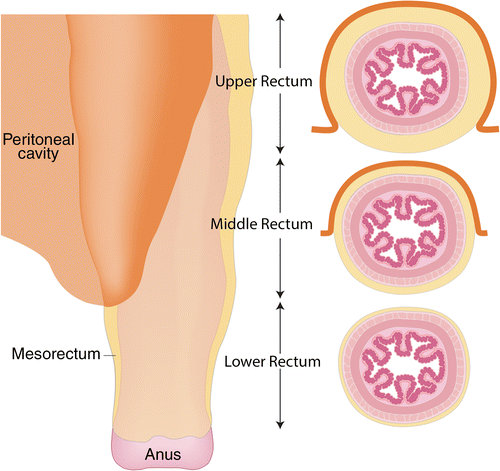 “ISR rectal cancer surgery is generally considered a safe and effective treatment option, as it allows the surgeon to remove the cancerous tissue while preserving the function of the anus and the sphincter muscles that control bowel movements,” he further explains. Low rectal cancer is located within 6 cm of the anal verge. Treating this type of cancer is difficult due to its position and requires careful assessment and discussion. Now, surgeons replace APR with ISR surgery, a procedure that keeps the sphincter intact and lowers the likelihood of permanent colostomy. ISR coupled with neoadjuvant therapy is becoming more and more accepted for low [rectal cancer](https://drsandeepnayak.com/services/rectal-cancer-treatment-in-bangalore). [Dr. Sandeep Nayak](https://drsandeepnayak.com/professional/dr-sandeep-nayak) is an expert in laparoscopic and [robotic surgery](https://drsandeepnayak.com/services/robotic-cancer-surgery-for-unparalleled-precision). He has performed for than 300 low anterior resection rectal cancer surgery using ISR. He is also the Founder of MACS Clinic, an exclusive centre for advanced cancer surgery. **How is ISR beneficial for very low rectal cancer?** There are several benefits to ISR surgery for very low rectal cancer - Preservation of anal function: ISR surgery is designed to remove the cancerous tissue while preserving the function of the anus and the sphincter muscles. This can help to reduce the risk of incontinence and other complications that can occur after surgery. - Allows shorter hospital stay: Depending on the specifics of the case, ISR may be associated with a shorter hospital stay compared to other surgical approaches. - Better cosmetic results: As ISR rectal cancer surgery is a less invasive surgical option, it can result in better cosmetic results and a faster recovery. - Improved quality of life: By preserving the function of the anus and the sphincter muscles, ISR surgery can help to improve the patient’s quality of life. Overall, ISR surgery is generally considered to be a safe and effective treatment option fro very low rectal cancer. It is important to discuss the potential risks and benefits of ISR surgery with an expert surgical oncologist to determine the best treatment plan for your specific situation. “ISR surgery is not a suitable treatment option for all people with very low rectal cancer,’ explains Dr. Sandeep Nayak, a highly experienced surgical oncologist in India. “The decision to proceed with ISR will depend on a variety of factors, including the size and stage of cancer, the overall health of the patient, and the surgeon’s preference. A thorough evaluation by a colorectal surgeon is necessary to determine the most appropriate treatment plan.” Types of Intersphincteric Resection Treatment for rectal cancer typically involves surgery to remove the cancerous tissue and chemotherapy and radiation therapy to kill any remaining cancer cells. The type of surgery and other recommended treatments will depend on the stage and location of the cancer and the patient’s overall health. ISR surgery helps preserve the anus in around 90 percent of patients with low rectal cancer, thereby avoiding a permanent stoma. **There are different types of ISR surgery, such as:** ### **Total ISR –** This procedure is performed if the tumor has advanced past the dentate line. During this procedure, the internal sphincter is completely removed, leaving the intersphincteric groove as the resection’s distal limit. ### **Subtotal ISR –** A subtotal ISR is conducted in cases where the tumor’s distal edge is more than 2 cm distant from the dentate line, thereby obtaining the distal resection margin between the dentate line and the intersphincteric groove. ### **Partial ISR –** Distal or partial resection is ideally conducted at or above the dentate line if sufficient distal surgical margin is present. ### **Outlook** *Image Source: https://europepmc.org/article/med/29184472*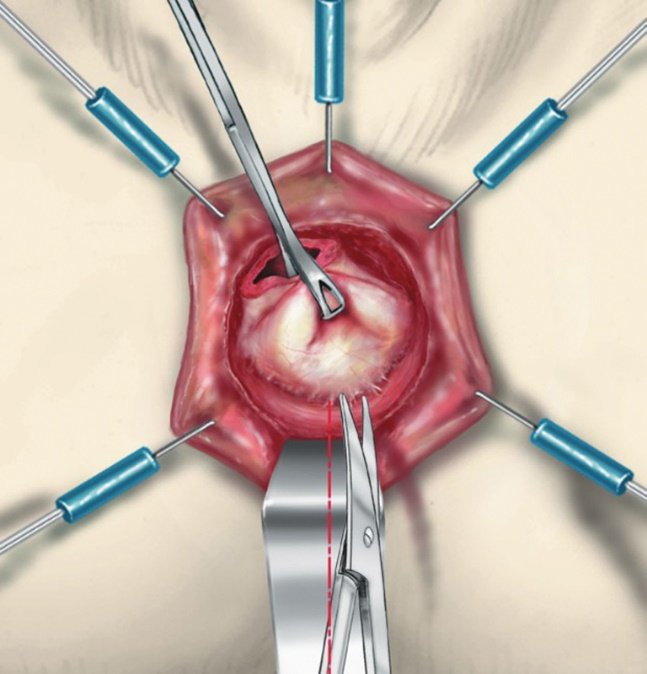 Compared to [abdominoperineal resection](https://my.clevelandclinic.org/health/treatments/3897-laparoscopic-abdominoperineal-resection-basic-surgical-steps), intersphincteric resection (ISR) is an ideal anus-sparing treatment option for low rectal cancer. Robotic ISR allows excellent vision, efficient traction for careful pelvic dissections, and optimal hemostasis during levator-sphincter dissection. Compared to the open surgical approach, the robotic approach efficiently allows for anus-preserving resection in patients with low rectal tumors. However, to perform this intricate surgery, you need an expert surgical oncologist who has an in-depth understanding of the deep pelvic anatomy and careful patient selection. If you seek detailed information about ISR low anterior rectal resection, consult a surgical oncologist in India with vast experience in performing this surgery. Frequently Asked Questions **When is low anterior resection done?** Low anterior resection (LAR) is a surgical procedure to remove a portion of the rectum. It is typically done to treat cancer or other conditions that affect the lower part of the colon and rectum. **What is R1 resection in rectal cancer?** R1 resection involves removing the rectum’s cancerous portion and a small margin of healthy tissue around it. The goal of the surgery is to remove as much cancer as possible while minimizing the risk of recurrence. **Is surgery always necessary for rectal cancer?** Surgery is often a necessary part of treatment for rectal cancer. The specific type of surgery recommended will depend on the stage and location of cancer, as well as the patient’s overall health and preferences. **What is low rectal carcinoma?** Rectal carcinoma is a type of cancer that affects the rectum, which is the final portion of the large intestine that connects the colon to the anus. Low rectal carcinoma refers to cancer located in the lower part of the rectum, closer to the anus. **Categories:** Blog --- ### [Fighting Colon Cancer With The Latest Advanced Treatments](https://drsandeepnayak.com/blogs/fighting-colon-cancer-with-the-latest-advanced-treatments/) **Published:** July 12, 2022 **Author:** Dr. Sandeep Nayak **Content:** Colon cancer is the third most common cancer in India. It occurs in the large intestine or rectum, the lower part of your digestive system. Until some years ago, colon cancer was considered the second most fatal cancer. Fortunately, in the last few years, medical science has made many new advancements in the detection and treatment of colon cancer that have greatly improved the prognosis for colon cancer patients. 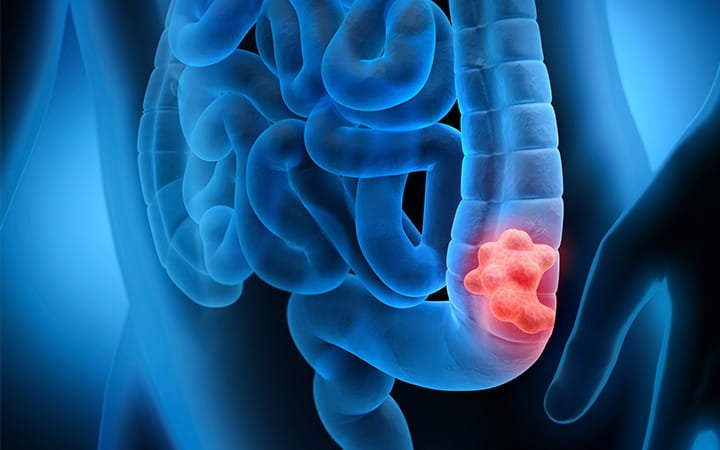 Dr. Sandeep Nayak, one of the [best oncologist in India,](https://drsandeepnayak.com/services/best-oncologist-in-india) explains that newer techniques like less invasive procedures help manage colon cancer better, providing more effective results. He is the Chairman – Oncology Services, Karnataka, India, and Executive Director – Surgical Oncology and Robotic Surgery, KIMS Hospital, Bangalore. He specializes in treating head and neck cancer, colorectal cancer, breast cancer, urinary tract cancer, digestive tract cancer, abdominal cancer, and gynecologic cancer. This article will discuss surgical advancements that have revolutionized colon and [rectal cancer treatment in Bangalore](https://drsandeepnayak.com/services/rectal-cancer-treatment-in-bangalore). Symptoms You may not experience any symptoms in the early stage. Further, they may vary according to the size and location of the tumor in your intestine. The symptoms include: - Blood in the stool - Rectal bleeding - The constant change in your bowel movement and consistency of your stool - Continuous discomfort in the abdomen, like pain, cramps, or gas - Unexplained weight loss - Fatigue and weakness - Unable to empty your bowels completely Dr. Sandeep Nayak, an experienced cancer specialist in Bangalore, recommends contacting a doctor as soon as possible if you notice any persistent symptoms.It will help in early diagnosis and timely treatment. Advancements in colon & rectal cancer treatment in Bangalore ### **1. Early detection** One of the main reasons for the decrease in the death rate of colorectal cancer is early detection, apart from new and advanced [colon cancer](https://drsandeepnayak.com/services/colon-cancer) treatments. Diagnosing cancer in stage 1 has a survival rate of about 90% after five years compared to diagnosing it at stage 4 where the survival rate is around 14%. There are several tests that help detect colon cancer at an early stage or can tell if you are susceptible to developing it. **Tests include:** - Fecal occult blood test - Virtual colonoscopy - Colonoscopy - Flexible sigmoidoscopy - Fecal immunochemical test - DNA testing While performing colonoscopy, if abnormal growths or polyps are seen inside your colon, the doctor will remove them to check whether they are cancerous or not. You should start screening for colon cancer at 50 years of age or earlier if you are at risk of it. Early detection offers a higher chance of stopping cancer from becoming metastatic. ### **2. Minimally invasive surgery** Over the years, surgical techniques for colon cancer treatments have continued to evolve, and newer methods are being developed. Advanced procedures for early-stage colon cancer are: Your content goes here. Edit or remove this text inline or in the module Content settings. You can also style every aspect of this content in the module Design settings and even apply custom CSS to this text in the module Advanced settings. ### **A. Endoscopic surgery** In an early stage, colon cancer is in the form of a polyp or a small tumor. Your doctor can easily treat it with an endoscopic procedure. They will use a probe to examine inside your colon and remove the entire tumor with special instruments. ### **B. TAMIS** Transanal minimally invasive surgery (TAMIS) is one of the latest laparoscopic procedures that helps remove small rectal tumors. Latest surgeries for advanced colon cancer To treat large tumors that have exceeded the bowel wall, the doctor will choose a procedure that is best suited to treat your cancer. Newer surgical techniques are better equipped to allow the surgeon to remove the tumor entirely, thereby minimizing the risk of recurrence. Dr. Sandeep Nayak is a prominent [surgical oncologist in India](https://drsandeepnayak.com/) specializing in advanced surgical techniques, including laparoscopic, endoscopic, and robotic cancer surgeries. ### **i. Laparoscopic colon resection surgery** The surgeon makes small incisions to remove the tumor and the affected lymph nodes. ### **ii.** [**Intersphincteric resection**](https://drsandeepnayak.com/blogs/is-isr-surgery-beneficial-for-very-low-rectal-cancer) **(ISR)** It is a highly advanced procedure for low [rectal cancers](https://drsandeepnayak.com/case-study/revolutionizing-rectal-cancer-care-new-treatments-bring-hope/) found in the last 14 centimeters. ISR, which can be done either laparoscopically or robotically, eliminates the need for permanent stoma in about 90% of the patients. It helps preserve the sphincter and bowel continuity. Dr. Sandeep Nayak is one of the best oncologist in Bangalore, having years of expertise in minimally invasive procedures. ### **** ### **iii. Rectal cancer surgery** Another advanced approach for rectal cancer is where the surgeon removes more fatty tissues surrounding the tumor. This helps to reach all the affected [lymph nodes](https://www.cancer.org/treatment/understanding-your-diagnosis/lymph-nodes-and-cancer.html), thereby reducing the chances of recurrence. ### **iv. Advanced robotic surgery** [Robotic surgery](https://drsandeepnayak.com/services/robotic-cancer-surgery-for-unparalleled-precision) allows the surgeon to operate on areas that are hard to reach. Further, the robotic system provides unparallel precision and accuracy, which help in better outcomes. Outlook Minimally invasive treatments have many advantages, such as shorter hospital stays, less severe side effects, and quicker recovery. However, only an expert surgeon who is well-trained in these advanced procedures can perform minimally invasive surgery. So be sure to consult an experienced surgical oncologist in India to find the most appropriate treatment option for you. **Categories:** Blog --- ### [Connection Between Smoking and Lung Cancer](https://drsandeepnayak.com/blogs/connection-between-smoking-and-lung-cancer/) **Published:** July 19, 2022 **Author:** Dr. Sandeep Nayak **Content:** We all know that smoking is injurious to health. But did you know that smoking is the number one cause of lung cancer? Yes, that’s the fact. Around 80 to 90% of lung cancer are related to cigarette smoking. However, not all smokers will get lung cancer, but it does increase your chances of getting one by fifteen to thirty percent compared to non-smokers. Dr. Sandeep Nayak, a leading [surgical oncologist in India](https://drsandeepnayak.com/), explains that tobacco smoke exposes you to around 7000 toxic chemicals, of which 70 can cause cancer. Apart from lung cancer, smoking can cause cancer of the bowel, mouth, and throat. His extensive knowledge and mastery of the latest surgical modalities have made Dr. Sandeep Nayak one of the best oncologist in Bangalore. Currently, he is the Chief of Surgical Oncology, MACS Clinic, and Chairman – Oncology Services, Karnataka, India \| Executive Director – Surgical Oncology and Robotic Surgery, KIMS Hospital, Bangalore If you are a smoker or living with a smoker, then this article will surely help you understand the connection between lung cancer and smoking and why it is essential that you stop smoking. Check out the facts regarding smoking and cancer. - One out of eight cancer cases are due to smoking. - Approximately 22% of cancer death is caused by tobacco. - Lung cancer causes the most amount of cancer deaths. Approximately 1.76 million people die each year due to lung cancer. - Cigarette smoking is the number one reason for disability, preventable disease, and death worldwide. - Smoke from tobacco exposes you to 70 chemicals known to cause cancer. - Around 90% of lung cancer is connected to smoking. - You can minimize the risk of getting lung cancer by 30 to 50% within 10 years of quitting smoking. Dr. Sandeep Nayak, an acclaimed cancer specialist for [lung cancer treatment in Bangalore](https://drsandeepnayak.com/services/lung-cancer-treatment-in-bangalore), urges people to stop smoking. He regularly holds camps and seminars to make people aware of the dangers of smoking. He feels it is never too late to quit. **Read on to understand,** How your risk of lung cancer increases with smoking? As mentioned earlier, thousands of chemicals enter your lungs when you inhale tobacco smoke. Quite a few of them have the ability to harm the DNA present in your lung cells. The body tries to restore the damage done by these chemicals, however in the long run, the body cannot cope with the damage done by smoking.This can result in the development of cancer cells. Constant breathing in tobacco smoke can even harm the alveoli, the minute air sacs that manage the gas exchange in your respiratory system. They supply oxygen to your blood and throw out carbon dioxide when you exhale. Long-term damage to the alveoli can eventually result in chronic obstructive pulmonary disease. Does your risk of lung cancer increase due to secondhand smoke? The second most factor to cause lung cancer is secondhand smoke. Thousands of people die due to prolonged exposure to secondhand smoke. It significantly increases the risk of developing lung or breast cancer in women who are non-smokers. Society is aware of the hazards of secondhand smoke, and many rules and regulations are being formulated to prohibit indoor smoking. You will come across many public places and restaurants that do not allow indoor smoking or have a different section for smokers. Are e-cigarettes safe? The battery-operated e-cigarettes replicate the traditional cigarette by producing smoke and delivering nicotine. There is not much research available about the long-term effects of e-cigarettes as they are relatively new. However, some studies show that e-cigarettes deliver a few cancer-causing chemicals, though in less amounts than the original cigarettes. Further, overheating the liquid in e-cigarettes can produce formaldehyde, a cancer-causing chemical. Dr. Sandeep Nayak, one of the[ best oncologist in India](https://drsandeepnayak.com/services/best-oncologist-in-india), urges people not to use e-cigarettes. It poses several risks, such as getting bronchiolitis obliterans, a severe lung condition, or delivering heavy metals such as tin or lead. Moreover, most e-cigarettes have nicotine which is highly addictive and can impede brain development in teenagers. Ways in which your health can improve by quitting smoking? When you stop smoking, not only does your chances of developing [lung cancer](https://drmanishoncology.in/new-cancer-treatments-for-lung-cancer/) decreases, but it also improves your overall health. **Some of the advantages of quitting smoking are:** - Improves heart functions and circulation - Decreases heart rate and blood pressure - Decreases coughing and shortness of breath - Minimizes the risk of pregnancy issues and impotence - Reduces the chance of premature birth, miscarriage, or low birth weight - Lowers the potential risk of bladder, pancreatic, cervix, esophagus, throat, and mouth cancer What are the other risks factors that can cause lung cancer? About 10 to 15% of patients with lung cancer have no smoking history. Other factors that increase the chances of lung cancer other than smoking are: - Family history of lung cancer - Prior [radiation treatment](https://www.mayoclinic.org/tests-procedures/radiation-therapy/about/pac-20385162) in the chest area - Air pollution - Exposure to asbestos or radon gas - Exposure to certain chemicals like arsenic, chromium, diesel exhaust, or silica Dr. Sandeep Nayak, a highly experienced surgical oncologist in India, says that lung cancer cases in young people are increasing, and more than 30000 new cases in people below 50 years are reported yearly. However, giving up smoking allows the body to heal. So, make an effort to quit smoking and give life a chance. If you have been a heavy smoker for a long time, it is better to get yourself checked. You can visit a specialist in lung cancer treatment in Bangalore for accurate diagnosis and ways to minimize lung cancer risk. **Categories:** Blog --- ### [Why is it necessary to stage esophageal cancer?](https://drsandeepnayak.com/blogs/why-is-it-necessary-to-stage-esophageal-cancer/) **Published:** September 20, 2022 **Author:** Dr. Sandeep Nayak **Content:** Esophageal cancer, also called cancer of the food pipe, occurs in the tube connecting the stomach and throat. It is aggressive cancer having a poor prognosis compared to other cancers of the gastrointestinal tract. Dr. Sandeep Nayak, one of the best [surgical oncologist in India](https://drsandeepnayak.com/), states that patients have a better chance of survival if the cancer is detected in the very early stage. That’s why he encourages people to be aware of the sign and symptoms of esophageal cancer, which include: - Difficulty in swallowing - Chest pain in the centre - Heartburn or indigestion - Food coming back up after swallowing - Persistent cough - A feeling of something stuck in the throat If you experience any of the above symptoms, please consult your doctor as soon as possible. Dr. Sandeep Nayak is a prominent oncologist for [esophageal cancer treatment in Bangalore, India](https://drsandeepnayak.com/services/stomach-cancer-and-esophageal-cancer). Currently, he is the Chairman – Oncology Services, Karnataka, India and Executive Director – Surgical Oncology and Robotic Surgery, KIMS Hospital, Bangalore He specializes in the latest surgical modalities such as laparoscopic, robotic, and endoscopic, which provide unmatched accuracy and precision in treating hard-to-reach constricted places such as the esophagus. In this article, we will focus on how esophageal cancer is staged and graded as your treatment option, and the chance of recovery depend on it. Purpose of esophageal cancer staging Dr. Sandeep Nayak, a renowned [cancer specialist in Bangalore, India](https://drsandeepnayak.com/professional/dr-sandeep-nayak), explains that cancer is staged in order to determine its location, size, and whether it has spread or impacted other areas of the body. After you complete all your diagnostic tests, staging will be done. The stage will be from 0 to 4, with 0 as the precancer stage and 4 as the most advanced stage. Doctors will use this information to determine the best treatment course and predict the patient’s prognosis. Which tests are performed to determine the staging of esophageal cancer? **To determine the stage of cancer, you will have to undergo the following tests:** - Blood tests - Ct scan - Ultrasound - MRI - PET scan - Biopsy An essential part of diagnosis and staging is assessing the extent to which cancer has spread. The endoscopic ultrasound, also called endosonography, is necessary for staging[ esophageal cancer](https://drsandeepnayak.com/blogs/is-esophageal-cancer-curable). To observe and collect samples from the esophagus, the doctor passes a tube with light through the mouth. The doctor can use the tube’s tip to do an ultrasound on the affected area. The computer creates an image by analysing how the high-energy sound waves that penetrate the tissues bounce back. In addition to this test, the doctor may ask you to undergo thoracoscopy to collect samples of the lymph nodes and surrounding areas. In this endoscopic procedure, a small incision is made between the ribs to insert a tube containing a camera, light, and equipment to take samples of the esophagus, chest lymph nodes, and lungs. What are the TNM grading and staging system? Once the samples of the tumor are collected, the pathologist analyses them under the microscope using special dyes to highlight the cells’ structure. The grade is determined by comparing the cancer cells with the surrounding healthy cells. The grading will depend on the appearance and the rate of growth. The stage of cancer is assessed using the finding of the diagnostic scans and tests. Doctors usually use the TNM system to describe the stage. The doctor will give a score of 0 to 4 for each letter depending on the severity of cancer. 0 indicates cancer is not present, whereas 4 means it has spread extensively. **TNM stands for:** - **T for tumor:** It indicates how extensive the cancer is and how much it has grown into the esophageal wall and surrounding tissues. - **N for nodes:** This indicates whether the cancer has spread to the lymph nodes and how many have been affected. - **M for metastasis:** It specifies if cancer has spread to other organs. The stage of cancer is determined on the basis of the TNM system along with the type of cancer, grade, and location (upper, middle, or lower part of the esophagus). - **Stage 1 –** The cancer is localized. It is still only present in the inner layer of the esophagus. - **Stage 2 –** Cancer has penetrated deeper into the layers of the esophageal and may have spread to the lymph nodes. - **Stage 3 –** Cancer has reached the nearby lymph nodes and possibly the nearby organs and tissues. - **Stage 4 –** Cancer has metastasized to distant organs and parts of the body. Resectable or unresectable cancer Dr. Sandeep Nayak, a leading oncologist for esophageal cancer treatment in Bangalore, further states that along with staging, the doctor will also mention whether there is scope for surgery to remove the tumor. Resectable cancer means the surgeon can remove cancer from the esophagus, whereas unresectable cancer means it won’t be possible to remove the tumor with surgery successfully. Surgery is possible for stages 0, 1, or 2. However, the patient has to be healthy enough to undergo the procedure. Unresectable cancers have mainly spread to nearby organs such as the spine, airway, or [aorta](https://www.webmd.com/heart/picture-of-the-aorta). They are hard to treat as surgery is not an option. Outlook Esophageal cancer staging helps the doctor plan the most appropriate treatment for you. No doubt, being diagnosed with cancer can be traumatic and daunting, but remember, medical science has advanced tremendously, and treatments are available. Dr. Sandeep Nayak, a highly passionate and experienced oncologist in Bangalore, India, is known to provide advanced minimally invasive esophageal cancer treatment to patients from all over the globe. **Categories:** Blog --- ### [Useful Tips For Early Detection of Breast Cancer](https://drsandeepnayak.com/blogs/useful-tips-for-early-detection-of-breast-cancer/) **Published:** November 23, 2022 **Author:** Dr. Sandeep Nayak **Content:** In India, breast cancer is the most common cancer among women, with one woman getting diagnosed every 4 minutes and one dying of it every 8 minutes. The statistics are scary. The good news is breast cancer can be cured if diagnosed and treated early. The 5-year survival rate for treatment in an early stage is 99%. That’s the main reason Dr. Sandeep Nayak, a world-acclaimed [surgical oncologist in Bangalore](https://drsandeepnayak.com/), stresses the need for breast cancer awareness among people. He is the Chairman – Oncology Services, Karnataka, India, and Executive Director – Surgical Oncology and Robotic Surgery, KIMS Hospital, Bangalore. He is considered a leading oncologist for [breast cancer treatment in Bangalore](https://drsandeepnayak.com/services/breast-cancer-treatment), India, for his vast experience, astute diagnosis, and exceptional surgical skills. He firmly believes that women must get screened regularly for early detection, which is the key to successfully treating cancer. Further, they must carry out self-examination at home every month. It’s high time women stop ignoring their health. Dr. Sandeep Nayak offers advice on identifying breast cancer in its earliest stages.Continue reading to learn more about the early warning signs of breast cancer and how to protect your health by following the tips. What are the signs and symptoms of breast cancer? **While doing a self-exam at home, you should look out for the following signs:** - Lumps - Change in skin texture, like extremely dry, scaly, or sunburned - Nipple discharge - Swelling and redness around the breasts - Dimpling of skin - Inverting of nipples - Crusting or rashes around the areola and nipples - Lymph node changes **Now that you know the initial symptoms of breast cancer let’s move forward to understand how to detect breast cancer early on.** Perform regular self-exam Dr. Sandeep Nayak, one of the best cancer specialist in Bangalore, strongly advises women to perform monthly self-exams and check for any changes in the breast. Doing it regularly will make them more attentive to any potential warning signs. **Steps for breast self-examination:** - Stand before a mirror and look at your breasts. Pay close attention to any potential skin texture anomalies, such as dimpling, creases, or other irregularities. - Then look for any changes in the texture of your skin or any discharge as you raise your arms above your head. - Further, check for any evident lumps with a firm, smooth touch while resting on your back or in the shower. Don’t forget to pay attention to the area under your arms. If you notice a change or lump in the breast which wasn’t present earlier, please get it examined by a doctor as soon as possible. It may just be a benign cyst or lump, but it is always better to be cautious. Being aware of your risks and family medical history Knowing your family’s medical history is crucial for determining your breast cancer risk. Family history includes first-degree relatives, your parents and siblings, and second-degree relatives, your aunts and cousins. A woman’s risk significantly increases if her family has a history of the disease.According to some research, your risk doubles if your parents or siblings have breast cancer. Remember to discuss your family history of breast cancer with your doctor, so they know the possibility of hereditary concerns. Accordingly, they may advise you about regular screening and a healthy lifestyle. Go for regular check-ups. Women should visit their doctor for an annual health check-up, which usually includes a breast exam, routine pelvic exam, and pap test. During the examination,make it a point to discuss your health issues, family history, and healthcare options with your doctor. However, immediately consult your doctor without waiting for your annual check-up if you notice a lump or other breast cancer-related signs. When to start getting a mammogram For early breast cancer detection, mammograms are essential. This non-invasive techniquecan identify cancer three years before you feel a lump. Your age and medical history will determine how often you should have a mammogram. Dr. Sandeep Nayak, a prominent oncologist for breast cancer treatment in Bangalore, recommends that women above 40 should get a mammogram done every two years. However, if you are below 40 and have a family history of breast cancer, talk to your doctor about it. He will plan your screening schedule depending on your risk factor. Consultation with the doctor after screening **If your mammogram results show up some abnormalities, your doctor may suggest added tests, such as:** - Ultrasound - MRI - Biopsy Please do not panic about the abnormal mammogram result as it may be due to a benign tumor or cyst, which are quite common. And if breast cancer is detected, then be assured that many treatment options are available. Women have a better chance of overcoming [breast cancer](https://drsandeepnayak.com/blogs/what-should-be-post-surgery-breast-cancer-care) with early detection, diagnosis, and treatment. Dr. Sandeep Nayak, a leading oncologist in Bangalore, says that India is at the forefront of advanced cancer treatments. We have the latest medical technology and expertise that is on par with the best medical centres in the world. He has successfully treated thousands of breast cancer patients with advanced surgical modalities, including laparoscopic, [robotic](https://drsandeepnayak.com/services/robotic-cancer-surgery-for-unparalleled-precision), and endoscopic surgeries. These minimally invasive surgeries offer unparallel surgical precision, less trauma, quicker recovery, minimum complication, and faster return to a normal lifestyle. **Categories:** Blog --- ### [Robotic Cancer Surgery – A Revolutionary Approach](https://drsandeepnayak.com/blogs/robotic-cancer-surgery-a-revolutionary-approach/) **Published:** February 23, 2023 **Author:** Dr. Sandeep Nayak **Content:** Being diagnosed with cancer really hits one hard. To fully grasp the situation is challenging for the patient and their family. In such a situation, it becomes necessary to understand the severity of the condition and the best treatment options available before making a decision. Surgery is an integral part of cancer treatment, which is constantly evolving, and the latest surgical approach that has revolutionized cancer treatment is robotic surgery. Robotic surgery aids surgeons in carrying out complex surgical procedures with unrivalled precision, increased flexibility, and better control than conventional surgery. Dr. Sandeep Nayak, an acclaimed [surgical oncologist in India](https://drsandeepnayak.com/), is a pioneer in laparoscopic and robotic surgery in the country. He has successfully treated thousands of patients with [robotic cancer surgery in Bangalore, India](https://drsandeepnayak.com/services/robotic-cancer-surgery-for-unparalleled-precision). He has been at the forefront of providing exceptional treatment options to his patients by researching and adopting the latest medical techniques and technology. Dr. Sandeep Nayak is the Founder of [MACS Clinic](https://macsforcancer.com/macs-clinic/), an exclusive centre for minimally invasive cancer surgery, and Chairman – Oncology Services, Karnataka, India \| Executive Director – Surgical Oncology and Robotic Surgery, KIMS Hospital, Bangalore Read on to learn about robotic surgery, its benefits, and the types of cancer that can be treated by it. Robotic surgery – A brief overview Robotic surgery has completely changed the way surgery is performed. The conventional surgical approach is associated with large incisions, slow recovery, and delayed return to routine activities. Even laparoscopic surgery, a safe and effective treatment option for some cancers, has drawbacks, including instruments with limited motion, 2-dimensional images, and relying on a trained assistant to hold the camera. In comparison, robotic cancer surgery provides the surgeon with high-definition, magnified 3-dimensional vision. The surgeon can access difficult-to-reach malignancies and work at angles that are impossible with open or laparoscopic instruments because of the high degree of freedom provided by the Endo-wristed devices. A higher level of precision is possible because of motion scaling, which allows the surgeon to reduce the amount of instrument movement compared to finger movement. Furthermore, robotic techniques allow the surgeon to perform the radical operation while preserving critical structures and nerves due to better visualization and access to hard-to-reach places, thus providing patients with excellent outcomes and better quality of life. Dr. Sandeep Nayak, one of the best oncologist in India, always discusses the advantages of minimal access surgery, including robotic surgery, with his patients, so that they can make an informed decision. What are the benefits of robotic surgery? - Improved clinical outcome - Lesser pain - Reduced blood loss - Lower risk of postoperative complications - Shorter hospital stays - Less scarring - Quicker recovery - Better quality of life Which cancers can be treated with robotic surgery? Dr. Sandeep Nayak, an experienced surgical oncologist, provides robotic cancer surgery in Bangalore, India, for the following cancers: ### 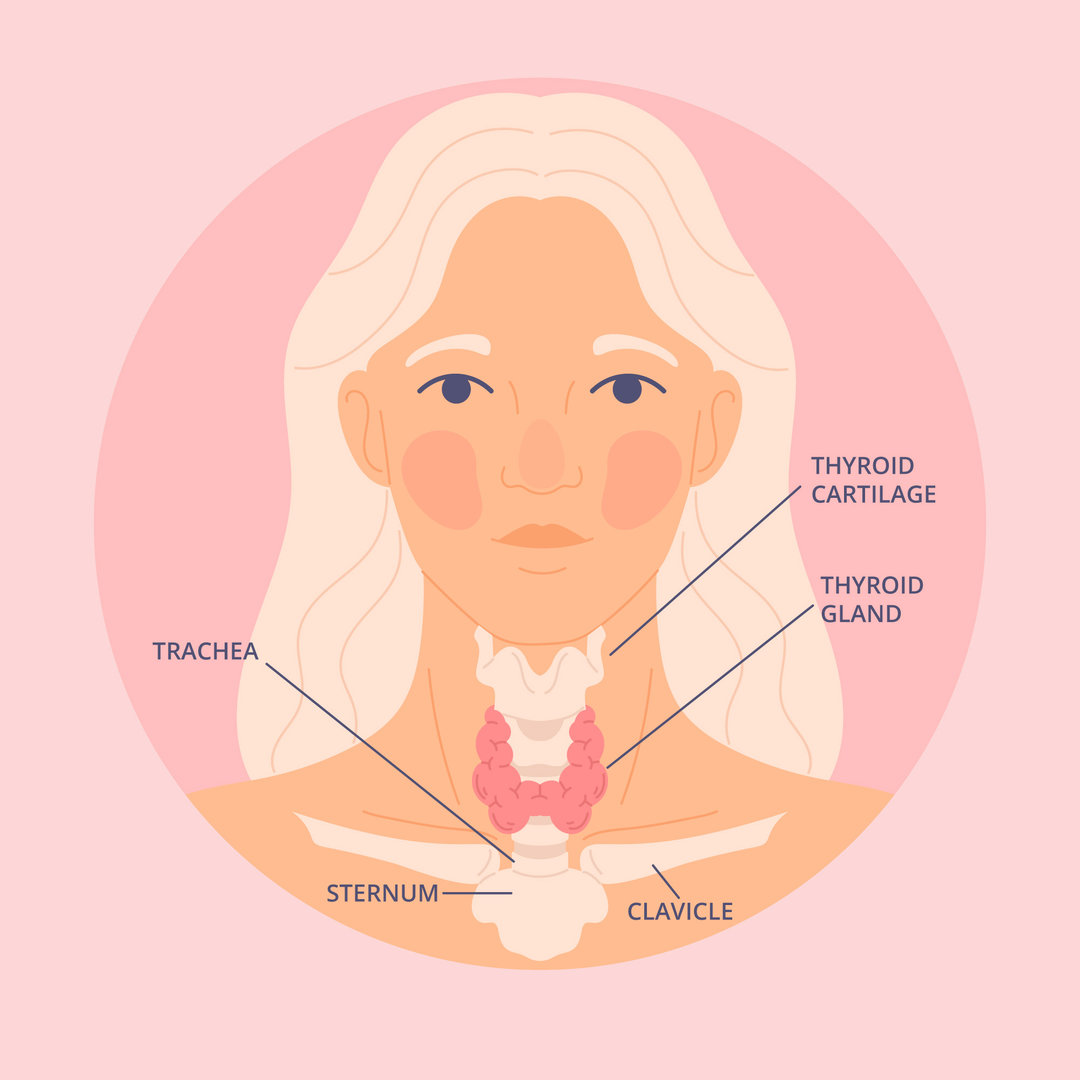**Head and neck cancer** Dr. Sandeep Nayak uses advanced robotic surgical approaches such as TORS to address challenging head and neck cancers. It is specially used to treat tongue, throat, and tonsil cancer. [Transoral Robotic Surgery](https://drsandeepnayak.com/services/tors-trans-oral-robotic-surgery) (TORS) is a minimally invasive robotic procedure that is done through mouth opening. No external incisions are necessary. On the other hand, traditional open surgery necessitates extensive incisions across the throat and jaw, which frequently leave patients with noticeable scars, difficulties in breathing or swallowing, and a long recovery. ### **Colorectal cancer** [Colorectal cancer](https://drsandeepnayak.com/services/colon-cancer) surgeries are primarily complex and intricate, so robotic and laparoscopic surgical modalities are mostly preferred. Dr. Sandeep Nayak is an expert in [robotic intersphincteric resection](https://drsandeepnayak.com/blogs/is-isr-surgery-beneficial-for-very-low-rectal-cancer) (ISR) for low rectal cancers, which helps preserve the anus and avoid permanent stomas in 90% of patients. ### **Thyroid cancer** RABIT (Robotic-Assisted Breast Axillo Insufflate Thyroidectomy) is an alternative to open thyroid surgery. Dr. Sandeep Nayak, a leading surgical oncologist in India, developed this cutting-edge robot-assisted surgical technique for treating [thyroid cancer.](https://drsandeepnayak.com/services/thyroid-cancer-treatment-in-bangalore) Till date, he has performed 500 plus surgeries using this method, which offers better clinical outcomes with fewer complications.  ### **Gynecologic cancers** Robotic surgery is a well-established treatment option for several gynecological malignancies, including [ovarian cancer](https://drsandeepnayak.com/services/ovarian-cancer), cervical cancer, fallopian tube cancer, and endometrial cancer. ### **Urologic cancer** Robotic surgery is a standard surgical technique for treating urologic tumors such as prostate, penile, bladder, and [testicular cancer](https://drsandeepnayak.com/services/testicular-cancer). One procedure that has benefitted the most with robotics is [radical prostatectomies](https://www.webmd.com/prostate-cancer/guide/prostate-cancer-radical-prostatectomy), which is 100% performed robotically by Dr. Sandeep Nayak. ### **Thoracic cancer** The surgeon uses minimally invasive, robotic surgery to treat mediastinal (middle chest) malignancies such as thymus, [esophageal](https://drsandeepnayak.com/blogs/why-is-it-necessary-to-stage-esophageal-cancer), and lung cancer, as it helps to treat hard-to-reach cancer while sparring the nerves and other organs. How to choose the right surgeon? If you are planning to undergo robotic cancer surgery, you should follow the necessary steps: - Be sure to choose the right surgeon with extensive experience performing the type of procedure you are looking for. - Ask in detail about the procedure and its side effects, as it will help you set realistic expectations. - If you have any concerns regarding the robotic procedure, talk it out with your surgeon. He will be the right person to clear your doubts and explain why this procedure is the best option for you. Considering how quickly and frequently the most recent advancements in cancer surgery evolve, it is important to ensure you have all the knowledge you need to make the best choice possible. **Categories:** Blog --- ### [Tips To Reduce Your Risk Of Colorectal Cancer](https://drsandeepnayak.com/blogs/tips-to-reduce-your-risk-of-colorectal-cancer/) **Published:** April 29, 2022 **Author:** Dr. Sandeep Nayak **Content:** Everyone knows that maintaining a healthy weight is essential for their heart and overall health. But did you know that a healthy weight can also lower your risk of certain cancers? You can increase your chances of beating colorectal cancer by reducing your risk of getting it. Dr. Sandeep Nayak, an eminent [surgical oncologist](https://drsandeepnayak.com/) in India, says that reducing your risk of developing colorectal cancer begins with better gut health. Living a healthy lifestyle is one of the best things you can do to prevent colorectal cancer. Read on and learn tips to reduce the risk of getting colorectal cancer. What is colorectal cancer (CRC)?  Colorectal cancer occurs when the healthy cells in your colon or rectal lining change and start to grow out of control, resulting in a tumor. Tumors can be malignant (cancerous) and spread to other areas of your body or benign (non–cancerous), which means they can grow but not spread. It usually takes years for these changes to manifest. CRC is the 3rd highest cause of cancer-related deaths in men and women globally and affects more than 5.20 million people worldwide (5-year prevalence), which is only lower than breast cancer, affecting over 7.70 million people. Although there are several healthy lifestyle choices you can make, certain behaviors are known to be more effective than others in reducing your risk of colorectal cancer. Maintain a healthy weight Obese people are about 30% more likely than normal-weight people to get colorectal cancer. A higher BMI is linked to an increased risk of colon and rectal cancer in both genders, but the chances are greater in men. Be Active Inactivity can increase your risk of colorectal cancer by as much as 28 %. That is because inactivity is associated with a higher risk of obesity, increasing your risk of colorectal cancer. If you want to lower your risk of developing colorectal cancer, it is crucial that you make exercise a part of your routine. Limit Red Meat Red meat is one of the highest-risk foods for colorectal cancer. A study in the Journal of Nutrition shows that men who ate red meat more than twice a week had a 62 % higher risk of developing colorectal cancer than those who ate red meat less than once a week. This supports other studies showing that eating red meat may increase your risk for colorectal cancer by 50 %. If you are worried about your health and want to lower your risk for colorectal cancer, limit your intake of red meat. Limit Processed Foods Processed foods are not always healthy. Processed foods contain many unhealthy ingredients that cause inflammation, which can lead to colorectal cancer. The most common processed foods are sugar-sweetened sodas and desserts, salty snacks, fast food, and refined grains. You could also try cutting out processed meats from your diet and replacing them with plant-based proteins like tofu, beans, or nuts. Processed meats are the ones that are smoked, cured, salted, or chemically preserved, such as bacon, hot dogs, bologna, ham, and packed lunchmeat. Keep Up With Your Fruits and Veggies There is no better way to lower your risk of developing colorectal cancer than by increasing your fruit and vegetable intake. Studies show that people who eat more fruits and vegetables have lower rates of colon cancer. Eating fruits and vegetables rich in fiber can lower your risk for colorectal cancer by up to 40%. Fiber helps ensure that waste stays in your gut and keeps things moving along nicely while also helping reduce inflammation in the intestines. Increasing your intake of fruits and vegetables can help improve digestion and prevent constipation or diarrhea. Dr. Sandeep Nayak, among the leading [cancer specialists](https://drsandeepnayak.com/services/expertise) in Bangalore, adds that colorful fruits and veggies contain phytochemicals, natural substances that may aid in blocking the growth of cancer cells. Make Time for Relaxation The American Cancer Society recommends making time for relaxation and not just exercising. Taking the time to relax can help you lower stress and lower your risk of developing colorectal cancer. Meditation is a great way to relax. You can also try yoga or deep breathing for a few minutes throughout the day. Quit Smoking Consider quitting if you smoke more than a pack a day or have other health risks like heart disease, diabetes, or high cholesterol. Just 1 cigarette a day increases your risk of colorectal cancer by 5 %. If you quit smoking, it can reduce your risk of getting colorectal cancer by at least 50 %. Reduce Your Alcohol Consumption Regular, heavy alcohol consumption can harm your liver, causing inflammation and scarring, and may contribute to the increased risk of liver cancer. A drink once in a while does not appear to increase your risk of colon cancer. However, if you are a moderate to heavy drinker (2 – 3 glasses per day), you can increase the odds of getting it by 20%, and excessive drinking can increase your risk by 40%. If you drink more than 3 drinks per day regularly, speak with Dr. Sandeep Nayak, an acclaimed [surgical oncologist](https://drsandeepnayak.com/services/uterus-cervical-cancer) in India, about getting screened for colorectal cancer. Optimize your calcium and vitamin D Levels The majority of research concur that dairy products, which are rich in calcium, reduce the risk of adenomas (colon growths) and[ colorectal cancer](https://drmohanmenon.com/young-adults-with-colorectal-cancer/). Calcium supplements could also be beneficial. Consult your doctor to see what options are available to you. Vitamin D is a fat-soluble vitamin essential for calcium absorption and bone health. Research suggests that it can also lower your risk of colorectal cancer. For optimal Vitamin D levels, make sure you are getting exposure to natural sunlight on your skin and take a supplement when necessary. Conclusion  Your health comes first. If you have [colorectal cancer](https://www.cdc.gov/cancer/colorectal/basic_info/what-is-colorectal-cancer.htm), the earlier it is detected, the better your chances of survival are. Early detection also increases your chances of a cure and lowers the risk of spreading cancer to other parts of your body. If you are struggling with weight or do not feel like you are giving your body enough love, now is the time to make a change! Do not let colorectal cancer become one of your life’s regrets. The earlier that colorectal cancer is diagnosed, the easier it will be to beat. Stop postponing that critical visit to a health professional. Schedule an [appointment](https://drsandeepnayak.com/contact) with Dr. Sandeep Nayak, a top-notch [cancer specialist](https://drsandeepnayak.com/testimonials) in Bangalore, to assess your condition and start the best suitable treatment. **Categories:** Blog --- ### [What every man needs to know about Prostate Cancer](https://drsandeepnayak.com/blogs/what-every-man-needs-to-know-about-prostate-cancer/) **Published:** December 11, 2021 **Author:** Dr. Sandeep Nayak **Content:** The prostate is a gland in the male reproductive system. It’s found below the urinary bladder and in front of the rectum in the lower part of the abdomen. The prostate produces some of the fluid that makes up semen when a man ejaculates. Prostate cancer is one of the common cancers and it usually can be detected before there are symptoms. In this article, we’ll tell you what you need to know about prostate cancer so that you can take steps to protect your health! How to lower your risk for prostate cancer “Every man needs to know about prostate cancer because it is one of the most common cancer among men.” Prostate cancer can be prevented in many cases, but unfortunately gets overlooked by many. It’s important to understand the warning signs so you can avoid living in ignorance. Symptoms include difficulty peeing, trouble starting to pee, leaking when you pee, pain during peeing, and blood in your urine. The American Cancer Society estimates that 1 guy out of 7 will be diagnosed with prostate cancer at some point during their lifetime. That means you are statistically 3x more likely to get prostate cancer than any other type of cancer. This is due in part to the correlation between high-fat diets and prostate cancer risk, so healthy dietary habits can go a long way in lowering your chances. Early warning signs of prostate cancer Prostate cancer is the second most common form of cancer in men. It has three stages: localized, regional, and metastatic. The localized stage only occurs when the cancer is limited to the prostate gland. The regional stage occurs when metastasis have occurred to lymph nodes nearby the prostate. The metastatic stage is when the cancer cells have spread to distant organs. The best way to detect prostate cancer is by doing regular test for PSA. Prostate specific antigen (PSA) is a blood test to detect it at early stages. Prostate cancer can be managed by surgical removal, radiation therapy, hormone therapy, chemotherapy, photodynamic therapy or robotic surgery. These are done to remove or destroy prostate cancer cells that have spread beyond the prostate gland to other parts of the body. However, curative treatment for prostate cancer is radical surgery or radiotherapy. How men can prevent or treat prostate cancer Prostate cancer prevention may be of interest to you if you’re concerned about your risk of prostate cancer. Prostate cancer can’t be completely avoided. The results of studies frequently contradict each other, and most aren’t meant to establish definitively whether something protects prostate cancer. As a result, there are no clear ways to avoid prostate cancer. Dr. Sandeep Nayak is one of the [leading oncologist in Bangalore](https://drsandeepnayak.com/). With years of expertise in oncology he is coined as one of the renowned cancer specialists in Bangalore. You can consult a well known [oncologist in Bangalore](https://drsandeepnayak.com/services/best-oncologist-in-bangalore), Dr. Sandeep Nayak if you are planning to have a check up regarding prostate cancer. He can guide you to prevent or treat prostate cancer at very early stage. Although research results are inconsistent and this hasn’t been proven concretely, there is some indication that eating a balanced diet low in fat and high in fruits and vegetables will help reduce the incidence of prostate cancer. If you want to lower your prostate cancer risk, do these things: - Fats can be found in meats, nuts, oils, and dairy products like milk and cheese. According to certain research, males who consumed the most fat per day had a higher risk of prostate cancer. This does not imply that being overweight promotes prostate cancer. This link hasn’t been discovered in other investigations. However, limiting the quantity of fat you eat on a daily basis has other known benefits, such as weight control and heart health. Limit fatty foods or choose low-fat varieties to lower the amount of fat you consume each day. Reduce the amount of fat added to dishes when cooking, use thinner cuts of meat, and select low-fat or reduced-fat dairy products, for example. - Vitamins and nutrients found in fruits and vegetables are expected to lower the chance of prostate cancer, yet research hasn’t proven that any one component is certain to do so. When you eat more fruits and vegetables, you have less room for other meals, such high-fat foods. Consider adding an extra serving of fruit or vegetable to each meal to increase the quantity of fruits and vegetables you consume each day. Consider snacking on fruits and veggies. Lifelong effect of prostate cancer Prostate cancer is the most common cancer among men, but it doesn’t always mean death. The U.S. Centers for Disease Control and Prevention reports that 1 in 6 men will get prostate cancer during his lifetime, but only 1 in 36 die from it. The good news is that prostate cancer survival rates are high, with 90% of all men still alive five years after diagnosis. The most common symptoms of prostate cancer are: - Difficulty urinating, especially at night; - Weak or interrupted flow of urine **Categories:** Blog --- ### [Top 10 Ways To Prevent Oral Cancer](https://drsandeepnayak.com/blogs/top-10-ways-to-prevent-oral-cancer/) **Published:** May 18, 2022 **Author:** Dr. Sandeep Nayak **Content:** **We all know how important it is to brush our teeth twice a day and floss once a day, but what about our other orifices?** **Do the same things that cause cavities and gum disease also lead to mouth cancer?** If you have ever wondered how to prevent mouth cancer, you are not the only one. Millions of people are afflicted by this disease every year, which is why prevention is so important. The eminent [cancer specialist](https://drsandeepnayak.com/) Dr. Sandeep Nayak says that oral cancer is a complex disease that is more than just a bacterial infection or bad breath. It is a combination of risk factors, genetics, and personal habits that can lead to an oral cancer diagnosis. Please keep reading to learn more about this common disease, its symptoms, risk factors, and ways to reduce your chances of getting mouth cancer. What Is Oral Cancer? 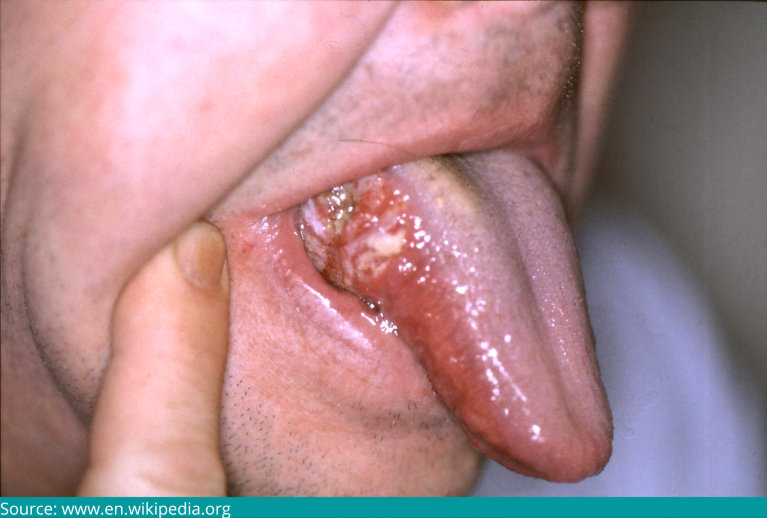 Oral or mouth cancer is cancer that forms in the tissues of your mouth or throat. It is part of a more significant category of head and neck cancers. This cancer develops in the squamous cells of your lips, gums, tongue, roof or floor of your mouth, and the inner lining of your cheeks. Oral cancers do not usually develop until many years after the damage has occurred. As a result, the earlier you catch any potential problems, the more likely they will be effectively treated. What Are The Symptoms Of Oral Cancer? **Signs and symptoms of oral cancer include:** - A sore on your lip or mouth that is not healing - A reddish or white patch inside your mouth - Loose or shaky teeth - A lump or growth inside your mouth - Pain in your mouth - Constant ear pain - Difficulty or pain when swallowing If you or your loved one is experiencing any of these symptoms, please speak with Dr. Sandeep Nayak, among the best [surgical oncologists](https://drsandeepnayak.com/services/best-oncologist-in-india) in India. What Are The Risk Factors For Oral Cancer **Several risk factors can increase the likelihood of developing oral cancer. They include:** - A family history of cancer - Tobacco use - Chronic and excessive alcohol consumption - Heavy caffeine consumption - A long-term habit of chewing tobacco - Frequent exposure to radiation from x-rays, CT scans, etc - Regular use of smokeless tobacco products - Poor oral hygiene practices - Use of poorly fitted denture/oral prosthesis - Infection with the HPV virus Ways To Reduce Your Risk Of Developing Oral Cancer Follow a good oral hygiene Brushing and flossing your teeth at least twice a day is the first step to maintaining a healthy mouth. A germ-infested mouth can become a breeding ground for germs to cause infections. A filthy mouth cavity also harms your immune system and reduces your body’s ability to fight cancer. ### **Do not chew paan**  The popular after-dinner treat ‘paan’ combines betel leaf with areca nut and other stimulant substances and is widely consumed in India. You may not know this, but it is among India’s primary causes of mouth cavity cancer. Avoid chewing paan or any form of betel nuts, whether raw or processed, as it raises the risk of oral cancer. ### **Stop chewing tobacco** People who chew tobacco have a 5 – 25 fold higher risk of mouth cancer. Chewing tobacco has a significant risk of developing mouth cancer and should be avoided at all costs. ### **Quit smoking**  Quitting smoking is one of the most preventative ways to reduce your risk of getting oral cancer. Not only will you be avoiding the risks associated with tobacco use, but you will also be reducing the risk of developing respiratory problems like emphysema or chronic bronchitis. Quitting tobacco use could even help cure some oral cancers with proper treatments. ### **Reduce exposure to UV rays** One way to reduce your risk of getting oral cancer is to limit your exposure to the sun. Exposure to ultraviolet rays increases the risk for many types of cancers, and it is crucial for people with fair skin or light hair color to avoid excessive sun exposure. Similarly, wearing sunscreen can help decrease the chances of getting cancer from UV rays. ### **Diet and nutrition** Another effective way to prevent or reduce getting oral cancer is following a healthy diet and nutrition. A healthy diet includes the types of food you eat, the number of calories you consume, and how regularly you eat. It is recommended that your diet consist predominantly of fruits, vegetables, and whole grains. Consume foods high in folic acid, which include leafy green vegetables such as spinach and kale and chard and collards. Also, remember to drink plenty of water daily. The accomplished [oncologist](https://drsandeepnayak.com/services/kidney-cancer-treatment) Dr. Sandeep Nayak says that eating right can help with both prevention and reduction because it helps keep your body healthy and strong enough to fight off any potential cancer cells before they start multiplying. ### **Regular check-ups** Regular check-ups and screenings are essential. A Pap smear is one of the most effective ways to detect cancer early on and prevent it from developing into a more severe condition. Visit an orthodontist every 6 months to get screened for oral cancer, especially if you chew or smoke tobacco. Sharp teeth have been linked to an increased risk of oral cancer due to frequent injuries to oral tissues; therefore, if you have 1 or more sharp teeth, please consult with a dental surgeon. Even otherwise, seeing a dentist every 6 months is an excellent way to maintain good oral health. ### **Be active** An active lifestyle will boost your immune system and lower your cancer risk. You can include walking, jogging, skipping, cycling, swimming, strength, or weight training in your daily activities. A strong immune system is a key to fighting off many ailments and safeguarding your body and health overall. ### **Protect yourself from HPV infection of the mouth** Sexual transmission, in addition to lifestyle choices, is a risk factor for mouth cancer. Human papillomavirus (HPV) can be transmitted through unprotected oral sex or the exchange of reproductive fluids, resulting in oral cancer. Moreover, despite the availability of numerous supplementary oral cancer screening devices and assays, none of them can currently spot HPV-positive oral and oropharyngeal malignancies early. ### **Conduct a self-exam every month** 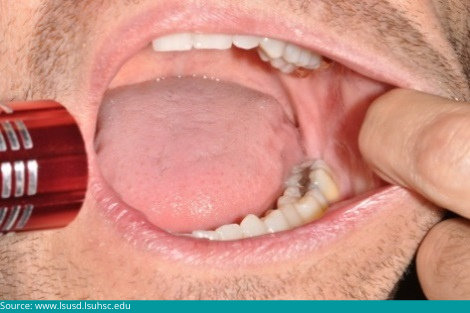 Oral self-exams, like breast self-exams, are an excellent approach to detecting and eradicating dangers early on. Examine your tongue’s back and sides thoroughly. Consult with your dentist right away if you notice (or feel) anything abnormal, such as lumps, bumps, painful places, or colored (red/white/grey) patches. Conclusion As we age, our mouths gradually change. The cells in our mouth multiply and grow more numerous, leading to changes in the way our teeth and gums look and feel. These changes, known as [dental aging](https://www.ada.org/resources/research/science-and-research-institute/oral-health-topics/aging-and-dental-health), are entirely normal. But if the changes in your mouth are causing you concern, you might have to sit up and take action. Do not delay. Schedule an [appointment](https://drsandeepnayak.com/contact) with Dr. Sandeep Nayak for an [oral cancer treatment in Bangalore](https://drsandeepnayak.com/services/oral-cancer-treatment-in-bangalore) or oral cancer screening. Dr. Sandeep Nayak is a top-notch cancer specialist with over 15 years of expertise in all areas of cancer and its treatment. He is a pioneer of [robotic](https://drsandeepnayak.com/services/robotic-cancer-surgery-for-unparalleled-precision) and laparoscopic surgery and is committed to improving the quality of his patient’s lives. **Categories:** Blog --- ### [Symptoms, Causes, And Risk Factors For Colon Cancer And Its Treatment In 2022](https://drsandeepnayak.com/blogs/symptoms-causes-and-risk-factors-for-colon-cancer-and-its-treatment-in-2022/) **Published:** May 11, 2022 **Author:** Dr. Sandeep Nayak **Content:** Colon cancer is also known as colorectal cancer, which combines colon cancer with rectal cancer, which starts in the rectum. Colorectal cancer was seldom diagnosed a few decades ago. But now, with about 900,000 deaths per year globally, it is the third most fatal cancer. Dr. Sandeep Nayak, an eminent [oncologist in Bangalore](https://drsandeepnayak.com/services/best-oncologist-in-bangalore), says that according to research, colon cancer can affect 1 in every 23 men and 25 women at some time in their life. In this article, we shall learn about the symptoms, causes, risk factors, and treatment of colon cancer. What is colon cancer? 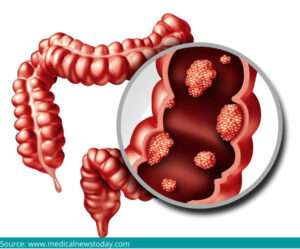Colon cancer originates in the large intestine. The colon is the last area of the digestive system. Colon cancer usually occurs in older people, although it can affect anyone at any age. It usually starts as polyps that are tiny, non-cancerous (benign) clusters of cells that grow inside the colon. Some of the polyps may turn into colon cancer over time. Small polyps may cause minor symptoms if any. As a result, Dr. Sandeep Nayak, one of the best cancer specialists in Bangalore,advises routine screening tests to detect and remove polyps before they turn cancerous. If [colon cancer](https://drsandeepnayak.com/services/colon-cancer) is diagnosed, various treatments, including radiation therapy, surgery, and medication treatments like targeted therapy, chemotherapy, and immunotherapy, are available to help manage it. What are the symptoms of colon cancer? The following are few of the symptoms and signs of colon cancer: - Changes in your bowel movements, such as constipation or diarrhea - A difference in the quality of your stool, thin or loose stool - Blood in your feces - Rectal bleeding - Feeling as if your bowels are not empty even after a bowel movement - Weakness or tiredness - Weight loss despite eating well - Consistent abdominal pain and discomfort, including cramps, gas, or bloating If you or your loved one experiences any of the above symptoms, please get in touch with Dr. Sandeep Nayak, a top-notch surgical oncologist in India. Many patients do not experience any signs or symptoms in the initial stages of cancer. Symptoms canvary depending on the location and size of cancer in the large intestine. What are the stages of colon cancer? There are several methods for determining a cancer stage. The phases show how far cancer has gone and how large any tumors are. **The stages of colon cancer are as follows:** - Stage 0: Carcinoma in situ is a very early stage, where the colon cancer has not progressed beyond the internal lining of the colon and is usually easily treatable. - Stage 1: Cancer has progressed to the next tissue layer. - Stage 2: The cancer has spread to the exterior layers of the colon but not beyond it. - Stage 3: The cancer has penetrated the outer layers of the colon and spread to 1 – 3 lymph nodes. - Stage 4: Cancer has spread outside the colon’s wall and reached adjacent tissues. Colon cancer spreads to other areas of the body as stage 4 advances. What can cause colon cancer? Doctors are not sure of the exact causes of colon cancer. Generally, it develops when the DNA of healthy colon cells mutates. The DNA of a cell carries instructions that tell it needs to do. Healthy cells multiply and expand in a standard pattern to keep your body functioning smoothly. If a cell’s DNA is compromised and becomes malignant, the cells continue to multiply even though new cells are not required. As the cells grow, a tumor develops. Over time, the cancerous cells can grow big enough to invade and kill normal tissues nearby. Furthermore, malignant cells can move to other places of the body and create deposits there (metastasis). What are the risk factors of colon cancer? Dr. Sandeep Nayak, a highly-skilled surgical oncologist in India, says that unfavorable influences such as obesity, lack of physical activity, and smoking, in addition to aging and dietary choices of high-income countries, raise the risk of colon cancer. **Although the exact causes of colon cancer are not known, potential risk factors include:** - **Age:**Colon cancer can strike anyone at any age; however, most of those diagnosed are over 50. Colon cancer rates in persons under 50 have been rising, but physicians are not sure why. - **History of polyps or colon cancer:**You have a higher risk of colon cancer if you already have non-cancerous colon polyps or colon cancer. - **Family history:**If someone in your family has had colon cancer, you are more likely to get it. If more than 1 blood relative has had colon or rectal cancer, then your chances are even higher. - **Sedentary lifestyle:**Inactive people are more likely to acquire colon cancer. You can reduce the risk of colon cancer by engaging in regular physical activity. - **Obesity:**Compared to those of average weight, obese people have a higher risk of developing colon cancer and dying from colon cancer. - **Smoking:** Smoking increases your risk of having colon cancer. - **Alcohol:** Excessive consumption of alcohol increases the risk of colon cancer. - **Dietary choices:**A standard Western diet that is usually low in fiber and heavy in fat and calories may be linked to colon and rectal cancer. The results of studies in this area have been varied. Some studies have revealed that people who eat a diet high in processed meat and red meat have a higher risk of colon cancer.  - **Genetics:**Some gene changes passed down through generations can significantly raise the risk of colon cancer. Inherited genes are associated with just a small fraction of colon cancers. Lynch syndrome and FAP (familial adenomatous polyposis), often termed hereditary non-polyposis colorectal cancer (HNPCC), are the two most frequent genetic syndromes that raise colon cancer risk. What is the colon cancer treatment in Bangalore, India? Dr. Sandeep Nayak, among the leading oncologists in Bangalore,may suggest testing to evaluate your colon cancer’s extent (stage). Staging aids in determining the most effective therapy for you. Imaging methods like CT scans of the abdomen, pelvis, and chest may be used in the staging process. Other tests that may be suggested are blood tests, colonoscopy, fecal testing, biopsy, X-ray, etc. Treatment is to eradicate cancer, stop it from spreading, and alleviate any unpleasant symptoms. Chemotherapy, surgery, and radiation are all used to treat colon cancer. **Surgery during the early stage of colon cancer** ### **Polypectomy:** If the cancer is in the early stage, small, and contained inside a polyp, it can be extracted during the colonoscopy. ### **Endoscopic mucosal resection:** During a colonoscopy, the surgeon will remove larger polyps with special equipment that removes both the polyp and a tiny section of the colon’s inner lining. ### **Laparoscopic surgery:** [Laparoscopic surgery](https://drsandeepnayak.com/services/laparoscopic-cancer-surgery-quicker-recovery-with-fewer-complications) is used for polyps that cannot be removed during a colonoscopy. **Surgery used for advanced colon cancer** ### **Proctosigmoidectomy:** This is a minimally invasive surgery in which only the afflicted area of the sigmoid colon and the rectum is removed. ### **Right colectomy:** This involves removing the right side of the colon and the last section of the small intestine linked to the colon. ### **Total abdominal colectomy:** During this treatment, the oncologist removes the complete large intestine from the lower area of the small intestine to the rectum. The small intestine will then be stitched to the rectum. It can be performed via laparoscopy or open surgery. ### **Total proctocolectomy:** In this surgery, the rectum, colon, and anus are removed. ### **Abdominoperineal resection:** During this surgical procedure, the anus, sigmoid colon, and rectum are removed. The patient is then fitted with a permanent colostomy (an artificial pouch) to pass their waste. ### **Radiation:** Radiation uses an intense energy beam like the one used in X-rays to target and eliminate cancerous cells. Chemotherapy and radiation therapy are routinely used together. ### **Chemotherapy:** **** The oncologist will administer medications to eliminate cancer cells during chemotherapy. Following surgery, people with colon cancer are usually given a procedure to remove any leftover cancerous cells. Chemotherapy can help to slow down the progress of cancer. Do not hesitate to speak with Dr. Sandeep Nayak, one of the preferred cancer specialists in Bangalore, for diagnosis and the best treatment suitable for you. Conclusion [Colon cancer](https://www.healthline.com/health/colon-cancer) can severely affect the quality of your life. There is no way to guarantee that colon cancer will not develop. Some preventative actions, however, can help you and your loved ones. Remember some easy and effective habits are to maintain a healthy weight, follow a diet rich in vegetables, fruits, and whole grains, exercise regularly, reduce consumption of red meat and saturated fats, cut down on alcohol intake and quit smoking. As the symptoms are not likely to appear until cancer has progressed, it is essential that you visit an experienced oncologist for regular check-ups. Do not delay any longer; [schedule an appointment](https://drsandeepnayak.com/contact) with Dr. Sandeep Nayak at the earliest. He is a highly respected and trusted surgical oncologist in India. **Categories:** Blog --- ### [7 Potential Warning Signs of Stomach Cancer](https://drsandeepnayak.com/blogs/7-potential-warning-signs-of-stomach-cancer/) **Published:** January 15, 2022 **Author:** Dr. Sandeep Nayak **Content:** Even though we all suffer stomach aches now and then, pain isn’t usually an early sign of stomach cancer. So, instead, what should you be on the alert for? Here’s what you need to know about stomach cancer. Stomach cancer is medically known as gastric cancer. Cancer can create a tumor or ulcer within the stomach or spread widely throughout the entire wall. Stomach cancer is most common in adults between the ages of 50 and 70. Men are more likely to have it. Surgery, radiation, and chemotherapy are all options for treating gastrointestinal malignancies. [Dr. Sandeep Nayak](https://drsandeepnayak.com/professional/dr-sandeep-nayak), a renowned [surgical oncologist in India](https://drsandeepnayak.com/), provides advanced and effective [stomach cancer treatment](https://drsandeepnayak.com/services/stomach-cancer-and-esophageal-cancer) says “The type and stage of cancer and the patient’s age, overall health, and preferences influence gastrointestinal (GI) cancer treatment options.” Stomach cancer can be successfully treated in its early stages. Hence, the early warning signs of stomach cancer should not be overlooked. Early signs and symptoms are usually ignored. Early indications of stomach cancer are often so common that they go unnoticed. Stomach cancer is one of those problematic diagnoses where most people may have experienced symptoms in the past. Even so, they are typically subtle symptoms that can be mistaken for a variety of other benign gastrointestinal (GI) conditions. Some of these early symptoms include: - Bloating. - Heartburn. - Nausea. - Feeling of discomfort after eating food Because these symptoms are commonly ignored as normal GI concerns — which are for most individuals — stomach cancer is generally discovered in advanced stages when it is ultimately identified. Warning Signs to Look Out For According to Dr. Sandeep Nayak, an experienced cancer specialist in Bangalore, India, potential warning signs of stomach cancer include: ### 1. You lose weight abruptly, and your appetite decreases. People stop feeling hungry and, as a result, begin to lose weight without even trying. That is most likely the most alarming symptom. ### 2. You are worn out. This could result from a slow blood loss, indicating malignancy, combined with a sudden weight loss. Anemia, or a low red blood cell count, can result from blood loss, which is most likely the cause of your fatigue. ### 3. Your feces or vomit contains blood. This is a rare occurrence, but it can occur if you lose a lot of blood. ### 4. Even if you have only eaten a small bit, you feel full. ### 5. You have noticed a shift in your bowel movements. Perhaps you have been suffering persistent bouts of diarrhea or constipation. ### 6. Symptoms of gastrointestinal discomfort that do not go away. For example, you have had nausea or abdominal discomfort for more than a couple of days. ### 7. You are having GI symptoms you have never had before. For example, reflux – a condition in which the contents of your stomach go up into your oesophagus. These are all indicators that you should see your primary care physician to evaluate if you require additional testing. The majority of the time, these symptoms are caused by something else, but it’s best to get them checked out so you can seek treatment as soon as possible if you do. **Now, let’s know,** What are the elements that put you at risk for stomach cancer? Apart from *H. pylori*, several other factors can raise your risk of stomach cancer, including: - Smoking. - Being a man. - Age is a factor (your risk increases as you get older). - Obesity. - Past surgery for stomach ulcers. - Certain genetic conditions. - A diet containing smoked foods, salted seafood, and red meats. - Family history. How can you reduce your risk? We consume a lot of [processed and unhealthy food](https://www.medicalnewstoday.com/articles/318630#:~:text=Most%20food%20needs%20some%20degree,refined%20carbohydrates%2C%20and%20trans%20fats.), which contributes to our mild symptoms. We need to return to a more natural, plant-based diet. There’s no denying that the evidence supports a diet high in fresh vegetables, low in fruit, and low in meat, mainly processed meat. Avoiding these toxic foods lowers a person’s risk of developing cancer and the stomach symptoms that come with consuming them. Conclusion Don’t be alarmed if your gastrointestinal system appears to be acting strangely. Most of the time, GI symptoms are caused by benign reasons rather than stomach cancer. Our digestive processes can be highly temperamental at times. **Categories:** Blog --- ### [Do wireless devices cause cancer?](https://drsandeepnayak.com/blogs/do-wireless-devices-cause-cancer/) **Published:** April 29, 2022 **Author:** Dr. Sandeep Nayak **Content:** The idea that wireless devices cause cancer is a popular one, with many people believing that the risk of cancer is being increased because of the number of devices that we have in our lives. However, scientists have found no evidence to support this. The World Health Organization released a statement saying that there is no conclusive evidence to link cancer and EMFs from wireless devices. Dr. Sandeep Nayak is one of the [leading oncologist in Bangalore](https://drsandeepnayak.com/). You can consult with him if you are facing some health discomfort through your wireless devices. He can guide you with all the treatments regarding this. What is the specific exposure to EMFs(Electric and magnetic fields)? There are many possible sources of electromagnetic fields, including talking on a mobile phone while driving, using a cordless phone in the home or office, and sleeping near a baby monitor. A large number of studies have been done to try and measure the different types of EMFs, but so far there is no definite connection between them and cancer. What are the effects of exposure to EMFs? The risks of EMF are still being debated. On one side, some people think that the risk is too high for people to be exposed to EMFs without warning labels or any restrictions on use. Other people believe that EMF can’t cause cancer because the energy is too weak and there’s not enough evidence of it causing cancer. Symptoms of EMF exposure. The precise and accurate impacts of EMF exposure on human health have yet to be discovered. In the coming years, research may provide us with more information. Some studies link EMF exposure to a variety of ailments, although researchers agree that additional research is needed. Many of the studies rely on animal or cell models, which are unreliable when used in human health research. Some of these symptoms have also been linked to electromagnetic hypersensitivity (EHS), a condition in which people attribute a variety of non-specific symptoms to EMF exposure. Although people do experience symptoms that are sometimes uncomfortable and even disabling, the medical field has not confirmed EHS. There is currently no reputable evidence linking EHS symptoms to EMF exposure, and EHS is not considered a medical diagnosis. More research, according to the medical community, is required. Nonetheless, some evidence suggests that EMF symptomatology may be true. Some researchers have suggested the following symptoms: - You can experience sleep disturbance or you can also have insomnia. - Mild or excessive headaches - You can grow depressive symptoms or can get depression. - Fatigue or tiredness. - [Dysesthesia](https://www.healthline.com/health/dysesthesia) is often an itchy sensation or sometimes painful. - You can get a lack of concentration. - Loss of appetite or weight loss. - Dizziness. If you are getting any of this symptoms you can consult with Dr. Sandeep Nayak who is one of the renowned and best cancer specialists in Bangalore. With his years of expertise in oncology he can give you the best guidance with the treatment. How do wireless devices cause cancer? Although a lot of studies have been conducted, there is still no conclusive evidence that says that wireless devices cause cancer. However, the majority of the studies were done with animals and not humans. The International Agency for Research on Cancer (IARC) has warned about the dangers of these devices in regards to long-term exposure. What you can do to limit exposure and protect yourself and your family It is still too early to know for sure. There is no strong evidence that wireless devices cause cancer, but it’s important to take precautions until we have a better understanding of the potential effects of radiofrequency energy. The most important thing you can do to limit your exposure and protect yourself and your family is to reduce the time spent using a device before going on to the next one. It’s also a good idea not to carry your phone in your pocket or near your body if it’s sending or receiving data from the network. Conclusion There is no conclusive evidence that wireless devices cause cancer and some studies have yielded opposite results. Hopefully, in the future, we will have more information on whether or not WiFi emits harmful levels of EMF radiation. **Categories:** Blog --- ### [Vaginal Cancer after Hysterectomy](https://drsandeepnayak.com/blogs/vaginal-cancer-after-hysterectomy-2/) **Published:** May 16, 2025 **Author:** Dr. Sandeep Nayak **Content:** Hysterectomy is the surgical removal of the uterus. It’s a standard procedure to treat various conditions affecting a woman’s reproductive system. Even after such a definitive procedure, the possibility of developing cancers, such as vaginal cancer, still exists. Dr. Sandeep Nayak, an accomplished[ ](https://drsandeepnayak.com/)[oncologist in Bangalore,](https://drsandeepnayak.com/oncologist-in-bangalore/) explains: “Hysterectomy is also performed to address malignant or premalignant diseases of the cervix. But, vaginal cancer after hysterectomy, though rare, can still occur. This is because cells in the remaining vaginal tissue can still undergo harmful changes. If left untreated, it can lead to cancerous growth. This underscores the importance of ongoing vigilance and awareness post-surgery.” Join us as we delve into the warning signs, stages, and challenges linked with vaginal cancer. Additionally, we will discuss the available treatment options and their implications for patients. Recognizing warning signs of cancer can lead to early detection and better outcomes. Let’s delve into understanding our body’s signals to alert us. Understanding Vaginal Cancer: Recognizing the Warning Signs Vaginal cancer demands attention and awareness. Here’s what to watch out for, regardless of whether you’ve undergone hysterectomy or not: Unusual Vaginal Bleeding (primary sign of vaginal cancer) Bleeding after menopause or unusual bleeding between periods warrants prompt attention. Also, pay attention to any bleeding during or after sexual intercourse. Abnormal Vaginal Discharge Persistent discharge unrelated to menstruation or infection can indicate vaginal cancer. A sudden change in vaginal discharge may signal a problem, particularly if it becomes: - Watery - Bloody - Foul-smelling Pelvic Pain or Pressure Don’t ignore persistent pelvic pain, often described as a constant ache or pressure. Pain during urination or bowel movements may also signal underlying issues. Painful Intercourse Discomfort or pain during sexual intercourse, unrelated to lubrication or emotional factors, merits attention. Changes in Urination A tumor pressing against the urinary tract may cause: - Frequent urination - Burning sensation - Difficulty urinating You must seek medical evaluation for urinary symptoms that persist beyond a few days. Lump or Mass in the Vagina Feeling a lump inside the vagina is a direct indication of something abnormal needing prompt attention. Pain in the Back or Legs Persistent pain in the lower back, hips, or legs, unrelated to other conditions or injuries may indicate advanced vaginal cancer. Cancer can cause pain due to pressure from a tumor or as a result of cancer spread. Loss of Appetite or Unexplained Weight Loss Significant, unexplained loss of weight or appetite could be a sign that cancer is affecting the body’s metabolism. These symptoms can be associated with many types of cancer, including lung,[ ](https://drsandeepnayak.com/services/ovarian-cancer-treatment-in-bangalore-india/)[ovarian](https://drsandeepnayak.com/services/ovarian-cancer-treatment-in-bangalore-india/),[ pancreatic, ](https://drsandeepnayak.com/services/pancreatic-and-bile-duct-cancer/)[stomach](https://drsandeepnayak.com/services/stomach-and-esophageal-cancer-treatment-in-bangalore-india/), and vulvar cancer. Dr. Sandeep Nayak, an experienced[ ](https://drsandeepnayak.com/services/robotic-cancer-surgery-in-bangalore-india/)[robotic surgical oncologist](https://drsandeepnayak.com/services/robotic-cancer-surgery-in-bangalore-india/) in Bangalore, advises: “These symptoms may not always indicate vaginal cancer. However, they warrant investigation to rule out serious conditions and ensure timely treatment if necessary. Regular visits and clear communication with a doctor are vital.” Are you or someone you know experiencing any of these warning signs? It’s crucial to[ ](https://drsandeepnayak.com/contact/)[seek medical evaluation](https://drsandeepnayak.com/contact/) promptly – your health and well-being matter. Book an Appointment From the initial stages to advanced progression, understanding the stages of vaginal cancer is crucial. Let’s look at each stage to gain insights and empower ourselves with knowledge. Vaginal Cancer Stages Vaginal cancer stages indicate the extent of the disease: **Stage 0:** Precancerous cells are present but confined to the surface of the vagina. **Stage I:** Cancer has formed and is confined to the vaginal wall. **Stage II:** Cancer has spread beyond the vagina to the tissue around it but not to the pelvic wall. **Stage III:** Cancer has spread to the pelvic wall and/or nearby lymph nodes. **Stage IV:** Cancer has spread to distant body parts, such as the[ ](https://drsandeepnayak.com/services/lung-cancer-treatment-in-bangalore/)[lungs](https://drsandeepnayak.com/services/lung-cancer-treatment-in-bangalore/) or[ ](https://drsandeepnayak.com/services/liver-cancer-treatment-in-bangalore/)[liver](https://drsandeepnayak.com/services/liver-cancer-treatment-in-bangalore/). ***Facing vaginal cancer can be daunting. Let’s explore the hurdles patients face with resilience and empathy.*** Challenges of Vaginal Cancer: Understanding the Journey Individuals encounter various challenges along their journey, such as: Emotional Impact A cancer diagnosis can evoke various emotions, including sadness, anxiety, and uncertainty about the future. Dealing with the emotional toll of cancer diagnosis and treatment can be challenging for patients and their loved ones. Physical Symptoms and Side Effects Vaginal cancer and its treatments can cause physical symptoms such as pain, discomfort, fatigue, and sexual dysfunction. Side effects of treatment, such as nausea, vomiting, hair loss, and appetite changes, can further impact quality of life. Financial Strain Managing the costs associated with cancer treatment, including medical bills, medication expenses, and transportation costs, can be overwhelming. Lost income due to treatment and recovery leave may add to the financial burden. Changes in Relationships Vaginal cancer can lead to challenges in communication, intimacy, and sexual function. Partners and caregivers may also experience emotional and psychological strain while supporting their loved ones. Treatment Decisions and Access to Care Making informed decisions about treatment options can overwhelm patients and their families. Patients may have limited access to specialized cancer care in some geographical regions or healthcare systems. Survivorship and Rehabilitation After completing treatment, survivors may face challenges related to rehabilitation. These include managing long-term side effects, regaining physical strength, and adjusting to life after cancer. Survivorship care plans and services can help individuals address ongoing healthcare needs. According to the seasoned[ ](https://drsandeepnayak.com/services/laparoscopic-cancer-surgery-in-india/)oncologist in Bangalore and[ ](https://samrohana.com/)[Samrohana](https://samrohana.com/) founder, Dr. Sandeep Nayak: “It’s crucial to address patients’ psychological and emotional needs throughout the cancer journey. Counseling and support groups can provide valuable support and coping strategies for patients and their families.” *When it comes to treating vaginal cancer, patients have several options available. Let’s explore each option to help you make informed decisions about your care.* Treatment Options for Vaginal Cancer Here’s a breakdown of the treatment modalities commonly used: Surgery [Surgery](https://drsandeepnayak.com/blogs/robotic-surgery-for-cancer-treatment-what-you-need-to-know/) is often the primary treatment for vaginal cancer. Procedures may include: - **Wide local excision:**Removal of cancer and some surrounding tissue - **Radical Vaginectomy:**Removal of part or all of the vagina - **Radical hysterectomy:**Removal of the uterus, cervix, and part of the vagina - **Pelvic exenteration:** In advanced cases, pelvic exenteration surgery may be necessary to remove nearby organs affected by cancer. Radiation Therapy Radiation therapy uses high-energy beams to target and destroy cancer cells. The doctor may administer it externally (external beam radiation) or internally (brachytherapy). The approach depends on the stage and location of the cancer. Radiation therapy may be used alone or in combination with surgery or chemotherapy. Chemotherapy Chemotherapy uses powerful drugs to kill cancer cells or stop their growth. The cancer specialist administers it either through the bloodstream or via the vagina. They may combine chemotherapy with radiation therapy (chemoradiation) for more effective treatment. Doctors often use chemotherapy before or after surgery to shrink tumors or prevent cancer recurrence. Targeted Therapy Targeted therapy drugs aim to target cancer cells while sparing healthy cells. These drugs interfere with molecules that promote cancer growth and progression. Immunotherapy Immunotherapy uses the body’s immune system to spot and attack cancer cells. Checkpoint inhibitors, a form of immunotherapy, exhibit remarkable potential in combating specific cancers. These include those associated with the vaginal,[ ](https://drsandeepnayak.com/blogs/tips-to-reduce-your-risk-of-colorectal-cancer/)[colorectal](https://drsandeepnayak.com/blogs/tips-to-reduce-your-risk-of-colorectal-cancer/), and[ ](https://drsandeepnayak.com/services/uterus-cervical-cancer/)[cervical regions](https://drsandeepnayak.com/services/uterus-cervical-cancer/). Checkpoint inhibitors may help where other treatments have failed to boost the body’s natural defenses. Palliative Care Palliative care focuses on improving the quality of life for patients. It addresses symptoms such as pain, fatigue, and emotional distress. Additionally, it may involve[ ](https://drsandeepnayak.com/blogs/choosing-the-most-suitable-diet-for-cancer-patients-and-survivors/)[dietary guidance](https://drsandeepnayak.com/blogs/choosing-the-most-suitable-diet-for-cancer-patients-and-survivors/) to optimize nutrition and overall well-being. Palliative caregivers also provide crucial support by offering comfort and assistance to patients and their families. Dr. Sandeep Nayak, a renowned [oncologist in Bangalore](https://drsandeepnayak.com/oncologist-in-bangalore/), elaborates: “The choice of treatment for vaginal cancer depends on various factors. These include the cancer stage, location, patient’s overall health, and personal preferences. A[ ](https://drsandeepnayak.com/about/best-oncologist-in-bangalore/)[multidisciplinary team](https://drsandeepnayak.com/oncologist-in-bangalore/) of healthcare providers work together to develop treatment plans tailored to each patient’s needs.” Conclusion Vaginal cancer after hysterectomy is relatively rare. However, being aware of the signs and treatment options available are vital steps in managing this disease effectively. Regular follow-ups with healthcare providers ensure any potential issues are addressed promptly. Despite the challenges, individuals can find support and resources to navigate their journey with resilience and strength. Healthcare providers and support networks empower patients by addressing physical, emotional, and practical needs. This approach helps patients face challenges head-on and achieve the best possible outcomes. Remember, your health is paramount. Don’t hesitate to[ ](https://drsandeepnayak.com/contact/)[seek help](https://drsandeepnayak.com/contact/) if something doesn’t feel right. Early detection is critical in fighting vaginal cancer. Take charge of your well-being today. Book an Appointment *Unveil FAQs about breast cancer after menopause. Let’s get your questions answered.* Frequently Asked Questions: **1. At what age is vaginal cancer most common?** Vaginal cancer is most commonly diagnosed in women aged 60 and older, but it can occur at any age. **2. Who is at high risk for vaginal cancer?** High-risk groups include: - women with a history of HPV infection - those who have had previous cervical or uterine cancer - women who have undergone pelvic radiation therapy **3. Is a recurrence vaginal cancer after hysterectomy possible?** Yes, cancer can spread after a total hysterectomy if: - microscopic cancer cells had already escaped the uterus before the surgery - cancer develops afresh in the remaining vaginal tissue The likelihood of vaginal cancer recurring after a hysterectomy depends on various factors. These include the cancer stage during diagnosis, treatment success, and individual health factors. **Categories:** Blog --- ### [The Role of Robotic Surgery in Rectal Cancer: Insights from India’s Largest Multicenter Study](https://drsandeepnayak.com/blogs/the-role-of-robotic-surgery-in-rectal-cancer-insights-from-indias-largest-multicenter-study/) **Published:** May 22, 2025 **Author:** Dr. Sandeep Nayak **Content:** Rectal cancer, a prevalent form of colorectal cancer, poses significant challenges to surgeons due to its location in the pelvis and the need for precise removal of the tumor while preserving essential structures. Over the years, advancements in surgical techniques have transformed how rectal cancer is treated, with robotic-assisted surgery (RAS) emerging as a promising alternative to traditional open and laparoscopic approaches. A recent landmark study conducted by the ****Indian Collaborative Group on Rectal Resections (ICGRR)**** has shed light on the outcomes of open, laparoscopic, and robotic-assisted rectal resections in the Indian healthcare context. This study, the largest of its kind in India, analyzed data from ****829 patients across 11 centers**** and provides valuable insights into the short-term outcomes of these surgical techniques. As a contributor to this study, I, Dr. Sandeep Nayak, operated on many of these cases at Fortis Hospital, Bangalore. Here, I share key findings and discuss the broader implications of robotic-assisted surgery in rectal cancer care. Understanding Rectal Cancer and the Challenges of Surgery Rectal cancer arises in the rectum, the last segment of the large intestine. Its treatment often involves surgical resection following the principles of ****Total Mesorectal Excision (TME)****, which ensures the removal of the tumor and surrounding tissues to prevent recurrence. However, the rectum’s narrow location in the pelvis makes surgery particularly challenging. Surgeons must navigate intricate anatomy, protect critical nerves and blood vessels, and achieve clear margins to ensure the cancer is removed completely. For decades, ****open surgery****, which involves a large incision, was the standard approach. However, it often resulted in significant blood loss, longer recovery times, and higher complication rates. The advent of ****laparoscopic surgery****, a minimally invasive technique using small incisions and a camera, addressed some of these challenges but had its own limitations, such as restricted visibility and reduced instrument maneuverability in the narrow pelvic cavity. ****Robotic-assisted surgery (RAS)**** has emerged as a transformative advancement, combining the benefits of minimally invasive techniques with cutting-edge technology. With enhanced precision, 3D visualization, and superior instrument dexterity, robotic surgery allows surgeons to operate more effectively in confined spaces like the pelvis. Key Findings from the ICGRR Study The ICGRR study analyzed data from 829 patients with stage I–III rectal cancer who underwent rectal resections between 2012 and 2023. The patients were divided into three groups based on the surgical approach: ****robotic-assisted surgery (RAS)****, ****laparoscopic surgery (LG)****, and ****open surgery (OG)****. The study compared perioperative and short-term outcomes across these groups. Here are the key findings: 1. **Shorter Hospital Stays****: - Patients in the RAS group had the shortest average hospital stay (7.8 days), compared to the LG (10.3 days) and OG (14 days) groups. - At experienced centers like ours, where both robotic and laparoscopic surgeries are performed in high volumes, the average hospital stay for both approaches is ****approximately 4 days****, reflecting the importance of expertise in achieving optimal outcomes. 2. **Reduced Blood Loss and Complications****: 11. Robotic-assisted surgery resulted in significantly less blood loss compared to laparoscopic and open surgeries, reducing the need for transfusions and associated risks. 12. Postoperative complications were lowest in the RAS group (13.7%) compared to LG (19.9%) and OG (36.6%). 3. **Better Surgical Precision****: 13. The RAS group had the lowest rate of positive circumferential resection margins (CRM)—a critical measure of how completely the tumor was removed—at ****87%****, compared to ****6.8%****in LG and ****26.5%**** in OG. 4. **Early Start of Adjuvant Therapy****: 15. Patients in the RAS group could begin adjuvant treatments like chemotherapy sooner (median 24.5 days) than those in LG (31 days) and OG (32.5 days). Early initiation of therapy is linked to better long-term outcomes. 5. **Longer Operating Times****: 17. Robotic surgeries took longer to perform (average 326 minutes) than laparoscopic (287 minutes) and open surgeries (256 minutes). This is largely due to the time required for robotic system setup and docking. Skill Matters in Surgery One of the key insights from this study is the ****skill-dependent nature of surgery****. While robotic-assisted surgery offers advanced technology that enhances precision and efficiency, its success relies heavily on the expertise of the surgeon and the surgical team. At high-volume centers like Fortis Hospital, Bangalore, where I performed many of the robotic and laparoscopic surgeries included in this study, both techniques yield comparable outcomes in terms of hospital stay and recovery time, with most patients being discharged within four days. However, this is not uniform across all centers. The ICGRR study involved 11 hospitals, each with varying levels of expertise and case volumes. Not all centers performed both laparoscopic and robotic surgeries in high volumes, and this variability impacts the generalizability of the study’s findings. The study highlights that while robotic surgery offers significant advantages, outcomes are closely tied to the experience and proficiency of the surgical team. Centers with extensive experience in robotic and laparoscopic techniques tend to achieve better results, whereas centers with limited experience may face challenges in replicating these outcomes. Strengths and Limitations of Robotic Surgery Robotic-assisted surgery is a valuable tool in the treatment of rectal cancer, offering several advantages: - Enhanced precision and visualization, particularly in complex pelvic anatomy. - Reduced blood loss, postoperative complications, and shorter hospital stays. - Improved ability to achieve clear margins, reducing the risk of recurrence. However, robotic surgery also has limitations: - **Cost****: Robotic systems are expensive, which may limit their accessibility for patients in some regions. - **Learning Curve****: Surgeons require extensive training and experience to fully harness the benefits of robotic technology. - **Longer Operating Times****: As seen in this study, robotic surgeries often take longer than laparoscopic or open surgeries, though this improves with experience. Collaboration and Contribution: The Strength of the ICGRR Study The ICGRR study is a landmark effort in Indian healthcare, involving data from 11 centers and 829 patients. This collaboration between public and private institutions provides a comprehensive overview of real-world outcomes for rectal cancer surgery in India. As a contributor to this study, I had the privilege of performing many of the robotic and laparoscopic surgeries at Fortis Hospital, Bangalore. My contribution reflects the importance of high-volume centers and skilled teams in achieving the best outcomes for patients. The Future of Rectal Cancer Surgery The ICGRR study is a landmark effort in Indian healthcare, involving data from 11 centers and 829 patients. This collaboration between public and private institutions provides a comprehensive overview of real-world outcomes for rectal cancer surgery in India. As a contributor to this study, I had the privilege of performing many of the robotic and laparoscopic surgeries at Fortis Hospital, Bangalore. My contribution reflects the importance of high-volume centers and skilled teams in achieving the best outcomes for patients. Link to paper: [https://link.springer.com/article/10.1007/s11701-025-02375-5](Link%20to%20paper:%20https://link.springer.com/article/10.1007/s11701-025-02375-5) **Categories:** Blog --- ### [Understanding Precancerous Oral Cancer Stages](https://drsandeepnayak.com/blogs/understanding-precancerous-oral-cancer-stages/) **Published:** June 9, 2023 **Author:** Dr. Sandeep Nayak **Content:** In oncology, early detection and intervention play a vital role in saving lives. One area that requires special attention is the identification and management of precancerous lesions in the oral cavity. These lesions, also known as Oral Potentially Malignant Disorders (OPMD), are a significant concern as they can potentially progress into oral cancer if left untreated. Oral cancer is a severe condition that affects millions of individuals worldwide. It often develops from precancerous lesions or potentially malignant disorders (OPMDs) in the oral cavity. Recognizing and understanding the precancerous oral cancer stages is crucial for early detection and effective treatment. When it comes to treating oral cancer, having a trusted and experienced healthcare professional by your side is essential. [Dr. Sandeep Nayak](https://drsandeepnayak.com/professional/dr-sandeep-nayak) is a highly experienced [surgical oncologist](https://drsandeepnayak.com/) in India. With over 15 years of expertise in the field, Dr. Nayak specializes in treating various forms of cancer, including oral cancer. His dedication to [patient care](https://drsandeepnayak.com/testimonials) and comprehensive approach makes him one of the best oncologists in India. Dr. Sandeep Nayak’s [expertise ](https://drsandeepnayak.com/services/expertise)in the field of oncology has earned him the reputation of the finest cancer specialist, particularly for oral cancer treatment in Bangalore. In this article, we will explore precancerous oral cancer, its causes, stages, treatment options, and prevention strategies. **First, let’s have an,** Overview of Precancerous Oral Cancer Precancerous oral cancer, also known as oral potentially malignant disorders (OPMD), refers to the presence of abnormal tissue that can develop into cancer if left untreated. When identified early, these lesions can be effectively managed, preventing the progression into malignancy. Understanding the different stages of precancerous oral cancer is essential to determine appropriate [oral cancer treatment](https://drsandeepnayak.com/services/oral-cancer-treatment-in-bangalore) strategies. **Let’s know, Why is it called Oral Potentially Malignant Disorder (OPMD)? Oral Potentially Malignant Disorders (OPMDs) are a group of conditions characterized by abnormal changes in the oral tissues that have the potential to develop into oral cancer if left untreated. These disorders are precursors or warning signs of oral cancer and require careful monitoring and management. OPMDs encompass various clinical presentations, including white or red patches, oral submucous fibrosis, and other potentially malignant lesions. Although not all OPMDs will progress to cancer, it is crucial to identify and monitor them closely to prevent further complications. Causes and Location of Oral Precancerous Lesions The exact cause of premalignant lesions of the oral cavity is not fully understood. However, certain risk factors increase the likelihood of developing these lesions; they may include: - Tobacco use ([smoking](https://drsandeepnayak.com/blogs/connection-between-smoking-and-lung-cancer) or chewing) - Excessive alcohol consumption - Betel nut chewing - Chronic irritation from ill-fitting dentures or sharp teeth - Poor oral hygiene - Prolonged exposure to sunlight (lip cancer) - Certain viral infections, such as human papillomavirus (HPV). Precancerous lesions can appear in various parts of the oral cavity, including the tongue, floor of the mouth, lips, gums, throat and inner lining of the cheeks. Regular dental check-ups are crucial in identifying these lesions at an early stage. **Now, let’s discuss,** Precancerous Oral Cancer Stages Precancerous oral cancer can be categorized into different stages based on the severity and progression of the lesions. The stages range from 1 to 4, with stage 4 being the most advanced. The classification helps determine the appropriate treatment plan and prognosis for the patient. Timely diagnosis and intervention can prevent the advancement of these stages and reduce the risk of developing oral cancer. ### **Stage 1: Mild dysplasia (Abnormal cell growth)** - In this stage, the abnormal changes in the cells are mild and confined to the superficial layers of the oral mucosa. The risk of malignant transformation at this stage is relatively low. - At this stage, the precancerous lesions are localized and have not invaded deeper tissues. Early detection and treatment offer the best chances of successful management. ### **Stage 2: Moderate dysplasia** - Lesions in this stage exhibit more pronounced cellular abnormalities involving a larger portion of the epithelial tissue. The risk of progression to oral cancer increases compared to mild dysplasia. - The precancerous lesions have progressed slightly, involving a larger area within the oral cavity without invading deeper tissues. ### **Stage 3: Severe dysplasia** - In severe dysplasia, there is a high degree of cellular abnormalities throughout the epithelial layers. The risk of malignant transformation is significantly elevated, necessitating prompt intervention. - In this stage, the precancerous lesions have further expanded and may have invaded nearby tissues. Lymph nodes may also be affected. ### **Stage 4: Carcinoma in situ (severe dysplasia with the potential to invade nearby tissues)** - At this stage, the precancerous lesion displays full-thickness dysplasia, resembling invasive cancer. Carcinoma in situ is considered the final stage before the lesion progresses into oral cancer. - It is the most advanced stage, where the precancerous lesions have extensively invaded surrounding tissues and potentially spread to distant sites in the body. Treatment for Precancerous Oral Lesions The treatment for precancerous [oral](https://drsandeepnayak.com/blogs/top-10-ways-to-prevent-oral-cancer) lesions depends on the stage, location, severity, and individual patient factors. Dr. Sandeep Nayak, one of the leading surgical oncologist in India, emphasizes the importance of personalized treatment plans tailored to each patient. The treatment options may include surgical removal of the lesions, laser therapy, radiation therapy, chemotherapy, and targeted therapy. Surgical intervention is often the primary treatment approach for precancerous lesions of the oral cavity. Surgery aims to remove the precancerous tissue or lesions to prevent the progression of invasive cancer. The specific surgical technique employed depends on various factors, including the stage and location of the precancerous lesion. Here are some common surgical treatment options for premalignant lesions of the oral cavity: ### **1. Excisional Biopsy:** 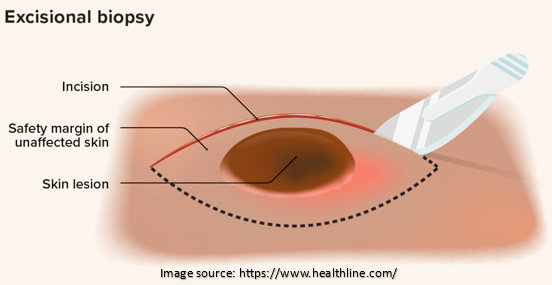 This procedure involves surgically removing the entire lesion or abnormal tissue. Often, surgeons perform this procedure when the precancerous stage is localized and easily accessible. The excised tissue is then sent for further examination to confirm the diagnosis and determine the extent of the lesion. 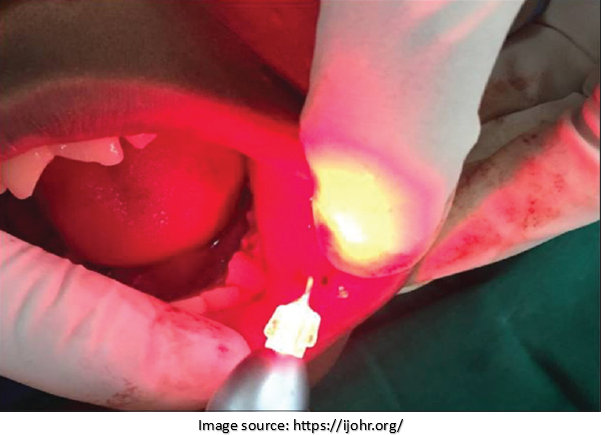 ### **2. Laser Surgery:** Laser technology can precisely target and remove precancerous tissue. It offers the advantage of minimal bleeding, reduced trauma to surrounding healthy tissue, and faster recovery. Usually, surgeons perform laser surgery for small lesions or in areas where preservation of function and cosmetic appearance is crucial. ### **3. Cryosurgery:** 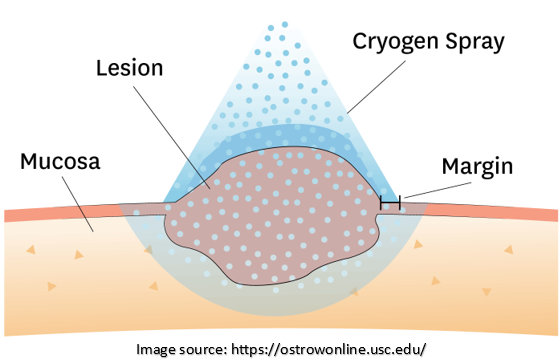 It involves freezing and destroying the precancerous tissue using extremely cold temperatures. This technique effectively treats superficial lesions and offers advantages such as minimal scarring, reduced pain, and a shorter recovery period. ### **4. Mohs Surgery:** 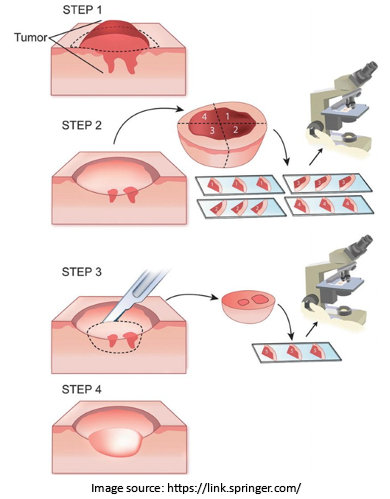 Mohs micrographic surgery is a precise technique that involves removing thin layers of tissue and examining them under a microscope in real-time. This process is repeated until no abnormal cells remain. Often, surgeons perform Mohs surgery for more extensive or recurrent precancerous lesions, offering a higher cure rate and preserving healthy tissue. 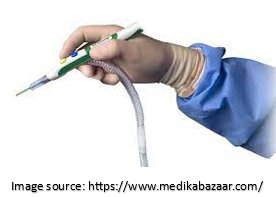 ### **5. Electrosurgery:** This surgical procedure uses an electric current to remove or destroy precancerous tissue. Usually, doctors perform electrosurgery with other surgical techniques or to treat minor or superficial lesions. ### **6. Medications:** [Oncologists](https://drsandeepnayak.com/services/best-oncologist-in-bangalore) may prescribe certain medications to control the progression of OPMDs and reduce the risk of developing oral cancer. Prevention of Precancerous Oral Lesions Preventing precancerous lesions of the oral cavity and reducing the risk of developing oral cancer is essential. Here are some preventive measures to consider: 1\. Quit tobacco use in any form. 2\. Limit alcohol consumption. 3\. Practice good oral hygiene, including regular brushing and flossing. 4\. Eat a healthy diet rich in fruits and vegetables. 5\. Protect lips from excessive sun exposure with lip balm or sunscreen. 6\. Get vaccinated against [human papillomavirus (HPV)](https://www.mayoclinic.org/diseases-conditions/hpv-infection/in-depth/hpv-vaccine/art-20047292) as recommended. Raising awareness about precancerous oral cancer stages, their causes, treatment options, and prevention measures is crucial in promoting early detection and improving patient outcomes. By collaborating with experienced professionals like Dr. Sandeep Nayak, patients can access the expertise necessary for accurate diagnosis, personalized treatment plans, and comprehensive care. Remember, prevention and early intervention are key to maintaining oral health and reducing the burden of oral cancer. Frequently Asked Questions #### **Q1. Is oral cancer serious?** **A.** Yes, oral cancer is a serious condition. If not detected and treated early, it can be life-threatening. It can spread to other body parts and significantly impact a person’s quality of life. Regular dental check-ups and self-examinations can aid in early detection and better treatment outcomes. #### **Q2. How do you treat oral precancerous lesions?** **A.** The treatment for pre-cancerous lesions of the oral cavity depends on the stage and location of the lesions. It may involve monitoring the condition closely, surgical removal of the lesions, laser therapy, topical medications, cryotherapy, or photodynamic therapy. The treatment aims to prevent the progression of oral cancer and may require a multidisciplinary approach involving dentists, oral surgeons, and oncologists. #### **Q3: How often should I have oral cancer screenings?** **A:** Regular oral cancer screenings are essential, especially if you have risk factors such as tobacco or alcohol use. It is recommended to have screenings at least once a year during routine dental check-ups. Your dentist can determine the appropriate frequency based on your risk factors. #### **Q4: What are the risk factors for oral precancerous lesions?** **A.** Risk factors for precancerous lesions include tobacco and alcohol use, betel nut chewing, poor oral hygiene, human papillomavirus (HPV) infection, and genetic predisposition. #### **Q5. Are all precancerous oral lesions indicative of oral cancer?** **A.** No, not all precancerous oral lesions progress to oral cancer. However, one should take these lesions seriously and examine them with an expert healthcare professional. Oncologists can assess the risk of malignant transformation through proper diagnosis and monitoring and implement appropriate treatment or management plans. **Categories:** Blog --- ### [Stage 4 Pancreatic Cancer Survival Rate By Age](https://drsandeepnayak.com/blogs/stage-4-pancreatic-cancer-survival-rate-by-age/) **Published:** October 26, 2023 **Author:** Dr. Sandeep Nayak **Content:** The pancreas is a vital organ located in the abdomen, responsible for producing enzymes for digestion and hormones like insulin for blood sugar regulation. With its stealthy onset, pancreatic cancer casts a shadow that darkens the lives of those it touches. The diagnosis carries a heavy emotional burden, evoking fear, uncertainty, and profound sadness. Amid the turbulence, it’s crucial to understand what to expect at Stage 4. “At Stage 4, pancreatic cancer presents formidable challenges,” says one of the renowned surgical[ oncologists in India](https://www.clinicspots.com/oncologist/india "surgical oncologists in India") Dr. Sandeep Nayak. “It’s a point where the disease has advanced significantly, often spreading to distant organs.” Amidst this daunting journey, it becomes essential to know what to expect. It involves grappling with treatment options, managing symptoms, and seeking support for the patient and the emotional well-being of loved ones. Yet, even in the face of such adversity, there’s room for hope. Advances in medical science and unwavering support systems offer a ray of optimism. While the road ahead may be arduous, knowledge equips us to navigate it with greater clarity and determination. Stage 4 Pancreatic Cancer What To Expect Pancreatic canceroften doesn’t cause noticeable symptomsin its early stages.  However, as the disease progresses, common symptoms and signs of stage 4 [pancreatic cancer](https://drsandeepnayak.com/services/pancreatic-and-bile-duct-cancer/) may include: - **Jaundice:** Yellowing of the skin and eyes, often accompanied by dark urine and pale stools due to the blockage of the bile duct. - **Abdominal Pain:** Pain in the upper abdomen, which can be severe and may worsen after eating or lying down. - **Unexplained Weight Loss:** Significant and unexplained weight loss over a relatively short period. - **Loss of Appetite:** A decreased interest in eating, leading to reduced food intake. - **Fatigue:** Feeling unusually tired or weak, which may be related to anemia or the cancer itself. - **Digestive Problems:** Nausea, vomiting, and changes in bowel habits, such as diarrhea or oily, pale stools, can occur. - **New-Onset Diabetes:** In some cases, pancreatic cancer can cause diabetes without a clear cause or family history or worsen pre-existing diabetes. - **Gallbladder Enlargement:** The tumor may block the bile duct and cause the gallbladder to become enlarged. - **Blood Clots:** The development of blood clots, often in the deep veins of the legs (deep vein thrombosis) or the lungs (pulmonary embolism). - **Back Pain:** Pain in the back, which may imply that the cancer has spread to the nerves surrounding the pancreas. - **Depression or Anxiety:** Emotional changes may occur due to the diagnosis and its impact on daily life. Various other conditions can cause these symptoms, and having one or more of these symptoms does not necessarily mean you have pancreatic cancer. However, if you experience persistent or worsening symptoms, please consult a [cancer specialist](https://drsandeepnayak.com/services/about-dr-sandeep-nayak/) like Dr. Sandeep Nayak for a thorough evaluation and diagnosis. Best Treatment For Stage 4 Pancreatic Cancer Pancreatic cancer is difficult to treat, especially as it advances. Surgery is the most effective option for long-term survival, but at Stage IV, it’s not feasible due to widespread metastasis. Treatment responses vary among patients, so Stage IV individuals often explore various therapies to find the most effective one.  **Here are some standard treatment options:** - **Chemotherapy:** Systemic chemotherapy, which involves using drugs to target and destroy cancer cells throughout the body, is often a primary treatment for Stage 4 pancreatic cancer. - **Targeted Therapy:** Some patients may receive targeted therapy drugs focusing on specific molecular or genetic abnormalities in their cancer cells. - **Immunotherapy:** Immunotherapy drugs, which enhance the body’s immune system to fight cancer, are being studied for their potential in treating pancreatic cancer. - **Palliative Care:** Palliative care is essential to Stage 4 pancreatic cancer treatment. It focuses on managing symptoms, improving quality of life, and providing emotional support. - **Clinical Trials:** Participation in clinical trials can provide access to innovative treatments and therapies that may not be available through standard care. - **Surgery:** In some cases, surgical interventions may be considered to address complications or alleviate symptoms, although curative surgery is usually not an option at Stage 4. - **Radiation Therapy:** Radiation therapy may be used to target specific areas of metastasis or to relieve pain caused by tumors pressing on nerves or other structures. - **Supportive Care:** Managing pain, nutritional support, and addressing side effects of treatment are crucial elements of Stage 4 pancreatic cancer care.  If you are seeking treatment options for pancreatic cancer, please do not hesitate to consult [laparoscopic ](https://drsandeepnayak.com/services/laparoscopic-cancer-surgery-in-india/)surgeon Dr. Sandeep Nayak. Dr. Nayak and his [team](https://drsandeepnayak.com/services/best-oncologist-in-bangalore/) of oncologists work closely to develop personalized treatment plans that consider your unique circumstances and goals. Benefits Of Chemotherapy For Stage 4 Pancreatic Cancer While chemotherapy may not offer a cure at this stage, it can provide several potential benefits: **Extended Survival:** Some patients with Stage 4 pancreatic cancer may experience a prolongation of their lifespan with chemotherapy, even if it’s not a cure. It can slow down the progression of the disease. **Symptom Management:** Chemotherapy can help alleviate pain, jaundice, and digestive issues, improving the patient’s quality of life. **Tumor Size Reduction:** In some instances, chemotherapy may shrink tumors, making them more manageable and potentially allowing for other treatments like radiation therapy or surgery. **Clinical Trials:** Participation in clinical trials involving new chemotherapy drugs or combinations may offer access to [innovative treatments](https://drsandeepnayak.com/services/trans-oral-robotic-surgery-in-india/) with the potential for better outcomes. Medical experts are constantly researching trying to find new treatments for pancreatic cancer stage 4. An open and honest discussion with the healthcare team can help determine whether chemotherapy is a suitable and worthwhile option for a specific patient. Stage 4 Pancreatic Cancer Survival Rate With Chemo The stage 4 pancreatic cancer life expectancy, even with chemotherapy, is generally low. On average, the five-year survival rate for Stage 4 pancreatic cancer is around 1%. “This means that only a small percentage of individuals with Stage 4 pancreatic cancer are expected to survive for five years or more,” explains [surgical oncologist](https://drsandeepnayak.com/services/lung-cancer-treatment-in-bangalore/) Dr. Sandeep Nayak. Stage 4 Pancreatic Cancer Survival Rate By Age Here are the approximate figures for Stage 4 pancreatic cancer survival rate by age as per [Medical News Today](https://www.medicalnewstoday.com/articles/pancreatic-cancer-survival-rate#by-age): | **Age** | **Relative Survival Rate** | |---|---| | Age <15 | 86.5% | | Age 15–39 | 54.7% | | Age 40–64 | 15.9% | | Age 65–74 | 10.3% | | Age 75 | 5.3% | The median age at diagnosis is 70, as reported by the National Cancer Institute, and the median age at death is 72. Role of Age in Pancreatic Cancer Survival Rates Age plays a significant role in pancreatic cancer survival rates. Generally, younger individuals tend to have higher survival rates than older ones. For instance, those under 40 have a notably higher relative survival rate than those over 75. This variance can be attributed to factors such as overall health, treatment tolerance, and the aggressiveness of the disease. To understand pancreatic cancer survival rates by age, we must consider the patient’s age, cancer stage, treatment options, and tumor behavior. “Pancreatic cancer is commonly diagnosed in older adults, with the median age at diagnosis being 70,” says [Robotic Surgeon](https://drsandeepnayak.com/services/robotic-cancer-surgery-in-bangalore-india/) Dr. Sandeep Nayak. “Understanding the influence of age on survival rates is crucial for tailoring treatment approaches and providing realistic expectations to patients and their families.” With over 15 years of expertise, Dr. Nayak is among the preferred oncologists for people seeking effective [cancer ](https://drsandeepnayak.com/services/stomach-and-esophageal-cancer-treatment-in-bangalore-india/)treatments. FAQs **Q.1 Can pancreatic cancer be fully cured?** A: Pancreatic cancer is often challenging to cure fully, especially at advanced stages. Still, treatment can extend survival and improve quality of life. While early detection and surgical intervention offer the best chances of a cure, the prognosis is often less favorable for advanced cases. **Q.2 How painful is last-stage cancer?** A: Pain in the last stage of cancer can vary widely among individuals and depends on factors like the type of cancer, its location, and the effectiveness of pain management. **Q.3 How do you know if chemo is working on stage 4 pancreatic cancer?** A: The effectiveness of chemotherapy for Stage 4 pancreatic cancer is assessed through various means, including imaging scans to monitor tumor size, blood tests to check tumour markers like CA 19-9, and clinical evaluations by healthcare providers to assess symptoms and overall well-being. **Q.4 Can you live 5 years with stage 4 pancreatic cancer?** A: The five-year survival rate for Stage 4 pancreatic cancer is typically very low, averaging around 1%. However, survival rates can vary widely based on individual factors, including overall health, treatment response, and specific cancer characteristics. **Q.5** **What causes death in stage 4 pancreatic cancer?** A: In Stage 4 pancreatic cancer, death is typically caused by complications related to advanced cancer’s impact on vital organs, such as liver failure, respiratory distress, or severe infection. Additionally, the progression of the disease and its effects on overall health contribute to the end-of-life process. **Categories:** Blog --- ### [Precancerous lip lesions – Early stage Lip Cancer](https://drsandeepnayak.com/blogs/precancerous-lip-lesions-early-stage-lip-cancer/) **Published:** July 25, 2023 **Author:** Dr. Sandeep Nayak **Content:** Lip cancer refers to the abnormal growth of cells in the lips, leading to the formation of cancerous tumors. It is a type of oral cancer that primarily affects the upper or lower lip. Lip cancer can occur in various forms, with the most common being squamous cell carcinoma. Other types include basal cell carcinoma, adenocarcinoma, and melanoma. Lip cancer, particularly in its early stages, can present as precancerous lesions that demand attention and prompt intervention. Recognizing and understanding these precancerous conditions is crucial for timely diagnosis and effective management. “Recognizing precancerous lesions in the lips is a proactive step towards preventing the progression of lip cancer,” says one of the renowned surgical [oncologists in India](https://www.clinicspots.com/oncologist/india "oncologists in India")[,](https://drsandeepnayak.com/) Dr. Sandeep Nayak. “By identifying and addressing these early warning signs, individuals can take control of their health and seek appropriate medical guidance. “ This blog explores the various aspects of lip cancer, including its risk factors, symptoms, diagnostic methods, and treatment options. Understanding Precancerous Lip Lesions Precancerous conditions indicate abnormal cell changes that can potentially progress into cancer if left untreated, posing a higher risk to the individual’s health. **Two common precancerous conditions are:** ### **Leukoplakia:** Leukoplakia is the development of thick, white patches on the mouth’s mucous membranes, potentially caused by chronic irritation from factors like tobacco or alcohol use. Although most cases are benign, some patches can indicate an increased risk of oral cancer. 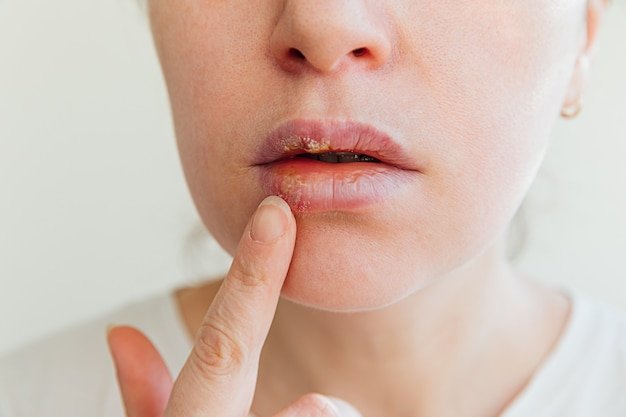 ### **Actinic cheilitis:** Actinic cheilitis is a condition characterized by dry, scaly, or cracked lips, primarily caused by prolonged sun exposure. It typically affects the lower lip and can result in redness, swelling, and roughness of the lip surface. If you or a loved one has noticed the symptoms mentioned above, please consult with an experienced oncologist like Dr. Sandeep Nayak at the earliest. Early detection and prompt treatment are crucial for successfully managing lip cancer. Risk Factors of Precancerous Lip Lesions **Various factors can increase the risk of developing precancerous lip lesions, including:** - **Excessive Sun Exposure:** Prolonged and unprotected exposure to ultraviolet (UV) radiation from the sun is a significant risk factor for developing precancerous lip conditions. The lips are particularly vulnerable to UV damage, making sun protection crucial. - **Tobacco Use:** Both smoking and smokeless tobacco products are known to increase the risk of developing precancerous lip lesions. The chemicals in tobacco can irritate and damage the lip tissues, leading to abnormal cell changes. - **Alcohol Consumption:** Excessive alcohol consumption is associated with a higher risk of developing precancerous conditions in the lips. Alcohol can damage the lip tissues and weaken the body’s ability to repair and regenerate cells. - **Viral Infections:** Certain viral infections, such as human papillomavirus (HPV), have been linked to an increased risk of precancerous lip lesions. - **Weakened Immune System:** Individuals with weakened immune systems, such as those with HIV/AIDS or undergoing immunosuppressive therapy, may have a higher susceptibility to developing precancerous lip conditions. - **Certain genetic conditions:** Inherited genetic mutations, such as those associated with familial melanoma syndrome or xeroderma pigmentosum, can make individuals more susceptible to developing lip cancer and other types of skin cancers. *“Not everyone exposed to these factors will necessarily develop precancerous lip lesions,” says* [*cancer expert*](https://drsandeepnayak.com/services/uterus-cervical-cancer) *Dr. Sandeep Nayak. “Regular dental check-ups, sun protection, and a healthy lifestyle can help reduce the risk of lip cancer or detect it early.”* Stages of Lip Cancer Symptoms of early-stage lip cancer can be mild, often leading to delayed detection until the disease has progressed. The staging of oral malignancies follows the TNM method, where: - “T” indicates the size and location of the primary tumor - “N” signifies lymph node involvement (not present in stages 1 and 2) - “M” denotes metastasis to distant body parts **The stages of oral cancer are as follows:** 1. **Stage 0:** Carcinoma in situ, where abnormal cells are present on the surface layer of the lip but have not invaded deeper tissues. 2. **Stage 1:** The tumor size is ≤2 centimeters with an invasion depth of ≤5mm. Treatment options include surgery and chemoradiation, which are effective for stage 1 oral cancer. 3. **Stage 2:** The tumor is >2 centimeters but ≤4 centimeters in size, with an invasion depth of 5mm to 10mm. 4. **Stage 3:** The tumor size is >4 centimeters without lymph node involvement or includes one lymph node regardless of size. 5. **Stage 4:** Cancer has spread to nearby tissues, lymph nodes, and other body areas. Stage 4 mouth cancer treatment may involve surgical procedures, chemoradiation, and potentially immunotherapy. [Oral cancer](https://drsandeepnayak.com/services/oral-cancer-treatment-in-bangalore) specialist Dr. Nayak cautions against ignoring any abnormality in how your lip or mouth feels and appears, as the earlier precancerous lip lesions are detected, the better your chances of treating them. Diagnosing Precancerous Lip Lesions Diagnosing precancerous lip lesions typically involves the following: **Visual Examination:** A healthcare professional will inspect the lips and surrounding areas for any visible abnormalities or lesions. **Medical History:** A thorough medical history will be taken, including any risk factors such as sun exposure, tobacco use, or family history of oral cancer. **Biopsy:** A small sample of the suspicious tissue may be taken for further examination under a microscope. This can help determine if the lesion is precancerous or cancerous. 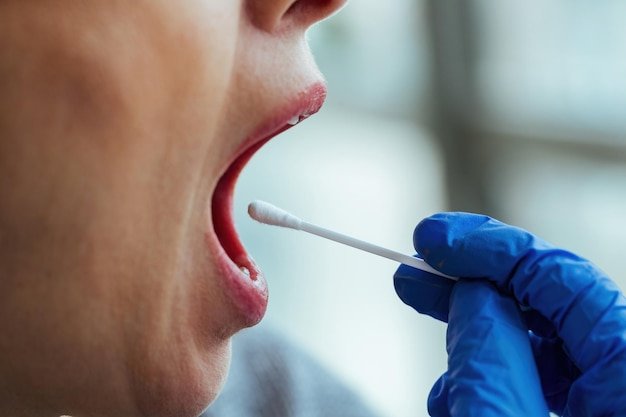 **Tissue Staining:** Special dyes or stains may be applied to the lesion to help identify any abnormal precancerous cells on the lips or changes in the tissue. **Dermatoscopy:** This non-invasive technique uses a specialized magnifying instrument to examine the lesion’s surface for specific patterns or features associated with precancerous or cancerous changes. **Imaging Tests:** In some cases, imaging tests like ultrasound, CT scan, or MRI may be recommended to evaluate the extent of the lesion or assess any deeper involvement. It is crucial to consult a healthcare professional for an accurate diagnosis and appropriate treatment based on the stage of [oral cancer](https://drsandeepnayak.com/services/tors-trans-oral-robotic-surgery). Lip Cancer Treatment Options The treatment options for lip cancer depend on various factors, including the cancer stage, tumor size, location, and the individual’s overall health. Standard treatment approaches for lip cancer include: ### **Surgery:** Surgical removal of the tumor for lip cancer can range from simple excision to more extensive procedures like lip reconstruction.  ### **Radiation Therapy:** Radiation therapy uses high-energy beams to target and destroy cancer cells. It may be used as the primary treatment or in combination with surgery for larger or more advanced tumors. ### **Chemotherapy:** In some cases, chemotherapy drugs may be administered to kill cancer cells or reduce tumor size. It can be used alone or in combination with surgery or radiation therapy. ### **Mohs Surgery:** This specialized surgical technique removes the cancerous tissue layer by layer, examining each layer under a microscope until no cancer cells remain. It is commonly used for treating lip cancer with high cure rates and minimal tissue loss. ### **Immunotherapy:** Immunotherapy drugs stimulate the body’s immune system to recognize and attack cancer cells. This approach is sometimes used for advanced or recurrent lip cancer. Dr. Sandeep Nayak is often regarded as the best oncologist in India for his expertise in delivering safe and effective cancer treatments. As one of India’s preferred mouth cancer specialists, he offers comprehensive care and compassionate support to individuals seeking oral cancer treatment. Preventive Measures of Lip Cancer Here are some preventive measures for [lip cancer](https://www.mayoclinic.org/diseases-conditions/lip-cancer/symptoms-causes/syc-20355079): - Protect your lips from excessive sun exposure by wearing wide-brimmed hats, using lip balms with SPF, and seeking shade during peak sun hours. - Quit smoking and avoid all forms of tobacco, including smokeless tobacco products - Limit alcohol consumption - Maintain a balanced diet which is rich in vegetables, fruits, and whole grains. Limit your intake of processed foods and unhealthy fats - Practice good oral hygiene by regularly brushing and flossing your teeth and gums - Visit your dentist regularly for oral examinations, which can help detect any suspicious changes in your lips or oral cavity - Perform regular self-examinations of your lips and oral cavity, looking for any unusual sores, ulcers, or changes in color or texture. - Consider getting vaccinated against human papillomavirus (HPV), as certain strains of HPV are linked to an increased risk of oral cancers If you need more information about oral cancers, please visit [cancer expert](https://drsandeepnayak.com/services/expertise) Dr Sandeep Nayak for valuable insights into the preventive measures, the significance of early detection and timely intervention. **Categories:** Blog --- ### [Living With Liver Tumor – Symptoms, Diagnosis, and Treatment Options](https://drsandeepnayak.com/blogs/living-with-liver-tumor-symptoms-diagnosis-and-treatment-options/) **Published:** May 16, 2023 **Author:** Dr. Sandeep Nayak **Content:** The liver is one of the body’s biggest and most crucial organs. It is essential for digestion, metabolism, and detoxification. Unfortunately, the liver can be affected by several illnesses, including liver tumors, just like any other organ. Many people find liver tumors a scary reality filled with dread, anxiety, and confusion. “The liver is a crucial organ for maintaining the health of our body, so if anything goes wrong, it can be devastating,” says Dr. Sandeep Nayak, a renowned [Surgical Oncologist](https://drsandeepnayak.com/) in India. Having queries and worries about a vital organ like the liver is normal. So read on if you have a liver tumor, know someone who does, or want to learn more. This blog will explore the various types of liver tumors, their signs and symptoms, causes, and treatment options. About Liver tumor A liver tumor, also called a hepatic tumor, is an abnormal growth or aggregation of cells in the liver. It could originate from the liver cells or tissues and be benign or malignant. Liver tumors can develop for a number of reasons, such as infection, chronic liver disease, and toxin exposure. While some liver tumors may not show symptoms, others might be painful or uncomfortable. The tumor’s size and location may affect liver function and general health. Monitoring liver health through regular checkups and keeping a healthy lifestyle is crucial to lowering the risk of developing liver tumors. “Regular visits to a medical professional can help detect the onset of a liver condition and treat it before it progresses into a full-fledged liver cancer,” advises [laparoscopic surgeon](https://drsandeepnayak.com/services/laparoscopic-cancer-surgery-in-india) Dr. Sandeep Nayak. Difference between Liver tumor & Liver cancer A liver tumor is any abnormal growth or cell mass that forms in the liver. It can be benign (noncancerous) or malignant (cancerous). Benign tumors are typically not life-threatening and can be removed surgically. Malignant tumors can spread to other body regions and need immediate treatment. Hepatic cancer, another name for liver cancer tumor, refers specifically to a malignant tumor that develops in the liver. The cancerous condition begins in the liver’s cells and can potentially spread to other organs. Hepatocellular carcinoma (HCC) is the most prevalent type of liver cancer out of several others. “A liver tumor is a general term that refers to any abnormal growth in the liver,” explains [robotic cancer surgeon](https://drsandeepnayak.com/services/robotic-cancer-surgery-for-unparalleled-precision) Dr. Sandeep Nayak, “while liver cancer specifically refers to a malignant tumor that originates in the liver.” Let us take a look at the common types of liver tumors. Different types of liver tumors **Hemangioma:** The most common benign liver tumor, it is made of blood vessels and is usually tiny and symptomless. **Hepatocellular adenoma:** A benign liver tumor more frequently found in women can become huge and cause pain or other symptoms. It is commonly linked to the use of oral contraceptives. **Focal nodular hyperplasia (FNH):** Usually a tiny and asymptomatic non cancerous liver tumor, it comprises healthy liver cells organized abnormally. **Hepatocellular carcinoma (HCC):** The most common malignant tumor of liver, which starts in liver cells and can spread to other body organs. **Cholangiocarcinoma:** Less frequent than HCC, cholangiocarcinoma is a form of liver cancer that develops in the cells lining the bile ducts. It can be aggressive and challenging to cure. **Angiosarcoma:** An uncommon type of liver cancer arising in the cells lining the blood vessels in the liver, often due to exposure to certain chemicals or radiation. **Metastatic liver cancer:** The most prevalent type of liver cancer in adults, it is cancer that has progressed from another organ, such as the colon, breast, or lung, to the liver. While the root cause of each type of liver tumor can differ, a number of common factors can raise the chance of developing liver tumors. Causes and risk factors for liver tumors Listed below are some common causes and risk factors for liver tumors: **Chronic liver disease:** Liver tumors can be more likely to form in people with chronic liver disease, such as cirrhosis, nonalcoholic fatty liver disease (NAFLD), or hepatitis B or C. **Environmental factors:** Exposure to chemicals or poisons can raise the risk of developing liver tumors. Examples of such chemicals include vinyl chloride, arsenic, and aflatoxins, produced by a particular form of mold. **Lifestyle factors:** Heavy drinking, smoking, and obesity increase the chance of developing liver tumors. **Family history:** Liver tumours are more likely to occur in those with a family history of them or with certain genetic disorders such as hereditary hemochromatosis. **Age and gender:** Older persons and men are more likely to develop liver tumours. **Diabetes:** Liver tumours are more likely to form in people with diabetes. **Metabolic disorders:** Alpha-1 antitrypsin deficiency and Wilson’s disease are two examples of metabolic abnormalities that can raise the chance of developing liver tumors. “Having one or more of these risk factors does not guarantee a person will develop a liver tumor,” says [oncological surgeon](https://drsandeepnayak.com/services/stomach-cancer-and-esophageal-cancer) Dr. Sandeep Nayak. “Liver tumors can also occur in persons who do not have any known risk factors.” *Let us look at the symptoms and diagnostic tests to detect liver tumors.* Symptoms of liver tumor A liver tumor may cause the following symptoms: - Abdominal pain or discomfort - Swelling or enlargement of the abdomen - Loss of appetite or weight loss - Nausea or vomiting - Jaundice (yellowing of the skin and eyes) - Fatigue or weakness - Pale or clay-colored stools - Dark urine If you experience any of the above symptoms, please consult Dr. Sandeep Nayak to assess your condition and run some essential diagnostic tests. Diagnostic tests for liver tumor include: **Blood tests:** Blood tests may be done to check liver function, including liver enzyme levels and tumor markers. **Imaging tests:** Imaging tests such as liver tumor ultrasound, CT scan, MRI, or PET scan can detect liver tumors and determine their size, location, and spread. **Biopsy:** A small sample of liver tissue may be examined under a microscope to determine if it is cancerous or benign. **Angiography:** A dye is injected into an artery in the liver to help visualize blood vessels and detect abnormalities. **Laparoscopy:** A tiny camera is inserted through a small incision in the abdomen to allow the doctor to see the liver and any tumors up close. **Endoscopy:** A thin, flexible tube with a camera on the end is passed down the throat and into the stomach to examine the liver and bile ducts. Not all liver tumors cause symptoms; some may be detected incidentally during routine medical tests or exams. “You must not ignore any discomfort or abnormalities in your body or sensations,” cautions [cancer specialist](https://drsandeepnayak.com/services/kidney-cancer-treatment) Dr. Sandeep Nayak. “Early detection makes it possible to look at the best possible liver tumor treatment options for optimum results.” Liver tumor treatment Oncological surgeon Dr. Sandeep Nayak performs the following procedures frequently for liver Cancer Treatment in Bangalore. The treatment choices for liver tumors depend on the size and location, the stage of the malignancy, and the patient’s overall health. *https://iswantosucandyliversurgery.com/* - **Surgery:** Liver tumor surgery is frequently used if the tumor is confined and can be removed safely without harming healthy liver tissue. The most common liver surgery to remove tumor is hepatectomy, which involves removing a part of the liver. - **Liver transplant:** On occasion, a liver transplant may be necessary if the tumor is too large or located in a location that cannot be removed surgically. Only patients who meet specific criteria and can access a suitable donor liver are eligible to employ this approach. - **Radiation:** High-energy radiation is used to eliminate cancer cells. The delivery is possible internally directly to the liver (brachytherapy) or externally (external beam radiation). *https://www.asbestos.com/s* - **Chemotherapy:** Chemotherapy uses drugs, administered orally or intravenously, to eradicate cancer cells from the liver and other body parts. - **Targeted therapy:** Drugs used in targeted therapy directly target cancer cells and stop their division and growth. They may be utilized separately or in conjunction with other treatments. - **Ablation therapy:** *https://img1.wsimg.com/*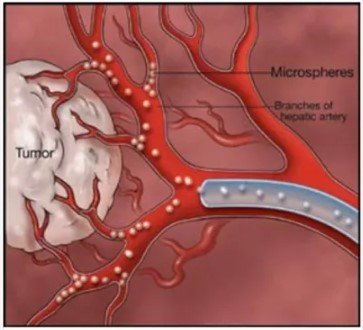 This technique applies heat or cold to kill liver tumors. The medical professional can administer this through a tiny skin incision or a needle into the liver. - **Embolization:** In embolization, the tumor’s blood supply is cut off, resulting in tumor death or shrinkage. Numerous methods can achieve this, such as obstructing blood vessels with microspheres (tiny beads or coils). If you or a loved one has a liver condition, please visit [cancer specialist](https://drsandeepnayak.com/services/oral-cancer-treatment-in-bangalore) Dr. Sandeep Nayak. Dr. Nayak frequently collaborates with his [team](https://drsandeepnayak.com/services/best-oncologist-in-bangalore) of experienced oncologists to diagnose the condition’s specifics and determine the best course of treatment. Conclusion A [liver tumor](https://www.mayoclinic.org/diseases-conditions/liver-cancer/symptoms-causes/syc-20353659) diagnosis can be emotionally difficult for patients and their loved ones. However, the outcomes for individuals who receive therapy have significantly improved due to developments in medical science and technology. Patients can conquer this challenge and emerge even stronger with the assistance of knowledgeable healthcare experts and a helpful network of family and friends. We can continue to be optimistic about managing liver tumors as medical professionals work to discover new therapies and cures for benign and malignant liver tumors. If you seek a reliable treatment for your liver condition, please [get in touch](https://drsandeepnayak.com/contact) with Dr. Sandeep Nayak, often deemed the best [oncologist](https://drsandeepnayak.com/testimonials) in India. Together, we can fight against this ailment and improve life for those impacted. **Categories:** Blog --- ### [Combining Cytoreductive Surgery With HIPEC Treatment](https://drsandeepnayak.com/blogs/combining-cytoreductive-surgery-with-hipec-treatment/) **Published:** January 1, 2023 **Author:** Dr. Sandeep Nayak **Content:** Cytoreductive surgery with hyperthermic intraperitoneal chemotherapy (CRS-HIPEC) is a type of supra-major surgery to treat certain cancers of the appendix, colon, mesothelioma, ovary, pseudomyxoma peritonei, and rectum. These cancers can progress within the abdominal cavity, resulting in peritoneal metastases, wherein deposits of tumors develop in the inner layer of your abdomen (peritoneum), as well as on other organs and tissues. Hyperthermic intraperitoneal chemotherapy (HIPEC) is a specialized treatment used to treat certain types of cancer that have spread to the abdomen (peritoneum). Cytoreductive surgery (CRS) is an integral part of the HIPEC procedure. CRS is the surgical removal of as much cancerous tissue as possible from the abdominal cavity. CRS is followed by the delivery of chemotherapy directly to the abdominal cavity through a heated perfusion solution. Renowned [surgical oncologist in India](https://drsandeepnayak.com/), Dr. Sandeep Nayak, explains, “The goal of CRS is to reduce the size and number of cancerous tumors in the abdominal cavity as much as possible. This helps to increase the effectiveness of the chemotherapy solution, as it can reach and target more cancer cells.” Dr. Sandeep Nayak is among the preferred cancer surgeons for people seeking [HIPEC treatment in Bangalore. ](https://drsandeepnayak.com/services/hipec-treatment-in-bangalore) Procedure of Cytoreductive surgery with HIPEC Cytoreductive surgery and HIPEC procedures are typically performed by a team of highly experienced surgeons, anesthesiologists, and other medical professionals in an operating room. It usually takes several hours to complete and is typically performed as part of an extensive procedure to remove cancerous tissue. **Here is an overview of the steps involved in Cytoreductive surgery and hyperthermic intraperitoneal chemotherapy treatment:** - **Anesthesia:** The patient is given general anesthesia to put them to sleep and prevent any pain during the surgery. - **Cytoreductive surgery:** CRS is the process that involves the surgical removal of cancerous tissue. The surgeon will make an incision in the abdomen and remove as much cancerous tissue as possible. This may include the removal of organs or other tissue, depending on the location and extent of the cancer. - **Insertion of a heated perfusion system:** A heated perfusion system is inserted into the abdominal cavity through a small incision. This system circulates a heated chemotherapy solution throughout the abdominal cavity. - **Administration of chemotherapy:** The chemotherapy solution is perfused through the abdominal cavity for a specific period, usually around 90 minutes. The heat helps to increase the effectiveness of the chemotherapy. - **Closure of the incision:** Once the chemotherapy has been administered, the incision is closed, and the patient is taken to the recovery room to awaken from the anesthesia. HIPEC is a complex and highly specialized procedure and is not available at all cancer centers. [Dr. Sandeep Nayak](https://drsandeepnayak.com/professional/dr-sandeep-nayak) says, “HIPEC is typically reserved for patients with advanced-stage cancer that has spread to the peritoneum. It is usually used in combination with other cancer treatments, such as chemotherapy or radiation therapy.” When Is CRS-HIPEC Used? Cancer specialist Dr. Sandeep Nayak may employ HIPEC and Cytoreductive surgery to treat advanced-stage cancer that has spread to the peritoneum, a thin layer of tissue that lines the abdominal cavity and surrounds the abdominal organs. This type of cancer is known as peritoneal carcinomatosis. 1. **Peritoneal carcinomatosis can occur in various types of cancer, such as:** 2. **Appendiceal cancer:** Cancer that arises when the cells that make up your appendix divide and multiply uncontrollably. 3. **Colorectal cancer:** Cancer that develops in the cells between your [colon](https://drsandeepnayak.com/services/colon-cancer) (large intestine) and rectum (anus). 4. **Gastric or stomach cancer:** A relatively rare type of cancer that develops in the [stomach](https://drsandeepnayak.com/services/stomach-cancer-and-esophageal-cancer) lining. 5. **Mesothelioma:** A rare and aggressive cancer that develops in the lining of the abdomen (peritoneal), lungs (pleural), or heart (pericardial). It is caused due to exposure to asbestos, a fibrous mineral once widely used in building materials, insulation, and other products. 6. **Ovarian cancer:** Cancer that occurs in the [ovaries](https://drsandeepnayak.com/services/ovarian-cancer). 7. **Psuedo-myxoma peritonei:** Cancer that occurs in the cells lining the inside of your belly and produces jelly-like material. According to oncology expert Dr. Sandeep Nayak, “Complex judgments must be made when treating peritoneal disease patients. We believe that in order to help patients get the best results, every one of these individuals should be screened at a specialized facility with a highly-skilled and focused team.” Cytoreductive surgery with HIPEC – Success rate - The median overall survival for patients with colorectal peritoneal metastases receiving chemotherapy alone ranges between 8 – 15 months, but for those receiving CRS-HIPEC, the median survival is between 22 – 47 months, with a 5-year survival rate of 27% to 54%. - CRS-HIPEC has significantly increased 5-year survival in patients treated for appendix peritoneal metastases and mesothelioma from less than 10% – 50% to 90% and is now the norm for these types of tumors. - Studies conducted on 1051 patients treated for ovarian cancer with CRS-HIPEC indicated a median survival of 73 months. - Additionally, a couple of phase 3 randomized clinical trials examining CRS-HIPEC in recurring and primary grade III ovarian cancer showed that HIPEC produced a 2-fold overall survival rate and overall survival benefit of 11 months, respectively. Recovery An[ Oncologist in India](https://drsandeepnayak.com/services/best-oncologist-in-india), Dr. Sandeep Nayak says, “The ability to recover following CRS-HIPEC treatment relies on the severity of your cancer and the scope of the procedure. The length of surgery might range from 5-12 hours, with a subsequent 10- to 14-day hospital stay. Usually, recovery takes 2-3 months.” **You may experience the following side effects during your recovery period:** - Bloating - Problems with bowel movements – constipation/diarrhea - Trouble sleeping - Weight loss - Nausea - Tiredness Conclusion An[ Oncologist in India](https://drsandeepnayak.com/services/best-oncologist-in-india), Dr. Sandeep Nayak says, “The ability to recover following CRS-HIPEC treatment relies on the severity of your cancer and the scope of the procedure. The length of surgery might range from 5-12 hours, with a subsequent 10- to 14-day hospital stay. Usually, recovery takes 2-3 months.” **You may experience the following side effects during your recovery period:** - Bloating - Problems with bowel movements – constipation/diarrhea - Trouble sleeping - Weight loss - Nausea - Tiredness FAQ ### **What is removed in Cytoreductive surgery?** [CRS](https://en.wikipedia.org/wiki/Cytoreductive_surgery) involves the removal of visible malignant tumors from the abdominal cavity. The next step is HIPEC, where the cavity is drenched in hot chemotherapy heated to 42 °C to eliminate any tiny cancer cells that may still be present. ### **How is HIPEC different from traditional chemotherapy?** Traditional chemotherapy is administered intravenously to target cancer cells. Unfortunately, peritoneal carcinomatosis frequently has a low or restricted blood supply, making it more challenging for intravenous chemotherapy to destroy these tumors. Thanks to HIPEC, chemotherapy medications are able to interact directly with microscopic cells that remain in the peritoneal cavity. **Categories:** Blog --- ### [Cancer Treatment – Laparoscopic VS Robotic Surgery](https://drsandeepnayak.com/blogs/cancer-treatment-laparoscopic-vs-robotic-surgery/) **Published:** April 21, 2023 **Author:** Dr. Sandeep Nayak **Content:** Decades ago, open surgery was the standard of care, when a surgeon made an incision in the body of the patient and then performed a series of procedures to remove benign (non-cancerous) or malignant (cancerous) tumors. The process took too long and usually resulted in a high frequency of complications. However, minimally invasive techniques like laparoscopic and robotic surgery can now be used to conduct cancer surgery. Minimally invasive surgery has become increasingly popular in the last two decades. These approaches involve introducing a camera through a keyhole (tiny) incision in order to reach any significant target organ or the cancer site. These procedures are less uncomfortable and less likely to result in problems. The benefits are enormous when the incisions are small, explains Dr. Sandeep Nayak, a well-known [surgical oncologist](https://drsandeepnayak.com/) in India. In this article, we shall learn the similarities and differences between these two surgical methods. How are Laparoscopic and Robotic Surgeries similar? There are several similarities between robotic surgery and laparoscopic surgery. The most significant similarities include the following: - Both techniques use smaller incisions than a traditional open surgery - Both procedures involve the use of tiny cameras to get a better view of the surgical area - The surgical instruments used in both these procedures are much smaller However, [robotic surgery](https://drsandeepnayak.com/blogs/robotic-cancer-surgery-a-revolutionary-approach) has made technological strides that make these operations simpler for doctors to carry out and for the patients to recuperate from. What are the differences between Laparoscopic and Robotic Surgery? 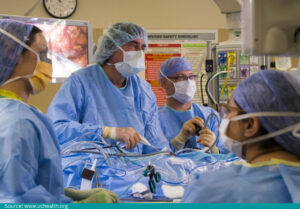The two methods of surgery differ significantly from one another. The key areas of distinction are the instruments used and how they operate. ### **Laparoscopic Surgery** Laparoscopic surgery involves performing surgery by making keyhole, minimally invasive incisions in the abdominal (tummy) wall. The procedure is carried out using a laparoscope, a hand-held tool that aids the laparoscopic surgeon in navigating the body. The camera used in Laparoscopic surgery is 2-dimensional. It is employed to treat a number of ailments, including but not restricted to [ovarian cysts](https://drsandeepnayak.com/services/ovarian-cancer), hernias, and numerous cancers. ### **Laparoscopic Surgery – Advantages** - lowers the potential for injury while performing the surgery - the pain and discomfort during the healing period are less - requires a shorter stay in the hospital - the need for anesthetic drugs is reduced - the risk of wound complications and infections is reduced - blood loss is less, and recovery is quicker - minimal discomfort and pain - enables patients to resume routine activities soon - the cosmetic results are better Please get in touch with Dr. Sandeep Nayak if you want more information about [Laparoscopic cancer surgery](https://drsandeepnayak.com/services/laparoscopic-cancer-surgery-in-india) in India. ### **Robotic Surgery**  [Robotic surgery](https://drsandeepnayak.com/services/tors-trans-oral-robotic-surgery), also referred to as robot-assisted surgery, allows medical professionals to perform a multitude of intricate and challenging treatments with greater precision, flexibility, and command than is feasible with traditional methods. This technique allows the surgeon to operate the surgical instruments from outside the body of the patient with the help of a console and a 3-dimensional camera. It enables surgeons to see clearly within the body, allowing them to do surgery without endangering a patient’s vital health tissues or organs. Robotic surgery is an option for many challenging surgical operations, including [prostate cancer](https://drsandeepnayak.com/services/prostate-cancer) surgery, [liver transplantation](https://drsandeepnayak.com/services/liver-cancer), and heart bypass surgery. Robotic surgery helps with efficiency, precision, and command throughout a procedure. For patients, robotic surgery offers some benefits similar to those of laparoscopic surgery. However, there are some clear advantages that you should take into account while selecting your course of treatment. ### **Robotic Surgery – Advantages** - provides a greater range of motion - the 3-dimensional camera allows a better view of the operation site - causes minimal blood loss, and recovery is quicker - there is precision in the movements as surgeon tremor is eliminated - the instruments are intricate and can access areas that a surgeon’s hand cannot reach in traditional or laparoscopic surgery - reduced need for anesthetics during and after surgery Dr. Sandeep Nayak adds that Robotic surgery typically results in less discomfort, reduced complications, and a speedier recovery period for the patient since it allows the surgeon a precise and clear perspective of the surgery site and improved dexterity. With over 23 years of overall experience, Dr. Sandeep Nayak is among the preferred cancer specialists for people seeking [Robotic Cancer Surgery](https://drsandeepnayak.com/services/robotic-cancer-surgery-for-unparalleled-precision) in Bangalore, India. Which is a better cancer treatment – Laparoscopic or Robotic surgery? Which cancer surgery is best depends on several variables, including the health status of the patient, the surgeon’s preferences and surgical experience, the kind of cancer that needs treatment, time restraints, and available amenities and technology. Laparoscopic surgery appeals to patients because it requires fewer incisions and causes less discomfort. On the other hand, robotic surgery additionally offers improved visualization and precision in the operating room with fewer difficulties. Cancer specialist Dr. Sandeep Nayak adds that Robotic surgery is typically preferred when a surgeon must operate in a challenging, constrained area of the body. Furthermore, robotic surgery has a quicker recovery period and is a less invasive choice for patients who are uncomfortable with the thought of surgery. Although less invasive, laparoscopic surgery takes longer to complete. If you are considering getting cancer treatment in Bangalore, please consult Dr. Sandeep Nayak to understand which treatment option is the most suitable for you. Conclusion [Cancer](https://www.cancer.gov/about-cancer/understanding/what-is-cancer) is a disease that can be agonizing and traumatic for the patient and their loved ones. It can be physically and emotionally draining. The treatment techniques can also cause a lot of discomfort and uncertainty. However, with progress in medical science, treatment options are becoming more advanced with minimal side effects or discomfort. Laparoscopic and Robotic Surgery are both minimally invasive techniques that enable precise surgeries with the quickest recovery time, but there are a few significant variations between them. It is significant to highlight that both of these procedures are generally very successful. So, do not be concerned about the surgical choice you or your doctors decide on. Please do not delay the process if you or a loved one requires cancer treatment; start your treatment with the accomplished surgical oncologist Dr. Sandeep Nayak. He is a pioneer in the field of minimally invasive surgeries and has saved the lives of countless people with his surgical [expertise](https://drsandeepnayak.com/services/expertise). FAQs **Q. Is robotic surgery the same as laparoscopic?** **A.** A two-dimensional camera is used to aid with manual laparoscopic surgery. Meanwhile, in robotic surgery, the surgeon must use a console and a three-dimensional camera to manipulate equipment from outside the patient’s body. **Q. what are the advantages of robotic surgery?** **A.** The ability to perform surgery through tiny incisions is one of its key benefits. Among the additional benefits of robotic surgery are: Greater accuracy: Compared to a human hand, the robotic arm’s actions are more precise. They also have a wider range of motion. **Categories:** Blog --- ### [Basal Cell Carcinoma on Breast](https://drsandeepnayak.com/blogs/basal-cell-carcinoma-on-breast/) **Published:** October 26, 2023 **Author:** Dr. Sandeep Nayak **Content:** Enter the world of Basal Cell Carcinoma (BCC) of the Breast – an exceptionally rare condition. Basal Cell Carcinoma of Breast is a rare form of breast disease that originates in the basal cells of the skin or the mammary glands. These often appear as abnormal growths or lesions on the breast and can be confused with benign skin conditions. “While breast cancer is well-known, BCC of the breast is a unique entity,” says Dr. Sandeep Nayak. “Its incidence is so low that it barely registers globally. But even in its rarity, this condition can affect lives and deserves attention. Remember, awareness and understanding are key to addressing this uncommon challenge.” Dr. Sandeep Nayak, often deemed one of the [best oncologists in India](https://www.clinicspots.com/oncologist/india "best oncologists in India"), is an expert in diagnosing and treating cancer. Don’t hesitate to reach out to Dr. Nayak if you have concerns about your breast health. Your well-being is our priority. Basal Cell Carcinoma on Breast – Causes The causes of basal cell carcinoma on breast may include:  - **Excessive Sun Exposure:** Prolonged exposure to the sun’s harmful ultraviolet (UV) rays can increase the risk. - **Genetic Predisposition:** Family history of skin cancers can be a contributing factor. - **Radiation Exposure:** Past radiation therapy may elevate the risk. - **Compromised Immune System:** Weakened immunity due to medical conditions or medications can play a role. - **Environmental Factors:** Exposure to certain toxins or chemicals may be a trigger. “Basal cell carcinoma is most commonly associated with sun exposure,” explains [cancer expert ](https://drsandeepnayak.com/expertise/)Dr. Sandeep Nayak. “But this condition can occur in areas less exposed to the sun. Risk factors include light skin, family history of skin cancer, and previous skin cancers.” Do you suspect you are at risk of basal cell carcinoma on your breast? Please consult the renowned [surgical oncologist in India](https://drsandeepnayak.com/), Dr. Nayak, for support and guidance. ***Let’s now explore the symptoms of basal cell carcinoma on breast. Understanding the symptoms can empower you with the knowledge needed for early detection and prompt action.*** Symptoms Of Basal Cell Carcinoma On The Breast Here are the symptoms of basal cell cancer on breast that you should be aware of: **Unusual Skin Changes:** Watch for persistent changes in the skin, such as redness, scaling, or the appearance of a pearly bump. **Open Sores:** Non-healing sores or ulcers that may ooze or crust over should be investigated promptly. **Bleeding or Scabbing:** If a lesion on the breast frequently bleeds, scabs, and reopens, it’s a cause for concern. **Shiny or Translucent Bumps:** Look out for shiny or waxy bumps that may appear translucent with blood vessels visible inside. **Scar-like Areas:** Patches of skin that resemble scars but haven’t resulted from any injury should be examined. **Irritated or Itchy Skin:** Skin that becomes persistently itchy, painful, or tender could be a sign of BCC. **Changes in Existing Moles:** Any changes in size, shape, or color of existing moles on the [breast](https://drsandeepnayak.com/blogs/useful-tips-for-early-detection-of-breast-cancer/) should be evaluated. **Sensitivity to Touch:** Increased sensitivity or pain in a specific breast area could be a symptom. If you notice any of these symptoms, don’t hesitate to consult Dr. Sandeep Nayak for a thorough evaluation. Dr. Nayak is among the leading doctors for people seeking [breast cancer treatment](https://drsandeepnayak.com/services/breast-cancer-treatment-in-bangalore/) in India. ***Now, let’s discuss the survival rate of basal cell carcinoma on the breast.*** Survival Rate of Basal Cell Carcinoma on The Breast Basal cell carcinoma is generally slow-growing and rarely metastasizes or spreads to other body parts. It’s associated with a very high survival rate. Most people with BCC in the breast can expect a full recovery with early diagnosis and appropriate treatment. While survival rates are generally high, it’s essential to get timely medical attention to ensure effective management and minimize the risk of complications. Have you noticed any skin irregularities on your breast? Please consult the eminent surgical oncologist in India, Dr. Sandeep Nayak, for proper evaluation and treatment. Early detection is crucial in maintaining a high survival rate and well-being. ***Early detection can be a game-changer.*** Treatment Options for Basal Cell Carcinoma on the Breast Basal cell breast cancer is a rare but treatable form of skin cancer that primarily affects the breast. Treatment for basal cell carcinoma on breast primarily involves: **Surgical Excision:** Dr. Nayak performs this treatment to remove the cancerous tissue and some surrounding healthy tissue precisely. This procedure is to ensure that no cancer cells remain. It’s a commonly used treatment for BCC on the breast, especially for larger tumors or those penetrating deeper layers. **Curettage and electrodesiccation:** Curettage and electrodesiccation is a standard treatment for Basal Cell Carcinoma on the breast. The doctors scrape off the cancerous tissue using a curette during this procedure. Next, they apply an electric current to destroy any remaining cancer cells. Doctors often use this method for smaller, superficial lesions. It boasts a high success rate in eliminating cancer while preserving the breast’s appearance. **Mohs Micrographic Surgery:** Dr. Nayak uses this specialized technique when preserving healthy tissue is critical. He removes the tumor layer by layer, examining each layer under a microscope until no cancer cells are visible. In doing so, he minimizes damage to surrounding tissue. **Cryosurgery:** Cryosurgery employs extreme cold to freeze and destroy tumor cells. It’s typically suitable for superficial BCCs on the breast and may be repeated if necessary.  **Topical Medications:** For early, superficial BCCs, topical medications like imiquimod or fluorouracil creams may be applied to the affected area over several weeks. These medications stimulate the body’s immune system to attack and eliminate cancer cells. **Radiation Therapy:** Although less common, Dr. Nayak may recommend radiation therapy for patients who are not good candidates for surgery or when the tumor is in a challenging area. It uses high-energy beams to target and kill cancer cells. Are you worried that you have basal cell carcinoma on your breast? Please meet Dr. Sandeep Nayak, a dedicated surgical oncologist in India, to explore these treatment options. ***Don’t hesitate to seek professional guidance for your well-being.*** Conclusion Basal cell carcinoma on breast is indeed relatively rare. However, knowing its causes, symptoms, and treatment options can be life-saving. Understanding and timely intervention are crucial for successfully managing this rare condition. If you suspect any symptoms or have concerns about your breast health, don’t hesitate to [seek expert guidance](https://drsandeepnayak.com/contact/). Dr. Sandeep Nayak, an experienced surgical oncologist, is here to assist you in addressing these concerns. Don’t wait; take that step towards a healthier future. Visit Dr. Sandeep Nayak for expert advice on breast cancer treatment in India. FAQs **Q.1 Is basal cell carcinoma a serious cancer?** A: Basal cell carcinoma is not considered a highly aggressive or life-threatening cancer, but it requires treatment. **Q.2 Can basal cell carcinoma heal without surgery?** A: Basal cell carcinoma may heal without surgery in some cases. However, it’s essential to consult a healthcare professional for a proper evaluation and treatment. **Q.3 What is the age range for basal cell carcinoma?** A: Basal cell carcinoma can occur in individuals of various age groups. It is more common in older adults, especially those over 50. **Q.4 Is there a link between breast cancer and basal cell carcinoma?** A: There is generally no direct link between breast cancer and basal cell carcinoma. Breast cancer is a distinct form of cancer that originates in the breast tissue. It is often associated with genetic factors, hormonal influences, and other complex factors. Basal cell carcinoma (BCC) is typically a type of skin cancer originating in the skin’s basal cells. It occurs mainly due to exposure to ultraviolet (UV) radiation from the sun. **Reference:** [https://www.cancer.org/cancer/types/basal-and-squamous-cell-skin-cancer/treating/basal-cell-carcinoma.html#](https://www.cancer.org/cancer/types/basal-and-squamous-cell-skin-cancer/treating/basal-cell-carcinoma.html) <https://www.webmd.com/melanoma-skin-cancer/melanoma-guide/basal-cell-carcinoma#1> **Categories:** Blog --- ### [Understanding Metastatic Renal Cell Carcinoma: Symptoms & Treatments](https://drsandeepnayak.com/blogs/understanding-metastatic-renal-cell-carcinoma-symptoms-treatments/) **Published:** December 27, 2023 **Author:** Dr. Sandeep Nayak **Content:** Renal cell carcinoma (RCC) is a form of kidney cancer that begins in the lining of tiny tubes or tubules of the kidney. It accounts for approximately 2-3% of all adult malignancies globally. - Annually, RCC sees about 137,000 cases in Europe, 76,000 in North America, and 403,000 globally. - In 2022, 79,000 US patients were diagnosed with kidney cancer, leading to 13,920 deaths. - Annual incidence of RCC among Indian males is reported at 2 per lakh population and females at 1 per lakh population accounting for 3% of all cancers. - 15-20% of RCC come in stage 4 at the time of first diagnosis. Metastatic renal cell carcinoma, also known as metastatic kidney cancer, is when the cancer spreads to other parts of the body. This is also called stage 4 cancer. This aggressive form of cancer can profoundly affect patients and their loved ones, taking a toll both physically and emotionally. 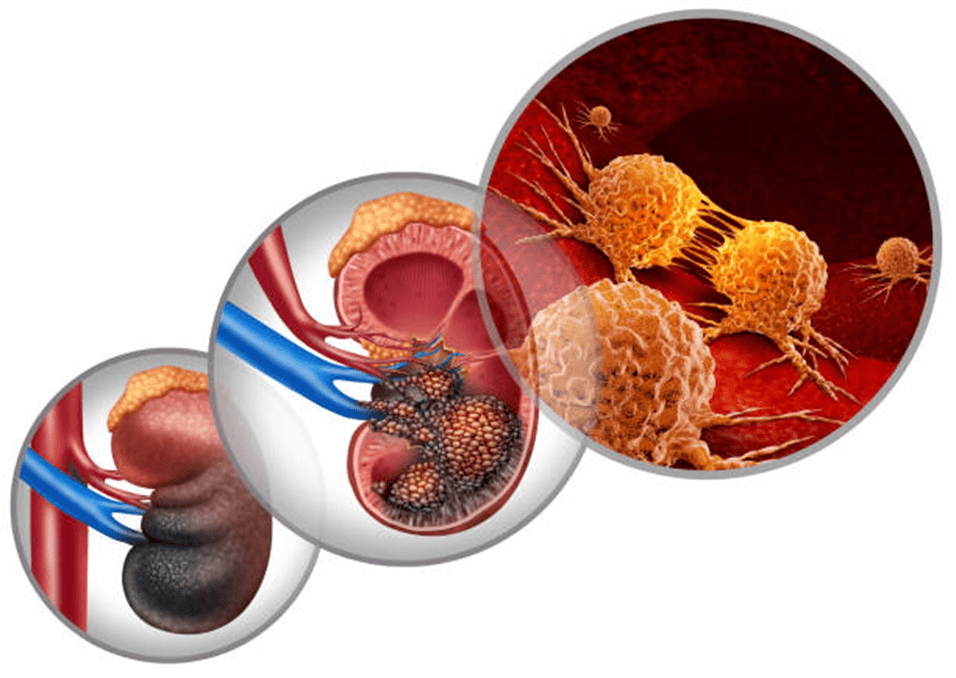 India has seen a rise in the incidence of various cancers over the years, including RCC. In these trying times, many turn to experts for guidance and care. Among them is Dr. Sandeep Nayak, a leading [surgical oncologist in India](https://drsandeepnayak.com/ "New Home"). His in-depth knowledge of the condition provides hope and direction for metastatic kidney cancer patients. According to Dr. Sandeep Nayak: “Understanding Metastatic RCC is not just essential for those diagnosed but also their supporters and caregivers. Being alert to specific changes in our body can pave the way for early detection.” Wondering what signs you should look out for? Read on to understand the tell-tale signals. Symptoms Of Metastatic Renal Cell Carcinoma RCC is most commonly found in individuals aged 50-70, with an average diagnosis age of 64. The common signs that you must be alert to include: - **Blood in the urine:** A common sign of metastatic renal cell cancer. - **Unexplained weight loss:** Losing weight without trying can be a symptom. - **Pain in the side or back:** A persistent ache might signal this condition. - **Swelling in the legs and ankles:** Often due to fluid buildup. - **Fatigue:** Patients often feel unusually tired or weak. - **Shortness of breath:** Caused when cancer spreads to the lungs. - **Bone pain:** When the cancer affects the bones, pain is a frequent symptom. - **High calcium levels:** This can lead to feeling thirsty or frequent urination. Have you or a loved one noticed any of these symptoms? So, what makes this condition tick, and how quickly does it advance? Let’s get started! How Fast Does Metastatic Renal Cell Carcinoma Grow? Metastatic renal cell carcinoma can exhibit varying growth rates among patients. Some patients may experience slow progression over the years. While for others, the cancer might spread rapidly within months. Several factors influence its progression, including: - the subtype of RCC - the patient’s overall health - the effectiveness of treatments - kidney cancer metastasis sites (the organs to which the cancer has spread) Do you have concerns about Metastatic renal cell carcinoma? What Are The Complications Of Metastatic Renal Cell Carcinoma? Metastatic renal cell carcinoma (mRCC) can lead to a variety of complications. This can occur both from the spread of the cancer itself and from the treatments used to manage it. Here are some potential complications of mRCC: 1. **Organ Dysfunction:** As mRCC spreads to other organs, it can interfere with their normal function. For example, metastases to the [lungs](https://drsandeepnayak.com/services/lung-cancer-treatment-in-bangalore/) can lead to respiratory issues. If it spreads to the bones, it can result in fractures and pain. 2. **Lymphedema:** This swelling can occur if mRCC blocks the lymphatic system, mainly if it spreads to lymph nodes. 3. **Hypercalcemia:** Some people with mRCC develop elevated calcium levels in the blood, which can cause kidney stones, bone pain, and neuromuscular symptoms. 4. **Anemia:** Reduced red blood cell count, leading to fatigue, shortness of breath, and other symptoms. 5. **Treatment-Related Side Effects:** Targeted therapies and immunotherapies can lead to side effects, including fatigue, [liver](https://drsandeepnayak.com/services/liver-cancer-treatment-in-bangalore/) problems, skin reactions, and digestive issues. 6. **Pain:** As tumors grow and spread, they can press against nerves or invade bones, causing significant pain. 7. **Kidney Dysfunction:** The remaining kidney (after the doctor removes the affected one) may be impacted, leading to reduced kidney function. 8. **Brain and Neurological Issues:** If mRCC spreads to the brain, it can lead to symptoms like seizures, headaches, and cognitive changes. Please maintain regular check-ups and communicate any new or worsening symptoms to your healthcare provider. Early detection and management of these complications can improve the quality of life for individuals with mRCC. After discussing the complications of mRCC, a pertinent question arises: where does this cancer most frequently metastasize within the body? Let us explore this further. Most Common Site of Metastasis for Renal Cell Carcinoma The lungs are the most frequent site of metastasis for renal cell carcinoma. It’s not uncommon for individuals initially diagnosed with metastatic renal carcinoma to discover it due to respiratory symptoms or findings on a chest X-ray. 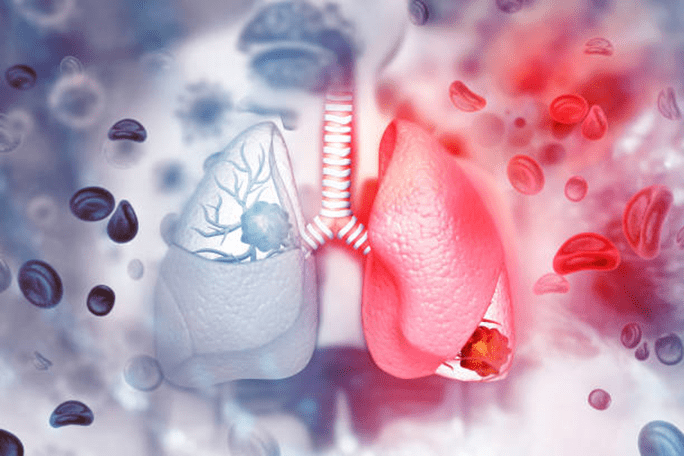 Understanding where cancer spreads can be crucial in monitoring and early detection, something Dr. Sandeep Nayak often underscores in his consultations. With over 15 years of cancer expertise, Dr. Nayak is the go-to doctor for [kidney cancer treatment](https://drsandeepnayak.com/services/kidney-cancer-treatment-in-bangalore/) in Bangalore. When faced with a condition like mRCC, it’s natural to reflect on how much time one has. Continue reading to understand the survival rates of this disease. What Is The Survival Rate For Renal Cell Carcinoma Metastasis? The metastatic renal cell carcinoma life expectancy can vary widely among patients. Numerous factors influence it: **Stage of the Disease:** Life expectancy is generally shorter for those diagnosed at a more advanced stage. **Treatment Response:** The effectiveness of metastatic renal cell carcinoma treatment for a particular individual can significantly impact their prognosis. **General Health and Age:** A patient’s overall health, including the presence of other underlying conditions and their age, can play a role in life expectancy. **Sites of Metastasis:** The organs or areas where the cancer has spread can affect prognosis. For instance, mRCC spreading to the brain or [liver](https://drsandeepnayak.com/services/liver-cancer-treatment-in-bangalore/) may have a different prognosis than when it spreads to the lungs or bones. **Performance Status:** This measures how well an individual can perform ordinary tasks and daily activities. Those with a higher performance status often have a better prognosis. Historically, the average life expectancy for mRCC was around 1 to 2 years. However, with new therapies, many patients are living longer, with some reaching beyond the 5-year mark. What Is The Best Treatment For Metastatic Renal Cell Carcinoma? The best treatment for metastatic renal cell carcinoma (mRCC) often depends on several factors, including: - the patient’s overall health - the specific subtype of RCC - the extent and sites of metastasis Over the years, there have been significant advancements in the treatment of mRCC. Here are some of the primary treatment modalities: **Targeted Therapies:** These drugs specifically target the molecular differences between [cancer ](https://drsandeepnayak.com/services/colon-cancer-treatment-in-bangalore-india/)and normal cells. Examples include sunitinib (Sutent), pazopanib (Votrient), and cabozantinib (Cabometyx), among others. 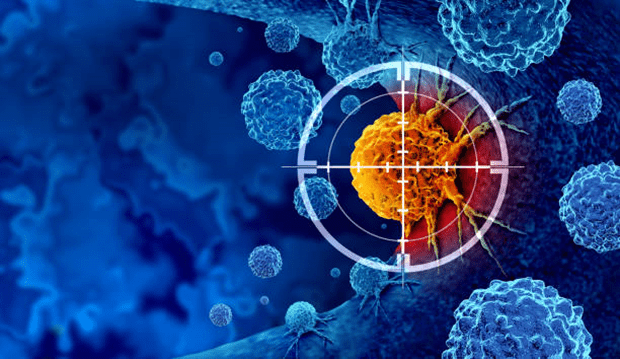 **Immunotherapy:** This treatment uses the body’s natural defenses to fight the cancer. Nivolumab (Opdivo), alone or in combination with ipilimumab (Yervoy), has been used for mRCC. **Cytokine Therapy:** This is an older form of immunotherapy that includes drugs like interleukin-2 (IL-2) and interferon-alpha. They’re less commonly used today due to the development of newer, more effective treatments. **Radiation Therapy:** While kidney cancer is often resistant to radiation, it may alleviate symptoms in specific metastatic sites, like bone metastases. **Surgery:** In some instances, surgical removal of the primary kidney tumor and metastatic sites can be beneficial. cytoreductive nephrectomy is the term used when the diseased kidney is removed in stage 4 cancers. In patients with symptoms (for example, hematuria, pain, a large tumor thrombus, uncontrolled hypertension, or paraneoplastic symptoms), cytoreductive nephrectomy is still recommended for symptom relief. In selected cases, it is possible to surgically remove the disease that has spread to lung or liver and attempt to cure stage 4 cancer. This may cure some of the patients with stage 4 kidney cancer. 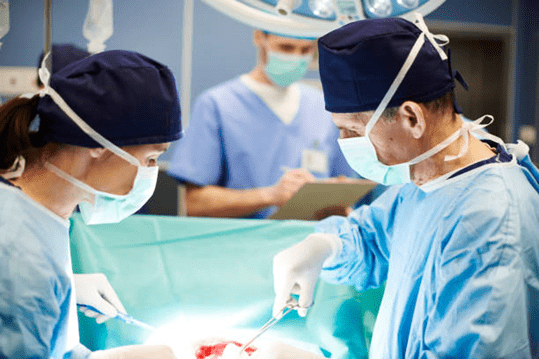 **Ablative Techniques:** These are used less frequently but can be an option for specific patients. Techniques like cryoablation or radiofrequency ablation can destroy tumor cells. **Clinical Trials:** For patients with mRCC that isn’t responding to standard treatments, participating in clinical trials can offer access to new and experimental therapies. Patients must work closely with an oncologist to determine the most suitable treatment plan. Medical experts regularly employ a combination of treatments for optimal results. Conclusion Metastatic or stage 4 renal cell carcinoma (mRCC) is a complex medical condition requiring comprehensive understanding and tailored management. With advancements in medical research, promising [metastatic RCC treatments](https://www.webmd.com/cancer/metastatic-renal-cell-treatments) are emerging, offering hope. However, the key to managing mRCC lies in early intervention, expert guidance, and a personalized treatment approach. [Cancer expert](https://drsandeepnayak.com/services/best-oncologist-in-india/) Dr. Sandeep Nayak, with his wealth of experience and dedication to patient care, stands as a beacon in this journey. If you or a loved one is grappling with mRCC, don’t navigate this path alone. Seek expert insights. FAQs **Q.1 How long can you live after renal carcinoma?** A: Life expectancy after renal carcinoma varies based on factors like the stage at diagnosis and treatment received. However, with timely interventions, many individuals can live for years. **Q.2 What organs are affected by renal cell carcinoma?** A: Renal cell carcinoma originates in the kidneys, but it can spread to other organs. The lungs, bones, liver, and brain are common metastasis sites. **Q.3 Is Stage 4 renal cell carcinoma curable?** A: Stage 4 renal cell carcinoma is advanced and challenging to cure. However, metastatic RCC treatments can control its growth, manage symptoms, and extend life. **Q.4 How long can you live with stage 4 renal cell carcinoma?** A: The life expectancy for stage 4 renal cell carcinoma varies. With modern treatments, many patients can live for several years, though individual outcomes differ. **Reference Links:** - <https://www.webmd.com/cancer/metastatic-renal-cell-treatments> - <https://www.healthline.com/health/metastatic-renal-cell-carcinoma> **Categories:** Blog --- ### [Stomach Cancer in Young Adults](https://drsandeepnayak.com/blogs/stomach-cancer-in-young-adults/) **Published:** June 6, 2024 **Author:** Dr. Sandeep Nayak **Content:** Stomach cancer is quite common in India, ranking fifth for men and seventh for women. It occurs when malignant cells form in the lining of the stomach. Also known as gastric cancer, it’s more prevalent in older adults. But there’s a global increase in stomach cancer in young adults before they turn 50. This presents unique challenges as the biology of their cancer can differ from that seen in older populations. According to Dr. Sandeep Nayak, a certified [oncologist in Bangalore](https://drsandeepnayak.com/): “The nature of stomach cancer in young adults often means diagnosis occurs at a later stage and the type of cancer is more aggressive. This delay can be due to the subtlety of symptoms. It can also happen because healthcare providers are less suspicious when treating younger patients. It is all about identifying the warning signs and doing the right tests.” ***Curious about what might be behind the rise in stomach cancer cases among young adults? Let’s dive into the possible causes.*** Causes of Stomach Cancer in Young Adults Understanding the causes of stomach cancer in young adults is crucial for early detection and treatment. Several factors contribute to the risk of developing this disease at a young age. **** **Genetics** Approximately 10% of all cancers are attributed to [genetic factors](https://drsandeepnayak.com/blogs/ovarian-cancer-genetic/)**.** Studies show that around 1 to 3% of gastric cancers may be hereditary. Mutations in the CDH1 gene, for example, lead to HDGC (hereditary diffuse gastric cancer). They cause changes in the cells lining the stomach, predisposing individuals to stomach cancer from a young age. Families with a history of stomach cancer should consider genetic counseling to assess their risk and discuss preventive measures. These familial cancers are more aggressive in nature.  **Helicobacter pylori Infection (H. pylori)** This common stomach infection is a significant risk factor for stomach cancer at any age. It causes chronic inflammation of the stomach lining, leading to ulcers and, eventually, cancerous changes. Young adults infected with H. pylori require appropriate antibiotic treatment to reduce their risk of developing stomach cancer later in life. **Diet** Diets high in salty and smoked foods and low in fresh fruits and vegetables can increase stomach cancer risk. Young adults often consume fast or processed foods. Such foods contain carcinogens or promote conditions in the stomach that enhance cancer development. A [balanced diet](https://drsandeepnayak.com/blogs/choosing-the-most-suitable-diet-for-cancer-patients-and-survivors/) rich in antioxidants and fibers can reduce cancer risk. **Smoking and Alcohol** Smoking and excessive alcohol consumption can damage the stomach lining. It is essential to counsel young adults on the risks associated with these lifestyle choices. They can contribute to the increased risk of developing various cancers, including: - [breast](https://drsandeepnayak.com/services/breast-cancer-treatment-in-bangalore/) - [oral ](https://drsandeepnayak.com/services/oral-cancer-treatment-in-bangalore/) - Pharynx (throat) - Larynx - [lung](https://drsandeepnayak.com/blogs/connection-between-smoking-and-lung-cancer/) - [esophagus](https://drsandeepnayak.com/blogs/is-esophageal-cancer-curable/) **Environmental Factors** Exposure to certain environmental toxins, such as asbestos and heavy metals, can also play a role. Workplaces lacking safety standards may expose young adults to these harmful substances, contributing to the risk of cancer. However, there is no strong proof for this association at present. Do you think you might be at risk of stomach cancer? Please consult a healthcare professional. Getting checked early can help in early detection and improve treatment outcomes. Book an Appointment ***Recognizing symptoms early on can lead to prompt diagnosis and effective treatment. Let’s explore the different signs that may indicate stomach cancer.*** Symptoms of Stomach Cancer in Young Adults Symptoms of stomach cancer can be vague and often resemble less severe conditions. The symptoms depend on the location of the cancer inside the stomach.: Indigestion and Stomach Discomfort Chronic indigestion and stomach discomfort that do not improve with over-the-counter medications can be early signs of stomach cancer. These symptoms are often overlooked or attributed to less severe conditions like gastritis. The symptoms are not distinguishable from other gastric problems. Mild Nausea Ongoing mild nausea, not linked to other known causes, can be an indication of stomach cancer. It might not always lead to vomiting but can significantly affect appetite and quality of life. Weight Loss Unexplained weight loss, without changes in diet or exercise routine, is a common symptom of many cancers, including stomach and [lung cancer](https://drsandeepnayak.com/services/lung-cancer-treatment-in-bangalore/). This symptom is particularly significant when it’s rapid and severe. Bloating after Meals Persistent bloating after eating even small amounts of food can be a warning sign. It might indicate the stomach’s struggle to process and move food properly due to a tumor obstructing the gastric outlet. Loss of Appetite A significant and unexplained loss of appetite can indicate the stomach’s inability to hold and digest food. You must investigate it further, mainly if it’s sudden and accompanied by other symptoms. Loss of appetite is commonly linked to cancer of the lung, ovaries, and [pancreas](https://drsandeepnayak.com/services/pancreatic-and-bile-duct-cancer/). Vomiting Vomiting, especially if it includes blood, must not be ignored. It can occur as the cancer grows and causes obstruction or irritation in the stomach. Some patients may have difficulty is swallowing and vomiting if the cancer is located in the upper part of the stomach. **Anemia** Stomach cancer can cause chronic bleeding, which may not be visible. This can lead to anemia, characterized by fatigue and paleness. Have you noticed any persistent symptoms that have caught your attention? Please don’t take them lightly. [Speak](https://drsandeepnayak.com/contact/) to a healthcare professional and consider getting screened. Book an Appointment ***Are you concerned about the risks of stomach cancer in your 20s, 30s, or 40s?*** ***Let’s explore the specific challenges faced in stomach cancer by young adults.*** Challenges Faced in Stomach Cancer by Young Adults Young adults with stomach cancer face several challenges: **Late Diagnosis** The symptoms can be vague and easily mistaken for more common, less severe illnesses. Many individuals tend to dismiss symptoms as minor digestive complaints. This often leads to a late diagnosis when the cancer is more advanced and less responsive to treatment. **** **Fertility and Family Planning** Treatments for stomach cancer, such as chemotherapy can affect [fertility](https://drsandeepnayak.com/blogs/is-it-possible-to-prevent-ovarian-cancer/). This is a significant concern for young adults who wish to have children in the future. It would be best if you discussed options like egg or sperm freezing before starting treatment. **** **Psychological Impact** A cancer diagnosis can be particularly stressful for young adults who are at a crucial stage in their personal and professional lives. Psychological support and counseling are critical to help them cope with the diagnosis and treatment process. ***It’s essential to take action now. Early action can significantly improve your treatment options and results.*** Treatments for Stomach Cancer Treatment for stomach cancer may involve: **Surgery** **** Surgery is the primary treatment option for [stomach cancer](https://drsandeepnayak.com/services/stomach-cancer-and-esophageal-cancer-in-bangalore-india/). It focuses on removing the stomach tumor and adjacent tissues to prevent further spread. Depending on the size and location of the tumor, the procedure may involve: - partial gastrectomy – the removal of part of the stomach - total gastrectomy – the removal of the entire stomach “Surgery often provides the best opportunity for a cure,” explains Dr. Sandeep Nayak, a surgical oncologist in Bangalore. “It targets the cancerous cells directly and effectively. Most patients lead almost normal life after these procedures.” **Chemotherapy** Chemotherapy uses drugs to kill cancer cells. It’s often used before surgery to shrink the stomach tumors or after to eliminate remaining cancer cells. This improves the cure rate stomach cancer. **** **Radiation Therapy** Radiation therapy uses high-energy rays to target and kill cancer cells. Doctors occasionally offer this for stomach cancer. **Targeted Therapy** Targeted therapy drugs attack specific pathways and weaknesses in cancer cells, such as proteins that control cell growth. This approach helps stop or slow the spread of cancer. Targeted therapy offers a more focused treatment approach and often fewer side effects. **** **Immunotherapy** Immunotherapy uses the body’s immune system to fight cancer. It has shown promise in treating certain cancers that are more aggressive or have not responded to other treatments. Doctors are increasingly using immunotherapy for cancers related to the stomach, [kidney](https://drsandeepnayak.com/services/kidney-cancer-treatment-in-bangalore/), [cervix](https://drsandeepnayak.com/services/uterus-cervical-cancer/), and HPV-linked [head and neck cancers](https://drsandeepnayak.com/blogs/has-transoral-robotic-surgery-revolutionized-head-and-neck-cancer-treatment-in-bangalore-india/), etc.  **Palliative Care:** Palliative care aims to relieve symptoms and improve the quality of life for patients at any cancer stage. It is crucial for managing pain, nutritional needs, and other complications associated with cancer. Conclusion Stomach cancer in young adults presents distinct characteristics and unique challenges. Young adults may mistakenly attribute serious signs to less severe health issues. They delay seeking medical advice, leading to late diagnoses with fewer and less effective treatment options. By raising awareness, we aim to empower young adults with the knowledge to recognize potential symptoms early. This encourages them to seek prompt medical evaluation. Early detection can significantly improve treatment outcomes, highlighting the need to take any concerning symptoms seriously, regardless of age. Are you or someone you know experiencing symptoms that could be related to stomach cancer? Don’t hesitate to [consult](https://drsandeepnayak.com/contact/) a healthcare professional. Book an Appointment As Dr. Sandeep Nayak, an experienced [Oncologist in Bangalore](https://drsandeepnayak.com/about/best-oncologist-in-bangalore/), emphasizes: “Taking action now can make all the difference. Be proactive about your health and encourage others to do the same.” FAQs **Is Stomach Cancer Curable?** Stomach cancer is potentially curable if diagnosed early and treated effectively. The success of treatment depends on: - The stage of the cancer - the overall health of the patient - how well the cancer responds to treatment **Can a CT Scan Detect Stomach Cancer?** No. An endoscopy is needed for detecting stomach cancer. A CT scan can be instrumental in staging stomach cancer. It can help detect stomach cancer by providing detailed images of the stomach and surrounding tissues. It helps assess the tumor’s size, location, and whether it has spread to other body parts. **What Causes Stomach Cancer in Young Adults?** The causes of stomach cancer in young adults include: - genetic factors - Helicobacter pylori infection - dietary influences - exposure to environmental toxins - lifestyle choices such as smoking and alcohol use **Is Acidity a Symptom of Cancer?** Yes, Acidity, or acid reflux, is a common conditions and cannot be distinguished from stomach cancer. A healthcare provider should evaluate persistent or severe acid reflux. Severe acidity can lead to complications like Barrett’s esophagus, which increases the risk of developing stomach and esophageal cancer. **Categories:** Blog --- ### [Ovarian Cancer After Menopause](https://drsandeepnayak.com/blogs/ovarian-cancer-after-menopause/) **Published:** May 16, 2024 **Author:** Dr. Sandeep Nayak **Content:** Receiving a diagnosis of ovarian cancer after menopause can be overwhelming. As women age, the risk of ovarian cancer increases significantly. According to the American Cancer Society, **around 75% of ovarian cancer** diagnoses occur in women over the age of 55. Therefore, it’s crucial to understand this condition and seek expert guidance for effective management. [Dr. Sandeep Nayak](https://drsandeepnayak.com/), an acclaimed surgical oncologist in India, offers exceptional care tailored to each patient’s unique needs. He is known for his compassionate and knowledgeable approach. Dr. Nayak provides customized solutions and unwavering support to women dealing with [ovarian cancer](https://drsandeepnayak.com/services/ovarian-cancer-treatment-in-bangalore-india/). *In this blog, we delve into the intricacies of ovarian cancer after menopause, shedding light on its symptoms, diagnosis and available treatment options.* Overview of Ovarian Cancer and its Prevalence in Post-menopausal Women 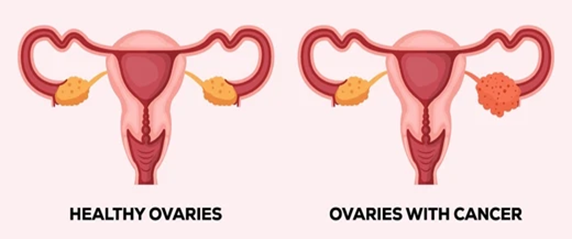 Ovarian cancer is a serious concern, particularly for women after menopause. It is one of the most common gynecological cancers. Unfortunately, the risk increases with age, especially for post-menopausal women. This condition occurs when abnormal cells in the ovaries grow uncontrollably, forming tumors. While the exact cause is still unclear, factors such as age, family history, and genetic mutations play a role. Ovarian cancer usually goes unnoticed in its early stages because the symptoms can be subtle. Most of the ovarian cancers are detected in stage 3. Therefore, awareness are crucial for early detection and better outcomes. Symptoms and Early Detection **Symptoms of ovarian cancer after menopause may include:** - Persistent abdominal bloating or swelling. - Vaginal bleeding. - Pelvic or abdominal pain. - Changes in appetite or feeling full quickly. - Frequent urination or urgency. - Unexplained weight loss or gain. - Changes in bowel habits, such as constipation ### **Challenges in early detection:** - Symptoms of ovarian cancer after menopause often mimic other common conditions, making diagnosis difficult. - Many women mistake symptoms for typical signs of ageing or menopause, delaying medical attention. - Ovarian cancer doesn’t have a reliable screening test like mammograms for [breast cancer](https://drsandeepnayak.com/services/breast-cancer-treatment-in-bangalore/). - The ovaries are deep within the body, making tumors more challenging to detect in routine exams. - By the time symptoms appear, the cancer may have already advanced, making treatment more difficult. “Stay vigilant and consult a specialist if you experience any of these symptoms, especially if they persist or worsen,” advises Dr. Sandeep Nayak, a highly regarded [surgical oncologist](https://drsandeepnayak.com/about/about-dr-sandeep-nayak/) in India. “Early detection is key to successful treatment.” ***Don’t ignore any unusual symptoms.* *Schedule* *a check-up with a well-qualified professional today.*** Book an Appointment *Understanding the risk factors for menopause ovarian cancer is key to prevention. Let’s explore how you can reduce your risk and stay healthy.* ### **Risk Factors and Prevention** 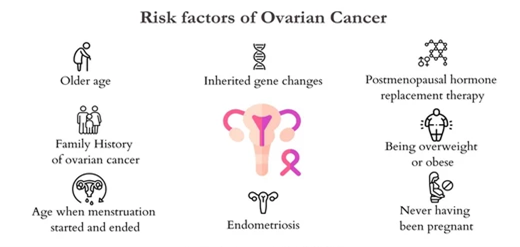 ### **Factors that may increase the risk of ovarian cancer after menopause include:** - **Age:** Women over 55 have a higher risk. - **Family History:** A family history of ovarian or [breast cancer](https://drsandeepnayak.com/blogs/breast-reconstruction-after-breast-cancer/) increases risk. - **Genetics:** Inherited mutations in BRCA1 or BRCA2 genes. - **Hormone Replacement Therapy (HRT):** Long-term HRT may slightly increase risk. - **Obesity:** Being overweight or obese can elevate risk. - **Reproductive History:** Never having children or having them later in life may increase risk. - **Endometriosis:** Having endometriosis raises risk. - **Personal History:** Previous breast, [colorectal](https://drsandeepnayak.com/services/colon-cancer-treatment-in-bangalore-india/), or ovarian cancer diagnosis increases risk. [**Prevention tips for ovarian cancer**](https://drsandeepnayak.com/blogs/is-it-possible-to-prevent-ovarian-cancer/)**:** - **Regular Check-ups:** Routine ultrasound scan of abdomen can catch ovarian cancer early. (part of healthcheck) - **Healthy Lifestyle:** Maintain a [balanced diet](https://drsandeepnayak.com/blogs/choosing-the-most-suitable-diet-for-cancer-patients-and-survivors/) and exercise regularly. - **Birth Control:** Oral contraceptives can reduce the risk. - **Pregnancy and Breastfeeding:** Having children and breastfeeding may lower risk. - **Genetic Testing:** Consider genetic testing, especially if you have a family history of cancer. - **Surgical Options:** Prophylactic surgery (removing ovaries and fallopian tubes) may be an option for high-risk individuals. Though some factors can increase your risk of ovarian cancer, they don’t guarantee that you’ll develop it. Stay proactive with check-ups and a healthy lifestyle to reduce your risk as much as possible. *Learn about the diagnostic process and how staging is crucial in determining treatment options.* Diagnosis and Staging of Ovarian Cancer  - **Diagnosis:** - Your journey begins with a series of diagnostic tests aimed at pinpointing the presence of ovarian cancer. - Expect to undergo imaging tests, such as **ultrasound** or MRI or **CT scans .** These tests will help visualize any abnormalities in your ovaries or surrounding tissues. - Blood tests, specifically the **CA-125 test**, may also be conducted. They help detect elevated protein levels associated with ovarian cancer. - If the above tests are suspicious, your doctor may recommend a biopsy only if the disease is advanced. In suspected early cancers direct surgery is preferred as biopsy can rupture an early cancer and spread it. Biopsy involves taking a small sample of tissue and examining it under a microscope to confirm the presence of cancer cells. - **Staging:** - Once ovarian cancer is confirmed, staging becomes crucial in determining the extent of the disease and guiding treatment decisions. This is done using either a CT scan or PET CT scan. - Ovarian cancer staging ranges from stage I (confined to one or both ovaries) to stage IV (spread to distant organs). - Staging helps your medical team determine the most appropriate treatment approach, whether surgery, chemotherapy, or a combination. - Furthermore, staging plays a vital role in predicting prognosis. Early-stage cancers typically have a better outlook than advanced-stage diseases. **H2 Treatment Options for Ovarian Cancer After Menopause** - **Surgery:** Surgical removal of the cancerous tissue is often the primary treatment for menopausal ovarian cancer. The surgery is called Cyto-Reductive Surgery (CRS) and may be combine with Hyperthermia Intra-Peritoneal Chemotherapy (HIPEC) or Pressurized Intra-Peritoneal Aerosol Chemotherapy (PIPAC). **CRS surgery includes:** - **Hysterectomy**: This is removal of uterus. - **Salpingo-Oophorectomy:** This surgery involves the removal of both ovaries and fallopian tubes. - **Lymph Node Dissection**: During surgery, nearby lymph nodes may also be removed to check for the presence of cancer cells. This helps stage the cancer and determine the best course of treatment. - **Omentectomy:** A fatty layer in the abdomen called omentum is removed. - **Peritoneum**: The involved peritoneum, the membrane lining the abdomen, may be removed if involved. This may be combined with removal of any other organ that is involved. - [**Minimally Invasive Surgery**](https://drsandeepnayak.com/blogs/cancer-treatment-laparoscopic-vs-robotic-surgery/):  Depending on the extent of the disease and your health, your surgeon may opt for minimally invasive techniques, such as [laparoscopic](https://drsandeepnayak.com/services/laparoscopic-cancer-surgery-in-india/) or [robotic-assisted surgery](https://drsandeepnayak.com/services/robotic-cancer-surgery-in-bangalore-india/). These approaches typically result in faster recovery and less postoperative discomfort. - **Chemotherapy:**  This involves using potent drugs to destroy cancer cells. Chemotherapy may be given before or after surgery to shrink the tumor or kill remnant cancer cells. - **Targeted Therapy:** It includes drugs that target cancer cells while minimizing damage to healthy cells. These medications may be combined with chemotherapy or as a standalone treatment. Your treatment plan will depend on various factors, such as: - the stage and type of ovarian cancer - your overall health - your personal preferences. It is essential to discuss all your options with your healthcare team. This will help determine the most suitable approach for you. Consult a competent oncologist to explore personalized treatment plans suited to your needs. Book an Appointment Conclusion If you’re experiencing symptoms like vague abdominal symptoms after menopause after menopause, don’t hesitate to reach out for help. Early detection is key in effectively managing ovarian cancer after menopause. Remember, knowledge is power, and by staying informed about the signs of ovarian cancer after menopause, you can take control of your health journey. Dr. Sandeep Nayak, a prominent surgical [oncologist](https://drsandeepnayak.com/services/best-oncologist-in-bangalore/) in India, is here to guide you every step of the way. With his [expertise](https://drsandeepnayak.com/services/expertise/) and personalized care, you can confidently face menopause ovarian cancer. Take the next step towards wellness today. Reach out for support and guidance. Book an Appointment Frequently Asked Questions: **1. Is it common to experience pain or discomfort in lower abdomen after menopause?** No. You should seek medical care if you experience any persistent pain or discomfort in the ovarian region or lower abdomen after menopause. This will help rule out any underlying issues. **2. What lifestyle changes can help prevent ovarian cancer after menopause?** The following lifestyle modifications can lower the risk of ovarian cancer after menopause: - maintaining a healthy weight - regular exercise - quitting smoking **3. What are the survival rates for ovarian cancer after menopause?** Survival rates vary depending on factors like stage at diagnosis, overall health, and response to treatment. **4. What are the chances of recurrence of ovarian cancer after menopause?** The risk of recurrence depends on the stage and aggressiveness of cancer. CA125 levels are used as tumor marker for detecting recurrence. But, regular follow-up appointments are essential for monitoring. **5. Can I still lead a normal life after ovarian cancer treatment?** With proper treatment, support, and lifestyle adjustments, many women can lead fulfilling lives after ovarian cancer treatment. However, it may require some modifications and ongoing monitoring. **Reference links:** <https://www.webmd.com/menopause/ovarian-cancer-menopause> <https://www.cancer.net/blog/2021-08/can-cancer-symptoms-be-mistaken-menopause> **Categories:** Blog --- ### [Navigating Breast Cancer After Menopause: A Guide to Wellness](https://drsandeepnayak.com/blogs/navigating-breast-cancer-after-menopause-a-guide-to-wellness/) **Published:** May 2, 2024 **Author:** Dr. Sandeep Nayak **Content:** Do you or a loved one have concerns about breast cancer after menopause? You are not alone. According to statistics, **6 out of 10** breast cancer cases are detected in women who are 55 or older. This stresses that addressing the issues relevant to the post-menopausal years is essential. In the blog, we’ll discuss menopause and breast cancer, its causes, treatments and more. *Keen to know the link between menopause and cancer risk? Let’s discover.* Can Menopause Lead to Cancer? Menopause itself doesn’t cause cancer. So, risk of cancer after menopause is predominantly due to aging. Oestrogen, for instance, can fuel the growth of some breast cancers. Its levels drop significantly after menopause, affecting the breast tissue. Regular screenings and maintaining a healthy lifestyle can help [early detection](https://drsandeepnayak.com/blogs/useful-tips-for-early-detection-of-breast-cancer/) and prevention. If you have concerns about menopause and cancer risk, consult a specialist for personalized guidance tailored to your situation. *Wondering about the prevalence of post-menopausal breast cancer? Let’s dive in.* How Common Is Breast Cancer After Menopause? Breast cancer after menopause is more common than you might think. The estimated risk of developing breast cancer in women ages 50 to 60 is one in 43, and one in 29 in women ages 60 to 70. In women ages 70 and older, the risk is one in 26. Unfortunately, this phase of life, often associated with newfound freedoms, increases risk for many. Keep in mind that these stats aren’t meant to scare you. Instead, they’re here to empower. Understanding the prevalence empowers you to take charge of your health. Regular screenings and staying vigilant about changes in your body can make a difference. Remember, knowledge is your best ally in this journey. We’re here to guide you through it. Schedule regular screenings for early detection. Your health matters. Book an Appointment *Let’s explore the factors contributing to breast cancer after menopause.* What Causes Breast Cancer After Menopause? 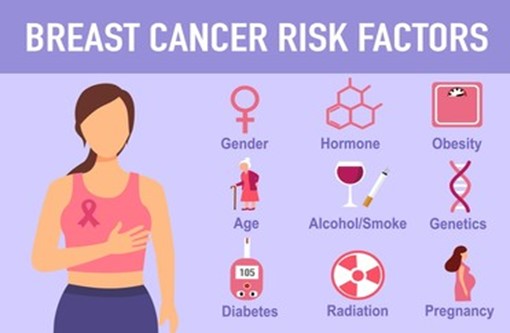 - **Hormonal Replacement therapy (HRT):** Many post-menopausal women take hormone replacement therapy to overcome symptoms associated with menopause. If these pills contain high estrogen levels, this is a potential precursor to breast cancer. - **Age Factor:** With age, the risk of breast cancer increases. Hence, post-menopausal women are more susceptible. - **Genetic Influences:** Inherited mutations in BRCA genes can elevate the risk. This emphasizes the importance of understanding family history. - **Lifestyle Choices:** Unhealthy lifestyle habits can contribute to breast cancer risks. These include excessive alcohol consumption and lack of physical activity. - **Body Weight:** Maintaining a healthy weight is crucial. This is because obesity is linked to an elevated risk of breast cancer. - **Previous Cancer History:** A history of breast or other cancers may heighten the risk. This necessitates vigilant monitoring. - **Radiation Exposure:** Past exposure to chest radiation, especially during childhood or early adulthood, can contribute to breast cancer risk in later life. Understanding these factors empowers you to make informed choices. It enhances your proactive approach towards breast health after menopause. *What are the treatment options for menopausal breast cancer? Let’s find out.* Treatment for Breast Cancer After Menopause ### **1.** [**Surgical Options**](https://drsandeepnayak.com/services/laparoscopic-cancer-surgery-in-india/)**:** When tackling post menopausal breast cancer, surgery often takes the lead. It’s the go-to for removing the tumor. There are times when chemotherapy is given before surgery, when it is called neoadjuvant chemotherapy (NACT). 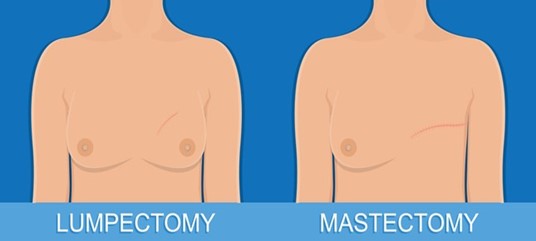 **Lumpectomy and Mastectomy:** · A lumpectomy involves removing the tumor. In contrast, a mastectomy entails complete breast removal. · Lumpectomy preserves breast tissue preserving the appearance. - The risk of cancer coming back after mastectomy or lumpectomy is similar. So, choice depends on the patient. **Sentinel Lymph Node Biopsy:** · This minimally invasive procedure determines if cancer has spread to nearby lymph nodes in the armpit. · It helps plan further treatment and assess the extent of cancer spread. ### **2. Hormone Therapy:** · Women with hormone receptor-positive cancer may benefit from hormone therapy. · It includes medications group called aromatase inhibitors. They target hormones that fuel the growth of certain breast cancers. ### **3. Chemotherapy:**  · Chemotherapy may be advised to kill cancer cells or shrink tumors before surgery or after surgery. Chemotherapy works on the entire body. · Side effects are temporary but can include hair loss, fatigue, and nausea. ### **4. Radiation Therapy:**  · After surgery, radiation further reduces the risk of local recurrence. · With modern radiation machines it’s a targeted approach, minimizing damage to healthy tissue. ### **5. Targeted Therapies:** · Targeted drugs like Herceptin focus on specific molecules promoting cancer growth and are used for HER2-positive breast cancers. ### **6. Immunotherapy:** · Uses the immune system to fight cancer cells. · Still being studied but shows promising results for some breast cancers. ### **7. Follow-Up Care:** · Regular check-ups and imaging tests monitor recovery and detect any recurrence. · Vital for long-term well-being and peace of mind. ### **8. Individualized Approach:** · Treatment plans are tailored to each patient. · Discuss options thoroughly with your medical team for informed decisions. Looking for personalized treatment options? Consult experts. Book an Appointment *Uncover potential side effects associated with post menopausal breast cancer treatments.* Risks or Side Effects of Breast Cancer Treatments Let’s uncover the risks and side effects of breast cancer treatments: **1. Surgery:** - Potential bleeding and infection - Changes in breast appearance or sensation - Lymphedema (swelling) in the arm especially after axillary lymph node dissection **2. Radiation Therapy:** - Skin changes (redness, irritation) - Fatigue - Rare risk of heart and lung issues for left-sided breast cancer **3. Chemotherapy:** - Temporary hair loss - Nausea and vomiting - Increased risk of infection **4. Hormone Therapy:** Increased risk of osteoporosis is seen with aromatase inhibitors. **5. Targeted Therapy:** - heart failure that is reversible. - Skin reactions at the injection site - Liver problems (in some cases) - GI issues like diarrhoea - Remember, everyone’s response varies. Contact your [healthcare team](https://drsandeepnayak.com/services/best-oncologist-in-bangalore/) to manage and minimize these effects. They’ll ensure a smoother journey through your breast cancer treatment. ***Need support during treatment? Connect with our** **support services** **for personalized assistance.*** Book an Appointment *Let’s discuss preventive strategies for post menopausal breast cancer.* How Can I Prevent Breast Cancer After Menopause? - **Stay Active:** Regular exercise can lower your breast cancer risk post-menopause. This includes activities like brisk walking or cycling. - **Maintain a Healthy Weight:** Strive for a balanced weight. This is because obesity increases the risk of breast cancer. - **Limit Alcohol Intake:** Cut down on alcohol. Even small reductions can make a significant impact on your risk. - [**Healthy Diet Choices**](https://drsandeepnayak.com/blogs/choosing-the-most-suitable-diet-for-cancer-patients-and-survivors/)**:** Opt for a diet rich in fruits, vegetables, and whole grains. These power-packed foods contribute to overall well-being. - **Regular Check-ups:** Schedule routine check-ups and mammograms. Early detection is critical for effective management. - **Hormone Replacement Therapy (HRT) Awareness:** If considering HRT, discuss the risks and benefits with your doctor. It is not one-size-fits-all. - **Quit Smoking:** Smoking is a risk factor for many cancers, including breast cancer. Quitting is a significant step towards prevention. - **Sunshine Vitamin:** Ensure you’re getting enough Vitamin D, either through sunlight or supplements. It plays a protective role. Remember, small lifestyle adjustments can create a significant shield against menopause breast cancer. Stay proactive and prioritize your well-being! Conclusion Facing breast cancer after menopause can be overwhelming. But remember, you’re not alone in this journey. With the guidance of experts like Dr. Sandeep Nayak, a reputable oncologist in India, you can navigate the complexities of menopause breast cancer. Knowledge is key. By staying informed about risk factors, tailored treatments, and potential outcomes, you empower yourself to make informed decisions. ***Seeking further guidance?*** **Book an appointment** ***for personalized advice.*** Book an Appointment *Unveil FAQs about breast cancer after menopause. Let’s get your questions answered.* Frequently Asked Questions: **1. Is breast cancer less aggressive after menopause?** After menopause, breast cancer can exhibit varying aggressiveness. Some tumors may be less aggressive. Yet, it is crucial to remain vigilant with regular screenings. It helps in early detection and effective management. **2. Can menopause cause a breast lump?** Menopause itself doesn’t directly cause breast lumps. But, hormonal changes during this phase may lead to benign conditions. Any new lump should be promptly evaluated to rule out any concerns. **3. What are the key signs of breast cancer after menopause?** Watch for changes like lumps, skin changes, or nipple discharge. Regular self-checks and mammograms are crucial for early detection. **4. How often should I get a mammogram after menopause?** The frequency of mammograms depends on your health history and risk factors. Generally, women are advised to have mammograms every 1-2 years. Your healthcare provider can provide personalized recommendations. **5. Can stress impact breast cancer risk after menopause?** Stress alone may not directly cause breast cancer. Yet, managing stress is crucial for overall health. Adopting stress-reducing practices contributes to your well-being. **Reference links:** <https://www.webmd.com/menopause/breast-cancer-menopause> <https://www.cancer.net/navigating-cancer-care/prevention-and-healthy-living/menopause-and-cancer-risk> **Categories:** Blog --- ### [Is Estrogen Cream Safe for Breast Cancer Survivors?](https://drsandeepnayak.com/blogs/is-estrogen-cream-safe-for-breast-cancer-survivors/) **Published:** July 11, 2024 **Author:** Dr. Sandeep Nayak **Content:** Breast cancer survivors often deal with a multitude of challenges post-treatment. One common problem is the onset of menopause-like symptoms due to treatments that lower estrogen levels. Estrogen cream is often prescribed to alleviate menopausal symptoms like vaginal dryness, itching, and discomfort. However, for breast cancer survivors, the safety of using estrogen cream is a critical concern. Estrogen plays a crucial role in various bodily functions, including reproductive health. However, this hormone might increase the risk of cancer recurrence and spread of certain types of breast cancer. Therefore, introducing estrogen to the body through a cream may seem contradictory. This raises an important question: Is estrogen cream safe for breast cancer survivors? [Dr. Sandeep Nayak](https://drsandeepnayak.com/), an acclaimed surgical oncologist in India, emphasizes the importance of personalized treatment plans. “Each patient’s history and type of breast cancer must be carefully considered before recommending any hormone therapy,” he advises. Understanding the balance between relieving menopausal symptoms and avoiding cancer recurrence is critical. Dr. Nayak specializes in treating[ ](https://drsandeepnayak.com/services/breast-cancer-treatment-in-bangalore/)[breast cancer](https://drsandeepnayak.com/services/breast-cancer-treatment-in-bangalore/) and has extensive[ ](https://drsandeepnayak.com/services/expertise/)[expertise](https://drsandeepnayak.com/expertise/) in understanding the implications of hormone therapies for cancer survivors. *What exactly is estrogen cream, and how does it work? Let’s explore further.* Understanding Estrogen Cream Estrogen cream is a topical treatment designed to deliver estrogen directly to the vaginal area. It helps restore the natural balance of hormones, relieving menopausal symptoms. Unlike systemic hormone replacement therapies that affect the whole body, estrogen cream targets specific areas, potentially reducing overall risk. While estrogen cream can be effective, its use in breast cancer survivors remains controversial. ***Considering estrogen cream for symptom relief?***[ ](https://drsandeepnayak.com/contact/)[***Get expert advice***](https://drsandeepnayak.com/contact/) ***to make an informed decision.*** Book an Appointment *But what does the research say about estrogen cream and breast cancer survivors? Let’s dive deeper into this topic.* Is Estrogen Cream Safe for Breast Cancer Survivors? The safety of estrogen cream for breast cancer survivors is a complex topic. Estrogen is significant in many bodily functions, including regulating the menstrual cycle and maintaining bone density. However, for breast cancer survivors, especially those with hormone receptor-positive breast cancer, the use of estrogen products can be controversial. For many breast cancer survivors, especially those with hormone-sensitive cancers, the concern is that estrogen could potentially stimulate the growth of residual cancer cells. This risk is particularly relevant for survivors of estrogen receptor-positive (ER-positive) breast cancer, where cancer cells grow in response to estrogen. Studies indicate that topical estrogen therapies, such as estrogen cream, might have less systemic absorption than oral hormone replacement therapies. However, absorption levels can still vary among individuals. “It’s important to consider the overall health status and cancer history of each patient when evaluating the safety of estrogen cream,” advises Dr. Sandeep Nayak. He emphasizes the necessity of personalized medical advice for survivors considering estrogen cream for[ ](https://drsandeepnayak.com/blogs/navigating-breast-cancer-after-menopause-a-guide-to-wellness/)[menopausal symptom](https://drsandeepnayak.com/blogs/navigating-breast-cancer-after-menopause-a-guide-to-wellness/) relief. For survivors of estrogen receptor-positive breast cancer, alternative treatments for menopausal symptoms are often recommended. On the other hand, for those with estrogen receptor-negative breast cancer, the risks might be lower. However, consultation with a specialist is still crucial to making an informed decision. ***Need personalized advice on managing menopausal symptoms after breast cancer?***[ ](https://drsandeepnayak.com/contact/)[***Schedule a consultation with an expert today.***](https://drsandeepnayak.com/contact/) Book an Appointment *How does estrogen impact breast cancer risk? Let’s dive deeper into the link.* Estrogen and Breast Cancer: The Connection The relationship between estrogen and breast cancer is well-documented. Estrogen can promote the growth of certain types of breast cancer cells, particularly those classified as estrogen receptor-positive. These cancers have receptors that bind to estrogen, fueling their growth and proliferation. Given this connection, the use of estrogen cream in breast cancer survivors is approached with caution. For survivors of estrogen receptor-positive breast cancer, even small amounts of estrogen absorbed through the skin could potentially trigger cancer recurrence. Therefore, thorough medical evaluation and personalized treatment plans are essential. *What are the alternative treatments available? Here are your options.* Treatment Options For breast cancer survivors, managing menopausal symptoms can be challenging. Here are some treatment options: 1. **Non-Hormonal Therapies:** This includes medications like selective serotonin reuptake inhibitors (SSRIs) and gabapentin. These can help alleviate hot flashes and other symptoms without the use of hormones. 2. **Selective Estrogen Receptor Modulators (SERMs):** These drugs block estrogen’s effects on breast tissue while allowing its beneficial effects on other body parts. 3. **Vaginal moisturizers and lubricants**: Over-the-counter products can provide relief from vaginal dryness and discomfort without the use of hormones. 4. **Lifestyle Changes:** Regular exercise, a healthy diet, and stress management can help alleviate menopausal symptoms. Understanding the intricate relationship between estrogen and breast cancer is vital for survivors. Each treatment decision should be made carefully considering individual health circumstances and in close consultation with medical professionals. Discover the best treatment for your post-cancer symptoms.[ ](https://drsandeepnayak.com/contact/)Book a consultation with a specialist today. Book an Appointment Conclusion When considering the use of estrogen cream for breast cancer survivors, it’s essential to seek professional guidance and carefully weigh the options. Dr. Sandeep Nayak, an experienced[ ](https://drsandeepnayak.com/about/about-dr-sandeep-nayak/)[surgical oncologist,](https://drsandeepnayak.com/dr-sandeep-nayak/) emphasizes the need for personalized medical advice in this situation.[ ](https://drsandeepnayak.com/testimonials/)[Survivors](https://drsandeepnayak.com/testimonials/) should fully understand the potential risks and benefits and explore alternative treatments to make well-informed decisions about their health. *Unveil FAQs about breast cancer after menopause. Let’s get your questions answered.* Frequently Asked Questions: 1. **Can estrogen cream cause breast cancer recurrence?** There is a potential risk, especially for ER+ breast cancer survivors. Discuss your specific risk with your oncologist. 2. **What are the side effects of estrogen cream?** Side effects may include localized irritation, itching, or an increased risk of yeast infections. 3. **How soon can I expect relief from symptoms with estrogen cream?** Relief can often be felt within a few weeks of consistent use, but it varies among individuals. 4. **Does estrogen cream affect your overall hormone levels?** Estrogen cream primarily affects the local area and has minimal impact on overall hormone levels. 5. **How does estrogen cream compare to oral estrogen therapy?** Estrogen cream delivers hormones locally with fewer systemic effects than oral estrogen therapy. **Categories:** Blog --- ### [HIPEC for Gastric Cancer Treatment](https://drsandeepnayak.com/blogs/hipec-for-gastric-cancer-treatment/) **Published:** October 1, 2024 **Author:** Dr. Sandeep Nayak **Content:** Gastric cancer affects thousands of people in India and millions worldwide. It is one of the most aggressive forms of cancer, often detected at an advanced stage. In India, certain areas report a higher incidence, particularly in the northeastern states, due to dietary and genetic factors. The survival rate for gastric cancer varies based on the stage at diagnosis, with early detection significantly improving outcomes. Studies indicate that men are at a higher risk compared to women, and the disease predominantly affects individuals over 50 to 70. These statistics emphasize the need for timely and effective treatment solutions to combat the progression of this aggressive cancer. One such treatment, Hyperthermic Intraperitoneal Chemotherapy (HIPEC), has revolutionized gastric cancer care by offering a localized treatment approach. HIPEC for gastric cancer has been shown to increase survival rates, especially when combined with surgical removal of cancerous tissue. Its efficacy in targeting residual cancer cells and significantly reducing recurrence rates makes it a valuable treatment option. HIPEC is being issued in a prophylactic role in early cancers and a therapeutic role in cancers with a Peritoneal Cancer Index (PCI) up to 7. > ***According [to Dr. Sandeep Nayak](https://drsandeepnayak.com/), a distinguished surgical oncologist in India, “HIPEC has shown remarkable results in gastric cancer treatment, particularly in cases where cancer has spread to the abdominal lining. Its ability to target microscopic cancer cells with heated chemotherapy is a significant breakthrough.”*** Dr. Nayak has extensive experience in [surgical oncology](https://drsandeepnayak.com/expertise/) and is renowned for his innovative use of minimally invasive cancer surgeries. He is a pioneer in laparoscopic and robotic cancer surgeries in the country and has significantly improved outcomes for patients with complex cancers such as gastric cancer. Moreover, Dr. Sandeep Nayak is skilled in combining precision surgery with modern therapeutic techniques and is one of the few experts offering [HIPEC treatment in Bangalore, India](https://drsandeepnayak.com/services/hipec-treatment-in-bangalore/). His team of highly qualified and experienced oncologists strive to provide the highest standard of evidence-based cancer treatments at an affordable cost, including dietary guidance, psychological counselling, and personalized medicine. Are you seeking effective gastric cancer treatment? Consult an experienced oncologist for expert guidance and care. Book an appointment. Book an Appointment What is HIPEC? [HIPEC](https://www.uchicagomedicine.org/cancer/types-treatments/hipec) stands for Hyperthermic Intraperitoneal Chemotherapy. It is a targeted treatment for cancers that have spread to the peritoneal cavity, including gastric cancer. This treatment involves delivering heated chemotherapy drugs directly into the abdominal cavity after surgically removing visible tumors. The chemotherapy drugs are heated to approximately 41 to 43o C. Cancer cells are less tolerant to heat compared to healthy cells. You receive a single large dose of chemotherapy. It is less toxic because the drugs are not injected into your bloodstream. This reduces their spread throughout your body compared to IV chemotherapy. The heat helps the chemotherapy penetrate more deeply into the tissues and attack any remaining cancer cells while minimizing damage to healthy tissues. This combined approach aims to maximize treatment effectiveness and improve patient outcomes. Understanding Gastric Cancer [Gastric cancer](https://drsandeepnayak.com/services/stomach-and-esophageal-cancer-treatment-in-bangalore-india/), also known as , originates in the lining of the stomach and can spread to other parts of the abdomen. It is often diagnosed at an advanced stage, making it challenging to treat. Common [symptoms](https://drsandeepnayak.com/blogs/7-potential-warning-signs-of-stomach-cancer/) include persistent stomach pain, nausea, and weight loss, which can sometimes be mistaken for less severe conditions. The progression of gastric cancer varies among patients. However, early detection and treatment are crucial for better outcomes. Comprehensive evaluation and staging of gastric cancer help determine the most appropriate treatment strategy. Are you experiencing complications from breast reconstruction? It is advisable to [discuss](https://drsandeepnayak.com/contact/) your concerns with a certified breast reconstruction specialist to explore your options and optimize your recovery. Book an Appointment HIPEC for Gastric Cancer HIPEC in [gastric cancer treatment](https://drsandeepnayak.com/services/stomach-and-esophageal-cancer-treatment-in-bangalore-india/) helps eliminate residual cancer cells in the abdominal cavity. The procedure involves two main steps. First, the surgeon removes any visible tumors from the abdomen through [cytoreductive surgery (CRS)](https://drsandeepnayak.com/blogs/combining-cytoreductive-surgery-with-hipec-treatment/). Following this, the doctor will fill your abdominal cavity with a heated liquid containing chemotherapy drugs to target any remaining cancer cells. The specific drugs and duration of the treatment will be determined based on individual needs. The heated chemotherapy solution circulates within the abdominal cavity for 30-120 minutes, during this process. The heat from the chemotherapy increases the effectiveness of the drugs, potentially improving treatment outcomes. After completing the treatment, the drugs are drained from the abdomen. Then, the surgeon stitches the surgical incision, and the patient will be moved to intensive care for recovery. This method is particularly beneficial for patients with early-stage gastric cancer or peritoneal metastasis, as well as those with recurrent gastric cancer after initial treatment. It is generally not recommended for individuals with advanced or stage 4 cancer, as the treatment is less effective in these cases. Benefits of HIPEC - **Targeted Treatment:** HIPEC delivers chemotherapy directly to the affected area, allowing for high doses targeting cancer cells more precisely. - **Reduced Systemic Side Effects:** By focusing the treatment within the abdominal cavity, HIPEC minimizes the exposure of healthy tissues to chemotherapy, reducing systemic side effects. - **Improved Survival Rates:** Research indicates that HIPEC can improve survival rates in patients with advanced or recurrent gastric cancer by effectively targeting residual cancer cells. - **Reduced Recurrence:** HIPEC may lower the risk of cancer recurrence by addressing residual cancer cells. - **Enhanced Efficacy:** The combination of heat and chemotherapy increases the drugs’ effectiveness, which can lead to better disease control. Discover the potential benefits of HIPEC for gastric cancer. Consult with a specialist to determine if this treatment is suitable for you. Schedule your appointment today. Book an Appointment Recovery and Aftercare Immediate Post-Operative Care After [HIPEC surgery](https://www.hopkinsmedicine.org/health/treatment-tests-and-therapies/hipec-surgery-what-you-need-to-know) for gastric cancer, patients typically stay in the hospital for several days to recover from surgery. Your medical team will provide detailed information about what to expect during this period and how to manage any discomfort. Abdominal Discomfort It’s common to experience abdominal pain or discomfort following HIPEC. However, your doctor may prescribe pain relief medications to manage the pain, which gradually improves as healing progresses. Dietary Adjustments A specific [diet](https://drsandeepnayak.com/blogs/choosing-the-most-suitable-diet-for-cancer-patients-and-survivors/) may be recommended initially to support recovery. This often includes easy-to-digest foods and gradual reintroduction of a regular diet based on tolerance. Physical Activity Light activities, such as walking, may be encouraged to promote recovery. However, patients should avoid strenuous activities until their specialist clears them. Wound Care Proper care of surgical wounds is essential to prevent infections. Follow the care instructions provided by your medical team. Follow-Up Appointments Regular follow-up visits are necessary to monitor recovery progress and check for any signs of complications or recurrence of cancer. Monitoring Side Effects Please keep track of any side effects or changes in health and report them to your specialist. This includes any persistent pain, nausea, or changes in bowel habits. Medications If applicable, continue taking any prescribed medications as directed, including pain relief and antibiotics. Emotional Support Emotional and psychological support may be needed during recovery. Consider joining support groups or seeking counselling if required. Long-Term Surveillance Ongoing monitoring and surveillance are essential to ensure the effectiveness of the treatment and to catch any potential recurrence early. Conclusion HIPEC in gastric cancer offers a promising treatment option for patients battling advanced stages of the disease. With insights from Dr. Sandeep Nayak, a top surgical , India, it’s clear that this innovative approach can significantly improve outcomes for those with gastric cancer. For those seeking advanced treatment options for gastric cancer, exploring HIPEC can be a crucial step. Consulting with a specialist can provide personalized insights and help determine the best course of action. Book an Appointment Frequently Asked Questions: 1. **Is HIPEC effective for all types of gastric cancer?** HIPEC is particularly effective for advanced or recurrent gastric cancer, especially when there is peritoneal metastasis. It is often not used as a standalone treatment but in combination with other therapies. 2. **How long does recovery take after HIPEC?** Recovery time varies but generally requires several weeks. Patients should follow their specialist’s recommendations for diet, activity, and follow-up care. 3. **What are the potential side effects of HIPEC?** Side effects may include abdominal pain, nausea, and possible complications related to the surgical procedure. Your specialist will guide you in managing these effects. 4. **Who is a candidate for HIPEC?** Candidates for HIPEC are typically those with advanced or recurrent gastric cancer, mainly when there is evidence of cancer spread within the abdominal cavity. 5. **What are the success rates of HIPEC?** Success rates can vary based on individual patient factors and disease stage. Research indicates that HIPEC can significantly improve outcomes in appropriate candidates. Reference links: - <https://www.uchicagomedicine.org/cancer/types-treatments/hipec> - <https://www.hopkinsmedicine.org/health/treatment-tests-and-therapies/hipec-surgery-what-you-need-to-know> **Categories:** Blog --- ### [Chemotherapy for Rectal Cancer](https://drsandeepnayak.com/blogs/chemotherapy-for-rectal-cancer/) **Published:** May 2, 2025 **Author:** Dr. Sandeep Nayak **Content:** Rectal cancer is a growing concern globally and in India, often requiring a combination of therapies for effective treatment. According to the World Health Organization (WHO), colorectal cancer (which includes rectal cancer) is the third most common cancer worldwide, with over 1.9 million cases reported in 2022. India is witnessing a steady rise in these numbers, particularly in urban populations, due to changing lifestyles, dietary habits, and late detection. This makes timely treatment even more essential. According to Dr. Sandeep Nayak, an experienced surgical oncologist in Bangalore: > “Chemotherapy plays a vital role in managing rectal cancer. In essence, it supports every phase of the treatment—from preparation and precision in surgery to long-term protection after recovery. For patients who aren’t fit for surgery or prefer a non-operative approach, chemotherapy takes a leading role in managing the disease.” This page will guide you through when and why chemotherapy is used, what to expect during treatment, how to manage side effects, and what life looks like after treatment. *Let’s begin with the basics.* When Is Chemotherapy Used in Rectal Cancer? Chemotherapy isn’t used for every [rectal cancer](https://drsandeepnayak.com/services/rectal-cancer-treatment-in-bangalore/) patient. Its role depends on the cancer’s stage, location, and whether it has spread. Here’s when chemotherapy becomes essential: **Before surgery (neoadjuvant chemotherapy):** To shrink the tumor, making it easier to remove surgically. **After surgery (adjuvant chemotherapy):** To kill any remaining cancer cells and reduce the risk of recurrence. **In advanced stages:** If the cancer has spread to distant organs (metastatic rectal cancer), chemotherapy becomes a key player in symptom management and prolonging life. In India, many patients are still diagnosed in Stage III or IV due to lack of routine screening, making chemotherapy a crucial intervention in most cases. *Let’s learn more elaborately on how exactly Chemotherapy helps.* How Chemotherapy Helps in Rectal Cancer Treatment Chemotherapy contributes significantly at different stages of care. Here’s how it works: **Tumor Shrinkage Before Surgery** Many patients present with large tumors that cannot be safely removed in one go. Chemotherapy helps shrink the tumor to a size that makes surgical removal easier and reduces the risk of leaving behind cancerous tissue. **Targeting Cancer Cells** Cancer cells may spread to other organs even if they aren’t visible on scans. Chemotherapy targets and destroys these microscopic cancer cells—whether they’re detected or not—before surgery, helping to clear the body of cancer. **Enhancing the Effect of Radiation (Radiosensitization)** Chemotherapy increases the sensitivity of cancer cells to radiation, allowing for better tumor control and improved results from radiotherapy. **Post-Surgical Cleanup of Remaining Cancer Cells** After surgery, some cancer cells may still linger undetected. Chemotherapy helps eliminate these residual cells, which cannot be picked up by scans or tests, thereby reducing the chances of recurrence and improving overall survival. Identifying symptoms early can help control LARS better. Speak with a specialist for a personalized evaluation. Book an Appointment *Let’s walk you through the journey.* What to Expect During Chemotherapy Chemotherapy for rectal cancer usually involves a combination of drugs administered in cycles, either through intravenous infusion or oral tablets. Each cycle is followed by a rest period to allow your body to recover. The total duration typically ranges between 6 to 8 months, depending on the individual’s case and response to treatment. During your treatment sessions: - You’ll spend a few hours at a clinic or hospital. - Blood tests may be done before each cycle. - You’ll be monitored for any immediate side effects. - Medications will be prescribed to manage nausea, fatigue, and other issues. The experience is different for everyone, and most patients are able to go home the same day. *Side effects are a reality… but they can be managed effectively.* Common Side Effects and How to Manage Them Here are the most common side effects and tips to cope with them: | Side Effect | Management Tips | |---|---| | Fatigue | Prioritize rest, stay hydrated, and keep light physical activity in your routine. | | Nausea/Vomiting | Anti-nausea medications help; eat small, bland meals frequently. | | Diarrhoea | Stay hydrated, avoid spicy foods, and inform your doctor for medication. | | Neuropathy | Common with Oxaliplatin. Report tingling or numbness to your care team. | | Hair thinning | Less common than in other cancers, but possible. Consider head coverings for comfort. | Proactive communication with your oncologist and care team ensures timely adjustments and improved quality of life during therapy. *Here’s something many patients ask: Does chemotherapy affect my surgery or recovery? Yes—and mostly in a good way.* Impact of Chemotherapy on Surgery and Recovery When given before surgery, chemotherapy can shrink the tumor, potentially allowing for less invasive surgery or even sphincter-preserving procedures, which means avoiding a permanent colostomy in some cases. Post-surgery, chemotherapy may delay wound healing slightly, but this is usually temporary and well-managed by your medical team. Dr. Nayak a trusted surgical oncologist in India, shares: > “Every patient deserves a personalized treatment approach that takes their specific cancer stage and health into account. When patients undergo chemotherapy before surgery, we often see improved surgical outcomes and better long-term results. The key is careful planning between surgical and medical oncologists to time everything just right.” *So, what happens once chemotherapy ends?* Life After Chemotherapy: Recovery & Long-Term Care The journey doesn’t stop with the last infusion. Post-chemotherapy life involves regular follow-ups, scans, and lifestyle adjustments to monitor your health and prevent recurrence. Recovery is a team effort—and timing, nutrition, and close monitoring all play their part. Here’s what long-term care includes: - Routine scans (CT, MRI, colonoscopy) every 6 to 12 months initially. - Blood tests, especially for tumor markers like CEA. - Nutritional counselling to rebuild strength and support digestion. - Psychosocial support to manage anxiety and regain normalcy. Many patients in India worry about returning to work, [diet restrictions](https://drsandeepnayak.com/blogs/fasting-and-chemotherapy-benefits-risks-and-key-points/), or sexual health after [chemo](https://drsandeepnayak.com/blogs/chemotherapy-is-bad-debunking-myths-and-revealing-the-facts/). With good support, most return to normal or near-normal life within months. Conclusion Chemotherapy for rectal cancer is a powerful tool in the modern cancer care toolkit. It helps improve survival, shrink tumours, and reduce the chance of cancer coming back. While it’s not without challenges, the benefits often far outweigh the discomfort—especially when guided by an experienced oncology team. Whether you’re preparing for surgery, recovering, or managing advanced disease, chemotherapy may play an essential role in your treatment plan. Not sure what life looks like after treatment? Consult a specialist to design a personalised recovery plan that supports your physical and emotional well-being. Book an Appointment Frequently Asked Questions Is chemotherapy required for all rectal cancers? Not always. Its necessity depends on the cancer’s stage, size, and spread. Early-stage rectal cancers might only need surgery, while more advanced cases typically benefit from chemotherapy. How long does chemotherapy for rectal cancer last? Chemotherapy usually lasts 6 to 8 months, delivered in cycles with rest periods in between. The duration can vary depending on how well your body responds to the treatment. Can chemotherapy alone cure rectal cancer? Chemotherapy alone is not curative for rectal cancer. It’s most effective when combined with surgery and/or radiation, depending on the cancer stage. What foods should I avoid during chemo? Avoid raw or undercooked foods, spicy meals, and high-fat items that can upset your stomach. Eat well-cooked, balanced meals and stay hydrated. Does chemo affect bowel movements permanently? Bowel habits may change temporarily during treatment. Most patients see improvement within months, though some may experience longer-term changes depending on surgery or radiation. Can I work while undergoing chemotherapy? Yes, many people continue working during chemotherapy, though adjustments may be needed based on fatigue or side effects. Flexibility in your schedule helps manage energy levels. Have questions about your next steps? Don’t wait—early expert guidance can transform your treatment and recovery journey. Reach out today for support. Book an Appointment **References:** <https://www.cancerresearchuk.org/about-cancer/bowel-cancer/treatment/treatment-rectal/rectal-chemotherapy-treatment> <https://www.cancer.org/cancer/types/colon-rectal-cancer/treating/by-stage-rectum.html> **Disclaimer:** The information shared in this content is for educational purposes only and not for promotional use. **Categories:** Blog --- ### [Neoadjuvant Therapy in Rectal Cancer](https://drsandeepnayak.com/blogs/introduction-neoadjuvant-therapy-in-rectal-cancer/) **Published:** May 2, 2025 **Author:** Dr. Sandeep Nayak **Content:** Rectal cancer is among the leading causes of cancer-related illness across the world. Globally, colorectal cancer ranks third in terms of incidence and second in terms of cancer-related deaths. In India, rectal cancer is increasingly being diagnosed at more advanced stages due to low awareness and lack of regular screening—especially in rural and semi-urban populations. That’s where neoadjuvant therapy plays a crucial role. This pre-surgical treatment approach improves surgical outcomes and, in some cases, may help avoid surgery altogether. [Dr. Sandeep Nayak](https://drsandeepnayak.com/), a seasoned Surgical Oncologist in India, explains: “Neoadjuvant therapy allows us to gain the upper hand before surgery begins. By shrinking the tumor and targeting unseen cancer cells, we create better conditions for long-term success. It’s a forward-thinking strategy that is now considered standard in managing advanced rectal cancer.” This guide explains what neoadjuvant therapy is, why it’s used, and how it’s transforming rectal cancer treatment in India and around the globe. Why Is Neoadjuvant Therapy Used in Rectal Cancer? Neoadjuvant therapy refers to treatments given before surgery. These can include: **Chemotherapy:** A combination of[ ](https://drsandeepnayak.com/blogs/fasting-and-chemotherapy-benefits-risks-and-key-points/)[chemotherapy](https://drsandeepnayak.com/blogs/fasting-and-chemotherapy-benefits-risks-and-key-points/) and radiotherapy (chemoradiation) **Immunotherapy:** In certain trials or advanced cases Regardless of the specific therapy, if it’s administered before surgery, it is termed neoadjuvant therapy. But why treat cancer before surgery at all? The answer lies in strategy. When cancer is first detected, especially in the rectum, it may already be large or close to vital structures. Jumping straight to surgery without first controlling the disease could result in less effective outcomes or unnecessary complications. Neoadjuvant therapy helps doctors shrink the tumor, assess how it responds to treatment, and better plan the surgical procedure for safer, more precise removal. Still wondering why it matters? Let’s dig deeper. Benefits of Neoadjuvant Therapy in Rectal Cancer Neoadjuvant therapy isn’t just an extra step—it’s a powerful tool that significantly boosts[ ](https://drsandeepnayak.com/services/rectal-cancer-treatment-in-bangalore/)[rectal cancer treatment](https://drsandeepnayak.com/services/rectal-cancer-treatment-in-bangalore/) outcomes. Here’s what it brings to the table: **Tumor Downstaging** The primary benefit is shrinking the tumor. By making the tumor smaller before surgery, it becomes easier to remove while preserving healthy tissue. **Improved Surgical Margins** Surgery is all about precision. Neoadjuvant therapy helps clear the tissue planes around the tumor. This means that when the surgeon operates, there’s a higher chance of completely removing the cancer with “clear margins”—areas free of cancer cells. **Lower Recurrence Rates** By targeting cancer cells early, neoadjuvant therapy reduces the risk of local recurrence. This improves the long-term success rate and overall survival. **Organ Preservation (In Select Cases)** One of the most exciting advances in recent years is the potential to avoid surgery altogether in select patients. Those who have an exceptional response to neoadjuvant therapy may be managed with a “wait-and-watch” approach, sparing them the side effects and complications of rectal surgery. While this isn’t suitable for everyone, it’s a life-changing option for those who qualify. Dr. Sandeep Nayak, an eminent[ ](https://drsandeepnayak.com/services/liver-cancer-treatment-in-bangalore/)[Surgical Oncologist](https://drsandeepnayak.com/services/liver-cancer-treatment-in-bangalore/) in Bangalore, shares: > “Organ preservation is a major leap forward in rectal cancer care. In select cases, avoiding surgery is not only safe but also significantly improves quality of life. But careful selection and follow-up are key to making this work effectively.” Curious whether early treatment before surgery is right for your case? Talk to a specialist about how pre-surgical therapy might improve your outcomes and options. Book an Appointment Now, let’s explore the types of neoadjuvant therapy commonly used. Types of Neoadjuvant Therapy in Rectal Cancer **Neoadjuvant Chemoradiation** This is the most commonly used form. Chemotherapy drugs are given alongside radiation therapy to shrink the tumor and increase the effectiveness of both treatments. **Neoadjuvant Chemotherapy Alone** In certain cases, especially when radiation isn’t appropriate, chemotherapy alone may be used. This approach is being studied more frequently, particularly in cases with distant metastases. **Short-Course Radiotherapy (SCRT)** A quicker form of radiation therapy often completed in a week, SCRT is sometimes followed by delayed surgery and is particularly useful for patients who can’t tolerate longer radiation courses. **Total Neoadjuvant Therapy (TNT)** A newer and increasingly popular approach where all chemotherapy and radiation are completed before surgery. TNT improves tumor response and reduces the risk of systemic spread. **Immunotherapy (in selected cases)** Although not yet standard, ongoing trials are exploring the use of immune-based therapies in rectal cancers, particularly for patients with a specific genetic condition known as mismatch repair deficiency (dMMR). Dr. Sandeep Nayak explains: > “Mismatch repair deficiency, or dMMR, is a genetic alteration where the body’s natural ability to repair DNA damage is impaired. In such cases,[ ](https://drsandeepnayak.com/services/adrenal-tumors/)[tumors](https://drsandeepnayak.com/services/adrenal-tumors/) are more likely to respond to immunotherapy because they produce more mutations, making them easier for the immune system to recognize and attack. Identifying this condition early opens doors to highly effective, targeted treatment options.” Treatment Protocol: What to Expect Here’s what you can typically expect if you’re prescribed neoadjuvant therapy: **Step 1: Diagnostic Work-up** This includes scans (MRI, CT, PET), colonoscopy, biopsy, and tumor marker tests to determine the exact stage and plan the treatment. **Step 2: Therapy Begins** Most patients receive therapy for 5–6 weeks. If chemoradiation is planned, it’s usually done five days a week over five weeks, with chemotherapy taken orally or intravenously. **Step 3: Waiting Period** After treatment ends, patients wait for about 6–8 weeks to allow the tumor to shrink further and recover from therapy side effects. **Step 4: Assessment** Another scan or evaluation is performed to assess tumor response. Based on the results, patients either proceed to surgery or, in rare cases, are considered for non-surgical monitoring. Trying to understand the right timing and type of treatment for rectal cancer? Connect with a qualified specialist who can guide you through a personalised care plan. Book an Appointment Now let’s talk results. Effectiveness and Clinical Outcomes Neoadjuvant therapy has revolutionized[ ](https://drsandeepnayak.com/blogs/tips-to-reduce-your-risk-of-colorectal-cancer/)[rectal cancer care](https://drsandeepnayak.com/blogs/tips-to-reduce-your-risk-of-colorectal-cancer/). Here’s how: **Increased tumor resectability:** Tumors that were once considered inoperable can now be safely removed after therapy. **Better survival rates:** Numerous studies, including data from Indian institutions, show improved 5-year survival rates in patients who receive neoadjuvant therapy. **Lower local recurrence:** Especially when combined with precise surgical techniques, this therapy reduces the chance of the cancer returning to the pelvis. **Organ preservation rates:** In some studies, up to 20% of carefully selected patients avoided surgery altogether. Indian oncology centers, especially those in urban hubs like Bangalore, are increasingly offering advanced neoadjuvant protocols with outcomes comparable to global standards. Conclusion Neoadjuvant therapy in rectal cancer is not just a pre-surgical formality—it’s a transformative approach that enhances surgery, lowers recurrence, and in some cases, replaces surgery altogether. With proper staging, planning, and execution, it leads to better outcomes and, importantly, more tailored, patient-friendly treatment plans. If you or a loved one is navigating a rectal cancer diagnosis, discussing the possibility of neoadjuvant therapy with an expert may open up better, more effective treatment pathways. FAQs Is neoadjuvant therapy necessary for all rectal cancer patients? No, not every patient requires it. It is typically recommended for those with stage II or III tumors, where it can improve outcomes significantly. How long does neoadjuvant therapy take before surgery? The therapy itself may last 5–6 weeks, followed by a 6–8 week waiting period before surgery to allow optimal tumor response and recovery. How successful is neoadjuvant therapy in shrinking tumors? Many patients experience significant tumor shrinkage, making surgery easier and more precise. In some cases, the tumor disappears entirely on scans, though surgery is still often recommended. What are the common side effects of this therapy? Side effects can include fatigue, diarrhea, skin irritation at the radiation site, and mild nausea. Most side effects are manageable with supportive care. Does neoadjuvant therapy improve survival rates? Yes. Multiple studies have shown improved local control, reduced recurrence, and better overall survival when neoadjuvant therapy is used appropriately. Wondering if early treatment can reduce your need for surgery or improve results? Consult with a cancer care expert to explore your options. Book an Appointment **References:** <https://my.clevelandclinic.org/health/treatments/neoadjuvant-therapy> <https://www.sciencedirect.com/science/article/pii/S1040842823002846> **Disclaimer:** The information shared in this content is for educational purposes only and not for promotional use. **Categories:** Blog --- ### [Can Cancer Spread from One Person to Another?](https://drsandeepnayak.com/blogs/can-cancer-spread-from-one-person-to-another/) **Published:** November 18, 2024 **Author:** Dr. Sandeep Nayak **Content:** When a loved one is diagnosed with cancer, a question that often arises is whether the disease can spread from one person to another. While cancer is a complex disease with many causes, concerns about its transmission are common. Is it possible for cancer to be contagious? Can it spread through physical contact or shared spaces? These questions are crucial to understanding how cancer affects patients and their families. > Dr. Sandeep Nayak, a highly respected surgical oncologist in Bangalore with expertise in advanced cancer treatments, clarifies, “Cancer cannot spread from one person to another in the way that infectious diseases do. It is a condition that develops due to genetic mutations within the body’s cells, and these changes are not contagious.” Let’s explore the science behind cancer development and transmission and address common misconceptions. Introduction Cancer is a disease marked by abnormal cell growth. While infectious diseases like the flu spread from person to person, cancer behaves very differently. The question, “Can cancer spread from one person to another?” often arises out of concern for loved ones and caregivers. However, current medical understanding confirms that cancer is not contagious and does not spread through regular contact. > [Dr. Sandeep Nayak](https://drsandeepnayak.com/) explains, “Cancer is rooted in genetic mutations within an individual’s cells, leading to uncontrolled cell growth. This process is internal and cannot be passed on to others through proximity or shared environments.” How Cancer Develops in the Body Cancer begins when specific genetic mutations alter normal cell functions, leading to uncontrolled cell growth. Usually, healthy cells follow a life cycle: they grow, divide, and die. However, mutations cause cancer cells to ignore these natural processes, allowing them to grow and divide uncontrollably. This unchecked cell division can form tumors and spread to other areas within the same body, a process known as metastasis. Cancer is influenced by various risk factors, including genetics, lifestyle choices, and environmental exposure. Unlike viruses or bacteria, cancer cells do not transmit to others, as they are specific to the individual’s body and cannot survive in someone else’s body. **But how does this answer the question?** The development of cancer is an internal process, making it impossible for cancer cells to transfer from one person to another through external contact. Can Cancer Be Transmitted Through Blood or Organ Transplant? While cancer cannot spread through casual contact, certain rare cases exist where cancer transmission might occur under specific conditions, such as organ transplants and, in extremely rare cases, blood transfusions. However, medical protocols minimize these risks. **Organ Transplants** When a donor has a history of cancer, there’s a small possibility that residual cancer cells could be transmitted to the organ recipient. For this reason, donors are rigorously screened to ensure organs are safe for transplant. **Blood Transfusions** Studies show that cancer cells don’t typically survive in the bloodstream during transfusions. As a result, the likelihood of cancer spreading through blood transfusion is minimal, and current blood donation practices make this even less likely. > Dr. Nayak assures, “In organ transplants, every precaution is taken to prevent the transmission of diseases, including cancer. Screening and monitoring ensure that transplant recipients are not at risk from donor organs, making transmission cases incredibly rare.” For comprehensive guidance on cancer prevention and treatment, book appointment experts. Book an Appointment Wondering about other possible transmission risks? Let’s look at how certain viruses can contribute to cancer risk. Cancer-Causing Viruses Although cancer itself cannot spread from person to person, certain viruses associated with cancer risk can be transmitted between people. These viruses don’t directly cause cancer but can increase the likelihood of developing it by creating conditions in the body that promote cancer cell growth. **Examples of cancer-causing viruses include****Human Papillomavirus (HPV)** HPV is known to increase the risk of cervical and other types of cancers. It’s transmitted through sexual contact or lack of hygiene, and HPV vaccines can significantly lower this risk. **Hepatitis B and Hepatitis C Viruses** Both viruses can cause chronic liver inflammation, leading to an increased risk of liver cancer. Vaccination against Hepatitis B and safe practices for Hepatitis C can reduce these risks. **Epstein-Barr Virus (EBV)** Associated with certain lymphomas, this virus spreads through saliva and close contact. While it doesn’t directly cause cancer, it can contribute to cancerous conditions. > Dr. Nayak advises, “While these viruses can be transmitted, they do not guarantee cancer development. Preventive measures, such as vaccinations and regular screenings, can effectively reduce the risks associated with these viruses.” Cancer-causing viruses highlight the importance of preventive care, as many infections associated with cancer can be managed with vaccines and early treatment. What myths are out there? Now that we understand the science, let’s clear up some common misconceptions. Debunking Cancer Myths Misunderstandings around cancer transmission persist, often leading to unnecessary fear. Here are some common myths—and the truths that debunk them: - **Myth**: You can catch cancer from someone who has it. **Truth**: Cancer is not contagious; it cannot spread through touch, the air, or shared spaces. - **Myth**: Caring for a cancer patient increases your cancer risk. **Truth**: Supporting a loved one with cancer does not put you at higher risk. Routine interactions, like hugging or spending time with them, are completely safe. - **Myth**: Blood donations from cancer patients are unsafe. **Truth**: Blood donation protocols screen for active infections and diseases. Cancer patients are typically not eligible to donate blood, minimizing any potential risk. > Dr. Nayak adds, “It’s essential to separate myths from facts when it comes to cancer. By understanding the science, we reduce fear and ensure that patients and caregivers can focus on the most effective treatment strategies.” Curious about cancer prevention and care? Let’s wrap up with some key takeaways. Conclusion So, **can cancer spread from one person to another?** The answer is a clear no. Cancer is a complex disease that arises from genetic mutations within an individual’s cells and does not spread between people through direct contact. Although viruses associated with increased cancer risk can be transmitted, they do not guarantee cancer development and can often be managed through preventive care. Understanding how cancer develops and spreads—or doesn’t—can alleviate fears for patients and their families. Dr. Sandeep Nayak provides comprehensive care, focusing on evidence-based treatment options that address the unique needs of each patient. With his expert guidance, patients receive accurate information, personalized care, and support through every stage of their treatment journey. Ready to learn more? Consulting a trusted oncologist in Bangalore can provide you with peace of mind and a clearer understanding of cancer risks. FAQs Can cancer be transmitted through physical contact? No, cancer cannot be transmitted through physical contact or proximity. It is not contagious and does not spread from one person to another. Are organ transplants safe for cancer patients? Organ transplants are screened rigorously to prevent disease transmission, making them generally safe. Any associated risks are extremely low due to these safeguards. Can certain viruses increase cancer risk? Yes, viruses like HPV and Hepatitis B can elevate cancer risk but do not directly cause cancer. Vaccinations and regular check-ups help mitigate these risks. Is it safe to care for someone with cancer? Absolutely. Caring for someone with cancer does not increase your risk of developing cancer. Routine support, caregiving, and even physical touch are entirely safe. **Disclaimer**: The information shared in this content is for educational purposes only and not for promotional use. **References** 1. [American Cancer Society on Cancer Transmission](https://www.cancer.org/cancer.html) 2. [National Cancer Institute: Understanding Cancer Risk](https://www.cancer.gov/about-cancer/understanding#:~:text=At%20its%20most%20basic%2C%20cancer,abnormal%20cells%20can%20become%20cancer.) **Categories:** Blog --- ### [Understanding Nipple-Sparing Mastectomy & Reconstruction](https://drsandeepnayak.com/blogs/understanding-nipple-sparing-mastectomy-reconstruction/) **Published:** November 27, 2024 **Author:** Dr. Sandeep Nayak **Content:** [Breast cancer](https://drsandeepnayak.com/services/breast-cancer-treatment-in-bangalore/) is one of the most common cancers worldwide, affecting approximately 12.5% of women. In India, breast cancer accounts for about 27% of all cancers in women, making it the most prevalent type in the country. Mastectomy, the surgical removal of one or both breasts, is often a crucial part of breast cancer treatment. However, for many patients, the journey to recovery also involves breast reconstruction, which plays a vital role in restoring physical appearance and self-esteem. Nipple sparing mastectomy and reconstruction offers a promising option for those seeking a less deforming procedure while still addressing cancer effectively. This approach aims to remove cancerous tissue while preserving the nipple and areola, followed by reconstructive surgery to rebuild the breast. Dr. Sandeep Nayak, an ace surgical oncologist in India with a [team](https://macsforcancer.com/best-oncologist-in-bangalore/) of highly qualified and seasoned specialists, offers cutting-edge cancer treatment in Bangalore. With extensive expertise in [breast cancer surgeries](https://macsforcancer.com/breast-cancer-surgeries/), including nipple sparing mastectomy and reconstruction, Dr. Nayak provides comprehensive care tailored to individual needs. Ready to explore your options? Consult with an experienced professional to discuss how nipple sparing mastectomy and reconstruction can fit into your treatment plan. Book an appointment today! Book an Appointment What is Nipple Sparing Mastectomy? A nipple sparing mastectomy is a surgical procedure designed to treat [breast cancer](https://macsforcancer.com/breast-cancer-treatment/) while preserving the breast skin, nipple and areola. In a conventional mastectomy, the entire breast, including the nipple, is removed. This technique involves removing the breast tissue through an incision around the edge of the areola or in an unnoticeable location, leaving the nipple intact. It is an option for patients with early-stage breast cancer who meet specific criteria, including no cancer involvement in the nipple area. This approach allows for a more **natural-looking and feeling breast** after surgery. It can significantly enhance a patient’s psychological and emotional recovery. Surgical oncologists carefully plan this procedure to ensure the removal of all cancerous tissue, minimizing the risk of recurrence. Patients undergo a thorough evaluation to ensure they are suitable for this procedure, considering factors such as tumor size, location, and overall breast health. Robotic nipple-sparing mastectomy Robotic nipple-sparing mastectomy (rNSM) represents a significant advancement in breast cancer surgery, offering patients a less invasive option with aesthetic and psychological benefits. Utilizing state-of-the-art robotic technology, this procedure allows surgeons to perform precise, controlled movements through a small incision, often in the armpit, which minimizes visible scarring on the breast. The technique preserves the nipple-areola complex, enhancing cosmetic outcomes and potentially improving emotional recovery for patients by maintaining a more natural breast appearance. Moreover, RNSM can be particularly advantageous for women with certain breast cancer types or those at high genetic risk, offering them a combination of effective cancer treatment and superior cosmetic results. As robotic systems continue to evolve, this innovative approach is likely to become more accessible, transforming the landscape of breast cancer surgery with its emphasis on both oncological safety and quality of life. Dr Sandeep Nayak is considered one of the pioneers in robotic nipple-sparing mastectomy in India. Curious about the advantages of this surgery? Let’s find out how it can enhance your treatment journey. Benefits of Nipple Sparing Mastectomy and Reconstruction **Aesthetic Outcomes:** By preserving the nipple and areola, patients often experience a more natural appearance after reconstruction. **Reduced Scarring:** The technique typically involves fewer and smaller incisions, leading to minimal scarring. **Simultaneous Reconstruction**: Allows for immediate breast reconstruction, reducing the need for multiple surgeries and facilitating a smoother recovery process. **Oncological Safety**: Provides effective breast cancer treatment with a low risk of recurrence in properly selected patients, ensuring both safety and effectiveness. **Faster Recovery:** Compared to traditional mastectomy, patients generally recover more quickly and experience less postoperative discomfort. Now, let’s learn about the various options available for reconstruction after mastectomy. Reconstruction Options After Nipple Sparing Mastectomy Reconstruction after a nipple sparing mastectomy can be done either immediately during the same surgery or delayed to a later time, based on the patient’s condition and preferences. Some of the breast reconstruction options include: **Implant-Based Reconstruction**: Utilizes silicone or saline implants to reconstruct the shape of the breast. Saline implants are used when radiation has to be planned and we need to silicone plant is planned at later date. **Natural tissue or Autologous Tissue Reconstruction**: Uses the patient’s own tissue, usually from the abdomen, back, or thighs, to reconstruct the breast. Common methods include the TRAM flap, DIEP flap, and Latissimus Dorsi flap. **Combination Reconstruction**: A hybrid approach that uses both implants and autologous tissue to achieve a more natural look and feel. This may involve placing an implant first and then adding additional tissue or using both methods simultaneously. Have questions about the procedure? Learn about each step involved. The Nipple Sparing Mastectomy and Reconstruction Procedure Reconstruction after a nipple sparing mastectomy can be done either immediately during the same surgery or delayed to a later time, based on the patient’s condition and preferences. Some of the breast reconstruction options include: **Preoperative Planning**: Patients undergo comprehensive evaluations, including mammograms, MRIs, and biopsies, to confirm suitability for nipple-sparing mastectomy and ensure the nipple area is disease-free. Once the patient meets the eligibility criteria, the surgeon will discuss reconstruction options and develop a treatment plan based on individual needs and preferences. **Incision Placement**: Under anesthesia, the surgeon strategically places incisions to minimize visible scarring, often along the breast’s natural crease or around the areola, based on the patient’s anatomy and surgical needs. In the procedure of robotic nipple-sparing mastectomy (rNSM), a precise incision of 4 to 5 centimeters is strategically placed along the under the armpit. This location not only facilitates optimal access for the robotic mastectomy but also serves a dual purpose in the subsequent reconstruction phase. By utilizing this same incision, surgeons can efficiently introduce and position the latissimus dorsi (LD) flap, which is instrumental in reconstructing the breast. This minimizes visible scarring on the anterior chest, maintaining the aesthetic integrity of the breast while providing a discreet entry point that allows for both the resection and reconstruction phases of the surgery, ensuring a seamless transition between the two procedures. **Breast Tissue Removal**: The surgeon removes breast tissue through the incisions while preserving the nipple, areola, and surrounding skin. This ensures all cancerous tissue is removed while maintaining the nipple-areola complex. **Sentinel Lymph Node Biopsy**: A sentinel lymph node biopsy may be performed to detect cancer spread to nearby lymph nodes by examining a few key nodes. **Immediate Reconstruction**: Once the breast tissue is removed, the surgeon typically performs immediate breast reconstruction using the chosen option (implants, autologous tissue or other). The surgeon carefully shapes the breast to achieve a natural appearance, considering the preserved nipple and areola. **Closure and Recovery**: Once the procedure is complete, the surgeon sutures the incisions. Then, the patient is transferred to the recovery room. Depending on the extent of the surgery and reconstruction, most patients return to normal activities within a few weeks. Nipple-sparing mastectomy demands skilled surgical expertise, precise technique, and careful postoperative care for successful outcomes. Want to know more about the process? Consult with a specialist to understand what to expect during mastectomy and reconstruction. Schedule an appointment now! Book an Appointment Are there any risks involved? Learn about potential complications. Potential Risks and Complications While nipple sparing mastectomy and reconstruction offer many benefits, there are potential risks and complications, including: **Infection**: Risk of postoperative infections in the incision site or reconstructed breast area. **Bleeding**: Possibility of excessive bleeding during or after the surgery, which may require additional treatment. **Wound Healing Issues**: Potential for delayed or poor wound healing, especially around the incision or nipple area. **Seroma**: Accumulation of fluid in the surgical area, which may require drainage. **Nipple Sensitivity Changes**: Altered or loss of sensitivity in the preserved nipple area due to nerve damage. **Cancer Recurrence**: Though rare, there is a risk of cancer recurrence in the preserved nipple area if cancerous cells were not entirely removed. **Reconstruction Complications**: Issues related to breast reconstruction, such as implant-related problems or complications with autologous tissue. **Lymphedema**: Swelling caused by fluid retention in the arm or breast area due to lymph node removal or damage. Patient Stories and Testimonials “I had a complex breast reconstruction after a mastectomy at MACS. The expertise and attention to detail of the team were remarkable. The entire process, from surgery to recovery, was managed professionally. I’m very pleased with the results and the treatment I received.” “After my mastectomy and subsequent reconstruction, I feel like I’ve regained my confidence. Dr. Sandeep Nayak was incredibly supportive throughout the entire process. The care I received was top-notch, and the results are exactly what I hoped for.” “Team MACS provided exceptional care for my breast cancer treatment and reconstruction. The surgical team’s skill and comprehensive approach were impressive. I am satisfied with both the results and the personal attention.” Conclusion Understanding nipple sparing mastectomy and reconstruction is crucial for anyone considering breast cancer treatment. This approach offers significant benefits, including aesthetic outcomes and reduced recovery times. Dr. Sandeep Nayak and the skilled team at [MACS](https://macsforcancer.com/macs-clinic/) are dedicated to providing expert care and innovative treatment options. Their experience and commitment ensure patients receive comprehensive support throughout their journey. If you’re considering nipple sparing mastectomy or reconstruction, consulting with a specialist can provide valuable insights and guide you through the process. Book an Appointment Frequently Asked Questions **How is nipple-sparing mastectomy different from traditional mastectomy?** Unlike traditional mastectomy, which removes the entire breast, including the nipple, nipple-sparing mastectomy preserves the nipple and areola, focusing on removing only the underlying breast tissue. **Is nipple-sparing mastectomy as effective as traditional mastectomy in treating cancer?** For appropriately selected patients, it is as effective as traditional mastectomy, offering similar oncological safety with careful evaluation. **Will I need additional treatments after surgery?** Additional treatments, such as radiation or chemotherapy, may be required based on the individual’s cancer type, stage, and other factors. **Is nipple-sparing mastectomy safe?** For carefully selected patients, it offers similar oncological safety to traditional mastectomy, with a low risk of cancer recurrence in the preserved nipple area. **Will I have a scar after a nipple-sparing mastectomy?** There will be a scar, typically in less visible areas, along the breast crease or around the areola. **Reference** : [https://cancer.ucsf.edu/breastcarecenter/treatment/surgical\_oncology/reconstruction/mastectomy\_reconstx](https://cancer.ucsf.edu/breastcarecenter/treatment/surgical_oncology/reconstruction/mastectomy_reconstx) <https://www.healthline.com/health/breast-cancer/mastectomy-pictures>**Disclaimer**: This blog is intended to inform and educate readers about nipple sparing mastectomy and reconstruction options and does not serve as a marketing tool for any individual or clinic. **Categories:** Blog --- ### [Chemotherapy is Bad! Debunking Myths and Revealing the Facts](https://drsandeepnayak.com/blogs/chemotherapy-is-bad-debunking-myths-and-revealing-the-facts/) **Published:** January 30, 2025 **Author:** Dr. Sandeep Nayak **Content:** Hearing the word **“chemotherapy”** often sparks fear and anxiety in patients. There’s a widespread belief that chemotherapy does more harm than good, with questions like *“How bad is chemo?”* or *“Is chemotherapy really worth it?”* lingering in the minds of many. The truth is far from these misconceptions. **Chemotherapy remains one of the most effective tools for treating cancer**, significantly improving survival rates and reducing recurrence risks. Dr. Sandeep Nayak, a trusted **oncologist in Bangalore**, emphasizes that chemotherapy is carefully prescribed only when the benefits clearly outweigh the risks. With his vast experience and a team of dedicated specialists, patients receive guidance and treatments that are tailored to their individual conditions. Let’s dive in to uncover the truth about chemotherapy, debunk myths, and understand why it’s an essential part of cancer care. Understanding Chemotherapy Chemotherapy, commonly known as “chemo,” uses specialized drugs to **destroy cancer cells** and stop their spread. But how does it work? - **Targets Fast-Growing Cells:**Cancer cells divide rapidly, and chemotherapy drugs target these cells effectively. - **Combined Approach:**Chemotherapy can be used alongside surgery, radiation, or immunotherapy for comprehensive treatment. - **Improves Survival Rates:**Research shows that chemotherapy improves outcomes for various cancers, including testicular cancer, lymphomas, and breast cancer. 💡 **Key Point:** Chemotherapy is never prescribed lightly. Doctors evaluate your case carefully, balancing benefits and risks to ensure the treatment is right for you. **Still unsure? Let’s address the most common myths surrounding chemotherapy.** Common Myths About Chemotherapy It’s time to separate **myths** from **facts** so you can make informed decisions. 1. **Myth: Chemotherapy makes cancer worse. Fact:**Chemotherapy destroys cancer cells and improves survival rates. In cancers like testicular cancer, cure rates increase by **90%**with chemotherapy. 2. **Myth: Everyone loses their hair during chemotherapy. Fact:**Hair loss depends on the type of drugs used. With some treatments, patients may not lose hair at all. 3. **Myth: Chemotherapy causes unbearable pain. Fact:**The chemotherapy process itself is not painful. Side effects like nausea or fatigue are temporary and manageable with proper care. 4. **Myth: Chemotherapy is only for advanced-stage cancer. Fact:**Chemotherapy is used in **all stages of cancer**to stop its progression, prevent recurrence, and improve survival. 5. **Myth: Chemotherapy weakens the immune system permanently. Fact:**Chemotherapy may temporarily lower immunity, but the body recovers with time. Supportive care ensures your health is closely monitored. **Let’s move on to key facts that highlight why chemotherapy is essential for cancer treatment.** Key Facts About Chemotherapy You Should Know Here are some important facts about chemotherapy that every patient should understand: 1. **Chemotherapy Saves Lives:** - In cancers like **lymphomas**, chemotherapy is the backbone of treatment, leading to excellent survival outcomes. - For **testicular cancer**, chemotherapy increases cure rates by up to **90%**, making it a life-saving option. 2. **It’s Part of a Comprehensive Plan:** - Chemotherapy is often combined with **surgery or radiation**for better results. 3. **Modern Chemotherapy is Personalized:** - Doctors tailor the drugs, dosages, and schedules to minimize side effects while maximizing treatment benefits. 4. **Side Effects are Manageable:** - With advancements in medicine, nausea, fatigue, and other side effects can now be effectively controlled with supportive therapies. 5. **Improves Quality of Life:** - By preventing cancer from spreading or recurring, chemotherapy helps patients lead healthier, longer lives. 💡 **Remember:** If your doctor suggests chemotherapy, it’s because the treatment offers you the best chance at beating cancer. **Still worried? Let’s look at how to take the next steps toward understanding your treatment.** ### **Unsure about chemotherapy? Gain clarity with expert insights tailored to your needs.** Book an Appointment Conclusion The idea that **“chemotherapy is bad”** is a myth that often arises from fear and misinformation. While chemotherapy does have side effects, it remains a **life-saving treatment** that improves survival rates, prevents recurrence, and, in some cases, offers a cure. Dr. Sandeep Nayak, a respected **surgical oncologist in India**, believes in providing patients with clear, compassionate guidance. He and his team ensure that chemotherapy is recommended only when it offers substantial benefits, empowering patients to make informed choices. If you or a loved one is facing cancer treatment, remember that chemotherapy is prescribed to **save lives**. With the right care and support, you can overcome cancer and regain your health. **Ready to take control of your cancer treatment? Explore your options and embark on your path to recovery with confidence.** Book an Appointment FAQs How bad is chemo? Chemotherapy may cause temporary side effects like fatigue, nausea, or hair loss. However, it is a proven treatment that significantly improves survival and quality of life. Does chemotherapy always cause hair loss? No. Hair loss depends on the type and dosage of chemotherapy drugs. Many treatments do not cause hair loss. Why do doctors recommend chemotherapy despite its side effects? Doctors recommend chemotherapy when its benefits—like improving survival or curing cancer—far outweigh the risks. Is chemotherapy painful? No, chemotherapy itself is not painful. Side effects like nausea or weakness can occur, but these are manageable with proper supportive care. Can chemotherapy cure cancer? Yes, for cancers like **testicular cancer** and **lymphomas**, chemotherapy plays a critical role in achieving high cure rates. I assists curing many cancers. Where can I find reliable chemotherapy treatment in India? Consult with a trusted **oncologist in Bangalore** or a **surgical oncologist in India** who specializes in advanced, evidence-based cancer care. **References** 1. [American Cancer Society: Understanding Chemotherapy](https://www.cancer.org) 2. [Cancer Research UK: Chemotherapy Myths and Facts](https://www.cancerresearchuk.org) **Categories:** Blog --- ### [PET CT Can Diagnose Cancer – Myth or Fact?](https://drsandeepnayak.com/blogs/pet-ct-can-diagnose-cancer-myth-or-fact/) **Published:** March 1, 2025 **Author:** Dr. Sandeep Nayak **Content:** Cancer is one of the most challenging diseases to diagnose and treat, with early detection playing a crucial role in improving survival rates. Medical imaging, particularly PET CT scans, is a cornerstone of cancer staging, allowing doctors to visualize abnormal growths and assess their severity. PET CT scans can detect metabolic changes in cells along with structural abnormalities, making them valuable for cancer spread detection- staging, and treatment planning. However, the PET CT cannot diagnose cancer definitively. Dr. Sandeep Nayak, an esteemed surgical oncologist in India, explains, > “PET CT scans are an invaluable tool in modern oncology. Although they do not provide a definitive cancer diagnosis on their own, they offer precise insights that, when combined with clinical evaluation, lead to highly accurate staging of cancer.” With years of expertise in minimally invasive and robotic cancer surgeries, Dr. Nayak has pioneered innovative approaches to improve patient care. His strong grasp of oncological imaging, including PET CT scans, helps him direct patients to optimal diagnostic and treatment options, ensuring early detection and effective management of cancer. ***How does a PET CT scan work, and why is it vital for cancer detection? Let’s explore the science behind this imaging technique.*** Understanding PET CT Scans Positron Emission Tomography (PET) scan, often combined with a Computed Tomography (CT) scan, is an advanced imaging technique that detects abnormal metabolic activity in the organs of the body. Commonly it involves injecting a small amount of radioactive glucose (FDG), which cancer cells absorb at a higher rate than normal cells, making them visible on the scan. There are other radioactive traces that are specific for some cancers like PSMA for prostate cancer and Dota for Neuroendocrine tumors. This allows doctors to identify cancerous growths, assess their spread, and monitor treatment response with high precision. PET CT scans provide a functional view of cancer activity, offering crucial insights beyond what traditional imaging can reveal, making them essential in cancer care. ***Can a PET CT scan do more than detect cancer? Let’s discuss how it plays a vital role in diagnosis and treatment planning.*** The Role of PET CT in Cancer Diagnosis PET CT scans are essential in cancer diagnosis as they can identify abnormal metabolic activity along with structural changes. This capability makes them highly effective for early cancer detection of cancer spread, allowing timely intervention. PET CT scans also help monitor the response to treatment, enabling oncologists to evaluate the effectiveness of chemotherapy, radiation, or targeted therapies. Furthermore, they aid in distinguishing between benign and malignant tumors, which can help reduce the need for unnecessary biopsies. Is a PET CT scan the right choice? Get in touch with an expert to understand its role in diagnosis. Book an appointment now! Book an Appointment ***Are PET CT scans as dangerous and inaccurate as many believe? Let’s address the most common myths and misconceptions.*** Common Myths About PET CT Scans Despite being a widely used diagnostic tool in oncology, there are several misconceptions about PET CT scans. Let’s debunk some of the most common myths: **Myth 1: PET CT scans expose patients to excessive radiation.** **Fact:** While PET CT scans use a small amount of radiation, the exposure is within medically safe limits. It should never be used more often than needed. **Myth 2: PET CT scans can diagnose all types of cancer.** **Fact:** PET CT cannot diagnose cancer. Diagnosis happens with biopsy. PET CT is used only for staging of cancer and to assess response. Although highly effective, PET CT scans may not always detect slow-growing tumors or very small cancerous lesions. In such cases, doctors may recommend additional tests. **Myth 3: PET CT scans always confirm cancer.** **Fact:** Increased metabolic activity can sometimes be due to infections or inflammation, not just cancer. A biopsy is needed for confirming diagnosis. **Myth 4: PET CT scans are only for cancer detection.** **Fact:** PET CT scans are also used to diagnose neurological conditions like Alzheimer’s disease and heart diseases, not just cancer. **Myth 5: PET CT scans are painful and uncomfortable.** **Fact:** The procedure is painless. The only minor discomfort is from injecting of the dyes. Dr. Sandeep Nayak, a distinguished oncologist in Bangalore, India, notes, > “It’s important to understand that PET CT scans are highly advanced but should always be interpreted alongside clinical findings for accurate diagnosis.” Key Facts About PET CT Scans You Should Know **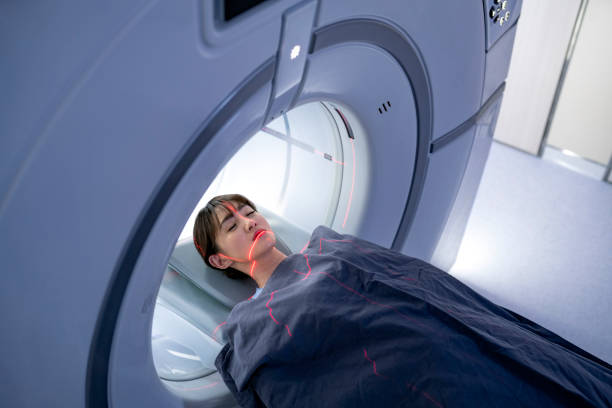1. It’s a Painless and Non-Invasive Procedure** A PET CT scan does not involve surgery or invasive techniques. The only minor discomfort is caused by the small injection. **2. It Detects Cancer at an Early Stage** It is not used for this purpose. It is only used for staging the cancer. **3. It Helps Differentiate Between Benign and Malignant Tumors** Unlike conventional imaging, PET CT scans show metabolic activity, helping doctors distinguish between non-cancerous and cancerous growths. **4. It Provides a Whole-Body Overview** PET CT scans can detect cancer in multiple body areas at once, making it easier to assess if cancer has spread (metastasized). **5. It’s Used in Combination with Other Imaging Techniques** For accurate diagnosis, sometimes PET CT is used alongside MRI scans to provide a complete picture of a patient’s condition. Don’t let misinformation cloud your judgment. Speak with a cancer specialist for accurate insights. Book an Appointment ***How can PET CT scans improve cancer treatment outcomes? Let’s discover their advantages.*** Benefits of PET CT Scans in Cancer Care **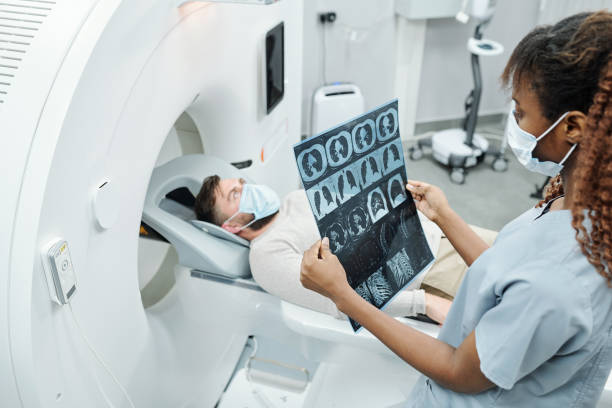1. Early and Accurate Detection** PET CT scans can identify cancer spread earlier than otherwise. **2. Precise Treatment Planning** By showing the exact location and extent of cancer, PET CT helps oncologists plan targeted treatments such as surgery or radiation therapy. **3. Monitoring Treatment Response** Doctors use PET CT scans to evaluate the effectiveness of a treatment. If cancer is not responding, adjustments can be made to improve outcomes. **4. Reducing Unnecessary Procedures** Since PET CT scans can differentiate between benign and malignant growths, they help avoid unnecessary biopsies or surgeries when the cancer is already spread. **5. Detecting Cancer Recurrence** PET CT scans are used in follow-ups to check for cancer recurrence, ensuring continuous monitoring and early intervention if needed. Conclusion PET CT scans are vital for staging, and treatment monitoring. They offer insights into abnormal cell activity and do not confirm cancer on their own. However, they assist oncologists in making accurate diagnoses and creating effective treatment plans. Understanding the facts about PET CT scans helps patients make informed healthcare choices. With experts like Dr. Sandeep Nayak leading advancements in oncology, the integration of this technology continues to improve cancer care and patient outcomes. FAQs What should I expect during a PET scan? During a PET scan, a small amount of radioactive glucose is injected into your body. You’ll rest for about an hour while the tracer circulates, and then, the scan takes around 20-30 minutes as you lie still inside the scanner. What does a PET scan check for? A PET scan detects abnormal metabolic activity in the body, helping stage the cancer, neurological disorders (like Alzheimer’s), and heart diseases. It is instrumental in determining its spread. Is a PET scan painful? No, a PET scan is painless. The only minor discomfort may come from the injection of the tracer, similar to a routine blood test. The scanning process itself is non-invasive and does not cause pain. How long does a PET CT scan take? The entire process takes about 2-3 hours, including preparation time. The actual scan lasts around 20-30 minutes. However, you’ll need to wait before the scan for the injected tracer to spread through your body. How do I prepare for a PET scan? You may be asked to fast for upto 12 hours before the scan, avoid strenuous exercise the day before, and inform your doctor about any medications or health conditions. Diabetic patients may receive special instructions regarding food and insulin intake. **Reference links:** <https://www.cancerresearchuk.org/about-cancer/tests-and-scans/pet-ct-scan> <https://www.umms.org/ummc/health-services/imaging/diagnostic/pet-scan/cancer> **Disclaimer:** This page is for informational purposes and not for promotional use. **Categories:** Blog --- ### [Latissimus Dorsi Flap Breast Reconstruction: A Complete Guide](https://drsandeepnayak.com/blogs/latissimus-dorsi-flap-breast-reconstruction/) **Published:** April 21, 2025 **Author:** Dr. Sandeep Nayak **Content:** Are you thinking about breast reconstruction and asking yourself if the Latissimus Dorsi (LD) Flap is appropriate for you? This surgical method has been utilized for decades to recreate breast form and contour following a [mastectomy](https://drsandeepnayak.com/blogs/stages-of-breast-reconstruction-after-mastectomy/). Although newer techniques such as the DIEP or TRAM flap are usually preferred, LD flap reconstruction is still a viable option for many patients. According to [Dr. Sandeep Nayak ](https://drsandeepnayak.com/), an expert in oncoplasty, the LD flap is a robust and reliable technique that remains useful, particularly when other flap options are not feasible. In this guide, we will discuss everything there is to know about Latissimus Dorsi Flap Breast Reconstruction—from surgery and benefits to possible complications and the recovery process. Need professional opinion on breast reconstruction? Talk to an expert now. Book an Appointment What is Latissimus Dorsi Flap Breast Reconstruction? Think you can use your own skin and muscle to restore the natural shape of your breast. That is precisely what latissimus dorsi flap for breast reconstruction achieves. The LD flap reconstruction employs the latissimus dorsi muscle, found in your upper back, to form a new breast mound. Part of this muscle, along with fat and skin, is brought to the chest with its blood supply intact. The procedure can be done with or without an implant, depending on the volume required for reconstruction. How is the Procedure Performed? **Step 1:** A portion of the latissimus dorsi muscle, skin, and fat is separated while leaving its blood supply intact. **Step 2:** The tissue is tunneled from under the arm to the chest. **Step 3:** The tissue is molded by the surgeon to create a new breast. **Step 4:** If needed, an implant is inserted to create desired volume. This technique is particularly beneficial for patients lacking sufficient abdominal fat for other flap-based reconstructions such as the DIEP or TRAM flaps. ***Read on to know if LD flap reconstruction is a preferred option nowadays.*** Is the LD Flap Suitable for Breast Reconstruction? **The Good:** The latissimus dorsi flap reconstruction is strong and reliable. It has a low failure rate and is a good choice for patients who require simple reconstruction. It is well-vascularized and, therefore, heals nicely and has fewer complications than some alternatives. **The Drawback:** Although latissimus dorsi muscle flap breast reconstruction works well, it is not the preferred choice for many surgeons currently. DIEP and TRAM flaps that use tissue from the belly give a more natural feel because they carry fat as opposed to muscle. Furthermore, using the latissimus dorsi muscle causes a mild loss of strength to the upper body, which you can feel while swimming or rock climbing. Unsure which flap is best for you? Speak with an expert to discuss your choices Book an Appointment ***Now, let’s understand the advantages and disadvantages of the LD flap.*** Latissimus Dorsi Flap Reconstruction: Pros and Cons **Benefits** - **High success rate –** The LD flap has a very low failure rate, so it’s a good choice. - **Suitable for thin patients –** If you don’t have sufficient abdominal fat for a DIEP or TRAM flap, this method can be a great alternative. - **Can be used with implants –** If more volume is desired, the flap can be done with an implant. - **Few donor-site complications –** The back heals well after the muscle is transferred. **Drawbacks** - **Loss of muscle function –** Although not a significant problem for most, athletes who use upper body strength may experience some weakness. - **Feels firmer than natural breast tissue –** The muscle-based reconstruction may not feel as natural as fat-based approaches. - **Potential scarring –** There will be a scar on the back, although it is often concealed by clothes. ***Are you worried about the risks?*** Possible Risks Involved with LD Flap Reconstruction Although LD flap reconstruction is considered safe, as with any surgery, it does involve some risks, which include: - **Fluid buildup (seroma) –** Fluid may accumulate in the back, necessitating drainage. - **Infection –** As with any surgery, there’s a small risk of infection. - **Weakness in upper body movement –** Some patients may experience reduced strength in the shoulder and back. - **Scar formation –** Both on the back (donor site) and chest (reconstructed breast). Following your surgeon’s post-operative care instructions can help minimize these risks and promote a smoother recovery. Conclusion Latissimus Dorsi Flap Breast Reconstruction remains a trustworthy and viable choice, especially for those who are not ideal candidates for DIEP or TRAM flap procedures. Although it has some limitations, it is a highly successful technique, making it a valued method for breast reconstruction. According to Dr. Sandeep Nayak, an experienced [ surgical oncologist ](https://drsandeepnayak.com/dr-sandeep-nayak/)in Bangalore, the LD flap reconstruction is particularly beneficial for patients who lack sufficient abdominal tissue for other flap-based reconstructions. Its reliability and low failure rate make it a preferred choice in many cases. Ultimately, the best approach depends on your body type, lifestyle, and personal preferences. Consulting with an experienced reconstructive surgeon is the key to making an informed decision. Considering breast reconstruction after cancer surgery? Consult a specialist today to explore your options. Book an Appointment Research [https://www.mdanderson.org/treatment-options/breast-reconstruction/reconstruction-using-back-tissue.html#:~:text=When%20back%20tissue%20is%20used,arteries%20and%20veins%20still%20attached.\\](https://www.mdanderson.org/treatment-options/breast-reconstruction/reconstruction-using-back-tissue.html#:~:text=When%20back%20tissue%20is%20used,arteries%20and%20veins%20still%20attached.%5C) <https://www.ncbi.nlm.nih.gov/books/NBK564377/> FAQs How long does the latissimus dorsi flap breast reconstruction surgery take? The procedure takes 3 to 5 hours, depending on whether an implant is used and the complexity of the reconstruction. Will the reconstruction be for a lifetime? Yes, the LD flap is a lifetime reconstruction, but if an implant is used, it may have to be replaced in 10-15 years. What flap is most often employed in breast reconstruction? The DIEP flap is the most popular method now because it utilizes fat rather than muscle, creating a more normal appearance and sensation. Yet, the LD flap is still an excellent choice for some patients. **Disclaimer:** The information shared in this content is for educational purposes only and not for promotional use. **Categories:** Blog --- ### [Low Anterior Resection Syndrome: Causes, Symptoms & Treatment](https://drsandeepnayak.com/blogs/low-anterior-resection-syndrome-causes-symptoms-treatment/) **Published:** April 21, 2025 **Author:** Dr. Sandeep Nayak **Content:** Low Anterior Resection Syndrome (LARS) is a common post-surgical condition observed in patients who undergo low anterior resection for rectal cancer treatment. It leads to bowel dysfunction, affecting the quality of life. **LARS is a temporary problem that occurs as we save the anal sphincter and avoid permeant stoma.** According to Dr. Sandeep Nayak, a leading [surgical oncologist](https://drsandeepnayak.com/) in India, “LARS is a prevalent but manageable condition. With appropriate care, patients can regain bowel control and live comfortably. Timely symptom detection and effective management are crucial for this post-operative issue.” With long-standing experience in surgical oncology, Dr. Nayak is an expert in complex [colorectal cancer surgeries](https://drsandeepnayak.com/services/rectal-cancer-treatment-in-bangalore/) and post-surgery rehabilitation. With his [team](https://drsandeepnayak.com/oncologist-in-bangalore/), he ensures patients receive individualized treatment protocols to deal with LARS effectively. Dr. Nayak and his team are well-known for their [expertise](https://drsandeepnayak.com/expertise/) in [minimally invasive surgery](https://drsandeepnayak.com/services/laparoscopic-cancer-surgery-in-india/) and advanced cancer treatment in Bangalore, allowing quicker recovery with fewer complications. Post-surgery bowel issues can be overwhelming, but there are ways to regain control. Seek professional advice for effective management strategies. Book an Appointment What is Low Anterior Resection Syndrome (LARS)? LARS is a group of symptoms occurring after low anterior resection (LAR). LAR is a surgical procedure designed to remove a portion of the affected rectum without removing the anal sphincter. LAR surgery is typically performed on patients with rectal cancer to maintain bowel continuity avoiding a permanent bag for stool collection, but can lead to bowel function abnormalities. The rectum plays a vital role in controlling and storing stools. When a portion of the rectum is excised and modified, the body needs time to adapt, and the associated symptoms may persist for months to years. Adequate treatment and management of LARS can significantly improve the patient’s quality of life. Do you have unexpected bowel changes after surgery? We will discuss the most frequent symptoms of LARS and how they impact daily living. Symptoms of Low Anterior Resection Syndrome Patients with LARS may experience: - **Frequent Bowel Movements**– Needing to use the restroom multiple times daily. - **Fecal Incontinence**– Some Loss of bowel control, with leakage at times, even when passing gas. This improves quickly after surgery. - **Bowel Urgency**– Sudden, strong urge to defecate with little warning. - **Incomplete Evacuation**– A sensation of not fully emptying the bowels. - **Constipation & Clustering** – Alternating between hard stools and multiple small bowel movements in a short period. - **Gas and Bloating**– Increased discomfort due to excess gas buildup. - **Unpredictable Bowel Habits**– Irregular stool frequency and consistency, making daily life cumbersome. - **Nocturnal Bowel Movements**– Bowel urges experienced at night, resulting in disturbed sleep. “Most symptoms occur immediately after surgery. However, within one and a half to two years, most patients experience significant improvement and return to normal,” mentions [Dr. Sandeep Nayak](https://drsandeepnayak.com/dr-sandeep-nayak/). The severity of LARS symptoms is graded on a scoring system, which helps guide dietary modifications and other management strategies based on individual needs. Identifying symptoms early can help control LARS better. Speak with a specialist for a personalized evaluation. Book an Appointment Need solutions to manage LARS? Let’s talk about simple but effective ways of regaining control over bowel function. Managing Symptoms The following strategies can help manage LARS: - **Dietary Adjustments** - Increase fiber intake gradually to regulate bowel movements. - Avoid foods that trigger diarrhea, such as caffeine, dairy, and spicy foods. - Stay hydrated to ease constipation and promote regularity. - **Pelvic Floor Exercises** - Pelvic muscle strengthening by some exercises can enhance bowel control. - Kegel exercises tighten sphincter function and reduce incontinence. - **Toilet Routine** - Develop a regular bowel movement routine to promote regularity. - Sit on the toilet and place a footstool to achieve an even better position for bowel emptying. - **Stress Management & Mental Well-being** - Reduce anxiety through meditation, breathing exercises, and counseling. - Join support groups to connect with others experiencing similar challenges. - **Monitor Food Triggers** - Maintain a food diary to identify and exclude foods that trigger symptoms. - Take small, frequent meals in order not to burden the digestive system. Not controlled by lifestyle changes alone? Let’s talk about some medical and surgical methods that can aid in managing LARS well. Treatments for Low Anterior Resection Syndrome Where lifestyle modifications are not sufficient, medical and sometimes surgical measures may be required: - **Medications**– Loperamide anti-diarrheal medications delay bowel urgency, and fiber supplements thicken stools. Stool softeners may be used for constipation. - **Transanal Irrigation (TAI)**– A method where the bowels are washed with water through a catheter to control the bowel movement and prevent incontinence. - **Dietary Counseling**– A structured dietary plan created by specialists to balance fiber intake, avoid trigger foods and optimize digestion for better bowel control. - **Biofeedback Therapy**– A technique that trains pelvic floor muscles to control bowel movement more effectively with the help of special sensors and therapist-guided exercises. Conclusion Low Anterior Resection Syndrome is a challenging condition, but with the right approach, symptoms can be managed effectively. From dietary changes to medical treatments, various ways exist to improve bowel function and enhance overall well-being. LARS will have to be managed in consultation with your treating doctors. FAQs What is anterior resection? Anterior resection is a surgical procedure that removes a portion of the rectum affected by cancer while maintaining normal bowel function. What is the best diet for low anterior resection syndrome? A probiotic, fiber-rich, and well-hydrated diet can control bowel movements. Eliminate trigger foods such as milk, caffeine, and processed foods. How long does low anterior resection syndrome last? LARS symptoms last for years or months. Some patients recover slowly, but others need extended treatment. What is the difference between anterior resection vs. low anterior resection? Anterior resection involves the removal of upper segment of the rectum, whereas low anterior resection involves excising a lower portion of rectum while preserving the anal sphincter. **Reference links:** <https://www.hopkinsmedicine.org/surgery/specialty-areas/colorectal-surgery/low-anterior-resection-syndrome> <https://colorectalsurgery.wustl.edu/patient-care/low-anterior-resection-syndrome/> **Disclaimer:** This page is for informational purposes and not for promotional use. **Categories:** Blog --- ### [Natural Cancer Treatment - Safe or Unsafe?](https://drsandeepnayak.com/blogs/natural-cancer-treatment-safe-or-unsafe/) **Published:** March 1, 2025 **Author:** Dr. Sandeep Nayak **Content:** Understanding Natural Products in Cancer Treatment Natural products have been used in medicine for centuries. From traditional herbal remedies to plant-based extracts, many believe that nature holds the key to curing diseases, including cancer. But how do these natural substances interact with cancer treatments? Dr. Nayak, a well-known surgical oncologist in India, explains: > “It may interest you that a group of medicines called taxanes are derived from tree bark. These alkaloids were refined through medical research to create chemotherapy drugs like Paclitaxel and Docetaxel. However, consuming raw tree bark without refinement means ingesting multiple unknown compounds. The problem lies in dosage control—too much can cause toxicity, and too little may be ineffective. Additionally, when taken alongside prescription medicines, natural products can dangerously amplify toxicity.” While some natural compounds have led to medical breakthroughs, not all plant-based substances are safe or effective. Misusing them could lead to severe side effects, organ damage, or even interference with standard cancer treatments. Wondering if natural remedies can help in cancer treatment? Before making any decisions, consult a qualified cancer specialist to ensure your safety. Book an Appointment ***Still, many people believe that natural remedies are completely safe. Is this true?*** Common Myths About Natural Remedies in Cancer Treatment **Myth 1: Natural products have no side effects** Many assume that because a remedy is “natural,” it must be safe. However, natural does not always mean harmless. Certain plant-based compounds can be toxic, causing liver damage, heart problems, or severe allergic reactions. **Myth 2: Herbs and supplements can replace chemotherapy** Some believe that chemotherapy alternatives such as herbal teas or special diets can treat cancer without the need for medical intervention. However, no scientific evidence supports this claim. Avoiding proven cancer treatments can allow the disease to progress unchecked. **Myth 3: If it worked for someone else, it will work for me** Personal testimonials and word-of-mouth recommendations are often misleading. Cancer treatments must be tailored to an individual’s medical condition, type of cancer, and overall health. A remedy that works for one person may not be safe or effective for another. Dr. Nayak emphasizes: > “If you ask me as a qualified doctor, it is unwise to consume natural products during cancer treatment. Simply consuming raw tree bark or extracts can introduce unpredictable toxicity and interfere with ongoing treatment. If medical options are still available, they should always be the first choice.” ***What are the real risks involved? Let’s break it down.*** Risks and Realities: What You Need to Know Unpredictable Dosage One of the biggest risks with tree bark medicine for cancer is the lack of dosage control. Unlike pharmaceutical drugs, which are carefully measured, natural products vary in potency. Consuming too much can cause poisoning, while too little may have no effect. **Potential Drug Interactions** Natural products can interfere with [chemotherapy](https://drsandeepnayak.com/blogs/fasting-and-chemotherapy-benefits-risks-and-key-points/), radiation therapy, and other cancer treatments. Some plant compounds may reduce the effectiveness of medical treatments, while others may dangerously increase toxicity levels. **False Sense of Security** Relying on natural remedies instead of proven treatments can delay life-saving medical care. Some patients turn to alternative therapies in the hope of avoiding side effects, only to find that their cancer has progressed to an advanced stage. Dr. Nayak, a trusted [oncologist in Bangalore](https://drsandeepnayak.com/services/laparoscopic-cancer-surgery-in-india/), cautions: > “If you are undergoing treatment, adding unverified remedies can create serious complications. Cancer drugs are designed for precision, and any additional substances can disrupt their intended effect. Natural products should only be considered when all medical options have been exhausted—and even then, with caution.” Not sure if tree bark medicine for cancer is safe? Speak with a medical expert to understand the risks and avoid complications during treatment. Book an Appointment ***So, should you take the risk or stick to medically approved treatments?*** Conclusion Cancer is a complex disease, and the search for a cure is ongoing. Understandably, patients seek hope in natural cancer treatment, especially when modern medicine feels overwhelming. However, unverified remedies should not replace scientifically proven treatments. The use of tree bark medicine for cancer or other plant-based therapies may seem appealing, but they carry risks that one cannot ignore. Dr. Nayak reminds us: > “Medical research has come a long way in the fight against cancer. While alternative therapies may offer comfort, they should never replace evidence-based treatments. The best approach is to work closely with your medical team, make informed decisions, and trust in advancements that have been scientifically tested. Hope should always be accompanied by wisdom and caution.” Don’t let misinformation cloud your judgment. Speak with a cancer specialist for accurate insights. Book an Appointment ***Do you still have questions? Let’s address some common concerns.*** FAQs Can natural remedies completely cure cancer? There is no scientific evidence proving that natural remedies can cure cancer. While some plant-based compounds have been developed into medicines, raw natural products are not a substitute for chemotherapy, surgery, or radiation therapy. Are there any natural products that can safely complement cancer treatment? Some complementary therapies, like specific diets or mild herbal supplements, may support overall health. However, a qualified doctor should always approve them to avoid harmful interactions with standard treatments. What happens if I take tree bark extracts along with chemotherapy? Tree bark contains alkaloids that can interfere with chemotherapy, increasing toxicity and potentially harming vital organs. Always consult your oncologist before adding any natural products to your treatment plan. Why do some cancer patients believe in alternative medicine? Many patients turn to alternative medicine due to fear, misinformation, or a desire to avoid side effects. However, delaying proven treatments can lead to disease progression and decreased survival rates. What should I do if I want to explore natural treatments? If you are interested in natural remedies, discuss them with your oncologist first. They can help you understand the risks and benefits while ensuring your primary treatment remains safe and effective. **Dr. Nayak concludes:** *“While the allure of natural remedies is strong, they should never replace [professional medical care](https://drsandeepnayak.com/expertise/). Many of these substances contain active compounds that interact with prescription drugs unpredictably. The biggest risk is that patients may unknowingly increase toxicity or weaken the effectiveness of their treatment. When it comes to cancer treatment, science-backed medicine remains the safest and most effective approach.”* **Reference Links:** <https://www.webmd.com/breast-cancer/taxanes-breast-cancer> <https://www.mskcc.org/news/truth-behind-three-natural-cures> **Disclaimer:** The information shared in this content is for educational purposes only and not for promotional use. **Categories:** Blog --- ### [Fasting and Chemotherapy: Benefits, Risks, and Key Points](https://drsandeepnayak.com/blogs/fasting-and-chemotherapy-benefits-risks-and-key-points/) **Published:** January 30, 2025 **Author:** Dr. Sandeep Nayak **Content:** Chemotherapy is one of the most effective treatments for fighting cancer, helping millions recover and improve their quality of life. Recently, **fasting during chemotherapy** has emerged as an innovative way to make treatment more effective while reducing side effects. By depriving cancer cells of glucose and protecting healthy cells, fasting aims to enhance chemotherapy outcomes safely. However, if at all, this had to be practiced only under the guidance of your doctor if at all. This is not practiced routinely and should not be taken as a standard as of now. The Science Behind Fasting and Chemotherapy So, what makes fasting an interesting companion to chemotherapy? Let’s break it down. ●**Cancer Cell Vulnerability:** Cancer cells thrive on glucose. Fasting deprives them of energy, potentially making chemotherapy more effective. ●**Healthy Cells Adapt:** Normal cells switch to a protective mode during fasting, reducing chemotherapy damage. ●**Enhanced Results:** By targeting cancer cells and sparing healthy ones, fasting can improve the treatment’s success rate. But is fasting right for you? **Keep reading to understand how fasting influences your body during chemotherapy.** Effects of Fasting on Chemotherapy What happens when you fast before a chemotherapy session? Here’s a snapshot: 1. **Reduced Side Effects:**Fasting has been shown to reduce nausea, fatigue, and other chemo-related discomforts. 2. **Increased Chemotherapy Tolerance:**Some patients find it easier to handle chemotherapy cycles while fasting. 3. **Improved Efficacy:**Cancer cells may respond better to treatment, improving overall outcomes. ### **Curious about how fasting might support your treatment? Learn how it could make a difference for your health.”** Book an Appointment *Still curious about how fasting impacts your body? Let’s explore the potential benefits next.* Potential Benefits of Fasting During Chemotherapy Here are some key benefits of combining fasting with chemotherapy: - **Enhanced Chemotherapy Efficiency:**Fasting can weaken cancer cells, making treatment more targeted. - **Lower Inflammation:**It reduces oxidative stress, which may improve recovery. - **Fewer Side Effects:**Many patients report reduced nausea, fatigue, and discomfort. - **Improved Recovery:**Fasting may promote better recovery post-chemotherapy by optimizing cellular repair. While these benefits sound promising, fasting isn’t for everyone. **Before you decide, let’s look at the risks and considerations you need to know.** Risks and Considerations Fasting during chemotherapy has its risks, especially if done without medical supervision. Here are a few important points to consider: - **Nutrient Deficiency:**Extended fasting can deprive your body of essential nutrients needed for healing. - **Fatigue and Weakness:**If you’re already weak, fasting might leave you feeling drained. - **Treatment Interference:**Not all chemotherapy types pair well with fasting protocols. ⚠️ *Important Reminder:* Always consult your oncologist to determine if fasting is safe and appropriate for your condition. ### **Exploring the right approach to chemotherapy? Discover insights that could guide your journey.** Book an Appointment Conclusion Fasting during chemotherapy is an emerging concept with promising potential. By improving chemotherapy’s effectiveness and reducing its side effects, fasting has captured attention in the medical field. However, it’s not a universal solution. Dr. Sandeep Nayak, a leading **surgical oncologist in India**, and his team in Bangalore are at the forefront of innovative cancer treatments. Their expertise ensures patients receive evidence-based guidance tailored to their individual health needs. With personalized care and advanced treatment options, patients can make informed choices for their cancer journey. ### **Interested in how fasting and chemotherapy could work together? Find out more about tailored treatment options.** Book an Appointment FAQs How many hours should you fast before chemo? The recommended fasting duration ranges varies depending on your overall health and treatment plan. Always consult your doctor for tailored advice. Can fasting reduce chemotherapy side effects? Yes, studies suggest fasting may help reduce common chemo side effects like fatigue, nausea, and vomiting by protecting healthy cells during treatment. Is fasting safe for all cancer patients? Fasting is not suitable for everyone, particularly patients with low body weight, severe weakness, or nutritional deficiencies. It’s essential to consult your **oncologist in Bangalore (if your are located in Bangalore)** before trying fasting during chemotherapy. What are the risks of fasting during chemotherapy? Some potential risks include fatigue, nutrient deficiency, and interference with treatment efficacy. Always undergo fasting under medical supervision. Can fasting improve chemotherapy effectiveness? Emerging research indicates that fasting might weaken cancer cells, making them more responsive to chemotherapy while protecting healthy cells. Should I fast on the day of chemotherapy? Fasting protocols vary; Your **oncologist** can recommend the safest approach based on your health. **References** 1. [The Role of Fasting in Cancer Therapy – PubMed](https://pubmed.ncbi.nlm.nih.gov) 2. [Fasting and Chemotherapy: ScienceDirect](https://www.sciencedirect.com) **Categories:** Blog --- ### [Ayurvedic Medicine along with Chemotherapy - Safe or Unsafe](https://drsandeepnayak.com/blogs/ayurvedic-medicine-along-with-chemotherapy-safe-or-unsafe/) **Published:** November 14, 2024 **Author:** Dr. Sandeep Nayak **Content:** Cancer treatment can be physically and emotionally demanding, leading many patients to explore complementary therapies for relief and recovery. Among these, Ayurvedic medicine—a centuries-old traditional Indian healing system—often stands out for its natural approach. However, when it comes to using Ayurvedic medicine along with chemotherapy, questions about safety arise. Is it truly safe to combine the two? In this blog, we delve into the complexities of this combination, drawing on the expert insights from [Dr. Sandeep Nayak](https://drsandeepnayak.com/), a renowned surgical oncologist in India. Myth: Ayurvedic Medicine is Completely Safe During Chemotherapy A common myth surrounding cancer treatment is that Ayurvedic medicine is entirely safe to use alongside chemotherapy because it is “natural.” Many patients believe that since Ayurveda has been practiced for centuries and uses herbal and plant-based remedies, it cannot interfere with modern cancer treatments. This belief is rooted in the perception that natural treatments are always harmless, and because Ayurveda is a trusted system in many cultures, people assume it won’t cause complications. However, this is a misconception. Just because something is natural doesn’t mean it’s risk-free, especially in complex medical situations like cancer. The idea that Ayurvedic medicine can be taken without concern during chemotherapy is widespread, but it fails to consider the possible interactions and effects that natural remedies might have on the body when combined with strong treatments like chemotherapy. It is essential to understand that while Ayurveda offers therapeutic benefits, its use during cancer treatment isn’t as straightforward as many think. This myth often leads patients to self-prescribe Ayurvedic treatments without consulting their oncologist, potentially putting themselves at risk. It is important to debunk this notion and emphasize that “natural” doesn’t automatically mean safe, particularly in cancer care. Do you need clarification about complementary therapies? Talk to a cancer specialist about potential interactions and get personalized recommendations. Book an Appointment Let’s uncover the potential risks of unsupervised mixing of Ayurvedic medicine along with chemotherapy. Fact: Risks of Unsupervised Combination While Ayurvedic medicine can have its benefits, using it during chemotherapy without medical supervision can be dangerous. One of the biggest risks of combining these treatments unsupervised is the possibility of drug interactions. Chemotherapy involves powerful drugs that work to kill cancer cells, but they also come with side effects like nausea, fatigue, and lowered immunity. Ayurvedic remedies, despite being natural, also contain active compounds that can interact with chemotherapy drugs in ways that aren’t fully understood. For example, certain Ayurvedic herbs may intensify the side effects of chemotherapy, leading to more severe nausea, vomiting, or diarrhea. Others might reduce the effectiveness of the chemotherapy itself, making the cancer treatment less successful. Without proper medical guidance, it is hard to predict how Ayurvedic treatments will react with the chemotherapy drugs already in the system. Another risk is that some Ayurvedic medications may put extra strain on the liver and kidneys, which are already working hard to process chemotherapy. This added burden can cause organ stress and potentially lead to complications like toxicity or damage to these vital organs. Dr. Sandeep Nayak stresses that while Ayurveda might be beneficial in some contexts, combining it with chemotherapy without the advice of a qualified doctor could lead to dangerous cross effects. Unsupervised use of these remedies can do more harm than good, making it crucial to have proper medical consultation before trying any complementary therapies during cancer treatment. Let’s explore a balanced perspective from Dr. Sandeep Nayak, an experienced cancer specialist. Dr. Sandeep Nayak’s View Dr. Sandeep Nayak, an experienced [oncologist in Bangalore](https://drsandeepnayak.com/dr-sandeep-nayak/), offers a thoughtful perspective on using Ayurvedic medicine during chemotherapy. He acknowledges that many patients are curious about incorporating Ayurvedic treatments into their cancer care, often with the belief that these remedies are free from side effects. However, he emphasizes that this assumption is misleading. According to Dr. Nayak, Ayurveda recognizes that every substance, including foods and herbs, has the potential for side effects. These effects are often described in terms of their impact on body balance, such as pitta and ushna. This highlights that even natural treatments can have consequences. Dr. Nayak points out that Ayurvedic medication can lead to increased side effects when taken with chemotherapy, complicating an already challenging treatment process. He strongly advises patients to avoid combining Ayurvedic medicine with chemotherapy unless guided by a qualified medical professional. Dr. Nayak emphasizes the importance of consulting with healthcare providers who understand both oncology and Ayurvedic practices to ensure safety and efficacy. His balanced approach advocates for open communication between patients and their doctors to explore complementary therapies responsibly while prioritizing patient health and treatment success. Consult an oncologist today to discuss safe treatment options and ensure the best care for your cancer journey. Book an Appointment Final Note Ayurvedic medicine can support many health conditions; however, its use during chemotherapy requires caution. The misconception that Ayurvedic remedies are entirely safe can lead to dangerous interactions with conventional cancer treatments. To ensure patient safety and treatment effectiveness, consulting healthcare professionals before incorporating complementary therapies is essential. By prioritizing informed decision-making, patients can confidently navigate their cancer journey and achieve better health outcomes. FAQs **Can we take other medicines during chemotherapy?** Yes, you can take other medications during chemotherapy. However, consulting with your doctor before starting any new medication is crucial. Certain drugs may interact with chemotherapy or worsen its side effects. **What herbs should be avoided during chemotherapy?** Several herbs can interfere with chemotherapy, reducing its effectiveness or increasing side effects. Common herbs to avoid include: **Ginseng:** May affect blood sugar levels and immune function. **St. John’s Wort:** Can reduce the effectiveness of certain chemotherapy drugs. **Garlic:** In large amounts, it may increase bleeding risk. **Ginger:** While often used for nausea, high doses can interfere with blood thinners. **Echinacea:** May stimulate the immune system, which could be problematic during chemotherapy. **Can we take Ayurvedic medicine with chemotherapy?** No, it is not advisable to take Ayurvedic medicine with chemotherapy without consulting a healthcare professional, as it can cause interactions that may increase side effects or reduce effectiveness. Always discuss this with your oncologist first. **Reference** <https://www.cancer.gov/about-cancer/treatment/cam> <https://www.oncologynutrition.org/erfc/eating-well-when-unwell/chemotherapy/herbs-chemotherapy> **Disclaimer**: The information shared in this content is for educational purposes only and not for promotional use. **Categories:** Blog --- ### [Turmeric as a Cure for Cancer](https://drsandeepnayak.com/blogs/turmeric-as-a-cure-for-cancer/) **Published:** October 19, 2024 **Author:** Dr. Sandeep Nayak **Content:** Cancer is a daunting diagnosis for many patients and their families. According to recent statistics, about 10 million people worldwide are diagnosed with cancer every year, with India contributing around 1.16 million new cases annually. The quest for effective cancer treatments often leads individuals to explore natural remedies, including turmeric. This vibrant spice has gained attention for its potential anti-cancer properties, primarily attributed to curcumin, its active compound. Patients often wonder, can [turmeric kill cancer cells](https://www.webmd.com/cancer/can-turmeric-fight-cancer) or cure cancer entirely? Some claim that “turmeric cured cancer” or that it can “kill cancer.” Understanding the role of turmeric as a cure for cancer is crucial for those exploring complementary therapies. [Dr. Sandeep Nayak](https://drsandeepnayak.com/), a highly regarded oncologist in Bangalore, India, shares his perspective: “While turmeric shows promise in preliminary studies for its anti-inflammatory and antioxidant properties, it should not replace conventional treatments. Patients should rely on evidence-based medical care.” > ***Dr. Nayak is a seasoned expert in performing advanced, [minimally invasive cancer surgeries](https://drsandeepnayak.com/services/laparoscopic-cancer-surgery-in-india/), which lead to faster recovery and minimal scarring. He integrates the most up-to-date treatments with holistic approaches to offer comprehensive cancer care. His [expertise](https://drsandeepnayak.com/expertise/) helps patients thoroughly understand their treatment choices, including the potential benefits of natural supplements like turmeric.*** Have you ever wondered how turmeric might impact cancer cells? Let’s delve into the scientific evidence backing its use. Scientific Evidence Supporting Turmeric’s Role in Cancer Treatment Recent research has highlighted the potential benefits of turmeric in cancer therapy. Studies indicate that curcumin, the primary active ingredient in turmeric, exhibits anti-inflammatory and antioxidant properties. These qualities are vital, as inflammation is closely linked to cancer progression. Some studies suggest curcumin can inhibit the growth of cancer cells in laboratory settings and even induce apoptosis, or programmed cell death, in various cancer types, including [breast](https://drsandeepnayak.com/services/breast-cancer-treatment-in-bangalore/), [colorectal](https://drsandeepnayak.com/services/colon-cancer-treatment-in-bangalore-india/), and [prostate](https://drsandeepnayak.com/services/prostate-cancer-treatment-in-bangalore/) cancers. It appears to disrupt various cancer cell signalling pathways, which may help [prevent cancer](https://www.cancer.org.au/iheard/does-turmeric-prevent-cancer-growth) cell proliferation. Some trials have reported that curcumin can help manage the side effects of chemotherapy and enhance the effectiveness of conventional treatments. For instance, a study indicated that patients who took curcumin alongside chemotherapy had improved outcomes compared to those who did not. While there is scientific evidence supporting turmeric’s role in cancer treatment, it is not a replacement for traditional therapies. Patients should approach this natural remedy with professional guidance. Are there any limitations to using turmeric in cancer treatment? Understanding these constraints is crucial for informed decisions. Limitations Despite its potential benefits, using turmeric as a cancer cure is fraught with limitations. One significant limitation is the bioavailability of curcumin. The body does not easily absorb curcumin. This means its effectiveness may be reduced when consumed in its natural form. So, high doses may be necessary to achieve therapeutic effects. This raises concerns about the safety of consuming large amounts of turmeric or curcumin supplements. Researchers are exploring ways to enhance curcumin’s absorption, such as using advanced formulations. Another limitation is the lack of large-scale, rigorous clinical trials specifically focused on turmeric and cancer treatment. Most studies investigating turmeric’s effects on cancer have been conducted in vitro (in the lab) or in animal models, which may not translate to human outcomes. This makes it challenging to establish definitive conclusions about turmeric’s effectiveness in treating cancer. Lastly, turmeric is not a replacement for conventional cancer therapies. While it may offer supportive benefits, relying solely on turmeric for cancer treatment can lead to delayed diagnosis and treatment. The complexity of cancer treatment requires a multi-faceted approach that includes conventional therapies and lifestyle changes. Patients should always prioritize evidence-based treatments prescribed by healthcare experts. What challenges are associated with using turmeric as part of cancer treatment? Let’s explore some of the key obstacles. Challenges Incorporating turmeric into a cancer treatment regimen presents several challenges. One primary challenge is the need for further research to determine optimal dosages and formulations for cancer patients. Given the current understanding of curcumin’s low bioavailability, finding the right way to administer turmeric effectively is crucial. This challenge requires collaboration between researchers, oncologists, and nutritionists to establish evidence-based guidelines. Another challenge is the potential for interactions with other medications. Curcumin can affect the metabolism of certain drugs, which may alter their effectiveness or lead to side effects. Patients taking anticoagulants or other medications should consult their medical team before adding turmeric to their regimen. Ensuring patient safety and avoiding adverse interactions is essential. Additionally, there is a lack of standardization in turmeric supplements. The potency and purity of turmeric products can vary significantly between manufacturers, making it difficult for patients to know what they are consuming. This inconsistency can affect the efficacy and safety of turmeric as a treatment option. Besides, there are misconceptions surrounding turmeric as a miracle cure for cancer. This perception can lead to patients neglecting conventional treatments in favour of turmeric. Healthcare providers must educate patients about turmeric’s supportive role, emphasizing that it should complement, not replace, standard cancer therapies. Curious about incorporating natural remedies into your cancer care? Seek professional guidance to ensure safe and effective treatment combinations. Book an Appointment Conclusion While turmeric has shown potential in the fight against cancer, it is not a standalone cure. Scientific evidence supports its role in reducing inflammation and potentially slowing cancer progression, but more human studies are needed. Patients should approach natural remedies cautiously, ensuring they work in harmony with conventional treatments. For those considering turmeric as a complementary therapy, seeking professional guidance is essential. Dr Sandeep Nayak, an ace [surgical oncologist](https://drsandeepnayak.com/dr-sandeep-nayak/) in India and his [team](https://drsandeepnayak.com/oncologist-in-bangalore/) of experienced specialists are dedicated to providing personalized, evidence-based treatment options that incorporate modern medicine and holistic approaches, ensuring the best possible care for cancer patients. Have questions about turmeric’s role in cancer treatment? Let’s address some of the most common queries. Frequently Asked Questions **Can turmeric cure cancer?** While turmeric has shown potential in cancer treatment, it is not considered a cure for cancer. More research is needed. **Does turmeric kill cancer cells?** Curcumin, an active compound in turmeric, has demonstrated anti-cancer properties in lab studies. However, more research is needed in humans. **Is there scientific proof that turmeric cures cancer?** While scientific evidence supports turmeric’s benefits in cancer treatment, it is not enough to declare it a cure. **Can turmeric be used for cancer prevention in healthy individuals?** Some people use turmeric for its potential preventive benefits. However, there is no definitive proof that it can prevent cancer. **Can turmeric stop cancer progression?** Turmeric has shown some promise in lab settings. However, it is not a proven treatment for stopping cancer progression. **Categories:** Blog --- ### [Know all about Liver Cancer Treatment in 2022](https://drsandeepnayak.com/blogs/know-all-about-liver-cancer-treatment-in-2022/) **Published:** June 21, 2022 **Author:** Dr. Sandeep Nayak **Content:** Liver cancer is the 3rd leading cause of cancer death worldwide, with over 700,000 deaths every year. More than 800,000 people worldwide are diagnosed with liver cancer each year. In 2020, over 830,000 people succumbed to the disease worldwide. Among the[ best oncologists in India](https://drsandeepnayak.com/services/best-oncologist-in-india), Dr. Sandeep Nayak says that the liver is a vital organ of our digestive system and has the unique ability to regenerate lost tissues caused by surgery or some injury. Any damage to it can cause severe complications to other organs of your body. HCC(hepatocellular carcinoma) is the most prevalent type of primary liver cancer, accounting for around 75% of the liver cancer diagnoses. In this blog, we will learn about treatment options for HCC in 2022. Let us start by understanding what the liver is and its functions. The liver and its functions The liver is a significant organ found solely in vertebrates that conducts a variety of vital biological tasks, including detoxification and the production of biochemicals and proteins required for growth and digestion. It is situated in the right upper quadrant of your abdomen, below the diaphragm. There are multiple functions your liver performs that are vital to your well-being. The main functions of the liver are: - It purifies blood flowing from your stomach and intestine before sending it to the rest of your body. This ensures that your body is free of toxins. - It secretes bile which breaks down fatty acids to promote healthy digestion. - It strengthens your immune system enabling the body to fight against infections. - It retains healthy nutrients and removes the rest as waste products. Dr. Sandeep Nayak, one of the best[ cancer specialists in Bangalore](https://drsandeepnayak.com/services/best-oncologist-in-bangalore), adds that the liver plays a critical role in metabolism and processes what we consume. Due to this, it is vulnerable to damages caused by drugs, alcohol, accumulation of fat in the liver, and toxins. Imagine what would happen if the liver were unable to perform to its best ability. One of the life-threatening diseases of the liver is liver cancer. What is liver cancer? The malignancy of the liver is known as liver cancer. When the disease develops in the liver, it damages liver cells and impairs the liver’s ability to function normally. **There are 2 types of liver cancer:** - Primary liver cancer starts in your liver cells. - Secondary liver cancer occurs when cancer cells that have developed in another organ spread to your liver. Unlike the other cells in our body, cancer cells can move away from the original area where the cancer started. Dr. Sandeep Nayak, an accomplished[ surgical oncologist in India](https://drsandeepnayak.com/), explains that the cancer cells can migrate through your bloodstream or lymphatic system to other body parts. They can begin growing in different tissues or organs once they reach there. What are the symptoms of liver cancer? Most people do not have any symptoms in the early stages. When they do appear, symptoms may include: - Stomach ache, especially in the upper abdomen - Dark urine and pale stool - Nausea and vomiting - Jaundice - Feeling itchy - Loss of appetite and weight - Weakness and fatigue Metastatic or secondary liver cancer is difficult to cure because the cancer cells have already spread. Surgery in this stage is challenging due to the liver’s complicated network of blood arteries and bile ducts. How is primary liver cancer HCC treated? According to Dr. Sandeep Nayak, among the leading [laparoscopic surgeons](https://drsandeepnayak.com/services/laparoscopic-cancer-surgery-in-india) in Bangalore, early detection of primary liver cancer, when it is most curable, is rare because you may not experience any symptoms. Dr. Sandeep Nayak is one of the preferred cancer specialists for [liver cancer treatment](https://drsandeepnayak.com/services/liver-cancer) in Bangalore, India. HCC is treated using disease-specific treatments in the hopes of eradicating and possibly curing it. **The treatment options are:** Surgery - **Hepatectomy surgery** A hepatectomy is a procedure that can only be conducted if one part of your liver is affected by cancer and your liver is working well. It involves removing the affected section of your liver. The remaining part of your liver takes the functioning responsibility for the entire liver. Your liver may return to its original size in a few weeks. **Side effects:** Pain, tiredness, and weakness are all possible adverse effects of a hepatectomy. The medical team will monitor you for signs of infection, bleeding, liver failure, or other issues that require immediate attention. Liver transplantation A liver transplant is possible only if specific requirements are met, like the tumor size and quantity, as well as the availability of a compatible donor. It is important to remember that the number of available liver donors is limited. As a result, transplantation is not always a viable choice. Following a transplant, the patient will be closely examined for signs that the body is rejecting the new liver or that the tumor has returned. The patient must take medicine to avoid rejection. **Side effects:**These medications can cause high blood pressure, puffiness in the face, or increased body hair. Thermal ablation Microwave therapy and radiofrequency ablation (RFA) both employ heat to kill cancer cells. They can be administered through the skin, via laparoscopy, or a surgical procedure while the patient is under monitored anesthesia care. Percutaneous ethanol injection This treatment involves injecting alcohol directly into the tumor to kill it. Fever and soreness following the operation are common side effects. The treatment is safe, simple, and especially effective when the tumor is less than 3 cm. SBRT (Stereotactic body radiation therapy) SBRT refers to a number of techniques for providing high doses of radiation therapy to a tumor while reducing the quantity of radiation delivered to neighboring healthy tissue. SBRT is an effective treatment for tumors that are 5 cm or smaller. What if the patient’s liver cancer cannot be cured? If the doctor believes the treatments indicated above cannot cure your cancer, they may recommend one of the following alternatives to decrease the tumor or slow its growth. While these treatments are unlikely to cure cancer, they can increase the length of time patients can live. ### **Chemoembolization** During chemoembolization, drugs are administered into the hepatic artery. The blood flow via the artery is temporarily blocked to keep the chemotherapy in the tumor for longer. Cancer cells are also killed when the tumor’s blood supply is cut off. Chemoembolization can be used to reduce tumor growth in persons waiting for a liver transplant and be utilized as a primary treatment for HCC. ### **Radioembolization** In radioembolization, radioactive beads are inserted into the artery that provides blood to the tumor. When the beads become stuck in the tumor’s tiny blood arteries, they give radiation therapy directly to the cancer. ### **Immunotherapy** According to Results from a 2021 Global Phase III clinical trial called HIMALAYA,a combination of immunotherapy medications, durvalumab (Imfinzi) and tremelimumab, helped persons with unresectable (cannot be removed with surgery) advanced HCC (hepatocellular carcinoma) survive longer. Immunotherapy is a cancer treatment that boosts your immune system’s ability to target and attack cancer cells by utilizing your body’s natural defenses. Durvalumab targets the PD-1 protein, while tremelimumab targets CTLA-4. Conclusion We need to take good care of our [liver](https://www.webmd.com/hepatitis/ss/slideshow-best-and-worst-foods-for-your-liver) to ensure that we have a healthy body. It processes the nutrients in the food we eat and gets rid of toxins from our bodies. It produces bile to ensure healthy digestion, builds protein, and much more. That is why it is essential that we also protect it and avoid practices that may cause damage to the liver. If you or a loved one is experiencing any of the symptoms mentioned or been diagnosed with liver cancer, please [schedule](https://drsandeepnayak.com/contact) an appointment with Dr. Sandeep Nayak. Dr. Nayak is a top-notch cancer specialist in Bangalore and will discuss your cancer treatment choices and help you assess the advantages of each treatment choice against the risks and adverse effects that may occur. **Categories:** Blog --- ### [Busting Myths About Oral Cancer](https://drsandeepnayak.com/blogs/busting-myths-about-oral-cancer/) **Published:** August 18, 2022 **Author:** Dr. Sandeep Nayak **Content:** Mouth and oral cancers refer to cancers of the oral cavity, lip, larynx, hypopharynx, and oropharynx. With over 377,700 reported cases in 2020 worldwide, oral cavity and lip cancers are the most prevalent. According to the Mouth Cancer Foundation, the increased fatality rate associated with oral cancer is brought on by the fact that the disease is often discovered in its advanced stages, most frequently after it has already started spreading to the lymph nodes in the neck. It can be a severe disease, but fortunately, it is also one of the most treatable cancers if caught early. [Dr. Sandeep Nayak](https://drsandeepnayak.com/services/best-oncologist-in-india), a highly-accomplished cancer specialist in Bangalore, says that early detection and treatment of oral cancer are essential, but misconceptions about the condition can make this difficult. When it comes to cancer, there are many myths and misconceptions floating around. Oral cancer is no different. **Here are 5 of the most common myths about oral cancer:** Myth 1. Only smokers get oral cancer While it is true that habitual use of tobacco and alcohol are the two most prevalent risk factors for oral cancer, they are not the only ones. Non-smokers and abstainers of alcohol may experience a diagnosis at some stage in life. Mouth cancer risk factors also include prolonged sun exposure, weaker immune system, HPV infection, age (risk rises with age), gender (men are more at risk), and a bad diet. Your genetics also plays a role in oral cancer risk. Dr. Sandeep Nayak, often regarded as the [best oncologist in India](https://drsandeepnayak.com/services/best-oncologist-in-india), says it is important to see a dentist or doctor regularly so that they can catch any early signs of cancer. Myth 2. You would know if you had oral cancer Oral cancer can be quite sneaky. It often starts out as a minor, painless sore or lump that can be easily overlooked. Usually, oral or mouth cancer can appear in hard-to-see locations like the tonsils, base of the tongue, lymph nodes, and the lining of your mouth. **Symptoms that you need to look out for include:** - hoarseness or difficulty in trying to speak - sores or lumps in your mouth or lips that do not heal - red or white patches on your mouth lining, gums, tongue, or tonsils - unexplained bleeding in your mouth - a feeling that something is stuck in your throat - trouble swallowing Myth 3.You cannot prevent oral cancer While there is no guaranteed way to prevent any cancer, there are some things you can do to lower your risk. The most critical approach to preventing mouth or oral cancer may be to never start smoking. If you do smoke, it is a good idea to quit. Abstain from all tobacco products, particularly chewing tobacco. In order to reduce your risk of developing oral cancer, you should include more fresh vegetables and fruits in your diet, drink less alcohol, and minimize exposure to the sun’s rays on your lips. Your risks of contracting HPV are also decreased by receiving the HPV vaccination and engaging in safe sexual practices. Myth 4.Oral cancer only affects older people While most people think oral cancer only affects older adults, this is not the case. Oral cancer is gradually becoming among the most common cancers in young adults.Because oral cancer frequently takes a long time to develop, most instances are identified in people 50 years of age or older. But as cases of oral cancer linked to HPV have increased over time, younger people are now at higher risk. Dr. Sandeep Nayak, often called the best oncologist in Bangalore, advises that the HPV vaccine can significantly reduce the chances of getting HPV infections which increase the risk factor for oral and mouth cancers. Myth 5. No symptoms? Nothing to worry Dr. Sandeep Nayak, a highly-skilled [surgical oncologist in India,](https://drsandeepnayak.com/) observes that many of his patients are often thoroughly shocked when diagnosed with oral cancer as they had not noticed any symptoms until recently. Many people think oral cancer is always noticeable, and you would know if you had it. This is definitely not true! As we mentioned before, oral cancer can be quite sneaky. By the time symptoms appear, the cancer may have already spread. That is why it is essential to see a dentist or doctor regularly, even if you do not have any symptoms. They can perform a visual examination of your mouth and throat to look for any early signs of cancer. Conclusion Oral or [mouth cancer](https://www.mayoclinic.org/diseases-conditions/mouth-cancer/symptoms-causes/syc-20350997) is a serious disease, but it is also one of the most treatable cancers if caught early. Most people think that oral cancer is always fatal. Fortunately, this is not true. The survival rate for those diagnosed with early-stage oral cancer is about 83%. So if you are diagnosed with oral cancer, do not lose hope. There is a good chance you will beat it. Do not let myths about [oral cancer prevent](https://drsandeepnayak.com/blogs/top-10-ways-to-prevent-oral-cancer) you from getting the screenings you need. If you are worried about your risk, talk to an experienced oncologist like Dr. Sandeep Nayak. With his decades of expertise in providing advanced and effective treatments to cancer patients, he will help assess your condition and offer the best[ oral cancer treatment in Bangalore.](https://drsandeepnayak.com/services/oral-cancer-treatment-in-bangalore) **Categories:** Blog --- ### [Ovarian Cancer Genetic](https://drsandeepnayak.com/blogs/ovarian-cancer-genetic/) **Published:** May 2, 2024 **Author:** Dr. Sandeep Nayak **Content:** This blog explores ovarian cancer genetics with insights from Dr. Sandeep Nayak, a seasoned [surgical oncologist in India](https://drsandeepnayak.com/). Let’s understand the crucial role of genetics in managing ovarian cancer. Overview of ovarian cancer Ovarian cancer is characterized by abnormal cell growth in the ovaries. It’s tricky to catch early because it often doesn’t show symptoms until it’s advanced. - Studies show ovarian cancer is the eighth most prevalent cancer in women worldwide. - There were more than 313,000 new cases reported in 2020.  Dr. Sandeep Nayak emphasizes, “Understanding how genetic factors contribute to the disease is essential. It can help improve its diagnostic and treatment strategies, giving hope to patients and doctors.” Dr. Nayak is a pioneer in laparoscopic and robotic surgery. He is among the preferred doctors for[ ovarian cancer treatment in Bangalore](https://drsandeepnayak.com/services/ovarian-cancer-treatment-in-bangalore-india/). Importance of Understanding Genetic Factors Genetic insights help doctors identify individuals at higher risk for certain types of cancer. It helps them better understand how the disease develops and progresses. Understanding genetic factors helps doctors create personalized treatment plans, improving outcomes. It paves the way for[ innovative treatments](https://drsandeepnayak.com/blogs/robotic-surgery-for-cancer-treatment-what-you-need-to-know/) and advancements in cancer research. ***Let’s take a step back and understand the basics of ovarian cancer.* What is Ovarian Cancer? Ovaries are the female reproductive organs responsible for producing eggs. Ovarian cancer is a type of cancer that starts in the ovaries. It occurs when cells in the ovaries grow out of control and form tumors. These tumors can be benign (non-cancerous) or malignant (cancerous). Ovarian cancer, often called the “silent killer”, may not cause symptoms in its early stages. It is a complex disease with various subtypes, each influenced by genetic factors. As the cancer progresses, symptoms such as abdominal bloating, and changes in bowel habits may occur. If you experience any of these symptoms, your body is alerting you to potential health issues. Please[ ](https://drsandeepnayak.com/contact/)[consult](https://drsandeepnayak.com/contact/) an experienced medical professional as soon as possible. Early detection and treatment are crucial for improving outcomes in ovarian cancer patients. ***Are you wondering, ‘Is ovarian cancer hereditary’? Let’s learn how genetic changes influence the development and progression of this disease.*** Genetic Basis of Ovarian Cancer Genetics plays a significant role in cancer development. The genetic basis of ovarian cancer involves changes in specific genes. These changes can lead to abnormal cell growth in the ovaries. Genetic changes can be inherited from parents or occur spontaneously. Mutations in genes like BRCA1 and BRCA2 increase the risk of ovarian cancer. These mutations can be seen in 10% of patients with ovarian cancer. Understanding ovarian cancer genetics helps doctors identify individuals at higher risk. It guides them in developing personalized treatment plans. There is a significant link between ovarian testing, genetic testing and ovarian cancer. Genetic testing can provide valuable information for early detection and[ prevention](https://drsandeepnayak.com/blogs/is-it-possible-to-prevent-ovarian-cancer/) efforts. Testing can help identify potential abnormalities or risk factors associated with ovarian health. Role of Genetics in Cancer Development The role of genetics in cancer development is multifaceted and complex. Genetic factors can significantly influence an individual’s susceptibility to certain types of cancer. Here’s a breakdown: ### **Inherited Genetic Mutations** Some individuals inherit genetic mutations from their parents that increase their risk of developing cancer. Also, a person could be the first one to develop this mutation in their genes and then transmit it to their children through their genes as first person in the bloodline. These mutations can directly contribute to the initiation and progression of cancer. They disrupt normal cellular processes, such as cell growth regulation and DNA repair mechanisms. Examples include: - Mutations in genes like BRCA1 and BRCA2, which are associated with[ ](https://drsandeepnayak.com/services/breast-cancer-treatment-in-bangalore/)[breast](https://drsandeepnayak.com/services/breast-cancer-treatment-in-bangalore/) and ovarian cancer - Lynch syndrome-associated mutations, which increase the risk of[ colorectal](https://drsandeepnayak.com/blogs/tips-to-reduce-your-risk-of-colorectal-cancer/) and other cancers ### **Acquired Genetic Mutations** In addition to inherited mutations, cancer can arise from spontaneously acquired mutations. Cancer can also result from environmental exposures, lifestyle factors, or aging. These mutations can accumulate over time, leading to the uncontrolled growth of cancer cells. Acquired mutations may affect: - oncogenes, which promote cell growth - tumor suppressor genes, which inhibit cell growth and regulate cell division ### **Genetic Instability** Genetic instability refers to the tendency of cancer cells to accumulate further genetic alterations. This leads to tumor heterogeneity and evolution. The genetic diversity enables cancer cells to: - adapt and survive in diverse environments - evade the immune system - develop resistance to treatments Advances in genomic technologies have revolutionized cancer research and clinical practice. They enable the identification of specific genetic alterations driving individual tumors. This has paved the way for personalized medicine approaches. Doctors can now tailor treatments to the genetic profile of each patient’s cancer. Targeted therapies, immunotherapies, and precision medicine strategies are examples of personalized treatments. These treatments target cancer cells while reducing harm to healthy tissue.  Genetics plays a key role in cancer development, emphasizing the need to understand its molecular mechanisms. Using this knowledge is crucial for better prevention, detection, and treatment. ***Next, we differentiate between hereditary and sporadic ovarian cancer. Let’s get a clearer understanding of the disease’s origins.*** Hereditary vs. Sporadic Ovarian Cancer - Hereditary ovarian cancer results from inherited genetic mutations. - Sporadic ovarian cancer occurs due to random genetic changes. - In hereditary cases, family members pass down the risk of developing ovarian cancer. - Sporadic cases do not have a familial pattern. - Hereditary cases often occur at a younger age. - Sporadic cases typically affect older individuals. - Genetic testing can help identify hereditary risk factors. - Sporadic cases may have no identifiable genetic cause. Understanding these differences is crucial for personalized treatment and preventive measures. ***Read on as we delve deeper into an overview of the ovarian cancer risk genes. Let’s understand their implications for individuals’ health.*** Overview of Genes Associated With Ovarian Cancer Risk **BRCA1 and BRCA2** These genes are crucial in repairing damaged DNA and maintaining genomic stability. People with BRCA1 or BRCA2 mutations have a higher risk of ovarian cancer. **TP53** TP53 is a tumor suppressor gene. It plays a critical role in regulating cell growth and preventing the formation of tumors. Mutations in this gene can increase the risk of various cancers, including ovarian cancer. **PTEN** PTEN is a tumor suppressor gene that helps regulate cell division and growth. Mutations in the PTEN gene are linked to Cowden syndrome. This rare genetic disorder increases the risk of developing cancer of the: - ovaries - [thyroid](https://drsandeepnayak.com/services/thyroid-cancer-treatment-in-bangalore/) - [kidney](https://drsandeepnayak.com/services/kidney-cancer-treatment-in-bangalore/) - [colon](https://drsandeepnayak.com/services/colon-cancer-treatment-in-bangalore-india/) - [rectum](https://drsandeepnayak.com/services/rectal-cancer-treatment-in-bangalore/) **RAD51C** RAD51C is a gene involved in repairing DNA damage and maintaining genomic stability. Mutations in the RAD51C gene are associated with an increased risk of ovarian cancer, particularly in families with a history of the disease. Understanding these genes helps in identifying individuals at higher risk of ovarian cancer. You can assess your risk of ovarian cancer by [consulting ](https://drsandeepnayak.com/contact/)a healthcare provider or genetic counselor. Your proactive approach can greatly impact ovarian cancer detection and prevention. Other Genetic Risk Factors Other genetic risk factors can contribute to the development of ovarian cancer. These may include variations in other genes involved in: - DNA repair - cell growth - hormone regulation Other factors that interact with genetic predispositions to influence ovarian cancer risk include: - family history of ovarian cancer - certain hereditary cancer syndromes - environmental factors - lifestyle choices - hormonal factors Case Study In the world of medicine, stories of resilience and recovery often serve as a beacon of hope for those battling similar conditions. Today, we bring you the inspiring journey of Ms. M, a 36-year-old woman who has been battling ovarian cancer. Ms. M first came to us in November 2019, after a recurrence of ovarian cancer. She had initially undergone surgery for ovarian cancer in 2017, a procedure known as cytoreduction, which aims to remove as much of the tumor as possible. When she returned to us, her cancer had progressed to stage 3, meaning it had spread to her peritoneum, a thin layer of tissue that lines the abdomen. We immediately started her on chemotherapy, a common treatment that uses drugs to kill cancer cells. In June 2020, we performed a procedure known as CRS + HIPEC. CRS stands for cytoreductive surgery, similar to her first surgery, aiming to remove as much of the cancer as possible. HIPEC, or Hyperthermic Intraperitoneal Chemotherapy, involves bathing the abdominal cavity in heated chemotherapy drugs to kill any remaining cancer cells. Given her young age and strong family history of cancer, we also conducted germline mutation testing. This is a type of genetic testing that looks for specific inherited changes (mutations) in a person’s genes. Ms. M tested positive for a mutation in the BRCA1 gene, which is known to increase the risk of certain cancers, including ovarian cancer. Armed with this knowledge, we were able to start her on a precision oncology medicine called Olaparib. This drug is specifically designed to target and kill cancer cells with the BRCA1 mutation. Today, more than four years later, Ms. M is doing well, despite starting with advanced disease. Her story is a testament to the power of modern medicine and the indomitable human spirit. It underscores the importance of genetic testing in guiding treatment decisions and the potential of precision oncology to improve outcomes for patients with challenging diagnoses. Conclusion Understanding ovarian cancer genetics is crucial in the field of oncology. It is essential for advancing precision medicine and improving patient care. Specific genes like BRCA1, BRCA2, TP53, etc., play significant roles in ovarian cancer risk. Empowering people with genetic knowledge helps us fight this disease effectively. “Advancements in genomic medicine have revolutionized ovarian cancer treatment, says Dr. Sandeep Nayak. “It enables personalized approaches tailored to each patient’s unique genetic profile.” Dr. Nayak emphasizes the need for continued research and collaboration among medical professionals. Collaborative efforts can help unravel the complexities of ovarian cancer. It can lead to the development of targeted therapies tailored to the patients’ needs. If you are living with ovarian cancer, you may want to explore measures tailored to your genetic profile. [Schedule](https://drsandeepnayak.com/contact/) a consultation with a trusted healthcare provider or genetic counselor today. ***Are you curious to learn more about ovarian cancer genetics? Explore our FAQ section for answers to common questions.*** FAQ **Is ovarian cancer always hereditary if there’s a family history?** Not necessarily. It accounts for about 10% of cases. Sporadic cases can also occur due to random genetic changes or other factors. Genetic testing can help determine the likelihood of hereditary risk factors. **Can lifestyle choices influence ovarian cancer risk in individuals with genetic predispositions?** Yes, lifestyle choices can interact with genetic predispositions to influence ovarian cancer risk. Healthy options include diet, exercise, and avoiding smoking. Maintaining a healthy lifestyle can contribute to risk reduction. **How can I assess my risk of ovarian cancer based on genetic factors?** Speak with a healthcare provider or genetic counselor. They can help assess individual risk based on: - family history - genetic testing - other contributing factors They can offer personalized advice on prevention and screening based on your genetics. **Can environmental factors interact with genetic predispositions to influence ovarian cancer risk?** Environmental factors can interact with genetic predispositions to impact ovarian cancer risk. These factors include: - exposure to certain chemicals, pollutants - lifestyle habits like diet and exercise Understanding these interactions is crucial for comprehensive risk assessment and prevention strategies. **What are the different stages of ovarian cancer?** The stages of ovarian cancer categorize the extent and spread of the disease within the body. They range from Stage I (confined to the ovaries) to Stage IV (spread to distant organs). Understanding the stages is crucial for determining prognosis. It can guide treatment decisions in ovarian cancer patients. **Is genetic testing helpful for people without a family history of the disease?** Yes, ovarian cancercan result from random genetic mutations or other factors. Genetic testing can provide valuable insights into individual risk. It can guide preventive measures and early detection strategies regardless of family history. **Categories:** Blog --- ### [Robotic Surgery For Cancer Treatment – What You Need To Know](https://drsandeepnayak.com/blogs/robotic-surgery-for-cancer-treatment-what-you-need-to-know/) **Published:** June 10, 2022 **Author:** Dr. Sandeep Nayak **Content:** Robotic surgery is not conducted by robots, despite popular belief. Instead, the surgeon maintains complete control over the robotic arms at all times. The robot acts as a tool and can be considered a sort of helper to the surgeon, hence the term “*robotic-assisted surgery.*“ Doctors use robotic surgery to remove tumors that are hard to reach, minimize operation timelines, and reduce side effects for people who have cancer and require surgery for treatment. These instruments first appeared in the late 1980s and are now becoming more widespread in operating rooms. Dr. Sandeep Nayak, an accomplished [surgical oncologist](https://drsandeepnayak.com/) in Bangalore, India, says that robotic surgery may be the most sophisticated and advanced medical technology available today. How is a robotic surgery conducted? Robotic surgery includes a camera along with tiny surgical tools affixed to robotic arms. The robotic arms are controlled by an exceptionally skilled surgeon via a display monitor, usually located in the same area as the surgical table. However, the viewing screen can also be placed far away, enabling surgeons to undertake the telesurgery from different locations. The screen is part of a console, allowing surgeons to do procedures while seated and viewing a magnified three-dimensional representation of the patient’s surgery site. Bangalore’s renowned surgical oncologist, Dr. Sandeep Nayak, prefers conducting [robotic cancer surgery](https://drsandeepnayak.com/services/robotic-cancer-surgery-for-unparalleled-precision) because it allows for better vision, which aids in preserving nerves and other vital structures during radical procedures. What are the benefits of robotic surgery? Robotic devices are frequently used in minimally invasive or laparoscopic surgeries. Small incisions are used in these surgeries, as the name implies. **The following are just a few of the many advantages of robotic surgery:** - Complication risk is lower - It enables cancerous tissue to be accurately removed - Reduced discomfort and pain - Reduced discomfort and pain - Recovery time is reduced - Allows you to resume normal activities faster - Incisions are smaller, and scarring is minimal - Transfusions and blood loss are reduced - Increasing the number of cancer survivors - Robotic devices have improved dexterity (in comparison with a surgeon’s hand), allowing access to difficult-to-reach areas - The magnification of the surgical site on the surgeon’s monitor allows for better visualization of the area to be operated on - The surgeon is less tired - Hand tremor among surgeons is no longer a problem (which commonly occurs during extended surgical procedures) Dr. Sandeep Nayak, among the[ best oncologists in India](https://drsandeepnayak.com/services/best-oncologist-in-india), says that people are becoming increasingly aware of robotic cancer surgery due to its various benefits. Who is not a good candidate for robotic surgery? There are a variety of reasons why robotic surgery may not be a viable choice, including: - **Obesity:** The surgeon’s view of the operative site would be obstructed by fat tissue. Obesity does not automatically disqualify a person from robotic-assisted surgery; it is dependent on the individual’s anatomy, the type of cancer, and other conditions.  - **Specific medical conditions or surgical procedures:** Many problems are beyond the scope of robotic-assisted surgery, like reconstructive plastic microsurgery. Most robotic surgery instruments are now far too large and were not designed to do microsurgery on delicate tissues involved in most reconstructive treatments. Furthermore, the magnification for the surgeon’s view employing robotic aid technology is insufficient for proper viewing in microsurgery. The technology needed to undertake reconstructive plastic microsurgery has yet to be developed. - **Contraindication or a specific risk**: These are instances in which there is a significant risk of injury. - **Comorbidity:** Individuals with multiple (more than one) medical conditions. Please do not hesitate to speak with the highly experienced oncologist Dr. Sandeep Nayak if you are not sure whether you are a good candidate for robotic surgery. What are the post-robotic surgery instructions? Although recovery from robotic surgery is usually faster and there is less pain and discomfort than conventional surgery, you will have to restrict yourself from some activities. Post-operative guidelines may include: - Your surgeon may advise you to avoid lifting heavy objects or straining yourself until your healthcare professional permits you to resume normal activities. - Your surgeon may advise you to refrain from driving for at least a week. - Follow your surgeon’s directions for pain medication and other post-operative procedures. - Contact your healthcare provider if your pain intensifies and is not alleviated by pain medicine) or if you have bleeding, nausea, and vomiting. - If you notice pus or redness at any surgery site, you should call your healthcare provider immediately. This could signal that an infection has begun. What are conditions generally treated with robotic surgery? Robotic cancer procedures are typically used to operate on difficult-to-reach locations requiring extreme precision. The acclaimed surgical oncologist, Dr. Sandeep Nayak, employs the robotic-assisted technology to execute a wide range of surgical procedures, including: - [Pancreatic](https://drsandeepnayak.com/services/pancreatic-and-bile-duct-cancer) surgery - Liver tumors - Tumors of the throat or tongue, thyroid cancer - [Colon](https://drsandeepnayak.com/services/colon-cancer) and rectal cancer - Urological surgeries like a section of [kidney](https://drsandeepnayak.com/services/kidney-cancer-treatment), prostate cancer, etc - Gynecologic surgery such as ovarian, uterus/cervical, etc Conclusion  Having cancer can be an extremely exhausting experience, and going through the various treatments and post-surgery side-effects can be painfully challenging to deal with. Fortunately, with robotic surgery, the recovery time is faster and it causes minimal discomfort. If you or a loved one is considering getting robotic-assisted surgery for your medical condition, please visit Dr. Sandeep Nayak. [Robotic surgery](https://www.mayoclinic.org/tests-procedures/robotic-surgery/about/pac-20394974) devices are noted for having a better range of motion and dexterity than standard minimally invasive or laparoscopic surgery devices. These devices enable the surgeons to operate on areas of the body that are difficult to reach and have a closer look at areas that are difficult to view. Dr. Nayak is a top-notch oncologist, and with over 15 years of expertise, he is one of the preferred surgeons people go to when they require robotic cancer surgery in Bangalore, India. **Categories:** Blog --- ### [Breast Reconstruction After Breast Cancer](https://drsandeepnayak.com/blogs/breast-reconstruction-after-breast-cancer/) **Published:** March 27, 2024 **Author:** Dr. Sandeep Nayak **Content:** Breast cancer is the most prevalent form of cancer among women. Globally, about **1 in 8 women** get invasive breast cancer in their lifetime. The incidence in India also is increasing. Despite the significant improvement in survival rates, breast cancer still has a profound physical and emotional impact. Women often face issues related to their identity, femininity, and self-esteem after undergoing mastectomy. However, breast reconstruction after mastectomy can help bring back hope and confidence for these women. “Breast reconstruction after cancer involves surgical procedures to restore the shape, size, and appearance of a breast or breasts affected by cancer treatment,” explains [Dr. Sandeep Nayak](https://drsandeepnayak.com/), a highly regarded surgical oncologist in India. “The aim is to help women regain a sense of normalcy, confidence, and emotional well-being following breast cancer treatment”. Dr. Sandeep Nayak and his team offer comprehensive support and [expertise](https://drsandeepnayak.com/services/expertise/) in [breast cancer treatment](https://drsandeepnayak.com/services/breast-cancer-treatment-in-bangalore/) in Bangalore. He specializes in personalized care and tailored solutions to your unique needs. Dr. Nayak ensures you feel supported and empowered throughout your journey toward recovery and renewal. *Now, let’s explore various surgical techniques available for breast reconstruction after cancer.* Adds the finishing touches to the reconstructed breast, enhancing its natural appearance. **Oncoplastic Reconstruction**: - This is the medical term used for integration of reconstructive techniques with [breast cancer surgery](https://drsandeepnayak.com/blogs/what-should-be-post-surgery-breast-cancer-care/) to preserve breast shape and symmetry. - This includes techniques used when lumpectomy is performed or mastectomy is performed. - The results of the reconstruction is the best when performed at the time of tumor removal. - This article discusses reconstruction after mastectomy. The most suitable approach depends on various factors such as: - individual anatomy - cancer treatment plan - personal preferences Discuss these options with your surgeon. It can help you make an informed decision tailored to your needs and goals. Need guidance? Our team is here to support you every step of the way. You could write to us or contact us. Book an Appointment *Before undergoing breast reconstruction, it’s essential to weigh various factors carefully.* Types of Breast Reconstruction Procedures after mastectomy When it comes to breast reconstruction after cancer, you have several options to consider, including:  - **Implant-Based Reconstruction**: 1. Involves the insertion of a silicone implant to reconstruct the breast shape. Silicone implants are generally used along with a flap or acelluar dermis to cover it. 2. Can be done either immediately after mastectomy or as a separate procedure. - **Autologous Tissue Reconstruction**: 1. Uses your body tissue, typically from the abdomen, back, or buttocks, to reconstruct the breast. The 2 main flaps used for this purpose are latissimus dorsi (LD) flap and deep inferior epigastric-artery perforator (DIEP) flap. The choice depends on the amount of tissue needed as breast size varies from person to person. 2. Results in a more natural feel and appearance. But, it requires a longer recovery time. - **Combined Reconstruction**: 1. Combines implant-based and autologous tissue reconstruction techniques for optimal results. 2. Offers the benefits of both approaches, often recommended for those who: - Don’t have enough fat for full breast reconstruction or radiated or compromised skin post-mastectomy. - Possess overly loose abdominal skin yet seek additional volume for their desired outcome. - **Nipple and Areola Reconstruction**:  · Involves creating a nipple and areola using skin grafts or tattooing techniques. Now a days most patients prefer tattooing. Factors to Consider Before Breast Reconstruction after Cancer Here are some key factors to consider before undergoing breast reconstruction after cancer: **1. Overall Health**: Assess your overall health status. Discuss any existing medical conditions with your healthcare provider. **2. Type of Cancer Treatment**: Understand the type of cancer treatment you’ve undergone, such as mastectomy or lumpectomy. This can influence the kind of reconstruction that is suitable for you. **3. Timing**: Decide whether you want immediate or delayed breast reconstruction after mastectomy. Immediate reconstruction takes place at the same time as mastectomy. Delayed reconstruction can be done months or even years later. The option depends on multiple factors. Your surgeon will discuss this with you. **4. Reconstruction Options**: Explore the various reconstruction options available. Discuss them thoroughly with your surgeon. **5. Expectations**: Have realistic expectations about the outcomes of reconstruction, including: - potential risks - complications - need for additional surgeries in the future - Reconstructed breast can never feal or look like normal breast. **6. Emotional Readiness**: Make sure you are emotionally prepared for the physical and emotional changes that come with breast reconstruction. Seek support from loved ones or counsellors if needed. **7. Financial Considerations**: Consider the cost of reconstruction, including: - Surgery - Anesthesia - Hospital fees - Post-operative care Also, check whether your insurance covers these expenses. **8. Surgeon’s Expertise**: Choose a qualified and experienced surgeon or team who specializes in breast reconstruction after cancer. They can guide you through the process with expertise and compassion. “Remember, the decision to undergo breast reconstruction after cancer is deeply personal. So take your time, ask questions, and make an informed choice that feels right for you,” advises [Dr. Sandeep Nayak](https://drsandeepnayak.com/services/about-dr-sandeep-nayak/). Book an Appointment *Find out if you’re eligible for breast reconstruction and what factors are considered.* Who is an Ideal Candidate for Breast Reconstruction After Cancer? An ideal candidate for breast reconstruction after cancer may include: - Any woman who has undergone mastectomy or lumpectomy due to [breast cancer](https://drsandeepnayak.com/blogs/basal-cell-carcinoma-on-breast/). - Those who desire to restore their breasts’ shape, symmetry, and appearance. - Individuals in good overall health with no contraindications for surgery. - Women who have realistic expectations and are willing to undergo the necessary procedures for reconstruction. - Those seeking emotional and psychological benefits from restoring their breast aesthetics post-cancer treatment. *Learn about the potential risks or problems with breast reconstruction after mastectomy or lumpectomy.* Potential Risks and Complications Here are some potential risks and complications associated with breast reconstruction after cancer:  - **Flap Failure:** This can happen due to failure of blood supply to the flap that is used for reconstruction. This is rare. - **Infection:** Like any surgical procedure, there’s a risk of infection. However, your doctor may prescribe antibiotics to mitigate this risk. - **Bleeding:** Rare but excessive bleeding during or after surgery is possible. However, your surgical team can manage it promptly. - **Delayed Healing:** Some individuals may experience delayed wound healing. Especially if they have underlying health conditions like diabetes. - **Changes in Sensation:** Numbness or changes in sensation in the breasts and surrounding areas are common. This can be due to nerve damage during surgery. - **Implant Complications:** If you opt for implants, there is a risk of: - capsular contracture (scar tissue formation around the implant) - implant rupture - implant displacement - **Anesthesia Risks:** Anesthesia carries its risks, including allergic reactions or adverse effects, although rare. - **Cosmetic Dissatisfaction:** [Skilled surgeons](https://drsandeepnayak.com/blogs/cancer-treatment-laparoscopic-vs-robotic-surgery/) aim to achieve aesthetically pleasing results. But there’s a possibility that you may not be fully satisfied with the cosmetic outcome. Remember, your surgical team should discuss these risks with you in detail. Please take all necessary precautions to minimize them. ***Your safety is our priority.*** [***Reach out***](https://drsandeepnayak.com/contact/) ***to our experts to discuss any concerns.*** *Discover essential tips for post-operative care to ensure a smooth recovery after breast reconstruction.* **Post-Operative Care** 1\. Keep the surgical site clean and dry to prevent infections. 2\. Follow your doctor’s instructions for wound care, including dressing changes. 3\. Take prescribed pain medications to manage discomfort. 4\. Avoid strenuous activities and lifting heavy objects for the recommended recovery period. 5\. Attend follow-up appointments to monitor healing and address any concerns. 6\. Eat a [balanced diet](https://drsandeepnayak.com/blogs/choosing-the-most-suitable-diet-for-cancer-patients-and-survivors/) rich in nutrients to support healing. 7\. Stay hydrated and get adequate of rest to aid recovery. 8\. Contact your doctor if you notice any signs of infection, such as redness, swelling, or discharge. ***Need assistance during your recovery? Get in touch with** **our dedicated team** **for support.*** Book an Appointment *Discover the timeline for recovery and when you can expect to resume your routine.*  Recovery after breast reconstruction varies among individuals. Here are some general guidelines to provide you with an idea: - Discharge from hospital may take 5 to 8 days based on the complexity of the flap. - Initial recovery typically takes about 3 weeks. - You may experience some discomfort, swelling, and bruising initially. - Most people can resume light activities within a week or two. - Avoid strenuous activities and heavy lifting for 12 weeks. - Follow your surgeon’s post-operative care instructions carefully for optimal healing. - Emotional recovery may take longer. So, be patient and kind to yourself throughout the process. Conclusion Opting for breast reconstruction after breast cancer is a pivotal step towards reclaiming your confidence. With access to [comprehensive breast cancer treatment](https://drsandeepnayak.com/blogs/useful-tips-for-early-detection-of-breast-cancer/) in Bangalore, India, and the support of skilled medical professionals like [Dr. Sandeep Nayak](https://drsandeepnayak.com/services/best-oncologist-in-india/), you can navigate through this process with confidence. Trust in your resilience and embrace the possibilities ahead. **Reference links:** <https://www.cancerresearchuk.org/about-cancer/breast-cancer/treatment/surgery/breast-reconstruction/> <https://www.cancer.org/cancer/types/breast-cancer/reconstruction-surgery.html> ***Ready to embark on your journey towards wholeness?** **Schedule a consultation today****.*** Book an Appointment *Unveil answers to common queries about breast reconstruction after cancer.* Frequently Asked Questions **1. How soon after mastectomy can I have breast reconstruction?** You can discuss options with your surgeon. You can have a reconstruction immediately after mastectomy or choose to delay it by months or even years. **2. Will breast reconstruction affect cancer treatment?** It shouldn’t interfere with cancer treatment. However, the timing and type of reconstruction may vary based on your case. **3. Will I lose sensation in my reconstructed breast?** Sensation may be reduced or lost. However, advancements in surgical techniques aim to preserve sensation whenever possible. **4. Can I breastfeed after breast reconstruction?** No. The reconstructed breast is not normal breast tissue and so, cannot produce milk. **5. Will I need additional surgeries after breast reconstruction?** You may need additional surgeries for adjustments or revisions. This depends on the type of reconstruction and individual factors. **6. Will I have scars after breast reconstruction?** Scarring is unavoidable with any surgery. However, skilled surgeons aim to minimize scarring and optimize aesthetic results. **7. What are the long-term effects of breast reconstruction?** Results can be long-lasting. However, attending regular follow-ups is essential to monitor any changes or complications. **8. Can reconstructed breast get cancer?** No, the reconstructed breast after mastectomy does not contain breast tissue. So, it does not develop breast cancer. However, the skin of breast that is leftover can develop breast cancer. **Categories:** Blog --- ### [Is Esophageal Cancer Curable?](https://drsandeepnayak.com/blogs/is-esophageal-cancer-curable/) **Published:** June 24, 2022 **Author:** Dr. Sandeep Nayak **Content:** Esophageal cancer arises when cancer cells start growing in the esophagus, the tube-like structure connecting your throat and stomach. The esophagus transports food from your mouth to the stomach. Cancer begins in the internal lining of the esophagus and may expand to external layers and other organs of your body (metastasis). **Esophageal cancer can be divided into 2 categories:** - **Squamous cell carcinoma –** Squamous cells cover your inner esophagus, and squamous cell carcinoma can form anywhere along the esophagus. - **Adenocarcinoma –** Adenocarcinoma arises from gland cells and occurs when the squamous cells are substituted by gland cells. This cancer typically develops in the lower end of the esophagus near the stomach and is thought to be primarily connected to your lower esophagus being exposed to acid. Fighting any cancer can be extremely exhausting, and you should not have to endure it alone. Dr. Sandeep Nayak, a renowned[ cancer specialist in Bangalore](https://drsandeepnayak.com/services/best-oncologist-in-bangalore), India, is dedicated to providing world-class cancer therapy that is personalized for each patient. What are the symptoms of esophageal cancer? **The following are some of the symptoms and signs of esophageal cancer.** - The most common symptom is dysphagia, which is difficulty in swallowing - Regurgitation, which means the food you consumed comes back up into your mouth - Unexplained weight loss - Chest pain that originates in the center of your chest or, less frequently, in your back or shoulder - Persistent heartburn or indigestion - Having a raspy voice or a persistent cough - Odynophagia, which means swallowing is painful - Having the sensation that something is lodged in your throat Bangalore’s acclaimed surgical oncologist, Dr. Sandeep Nayak, says that it is not necessary that you will develop [esophageal cancer](https://drsandeepnayak.com/services/stomach-cancer-and-esophageal-cancer) if you have any of these symptoms. On the other hand, a risk factor influences the likelihood of contracting a disease. As a result, if you do experience any of these symptoms, it is critical to consult a doctor as soon as possible. How is esophageal cancer diagnosed? **The following tests and methods are used to diagnose esophageal cancer:** - **Barium swallow:** You drink a fluid containing barium; it coats your esophagus, making it stand out in the X-ray, thus allowing the doctor to identify any problems or disorders. - **Endoscopic ultrasound:** A thin lit tube is passed down your throat to examine your esophagus. The sound waves aid your doctor in understanding the extent of cancer in the surrounding tissues. - **Biopsy:** The doctor can retrieve tissues or cells from your esophagus during the endoscopy to examine them under a microscope and see if cancer is present. Other procedures, like CT (computed tomography) scans, PET (positron emission tomography) scans, laparoscopy, and thoracoscopy, may be used to see if cancer has migrated outside of the esophagus or metastasized. Dr. Sandeep Nayak, a proficient cancer specialist in India, adds that this is referred to as “staging,” and your doctor requires the information while planning your therapy. What are the different stages of esophageal cancer? **Esophageal cancer is classified into 4 stages (I through IV). The stages are as follows:** - **Stage 0:** Only the layer of cells lining the esophagus contains abnormal cells which are not yet cancerous. - **Stage I:** Cancer cells have started developing in the cells lining the esophagus. - **Stage II:** The malignancy has spread to the muscular layer or the external wall of your esophagus. Furthermore, the malignancy may have expanded to 1 or more neighboring lymph nodes (small clusters of cells that are part of your immune system). - **Stage III:** Cancer has spread further into the connective tissue wall or inner muscle layer. It may have spread beyond the esophagus, into nearby organs, and to more lymph nodes around the esophagus. - **Stage IV:** The most advanced step of esophageal cancer where cancer has progressed to other organs and lymph nodes farther from the esophagus. How is esophageal cancer treated? Treatment for esophageal cancer is determined by a number of factors, including the tumor’s stage and the patient’s overall condition. - **Surgery:** The esophagus may be removed in its entirety or partially. - **Radiation therapy**: Treatment that involves the use of radiation to kill cancer cells. - **Chemotherapy**:Potent drugs that target cancer cells throughout the body. Chemotherapy is usually used in conjunction with surgery and radiation therapy. - **Targeted therapy:** Powerful medications are administered to attack the malignant cells while minimizing side effects. - **Immunotherapy:** Aids the immune system in its fight against cancer cells. - **Photodynamic therapy (PDT):** PDT is a treatment that uses special laser lights to target cancer cells. - **Electrocoagulation:** Electric current is used to destroy the cancer cells. - **Endoscopic mucosal resection:** Small early cancers can be treated by removing the inside lining of the esophagus. Radiofrequency ablation: Radiofrequency energy is sometimes used to target cancer cells in early cancers. Dr. Sandeep Nayak, a highly experienced oncologist in Bangalore, adds that esophageal cancer treatment, like many other malignancies, has a better chance of success if identified early. How curable is cancer of the esophagus? Esophageal cancer, often known as cancer of the food pipe, is a severe disease. Cancer of the esophagus is a treatable condition in most instances, though the cure percentages are low. According to the NCI (National Cancer Institute), 5 – 30% of patients who receive proper definitive treatments have a 5-year survival rate. However, it depends on several factors, including what stage the cancer was diagnosed and the patient’s overall condition. Patients diagnosed at an early stage of the disease have an increased chance of surviving. 40% of those who receive curative treatment will live for a year or longer, 15% will live for 5 years, and 10% will live for 10 years or longer. It is dependent on the cancer stage and how soon it was detected. The stage of cancer determines the prognosis. Dr. Sandeep Nayak is committed to helping his patients and strives to deliver comprehensive and effective stomach and esophageal cancer treatment in Bangalore, India. Conclusion Esophageal cancer, often known as cancer of the food pipe, is a severe disease. Cancer of the esophagus is a treatable condition in most instances, though the cure percentages are low. According to the NCI (National Cancer Institute), 5 – 30% of patients who receive proper definitive treatments have a 5-year survival rate. However, it depends on several factors, including what stage the cancer was diagnosed and the patient’s overall condition. Patients diagnosed at an early stage of the disease have an increased chance of surviving. 40% of those who receive curative treatment will live for a year or longer, 15% will live for 5 years, and 10% will live for 10 years or longer. It is dependent on the cancer stage and how soon it was detected. The stage of cancer determines the prognosis. Dr. Sandeep Nayak is committed to helping his patients and strives to deliver comprehensive and effective stomach and esophageal cancer treatment in Bangalore, India. **Categories:** Blog --- ### [Is it Possible to Prevent Ovarian Cancer](https://drsandeepnayak.com/blogs/is-it-possible-to-prevent-ovarian-cancer/) **Published:** October 31, 2022 **Author:** Dr. Sandeep Nayak **Content:** Ovarian cancer is the third most common cancer in India among women. With the cases increasing every year, it’s a matter of grave concern. Ovarian cancer develops in the ovaries, peritoneum, and fallopian tubes. The ovaries, a part of the women’s reproductive system, lie on either side of the uterus. They produce eggs and hormones, such as progesterone and estrogen. Dr. Sandeep Nayak, an experienced [surgical oncologist in India](https://drsandeepnayak.com/), explains that ovarian cancer is easier to treat when it is confined to the ovaries. But sadly, it goes undiagnosed in the early stages, as there are no symptoms. Cancer has already metastasized to the abdomen and pelvis when the symptoms appear, which is challenging to treat. Ovarian cancer can affect any woman, but some factors can potentially increase the risk of developing the disease. We cannot change some aspects as being older, having the genetic mutations BRCA1 or BRCA2, and having a family history of cancers. Being an expert in [ovarian cancer treatment in Bangalore, India](https://drsandeepnayak.com/services/ovarian-cancer), Dr. Sandeep Nayak often gets queries from his patients about how to prevent ovarian cancer. He says it is not possible to prevent ovarian cancer at present, but fortunately, there are a few ways to help lower the risk. He believes that people will be attentive to the symptoms if they know the risks and visit the doctor as soon as possible. Continue reading to learn about the symptoms, risk factors, and ways to lower the risk of ovarian cancer. Let’s begin with the symptoms of ovarian cancer. **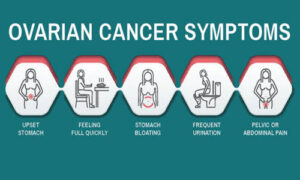They include:** - Back or stomach pain - Unusual discharge or bleeding from the vagina - Bloating - Discomfort near the pelvis - Difficulty eating - Weight loss - Frequent need to urinate - Changes in bowel habit Other medical disorders might bring on these symptoms. Doctors can identify the disease using some tests, including blood tests and pelvic examinations. Now, let’s move on to the risk factors for ovarian cancer. **Some of the risk factors that increase the chances of developing ovarian cancer are:** - Family history of [breast](https://drsandeepnayak.com/blogs/what-should-be-post-surgery-breast-cancer-care) or ovarian cancer - Overweight - Age above 50 years - Endometriosis - Inherited gene mutations - Difficulty conceiving or giving birth - Previously having colon, breast, or [uterine cancer](https://drsandeepnayak.com/services/uterus-cervical-cancer) - Hormone replacement therapy Dr. Sandeep Nayak, a leading oncologist for ovarian cancer treatment in Bangalore, states that if you have more than one risk factor, please talk to your doctor about it and the possible screening tests. Check out ways to help decrease your risk of developing ovarian cancer: ### **Giving birth and breastfeeding** In comparison to women who do not give birth, those who do have a lower risk of developing ovarian cancer, especially before the age of 30. Having more children further reduces the risk. Also, breastfeeding mothers have a lower risk of having ovarian cancer, which decreases the longer, you nurse Oral contraceptive According to research, ovarian cancer risk is up to 50% lower among women who have used oral contraceptives in the past. The risk of developing ovarian cancer decreases with continued use of the pill. However, consult your doctor to see if oral contraceptives suit you because not everyone responds well to them. Further, they can cause other complications, such as blood clots in women who smoke. Diet and Exercise The risk of ovarian cancer decreases by managing your weight. You will have to exercise regularly and have a healthy, balanced diet. Certain foods that are high in vitamin A, such as leafy green vegetables, carrots,and sweet potatoes, as well as foods like eggs, beans, almonds, etc., that are rich in vitamin D, also lower your risk of having ovarian cancer. Lifestyle changes Avoiding tobacco use and exposure can reduce your chance of ovarian cancer and many other cancer types.Abstaining from tobacco use, controlling your alcohol intake, eating healthily, and exercising minimizes your ovarian cancer risk. Alternative treatment for hormone replacement therapy As hormone replacement therapy is one of the risk factors for ovarian cancer, it would be better if you could ask your doctor about alternative treatments for HRT after menopause. Preventive surgical procedures Lower risk of ovarian cancer is linked to having some gynecological surgeries, such as: - Hysterectomy (removal of the uterus) - [Tubal ligation](https://www.webmd.com/sex/birth-control/what-is-tubal-ligation) - Removal of either fallopian tubes (salpingectomy), ovaries (oophorectomy), or both. However, according to specialists, you should undergo these procedures for genuine medical needs rather than for their effect on ovarian cancer. Suppose you are undergoing a hysterectomy for medical reasons, and your family has a history of ovarian or breast cancer. In that case, you might consider having a bilateral salpingo-oophorectomy, which involves removing both ovaries and fallopian tubes. Further, according to studies, premenopausal women with BRCA gene mutations who have removed their ovaries have a lower risk of developing breast and ovarian cancer. It decreases the risk of breast cancer by more than 50 percent and ovarian cancer by 85 to 95 percent. Outlook Each of the above points has its pros and cons. Some are easy to follow, whereas some need surgical intervention. Due to this, certain preventive methods may not be suitable for everyone. Dr. Sandeep Nayak, one of the[ best oncologists in India](https://drsandeepnayak.com/services/best-oncologist-in-india), recommends that you should discuss your worries about developing ovarian cancer with your doctor. They can assess your level of risk and provide a preventive plan that is suitable for you. **Categories:** Blog --- ### [Vaginal Cancer after Hysterectomy](https://drsandeepnayak.com/blogs/vaginal-cancer-after-hysterectomy/) **Published:** July 11, 2024 **Author:** Dr. Sandeep Nayak **Content:** Hysterectomy is the surgical removal of the uterus. It’s a standard procedure to treat various conditions affecting a woman’s reproductive system. Even after such a definitive procedure, the possibility of developing cancers, such as vaginal cancer, still exists. Dr. Sandeep Nayak, an accomplished[ ](https://drsandeepnayak.com/)[oncologist in Bangalore,](https://drsandeepnayak.com/oncologist-in-bangalore/) explains: “Hysterectomy is also performed to address malignant or premalignant diseases of the cervix. But, vaginal cancer after hysterectomy, though rare, can still occur. This is because cells in the remaining vaginal tissue can still undergo harmful changes. If left untreated, it can lead to cancerous growth. This underscores the importance of ongoing vigilance and awareness post-surgery.” Join us as we delve into the warning signs, stages, and challenges linked with vaginal cancer. Additionally, we will discuss the available treatment options and their implications for patients. Recognizing warning signs of cancer can lead to early detection and better outcomes. Let’s delve into understanding our body’s signals to alert us. Understanding Vaginal Cancer: Recognizing the Warning Signs Vaginal cancer demands attention and awareness. Here’s what to watch out for, regardless of whether you’ve undergone hysterectomy or not: Unusual Vaginal Bleeding (primary sign of vaginal cancer) Bleeding after menopause or unusual bleeding between periods warrants prompt attention. Also, pay attention to any bleeding during or after sexual intercourse. Abnormal Vaginal Discharge Persistent discharge unrelated to menstruation or infection can indicate vaginal cancer. A sudden change in vaginal discharge may signal a problem, particularly if it becomes: - Watery - Bloody - Foul-smelling Pelvic Pain or Pressure Don’t ignore persistent pelvic pain, often described as a constant ache or pressure. Pain during urination or bowel movements may also signal underlying issues. Painful Intercourse Discomfort or pain during sexual intercourse, unrelated to lubrication or emotional factors, merits attention. Changes in Urination A tumor pressing against the urinary tract may cause: - Frequent urination - Burning sensation - Difficulty urinating You must seek medical evaluation for urinary symptoms that persist beyond a few days. Lump or Mass in the Vagina Feeling a lump inside the vagina is a direct indication of something abnormal needing prompt attention. Pain in the Back or Legs Persistent pain in the lower back, hips, or legs, unrelated to other conditions or injuries may indicate advanced vaginal cancer. Cancer can cause pain due to pressure from a tumor or as a result of cancer spread. Loss of Appetite or Unexplained Weight Loss Significant, unexplained loss of weight or appetite could be a sign that cancer is affecting the body’s metabolism. These symptoms can be associated with many types of cancer, including lung,[ ](https://drsandeepnayak.com/services/ovarian-cancer-treatment-in-bangalore-india/)[ovarian](https://drsandeepnayak.com/services/ovarian-cancer-treatment-in-bangalore-india/),[ pancreatic, ](https://drsandeepnayak.com/services/pancreatic-and-bile-duct-cancer/)[stomach](https://drsandeepnayak.com/services/stomach-and-esophageal-cancer-treatment-in-bangalore-india/), and vulvar cancer. Dr. Sandeep Nayak, an experienced[ ](https://drsandeepnayak.com/services/robotic-cancer-surgery-in-bangalore-india/)[robotic surgical oncologist](https://drsandeepnayak.com/services/robotic-cancer-surgery-in-bangalore-india/) in Bangalore, advises: “These symptoms may not always indicate vaginal cancer. However, they warrant investigation to rule out serious conditions and ensure timely treatment if necessary. Regular visits and clear communication with a doctor are vital.” Are you or someone you know experiencing any of these warning signs? It’s crucial to[ ](https://drsandeepnayak.com/contact/)[seek medical evaluation](https://drsandeepnayak.com/contact/) promptly – your health and well-being matter. Book an Appointment From the initial stages to advanced progression, understanding the stages of vaginal cancer is crucial. Let’s look at each stage to gain insights and empower ourselves with knowledge. Vaginal Cancer Stages Vaginal cancer stages indicate the extent of the disease: **Stage 0:** Precancerous cells are present but confined to the surface of the vagina. **Stage I:** Cancer has formed and is confined to the vaginal wall. **Stage II:** Cancer has spread beyond the vagina to the tissue around it but not to the pelvic wall. **Stage III:** Cancer has spread to the pelvic wall and/or nearby lymph nodes. **Stage IV:** Cancer has spread to distant body parts, such as the[ ](https://drsandeepnayak.com/services/lung-cancer-treatment-in-bangalore/)[lungs](https://drsandeepnayak.com/services/lung-cancer-treatment-in-bangalore/) or[ ](https://drsandeepnayak.com/services/liver-cancer-treatment-in-bangalore/)[liver](https://drsandeepnayak.com/services/liver-cancer-treatment-in-bangalore/). ***Facing vaginal cancer can be daunting. Let’s explore the hurdles patients face with resilience and empathy.*** Challenges of Vaginal Cancer: Understanding the Journey Individuals encounter various challenges along their journey, such as: Emotional Impact A cancer diagnosis can evoke various emotions, including sadness, anxiety, and uncertainty about the future. Dealing with the emotional toll of cancer diagnosis and treatment can be challenging for patients and their loved ones. Physical Symptoms and Side Effects Vaginal cancer and its treatments can cause physical symptoms such as pain, discomfort, fatigue, and sexual dysfunction. Side effects of treatment, such as nausea, vomiting, hair loss, and appetite changes, can further impact quality of life. Financial Strain Managing the costs associated with cancer treatment, including medical bills, medication expenses, and transportation costs, can be overwhelming. Lost income due to treatment and recovery leave may add to the financial burden. Changes in Relationships Vaginal cancer can lead to challenges in communication, intimacy, and sexual function. Partners and caregivers may also experience emotional and psychological strain while supporting their loved ones. Treatment Decisions and Access to Care Making informed decisions about treatment options can overwhelm patients and their families. Patients may have limited access to specialized cancer care in some geographical regions or healthcare systems. Survivorship and Rehabilitation After completing treatment, survivors may face challenges related to rehabilitation. These include managing long-term side effects, regaining physical strength, and adjusting to life after cancer. Survivorship care plans and services can help individuals address ongoing healthcare needs. According to the seasoned[ ](https://drsandeepnayak.com/services/laparoscopic-cancer-surgery-in-india/)oncologist in Bangalore and[ ](https://samrohana.com/)[Samrohana](https://samrohana.com/) founder, Dr. Sandeep Nayak: “It’s crucial to address patients’ psychological and emotional needs throughout the cancer journey. Counseling and support groups can provide valuable support and coping strategies for patients and their families.” *When it comes to treating vaginal cancer, patients have several options available. Let’s explore each option to help you make informed decisions about your care.* Treatment Options for Vaginal Cancer Here’s a breakdown of the treatment modalities commonly used: Surgery [Surgery](https://drsandeepnayak.com/blogs/robotic-surgery-for-cancer-treatment-what-you-need-to-know/) is often the primary treatment for vaginal cancer. Procedures may include: - **Wide local excision:**Removal of cancer and some surrounding tissue - **Radical Vaginectomy:**Removal of part or all of the vagina - **Radical hysterectomy:**Removal of the uterus, cervix, and part of the vagina - **Pelvic exenteration:** In advanced cases, pelvic exenteration surgery may be necessary to remove nearby organs affected by cancer. Radiation Therapy Radiation therapy uses high-energy beams to target and destroy cancer cells. The doctor may administer it externally (external beam radiation) or internally (brachytherapy). The approach depends on the stage and location of the cancer. Radiation therapy may be used alone or in combination with surgery or chemotherapy. Chemotherapy Chemotherapy uses powerful drugs to kill cancer cells or stop their growth. The cancer specialist administers it either through the bloodstream or via the vagina. They may combine chemotherapy with radiation therapy (chemoradiation) for more effective treatment. Doctors often use chemotherapy before or after surgery to shrink tumors or prevent cancer recurrence. Targeted Therapy Targeted therapy drugs aim to target cancer cells while sparing healthy cells. These drugs interfere with molecules that promote cancer growth and progression. Immunotherapy Immunotherapy uses the body’s immune system to spot and attack cancer cells. Checkpoint inhibitors, a form of immunotherapy, exhibit remarkable potential in combating specific cancers. These include those associated with the vaginal,[ ](https://drsandeepnayak.com/blogs/tips-to-reduce-your-risk-of-colorectal-cancer/)[colorectal](https://drsandeepnayak.com/blogs/tips-to-reduce-your-risk-of-colorectal-cancer/), and[ ](https://drsandeepnayak.com/services/uterus-cervical-cancer/)[cervical regions](https://drsandeepnayak.com/services/uterus-cervical-cancer/). Checkpoint inhibitors may help where other treatments have failed to boost the body’s natural defenses. Palliative Care Palliative care focuses on improving the quality of life for patients. It addresses symptoms such as pain, fatigue, and emotional distress. Additionally, it may involve[ ](https://drsandeepnayak.com/blogs/choosing-the-most-suitable-diet-for-cancer-patients-and-survivors/)[dietary guidance](https://drsandeepnayak.com/blogs/choosing-the-most-suitable-diet-for-cancer-patients-and-survivors/) to optimize nutrition and overall well-being. Palliative caregivers also provide crucial support by offering comfort and assistance to patients and their families. Dr. Sandeep Nayak, a renowned [oncologist in Bangalore](https://drsandeepnayak.com/oncologist-in-bangalore/), elaborates: “The choice of treatment for vaginal cancer depends on various factors. These include the cancer stage, location, patient’s overall health, and personal preferences. A[ ](https://drsandeepnayak.com/about/best-oncologist-in-bangalore/)[multidisciplinary team](https://drsandeepnayak.com/oncologist-in-bangalore/) of healthcare providers work together to develop treatment plans tailored to each patient’s needs.” Conclusion Vaginal cancer after hysterectomy is relatively rare. However, being aware of the signs and treatment options available are vital steps in managing this disease effectively. Regular follow-ups with healthcare providers ensure any potential issues are addressed promptly. Despite the challenges, individuals can find support and resources to navigate their journey with resilience and strength. Healthcare providers and support networks empower patients by addressing physical, emotional, and practical needs. This approach helps patients face challenges head-on and achieve the best possible outcomes. Remember, your health is paramount. Don’t hesitate to[ ](https://drsandeepnayak.com/contact/)[seek help](https://drsandeepnayak.com/contact/) if something doesn’t feel right. Early detection is critical in fighting vaginal cancer. Take charge of your well-being today. Book an Appointment *Unveil FAQs about breast cancer after menopause. Let’s get your questions answered.* Frequently Asked Questions: **1. At what age is vaginal cancer most common?** Vaginal cancer is most commonly diagnosed in women aged 60 and older, but it can occur at any age. **2. Who is at high risk for vaginal cancer?** High-risk groups include: - women with a history of HPV infection - those who have had previous cervical or uterine cancer - women who have undergone pelvic radiation therapy **3. Is a recurrence vaginal cancer after hysterectomy possible?** Yes, cancer can spread after a total hysterectomy if: - microscopic cancer cells had already escaped the uterus before the surgery - cancer develops afresh in the remaining vaginal tissue The likelihood of vaginal cancer recurring after a hysterectomy depends on various factors. These include the cancer stage during diagnosis, treatment success, and individual health factors. **Categories:** Blog --- ## Pages ### [Home](https://drsandeepnayak.com/) **Published:** March 27, 2025 **Author:** Dr. Sandeep Nayak **Content:** Make An Appointment Learn More Learn More Surgical Oncologist in India – Dr. Sandeep Nayak Prof. Dr. Sandeep Nayak, a highly respected surgical oncologist in India, is a global pioneer in minimally invasive cancer treatment. With over 24 years of medical experience, including 15 years dedicated to[ robotic](https://drsandeepnayak.com/blogs/robotic-cancer-surgery-a-revolutionary-approach/) and[ laparoscopic](https://drsandeepnayak.com/services/laparoscopic-cancer-surgery-in-india/) surgical oncology, he has redefined cancer care through innovation and a patient-centric approach. As the Chairman – Oncology Services, Karnataka, India, Executive Director – Surgical Oncology and Robotic Surgery, [KIMS Hospital](https://www.kimshospitals.com/), Bangalore, and Head of Minimal Access Surgical Oncology under RGUHS, and Chief of Surgical Oncology at[ MACS Clinic](https://macsforcancer.com/), Dr. Nayak is at the forefront of advanced cancer treatment. He innovated cutting-edge techniques such as RABIT (Robotic-Assisted Breast-Axillo Insufflated Thyroidectomy), MIND (Minimally Invasive Neck Dissection), and L-VEIL (Lateral- Video Endoscopic Inguinal Lymphadenectomy). A distinguished expert in cancers of the head and neck, gastrointestinal tract, breast, thyroid, lungs, and more,[ Dr. Nayak](https://drsandeepnayak.com/dr-sandeep-nayak/) has contributed significantly to oncology research with over 25 published studies. His groundbreaking work has earned him prestigious accolades, including the K Subhramanyam Robotic Innovation Award, recognition in Forbes India and Outlook Business, and the Excellence in Oncology Award. Beyond clinical practice, he is deeply committed to cancer prevention, education, and mentorship, shaping the future of oncology. This platform provides insights into his pioneering techniques, exceptional patient care, and unwavering dedication to advancing cancer treatment. *Discover the expertise and experience that define Dr. Sandeep Nayak’s journey in surgical oncology.* Meet Prof. Dr. Sandeep Nayak – A Global Leader in Surgical Oncology MBBS \| MRCS (Edin) \| DNB (Gen Surg) \| DNB (Surgical Oncology) Fellowship in Laparoscopic and Robotic Onco-Surgery \| CPCHM (ISB) Chief of Surgical Oncology, MACS Clinic, Jayanagar, Bangalore. Chairman, Oncology Services (Karnataka, India) Executive Director, Surgical Oncology & Robotic Surgery, KIMS Hospital, Bangalore Educational Background - **MBBS** – Kasturba Medical College, Mangalore (Manipur University) - **DNB in Surgical Oncology** – Chittaranjan National Cancer Institute (CNCI), Kolkata - **DNB in General Surgery** – Calicut Medical College, Kerala Professional Journey - **Chairman, Oncology Services (Karnataka, India) Executive Director, Surgical Oncology & Robotic Surgery,** KIMS Hospital, Bangalore (Since 2025) - **Senior Director of Surgical Oncology** – Fortis Hospital, Bangalore 2017-2025) - **Chief of Surgical Oncology** – MACS Clinic, Bangalore - **Assistant Professor, Surgical Oncology** – Kidwai Memorial Institute of Oncology (KMIO), Bangalore (2012–2017) - **Visiting Consultant, Gynecological Oncology** – Botswana (2012) - **Consultant Surgical Oncologist** – Various hospitals in Kolkata, Mohali, and Bangalore (2010–2012) - **Lecturer & Research Associate, Dept of Surgery** – Kasturba Medical College, Manipal (2007) - **Surveillance Medical Officer** – WHO’s Polio Eradication Program (2001–2003) know more about Dr. Nayak facebook X linkedin instagram youtube ***Discover Dr. Sandeep Nayak’s latest advanced surgical options.*** [ba_image_carousel content_alignment=”center” animation_speed=”500ms” autoplay_speed=”1500ms” slide_count=”5″ slide_spacing=”25px” css_transition=”linear” nav_type=”alongside” nav_pos_hz=”right” nav_height=”48px” nav_width=”48px” nav_color=”gcid-22af3aeb-ca7c-42f5-9fa1-ae5c36b71034″ nav_bg=”RGBA(255,255,255,0)” nav_gap=”0px” nav_pos_y=”0%” nav_pos_x=”30px” icon_left=”<||divi||400″ left_border_radius=”on|10px|10px|10px|10px” icon_right=”=||divi||400″ right_border_radius=”on|10px|10px|10px|10px” slide_count_tablet=”6″ slide_count_phone=”1″ slide_count_last_edited=”on|phone” _builder_version=”4.27.4″ _module_preset=”default” title_text_color=”#000000″ title_font_size=”15px” title_line_height=”1.5em” background_enable_color=”off” custom_padding=”||||false|false” link_option_url_new_window=”on” border_color_all_carousel=”#FFFFFF” global_colors_info=”{%22gcid-22af3aeb-ca7c-42f5-9fa1-ae5c36b71034%22:%91%22nav_color%22%93,%22gcid-143ecd4f-d776-451a-8d21-6ffe550b1be4%22:%91%22nav_bg__hover%22%93,%22gcid-1aafb714-1520-4b6a-92f6-3c90860b008e%22:%91%22nav_color__hover%22%93}” nav_bg__hover_enabled=”on|hover” nav_bg__hover=”#f59527″ nav_color__hover_enabled=”on|hover” nav_color__hover=”#dbeef3″][ba_image_carousel_child photo=”https://drsandeepnayak.com/wp-content/uploads/2025/04/Liver-Cancer.webp” title=”Liver Cancer” content_bg_color=”RGBA(255,255,255,0)” _builder_version=”4.27.4″ _module_preset=”default” background_color=”#FFFFFF” background_enable_color=”on” custom_padding=”10px|20px|10px|20px|true|true” link_option_url=”https://drsandeepnayak.com/services/liver-cancer-treatment-in-bangalore/” link_option_url_new_window=”on” border_radii_item=”on|15px|15px|15px|15px” border_color_all_item=”gcid-6e81f7af-387f-40be-bcb0-67d04702d324″ border_style_all_item=”none” global_colors_info=”{%22gcid-6e81f7af-387f-40be-bcb0-67d04702d324%22:%91%22border_color_all_item%22%93}” border_width_all_item__hover=”2px” border_width_all_item__hover_enabled=”on|hover” border_style_all_item__hover=”solid” border_style_all_item__hover_enabled=”on|desktop” background_color__hover=”#FFFFFF” background__hover_enabled=”on|desktop” background_enable_color__hover=”on”][/ba_image_carousel_child][ba_image_carousel_child photo=”https://drsandeepnayak.com/wp-content/uploads/2025/04/Oral-Cancer.webp” title=”Oral Cancer” content_bg_color=”RGBA(255,255,255,0)” _builder_version=”4.27.4″ _module_preset=”default” background_color=”#FFFFFF” background_enable_color=”on” custom_padding=”10px|20px|10px|20px|true|true” link_option_url=”https://drsandeepnayak.com/services/oral-cancer-treatment-in-bangalore/” link_option_url_new_window=”on” border_radii_item=”on|15px|15px|15px|15px” border_color_all_item=”gcid-6e81f7af-387f-40be-bcb0-67d04702d324″ border_style_all_item=”none” global_colors_info=”{%22gcid-6e81f7af-387f-40be-bcb0-67d04702d324%22:%91%22border_color_all_item%22%93}” border_width_all_item__hover=”2px” border_width_all_item__hover_enabled=”on|hover” border_style_all_item__hover=”solid” border_style_all_item__hover_enabled=”on|desktop” background_color__hover=”#FFFFFF” background__hover_enabled=”on|desktop” background_enable_color__hover=”on”][/ba_image_carousel_child][ba_image_carousel_child photo=”https://drsandeepnayak.com/wp-content/uploads/2025/04/Kidney-Cancer.webp” title=”Kidney Cancer” content_bg_color=”RGBA(255,255,255,0)” _builder_version=”4.27.4″ background_color=”#FFFFFF” background_enable_color=”on” custom_padding=”10px|20px|10px|20px|true|true” link_option_url=”https://drsandeepnayak.com/services/kidney-cancer-treatment-in-bangalore-india/” link_option_url_new_window=”on” border_radii_item=”on|15px|15px|15px|15px” border_color_all_item=”gcid-6e81f7af-387f-40be-bcb0-67d04702d324″ border_style_all_item=”none” global_colors_info=”{%22gcid-6e81f7af-387f-40be-bcb0-67d04702d324%22:%91%22border_color_all_item%22%93}” border_width_all_item__hover_enabled=”on|hover” border_width_all_item__hover=”2px” border_style_all_item__hover_enabled=”on|desktop” border_style_all_item__hover=”solid” transform_styles__hover_enabled=”off|hover” transform_scale__hover_enabled=”off|hover” transform_translate__hover_enabled=”off|hover” transform_rotate__hover_enabled=”off|hover” transform_skew__hover_enabled=”off|hover” transform_origin__hover_enabled=”off|hover” background__hover_enabled=”on|desktop” background_color__hover=”#FFFFFF” background_enable_color__hover=”on”][/ba_image_carousel_child][ba_image_carousel_child photo=”https://drsandeepnayak.com/wp-content/uploads/2025/04/LUNG-CANCER.webp” title=”Lung Cancer” content_bg_color=”RGBA(255,255,255,0)” _builder_version=”4.27.4″ _module_preset=”default” background_color=”#FFFFFF” background_enable_color=”on” custom_padding=”10px|20px|10px|20px|true|true” link_option_url=”https://drsandeepnayak.com/services/lung-cancer-treatment-in-bangalore/” link_option_url_new_window=”on” border_radii_item=”on|15px|15px|15px|15px” border_color_all_item=”gcid-6e81f7af-387f-40be-bcb0-67d04702d324″ border_style_all_item=”none” global_colors_info=”{%22gcid-6e81f7af-387f-40be-bcb0-67d04702d324%22:%91%22border_color_all_item%22%93}” border_width_all_item__hover=”2px” border_width_all_item__hover_enabled=”on|hover” border_style_all_item__hover=”solid” border_style_all_item__hover_enabled=”on|desktop” background_color__hover=”#FFFFFF” background__hover_enabled=”on|desktop” background_enable_color__hover=”on”][/ba_image_carousel_child][ba_image_carousel_child photo=”https://drsandeepnayak.com/wp-content/uploads/2025/04/Uterine-Cancer.webp” title=”Uterine Cancer” content_bg_color=”RGBA(255,255,255,0)” _builder_version=”4.27.4″ _module_preset=”default” background_color=”#FFFFFF” background_enable_color=”on” custom_padding=”10px|20px|10px|20px|true|true” link_option_url=”https://drsandeepnayak.com/services/uterus-cervical-cancer-treatment-in-bangalore-india/” link_option_url_new_window=”on” border_radii_item=”on|15px|15px|15px|15px” border_color_all_item=”gcid-6e81f7af-387f-40be-bcb0-67d04702d324″ border_style_all_item=”none” global_colors_info=”{%22gcid-6e81f7af-387f-40be-bcb0-67d04702d324%22:%91%22border_color_all_item%22%93}” border_width_all_item__hover=”2px” border_width_all_item__hover_enabled=”on|hover” border_style_all_item__hover=”solid” border_style_all_item__hover_enabled=”on|desktop” background_color__hover=”#FFFFFF” background__hover_enabled=”on|desktop” background_enable_color__hover=”on”][/ba_image_carousel_child][ba_image_carousel_child photo=”https://drsandeepnayak.com/wp-content/uploads/2025/04/Colon-Cancer.webp” title=”Colon Cancer” content_bg_color=”RGBA(255,255,255,0)” _builder_version=”4.27.4″ _module_preset=”default” background_color=”#FFFFFF” background_enable_color=”on” custom_padding=”10px|20px|10px|20px|true|true” link_option_url=”https://drsandeepnayak.com/services/colon-cancer-treatment-in-bangalore-india/” link_option_url_new_window=”on” border_radii_item=”on|15px|15px|15px|15px” border_color_all_item=”gcid-6e81f7af-387f-40be-bcb0-67d04702d324″ border_style_all_item=”none” global_colors_info=”{%22gcid-6e81f7af-387f-40be-bcb0-67d04702d324%22:%91%22border_color_all_item%22%93}” border_width_all_item__hover=”2px” border_width_all_item__hover_enabled=”on|hover” border_style_all_item__hover=”solid” border_style_all_item__hover_enabled=”on|desktop” background_color__hover=”#FFFFFF” background__hover_enabled=”on|desktop” background_enable_color__hover=”on”][/ba_image_carousel_child][ba_image_carousel_child photo=”https://drsandeepnayak.com/wp-content/uploads/2025/04/Oesophageal-Cancer.webp” title=”Esophageal Cancer” content_bg_color=”RGBA(255,255,255,0)” _builder_version=”4.27.4″ _module_preset=”default” title_font_size=”14px” background_color=”#FFFFFF” background_enable_color=”on” custom_padding=”10px|20px|10px|20px|true|true” link_option_url=”https://drsandeepnayak.com/services/stomach-and-esophageal-cancer-treatment-in-bangalore-india/” link_option_url_new_window=”on” border_radii_item=”on|15px|15px|15px|15px” border_color_all_item=”gcid-6e81f7af-387f-40be-bcb0-67d04702d324″ border_style_all_item=”none” global_colors_info=”{%22gcid-6e81f7af-387f-40be-bcb0-67d04702d324%22:%91%22border_color_all_item%22%93}” border_width_all_item__hover=”2px” border_width_all_item__hover_enabled=”on|hover” border_style_all_item__hover=”solid” border_style_all_item__hover_enabled=”on|desktop” background_color__hover=”#FFFFFF” background__hover_enabled=”on|desktop” background_enable_color__hover=”on”][/ba_image_carousel_child][ba_image_carousel_child photo=”https://drsandeepnayak.com/wp-content/uploads/2025/04/Rectal-Cancer.webp” title=”Rectal Cancer” content_bg_color=”RGBA(255,255,255,0)” _builder_version=”4.27.4″ _module_preset=”default” background_color=”#FFFFFF” background_enable_color=”on” custom_padding=”10px|20px|10px|20px|true|true” link_option_url=”https://drsandeepnayak.com/services/rectal-cancer-treatment-in-bangalore/” link_option_url_new_window=”on” border_radii_item=”on|15px|15px|15px|15px” border_color_all_item=”gcid-6e81f7af-387f-40be-bcb0-67d04702d324″ border_style_all_item=”none” global_colors_info=”{%22gcid-6e81f7af-387f-40be-bcb0-67d04702d324%22:%91%22border_color_all_item%22%93}” border_width_all_item__hover=”2px” border_width_all_item__hover_enabled=”on|hover” border_style_all_item__hover=”solid” border_style_all_item__hover_enabled=”on|desktop” background_color__hover=”#FFFFFF” background__hover_enabled=”on|desktop” background_enable_color__hover=”on”][/ba_image_carousel_child][ba_image_carousel_child photo=”https://drsandeepnayak.com/wp-content/uploads/2025/04/Stomach-Cancer-.webp” title=”Stomach Cancer” content_bg_color=”RGBA(255,255,255,0)” _builder_version=”4.27.4″ _module_preset=”default” background_color=”#FFFFFF” background_enable_color=”on” custom_padding=”10px|20px|10px|20px|true|true” link_option_url=”https://drsandeepnayak.com/services/stomach-and-esophageal-cancer-treatment-in-bangalore-india/” link_option_url_new_window=”on” border_radii_item=”on|15px|15px|15px|15px” border_color_all_item=”gcid-6e81f7af-387f-40be-bcb0-67d04702d324″ border_style_all_item=”none” global_colors_info=”{%22gcid-6e81f7af-387f-40be-bcb0-67d04702d324%22:%91%22border_color_all_item%22%93}” border_width_all_item__hover=”2px” border_width_all_item__hover_enabled=”on|hover” border_style_all_item__hover=”solid” border_style_all_item__hover_enabled=”on|desktop” background_color__hover=”#FFFFFF” background__hover_enabled=”on|desktop” background_enable_color__hover=”on”][/ba_image_carousel_child][ba_image_carousel_child photo=”https://drsandeepnayak.com/wp-content/uploads/2025/04/Thyroid-Tumor-.webp” title=”Thyroid Tumor” content_bg_color=”RGBA(255,255,255,0)” _builder_version=”4.27.4″ _module_preset=”default” background_color=”#FFFFFF” background_enable_color=”on” custom_padding=”10px|20px|10px|20px|true|true” link_option_url=”https://drsandeepnayak.com/services/thyroid-cancer-treatment-in-bangalore/” link_option_url_new_window=”on” border_radii_item=”on|15px|15px|15px|15px” border_color_all_item=”gcid-6e81f7af-387f-40be-bcb0-67d04702d324″ border_style_all_item=”none” global_colors_info=”{%22gcid-6e81f7af-387f-40be-bcb0-67d04702d324%22:%91%22border_color_all_item%22%93}” border_width_all_item__hover=”2px” border_width_all_item__hover_enabled=”on|hover” border_style_all_item__hover=”solid” border_style_all_item__hover_enabled=”on|desktop” background_color__hover=”#FFFFFF” background__hover_enabled=”on|desktop” background_enable_color__hover=”on”][/ba_image_carousel_child][/ba_image_carousel] Know More Areas of Expertise Explore the advanced surgical techniques Dr. Sandeep Nayak developed, setting new standards in cancer care. Thyroid Surgery Developed RABIT, a scarless robotic thyroid surgery that eliminates noticeable neck scars. This technique ensures less pain, quicker recovery, improved cosmetic outcomes, and possibly fewer complications, as the vision quality for the surgeon is better. Learn More Head & Neck Cancer Oral cancers are very common in India. Dr. Nayak invented RIA-MIND, a revolutionary method for treating mouth, tongue, and neck cancers using Robotic minimally invasive techniques. This approach reduces complications and enhances the patient’s functional outcomes. Learn More Rectal Cancer An expert in the Inter-Sphincteric Resection (ISR) method, which allows patients to avoid a permanent stoma and retain normal bowel function. This cutting-edge approach significantly improves their quality of life. Learn More Breast Cancer An expert in MIBS, which includes robotic and endoscopic breast cancer surgery. This is to perform the surgery with the least amount of trauma to the patient, with quicker recovery and better cosmetic results. Learn More Colon Cancer Colon cancer requires an expert to perform D3 resection for the best results. Dr. Nayak is known for his expertise in performing this surgery, and his videos in this surgery are one of the best-viewed videos in the world. Learn More Lung Cancer Lung cancer is one of the most common cancers in the world. We get the best results with video-assisted thoracoscopic surgery (VATS) or robotic-assisted thoracoscopic surgery (RATS). Learn More Learn More Our Educational Platforms Dr. Sandeep Nayak has developed dedicated educational platforms to provide accurate, easy-to-understand information for patients and caregivers. Explore the specialized websites below: [ba_image_carousel nav_color=”gcid-22af3aeb-ca7c-42f5-9fa1-ae5c36b71034″ nav_bg=”gcid-1aafb714-1520-4b6a-92f6-3c90860b008e” nav_pos_x=”-62px” icon_left=”||fa||900″ icon_right=”||fa||900″ _builder_version=”4.27.5″ _module_preset=”default” title_font=”|600|||||||” title_font_size=”20px” title_line_height=”1.6em” subtitle_line_height=”1.6em” global_colors_info=”{%22gcid-1aafb714-1520-4b6a-92f6-3c90860b008e%22:%91%22nav_bg%22%93,%22gcid-22af3aeb-ca7c-42f5-9fa1-ae5c36b71034%22:%91%22nav_color%22%93}”][ba_image_carousel_child photo=”https://drsandeepnayak.com/wp-content/uploads/2025/11/imgithyroidcancerwuthmacslogo.jpg” title=”Thyroid Cancer Website” sub_title=”It’s a dedicated patient-education website that simplifies everything about thyroid disorders and thyroid cancers. It helps patients make informed decisions by explaining symptoms, diagnosis, treatment options, and modern thyroid surgery techniques .” use_button=”on” button_text=”Read More” button_link=”https://thyroidcancers.in/” btn_spacing_top=”13px” _builder_version=”4.27.5″ custom_button=”on” button_text_size=”15px” button_text_color=”gcid-143ecd4f-d776-451a-8d21-6ffe550b1be4″ button_border_width=”0px” button_use_icon=”on” button_icon=”E||divi||400″ button_icon_color=”gcid-143ecd4f-d776-451a-8d21-6ffe550b1be4″ button_on_hover=”off” button_custom_padding=”|0px||0px|false|true” custom_padding=”10px|10px|10px|10px|true|true” border_radii_item=”on|10px|10px|10px|10px” border_width_all_item=”1px” border_color_all_item=”#c1c1c1″ global_colors_info=”{%22gcid-143ecd4f-d776-451a-8d21-6ffe550b1be4%22:%91%22button_icon_color%22,%22button_text_color%22%93}”][/ba_image_carousel_child][ba_image_carousel_child photo=”https://drsandeepnayak.com/wp-content/uploads/2025/11/imgihead-and-neck-cancer-.webp” title=”Head & Neck Cancer Website” sub_title=”This website offers clear guidance on head and neck cancers — from symptoms and diagnosis to advanced, minimally invasive, and robotic surgical treatments. The site provides patients with reliable, expert-driven information enabling them to make informed decisions about their care.” use_button=”on” button_text=”Read More” button_link=”https://head-n-neck-surgery.com/” btn_spacing_top=”13px” _builder_version=”4.27.5″ custom_button=”on” button_text_size=”15px” button_text_color=”gcid-143ecd4f-d776-451a-8d21-6ffe550b1be4″ button_border_width=”0px” button_use_icon=”on” button_icon=”E||divi||400″ button_icon_color=”gcid-143ecd4f-d776-451a-8d21-6ffe550b1be4″ button_on_hover=”off” button_custom_padding=”|0px||0px|false|true” custom_padding=”10px|10px|10px|10px|true|true” border_radii_item=”on|10px|10px|10px|10px” border_width_all_item=”1px” border_color_all_item=”#c1c1c1″ global_colors_info=”{%22gcid-143ecd4f-d776-451a-8d21-6ffe550b1be4%22:%91%22button_icon_color%22,%22button_text_color%22%93}”][/ba_image_carousel_child][ba_image_carousel_child photo=”https://drsandeepnayak.com/wp-content/uploads/2025/11/imgiBreast-cancer-logo–x-.webp” title=”Breast Cancer Website” sub_title=”This website is dedicated to guiding people with clear information on breast cancer—from detection and diagnosis to treatment and surgery. It aims to empower individuals with the knowledge to make informed and confident health decisions.” use_button=”on” button_text=”Read More” button_link=”https://breast-cancer-surgery.com/” btn_spacing_top=”13px” _builder_version=”4.27.5″ custom_button=”on” button_text_size=”15px” button_text_color=”gcid-143ecd4f-d776-451a-8d21-6ffe550b1be4″ button_border_width=”0px” button_use_icon=”on” button_icon=”E||divi||400″ button_icon_color=”gcid-143ecd4f-d776-451a-8d21-6ffe550b1be4″ button_on_hover=”off” button_custom_padding=”|0px||0px|false|true” custom_padding=”10px|10px|10px|10px|true|true” border_radii_item=”on|10px|10px|10px|10px” border_width_all_item=”1px” border_color_all_item=”#c1c1c1″ global_colors_info=”{%22gcid-143ecd4f-d776-451a-8d21-6ffe550b1be4%22:%91%22button_icon_color%22,%22button_text_color%22%93}”][/ba_image_carousel_child][ba_image_carousel_child photo=”https://drsandeepnayak.com/wp-content/uploads/2026/03/Colon-Cancer-Logo.jpeg” title=”Colon Cancer Website” sub_title=”This website is dedicated to providing clear, comprehensive information on colorectal cancer—from early detection and diagnosis to treatment options and advanced surgical care. It is designed to help individuals understand conditions such as colon and rectal cancers, including their causes, symptoms, stages, and available treatments, empowering them to make informed and confident decisions.” use_button=”on” button_text=”Read More” button_link=”https://colo-rectal-cancer.com/” btn_spacing_top=”13px” _builder_version=”4.27.5″ custom_button=”on” button_text_size=”15px” button_text_color=”gcid-143ecd4f-d776-451a-8d21-6ffe550b1be4″ button_border_width=”0px” button_use_icon=”on” button_icon=”E||divi||400″ button_icon_color=”gcid-143ecd4f-d776-451a-8d21-6ffe550b1be4″ button_on_hover=”off” button_custom_padding=”|0px||0px|false|true” custom_padding=”10px|10px|10px|10px|true|true” border_radii_item=”on|10px|10px|10px|10px” border_width_all_item=”1px” border_color_all_item=”#c1c1c1″ global_colors_info=”{%22gcid-143ecd4f-d776-451a-8d21-6ffe550b1be4%22:%91%22button_icon_color%22,%22button_text_color%22%93}”][/ba_image_carousel_child][/ba_image_carousel] Thyroid Cancer It’s a dedicated patient-education website that simplifies everything about thyroid disorders and thyroid cancers. It helps patients make informed decisions by explaining symptoms, diagnosis, treatment options, and modern thyroid surgery techniques . Visit Website Head & Neck Cancer Website This website offers clear guidance on head and neck cancers — from symptoms and diagnosis to advanced, minimally invasive, and robotic surgical treatments. The site provides patients with reliable, expert-driven information enabling them to make informed decisions about their care. Visit Website Breast Cancer Education Website This website is dedicated to guiding people with clear information on breast cancer—from detection and diagnosis to treatment and surgery. It aims to empower individuals with the knowledge to make informed and confident health decisions. Visit Website ***Explore the advanced surgical techniques Dr. Sandeep Nayak developed, setting new standards in cancer care.*** Innovations and Surgical Techniques RIA-MIND (Robotic Infraclavicular Approach for Minimally Invasive Neck Dissection) This novel technique for oral cancer involves a robotic-assisted approach through the infraclavicular region, eliminating the need for visible neck scars. Using advanced imaging and high-definition magnification, RIA-MIND ensures precise lymph node dissection while preserving surrounding structures. This technique offers superior cosmetic and functional outcomes compared to conventional open neck dissection. RABIT (Robotic Assisted Breast-Axillo Insufflated Thyroidectomy) Dr. Nayak’s innovative robotic thyroidectomy technique uses a concealed incision in the armpit, avoiding scars on the neck. The da Vinci robotic system provides high-definition 3D vision and enhanced dexterity, allowing surgeons to navigate delicate structures around the thyroid with exceptional precision. This technique is ideal for benign and malignant thyroid tumors, ensuring a safe and cosmetically superior outcome. VEIL (Video Endoscopic Inguinal Lymphadenectomy) It is a minimally invasive approach for[ groin lymph node removal](https://drsandeepnayak.com/services/inguinal-block-groin-disections/) in cancers such as penile and vulvar cancer. It involves small lateral thigh incisions, through which a laparoscope and specialized instruments are inserted. The high-definition camera provides a magnified view, enabling meticulous dissection with reduced complications. Compared to traditional open surgery, this approach minimizes post-surgical pain, infection risks, and recovery time. HIPEC & PIPAC These advanced therapies for Stage 4 abdominal cancers involve delivering heated chemotherapy (HIPEC) or pressurized chemotherapy (PIPAC) directly into the peritoneal cavity.[ HIPEC](https://drsandeepnayak.com/services/hipec-treatment-in-bangalore/) is performed after tumor removal, ensuring targeted drug delivery with reduced systemic toxicity. PIPAC, a less invasive alternative, delivers chemotherapy as an aerosol during laparoscopy, making it effective even for patients with limited treatment options. Robotic ISR (Intersphincteric Resection) for Rectal Cancer This state-of-the-art procedure prevents permanent stoma in rectal cancer patients by preserving the anal sphincter. Using robotic assistance, surgeons achieve superior visualization and precise dissection of cancerous tissue while maintaining bowel continuity. This technique has significantly improved the quality of life for rectal cancer patients. Read More Innovations and Research Dr. Nayak’s research on the role of diet in colorectal carcinoma was referenced by Nobel laureate Zur-Hausen, underscoring the global significance of his contributions to oncology. Understanding the Impact of Tumor Mutation Burden in Indian Cancer Patients – JCO Global Oncology, Laparoscopic Surgery for Rectal Cancer – Textbook of Laparoscopic, Endoscopic, and Robotic Surgery, 2023. Learn More Achievements and Awards of Dr. Sandeep Nayak 2024 Prof. K. Shanmuga Sundaram Endowment Oration 2023 Millennium Gold Medal Award 2022 K. Subhramanyam Robotic Innovation Award for RIA-MIND by Vattikuti Foundation, USA. 2021 Featured as “Dynamic Leader” in Outlook Business. 2020 Recognized as “Leader in Healthcare” by Forbes India. 2019 Rising Star in Oncology by Times of India. 2019 Vocational Excellence Award by Rotary International, Bangalore, for cancer prevention and awareness. 2018 Excellence in Oncology Award by Times Group. 2013 Global Excellence Award [ba_image_carousel content_alignment=”center” animation_speed=”2500ms” autoplay_speed=”0ms” slide_count=”4″ css_transition=”linear” nav_type=”alongside” nav_pos_hz=”right” nav_height=”48px” nav_width=”48px” nav_color=”gcid-6e81f7af-387f-40be-bcb0-67d04702d324″ nav_bg=”#FFFFFF” nav_pos_y=”0%” nav_pos_x=”10px” icon_left=”||fa||900″ left_border_radius=”on|15px|15px|15px|15px” icon_right=”||fa||900″ right_border_radius=”on|15px|15px|15px|15px” slide_count_tablet=”4″ slide_count_phone=”1″ slide_count_last_edited=”on|phone” _builder_version=”4.27.4″ _module_preset=”default” global_colors_info=”{%22gcid-6e81f7af-387f-40be-bcb0-67d04702d324%22:%91%22nav_color%22%93}” nav_color__hover_enabled=”on|desktop” nav_color__hover=”#246d7c”][ba_image_carousel_child photo=”https://drsandeepnayak.com/wp-content/uploads/2025/04/image.webp” _builder_version=”4.27.4″ global_colors_info=”{}”][/ba_image_carousel_child][ba_image_carousel_child photo=”https://drsandeepnayak.com/wp-content/uploads/2025/04/-8.webp” _builder_version=”4.27.4″ global_colors_info=”{}”][/ba_image_carousel_child][ba_image_carousel_child photo=”https://drsandeepnayak.com/wp-content/uploads/2025/04/-9.webp” _builder_version=”4.27.4″ global_colors_info=”{}”][/ba_image_carousel_child][ba_image_carousel_child photo=”https://drsandeepnayak.com/wp-content/uploads/2025/04/Healthcare-innovation.webp” _builder_version=”4.27.4″ global_colors_info=”{}”][/ba_image_carousel_child][ba_image_carousel_child photo=”https://drsandeepnayak.com/wp-content/uploads/2025/04/Millennium-gold-medal-award.webp” _builder_version=”4.27.4″ global_colors_info=”{}”][/ba_image_carousel_child][ba_image_carousel_child photo=”https://drsandeepnayak.com/wp-content/uploads/2025/04/service-excellence-in-oncology–.webp” _builder_version=”4.27.4″ global_colors_info=”{}”][/ba_image_carousel_child][ba_image_carousel_child photo=”https://drsandeepnayak.com/wp-content/uploads/2025/04/serviceexcellenceinoncology-.webp” _builder_version=”4.27.4″ global_colors_info=”{}”][/ba_image_carousel_child][ba_image_carousel_child photo=”https://drsandeepnayak.com/wp-content/uploads/2025/04/times-health-excellence.webp” _builder_version=”4.27.4″ global_colors_info=”{}”][/ba_image_carousel_child][ba_image_carousel_child photo=”https://drsandeepnayak.com/wp-content/uploads/2025/04/Trailblazing-india-onco-care-leaders.webp” _builder_version=”4.27.4″ global_colors_info=”{}”][/ba_image_carousel_child][ba_image_carousel_child photo=”https://drsandeepnayak.com/wp-content/uploads/2025/04/vocational-Excellence-award.webp” _builder_version=”4.27.4″ global_colors_info=”{}”][/ba_image_carousel_child][/ba_image_carousel] **Explore cutting-edge techniques for better outcomes. Discuss your options with a specialist today.** Book An Appointment Beyond Clinical Practice **Founder of India’s Fellowship Program in Minimally Invasive Surgical Oncology**, launched in collaboration with RGUHS, to train post-MCh/DNB fellows in advanced cancer surgery techniques. **Recognized proctor for advanced robotic surgeries** such as RABIT, RIA-MIND, PRIA, ISR, and more — having trained teams at premier institutions including CMC Vellore and RCC Trivandrum. **Proctoring advanced oncological surgeries** and mentoring surgeons at both national and international levels. **Published a booklet on cancer prevention** to empower the public with knowledge and early detection strategies. **Organizer and host of live surgical workshops,** including MASOCON 2019, Early Breast Cancer Workshop 2022, and upcoming COLOCON 2025. **Actively involved in cancer awareness initiatives**, promoting prevention through education, outreach, and public engagement. **Invited faculty and speaker at global conferences and surgical workshops,** sharing insights and pioneering techniques with the international medical community. Media Mentions and Appearances Explore Dr. Nayak’s detailed profile on Wikipedia. Dr. Sandeep Nayak, a renowned surgical oncologist in India, has redefined cancer treatment with groundbreaking minimally invasive techniques. His Wikipedia profile is a testament to his expertise, innovations, and global recognition, offering a comprehensive insight into his contributions to oncology and patient care. Learn More Media Coverage [ba_image_carousel content_alignment=”center” animation_speed=”2500ms” autoplay_speed=”0ms” use_nav=”off” slide_count=”5″ slide_spacing=”35px” nav_height=”48px” nav_width=”48px” nav_color=”#ffffff” nav_bg=”#3979ff” icon_left=”||fa||900″ icon_right=”||fa||900″ slide_count_tablet=”5″ slide_count_phone=”1″ slide_count_last_edited=”on|phone” _builder_version=”4.27.4″ _module_preset=”default” custom_margin=”0px||0px||true|false” custom_padding=”0px||0px||true|false” global_colors_info=”{}”][ba_image_carousel_child photo=”https://drsandeepnayak.com/wp-content/uploads/2025/04/.webp” _builder_version=”4.27.4″ global_colors_info=”{}”][/ba_image_carousel_child][ba_image_carousel_child photo=”https://drsandeepnayak.com/wp-content/uploads/2025/04/-1.webp” _builder_version=”4.27.4″ global_colors_info=”{}”][/ba_image_carousel_child][ba_image_carousel_child photo=”https://drsandeepnayak.com/wp-content/uploads/2025/04/-2.webp” _builder_version=”4.27.4″ global_colors_info=”{}”][/ba_image_carousel_child][ba_image_carousel_child photo=”https://drsandeepnayak.com/wp-content/uploads/2025/03/4.png” _builder_version=”4.27.4″ global_colors_info=”{}”][/ba_image_carousel_child][ba_image_carousel_child photo=”https://drsandeepnayak.com/wp-content/uploads/2025/04/-3.webp” _builder_version=”4.27.4″ global_colors_info=”{}”][/ba_image_carousel_child][ba_image_carousel_child photo=”https://drsandeepnayak.com/wp-content/uploads/2025/04/-4.webp” _builder_version=”4.27.4″ _module_preset=”default” global_colors_info=”{}”][/ba_image_carousel_child][ba_image_carousel_child photo=”https://drsandeepnayak.com/wp-content/uploads/2025/04/-5.webp” _builder_version=”4.27.4″ _module_preset=”default” global_colors_info=”{}”][/ba_image_carousel_child][ba_image_carousel_child photo=”https://drsandeepnayak.com/wp-content/uploads/2025/04/-6.webp” _builder_version=”4.27.4″ _module_preset=”default” global_colors_info=”{}”][/ba_image_carousel_child][ba_image_carousel_child photo=”https://drsandeepnayak.com/wp-content/uploads/2025/04/-7.webp” _builder_version=”4.27.4″ _module_preset=”default” global_colors_info=”{}”][/ba_image_carousel_child][/ba_image_carousel] Watch More Latest Blog Read More Latest Update [ba_image_carousel content_alignment=”center” nav_height=”48px” nav_width=”48px” nav_color=”#000000″ nav_bg=”#FFFFFF” nav_skew=”1deg” nav_pos_x=”-40px” icon_left=”||fa||900″ icon_right=”||fa||900″ slide_count_tablet=”” slide_count_phone=”1″ slide_count_last_edited=”on|phone” _builder_version=”4.27.4″ _module_preset=”default” custom_margin=”0px||0px||true|false” custom_padding=”0px||0px||true|false” custom_padding_phone=”0px||0px||true|false” custom_padding_last_edited=”off|phone” global_colors_info=”{}” nav_bg__hover_enabled=”off|hover” nav_bg__hover=”#FFFFFF”][ba_image_carousel_child photo=”https://drsandeepnayak.com/wp-content/uploads/2025/04/ಶಾಶ್ವತ-ಬ್ಯಾಗ್-ಇಲ್ಲದೆ-ರೆಕ್ಟಲ್-ಕ್ಯಾನ್ಸರ್-ಶಸ್ತ್ರಚಿಕಿತ್ಸೆ-e1743504763558.jpg” overlay_on_hover=”on” overlay_icon=”||divi||400″ overlay_icon_color=”#E02B20″ overlay_icon_size=”60px” overlay_color=”RGBA(255,255,255,0)” _builder_version=”4.27.4″ link_option_url=”https://www.youtube.com/watch?v=NohgqFxP3Ps” link_option_url_new_window=”on” global_colors_info=”{}”][/ba_image_carousel_child][ba_image_carousel_child photo=”https://drsandeepnayak.com/wp-content/uploads/2025/04/q_f7-tMiFks-SD-e1743504774440.jpg” overlay_on_hover=”on” overlay_icon=”||divi||400″ overlay_icon_color=”#E02B20″ overlay_icon_size=”60px” overlay_color=”RGBA(255,255,255,0)” _builder_version=”4.27.4″ link_option_url=”https://www.youtube.com/watch?v=q_f7-tMiFks&t=1s” link_option_url_new_window=”on” global_colors_info=”{}”][/ba_image_carousel_child][ba_image_carousel_child photo=”https://drsandeepnayak.com/wp-content/uploads/2025/04/4-Advantages-of-Robotic-Surgery-in-Rectal-Cancer-e1743504750634.jpg” overlay_on_hover=”on” overlay_icon=”||divi||400″ overlay_icon_color=”#E02B20″ overlay_icon_size=”60px” overlay_color=”RGBA(255,255,255,0)” _builder_version=”4.27.4″ link_option_url=”https://www.youtube.com/watch?v=Vx9ehzl89ws&t=1s” link_option_url_new_window=”on” global_colors_info=”{}”][/ba_image_carousel_child][ba_image_carousel_child photo=”https://drsandeepnayak.com/wp-content/uploads/2025/04/4LULyi-o7Q-SD-e1743504729972.jpg” overlay_on_hover=”on” overlay_icon=”||divi||400″ overlay_icon_color=”#E02B20″ overlay_icon_size=”60px” overlay_color=”RGBA(255,255,255,0)” _builder_version=”4.27.4″ link_option_url=”https://www.youtube.com/watch?v=4LULyi–o7Q” link_option_url_new_window=”on” global_colors_info=”{}”][/ba_image_carousel_child][ba_image_carousel_child photo=”https://drsandeepnayak.com/wp-content/uploads/2025/04/tVDzfD9BzwU-HD.jpg” overlay_on_hover=”on” overlay_icon=”||divi||400″ overlay_icon_color=”#E02B20″ overlay_icon_size=”60px” overlay_color=”RGBA(255,255,255,0)” _builder_version=”4.27.4″ link_option_url=”https://www.youtube.com/watch?v=tVDzfD9BzwU” link_option_url_new_window=”on” global_colors_info=”{}”][/ba_image_carousel_child][/ba_image_carousel] Watch More Case Study Revolutionizing Rectal Cancer Care: Advanced Treatments & Hope Conquering the Double Challenge: A Triumph Over Dual Primary Cancers A Triumph Over Adversity: Robotic Right Bilobectomy for Bronchial Carcinoid Tumor Read More Hear what our patients have to say. [Dr. Sandeep Nayak - Oncologist in Bangalore, India](https://maps.google.com/?cid=14145665150031503457) 4.8Based on 187 reviews powered by [review us on](https://search.google.com/local/writereview?placeid=ChIJoTaP_8cVrjsRYSBAy4F_T8Q)  [Bhavna Vb](https://www.google.com/maps/contrib/101988063587986396047/reviews)1 year ago I was treated by Dr. Sandeep Nayak for parathyroidectomy. Dr Sandeep is not only an exceptionally skilled surgeon but also a deeply compassionate person who always takes out the time to ensure his patients feel at ease and answer all their queries patiently. I’m also grateful to his wonderful team—Dr. Sriram, Dr. Ganesh, Dr. Ameen, Dr. Vinodhini and Ayesha —who patiently explained every step and ensured the best care throughout. My heartfelt thanks to Dr. Sandeep Nayak and his incredible team for making my entire experience so reassuring and well-cared-for! Response from the owner1 year ago Thank you for sharing your experience. Dr. Sandeep Nayak and the entire team are committed to providing skilled, compassionate care, and we are pleased that your parathyroidectomy journey was reassuring and well-supported.  [Nilanjana Das Saha](https://www.google.com/maps/contrib/105017370772816236220/reviews)1 year ago Very much satisfied with the doctor. Will recommend Response from the owner1 year ago Dear Nilanjana, we appreciate you for sharing your positive experience with Dr Sandeep Nayak, the renowned oncologist in Bangalore.  [shwetha vr](https://www.google.com/maps/contrib/110870603257639402158/reviews)1 year ago Response from the owner1 year ago Thankyou for five star rating.  [Radhakrishna Gangadhar](https://www.google.com/maps/contrib/110806713393961718433/reviews)1 year ago Excellent doctor. Treatment is carried out in a very convenient way. Would highly recommend this doctor. Doctor is always with a smile. Response from the owner1 year ago Thankyou for sharing your experience with Dr. Sandeep Nayak Oncologist in Bangalore,  [shilpa mestry](https://www.google.com/maps/contrib/100632302051758388627/reviews)2 years ago The best doctor in the world Response from the owner2 years ago Thank you for your kind words!  [jyothi c](https://www.google.com/maps/contrib/118186091155981349689/reviews)2 years ago Very costly. just for consultation itself 2000 they are changing.  [padmavathi reddy](https://www.google.com/maps/contrib/107430716942399888369/reviews)2 years ago Response from the owner2 years ago Thank you for the 5-star rating!  [Deepak Shenoy](https://www.google.com/maps/contrib/107414300835825922622/reviews)2 years ago Very clean environment, professional setup, dr Nayak is very experienced in his field , staff is professional and friendly , recommend 👍 Response from the owner2 years ago Thank you for your feedback! We're glad you had a great experience with Dr. Nayak and our team. Providing a professional and friendly environment is our priority. Wishing you the best from our oncologist team in Bangalore!  [dharmendra singh](https://www.google.com/maps/contrib/107704006377228306169/reviews)2 years ago Best doctor Response from the owner2 years ago Thank you for sharing your experience! We truly appreciates your kind words. We’re so glad to hear that his personalized approach helped guide you through your recovery journey.  [Naseer Masud](https://www.google.com/maps/contrib/117756666489727814349/reviews)2 years ago Dr. Sandeep Naik is a wonderful blend of humanity and professionalism. Go to him and take the excellent treatment.  [Waheeda Banu](https://www.google.com/maps/contrib/111904920443063546026/reviews)2 years ago I strongly believe and recommend dr sandeep nayak and macs clinic  [Ibrahim Khan](https://www.google.com/maps/contrib/110641636414402629297/reviews)2 years ago  [Shivakumar Kallanna](https://www.google.com/maps/contrib/110448142784319280908/reviews)2 years ago Wonderful Experience in my life, They all taken care of us during hospital admission and after discharge also, I am greatful, I advise all of you to visit for any Medical issue ❤️🙏  [Balamurali Amireddi](https://www.google.com/maps/contrib/117453257303643165599/reviews)2 years ago My father underwent colon tumour removal surgery and 8 chemotherapy sessions under the guidance of Dr Sandeep nayak, Dr Bharat, Dr Vidya and team. Very good service by them. By god's grace my father healed and recovered well...god bless all of the team members and big thanks 🙏👍  [Gaurav Agarwal](https://www.google.com/maps/contrib/100384089959097931161/reviews)2 years ago Dr. Sandeep and his team treated my father for oral cancer. He provided accurate assessment and laid down all surgical options when we went for 1st consultation. He was very patient and reviewed each and every option with our family and recommended the right option. He and his team did a great job with the surgery. We are extremely satisfied and are thankful to Dr. Sandeep and his team.  [Anushree Dhople](https://www.google.com/maps/contrib/105782437546387708275/reviews)2 years ago I am extremely grateful for the exceptional care I have received from Dr. Sandeep Nayak. From the very first appointment, Dr. Nayak has been nothing short of incredible in treating my multi-nodular goitre. His expertise and attention to detail are truly remarkable, and his ability to explain complex medical concepts in an easy-to-understand manner has made this journey much less daunting. Dr. Nayak’s kindness and compassion have provided me with much-needed reassurance during a stressful time. He always takes the time to listen and address all of my concerns, making me feel valued as a patient. Under his care, I feel confident that I am on the right path to recovery. I highly recommend Dr. Sandeep Nayak to anyone in need of an excellent oncologist."  [REINTECH- VIDYA](https://www.google.com/maps/contrib/114250445476595319785/reviews)2 years ago Dr. Sandeep Nayak and Team has treated me really well and helped me overcome my disease quicker and stronger. The operation was done and which gave me emotional strength as well. The explanation provided by the doctors gave me all the information needed and it was helpful to understand things correctly. Thank you very much to the Doctor. 🙏  [shivadarshan mahadi](https://www.google.com/maps/contrib/112212067221609883802/reviews)3 years ago Thank you so much sir for treating my mother, ur motivation n positive words n with good treatment from you made us most courageous. Thank you very much sir for giving rebirth to my Mother..🙏🙏🙏  [Shaik Imtiaz](https://www.google.com/maps/contrib/116567677567900570119/reviews)3 years ago I strongly recommend to Dr Sandeep Nayak and macs clinic. Clinic environment is good and I thank all staff.  [Abantika Debnath](https://www.google.com/maps/contrib/108686956854137377281/reviews)3 years ago Dr Sandeep Nayak is not only one of the best Oncologists in this part of the country, he is also one of the most dedicated ones. I visited him when I had given up the hope on my father's health who was diagnosed with stage 3 Colon cancer. My septuagenarian father had multiple health conditions including sugar, pressure, heart etc which made his treatment tougher and challenging. But it was Dr Nayak's expertise, his magical robotic arm and his tireless dedication that cured my father and he is a healthy man today. The doc is blessed with immense patience that makes interacting with him easy. He keeps himself approachable and doesnt make the patient-party struggle under his weight - a quality I have seen missing in most of the doctors of his level. Thank you for everything, sir. - Abantika Debnath, D/O Amalendu Debnath  [hemanth g](https://www.google.com/maps/contrib/114325829455757245258/reviews)3 years ago  [aman pareek](https://www.google.com/maps/contrib/106557530407802700292/reviews)3 years ago  [Bk Suresh](https://www.google.com/maps/contrib/104392348462366619930/reviews)3 years ago Dear, Dr.SANDEEP NAYAK.💐 I, feel so blessed to have you as my doctor. You're such a wonderful doctor and you always make me feel so safe.Your experience and excellence played a big role in boosting up my confidence. A good doctor like you is hard to find. You are not only a good doctor but also a great human. I, appreciate your dedication towards your work. A surgery can be a nerve-wracking experience, but it’s reassuring to know that there are highly skilled and compassionate doctors who are dedicated to ensuring our well-being. Dear Dr.SANDEEP NAYAK, words can’t express how grateful I am for all you did for me in my surgery. Without you I, wouldn’t be here writing this letter today. I, wanted to take a moment to thank you for the outstanding surgery you preformed on me.Without your help I, would never have been able to get my life back. You saved my life. The surgery you performed removed the Carcinoma Rectum (Cancer). So I, owe my life to you and your medical staff. I, can’t thank you enough for what you did for me,Your care and concern really showed through to me and your bed side manner was excellent. Dr. SANDEEP NAYAK. Well I, do not know where to begin. You are one of the most caring professionals I, have ever met. He has shown me that there are people in his field that care. Each visit when I, exit him I, say please don't give up on me. His answer is I, will not. Iam fighting a battle in my disease And he is fighting the battle to help me. If for some reason they would say you cannot see him anymore. I, truly believe that I, would just give up. Until only recent I, had never been to see many doctors. But I, truly thank God each and every day for him and his entire team, And I, sincerely believe if there were more people in his field that cared the way he does then the medical field would be far greater. I, believe in you Dr.SANDEEP NAYAK. Trust and admire you and give thanks each day that you are my doctor. He leads a team of Good Doctors and Co staff, they all are like a Twinkling Stars \*\* and very efficient and supportive to him. May God bless you and your sincere efforts. I, love you for being you." A good doctor like you is hard to find, difficult to say goodbye and impossible to forget. WITH REGARDS ❤️🎂 B.K.SURESH MYSURU 🌹B.K.Suresh with Dr.Sandeep Nayak & his team of Doctors, Coordinator Ayesha and Physician Assistant Mahesh🌹  [Harish KUMAR R](https://www.google.com/maps/contrib/109970662189964641459/reviews)3 years ago It is rightly said that prevention is better than cure, & Dr Sandeep Nayak is the perfect example who proved this to be true. We had visited multiple hospitals for my mom's BC treatment and we visited Macs and after his consultation we had in our mind that he is the one who we will go with strong belief and that was our right decision and the treatment thereafter went smoothly with his guidance and continuous follow ups with the patient. It's been 10 years since our first visit and we have been continuous follow up care with macs YOY. If you are looking for best oncologist in Bangalore then I recommend macs.  [HARIPRIYA N](https://www.google.com/maps/contrib/112037979457574357537/reviews)3 years ago Dr. Sandeep Nayak and Team has treated me really well with extreme positivity and courage which helped me overcome my disease quicker and stronger. The treatment was done so accurately through Robotic methods which gave me emotional strength as well. The explanation provided by the doctor filled with all the information needed and it was helpful to understand things correctly. Thank you very much to the Doctor. Response from the owner3 years ago Thank you for sharing your experience! We're delighted to have played a role in your recovery journey. Dr. Sandeep Nayak and the team are dedicated to providing top-notch care.  [Priyadarshini](https://www.google.com/maps/contrib/115235694789677281931/reviews)3 years ago Dr. Sandeep Nayak has been an incredible support for my brother-in-law since 2016. His empathy and genuine warmth shone through at every appointment. He never rushed us, always taking the time to listen patiently and answer all our questions clearly and in a way we could easily understand. He truly put my brother-in-law at ease and empowered him to participate in his treatment decisions. Unlike some doctors, Dr. Nayak never recommended unnecessary tests or seemed motivated by money. His primary focus was alway on his patients well-being and finding the best possible treatment plan. If you're facing a cancer diagnosis, I urge you to consult Dr. Nayak. He's not just a skilled doctor, but also a compassionate and supportive guide on this challenging journey."  [Tracesrc](https://www.google.com/maps/contrib/117919814626432135882/reviews)3 years ago Doctor Sandeep is Very Good and Understanding and trying to find the solution as per the Understanding patient.  [keepSmiling](https://www.google.com/maps/contrib/108159859597598860126/reviews)3 years ago Dear Dr. Sanjay Nayak, I want to express my heartfelt gratitude for the surgery you performed for my 71-year-old mother. Your surgical expertise and dedicated team have set her on a path to a healthier future. Amma's trust in you and your team underscore the importance of the patient-doctor relationship. Your team has consistently exhibited patience and attentiveness in addressing our questions, making this journey smoother and less daunting. We can't thank you enough for everything you've done. Also would like to extend my gratitude to the Fortis, Bangalore, Banergatta, hospital staff for their caring and considerate assistance. Thank you, 🙏🙏🙏🙏🙏 Uma  [Neeraj Tripathi](https://www.google.com/maps/contrib/111936996510029125411/reviews)3 years ago Dr. Sandeep is very confident takes every patient very seriously and treats patient very well. He gives very good advice to the patient.  [sudharani sudharani](https://www.google.com/maps/contrib/116278941170239095311/reviews)3 years ago Thank you sir 🙏 I am very happy for best treatment thank you so much sir  [Mithlesh Kumar Patel](https://www.google.com/maps/contrib/108190063156096850278/reviews)3 years ago  [Ayush gaming](https://www.google.com/maps/contrib/108528587565170609792/reviews)3 years ago I would like to thank Dr. Sandeep Nayak sir for his kind words and give positive assurance. I was totally depressed 😔 due to my cancer condition. All his staff members in MACS Clinic are also very good. On my first clinic visit, Dr. Sandeep Nayak sir had gone through all my old reports and advised me to do very less tests, which are really required. Thanks to all MACS Clinic staff members 🙏.  [Vinutha Nargund](https://www.google.com/maps/contrib/117108645370018636627/reviews)3 years ago We would like to thank Dr. Sandeep Nayak for giving the best treatment for my mother. Robotic surgery was very useful to recover soon. We would highly recommend to consult him for the right guidance  [Smrithi Ravindranath](https://www.google.com/maps/contrib/104651207655096146769/reviews)3 years ago My dad was diagnosed with Esophageal Cancer in May 2022 and after consulting with few onco surgeons in Bangalore for advice on his treatment plan, we came across Dr. Sandeep. True to the amazing reviews here, doctor Sandeep indeed was our savior. His calm and pleasant demeanor and way of explaining all details about the treatment plan and surgery was very good. It gave us the much needed confidence and hope to go through those extremely difficult times as a family. My dad went through a major esophagectomy surgery in August 2022 under Dr. Sandeep and today he is recovering well slowly and steadily. All thanks to doctor and his team at Fortis (Bannerghatta) - Dr. Nisha, Dr. Suresh Babu, Dr. Adil and all the other doctors from the surgical oncology team and also nurses who took such good care of my Dad both during and post the surgery. Would definitely recommend doctor Sandeep for anyone going through the tough phase of Cancer.  [U B](https://www.google.com/maps/contrib/114960542238048173594/reviews)3 years ago My spouse was diagnosed with Breast Cancer in Sept 2019. It was shocking since no one in my family had faced such disease before. I was shattered and felt everything was over. I wanted my spouse to be treated my best doctor. I spoke with few of my very close and reliable family members and friends since selecting right surgeon was most critical decision. Fortunately I got to know about Doctor Sandeep Nayak. After few diagnostic tests, doctor confirmed about stage 2 tumor. Without any delay, robotic surgery was performed by doctor, followed by radiation and 8 chemo cycles. My spouse has completely cured now and she will continue to take precaution such as good health and exercise to avoid recurrence. Karma matters. I think it was our Karma that we got to know about doctor. Here are few suggestions. You are reading this post so probably you are in same situation that my family was 3.5 years back: 1. Cancer is completely curable. Don’t be afraid. Start treatment early. 2. Always consult physician as early diagnosis makes treatment easier. 3. Maintain healthy lifestyle such as daily exercise and good diet to avoid diseases. I strongly recommend Dr. Sandeep Nayak for treatment. He is very intelligent, knowledgeable, easily approachable and humble. God Bless Everyone !! **Testimonials** I was terrified when I was diagnosed with thyroid cancer. The thought of a big scar on my neck made it worse. However, Dr. Sandeep Nayak assured me that the robotic thyroidectomy (RABIT) technique would leave no visible scars. The surgery was smooth, recovery was quick, and I can barely tell I had an operation. I am beyond grateful for his expertise and compassion. **– Poornima** I needed lymph node removal for groin cancer, and I dreaded the pain and prolonged recovery. Dr. Nayak suggested the VEIL procedure, which is a minimally invasive approach. The difference was incredible—tiny incisions, less pain, and a quick return to my routine. His expertise in modern techniques made all the difference. **– Sudarshan** Oral cancer shattered my confidence, but advanced robotic techniques changed everything. Dr. Nayak performed the surgery without leaving a visible scar on my neck. I recovered faster than expected, and my quality of life remained intact. **– Amit** When I heard I had rectal cancer, my biggest fear was living with a permanent stoma. Dr. Nayak explained the ISR technique, which could help me avoid it. He performed the surgery robotically, and today, I am living a normal life without any external bag. His skill and confidence gave me the hope to fight this battle. **– Surya** Read More Disclaimer: The information shared in this content is for educational purposes only and not for promotional use. Frequently Asked Questions Q1. Who is Dr. Sandeep Nayak? Dr. Sandeep Nayak is a surgical oncologist in Bangalore, India with over 24 years of experience. He is the Chairman of Oncology Services, Karnataka, and Executive Director of Surgical Oncology and Robotic Surgery at KIMS Hospital, Bangalore. He is also the Chief of Surgical Oncology at MACS Clinic, Jayanagar. Q2. Where can I consult Dr. Sandeep Nayak in Bangalore? Dr. Sandeep Nayak consults at MACS Clinic in Jayanagar, Bangalore (No. 96/A/9/1, 42nd Cross, 3rd Main, 8th Block, Jayanagar, Bengaluru, Karnataka 560070). He also operates at KIMS Hospitals in Mahadevapura and Electronic City, Bangalore. Consultation hours are Monday to Saturday, 3:00 PM to 6:30 PM. Dr. Sandeep Nayak consults at MACS Clinic in Jayanagar, Bangalore (No. 96/A/9/1, 42nd Cross, 3rd Main, 8th Block, Jayanagar, Bengaluru, Karnataka 560070). He also operates at KIMS Hospitals in Mahadevapura and Electronic City, Bangalore. Consultation hours are Monday to Saturday, 3:00 PM to 6:30 PM. Q3. How do I book an appointment with Dr. Sandeep Nayak? You can book an appointment by calling or WhatsApp on +91 9482202240. You can also book online through the website drsandeepnayak.com or visit MACS Clinic directly in Jayanagar, Bangalore between Monday and Saturday, 3:00 PM to 6:30 PM. Q4. What cancers does Dr. Sandeep Nayak treat? Dr. Sandeep Nayak treats all solid tumor cancers including colorectal cancer, thyroid cancer, breast cancer, head and neck cancer, oral cancer, stomach cancer, esophageal cancer, liver cancer, kidney cancer, prostate cancer, ovarian cancer, uterine cancer, lung cancer, adrenal tumors, and pancreatic cancer. He specializes in robotic and laparoscopic minimally invasive surgery for all these cancers. Q5. What is RABIT surgery and who invented it? RABIT stands for Robotic-Assisted Breast-Axillo Insufflated Thyroidectomy. It is a scarless robotic thyroid surgery technique where the incision is hidden in the armpit, leaving no visible scar on the neck. The technique was invented by Dr. Sandeep Nayak in Bangalore. He received the K. Subhramanyam Robotic Innovation Award from Vattikuti Foundation, USA, for this innovation. Q6. How many cancer surgeries has Dr. Sandeep Nayak performed? Dr. Sandeep Nayak has performed over 10,200 cancer surgeries in his 24-year career, averaging 4 surgeries per working day. He has 15+ years of focused experience in Minimal Access Surgical Oncology (laparoscopic and robotic surgery). Q7. What is HIPEC treatment and is it available with Dr. Sandeep Nayak? HIPEC stands for Hyperthermic Intraperitoneal Chemotherapy. It is an advanced treatment for Stage 4 abdominal cancers where heated chemotherapy is delivered directly inside the abdominal cavity after tumor removal surgery. Dr. Sandeep Nayak offers HIPEC and PIPAC (Pressurized Intraperitoneal Aerosol Chemotherapy) at MACS Clinic and KIMS Hospital, Bangalore. He is one of the few surgeons in India trained in both procedures. --- ### [Media Coverage](https://drsandeepnayak.com/media-coverage/) **Published:** July 18, 2024 **Author:** Dr. Sandeep Nayak **Content:** In the Media **Doctors Explain Breast Cancer Risk, Prevention And Myths** **** **Published on Oct 19, 2026** **[Read More](https://www.timesnownews.com/health/live-chat-doctors-explain-breast-cancer-risk-prevention-and-myths-article-156362807)****SHetA2: India’s Indigenous Drug Candidate For Cervical Cancer** **** **Published on Jul 21, 2026** **[Read More](https://www.healthandme.com/health-news/sheta2-indias-indigenous-drug-candidate-for-cervical-cancer-article-155145497)** **ICMR hands over three homegrown medical technologies to Emcure, Biological E for commercial development** **** **Published on Jul 21, 2026** **[Read More](https://www.thehindubusinessline.com/news/science/icmr-hands-over-three-homegrown-medical-technologies-to-emcure-biological-e-for-commercial-development/article71250043.ece)** **Why Vital Chemotheraphy Drugs are in Short Supply in India.** **That “just a mouth ulcer” might not be so harmless: How small changes inside the mouth can be an early sign of oral cancer**  **Published on Jul 17, 2026** [Read More](https://timesofindia.indiatimes.com/health/that-just-a-mouth-ulcer-might-not-be-so-harmless-how-small-changes-inside-the-mouth-can-be-an-early-sign-of-oral-cancer/photostory/132446703.cms) **India Considers Letting Hospitals Bypass Import Rules For High-End Medical Equipment, Faces Pushback**  **Published on Jun 23, 2026** [Read More](https://insights.citeline.com/medtech-insight/policy-and-regulation/india-considers-letting-hospitals-bypass-import-rules-for-high-end-medical-equipment-faces-pushback-PS7ZI6O22FG5XHXN2FQ7VOHHSQ/) **Hindu Business Line – Dr. Sandeep Nayak quoted** **KIMS RENOVA Oncology Institute Inaugurated at KIMS Hospitals (Krishna Institute of Medical Sciences), Mahadevapura, Bengaluru to Transform Cancer Care**  **Published on Jun 22, 2026** [Read More](https://www.pninews.com/kims-renova-oncology-institute-inaugurated-at-kims-hospitals-krishna-institute-of-medical-sciences-mahadevapura-bengaluru-to-transform-cancer-care/) **KIMS RENOVA Oncology Institute Launched in Bengaluru; VVS Laxman Unveils Advanced Cancer Care Centre**  **Published on Jun 21, 2026** [Read More](https://citytoday.media/2026/06/21/kims-renova-oncology-institute-launched-in-bengaluru-vvs-laxman-unveils-advanced-cancer-care-centre/) **KIMS RENOVA Oncology Institute Inaugurated at KIMS Hospitals (Krishna Institute of Medical Sciences), Mahadevapura, Bengaluru to Transform Cancer Care**  **Published on Jun 22, 2026** [Read More](https://medgatetoday.com/kims-renova-oncology-institute-inaugurated-at-kims-hospitals-krishna-institute-of-medical-sciences-mahadevapura-bengaluru-to-transform-cancer-care/) **KIMS RENOVA Oncology Institute Inaugurated at KIMS Hospitals, Mahadevapura, Bengaluru to Advance Comprehensive Cancer CareState-of-the-Art Oncology Centre Launched by Legendary Cricketer Mr. VVS Laxman; Focus on Precision Treatment, Early Detection and Patient-Centric Care**  **Published on Jun 21, 2026** [Read More](https://indiannewz.wordpress.com/2026/06/21/kims-renova-oncology-institute-inaugurated-at-kims-hospitals-mahadevapura-bengaluru-to-advance-comprehensive-cancer-carestate-of-the-art-oncology-centre-launched-by-legendary-cricketer-mr-vvs-laxma/) **KIMS RENOVA Oncology Institute Inaugurated at KIMS Hospitals Mahadevapura, Bengaluru to Transform Cancer Care**  **Published on Jun 21, 2026** [Read More](https://newxpressnews.com/kims-renova-oncology-institute-inaugurated-at-kims-hospitals-mahadevapura-bengaluru-to-transform-cancer-care/) **புற்றுநோய் சிகிச்சையை மாற்றியமைக்கும் நோக்கில், பெங்களூரு, மகாதேவபுராவில் உள்ள கிம்ஸ் மருத்துவமனையில் கிம்ஸ் ரெனோவா புற்றுநோய் சிகிச்சை மையம் திறப்பு**  **Published on Jun 21, 2026** [Read More](https://bangaloredinamani.com/%E0%AE%AA%E0%AF%81%E0%AE%B1%E0%AF%8D%E0%AE%B1%E0%AF%81%E0%AE%A8%E0%AF%8B%E0%AE%AF%E0%AF%8D-%E0%AE%9A%E0%AE%BF%E0%AE%95%E0%AE%BF%E0%AE%9A%E0%AF%8D%E0%AE%9A%E0%AF%88%E0%AE%AF%E0%AF%88-%E0%AE%AE%E0%AE%BE/) **Lifestyle Factors Increasing Colon Cancer Risk in Urban India**  **Published on Mar 27, 2026** [Read More](https://www.deccanherald.com/connect/lifestyle-factors-increasing-colon-cancer-risk-in-urban-india-3946429) **IIT Madras study finds only one in four breast cancer patients has genetic risk**  **Published on Mar 06, 2026** [Read More](https://www.happiesthealth.com/articles/cancer/iit-madras-study-breast-cancer-risk-and-genetics?category=cancer) **KIMS RENOVA Oncology Institute Inaugurated At KIMS Hospitals (Krishna Institute Of Medical Sciences)**  **Published on Jun 21, 2026** [Read More](https://www.tripurastarnews.com/kims-renova-oncology-institute-inaugurated-at-kims-hospitals-krishna-institute-of-medical-sciences-mahadevapura-bengaluru-to-transform-cancer-care/) **Dr. Sandeep Nayak Takes Helm as Chairman – Oncology Services (Karnataka), Executive Director– Surgical Oncology and Robotic Surgery at KIMS Hospitals**  **Published on Oct 28, 2025** [Read More](https://businessnewsthisweek.com/health/dr-sandeep-nayak-takes-helm-as-chairman-oncology-services-karnataka-executive-director-surgical-oncology-and-robotic-surgery-at-kims-hospitals/) **Bengaluru surgeon among top 3 winners in International Robotic Surgery**  **Published on May 6, 2025** [Read More](https://www.tribuneindia.com/news/health/bengaluru-surgeon-among-top-3-winners-in-international-robotic-surgery-431346/) **Dr. Sandeep Nayak Takes Helm as Chairman – Oncology Services (Karnataka), Executive Director– Surgical Oncology and Robotic Surgery at KIMS Hospitals**  **Published on Jan 29, 2026** [Read More](https://news24online.com/information/dr-sandeep-nayak-eminent-doctors-south-2025/728549/) **Fortis Hospital Doctors Successfully Remove Football-Sized Ovarian Cyst From 63-Year-Old Woman**  **Published on May 6, 2025** [Read More](https://speciality.medicaldialogues.in/fortis-hospital-doctors-successfully-remove-rare-football-sized-ovarian-cyst-left-ovary) **Bengaluru’s Dr Sandeep Nayak among top 3 winners of global robotic surgery innovation award**  **Published on May 6, 2025** [Read More](https://economictimes.indiatimes.com/news/bengaluru-news/bengaluru-surgeon-dr-sandeep-nayak-among-top-3-winners-in-international-robotic-surgery/articleshow/94178948.cms?from=mdr) **Dr Sandeep Nayak Receives Times Health Excellence Award – Recognized As Best Surgical Oncologist In India**  **Published on May 6, 2025** [Read More](https://www.openpr.com/news/1489859/dr-sandeep-nayak-receives-times-health-excellence-award-recognized-as-best-surgical-oncologist-in-india.html) **The Psychological Burden of Cancer on Young Patients: Navigating Family, Career, and Recovery**  **Published on May 02, 2025** [Read More](https://zeenews.india.com/growth-and-money/dr-sandeep-nayak-and-his-team-perform-rare-robotic-transthoracic-esophagectomy-on-woman-with-mirrored-organs-and-cancer-2893553.html) **The Psychological Burden of Cancer on Young Patients: Navigating Family, Career, and Recovery**  **Published on Feb 28, 2025** [Read More](https://www.rvcj.com/the-psychological-burden-of-cancer-on-young-patients/) **The Future of Breast Cancer Treatment: How Dr. Sandeep Nayak Revolutionized Minimally Invasive Breast Surgery (MIBS) in India** **** **Published on May 6, 2025** [Read More](https://www.dailyexcelsior.com/the-future-of-breast-cancer-treatment-how-dr-sandeep-nayak-revolutionized-minimally-invasive-breast-surgery-mibs-in-india/) **Is Surgery Always Necessary for Rectal Cancer? Dr. Sandeep Nayak’s Watch-and-Wait Approach Provides Alternatives** **** **Published on sep 18, 2024** [Read More](https://www.tribuneindia.com/news/impact-feature/is-surgery-always-necessary-for-rectal-cancer-dr-sandeep-nayaks-watch-and-wait-approach-provides-alternatives/) **The Role of Surgical Oncologists in India: A Comparative Study Between the USA and India** **** **Published on June 27, 2024** [Read More](https://www.oneindia.com/partner-content/the-role-of-surgical-oncologists-in-india-a-comparative-study-between-the-usa-and-india-3863921.html) **A Journey of Resilience of A Septuagenarian: Beating Esophageal Cancer with Robotic Surgery** **** **Published on January 9, 2025** [Read More](https://areporterlive.com/a-journey-of-resilience-of-a-septuagenarian-beating-esophageal-cancer-with-robotic-surgery/) **Remarkable Recovery of a Complex Thyroid Cancer Patient after CABG and Cancer Surgery – Story of Resilience and Surgical Expertise** **** **Published on Mar 7, 2024** [Read More](https://theprint.in/theprint-valuead-initiative/remarkable-recovery-of-a-complex-thyroid-cancer-patient-after-cabg-and-cancer-surgery-story-of-resilience-and-surgical-expertise/1991705/) **Revolutionizing Healthcare Delivery: India’s Impact on Global Access of the Best**  **Published on Feb 23, 2024** [Read More](https://www.theweek.in/focus/health-and-wellness/2024/02/23/revolutionizing-healthcare-delivery-indias-impact-on-global-access-of-the-best.html) **Elevating Metastatic Thyroid Cancer Treatment – Revolutionary Advances in Minimally Invasive Approach** **** **Published on Apr 17, 2024** [Read More](https://newsable.asianetnews.com/pr-spot/elevating-metastatic-thyroid-cancer-treatment-revolutionary-advances-in-minimally-invasive-approach-may-offer-improved-patient-outcomes-sc35ob) **Beyond Diagnosis: A Story of Strength and Dr. Sandeep Nayak’s Pioneering Cancer Care** **** **Published on Dec 29, 2023** [Read More](https://www.mid-day.com/brand-media/article/beyond-diagnosis-a-story-of-strength-and-dr-sandeep-nayaks-pioneering-cancer--23327289) **India-based Oncologist Dr. Sandeep Nayak raises awareness by responding to queries related to thyroid cancer** **** **Published on July 26, 2023** [Read More](https://thedainikbharat.com/india-based-oncologist-dr-sandeep-nayak-raises-awareness-by-responding-to-queries-related-to-thyroid-cancer/) **Retrosternal Goitre Treated using a Less Painful Innovative Technique by Eminent Surgeon Dr. Sandeep Nayak**  **Published on Jan 24, 2024** [Read More](https://english.newsnationtv.com/brand-stories/brand-stories-english/retrosternal-goitre-treated-using-a-less-painful-innovative-technique-by-eminent-surgeon-dr-sandeep-nayak-259710.html) **Robotic Thyroidectomy is becoming more popular in India due to the latest RABIT technique**  **Published on Apr 5, 2023** [Read More](https://www.onlymyhealth.com/actress-chhavi-mittal-journey-of-surviving-breast-cancer-exclusive-interview-1675492043) **BD introduces high-throughput single-cell multiomics platform, BD Rhapsody HT Xpress System**  **Published on Feb 6, 2023** [Read More](https://www.pharmabiz.com/NewsDetails.aspx?aid=156152&sid=2) **Bangalore’s MACS Clinic introduces the Robotic Intersphincteric Resection Treatment for Rectal Cancer** **** **Published on July 26, 2023** [Read More](https://www.oneindia.com/partner-content/bangalore-s-macs-clinic-introduces-the-robotic-intersphincteric-resection-treatment-for-rectal-cance-3593983.html?story=3) **On World Cancer Day, BD India Launches the PortShala Microsite for Healthcare Professionals and Patients** **** **Published on Feb 4, 2023** [Read More](https://www.torontosuntimes.com/news/on-world-cancer-day-bd-india-launches-the-portshala-microsite-for-healthcare-professionals-and-patients20230204122513/) **On World Cancer Day, BD India Launches the PortShala Microsite for Healthcare Professionals and Patients** **** **Published on Feb 4, 2023** [Read More](https://www.torontosuntimes.com/news/on-world-cancer-day-bd-india-launches-the-portshala-microsite-for-healthcare-professionals-and-patients20230204122513/) **Surviving Cancer: Actress Chhavi Mittal’s Winning Battle with Breast Cancer** **** **Published on Feb 4, 2023** [Read More](https://www.onlymyhealth.com/actress-chhavi-mittal-journey-of-surviving-breast-cancer-exclusive-interview-1675492043) **On World Cancer Day, BD India Launches the PortShala Microsite for Healthcare Professionals and Patients** **** **Published on Feb 4, 2023** [Read More](https://www.torontosuntimes.com/news/on-world-cancer-day-bd-india-launches-the-portshala-microsite-for-healthcare-professionals-and-patients20230204122513/) **On World Cancer Day, BD India Launches the PortShala Microsite for Healthcare Professionals and Patients** **** **Published on Feb 4, 2023** [Read More](https://www.whitehousenewstime.com/news/on-world-cancer-day-bd-india-launches-the-portshala-microsite-for-healthcare-professionals-and-patients20230204122513/) **On World Cancer Day, BD India Launches the PortShala Microsite for Healthcare Professionals and Patients** **** **Published on Feb 4, 2023** [Read More](https://www.torontosuntimes.com/news/on-world-cancer-day-bd-india-launches-the-portshala-microsite-for-healthcare-professionals-and-patients20230204122513/) **On World Cancer Day, BD India Launches the PortShala Microsite for Healthcare Professionals and Patients**  **Published on Feb 4, 2023** [Read More](https://marksmendaily.com/2023/02/04/on-world-cancer-day-bd-india-launches-the-portshala-microsite-for-healthcare-professionals-and-patients/) **On World Cancer Day, BD India Launches the PortShala Microsite for Healthcare Professionals and Patients** **** **Published on Feb 4, 2023** [Read More](https://www.washingtondcdespatch.com/news/on-world-cancer-day-bd-india-launches-the-portshala-microsite-for-healthcare-professionals-and-patients20230204122513/) **On World Cancer Day, BD India Launches the PortShala Microsite for Healthcare Professionals and Patients** **** **Published on Feb 4, 2023** [Read More](https://marksmendaily.com/2023/02/04/on-world-cancer-day-bd-india-launches-the-portshala-microsite-for-healthcare-professionals-and-patients/) **On World Cancer Day, BD India launches the PortShala Microsite for healthcare professionals and patients** **** **Published on Feb 4, 2023** [Read More](https://www.bignewsnetwork.com/news/273482125/on-world-cancer-day-bd-india-launches-the-portshala-microsite-for-healthcare-professionals-and-patients) **Are Persistent Indigestion And Gastritis Early Signs Of Stomach Cancer? Experts Answer** **** **Published on Feb 3, 2023** [Read More](https://www.news18.com/news/lifestyle/are-persistent-indigestion-and-gastritis-early-signs-of-stomach-cancer-experts-answer-6987865.html) **On World Cancer Day, BD India launches the PortShala Microsite for healthcare professionals and patients** **** **Published on Feb 4, 2023** [Read More](https://www.washingtondcdespatch.com/news/on-world-cancer-day-bd-india-launches-the-portshala-microsite-for-healthcare-professionals-and-patients20230204122513/) **Leading oncologist of India, Dr Sandeep Nayak, busts Myths about thyroid cancer** **** **Published on Nov 26, 2022** [Read More](https://english.newstracklive.com/news/leading-oncologist-of-india-dr-sandeep-nayak-busts-myths-about-thyroid-cancer-sc53-nu346-1258903-1.html) **Dr. Sandeep Nayak emphasizes on early colorectal cancer screening in people aged 45& above!** **** **Published on Jan 6, 2023** [Read More](https://english.newstracklive.com/news/leading-oncologist-of-india-dr-sandeep-nayak-busts-myths-about-thyroid-cancer-sc53-nu346-1258903-1.html) **Dr. Sandeep Nayak elaborates on the innovative RIA-MIND surgery to treat oral cancers, especially that of tongue, cheek, and lip** **** **Published on Nov 26, 2022** [Read More](https://www.sentinelassam.com/topheadlines/experts-link-cancer-with-pollution-warn-about-air-quality-619640) **Explained: How Regular Screening And HPV Vaccination Can Help Prevent Cervical Cancer** **** **Published on Jan 28, 2023** [Read More](https://www.indiatimes.com/explainers/news/explained-how-regular-screening-and-hpv-vaccination-can-help-prevent-cervical-cancer-591458.html) **Are Persistent Indigestion And Gastritis Early Signs Of Stomach Cancer? Experts Answer** **** **Published on Feb 3, 2023** [Read More](https://www.news18.com/news/lifestyle/are-persistent-indigestion-and-gastritis-early-signs-of-stomach-cancer-experts-answer-6987865.html) **Five cancers most common in India—and how to detect them early** **** **Published on Jan 24, 2023** [Read More](https://www.indiatoday.in/india-today-insight/story/five-cancers-most-common-in-india-and-how-to-detect-them-early-2325841-2023-01-24) **On World Cancer Day, BD India launches the PortShala Microsite for healthcare professionals and patients** **** **Published on Feb 4, 2023** [Read More](https://www.bignewsnetwork.com/news/273482125/on-world-cancer-day-bd-india-launches-the-portshala-microsite-for-healthcare-professionals-and-patients) **Experts link cancer with air pollution, warn about air quality of cities** **** **Published on Oct 22, 2022** [Read More](https://www.tribuneindia.com/news/health/experts-link-cancer-with-air-pollution-warn-about-air-quality-of-cities-443810) **Experts link cancer with pollution, warn about air quality** **** **Published on Oct 23, 2022** [Read More](https://www.sentinelassam.com/topheadlines/experts-link-cancer-with-pollution-warn-about-air-quality-619640) **Appendix Cancer: Know What Are The Causes, Symptoms & Treatment Of Appendix Cancer, Expert Speaks, Watch Video** **** **Published on Aug 17, 2022** [Read More](https://www.thehealthsite.com/videos/appendix-cancer-awareness-month-901869/) **75 per cent lung cancer cases diagnosed late, cases among women on rise** **** **Published on Aug 2, 2022** [Read More](https://www.newindianexpress.com/lifestyle/health/2022/Aug/02/75-per-centlung-cancer-cases-diagnosed-late-cases-among-women-on-rise-2483327.html) **Men, don’t ignore prostate cancer** **** **Published on Sept 12, 2022** [Read More](https://www.thehealthsite.com/videos/appendix-cancer-awareness-month-901869/) **Rise in lung cancer fatalities on late diagnosis** **** **Published on Aug 1, 2022** [Read More](https://health.economictimes.indiatimes.com/news/diagnostics/rise-in-lung-cancer-fatalities-on-late-diagnosis/93265940) **World Lung Cancer Day: Rise Of Disease Among Non-Smokers A Concern** **** **Published on Aug 1, 2022** [Read More](https://www.businessinsider.in/science/health/news/world-lung-cancer-day-rise-of-disease-among-non-smokers-a-concern/articleshow/93267153.cms) **The Economic Times Most Influential Leaders 2022** **** **Published on July 28, 2022** [Read More](https://timesascent.com/articles/The-Economic-Times-Most-Influential-Leaders-2022/156128) **World Lung Cancer Day: Rise Of Disease Among Non-Smokers A Concern** **** **Published on Aug 1, 2022** [Read More](https://health.economictimes.indiatimes.com/news/industry/processed-foods-raise-risk-of-colorectal-cancer/93182472) **World Lung Cancer Day: Rise of disease among non-smokers a concern** **** **Published on Aug 1, 2022** [Read More](https://health.economictimes.indiatimes.com/news/industry/processed-foods-raise-risk-of-colorectal-cancer/93182472) **World Lung Cancer Day: Rise Of Disease Among Non-Smokers A Concern** **** **Published on Aug 1, 2022** [Read More](https://www.prokerala.com/news/articles/a1331006.html) **Robotic and Laparoscopic Surgeries are highly reliable treatment options for recovering from Rectal Cancer** **** **Published on July 26, 2022** [Read More](https://www.deccanherald.com/brandspot/pr-spot/robotic-and-laparoscopic-surgeries-are-highly-reliable-treatment-options-for-recovering-from-rectal-cancer-1130235.html) **Do not ignore these Five Early Warning signs of Kidney Cancer – Stay Alert and Healthy** **** **Published on Aug 26, 2022** [Read More](https://digpu.com/press-releases/do-not-ignore-these-five-early-signs-of-kidney-cancer) **Processed foods raise risk of colorectal cancer?** **** **Published on July 28, 2022** [Read More](https://health.economictimes.indiatimes.com/news/industry/processed-foods-raise-risk-of-colorectal-cancer/93182472) **Cervical cancer: What is the right age to take the HPV vaccine?** **** **Published on July 16, 2022** [Read More](https://indianexpress.com/article/lifestyle/health/hpv-vaccine-cervical-cancer-serum-institute-best-age-group-efficacy-8028640/) **MACS Clinic completes 10 years of offering the latest and most advanced oncology treatment in Bangalore** **** **Published on June 17, 2022** [Read More](https://www.aninews.in/news/business/business/macs-clinic-completes-10-years-of-offering-the-latest-and-most-advanced-oncology-treatment-in-bangalore20220617102543/#google_vignette) **Cervical Cancer: What is the HPV vaccine? What is the right age to take it?** **** **Published on July 19, 2022** [Read More](https://kannada.news18.com/news/lifestyle/cervical-cancer-what-is-the-right-age-to-get-hpv-vaccine-stg-asp-800280.html) **Surgical workshop on early stage breast cancer held** **** **Published on April 18, 2022** [Read More](https://www.thehansindia.com/karnataka/surgical-workshop-on-early-stage-breast-cancer-held-738666) **Trans Oral Robotic Surgery- Dr. Sandeep Nayak Oncologist Bangalore** **** **Published on March 24, 2022** [Read More](https://english.newstracklive.com/news/trans-oral-robotic-surgery-dr-sandeep-nayak-oncologist-bangalore-sc53-nu328-ta328-1219075-1.html) **Indian oncologists take on Dostarlimab- new breakthrough in cancer treatment?** **** **Published on June 8, 2022** [Read More](https://health.economictimes.indiatimes.com/news/industry/dostarlimab-possible-breakthrough-in-cancer-treatment/92082610) **Modern Cancer Treatment Has Revolutionized Treatment Experience Minimizing Associated Side-Effects** **** **Published on Feb 17, 2022** [Read More](https://sambadenglish.com/modern-cancer-treatment-has-revolutionized-treatment-experience-minimizing-associated-side-effects/) **Breast Cancer: ನಗರದ ಮಹಿಳೆಯರಲ್ಲಿ ಹೆಚ್ಚು ಸ್ತನ ಕ್ಯಾನ್ಸರ್** **** **Published on Feb 4, 2022** [Read More](https://kannada.asianetnews.com/health-life/breast-cancer-is-the-highest-among-women-in-the-bengaluru-city-gvd-r6rcqt) **Robotic Surgeries for Cancer Treatment** **** **Published on March 24, 2022** [Read More](https://sambadenglish.com/modern-cancer-treatment-has-revolutionized-treatment-experience-minimizing-associated-side-effects/) **Modern Cancer Treatment Has Revolutionized Treatment Experience Minimizing Associated Side-Effects** **** **Published on Feb 17, 2022** [Read More](https://sambadenglish.com/modern-cancer-treatment-has-revolutionized-treatment-experience-minimizing-associated-side-effects/) **Fortis Cancer Institute sets up first IORT system in State for radiation treatment** **** **Published on Feb 3, 2022** [Read More](https://kannada.asianetnews.com/health-life/breast-cancer-is-the-highest-among-women-in-the-bengaluru-city-gvd-r6rcqt) **Karnataka’s first IORT system for breast cancer treatment installed at Fortis** **** **Published on Feb 3, 2022** [Read More](https://indianexpress.com/article/cities/bangalore/karnatakas-first-iort-system-for-breast-cancer-treatment-installed-at-fortis-7755571/) **Fortis Cancer Institute, Bannerghatta Road installs Karnataka’s first IORT system for cancer care** **** **Published on Feb 3, 2022** [Read More](https://news.easyshiksha.com/fortis-cancer-institute-bannerghatta-road-installs-karnatakas-first-iort-system-for-cancer-care/) **Fortis cancer institute installs Karnataka’s first IORT system for cancer care**  **Published on Feb 3, 2022** [Read More](https://health.economictimes.indiatimes.com/news/hospitals/fortis-cancer-institute-installs-karnatakas-first-iort-system-for-cancer-care/89326757) **Fortis Cancer Institute, Bannerghatta Road installs Karnataka’s first IORT system for cancer care** **** **Published on Feb 3, 2022** [Read More](https://www.apnnews.com/fortis-cancer-institute-bannerghatta-road-installs-karnatakas-first-iort-system-for-cancer-care/) **Fortis Cancer Institute Installs Karnataka’s First IORT System For Cancer Care – ET HealthWorld** **Published on Feb 3, 2022** [Read More](https://techilive.in/fortis-cancer-institute-installs-karnatakas-first-iort-system-for-cancer-care-et-healthworld/) **Fortis Hospital introduced the first intraoperative radio therapy technology in the state for breast cancer treatment** **** **Published on Feb 3, 2022** [Read More](https://vijaykarnataka.com/news/bengaluru-city/fortis-hospital-has-introduced-first-intraoperative-radiotherapy-technology-in-karnataka-to-treat-breast-cancer/articleshow/89330419.cms) **Fortis Cancer Institute, Bannerghatta Road installs Karnataka’s first IORT system for cancer care!** **** **Published on Feb 3, 2022** [Read More](https://kannada.asianetnews.com/health-life/breast-cancer-is-the-highest-among-women-in-the-bengaluru-city-gvd-r6rcqt) **Can wearing an underwired bra cause breast cancer? Know what experts say** **** **Published on Dec 3, 2021** [Read More](https://indianexpress.com/article/lifestyle/health/underwired-bras-cause-cancer-experts-doctors-advice-7652541/) **Bangalore’s Dr. Sandeep Nayak vies for Breast Cancer awareness** **Published on Oct 29, 2021** [Read More](https://newskarnataka.com/life-style/health/bangalores-dr-sandeep-nayak-vies-for-breast-cancer-awareness) **Providing Succor To Cancer Patients** **** **Published on Dec 17, 2021** [Read More](https://www.outlookbusiness.com/enterprise-3/outlook-business-initiative-148/providing-succor-to-cancer-patients-6457) **National Cancer Awareness Day: Alarming Cancer Symptoms Men Should Not Ignore** **** **Published on Nov 6, 2020** [Read More](https://doctor.ndtv.com/cancer/national-cancer-awareness-day-alarming-cancer-symptoms-men-should-not-ignore-2321749) **ROBOTIC SURGERY FOR CANCER PATIENTS – OPPORTUNITIES & CHALLENGES** **** **Published on July 10, 2019** [Read More](https://www.medicalmagazine.in/robotic-surgery-for-cancer-patients-opportunities-challenges/) **Dr. Sandeep Nayak Takes Helm as Chairman – Oncology Services (Karnataka), Executive Director– Surgical Oncology and Robotic Surgery at KIMS Hospitals**  **Published on October 28, 2025** [Read More](https://businessnewsthisweek.com/health/dr-sandeep-nayak-takes-helm-as-chairman-oncology-services-karnataka-executive-director-surgical-oncology-and-robotic-surgery-at-kims-hospitals/) **Thyroid Cancer: ಥೈರಾಯ್ಡ್ ಕ್ಯಾನ್ಸರ್ ಪ್ರಮಾಣ ಏಕೆ ಹೆಚ್ಚುತ್ತಿದೆ? ಕಲೆರಹಿತ ಶಸ್ತ್ರಚಿಕಿತ್ಸೆ ಮತ್ತು ಚೇತರಿಕೆಯ ಹೊಸ ಹಾದಿಯ ಬಗ್ಗೆ ಮಾಹಿತಿ** **** **Published on Aug 20, 2026** **[Read More](https://kannada.timesnownews.com/lifestyle/why-is-the-rate-of-thyroid-cancer-increasing-information-about-scarless-surgery-and-a-new-path-to-recovery-article-155879128)** --- ### [Podcasts on Cancer Treatment & Robotic Surgery](https://drsandeepnayak.com/podcasts-on-cancer-treatment-robotic-surgery/) **Published:** August 12, 2025 **Author:** Dr. Sandeep Nayak **Content:** Podcasts on Cancer Treatment & Robotic Surgery Dr. Sandeep Nayak, Chairman, Oncology Services Karnataka( India) , one of India’s leading [Surgical Oncologist in India](https://drsandeepnayak.com/ "https://drsandeepnayak.com/"), joins prominent medical channels and health platforms to share his expertise on cancer treatment, robotic surgery, and innovative approaches to patient care. These conversations offer practical advice, clarify common myths, and shed light on the latest advancements in oncology. From early detection to life-saving surgical techniques, each episode provides valuable knowledge for patients, caregivers, and anyone seeking credible medical insights from one of India’s foremost cancer specialists. --- ### [Events](https://drsandeepnayak.com/events/) **Published:** September 17, 2025 **Author:** Dr. Sandeep Nayak **Content:** Robotic Neck Surgery – FHNO Preconference Workshop – Registration Open! Excited to invite you to the FHNO Preconference Workshop, a unique opportunity to explore the latest in robotic neck surgery! Join us on 6th November 2025 at Hilton Bengaluru Embassy Manyata Business Park for hands-on training and expert-led discussions on RABIT and RIA. This workshop is ideal for Head & Neck Surgeons, Endocrine Surgeons, Surgical Oncologists, ENT Specialists, Residents, and Fellows looking to advance their skills. Learn directly from the innovators. Seats are limited—secure your spot now! Register Here --- ### [Contact](https://drsandeepnayak.com/contact/) **Published:** May 28, 2024 **Author:** Dr. Sandeep Nayak **Content:** Contact Us ##### Provide your details, and our expert will get in touch with you. Address DR. SANDEEP NAYAK MACS Clinic, No.96/A /9/1, 42nd cross, 3rd Main, 8th BIock, Jayanagar Bengaluru, Karnataka – 560 070 <support@macsclinic.com> [+91 9482202240](tel:+919482202240) KIMS Hospitals, Mahadevapura Survey No. 36/5, Outer Ring Road, Doddanekkundi, Mahadevapura, K.R. Puram Hobli, Bengaluru, Karnataka – 560037 KIMS Hospitals, Electronic City Survey No. 37 & 38, PES University EC Campus, Hosur Road, Konappana Agrahara, Electronic City, Bengaluru, Karnataka – 560100 --- ### [Blogs](https://drsandeepnayak.com/blogs/) **Published:** April 24, 2025 **Author:** Dr. Sandeep Nayak --- ### [Services](https://drsandeepnayak.com/services/) **Published:** July 4, 2024 **Author:** Dr. Sandeep Nayak **Content:** Services Head and Neck Cancer Colon Cancer Liver Cancer Adrenal Tumors Lung Cancer Testicular Cancer Ovarian Cancer Rectal Cancer Laparoscopic Cancer Surgery HIPEC Trans Oral Robotic Surgery Prostate Cancer Robotic Cancer Inguinal Block (Groin) Dissections Breast Cancer Kidney Cancer Uterus / Cervical Cancer Thyroid Cancer Pancreatic and Bile Duct Cancer Stomach and Esophageal Cancer Oral Cancer --- ### [Head and Neck Cancer Treatment in Bangalore](https://drsandeepnayak.com/services/head-and-neck-cancer-treatment-in-bangalore/) **Published:** June 4, 2026 **Author:** Dr. Sandeep Nayak **Content:** Head and Neck Cancer Treatment in Bangalore Head and neck cancers affect some of the most vital areas of the body, the mouth, throat, voice box, nose, and salivary glands. These regions control how we speak, eat, and breathe, which is why early and expert treatment matters so much. [Dr. Sandeep Nayak](https://drsandeepnayak.com/) notes that most of the head and neck cancers are highly treatable, particularly when caught early. Surgery, radiation, and chemotherapy are often combined for the best results. He stresses that modern treatment aims not only to eliminate the cancer completely but also to preserve speech, swallowing, and appearance wherever possible. This is the standard of care patients can expect at the practice of Dr. Sandeep Nayak. A globally recognized surgical oncologist in India, he brings deep [expertise](https://drsandeepnayak.com/dr-sandeep-nayak/) in diagnosing and surgically managing head and neck malignancies. Patients undergoing head and neck cancer treatment at MACS Clinic in Bangalore benefit from Dr. Nayak’s precision in complex tumor surgery, his use of function-preserving techniques, and a consultative approach that keeps each patient informed and confident at every stage. Let’s begin with the treatment options. **First, let’s look at how these cancers are treated.** Treatment Options for Head and Neck Cancer Dr. Sandeep Nayak, with his expert team, plans head and neck cancer treatment in Bangalore based on the type, location, and stage of the disease. In most cases, a combination of approaches gives the best outcome: Surgery Often, the primary treatment is used to remove the tumor and affected tissue. [Minimally invasive](https://drsandeepnayak.com/services/robotic-cancer-surgery-in-bangalore-india/) and [robotic techniques](https://drsandeepnayak.com/services/robotic-cancer-surgery-in-bangalore-india/) allow precise removal with less impact on speech and swallowing. For more detailed information on surgical care, you can also visit this resource on [head and neck cancer surgery](https://head-n-neck-surgery.com/). Radiation therapy Targeted radiation destroys cancer cells, used alone or in combination with surgery. Chemotherapy Medication used to treat advanced cancer or to support surgery and radiation. Targeted therapy Newer drugs that act on specific features of cancer cells. The treatment plan is always tailored to the individual. As an experienced [surgical oncologist](https://drsandeepnayak.com/oncologist-in-bangalore/) in Bangalore, Dr. Sandeep Nayak focuses on effectively removing cancer while preserving function and appearance wherever possible. How Head and Neck Cancer Is Diagnosed Accurate diagnosis is the foundation of effective treatment. It usually involves several steps: Physical examination The doctor examines the mouth, throat, neck, and lymph nodes for lumps or abnormal areas. Endoscopy A thin, flexible scope helps visualize areas such as the throat and voice box. Imaging CT, MRI, PET, or ultrasound scans show the size, location, and spread of the cancer. Biopsy A tissue sample is examined under a microscope to confirm the presence of cancer and its type. Together, these tests help determine the exact stage of the cancer, which guides the most suitable treatment plan. Early and accurate diagnosis often leads to simpler treatment and better outcomes. Noticed a worrying symptom? Don’t delay. [Book an evaluation](https://drsandeepnayak.com/contact/) with an expert today. Book an Appointment **Now, what signs should you watch for?** Symptoms of Head and Neck Cancer Head and neck cancer symptoms are often mistaken for minor, everyday problems, which is why awareness matters. Common signs include: \* A sore in the mouth that doesn’t heal or a mouth ulcer. \* A persistent lump in the neck, mouth, or throat. \* A change or hoarseness in the voice lasting weeks. \* Difficulty or pain while swallowing. \* A persistent sore throat or ear pain. \* Unexplained weight loss. \* Persistent nasal blockage or bleeding. \* White or red patches on the inside of the mouth. Although a single symptom doesn’t necessarily indicate cancer, if a symptom persists for two or three weeks or more, it is time to see a specialist. A focus on early attention can be extremely influential. **Treatment is one part of the journey. Rehabilitation plays an equally significant role.** Post-Treatment Care and Rehabilitation Since head and neck cancer impacts speech, eating, and physical appearance, structured post-treatment support helps patients to resume normal life: **\* Speech therapy.** Assists in restoring a clear speech after surgery or radiation. **\* Swallowing therapy.** Facilitates safe and comfortable eating. **\* Nutrition guidance.** Guidance for maintaining good physical condition through the recovery period. **\* Dental and oral care.** Radiation treatment must be delivered to the mouth region. **\* Psychological counseling.** Helps patients address issues associated with treatment. If properly supported by rehabilitation specialists, most patients fully recover and lead a normal life. Planning your recovery? [Reach out](https://drsandeepnayak.com/contact/) to an expert care team that can support you at every step. Book an Appointment **So, what can patients realistically expect?** Treatment Success and Survival Rates Survival and success rates for head and neck cancer depend strongly on the stage at diagnosis. Cancers found early, before they spread, have a much higher chance of successful treatment and cure. Several factors influence outcomes: - **Stage at diagnosis.** Early-stage cancers have notably better outcomes. - **Location of the cancer.** Some sites respond better to treatment than others. - **Overall health.** General fitness affects how well a patient tolerates treatment. - **Expert care.** Treatment by an experienced specialist team improves results. Advances in surgery, radiation, and targeted therapy have steadily improved outcomes over the years. Choosing a seasoned [oncologist](https://drsandeepnayak.com/best-oncologist-in-india/) in Bangalore for timely, expert care gives patients the strongest possible chance of recovery. FREQUENTLY ASKED QUESTIONS 1. What are the early signs of head and neck cancer? A non-healing mouth ulcer, a neck lump, voice changes, or difficulty swallowing lasting more than a few weeks. 2. Is head and neck cancer curable? Yes. When detected early, head and neck cancer is highly treatable and often curable. 3. Is surgery always required? Surgery is common, especially for early-stage cancer, but the plan depends on the type, stage, and location. 4. Will treatment affect my speech or swallowing? It can, but speech and swallowing therapy help most patients recover good function after treatment. 5. Can head and neck cancer come back? Yes, recurrence is possible; that is why regular follow-up after treatment is important. **Disclaimer:** The information shared in this content is for educational purposes and not for promotional use. --- ### [Adrenal Tumors](https://drsandeepnayak.com/services/adrenal-tumors/) **Published:** June 13, 2024 **Author:** Dr. Sandeep Nayak **Content:** Adrenal Tumors Adrenal tumors, though relatively rare, can pose significant challenges. Research suggests that they affect around 2-3% of the population. Such statistics may raise concerns and fears about your health and future. However, expert guidance and care can make a significant difference. Dr. Sandeep Nayak — Chairman, Oncology Services (Karnataka, India), a distinguished [surgical oncologist in India](https://drsandeepnayak.com/), specializes in addressing [adrenal cancer](https://drsandeepnayak.com/services/adrenal-tumors/) or tumors with precision and compassion. His extensive experience and patient-centric approach ensure personalized solutions that prioritize your well-being. Overview of Adrenal Tumors: What You Need to Know Adrenal tumors, though relatively rare, can pose significant challenges. Research suggests that they affect around 2-3% of the population. Such statistics may raise concerns and fears about your health and future. However, expert guidance and care can make a significant difference. Dr. Sandeep Nayak, a distinguished [surgical oncologist in India](https://drsandeepnayak.com/), specializes in addressing adrenal cancer or tumors with precision and compassion. His extensive experience and patient-centric approach ensure personalized solutions that prioritize your well-being. Benign Adrenal Tumors: Your content goes here. Edit or remove this text inline or in the module Content settings. You can also style every aspect of this content in the module Design settings and even apply custom CSS to this text in the module Advanced settings. Malignant Adrenal Tumors: Your content goes here. Edit or remove this text inline or in the module Content settings. You can also style every aspect of this content in the module Design settings and even apply custom CSS to this text in the module Advanced settings. Discover the signs of adrenal tumors and the factors contributing to their development. Symptoms and Causes of Adrenal Tumors **Symptoms:** - You might experience high blood pressure. - Noticeable weight gain or loss without any apparent reason. - Unexplained muscle weakness or fatigue. - Abdominal pain or a feeling of fullness. - Increased thirst and frequent urination. - Excessive hair growth in women. - Irregular menstruation or changes in libido. **Causes:** - Adrenal tumors can develop due to genetic factors, such as hereditary conditions like multiple endocrine neoplasia. - Hormonal imbalances, like excess cortisol production, can contribute to tumor growth. - Certain medications or conditions, like long-term steroid use or pituitary gland disorders, can also play a role in adrenal tumor formation. ***Are you concerned about symptoms?*** [***Consult***](https://drsandeepnayak.com/contact/) ***qualified professionals for expert guidance.*** Book an Appointment *Uncover the various elements that may increase your vulnerability to adrenal tumors.* Risk Factors for Adrenal Tumors **Genetics**: A family history of adrenal cancer or tumors or genetic syndromes like multiple endocrine neoplasia (MEN) or Li-Fraumeni syndrome can increase your risk. - **Age**: Adrenal tumors are more common in adults, particularly those between 30 and 50 years old. - **Gender**: Some types of adrenal tumors, like adrenocortical cancer, are slightly more prevalent in women. - **Smoking**: Smoking tobacco may elevate your risk of certain adrenal tumors. - **Radiation exposure**: Previous radiation therapy to the abdomen may heighten your risk. - **Hormonal imbalances**: Adrenal tumors can lead to conditions like Cushing’s syndrome, Conn’s syndrome, or Pheochromocytoma due to abnormally high hormone secretion. - **Lifestyle factors**: Obesity and high blood pressure may contribute to an increased risk of adrenal tumors. Understanding these risk factors can empower you to take proactive steps towards managing your health effectively. *Learn about the diagnostic procedures used to identify adrenal tumors accurately.* Diagnosis of Adrenal Tumors **Physical Examination:** Your doctor will conduct a thorough physical exam to check for any signs or symptoms of adrenal tumors. **Imaging Tests:** Expect to undergo imaging tests like CT or MRI scans to get a detailed view of your adrenal glands. This determines the size and type of tumor **Blood and Urine Tests:** These tests help measure hormone levels and detect any abnormalities associated with adrenal tumors. **Biopsy:** Sometimes, a tissue sample (biopsy) may be taken for further examination to confirm the diagnosis of adrenal cancer. ***Explore the range of treatments available for managing adrenal tumors.*** Treatment Options for Adrenal Tumors The treatment depends on factors like the type of tumor, its size, and whether it has spread. ### **Surgical Removal**: If the tumor is causing symptoms or is deemed malignant, surgery might be necessary. Dr. Sandeep Nayak, an acclaimed [surgical oncologist in India](https://drsandeepnayak.com/), is adept at conventional open, [laparoscopic](https://drsandeepnayak.com/services/laparoscopic-cancer-surgery-in-india/), and [robotic surgeries](https://drsandeepnayak.com/services/robotic-cancer-surgery-in-bangalore-india/). - Generally a tumor larger than 4 cm needs to be surgically removed as there is a risk of it harboring cancer. The tumors bellow this size can be observed. - All tumors (benign or cancerous) have to be removed if they are secreting hormones as excess hormones cause havoc in the body. ### **Open Adrenalectomy:** In some cases, particularly with large or complex tumors, open surgery may be necessary. This involves a larger incision, providing the surgeon direct access to the adrenal gland. While it may require a longer recovery period, it’s effective for removing challenging tumors. ### **Laparoscopic Adrenalectomy:** This minimally invasive procedure involves small incisions through which specialized instruments and a camera are inserted. Compared to traditional open surgery, it offers quicker recovery, less pain, and a reduced risk of complications. Sizes upto12 cm can be removed by laparoscopy or robotic surgery. ### **Robotic-Assisted Adrenalectomy:** This advanced technique combines the benefits of [laparoscopic surgery with robotic precision](https://drsandeepnayak.com/blogs/cancer-treatment-laparoscopic-vs-robotic-surgery/). It allows for greater dexterity and manoeuvrability, enhancing surgical accuracy and outcomes. ### **Chemotherapy**: Chemotherapy is rarely recommended and mostly ineffective for adrenal cancers ### **Radiation Therapy**: In some instances, radiation therapy may be utilized to shrink or destroy tumors, especially if surgery isn’t an option. After treatment, regular check-ups and monitoring are crucial. It will help track adrenal cancer recurrence and manage any potential side effects of treatment. ***Are you seeking clarity on treatment options?*** [***Reach out***](https://drsandeepnayak.com/contact/) ***for*** ***your personalized care plan.*** Book an Appointment Our Approach Your health and well-being are our top priorities when addressing adrenal cancer or tumors. We employ a comprehensive approach that starts with thorough diagnostics to understand your condition better. Based on the diagnosis, we create a personalized treatment plan tailored to your individual needs. We use cutting-edge surgical techniques, such as [laparoscopic or robotic adrenalectomy](https://drsandeepnayak.com/blogs/cancer-treatment-laparoscopic-vs-robotic-surgery/), to provide you with the best possible care. We recognize that you are not just a [patient](https://drsandeepnayak.com/testimonials/) but a partner in your journey towards better health. You can trust our expertise and unwavering commitment to your well-being. Why Choose Us? - **Expertise:** With us, you get unmatched [expertise](https://drsandeepnayak.com/expertise/) in adrenal tumor treatment in India. - **Comprehensive Care:** From diagnosis to treatment and follow-up, we offer personalized care every step of the way. - **Advanced Techniques:** We utilize state-of-the-art technologies, including laparoscopic and robotic adrenalectomy, for precise and [minimally invasive procedures](https://drsandeepnayak.com/blogs/robotic-cancer-surgery-a-revolutionary-approach/). - **Multidisciplinary Approach:** Our [team ](https://drsandeepnayak.com/oncologist-in-bangalore/)collaborates closely to ensure holistic care, integrating surgery, chemotherapy, and radiation therapy as needed. - **Compassionate Support:** We understand the emotional challenges of dealing with adrenal tumors, offering empathetic support every step of the way. - **Positive Outcomes:** We strive for optimal outcomes, aiming to restore your health and well-being with the utmost dedication and precision. Conclusion [Adrenal tumors](https://drsandeepnayak.com/services/adrenal-tumors/) can be challenging. However, you can navigate them with the proper approach and expert guidance. Early detection and timely intervention are essential, and effective treatments are available. Contact experts with experience and they can provide you with the support and expertise you need on your path to [recovery](https://www.pennmedicine.org/for-patients-and-visitors/find-a-program-or-service/surgery/adrenal-surgery/what-to-expect-at-penn). Stay informed, stay positive, and trust in the expertise of your medical team as you move towards a brighter and healthier future. Here you can [***Request a second opinion***](https://drsandeepnayak.com/contact/) ***on your adrenal tumor diagnosis or treatment plan.*** Book an Appointment Frequently Asked Questions Are adrenal tumors cancerous? While most adrenal tumors are benign, some can be cancerous. The risk of cancer increases if the tumor size is more than 4 cm in size. It’s essential to consult a medical expert for proper evaluation. How long is the recovery after adrenal tumor surgery? Recovery time can vary but typically ranges from a few days to a week. The duration depends on the type of surgery and individual factors. What are the long-term effects of adrenal tumor treatment? Long-term effects may vary based on treatment and complications. However, ongoing medical care can help manage them. Can adrenal tumors recur after treatment? Adrenal tumors can recur, particularly in cancerous cases. It is crucial to have regular follow-up care to monitor any recurrence. Can adrenal tumors spread to other parts of the body? Adrenal tumors can spread to other organs or tissues via metastasis. It can impact the prognosis and the available treatment options. --- ### [Best Oncologist in India ](https://drsandeepnayak.com/best-oncologist-in-india/) **Published:** June 6, 2024 **Author:** Dr. Sandeep Nayak **Content:** Oncologist in India (Cancer Specialist) – Dr. Sandeep Nayak ***Dr. Sandeep Nayak pioneered laparoscopic and robotic cancer surgery in India. Cancer can now be detected and treated more quickly thanks to advancements in healthcare infrastructure and technology, mainly when using cutting-edge cancer treatment techniques such as laparoscopy and robotic surgery.*** [Dr. Sandeep Nayak](https://drsandeepnayak.com/) is one of the few cancer doctors in India who has received extensive laparoscopic and robotic cancer surgery training. He is an [expert ](https://drsandeepnayak.com/expertise/)in the early detection and treatment of cancer. This makes him one of the [best oncologists in Bangalore.](https://drsandeepnayak.com/oncologist-in-bangalore/) Moreover, Dr. Sandeep Nayak serves as Chairman – Oncology Services, Karnataka, India \| Executive Director – Surgical Oncology and Robotic Surgery, KIMS Hospitals, Bangalore. KIMS Hospitals is one of India’s leading healthcare groups, renowned for its advanced medical infrastructure, highly skilled specialists, and commitment to delivering ethical and patient-centric care across multiple specialties. He is also a Professor and HOD of Minimal Access Surgical Oncology (Rajiv Gandhi University of Health Sciences). Many doctors across India and world visit him for further training in robotic and laparoscopic cancer surgery. Dr. Nayak aims to save cancer patients from painful surgery by replacing traditional open cancer surgery with improved [laparoscopic](https://drsandeepnayak.com/services/laparoscopic-cancer-surgery-in-india/) and [robotic surgical](https://drsandeepnayak.com/services/robotic-cancer-surgery-in-bangalore-india/) techniques. Dr. Sandeep Nayak intends to give the key message: “The long-term outcome of cancer treatment depends on the quality of the surgery, not the approach, whether open, [laparoscopic](https://drsandeepnayak.com/services/laparoscopic-cancer-surgery-in-india/), or [robotic surgery](https://drsandeepnayak.com/services/robotic-cancer-surgery-in-bangalore-india/)”. A patient can choose robotic or[ laparoscopic surgery](https://drsandeepnayak.com/services/laparoscopic-cancer-surgery-in-india/) because of the numerous advantages.” When compared to traditional open surgical cancer treatment, some of those advantages are as follows: - Lesser pain and discomfort. - Less blood loss. - Scarless and cosmetically better results. - Shorter hospitalizations. - Faster return to normal life. - Fewer wound-related complications. - Highest possible surgical cure rate. Areas of Specialization ### **Laparoscopic Cancer Surgery** 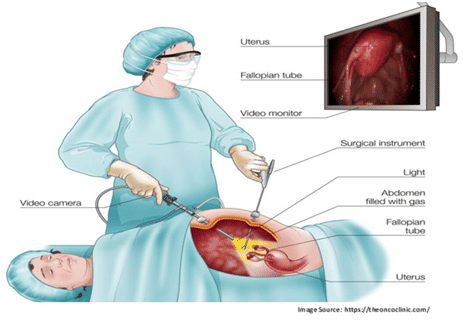[Laparoscopic surgery](https://drsandeepnayak.com/services/laparoscopic-cancer-surgery-in-india/), also known as minimally invasive surgery, involves smaller incisions than traditional open surgery. Dr. Sandeep Nayak is regarded as a pioneer in using these techniques, earning him the title of “best oncologist in India.” He has used cutting-edge techniques to perform various cancer surgeries on the intestine and other organs for the past few years. Laparoscopy incisions are 0.5-1 cm in size, much smaller than those used in open surgery. In medical terms, each incision in laparoscopy surgery is referred to as a “port.” A trochar, a tubular instrument, is inserted into each port in the area where a cancer tumour has begun to develop. Specialized surgical tools and a specialized device with a camera known as a laparoscope are passed through the trochars during the surgical procedure. ### **Robotic Cancer Surgery** 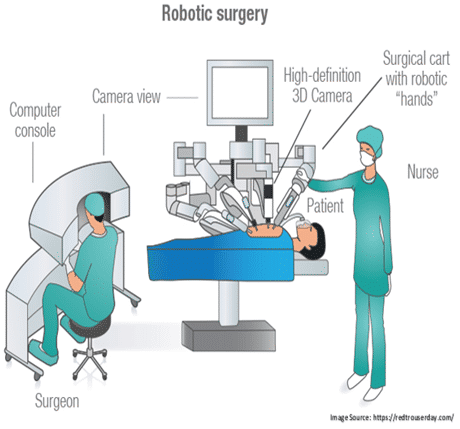It is one of the most cutting-edge methods for precisely treating cancer. This surgery employs the most recent “Da Vinci” system.It is the best treatment option for removing tumours from deep inside organs that are difficult to reach. This is the most recent invention used as an alternative to open and laparoscopic surgery.[ Robotic surgery](https://drsandeepnayak.com/services/robotic-cancer-surgery-in-bangalore-india/) is typically used to treat cancer in all stages. A surgical bot aids in the accuracy and precision of these procedures, enabling a 3D vision for the surgeon. Even though[ robotic cancer surgery](https://drsandeepnayak.com/services/robotic-cancer-surgery-in-bangalore-india/) employs cutting-edge medical technology, it also necessitates the immense expertise of a highly skilled and experienced oncologist. [Dr. Sandeep Nayak](https://drsandeepnayak.com/), one of the leading cancer doctors in India for robotic surgery, believes in scientific excellence. He has travelled internationally to conduct extensive research on advanced laparoscopic and robotic surgical approaches. 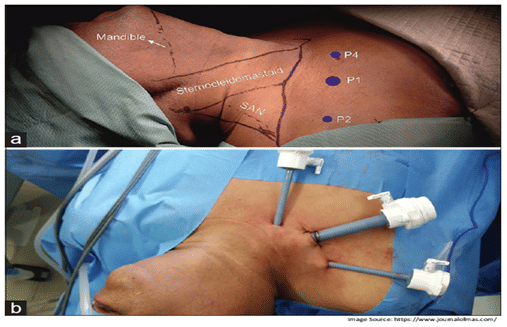### **Minimally Invasive Neck Dissection (MIND)** As the name suggests, this surgery treats a cancerous tumour head and neck region. Cancer develops in the mouth (oral cavity), [thyroid](https://drsandeepnayak.com/services/thyroid-cancer-treatment-in-bangalore/), pharynx, tonsils, or voice box (larynx). During this minimally invasive surgery, three to four small incisions are made around the collar bone area to allow the surgeon clear access to the neck. Small wounds reduce the wound related complications and allow early recovery. ### **Robotic Assisted Breast-Axillo Insufflate Thyroidectomy (RABIT)** 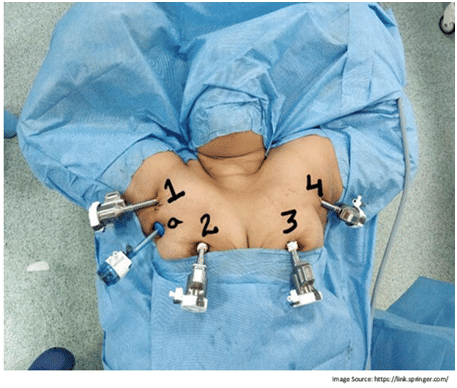Robotic-Assisted Breast Axillo Insufflate Thyroidectomy surgery or popularly known as RABIT, is a replacement for conventional thyroid surgery. This is the latest robotic-assisted treatment for thyroid cancer. It is a scar-free method of removing thyroid tumours. Dr. Sandeep Nayak developed and used this surgical technique to treat his patients over the years successfully. The surgeon gains access to the thyroid gland during this surgery through small wounds. The incisions are 0.5 to 1 cm long. The RABIT surgical procedure is best suited for removing benign or cancerous tumors of thyroid. Extensive cancers of thyroid can be removed using this technique. Utilizing the groundbreaking RABIT technique, [Dr. Sandeep Nayak](https://drsandeepnayak.com/) has not only advanced [thyroid cancer treatment](https://drsandeepnayak.com/services/thyroid-cancer-treatment-in-bangalore/) but also reinforced his position as the best oncologist in the world, setting new standards in patient care. ### **Organ Preserving Onco-Surgeries** During any cancer surgery, it is crucial to preserve the organ. [Dr. Sandeep Nayak](https://drsandeepnayak.com/) and his team strive hard to provide the best treatment while preserving cancer-affected organs The latest [laparoscopy](https://drsandeepnayak.com/services/laparoscopic-cancer-surgery-in-india/) and [robotic cancer surgery](https://drsandeepnayak.com/services/robotic-cancer-surgery-in-bangalore-india/) is the best option for saving the organ. This treatment employs cutting-edge technology, which aids in the preservation of the organ and spares the patient from excruciating pain and discomfort. Cancer can be cured if detected early! Cancer, the word itself, sends shivers down our spines. Consider the helplessness and fear that people and their loved ones are experiencing due to this dreadful disease. On the other hand, cancer is not the end of the world because it can be defeated with proper and timely treatment from a seasoned cancer specialist in India. And who better to help you in your hour of need than Dr. Sandeep Nayak, a renowned top oncologist in India. He has over two decades of experience in this field and is also a pioneer in laparoscopy and robotic cancer surgery in India. > #### **Dr Sandeep Nayak – A Blessing for Cancer Patients** Being considered one of the best cancer doctor in India is no small accomplishment. Aside from his patients, his colleagues also hold him in high regard. Dr. Sandeep Nayak has earned this honour because of his unwavering dedication and determination to his work. His mission is to alleviate the suffering of cancer patients and contribute to the disease care. He does this by staying up to date on the latest developments in surgical oncology Furthermore, Dr. Nayak travelled extensively to learn and receive training in advanced surgical procedures involving laparoscopy and robotics. He believes that these advanced surgical procedures are the best treatment options for cancer patients. > #### **Dr. Sandeep Nayak’s Views on Cancer** According to Dr. Sandeep Nayak, cancer is a disease that needs immediate treatment. In his opinion, “Prevention is better than cure.” As a result, he always emphasises the importance of routine cancer screenings as the best way to combat this deadly disease. If cancer is detected in its early stages, there is a good chance of beating it and living a cancer-free life. It is critical because the risk of [metastasis ](https://www.cancer.org/cancer/understanding-cancer/what-is-cancer.html)(cancer spreads to other parts of the body) increases with each passing day. This is the main reason Dr. Sandeep Nayak takes time out of his busy schedule to spread cancer awareness and how it can be prevented. He makes it a point to attend seminars, medical forums, TV interviews, and other gatherings where he can interact with the public and share his thoughts. He encourages people, particularly children, to live a healthy lifestyle by eating a balanced diet and engaging in physical activities. Not to forget, abstaining from tobacco and alcohol consumption. Dr. Nayak is, without a doubt, one of the best cancer specialist doctor in India because of his selfless dedication to patients and society. News & Publications - [75 per cent lung cancer cases diagnosed late, cases among women on rise](https://www.newindianexpress.com/lifestyle/health/2022/aug/02/75-per-centlung-cancer-cases-diagnosed-late-cases-among-women-on-rise-2483327.html) - [ಇಂದು ವಿಶ್ವ ಶ್ವಾಸಕೋಶ ಕ್ಯಾನ್ಸರ್ ದಿನ: ಶ್ವಾಸಕೋಶ ಕ್ಯಾನ್ಸರ್ ಬಗ್ಗೆ ಒಂದಷ್ಟು ಮಾಹಿತಿ](http://vishwavani.news/cancer-day-2/) - [The Economic Times Most Influential Leaders 2022](https://timesascent.com/articles/The-Economic-Times-Most-Influential-Leaders-2022/156128) - [ಸ್ತನಕ್ಯಾನ್ಸರ್ನ ನೂತನ ಚಿಕಿತ್ಸೆ ಕುರಿತು ಕಾರ್ಯಾಗಾರ](https://kendhooli.com/2022/04/19/%E0%B2%B8%E0%B3%8D%E0%B2%A4%E0%B2%A8%E0%B2%95%E0%B3%8D%E0%B2%AF%E0%B2%BE%E0%B2%A8%E0%B3%8D%E0%B2%B8%E0%B2%B0%E0%B3%8D%E2%80%8C%E0%B2%A8-%E0%B2%A8%E0%B3%82%E0%B2%A4%E0%B2%A8-%E0%B2%9A%E0%B2%BF%E0%B2%95/) - [Trans Oral Robotic Surgery- Dr. Sandeep Nayak Oncologist Bangalore](https://english.newstracklive.com/news/trans-oral-robotic-surgery-dr-sandeep-nayak-oncologist-bangalore-sc53-nu328-ta328-1219075-1.html) Frequently Asked Questions What exactly is minimal access cancer surgery? Minimal Access Cancer Surgery (MACS) refers to laparoscopy and robotic cancer surgery. This minimally invasive surgery is typically performed for any stage of cancer. The surgeon inserts a laparoscopic instrument during this surgery. In contrast to open surgery, where large cuts are made, the laparoscopic instrument is inserted inside the body through small incisions. The laparoscopy instrument is equipped with a camera, allowing the surgeon to obtain clear images of the organ located deep within the body. The images are displayed on a monitor outside. Does it take longer to recover from laparoscopic surgery completely? You may be able to resume normal activities **1 weeks** after minor surgery, such as appendix removal. The recovery period after major surgery, such as removing your ovaries or kidney due to cancer, can last up to **3 weeks** Is robotic surgery superior to open surgery? Robotic surgery provides consistent, reliable outcomes with less blood loss, pain, and recovery time than conventional surgical methods. Is it safe to walk after laparoscopic surgery Begin by taking a longer walk than you did the previous day. Increase your walking time gradually. Walking increases blood circulation and helps prevent blood clotting, pneumonia and constipation. Avoid strenuous activities such as bicycling, jogging, weight lifting, or aerobic exercise until your doctor says it’s safe. What should and should not be done after laparoscopic cancer surgery? There is no restriction on physical activity after 24 hours if you are not on narcotic medication. Do not drive, participate in sports, or operate heavy machinery if you are taking narcotic pain relievers. You may take a bath two days after your surgery. What are the benefits of laparoscopy and robotic surgery? There are many benefits associated with laparoscopy and robotic surgery related to the patient during and post-surgery. The major benefits of laparoscopy and robotic surgery compared to traditional open cancer surgery are - Reduced pain and discomfort - Less blood loss and the need for blood transfusion - Few complications post-surgical process - The hospital stays will be reduced - Less risk of infection - Faster recovery and return to normal life. What is laparoscopy cancer surgery? Laparoscopy and robotic cancer surgery are also known as Minimal Access Surgery (MACS). This minimally invasive surgery is performed generally for early stages of cancer. In this surgery, the surgeon inserts an instrument called as laparoscopy. The laparoscopic instrument is inserted inside the body by making small incision as compared to open surgery where big cuts are made. A camera is attached to the laparoscopy instrument, which enables the surgeon to get clear images of the organ which is located deep inside the body. The images are shown on the monitor outside. --- ### [Case Study](https://drsandeepnayak.com/case-study/) **Published:** September 17, 2024 **Author:** Dr. Sandeep Nayak **Content:** Case Study Stage IV Breast Cancer: When Surgery Still Makes Sense Six Chemos. One Surgery. Going Home Cured. 35. A Dancer. A Mother. A Cancer Survivor. Robotic Surgery Gave Her Life Back — Without One. Revolutionizing Rectal Cancer Care: Advanced Treatments & Hope Conquering the Double Challenge: A Triumph Over Dual Primary Cancers A Triumph Over Adversity: Robotic Right Bilobectomy for Bronchial Carcinoid Tumor Empowering Resilience: Ms. J’s Triumph Over Genetic Challenges Manisha’s Breast Cancer Survival Story – Treatment by Dr. Sandeep Nayak --- ### [Stage IV Breast Cancer: When Surgery Still Makes Sense](https://drsandeepnayak.com/case-study/stage-iv-breast-cancer-when-surgery-still-makes-sense/) **Published:** April 29, 2026 **Author:** Dr. Sandeep Nayak **Content:** **CLINICAL CASE STUDY • STAGE IV BREAST CANCER • SURGICAL ONCOLOGY** Stage IV Breast Cancer: When Surgery Still Makes Sense *Dr. Sandeep Nayak • MACS Clinic, Bangalore • Laparoscopic Oophorectomy • Exceptional Response to Systemic Therapy* **PATIENT DETAILS** **Age:** 52 **Gender:** Female **Medical History:** Diagnosed with Stage IV invas carcinoma of the left breast, oestrogen-receptor positive (ER+), HER2-negative, with limited bone metastasis and no visceral organ involvement. CASE PRESENTATION A 52-year-old female was referred to MACS Clinic in Bangalore with newly diagnosed Stage IV breast cancer. Initial evaluation, clinical examination, mammography, core biopsy, PET-CT, and a bone scan confirmed invasive ductal carcinoma of the left breast with limited skeletal metastasis involving two vertebral lesions and one pelvic lesion. There was no liver, lung, or brain involvement. Receptor profiling returned strongly ER-positive, progesterone-receptor positive, and HER2-negative. Under the care of Dr. Sandeep Nayak, a senior surgical oncologist in Bangalore, a multidisciplinary team evaluated the case and formulated a systemic-therapy-first plan with a reassessment for surgical benefit after measurable response. The patient and family were counselled that, in Stage IV breast cancer, surgery is offered only when it is expected to be clinically beneficial a principle Dr. Nayak regards as central to metastatic cancer management. *“Whenever a patient comes to us for any disease, the important aspect is to remember — what we do, is it going to be beneficial for the patient or not. Because if it is not beneficial, the procedure or the treatment is only going to be detrimental.”* **— Dr. Sandeep Nayak, Surgical Oncologist, MACS Clinic** *The Stage IV patient journey — systemic therapy first, selective surgery when it adds clinical benefit* DIAGNOSIS Stage IV (metastatic) invasive ductal carcinoma of the left breast (cT3N2M1), oestrogen-receptor positive, progesterone-receptor positive, HER2-negative, with limited skeletal metastasis. Stage IV breast cancer indicates that cancer cells have spread from the breast to distant sites. In this case, metastasis was confined to the skeleton, without involvement of vital organs — a more favourable metastatic presentation than visceral spread. Strong hormone-receptor positivity made the disease highly responsive to oestrogen-blocking therapy, which formed the cornerstone of treatment planning. The therapeutic goal was disease control rather than immediate cure with the option of selective surgery reserved for cases demonstrating exceptional response to systemic therapy. TREATMENT - First-line Systemic Therapy — Chemotherapy followed by endocrine therapy (aromatase inhibitor) - Response Reassessment — PET-CT and bone imaging after 6 months - Laparoscopic Bilateral Oophorectomy — day-care procedure for ovarian hormone suppression - Continued Hormone Therapy and Bone-Modifying Agents - Long-term Surveillance DETAILED DESCRIPTION OF TREATMENT Given the Stage IV presentation with limited skeletal metastasis, the medical team at MACS Clinic opted for a systemic-therapy-first approach rather than immediate surgical intervention. Chemotherapy was initiated to reduce overall disease burden, followed by endocrine therapy tailored to the patient’s hormone-receptor profile. Bone-modifying agents were added to reduce skeletal complications and support bone density during treatment. After six months of systemic therapy, follow-up imaging showed an exceptional response the primary breast tumour had shrunk significantly and the skeletal lesions showed near-complete resolution with sclerotic healing. In this category of exceptional responders, Dr. Sandeep Nayak’s approach is to consider curative-intent interventions that would otherwise not be offered at Stage IV, provided the clinical benefit is clearly established. | *“Every once in a while we have the fortune of treating a patient who responds very, very well to the treatment even though it is stage four. In those patients, we think them to be very good responders to treatment — and we go ahead and perform a curative surgery.”* **— Dr. Sandeep Nayak** | |---| A laparoscopic bilateral oophorectomy was performed as an ancillary procedure to enhance hormonal control of the disease. Since ovarian oestrogen production can fuel breast cancer aggressiveness, removing the ovaries was a direct strategy to deepen hormone suppression beyond what medication alone could achieve. The laparoscopic approach allowed the procedure to be completed as a day-care surgery, with the patient discharged the very next morning and minimal recovery disruption. Post-oophorectomy, the patient continued on hormone therapy with deeper oestrogen suppression now achievable. Regular imaging surveillance and bone health monitoring were scheduled at three-monthly intervals to track ongoing disease control. The combined strategy systemic therapy, surgical hormone suppression, and bone-supportive care delivered sustained disease stability well beyond what first-line chemotherapy alone would typically achieve. POST-OPERATIVE ASSESSMENT The patient recovered from the laparoscopic oophorectomy within 24 hours, with discharge on post-operative day one and a return to full normal activity within a week. There were no surgical complications, and the addition of surgical ovarian suppression produced a measurable deepening of hormone blockade on follow-up biomarker testing. Follow-up imaging at three, six, and twelve months confirmed sustained disease control, with continued sclerotic healing of the bone lesions and no new metastatic sites. The patient reported a return to pre-diagnosis functional status working, travelling, and caring for her family with only mild hormone-therapy side effects managed through routine supportive measures. This case illustrates an important principle in Stage IV breast cancer care: surgery is not off the table simply because the cancer is metastatic. In carefully selected patients particularly those who respond exceptionally well to systemic therapy or who have hormone-positive disease that benefits from oophorectomy well-chosen surgical interventions can meaningfully improve disease control and quality of life. The decision, as Dr. Sandeep Nayak consistently emphasises, is always guided by one principle: whether the intervention is genuinely beneficial for that specific patient. **CONTACT — MACS CLINIC, BANGALORE** **Surgeon:** Dr. Sandeep Nayak, Surgical Oncologist **Clinic:** No. 96/A/9/1, 42nd Cross, 3rd Main, 8th Block, Jayanagar, Bengaluru – 560 070 **Email:** support@macsclinic.com **Phone:** +91 9482202240 \| +91 80357 40000 **Website:** drsandeepnayak.com \| macsforcancer.com --- ### [Stomach Cancer Treated & Cured](https://drsandeepnayak.com/stomach-cancer-treated-cured/) **Published:** April 1, 2026 **Author:** Dr. Sandeep Nayak **Content:** **INTERNATIONAL PATIENT STORY • STOMACH CANCER • BAGHDAD, IRAQ → BANGALORE, INDIA** Baghdad to Bangalore. Six Chemos. One Surgery. Going Home Cured. *How Al-Muhamadi from Baghdad travelled 3,000 miles, tried Delhi, arrived in Bangalore, and found the stomach cancer surgeon who gave him his life back* Dr. Sandeep Nayak • MACS Clinic, Bangalore • Robotic Gastrectomy • International Patient from Iraq | **Iraq** Home Country of Patient | **6 Chemo** Sessions Before Surgery | **6–7 Days** Hospital Stay in Bangalore | **CURED** Final Outcome Reported | |---|---|---|---| In the Name of God — A Man from Baghdad Begins His Search Al-Muhamadi begins his story the way many people from his part of the world begin everything important: with a prayer. ‘In the name of God, the Most Gracious, the Most Merciful.’ It is not decoration. It is the frame through which he understood every step of what came next — the diagnosis, the chemotherapy, the journey, and eventually, the recovery. He is a citizen of Baghdad, Iraq. He did not expect, when his stomach cancer was confirmed, that the road to his cure would take him from his hometown in Iraq to Delhi and then to Bangalore — more than 3,000 miles from where he started. He could not have known, in those first frightening weeks after the diagnosis, that he would one day be sitting in a Bangalore hospital room, six days post-surgery, describing the medical staff around him as ‘really good’ and counting the days until he could fly home. But that is where this story ends. The beginning was much harder. *Al-Muhamadi’s complete journey — Baghdad to Bangalore in 7 steps* The Diagnosis — Baghdad, Dr. Yahya Al-Mohsen, and the Word Nobody Wants The diagnosis was made in Baghdad by Dr. Yahya Al-Mohsen. Stomach cancer — gastric carcinoma. Al-Muhamadi does not describe in detail the symptoms that brought him to the doctor, or the tests that preceded the verdict. He describes, instead, what happened after: the treatment began. Six chemotherapy sessions. This is the standard neoadjuvant approach in stomach cancer — chemotherapy given before surgery to shrink the tumour, improve the chance of complete removal, and test whether the cancer responds to systemic treatment. Six cycles is not a short course. It is months of treatment — the accumulated fatigue, the nausea, the days when the only thing you are trying to do is get through to the next one. Al-Muhamadi completed all six. He did not stop. He finished what was started. > *“I underwent six chemotherapy sessions, then I went to Delhi, but couldn’t find a solution there.”* **— Al-Muhamadi, Baghdad, Iraq** After the chemotherapy, the question was surgery. And it was here — at the junction between the medicine he had already received and the operation that needed to follow — that Baghdad’s resources reached their limit. The kind of surgical expertise he needed was not available locally. He had to travel. *Stomach cancer — understanding the diagnosis and Al-Muhamadi’s full clinical picture* Delhi Couldn’t Help. Bangalore Could. India was the logical destination. It is the country most accessible to patients from the Middle East seeking advanced medical care — geographically close, English-speaking, home to some of the best surgical centres on the continent. Delhi is the natural first port of call: the largest city, the most recognisable medical corridor. Al-Muhamadi went to Delhi. He looked. He consulted. And he did not find what he needed. He does not elaborate on what was missing. Perhaps the specific robotic surgical expertise. Perhaps the approach he had been researching. Perhaps, simply, the confidence in the surgical team that a patient in his situation needs in order to say yes. Whatever the reason, Delhi was a stop on the journey, not the destination. *The three-city journey: Baghdad → Delhi (no solution) → Bangalore (cured)* He kept searching. And he found a name: Dr. Sandeep Nayak. MACS Clinic. Bangalore. > *“After that, I went to Bengaluru, where Dr. Sanjeev was located, at one of the best and most organised hospitals with top-level medical staff.”* **— Al-Muhamadi, describing his arrival at MACS Clinic, Bangalore** The note about the organisation matters. When you have been through six chemotherapy sessions in Baghdad and a failed consultation attempt in Delhi, and you are now standing in a hospital in a city you have never been to before, in a country where you don’t speak the primary language — the feeling of a well-run institution, of calm and competent staff, of a place that knows what it is doing — is not a small comfort. It is the foundation on which you decide to trust someone with your life. Al-Muhamadi trusted MACS Clinic. He trusted Dr. Sandeep Nayak. The Operation — What Dr. Sandeep Nayak Did Stomach cancer surgery — gastrectomy — is one of the most technically demanding operations in abdominal oncology. The stomach sits in the centre of a crowded upper abdomen, surrounded by the liver, the spleen, the pancreas, major blood vessels, and the structures that connect the digestive tract above and below. Removing a tumour-bearing stomach or a portion of it, clearing the lymph nodes around it, and reconstructing a functional digestive pathway — all of this requires precision that rewards experience. Al-Muhamadi had come to the right place. Dr. Sandeep Nayak performs robotic gastrectomy using the da Vinci Xi surgical system — the same platform he uses for all his complex cancer operations, and one for which he has developed specific expertise across hundreds of procedures. *Robotic stomach cancer surgery — how da Vinci Xi gave Dr. Nayak precision inside the abdomen* Why Robotic Surgery Made the Difference Al-Muhamadi describes the surgery as ‘the procedure I had hoped for.’ That phrasing — not simply ‘the surgery’ but ‘the procedure I had hoped for’ — suggests he had researched. He knew what he was looking for. He had not found it in Delhi. He found it in Bangalore. Robotic gastrectomy through the da Vinci Xi system offers several specific advantages over open surgery in stomach cancer: Three-dimensional magnified vision — the camera gives the surgeon a 10 to 15 times magnified, 3D view of the operative field. The stomach’s complex vascular anatomy — the vessels that supply it and that must be precisely divided — is visible with clarity impossible to achieve with the naked eye or standard laparoscopic instruments. Articulated wrist movement — the robotic instruments rotate 360 degrees, far beyond human wrist range. In the tight upper abdomen, where the stomach sits adjacent to the liver and spleen, this freedom of movement allows dissection at angles that would be dangerous or impossible with conventional tools. Lymph node clearance — stomach cancer spreads through lymph nodes. A complete D2 lymphadenectomy — the removal of all relevant lymph node stations — is associated with better long-term survival. The robotic system’s precision makes this clearance more thorough and safer than in open surgery in experienced hands. Less blood loss — the precision of robotic dissection reduces bleeding during the operation, which reduces the need for transfusion and the complications associated with it. Smaller wounds — five or six tiny port incisions instead of a large abdominal opening. Less post-operative pain. Faster mobilisation. Faster recovery. The Six Chemotherapy Sessions — Why They Mattered Al-Muhamadi’s six cycles of chemotherapy before surgery were not a delay to the real treatment. They were part of it. Neoadjuvant chemotherapy in gastric cancer has a specific purpose: to shrink the primary tumour, potentially downstage the disease, and improve the likelihood that the surgeon can achieve clear margins at the time of resection. Al-Muhamadi had completed the full course. By the time he reached Bangalore for surgery, the chemotherapy had done its preparatory work. Dr. Nayak operated in the most favourable possible post-chemotherapy window. Inside the Operation Al-Muhamadi does not describe the surgical details — he was, understandably, asleep for them. What he describes is the experience on the other side: waking up, being cared for by a staff he describes as ‘really good,’ recovering in a hospital he had already identified as among the best he had seen. The operation itself — the tumour removal, the reconstruction of his digestive pathway, the lymph node clearance — was completed by Dr. Nayak and his team. > *“The surgery was performed by Dr. Sandeep using the procedure I had hoped for. After that, the care continued. The hospital staff were really good.”* **— Al-Muhamadi, on his surgery and recovery at MACS Clinic** Six Days. Seven at Most. And Then Home. After major abdominal surgery, the recovery period in hospital is a specific kind of time. There is pain, managed and gradually receding. There is the first sip of water, then the first small meal, then the first walk along the hospital corridor. There is the monitoring — the blood tests, the wound checks, the moment the drains come out. And there is the steady accumulation of small milestones that tell a patient: you are going to be all right. Al-Muhamadi moved through those milestones in six to seven days. > *“I stayed about six to seven days in the hospital, then I got discharged during the recovery period. Now, I’m in perfect health and well-being.”* **— Al-Muhamadi** Six to seven days is a good post-operative timeline for robotic gastrectomy. The minimally invasive approach — five small ports instead of a large abdominal incision — means less pain, earlier mobilisation, and faster progression through the recovery milestones. Al-Muhamadi was not lingering. He was healing. He notes the nursing and medical staff specifically. This is not throwaway gratitude. For an international patient — a man from Baghdad, navigating a hospital in a foreign city, surrounded by people speaking languages he may not understand, far from his family — the quality of the human interaction around him is not secondary to the clinical care. It is part of the care. The fact that he found it at MACS Clinic, and that he uses the words ‘really good’ to describe it, tells you something about what he experienced there. *Al-Muhamadi’s surgical outcome — 6 chemo sessions, robotic surgery, 6–7 days, going home cured* What ‘Perfect Health’ Means After Stomach Cancer Surgery When Al-Muhamadi says he is in ‘perfect health and well-being,’ he is speaking from a very recent post-surgical vantage point. The full picture of recovery from gastrectomy is longer than six days — it continues for weeks and months after discharge. But the direction is clear, and the foundation has been set. - Dietary adjustment — after stomach removal or reduction, patients eat smaller meals more frequently. The body adapts. Most patients find that within weeks to months, eating becomes comfortable and satisfying again. - Follow-up care — regular CT scans and blood tests will monitor for recurrence. This surveillance is critical and continues for years. - Vitamin supplementation — the stomach plays a role in absorbing B12 and certain other nutrients. Supplements replace this function after gastrectomy. - Gradual return to normal life — most patients return to their pre-surgery life within two to three months of the operation. Baghdad is waiting. > *“Looking forward to my recovery and returning to Baghdad.”* **— Al-Muhamadi — his final words from Bangalore** Why International Patients Choose Dr. Sandeep Nayak and Bangalore Al-Muhamadi is not an unusual case in the context of Dr. Nayak’s practice. Patients travel to MACS Clinic from across the Middle East, from Africa, from Southeast Asia — from anywhere that the combination of advanced robotic cancer surgery and accessible international healthcare infrastructure does not exist locally. What brings them specifically to Dr. Nayak is a pattern worth understanding. The Specificity of the Referral Most medical tourists do not arrive in a foreign city and randomly select a hospital. They come because someone — a doctor, a family member, a patient who made the journey before them — gave them a specific name. Al-Muhamadi mentions Dr. Sanjeev as the connection that brought him to MACS Clinic, Bangalore. Referral chains in oncology are built on outcomes. When a doctor recommends Dr. Sandeep Nayak to a patient, they are recommending a specific surgical record, a specific technology platform, and a specific philosophy of care. The Technology Platform The da Vinci Xi robotic surgical system is not universally available. In many countries across the Middle East and South Asia, the system either does not exist or exists in hospitals without the depth of experience that makes it genuinely beneficial. Dr. Nayak has performed hundreds of robotic cancer operations across multiple organ systems. His experience with the platform — specifically for complex gastrointestinal cancers — is among the deepest available in India. The Care Experience Al-Muhamadi mentions the hospital staff and the organisation of MACS Clinic in the same breath as the surgery itself. This is not incidental. The care experience for an international patient — the communication, the accommodation, the coordination between departments, the human warmth of a team that deals with patients from many different countries — is part of the medical product. Al-Muhamadi experienced it as ‘really good.’ That assessment, from a man who had been through six chemotherapy sessions and a failed attempt in Delhi before arriving, carries significant weight. About Dr. Sandeep Nayak — The Surgeon Al-Muhamadi Trusted Full Name **Prof. Dr. Sandeep P. Nayak** Positions Founder & Chief — MACS Clinic | Executive Director — Surgical Oncology & Robotic Surgery, KIMS Hospital, Bangalore | Chairman — Oncology Services, Karnataka Qualifications MBBS | DNB General Surgery | DNB Surgical Oncology (CNCI Kolkata) | MRCS Edinburgh, UK | Fellowship Laparoscopic & Robotic Oncosurgery Specialisations Robotic gastrectomy (stomach cancer) | Robotic colorectal surgery | Robotic thyroid & neck surgery | Hepato-pancreato-biliary cancer | Gynaecologic cancers Inventions **RABIT** (scarless thyroid surgery) | **RIA-MIND** (robotic neck dissection) | **ISR** (sphincter-preserving rectal surgery) Awards Times Health Excellence Award 2018 | KS International Innovation Award | Pampanagowda Video Award Memberships Royal College of Surgeons Edinburgh, UK | ASCO | IASO | ASI | AMASI International Treating patients from Iraq, UAE, Saudi Arabia, Kuwait, Oman, Qatar, Bangladesh, and worldwide. Clinic Address MACS Clinic, No. 96/A/9/1, 42nd Cross, 3rd Main, 8th Block, Jayanagar, Bengaluru — 560 070 Appointments [www.drsandeepnayak.com](https://www.drsandeepnayak.com) | [macsforcancer.com](https://macsforcancer.com) Dr. Nayak has spent his career asking whether the standard surgical approach is the best possible one, or just the most familiar. In stomach cancer surgery, the robotic approach is not yet universal. In experienced hands — and Dr. Nayak’s hands are among the most experienced in India for this operation — it offers measurable advantages: better visualisation, more precise lymph node clearance, less blood loss, shorter recovery. Al-Muhamadi came looking for the best available procedure. He found it. Aparna’s Recovery Milestones 1. Completing Chemotherapy Before Surgery Is the Plan — Trust It Three-dimensional magnified vision — the camera gives the surgeon a 10 to 15 times magnified, 3D view of the operative field. The stomach’s complex vascular anatomy — the vessels that supply it and that must be precisely divided — is visible with clarity impossible to achieve with the naked eye or standard laparoscopic instruments. 2. Geography Is Not Destiny — If You Need Better Care, Find It Al-Muhamadi was diagnosed in Baghdad. The treatment available there was not sufficient for what he needed. He went to Delhi. Delhi did not have what he needed. He went to Bangalore. Bangalore had it. The willingness to keep searching — to not accept the first ‘no’ or the first incomplete answer as final — is not stubbornness. It is self-advocacy. It is what the situation demanded, and he responded to it. 3. Robotic Surgery Is Not Available Everywhere — Ask Specifically Not every hospital that performs stomach cancer surgery offers robotic gastrectomy. Not every surgeon who performs robotic gastrectomy has Dr. Nayak’s depth of experience with the technique. When you are researching surgical options for stomach cancer, ask specifically: is this a robotic procedure? How many has this surgeon performed? What are the outcomes data? Al-Muhamadi had researched enough to know what he was looking for. That research mattered. 3. Robotic Surgery Is Not Available Everywhere — Ask Specifically Not every hospital that performs stomach cancer surgery offers robotic gastrectomy. Not every surgeon who performs robotic gastrectomy has Dr. Nayak’s depth of experience with the technique. When you are researching surgical options for stomach cancer, ask specifically: is this a robotic procedure? How many has this surgeon performed? What are the outcomes data? Al-Muhamadi had researched enough to know what he was looking for. That research mattered. 4. The Quality of Care Around the Surgery Matters Too Al-Muhamadi mentions the nursing staff and the hospital organisation in the same breath as the surgery. A cancer operation does not end when the surgeon leaves the theatre. The recovery — the pain management, the nutrition support, the wound care, the physiotherapy, the emotional reassurance of being in a place that knows what it is doing — is part of the treatment. MACS Clinic’s care during Al-Muhamadi’s six to seven post-operative days was part of the reason he was able to leave in the condition he describes. 5. Faith and Medicine Are Not in Opposition Al-Muhamadi opens his story with a verse and closes it with a prayer of gratitude. This framing — trust in God alongside trust in the hands of a surgeon — is how many patients from across the world navigate a cancer diagnosis. It is worth saying plainly: Dr. Nayak’s clinic treats patients from every faith, every country, every background. The specific cultural framing Al-Muhamadi brings to his story is his own, and it is respected. The outcome — cure, return home, perfect health — belongs to both his faith and his medical care. What Aparna Wants Every Patient to Know At the end of her story, Aparna is direct. She is not speaking as a medical authority. She is speaking as a 35-year-old woman who heard the word cancer and came out the other side dancing. > *“My cancer journey has taught me the importance of early detection and advanced medical care. I hope my story will inspire other patients who’s going through a tough phase in their life. Early detection is early prevention.”* > > **— Aparna, Thyroid Cancer Survivor, Bangalore** Frequently Asked Questions Q: Can stomach cancer patients from Iraq come to India for surgery? Yes. India is a major destination for medical tourism from the Middle East, including Iraq, UAE, Saudi Arabia, and Kuwait. MACS Clinic in Bangalore, under Dr. Sandeep Nayak, regularly treats international patients with stomach cancer. The clinic facilitates medical visas, airport transfers, and international patient coordination. Al-Muhamadi from Baghdad underwent robotic gastrectomy at MACS Clinic and returned home in good health after a 6–7 day hospital stay. Q: What is robotic stomach cancer surgery (gastrectomy)? Robotic gastrectomy is the removal of the cancerous stomach (or part of it) using the da Vinci Xi surgical robotic system. The surgeon operates through 5–6 small keyhole incisions rather than a large abdominal opening. The robotic system provides 3D magnified vision inside the abdomen and tremor-free precision for lymph node clearance and reconstruction. Advantages include less blood loss, less post-operative pain, faster recovery, and smaller scars. Dr. Sandeep Nayak performs robotic gastrectomy at MACS Clinic, Bangalore. Q: Is chemotherapy needed before stomach cancer surgery? In many cases, yes. Neoadjuvant chemotherapy — given before surgery — is standard care for locally advanced gastric cancer. It shrinks the primary tumour, improves the chance of complete surgical removal, and tests whether the cancer responds to systemic treatment. Al-Muhamadi completed 6 chemotherapy sessions in Baghdad before travelling to Bangalore for surgery. This pre-operative treatment contributed directly to the surgical outcome he received at MACS Clinic. Q: How long is recovery after stomach cancer (gastrectomy) surgery? Hospital stay after robotic gastrectomy is typically 5–8 days. Al-Muhamadi was discharged from MACS Clinic Bangalore after 6–7 days. Full recovery — return to normal eating patterns, physical activity, and daily life — takes approximately 2–3 months. Dietary adjustments (smaller, more frequent meals) are typically needed long-term. Follow-up care includes regular CT scans and blood tests to monitor for recurrence. Q: Why did an Iraqi patient choose Bangalore over Delhi for stomach cancer surgery? Al-Muhamadi consulted in Delhi but could not find the surgical solution he was looking for. He was referred to Dr. Sandeep Nayak at MACS Clinic, Bangalore — a specialist in robotic gastrointestinal cancer surgery with the da Vinci Xi system. The combination of surgical expertise, specific robotic technique, and the quality of hospital care at MACS Clinic was what he had been searching for and could not locate elsewhere. Q: Does Dr. Sandeep Nayak treat international patients in Bangalore? Yes. Dr. Sandeep Nayak at MACS Clinic and KIMS Hospital, Bangalore, regularly treats patients from Iraq, the UAE, Saudi Arabia, Kuwait, Oman, Qatar, Bangladesh, and other countries. The clinic assists with medical visa facilitation, international patient coordination, and post-discharge follow-up. Appointments can be arranged through www.drsandeepnayak.com for patients travelling from abroad. Q: What is the survival rate for stomach cancer treated with surgery? Survival rates for stomach cancer depend heavily on stage at diagnosis and the completeness of surgical resection. When detected at an early or localised stage and treated with a combination of neoadjuvant chemotherapy and complete surgical resection (ideally with a D2 lymphadenectomy achieving clear margins), 5-year survival rates range from 60–90%. Al-Muhamadi’s treatment pathway — 6 cycles of chemotherapy followed by robotic gastrectomy — represents the standard of care for resectable gastric cancer. Q: How can I contact MACS Clinic, Bangalore for stomach cancer treatment? Appointments with Dr. Sandeep Nayak can be booked at www.drsandeepnayak.com. The clinic address is MACS Clinic, No. 96/A/9/1, 42nd Cross, 3rd Main, 8th Block, Jayanagar, Bengaluru — 560 070, India. International patient enquiries, including medical visa guidance and travel coordination, can be directed to the clinic’s international patient services desk. --- ### [Papillary Thyroid Cancer Treatment Bangalore](https://drsandeepnayak.com/papillary-thyroid-cancer-treatment-bangalore/) **Published:** March 31, 2026 **Author:** Dr. Sandeep Nayak **Content:** **REAL PATIENT STORY • THYROID CANCER • BHARATANATYAM DANCER • BANGALORE** 35. A Dancer. A Mother. A Cancer Survivor. Surgery Monday. Home Thursday. On Stage by September. *Aparna’s real story — how a husband’s insistence, a routine USG, and Dr. Sandeep Nayak’s scarless RABIT surgery turned the most frightening word she’d ever heard into a story she now shares to give others hope* Dr. Sandeep Nayak • MACS Clinic, Bangalore • RABIT Robotic Thyroidectomy • 20 June 2022 | **35 yrs** Aparna’s Age at Surgery | **4 Days** Hospital to Home | **3 Months** Back on Stage | **ZERO** Neck Scar Left Behind | |---|---|---|---| The Checkup She Didn’t Want to Go For Aparna did not go looking for cancer. She was going for a routine scan — the kind you postpone twice and finally keep the appointment for because your husband won’t stop asking. That is not an embellishment. That is, in her own words, exactly what happened. It was 2022. Aparna was 35 years old. A full-time homemaker in Bangalore, a mother to a 12-year-old daughter named Anamika, and — most importantly to understanding what came next — a woman who had recently rediscovered a passion she had carried her entire life. She had just begun learning Bharatanatyam, the classical Indian dance she had dreamed of studying since childhood but never found the time for. She was finally, at 35, doing it. Her daughter had started the classes first. Watching Anamika perform had reignited something in Aparna. She joined the classes herself. She was happy. Then June came. Her thyroid USG reports had been completely normal until that point. Every scan, every report — all clear. Her husband, methodical and persistent about health checkups in a way Aparna was not, insisted she go again. She was not ready to go. She told him so. He kept asking. She eventually agreed, mostly, she admits, to stop the conversation. > *“My husband insisted me to go for the regular check-up again. First, I was not ready to do that. But again, he compelled me — ‘You have to go for it.'”* > > **— Aparna, on the checkup that changed everything** That conversation — the small domestic negotiation that happens in thousands of households every week, the quiet nagging that most people eventually relent to — is the reason Aparna is alive and dancing today. Her husband’s insistence was not dramatic. It was not based on any symptom or fear. It was just the ordinary love of a spouse who knew: better to check. Aparna’s full journey — every key date from 2022 to today Dr. Sandeep Nayak — replace with real photo from drsandeepnayak.com “The Tumor Is Not Looking Fine.” The sonographer’s words during the scan were measured, clinical. But they landed with weight. The nature of the tumor was changing. It was not looking fine. Aparna needed to see her endocrinologist immediately. She had walked into that scan room half-distracted, going through the motions of a checkup she had not wanted to attend. She walked out with the specific, cold understanding that something was wrong. The diagnosis that arrived in three days — papillary thyroid cancer, confirmed by FNAC The endocrinologist reviewed the scan results and ordered an FNAC — a Fine Needle Aspiration Cytology biopsy — the same day. It was booked for the next morning. > *“We all were very tense and waiting for the results. I think within three days, that evening, we got the result. And the result itself, we can read that something is wrong.”* > > **— Aparna, on the three-day wait for her FNAC result** She went back to her endocrinologist. He read the report. He looked up at her. And he said the word. “The tumor is now the papillary thyroid cancer.” — What her endocrinologist told Aparna Papillary thyroid carcinoma. The most common form of thyroid cancer. Highly treatable when caught early. But Aparna did not hear any of that first. She heard one word. > *“That word cancer, which he told to my face — that cancer word was very terrifying. I feel like all my hopes are ending there. After hearing that particular word.”* > > **— Aparna** That feeling — the sudden collapsing of every assumption about the future — is something most cancer patients describe in very similar terms. It is not rational. The prognosis for Stage I papillary thyroid cancer is excellent. The treatment is established and effective. But none of that reaches you in the first moments after you hear the word. What reaches you is fear. Aparna sat with that fear. Then she asked what came next. The Referral That Mattered — Meeting Dr. Sandeep Nayak Her endocrinologist referred her to oncology. He did not send her to a general department. He gave her a specific name. Dr. Sandeep Nayak. Aparna had never heard of him before that day. She had no frame of reference for what RABIT meant, or what a surgical oncologist specialising in robotic thyroid surgery did differently from anyone else. She arrived at the consultation with a cancer diagnosis, a frightened husband, and a single question: what happens now? | **Patient** | Aparna — 35 years old, Bangalore | |---|---| | **Occupation** | Full-time homemaker + Bharatanatyam classical dancer | | **Daughter** | Anamika, 12 years old | | **Husband’s role** | Insisted on the routine checkup — the decision that made everything possible | | **Prior USG** | All reports normal until June 2022 | | **Scan finding** | Tumor nature changing — immediate specialist referral ordered | | **FNAC result** | Papillary Thyroid Carcinoma — confirmed within 3 days | | **Referred to** | Dr. Sandeep Nayak — by endocrinologist, specifically | | **Surgery** | RABIT — Robotic Scarless Thyroidectomy | | **Surgery date** | Monday, 20 June 2022 | | **Discharge** | Thursday, 23 June 2022 — just 4 days after surgery | | **Back to dance** | August 2022 — Bharatanatyam class resumed | | **Stage performance** | September 2022 — first public performance after surgery | | **Today** | Cancer-free. Active homemaker. Continuing classical dance. | Dr. Nayak reviewed her reports. He explained the diagnosis, the stage, the options. And then he explained something that Aparna was not expecting to hear. She did not have to have a scar on her neck. He had developed a procedure — RABIT — that allowed him to remove the thyroid completely through a small incision hidden in the armpit, using the da Vinci robotic surgical system. No cut on the neck. No visible mark. The same cancer clearance, through an approach the body could be discreet about forever. Aparna was a dancer. The way her body looked — the line of her neck, her shoulders, her presence in front of an audience — mattered to her professionally and personally. She had not said this out loud. She probably did not need to. > *“With a very tense mind, I went to the operation theater. I was really worried. I was really worried about my family, actually, from the day I heard that I’m not well.”* > > **— Aparna, on the morning of surgery** How RABIT works — armpit incision, da Vinci robot, zero neck scar Real RABIT surgery photo — replace with image from drsandeepnayak.com/photos RABIT — The Operation That Left No Scar on Aparna’s Neck Most people who hear ‘thyroid surgery’ picture the same thing: a horizontal line across the lower neck. About four to six centimetres long. Permanent. Present in every photograph, every mirror, every moment someone’s eyes drift to your throat. For millions of thyroid surgery patients, that scar is simply part of the aftermath — the price of removing the cancer. RABIT is the answer to a question most thyroid surgeons never asked: does it have to be? Dr. Sandeep Nayak developed RABIT — Robotic-Assisted Breast Axillo Insufflation Thyroidectomy — over years of research and practice. The concept: access the thyroid not from the front, but from below. A small incision is made in the armpit — hidden in the natural skin fold, completely invisible at rest. The da Vinci Xi robotic system guides miniature instruments through a carefully created tunnel beneath the skin of the chest wall, reaching the thyroid from below. The neck surface is never opened. Never touched. What the Surgery Involved — What Aparna Went Through Priya had completed her chemo-radiotherapy six weeks before surgery — the standard and correct approach. But radiation does something to tissue that every pelvic surgeon dreads: it triggers fibrosis. The normal tissue planes that guide a surgeon — the natural spaces between organs that should peel apart with minimal force — get filled with dense, sticky scar tissue. Structures that should be easy to separate become glued together. In Priya’s case, the adhesions between the rectum and the vaginal wall were particularly severe. That area became one of the most painstaking parts of the entire operation. The Incision — Hidden in the Armpit One small cut. In the fold of the armpit where the arm meets the chest. That was the only opening made anywhere on Aparna’s body. Everything else happened beneath the skin. The Robotic System — What Dr. Nayak Used to See Inside The da Vinci Xi surgical system gave Dr. Nayak a three-dimensional, magnified view of the operative field — ten to fifteen times life size. Every blood vessel, every nerve, every delicate structure around the thyroid was visible with a precision impossible to achieve with the naked eye. For a patient like Aparna, whose voice and physical presence matter professionally, that precision was not optional. The Nerves — Why Voice Preservation Was Critical The recurrent laryngeal nerves run on either side of the windpipe directly behind the thyroid. Damage them, and the voice changes permanently — sometimes irreversibly. For Aparna, a Bharatanatyam dancer who performs on stage and for whom the quality of her physical expression matters, this nerve’s preservation was as important as the cancer clearance itself. Dr. Nayak located both nerves, confirmed their position, and operated around them throughout. Three Hours. Then It Was Over. The surgery took approximately three hours. The thyroid gland — and the papillary cancer within it — was removed completely through the armpit incision. The cancer was Stage I, confined within the gland, clear margins on all sides. No lymph nodes involved. No spread anywhere. > *“I think it took almost three hours for my surgery, and immediately within half an hour, they allowed my father and my husband to come and visit me. That same afternoon, I got shifted to my room.”* **— Aparna, on the hours after surgery** Monday Surgery. Thursday Home. The Recovery Nobody Expected. Aparna woke up in the recovery room and did what every patient does immediately after thyroid surgery: she checked her voice. It worked. She checked her throat. Nothing — no wound, no dressing, no tenderness at the front of her neck. Just her own undisturbed skin. The next day, the bandages were removed. Within four days of the surgery, she was discharged. > *“The very next day, they removed all the bandages from my body. And within four days, I got discharged from the hospital. So Monday was my surgery. That same Thursday, I got discharged and reached my home.”* > > **— Aparna** > > Four days. Surgery on a Monday, home on Thursday. That is not a long hospital admission. That is a long weekend. This is one of the genuine advantages of robotic minimally invasive surgery over open surgery — not just the absence of a neck scar, but the speed at which the body recovers when it has not been opened through a large incision. Aparna’s neck had not been touched. There was nothing to heal there. The only recovery site was the small armpit wound, which needed routine care and healed quickly. 📌 **Key fact:** Papillary thyroid carcinoma detected at Stage I has a 5-year survival rate exceeding 99%. The earlier the detection, the more straightforward the treatment and the faster the recovery. Post-Operative Care — What Aparna Manages Now Removing the thyroid means the body can no longer produce the hormones it once made there. Aparna now takes levothyroxine — a synthetic thyroid hormone — once a day, every morning before food. It replaces the function of the missing gland completely. - Daily levothyroxine tablet — taken once every morning, dose calibrated specifically for her - TSH blood test every 6 to 12 months — to confirm the hormone dose remains optimal - Periodic neck ultrasound — to monitor for any local recurrence at the surgical site - Annual oncology follow-up — to confirm her cancer-free status continues These are not burdens. They are habits — like any morning routine. Aparna has incorporated them entirely. The tablet is taken. The appointment is kept. The ultrasound is done. And every time, the result is the same: she is well. From surgery to stage — Aparna’s Bharatanatyam comeback in her own words MACS Clinic, Bangalore — replace with real clinic photo from drsandeepnayak.com/photos June Was Surgery. September Was the Stage. To understand what Aparna’s return to dance meant, you need to understand what dance meant to Aparna before the surgery. She had wanted to learn Bharatanatyam since childhood. Not casually — with urgency. But life had always intervened. When her daughter Anamika was born, Aparna made a quiet decision: she could not have the childhood she had wanted, but Anamika could. She enrolled Anamika in Bharatanatyam classes the moment she turned three. > *“From my childhood days itself, I have a strong urge — I learned classical dances, but unfortunately, I was not able to do that. But it was there in my mind, somehow I have to get trained in classical dance, especially in Bharatanatyam.”* **— Aparna** Aparna began accompanying her daughter to every class, every performance. Watching Anamika dance reignited what childhood had put there and adult life had deferred. Eventually, she joined the classes herself. She was not a beginner trying something new. She was a person finally arriving somewhere she had always been heading. And then the cancer diagnosis arrived, and she was terrified of losing it. > *“After the disease, and I can tell after the surgery, I got worried that again I’ll lose the chance for pursuing my passion. I thought I won’t be able to dance anymore because of this health condition.”* **— Aparna, on the fear that came after her diagnosis** She did not lose it. August 2022 — just two months after her surgery — Aparna was back in class. Her body, which had recovered faster than she had allowed herself to hope, was back in motion. The movements that require core strength, precise footwork, fluid upper body control — Bharatanatyam asks everything of the body. And her body answered. September 2022. Three months after the surgery that had frightened her more than anything else in her adult life. Aparna stood on a stage and performed. > *“That September itself, I did my first stage performance after the surgery. Luckily, after that surgery, again, I got all my hopes back. And now, with God’s grace, I continue to be cancer-free.”* **— Aparna** The neck that Dr. Nayak had left completely unmarked. The voice that his precision in the operating theatre had protected. The energy of a woman who had been told she had cancer in June and was performing classical dance in September. All of it, together, on stage. And standing in the audience, watching — Anamika. The twelve-year-old who had started the Bharatanatyam classes that had brought her mother back to the thing she loved. The daughter who had, without knowing it, been part of the chain of events that led her mother to this stage. What the Surgery Achieved — Aparna’s Full Outcome Aparna’s surgical outcome — every result from June 20, 2022 **Clinical Results** Papillary thyroid carcinoma — Stage I, confined entirely within the gland Total thyroidectomy completed — the entire thyroid removed intact Clear surgical margins — no cancer cells at the edge of the specimen No lymph node involvement confirmed — no spread detected Recurrent laryngeal nerves preserved bilaterally — voice unchanged Parathyroid glands protected — calcium function normal post-surgery Zero neck incision — RABIT armpit approach left no mark on the neck Aparna’s Recovery Milestones | **Surgery Day** | Monday, 20 June 2022 — ~3 hours, no complications | |---|---| | **Next Morning** | Bandages removed. Neck completely clean. Voice normal. | | **Day 4 — Thursday** | Discharged home. 23 June 2022. | | **August 2022** | Back to Bharatanatyam class — 8 weeks post-surgery | | **September 2022** | First public stage performance — 3 months post-surgery | | **Ongoing** | Daily levothyroxine tablet + regular blood tests + follow-up | | **Today** | Cancer-free. Continues classical dance. Full family life. | The Surgeon Who Made This Possible — Dr. Sandeep Nayak ### **Prof. Dr. Sandeep Nayak** Inventor of RABIT • Founder & Chief, MACS Clinic • Executive Director Surgical Oncology & Robotic Surgery, KIMS Hospital, Bangalore Aparna’s endocrinologist knew who to send her to. That specificity matters. RABIT is not a technique every thyroid surgeon offers — it requires years of dedicated training and practice with the da Vinci robotic system. Dr. Nayak did not adopt RABIT from someone else. He invented it. He has now performed the procedure more than 500 times. He has also invented RIA-MIND — a scarless robotic neck dissection for oral cancers — and developed robotic ISR for rectal cancer. In each case, the driving question is the same: how do we take the cancer with the smallest possible cost to the patient’s life? | **Full name** | Prof. Dr. Sandeep P. Nayak | |---|---| | **Qualifications** | MBBS \| DNB General Surgery \| DNB Surgical Oncology (CNCI Kolkata) \| MRCS Edinburgh, UK \| Fellowship Laparoscopic & Robotic Oncosurgery | | **Positions** | Founder & Chief — MACS Clinic \| Executive Director — Surgical Oncology & Robotic Surgery, KIMS Hospital, Bangalore \| Chairman — Oncology Services, Karnataka | | **RABIT** | Invented the RABIT technique \| 500+ scarless thyroid surgeries performed | | **Also invented** | RIA-MIND (robotic neck dissection — no neck scar) \| Robotic ISR (no-stoma rectal cancer surgery) | | **Awards** | Times Health Excellence Award 2018, Times of India \| KS International Innovation Award \| Pampanagowda Video Award | | **Memberships** | Royal College of Surgeons Edinburgh, UK \| ASCO \| IASO \| ASI \| AMASI | | **Clinic address** | MACS Clinic, No. 96/A/9/1, 42nd Cross, 3rd Main, 8th Block, Jayanagar, Bengaluru — 560 070 | | **Book appointment** | www.drsandeepnayak.com \| macsforcancer.com | What Aparna Wants Every Patient to Know At the end of her story, Aparna is direct. She is not speaking as a medical authority. She is speaking as a 35-year-old woman who heard the word cancer and came out the other side dancing. > *“My cancer journey has taught me the importance of early detection and advanced medical care. I hope my story will inspire other patients who’s going through a tough phase in their life. Early detection is early prevention.”* > > **— Aparna, Thyroid Cancer Survivor, Bangalore** Five Things Her Story Makes Undeniable 1. A husband’s insistence saved a life. When someone who loves you keeps asking you to get checked — get checked. Aparna’s husband had no medical reason to push for that scan. He pushed anyway. That is why she is here. 2. Normal reports are not a reason to stop monitoring. Aparna’s thyroid USG had been clear for years. Then it wasn’t. The cancer did not announce its arrival. It changed quietly, and it was only caught because she kept going for scans. Routine monitoring is not paranoia. It is how this story went the way it did. 3. Stage I thyroid cancer is one of the most treatable diagnoses in oncology. The survival rate exceeds 99% at Stage I. But that number only applies if it is caught at Stage I. Aparna’s scan caught it there. That timing is everything. 4. The fear after diagnosis is real — and survivable. Aparna felt that her hopes were ending when she heard the word cancer. Three months later she was performing on stage. Fear is not a prediction. It is a response. And it passes. 5. You do not have to accept a scar if your surgeon has another option. Aparna is a dancer. Her body is her instrument. The RABIT procedure preserved that instrument. If you are facing thyroid surgery, ask specifically about scarless or minimally invasive approaches before consenting to a traditional open procedure. Not every patient is suitable — but many are, and many never know to ask. Frequently Asked Questions Q: What is papillary thyroid cancer and is it curable? Papillary thyroid carcinoma is the most common type of thyroid cancer, accounting for around 80–85% of all thyroid cancer diagnoses. It grows slowly, tends to stay within the thyroid or nearby lymph nodes, and responds well to surgery. When caught at Stage I — as in Aparna’s case — the 5-year survival rate exceeds 99%. With early detection and appropriate surgical treatment, papillary thyroid cancer is one of the most curable cancers in existence. Q: What is the RABIT technique for thyroid cancer surgery? RABIT (Robotic-Assisted Breast Axillo Insufflation Thyroidectomy) is a scarless thyroid surgery technique invented by Dr. Sandeep Nayak at MACS Clinic, Bangalore. Instead of making an incision across the front of the neck, the surgeon removes the thyroid through a small hidden cut in the armpit using the da Vinci robotic surgical system. There is no visible scar on the neck. The cancer outcome is identical to traditional open thyroidectomy. Dr. Nayak has performed 500+ RABIT procedures. Q: How long is recovery after RABIT thyroid surgery? Recovery after RABIT is typically fast. Aparna — whose case involved complete thyroidectomy for papillary cancer — was discharged on Day 4 after surgery (Monday operated, Thursday home). She was back in Bharatanatyam class by August, two months later, and performed on stage in September — just three months post-surgery. Most patients return to normal daily activity within one to two weeks. Full recovery timelines vary based on individual health and the extent of surgery. Q: Will I have a visible scar after thyroid cancer surgery? With traditional open thyroidectomy, yes — a 4 to 6 cm horizontal scar remains permanently visible on the front of the neck. With the RABIT technique as performed by Dr. Sandeep Nayak in Bangalore, there is no neck scar at all. The surgery is performed through a small armpit incision using the da Vinci Xi robotic system. Aparna underwent RABIT and has no visible mark on her neck. Not every patient is suitable — eligibility is assessed individually. Q: Can you dance or do physical activity after thyroid surgery? Yes — typically within a few months of surgery. Aparna is a Bharatanatyam classical dancer. She resumed practice two months after her RABIT thyroidectomy and performed on stage three months post-surgery. Thyroid surgery does not permanently restrict physical activity. Once surgical wounds have healed and hormone levels are stabilised on levothyroxine therapy, most patients return to full physical activity. Your surgeon will advise on individual timelines based on healing progress. Q: What happens after total thyroidectomy — do I need medication for life? Yes. After total thyroidectomy, the body can no longer produce its own thyroid hormone. Patients take levothyroxine — a synthetic thyroid hormone tablet — once daily, every morning before food. The dose is calibrated to the individual and adjusted based on regular TSH blood tests every 6 to 12 months. Most patients incorporate this into their daily routine without significant disruption to their quality of life. Aparna takes her tablet every morning and describes it as no different from any other daily habit. Q: Why did Aparna’s endocrinologist specifically recommend Dr. Sandeep Nayak? Dr. Sandeep Nayak is one of India’s leading surgical oncologists specialising in robotic and laparoscopic cancer surgery, and the inventor of the RABIT technique for scarless thyroid surgery. His expertise with the da Vinci Xi surgical system and his record of 500+ RABIT procedures make him one of the most experienced surgeons in India for this specific approach. Patients referred by endocrinologists typically come to him because they want the option of scarless thyroid surgery alongside complete cancer clearance. Q: How do I book a consultation with Dr. Sandeep Nayak in Bangalore? Appointments with Dr. Sandeep Nayak can be booked through www.drsandeepnayak.com. He sees patients at MACS Clinic, No. 96/A/9/1, 42nd Cross, 3rd Main, 8th Block, Jayanagar, Bengaluru — 560 070, and at KIMS Hospital, Bangalore. He treats thyroid cancer, oral cancer, rectal cancer, and other solid tumours using robotic and minimally invasive approaches. --- ### [Robotic Surgery Gave Her Life Back — Without One.](https://drsandeepnayak.com/case-study/robotic-surgery-gave-her-life-back-without-one/) **Published:** February 28, 2026 **Author:** Dr. Sandeep Nayak **Content:** She Was Told to Live With a Bag for Life. Robotic Surgery Gave Her Life Back — Without One. *How a 40-Year-Old Bangalore Woman Defeated Low Rectal Cancer and Kept Her Bowel Function — with Dr. Sandeep Nayak’s Robotic ISR Surgery* MACS Clinic & KIMS Hospital, Bangalore • February 2024 • da Vinci Xi Robotic Surgery | **3.5 cm** Tumour from Anal Verge | **45 Gy** Chemo-RT Before Surgery | **>1 cm** Clear Resection Margin | **ZERO** Permanent Stoma Needed | |---|---|---|---| The Day Priya Got the News Nobody Wants Nobody is ever ready for it. Not at 40. Priya — a teacher from Bangalore, a mother, someone whose days were filled with the noise of a full life — noticed something had been off for a few months. Blood. Discomfort. A feeling that wouldn’t settle. She kept putting it down to stress, to diet, to the kind of minor complaints you tell yourself will sort themselves out. But they didn’t sort themselves out. A colonoscopy gave her the answer she had been dreading: low rectal cancer. The tumour was sitting just 3.5 centimetres from the opening of her back passage — a distance that, in most hospitals, only leads to one conclusion. Every surgeon she saw said the same thing, more or less politely: > *“You will need an abdominoperineal resection. The rectum and the anus have to come out. You will have a permanent colostomy bag for the rest of your life.”* > > **— The consensus from multiple surgeons before Dr. Nayak’s opinion** A bag on her abdomen. Forever. She was 40 years old. She sat with that for a few days. And then — the way people do when they are not ready to accept an answer — she looked for another one. A colleague mentioned a surgeon in Bangalore who was doing something different. Something robotic. Something that, in the right patient, might actually save the sphincter. She found Dr. Sandeep Nayak. The Full Clinical Picture — Everything Dr. Nayak Was Working With Before any surgery, there is a thorough assessment. Dr. Nayak reviewed everything — the scans, the reports, the chemo-radiotherapy history, the clinical examination. Here is the complete picture of what he found: | **Patient** | Female, 40 years old — Bangalore (name and identity protected; consent obtained) | |---|---| | **Diagnosis** | Low Rectal Cancer — Adenocarcinoma | | **Tumour Location** | 3.5–4 cm from anal verge; extending up to 6–7 cm; position 3 to 6 o’clock | | **Clinical Finding** | Growth mobile on per rectal exam; upper end palpable; sphincters clinically free | | **MRI Result** | Sphincters confirmed tumour-free on MRI pelvis — ISR eligibility established | | **Pre-Op Treatment** | Long-course Chemo-Radiotherapy (45 Gy) — completed 12 February 2024 | | **Chemotherapy** | 2 cycles of systemic chemotherapy completed before surgery | | **Surgical Approach** | Robotic Intersphincteric Resection (ISR) + Total Mesorectal Excision (TME) | | **Robotic System** | da Vinci Xi — MACS Clinic / KIMS Hospital, Bangalore | | **Special Technology** | ICG Fluorescence (Firefly Mode) — to check blood supply at the join site | | **Surgeon** | Dr. Sandeep Nayak, Surgical Oncologist — MACS Clinic, Bangalore | | **Final Outcome** | Cancer fully removed. Sphincter preserved. Clear margins. No permanent stoma. | What Made This Case Especially Difficult to Treat ISR sounds clean on paper. The reality of doing it, especially in a post-radiation pelvis on a thin patient, is anything but. There were at least four factors that made this operation technically demanding — and that would have sent most surgeons straight to a permanent stoma. The Tumour Was at the Worst Possible Depth At 3.5 to 4 centimetres from the anal opening, the tumour sat in what colorectal surgeons refer to informally as the ‘problem zone’ — too low for a standard low anterior resection, but not so invasive that the external sphincter was gone. That narrow eligibility window is easy to misread. Surgeons who are not specialists in sphincter-preserving surgery often call it inoperable without a bag, simply because they are not trained to work in that space. Radiation Had Turned the Tissue Into Scar Priya had completed her chemo-radiotherapy six weeks before surgery — the standard and correct approach. But radiation does something to tissue that every pelvic surgeon dreads: it triggers fibrosis. The normal tissue planes that guide a surgeon — the natural spaces between organs that should peel apart with minimal force — get filled with dense, sticky scar tissue. Structures that should be easy to separate become glued together. In Priya’s case, the adhesions between the rectum and the vaginal wall were particularly severe. That area became one of the most painstaking parts of the entire operation. Her Body Anatomy Added Extra Risk Being a thin patient actually works against the surgeon in pelvic operations. The mesentery is thin, the tissues are unforgiving, and there is very little ‘buffer’ between the scalpel and the vital structures nearby. Priya also had internal haemorrhoids — vascular structures that bleed readily and make the perineal phase of the operation messier and more demanding. Nerves, Bladder, Sexual Function — All at Risk The pelvic autonomic nerves that run through this region control bladder function and sexual function. They are invisible to the naked eye in many parts of the pelvis, identifiable only by their position relative to key anatomical landmarks. Damage them and the patient wakes up with a new set of problems — incontinence, sexual dysfunction — on top of the cancer. The robotic camera, magnified 10 to 15 times in 3D, is not a luxury in this operation. It is a necessity. Why Dr. Nayak Said Yes — When Others Said It Couldn’t Be Done Dr. Nayak spent time with Priya’s scans, her examination findings, and her story. The MRI was clear: the internal sphincter was involved, but the external sphincter was free. On physical examination, the tumour was mobile. The upper end was palpable. Crucially, she had responded well to chemo-radiotherapy — the tumour had shrunk. In experienced hands, with the right technology, this was an ISR case. > *“When I examined her, the sphincters were clinically free and MRI confirmed it. She was young, fit, and had responded well to chemo-RT. There was no reason she should spend the rest of her life with a permanent bag. ISR is technically demanding — but in the right patient, it is the right thing to do.”* > > **— Dr. Sandeep Nayak, Surgical Oncologist, MACS Clinic, Bangalore** Intersphincteric Resection works by exploiting a narrow anatomical space that most surgeons never enter: the plane between the internal and external anal sphincter. The internal sphincter — which the tumour involves — is removed along with the rectum. The external sphincter, which does the real work of continence, is left completely intact. The healthy colon is then brought down and joined directly to the anal canal. The result is complete cancer clearance, with preserved bowel function. No bag. Inside the Operation — What Actually Happened in Theatre What follows is a plain-language account of the actual surgery, based on Dr. Nayak’s live surgical teaching recorded during the procedure. It is told in the order it happened. **Step 1 — Setting Up: The Robot Advantage** Dr. Nayak used the da Vinci Xi — the most advanced generation of the da Vinci robotic surgical system. A key advantage of the Xi over older models is that the entire arm boom can rotate. This matters enormously for a surgery that has to cover both the upper abdomen (to mobilise the colon) and the deep pelvis (to remove the rectum and perform the intersphincteric dissection) — all in a single position without moving the robot. Ports were placed along a precise line connecting the mid-clavicular point to the anterior superior iliac spine — a configuration that gives complete access from the splenic flexure to the pelvic floor. This straight-line port placement is specific to the Xi system, and it is one of the reasons single-docking is possible for a complex operation like this. **Step 2 — Identify, Then Protect** Before anything is cut, every vital structure in the surgical field has to be found and clearly identified. In the pelvis, a moment of inattention can damage structures that cannot be repaired. Dr. Nayak worked methodically through the anatomy: - Left and right pelvic autonomic nerves — identified at the root of the inferior mesenteric artery and kept in view throughout the entire dissection - Left ureter — traced from where it crosses the iliac vessels, followed deep into the pelvis to confirm its position at every stage - Gonadal (ovarian) vessels — separated from the dissection plane and protected - Gerota’s fascia — the covering layer over the left kidney, kept intact In Priya’s case, the radiation fibrosis meant these structures were harder than usual to see and to protect. Nerves that normally sit clearly away from the surgical field were embedded in scar tissue. The ureter needed continuous checking as the dissection progressed. **Step 3 — Dividing the Blood Supply (High Ligation)** The inferior mesenteric artery — the main blood supply to the section of colon being removed — was divided close to its root on the aorta. This is called ‘high ligation,’ and it serves two purposes. First, it frees up enough length of healthy colon to bring down for the eventual join with the anal canal. Second, it ensures that all the lymph nodes around the artery — which may contain cancer cells — are removed with the specimen. The inferior mesenteric vein was separately divided high up near the pancreas. The higher the vein is divided, the more length of colon is gained. Two clips were placed on the patient side, one on the specimen side — the specimen clip helps the pathologist identify the root of the vessel when examining the tissue after the operation. **Step 4 — Total Mesorectal Excision (TME): The Most Important Step** Total Mesorectal Excision — TME — is the cornerstone of rectal cancer surgery. It means removing the rectum together with its entire surrounding envelope of fatty tissue (the mesorectum), completely intact. Inside that envelope are all the lymph nodes and blood vessels through which rectal cancer tends to spread locally. A breached or incomplete TME dramatically increases the risk of the cancer coming back. The dissection has to stay in the ‘Holy Plane’ — the precise space between the outer layer of the mesorectum and the surrounding pelvic structures. In this plane, the tissue is loose and relatively bloodless. Stray into the wrong layer and you are either inside the mesorectum (compromising the cancer clearance) or cutting into pre-sacral vessels that can bleed catastrophically. Priya’s radiation fibrosis had collapsed parts of this plane. Where it should have opened with gentle pressure, it required careful, unhurried sharp dissection to re-establish the correct layer. The posterior dissection (behind the rectum) was completed first, then the lateral sides, and finally the anterior — the most difficult part in this case, where the rectum was densely adherent to the vaginal wall. **Step 5 — Splenic Flexure Mobilisation: Making Room** For the final join to be tension-free, the colon has to reach all the way down to the anal canal without being pulled tight. That means the entire left colon — including the curve near the spleen at the top of the abdomen — has to be freed from its attachments. In India, many patients have longer sigmoid colons, which can complicate this mobilisation. In Priya’s case, the mesocolon was short, making a thorough splenic flexure mobilisation non-negotiable. The transverse colon was separated from the pancreas, the mesocolon was freed from the retroperitoneum, and the entire left colon was brought down into the field. **Step 6 — The Intersphincteric Dissection: The Reason She Kept Her Bowel** This is the defining step. This is what makes ISR different from every other operation for low rectal cancer. Working from the abdominal side, Dr. Nayak entered the narrow plane between the internal and external anal sphincter and dissected circumferentially — going all the way around the rectum, all the way down to just one centimetre above the anal verge. The table-side assistant confirmed the depth by placing a finger in the anal canal from outside. One centimetre. Enough margin. The cancer would be out. The puborectalis sling — the most important muscle for continence — was clearly identified and left completely untouched. The longitudinal muscle fibres of the rectum were cut carefully, one layer at a time. Haemorrhoidal vessels were controlled with minimal energy use to protect the surrounding muscle tissue. The external sphincter was never threatened. Every millimetre of it was preserved. **Step 7 — ICG Firefly: Making Sure the Join Will Hold** Before the specimen was removed, Dr. Nayak used ICG fluorescence imaging — the ‘Firefly’ mode on the da Vinci Xi — to check the blood supply to the segment of colon that would form the join. ICG (Indocyanine Green) is a dye injected into the bloodstream. Under infrared light, it glows bright green wherever blood is flowing well. A poor blood supply at the anastomosis — the join between the colon and the anal canal — is the most common reason the join fails (called anastomotic leak). ICG takes the guesswork out of it. Dr. Nayak marked his intended cut line based on the ICG signal, ensuring the join was placed in tissue with excellent circulation. **Step 8 — Perineal Phase and Specimen Removal** The final phase moved to the perineal approach — working from the anal side. Using a mini-Buckler retractor to open the anal canal, Dr. Nayak injected an adrenaline solution to reduce bleeding, then took a circumferential mucosal cut at the dentate line, connecting from below to the abdominal dissection above. The specimen — the rectum, the tumour, and the complete mesorectal envelope — was extracted carefully through the anal canal. One critical rule here: no rotation. If the specimen rotates as it comes out, the remaining colon above can twist, which can compromise the blood supply and cause the join to fail. It came out straight. Four corner stitches were placed first to orientate the anastomosis, followed by the complete coloanal join using 3-0 Vicryl sutures. The operation was complete. What the Surgery Achieved — The Outcome ## **On the Operating Table** ✓ Surgery completed in approximately 2.5 hours without major complications ✓ No blood transfusion required ✓ All vital structures — ureter, pelvic nerves, gonadal vessels — preserved intact ✓ External sphincter and puborectalis completely undamaged ✓ Minimal blood loss throughout the entire procedure ## **The Specimen — Proof That the Cancer Is Gone** After the specimen was removed, Dr. Nayak examined it on the table. The findings told the story: - Mesorectal fascia: completely intact, not breached at any point — the gold standard of TME - Distal (lower) margin: greater than 1 centimetre — well above the minimum 1 mm required for cure - Circumferential resection margin: clear — no tumour touching the outer edge - Tumour: showed clear evidence of response to chemo-radiotherapy > *“This is how a total mesorectal excision specimen should look. The mesorectum is complete — there is no breach in the mesorectal fascia. It is a single glistening layer of fascia covering the entire specimen. The margin of resection is more than a centimetre. She responded very well to chemo-radiation.”* > > **— Dr. Sandeep Nayak, examining the specimen immediately after surgery** ## **For Priya** ✓ No permanent colostomy bag — not now, not ever ✓ Anus and external sphincter fully intact — normal bowel function preserved ✓ Tiny keyhole wounds — no large abdominal scar ✓ Bladder and sexual function protected — pelvic nerves undamaged ✓ Cancer removed with wide clear margins — best possible chance of cure ✓ Back home within days — back to her life within weeks For Anyone Who Is Not a Surgeon — What Is Intersphincteric Resection? The rectum is the last stretch of the large intestine before the anus. At the very bottom, two concentric ring-shaped muscles work together to give you control over when you go to the toilet. The inner ring is the internal sphincter. The outer ring is the external sphincter. You cannot feel the internal one — it works automatically. The external one is what you consciously tighten when you need to wait. When rectal cancer grows in the lowest part of the rectum, it typically involves the internal sphincter. For decades, this meant the only surgical option was to remove everything — the rectum, the internal sphincter, the external sphincter, and the anus — and create a permanent opening in the abdomen for waste to leave the body through a bag. ISR changed this. In ISR, the internal sphincter comes out with the tumour. The external sphincter stays. The colon is joined directly to the remaining anal canal. The external sphincter is enough — with some rehabilitation — to provide a good quality of bowel control. The cancer is gone. The anus works. The bag never appears. It sounds simple. It is not. The gap between the two sphincters is a few millimetres. The pelvic space is tight, especially after radiation. Getting into the right plane requires experience, patience, and the kind of three-dimensional precision that robotic surgery provides. In the wrong hands, this operation ends in injury. In the right hands — it ends in stories like Priya’s. About Dr. Sandeep Nayak Dr. Sandeep Nayak did not stumble into surgical oncology. He chased it — through years of training at some of India’s most demanding institutions, a fellowship in laparoscopic and robotic surgery, and a determination to bring techniques he had seen abroad to patients in Bangalore who needed them. He is best known as the inventor of RABIT — a scarless robotic thyroid surgery that removes the gland through a hidden incision in the armpit — and RIA-MIND, a robotic approach to neck dissection for oral cancers that leaves no visible scar on the neck. He has performed more than 500 RABIT procedures. He was awarded the KS International Innovation Award for RIA-MIND and the Times Health Excellence Award in 2018. But behind the innovations and the awards is something more straightforward: a surgeon who keeps asking whether there is a way to take the cancer out while taking less from the patient. | **Name** | Dr. Sandeep P. Nayak | |---|---| | **Current Roles** | Founder, MACS Clinic \| Executive Director, Surgical Oncology & Robotic Surgery, KIMS Hospital, Bangalore | | **Qualifications** | MBBS (Kasturba Medical College) \| DNB General Surgery \| DNB Surgical Oncology (Chittaranjan NCI, Kolkata) \| MRCS Edinburgh (UK) \| Fellowship — Laparoscopic & Robotic Oncology | | **Procedures Invented** | RABIT (Scarless Thyroid Surgery) \| RIA-MIND (Robotic Neck Dissection) \| ISR (Sphincter-Preserving Rectal Surgery) | | **Awards** | KS International Innovation Award \| Times Health Excellence Award 2018 (Times of India) \| Pampanagowda Video Award 2016 | | **Memberships** | Royal College of Surgeons Edinburgh (UK) \| ASCO \| IASO \| ASI \| AMASI | | **RABIT Surgeries** | 500+ scarless thyroid surgeries performed | | **Clinic** | MACS Clinic, Jayanagar, Bangalore — Dedicated centre for minimally invasive cancer surgery | | **Hospital** | KIMS Hospital, Bangalore — Executive Director, Surgical Oncology & Robotic Surgery | | **Book Appointment** | www.drsandeepnayak.com \| macsforcancer.com | What Every Patient and Every Surgeon Should Take From This ## **If You Are a Patient or a Family Member** - If you have been told you need a permanent colostomy bag for low rectal cancer — please get a second opinion from a specialist in robotic or laparoscopic colorectal oncology before accepting this. Not every surgeon performs ISR. - Chemo-radiotherapy given before surgery can shrink a tumour enough to make sphincter-preserving surgery possible, even in very low cancers. It is worth completing the full course. - An MRI of the pelvis is the most important investigation for deciding whether ISR is an option. If your surgeon has not ordered one, ask why. - The choice of surgeon is as important as the choice of operation. ISR in inexperienced hands leads to complications and conversions. Ask specifically about experience with sphincter-preserving surgery. - ICG fluorescence technology during surgery significantly reduces the risk of the anastomosis failing. Ask whether your surgeon uses it. ## **If You Are a Surgeon** - The da Vinci Xi’s rotating boom allows true single-docking for combined abdominal and pelvic operations — a genuine technical advantage that reduces operative time and repositioning risk. - In heavily irradiated pelves, anticipate complete loss of natural tissue planes. Approach the dissection slowly, reorient frequently, and use sharp dissection preferentially over energy in adherent zones. - Table-side perianal finger assessment during the abdominal phase of ISR gives real-time tactile feedback on the depth of distal dissection — a simple safety step that should be routine. - Specimen extraction through the anal canal must be performed without rotation to prevent conduit twist. - High ligation of the IMV near the pancreas — not at its junction with the IMA — maximises colon length for a tension-free anastomosis in low pelvic joins. Frequently Asked Questions Q: What is intersphincteric resection (ISR) for rectal cancer? Intersphincteric Resection (ISR) is a sphincter-saving surgery for very low rectal cancer. The surgeon removes the rectum and the internal anal sphincter — which the tumour involves — but leaves the external sphincter completely intact. The healthy colon is then joined to the anal canal. The patient avoids a permanent colostomy bag and retains natural bowel function. ISR requires specialist training in robotic or advanced laparoscopic surgery. Q: Can low rectal cancer be treated without a permanent colostomy bag? Yes — in carefully selected patients. When MRI and clinical examination confirm the external sphincter is free of tumour, Intersphincteric Resection (ISR) can remove the cancer completely while preserving the sphincter and avoiding a permanent bag. The surgery requires a specialist with specific training in ISR. Dr. Sandeep Nayak at MACS Clinic, Bangalore, performs robotic ISR for eligible patients with low rectal cancer. Q: What is Total Mesorectal Excision (TME)? TME is the removal of the rectum along with its complete surrounding fatty envelope — the mesorectum — in a single intact piece. The mesorectum contains the lymph nodes and blood vessels through which rectal cancer can spread locally. An intact TME with no breach in the mesorectal fascia is the gold standard of rectal cancer surgery. It is the most important determinant of long-term cure. TME is performed as part of both ISR and standard rectal cancer operations. Q: Why is robotic surgery better for ISR than open or laparoscopic surgery? Robotic surgery offers 10–15x magnified 3D vision inside the narrow pelvis, tremor-free instrument movement, and greater range of motion than human wrists allow in tight spaces. These advantages are particularly important for ISR, where the margin for error between the two sphincters is measured in millimetres. The da Vinci Xi additionally allows single-docking for combined abdominal and pelvic access, reducing operative complexity in surgeries like ISR with splenic flexure mobilisation. Q: What is ICG fluorescence (Firefly mode) in robotic surgery? Indocyanine Green (ICG) is a dye injected into the bloodstream that glows bright green under infrared light wherever blood is flowing well. The da Vinci Xi’s ‘Firefly’ mode activates this infrared camera. Surgeons use it to check blood supply at the planned anastomosis site before joining the colon to the anal canal. Areas with poor blood supply appear dark — if the planned cut line is in a dark zone, the surgeon adjusts before making the join. ICG significantly reduces anastomotic leak rates in colorectal surgery. Q: Who is Dr. Sandeep Nayak and where does he practise? Dr. Sandeep Nayak is a surgical oncologist based in Bangalore, India. He is the founder of MACS Clinic and serves as Executive Director of Surgical Oncology and Robotic Surgery at KIMS Hospital, Bangalore. He is recognised as a pioneer of minimally invasive cancer surgery in India, having invented the RABIT technique for scarless thyroid surgery and RIA-MIND for robotic neck dissection. He performs complex robotic cancer operations including ISR for low rectal cancer, RABIT for thyroid cancer, and RIA-MIND for head and neck cancers. Q: How long is recovery after robotic ISR for rectal cancer? Most patients recover from robotic ISR faster than from open surgery. Typically, patients are mobile within 24 hours, discharged within 3–5 days, and able to return to light activity within 2 weeks. Full bowel function rehabilitation after ISR takes a few months and may involve pelvic floor exercises or biofeedback therapy. Recovery varies by individual health, the completeness of pre-operative treatment, and whether a temporary defunctioning stoma was used. Q: Where can I get ISR surgery for low rectal cancer in Bangalore? Dr. Sandeep Nayak performs robotic ISR at MACS Clinic (Jayanagar, Bangalore) and KIMS Hospital, Bangalore. Consultations can be booked through www.drsandeepnayak.com. Not all patients with low rectal cancer will be candidates for ISR — candidacy is determined by MRI findings, clinical examination, and response to pre-operative chemo-radiotherapy. --- ### [Manisha's Breast Cancer Survival Story – Treatment by Dr. Sandeep Nayak](https://drsandeepnayak.com/case-study/manishas-breast-cancer-survival-story-treatment-by-dr-sandeep-nayak/) **Published:** April 21, 2025 **Author:** Dr. Sandeep Nayak **Content:** Manisha’s Breast Cancer Survival Story – Treatment by Dr. Sandeep Nayak PATIENT DETAILS Doctor’s Name: Dr. Sandeep Nayak Clinic/Hospital Name: MACS Clinic, Bangalore Patient’s Name: Manisha Patient’s Age: 38 Gender: Female Patient Background Manisha, a 38-year-old working professional and mother of two, led an active and healthy lifestyle. She was someone who never skipped her workouts, ate nutritious food, and prioritized her well-being. Cancer was the last thing she ever expected to face. Her life took a sudden turn when she discovered an unusual lump in her breast. Initially, she dismissed it, assuming it was just a temporary swelling or hormonal change. But as days passed, the lump became firmer and more prominent. That’s when she decided to seek medical advice. ## **Symptoms** Manisha first noticed the lump while working out. It didn’t hurt, so she ignored it for a few days. But as she kept checking, it became more noticeable. That’s when she decided to visit her gynecologist. *“I was in two minds about whether to see a doctor. It wasn’t painful, so a part of me thought I was overreacting. But something told me to get it checked. I remember my gynecologist being very calm and reassuring. She told me, ‘Even if something is wrong, don’t worry, we are here to help you.’ That really put me at ease.”* Her gynecologist recommended a **mammogram** to get a clear picture of what was going on. ## **Diagnostic Method** The **mammogram** results were concerning, prompting her doctor to refer her to an oncologist. When the oncologist reviewed her reports, he advised a **biopsy** to determine the nature of the tumor. *“Hearing the word ‘biopsy’ scared me. It made everything feel real. Until that moment, I was hoping it was just a harmless lump. I had so many questions in my mind—What exactly is breast cancer? How long would the treatment take? What procedures would I have to undergo? The doctor patiently explained everything, which helped me mentally prepare for what was ahead.”* Disease Diagnosed The biopsy confirmed that **Manisha had stage 2 breast cancer**. The news was devastating. She needed time to process it before sharing it with her loved ones. *“I sat alone for a while after hearing my diagnosis. I kept asking myself, ‘Am I ready for this? Can I handle it?’ Before I could break the news to my family, I had to accept it myself. When I finally told my husband, Amit, he just froze. He refused to believe it and insisted on getting a second opinion. A family friend suggested meeting Dr. Sandeep Nayak, and that was one of the best decisions we made.”* Understanding Breast Cancer and the Treatment Plan Dr. Nayak explained breast cancer in simple terms and how different treatment approaches depend on **immunohistochemistry (IHC) testing**. *“Dr. Nayak was incredibly patient with us. He didn’t just throw medical terms at us—he sat down with a cup of tea and explained everything in a way that made sense. He told us, ‘Breast cancer doesn’t always cause pain, which is why early detection is so important. Your cancer is at stage 2, which means it’s treatable, and we’ll map out a plan together to get you through this.’ His words gave me so much hope.”* Manisha and her husband had many concerns: - How would chemotherapy feel? - What side effects should she expect? - What would the surgery involve? - How would their daily lives, work, and parenting be affected? Dr. Nayak addressed every concern, ensuring they felt prepared for the road ahead. Treatment Plan and Post-Surgery Guidelines ### **Chemotherapy** Manisha underwent **six chemotherapy sessions** before surgery to shrink the tumor. The experience was physically and emotionally exhausting, but she chose to focus on the positive. *“Chemotherapy was tough. There were days I felt completely drained, and my body ached in ways I never imagined. But I decided that instead of fearing it, I would turn every session into a small victory. My family supported me in the most heartwarming ways. After my final session, they surprised me with a ‘No More Chemo’ cake. That moment made me realize how much love surrounded me.”* ### **Surgery and Breast Reconstruction** Dr. Nayak performed a **skin-sparing mastectomy**, which removed the entire breast tissue while keeping the skin intact. This allowed for immediate **breast reconstruction using Manisha’s own tissue**, preserving a natural appearance. During genetic testing, doctors discovered she had a **BRCA gene mutation**, which increased her risk of ovarian cancer. To prevent future complications, **Dr. Nayak recommended removing her ovaries during the same surgery**. *“I was nervous about surgery, but Dr. Nayak reassured me. He explained, ‘By doing both procedures together, we reduce recovery time and achieve a better cosmetic outcome.’ That made so much sense. Knowing I was in expert hands gave me confidence.”* Post-Surgery Guidelines After the surgery, Dr. Nayak provided detailed post-operative care guidelines: - Regular **follow-ups** to monitor recovery. - **Physiotherapy** to regain arm movement. - **A high-protein, balanced diet** to aid healing. - **Emotional support** through counseling and survivor groups. *“I had moments of doubt, especially when I saw my reflection after surgery. But my family and medical team reminded me that I had fought something much bigger. Dr. Nayak always said, ‘Your body has changed, but you are still you.’ That stuck with me.”* Outcome Manisha recovered well, and her surgery was a success. Today, she is **cancer-free**, enjoying life with her family, and focusing on her health. *“It’s been over a year now, and I feel stronger than ever. The journey was tough, but I came out of it with so much gratitude. I have a new perspective on life, and I don’t take anything for granted.”* Long-Term Expectation With regular **medical check-ups, a healthy diet, and an active lifestyle**, Manisha’s long-term prognosis is promising. She is determined to stay vigilant and inspire other women to prioritize their health. *“If there’s one thing I’ve learned, it’s that early detection saves lives. I tell every woman I know—if you notice something unusual in your body, don’t ignore it. Get checked. It could make all the difference.”* Patient Feedback *“I can’t thank Dr. Sandeep Nayak and his team enough. The way he explained everything, his calm and reassuring nature, and his expertise made me feel safe throughout this journey. I wish every cancer patient finds a doctor like him—someone who truly cares, listens, and gives them the best possible treatment. Today, I am living proof that cancer is not the end. With the right care and mindset, you can come out stronger.”* Manisha’s journey highlights the **importance of early diagnosis, expert medical care, and unwavering resilience** in overcoming breast cancer. --- ### [Stomach and Esophageal Cancer Treatment in Bangalore, India](https://drsandeepnayak.com/services/stomach-and-esophageal-cancer-treatment-in-bangalore-india/) **Published:** May 28, 2024 **Author:** Dr. Sandeep Nayak **Content:** Stomach and Esophageal Cancer Treatment in Bangalore, India Fighting cancer might be one of life’s most challenging battles, but with the right treatment, everything is possible. Dr. Sandeep Nayak, one of the best [surgical oncologist in India](https://drsandeepnayak.com/), is immensely passionate about offering world-class cancer treatment tailored to each patient. He is an expert in diagnosing and treating various cancers, including stomach and esophageal cancers. Whether you have been diagnosed with stomach or esophageal cancer or are dealing with another malignancy, fighting cancer can be exhausting – but it’s never something you have to go through alone. [Dr. Sandeep Nayak ](https://drsandeepnayak.com/dr-sandeep-nayak/)is dedicated to helping his patients no matter what they are going through. He strives to provide thorough and result-oriented stomach and esophageal cancer treatment in Bangalore, India. Dr. Nayak is skilled in [laparoscopic ](https://drsandeepnayak.com/services/laparoscopic-cancer-surgery-in-india/)and [robotic ](https://drsandeepnayak.com/services/robotic-cancer-surgery-in-bangalore-india/)cancer surgery. Cancer treatment is more successful and less invasive than ever before, thanks to these cutting-edge surgical techniques. We would be happy to hear from you if you want to know more about Dr. Sandeep Nayak’s services or schedule a [consultation](https://drsandeepnayak.com/contact/). We are excited to assist you in beating cancer and reclaiming a healthy, happy living, no matter what you are up to or what the odds are. *This article can be helpful if you are looking for stomach and esophageal cancer treatment in India.* **Let us begin by learning more about,** What is Stomach and Esophageal Cancer? Stomach and esophageal cancers manifest as malignant tumours or lesions in the stomach or oesophagus tissues. It is a slow-growing malignancy that might take years to manifest symptoms. Stomach cancer can spread to neighbouring organs such as the liver, pancreas, or large bowel through the abdominal wall. It can go to the lymph nodes via the lymphatic system or to other bodily areas via the bloodstream, such as the lungs. The oesophagus and the stomach junction is common site for oesophageal cancer. Oesophageal cancer can spread to adjacent lymph nodes and through the bloodstream to other body regions if it is not detected early. **Let’s take know the,** Signs and symptoms of a stomach or esophageal cancer: - Weight loss - Upper abdominal pain - Back pain - Feeling full after meals - Nausea - Vomiting - Difficulty in swallowing - Acid reflux - Blood in the stool - Low energy Sometimes, these lesions are detected by chance during tests for other complaints like heartburn or endoscopic work-up for acid reflux/history of Barrett’s oesophagus. Diagnosis of Stomach and Esophageal Cancer Dr. Sandeep Nayak, a seasoned [cancer specialist in Bangalore, India,](https://drsandeepnayak.com/oncologist-in-bangalore/) thoroughly diagnose and treat stomach and esophageal cancer. The doctor may utilize the following tests to diagnose the malignancy: Upper endoscopy It is the most common procedure used for screening cancer. The doctor inserts a flexible tube with a tiny camera down the oesophagus while the patient is anaesthetized. The doctor examines all sections of the upper GI tract: the oesophagus, stomach, and duodenum first section of the small intestine. If cancer is diagnosed, the next step is to determine the stage of the disease. Tests may include: 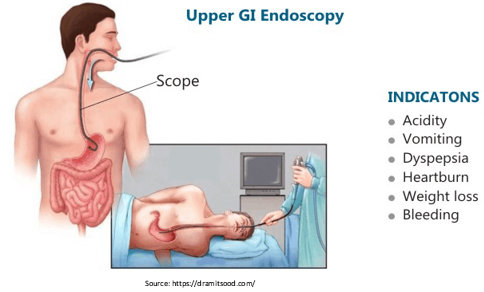**1. Endoscopic ultrasound examination** It employs ultrasound waves to create images that can identify cancer in the oesophagus, stomach, or duodenum walls. This examination can accurately anticipate the depth of cancer invasion and identify questionable lymph nodes with biopsy. **2. CT/PET scan** If cancer has spread to other body parts, the doctor can determine it via computer tomography (CT) and/or positron emission tomography (PET) scanning. **3. Bronchoscopy** It helps determine whether or not the trachea (windpipe) is involved. **4. Laparoscopy** The surgeon performs laparoscopy before undergoing a major resection to check if cancer has spread into the abdominal cavity. After diagnosis, Dr. Sandeep Nayak determines the most suitable and effective stomach and esophageal cancer treatment in Bangalore, India, depending on the type and stage of gastro-esophageal/upper GI cancer. **Now, let’s discuss more about,** Stomach and Esophageal Cancer Treatment Dr. Sandeep Nayak puts his patients’ health and well-being above everything else. Being a well-qualified and experienced oncologist in India, he offers convenient, safe, and effective stomach and esophageal cancer treatment in Bangalore. Treatment for stomach and esophageal cancers is determined mainly by the tumor’s size and location and if cancer has spread to other parts of the body. One or more of the following treatments may be included in each treatment plan: ### **Surgery** 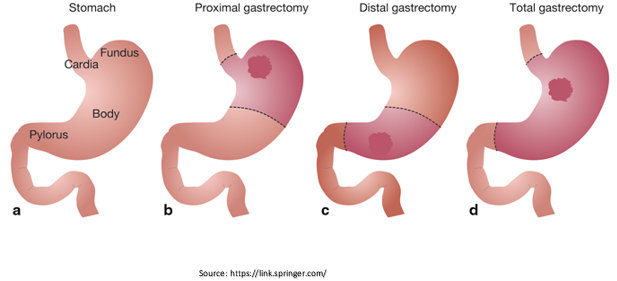 Dr. Sandeep Nayak, a skilled surgical oncologist in Bangalore, India, has immense [expertise ](https://drsandeepnayak.com/expertise/)in executing cancer surgery with minimally invasive procedures that result in shorter hospital stays and faster recovery times. A gastrectomy is a surgery that offers the best probability of recovery. Types of gastrectomy include: **1. Partial gastrectomy** It involves removing a portion of the stomach, leaving a part of the stomach connected to the small intestine. **2. Subtotal gastrectomy** Surgeons employ subtotal gastrectomy (removal of a portion of the stomach) for cancer in the upper section of the stomach. **3. Total gastrectomy** The surgeon removes the stomach entirely and connects the oesophagus to the small intestine in this surgery. Patients can consume smaller meals and live a regular life despite not having a stomach. Lymph nodes in the surrounding area are removed (lymphadenectomy) and checked for malignancy. The surgeon removes the cancerous areas with an endoscope in a procedure called “endoscopic mucosal resection.” ### Minimally invasive surgery 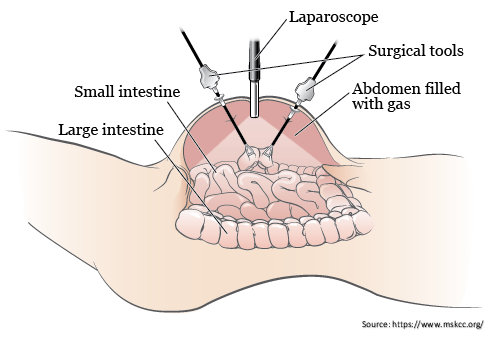 - The use of small incisions in minimally invasive surgery (laparoscopy or robotic) is related to decreased postoperative pain, shorter hospital stays, and faster return to work. - The surgeon inserts a laparoscope, a narrow, illuminated tube with a video camera at its tip through a small incision in the abdominal wall. A big viewing screen projects the image. - The surgeon can work with specially developed surgical instruments positioned through further small incisions, guided by this vastly enlarged view. - Minimally invasive surgery can be done to remove stomach tumours or even the entire stomach in some patients. ### Esophagectomy An esophagectomy is a surgery that removes part or all of the oesophagus to treat esophageal cancer. When cancer has spread to the upper section of the stomach, it must also be removed. There are now new minimally invasive esophagectomy procedures available. #### **Other treatments** **Chemotherapy:** It is a type of treatment that employs medications to kill malignant cells and is frequently combined with surgery. It could potentially be used to shrink the tumour before surgery. [**Targeted therapy:**](https://www.cancer.org/cancer/managing-cancer/treatment-types/targeted-therapy.html#:~:text=Targeted%20therapy%20is%20a%20type,%2C%20surgery%2C%20or%20radiation%20therapy.) It involves the administration of medications that attack malignant cells while having fewer side effects. **Radiation:** A machine emits high-energy X-rays on the body that kill malignant cells without the side effects of medications. We can assist you or a loved one who has been diagnosed with esophageal or stomach cancer. Our expert surgical oncologist, Dr. Sandeep Nayak, offers mini-invasive and result-oriented stomach or esophageal cancer treatment in Bangalore, India. --- ### [Pancreatic and Bile Duct Cancer Treatment in Bangalore, India](https://drsandeepnayak.com/services/pancreatic-and-bile-duct-cancer/) **Published:** May 28, 2024 **Author:** Dr. Sandeep Nayak **Content:** Pancreatic and Bile Duct Cancer Treatment in Bangalore, India Cancers of the pancreas and bile ducts are challenging to treat as they are rarely identified early on when they are most treatable. This is due to the fact that they frequently do not present symptoms until they have metastases to other organs. To treat these types of cancer, you need complex treatment plans and a well-experienced oncologist. Dr. Sandeep Nayak, an internationally recognized [cancer specialist in Bangalore,](https://drsandeepnayak.com/oncologist-in-bangalore/) India, has the required expertise and in-depth knowledge to provide comprehensive pancreatic and bile duct cancer treatment in Bangalore, India. He makes sure that each patient has the optimum treatment plan and gets the best care possible. In his career spanning more than 15 years, he has successfully treated thousands of patients and given them a new lease of life. Dr. Sandeep Nayak is a pioneer of many revolutionary surgical approaches and is considered one of the best [oncologist in India](https://drsandeepnayak.com/). He has extensive experience and training in minimally invasive cancer surgery, including laparoscopic, endoscopic, and robotics. This page provides detailed information about the symptoms, causes, and pancreatic and bile duct cancer treatment in Bangalore, India. Pancreatic Cancer ** ### Overview about the pancreas The pancreas is a pear-shaped organ that is about 6 inches long. It is located behind the lower section of your stomach. It produces hormones that manage blood sugar and release enzymes that help digest and absorb nutrients. The pancreas can be affected by various tumors, both malignant and noncancerous. The treatment for pancreatic cancer is determined by cancer’s stage and includes surgery, radiation therapy, chemotherapy, or a combination of these treatments. What are the symptoms of pancreatic cancer? Pancreatic cancer symptoms mostly do not appear until the disease has progressed. They may include the following: - Unexplained weight loss and lack of appetite - Abdominal pain that extends to the back - Dark-colored urine - Light-colored stools - Jaundice - Itchy skin - Fatigue - Nausea, vomiting - Blood clots - Uncontrolled diabetes or newly diagnosed diabetes If you experience any of these symptoms, visit your doctor, as a variety of other disorders can cause these symptoms, and your doctor may check for them as well as pancreatic cancer. What are the causes of pancreatic cancer? The cause of pancreatic cancer is unknown. Some aspects, such as smoking and having specific hereditary gene mutations, have been identified as potentially increasing the risk of this type of cancer. Pancreatic cancer develops when the DNA of cells in your pancreas mutates. These mutations cause the cells to multiply out of control and live long after normal cells would have died. These multiplying cells have the potential to create a tumor. If left untreated, pancreatic cancer cells can spread to blood vessels, surrounding organs, and distant parts of the body. Most pancreatic cancer starts in the cells that line the pancreatic ducts and are referred to as pancreatic adenocarcinoma. Islet cell tumors, pancreatic neuroendocrine tumors, and pancreatic endocrine cancer develop in the neuroendocrine cells or hormone-producing cells. ### **The following factors may raise your risk of pancreatic cancer:** - Diabetes - Obesity - Pancreatitis - Smoking - Advanced age - Family history of Lynch syndrome, FAMMM syndrome, and BRCA2 gene mutation - Being exposed to certain chemicals - Family history of pancreatic cancer How is pancreatic cancer diagnosed? Early detection raises the chances of a successful recovery. That’s why, if you detect any unusual symptoms, you should consult a doctor as soon as possible, especially if you have any risk factors for pancreatic cancer. Dr. Sandeep Nayak, one of the best oncologist in Bangalore, will examine your symptoms and medical history to diagnose. He may ask you to undergo one or more tests to look for pancreatic cancer, like: - MRI or CT scan - Blood test to check for tumor marker CA 19-9 - Endoscopic ultrasound - Biopsy of the pancreas Once the diagnosis for pancreatic cancer is confirmed, Dr. Sandeep Nayak will assign a stage to your pancreatic cancer based on the results of staging tests, which helps him plan the appropriate treatments that are most likely to help you. Roman numerals ranging from 0 to IV are used to denote the stages of pancreatic cancer. Stage I indicates the malignancy is restricted to the pancreas, whereas stage IV suggests that cancer has progressed to other places. Pancreatic cancer treatment in Bangalore, India During your pancreatic cancer treatment in Bangalore, India, the main focus of the oncologist will be to eliminate malignant cells and prevent cancer from spreading. Dr. Sandeep Nayak, a prominent cancer specialist in Bangalore, will determine the optimal treatment option based on the location and stage of cancer, overall health, and personal preferences. ### Surgery: #### **Surgery for a tumor in the head of the pancreas** 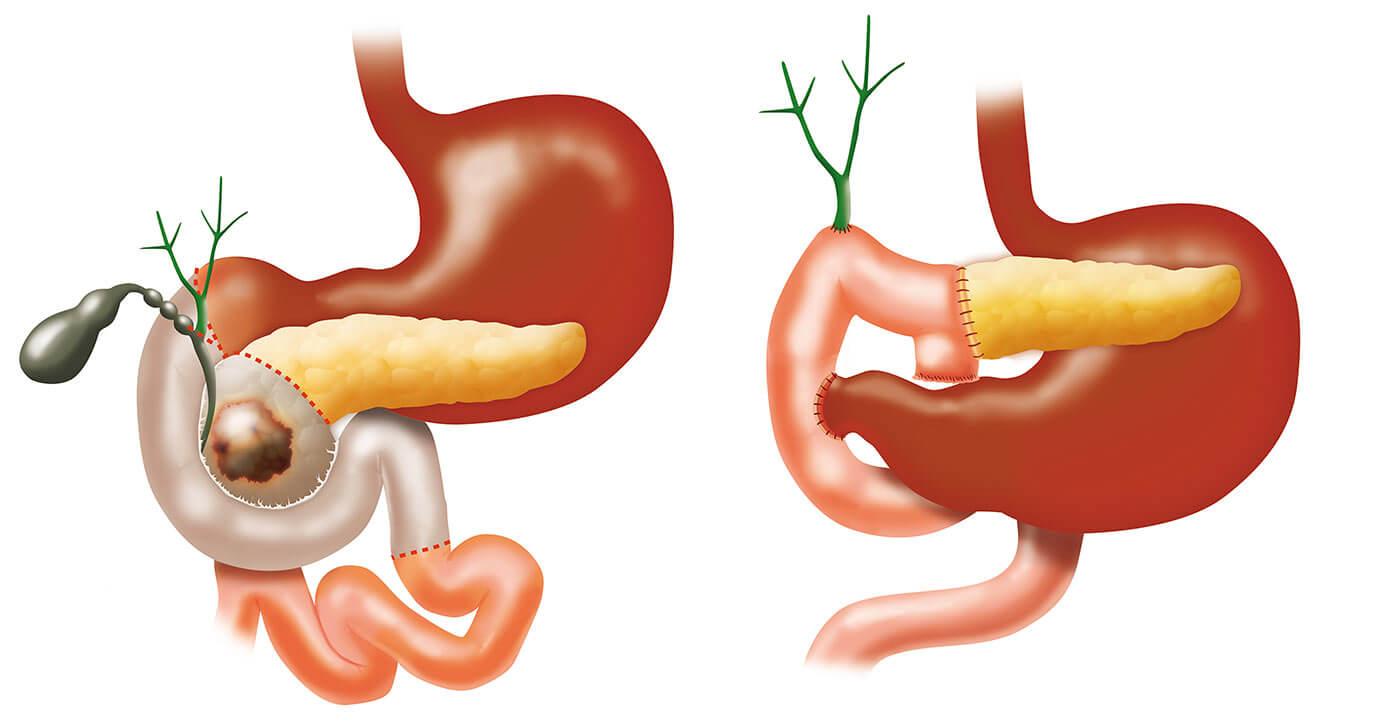If your cancer is in the head of your pancreas, you might want to consider a Whipple procedure (pancreaticoduodenectomy). The Whipple procedure involves removing the head of the pancreas, the gallbladder, the first part of the small intestine (duodenum), a portion of the bile duct, and nearby lymph nodes in a technically complex procedure. The surgeon may also remove a portion of the stomach and colon in some cases. To allow you to digest food, your surgeon reconnects the remaining sections of your pancreas, stomach, and intestines. Dr. Sandeep Nayak was one of the first surgical oncologist in India to perform a robotic Whipple procedure in the country. Undergoing this procedure using laparoscopic and robotic methods enhances recovery. #### **Surgery for a tumor in the body and tail of the pancreas** The surgeon will perform a distal pancreatectomy to remove the pancreas’ body and tail (left side). He may also have to remove your spleen. #### **Surgery to remove the whole pancreas** In some cases, total pancreatectomy is required, wherein the surgeon will remove your entire pancreas. It is possible to live a relatively normal life without a pancreas, but you will need enzyme and insulin replacement for the rest of your life. ### **Radiation therapy** It uses high-energy beams of X-rays and protons to eliminate cancer cells. ### **Chemotherapy** The oncologist will use anticancer medications to kill cancer cells and prevent them from multiplying in the future. ### **Immunotherapy** Different methods are utilized to activate your immune system to attack cancer. ### **Targeted therapy** The oncologist will use antibodies and medications to specifically target cancer cells in this treatment. Targeted therapy does not harm other cells, unlike radiation therapy and chemotherapy. Dr. Sandeep Nayak, one of the [best oncologist in Bangalore](https://drsandeepnayak.com/), India, believes in providing customized treatments to his patients for better outcomes. He may suggest combining various treatments like chemotherapy prior to surgery in some cases. Treatment choices for advanced-stage pancreatic cancer may focus on pain reduction and keeping symptoms manageable. Bile Duct Cancer ### Overview of bile duct Bile duct cancer, commonly known as cholangiocarcinoma, begins in the bile duct. It is a rare cancer that’s generally fatal. It’s helpful to understand the bile ducts and what they do in order to comprehend this cancer. The bile ducts are a network of tiny tubes from the liver to the small intestine. Their primary function is to let bile from the liver and gallbladder flow into the small intestine, where it aids in the digestion of fats in the food. Dr. Sandeep Nayak is a leading [surgical oncologist in India](https://drsandeepnayak.com/) who is exceptionally experienced in providing the most advanced bile duct cancer treatment in Bangalore, India. He is well-versed in open, laparoscopic, endoscopic, and robotic surgeries. ### Types of Bile Duct Cancer **Oncologists diagnose bile duct cancer according to where it begins:** **Extrahepatic (outside your liver) –** This type of cancer is more common and is easier to treat. It can develop in one of the two places. - Perihilar cancer occurs in the hilum area, which is the junction of the left and right bile ducts that forms the common hepatic duct. - Distal cancer develops in the distal portion of your pancreas, where your common bile duct passes through. **Intrahepatic (inside your liver) –** This type accounts for 5% to 10% of all bile duct cancer. What are the symptoms of bile duct cancer? The symptoms include: - Weakness - Pain in the abdomen and sides - Weight loss and lack of appetite - Fever - Jaundice - Dark urine - Light-colored stools - Itching - Upset stomach - Vomiting What are the causes of bile duct cancer? The exact cause of bile duct cancer is unknown. According to research, several factors can increase your chances of having it, such as long-term inflammation caused by disorders like: - Bile duct stones - Liver fluke infection - Primary sclerosing cholangitis - Choledochal cysts - Reflux - Diabetes - Cirrhosis - Inflammatory bowel diseases such as ulcerative colitis and Crohn’s disease - Viral hepatitis - Obesity How is bile duct cancer diagnosed? Dr. Sandeep Nayak, one of the [best oncologist in Bangalore](https://drsandeepnayak.com/), India, will perform a physical examination. He will inquire about your overall health, liver disease, family history of cancer, and your habits, such as drinking and smoking. He will also examine your stomach for tumors, fluid build-up, and discomfort. ### **Doctor may ask you to undergo a few tests from the ones given below:** - Blood tests to check for tumor markers and liver functioning - MRI or CT scan - Abdominal ultrasound - Endoscopy - Magnetic resonance cholangiopancreatography - Cholangioscopy - Percutaneous transhepatic cholangiography - Biopsy - Laparoscopy Bile duct cancer treatment in Bangalore, India The location and size of your tumor, overall health, and whether it has metastasized will all influence your treatment. Surgery Surgical treatment is the only way to cure cancer, especially if it is detected early and has not progressed beyond the liver or bile ducts. If the tumor is still contained within the bile ducts, Dr. Sandeep Nayak will only remove your ducts. Suppose cancer has gone beyond the ducts into your liver, then the surgical oncologist in India may have to remove a part or all of your liver. You will require a [liver transplant ](https://www.hopkinsmedicine.org/health/treatment-tests-and-therapies/liver-transplant)if your complete liver has to be removed. Dr. Sandeep Nayak will use the Whipple procedure if your cancer has spread to adjacent organs. During this surgery, he will remove the bile ducts, pancreas, gallbladder, a part of your stomach, and intestines. Even if your cancer is incurable, you may be able to have surgery to clear your bile ducts and alleviate some of your symptoms. Generally, the cancer specialist in Bangalore, India, either implants a tube or develops a bypass to keep the duct open. It may aid in the treatment of your jaundice. He may conduct a surgical procedure to clear a blocked part of the intestine. Following your operation, you may require chemotherapy or radiation treatments. Why choose Dr. Sandeep Nayak for pancreatic and bile duct cancer treatment in Bangalore, India? - Through innovative and revolutionary surgical procedures, [Dr. Sandeep Nayak](https://drsandeepnayak.com/) strives hard to increase survival rates of pancreatic and bile duct cancer. - He and his team of experienced cancer specialists in Bangalore work together to provide a multidisciplinary approach to better treatment prospects and outcomes. - Dr. Sandeep Nayak, one of the [best oncologist in India](https://drsandeepnayak.com/), does not just offer the latest cutting-edge treatments and techniques but pioneers them. - With world-class expertise and care, he and his team will manage every step of your pancreatic and bile duct cancer treatment in Bangalore, India. --- ### [Thyroid Cancer Treatment In Bangalore](https://drsandeepnayak.com/services/thyroid-cancer-treatment-in-bangalore/) **Published:** May 29, 2024 **Author:** Dr. Sandeep Nayak **Content:** Thyroid Cancer Treatment In Bangalore Thyroid cancer develops in the thyroid, a butterfly-shaped gland at the front base of the neck. The thyroid gland releases hormones that regulate your metabolism, body temperature, blood pressure, and heart rate. [Thyroid cancer](https://thyroidcancers.in/) which belongs to the group of endocrine cancer, responds well to treatment and has a good cure rate. Dr. Sandeep Nayak, a renowned [surgical oncologist in India](https://drsandeepnayak.com/), offers comprehensive thyroid cancer treatment in Bangalore. He excels in the latest surgical modalities, such as laparoscopic and [robotic surgeries](https://drsandeepnayak.com/services/robotic-cancer-surgery-in-bangalore-india/). He firmly believes that minimally-invasive procedures offer patients better outcomes, less trauma, and quicker return to daily life. That’s why he keeps researching and developing newer surgical techniques. Robotic-Assisted Breast Axillo Insufflate Thyroidectomy (RABIT), which he invented, is a perfect alternative to open thyroid cancer surgery. This minimal access procedure offers greater precision, accuracy, and fewer scars. His expertise, experience, and in-depth knowledge has gained him respect and recognition as one of the best oncologist in Bangalore, India. **Read on to learn about** The different options for Thyroid Cancer Treatment in Bangalore  Your thyroid cancer treatment will depend on the type, stage, and location of your tumor, plus your age, overall health, and preference. The majority of patients diagnosed with thyroid cancer have an excellent prognosis because most thyroid tumors are curable with treatment. Your thyroid cancer treatment will depend on the type, stage, and location of your tumor, plus your age, overall health, and preference. The majority of patients diagnosed with thyroid cancer have an excellent prognosis because most thyroid tumors are curable with treatment. ### **1. Surgery** Surgery is the first line of treatment for most thyroid cancer patients. The surgeon may remove the entire thyroid gland (thyroidectomy) or just a portion (lobectomy), depending on the type and size of your thyroid cancer and whether it has spread to your lymph nodes. Dr. Sandeep Nayak, a leading cancer specialist in Bangalore, invests time in discussing the treatment plan with his patients to help them make informed decisions. ### **2. Conventional open surgery (Thyroidectomy)** During open thyroidectomy, the surgeon will make an incision about 8 to 15 cm long in the lower section of your neck to remove the thyroid gland. It can either be total thyroidectomy or hemithyroidectomy, depending on your cancer stage. This procedure leaves behind a long visible scar in the front of the neck, which many patients want to avoid. ### **3. Robotic-Assisted Breast Axillo Insufflate Thyroidectomy (RABIT)** RABIT is an advanced procedure performed using Da Vinci Xi robotic machine to remove thyroid cancer. It is an alternative to open thyroid cancer surgery. In this procedure, the surgeon makes small incisions to access the thyroid gland by lifting the breast skin. [Robotic surgery](https://drsandeepnayak.com/blogs/robotic-surgery-for-cancer-treatment-what-you-need-to-know/) provides high-definition 3D images that help the surgeon operate with precision and preserve the vital structures and nerves around the thyroid. This procedure does not leave any scars on the neck. Dr. Sandeep Nayak, a robotic and [laparoscopic](https://drsandeepnayak.com/services/laparoscopic-cancer-surgery-in-india/) surgical oncologist in India, has performed more than 500 surgeries for benign and cancerous thyroid tumors. ### **4. Minimally Invasive Thyroid Surgery (MITS)** MITS is similar to open thyroidectomy, with the only difference being the length of the incision on the neck, which is less than 6 cm. The rest of the process is carried out in the same way as a traditional thyroidectomy. This surgery offers better cosmesis and lesser discomfort due to the smaller incision. ### **5. Laparoscopic Thyroid Surgery (Endoscopic)** Endoscopic thyroidectomy, also referred to as minimally invasive video-assisted thyroidectomy, is an advanced surgical procedure where the surgeon operates through small incisions in the axilla (armpit). The video camera provides the surgeon with a magnified vision of the structures, making it easier to carry out dissection. The axillary approach helps carry out total thyroidectomy and remove large thyroid nodules. Dr. Sandeep Nayak, a highly qualified surgical oncologist in India, is an expert in all the above surgical modalities. He is known to provide excellent thyroid cancer treatment in Bangalore and has patients visiting him from all over the world. ### **6.Thyroid Hormone Therapy** After the thyroid surgery, your body will no longer produce thyroid hormones naturally and will have to be replaced with thyroid replacement hormone therapy for the rest of your life. This medication is usually in pill form. ### **7. Radioactive Iodine Therapy** During radioactive iodine treatment, you are made to swallow a liquid or capsule with high doses of radioactive iodine. It helps to destroy the thyroid cancer cells that may exist after the surgery. It is mainly used to treat those thyroid cancer shaving a risk of metastasizing. The treatment is safe as the radioactive iodine is mainly absorbed by the thyroid cancer cells, and there is a minimum risk of radiation exposure to the other cells in your body. ### **8. Radiation Therapy** The oncologist may suggest radiation therapy if other treatments do not work or cancer returns. Radiation destroys and stops the growth of cancer cells. External radiation therapy is given through machines that deliver high-energy proton or x-ray beams directed to the tumor. ### **9. Chemotherapy** Chemotherapy uses different types of drugs to kill cancer cells. It is given orally or intravenously. Chemotherapy helps manage fast-growing thyroid cancer, such as anaplastic thyroid cancer. ### **10. Targeted Drug Therapy** Targeted drug therapy kills cancer cells by blocking specific chemicals found in them. There are several targeted therapy drugs available for thyroid cancer. Some drugs stop cancer cells from creating blood vessels that deliver the nutrients necessary for the cells to survive. Others focus on certain gene changes. Your doctor will decide which one is appropriate for you with the help of special tests. **Now that you know of all the options available for thyroid cancer treatment in Bangalore let us focus on the diagnosis, symptoms, and risk factors of thyroid cancer.** How is Thyroid Cancer Diagnosed? Dr. Sandeep Nayak, a well-known [oncologist in India,](https://drsandeepnayak.com/) will ask you to undergo a few of the tests below to determine whether you have thyroid cancer or any other ailment. 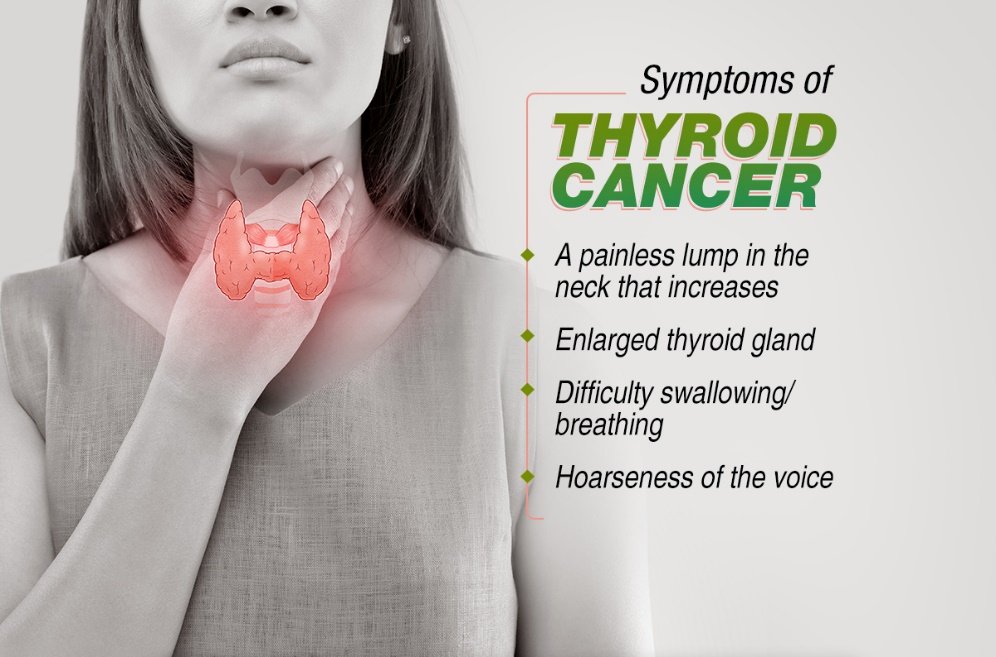**The tests include:** - Physical exam - Blood tests - Genetic tests - Biopsy - Ultrasound - Radioiodine scan - CT scan - PET scan What are the different types of Thyroid Cancer? **There are four main types of thyroid cancer:** - Papillary thyroid cancer - Follicular thyroid cancer - Medullary cancer - Anaplastic thyroid cancer What are the Symptoms of Thyroid Cancer? In the early stages, thyroid cancer does not cause any signs or symptoms. As it grows, it may cause the following problems: - Pain in your throat and neck - Lump in your neck, which you can feel through the skin - Difficulty in swallowing - Change in the voice, hoarseness - Swelling in the nymph nodes in the neck - Cough If you notice any of the above symptoms, please get them checked by your doctor. Early diagnosis results in timely treatment and better outcomes. What are the Causes of Thyroid Cancer? The cause of thyroid cancer is unknown. However, a few factors can increase your risk of getting it. - Iodine deficiency - Inherited genetic syndrome - Radiation exposure - Enlarged thyroid - Obesity - [Thyroiditis](https://www.webmd.com/a-to-z-guides/what-is-thyroiditis) Women are three times more prone to get thyroid cancer than men. It can affect people of all ages, children included. But usually, it affects women in the age group of 40 to 50 and men in the age group of 60 to 70. Follow-up after your Thyroid Cancer Treatment [Dr. Sandeep Nayak,](https://drsandeepnayak.com/dr-sandeep-nayak/) an expert cancer specialist in Bangalore, India, always asks his patients to be very particular about follow-up visits and tests. This helps the doctor monitor your health and watch for signs that indicate your cancer has returned. You will have to visit the doctor at least twice a year for a check-up. Frequently Asked Questions What is the survival rate of thyroid cancer? The overall survival rate for thyroid cancer is high, around 98% at five years after diagnosis. However, survival rates vary based on factors like cancer stage, subtype, and individual health. Does thyroid cancer spread quickly? Thyroid cancer typically spreads slowly, but its progression can vary depending on the type and stage. Papillary thyroid cancer, the most common type, generally has a good prognosis with a low likelihood of spreading rapidly. --- ### [Oral Cancer Treatment in Bangalore](https://drsandeepnayak.com/services/oral-cancer-treatment-in-bangalore/) **Published:** May 28, 2024 **Author:** Dr. Sandeep Nayak **Content:** Oral Cancer Treatment in Bangalore Oral cancer, also known as mouth cancer, belongs to the head and neck cancers group. It can occur on the tongue, lips, the floor of the mouth, cheeks and hard palate. If not detected and treated early, it can be fatal. Oral cancer is the sixth most prevalent cancer globally but one of the most common cancers in India. It accounts for 30% of all cancers. About 1,36,000 new cases are reported annually in India, and around 57000 deaths due to oral cancer. If diagnosed early, doctors can treat oral cancer effectively, but sadly most of the time, it is discovered when it is in the advanced stage. The key to surviving oral cancer is early detection. For oral cancer treatment, Dr. Sandeep Nayak, Chairman, Oncology Services, Karnataka (India) is one of the most sought-after [oncologists in Bangalore, India.](https://drsandeepnayak.com/oncologist-in-bangalore/) He has more than fifteen years of extensive knowledge and hands-on experience in treating a high volume of patients with various types of cancers. He is recognized as one of the[ best oncologist in India ](https://drsandeepnayak.com/oncologist-in-bangalore/)for his accurate diagnoses and innovative surgical approach that gives his patients a fighting chance at survival. **Read on to know the symptoms, risks, and options for oral cancer treatment in Bangalore** What are the symptoms of oral cancer? **The symptoms of oral cancer are:** - A reddish or white patch inside your mouth - A growth or mass in your mouth - A sore inside your mouth or lips that won’t heal - Loose teeth along with a wound - Difficulty or discomfort in swallowing, speaking, chewing, or moving the tongue - Bleeding from the mouth - Feeling that there is something stuck in the back of the throat - Numbness in the face, chin, neck, lower lip What are the risk factors for oral cancer? The use of tobacco is one of the main risk factors for oral cancer. It could be in any form, chewing tobacco, cigarettes, beedis, cigars, hookahs, e-cigarettes, paan, gutkha, pan masala, etc. **Other risk factors are:** - Poor oral hygiene - Previously diagnosed with [oral cancer](https://drsandeepnayak.com/blogs/busting-myths-about-oral-cancer/) - Heavy consumption of alcohol - Sharp tooth - Human papillomavirus infection - Excessive facial sun exposure The risk increases even more if you frequently consume a substantial amount of tobacco and alcohol. They together contribute to about 70% of oral cancer cases. According to the Global Adult Tobacco Survey India, 35% of adults in our country consume tobacco in some way or other. How is oral cancer diagnosed? You should consult your dentist or doctor if you experience persistent signs or symptoms for more than two weeks. They will check your mouth for lumps, sores, discolored tissues, irregular tissue growth, or lesions. If they find anything suspicious, they will perform a brush or tissue biopsy to check for cancerous cells. In case the diagnosis is confirmed, they will refer you to a surgical oncologist. Dr. Sandeep Nayak is one of the best oncologist in Bangalore for oral cancer. During the consultation, he may perform a physical examination and ask you to undergo additional tests such as: - **X-rays:** To check if cancer has spread to the jaws, lungs, or chest. - **Pet scan:** To verify if the cancer cells have reached the lymph nodes or other organs. - **CT scan:** It helps detect tumors elsewhere in the body. - **MRI:** It captures accurate images of the head and neck region to help determine the stage of cancer. - **Endoscopy:** A thin, flexible tube with a camera and light is passed through your throat to check for signs of cancer in your windpipe, inner throat, nasal passage, and trachea. Stages of oral cancer are marked by the Roman numerals I to IV. Stage 1 indicates small cancer localized in one region, whereas stage IV signifies a more aggressive cancer that has spread to other body parts. What are the options for oral cancer treatment in Bangalore, India? Dr. Sandeep Nayak will plan your treatment based on the stage of your cancer, its type, location, overall health, and preference. The treatment may include surgery, radiation, and chemotherapy. **1. Surgery –** Surgery is usually the first line of treatment to remove the tumor. Depending on the tumor size, Dr. Sandeep Nayak, will discuss with you the optimum procedure for you. For small sized cancer, the surgery would involve removal of the tumor along with healthy margin around it. The surgeon can use robotic [neck dissection](https://macsforcancer.com/for-patient/neck-dissection/) or MIND technique to make the surgery less painful with quick recovery for the removal of neck lymphnodes. When the cancer is large, the surgeon will use extensive surgery to remove a large tumor, which may involve removing a part of your tongue or jawbone along with cancer. If cancer cells have reached the lymph nodes in the neck, the surgeon will surgically remove the lymph nodes and the surrounding tissues from the neck. After the procedure to remove oral cancer, your surgeon may ask you to undergo reconstructive surgery to rebuild your mouth if necessary. Bone, skin, and muscle grafts will be used from other parts of your body to reconstruct your mouth. These are called flap which can be microvascular or free flaps or pedicled flaps. Dr. Sandeep Nayak, an ace [surgical oncologist in India](https://drsandeepnayak.com/), specializes in endoscopic, [laparoscopic](https://drsandeepnayak.com/services/laparoscopic-cancer-surgery-in-india/), and robotic surgery. He is an expert in [TORS (transoral robotic surgery)](https://drsandeepnayak.com/services/trans-oral-robotic-surgery-in-india/), a safe procedure for hard-to-reach cancers at the back of the throat, tonsil, or base of the tongue. **2. Radiation therapy –** Radiation therapy involves using high-concentration energy beams to destroy cancer cells or [prevent cancer](https://drsandeepnayak.com/blogs/top-10-ways-to-prevent-oral-cancer/) cells from growing. Radiation can either be given from a machine outside your body or internally by using radioactive wires or seeds kept near your cancer. **3. Chemotherapy –** Chemotherapy uses drugs to eliminate cancer cells. It is given to you orally, through an injection, or intravenously. It is often combined with radiation therapy to increase the effectiveness of the treatment. **4. Targeted therapy –** [Targeted therapy](https://www.webmd.com/cancer/targeted-therapy-cancer) is an advanced treatment option for oral cancer treatment in Bangalore if other treatments are not working. This treatment alters specific proteins on cancer cells to interfere with their growth. Your oncologist can use it for early or advanced cancer. **5.Immunotherapy-** Immunotherapy is usually reserved for advanced oral cancer that has failed to respond to standard treatments. This therapy uses your immune system to attack cancer cells and eliminate them. FREQUENTLY ASKED QUESTIONS How to detect oral cancer early? You must conduct a self-exam of your mouth at least once a month. You should look out for any sore, lump, or lesion in your mouth by thoroughly checking your gums, tongue, cheeks, and the roof and floor of your mouth. Also, feel for lumps in your neck and lower jaws. If you find any symptoms mentioned above, consult your dentist immediately. Further, it would help if you went to your dentist for oral cancer screening annually. It will help detect cancer in an early stage where it is easily treatable. What is the survival rate of oral cancer? **The 5-year survival rate for:** - Localizedoral cancer is 84% - Cancer that has spread to nearby lymph nodes is 65% - Cancer that has spread to other organs is 38% --- ### [Kidney Cancer Treatment](https://drsandeepnayak.com/services/kidney-cancer-treatment-in-bangalore-india/) **Published:** May 27, 2024 **Author:** Dr. Sandeep Nayak **Content:** Kidney Cancer Treatment in Bangalore, India Kidney cancer, or renal cancer, poses a notable health challenge in India. As per GLOBOCAN 2020 data, kidney cancer is: - The 14th most common cancer in terms of new cases - The 15th leading cause of cancer-related fatalities in India Dr. Sandeep Nayak, a renowned [surgical oncologist in Bangalore](https://drsandeepnayak.com/), emphasizes the challenges posed by this disease: “The impact of kidney cancer on individuals and their families can be profound. Kindey cancer is often discovered in ultrasound scans of abdomen done for other reasons. Patients and relatives are often worried about loosing their kidney. Early detection and advanced treatment options are crucial for improving outcomes. We can save the kidney of many of our patients using advanced techniques and technologies.” Dr. Nayak founded MACS Clinic, a dedicated facility for innovative cancer treatment in Bangalore. Are you seeking advanced kidney cancer treatment in India a certified cancer specialist for guidance and support. Consult ***But what exactly is kidney cancer? Let’s delve into understanding kidney cancer!*** Kidney Cancer Overview The kidneys serve as the body’s natural filtration system. They ensure optimal functioning and waste removal to support well-being by: - filtering waste products and excess fluids from the blood to form urine - helping regulate blood pressure and balancing electrolytes - producing red blood cells and supporting bone health by activating vitamin D Kidney cancer begins in the lining of small tubes in the kidney called renal tubules. It develops when the healthy cells start growing out of control and turn cancerous. As the cells multiply, they form a tumor within the kidney, which, if left untreated, can destroy the entire kidney and spread to other parts.  According to studies, [Renal (Clear) cell carcinoma](https://drsandeepnayak.com/blogs/understanding-metastatic-renal-cell-carcinoma-symptoms-treatments/) (RCC) is the most common kidney cancer, with an estimated occurrence of around 2/100,000 males and 1/100,000 females. ***Let’s uncover the symptoms and causes associated with this challenging condition.*** Kidney Cancer – Symptoms Here are some critical [kidney cancer symptoms](https://drsandeepnayak.com/blogs/what-early-symptoms-indicate-kidney-cancer/) to watch for: Kidney cancer causes symptoms only it is large. There are no symptoms when it is small. - Hematuria (blood in the urine) is one of the most common symptoms, with the urine appearing pink, red, or cola-colored - Discomfort or pain in the lower back (just below the ribs) that persists despite rest or changes in position - Swelling in the legs or ankles due to fluid retention may occur as kidney cancer progresses Other non-specific symptoms can be: - Losing weight without trying can be a red flag for various health concerns, including kidney cancer - Persistent feelings of cough, tiredness or weakness despite adequate rest - A sudden decrease in appetite or feelings of fullness after eating small amounts Kidney Cancer – Causes The exact causes of kidney cancer remain elusive. But, certain factors can heighten the risk for some individuals: - Tobacco use, including smoking cigarettes or cigars, significantly increases cancer risk in various organs, including the kidneys, breast, and [lungs](https://drsandeepnayak.com/blogs/connection-between-smoking-and-lung-cancer/) - Prolonged exposure to chemicals like arsenic, asbestos, cadmium, and organic solvents or metal degreasers - Studies show that genes play a crucial role in the occurrence of all cancers, including the kidney, breasts, [prostate](https://drsandeepnayak.com/services/prostate-cancer-treatment-in-bangalore/), [ovaries](https://drsandeepnayak.com/services/ovarian-cancer-treatment-in-bangalore-india/), etc. A genetic condition called vHL syndrome is known to lead to RCC. - Being overweight imposes additional strain on the body’s systems increasing the risk for various conditions, including kidney, [breast](https://drsandeepnayak.com/services/breast-cancer-treatment-in-bangalore/), [uterine](https://drsandeepnayak.com/services/uterus-cervical-cancer/), liver cancer, etc. - Hypertension, if left unmanaged, can damage blood vessels, contributing to the onset of kidney cancer - Men are statistically more prone to developing kidney cancer than women Are you concerned that you may have potential risk factors? [Seek](https://drsandeepnayak.com/contact/) timely medical evaluation to safeguard your health. ***Next, let’s delve into the diagnostic tests to confirm the presence of kidney cancer.*** Tests Used To Diagnose Kidney Cancer A skilled surgical oncologist relies on a range of tests to accurately diagnose kidney cancer. Here are some of the vital diagnostic tests used: ### Computed tomography (CT) Scan: Contrast enhanced computed tomography (CT) scans is the diagnostic test for kidney tumors. This scan tell if the tumor is a cancer with high accuracy rate. No other investigations are required. They provide detailed images of the kidneys and surrounding structures to help identify abnormalities or tumors. The CT scan is also useful in helping in deciding if kidney can be saved by performing partial nephrectomy, a procedure to save the kidney that is often performed robotically. ### Biopsy: A biopsy is NEVER performed for Kidney tumors are CT scan itself gives very good accuracy of diagnosis. The tumor is sent for testing after surgery which confirms the type of cancer. ### Blood Tests: Blood tests may include complete blood count (CBC), renal function tests, and tests for specific markers associated with kidney cancer. These are part of routine tests. Please note that we have 2 kidneys. The renal function test (RFT) which is a test to detect function of kidney may not be altered in kidney cancer unless both the kidneys are damaged. ***Next, let’s delve into the diagnostic tests to confirm the presence of kidney cancer.*** Kidney Cancer Staging **Stage I:** The cancer is small (7cm or smaller) and confined only to the kidney. **Stage II:** The tumor is more significant but still contained within the kidney. **Stage III:** At this stage, the cancer has spread to nearby lymph nodes or surrounding tissues. **Stage IV:** The cancer has extended to distant organs such as the bones, [lungs](https://drsandeepnayak.com/services/lung-cancer-treatment-in-bangalore/), [liver](https://drsandeepnayak.com/blogs/understanding-metastatic-renal-cell-carcinoma-symptoms-treatments/), or brain. Are you looking for comprehensive kidney cancer treatment in Bangalore, India? to an experienced oncological team for personalized treatment plans. Reach out ***It’s time to examine the surgical and nonsurgical approaches to treat kidney cancer.*** Kidney Cancer – Treatment Options Treatment choice depends on factors such as the cancer stage, patient health, and individual preferences. Here are the surgical and nonsurgical approaches: ### **Surgical Approaches** Dr. Sandeep Nayak employs cutting-edge minimally invasive techniques like laparoscopic surgery and robot-assisted surgery for kidney cancer treatment in India. Laparoscopic Surgery is performed through small incisions using specialized tools and a camera. It results in quicker recovery and less post-operative pain. Robot-assisted Surgery involves the surgeon controlling robotic arms equipped with surgical instruments from a console for enhanced precision and control. With state-of-the-art technology, MACS Clinic is among the preferred facilities for kidney cancer treatment in Bangalore, India. The two primary minimally invasive surgeries used here are: ### Robotic or Laparoscopic Nephron Sparing Surgery (NSS) Partial nephrectomy or **Nephron Sparing Surgery** involves removing only the tumor and a small portion of healthy tissue surrounding it. It is an effective option for smaller tumors while preserving the rest of the kidney. ### Robotic or Laparoscopic Radical Nephrectomy (RN) Radical nephrectomy removes the entire affected kidney with its surrounding fat. Despite the removal of the whole kidney, this approach still provides the benefits of minimally invasive surgery including smaller incisions, shorter hospital stays, and faster recovery times. ### Extended Radical Nephrectomy (RN) Radical nephrectomy removes the entire affected kidney along with nearby lymph nodes and possibly surrounding tissues if the cancer has spread. This may include the cancer that has extended into the blood vessels going to heart (IVC). ### Metastatectomy: This is procedure where the cancers that are spread to other organs like lung and liver are removed with an intention of curing the renal cancer. These are stage 4 cases with potential to get cured. ***Nonsurgical approaches offer alternative treatment options for patients at various stages of the disease.*** Nonsurgical Approaches With state-of-the-art technology, MACS Clinic is among the preferred facilities for kidney cancer treatment in Bangalore, India. The two primary minimally invasive surgeries used here are: - Cancer experts use nonsurgical approaches in kidney cancer in the following scenarios: - Advanced-stage disease when kidney cancer has spread to other organs or tissues (metastatic disease) - Tumors that are not operable due to their location or size - Radiofrequency or microwave ablation can be tried if the patient is unfit - Palliative Care to manage symptoms in patients with advanced kidney cancers who are not candidates for curative treatment. Nonsurgical approaches include: #### Targeted Therapy: Drugs that target specific molecules involved in cancer growth and progression to help slow or stop tumor growth. #### Immunotherapy: [Immunotherapy ](https://www.cancer.gov/about-cancer/treatment/types/immunotherapy)stimulates the body’s immune system to recognize and attack cancer cells. #### Radiation Therapy: This approach uses high-energy beams to destroy cancer cells or shrink tumors. Doctors often use radiation therapy in combination with surgery or other treatments. #### Chemotherapy: Doctors use chemotherapy less commonly for kidney cancer. They may employ it in some instances, particularly for advanced or metastatic disease. Discover your best path forward by exploring these options and tailoring a plan that fits your needs. Join forces with a diverse [healthcare team](https://drsandeepnayak.com/oncologist-in-bangalore/) dedicated to your well-being. ***Are you concerned about the costs?*** Conclusion Kidney cancer presents a significant health challenge, affecting individuals and families across the globe. However, amidst the complexities of this disease, there is hope. There are pathways towards better health and improved outcomes. These include surgical interventions, nonsurgical therapies, or a combination of both. A healthy lifestyle and [diet](https://drsandeepnayak.com/blogs/choosing-the-most-suitable-diet-for-cancer-patients-and-survivors/) can help you manage and improve overall health. Are you or a loved one experiencing symptoms indicative of kidney cancer? Don’t hesitate to [seek prompt medical attention](https://drsandeepnayak.com/contact/). Book an Appointment Take the first step towards healing today. ***Let’s head to the FAQ section, where we address some common concerns about kidney cancer.*** FAQ Can kidney cancer affect children? While kidney cancer is relatively rare in children, it can occur. Certain genetic conditions or inherited syndromes may increase the risk of kidney cancer in pediatric patients. There is a cancer named Wilm’s tumor which exclusively occurs in children. Is there a connection between kidney cancer and certain dietary habits? Some studies suggest that a diet high in red meat or processed foods may increase the risk of kidney cancer. Conversely, consuming a suitable diet rich in fruits, vegetables, and whole grains may help lower the risk. Does nephrectomy affect the life of a patient? In situations where partial nephrectomy (saving kidney) not possible, we have to opt for nephrectomy (removal of kidney). A person can lead a normal life with one functional kidney. --- ### [Breast Cancer Treatment in Bangalore](https://drsandeepnayak.com/services/breast-cancer-treatment-in-bangalore/) **Published:** May 29, 2024 **Author:** Dr. Sandeep Nayak **Content:** Breast Cancer Treatment in Bangalore It is important to give the best results when it comes to breast cancer, both cosmetically and in terms of survival. Our quest has been to give better results to our breast cancer patients with least possible trauma and this article is the story how we achieve it. [Breast cancer](https://breast-cancer-surgery.com/) is the most common cancer in women. It develops in the breast tissues, mainly in the lobules or ducts. It occurs when the breast cells mutate and grow out of control,forming a tumor, or a mass of tissue. The cancer cells can invade the healthy breast tissue and travel to the lymph nodes under the arms. From there, they can travel to other parts of the body and develop into new tumors. The spread of cancer is called metastasis. Breast cancer is a leading cause of death among women. Fortunately, the mortality rates are decreasing steadily due to advances in screening and treatment. The key to surviving breast cancer is awareness of symptoms, early diagnosis, and timely treatment. [Dr. Sandeep Nayak,](https://drsandeepnayak.com/dr-sandeep-nayak/) one of the [best oncologist in India](https://www.clinicspots.com/oncologist/india), is at the forefront of his fight against cancer. His dedication towards his patients is unparallel. He constantly pioneers and introduces newer surgical techniques that help him provide innovative and efficient breast cancer treatment in Bangalore, India. His unwavering passion for his field and his commitment to helping his patients fight off cancer are commendable. He is considered one of the [best surgical oncologist in India](https://drsandeepnayak.com/) for his mastery over minimally invasive surgery, namely,[ robotics](https://drsandeepnayak.com/services/robotic-cancer-surgery-in-bangalore-india/) and [laparoscopic surgery](https://drsandeepnayak.com/services/laparoscopic-cancer-surgery-in-india/). **On this page, we discussed breast cancer treatment in Bangalore, India.** **Let’s start with the** Symptoms of breast cancer It is estimated that 1 out of 8 women will develop breast cancer. But early diagnosis helps treat it before it spreads. For spotting breast cancer early on, you need to be aware of its symptoms, which are given below: - Breast pain - A lump or thickened tissue in or near your breast or in your armpit - Nipple discharge - Change in the shape, size, and curve of the breast - Change in the position and shape of the nipple - Pitted, dimpled, inflamed, or puckered skin on the breast or nipples - Inverted nipples - Scaling, peeling, or flaky skin on the breast or nipples - A hard mass or lump in your breast, even if it is very tiny **Please note:** All lumps and pain in the breast do not mean you have breast cancer. It could be due to a benign cyst. However, it would help if you still have it examined and tested to be on the safe side. Dr. Sandeep Nayak, an acclaimed cancer specialist in Bangalore, stresses periodic screening for breast cancer because being vigilant helps in early detection of cancer. **Now let’s discuss,** Different types of breast cancer 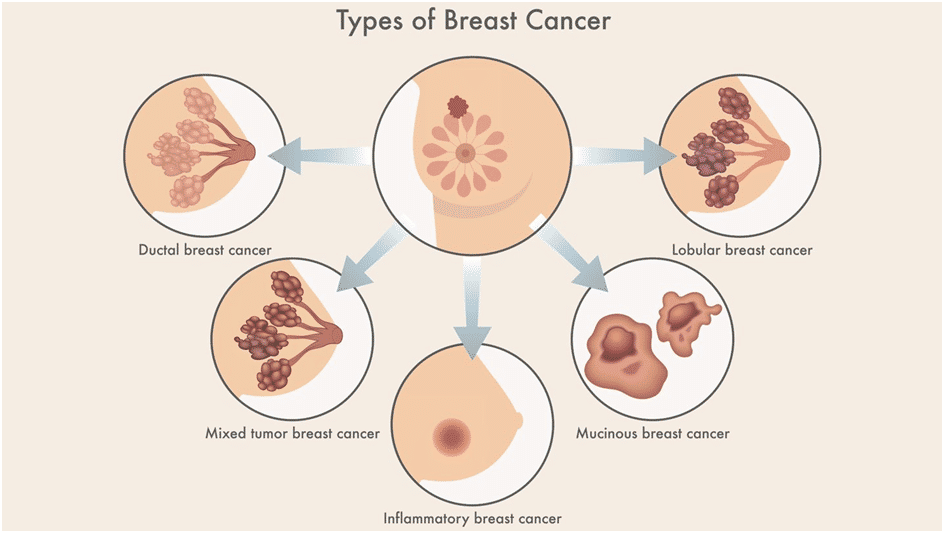 Doctors divide breast cancer into two categories invasive and non-invasive. The ones that have not spread beyond the milk ducts or lobules are referred to as non-invasive breast cancer or in situ cancer or stage 0 cancer. Cancer that has spread beyond and to the nearby tissues or distant organs is called invasive breast cancer. The majority of breast cancers start in the milk ducts and are known as ductal carcinoma. **i. Ductal carcinoma in situ (DCIS)** This cancer develops in the ducts of the breast and are confined to the duct only. These ducts have a covering membrane which hold the cancer cells for some time before they can spread outside this membrane. **ii. Lobular carcinoma in situ (LCIS)** This non-invasive cancer forms in the breast’s milk-producing glands and has not spread to the surrounding tissues. This is similar to DCIS that the cover over the lobules hold the cancer for some time. Generally, LCIS is not considered cancer today. It is only considered a pre-cancer. **iii. Invasive ductal carcinoma (IDC)** It is the most prevalent invasive breast cancer beginning in the milk ducts. It accounts for 80% of the cases. It penetrates the duct wall and spreads to the breast’s fatty tissue. **iv. Invasive lobular carcinoma (ILC)** This cancer originates in the lobules and then invades the nearby tissues and other organs of the body. It makes up approximately 10% of all invasive breast cancers. **Its sub-types include:** - Medullary carcinoma - Papillary carcinoma - Tubular carcinoma - Adenoid cystic carcinoma - Mucinous carcinoma - Low-grade adenosquamous carcinoma **Apart from these, there are other less common types of breast cancer, which are:** - Phyllodes tumor - Paget’s disease of the nipple - Inflammatory breast cancer What are the risk factors for breast cancer?  - Genetics - Age over 50 - Dense breast - Family history - Personal history of cancer - Menstrual history (periods starting before 12 years or stopping after 55) - Radiation exposure - Obesity - Smoking and regular intake of alcohol - Hormone replacement therapy How is breast cancer diagnosed? Dr. Sandeep Nayak, one of the [best oncologist in Bangalore](https://drsandeepnayak.com/), India, will recommend an in-depth breast cancer diagnosis if there is a lump in your breast or the mammography detects some unusual growth. He will perform a physical exam and ask about your health history. He will also ask you to undergo some tests, such as: - Ultrasound - MRI - Mammogram - Biopsy The doctor will remove a tissue sample from the suspected area during the biopsy. It can be done in several ways, including surgical biopsy, core-needle biopsy, fine-needle biopsy, or lymph node biopsy. The sample is sent to the laboratory to be tested for cancer. If positive, the lab with run further tests to detect the type of cancer you have. Breast cancer stages 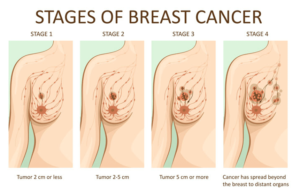 The oncologist classifies breast cancer into stages ranging from 0 to 4, according to the size of the tumor and how far it has spread. Staging is essential for planning the line of treatment. **Doctors properly stage breast cancer according to:** - The tumor’s size - Whether it is invasive or non-invasive - If the lymph nodes are impacted - Whether it has spread to the nearby tissues or organs **Stages of breast cancer (This staging is simplified version)** - **Stage 0:** The cancer cells have not spread and are still within the ducts. - **Stage 1:** The cancer is about 2 centimetres. It has not affected the lymph nodes, or some cancer cells are present in the lymph nodes (less in number). - **Stage 2:**The cancer is around 2centimetres and has invaded the nearby lymph nodes, or it is 2-5 centimetres and has not impacted the lymph nodes. - **Stage 3:** The cancer is 5 centimetres and has impacted several lymph nodes, or it is bigger than 5 centimetres but has spread to a few lymph nodes. - **Stage 4:**Cancer has spread to other organs, such as lungs, liver, bones, and brain. What are the options for breast cancer treatment in Bangalore, India? [Dr. Sandeep Nayak](https://drsandeepnayak.com/) is one of the best cancer specialist in Bangalore. He is exceptionally experienced in minimally invasive surgery and is considered a leading surgical oncologist in India.He has treated countless breast cancer patients in his career, spanning more than fifteen years. Depending on your diagnosis, he will plan the best line of treatment that will eliminate cancer and decrease the chances of it returning and metastasizing. The course of your breast cancer treatment in Bangalore, India, will depend on your cancer’s size, stage, and location. Further, Dr. Sandeep Nayak will consider your overall health, age, and opinions regarding the treatment alternatives. ### ***A. Surgery for the breast tumor*** Surgery is the primary line of treatment. Nowadays, Dr. Sandeep Nayak, a proficient [oncologist in Bangalore](https://drsandeepnayak.com/), prefers to use minimal invasive breast surgery (MIBS) as it offers quicker recovery and less trauma. Being a skilled surgical oncologist, he excels in breast-saving cancer surgery with a good cure rate. He has an excellent track record for lumpectomy and mastectomy. **Lumpectomy:** This procedure involves removing the breast tumor and a small margin of surrounding healthy tissues. The results of lumpectomy is found top be equivalent to mastectomy. As the surgery is small most of the patients heal much faster. **Breast conservation surgery with oncoplastic surgery:** This procedure involves removing the tumor and some surrounding normal tissues while maintaining the natural breast shape. The oncoplastic surgeon aesthetically reshapes the breast. **Skin-sparing mastectomy and reconstruction:** In this surgery, the surgical oncologist in Bangalore, Dr. Sandeep Nayak will remove the entire breast tissue sparing the normal skin of breast, followed by reconstruction of the breast. In some patients Nipple also can be spared if it is free from cancer. This surgery gives best cosmetic results at the same time giving best cancer results. **Mastectomy:** This surgery involves removing the entire breast which includes the ducts, lobules, areola, nipple, fatty tissue, and some skin. Some or all the lymph nodes in the armpit are also removed as discussed above. ### ***B. Surgery for Armpit Lymph Nodes:*** The lymph nodes in the armpit have be removed partly or completely for getting best results in breast cancer treatment. This is done in one of the 2 ways bellow. **Sentinel node biopsy (SNB):** Sentinel node biopsy is performed in cases in patients whom the lymph nodes are not found to be involved. This surgery helps decide if cancer has progressed outside the primary tumor into your lymphatic system. We want to avoid complete axillary lymph node dissection as much as possible. SNB is preferred today as the long-term complications are low. **Axillary lymph node dissection:** If cancer cells are detected in the sentinel nodes, the surgeon may remove several lymph nodes in the armpit. It can help prevent the spread of cancer. Axillary lymph node dissection increases the risk of arm swelling up. As much as 40% of patients undergoing Axillary lymph node dissection can develop arm swelling. For this reason whenever possible we perform SNB for the patients. ### ***C. Radiation*** 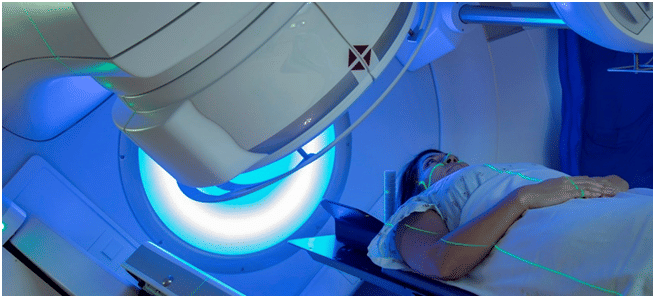Radiation uses high-powered energy beams of protons and x-ray to eliminate cancer cells. The radiation can be done at the time of surgery or after the wound is healed. #### **External beam radiation** - This type of radiation is administered through an external machine, five days a week, for 5 to 6 weeks. This starts three weeks after surgery. The technique includes: - Hypofractionated radiation therapy: Higher doses of radiation are given for fewer days. By this technique, the radiation can be completed in 15 sittings or fractions. - Conventional EBRT: Doctors use special advanced machines to give radiation for 5 days a week in 25 sittings or fractions. ### ***D. Systematic treatment*** 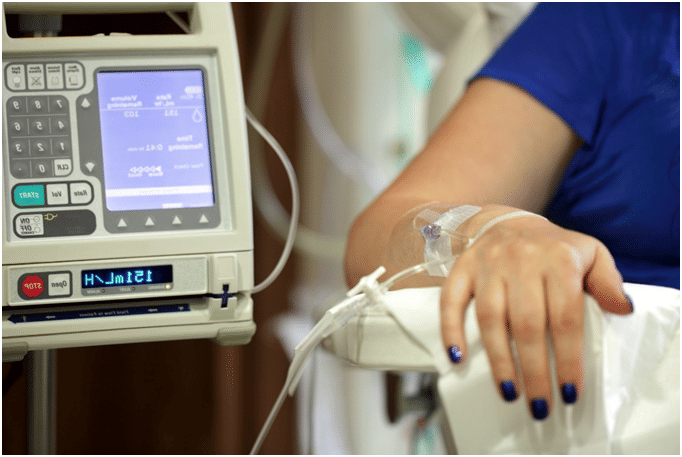These treatments help control or destroy cancer cells present all over the body. This is to mainly manage the small amount of cancer cells in the body or to shrink a larger or aggressive cancer. 1. **Chemotherapy –** You will be given drugs orally, through injections, or intravenously to eliminate cancer cells. Doctors may give it before surgery (neoadjuvant chemotherapy) or after the procedure (adjuvant chemotherapy). 2. **Hormone therapy –** Certain hormones like oestrogen stimulate the growth of breast cancers malignancies. There are drugs that block the action of these hormones and stop their growth of cancer. 3. **Targeted therapy –** This treatment uses precision drugs to target proteins that govern how the cancer cells grow, divide and spread. The most common of these is trastuzumab (Herceptin) which is used in patients who have Her-2 + cancers. 4. **Immunotherapy –** [Immunotherapy](https://www.cancer.gov/about-cancer/treatment/types/immunotherapy#:~:text=Immunotherapy%20is%20a%20type%20of,a%20type%20of%20biological%20therapy.) uses your immune system to fight cancer. It changes or stimulates the immune system to find and fight cancer cells. This is new way of treating cancer and is used only when all the other treatments have failed. Why choose us for Breast Cancer Treatment in Bangalore, India? - Dr. Sandeep Nayak is highly qualified and has 15+ years of experience in treating cancer. He is recognized as one of the best [oncologist in India](https://drsandeepnayak.com/) for his proficiency and skills in minimally invasive surgery. - He offers customized cancer treatment with systematic planning and execution to achieve a positive result. - He and his team of dedicated cancer specialist in Bangalore offer a multi-disciplinary approach as cancer care is not limited to a single treatment. It needs a well-planned execution. - Most importantly, Dr. Sandeep Nayak is highly passionate and committed to his profession. He continues to introduce newer surgical techniques that offer his patients a better chance of survival and leading a quality life. Frequently Asked Questions What are 5 risk factors for breast cancer? Five risk factors for breast cancer include: - Age - Family history/genetics - Hormone levels - Lifestyle factors (diet, exercise, alcohol consumption) - Previous radiation therapy to the chest. Can breast cancer be cured? Breast cancer can often be treated effectively, especially if detected early. Treatment may include surgery, chemotherapy, radiation therapy, hormone therapy, or targeted therapy. The goal is often remission or managing the disease as a chronic condition. Early detection is crucial for successful outcomes. How does breast cancer affect your body? Breast cancer can cause lumps, swelling, or dimpling in breast tissue. It may spread to lymph nodes, causing swelling. Fatigue, weight loss, and bone pain can occur if it spreads. Hormonal changes and treatments like chemotherapy can also impact overall health. Is stage 1 breast cancer curable? Yes, stage 1 breast cancer is typically curable with various treatments like surgery, radiation, and chemotherapy. Early detection and intervention significantly improve outcomes. --- ### [Inguinal Block (GROIN) Disections](https://drsandeepnayak.com/services/inguinal-block-groin-disections/) **Published:** August 12, 2024 **Author:** Dr. Sandeep Nayak **Content:** Inguinal Block (Groin) Dissections An inguinal block dissection is a surgical procedure to remove lymph nodes from the groin area. Doctors commonly use this procedure to treat cancers that have risk of spread to the lymph nodes in the groin. These include melanoma of leg or gynecological cancers or cancer of penis. It may involve minimally invasive techniques to ease discomfort and promote faster recovery. The minimally invasive procedure is called VEIL (video endoscopic inguinal lymphadenectomy). Dr Nayak is one of the pointers of this technique. He invented the lateral approach VEIL which is practiced in many centres in the world. According to **Dr. Sandeep Nayak**, a renowned[ ](https://drsandeepnayak.com/)[surgical oncologist in India](https://drsandeepnayak.com/): > “Approximately 60% of open inguinal and ileo-inguinal block (groin) dissections cause wound-related issues. They need weeks of nursing for healing, causing suffering and increasing the cost of care. Robotic and Laparoscopy reduces trauma, making treatment more acceptable by reducing complications.” Are you facing a diagnosis that may call for an inguinal block dissection? Consult a qualified healthcare professional for guidance and personalized care. Book an Appointment ***Let’s explore the services offered by Dr. Sandeep Nayak and his team.*** Inguinal And Iliac Block Dissections [Dr. Sandeep Nayak](https://drsandeepnayak.com/) specializes in inguinal and iliac block dissections for lower limb and genital cancers. These include penile cancer in men and cancer of the vulva in women. The specific lymph nodes removed depend on the cancer type. Melanoma and penis cancer often require dissection of both the inguinal and iliac regions. This is known as **ileo-inguinal block dissection**. If only the inguinal region needs removal, it’s called **inguinal block (groin) dissection**. In the conventional open method, inguinal and ileo-inguinal block dissections carry a significant risk of wound complications. **Studies show that approximately 60% of patients experience issues.** These complications often require weeks of nursing care to heal. They contribute to prolonged recovery times and increased discomfort for patients. Our Approach Dr. Sandeep Nayak performs these procedures using[ ](https://drsandeepnayak.com/services/laparoscopic-cancer-surgery-in-india/)[laparoscopic surgical techniques](https://drsandeepnayak.com/services/laparoscopic-cancer-surgery-in-india/) known as Lateral- Video Endoscopic Inguinal Lymphadenectomy (VEIL). Dr Nayak has been instrumental in the development of this approach in India. VEIL is a minimally invasive surgical technique to remove lymph nodes from the groin region. This procedure is typically necessary for assessing or treating cancers such as penile, vulvar, or melanoma that may have spread to these nodes. Procedure: - Surgeons make small incisions in the side of thigh. - They insert a laparoscope (a thin tube with a camera and light) and other surgical instruments through these incisions. - Surgeons carefully observe the inguinal area on a monitor using a camera and precisely remove the lymph nodes with specialized instruments. - The procedure is similar using robot. Advantages of VEIL over Conventional Open Surgery: **** **Reduced Complications:** Lower risk of infection and less postoperative pain due to smaller incisions. **Quicker Recovery:** Patients typically experience a faster return to normal activities and shorter hospital stays. **Less Scarring:** Minimally invasive incisions result in less scarring than the larger incisions required in open surgery. **Better Cosmetic Outcomes:** The cosmetic results are generally superior due to smaller incisions. **Precision:** The camera’s enhanced visualization allows for more precise surgery, potentially increasing the effectiveness of the lymph node removal. **Improved Cost-effectiveness:** Laparoscopic inguinal block dissections contribute to cost savings in healthcare by reducing: - The occurrence of complications - The need for prolonged hospital stays [VEIL ](https://www.ncbi.nlm.nih.gov/pmc/articles/PMC6708014/)represents a more advanced approach to inguinal and ileo-inguinal block dissections. It offers patients a safer and more comfortable surgical experience with improved outcomes. ***Let’s understand the importance of robotic or laparoscopic inguinal block dissections in various medical contexts.*** Benefits of Inguinal Block (Groin) Dissections Here are the benefits of this procedure: **Effective Cancer Treatment:** Inguinal block dissections are crucial in treating cancers that have spread to the groin’s[ ](https://www.webmd.com/a-to-z-guides/what-are-lymph-nodes)[lymph nodes.](https://www.webmd.com/a-to-z-guides/what-are-lymph-nodes) By removing lymph nodes that may harbor cancer cells, inguinal block dissections help prevent the spread of disease, providing a crucial therapeutic benefit in managing certain cancers. The procedure improves the patient’s prognosis.  **Accurate Staging**: The procedure allows for precise pathological examination of the lymph nodes, which is vital for the accurate staging of cancer. Staging determines the extent of cancer spread and is critical for planning appropriate treatment strategies. **Improved Survival Rates**: For certain cancers, such as melanoma, removing affected lymph nodes can significantly improve survival rates, especially when the nodes are detected early. **Reduced Risk of Recurrence**: By physically removing lymph nodes that could become or are cancerous, inguinal block dissections reduce the risk of local cancer recurrence, contributing to long-term patient outcomes. **Diagnostic Insights**: Beyond its therapeutic benefits, the procedure provides diagnostic insights that can guide further treatment decisions, such as the need for additional therapies like chemotherapy or radiation. **Reduced Patient Suffering:** Patients experience less trauma and discomfort during and after the procedure. Reduced suffering enhances the overall patient experience and quality of life. ***Are you seeking advanced care for inguinal block (Groin) dissections in Bangalore, India? Embark on your journey to optimal health with our specialized expertise and comprehensive support.*** Why Choose US **Expertise:** [Dr. Sandeep Nayak](https://drsandeepnayak.com/dr-sandeep-nayak/) is a certified [surgical oncologist in India](https://drsandeepnayak.com/) with over 15 years of[ ](https://drsandeepnayak.com/services/expertise/)expertise. He specializes in performing inguinal block dissections with precision and care. **Advanced Techniques:** Our [team ](https://drsandeepnayak.com/oncologist-in-bangalore/)utilizes state-of-the-art laparoscopic surgical techniques for minimally invasive procedures. Our[ ](https://drsandeepnayak.com/services/robotic-cancer-surgery-in-bangalore-india/)[cutting-edge approaches](https://drsandeepnayak.com/services/robotic-cancer-surgery-in-bangalore-india/) help reduce risks and promote faster recovery times. **Personalized Care:** We prioritize individualized treatment plans tailored to each patient’s needs and medical condition. **Comprehensive Approach:** From diagnosis to post-operative care, we offer comprehensive support and guidance every step of the way. **Effective Outcomes:** With Dr. Nayak’s expertise and advanced techniques, we strive to achieve optimal outcomes and improved quality of life for our patients. **Take Away** Inguinal block dissection is needed when cancer has spread to the lymph nodes in the groin area. The removal of affected lymph nodes is necessary to prevent further cancer spread. It also helps determine the extent of cancer spread and plan appropriate treatment. The earlier you seek medical intervention, the better your chances of positive outcomes. Take the first step towards a brighter future. Schedule a[ ](https://drsandeepnayak.com/contact/)[consultation](https://drsandeepnayak.com/contact/) with a qualified healthcare provider to discuss your options. Your journey to better health starts here. Frequently Asked Questions What are the potential risks associated with inguinal block dissections? Inguinal block dissections may carry risks such as: - Infection - Bleeding - Damage to nearby structures However, advanced surgical techniques like VEIL minimize these risks. Is inguinal block dissection painful? Patients may experience some discomfort after surgery. But, it is well-managed with medication and subsides as healing progresses. How long does it take to recover from inguinal block dissection? Recovery time varies depending on individual factors and the extent of the surgery. Most patients can expect to return to normal activities within a few weeks. Will inguinal block dissection affect fertility or sexual function? Inguinal block dissections may impact fertility or sexual function, particularly in men. Your doctor will discuss these points before surgery. You can explore alternative options if fertility preservation is a concern. Are there any alternatives to inguinal block dissections? In some cases, your doctor may consider alternative treatments, such as radiation therapy or targeted drug therapies. Dr. Nayak discusses all available options with patients to determine the best action. --- ### [Prostate Cancer Treatment in Bangalore](https://drsandeepnayak.com/services/prostate-cancer-treatment-in-bangalore/) **Published:** May 27, 2024 **Author:** Dr. Sandeep Nayak **Content:** Prostate Cancer Treatment in Bangalore 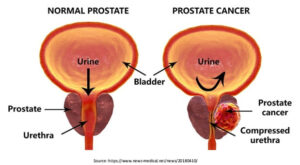 The prostate serves a variety of functions. Some of its roles include producing the fluid that nourishes and carries sperm, secreting prostate-specific antigen (PSA), a protein that helps semen retain its liquid condition, and assisting with urine control. Prostate cancer is a common type of cancer in males. It originates in the prostate gland, located between the penis and the bladder. It is highly curable in its early phases. Whether you have been diagnosed with early-stage prostate cancer, your cancer has returned after treatment, or you have a more advanced condition, you have more alternatives than ever before. Dr. Sandeep Nayak, one of the [best oncologist in Bangalore, India,](https://drsandeepnayak.com/oncologist-in-bangalore/) can help you select which treatments will give you the best chance of controlling or curing your malignancy. Men who receive prostate cancer surgery from Dr. Sandeep Nayak can rest assured of the outcomes. He is a highly qualified and seasoned surgical oncologist in India. According to studies, surgeons who perform prostate cancer surgeries regularly have minor complications than those who execute them less frequently. By focusing on one disease process, Dr. Nayak has gained the knowledge and experience to maximize outcomes of prostate cancer treatment in Bangalore, India, for his patients. Many prostate cancers diagnosed today are indolent, which means they are unlikely to develop symptoms, spread, or significantly shorten your life. Dr. Sandeep Nayak, a skilled cancer specialist in Bangalore, can provide you with relevant solutions that make sense by understanding and precisely diagnosing your malignancy. Dr. Nayak takes a dynamic approach to your treatment because each man’s condition changes over time. He constantly reassesses your disease as it changes and reacts to treatment. Take a look at this helpful article if you want to learn more about prostate cancer treatment. **Now that you have a basic understanding of prostate cancer, let’s look-** Types of prostate cancers Adenocarcinomas are the most common type of prostate cancer (malignant tumors). This type of cancer begins in the gland cells that produce secretions. Other cancers can occur in the prostate, but they are rare. These include: - Small cell carcinomas - Transitional cell carcinomas - Neuroendocrine tumors - Sarcomas **Now, let’s know,** What Are the Symptoms of Prostate Cancer? Initially, prostate cancer symptoms are similar to non-cancerous enlargement of the prostate. However, as the condition progresses, other symptoms may appear. - Frequent urination. - A painful or burning sensation while urinating or ejaculating. - Difficulty starting or stopping while trying to urinate or urinating. Constant desire to urinate, especially at night. - Change in bowel habits. - Blood in urine or semen. - Erectile dysfunction. - Unexplained weight loss. **Now, let’s take a look at the,** Causes of Prostate Cancer - Though the exact causes of prostate cancer are unknown, the following factors have been linked to an increased risk of prostate cancer: - Obesity - Eating high-fat foods - Family history - Prostate swelling or inflammation - Old age - Smoking How is Prostate Cancer Diagnosed? 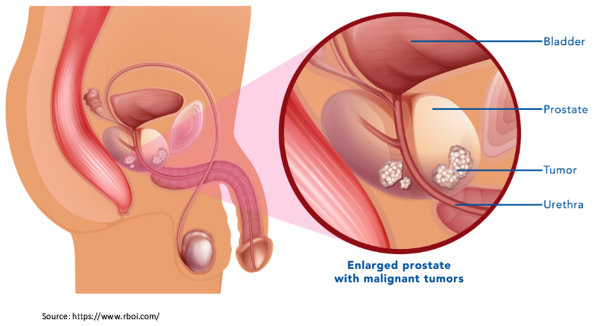Dr. Sandeep Nayak, one of the best oncologist in India, has extensive experience detecting prostate cancer and assisting patients in determining their options. Certain risk factors put certain men at a higher risk of prostate cancer than others. If you are concerned about prostate cancer, contact MACS Clinic to determine if you have the condition or learn more about your risk level. At MACS, we provide diagnostic tests that can discover disease evidence, such as: - Blood tests to examine the prostate-specific antigen (PSA) levels - Digital [rectal ](https://drsandeepnayak.com/blogs/is-isr-surgery-beneficial-for-very-low-rectal-cancer/)examination (DRE) - Analysis of family history - Diagnostic imaging tests If a PSA test or DRE indicates prostate cancer, a biopsy and diagnostic imaging can confirm the presence of cancer and its spread outside the prostate. Dr. Nayak can advise you on your treatment choices if tests reveal that you may have prostate cancer. **Now, let’s know about the available,** Treatment Options for Prostate Cancer Dr. Sandeep Nayak, a skilled surgical oncologist in India, will determine which treatment is appropriate for your case once your diagnostic tests are completed. Each has distinct therapeutic objectives and a set of treatment alternatives that are most effective in managing the disease. There are various options for prostate cancer treatment in Bangalore, India, that can be used at different times based on the patient’s disease stage and current health. ### **Active Surveillance or Watchful Waiting** Prostate cancer grows slowly in many cases. Thus, early medical intervention may not be necessary. Low-grade prostate cancers can be treated with a watchful waiting or active monitoring strategy. It means that the cancer is closely watched by keeping track of the changing symptoms and doing regular tests to determine the best course of action. ### **Surgery** The type of surgery depends on the disease’s stage, the patient’s overall condition, and other factors. ### **Radical (open) prostatectomy** 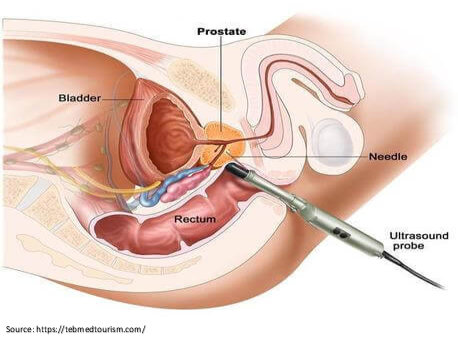The entire prostate, as well as the seminal vesicles, are surgically removed in radical prostatectomy. It is also possible to remove lymph nodes in the pelvic area. Sexual function may be affected as a result of this procedure. When possible, nerve-sparing surgery improves a man’s chances of maintaining sexual function following surgery by minimizing surgical injury to the nerves that control erections and orgasm. Because these are independent processes, orgasm can occur even if some nerves are damaged. Radical prostatectomy can cause urinary incontinence. The doctor may recommend drugs, penile implants, or injections to restore normal sexual function. Urinary incontinence can sometimes be treated with another procedure. ### [**Robotic** ](https://drsandeepnayak.com/services/robotic-cancer-surgery-in-bangalore-india/)**or** [**laparoscopic** ](https://drsandeepnayak.com/services/laparoscopic-cancer-surgery-in-india/)**prostatectomy** 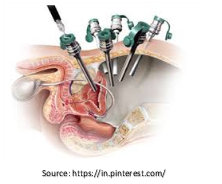This procedure is less intrusive than a radical prostatectomy and may result in a faster recovery. The surgeon inserts a camera and tools into the patient’s abdomen through small keyhole incisions. Then, the surgeon uses the [robotic ](https://drsandeepnayak.com/services/robotic-cancer-surgery-in-bangalore-india/)devices to remove the prostate gland. The sexual and urinary side effects of robotic prostatectomy are comparable to those of a radical (open) prostatectomy. ### **Bilateral orchiectomy** 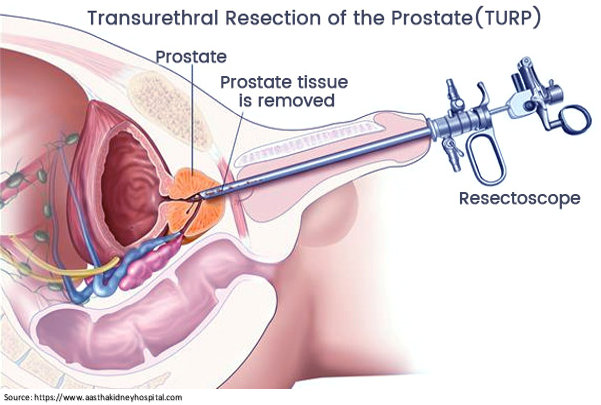The surgical removal of both testicles is known as bilateral orchiectomy. ### **Transurethral resection of the prostate (TURP)** The most common reason for TURP is to ease the symptoms of a urinary blockage, not to cure prostate cancer. A surgeon inserts a small tube with a cutting device called a cystoscope into the urethra and the prostate to remove prostate tissue while the patient is under complete anaesthesia. Life After Prostate Cancer Treatment Prostate cancer treatment impacts the patient’s mental and emotional well-being, just as it does on their physical well-being. While a patient may be relieved to know that the treatment is over, there will be an intense worry of recurrence. It is just as important to look for your body following treatment as it is to look after your emotions. It’s time to look after your mental health, and the following suggestions can help: - Share your feelings with your loved ones. - Eat a balanced diet. - Maintain a healthy weight. - Incorporate any physical activities into your daily routine, such as yoga, exercise, and so on. - Vent out both positive and negative emotions. - Keep yourself busy in activities that can distract you from your fears. - Take some time to relax. FREQUENTLY ASKED QUESTIONS Can prostate cancer be 100% cured? There is no one-size-fits-all answer to whether prostate cancer can be 100% cured, as the prognosis and treatment outcome for prostate cancer can vary greatly depending on a number of factors, including the stage and grade of the cancer, the patient’s age and overall health, and the type of treatment received. Can prostate cancer be cured permanently? In some cases, prostate cancer can be permanently cured through surgery or radiation therapy. The success of treatment and chances of a permanent cure depend on various factors such as the stage and grade of the cancer, patient’s age and health, and type of treatment received. How much does treatment for prostate cancer cost? The cost of treatment for prostate cancer can vary widely depending on a number of factors, including the type of treatment received, the patient’s insurance coverage, and where the treatment is being performed. At what stage is prostate cancer not curable? Prostate cancer can sometimes be curable even when it has spread beyond the prostate gland (metastasized), but the chances of a cure decrease as the cancer progresses. The specific stage at which prostate cancer is no longer considered curable can vary, but in general, if the cancer has spread to other parts of the body and is not responding to treatment, it may be considered incurable. It is important to consult with a healthcare provider to determine the best course of action for an individual’s specific case of prostate cancer. --- ### [Trans Oral Robotic Surgery (TORS) in Bangalore, India](https://drsandeepnayak.com/services/trans-oral-robotic-surgery-in-india/) **Published:** May 28, 2024 **Author:** Dr. Sandeep Nayak **Content:** Trans Oral Robotic Surgery (TORS) in Bangalore, India Nobody wants to hear the “C-word” from their doctor during a consultation. But if you are diagnosed with cancer, you should seek the finest possible cancer treatment in India. In the case of throat cancer, there is a need for successful and safe treatment as with other cancers. Chemotherapy and radiation therapy are widely acknowledged and used therapies for throat cancer. Due to its aggressive nature and life-altering adverse effects, this treatment is not always the ideal option for throat cancer patients. Since throat cancer is a widespread condition, a new method called Trans Oral Robotic Surgery in India has become the most precise and less invasive procedure available. Remarkably, Dr. Sandeep Nayak, one of the few [surgical oncologists in India](https://drsandeepnayak.com/), is qualified and trained to execute this procedure. If you are keen to know more about Trans Oral Robotic Surgery (TORS), scroll down to learn more. **First, let’s know,** What is Trans Oral Robotic Surgery (TORS)? Accessing the afflicted area during traditional surgery for malignancies of the throat or mouth can be complex. Trans-oral robotic surgery (TORS) is a type of surgery in which computer-assisted technology gives additional guidance. The technology improves the capacity to manipulate tissues and reach afflicted growths in difficult-to-reach areas. TORS permits patients to return to normal activities faster, with fewer complications, and reduces the need for chemotherapy and radiation. Furthermore, the overall results are comparable to those of a more intrusive open procedure. **Now, let’s see,** What conditions can TORS treat? TORS is used to treat a variety of head and neck malignancies, including: - Hypopharyngeal cancer, a type of throat cancer that affects the lower section of the throat. - Cancer of the larynx (voice box). - Oropharyngeal cancer, affects the back of the throat, the base of the tongue, or the tonsil. - TORS is also used to treat non-cancerous illnesses such as: - Obstructive sleep apnea, a sleep disorder. - Lingual tonsillitis, inflammation of the tonsils at the base of the tongue. [Dr. Sandeep Nayak,](https://drsandeepnayak.com/dr-sandeep-nayak/) a highly-trained and experienced surgical oncologist in India, will work with the patients to evaluate whether TORS is suitable for them. Furthermore, for individuals with throat cancer caused by the human papillomavirus (HPV), Trans Oral Robotic Surgery in India can be a very successful treatment option. TORS may be the only therapeutic option for some HPV-related throat cancer patients. **Now, let’s describe,** The Actual Procedure of Trans Oral Robotic Surgery 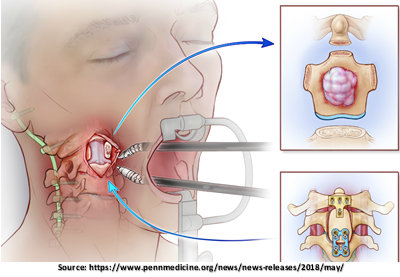 - During the procedure, an assistant accompanies the patient. As the surgeon guides the robot, the assistant’s job is to provide any required help as soon as possible. - To enable appropriate exposure and access for the robotic device, specific tools and retractors are needed. - The two surgical arms are inserted into the mouth at specific angles throughout the procedure. - The device collects normal tissues around the margins of the tumor’s location and freezes them for analysis. - The surgery is considered complete when these tissues are clear of cancerous cells. **Let’s take a look at the,** Benefits of Trans Oral Robotic Surgery (TORS) TORS has several potential advantages over open surgical techniques, including: - Avoidance of a jaw split approach and [tracheotomy](https://www.hopkinsmedicine.org/health/treatment-tests-and-therapies/tracheostomy#:~:text=A%20tracheotomy%20or%20a%20tracheostomy,operating%20room%20under%20general%20anesthesia.). - Quick return to regular speech and eating abilities. - Significantly less discomfort. - Less blood loss. - Short hospital stays. - Less scarring. - Reduces or eliminates the need for chemoradiation therapy. Why Should You Choose Dr. Sandeep Nayak for TransOral Robotic Surgery in India? - Dr. Sandeep Nayak is dedicated to giving the best possible care to his patients. He is well-versed in [robotic ](https://drsandeepnayak.com/services/robotic-cancer-surgery-in-bangalore-india/)cancer surgical techniques. - Besides, he has extensive experience eliminating tumors with robotic surgery, which is more beneficial to cancer patients. - He can successfully remove the tumor from the affected area with TORS while ensuring little pain and discomfort for the patient and cosmetically more minor scars than traditional open surgeries. - Patients prefer [consulting ](https://drsandeepnayak.com/contact/)Dr. Sandeep Nayak because of his kind demeanour and patient-centered treatment approach. FREQUENTLY ASKED QUESTIONS Is robotic surgery superior to open surgery? Robotic surgery provides consistent, reliable outcomes with less blood loss, pain, and recovery time than conventional surgical methods. What are the benefits of laparoscopy and robotic surgery? There are many benefits associated with laparoscopy and robotic surgery related to the patient during and post-surgery. The major benefits of laparoscopy and robotic surgery compared to traditional open cancer surgery are - Reduced pain and discomfort - Less blood loss and the need for blood transfusion - Few complications post-surgical process - The hospital stays will be reduced - Less risk of infection - Faster recovery and return to normal life. --- ### [Robotic Cancer Surgery in Bangalore, India](https://drsandeepnayak.com/services/robotic-cancer-surgery-in-bangalore-india/) **Published:** May 28, 2024 **Author:** Dr. Sandeep Nayak **Content:** Robotic Cancer Surgery in Bangalore, India 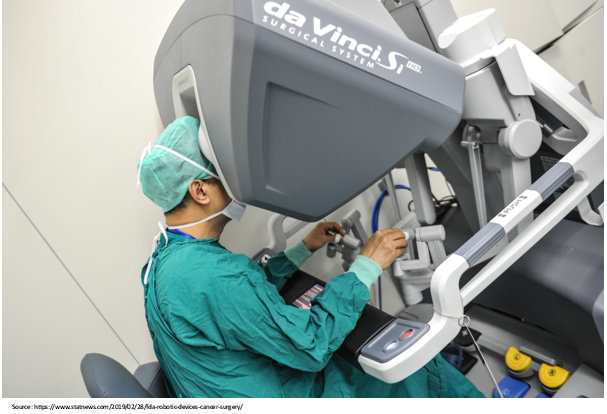A cancer diagnosis can be distressing. That is why it is critical to discover the facts about the problem and the best treatment alternatives before making a decision. Open surgical procedures have traditionally been used to treat malignancies. Open surgery is linked to a large wound, a longer recovery time, and a slower return to normal activities. Laparoscopic surgery has been proven to be a viable, safe, and effective treatment option for diseases such as colon, endometrial, cervical, and esophageal cancer. Even yet, the 2-dimensional view, devices with limited range of motion, and reliance on trained assistance to hold the camera impose constraints. On the other hand, robotic surgery uses a camera controlled by the surgeon to provide very high quality and enlarged 3-dimensional vision. The surgeon can utilize devices with exceptional degrees of freedom in tight, constricted places to access difficult-to-reach malignancies and at angles that are impossible to achieve with open or laparoscopic equipment. Motion scaling allows the surgeon to limit the amount of instrument movement as a percentage of the surgeon’s finger movement and allows for more precision. These provide the most flexibility and precision for outstanding cancer surgery procedures. Due to enhanced visibility, robotic techniques in cancer surgery allow for a radical procedure while preserving nerves and other vital components. This is crucial in [rectal](https://drsandeepnayak.com/services/rectal-cancer-treatment-in-bangalore/), gynecologic, and [prostate cancer surgeries](https://drsandeepnayak.com/services/prostate-cancer-treatment-in-bangalore/). Seeing the importance of these procedures, Dr. Sandeep Nayak, one of the best [surgical oncologist in Bangalore, India](https://drsandeepnayak.com/), went overseas to learn and master the techniques of laparoscopic and robotic surgeries. The surgeon has to be highly trained to perform robotic cancer surgeries as it requires a high level of skills and expertise. Dr. Sandeep Nayak is an expert in robotic cancer surgery and has performed hundreds of surgeries using this advanced surgical method. Hence, he is considered one of the [best oncologist in India.](https://drsandeepnayak.com/) Well, robotic surgery does not imply that a robot will do the surgery. It simply means that the surgeon will conduct the surgery using a robotic surgery system like the da Vinci surgical system. However, this system will not work without the surgeon’s input as it cannot be programmed. So, the surgeon controls the robotic arms from a console placed nearby. Robotic surgery offers excellent precision, vision, and control to the surgeon, thereby making the recovery process quicker and reducing the level of pain to a greater extent. A few small incisions are made through miniature surgical instruments and a camera inserted into the patient’s body during this surgery. The surgical site can be viewed in a magnified, 3D high-resolution image on the monitor. The surgeon moves the instrument and camera with the help of the controls. The robotic arm precisely follows the movements of the surgeon’s fingers, wrist, and hand in real-time. What to Expect From Robotic Surgery? While each surgery is unique, the following are the general steps involved in robotic surgery: - The surgeon makes tiny incisions in the body (one to two centimetres long). - The surgeon inserts a small robotic instrument and a powerful camera into the body. - Then, the surgeon directs the procedure from a nearby console (a huge computer). The operation area can be seen enlarged with good quality at the console. - The surgeon sits at the console and adjusts the controls. - The devices detect these movements, which are translated into exact, real-time movements inside your body. - The robotic gadgets, which have a more excellent range of motion and agility than humans, allow the surgeon to perform delicate procedures in difficult-to-reach areas successfully. Areas That Can Be Operated Using Robotic Surgery Robotic cancer surgeries are mainly used to operate areas that are hard to reach and require great precision. This includes cancer surgery for the following: - Throat - [Oesophagus](https://drsandeepnayak.com/services/stomach-and-esophageal-cancer-treatment-in-bangalore-india/) - [Liver](https://drsandeepnayak.com/services/liver-cancer-treatment-in-bangalore/) - [Colon](https://drsandeepnayak.com/services/colon-cancer-treatment-in-bangalore-india/) - [Pancreas](https://drsandeepnayak.com/services/pancreatic-and-bile-duct-cancer/) - [Prostate](https://drsandeepnayak.com/services/prostate-cancer-treatment-in-bangalore/) - Gynecologic areas like [ovarian](https://drsandeepnayak.com/services/ovarian-cancer-treatment-in-bangalore-india/), vulvar, [uterine](https://drsandeepnayak.com/services/uterus-cervical-cancer-treatment-in-bangalore-india/), and [cervical.](https://drsandeepnayak.com/services/uterus-cervical-cancer-treatment-in-bangalore-india/) How to choose which surgical option is the best? Dr. Sandeep Nayak believes that the surgical techniques do not matter when it comes to the surgery as all types of surgery, be it open, laparoscopic, or robotic, give good results in the long term. However, you need to get your surgery done by a proficient and highly experienced surgeon in the type of procedure you are looking for. When it comes to Dr. Nayak, he always favors laparoscopic and robotic surgeries over open cancer surgery as they provide the patient with greater comfort, lesser pain, and lower risk of complications. Furthermore, few doctors are as experienced as Dr. Sandeep Nayak, one of the best oncologist in India, when it comes to robotic cancer surgery. Why is robotic cancer surgery a game-changer in fighting cancer? Robotic surgery with the da Vinci System, one of the most advanced surgical equipment, allows for exceptionally high definition and magnified 3-dimensional vision. It helps the surgery to be performed with the utmost flexibility and precision. The surgeon can employ instruments with exceptional degrees of freedom in limited places to access difficult-to-reach malignancies and at angles that are not possible with laparoscopic equipment. With motion scaling, the surgeon can minimize the amount of instrument movement to a fraction of the finger movement, allowing more accuracy. Dr. Sandeep Nayak, an ace [surgical oncologist in India](https://drsandeepnayak.com/), always prefers using robotic cancer surgery as it provides enhanced vision, thereby helping in preserving the nerves and other critical structures while conducting radical surgeries. It is especially crucial for rectal, prostate, and gynecologic cancer operations. As the veins and nerves are magnified in robotic surgery, it becomes considerably easier to save them from damage, thereby preserving their potency. Cancers Dr. Sandeep Nayak Treats Using Robotic Surgery Dr. Sandeep Nayak, a skilled [surgical oncologist in India](https://drsandeepnayak.com/), will determine which treatment is appropriate for your case once your diagnostic tests are completed. Each has distinct therapeutic objectives and a set of treatment alternatives that are most effective in managing the disease. There are various options for prostate cancer treatment in Bangalore, India, that can be used at different times based on the patient’s disease stage and current health. **Gynecologic cancers:** Dr. Sandeep Nayak, a seasoned cancer specialist in Bangalore, India, has extensive experience using robotic surgery to treat a variety of gynecological malignancies, such as ovarian cancer, cervical cancer, fallopian tube cancer, and endometrial cancer. **Colorectal cancer:** Surgeries for colon and rectal cancers are often complex, and thus robotic surgery is the best option. The surgeon uses nerve-sparing surgical procedures to preserve bladder, sphincter, and sexual function if possible. **Head and neck cancer:** Dr. Sandeep Nayak, one of the [best oncologist in India](https://drsandeepnayak.com/), uses innovative approaches for accessing difficult-to-reach head and neck cancers using assistive robots. [Transoral robotic surgery (TORS)](https://drsandeepnayak.com/services/trans-oral-robotic-surgery-in-india/) allows the surgeon to reach malignancies through the mouth. External incisions through the face and jaw are not required. **Thyroid cancer:** The surgeon uses robotic surgery to treat thyroid tumors, providing quick recovery and no visible scars. **Thoracic cancer:** The doctor uses robotic surgery to treat esophageal cancer, thymus cancer, lung cancer, and other [mediastinal cancers](https://medlineplus.gov/ency/article/001086.htm). **Urologic cancer:** For Dr. Sandeep Nayak, robotic is a standard surgical approach for treating urologic cancers like prostate cancer, bladder cancer, penile cancer, and testicular cancer. Bladder cancer robotic surgery techniques have advanced, enabling both whole and partial bladder removal using the minimally invasive approach. **Now, let’s take a look at the** Benefits of Robotic Cancer Surgery Patients may benefit from robotic surgery in the following ways: - Lesser pain - Low risk of infection and complication - Less blood loss - Short hospital stays - Quick recovery - Improves quality of life Limitations of Robotic Surgery Slightly Expensive: The high expense of setting up a robotic surgery system can drive up the cost of surgery. Surgical robots are expensive to maintain, and operating them necessitates additional training, which is also costly. - Requires immense expertise and experience. - Mechanical failure – the possibility of a breakdown FREQUENTLY ASKED QUESTIONS Is robotic surgery superior to open surgery? Robotic surgery provides consistent, reliable outcomes with less blood loss, pain, and recovery time than conventional surgical methods. What are the benefits of laparoscopy and robotic surgery? There are many benefits associated with laparoscopy and robotic surgery related to the patient during and post-surgery. The major benefits of laparoscopy and robotic surgery compared to traditional open cancer surgery are - Reduced pain and discomfort - Less blood loss and the need for blood transfusion - Few complications post-surgical process - The hospital stays will be reduced - Less risk of infection - Faster recovery and return to normal life. --- ### [HIPEC Treatment in Bangalore](https://drsandeepnayak.com/services/hipec-treatment-in-bangalore/) **Published:** May 27, 2024 **Author:** Dr. Sandeep Nayak **Content:** HIPEC Treatment in Bangalore Hyperthermic intraperitoneal chemotherapy (HIPEC) has changed the lives of many patients. HIPEC is meant to cure patients who have lost hope. These are for those whose cancers have spread to the entire abdominal cavity and traditional treatment gives them less than 6 months of survival. About 50% of these patients can expect a cure with HIPEC. This is especially useful for cancers of the ovary, colon, and pseudo-myxoma peritonei. Dr. Sandeep Nayak is one of the leading [surgical oncologist in Bangalore, India,](https://drsandeepnayak.com/) with a reputation for excellence in both traditional and minimally invasive surgical treatment (laparoscopy & robotic surgery)of various cancers. He uses the most up-to-date diagnostic tools and surgical treatments to fight cancer, including hyperthermic intraperitoneal chemotherapy treatment in Bangalore. Some cases of HIPEC can be performed by laparoscopy (minimally invasive surgery). He and his team have successfully performed more than 50 hyperthermic intraperitoneal chemotherapy (HIPEC) surgeries in the past 5 years in Bangalore. Hyperthermic intraperitoneal chemotherapy ([HIPEC](https://macsforcancer.com/for-patient/hyperthermia-intraperitoneal-chemotherapy/)) is one of the innovative cancer treatments. The term “hyperthermic” refers to a higher temperature. The term “intraperitoneal” refers to the area of your abdominal cavity. During your cancer surgery, HIPEC involves heating chemotherapy drugs and circulating them through your abdominal cavity (the area inside your abdomen). During treatment, your surgeon removes all cancer in a procedure called Cyto-Reductive Surgery (CRS) which is followed by HIPEC. It is important that all the cancer cells are removed which is medically called CC0. **In this article, we will discuss more about hyperthermic intraperitoneal chemotherapy treatment.** **Now, let’s know,** Which Cancers does HIPEC treat? Dr. Sandeep Nayak, a seasoned [cancer specialist in Bangalore](https://drsandeepnayak.com/oncologist-in-bangalore/), may use HIPEC to treat cancers of the abdomen or chest. HIPEC may also be used to treat: - [Colorectal cancer](https://drsandeepnayak.com/services/rectal-cancer-treatment-in-bangalore/) can develop anywhere in the large intestine (colon) or the paths connecting the colon and anus (rectum). - Ovarian cancer affects the ovaries, which are responsible for producing eggs and female hormones. - Appendix cancer grows in the appendix, part of the colon and intestines. - Psuedo-myxoma peritonei is a Peritoneal cancer type of cancer that affects the cells that line the inside of your abdomen producing jelly-like material. - Gastric cancer, also known as [stomach cancer](https://drsandeepnayak.com/services/stomach-and-esophageal-cancer-treatment-in-bangalore-india/), is a type of cancer that affects the inner lining of your stomach. - Mesothelioma is a cancer of the chest or abdomen lining caused by asbestos exposure. - Soft tissue sarcomas are cancers that develop in the body’s connective tissues. Who can Benefit from HIPEC? **Your doctor will consider the following factors when determining if you are a candidate for HIPEC:** - If you have any other medical issues. - The location of cancer in your abdomen. - Your general physical fitness. - Your surgical background. Doctors typically use HIPEC for people who have advanced abdominal cancers. For severe abdominal cancers, traditional chemotherapy or radiation therapy is often ineffective. Before deciding about offering HIPEC as an option the doctor will give a score based on the CT scan, called PCI which can be from 1-39. Higher is score is worser. HIPEC is offered only if the score is within reasonable limits. **Now, let’s discuss,** Procedure of HIPEC Treatment Although the specific approach to HIPEC surgery varies by treatment Centre, the general concept remains consistent. There are two stages of the procedure: Following cytoreductive surgery, heated chemotherapy is administered. ### **Stage 1: Cytoreductive Surgery** Initially, surgeons perform cytoreductive surgery (CRS) to remove as much tumor growth from the abdominal cavity as possible. The goal is complete removal which is called CC-0. This can be done through open or [laparoscopic surgery](https://drsandeepnayak.com/services/laparoscopic-cancer-surgery-in-india/). Laparoscopic surgery patients are carefully chosen. HIPEC without surgery is ineffective because chemotherapy drugs cannot penetrate deep into malignant tumors usually not more than 1-2 mm. Tumors are not always completely removed, and patients may need other treatments. ### **Stage 2: Chemotherapy Bath** Any remaining cancer cells are eliminated with heated chemotherapy immediately after CRS to prolong survival and prevent cancer relapse. For a better effect, the chemotherapy drug is circulated at 42℃. A multimodal treatment plan combining cytoreductive surgery (CRS) and hyperthermic intraperitoneal chemotherapy (HIPEC) has significantly improved peritoneal cancer and mesothelioma patient survival. Cancers of the abdomen and chest (thorax) can be treated with this procedure. When used on the chest, the method is referred to as HITOC; however, the principle remains the same. This procedure can be done in some patients via laparoscopy, reducing trauma and improving recovery. How Does HIPEC Machine Work? - Surgeons place tubes into the abdominal cavity and connect them to the perfusion system, which heats and pumps the chemotherapy solution throughout the abdominal cavity. The chemotherapy does not enter the rest of the body. So, the side effects are usually limited to the abdomen. A heating element raises the temperature of the solution as it flows through the machine to around 40oC to 42oC. When heated to this temperature, cancerous cells start dying, whereas normal cells can sustain up to 43.9oC. - The doctor massages the abdomen or mixes the liquid to ensure the solution is mixed thoroughly. This step aids in delivering the drugs to the remaining cancer cells. This process takes about 60 to 90 minutes to complete. Afterward, the medicated solution is drained from the body. Before the catheter is removed and the incision is closed, the cavity is rinsed with only a saline solution to clear all the drugs. - Depending on the amount of cancer, the entire procedure, including CRS and HIPEC, could take anywhere from 6 to 12 hours to complete. Recovery after HIPEC - HIPEC is a major procedure; Though most patients are discharged by 7-10 days in our cases, full recovery takes time. You should expect to take 3 months to recover. - Our oncology experts will review everything you need to know about recovery, including how to care for your incision wounds and promote healing. - Fatigue is the most challenging aspect of recovery. It will most likely take two to three months to feel normal again. Until then, it is critical to stick to the nutrition guidelines and stay active. - You may not be eating well for a few months as the intestines would have been affected by HIPEC. Our dieticians will give you instructions on how to manage your diet. PIPAC: For Stage 4 Colon, Ovarian, and Peritoneal Cancers HIPEC and PIPAC are two novel techniques for administering chemotherapy to patients with peritoneal carcinomatosis that have been shown to improve survival and quality of life. When deciding whether to use one technique or the other, there are various factors to consider. It should always be a multidisciplinary team of cancer surgery experts who determines the best treatment for each patient, taking into account each case’s unique characteristics and personal circumstances. Peritoneal pseudomyxoma, mesothelioma, carcinoma of gastric origin, ovarian cancer, and [colon cancer](https://drsandeepnayak.com/services/colon-cancer-treatment-in-bangalore-india/) are among the five types of peritoneal carcinomatosis that the HIPEC technique aims to treat. PIPAC is also used to treat peritoneal carcinomatosis, but only in advanced stages of cancer when CRS & HIPEC surgery is not an option. It then serves as a palliative measure, enhancing the person’s quality of life. A tumor in the peritoneum or metastasis of tumors of gastrointestinal (colon), gynecological (ovary), or any other organ of the abdominal area (liver, appendix, [pancreas](https://drsandeepnayak.com/services/pancreatic-and-bile-duct-cancer/)) can cause treated peritoneal carcinomatosis. Benefits of HIPEC **Compared to traditional chemotherapy, HIPEC has several advantages, including:** - Fewer toxic side effects exist because 90% of chemotherapy drugs remain in the abdomen. - Chemotherapy with higher doses and heat can kill more cancer cells. - Instead of multiple treatment sessions over several weeks, only one treatment session is required. ### **Possible Risks Associated with HIPEC** Many patients tolerate HIPEC well. However, the specific [risks ](https://www.moffitt.org/treatments/surgical-care/cytoreductive-surgery-and-hyperthermic-intraperitoneal-chemotherapy/side-effects/)will vary depending on the surgery required to remove your cancer and the drugs used in conjunction with HIPEC treatment. It is best to speak with your surgeon about this. Although HIPEC is effective in many patients, there is a chance that it will not eliminate all cancer cells or that cancer will return. Frequently Asked Questions What is moderately differentiated squamous cell carcinoma lung? What are the treatment options? It is a type of lung cancer grouped under non small cell [lung cancer](https://drsandeepnayak.com/services/lung-cancer-treatment-in-bangalore/). The treatment depends in stage. It could be surgery, chemotherapy and/or radiation therapy. What treatment of uterus cancer in India is available? Well, every possible treatment is available in India. it depends on what is needed for the patient. it may be [Robotic surgery](https://drsandeepnayak.com/services/robotic-cancer-surgery-in-bangalore-india/) to radiotherapy to precision oncology treatment. Sir what is malignant ascites cancer life expectancy This depends on the cause of the ascites. there are procedures like HIPEC to try and cure. however, in cases that is not possible, PIPAC and chemotherapy may help. Is ascites ovarian cancer the last stage? Not necessarily. it could still be stage 3. An attempt to cure can be considered with CRS & HIPEC What happens after HIPEC treatment? You will need to stay in the hospital after treatment to recover. The hospital stay usually lasts four to fourteen days. You may not be able to take nutrition by mouth during your initial recovery, depending on the extent of your surgery. Nutrition can be given intravenously (IV) or through a feeding tube. We will provide you clear instructions at the time of discharge. Is HIPEC a painful procedure? Peritoneal cancer can be treated with cytoreductive surgery (CRS) and hyperthermic intraperitoneal chemotherapy (HIPEC). On the other hand, patients experience postoperative pain. This is very well managed by the anaesthesia and pain management team. Most of our patients experience acceptable amount of pain. Is HIPEC the only type of cancer treatment I will need? Patients with abdomen and chest cavity cancers may benefit from HIPEC treatment. It may be your primary treatment option. Alternatively, it may be used with other cancer treatments such as targeted therapy or chemotherapy. Is HIPEC a standard cancer treatment option? Researchers are still studying the benefits of HIPEC. HIPEC isn’t used as frequently as other cancer treatments. HIPEC’s benefits are limited to certain cancers and may not be appropriate for everyone. --- ### [Forum](https://drsandeepnayak.com/forum/) **Published:** June 1, 2024 **Author:** Dr. Sandeep Nayak **Content:** Forum ### Dr. Sandeep Nayak – Eminent Oncosurgeon \| India Today Published on 19th Jan, 26 India Today recognises Dr. Sandeep Nayak among the eminent doctors of South India for excellence in surgical oncology and advanced cancer treatment. Read More ### What to do if your body is resisting cancer treatment? Advanced therapies, personalised medicine to address resistance Published on 08th Feb, 25 Cancer treatment effectiveness can be assessed clinically or by tests like radiology or tumour marker blood tests. According to experts, doctors use a combination of clinical symptoms, imaging and biomarkers to assess the effectiveness of cancer treatment. Read More ### Cancer Risk Factors & Prevention Tips By Best Cancer Specialist In Bangalore Published on 25th Jul, 21 While doctors have an understanding of what variables may increase your cancer risk, the majority of malignancies are diagnosed in patients who have no known risk factors. According to Dr Sandeep Nayak who is one of the best cancer specialists in Bangalore, the following are some of the factors that have been linked to an increased risk of cancer: Read More ### Liver Cancer Symptoms – All about Screening and Treatment Published on 23rd Jul, 21 The liver is one of your body’s most hardworking organs, performing a variety of vital duties. And, according to health experts, everyone should be concerned about liver health, mainly since cases of liver cancer have been on the rise in recent decades. Read More ### Cancer Treatment- Explained By Best Oncologist In Bangalore Published on 26th Jul, 21 The goal of cancer treatment is to cure your cancer and restore your ability to live a normal life. Depending on your unique situation, this may or may not be doable. If a cure isn’t possible, your treatments may be used to decrease or slow the progression of your cancer so you can live as long as possible without symptoms. Read More ### A Bengaluru doctor has developed a scarless thyroid cancer treatment using robotic surgery Published on 17th Aug, 21 Thyroid nodules (growths), according to Dr Sandeep Nayak, Bangalore’s best oncologist, affect up to 80% of women, yet just 5% to 15% of those lumps and bumps are cancerous. Thyroid tumours are on the rise, he says, with the disease set to overtake Lung Cancer as the third most frequent malignancy. Read More ### Testicular cancer – Explained by best oncologist in India Published on 23rd Jun, 21 Your urologist will review your medical history and conduct a physical examination. They’ll look for cancer signals in your scrotum, belly (abdomen), lymph nodes, and other areas. If you have a history of undescended testes, tell them. Ultrasound of the testicles is used to examine the scrotum and to look for a suspicious bulge. Read More ### Robotic Surgery: Everything You Need To Know Published on 21st Jun, 21 A cancer diagnosis can be devastating. That is why it is critical to discover the facts about the problem and the best treatment alternatives before deciding. Open surgical procedures have traditionally been used to treat malignancies. However, open surgery is linked to a big wound, a longer recovery time, and a slower return to normal activities. Read More ### Robotic Surgery For Cancer Treatment- All You Need To Know Published on 26th May, 21 Dr. Sandeep Nayak, one of the best oncologists in India, uses robotic surgery to help remove hard-to-reach tumors, shorten surgery times, and reduce side effects for cancer patients who require surgery as part of their treatment. These instruments first appeared in the late 1990s and are now becoming more common in operating rooms. Read More ### ‘Will My Cancer Recur?’ How to Handle the Fear of Recurrence Published on 24th May, 21 According to the best oncologist in India, those diagnosed with cancer while younger (18-45 years old) have a more significant fear of cancer recurrence than those diagnosed when they are older (55-70 years old). According to various studies, having this fear was linked to a higher frequency of unscheduled visits to the doctor and not having had mammograms,… Read More ### Laparoscopic Procedure- Here’s what you need to know about it Published on 14th May, 21 A laparoscope is used to examine the abdominal organs during laparoscopy. It is a long, narrow tube with a front-mounted high-intensity light and a high-resolution camera. The tool is introduced into the abdominal wall through an incision. The camera delivers photos to a TV monitor as it goes along. The best cancer specialist in Bangalore can look inside your body in… Read More ### Stomach cancer: symptoms and treatment by Dr. Sandeep Nayak Published on 13th Jun, 22 Stomach cancer is common in India. Stomach cancer is the 5th most common cancer worldwide. It is the 4th most common cancer in men and the 7th most common cancer in women. In this article, Dr. Sandeep Nayak will explain stomach cancer, its symptoms, treatments, and more. Read More ### Hormone Therapy in the Treatment of Cancer – MACS Clinic Bangalore Published on 13th Jun, 22 Have you recently been diagnosed with prostate cancer, breast cancer, or endometrial cancer? Based on the kind and stage of cancer that you have been diagnosed with, your oncologist will begin to outline the treatment approach. Read More ### Liver Cancer: Symptoms, Causes & Treatment – Dr. Sandeep Nayak Published on 10th Jun, 22 Whenever we hear the term cancer, we are instantly afraid. Cancer has that perception because it is a life-altering disease. Liver cancer is a severe disease where seeking treatment as soon as possible is very important. In this article, Dr. Sandeep Nayak, one of the best oncologists in Bangalore, sheds some light on liver cancer. Read More ### Colorectal Cancer, Causes, symptoms, and treatment – Dr. Sandeep Nayak Published on 15th Jul, 22 Have you noticed blood in your stool lately or noticed a change in your bowel movements? That is too quiet often. You need to visit your physician without further delay. Read More ### Rectal Cancer: Symptoms, Causes & Treatment – Dr. Sandeep Nayak Published on 14th Jul, 22 Rectal cancer is commonly found in men, and it is vital to seek treatment as soon as you start seeing any symptoms because it can be prevented if detected earlier. Dr. Sandeep Nayak discusses rectal cancer, its symptoms, and treatments in this article. Read More ### What is a Bone Marrow Transplant? – Dr. Sandeep Nayak Published on 15th Jul, 22 In this article, Dr. Sandeep Nayak talks about bone marrow transplants, who needs them, and its types. Dr. Sandeep Nayak is one of the best oncologists in India. Read More --- ### [Ovarian Cancer Treatment in Bangalore, India](https://drsandeepnayak.com/services/ovarian-cancer-treatment-in-bangalore-india/) **Published:** May 28, 2024 **Author:** Dr. Sandeep Nayak **Content:** Ovarian Cancer Treatment in Bangalore, India Cancer is a disease in which abnormal body cells proliferate rapidly. Even if cancer spreads to other parts of the body, it is usually named after the location of the body where it appears first. Ovarian cancer is a group of diseases that develops in the ovaries and/or spread to the fallopian tubes and peritoneum. The peritoneum is the tissue lining that surrounds the abdominal organs. Treatment is most effective in the early stages of ovarian cancer. It is critical to pay attention to your body and recognize any unusual indicators because ovarian cancer usually shows signs and symptoms. It is advisable to seek a physician’s consultation for accurate diagnosis and checkup. Because of the complex nature of sub-types of ovarian cancer, you will need one of the best oncologist in India, like Dr. Sandeep Nayak, to conduct your treatment. [Dr. Sandeep Nayak](https://drsandeepnayak.com/) is one of the best [surgical oncologists in India](https://drsandeepnayak.com/). He is an [expert ](https://drsandeepnayak.com/expertise/)in managing both routine and severe ovarian cancer cases and other malignancies like [uterus cancer](https://drsandeepnayak.com/services/uterus-cervical-cancer-treatment-in-bangalore-india/), [stomach cancer](https://drsandeepnayak.com/services/stomach-and-esophageal-cancer-treatment-in-bangalore-india/), and so on. If you are looking for the most-effective ovarian cancer treatment in India, this informative article can be a great help. Read on to know more. What is ovarian cancer, and how does it affect you? Ovarian cancer is the abnormal development of cells in the ovaries. The cells multiply and can penetrate and attack healthy body tissues.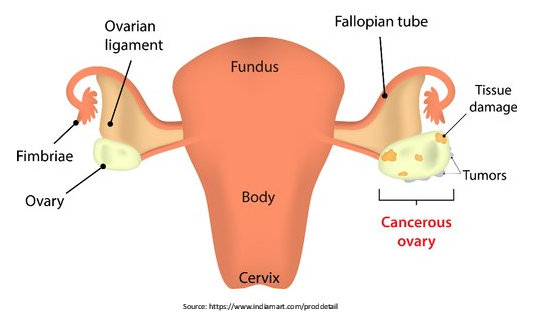 Women have two ovaries on either side of the uterus in the pelvic region. Ovaries produce female hormones oestrogen and progesterone and also eggs for reproduction. There are two long and slender fallopian tubes on each side of the uterus which transport eggs from the ovaries to the uterus. Ovarian malignancies occur in several different tumour types. It is classified into four stages, frequently denoted by the Roman numbers I to IV. The earliest stage of cancer indicates that it is localized to the ovaries. By the fourth stage, cancer has spread to other body parts. High-grade serous carcinoma is the most widespread tumor type, accounting for almost 70% of all ovarian cancer cases. What causes ovarian cancer? Ovarian cancer can affect anyone with ovaries, including women, trans males, non-binary people, and intersex people. If your ovaries have been surgically removed, you cannot develop ovarian cancer. > **You may have a higher chance of getting ovarian cancer if you:** - Inherit a defective gene, such as the BRCA genes or those linked to Lynch syndrome. - Had either breast or bowel cancer. - Had a prior malignancy that required radiotherapy. - Have diabetes or endometriosis. - Had periods at an early age. - Had late menopause (over 55 years). - Haven’t had a baby; this factor could indicate that you have discharged more eggs (ovulated more). - Are taking hormonal therapy but have never used hormonal contraception such as the pill or an implant. - Are obese or overweight. - Are smoker. Who is at risk for ovarian cancer? > **The exact cause of ovarian cancer is unknown. However, the following factors can make you more vulnerable:** - Medical history of breast, uterine, or [colon cancer](https://drsandeepnayak.com/services/colon-cancer-treatment-in-bangalore-india/). - Mutations in genes linked to ovarian cancer, such as BRCA1 or BRCA2. - Earlier experience of ovarian cancer. - Overweight or obesity. - Take reproductive medicines or hormonal therapy. - No history of conception. - Endometriosis. - Another risk factor is advanced age. The majority of ovarian cancer cases occur after menopause. Ovarian cancer can occur even if none of these risk factors are present. Similarly, possessing these risk factors does not guarantee that you will get ovarian cancer. What are the signs and symptoms of ovarian cancer? > **Ovarian cancer symptoms commonly include:** - Swollen abdomen or persistent bloating. - Pain and stiffness in the stomach or the region between the hips. - Loss of appetite or feeling full after having small meals. - Urge or need to urinate frequently. Ovarian cancer can also cause the following symptoms: - Back pain - Indigestion - Constipation or diarrhoea - Feeling exhausted - Sudden weight loss - Vaginal bleeding after the menopause Diagnosis of Ovarian Cancer Dr. Sandeep Nayak, a highly experienced and skilled [oncologist in Bangalore](https://drsandeepnayak.com/oncologist-in-bangalore/), India, says, early diagnosis of ovarian cancer can make it highly treatable. However, it can be challenging to identify. - Ovarian cancer does not have routine diagnostic screening. Because your ovaries are deep within the abdominal cavity, you won’t feel a tumour. Thus, it’s important to tell your doctor if you are experiencing any strange or chronic symptoms. - If your doctor suspects you have ovarian cancer, they may recommend a pelvic examination. The doctor presses a hand on your belly during a pelvic exam while inserting gloved fingers into your vagina to feel your pelvic organs. The doctor also visually examines your external genitalia, vagina, and cervix. - A pelvic exam can help your doctor detect abnormalities, although small ovarian cancers might be difficult to detect. - The tumour presses against the bladder and rectum as it develops. During a rectovaginal pelvic examination, your doctor may be able to discover anomalies. > **Your doctor may also suggest the following tests:** ### 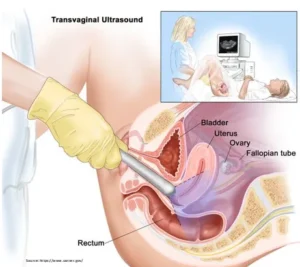Transvaginal ultrasound (TVUS): It is a sound-wave imaging diagnostic that detects tumours in the reproductive organs. However, TVUS cannot assist in determining whether tumours are malignant. #### 1. Imaging tests: Tests such as ultrasound or CT scans of your abdomen and pelvic region can determine the size, shape, and structure of your ovaries. #### 2. Blood tests: Your doctor may order a blood test for tumour markers that often indicate ovarian cancer. For example, a cancer antigen (CA) 125 test can identify a protein usually seen on the surface of ovarian cancer cells. These tests will not confirm cancer but provide information about the diagnosis and prognosis. #### 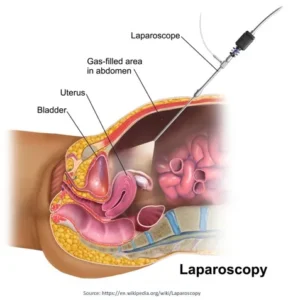 #### 3. Laparoscopy: The doctor will insert a thin tube having a camera (laparoscope) through a small hole in the abdomen to view the ovaries and maybe obtain a tissue sample for biopsy. #### 4. Biopsy: A biopsy is a procedure that includes obtaining a tiny sample of tissue from the ovary and examining it under a microscope. Doctors may perform it as part of the initial examination or after surgical tumour removal. Only a biopsy can confirm whether or not a person has cancer. Ovarian Cancer Treatment in Bangalore - Ovarian cancer affects one in every 70 women at some point in their lives. Because there are no screening tests for ovarian cancer and the symptoms are often modest, most cases are diagnosed at an advanced stage. - After confirming ovarian cancer diagnoses, the doctor will identify the stage of cancer-based on the results of your tests and procedures. - Dr. Sandeep Nayak, a[ seasoned oncologist in Bangalore](https://drsandeepnayak.com/oncologist-in-bangalore/), may lead you through the whole treatment process. He will collaborate with you to provide you with the best possible ovarian cancer treatment in Bangalore, India. - When offering recommendations, Dr. Nayak may develop a one-of-a-kind, individualized strategy for each [patient](https://drsandeepnayak.com/testimonials/), taking into account all health characteristics. > **Ovarian cancer treatment depends on**: - The size and type of ovarian cancer. - The location of the tumour. - The severity of the disease. - The general well-being of the patient. The main ovarian cancer treatments are surgery and chemotherapy. Other options include targeted medicines and hormone therapy. ### Surgery One of the most significant aspects of ovarian cancer treatment is the quality of a patient’s surgery. Dr. Sandeep Nayak is one of the leading surgical oncologist in India. He is highly skilled in treating gynecologic cancers and offers the best surgical care. 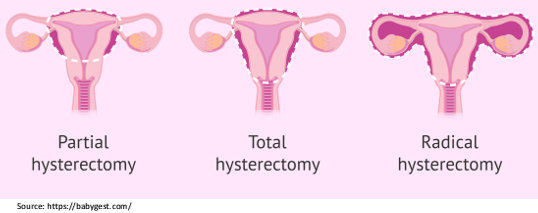 - Patients may rest assured that they will receive the highest level of surgical treatment from Dr. Sandeep Nayak as he executes hundreds of oncology procedures each year. - Surgery is the most common treatment for ovarian cancer. Our[ cancer specialist in Bangalore](https://drsandeepnayak.com/oncologist-in-bangalore/) may advise surgery when there is the possibility of successful removal of the majority of the tumour or damaged tissue. Some early-stage ovarian cancer patients may be candidates for minimally invasive techniques to remove ovarian tumours and/or preserve fertility. - Dr. Sandeep Nayak, a proficient surgical oncologist in Bangalore, is adept in a wide range of [laparoscopic ](https://drsandeepnayak.com/services/laparoscopic-cancer-surgery-in-india/)and [robotic surgical techniques](https://drsandeepnayak.com/services/robotic-cancer-surgery-in-bangalore-india/). These less-invasive procedures involve smaller incisions, promoting speedy and complete recovery. Other surgical techniques for ovarian cancer include: ### Hysterectomy It involves removing the diseased uterus and the cervix. ### Laparoscopic unilateral or bilateral salpingo-oophorectomy: This minimally invasive surgical process entails removing affected ovaries or fallopian tubes. Generally, surgeons recommend this surgery to patients with no chance of preserving the ovary. ### Laparotomy: During this procedure, the surgeon creates an incision in the abdomen to remove malignant tissue and, if necessary, abdominal fluid. 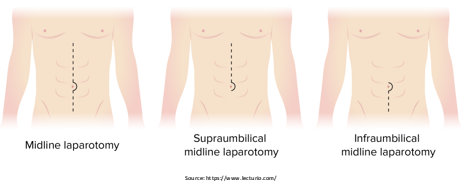### Chemotherapy It is the medication that destroys cancerous cells. Often, medical oncologists administer it before and after surgery or independently. It could potentially treat recurred ovarian cancer. ### Radiotherapy > **It uses high-energy rays of radiation to kill cancer cells. Radiotherapy for ovarian cancer may be used to:** - Treat advanced cancer if other treatments are ineffective. - Relieve symptoms such as bleeding, pain, or discomfort. ### Targeted therapy It comprises drugs that solely attack cancer cells’ ability to grow and survive. They might be a good alternative if you have advanced ovarian cancer that has returned. ### Hormone therapy Certain ovarian cancers require oestrogen hormone to progress. Hormonal therapy can block oestrogen production to slow down the growth of some cancers. During and after any treatments, you will undergo regular check-ups. Your doctor may also order some tests and scans to check the recurrence of the malignancy. If you are concerned about any symptoms or side effects, speak with your doctor, don’t wait until your next [appointment](https://drsandeepnayak.com/contact/). Prevention of Ovarian Cancer There are no proven ways for lowering or preventing your risk of ovarian cancer. However, there are steps you can take to reduce your risk. > **Factors that may reduce the risk of getting ovarian cancer include:** - Taking contraceptive pills. - Pregnancy. - Breastfeeding. - Surgeries on reproductive organs like tubal ligation or [hysterectomy](https://medlineplus.gov/ency/article/002915.htm). What is the long-term outlook on ovarian cancer? - If diagnosed early enough, all kinds of ovarian cancer can be treated. In the advanced stages, several types are also highly curable. - When looking at ovarian cancer survival rates, it’s crucial to remember that medical advancements have improved the outlook in the last two decades. - Nevertheless, regular monitoring and seeking aid if any symptoms develop can often lead to an early diagnosis and effective treatment. FREQUENTLY ASKED QUESTIONS What are the early warning signs of ovarian cancer? Early warning signs of ovarian cancer include abdominal bloating, pelvic or abdominal pain, difficulty eating or feeling full quickly, and urinary urgency or frequency. Is cancer in the ovaries curable? The curability of ovarian cancer depends on factors like stage, type, and individual health. Early detection and treatment increase survival rates, but it’s challenging to guarantee a complete cure in advanced stages. Regular screenings and medical interventions are vital for managing the disease. --- ### [Rectal Cancer Treatment in Bangalore](https://drsandeepnayak.com/services/rectal-cancer-treatment-in-bangalore/) **Published:** May 29, 2024 **Author:** Dr. Sandeep Nayak **Content:** Rectal Cancer Treatment in Bangalore Rectal cancer is a malignant tumor that starts in the rectum, the last 6 inches of the digestive tract, connecting the colon and the anus. It is one of the most common types of cancer, accounting for about 10 percent of all colorectal cancers. The risk of rectal cancer increases as you become older, but it can also develop in young adults and teenagers. Rectal cancers require early detection and treatment as they are challenging to treat. Previously, the long-term survival rate for rectal cancer was uncommon, but fortunately, it has improved dramatically in recent decades due to advancements in treatment. [Dr. Sandeep Nayak ](https://drsandeepnayak.com/dr-sandeep-nayak/)is one of the leading oncologists for rectal cancer treatment in Bangalore, India. He specializes in robotic, laparoscopic, and endoscopic surgeries. He has acquired international recognition for his proficiency in minimal access cancer surgeries. He has introduced several innovative, cutting-edge surgical methods that have improved the procedure’s outcome and have given patients a fighting chance to overcome rectal cancer in Bangalore, India. His accurate diagnosis, systematic treatment approach, and exceptional surgical skills make him one of the [best oncologist in India](https://drsandeepnayak.com/) for rectal cancer treatment. Keep on reading for details about rectal cancer treatment in Bangalore, India. ***But let’s start with*** Symptoms of Rectal Cancer - Blood in your stool - Rectal bleeding - Thin, narrow stool - Abdominal pain - Constipation and diarrhea - Feel as if the bowels aren’t emptying completely - Fatigue - Weight loss What are the risk factors and causes for rectal cancer? The exact reason for the occurrence of rectal cancer is unknown. However, certain factors can increase the risk of developing it, such as: - Family history - Increasing age - Obesity - Smoking and excessive intake of alcohol - Diet - Certain inflammatory bowel diseases like ulcerative colitis or Crohn’s disease - Polyps growing in the inner lining of the rectum turn cancerous - Hereditary genetic condition - Sedentary lifestyle - Diabetes How is rectal cancer diagnosed? Early detection and accurate diagnoses are crucial for effectively treating rectal cancer. Dr. Sandeep Nayak, a highly experienced oncologist in India, will perform a physical exam and discuss your medical history during your initial consultation. He may ask you to undergo some tests to confirm the diagnosis and stage of cancer. They include: - Blood tests - Colonoscopy - Biopsy - PET scan - Imaging tests, such as CT scan, MRI, and ultrasound What are the options for rectal cancer treatment in Bangalore, India? Dr. Sandeep Nayak, Chief of Surgical Oncology at MACS Clinic, Bangalore plans the treatment according to your tumor’s size, stage, location, and general health. ### **Surgery** Generally, the primary line of treatment for rectal cancer is surgery. The surgical oncologist will decide the type of procedure based on your case. ### **Transanal endoscopic microsurgery:** It is a safe and effective way to remove small tumors contained in one area through your anus using a scope. This is used in selected patients who cannot undergo other major surgeries. ### **Low anterior resection:** The surgical oncologist will remove the cancerous rectal area and reconnect the remaining rectum with the colon. It will help you pass your bowel movement through a normal anus avoiding permanent stoma. 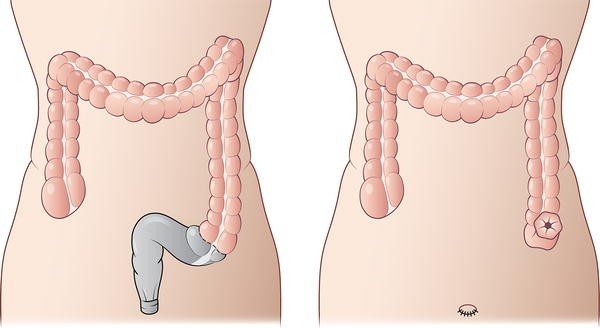 ### **Abdominoperineal resection:** This is the most common procedure for low rectal cancer. The surgeon removes the anus and performs a colostomy. The colon’s end is attached to an opening in your abdomen called the stoma, through which the waste can leave your body and collect in a bag attached to it. However, this can be avoided in most cases using advanced techniques like ISR (described below). ### **Intersphincteric resection (ISR):** It is one of the most advanced surgical techniques for rectal cancer. This procedure eliminates the need for permanent stoma in around 90% of the patients by preserving the sphincter and restoring bowel continuity. Dr. Sandeep Nayak, a prominent surgical oncologist for rectal cancer in Bangalore, India, is an expert in [ISR.](https://drsandeepnayak.com/blogs/is-isr-surgery-beneficial-for-very-low-rectal-cancer/) He has performed more than 300 rectal surgeries, either robotically or laparoscopically. ### **Radiation** Before or after surgery, the oncologist will use radiation therapy to manage or cure rectal cancer. It helps kill cancer cells by using powerful energy beams and can be used in combination with chemotherapy. ### **Chemotherapy** Chemotherapy uses drugs to kill cancer cells all over the body. The oncologist can use it before the surgery to shrink the tumor so that it can be easily removed or relieve cancer symptoms. ### **Chemoradiotherapy** Here, radiation and chemotherapy are combined to make the cancer cells more vulnerable to treatment and are specially used for large tumors or cancers with a high risk of recurrence. It can be used before or after surgery or as a primary treatment for rectal cancers that can’t be operated upon. ### **Targeted therapy** Targeted therapy is usually for people with advanced rectal cancer. Here, the oncologist will use drugs to target specific abnormalities within the cancer cells to kill them. ### **Immunotherapy** It uses our immune system to fight cancer. This biological therapy uses our immune system to improve its natural instinct to fight the disease. Frequently Asked Questions What is the rectal cancer treatment cost in India? The rectal cancer treatment in India is cost-effective compared to developed countries. The treatment charges depend on the type of surgery you undergo and all the other added treatments necessary to overcome cancer. It may include radiation, chemotherapy, targeted therapy, or [immunotherapy](https://www.cancer.org/cancer/managing-cancer/treatment-types/immunotherapy.html). Your oncologist will plan the treatment depending on cancer’s type, size, stage, and location. But be rest assured that rectal cancer treatment cost in India is affordable. Can rectal cancer be prevented? **It is not possible to prevent rectal cancer, but you can minimize the risk by:** - Exercising regularly - Having a healthy weight - Refraining from alcohol consumption and smoking - Consuming a healthy diet --- ### [Lung Cancer Treatment in Bangalore](https://drsandeepnayak.com/services/lung-cancer-treatment-in-bangalore/) **Published:** May 27, 2024 **Author:** Dr. Sandeep Nayak **Content:** Lung Cancer Treatment in Bangalore Lung cancer is the most common cancer among Indian men. Because lung cancer has a low index of suspicion, most patients are in advanced stages when they arrive. 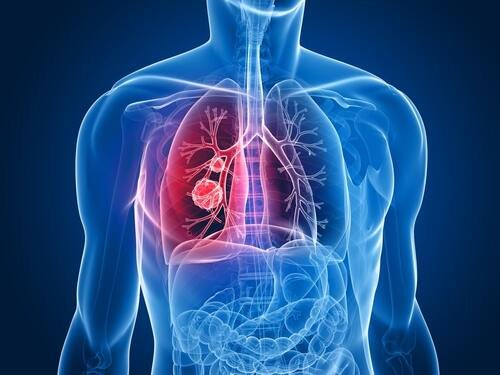 Lung cancer develops when abnormal cells proliferate uncontrollably in one or both lungs. The lungs are responsible for supplying oxygen to the body, and abnormal cells prevent healthy lung tissue from working properly. Cancer usually begins in the lining of the airway. Dr. Sandeep Nayak offers comprehensive and specialized cancer treatment in Bangalore. He is one of the [best oncologist in India.](https://drsandeepnayak.com/) Moreover, he has extensive experience detecting lung and other pulmonary anomalies early, resulting in excellent outcomes of lung cancer treatment in Bangalore. We will discuss the symptoms, diagnosis, and Lung Cancer Treatment in Bangalore in this article. **Let’s look at the,** Signs and Symptoms of Lung Cancer Lung cancer symptoms don’t always appear until the disease is in its advanced stage. On the other hand, some patients develop symptoms early. Here are some of the following signs and symptoms: - Persistent cough - Wheezing - Blood in the sputum or phlegm - Hoarseness - Weakness - Recurring or persistent infections - Aggravating chest pain on coughing or laughing. **The following are some of the signs of advanced lung cancer:** - Breathing problems - Severe chest pain - Unintended weight loss - Fatigue **These are the symptoms of cancer spreading to other parts of the body:** - Bone ache - Headache - Drooping eyelids - Muscle deterioration **Let’s know the,** Different Types of Lung Cancer The two most common types of lung cancer are small-cell and non-small-cell lung cancer. This classification is based on cancer cells’ microscopic appearance and biological behavior. ### **Small-cell lung carcinoma (SCLC)** The incidence of small cell lung cancer is lower than that of non-small cell lung cancer. Because of the structure of the cells, it is also known as oat cell carcinoma. It spreads quickly and has few visible symptoms at first. ### **Non-small-cell lung carcinoma (NSCLC)** They include cancers such as adenocarcinoma, squamous cell carcinoma, bronchioloalveolar cell carcinoma, large cell carcinoma, and others. Lung Cancer Diagnosis 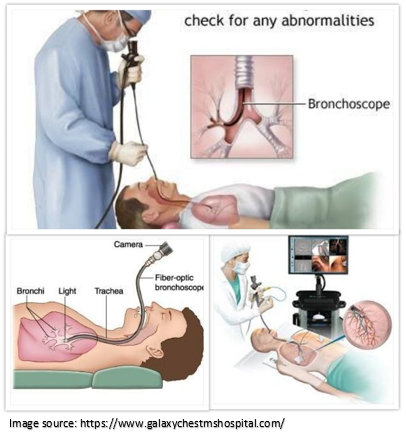 The first steps in diagnosing lung cancer are a consultation with your doctor and a physical examination. The doctor may go over your medical history and inquire about your symptoms. To confirm the diagnosis, [Dr. Sandeep Nayak](https://drsandeepnayak.com/services/about-dr-sandeep-nayak/), a proficient surgical oncologist in Bangalore, may suggest the following tests: - **Imaging tests:** X-rays, CT scans, MRIs, and PET scans can show an abnormal mass. These scans provide more information and assist in the detection of smaller lesions. - **Sputum cytology:** A microscopic examination of the sputum can reveal whether cancer cells are present if you cough up phlegm. - **Bronchoscopy:** Under sedation, the doctor passes a lighted tube down the throat to your lungs, allowing a closer examination of your lung tissue. If required, your doctor may suggest a biopsy. A biopsy involves taking a small sample of lung tissue and examining it under a microscope. A biopsy can be used to determine whether or not tumor cells are cancerous. **One of the following methods can be used to perform a biopsy:** - **Mediastinoscopy:** The doctor will make an incision at the base of the neck during this procedure. Then, using a lighted instrument and surgical tools under general anesthesia, collect lymph node specimens. - **Lung needle biopsy:** During this procedure, the doctor inserts a needle into the suspicious lung tissue through the chest wall. A needle biopsy can also be used to examine lymph nodes. If you have a positive biopsy, you may need additional tests, such as a bone scan, to determine whether the cancer has spread and its stage. Staging of Lung Cancer If [lung cancer](https://youtu.be/SoohxQ2714E) is diagnosed, several other tests are performed to determine how far cancer has spread throughout the lungs, lymph nodes, and other body parts. The type and stage of lung cancer help choose the treatment options. Staging enables a doctor to fully comprehend the extent of a patient’s cancer to make treatment decisions and predict expected outcomes. Cancer stages are described by using specific terminology. **The following is a simple way to describe staging:** - **Localized:** Only the lungs are affected in this stage. - **Regional:** Cancer has spread to the chest lymph nodes (or glands) at this stage. - **Distant:** Cancer has spread to other body parts. Lung Cancer Treatment Dr. Sandeep Nayak provides his [patients](https://drsandeepnayak.com/testimonials) with advanced and comprehensive [lung cancer treatment in Bangalore](https://drsandeepnayak.com/services/lung-cancer-treatment-in-bangalore/). The most common lung cancer treatments are surgery, chemotherapy, and radiotherapy. Newer cancer treatments, such as targeted therapy and immunotherapy, are used occasionally, but only in the disease’s most advanced stages. Your treatment options depend on the type of lung cancer, the disease’s stage, your lungs’ strength, and your overall health. Specific details about your health and the cancer stage at the diagnosis will determine your treatment plan. **Treatment for non-small cell lung cancer differs from patient to patient and depends on the stage:** - **Stage 1 NSCLC:** During surgery, a tiny portion of the lung may only need to be removed. The doctor may recommend chemotherapy, particularly if you have a high risk of relapse. Cancer is most treatable if diagnosed earlier. - **Stage 2 NSCLC:** You may need surgery to remove part or all of your lungs if you have stage 2 NSCLC. Chemotherapy is usually prescribed. - **Stage 3 NSCLC:** The doctor may suggest a combination of chemotherapy, surgery, and radiotherapy. - **Stage 4 NSCLC:** Surgery, chemotherapy, radiotherapy, targeted therapy, and immunotherapy are all treatment options for stage 4 NSCLC. Small-cell lung cancer (SCLC) can be treated with surgery, chemotherapy, and radiotherapy. In most cases, cancer has progressed to the point where surgery is no longer an effective option. ## **Surgery for Lung Cancer** Surgery is widely used to treat early-stage lung cancer. If the tumor and surrounding lung tissue are removed, patients with localized diseases have the best chance of being cured. Your surgeon will determine the resectability of a tumor. Because of their proximity to or invasion of vital structures, not all tumors are suitable for surgical resection. 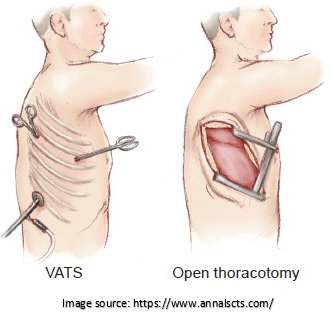 Surgery may not be the best option for patients with multiple medical issues or poor lung function. When resection is required, Dr. Sandeep Nayak mostly considers [minimally invasive approaches](https://drsandeepnayak.com/services/laparoscopic-cancer-surgery-in-india/). He usually performs VATS lobectomy, video-assisted thoracic surgery (VATS), and [robotic surgery](https://drsandeepnayak.com/services/robotic-cancer-surgery-in-bangalore-india/) for treating lung cancer. **Surgical resection of lung cancer is typically performed as follows:** 1. **Limited resection:** A wedge or segmental resection is an operation in which only a tiny portion of the lung is removed. 2. **Lobectomy:** The surgical removal of a specific lung lobe is known as a lobectomy. 3. **Pneumonectomy:** The surgical removal of an entire lung is known as a pneumonectomy. ## **Lung Cancer Surgery Recovery** The scope of the surgery, whether performed through minimally invasive options, the patient’s age, and overall health, all influence how long it takes to [recover from thoracic surgery](https://www.mskcc.org/cancer-care/patient-education/after-your-thoracic-surgery). Many patients can return home three to four days after surgery. Patients who have undergone minimally invasive surgery can usually return to work within three to four weeks. FREQUENTLY ASKED QUESTIONS Can smoking lead to lung cancer? There is no one-size-fits-all answer to whether prostate cancer can be 100% cured, as the prognosis and treatment outcome for prostate cancer can vary greatly depending on a number of factors, including the stage and grade of the cancer, the patient’s age and overall health, and the type of treatment received. What factors put you at risk of developing lung cancer? Other risks for lung cancer, besides smoking, tobacco use, or second-hand smoke, include contact with cancer-causing agents like airborne pollutants, asbestos, arsenic, or radon, consumption of specific nutritional supplements such as beta carotene, and a personal or family history of lung cancer. What are the side effects of treatment? Depending on the type of treatment used, lung cancer treatment can have a variety of side effects: - Extreme fatigue, hair loss, difficulty eating, an increased risk of infection, bowel problems, dysentery, bleeding and bruising, and a low RBC count are all side effects of chemotherapy. - Inflammation, tenderness, and sensitive skin near the radiation treatment site are all symptoms of radiotherapy. - Anesthesia reaction, difficulty breathing, pain, wound infection, blood clots in the lower extremities or lungs, excessive bleeding, and pneumonia are all possible complications following surgery. At what stage is prostate cancer not curable? Prostate cancer can sometimes be curable even when it has spread beyond the prostate gland (metastasized), but the chances of a cure decrease as the cancer progresses. The specific stage at which prostate cancer is no longer considered curable can vary, but in general, if the cancer has spread to other parts of the body and is not responding to treatment, it may be considered incurable. It is important to consult with a healthcare provider to determine the best course of action for an individual’s specific case of prostate cancer. Is it possible to detect lung cancer by taking a blood test? Although there are currently no blood tests to detect lung cancer, tumor sampling research is ongoing to help develop future lab tests and a deeper understanding of distinguishing between malignant and benign tumors to determine overall risk factors. --- ### [Liver Cancer Treatment in Bangalore](https://drsandeepnayak.com/services/liver-cancer-treatment-in-bangalore/) **Published:** May 28, 2024 **Author:** Dr. Sandeep Nayak **Content:** Liver Cancer Treatment in Bangalore Globally, liver cancer is one of the most common cancer. The liver is a vital organ without which the body would perish. It aids in the filtration of toxins and bile production, which helps the body digest food and metabolize fats. It also breaks substances like alcohol and drugs. Damage to the liver due to disease can raise the risk of liver cancer and limit treatment options. 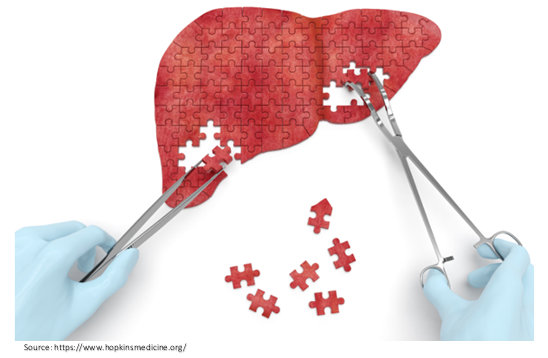Dr. Sandeep Nayak, one of the [best surgical oncologist in India](https://drsandeepnayak.com/), understands that patients with liver cancer and other gastrointestinal tract malignancies face specific obstacles and that treatment options vary depending on the condition. He is dedicated to identifying, treating, and assisting people with liver and other GI malignancies in improving their quality of life. [Dr. Nayak ](https://drsandeepnayak.com/dr-sandeep-nayak/)is committed to providing cutting-edge liver cancer treatments in Bangalore, India. He collaborates with patients to provide high-quality surgical care in a patient-centered manner. Dr. Sandeep Nayak is one of the [best oncologist in Bangalore](https://www.clinicspots.com/oncologist/bangalore). He has years of experience delivering a range of[ liver cancer treatments ](https://drsandeepnayak.com/blogs/know-all-about-liver-cancer-treatment-in-2022/)in Bangalore, India. His clinical care model is meant to help patients manage side effects and keep their quality of life during their treatment journey. *This article gives an overview of liver cancer and its treatments. Scroll down to read more!* **First, let’s have an,** Overview of Liver Cancer 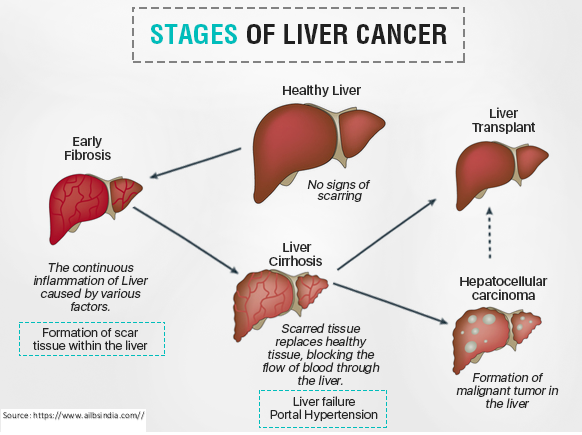The liver is located in the upper right region of the abdomen, beneath the diaphragm and above the stomach, where it takes up a lot of room. It is, in reality, the human body’s largest internal organ. Liver cancer starts in the cells of the liver. Some cells may begin to divide rapidly and develop one or more tumours, disrupting the organ’s function. **Now, let’s discuss** What are the factors that put you at risk for liver cancer? **If one or more of the risk factors listed below apply, a person may be at a higher risk of developing liver cancer.** - Chronic Hepatitis B or C infections - Cirrhosis - Primary biliary cirrhosis - Hemochromatosis - Gender and ethnicity - Smoking - Being overweight or obese A thorough diagnosis may aid in the early detection of cancer when it is most curable. Dr. Sandeep Nayak, one of the leading oncologist in Bangalore, India, may recommend regular screening for patients at a higher risk of liver cancer. Symptoms of Liver Cancer Liver cancer symptoms may not appear until the disease has progressed to an advanced stage. **The following are the symptoms of liver cancer:** - Abdominal discomfort - Abdominal swelling - Jaundice - Presence of hard lump at the right below the rib cage - Back pain or discomfort in the area of the right shoulder blade - Bruising or bleeding that is easy to come by - Fatigue - Vomiting and nausea - Eating issues - Dark urine or pale bowel motions **Now, let’s discuss the,** Types of Liver Cancer There are two types of liver cancer: primary and secondary. The liver is where primary liver cancer begins. Secondary liver cancer is metastatic, which means it began elsewhere and has spread to the liver. For example, lung cancer that has progressed to the liver is still referred to be lung cancer. And doctors may treat liver cancer as part of a lung cancer treatment plan. The liver is primarily made up of blood arteries, where most cancers begin. The most frequent type of primary liver cancer is hepatocellular carcinoma (HCC), usually linked to cirrhosis or chronic liver damage. This disease can manifest as a single massive tumour. But it’s more likely that numerous tiny tumours will develop throughout the liver. #### Other types of primary liver cancer include: - **Cholangiocarcinoma (**[**bile duct cancer**](https://drsandeepnayak.com/services/pancreatic-and-bile-duct-cancer/)**)** develops in or around the liver’s bile ducts. Cholangiocarcinoma account for 10-20% of all primary liver cancers. - **Angiosarcoma and hemangiosarcoma** are tumours that attack the thin layer of cells that line the blood artery walls in the liver. They are rare, fast-moving malignancies. - **Hepatoblastoma** is a type of childhood cancer that affects the foetal liver cells. Diagnosis of Liver Cancer Dr. Sandeep Nayak, a seasoned cancer specialist in Bangalore, India, has extensive experience detecting and treating liver cancer. Diagnostic tests for liver cancer may include: - Liver biopsy - Blood and other pathology tests - Imaging tests, such as: - Ultrasound - CT scan - PET/CT scan - MRI scan - Bone scan Dr. Nayak will discuss treatment options with patients and their families after the diagnosis and assist them in developing a personalized treatment plan tailored to their specific needs. Treatment Options for Liver Cancer Dr. Sandeep Nayak is considered one of the best [oncologist in India](https://drsandeepnayak.com/), specializing in advanced, minimally invasive liver cancer treatment in Bangalore. The best course of action may depend on the extent of liver damage caused by cancer or other illnesses and if cancer has spread to other parts of the body. Surgery, several types of drug therapy, and even liver transplantation are all options for treating liver cancer. Surgical Treatments Dr. Sandeep Nayak is a highly qualified and experienced surgical oncologist in India. He has a great deal of [expertise ](https://drsandeepnayak.com/expertise/)in treating cancer by [laparoscopic ](https://drsandeepnayak.com/services/laparoscopic-cancer-surgery-in-india/)and [robotic ](https://drsandeepnayak.com/services/robotic-cancer-surgery-in-bangalore-india/)surgical techniques. The surgical team may include HPB and liver transplant surgeons. Patients should discuss the potential side effects of their procedure with their health care provider before undergoing surgery. ### Partial hepatectomy: 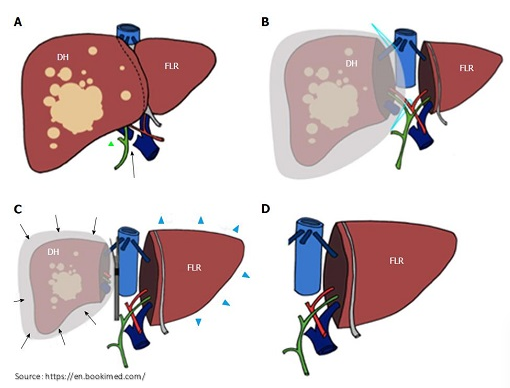Removing a portion of the liver, ranging from a small wedge to a whole lobe, is known as partial hepatectomy. The liver’s surviving segment takes over the activities of the entire organ. Within a few weeks, the liver may regrow to its original size. Even if the tumour is tiny, a hepatectomy may not be possible if the patient has severe cirrhosis. Pain, weakness, exhaustion, and liver failure are possible side effects. The [medical team](https://drsandeepnayak.com/oncologist-in-bangalore/) will be on the lookout for signs of bleeding, infection, liver failure, or other issues that require immediate attention. ### Total hepatectomy: It involves removing the entire liver and replacing it with an organ from a donor. ### Liver transplant: Liver transplantation is only possible if specific parameters are met, such as the presence of specified tumour size and quantity and the availability of a suitable donor. It is crucial to note that the number of donor livers available is limited. Thus, transplantation isn’t always an option. After a transplant, the patient will be constantly monitored for signals that the body rejects the new liver or that the tumour has recurred. To avoid rejection, the patient must take medicine. Non-Surgical Liver Cancer Treatments ### Ablation therapy: It is a treatment for destroying malignancies in the liver without removing them. Cryoablation, microwave, radiofrequency, and ethanol are some available methods. ### Chemotherapy: It involves using drugs to kill or prevent cancer cells from replicating. Chemotherapy can have a systemic effect (medications or injections that travel throughout the body). ### Targeted therapy: It includes using drugs that target cancer genes or tissues. Chemotherapy is not the same as targeted therapy. ### Immunotherapy: It involves using drugs that guide the body’s immune system to attack cancer cells. It, too, is not the same as chemotherapy. [Call us](https://drsandeepnayak.com/contact/) or book an online consultation with our professional oncologists if you need [liver cancer treatment in Bangalore, India](https://drsandeepnayak.com/services/liver-cancer-treatment-in-bangalore/), or if you want a second opinion on your diagnosis and treatment plan. FREQUENTLY ASKED QUESTIONS How Long can liver cancer last? The length of time that liver cancer can last depends on several factors, including the type and stage of the cancer, the patient’s overall health, and the treatment approach used. In general, liver cancer can progress quickly or slowly, and some people may survive for several years with treatment. However, in advanced cases where the cancer has spread to other parts of the body, life expectancy may be shorter. It’s important to discuss your specific situation and treatment options with your healthcare provider. Is lung cancer fast spreading? Liver cancer can be fast-spreading, especially in the later stages when it has spread to other parts of the body, but the speed of its spread can vary depending on the type and stage of the cancer, the patient’s overall health, and the treatment approach used. Early detection and prompt treatment can help prevent or slow the spread of liver cancer. What is the success rate of liver cancer? The success rate for treating liver cancer depends on several factors, including the stage of the cancer, the patient’s overall health, and the treatment approach used. In general, the earlier the cancer is detected and treated, the better the chances of success. It’s important to discuss your specific situation and treatment options with your healthcare provider. What is the latest treatment for liver cancer? There are several emerging treatments for liver cancer, such as immunotherapy, targeted therapy, and radioembolization. These treatments are designed to specifically target cancer cells while minimizing damage to healthy tissue. Immunotherapy drugs What is the best treatment for cancer of the liver? The best treatment for liver cancer depends on several factors, such as the stage of the cancer, the size and location of the tumor, the patient’s overall health, and whether the cancer has spread to other parts of the body. Treatment options may include surgery, liver transplant, chemotherapy, radiation therapy, or a combination of these. The most effective treatment approach is determined by a team of medical professionals who consider the individual circumstances of each patient. Can liver cancer be fully cured? The chances of curing liver cancer depend on several factors, including the stage of the cancer, the patient’s overall health, and the treatment approach used. In some cases, liver cancer can be fully cured, but in other cases, it may not be possible. Early detection and prompt treatment can improve the chances of a cure. --- ### [Colon Cancer Treatment in Bangalore, India](https://drsandeepnayak.com/services/colon-cancer-treatment-in-bangalore-india/) **Published:** May 29, 2024 **Author:** Dr. Sandeep Nayak **Content:** Colon Cancer Treatment in Bangalore, India Colon cancer is the third most common cancer in India. It starts in the large intestine or rectum, the lower portions of your digestive tract. According to estimation, one out of every 23 men and 25 women would acquire colon cancer, also known as colorectal cancer, at some point in their lives. The best way to overcome it is early diagnosis and treatment. Dr. Sandeep Nayak provides comprehensive and advanced colon cancer treatment in Bangalore, India. In his career spanning more than two decades, Dr. Sandeep Nayak has emerged as one of the [best oncologist in India](https://drsandeepnayak.com/). Patients from all over India and abroad consult him for their cancer treatment. > We have discussed the symptoms, causes, and treatment for colon cancer on this page. ***Let’s start with the overview of colon cancer*** Colon cancer, which occurs in the large intestine, is more common in older people, although it can strike anyone at any age. It usually starts as polyps, which are tiny, noncancerous (benign) clusters of cells that grow inside the colon. Some of these polyps can turn into colon cancer over time. Small polyps may create few, if any, symptoms. As a result, Dr. Sandeep Nayak, a cancer specialist in Bangalore, recommends routine screening tests to help prevent colon cancer by detecting and removing polyps before they turn cancerous. If colon cancer develops, various treatments, including surgery, radiation therapy, and medication such as chemotherapy, immunotherapy, and targeted therapy, are available to help manage it. What are the symptoms of colon cancer? The following are some of the symptoms and signs of colon cancer: - Blood in your feces or rectal bleeding - A change in your bowel habits, like diarrhea, constipation, or a change in the consistency of your feces. - Constant gastrointestinal discomfort, such as cramps, pain, or gas. - Feel as if your bowels aren’t totally empty - Weakness or tiredness - Sudden weight loss Many patients show no signs or symptoms in the early stages of colon cancer. Symptoms will vary depending on the size and location of cancer in your large intestine. Make an [appointment](https://drsandeepnayak.com/contact) with [Dr. Sandeep Nayak](https://drsandeepnayak.com/services/about-dr-sandeep-nayak/), one of the [best oncologist in India](https://drsandeepnayak.com/), if you detect any persistent symptoms that concern you. What are the causes of colon cancer? Doctors are still unsure regarding the cause of colon cancer. Generally, colon cancer develops when the DNA of healthy colon cells undergoes mutations. When a cell’s DNA is disrupted, it becomes malignant, and the cell continues to divide even though new cells aren’t required. As the cells multiply, a tumor develops. Cancer cells can grow large enough to penetrate and destroy normal tissue nearby over time. Furthermore, malignant cells can migrate to other places of the body and metastasis. How is colon cancer diagnosed? If you have signs and symptoms that point to colon cancer, Dr. Sandeep Nayak, one of the best oncologist in Bangalore, India, may suggest one or more tests, such as: - Blood tests - Fecal testing - Colonoscopy - Sigmoidoscopy - CT scan - X-ray - Biopsy Following diagnosis, [Dr. Sandeep Nayak](https://drsandeepnayak.com/) will assess the cancer stage based on the tumor’s size, extent, and spread to neighboring lymph nodes and distant organs. The stage of cancer will impact the treatment options and prognosis. Colon cancer treatment in Bangalore, India [Colon cancer treatment](https://drsandeepnayak.com/services/colon-cancer-treatment-in-bangalore-india/) is dependent on several factors. Based on your overall health and the stage of your colon cancer, Dr. Sandeep Nayak, a renowned cancer specialist in Bangalore, will decide the best treatment plan for you. Colon cancer treatment in Bangalore, India, includes surgery, chemotherapy, and radiation. The goal of treatment is to eliminate cancer, prevent it from spreading, and relieve any unpleasant symptoms. ### **Surgery** ### Surgery for early-stage colon cancer **Polypectomy:** Dr. Sandeep Nayak can remove your cancer during a colonoscopy if it is in an early stage, localized, small, and completely contained within a polyp. **Endoscopic mucosal resection:** The surgical oncologist will remove larger polyps during a colonoscopy with special equipment that removes the polyp as well as a small portion of the colon’s inner lining. **Laparoscopic surgery:** Laparoscopic surgery can be used to remove polyps that can’t be eliminated during a colonoscopy. Dr. Sandeep Nayak, one of the best oncologist in India, is considered a pioneer in [laparoscopic surgery.](https://drsandeepnayak.com/services/laparoscopic-cancer-surgery-in-india/) ### **Surgery for advanced colon cancer** Total abdominal colectomy: In this procedure, the surgical oncologist will remove the entire large intestine from the lower region of the small intestine to the rectum. Then he will stitch the small intestine to the rectum. It can be done either through laparoscopy or as open surgery. **Proctosigmoidectomy:** In this minimally invasive surgery, Dr. Sandeep Nayak, an experienced [surgical oncologist in India](https://drsandeepnayak.com/), only removes the affected section of the rectum and the sigmoid colon. **Abdominoperineal resection:** In this surgical treatment, the anus, rectum, and sigmoid colon are removed. As a result, a permanent colostomy (an artificial bag) is placed so that the patient can pass out their waste. **Right colectomy:** Here, the surgeon will remove the right side of the colon. He will also remove the last portion of the small intestine attached to the colon on the right side. **Total proctocolectomy:** This procedure involves the removal of the colon, anus, and rectum. ### **Chemotherapy** In chemotherapy, the oncologist will use medications to kill cancer cells. After surgery, it is generally provided for persons with colon cancer to remove any remaining malignant cells. Chemotherapy can help slow the progression of cancers. Chemotherapy, like radiation therapy, has temporary side effects like nausea, diarrhoea, hair loss, and so on, depending on the cancer treatment drugs and the length of treatment. ### **Radiation** Radiation delivers an intense beam of energy similar to that used in X-rays to target and destroy malignant cells. Radiation therapy is frequently used in conjunction with chemotherapy. ### **Other treatments** Apart from the above treatments, Dr. Sandeep Nayak, one of the best oncologist in Bangalore, India, may recommend [immunotherapies](https://www.cancer.org/cancer/colon-rectal-cancer/treating/immunotherapy.html) and targeted therapies. They help treat late-stage or metastatic colon cancer that hasn’t responded to earlier treatments. --- ### [Uterus / Cervical Cancer Treatment in Bangalore, India](https://drsandeepnayak.com/services/uterus-cervical-cancer-treatment-in-bangalore-india/) **Published:** May 29, 2024 **Author:** Dr. Sandeep Nayak **Content:** Uterus / Cervical Cancer Treatment in Bangalore, India Cervical cancer begins in the cervix, the female reproductive organ. It is the third most common malignancy that affects women. The cervix is the bottom section of the uterus that opens up into the top of the vagina. This cancer occurs in the cervix region and begins as a precancerous disease known as dysplasia. In women, it is the most easily avoidable type of cancer. Regular Pap smear testing and follow-ups with a seasoned cancer specialist in Bangalore, India, like Dr. Sandeep Nayak, can help detect it. Women who have never had an abnormal Pap smear should get screened every three years at the absolute least. According to Dr. Sandeep Nayak, one of the leading [surgical oncologist in India](https://drsandeepnayak.com/), early detection and proper treatment methods assure a speedy and complete recovery from cervical cancer. Unwanted events do occur, and you may develop cervical cancer as a result. But don’t be concerned. If you open up about your problem and discuss it openly with your loved ones, you allow yourself to receive the most excellent treatment. Dr. Sandeep Nayak, a renowned [oncologist in India ](https://drsandeepnayak.com/)for treating cervical cancer, can give you the best advice on the disease. The stage of the disease determines cervical cancer treatment. Dr. Sandeep Nayak can provide you with the most advanced and effective cervical cancer treatment in Bangalore, India. Dr. Sandeep Nayak would first perform a thorough examination to find the best therapy option for the condition. His vast knowledge will surely aid you in receiving the best treatment and consultation possible. So, what are you waiting for? [Make an appointment ](https://drsandeepnayak.com/contact/)with Dr. Sandeep Nayak right now. If you want to know more about [uterus / cervical cancer treatment in India](https://drsandeepnayak.com/services/uterus-cervical-cancer-treatment-in-bangalore-india/), this article may assist. What is Cervical Cancer, and How Does It Affect You?  Cervical cancer develops when cells in the cervix, which connects the uterus and the vaginal canal, alter. This cancer can harm the cervix’s deeper tissues and spread to other parts of the body (metastasize), most commonly the lungs, [liver](https://drsandeepnayak.com/services/liver-cancer-treatment-in-bangalore/), bladder, vagina, and [rectum](https://drsandeepnayak.com/services/rectal-cancer-treatment-in-bangalore/). The most common cause of cervical cancer is infection with the human papillomavirus (HPV), which can be prevented with a vaccine. What are the Different Types of Cervical Cancer? Cervical cancer comes in a variety of forms. - **Squamous cell carcinoma.** This develops in the cervix’s lining. It can be discovered in up to 90% of cases. - **Adenocarcinoma.** This occurs in the mucus-producing cells. - **Mixed carcinoma.** This has characteristics of the other two categories. What are the Signs and Symptoms of Cervical Cancer? Cervical cancer in its early stages usually has no symptoms. However, advanced stage cervical cancer may show the following signs and symptoms: - After intercourse, between menstruation, or after menopause, vaginal bleeding can occur. - Vaginal discharge that is watery, red, heavy, and smells foul. If you have any indications or symptoms that concern you, make an appointment with Dr. Sandeep Nayak, one of the [best oncologist in India.](https://drsandeepnayak.com/) **Now, let’s know.** What Causes Cervical Cancer? Cervical cancer originates with abnormal tissue alterations. The majority of cases result from HPV infection. HPV can cause skin warts, genital warts, and other skin problems in different ways. Others have been related to the vulva, vagina, penis, [anus](https://drsandeepnayak.com/services/rectal-cancer-treatment-in-bangalore/), tongue, and tonsil malignancies. What Are the Risk Factors for Cervical Cancer? You may be at an increased risk of cervical cancer if you: - Have sex before the age of 16 or within a year of the start of your period. - Have multiple sexual partners. - Take birth control pills, especially if you have been using them for more than five years. - Smoke tobacco. - Have a compromised immune system. - Are diagnosed with a sexually transmitted disease (STD). ### Cervical Cancer Screening The Papanicolaou test (Pap smear) and high-risk HPV tests are commonly used in cervical cancer screening. A Pap smear is a test performed as part of a woman’s regular pelvic examination. The doctor collects cells from the cervix’s surface, which the lab technician examines under a microscope. If anything odd is discovered, the doctor performs a cervical tissue biopsy. The [oncologist](https://drsandeepnayak.com/dr-sandeep-nayak/) may recommend the following tests to look for cancer cells: ###  ### Cervical biopsy/ Colposcopy: If abnormal cells are seen on a Pap smear, the doctor will check a colposcopy. During the Colposcopy examination, the cervix is dyed with a harmless dye or acetic acid to see the cells clearly. A Colposcope microscope is used to enlarge the cervix 8 to 15 times to look for atypical cells to biopsy. If the colposcopy reveals symptoms of invasive cancer, a second biopsy is required. ### Cone biopsy and Conization: While the patient is under anesthesia, the doctor may choose to do a Conization (taking a cervix sample) in the operating room. 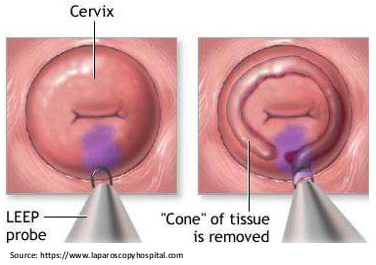The doctor uses an electrified wire loop to extract a piece of tissue from the cervix during the Loop Electrosurgical Excision Procedure (LEEP). LEEP, Scalpel (cold knife conization), and laser procedures are all outpatient procedures that allow patients to leave the hospital the same day. If the Pap test is abnormal or other indications of cervical cancer are discovered, Dr. Sandeep Nayak may further investigate the patient’s and family’s medical histories. If Dr. Sandeep finds cancer cells in the cervix and analyses the lymph nodes to see if cancer has spread, he may propose additional tests. ### Cervical Cancer Treatment Cervical cancer can be cured if it is discovered early. Treatment for cervical cancer is determined by several criteria, including cancer’s stage, other health issues the patient may have, and personal preferences. 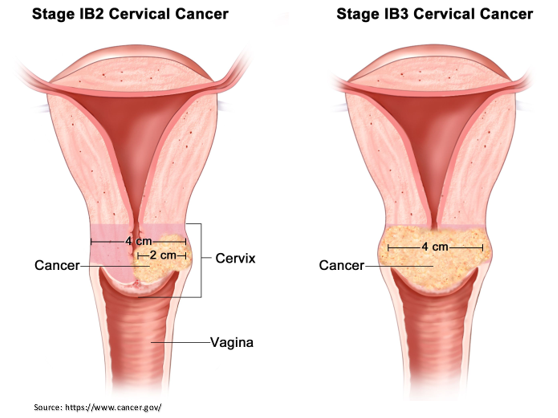The following are the treatment options for cervical cancer: 1. Surgery 2. Radiation therapy 3. Chemotherapy 4. Targeted therapy 5. Immunotherapy These therapies are sometimes combined to improve their efficacy. ### 1. Surgery: Cervical cancer in its early stages is usually treated with surgery. The optimal operation for you will be determined by the size and stage of your cancer, as well as whether or not you want to contemplate becoming pregnant in the future. 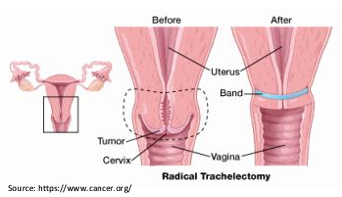 - **Surgical removal of cancer.** For mild cervical cancer, a cone biopsy may completely eradicate the tumor. This surgery entails removing a cone-shaped portion of cervical tissue while leaving the rest of the cervix undamaged. This choice may allow you to think about becoming pregnant in the future. - **Surgical removal of the cervix (trachelectomy).** A radical trachelectomy operation, which removes the cervix and surrounding - tissue, may treat early-stage cervical cancer. Because the uterus is retained following this treatment, you may become pregnant if you so desire. - **Surgical removal of the cervix and uterus (hysterectomy).** Early-stage cervical cancer can be cured and prevented with a hysterectomy. The surgeon removes the cervix, uterus, portion of the vaginal wall, and adjacent lymph 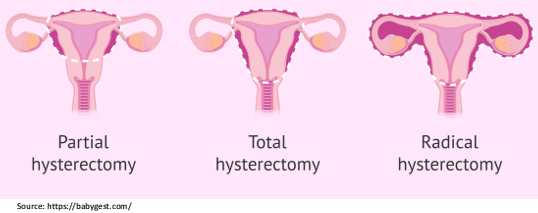 - nodes for most early-stage cervical malignancies during a radical hysterectomy. However, eliminating the uterus makes it impossible to conceive. For early-stage cervical cancer, a minimally invasive hysterectomy, which includes making several tiny incisions in the abdomen rather than one large incision, may be a possibility. People who get [minimally invasive surgery](https://drsandeepnayak.com/services/laparoscopic-cancer-surgery-in-india/) need shorter hospital stays and recover faster. If you are considering [minimally invasive surgery](https://drsandeepnayak.com/services/robotic-cancer-surgery-in-bangalore-india/), talk to Dr. Sandeep Nayak, a highly qualified and experienced[ surgical oncologist in Bangalore, India, ](https://drsandeepnayak.com/oncologist-in-bangalore/)about the benefits and risks of the procedure. ### 2. Radiation therapy: High-energy X-ray beams are used in radiation therapy to eliminate malignant cells. Radiation therapy can be administered both within and outside the body, utilizing a metal tube inserted into the uterus or vaginal canal and a machine. ### 3. Chemotherapy: Chemotherapy is a treatment in which medicinal drugs are administered into the body to eliminate cancer cells. This treatment is given in a particular order by medical oncologists. They administer chemotherapy to the patient for a set amount of time. Later on, the therapy is stopped to help heal the patient’s body. ### 4. Targeted therapy: Targeted therapy is a type of cancer treatment in which medications target specific genes and proteins involved in cancer cell development and survival. These medications target cancer cells while leaving healthy cells alone. Drugs used in targeted therapy can block or inhibit cancer cells’ signals to develop or direct cancer cells to self-destruct. Targeted medications prevent cancer cells from multiplying. In a nutshell, these medications prevent cancer cells from dividing and forming new cancer cells. ### 5. Immunotherapy: Immunotherapy is a medicine that boosts your immune system’s ability to fight cancer. It works by interfering with the immune system’s natural processes. Because cancer cells release proteins that immune system cells cannot recognize, your body’s disease-fighting immune system may fail to battle cancer. The oncologist may give [immunotherapy ](https://www.cancer.org/cancer/types/cervical-cancer/treating/immunotherapy.html)when cervical cancer has progressed and previous therapies have failed. If you or a loved one has been diagnosed with cervical cancer, Dr. Sandeep Nayak, an expert [surgical oncologist in India](https://drsandeepnayak.com/), can help. He offers minimally invasive and result-oriented cervical cancer treatment in Bangalore, India. --- ### [Laparoscopic Cancer Surgery in India](https://drsandeepnayak.com/services/laparoscopic-cancer-surgery-in-india/) **Published:** May 27, 2024 **Author:** Dr. Sandeep Nayak **Content:** Laparoscopic Cancer Surgery in India Laparoscopic surgery is used to help cancer patients in a variety of ways. It is the oldest cancer treatment method. It offers the best possibility of preventing many types of cancer and assisting in diagnosing, staging, and treating cancer. Every patient’s experience with cancer surgery is unique, based on the type of surgery, the type of cancer, and the patient’s overall condition. Open surgery is a major medical procedure with life-changing side effects. On the other hand, laparoscopic surgery is quick and has minor side effects. Laparoscopy cancer surgery is also known as [Minimal Access Cancer Surgery](https://macsforcancer.com/) (MACS). It is a specialized technique for performing cancer surgery. This procedure can be safely performed on patients of different ages. Laparoscopic cancer surgery is getting more and more popular as a method of undergoing surgical oncology. Dr. Sandeep Nayak, one of the [best surgical oncologist in India](https://drsandeepnayak.com/), deserves credit for this and his team of best oncologist in Bangalore. Because of his and his teams efforts and hard work, people became aware of this advanced technique for cancer treatment in India. Benefits of Laparoscopic Surgery As a modern surgical method, [laparoscopic surgeries](https://drsandeepnayak.com/services/laparoscopic-cancer-surgery-in-india/) successfully address underlying health conditions relating to the abdomen or pelvic region less painfully. In comparison to traditional surgical approaches, laparoscopic surgery has several advantages. ### Minimally Invasive and Painless Treatment Because the surgery is minimally intrusive, it is also less painful. Post-surgery, patients are not in excruciating discomfort. In comparison to traditional surgery, patients are discharged from the hospital sooner. ### Minor Scars and Less Blood Loss Post-surgery, the patient’s body is left with tiny scars. Only a few minor incisions are required for the procedure, reducing the danger of blood loss and the requirement for blood transfusions. When compared to standard surgery, there is less internal scarring. ### Short Hospital Stay In the case of [laparoscopic surgery](https://drsandeepnayak.com/services/laparoscopic-cancer-surgery-in-india/), a patient can return to their routine in 2 to 3 weeks. It is entirely safe and highly suggested for persons who are constantly on the move. It is an excellent technique to save money on hospitalization costs because the patient is discharged within 2-3 days. ### Reduced Risk of Infections Because of the small incisions, there is a low risk of infection in the surgical area. Patients, on the other hand, must take precautions. ### Faster Recovery Laparoscopic surgery allows for a quicker recovery. Traditional surgery patients might need 4 to 8 weeks for a full recovery. More and more people are choosing the laparoscopic surgery method as the benefits are much more than the conventional open cancer surgery. Dr. Sandeep Nayak – Pioneer In Laparoscopic Cancer Surgery [Dr. Sandeep Nayak](https://drsandeepnayak.com/dr-sandeep-nayak/) —Chairman, Oncology Services Karnataka (India), one of the [best surgical oncologist in India](https://drsandeepnayak.com/), is well-versed in both surgery methods, open surgery or laparoscopic and robotic cancer surgery. But as of now, his area of interest lies in eliminating tumors using the laparoscopic and robotic method of surgery as it is more beneficial to cancer patients. Furthermore, he strongly feels that his fellow surgeons should acknowledge and opt for this surgery method as it is a safer and more effective cancer treatment option. Hence, on his part, he always makes it a point to spread awareness about the benefits of laparoscopic and [robotic cancer surgery](https://drsandeepnayak.com/services/robotic-cancer-surgery-in-bangalore-india/). And that’s not all; he imparts his knowledge to the medical students and makes several videos on these advanced treatment options. When is a laparoscopy cancer surgery necessary? Laparoscopic surgery is a significant surgical procedure that removes cancerous tumors requiring further testing (a biopsy). Also, it is used to remove an injured or diseased internal organ. 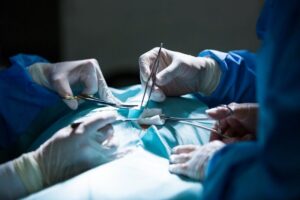[MACS](https://macsforcancer.com/) is regarded as one of the premier centres for laparoscopic cancer surgery in India. Here, we strive to provide the finest treatment and complete recovery for patients suffering from conditions such as: - [Breast Cancer](https://drsandeepnayak.com/services/breast-cancer-treatment-in-bangalore/) - [Liver Cancer](https://drsandeepnayak.com/services/liver-cancer-treatment-in-bangalore/) - [Adrenal Tumor](https://drsandeepnayak.com/services/adrenal-tumors/) - [Stomach and Esophageal Cancer](https://drsandeepnayak.com/services/stomach-and-esophageal-cancer-treatment-in-bangalore-india/) - [Pancreatic and Bile Duct Cancer](https://drsandeepnayak.com/services/pancreatic-and-bile-duct-cancer/) - [Prostate Cancer](https://drsandeepnayak.com/services/robotic-cancer-surgery-in-bangalore-india/) - [Colon Cancer](https://drsandeepnayak.com/services/colon-cancer-treatment-in-bangalore-india/) - [Kidney Cancer](https://drsandeepnayak.com/services/kidney-cancer-treatment/) Will I need to do anything to prepare for the procedure? Before your laparoscopy, you will generally have an appointment to ensure that you’re healthy enough for the surgery. You are weighed, and a nurse takes your blood pressure, pulse, and temperature. You may require to undergo the following tests: - Blood tests - X-ray - ECG You have the opportunity to ask any questions you may have and to sign the [consent form.](https://drsandeepnayak.com/contact/) Actual Procedure of Laparoscopic Cancer Surgery  - The surgeon creates small incisions through the pinhole camera and inserts surgical equipment into the body during laparoscopic surgery. - Without much disturbance to the internal organs, the surgeon controls the movement of the surgical instrument with the help of a clear view of the proceeding on the monitor. - For this advanced method, people usually assume that the state-of-the-art operation theatres and cutting-edge surgical equipment are needed. - But, Dr. Sandeep Nayak, a seasoned [cancer specialist in Bangalore,](https://drsandeepnayak.com/oncologist-in-bangalore/) India, refutes this claim as standard laparoscopic instruments are good enough for this niche treatment. - However, for performing laparoscopic surgery, the surgeon has to have specialization in this field. - He has to be an expert in conventional open cancer surgery, plus he has to gain fellowship in these treatments. Views of Dr. Sandeep Nayak on Laparoscopic Cancer Surgery Patients from far and wide come for treatment to Dr. Sandeep Nayak because he is one of the [best oncologist in India](https://drsandeepnayak.com/). Patients consult him for his compassionate nature and patient-centric approach to treatment. - Patients’ safety and positive results are the two things that drive the doctor to spread awareness about the minimal access cancer surgery. - To minimize the suffering of the cancer patients was his main goal which prompted him to acquire specialization in laparoscopic and robotic surgery. - According to Dr. Sandeep Nayak, an experienced [cancer specialist in Bangalore](https://drsandeepnayak.com/), India, advancements and innovations in technology in recent times are paving the way for advanced treatment forms like minimal invasive cancer surgery, or in other words, laparoscopic and [robotic surgery](https://drsandeepnayak.com/services/robotic-cancer-surgery-in-bangalore-india/), in the field of oncology. - With the help of this revolutionary treatment, the doctor can successfully eliminate the tumor from the affected area while ensuring minimum pain and discomfort to the patient, along with aesthetically more minor scars than conventional open surgeries. Open Vs. Laparoscopic Surgery: Which is the Best Procedure? Dr. Sandeep Nayak will discuss all of your surgical choices with you. It’s always a good idea to follow your doctor’s advice. The best type of surgery for you will be determined by the procedure’s purpose and the severity of the ailment. Laparoscopic surgery will be sufficient if the technique is to diagnose a problem. On the other hand, open surgery will help repair the damage better if your disease is chronic and has caused considerable tissue or muscle damage. All major organs, including the heart, kidneys, brain, and even hernias, require open surgery. If you have undergone surgery before, open surgery is also preferred. [Consult your doctor](https://drsandeepnayak.com/contact/) and family for assistance. Consider how much time you will need to recoup and whether you will need more procedures in the future while choosing a procedure. What are the chances of dying from laparoscopic surgery? According to research, the risk of dying from laparoscopic surgery is as follows: - Negligible: A chance of less than one in a million. - Minimal: Less than 1 in 100,000 - Very low: Less than 1 in 10,000 - Low: Less than 1 in 1,000 - Moderate: Less than 1 in 100 - High: A chance of more than 1 in 100 Laparoscopy or Open surgery? Which is best for me? Almost all problems that formerly required open surgery can now be treated with laparoscopic surgery. Laparoscopic surgery can treat anything from benign abdominal adhesions to more severe conditions, including reproductive malignancies. Laparoscopy can be used to treat the following conditions:  - Endometriosis - Ovarian cysts - Pelvic inflammatory disease - Fibroids - Gynecological cancers Obesity, heart disease, widespread disease, and large abdominal tumors are just a few of the conditions for which laparoscopic surgery is not recommended. --- ### [Testicular Cancer Treatment in Bangalore, India](https://drsandeepnayak.com/services/testicular-cancer-treatment-in-bangalore-india/) **Published:** May 29, 2024 **Author:** Dr. Sandeep Nayak **Content:** Testicular Cancer Treatment in Bangalore, India Cell division is a natural process that keeps your body’s functions running smoothly. However, cancer can develop when cells begin to divide uncontrollably, resulting in lump formation or abnormal growth in the body. The critical feature of cancer is that it can develop in any region of the body, and as it grows, it may spread to other parts of the body. More and more means of detecting early warning symptoms of testicular cancer and other types of cancer have emerged due to technological breakthroughs in the medical field, allowing for a more significant possibility of treatment’s success. [Dr. Sandeep Nayak](https://drsandeepnayak.com/), Chairman of Oncology Services in Karnataka, India, is one of the top surgical oncologists in the country. He provides the most advanced and effective therapies for various malignant conditions, including testicular cancer in India. Dr. Nayak is an expert in a variety of [surgical procedures](https://drsandeepnayak.com/expertise/) used to treat testicular cancer. He also has extensive experience with conventional, [laparoscopic](https://drsandeepnayak.com/services/laparoscopic-cancer-surgery-in-india/), and [robotic cancer surgeries](https://drsandeepnayak.com/services/robotic-cancer-surgery-in-bangalore-india/). Please go through this article to know more about testicular cancer and the [treatments available for testicular cancer](https://drsandeepnayak.com/services/testicular-cancer-treatment-in-bangalore-india/) in India. What Exactly is Testicular Cancer? If you wonder where testicular cancer can be found, it’s cancer that develops inside a man’s testicles. The scrotum is a loose sac-like structure that lies beneath the penis. The testicles are the male reproductive glands in the scrotum that produce sperm and the male sex hormone (testosterone) in the body. During diagnosis, Dr. Sandeep Nayak, a seasoned oncologist, may recommend thorough monitoring and suitable treatment for testicular cancer in India. **Let us now take a look at,** Signs and Symptoms of Testicular Cancer Cancer can develop in both testicles in rare situations, although it generally develops in one of them. The following are some of the most prevalent symptoms: - Painless lump in one of the testicles - Swelling or heaviness in the scrotum, with or without pain - Fluid collection in the scrotum - Testicular or scrotal soreness or pain - Swelling in lower extremities - Low back, abdomen, chest, or head pain If you observe any of the above symptoms over two weeks, consult an experienced oncologist in India for a precise analysis. Diagnosis of Testicular Cancer in India Cancer growth might be detected during self-examination if you feel a lump or notice a change in the size of your testicle. During a routine examination, your doctor can also detect it. To determine if it is a malignant testicular lump and rule out other conditions, the doctor can do the following tests and screenings: ### Ultrasound scan If a testicular lump is discovered during a physical examination, the doctor will usually order an ultrasound scan. An ultrasound scan assists the doctor in determining the kind and position of the lump and, as a result, choosing the likelihood of a testicular cancer diagnosis. ### Blood Tests Specific proteins and enzymes, such as alpha-fetoprotein and beta-human chorionic gonadotropin (HCG), might float in the circulation due to testicle cancer. Their raised blood levels aid the doctor in detecting cancer in the body and its type and spread. A tumour marker test is a type of cancer blood test. ### Biopsy In this procedure, some testicular tissue is extracted and inspected under a microscope for the presence of cancer cells. However, there is a slight chance that cancer will spread via the scrotum if you do so. As a result, the doctor may opt for surgery to remove the entire testicle and then examine it for malignancy. If cancer is found, the doctor will order more tests such as X-rays and CT scans to confirm the disease hasn’t spread to other parts of the body. **However, it’s important to remember that not all lumps are malignant, and groin pain or discomfort could result from underlying health problems.** The best treatment for testicular cancer in India will be determined by the type of cancer, its stage, and the patient’s overall health and preferences. An honest discussion with the doctor will enable them to recommend the best course of action, and the patient will be able to make an informed decision. Standard Treatment Options for Testicular Cancer in India 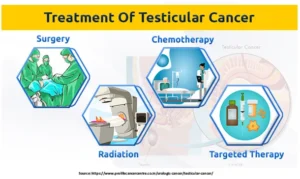 In the early stages of testicular cancer, a proficient [oncologist in India](https://drsandeepnayak.com/) may recommend the patient to observe the tumor to see if it grows any further. After a later stage of detection, the doctor may suggest the following treatment options: ### 1. Surgery **Radical Orchiectomy:** It is a surgical procedure in which the doctor creates an incision in the groin and removes the entire testicle if cancer is present. In this case, getting an appropriate prosthetic following the cancer treatment procedure is also a viable option. **Testis-Sparing Surgery:** The doctor focuses on the testicle tumour while leaving the testicle in place. Small tumours may be treated with this procedure. **Retroperitoneal Lymph Node Dissection:** It is a complex procedure. The doctor creates an incision in the abdomen and carefully removes the lymph nodes from the back of the abdomen while avoiding damage to adjacent nerves. When cancer has progressed to the lymph nodes, doctors frequently conduct this sort of cancer treatment surgery. ### 2. Radiation therapy This method uses high-powered beams to kill the cancer cells on the testicles or lymph nodes. Radiation beams are used to target cancer cells in specific areas of the body. Radiation therapy for cancer kills cancer cells by destroying their DNA, preventing them from developing any further. After surgery, this method may be used to guarantee that any leftover cancer cells are eliminated, preventing them from recurring. Patients may experience some cancer treatment side effects, such as nausea, exhaustion, and a drop in sperm count, but these will subside when the treatment is completed. ### 3. Chemotherapy Following surgery, the doctor may recommend chemotherapy to destroy any leftover cancer cells and prevent a recurrence. Chemotherapy is a multi-stage method that kills cancer cells by using cancer treatment medications. Patients are given these treatments orally or intravenously. They work throughout the body, wherever testicular cancer has spread. Chemotherapy, like radiation therapy, has temporary side effects like nausea, diarrhoea, hair loss, and so on, depending on the cancer treatment drugs and the length of treatment. ### 4. Chemotherapy with Stem Cell Transplant: Chemotherapy drugs can kill healthy cells, including those that make blood, during the process. Doctors may give patients high doses of chemotherapy in the later stages of [testicular cancer](https://drsandeepnayak.com/services/testicular-cancer-treatment-in-bangalore-india/), necessitating a [stem-cell transplant.](https://www.cancer.org/cancer/types/testicular-cancer/treating/high-dose-chemo-stem-cell.html) Doctors transplant stem cells into the patient’s vein, similar to a blood transfusion. These stem cells then settle in the bone marrow, where they mature into healthy blood cells. [Book an appointment](https://drsandeepnayak.com/contact) with Dr. Sandeep Nayak, a highly-qualified and experienced surgical oncologist in India, to avail of advanced and effective cancer treatment. Frequently Asked Questions Is it possible to prevent testicular cancer? It is impossible to prevent testicular cancer because doctors do not know its exact cause. Even if a genetic mutation causes it, you will not be able to prevent it. Can the patient have sex after testicular cancer treatment? After your body has recovered from testicular cancer therapy, it is normal to have intercourse. Each case is unique, but after a few months, you should be able to resume your regular sex life. How long does it take for a testicular cancer patient to recover? After two weeks post testicular cancer surgery, most patients can resume their routine. However, for roughly a month, you must refrain from any physical activity. How successful is the treatment of testicular cancer in India? You should know that testicular cancer has the best prognosis than any other type of cancer, with a cure rate of more than 90%. The testicular cancer survival rate is relatively high. However, it is critical to have it noticed and diagnosed as soon as possible and seek medical treatment if any anomalies, pain, or other symptoms are discovered. --- ### [Oncologist in Bangalore](https://drsandeepnayak.com/oncologist-in-bangalore/) **Published:** June 3, 2024 **Author:** Dr. Sandeep Nayak **Content:** Oncologist in Bangalore – Dr. Sandeep Nayak **Cancer is a life-threatening disease that causes fear and anxiety in patients diagnosed with it. Cancer treatments that are uncertain and lengthy are a nightmare for both patients and their families.** However, things are changing for the good, where Dr Sandeep Nayak — Chairman, Oncology Services (Karnataka, India) and Executive Director, Surgical Oncology & Robotic Surgery, KIMS Hospital — is one of the best cancer specialist in Bangalore, and with the help of technological advancement in the field of medicine, especially cancer, improved treatments are being invented, which is bringing a positive change in the ways cancer is being treated nowadays. Dr. Sandeep Nayak is one such genius who is constantly discovering better surgical approaches. Talking about Dr. Sandeep Nayak, he is undoubtedly the[ best oncologist in Bangalore](https://www.clinicspots.com/oncologist/bangalore). People in India and abroad admire him for his ability to adapt to new technological advancements and implement them to execute more effective surgeries and give better outcomes. Dr. Nayak is an expert in the field of surgical oncology. His work is acknowledged by not only his patients but also his colleagues. All of them have great regard for him and consider him the [best oncologist in India](https://drsandeepnayak.com/). Moreover, Dr. Sandeep Nayak has been honoured with the Times Health Excellence 2018 [Award for “Excellence in Oncology,”](https://www.openpr.com/news/1489859/dr-sandeep-nayak-receives-times-health-excellence-award-recognized-as-best-surgical-oncologist-in-india.html) and even the Asian Clinical Oncology Society awarded him for his contribution to the field of surgical oncology. ##### *Let’s know more about the oncologist in Bangalore* It was not an easy journey for Dr. Nayak. Initially, the patients and the medical fraternity were reluctant to accept Laparoscopic and Robotic surgery. They had their doubts and fears. Dr. Nayak steadily popularized these sophisticated medical treatments through his patience, tenacity, and hard work. He educated people about these benefits and showed them that faster recovery with minor complications and pain is possible. His extensive work in this field indeed makes him the best cancer specialist in Bangalore. Furthermore, laparoscopic and [robotic surgery](https://drsandeepnayak.com/services/robotic-cancer-surgery-in-bangalore-india/) provides high precision and accuracy, resulting in improved results. Dr. Sandeep Nayak is known as the best oncologist in Bangalore for his dedication and devotion to the field of oncology. Dr. Sandeep Nayak devotes his time and energy to accurately diagnosing and treating patients from India and worldwide. He has successfully treated thousands of patients who were on the edge of losing hope in his career, and he is not only one of the top oncologist in Bangalore but also a lifesaver for them. Schedule your cancer screening today! Book an Appointment Dr Sandeep Nayak & Team – Giving Cancer Patients a fighting chance for survival *An experienced oncologist will be most beneficial to you if you want to win against cancer. Further, cancer is the world’s third leading cause of death. This suggests that a large number of people are afflicted with this life-threatening illness.* With this in mind, [Dr Sandeep Nayak](https://drsandeepnayak.com/dr-sandeep-nayak/), one of the best cancer doctor in Bangalore, along with other top oncologists in Bangalore, work tirelessly together to save more and more lives. This group of oncologists also referred to as Team Macs, offer their services at the MACS clinic, renowned for its advanced cancer surgeries using the latest procedures like Laparoscopic and Robotic surgery. In addition, these surgical oncologists in Bangalore are well-versed in the above-mentioned surgical procedures. Furthermore, the team also consists one of the best medical oncologist in Bangalore, an expert in chemotherapy and immunology. This team of highly competent oncologists makes it a point to educate patients about the advantages of these sophisticated procedures, as they believe it is the best option for their quick recovery. Best of all, Dr. Sandeep Nayak and his team of the best surgical oncologist in Bangalore are not bound to a single hospital. They provide their services at various private hospitals and trust hospitals depending on the patient’s budget without compromising quality. Moreover, they are ever ready to help the patients round the clock and address their doubts. Their patients appreciate their compassion and understanding, and they hold them in high respect. That’s not all! Over time, other renowned oncologists in Bangalore have become a part of Team MACS adding to its strength and knowledge. Expert Team of Cancer Specialist In Bangalore Dr. Ameenudhin Khan Gastrointestinal Surgeon MBBS, DNB (General Surgery) Know more Dr. Sreekanth Reddy **Surgical Oncologist** **MBBS, MS (General Surgery), M.CH (Surgical Oncology)** Know more Dr. Bharath G Surgical Oncologist MBBS,MS, M.Ch (Surgical Oncology) Know more Dr. Devaprasad Munisiddaiah Surgical Oncologist MBBS, MS, Coimbatore Min Access Surgical Onco Know more Dr. Abhilasha Sadhoo Fellowship in Head and Neck Oncology MBBS & MS (ENT) Know more Dr. Suresh Babu Medical Oncologist MBBS, MD (Gen Med), DM Know more Dr. Nisha Vishnu Radiation Oncologist MBBS, MD (Radiation Oncology), Fellowship – Advanced Radiation Techniques Brachytherapy Know more Dr. Athira Ramakrishnan Surgical Oncology MBBS, MS ENT, DNB-ENT Know more Macs Clinic in Bangalore – An exclusive centre for minimally invasive procedures Dr. Sandeep Nayak established the MACS Clinic in Bangalore to better serve society. It is one of the few centers in the world that caters to laparoscopic and robotic surgery. Here, you can rest assured of getting the treatment from a well known cancer specialist in Bangalore, Dr. Sandeep Nayak, and his team of leading cancer surgeons. MACS Clinic offers convenient and individualized consultation directly with Dr. Nayak and his experienced team of doctors, addressing every concern before the surgery and cancer treatment. According to Dr. Nayak, laparoscopic and robotic procedures don’t lead to the appearance of displeasing and unwanted scars on the body. They are minimally invasive procedures that keep blood loss and infection to a minimum. Compared to traditional open surgery, this treatment has additional advantages due to specific instruments or robots. In addition, minimally invasive cancer treatment has made it possible to operate on areas of the body where doctors are unable to operate. Dr Sandeep Nayak, who is a cancer specialist in Bangalore, is an expert in these methods. They have the expertise to remove complex tumors, and their success rate is on par with the best clinics in the world. Apart from surgical oncology, they are experienced in medical oncology and administer both conventional and high-dose chemotherapy. Furthermore, they also specialize in Chemoport insertion as it minimizes vein-related complications that crop up during chemotherapy. ***Also, MACS clinic provides radiation oncology using the latest technology and techniques like IMRT, IGRT, etc., under the guidance of the best cancer specialist in Bangalore.*** Moreover, they also offer genetic testing and counselling for people who have a family history of cancer or have characteristics that indicate hereditary cancer. Being a state-of-the-art clinic, minimally invasive surgeries use AI to perform robotic, laparoscopic, and other advanced surgery procedures by monitoring their data. ***That’s not all; MACS clinic is also an active associate of cancer survivor groups that help cancer patients cope with life.*** At MACS, Dr. Nayak provides innovative surgical procedures invented by him and have shown promising results. They include Minimally Invasive Neck Dissection (MIND), Scarless Robotic Thyroid Surgery (RABIT), and modified Video Endoscopic Inguinal Lymphadenectomy (VEIL). Further, they also offer Robotic Whipple surgery for pancreatic cancer, Robotic Thyroidectomy, Minimally Invasive Neck Dissection for oral cancer, and Robotic 3 Field Esophagectomy and Robotic Intersphineteric Resection for rectal cancer. In addition to these procedures, MACS offers medical oncology headed by Dr. Suresh Babu, a well-known medical oncologist. Fighting Cancer is a Team Effort Overcoming cancer needs the help of various oncologists who are experts in their field of specialization. Likewise, even Dr. Sandeep Nayak has a team of like-minded oncologists equally passionate and dedicated to their work. Moreover, these oncologists are highly reputed and experienced in their respective specializations. Further, they are well aware of their responsibility towards society and work diligently to provide the best possible care to their patients. They, along with Dr. Sandeep Nayak, have set a great example of teamwork. All of them are highly qualified and have completed their specializations from some of the best medical colleges in India. They are well-trained in laparoscopic and robotic surgeries, which have played a significant role in cancer patients’ lives, making their lives easier and reducing their pain. > “The cleaner and gentler the act of operation, the less the patient suffers, the smoother and quicker his convalescence, the more exquisite his healed wound.” > > **Berkeley George Andrew Moynihan (1920)** News & Publications Frequently Asked Questions What exactly is minimal access cancer surgery? Minimal Access Cancer Surgery (MACS) refers to laparoscopy and robotic cancer surgery. This minimally invasive surgery is typically performed for any stage of cancer. The surgeon inserts a laparoscopic instrument during this surgery. In contrast to open surgery, where large cuts are made, the laparoscopic instrument is inserted inside the body through small incisions. The laparoscopy instrument is equipped with a camera, allowing the surgeon to obtain clear images of the organ located deep within the body. The images are displayed on a monitor outside. Which test is best for cancer? The best test for cancer depends on the type of cancer. Common tests include biopsies, imaging (like MRI, CT scans), blood tests, and screenings like mammograms for breast cancer or colonoscopies for colorectal cancer. Early detection through appropriate screening is crucial for effective treatment. Can tumors be removed laparoscopically? Yes, tumors can often be removed laparoscopically. This minimally invasive surgery uses small incisions and special tools, including a camera, to remove the tumor. It generally leads to quicker recovery, less pain, and smaller scars compared to traditional open surgery. Is robotic surgery safe? Robotic surgery is generally safe and effective, offering benefits like smaller incisions, less pain, and quicker recovery. However, it does have risks, such as equipment malfunctions or complications. The surgeon’s skill and experience with the robotic system are crucial for safety. --- ### [Dr Sandeep Nayak](https://drsandeepnayak.com/dr-sandeep-nayak/) **Published:** May 31, 2024 **Author:** Dr. Sandeep Nayak **Content:** Dr Sandeep Nayak Qualifications **MBBS, DNB – General Surgery** **DNB – Surgical Oncology** **MRCS (UK)** **MNAMS – General Surgery** **Fellowship in Laparoscopic and Robotic Surgical Oncology** - **Specialization:** Minimal Access Cancer Surgeries (MACS) – Laparoscopic and Robotic surgery. Minimally Invasive Neck Dissection (MIND) for cancer of the mouth and Modified Video Endoscopic Inguinal Lymphadenectomy (VEIL) for groin nodes. - **Areas of proficiency:** Cancer surgeries for Head and Neck Tumors, Abdominal Organs, Digestive Tract Cancers, Chest Tumors, Urinary Tract Cancers, Colorectal Cancer and Gynecologic cancer. - **Association and Membership:** Dr. Sandeep Nayak is a Member of Royal College of Surgeons of Edinburgh, UK. Apart from this, he is also an active member of many national and international professional associations like ASI, ASCO, SSO and IASO. Clinic ‘MACS Clinic’, 350, 2nd Cross, Near Ashoka Pillar, Behind PTA School, 1st Block, jayanagar, Bengaluru- 560011 Know your Doctor After a lot of passion and hard work, the world recognized Dr. Sandeep Nayak as the best [oncologist in India](https://www.clinicspots.com/oncologist/india). Chairman, Oncology Services (Karnataka, India) Executive Director, Surgical Oncology & Robotic Surgery, KIMS Hospital, Bangalore (Since 2025) Being an ardent student Dr. Nayak has a lot of degrees to his credit. After completing his MBBS from Kasturba Medical College he went on to do his post graduation in General Surgery from Government Medical College, Calicut. Later on, he pursued doctoral in Surgical Oncology from the prestigious Chittaranjan National Cancer Institute, Kolkata. Furthermore, he also did his Fellowship in Laparoscopic and Robotic Onco-Surgery. After completing his studies, Dr. Sandeep Nayak had the privilege to work in some of the top hospitals around the world. This acquainted him with the latest techniques in surgical oncology. That’s not all! Dr. Sandeep Nayak who is one of the [best oncologist in Bangalore](https://drsandeepnayak.com/oncologist-in-bangalore/) firmly believes in sharing his knowledge with the younger upcoming doctors. He taught surgical oncology at Kidwai Memorial Institute of Oncology, Bangalore. Besides that, he removes time for scientific publications and uploads several videos about the latest techniques in surgical oncology which have earned him a lot of accolades and prizes. Presently, Dr. Sandeep Nayak is relentlessly working hard to provide cancer patients with the best surgical solutions using cutting-edge technologies namely Laparoscopic and Robotic surgery. Current Appointments - Chief of Surgical Oncology at Macs Clinic, Bangalore. - Chairman, Oncology Services (Karnataka, India) Executive Director, Surgical Oncology & Robotic Surgery, KIMS Hospital Key Innovations 1\. Robotic Assisted Breast-axillo Insufflated Thyroidectomy (RABIT) 2\. Minimally invasive neck dissection (MIND) 3\. Lateral Approach Video Endoscopic Inguinal Lymphadenectomy (L-VEIL) Achievements & Awards - **‘K Subhramanyam Robotic Innovation Award 2022’** for RIA-MIND by Vattikuti Foundation, USA. - Featured as **‘Dynamic Leaders’** in Outlook Business, December 2021. - Featured as **‘Leader in Healthcare’** by Forbes India, February 2020. - **‘Rising Star in Oncology Award’** by Times of India, December 2019. - **‘Vocational Excellence Award’** by Rotary International (Bangalore Chapter), July 2019 for contributions in cancer prevention and awareness. - **‘Excellence in Oncology Award 2018’** by Times Group. - **‘Best Video Award’** for Laparoscopic Low Anterior Resection video at Asian Clinical Oncology Society (ACOS), April 2016, New Delhi. - **‘Pampanagowda Video Award’** for Minimally Invasive Neck Dissection (MIND) video at Karnataka State Chapter of ASI, February 2016, Shivamogga. - **‘Competitive Video Award for Youngsters’ (2nd Prize)** for Modified Video Endoscopic Inguinal Lymphadenectomy (VEIL) at NATCON-IASO, September 2015, Bhubaneswar. - **‘Global Excellence Award’** at International Conference on Innovations in Biotech and Medicine, October 2013, Bangalore. - **‘Detroit International Visiting Fellowship 2012’** won at NATCON-IASO 2012, Goa. Academic & Professional Contributions - Awarded **Indian Council for Medical Research (ICMR) Post-Doctoral Dissertation Financial Grant (2007–2010)** for significant scientific work. Only 50 theses selected annually across India. - Served as **Editor for ‘AFP News’ (2001–2002)**, a periodical journal published by World Health Organisation (WHO) for the National Polio Surveillance Project (NPSP), India, contributing to polio surveillance initiatives. Other Trainings And Courses 1. **Training Course In Operative Laparoscopy – Basic And Advanced** from All India Institute of Medical Sciences **(AIIMS)**, New Delhi in Aug 2009. 2. **Certificate Course in Essential Palliative Care** by **Indian Association of Palliative Care** in 2008. 3. **Advanced BTLS Certificate Course** from St Johns Medical College, Bangalore in June 2005. Workshops Conducted / Assisted in Conducting - **Organizing Chairman**, Early Breast Cancer – Surgical Workshop & CME, held on **16th April 2022**. - **Organizing Chairman**, MASOCON 2019, a robotic live surgical workshop for head and neck oncology, held in Bangalore on **16th April 2019**. - Indian Cancer Congress (ICC) 2017, Bangalore. - National Live Surgical Workshop and CME on Cancer Esophagus, conducted by Kidwai Memorial Institute of Oncology, Bangalore on **6th and 7th September 2014**. - GROS – 1st International Workshop on Laparoscopic and Robotic Surgery, conducted at Pune under the aegis of Galaxy Care Laparoscopy Hospital, from **29th April to 1st May 2011**. - CME and Workshop on Management of Terminal Illness, conducted for medical and healthcare providers from Kolkata, held at Chittaranjan National Cancer Institute, Kolkata from **10th to 12th February 2009**. - Regional Advocacy Workshop on Tobacco Control Laws & Related Issues in India, conducted for Government Medical Officers from Eastern and North-Eastern States of India, organized by Chittaranjan National Cancer Institute, Kolkata from **15th to 16th December 2008**. - Golden Jubilee CME of Chittaranjan National Cancer Institute, conducted for oncologists from across India at Science City Auditorium, Kolkata, as part of the Golden Jubilee celebrations from **1st to 3rd November 2007**. Professional Affiliations **Executive committee member for**: 1\. Executive Committee member of Indian Association Surgical Oncology representing South India for 2019- 2022. 2\. Treasurer of Bangalore Oncology Group (BOG) for 2018-19. 3\. Chairman of Pan-Fortis Oncology Counsel **Other memberships:** 1\. Registered with Botswana Health Professionals Council under Gyne-Cancer Project. 2\. Registered with Medical Council of India (Karnataka). Perm Reg 53772. 3\. Life member of Association of Surgeons of India. No. FL 15694 4\. Life member of Indian Association of Surgical Oncology. No. N0016. 5\. Candidate member of American Association of Clinical Oncology. No. 85959 6\. Candidate member of Society of Surgical Oncology. No. 120505 7 7\. Life Member of Association of Minimal Access Surgeons of India. No. 5317 Publications **1999** Nayak SP, Venugopalan PP, Prabhu GGL. Can Diet Predispose to Urinary Tract Infection? Ind J Urol. 1999; 15(2): 93-99. **2009** - Ashraf M, Biswas J, Majumdar S, Nayak S, Alam N, Mukherjee KK, Gupta S. Tamoxifen use in Indian women – adverse effects revisited. Asian Pac J Cancer Prev. 2009 Oct-Dec; 10(4):609-12. PMID: 19827879. - Nayak SP, Sasi MP, Sreejayan MP, Mandal S. A case-control study of role of diet in colorectal carcinoma in a South Indian Population. Asian Pac J Cancer Prev. 2009; 10(4):565-8. PMID: 19827870 **2010** Nayak SP, Sreejayan MP. Management of supernumerary testis in an adult: case report and review. Andrologia. 2010; 43: 149–152 **2011** - Ashraf M, Jha JK, Mukherjee N, Panda CK, Nayak S, Jadhav TS, Dikshit N, Nath NC, Chakraborty J, Biswas J. BRCA1 protein expression and its correlation with ER/PR status in sporadic and familial breast cancer in Eastern Indian patients–a hospital based study. J Indian Med Assoc. 2011 Dec;109(12):873-8. - Ashraf M, Biswas J, Jha J, Nayak S, Singh V, Majumdar S, Bhowmick A, Dam A.Clinical utility and prospective comparison of ultrasonography and computed tomography imaging in staging of neck metastases in head and neck squamous cell cancer in an Indian setup. Int J Clin Oncol. 2011 Dec;16(6):686-93. doi: 10.1007/s10147-011-0250-2. Epub 2011 Jun 16. - Ashraf M, Jha J, Choudhry A, Aggarwal B, Nayak S, Chakraborty J, Majumder S, Biswas J. Neoadjuvant and adjuvant therapy with imatinib for locally advanced gastrointestinal stromal tumors in eastern Indian patients. Asian Pac J Cancer Prev. 2011;12(8):2059-64. **2013** Nayak SP, Sigh V, Dam A, Bhowmik A, Jadhav TS, Ashraf M, Shah RK, Biswas J. Mechanism of Thyroid Gland Invasion in Laryngeal Cancer and Indications for Thyroidectomy. Indian J Otolaryngol Head Neck Surg. Jul 2013; 65 (1); 69-73. **2015** - Nayak SP, Kiran J. Minimally Invasive Neck Dissection (MIND) Using Standard Laparoscopic Equipment: a Preliminary Report and Description of Technique. Indian J Surgical Oncology. 2015 Oct; DOI: 10.1007/s13193-015-0474-0 - Nayak SP, Ashraf M, Dam A, Biswas J. Internal Jugular Vein Duplication: Review and Classification. Indian J Surgical Oncology. 2015 Sep; pp1-5 - Maiti GP, Ghosh A, Mondal P, Baral A, Datta S, Samadder S, Nayak SP, Chakrabarti J, Biswas J, Sikdar N, Chowdhury S, Roy B, Roychowdhury S, Panda CK. SNP rs1049430 in the 3′-UTR of SH3GL2 regulates its expression: Clinical and prognostic implications in head and neck squamous cell carcinoma. Biochim Biophys Acta. 2015 Feb 26;1852(5):1059-1067 **2016** Jaiprakash Gurawalia, Kapil Dev, Sandeep P. Nayak, Vishnu Kurpad, Arun Pandey. Less than 12 lymph nodes in the surgical specimen after neoadjuvant chemo-radiotherapy: an indicator of tumour regression in locally advanced rectal cancer? J Gastrointest Oncol 2016 doi:10.21037/jgo.2016.09.03 **2017** - - Sandeep Nayak P, Chunduri Srinivas, Jaiprakash Gurawalia, Vishnu Kurpad, Shiva Kumar. Uptake of Laparoscopic Colorectal Cancer Surgery at Regional Cancer Centre, South India. IJSR; Vol 6 Issue 4; 2017 Apr; 652-655. - Sandeep Nayak P, C. Srinivas, Vikas Sharma. Comparison between Minimally Invasive and Open Esophagectomy in Cancer Esophagus Experience at a Tertiary Cancer Centre in India. IJSR; Vol 6 Issue 3; 2017 Apr; 189-191. View more --- ### [A Triumph Over Adversity: Robotic Right Bilobectomy for Bronchial Carcinoid Tumor](https://drsandeepnayak.com/case-study/a-triumph-over-adversity-robotic-right-bilobectomy-for-bronchial-carcinoid-tumor/) **Published:** September 17, 2024 **Author:** Dr. Sandeep Nayak --- ### [Empowering Resilience: Ms. J's Triumph Over Genetic Challenges](https://drsandeepnayak.com/case-study/empowering-resilience-ms-js-triumph-over-genetic-challenges/) **Published:** September 19, 2024 **Author:** Dr. Sandeep Nayak **Content:** Ms. J’s Triumph Over Genetic Challenges PATIENT DETAILS - Age: 35 - Gender: Female - Medical History: Strong family history of cancer, carrying the BRCA1 gene mutation CASE PRESENTATION Ms. J, a 35-year-old woman from Bangalore, sought medical advice due to her family’s history of cancer. She understood the potential risks linked to hereditary factors and opted for a thorough examination. She consulted renowned cancer specialist Dr. Sandeep Nayak in Bangalore for guidance on her path to better health. ## SYMPTOMS Ms. J did not present with any cancer symptoms but had a strong family history of the disease. TESTS PERFORMED ### Genetic Testing: Confirmed the presence of the BRCA1 gene mutation. ### Pre-Surgical Assessments: Comprehensive physical examination, imaging studies, and consultations to plan the preventive surgeries and reconstruction. DIAGNOSIS Her proactive decision to undergo genetic testing revealed that she carried the BRCA1 gene mutation. This placed her at high risk for breast and ovarian cancer. Even though she was single and childless, she prioritized her long-term health. She sought treatment from Dr. Sandeep Nayak, who led the multidisciplinary team in planning and executing Ms. J’s treatment plan. Her decision to pursue preventive surgeries was based on proactive management and risk reduction. TREATMENT Ms. J decided to undergo bilateral preventive mastectomy and bilateral salpingo-oophorectomy (removal of the ovaries and Fallopian tubes). Following these procedures, she opted for breast reconstruction using the DIEP flap technique. This technique involved transferring skin, fat, and blood vessels from the lower abdomen to reconstruct her breasts. DESCRIPTION OF TREATMENT Ms. J underwent the following treatments under Dr. Nayak’s care: ### Bilateral Preventive Mastectomy: This procedure involved surgically removing both breasts to eliminate the primary sites of potential breast cancer. By excising all breast tissue, Dr. Nayak significantly reduced Ms. J’s risk of developing breast cancer, providing her with a sense of security and peace of mind. ### Bilateral Salpingo-Oophorectomy: Dr. Nayak conducted the bilateral salpingo-oophorectomy, a crucial step in Ms. J’s risk reduction strategy. This procedure involved surgically removing both fallopian tubes and ovaries to reduce the risk of ovarian cancer. By eliminating these reproductive organs, Dr. Nayak effectively minimized Ms. J’s chances of developing ovarian cancer. This helped in further safeguarding her long-term health and well-being. ### Breast Reconstruction with DIEP (Deep Inferior Epigastric Perforator) Flap Technique: Plastic surgeons in the team used skin, fat, and blood vessels from Ms. J’s lower abdomen to reconstruct her breasts. He ensured optimal aesthetic outcomes while prioritizing Ms. J’s overall well-being. He used the DIEP flap technique for its ability to create natural-looking breasts while preserving abdominal muscles. This helped lead to a quicker recovery and improved quality of life. At the same time this tissue does not have the risk of developing breast cancer. POST-OPERATIVE ASSESSMENT Following the surgeries, Dr. Nayak and his team closely monitored Ms. J’s recovery. Ms. J experienced a smooth recovery with no significant complications. Her post-operative assessment showed well-healed surgical sites and satisfactory cosmetic outcomes. Dr. Nayak conducted regular follow-up assessments to ensure Ms. J’s continued health and well-being. TAKEAWAY Ms. J’s journey exemplifies the importance of proactive risk management in individuals with genetic predispositions to cancer. She became an inspiration for others facing similar genetic risks. Her journey emphasizes the importance of genetic testing, early detection, and proactive measures. Though BRCA is the most well-known breast cancer gene, there are more than 10 such genes. Always a complete genetic panel has to be done. Ms. J’s journey highlights the collaborative efforts between patients and healthcare providers in achieving optimal outcomes. Her journey underscores the resilience of the human spirit and the transformative power of self-care. PATIENT FEEDBACK Ms. J reported an improvement in her quality of life, feeling empowered and confident with her proactive health decisions. “I am incredibly grateful for the care and support I received from Dr. Sandeep Nayak and his team. Facing the decision to undergo preventive surgeries was daunting, but their expertise and compassion guided me through every step. Thanks to their dedication, I feel confident in my journey towards better health. I highly recommend Dr. Nayak to anyone seeking compassionate and skilled care.” --- ### [Conquering the Double Challenge: A Triumph Over Dual Primary Cancers](https://drsandeepnayak.com/case-study/conquering-the-double-challenge-a-triumph-over-dual-primary-cancers/) **Published:** December 13, 2024 **Author:** Dr. Sandeep Nayak **Content:** Conquering the Double Challenge: A Triumph Over Dual Primary Cancers PATIENT DETAILS **Age:** 36 **Gender:** Female **Medical History:** No significant past illnesses. CASE PRESENTATION A 36-year-old woman from Kolkata was diagnosed with two types of cancer simultaneously in July 2024: stage 1 breast cancer and stage 3 ovarian cancer. Facing this rare and challenging situation, she sought care at [MACS Clinic](https://macsforcancer.com/) in Bangalore. Her journey led her to Dr. Sandeep Nayak, a renowned [surgical oncologist](https://drsandeepnayak.com/best-oncologist-in-india/) in India known for handling complex cancer cases. Dr. Nayak emphasized the need for a precise diagnosis to differentiate between dual primary cancers and metastatic disease. Misdiagnosis in such cases can result in inappropriate treatments and poorer outcomes. ## **DIAGNOSIS** Dual primary cancers: Stage 1 breast cancer and Stage 3 ovarian cancer. These are two distinct types of cancers co-occurring. Stage 1 [breast cancer ](https://drsandeepnayak.com/services/breast-cancer-treatment-in-bangalore/)involves localized growth in the breast tissue, while stage 3 [ovarian cancer ](https://drsandeepnayak.com/services/ovarian-cancer-treatment-in-bangalore-india/)indicates advanced spread within the abdominal cavity. Dual primary cancers are rare, affecting only 2% to 17% of cancer patients, and require precise diagnosis to avoid confusion with metastatic cancer or stage 4 cancer. Although this diagnosis can seem daunting, timely and effective treatments like surgery and chemotherapy can lead to excellent outcomes, as seen in this case. ## **TREATMENT** - Chemotherapy - Cytoreductive Surgery (CRS) with Hyperthermic Intraperitoneal Chemotherapy (HIPEC) for ovarian cancer. - Breast-conserving surgery (BCS) with Sentinel Node Biopsy (SNB) for breast cancer. DETAILED DESCRIPTION OF TREATMENT Given the complexity of dual primary cancers, a multi-step treatment plan was essential. Dr. Sandeep Nayak, a highly experienced oncologist in Bangalore, recommended a combination of chemotherapy and surgery. The patient began her treatment with a carefully planned chemotherapy regimen using paclitaxel and carboplatin. These drugs were selected for their effectiveness against both breast and ovarian cancers. This step aimed to reduce the tumor sizes and prepare her body for surgery. In October 2024, Dr. Nayak and his [team ](https://drsandeepnayak.com/oncologist-in-bangalore/)at MACS Clinic performed two advanced surgical procedures. For ovarian cancer, they conducted Cytoreductive Surgery (CRS) along with Hyperthermic Intraperitoneal Chemotherapy ([HIPEC](https://drsandeepnayak.com/services/hipec-treatment-in-bangalore/)). This technique removes visible tumors and delivers heated chemotherapy directly to the abdominal cavity to kill remaining cancer cells. For breast cancer, they performed Breast-Conserving Surgery (BCS) along with Sentinel Node Biopsy (SNB). This approach ensured cancer removal while preserving the breast. [Advanced surgical methods](https://drsandeepnayak.com/services/robotic-cancer-surgery-in-bangalore-india/) ensured precision, faster recovery, and minimal complications. The comprehensive treatment plan highlights the expertise and resources available at high-volume cancer centers like MACS Clinic for managing complex cancer cases effectively. POST-OPERATIVE ASSESSMENT The medical team at MACS Clinic provided the patient with detailed post-operative care instructions, including monitoring for infection, adhering to medications, and gradually resuming activities under medical guidance. Regular follow-ups were scheduled to track her recovery. The patient was discharged seven days after her surgeries, showcasing a remarkable recovery. Post-operative evaluations showed no complications. She reported feeling well and has resumed her daily activities under medical guidance. Her case highlights the importance of early diagnosis, expert care, and advanced treatment techniques in achieving successful outcomes. The combined approach used at MACS Clinic demonstrates how cutting-edge cancer care can transform lives. --- ### [Revolutionizing Rectal Cancer Care: New Treatments Bring Hope](https://drsandeepnayak.com/case-study/revolutionizing-rectal-cancer-care-new-treatments-bring-hope/) **Published:** December 17, 2024 **Author:** Dr. Sandeep Nayak **Content:** Revolutionizing Rectal Cancer Care: New Treatments Bring Hope PATIENT DETAILS Age: 49 Gender: Male Medical History: Diagnosed with stage 3 adenocarcinoma of the mid to lower rectum CASE PRESENTATION A 49-year-old male visited [MACS Clinic](https://macsforcancer.com/) in Bangalore, presenting with symptoms indicative of advanced rectal cancer. Comprehensive evaluations confirmed the diagnosis of stage 3 adenocarcinoma in the mid to lower rectum. The classification (CT3BN2M0) indicated a locally advanced tumor without distant metastasis. The patient had no identifiable genetic mutations, aligning his condition with the standard treatment protocols. Under the expert care of [Dr. Sandeep Nayak](https://drsandeepnayak.com/dr-sandeep-nayak/), an experienced oncologist in Bangalore**,** a multidisciplinary team devised an advanced and personalized treatment plan, incorporating innovative techniques to address the disease effectively. ## **DIAGNOSIS** Stage 3 adenocarcinoma of the mid to lower rectum (cT3N2M0) This advanced form of rectal cancer involves the growth of malignant cells in the rectum, which has invaded through the rectal wall and spread to lymph nodes. In this case, the absence of distant metastasis allowed for an aggressive yet focused treatment plan. Advanced rectal cancer, especially in the mid to lower rectum, poses challenges due to its proximity to many critical structures including sphicters that controls stools. Early intervention is crucial, and with advancements in rectal cancer treatment, outcomes have significantly improved. ## **TREATMENT** - Neoadjuvant Chemotherapy - Chemo- radiotherapy - Robotic Ultralow Anterior Resection DETAILED DESCRIPTION OF TREATMENT Given the stage and location of the tumor, an integrated approach combining chemotherapy, radiation and surgery was essential for effective management. The [medical team](https://drsandeepnayak.com/oncologist-in-bangalore/) keer by Dr Suresh Babu, recommended starting with the FOLFOX chemotherapy regimen, a combination of folinic acid, fluorouracil, and oxaliplatin. This neoadjuvant therapy was aimed at shrinking the tumor, and improving the precision of surgical intervention. After completing chemotherapy, the patient underwent a robotic ultralow anterior resection under MACS team, a team renowned for [rectal cancer](https://drsandeepnayak.com/services/rectal-cancer-treatment-in-bangalore/) treatment in Bangalore. This advanced surgical procedure involved the removal of the affected section of the rectum while preserving the sphincter, ensuring the preservation of sphincter and advising a permanent bag for waste collection. [Robotic technology](https://drsandeepnayak.com/blogs/robotic-cancer-surgery-a-revolutionary-approach/) allowed Dr. Nayak, an expert surgical oncologist in India, and his team to perform the procedure with exceptional precision, especially in the narrow male pelvis, where anatomical challenges are more pronounced. Robotic staplers increase the precision of the surgery as it has many safety features. This minimally invasive approach minimized trauma, reduced recovery time, and ensured a higher success rate. Advanced robotic staplers were employed for anastomosis (reconnecting the bowel), significantly lowering the risk of complications. POST-OPERATIVE ASSESSMENT After the successful surgery, the patient was discharged on the fourth day, demonstrating a swift recovery. Post-operative care focused on pain management, gradual dietary adjustments, and early mobilization to promote healing. Physical healing was supported by emotional and psychological care, which was vital for the patient’s overall well-being. Follow-up evaluations showed significant improvements in bowel function and overall health. The combination of chemotherapy, radiation, robotic surgery, and personalized care plans offered new hope and enhanced the patient’s quality of life by restoring normalcy. The prognosis for rectal cancer patients, even in Stage 3, continues to improve. With continued advancements and a dedicated multidisciplinary approach, the outcomes are increasingly positive, giving renewed optimism for patients’ recovery and long-term well-being. --- ### [Research and Publications](https://drsandeepnayak.com/research-publications/) **Published:** April 1, 2025 **Author:** Dr. Sandeep Nayak **Content:** Research and Publications Some Important Peer-Reviewed Publications and Textbook Chapters. 1. Laparoscopic Surgery for Rectal Cancer *Textbook of Laparoscopic, Endoscopic, and Robotic Surgery, 2023.* - A comprehensive chapter detailing advanced laparoscopic techniques for rectal cancer, focusing on improved outcomes, faster recovery, and preservation of bowel function. 2. Understanding the Impact of Tumor Mutation Burden in Indian Cancer Patients - *JCO Global Oncology, 2023.* - This study examines tumor mutation burden in Indian cancer patients, providing insights into personalized treatment approaches. 3. Robotic Infraclavicular Approach for Minimally Invasive Neck Dissection (RIA-MIND) - *Journal of Minimal Access Surgery, 2023.* - Introduces a robotic-assisted approach for neck dissection in head and neck cancers, offering superior cosmetic and functional outcomes. 4. Consensus Guidelines for Rectal Cancer Surgery - *Frontiers in Oncology, 2022.* - Practical guidelines by the Indian Rectal Cancer Expert Group for robotic and laparoscopic surgical management of rectal cancer. 5. Safety and Efficacy of Minimally Invasive Neck Dissection in Head and Neck Cancers- - *Indian Journal of Otolaryngology Head & Neck Surgery, 2020.* - A systematic review and meta-analysis demonstrating the safety and effectiveness of minimally invasive neck dissection techniques. 6. Safe Minimal Access Surgery During COVID-19 - *Indian Journal of Surgical Oncology, 2020.* - Expert panel consensus outlining safety guidelines for laparoscopic and robotic surgeries during the COVID-19 pandemic. 7. Short-Term Outcomes of Video Endoscopic Inguinal Lymphadenectomy (VEIL) - *Journal of Laparoendoscopic & Advanced Surgical Techniques, 2020.* - A multinational study comparing VEIL with traditional techniques, highlighting reduced complications and faster recovery. 8. Robotic-Assisted Breast-Axillo Insufflation Thyroidectomy (RABIT) - *International Journal of Clinical Oncology, 2019.* - A case series demonstrating the efficacy and safety of the RABIT technique for thyroid cancer, emphasizing minimal scarring and faster recovery. 9. Efficacy of Lateral Approach-VEIL Over Open Surgery - *Indian Journal of Surgical Oncology, 2019.* - A retrospective study comparing VEIL to open inguinal block dissection, showing reduced complications and quicker recovery times. 10. Minimally Invasive Neck Dissection: A 3-Year Retrospective Study - *Journal of Minimal Access Surgery, 2018.* - A review of 45 cases showcasing the safety and efficacy of minimally invasive neck dissection techniques. 11. Adoption of Laparoscopic Colorectal Cancer Surgery in South India - *International Journal of Scientific Research, 2017.* - Evaluates the feasibility and outcomes of laparoscopic colorectal surgeries in a regional cancer center. 12. Comparison of Minimally Invasive and Open Esophagectomy - *International Journal of Scientific Research, 2017.* - A study comparing outcomes of minimally invasive and open esophagectomy for esophageal cancer, highlighting laparoscopic advantages. 13. Correlation Between Tumor Regression and Lymph Node Count in Rectal Cancer - *Journal of Gastrointestinal Oncology, 2016.* - Examines the significance of lymph node analysis as an indicator of tumor regression in rectal cancer. 14. Minimally Invasive Neck Dissection (MIND): A Preliminary Report - *Indian Journal of Surgical Oncology, 2015.* - Introduces the MIND technique using standard laparoscopic equipment, demonstrating its practicality and safety. 15. Internal Jugular Vein Duplication: Review and Classification - *Indian Journal of Surgical Oncology, 2015.* - A study classifying internal jugular vein duplication, aiding surgeons in managing complex cases. 16. Role of SNP rs1049430 in Head and Neck Cancer Outcomes - *Biochim Biophys Acta, 2015.* - Investigates the clinical and prognostic implications of the SH3GL2 gene SNP in head and neck squamous cell carcinoma. 17. Mechanism of Thyroid Gland Invasion in Laryngeal Cancer - *Indian Journal of Otolaryngology Head & Neck Surgery, 2013.* - Explores thyroid gland invasion in laryngeal cancer and provides indications for thyroidectomy. 18. BRCA1 Protein Expression in Breast Cancer - *Journal of Indian Medical Association, 2011.* - Analyzes BRCA1 protein expression in familial and sporadic breast cancer cases, correlating it with hormone receptor status. 19. Imaging Techniques for Neck Metastases in Head and Neck Cancers - *International Journal of Clinical Oncology, 2011.* - A prospective comparison of ultrasonography and CT imaging for staging neck metastases in head and neck cancers. 20. Neoadjuvant and Adjuvant Therapy with Imatinib for GIST - *Asian Pacific Journal of Cancer Prevention, 2011.* - Evaluates the use of imatinib in managing locally advanced gastrointestinal stromal tumors (GIST). 21. Management of Supernumerary Testis: A Case Report - *Andrologia, 2010.* - Discusses the rare occurrence of supernumerary testis and its management. 22. Dietary Risk Factors for Colorectal Cancer in South India - *Asian Pacific Journal of Cancer Prevention, 2009.* - A case-control study exploring the role of diet in colorectal cancer, emphasizing prevention strategies. 23. Can Diet Predispose to Urinary Tract Infections? - *Indian Journal of Urology, 1999.* - Investigates the association between dietary habits and urinary tract infections. --- ### [Media Coverage](https://drsandeepnayak.com/media/) **Published:** June 1, 2024 **Author:** Dr. Sandeep Nayak **Content:** In the Media **Beyond the Numbers: Elevating Quality in Robotic Surgery**  **Published on September 28, 2024** As with any groundbreaking innovation, the adoption of robotic surgery brings with it both promise and potential pitfalls [Read More](https://www.nationalheraldindia.com/advertorial/beyond-the-numbers-elevating-quality-in-robotic-surgery) **The Role of Surgical Oncologists in India: A Comparative Study Between the USA and India** **Published on June 27, 2024** The field of surgical oncology is a specialized branch of medicine dedicated to the surgical treatment of various cancers. Surgical oncologists are pivotal in the comprehensive management of cancer patients, possessing a deep understanding of how cancers affect different organ systems. [Read More](https://www.oneindia.com/partner-content/the-role-of-surgical-oncologists-in-india-a-comparative-study-between-the-usa-and-india-3863921.html) **Elevating Metastatic Thyroid Cancer Treatment – Revolutionary Advances in Minimally Invasive Approach**  **Published on Apr 17, 2024** Dr. Sandeep Nayak, a leading [**Surgical Oncologist in India**](https://drsandeepnayak.com/) explains that “DTC is a kind of thyroid cancer that affects cells-producing thyroid hormones. The stage of cancer indicates how extensive the cancer is. In most of the cancers if the cancer has spread to far away organs (metastatic) it is designated stage 4 (last stage). However, in the case of DTC, for people under 55 years of age, it is designated stage 2 even if it has spread to distant organs. This is because these patients tend to do well.” [Read More](https://newsable.asianetnews.com/pr-spot/elevating-metastatic-thyroid-cancer-treatment-revolutionary-advances-in-minimally-invasive-approach-may-offer-improved-patient-outcomes-sc35ob) **Remarkable Recovery of a Complex Thyroid Cancer Patient after CABG and Cancer Surgery – Story of Resilience and Surgical Expertise**  **Published on Mar 7, 2024 Bangalore-based Dr. Sandeep Nayak successfully treated a case of papillary thyroid cancer who was also diagnosed with a coronary heart condition. With meticulous planning and coordination, he and his medical team performed both the surgeries in a single procedure with great success along with the cardiothoracic surgery team lead by Dr. Vivek Jawali. Today, the patient is cancer-free and is healthy. [Read More](https://theprint.in/theprint-valuead-initiative/remarkable-recovery-of-a-complex-thyroid-cancer-patient-after-cabg-and-cancer-surgery-story-of-resilience-and-surgical-expertise/1991705/) **Revolutionizing Healthcare Delivery: India’s Impact on Global Access of the Best**  **Published on Feb 23, 2024** **Author:** Dr. Sandeep Nayak, a renowned Indian oncologist and surgeon who is one of the torchbearers in this **revolution for his innovation with minimally invasive as well robotic cancer surgeries**. His achievements reflect the empathetic and creative essence of Indian medical care. [Read More](https://www.theweek.in/focus/health-and-wellness/2024/02/23/revolutionizing-healthcare-delivery-indias-impact-on-global-access-of-the-best.html) **Retrosternal Goitre Treated using a Less Painful Innovative Technique by Eminent Surgeon Dr. Sandeep Nayak**  **Published on Jan 24, 2024** Dr. Sandeep Nayak, a leading oncosurgeon in Bangalore, shares a case study highlighting the efficacy of Robotic-Assisted Breast-Axillo Insufflation Thyroidectomy (RABIT) and Robotic-Assisted Thoracic Surgery (RATS) in treating a large multinodal goitre that extended into a patient’s chest, medically called retrosternal or substernal goitre. [Read More](https://english.newsnationtv.com/brand-stories/brand-stories-english/retrosternal-goitre-treated-using-a-less-painful-innovative-technique-by-eminent-surgeon-dr-sandeep-nayak-259710.html) **Beyond Diagnosis: A Story of Strength and Dr. Sandeep Nayak’s Pioneering Cancer Care** **** **Published on Dec 29, 2023** Breast cancer treatment protocols include breast tumor removal surgeries, radiation therapy, chemotherapy, immunotherapy, targeted therapy and much more. [Read More](https://www.mid-day.com/brand-media/article/beyond-diagnosis-a-story-of-strength-and-dr-sandeep-nayaks-pioneering-cancer--23327289) **India-based Oncologist Dr. Sandeep Nayak raises awareness by responding to queries related to thyroid cancer** **** **Published on July 26, 2023** There is an impending need to raise awareness of thyroid cancer, especially the reasons causing it and the symptoms. Keeping this scenario in mind, Dr Sandeep Nayak, the leading [surgical oncologist in India](https://drsandeepnayak.com/) of MACS Clinic, attempts to clear various myths related to thyroid and its diseases. [Read More](https://thedainikbharat.com/india-based-oncologist-dr-sandeep-nayak-raises-awareness-by-responding-to-queries-related-to-thyroid-cancer/) **Bangalore’s MACS Clinic introduces the Robotic Intersphincteric Resection Treatment for Rectal Cancer** **** **Published on July 26, 2023** Leading surgical oncologist, Dr. Sandeep Nayak, has been performing Robotic Intersphincteric Resection (ISR) in Bangalore, India and providing rectal cancer patients with a safe, effective, and life-changing surgical option. [Read More](https://www.oneindia.com/partner-content/bangalore-s-macs-clinic-introduces-the-robotic-intersphincteric-resection-treatment-for-rectal-cance-3593983.html?story=3) **Robotic Thyroidectomy is becoming more popular in India due to the latest RABIT technique**  **Published on Apr 5, 2023** Dr Sandeep Nayak says thyroid cancer is often rare but is more prevalent in young people and adolescents, particularly among women. The good news is that thyroid cancer has a high cure rate and a very good prognosis compared to many other cancers. [Read More](https://www.onlymyhealth.com/actress-chhavi-mittal-journey-of-surviving-breast-cancer-exclusive-interview-1675492043) **BD introduces high-throughput single-cell multiomics platform, BD Rhapsody HT Xpress System**  **Published on Feb 6, 2023** BD (Becton, Dickinson and Company), a leading global medical technology company, announced a new instrument for single-cell multiomics analysis that will enable scientists to run high-throughput studies without sacrificing sample integrity – potentially accelerating time to discovery across a wide range of disciplines including immunology, genetic disease research, and cancer and chronic disease research. [Read More](https://www.pharmabiz.com/NewsDetails.aspx?aid=156152&sid=2) **Surviving Cancer: Actress Chhavi Mittal’s Winning Battle with Breast Cancer** **** **Published on Feb 4, 2023** Dr Nayak elaborates, “Immediately after surgery, patients have pain and restriction while lifting the arm up. However, this reduces with physiotherapy. It is important that the patients perform physiotherapy despite the pain. Another piece of advice we always give is to avoid hand injury on the side of surgery as there is a risk that the damage will cause the limb to swell excessively. [Read More](https://www.onlymyhealth.com/actress-chhavi-mittal-journey-of-surviving-breast-cancer-exclusive-interview-1675492043) **On World Cancer Day, BD India Launches the PortShala Microsite for Healthcare Professionals and Patients** **** **Published on Feb 4, 2023** Highlighting the benefits of Chemoports, Dr Sandeep Nayak, Senior Director- Surgical Oncology, Robotic & Laparoscopic Surgery, Fortis Cancer Institute, and MACS Clinic, Bangalore says, “Cancer [patients](https://www.bignewsnetwork.com/topic/patients) often go through intravenous treatment to receive chemotherapy, medications, and blood transfusions. [Read More](https://www.torontosuntimes.com/news/on-world-cancer-day-bd-india-launches-the-portshala-microsite-for-healthcare-professionals-and-patients20230204122513/) **On World Cancer Day, BD India Launches the PortShala Microsite for Healthcare Professionals and Patients** **** **Published on Feb 4, 2023** Highlighting the benefits of Chemoports, Dr Sandeep Nayak, Senior Director- Surgical Oncology, Robotic & Laparoscopic Surgery, Fortis Cancer Institute, and MACS Clinic, Bangalore says, “Cancer [patients](https://www.bignewsnetwork.com/topic/patients) often go through intravenous treatment to receive chemotherapy, medications, and blood transfusions. [Read More](https://www.torontosuntimes.com/news/on-world-cancer-day-bd-india-launches-the-portshala-microsite-for-healthcare-professionals-and-patients20230204122513/) **On World Cancer Day, BD India Launches the PortShala Microsite for Healthcare Professionals and Patients** **** **Published on Feb 4, 2023** Highlighting the benefits of Chemoports, Dr Sandeep Nayak, Senior Director- Surgical Oncology, Robotic & Laparoscopic Surgery, Fortis Cancer Institute, and MACS Clinic, Bangalore says, “Cancer [patients](https://www.bignewsnetwork.com/topic/patients) often go through intravenous treatment to receive chemotherapy, medications, and blood transfusions. [Read More](https://www.torontosuntimes.com/news/on-world-cancer-day-bd-india-launches-the-portshala-microsite-for-healthcare-professionals-and-patients20230204122513/) **On World Cancer Day, BD India Launches the PortShala Microsite for Healthcare Professionals and Patients** **** **Published on Feb 4, 2023** Highlighting the benefits of Chemoports, Dr Sandeep Nayak, Senior Director- Surgical Oncology, Robotic & Laparoscopic Surgery, Fortis Cancer Institute, and MACS Clinic, Bangalore says, “Cancer [patients](https://www.bignewsnetwork.com/topic/patients) often go through intravenous treatment to receive chemotherapy, medications, and blood transfusions. [Read More](https://www.torontosuntimes.com/news/on-world-cancer-day-bd-india-launches-the-portshala-microsite-for-healthcare-professionals-and-patients20230204122513/) **On World Cancer Day, BD India Launches the PortShala Microsite for Healthcare Professionals and Patients** **** **Published on Feb 4, 2023** Highlighting the benefits of Chemoports, Dr Sandeep Nayak, Senior Director- Surgical Oncology, Robotic & Laparoscopic Surgery, Fortis Cancer Institute, and MACS Clinic, Bangalore says, “Cancer [patients](https://www.bignewsnetwork.com/topic/patients) often go through intravenous treatment to receive chemotherapy, medications, and blood transfusions. [Read More](https://www.whitehousenewstime.com/news/on-world-cancer-day-bd-india-launches-the-portshala-microsite-for-healthcare-professionals-and-patients20230204122513/) **On World Cancer Day, BD India Launches the PortShala Microsite for Healthcare Professionals and Patients** **** **Published on Feb 4, 2023** Highlighting the benefits of Chemoports, Dr Sandeep Nayak, Senior Director- Surgical Oncology, Robotic & Laparoscopic Surgery, Fortis Cancer Institute, and MACS Clinic, Bangalore says, “Cancer [patients](https://www.bignewsnetwork.com/topic/patients) often go through intravenous treatment to receive chemotherapy, medications, and blood transfusions. [Read More](https://marksmendaily.com/2023/02/04/on-world-cancer-day-bd-india-launches-the-portshala-microsite-for-healthcare-professionals-and-patients/) **On World Cancer Day, BD India Launches the PortShala Microsite for Healthcare Professionals and Patients**  **Published on Feb 4, 2023** Highlighting the benefits of Chemoports, Dr Sandeep Nayak, Senior Director- Surgical Oncology, Robotic & Laparoscopic Surgery, Fortis Cancer Institute, and MACS Clinic, Bangalore says, “Cancer [patients](https://www.bignewsnetwork.com/topic/patients) often go through intravenous treatment to receive chemotherapy, medications, and blood transfusions. [Read More](https://marksmendaily.com/2023/02/04/on-world-cancer-day-bd-india-launches-the-portshala-microsite-for-healthcare-professionals-and-patients/) **On World Cancer Day, BD India Launches the PortShala Microsite for Healthcare Professionals and Patients** **** **Published on Feb 4, 2023** Highlighting the benefits of Chemoports, Dr Sandeep Nayak, Senior Director- Surgical Oncology, Robotic & Laparoscopic Surgery, Fortis Cancer Institute, and MACS Clinic, Bangalore says, “Cancer [patients](https://www.bignewsnetwork.com/topic/patients) often go through intravenous treatment to receive chemotherapy, medications, and blood transfusions. [Read More](https://www.washingtondcdespatch.com/news/on-world-cancer-day-bd-india-launches-the-portshala-microsite-for-healthcare-professionals-and-patients20230204122513/) **On World Cancer Day, BD India launches the PortShala Microsite for healthcare professionals and patients** **** **Published on Feb 4, 2023** Highlighting the benefits of Chemoports, Dr Sandeep Nayak, Senior Director- Surgical Oncology, Robotic & Laparoscopic Surgery, Fortis Cancer Institute, and MACS Clinic, Bangalore says, “Cancer [patients](https://www.bignewsnetwork.com/topic/patients) often go through intravenous treatment to receive chemotherapy, medications, and blood transfusions. [Read More](https://www.washingtondcdespatch.com/news/on-world-cancer-day-bd-india-launches-the-portshala-microsite-for-healthcare-professionals-and-patients20230204122513/) **On World Cancer Day, BD India launches the PortShala Microsite for healthcare professionals and patients** **** **Published on Feb 4, 2023** Highlighting the benefits of Chemoports, Dr Sandeep Nayak, Senior Director- Surgical Oncology, Robotic & Laparoscopic Surgery, Fortis Cancer Institute, and MACS Clinic, Bangalore says, “Cancer [patients](https://www.bignewsnetwork.com/topic/patients) often go through intravenous treatment to receive chemotherapy, medications, and blood transfusions. [Read More](https://www.bignewsnetwork.com/news/273482125/on-world-cancer-day-bd-india-launches-the-portshala-microsite-for-healthcare-professionals-and-patients) **Are Persistent Indigestion And Gastritis Early Signs Of Stomach Cancer? Experts Answer** **** **Published on Feb 3, 2023** Stomach cancer, also known as gastric cancer, is a type of cancer that develops in the lining of the stomach. While it is a relatively rare form of cancer, it is still important to be aware of its symptoms and risk factors. Persistent indigestion and gastritis are two symptoms that may indicate the presence of stomach cancer. [Read More](https://www.news18.com/news/lifestyle/are-persistent-indigestion-and-gastritis-early-signs-of-stomach-cancer-experts-answer-6987865.html) **Dr. Sandeep Nayak elaborates on the innovative RIA-MIND surgery to treat oral cancers, especially that of tongue, cheek, and lip** **** **Published on Nov 26, 2022** [**Dr Sandeep Nayak**](https://drsandeepnayak.com/), India’s leading oncologist and the founder of the MACS Clinic in Bangalore, states, ‘As an oncologist, I firmly believe in suggesting the suitable cancer treatment options for their recovery and becoming cancer-free. Also, surgery is the mainstay of any oral cancer treatment if there is a cancerous lesion or tumor, followed by other treatment options as decided upon by the multidisciplinary team. [Read More](https://www.sentinelassam.com/topheadlines/experts-link-cancer-with-pollution-warn-about-air-quality-619640) **Leading oncologist of India, Dr Sandeep Nayak, busts Myths about thyroid cancer** **** **Published on Nov 26, 2022** Dr Sandeep Nayak, the founder of the [**Macs Clinic**](https://macsforcancer.com/), states, ‘Thyroid cancer is treatable, and the treatment options depend upon the type, stage and grade of thyroid cancer. We at Macs Clinic offer the best holistic treatment plan and focus on preventing cancer from spreading, growing, or even recurring.’ [Read More](https://english.newstracklive.com/news/leading-oncologist-of-india-dr-sandeep-nayak-busts-myths-about-thyroid-cancer-sc53-nu346-1258903-1.html) **Dr. Sandeep Nayak emphasizes on early colorectal cancer screening in people aged 45& above!** **** **Published on Jan 6, 2023** The world is grappling with the increasing occurrence of colorectal cancer, despite the decline in its death rate. In addition, statistics reveal that rising number of deaths due to colorectal cancer in patients below 55 years. Hence, most doctors recommend early screening, especially for patients aged 45 and above. [Read More](https://english.newstracklive.com/news/leading-oncologist-of-india-dr-sandeep-nayak-busts-myths-about-thyroid-cancer-sc53-nu346-1258903-1.html) **Five cancers most common in India—and how to detect them early** **** **Published on Jan 24, 2023** New diagnosis methods have evolved for lung, oral, breast, cervical and stomach cancer. A Bengaluru-based oncologist explains [Read More](https://www.indiatoday.in/india-today-insight/story/five-cancers-most-common-in-india-and-how-to-detect-them-early-2325841-2023-01-24) **Explained: How Regular Screening And HPV Vaccination Can Help Prevent Cervical Cancer** **** **Published on Jan 28, 2023** The lower portion of the uterus that links to the vagina, known as the cervix, is affected by the cancerous condition known as cervical cancer. The human papillomavirus (HPV), a sexually as well as hygeine transmitted infection causes it. The most common symptoms of cervical cancer include vaginal bleeding, pelvic pain, and pain during intercourse. [Read More](https://www.indiatimes.com/explainers/news/explained-how-regular-screening-and-hpv-vaccination-can-help-prevent-cervical-cancer-591458.html) **Are Persistent Indigestion And Gastritis Early Signs Of Stomach Cancer? Experts Answer** **** **Published on Feb 3, 2023** Stomach cancer, also known as gastric cancer, is a type of cancer that develops in the lining of the stomach. While it is a relatively rare form of cancer, it is still important to be aware of its symptoms and risk factors. Persistent indigestion and gastritis are two symptoms that may indicate the presence of stomach cancer. [Read More](https://www.news18.com/news/lifestyle/are-persistent-indigestion-and-gastritis-early-signs-of-stomach-cancer-experts-answer-6987865.html) **On World Cancer Day, BD India launches the PortShala Microsite for healthcare professionals and patients** **** **Published on Feb 4, 2023** Highlighting the benefits of Chemoports, Dr Sandeep Nayak, Senior Director- Surgical Oncology, Robotic & Laparoscopic Surgery, Fortis Cancer Institute, and MACS Clinic, Bangalore says, “Cancer [patients](https://www.bignewsnetwork.com/topic/patients) often go through intravenous treatment to receive chemotherapy, medications, and blood transfusions. [Read More](https://www.bignewsnetwork.com/news/273482125/on-world-cancer-day-bd-india-launches-the-portshala-microsite-for-healthcare-professionals-and-patients) **Experts link cancer with pollution, warn about air quality** **** **Published on Oct 23, 2022** Dr Sandeep Nayak P, Director, Department of Surgical Oncology and Robotic and Laparoscopic Surgery, Fortis Hospitals, Bengaluru, stated that air pollution as a cause of cancer has slowly been shifting to the centre stage over the past few years. [Read More](https://www.sentinelassam.com/topheadlines/experts-link-cancer-with-pollution-warn-about-air-quality-619640) **Experts link cancer with air pollution, warn about air quality of cities** **** **Published on Oct 22, 2022** ‘Current research published in Lancet has tried to explain how PM2.5 may cause cancer by causing inflammatory reactions and thus leading to cancer causing mutation’ [Read More](https://www.tribuneindia.com/news/health/experts-link-cancer-with-air-pollution-warn-about-air-quality-of-cities-443810) **Men, don’t ignore prostate cancer** **** **Published on Sept 12, 2022** Many types of cancer are being diagnosed in the medical world due to recent life imprisonment. Prostate cancer is one of them. This cancer is more common in men. [Read More](https://www.thehealthsite.com/videos/appendix-cancer-awareness-month-901869/) **Appendix Cancer: Know What Are The Causes, Symptoms & Treatment Of Appendix Cancer, Expert Speaks, Watch Video** **** **Published on Aug 17, 2022** The appendix is a small pouch of tissue in the abdomen. It is part of the intestines and colon, which absorb nutrients and remove waste from the body. We do not know what the appendix does, but it may help the immune system. [Read More](https://www.thehealthsite.com/videos/appendix-cancer-awareness-month-901869/) **75 per cent lung cancer cases diagnosed late, cases among women on rise** **** **Published on Aug 2, 2022** Late diagnosis is because regular screening is not done even among chronic smokers, and also since lung cancer often misdiagnosed as pneumonia or tuberculosis, says Dr Niti Raizada. [Read More](https://www.newindianexpress.com/lifestyle/health/2022/Aug/02/75-per-centlung-cancer-cases-diagnosed-late-cases-among-women-on-rise-2483327.html) **The Economic Times Most Influential Leaders 2022** **** **Published on July 28, 2022** The MACS Clinic, Bangalore, is the brainchild of [**Dr. Sandeep Nayak**](https://www.drsandeepnayak.com/), a senior surgical oncologist in India, to offer scientific and personalised consultations for nearly all types of cancer. MACS Clinic has been in service for ten years and is firmly committed to treating cancer patients. At MACS Clinic, patients can seek consultations and comprehensive cancer treatment protocols after a thorough analysis and in-depth clinical evaluation by the Team MACS, which comprises expert cancer specialists. [Read More](https://timesascent.com/articles/The-Economic-Times-Most-Influential-Leaders-2022/156128) **Rise in lung cancer fatalities on late diagnosis** **** **Published on Aug 1, 2022** Only 15% of lung cancer cases are curable at the time of diagnosis, according to data. Because of the nature of the disease, patients present for diagnosis at a much later stage than with other cancers. [Read More](https://health.economictimes.indiatimes.com/news/diagnostics/rise-in-lung-cancer-fatalities-on-late-diagnosis/93265940) **World Lung Cancer Day: Rise Of Disease Among Non-Smokers A Concern** **** **Published on Aug 1, 2022** Increasing incidence of lung cancer among non-smokers has become a matter of concern in the country, as per health experts. To raise awareness about lung cancer, August 1 every year is observed as the World Lung Cancer Day. [Read More](https://www.businessinsider.in/science/health/news/world-lung-cancer-day-rise-of-disease-among-non-smokers-a-concern/articleshow/93267153.cms) **World Lung Cancer Day: Rise Of Disease Among Non-Smokers A Concern** **** **Published on Aug 1, 2022** **Bengaluru, Aug 1:** Increasing incidence of lung cancer among non-smokers has become a matter of concern in the country, as per health experts. To raise awareness about lung cancer, August 1 every year is observed as the World Lung Cancer Day. [Read More](https://www.prokerala.com/news/articles/a1331006.html) **World Lung Cancer Day: Rise Of Disease Among Non-Smokers A Concern** **** **Published on Aug 1, 2022** Bengaluru, Aug 1: Increasing incidence of lung cancer among non-smokers has become a matter of concern in the country, as per health experts. To raise awareness about lung cancer, August 1 every year is observed as the World Lung Cancer Day. [Read More](https://health.economictimes.indiatimes.com/news/industry/processed-foods-raise-risk-of-colorectal-cancer/93182472) **World Lung Cancer Day: Rise of disease among non-smokers a concern** **** **Published on Aug 1, 2022** **Bengaluru, Aug 1 (SocialNews.XYZ)** Increasing incidence of lung cancer among non-smokers has become a matter of concern in the country, as per health experts. To raise awareness about lung cancer, August 1 every year is observed as the World Lung Cancer Day. [Read More](https://health.economictimes.indiatimes.com/news/industry/processed-foods-raise-risk-of-colorectal-cancer/93182472) **Processed foods raise risk of colorectal cancer?** **** **Published on July 28, 2022** Colorectal cancer is the fifth most commonly diagnosed cancer in India and accounts for five percent of all cancer cases. It is very difficult to pinpoint the exact cause of the rise in colorectal cancer. The reason is multifactorial like sedentary lifestyle, obesity, smoking, alcohol use, low-fibre, high-fat diets and diets high in processed meats. [Read More](https://health.economictimes.indiatimes.com/news/industry/processed-foods-raise-risk-of-colorectal-cancer/93182472) **Robotic and Laparoscopic Surgeries are highly reliable treatment options for recovering from Rectal Cancer** **** **Published on July 26, 2022** Dr Sandeep Nayak, one of the leading oncologists in India, states, ‘Advanced surgeries and treatments have made it possible to treat and recover from rectal cancer along with major lifestyle changes.’ [Read More](https://www.deccanherald.com/brandspot/pr-spot/robotic-and-laparoscopic-surgeries-are-highly-reliable-treatment-options-for-recovering-from-rectal-cancer-1130235.html) **Do not ignore these Five Early Warning signs of Kidney Cancer – Stay Alert and Healthy** **** **Published on Aug 26, 2022** Dr Sandeep Nayak, a leading oncologist in India, states, ‘Early detection of cancer is important for better recovery. Most cases of [kidney cancer](https://macsforcancer.com/for-patient/kidney-cancer/) come to light when the patient undergoes an imaging or diagnostic test like ultrasound scan for some other condition. However, people who smoke, are obese or benzene containing products like petrol or with a genetic history of cancer are at higher risk. [Read More](https://digpu.com/press-releases/do-not-ignore-these-five-early-signs-of-kidney-cancer) **Cervical Cancer: What is the HPV vaccine? What is the right age to take it?** **** **Published on July 19, 2022** Developed by the Serum Institute of India, this vaccine is intended to prevent cervical cancer in women. [Read More](https://kannada.news18.com/news/lifestyle/cervical-cancer-what-is-the-right-age-to-get-hpv-vaccine-stg-asp-800280.html) **Cervical cancer: What is the right age to take the HPV vaccine?** **** **Published on July 16, 2022** Experts share the best age group for taking this vaccine for better protection against cervical cancer [Read More](https://indianexpress.com/article/lifestyle/health/hpv-vaccine-cervical-cancer-serum-institute-best-age-group-efficacy-8028640/) **MACS Clinic completes 10 years of offering the latest and most advanced oncology treatment in Bangalore** **** **Published on June 17, 2022** MACS Clinic completes 10 years of offering the latest and most advanced oncology treatment in Bangalore. [Read More](https://www.aninews.in/news/business/business/macs-clinic-completes-10-years-of-offering-the-latest-and-most-advanced-oncology-treatment-in-bangalore20220617102543/#google_vignette) **Indian oncologists take on Dostarlimab- new breakthrough in cancer treatment?** **** **Published on June 8, 2022** Since the MSK rectal cancer drug trial results have been published, it has created a lot of buzz and has got the entire medical community discussing how it could pave the path for future treatment for various cancers, ETHealthWorld spoke to top oncologists on the drug trial and how it is the new beginning in the cancer treatment space. [Read More](https://health.economictimes.indiatimes.com/news/industry/dostarlimab-possible-breakthrough-in-cancer-treatment/92082610) **Surgical workshop on early stage breast cancer held** **** **Published on April 18, 2022** Bengaluru: A Surgical Workshop and CME on the topic, “Early Stage Breast Cancer – “Is Lesser Better”? was conducted on Monday at Fortis Cancer Institute, Bannerghatta Road, Bengaluru. This event was organized by Samrohana Cancer Foundation, along with Fortis Hospital, Bannerghatta Road. [Read More](https://www.thehansindia.com/karnataka/surgical-workshop-on-early-stage-breast-cancer-held-738666) **Trans Oral Robotic Surgery- Dr. Sandeep Nayak Oncologist Bangalore** **** **Published on March 24, 2022** Surgeries carried out in the neck, and the throat with robotic technology enables the surgeon to reach the places difficult to access. Consult Dr. Sandeep Nayak, an Oncologist in Bangalore, for advice. [Read More](https://english.newstracklive.com/news/trans-oral-robotic-surgery-dr-sandeep-nayak-oncologist-bangalore-sc53-nu328-ta328-1219075-1.html) **Robotic Surgeries for Cancer Treatment** **** **Published on March 24, 2022** Early detection of cancer and minimally invasive surgery techniques can have you up and running in no time. Consult Dr. Sandeep Nayak, considered the best oncologist in Bangalore. [Read More](https://sambadenglish.com/modern-cancer-treatment-has-revolutionized-treatment-experience-minimizing-associated-side-effects/) **Modern Cancer Treatment Has Revolutionized Treatment Experience Minimizing Associated Side-Effects** **** **Published on Feb 17, 2022** Dr. Sandeep Nayak, leading surgical oncologist in India, shares valuable insights on how modern cancer treatments effectively treat cancer with minimal side effects for two of the most common cancers we see. [Read More](https://sambadenglish.com/modern-cancer-treatment-has-revolutionized-treatment-experience-minimizing-associated-side-effects/) **Breast Cancer: ನಗರದ ಮಹಿಳೆಯರಲ್ಲಿ ಹೆಚ್ಚು ಸ್ತನ ಕ್ಯಾನ್ಸರ್** **** **Published on Feb 4, 2022** ರಾಜಧಾನಿಯಲ್ಲಿ ಸ್ತನ ಕ್ಯಾನ್ಸರ್ನಿಂದ ಬಳಲುತ್ತಿರುವ ಮಹಿಳೆಯರ ಸಂಖ್ಯೆ ಹೆಚ್ಚಾಗುತ್ತಿದ್ದು, ಪ್ರತಿ 1 ಲಕ್ಷ ಮಹಿಳೆಯರಲ್ಲಿ 41 ಮಂದಿಯಲ್ಲಿ ಈ ಕ್ಯಾನ್ಸರ್ ಪತ್ತೆಯಾಗುತ್ತಿದೆ. ಅಲ್ಲದೆ, ಬೆಂಗಳೂರಿನಲ್ಲಿ ಪ್ರತಿ 1 ಲಕ್ಷ ಮಂದಿಯಲ್ಲಿ 126 ಜನರಲ್ಲಿ ವಿವಿಧ ರೀತಿಯ ಕ್ಯಾನ್ಸರ್ ಕಾಣಿಸಿಕೊಳ್ಳುತ್ತಿವೆ. [Read More](https://kannada.asianetnews.com/health-life/breast-cancer-is-the-highest-among-women-in-the-bengaluru-city-gvd-r6rcqt) **Karnataka’s first IORT system for breast cancer treatment installed at Fortis** **** **Published on Feb 3, 2022** IORT is a radiation therapy technique in which a concentrated dose of radiation is delivered to a cancerous tumour site during surgery after the tumour is removed. [Read More](https://indianexpress.com/article/cities/bangalore/karnatakas-first-iort-system-for-breast-cancer-treatment-installed-at-fortis-7755571/) **Modern Cancer Treatment Has Revolutionized Treatment Experience Minimizing Associated Side-Effects** **** **Published on Feb 17, 2022** Dr. Sandeep Nayak, leading surgical oncologist in India, shares valuable insights on how modern cancer treatments effectively treat cancer with minimal side effects for two of the most common cancers we see. [Read More](https://sambadenglish.com/modern-cancer-treatment-has-revolutionized-treatment-experience-minimizing-associated-side-effects/) **Fortis Cancer Institute sets up first IORT system in State for radiation treatment** **** **Published on Feb 3, 2022** Bengaluru: Fortis Cancer Institute, Bannerghatta Road, has installed IORT (Intraoperative radiotherapy) system for the treatment of breast cancer. [Read More](https://kannada.asianetnews.com/health-life/breast-cancer-is-the-highest-among-women-in-the-bengaluru-city-gvd-r6rcqt) **Fortis Cancer Institute, Bannerghatta Road installs Karnataka’s first IORT system for cancer care** **** **Published on Feb 3, 2022** ರಾಜಧಾನಿಯಲ್ಲಿ ಸ್ತನ ಕ್ಯಾನ್ಸರ್ನಿಂದ ಬಳಲುತ್ತಿರುವ ಮಹಿಳೆಯರ ಸಂಖ್ಯೆ ಹೆಚ್ಚಾಗುತ್ತಿದ್ದು, ಪ್ರತಿ 1 ಲಕ್ಷ ಮಹಿಳೆಯರಲ್ಲಿ 41 ಮಂದಿಯಲ್ಲಿ ಈ ಕ್ಯಾನ್ಸರ್ ಪತ್ತೆಯಾಗುತ್ತಿದೆ. ಅಲ್ಲದೆ, ಬೆಂಗಳೂರಿನಲ್ಲಿ ಪ್ರತಿ 1 ಲಕ್ಷ ಮಂದಿಯಲ್ಲಿ 126 ಜನರಲ್ಲಿ ವಿವಿಧ ರೀತಿಯ ಕ್ಯಾನ್ಸರ್ ಕಾಣಿಸಿಕೊಳ್ಳುತ್ತಿವೆ. [Read More](https://www.apnnews.com/fortis-cancer-institute-bannerghatta-road-installs-karnatakas-first-iort-system-for-cancer-care/) **Fortis Cancer Institute, Bannerghatta Road installs Karnataka’s first IORT system for cancer care** **** **Published on Feb 3, 2022** Bengaluru, Feb 3rd, 2022: In a major breakthrough in cancer treatment, Fortis Cancer Institute at Fortis Hospital , Bannerghatta Road recently installed IORT (Intraoperative radiotherapy) system for the treatment of breast cancer . [Read More](https://news.easyshiksha.com/fortis-cancer-institute-bannerghatta-road-installs-karnatakas-first-iort-system-for-cancer-care/) **Fortis cancer institute installs Karnataka’s first IORT system for cancer care**  **Published on Feb 3, 2022** IORT is a radiation therapy technique in which a concentrated dose of radiation is delivered to a cancerous tumour site during surgery after the tumour is removed. The therapy eliminates the need for any external radiotherapy post surgery. [Read More](https://health.economictimes.indiatimes.com/news/hospitals/fortis-cancer-institute-installs-karnatakas-first-iort-system-for-cancer-care/89326757) **Fortis Cancer Institute, Bannerghatta Road installs Karnataka’s first IORT system for cancer care!** **** **Published on Feb 3, 2022** Chennai, Feb 3rd, 2022: In a major breakthrough in cancer treatment, Fortis Cancer Institute at Fortis Hospital , Bannerghatta Road recently installed IORT (Intraoperative radiotherapy) system for the treatment of breast cancer . [Read More](https://kannada.asianetnews.com/health-life/breast-cancer-is-the-highest-among-women-in-the-bengaluru-city-gvd-r6rcqt) **Fortis Cancer Institute Installs Karnataka’s First IORT System For Cancer Care – ET HealthWorld** **Published on Feb 3, 2022** Bengaluru: Fortis Cancer Institute announced the installment of Karnataka’s first IORT (Intraoperative radiotherapy) system for the treatment of breast cancer. IORT is a single dose of radiation given to selected early-stage cancer patients which reduces the time for radiation therapy from 30 – 40 days to 30-40 minutes. Doctors at the institute have successfully performed four IORT procedures on patients since its installation in December. [Read More](https://techilive.in/fortis-cancer-institute-installs-karnatakas-first-iort-system-for-cancer-care-et-healthworld/) **Fortis Hospital introduced the first intraoperative radio therapy technology in the state for breast cancer treatment** **** **Published on Feb 3, 2022** Fortis Hospital has also introduced “Intra-Operative Radio Therapy” (IORT) treatment technology for the first time in Karnataka for breast cancer radiation treatment, through which the radiation treatment which should have taken 40 days will be completed in just 40 minutes. [Read More](https://vijaykarnataka.com/news/bengaluru-city/fortis-hospital-has-introduced-first-intraoperative-radiotherapy-technology-in-karnataka-to-treat-breast-cancer/articleshow/89330419.cms) **Providing Succor To Cancer Patients** **** **Published on Dec 17, 2021** A team builder, Dr Nayak takes pride in sharing his knowledge and expertise with fellow oncologists while striving to keep abreast of the latest techniques and developments in cancer treatment. Patient care is another key focus whether in treatment or in creating awareness about early detection, treatment and also post treatment care. [Read More](https://www.outlookbusiness.com/enterprise-3/outlook-business-initiative-148/providing-succor-to-cancer-patients-6457) **Can wearing an underwired bra cause breast cancer? Know what experts say** **** **Published on Dec 3, 2021** Another common worry includes the impact of wearing a bra at night. [Read More](https://indianexpress.com/article/lifestyle/health/underwired-bras-cause-cancer-experts-doctors-advice-7652541/) **Bangalore’s Dr. Sandeep Nayak vies for Breast Cancer awareness** **Published on Oct 29, 2021** Every year, the month of October is dedicated to raising breast cancer awareness. Breast cancer is a disease dreaded by both women as well as men. However, it is known to strike more in women than in men. [Read More](https://newskarnataka.com/life-style/health/bangalores-dr-sandeep-nayak-vies-for-breast-cancer-awareness) **National Cancer Awareness Day: Alarming Cancer Symptoms Men Should Not Ignore** **** **Published on Nov 6, 2020** National Cancer Awareness Day 2020: This day is observed in India on November 7 each year to spread awareness about the need of early cancer detection to fight the deadly disease timely. [Read More](https://doctor.ndtv.com/cancer/national-cancer-awareness-day-alarming-cancer-symptoms-men-should-not-ignore-2321749) **ROBOTIC SURGERY FOR CANCER PATIENTS – OPPORTUNITIES & CHALLENGES** **** **Published on July 10, 2019** For a long time, cancer has been treated with conventional open surgery that left patients with pain and prolonged recovery. However, the advent of robotics has completely transformed this space. – Dr Sandeep Nayak [Read More](https://www.medicalmagazine.in/robotic-surgery-for-cancer-patients-opportunities-challenges/) --- ### [Dr Nisha Vishnu](https://drsandeepnayak.com/dr-nisha-vishnu/) **Published:** May 30, 2024 **Author:** Dr. Sandeep Nayak **Content:** Dr Nisha Vishnu – MBBS, MD (Radiation Oncology) **Dr. Nisha Vishnu is a seasoned radiation oncologist who has worked in some of the most prestigious hospitals in India. She earned a fellowship in advanced Radiation Oncology techniques and brachytherapy after graduating and post-graduating from prestigious medical colleges.** She is well-versed in all aspects of oncology, with a keen interest in [breast](https://drsandeepnayak.com/services/breast-cancer-treatment-in-bangalore/), [head-neck](https://drsandeepnayak.com/services/trans-oral-robotic-surgery-in-india/), and [gastrointestinal cancers](https://drsandeepnayak.com/services/stomach-cancer-and-esophageal-cancer-in-bangalore-india/). She is skilled in all of the most recent treatment delivery techniques, including IMRT, IGRT, SRS/SRT, [Brachytherapy](https://drsandeepnayak.com/services/prostate-cancer-treatment-in-bangalore/), Tomo-therapy, and has extensive proficiency in Cyberknife. Dr. Nisha received her M.B.B.S. and Internship from Gwalior’s G.R. Medical College (Nov 2000-March 2006). She also holds a master’s degree in radiation oncology from Kanpur’s J.K. Cancer Institute (GSVM Medical College) (May 31st, 2012- May 31st, 2015). For the past three years, Dr. Nisha has worked as a Research Associate in the Department of Anatomy, Physiology, and Genetics at the Uniformed Services University of Health Sciences (USUHS) in Bethesda, Maryland, USA. She has also collaborated with the Medical Genetics Branch of the National Human Genome Research Institute (NHGRI) of the National Institute of Health (NIH), Bethesda, USA, on the analysis of data from individuals with Herminsky Pudlak Syndrome using Comparative Genomic Hybridization (CGH). > ### Operating hours of Dr Nisha Vishnu Dr. Nisha Vishnu’s operating hours at Fortis are as follows: Monday to Saturday: 11 am to 2 pm, Except for Sunday. > ### Registrations MYP20060000117KTK, Karnataka Medical Council, 2020 --- ### [Dr Devaprasad Munisiddaiah](https://drsandeepnayak.com/dr-devaprasad-munisiddaiah/) **Published:** May 30, 2024 **Author:** Dr. Sandeep Nayak **Content:** Dr Devaprasad Munisiddaiah – Surgical Oncologist Presently, Dr Devaprasad is practicing in the IT capital of India, Bangalore. He is a proficient surgical [oncologist in Bangalore](https://drsandeepnayak.com/) whose interest lies in Minimal Access Onco Surgery. He also assists Dr Sandeep Nayak, one of the best oncologist in Bangalore. His dedication and passion for his work have made him one of the most sought-after surgeons in this field. He loves to expand his knowledge, so he makes it a point to keep himself abreast with the most advanced and latest techniques in surgical oncology. In regards to his education, he completed his MBBS from JJM Medical College, Davanger. Further, he went on to do MS–General Surgery from KG Hospital and Postgraduation from Medical Institute, Coimbatore. --- ### [Dr Suresh Babu](https://drsandeepnayak.com/dr-suresh-babu/) **Published:** May 30, 2024 **Author:** Dr. Sandeep Nayak **Content:** Dr Suresh Babu – Medical Oncologist **DM – Medical Oncology , MD – Medicine , MBBS** **Dr. Suresh Babu is a renowned oncologist in Bangalore with over 18 years of experience in medical oncology. His commitment and expertise have earned him the respect of his patients.** Dr. Suresh is also a member of the famous Kidwai Memorial Institute of Oncology’s teaching staff. [Mastectomy](https://drsandeepnayak.com/services/breast-cancer-treatment-in-bangalore/), Splenectomy, Thyroidectomy, [Esophageal Cancer](https://drsandeepnayak.com/services/stomach-cancer-and-esophageal-cancer-in-bangalore-india/), [Stomach and Gastric Cancer](https://drsandeepnayak.com/services/stomach-cancer-and-esophageal-cancer-in-bangalore-india/) are his areas of expertise. He is also well-versed in both autologous and allogeneic bone marrow transplantation. Chemotherapy, Targeted Therapy, Monoclonal Antibodies, Immunotherapy Treatment in Various Cancers, and Bone Marrow Transplantation are among his fields of specialization. He has graduated from some of the most renowned institutes. He did his MBBS from Bangalore University, MD – Medicine from RGUHR University, and DM – Medical Oncology from the esteemed Adayar Cancer Institute, Chennai. Furthermore, he has the privilege of working in some of the top medical institutes. He is a member of several associations some of which are mentioned below. Moreover, Dr. Suresh Babu has more than 70 publications to his name. > ### Memberships - Indian Medical Association (IMA) - Indian Society of Medical and Paediatric Oncology (ISMPO) - ICON > ### Registrations 60989 Karnataka Medical Council, 2001 --- ### [Videos](https://drsandeepnayak.com/videos/) **Published:** May 27, 2024 **Author:** Dr. Sandeep Nayak **Content:** Videos Dr. Sandeep Nayak on RABIT Procedure Which are the Cancers Where Robotic Surgery Can be Used? \| Dr Sandeep Nayak Dr Sandeep Nayak ~ The Prevalence of Cancer Dr. Sandeep Nayak on MIND Procedure Dr. Sandeep Nayak on RABIT Procedure Which are the Cancers Where Robotic Surgery Can be Used? \| Dr Sandeep Nayak Dr Sandeep Nayak ~ The Prevalence of Cancer Dr. Sandeep Nayak on MIND Procedure Dr. Sandeep Nayak on RABIT Procedure Which are the Cancers Where Robotic Surgery Can be Used? \| Dr Sandeep Nayak Dr Sandeep Nayak ~ The Prevalence of Cancer Dr. Sandeep Nayak on MIND Procedure --- ### [Dr Ameenudhin Khan](https://drsandeepnayak.com/dr-ameenudhin-khan/) **Published:** May 30, 2024 **Author:** Dr. Sandeep Nayak **Content:** Dr Ameenudhin Khan **DNB – General Surgery , MBBS** Dr. Ameenuddin Khan is a reputed [Gastrointestinal Surgeon](https://drsandeepnayak.com/services/stomach-and-esophageal-cancer-treatment-in-bangalore-india/) in Bangalore. He not only practices at his clinic but also consults at Greenview Medical Center. Furthermore, he is an expert surgical oncologist in Bangalore and an experienced surgical oncologist in Bangalore. He specializes in Advanced Laparoscopic Surgery and Minimal Access Oncology Surgery. In 2007, Dr. Ameenuddin Khan completed his MBBS from the prestigious Bangalore Medical College and Research Institute. He also completed his DNB – General Surgery from Sagar Hospital in Bangalore in 2014. > ### Awards and Recognitions - Best Paper award in Bangalore Surgical Society Meet December 2011 for paper titled “Transurethral nucleation and resection of prostate – a comparative study”. - Best Paper award in Bangalore Surgical Society Meet December 2013 for paper titled “Audit to assess the use of information technology in surgical training”. - Best Poster award in Bangalore Surgical Society Meet December 2013 for poster titled “Stomach as a content of umbilical hernia – a case report”. - Best Poster award in Karnataka State Conference for poster titled “Laparoscopic resection of Incidental Urachal cyst – a case report” in KSCASICON February 2015. > ### Education - MBBS – Bangalore Medical College and Research Institute, Bangalore, 2007 - DNB – General Surgery – National Board of Examination, India, 2014 > ### Registrations - 78046 Karnataka Medical Council, 2007 --- ### [Dr Sreekanth Reddy](https://drsandeepnayak.com/dr-sreekanth-reddy/) **Published:** May 30, 2024 **Author:** Dr. Sandeep Nayak **Content:** Dr Sreekanth Reddy – Surgical Oncologist **MCh – Surgical Oncology , MS – General Surgery , MBBS** Dr. V Sreekanth Reddy is a dedicated, skillful, and competent surgical oncologist specializing in l[aparoscopic surgery](https://drsandeepnayak.com/services/laparoscopic-cancer-surgery-in-india/), [breast surgery](https://drsandeepnayak.com/services/breast-cancer-treatment-in-bangalore/), and [gastrointestinal surgery](https://drsandeepnayak.com/services/stomach-cancer-and-esophageal-cancer-in-bangalore-india/). Among his patients, he is recognized for his upbeat and cheerful personality. Currently, he practices at MACS Clinic and is an integral part of Team MACS. Along with Dr. Sandeep Nayak, the best oncologist in Bangalore, he has dedicated their services to saving more lives. Previously, he practiced as a Senior Resident and Assistant Professor at Vydehi Medical College & Research Center. Regarding his education, Dr. V Sreekanth Reddy completed his MBBS from Jawaharlal Nehru Medical College, Belgaum, and MS–General Surgery from JSS Medical College, Mysore. Later he did M.CH (Surgical Oncology), being an outstanding medical student from Vydehi Institute of Medical Sciences and Research Centre, Bangalore. > ### Specializations **Surgical Oncologist** > ### Education - MBBS – Jawaharlal Nehru Medical College, Belgaum, 2011 - MS – General Surgery – JSS Medical College, 2014 - MCh – Surgical Oncology – Vydehi Institute of Medical Sciences and Research Centre, Bangalore, 2018 > ### Registrations - 90407 Karnataka Medical Council, 2011 --- ### [Testimonials](https://drsandeepnayak.com/testimonials/) **Published:** May 31, 2024 **Author:** Dr. Sandeep Nayak **Content:** PEOPLE SPEAK ABOUT US I wanted to express my sincere gratitude to Dr Sandeep and his excellent team. Truly a Godsend person. Thanks a bunch for taking care of my mom and supporting through this phase. Everything was well explained and supported throughout. Dr. Sandeep’s team was also excellent and was very helpful. Once again Thank You 🙏🏻 🙏🏻🙏🏻 ### Binsa Tholath **20th Jun,23** Dr Sandeep Nayak : He is one who is proving the fact that “Doctors Are Form Of God On Earth”. He is just too good. I am too small to provide feedback on such a great persona. He is one stop solution for all ONCOLOGY related issues. He cures 50% of issues by the way sir talks and from his smile. I wish him all the very best in his future endeavours. ### Radha Raman **7th Jun,23** I am Dr.Manjunath I was suffering from CA esophagus and consulted Dr sandeep Nayak and got surgery done. now it is one and half year over I am as good as before. He is so humble and understanding I never felt a doctor is talking with me it was like a one of my well wisher. ### Padmaja cv **27th Jun,23** I had booked appointment with doctor Sandeep Nayak based on the positive reviews on Google and Practo. The appointment booking is very organized with well mannered people in the reception. I took the appointment with Dr. Sandeep Nayak for my mother who was having severe stomach pain and the CT scan suggested Lymph nodes and mild metastasis. Doctor carefully examined all the diagnostic documents and listened to all our concerns. He was really polite and explained us what course of action we have to take and cleared our doubts. My mother felt really relived after meeting the doctor, and you will find very few doctors like Mr. Sandeep Nayak who is so qualified but down to earth, where he spends quality time with the patient evaluating the problem in detail. He even speaks in local language to connect with patients. I highly recommend the doctor. Thumbs up to Mr. Sandeep Nayak. ### Avinash **29th Nov,19** When my cousin arrived in Bangalore from Kolkata, seeking treatment for a third occurance of ovarian cancer, she was sceptical of options left to her. However, Dr Sandeep Nayak and his team have been very reassuring at every stage of her treatment, trying to address all her concerns and fears. I found his entire support team (medical – Dr Bharat, Dr Deviprasad, Dr Adil, Nurse Mahesh…and nonmedical – Ayesha, Mohana…) not just professionally competent but very caring too. Dr Nayak makes the effort to take time out for the patient on very demanding days and even speaks to the patient’s elderly mother in Bangla. One of the procedures planned, HIPEC surgery, could not be performed along with her Cyto Reductive surgery, due to where the cancer had reached, but I am satisfied that Dr Nayak did his best. I feel that the patient is in the safest hands possible and my best wishes to this team. I would recommend them highly. ### Basudha Banerji **8th Nov,21** One of the best surgeon in Bangalore & India. My hubby had oesophageal adenocarcinoma and we had lots of consultations with various doctors and didnt get confidence what to do. But when we finally consulted with Dr Sandeep Nayak there was some confidence and hope which came back and finally we decided for very critical surgery with Dr Sandeep Nayak. He is knowledgeable, approachable, expert in Robotic & Laproscopy surgery, diagnose very differently and indeed in our case the Esophagectomy surgery went very well and post surgery he is doing well and continuing regular checkups. With all my excellent overall experience with Dr Sandeep Nayak and recovery of my husband i would say any one going with Dr Sandeep Nayak is in safe hands and very high chances of positive and best out come. My best wishes to all who are looking for good oncology surgeon in Bangalore and India should give a try with Dr. Sandeep Nayak before deciding for treatment. Best Wishes from me and my family. ### Sarla Kumbhat **18th Sep,19** The very experience of sir creates confidence in the patients. Soft nature, consoling is great. The patients will have pleasant experiences with the dr. Has high reputation and regards from patients who have been benefited. Each and every patient is special for the dr. Takes responsibility of treating with a service moto. ### Ramakrishnarao Nikam **23rd Jun,19** I feel that Dr. Sandeep Nayak is a very experienced and friendly doctor. I had consulted him for a patient in New Delhi and through a conference call he had nicely explained the problem and the process of the treatment to that patient. I’m very satisfied with the consultation with hi ### Yamuna Gita Sharma **1st Apr,19** I was happy with Doctor friendliness. Explanation of the health issue, Treatment satisfaction, Value for money Dr SaNdeep’s approach for cancer treatment is just fabulous. He is very patient and understanding. I had approached him for my grandmothers liver cancer and my aunts breast cancer treatments. I was overall satisfied and happy that we were at the right doctor. ### Amit Bhat **16th Aug,21** Dr Sandeep diligently investigates the reports and he analyzes minute details as well. He is very keen in clearing queries and doubts we had. We would definitely appreciate him for all his kind service and his good gesture. He builds trust with his interactions and make sure that all the needs are taken care and his recommendations are absolutely to the need. We are very much thankful and grateful to visit him. Additionally front office was very supportive, helpful and very polite. ### Laxmi prasanna madu **14th Mar,22** I’m very lucky to have Dr.Sandeep Nayak as my doctor and also the doctors in his team Dr.Bharath,Dr.Srikanth,Dr.Amen and Dr.Devaprasad to get treated my breast cancer. All the doctors are very kind and friendly.. And I got the best treatment. I’m very much grateful to all the Doctors who helped me to get rid off the cancer.. thank you so much…### Geethamani As **17th Mar,22** Dr. Sandeep Nayak and Team has treated me really well and helped me overcome my disease quicker and stronger. The operation was done and which gave me emotional strength as well. The explanation provided by the doctors gave me all the information needed and it was helpful to understand things correctly. Thank you very much to the Doctor. 🙏 **REINTECH- VIDYA** **10th July,24** --- ### [Privacy Policy](https://drsandeepnayak.com/privacy-policy/) **Published:** June 6, 2024 **Author:** Dr. Sandeep Nayak **Content:** Privacy Policy [drsandeepnayak.com](https://drsandeepnayak.com/) is committed to protecting your online privacy. We feel it is important for you to know how we handle the information we receive from you via the Internet. You can visit drsandeepnayak.com without revealing any personal information. However, you are required to provide an e-mail address and contact number to secure an appointment. How we and our affiliates collect and use personal information? drsandeepnayak.com may contain links to Web sites operated by third parties. drsandeepnayak.com has no control over the privacy policies and practices of such third-party sites, and if you have any concerns, you are urged to review the terms of those sites for more information about the policies applicable to those sites. How we use cookies? “Cookies” are small pieces of information that some Web sites store on your computer’s hard drive when you visit them. Like many other Web sites, drsandeepnayak.com uses cookies to provide us with information relating to the sources of our site traffic. Collecting this information, however, does not allow us to personally identify you. Most Web browsers automatically accept cookies but allow you to modify security settings so that you can approve or reject cookies on a case-by-case basis. Our site requires that both cookies and JavaScript be enabled. If you reject cookies from our site, some parts of the site may not work properly for you. How we protect your personal information? All data that you enter on this site are encrypted with secure server software (SSL). The encryption means that your data are protected while they are being transferred over the Internet to our servers. Once your data reach our servers, the same state-of-the art security software that guards our company’s essential business data protects your data as well. In addition to using the most secure technology available, we de-identify all data before they are used in any aggregate reporting that may be done. Aggregate information We use general traffic, site usage and length-of-stay information in reports to advertisers and firms with which we have a business relationship. This sort of information is shared only in aggregate and does not personally identify you. Changes to our Privacy policy We will occasionally update this Privacy policy. You will see the word “updated” followed by the date next to the Privacy policy link near the bottom of all pages on the site. If the “updated” date has changed since you last visited, you’re encouraged to review the policy to be informed of how this site is protecting your information. © 2022 drsandeepnayak.com. for Medical Education and Research. All rights reserved. A single copy of these materials may be reprinted for non-commercial personal use only. --- ### [Photos](https://drsandeepnayak.com/photos/) **Published:** May 27, 2024 **Author:** Dr. Sandeep Nayak **Content:** Photo – Gallery --- ### [Dr Abhilasha Sadhoo](https://drsandeepnayak.com/dr-abhilasha-sadhoo/) **Published:** May 30, 2024 **Author:** Dr. Sandeep Nayak **Content:** Dr Abhilasha Sadhoo – Head & Neck Cancer Surgery > **Dr. Abhilasha Sadhoo is one of the best cancer doctor in Bangalore and one of the core members of the team who assist Dr Sandeep Nayak.** She is a dedicated and experienced ENT surgeon committed to providing excellence in her area of specialization: Head and Neck Oncology and [Trans Oral Robotic Surgery](https://drsandeepnayak.com/services/trans-oral-robotic-surgery-in-india/) (TORS). TORS is the most advanced surgery when it comes to treating cancer of the throat and mouth. With the help of this technique, the surgeon can access the tumor directly from the mouth itself. Dr. Abhilasha Sadhoo is a highly skilled surgeon who specializes in head and neck trauma. Her other areas of competence include Transoral Robotic Surgery, Head & Neck Oncology, and Laser Surgery. Early detection and treatment of avoidable head and neck cancers. She specializes in reconstructive surgery as well as head and neck cancer. After completing her MBBS and MS – Otorhinolaryngology from Government Medical College, Jammu University. She later did her Fellowship in Head and Neck Oncology from Kidwai Memorial Institute of Oncology, Bangalore. And has a Certification course in Essentials of Palliative Care on 30th August 2018 from Kidwai Memorial Institute of Oncology, Bangalore. She has a total of 19 years of medical experience working at top medical facilities and currently working as a consultant in Surgical Oncology at Fortis Hospital, Bannerghatta Road. > ### **Work Experience** - Assistant Surgeon in Kidwai Memorial hospital INTEREST Head & Neck Onco, TORS > ### Operating Hours Dr. Abhilasha Sadhoo’s operating hours at Fortis are as follows: - Monday from 08:30 – 10:00, - Wednesday from 08:30 – 10:00, - Friday from 08:30 – 10:00. --- ### [Expertise](https://drsandeepnayak.com/expertise/) **Published:** May 31, 2024 **Author:** Dr. Sandeep Nayak **Content:** Surgical Approach To Cancer Treatment > **Different types of surgical approaches are considered for different types of cancer. Each treatment has different outcomes.** Some surgeries are used to remove the cancerous cells while some to remove the affected organ completely or partially. The type of surgery always depends on the following factors : - Type of cancer - Size and location of a tumour - Stage of cancer - Goals of treatment - A person’s general health and preferences - Facilities and experts available Cancer surgeries are very complex in nature. Dr Sandeep is one amongst the most skilled and experienced oncologist in India, having performed numerous complex cancer surgeries successfully using one of the latest and modern state of the art treatment techniques to treat cancer namely Laparoscopy and Robotics. Approaches **The 2 most common approaches of surgeries for treating cancer is** 1. Open Conventional Surgery 2. Minimally Invasive Surgery ### 1 . Open Conventional Surgery : This surgical procedure is performed by making a big cut/incision. This surgical approach is one of the oldest and often used surgeries for eliminating cancer. This surgery, in other words, is called traditional cancer surgery. ### 2 . Minimally Invasive Surgery : As the name suggests, ‘minimally’ the surgery is performed with minimal pain and minimum complications post-surgery. This surgery is performed extensively by Dr Sandeep Nayak. Leveraging these clinically advanced techniques Dr Nayak and his team perform some of the most unique cancer surgeries, which is what sets him apart and makes him one of the best surgical oncologist in India. In MACS a small incision is made with the endoscopic instrument so that the surgeon can access the tumour organ. > > ### Minimally Invasive Surgery is done using 2 approaches - Laparoscopy surgery - Robotic surgery ### **Laparoscopy Surgery** Laparoscopy surgery is also called minimally invasive surgery because small incisions are made in this surgery as compared to the traditional open cancer surgery. The incisions made in laparoscopy surgery are of 0.5-1 cm in size which are much smaller than the incisions made in open surgery. Each incision in medical terms in laparoscopy surgery is called a “port.” At each port, a tubular instrument known as a trochar is inserted in the area where a cancer tumour has started to develop. Specialized instruments and also a special camera known as a laparoscope are passed through the trochars during the surgical procedure. Laparoscopy surgery can be used for cancer in the following areas – | - Gynecologic - Gallbladder - Esophageal | - Colon - Stomach - Spleen - Intestinal | |---|---| Dr Nayak is considered a pioneer in using these techniques which is what makes him earn the title of ‘best oncologist in India’. He has been performing various cancer surgeries for the past few years related to the intestine and other organs using the latest techniques. ### **Robotic Surgery** This is one of the most modern techniques for treating cancer with precision. This surgery uses the latest “Da Vinci” system. This is the best treatment option used to remove the tumour from organs that are located deep inside and are difficult to reach. This is the most recent invention which is used as a substitute to open as well as laparoscopy surgery. Even though robotic surgery uses the latest technology in medical science, at the same time it also requires a highly skilled and best onco-surgeon for this type of surgery. Being one of the best oncologist in India for robotic surgery, Dr Sandeep Nayak believes in scientific excellence. He has travelled abroad to conduct extensive studies about advanced laparoscopy and robotic surgery methods. Robotic surgery is generally performed to treat cancer which is in the earliest stage. A surgical bot helps in performing these surgeries more accurately and precisely enabling a 3D vision to the surgeon. Dr Sandeep Nayak considers this technique as the best treatment method as the benefits are many. > ### MIND (Minimally Invasive Neck Dissection) As the treatment name suggests, this surgery is used for treating a cancerous tumour in the throat area. Cancer starts to grow in (pharynx), tonsils or voice box (larynx). This minimally invasive surgery is called MIND (Minimally Invasive Neck Dissection) In this surgery, 3-4 incisions are made around the colour bone area so that the surgeon gets clear access to the neck. In some cases, minimally invasive neck dissection is assisted with radiotherapy which is much quicker than it is in open cancer surgery. ### Organ Preserving Onco-Surgeries It is very essential to preserve the organ in any type of surgery for that matter cancer surgery. Dr Sandeep Nayak and his team strive hard to provide the best treatment and as far as possible preserve cancer-affected organs. The best surgery for saving the organ is the latest laparoscopy and robotic cancer surgery. This treatment uses the latest technology which helps in preserving the organ and the patient also need not go through undergo intense pain and discomfort. > ### RABIT (Robotic Assisted Breast Axillo Insufflate Thyroidectomy) Robotic-Assisted Breast Axillo Insufflate Thyroidectomy is a robotic surgery considered as a replacement to open thyroid surgery. This is one of the modern robotic-assisted techniques for treating thyroid cancer. This is a less scar treatment for thyroid tumour removal. Dr Sandeep has invented and used this surgical approach over the past years to successfully treat his patients, which is why he is addressed as the best oncologist in India. In this surgery, the throat area is accessed by lifting the breast skin so that the surgeon can access the thyroid gland. The small incisions are 1-1.5 cm. Other incisions being 7cm in size and one incision of 5 cm is made for assistance. RABIT surgical process is best suited for removing thyroid tumour which is of less than 4cm. Book an Appointment ##### **Enter details,our team would approach to help you as soon as possible.** --- ### [Dr Athira Ramakrishnan](https://drsandeepnayak.com/dr-athira-ramakrishnan/) **Published:** May 30, 2024 **Author:** Dr. Sandeep Nayak **Content:** Dr Athira Ramakrishnan – Surgical Oncology **Dr. Athira Ramakrishnan is a devoted and well-known otolaryngologist and head and neck oncosurgeon with over a decade of experience.** Dr. Athira is a board-certified ENT and head and neck surgeon with over 15 years of expertise. Dr. Athira has received training from some of the most skilled and well-known surgeons in the field of ENT surgery, and she is capable of executing a wide range of procedures. She is a pioneer in endoscopic and head and neck cancer surgery, as well as [oral laser surgery](https://drsandeepnayak.com/services/trans-oral-robotic-surgery-in-india/), endoscopic sinus surgery, and ear, thyroid, sinus, parathyroid, laryngeal, and phono surgery. Not only that, but she is a well-known reconstructive surgeon. Dr. Athira earned her MBBS from the prestigious JIPMER in Puducherry and her MS in ENT from PGIMER in Chandigarh. She also completed her DNB – ENT at Bangalore’s St John’s Medical College. Mazumdar Shaw Cancer Center and Narayana Hrudayalaya Hospital awarded her a fellowship and training in Head and Neck Oncology in 2014. She has outstanding expertise in head and neck reconstruction procedures and is a fervent believer that a patient’s life should not be cut short because of a head and neck cancer diagnosis. She aspires to improve cancer patients’ quality of life following treatment, which may include surgery or the dreaded chemotherapy and radiation. When possible, she performs organ-preserving operations such as laser surgery for laryngeal cancer and others. Dr. Athira is a specialist in obstructive sleep apnoea correction and has received training in trans-oral robotic surgery. > ### OPD Schedule for Dr. Athira Ramakrishnan Dr. Athira Ramakrishnan’s operating hours at Fortis are as follows: - Monday to Saturday: 11.50 am to 12.40 pm, - Except for Sunday. --- ### [Dr Bharath G](https://drsandeepnayak.com/dr-bharath-g/) **Published:** May 30, 2024 **Author:** Dr. Sandeep Nayak **Content:** Dr Bharath G – Surgical Oncologist Not many cancer doctors are as skilled and experienced as Dr Bharath G. He has more than ten years of experience. His area of interest is minimally invasive and robotic surgery and HIPEC. Also, he makes it a point to keep himself updated with the latest additions happening in surgical oncology. Further, Dr. Bharath takes time from his busy schedule to be a teaching faculty member at RRMCH, where he is an Assistant Professor. Talking about his education, Dr. Bharath completed his MBBS from KIMS, Bangalore, and MS from Municipal Medical College, Ahmadabad. Moreover, he did his M. Ch in surgical oncology from the world-renowned Tata Memorial Hospital, Mumbai. He is a member of various associations like ASI and IASO. ### Condition Treated by Dr. Bharath G Some of the conditions surgical oncologist Bharath G treats are: - [Colon Cancer](https://drsandeepnayak.com/services/colon-cancer-treatment-in-bangalore-india/) and Bowel Diseases - Ependymomas - Mixed Gliomas - Crohn’s Disease Or Severe Diverticulitis - [Prostate Cancer](https://drsandeepnayak.com/services/prostate-cancer-treatment-in-bangalore/) - [Pancreatic Cancer](https://drsandeepnayak.com/services/pancreatic-and-bile-duct-cancer/) - Meningiomas - [Breast Cancer](https://drsandeepnayak.com/services/breast-cancer-treatment-in-bangalore/) - [Cervical Cancer](https://drsandeepnayak.com/services/uterus-cervical-cancer/) - Oligodendrogliomas - [Oral or Mouth Cancer](https://drsandeepnayak.com/services/trans-oral-robotic-surgery-in-india/) - Brain Cancers- Astrocytoma - Stomach Cancer - Primitive Neuroectodermal Tumors - Anal Cancer - Colorectal or Colon Cancer - Ovarian Cancer - [Rectal Cancer](https://drsandeepnayak.com/services/rectal-cancer-treatment-in-bangalore/) - Skin Cancer - Lung Cancer Most women affected with breast cancer undergo some type of surgery as part of treatment. There are various types of breast surgery. This might be performed for different reasons. Surgery may be done to remove cancer through mastectomy. The surgery is also performed to know if cancer has spread to body parts and to restore the breast’s shape. > ### Signs & Symptoms treated by Dr. Bharath G Your symptoms depend on the type of cancer you are affected with, what is the stage, the location of cancer, and how far it has spread in the body. Cancer may cause any type of symptoms or signs. A sign can be seen by others, such as a fever, vomiting, and breathing. Symptoms can be perceived only by the person is suffering from the condition. Around 200 types of cancer are known till date and all these can cause different symptoms. Although there may be different symptoms in different types of cancer, some general symptoms of cancer include: - A new cough that doesn’t go away - Headache - Bone pain - Losing weight without trying - Hoarseness - Coughing up blood, even a small amount - Shortness of breath - Chest pain > ### Operating hours of Dr. Bharath G Dr. Bharath G operating hours at Fortis are as follows: Monday to Saturday works from 11 am to 6 pm, except for Sunday. > ### Procedures performed by Dr. Bharath G The list of popular procedures that Dr. Bharath G performs for cancer treatment is given below - Hemicolectomy - Breast Cancer Treatment - Abdominoperineal Resection - Lung Cancer Treatment - Mastectomy The surgical oncologist can perform even the most complicated cases with ease. The doctor has reported a high success rate in performing various procedures with high precision and accuracy. The doctor also holds a rich experience in handling complex cases with ease. The specialist is proficient in using the latest techniques to perform the procedures. There are two types of cancer surgery – minimally invasive surgery and open surgery. In open surgery, a surgical oncologist makes a large incision, to remove the tumor and some of the adjacent healthy tissues. Minimally invasive surgery involves laser surgery, cryosurgery, robotic surgery, laparoscopy, cryosurgery. > ### Past Experience - Fortis Hospital, Bangalore - Oncology India Hospital, Bangalore > ### Research Papers & Publications - He has participated in several Annual Conferences, workshops and has presented papers, journals, and posters in national and state-level conferences. - He has won the best award for a paper presentation on the study of Tetanus cases. ---