
Oncologist in India (Cancer Specialist) - Dr. Sandeep Nayak
Dr. Sandeep Nayak is a surgical oncologist who has worked in laparoscopic and robotic cancer surgery in India for more than 15 years. Advances in technology now allow many cancers to be treated with minimally invasive techniques such as laparoscopy and robotic surgery.
Dr. Sandeep Nayak has trained extensively in laparoscopic and robotic cancer surgery, and in the early detection and treatment of cancer.
Dr. Sandeep Nayak is Chairman & Executive Director of Surgical Oncology and Robotic Surgery at Renova Oncology, KIMS Hospital, Bengaluru.
He is also a Professor and HOD of Minimal Access Surgical Oncology (Rajiv Gandhi University of Health Sciences). Many doctors across India and world visit him for further training in robotic and laparoscopic cancer surgery.
Dr. Nayak aims to save cancer patients from painful surgery by replacing traditional open cancer surgery with improved laparoscopic and robotic surgical techniques.
Dr. Sandeep Nayak intends to give the key message: “The long-term outcome of cancer treatment depends on the quality of the surgery, not the approach, whether open, laparoscopic, or robotic surgery”.

A patient can choose robotic or laparoscopic surgery because of the numerous advantages.” When compared to traditional open surgical cancer treatment, some of those advantages are as follows:
- Lesser pain and discomfort.
- Less blood loss.
- Hidden-scar and cosmetically better results.
- Shorter hospitalizations.
- Faster return to normal life.
- Fewer wound-related complications.
- Cancer control comparable to open surgery in suitable cases.
Areas of Specialization
Laparoscopic Cancer Surgery
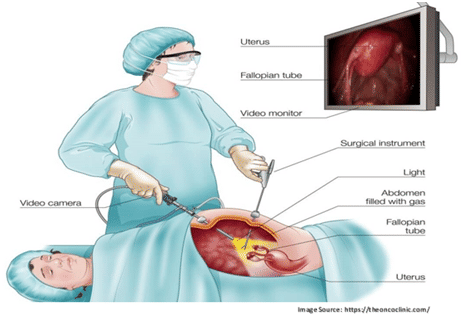
Laparoscopic surgery, also known as minimally invasive surgery, involves smaller incisions than traditional open surgery. Dr. Sandeep Nayak is experienced in using these techniques He has used advanced techniques to perform various cancer surgeries on the intestine and other organs for the past few years.
Laparoscopy incisions are 0.5-1 cm in size, much smaller than those used in open surgery. In medical terms, each incision in laparoscopy surgery is referred to as a “port.”
A trochar, a tubular instrument, is inserted into each port in the area where a cancer tumour has begun to develop. Specialized surgical tools and a specialized device with a camera known as a laparoscope are passed through the trochars during the surgical procedure.
Robotic Cancer Surgery
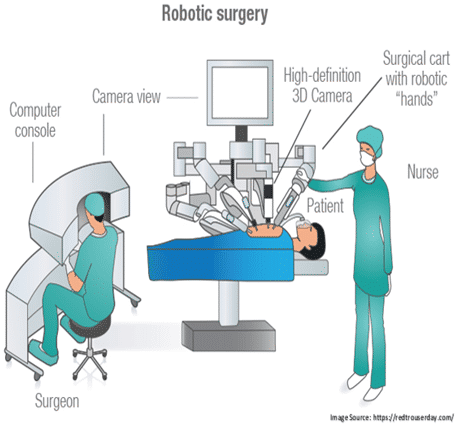
It is one of the most advanced methods for precisely treating cancer. This surgery employs the most recent “Da Vinci” system.It is well suited to removing tumours from deep inside organs that are difficult to reach.
This is the most recent invention used as an alternative to open and laparoscopic surgery. Robotic surgery is typically used to treat cancer in all stages. A surgical bot aids in the accuracy and precision of these procedures, enabling a 3D vision for the surgeon.
Even though robotic cancer surgery employs advanced medical technology, it also necessitates the immense expertise of a highly skilled and experienced oncologist.
Dr. Sandeep Nayak, a cancer doctor in India for robotic surgery, believes in scientific excellence. He has travelled internationally to conduct extensive research on advanced laparoscopic and robotic surgical approaches.
Minimally Invasive Neck Dissection (MIND)
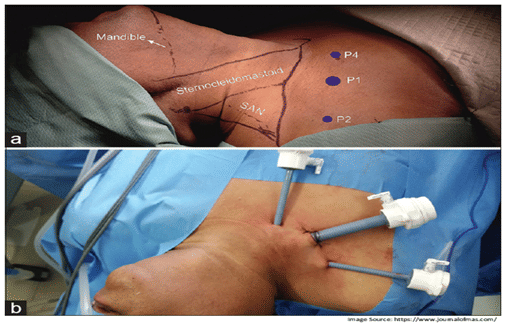
As the name suggests, this surgery treats a cancerous tumour head and neck region. Cancer develops in the mouth (oral cavity), thyroid, pharynx, tonsils, or voice box (larynx).
During this minimally invasive surgery, three to four small incisions are made around the collar bone area to allow the surgeon clear access to the neck. Small wounds reduce the wound related complications and allow early recovery.
Robotic Assisted Breast-Axillo Insufflate Thyroidectomy (RABIT)
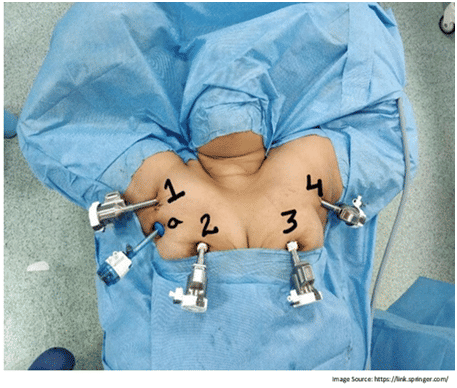
Robotic-Assisted Breast Axillo Insufflate Thyroidectomy surgery or popularly known as RABIT, is a replacement for conventional thyroid surgery. This is the latest robotic-assisted treatment for thyroid cancer. It is a scar-free method of removing thyroid tumours. Dr. Sandeep Nayak developed and used this surgical technique to treat his patients over the years successfully.
The surgeon gains access to the thyroid gland during this surgery through small wounds. The incisions are 0.5 to 1 cm long. The RABIT surgical procedure is best suited for removing benign or cancerous tumors of thyroid. Extensive cancers of thyroid can be removed using this technique.
Dr. Sandeep Nayak developed the RABIT technique, which allows thyroid surgery without a neck incision in suitable patients.
Organ Preserving Onco-Surgeries
During any cancer surgery, it is crucial to preserve the organ. Dr. Sandeep Nayak and his team strive hard to provide the best treatment while preserving cancer-affected organs The latest laparoscopy and robotic cancer surgery is the best option for saving the organ. This treatment employs advanced technology, which aids in the preservation of the organ and spares the patient from excruciating pain and discomfort.
Cancer can be cured if detected early!
Cancer, the word itself, sends shivers down our spines. Consider the helplessness and fear that people and their loved ones are experiencing due to this dreadful disease. On the other hand, cancer is not the end of the world because it can be defeated with proper and timely treatment from a seasoned cancer specialist in India.
Dr. Sandeep Nayak has over two decades of experience in surgical oncology, including laparoscopic and robotic cancer surgery.
Dr. Sandeep Nayak’s Approach to Patient Care
Dr. Sandeep Nayak believes every patient deserves a clear explanation of their diagnosis and treatment options. He works closely with colleagues across oncology so that each patient’s treatment is planned by a multidisciplinary team.
Furthermore, Dr. Nayak travelled extensively to learn and receive training in advanced surgical procedures involving laparoscopy and robotics. He believes that these advanced surgical procedures are the best treatment options for cancer patients.
Dr. Sandeep Nayak’s Views on Cancer
According to Dr. Sandeep Nayak, cancer is a disease that needs immediate treatment. In his opinion, “Prevention is better than cure.” As a result, he always emphasises the importance of routine cancer screenings as the best way to combat this disease.
If cancer is detected in its early stages, there is a good chance of beating it and living a cancer-free life. It is critical because the risk of metastasis (cancer spreads to other parts of the body) increases with each passing day.
This is the main reason Dr. Sandeep Nayak takes time out of his busy schedule to spread cancer awareness and how it can be prevented. He makes it a point to attend seminars, medical forums, TV interviews, and other gatherings where he can interact with the public and share his thoughts.
He encourages people, particularly children, to live a healthy lifestyle by eating a balanced diet and engaging in physical activities. Not to forget, abstaining from tobacco and alcohol consumption.
News & Publications
- 75 per cent lung cancer cases diagnosed late, cases among women on rise
- ಇಂದು ವಿಶ್ವ ಶ್ವಾಸಕೋಶ ಕ್ಯಾನ್ಸರ್ ದಿನ: ಶ್ವಾಸಕೋಶ ಕ್ಯಾನ್ಸರ್ ಬಗ್ಗೆ ಒಂದಷ್ಟು ಮಾಹಿತಿ
- The Economic Times Most Influential Leaders 2022
- ಸ್ತನಕ್ಯಾನ್ಸರ್ನ ನೂತನ ಚಿಕಿತ್ಸೆ ಕುರಿತು ಕಾರ್ಯಾಗಾರ
- Trans Oral Robotic Surgery- Dr. Sandeep Nayak Oncologist Bangalore
Frequently Asked Questions
What exactly is minimal access cancer surgery?
Minimal Access Cancer Surgery (MACS) refers to laparoscopy and robotic cancer surgery. This minimally invasive surgery is typically performed for any stage of cancer. The surgeon inserts a laparoscopic instrument during this surgery.
In contrast to open surgery, where large cuts are made, the laparoscopic instrument is inserted inside the body through small incisions. The laparoscopy instrument is equipped with a camera, allowing the surgeon to obtain clear images of the organ located deep within the body. The images are displayed on a monitor outside.
Does it take longer to recover from laparoscopic surgery completely?
You may be able to resume normal activities 1 weeks after minor surgery, such as appendix removal. The recovery period after major surgery, such as removing your ovaries or kidney due to cancer, can last up to 3 weeks
Is robotic surgery superior to open surgery?
Robotic surgery provides consistent, reliable outcomes with less blood loss, pain, and recovery time than conventional surgical methods.
Is it safe to walk after laparoscopic surgery
Begin by taking a longer walk than you did the previous day. Increase your walking time gradually. Walking increases blood circulation and helps prevent blood clotting, pneumonia and constipation. Avoid strenuous activities such as bicycling, jogging, weight lifting, or aerobic exercise until your doctor says it’s safe.
What should and should not be done after laparoscopic cancer surgery?
There is no restriction on physical activity after 24 hours if you are not on narcotic medication. Do not drive, participate in sports, or operate heavy machinery if you are taking narcotic pain relievers. You may take a bath two days after your surgery.
What are the benefits of laparoscopy and robotic surgery?
There are many benefits associated with laparoscopy and robotic surgery related to the patient during and post-surgery. The major benefits of laparoscopy and robotic surgery compared to traditional open cancer surgery are
- Reduced pain and discomfort
- Less blood loss and the need for blood transfusion
- Few complications post-surgical process
- The hospital stays will be reduced
- Less risk of infection
- Faster recovery and return to normal life.
What is laparoscopy cancer surgery?
Laparoscopy and robotic cancer surgery are also known as Minimal Access Surgery (MACS). This minimally invasive surgery is performed generally for early stages of cancer. In this surgery, the surgeon inserts an instrument called as laparoscopy. The laparoscopic instrument is inserted inside the body by making small incision as compared to open surgery where big cuts are made. A camera is attached to the laparoscopy instrument, which enables the surgeon to get clear images of the organ which is located deep inside the body. The images are shown on the monitor outside.