
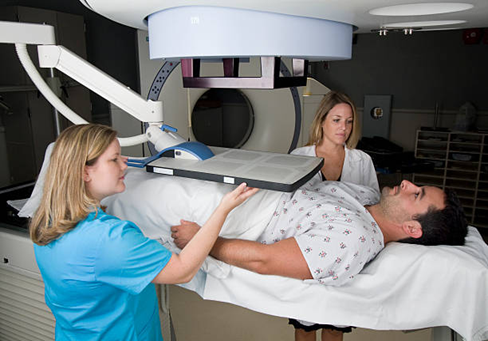
Colorectal cancer (CRC) is one of the most prevalent cancers globally, affecting both men and women. According to global statistics, colorectal cancer is the third most common cancer diagnosed worldwide. In India, the incidence of CRC has been rising, particularly among younger individuals. While lifestyle factors such as diet, physical activity, and smoking contribute to the development of colorectal cancer, family history is a key factor in determining an individual’s risk.
According to Dr. Sandeep Nayak, an internationally acclaimed surgical oncologist in India:
“A strong family history of colorectal cancer can significantly increase the risk of developing the disease. It’s important to identify individuals at higher risk so that preventive measures and early screenings can be implemented.”
At MACS Clinic, Dr. Sandeep Nayak and his team aim to provide the best cancer treatment in Bangalore, including personalized care for colorectal cancer patients. With years of experience and expertise, team MACS offers a comprehensive approach to cancer care, focusing on early diagnosis and effective treatment plans tailored to each patient’s needs.
First, let’s begin by understanding the basics of colorectal cancer and how it develops.
What is Colorectal Cancer?
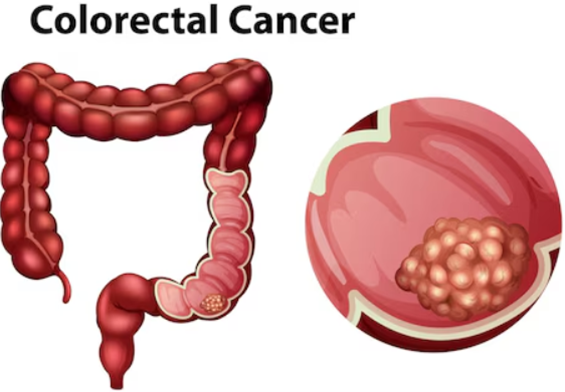
Colorectal cancer, or CRC, begins in either the colon or rectum and typically arises from polyps that are present in these regions and have the potential to become cancerous. It mainly presents as adenocarcinoma but can rarely result in other forms of cancer as well.
Risk factors include age, a sedentary lifestyle, poor diet, and family history. Early detection through screenings like colonoscopies can significantly improve outcomes by identifying precancerous growths before they turn into cancer.
How does family history contribute to the risk of developing colorectal cancer? Let’s explore this connection in detail.
The Role of Family History in Colorectal Cancer
Having a family history of colorectal cancer entails having a first-degree relative, such as a parent, sibling, or child, diagnosed with the condition. Research has proven that an individual is at high risk of being afflicted with the condition if close relatives like parents, siblings, or children have had colorectal cancer. This risk increases with the number of affected family members and their age at diagnosis.
Family history can reveal genetic mutations that increase the risk of colorectal cancer. Families need to undergo early screening and follow a healthy lifestyle. The risk is even higher when multiple family members are diagnosed, especially at a younger age.
Concerned about your family history and colorectal cancer? Reach out to a specialist to assess your risk and discuss your preventive care options.
How does family history contribute to the risk of developing colorectal cancer? Let’s explore this connection in detail.
The Role of Family History in Colorectal Cancer
The genetic inheritance of specific mutations plays a key role in the increased risk of colorectal cancer among individuals with a family history. These mutations can affect genes related to cell growth.
Various genetic disorders can increase the risk of colorectal cancer, including:
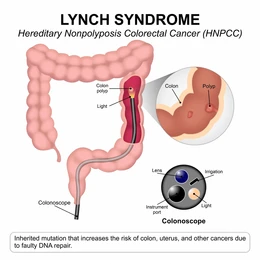
Hereditary Non-Polyposis Colorectal Cancer (HNPCC) or Lynch syndrome:
A genetic condition that significantly increases the risk of colorectal and other cancers.
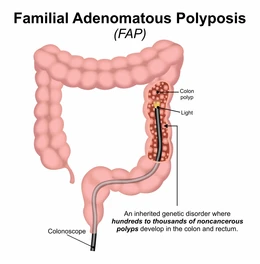
Familial adenomatous polyposis (FAP):
An inherited disorder in which several hundred to thousands of polyps occur in the colon, resulting in a great risk of colorectal cancer at a young age.
Peutz-Jeghers Syndrome:
A rare genetically inherited disease that can lead to the formation of polyps in the GI tract, CRC, and various other cancers.
Your content goes here. Edit or remove this text inline or in the module Content settings. You can also style every aspect of this content in the module Design settings and even apply custom CSS to this text in the module Advanced settings.
What genes are associated with hereditary colorectal cancer, and how do they contribute to cancer risk? Let’s explore the key genes involved.
Key Genes Linked to Hereditary Colorectal Cancer
Specific gene mutations can make an individual susceptible to developing this cancer by disrupting the body’s ability to repair damaged DNA or regulate cell growth. To start with, some of the significant genes linked to hereditary forms of CRC include:
APC Gene
Mutations in this gene lead to familial adenomatous polyposis (FAP), where numerous polyps develop in the colon, which can eventually become cancerous if untreated.
MLH1, MSH2, MSH6, PMS2:
These genes are involved in the repair of DNA mismatches. Mutations in these genes cause Lynch syndrome. This syndrome has been implicated as a chief cause of an increased threat of CRC and other cancers.
STK11:
Mutations in this gene are associated with Peutz-Jeghers syndrome, leading to polyps in the gastrointestinal tract and increased cancer risk.
This helps counsel family members on appropriate screening tests and preventive measures.
Why is early screening so crucial for individuals with a family history of colorectal cancer? Let’s explore the reasons why early screening can save lives.
The Importance of Early Screening for Individuals with a Family History
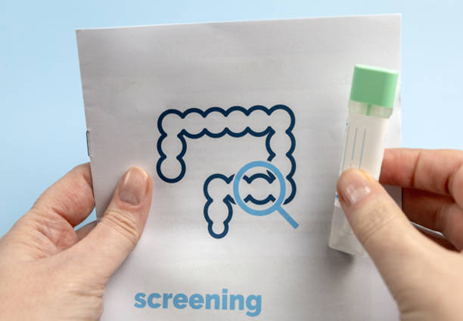
Higher risk of developing cancer:
Cases with a family history have a high risk level, so these individuals need to have screening at an earlier age than the general population.
Detects precancerous growths:
Early screening, such as colonoscopies, helps detect polyps or abnormal growths before they develop into cancer.
Improves treatment outcomes:
Detecting cancer at an early stage significantly increases the chances of successful treatment and long-term survival.
Personalized screening plans:
Family history helps guide doctors in determining screening schedules. This usually begins 10 years before the youngest family member’s diagnosis.
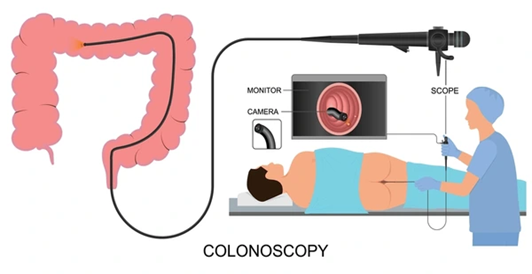
Improves treatment outcomes:
Detecting cancer at an early stage significantly increases the chances of successful treatment and long-term survival.
Personalized screening plans:
Family history helps guide doctors in determining screening schedules. This usually begins 10 years before the youngest family member’s diagnosis.
Early Intervention:
Screenings allow the removal of precancerous polyps, thus preventing the risk of colorectal cancer altogether.
Reduces cancer mortality:
Statistics have revealed that if the disease is detected at an early stage through screening, the risk of mortality due to colorectal cancer may be reduced by up to 68%.
Better understanding of genetic risks:
Family history helps identify genetic predispositions, enabling genetic counseling and testing for inherited conditions such as Lynch syndrome or FAP.
At high risk due to family history? Schedule a screening to catch potential issues early.
Let’s discuss the preventive strategies that can help individuals with a family history of colorectal cancer reduce their risk.
Preventive Measures for People with a Family History of Colorectal Cancer
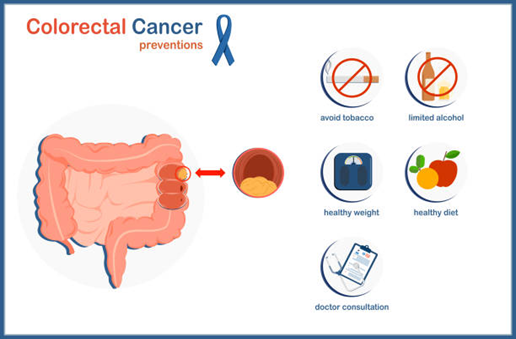
Early and regular screening:
Continue early screening, as mentioned above, and regular follow-up. Colonoscopies can be conducted every 5-10 years.
Maintain a healthy diet:
A high-fiber diet, fruits and vegetables, as well as limiting processed meat and alcohol intake, may reduce the risk of developing colorectal cancer.
Exercise regularly:
Physically active individuals are aware of the benefits of exercise in reducing colorectal cancer risk by promoting regular bowel movements and weight control.
Avoid smoking:
Smoking can lead to the development of several diseases and cancer. These also include colon cancer. Quitting smoking can reduce the risk and improve overall health.
Genetic counseling and testing:
For individuals with a strong family history, genetic counseling and testing can help identify inherited conditions and provide a personalized prevention plan.
Conclusion:
The link between family history and colorectal cancer is a crucial factor in determining an individual’s risk. Understanding the genetic and environmental influences that contribute to this risk is vital for early detection and prevention. Early screening, genetic counseling, and lifestyle changes can significantly reduce the risk and improve outcomes for individuals with a family history of colorectal cancer.
Frequently Asked Questions
1. At what age should I start screening if I have a family history of colorectal cancer?
If you have a family history, screenings should typically begin at age 40 or 10 years earlier than the youngest case in your family.
2. What screening methods are used for colorectal cancer?
Common methods include colonoscopy, stool tests, and flexible sigmoidoscopy.
3. How often should I get screened if I have a family history of colorectal cancer?
Screenings are typically recommended every 5-10 years, depending on your family history and initial results.
4. What should I do if I have a family history of colorectal cancer?
It’s important to start screening early, maintain a healthy diet, and consider genetic counseling to assess your individual risk.
5. Is it possible to treat colorectal cancer if detected early?
Yes, early detection through screening can lead to successful treatment and even prevent cancer from developing in some cases.
Reference links:
https://colorectalcancer.org/screening-prevention/prevention/family-history-and-colorectal-cancer
https://ecancer.org/en/news/250-family-history-and-colorectal-cancer
Disclaimer: The information shared in this content is for educational purposes and not for promotional use.
