
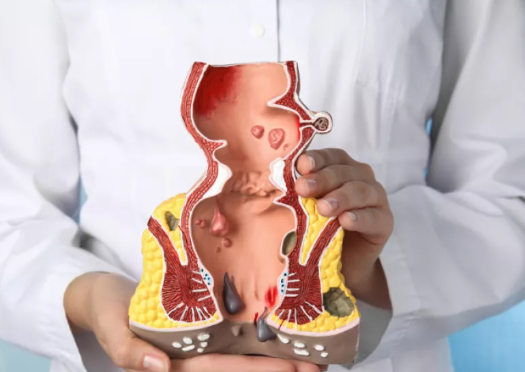
No. They can’t. Hemorrhoids do not cause cancer. Full stop. But that answer on its own misses the point completely. Because the real danger isn’t in what hemorrhoids do. It’s in what they’re blamed for. Every month of rectal bleeding explained away as hemorrhoids without anyone actually looking is a month a cancer gets that it didn’t need to have.
According to Dr. Sandeep Nayak, surgical oncologist in India,
“Hemorrhoids don’t cause cancer but the assumption that they do causes diagnostic delays that I see the consequences of in my clinic far more often than anyone outside oncology realises.”
What Is Actually Going On Between Hemorrhoids and Cancer?
They share the same symptoms. That’s it. That’s the entire problem. And that overlap without proper investigation is where rectal cancer finds the time it needs.
- Both Bleed and That One Shared Symptom Is Responsible for More Delayed Cancer Diagnoses Than Almost Anything Else: Blood on toilet paper. Blood in the stool. It goes straight onto the hemorrhoid explanation in most people’s minds and in many consulting rooms too without a single camera ever being used to confirm that hemorrhoids are actually what’s bleeding.
- Hemorrhoids Itch and Ache but Rectal Cancer Produces Sensations That Are Distinctly and Persistently Different: The feeling that your bowel never fully empties no matter how many times you go. A dull pressure in the pelvis that just sits there. Stool that changes shape and stays changed..
- Hemorrhoids Carry Zero Malignant Potential and Cannot Under Any Circumstances Transform Into Cancer: There is no biological pathway through which a hemorrhoid becomes a cancer cell and patients who’ve had hemorrhoids for years are not carrying a higher colorectal cancer risk than anyone else because of those hemorrhoids specifically.
- The Entire Risk Is in the Label Not in Any Physical Relationship Between the Two Conditions: Once hemorrhoids are on a patient’s record every subsequent rectal symptom gets filed under that existing label and the curiosity that would otherwise lead someone to investigate stops asking questions it desperately needs to keep asking.
Understanding the real difference between these two conditions is what leads patients to the right investigation at the right time through proper rectal cancer treatment before stages accumulate that didn’t need to.
What Symptoms Should Make You Stop Blaming Hemorrhoids and Start Investigating?
Because some things your body is telling you cannot be filed away under a diagnosis that was made years ago and never questioned since.
- Bleeding That Changes Its Pattern Volume or Frequency Even in Someone With a Long Confirmed Hemorrhoid History: Hemorrhoids bleed in a recognisable way and when that pattern shifts in any direction it stops being adequately explained by hemorrhoids alone and starts being something a colonoscopy needs to look at directly.
- The Feeling That Something Is Still There After Every Bowel Movement No Matter What You Do: That persistent sense of incompleteness that doesn’t resolve is called tenesmus and it is not something hemorrhoids produce and its presence alongside any rectal bleeding is a combination that needs urgent proper evaluation not ongoing management of the wrong thing.
- Stool That Gets Narrower or Changes Consistency and Simply Doesn’t Go Back to Normal: Hemorrhoids don’t narrow the stool. They never have. And a bowel that is consistently producing differently shaped stools for weeks without dietary explanation is a bowel that needs a camera, not another week of waiting to see if things improve on their own.
- Fatigue or Unexplained Weight Loss Showing Up Alongside Anything Rectal at All: The moment systemic symptoms appear alongside local rectal symptoms the hemorrhoid explanation becomes completely insufficient and the investigation needs to move urgently toward a surgical oncologist in India who can look properly rather than reassure remotely.
If you want to understand what happens when rectal cancer does progress and what the signs of recurrence actually look like it’s worth reading about can rectal cancer come back so you know exactly when a symptom stops being explainable and starts being urgent.
Why Choose Dr. Sandeep Nayak for Cancer Treatment in India?
Dr. Sandeep Nayak has spent more than 24 years treating rectal cancers including the ones that arrived late because hemorrhoids provided a comfortable explanation for too long before anyone looked properly. As one of India’s most experienced surgical oncologists he performs robotic Total Mesorectal Excision and sphincter preserving resections that deliver the best possible oncological clearance with the best possible quality of life preserved on the other side of surgery. He investigates every rectal symptom properly before attributing it to any benign cause. Because in his experience the most dangerous diagnosis in colorectal oncology isn’t always cancer. Sometimes it’s the hemorrhoid label that sits in the file for two years while something far more serious grows quietly underneath it.
Frequently Asked Questions
Can hemorrhoids actually turn into rectal cancer if they go untreated for years?
No. Hemorrhoids are swollen vascular tissue with absolutely no malignant potential and cannot transform into cancer cells under any circumstances regardless of how long they remain untreated.
How does a specialist actually confirm whether bleeding is from hemorrhoids or cancer?
Colonoscopy is the only reliable method because bleeding appearance, frequency and character alone are not specific enough to rule out cancer without direct visual examination of the rectal lining.
Does having hemorrhoids mean you need more frequent colorectal cancer screening?
No, hemorrhoids themselves don’t increase colorectal cancer risk but anyone over 45 with rectal bleeding needs colonoscopy regardless of hemorrhoid history and younger patients with changed symptoms need it sooner.
What is the one thing to do immediately if hemorrhoid symptoms suddenly change?
Stop assuming the hemorrhoids explain it and see a specialist because changed symptoms in someone with a known benign diagnosis always need fresh investigation rather than reassurance based on what was true before.
Reference links:
- American Society of Colon and Rectal Surgeons – Hemorrhoids Patient Information
https://fascrs.org/patients/diseases-and-conditions/a-z/hemorrhoids - American Cancer Society – Colorectal Cancer Signs and Symptoms
https://www.cancer.org/cancer/types/colon-rectal-cancer/detection-diagnosis-staging/signs-and-symptoms.html - Disclaimer: The information shared in this content is for educational purposes and not for promotional use.
