
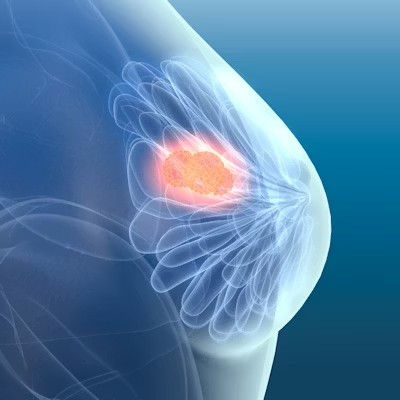
Breast cancer happens when cells in the breast start dividing abnormally and keep growing without stopping. It’s the most diagnosed cancer in Indian women and something has shifted — younger women in their 30s are now walking in with diagnoses that used to be rare at that age. Finding it early genuinely changes what treatment can offer.
According to Prof. Dr. Sandeep Nayak, Surgical Oncologist in India,
“We still see women coming in at a stage that could have been caught months earlier that delay costs them options they simply can’t get back.”
Something feels off and you want a proper assessment?
What Should Women Know About Risk and Symptoms?
The signs aren’t always what people expect and some of the most important risk factors get dismissed until it’s too late.
- What to Watch For: A new lump in the breast or armpit, skin that dimples or puckers, nipple discharge or breast pain that doesn’t follow the normal monthly cycle — none of these should be watched at home for weeks before getting assessed.
- Hormonal History: Women who started periods early, went through menopause late or used hormone therapy long-term carry higher cumulative oestrogen exposure, and breast cancer treatment discussions in these cases often begin well before any diagnosis is confirmed.
- BRCA Mutations: Carrying a BRCA1 or BRCA2 mutation significantly raises lifetime risk, and women with a strong family history of breast or ovarian cancer should talk to a specialist about testing before any symptoms show up.
- Lifestyle Patterns: Post-menopausal weight gain, regular alcohol use and low physical activity are all independently linked to higher breast cancer incidence — patterns that have shifted considerably across urban India in the past fifteen years.
These factors don’t guarantee cancer will develop but they shape how early and how often screening needs to happen.
How Does Breast Cancer Diagnosis Actually Work?
Getting to a confirmed diagnosis takes a structured sequence of steps and each one builds on the last.
- Examination First: A specialist physically checks for lump characteristics, skin changes and axillary lymph node enlargement — this hands-on assessment is what determines what imaging gets ordered and how quickly.
- Imaging: Mammography works well for women above 40 while ultrasound suits younger women with denser tissue better, and MRI gets added when the surgical team needs precise tumour mapping before deciding on an operative approach.
- Biopsy Confirms: A core needle biopsy is what actually tells the team whether cancer is present, what type and grade it is, and whether it’s hormone receptor positive or HER2 positive — results that determine the whole treatment plan.
- Staging Scans: Once cancer is confirmed, CT and bone scan check for spread beyond the breast, with PET-CT used in locally advanced cases where the team needs the full disease picture before sequencing treatment.
Working through all of this at a centre where pathology, imaging and surgery genuinely operate together matters more than most patients realise, and for more on surgical options after diagnosis, our blog on breast reconstruction covers post-surgical care in detail.
Why Choose Dr. Sandeep Nayak for Breast Cancer Treatment ?
Dr. Sandeep Nayak brings 24 years of surgical oncology experience, DNB qualifications in Surgical Oncology and General Surgery and a fellowship in Laparoscopic and Robotic Onco-Surgery to every breast cancer case. He heads Oncology Services across Karnataka and leads breast cancer surgery at KIMS Hospital, Bangalore, with originator credits for RABIT and over 25 published studies. Patients seeking diagnosis, a second opinion or a clear surgical plan are seen here with tumour board input on every decision. Call +91 8104310753 to book your consultation.
Frequently Asked Questions
Is breast cancer becoming more common in younger Indian women?
Yes, cases in women aged 30 to 45 have increased noticeably across urban India over the past decade.
Can screening find breast cancer before symptoms appear?
Yes, mammography and ultrasound regularly pick up tumours well before any physical symptoms develop.
Does every breast lump mean cancer?
Most lumps are benign but any new or changing lump should be assessed by a specialist without delay.
How long does getting a breast cancer diagnosis take?
Most patients have a confirmed diagnosis within one to two weeks from first clinical assessment.
References
-
- National Cancer Institute — Breast Cancer Diagnosis
- World Health Organization — Breast Cancer Overview
- Disclaimer: The information shared in this content is for educational purposes and not for promotional use.
