
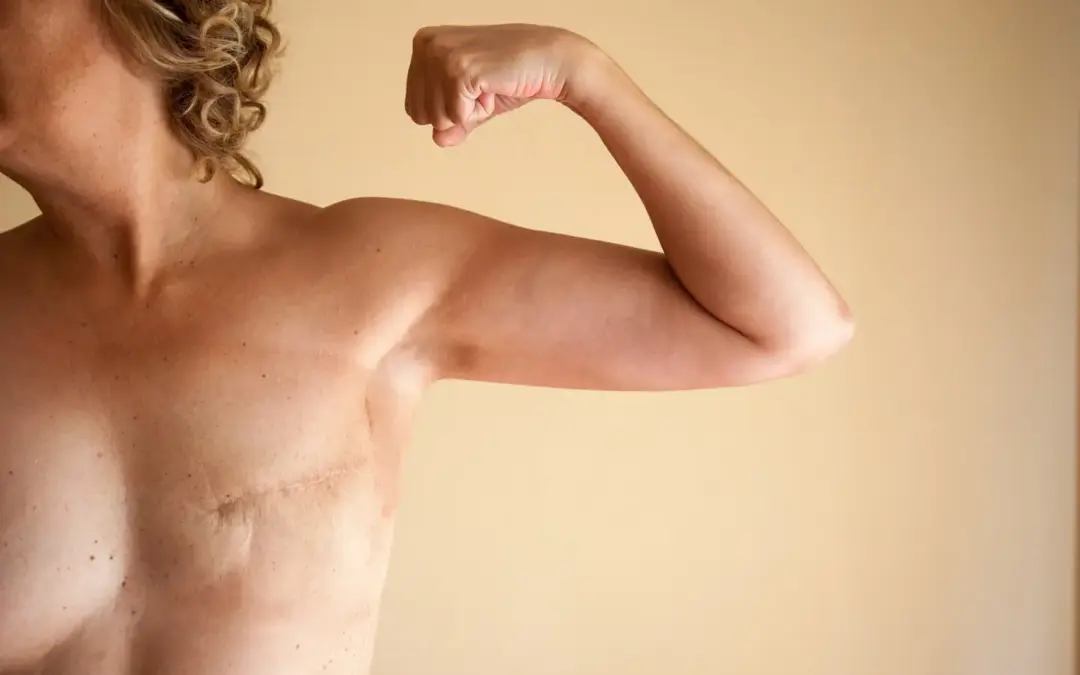
A mastectomy removes the entire breast most often to treat breast cancer, sometimes to prevent it in women who carry a high genetic risk. It’s not the automatic choice for every diagnosis. Whether someone needs one depends on how big the tumour is relative to the breast, where it sits, whether multiple areas are involved and what the patient wants for their body after surgery.
According to Prof. Dr. Sandeep Nayak, Surgical Oncologist in India,
“Mastectomy isn’t about being aggressive it’s recommended when removing the whole breast gives a better oncological result than trying to conserve it.”
Not sure whether mastectomy is what your case actually requires?
What Types of Mastectomy Are Performed?
Several mastectomy techniques exist and the one chosen depends on tumour characteristics, nodal involvement and whether breast reconstruction is part of the plan.
- Total Mastectomy: All breast tissue, the nipple and areola are removed while the underlying chest muscle stays intact used when disease is confined to the breast itself without involvement of deeper structures beneath it.
- Modified Radical Mastectomy: Breast tissue and axillary lymph nodes are cleared in a single operation, the standard approach when nodal involvement is confirmed and breast cancer treatment requires more than local resection alone.
- Skin-Sparing Mastectomy: Breast tissue comes out but most of the overlying skin is preserved, which makes immediate reconstruction far more achievable and produces a noticeably better result for patients who plan to rebuild the breast afterward.
- Nipple-Sparing Mastectomy: The breast tissue is removed while the nipple-areola complex stays, reserved for carefully selected patients where the tumour sits far enough from the nipple that keeping it doesn’t compromise what the surgery needs to achieve oncologically.
Which type gets performed is never a unilateral decision tumour board discussion, pathology findings and patient preference all feed into it before anything is finalised.
Who Actually Needs a Mastectomy?
Mastectomy isn’t automatically on the table for every breast cancer patient and the clinical team looks at several specific factors before recommending it.
- Large Tumour to Breast Ratio: When the tumour takes up too much of the breast to leave adequate tissue behind after removal, trying to conserve the breast simply isn’t oncologically or cosmetically viable and mastectomy becomes the more honest surgical choice.
- Multiple Disease Sites: Two or more separate tumours in different quadrants of the same breast can’t be addressed through a single lumpectomy, and when that’s what imaging and biopsy show, mastectomy is what gives the patient a genuinely clear result.
- BRCA Mutation Carriers: Women with a confirmed BRCA1 or BRCA2 mutation carry a high enough lifetime risk that preventive mastectomy before cancer develops is a legitimate and well-supported clinical option rather than an extreme one.
- Recurrence After Lumpectomy: When cancer comes back in a breast that’s already had radiation, the tissue can’t take another course of it and robotic cancer surgery or conventional mastectomy often becomes the only surgical path left that’s safe and effective.
Mastectomy is usually the beginning of a longer process rather than the end of one, and for more on what reconstruction involves after the breast is removed, our blog on latissimus dorsi covers this in detail.
Why Choose Dr. Sandeep Nayak for Breast Cancer Treatment ?
Dr. Sandeep Nayak brings 24 years of surgical oncology experience, DNB qualifications in Surgical Oncology and General Surgery and a fellowship in Laparoscopic and Robotic Onco-Surgery to every mastectomy decision. He heads Oncology Services across Karnataka and leads breast cancer surgery at KIMS Hospital, Bangalore, with originator credits for RABIT and over 25 published clinical studies. Patients wanting clarity on whether mastectomy is genuinely necessary or a second opinion on their surgical plan are seen here with every decision going through tumour board review.
Frequently Asked Questions
Is mastectomy always necessary for breast cancer?
No, lumpectomy works for many patients and mastectomy is only recommended when it produces a better oncological result.
Can reconstruction happen at the same time as mastectomy?
Yes, immediate reconstruction is planned before surgery for most patients who want it.
How long does mastectomy recovery typically take?
Most patients go home within two to three days with full recovery around four to six weeks.
Does mastectomy stop breast cancer from coming back?
It significantly reduces local recurrence but doesn’t prevent distant spread if cells have already left the breast.
References
-
- National Cancer Institute — Breast Cancer Surgery
- World Health Organization — Breast Cancer Treatment
- Disclaimer: The information shared in this content is for educational purposes and not for promotional use.
