
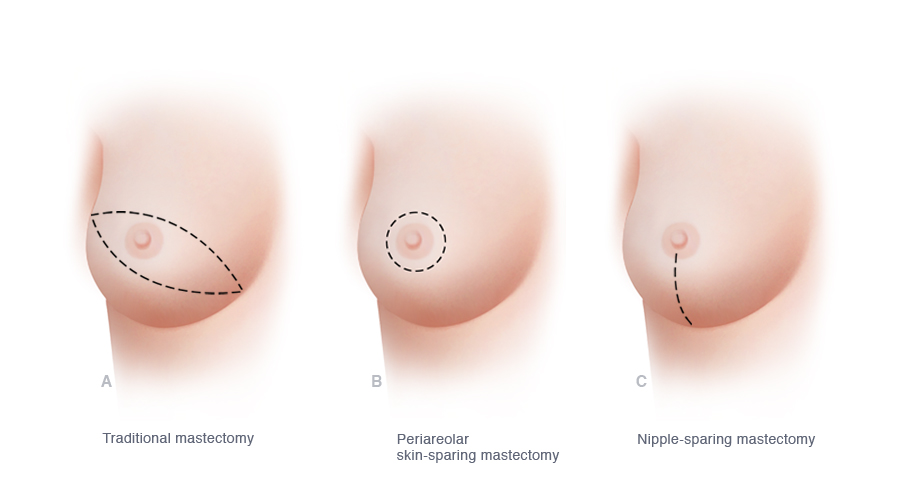
Partial mastectomy removes the tumour and a portion of surrounding breast tissue while leaving the remainder of the breast intact. Total mastectomy removes the entire breast. Both treat breast cancer but they serve different clinical situations the decision between them depends on tumour size, location, how the disease is distributed across the breast and what the patient wants for their body after treatment.
According to Prof. Dr. Sandeep Nayak, Surgical Oncologist in India,
“Partial versus total mastectomy isn’t a question of doing more or less surgery it’s a question of which approach clears the disease adequately for that specific patient while giving them the best possible outcome on both sides of the operating table.”
Trying to understand which type of mastectomy applies to your diagnosis?
What Is Partial Mastectomy and When Is It Used?
Partial mastectomy is another name for breast-conserving surgery it removes disease while keeping the breast in place rather than removing it entirely.
- What Gets Removed: The tumour plus a clear margin of healthy tissue around it the margin goes to pathology immediately and if cancer sits at the edge a further excision is performed before the patient starts radiation.
- Radiation Follows: Partial mastectomy almost always requires radiation to the remaining breast tissue afterward, bringing local recurrence risk to a level that matches total mastectomy when the patient is correctly selected and margins are clear.
- Who It Suits: Single tumour, small relative to breast size, located in one area rather than spread across multiple quadrants, no BRCA mutation driving ongoing high risk in remaining tissue, and ability to receive post-operative radiation these are the criteria that make breast cancer treatment through partial mastectomy appropriate.
- Oncoplastic Option: When partial mastectomy would leave a visible defect, oncoplastic reshaping rearranges surrounding tissue to restore breast form in the same operation, achieving better cosmetic results than standard excision produces without any compromise to oncological margins.
Survival outcomes after partial mastectomy with radiation are equivalent to total mastectomy in appropriately selected patients this is well established in the evidence and not a clinical compromise.
What Is Total Mastectomy and When Does It Become Necessary?
Total mastectomy removes the entire breast and becomes the appropriate choice when partial removal cannot achieve what the surgery needs to deliver oncologically.
- When Partial Isn’t Enough: Multiple tumours in different breast quadrants, a tumour that’s large relative to available breast tissue, or disease that can’t be cleared with adequate margins through a single excision all make total mastectomy the more honest surgical choice rather than multiple failed partial attempts.
- BRCA Mutation Carriers: Women carrying a BRCA1 or BRCA2 mutation face ongoing high lifetime risk in any remaining breast tissue after partial mastectomy total mastectomy, sometimes bilateral, is a well-supported option rather than an extreme one for this group.
- After Failed Conservation: When breast cancer recurs in a breast that has already received radiation, re-irradiation carries significant risks and total mastectomy becomes the only safe surgical path forward for managing that recurrence.
- Patient Choice: Women who technically qualify for partial mastectomy but prefer total mastectomy for peace of mind are fully supported in that decision, and robotic cancer surgery approaches including nipple-sparing and skin-sparing techniques have made total mastectomy considerably less disfiguring than it once was.
The choice between partial and total mastectomy belongs to the patient and surgical team together based on clinical facts and informed preference, and for more on how a surgical oncologist approaches these decisions, our blog on surgical oncologist role covers this in detail.
Why Choose Dr. Sandeep Nayak for Breast Cancer Treatment ?
Dr. Sandeep Nayak brings 24 years of surgical oncology experience, DNB qualifications in Surgical Oncology and General Surgery and a fellowship in Laparoscopic and Robotic Onco-Surgery to every mastectomy decision including partial versus total planning. He heads Oncology Services across Karnataka and leads breast cancer surgery at KIMS Hospital, Bangalore, with originator credits for RABIT and over 25 published clinical studies. Patients wanting clarity on which type of mastectomy is genuinely appropriate for their case are seen here with every decision going through tumour board review. Call +91 8104310753 to book your consultation.
Frequently Asked Questions
Is partial mastectomy the same as lumpectomy?
Partial mastectomy and lumpectomy refer to the same procedure removing the tumour and a margin of surrounding breast tissue.
Does partial mastectomy always require radiation afterward?
Radiation to the remaining breast tissue is standard after partial mastectomy in most cases to reduce local recurrence risk.
Which procedure has better survival outcomes, partial or total mastectomy?
For appropriately selected patients survival outcomes are equivalent between the two when partial mastectomy is followed by radiation.
Can reconstruction be done after total mastectomy?
Reconstruction is offered to most patients who want it and can be performed immediately at the time of mastectomy or delayed until treatment is complete.
References
-
- National Cancer Institute — Breast Cancer Surgery
- World Health Organization — Breast Cancer Treatment
- Disclaimer: The information shared in this content is for educational purposes and not for promotional use.
