
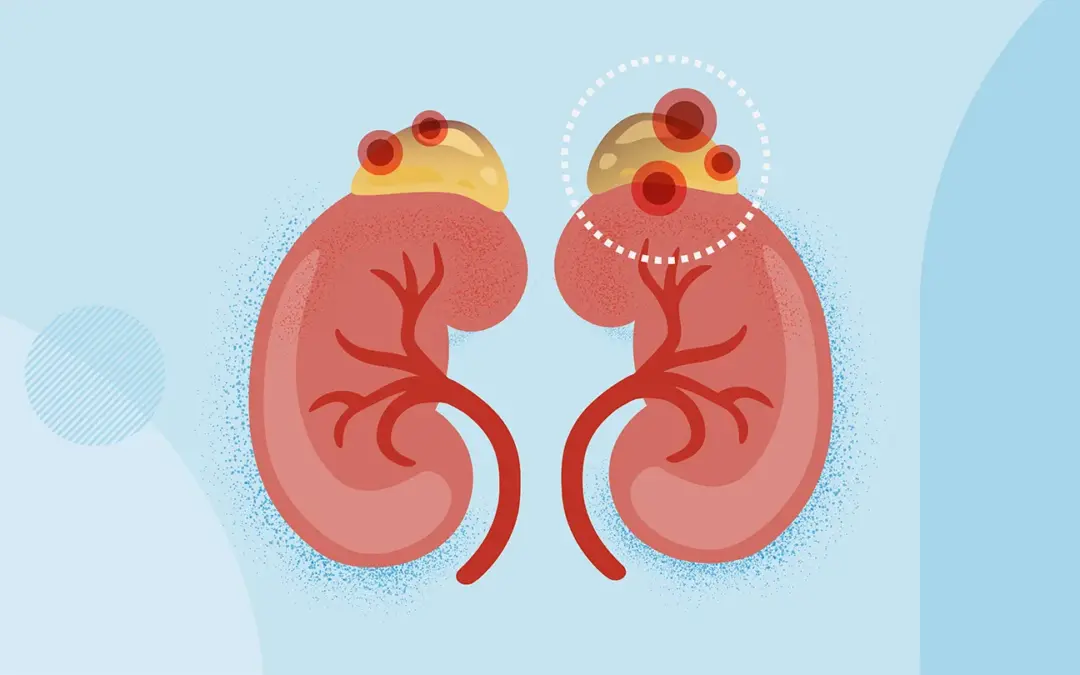
Most adrenal tumours are benign adenomas that never become cancerous. Malignant transformation into adrenocortical carcinoma occurs in less than 10 percent of cases. Confirmed risk factors include tumour size over 4cm, TP53 gene mutation, IGF2 overexpression and hereditary syndromes including Li-Fraumeni and MEN1. Size is the most actionable clinical predictor. Tumours over 4cm carry significantly higher malignancy risk and require surgical removal regardless of hormonal activity.
According to Prof. Dr. Sandeep Nayak, Surgical Oncologist in India,
“Size and imaging characteristics tell us more than any single test. A tumour over 4cm that looks heterogeneous on CT needs to come out.”
Have an adrenal tumour and want a specialist malignancy risk assessment?
What Causes Adrenal Tumours to Become Malignant?
Several biological and imaging factors distinguish adrenal tumours at risk of malignancy from those that remain benign throughout a patient’s lifetime.
- Size Over 4cm: Tumour size is the single most reliable clinical predictor of malignancy and adrenal tumour assessment at KIMS Hospital, Bangalore applies 4cm as the threshold for recommending surgical removal regardless of hormonal status.
- TP53 Gene Mutation: Germline TP53 mutations are present in up to 80 percent of paediatric adrenocortical carcinoma cases and a significant proportion of adult cases, making genetic testing important in young patients or those with Li-Fraumeni syndrome family history.
- IGF2 Overexpression: Overexpression of the insulin-like growth factor 2 gene drives malignant transformation in adrenocortical cells and is identified in the majority of adrenocortical carcinoma specimens, making it both a malignancy marker and an active therapeutic target.
- Suspicious Imaging Features: Heterogeneous appearance, irregular borders, internal necrosis and unenhanced CT attenuation above 10 Hounsfield units all indicate malignant biology rather than the uniform lipid-rich pattern typical of a benign adenoma.
Size and imaging together determine the surgical decision more reliably than hormonal testing alone.
Which Adrenal Tumours Need Removal Before Turning Cancerous?
Certain adrenal tumour characteristics make surgical removal the appropriate clinical decision before malignant transformation can be confirmed histologically.
- All Tumours Over 4cm: An adrenal tumour over 4cm warrants adrenalectomy regardless of hormonal activity and robotic cancer surgery at KIMS Hospital, Bangalore offers minimally invasive adrenalectomy with shorter hospital stay and faster recovery than open surgery for most cases.
- Growing Incidentalomas: An adrenal incidentaloma growing more than 1cm on repeat imaging within six to twelve months requires surgical removal rather than continued surveillance regardless of absolute size at detection.
- Hormonally Active Tumours: Phaeochromocytomas, aldosteronomas and cortisol-secreting adenomas carry surgical indications based on hormonal activity rather than malignancy risk alone and all require specialist evaluation before any surgical or surveillance decision is made.
- Hereditary Syndrome Carriers: Patients with confirmed MEN1, MEN2, Von Hippel-Lindau or Li-Fraumeni syndrome need more aggressive surveillance and lower size thresholds for surgical intervention because their genetic background significantly raises malignancy risk.
Any adrenal tumour with suspicious imaging, growth on surveillance or size over 4cm needs specialist assessment and for more on how cancer diagnosis is confirmed, our blog on cancer diagnosis covers this in detail.
Why Choose Dr. Sandeep Nayak for Adrenal Tumour Surgery ?
Dr. Sandeep Nayak brings 24 years of surgical oncology experience, DNB qualifications in Surgical Oncology and General Surgery and a fellowship in Laparoscopic and Robotic Onco-Surgery to adrenal tumour surgery including robotic-assisted adrenalectomy for benign, indeterminate and malignant adrenal lesions at KIMS Hospital, Bangalore. He heads Oncology Services across Karnataka with originator credits for RABIT and over 25 published clinical studies. Patients with adrenal tumours wanting clarity on malignancy risk and surgical options are seen here with every case reviewed through tumour board. Call +91 8104310753 to book your consultation.
Frequently Asked Questions
What size adrenal tumour indicates cancer risk?
Adrenal tumours over 4cm carry significantly higher malignancy risk and surgical removal is recommended regardless of hormonal activity or other clinical findings.
Is adrenocortical carcinoma hereditary?
TP53 mutations are found in the majority of paediatric cases and a significant proportion of adult adrenocortical carcinoma cases, making genetic testing important in younger patients.
Can a benign adrenal tumour become cancerous over time?
Most benign adrenal adenomas remain benign. Growth over 1cm on repeat surveillance imaging or the development of suspicious imaging features warrants surgical removal.
How is adrenal malignancy confirmed before surgery?
CT attenuation values, tumour size, growth rate and imaging morphology are the primary indicators. Biopsy is rarely used as it risks bleeding and tumour seeding in adrenal lesions.
Reference Links-
- National Cancer Institute — Adrenal Cancer Diagnosis and Treatment
- World Health Organization — Cancer Early Detection
- Disclaimer: The information shared in this content is for educational purposes and not for promotional use.
