
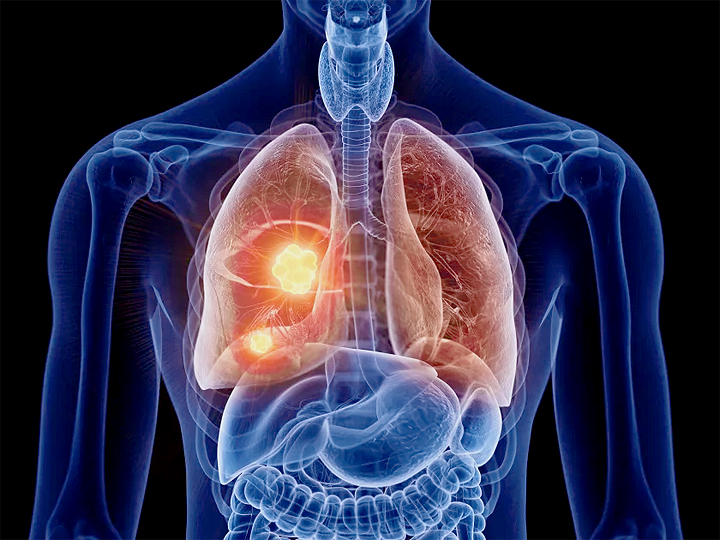
Lung cancer in non-smokers accounts for roughly 25 percent of all lung cancer cases globally and is rising in India, particularly in women and younger adults. The most common subtype is adenocarcinoma, which carries EGFR, ALK or ROS1 mutations at far higher rates than smoker-related lung cancer. This distinction matters because mutation-positive disease responds to targeted oral therapies rather than conventional chemotherapy and the entire treatment approach differs from smoker lung cancer.
According to Prof. Dr. Sandeep Nayak, Surgical Oncologist in India,
“Non-smoker lung cancer gets missed longer because neither the patient nor the physician suspects it. Molecular profiling at diagnosis is not optional in this group.”
Have unexplained breathlessness or an abnormal chest finding and want a specialist assessment?
What Causes Lung Cancer in Non-Smokers?
Several environmental, genetic and molecular factors drive lung cancer in people who have never smoked.
- Indoor Air Pollution: Biomass fuel combustion from wood and crop residue used for cooking produces carcinogenic particulates and is the leading cause of non-smoker lung cancer in rural Indian women exposed through poorly ventilated kitchens over decades.
- EGFR and ALK Mutations: Spontaneous oncogenic mutations in EGFR, ALK and ROS1 genes occur without carcinogen exposure and lung cancer treatment at KIMS Hospital, Bangalore includes comprehensive molecular profiling at diagnosis for every non-smoker adenocarcinoma case before any systemic treatment is started.
- Radon Gas Exposure: Radon is a naturally occurring radioactive gas seeping from soil into enclosed spaces and is an underrecognised cause of lung cancer in non-smokers presenting without any obvious environmental or occupational risk factor.
- Secondhand Smoke: Prolonged secondhand smoke and occupational exposure to asbestos, diesel exhaust or arsenic compounds are established carcinogens that cause lung cancer in people who have never actively smoked throughout their lives.
Non-smoker lung cancer is biologically distinct from smoker-related lung cancer and requires a different diagnostic approach from the outset.
How Is Lung Cancer in Non-Smokers Treated?
Treatment depends on stage, histological subtype and molecular mutation profile rather than smoking history.
- Targeted Therapy First: EGFR mutation-positive disease is treated with oral inhibitors like osimertinib or gefitinib as first-line therapy, producing significantly better progression-free survival and a far more tolerable side effect profile than platinum-based chemotherapy.
- Surgical Resection: Early-stage non-smoker lung cancer is surgically curable and robotic cancer surgery or video-assisted thoracoscopic lobectomy for Stage 1 and Stage 2 disease delivers equivalent outcomes to open thoracotomy with less pain and faster recovery.
- ALK and ROS1 Inhibitors: ALK-rearranged disease responds to alectinib or brigatinib and ROS1-rearranged disease responds to crizotinib or entrectinib, making comprehensive molecular profiling essential before any systemic treatment decision is confirmed.
- Immunotherapy Limits: Non-smoker adenocarcinomas typically have lower tumour mutational burden than smoker-related cancers, meaning PD-L1 checkpoint inhibitors produce less reliable responses and molecular profiling guides whether immunotherapy adds meaningful benefit.
Treatment decisions should always be made at tumour board with full molecular profiling results available and for more on navigating specialist cancer decisions, our blog on second opinion in cancer diagnosis covers this in detail.
Why Choose Dr. Sandeep Nayak for Lung Cancer Surgery ?
Dr. Sandeep Nayak brings 24 years of surgical oncology experience, DNB qualifications in Surgical Oncology and General Surgery and a fellowship in Laparoscopic and Robotic Onco-Surgery to lung cancer surgery including robotic-assisted and video-assisted thoracoscopic resection at KIMS Hospital, Bangalore. He heads Oncology Services across Karnataka with originator credits for RABIT, MIND and L-VEIL techniques and over 25 published clinical studies. Patients with non-smoker lung cancer or incidental pulmonary findings are seen here with every case reviewed through tumour board. Call +91 8104310753 to book your consultation.
Frequently Asked Questions
Can non-smokers get lung cancer?
Lung cancer in non-smokers accounts for approximately 25 percent of all cases globally and is rising in India, particularly in women exposed to indoor air pollution and those with EGFR mutations.
What is the most common type of lung cancer in non-smokers?
Adenocarcinoma is the most common subtype, carrying EGFR, ALK or ROS1 mutations in 50 to 60 percent of cases in Asian populations and responding well to targeted therapy.
Is lung cancer in non-smokers treated differently?
Mutation-positive non-smoker adenocarcinoma is treated with targeted oral therapies rather than chemotherapy as first-line treatment, producing significantly better outcomes.
Can non-smoker lung cancer be cured with surgery?
Early-stage non-smoker lung cancer at Stage 1 and Stage 2 is surgically curable with lobectomy or segmentectomy using minimally invasive or robotic-assisted techniques.
Reference Links-
- National Cancer Institute — Lung Cancer Causes and Treatment
- World Health Organization — Lung Cancer
- Disclaimer: The information shared in this content is for educational purposes and not for promotional use.
