
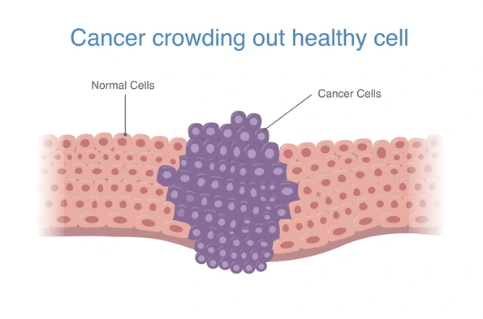
Cancer spreads through three primary pathways: direct invasion of surrounding tissue, the lymphatic system, and the bloodstream. This process, known as metastasis, makes cancer significantly more difficult to treat once it begins. Early diagnosis and prompt cancer treatment before malignant cells reach distant organs remain the most critical factors in improving patient survival outcomes.
According to Dr. Sandeep Nayak, surgical oncologist in Bangalore,
“Stopping cancer before it enters the lymphatic or blood pathway makes a decisive difference in treatment outcomes.”
What Are the 3 Ways Cancer Spreads in the Body?
Understanding each cancer spread pathway helps patients appreciate why early cancer treatment intervention is so critical.
- Direct Invasion: Cancer cells break through the boundary of the original tumour and directly invade surrounding healthy tissue, organs, and structures adjacent to the primary site.
- Lymphatic Spread: Cancer cells enter the lymphatic vessels and travel to nearby lymph nodes, which is why lymph node biopsy is a critical part of cancer staging and treatment planning.
- Haematogenous Spread: Cancer cells enter the bloodstream and travel to distant organs including the lungs, liver, brain, and bones, forming secondary tumours called metastases.
- Transcoelomic Spread: Some cancers like ovarian and gastric cancer spread by shedding cells directly into body cavities like the peritoneum, leading to widespread abdominal metastasis.
Understanding how cancer spreads plays an important role in determining prognosis and selecting the most appropriate treatment plan. You can explore detailed insights on survival outcomes and advanced curable treatment approaches in our in-depth guide on blood cancer management.
What Are the Key Differences Between Localised and Metastatic Cancer Treatment?
Understanding how spread changes treatment complexity helps patients seek cancer treatment at the right time.
- Visibility / Precision: Localised cancer is confined to the primary site and clearly visible on imaging, while metastatic cancer involves multiple organ sites requiring full body PET-CT mapping.
- Success Rates: Localised cancers have 5-year survival rates of 70–95% depending on type, while metastatic cancers drop to 10–30% across most cancer categories
- Recovery Time: Localised cancer treatment through minimally invasive surgery allows recovery in 2–4 weeks, while metastatic cancer requires prolonged multi-modal therapy over several months.
- Complex Case Suitability: Metastatic cancer involving the liver, lungs, or brain requires a multidisciplinary team combining surgical oncology, medical oncology, and radiation oncology for coordinated cancer treatment planning.
Advanced approaches such as robotic cancer surgery can improve surgical precision, reduce complications, and enhance recovery in selected cancer cases.
Why Choose Dr. Sandeep Nayak for Cancer Treatment?
You should consult Dr. Sandeep Nayak, if you notice persistent or unexplained symptoms such as unusual lumps, unexplained weight loss, chronic fatigue, abnormal bleeding, persistent pain, or changes in bowel or bladder habits. Early evaluation plays a critical role in detecting cancer at a more treatable stage.
It is also advisable to seek consultation if screening tests, imaging scans, or biopsy results show abnormalities. Patients who have been newly diagnosed with cancer, advised surgery, chemotherapy, radiation, or robotic procedures, or those seeking a second opinion for complex or advanced cases should consult Dr. Sandeep Nayak for expert guidance and personalized treatment planning.
Frequently Asked Questions
Can cancer spread be stopped once it starts?
Yes, early-stage lymphatic or blood spread can often be controlled through timely surgery, chemotherapy, or targeted therapy when detected before widespread metastasis occurs.
Which organs does cancer most commonly spread to?
Cancer most commonly spreads to the liver, lungs, brain, and bones through haematogenous spread depending on the primary cancer type and location.
How do doctors know if cancer has spread to lymph nodes?
Lymph node involvement is confirmed through imaging scans, sentinel lymph node biopsy, and pathological examination of surgically removed lymph node tissue.
Is metastatic cancer always incurable?
Not always some metastatic cancers including certain colorectal and thyroid cancers can achieve long-term remission with aggressive multimodal cancer treatment by a specialist team.
Reference links:
-
National Cancer Institute – Metastatic Cancer: When Cancer Spreads
https://www.cancer.gov/types/metastatic-cancer -
American Society of Clinical Oncology – Metastasis (Cancer.Net Patient Guide)
https://www.cancer.net/navigating-cancer-care/cancer-basics/metastasis
Disclaimer: The information shared in this content is for educational purposes and not for promotional use.
