
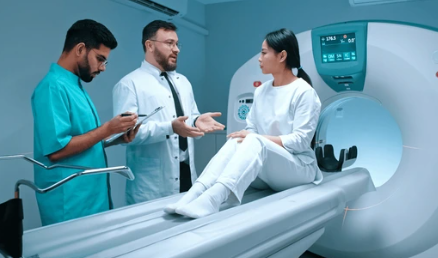
Yes. But not always. And not definitively on its own. That second part is the bit nobody explains properly and it’s the part that actually matters most when you’re sitting with a CT report in your hands trying to figure out what it means for your life. A CT scan is powerful. Really powerful. But it has limits. Real ones. And understanding those limits is just as important as understanding what the scan can do.
According to Dr. Sandeep Nayak, cancer specialist in Bangalore, “A CT scan shows us a picture of what’s there but a picture is not a diagnosis and confusing the two is where patients and sometimes doctors go wrong.”
What Can a CT Scan Actually Find?
People walk in thinking a CT scan is either going to find cancer or rule it out. Clean and simple. But it’s genuinely more complicated than that and you deserve to understand how.
- It Finds Masses and Tumours That Nothing Else Would Catch at That Stage: A contrast enhanced CT can pick up tumours just a few millimetres across in the liver, lungs, kidneys, pancreas and lymph nodes that would be completely invisible to any physical examination by any doctor.
- It Shows Whether Cancer Has Moved Beyond Where It Started: Chest abdomen and pelvis CT together gives oncologists a real map of whether cancer has crept into lymph nodes, nearby organs or distant sites and that map is what makes accurate staging and cancer treatment planning actually possible.
- It Guides the Needle Exactly Where It Needs to Go for Biopsy: When something suspicious shows up CT guided biopsy puts a needle into abnormal tissue with pinpoint accuracy so pathology can finally tell you whether what’s there is actually cancer or something far less serious.
- It Watches What Treatment Is Doing to the Tumour Over Time: Once cancer treatment starts repeat CT scans at regular intervals show whether tumours are shrinking, staying the same or growing giving your oncologist real evidence to either continue the plan or change it.
In cases of cancers where a high degree of accuracy in tumour removal is demanded in anatomically complex regions, innovative robotic surgery technologies are becoming a popular method of enhancing the accuracy of surgery and recovery in patients.
What Can a CT Scan Actually Miss? Because This Part Matters.
Nobody talks about this clearly enough. And patients who don’t know it make decisions based on false reassurance that can cost them months they don’t have.
- A Normal CT Does Not Mean Cancer Has Been Completely Ruled Out: Early blood cancers, tiny tumours below detection thresholds and cancers that spread along surfaces rather than forming distinct masses can all be actively growing while your CT appears completely unremarkable.
- Finding a Mass on CT Is Not the Same Thing as a Cancer Diagnosis: The scan shows something is there. Pathology from a biopsy tells you what it actually is. These are two separate steps and skipping the second one because the first one looked worrying is never acceptable clinical practice.
- Certain Body Parts Are Simply Better Seen on MRI Than CT: Brain tumours, spinal cord disease, soft tissue masses and specific pelvic cancers show up with far more clarity on MRI and choosing the wrong scan for the wrong body part genuinely delays diagnosis in ways that matter.
- Radiation Exposure From Repeated CT Scans Is Something Worth Thinking About: A single CT scan is considered safe. But repeated scans every few months over years involves cumulative radiation exposure that deserves thoughtful clinical justification rather than being ordered just to reassure someone who’s anxious.
The newly developed laparoscopic surgery techniques can facilitate the achievement of effective removal of the tumour in smaller incisions and less time of recovery in the right patients in the event of early diagnosis and localisation of the cancer.
Why Choose Dr. Sandeep Nayak for Cancer Treatment in Bangalore?
Dr. Sandeep Nayak has spent over 24 years doing something that sounds simple but is genuinely rare. He looks at CT scans in the context of everything else he knows about the person sitting across from him. Their symptoms. Their history. Their markers. Their story. As one of the most trusted cancer specialists in Bangalore he doesn’t stop investigating when a scan looks normal and symptoms keep pointing somewhere. He keeps asking. He keeps testing. He keeps looking. Because in his experience the patients who needed that persistence most were precisely the ones whose early imaging appeared deceptively reassuring to everyone who looked at it before him.
Frequently Asked Questions
Can cancer genuinely be present in your body while a CT scan shows nothing?
Yes, very small tumours, early blood cancers and certain cancer types that spread along surfaces rather than forming masses can be active while CT appears completely normal.
Does getting a CT scan with contrast actually make a meaningful difference to detection?
Yes, contrast enhancement significantly improves tumour visibility by highlighting blood flow differences between cancerous and normal tissue making previously invisible masses much clearer.
How long before you actually get results after a CT scan is done?
Radiologist reports typically come back within 24 to 72 hours but what those findings actually mean for your situation needs to be interpreted with your oncologist in proper clinical context.
Is a PET scan genuinely better than CT for finding cancer that has spread?
PET scans detect metabolically active cancer cells throughout the entire body and are often more sensitive for spread than CT alone making them powerful complementary investigations used together.
Reference links:
-
National Cancer Institute – Computed Tomography (CT) Scans and Cancer
https://www.cancer.gov/about-cancer/diagnosis-staging/ct-scans-fact-sheetRadiologyInfo.org – CT Scan (Computed Tomography)
https://www.radiologyinfo.org/en/info/ctscan - Disclaimer: The information shared in this content is for educational purposes and not for promotional use.
