
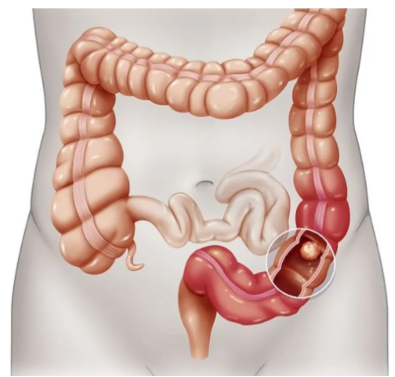
People hear rectal cancer and colon cancer and assume they’re basically the same thing with a different postcode but that’s genuinely not how it works because the rectum is buried deep in the pelvis with the bladder and major nerves and reproductive structures packed in right around it in a way the colon never has to deal with, so the surgery is harder, radiation before the operation is almost always part of the plan and getting it wrong has consequences that colon cancer surgery simply doesn’t carry to anywhere near the same degree.
According to Prof. Dr. Sandeep Nayak, Surgical Oncologist in India, “Rectal cancer is not just colon cancer that happens to be lower down. The anatomy changes everything about how we treat it.”
What Makes Rectal Cancer Clinically Different From Colon Cancer?
These are the key clinical differences between rectal and colon cancer:
- Operating in the pelvis is a different job entirely: The rectum is surrounded by structures you absolutely cannot damage, the bladder, nerves controlling continence and sexual function, things that aren’t anywhere near as close when you’re working in the colon.
- Radiation before surgery is just part of the deal for rectal cancer: A lot of rectal cancers get chemoradiation to shrink the tumour before anyone picks up a scalpel, colon cancer doesn’t need that because the surgical environment is nowhere near as constrained.
- You notice rectal cancer symptoms sooner and they’re harder to ignore: Bleeding, urgency, that frustrating feeling of never quite finishing, the rectum is so close to the exit that tumours there announce themselves faster than colon tumours that can sit quietly and grow for a long time.
- Clean margins are genuinely harder to get: The pelvic space is tight, the structures you’re trying to protect are right there and taking the tumour out completely without compromising function is a level of difficulty colon surgery doesn’t come close to matching.
Patients coming in expecting a straightforward colorectal surgery conversation often leave the consultation realising rectal cancer is a different animal and their treatment plan reflects that completely. Rectal cancer treatment at a specialist surgical oncology centre matters for rectal cancer more than almost any other colorectal diagnosis.
How Does Treatment Differ Between Rectal and Colon Cancer?
These are the main treatment differences patients need to get their head around:
- Colon cancer usually just goes to surgery: Outside the pelvis, the colon is a more workable environment, surgery comes first and chemotherapy gets added afterward based on what pathology actually shows rather than as preparation for the operation.
- Rectal cancer earns its pre-surgery treatment the hard way: Chemoradiation before surgery is standard for locally advanced rectal cancer because going in with a smaller tumour genuinely changes what’s achievable on the table in terms of margins and sphincter preservation.
- The colostomy conversation is a rectal cancer conversation: How close your tumour is to the sphincter determines whether a bag is temporary, permanent or off the table entirely and that’s a discussion colon cancer patients rarely have to sit through.
- Coming back in the pelvis is what rectal cancer does: Local recurrence in the pelvis is a bigger risk with rectal cancer than it is with colon cancer which is one of the reasons getting the first surgery right is so much more consequential.
Whether radiation before surgery, what type of resection and whether keeping the sphincter is possible are questions only imaging and a specialist with your actual scans can answer properly. This is worth reading if you want to understand what drives rectal cancer recurrence risk and what affects it after treatment.
Why Choose Dr. Sandeep Nayak for Cancer Treatment?
Dr. Sandeep Nayak has spent over 24 years in surgical oncology and got into robotic and laparoscopic rectal surgery when most centres in India were still figuring out whether it was worth pursuing. Working in the narrow pelvis is where his MIND and RIA-MIND techniques do something that actually shows up in what patients end up with after surgery. Dr. Nayak chairs Oncology Services across Karnataka and sees patients at MACS Clinic in Bangalore where rectal cancer gets the kind of surgical attention the anatomy demands rather than being managed like any other bowel operation.
Frequently Asked Questions
How is rectal cancer different from colon cancer?
Rectal cancer sits deeper in the pelvis, almost always needs radiation before surgery, involves harder surgery and carries higher local recurrence risk.
Is rectal cancer harder to treat than colon cancer?
Yes, the pelvic anatomy makes it significantly more demanding surgically and the treatment plan reflects that complexity from the start.
Can rectal cancer be treated without a colostomy bag?
Often yes but it comes down entirely to where the tumour sits and whether shrinking it first makes sphincter-preserving surgery safely possible.
Does rectal cancer require radiation before surgery?
Most locally advanced rectal cancers do get chemoradiation first because going in with a smaller tumour changes what’s achievable surgically.
Reference links:
- National Cancer Institute. Colorectal Cancer Treatment. https://www.cancer.gov/types/colorectal/patient/colon-treatment-pdq
- American Cancer Society. Rectal Cancer. https://www.cancer.org/cancer/types/colon-rectal-cancer.html
- Disclaimer: The information shared in this content is for educational purposes and not for promotional use.
