
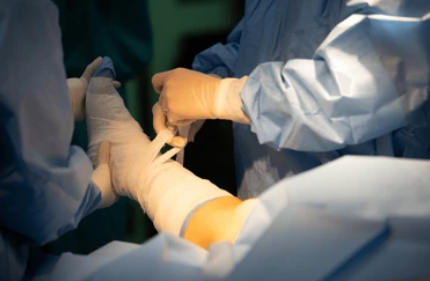
Robotic cancer surgery is minimally invasive surgery performed through tiny incisions using robotic arms controlled entirely by a surgeon sitting at a console nearby. Not a machine operating independently. Not artificial intelligence making decisions. A highly trained human surgeon whose every movement gets translated into precise actions inside your body with a level of accuracy that human hands working through open incisions simply cannot match consistently.
According to Dr. Sandeep Nayak, cancer specialist in Bangalore, “Robotic surgery doesn’t replace the surgeon’s judgement it amplifies their precision and that difference in precision is what changes what’s possible for cancer patients on the operating table.”
What Actually Happens During Robotic Cancer Surgery?
Most people picture a robot operating independently while the surgeon watches from across the room. That’s not even close to what actually happens. Here’s what’s genuinely going on.
- The Surgeon Sits at a Console and Controls Every Single Movement in Real Time: Every cut, every stitch, every dissection the robotic arms perform is initiated and controlled by the surgeon’s hands and feet at the console, with no autonomous movement happening at any point.
- A High Definition 3D Camera Goes Inside the Body and Shows Everything Magnified: The surgeon sees a magnified three-dimensional view of the surgical field that reveals tissue planes, blood vessels, and anatomical structures with clarity that open surgery looking into a body cavity simply cannot provide.
- Robotic Arms Translate Large Hand Movements Into Tiny Precise Ones Inside the Body: Natural hand tremor gets filtered out completely, and large movements at the console become micro-movements at the surgical site, giving the surgeon a level of dexterity inside confined spaces that no human hand could physically achieve unaided.
- Everything Happens Through Incisions Measured in Millimetres Rather Than Centimetres: Instead of a long open wound, the robotic instruments enter through small ports, leaving patients with dramatically less surgical trauma, significantly less blood loss, and a recovery that starts from a much better place than conventional open surgery.
If you would like to understand how advanced robotic technology is being used for complex tumor removal, read more about our comprehensive robotic cancer surgery.
What Cancers Can Actually Be Treated With Robotic Surgery?
People assume robotic surgery is used for one or two specific cancers. The reality is considerably broader than that, and the list keeps growing as surgical techniques develop further.
- Thyroid Cancer Is One of the Most Established Robotic Surgery Applications: Robotic thyroid surgery through an underarm incision removes the thyroid and surrounding lymph nodes with zero visible scar on the neck changing what recovery looks and feels like completely.
- Colorectal Cancer Is Treated Robotically With Superior Access to the Deep Pelvis: The robotic platform’s articulating instruments reach areas of the pelvis that are genuinely difficult to access through conventional laparoscopic instruments making it particularly valuable for rectal cancer resection.
- Gastric and Esophageal Cancers Benefit From Robotic Precision in Complex Reconstruction: Stomach and esophageal cancer surgery requires complex dissection and reconstruction in tight spaces where robotic precision produces cleaner margins and more precise anastomosis than conventional approaches allow.
- Gynaecological Cancers Including Uterine and Cervical Cancer Are Highly Suited to Robotic Approaches: Robotic hysterectomy and lymph node dissection for uterine and cervical cancer gives women faster recovery, less blood loss and equivalent cancer
Why Choose Dr. Sandeep Nayak for Cancer Treatment in Bangalore?
Dr. Sandeep Nayak is one of India’s most experienced robotic cancer surgeons with over 24 years of surgical oncology practice and hundreds of robotic procedures performed across thyroid, colorectal, gastric, gynaecological and head and neck cancers. He invented RABIT the scarless robotic thyroid surgery technique he has performed over 500 times and MIND and RIA-MIND robotic neck dissection procedures that have changed how head and neck cancer surgery is approached across India. As one of the most trusted cancer specialists in Bangalore he doesn’t offer robotic surgery because it’s impressive. He offers it because for the right patient with the right cancer it genuinely produces better outcomes than anything else currently available.
Frequently Asked Questions
Is robotic cancer surgery safer than traditional open cancer surgery?
Robotic surgery consistently shows lower complication rates, less blood loss and faster recovery compared to open surgery while achieving equivalent cancer clearance in published clinical studies.
Does robotic surgery mean the robot is making decisions during the operation?
No, the surgeon controls every movement in real time at a console and the robotic system simply translates those movements into precise actions inside the patient’s body.
Is robotic cancer surgery available for all cancer types in India currently?
Robotic surgery is available for many cancer types including thyroid, colorectal, gastric, gynaecological and lung cancers at specialist oncology centres with trained robotic surgeons.
How long does recovery take after robotic cancer surgery compared to open surgery?
Most robotic cancer surgery patients go home within two to four days and return to normal activity within two to three weeks compared to four to six weeks for open surgery.
Reference links:
-
World Health Organization
Oral Cancer – Risk Factors & Prevention
https://www.who.int/news-room/fact-sheets/detail/oral-healthAmerican Cancer Society
Oral Cavity and Oropharyngeal Cancer Prevention & Early Detection
https://www.cancer.org/cancer/oral-cavity-and-oropharyngeal-cancer/causes-risks-prevention/prevention.html - Disclaimer: The information shared in this content is for educational purposes and not for promotional use.
