
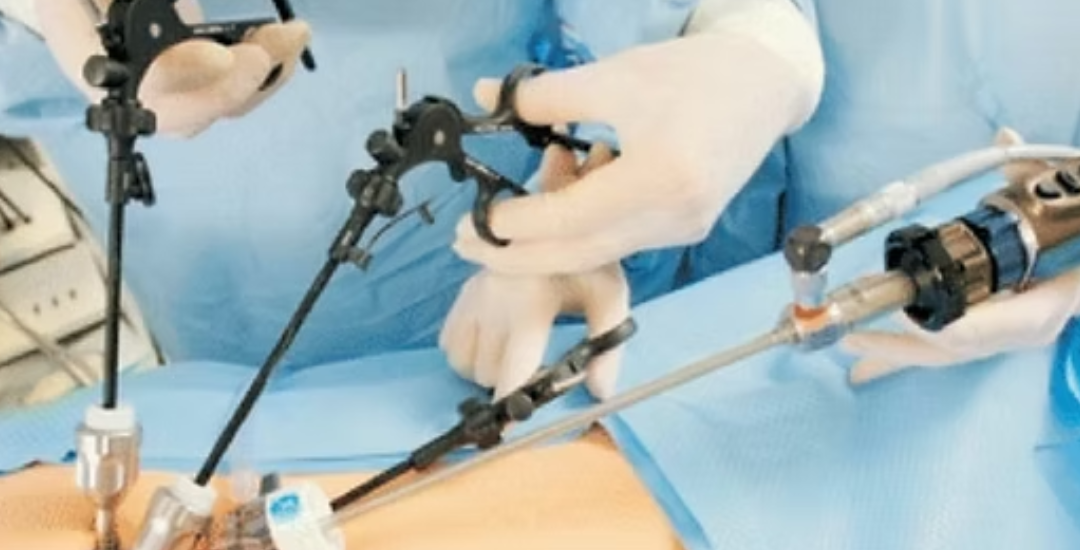
Scarless cancer surgery gets the tumour out through the mouth, the armpit or the navel so the skin never has to be cut and nothing shows up on the surface afterward. Thin robotic tools and cameras do the work from inside the body while the outside stays completely untouched. It won’t suit every cancer and it won’t suit every patient. But when the fit is right, it delivers the same result as open surgery and leaves absolutely nothing behind on the skin.
According to Prof. Dr. Sandeep Nayak, Surgical Oncologist in India,
“Scarless surgery isn’t about cosmetics. It’s about giving patients a way through cancer that doesn’t write itself on their body permanently.”
How Does Scarless Cancer Surgery Actually Work?
These are the approaches surgeons use to remove cancer without visible incisions:
- TOETVA approach: Three small cuts go inside the lower lip, the thyroid comes out through them entirely, the neck never gets touched and the patient heals with nothing visible on the outside.
- TORS technique: A robotic arm enters through the open mouth and clears throat and tongue base tumours from the inside, no incision on the neck, no external scar of any kind.
- Robotic axillary access: A cut hidden inside the armpit lets instruments reach the thyroid or surrounding lymph nodes while the neck and chest stay completely free of any mark.
- Endoscopic breast access: Early breast tumours get taken out through cuts placed inside the areola or armpit, tucked into natural folds in the skin where they won’t show once the patient has healed.
Thyroid patients tend to feel this one the hardest. A conventional neck scar after thyroid surgery sits right there on the front of the throat, visible every single day. Some people genuinely don’t mind. Others have never quite made peace with it. Robotic cancer surgery changed that by turning what used to be a rarely attempted technique into something that’s now done routinely at specialist centres across India.
Who Actually Qualifies for Scarless Cancer Surgery?
These are the factors that determine whether a patient is a candidate:
- Tumour size gets checked first: Thyroid tumours need to come in under 4cm with no real spread beyond the gland itself and no bulky lymph node involvement visible on the pre-op scans before TOETVA or axillary robotic surgery becomes a viable option.
- Prior neck radiation takes it off the table: Tissue that’s already been irradiated loses the softness and pliability these techniques depend on to work safely, so any past radiotherapy to that zone usually rules the minimally invasive route out completely.
- The throat cancer stage has to match: TORS was built for T1 and T2 oropharyngeal cancers and replaces what used to be jaw-splitting open surgery with a transoral approach that leaves swallowing and voice intact far better than the old method.
- Longer time under anaesthesia has to be safe: These procedures take more time in the operating room than open surgery typically does, so the patient’s heart and lungs need to handle the extended time without running into trouble.
Whether someone qualifies really comes down to their tumour, what treatment they’ve already had and how their body holds up under a longer procedure. This is worth reading on how robotic surgery opened scarless options up across surgical oncology in India.
Why Choose Dr. Sandeep Nayak for Cancer Treatment?
Dr. Sandeep Nayak has spent more than 24 years treating liver cancers, lymphomas and complex malignancies where abnormal iron and ferritin readings were part of the diagnostic trail that led to the right answer at the right time. As one of India’s most experienced surgical oncologists he knows that a blood result is never just a number on a page. It’s a question sitting there waiting for someone to take it seriously enough to answer it properly. Every patient who comes to him with unexplained elevated markers gets a thorough clinical evaluation rather than another repeat test date and another deferral of the investigation that should have happened months ago.
Frequently Asked Questions
What is scarless cancer surgery?
Scarless cancer surgery removes tumours through natural body openings like the mouth or armpit using approaches like TOETVA and TORS, leaving no visible scar on the skin surface.
Which cancers can be treated with scarless surgical approaches in India?
Thyroid cancer, selected oropharyngeal cancers, early tongue base tumours and some parathyroid conditions are the most common indications for scarless surgery at specialist robotic oncology centres in India.
How long does recovery take after scarless cancer surgery compared to open surgery?
Most patients are back to normal within one to two weeks compared to four to six weeks for open procedures depending on tumour complexity and individual healing.
When should persistently high ferritin prompt a specialist visit rather than just monitoring?
Robotic and endoscopic approaches cost more upfront but shorter stays and faster recovery cut into that difference considerably for most patients.
Reference links:
- National Cancer Institute. Surgery to Treat Cancer. https://www.cancer.gov/about-cancer/treatment/types/surgery
- American Cancer Society. Surgery for Cancer. https://www.cancer.org/cancer/managing-cancer/treatment-types/surgery.htm
- Disclaimer: The information shared in this content is for educational purposes and not for promotional use.
