
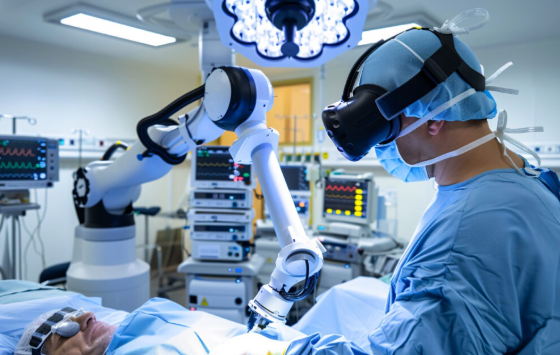
Robotic cancer surgery is better than open surgery in India for specific cancer types in specific anatomical locations operated on by surgeons doing it at real volume but that answer falls apart the moment you apply it as a blanket statement because a tumour that’s locally advanced, a pelvis full of adhesions from prior surgery or a robotic programme that does fifteen cases a year are situations where open surgery by an experienced team is honestly the better option and any surgeon who tells you robotic is always better is selling you something.
According to Prof. Dr. Sandeep Nayak, Surgical Oncologist in India, “Robotic surgery isn’t better than open surgery in every situation but in the right anatomical locations and with the right surgeon it delivers outcomes open surgery in those spaces genuinely cannot match.”
Where Is Robotic Cancer Surgery Better Than Open Surgery?
These are the situations where robotic surgery consistently delivers better outcomes than open for cancer:
- Tight pelvis: Rectal cancer, prostate cancer and gynaecological cancers operated on deep in the pelvis are where robotic surgery changes what’s achievable because the magnified view and wristed instruments work in angles and planes hands in a tight enclosed space physically can’t replicate cleanly.
- Nerve sparing: Operations where preserving nerves controlling bladder and sexual function is the difference between a good outcome and a serious lasting complication show measurably better preservation rates with robotic surgery than open in the same anatomical territory.
- No external scar: RABIT removes the thyroid with no cut on the neck and TORS removes base of tongue tumours through the mouth rather than through the jaw and for patients who’d otherwise carry a visible scar for decades that’s not a cosmetic preference it’s something they live with every morning.
- Recovery gap: Less blood loss, home in days not weeks, back to normal life significantly earlier, for someone already carrying a cancer diagnosis the difference in what treatment physically costs them is not a minor point it’s a substantial part of what they actually go through.
The outcomes data at high volume robotic cancer surgery centres in India has been building long enough now that this isn’t a novelty technology argument anymore and the patients who benefit most consistently know it from their own recovery without needing to read a paper about it. Robotic cancer surgery at a specialist surgical oncology centre in Bangalore is a standard of care conversation for the cancer types where the evidence is clear rather than a premium option the patient has to fight for.
Where Does Open Surgery Still Make More Sense?
These are the situations where open surgery is genuinely the right call even at a centre with full robotic capability:
- Locally advanced tumours: Cancer that’s grown into surrounding structures, encasing major vessels or requiring complex reconstruction beyond what robotic instruments can manage reliably needs the access and tactile feedback that open surgery gives a surgeon in a way the robotic console doesn’t.
- Heavy adhesions: Multiple previous abdominal operations leave scar tissue that makes robotic port placement risky and working space inadequate and the right call in that situation is open surgery from the start not a conversion mid-procedure after the port sites are already made.
- Low volume robotic centres: An experienced open surgeon at a specialist centre is a better option than a robotic programme that does this procedure occasionally and any patient comparing their options should be asking specifically how many of their procedure the surgeon does robotically per year not just whether the hospital has the machine.
- Emergencies: Emergency cancer surgery, cases needing immediate bleeding control and operations where unexpected intraoperative findings demand fast adaptation all favour open surgery because the setup time and instrument constraints of the robotic system become problems rather than advantages in those situations.
Whether robotic or open surgery fits your specific cancer, your anatomy and your prior treatment history is a question that needs your imaging and a surgeon who does both at enough volume to give you an honest answer about which one actually gives your case the best result. Laparoscopic cancer surgery covers the full minimally invasive spectrum at specialist centres in India where the surgical approach gets matched to the case rather than the available equipment.
Why Choose Dr. Sandeep Nayak for Cancer Treatment?
Dr. Sandeep Nayak has been doing robotic cancer surgery for over 15 years and open cancer surgery for over 24 and the reason patients trust his view on which approach fits their case is that he has no reason to push one over the other because he does both at real volume and the only variable he’s optimising for is what gives your specific cancer the best outcome. He chairs Oncology Services across Karnataka and sees patients at MACS Clinic in Bangalore. Dr. Nayak will look at your tumour, your staging and your anatomy and tell you straight whether robotic surgery gives your case something open surgery genuinely can’t or whether open surgery is honestly the better fit for what’s in front of him.
Frequently Asked Questions
Is robotic cancer surgery better than open surgery in India?
For the right cancer types in anatomically difficult spaces yes, but not universally and the answer depends on your specific tumour, stage and the surgeon’s volume with your procedure.
Which cancers benefit most from robotic over open surgery in India?
Rectal, prostate, thyroid and gynaecological cancers in narrow or complex anatomical spaces show the most consistent benefit from robotic approaches over open surgery.
Does robotic cancer surgery cost more than open surgery in India?
Yes but for the right cases faster recovery, shorter hospital stay and lower complication rates offset a meaningful part of the cost difference over the full treatment period.
Can all cancer surgeons in India do robotic surgery?
No, it requires specific training, the right equipment and real case volume and outcomes at low volume robotic centres are not the same as at high volume specialist ones.
Reference links:
- National Cancer Institute. Surgery to Treat Cancer. https://www.cancer.gov/about-cancer/treatment/types/surgery
- American Cancer Society. Surgery for Cancer. https://www.cancer.org/cancer/managing-cancer/treatment-types/surgery.html
- Disclaimer: The information shared in this content is for educational purposes and not for promotional use.
