
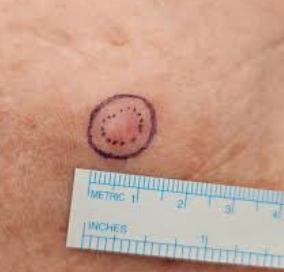
A surgical margin is the rim of normal, healthy tissue surrounding a removed tumor, analyzed by a pathologist to determine if all cancer was successfully excised. Negative margins mean no cancer cells are at the edge, indicating complete removal, while positive margins show cancer at the edge, often requiring further surgery to reduce recurrence
According to Prof. Dr. Sandeep Nayak, Surgical Oncologist in India, “the margin result tells us whether we actually achieved what we went in to do. It’s the most direct measure of whether a cancer operation succeeded oncologically.”
Waiting on pathology results and want to understand what margin status means for you?
What Do Different Margin Results Mean?
Pathologists report margins in specific categories and each one carries a different clinical implication for the next step.
- Clear Margin: No cancer cells at the edge of the removed tissue. This is the target for every cancer resection and when it’s achieved the operation is complete from an oncological standpoint without the patient needing to return for more surgery.
- Close Margin: Cancer cells sit very near the edge but don’t reach it. What counts as too close varies by cancer type — breast cancer treatment guidelines define acceptable margin width differently from colorectal or head and neck guidelines.
- Positive Margin: Cancer reaches the edge of the specimen, meaning the tumour may not have been completely removed. Re-excision to take more tissue is typically recommended unless the risks of repeat surgery outweigh the benefit for that specific patient.
- Margin Width: Even within clear results, width matters. A 2mm clear margin gives more confidence than a 0.5mm one in the same cancer type, which is why surgeons aim for the widest clear margin the local anatomy and function permit.
Pathology measures and reports margins according to the cancer type and the surgical team interprets those numbers within the full clinical picture before deciding what comes next.
What Happens When Margins Are Not Clear?
A positive or very close margin doesn’t mean the operation failed but the treatment plan needs to continue rather than stop at surgery.
- Re-excision: Returning to theatre to remove more tissue from the affected area is the most straightforward response. For lumpectomy this typically means a wider local excision booked as soon as healing from the first operation allows.
- Radiation Instead: Where re-excision would significantly compromise function or appearance, radiation to the operative site addresses residual microscopic disease without a return to theatre. The oncology team decides which approach produces better overall outcomes.
- Mastectomy After Lumpectomy: When clear margins can’t be achieved through re-excision, conversion to mastectomy becomes the appropriate step and robotic cancer surgery or conventional mastectomy is planned with reconstruction discussed alongside it.
- Intraoperative Assessment: High-volume centres perform frozen section analysis of the margin during surgery itself, letting the surgeon take more tissue immediately rather than waiting days for the final pathology report to confirm a problem.
Margin status goes to tumour board and the decision about what happens next is made collectively, and for more on how cancer surgery decisions are reached, our blog on cancer surgery covers this in detail.
Why Choose Dr. Sandeep Nayak for Cancer Surgery?
Dr. Sandeep Nayak brings 24 years of surgical oncology experience, DNB qualifications in Surgical Oncology and General Surgery and a fellowship in Laparoscopic and Robotic Onco-Surgery to every cancer resection where clear margins are the primary surgical objective. He heads Oncology Services across Karnataka and leads cancer surgery at KIMS Hospital, Bangalore, with originator credits for RABIT, MIND and L-VEIL techniques and over 25 published clinical studies. Patients dealing with positive margins or unclear pathology findings are seen here with every decision going through tumour board review. Call +91 8104310753 to book your consultation.
Frequently Asked Questions
What does a clear margin mean after cancer surgery?
No cancer cells reach the edge of the removed tissue, confirming the tumour was fully excised during the operation.
What happens if the surgical margin comes back positive?
Re-excision surgery or targeted radiation to the site is recommended depending on cancer type, location and tumour board decision.
How wide does a surgical margin need to be?
Acceptable width varies by cancer type with specific guidelines for breast, colorectal, head and neck and other sites.
Can radiation replace re-excision for a positive margin?
In selected cases radiation to the operative bed effectively treats residual microscopic disease without a second operation.
Reference Links-
- National Cancer Institute — Cancer Surgery and Margins
- National Institutes of Health — Surgical Margins in Oncology
- Disclaimer: The information shared in this content is for educational purposes and not for promotional use.
