
insurance generally covers robotic surgery, but with significant conditions. Under regulatory guidelines, insurers in India must cover robotic procedures under their “modern treatments” or “advanced technology” clauses, but they often impose financial caps (sub-limits), meaning you may still have to pay out-of-pocket for the difference
According to Prof. Dr. Sandeep Nayak, Surgical Oncologist in India, “The simplest rule I give patients is direction, a wound getting better each day is fine, but anything getting worse after the third or fourth day needs a call, not a wait.”
Noticing something off about your wound?
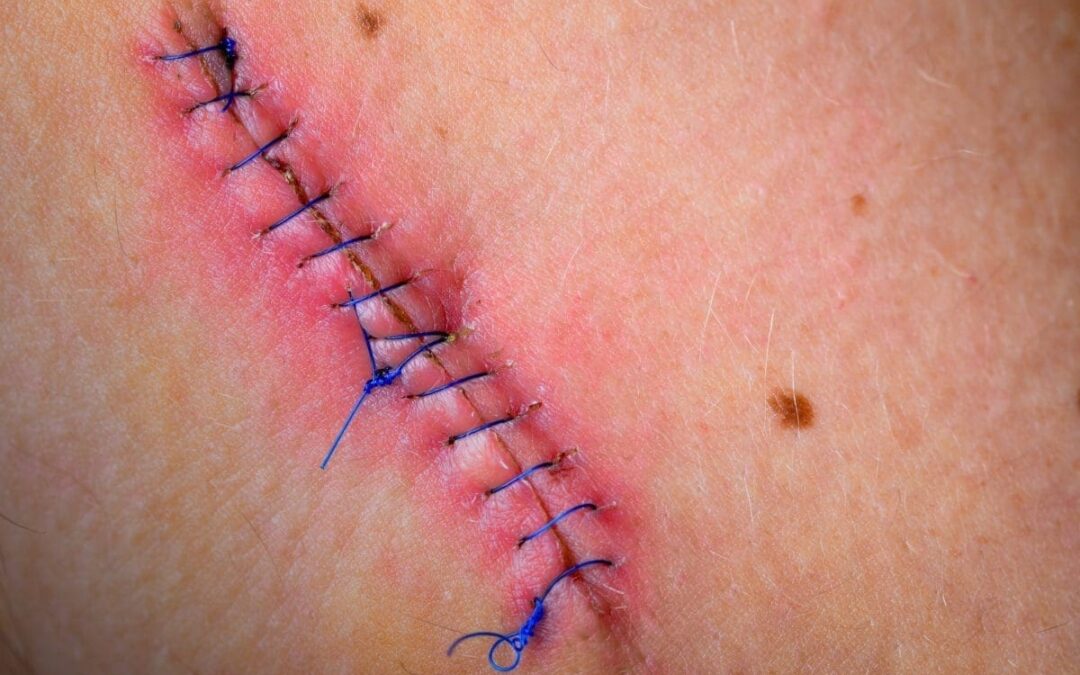
What Are the Warning Signs to Watch For?
A few specific signs separate a wound problem from normal healing. These are the ones that need attention.
- Spreading redness: Redness that widens outward from the wound, rather than fading, is one of the earliest and clearest signs of infection.
- Pus or bad smell: Thick yellow or green discharge, or a foul odour from the wound, is never part of normal healing and needs reviewing.
- Worsening pain: Pain that increases after the first few days, instead of steadily easing, suggests a problem developing beneath the surface.
- Fever or opening edges: A temperature alongside the wound, or the edges pulling apart, are both urgent signs that need medical attention quickly.
So the wrong direction is the real warning. For the broader picture of recovery and complications, our blog on robotic cancer surgery covers what to expect.
What Should You Do If You're Concerned?
Acting early on a wound problem almost always makes it easier to treat. Here’s the right approach.
- Contact your team: Call your surgical team promptly rather than waiting, since early infection is far simpler to treat than a delayed one.
- Don’t self-treat: Avoid applying random creams or antibiotics yourself, as these can mask the problem and make assessment harder later.
- Keep it clean and dry: Until you’re seen, keep the wound clean and dry and follow the original dressing instructions you were given.
- Note the details: Track when the change started, any fever and how the wound looks, so your team can judge it accurately and fast.
So the key is to act, not agonise. In suitable cases, robotic cancer surgery helps from the start by leaving small wounds that tend to heal cleanly with fewer problems.
Why Choose Dr. Sandeep Nayak for Your Cancer Surgery?
Dr. Sandeep Nayak brings 24 years of surgical oncology experience, DNB qualifications in Surgical Oncology and General Surgery and a fellowship in Laparoscopic and Robotic Onco-Surgery to surgery across all cancer types. His team makes sure patients leave knowing exactly which signs are normal and which warrant a call, so nothing serious is missed at home.
That clear guidance is what catches the rare problem early and keeps recovery on track. Every case at MACS Clinic goes through a full tumour board, where the surgical and recovery plan is set before anything begins. Call +91 8104310753 to book your consultation.
Frequently Asked Questions
When should I worry about my surgical wound?
Worry with spreading redness, pus, fever or worsening pain.
Is some redness and swelling normal?
Yes, mild redness and swelling early on is part of healing.
What are signs of wound infection?
Pus, foul smell, spreading redness, fever and increasing pain.
What should I do if I notice these signs?
Contact your surgical team promptly rather than waiting it out.
References:
- National Cancer Institute — Surgery to Treat Cancer. https://www.cancer.gov/
- World Health Organisation — Cancer. https://www.who.int/news-room/fact-sheets/detail/cancer
