
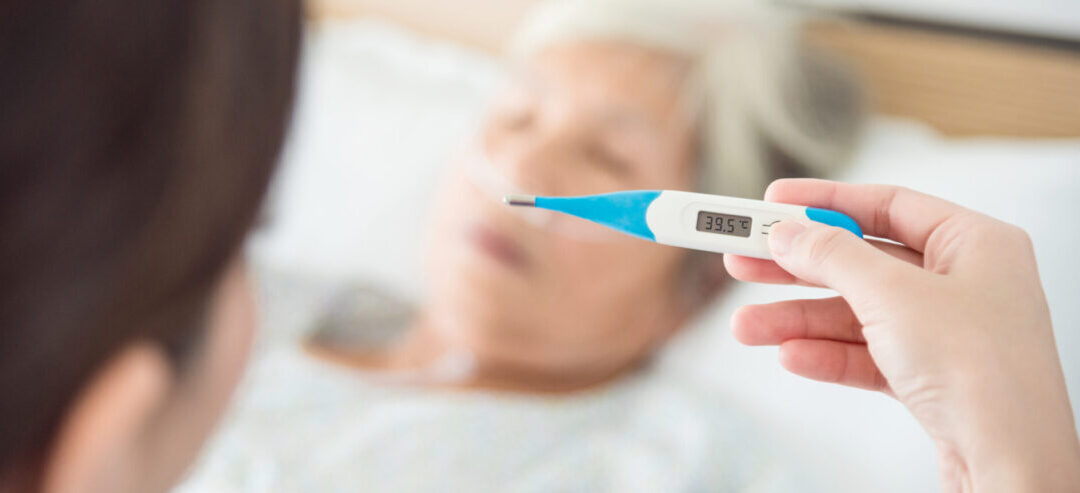
Yes, fever during chemo is always treated as a medical emergency, never something to wait out at home. Chemotherapy lowers your white blood cells, so your immune system is weakened and even a mild infection can become life-threatening within hours. A temperature of 38°C or 100.4°F, or above, means contacting your team or going to hospital straight away. The rule is simple: when in doubt, act, don’t wait.
According to Prof. Dr. Sandeep Nayak, Surgical Oncologist in India, “I tell every chemo patient the same thing: a fever isn’t a normal side effect, it’s an emergency, because by the time it looks bad we may have already lost the safe window to treat it.”
Had a fever during chemo? Don’t wait?
Why Is Fever During Chemo So Serious?
The reasons aren’t about the fever itself but what’s behind it. These are the ones that make it urgent.
- Chemo weakens immunity: Treatment lowers your white blood cells, the body’s main defence against infection, so the usual ability to fight bugs off is severely reduced.
- Infection spreads fast: With low immunity, an infection that would normally cause mild symptoms can become serious within hours, not days, which is why timing matters so much.
- The signs can be subtle: With fewer immune cells, the body can’t mount a strong response, so a fever may be the only warning that something serious is brewing.
- Early treatment saves lives: Prompt antibiotics in hospital, within the first hours, are what turn a dangerous infection back into a treatable one.
So fever during chemo is the alarm, not the illness. For patients whose wider care involves surgery, robotic cancer surgery is one part of a treatment plan with clear safety guidance throughout.
What Should You Do If You Get a Fever?
The right steps are simple and matter most when followed straight away. These are them.
- Check your temperature: A reading of 38°C or 100.4°F, or above, is the threshold that needs action, even if you otherwise feel well.
- Contact your team immediately: Call your oncology team or go straight to hospital, don’t wait for morning, weekday hours or to “see how it goes” overnight.
- Don’t self-medicate: Avoid taking paracetamol or other fever-reducers first, since they hide the fever and delay the urgent care your team needs to give.
- Carry your chemo card: Hospital teams need to know you’re on chemotherapy immediately, so any card or letter from your team helps them act fast.
So acting fast is what protects you. Understanding why your blood report matters helps make sense of how chemo affects your defences.
Why Choose Dr. Sandeep Nayak for Your Cancer Treatment?
Dr. Sandeep Nayak brings 24 years of surgical oncology experience, DNB qualifications in Surgical Oncology and General Surgery and a fellowship in Laparoscopic and Robotic Onco-Surgery to the care of patients through every stage of treatment. His team makes sure every chemotherapy patient knows the fever rule before they leave the clinic, so emergencies are caught early, not late.
That clear safety guidance is what protects patients during their most vulnerable weeks. Every case at MACS Clinic goes through a full tumour board, where the treatment and supportive-care plan is set together. Call +91 8104310753 to book your consultation.
Frequently Asked Questions
Is fever during chemo always serious?
Yes, fever during chemo is always treated as a medical emergency.
Why is chemo fever an emergency?
Chemo lowers immunity, so even a mild infection can turn dangerous fast.
What counts as fever during chemo?
A temperature of 38°C or 100.4°F, or above, needs urgent attention.
What should I do if I get fever?
Contact your team or go to hospital immediately, do not wait.
References
- National Cancer Institute — Infection and Neutropenia During Cancer Treatment. https://www.cancer.gov/
- World Health Organisation — Cancer. https://www.who.int/news-room/fact-sheets/detail/cancer
