
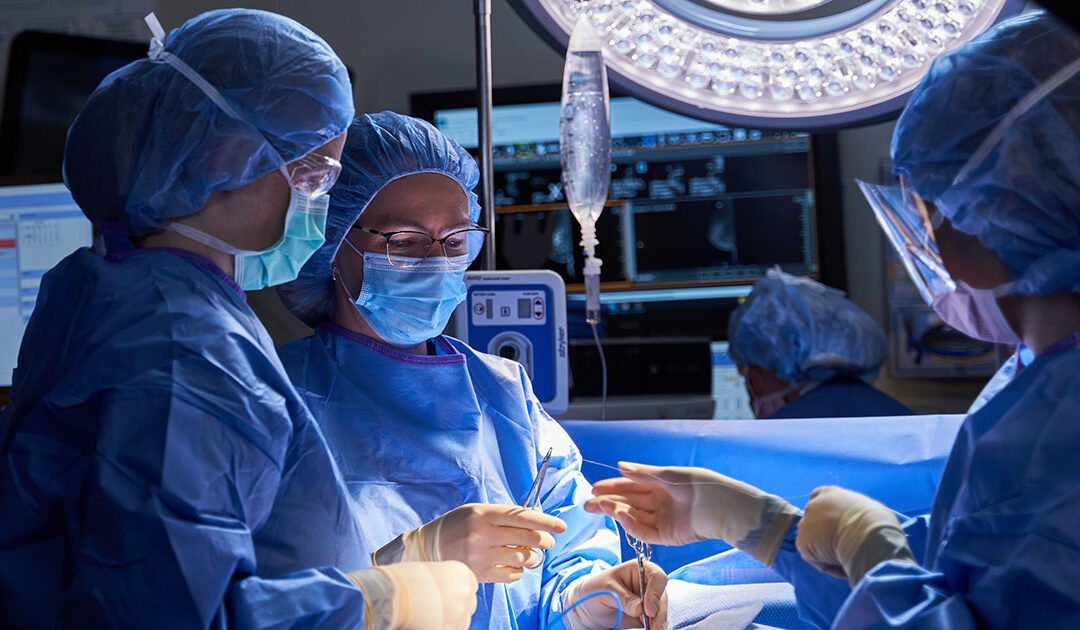
Surgery doesn’t automatically stop. The surgeon looks at what’s there, how far it goes, and whether dealing with it right then is safe. A frozen section biopsy goes to pathology. Result back in 15 to 30 minutes, patient still on the table. What happens next depends entirely on that result. And on whether the team went in prepared for exactly this possibility.
According to Prof. Dr. Sandeep Nayak, Surgical Oncologist in India, “Finding cancer intraoperatively isn’t a failure of planning. It happens. The response isn’t panic, it’s a clinical assessment. We look at what we’re dealing with, send for frozen section, check with the anaesthesiologist about time and patient stability, and make the safest call possible right there. Sometimes that means completing the resection. Sometimes it means closing and coming back with a proper plan.”
An unexpected finding mid-surgery needs a team that knows how to respond, not just how to operate.
What Does the Surgeon Actually Do When Cancer Is Found?
Fast steps. Specific order. Nothing improvised.
- Frozen section goes first: A tissue sample leaves the theatre immediately. The pathologist freezes it, slices it, stains it, reads it. Result in 15 to 30 minutes. That result drives everything that follows.
- Extent gets assessed: Is this isolated or has it spread further than imaging showed? Adjacent organs. Lymph nodes. Peritoneum. The surgeon looks carefully. What’s visible changes the scope of what’s possible right there.
- Anaesthesiologist gets consulted: How long has the patient been under? Are they stable? Some operations can extend safely. Others can’t. That conversation happens in real time, not after.
- Proceed or close: Finding is resectable, patient is stable, team has what it needs? Surgery continues. Not possible safely? Wound closes. Patient wakes up. Tumour board plans the next step.
For cancer findings that lead to immediate surgical removal, robotic cancer surgery allows precise resection in tight spaces with less blood loss, making intraoperative extension more feasible when the conditions are right.
What Are the Most Common Intraoperative Cancer Scenarios?
Four situations come up most. Each one plays out differently.
- Incidental cancer: Operation was for something else entirely. A gallbladder. A hernia. A cyst. Cancer found by chance. Surgeon samples it, notes the location, closes safely. Oncology referral comes next.
- More disease than expected: Staging scans missed something. Cancer has spread to adjacent structures not visible pre-operatively. Surgeon reassesses. Either extends the operation or closes to plan something more complex.
- Positive margins found: Known cancer, planned operation. Frozen section shows cancer cells at the cut edge. More tissue gets taken in the same session. Same anaesthesia, one operation, clear margin.
- Unresectable disease: Cancer has wrapped around major vessels, nerves or structures that can’t be safely removed. Proceeding would cause more harm than benefit. Patient closed. Woken up. Referred for non surgical treatment.
For patients who’ve had surgery and want to understand what the pathology result means for next steps, our blog on surgical margin in cancer surgery explains every category clearly.
Why Choose Dr. Sandeep Nayak for Your Cancer Care?
Dr. Sandeep Nayak has spent 24 years in surgical oncology. He holds DNB qualifications in Surgical Oncology and General Surgery, plus a fellowship in Laparoscopic and Robotic Onco Surgery. He’s operated across thousands of cancer cases, many with intraoperative complexity that needed real-time decisions. He works with a dedicated intraoperative pathology team and anaesthesiology support so unexpected findings get a clinical response on the spot.
Every case at MACS Clinic is reviewed by the multidisciplinary tumour board before treatment planning. Call +91 8104310753 to book your consultation.
Frequently Asked Questions
What happens if cancer is found during surgery?
The surgeon pauses, assesses the finding and decides whether to proceed.
Will surgery stop if cancer is found?
Not always, depends on type, extent, and whether removal is safe.
How does the surgeon know it is cancer?
Frozen section biopsy gives a tissue answer in 15 to 30 minutes.
Does finding cancer during surgery change the plan?
Yes, the surgical plan adjusts based on what the finding reveals.
Disclaimer: This blog is for informational purposes only and is not a substitute for professional medical advice.
