
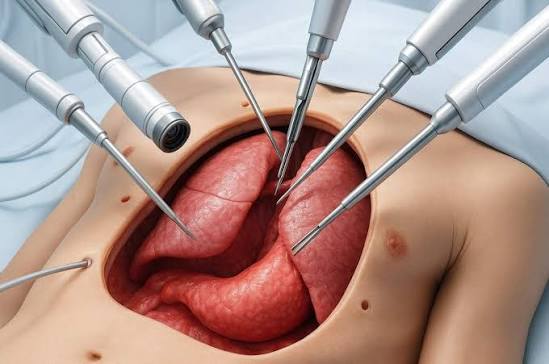
Robotic lung cancer surgery is available in India. Not everywhere, but at select surgical oncology centres that have invested in the platform and the surgical volume to use it properly. The procedure is called RATS, Robotic-Assisted Thoracoscopic Surgery. Small port incisions in the chest wall. No rib spreading. No large open cut. Stage I and II non-small cell lung cancer is where it works best, provided lung function holds up and the tumour sits in an accessible location.
According to Prof. Dr. Sandeep Nayak, Surgical Oncologist in India, “Robotic and VATS approaches have replaced open thoracotomy as the standard for operable early-stage lung cancer at high-volume centres. The chest is a space where robotic instruments genuinely outperform human hands in terms of reach and precision. Patients who qualify for robotic lung surgery avoid the rib spreading of open surgery. That’s the main driver of pain and the prolonged recovery that used to come with chest operations.”
If your lung cancer is operable, robotic surgery is worth understanding before you decide.
Who Qualifies for Robotic Lung Cancer Surgery?
Not every lung cancer patient fits. Several factors decide it.
- Stage I or II non-small cell lung cancer: Early stage disease, confined to the lung or with limited lymph node involvement. Robotic surgery is used with curative intent here. Stage III or IV with widespread spread needs systemic treatment first, surgery comes later if at all.
- Adequate lung function: Pulmonary function tests, FEV1 and DLCO specifically, confirm the patient can tolerate losing a lobe. The remaining lung has to handle the full load afterwards.
- Accessible tumour location: Peripheral tumours in the outer lung zones are the cleanest robotic candidates. Central tumours near major vessels or the main airway may need open surgery for safety.
- No prior major chest surgery: Previous thoracotomy, thick pleural adhesions or significant scarring make port placement risky. Working space collapses. These cases often go open from the start or convert mid-procedure.
For patients whose lung cancer workup leads to a surgical decision, robotic cancer surgery covers all thoracic cancer types including lung, oesophageal and mediastinal tumours.
What Happens During and After Robotic Lung Surgery?
The operation and recovery look very different from open chest surgery.
- The procedure: Three to four small port incisions. Robotic arms go in. No rib spreading at any point. The affected lobe, segment or wedge is removed with complete lymph node dissection. Two to four hours in theatre depending on how much lung comes out.
- Discharge timeline: Most robotic lobectomy patients go home in 3 to 5 days. Open thoracotomy? Seven to ten. The gap is directly explained by the absence of rib spreading and the smaller wounds.
- Pain and function: Significantly less post-operative pain. Oral analgesia within 24 to 48 hours for most patients. Shoulder and arm movement returns faster because the chest wall muscles aren’t divided the way open surgery requires.
- Oncological outcomes: Lymph node clearance, resection margins, long-term survival. All equivalent to open surgery for the same stages. The advantage is in recovery. Not in cancer control. That’s the honest comparison.
For patients weighing robotic against open surgery for lung cancer or other cancers, our blog on open vs robotic surgery walks through the evidence side by side.
Why Choose Dr. Sandeep Nayak for Lung Cancer Surgery?
Dr. Sandeep Nayak has spent 24 years in surgical oncology. He holds DNB qualifications in Surgical Oncology and General Surgery, plus a fellowship in Laparoscopic and Robotic Onco Surgery. He performs VATS and RATS lobectomy, segmentectomy and wedge resection for lung cancer with full mediastinal lymph node dissection integrated into each operation, and has built robotic thoracic surgery into routine practice rather than treating it as an occasional procedure.
Surgical volume in robotic thoracic surgery matters more than in most specialties. The learning curve is steep and the chest leaves little room for error. Patients who choose a surgeon doing this at real volume get a different operation from one done occasionally. Call +91 8104310753 to book your consultation.
Frequently Asked Questions
Can lung cancer be removed robotically in India?
Yes, robotic RATS lobectomy is available at select centres in India.
Who is eligible for robotic lung cancer surgery?
Stage I or II NSCLC with good lung function and accessible tumour location.
What is RATS in lung cancer surgery?
Robotic-assisted thoracoscopic surgery using small chest ports and no rib spreading.
Is recovery faster with robotic lung surgery?
Yes, most patients discharge in 3 to 5 days versus 7 to 10 open.
Disclaimer: This blog is for informational purposes only and is not a substitute for professional medical advice.
