
The presence of a lump, change in the breast contour or nipple discharge could prompt questions not so easy to dismiss. The knowledge of what to look for can help take a significant step forward concerning breast health. Not all changes in the breasts mean a problem, still, learning more about unusual symptoms may help women to make an informed decision on their condition.
Breast Cancer Awareness Month 2026 takes place in October to bring attention to preventing and detecting breast cancer, treatment, and screenings. Moreover, this is an excellent opportunity to dispel any myths about breast cancer and encourage women to undergo regular health check-ups.
Dr. Sandeep Nayak, a world-renowned surgical oncologist in India, stresses the importance of recognizing changes in the breast and consulting a doctor regarding them. The earlier breast cancer is detected, the more opportunities patients have to start treatment and improve outcomes – making awareness an important part of breast cancer care.
In this guide, we’ll discuss the purpose of Breast Cancer Awareness Month, signs to recognize, risk factors, screenings, prevention strategies, and necessary steps for those having breast lumps.
What Is Breast Cancer Awareness Month 2026?
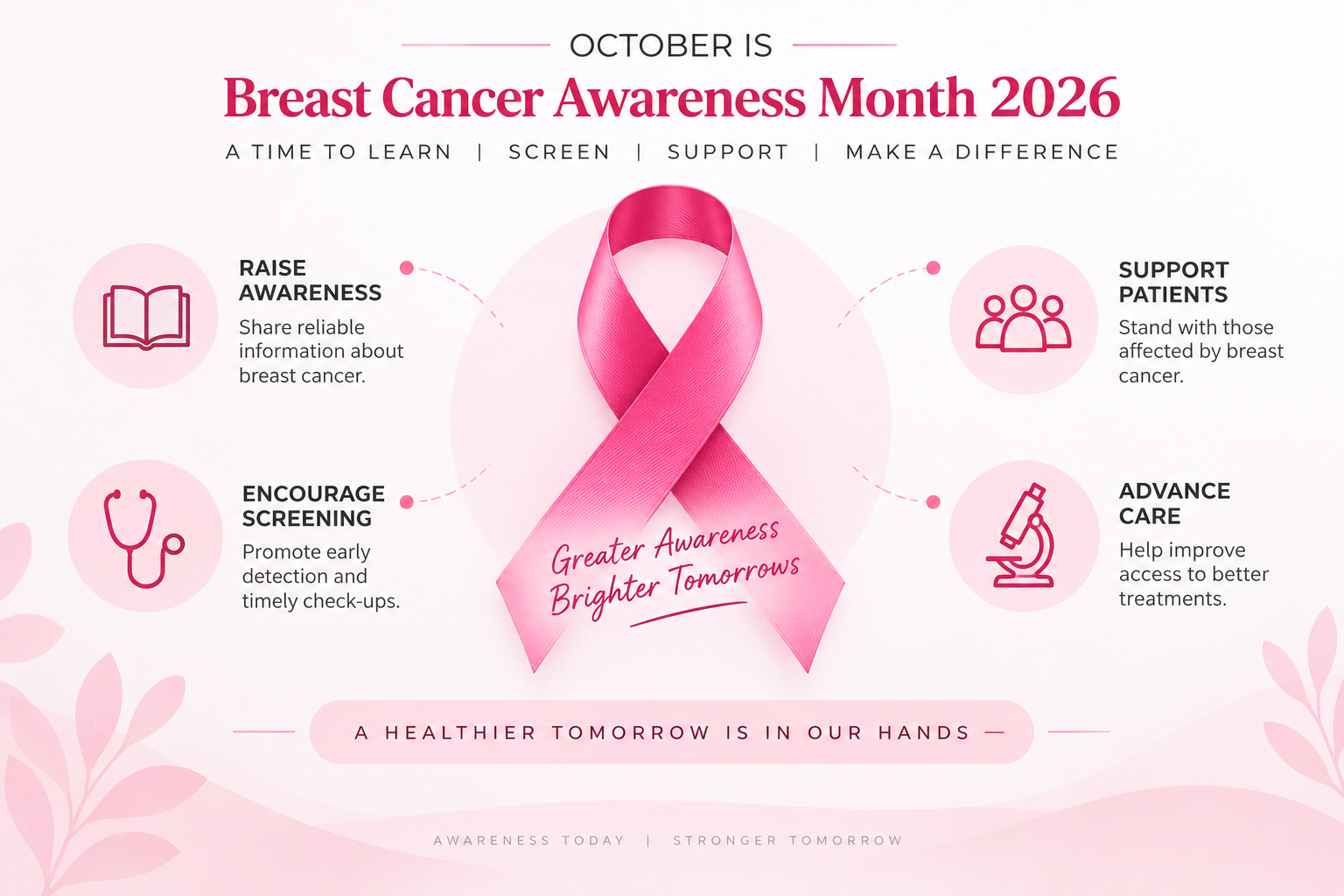
The Breast Cancer Awareness Month is observed all over the world in the month of October. The campaign highlights the impact of breast cancer on individuals and their families, as well as promotes education, screening, research and access to appropriate treatment.
It aims at:
* Promoting early detection: Educating women on how to identify changes in their breasts.
* Improving screening awareness: Helping people understand when mammography or other investigations may be appropriate.
* Correcting misconceptions: Addressing myths that may prevent people from seeking care.
* Helping patients: Educating people on the problems faced by breast cancer patients.
Breast cancer affects women across different age groups, although the risk generally increases with age. Awareness is valuable throughout the year, not only during October.
Which breast changes deserve attention? Let’s identify the warning signs that should be medically evaluated.
What Are the Early Signs and Symptoms of Breast Cancer?
Breast cancer does not always cause pain or an obvious lump. Some changes may be subtle, making familiarity with your usual breast appearance and feel particularly helpful.
Look out for:
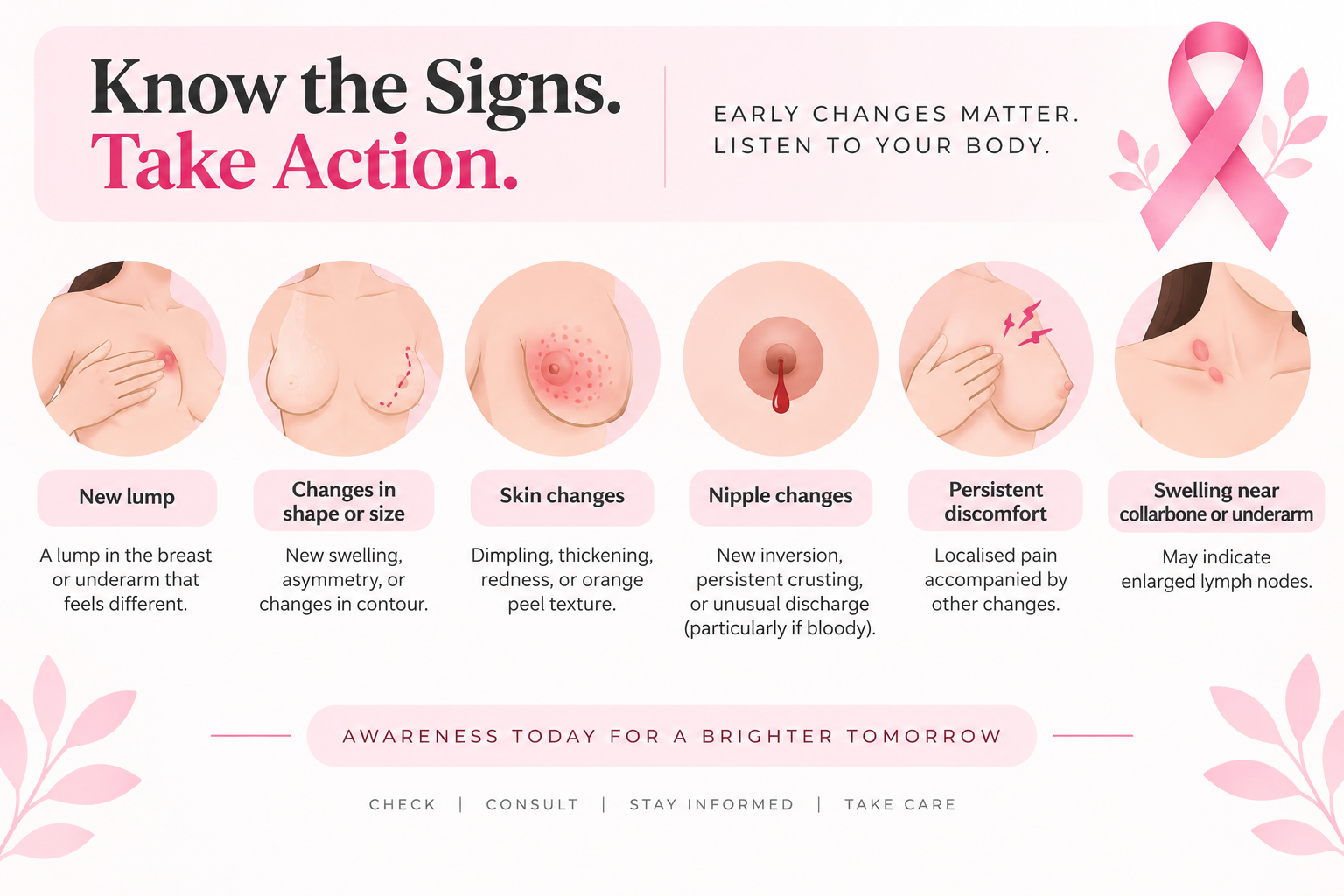
“These symptoms can have non-cancerous causes, too. However, persistent or unusual changes should be assessed rather than dismissed,” advises Dr. Sandeep Nayak, a leading oncologist in Bangalore.
Does everyone have the same level of risk? Let’s look at the factors that may increase the likelihood of developing breast cancer.
Who Is at Higher Risk of Breast Cancer?
Several factors influence breast cancer risk. The presence of a risk factor does not always result in breast cancer. Even patients who do not have any known risk factors are likely to develop this disease.
Some important things are as follows:
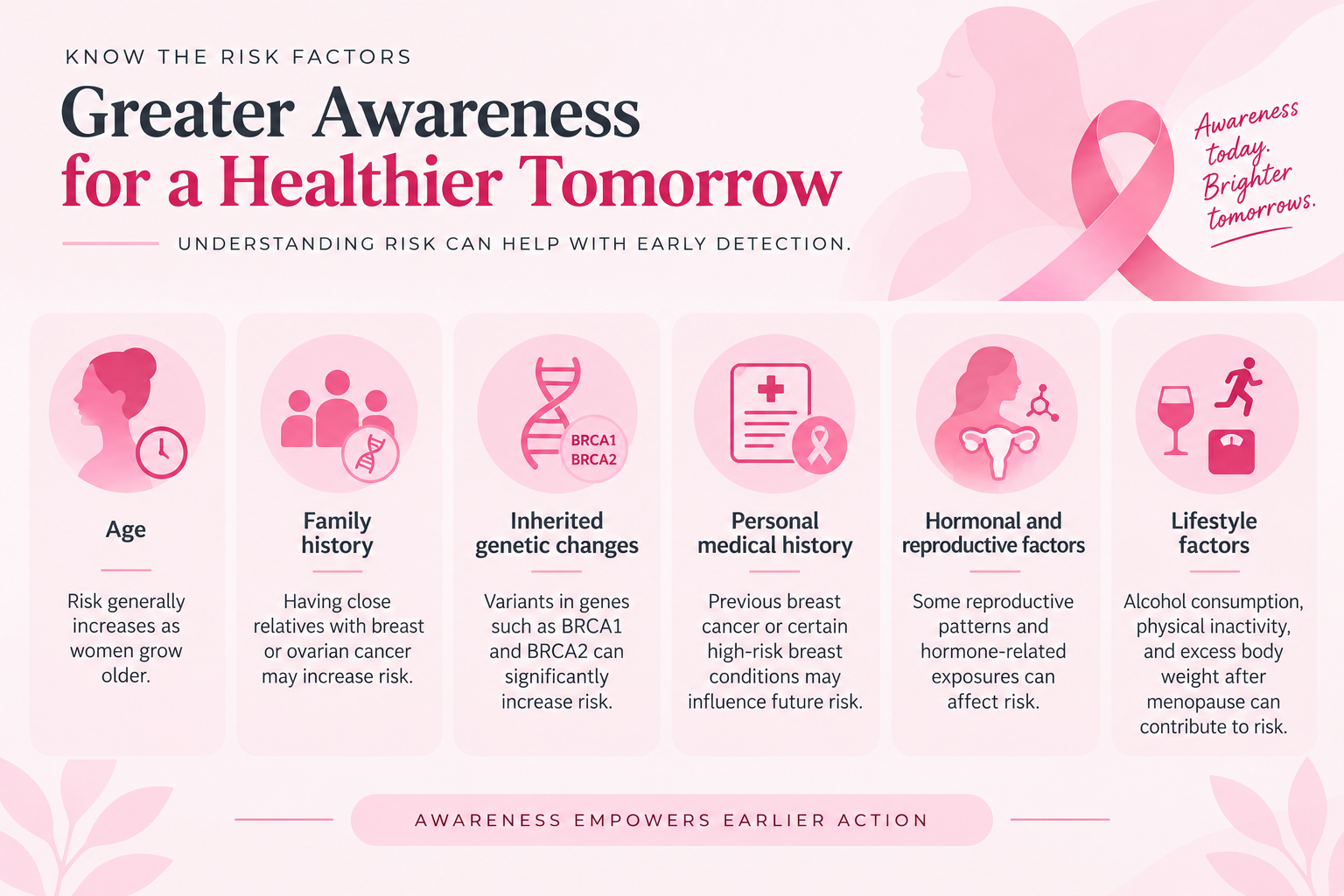
A person with a family history or inherited risk of breast cancer can get individualised screening. Consult a doctor for that purpose.
Does finding a lump automatically mean cancer? Let’s walk through the steps doctors use to investigate a breast lump.
What Happens If a Breast Lump Is Found?
Discovering a lump can be worrying, but many breast lumps are benign. The important step is to establish the cause through appropriate medical assessment.
A typical evaluation may involve:
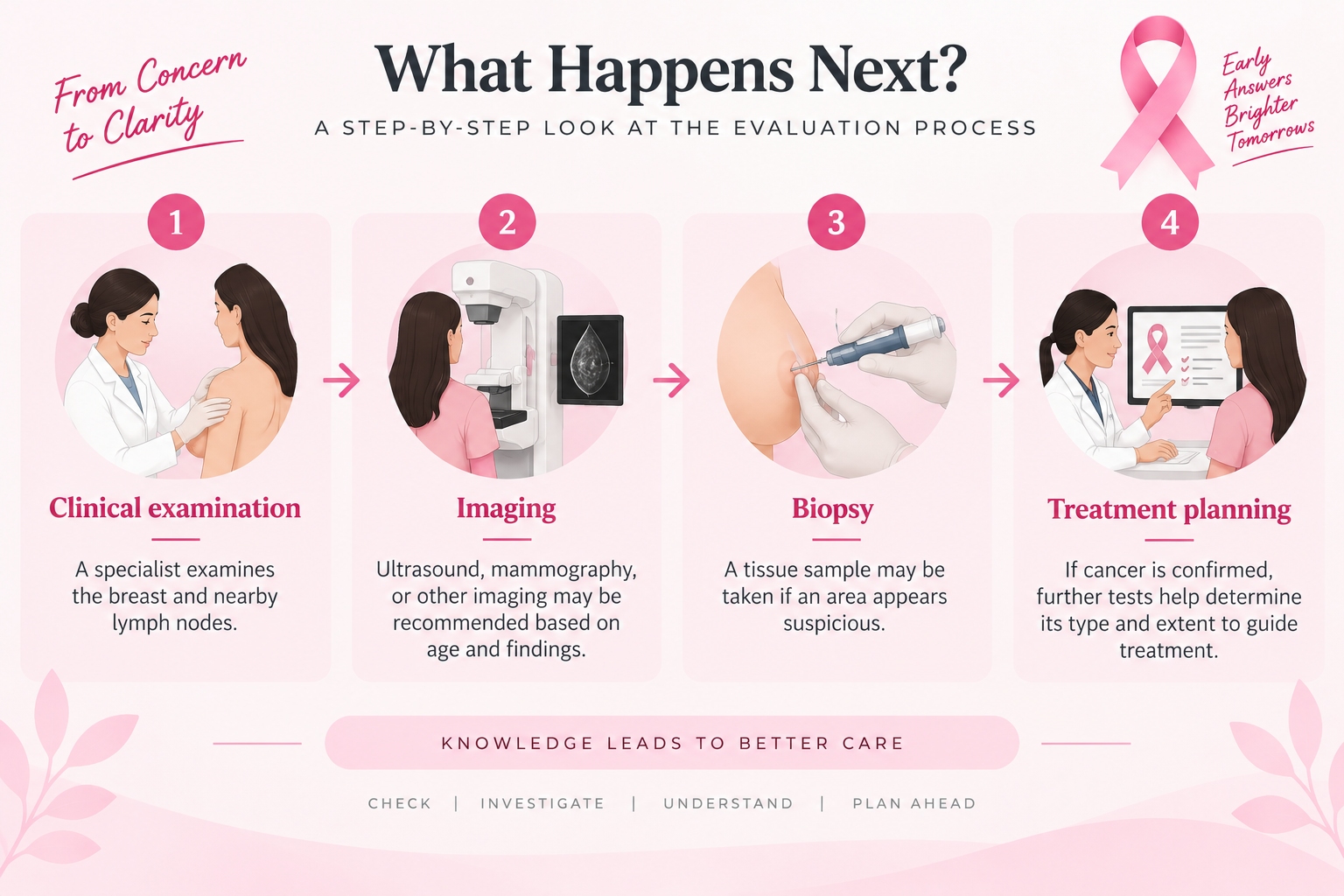
Not every lump requires a biopsy, but imaging alone may not always provide a definitive diagnosis. The recommended investigations depend on the findings.
Can everyday choices help lower breast cancer risk? Let’s explore practical steps that support long-term breast health.
Ways to Reduce Your Risk of Breast Cancer
Not every form of breast cancer can be prevented through one strategy. However, there are certain ways that you can employ to reduce the risk of developing this type of cancer.
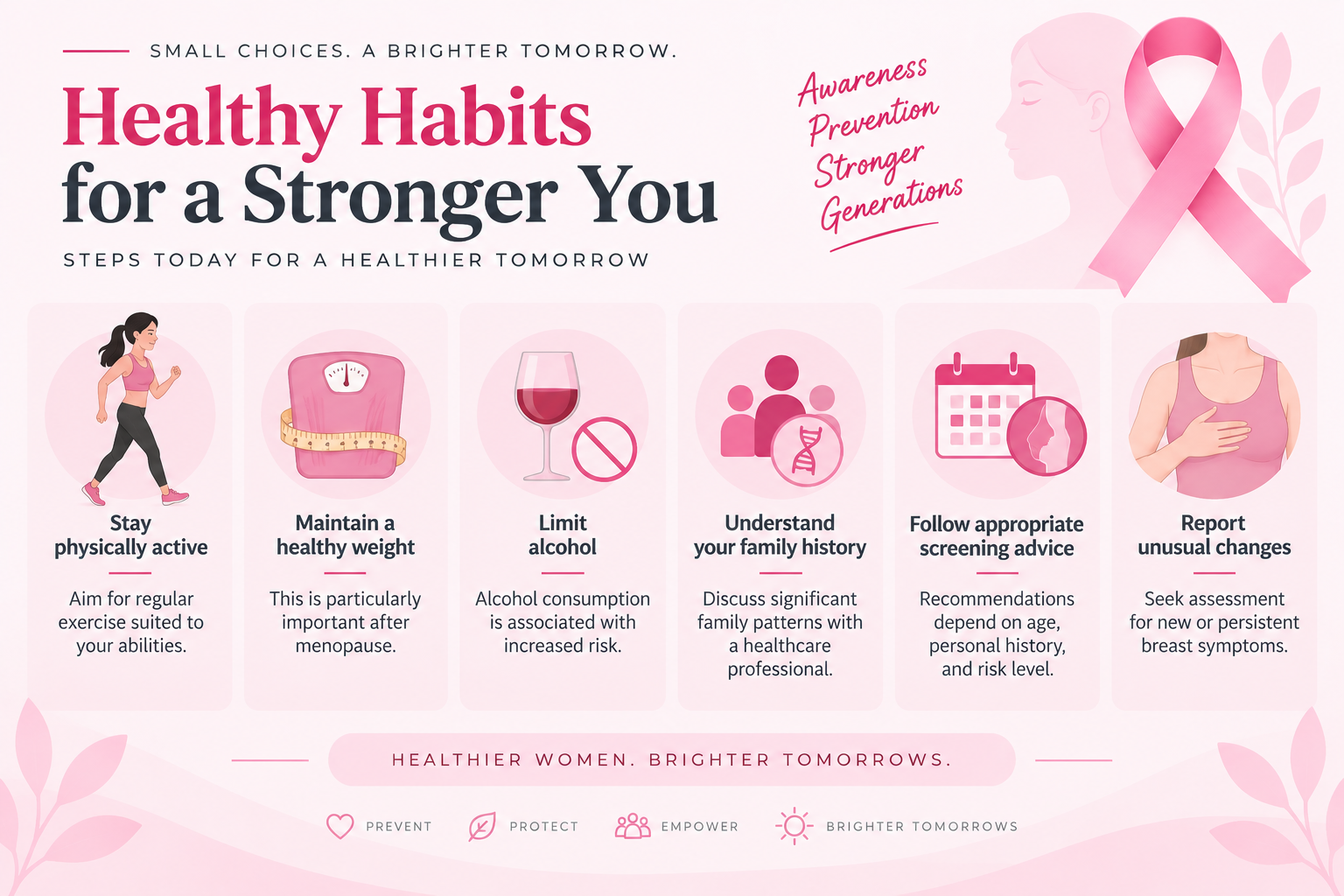
Although breast self-awareness is useful, it cannot replace screening. There are some forms of breast cancer that mammograms may help to detect even before any symptoms arise, while ultrasound and MRI may be advised in particular circumstances.
Are common beliefs about breast cancer always accurate? Let’s separate misconceptions from established medical facts.
Common Breast Cancer Myths and Facts
Myth: Every breast lump is cancer.
Fact: Many breast lumps are benign, but any new or unusual lump should be evaluated.
Myth: Breast cancer only affects older women.
Fact: Risk increases with age, but younger women can also develop breast cancer.
Myth: No family history means no breast cancer risk.
Fact: Breast cancer can occur even without a known family history.
Understanding these facts can help people seek appropriate care without unnecessary fear or false reassurance.
How Can You Support Breast Cancer Awareness Month 2026?
Breast cancer awareness becomes more impactful when information leads to action. This can be done through:
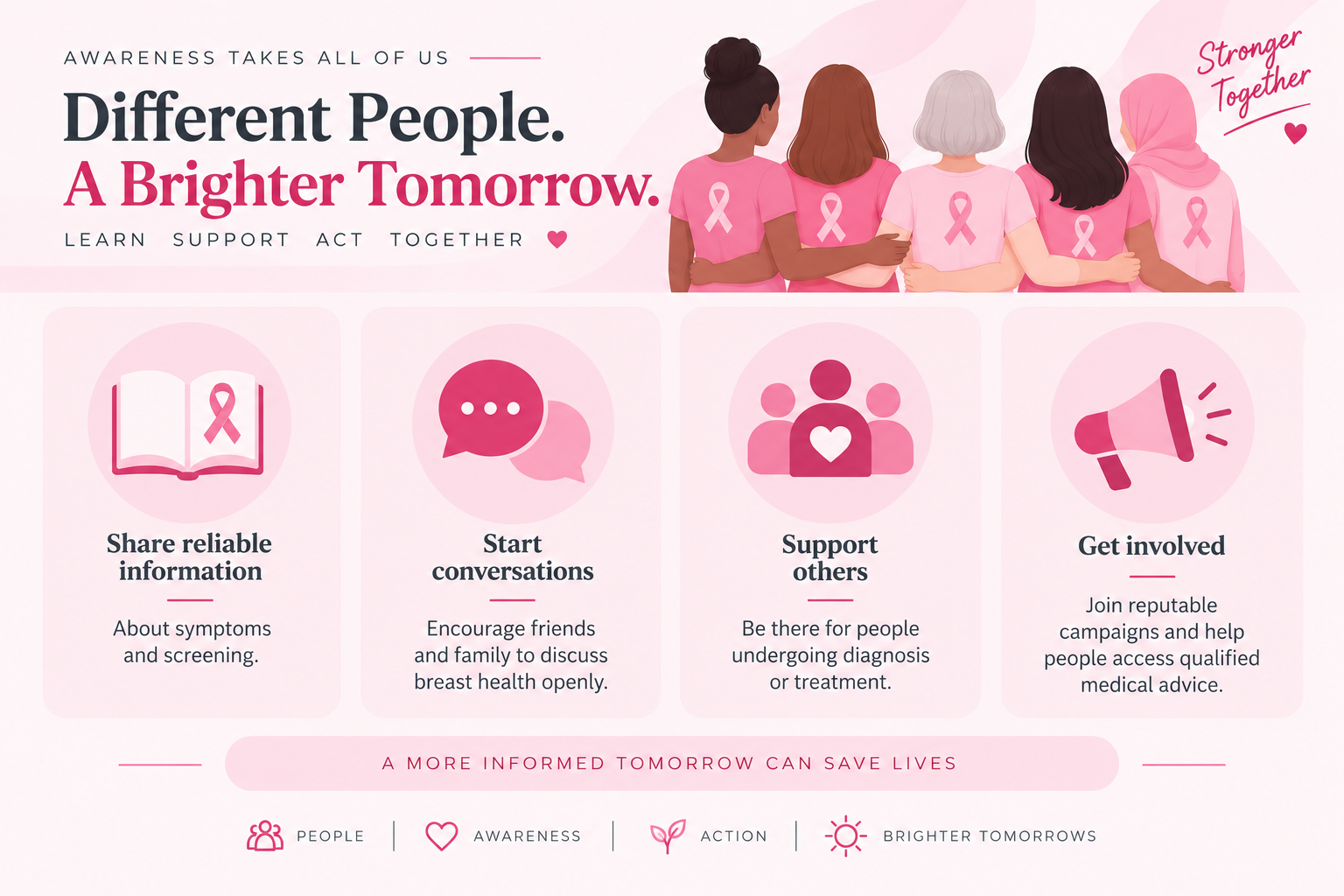
Do not spread misleading information on prevention, screening, or treatments. Reliable information makes healthier health care decisions possible.
Conclusion
Breast Cancer Awareness Month 2026 is a wake-up call to be vigilant about breast health, to be aware of any abnormal developments, and to know one’s risks. While most breast problems are harmless, it is advisable to have an evaluation done to find out if there is a need for treatment.
Dr. Sandeep Nayak is a specialist in cancer treatment who pays attention to proper diagnosis and personalized treatment plans. Patients interested in breast cancer treatment in Bangalore may turn to a professional to get an idea about the appropriate diagnosis and treatment methods.
Frequently Asked Questions
1. When is Breast Cancer Awareness Month 2026?
Breast Cancer Awareness Month is observed throughout October 2026.
2. What is the objective of Breast Cancer Awareness Month?
Raising awareness about breast cancer symptoms, testing, risk factors, treatments, as well as providing assistance to people with such conditions.
3. What are the earliest symptoms of breast cancer?
It may include the presence of a new lump, nipple changes, skin changes, secretion from nipple or changes in breast shape.
4. Can breast cancer occur without a lump?
Yes. There are cases when breast cancer involves only the presence of skin changes, nipple changes or imaging changes without any palpable mass.
5. When should one start the screening for breast cancer?
The timing depends on country of residence and personal circumstances; therefore, consult your doctor to clarify when should one undergo screening procedures.
6. Can younger woman suffer from breast cancer?
Yes. Breast cancer affects mostly older populations but it may appear among women at any adult age.
7. Can men have breast cancer?
Yes. While it is less common among men than women, breast cancer affects men too.
Reference
Disclaimer: The information shared in this content is for educational purposes and not for promotional use.
