
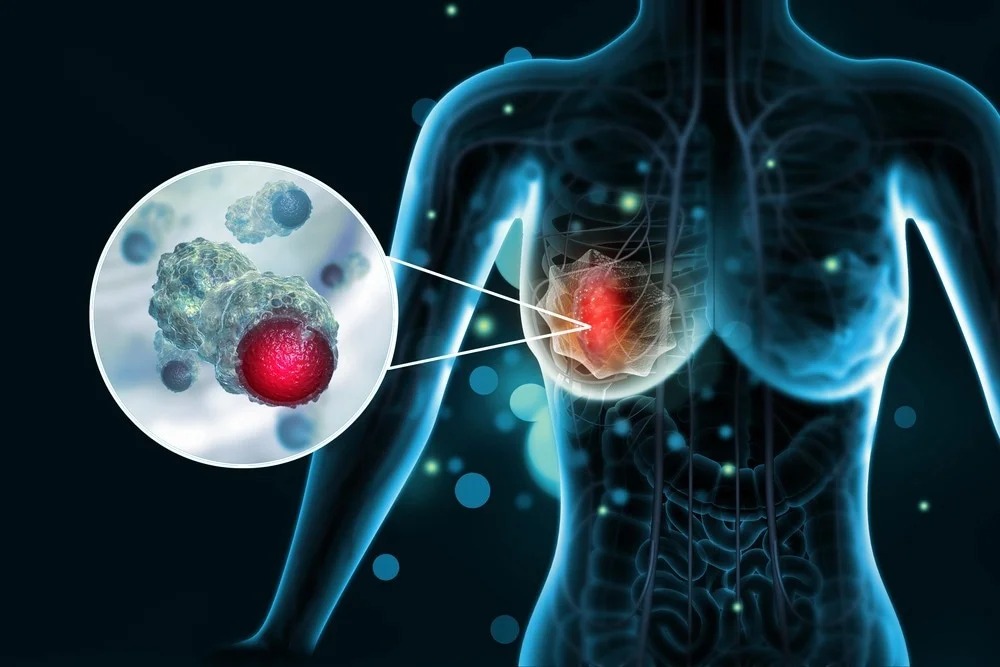
Breast pain is far more often caused by hormonal changes than by cancer. The vast majority of cases relate to the menstrual cycle, perimenopause, hormonal medications or fibrocystic changes, and these typically affect both breasts in a recurring, predictable pattern. Cancer related breast pain is uncommon and usually presents differently, persisting in one specific area of one breast, unrelated to the cycle, and often accompanied by a lump, skin change or nipple change.
According to Prof. Dr. Sandeep Nayak, Surgical Oncologist in India, “When a patient walks in worried about breast pain, the first question I ask is whether it follows her cycle. If yes, we’re almost always in hormonal territory. What I take seriously is pain stuck in one spot that doesn’t move with the cycle, especially with a lump nearby. That’s the pattern worth investigating.”
That ache deserves a clear answer, not another month of guessing.
What Tells You It's Hormonal?
Hormonal breast pain has a recognisable, predictable rhythm.
- Cycle linked: Hormonal pain follows the menstrual cycle, peaks before your period and settles once it starts, repeating each month in a clear pattern.
- Both breasts: It usually affects both breasts equally or both at once, rather than staying in just one breast or one specific spot.
- Diffuse tender: The pain feels widespread, dull, achy or heavy across the whole breast tissue, not sharp or pinpointed to a single area.
- Settles naturally: Hormonal pain often improves on its own as the cycle progresses, with menopause, or once contributing medications are adjusted.
So if your pain follows a cycle and affects both breasts, hormones are almost always the answer. For patients whose treatment includes surgery, robotic cancer surgery offers precise, recovery focused treatment as part of a complete plan.
Cancer vs Hormones: How Do You Tell?
Side by side, the two have clearly different patterns. Here’s the comparison.
|
Feature |
Hormonal Pain |
Cancer Pain |
|
Pattern |
Follows menstrual cycle |
No cycle pattern |
|
Location |
Both breasts, diffuse |
One spot in one breast |
|
Sensation |
Dull, tender, heavy |
Persistent, fixed, often with lump |
|
Other signs |
None, just pain |
Lump, skin change, nipple change |
|
Settles |
Improves with cycle or HRT review |
Stays or worsens over weeks |
- Pattern check: Hormonal pain has a clear cycle, cancer pain doesn’t. Tracking the timing for two cycles often answers the question on its own.
- Spot check: Pain stuck in one specific spot of one breast deserves attention, especially if you can press the same area and reproduce it each time.
- Lump check: Cancer rarely causes pain in isolation. A new lump, skin dimpling, nipple inversion or discharge with the pain is the combination that warrants urgent review.
- Time check: Hormonal pain settles or shifts within weeks. Pain that persists in one place beyond several weeks without improvement needs a specialist look.
So pattern, spot, lump and time give you the answer. When pain does turn out to be linked to breast cancer, our blog on lymph node surgery explains how the axilla is managed as part of complete treatment.
Why Choose Dr. Sandeep Nayak for Your Breast Cancer Care?
Dr. Sandeep Nayak brings 24 years of surgical oncology experience, DNB qualifications in Surgical Oncology and General Surgery and a fellowship in Laparoscopic and Robotic Onco Surgery to the care of breast cancer patients across every stage. He listens carefully to pain patterns, distinguishes hormonal from suspicious in the first consultation, and orders imaging only when the pattern fits, so patients aren’t sent into panic or unnecessary tests when hormones are the simple answer.
That careful, pattern based reading is what catches the rare cancer in time without alarming the many cases that aren’t. Every case at MACS Clinic goes through a full tumour board, where the diagnostic plan is set together. Call +91 8104310753 to book your consultation.
Frequently Asked Questions
Is breast pain usually hormones or cancer?
Hormones, in over 95 percent of cases, not cancer.
How do I tell the difference?
Pattern matters, hormonal pain follows the cycle, cancer pain doesn’t.
Does cancer cause breast pain?
Rarely, early breast cancer is usually painless, not painful.
When should I see a doctor?
If pain stays in one spot with a lump or skin change.
References:
- National Cancer Institute, Breast Cancer Symptoms. https://www.cancer.gov/
- World Health Organisation, Cancer. https://www.who.int/news-room/fact-sheets/detail/cancer
