
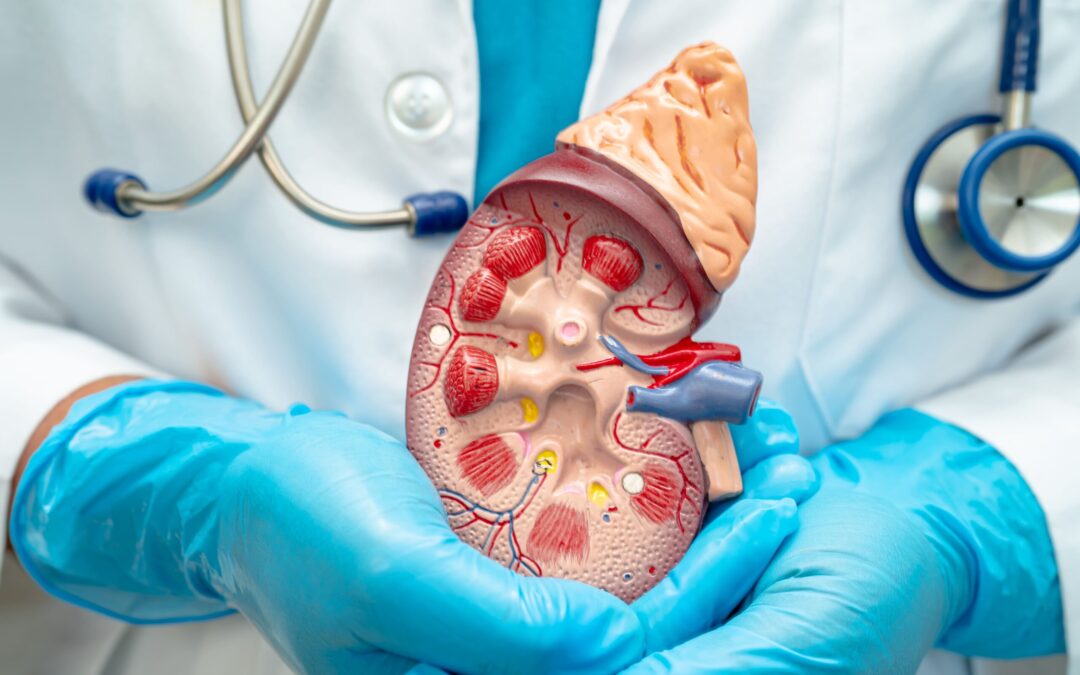
A kidney tumour can often be removed without removing the entire kidney, through a procedure called partial nephrectomy. This removes the tumour along with a margin of healthy tissue, while preserving the rest of the functioning kidney. It is generally suited to smaller tumours confined to the kidney, and is preferred over full removal whenever it is technically feasible, since preserving kidney tissue reduces long term risk to overall kidney health.
According to Dr. Sandeep Nayak, Surgical Oncologist in India, “Many patients assume a kidney tumour always means losing the whole kidney, and that is often not the case. For a suitable smaller tumour, partial nephrectomy removes just the affected portion and leaves the rest of the kidney working. This matters enormously for long term kidney health, particularly if someone already has reduced kidney function or only one working kidney. The cancer control is just as effective as full removal for the right tumour.”
Diagnosed with a kidney tumour and want to know your surgical options?
When Is Partial Removal Possible?
Suitability for kidney preservation depends on specific tumour characteristics.
- Tumour size : Smaller tumours confined to the kidney are generally the best candidates for a nephron sparing approach.
- Tumour location : A tumour positioned favourably, away from major blood vessels or the kidney’s collecting system, is easier to remove while preserving the organ.
- Overall kidney health : Patients with a solitary kidney, bilateral tumours, or pre-existing kidney disease benefit most from preserving every possible bit of function.
- Complexity of the tumour : Larger, deeply embedded or more complex tumours may still require complete removal for safe, thorough clearance.
Assessing this suitability properly is central to good kidney cancer treatment, since the right surgical plan depends entirely on the tumour’s specific characteristics.
Why Does Preserving Kidney Function Matter So Much?
Keeping as much healthy kidney tissue as possible has consequences well beyond the immediate surgery.
- Long term kidney health : Losing an entire kidney raises long term risk of reduced kidney function and chronic kidney disease, even with a normal remaining kidney.
- Equivalent cancer control : For appropriately selected tumours, partial nephrectomy achieves cancer control equivalent to full removal, with no compromise on outcome.
- Protects future options : Preserving kidney function protects against complications that could limit future treatment options if health changes over time.
- Not always possible : Where the tumour is too large, complex or centrally located, full removal remains the safer, more appropriate choice.
Recognising kidney tumours early, as covered in our guide to early symptoms of kidney cancer, often means catching them while they are still small enough for this kidney sparing approach.
Why Choose Dr. Sandeep Nayak for Kidney Cancer Surgery?
Dr. Sandeep Nayak is a surgical oncologist with 24 years of experience and a fellowship in laparoscopic and robotic onco-surgery. He performs both partial and radical nephrectomy, assessing each tumour honestly to determine whether kidney preservation is genuinely achievable without compromising cancer control. This means prioritising nephron sparing surgery wherever it is safely possible, rather than defaulting to complete removal.
Preserving kidney function while removing cancer completely is the goal that defines good kidney cancer surgery. A surgeon who assesses tumour size, location and complexity carefully can offer partial nephrectomy to many patients who might otherwise assume full removal is inevitable. Matching the extent of surgery precisely to what the tumour requires, no more and no less, is what protects both cancer control and long term kidney health.
Frequently Asked Questions
Can a kidney tumour be removed without full removal?
Yes, through partial nephrectomy, which removes the tumour while preserving the kidney.
Which tumours qualify for partial nephrectomy?
Generally smaller tumours confined to the kidney, favourably positioned for removal.
Why is preserving kidney function important?
It reduces long term risk of chronic kidney disease, especially with reduced kidney reserve.
Does partial nephrectomy control cancer as well as full removal?
Yes, oncological outcomes are equivalent for appropriately selected small tumours.
References
- Partial versus radical nephrectomy outcomes for small renal masses — National Library of Medicine
- Nephron sparing surgery and long term renal function — National Library of Medicine
Disclaimer: This blog is for informational and educational purposes only and is not a substitute for professional medical advice or diagnosis.
