
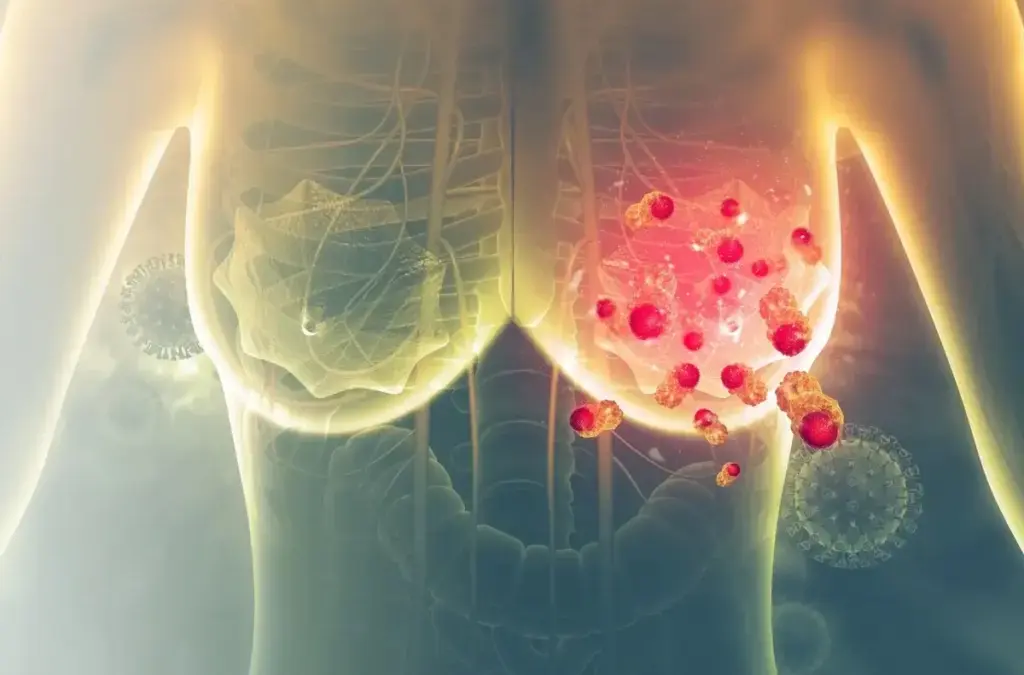
Standard hormone replacement therapy is generally not advised after breast cancer, because the hormones in HRT can stimulate breast cancer cells and raise the risk of recurrence. This applies especially to hormone-receptor-positive disease, which makes up most breast cancers. Menopausal symptoms are still real and treatable, but with safer non-hormonal options, decided jointly by your oncologist and gynaecologist, not on your own.
According to Prof. Dr. Sandeep Nayak, Surgical Oncologist in India, “I see real distress from menopausal symptoms after breast cancer, and dismissing them isn’t the answer. But standard HRT isn’t either. The honest position is that we have non-hormonal options that work, and that’s where the conversation belongs.”
Struggling with symptoms after breast cancer?
Why Is HRT Risky After Breast Cancer?
The risk has clear biology behind it. Here’s why oncologists draw the line where they do.
- Hormone fuel: Most breast cancers are hormone-receptor-positive, which means oestrogen feeds them. Adding HRT pours fuel onto cells you’ve just spent months treating.
- Higher recurrence: Trials have shown HRT raises recurrence risk in breast cancer survivors, which is why most oncology guidelines advise against it.
- Risk continues: The danger doesn’t switch off years after treatment ends. Hormone-sensitive cancer can recur a decade or more later, so caution stays.
- Even short courses: Even brief HRT use has been linked to higher recurrence in survivors, so it isn’t a safer option just because it’s a short trial.
So the risk genuinely outweighs the symptom relief in most cases. For the procedure itself in eligible patients, robotic cancer surgery is one part of a treatment plan that also looks at long-term survivorship.
What Are the Safer Alternatives?
Plenty of real options exist for managing symptoms without the hormone risk.
- Non-hormonal: Medicines like SSRIs, gabapentin or clonidine can ease hot flushes without touching oestrogen, and they’re well-studied in survivors.
- Lifestyle changes: Layered clothing, cooler sleeping, less caffeine and regular exercise genuinely reduce flushes and improve sleep for many women.
- Vaginal options: Low-dose vaginal oestrogen is sometimes considered in carefully selected cases, but only with full oncology input, never alone.
- Specialist input: A menopause specialist working with your oncologist gives the safest tailored plan, instead of one-size advice that doesn’t fit.
So you’re not stuck choosing between symptoms and safety. For the wider treatment context that shapes these decisions, our blog on breast cancer surgery covers what’s involved before survivorship begins.
Why Choose Dr. Sandeep Nayak for Your Breast Cancer Care?
Dr. Sandeep Nayak brings 24 years of surgical oncology experience, DNB qualifications in Surgical Oncology and General Surgery and a fellowship in Laparoscopic and Robotic Onco-Surgery to the care of breast cancer patients through every stage of treatment and beyond. He treats survivorship symptoms as real medical issues worth solving, not something to tolerate, while drawing the line firmly on what’s safe and what isn’t.
That balance of honesty and care is what separates real survivorship support from one-size advice. Every case at MACS Clinic goes through a full tumour board, where survivorship is part of the plan from day one. Call +91 8104310753 to book your consultation.
Frequently Asked Questions
Can I take HRT after breast cancer?
Standard HRT is usually not advised, as it can raise recurrence risk.
Why is HRT risky after breast cancer?
Hormones in HRT can stimulate hormone-sensitive breast cancer cells.
Are there safer alternatives?
Yes, non-hormonal medicines, lifestyle changes and vaginal options can help.
Should I talk to my oncologist?
Always, your oncologist and gynaecologist should decide together.
References:
- National Cancer Institute — Menopausal Hormone Therapy and Cancer. https://www.cancer.gov/
- World Health Organisation — Cancer. https://www.who.int/news-room/fact-sheets/detail/cancer
