Does Sunscreen Cause Skin Cancer?

Does Sunscreen Cause Skin Cancer?

No. It doesn’t. Full stop. And yet here we are in a world where this question gets typed into Google thousands of times every single day. People are genuinely scared of their sunscreen. Genuinely choosing to skip it because of something they half read on Instagram. And that choice. That one small daily choice. is quietly doing real damage to real people who deserve better information than what the internet is currently giving them.

According to Dr. Sandeep Nayak,  cancer specialist in Bangalore,
“Sunscreen preventing skin cancer has more evidence behind it than almost anything else in dermatological oncology and the myths pushing people away from it are genuinely costing lives.”

So Where Did This Fear Even Come From?

Because it didn’t appear from nowhere. Something started this. And understanding what actually happened helps you see why the fear got so much bigger than the actual science ever justified.

  • Oxybenzone Got Pulled Out of Context and Turned Into a Horror Story: A study found oxybenzone absorbing into the bloodstream. That part is true. What got left out is that absorption into the blood is not the same as causing cancer and no human study has ever made that connection stick.
  • The Vitamin D Argument Sounds Convincing Until You Look at It Properly: Yes sunscreen reduces vitamin D synthesis. Yes low vitamin D has cancer associations. But brief daily sun exposure plus food sources handles vitamin D needs perfectly well without abandoning UV protection for hours every day.
  • A Benzene Contamination Scandal Got Applied to Every Sunscreen Ever Made: Specific products got recalled after benzene was found in them. Benzene is genuinely carcinogenic. But contamination in a handful of recalled products is not the same thing as sunscreen being inherently dangerous. Not even close to the same thing.
  • Chemical Versus Mineral Sunscreen Arguments Created Fear Where None Was Warranted: Both types are safe. Both are approved. Neither causes cancer. The debate got hijacked by wellness influencers who turned a legitimate formulation preference into a public health scare that never needed to exist.

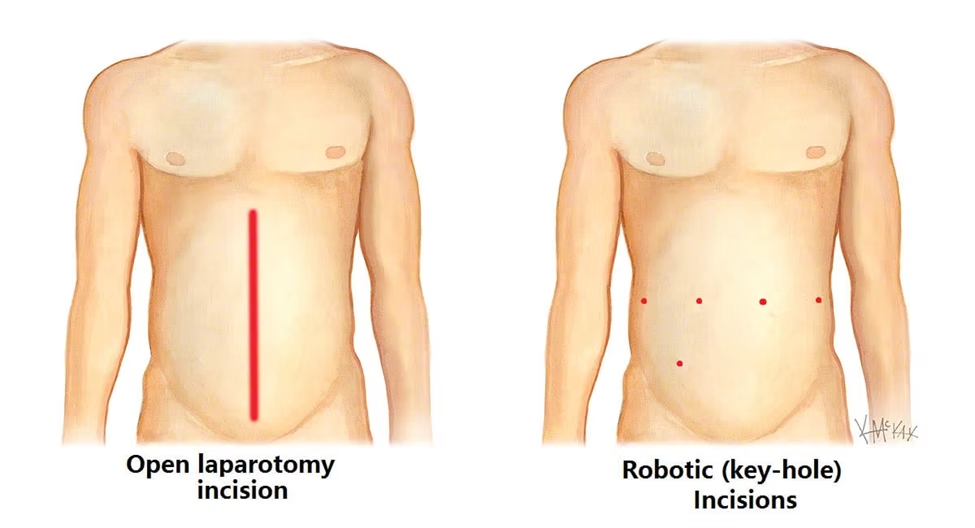
In the case of early diagnosis and localisation of the cancer, the novel laparoscopic surgery methods can promote successful removal of the tumour using smaller incisions and shorter recovery time in the right patients.malignancy in long term follow up studies.

What Actually Causes Skin Cancer? Because It's Worth Knowing Clearly.

If you’ve been worried about sunscreen you might not have spent much time worrying about the things that genuinely deserve your concern. Here they are.

  • The Sun Itself Is What You Should Actually Be Thinking About: Every unprotected exposure accumulates DNA damage in your skin cells and that damage stacks up quietly over years before it ever becomes something a doctor can see or feel.
  • Tanning Beds Are Genuinely One of the Most Reckless Things You Can Do to Your Skin: Using one before the age of 35 increases your melanoma risk by 75% according to published research. Not 10%. Not 20%. Seventy five percent. That number deserves to be read slowly.
  • Your Personal Risk Profile Matters More Than Most People Realise: Fair skin, light eyes, a childhood history of sunburns, a family member with melanoma. Any one of these raises your baseline risk considerably and most people have never had that conversation with a specialist.
  • Watching a Changing Mole at Home Instead of Getting It Checked Is How Late Melanoma Diagnoses Happen: Melanoma doesn’t hurt early on. It just changes. Slowly. Quietly. And by the time it becomes something you can’t ignore anymore it’s often already done more than it needed to.

In cases of cancers where a high degree of accuracy in tumour removal is demanded in anatomically complex regions, innovative robotic surgery technologies are becoming a popular method of enhancing the accuracy of surgery and recovery in patients.

Why Choose Dr. Sandeep Nayak for Cancer Treatment in Bangalore?

Dr. Sandeep Nayak has spent over 24 years treating skin cancers including melanomas that arrived at his clinic later than they needed to because someone waited too long before taking a changing mole seriously. As one of the most experienced cancer specialists in Bangalore he performs minimally invasive skin cancer excisions, sentinel lymph node mapping and complex reconstructive procedures for advanced cases. But every single time the conversation comes up he says the same thing. The best cancer treatment is the one you never need. And consistent sunscreen use every single day is one of the simplest and most powerful ways to make that statement true for your own skin.

Frequently Asked Questions

Can using sunscreen daily actually reduce your real skin cancer risk?

Yes, consistent broad spectrum sunscreen use is one of the most evidence backed daily habits for meaningfully reducing long term skin cancer risk over a lifetime.

Which sunscreen ingredients should you genuinely be cautious about using?

No ingredient in currently approved sunscreen products has been proven to cause cancer and both chemical and mineral options are considered completely safe for daily use.

What skin changes should make you call a cancer specialist without waiting?

Any mole that changes shape, grows, darkens, develops irregular borders or bleeds without injury needs specialist evaluation immediately and not home monitoring for another few months.

Can people with darker Indian skin tones still develop skin cancer from sun exposure?

Absolutely yes. Darker skin has more natural protection but is not immune to skin cancer and late diagnosis in darker skin patients is unfortunately far more common than it should be.

Reference links:

Is Aplastic Anemia a Cancer?

Is Aplastic Anemia a Cancer?

No. Aplastic anemia is not cancer. But that answer needs more than just a no because the two conditions are connected in ways that genuinely matter for your health. Aplastic anemia happens when your bone marrow stops producing enough blood cells. It’s serious. It’s frightening. And in some cases it can increase your risk of certain blood cancers developing later. That part deserves a proper conversation.

According to Dr. Sandeep Nayak, cancer specialist in Bangalore,
“Aplastic anemia isn’t cancer but dismissing it as unrelated to cancer entirely would be doing patients a real disservice because the connection is real and worth understanding.”

What Actually Is Aplastic Anemia and Why Does It Confuse People?

The confusion makes complete sense. It sounds serious. It involves bone marrow. It shares symptoms with blood cancers. And nobody explains the difference properly when they hand you the diagnosis.

  • Your Bone Marrow Simply Stops Doing Its Job Properly: In aplastic anemia the bone marrow fails to produce adequate red blood cells, white blood cells and platelets leaving your body dangerously short of all three at the same time.
  • It’s an Immune System Problem Not a Cancer Cell Problem: In most cases your own immune system mistakenly attacks the stem cells in your bone marrow that are responsible for producing blood cells and that’s fundamentally different from what cancer does.
  • The Symptoms Overlap With Blood Cancer in Confusing Ways: Extreme fatigue, unexplained bruising, frequent infections and uncontrolled bleeding all appear in both aplastic anemia and blood cancers which is exactly why proper diagnosis matters enormously.
  • It Can Be Triggered by Many Different Things: Autoimmune reactions, viral infections, certain medications, radiation exposure and toxic chemical contact have all been linked to aplastic anemia developing in previously healthy individuals.

In cases of cancers where a high degree of accuracy in tumour removal is demanded in anatomically complex regions, innovative robotic surgery technologies are becoming a popular method of enhancing the accuracy of surgery and recovery in patients.

How Is Aplastic Anemia Different From Blood Cancer in Practice?

People ask this because they’ve read things online that blurred the line between the two. Here’s where that line actually sits in clear simple terms.

  • Cancer Involves Uncontrolled Abnormal Cell Growth. Aplastic Anemia Involves Too Few Cells Being Made: These are opposite problems biologically. Cancer makes too many abnormal cells. Aplastic anemia makes too few normal ones. Completely different mechanisms causing completely different problems.
  • Aplastic Anemia Doesn’t Have Malignant Cells Circulating in the Blood: A bone marrow biopsy in aplastic anemia shows an empty or fatty marrow with very few cells rather than the abnormal malignant cells that define leukaemia or myeloma diagnoses.
  • Treatment Approaches Are Fundamentally Different From Cancer Treatment: Aplastic anemia is treated with immunosuppressive therapy or bone marrow transplant rather than chemotherapy or radiation which are the primary tools used against actual blood cancers.
  • But Long Term Monitoring for Cancer Development Is Still Essential: Because aplastic anemia does increase the risk of myelodysplastic syndrome and leukaemia over time regular bone marrow monitoring and blood tests are non-negotiable parts of long term care.

In the case of early diagnosis and localisation of the cancer, the novel laparoscopic surgery methods can promote successful removal of the tumour using smaller incisions and shorter recovery time in the right patients.malignancy in long term follow up studies.

Why Choose Dr. Sandeep Nayak for Cancer Treatment in Bangalore?

Dr. Sandeep Nayak has spent over 24 years working with complex haematological conditions including aplastic anemia cases that sit in that difficult space between bone marrow failure and genuine malignancy risk. As one of the most trusted cancer specialists in Bangalore he doesn’t just treat what’s in front of him today. He looks at where a condition might take a patient over the next five to ten years and builds a monitoring and cancer treatment plan around that longer view. His patients consistently describe someone who explains the full picture honestly. Not just the immediate diagnosis. The trajectory. The risks. The watchpoints. And what to do if any of those watchpoints start moving in the wrong direction.

Frequently Asked Questions

Can aplastic anemia turn into leukaemia over time?

Yes, a small but real percentage of aplastic anemia patients develop myelodysplastic syndrome or acute myeloid leukaemia over time making regular bone marrow monitoring absolutely essential.

How do doctors tell the difference between aplastic anemia and blood cancer?

 A bone marrow biopsy is the definitive test showing empty hypocellular marrow in aplastic anemia versus abnormal malignant cells in actual blood cancer diagnoses.

Does aplastic anemia need to be treated by an oncologist or a different specialist?

Both haematologists and oncologists are involved in aplastic anemia care particularly when cancer risk monitoring and long term bone marrow surveillance are part of the management plan.

Can aplastic anemia be completely cured with bone marrow transplant?

Yes, allogeneic bone marrow transplant from a matched donor offers the best chance of complete long term cure particularly in younger patients with severe aplastic anemia.

Reference links:

First Signs of Esophageal Cancer Explained

First Signs of Esophageal Cancer Explained

Difficulty swallowing. That’s usually the first thing people notice. Not pain. Not bleeding. Just food that feels like it’s taking a little longer to go down than it used to. Most people blame it on eating too fast or stress. And they wait. And wait. And by the time swallowing becomes genuinely difficult the cancer has usually already been growing quietly for a while.

According to Dr. Sandeep Nayak, cancer specialist in Bangalore, “The tragedy with esophageal cancer is that its first symptom feels so ordinary that most patients lose months before they take it seriously enough to act.”

What Are the Early Signs Most People Completely Miss?

This is the part that matters most. Because none of these feel dramatic enough to worry about in the beginning. And that’s exactly what makes esophageal cancer so dangerous.

  • Food Feels Like It’s Slowing Down Somewhere in Your Chest: Not painful. Just slightly slower. A sensation that something isn’t moving quite as freely as it did before that you keep almost noticing but not quite.
  • You Start Quietly Avoiding Certain Foods Without Realising It: Bread. Meat. Anything dense. You start choosing softer foods without consciously deciding to because swallowing them feels easier and less uncomfortable without any drama.
  • A Persistent Burning or Discomfort Behind Your Breastbone: Long term acid reflux that never fully settles down is one of the biggest risk factors for esophageal cancer and persistent heartburn that changes in character deserves proper investigation urgently.
  • Unexpected Weight Loss That Nobody Can Explain: When swallowing becomes uncomfortable your eating quietly decreases. The weight drops. And most people attribute it to stress or a stomach bug or getting older rather than something worth investigating properly.

When symptoms suggest advanced disease, understanding factors that influence the survival rate can help patients and families make informed decisions about further evaluation and treatment planning.

What Symptoms Mean You Really Cannot Wait Any Longer?

Some signs are different. These ones deserve a phone call to a specialist the same day you notice them. Not next week. Today.

  • Solid Food Getting Physically Stuck on the Way Down: When food stops progressing and you need water to push it through or it comes back up entirely the esophagus is being obstructed significantly and this needs urgent endoscopy immediately.
  • Pain in Your Chest or Back When You Swallow: Swallowing that causes pain radiating into your chest or back means the cancer may have grown beyond the inner esophageal lining into surrounding tissue and structures nearby.
  • Vomiting Up Food Without Any Nausea Beforehand: When the esophagus is significantly narrowed food comes back up effortlessly without the typical stomach involvement of normal vomiting and this symptom needs same week investigation.
  • Your Voice Has Changed and Become Noticeably Hoarse: Hoarseness alongside swallowing difficulty means the cancer may be pressing on the nerve controlling your vocal cord which indicates significant local spread already happening.

In cases of cancers where a high degree of accuracy in tumour removal is demanded in anatomically complex regions, innovative robotic surgery technologies are becoming a popular method of enhancing the accuracy of surgery and recovery in patients.

Why Choose Dr. Sandeep Nayak for Cancer Treatment in Bangalore?

Dr. Sandeep Nayak has spent over 24 years treating esophageal cancers using robotic and minimally invasive surgical techniques including robotic three field esophagectomy, one of the most technically demanding operations in all of surgical oncology and available at very few centres across India. As one of the most experienced cancer specialists in Bangalore he evaluates every swallowing complaint with the seriousness it deserves regardless of how early or mild it seems at first presentation. Because in esophageal cancer the difference between finding it at Stage 1 and finding it at Stage 3 isn’t measured in months of symptoms. It’s measured in months of deciding whether those symptoms are worth acting on.

Frequently Asked Questions

Is difficulty swallowing always a sign of esophageal cancer?

 No, many causes including acid reflux, infections and benign strictures cause swallowing difficulty but any symptom persisting beyond two weeks needs proper specialist endoscopic evaluation.

How is esophageal cancer actually confirmed after symptoms are reported?

An upper gastrointestinal endoscopy with biopsy is the definitive investigation that confirms esophageal cancer and provides tissue for pathological analysis and staging.

Can esophageal cancer be treated successfully if it's caught at an early stage?

Yes, Stage 1 esophageal cancer treated with minimally invasive surgical resection has significantly better outcomes than cases presenting at Stage 3 or Stage 4 disease.

How long do esophageal cancer symptoms typically exist before diagnosis happens?

Most patients report symptoms for three to six months before seeking specialist evaluation which is why earlier action on even mild swallowing changes genuinely saves lives

Reference links:

What Stage Is Adenocarcinoma Cancer?

What Stage Is Adenocarcinoma Cancer?

Adenocarcinoma is not a stage. It’s really not. And the number of people who walk into a consultation genuinely believing it is breaks my heart a little every time. It’s a type of cancer. One that starts in glandular cells inside your organs. Your lungs. Your colon. Your stomach. Your pancreas. The stage depends entirely on when you found it. That part is still up to you.

According to Dr. Sandeep Nayak, cancer specialist in Bangalore, “When patients hear adenocarcinoma they think it tells them how bad things are but it actually just tells us where in the body the cancer decided to begin.”

What Is Adenocarcinoma Really and Why Does the Name Confuse Everyone?

Honestly the word itself is the problem. It sounds clinical and final and terrifying all at once. But strip it back and here’s what you’re actually dealing with.

  • It Grows in Cells That Your Organs Use to Produce Fluids and Secretions: Every organ that lines itself with glandular cells producing mucus or digestive juices can develop adenocarcinoma. 
  • It’s Far More Common Than Most People Realise Before Their Own Diagnosis: Lung cancer. Breast cancer. Colorectal cancer. Stomach cancer. Pancreatic cancer. The majority of each one is adenocarcinoma.
  • The Organ Matters More Than the Name When It Comes to Treatment: Two people can both have adenocarcinoma and need completely different cancer treatment because one has it in the lung and the other in the colon. Same name. Completely different disease in practice.
  • Some Types Are Slow Enough to Watch Carefully for Years. Others Aren’t: Low grade prostate adenocarcinoma can sit quietly under observation for a very long time. Pancreatic adenocarcinoma gives you no such luxury and moves faster than almost anything else in oncology.

In cases of cancers where a high degree of accuracy in tumour removal is demanded in anatomically complex regions, innovative robotic surgery technologies are becoming a popular method of enhancing the accuracy of surgery and recovery in patients.

What Stage Can Adenocarcinoma Be at When Someone Finally Finds It?

This is the real question isn’t it. Not what adenocarcinoma is. What stage yours is. What it means for your life going forward. Here’s what each stage actually looks like in human terms not medical ones.

  • Stage 1 Means the Cancer Hasn’t Gone Anywhere Yet and Surgery Can Still Fix This: It’s small. It’s contained. It hasn’t touched your lymph nodes. And removing it completely is still very much possible with genuinely good outcomes on the other side.
  • Stage 2 Is Bigger But Distant Spread Hasn’t Happened and Curative Treatment Is Still Very Real: The tumour has grown or crept into nearby tissue but it hasn’t packed its bags and travelled yet. Treatment at this point still carries genuine hope of cure.
  • Stage 3 Means Regional Spread Has Happened and Treatment Gets Significantly More Involved: Lymph nodes nearby are now involved. Surgery alone probably won’t be enough anymore. Chemotherapy and radiation enter the picture together and the path gets harder but it’s still a path.
  • Stage 4 Is Distant Spread and That’s Frightening But It Isn’t Always the End of Real Options: Targeted therapy and immunotherapy have rewritten what Stage 4 adenocarcinoma means for specific cancer types in ways that genuinely surprised even experienced oncologists in recent years.

In the case of early diagnosis and localisation of the cancer, the novel laparoscopic surgery methods can promote successful removal of the tumour using smaller incisions and shorter recovery time in the right patients.malignancy in long term follow up studies.

Why Choose Dr. Sandeep Nayak for Cancer Treatment in Bangalore?

Dr. Sandeep Nayak has spent more than 24 years inside operating rooms treating adenocarcinomas that showed up in lungs, colons, stomachs, pancreases and thyroids at every stage imaginable. He performs robotic and laparoscopic cancer surgeries that give patients cleaner margins, faster recovery and fewer complications than conventional open approaches. But honestly? What patients remember most about sitting with him isn’t the surgery. It’s the conversation before it. The way he reads a pathology report out loud and explains every single line until it makes sense to the person sitting across from him. Not the medical version of sense. Real human sense. Because you deserve to understand exactly what’s happening inside your own body before anyone asks you to make a decision about it.

Frequently Asked Questions

Does adenocarcinoma automatically mean the cancer is serious and aggressive?

Absolutely not. Aggressiveness varies enormously with prostate and thyroid types often growing slowly for years while pancreatic adenocarcinoma is genuinely one of the fastest moving cancers there is.

Can adenocarcinoma be completely cured if it's found early enough at Stage 1?

Yes, Stage 1 adenocarcinoma in organs like the lung, colon and breast responds extremely well to complete surgical removal with excellent long term survival in most patients.

How is adenocarcinoma actually different from squamous cell carcinoma in simple terms?

Adenocarcinoma starts in glandular secretory cells while squamous cell carcinoma begins in flat surface lining cells and both need completely different treatment approaches from day one.

Does the organ where adenocarcinoma starts completely change the treatment plan?

Yes completely. Lung, colorectal and pancreatic adenocarcinomas share only their name because their behaviour, spread patterns and treatment pathways are entirely different from each other in practice.

Reference links:

What Cancer Causes High Rheumatoid Factor?

What Cancer Causes High Rheumatoid Factor?

Most people get a high rheumatoid factor result and immediately think arthritis. Fair enough. That’s what it’s mostly associated with. But here’s what your doctor might not have mentioned. A raised RF can sometimes point toward something else entirely. Something that has nothing to do with your joints. And knowing that difference could genuinely matter more than you realise right now.

According to Dr. Sandeep Nayak, cancer specialist in Bangalore, “A high rheumatoid factor without clear arthritis symptoms deserves a proper investigation because occasionally it’s the first clue pointing toward an underlying malignancy.”

Which Cancers Are Actually Linked to High Rheumatoid Factor?

This surprises most people. Because nobody connects a joint inflammation marker to cancer. But the biology behind it makes complete sense once you understand what RF actually is.

  • Lymphoma Is the Most Commonly Associated Cancer: Blood cancers like non-Hodgkin lymphoma and other lymphoid malignancies produce abnormal proteins that directly trigger elevated rheumatoid factor in routine blood tests.
  • Leukaemia Can Push RF Levels Up Significantly: Certain types of leukaemia cause immune system dysregulation that results in elevated RF as a secondary effect of abnormal white blood cell activity throughout the body.
  • Lung Cancer Sometimes Shows Up This Way First: Paraneoplastic syndromes in lung cancer can trigger immune responses that elevate RF even before the tumour itself causes any obvious respiratory symptoms at all.
  • Multiple Myeloma Affects Protein Production Dramatically: This bone marrow cancer produces abnormal immunoglobulins that can interfere with RF testing and produce significantly elevated readings in blood work results.

In the case of early diagnosis and localisation of the cancer, the novel laparoscopic surgery methods can promote successful removal of the tumour using smaller incisions and shorter recovery time in the right patients.malignancy in long term follow up studies.

What Should You Actually Do With a High RF Result?

Getting a number on a report is one thing. Knowing what to do with it is something else entirely. And most people get this part completely wrong.

  • Don’t Assume It’s Automatically Arthritis Without Proper Workup: RF elevation needs clinical correlation meaning your joints, your symptoms and your full blood picture all need to be looked at together properly.
  • Ask for a Full Blood Count Alongside Your RF Test: Abnormalities in white cells, red cells or platelets alongside a high RF can point toward blood cancer and this combination needs specialist eyes on it quickly.
  • Request Imaging If Symptoms Don’t Fit a Clear Rheumatology Picture: Unexplained weight loss, night sweats, swollen lymph nodes or fatigue alongside high RF means a CT scan or PET scan should be part of your workup.
  • Track Whether the Number Is Rising Over Time: A single elevated RF is one thing but a number that keeps climbing across multiple tests over months is a pattern that needs urgent investigation without any further delay.

In cases of cancers where a high degree of accuracy in tumour removal is demanded in anatomically complex regions, innovative robotic surgery technologies are becoming a popular method of enhancing the accuracy of surgery and recovery in patients.

Why Choose Dr. Sandeep Nayak for Cancer Treatment in Bangalore?

Dr. Sandeep Nayak is the kind of doctor who reads between the lines of your blood results. He’s spent over 24 years treating cancers that don’t always announce themselves in obvious ways. Blood cancers. Lung malignancies. Complex haematological cases where the first clue was something as unexpected as a high rheumatoid factor on a routine panel. As one of the most trusted cancer specialists in Bangalore he brings surgical expertise, molecular profiling capability and a genuine curiosity about what’s actually driving each patient’s symptoms. He doesn’t dismiss unusual findings. He investigates them. Properly. Thoroughly. Without rushing you out the door.

Frequently Asked Questions

Does a high rheumatoid factor always mean you have cancer?

No, most high RF results are linked to autoimmune conditions like rheumatoid arthritis but persistent unexplained elevation always deserves proper specialist investigation.

Which blood cancer most commonly causes elevated rheumatoid factor?

Non-Hodgkin lymphoma is most frequently associated with elevated rheumatoid factor and should be considered when RF rises without a clear autoimmune explanation.

What other tests should you get alongside a high RF result?

A full blood count, LDH level, protein electrophoresis and imaging scans together give the most complete picture of what’s actually driving the elevation.

Can RF levels go back to normal after cancer treatment?

Yes, successful cancer treatment particularly for lymphoma often results in RF levels normalising as abnormal protein production reduces with effective therapy.

Reference links:

    Disclaimer: The information shared in this content is for educational purposes and not for promotional use.

    Can Immunotherapy Cure Stage 4 Cancer?

    Can Immunotherapy Cure Stage 4 Cancer?

    Sometimes. And that word carries more weight today than it ever did before. Because immunotherapy has done things for certain Stage 4 patients that genuinely shocked the oncology world. Not for everyone. Not for every cancer. But for some people sitting in rooms where they’d been told options were running out, immunotherapy changed everything. That’s not marketing. That’s real.

    According to Dr. Sandeep Nayak, cancer specialist in Bangalore, “Some of my Stage 4 patients on immunotherapy are doing things their diagnosis said they shouldn’t be able to do anymore and that never gets old.”

    What Can Immunotherapy Actually Do at Stage 4?

    People walk in having Googled immunotherapy and they’ve either built it up into a miracle cure or dismissed it entirely. Neither is right. Here’s what’s actually happening.

    • It Unlocks Your Own Body to Fight Back: Cancer is clever. It puts biological brakes on your immune system so it can’t attack tumour cells. Immunotherapy removes those brakes completely and lets your body do what it was built to do.
    • Real Complete Remissions Do Happen at Stage 4: In melanoma and certain lung cancers a genuinely meaningful number of Stage 4 patients have achieved full remission. Not temporary control. Full remission. Years later still clear.
    • But It’s Deeply Cancer Type Dependent: Some cancers respond extraordinarily well. Others barely respond at all. And that difference isn’t random. It’s biological and it’s measurable before you even start treatment.
    • For Others It Buys Years That Weren’t on the Table Before: Even when cure isn’t the outcome immunotherapy has turned what used to be a six month prognosis into two years, three years, sometimes more for certain patients.

    In cases of cancers where a high degree of accuracy in tumour removal is demanded in anatomically complex regions, innovative robotic surgery technologies are becoming a popular method of enhancing the accuracy of surgery and recovery in patients.

    When Does Immunotherapy Genuinely Disappoint?

    This part matters just as much as the success stories. Because walking into immunotherapy with the wrong expectations causes real damage in ways that go beyond just the treatment itself.

    • Pancreatic Cancer Barely Responds to Current Options: It’s one of the hardest cancers to treat with immunotherapy and patients who arrive expecting the melanoma results are often devastated when the biology just doesn’t cooperate.
    • Your Tumour Needs Specific Biological Markers to Respond: Without PD-L1 expression or high microsatellite instability the chances of meaningful response drop significantly regardless of how badly you want it to work.
    • The Side Effects Can Hit Places You Don’t Expect: Immunotherapy can turn your immune system against your own healthy organs causing inflammation in your lungs, liver, joints and gut that needs careful specialist management quickly.
    • Sometimes It Works Beautifully and Then Just Stops: Some patients respond brilliantly for eight months and then develop resistance. That’s not failure. That’s biology. But it means monitoring throughout treatment is absolutely non-negotiable.

    In the case of early diagnosis and localisation of the cancer, the novel laparoscopic surgery methods can promote successful removal of the tumour using smaller incisions and shorter recovery time in the right patients.

    Why Choose Dr. Sandeep Nayak for Cancer Treatment in Bangalore?

    Dr. Sandeep Nayak has spent over 24 years treating cancers that push every boundary of what medicine can currently offer. He doesn’t just perform surgery. He coordinates across surgical, medical and immunotherapy pathways to make sure every single patient gets evaluated for every option that genuinely fits their biology. He orders full molecular profiling before any treatment decision is made. He reads the markers. He asks the questions most doctors skip past. And then he sits down and explains everything in language a real person can actually understand and act on. Not textbook language. Not rushed clinic language. Real human conversation about what comes next and why.

    Frequently Asked Questions

    Which Stage 4 cancers have the best chance of responding to immunotherapy?

    Melanoma, non-small cell lung cancer, bladder cancer and certain head and neck cancers currently show the strongest and most consistent real world responses.

    How does your doctor know if immunotherapy will actually work for you specifically?

    Molecular profiling including PD-L1 expression and microsatellite instability testing tells your oncologist whether your tumour biology is likely to respond meaningfully.

    How long before you know whether immunotherapy is working or not?

    Most oncologists assess initial response after two to three months through repeat imaging and careful monitoring of symptoms and tumour markers together.

    Can immunotherapy and surgery actually be combined for Stage 4 patients?

    Yes, in carefully selected cases immunotherapy before or after surgery improves outcomes significantly and combination approaches are increasingly standard in good cancer treatment centres.

    Reference links:

      Disclaimer: The information shared in this content is for educational purposes and not for promotional use.