
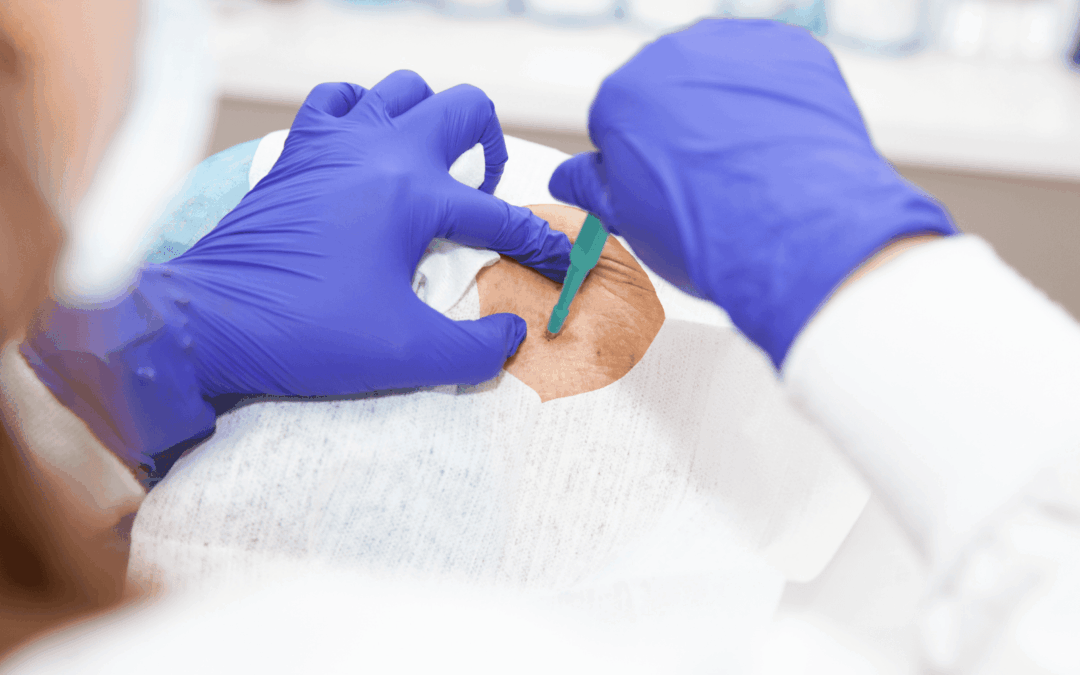
FNAC is surprisingly accurate for what it is, a thin needle drawing a few cells from a lump. In experienced hands it gets the answer right well over ninety percent of the time for many cancers, especially in the thyroid, breast and lymph nodes. It isn’t flawless though, and when the result is unclear or the sample’s too thin, a core biopsy usually takes over to settle it.
According to Prof. Dr. Sandeep Nayak, Surgical Oncologist in India, “I trust FNAC for a thyroid or lymph node lump, but I never let a single negative result overrule a lump that looks and feels like cancer, that’s when I push straight to a core biopsy.”
Unsure if your FNAC result is the full answer?
What Makes FNAC Accurate or Inaccurate?
Accuracy isn’t fixed. It swings a lot depending on a few things going right.
- Who does it: A skilled hand placing the needle in the right spot changes everything, since a sample drawn from the edge of a lump can miss the cancer entirely.
- Cell quality: The pathologist needs enough clear cells to judge, and a sparse or bloody sample is where false negatives tend to creep in.
- Cancer type: Some tumours shed cells that read easily, while others, like certain follicular thyroid cancers, simply can’t be confirmed by cells alone.
- The lump itself: Tiny, deep or hard-to-reach lumps are harder to sample cleanly, which is exactly when accuracy starts to dip.
So a “negative” FNAC isn’t always the end of it. Anyone weighing up robotic cancer surgery wants that diagnosis nailed down first, not left on a borderline result.
When Do You Need More Than an FNAC?
Sometimes cells alone don’t cut it. Here’s when your doctor reaches for the next test.
- Unclear result: If the FNAC comes back inconclusive or suspicious rather than definite, a core biopsy gives the tissue needed to be sure.
- Architecture matters: FNAC shows cells, not how they’re arranged, and for some cancers that arrangement is what confirms the type.
- Planning treatment: Detailed tests like hormone receptors or molecular markers often need a tissue sample, which FNAC can’t always provide.
- Result and clinic clash: When a clean FNAC sits next to a worrying lump or scan, that mismatch is a clear signal to dig deeper.
So FNAC and tissue testing aren’t rivals, they work in sequence. Much like the choice explained in our core biopsy comparison, it’s about matching the test to what the case actually needs.
Why Choose Dr. Sandeep Nayak for Your Cancer Diagnosis?
Dr. Sandeep Nayak has spent 24 years in surgical oncology, with DNB qualifications in Surgical Oncology and General Surgery and a fellowship in Laparoscopic and Robotic Onco-Surgery. He reads an FNAC report the way a surgeon has to, never in isolation, always against the lump, the scans and the bigger clinical picture.
And that’s what stops a borderline result from becoming a wrong turn. Every case at MACS Clinic runs through a full tumour board, where pathology, imaging and oncology weigh in together before anything is confirmed. Call +91 8104310753 to book your consultation.
Frequently Asked Questions
How accurate is FNAC for cancer?
FNAC is highly accurate for many cancers, often above ninety percent in skilled hands.
Can FNAC miss cancer?
Yes, a false negative can happen if the needle misses the cancerous cells.
Is FNAC enough to confirm cancer?
Often yes, but unclear results may need a core biopsy for confirmation.
Does FNAC hurt?
It causes only mild discomfort, similar to a routine blood test.
References:
- National Cancer Institute — Fine Needle Aspiration. https://www.cancer.gov/
- World Health Organisation — Cancer. https://www.who.int/news-room/fact-sheets/detail/cancer
