
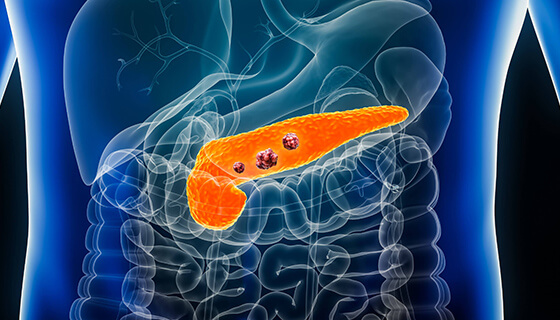
Pancreatic cancer is one of the hardest cancers to detect early because the pancreas sits deep in the abdomen and produces no reliable symptoms until the tumour is large or has spread. Most cases are diagnosed at Stage 3 or Stage 4. Early diagnosis happens in two specific situations: incidental detection on imaging ordered for another reason or systematic surveillance in patients with confirmed high-risk factors including hereditary pancreatitis, BRCA2 mutation, familial pancreatic cancer syndrome or longstanding Type 2 diabetes with unexplained weight loss.
According to Prof. Dr. Sandeep Nayak, Surgical Oncologist in India,
“Pancreatic cancer found early is surgically curable. The problem is the biology of the disease, not the surgery. Most patients don’t have symptoms until the window for curative resection has already closed.”
Want a specialist assessment for pancreatic cancer risk or an incidental pancreatic finding?
What Tests Are Used to Diagnose Pancreatic Cancer Early?
Early diagnosis relies on imaging, tumour markers and biopsy in combination rather than any single test used alone.
- CT Pancreas Protocol: A dedicated pancreatic phase CT scan is the primary imaging tool for identifying pancreatic tumours, assessing vascular involvement and staging resectability and pancreatic and bile duct cancer assessment at KIMS Hospital, Bangalore uses this as the first-line investigation for any suspected pancreatic lesion.
- Endoscopic Ultrasound: EUS provides higher resolution imaging of the pancreatic head, body and tail than CT alone and allows fine needle aspiration biopsy of lesions too small to sample by percutaneous route, making it essential for diagnosing small tumours and cystic lesions.
- CA 19-9 Tumour Marker: CA 19-9 is elevated in most pancreatic cancers but is not specific enough to use as a standalone screening test because it is also elevated in bile duct obstruction, pancreatitis and other benign conditions, making it most useful alongside imaging rather than alone.
- MRCP and PET Scan: MRCP defines ductal anatomy and identifies strictures or cystic lesions that may indicate early malignant change while PET-CT identifies metabolically active disease and confirms or excludes distant spread before any surgical decision is made.
A confirmed early-stage pancreatic tumour on imaging requires biopsy for histological diagnosis before any treatment plan is confirmed.
Who Is at High Risk and Needs Active Surveillance for Pancreatic Cancer?
Systematic surveillance in high-risk individuals is currently the most clinically reliable pathway to early pancreatic cancer diagnosis.
- Hereditary Pancreatitis: Patients with confirmed hereditary pancreatitis have a 40 to 75 times higher lifetime risk of pancreatic cancer and annual EUS or MRI surveillance from age 40 is the clinical standard for this group, not a precautionary option.
- BRCA2 and PALB2 Mutations: Confirmed BRCA2 or PALB2 mutation carriers with a first-degree relative with pancreatic cancer are recommended annual EUS and MRI surveillance from age 50 or ten years before the youngest affected relative’s diagnosis age and robotic cancer surgery for resectable pancreatic lesions identified through surveillance produces significantly better outcomes than surgery for symptomatic disease.
- New Onset Diabetes Over 50: New-onset Type 2 diabetes in someone over 50 with unexplained weight loss and no family history of diabetes carries a clinically meaningful association with pancreatic cancer and warrants a dedicated pancreatic CT before attributing it to metabolic disease alone.
- Intraductal Papillary Mucinous Neoplasms: IPMNs detected incidentally on abdominal imaging are premalignant lesions that require structured surveillance with EUS or MRI every six to twelve months depending on size and morphology to detect malignant transformation before it becomes invasive.
Active surveillance in high-risk groups is where early pancreatic cancer diagnosis is actually achieved and for more on how cancer biopsy confirms diagnosis, our blog on cancer diagnosis covers this in detail.
Why Choose Dr. Sandeep Nayak for Breast Cancer Treatment?
Dr. Sandeep Nayak brings 24 years of surgical oncology experience, DNB qualifications in Surgical Oncology and General Surgery and a fellowship in Laparoscopic and Robotic Onco-Surgery to pancreatic cancer surgery including Whipple procedure, distal pancreatectomy and robotic-assisted resection at KIMS Hospital, Bangalore. He heads Oncology Services across Karnataka with originator credits for RABIT, MIND and L-VEIL techniques and over 25 published clinical studies. Patients with pancreatic lesions, incidental findings or high-risk surveillance needs are seen here with every case reviewed through tumour board. Call +91 8104310753 to book your consultation.
Frequently Asked Questions
Can pancreatic cancer be detected before symptoms appear?
Pancreatic cancer can be detected before symptoms appear through systematic EUS and MRI surveillance in confirmed high-risk individuals including BRCA2 carriers and hereditary pancreatitis patients.
What is the best test to detect pancreatic cancer early?
Endoscopic ultrasound combined with dedicated pancreatic phase CT is the most reliable combination for detecting early pancreatic cancer and assessing surgical resectability.
Is CA 19-9 a reliable early detection test for pancreatic cancer?
CA 19-9 is not reliable as a standalone screening test because it is elevated in benign conditions but is clinically useful alongside imaging for staging and treatment monitoring.
Who should have regular surveillance for pancreatic cancer?
Patients with hereditary pancreatitis, confirmed BRCA2 or PALB2 mutations with family history and those with IPMN lesions require structured annual EUS or MRI surveillance.
Reference Links-
- National Cancer Institute — Pancreatic Cancer Screening
- World Health Organization — Cancer Early Detection
- Disclaimer: The information shared in this content is for educational purposes and not for promotional use.
