
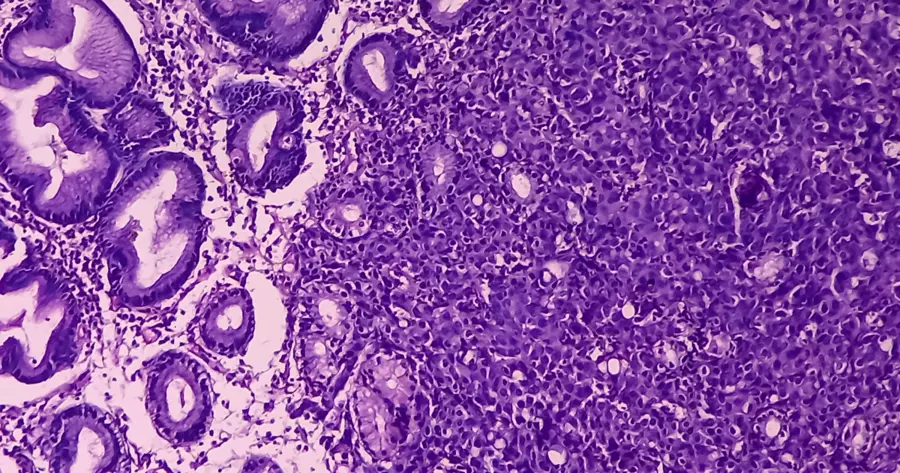
A neuroendocrine tumour can be a cancer, but not always. These tumours grow from the body’s hormone producing cells, and they sit on a spectrum. Some are slow, quiet and close to benign. Others are aggressive and clearly malignant. What decides it is the grade and whether the tumour has spread.
According to Dr. Sandeep Nayak, Surgical Oncologist in India, “Neuroendocrine tumours don’t fit the simple cancer or not cancer box. They run from indolent growths that barely move to high grade carcinomas that spread fast. The grade tells us how the cells are behaving, the stage tells us how far they’ve gone. You can’t answer the cancer question without both. That nuance is the whole point with NETs.”
Concerned about a neuroendocrine tumour diagnosis?
What Makes a NET Cancerous?
Whether a neuroendocrine tumour counts as cancer comes down to how its cells behave.
- Grade : This measures how fast the cells divide. Low grade ones creep along. High grade ones behave like aggressive cancer.
- Spread : A tumour that’s invaded nearby tissue or reached the liver is malignant, full stop. Containment is the dividing line.
- Differentiation : Well differentiated cells look close to normal and behave better. Poorly differentiated ones are the worrying end.
- Hormone activity : Some NETs pump out hormones and cause symptoms. That doesn’t decide cancer, but it shapes how they’re managed.
Grade and stage together build the full picture, and pancreatic cancer care covers neuroendocrine tumours of the pancreas as part of that work.
How Are Neuroendocrine Tumours Classified?
NETs are sorted by where they start and how their cells look under the microscope.
- By site : Most arise in the gut, pancreas or lungs. The location shapes symptoms and often the treatment path.
- By grade : Pathologists score them grade 1 to 3. The grade drives the prognosis more than almost anything else.
- Functional or not : Functional NETs secrete hormones and announce themselves. Non functional ones grow silently until found by chance.
- Carcinoid types : Some slow growing NETs were historically called carcinoids. The name lingers, but they’re still neuroendocrine tumours.
This is the same spectrum that separates benign and malignant tumours more broadly, just applied to one particular cell type.
Why Choose Dr. Sandeep Nayak for Neuroendocrine Tumour Care?
Dr. Sandeep Nayak is a surgical oncologist with 24 years behind him and a fellowship in laparoscopic and robotic onco-surgery. He treats neuroendocrine tumours across the gut and pancreas, where accurate grading and staging decide everything that follows. The approach starts with pinning down exactly what the tumour is and how it’s behaving before any plan is set. A low grade NET and a high grade carcinoma need completely different handling.
Getting the classification right is what separates good NET care from guesswork. A slow growing tumour treated as aggressive means needless intervention. A high grade one underestimated loses precious time. Surgery for well differentiated NETs can be curative, and minimally invasive resection keeps recovery short where the tumour allows it.
Frequently Asked Questions
Is every neuroendocrine tumour cancerous?
No. Some are benign, but many are malignant. Grade and spread decide which is which.
What decides if a NET is cancer?
Tumour grade, how fast cells divide, and whether it has spread decide if it’s cancer.
Where do neuroendocrine tumours usually start?
Most begin in the gut, pancreas or lungs, though they can arise almost anywhere.
Are neuroendocrine tumours treatable?
Yes. Many are treatable, and low grade ones often have a good long term outlook.
References
- Neuroendocrine tumour epidemiology and outcomes — National Library of Medicine
- Neuroendocrine tumour overview — National Cancer Institute
Disclaimer: This blog is for informational and educational purposes only and is not a substitute for professional medical advice or diagnosis.
