
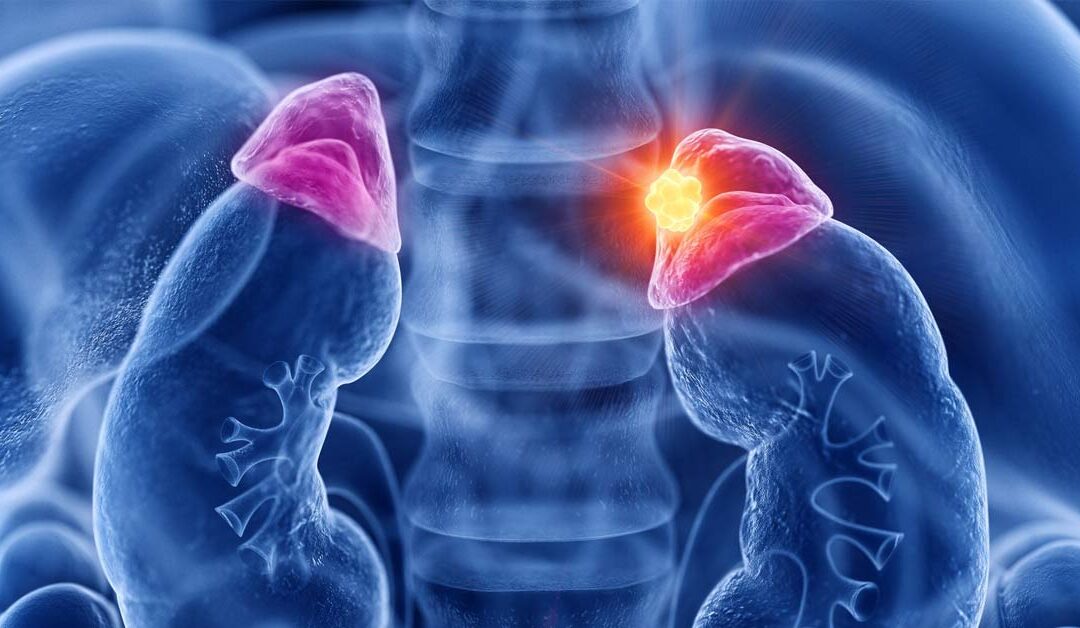
There’s a real difference between the two. An adrenal tumour is any growth on the adrenal gland, and most stay benign and harmless. Adrenal cancer is the rare malignant kind that grows fast and can spread. Same starting point, very different behaviour, which is why the distinction matters.
According to Dr. Sandeep Nayak, Surgical Oncologist in India, “The word tumour just means there’s a growth. It says nothing about danger. What matters is how it behaves, its size, what the scan shows, whether it’s leaking hormones. Most turn out to be quiet adenomas. Even so, none gets cleared without hormone testing first.”
Worried about an adrenal mass that turned up on a scan?
What Actually Separates a Tumour From Cancer Here?
It comes down to how the growth behaves, not the label on your report.
- Growth : Benign adenomas barely change, some stay put for years. Adrenocortical carcinoma is in a hurry.
- Spread : A benign one stays where it is. Cancer pushes into nearby tissue and reaches the liver, lungs or lymph nodes. That’s the real split.
- Size : Under 4 cm, usually just watched. Cross 4 cm and the cancer risk climbs, so those come out.
- Imaging : Clean edges on a CT lean benign. Ragged margins, a patchy middle, uneven density? That’s the worrying kind.
Either way a proper workup is needed, and the right adrenal tumour treatment hangs on which one it actually is.
Benign Tumour or Adrenal Cancer: How Do They Compare?
Side by side, here’s where they part ways.
|
Feature |
Benign Adrenal Tumour |
Adrenal Cancer |
|
Frequency |
Very common |
Rare |
|
Growth speed |
Slow, often static |
Fast, aggressive |
|
Spread |
Stays local |
Spreads early |
|
Typical size |
Usually under 4 cm |
Often above 6 cm |
|
Treatment |
Watch or remove |
Surgery, prompt |
|
Outlook |
Excellent |
Depends on stage |
- Hormones : Plenty of benign tumours still cause trouble by pumping out cortisol or adrenaline. Benign isn’t the same as harmless.
- Symptoms : Blood pressure spikes, weight shifts, fatigue. How you feel won’t tell the two apart.
- Scans : Imaging points one way. Hormone tests, and sometimes the final pathology, settle it.
- Why it counts : Miss the call and you either operate on a harmless lump or let a cancer slip. Big gap.
That’s the whole reason knowing tumour and cancer aren’t interchangeable changes how you read your own diagnosis.
Why Choose Dr. Sandeep Nayak for Adrenal Tumour Treatment?
Dr. Sandeep Nayak is a surgical oncologist with 24 years behind him and a fellowship in laparoscopic and robotic onco-surgery. He’s handled every kind of adrenal growth, from pheochromocytomas and Conn syndrome adenomas to adrenocortical carcinoma. The workup comes first, full biochemical and imaging evaluation, before surgery is even on the table. What the tumour is doing decides the plan, not its size alone. That’s where adrenal surgery is won or lost.
Pheochromocytomas are a clear example. The hormonal blockade in the weeks before surgery is what keeps the operation from turning into a cardiovascular emergency. Without that prep, a benign tumour can turn dangerous fast. Handled properly, robotic and laparoscopic adrenalectomy means small incisions and a recovery open surgery can’t touch.
Frequently Asked Questions
Is every adrenal tumour cancerous?
No. Most adrenal tumours are benign, non functioning adenomas found by chance on scans.
What size of adrenal tumour worries doctors?
Tumours above 4 cm carry a higher cancer risk and usually need removal.
Can a benign adrenal tumour still cause problems?
Yes. Hormone secreting benign tumours disrupt blood pressure, weight and metabolism even without cancer.
Is adrenal cancer curable?
Early adrenal cancer is often curable with complete surgical removal by an experienced specialist.
References
- Adrenal tumour malignancy risk evaluation — National Library of Medicine
- Adrenocortical carcinoma overview — National Cancer Institute
Disclaimer: This blog is for informational and educational purposes only and is not a substitute for professional medical advice or diagnosis.
