
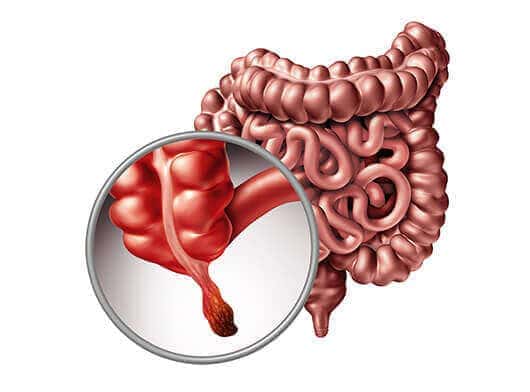
The appendix sits next to the colon, but cancer arising there is a different disease entirely. Different cell types, different spread pattern, different staging system, different treatment. Most appendix cancers are slow-growing mucin-producing tumours. Colon cancer is overwhelmingly adenocarcinoma. Treating one like the other is a clinical mistake with real consequences.
According to Prof. Dr. Sandeep Nayak, Surgical Oncologist in India, “Patients come in having been told it’s just colon cancer in the appendix. It isn’t. The biology is different, the staging is different, and the treatment is completely different. Appendix cancer with peritoneal spread needs cytoreductive surgery and HIPEC, not standard colorectal chemotherapy. Getting that distinction right at the start is the difference between a potentially curative operation and the wrong treatment entirely.”
Appendix cancer needs a specialist who knows the difference. Colon cancer protocols don’t apply.
How Is Appendix Cancer Clinically Different From Colon Cancer?
Four things set them apart. At every level.
- Different tumour types: Most appendix cancers are low-grade mucinous neoplasms, goblet cell carcinoids or well-differentiated neuroendocrine tumours. Colon cancer is almost always adenocarcinoma from the colonic lining. Different cell origin. Different biological behaviour. Different prognosis.
- Different spread pattern: Colon cancer travels through lymphatics and blood to reach the liver and lungs. Appendix cancer, when it ruptures, seeds mucin directly across the peritoneal surfaces. That’s pseudomyxoma peritonei. It coats the abdomen rather than travelling to distant organs via the bloodstream.
- Different staging approach: Colon cancer uses TNM staging based on depth of invasion and nodal spread. Appendix cancer with peritoneal involvement uses the Peritoneal Cancer Index to measure the extent of abdominal surface disease. Entirely different system, entirely different criteria for what’s resectable.
- Different systemic chemotherapy response: FOLFOX and FOLFIRI, standard colorectal regimens, have very limited activity in low-grade appendiceal mucinous tumours. The biology doesn’t respond the same way. Applying colon cancer chemotherapy to appendix cancer produces poor results because the target is wrong.
For patients whose appendix cancer requires surgical removal as part of their treatment plan, robotic cancer surgery provides minimally invasive right hemicolectomy with precision and faster recovery than open approaches.
How Is Appendix Cancer Treated Differently?
The treatment is specific to how this cancer spreads. Not interchangeable with colon cancer.
- Right hemicolectomy for localised disease: Cancer confined to the appendix without peritoneal seeding. Remove the appendix and the right colon together. No HIPEC needed at this stage. Surveillance follows.
- CRS and HIPEC for peritoneal spread: When appendix cancer has seeded the peritoneal surfaces, cytoreductive surgery removes all visible disease across the abdomen. Heated intraperitoneal chemotherapy follows immediately in the same operation. Not palliative. For selected patients it’s potentially curative.
- Pseudomyxoma peritonei: A ruptured appendix tumour has released mucin throughout the abdomen. Managed with CRS and HIPEC at experienced centres. Five-year survival above 50 percent in published series. Not a death sentence if the right team is involved.
- Watch and wait for very early LAMN: Low-grade appendiceal mucinous neoplasm, no rupture, no peritoneal involvement, confined to the appendix wall. Appendicectomy alone may be sufficient. Close surveillance required afterwards.
For patients who want to understand what HIPEC involves and what survival outcomes look like for appendix cancer specifically, our blog on HIPEC surgery covers it in detail.
Why Choose Dr. Sandeep Nayak for Appendix Cancer Treatment?
Dr. Sandeep Nayak has spent 24 years in surgical oncology. He holds DNB qualifications in Surgical Oncology and General Surgery, plus a fellowship in Laparoscopic and Robotic Onco Surgery. He performs CRS and HIPEC for appendix cancer with peritoneal spread, right hemicolectomy for localised disease, and presents every appendix cancer case to the tumour board so the plan reflects the actual biology of the tumour, not a default colon cancer protocol.
The difference between being treated as a colon cancer patient and being treated as an appendix cancer patient with peritoneal disease is the difference between the wrong chemotherapy and a potentially curative operation. That distinction is what MACS Clinic exists to make. Call +91 8104310753 to book your consultation.
Frequently Asked Questions
Is appendix cancer the same as colon cancer?
No, appendix cancer is a separate disease with different tumour types and spread.
How does appendix cancer spread differently?
It spreads to the peritoneal lining rather than lymph nodes or bloodstream first.
What is pseudomyxoma peritonei?
A jelly-like spread of mucin across the abdomen from a ruptured appendix tumour.
Is HIPEC used for appendix cancer?
Yes, CRS and HIPEC is the standard treatment for appendix cancer with peritoneal spread.
Disclaimer: This blog is for informational purposes only and is not a substitute for professional medical advice.
