
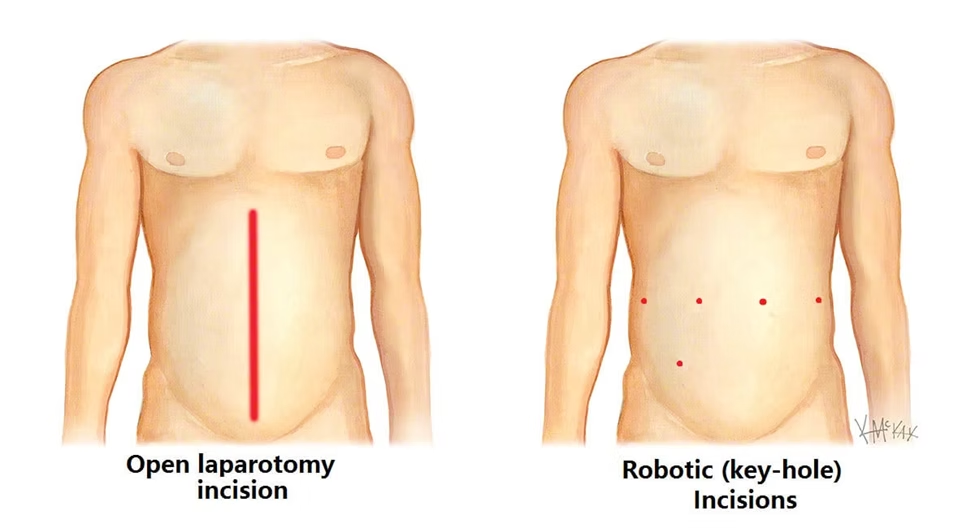
Open, laparoscopic and robotic are three surgical approaches and none of them is universally better than the other two. Open surgery suits complex locally advanced tumours where direct access changes what is safely achievable. Laparoscopic cuts recovery time for appropriate stages without compromising cancer control. Robotic adds wristed instrument precision in tight spaces like the pelvis and neck where standard laparoscopic tools fall short. Your cancer type, tumour location and the surgeon’s specific volume with that technique determine which one actually fits your case.
According to Prof. Dr. Sandeep Nayak, Surgical Oncologist in India, “The best surgical approach for cancer is the one that achieves complete tumour removal with the best functional outcome for that specific patient, not the most advanced-sounding option available.”
Wondering which surgical approach fits your cancer?
What Are the Differences Between Open, Laparoscopic and Robotic Cancer Surgery?
Each approach suits a different clinical situation. Here is what actually separates them:
- Open Surgery: A large incision gives direct hands-on access to the tumour and surrounding structures, making it the right call for locally advanced cancers, vascular involvement or cases where intraoperative findings demand immediate unplanned decisions.
- Laparoscopic Surgery: Small incisions with a camera and long instruments reduce blood loss, hospital stay and recovery time while producing equivalent cancer control to open surgery for appropriate stage and tumour location.
- Robotic Surgery: The da Vinci system adds a 3D magnified view and wristed instruments that change what is achievable in confined spaces like the pelvis, neck and retroperitoneum where standard laparoscopic instruments simply cannot replicate the same precision.
- How the Decision Gets Made: Tumour location, disease extent, patient fitness and the surgeon’s specific volume with that technique for that cancer type all determine the right answer, not a general preference for one approach over another.
The right approach is matched to the case not to what the centre finds most convenient. Patients in Bangalore exploring their options should ask specifically about surgeon volume before deciding. Laparoscopic cancer surgery at MACS Clinic covers the full spectrum where every approach decision starts from what your case actually needs.
When Is Each Surgical Approach the Right Choice for Cancer?
The right approach depends on specific clinical factors. Here is when each one genuinely fits:
- Open Surgery Fits When: Locally advanced tumours with vascular involvement, dense adhesions from prior surgery or emergency presentations where speed and direct access outweigh the recovery benefits of minimally invasive access.
- Laparoscopic Fits When: Early to intermediate stage colorectal, gastric, kidney and gynaecological cancers where tumour size and location allow safe port placement and the evidence base for oncological equivalence is well established.
- Robotic Fits When: Low rectal cancer needing sphincter preservation, thyroid cancer where RABIT scarless access applies, prostate cancer and pelvic or neck cancers where wristed instruments in a confined space produce functional outcomes that open and standard laparoscopic surgery cannot consistently match.
- When the Approach Should Change: Unexpected intraoperative findings that reveal disease extent requiring open access mean conversion is the right clinical call, not a failure, and a surgeon’s willingness to make that decision honestly tells you more about their judgment than their technique preference.
The right surgical approach for your specific cancer needs your staging scans and a surgeon honest enough to recommend what actually serves your case. Robotic cancer surgery at MACS Clinic covers the full robotic oncology spectrum including RABIT, MIND and RIA-MIND where robotic precision changes what is clinically achievable.
Why Choose Dr. Sandeep Nayak for Cancer Surgery in Bangalore?
Prof. Dr. Sandeep Nayak performs open, laparoscopic and robotic cancer surgery across colorectal, thyroid, head and neck, ovarian and gastric cancers at MACS Clinic, which means the approach recommended for your case is genuinely matched to what it needs rather than what the centre does most. He developed RABIT for scarless thyroid surgery and MIND and RIA-MIND for robotic pelvic cancer surgery, performed over a thousand minimally invasive cancer procedures and brings 24 years of surgical oncology experience to every case. Every surgical approach decision goes through full tumour board review before anything is confirmed, reach the team at 📞 +91 9482202240.
Frequently Asked Questions
Which is better for cancer surgery, open, laparoscopic or robotic?
It depends on your cancer type, tumour location, stage and the surgeon’s specific volume with that approach. There is no universal answer.
Does robotic surgery give better cancer outcomes than open surgery?
For cancers in confined spaces like low rectal, thyroid and prostate yes. For complex locally advanced cases, open surgery often remains the clinically right answer.
Is laparoscopic cancer surgery as safe as open surgery?
Yes for appropriate cases, with decades of evidence showing equivalent cancer control and significantly faster recovery for the right stage and location.
How do I know which surgical approach is right for my cancer?
Bring your staging scans to a specialist consultation and the right approach gets decided from your specific tumour location and disease extent, reach the team at 📞 +91 9482202240.
Reference Links:
-
- National Cancer Institute — Surgery to Treat Cancer. https://www.cancer.gov/about-cancer/treatment/types/surgery
- American Cancer Society — Surgery for Cancer. https://www.cancer.org/cancer/managing-cancer/treatment-types/surgery.html
