
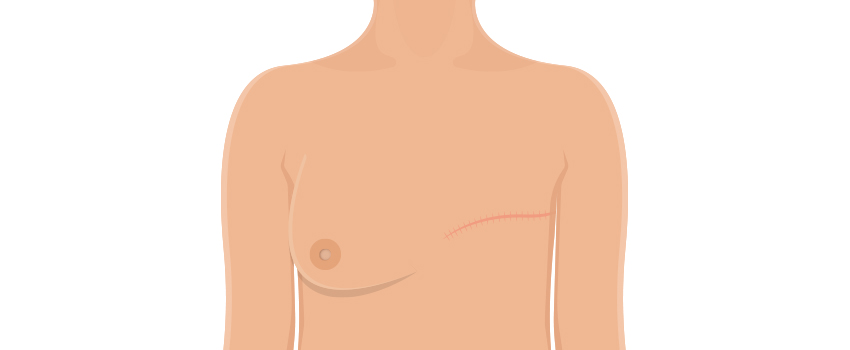
Post-mastectomy radiation therapy is not given to every patient after mastectomy. It’s recommended when pathology confirms factors that raise local recurrence risk high enough to justify chest wall and nodal irradiation after surgery. These include four or more positive lymph nodes, tumours larger than 5cm, involved surgical margins and in some cases one to three positive nodes depending on tumour biology and other risk factors. When none of these are present, mastectomy alone provides sufficient local control and radiation doesn’t add meaningful clinical benefit.
According to Prof. Dr. Sandeep Nayak, Surgical Oncologist in India,
“Post-mastectomy radiation is a powerful tool but it’s not for everyone. The pathology tells us who genuinely benefits and who gets the side effects without the gain.”
Want to understand whether radiation is part of your mastectomy treatment plan?
When Is Post-Mastectomy Radiation Recommended?
Radiation after mastectomy is given when specific pathological findings indicate that local recurrence risk remains elevated despite complete surgical removal.
- Four or More Nodes: When four or more axillary lymph nodes contain cancer, radiation to the chest wall and regional nodes is standard because nodal disease at this extent significantly raises local and regional recurrence risk beyond what surgery alone controls.
- Tumour Over 5cm: Large primary tumours carry higher local recurrence risk even after mastectomy and breast cancer treatment guidelines recommend post-mastectomy radiation in this group regardless of nodal status in most cases.
- Positive Margins: When cancer cells reach the cut edge of the mastectomy specimen, radiation to the chest wall is used to address residual microscopic disease that re-excision after mastectomy can’t reliably correct in the same way it can after lumpectomy.
- One to Three Positive Nodes: This group sits in a grey zone and the decision depends on tumour size, biology, grade and patient-specific risk factors, with tumour board discussion determining whether radiation adds enough benefit to justify it for that individual.
When pathology shows none of these risk factors, mastectomy alone provides adequate local control and the patient proceeds directly to systemic treatment without chest wall irradiation.
Radiation vs No Radiation After Mastectomy: Key Differences
|
Radiation Recommended |
No Radiation |
|
|
Node Status |
4 or more positive nodes |
Node negative or 1-3 low-risk nodes |
|
Tumour Size |
Over 5cm |
Under 5cm |
|
Margins |
Positive or close |
Clear with adequate width |
|
Recurrence Risk |
High |
Low to intermediate |
|
Treatment After |
Chest wall and nodal irradiation |
Systemic therapy only |
|
Decision Maker |
Tumour board based on pathology |
Tumour board based on pathology |
- Locally Advanced Disease: Stage 3 breast cancer almost universally gets post-mastectomy radiation because the original disease burden in the chest wall and nodes makes local control through surgery alone insufficient and robotic cancer surgery or conventional mastectomy is planned from the start with radiation as the expected next step.
- Reconstruction Timing: Post-mastectomy radiation significantly affects reconstruction outcomes and the surgical team discusses whether immediate reconstruction should proceed knowing radiation is planned, because irradiated tissue and implants don’t coexist well long term.
- Inflammatory Breast Cancer: IBC always requires post-mastectomy radiation regardless of nodal count or margin status because the disease spreads through dermal lymphatics in a pattern that local surgery alone can’t control.
- Good Pathological Response: Patients who received neoadjuvant chemotherapy and achieved complete pathological response at mastectomy represent a lower local recurrence risk group and current evidence is actively evaluating whether radiation can be safely omitted in selected cases within this group.
Post-mastectomy radiation decisions are made at tumour board and for more on mastectomy recovery timelines, our blog on mastectomy recovery covers this in detail.
Why Choose Dr. Sandeep Nayak for Breast Cancer Treatment?
Dr. Sandeep Nayak brings 24 years of surgical oncology experience, DNB qualifications in Surgical Oncology and General Surgery and a fellowship in Laparoscopic and Robotic Onco-Surgery to every mastectomy including post-operative radiation planning coordination with the radiation oncology team. He heads Oncology Services across Karnataka and leads breast cancer surgery at KIMS Hospital, Bangalore, with originator credits for RABIT and over 25 published clinical studies. Patients wanting clarity on whether radiation is part of their post-mastectomy plan are seen here with every decision going through tumour board review. Call +91 8104310753 to book your consultation.
Frequently Asked Questions
Does every patient need radiation after mastectomy?
Post-mastectomy radiation is not given routinely and is reserved for patients whose pathology confirms specific high-risk factors for local recurrence.
What pathology findings trigger post-mastectomy radiation?
Four or more positive lymph nodes, tumours over 5cm and positive surgical margins are the main indications for radiation after mastectomy.
Does radiation after mastectomy affect breast reconstruction?
Radiation significantly affects reconstruction outcomes particularly with implants and the reconstruction plan is adjusted based on whether chest wall irradiation is anticipated.
Is radiation needed after mastectomy for Stage 1 breast cancer?
Stage 1 disease with clear margins and negative nodes generally does not require post-mastectomy radiation as surgery alone provides adequate local control.
Reference Links-
- National Cancer Institute — Breast Cancer Radiation Therapy
- World Health Organization — Breast Cancer Treatment
- Disclaimer: The information shared in this content is for educational purposes and not for promotional use.
