
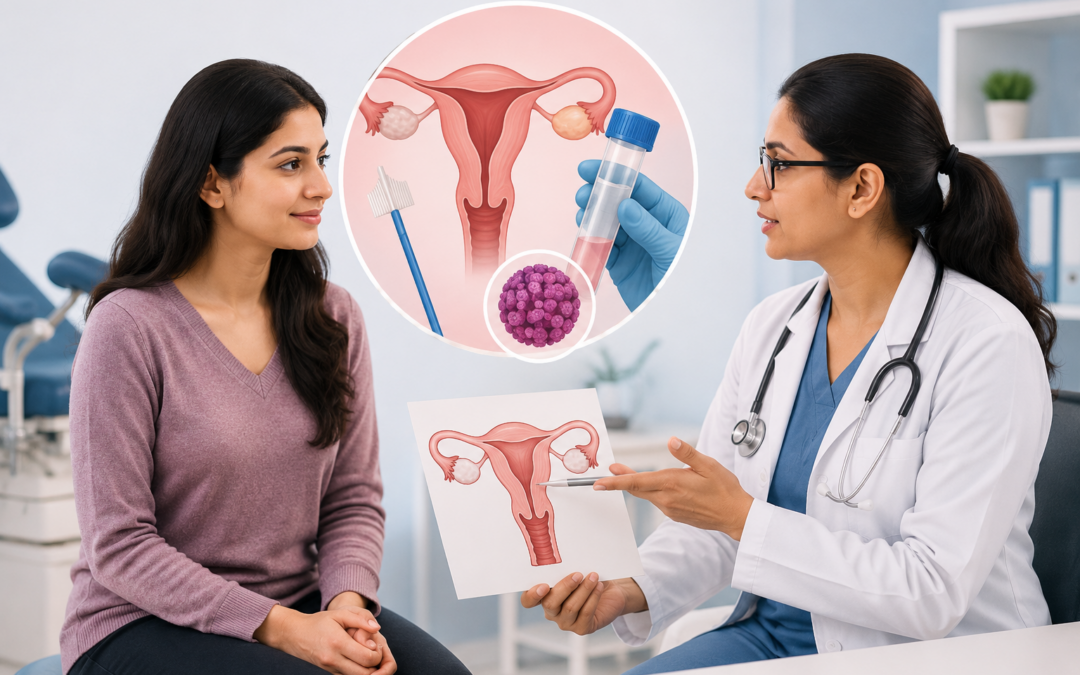
Somewhere between 21 and 25, most women in India can get their first Pap smear. That’s the general rule, though it does shift a bit depending on which guideline your doctor’s following. Turn 30 and things change. You’ve got three routes now, HPV test alone every 5 years, Pap smear every 3, or both together (co-testing) every 5. Results stayed normal so far? You can usually stop by 65.
According to Dr. Sandeep Nayak, surgical oncologist in Bangalore with over 24 years of experience treating solid tumors, “With cervical cancer, we actually get to step in before it’s even cancer yet. That’s rare. Most screening isn’t hunting for disease, it’s catching what shows up years earlier. A lot of cases we see could have been avoided entirely if someone had just gotten tested on time.”
Not sure which screening test is right for your age?
Pap Smear or HPV Test, What's the Actual Difference?
People mix these two up constantly, so let’s just sort it out.
- Pap smear: Looks at your actual cervical cells under a microscope, hunting for early changes before they become something worse.
- HPV test: Does something else entirely. Not looking at cells at all, it’s checking whether the virus behind almost all of this is even present in the first place.
- Co-testing: Above 30, a lot of clinics just run both at once and call it this, saves you a second visit.
- Timing: HPV holds up fine at 5-year gaps. Pap needs checking more often, every 3.
Got a lump, unexpected bleeding, or pelvic pain instead of just a routine screening question? That’s a different conversation. Go through our Uterus/Cervical Cancer treatment page instead of waiting on your next scheduled test.
What Happens If the Result Comes Back Abnormal?

First thing worth knowing, abnormal doesn’t mean cancer. Not even close, most of the time.
- Positive result: A positive HPV result or an odd-looking Pap usually just means something needs a closer look, nothing more at that stage.
- Colposcopy: The cervix gets examined more carefully, and a small biopsy gets taken if anything seems worth checking further.
- Most outcomes: Plenty of these turn out to be minor changes that clear up on their own, or get treated easily while they’re still small.
- Why it matters: Catching things this early is really the whole reason regular screening matters, it’s what keeps cervical cancer from developing in the first place.
One more thing worth clearing up. Getting the HPV vaccine lowers your risk by a lot, but it doesn’t replace screening. The vaccine doesn’t cover every strain linked to cervical cancer, so vaccinated or not, the same schedule applies.
We went into more of this in an earlier post, Can the HPV Vaccine Prevent Cervical Cancer?, worth a read if you’re weighing whether to vaccinate a daughter, or get vaccinated yourself as an adult.
Why Choose Dr. Sandeep Nayak for Cancer Care in Bangalore?
Dr. Sandeep Nayak has spent more than two decades in surgical oncology, and cervical cancer screening and gynecologic cancers have been a consistent part of that work throughout. He currently serves as Chairman of Oncology Services for Karnataka and heads Surgical Oncology and Robotic Surgery at KIMS Hospital, Bangalore. What tends to matter most to patients isn’t the title though, it’s that screening advice gets the same careful look as an actual diagnosis, figuring out what’s really going on before deciding anything, rather than reaching for a generic number off the internet. That attention to the specifics is often where things get missed elsewhere.
Not sure which screening schedule actually fits you? Don’t settle for a generic answer. Call +91 9482202240 and get someone to actually walk you through it.
Frequently Asked Questions
Do I need both a Pap smear and an HPV test?
Depends. Under 30, Pap alone usually covers it. Once you hit 30, doctors start leaning toward HPV testing by itself, or running both together.
Is the test painful?
Not really. Might feel odd for a second or two. Standard part of a pelvic exam, nothing more.
I already got the HPV vaccine. Do I still need to get screened?
Still does. The vaccine cuts your odds down a lot but it’s not covering every strain out there.
I'm over 30 and I've never been screened. Is it too late?
Not really a “problem,” just go get it done. There’s no cutoff you’ve missed.
References
Disclaimer: This blog is for informational and educational purposes only and is not a substitute for professional medical advice or diagnosis.
