Minimally Invasive vs Open Esophagectomy: How Do Outcomes Compare?
Compared with open esophagectomy, the minimally invasive route puts the body through less surgical trauma. Blood loss is lower and lung complications are fewer, especially in the weeks right after the operation. Long-term cancer outcomes in the trials so far are comparable, so the decision comes down to the tumour, the patient’s overall health and how experienced the surgeon is with the technique.
According to Prof. Dr. Sandeep Nayak, Surgical Oncologist at MACS Clinic, Bangalore, explains how the two approaches compare for cancers of the food pipe. “It’s a big operation however you do it. What the keyhole route changes is the chest wall, which isn’t cut open, and you see that in the first few weeks, with fewer chest infections and an easier recovery. None of that counts if the cancer isn’t cleared as well, so that’s the first thing we make sure of.”
If you’d like to know more about tongue cancer surgery, call the clinic on +91 9482202240.
What Is the Difference Between Minimally Invasive and Open Esophagectomy?
Both operations do the same job. The diseased part of the food pipe comes out, and what’s left gets joined to the stomach. How the surgeon reaches it is what differs.
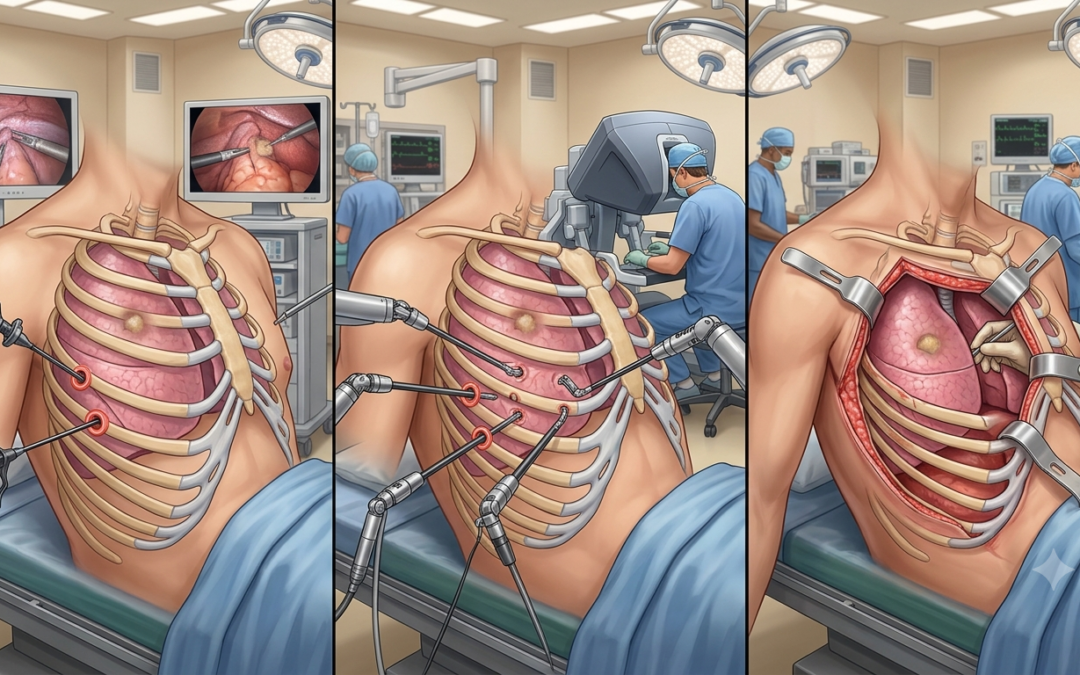
Open: Big cuts, one in the chest and one in the abdomen. The surgeon works through them by hand.
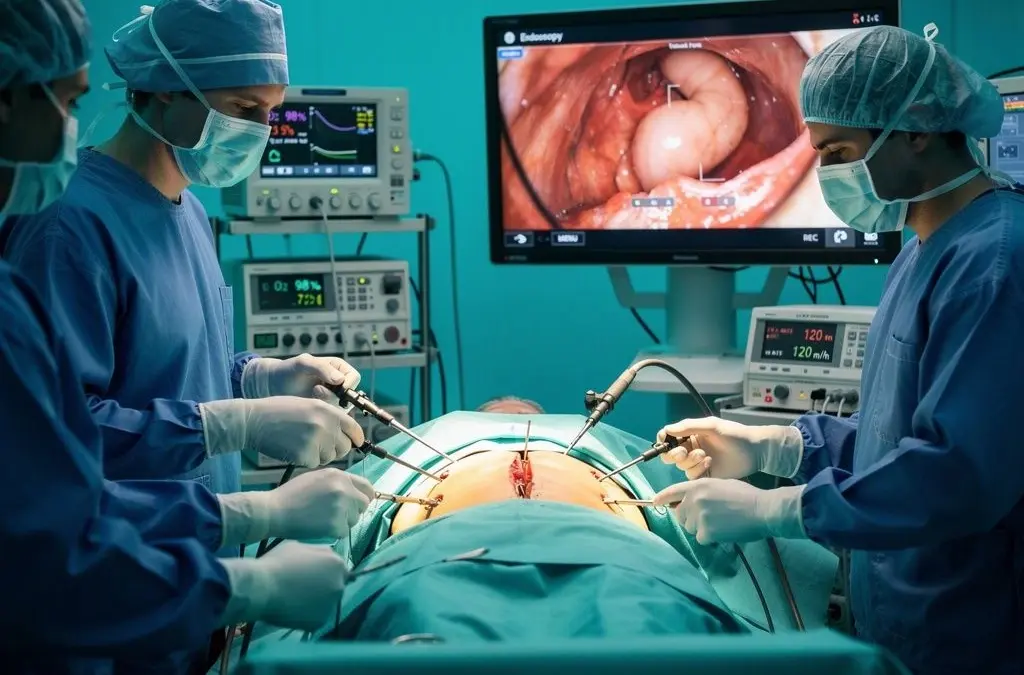
Keyhole: A few small cuts instead. A camera and long, thin instruments go in through openings in the chest and belly.
Hybrid: Part keyhole, part open. Some surgeons do the abdomen by keyhole and the chest the open way.
Robotic: The same small cuts, with a robot holding the instruments and giving the surgeon a magnified 3D view.
What doesn’t change: The tumour and the nearby lymph nodes come out whichever route is used. The stomach is shaped into a tube and lifted up to take the place of the food pipe. If you’re curious how keyhole operations work in general, our page on laparoscopic cancer surgery explains it.
When Is Open Esophagectomy Still the Better Choice?
Keyhole isn’t for everyone.
Large or invasive tumours: A tumour pressing on nearby structures can call for the room and control that open surgery gives.
Earlier surgery: Scarring from a previous chest or abdominal operation can make keyhole surgery harder to do safely.
Changing course: Sometimes the surgeon starts with keyhole and moves to open because carrying on isn’t safe. That’s judgement, not a failed operation.
Experience: It’s a demanding operation to do by keyhole, and results are best where the team does it regularly. You can read about the surgeon’s background on our expertise page.
What Determines Treatment Choice?
It’s decided case by case. A few things steer it.
Stage and site: Where in the food pipe the cancer sits, how deep it goes, and whether the lymph nodes are involved. Esophageal cancer is one of the upper GI cancers, and the stage shapes the whole plan.
Before surgery: Many patients have chemotherapy or chemoradiation first, and how the tumour responds affects the planning.
General health: Heart, lungs and nutrition all count. A lot of people have lost weight because swallowing has been difficult.
Team review: Surgical, medical and radiation oncologists usually go through the case together.
Your priorities: Recovery time, scars, getting back to normal life. Robotic-assisted surgery is one of the keyhole options, and our page on robotic cancer surgery covers it.
Key Takeaways
-
Minimally invasive esophagectomy may reduce blood loss, lung complications, and hospital stay compared with open surgery.
-
Long-term survival outcomes appear similar between the two approaches in available clinical trials.
-
Open surgery may be more suitable for certain tumours, depending on their location and extent.
-
The choice of surgical approach depends on the patient’s condition, tumour characteristics, and the surgeon’s experience.
-
Discuss the benefits and risks of each option with your specialist. To learn more, book an appointment or call +91 9482202240.
Frequently Asked Questions
Is minimally invasive esophagectomy as safe as open surgery?
So far, yes, with fewer early lung problems, though it depends on the surgeon’s experience.
Does minimally invasive esophagectomy cure cancer as well as open surgery?
Survival looked similar at three years in the main trial.
How long is recovery after minimally invasive esophagectomy?
You’ll usually leave hospital sooner than after open surgery, but full recovery still takes weeks to months.
When is open esophagectomy still preferred?
For large tumours pressing on nearby structures, or after earlier surgery that makes keyhole unsafe.
References
National Cancer Institute (NCI) – Esophageal Cancer Treatment (PDQ®) Explains treatment options for esophageal cancer, including surgery, and discusses factors that influence treatment decisions. Link: https://www.cancer.gov/types/esophageal/hp/esophageal-treatment-pdq
American Cancer Society – Surgery for Esophageal Cancer Describes esophagectomy, including minimally invasive and open surgical approaches, and outlines potential risks and recovery considerations. Link: https://www.cancer.org/cancer/types/esophagus-cancer/treating/surgery.html
Disclaimer: This blog is for informational and educational purposes only and is not a substitute for professional medical advice or diagnosis.