
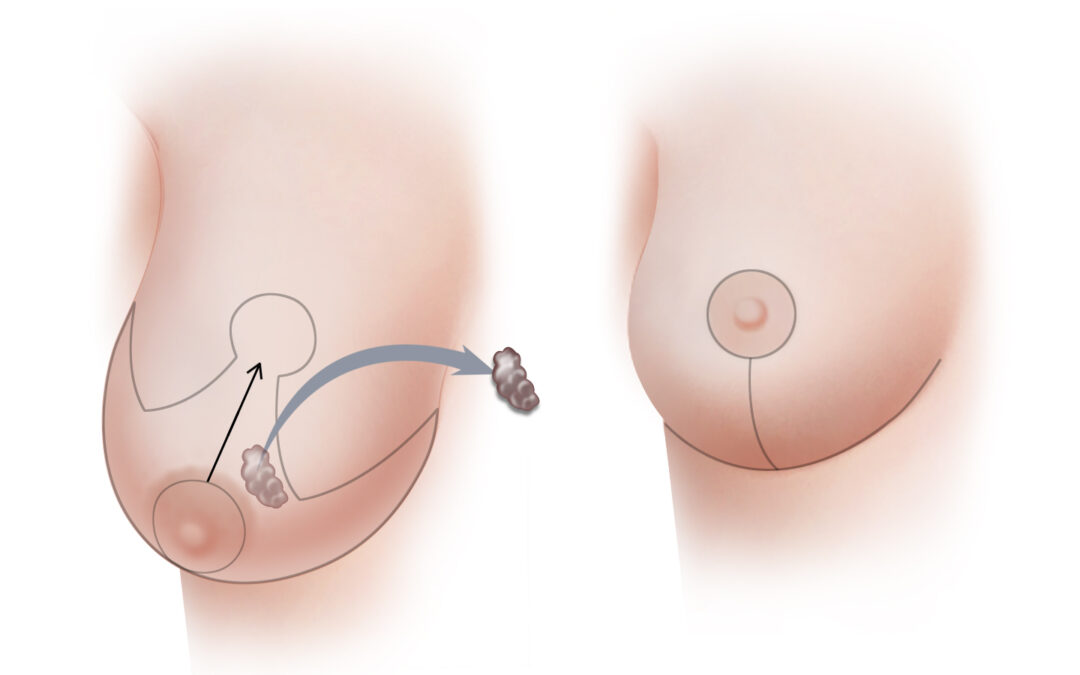
Oncoplastic breast surgery combines cancer removal with immediate breast reshaping in one operation. Rather than simply excising a tumour and leaving the breast whatever shape remains, the surgeon uses plastic surgery techniques to reconstruct the breast form during the same procedure. The result is wider tumour-free margins with a considerably better cosmetic outcome than standard lumpectomy produces in most cases.
According to Prof. Dr. Sandeep Nayak, Surgical Oncologist in India,
“Oncoplastic surgery isn’t about aesthetics over oncology it lets us take more tissue with clearer margins precisely because we’re repairing what we remove at the same time, which is better for the patient on both counts.”
Wondering whether oncoplastic surgery is an option for your breast cancer case?
How Does Oncoplastic Breast Surgery Work?
Two disciplines operate together in one session the surgical oncologist handles the cancer resection while plastic surgery principles manage the reconstruction simultaneously.
- Wider Excision Margins: Because the surgeon knows the breast will be reshaped immediately after, wider margins can be taken around the tumour without the concern about leaving the patient with an unacceptable cosmetic result that constrains standard lumpectomy decisions.
- Volume Displacement: Breast tissue from areas adjacent to the tumour site is rearranged to fill the defect left by excision, restoring breast shape using the patient’s own existing tissue rather than bringing in material from a donor site elsewhere on the body.
- Volume Replacement: When the breast is small or the excision is large relative to breast volume, tissue from the back, flank or other sites is brought in to replace what was removed, and breast cancer treatment planning accounts for this from the outset rather than as an afterthought after the oncological procedure.
- Contralateral Symmetry: The opposite breast is often modified at the same time through reduction, lift or augmentation to achieve symmetry between both sides, which is something standard lumpectomy followed by delayed reconstruction rarely achieves as naturally.
Getting the oncoplastic approach right requires the surgical team to plan both the oncological and reconstructive components together before the patient enters the operating room.
Who Is Oncoplastic Surgery Most Suitable For?
Patient selection determines whether oncoplastic surgery produces the outcome it’s designed to deliver not every breast cancer case benefits from this approach.
- Larger Tumour Relative to Breast: When the tumour occupies a significant proportion of breast volume and standard lumpectomy would leave a noticeable deformity, oncoplastic reshaping turns a procedure with a poor cosmetic result into one with an acceptable outcome without compromising cancer clearance.
- Tumour Location: Lesions in the lower pole, central area or near the nipple are particularly well suited because these locations create the worst deformity with standard excision and benefit most from the immediate reshaping that oncoplastic techniques provide.
- Patients Wanting Breast Conservation: Women who strongly prefer keeping their breast but have tumours that wouldn’t achieve a satisfactory result with conventional lumpectomy are the core oncoplastic candidate group robotic cancer surgery centres increasingly integrate oncoplastic principles into minimally invasive approaches for selected cases.
- Large Breasted Patients: Women with larger breasts who need significant tissue removal often benefit from simultaneous breast reduction on the treated side with a matching procedure on the opposite breast, producing symmetry that improves quality of life considerably compared with leaving asymmetry unaddressed.
Oncoplastic surgery requires a surgeon trained in both oncological resection and reconstructive technique the combination is what makes the outcome possible, and for more on what reconstruction involves after breast surgery, our blog on latissimus dorsi covers this in detail.
Why Choose Dr. Sandeep Nayak for Breast Cancer Treatment ?
Dr. Sandeep Nayak brings 24 years of surgical oncology experience, DNB qualifications in Surgical Oncology and General Surgery and a fellowship in Laparoscopic and Robotic Onco-Surgery to every breast cancer operation including oncoplastic procedures requiring combined oncological and reconstructive planning. He heads Oncology Services across Karnataka and leads breast cancer surgery at KIMS Hospital, Bangalore, with originator credits for RABIT and over 25 published clinical studies. Patients who want to explore whether breast conservation with an acceptable cosmetic result is achievable for their case are seen here with every decision going through tumour board review. Call +91 8104310753 to book your consultation.
Frequently Asked Questions
Is oncoplastic surgery the same as breast reconstruction?
Oncoplastic surgery reshapes the breast during cancer removal while reconstruction rebuilds the breast after mastectomy they are different procedures.
Does oncoplastic surgery affect radiation treatment afterward?
Radiation planning proceeds in the same way after oncoplastic lumpectomy as after standard breast-conserving surgery.
How long does recovery from oncoplastic breast surgery take?
Recovery depends on the extent of reshaping performed but most patients return to normal activity within three to four weeks.
Can oncoplastic surgery achieve clear cancer margins reliably?
Wider excision margins are one of the primary advantages of the oncoplastic approach compared to standard lumpectomy technique.
References
-
- National Cancer Institute — Breast Cancer Surgery
- National Institutes of Health — Oncoplastic Breast Surgery
- Disclaimer: The information shared in this content is for educational purposes and not for promotional use.
