
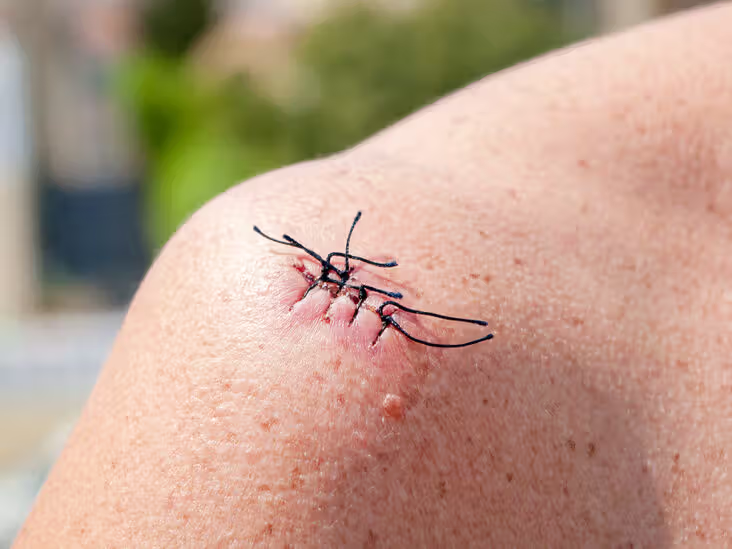
Most stitches come out around seven to fourteen days after surgery, though the exact day depends on where the wound is and how well it’s healing. Stitches on the face usually come out sooner, while those over joints or areas under tension stay in longer. Dissolvable ones don’t need removing at all, since the body absorbs them on its own. Your surgical team sets the precise date from how your wound looks.
According to Prof. Dr. Sandeep Nayak, Surgical Oncologist in India, “There’s no single day that fits every wound, I take stitches out once the skin has knitted enough to hold by itself, and that comes down to the site and healing far more than the calendar.”
Unsure when your stitches should come out?
What Decides When Stitches Are Removed?
The timing isn’t set in stone. It comes down to a few simple things, and here are the ones that count.
- Where the wound sits: The face is rich in blood supply, so it knits fast and stitches are often gone in about five days. The back or a limb heals slower and can need closer to two weeks.
- How much the skin pulls: Anywhere that bends or stretches, like a joint, keeps tugging the wound open as you move. Those stitches stay in longer to hold the edges until they’re strong.
- How the healing’s going: Stitches only come out once the edges have joined firmly enough to hold alone. Since no two people heal at quite the same pace, it’s judged wound by wound.
- The type of stitch: Dissolvable ones are built to break down and get absorbed, so nobody has to remove them. The non-dissolvable kind have to be taken out at your review.
So the right day really hangs on the wound, not a rulebook. For the wider recovery picture after an operation, our blog on robotic cancer surgery covers what to expect.
What Should You Know About Removal?
Knowing how it goes takes the worry out of the appointment. Here’s what actually happens on the day.
- It’s quick and easy: The whole thing takes a few minutes at a routine check-up, since each stitch is just snipped and lifted. There’s nothing you need to do to get ready.
- It hardly hurts: You feel a light tug as each one slides out, nothing more, because the skin has already healed over. That’s why most people find it far easier than they’d feared.
- Keep it clean till then: Until the day comes, keep the wound clean and dry and stick to your dressing instructions. A well-looked-after wound heals quicker and makes removal smoother.
- Speak up if something’s off: If a stitch works loose early, or the edges start to gape, call your team instead of waiting. The wound may need a little extra support to close properly.
So the removal itself is short and simple. In suitable cases, robotic cancer surgery uses such small cuts that closing up and healing tend to be easier too.
Why Choose Dr. Sandeep Nayak for Your Cancer Surgery?
Dr. Sandeep Nayak brings 24 years of surgical oncology experience, DNB qualifications in Surgical Oncology and General Surgery and a fellowship in Laparoscopic and Robotic Onco-Surgery to surgery across all cancer types. His team gives clear, specific guidance on stitch care and removal timing, so patients are never left guessing at home.
That clarity is what keeps wounds healing well and worry to a minimum. Every case at MACS Clinic goes through a full tumour board, where the surgical and recovery plan is set before anything begins. Call +91 8104310753 to book your consultation.
Frequently Asked Questions
When are stitches usually removed?
Most stitches come out about seven to fourteen days after surgery.
Do all stitches need removing?
No, dissolvable stitches disappear on their own without removal.
Does removing stitches hurt?
Usually not, most people feel only a mild tugging sensation.
What if stitches come out too early?
Contact your team, as the wound may need resupport.
References:
- National Cancer Institute — Surgery to Treat Cancer. https://www.cancer.gov/
- World Health Organisation — Cancer. https://www.who.int/news-room/fact-sheets/detail/cancer
