
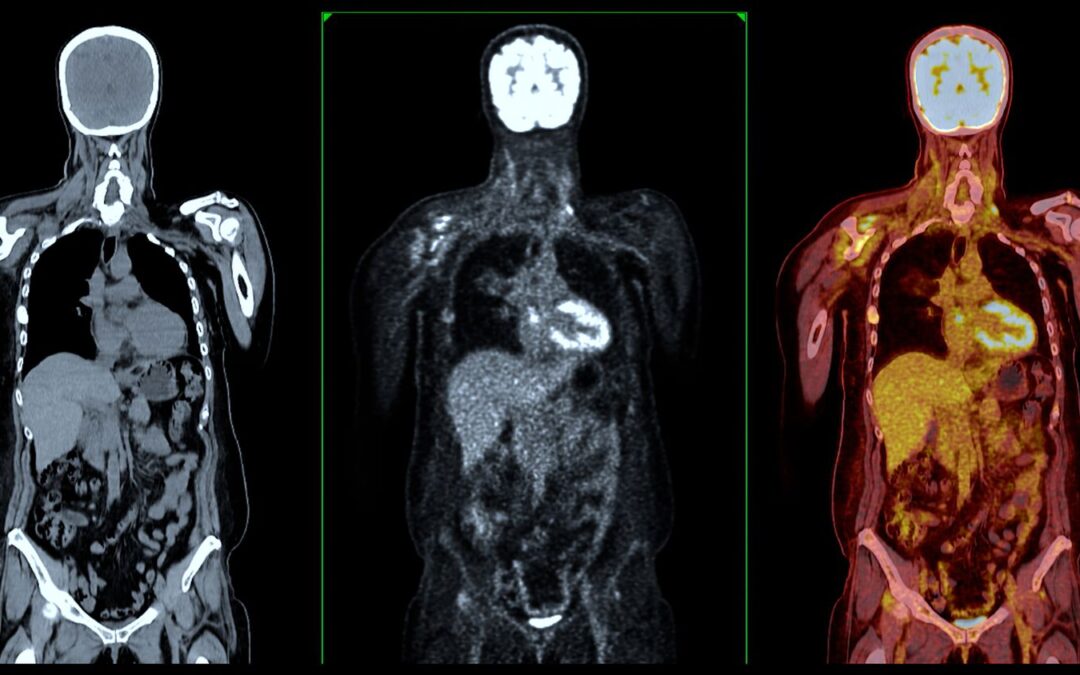
A doctor orders a PET scan after a CT because the two tests answer different questions. A CT shows the size, shape and location of a mass, while a PET reveals how metabolically active that tissue actually is. Cancer cells burn glucose fast, so they light up on a PET in a way a CT simply can’t show. Together they confirm whether the disease is active and how far it has spread.
According to Prof. Dr. Sandeep Nayak, Surgical Oncologist in India, “A CT tells me what a lump looks like, but a PET tells me whether it’s behaving like cancer, and that difference often decides the whole treatment plan.”
Unsure why one scan isn’t enough? Book An Appointment
What Does a PET Scan Show That a CT Scan Cannot?
A CT maps anatomy. A PET maps activity. That gap is the entire reason both get used.
- Cell activity: PET picks up the high glucose uptake of cancer cells, so it flags disease that’s biologically active rather than just a shadow on an image.
- Hidden spread: Small deposits in lymph nodes or distant organs often stay invisible on CT, and PET catches many of them before they grow large enough to see.
- Scar vs cancer: After treatment, a CT can show a lingering mass that’s only scar tissue, and PET tells whether it’s dead or still alive.
- Whole body: One PET scan surveys the entire body at once, which matters when the worry is spread rather than a single known site.
So the two aren’t rivals. A patient working through their cancer staging gets a far more complete picture when structure and activity are read side by side.
When Is a PET Scan Actually Necessary After a CT?
Not every case needs one. But in specific situations a PET changes the decision entirely.
- Staging: When a cancer is confirmed, PET helps pin the true stage by checking whether it has quietly travelled beyond the primary site.
- Unclear findings: If a CT shows something borderline that could go either way, PET often settles whether it’s worth a biopsy or surgery.
- Treatment response: Midway through chemo or radiation, PET shows whether the tumour is genuinely shrinking in activity, not just in size.
- Suspected recurrence: When markers rise but a CT looks clean, PET can locate disease that’s returned before anything else picks it up.
So the timing isn’t random. Much like getting a second opinion, the extra scan is about confirming the picture before committing to a plan.
Why Choose Dr. Sandeep Nayak for Your Cancer Diagnosis?
Dr. Sandeep Nayak holds a DNB in Surgical Oncology and General Surgery, with 24 years in the field and a practice built entirely around cancer. He reads imaging the way a surgeon has to, looking not just at what a scan shows but at what it means for whether, when and how to operate.
For a patient, that’s the difference between a scan report and a plan. Every case at MACS Clinic goes through a full tumour board, where imaging, pathology and oncology are weighed together before anything is confirmed. Reach the team at 📞 +91 9482202240.
Frequently Asked Questions
Is a PET scan always needed after a CT?
No, it’s ordered only when staging, unclear findings or suspected spread make it useful.
Does a PET scan confirm cancer on its own?
No, it shows activity, but a biopsy is still needed for a definite diagnosis.
Is a PET scan safe?
Yes, it uses a low dose of short-lived radioactive tracer that clears quickly.
How long does a PET scan take?
Usually around two to three hours, including the tracer uptake waiting period.
References:
- National Cancer Institute — PET Scans. https://www.cancer.gov/
- World Health Organisation — Cancer. https://www.who.int/news-room/fact-sheets/detail/cancer
