
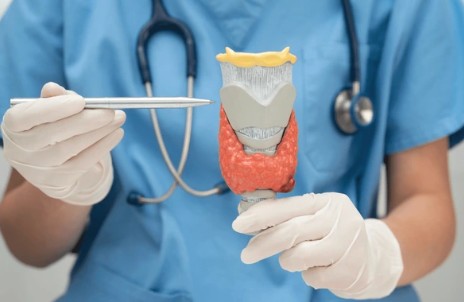
Symptoms of throat cancer usually manifest in the advanced stage, but some early symptoms include a sore throat that persists for more than two weeks, voice changes, swallowing difficulties or pain, and a lump in the neck. Other symptoms include ear pain, unexplained weight loss, coughing (sometimes with blood), and shortness of breath.
According to Dr. Sandeep Nayak, Surgical oncologist in Bangalore,
“Throat cancer is one of the most treatable cancers when caught early. The problem is that its early symptoms closely mimic a sore throat or acid reflux, which is why so many patients arrive at our clinic at a much later stage than necessary.”
What Are the Early and Advanced Symptoms of Throat Cancer?
Recognising throat cancer symptoms at the right time can make the difference between a curative and a palliative treatment plan.
- Persistent Hoarseness: A change in voice lasting more than three weeks is one of the earliest and most common signs of throat cancer affecting the voice box.
- Difficulty Swallowing: A feeling of food getting stuck or pain while swallowing is an early warning sign that should never be ignored.
- Lump in the Neck: A painless swelling or lump in the neck often indicates cancer has spread to nearby lymph nodes.
- Chronic Sore Throat: A sore throat that does not resolve with standard treatment and persists beyond three weeks requires urgent investigation.
For advanced and minimally invasive management options, learn more about trans oral treatment for suitable throat cancer cases.
What Are the Key Differences Between Early and Late-Stage Throat Cancer Symptoms?
Understanding how symptoms change with disease progression helps patients seek throat cancer treatment at the right time.
- Visibility / Precision: Early-stage throat cancer shows subtle symptoms like mild hoarseness, while late-stage disease causes visible neck lumps and breathing difficulty.
- Success Rates: Stage 1 and Stage 2 throat cancer have survival rates of 70–90%, while Stage 4 drops significantly to 30–40% [VERIFY: NCI SEER database].
- Recovery Time: Early-stage throat cancer treatment in Bangalore using minimally invasive robotic surgery allows recovery in 2–3 weeks, while advanced cases require longer chemo-radiation protocols.
- Complex Case Suitability: Advanced throat cancer with lymph node involvement requires a combination of robotic surgery, radiation, and chemotherapy for effective disease control.
Dr. Sandeep Nayak evaluates each patient individually to determine the most appropriate throat cancer treatment based on tumour location, stage, and overall health.
Why Choose Dr. Sandeep Nayak for Throat Cancer Treatment in Bangalore?
Dr. Sandeep Nayak follows a precision-based approach to throat cancer treatment using advanced robotic techniques including TORS (Transoral Robotic Surgery), which allows complete tumour removal through the mouth without any external incisions. As the inventor of RIA-MIND and MIND techniques for head and neck cancers, he brings unmatched expertise in minimally invasive throat and neck surgery in India. Every patient receives a thorough diagnostic workup and a personalized treatment plan focused on organ preservation and faster recovery.
📞 Book a Consultation: drsandeepnayak.com Get a personalized throat cancer treatment plan for precise, safe, and effective cancer care.
Frequently Asked Questions
Can throat cancer be fully cured if detected early?
Yes, throat cancer detected at Stage 1 or Stage 2 has high cure rates with surgery, radiation, or a combination of both treatments.
How is throat cancer diagnosed in Bangalore?
Throat cancer is diagnosed through a combination of endoscopy, biopsy, CT scan, and PET scan to confirm tumour location and stage.
Is robotic surgery used for throat cancer treatment?
Yes, Dr. Sandeep Nayak performs Transoral Robotic Surgery (TORS) for throat cancer, removing tumours without any external incisions or visible scars.
Can throat cancer come back after treatment?
Yes, recurrence is possible, which is why regular follow-up endoscopy and imaging scans are essential after completing throat cancer treatment.
Reference links:
-
National Cancer Institute – Oropharyngeal Cancer Treatment (PDQ®) – Patient Version
https://www.cancer.gov/types/head-and-neck/patient/adult/oropharyngeal-treatment-pdq -
American Cancer Society – Signs and Symptoms of Oral and Oropharyngeal Cancer
https://www.cancer.org/cancer/oral-cavity-and-oropharyngeal-cancer/detection-diagnosis-staging/signs-symptoms.html
Disclaimer: The information shared in this content is for educational purposes and not for promotional use.
