
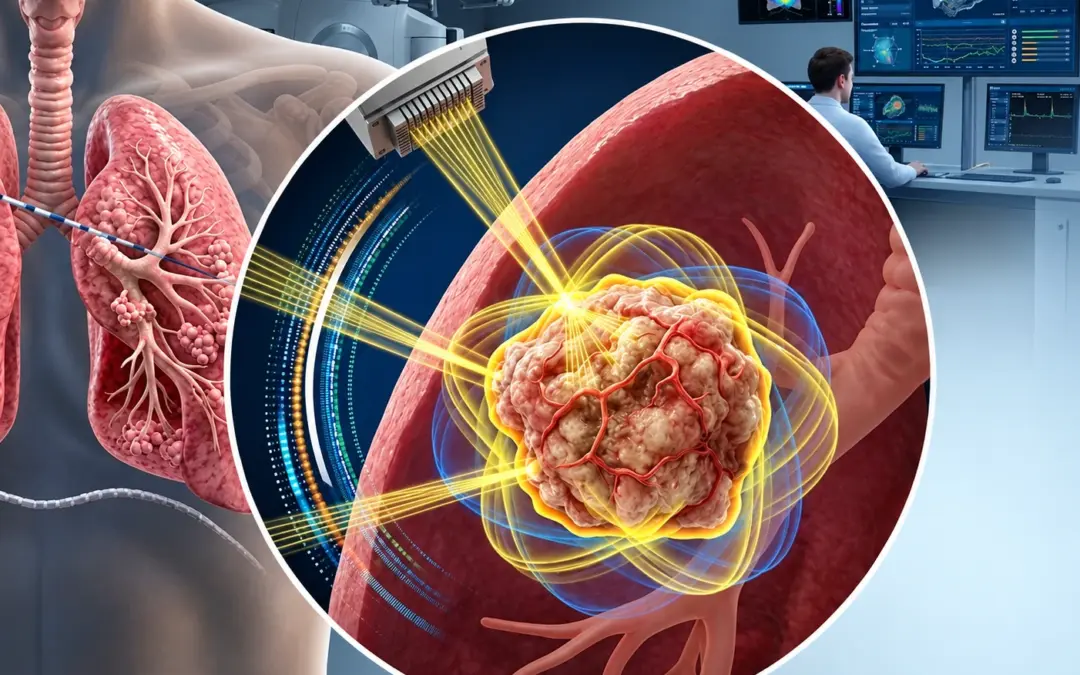
Yes, early-stage lung cancer can genuinely be cured without chemotherapy. For very early Non-Small Cell Lung Cancer specifically, surgical removal of the tumour is the standard, curative treatment on its own, and for a lot of patients at this stage, chemotherapy simply isn’t needed afterward at all.
According to Dr. Sandeep Nayak, surgical oncologist in Bangalore with over 24 years of experience treating solid tumors, “Patients hear a lung cancer diagnosis and immediately picture months of chemotherapy, and I understand why, that’s the association most people carry. But caught early enough, before it’s spread to lymph nodes or beyond, surgery alone often does the job completely. Chemo comes into the picture at later stages, not necessarily at this one.”
Diagnosed with early-stage lung cancer and wondering if chemo is really needed?
When Surgery Alone Is Genuinely Enough?
- Stage 1 Non-Small Cell Lung Cancer, where the tumour is small and hasn’t spread to lymph nodes, is often treated with surgery alone, no chemotherapy required afterward.
- VATS or robotic-assisted surgery removes the affected part of the lung with smaller incisions and faster recovery than traditional open surgery.
- Cure rates at this early stage, with surgery alone, are genuinely high, particularly when caught before any spread has occurred.
- Follow-up imaging and monitoring still continue after surgery, even without chemotherapy, to catch anything early if it does come back.
We’ve written in detail about how this surgical approach actually works in What Is VATS Surgery for Lung Cancer?, worth reading if surgery’s already on the table for your case.
When Chemo Does Get Added Back In?
- Once cancer’s reached the lymph nodes or spread further, chemotherapy usually becomes part of the plan alongside surgery, not instead of it.
- Tumour size and specific pathology findings after surgery can sometimes shift the plan, even in cases that looked early beforehand.
- Some patients get chemotherapy before surgery instead of after, depending on how the case is staged and planned.
- This decision always goes through a tumour board discussion, weighing the actual pathology against what surgery alone achieved.
If persistent respiratory symptoms are what brought you to this question in the first place, we’ve covered that separately in Persistent Cough: Can It Be Lung Cancer?, worth reading before jumping to conclusions about symptoms.
Why Choose Dr. Sandeep Nayak ?
Dr. Sandeep Nayakhas spent more than two decades in surgical oncology, and early-stage lung cancer, treated with VATS and robotic-assisted surgery, has been a consistent part of that work throughout. He currently serves as Chairman of Oncology Services for Karnataka and heads Surgical Oncology and Robotic Surgery at KIMS Hospital, Bangalore. What tends to matter most to patients isn’t the title though, it’s that treatment doesn’t get over-escalated with chemo a patient doesn’t actually need, or under-treated when they genuinely do. That precision in matching treatment to stage is often where things get missed elsewhere.
Diagnosed early and not sure if chemo’s really necessary in your case? Get a clear answer before assuming either way. Call +91 9482202240 and get someone to actually walk you through it.
Frequently Asked Questions
Does every lung cancer patient eventually need chemotherapy?
No, not at all. Very early-stage cases treated with surgery alone often don’t need chemotherapy, it depends heavily on stage and how far the cancer’s spread, if at all.
Is VATS surgery enough to cure early lung cancer on its own?
For many stage 1 cases, yes. Surgical removal alone can be curative when the cancer’s caught before spreading to lymph nodes or elsewhere.
How do doctors decide if chemo is needed after surgery?
Pathology results after surgery, checking lymph node involvement and other specific findings, guide that decision, not just the original scan.
Does skipping chemo mean a higher chance of recurrence?
Not if the staging and pathology genuinely support skipping it. Chemo gets added specifically in cases where it’s shown to improve outcomes, not withheld arbitrarily.
References
NCI — Non-Small Cell Lung Cancer Treatment (Health Professional Version)
ACS — Surgery for Non-Small Cell Lung Cancer
Disclaimer: This blog is for informational and educational purposes only and is not a substitute for professional medical advice or diagnosis.
