
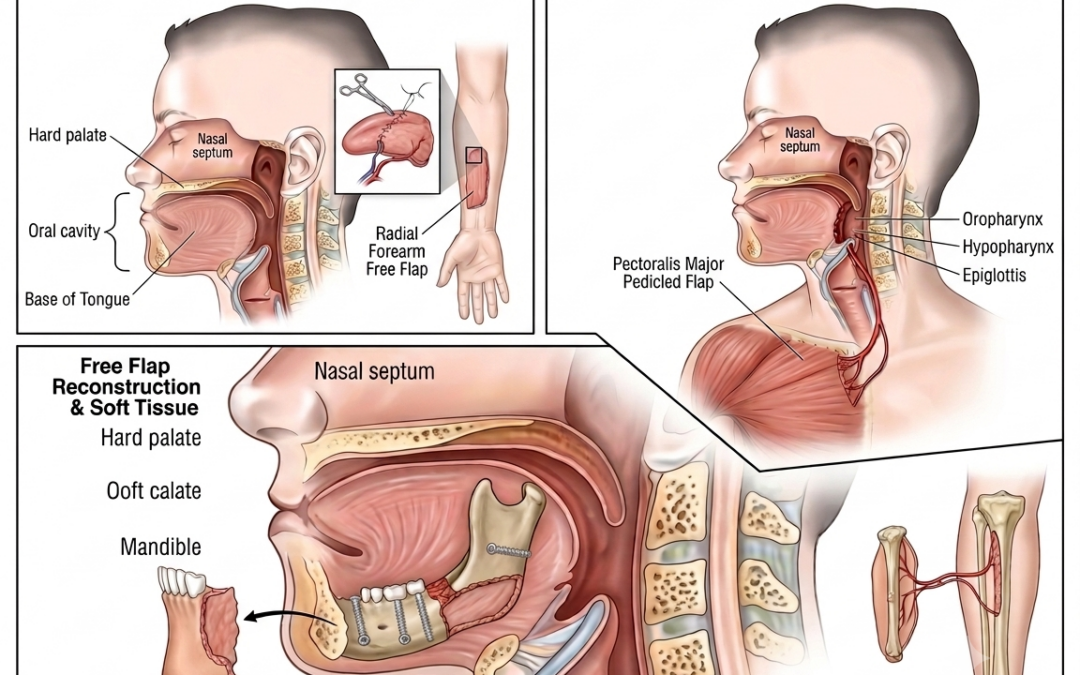
Reconstruction after head and neck surgery covers a wide range, from a simple wound closure to a full tissue transfer using skin, muscle, or bone from another part of the body. What actually gets used depends on the size and location of the defect left behind, and the goal throughout is the same, restoring swallowing, speech, and appearance as closely as possible to how they were before surgery.
According to Dr. Sandeep Nayak, surgical oncologist in Bangalore with over 24 years of experience treating solid tumors, “Reconstruction isn’t an afterthought tacked on once the tumour’s out, it’s planned right alongside the surgery itself. Patients deserve to know before their operation, not after, what their recovery is actually going to look like in terms of speech, swallowing, and how they’ll look.”
Facing head and neck surgery and wondering about reconstruction?
The Range of Reconstruction Options?
- Small defects often need nothing more than a simple, direct wound closure, no additional tissue required.
- Skin grafts work well for larger surface defects that don’t involve deeper structures.
- Pedicled flaps use nearby tissue, still attached to its original blood supply, to cover moderate-sized defects.
- Free flaps, microvascular tissue transfers from elsewhere in the body, are used for the most complex defects, particularly after extensive tongue, jaw, or throat surgery.
This kind of planning is discussed upfront as part of oral cancer treatment, not left as a surprise decision made mid-surgery.
What Actually Decides Which Option Gets Used?
- Size and depth of the defect matter most, larger or deeper defects generally need more complex reconstruction.
- Location plays a big role too, reconstruction near the tongue or throat has to prioritise speech and swallowing function, not just appearance.
- Whether radiation is planned afterward affects the choice, some reconstruction options tolerate radiation better than others.
- Patient health and fitness for a longer procedure factor in, since free flap surgery takes considerably more operating time than simpler options.
We’ve written more about what recovery and function preservation actually looks like after this kind of surgery in Can Head and Neck Cancer Recur After Robotic Surgery?, worth reading if long-term outcomes are on your mind too.
Why Choose Dr. Sandeep Nayak ?
Dr. Sandeep Nayak has spent more than two decades in surgical oncology, and head and neck cancer, reconstruction included, has been a consistent part of that work throughout. He currently serves as Chairman of Oncology Services for Karnataka and heads Surgical Oncology and Robotic Surgery at KIMS Hospital, Bangalore. What tends to matter most to patients isn’t the title though, it’s that the reconstruction conversation, what it means for speech, swallowing, and appearance, happens before surgery, not as something explained after the fact. That upfront honesty is often where things get missed elsewhere.
Facing head and neck surgery and unsure what reconstruction will actually involve? Don’t go in without that picture. Call +91 9482202240 and get someone to actually walk you through it.
Frequently Asked Questions
Will reconstruction affect my ability to speak normally?
It can, depending on the location and extent of the defect, but the reconstruction plan is specifically built to preserve as much function as possible.
How long does recovery take after a free flap reconstruction?
Longer than simpler reconstruction options, often several weeks for initial healing, with continued improvement in function over months.
Is reconstruction always needed after head and neck cancer surgery?
No, small defects often heal well with a simple closure, reconstruction becomes necessary mainly for larger or more complex defects.
Can reconstruction happen at the same time as the cancer surgery?
Often, yes. Many reconstructions are planned as part of the same operation, rather than a separate surgery scheduled later.
References
NCI — Head and Neck Cancers
AHNS — Reconstructive Head & Neck Surgery
Disclaimer: This blog is for informational and educational purposes only and is not a substitute for professional medical advice or diagnosis.
