
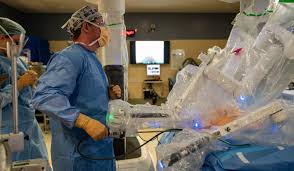
Less painful than most patients expect. Small port incisions of 8 to 12mm replace a large open wound, meaning far less tissue damage, less muscle trauma and significantly lower post-operative inflammation. Most patients describe the experience as soreness rather than pain from day two onward. Hospital stay typically runs one to three days and light activity starts within one to two weeks depending on the procedure performed.
According to Prof. Dr. Sandeep Nayak, Surgical Oncologist in India, “patients consistently say the recovery was easier than they feared. Small incisions make a real difference to first-week pain and that directly affects how quickly they get back to adjuvant treatment.“
Want to understand what robotic surgery recovery looks like for your specific procedure?
What Does Pain Feel Like After Robotic Surgery?
Pain after robotic surgery is manageable with standard oral medication for most patients and substantially lower than the same procedure performed through an open approach.
- First 48 Hours: Mild to moderate soreness at the port sites is the most common complaint immediately after the operation and robotic cancer surgery patients at KIMS Hospital are managed with paracetamol, anti-inflammatories and local port-site anaesthesia rather than heavy opioid reliance from the outset.
- Shoulder Tip Pain: Carbon dioxide used to inflate the abdomen during robotic surgery refers temporary discomfort to the shoulder tip as the gas dissipates, typically resolving within 24 to 48 hours with simple analgesia and early mobilisation after the operation.
- Port Site Soreness: The four to five small incisions remain tender for five to seven days and most patients rate this discomfort at three to four out of ten, considerably lower than the wound pain reported after equivalent open surgical procedures for the same cancer type.
- Procedure Influences Pain: Pelvic operations for rectal or prostate cancer produce more post-operative discomfort than upper abdominal procedures because of the anatomical dissection involved, and the surgical team advises specifically on expected pain levels before every operation.
Pain after robotic surgery is real but in most cases it is the least difficult part of the recovery journey compared to functional restrictions that follow.
What Is the Full Recovery Timeline After Robotic Surgery?
Recovery after robotic surgery moves significantly faster than open surgery across every cancer operation where both approaches are clinically available.
- Hospital Discharge: Most patients are discharged within one to three days compared to five to seven days after open surgery and laparoscopic cancer surgery patients show similar early discharge patterns because smaller incisions support faster return of bowel function and lower infection risk from the start.
- Light Activity Returns Quickly: Walking, household activity and self-care are achievable within one to two weeks for most robotic surgery patients, with the absence of a large abdominal wound being the primary reason recovery progresses at this pace compared to open procedures.
- Full Activity and Driving: Most patients return to full normal daily activity and driving between two and four weeks after robotic surgery and are fit to begin adjuvant chemotherapy or radiation within three to four weeks rather than the six to eight weeks often required after open surgery.
- Minimal Wound Care: Port sites require simple dressing changes for five to seven days and most patients manage this independently at home, in contrast to open surgical wounds that frequently need clinical wound care attendance for two to four weeks post-operatively.
Recovery after robotic surgery is genuinely faster and more comfortable than most patients anticipate and for more on what robotic surgery costs in Bangalore, our blog on robotic surgery cost covers this in detail.
Why Choose Dr. Sandeep Nayak for Robotic Cancer Surgery?
Dr. Sandeep Nayak brings 24 years of surgical oncology experience, DNB qualifications in Surgical Oncology and General Surgery and a fellowship in Laparoscopic and Robotic Onco-Surgery to robotic cancer surgery across all cancer types at KIMS Hospital, Bangalore. He heads Oncology Services across Karnataka with originator credits for RABIT, MIND and L-VEIL techniques and over 25 published clinical studies. Patients wanting to understand what robotic surgery recovery looks like for their specific procedure are seen here with every case reviewed through tumour board. Call +91 8104310753 to book your consultation.
Frequently Asked Questions
Is robotic surgery recovery more painful than open surgery?
Robotic surgery recovery involves significantly less pain than open surgery because small port incisions cause far less tissue and muscle trauma than a large open wound.
How long does pain last after robotic cancer surgery?
Port site soreness typically resolves within five to seven days and most patients manage with standard oral pain medication rather than opioid analgesia beyond the first 48 hours.
When can I return to normal activity after robotic cancer surgery?
Most robotic surgery patients return to light activity within one to two weeks and full normal activity within two to four weeks depending on the specific procedure performed.
Why does robotic surgery cause shoulder pain after the operation?
Shoulder tip pain after robotic surgery is caused by residual carbon dioxide gas pressing on the diaphragm and typically resolves within 24 to 48 hours after the operation.
References
- National Cancer Institute — Robotic Surgery in Cancer Treatment
- World Health Organization — Minimally Invasive Surgery
- Disclaimer: The information shared in this content is for educational purposes and not for promotional use.
