
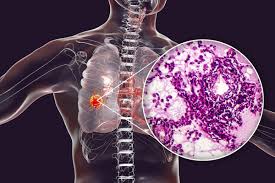
A suspicious biopsy report sits in the grey zone between clearly benign and confirmed cancer. It means the pathologist saw cells that look abnormal, enough to raise a flag, but not enough to call it cancer with certainty. So it isn’t a diagnosis. It’s a signal that more is needed, usually further testing or a repeat sample, before anyone can say for sure either way.
According to Prof. Dr. Sandeep Nayak, Surgical Oncologist in India, “A suspicious report isn’t bad news or good news yet, it’s a call to investigate properly, and I’d far rather act on a careful follow-up than treat or dismiss something on a guess.”
Got a report you can’t quite make sense of?
Why Does a Biopsy Come Back Suspicious?
A few different things land a report in that uncertain middle. Here’s what’s usually behind it.
- Too few cells: When the sample is sparse or poorly preserved, the pathologist can see something’s off but doesn’t have enough to commit to a verdict.
- Borderline appearance: Some cells sit right between normal and malignant, showing early changes that could go either way without more information.
- Overlapping features: Certain benign conditions mimic cancer closely under the microscope, and telling them apart often needs more than a first look.
- Sampling spot: If the needle caught the edge rather than the core of a lump, the most telling cells may simply not be in the sample.
So “suspicious” often says more about the sample than the disease. Anyone heading toward robotic cancer surgery needs that uncertainty resolved first, not carried into the operating room.
What Happens After a Suspicious Result?
The report isn’t the finish line, it’s a prompt for the next step. This is what usually follows.
- Special staining: Pathologists apply molecular tests that tag specific proteins, turning a borderline read into a much clearer answer about the cell type.
- Repeat biopsy: Sometimes the simplest fix is a fresh sample, ideally a core biopsy that pulls more tissue than the first attempt managed.
- Expert review: A second pathologist, often a specialist in that cancer type, can settle a difficult case that one reading left open.
- Clinical correlation: The result gets weighed against your scans and symptoms, because a report never stands entirely on its own.
So uncertainty is temporary, not permanent. Much like what an IHC test adds to the picture, the next test is what turns “suspicious” into something you can actually act on.
Why Choose Dr. Sandeep Nayak for Your Cancer Diagnosis?
Dr. Sandeep Nayak has spent 24 years in surgical oncology, with DNB qualifications in Surgical Oncology and General Surgery and a fellowship in Laparoscopic and Robotic Onco-Surgery. He’s spent much of that time in exactly these diagnostic grey zones, where a report and a clinical picture don’t quite line up and someone has to decide the next move.
And that judgment is what keeps a suspicious report from becoming either overtreatment or a missed cancer. Every case at MACS Clinic runs through a full tumour board, where pathology, imaging and oncology weigh in together before anything is confirmed. Call +91 8104310753 to book your consultation.
Frequently Asked Questions
Does a suspicious biopsy mean I have cancer?
Not always, it means cancer is possible but not yet confirmed.
What happens after a suspicious biopsy?
Usually further testing like IHC or a repeat biopsy to reach certainty.
How long until I get a clear answer?
Often within a week or two, depending on the additional tests needed.
Should I get a second opinion?
Yes, a suspicious report is a sensible point to seek expert review.
References:
-
-
- National Cancer Institute — Pathology Reports. https://www.cancer.gov/
- World Health Organisation — Cancer. https://www.who.int/news-room/fact-sheets/detail/cancer
-
