

Head and neck cancer survival splits hard depending on where it started and how far it’s spread. Localized disease, still sitting in the original site, sees five-year survival close to 88 percent. Reach the nearby lymph nodes, that drops to around 69. Distant spread pulls it under 40. Overall, across every stage combined, survival sits near 69 percent. But site matters just as much as stage here.
According to Dr. Sandeep Nayak, surgical oncologist in India, head and neck cancer gets far easier to treat when it’s caught before the nodes light up. Location matters almost as much as stage here. A tongue tumor and a laryngeal one don’t behave the same way, and neither should the treatment plan.
Not sure what stage your case might be?
What Determines Survival at Each Stage?
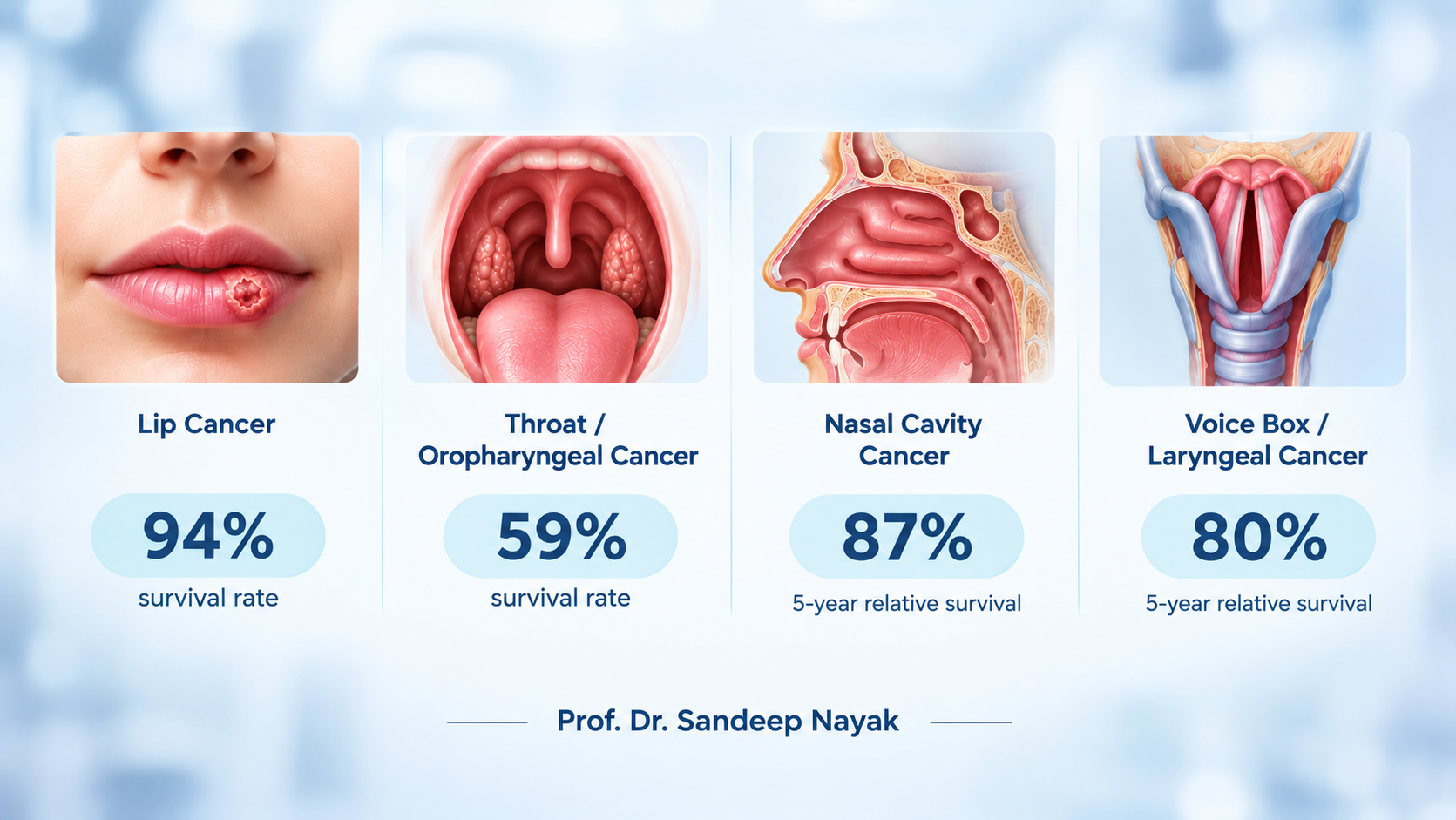
Site changes everything, honestly. Lip cancer, caught early, survives at 94 percent. Oropharyngeal? Barely 59, even localized, because it tends to hide near the tonsils and base of tongue where nobody’s looking. HPV status matters here too, more than most people expect.
Treatment gets built around exactly where the tumor sits and how far it’s reached, not just a stage number on a report. Every head and neck case gets read on its own terms, node by node, margin by margin.
Why Does Stage at Diagnosis Matter Much?
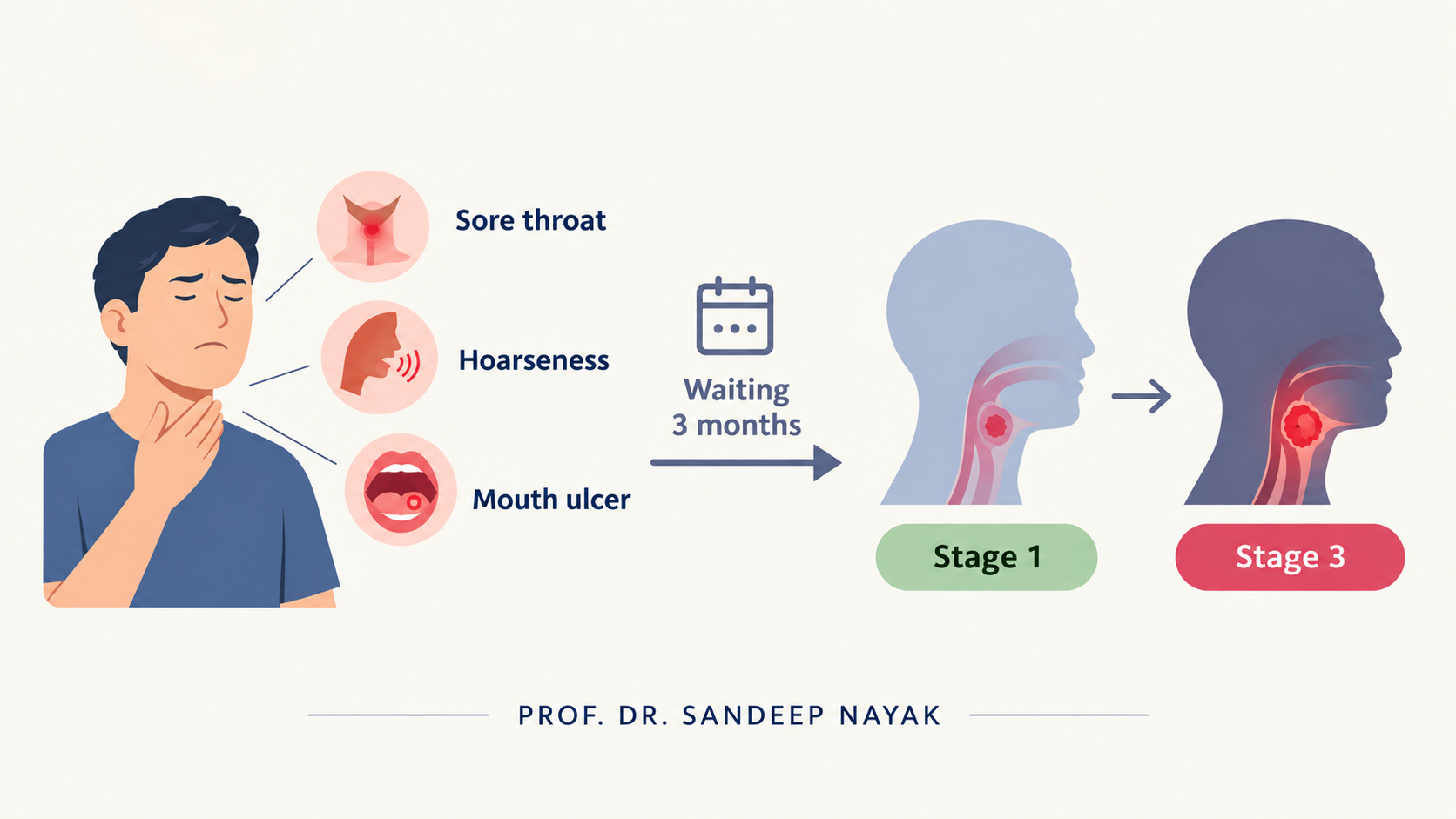
Most head and neck cancers get missed early because the symptoms look ordinary. A sore throat. Hoarseness. A mouth ulcer that won’t heal. Nobody panics over those, not at first.
That’s the problem. Waiting three months on a persistent lump or a voice that won’t come back is how stage 1 quietly turns into stage 3. Our piece on throat cancer symptoms lays out exactly what’s worth acting on.
Why Choose Dr. Sandeep Nayak for Head and Neck Cancer Treatment
Twenty four years in this specific anatomy. TORS, MIND neck dissection, RABIT thyroid surgery, Dr. Sandeep Nayak has built techniques used elsewhere in the field, not just performed them.
Mirror first. No shortcuts. Every case gets staged properly before anyone talks treatment. That’s what keeps recurrence down and function intact after surgery. No hype. Just outcomes.
Frequently Asked Questions
What is the five-year survival rate for head and neck cancer?
Overall, close to 69 percent. But it swings by site, from 94 percent for early lip cancer down to under 40 for distant spread of oropharyngeal disease.
Does HPV status affect head and neck cancer survival?
Yes. HPV-positive oropharyngeal cancer generally responds better to treatment, with survival often exceeding 80 percent even at advanced stages.
Why is head and neck cancer often diagnosed late?
Early symptoms like a sore throat, hoarseness, or a mouth ulcer look ordinary, so people delay getting checked until the disease has progressed.
Does the tumor's location affect survival outcomes?
Yes. Lip and thyroid cancers tend to have high survival rates, while oropharyngeal and hypopharyngeal cancers are usually caught later and carry lower survival on average.
References
- Cancer Stat Facts: Oral Cavity and Pharynx Cancer – National Cancer Institute (SEER)
- Survival Rates for Head & Neck Cancers – Roswell Park Comprehensive Cancer Center
Disclaimer: This blog is for informational and educational purposes only and is not a substitute for professional medical advice or diagnosis.
