

Tongue cancer surgery can often be done without a visible neck scar, depending on the stage of the cancer and on whether the lymph nodes in the neck need treatment. The tumour itself is removed through the mouth, so the question usually comes down to the neck. Where the nodes do need to be dealt with, some approaches avoid a cut across the neck, though not every patient is suited to them. This article explains how tongue cancer treatment is planned and when a neck scar can be avoided. It is one part of oral cancer treatment.
According to Prof. Dr. Sandeep Nayak, Surgical Oncologist in Bengaluru at MACS Clinic, “When patients hear tongue cancer surgery, they often picture a large cut on the neck. The tumour is usually taken out through the mouth, so that part leaves no mark outside. The neck is a separate question. Whether the lymph nodes need to be removed depends on the stage and on how deep the tumour has grown, and that decides whether a neck incision is needed at all.”
Wondering whether a neck scar can be avoided in your case? You can visit our clinic or send an enquiry to understand your options.
Where Does a Neck Scar Come From in Tongue Cancer Surgery?
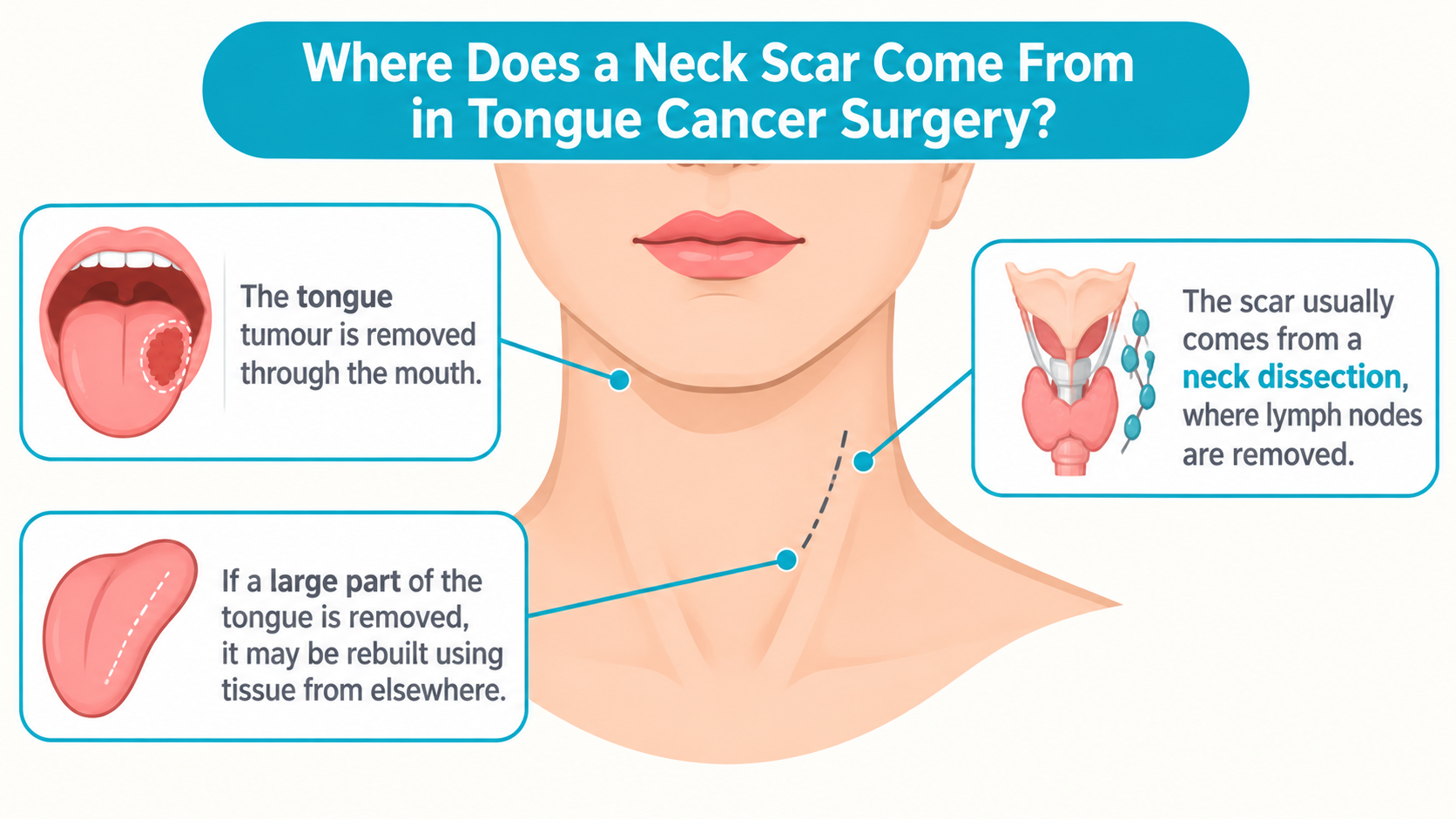
The scar doesn’t come from the tongue. It comes from the neck.
- The tongue tumour is removed through the mouth, along with a rim of healthy tissue around it. How much tongue comes out depends on the size and position of the cancer. Whether the margins are truly clear matters afterwards, and our blog on cancer recurring despite clear margins explains why.
- A cancer at the back of the tongue, near the base, can sometimes be reached with a robot passing instruments through the mouth.
- The scar usually comes from a neck dissection, an operation to remove the lymph nodes where tongue cancer tends to spread first. Done the traditional way, it needs a long incision across the side of the neck.
- If a good part of the tongue is removed, it may be rebuilt using tissue from elsewhere in the body.
What Decides the Right Tongue Cancer Treatment?
Two people with a similar-looking ulcer can need quite different plans. Our page on head and neck cancer covers the wider picture, and these are the main factors.
- Stage and size. How big the tumour is, and whether the nodes are involved, set the starting point.
- Depth of invasion. It predicts the chance of hidden spread to the nodes, and it is often the deciding detail for the neck.
- Location. A tumour on the side of the tongue and one at the base are reached and treated differently.
- Scans. MRI, CT or PET scans help show whether any nodes look involved.
- General health. Fitness for anaesthesia and for a longer operation affects what is safe.
When Can the Neck Scar Be Avoided?
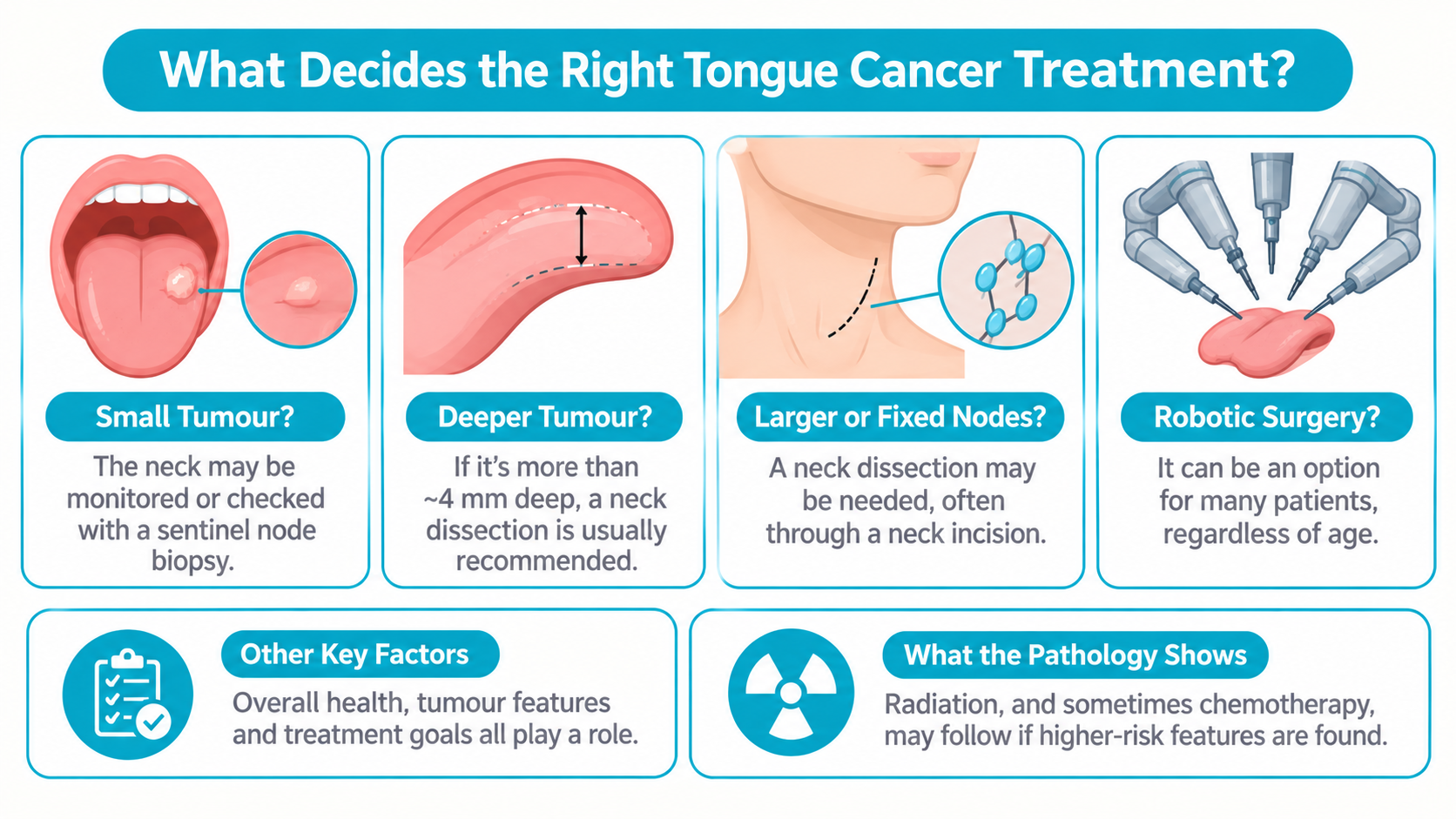
It depends on whether the neck needs surgery at all, and then on how it is done.
- Sometimes the neck can be left alone. For a small, shallow tumour with no sign of spread on examination and scans, doctors may watch the neck closely, or take a sentinel lymph node biopsy to check whether cancer has reached the nodes. Not every centre offers the biopsy, and the right choice varies.
- Depth matters. A tumour that has gone deeper than about four millimetres is more likely to have sent cells to the nodes, so a neck dissection is usually advised. Centres use slightly different cut-offs, and this is a general guide and not a rule.
- A cut on the neck can’t always be avoided. Large or bulky nodes, nodes fixed to nearby structures, or earlier neck surgery or radiation usually call for conventional open neck dissection, which remains a safe and standard operation.
- Age on its own is not a barrier. Robotic surgery isn’t limited by age, as our blog on the age limit for robotic surgery explains.
- What the report shows after surgery. Radiation, and sometimes chemotherapy, may follow if the pathology shows higher-risk features.
Tobacco is the biggest preventable risk factor.
Key Takeaways
- The tongue tumour is usually removed through the mouth, so it doesn’t leave a neck scar.
- A neck scar comes from neck dissection, and some early tumours may not need one.
- When the nodes do need removing, robotic routes such as RIA-MIND can avoid a cut on the neck for suitable patients.
- Large tumours, bulky nodes and earlier treatment often need open surgery, so the plan depends on the stage.
For more information, visit our clinic.
Frequently Asked Questions
Can tongue cancer be removed through the mouth?
Often, yes, especially for small and moderate tumours.
Will every tongue cancer patient need a neck dissection?
No, it depends on the stage, the depth of the tumour and whether nodes look involved.
Is robotic neck dissection suitable for everyone?
No, bulky or fixed nodes and some earlier treatments usually need open surgery.
Does a smaller scar mean less thorough surgery?
No, the aim is the same clearance of nodes, and only the route differs.
References
1. Macmillan Cancer Support – Surgery for Head and Neck Cancer
2. Cancer Research UK – Types of Surgery for Mouth Cancer
Disclaimer: This blog is for informational and educational purposes only and is not a substitute for professional medical advice or diagnosis.
