
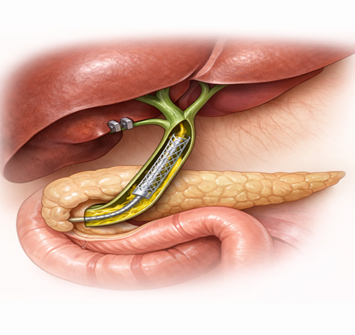
It depends on whether cure is the goal. Surgery is the only option that can remove the cancer and offer a cure, used when the tumour is resectable and the patient is fit. Stenting doesn’t remove anything. It reopens the blocked duct to relieve jaundice, used when surgery isn’t possible or as a bridge before it. They serve different purposes, not the same one.
According to Dr. Sandeep Nayak, Surgical Oncologist in India, “These two aren’t really rivals, they answer different questions. If the tumour can be removed and the patient can withstand the operation, surgery is the path to a cure. A stent never cures anything. It clears the jaundice and makes a patient comfortable, which matters enormously when surgery isn’t on the table. Sometimes we even stent first, then operate. The decision rests on whether cure is achievable.”
Facing a blocked bile duct and weighing the options?
When Is Surgery the Right Choice?
Surgery is the answer when the goal is to remove the cancer entirely.
- Curative intent : Only surgery can remove the tumour and offer a real chance at cure. For a resectable cancer, that makes it the first choice.
- Resectable tumour : The cancer has to be removable, confined enough that a surgeon can take it out with clear margins. Imaging decides this.
- Fit patient : Bile duct surgery is major, often a Whipple operation. The patient needs to be well enough to come through it.
- Long term gain : When it works, surgery changes the whole trajectory. Stenting alone never offers that kind of outcome.
For resectable disease in a fit patient, the right bile duct cancer plan centres on surgery, with stenting playing only a supporting role.
Surgery or Stenting: How Do They Compare?
Here’s how the two line up side by side.
|
Feature |
Surgery |
Stenting |
|
Goal |
Cure |
Relieve jaundice |
|
Removes cancer |
Yes |
No |
|
Best for |
Resectable, fit |
Unresectable, unfit |
|
Invasiveness |
Major operation |
Minimal |
|
Recovery |
Weeks |
Quick |
|
As a bridge |
The destination |
Before surgery |
- Different goals : Surgery aims to cure. Stenting aims to comfort and decompress. Judging which one a patient needs starts with that distinction.
- Stenting’s role : When a tumour can’t be removed, a stent restores bile flow, lifts the jaundice and lets a patient feel human again.
- The bridge use : A stent can relieve severe jaundice first, stabilising a patient before the bigger curative surgery is done.
- Allowing chemo : Clearing the jaundice with a stent also lets a patient start systemic chemotherapy that high bilirubin would otherwise block.
This is part of the wider scope of bile duct surgery within hepatobiliary cancer care, where surgical and palliative tools each have their place.
Why Choose Dr. Sandeep Nayak for Bile Duct Cancer Care?
Dr. Sandeep Nayak is a surgical oncologist with 24 years behind him and a fellowship in laparoscopic and robotic onco-surgery. He treats hepatobiliary cancers, including complex bile duct resections, where judging resectability correctly decides whether a patient gets a shot at cure or the right palliative path. The work starts with honest staging, since offering surgery where it can’t help, or stenting where surgery could cure, both fail the patient. That judgement is the core of it.
Bile duct cancer is unforgiving of the wrong call. A resectable tumour managed with a stent alone loses a curative chance that won’t come back. An unresectable one pushed into surgery puts a patient through a major operation for nothing. Reading the imaging accurately, staging honestly, and matching the tool to the situation is what separates good hepatobiliary care from guesswork.
Frequently Asked Questions
Is bile duct surgery better than stenting?
Surgery offers a cure when the tumour is resectable. Stenting only relieves the blockage.
What does a bile duct stent do?
It reopens a blocked duct to relieve jaundice and itching, but doesn’t remove cancer.
When is stenting chosen over surgery?
When the tumour is unresectable, the patient is unfit, or before planned surgery.
Can a stent be used before surgery?
Yes. A stent can relieve jaundice first, before definitive surgery is performed later.
References
- Percutaneous biliary stenting in malignant obstruction — National Library of Medicine
- Obstructive jaundice diagnosis and management — National Library of Medicine
Disclaimer: This blog is for informational and educational purposes only and is not a substitute for professional medical advice or diagnosis.
