
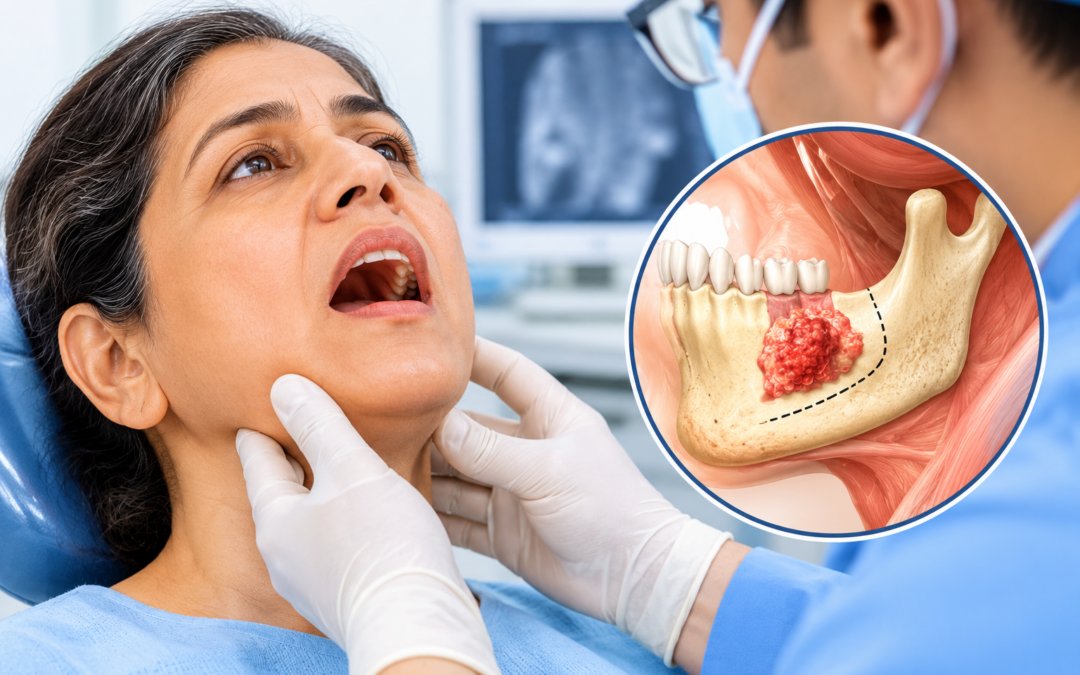
Not all oral cancer surgeries require jawbone removal. The decision depends on the tumour’s location and how deeply it has invaded the bone. If the bone is unaffected, it may be preserved or only a thin layer removed. Deeper invasion may require a larger section of the jawbone to be removed.
According to Prof. Dr. Sandeep Nayak, Surgical Oncologist in Bengaluru at MACS Clinic, “The bone is removed only as much as the cancer demands. When a tumour is close to the jaw but not in it, the bone can often be kept. The aim is to clear the cancer fully and then give back as much chewing and speech as possible.”
Need answers to your jaw cancer surgery questions? Talk to a specialist with head and neck cancer about your scans.
In Oral Cancer Surgery When Can the Jaw Bone Be Saved?
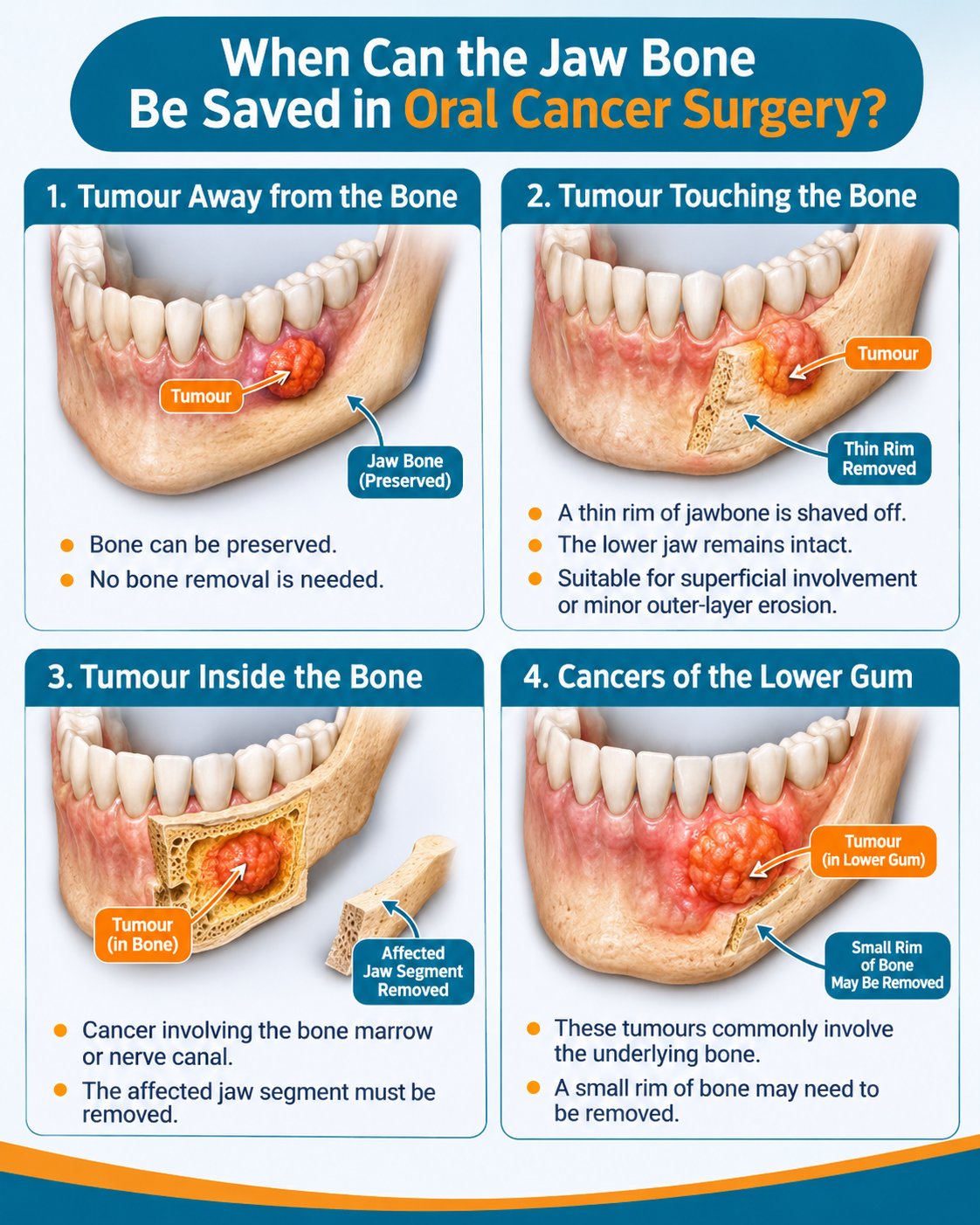
In oral cancer surgery the question that the surgeon has to ask is a simple one: is the tumour adhering to the bone or is it within the bone?
-
- Tumour away from the bone: The bone is left alone.
- Touching not inside: A thin rim around the jaw is shaved off to enable a clear margin, and the lower jaw remains intact. This is a partial removal of the lower jaw.
- If the involvement is very superficial, the bone’s covering is only slightly involved or a small erosion of the outer layer is present, this is still an option.
- Tumour in the bone: If the cancer is in the marrow or the nerve canal of the jaw, then the entire segment must be removed. It is a partial removal of the lower jaw.
- Reduced gum cancers: These are on the bone, and will typically require some bone to be taken away, even if it is just a rim
What Happens After a Part of the Jawbone Is Removed?
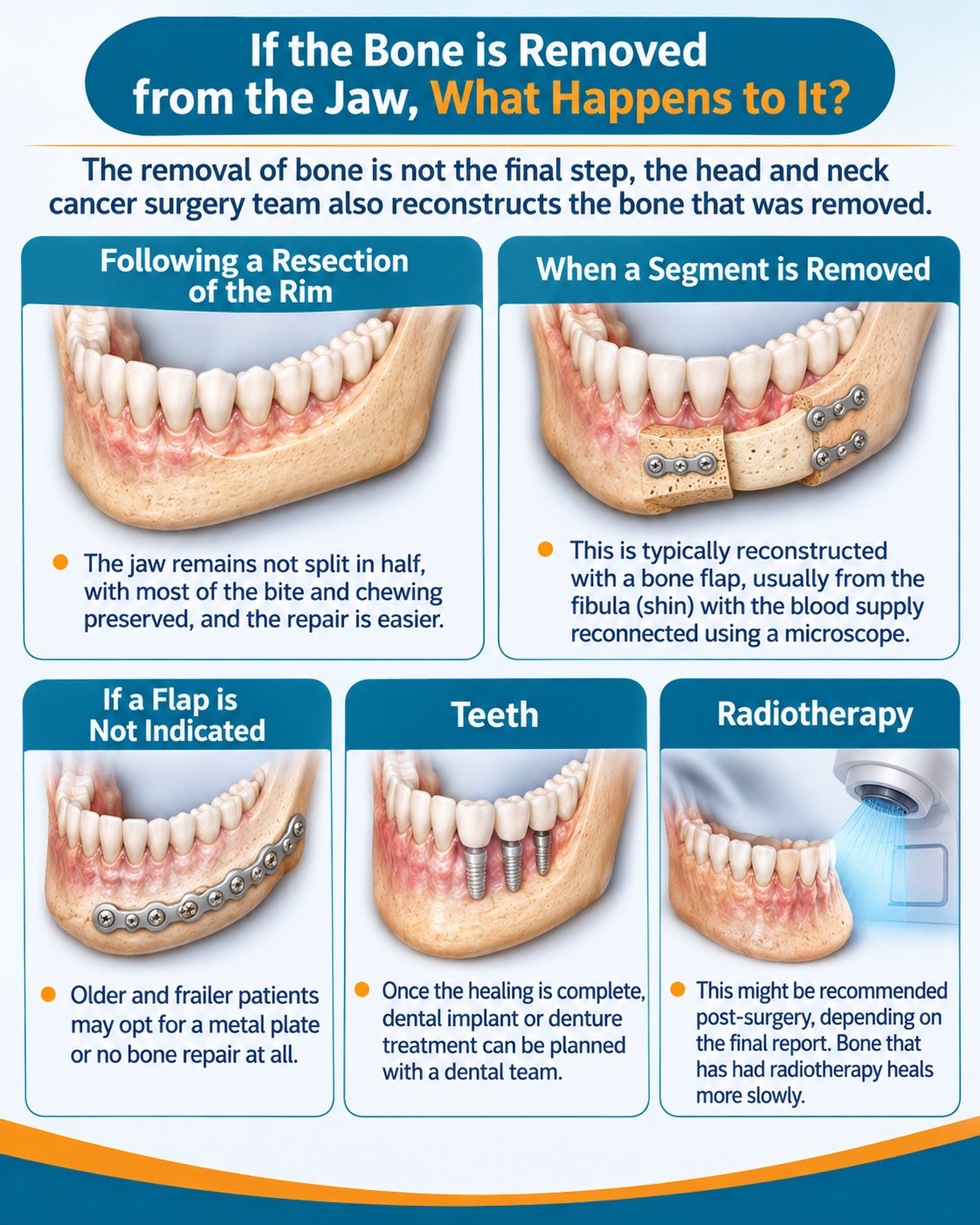
The removal of bone is not the final step, the head and neck cancer surgery team also reconstructs the bone that was removed.
-
- Following a resection of the rim: The jaw remains not split in half, with most of the bite and chewing preserved, and the repair is easier.
- When a segment is removed: This is typically reconstructed with a bone flap, usually from the fibula (shin) with the blood supply reconnected using a microscope.
- If a flap is not indicated: Older and frailer patients may opt for a metal plate or no bone repair at all.
- Teeth: Once the healing is complete, dental implant or denture treatment can be planned with a dental team.
- Radiotherapy: This might be recommended post-surgery, depending on the final report. Bone that has had radiotherapy heals more slowly.
What Determines Whether the Jawbone Can Be Preserved?
The final decision in cancer treatment is made by the oncology team, who will have used scans, and frequently a direct examination of the bone during the operation.
- Stage and size: Stage is similar to the stages of heart failure, it is the extent to which the disease has progressed and the amount of treatment necessary.
- Bone invasion: Most invasion is seen on CT or MRI, which may fail to detect microscopic invasion and can change on the day.
- Teeth and bone height: In individuals without teeth the jaw is generally thin and approximately 10 mm of bone must be left, making a rim resection not possible.
- If radiotherapy was previously performed in the area, a rim resection is considered, but is debated.
- The margins and fitness: the cancer needs to be surrounded by normal tissue and not everyone is healthy enough for a long reconstruction
Frequently Asked Questions
Does jaw cancer surgery always remove the jaw bone?
No. It depends on the location of the tumour and if it invades the bone
What is a marginal mandibulectomy?
Removal of a thin rim of jaw bone, keeping the jaw in one piece.
Is the jaw bone able to be rebuilt after it has been removed?
Yes, typically on the leg, a bone flap is used, sometimes a plate.
May the surgical procedure be altered during surgery?
Yes, when there is a difference in the bone findings or margins when compared to the scans.
References
1.Indian Council of Medical Research (ICMR) – Consensus Document for Management of Tongue Cancer
Discusses marginal and segmental mandibulectomy and when jawbone preservation is possible.
Read ICMR Government Guideline
2. Indian Council of Medical Research (ICMR) – Guidelines for Buccal Mucosa Cancer
Explains indications for marginal and segmental mandibulectomy, including superficial bone erosion and extensive bone invasion.
DISCLAIMER: This blog is for educational and informational purposes only and should not be considered professional advice.
