
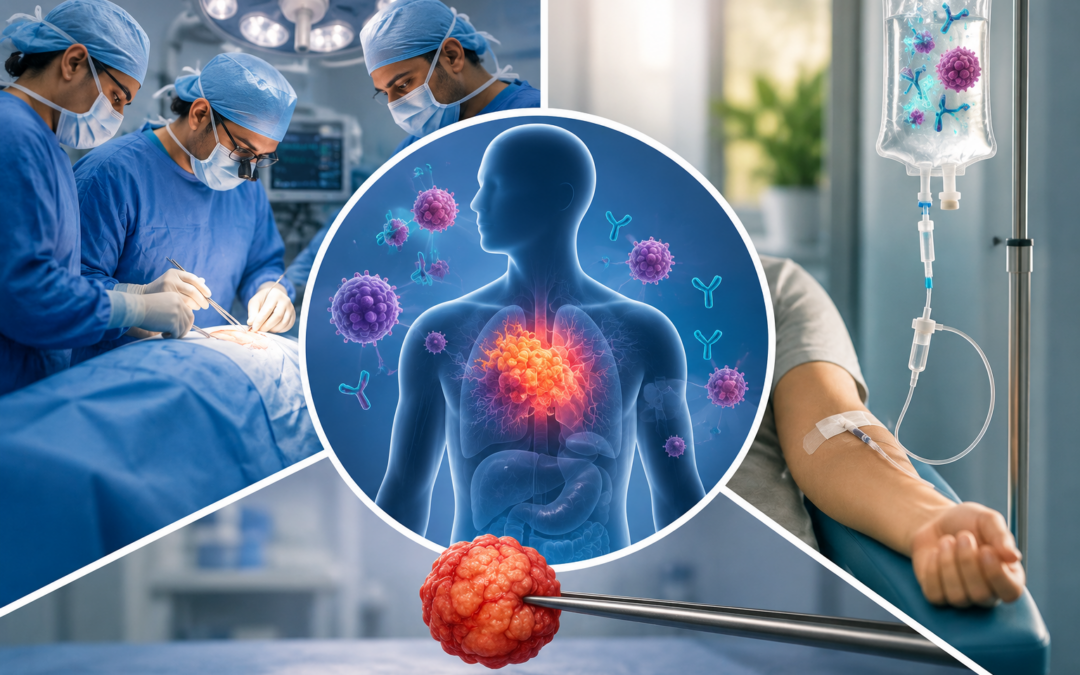
Yes, and it’s actually done fairly often now. Doctors call it perioperative therapy, which just means immunotherapy gets timed around the surgery itself rather than replacing it. Sometimes it’s given beforehand (neoadjuvant) to shrink the tumour down first. Sometimes after (adjuvant), to mop up whatever cells surgery couldn’t catch. Occasionally both, if the case calls for it, mainly to cut down the odds of the cancer coming back.
According to Dr. Sandeep Nayak, surgical oncologist in Bangalorewith over 24 years of experience treating solid tumors, “Surgery removes what we can see and immunotherapy goes after what we can’t. Used together, with the right timing, they cover more ground than either one manages alone. The mistake is treating this as an either-or decision. It rarely is.”
Wondering if immunotherapy fits your treatment plan?
When Immunotherapy Comes Before Surgery?
- Given to shrink a tumour down to a size where surgery becomes safer or even possible in the first place.
- Can turn a borderline-inoperable tumour into one that’s actually removable.
- Response gets tracked through imaging before the surgery date is even fixed.
- Not every cancer type responds the same way, so this call goes through a tumour board first.
This decision follows the same underlying logic as chemo timing before surgery, just with a different drug class doing the work.
When Immunotherapy Comes After Surgery?
- Targets whatever microscopic cancer cells imaging couldn’t pick up after the tumour’s already out.
- Lowers the chance of recurrence, particularly in cancers with a known relapse pattern.
- Usually starts once the surgical site has had enough time to heal properly.
- Duration varies a lot, some protocols run months, others longer, depending on the cancer type and how the case responds.
A surgical oncologist coordinates this timing with the rest of the treatment team, since jumping in too early can interfere with recovery.
Why Choose Dr. Sandeep Nayak ?
Dr. Sandeep Nayak has spent more than two decades in surgical oncology, and cases needing immunotherapy worked into the treatment sequence, before surgery, after, or both, have been part of that work throughout. He currently serves as Chairman of Oncology Services for Karnataka and heads Surgical Oncology and Robotic Surgery at KIMS Hospital, Bangalore. What tends to matter most to patients isn’t the title though, it’s that every case still goes through tumour board before that sequence gets decided, surgery and medical oncology figuring it out together rather than surgery being planned in isolation. That coordination is often where things get missed elsewhere.
Not sure where immunotherapy fits into your treatment plan? Don’t let that decision get made without the full picture. Call +91 9482202240 and get someone to actually walk you through it.
Frequently Asked Questions
Does immunotherapy replace the need for surgery?
No. In most solid tumours, surgery still does the heavy lifting of physically removing the cancer. Immunotherapy supports that, it doesn’t substitute for it.
Are there side effects when combining the two?
Both come with their own separate risks, and timing matters partly because of this. That’s exactly why a tumour board reviews the sequence rather than leaving it to guesswork.
How do doctors decide if immunotherapy should go before or after surgery?
It comes down to cancer type, stage, and how the tumour’s expected to respond. There’s no fixed rule that applies across the board.
Is this approach available in India?
Yes, major cancer centres in India, including ours, already offer perioperative immunotherapy protocols for eligible cancer types.
Reference
Immunotherapy to Treat Cancer — National Cancer Institute
ASCO Clinical Practice Guidelines
Disclaimer: This blog is for informational and educational purposes only and is not a substitute for professional medical advice or diagnosis.
