
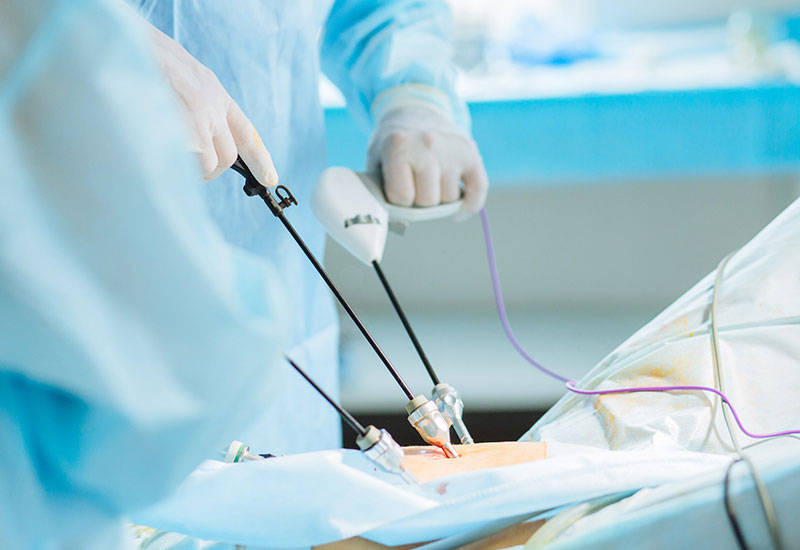
Laparoscopy can be used for liver cancer, in the right patient. For small tumours sitting in accessible parts of the liver, keyhole surgery removes them with the same cancer outcomes as open surgery, plus a faster, gentler recovery. It isn’t suited to every case. Large tumours, or ones wrapped around major blood vessels, still call for open surgery. Tumour size and position decide it.
According to Dr. Sandeep Nayak, Surgical Oncologist in India, “Laparoscopic liver surgery has come a long way, and for the right tumour it’s an excellent option. A small cancer in an accessible segment comes out cleanly through keyhole incisions, and the patient recovers far quicker. The survival and margins match open surgery. But I won’t force it. A big central tumour near the main vessels is safer done open. The case decides the approach.”
Wondering if your liver tumour can be removed by keyhole surgery?
When Does Laparoscopy Work for Liver Cancer?
Keyhole liver surgery suits specific tumours, and selecting them well is the key.
- Small tumours : A small, contained cancer is the ideal candidate. The smaller and more defined it is, the better suited to a keyhole approach.
- Peripheral location : Tumours in the outer, more accessible parts of the liver are far easier to reach laparoscopically than deep central ones.
- Away from vessels : A tumour clear of the major blood vessels can be removed safely. Proximity to those vessels is what tips toward open surgery.
- Good liver function : The patient’s liver needs enough healthy reserve, especially where cirrhosis is in the picture, to handle the resection.
This precision is the foundation of modern robotic cancer surgery, where the same minimally invasive principles apply to complex liver work.
Why Choose It Over Open Surgery?
When a tumour suits the keyhole route, the advantages for the patient are real.
- Less blood loss : Laparoscopic liver surgery typically means less bleeding during the operation. That matters a great deal in liver work.
- Faster recovery : Smaller incisions mean less pain and a quicker return home. Patients are often up and about much sooner.
- Same cancer control : This is the crucial part. Survival, clear margins and recurrence rates match open surgery in suitable cases.
- Earlier next steps : A faster recovery means any chemotherapy needed afterward can start sooner, which can matter for the overall outcome.
Whether surgery offers a cure at all depends on the stage, which is covered in our guide on liver cancer and when it can be treated successfully.
Why Choose Dr. Sandeep Nayak for Liver Cancer Surgery?
Dr. Sandeep Nayak is a surgical oncologist with 24 years behind him and a fellowship in laparoscopic and robotic onco-surgery. He performs minimally invasive liver resections for suitable patients, choosing the keyhole route where it genuinely helps and open surgery where safety demands it. The approach starts with honest case selection, since liver surgery punishes overreach, and the right tumour for laparoscopy is a specific thing. That judgement is what makes the technique safe.
Liver surgery is among the most demanding work in oncology, and the minimally invasive version more so. Reading the imaging, judging the tumour’s relationship to the vessels, and knowing when to switch to open is what separates a good liver surgeon from a risky one. For the right patient, laparoscopic resection offers a cure with a recovery that open surgery simply can’t match. Matching the method to the tumour is the whole craft.
Frequently Asked Questions
Can laparoscopy be used for liver cancer?
Yes. Selected liver cancers can be removed laparoscopically with outcomes equal to open surgery.
Which liver tumours suit laparoscopic surgery?
Small, peripheral, unilobar tumours away from major blood vessels suit it best.
Is laparoscopic liver surgery as effective as open?
Yes. Survival, margins and recurrence match open surgery in suitable patients.
When is open liver surgery still needed?
For large, central tumours or those involving major blood vessels, open surgery is safer.
References
- Minimally invasive liver surgery for hepatocellular carcinoma — National Library of Medicine
- Minimally invasive liver resection for colorectal metastases — National Library of Medicine
Disclaimer: This blog is for informational and educational purposes only and is not a substitute for professional medical advice or diagnosis.
