
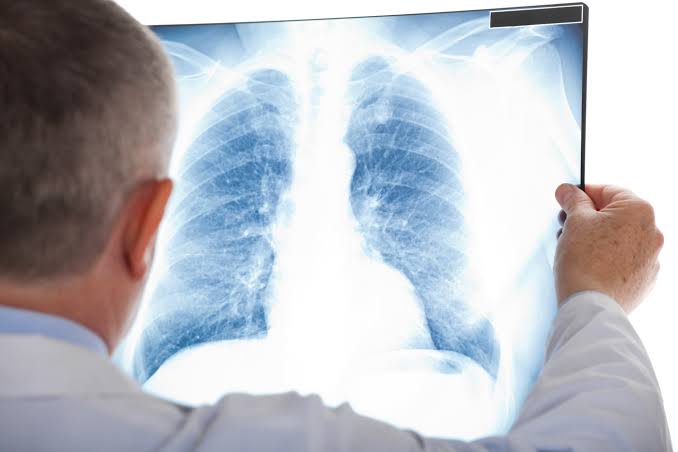
A chest X-ray can show lung cancer, but it misses a lot. It picks up larger tumours reasonably well. Small, early ones often slip past it entirely. By the time a cancer is clearly visible on an X-ray, it’s frequently already advanced. A normal X-ray doesn’t mean there’s no cancer. That’s the crucial catch. For proper early detection, a low dose CT scan is far more reliable.
According to Dr. Sandeep Nayak, Surgical Oncologist in India, “A chest X-ray is useful, but I never want a patient to think a clear one is a guarantee. Small tumours hide easily, behind the heart, behind a rib. Most lung cancers that get missed are missed on X-rays, not CT. If someone is genuinely at risk, a low dose CT finds things an X-ray simply can’t. The X-ray has its place, but it isn’t the final word on lung cancer.”
Have a symptom or risk that needs proper checking?
What Can a Chest X-Ray Show?
An X-ray is a useful first look, but it’s important to know its reach and its blind spots.
- Larger masses : A chest X-ray shows bigger tumours reasonably well. If a mass is large enough, it usually appears as a visible shadow.
- A first step : It’s quick, cheap and widely available, which makes it a common first test when someone has chest symptoms.
- Other clues : It can reveal related signs, like fluid around the lung or a collapsed segment, that prompt further investigation.
- The small ones slip : Its real weakness is small tumours. A cancer in its early, most treatable stage often doesn’t show up at all.
Because of these limits, proper lung cancer treatment planning relies on CT and other imaging rather than an X-ray alone.
Why Isn't It Enough on Its Own?
The gap between what an X-ray shows and what a CT shows is what matters most here.
- Misses early tumours : This is the big one. The majority of missed lung cancers are missed on chest X-rays, precisely when catching them counts most.
- Hidden spots : Tumours behind the heart, ribs or diaphragm can hide from an X-ray entirely, sitting in blind spots the flat image can’t separate.
- CT is sharper : A low dose CT builds detailed cross sections, spotting nodules far too small for an X-ray. For screening, it’s the proven tool.
- Clear isn’t cleared : A normal X-ray is reassuring but not conclusive. Anyone with persistent symptoms or real risk deserves a closer look regardless.
For those at highest risk, understanding smoking and lung cancer explains who should consider CT screening rather than relying on an X-ray.
Why Choose Dr. Sandeep Nayak for Lung Cancer Care?
Dr. Sandeep Nayak is a surgical oncologist with 24 years behind him and a fellowship in laparoscopic and robotic onco-surgery. He treats lung cancer with VATS and robotic thoracic surgery, and he’s clear with patients that the right imaging is what makes early, curable diagnosis possible. The approach means not stopping at a normal X-ray when symptoms or risk suggest otherwise, since the whole outcome can turn on getting the right scan at the right time.
The imaging choice shapes everything downstream. A lung cancer found early on CT, while it’s small and operable, is a completely different situation from one found late on an X-ray after it’s grown. Knowing when an X-ray is enough and when it isn’t, and moving to CT without delay for those at risk, is the judgement that turns detection into a real chance at cure.
Frequently Asked Questions
Can lung cancer be detected on a chest X-ray?
It can show larger tumours, but often misses small, early lung cancers.
Does a normal chest X-ray rule out lung cancer?
No. A normal X-ray doesn’t rule out cancer, since small tumours can be missed.
What is better than an X-ray for detection?
Low dose CT is far more sensitive and detects much smaller lung tumours.
Why are tumours missed on X-ray?
Small tumours, or those hidden behind the heart, ribs or diaphragm, can be missed.
References
- Low dose CT versus chest radiography in lung cancer screening — National Library of Medicine
- Early detection of lung cancer in high-risk patients — ClinicalTrials.gov
Disclaimer: This blog is for informational and educational purposes only and is not a substitute for professional medical advice or diagnosis.
