
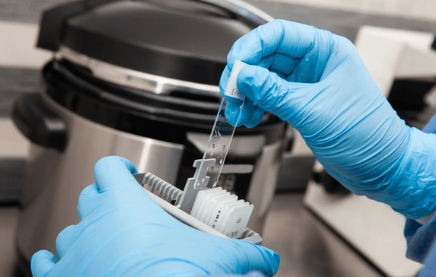
The Immunohistochemistry (IHC) test does not necessarily mean that you have cancer, but it is a specialized diagnostic procedure that is often used to detect, classify, and stage cancer cells in the body. This procedure is used to analyze tissues in the body to detect certain proteins to ascertain if the tumor is cancerous or non-cancerous.
According to Dr. Sandeep Nayak, cancer specialist in Bangalore, “An IHC test doesn’t confirm cancer by itself but it tells us things about cells that completely change how we treat whatever we’ve already found.”
According to Dr. Sandeep Nayak, cancer specialist in Bangalore, “A CT scan shows us a picture of what’s there but a picture is not a diagnosis and confusing the two is where patients and sometimes doctors go wrong.”
What Is an IHC Test Actually Doing to Your Tissue Sample?
Most patients who’ve been told an IHC has been ordered have absolutely no idea what that means in practice. Here’s what’s genuinely happening in that laboratory with your sample.
- It Uses Antibodies to Tag Specific Proteins Inside Your Cells: IHC works by applying specially designed antibodies to tissue sections that bind to particular proteins and then stain them visible colours under a microscope showing the pathologist exactly what’s present at a molecular level.
- It Tells Pathologists Where a Cancer Started When the Origin Isn’t Obvious: When cancer is found in lymph nodes or a distant organ without a clear primary source IHC markers help identify whether those cells originally came from the breast, lung, colon or another organ entirely.
- It Identifies Whether a Cancer Will Respond to Specific Treatments: HER2 status in breast cancer, PD-L1 expression for immunotherapy eligibility and hormone receptor status are all determined through IHC and these results directly decide which cancer treatment pathway you go down.
- It Distinguishes Between Cancer Types That Look Similar Under Basic Microscopy: Two tumours can look almost identical on a standard biopsy but behave completely differently and need completely different treatment and IHC separates them by their molecular fingerprint rather than just their appearance.
The newly developed laparoscopic surgery techniques can facilitate the achievement of effective removal of the tumour in smaller incisions and less time of recovery in the right patients in the event of early diagnosis and localisation of the cancer.
What Does an IHC Result Actually Tell Your Doctor About Your Specific Case?
This is the part that matters most to you sitting with that report. Not the science. What it means for your treatment. What happens next. Here’s how IHC results change real clinical decisions.
- Hormone Receptor Status Decides Whether Hormone Therapy Will Work for You: ER and PR positive results in breast cancer mean hormone blocking therapy is likely to be highly effective while negative results shift treatment toward chemotherapy and targeted drugs instead.
- HER2 Status Opens or Closes the Door to Targeted Therapy: HER2 positive cancer responds to trastuzumab and other targeted agents that can dramatically improve outcomes but without IHC confirmation of HER2 status that entire treatment pathway simply doesn’t get considered.
- Ki-67 Index Tells Your Oncologist How Fast the Cancer Is Growing: This IHC marker measures the proportion of actively dividing cells giving a direct indication of tumour aggressiveness that influences how urgently and how intensively cancer treatment needs to begin.
- Lymphoma Subtyping Through IHC Completely Changes the Treatment Protocol: Hodgkin lymphoma and various non-Hodgkin subtypes look similar under basic microscopy but respond to entirely different chemotherapy regimens and IHC is what separates them accurately and reliably.
In cases of cancers where a high degree of accuracy in tumour removal is demanded in anatomically complex regions, innovative robotic surgery technologies are becoming a popular method of enhancing the accuracy of surgery and recovery in patients..
Why Choose Dr. Sandeep Nayak for Cancer Treatment in Bangalore?
Dr. Sandeep Nayak has spent over 24 years building cancer treatment plans on the kind of molecular precision that IHC testing makes possible. He doesn’t treat cancer types generically. He treats the specific subtype that the IHC has identified in your specific tissue with the specific treatment approach that subtype actually responds to. As one of the most trusted cancer specialists in Bangalore he works with detailed pathology reports the way a good detective works with evidence. Every marker. Every staining pattern. Every molecular clue. All of it feeds into a treatment plan that’s built entirely around your cancer’s actual biology rather than what it looked like it might be before the detailed testing was done.
Frequently Asked Questions
Does being sent for an IHC test mean your doctor already knows you have cancer?
Not necessarily. IHC is ordered whenever tissue examination needs molecular level detail which includes confirming cancer type, ruling out malignancy or identifying cancer origin in unclear cases.
How long does an IHC test result typically take to come back?
IHC results generally take five to ten working days depending on the laboratory and the number of markers being tested on your specific tissue sample.
Can an IHC test result change what type of cancer treatment you receive?
Absolutely yes. IHC results directly determine hormone therapy eligibility, targeted therapy suitability, chemotherapy protocol selection and overall cancer treatment pathway for most solid tumours.
Is IHC testing available at all cancer centres in India or only specialised ones?
IHC testing requires specialised equipment and trained pathologists and is most reliably performed at dedicated cancer centres and academic hospitals rather than general diagnostic laboratories.
Reference links:
-
National Cancer Institute – Immunohistochemistry (NCI Dictionary of Cancer Terms)
https://www.cancer.gov/publications/dictionaries/cancer-terms/def/immunohistochemistryAmerican Cancer Society – Testing Biopsy and Cytology Specimens for Cancer
https://www.cancer.org/cancer/diagnosis-staging/tests/testing-biopsy-and-cytology-specimens.html - Disclaimer: The information shared in this content is for educational purposes and not for promotional use.
